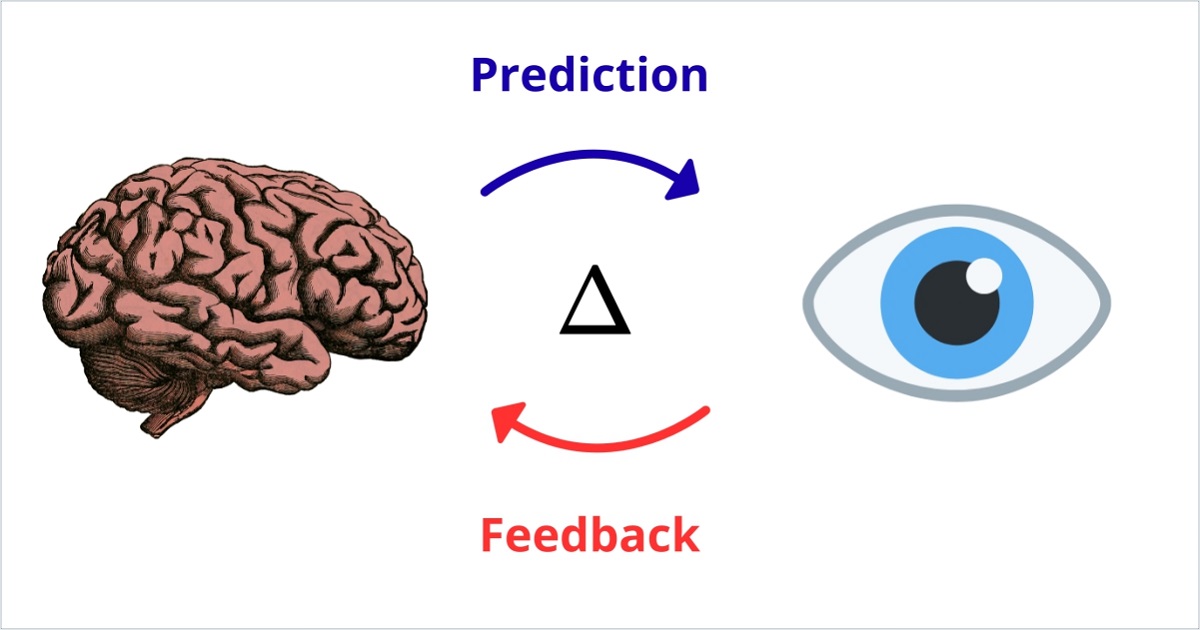
Predictive Processing in Brain and Behavior

A special issue of Brain Sciences (ISSN 2076-3425). This special issue belongs to the section "Behavioral Neuroscience".

Deadline for manuscript submissions: 30 August 2026 | Viewed by 1942

Special Issue Editor


E-Mail Website
Guest Editor
Laboratory of Cortical Plasticity and Perceptual Learning, Institute of Neurosciences, University of Guadalajara, Guadalajara, Jalisco, Mexico
Interests: neuroscience; synaptic plasticity; visual learning
Special Issues, Collections and Topics in MDPI journals

Special Issue Information

Dear Colleagues,

We are pleased to announce a Special Issue of Brain Sciences dedicated to advancing our understanding of predictive processing across neural and behavioral domains. Prediction is a fundamental principle of brain function, shaping how organisms anticipate, interpret, and adapt to dynamic environments. This Special Issue will provide a broad panorama of research addressing predictive mechanisms, spanning from neural computations to behavioral adaptations.

We welcome contributions that explore predictive processing through diverse methodologies, including neurophysiological recordings, neuroimaging, psychophysics, eye-tracking, motor control paradigms, and computational modeling. Topics of interest include sensory prediction errors, anticipatory eye and body movements, sensorimotor adaptation, learning under uncertainty, and the neural substrates of prediction across cortical and subcortical systems.

By combining behavioral and neural perspectives, this Special Issue will highlight how predictive coding shapes perception and action. Submissions can range from basic experimental studies to theoretical syntheses and applied research in clinical, developmental, or more technological contexts.

We invite the submission of original research articles, reviews, and perspectives that contribute to this growing field. Together, these contributions will shed light on how predictive systems shape behavior in complex and dynamic environments.

Dr. Mario Trevino
Guest Editor

Manuscript Submission Information

Manuscripts should be submitted online at www.mdpi.com by registering and logging in to this website. Once you are registered, click here to go to the submission form. Manuscripts can be submitted until the deadline. All submissions that pass pre-check are peer-reviewed. Accepted papers will be published continuously in the journal (as soon as accepted) and will be listed together on the special issue website. Research articles, review articles as well as short communications are invited. For planned papers, a title and short abstract (about 250 words) can be sent to the Editorial Office for assessment.

Submitted manuscripts should not have been published previously, nor be under consideration for publication elsewhere (except conference proceedings papers). All manuscripts are thoroughly refereed through a single-blind peer-review process. A guide for authors and other relevant information for submission of manuscripts is available on the Instructions for Authors page. Brain Sciences is an international peer-reviewed open access monthly journal published by MDPI.

Please visit the Instructions for Authors page before submitting a manuscript. The Article Processing Charge (APC) for publication in this open access journal is 2200 CHF (Swiss Francs). Submitted papers should be well formatted and use good English. Authors may use MDPI's English editing service prior to publication or during author revisions.

Keywords

  • predictive processing
  • sensorimotor integration
  • visuomotor coordination
  • prediction error
  • adaptive behavior
  • anticipatory gaze
  • motor learning
  • neural dynamics

Benefits of Publishing in a Special Issue

  • Ease of navigation: Grouping papers by topic helps scholars navigate broad scope journals more efficiently.
  • Greater discoverability: Special Issues support the reach and impact of scientific research. Articles in Special Issues are more discoverable and cited more frequently.
  • Expansion of research network: Special Issues facilitate connections among authors, fostering scientific collaborations.
  • External promotion: Articles in Special Issues are often promoted through the journal's social media, increasing their visibility.
  • Reprint: MDPI Books provides the opportunity to republish successful Special Issues in book format, both online and in print.

Further information on MDPI's Special Issue policies can be found here.

Published Papers (2 papers)

Order results
Result details
Select all
Export citation of selected articles as:

Research

26 pages, 5628 KB  
Article
Does Sound Timing Organization Matter? How Time Interval Influences the Perception of Closely Spaced Frequencies
by Krystsina Liaukovich and Olga Martynova
Brain Sci. 2026, 16(5), 439; https://doi.org/10.3390/brainsci16050439 - 22 Apr 2026
Viewed by 358
Abstract
Background/Objectives: Temporal predictability may sharpen our ability to distinguish similar sounds, but whether this relies on attention is unclear. This study examined how temporal structure influences frequency discrimination. Methods: Thirty-six adults completed active (attend) and passive (ignore) listening tasks across three [...] Read more.
Background/Objectives: Temporal predictability may sharpen our ability to distinguish similar sounds, but whether this relies on attention is unclear. This study examined how temporal structure influences frequency discrimination. Methods: Thirty-six adults completed active (attend) and passive (ignore) listening tasks across three paradigms that varied in temporal structure: oddball (isolated deviants), two-tone frequency discrimination paradigm (pairs comparison), and local irregularity of the local/global paradigm (five-tone sequences, bundles). Stimuli varied in difficulty via small or large frequency deviations. Behavioral responses and subjective ratings were collected during active and passive listening. EEG was recorded to assess mismatch negativity (MMN) (either early MMN (eMMN) or mismatch response (MMR)) and P300 event-related potentials. Results: Under active listening, temporal predictability significantly improved performance, but only for difficult discriminations. The local-irregularity condition yielded higher hit rates and greater perceptual sensitivity (d’) than the other paradigms. This benefit was accompanied by enhanced P300, yet participants rated the conditions as equally difficult, indicating no metacognitive awareness. Under passive listening, predictability helped only for easy stimuli, marked by a larger MMR. No reliable change-detection response occurred for difficult sounds when attention was diverted. Conclusions: These findings suggest that the combination of temporal predictability and repeated standard presentation in the local irregularity paradigm can improve frequency discrimination under challenging, attended conditions, with some evidence for partial dissociation between objective performance and subjective awareness. However, substantial individual variability and cross-paradigm confounds caution against strong causal claims. These results are broadly consistent with predictive coding frameworks but require replication with counterbalanced designs and larger deviant trial counts. Full article
(This article belongs to the Special Issue Predictive Processing in Brain and Behavior)
Show Figures

Figure 1

18 pages, 1959 KB  
Article
Predictive and Reactive Control During Interception
by Mario Treviño, Nathaly Martín, Andrea Barrera and Inmaculada Márquez
Brain Sci. 2026, 16(3), 322; https://doi.org/10.3390/brainsci16030322 - 18 Mar 2026
Cited by 1 | Viewed by 545
Abstract
Background/Objectives: Successful interception of moving targets requires combining predictive control, which anticipates future target states, and reactive control, which compensates for ongoing sensory discrepancies. How these components evolve over time and are distributed across gaze and manual behavior remains unclear. We aimed to [...] Read more.
Background/Objectives: Successful interception of moving targets requires combining predictive control, which anticipates future target states, and reactive control, which compensates for ongoing sensory discrepancies. How these components evolve over time and are distributed across gaze and manual behavior remains unclear. We aimed to explore the time-resolved dynamics of predictive control during continuous interception and to dissociate eye and hand contributions. Methods: Human participants intercepted a moving target in a two-dimensional arena using a joystick while eye movements were recorded. Target speed was systematically varied, and visual information was selectively reduced by occluding either the target or the user-controlled cursor. Predictive control was assessed using two complementary metrics: a geometric strategy index capturing moment-to-moment spatial lead or lag relative to target motion, applied separately to gaze and manual trajectories, and root mean square error (RMSE) computed relative to current and forward-shifted target positions to quantify predictive alignment. Results: Successful interception was characterized by structured, speed-dependent transitions between predictive and reactive control rather than a fixed strategy. Predictive alignment emerged early and was dynamically reweighted as temporal constraints increased. Gaze and manual behavior showed complementary but partially dissociable predictive signatures. Occluding the target decreased predictive alignment, whereas occluding the user-controlled cursor had comparatively minor effects, indicating strong reliance on internal state estimation rather than continuous visual feedback of the effector. Conclusions: Predictive and reactive control are continuously and dynamically reweighted during interception. Their interaction unfolds within single trials and depends on target dynamics and sensory availability. These findings provide quantitative evidence for time-resolved coordination between anticipatory and feedback-driven control mechanisms in goal-directed behavior. Full article
(This article belongs to the Special Issue Predictive Processing in Brain and Behavior)
Show Figures

Figure 1

Back to TopTop