


- 2.5Impact Factor
- 5.5CiteScore
- 20 daysTime to First Decision
Challenges in Mineral Processing
This special issue belongs to the section “Civil Engineering“.
Special Issue Information
Dear Colleagues,
Mineral engineers today are confronted with the task of finding innovative, efficient and highly cost-effective solutions to the complex problems currently faced by the minerals industry. For the past few decades the industry has had to respond to a variety of constraints such as (a) the need to process low grade ores with complex mineralogical association and often of fine dissemination, (b) higher energy costs, (c) increased capital and pperating costs, and (d) ever-increasing environmental constraints, often dictating the choice of the process route which can provide an environmentally safe method of disposing of wastes generted during ore processing, in addition to the usual economic and political pressures of an unstable world market. Therefore, scientists and technologists in world over need to mak large efforts to streamline the conventional technological schemes of ore processing.
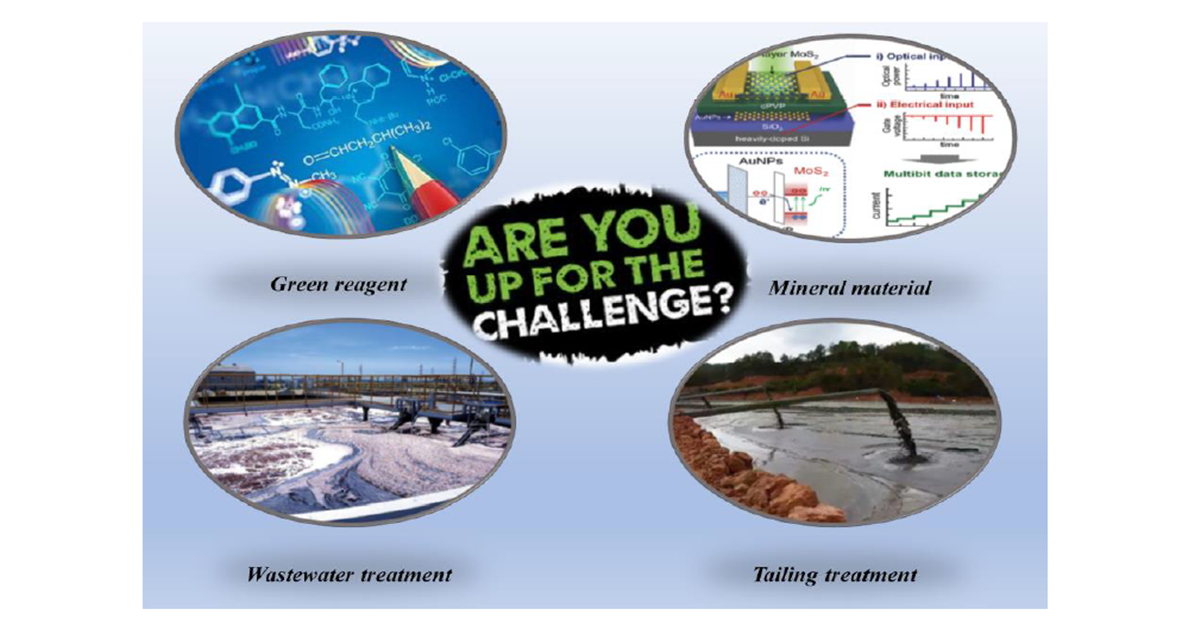
This Special Issue will focus on mineral processing, in particular froth flotation towards reducing overall costs, limiting the use of dangerous substances, decreasing waste streams and improving waste disposal.
We welcome all contributions that report on experimental and/or theoretical studies aiming for greater understanding and improvement about mineral processing. Potential topics include but are not limited to:
- Shorting Mineral Process: about magnetic/electric/gravitational/floatation separations for improving the utilization of new-type minerals for reducing the production cost
- Designing Flotations Agents: about capturing/ precipitator/ dispersing agents with relative theoretical calculations for the reducing dangerous substances with low cost
- High-treating Solid Waste: about mineral processing tailing, red mud, coal ash, waste residues for the environmental protection
- Waste recycling: about the cycling of waste (for example, wastewater, waste tailing, waste battery, etc.) for the protection of ecological environment.
Prof. Dr. Runqing Liu
Dr. Shangyong Lin
Dr. Jian Cao
Guest Editors
Manuscript Submission Information
Manuscripts should be submitted online at www.mdpi.com by registering and logging in to this website. Once you are registered, click here to go to the submission form. Manuscripts can be submitted until the deadline. All submissions that pass pre-check are peer-reviewed. Accepted papers will be published continuously in the journal (as soon as accepted) and will be listed together on the special issue website. Research articles, review articles as well as short communications are invited. For planned papers, a title and short abstract (about 250 words) can be sent to the Editorial Office for assessment.
Submitted manuscripts should not have been published previously, nor be under consideration for publication elsewhere (except conference proceedings papers). All manuscripts are thoroughly refereed through a single-blind peer-review process. A guide for authors and other relevant information for submission of manuscripts is available on the Instructions for Authors page. Applied Sciences is an international peer-reviewed open access semimonthly journal published by MDPI.
Please visit the Instructions for Authors page before submitting a manuscript. The Article Processing Charge (APC) for publication in this open access journal is 2400 CHF (Swiss Francs). Submitted papers should be well formatted and use good English. Authors may use MDPI's English editing service prior to publication or during author revisions.
Benefits of Publishing in a Special Issue
- Ease of navigation: Grouping papers by topic helps scholars navigate broad scope journals more efficiently.
- Greater discoverability: Special Issues support the reach and impact of scientific research. Articles in Special Issues are more discoverable and cited more frequently.
- Expansion of research network: Special Issues facilitate connections among authors, fostering scientific collaborations.
- External promotion: Articles in Special Issues are often promoted through the journal's social media, increasing their visibility.
- e-Book format: Special Issues with more than 10 articles can be published as dedicated e-books, ensuring wide and rapid dissemination.
Published Papers
Get Alerted
Add your email address to receive forthcoming issues of this journal.


