



Changing Wastewater Treatment to Carbon Neutral: Recent Advances in Anammox-Based Autotrophic Nitrogen Removal
A special issue of Applied Sciences (ISSN 2076-3417). This special issue belongs to the section "Environmental Sciences".
Deadline for manuscript submissions: closed (10 February 2025) | Viewed by 446
Special Issue Editors

Interests: autotrophic nitrogen removal; anammox; wastewater treatment; resource recovery; biofilm

2. Fiber Materials and Environmental Technologies (FibeEnTech), University of Beira Interior, 6201-001 Covilhã, Portugal
Interests: constructed wetland; nutrients removal; pharmaceutical compounds removal; biological and chemistry water; urban wastewater and industrial wastewater treatment processes (WWTPs)
Special Issues, Collections and Topics in MDPI journals
Special Issue Information
Dear Colleagues,
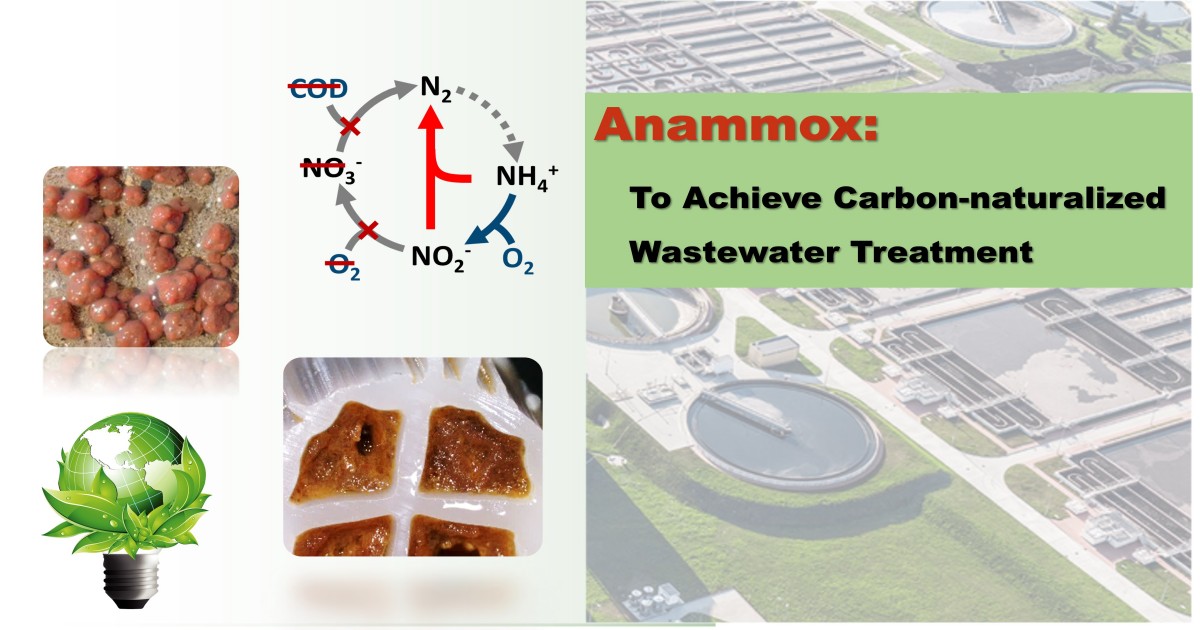
Anaerobic ammonia oxidation (anammox) is a crucial step in the transition of wastewater treatment from an energy-consuming and chemical-intensive sector to carbon-neutral, even resource recovery facilities. The development of anammox technology significantly reduces the aeration energy consumption during nutrient removal, eliminates the need for external carbon sources, and concurrently decreases sludge production and greenhouse gas emissions. Recently, anammox technology has been applied to some municipal sidestream and nitrogen-laden wastewater treatments.
However, its application faces numerous challenges when dealing with mainstream wastewater and complex industrial and agricultural wastewater, due to its difficulties in enriching anammox bacteria, prolonged reactor start-up periods, and proliferation of coexisting nitrite-oxidizing bacteria (NOB).
This Special Issue will focus on the practical application of anammox in wastewater treatment. We invite original research, review articles, and opinion pieces covering various related topics that elucidate challenges, advancements, and potential solutions for the application of anammox for wastewater treatment, including the following:
- Non-seed sludge start-up/rapid start-up of anammox-based reactors;
- Development/integration of novel processes for practical wastewater treatment;
- Novel control strategies for competitive coexisting bacteria;
- Sustainable development, life cycle assessment, and greenhouse gas emissions;
- Molecular biology and omic techniques;
- Pilot-scale/full-scale applications.
Dr. Yingyu Li
Prof. Dr. Maria Adelaide Araújo Almeida
Guest Editors
Manuscript Submission Information
Manuscripts should be submitted online at www.mdpi.com by registering and logging in to this website. Once you are registered, click here to go to the submission form. Manuscripts can be submitted until the deadline. All submissions that pass pre-check are peer-reviewed. Accepted papers will be published continuously in the journal (as soon as accepted) and will be listed together on the special issue website. Research articles, review articles as well as short communications are invited. For planned papers, a title and short abstract (about 250 words) can be sent to the Editorial Office for assessment.
Submitted manuscripts should not have been published previously, nor be under consideration for publication elsewhere (except conference proceedings papers). All manuscripts are thoroughly refereed through a single-blind peer-review process. A guide for authors and other relevant information for submission of manuscripts is available on the Instructions for Authors page. Applied Sciences is an international peer-reviewed open access semimonthly journal published by MDPI.
Please visit the Instructions for Authors page before submitting a manuscript. The Article Processing Charge (APC) for publication in this open access journal is 2400 CHF (Swiss Francs). Submitted papers should be well formatted and use good English. Authors may use MDPI's English editing service prior to publication or during author revisions.
Keywords
- autotrophic nitrogen removal
- wastewater treatment
- anammox
- nitrite-oxydizing bacteria (NOB)
- sustainability
- start-up
- metabolism
- omic techniques
Benefits of Publishing in a Special Issue
- Ease of navigation: Grouping papers by topic helps scholars navigate broad scope journals more efficiently.
- Greater discoverability: Special Issues support the reach and impact of scientific research. Articles in Special Issues are more discoverable and cited more frequently.
- Expansion of research network: Special Issues facilitate connections among authors, fostering scientific collaborations.
- External promotion: Articles in Special Issues are often promoted through the journal's social media, increasing their visibility.
- Reprint: MDPI Books provides the opportunity to republish successful Special Issues in book format, both online and in print.
Further information on MDPI's Special Issue policies can be found here.
