


Abstract
1-Iodoalkynes are one type of the most reactive and the most practical intermediates in organic synthesis. Here, some facile and efficient methods for the 1-iodination of terminal alkynes are developed using N-iodosuccinimide (NIS) as an iodination reagent and some inexpensive mild bases as catalysts. K2CO3 and 4-dimethylaminopyridine (DMAP) have been proven to be the most suitable inorganic and organic bases, succeeding in 17 examples with excellent yields (up to 99%).
1. Introduction
Owing to the unique structure of the carbon–carbon triple bond and the carbon–halogen bond, 1-halogenated alkynes are regarded as difunctional molecules and are widely used in organic synthesis [1,2]. Under the assistance of transition metal catalysts, 1-halogenated alkynes can form many key intermediates containing C-C, C-O, or C-N bonds and then transform into various highly functional compounds through coupling reactions [3,4]. Among all 1-halogenated alkynes, 1-iodoalkynes are the most reactive and the most practical building blocks; they have been attracting more and more attention in the organic chemistry domain.
To date, significant progress has been made in the synthesis of 1-iodized alkynes. As summarized in Table 1, many substances have been proven to be feasible iodine reagents, including elemental iodine [5,6,7,8,9,10], KI [11,12,13], NaI [14], ZnI2 [15,16], tetrabutylammonium iodide (TBAI) [17,18], bis (sym-collidine)iodine (I) hexafluorophosphate [19], CI4 [20], hexamethylene bis (N-methylimidazolium) bis (dichloroiodate) ionic liquid (IL) [21], N-iodomorpholine [22], N-iodosuccinimide (NIS) [23,24,25,26,27], etc. Based on the concept of modern green synthetic chemistry, however, it is hard for the reactions using these iodine reagents to meet the requirements of cleanness, safety, economy, and environmental friendliness, especially when conducting large-scale production in industry. For example, elemental iodine is volatile and poisonous; N-iodomorpholine and (collidine)2I+PF6− are of relatively high cost; KI and TBAI usually need transition metals or strong oxidants (tBHP, Me3SiOOSiMe3, PhI (OAc)2, KHSO5 (oxone), etc.) to activate; and CI4 and NIS are often used with strong bases or precious metals. Therefore, the development of mild and economic iodization methods for the synthesis of 1-iodized alkynes is still to be accomplished.
Table 1.
Reported methods for iodination of terminal alkynes.
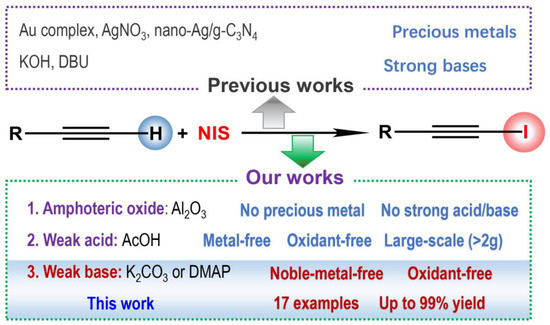
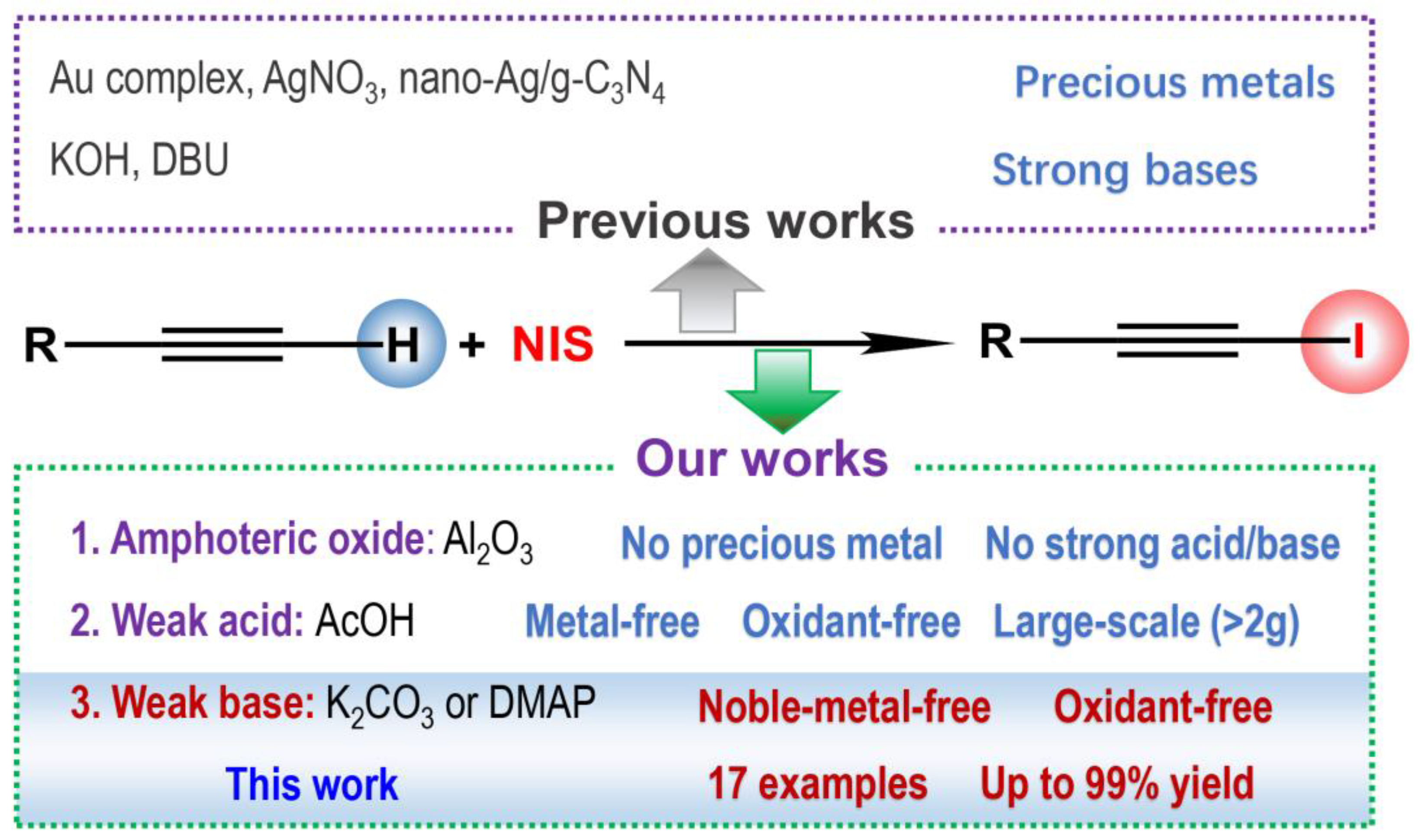
In recent years, more and more researchers have begun to pay attention to NIS and have found it to be a promising iodine reagent since it delivers higher functional group tolerance and chemical regional selectivity. However, the reported catalysts for the iodination of alkynes by NIS were either strong bases like KOH [24] and 1,8-diazabicyclo[5.4.0]undec-7-ene (DBU) [25] or precious metals like Ph3PAuNTf2 [23], AgNO3 [24], [Au(SIPr)(NEt3)][HF2] [26], and nano-Ag/g-C3N4 [27]. In light of this, our group has undertaken some exploration in this field. First, we found that γ-Al2O3 could mediate NIS’ reaction with terminal alkynes in the presence of a 4 Å molecular sieve, developing a non-noble metal amphoteric oxide catalysis route [28].
Then, we noticed that AcOH could also efficiently activate the iodination of terminal alkynes with NIS, suggesting a metal-free acid catalysis method [29]. Herein, new methods for the iodination of terminal alkynes with NIS under K2CO3 and 4-dimethylaminopyridine (DMAP) are reported. Since these iodination methods are catalyzed by weak bases, they are good complements to our previous procedures, in which NIS was activated by amphoteric oxide and weak acid, as shown in Scheme 1.
Scheme 1.
Catalysts for 1-iodination of terminal alkynes with NIS.
2. Results and Discussion
2.1. Screening of Reaction Conditions
2.1.1. Inorganic Alkali Activators
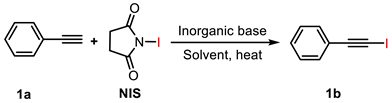
To screen out the potentially applicable inorganic base catalysts in industry, some familiar inexpensive weak bases—Na2CO3, K2CO3, NaHCO3 and KHCO3—were selected as candidates for the 1-iodination of terminal alkynes with NIS. The results of the screening tests (Table 2) indicated that K2CO3 had a better catalytic effect on the reactions. In methanol, 1.5 mol% of K2CO3 (0.03 equiv.) could effectively activate NIS, reacting with phenylacetylene at 40 °C, obtaining 1-iodoalkyne (1b) with a yield of 97.6% in 10 min (Table 2, entry 18). In view of the fact that K2CO3 is almost insoluble in methanol, an equivalent amount of tetrabutylammonium bromide (TBAB) was added to promote the catalysis procedure. As expected, the yield increased to 99% in 10 min at 40 °C, and no new byproduct was generated. So, the optimum reaction conditions were selected as follows: phenylacetylene (2 mmol, 1.0 eq.); NIS (1.1 equiv.); K2CO3 (0.03 equiv.); TBAB (0.03 equiv.); CH3OH (10 mL); 40 °C, 10 min.
Table 2.
Screening of inorganic bases and condition optimization a.
2.1.2. Organic Alkali Activators
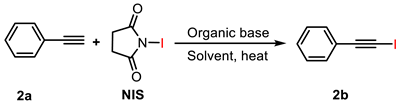
The catalytic performance of Et3N, DMAP, and DBU for target reaction was inspected under different conditions, as listed in Table 3. Based on our previous experience, CH3CN and CH3OH were selected as solvents. The results showed that 0.25 equivalent mole of Et3N gave a yield of 87% in CH3OH at 45 °C (Table 3, entry 7), 0.5 equivalent mole of Et3N gave a yield of 83% in CH3OH at 45 °C (Table 3, entry 16), and 0.25 equivalent mole of DMAP achieved a yield of 97% in CH3CN at 45 °C (Table 3, entry 7). To obtain the highest yield, the optimum reaction conditions were selected as follows: phenylacetylene (2 mmol, 1.0 equiv.); NIS (1.1 equiv.); DMAP (0.25 equiv.); CH3CN (10 mL); 45 °C, 4 h.
Table 3.
Screening of organic bases and condition optimization a.
2.2. Substrate Scope Analyses
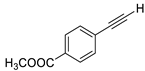
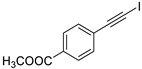
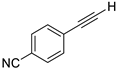
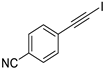
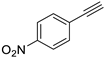
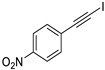
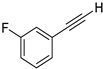
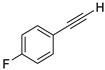
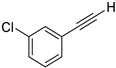
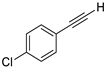
To probe the versatility of the weak bases we proposed, 1-iodination of varying terminal alkynes is discussed, and the results are listed in Table 4. It can be seen that good-to-excellent yields are also obtained when the hydrogen on the benzene ring of phenylacetylene is substituted by an alkyl, haloalkyl, ester, nitrile, nitro, alkoxy, or halogen atom. In the case of the nitro-substituted phenylacetylene (Table 4, entry 6), the reaction gives 99% yield when catalyzed by inorganic weak base K2CO3. When the alkoxyl is on position 2 or 4 of phenylacetylene (Table 4, entries 7 and 8), the yield can reach up to more than 90% under an inorganic or organic base catalyst. In the case of halogen F or Cl substitution (Table 4, entries 9–14), the position of the halogen atom causes a limited influence on the yields, and on the whole, inorganic base K2CO3 gives a higher yield than organic base DMAP. In addition, the present catalysts are applicable to the 1-iodination reaction of many other terminal alkynes that contain no benzene ring, such as straight-chain alkyne (Table 4, entry 15), ethynylthiophene (Table 4, entry 16), and ethynylpyridine (Table 4, entry 17). All the mentioned substrates can transfer into the corresponding 1-iodination products in satisfactory yields, suggesting that the catalysis strategies have good universality.
Table 4.
1-Iodination of different terminal alkyne substrates.
As for the reaction mechanism, we speculated that the NIS first formed an intermediate with the alkyne group through N atom; then, the alkali catalysts, K2CO3 or DMAP, took the acidic H away and, at the same time, promoted the removal of succinimide. The exact mechanism was still to be confirmed by further experiments.
2.3. Characterization of Products
- 1-Iodo-2-phenylacetylene (3b-1): Yellow oily liquid. 1H NMR (CDCl3, 400 MHz): δ (ppm) 7.41–7.39 (m, 2H), 7.27–7.24 (m, 3H). 13C NMR(CDCl3, 100 MHz): δ (ppm) 132.42, 128.91, 128.35, 123.44, 94.25, 6.61.
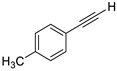
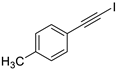
- 1-(Iodoethynyl)-4-methylbenzene (3b-2): Colorless oily liquid. 1H NMR (CDCl3, 400 MHz): δ (ppm) 7.33 (d, J = 8.0 Hz, 2H), 7.11 (d, J = 8.0 Hz, 2H), 2.36 (s, 3H); 13C NMR (CDCl3, 100 MHz): δ (ppm) 139.12, 132.31, 129.10, 120.46, 94.36, 21.66, 5.14.
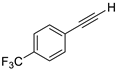
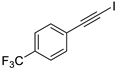
- 1-(Iodoethynyl)-4-(trifluoromethyl)benzene (3b-3): White solid. m.p. 118–120 °C. 1H NMR (CDCl3, 400 MHz): δ (ppm) 7.59–7.52 (m, 4H). 13C NMR (CDCl3, 100 MHz): δ (ppm) 132.75, 130.62 (q, J = 32.8 Hz), 127.18, 125.34 (q, J = 3.8 Hz), 123.94 (q, J = 273.3 Hz.), 92.96, 10.31.
- Methyl 4-(iodoethynyl)benzoate (3b-4): White solid. m.p. 133–135 °C. 1H NMR (CDCl3, 400 MHz): δ (ppm) 7.98 (d, J = 8.8 Hz, 2H), 7.49 (d, J = 8.8 Hz, 2H), 3.91 (s, 3H). 13C NMR (CDCl3, 100 MHz): δ (ppm) 166.52, 132.41, 130.15, 129.54, 128.02, 93.58, 52.43, 10.60.
- 4-(Iodoethynyl)benzonitrile (3b-5): White solid. m.p. 171.0–171.6 °C. 1H NMR (CDCl3, 400 MHz): δ (ppm) 7.60 (d, J = 8.8 Hz, 2H), 7.50 (d, J = 8.8 Hz, 2H). 13C NMR (CDCl3, 100 MHz): δ (ppm) 132.99, 132.07, 128.18, 118.38, 112.24, 92.67, 13.20.
- 1-(Iodoethynyl)-4-nitrobenzene (3b-6): Light yellow powdery solid. m.p. 183.5–187.2 °C. 1H NMR (CDCl3, 400 MHz): δ (ppm) 8.18 (d, J = 8.8 Hz, 2H), 7.59 (d, J = 8.8 Hz, 2H).
- 1-(Iodoethynyl)-2-methoxybenzene (3b-7): Light yellow oily liquid. 1H NMR (CDCl3, 400 MHz): δ (ppm) 7.40 (dd, J = 7.6, 1.6 Hz, 1H), 7.31–7.27 (m, 1H), 6.92–6.86 (m, 2H), 3.88 (s, 3H). 13C NMR (CDCl3, 100 MHz): δ (ppm) 160.97, 134.40, 130.29, 120.35, 112.50, 110.61, 90.41, 55.84, 9.60.
- 1-(Iodoethynyl)-3-methoxybenzene (3b-8): White solid. m.p. 50.3–51.5 °C. 1H NMR (CDCl3, 400 MHz): δ (ppm) 7.24–7.20 (m, 1H), 7.05–7.02 (m, 1H), 6.97–6.96 (m, 1H), 6.90–6.87 (m, 1H), 3.79 (s, 3H). 13C NMR (CDCl3, 100 MHz): δ (ppm) 159.26, 129.41, 124.96, 124.40, 117.15, 115.68, 94.16, 55.39, 6.39.
- 1-Fluoro-2-(iodoethynyl)benzene (3b-9): Light yellow oily liquid. 1H NMR (CDCl3, 400 MHz): δ (ppm) 7.45–7.41 (m, 1H), 7.33–7.28 (m, 1H), 7.11–7.04 (m, 2H). 13C NMR (CDCl3, 100 MHz): δ (ppm) 163.83 (d, J = 253 Hz), 134.31 (d, J = 1.3 Hz), 130.62 (d, J = 8.0 Hz), 123.99 (d, J = 3.7 Hz), 115.61 (d, J = 20.8 Hz), 112.01 (d, J = 15.8 Hz), 87.48, 12.01 (d, J = 3.2 Hz).
- 1-Fluoro-3-(iodoethynyl)benzene (3b-10): Light yellow oily liquid. 1H NMR (CDCl3, 400 MHz): δ (ppm) 7.30–7.20 (m, 2H), 7.14–7.11 (m, 1H), 7.04–7.01 (m, 1H). 13C NMR (CDCl3, 100 MHz): δ (ppm) 162.30 (d, J = 248 Hz), 129.94 (d, J = 8.7 Hz), 128.35 (d, J = 3.1 Hz), 125.19 (d, J = 9.5 Hz), 119.26 (d, J = 23 Hz), 116.40 (d, J = 21.3 Hz), 92.99 (d, J = 3.4 Hz), 8.40.
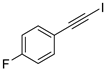
- 1-Fluoro-4-(iodoethynyl)benzene (3b-11): Light brown oily liquid. 1H NMR (CDCl3, 400 MHz): δ (ppm) 7.44–7.40 (m, 2H), 7.03–6.98 (m, 2H). 13C NMR (CDCl3, 100 MHz): δ (ppm) 162.80 (d, J = 251.4 Hz), 134.35 (d, J = 8.6 Hz), 119.52 (d, J = 3.5 Hz), 115.65 (d, J = 22.3 Hz), 93.14, 6.44.
- 1-Chloro-2-(iodoethynyl)benzene (3b-12): Yellow oil. 1H NMR (CDCl3, 400 MHz): δ (ppm) 7.47 (dd, J = 7.6, 2.0 Hz, 1H), 7.39 (dd, J = 8.0, 1.2 Hz, 1H), 7.28–7.19 (m, 2H). 13C NMR (CDCl3, 100 MHz): δ (ppm) 136.77, 134.26, 129.87, 129.31, 126.47, 123.29, 90.99, 12.50.
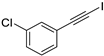
- 1-Chloro-3-(iodoethynyl)benzene (3b-13): Light brown oily liquid. 1H NMR (CDCl3, 400 MHz): δ (ppm) 7.42–7.41 (m, 1H), 7.33–7.29 (m, 2H), 7.26–7.22 (m, 1H). 13C NMR (CDCl3, 100 MHz): δ (ppm) 134.12, 132.28, 130.52, 129.54, 129.21, 125.02, 92.81, 8.88.
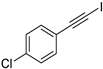
- 1-Chloro-4-(iodoethynyl)benzene (3b-14): Pale yellow solid. m.p. 83.5–85.8 °C. 1H NMR (CDCl3, 400 MHz): δ (ppm) 7.36 (d, J = 8.8 Hz, 2H), 7.29 (d, J = 8.8 Hz, 2H). 13C NMR (CDCl3, 100 MHz): δ (ppm) 135.04, 133.66, 128.73, 121.96, 93.10, 7.86.
- 1-Iodo-1-dodecyne (3b-15): Pale yellow oily liquid. 1H NMR (CDCl3, 400 MHz): δ (ppm) 2.35 (t, J = 7.0 Hz, 2H), 1.51–1.49 (m, 2H), 1.29–1.26 (m, 14H), 0.88–0.86 (m, 3H).
- 3-Iodoithynylthiophene (3b-16): Pale yellow solid. m.p. 44.2–45.8 °C. 1H NMR (CDCl3, 400 MHz): δ (ppm) 8.53 (dd, J = 2.8, 1.2 Hz, 1H), 7.71 (dd, J = 5.0, 2.8 Hz, 1H), 7.68 (dd, J = 5.0, 1.2 Hz, 1H).
- 3-Iodoithynylpyridine (3b-17): Yellowish brown powdery solid. m.p. 132.8–136.6 °C. 1H NMR (CDCl3, 400 MHz): δ (ppm) 8.67 (dd, J = 2.0, 1.2 Hz, 1H), 8.53 (dd, J = 4.8, 1.6 Hz, 1H), 7.71 (dt, J = 8.0, 2.0 Hz, 1H), 7.27–7.23 (m, 1H).
3. Material and Method
3.1. Instruments and Reagents
An AVANCE III HD 400 MHz NMR Spectrometer (Bruker, Fällanden, Switzerland), a RE-52A rotary evaporator (Shanghai Yarong Biochemical Instrument Factory, Shanghai, China), a Ze-7 hidden box UV analyzer (Shanghai Jiapeng Technology Co., LTD., Shanghai, China), and a YTR-3 melting point meter (Tianjing Tiantianfa Co., LTD., Tianjing, China) were used in the preparation and characterization of target compounds. All reagents are of analytical grade.
3.2. Synthesis of Iodide Alkynes
The terminal alkyne substrates (1.0 equiv., 2.0 mmol) were dissolved in a 50 mL round-bottomed flask with 10 mL organic solvent, followed by adding a certain amount of alkali and NIS (1.1 equiv., 2.2 mmol, 495.0 mg). The mixture was heated and stirred at a certain temperature, and the reaction was monitored via TLC. After the reaction, the reaction was quenched with saturated sodium thiosulfate aqueous solution. The reaction liquid was then extracted with ethyl acetate, washed with saturated salt water, dried with anhydrous sodium sulfate, and filtrated and concentrated via reduced-pressure distillation, obtaining the crude product. The crude product was finally separated and purified via silica gel column chromatography, using petroleum ether/ether acetate as the eluent. The optimal reaction conditions were as follows: (1) K2CO3 method: Substrates (2 mmol); NIS (1.1 equiv.); K2CO3 (0.03 equiv.); TBAB (0.03 equiv.); CH3OH (10 mL); 40 °C, 10 min. (2) DMAP method: Substrates (2 mmol); NIS (1.1 equiv.); DMAP (0.25 equiv.); CH3CN (10 mL); 45 °C, 4 h.
4. Conclusions
In summary, we have demonstrated two simple and efficient methods by which to prepare 1-iodide alkynes via the reaction of terminal alkynes with N-iodosuccinimide (NIS) using the inorganic weak base K2CO3 or the organic weak base DMAP as catalysts. The preparation methods are applicable to a variety of terminal alkynes, including aromatic or substituted aromatic alkynes, aliphatic alkynes, ethynylthiophene, ethynylpyridine, and so on, affording good-to-excellent yields for the 17 substrates selected in the present work. Compared to the existing methods, which used precious metals, strong bases, or oxidants, our methods are safer, greener, more efficient, and more competitive in terms of preparation costs.
Supplementary Materials
The following supporting information can be downloaded at https://www.mdpi.com/article/10.3390/catal14090610/s1: 1H NMR and 13C NMR spectra of the products can be found online.
Author Contributions
Methodology, investigation, formal analysis, F.W. and E.L.; investigation, formal analysis, Y.Y. and J.Z.; conceptualization, writing—review and editing, funding acquisition, H.Z. All authors have read and agreed to the published version of the manuscript.
Funding
Projects of Hubei Education Department (T2021027), Jingmen Science and Technology Projects (2024YFZD022), Research Programs of Jingchu University of Technology (T202101), and Innovation and Entrepreneurship Training Program for College Students (S202411336005) are acknowledged.
Institutional Review Board Statement
Not applicable.
Informed Consent Statement
Not applicable.
Data Availability Statement
The original contributions presented in this study are included in the article/Supplementary Material. Further inquiries can be directed to the corresponding authors.
Conflicts of Interest
The authors declare no conflicts of interest.
References
- Sasson, Y.; Webster, O.W. Quaternary ammonium fluoride catalysed halogenation of carbon acids by polyhaloalkanes. J. Chem. Soc. Chem. Commun. 1992, 1200–1201. [Google Scholar] [CrossRef] [Scilit]
- Hofmeister, H.; Annen, K.; Laurent, H.; Wiechert, R. A Novel Entry to 17α-Bromo- and 17α-Iodoethynyl Steroids. Angew. Chem. Int. Ed. Engl. 1984, 23, 727–729. [Google Scholar] [CrossRef] [Scilit]
- Jarszak-Tyl, A.; Pigulski, B.; Szafert, S. Solvent-free C–H alkynylation of azulenes. Org. Chem. Front. 2021, 8, 5674–5680. [Google Scholar] [CrossRef] [Scilit]
- Gulia, N.; Pigulski, B.; Szafert, S. Base-Promoted Double Amination of 1-Haloalkynes: Direct Synthesis of Ene-1,1-diamines. Eur. J. Org. Chem. 2020, 2020, 5610–5615. [Google Scholar] [CrossRef] [Scilit]
- Vaughn, T.H.; Nieuwland, J.A. The Direct Iodination of Monosubstituted Acetylenes. J. Am. Chem. Soc. 1933, 55, 2150–2153. [Google Scholar] [CrossRef] [Scilit]
- Jeffery, T. Copper(I)- and phase-transfer-catalysed iodination of terminal alkynes. J. Chem. Soc. Chem. Commun. 1988, 909–910. [Google Scholar] [CrossRef] [Scilit]
- Narayana Rao, M.L.; Periasamy, M. A simple convenient method for the synthesis of 1-iodoalkynes. Synth. Commun. 1995, 25, 2295–2299. [Google Scholar] [CrossRef] [Scilit]
- He, G.-W.; Liu, F.-W.; Xu, X.-H. Cesium Carbonate Catalyzed Iodination of Terminal Alkynes to Synthesize 1-Iodoalkynes. Chin. J. Org. Chem. 2007, 27, 663–665. [Google Scholar]
- Meng, L.G.; Cai, P.J.; Guo, Q.X.; Xue, S. Direct Iodination of Monosubstituted Aryl Acetylenes and Acetylenic Ketones. Synth. Commun. 2008, 38, 225–231. [Google Scholar] [CrossRef] [Scilit]
- Chen, S.-N.; Hung, T.-T.; Lin, T.-C.; Tsai, F.-Y. Reusable and Efficient Cul/TBAB-Catalyzed Iodination of Terminal Alkynes in Water under Air. J. Chin. Chem. Soc. 2009, 56, 1078–1081. [Google Scholar] [CrossRef] [Scilit]
- Yan, J.; Li, J.; Cheng, D. Novel and Efficient Synthesis of 1-Iodoalkynes. Synlett 2007, 2007, 2442–2444. [Google Scholar] [CrossRef] [Scilit]
- Rajender Reddy, K.; Venkateshwar, M.; Uma Maheswari, C.; Santhosh Kumar, P. Mild and efficient oxy-iodination of alkynes and phenols with potassium iodide and tert-butyl hydroperoxide. Tetrahedron Lett. 2010, 51, 2170–2173. [Google Scholar] [CrossRef] [Scilit]
- Ferris, T.; Carroll, L.; Mease, R.C.; Spivey, A.C.; Aboagye, E.O. Iodination of terminal alkynes using KI/CuSO4—A facile method with potential for radio-iodination. Tetrahedron Lett. 2019, 60, 936–939. [Google Scholar] [CrossRef] [Scilit]
- Nishiguchi, I.; Kanbe, O.; Itoh, K.; Maekawa, H. Facile Iodination of Terminal Acetylenes by Anodic Oxidation in the Presence of NaI. Synlett 2000, 2000, 89–91. [Google Scholar]
- Casarini, A.; Dembech, P.; Reginato, G.; Ricci, A.; Seconi, G. Terminal 1-halo- 1 and 1-pseudohalo-1-alkynes via bis(trimethylsilyl)peroxide (BTMSPO) promoted Umpolung transfer of Halides and pseudohalides. Tetrahedron Lett. 1991, 32, 2169–2170. [Google Scholar] [CrossRef] [Scilit]
- Chen, S.; Zhang, X.; Zhao, H.; Guo, X.; Hu, X. Switchable Synthesis of Iodoalkynes and Diiodoalkenes from Terminal Alkynes. Chin. J. Org. Chem. 2018, 38, 1172–1176. [Google Scholar] [CrossRef] [Scilit]
- Liu, Y.; Huang, D.; Huang, J.; Maruoka, K. Hypervalent Iodine Mediated Chemoselective Iodination of Alkynes. J. Org. Chem. 2017, 82, 11865–11871. [Google Scholar] [CrossRef] [Scilit]
- Srujana, K.; Swamy, P.; Naresh, M.; Durgaiah, C.; Rammurthy, B.; Sai, G.K.; Sony, T.; Narender, N. A Quaternary Ammonium Salt Promoted Regioselective Iodination of Terminal Alkynes: A Convenient Access to 1-Iodoalkynes in Aqueous Media. ChemistrySelect 2017, 2, 748–752. [Google Scholar] [CrossRef] [Scilit]
- Brunel, Y.; Rousseau, G. An easy preparation of iodoacetylenes. Tetrahedron Lett. 1995, 36, 2619–2622. [Google Scholar] [CrossRef] [Scilit]
- Abele, E.; Fleisher, M.; Rubina, K.; Abele, R.; Lukevics, E. Halogenation of terminal acetylenes by perhalogenoalkanes under phase transfer catalysis conditions. J. Mol. Catal. A Chem. 2001, 165, 121–126. [Google Scholar] [CrossRef] [Scilit]
- Nouzarian, M.; Hosseinzadeh, R.; Golchoubian, H. Ionic Liquid Iodinating Reagent for Mild and Efficient Iodination of Aromatic and Heteroaromatic Amines and Terminal Alkynes. Synth. Commun. 2013, 43, 2913–2925. [Google Scholar] [CrossRef] [Scilit]
- Hein, J.E.; Tripp, J.C.; Krasnova, L.B.; Sharpless, K.B.; Fokin, V.V. Copper(I)-Catalyzed Cycloaddition of Organic Azides and 1-Iodoalkynes. Angew. Chem. Int. Ed. 2009, 48, 8018–8021. [Google Scholar] [CrossRef] [Scilit] [PubMed]
- Starkov, P.; Rota, F.; D’Oyley, J.M.; Sheppard, T.D. Catalytic Electrophilic Halogenation of Silyl-Protected and Terminal Alkynes: Trapping Gold(I) Acetylides vs. a Brønsted Acid-Promoted Reaction. Adv. Synth. Catal. 2012, 354, 3217–3224. [Google Scholar] [CrossRef] [Scilit]
- Nösel, P.; Lauterbach, T.; Rudolph, M.; Rominger, F.; Hashmi, A.S.K. Gold-Catalyzed Synthesis of Iodofulvenes. Chem. Eur. J. 2013, 19, 8634–8641. [Google Scholar] [CrossRef] [Scilit] [PubMed]
- Li, M.; Li, Y.; Zhao, B.; Liang, F.; Jin, L.-Y. Facile and efficient synthesis of 1-haloalkynes via DBU-mediated reaction of terminal alkynes and N-haloimides under mild conditions. RSC Adv. 2014, 4, 30046–30049. [Google Scholar] [CrossRef] [Scilit]
- Gómez-Herrera, A.; Nahra, F.; Brill, M.; Nolan, S.P.; Cazin, C.S.J. Sequential Functionalization of Alkynes and Alkenes Catalyzed by Gold(I) and Palladium(II) N-Heterocyclic Carbene Complexes. ChemCatChem 2016, 8, 3381–3388. [Google Scholar] [CrossRef] [Scilit]
- Shi, W.; Guan, Z.; Cai, P.; Chen, H. Highly efficient and recyclable catalyst for the direct chlorination, bromination and iodination of terminal alkynes. J. Catal. 2017, 353, 199–204. [Google Scholar] [CrossRef] [Scilit]
- Yao, M.; Zhang, J.; Yang, S.; Xiong, H.; Li, L.; Liu, E.; Shi, H. Efficient synthesis of 1-iodoalkynes via Al₂O₃ mediated reaction of terminal alkynes and N-iodosuccinimide. RSC Adv. 2020, 10, 3946–3950. [Google Scholar] [CrossRef] [Scilit]
- Yao, M.; Zhang, J.; Yang, S.; Liu, E.; Xiong, H. Acetic Acid Promoted Direct Iodination of Terminal Alkynes with N-Iodosuccinimide: Efficient Preparation of 1-Iodoalkynes. Synlett 2020, 31, 1102–1106. [Google Scholar] [CrossRef] [Scilit]











Disclaimer/Publisher’s Note: The statements, opinions and data contained in all publications are solely those of the individual author(s) and contributor(s) and not of MDPI and/or the editor(s). MDPI and/or the editor(s) disclaim responsibility for any injury to people or property resulting from any ideas, methods, instructions or products referred to in the content. |
© 2024 by the authors. Licensee MDPI, Basel, Switzerland. This article is an open access article distributed under the terms and conditions of the Creative Commons Attribution (CC BY) license (https://creativecommons.org/licenses/by/4.0/).