


Abstract
Next to climate change on the list of challenges faced by humankind in today’s technological age is energy management. While “smart” ideas continue to gather momentum as some of the ways earmarked to combat the menace of a changing climate, coupled with efficient management of energy, research and development in the blockchain is not retracting, recently giving rise to digital currencies capable of fueling massive energy consumption via mining of “crypto-coins”. Given that sustainability is a crucial goal in the design of smart cities nowadays, there are currently no assurances of sustainable cities where cryptocurrency mining is at full scale. Nevertheless, alternative energy sources may come to the rescue in no distant time. In this paper, we contextualize energy-use in smart cities through mining of virtual currencies, in order to predict whether or not smart cities can truly be sustainable if crypto-mining is sustained. An attempt is also made to emphasize the possible ways of reducing energy use and all activities involving digital currencies by seeking to replace “Proof of Work” (PoW) with improved alternatives.
1. Introduction
Nowadays, energy is a highly coveted resource, so that it raises a lot of interests on the discourse about energy supply, management and use. While research continues to boost the drive towards cleaner and greener energy production, human activities mostly linked to development, use of this highly coveted resource in an unsustainable manner. Electrical energy, the basis of many household activities is gradually experiencing massive unsustainable usage, especially in cities where cryptocurrency mining is ongoing. Although the concept of smart-grid has become popular, they only find application in smart cities where everything is controlled within a ubiquitous environment, using Internet of Things (IoT). While the concept of smart cities may have become very popular and useful in energy management, the reality is that only a few cities are smart, implying that unsustainable use of electrical energy in these cities may lead to future challenges.
As humanity battles climate change mainly due to anthropogenic pollution [1], there is a continuous outcry by climate scientists and enthusiast of the imminent danger, if urgent steps are not taken to get the temperature back to bearable pre-industrial rates [2]. In the midst of this scientific discourse, blockchain continues to gather strength as the foundation for more and more cryptocurrencies, each requiring mining; an activity that typically consumes between 7–17 MJ of energy, and in which energy usage for the manufacture of any coin type is only second to aluminum production in terms of energy requirement [3]. While Bitcoin mining alone is said to produce less than 1 per cent of global emissions, an astonishing fact is that this value is equivalent to average CO2 emission of around one million vehicles, within a two year period [3]. While some scholars believe that blockchain holds the keys to the kind of sustainability society should look to [4], it may be difficult to accept this ideology, except if it comes with the discontinuity in cryptocurrency mining, an almost impossible notion. The reason for this is that Bitcoin being the earliest cryptocurrency type relies on the concept of “Proof of Work” (PoW), a consensus that depends on heavy input of resources [5], particularly energy [3,6].
There remains a wide-spread misconception on the historical development of Blockchain and Bitcoin. While authors like [7] have stressed that Bitcoin was developed before Blockchain, others have proved otherwise. The most detailed explanation, which technically proves the true history of virtual transaction was explained by [8]. The author noted that the study by [9] marked the beginning of the blockchain idea, long before Satoshi Nakamoto’s writing on Bitcoin. In fact, it was [9] who was the first to discuss time-stamping, before it was built upon by Nakamoto in [10]. Nakamoto did reference [9] in the Bitcoin work, showing some sort of progression in the development. Blockchain is an unchanging and distributed technology which is based on ledger innovation [11], it finds application in the decentralization of markets [12], and allows for real time financial transactions without visiting a financial institution, or without any form of monitoring by these institutions (the so-called third party). In addition to decentralizing payments, there are continuous proofs of the usefulness of blockchain in other aspects of society. For instance in medical and healthcare domains [13,14,15,16]. Authors [11] specifically evaluated blockchain relevance to biomedical research, [17] explained that it could find application in ICT, especially in Internet of Things [18] where it has been predicted to bring about magnificent changes in the way business is done, and in cloud computing [19]. In the area of education, [20] explained that a number of blockchain-based educational softwares are already making waves in the market nowadays. In the aspect of storage of intellectual properties, blockchain has also been found to be relevant [21]. There are also some under-researched aspects of its usage in the electioneering processes in some countries.
The vast implementation and application of block chain makes it look like an indispensable innovation in today’s world. Nevertheless, a major setback to Blockchain as an innovation, and one that raises a growing concern for the current study is that it remains a foundation to cryptocurrency ‘mining’, and its perceived energy inefficiency. As such, research is constantly revolving around the energy consumption/management of cryptocurrency mining activities. Given that the evolution of virtual currency trading and mining of associated coins are just a fraction of the robustness of Blockchain, it remains to be seen whether energy-efficient crypto-mining would be achieved in future, or whether placing bans on the process of mining could be a way out, given the alternative of maintaining global emission rates.
Given a number of smart home energy-saving technologies and ideas; interoperational smart home systems [22], and automated home systems [23] among others, many of which are based on saving energy, the big question is; what is humankind willing to give up for the development of smart homes and cities which are also revolutionary, in the midst of newer activities such as cryptocurrency mining from Blockchain-backed technology? It is on this premise that this study sets out, and seeks to weigh existing options/answers on the following questions;
- Can humankind afford to condone processes that further increase global emissions in the midst of existing catastrophic event emanating from climate change?
- How rapid can we proffer solutions to massive cryptocurrency energy-consumption, should cryptocurrency mining be sustained?
- Would it be in our best interest to place bans on mining of Bitcoin and other cryptocurrencies, thus holding on to only to positive aspects of Blockchain, given that these virtual currencies have not yet been accepted in totality in many societies, in addition to the fact that such innovations may add-up to existing global climate challenges?
- How sustainable can our so-called smart cities be in the midst of huge energy deficit offered by mining virtual currencies?
While the last question offers more insight, and serves as a scientific basis for the current study, other questions also create interesting discussion which are addressed in subsequent sections of this study. Figure 1 is a conceptual framework for this study, and it describes the central focus amidst other related interest areas. The remainder of this study are a described as follow; Section 2 describes existing studies related to the ongoing work, and sheds light on the concept of sustainability of smart cities in relation to energy efficiency. The section also explains the main reasons behind the growth of cryptocurrencies. Section 3 looks at steps taken by governments to regulate their existence. In Section 4, we carry out a constructive criticism of the situation, which leads to a critique’s view of whether or not cryptocurrency mining should continue, and the way forward. Section 5 discusses relevant ideas gathered from the study, as well as suggestions on future research directions.
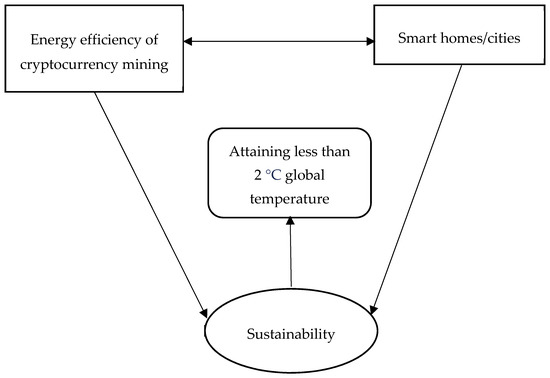
Figure 1.
Conceptual framework for the study.
2. Related Literature
2.1. The Concept of Sustainable Smart Homes and Cities in Terms of Energy Efficiency
Smart homes and cities face energy challenges due mainly to the complex nature of their energy systems [24]. Smart cities are mostly designed to supply inhabitants with energy consumption information, this helps in the planning of ensuring that the cities are sustainable [25]. Energy management in smart cities often follow specific models to attain sustainability [22,23], especially given that energy budget of smart cities is crucial to the kind of energy source adopted. While renewable energy sources remain the most reliable sources to achieve smart city goals, the cost implication are often huge, posing a serious threat to sustainability [26]. In cities where pronounced digital currency mining takes place, attaining sustainable energy management involves a lot of simulations, so that effective policies can be used to drive the society towards smartness [24].
Model simulation help stakeholders get a good grasp of smart-city dynamics especially given the probable challenges posed by activities of cryptocurrency miners and validators, and in re-evaluating alternative policy frameworks [27]. Nevertheless, a shortcoming to most existing models is that they tend to address energy challenges separately, so that they rarely provide exhaustive details, which give rise to incomplete solutions. For digital currency mining to be well-managed in any smart society, there is a need for detailed models that brings together several energy-dependent activities within the scope of the model [24].
For effective energy management specifically in the handling of huge energy consumption by virtual currency operation, government intervention has been proposed through taxes [28]. Asides taxes, certain energy-intervention schemes can as well be embarked upon by national governments in smart city settings to ensure effective energy management for cryptocurrency mining. By adapting the intervention areas developed by [24], government can come up with eco-friendly energy sources that gives room to sustainable homes and cities [29]. Intervention areas that can be targeted include; improved alternative energy generation schemes, modernized energy storage systems, and smart grid infrastructural facilities [24]. These inter-related energy intervention channels provide for better energy management systems by governments, especially due to the fact that virtual currency miners often to conceal exact output in terms of production [30].
As alternative energy generation schemes, renewable sources (for long term plans) [29], as well as other non-renewable sources (on short term basis) [26], but with far lesser pollution impacts can be adopted via a distributed generation network. Photovoltaic cells, thermal collectors, concentrated solar-power, and photovoltaic-thermal collectors can all provide electric and/or thermal power at different capacities, using the sun’s energy [24]. Furthermore, wind power, poly and multi-gen, biomass, and geothermal are also useful for the same electric/thermal power generation purpose, which can cater for cryptocurrency mining energy needs, especially when each of these systems is combined with another system. While poly- and multi-gen have been described as energy techniques developed for efficient use of fossil fuel (reduced carbon emissions when compared to conventional energy sources) [31], they remain largely expensive and may not be available on a large scale [27], which may not be in line with sustainability goals in smart cities.
Modernized energy storage systems are mostly utilized for all kinds of energy storage. These storage utilities are useful for the integrating renewable sources of energy, as well as delivering the so-called “demand–response” smart city schemes [24]. These energy storage systems are useful for storing up excess generated energy at cheaper rates until they are needed, thus keeping it for use when it is most likely to have become expensive [32]. Storage process tends to smoothen net energy load, and influences cleaner and greener energy storage procedure [33]. Similarly, electric energy needs of cryptocurrency machines can be based on demand–response, allowing for effective electricity management and possessing the abilities to cater for newer energy needs when energy loads increase in buildings and cities [34]. Batteries, super-conducting energy storage, compressed-air energy storage, flywheel, and super capacitors are some useful energy storage units that can be useful for smart homes and cities where cryptocurrencies operations are common [24].
Smart power grids are more or less the most useful infrastructure in smart cities where digital currency operation is taking place. However, the fact that smart-grids mostly cover electric energy, a new concept, the so-called “district energy” are better suited for smart cities, covering thermal and electric energy supplies at different scales facilities connected to the central grid [31]. Electric-based grids are very crucial energy needs in many smart cities, as it serves as the source through which energy flows to consumers who inhabit the city. Smart power grids are designed to monitor and communicate perceived power supply hitches in real-time, and in a bi-directional manner. They are very important in smart cities as every connected system and/or device must technically supply details of its own energy production and usage. Furthermore, connected devices are able to follow load-scheduling, so that no amount of energy is lost to wastage [35]. According to [36], specific features of a smart grid system include; ability to slightly increase capacity for more consumers without having to engage in construction of more infrastructure, updated security measures, and ability to effectively resist human attacks, as well as issues emanating from natural disasters, power supply is solely based on quality, and which combines several power sources in one unit, it implements communication in real time, so as to facilitate energy-supply tasks [24].
By adopting the above energy-related intervention, sustainability of cities can be achieved even when activities of cryptocurrency operators are ongoing within a city. This is because, it becomes really difficult for miners to conceal their energy usage, especially as the overall smart system exposes every hidden power use. Additionally, greener and safer environments are encouraged using these means.
Although it is note-worthy to stress that Blockchain technology has only been adopted in solving a number of problems in smart cities [37] there are no current studies that link cryptocurrency mining to smart cities, i.e., research is yet to provide a foundation for improved energy management as imposed by mining of crypto-coins in smart cities. Nevertheless, we argue that development in smart-grids can reach levels where smart grids can be used to monitor homes within smart cities where crypto-mining is taking place. This can expose activities of illegal miners in residential areas, and in turn attract higher electricity bills/charges, possible fines, or outright cut-off of power to such places. In situations where there are strict regulations due to the perceived high consumption of energy by the process of mining, the law may possibly take its course on offenders as seen in the case of Chelan Country, Washington D.C [38,39].
2.2. Flaws of Conventional Financial Systems and the Birth of Cryptocurrencies
While digital currencies seem to be changing the face of many aspects of society today. It is important to analyze the situation leading to this phenomenon. Given a popular opinion that Blockchain technology is promising, the technology is earmarked to bring lasting economic development and growth across many areas of human endeavor [40]. While the acceptance of cryptocurrencies has been met with several criticisms in some nations, other societies have continuously relaxed laws, as such, virtual currency trading have continued. According the [41], conventional monies that are derived from fractional reserve banking are more or less in existence as a result of debts that are given in form of loans. Banks in a number of nations are backed by law to keep a certain percentage of demand deposits; 40%, 10%, and 0% in Brazil [42], the United States [43], and Australia [44] respectively. Most national laws further stipulate that with the other percentage can be loaned out at specified interest rates [40]. This process of keeping a demand deposit and loaning out the rest is continuous, so that deposits are increased, and availability of loans decreases, thus explaining that conventional banks generate money out of nothing [40]. The only possibility for economic growth in such situations is credit offering, implying that majority of person within the society live on debts, this situation is referred to as “debt peonage” [45]. Debt peonage is more or less not the best of situations for the populace, given that it creates room for a state’s financial strength to be placed in the hands a group of persons.
The fact that a few persons control the financial flows of a nation has continually encouraged the search for liberation from such situation, i.e., alternative forms of money supply. This is found in cryptocurrencies. While it is important to think about how loan repayment monies shall be made in conventional systems, more and more loans will only be borrowed to offset existing ones, implying that individuals may never be free from debts [46], As such, it becomes imperative to consider alternative sources of money supply.
Other authors [40] noted that newer money supply solutions need to rely on a system in which society identifies financial prosperity as the stocking of natural capital, referred to as strong sustainability, and implies that societies nowadays are faced with unhealthy monetary systems that possess weak sustainability. In terms of the so-called ‘positive money’, i.e., a situation that allows for money to exist without accrued debts [47], economic situation are often better-of, as societal finance is not a function of exchanging natural and man-made forms of capital. According to the work in [48], newer forms of currencies have always been around, given an overall perception of poor socioeconomic systems. Alternative currencies are mostly available to combat the challenges imposed on society by debt-based monetary system and are often regional initiatives. Some researchers have opined that since alternative currencies are flawed on the ground that they only thrive in local settings, and cannot be used for country to country trading [49], then they should not be allowed to stand. Others believe that the circulation of these alternative money sources helps to manage the challenges caused by economic shocks on conventional currencies [50]. Bitcoin for example is an example of fiduciary money, i.e., value on the currency is placed on the expectation that sooner or later, it will be an accepted form of money [51]. Bitcoin has not been generally accepted as a means of exchange like fiat currencies, as such Bitcoin operations are not backed by government’s decrees. It also does not possess the intrinsic value that a commodity money has, even though it is currently treated as commodity money in some countries. Authors [52] explained that Bitcoin acceptance varies from one national setting to another. For examples, towards the end of 2017, Bangladesh as well as countries like Bolivia, and Ecuador placed bans on virtual currency trading and usage. Bitcoin is allowed in Japan and Australia as a payment means, but not as a recognized currency. In Europe, Bitcoin is widely used for payment, and there are no taxes when they need to be converted to conventional currencies. Authors [52] noted that the USA treasury groups as part of cryptocurrencies known as decentralized and convertible currencies. As such, they receive commodity treatment by Commodity Futures Trading Commission (CFTC).
2.3. Virtual Currency Mining and Enegy Use in Smart Cities
The usage of electrical power in digital currency mining is a topic that demands some sort of re-evaluation [30]. By default, the mining procedure in itself consumes several joules of energy, mainly as a result of the calculations involved its hash processes and aimed at bypassing third parties (financial institutions). Typically, mining calculations depends on electricity, so that Bitcoin consumes close to 2.6 gigawatts at the moment, and has been projected to reach about 8 gigawatts in future [30]. Comparing this power usage to what is obtainable in Ireland and Austria respectively, [30] noted that current differences shows that Ireland leads Bitcoin electricity usage by 0.5 gigawatts, and Austria by 5.6 gigawatts. Nevertheless, there are reports that overall electricity consumption in Bitcoin mining operations as of 2018 may have equaled usage in Austria. Given the very few number of studies that have so far addresses cryptocurrency energy budget. Figure 2 shows the estimated and minimum energy usage (between 2017 and 2019) in the mining of Bitcoin.
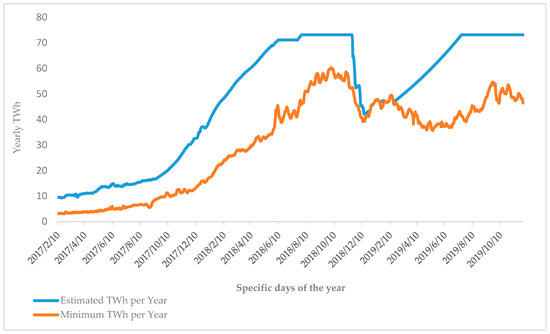
Figure 2.
Energy consumption index for Bitcoin [53].
Authors [54] set out to research mining energy use of some cryptocurrencies based on a few algorithms. For Monero, study results showed that energy budget is a function of the hash rate algorithm used, which further supports the claims of [30]. In addition, the study by [55] also provided an approximated value of energy consumed globally for mining Monero. For example, it was suggested that China’s activities in Monero mining may have contributed about 5% of global electricity consumption (to mine the same coin) which stood at 646 GWh as of 2018 [54], implying that roughly 20,000 tons of carbon may have been released into the environment between a space of eight-months of the year under review.
In the hashing of digital currency blocks, the idea developed by Nakamoto, the father of Bitcoin was basically revolutionary and based on transactions that are timestamped through hashing into a proof-of-work which has to do with continuous scanning for a unique value that give rise to hashes that start with numbers in the region of zero bits when hashed [10]. A good example is SHA-256. Worldwide attempts carried out every second to locate a hash with this unique feature is referred to as hash rate [30]. The moment a node discovers a hash the meets this requirement, the node sends the block on which the hash has been found to other nodes within the network, as such, an acceptance is carried out by the other networked nodes, all of which kick-off with the creation of new blocks for the chain by adopting the accepted hash block [30,54,56]. Another authors [30] further noted that the individual who locates the block gets to enjoy certain rewards. These includes (1) a number of new coins which can be sent to the individual’s choice of address (This is a constant reward that reduces by half, once in four years), and (2) specific transaction fees.
To ensure that rewards are continuous, [30] opined that the entire network is designed to automatically adjust to complex hash calculations. As such, the experience of new blocks occur only once in 10 mins. While research is yet to be able to decipher hash rate in clear terms, its derivation has so far relied on the difficulty and time taken to mine new blocks [56]. Authors from [30] explained that as of March, 2018 roughly 26 quintillion Bitcoin hashing were carried out per second. While only three of these transactions were being processed by the network in the same time. The implication here is that processed transactions and hash calculations share a ratio of 1:8.7quintillion, in a process solely based on huge amounts of electricity use [30]. Another team [28] pointed out that the measurement of power consumption by the computers (machines) used for mining virtual currencies are currently only based on estimated figures, so that it is only possible to compute overall Bitcoin network’s computational power, whereas, we may not find significant information on the amount of power used up by the computers that carry out the mining operations [55]. For example, Antminer S9, a cryptocurrency mining machine utilizes 1372 W to generate an average of 14 tetrahashes every second [30,57]. This figure is only estimated, as there are several other nodes connected to it within the same network. Furthermore, it is also almost impossible to determine precisely, the number of machines connected within an individual node [30]. Approximately 10,000 nodes make up the Bitcoin network, with individual nodes possessing one or more machines [57].
An understanding of the cost of individual aspects of digital currencies production procedure is crucial to getting an insight on energy consumption. Estimated power use by machines which considers hashrate, is one way to determine cryptocurrency energy efficiency/consumption, and has been a very popular approach for many years, with a merit of being able to give rough estimate of lower bounds [30], i.e., estimated power use of individual machines (as shown in Figure 3, Figure 4 and Figure 5). Two major challenges of hash-dependent approach are; failure to consider cooling mechanisms, and lack of probable future energy consumption [30], since overall hashrate of any cryptocurrency network is a function of the mining machines. In a study by [58], it was observed that 11 out of 43 machines were tagged large miners, contributing immensely to overall hashrate of the Bitcoin network the world over [58]. Such huge mining operations will no doubt use up several thousands of joules of Energy, so that eliminating the heat produced as a result of mining in this setting will be a function of the existing climate, and the adopted cooling method [30]. In cities where virtual currency mining is popular, miners often tend to keep the activities unknown to the public, making it difficult predicting “power usage effectiveness” (PUE) [30].
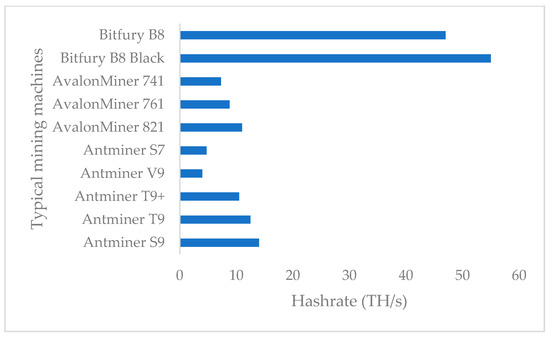
Figure 3.
Hashrate for a typical mining machine within a Bitcoin network [30].
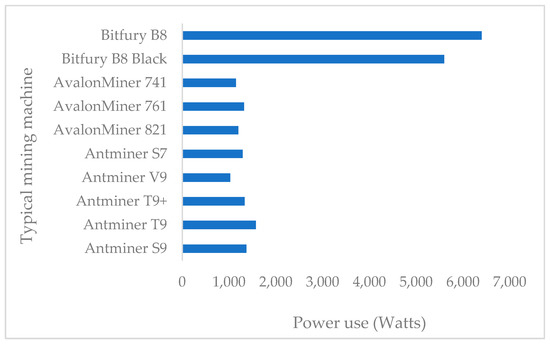
Figure 4.
Estimated power usage by some mining machines within a Bitcoin network [30].
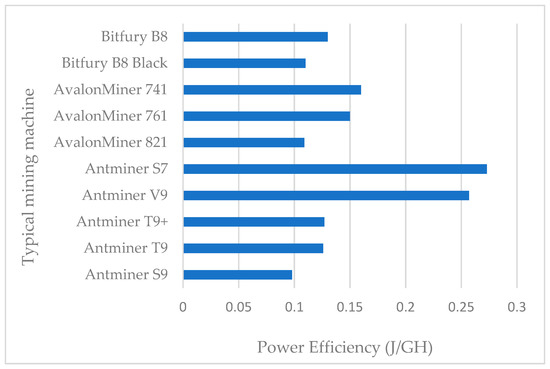
Figure 5.
Estimated power efficiency by some mining machines within the Bitcoin network [30].
Researchers at [55] stressed the claims by Bitfury (a Bitcoin network) on achieving a power usage efficiency of 1.02 using immersion cooling. While [30] explained that the claims are yet to be scientifically investigated, it is important to note that not all cryptocurrency mining activities make use of a cooling technology, and only a few also adopt cooling by immersion. An example is a Bitman-owned facility at the Mongolia region of China, which utilizes evaporative cooling system. Although energy consumption of the facility are not accurately provided, due to opposing figures by [59] (40 MW) and [60] (33 MW), [61] noted that it is made up of a little over 20,000 machines (mostly of Antminer S9 and a few thousand Litecoin L3+). Individual machine at the Mongolian site utilize 800 W, implying overall energy demand of about 32 MW, so that power use efficiency is estimated as 1.25 [30]. It should be noted that that Bitcoin mining has become popular within the last year, causing figures to increase in almost all mining sites.
Since hashrate-dependent energy estimate for Bitcoin cannot predict future energy consumption, we can look at such expected predictions from an economic viewpoint. This is possible, given that cryptocurrencies are mostly tagged as “commodities” in many countries where their usage is legalized, and as there are quite a large number of operators, this results in a healthy competition [55].
As such, the mining operations will yield hash calculations to attain a marginal cost (MC) which is at par with the marginal product (MP). The meaning of this is that distinct information as regards MP of Bitcoin mining can be derived from the Blockchain linked to the Bitcoin network that bears information on mined blocks and other mining information. Figures by [30] in mid-March, 2018 revealed that MP reached approximately €13.7 million. To economically analyze and predict future electricity costs of as a result of mining, production cost for an average mining machine, average life span and average unit cost of electricity are some of the crucial factors to be considered. While [55] suggested doing away with cost of production and maintenance of machines in estimating electricity cost, as these cost are more or less sunk costs in individual efforts put into mining, and may not be considered when taking mining decisions. Authors [30] explained that while this may be a right approach, the purchase of new mining computers will eventually be factored into the overall cost, which will most definitely have an impact on the revenue, as machines do typical possess expected lifespan. Given an Antminer S9 production cost of €456 (an addition of cost of chips production and other costs) [21], and the average lifespan of the mining machine is 730 days [30], Since cheap electricity in Mongolia is fixed at €0.35 for every kilowatt used [61], then we can assumes an average of electricity cost of €0.45. From the foregone information, mining cost by an average Bitcoin machine will comprise about 70 per cent of the entire lifespan of the machine. Nevertheless, by engaging a more direct approach in terms of assumed costs [30], as such the electricity cost per lifetime of an average machine can be pegged at 60%, so that the value can be adopted for calculating how much electricity the Bitcoin network uses. This can be rounded to 7.7 GW [30].
The economic analysis performed above is temporarily an accepted way to arrive at estimated indices by the Bitcoin network [62]. Nevertheless, there continues to be abrupt changes in price of hardwares emanating from the cost of their production and implying that the consumption energy estimation so far discussed may take the next year to be fully established, this may as well involve slight changes. Chip-based production may be another way to estimate energy consumption of a typical cryptocurrency. By analyzing the activities of TSMC (Taiwan Semiconductor Manufacturing Company), a major manufacturer of chips for Bitcoin machines used by Bitman, [63] maintained that TSMC supplies an average of 20,000 wafers every month since the start of 2018. Wafers are crucial materials for the manufacture of mining machines such as Antminer range. Since an average wafer can feed close to 30 mining rigs, then we can assume that about 500,000 Antminers monthly can be built in a month [64]. Given the production estimate by Bitman (a big name in Bitcoin production), we can infer that overall energy about 6.5 million running machines will consumes close to 8.92 GW in 2018 only, 1.22 GW more than the estimation from economic viewpoint. Since Bitman is not the only production company of Bitcoins, this could be a pointer to the amount of energy consumed overall for Bitcoin only, further implying that an addition of energy consumption rates for other coins like Ethereum and Monero may further blow-up the figures.
2.4. Consensus Protocols
While there seem to be so much discussion on Bitcoin, being the most popular cryptocurrency in the blockchain ledger system, [65] discussed energy use in Ethereum mining. Ethereum is next to Bitcoin in the order of Blockchain Cryptocurrency innovations, with its capitalization reaching US$10 billion as at the end of January, 2019 [65]. This digital currency is said to utilize roughly half of total Bitcoin energy consumption [65], causing proponents to believe it can have a better carbon footprint. Furthermore, [65,66] in compared electricity usage in mining Ethereum to everyday usage within the United States. The authors observed that one transaction involving Ethereum utilizes more electricity than what the average home in the United States used within 24 h. An interesting development however is the move by the developer and founder of Ethereum, Vitalik Buterin and his team of contributors, to convert from the use of cryptocurrency “Proof-of-Work” (PoW) which uses so much energy, to “Proof-of-Stake” (PoS), which is a more subtle method of organizing transactions without necessarily utilizing excessive energy [65].
According to [66], the Ethereum group has identified that excessive energy usage may impact not only on the environment, but also on overall running cost. In this case, validators (miners in Bitcoin) who are picked randomly by the system to create blocks (instead of several miners working to carry out a single transaction), are very few, so that the number of computers doing the job is reduced [67]. As such, reward on energy is not as much, given that validators are not doing so much work as in the PoW System. This PoS move by the developers of Ethereum was first mentioned at the release of Peercoin back in 2012 [65]. Although the progress on PoS has so far been slow-paced, some positives that can be drawn from the process include the development of the so-called “Difficulty Bomb”, which is poised to make mining of the coin more difficult, so that validators are discouraged [30]. While this may prove to bring some form of shortage on the Ethereum platform, the owners believe it is more important to achieve energy efficiency, and save cost, than to continue with the current situation which may not be sustainable.
While there are several other algorithms adopted in crypto-mining nowadays; Proof of Elapsed Time (PoET), Proof of Burn (PoB), Federated Byzantine Agreement (FBA), Delegated Proof of Stake (DPoS), Proof of Authority (PoAu), Proof of Burn (PoB), Practical Byzantine Fault Tolerance (PBFT), Proof of Capacity (PoC) [68], only PoAu, DPoS, PoC, and PoET have energy efficiency backgrounds. In PoC, validator nodes are required to utilize spaces (occupied by a huge amount of data) on computer hardwares, so that they have a greater chance of developing a new block, and also get rewarded to increase their chances of producing the next block and earn its reward. The consensus is able to save a lot of power, as it does not have to use ASIC hardware [68]. Typical example of PoC is Pylon-Core which is capable of processing approximately 7000 transactions every second [69]. Intel’s Sawtooth’s PoET [70] is capable of scaling thousands of nodes in an energy efficient manner. It replicates block generation using a random approach, and generally maximizes resources, mainly because algorithm makes use of a secured environment for its execution, coupled with a brand new CPU [71]. PoAu is an advanced form of PoS, and bears many features of PoS. The main difference is the identity of the validators are staked. Energy efficiency is also high in comparison to PoW [72]. It can be adopted when we prefer not to take security and integrity risks [73]. Energy Web is an example of PoAu [74]. DPoS is based on voting to generate blocks and voting out dishonest users. As noted by [73], DPoS is a futuristic consensus as it has a goal of achieving effectiveness and accuracy of transactions, speed and very low energy use.
From the foregone analysis of the energy consumption by Bitcoin and plans by Ethereum to drastically cut energy using PoS, we argue that energy consumption calculations are technically flawed. Given the advances in Blockchain technology nowadays, there is need to explore energy saving and sustainability fronts in the mining of cryptocurrencies. Ideas put forward by firms like Energy Blockchain Labs in collaboration with IBM to cut down the China’s close-to-a-year average of carbon asset life cycle from 50% to 20%, will immensely help to save the cost of energy. Albeit, it is worth noting that further research into energy efficient consensus mechanisms as described in the preceding paragraph may as well be useful.
3. Regulating the Mining and Usage of Virtual Currencies: Relegating Energy Efficiency
Having described some of the positives that can be drawn from technologies that may possibly emerge from the Blockchain innovation, the genesis of cryptocurrencies as alternatives to debt-based conventional money supply systems, and how cryptocurrencies use energy. The next crucial step is to look at some prevailing regulatory guidelines across nations of the world in terms of usage and energy management by cryptocurrency-dependent activities.
While the current study concerns itself with perceived aspects of energy-inefficiency via cryptocurrency mining, it is important to briefly review aspects of national laws that look to cater for this perceived would-be global challenge, especially given the rate of cryptocurrency acceptance nowadays. An unfortunate scenario is that fact that most countries where cryptocurrency transactions are either partly or fully legal, do not have specific laws on energy management for the process of mining cryptocurrencies. On the average, eighty-five per cent of national cryptocurrency laws across many countries of the world focus on being careful not to allow Bitcoin and other coin types compete with nationally acclaimed currencies. This is greatly perceived from the ideas of [75]. While some countries have struck out the ideas to allow the use of cryptocurrencies, other have basically came-up with frameworks for their regulation. Only a few have however taken a further step to look at the aspects of energy consumption of crypto operations. As reported by [76], cheap electricity in some areas have some worth allowed the flow of crypto mining operation in many countries, an action that neglects environmental impacts of the process.
A 2018 compilation by Global Law Research Centre of United States’ Law Library of Congress showed current handling of virtual currencies in a number of countries. Ideas from the report suggest that the seemingly important aspects to regulatory frameworks in many countries include; taxation of crypto operations, anti-money laundering issues, and terrorism funding [75,77,78,79,80,81]. On the other hand, energy-efficiency is mostly relegated, suggesting that the world is yet to attain full understanding of the consequences of cryptocurrency mining operations. In Switzerland, authors [75] noted that cryptos falls under assets classification. Though the country specifically understands the challenges associated to its operation; financial crimes and volatility among others, there are no specific regulation that caters for Initial Coin Offerings (ICO) within the Swiss nation, except that the laws governing Switzerland financial market will come into play depending on the patterns of the ICO. According to [81], the Mexican government’s rule book provides the details of how cryptocurrencies should be run within the Mexican Society. First, virtual currencies can be held as assets but not as authorized currencies. Furthermore, within its regulations, the country’s central bank holds the rights to oversee cryptocurrency activities, so that certain huge trans actions get noticed by government to avoid money laundering [81]. In the first quarter of 2018, the government of Belarus released a report that allowed general mining and usage of virtual currencies [80]. During the same period, a Presidential directive was launched to empower taxation monitoring unit for virtual currency transactions, even though there were no specific information on mining. In France, virtual currencies usage and mining are mainly without regulations [79]. With the exception of two blockchain management ordinances that are not actively affected, French government remains largely skeptical of virtual currencies mainly as a result of pronounced volatility. Nevertheless blockchain technology seem to receive very high interest within the country [79]. Nonetheless, a framework is still underway, and active virtual currency users are currently being taxed for transactions. Regulations developed in 2016 in Israel already consider cryptocurrencies as assets.
While it has been suggested to government that adoption of virtual currencies as means for virtual payment may be advantageous to the economy, the situation is not yet clear, especially given that an Israeli bank recently blocked the activities of a Bitcoin trading firm [77]. Japanese Act on Payment Services has been in operation for the regulation of virtual currency transaction since 2017 [78]. There are also money laundering regulations which every business that utilizes cryptocurrencies must strictly adhere to. As such, it is safe to say that virtual currencies are well regulated in many countries, with the exception of specific cryptocurrency mining management laws. Table 1 further describes the situation surrounding the usage of cryptocurrencies in the context of energy management in some more countries, and other challenges surrounding the process.

Table 1.
The situation of energy/other challenges posed by cryptocurrency mining and usage.
Although many of the countries aforementioned (including those in Table 1) have put up laws to guide the operation of virtual currencies trading, only a few of these countries have tried to consider energy efficiency aspects. Even the countries that have tried to act on cryptocurrency energy management have mainly focused on the cost effectiveness, and not the possible risk to the environment. This makes the entire process of virtual currency mining an unsustainable one in the meantime. As such, the process becomes part of the human activities that have been estimated to result in 1.0 °C rise in global warming greater than pre-industrial rates [88]. With continuous virtual currency operations especially mining, global warming rates will further increase, posing a likelihood and if the currents rates of emissions continue, it would likely cause the temperature to further increase to larger values by 2030, given that anthropogenic (such as virtual currency mining) global warming increases at a rate of 0.2 °C every ten years. The frustrating part of the prevailing situation is the fact that a number of countries who are signatories to the Paris Agreement have yet to look into the issue of emission rates by mining of cryptocurrencies. This may be due to scarce research findings on the topic, government feeling of huge availability of electricity (cheap electricity), or an outright laissez-faire attitude to environmental sustainability.
The Fate of Crypto Mining in the Midst Energy Deficit: The Way forward
According to [28], it has become extremely important for Bitcoin transactions to be curbed if the goals of Paris Climate Agreement are to be attained by signatories. Hence, only green technologies that encourage environmental sustainability should be allowed to thrive in today’s societies. Nevertheless, it would be wrong to outrightly enact laws that completely bans cryptocurrencies, given that it remains the most widely spread innovations of Blockchain technology. Exploring the length and breadth of Blockchain would mean to fully optimize everything it offers, and specifically setting boundaries for effective management mechanisms for all the shortcomings from its innovations [89,90,91]. As noted by [28], cryptocurrencies, though currently not fully established, bring a so-called economical paradigm shift in the way wealth is created and held, as such, societies that are not exploring this avenue may miss out in future. That said, it is important to look for solutions that will help retain wealth creation systems by virtual currencies in a way makes the sector use smaller amounts of energy (preferably clean and renewable energy sources) [28]. As reported by [92], modern day innovations are supposed to provide the environment with sustainable benefits, this has not been the case with virtual currencies. Some researchers have pushed for the deployment of Blockchain technology to curb the energy and emission issues of cryptocurrency mining, so that the process can be eco-friendly [4]. Nevertheless, [28] noted that this idea may not thrive, since the background technology itself is not eco-friendly. A statement on Bitcoin’s official website notes that mining of the coin is a resource-intensive routine, purposely designed to be somewhat difficult, so that the entire system continues to generate a steady flow of blocks from the activities of miners from time to time in a controlled setting [62]. While the current situation lingers, it may be interesting to know that some Bitcoin-based innovations use far lesser energy. For instance, [93] demonstrated energy efficiency in accessing data use to provide the same and internet traffic. The study showed that as soon as some internet network providers understand the heavy energy consumption of their technologies, newer, energy-effective technique were immediately deployed. An example is Netflix who have upgraded their technology to utilize smaller data amounts, while the firm is still providing the same services as before [93].
Given that some societies see cryptocurrencies as avenues for boosting the economy, virtual currency operations have been allowed to thrive free of taxes. In some cases, non-payment of taxes have been because it is very difficult to decide who should pay the taxes, given the decentralized nature of cryptocurrency platforms [28]. Looking at this issues from a Pigouvian point of view, it is not abnormal to utilize intervention structures, coupled with cost internalization to bring sanity to a failing market and to correct negative externalities [94,95]. As such, adopting some form of stringent tax laws can as well force proponents of virtual currencies to thirst more for better energy sources, or develop greener pathways to mining energy consumption. While the Pigouvian efforts may have been faulted by scholars like Coase [96], others like Halpin [97] and Chen [98] have further shrugged off Coase’s claims. As described by [39], environmental treaties support enforcing and acting on negative externalities, this is why the so-called “polluters pay” is surviving in Europe. In general, allowing virtual currency operations to go untaxed is tantamount to flouting the Paris Agreement by signatory parties [28]. In general, any government that chooses not to tax cryptocurrency activities is implicitly subsidizing [99] the process, which may not be favorable in the case of energy consumption by mining of virtual currencies. Furthermore, the fact that virtual currencies are not accepted currencies raises questions on how to impose taxes on transactions. Hence, regulatory agencies are challenged on how to go about the taxing proceedings.
4. Discussion
There is a believe that Blockchain is an addition to existing technologies for humankind, even though mining of digital currencies may be threatening our very existence [28]. That said, some researchers believe that it be may not be feasible to adopt Blockchain technology in the management of energy consumption by mining of virtual currencies, especially because cryptocurrencies have been developed from Blockchain itself [4]. Since cryptocurrencies are believed by proponents to possess what it takes to change economic situation of societies around the world, then it would be ideal to allow these currencies thrive while guarding against its many excesses. Government intervention (mainly taxes and renewable/alternative) as described within the length of this study may be the most viable tool thus far for proffering both long and short term solutions to energy consumption of digital currency mining in smart cities [28]. Nevertheless, there is need for national governments to be more active in their overall commitment towards the sustainability of the environment, as this will push for green technological development.
A commitment to the Paris Agreement implies drastic action against any technology that harms the environment, regardless of the possible socioeconomic and financial improvements such technologies offer. Countries that relax tax laws on cryptocurrency operations may need to rethink their stance, and probe further into the activities of digital currency operations, especially mining, which will most likely bring about better decision-making in this regard, as firsthand information can be gathered on how much energy is consumed on digital currency. Several studies have shown that digital currency mining may be polluting the environment [28,30,54,95], and in a world where so much is being done to reduce emissions to pre-industrial rates, all efforts must be continuously directed towards this common goal. Additionally, one aspect of sustainable development goals is energy efficiency, as such, any process that do not this requirement may in the real sense not aid sustainability
Although the greater part of this paper is involved with expatiating the regulation of cryptocurrency mining activities in order to combat climate change, cryptocurrency operations have also been opined to be used in funding human trafficking. According to [100], the presence of huge amount in virtual currencies in the hands of some individuals have been used to commit crime. Although the debate is ongoing, there are several differing opinions on the best decision.
While there is hope for the sustenance of cryptocurrencies provided there is more openness in terms of policies to guide against their operations, there is need for continuous encouragement for Blockchain and the many benefits that comes with it [89,90]. This should albeit be done with the particular references to the UN’s Sustainable Development Goals [101].
The foregone analysis explains that humankind cannot afford to condone technologies that could further undermine carbon emissions, given the current catastrophic event emanating from climate change. In addition, the solutions to massive cryptocurrency energy-consumption are right with us and it only takes a positive step by national government to get things right. Rather than placing bans as already seen in some countries, it is important to take the positives from the current situation with digital currencies. Regardless of current rates of energy consumption and threats posed by virtual currency mining to modern cities, smart cities could remain sustainable if research and development, as well as investments are channeled towards smart-monitoring grid systems which are based on renewable energy sources, and capability of controlling and managing power usage.
In summary, both smart city development and Blockchain technologies are useful in today’s world, as both present us with new and unique dimensions to tackling climate change. The implication therefore is that that the challenges posed by cryptocurrency mining (that are based on Blockchain) are not enough to trade-off Blockchain as a whole. Rather, humankind must take conscious steps to combat energy challenges imposed by crypto-mining in the most sustainable manner, either by rigorously studying the different consensus to see which may be favorable, or to fully encourage renewable energy sources to power mining machines. On this basis of this understanding, we argue that a full adoption of the vast technologies embedded within Blockchain can change the face of things in the near future.
5. Conclusions and Future Work
Attaining sustainability in cities would mean genuine intervention in the future operations of digital currencies without discouraging proponents of the Blockchain technology as a whole. Nevertheless, without discouraging the huge energy budget of cryptocurrency mining, [28] suggest that future blockchain-based innovations would be at liberty to expect the same progress at virtual currencies. Otherwise referred to as path dependency, this phenomenon implies that there would always be a feeling of easy-way-out for proponents of new technologies which may face similar challenges, regardless of the economic viability of such innovations [102,103]. As a result, policy makers across nations, especially parties to climate change treaties must seek ways to work out special taxes for cryptocurrency operations, with even special attention paid to mining. To achieve this, countries must revisit laws on cryptocurrency handling and use, so that they are able to fine-tune every affected area of the process.
According to [104], in their bid to achieve a green future in terms of energy use, the countries that have performed well are those that have ensured that every aspect of societal development and growth are tailored towards clarity of purpose in terms of rules and regulations guiding technological innovations. This would an ideal route in a bid to correct the existing challenges posed by digital currency mining and usage. To do this, government must adopt appropriate fiscal policies with several options available in literature to policymakers. In addition, proponents must start to embrace alternative and cleaner energy sources. While these options may not be cost effective, they meet the needs of the environment. Since signatories to the Paris Agreement all agreed to making efforts to contain global temperatures within rates that will not go beyond 2 °C, and to ensure national finances grow in line with environmental sustainability [105], allowing mining operations to proceed without appropriate interventions means that the Paris Agreement is not fully adhered to. Given that the agreement also stipulate that technology ought to be used to achieve the mitigation of GHGs [28].
Having so far stressed how sustainability can be achieved in smart cities that harbor cryptocurrency mining, future research must further probe into the existing situation in terms of exact values for energy used up in mining digital currencies. This is because most of the existing methods that summarize energy consumption are not particularly accurate [30]. Accurate information on energy consumption is very important to guide in the selection of the kind of solution to be adopted. Furthermore, research must be embarked upon by national energy institutes in national governments, so as to investigate specific reasons for the secrecy of operations of most cryptocurrency miners as reported by de Vries in the article titled “Bitcoin Growing Energy Problem” [30]. It might be the case that most figures shared by miners are falsified, inaccurate, or incorrect figures, given that virtual currencies are yet to be fully accepted in many societies. In addition, it is important to also consider further research into newer consensus algorithm which may be more energy efficient than Bitcoin’s PoW. These areas call for further research.
In today’s era of big data, it may also be interesting to further explore how blockchain technology as a whole, and cryptocurrencies in particular link up with big data as expressed in [106]. Having carried out an extensive study into the relationship between these twenty-first century crucial terms, [106] maintained that blockchain technologies and big data analytics both enjoy a mutual relationship. This is so because blockchain architecture utilizes decentralized management systems that gathers information on individual transactions of miners. The entire platform is governed by well-arranged data management systems provided by big data analytics. Likewise, building a bigger and better platform for big data management may require adopting blockchain architecture. Beyond adopting big data for cryptocurrencies security and privacy [106], research can begin to look in the direction of adopting the robust nature of big data analytics to resolve energy challenges posed by cryptocurrency. Data gathering is often the very first step that must be taken in order to tackle any societal problem [107]. As a result, the more data available on unsustainable use of electrical energy in cryptocurrency mining, the closer it gets to arrive at a lasting solution. This could result in a very interesting research pathway.
Author Contributions
Conceptualization, O.F., O.K., A.S. and K.K.; methodology, O.F., O.K., P.M., P.B., and A.S.; software, O.F. and O.K.; validation, A.S., P.B., and O.K.; formal analysis, O.F., and P.M.; investigation, O.F.; resources, P.M., P.B. and A.S.; data curation, O.F., P.M. and A.S.; writing—original draft preparation, O.F. P.M., and O.K.; writing—review and editing, O.F., O.K., and P.M.; visualization, O.F., and O.K.; supervision, A.S., P.M., and P.B.; project administration, O.K., and P.M.; funding acquisition, O.K., P.M., A.S., and P.B. All authors have read and agreed to the published version of the manuscript.
Funding
The work and the contribution were mainly supported by project of excellence 2019/2206, Faculty of Informatics and Management, University of Hradec Kralove. The work was also partially funded by the: (1) Slovak VEGA grant agency, Project No. 1/0626/19 “Research of mobile objects localization in IoT environment”, (2) Universiti Teknologi Malaysia (UTM) under Research University Grant Vot-20H04, Malaysia Research University Network (MRUN) Vot 4L876 and (3) the Fundamental Research Grant Scheme (FRGS) Vot 5F073 supported under Ministry of Education Malaysia for the completion of the research.
Acknowledgments
The APC was funded by project of excellence 2019/2206, Faculty of Informatics and Management, University of Hradec Kralove.
Conflicts of Interest
The authors declare no conflict of interest.
References
- Orru, H.; Ebi, K.L.; Forsberg, B. The Interplay of Climate Change and Air Pollution on Health. Curr. Environ. Health Rep. 2017, 4, 504–513. [Google Scholar] [CrossRef] [PubMed]
- Boehmer-Christiansen, S. Fuel for Thought Mid-December 2013 to End of January 2014. Energy Environ. 2014, 25, 419–515. [Google Scholar]
- Krause, M.J.; Tolaymat, T. Quantification of energy and carbon costs for mining cryptocurrencies. Nat. Sustain. 2018, 1, 711–718. [Google Scholar] [CrossRef]
- Chapron, G. The environment needs cryptogovernance. Nat. News 2017, 545, 403. [Google Scholar] [CrossRef]
- Wang, W.; Hoang, D.T.; Hu, P.; Xiong, Z.; Niyato, D.; Wang, P.; Wen, Y.; Kim, D.I. A Survey on Consensus Mechanisms and Mining Strategy Management in Blockchain Networks. IEEE Access 2019, 7, 22328–22370. [Google Scholar] [CrossRef]
- Maresova, P.; Sobeslav, V.; Krejcar, O. Cost–benefit analysis–evaluation model of cloud computing deployment for use in companies. Appl. Econ. 2017, 49, 521–533. [Google Scholar] [CrossRef]
- Gupta, V. A Brief History of Blockchain. Harv. Bus. Rev. 2017, 28. Available online: https://hbr.org/2017/02/a-brief-history-of-blockchain (accessed on 24 December 2019).
- Beyer, S. Blockchain Before Bitcoin: A History; Block Telegraph: London, UK, 2018. [Google Scholar]
- Haber, S.; Stornetta, W.S. How to time-stamp a digital document. J. Cryptol. 1991, 3, 99–111. [Google Scholar] [CrossRef]
- Nakamoto, S. Bitcoin: A Peer-to-Peer Electronic Cash System. 2008. Available online: https://bitcoin.org/bitcoin.pdf (accessed on 24 December 2019).
- Drosatos, G.; Kaldoudi, E. Blockchain Applications in the Biomedical Domain: A Scoping Review. Comput. Struct. Biotechnol. J. 2019, 17, 229–240. [Google Scholar] [CrossRef]
- Tama, B.A.; Kweka, B.J.; Park, Y.; Rhee, K. A critical review of blockchain and its current applications. In Proceedings of the 2017 International Conference on Electrical Engineering and Computer Science (ICECOS), Palembang, Indonesia, 22–23 August 2017; pp. 109–113. [Google Scholar]
- Shuaib, K.; Saleous, H.; Shuaib, K.; Zaki, N. Blockchains for Secure Digitized Medicine. J. Personal. Med. 2019, 9, 35. [Google Scholar] [CrossRef]
- Khezr, S.; Moniruzzaman, M.; Yassine, A.; Benlamri, R. Blockchain Technology in Healthcare: A Comprehensive Review and Directions for Future Research. Appl. Sci. 2019, 9, 1736. [Google Scholar] [CrossRef]
- Hölbl, M.; Kompara, M.; Kamišalić, A.; Nemec Zlatolas, L. A Systematic Review of the Use of Blockchain in Healthcare. Symmetry 2018, 10, 470. [Google Scholar] [CrossRef]
- Agbo, C.C.; Mahmoud, Q.H.; Eklund, J.M. Blockchain Technology in Healthcare: A Systematic Review. Healthcare 2019, 7, 56. [Google Scholar] [CrossRef] [PubMed]
- Yli-Huumo, J.; Ko, D.; Choi, S.; Park, S.; Smolander, K. Where Is Current Research on Blockchain Technology?—A Systematic Review. PLoS ONE 2016, 11, e0163477. [Google Scholar] [CrossRef] [PubMed]
- Christidis, K.; Devetsikiotis, M. Blockchains and Smart Contracts for the Internet of Things. IEEE Access 2016, 4, 2292–2303. [Google Scholar] [CrossRef]
- Park, J.H.; Park, J.H. Blockchain Security in Cloud Computing: Use Cases, Challenges, and Solutions. Symmetry 2017, 9, 164. [Google Scholar] [CrossRef]
- Alammary, A.; Alhazmi, S.; Almasri, M.; Gillani, S. Blockchain-Based Applications in Education: A Systematic Review. Appl. Sci. 2019, 9, 2400. [Google Scholar] [CrossRef]
- Wang, J.; Wang, S.; Guo, J.; Du, Y.; Cheng, S.; Li, X. A Summary of Research on Blockchain in the Field of Intellectual Property. Procedia Comput. Sci. 2019, 147, 191–197. [Google Scholar] [CrossRef]
- De Rose, R.; Felicetti, C.; Raso, C.; Felicetti, A.M.; Ammirato, S. A Framework for Energy-Efficiency in Smart Home Environments. In Collaborative Systems for Smart Networked Environments; Camarinha-Matos, L.M., Afsarmanesh, H., Eds.; Springer: Berlin/Heidelberg, Germany, 2014; pp. 237–244. [Google Scholar]
- Filho, G.P.R.; Villas, L.A.; Gonçalves, V.P.; Pessin, G.; Loureiro, A.A.F.; Ueyama, J. Energy-efficient smart home systems: Infrastructure and decision-making process. Internet Things 2019, 5, 153–167. [Google Scholar] [CrossRef]
- Calvillo, C.F.; Sánchez-Miralles, A.; Villar, J. Energy management and planning in smart cities. Renew. Sustain. Energy Rev. 2016, 55, 273–287. [Google Scholar] [CrossRef]
- Navidi, A.; Khatami, F.A. Energy management and planning in smart cities. CIRED Open Access Proc. J. 2017, 2017, 2723–2725. [Google Scholar] [CrossRef]
- Chicco, G.; Mancarella, P. A unified model for energy and environmental performance assessment of natural gas-fueled poly-generation systems. Energy Convers. Manag. 2008, 49, 2069–2077. [Google Scholar] [CrossRef]
- US Environmental Protection Agency. Catalog of CHP Technologies. Available online: https://www.epa.gov/chp/catalog-chp-technologies (accessed on 7 October 2019).
- Truby, J. Decarbonizing Bitcoin: Law and policy choices for reducing the energy consumption of Blockchain technologies and digital currencies. Energy Res. Soc. Sci. 2018, 44, 399–410. [Google Scholar] [CrossRef]
- Morvaj, B.; Lugaric, L.; Krajcar, S. Demonstrating smart buildings and smart grid features in a smart energy city. In Proceedings of the 3rd International Youth Conference on Energetics (IYCE), Leiria, Portugal, 7–9 July 2011; pp. 1–8. [Google Scholar]
- De Vries, A. Bitcoin’s Growing Energy Problem. Joule 2018, 2, 801–805. [Google Scholar] [CrossRef]
- Chicco, G.; Mancarella, P. CO2 Emission Reduction from Sustainable Energy Systems: Benefits and Limits of Distributed Multi-Generation. In Proceedings of the Second International Conference on Bioenvironment, Biodiversity and Renewable Energies, Venice, Italy, 22–27 May 2011. [Google Scholar]
- Xu, H.; Eronini, I.U.; Mao, Z.; Jones, A.K. Towards improving renewable resource utilization with plug-in electric vehicles. IEEE Power Energy Manag. 2011, 9, 1–6. [Google Scholar]
- Maharjan, L.; Yamagishi, T.; Akagi, H. Active-Power Control of Individual Converter Cells for a Battery Energy Storage System Based on a Multilevel Cascade PWM Converter. IEEE Trans. Power Electron. 2012, 27, 1099–1107. [Google Scholar] [CrossRef]
- Xing-Guo, T.; Hui, W.; Qing-Min, L. Multi-port topology for composite energy storage and its control strategy in micro-grid. In Proceedings of the 7th International Power Electronics and Motion Control Conference, Harbin, China, 2–5 June 2012; Volume 1, pp. 351–355. [Google Scholar]
- Karnouskos, S. Demand Side Management via prosumer interactions in a smart city energy marketplace. In Proceedings of the 2nd IEEE PES International Conference and Exhibition on Innovative Smart Grid Technologies, Manchester, UK, 5–7 December 2011; pp. 1–7. [Google Scholar]
- Litos Strategic Communication. The Smart Grid: An Introduction; U.S. Department of Energy: Washington, DC, USA, 2008. [Google Scholar]
- Sun, J.; Yan, J.; Zhang, K.Z.K. Blockchain-based sharing services: What blockchain technology can contribute to smart cities. Finance Innov. 2016, 2, 26. [Google Scholar] [CrossRef]
- Craig, K. PUD Board Acts to Halt Unauthorized Bitcoin Mining. Available online: https://www.chelanpud.org/about-us/newsroom/news/2018/04/03/pud-board-acts-to-halt-unauthorized-bitcoin-mining (accessed on 2 December 2019).
- Craig, K. PUD Commissioners Halt Work on Applications from Bitcoin & Similar Data Operations. Available online: http://www.chelanpud.org/about-us/newsroom/news/2018/03/20/pud-commissioners-halt-work-on-applications-from-bitcoin-similiar-data-operations (accessed on 2 December 2019).
- Leonard, D.; Treiblmaier, H. Can Cryptocurrencies Help to Pave the Way to a More Sustainable Economy? Questioning the Economic Growth Paradigm. In Business Transformation through Blockchain: Volume II; Treiblmaier, H., Beck, R., Eds.; Springer International Publishing: Cham, Switzerland, 2019; pp. 183–205. ISBN 978-3-319-99058-3. [Google Scholar]
- Dyson, B.; Hodgson, G.; Van Lerven, N. Sovereign Money: An Introduction. Available online: https://positivemoney.org/2016/12/sovereign-money-an-introduction/ (accessed on 14 July 2019).
- Banco Central do Brasil. Reserve Requirement/Obligatory Reserves. Available online: https://www.rba.gov.au/publications/submissions/financial-sector/inquiry-australian-banking-industry/pdf/inquiry-australian-banking-industry.pdf (accessed on 14 July 2019).
- Federal Reserve. Reserve Requirements. Available online: https://www.federalreserve.gov/monetarypolicy/reservereq.htm (accessed on 14 July 2019).
- Reserve Bank of Australia. Inquiry into Australia’s Banking and Finance Industry. Available online: https://www.rba.gov.au/publications/submissions/financial-sector/inquiry-australian-banking-industry/pdf/inquiry-australian-banking-industry.pdf (accessed on 14 July 2019).
- Hudson, M. The Road to Debt Deflation, Debt Peonage, and Neofeudalism; Levy Economics Institute of Bad College: New York, NY, USA, 2012. [Google Scholar]
- Douthwaite, R. The Ecology of Money; Green Books: Cambridge, UK, 2000; ISBN 978-1-870098-81-6. [Google Scholar]
- Dyson, B. Positive Money: How to Fix the Creation of Money? Available online: https://www.greeneuropeanjournal.eu/positive-money-how-to-fix-the-creation-of-money/ (accessed on 15 July 2019).
- Hileman, G. The History of Alternative Currencies. Available online: https://www.fxcm.com/uk/insights/the-history-of-alternative-currencies/ (accessed on 15 July 2019).
- Boonstra, L.; Klamer, A.; Karioti, E.; Do Carmo, A.; Geenen, S. Complementary Currency Systems: Social and Economic Effects of Complementary Currencies; Erasmus Universiteit Rotterdam: Rotterdam, The Netherlands, 2013. [Google Scholar]
- Elmqvist, T.; Folke, C.; Nyström, M.; Peterson, G.; Bengtsson, J.; Walker, B.; Norberg, J. Response diversity, ecosystem change, and resilience. Front. Ecol. Environ. 2003, 1, 488–494. [Google Scholar] [CrossRef]
- Buyst, E.; Danneel, M.; Maes, I.; Pluym, W. The Bank, the Franc and the Euro. A History of the National Bank of Belgium; Racine Press: Tielt, Belgium, 2005. [Google Scholar]
- Chohan, U.W. Assessing the Differences in Bitcoin & Other Cryptocurrency Legality Across National Jurisdictions; Social Science Research Network: Rochester, NY, USA, 2017. [Google Scholar]
- Digiconomist Bitcoin Energy Consumption Index. Available online: https://digiconomist.net/bitcoin-energy-consumption (accessed on 1 December 2019).
- Li, J.; Li, N.; Peng, J.; Cui, H.; Wu, Z. Energy consumption of cryptocurrency mining: A study of electricity consumption in mining cryptocurrencies. Energy 2019, 168, 160–168. [Google Scholar] [CrossRef]
- Hayes, A.S. Cryptocurrency value formation: An empirical study leading to a cost of production model for valuing bitcoin. Telemat. Inf. 2017, 34, 1308–1321. [Google Scholar] [CrossRef]
- Mishra, S.P.; Jacob, V.; Radhakrishnan, S. Energy Consumption—Bitcoin’s Achilles Heel; Social Science Research Network: Rochester, NY, USA, 2017. [Google Scholar]
- Tahir, R.; Huzaifa, M.; Das, A.; Ahmad, M.; Gunter, C.; Zaffar, F.; Caesar, M.; Borisov, N. Mining on Someone Else’s Dime: Mitigating Covert Mining Operations in Clouds and Enterprises. In Research in Attacks, Intrusions, and Defenses; Dacier, M., Bailey, M., Polychronakis, M., Antonakakis, M., Eds.; Springer International Publishing: Berlin, Germany, 2017; pp. 287–310. [Google Scholar]
- Hileman, G.; Rauchs, M. 2017 Global Cryptocurrency Benchmarking Study; Social Science Research Network: Rochester, NY, USA, 2017. [Google Scholar]
- Huang, Z.; Wong, J.I. The Lives of Bitcoin Miners Digging for Digital Gold in Inner Mongolia. Available online: https://qz.com/1054805/what-its-like-working-at-a-sprawling-bitcoin-mine-in-inner-mongolia/ (accessed on 4 October 2019).
- Xiao, E. Cheap Electricity Made China the King of Bitcoin Mining. The Government’s Stepping in. Available online: https://medium.com/@evawxiao/cheap-electricity-made-china-the-king-of-bitcoin-mining-the-governments-stepping-in-118c20725f7b (accessed on 4 October 2019).
- Peck, M.E. Why the Biggest Bitcoin Mines are in China—IEEE Spectrum. Available online: https://spectrum.ieee.org/computing/networks/why-the-biggest-bitcoin-mines-are-in-china (accessed on 4 October 2019).
- Bitcoin.com. Bitcoin Mining Pool. Available online: https://mining.bitcoin.com/ (accessed on 4 October 2019).
- Wang, J. TSMC—The World’s Largest Chip Factory—Is All About Crypto All of a Sudden. Bitmain is Buying ~20k 16nm Wafers a Month. That’s more than Nvidia. Twitter Post. 2018. Available online: https://twitter.com/jwangARK/status/954429531678543872 (accessed on 24 December 2019).
- Irfan, U. Bitcoin Is an Energy Hog. Where Is All That Electricity Coming From? Available online: https://www.vox.com/2019/6/18/18642645/bitcoin-energy-price-renewable-china (accessed on 27 September 2019).
- Fairley, P. Ethereum Will Cut Back its Absurd Energy Use. IEEE Spectr. 2019, 56, 29–32. [Google Scholar] [CrossRef]
- Fairley, P. Blockchain world—Feeding the blockchain beast if bitcoin ever does go mainstream, the electricity needed to sustain it will be enormous. IEEE Spectr. 2017, 54, 36–59. [Google Scholar] [CrossRef]
- Bonneau, J.; Miller, A.; Clark, J.; Narayanan, A.; Kroll, J.A.; Felten, E.W. SoK: Research Perspectives and Challenges for Bitcoin and Cryptocurrencies. In Proceedings of the 2015 IEEE Symposium on Security and Privacy, San Jose, CA, USA, 17–21 May 2015; pp. 104–121. [Google Scholar]
- Andoni, M.; Robu, V.; Flynn, D.; Abram, S.; Geach, D.; Jenkins, D.; McCallum, P.; Peacock, A. Blockchain technology in the energy sector: A systematic review of challenges and opportunities. Renew. Sustain. Energy Rev. 2019, 100, 143–174. [Google Scholar] [CrossRef]
- Pylon Network. Pylon Network Blockchain—Pylon Network. Available online: https://pylon-network.org/pylon-network-blockchain (accessed on 5 December 2019).
- Intel Corporation. Introduction to Sawtooth v1.2.3 Documentation. Available online: https://sawtooth.hyperledger.org/docs/core/releases/latest/introduction.html# (accessed on 5 December 2019).
- Buntinx, J.P. What Is Proof of Elapsed Time? The Merkle Hash. Available online: https://themerkle.com/what-is-proof-of-elapsed-time/ (accessed on 5 December 2019).
- Eurelectric Powering People—Launches Expert Discussion Platform on Blockchain. Available online: https://www.eurelectric.org/news/eurelectric-launches-expert-discussion-platform-on-blockchain (accessed on 5 December 2019).
- Castor, A. A (Short) Guide to Blockchain Consensus Protocols. Available online: https://www.coindesk.com/short-guide-blockchain-consensus-protocols (accessed on 5 December 2019).
- Energy Web. The Grid’s New Digital DNA. Available online: https://www.energyweb.org/ (accessed on 5 December 2019).
- Gesley, J. Regulation of Cryptocurrency in Selected Jurisdictions: Switzerland. Available online: https://www.loc.gov/law/help/cryptocurrency/switzerland.php (accessed on 27 September 2019).
- Jenkinson, G. Regulatory Overview of Crypto Mining in Different Countries. Available online: https://cointelegraph.com/news/regulatory-overview-of-crypto-mining-in-different-countries (accessed on 27 September 2019).
- Levush, R. Regulation of Cryptocurrency in Selected Jurisdictions: Isreal. Available online: https://www.loc.gov/law/help/cryptocurrency/switzerland.php (accessed on 27 September 2019).
- Sayuri, U. Regulation of Cryptocurrency in Selected Jurisdictions: Japan. Available online: https://www.loc.gov/law/help/cryptocurrency/switzerland.php (accessed on 27 September 2019).
- Boring, N. Regulation of Cryptocurrency in Selected Jurisdictions: France. Available online: https://www.loc.gov/law/help/cryptocurrency/switzerland.php (accessed on 27 September 2019).
- Isajanyan, N. Regulation of Cryptocurrency in Selected Jurisdictions: Belarus. Available online: https://www.loc.gov/law/help/cryptocurrency/switzerland.php (accessed on 27 September 2019).
- Guerra, G. Regulation of Cryptocurrency in Selected Jurisdictions: Mexico. Available online: https://www.loc.gov/law/help/cryptocurrency/switzerland.php (accessed on 27 September 2019).
- Alexandre, A. Russian Parliament Considers Imposing Fines on Crypto Mining by End of June. Available online: https://cointelegraph.com/news/russian-parliament-considers-imposing-fines-on-crypto-mining-by-end-of-june (accessed on 27 September 2019).
- Partz, H. Russia to Adopt Crypto Legislation Within Two Weeks: Deputy Finance Minister. Available online: https://cointelegraph.com/news/russia-to-adopt-crypto-legislation-within-two-weeks-deputy-finance-minister (accessed on 27 September 2019).
- Partz, H. Iranian Government to Cut Off Power to Crypto Mining Until Approval of New Energy Prices. Available online: https://cointelegraph.com/news/iranian-government-to-cut-off-power-to-crypto-mining-until-approval-of-new-energy-prices (accessed on 27 September 2019).
- Post, K. Iran Considers New System of Annual Registration for Crypto Miners. Available online: https://cointelegraph.com/news/iran-considers-new-system-of-annual-registration-for-crypto-miners (accessed on 27 September 2019).
- Fischler, N. Vietnam Has a Cryptocurrency Dilemma. Available online: https://perma.cc/5VF9-MSUE (accessed on 27 September 2019).
- Gas, D. Cryptocurrency Legal Framework in Vietnam: Will be Ready by End of January. InfoCoin 2018. Available online: http://infocoin.net/en/2018/01/08/cryptocurrency-legal-framework-in-vietnam-will-be-ready-by-end-of-january/ (accessed on 23 December 2019).
- IPCC. Summary for Policymakers. In Global Warming of 1.5°C; Intergovernmental Panel on Climate Change: Geneva, Switzerland, 2018; p. 24. [Google Scholar]
- Lee, L. New Kids on the Blockchain: How Bitcoin’s Technology Could Reinvent the Stock Market. Hastings Bus. Law J. 2016, 12, 81. [Google Scholar] [CrossRef]
- Pilkington, M. Blockchain technology: Principles and applications. In Research Handbook on Digital Transformations; Edward Elgar Publishing Inc.: Cheltenham, UK, 2016; pp. 225–253. ISBN 978-1-78471-776-6. [Google Scholar]
- Tapscott, D.; Tapscott, A. Blockchain Revolution: How the Technology Behind Bitcoin Is Changing Money, Business, and the World; Portfolio: New York, NY, USA, 2016; ISBN 978-1-101-98013-2. [Google Scholar]
- IPCC. Renewable Energy Sources and Climate Change Mitigation; Cambridge University Press: Cambridge, UK, 2012; pp. 7–23. [Google Scholar]
- Morley, J.; Widdicks, K.; Hazas, M. Digitalisation, energy and data demand: The impact of Internet traffic on overall and peak electricity consumption. Energy Res. Soc. Sci. 2018, 38, 128–137. [Google Scholar] [CrossRef]
- Pigou, A.C. Review of Wealth and Welfare. J. Political Econ. 1915, 23, 622–629. [Google Scholar]
- Baumol, W. On Taxation and the Control of Externalities. Am. Econ. Rev. 1972, 62, 307–322. [Google Scholar]
- Coase, R.H. The Problem of Social Cost. In Classic Papers in Natural Resource Economics; Gopalakrishnan, C., Ed.; Palgrave Macmillan: London, UK, 2000; pp. 87–137. ISBN 978-0-230-52321-0. [Google Scholar]
- Halpin, A. Disproving the Coase Theorem? Social Science Research Network: Rochester, NY, USA, 2003. [Google Scholar]
- Chen, P. Complexity of Transaction Costs and Evolution of Corporate Governance. Kyoto Econ. Rev. 2007, 76, 150. [Google Scholar]
- Organisation for Economic Co-operation and Development. Environmentally Harmful Subsidies: Policy Issues and Challenges; OECD: Paris, France, 2003; ISBN 978-92-64-10447-1. [Google Scholar]
- De, N. Human-Trafficking Expert. Urges US Congress to Regulate Crypto Miners. Available online: https://www.coindesk.com/human-trafficking-expert-urges-us-congress-to-regulate-crypto-miners (accessed on 3 December 2019).
- Adams, R.; Kewell, B.; Parry, G. Blockchain for Good? Digital Ledger Technology and Sustainable Development Goals. In Handbook of Sustainability and Social Science Research; Leal Filho, W., Marans, R.W., Callewaert, J., Eds.; World Sustainability Series; Springer International Publishing: Cham, Switzerland, 2018; pp. 127–140. ISBN 978-3-319-67122-2. [Google Scholar]
- Araújo, K. The emerging field of energy transitions: Progress, challenges, and opportunities. Energy Res. Soc. Sci. 2014, 1, 112–121. [Google Scholar] [CrossRef]
- Arthur, W.B. Competing Technologies, Increasing Returns, and Lock-In by Historical Events. Econ. J. 1989, 99, 116–131. [Google Scholar] [CrossRef]
- Cash, D.W. Choices on the road to the clean energy future. Energy Res. Soc. Sci. 2018, 35, 224–226. [Google Scholar] [CrossRef]
- United Nations Framework Convention on Climate Change. Paris Agreement: Conference of the Parties Twenty-First Session; UNFCC: Paris, France, 2015. [Google Scholar]
- Hassani, H.; Huang, X.; Silva, E. Big-Crypto: Big Data, Blockchain and Cryptocurrency. Big Data Cogn. Comput. 2018, 2, 34. [Google Scholar] [CrossRef]
- Blazek, P.; Krenek, J.; Kuca, K.; Krejcar, O.; Jun, D. The biomedical data collecting system. In Proceedings of the 25th International Conference Radioelektronika, Radioelektronika 2015, Pardubice, Czech Republic, 21–22 April 2015; Institute of Electrical and Electronics Engineers Inc.: Piscataway, NJ, USA, 2015; pp. 419–422. [Google Scholar]
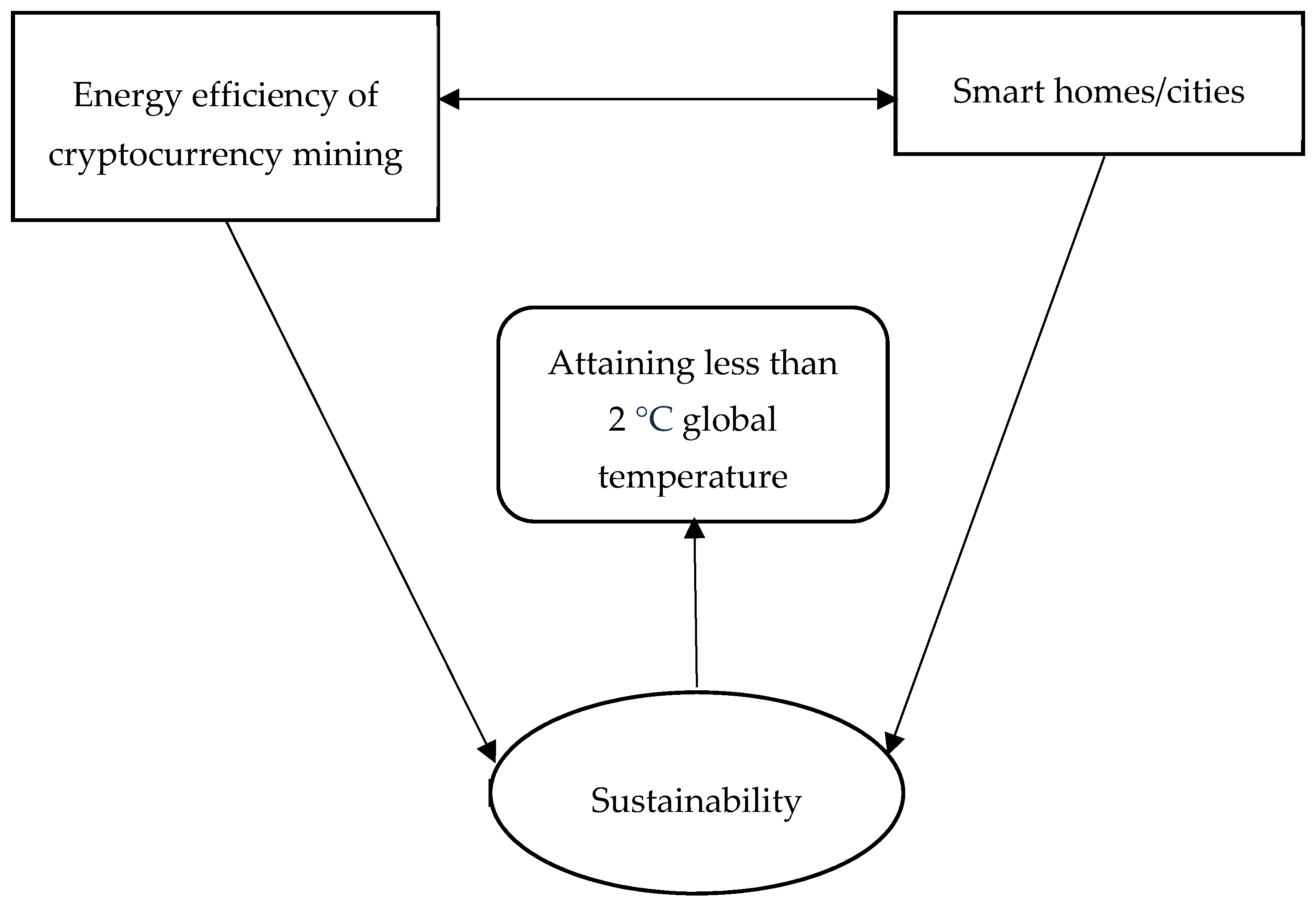
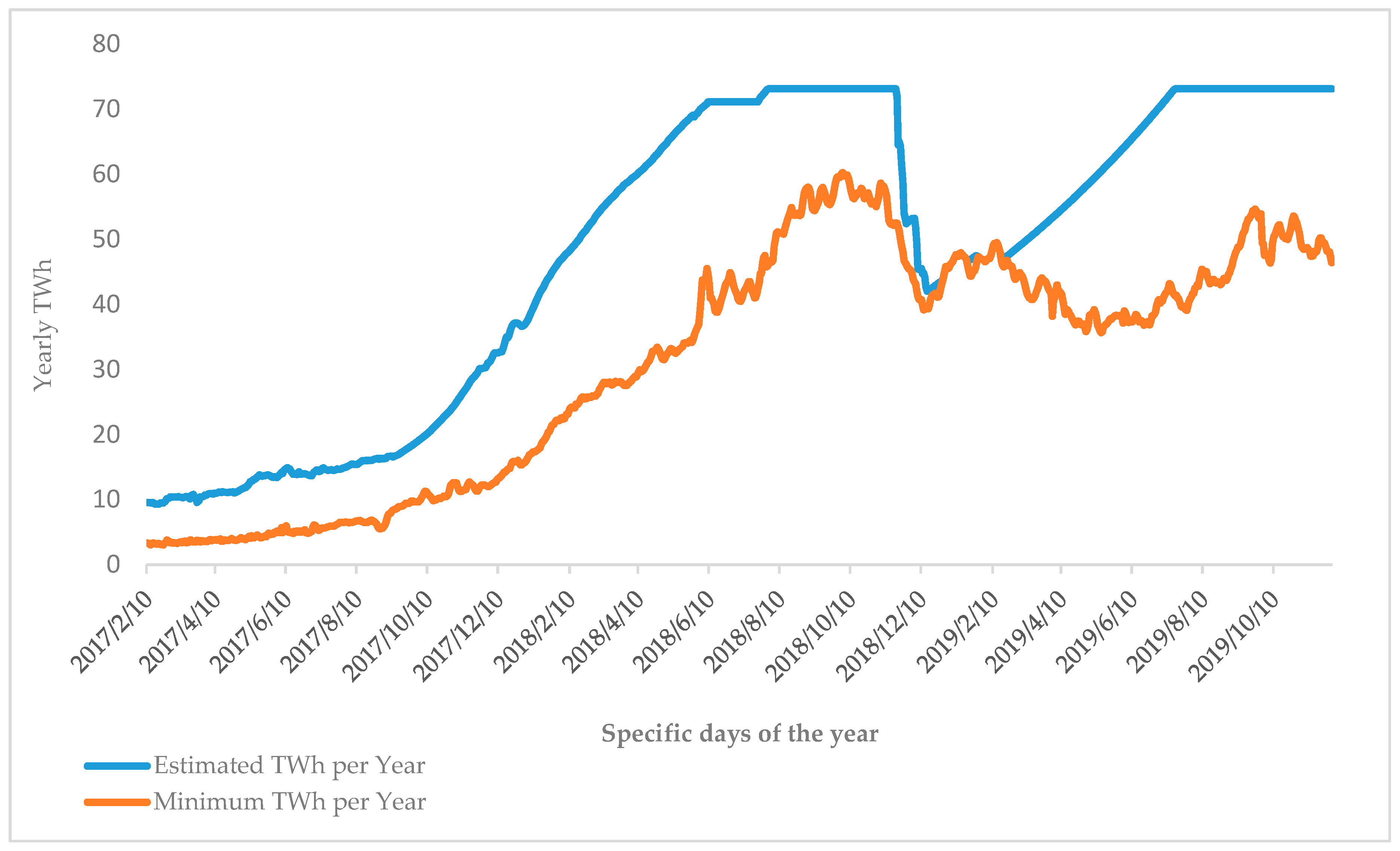
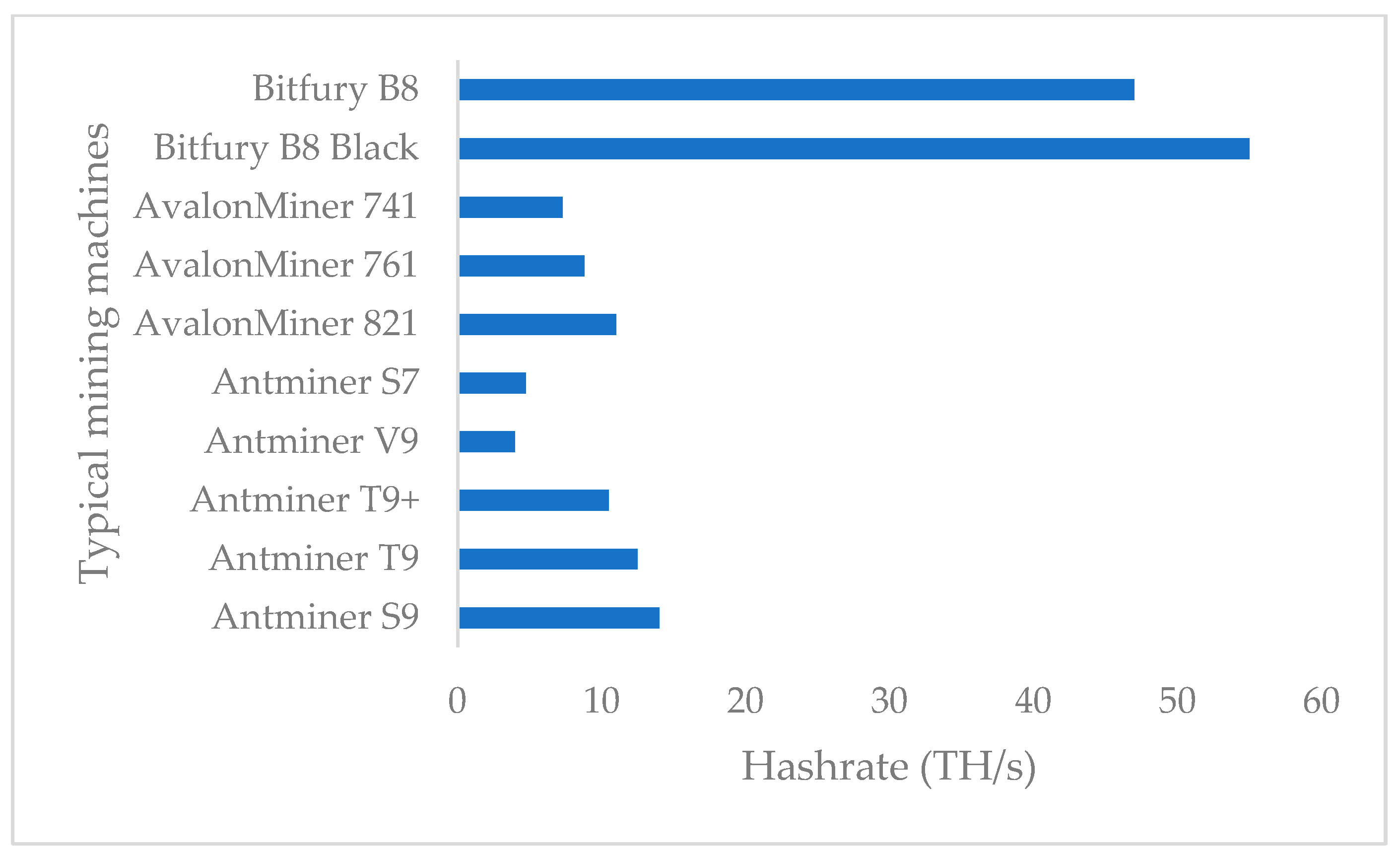
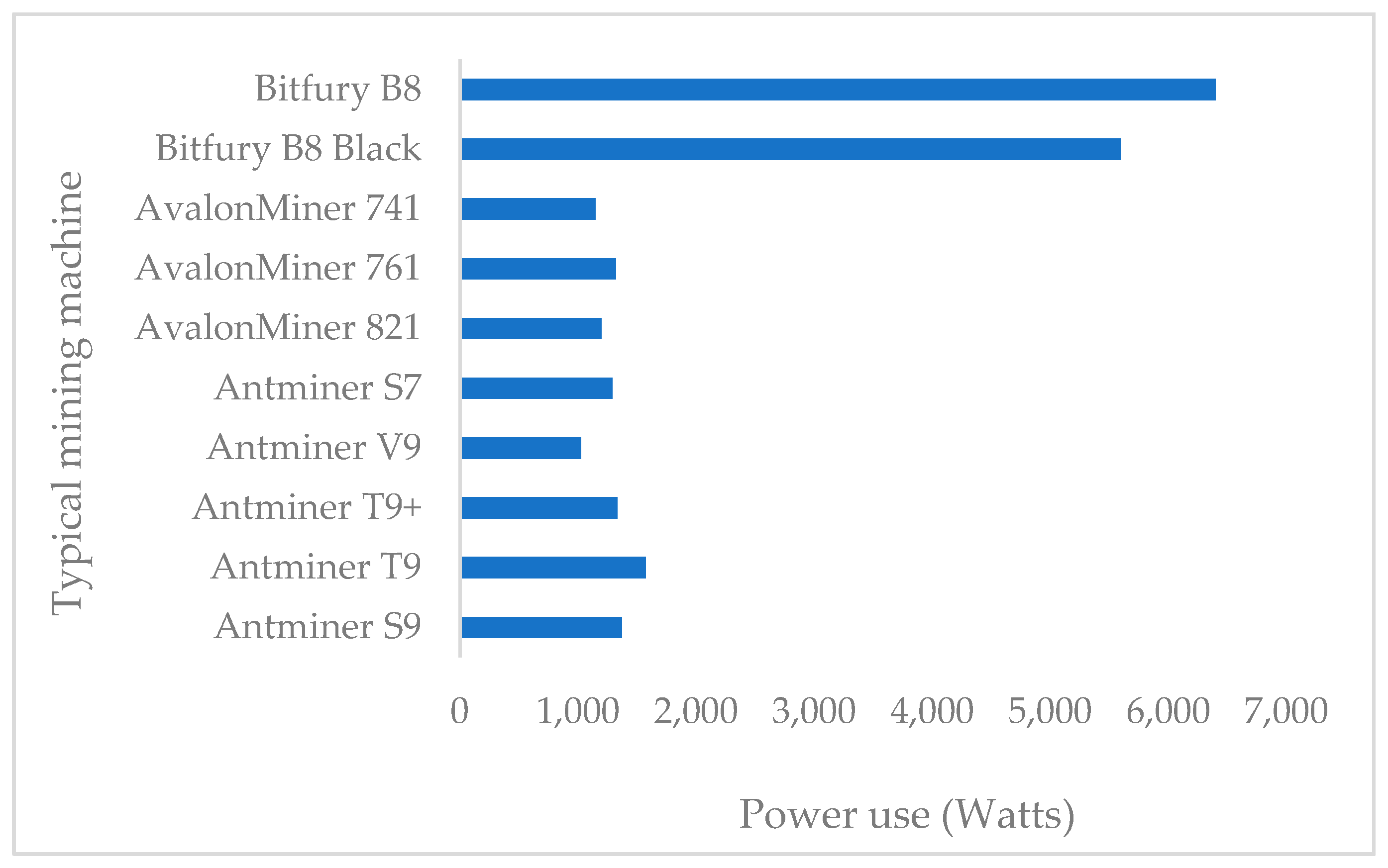
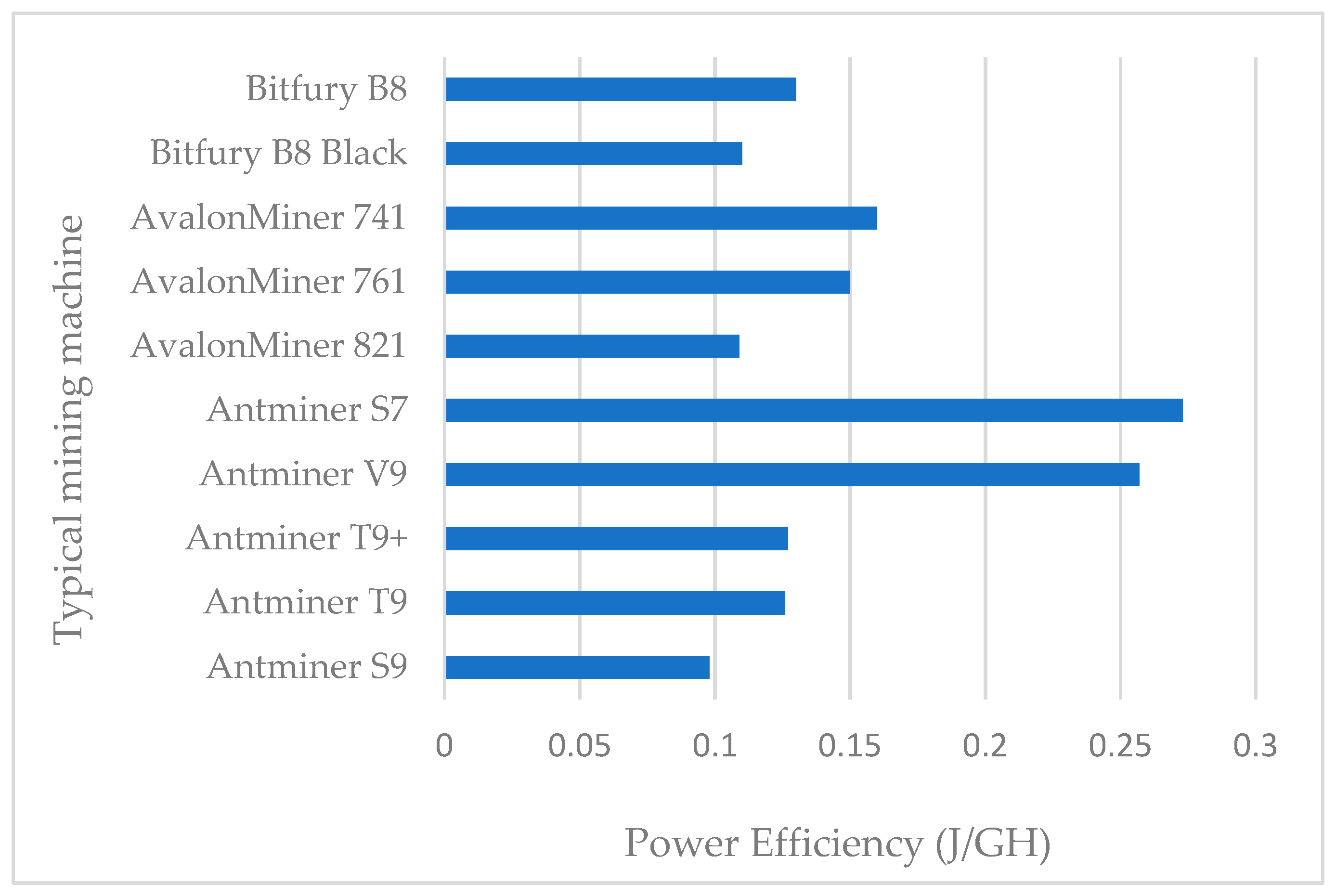
© 2019 by the authors. Licensee MDPI, Basel, Switzerland. This article is an open access article distributed under the terms and conditions of the Creative Commons Attribution (CC BY) license (http://creativecommons.org/licenses/by/4.0/).