


Abstract
Background/Objectives: People with highly complex chronic conditions (HCCCs) have clinical, functional, and social needs that also affect their caregivers. This study aimed to explore how people with HCCCs and their family caregivers experience caring and being cared for at home, including their perceived needs, in the Canary Islands. Methods: A qualitative phenomenological–hermeneutic study was conducted in Tenerife, Canary Islands, Spain, involving five family care units: three care recipient–caregiver dyads and two triads comprising two care recipients and one caregiver. Semi-structured interviews were conducted in the home setting, audio-recorded, and transcribed verbatim. Inductive and interpretive analysis was performed with the support of ATLAS.ti. An iterative process was followed involving the identification of meaning units, emergent coding, and organization into subthemes and themes. Relationships between subthemes were subsequently analyzed, leading to the development of higher-order interpretive dimensions and a conceptual model. Results: Twenty subthemes were identified and grouped into seven themes: emotional experience of care; impact and burden of care; family and relational dynamics; support, needs, and resources; relationship with the healthcare system; process of change and adaptation; and social context and determinants. The findings revealed a dynamic and interdependent experience in which vulnerability and burden coexisted with affection, commitment, and acceptance. Loss of autonomy, family relationships, available support, unmet needs, and interactions with the healthcare system shaped both the experience and sustainability of home-based care. Conclusions: Caring and being cared for in situations of HCCCs constitute a multidimensional and relational experience. The findings suggest the value of approaches centered on the care recipient–caregiver unit that consider emotional, functional, family, social, and healthcare needs.
1. Introduction
Globally, noncommunicable diseases account for the majority of annual deaths and represent one of the major challenges facing contemporary public health [1]. In this context, multimorbidity—defined as the coexistence of two or more chronic conditions—has shifted from being an exceptional situation to a common clinical reality, particularly among older adults [2]. Moreover, multimorbidity is unevenly distributed and is associated with social determinants that may contribute to an earlier onset and a greater burden of disease in socioeconomically deprived settings [2,3]. In Spain, the Ministry of Health has identified chronic care as a strategic priority for the National Health System [4].
In the Canary Islands, the Action Plan for People with Highly Complex Chronic Conditions (HCCCs), known as the 5C Plan, seeks to advance toward a comprehensive, proactive, effective, and person-centered model of care, with an emphasis on continuity of care, case management, and long-term well-being [5]. However, integrated care models are being implemented within healthcare systems traditionally designed to address acute conditions, which may lead to experiences of fragmentation, poor coordination, and increased burden for affected individuals and their families [6,7,8,9].
Understanding the lived experiences of people with complex chronic conditions is essential to align healthcare services and practices with their needs and priorities. Previous qualitative studies have shown that the trajectory of complex chronic illness involves periods of transition associated with diagnosis, initial adaptation, functional decline, and the reorganization of everyday life [10]. People with multimorbidity describe a multifaceted treatment burden that may remain largely invisible to healthcare services and encompasses symptom management, appointments, medication, administrative procedures, monitoring, and coordination with different healthcare professionals [3,11]. In this context, some individuals report feeling “divided into pieces” and compelled to act as their own case managers within a healthcare system perceived as complex and bureaucratic [8,12,13,14].
A substantial proportion of this complexity of care is transferred to the home setting and borne by the care unit formed by the care recipient and their family caregiver. Informal caregiving continues to underpin much of the care provided in situations of dependency and is frequently undertaken by women, spouses, and adult children, with emotional, social, economic, and occupational consequences [4,15,16]. Family caregivers experience a continuous process of adaptation in response to functional decline, uncertainty, and the need to reorganize everyday life [17]. The treatment burden experienced by the care recipient becomes intertwined with caregiver stress and burden, creating a shared experience that supports considering the care recipient and family caregiver as a relational unit of care [11,18].
Despite integrated care strategies, a knowledge gap remains regarding how people with complex chronic conditions and their family caregivers experience everyday care and their interactions with healthcare services within specific care contexts. Health information systems tend to prioritize clinical and healthcare utilization data, whereas subjective experiences, psychosocial factors, and the priorities of patients and caregivers remain less visible [8,10]. Moreover, institutional priorities may not fully align with the needs perceived by care recipients and their caregivers, who often place greater emphasis on autonomy, communication, emotional support, and continuity of care [19,20]. This gap is particularly relevant in the context of home care for people with HCCCs, where clinical, functional, family, and social needs converge and must be managed on a daily basis. Examining the perspectives of care recipients and family caregivers within the same interview provides an opportunity to understand how their experiences intersect, including complementary or differing perceptions of dependency, caregiving responsibilities, available support, and unmet needs.
Therefore, this study aimed to explore the lived experiences, perceived needs, and experiences of caring and being cared for among people with HCCCs and their family caregivers in the Canary Islands, with the aim of generating knowledge to inform interventions and models of care that are more responsive to their everyday experiences and to the needs of the care recipient–caregiver unit.
2. Materials and Methods
2.1. Study Design and Methodological Orientation
A qualitative study with a phenomenological–hermeneutic design was conducted. This methodological orientation was considered appropriate for understanding the meaning of the lived experience of caring and being cared for in the context of complex chronic conditions, addressing not only the description of these experiences but also their interpretation in relation to biography, family context, interactions with the healthcare system, and the social conditions surrounding care [21,22,23,24,25].
From this perspective, experience was not considered an isolated phenomenon but rather a situated, relational, and historically mediated process expressed through participants’ narratives.
The phenomenological–hermeneutic orientation guided the analytical process through an iterative movement between the narratives as a whole, the identification of meaning units (MUs), and the interpretation of their significance within the participants’ lived contexts. This analytical orientation was informed particularly by the phenomenological–hermeneutic approach to narrative interpretation described by Lindseth and Norberg [24], which integrates holistic reading, examination of meaning units (MUs) and thematic structures, and comprehensive interpretation of lived experiences. This approach involved moving between individual accounts and the shared experiences expressed within each family care unit, considering how meanings were shaped by personal circumstances, family relationships, dependency, and interactions with healthcare services. Coding and thematic organization were therefore used as analytical strategies to structure and synthesize the meanings identified, without replacing the interpretive process central to the phenomenological–hermeneutic approach. Thematic organization was embedded within this interpretive process rather than conducted as a separate thematic analysis method. The interpretive process sought to move beyond the descriptive content of the narratives toward a contextualized understanding of the experience of caring and being cared for.
The study was reported in accordance with the Consolidated Criteria for Reporting Qualitative Research (COREQ) for interviews and focus groups to ensure transparent and comprehensive reporting of the research team and reflexivity, study design, analysis, and presentation of findings [26]. The completed COREQ checklist is provided as Supplementary Table S1.
2.2. Study Context
The study was conducted in Tenerife, Canary Islands, Spain, within the context of home care for people with HCCCs and functional dependency. The healthcare context comprised care for people with complex chronic conditions and their family caregivers within the Canary Islands Health Service chronic care model, which emphasizes continuity of care and person-centered care [5].
2.3. Participants, Selection Criteria, and Sampling
Five family care units comprising a total of 12 participants were interviewed: seven people with HCCCs and five primary family caregivers. Three family units participated in dyadic interviews comprising one person with HCCCs and their primary family caregiver, while two participated in triadic interviews comprising two people with HCCCs and one primary family caregiver.
Eligibility based on chronic disease complexity was determined using the Adjusted Morbidity Groups [Grupos de Morbilidad Ajustada (GMA)] stratification tool available in the Primary Care Electronic Health Record (EHR; Drago-AP). This tool stratifies the population according to morbidity and level of complexity into four strata: G0, corresponding to people without chronic disease, and G1–G3, corresponding to people with chronic diseases of increasing complexity. For this study, individuals classified in the G2 (moderate-risk) or G3 (high-risk) strata were considered eligible. The inclusion of both strata reflected the study’s focus on the combined experience of chronic disease complexity, functional dependency, and family caregiving rather than on the highest GMA risk category alone. Eligibility therefore also required recognized dependency, enrollment in the Primary Care home care service, and the involvement of a primary family caregiver.
In addition to meeting the GMA-based criterion for chronic disease complexity, care recipients were required to have an officially recognized Grade I, II, or III dependency status, as determined by the competent authority of the Autonomous Community of the Canary Islands (Directorate-General for Dependency of the Government of the Canary Islands), and to have an identified primary family caregiver. Functional status at the time of the study was assessed using the Barthel Index. The Spanish adaptation and validation of Pfeiffer’s Short Portable Mental Status Questionnaire (SPMSQ) was used to screen cognitive status [27]. Scores represent the number of incorrect responses, with higher scores indicating greater cognitive impairment. Scores of 0–2 errors are generally interpreted as indicating no cognitive impairment, 3–4 as mild impairment, 5–7 as moderate impairment, and 8–10 as severe impairment, with interpretation also influenced by educational level. The SPMSQ was used as a cognitive screening instrument rather than as an independent measure of capacity to participate. The assessment of participants’ suitability for the interviews also considered the researchers’ prior clinical knowledge of the family units and the participants’ ability to understand the study information and interview questions, communicate their experiences, and provide informed consent. Mild cognitive impairment was not considered an automatic exclusion criterion when these abilities were preserved. Clinical and functional information used to verify these criteria was obtained from the EHR. Access to relevant clinical records for the identification of potentially eligible participants and verification of the selection criteria was explicitly included in the research protocol approved by the Research Ethics Committee. The information consulted was limited to that required for participant selection and clinical characterization, in accordance with the approved protocol and applicable data protection requirements.
Criterion-based purposive sampling was used to select individuals and family units who met the predefined characteristics and could provide relevant and diverse information about the experience of caring and being cared for at home. The sampling strategy prioritized the direct experience of complex chronic conditions, functional dependency, and family caregiving rather than a formal maximum-variation approach based on predefined sociodemographic or clinical strata. Nevertheless, the participating family units differed in their dyadic or triadic configurations, caregiving relationships, and clinical and functional characteristics, providing some variation in the experiences represented.
The inclusion criteria for people with HCCCs were (a) being aged ≥18 years; (b) being classified in the G2 or G3 strata according to the GMA recorded in the EHR; (c) having an officially recognized Grade I, II, or III dependency status, as determined by the competent authority of the Autonomous Community of the Canary Islands; (d) being enrolled in the Primary Care home care service; (e) receiving care at home from an identified primary family caregiver; and (f) having sufficient cognitive, sensory, and communicative capacity to participate in the interview. Inclusion criteria for family caregivers were (a) being aged ≥18 years; (b) being identified as the primary family caregiver of one of the participating people with HCCCs; and (c) being directly involved in their usual care. People with HCCCs were excluded if they had cognitive, sensory, or communication impairments that prevented them from understanding the questions or expressing their experiences during the interview, or if participation could cause significant distress that could not be adequately managed during data collection.
Recruitment was conducted by members of the research team working within the Tenerife Primary Care Management Directorate. At least one researcher had previously assessed each family unit and was familiar with its health and social circumstances, enabling the identification of potential participants who met the eligibility criteria. Liaison nurses from the corresponding Primary Care Health Centres acted as gatekeepers, facilitating initial contact with potentially eligible family care units and access to the participants. Following this initial contact, the research team provided detailed information about the study objectives, interview procedures, and voluntary nature of participation before inviting eligible individuals to participate. No additional individuals or family units beyond those ultimately included were contacted; all those invited agreed to participate, and no participants withdrew from the study.
Sample adequacy was assessed according to the informational sufficiency achieved and the sample’s capacity to provide a contextually grounded understanding of the phenomenon under study. This assessment was informed retrospectively by the concept of information power proposed by Malterud et al. [28], which considers the study aim, sample specificity, theoretical orientation, quality of the dialogue, and analytical strategy when evaluating the adequacy of qualitative data. Although caring and being cared for constitutes a multidimensional phenomenon, the study focused on family care units with direct experience of highly complex chronic conditions, functional dependency, and home-based caregiving, providing a defined relational context for the inquiry. The purposive selection of these family care units facilitated the collection of information closely aligned with the study objectives. Furthermore, joint dyadic and triadic interviews enabled the exploration of complementary perspectives and shared experiences within the same family context. The flexible semi-structured interview format allowed follow-up exploration of participants’ accounts, while the field notes and iterative phenomenological–hermeneutic analysis supported the contextual interpretation of the meanings expressed. During data collection and analysis, recurring meanings and a progressive reduction in substantially new contributions were observed. These observations informed the assessment of informational sufficiency but did not constitute a predefined criterion for stopping recruitment. Recruitment concluded after five family care units had participated, with no additional families approached. No formal criterion of data saturation had been established a priori, and comprehensive meaning saturation was not claimed. The collected material was considered sufficiently informative to identify the principal thematic patterns and develop a contextualized interpretation of the experiences represented within the participating family care units, while recognizing that additional families with different characteristics might have contributed further experiences and interpretive nuances.
2.4. Research Team and Reflexivity
The research team consisted exclusively of nursing professionals, all of whom held PhD degrees and had established experience in research and scientific publication, including qualitative research. The team brought together complementary expertise in Family and Community Nursing, Mental Health Nursing, Primary Health Care, university teaching, and healthcare professional education. Interviews were conducted by four researchers—three men and one woman—three of whom were specialists in Family and Community Nursing and one in Mental Health Nursing. Two worked clinically in Primary Care within the Tenerife Primary Care Management Directorate, and one of them worked as a Community Liaison Nurse. All interviewers had previous experience in qualitative research.
Up to three researchers participated in each interview. At least one interviewer had a pre-existing professional relationship with the family unit through their clinical practice and had participated in its assessment before recruitment. This proximity could facilitate the establishment of trust and the expression of experiences, perceptions, and needs. Nevertheless, the team acknowledged that their prior knowledge of the families and their own professional experience in chronic care and caregiving could influence both the interaction during the interviews and the interpretation of participants’ narratives. Before the interviews, participants were informed of the researchers’ professional identities, their involvement in the study, and the study objectives. During data collection, the flexible semi-structured interview format allowed participants to elaborate on their experiences through follow-up questions. Field notes documented relevant interactional and contextual aspects, including silences, non-verbal communication, and emotional reactions, which were subsequently considered alongside the transcripts when interpreting participants’ accounts.
From a reflexive perspective, the team critically considered its professional and theoretical assumptions regarding complex chronic conditions, dependency, and family caregiving before and throughout the fieldwork. During the analytical process, the preliminary coding and interpretations developed primarily by three researchers were critically reviewed by all six researchers, including two who had not participated in data collection. When differences in interpretation emerged, the relevant MUs and their broader narrative contexts were re-examined and compared with the original transcripts and field notes. Particular attention was paid to distinguishing meanings expressed by participants from assumptions or interpretations arising from the researchers’ previous clinical knowledge and professional experiences. This collaborative process enabled different professional perspectives to be incorporated into the analysis and supported the critical examination of potential interpretive bias, while acknowledging that the influence of pre-existing professional relationships could not be entirely excluded.
2.5. Data Collection
Data were collected through joint semi-structured interviews with care recipients and their family caregivers, conducted in dyadic or triadic formats according to the composition of each family care unit. This format enabled exploration of the shared experience of care, relational dynamics, perceived needs, and interactions with healthcare services while incorporating the perspectives of both care recipients and family caregivers. The interview guide was developed from previous literature on complex chronic conditions, multimorbidity, treatment burden, and family caregiving and was reviewed by the research team to ensure the relevance and clarity of the questions [29]. Separate guides adapted for people with HCCCs and family caregivers were used (Supplementary Table S2). The interviews addressed (a) illness and care trajectory; (b) everyday organization of care; (c) personal, family, and social changes; (d) relationships with healthcare professionals and services; (e) formal and informal support; (f) unmet needs; and (g) meanings attributed to the experience. The guides were used flexibly, allowing follow-up questions to explore issues that emerged during participants’ narratives. Although the interview guides included direct questions about perceived burden, loneliness, and caregiving difficulties, these questions were embedded within a broader exploration of participants’ experiences, including the meanings attributed to care, everyday activities, family relationships, interactions with healthcare services, available support, and perceived needs. The flexible semi-structured format allowed participants to describe their experiences in their own terms and provided opportunities to explore additional perspectives and issues emerging during the interviews. Questions were addressed to both care recipients and family caregivers, using the corresponding interview guides to explore their respective experiences while allowing spontaneous exchanges among family members. Follow-up questions were used to clarify and expand on participants’ contributions within the joint conversation. The different speakers’ contributions were distinguished in the verbatim transcripts, allowing individual perspectives to be identified while preserving the relational context in which they were expressed.
Data were collected between 21 April 2025 and 14 February 2026. Interviews were conducted in participants’ homes, with no individuals other than members of the participating family unit present, under conditions previously agreed upon with each family. Interviews lasted between 21 and 106 min, and no repeat interviews were required. All interviews were conducted in Spanish, audio-recorded with prior consent, transcribed verbatim in the original language, and anonymized using alphanumeric codes to protect participants’ identities. Transcripts were not returned to participants for review or correction.
During and after each interview, the interviewers prepared field notes to document relevant contextual and interactional aspects that might not have been captured in the audio recordings, including non-verbal communication, silences, emotional reactions, incidents, and observations relevant to understanding participants’ narratives. The field notes were subsequently compared with the transcripts and used as complementary contextual information during the analytical and interpretive process.
2.6. Data Analysis
The analysis was conducted by six members of the research team, four of whom had participated in the interviews and two additional researchers who had not been involved in data collection. All were nursing professionals with PhD degrees and experience in qualitative research, including data analysis and interpretation. The initial coding and preliminary analytical organization were undertaken primarily by three researchers, while the remaining three participated in the critical review of the emerging codes, thematic groupings, and interpretations. Researchers who had participated in the interviews contributed their contextual knowledge of the family care units and interview interactions, whereas those who had not participated in data collection provided additional perspectives for critically examining the emerging interpretations. This collaborative approach broadened the analytical perspectives and facilitated critical comparison of interpretations throughout the process.
The analysis followed a phenomenological–hermeneutic logic aimed at understanding the meanings participants attributed to their experiences of caring and being cared for. The process was progressive and iterative, combining holistic and interpretive readings of the narratives with the identification of MUs, emergent coding, and their subsequent organization into increasing levels of interpretive abstraction. In the first phase, transcripts were read repeatedly to develop an overall understanding of each narrative and of the experience described in each dyadic or triadic interview. The corresponding field notes were also reviewed at this stage, allowing the narratives to be contextualized in relation to interactional aspects, emotional reactions, silences, and other circumstances observed during the encounters. Individual contributions were examined in relation to both the experiences expressed by each participant and the broader exchanges occurring within the family care unit. Agreements, elaborations, and contrasting perspectives among family members were interpreted within the context of each joint interview. Individual statements were not automatically treated as representing the perspectives of all members of the family care unit. In triadic interviews, the accounts of both care recipients were distinguished from that of their shared family caregiver. Dyadic and triadic interviews were not treated as separate comparative groups; instead, their different compositions were considered when interpreting the individual and relational experiences expressed within each family care unit.
In the second phase, MUs relevant to the phenomenon under study were identified, and emergent coding was performed with the support of the analytical tools available in ATLAS.ti (version 26; ATLAS.ti Scientific Software Development GmbH, Berlin, Germany). Each code was critically examined in relation to its associated MUs, the surrounding narrative, and, where relevant, the corresponding field notes. This process involved repeated movement between individual excerpts and the overall meaning of each participant’s account. Code labels were refined when they were overly broad, ambiguous, or insufficiently representative of the experiential meanings expressed. Codes were merged when different labels referred to substantially overlapping meanings, while distinctions were preserved when they reflected different or contrasting experiences. Codes were reformulated when their initial interpretation did not adequately reflect the context or meaning of participants’ narratives, whereas redundant codes or those without sufficient grounding in the original accounts were excluded. These decisions were guided by the interpretive relevance of the meanings identified and their contextual and relational significance, rather than by the frequency of their occurrence. The resulting codes were progressively organized into subthemes and themes. The specific use of artificial intelligence (AI) tools to support the analytical process is described in Section 2.7.
Thematic organization was used as a strategy to organize and synthesize the meanings identified within the phenomenological–hermeneutic interpretive process, rather than as an independent thematic analysis method. The progression from codes to subthemes and themes involved examining similarities, differences, and relationships among the meanings expressed in participants’ narratives, while repeatedly returning to the complete interviews to preserve their contextual and relational significance. Subthemes brought together related experiential meanings, whereas themes represented broader patterns of meaning across the family care units. These thematic structures were subsequently reconsidered in relation to the narratives as a whole, contributing to the development of higher-order interpretive dimensions and a comprehensive understanding of the phenomenon. The development of subthemes and themes was not based exclusively on the frequency of codes or MUs but on their interpretive relevance and their contribution to understanding the phenomenon under study [24,25].
Field notes were used throughout the analytical process, particularly to contextualize excerpts whose meaning could be influenced by elements of the interaction or circumstances observed during the interview. Their content was compared with the transcripts and incorporated into the interpretation when it provided relevant contextual information, without altering participants’ verbal accounts.
At a subsequent stage, a co-occurrence analysis between subthemes was conducted using the coded data segments to explore patterns of relationships among the emotional, relational, family, social, and healthcare dimensions identified. For this complementary analysis, the operational unit for identifying co-occurrences was the coded textual quotation or segment within the interview transcripts, rather than the individual participant or family care unit. The analysis considered codes grouped within their corresponding subthemes. Individual codes were grouped according to the subthemes defined in the final analytical codebook (Supplementary Table S4), and the co-occurrence frequencies for each pair of subthemes were obtained by aggregating the co-occurrence events identified between their constituent codes across the five interviews. A co-occurrence was identified when codes associated with two different subthemes were applied to the same quotation or to overlapping coded quotations. The appearance of these codes in separate, non-overlapping segments of the same interview was not considered a co-occurrence. This complementary analysis was intended to identify patterns of thematic intersection that could inform the subsequent interpretive rereading of the narratives, rather than to quantify the importance of participants’ experiences or establish relationships independently of their context. For each pair of subthemes, the frequency with which their associated codes co-occurred within the same or overlapping coded quotations was calculated, generating a symmetrical co-occurrence matrix. When multiple qualifying code pairs belonging to the same two subthemes occurred within the same or overlapping textual segments, each distinct code-pair co-occurrence contributed separately to the corresponding subtheme-level frequency. Consequently, the reported frequencies represent aggregated code-pair co-occurrence events across the five interviews, rather than counts of unique quotations, participants, or family care units. Co-occurrences were used as complementary empirical evidence to support interpretation of relationships between subthemes, without assuming that a higher frequency of co-occurrence necessarily indicated greater interpretive relevance or a causal relationship.
Global connectivity was then calculated for each subtheme from this matrix and defined as the sum of its co-occurrence frequencies with all other subthemes. Specifically, the global connectivity value for each subtheme was obtained by summing its pairwise co-occurrence frequencies with the remaining 19 subthemes, excluding self-co-occurrences. This indicator therefore represented the cumulative frequency of co-occurrence events involving each subtheme, rather than the number of distinct subthemes with which it was associated. This indicator was used exclusively for descriptive purposes to examine the extent to which each subtheme was connected with the overall thematic structure. Its purpose was to provide an overview of the distribution of co-occurrence relationships and to identify subthemes whose connections with other experiential dimensions warranted further interpretive examination. Higher global connectivity values were interpreted as reflecting greater cumulative co-occurrence frequencies, without implying stronger conceptual relationships, greater phenomenological relevance, or greater interpretive importance.
Finally, integration of the themes, the relationships observed among subthemes, co-occurrence patterns, and interpretive rereading of the narratives enabled the development of higher-order interpretive dimensions and a conceptual model of the phenomenon under study. The co-occurrence analysis provided a complementary means of identifying thematic intersections that warranted closer interpretive examination. These patterns were subsequently reconsidered through the relevant MUs and their broader narrative contexts, taking into account the emotional, relational, and situational meanings expressed by participants. The construction of higher-order interpretive dimensions was therefore guided by the contextual significance and interrelationships of the identified meanings, rather than by the numerical magnitude of co-occurrences or global connectivity values. Co-occurrence patterns and global connectivity were used as complementary descriptive evidence in this process rather than as automatic criteria for constructing the interpretive dimensions. The preliminary analytical structure developed by the three researchers primarily responsible for coding was subsequently subjected to critical review and discussion involving all six researchers. When alternative interpretations emerged, the relevant MUs and their broader narrative contexts were re-examined and compared with the original transcripts and field notes. Through this iterative process of discussion, critical reflection, and comparison with the original data, consensus was reached on the final structure of codes, subthemes, themes, higher-order interpretive dimensions, and the conceptual model.
The qualitative analysis, including coding, thematic organization, and phenomenological–hermeneutic interpretation, was conducted in Spanish using the original interview transcripts. Quotations selected for publication were subsequently translated into English. The English translations were reviewed against the corresponding original Spanish excerpts by members of the research team to ensure semantic accuracy, contextual consistency, and preservation of participants’ intended meanings.
2.7. Use of Generative Artificial Intelligence in the Analysis
AI-based tools were used during the analytical process in an auxiliary and exploratory capacity. The analysis began with researcher-led readings of the interview transcripts and identification of MUs, as described in Section 2.6. AI-assisted tools were subsequently introduced to support preliminary coding and the exploration of possible relationships among the emerging analytical categories. The AI-assisted coding function in ATLAS.ti (version 26; ATLAS.ti Scientific Software Development GmbH, Berlin, Germany) was used to support the initial generation of proposals for emergent coding of the transcripts. The material analyzed using this function consisted of interview transcript text, from which provisional coding suggestions were generated. Codes proposed by this tool were subsequently reviewed by the researchers against the original excerpts and accepted, modified, merged, or discarded according to their fit with the data and the phenomenon under study. Thus, AI-generated codes were treated as preliminary analytical suggestions rather than as definitive representations of participants’ experiences.
ChatGPT, based on GPT-5.6 Sol (OpenAI, San Francisco, CA, USA; version accessed on 10 July 2026), was subsequently used solely for exploratory and auxiliary purposes. The materials provided to ChatGPT included de-identified interview transcripts, MUs, lists of codes and subthemes, and co-occurrence matrices. These materials reflected the analytical work already undertaken by the research team and were used to explore alternative ways of organizing and interpreting the emerging findings. Its use was limited to exploring potential groupings of codes and subthemes, comparing alternative thematic categorizations, examining relationships among subthemes, and supporting the preliminary synthesis of the higher-order interpretive dimensions and conceptual model. These contributions consisted of preliminary analytical suggestions and alternative organizational proposals rather than autonomous analytical decisions or definitive interpretations of the findings.
AI tools did not replace the researchers’ reading of the transcripts or their interpretation of the data and had no decision-making role in the final analytical results. All AI-generated proposals were critically reviewed, compared with the original data, and accepted, modified, or discarded through discussion and consensus among the research team. This verification involved returning to the corresponding MUs, examining the surrounding passages in the original transcripts, and considering the relevant field notes when contextual or interactional information was necessary. This process involved assessing whether the proposed codes, categories, and relationships were supported by participants’ narratives, preserved the contextual meaning of their experiences, and remained consistent with the phenomenological–hermeneutic orientation of the study. The participation of researchers who had not been involved in data collection also contributed to the critical examination of emerging interpretations and potential assumptions arising from AI-generated proposals. The final naming, grouping, and structure of codes, subthemes, themes, and higher-order interpretive dimensions, as well as the interpretation of findings and development of the conceptual model, remained the responsibility of the research team.
Material submitted to ChatGPT was de-identified beforehand, with direct identifiers removed and potentially identifying contextual information reviewed to minimize the risk of participant re-identification, in accordance with the principles of confidentiality and data minimization. This preparation sought to limit the disclosure of identifying information while retaining the narrative context necessary for qualitative interpretation. Original research materials were managed under the confidentiality, secure-storage, and restricted-access arrangements described in Section 2.9 (Ethical Considerations).
The original research protocol already envisaged computer-assisted qualitative analysis. AI tools were subsequently incorporated as auxiliary analytical resources without modifying the study objectives, phenomenological–hermeneutic orientation, participant recruitment, or data collection procedures.
2.8. Methodological Rigor
Methodological rigor was addressed according to the criteria of credibility, dependability, confirmability, and transferability proposed by Lincoln and Guba [30], incorporating strategies of reflexivity and transparency throughout data collection, analysis, and interpretation.
Credibility was enhanced through repeated reading of the transcripts, comparison with field notes, and analytical triangulation among researchers. Emerging interpretations were discussed iteratively among team members and systematically checked against the original data. The participation in the analysis of two researchers who had not been involved in the interviews provided additional perspectives and enabled critical examination of the interpretations. The selection of representative verbatim quotations also established an explicit connection between the interpretations developed and the experiences expressed by participants.
Dependability was addressed by maintaining an audit trail of the analytical process, including records of codes, subthemes, operational definitions, relationships among categories, and decisions regarding grouping and reorganization made throughout successive phases of the analysis. Changes made during development of the thematic and interpretive structure were reviewed and agreed upon by the research team, enabling the analytical pathway from the original data to the final findings to be reconstructed.
Confirmability was enhanced through researcher reflexivity and constant comparison among transcripts, field notes, MUs, codes, subthemes, themes, and higher-order interpretive dimensions.
Interpretations were discussed among the researchers and checked against the original data, with efforts made to distinguish meanings expressed by participants from interpretations arising from the team’s professional experiences or prior assumptions. Proposals generated using the AI tools described above underwent the same verification and consensus process and were not incorporated as findings without researcher review.
Transferability was enhanced through a detailed description of the study context, participant selection criteria and characteristics, composition of the family care units, and conditions under which the home interviews were conducted, providing sufficient information for readers to assess the potential applicability of the findings to other contexts with similar characteristics [30,31].
Finally, the findings were presented alongside information on participant characteristics, the structure of themes and subthemes, their operational definitions, verbatim quotations linked to specific participants, co-occurrence patterns, and higher-order interpretive dimensions to make explicit the relationship between the empirical data and the interpretations developed.
2.9. Ethical Considerations
The study was conducted in accordance with the ethical principles of the Declaration of Helsinki and was approved by the Research Ethics Committee for Medicinal Products [Comité de Ética de la Investigación con medicamentos (CEIm)] of the University Hospital Complex of the Canary Islands (approval code CHUC_2023_85; 27 April 2023; Tenerife, Canary Islands, Spain). The research was conducted in accordance with Spanish Law 41/2002, of 14 November, regulating patient autonomy and rights and obligations regarding clinical information and documentation; Regulation (EU) 2016/679 of the European Parliament and of the Council of 27 April 2016 (General Data Protection Regulation); and Spanish Organic Law 3/2018, of 5 December on Personal Data Protection and Guarantee of Digital Rights.
The study formed part of a multiphase research project in which the phenomenological–hermeneutic qualitative phase had been included from the outset. The interval between ethical approval and data collection therefore reflected the subsequent implementation of this previously planned phase, without changes to its research objectives or fundamental methodological approach.
The research protocol approved by the CEIm explicitly included access to relevant electronic health records for the identification of potentially eligible participants and verification of the selection criteria. Clinical information was consulted for purposes related to participant selection and characterization, in accordance with the approved protocol and applicable data protection requirements.
All participants received oral and written information about the study objectives and procedures, the voluntary nature of their participation, their right to withdraw at any time without consequences, data processing procedures, and the measures adopted to ensure privacy and confidentiality. All participants provided written informed consent before the interviews were conducted.
Audio recordings and transcripts were handled confidentially, and transcripts were anonymized using alphanumeric codes, with any information that could enable participant identification removed. Research data were stored on secure systems, with access restricted to authorized members of the research team.
3. Results
3.1. Participant Characteristics
The sample comprised 12 participants from five family care units who were interviewed jointly. Three interviews involved dyads comprising one care recipient with highly complex chronic conditions and their primary family caregiver, whereas two involved triads comprising two care recipients with dependency and one shared primary family caregiver. Overall, seven care recipients and five primary family caregivers participated.
The median age of all participants was 77.5 years (range: 48–91). Care recipients had a median age of 87 years (range: 77–91), whereas caregivers had a median age of 56 years (range: 48–78). Among care recipients, five were women (71.4%), and two were men (28.6%). Among family caregivers, four were women (80%), and one was a man (20%). Four caregivers were daughters of the care recipients (80%), while the fifth was the care recipient’s husband (20%). Regarding employment status, one caregiver was employed (20%), three were unemployed (60%), and one was retired (20%). Four caregivers (80%) lived with the care recipient(s), whereas one (20%) did not.
Regarding clinical complexity, six of the seven care recipients were classified in GMA stratum G3 (85.7%) and one in G2 (14.3%). Six care recipients had officially recognized Grade III dependency (great dependency), while one had Grade I dependency (moderate dependency). The median Barthel Index score was 30 points (range: 5–50); one care recipient had total dependency, while the remaining six had severe dependency in activities of daily living. The median Pfeiffer test score was 3 errors (range: 1–4): three care recipients showed no cognitive impairment, while four had mild cognitive impairment. All care recipients included in the study met the established eligibility criteria for participation in the interviews and were able to describe their experiences during data collection. The sociodemographic characteristics of the participants and the clinical characteristics of the care recipients are presented in Table 1.
Table 1.
Sociodemographic and clinical characteristics of participants.
3.2. Thematic Structure of the Findings
The analysis identified 20 subthemes, which were subsequently integrated into seven themes: emotional experience of care; impact and burden of care; family and relational dynamics; support, needs, and resources; relationship with the healthcare system; process of change and adaptation; and social context and determinants. This thematic structure enabled the organization and integration of the emotional, relational, familial, healthcare-related, adaptive, and contextual dimensions underlying the experiences of caring and being cared for in the context of HCCCs.
The themes and subthemes were not conceptualized as independent categories but rather as interrelated components of the caregiving experience, analytically differentiated to facilitate an understanding of the phenomenon. Their development was guided by the interpretive relevance of the meanings expressed by participants rather than solely by their frequency of occurrence. The boundaries between potentially overlapping subthemes were established according to the predominant experiential meaning and narrative context of each coded passage, as reflected in the operational definitions provided in Supplementary Table S4. For example, emotional experience of care addressed participants’ affective responses, whereas caregiving burden and costs focused on the personal consequences of sustained caregiving responsibilities. Similarly, social support and networks referred to available sources of assistance, while unmet needs captured perceived gaps between required and available support. Health and illness addressed clinical conditions and their perceived consequences, whereas dependency and autonomy focused on functional independence and its limitations in everyday life. These distinctions were analytical rather than mutually exclusive, and passages expressing multiple relevant meanings could contribute to more than one subtheme. Table 2 presents the seven themes, their operational definitions, and the associated subthemes.
Table 2.
Themes, operational definitions, and subthemes derived from the qualitative analysis.
Supplementary Table S3 presents the distribution of quotations and associated code labels across the identified subthemes. The reported totals represent the sum of subtheme-specific quotation counts and code–subtheme associations, rather than deduplicated counts across the dataset. Supplementary Table S4 provides the analytical codebook, including the operational definitions of each subtheme and its associated codes. The organization of the 20 subthemes into seven overarching themes is presented in Table 2, while selected verbatim quotations from participants are included in Section 3.3. To further enhance analytical transparency, Supplementary Table S6 (Panel A) presents an illustrative analytical pathway for each of the 20 subthemes, linking original Spanish interview excerpts and their English translations to condensed MUs, associated codes, themes, and higher-order interpretive dimensions. Panel B presents complementary and contrasting perspectives from dyadic and triadic interviews, illustrating how individual accounts contributed to the relational interpretation of the findings.
3.3. Experiences of Caring and Being Cared for
The narratives of people with HCCCs and their family caregivers revealed that the experience of care extended beyond the needs arising from illness and functional dependency. Their accounts reflected a dynamic and relational experience in which emotional experiences, the impact of caregiving on everyday life, family relationships, the availability of support and resources, interactions with the healthcare system, and processes of adaptation were closely interconnected. The seven identified themes are presented below, illustrated by verbatim quotations selected for their ability to represent the central meanings expressed by participants.
3.3.1. Emotional Experience of Care
Emotional experiences occupied a central place in the narratives of care recipients and their family members. Illness, dependency, and the changes associated with these circumstances generated feelings of loss, concern, and frustration, although these experiences coexisted with forms of acceptance and positive meanings associated with family relationships and caregiving itself. Among care recipients, the progressive loss of autonomy could be accompanied by diminished interest in previously familiar activities and a sense of disconnection from their former lives:
“I don’t go out. I don’t feel like it. There’s nothing left for me out there anymore; what I had, I’ve already lost, and it’s gone”.(E1-P1)
Nevertheless, everyday activities retained considerable importance as a means of maintaining some continuity with previous routines. However, functional limitations could turn these same activities into sources of frustration. One participant explained that she continued knitting, but her increasing difficulty in doing so caused feelings of irritation:
“Yes, I do this, I go to my room, I knit. Sometimes I know how to do it, sometimes I don’t. And then it makes me angry”.(E1-P1)
This coexistence of continuity and loss reflected the ambivalent nature of emotional experiences in the face of functional decline.
Among caregivers, emotional experiences were closely linked to the meaning attributed to caregiving. Acceptance of the situation did not necessarily imply an absence of difficulties but rather the progressive integration of caregiving into their own life experience:
“I accepted it […] I do it. And gladly”.(E3-C3)
Affection and the satisfaction derived from providing care also emerged as positive meanings associated with the caregiving role. One caregiver expressed this sense of personal fulfillment through the support provided to her family members:
“I’m left with the satisfaction of having helped them until the end…”.(E1-C1)
Thus, the emotional experience of care was not characterized exclusively by suffering or well-being. Participants’ narratives revealed the coexistence of loss, frustration, acceptance, affection, and commitment, whose meanings depended on functional status, personal life trajectories, and the relationship between care recipients and their caregivers.
3.3.2. Impact and Burden of Care
The ongoing demands associated with dependency affected caregivers’ personal, emotional, and social lives. Caregiving was perceived as a sustained responsibility requiring constant availability and the ability to respond to changing needs:
“Sometimes I feel very overwhelmed, and I cope with it, I cope as best I can”.(E1-C1)
The concentration of responsibilities on the primary caregiver could lead to exhaustion and a perception of bearing a disproportionate share of family demands:
“I’m tired […] everything falls on me, the good and the bad”.(E1-C1)
The impact of caregiving also extended to caregivers’ personal time and opportunities to engage in activities outside the home. The involvement of other family members was essential to provide opportunities for respite:
“If my sister doesn’t come, I can’t go anywhere, that’s for sure”.(E1-C1)
From the care recipients’ perspective, the impact of illness and dependency was particularly evident in the progressive loss of autonomy. Their abilities could vary even from one day to the next, highlighting their increasing need for assistance:
“Maybe I managed to do that yesterday, but today I can’t because of my hands; they just won’t help me”.(E1-P1)
Within the same dyadic family care unit (E1), both perspectives revealed complementary dimensions of the dependency process: while the care recipient described the progressive loss of the ability to perform previously manageable activities, her caregiver reported exhaustion and the increasing concentration of responsibilities. Dependency and caregiver burden thus emerged as closely interconnected dimensions, whereby reduced autonomy increased the need for assistance and reorganization of care, while the ongoing nature of these demands progressively affected the primary caregiver’s time, relationships, and well-being.
3.3.3. Family and Relational Dynamics
The family constituted the main setting for organizing and sustaining care. Although one person assumed the role of primary caregiver, dependency-related needs could require the involvement of other family members and a redistribution of responsibilities. The participation of other relatives enabled caregiving demands to be shared to some extent:
“At weekends, my sisters are the ones who look after them for a while”.(E3-C3)
Family relationships were also shaped by values and meanings developed throughout participants’ life trajectories. From the perspective of care recipients, the importance attributed to providing support and maintaining family relationships was expressed through reflections on the value of helping others during their lifetime:
“As I told my mother, everything is given while we’re alive, because after death…”.(E3-P5)
Caregiving relationships were further characterized by a deep interpersonal understanding developed over time. This familiarity facilitated forms of communication that extended beyond verbal exchanges:
“Just by looking at each other, we know what the other is thinking”.(E3-C3)
These narratives illustrated how family relationships were shaped by shared histories, values, and established patterns of communication. Commitment, responsibility, and affection emerged as elements that gave meaning to the assistance provided and could coexist with the difficulties experienced. Family relationships therefore functioned simultaneously as the context in which caregiving responsibilities were distributed and as a source of meaning and support that helped sustain care.
3.3.4. Support, Needs, and Resources
The ability to sustain care at home was influenced by the availability of family and formal support. The involvement of other family members provided practical assistance and, particularly, opportunities for the primary caregiver to rest. However, the availability of such support varied and was not always sufficient to meet everyday caregiving demands. Among the needs expressed, participants emphasized the need for more extensive formal support associated with dependency:
“For the dependency support services to provide more hours”.(E1-C1)
The availability of formal resources depended not only on their official recognition but also on their actual accessibility. In another family care unit, despite having completed the application process, home-based assistance remained pending:
“The companies that provide the service […] you’re on a waiting list”.(E5-C5)
These experiences reflected a gap between everyday caregiving needs and the actual availability of formal support.
In addition to providing direct care, family members assumed ongoing organizational responsibilities, including adapting schedules, coordinating the involvement of other relatives, managing appointments and resources, and reorganizing their own activities according to the care recipient’s needs. Home-based caregiving thus acquired a care management dimension that increased the responsibilities of the primary caregiver and highlighted the importance of support networks capable of sharing these demands.
3.3.5. Relationship with the Healthcare System
Interactions with healthcare services constituted an important dimension of families’ experiences. Participants’ narratives showed that positive assessments of the care received could coexist with difficulties related to accessibility, continuity, and the healthcare system’s capacity to respond to certain needs.
From the care recipients’ perspective, experiences of healthcare could involve prolonged periods of waiting and discomfort during encounters with health services. One participant recalled an episode in which he remained seated for an extended period:
“They sat me in a chair. I stayed there for a whole day, a whole night”.(E2-P2)
Family caregivers also described difficulties associated with discontinuity in communication and the involvement of different healthcare professionals. One caregiver expressed how these circumstances affected her confidence in the care process:
“You speak to one person, and the next day you speak to someone else […] You have no confidence”.(E2-C2)
However, these difficulties did not necessarily imply a negative overall assessment of the care received. Some participants expressed satisfaction with healthcare professionals while identifying barriers to accessing specialist services:
“The care [is] wonderful, but there are no specialists, there just aren’t”.(E5-C5)
These accounts revealed different but interconnected dimensions of the relationship with the healthcare system. While care recipients described experiences associated with the conditions in which care was delivered, caregivers emphasized difficulties related to communication, continuity, and access to services. Participants therefore distinguished between the quality of the care received and problems arising from service organization, waiting times, or the availability of certain resources. In situations characterized by multimorbidity and dependency, these difficulties added further demands to family care management and reinforced the importance attributed to accessibility and continuity of care.
3.3.6. Process of Change and Adaptation
Living with HCCCs and dependency was experienced as a dynamic process in which health status, autonomy, and assistance needs could change progressively. These changes required families to reorganize their routines and responsibilities and continually adapt the way they provided care. In some cases, the transition from autonomy to dependency had occurred over a relatively short period:
“Until last year, [the person] was independent […] right now, [the person] is completely dependent”.(E3-C3)
The progression of dependency involved not only changes in the care recipient’s functional status but also transformations in family responsibilities and everyday organization.
From the care recipients’ perspective, adaptation to functional limitations could involve tensions between professional recommendations and the desire to preserve autonomy in everyday activities. One participant described continuing to use the stairs despite medical advice:
“The doctor tells me not to go down the stairs […] but I still keep going down the stairs”.(E3-P5)
This account illustrated how maintaining familiar activities could remain meaningful despite the restrictions associated with declining functional capacity. For caregivers, adaptation to ongoing demands was neither linear nor free from periods of exhaustion. They recognized the need to establish time boundaries and take periods of rest to sustain caregiving:
“I stop, even if it’s just for a day, I disconnect, because otherwise I can’t keep going”.(E3-C3)
Alongside rest and support from others, commitment to continuing care represented another strategy for coping with the evolving situation. This willingness was particularly evident in the spousal caregiver, who stated:
“I feel motivated, willing, and strong enough to keep helping her for as long as I can”.(E5-C5)
His account placed this commitment within his desire to continue caring for his wife at home for as long as he remained able to do so.
Taken together, these narratives showed that adaptation involved both care recipients and caregivers, although their perspectives and priorities were not necessarily identical. This was illustrated within the same triadic family care unit (E3), where the caregiver (E3-C3) described encouraging her mother to remain independent in everyday activities, while the care recipient (E3-P5) expressed her determination to continue using the stairs despite medical advice (Supplementary Table S6, Panel B). Considering these perspectives together highlighted the shared importance attributed to preserving autonomy, while the caregiver’s need for periodic rest also reflected the challenges of balancing caregiving responsibilities and personal well-being. Life trajectories also contributed to shaping these adaptation processes. Previous experiences of adversity, family relationships developed over time, and earlier experiences of illness and caregiving provided frameworks through which participants interpreted their current circumstances and mobilized resources to cope with them.
3.3.7. Social Context and Determinants
The experience of caring and being cared for was shaped by the social, biographical, and clinical circumstances in which it occurred. Participants’ narratives showed that current dependency was not interpreted in isolation but in relation to life trajectories characterized by work, family responsibilities, and ways of life developed over time. These previous experiences provided a framework through which individuals understood changes associated with aging, illness, and the progressive need for assistance.
For some care recipients, the contrast between a previously active life and their current situation of dependency was particularly meaningful. One participant recalled an extensive working life that had included agricultural work, construction, and subsequently the hospitality industry, summarizing this way of life in a particularly meaningful expression:
“I’ve always been busy, always on the go”.(E2-P2)
His account positioned activity and work as central elements of his personal trajectory, in contrast to the limitations characterizing his current situation.
The onset and accumulation of health problems progressively introduced changes into these trajectories. The same participant contrasted his current situation with an earlier period of his life when he had hardly needed any treatment:
“Because before, I didn’t take any pills or anything. Nothing at all”.(E2-P2)
Illness therefore acquired meaning not only through its clinical manifestations but also through the disruption it represented to an identity previously associated with activity and autonomy.
From the family caregivers’ perspective, social changes also influenced the organization and meaning of care. One caregiver reflected on changes in gender roles and the distribution of responsibilities between paid employment and domestic life:
“Now you have to go out to work. Before, the woman […] [looked after] the home, and the man worked”.(E2-C2)
This reflection situated caregiving within broader social transformations affecting family organization and the distribution of responsibilities. The coexistence of paid employment, domestic tasks, and caregiving demands contributed to shaping the circumstances in which families organized and sustained care.
The coexistence of chronic diseases, functional limitations, and progressive changes in health status also increased everyday care needs and contributed to shaping the situation of dependency. These circumstances affected caregivers, who had to respond to increasingly complex needs and adapt the organization of care to changes in the care recipient’s clinical condition.
Overall, participants’ narratives revealed that social and clinical circumstances were not external elements of the caregiving experience but dimensions that contributed to shaping its meaning. Life trajectories, previous occupational and family experiences, changing family roles, declining health, and progressive loss of autonomy formed the context through which individuals interpreted their present circumstances and responded to caregiving demands.
3.4. Co-Occurrence and Connectivity Among Subthemes
The co-occurrence analysis identified frequent overlaps between codes associated with different subthemes, with the highest frequencies concentrated around emotional experiences and the impact of caregiving. Particularly prominent were the co-occurrences between emotional experience of care and caregiving burden and costs (n = 95), perceptions and meanings (n = 90), and isolation and vulnerability (n = 88). Other frequent co-occurrences were observed between relationships with the healthcare system and barriers and difficulties in accessing care (n = 91) and communication (n = 84). Similarly, change and adaptation showed a high frequency of co-occurrence with coping strategies (n = 81). These values represent absolute frequencies of co-occurrence events involving the same or overlapping coded quotations across the five interviews, rather than the number of participants, family care units, or distinct experiences. The complete co-occurrence matrix is provided in Supplementary Table S5.
The global connectivity analysis showed that emotional experience of care (n = 1310), caregiving burden and costs (n = 1184), and communication (n = 1112) exhibited the highest cumulative co-occurrence frequencies within the overall thematic structure. These values summarize the frequencies of coding overlap with the remaining subthemes and do not indicate stronger conceptual relationships or greater phenomenological importance. The complete distribution of global connectivity across the 20 subthemes is presented in Table 3.
Table 3.
Global connectivity of subthemes.
3.5. Interpretive Dimensions of the Experience of Caring and Being Cared for
The integrated interpretation of participants’ narratives and the relationships identified among MUs, codes, subthemes, and themes led to the development of six higher-order interpretive dimensions: care as an emotional experience marked by vulnerability; the healthcare system as both a facilitator and a constraint on care; care as a continuous process of change and adaptation; care as a relational and shared experience; loss of autonomy as a factor transforming caregiving demands; and health status as a dimension permeating the experience of caring and being cared for.
While the seven themes and twenty subthemes provided a descriptive organization of participants’ experiences, the six interpretive dimensions represented a higher-order hermeneutic synthesis integrating meanings across these thematic categories. Therefore, no one-to-one correspondence between themes and interpretive dimensions was assumed. These interpretive dimensions integrated aspects that were interconnected throughout participants’ narratives, allowing the analysis to move beyond descriptive thematic organization and represent relationships of meaning within the experience of caring and being cared for. Co-occurrence and connectivity patterns provided complementary empirical support for this interpretation but did not, in themselves, determine the development of the interpretive dimensions. Their interpretive significance was established through contextual examination of participants’ narratives rather than through numerical frequency or connectivity values. For example, the accounts of a care recipient describing the progressive loss of the ability to perform familiar activities (E1-P1) and her caregiver reporting the concentration of responsibilities and exhaustion (E1-C1) were interpreted together to understand how loss of autonomy transformed caregiving demands within the same family care unit. Similarly, one caregiver’s simultaneous positive assessment of healthcare professionals and criticism of limited access to specialists (E5-C5) illustrated how healthcare services could be experienced as both supportive and constraining. The accounts of a caregiver seeking to preserve her mother’s independence (E3-C3) and a care recipient describing her determination to continue familiar activities despite medical advice (E3-P5) further illustrated how autonomy and adaptation were negotiated within the family context. These examples show how the interpretive dimensions integrate meanings across themes and subthemes to explain relational tensions and interdependencies that would be less apparent from the thematic categories considered separately. Table 4 presents the main relational patterns underpinning each dimension and their corresponding analytical interpretations.
Table 4.
Interpretive dimensions and empirical evidence supporting their development.
3.6. Conceptual Model of the Experience of Caring and Being Cared for
The integration of the six interpretive dimensions led to the development of a conceptual model of the experience of caring and being cared for in the context of HCCCs and dependency at home (Figure 1). The model represents this experience as a dynamic, multidimensional, and interconnected phenomenon, as understood through participants’ retrospective narratives of illness, dependency, and caregiving. It integrates the perceived relationships among health status and dependency, emotional experiences, family and social relationships, adaptation processes, and interactions with the healthcare system.
Figure 1.
Conceptual model of the experience of caring and being cared for in the context of highly complex chronic conditions and dependency at home. Note: Solid double-headed arrows represent interpretive interconnections among the dimensions, whereas dashed double-headed arrows indicate additional cross-dimensional relationships involving adaptation. The horizontal arrow represents the temporal dimension of caregiving experiences as reconstructed from participants’ retrospective narratives. These connections do not imply causal relationships, measured directions of influence, or differences in relationship strength. The temporal representation does not reflect prospectively observed changes or longitudinal follow-up.
Emotional experiences and vulnerability occupy a central position in the model, reflecting their close relationships with caregiving burden, isolation, and the meanings attributed to care. This central position reflects the hermeneutic interpretation of participants’ narratives rather than a numerical ranking based on co-occurrence frequencies or global connectivity. Health status acts as a cross-cutting dimension that shapes care needs, emotional experiences, and interactions with healthcare services, while the loss of autonomy progressively transforms caregiving demands, increasing the need for assistance and requiring the reorganization of everyday care management.
These transformations unfold within a network of family, interpersonal, and social relationships in which communication, values, the distribution of responsibilities, and the availability of support networks may help sustain care or, when insufficient, increase vulnerability and unmet needs. As circumstances evolve, care recipients and their family caregivers engage in a continuous process of change and adaptation, influenced by their coping strategies and life trajectories.
Interactions with the healthcare system may facilitate the sustainability of home-based care through professional support, effective communication, and responsiveness to care needs. However, they may also act as constraints when families encounter barriers to accessing services or unmet needs. Overall, the model illustrates that the experience of caring and being cared for cannot be understood through these dimensions in isolation but rather through their interrelationships and the ways in which they shape participants’ experiences. The temporal perspective incorporated into the model reflects participants’ retrospective accounts of changes in illness, dependency, and caregiving responsibilities, rather than trajectories observed through longitudinal follow-up.
4. Discussion
4.1. Main Findings
This study provides an understanding of the experience of caring and being cared for in the context of HCCCs as a dynamic, relational, and multidimensional phenomenon. The findings suggest that home-based care in situations of high complexity extends beyond clinical and functional needs, encompassing emotional experiences, family relationships, caregiving responsibilities, available support, and interactions with healthcare services. These dimensions were closely interconnected within the participating family care units.
These findings are consistent with recent literature on multimorbidity and HCCCs, which describes the demands of managing chronic conditions, adapting everyday activities, and navigating healthcare services [2,3,14,19]. Previous studies have also highlighted the challenges associated with treatment burden, uncertainty, and fragmented care [8,12,13,18]. The present study contributes to this evidence by examining how these experiences are expressed and interpreted within family care units in the Canary Islands.
The specific contribution of this study lies in its contextual and relational approach. By incorporating the perspectives of care recipients and their family caregivers through joint dyadic and triadic interviews, the study identifies complementary and differing experiences of dependency, caregiving responsibilities, emotional burden, and support. Furthermore, the conceptual model integrates these findings into higher-order interpretive dimensions, emphasizing the centrality of emotional experiences and vulnerability and their relationships with the functional, family, social, and healthcare dimensions of care. This interpretation is consistent with the person-centered and continuity-of-care priorities established in the Canary Islands 5C Plan [5].
4.2. Emotional Experiences and Meanings of Caring and Being Cared for
Emotional experiences occupied a central position in the narratives of care recipients and their family caregivers. The progressive loss of autonomy, illness-related limitations, and ongoing caregiving demands were associated with frustration, exhaustion, concern, and loss. However, these feelings coexisted with acceptance, affection, commitment, and positive meanings associated with family relationships. From a phenomenological–hermeneutic perspective, this ambivalence highlights the importance of understanding care as an experience shaped by relationships, personal meanings, and life trajectories rather than exclusively by functional needs or caregiving tasks.
Previous research has documented the emotional impact of family caregiving on well-being, life satisfaction, and quality of life [17,32,33,34]. Similarly, Sarabia-Cobo et al. [16] identified burden, responsibility, support needs, and differing perceptions of healthcare quality among caregivers of people with HCCCs. The present findings complement this evidence by illustrating how emotional difficulties are experienced alongside the affective and moral meanings attributed to caregiving.
For caregivers, these meanings were connected to pre-existing family bonds, values, and responsibilities, whereas care recipients often interpreted dependency in relation to previously enjoyed autonomy and activities that formed part of their identities. Morales-Asencio et al. [10] emphasized the importance of considering life trajectories when addressing chronicity and complexity. Our findings suggest that these biographical dimensions should also be understood within the family relationships in which caring and being cared for take place.
4.3. Impact and Burden of Care: Isolation and Loss of Personal Life
The impact of caregiving emerged as a cumulative process associated with functional dependency, everyday demands, the concentration of responsibilities, and reduced opportunities for caregivers to maintain their personal lives. Providing care required reorganizing routines, managing resources, and remaining available to respond to changing needs. Consequently, caregiving burden encompassed physical, emotional, relational, and organizational dimensions.
These findings are consistent with previous studies describing the multidimensional burden experienced by family caregivers of older adults with chronic conditions [15,16,17,35]. Lee et al. [11] also highlighted how the demands of managing multimorbidity and interacting with healthcare services can extend to caregivers, contributing to stress and reduced quality of life.
The joint interviews provided insight into how functional dependency and caregiving demands were experienced from complementary perspectives. For care recipients, declining autonomy involved difficulties performing previously manageable activities, whereas caregivers described increasing responsibilities and limitations in their own daily lives. Particularly relevant were reduced social participation, difficulties finding personal time, and reliance on other family members to obtain temporary relief from caregiving responsibilities. These experiences are consistent with the concept of “indirect illness” described by Bonacaro et al. [32], whereby caregivers experience consequences arising from an illness they do not personally have but that transforms their everyday lives.
4.4. The Family Care Unit as a Relational Unit of Care
A central contribution of this study is the understanding of caring and being cared for as a shared experience in which the perspectives and needs of care recipients and family caregivers are interconnected. The joint interviews illustrated how caregiving was organized and negotiated within family relationships, revealing complementary experiences, informal coordination strategies, and differences in how participants perceived their circumstances. This relational perspective provides an understanding of the family care unit that extends beyond the separate examination of individual experiences.
Previous studies have emphasized the contribution of family caregivers to self-care and the management of multiple chronic conditions. Baldan et al. [36] highlighted the importance of caregiver involvement when functional limitations, overlapping symptoms, and competing priorities affect self-care. Similarly, Peeler et al. [19] emphasized the need to consider the perspectives of patients, caregivers, and healthcare professionals when examining multimorbidity management. The present findings extend this perspective by illustrating how care recipients and caregivers interpret their experiences within the same family context.
Family relationships could facilitate the recognition of needs, communication, and the sharing of responsibilities, sometimes through established patterns of nonverbal interaction. However, these relationships could also become contexts in which caregiving demands, inequalities, and personal sacrifices were concentrated. This duality suggests the importance of considering both the supportive and potentially demanding dimensions of family relationships, consistent with family-centered approaches to the care of older adults with chronic conditions [37].
4.5. Support, Unmet Needs, and Relationships with the Healthcare System
The availability of family, social, and healthcare support was an important dimension of participants’ experiences. Families described needs related to additional assistance, access to services, and the availability of resources adapted to their circumstances. A particularly relevant finding was the discrepancy between officially recognized needs and the support effectively received. Waiting lists and insufficient assistance could leave families responsible for managing care demands without the resources they considered necessary.
Participants also described contrasting experiences in their relationships with healthcare services. Positive evaluations of healthcare professionals could coexist with difficulties accessing services, obtaining timely responses, or ensuring continuity of care. This distinction suggests that perceived barriers were not necessarily associated with dissatisfaction with individual professionals but could reflect organizational difficulties and limitations in resource availability.
Previous research has documented the challenges experienced by people with multimorbidity and their caregivers when navigating fragmented healthcare systems, coordinating appointments, managing treatments, and communicating with different professionals [11,12,13,14]. Kuluski et al. [7] similarly identified fragmentation and coordination difficulties in the care of people with HCCCs. Sunde et al. [38] emphasized the importance of trust, professional support, and recognition of caregivers’ knowledge in interactions with healthcare services. The present findings are consistent with this evidence and illustrate how these issues are experienced within the specific circumstances of home-based family care.
From an organizational perspective, these experiences are relevant to integrated care and case management approaches that emphasize accessibility, continuity, coordination, and responsiveness to individual and family needs [9]. These priorities are also reflected in the Spanish Strategy for Addressing Chronicity and the Canary Islands 5C Plan [4,5]. The findings suggest that the perceived availability and accessibility of support may be particularly important when translating these organizational principles into the everyday experiences of care recipients and their families.
4.6. Process of Change, Adaptation, and Reinterpretation of Care
Living with HCCCs and dependency involved an ongoing process of adjustment as functional abilities, care needs, and family responsibilities changed over time. Participants described coping strategies that included reorganizing routines, involving other family members, seeking opportunities for rest, and gradually accepting changes in their circumstances. Adaptation was therefore experienced not as a fixed outcome but as a continuing process shaped by changing needs, available resources, and personal circumstances.
These findings are consistent with Heid et al. [39], who described how the self-management of multiple chronic conditions changes according to illness trajectories, life stages, and previous experiences. Similarly, Ørtenblad et al. [18] highlighted the ongoing negotiation between healthcare demands and everyday life among people with multimorbidity. In the present study, these processes were reflected in the progressive adjustment of family routines and caregiving responsibilities.
From a phenomenological–hermeneutic perspective, adaptation also involved the reinterpretation of personal experiences and identities. For care recipients, the loss of autonomy acquired meaning in relation to previously valued activities and roles, while caregivers interpreted their responsibilities through family relationships, commitment, and the circumstances of their everyday lives. Expressions of acceptance or affection did not necessarily indicate an absence of burden but reflected different ways of attributing meaning to challenging situations. This interpretation is consistent with Neller et al. [34], who highlighted the diversity of caregivers’ needs according to their relationships, life stages, and health circumstances.
4.7. Implications for Nursing Practice and Case Management
The findings suggest several implications for nursing practice, particularly in home-based care, primary healthcare, and case management. First, nursing assessment could consider care recipients and their family caregivers as a relational unit of care while recognizing their individual perspectives and needs. Beyond clinical conditions and functional dependency, such assessments may explore emotional experiences, caregiving burden, family and social support, unmet needs, and the resources available to sustain care at home. This approach may facilitate a more comprehensive understanding of the circumstances in which care is provided and experienced.
Second, the experiences of increasing caregiving demands, isolation, and reduced personal time highlight the importance of identifying caregivers’ support needs alongside those of care recipients. Depending on individual circumstances and expressed preferences, nursing care may include practical guidance for daily caregiving, emotional support, information about available resources, and coordination with community or social services. These considerations are consistent with previous evidence suggesting that primary care case management may be positively perceived when it improves accessibility, coordination, and the sense of being supported [40], as well as with integrated care approaches that emphasize individualized responses to complex needs [9].
Third, the findings underscore the relevance of communication and continuity in relationships between families and healthcare professionals. Active listening, clear information, and recognition of caregivers’ experiential knowledge may contribute to care that is more responsive to families’ perceived needs. Participants’ accounts also suggest the importance of distinguishing satisfaction with professional care from difficulties related to service organization and accessibility. Previous studies similarly emphasize the value of incorporating patient and caregiver perspectives into multimorbidity management [14,19].
Furthermore, the discrepancy between officially recognized dependency and the effective availability of support suggests that nursing assessment and case management should consider not only the identification of needs but also families’ actual access to resources. Identifying perceived barriers, facilitating communication with relevant services, and reassessing support needs as circumstances change may help guide individualized care planning.
In this context, clinical decision support systems could be explored as complementary resources for nursing case management, particularly for identifying changes in clinical and functional status, unmet care needs, and potential indications for palliative assessment when appropriate. Previous research in palliative care settings, including oncology, has suggested potential applications of these technologies in patient identification, referral, and symptom management, while also highlighting limitations in the available evidence and challenges related to implementation [41]. Although these applications were not examined in the present study, they may represent an area for future investigation in home-based care for people with HCCCs. Their potential use would require further evaluation and should complement, rather than replace, professional judgment and shared decision-making, while considering patients’ and caregivers’ preferences, psychosocial circumstances, and data protection requirements.
Finally, the diversity of caregiving circumstances observed in this study highlights the importance of avoiding uniform approaches to family support. As suggested by Wrede et al. [42], caregiver-oriented interventions should take account of individual and contextual differences. In the families studied, these considerations were particularly relevant to caregiving responsibilities, available support networks, personal circumstances, and the relationship between care recipients and caregivers. These implications should be interpreted as practice-oriented considerations arising from the experiences of the participating families rather than evidence of the effectiveness of specific nursing interventions.
4.8. Limitations and Strengths
First, the study included five family care units comprising 12 participants within a specific geographical and healthcare context, limiting the diversity of experiences represented and requiring caution regarding the transferability of the findings. Although recurring thematic patterns and a progressive reduction in substantially new contributions were observed, no formal saturation criterion was established, and comprehensive meaning saturation cannot be claimed. Nevertheless, the specificity of the sample, the depth of the interviews, and the interpretive analytical approach provided relevant information for understanding the phenomenon within the participating family care units, consistent with the concept of information power [28]. Additional participants with different family, clinical, or socioeconomic characteristics might have contributed further experiences and interpretive nuances.
Second, interviews were conducted jointly with care recipients and their family caregivers, and in two family care units, two care recipients participated alongside a shared caregiver. This configuration enabled exploration of the relational dimension of the phenomenon and provided insight into how experiences were expressed within the family care unit itself. The interview guides included direct questions about perceived burden and loneliness, which may have increased the prominence of these experiences in participants’ accounts and potentially influenced the emphasis placed on these issues in the findings. Nevertheless, the broader interview guides and flexible semi-structured approach also allowed the exploration of other difficulties, positive experiences, and meanings associated with caring and being cared for. However, the presence of other family members during the interviews may have influenced participants’ accounts and limited the expression of intimate experiences, disagreements, family conflicts, or negative perceptions of caregiving. Additionally, the pre-existing clinical relationships between some interviewers and participating families may have influenced participants’ willingness to express criticism or disclose sensitive experiences, despite the reflexive strategies adopted throughout the study. Although participants were informed about the voluntary nature of participation, confidentiality procedures, and their right to withdraw without consequences, these safeguards could not fully eliminate the potential influence of family presence or pre-existing clinical relationships on the disclosure of sensitive experiences. The use of flexible follow-up questions and the differentiation of individual contributions within the joint interviews facilitated the exploration of distinct perspectives but could not guarantee that all sensitive or potentially conflicting views were expressed. The findings should therefore be interpreted as narratives produced within a relational interview context rather than as entirely independent individual perspectives.
Third, some sociodemographic variables were not fully available, limiting the detailed characterization of certain participant profiles and the interpretation of findings in relation to socioeconomic, employment-related, or family circumstances. This limitation is particularly relevant because the findings suggest that social conditions and available resources may influence both caregiving experiences and the sustainability of home-based care.
Fourth, the study relied on single interviews in which participants retrospectively described changes in health status, dependency, and caregiving responsibilities. Although these narratives provided insight into how participants understood their experiences over time, the study did not involve longitudinal follow-up. Consequently, the conceptual model represents perceived temporal relationships and interpretive connections rather than prospectively observed trajectories or established causal pathways.
Despite these limitations, the study has several strengths. The joint inclusion of people with HCCCs and their family caregivers enabled a relational approach to the phenomenon and facilitated exploration of the experiences of caring and being cared for within family care units. The phenomenological–hermeneutic design was consistent with the aim of understanding lived experiences, perceived needs, and meanings, while the progressive integration of MUs, codes, subthemes, themes, and interpretive dimensions enabled the analysis to move beyond the description of experiences toward a higher-order understanding of the phenomenon.
Furthermore, analytical triangulation among researchers, the involvement of researchers who had not participated in data collection, the use of field notes, continuous comparison with interview transcripts, and documentation of analytical decisions strengthened the credibility, dependability, and confirmability of the research process. The description of the study context, participant characteristics, and circumstances in which home-based care was provided also enables readers to assess the potential transferability of the findings to other settings. Finally, the presentation of the thematic structure, representative participant quotations, illustrative analytical pathways (Supplementary Table S6), co-occurrence relationships, interpretive dimensions, and conceptual model enhances the traceability of the analytical process from the original data to the interpretations developed, consistent with recommended standards for transparent reporting of qualitative research [25,43].
4.9. Future Research Directions
Future studies should include a greater diversity of family care units, encompassing different levels of dependency, socioeconomic circumstances, family configurations, and rural and urban settings, as well as participants from different islands of the Canary Islands. Such an expansion could help explore whether the experiential dimensions identified in this study are also reflected in other contexts and how they may vary according to family, social, geographical, or healthcare-related characteristics.
Longitudinal designs would also be particularly valuable for examining how the experiences and needs of care recipients and their family caregivers evolve as chronic conditions progress and dependency and caregiving demands change over time. Although participants described changes in autonomy and caregiving responsibilities, their evolution over time was not directly examined in this study. Therefore, future research could explore key transition points, such as increasing dependency, hospital admissions, discharge to home, the introduction of new formal support services, and changes in caregivers’ ability to sustain care.
Further research should also focus on groups that were underrepresented in this study, including male caregivers, older caregivers, employed caregivers, families with limited support networks, people living alone with HCCCs, and caregivers experiencing socioeconomic vulnerability. Recent literature on interventions for informal caregivers similarly highlights the need for more inclusive and context-sensitive research aimed at evaluating the effectiveness, sustainability, and acceptability of the support provided [42].
Finally, the findings and conceptual model developed in this study may inform future research exploring the development and evaluation of nursing interventions focused on the relationship between care recipients and their family caregivers, emotional support, preservation of autonomy, communication between healthcare professionals and families, coordination between health and social care services, and reduction in caregiving burden. Any such interventions would require further evaluation of their feasibility, acceptability, and effectiveness and should be developed collaboratively with care recipients, family caregivers, and healthcare professionals to ensure that they respond not only to clinical and organizational priorities but also to the perceived needs, life trajectories, and meanings attributed to caregiving by those who provide and receive care at home.
5. Conclusions
In the family care units examined in this study, the experience of caring and being cared for in the context of HCCCs emerged as a dynamic, relational, and multidimensional phenomenon that extends beyond illness and functional dependency. Emotional experiences, loss of autonomy and caregiving burden, family relationships, the availability of support and resources, interactions with the healthcare system, and processes of change and adaptation were experienced as interconnected dimensions, shaped by individuals’ life trajectories and their social and clinical contexts. Furthermore, caregiving was characterized by the coexistence of vulnerability, exhaustion, and limitations in everyday life with affection, commitment, acceptance, and positive meanings associated with the caregiving relationship.
The findings suggest that care recipients and their family caregivers can be understood as an interdependent unit of care in which changes experienced by one member affect the needs and capacities of the other. Within the families studied, the sustainability of home-based care was influenced not only by the care recipient’s clinical and functional status but also by the caregiver’s capacity, family organization, support networks, and the effective availability of resources and services. In this context, accessibility, continuity of care, communication, and responsiveness to perceived needs were perceived as factors that could facilitate caregiving, whereas barriers to accessing services and unmet needs contributed to the difficulties experienced by families.
The conceptual model developed in this study integrates these dimensions and offers a contextual framework that may inform nursing assessment and care planning for people with HCCCs and their family caregivers. In community- and home-based nursing practice, the findings suggest the value of jointly assessing care recipients’ and caregivers’ clinical, functional, emotional, and social needs while recognizing the caregiver as an individual requiring care and support. Such assessments may help identify caregiving burden and vulnerability, guide individualized education and emotional support, and facilitate coordination with healthcare, social, and community resources. These implications should be interpreted in relation to the experiences of the participating families and require further investigation in other care contexts.
Supplementary Materials
The following supporting information can be downloaded at https://www.mdpi.com/article/10.3390/nursrep16120426/s1, Table S1: COREQ Checklist; Table S2: Semi-structured interview guides for people with highly complex chronic conditions and family caregivers; Table S3: Analytical codebook: operational definitions of subthemes and associated codes; Table S4: Distribution of quotations and associated code labels across subthemes; Table S5: Analytical Traceability from Verbatim Quotations to Higher-Order Interpretive Dimensions: Examples Across the 20 Subthemes; Table S6: Co-occurrence matrix of subthemes identified in the interviews.
Author Contributions
Conceptualization, P.-R.B.-B., M.R.-Á. and A.-M.G.-H.; methodology, E.-L.D.-H., W.-J.M.-D., C.-A.R.-S., C.-M.M.-G., J.N.-M., M.R.-Á., A.-M.G.-H. and P.-R.B.-B.; software, C.-A.R.-S.; validation, E.-L.D.-H., W.-J.M.-D., C.-A.R.-S., C.-M.M.-G., J.N.-M., M.R.-Á., A.-M.G.-H. and P.-R.B.-B.; formal analysis, C.-A.R.-S., C.-M.M.-G. and W.-J.M.-D.; investigation, E.-L.D.-H., W.-J.M.-D., C.-M.M.-G. and J.N.-M.; resources, M.R.-Á. and P.-R.B.-B.; data curation, W.-J.M.-D., E.-L.D.-H., C.-M.M.-G., C.-A.R.-S. and J.N.-M.; writing—original draft preparation, C.-A.R.-S., W.-J.M.-D. and C.-M.M.-G.; writing—review and editing, E.-L.D.-H., W.-J.M.-D., C.-A.R.-S., C.-M.M.-G., J.N.-M., M.R.-Á., A.-M.G.-H. and P.-R.B.-B.; visualization, P.-R.B.-B., M.R.-Á., A.-M.G.-H., E.-L.D.-H. and J.N.-M.; supervision, P.-R.B.-B. and M.R.-Á.; project administration, P.-R.B.-B. All authors have read and agreed to the published version of the manuscript.
Funding
This research was funded by the Fundación Canaria Instituto de Investigación Sanitaria de Canarias (FIISC), Servicio Canario de la Salud [Canary Islands Foundation for Health Research (FIISC), Canary Islands Health Service], grant number ST 23/01.
Institutional Review Board Statement
The study was conducted in accordance with the Declaration of Helsinki and approved by the Research Ethics Committee of the University Hospital Complex of the Canary Islands (approval code CHUC_2023_85; 27 April 2023; Tenerife, Canary Islands, Spain).
Informed Consent Statement
Informed consent was obtained from all subjects involved in the study. Written informed consent has been obtained from the patient(s) to publish this paper.
Data Availability Statement
The datasets generated and analyzed during the current study are not publicly available due to ethical and privacy considerations, as they contain sensitive personal information obtained from qualitative interviews. Anonymized excerpts of the data may be made available from the corresponding author upon reasonable request, subject to ethical and confidentiality restrictions.
Acknowledgments
The authors would like to express their sincere gratitude to the individuals living with highly complex chronic conditions and their family caregivers who generously shared their experiences and perspectives.
Conflicts of Interest
The authors declare no conflicts of interest. The funders had no role in the design of the study; in the collection, analyses, or interpretation of data; in the writing of the manuscript; or in the decision to publish the results.
Public Involvement Statement
No public involvement in any aspect of this research.
Guidelines and Standards Statement
This manuscript was prepared in accordance with the Consolidated Criteria for Reporting Qualitative Research (COREQ) guidelines for reporting qualitative research involving interviews and focus groups.
Use of Artificial Intelligence
During the research process, the authors used AI-assisted tools for exploratory support in qualitative data analysis. The AI-assisted coding function in ATLAS.ti (version 26; ATLAS.ti Scientific Software Development GmbH, Berlin, Germany) was used to generate preliminary coding suggestions from interview transcripts. These suggestions were subsequently reviewed against the original data and accepted, modified, merged, or discarded by the researchers according to their relevance to the phenomenon under investigation. ChatGPT (OpenAI, San Francisco, CA, USA) was used to explore potential groupings of codes and subthemes, compare alternative thematic categorizations, examine relationships among subthemes, and support the preliminary organization of interpretive dimensions and the conceptual model. ChatGPT was also used during manuscript preparation to assist with English translation, linguistic editing, and refinement of scientific writing. AI-assisted tools did not replace the researchers’ engagement with the original transcripts, independent analytical judgment, or interpretation of the findings. All AI-generated suggestions were critically evaluated and discussed by the research team. Final decisions regarding coding, thematic organization, interpretive dimensions, and conceptual model development were reached through researcher consensus. All material submitted to ChatGPT during the analytical process was anonymized beforehand to remove direct identifiers and potentially identifying information. The authors reviewed and verified all AI-assisted outputs and take full responsibility for the study’s analytical decisions, interpretations, and final manuscript content.
Abbreviations
The following abbreviations are used in this manuscript:
| AI | Artificial Intelligence |
| COREQ | Consolidated Criteria for Reporting Qualitative Research |
| EHR | Electronic Health Record |
| GMA | Adjusted Morbidity Groups |
| HCCCs | Highly Complex Chronic Conditions |
| MUs | Meaning Units |
| SPMSQ | Short Portable Mental Status Questionnaire |
References
- World Health Organization. Noncommunicable Diseases. 2025. Available online: https://www.who.int/news-room/fact-sheets/detail/noncommunicable-diseases (accessed on 21 October 2026).
- Skou, S.T.; Mair, F.S.; Fortin, M.; Guthrie, B.; Nunes, B.P.; Miranda, J.J.; Boyd, C.M.; Pati, S.; Mtenga, S.; Smith, S.M. Multimorbidity. Nat. Rev. Dis. Primers 2022, 8, 48. [Google Scholar] [CrossRef] [Scilit] [PubMed]
- Holland, E.; Matthews, K.; Macdonald, S.; Ashworth, M.; Laidlaw, L.; Cheung, K.S.Y.; Stannard, S.; Francis, N.A.; Mair, F.S.; Gooding, C.; et al. The impact of living with multiple long-term conditions (multimorbidity) on everyday life: A qualitative evidence synthesis. BMC Public Health 2024, 24, 3446. [Google Scholar] [CrossRef] [Scilit] [PubMed]
- Ministerio de Sanidad. Estrategia para el Abordaje de la Cronicidad en el Sistema Nacional de Salud: Documento de Desarrollo 2025–2028; Ministerio de Sanidad: Madrid, Spain, 2025; Available online: https://www.sanidad.gob.es/areas/calidadAsistencial/estrategias/abordajeCronicidad/docs/20250704_EAC_DOCUMENTO-DESARROLLO_2025-2028_Final.pdf (accessed on 21 October 2026).
- Servicio Canario de la Salud. Plan de Acción para Pacientes Crónicos de Alta Complejidad en Canarias (Plan 5C); Gobierno de Canarias: Canary Islands, Spain, 2024; Available online: https://www3.gobiernodecanarias.org/sanidad/scs/contenidoGenerico.jsp?idCarpeta=ca5da52e-4bc1-11ee-aac4-1da46e630abe&idDocument=4a05410c-ab31-11ef-a65f-5530583bb5d9 (accessed on 21 October 2026).
- Endalamaw, A.; Zewdie, A.; Wolka, E.; Assefa, Y. Care models for individuals with chronic multimorbidity: Lessons for low- and middle-income countries. BMC Health Serv. Res. 2024, 24, 895. [Google Scholar] [CrossRef] [Scilit] [PubMed]
- Kuluski, K.; Hoang, S.N.; Schaink, A.K.; Alvaro, C.; Lyons, R.F.; Tobias, R.; Bensimon, C.M. The care delivery experience of hospitalized patients with complex chronic disease. Health Expect. 2013, 16, e111–e123. [Google Scholar] [CrossRef] [Scilit] [PubMed]
- Ploeg, J.; Matthew-Maich, N.; Fraser, K.; Dufour, S.; McAiney, C.; Kaasalainen, S.; Markle-Reid, M.; Upshur, R.; Cleghorn, L.; Emili, A. Managing multiple chronic conditions in the community: A Canadian qualitative study of the experiences of older adults, family caregivers and healthcare providers. BMC Geriatr. 2017, 17, 40. [Google Scholar] [CrossRef] [Scilit] [PubMed]
- Rohwer, A.; Toews, I.; Uwimana-Nicol, J.; Nyirenda, J.L.Z.; Niyibizi, J.B.; Akiteng, A.R.; Meerpohl, J.J.; Bavuma, C.M.; Kredo, T.; Young, T. Models of integrated care for multi-morbidity assessed in systematic reviews: A scoping review. BMC Health Serv. Res. 2023, 23, 894. [Google Scholar] [CrossRef] [Scilit] [PubMed]
- Morales-Asencio, J.M.; Martin-Santos, F.J.; Kaknani, S.; Morilla-Herrera, J.C.; Cuevas Fernández-Gallego, M.; García-Mayor, S.; León-Campos, Á.; Morales-Gil, I.M. Living with chronicity and complexity: Lessons for redesigning case management from patients’ life stories: A qualitative study. J. Eval. Clin. Pract. 2016, 22, 122–132. [Google Scholar] [CrossRef] [Scilit] [PubMed]
- Lee, J.E.; Lee, J.; Shin, R.; Oh, O.; Lee, K.S. Treatment burden in multimorbidity: An integrative review. BMC Prim. Care 2024, 25, 352. [Google Scholar] [CrossRef] [Scilit] [PubMed]
- Joseph, L.; Krishnan, A.; Lekha, T.R.; Sasidharan, N.; Thulaseedharan, J.V.; Valamparampil, M.J.; Harikrishnan, S.; Greenfield, S.; Gill, P.; Davies, J.; et al. Experiences and challenges of people living with multiple long-term conditions in managing their care in primary care settings in Kerala, India: A qualitative study. PLoS ONE 2024, 19, e0305430. [Google Scholar] [CrossRef] [Scilit] [PubMed]
- Lee, P.S.S.; Chew, E.A.L.; Koh, H.L.; Quak, S.X.E.; Ding, Y.Y.; Subramaniam, M.; Vaingankar, J.A.; Lee, E.S. How do older adults with multimorbidity navigate healthcare? A qualitative study in Singapore. BMC Prim. Care 2023, 24, 239. [Google Scholar] [CrossRef] [Scilit] [PubMed]
- Simpson, G.; Morrison, L.; Santer, M.; Hijryana, M.; Farmer, A.; Dambha-Miller, H. Perceptions and experiences of living with and providing care for multimorbidity: A qualitative interview study. J. Multimorb. Comorb. 2024, 14, 26335565241240820. [Google Scholar] [CrossRef] [Scilit] [PubMed]
- Choi, J.Y.; Lee, S.H.; Yu, S. Exploring factors influencing caregiver burden: A systematic review of family caregivers of older adults with chronic illness in local communities. Healthcare 2024, 12, 1002. [Google Scholar] [CrossRef] [Scilit] [PubMed]
- Sarabia-Cobo, C.; Taltavull-Aparicio, J.M.; Miguélez-Chamorro, A.; Fernández-Rodríguez, A.; Ortego-Mate, C.; Fernández-Peña, R. Experiences of caregiving and quality of healthcare among caregivers of patients with complex chronic processes: A qualitative study. Appl. Nurs. Res. 2020, 56, 151344. [Google Scholar] [CrossRef] [Scilit] [PubMed]
- Søvde, B.E.; Sandvoll, A.M.; Natvik, E.; Drageset, J. Caregiving for frail home-dwelling older people: A qualitative study of family caregivers’ experiences. Int. J. Older People Nurs. 2024, 19, e12586. [Google Scholar] [CrossRef] [Scilit] [PubMed]
- Ørtenblad, L.; Meillier, L.; Jønsson, A.R. Multi-morbidity: A patient perspective on navigating the health care system and everyday life. Chronic Illn. 2018, 14, 271–282. [Google Scholar] [CrossRef] [Scilit] [PubMed]
- Peeler, A.; Nelson, K.; Agrawalla, V.; Badawi, S.; Moore, R.; Li, D.; Street, L.; Hager, D.N.; Dennison Himmelfarb, C.; Davidson, P.M.; et al. Living with multimorbidity: A qualitative exploration of shared experiences of patients, family caregivers, and healthcare professionals in managing symptoms in the United States. J. Adv. Nurs. 2024, 80, 2525–2539. [Google Scholar] [CrossRef] [Scilit] [PubMed]
- Sarabia-Cobo, C.; Taltavull, J.M.; Lladó-Jordan, G.; González, S.; Molina-Mula, J.; Ortego-Mate, C.; Fernández-Peña, R. Comparison between attention and experiences of chronic complex patients: A multicentric study. Health Soc. Care Community 2022, 30, 976–987. [Google Scholar] [CrossRef] [Scilit] [PubMed]
- Gadamer, H.-G. Truth and Method, revised, 2nd ed.; Weinsheimer, J.; Marshall, D.G., Translators; Bloomsbury Academic: London, UK, 2013. [Google Scholar]
- Heidegger, M. Being and Time; Macquarrie, J.; Robinson, E., Translators; Blackwell: Oxford, UK, 1962. [Google Scholar]
- Laverty, S.M. Hermeneutic phenomenology and phenomenology: A comparison of historical and methodological considerations. Int. J. Qual. Methods 2003, 2, 21–35. [Google Scholar] [CrossRef] [Scilit]
- Lindseth, A.; Norberg, A. A phenomenological hermeneutical method for researching lived experience. Scand. J. Caring Sci. 2004, 18, 145–153. [Google Scholar] [CrossRef] [Scilit] [PubMed]
- van Manen, M. Researching Lived Experience: Human Science for an Action Sensitive Pedagogy; State University of New York Press: Albany, NY, USA, 1990. [Google Scholar]
- Tong, A.; Sainsbury, P.; Craig, J. Consolidated criteria for reporting qualitative research (COREQ): A 32-item checklist for interviews and focus groups. Int. J. Qual. Health Care 2007, 19, 349–357. [Google Scholar] [CrossRef] [Scilit] [PubMed]
- Martínez de la Iglesia, J.; Dueñas Herrero, R.; Onís Vilches, M.C.; Aguado Taberné, C.; Albert Colomer, C.; Luque Luque, R. Adaptación y validación al castellano del cuestionario de Pfeiffer (SPMSQ) para detectar la existencia de deterioro cognitivo en personas mayores de 65 años. Med. Clin. 2001, 117, 129–134. [Google Scholar] [CrossRef] [Scilit] [PubMed]
- Malterud, K.; Siersma, V.D.; Guassora, A.D. Sample size in qualitative interview studies: Guided by information power. Qual. Health Res. 2016, 26, 1753–1760. [Google Scholar] [CrossRef] [Scilit] [PubMed]
- Kallio, H.; Pietilä, A.-M.; Johnson, M.; Kangasniemi, M. Systematic methodological review: Developing a framework for a qualitative semi-structured interview guide. J. Adv. Nurs. 2016, 72, 2954–2965. [Google Scholar] [CrossRef] [Scilit] [PubMed]
- Lincoln, Y.S.; Guba, E.G. Naturalistic Inquiry; SAGE Publications: Beverly Hills, CA, USA, 1985. [Google Scholar]
- Malterud, K. Qualitative research: Standards, challenges, and guidelines. Lancet 2001, 358, 483–488. [Google Scholar] [CrossRef] [Scilit] [PubMed]
- Bonacaro, A.; Cosentino, C.; Collaro, C.; Gandini, M.C.; La Sala, R.; Artioli, G.; Cervantes Camacho, V. Experiences of “indirect” illness in family caregivers of chronically ill and older adults: A qualitative study. Int. J. Environ. Res. Public Health 2025, 22, 240. [Google Scholar] [CrossRef] [Scilit] [PubMed]
- Montejano-Lozoya, R.; Alcañiz-Garrán, M.d.M.; Ramos-Pichardo, J.D.; Sánchez-Alcón, M.; García-Sanjuan, S.; Sanjuán-Quiles, Á. Affective impact on informal caregivers over 70 years of age: A qualitative study. Healthcare 2024, 12, 329. [Google Scholar] [CrossRef] [Scilit] [PubMed]
- Neller, S.A.; Hebdon, M.T.; Wickens, E.; Scammon, D.L.; Utz, R.L.; Dassel, K.B.; Terrill, A.L.; Ellington, L.; Kirby, A.V. Family caregiver experiences and needs across health conditions, relationships, and the lifespan: A qualitative analysis. Int. J. Qual. Stud. Health Well-Being 2024, 19, 2296694. [Google Scholar] [CrossRef] [Scilit] [PubMed]
- Yustisia, N.; Aprilatutini, T.; Utama, T.A.; Masdar, M. The burden experience of family caregiver of older adults with chronic illness. Res. Community Public Health Nurs. 2023, 34, 85–95. [Google Scholar] [CrossRef] [Scilit]
- Baldan, G.A.; Dello Iacono, I.; Giurissevich, V.; Ausili, D.; Vellone, E.; De Maria, M.; Matarese, M. Older adults’ self-care and family caregiver contribution in multiple chronic conditions: A dyadic qualitative study. J. Adv. Nurs. 2026, 82, 6444–6463. [Google Scholar] [CrossRef] [Scilit] [PubMed]
- Yusuf, A.; Purba, J.M.; Putri, D.E.; Aditya, R.S.; Alruwaili, A.S.; AlRazeeni, D.M. Family-centered care experiences in elderly with chronic diseases in communities: Qualitative study of patients, families, nurses, and volunteers. Health Equity 2024, 8, 338–350. [Google Scholar] [CrossRef] [Scilit] [PubMed]
- Sunde, O.S.; Alteren, J.; Kleiven, O.T.; Ytrehus, S. Maintaining trust and seeking support: A qualitative study of family caregivers’ experiences interacting with health care services for home-dwelling older people with mental health problems. BMC Geriatr. 2025, 25, 136. [Google Scholar] [CrossRef] [Scilit] [PubMed]
- Heid, A.R.; Gerber, A.R.; Kim, D.S.; Gillen, S.; Schug, S.; Pruchno, R. Timing of onset and self-management of multiple chronic conditions: A qualitative examination taking a lifespan perspective. Chronic Illn. 2020, 16, 173–189. [Google Scholar] [CrossRef] [Scilit] [PubMed]
- Hudon, C.; Chouinard, M.-C.; Diadiou, F.; Lambert, M.; Bouliane, D. Case management in primary care for frequent users of health care services with chronic diseases: A qualitative study of patient and family experience. Ann. Fam. Med. 2015, 13, 523–528. [Google Scholar] [CrossRef] [Scilit] [PubMed]
- Dos Santos, F.C.; Snigurska, U.A.; Keenan, G.M.; Lucero, R.J.; Modave, F. Clinical Decision Support Systems for Palliative Care Management: A Scoping Review. J. Pain Symptom Manag. 2023, 66, e205–e218. [Google Scholar] [CrossRef] [Scilit] [PubMed]
- Wrede, C.; Sharma, N.; Bieleman, A.; Tinga, A.; Sturge, J. Interventions for informal caregivers of community-dwelling older adults: A scoping review and future research agenda. J. Aging Health, 2026; online ahead of print. [CrossRef] [Scilit]
- O’Brien, B.C.; Harris, I.B.; Beckman, T.J.; Reed, D.A.; Cook, D.A. Standards for reporting qualitative research: A synthesis of recommendations. Acad. Med. 2014, 89, 1245–1251. [Google Scholar] [CrossRef] [Scilit] [PubMed]
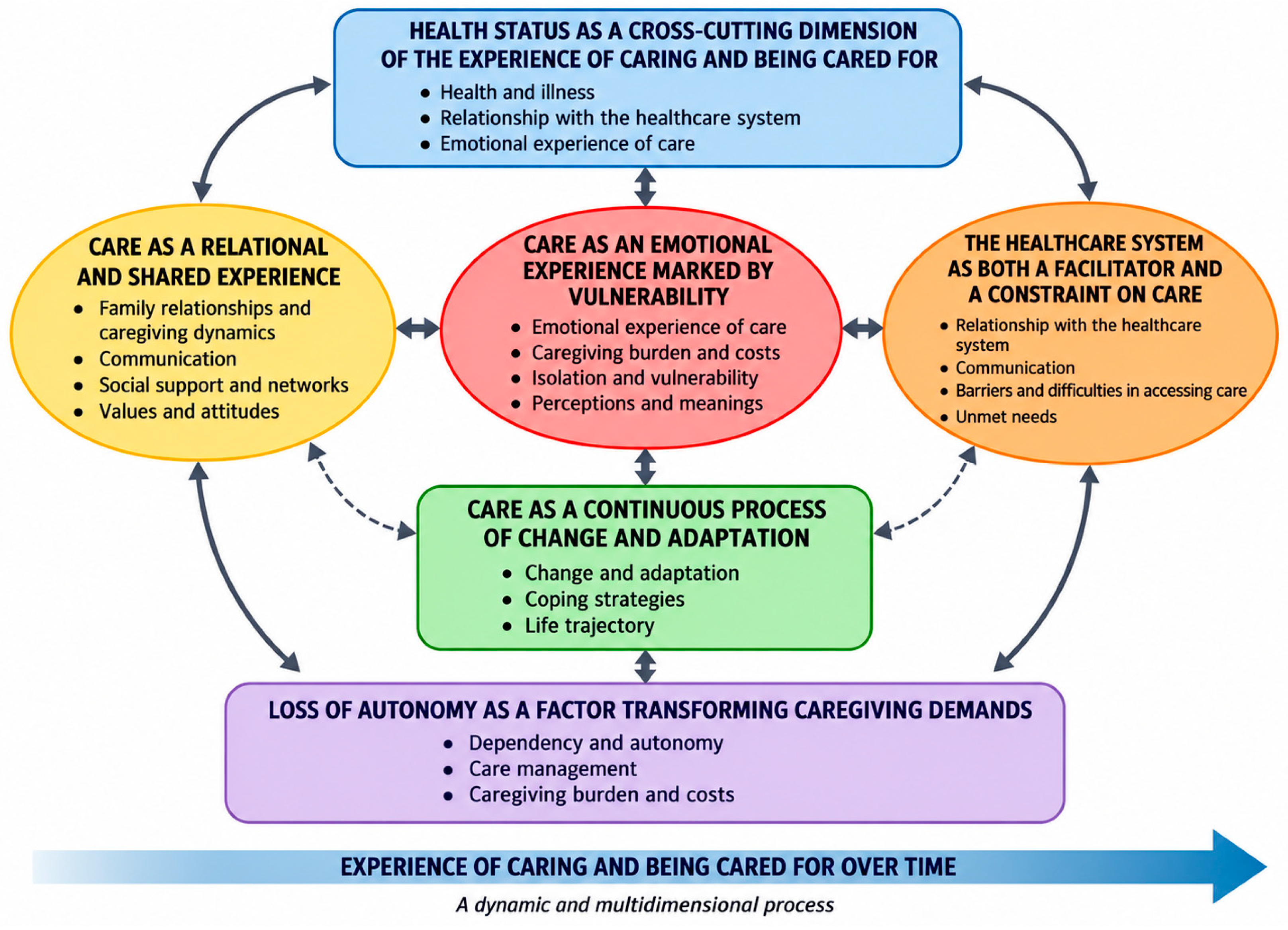

Disclaimer/Publisher’s Note: The statements, opinions and data contained in all publications are solely those of the individual author(s) and contributor(s) and not of MDPI and/or the editor(s). MDPI and/or the editor(s) disclaim responsibility for any injury to people or property resulting from any ideas, methods, instructions or products referred to in the content. |
© 2026 by the authors. Licensee MDPI, Basel, Switzerland. This article is an open access article distributed under the terms and conditions of the Creative Commons Attribution (CC BY) license.