


Abstract
Several thousands of osseous artefacts are stored in museum collections, yet older finds often remain overlooked or dismissed as mere typological references with limited research potential. Advances in analytical methods have improved the ability to study these specimens, even when their contextual information is lost. This paper examines three rediscovered antler axe/adze heads from the Historical Museum at Lund University, without known morphological parallels in other Swedish collections. Through radiocarbon dating, ZooMS analysis, and technological- and micro-wear studies, they contribute to our understanding of manufacturing traditions, resource availability and movement in postglacial landscapes. The study brings into focus the interaction between osseous and lithic axes/adzes in Preboreal Scania, Sweden, 9700–8500 BCE, focusing on raw material availability and tool morphology. Archeologically investigated sites from this period are scarce in Scandinavia, and poor preservation of organic materials hinders detailed assessments of chronologies and the relative importance and exploitation patterns of different species. The Eurasian moose (Alces alces) has been proposed as one of the first postglacial species to immigrate, and as a significant prey species for humans. It subsequently decreased substantially in the archaeological record during the Mesolithic. Here we compile faunal data to evaluate patterns of raw material choices. Although axes were typically crafted from lithic materials, osseous implements resembling axes have been found at sites with good preservation in northeastern Europe. The results suggest previously undocumented craft influences among Preboreal forest dwellers of Scania, which may have been of relevance for the continuous change of “becoming Mesolithic”.
1. Introduction
During the late 19th and early 20th century three antler objects from Scania (southernmost Sweden) were incorporated into the large collections of the Historical Museum at Lund University (LUHM). The objects were recently rediscovered during an inventory of the museum’s collection in preparation for relocation to new storage facilities. To the best of the authors’ knowledge, no antler objects with this morphology have previously been recognised in Swedish collections. Although the three objects slightly differ, they share sufficient typological characteristics to be broadly classified as antler axe/adze heads, forming the organic counterparts of lithic axe and adze types, e.g., [1,2]. Two of the finds were recovered from peat bogs, in Hjärås and Hörby, Scania, Figure 1.
Figure 1.
Map of Northern Europe and Western Russia, with mentioned sites in geographical context and, on the bottom, an enlarged view of Scania with sites mentioned in the text as follows: 1, Hörby (LUHM 24720); 2, Hjärås (LUHM 18213); 3, Harlösa; 4, Sjörup; 5, Mossby; 6, Östra Grevie; 7, Årup; 8, Lake Ringsjön; 9, Lake Finjasjön; 10, Segebro; 11, Dalköpinge; 12, Revinge Bog; A, River Rönneå drainage basin; and B, River Kävlingeån drainage basin. Arrows indicates the direction of the water [3]. Illustration: Björn Wallebom.
Sweden is one of the most peatland-rich countries in the world, with peatlands covering up to 15% of its land area [4]. Although most of these peatlands have been drained and used for cultivation, this abundance of former wetland environments attests to Sweden’s diverse historical landscape. Low availability of other sources of fuel in historical times led to the extraction of peat, including the underlying lake sediment [5]. Since these sediments, mainly made up of lime-rich gyttja, also called lefvertorv, provided good preservation conditions for osseous remains, peat-cutting and cultivation frequently unearthed bones. Many subfossils and osseous archaeological finds in Swedish museum collections originate from these peat bogs, which likewise are crucial for reconstructing the region’s environmental history [5]. Although less common here today, many subfossil remains of the Eurasian moose (Alces alces) are known from southern Sweden [6].
The landscape of the Baltic Sea Region was highly dynamic during the Late Glacial and early Holocene periods (c. 10,000 BCE onwards). At times, the entire western Baltic Sea was dry land [7,8], forming a land bridge facilitating the dispersal of terrestrial fauna from Central Europe into southern Scandinavia [9,10]. Here, the animals initially encountered an open landscape with vegetation consisting of occasional stands of willow, birch and pine, e.g., [11,12]. Compilations of direct radiocarbon dates of osseous finds provide some information on species representation. These data indicate that the Eurasian moose, like the reindeer (Rangifer tarandus), migrated into southern Sweden during the Late Glacial period, potentially from a glacial refugium in the northern Alps [13]. It remains uncertain whether the moose persisted in Scandinavia during the colder Younger Dryas or re-immigrated at the onset of the Holocene. By the beginning of the Atlantic period (c. 7000 BCE) dense forests had developed, and, importantly, the land connection was broken due to a significant rise in sea levels during the Littorina transgression (c. 6500–6000 BCE) [14]. The consequence of this event was a fragmentation and reduction in the diversity of terrestrial animal populations [10,15].
While the Boreal and Atlantic periods (c. 8000–4000 BCE) in Scania have been extensively documented, e.g., [16,17,18,19,20,21,22,23], knowledge of the Late Glacial and Preboreal periods (c. 13,000–8000 BCE) remains limited. Archaeological excavations of sites from these periods, corresponding to Late Palaeolithic and Early Mesolithic cultures (referred to in south Scandinavia as the early Maglemose culture, e.g., [24,25,26]; see Figure S1 for overview of mentioned periods), are relatively scarce, resulting in a limited body of evidence [27,28]. The most famous excavated Late Palaeolithic site in Scania, is Segebro [29]. The lithic assemblage and the spatial distribution closely resemble those at sites of the so-called Bromme culture in Denmark, e.g., [30,31,32]. Smaller excavations have also been carried out at locations in northern Scania, near Lake Finjasjön [33,34], where artefact compositions can be attributed to the Bromme or Ahrensburg cultures, although artefacts with earlier dates (i.e., Hamburg culture) may also be represented. Lärkasjöhult, in northwestern Scania, is similarly attributed to the Ahrensburg culture [35]. In addition to these archaeologically excavated contexts, stray finds of Late Palaeolithic artefacts have been recorded from more than twenty sites across Scania, e.g., [36]. None of these sites have been securely dated, leaving their chronological attribution uncertain. Stray finds attributed to the Preboreal period have also been recorded across Scania, frequently associated with lakes and river systems, e.g., [35,37,38,39]. The chronological interpretations of these sites have likewise generally been based on typological dating of lithics. A recently excavated site at Dalköpinge, in southernmost Scania, constitutes a notable exception. Here, radiocarbon dating supported the typology, placing both dwelling structures and a specialised site for manufacturing microliths in the Early Preboreal period [40]. Owing to the chronological uncertainties outlined above, the transition between the Late Glacial and Preboreal periods remains difficult to define archaeologically in this region. The debate has primarily centred on artefact types that can be regarded as diagnostic, and on how hunter–gatherer groups adapted their settlement organisation and subsistence strategies to the increasingly dense forest environment [35,41].
The introduction of axes and adzes has traditionally been interpreted as one of the principal markers of the transition to the Mesolithic, due to their presumed role in the management of the forest and in enabling more localised and potentially more sedentary lifeways, e.g., [42,43] and references therein. An instructive example is the site of Årup in northeastern Scania, situated where the region’s large lakes drain into the Baltic Sea via the river Skräbeån [44]. The excavated site spans the presumed transition from the Late Glacial to the Preboreal period. Excavations have identified three distinct concentrations of lithic artefacts, the oldest of which is technologically rooted in the traditions of the Ahrensburg culture. Notably, this concentration contained no formal axes or adzes. The other two flint assemblages exhibit technological characteristics associated with the Maglemose culture. Radiocarbon dating of pine charcoal has confirmed a Middle and Late Preboreal date, respectively. Both of these assemblages did include formal flint axes and adzes. Although axes/adzes are generally rare on Late Palaeolithic sites, they do occur, e.g., [26,45,46,47]. The earliest examples are typologically classified as flake and core axes, but their actual function remains uncertain. It is possible that some instead have served as handheld cutting or scraping implements, cf., [48,49].
Recent research has shifted the emphasis from individual artefact types to broader chronological and environmental developments, viewing the cultural transition primarily in relation to the shift from the Younger Dryas to the Preboreal (c. 9500 BCE) [28,45,50,51]. The transition from the Late Palaeolithic to the earliest phase of the Early Mesolithic provides little evidence for substantial changes. Although subsistence shifted from a reliance on reindeer to increasing exploitation of woodland species, with the onset of the Preboreal, cf. [52], settlement patterns and technological traditions remained broadly consistent. This continuity suggests that the final Late Palaeolithic and the earliest Mesolithic represent successive phases within a single, continuous cultural complex, e.g., [28,41,43,44,45,53,54].
Investigated sites from the Preboreal period in Scania have not yielded preserved organic implements. Consequently, our understanding of artefacts manufactured from organic materials remains limited, particularly in comparison with the abundant evidence provided by lithics. Nevertheless, a few stray finds recovered from wetlands indicate that such artefacts constituted an important component in the toolkit, including three perforated elk mattock heads from Sjörup, Mossby, and Harlösa [28,55,56]. Radiocarbon dating of these artefacts has established their chronology, providing important insights into the emergence and duration of a specific tool type. Such chronological frameworks are essential for understanding the development of material traditions characteristic of the Preboreal, including formal antler axes and adzes, such as those examined in this paper, cf. [28,52]. The investigated antler axe/adze heads bear a striking resemblance to stone axes commonly occurring in southern Scandinavia during the Stone Age, but these objects were evidently made from a very different raw material and within other craft traditions. Although no precise parallels have been identified, antler axes/adzes of a somewhat similar appearance are known from various regions and periods, often interpreted as axes, adzes, gouges, debarking tools, etc., e.g., [57,58,59,60,61].
Recent years’ research into the Early Stone Age has put a lot of emphasis on lithic blade technology, chaîne opératoire, and how technological tasks were carried out, e.g., [62,63,64]. Although lithic blades constitute a major part of the archaeological assemblages, they likely represented only a limited part of the overall technological repertoire. Thousands of osseous artefacts are housed in museum collections. All too often these finds, particularly stray finds unearthed in earlier times, remain understudied and omitted from technological studies and exhibitions. Generally, they are considered to have lost their research potential [65], and may at best serve as typological references [66]. Recent methodological developments have significantly enhanced the research potential of these artefacts, even when detailed contextual information is lacking, e.g., [66,67].
The finds in focus in this study exemplify morphological similarities between osseous and lithic implements. Two very different raw materials that require different working techniques may, as demonstrated by the investigated antler heads, produce very similar tools. The significance of the LUHM finds lies in their dual nature: on the one hand, they represent a very common tool morphology, while on the other, they embody rarely documented artefacts of this raw material. This material holds the potential to contribute to the understanding of environmental history and human raw material strategies, and provide direct dates. We explore how the dating of these antler heads relates to the chronology of similar lithic morphologies. Of further importance is identifying which cervid species the raw material derives from, as it relates to climate, landscape development and human exploitation. Two of the objects, LUHM 24720 and LUHM 7507, were sampled for laboratory analysis (Radiocarbon dating and Zooarchaeology by Mass Spectrometry (ZooMS)). The morphology, historical markings, and possible residues from earlier conservation treatments on LUHM 18213 made sampling impossible without disfiguration, thus diminishing the object’s future research value. Residues could risk skewing analytical results, and preservation of the object’s current condition was therefore prioritised. Similar osseous tools were identified in collections from the eastern Baltic; in order to investigate possible chronological parallels, a find from the Pärnu River, Estonia, was sampled for radiocarbon dating. The aim of this study is to integrate these osseous tools into the lithic discourse and expand it further in order to explore the interplay of raw materials and technological traditions during the Early Stone Age of southern Scandinavia.
2. Materials and Methods
Three antler objects from the collections at the Historical Museum at Lund University were documented and investigated, shown in Figure 2 (for additional pictures, see also Figures S2–S9). A comprehensive archival study of published materials was conducted to gather information on similar tools in the neighbouring regions, as well as the faunal history of the region.
Figure 2.
The investigated antler axe/adze heads, from left to right; top row LUHM 24720, LUHM 18213, bottom row: LUHM 7507. Drawing: Björn Wallebom.
2.1. Archival Research
To identify the origin and context of the objects, we have studied the museum’s accession catalogue. This catalogue serves not only as a tool for organising the museum’s collections but also for contextualising individual objects within a broader framework [68]. The entries typically include descriptions, information about the object’s provenance, and details regarding the circumstances of their discovery.
2.2. Morphological Investigations
The objects were examined ocularly, weighed (g), and measured (mm), and their morphological attributes were described. They were also 3D-scanned using a Shining 3D EinScan-SP V2 (SHINING 3D Tech. Co., Ltd., Hangzhou, China), and models were generated usingEinScan-S series_v2.7.0.6, illustrated and photographed. Due to their similarities to lithic counterparts, we employed the lithic terminology when describing the objects. Most of these concepts are well established and accepted, requiring no further explanation. Where explanations have been considered necessary, references are integrated in the running text. The investigated objects can, generally, be described as antler axe or adze heads. The principal distinction between an axe and an adze lies in the orientation of the cutting edge relative to the haft, which largely also determines the tool’s mode of use. An axe has a symmetrically positioned cutting edge aligned with the longitudinal axis of the haft and is primarily designed for chopping, felling, splitting, and rough shaping of wood. In contrast, an adze has an asymmetrically positioned cutting edge oriented perpendicular to the haft, making it particularly well suited for controlled wood removal, including planing, shaping, hollowing, and refining wooden surfaces, e.g., [1,69,70,71]. Both axes and adzes could be hafted in a variety of ways, including direct hafting into a mortise or mounting in a separate socket, depending on the tradition, e.g., [72,73]. Importantly, a formal classification or typology does not correspond to a tool function and may obscure specialised uses of the axe/adze heads, cf. [74]. In addition, axe/adze heads may have been used both hafted and unhafted, the latter functioning as, e.g., handheld multifunctional carving or scraping tools, wedges or chisels, cf. [75,76].
2.3. Microscopy
Microscopical examinations were carried out as a complement to the morphological and technological analyses with the aim of investigating the presence of micro-wear traces related to manufacture and function. As a template for documentation and workflow, the microscopic investigations followed the low- and high-power approaches usually applied on chipped stone tools, e.g., [77,78]. Identified micro-wear traces were compared with re sults from experimental studies, as well as studies on natural wear on antlers, e.g., [59,79]. Wear traces were photographed and marked on schematic drawings of each tool; Figure S2. A Zeiss Axio Scope.A1 microscope (Carl Zeiss Microscopy GmbH, Oberkochen, Germany) with 50–500× magnification, mounted with a Zeiss Axiocam 212 colour camera, was used for the analysis.
2.4. ZooMS/MSMS Analysis
In connection with sampling for radiocarbon dating (see below), 10 mg of antler powder from each sampled object was also submitted for protein analysis using Mass Spectrometry (ZooMS) at the BioArCh Centre, University of York. The protein collagen was extracted using the acid-insoluble protocol [80]. The collagen extract was digested overnight (~18 h) with the enzyme trypsin at 37 °C and the digestion stopped with the addition of 5% v/v trifluoroacetic acid (TFA). The resulting peptides were purified and eluted in 100 µL of conditioning solution (0.1% TFA in 50:50 ACN: water). 1 µL of sample was spotted onto a Bruker ground steel target plate (Bruker Corporation, Billerica, MA, USA) and mixed with 1 µL of matrix (alpha-cyano-4-hydroxycinnamic acid). The sample was spotted in triplicate alongside calibration standards, and the plate was run on a Bruker MALDI ToF MS (Matrix-Assisted Laser Desorption Ionisation Time of Flight Mass Spectrometry) (Bruker Corporation). The spectra were analysed using mMass [81]. The three replicates were averaged, and the resulting averaged spectrum was cropped to 800–3500 m/z and peak-picked using a minimum signal/noise of 4. The peak list was compared to a list of published markers to provide possible identifications [82,83].
This analysis allowed identification at the family level within Cervidae, with red deer (Cervus elaphus), fallow deer (Dama dama) or Eurasian moose being the most-likely species; Table S1. To achieve determinations to the species level, further analyses were carried out using Liquid Chromatography–Tandem Mass Spectrometry (LC-MSMS). The resulting MSMS data were compared against a database containing all known Cervidae collagen sequences and common laboratory contaminants. The data analysis was performed using Mascot (Matrix Science), under the following conditions: 10 ppm peptide tolerance, 0.05 Da MSMS tolerance, a maximum of three missed cleavages, tryptic only, four variable PTMS (Oxidation (HW), Oxidation (M), Oxidation (P) and Deamidation (NQ)) and a false discovery rate set at 1%.
2.5. FTIR, AMS Radiocarbon Dating and Modelling
Two of the LUHM artefacts and one from Pärnu were sampled, beneath the mechanically abraded (approximately 1 mm) antler surface, and submitted for radiocarbon dating using accelerator mass spectrometry (AMS) at the 14Chrono Centre, Queens University Belfast (Pärnu River, PäMu1/ A149) and the Lund University Radiocarbon Dating Laboratory (LUHM 24720 and LUHM 7507), according to the methods outlined by Longin [84] and modified by Richards and Hedges [85]. Pretreatment protocols included sodium hydroxide (NaOH) steps to remove potential contaminants, which may affect radiocarbon dating results, e.g., [86]. The dates were calibrated using the IntCal 20 curve [87] in OxCal v.4.4.4 [88]. A few mg of powder from the samples was tested by ATR-FTIR spectroscopy to detect potential contamination from consolidates. The powders were analysed using an Thermo Scientific Nicolet iS10 FTIR (Waltham, MA, USA) equipped with a diamond crystal ATR accessory with a resolution of 4 cm–1 in the mid-infrared range (4000.12–525.03 cm−1), 64 scans were taken per sample, and background was collected before and after each sample group. The aim was that each sample underwent three runs. However, due to sample size this was not possible; LUHM 24720 was run twice and LUHM 7507 only once. Consolidates did not appear to have penetrated the antler in any of the investigated samples; Document S2.
To assess changes in the cervid exploitation over time, radiocarbon dates from reindeer, Eurasian moose, and red deer were summed within OxCal v4.4.4, utilising the KDE_Model function [88], alongside atmospheric data for calibration [87]. This approach employs a standard non-parametric statistical technique designed to mitigate noise within the data and to reveal the underlying distribution of events [89]. The analysis was conducted using OxCal’s default settings. Radiocarbon dates for subfossil reindeer were sourced from Sommer et al. [90], while those for the predominantly archaeological remains of moose and red deer were compiled from both published and unpublished sources, including the dates of the investigated antler heads. The datasets for these latter two species are provided in Tables S2 and S3.
To further evaluate the extent and influence of moose exploitation over time, we employed taxonomic abundance data derived from 23 osteological assemblages across 14 archaeological sites. This dataset was primarily based on information from Magnell [91], supplemented with additional data from sites at Almeö [92], Balltorp Mölndal 110 [93], Balltorp 182 [94], Norje Sunnansund [95] and Dagsmosse, Jussberg [96]. The relative proportion of ungulate remains, specifically Eurasian moose, red deer, roe deer (Capreolus capreolus), wild boar (Sus scrofa), and aurochs (Bos primigenius), were calculated based on the Number of Identified Specimens (NISP). To establish a chronological framework of the faunal assemblages, median dates were derived from archaeological radiocarbon data, typological analysis, and pollen dating.
3. Results
3.1. Morphological Description of the Antler Heads
The three investigated antler heads, LUHM 24720, LUHM 18213 and LUHM 7507, exhibit overall similarities while also displaying certain variations. Unfortunately, most contextual information regarding the investigated objects has been lost (if it was ever documented). Despite this, limited details, including information about the objects’ origins, remain. LUHM 24720 was accessioned between 1920 and 1935, and is described as an “axe of antler” recovered in a bog in Hörby parish, Frosta hundred, Scania; Figure 1. According to the catalogue, LUHM 18213 was incorporated into the museum’s collections in 1880. It is described as “a small, corroded axe of moose or deer antler”. An inscription on the object further reveals that it was recovered from a peat bog in Hjärås, in Östraby parish, Färs hundred, Scania, Figure 1. LUHM 7507 was accessioned in the museum’s collections in 1869 and described as a “tool made of bone, shaped like a stone axe”. It also originates from Scania, but more detailed information about the find location is missing. All three antler heads exhibit one side with compact antler (with varying degree of original surface) and one side with varying degree of spongious tissues preserved. The heads are therefore most likely made from a split palmar portion of the antler, or the area where the palmate surface transitions to the beam. It is unlikely that they are made from the beam itself as the compact surface is relatively flat. Applying the analytical framework outlined above, together with general typological attributes of flint axes, e.g., [97,98,99], cf. [[100], Figure 2], the LUHM antler axe/adze heads can be described as follows.
LUHM 24720 measures 97.2 mm in length, 44.4 mm in width, and 16.7 mm in thickness, with a weight of 59 g; Figure 2, Figures S2, S3, S6 and S9. The object has an overall symmetrical outline, tapering towards a narrower, relatively thin butt with slightly rounded corners. Moreover, it has one gently convex face and one face with a convex profile along the narrow sides and a concave central profile, while the narrow sides are flat. The concavity appears to result from the weathering of the spongious antler tissue, which originally likely had a more convex shape, similar to the opposing dorsal face. The cross-section can therefore be regarded as essentially rectangular. The head is thickest at its centre and tapers gradually towards both the cutting edge and the butt, giving it a slender, relatively symmetrical side profile. The head exhibits traces of nicking on the butt, which may be indicative of hafting. The cutting edge is symmetric, straight and oblique (angled), suggesting that the head has been hafted like an axe. The edge area exhibits possible grinding facets, with longitudinal macroscopic striations running transverse to the axis of the head. These striations are likely related to manufacture and/or maintenance, cf. [101]. Superimposed on these marks are additional striations running both parallel to the longitudinal axis and oblique across the head. These may, in turn, be interpreted as related to use. A few indentations present on the edge rim are also most likely impact damage from use. Apart from the spongious portion, the surface of the head is quite well-preserved and exhibits intense polish and shine, with no natural antler surface present. Morphologically, the object may be described as an antler axe head, showing affinities with several types of Neolithic knapped or pecked stone axes, e.g., [101,102]. Its relatively slender proportions also resemble those of four-sided, thin-bladed Neolithic flint axes, e.g., [97,98,103,104,105].
LUHM 18213 is 92.1 mm long, 30.7 mm wide, and 14.3 mm thick, with a weight of 35 g; Figure 2, Figures S2, S4 and S7. The object has a slender, elongated morphology with gently tapering sides terminating in a narrow shape. The cross-section is best described as sub-oval. The cutting edge is symmetrical to slightly asymmetrical, and has a generally straight edge rim that is set at a slight oblique angle, with gently rounded edge corners. The small size combined with the tapering of the sides may suggest former attachment into a socket, and the oblique edge suggests that the head was placed axial to the shaft, like an axe. The butt exhibits possible traces of flattening and micro-flake removals, which may have resulted from pressure applied in a socket or, alternatively, from direct percussion with some form of mallet. Despite the generally weathered condition of the surface, several localised areas of the original axe surface remain preserved. These areas, however, do not retain any unmodified antler surface. Instead, they exhibit clear traces of surface modification, including scraping/whittling and/or grinding marks, together with surface polish and predominantly fine, multidirectional striations. Moreover, large striations running in a transverse direction to the edge are clearly visible on the dorsal face (i.e., the upper face, opposite to the ventral spongious face of the object); these seem to cover a negative flake scar and, thus, are indicative of reshaping. This would also account for the slightly asymmetrical edge profile. The antler itself is light in colour, and only a small portion of the spongious core of the antler remains. The ventral side, where the spongy tissue is exposed, exhibits a circular band of darker yellow discoloration. This corresponds to the area that makes contact when the object is placed on a flat surface, and is therefore likely the result of storage or post-excavation conservation.
Regardless of a slightly asymmetrical profile, the object can be morphologically described as a small antler axe head, bearing some resemblance to smaller Mesolithic flint core axes with rhombic cross-section, see, e.g., [[105], Figure 142] as well as different types of Mesolithic and Neolithic knapped or pecked stone axes, e.g., [30,101,102,106]. Similarities can also be observed with various types of Neolithic point-butted axes, e.g., [[71,98], Figures V.90–93].
LUHM 7507 measures 117.2 mm in length and 42.5 mm in width, with a thickness of 20.4 mm and a total weight of 80 g; Figure 2, Figures S2, S5 and S8. The artefact has an elongated, generally symmetrical outline with a broad cutting edge that tapers gradually towards a narrow, pointed butt. Additionally, the artefact has a slightly convex dorsal face and a distinctly flat ventral face, forming an almost D-shaped cross-section. The cutting edge has a rounded, slightly irregular profile, with one edge corner more oblique than the other, making the distance between the edge and the neck shorter on that side. Moreover, the cutting edge exhibits several impact scars. Although the original surface is only partly preserved, evidence of modification is visible wherever it remains. Furthermore, areas of the natural antler surface are preserved, particularly on the convex dorsal face of the object. The asymmetrical cutting edge suggests that the artefact was likely hafted as an adze. Traces of scraping/whittling can be identified, as well as several different striations. Weathering is also present along the full edge, except for a small patch of the original surface. In this patch, there are axial striations, likely related to use.
LUHM 7507 displays morphological similarities to certain Early Mesolithic flake axe types, for example, those associated with the Barmose Group in Denmark, e.g., [[107], Figure 20:5]. It also shares similarities with other Early Mesolithic axe types, including the Lerberg axe, which is commonly found at Hensbacka Culture sites of the west coast of Sweden. Like the present specimen, Lerberg axes may exhibit a similar cross-section and a characteristically rounded cutting edge produced by a specialised edge-shaping technology [47]. Comparable axe types are also known from other parts of southern Scandinavia, although these are generally dated to the Late Mesolithic [[108]; Figure 58, cf. [109]; Figure 45]. The object also shares several morphological features with artefact types commonly referred to as flat adzes, which occur in southern Scandinavia during the earlier part of the Late Mesolithic (c. 5300–4800 BCE) [110,111])). Flat adzes constitute a relatively uncommon artefact category, and the few known examples are generally interpreted either as direct imports from the southern Baltic coast or as locally produced artefacts influenced by Continental axe traditions [18,71,110,111,112]. Like LUHM 7507, flat adzes are often characterised by a D-shaped cross-section, a morphological feature that is also present in some Limhamn axes and adzes, e.g., [[71], Figure V.64].
3.2. Microscopic Investigation
Taking into account the varying degrees of surface weathering, only a limited number of traces on the antler axe/adze heads could be confidently attributed to use. Weathered areas, brighter areas and dry breaks were excluded in the analysis. On two of the objects, LUHM 24720 and LUHM 18213, most of the surface, particularly the topographically elevated areas, is relatively shiny and exhibits a smooth, polished appearance. This is interpreted as a result of scraping/whittling and abrasive shaping of the objects rather than actual use. Within these smoothed areas, numerous fine, multidirectional striations can be seen; Figure 3. A slight majority of the striations run transverse to the presumed active edge, but horizontal and oblique striations are almost as common. To discern different uses and/or use phases, we examined the internal stratigraphy of the direction of the striations. No clear order was detected—the horizontal and transverse striations overlap each other in a seemingly random manner. Given their irregularity and placement across the entire head surfaces, the striations did not give the impression of stemming from use. Rather, they too are interpreted as a result of shaping, handling, taphonomic processes or possibly continuous resharpening of the heads. On LUHM 18213, two large, macroscopically visible striations were observed running in a transverse direction to the edge on the dorsal face (dorsal, as defined above). Unfortunately, it was not possible to determine whether they originate from use or manufacture. Given their smooth and even highest topography, with deeper running furrows, it seems likely to be scraping/whittling marks either from contact during use or from shaping/reshaping the edge. Two small transverse striations are also present on the dorsal side, potentially marking a transition to a fixation in a shaft/or handle. Contact material could not be identified on either of the axe/adze edges, nor were any traces of hafting identified microscopically.
Figure 3.
Examples of striations and polished surfaces, in the centre, in the smooth surface areas of LUHM 18213. To the left, a weathered area of the antler. The position of the photographed area is indicated in Figure S4. Photo: Anne Jörgensen-Lindahl.
Despite the overall similarities, a few differences between the objects were observed. For example, on the dorsal side of LUHM 24720, close to the active edge, large, macroscopically visible striations running parallel and oblique to the edge are visible, one of which seems to be related to an edge removal; Figure 4 and Figure S9. The striations running parallel to the edge are, due to their size and organised appearance, likely related to manufacturing/shaping and/or resharpening, potentially in a way similar to that suggested for the bevel-ended tools from Pulli, Estonia [[58]; Figure 6C]. Tentatively, some of the striations running transverse to the edge may be related to use. While many of these transverse striations are of a finer type, interpreted as a result of shaping and/or resharpening or possibly from other taphonomic processes, others are broader and deeper and seem to underlie a smoother surface; Figure 5. Although these transverse striations may stem from manufacturing processes, it cannot be ruled out that they derive from use and have survived one or several shaping/resharpening events. On the ventral face of the object, there are seemingly more transverse striations compared to the dorsal face. Striations running transverse and/or oblique to the active edge suggest a scraping or planing motion of the blade. If the tool was used so that its ventral face had the most contact with the worked material, a larger number of striations would develop there, explaining the discrepancy between the two sides of the tool. However, different densities of the contact material, e.g., wood and bark, on either side should perhaps not be discarded. Lastly, striations running parallel to the length of the object are visible on the narrow sides of the tool. They have a relatively uniform morphology and clear directionality, suggesting that they stem from shaping of the tool. This has also been suggested for the Pulli tools [[59]; Figure 6D,E].
Figure 4.
LUHM 24270: (a) Edge with both parallel and oblique striations, the latter in association with an edge removal. Photo: Per Lagerås. (b) Magnification of striations running parallel and oblique to the edge of LUHM 24720. The position of the photographed area is indicated in Figure S3. Photo: Anne Jörgensen-Lindahl.
Figure 5.
Magnification of finer (indicated by solid white lines) and broader (indicated by dashed white line) striations (indicated by solid white lines) running parallel and oblique to the edge of LUHM 24720. The position of the photographed area is indicated in Figure S3. Photo: Anne Jörgensen-Lindahl.
The third head, LUHM 7507, differs from the other two in several aspects. The edge rim is rounded, rather than straight; it is heavily worn, with edge removals primarily on the dorsal face, and transverse striations macroscopically visible on its ventral face; Figure 6. The surface does not have the same smoothed appearance as the other two. Rather, it appears rougher and more weathered. Furthermore, the edge removals are more step-like (cf. stepped bone fractures, e.g., [113]). Smoothed areas are restricted to patches on the elevated topography rather than covering the entire surface. The striations are considerably fewer compared with the other two objects. Additionally, the morphology of the striations exhibits variation and can be tentatively categorised into two groups based on width. Potentially, as has been suggested for the other two objects, the finer striations visible on the smoothed surface originate from shaping/resharpening, while the broader, macroscopically visible transverse striations stem from use. Collectively, the less smoothed surface, higher frequency of edge removals, and rounded edge rim, relative to the other heads, would potentially suggest that the artefact was either awaiting resharpening or considered too damaged for further use, ultimately leading to it being discarded. The presence of stepped micro-fractures of the edge removals indicates that they occurred when the edge was becoming dry. It is possible that the relatively heavy wear and the different shape of the edge result from a different use than the other two objects, possibly from a more heavy-duty function, most likely by transverse chopping of wood.
Figure 6.
LUHM 7507 with a rounded edge rim: (a) Dorsal view with edge removals with step-like fracture morphology; (b) ventral view with edge removals with step-like fracture morphology. Photo: Per Lagerås.
3.3. ZooMS/LCMSMS
Based on a visual examination, the initial identification determined the raw material to be antler. For two of the objects, LUHM 24720 and LUHM 7507, this cervid identification was subsequently confirmed by ZooMS analysis; Table S1. From the LC-MSMS data, both sampled objects were identified as having been manufactured from Eurasian moose; Document S3.
3.4. AMS Radiocarbon Dating and Modelling
The two sampled antler heads from Scania were both dated to the Preboreal period (Table 1), older than or contemporaneous with the Ancylus Lake regression (c. 8700 BCE). By this time, Scania was connected to mainland Europe and present-day Denmark by a land bridge [114]. The antler head from Pärnu River is dated to the end of the Boreal Period (c. 8000–7000 BCE).
Table 1.
Radiocarbon dates of the sampled antler heads.
The modelled radiocarbon frequency distribution indicates that the Eurasian moose became common in the region during the early postglacial period and had a continuous presence into the Atlantic period; Figure 7. Reindeer and moose exhibited sympatric occurrence during the Allerød and Early Preboreal periods, after which the former seemingly disappeared from Scania, with the youngest find dating to 8300 BCE [88]. Around 7000 BCE, the number of red deer dates increased significantly. This increase is mirrored in the abundance data in contemporaneous archaeological assemblages. Based on both radiocarbon dates and abundance data, moose remains were represented in numerous Scanian archaeological assemblages, albeit in reduced numbers.
Figure 7.
Top row: Kernel Density Estimate Models [88] of radiocarbon dates of reindeer, Eurasian moose and red deer specimens from southern Sweden and eastern Denmark. Highlighted in grey is the span of dated artefacts from Scandinavia manufactured from moose. The dates of the two Scanian antler axes/adzes (diamonds) and the antler head from Pärnu (triangle) are shown. Bottom row: comparison of the relative proportion (% NISP) of ungulates across various Mesolithic settlement assemblages from southern Sweden and eastern Denmark. The sites are arranged in chronological order from left to right, with the earliest on the left.
4. Discussion
4.1. Eurasian Moose in Southern Sweden
Sørensen [43] convincingly argues that geological periods should not be used when discussing material culture and cultural context in the period of “becoming Mesolithic”. We find this assertion to be valid; however, the climate and geological periods become important when considering the availability of osseous raw materials and human utilisation of available resources.
The modelled radiocarbon dates indicate that Eurasian moose became common in the region during the Preboreal period. Ultimately, as the radiocarbon-dated specimens predominantly originate from human activities, they reflect human hunting and resource utilisation. Among Late Preboreal/Boreal groups, wild boar appears to have formed the basis of the (food) economy; still, moose constituted a significant proportion (20–30%) of the identified specimens (NISP) within the assemblages, partly contemporaneous with the moose antler heads (see Figure 7, also see [115]). Over time, the proportion of moose declined and the importance of red deer increased, with the latter accounting for nearly 50% of specimens in assemblages from the Atlantic period. It is of importance to note that the significant morphological similarities exhibited by moose and red deer make it unlikely that differences in NISP can be attributed to differential fragmentation or preservation, e.g., [116]. Instead, the reduction in moose NISP and dates may reflect either a change in hunting strategies or differences in butchering/transport practices, e.g., [117,118]. However, the observed decrease in moose remains coincides with significant environmental changes and landscape development, whereby rising temperatures resulted in a reduction in coniferous forests and an expansion of deciduous woodlands, likely contributing to a decline in moose populations. A deliberate selection of specific raw materials (for different purposes) by human groups should also be considered.
It has been suggested that, because moose tend to be more geographically stationary, they may have been a more reliable resource than reindeer for Late Glacial and early postglacial groups [119,120]. Danish bog deposits with moose bones from this period, located far from known contemporary human settlements, have also been interpreted as evidence of the species’ significant role [51,121,122,123]. It has been proposed to have carried symbolic importance, particularly during the Preboreal, e.g., [124]. These moose bone deposits are characterised by the representation of skeletal elements often absent from habitation sites. For instance, elements specifically used for tool production are often missing (e.g., at Lundby Mose [125]). On the other hand, depositions of raw material intended for the manufacture of osseous tools, often consisting of metapodials, have been identified from several periods. These served for the production of, for instance, fine-barbed bone points, characteristic of the Preboreal/Boreal (c. 9200–8200 BCE) periods in southern Scandinavia [17,22,51,67,119,120,126,127]. Of special interest here is a deposit recovered in Östra Grevie, Scania, which contained moose long bones (radius, metacarpus, metatarsus), dating to 8386–7968 BCE [128]. Thus, the antler heads of this study represent a broader group of contemporary objects fashioned from Eurasian moose.
4.2. Interpretation of Functionality of the Antler Heads
Although most of the lithic axe/adze types mentioned above (Section 3.1) are neither chronologically contemporary with nor culturally related to the Eurasian moose antler axe/adze heads examined here, their striking morphological similarities may instead reflect shared functional requirements and/or convergent technological solutions.
While the precise functions of the antler axes/adzes discussed remain uncertain, evidence from experimental archaeology, ethnographic comparisons, and micro-wear analysis suggests that these tool types were most likely multifunctional, serving a range of purposes. Nevertheless, these studies consistently indicate that woodworking was their primary function, e.g., [1,75,100,129]. In this context, antler axes and adzes, like their lithic counterparts, likely formed part of a broad woodworking tradition and were used in a range of everyday activities, including: felling, debarking, delimbing, and processing firewood; rough shaping and splitting of logs; and finer woodworking tasks such as planing, hollowing, and the manufacture and repair of wooden tools, handles, vessels, structural elements, sledges, and boats, e.g., [1,59,76,130,131,132]. Recent micro-wear studies on contemporaneous flake axes from southern Norway further emphasise that these were used as a multifunctional tool, involving different motions on different materials, wood being the dominating contact material (contradicting their previous interpretations as primarily skin scrapers) [49]. Although contact material could not be identified on the investigated antler heads, it seems likely that they were used for different kinds (motions) of woodworking.
Based on the micro-wear analysis and general morphology (Table S4) as well as parallels from other regions (see below), we suggest that two of the antler heads represent similar hafted tools (LUHM 24720 and LUHM 18213), while the third (LUHM 7507) may be considered a separate type. The micro-wear traces identified on the heads, mostly fine, multidirectional striations within a smoothed surface, are interpreted as the result of resharpening of the edge. However, some striations, mainly running in a transverse direction to the active edge, appeared larger and possibly situated beneath the smoothed surface. The oblique macroscopically visible striations associated with edge removals as well as the oblique edges suggest that LUHM 24720 may morphologically be interpreted as an axe head. Although the use wear is inconclusive, the transverse striations may tentatively be interpreted as a result of the tool having been used for planing and/or scraping, although use as a debarking tool in an axing motion should perhaps also be considered. LUHM 7507 seems to have been used differently. Life cycles of tools must also be considered, and LUHM 7507 may represent an earlier stage of use than the other investigated heads, i.e., prior to the reshaping of the edge. This would account for it being longer, drier, having a more heavily worn edge (as it has not been resharpened yet), and a less smoothed appearance (due to handling). The difference in the overall shape of the edge could be viewed as a consequence of less use and the retention of a more convex-shaped morphology. We consider this less likely, as morphological differences are also present on the body (corpus) of the head. Instead, it seems likely that LUHM 7507 was crafted as a slightly different tool. Given the general morphological differences, as well as the presence of broad ventral striations and macroscopically visible stepped fractures on the edge, we propose that it has been used as an adze. Thus, while the directly dated and proteomically identified LUHM 24720 and LUHM 7507 are contemporaneous and manufactured from the same raw material, they likely represent different tasks within the Preboreal forest.
Raw material choices as a result of the functionality of edge efficiency have been studied in the Swedish context for much smaller lithic tools [133,134]. For younger osseous finds from the eastern Baltic area, raw material choice has been discussed as a consequence of a limited supply of suitable lithics; see, e.g., [135]. This is not the case for Scania as flint resources are abundant [136]. Based on the limited knowledge of how these axe/adze heads were used and functioned, it remains to carefully evaluate the functional aspects of the raw material choice. In general, antler is tough, elastic and shock-absorbing, differing markedly from the brittle fracture behaviour of lithic materials [137]. It is also relatively easy to shape, repair, and modify. These properties could have made the use of antler advantageous for tasks involving repeated impact, bending or torsional loads, e.g., for finer woodworking, suggesting that raw material choice may have reflected functional considerations rather than limitations in lithic availability, e.g., [138,139,140]. From this perspective, antler axes and adzes should not be regarded as a peripheral technological specialisation, but rather understood as elements of a wider technological tradition that contributed to the development of axe and adze technologies in southern Scandinavia. Although some forms display notable similarities to later stone artefacts, the nature of this relationship remains difficult to determine and may reflect factors such as technological transmission, shared conceptual frameworks, or convergent development. As environmental (including economic) conditions changed, growing demands for large-scale woodworking, forest clearance, and tree felling may have favoured the adoption of stone, whose mechanical properties were better suited for these tasks.
4.3. Parallels to Other Antler Heads
While different types of axes and heavy-duty tools made from antler are known from several Preboreal sites in Western Europe, e.g., Star Carr, Friesack 4,1 and Lundby Mose, they generally consist of different types than the antler heads examined in this study, including elk mattock heads with perforations and perforated axes made from red deer antler [51,141,142,143] (also see [144], and references therein). In Britain, only six of the 77 recorded mattock heads were made from Eurasian moose antler; all six originate from Star Carr [145]. These six heads do not have a similar morphology to the heads examined in this study but are comparable to the mentioned finds from Lundby Mose, Harlösa, Mossby, and Sjörup, as well as two significantly younger finds from northern Sweden, Singån and Grundsjön [51,56].
More comparable antler heads have been recorded from eastern Baltic and Russian sites, such as Zvejnieki II and Sūļagals in Latvia, Kunda Lammasmägi in Estonia, as well as Veretye 1, Ozerki 5, Zamostje 2, Ivanovskoye 2 and 7, Okayomovo 5, Chernetskoye 8 and Stanovoye 4 in Russia [57,58]. The Russian finds have been interpreted as tools for transverse and longitudinal cutting (axes) and for chopping and removing material (adzes), mainly related to woodworking. The attachments vary, but flat, oval or sub-rectangular heads with symmetrical profiles were designed to be secured in a socket. Flat heads were generally made from Eurasian moose antler. The axe surfaces were completed by grinding with a fine abrasive, which removed other production traces, whereas adzes were refined using chisels or scrapers [57]. The macroscopic and microscopic traces on the investigated antler heads suggest that they were manufactured in a similar manner. The use of grinding techniques has been seen as a northeastern technological trait, manifested in Norway at c. 8000 BCE for lithic adzes and later on in osseous materials [146].
In recent years, population migration on the Scandinavian Peninsula has been documented and linked to technological changes in, among other things, blade and osseous technology around 8300 BCE, e.g., [62,147]. Our results point to elements of similar northeastern traditions relating to raw material choice, craftsmanship and the application of grinding techniques. These expressions have not been previously recognised in Preboreal Scania and, moreover, predate this transition elsewhere. This could suggest that the direction of craft influences changed over time, possibly in connection with landscape changes and shifting habitats for both animals and humans.
Most of the Latvian finds have not been published and have therefore received limited attention. In Zvejnieki II, which dates to the 8th–6th millennium BCE [148], we have registered three objects with similar morphology. Also, from the Osa collection there are five examples of a similar type of antler heads. This site, however, is somewhat younger, dated to the 7th–5th millennium BCE [149]. All of these heads appear to have been made from Eurasian moose antler, which is also the dominant species in the Zvejnieki II faunal assemblage [150]. At both sites, lithic axes that share morphological similarities with the antler heads have also been found. In addition, parallel antler implements, although not made of the same split portion of the antler, were identified in the Rambach collection, Pärnu Museum, Estonia. The collection comprises finds from the Pärnu River, collected during the early 20th century. One of the antler heads, morphologically identified as a Eurasian moose, was dated to 7130–6701 BCE, as shown in Table 1, Figure S7 and Table S4. In western Lithuania, a similar antler head has been found at the Palanga site, dating to the 5th millennium BCE [151].
The closest parallel, however, was recovered together with the famous Antrea net [152]. The net and associated artefacts constitute a bog find from the Karelian Isthmus, representing one of the most remarkable assemblages in northern Europe [152]. The preservation conditions of the wetland environment allowed the survival of organic materials rarely encountered in archaeological contexts, most notably the remains of a fishing net with bark floats and net sinkers. The find collection includes 108 items: 33 osseous artefacts, 55 lithic artefacts (including, among others, an axe, adzes, whetstones, a hammerstone and a fire-striking stone) and 20 different plant materials, as well as net cord and tinder. The osseous assemblage includes tools manufactured from Eurasian moose and swan (Cygnus cygnus) bones, a unilateral slotted dagger designed for lithic inserts, gouges, awls and possible flutes, alongside animal bones interpreted as raw material and food refuse [150]. Finally, an antler axe/adze head was found, measuring 114.9 × 51.6 × 12.3 mm and weighing 46.48 g, made from a split palmate portion of an antler that is characterised by two transverse edges, a flat and narrow profile, a broader and rounded working edge and a narrower neck; Figure S8. This find shows the most similarities to the investigated antler heads from Scania. The net belongs to the Ancylus Lake phase and is dated to c. 8400–8300 BCE [153].
Notably, in the Antrea find, there are similar items fashioned in both osseous and lithic materials. As mentioned, a bone gouge was recovered together with the antler axe/adze head. Similarly, one transverse lithic axe (Figure S12), one small adze of green slate (possibly a reshaped gouge), and a small adze of fine-grained olivine diabase were also recovered [152]. Unfortunately, none of these were recovered in situ during the archaeological excavations. Both axes (antler and stone), as well as the bone gouge, were recovered by the locals upon the initial recovery of the find. The two lithic adzes were recovered in spoil heaps of soil from the original ditch by the excavating archaeologist. Therefore, we know little of the spatial relation between these objects, but they were found (and deposited) in a limited area and submerged at a depth of 15 m during the maximum of the Ancylus transgression (8300–8000 BCE), in the connection between Lake Ladoga with the Baltic Sea. At this time the boreal forest was established on the Karelian Isthmus [153]. The find serves to exemplify how different wooden materials were used, including floats, shield bark of pine, birch bark, net cord made from willow bast, and bindings for sinker stones fashioned from wood shavings taken from beneath the bast of a willow. The extraction of raw material for all these items would have been facilitated by different kinds of tools manufactured for specific woodworking tasks.
4.4. Find and Depositional Circumstances
The Antrea finds have been described as the result of a possibly catastrophic single event, an accident, and lost packed equipment [152]. Most of the antler axe/adze heads, though, e.g., Osa and Zamostje 2, have been recovered in submerged, or at one time submerged, wetland environments connected to forested landscapes and human occupation. This is likely also true of the Scanian finds.
The two investigated antler heads LUHM 24720 (dated and proteomically identified) and LUHM 18213 were both recovered from peat bogs. LUHM 24720 was found near Hörby, southeast of the Lake Ringsjö site complex, including the well-known Ageröd- sites, e.g., [16,154,155] and approximately 10 km northwest of Hjärås, where LUHM 18213 was recovered. Although there are no detailed descriptions of their recovery, it is still possible to gain some insight into how the surrounding landscape was utilised. In this context, however, it is important to recognise that the sites, despite their relative proximity, are located within different water systems. As waterways were important, not least for communication, their routes probably had an impact on the mobility of groups and which areas they used for livelihoods, e.g., [64].
Hörby, the find location of LUHM 24720, borders Lake Ringsjön, which is part of the River Rönneå water system, one of Scania’s largest watercourses. It flows from Lake Ringsjön in a northwesterly direction and enters the Kattegat Sea in Skälder Bay, on the northwestern coast of Scania. Lake Ringsjön’s two largest tributaries are Höörsån and Hörbyån, both of which flow from the ridge Linderödsåsen in the north and east, respectively [3].
The area around Lake Ringsjön is one of the most investigated Mesolithic inland site complexes in Sweden. Of interest among these sites is Henninge Boställe, on a small promontory by a river, connected to the Ageröd Bog. Since the site lacked preserved organic material, precluding absolute dating, its attribution to the Preboreal period rests on the morphological and typological analysis of the lithics (microliths, core axes, borers, scrapers, burins, and blade knives), cf., [15,26]. A large osseous assemblage, by contrast, was recovered from the extensively investigated site of Ageröd I, dated to the Boreal/Early Atlantic period, e.g., [16,17,155,156,157]. During this period, the area was a dynamic lake and wetland environment where water levels fluctuated over time. Sediment was deposited from shorelines and in open water, causing parts of the lake to gradually silt up. Through this process, islands and other topographical elevations formed within the lake system [127]. The combination of waterside environments, access to islands and beaches enabled flexible use of the resource rich landscape, in accordance with seasonal conditions and resource availability [127,154]. Sedimentation processes also provided oxygen-poor conditions in silt and peat favourable for the preservation of organic and osteological material at, e.g., Ageröd [155]. A detailed investigation of the osseous tool collection from Ageröd I was carried out by David [143,157], who attributed the osseous industry of this site to different technocomplexes. That could possibly be related to different stratigraphy and chronology, with an eastern technology being succeeding by traditions more similar to the north European (Maglemose) assemblages. These finds include perforated antler axes and sockets made of red deer, similar to finds from, e.g., Star Carr.
Hjärås, the find location of LUHM 18213, is associated with the water system of the River Kävlingeån, which mainly extends within the so-called Vombsänkan (eng. Vomb Trough) [158]. Vombsänkan is a narrow, asymmetrical rift basin and one of the largest groundwater aquifers in southern Sweden, whose central parts consist of the Vomb Plain, a flat area characterised by glacifluvial deposits, with Lake Vombsjön and Lake Krankesjön [159]. The River Kävlingeån has its outflow into the sea in Lomma Bay, situated along the eastern coast of the Öresund strait. In the other direction, the water system extends, southeast, towards the rolling landscape around Lake Sövdesjön, Lake Snogeholmssjön and Lake Ellestadssjön, not far from Scania’s southern coastline [160]. Quaternary studies of the landscape development in the Vombsänkan demonstrate a dynamic environment with occasionally strong fluctuations in water levels and an extensive network of lakes and streams with attractive biotopes for hunters and gatherers, e.g., [161]. Today the area is completely drained, e.g., [158,159,162]. Calculations from the 1950s (based on old maps) show a historic 88% decrease in surface water [163].
Vombsänkan was likely colonised soon after deglaciation between 13,000 and 12,000 BCE, e.g., [164]. Evidence of Late Glacial/Early Preboreal hunter-gatherers include several find locations of lithic assemblages, e.g., [36,38,55,120,165,166]. It has been suggested that it probably houses one of the richest Late Glacial/Early Preboreal settlement environments in southern Scandinavia, with great potential for preserved osseous materials [38,167]. This is exemplified by the mentioned Harlösa perforated elk mattock head, dated to 9264–8647 BCE [56], accompanied by a Late Palaeolithic Lyngby type tanged point recovered in the vicinity together with blades, blade fragments and a blade scraper, as well as a reindeer antler mattock [36,55,167]. Another example is a pair of bodkins made from telemetacarpalia of Eurasian moose found in the Revinge bog, with a proposed Preboreal date [168]. Although dating must be considered uncertain, e.g., [55], it should be noted that from the southernmost part of the of River Kävlingeån, the distance to the locations of the other two other mentioned perforated elk mattock heads, Sjörup and Mossby, by the Baltic Sea coast, is only 6,5–8,5 km respectively. Even though the Preboreal coastline was further out than in the present day [14,115], the locations of the Sjörup find, dated to 8621–8246 BCE, and the Mossby find, dated to 8778–8296 BCE [56], would have been accessible via the waterways (present-day Lake Krageholmssjön and the River Svartån). In this way, the finds are all interconnected within the Preboreal landscape.
The depositional circumstances of the investigated antler axe/adze heads are not known, but it seems reasonable, in parallel with other finds, that they originate from a domestic context. They are undoubtedly associated with the Preboreal forest, in both raw material choice and function.
5. Conclusions
The investigated antler axe/adze heads may be framed within a wider archaeological context. Yet, they have remained silent and unnoticed in museum storage since the late 19th century. This may in part be due to the generally poor preservation of prehistoric osseous material but also to a historical research bias. Osseous tool types from well-preserved and documented sites from Northwestern Europe, e.g., Maglemose, Star Carr, etc., have received more attention. Unlike the lithics of the region, which is mainly associated with North European traditions, the use of Eurasian moose antler as a raw material for axe and adze heads instead appears to connect technological traditions and interaction networks among Preboreal and Boreal groups from around the Baltic Sea, extending into Russia. The osseous axes and adzes constitute a tool type associated with forest living and woodworking, fashioned from a forest-dwelling species. Importantly, they represent a specific type of implement that regionally has not previously received the recognition it deserves.
These finds also agree with recent years’ discussion concerning the transition of “becoming Mesolithic”, as they date to the first half of the Preboreal, thus being “older” than many typologically contextualised lithic counterparts. As such, it is possible that they formed part of the broader technological background from which some of these lithic forms later emerged. The utilisation of the forest begins with the forest itself; consequently, it cannot be discussed from the perspective of later Mesolithic traditions. Rather, the transition must be understood as an interplay between environment, landscape development, choices of resource utilisation, traditions and interaction networks.
Supplementary Materials
The following supporting information can be downloaded at: https://www.mdpi.com/article/10.3390/heritage9100407/s1, Document S1: additional figures and pictures of investigated axe/adze heads; Document S2: FT-IR-analysis; Document S3: ZooMS, MS/MS results; Table S1: ZooMS results; Table S2: Dataset, published and unpublished sources, radiocarbon dates for Alces alces; Table S3: Dataset, published and unpublished sources, radiocarbon dates for Cervus elaphus; Table S4: Table of the investigated heads, conducted analyses and results. References [169,170,171,172,173,174,175,176,177,178,179,180,181,182,183,184,185,186,187,188,189,190,191,192,193,194,195,196,197,198,199,200,201,202,203] are cited in the Supplementary Materials.
Author Contributions
Conceptualisation, S.G. and A.M.; methodology, S.G., A.J.-L. and E.R.; validation, E.R., B.W., C.W. and S.G.; formal analysis, E.R. and C.W.; investigation, A.J.-L., C.W., B.W., S.G. and A.M.; resources, A.J.-L., E.R. and J.L.; data curation, E.R. and S.G.; writing—original draft preparation, B.W., E.R., J.L., A.M. and S.G.; writing—review and editing; S.G.; visualisation, B.W. and E.R.; project administration, S.G.; funding acquisition, A.M., E.R. and S.G. All authors have read and agreed to the published version of the manuscript.
Funding
Erika Rosengren received financing for radiocarbon dating by the Ingrid Nord Foundation (Svenska fornminnesföreningen), 22 April 2026. This research was made possible through the project Retrieving Osseous Biographies, financed by the Swedish Research council, 2023-00755.
Data Availability Statement
3D models of the artefacts will be available published in Lund University Dynamic Collections.
Acknowledgments
The authors gratefully acknowledge the support provided by the Lund University Radiocarbon Dating Laboratory and the national infrastructure ArchLab, of which they are members. We extend our sincere thanks for their assistance with radiocarbon dating analyses, which were integral to this study. We further thank the anonymous reviewers, whose insightful and constructive comments significantly improved the quality of the manuscript.
Conflicts of Interest
The authors declare no conflicts of interest.
References
- Semenov, S.A. Prehistoric Technology: An Experimental Study of the Oldest Tools and Artefacts from Traces of Manufacture and Wear; Cory, Adams & Mackay: London, UK, 1964. [Google Scholar]
- Elliott, B. Facing the Chop: Redefining British Antler Mattocks to Consider Larger-scale Maritime Networks in the Early Fifth Millennium Cal BC. Eur. J. Archaeol. 2015, 18, 1–23. [Google Scholar] [CrossRef] [Scilit]
- VattenAtlas. Vattenförekomster i Skåne [Cartographic Material]. VattenAtlas. Available online: https://vattenatlas.se/ (accessed on 22 June 2026).
- Tanneberger, F.; Tegetmeyer, C.; Busse, S.; Barthelmes, A.; Shumka, S.; Moles Mariné, A.; Jenderedjian, K.; Steiner, G.M.; Essl, F.; Etzold, J.; et al. The peatland map of Europe. Mires Peat 2017, 19, 1–17. [Google Scholar] [CrossRef] [Scilit]
- Lagerås, P. Approaches and Methods for Archaeology in Wetlands. Eur. J. Archaeol. 2003, 6, 231–249. [Google Scholar] [CrossRef] [Scilit]
- Liljegren, R. Subfossila Vertebratfynd Från Skåne; Report 8; Department of Quaternary Geology, Lund University: Lund, Sweden, 1975. [Google Scholar]
- Andrén, T.; Björck, S.; Andrén, E.; Conley, D.; Zillén, L.; Anjar, J. The development of the Baltic Sea Basin during the last 130 ka. In The Baltic Sea Basin; Harff, J., Björck, S., Hoth, P., Eds.; Springer: Berlin, Germany, 2011; pp. 75–97. [Google Scholar] [CrossRef] [Scilit]
- Bennike, O.; Andreasen, M.S.; Jensen, J.B.; Moros, M.; Noe-Nygaard, N. Early Holocene sea-level changes in Øresund, southern Scandinavia. GEUS Bull. 2012, 26, 29–32. [Google Scholar] [CrossRef] [Scilit]
- Lepiksaar, J. The Holocene history of Theriofauna in Fennoscandia and Baltic countries. Striae 1986, 24, 51–70. [Google Scholar]
- Aaris-Sørensen, K. Diversity and Dynamics of the Mammalian Fauna in Denmark Throughout the Last Glacial-Interglacial Cycle, 115–0kyr BP; Fossils and Strata 57; Wiley: Oslo, Norway, 2009; pp. 1–59. [Google Scholar] [CrossRef] [Scilit]
- Kolstrup, E. The puzzle of Weichselian vegetation types poor in trees. Neth. J. Geosci. 1990, 69, 253–262. [Google Scholar]
- Berglund, B.E.; Persson, T.; Björkman, L. Late Quaternary landscape and vegetation diversity in a North European perspective. Quat. Int. 2008, 184, 187–194. [Google Scholar] [CrossRef] [Scilit]
- Popović, D.; Baca, M.; Mackiewicz, P.; Zalewska, H.; Stefaniak, K.; Ridush, B.; Kovalchuk, O.; Ratajczak-Skrzatek, U.; Ostrówka, M.; Golubiński, M.; et al. Phylogeographic and demographic responses of Eurasian moose to climate change since the Late Pleistocene. Heredity 2026, 135, 453–464. [Google Scholar] [CrossRef] [Scilit]
- Björck, S.; Andrén, T.; Jensen, J.B. An attempt to resolve the partly conflicting data and ideas on the Ancylus–Littorina transition. Pol. Geol. Inst. Spec. Pap. 2008, 23, 21–26. [Google Scholar]
- Aaris-Sørensen, K. Depauperation of the mammalian fauna of the island of Zealand during the Atlantic period. Vidensk. Meddelelser Fra Dan. Naturhistorisk Foren. 1980, 142, 131–138. [Google Scholar]
- Althin, C.-A. The Chronology of the Stone Age Settlement of Scania, Sweden. 1. The Mesolithic Settlement; Acta Archaeologica Lundensia, 4 Series, 1; Habelt: Bonn, Germany, 1954. [Google Scholar]
- Larsson, L. Ageröd I:B–I:D; Habelt: Bonn, Germany; Gleerup: Lund, Sweden, 1978. [Google Scholar]
- Larsson, L. Segebro: En Tidigatlantisk Boplats vid Sege ås Mynning; Malmö Museum: Malmö, Sweden, 1982. [Google Scholar]
- Larsson, L. Ageröd V. An Atlantic Bog Site in Central Scania; Acta Archaeologica Lundensia, Series in 8°, No. 12; Lund University: Lund, Sweden, 1983. [Google Scholar]
- Karsten, P. Dansarna Från Bökeberg: Om Jakt, Ritualer och Inlandsbosättning vid Jägarstenålderns Slut; Riksantikvarieämbetet: Stockholm, Sweden, 2001. [Google Scholar]
- Karsten, P.; Knarrström, B. The Tågerup Excavations; Riksantikvarieämbetet: Stockholm, Sweden, 2003. [Google Scholar]
- Sjöström, A. Ringsjöholm. A Boreal–Early Atlantic Settlement in Central Scania, Sweden. Lund Archaeol. Rev. 1997, 3, 5–20. [Google Scholar]
- Sjöström, A. Mesolitiska Lämningar i Rönneholms Mosse; Lunds University: Lund, Sweden, 2018. [Google Scholar]
- Brinch Petersen, E. A survey of the Late Palaeolithic and Mesolithic of Denmark. In The Mesolithic in Europe; Kozłowski, S., Ed.; University Press: Warsaw, Poland, 1973; pp. 77–129. [Google Scholar]
- Casati, C.; Sørensen, L. The settlement patterns of the Maglemose Culture on Bornholm, Denmark: Some preliminary results and hypotheses. In Mesolithic Horizons: Papers Presented at the Seventh International Conference on the Mesolithic in Europe, Belfast, 2005, Volume 1; McCartan, S.B., Schulting, R., Warren, G., Woodman, P., Eds.; Oxbow Books: Oxford, UK, 2009; pp. 248–254. [Google Scholar]
- Sørensen, M.; Lübke, H.; Groß, D. The Early Mesolithic in Southern Scandinavia and Northern Germany. In Star Carr Volume 1; Milner, N., Conneller, C., Taylor, B., Eds.; White Rose University Press: York, UK, 2018; pp. 305–329. [Google Scholar] [CrossRef] [Scilit]
- Brinch Petersen, E. The human settlement of southern Scandinavia 12500–8700 cal BC. In Humans, Environment and Chronology of the Late Glacial of the North European Plain; Barton, N., Street, M., Terberger, T., Eds.; Römisch-Germanisches Zentralmuseum: Mainz, Germany, 2009; pp. 89–130. [Google Scholar]
- Larsson, L. On the Trail of the Elks: Finds from the Preboreal in Southern Sweden. In Forgotten Times and Spaces: New Perspectives in Paleoanthropological, Paleoetnological and Archaeological Studies; Sázelová, S., Novák, M., Mizerová, A., Eds.; Masaryk University Press: Brno, Czech Republic, 2015; pp. 468–478. [Google Scholar] [CrossRef] [Scilit]
- Salomonsson, B. Decouverte d’une habitation du tardiglaciare a Segebro, Scanie, Suede. Acta Archaeol. 1964, 35, 1–28. [Google Scholar]
- Mathiassen, T. En senglacial Boplads ved Bromme. Aarbøger Nord. Oldk. Hist. 1946, 22, 121–197. [Google Scholar]
- Fischer, A.; Fischer Mortensen, M.; Henriksen, P.S.; Mathiassen, D.R.; Olsen, J. Dating the Trollesgave Site and the Bromme Culture—Chronological Fix-Points for the Lateglacial Settlement of Southern Scandinavia. J. Archaeol. Sci. 2013, 40, 4663–4674. [Google Scholar] [CrossRef] [Scilit]
- Riede, F. The Bromme problem–notes on understanding the Federmessergruppen and Bromme culture occupation in southern Scandinavia during the Allerød and early Younger Dryas chronozones. In Problems in Palaeolithic and Mesolithic Research; Sørensen, M., Buck Pedersen, K., Eds.; University of Copenhagen: Copenhagen, Denmark, 2017; pp. 61–85. [Google Scholar]
- Sjöström, A.; Pihl, H. Arkeologiska Undersökningar av Stenåldersboplatser å Mölleröd 1:65 och Finja 3:36, Grävningsrapport 1994:1; Lund University: Lund, Sweden, 1994. [Google Scholar]
- Larsson, L. The Colonization of South Sweden During the Deglaciation. In The Earliest Settlement of Scandinavia and Its Relationship with Neighbouring Areas; Larsson, L., Ed.; Almqvist & Wiksell: Stockholm, Sweden, 1996; pp. 141–155. [Google Scholar]
- Knarrström, B. (Ed.) Stenåldersjägarna; Riksantikvarieämbetet: Stockholm, Sweden, 2007. [Google Scholar]
- Andersson, M.; Knarrström, B. Senpaleolitikum i Skåne: En Studie av Materiell Kultur och Ekonomi hos Sveriges Första Fångstfolk; Riksantikvarieämbetet: Stockholm, Sweden, 1999. [Google Scholar]
- Karsten, P.; Knarrström, B. Norra Skåne—Ett tidigmesolitiskt centrum? Ale 1996, 4, 1–10. [Google Scholar]
- Nilsson, B. Bland Leoparder, 302:or och Kungliga 50-Arspresenter. Stenålder och Militärt Markutnyttjande på Pansarövningsfältet Revingehed, Lunds Kommun, Skåne län. Bachelor Thesis, Umeå University, Umeå, Sweden, 2001. [Google Scholar]
- Hammarstrand Dehman, K.; Berggren, Å.; Johansson, E.; Noge, A.-S.; Persson, C. Råvattenprojektet, Volym 1—Text. Arkeologiska Undersökningar 2017–2018; Sydsvensk Arkeologi Report 2024:18; Sydsvensk Arkeologi AB: Vintrie, Sweden, 2024. [Google Scholar]
- Andersson, M. Dalköpinge 2:1. Arkeologisk Undersökning. Skåne län, Skåne, Trelleborgs Kommun, Dalköpinge Socken, Fastighet Dalköpinge 2:1>2, L2021:1105, L2021:1108 och L2021:1111; Arkeologerna, Statens historiska museer & Sydsvensk Arkeologi AB, Rapport; Sydsvensk Arkeologi AB: Vintrie, Sweden, 2026; Manuscript in preparation. [Google Scholar]
- Sørensen, M.; Sternke, F. Nørregaard VI: Lateglacial hunters in transition. In Hunters in a Changing World; Terberger, T., Eriksen, V.B., Eds.; Leidorf: Rahden, Germany, 2004; pp. 85–111. [Google Scholar]
- Zander, A. Lost in Transition: Tracing Human Responses to Climatic and Environmental Change in the Pleistocene-Holocene Transition in North-Western Europe. Ph.D. Thesis, University of York, York, UK, 2021. [Google Scholar]
- Sørensen, M. Becoming Mesolithic. Reflections on the mesolithisation in southern Scandinavia and northern Germany. In Between Thy and Tübingen; Krüger, S., Groß, D., Eds.; Sidestone Press: Leiden, The Netherlands, 2026; pp. 179–191. [Google Scholar]
- Karsten, P.; Nilsson, B. (Eds.) The Wake of a Woman; Riksantikvarieämbetet: Stockholm, Sweden, 2006. [Google Scholar]
- Andersson, M.; Karsten, P.; Knarrström, B.; Svensson, M. Stone Age Scania: Significant Places Dug and Read by Contract Archaeology; Riksantikvarieämbetet: Stockholm, Sweden, 2004. [Google Scholar]
- Fuglestvedt, I. The Ahrensburgian Galta 3 Site in SW Norway: Dating, Technology and Cultural Affinity. Acta Archaeol. 2007, 78, 87–110. [Google Scholar] [CrossRef] [Scilit]
- Nordqvist, B. Kustbelägen Ahrensburgkultur ur ett Västsvenskt Perspektiv; Arkeologerna, Statens Historiska Museer: Stockholm, Sweden, 2021. [Google Scholar]
- Juel Jensen, H. A Functional Analysis of Flake Axes from Skateholm I. In The Skateholm Project I: Man and Environment; Larsson, L., Ed.; Almqvist & Wiksell: Stockholm, Sweden, 1988; pp. 175–178. [Google Scholar]
- Solheim, S.; Fossum, G.; Knutsson, H. Use-wear analysis of Early Mesolithic flake axes from South-eastern Norway. J. Archaeol. Sci. Rep. 2018, 17, 560–570. [Google Scholar] [CrossRef] [Scilit]
- Björkman, L. Från Tundra Till Skog: Miljöförändringar i Norra Skåne Under Jägarstenåldern; Riksantikvarieämbetet: Stockholm, Sweden, 2007. [Google Scholar]
- Jessen, C.A.; Pedersen, K.B.; Christensen, C.; Olsen, J.; Mortensen, M.F.; Hansen, K.M. Early Maglemosian Culture in the Preboreal Landscape: Archaeology and Vegetation from the Earliest Mesolithic Site in Denmark at Lundby Mose, Sjælland. Quat. Int. 2015, 378, 73–87. [Google Scholar] [CrossRef] [Scilit]
- Płonka, T.; Bobak, D.; Szuta, M. The Dawn of the Mesolithic on the Plains of Poland. J. World Prehist. 2020, 33, 325–383. [Google Scholar] [CrossRef] [Scilit]
- Björk, T.; Knarrström, B.; Persson, C. Damm 6 och Bro 597: Boplatslämningar och en Hydda Från Tidigmesolitikum: Särskild Arkeologisk Undersökning 2011 och Arkeologisk Förundersökning 2012, Ysane Socken, Sölvesborgs Kommun i Blekinge Län; Blekinge Museum: Karlskrona, Sweden, 2015. [Google Scholar]
- Persson, C.; Knarrström, B. Intra-site spatial analysis and everyday life. Some insights from a mixed methods data analysis of the Early Mesolithic site Bro 597. In Stones. Current Stone Age Research in Northern Europe; Apel, J., Sundström, L., Eds.; OPIA 81; Uppsala University: Uppsala, Sweden, 2023. [Google Scholar]
- Salomonsson, B. Some Early Mesolithic Artefacts from Scania, Sweden. Medd. Lunds Univ. Hist. Mus. 1962, 1961, 5–26. [Google Scholar]
- Larsson, L. Elk Antler Mattock-Heads from Southern and Northern Sweden, and the Importance of Elk in Social Contexts. Acta Acad. Artium Viln. 2025, 116, 30–47. [Google Scholar] [CrossRef] [Scilit]
- Zhilin, M.G. The Mesolithic Bone Industry of the Forest Zone of Eastern Europe; URSS: Moscow, Russia, 2001. [Google Scholar]
- Zhilin, M.G.; Жилин, М.Г. Кoстяная Uндустрия Gутoвскoй Kультуры: Nреемственнoсть и Mрансфoрмации в Pазвитии; Институт археoлoгии РАН: Moscow, Russia, 2014. [Google Scholar]
- Osipowicz, G.; Lõugas, L.; Luik, H. Bevel-ended bone artefacts from Pulli, Estonia: Early Mesolithic debarking tools? Archaeol. Anthropol. Sci. 2025, 17, 70. [Google Scholar] [CrossRef] [Scilit]
- Lozovski, V. Archaeological and Ethnographic Data for Fishing Structures. In Bog Bodies, Sacred Sites and Wetland Archaeology: Proceedings of a Conference Held in Silkeborg, Denmark, September 1996; Coles, B., Coles, J., Schou Jørgensen, M.R., Eds.; WARP Occasional Paper 12; Wet Wetland Archaeology Research Project: Exeter, UK, 1999; pp. 139–145. [Google Scholar]
- Vankina, L. The Collection of Stone Age Bone and Antler Artefacts from Lake Lubāna; History Museum of Latvia: Riga, Latvia, 1999. [Google Scholar]
- Sørensen, S.A.; Glörstad, H.; Kankaanpää, J.; Knutsson, H.; Knutsson, K.; Rankama, T.; Valentin Eriksen, B. The First Eastern Migrations of People and Knowledge into Scandinavia: Evidence from Studies of Mesolithic Technology, 9th–8th Millennium BC. Nor. Archaeol. Rev. 2013, 46, 1–38. [Google Scholar] [CrossRef] [Scilit]
- Berg-Hansen, I.M.; Damlien, H. Away with the borders! Variation in lithic technological practises in Northern Europe, Final Palaeolithic and Mesolithic (10,900–7000 BCE). In Stones. Current Stone Age Research in Northern Europe; Apel, J., Sundström, L., Eds.; OPIA 81; Uppsala University: Uppsala, Sweden, 2023. [Google Scholar]
- Kjällquist, M. Kulturkontakter i Sydskandinavien Under Mesolitikum: Hantverkstraditioner, Råmaterialval och Mobilitet för 9000 år Sedan, Med Utgångspunkt Från Norje Sunnansund i Blekinge. Licentiate Thesis, Uppsala University, Uppsala, Sweden, 2020. [Google Scholar]
- Voss, B.L. Curation as research: A case study in orphaned and underreported archaeological collections. Archaeol. Dialogues 2012, 19, 145–169. [Google Scholar] [CrossRef] [Scilit]
- Ivanovaite, L.; Vasiliauskaite, A.; Bjørnevad-Ahlqvist, M.P.; Jensen, P.; Dodd, J. Making silent bones speak: The analysis of orphaned osseous tools illustrated with Mesolithic stray finds. Archaeol. Balt. 2018, 25, 53–70. [Google Scholar] [CrossRef] [Scilit]
- Jensen, T.Z.T.; Sjöström, A.; Fischer, A.; Rosengren, E.; Lanigan, L.T.; Bennike, O.; Richter, K.K.; Gron, K.J.; Mackie, M.; Mortensen, M.F.; et al. An integrated analysis of Maglemose bone points reframes the Early Mesolithic of Southern Scandinavia. Sci. Rep. 2020, 10, 17244. [Google Scholar] [CrossRef] [Scilit]
- Wittgren, B. Katalogen—Nyckeln Till Museernas Kunskap? Om Dokumentation och Kunskapskultur i Museer. Ph.D. Thesis, Umeå University, Umeå, Sweden, 2013. [Google Scholar]
- Orrling, C. (Ed.) Sten-Och Bronsålderns ABC; Statens Historiska Museum: Stockholm, Sweden, 1991. [Google Scholar]
- Bergsvik, K.A.; Østmo, E. The experienced axe. Chronology, condition and context of TRB-axes in western Norway. In Stone Axe Studies III; Davis, V., Edmonds, M., Eds.; Oxbow Books: Oxford, UK, 2011; pp. 7–20. [Google Scholar]
- Sørensen, L. From Hunter to Farmer in Northern Europe. Migration and Adaption During the Neolithic and Bronze Age. Acta Archaeol. 2014, 85, 1–2. [Google Scholar]
- Andersen, S.H. Oldtiden i Danmark. Jægerstenalderen; Sesam: København, Denmark, 2001. [Google Scholar]
- Moore, M.W. Stone Tool Stories: Hafted Axes and Adzes. Museum of Stone Tools. 2026. Available online: www.stonetoolsmuseum.com (accessed on 5 July 2026).
- Knarrström, B. Flint: A Scanian Hardware; Riksantikvarieämbetet: Stockholm, Sweden, 2001. [Google Scholar]
- Childe, V.G. The Antiquity and Function of Antler Axes and Adzes. Antiquity 1942, 16, 258–264. [Google Scholar] [CrossRef] [Scilit]
- Moore, M.W. Using Stone Axes and Adzes: Insights from New Guinea. Museum of Stone Tools. 2026. Available online: www.stonetoolsmuseum.com (accessed on 5 July 2026).
- Van Gijn, A.-L. The Wear and Tear of Flint: Principles of Functional Analysis Applied to Dutch Neolithic Assemblages. Ph.D. Thesis, Leiden University, Leiden, The Netherlands, 1989. [Google Scholar]
- Keeley, L. Experimental Determination of Stone Tool Uses; University of Chicago Press: Chicago, IL, USA, 1980. [Google Scholar]
- Jin, J.J.H.; Shipman, P. Documenting natural wear on antlers: A first step in identifying use-wear on purported antler tools. Quat. Int. 2010, 211, 91–102. [Google Scholar] [CrossRef] [Scilit]
- Welker, F.; Soressi, M.; Rendu, W.; Hublin, J.-J.; Collins, M. Using ZooMS to Identify Fragmentary Bone from the Late Middle/Early Upper Palaeolithic Sequence of Les Cottes, France. J. Archaeol. Sci. 2015, 54, 279–286. [Google Scholar] [CrossRef] [Scilit]
- Strohalm, M.; Kavan, D.; Novák, P.; Volný, M.; Havlíček, V. mMass 3: A Cross-Platform Software Environment for Precise Analysis of Mass Spectrometric Data. Anal. Chem. 2010, 82, 4648–4651. [Google Scholar] [CrossRef] [Scilit]
- Buckley, M.; Collins, M.; Thomas-Oates, J.; Wilson, J.C. Species Identification by Analysis of Bone Collagen Using Matrix-Assisted Laser Desorption/ionisation Time-of-Flight Mass Spectrometry. Rapid Commun. Mass Spectrom. 2009, 23, 3843–3854. [Google Scholar] [CrossRef] [Scilit]
- Welker, F.; Hajdinjak, M.; Talamo, S.; Jaouen, K.; Dannemann, M.; David, F.; Julien, M.; Meyer, M.; Kelso, J.; Barnes, I.; et al. Palaeoproteomic Evidence Identifies Archaic Hominins Associated with the Châtelperronian at the Grotte Du Renne. Proc. Natl. Acad. Sci. USA 2016, 113, 11162–11167. [Google Scholar] [CrossRef] [Scilit]
- Longin, R. New method of collagen extraction for radiocarbon dating. Nature 1971, 230, 241–242. [Google Scholar] [CrossRef] [Scilit]
- Richards, M.P.; Hedges, R.E. Stable isotope evidence for similarities in the types of marine foods used by late Mesolithic humans at sites along the Atlantic coast of Europe. J. Archaeol. Sci. 1999, 26, 717–722. [Google Scholar] [CrossRef] [Scilit]
- Talamo, S.; Fewlass, H.; Maria, R.; Jaouen, K. “Here we go again”: The inspection of collagen extraction protocols for 14C dating and palaeodietary analysis. Sci. Technol. Archaeol. Res. 2021, 7, 62–77. [Google Scholar] [CrossRef] [Scilit]
- Reimer, P.J.; Austin, W.E.; Bard, E.; Bayliss, A.; Blackwell, P.G.; Ramsey, C.B. The IntCal20 Northern Hemisphere radiocarbon age calibration curve (0–55 cal kBP). Radiocarbon 2020, 62, 725–757. [Google Scholar] [CrossRef] [Scilit]
- Bronk Ramsey, C. OxCal, v4.4.4; University of Oxford: Oxford, UK, 2021. Available online: https://c14.arch.ox.ac.uk/oxcal.html (accessed on 24 March 2026).
- Bronk Ramsey, C. Methods for summarizing radiocarbon datasets. Radiocarbon 2017, 59, 1809–1833. [Google Scholar] [CrossRef] [Scilit]
- Sommer, R.S.; Fritz, U.W.E.; Seppä, H.; Ekström, J.; Persson, A.; Liljegren, R. When the pond turtle followed the reindeer: Effect of the last extreme global warming event on the timing of faunal change in Northern Europe. Glob. Change Biol. 2011, 17, 2049–2053. [Google Scholar] [CrossRef] [Scilit]
- Magnell, O. Climate change at the Holocene thermal maximum and its impact on wild game populations in South Scandinavia. In Climate Change and Human Responses; Monks, G., Ed.; Springer: Berlin/Heidelberg, Germany, 2017; pp. 123–135. [Google Scholar]
- Arnesson-Westerdahl, A. Den Tidigmesolitiska Faunan vid Hornborgasjön, Västergötland. Osteologisk Analys av Djurbensmaterialet Från 1983 års Arkeologiska Undersökningar på Almeö 96 B; Unpublished Report; 1984. [Google Scholar] [CrossRef] [Scilit]
- Jonsson, L. Fauna och Landskap i Göteborgstrakten Under Boreal Tid; UV Väst Report 1996:25; RAÄ: Mölndal, Sweden, 1996. [Google Scholar]
- Johansson, G. En 10 000 år Gammal Boplats med Organiskt Material i Mölndal. UV Report 91, 2014; RAÄ: Mölndal, Sweden, 2014.
- Kjällquist, M.; Emilsson, A.; Boethius, A. Norje Sunnansund. Boplatslämningar Från Tidigmesolitikum och Järnålder; Report 2014:10; Blekinge Museum: Karlskrona, Sweden, 2014. [Google Scholar]
- Hallgren, F. Arkeologisk Förundersökning av Mesolitiska Lämningar i Dagsmosse 2017–2020; Report 2024; Stiftelsen Kulturmiljövård: Västerås, Sweden.
- Nielsen, P.O. Die Flintbeile der Frühen Trichterbecherkultur in Dänemark. Acta Archaeol. 1977, 48, 61–138. [Google Scholar]
- Nielsen, P.O. De tyknakkede flintøksers kronologi. Aarbøger Nord. Oldkynd. Hist. 1977, 5–71. [Google Scholar]
- Madsen, B. Flint Axe Manufacture in the Neolithic: Experiments with Grinding and Polishing of Thin-Butted Flint Axes. J. Dan. Archaeol. 1984, 3, 47–62. [Google Scholar] [CrossRef] [Scilit]
- Montelius, O. Minnen Från vår Forntid I Stenåldern och Bronsåldern; P.A. Norstedt & Söner Förlag: Stockholm, Sweden, 1917. [Google Scholar]
- Jensen, G. Macro wear patterns on Danish late Mesolithic antler axes. In Crafting Bone: Skeletal Technologies Through Time and Space: Proceedings of the 2nd Meeting of the (ICAZ) Worked Bone Research Group Budapest, 31 August–5 September 1999; Choyke, A.M., Bartosiewicz, L., Eds.; Archaeopress: Oxford, UK, 2001; pp. 165–170. [Google Scholar]
- Glob, P.V. Danske Oldsager 2 Yngre Stenalder; Gyldendalske Boghandel/Nordik Forlag: København, Denmark, 1952. [Google Scholar]
- Malmer, M.P. Jungneolithische Studien; Rudolf Habelt Verlag: Bonn, Germany; Gleerups: Lund, Sweden, 1962. [Google Scholar]
- Malmer, M.P. Stridsyxekulturen i Sverige och Norge; Liber: Lund, Sweden, 1975. [Google Scholar]
- Vang Petersen, P. Flint fra Danmarks Oldtid; Høst & Søn: København, Denmark, 1993. [Google Scholar]
- Ebbesen, K. Tragtbægerkulturens grønstensøkser. Kuml 1984, 32, 113–154. [Google Scholar] [CrossRef] [Scilit]
- Johansson, A.D. Barmose-Gruppen: Præboreale bopladsfund i Sydsjælland; Aarhus Universitetsforlag: Aarhus, Denmark, 1990. [Google Scholar]
- Mathiassen, T. Danske Oldsager. I. Ædre Stenalder. 12¼ × 9½. Pp. 71 + 233 Figs; National Museum of Denmark by Gyldendalske Boghandel: Nordisk Forlag: Copenhagen, Denmark, 1948. [Google Scholar]
- Rud, M. Jeg Ser På Oldsager: 840 Danske Oldsager i Tekst og Billeder; Politikens Forlag: København, Denmark, 1966. [Google Scholar]
- Lippe, P.O. Skolästkilar och Flathackor: Deras Ursprung, Tillverkning och Function. Unpublished Thesis, Lund University, Lund, Sweden, 1992. [Google Scholar]
- Klassen, L. Jade und Kupfer: Untersuchungen Zum Neolithisierungsprozess im Westlichen Ostseeraum Unter Besonderer Berücksichtigung der Kulturentwicklung Europas 5500–2500 BC; Jysk Arkæologisk Selskab: Højbjerg, Denmark, 2004. [Google Scholar]
- Larsson, L. Ett Fångstsamhälle för 7000 år Sedan. Boplatser och Gravar i Skateholm; Lunds Universitet: Lund, Sweden, 1988. [Google Scholar]
- Johnson, E.V.; Parmenter, P.C.R.; Outram, A.K. A New Approach to Profiling Taphonomic History Through Bone Fracture Analysis, with an Example Application to the Linearbandkeramik Site of Ludwinowo 7. J. Archaeol. Sci. Rep. 2016, 9, 623–629. [Google Scholar] [CrossRef] [Scilit]
- Björck, S. A review of the history of the Baltic Sea, 13.0–8.0 ka BP. Quat. Int. 1995, 27, 19–40. [Google Scholar] [CrossRef] [Scilit]
- Magnell, O. Tracking Wild Boar and Hunters: Osteology of Wild Boar in Mesolithic South Scandinavia. Doctoral Thesis, Lund University, Lund, Sweden, 2006. Acta Archaeologica Lundensia, Series Altera in 8°, No. 51. [Google Scholar]
- Rosvold, J.; Andersen, R.; Linnell, J.D.; Hufthammer, A.K. Cervids in a dynamic northern landscape: Holocene changes in the relative abundance of moose and red deer at the limits of their distributions. Holocene 2013, 23, 1143–1150. [Google Scholar] [CrossRef] [Scilit]
- Perkins, D.; Daly, P. A hunters’ village in Neolithic Turkey. Sci. Am. 1968, 219, 96–109. [Google Scholar] [CrossRef] [Scilit]
- Grayson, D.K.; Delpech, F. Changing Diet Breadth in the Early Upper Palaeolithic of Southwestern France. J. Archaeol. Sci. 1998, 25, 1119–1129. [Google Scholar] [CrossRef] [Scilit]
- Larsson, L. The Mesolithic of Southern Scandinavia. J. World Prehist. 1990, 4, 257–309. [Google Scholar] [CrossRef] [Scilit]
- Larsson, L. After the Cold: Mammal Finds, Hunting and Cultural Affinities During the Preboreal. In Humans, Environment and Chronology of the Late Glacial of the North European Plain; Street, M., Barton, R.N.E., Terberger, T., Eds.; Verlag des Römisch-Germanischen Zentralmuseums: Mainz, Germany, 2009. [Google Scholar]
- Møhl, U. Elsdyrskeletterne fra Skottemarke og Favrbo. Aarbøger Nord. Oldk. Hist. 1978, 5–32. [Google Scholar]
- Schmölcke, U.; Zachos, F.E. Holocene distribution and extinction of the moose (Alces alces) in Central Europe. Mamm. Biol. 2005, 70, 329–344. [Google Scholar] [CrossRef] [Scilit]
- Casati, C. Fredbogård II–Beretning for Arkæologisk Udgravning af en Præboreal Lokalitet på Kanten af Søborg Sø; Museum Nordsjælland: Hillerød, Denmark, 2018. [Google Scholar]
- Johansson, A.D. Ældre Stenalder i Norden; Sammenslutningen af Danske Amatørarkæologer; SDA: Farum, Denmark, 2000. [Google Scholar]
- Leduc, C. Ungulates exploitation for subsistence and raw material during the Maglemose culture in Denmark: The example of Mullerup site (Sarauw’s Island) in Sjælland. Dan. J. Archaeol. 2012, 1, 62–81. [Google Scholar] [CrossRef] [Scilit]
- Larsson, L.; Sjöström, A.; Nilsson, B. Lost at the bottom of the lake: Early and Middle Mesolithic leister points found in the bog Rönneholms mosse, southern Sweden. In Working at the Sharp End: From Bone and Antler to Early Mesolithic Life in Northern Europe; Groß, D., Lübke, H., Meadows, J., Jantzen, D., Eds.; Untersuchungen und Materialien in Schleswig-Holstein und im Ostseeraum 10: Kiel, Germany, 2019. [Google Scholar]
- Gummesson, S.; Molin, F.; Sjöström, A. The Spatial Organization of Bone Craft During the Middle and Late Mesolithic: Patterns of Bone Tool Production at Ringsjöholm and Strandvägen in Sweden. J. Field Archaeol. 2019, 44, 165–179. [Google Scholar] [CrossRef] [Scilit]
- Wilhelmsson, H. Senpaleolitiskt Mossfynd i Östra Grevie; Report 2008:90; Regionmuseet Kristianstad: Kristianstad, Sweden.
- Jensen, G. Ubrugelige økser? Forsøg med Kongemose- og Ertebøllekulturens økser af hjortetag. Eksp. Arkæol. 1999, 1, 9–21. [Google Scholar]
- Troels-Smith, J. Maglemosetidens Jægere og Fiskere. Fra Natl. Arb. 1957, 101–133. [Google Scholar]
- Forsström, P. Från Stock Till Stockbåt. Ett Försök Med Mesolitiska Redskap. Unpublished Thesis, Lunds University, Lund, Sweden, 1996. [Google Scholar]
- Masclans, A.; Palomo, A.; Gibaja, J. Estudios funcionales de hachas y azuelas de piedra neolíticas. Programa experimental y aplicaciones metodológicas. Cuad. Prehist. Arqueol. Univ. Granada 2017, 27, 177–210. [Google Scholar]
- Gummesson, S.; Sundberg, R.; Knutsson, H.; Zetterlund, P.; Molin, F.; Knutsson, K. Lithic Raw Material Economy in the Mesolithic: An Experimental Test of Edged Tool Efficiency and Durability in Bone Tool Production. Lithic Technol. 2017, 42, 140–154. [Google Scholar] [CrossRef] [Scilit]
- Knutsson, K.; Gillbrand, P.; Zetterlund, P.; Molin, F. Evaluating lithic raw material economy: Efficiency and durability of slotted bone points in Eastern Central Sweden. J. Archaeol. Sci. 2024, 57, 104666. [Google Scholar] [CrossRef] [Scilit]
- Loze, I.A. The Stone Age Habitation Sites of the Lubāna Lowland, the Mesolithic, Early and Middle Neolithic; Qinátne: Riga, Latvia, 1988. [Google Scholar]
- Högberg, A.; Olausson, D. Scandinavian Flint: An Archaeological Perspective; Aarhus University Press: Aarhus, Denmark, 2007. [Google Scholar]
- Margaris, A. The Mechanical Properties of Marine and Terrestrial Skeletal Materials. Ethnoarchaeology 2009, 1, 163–184. [Google Scholar] [CrossRef] [Scilit]
- Olausson, D.S. Flint and Groundstone Axes in the Scanian Neolithic: An Evaluation of Raw Materials Based on Experiment; Liber/Gleerup: Lund, Sweden, 1983. [Google Scholar]
- Riedel, K.; Pohlmeyer, K.; von Rautenfeld, D.B. An examination of Stone Age/Bronze Age adzes and axes of red deer (Cervus elaphus L.) antler from the Leine Valley, near Hannover. Eur. J. Wildl. Res. 2004, 50, 197–206. [Google Scholar] [CrossRef] [Scilit]
- Luik, H. Material, Technology and Meaning: Antler Artefacts and Antler Working on the Eastern Shore of the Baltic Sea in the Late Bronze Age. Est. J. Archaeol. 2011, 15, 32–55. [Google Scholar] [CrossRef] [Scilit]
- Clark, J.G.D. Excavations at Star Carr: An Early Mesolithic Site at Seamer Near Scarborough, Yorkshire; Cambridge University Press: Cambridge, UK, 1954. [Google Scholar]
- Pratsch, S. Mesolithic antler artefacts in the North European Plain. In Written in Bones: Studies on Technological and Social Contexts of Past Faunal Skeletal Remains; Baron, J., Kufel-Diakowska, B., Eds.; Instytut Archeologii Uniwersytetu Wrocławskiego: Wrocław, Poland, 2011; pp. 79–92. Available online: https://www.researchgate.net/profile/Justyna-Baron-2/publication/320616170_J_Baron_B_Kufel-Diakowska_eds_2011_Written_in_Bones_Studies_on_technological_and_social_contexts_of_past_faunal_skeletal_remains_Wroclaw/links/5a6bbda10f7e9bd4ca69d8ac/J-Baron-B-Kufel-Diakowska-eds-2011-Written-in-Bones-Studies-on-technological-and-social-contexts-of-past-faunal-skeletal-remains-Wroclaw.pdf (accessed on 27 September 2026).
- David, E. The Osseous Technology of Hohen Viecheln: A Maglemosian idiosyncrasy. In Working at the Sharp End: From Bone and Antler to Early Mesolithic Life in Northern Europe; Groß, D., Lübke, H., Meadows, J., Jantzen, D., Eds.; Untersuchungen und Materialien in Schleswig-Holstein und im Ostseeraum 10: Kiel, Germany, 2019. [Google Scholar]
- David, E. Technical behaviour in the Mesolithic (9th–8th millenium cal. BC): The contribution of the bone and antler industry from domestic and funerary contexts. In Back to the Origin: New Research in the Mesolithic-Neolithic Zvejnieki Cemetery and Environment, Northern Latvia; Larsson, L., Zagorska, I., Eds.; Almqvist & Wiksell International: Stockholm, Sweden, 2006; pp. 235–252. [Google Scholar]
- Elliott, B. Antlerworking Practices in Mesolithic Britain. Ph.D. Thesis, University of York, York, UK, 2012. [Google Scholar]
- Bergsvik, K.A.; David, E. Crafting Bone Tools in Mesolithic Norway: A Regional Eastern-Related Know-How. Eur. J. Archaeol. 2015, 18, 190–221. [Google Scholar] [CrossRef] [Scilit]
- Günther, T.; Malmström, H.; Svensson, E.M.; Omrak, A.; Sánchez-Quinto, F.; Kılınç, G.M.; Krzewińska, M.; Eriksson, G.; Fraser, M.; Edlund, H.; et al. Population Genomics of Mesolithic Scandinavia: Investigating Early Postglacial Migration Routes and High-Latitude Adaptation. PLoS Biol. 2018, 16, e2003703. [Google Scholar] [CrossRef] [Scilit]
- Zagorska, I. The Early Mesolithic bone and antler industry in Latvia, Eastern Baltic. In Working at the Sharp End: From Bone and Antler to Early Mesolithic Life in Northern Europe; Groß, D., Lübke, H., Meadows, J., Jantzen, D., Eds.; Untersuchungen und Materialien in Schleswig-Holstein und im Ostseeraum 10: Kiel, Germany, 2019. [Google Scholar]
- Zagorska, I. Osa settlement. In Latvian Archaeology; Vasks, A., Zariņa, G., Vilcāne, A., Urtāns, J.T., Ciglis, J., Radiņš, A., Eds.; Latvian Association of Archaeologists: Riga, Latvia, 2025. [Google Scholar]
- Lõugas, L. Animals as subsistence and bones as raw material for settlers of prehistoric Zvejnieki. In Back to the Origin: New Research in the Mesolithic-Neolithic Zvejnieki Cemetery and Environment, Northern Latvia; Larsson, L., Zagorska, I., Eds.; Almqvist & Wiksell International: Stockholm, Sweden, 2006; pp. 75–89. [Google Scholar]
- Rimkus, T. Hunter-Gatherer Bone and Antler Implements in Lithuanian Coastal Area: Recent Studies in Chronology, Technology and Decoration Patterns. Latv. Univ. ŽURNĀLS. Vēstur. 2022, 13, 26–47. [Google Scholar] [CrossRef] [Scilit]
- Carpelan, C. On the history and recent studies of the ‘Antrea Net Find’. Iskos 2008, 16, 88–127. [Google Scholar]
- Miettinen, A.; Sarmaja-Korjonen, K.; Sonninen, E.; Jungner, H.; Lempiäinen, T.; Ylikoski, K.; Mäkiaho, J.P.; Carpelan, C. The palaeoenvironment of the ‘Antrea net find’. Iskos 2008, 16, 71–87. [Google Scholar]
- Larsson, L.; Sjöström, A. Bog Sites and Wetland Settlement During the Mesolithic: Research from a Bog in Central Scania, Southern Sweden. Archäol. Korresp. 2011, 41, 457–472. [Google Scholar]
- Boethius, A.; Kjällquist, M.; Magnell, O.; Apel, J. Human encroachment, climate change and the loss of our archaeological organic cultural heritage: Accelerated bone deterioration at Ageröd, a revisited Scandinavian Mesolithic key-site. PLoS ONE 2020, 15, e0236105. [Google Scholar] [CrossRef] [Scilit]
- Forssander, J.-E. Det. Äldsta Skåne Skånes Hembygdsförbunds Årsbok; Skånes Hembygdsförbund: Lund, Sweden, 1938; pp. 1–14. [Google Scholar]
- David, E. L’Industrie en Matières Dures Animales du Mésolithique Ancien et Moyen en Europe du Nord: Contribution de L’analyse Technologique à la Définition du Maglemosien. Ph.D. Thesis, Université Paris X–Nanterre, Paris, France, 1999. [Google Scholar]
- Ekström, G. Revinge: Beskrivning Till Kartbladet Revinge; Sveriges Geologiska Undersökning: Stockholm, Sweden, 1961. [Google Scholar]
- Hammarlund, D. Sedimentstratigrafiska Och Paleohydrologiska Undersökningar av Fönesjön Och Kalvs Mosse Inom Vombslätten, Centrala Skåne. Master’s, Thesis, Lund University, Lunds Sweden, 1988. [Google Scholar]
- Reiter, O. Det Skånska Landsbygdsprogrammet: Ett Utvecklingsprogram Med Landskapsperspektiv; Länsstyrelsen: Malmö, Sweden, 2007. [Google Scholar]
- Digerfeldt, G. Reconstruction and regional correlation of Holocene lake-level fluctuations in Lake Bysjön, South Sweden. Boreas 1988, 17, 165–182. [Google Scholar] [CrossRef] [Scilit]
- Karlsson, J.; Larsson, A. Krankesjön: En fågelsjös Utveckling Under 50 år; Länsstyrelsen i Malmöhus län: Malmö, Sweden, 1981. [Google Scholar]
- Wolf, P. Utdikad Civilisation; Gleerup: Lund, Sweden, 1956. [Google Scholar]
- Anjar, J.; Larsen, N.K.; Håkansson, L.; Möller, P.; Linge, H.; Fabel, D.; Xu, S. Fennoscandian ice sheet’s deglaciation, southern Sweden. Boreas 2014, 43, 132–148. [Google Scholar] [CrossRef] [Scilit]
- Salomonsson, B. Vorläufiger Bericht über einen spätglazialen Wohnplatz in Schonen. Medd. Lunds Univ. Hist. Mus. 1960, 197–203. [Google Scholar]
- Larsson, L. The Late Palaeolithic in Southern Sweden: Investigations in a Marginal Region. In The Late Glacial in North-West Europe: Human Adaptation and Environmental Change at the End of the Pleistocene; Barton, N., Roberts, A.J., Roe, D.A., Eds.; CBA Research Report 77; Alden Press: Oxford, UK, 1991; pp. 122–127. [Google Scholar]
- Larsson, L. Ett renhornsredskap från mellersta Skåne. Ale 1979, 4, 23–28. [Google Scholar]
- Burenhult, G. (Ed.) Arkeologi i Norden 1; Natur och Kultur: Stockholm, Sweden, 1999. [Google Scholar]
- Petersen, P.V.; Johansen, L. Sølbjerg I—An Ahrensburgian Site on a Reindeer Migration Route through Eastern Denmark. J. Dan. Archaeol. 1991, 10, 20–37. [Google Scholar] [CrossRef] [Scilit]
- Magnell, O.; Liljegren, R.; Ekström, J. Hässleberga—A Late Palaeolithic kill site in Scania, Sweden, confirmed by analysis of bone modifications. Lund Archaeol. Rev. 1999, 5, 5–19. [Google Scholar]
- Heinemeier, J.; Rud, N. AMS 14 C Dateringer, Århus 1999 (Resumé in English). I Arkæologiske Udgravninger I Danmark 1999; Det Arkæologiske Nævn: Köpenhamn, Danmark, 2000; pp. 296–313. [Google Scholar]
- Aaris-Sørensen, K. Danmarks Forhistoriske Dyreverden; Gyldendal: Köpenhamn, Danmark, 1998. [Google Scholar]
- Caseti, C. Fredbogård II—Beretning for Arkæologisk Udgravning af en Præboreal; Report, 2018; Museum Nordsjælland: Hillerød, Denmark, 2018. [Google Scholar]
- Leduc, C. New Mesolithic hunting evidence from bone injuries at Danish Maglemosian sites: Lundby Mose and Mullerup (Sjælland). Int. J. Osteoarchaeol. 2014, 24, 476–491. [Google Scholar] [CrossRef] [Scilit]
- Liljegren, R. (Lunds Universitet, Lund, Sweden). Personal Communication, 2015.
- Sørensen, I. Datering af elsdyrknoglerne fra Skottemarke og Favrbo. Aarbøger Nord. Oldkynd. Hist. 1978, 33–44. [Google Scholar]
- Hofman-Kamińska, E.; Bocherens, H.; Drucker, D.G.; Fyfe, R.M.; Gumiński, W.; Makowiecki, D.; Kowalczyk, R. Adapt or die—Response of large herbivores to environmental changes in Europe during the Holocene. Glob. Chang. Biol. 2019, 25, 2915–2930. [Google Scholar] [CrossRef] [Scilit]
- Hedges, R.E.M.; Housley, R.A.; Bronk Ramsey, C.; van Klinken, G.J. Radiocarbon dates from the oxford ams system: Archaeometry datelist 20. Archaeometry 1995, 37, 417–430. [Google Scholar] [CrossRef] [Scilit]
- Blaesild, P.; Hallgren, F.; Nielsen, A.B. Early Holocene vegetation development at Mesolithic fen dwelling sites in Dagsmosse, south-central Sweden, and its implications for understanding environment–human dynamics at various scales. Palaeogeogr. Palaeoclimatol. Palaeoecol. 2024, 641, 112106. [Google Scholar] [CrossRef] [Scilit]
- Pantmann, P.; Bangsgaard, P. Elks on the Loose: Antique Elk (Alces alces) in Funnel Beaker Culture Deposits from North Zealand, Denmark. Curr. Swed. Archaeol. 2026, 33, 67–83. [Google Scholar] [CrossRef] [Scilit]
- Håkansson, S. University of Lund Radiocarbon Dates XXI. Radiocarbon 1988, 30, 179–196. [Google Scholar] [CrossRef] [Scilit]
- Fischer, A.; Pedersen, L. Jagt og falskneri ved Åmosen. In I Åmosen—et Kulturhistorisk Skatkammer; Pedersen, L., Ed.; Historisk Samfund for Nordvestsjælland: Kalundborg, Danmark, 2009; pp. 69–75. [Google Scholar]
- Hallgren, F. Stenålderslämningar i Dagsmosse. Fornlämning Exponerad vid Torvbrytning i Torvtäkten Ombergs Torv. Arkeologisk Förundersökning del 1. Fornlämning Västra Tollstad 246. Fastighet Dagsmosse 8:1 mfl. Västra Tollstads Socken, Heda Socken, Ödeshög Kommun, Östergötland; Report 2017:68; Stiftelsen Kulturmiljövård: Västerås, Sweden, 2017. [Google Scholar]
- Tauber, H. Danske Arkæologiske 14C-Dateringer. Arkæologiske Udgravninger i Danmark 1988. I Arkæologiske Udgravninger i Danmark; Rigsantikvarens Arkæologiske Sekretariat: Köpenhamn, Danmark, 1989; pp. 210–228. [Google Scholar]
- Hansson, A.; Nilsson, B.; Sjöström, A.; Björck, S.; Holmgren, S.; Linderson, H.; Hammarlund, D. A submerged Mesolithic lagoonal landscape in the Baltic Sea, south-eastern Sweden–Early Holocene environmental reconstruction and shore-level displacement based on a multiproxy approach. Quat. Int. 2018, 463, 110–123. [Google Scholar] [CrossRef] [Scilit]
- Philippsen, B. Approaches to determine reservoir effects in elk/moose. Radiocarbon 2019, 61, 1889–1904. [Google Scholar] [CrossRef] [Scilit]
- Sjöström, A. Mesolitiska Lämningar i Rönneholms Mosse. Arkeologisk Förundersökning 2010: Hassle 32:18, Stehag Socken, Eslövs Kommun, Skåne; Report 4; Department of Archaeological and Ancient History, Lund University: Lund, Sweden, 2011. [Google Scholar]
- Håkansson, S. University of Lund Radiocarbon Dates III. Radiocarbon 1980, 22, 1045–1063. [Google Scholar] [CrossRef] [Scilit]
- Hallgren, F. (Ed.) Kanaljorden, Motala: Rituella Våtmarksdepositioner och Boplatslämningar Från äldre Stenålder och Järnålder: Volym 2; Stiftelsen Kulturmiljövård: Västerås, Sweden, 2021. [Google Scholar]
- Gummesson, S.; Molin, F.; Storå, J. Taphonomy, bone surface characteristics and assemblage history: Finding Mesolithic bone depositions at Strandvägen, Motala. J. Archaeol. Sci. Rep. 2017, 13, 11–25. [Google Scholar]
- Storå, J.; Gummesson, S.; Westermark, A. Osteologisk Analys av Skelettfynd Från Verkstadsvägen. Arkeologi Motala; Report 84; Statens Historiska Museer: Stockholm, Sweden, 2020. [Google Scholar]
- Berggren, Å. Till och Från ett Kärr: Den Arkeologiska Undersökningen av Hindbygården; Malmö Kulturmiljö: Malmö, Sweden, 2007. [Google Scholar]
- Kjällquist, M.; Boethius, A.; Emilsson, A. Norje Sunnansund. Boplatslämningar Från Tidigmesolitikum och Järnålder; Blekinge Museum: Karlskrona, Sweden, 2016. [Google Scholar]
- Hansson, A.; Boethius, A.; Hammarlund, D.; Lagerås, P.; Magnell, O.; Nilsson, B.; Rundgren, M. Shoreline displacement, coastal environments and human subsistence in the Hanö Bay Region during The Mesolithic. Quaternary 2019, 2, 14. [Google Scholar] [CrossRef] [Scilit]
- Eriksson, M.; Magnell, O. Det Djuriska Tågerup. Nya Rön Kring Kongemose-och Erteböllekulturens Jakt och Fiske. I Tågerup. Specialstudier; Karsten, P., Knarrström, B., Eds.; UV Syd: Lund, Sweden, 2001; pp. 156–237. [Google Scholar]
- Heinemeier, J.; Rud, N. Danske arkæologiske AMS 14C-dateringer. In I Arkæologiske Udgravninger i Danmark 1997; Det Arkæologiske Nævn: Köpenhamn, Danmark, 1998; pp. 282–292. [Google Scholar]
- Håkansson, S. University of Lund radiocarbon dates IX. Radiocarbon 1976, 18, 290–320. [Google Scholar] [CrossRef] [Scilit]
- Hallgren, F. Mesolitiska Våtmarkslämningar i Tjugestamossen vid Stora Tjugesta i Lekeberg; Närke Stiftelsen Kulturmiljövård: Västerås, Sweden, 2022. [Google Scholar]
- Regnell, M.; Gaillard, M.J.; Bartholin, T.S.; Karsten, P. Reconstruction of environment and history of plant use during the late Mesolithic (Ertebølle culture) at the inland settlement of Bökeberg III, southern Sweden. Veg. Hist. Archaeobotany 1995, 4, 67–91. [Google Scholar] [CrossRef] [Scilit]
- Håkansson, S. University of Lund radiocarbon dates XII. Radiocarbon 1979, 21, 384–404. [Google Scholar] [CrossRef] [Scilit]
- Håkansson, S. University of Lund radiocarbon dates XV. Radiocarbon 1982, 24, 194–213. [Google Scholar] [CrossRef] [Scilit]
- Gummesson, S.; Molin, F. Points of Bone and Antler from the Late Mesolithic Settlement in Motala, Eastern Central Sweden. I Working at the Sharp End, from Bone and Antler to Early Mesolithic Life in Northern Europe; Groß, D., Lübke, H., Jantzen, D., Eds.; Wachholtz: Kiel, Germany, 2019; pp. 263–288. [Google Scholar]
- Brännborn, P.; Jardfelt, J.; Karlsson, A. Fågel, Fisk och Mitt i Mellan-Osteologisk Analys av Materialet Från Mesolitiska-neolitiska Boplatsen Sjöholmen. Unpublished Thesis, Department of Archaeological and Ancient History, Lund University, Lund, Sweden, 2008. Report 4. [Google Scholar]
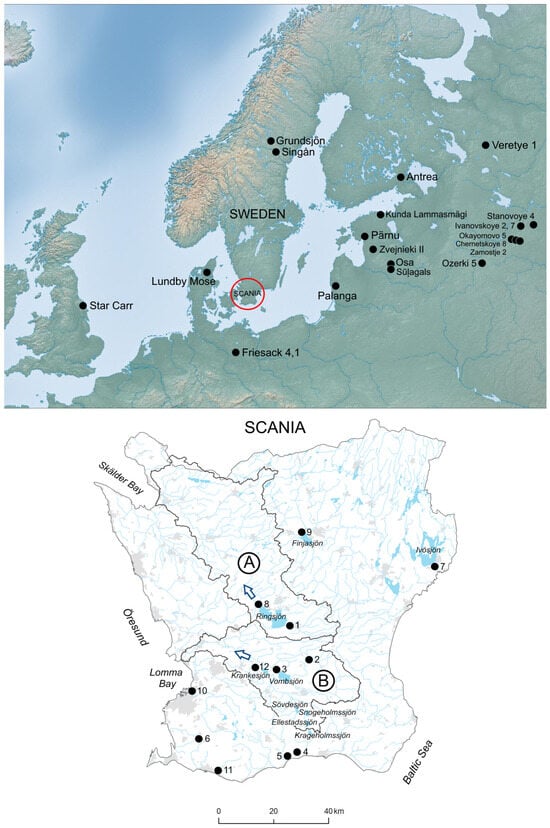
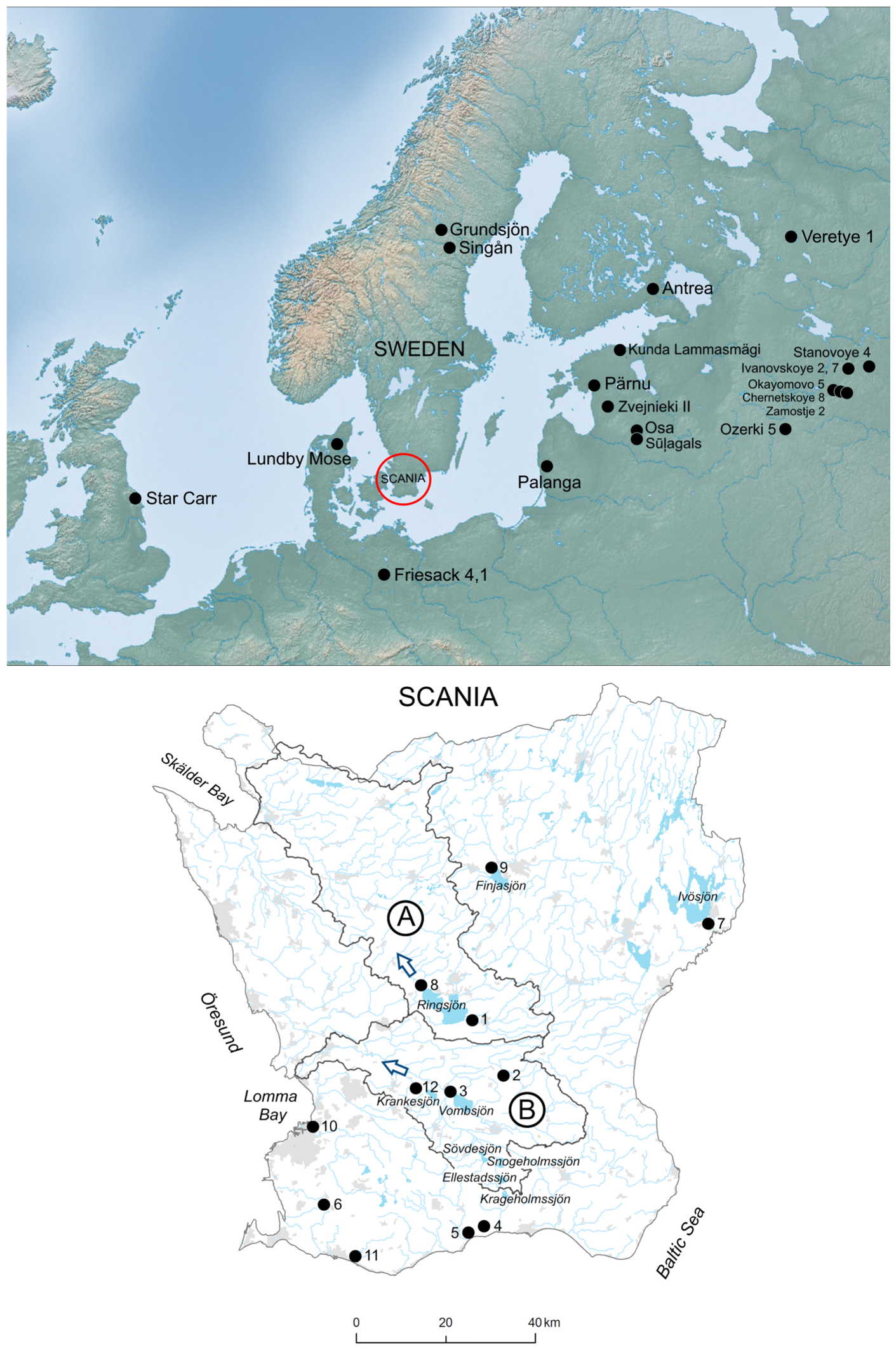
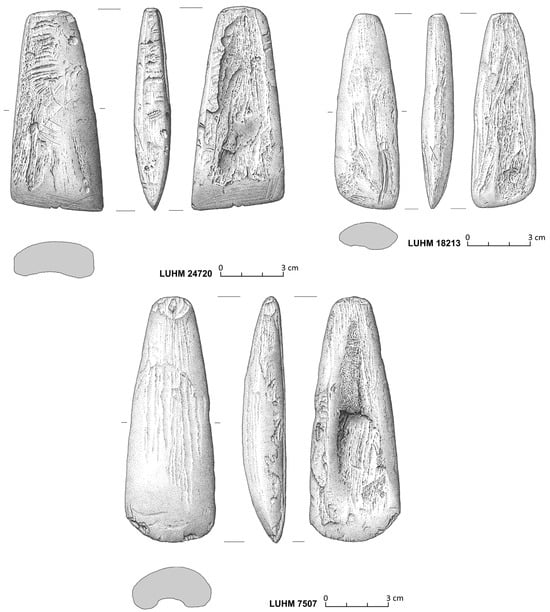
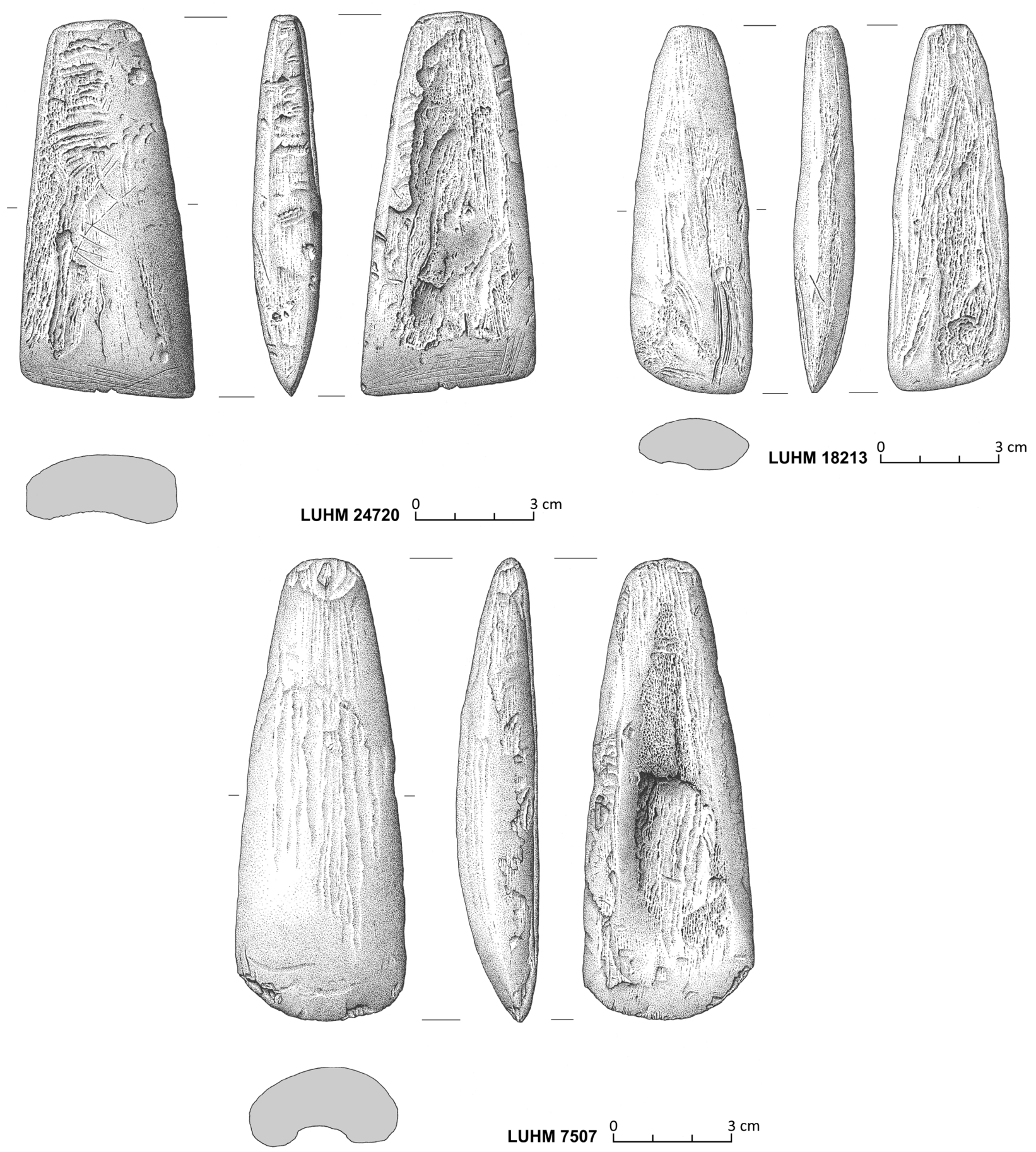
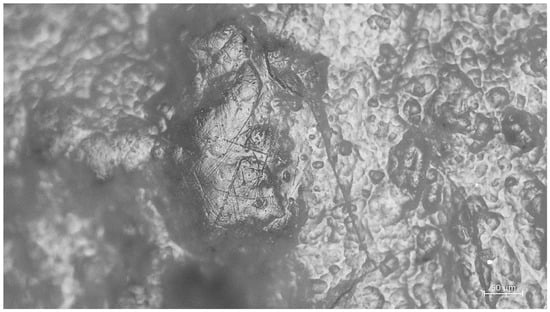
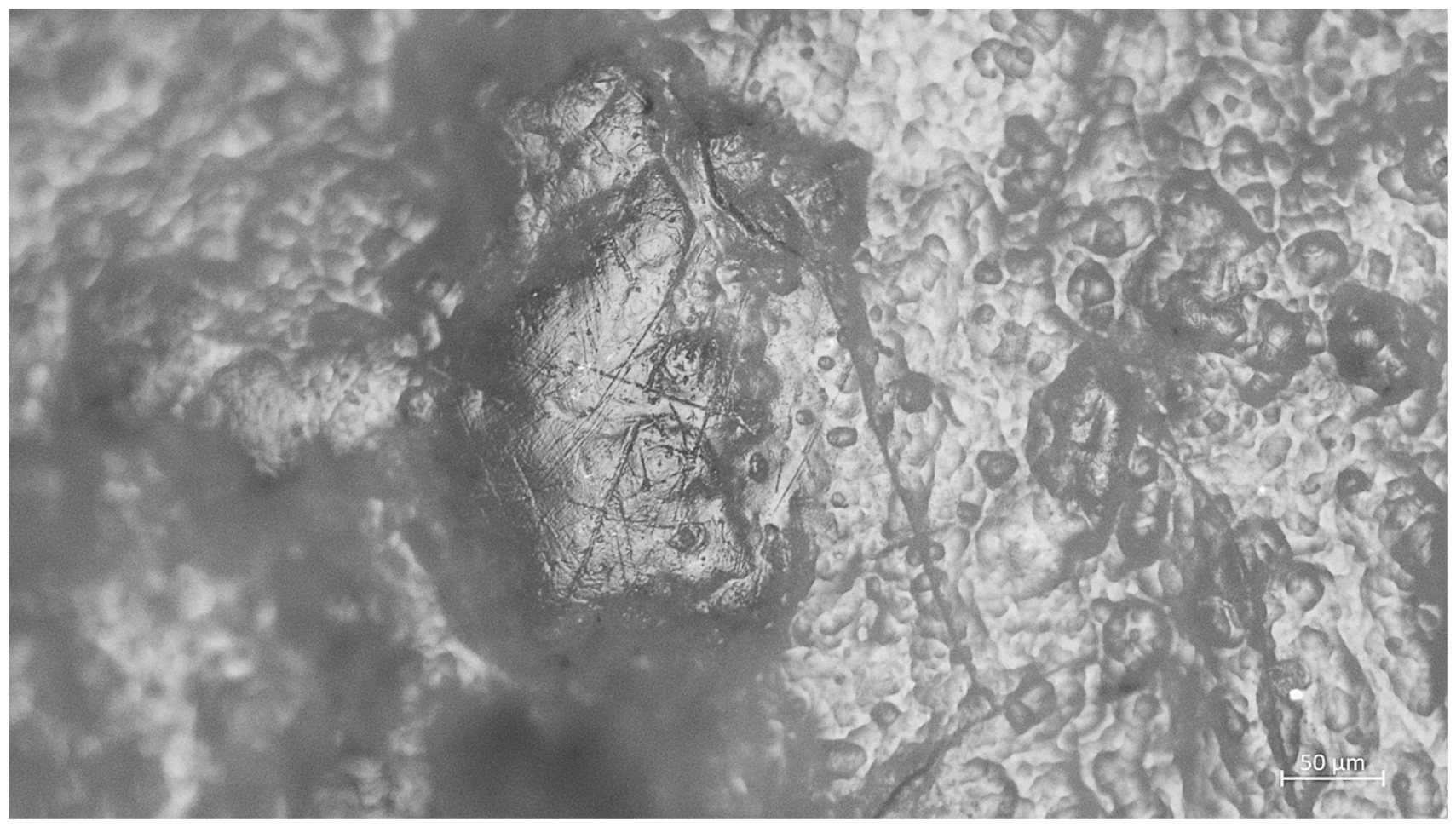
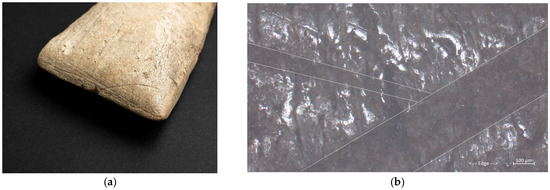
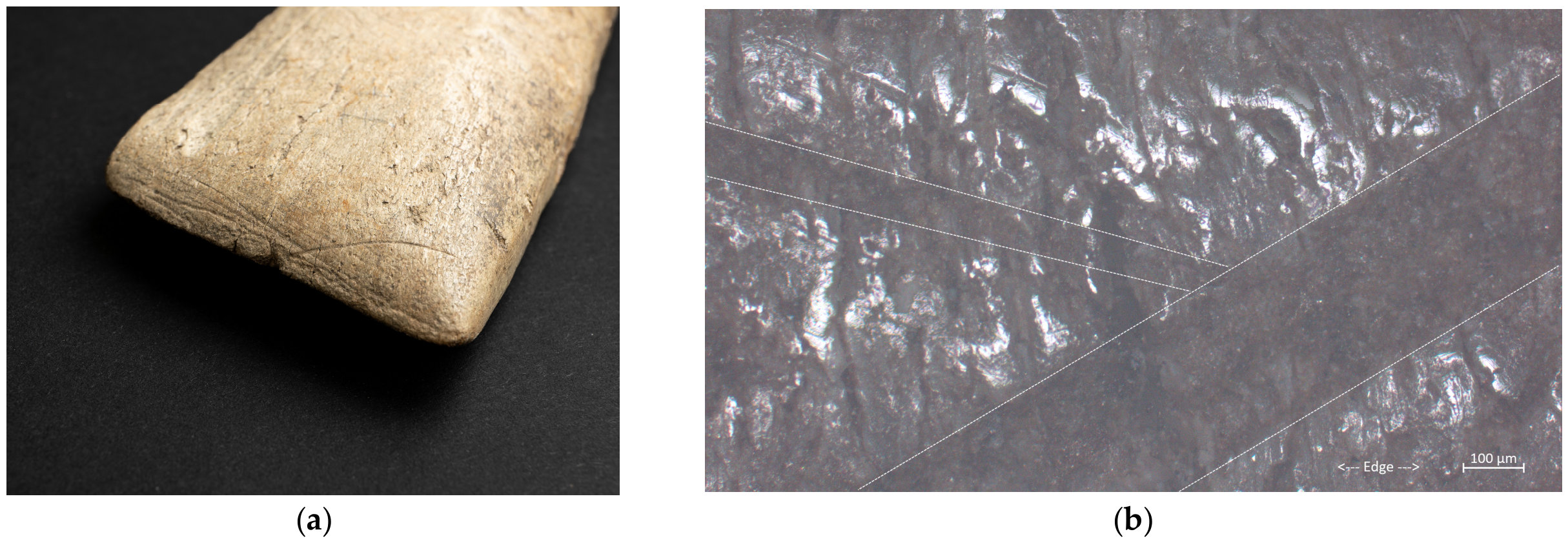
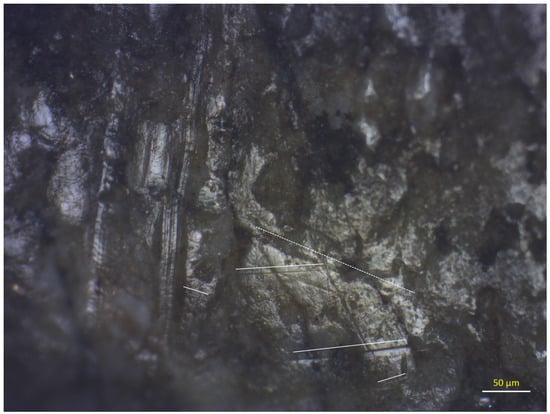
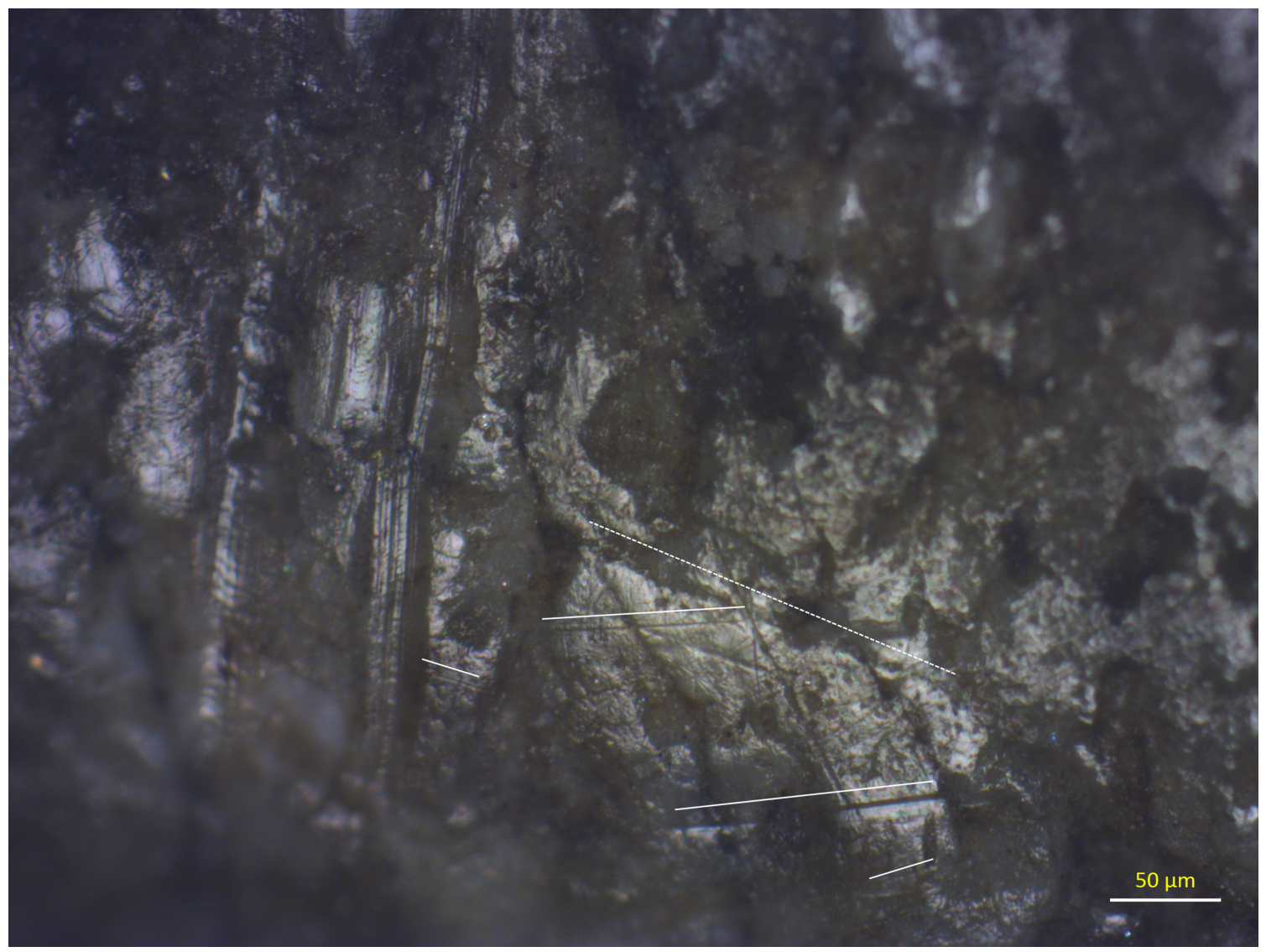
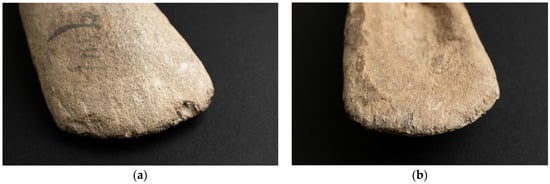
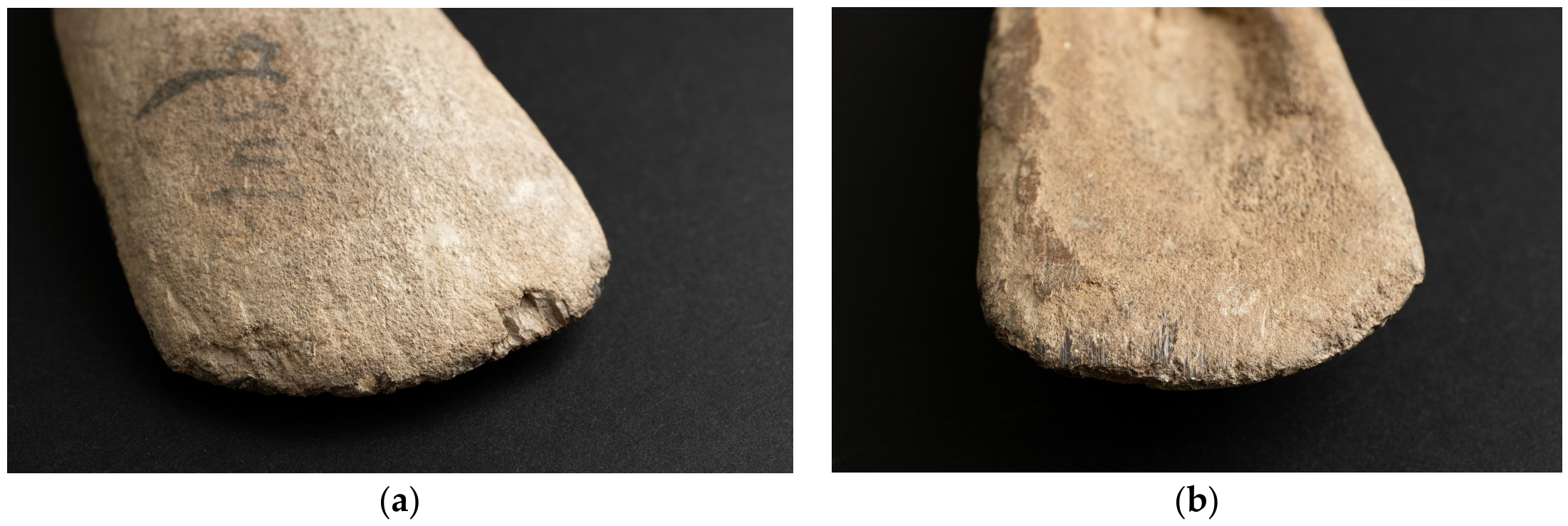
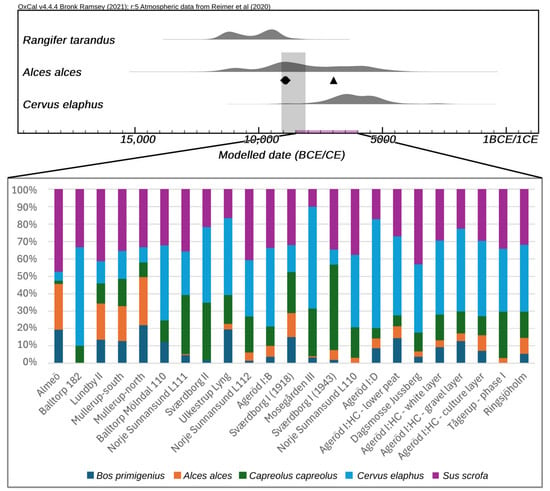
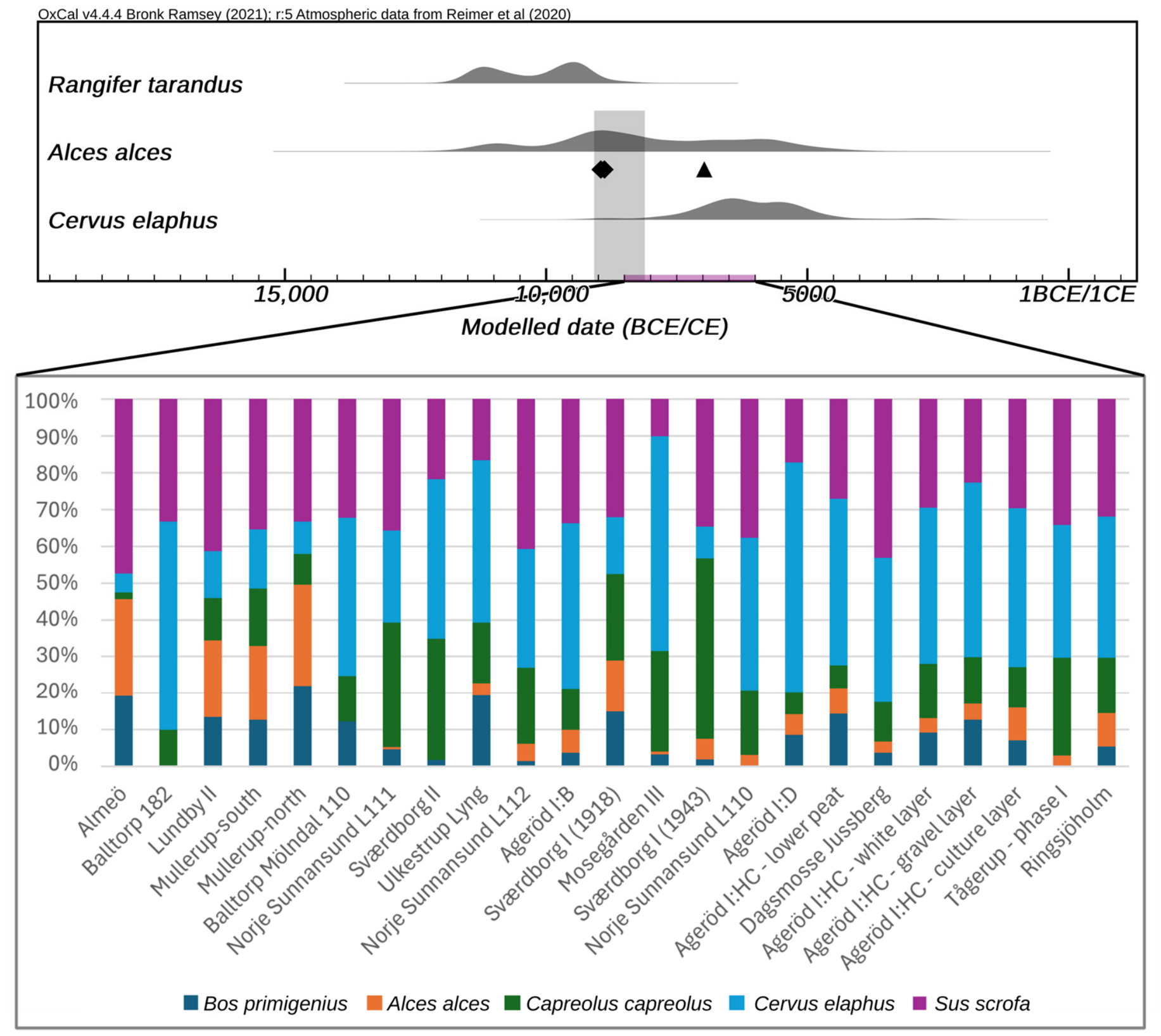

Disclaimer/Publisher’s Note: The statements, opinions and data contained in all publications are solely those of the individual author(s) and contributor(s) and not of MDPI and/or the editor(s). MDPI and/or the editor(s) disclaim responsibility for any injury to people or property resulting from any ideas, methods, instructions or products referred to in the content. |
© 2026 by the authors. Licensee MDPI, Basel, Switzerland. This article is an open access article distributed under the terms and conditions of the Creative Commons Attribution (CC BY) license.