


Abstract
The agricultural sector in Greece heavily relies on migrant workers, particularly from South Asian countries, such as Bangladesh, Pakistan, and India. Research has shown that these workers face numerous challenges, including unsanitary living conditions, exposure to hazardous working conditions, harmful chemicals, a lack of safety equipment, accidents, abuse, violence, and exploitative conduct from employers. Drawing on 45 in-depth interviews, this article analyzes the experiences of Bangladeshi migrant farmworkers employed as strawberry pickers in Nea Manolada, Greece. This study specifically examines how precarious and harsh working conditions in the agricultural sector affect the health, quality of life, and social integration of these unskilled workers. Evidence from the empirical sample reveals that Bangladeshi workers experience hazardous working environments, a lack of labor rights and contracts, chronic job insecurity, and exposure to harmful chemicals and are particularly vulnerable to injury, exploitation, and poverty due to the ethnic–racial division of labor, legal uncertainty, threats of deportation, overcrowded and unsanitary housing, poor nutrition, persistent job insecurity, health risks, and limited access to healthcare. These challenges and inequalities, both in employment and health, are seen as situations akin to modern slavery. This study underscores the urgent need for legislative, labor, and public health interventions to address the specific conditions faced by Bangladeshi migrant workers in the agricultural sector. While this research provides an in-depth insight into this group, it also acknowledges limitations regarding gender, sector, and wider representativeness. The results contribute to a nuanced understanding of the intersection between legal status, the ethnic–racial division of labor, working conditions, health, and quality of life among South Asian migrant agricultural workers in Southern Europe.
Keywords:
Bangladesh; Bangladeshis; migrants; agriculture; farmworkers; working conditions; health; quality of life; well-being; precarious employment; low status; low paid; shacks; rural; rural economy; agricultural production; intensive agriculture; Southern Europe; agricultural workers; entrapment; Nea Manolada; Greece; South Asians; agricultural laborers; strawberry pickers; farms 1. Introduction: Exploring Drivers of Migration and the Demand for Migrant Labor in Low-Wage, Precarious Employment
Migration plays a vital role in shaping societies and economies around the world. It can be defined as the result of people’s ability and desire to move within specific perceived geographic opportunity structures (de Haas 2021). This movement is closely linked to human mobility, which refers to the freedom of individuals to choose where they wish to live, including the option to remain in their chosen location (Sen 1999). Understanding the decision to migrate involves analyzing a range of influencing factors operating at different levels. At the individual level, the decision to migrate is made based on a cost–benefit analysis, weighing the possible economic gains against the risks and challenges of migration (Castles and Miller 1998; Goldin et al. 2011). The personal aspirations of individuals, families, and their career objectives can influence decisions on migration. These aspects enable individuals to make choices regarding their future. Social networks at the community level also play a role in the migration process and can function as channels for the flow of information and counteract uncertainties about potential opportunities for migration, supporting migrants by spreading information and providing support. Social networks of family, friends, and acquaintances provide migrants with support in the destination country. They can supply information and practical aid, such as with finding a house and a job, as well as support for the adjustment process (Castles and Miller 1998; Goldin et al. 2011). At the societal level, various demographic, economic, and political conditions shape migration decisions. A number of factors influence the decisions of individuals and/or families to migrate from their own country to reside in another country. These pull and push factors are shaped by demographic, economic, and/or political conditions in countries around the world. These factors are likely to affect not only the decisions that individuals and families make in relation to migration but also the experience of the migrant and their community in the destination country (Castles and Miller 1998; Goldin et al. 2011).
A number of theoretical frameworks attempt to explain international migration. The neoclassical economic theory explains individuals’ decisions to migrate by referencing the root cause of migration flows from less developed countries to more developed countries as wage differentials, with the goal of maximizing financial gain. In contrast, the new economics of migration theory, proposed by Stark and Bloom (1985), shifts the focus from an individualistic to a more collectivist perspective, that of family or household strategies. Here, migration is seen as a group decision that considers not only potential income gains but also risks associated with labor market fluctuations and economic stability (de Haas 2021; Massey et al. 1993). The experiences of immigrants in host countries have been explained with reference to the dual labor market theory developed by Piore (1979). This theory explains the labor market of advanced capitalist countries in terms of two segments: the primary and the secondary sectors. The primary sector comprises high-skilled, well-paid jobs with stable working conditions, while the secondary sector comprises low-skilled, poorly paid jobs with poor working conditions. Many immigrants from less developed countries are likely to be employed in the secondary sector upon arrival in host countries. However, with the experience and skills acquired in the host country, they may be able to move to jobs in the primary sector (de Haas 2021; Massey et al. 1993). The world-systems theory extends migration analysis to a global scale, suggesting that migration flows are shaped by the interconnectedness of nations within the global economy (Wallerstein 1974). Developed core countries dominate less developed periphery countries. Thus, the world-systems theory explains flows of international migration between less developed periphery countries and more developed core countries. Individuals from less developed periphery countries are attracted by higher wages in more developed core countries in order to earn a greater income, accumulate more capital, and increase their power and/or status in the global system (de Haas 2021; Massey et al. 1993). Additionally, network theory underscores the significance of migrant networks—connections that encompass current and former migrants and those in the home country (Massey et al. 1993, pp. 448–49). These networks mitigate migration risks and costs, provide social capital, and enhance migrants’ success and integration into host communities. These structures can, in turn, reinforce further migration. Flows of people to and from countries are often described from a migration systems perspective as components of a multipolar migration system or other international migration systems. Such systems become stable over time because they consist of flows of people, goods, and capital (de Haas 2021). For this reason, the destination country of a migrant is not only geographically but also functionally connected to the country or countries of origin. This is described by Causation Theory in qualitative terms for international migration flows, stating that such flows create structures in countries of origin and destination (Massey et al. 1993). Such migration systems are often described as multipolar—that is, centered on a number of destinations rather than a single receiving country. Demographic shifts taking place in many countries also affect and are affected by mobility, according to migration transition theories (de Haas 2021). Countries in an early stage of development can generate a high rate of migration for a long time. However, at a later stage, there can be a decline in migration, not due to a decline in aspirations but rather because of increased opportunities offered by local and foreign destinations (de Haas 2021). Unskilled work in developed countries is increasingly filled by new immigrants, and the economic, social, and political push and pull factors affecting the global workforce are very complex (de Haas 2021).
The migration process is a multifaceted phenomenon influenced by the labor demands of destination countries, particularly for unskilled work (ILO 2025a). This demand stems from various factors, including demographic shifts, economic growth, and evolving market conditions (Madgavkar et al. 2025). The process of decision-making for seeking employment in another country involves a number of factors and variables. Countries often experience labor shortages in critical sectors such as agriculture, construction, and services, where roles may involve challenging working conditions and require immediate labor assistance (Buckley et al. 2016; Ryan 2023; Causa et al. 2025). To compete in the global market and develop the economy of the host country, these countries rely on immigration to satisfy workforce needs, support economic infrastructure, and maintain economic competitiveness (OECD/ILO 2018). Immigration serves as a vital mechanism to fill these gaps (Klein and Smith 2024).
However, while labor migration can bring benefits to the host country and its economy, it can also contribute to an increase in precarious work characterized by a lack of job security, labor rights, and benefits, inadequate pay, and health risks (Matias et al. 2020; Zhang et al. 2022; Mallett 2022; Vosko 2006). Workers in such employment are often paid low wages and work under temporary, seasonal, contract, casual, or other insecure forms of employment (Anderson 2010; Lewis et al. 2015; Castles 2015). While temporary or seasonal work can be acceptable in some cases, its normalization in the modern economy—which is already in progress and in which immigration policy plays a significant role—can lead to the exploitation of workers from countries with high unemployment, low wages, and few work opportunities. While the decision to seek employment abroad is up to the individual, in many cases, people are driven by the need to improve their circumstances, especially those from countries with high unemployment, poverty, and limited work opportunities. Research has shown that a number of factors influence an individual’s decision to migrate, including the economic conditions and employment opportunities of their home country (Urbański 2022; Czaika and Reinprecht 2022; Park et al. 2024; Czaika and Weisner 2025). In countries experiencing high levels of unemployment and poverty and little hope of improvement, people will seek work in other countries even if the work is offered on an uncertain basis with risks attached (ILO 2010; Castles 2011).
The lack of legal channels for labor migration to countries where citizens are needed to sustain economic growth generates pressure toward irregular recruitment channels through informal intermediaries (Berhané 2024; Palalar Alkan et al. 2024). When legal options are limited, employment through irregular channels is often followed by immediate placement; thus, workers are attracted by the prospect of irregular employment through undeclared recruitment (Triandafyllidou and Bartolini 2020; Dimitriadis 2023; Generation 2.0 RED/SolidarityNow 2025). Sectors of the economy that rely heavily on labor-intensive production are more likely to generate work of this kind, where workers have little legal protection against abuse (van Nierop et al. 2021; IOM 2022; Hennebry et al. 2024). In the absence of enforced labor protection, employers of foreign temporary or seasonal workers can exploit their vulnerable status and deny them the same rights and protection as citizens, making them susceptible to exploitation (Koseoglu Ornek et al. 2022; Faraday 2021). Workers may be denied full payment of wages, required to work excessive hours without overtime pay, and be exposed to hazardous work environments without adequate health and safety protection (HRW 2024; ILO 2025b; FRA 2014, 2025; Merikoski and Näre 2025). The expansion of the informal economy in various destination countries also contributes to the rise in precarious employment opportunities (Castells and Portes 1989; Chen 2012; Srivastava 2022). These jobs are undervalued, of low status, and insecure; workers are underpaid for long periods of time. As a result, a large proportion of the world’s migrant workers are excluded from decent work and are employed in a variety of arrangements and situations that are insecure and pose risks to their health (Fasani 2024; Zikas et al. 2025). The exclusion of these workers from decent work is due to a variety of factors, including the lack of adequate policies and laws that effectively guarantee the rights of all workers, and the weak implementation of those laws that do exist (Premji 2017; Sambajee and Scholarios 2023; Lázaro Castellanos 2025). Furthermore, even where laws are implemented, they are not usually sufficient on their own to promote decent work across the world, thus leaving migrants to navigate a treacherous landscape of precarious work that undermines their well-being (Kalleberg 2009, 2012). In sum, precarious work among temporary foreign workers is not simply a matter of the characteristics of particular jobs; it is also a matter of labor relations and the broader working conditions under which workers are employed. According to scholars, precarious employment epitomizes unfavorable employment conditions marked by job insecurity, insufficient wages, and limited social protection (Arnold and Bongiovi 2013; Shin et al. 2023). However, it is important to recognize the inherent power dynamics between employers and employees, as this emphasizes the need for a more nuanced understanding of what constitutes precarious work (McWha-Hermann et al. 2024; Hajat et al. 2024).
Migrant agricultural workers often endure exploitative practices, including inadequate wages, unsafe work environments, and a lack of legal protection (Binford 2013; Lewis et al. 2014). Modern slavery refers to different forms of exploitation that use force or threats of punishment to make people work against their will (Mende 2019; Patterson and Zhuo 2018). The practice now exists as a continuous form of exploitation because people experience escalating conditions that eventually result in slavery (Lewis et al. 2014). Modern slavery serves as a broad non-legal umbrella term that encompasses different exploitation types, including forced labor and bonded labor, according to Boersma and Nolan (2022). Italy employs 400,000 agricultural workers through its caporalato system, and widespread migrant farmworker abuse has been documented during the Italian tomato harvest season (Scaturro 2021). This predatory hiring practice leads to migrant workers becoming victims of forced and bonded labor while they receive poor housing and low wages (Scaturro 2021). Migrant workers earn 25 EUR for each day they work up to 12 h without any rest time, but some employers have been found to pay them only 1 EUR per hour through forced payment of transportation fees, water costs, and housing expenses in illegal residential areas (Scaturro 2021). Around 25% of small and medium-sized farming businesses in Italy engage caporali, unlawful recruiters, to oversee their workforce (Scaturro 2021).
Modern slavery creates various health dangers that impact migrant populations during their entire journey (Jinkang 2020; Peano 2023; Howard and Forin 2019). Research by Such et al. (2020) demonstrates that every form of forced labor produces major health issues that damage both the physical and mental health of enslaved individuals. The health effects of exploitation depend on the nature of exploitation and the particular situations in which it occurs (Such et al. 2020). The physical nature of forced agricultural work combined with long working days leads to multiple physical injuries that affect agricultural workers (Such et al. 2020). Regarding housing, Scaturro (2021) mentions that, especially in southern regions, workers are forced to pay rent for one of the many shacks made of metal sheets in the baraccopoli (slums) in the surrounding fields. In addition, more than 70% of exploited laborers develop illnesses that were not detected before entering the seasonal agricultural working cycle.
The agricultural sector in Greece plays a crucial role in the domestic economy (Maniatis 2020; Fi-Compass 2020). However, the local population often avoids working in this sector due to its precarious conditions, low wages, and lack of prestige (Kasimis 2005). Consequently, the sector relies heavily on migrant labor (Papadopoulos et al. 2025). Unlike other developed countries, employment in Greece’s agricultural sector has not decreased, nor has productivity increased; in fact, the opposite is true (diaNeosis 2024). While wage employment has expanded since the 1990s, it remains unregulated by collective agreements that would protect workers (Kapsalis 2023; Gialis et al. 2017; Koutroukis 2025). The rise in wage labor has been facilitated by the influx of immigrants, initially from the Balkans and later from South Asia, who are willing to work as agricultural laborers (Cholezas 2019; Kukreja 2020). The agricultural sector is characterized by a lack of stable employment, seasonal work, low prestige, and intensive manual labor (Dimitriadi 2024). Unfortunately, there are few aspects that could attract workers to this sector. Unskilled immigrants from South Asia, who make up a significant portion of the workforce, often take these jobs out of necessity to survive and send remittances, all while hoping to eventually move on to other opportunities (Kukreja 2020). Working conditions in the agricultural sector are harsh, with daily wages insufficient for workers to access decent housing equipped with modern amenities (Papadopoulos and Fratsea 2016; Kukreja 2020). As a result, many are forced to live in overcrowded, unhealthy accommodation lacking essential infrastructure (Kukreja 2020).
This article aims to investigate the effects of precarious and low-status work on the health and quality of life experienced by South Asian migrant farmworkers from Bangladesh in Nea Manolada, Greece, specifically those working as strawberry pickers in Nea Manolada, Ilia. The central research question is ‘How does work characterized by precariousness and low status impact the health and quality of life of Bangladeshi farmworkers in Nea Manolada?’ To address this question, this study explores how working conditions in this sector influence both the physical and mental health of workers, as well as their overall quality of life. It seeks to unveil the health challenges that migrants working in the agricultural sector face and how these challenges impact their overall quality of life. The research methodology involves two primary tools: a literature review to clarify relevant issues from previous studies and qualitative research through semi-structured personal interviews, supported by an interview guide.
Discussing new insights into the everyday struggles of migrant workers is crucial for several reasons. The research reveals the actual circumstances that society ignores when it dismisses these marginalized groups. By amplifying their voices and experiences, it is possible to bring attention to the systemic issues that contribute to their precarious living and working conditions. Moreover, highlighting these challenges allows for connections to be made between ‘precarity’—characterized by instability, vulnerability, a lack of security, and risks of ill health—and the prevalence of hyper-exploitation due to informal conditions that result in low wages, unpaid overtime, or, in some cases, forced labor and conditions resembling slavery (Papadopoulos and Fratsea 2016; Carrington et al. 2021; Giulini and Eshete 2021; Kougkoulos et al. 2021). Financial difficulties drive them to give up their freedom and dignity until they must accept unacceptable situations. This article shows the immediate need to solve these problems because it highlights their most important elements. The knowledge gained will help individuals develop empathy, motivating them to fight for migrant worker rights and better working conditions to create equal opportunities for all workers.
The notions of precarity and slavery are separate but interrelated, profoundly affecting the daily experiences of migrants, particularly in agricultural labor. Precarity signifies a condition of ongoing unpredictability and instability related to work, earnings, and living circumstances (Worth 2020; Muntaner et al. 2008). For migrant laborers, this frequently appears as short-term contracts, reduced pay, insufficient job security, and restricted access to rights and benefits (Anderson 2010; Zhang et al. 2022; Lenko et al. 2025). In their everyday lives, these employees might face unpredictable work hours, hazardous living situations, and limited access to medical care (Quinlan et al. 2001; Benach et al. 2014; Premji 2017). This category of migrant workers is more vulnerable than others not only because they can lose their jobs at any moment but also because their legal status is tied to their employer and even to their job, in line with specific conditions of their visas (Zou 2015; Wright et al. 2017; Wright and Clibborn 2019). Thus, they live in fear of their employers, with anxiety about job loss, no protection, and exposure to very poor working conditions, as well as the risk of being exploited in an environment of fear and reliance, leading workers to endure difficult conditions, exploitation, and wage theft just to preserve their fragile means of survival (Dyer et al. 2011; Koseoglu Ornek et al. 2022).
As opposed to other forms of slavery, contemporary slavery constitutes a severe violation of human rights of a higher degree, as it is forced, non-consensual, and exploitative. Contemporary slavery frequently features additional characteristics that make escape extremely difficult (Lewis et al. 2015; Sandovici 2018; Cohen 2019). It is often characterized by elements of debt bondage, isolation, and/or trafficking. For migrant agricultural workers, the shift from precariousness to enslavement can occur when their irregular migration status is exploited by employers; for example, by being forced to pay exorbitant recruitment fees, threatened with deportation, or subjected to physical abuse to exert control (Meret and Aguiari 2020; Macciani 2024). Workers may feel under pressure to accept unfair job prospects or endure abuse in the absence of legislative protection and in the midst of economic instability, for fear of endangering their already-precarious situation (Caxaj and Cohen 2019; Alowais 2025). Many laborers work long hours for little or no pay, endure dehumanizing treatment, and are often unable to ask for help out of fear of retaliation (Binford 2013; Saxton 2013; Horton 2016).
To better understand the everyday lives and sufferings of migrant workers, a perspective of vulnerability must be added to the above points. In short, in precarious situations, the possibility of slavery arises (Han 2018). This has already been explained in relation to the lives of migrant laborers. A great number of migrant workers are concerned about their jobs, are either trying to repay a debt or support relatives who live abroad, and exist in a perpetual state of anxiety (Germano 2018; Mucci et al. 2020; Lainez 2025). In their eagerness to work under terrible conditions for very low wages in order to earn more than before, they can be easily tricked by merciless employers who promise higher salaries and much better working conditions than they have had until now, ultimately resulting in cycles of exploitation and abuse (Palumbo 2022, 2024, 2025).
To summarize, precarity denotes the insecurity and instability experienced by numerous migrants in their employment and living situations, whereas slavery signifies a graver deprivation of freedom and independence. The two concepts are connected, as unstable living frequently leads to circumstances where migrants might become enslaved, showcasing the severe difficulties they face in their daily existence.
1.1. Essential but Exploitable: Migrant Agricultural Workers in the EU in Precarious Work Before, During, and After the Pandemic
The EU’s fruit and vegetable sector relies heavily on migrant seasonal workers. While these workers partially offset the decline in national agricultural labor, conditions remain challenging (Augère-Granier 2021). EU seasonal workers benefit from equal treatment under the right to free movement, whereas third-country nationals are protected by the 2014/36 Seasonal Workers Directive, which ensures equal employment terms and some social benefits. However, the sector faces issues, including poor working and living conditions, with many workers vulnerable to exploitation and modern slavery (Augère-Granier 2021). Approximately one in four workers in Europe’s agriculture sector are migrants, highlighting a significant reliance on this workforce (Augère-Granier 2021). However, migrant workers often face severe exploitation, including long hours, violence, and underpayment, with many earning below the minimum wage. In nine EU countries studied by Ruiz-Ramírez et al. (2024), women migrants consistently received lower salaries; in Spain’s Huelva region, half of the women reported earning less than their male counterparts, while in Italy, female workers made up to 30% less. Exploitation is intensified for those with temporary or irregular status, leading to increased risks of abuse, including sexual harassment (Ruiz-Ramírez et al. 2024). Living conditions are often dire, with overcrowded and isolated accommodation that can lack basic amenities (Ruiz-Ramírez et al. 2024). Furthermore, inadequate training and safety measures have led to frequent accidents, including fatal incidents (Ruiz-Ramírez et al. 2024). This alarming situation indicates systemic violations of migrant workers’ rights across the agricultural sector in Europe.
Because of the terrible living circumstances, long hours, and low pay, seasonal agricultural laborers frequently take on occupations that locals shun (McLaughlin and Hennebry 2012; Mayell 2024; Escrig-Pinol et al. 2023). Since the work is physically demanding and performed outdoors, employees are subject to inclement weather and potential risks, including chemicals and physical strain, which can result in injuries (Cavanna 2018; Bruzelius and Seeleib-Kaiser 2023; Caxaj et al. 2023). The majority of seasonal workers have short-term contracts and lack social benefits and employment stability, making them more vulnerable (Corrado and Caruso 2022; Escrivà 2022). Many come from disadvantaged backgrounds and may not fully understand their rights or the local language, making them easy targets for exploitation (Brah Hema 2020; Ciconte et al. 2021; Avola 2022; Bogoeski 2022). Labor inspectors frequently report violations regarding working conditions, remuneration, and health standards (Messeri et al. 2019; López-Sala and Molinero-Gerbeau 2022). Workers often live in substandard accommodation, such as shacks, barns, or containers, lacking basic amenities like running water and electricity, and they are transported collectively to the fields each day (Brovia and Piro 2021; Palumbo et al. 2022; Ruiz-Ramírez et al. 2024).
Italy’s agricultural sector employs 450,000 to 500,000 migrants, with 40% being irregular. Many find work via caporalato, facing exploitation and inhumane living conditions (Ciconte et al. 2021; Perrotta and Raeymaekers 2023). Caporali organize labor teams in agriculture, providing food, housing, and transport while deducting their fees from workers’ wages (Ciconte et al. 2021; Perrotta and Raeymaekers 2023). Many migrant workers face extreme conditions, lack protection, and risk violence, particularly women, often enduring slavery-like situations in specific industries (Tagliacozzo et al. 2020; Salvia 2020; Melossi 2021). Huelva produces over 90% of Spain’s strawberries, with a peak season from February to May (Augère-Granier 2021). It employs around 50,000 seasonal migrant workers, who face significant challenges, including poor living conditions, exploitation, and abuse, particularly among Moroccan women (Rodríguez et al. 2021; Plaza del Pino et al. 2023; Navarro-Gambín and Jansen 2024). Undeclared work is particularly prevalent in the agricultural sector, especially in Greece, where over 90% of workers lack formal employment (Augère-Granier 2021, p. 7). Greece’s shadow economy accounts for 36 percent of its Gross Domestic Product (Pappadà and Rogoff 2025). Seasonal migrant workers face significant vulnerabilities, including exploitation and limited access to social security and information about their rights.
During the COVID-19 pandemic, migrant land workers encountered severe health challenges (Fouskas et al. 2021; Kukreja 2021b; Vosko et al. 2022). In March 2020, several European countries, including Austria, France, Germany, and Spain, closed their borders and imposed travel restrictions to combat COVID-19, leading to a significant shortage of seasonal agricultural workers (Andriescu 2020; Augère-Granier 2021). France projected a need for 200,000 workers, while countries like Germany and Italy required up to 400,000 each to ensure timely crop harvesting (Andriescu 2020; Augère-Granier 2021). As some governments began easing restrictions for essential sectors, concerns arose regarding health protection. For example, Germany allowed 40,000 seasonal farmworkers to enter the country for the harvest (Andriescu 2020; Augère-Granier 2021). However, the German government failed to implement adequate health measures for these farmworkers. Seasonal workers were not tested for COVID-19 as promised; instead, they were checked for symptoms using simple temperature checks (Andriescu 2020; Augère-Granier 2021). The workers’ living conditions did not fulfill the social distancing requirements, and they were expected to work long hours for very low wages under unclear contracts. Many workers were forced to accept the poor working and living conditions due to language barriers and a lack of knowledge of their rights (Andriescu 2020; Augère-Granier 2021). In March 2020, a report from Generation 2.0 RED in Greece noted that land workers received education on COVID-19 prevention from local municipalities and the Bangladeshi Embassy (Generation 2.0 RED 2020a). Materials were translated for better understanding, and community estimates suggested that 7000 to 10,000, mostly irregular, workers were present, though official figures were absent (Generation 2.0 RED 2020b). Unfortunately, housing conditions were inadequate, with many living in shacks lacking sanitation (Generation 2.0 RED 2020b; Generation 2.0 RED 2020c). The pandemic reduced work opportunities, impacting economic stability, even as strawberry harvesting continued (Generation 2.0 RED 2020a). After restrictions lifted in May 2020, work resumed. However, vaccination coordination did not start until April 2021, with only around 1000 workers vaccinated by summer 2022, highlighting their vulnerabilities during the pandemic (Generation 2.0 RED 2022b).
1.2. A Literature Review on Precarious Work and Invisibility: Migrant Seasonal Agricultural Workers in Greece
Greece has long been a destination for migrant labor, particularly within labor-intensive sectors such as agriculture, construction, and domestic services. Over the years, this influx of workers has reshaped the economic landscape, especially in rural areas. However, the benefits of this unskilled migration are often overshadowed by issues of exploitation, inadequate labor rights, and complex integration challenges, especially for irregular migrants.
A notable case illustrating these issues involves Bangladeshi farmworkers in Nea Manolada, located 37 km southwest of Patras in Peloponnese, Greece. In 2013, these workers protested after not being paid for several months. Following their demonstration, a foreman responded with violence, shooting at the protesting workers and injuring many (ECtHR 2017). The incident, one of the worst abuses of migrant labor in recent years in Greece, exposed the violation of the rights of other vulnerable workers and led to the case of Chowdhury and Others v. Greece being submitted to the European Court of Human Rights (ECtHR 2017). In March 2017, the court ruled that the workers had been subjected to exploitative conditions that amounted to forced labor and slavery (ECtHR 2017). Moreover, Greece failed to comply with its obligations toward these very vulnerable workers, who were effectively left without recourse to justice for the abuses they faced (ECtHR 2017). The ECtHR determined Greece’s liability toward the Bangladeshi farmworkers and accordingly obliged Greece to pay compensation to them, underlining the need for stronger protections for migrant laborers.
There are many defined labor rights, but they are being violated on a massive scale (Kotovos 2024). The Hellenic Labour Inspectorate continues to combat labor trafficking and exploitation and, within this framework, is actively participating in EMPACT (European Multidisciplinary Platform Against Criminal Threats), a cooperation between European countries to coordinate a common approach in tackling labor trafficking at a continental level. Through regular inspections carried out in labor-intensive sectors, the Hellenic Labour Inspectorate recently found 165 violations among 271 audits, resulting in fines exceeding 1.2 million euros (Hellenic Labour Inspectorate 2023). These findings point out the extent of the violations and the difficulties faced by the authorities and the legal framework in combating labor exploitation.
Academically, the intersection of irregular immigration and labor exploitation has been examined extensively. Lianos et al. (1996) identified that the major sectors where irregular immigrants are employed are those with great demand for unskilled labor and extremely intense work—namely, agriculture, construction, and small-scale industries that operate outside the tax authorities’ control and where labor is exploited by extremely low wages and very poor working conditions. In these sectors, vacancies for unskilled labor are filled by immigrants as Greek workers avoid them. While the local population is aware of the positive features that immigrants bring to these sectors, they nevertheless fear the problems of integration that irregular immigrants face, which may create social issues. Migrant labor has been essential in Greek agriculture, as noted by Kasimis et al. (2003). It has helped avert a looming crisis by reducing labor costs and addressing increased labor demands. Immigrants have allowed farm families to reorganize their labor both on and off the farm, contributing to the survival and expansion of family farms. The study by Kasimis and Papadopoulos (2005) highlights that immigrants are essential for agricultural restructuring in Greece. They are taking over from families in agriculture and are keeping rural areas alive. Their participation has led to an improvement in the working conditions of Greek farmers. However, the positive aspects of the immigrant community do not receive the appreciation they deserve. The economic and social advantages that the immigrant community brings are not being recognized by the local population. Furthermore, even though immigrants are crucial to the sustainability of agriculture and social cohesion in rural areas, their integration is not yet adequate. Sykas (2008) found that the immigrant influx helped the Greek countryside recover. The author suggests that immigrant workers provided cheap labor for cultivating unused lands and increased the competitiveness of agriculture by reducing production costs. However, he notes that the work of many seasonal and migrant workers takes place outside of the labor laws and, as such, is outside of labor rights. Thus, they are unable to demand higher wages and better social security benefits. The author also examines the social networks of immigrant workers and how these can increase their possibilities for integration into the local socio-economic environment. Nori and Farinella (2020) revealed that migrants revitalized the economy of rural areas with aging populations in Europe. However, they noted that their integration faced challenges. The potential of immigrants to become producers or even entrepreneurs is not fulfilled since they are limited to becoming mere consumers. The lack of labor rights, health care, and a wage sufficient to cover the cost of living marginalizes immigrants and prevents their integration into the local community.
The research by Papadopoulos and Fratsea (2016) focused on the relations between strawberry farm owners and workers in the area of Nea Manolada, one of the largest strawberry-producing areas in Greece. In this area, strawberry farming is based on temporary immigrant wage laborers, who are considered by the farm owners as production factors. These factors are cheap and flexible and can be shed and hired by the farmers as they think necessary to maximize profit in labor-intensive agriculture. The ethnic and gendered division of labor illustrates how migrants’ challenging conditions are used to control costs. Papadopoulos et al. (2018) highlighted the exploitation of migrant workers in agriculture, particularly those from Bangladesh. These migrant workers, described as increasingly ‘insecure,’ have been organizing themselves with the aid of left-wing groups in rural areas of Greece. The emerging social and political movement of these rural workers warrants further study. In the study by Kukreja (2021a), the worsened issues that immigrants in Nea Manolada faced during the COVID-19 crisis were highlighted, particularly regarding their medical coverage, increased racist attitudes, and systematic oppression. In a related study, Kukreja (2021b, 2025) noted that, in addition to the positive impact on agricultural output in the region through the influx of migrant workers from Bangladesh and Pakistan, the physical and mental health of these workers has been negatively affected. The threat of deportation further undermines their rights. In silence, these workers fear getting injured or exposed to hazardous chemicals while at work in order to keep their jobs. Kukreja (2021c) observed how non-legalized immigrants ‘self-monitor’ and are reluctant to claim their rights because of the fear of deportation. Thus, they are marginalized and perceived by natives as a threat, which increases xenophobia and racism between the two groups and even divides them further. In this frame, Greece neglects the establishment of an institutional framework necessary to safeguard the rights of immigrants and to ease their vulnerable position in society. Goulem (2021) highlights that racism and the irregular status of immigrants can constitute major obstacles to access to good-quality health care and the health of immigrants. People of migrant background are often perceived in a stereotypical way and may thus be excluded from health services. Besides the usual language and cultural barriers, these factors can lead to inadequate treatment and cases of underdiagnosis. Another, even more important, aspect of discrimination against immigrants is the very negative effect it has on them and, in fact, can prevent them from seeking and receiving necessary medical treatment. As a result of being discriminated against, immigrants suffer from poor health and put a great burden on the health care system but are not granted access to effective health care. According to Kapsalis et al. (2020), as long as migrants have hope for legalization and support from the state and employers are moderately optimistic, such rural-based migrant workers will voluntarily stay in rural areas of Greece, and a constant supply of cheap labor will be provided to employers and the national economy at large. Kukreja (2023) outlined the contributions and developments that South Asian migrant workers have brought to the countryside of Greece in terms of their earnings and experience. For the majority of these workers, they traveled to Greece for family reasons and encountered very harsh working conditions, and on occasions, they were exploited by local employers. The use of these migrant workers and their lack of appropriate documentation and recognition, therefore, brings to the surface issues of colonial exploitation and control of the past and highlights the current structures of inequality that exist within labor markets.
Many immigrants, motivated by familial responsibilities, faced harsh working conditions, which local employers exploited. This reliance on migrant workers and the lack of identification documents parallels historical colonial exploitation and control tactics, highlighting ongoing issues of inequality in the labor market. Recent developments surrounding the employment of Bangladeshi workers in Greece have unveiled a multifaceted situation influenced by labor needs, legal frameworks, and international agreements. The number of missing farm workers remains uncertain, with estimates varying between 60,000 and over 80,000 individuals reported missing (Papapadopoulos 2023). The National Union of Agricultural Cooperatives (ETHEAS) expressed worries over visa delays for agricultural workers from Egypt and Pakistan, with many farmers experiencing rejections after paying fees and preparing documents, leaving them unable to transfer workers for the season (Papapadopoulos 2023). A limited number of farm workers have been recruited from Bangladesh due to a complicated employment process, requiring individuals to travel to India to obtain a visa from New Delhi, which adds logistical hurdles to their potential employment journey (Papapadopoulos 2023).
Under the terms of the interstate memorandum of understanding between the Government of Greece and the Government of Bangladesh, which is enshrined in Law 4959/2022 (for the seasonal employment of up to five years for the needs of the agricultural sector), immigrant workers from Bangladesh who are employed on a temporary basis in agriculture in Greece are allowed to remain in Greece for up to nine months each year as long as they entered Greece before 9 February 2022 (Government Gazette 2022). However, many problems are faced by Bangladeshis who do not have the required documents or have other employment problems. The demand for a three-month absence from Greece can be inconvenient and disruptive for many workers (Generation 2.0 RED 2022a; Dimitriadi 2024). Around 10,000 Bangladeshi immigrants are currently going through the process of applying for seasonal, temporary, or short-term employment (Papapadopoulos 2023). Most of the Bangladeshi immigrants currently employed in Greece have spent a long time there. Most of them are either already legal residents or are in the process of legalization and working in Greece (Papapadopoulos 2023; Kerasiotis 2024). However, pressing needs for all types of work, especially seasonal work, are not being met (Papapadopoulos 2023; Antonogiannaki 2024). Under the terms of the memorandum, immediately after the publication of the above-mentioned law in the Government Gazette, 15,000 Bangladeshi immigrants already residing in Greece can be employed for temporary agricultural work, while every year up to 4000 new Bangladeshi workers can enter Greece (Ministry of Migration and Asylum 2022). However, many problems are caused by inconsistencies in the implementation of the provisions of the above-mentioned law by the immigration authorities. The provisions of the law are being interpreted in different ways by the authorities, sometimes even in a contradictory manner (Kerasiotis 2024). Restrictions exist for the duration of the contracts of Bangladeshi immigrants who are not yet legal residents in Greece, which poses many problems for applicants (Kerasiotis 2024; Antonogiannaki 2024). Furthermore, Article 20 of Law 5038/2023 enforces a five-year ban on legalization for those who submit false information (Kerasiotis 2024). Nonetheless, obtaining a permit necessitates proof of employment, and the permits do not lead to permanent residency or citizenship. The five-year permit limits residency, citizenship, and family reunification in Greece, emphasizing a temporary status that critics argue fails to promote integration, fostering concerns among anti-immigrant groups (Kerasiotis 2024). As of 7 February 2024, article 193 paragraph 1 of law 5078/2023 allowed third-country nationals residing in Greece for over three years, without a residence permit but with a job offer, to apply for a three-year residence permit for employment. Applications were accepted until 31 December 2024 for those present in Greece before 30 November 2023. Asylum seekers could apply for this permit before waiving their asylum application. However, the Minister of Immigration and Asylum withdrew the extension for work permit application deadlines (Generation 2.0 RED 2025).
However, it establishes legal access and aims to reduce the exploitation of workers. In summary, the shortcomings of a number of significant failures to develop a system create serious obstacles to the legal entry of third-country nationals to Greece and even to the implementation of any legalization process that may be proposed for irregular immigrants already in Greece. Above all, an immediate revision of the rights of irregular immigrants who are already in Greece and the implementation of a number of measures for the employment needs of the country are required.
1.3. Understanding the Quality of Life and the Social Determinants of Health of Migrant Workers
Nettleton (2013) found health inequalities among different racial and ethnic groups in the United States of America. For example, the life expectancy of African Americans is lower than that of their White counterparts, particularly for African American women, who are more likely than White women to have babies with low birth weights. These racial health inequalities are deeply embedded in the broader individual and societal disadvantages that affect many racial and ethnic minority groups, including poverty and education. Bartley (2004) describes ‘racial or ethnic minorities’ as groups vulnerable due to their backgrounds or beliefs. Since the 1970s, many studies have explored the intersection of race and health, often revealing discernible patterns. The concept of ‘Quality of Life’ (QoL) is particularly relevant to the health and well-being of migrants and refugees, who perceive QoL as a very subjective concept that can vary greatly from individual to individual. The World Health Organization (WHO 2025) developed a broad definition of QoL that goes beyond physical health to include psychological well-being, social relationships, and the environment in which people live. This definition highlights the complexity of measuring QoL, particularly among those who have faced upheaval and uncertainty. The Organization for Economic Co-operation and Development (OECD) (OECD 2017; Cho et al. 2023) extended the concept of quality of life to include aspects such as work–life balance and social connections that go beyond economic factors to include issues affecting individuals’ lives. Such a holistic view is crucial when evaluating the well-being of migrants, who often encounter distinctive challenges that profoundly affect their QoL. Many migrant populations are also at risk of a variety of health problems and experience significant stress as a result of their changing circumstances, particularly their employment situations. The International Labour Organization (ILO 2012, 2023, 2024) found that workers in a range of precarious work circumstances are at risk of a number of serious health problems, and that many migrant workers are exposed to dangerous situations affecting not only their physical health but also their mental health. Many migrant workers are employed in low-paid, manual labor jobs in sectors recognized as particularly physically demanding and, in some cases, stigmatized (ILO 2012, 2024; Matsaganis et al. 2024). In addition to the potential risk of musculoskeletal disorders, such circumstances also have the potential to affect the well-being and self-esteem of migrant workers (McKee et al. 2017; Fouskas 2024; Lau et al. 2024; Athanasiou et al. 2025). There are also a number of specific health risks experienced by migrant workers, including an increased risk of several cancers as a result of exposure to a range of hazardous substances (Barneo-Alcántara et al. 2021; Arcury and Quandt 1998; Stoklosa et al. 2020; Villa-Cordero et al. 2025; Noory et al. 2024). In summary, the QoL of migrants and refugees is influenced by a number of interrelated social, economic, and health-related circumstances that create many challenges for them. Improving QoL for these populations is vital for creating a more inclusive and supportive society.
The majority of the migrant workforce experiences extreme difficulties in seeking decent, affordable housing for themselves and their families. Many are forced into very poor-quality and unhealthy accommodation lacking proper sanitation and heating, with very limited or no access to basic services such as water and electricity, and with extreme overcrowding and inadequate physical infrastructure, which can exacerbate health and safety problems (Davies et al. 2005; Rana et al. 2025). Health risks in very low-quality and unhealthy environments in poor neighborhoods and areas of severe poverty are much greater for older workers due to their natural vulnerability to diseases and injuries. Additionally, workers and their families are at risk due to an inadequate diet, pollution in the air and water, and hazardous materials, as well as a variety of other health problems (Fouskas 2018; Fouskas et al. 2019; Drydakis 2022). The issue of access to quality healthcare and to other health services also affects many migrant workers. Barriers such as a lack of health insurance and insufficient culturally sensitive care further deepen their distrust in governmental health systems, discouraging health promotion, preventive care, and hygiene awareness. Moreover, many of these groups face barriers to accessing good-quality healthcare, either because they do not have health insurance or because existing health care services within the governmental system are not adequate or sensitive enough to their specific needs. The consequence is little trust in health promotion, the early diagnosis and treatment of illness, and health education with respect to health-promoting behaviors and good hygiene practices (WHO 2018, 2022). A variety of challenges exist for different racial and ethnic groups to achieve economic stability; however, the ethnic–racial division of labor often places them in precarious, low-status jobs (Villa-Cordero et al. 2025; Ma and Haugen 2022). While many workers in this category are working in the informal sector, they are often victims of exploitation and are denied a range of benefits at work, for example, health insurance or sick pay, which amplifies their vulnerability to health risks. Numerous barriers prevent racial and ethnic minorities from accumulating wealth, leading to financial struggles and indebtedness (Fouskas 2025b). They are therefore unable to remit to family and friends back home and face problems in accessing adequate healthcare and decent housing (Fouskas et al. 2022). In addition to the problems described above, members of disadvantaged social groups affected by social instability experience serious inequalities, leading to lower literacy rates and limited job opportunities, trapping them in a cycle of disadvantage and instability.
2. Methodology
2.1. Overview
The qualitative study draws on the experiences of 45 Bangladeshi male migrant workers who were employed as strawberry pickers on farms in the region of Nea Manolada, Ilia, Greece, between 2023 and 2024. Initial contact was made with several Bangladeshi male migrant workers who were selected as participants in the study based on their consent and eligibility (Bangladeshi nationality, male gender, occupation as strawberry pickers on farms in Ilia, and residence in Greece for at least three years and four months). Participants were then asked by the researcher if they knew of any other individuals, such as friends, acquaintances, or workmates, who matched the aforementioned criteria and would agree to be interviewed. This snowball sampling approach, particularly suitable for accessing hidden or hard-to-reach populations such as undocumented migrant workers (Goodman 1961; Cornelius 1982), enabled the researcher to establish contact with a total of 45 participants. After initial contact with the participants—via intermediaries, Bangladeshi community leaders, and other community contacts—a group of hidden or hard-to-reach participants was studied. Subsequent interviews with other participants yielded little new information (Kvale 1996; Kvale and Brinkmann 2009).
The researcher took into account the participants’ precarious legal status and possible fear or mistrust of authorities. Consequently, participants were assured that all interviews would be conducted in strict confidence and that their anonymity would be maintained at all costs. Participants were informed of the objectives of the study and the methods by which the data would be collected. They were shown a written information sheet describing the study in full. The researcher informed participants that they could withdraw from the study at any stage they desired. In addition, the researcher asked participants where and when they would prefer the interview to take place in order to ensure maximum convenience. The participants then signed a written informed consent form.
2.2. Sampling Approach and Sample Structure
In 2023–2024, a total of 45 in-person, semi-structured, in-depth interviews and participant observations were conducted in Greece (see Table 1). The focus of the interviews was on adult male Bangladeshi agricultural laborers working as strawberry pickers in Nea Manolada, Ilia. Interviewees were required to have resided in Greece for at least the last 3–4 years to qualify under the 2022–2023 legal provisions. Most of these agricultural workers were undocumented. The purpose of the study was to gain a deeper understanding of their daily experiences, working conditions, and the overall impact on their lives. This research method offered valuable insights into their perspectives on migration and integration into Greek society. The study focused on a population of South Asian immigrants from Bangladesh engaged in the agricultural sector. As noted by Kvale (1996, p. 102), sample sizes generally range from 15 ± 10 until the point of saturation is achieved (Kvale and Brinkmann 2009). Participation in this research was entirely voluntary, with each interview lasting approximately 90 min. This duration was considered crucial for effective time management and the in-depth exploration of participants’ experiences and perceptions, yielding significant insights into the social factors that impact this demographic (Kvale 2007). Participants were asked to sign a consent form prior to the interview. The interviews were audio recorded to guarantee the quality of the data collection. Recorded data and other material were subsequently pseudonymized to guarantee the confidentiality of the data collected. At the beginning of each question, participants were provided with information regarding the intention and content of the question. Participants were also informed that they could request rephrasing or further elaboration of a question if they felt it was necessary. Should a participant feel uncomfortable answering a question, they could decline to answer any questions they found uncomfortable. This approach aimed to foster an environment of trust and open communication, thereby enhancing the reliability and depth of the data collected.
Table 1.
Sociodemographic profile of the interviewed Bangladeshi farmworkers in Nea Manolada, Ilia, Greece.
The sample consisted of 45 adult men from Bangladesh, working in the agricultural sector picking strawberries in the village of Nea Manolada, Greece (see Table 1). Although there are differences in terms of age (20+ years old), level of education (illiterate to higher education), and marital status (married, single, divorced, widowed), the men in the sample are a relatively stable part of the total number of migrants residing in Greece for at least 3–4 years and up to a decade. The vast majority of the men in the sample are undocumented, although a number of them are in the process of regularizing their stay in Greece. The sample does not include any women, newly arrived migrants residing in Greece for less than 3–4 years, or workers from other sectors of agriculture. As the sample consists of men of the same nationality, working in the same sector of employment, and living and working in the same geographical area, it is both a strength and a limitation of the study. It provides in-depth information about a rather small group of men but does not provide information about a larger group of people.
2.3. Research Difficulties
The interviews were conducted outside the workplaces of the interviewees, based on arrangements made with them regarding suitable times and locations for their convenience. Pseudonyms were used to maintain confidentiality during the interviews. The selection of key informants from the target group was carried out using the snowball sampling method. Initially, participants were drawn from the researcher’s personal contacts, who agreed to participate in the study. These participants were then asked to recommend others who might also be willing to take part and make their free time available. Additionally, the researcher engaged with immigrant community associations and connected with their representatives, as well as visited various workplaces—including agricultural sites, community gathering places, and residences—to obtain further recommendations for individuals who met the criteria for the sample.
Conducting qualitative social research within hidden populations presents distinct challenges (Cornelius 1982). The researcher was required to travel and remain in the city of Patras while making daily visits to the village of Nea Manolada, Ilia. Prior to the commencement of fieldwork, significant efforts were made to mitigate the apprehension felt by the Bangladeshi participants. Assistance provided to the interviewer in previous engagements facilitated the establishment of connections with additional community members (Goodman 1961). This established the researcher’s credibility with that community as well as with individual members. The sample was systematically expanded by referrals to other participants and intermediaries by the initial interviewees and other respondents. The research involved a very time-consuming and labor-intensive process. Coordinating the interviews with the sample of participants and the intermediaries proved problematic in terms of keeping to a strict timeline, and as a result, the researcher had to change his daily schedule frequently in order to complete all the intended interviews, necessitating an extension of the timeframe for conducting interviews. Accessing the South Asian agricultural workers in the population sample relied on several methods: personal acquaintances of the researcher, intermediaries who facilitated contact with additional individuals, and outreach through the presidents of their respective communities, particularly within the Bangladeshi community.
Challenges associated with contacting this specific sample included their limited availability and the complexity of conducting interviews in noisy environments, such as cafeterias. A further significant challenge was the lack of proficiency in Greek or English among certain individuals in the population sample. This language barrier often necessitated the involvement of community presidents as interpreters. Additionally, several members of the research sample frequently canceled or postponed their attendance at scheduled meetings with the community presidents. The nature of their employment in the agricultural sector further complicated efforts to conduct interviews with a larger number of participants within a structured timeline.
2.4. Data Collection
Data were collected through semi-structured, in-depth interviews and participant observation. The interviews lasted approximately 90 min per participant and were conducted in locations where the participants felt most comfortable, away from their workplaces—such as their homes, the informal settlements where they live (“parangas”), and community environments where they socialize outside of work. Due to the language barrier (participants had limited ability to speak Greek and English), they were assisted by trusted interpreters from the Bangladeshi community, in most cases community leaders or presidents of associations. Recordings of the interviews were made with the participants’ consent. Subsequently, all interviews were transcribed word for word. During transcription, to protect the identity of the interviewees, all information that could be used to identify them was removed and replaced with pseudonyms. In addition, field notes were written for the participant observation that was conducted to supplement the data collected from the interviews, providing information in relation to the living and working environments of the participants.
Selective quantification (saturation of responses/the number of participants) was used to provide descriptive information on the frequency and intensity of the investigated themes. Numbers represent the coding process (in this case, views and experiences of individual participants). These numbers do not refer to a survey; instead, they are based on systematic coding of the interview transcripts of individual attitudes and experiences that were registered during the interviews. These numbers illustrate the saturation and frequency of particular views and provide information on recurring patterns in the data. Simple quantification is used to make the results more transparent and to increase the validity of the findings. The numbers should not be used for generalizing purposes.
2.5. Limitations and Issues of Representativeness
The study has a number of limitations that affect its generalizability, validity, and transferability. Gender and Sector: The findings are based on the experiences of adult male Bangladeshi workers in the strawberry-picking sector in Greece. Female migrant workers, in general, are at risk of different forms of exploitation and abuse than male migrant workers. In particular, they may face gender-based violence and suffer from serious health problems. Moreover, both male and female migrant workers in different agricultural sectors, such as picking olives, grapes, and other vegetables, would have experiences of exploitation that are not covered in this study. Location-Specific Focus: The study does not offer any information on the conditions faced by Bangladeshi migrant workers in other locations in Greece or even in other locations in Ilia. Exclusion of New Migrants: The criteria for the study included workers who had resided in Greece for at least 3–4 years. This group of workers is most at risk of being exploited, the most marginalized, and has the least chance of accessing health and integration services compared to the newest arrivals to Greece. Legal Status and Community Ties: The legal situation of the vast majority of the studied workers (as documented or as a result of their migration and residence strategies) could have influenced the results of this study. Snowball Sampling Bias: Several biases are present in this research related to the use of a snowball sampling approach. Since the researcher’s sample of participants is all connected to other participants in the study, the sample is likely to be more homogeneous than the wider population of male, adult Bangladeshi workers in the strawberry sector in Greece. Individuals who are outside of regular social networks and are therefore more isolated or marginalized are less likely to be included in this research. All participants in this research were recruited via individuals already part of the study. In this sense, the sample comprises individuals with similar social connections and, consequently, similar experiences. Miscommunication and Loss of Detail: There were a few occasions during the study where the researcher was interpreting for the participants to capture their experiences as accurately as possible. This may have resulted in a loss of detail in certain parts of the interaction, although the participants’ interpretation would be understood by the researcher. Self-Report and Recall Bias: As this is a qualitative study that relies on the accounts of workers regarding their experiences while working in Greece, it is subject to the same types of biases as any other qualitative study that relies on self-report data. These biases include, for example, recall bias, social desirability bias, and fear of negative repercussions. Transferability and Representativeness: The results of this research do not aim to be applied to all migrant workers from Bangladesh residing in Greece or to the majority of agricultural seasonal and permanent workers from different nationalities residing and working in Greece. The research, however, provides in-depth knowledge of this very specific group of workers in this very specific context.
2.6. Research Ethics
The research involved adult participants who provided informed consent for their interviews to be recorded and for the data to be processed, ensuring confidentiality and anonymity. Before the interviews, participants received detailed information about the research purpose and organization, ensuring they understood their rights. They had the option to seek clarifications, ask for questions to be rephrased, refuse to answer any questions, or withdraw from the study without explanation at any time. The interviews were recorded with participants’ consent, and data processing complied with the General Data Protection Regulation (GDPR 2016/679). Participants’ personal data were used solely for scientific research and were kept confidential through full pseudonymization. Additionally, participants were informed about their right to submit complaints if necessary. Overall, the study emphasized ethical considerations and participants’ rights while collecting and handling data.
2.7. Coding Process and Data Analysis
The analysis of the interview data was conducted using thematic analysis (Braun and Clarke 2006). This type of qualitative analysis makes it possible to identify, organize, and make sense of patterns and meaning in the data. The interviews were first transcribed and then pseudonymized. All interviews were coded in an inductive way. The initial codes related to concepts, experiences, and perceptions of the migrant workers that kept recurring. These codes were then grouped into categories of analytical themes evident within the data. The codes initially identified were compared, and any discrepancies were checked. This strengthened intercoder reliability and helped reduce the impact of individual bias on the coding process. Manual coding was sufficient for the size of the data set used in this research. The themes identified within the data were refined through a process of constant comparison, allowing themes to be continually referred back to both individual transcripts and the wider data set. Through this process, key points and themes were identified, and a number of divergent perspectives evident within the data were highlighted. This allowed the researcher’s decisions to be documented and for any emerging insights to be recorded, along with the researcher’s reflections on the process (see Table 2). Through this analysis, the health problems, living and working conditions, and social integration of the workers are made visible.
Table 2.
Thematic analysis.
3. Results: Labor Exploitation, Health and Safety of Seasonal Migrant Farmworkers in Nea Manolada, Ilia, Greece
3.1. Migrant Strawberry Pickers from Bangladesh: Slave-like Working Conditions for South Asian Disposable Workers
Nea Manolada is a village in the Prefecture of Ilia. It is situated in a fertile lowland region in the northwestern Peloponnese, southwest of Patras, and north of Amaliada and Pyrgos. The permanent population was 3696 in 2021 (ELSTAT 2023). The area of Nea Manolada is known for its extensive cultivation of strawberries (along with other agricultural products), which are widely consumed both in the Greek domestic market and in international markets. Each year, the Greek government publishes a Joint Ministerial Decision outlining the labor needs for primary production. More than 10,000 migrant workers are employed annually as laborers for strawberry picking. Unfortunately, migrant farm laborers working on strawberry farms in Nea Manolada, Ilia, endure poor working conditions characterized by impoverishment, over-exploitation, and modern slavery.
3.1.1. Precarious Work and Intensive Labor
The day starts very early for people working in the fields. Early in the morning, small baskets/crates (harvest lugs/wooden or plastic baskets) are filled and sent for sorting as quickly as possible. Packing in the greenhouses operates 24/7. Each strawberry is picked by hand. Stacking the boxes and loading them onto trucks is part of the daily routine. As soon as a truck is loaded, it is sent to the wholesale markets where the produce is sold. Work in the greenhouses continues around the clock. Most of the organization is managed by intermediaries—often referred to as gangmasters or foremen. Work organization in the fields is primarily overseen by these individuals, who are called ‘foremen’ or ‘mastura’ by farmers and employers. Their presence is felt by everyone involved, and they act on a day-to-day basis on behalf of the farmer or employer. They also mediate formal or informal agreements between management and the workforce, serving as the middlemen between the farmer/employer and the workers. They organize work for and on behalf of employers. In this study, ‘precarious work’ among Bangladeshi migrant agricultural workers in Nea Manolada is operationalized through a set of key dimensions, each reflected in the empirical data and directly connected to health and quality of life outcomes (see Figure 1).
Figure 1.
Mapping Precarity.
A fundamental marker of precariousness is the absence of formal contracts of employment. The majority of interviewees did not have formal contracts and, in many cases, had no letter or terms and conditions of work. This means that in the event of a dispute, they have no formal protection and are at the complete mercy of their employer. As one interviewee explained
“I have no written contract. My boss pays me what he wants. If you ask him for more money, he says: I will call the police to deport you or I will fire you.”(BNG27, 38 years old, 10 years in Greece)
This informal arrangement results in a lack of job security and makes it difficult for workers to claim their rights or access social protection, such as health insurance or paid leave. The lack of regular hours and the excessive number of hours of work, including those hours in which overtime pay and rest periods are due, are other characteristics of precarious work. The hours of work of agricultural workers vary according to the harvest periods, and in the peak periods they work more than 8 h (12 or 14 h) a day on a regular basis. An interviewed farmworker said:
“I work many hours from sunrise to sunset, often 12 hours, even 14 hours, especially when the strawberries must be picked. I have no days off when it is busy.”(BNG08, 36 years old, 6 years in Greece)
Such schedules contribute to chronic fatigue, an increased risk of injury, and limited opportunities for social or family life. Due to the seasonality of the work for most individuals studied, there is considerable uncertainty and a high turnover among this workforce. Although some of the workers interviewed have contracts with their employers, these contracts are generally of short duration and tied to the agricultural season, with workers being laid off during periods when less work is available. As one interviewee revealed:
“After the harvest period is over, there is no work for me for some time. I have to wait and wait, or maybe go to another city, but there it is not guaranteed that I will find a job.”(BNG12, 31 years old, 7 years in Greece)
As has already been mentioned, precarious workers experience low and completely unpredictable earnings. Employed as strawberry pickers and paid by the crate, they often do not earn enough to cover the minimum wage for hourly or shift-based workers. Their earnings frequently fail to cover the costs of housing, transportation, and various “fees.” This inability to plan for the future or invest in their own well-being is further exacerbated by the instability of their income. In addition to their piece-rate earnings, workers are expected to be available to work whenever needed. As one interviewee said:
“The more crates I fill, the better it is for us.”(BNG11, 35 years old, 6 years in Greece)
Precariousness is acutely manifested in the lack of occupational health and safety protections. The greatest risk for these workers is the absence of safeguards for their health and safety in the workplace. Many are denied health and pension insurance, as well as paid annual leave and sick leave. These workers are frequently exposed to hazardous chemicals on a daily basis, often without adequate or any protective equipment, and must perform physically demanding tasks in extreme weather conditions. As one Bangladeshi interviewee revealed:
“I can always smell the spray. It sometimes gives me a headache. I feel dizzy. Often, I start to see everything go black, and usually I end up throwing up.”(BNG43, 36 years old, 8 years in Greece)
Injuries, heat stress, dehydration, and musculoskeletal disorders were frequently mentioned, and the lack of sick leave or medical support means that workers often continue laboring while ill or injured. The findings highlight the connection between precarious work and precarious living conditions. Most Bangladeshi interviewees resided in makeshift shacks (“parangas”), lacking basic amenities such as electricity, running water, or sanitation. As one interviewee said:
“We live here like this. Here there is no electricity or water; It is like a tomb. Some inside here are now because they are unwell, they feel sick and stay in here. They don’t have another option.”(BNG22, 33 years old, 5 years in Greece)
The unsatisfactory conditions of their housing—overcrowded and unsanitary—can lead to the spread of disease, with further consequences for the workers’ well-being. The employment conditions of migrant workers, both documented and undocumented, expose them to a range of social and legal risks. For documented workers with precarious employment, access to services and the ability to claim their rights are impaired by the threat of deportation, as well as language barriers and social isolation. These indicators of precarious work are not isolated phenomena; they have direct and cumulative impacts on both physical and mental health, as well as overall quality of life. Poor housing can lead to respiratory and infectious diseases. Chronic economic insecurity can result in anxiety and illnesses associated with prolonged exposure to adverse conditions, such as long working hours and lack of rest, which cause fatigue and accidents, while exposure to chemicals can lead to depression and hopelessness. Respondents often reported low life satisfaction, disturbed sleep, weight loss, and reduced self-esteem.
By mapping the operationalized notion of ‘precarious work,’ it becomes clear how the fundamental characteristics of employment in Greece’s agricultural sector lead to health problems and poor working and living conditions for migrant workers. The study’s mapping can serve as a tool for designing interventions and informing policy changes to address the causes and effects of precarious work.
Labor Exploitation and Employment Precarity: A Continuum of Migrant Vulnerability and Unfree Racialized Labor
Migrant strawberry pickers from Bangladesh receive low wages without health insurance or formal contracts, highlighting their vulnerability. Many workers lack legal documentation, making them even more susceptible to exploitation and abuse. The absence of labor rights further limits their ability to seek recourse against unlawful practices.
In the context of labor exploitation theory, economic pressures compel workers to accept unfavorable terms, illustrating how economic vulnerability can lead to exploitation. According to Marx’s (1847) perspective, based on the labor theory of value, the exploitation of labor—or the extraction of surplus value—is an inherent characteristic of the capitalist production system, where capital accumulation relies on the exploitation of labor power (Pröbsting 2015; Zawojska 2016). One explanation is that agriculture relies significantly on this exploitation, as it usually requires a large pool of inexpensive, adaptable, seasonal labor, partly due to the cost pressures placed on farm producers by the retail food sector. The origin of migrant exploitation in the low-wage agricultural sector can also be traced to the excess labor force from outside the host country, which can be employed, terminated, and potentially deported (Zawojska 2016). Through the lens of exploitation theory, the excessive exploitation of migrant farmworkers is portrayed as a consequence of their vulnerability, making them a labor force controlled by capitalist regimes to increase profits. These workers are often paid less than the true value of their labor, resulting in the production of significant surplus value that benefits capitalists. The system of exploitation depends on two main concepts: super-exploitation (Pröbsting 2015) and surplus value. The difference between workers’ received wages and the actual value created by their labor represents surplus value. Migrant workers experience systemic risks because they have restricted movement, uncertain immigration status, and face racial discrimination at work. Their limited mobility is linked to specific contracts, making it difficult to find better working conditions. Undocumented workers often face a “wage penalty,” receiving lower wages than their legally employed counterparts, regardless of market conditions. Migrant groups face exploitation because of systems of discrimination that develop from ethnic-racial patterns. Capitalist strategies deliberately establish worker separation by making migrants compete against native workers. The existing division between workers prevents them from uniting for collective action, which would result in higher wages for everyone (Tomba 2024). Furthermore, the concept of a “transnational labor reserve army” (Navarro-Gambín and Jansen 2024) shows how the movement of migrant workers exerts downward pressure on wages for various categories of workers (Schwiertz 2024).
The state participates in this exploitation by defining and implementing policies that maintain the precarious conditions of migrant workers and align with capitalist interests. These policies restrict rights and exacerbate vulnerabilities, effectively supporting the conditions that facilitate continued exploitation in the agricultural sector. Structural inequality theory highlights the challenges faced by migrant farmworkers, which arise from systemic factors such as race, immigration status, and economic systems that lead to vulnerability and exploitation (McLaughlin and Hennebry 2012; Goldring et al. 2024; Sbicca et al. 2020; Holmes and Ramirez-Lopez 2023; Alejandrez 2023; Caxaj and Weiler 2024). Systems and institutions establish and perpetuate unequal opportunities and outcomes for various groups, resulting in disparities in wealth, status, and access to resources such as education, healthcare, and housing, as in the case of migrant farmworkers (Weiler and Caxaj 2024). These disparities may be influenced by race, gender, class, or other identity factors (Borello 2025). This framework highlights how the demand for cheap or low-paid labor in the global food market, along with certain policies and social practices, forces marginalized communities into unstable and frequently exploitative employment and living situations, restricting their opportunities and access to resources and assistance (Sæther and Stachowski 2023). The global demand for economic labor forces communities into marginalization with precarious work and poor housing and living conditions, limiting their mobility and access to resources and support (Crush and Ramachandran 2024). Defining features of this inequality include economic strategies focused on reducing costs, resulting in the exploitation of migrant workers. Uncertain immigration status makes them more vulnerable, forcing them to endure poor working conditions (Navarro-Gambín and Jansen 2024). Furthermore, racial discrimination supports systemic racism, causing systems that inevitably confine these workers to poor housing and health conditions (Quesada et al. 2011). They also face serious health and safety risks due to substandard working conditions and inadequate regulatory oversight (Holmes 2011).
A framework for legal vulnerability among migrant farmworkers highlights how their immigration status and insufficient labor protections result in exploitation (IOM 2019; Sargeant and Tucker 2009). This leads to a cycle of debt slavery, unfavorable working conditions, and limited access to justice (Mayrhofer 2025; Venkatesh 2025). Some of the main features of the vulnerability of employees affected by the new legislation are: the temporary nature of their status, the lack of rights, the superiority of the employer’s position, financial difficulties, and social bias (Guidi and Berti 2023). The second set of elements, which are furthermore connected to the first, describes several aspects of these workers’ lives. These shortcomings in the supply of these groups of workers are further exacerbated by the legal system. A third group of characteristics describes people with a negative relationship to the law: those who, in various respects, are either unable to assert their rights by legal means or are not even protected by these legal means. As stated by Borras et al. (2025), power dynamics in migration refer to the distribution of influence and power that shapes the migration process and the experiences of migrants, particularly in relation to employers, due to the extreme economic inequality these workers suffer and their legal vulnerability. Within destination countries, power in labor relations of migrant farmworkers is highly concentrated in the hands of employers because of economic inequality and the workers’ legal vulnerability (Venkatesh et al. 2023). Migrant farmworkers are exposed to exploitation by employers who pay them low wages for long hours of hard labor in poor working conditions. These workers are undocumented or poorly documented; they are informally employed and therefore lack the power to negotiate with their employers. Their recruitment process involves payment of fees to recruitment intermediaries. All these factors make it very difficult for them to form unions and assert their rights in the workplace (Robbins 2025). In this context, trade unions are now acting in industrial relations across different settings by adopting inclusive strategies to organize and empower such workers (ILO 2023). Policy decisions regarding labor needs create avenues for exploitation without adequate protections for workers (Borras et al. 2025; Kavak 2025). The seasonal nature of agricultural work and the reliance on migrant labor contribute to unstable employment conditions. The political economy of migrant farmworker labor explores how economic forces and government policies shape migration and create a system reliant on a vulnerable workforce (Terry 1983). Key factors include the demand for cheap labor in agriculture, the displacement of peasants, and the role of governments in managing labor through immigration and border policies (Massey 2009). Neoliberal labor practices have increased precarious work for migrants, leading to low wages and limited social protections (Samaluk 2024). While labor-receiving and labor-sending states benefit from this global mobility, the resulting conditions create a labor force that struggles for stability and is often separated from their home communities (Joppke 2024).
State rules and enforcement deficiencies greatly affect the vulnerable situation of migrant workers in Nea Manolada (Kukreja 2021c; Kapsalis 2023). The lack of legal safeguards, such as work permits and health coverage (Kontiza et al. 2025), compels numerous workers to function in an extremely precarious setting (Goulem 2021). These employees often endure exploitation because of the absence of labor agreements that would normally secure their rights and protections (Generation 2.0 RED/SolidarityNow 2025). The increased labor requirements outlined by the Greek government highlight the dependence on migrant workers yet neglect to consider the crucial protections these individuals need (Dimitriadi 2024), thus maintaining a system that can resemble modern slavery. Debt among migrant workers is a crucial element that heightens their vulnerability (PICUM 2020). Numerous migrants accumulate significant debt to pay for travel expenses or to obtain jobs, frequently through misleading methods. This initial debt establishes a cycle of dependence, forcing workers to accept poor pay and unsafe working environments just to settle their obligations. The absence of legal options worsens their capacity to secure improved wages or working conditions, essentially confining them to a vulnerable position with limited avenues for improving their situation. The aspect of being in debt plays a crucial role in the actual enslavement of these laborers (Alowais and Suliman 2025). While migrant workers in Nea Manolada are constrained by financial responsibilities, their sense of choice or control is greatly diminished (Augère-Granier 2021; Kontiza et al. 2025). For many individuals, the reality is that they are unable to quit their jobs because of anxiety about falling behind on payments or the possibility of being deported (Generation 2.0 RED/SolidarityNow 2025). This financial enslavement is worsened by living conditions in makeshift shacks known as “barangas/parangas,” which lack essential amenities, leading to a widespread feeling of despair. The combination of insufficient state regulations, enforcement weaknesses, and the financial pressures faced by migrant workers creates a narrative of exploitation and contemporary slavery, leaving workers powerless in their living and working situations.
Modern Slavery: Hazardous and Toxic Work, Respiratory and Musculoskeletal Problems
Some interviewees (24 out of 45) described their work as a “cushion” that is adaptable and primarily provides a source of income. Workers earn €1035 monthly for 8 h of daily work, with overtime paid at €35 per hour. Overall, 38 out of 45 respondents reported working without health insurance, contracts, or work permits in order to avoid wage reductions. At the time of the survey, all interviewees were either making use of or preparing to utilize legal arrangements to obtain legal residence in the country. The majority are transported to the fields and greenhouses, traveling mainly by small trucks to and from the cultivated areas. Agricultural workers face significant health risks due to the physically demanding and intensive nature of their work as pluckers. Heat-related illnesses are a major concern for those who spend long hours in direct sunlight, especially in greenhouses. In the greenhouses, they experience poor air quality and a suffocating environment with high indoor temperatures and humidity. Additionally, exposure to various agrochemicals such as pesticides, soil fumigants, fertilizers, and toxic chemicals can seriously harm their health, as they are sprayed with chemicals while working. Thus, they inhale chemical fumes, often feeling nauseous and experiencing headaches. Numerous agrochemicals, especially pesticides, act as neurotoxins and carcinogens; research has linked their application to a variety of health problems, such as neurological conditions and several types of cancer (Richardson et al. 2019; Shekhar et al. 2024). Workers often have inadequate protective equipment, typically just a simple IRR mask and gardening gloves that they must procure themselves. An interviewee (BNG43, 36 years old, 8 years in Greece) mentioned:
“I can smell the spray, and sometimes it gives me a headache. I start to see everything go black, and then I end up throwing up.”
Another interviewee (BNG15, 38 years old, 10 years in Greece) said:
“When they spray, the chemicals are extremely strong. I couldn’t work or even stand; I was just lying on the ground.”
Also, an interviewee (BNG22, 33 years old, 5 years in Greece) stated:
“As the day heats up around 10 or 11, it becomes unbearably hot, making you feel sick.”
Injuries can occur from using mechanized and non-mechanized equipment, hand tools, and exposure to other environmental factors. The repetitive movements they perform lead to muscle pain in the lower back, as well as discomfort in the back from kneeling, and pain in the shoulders, upper limbs, and knees. An interviewee (BNG07, 39 years old, 8 years in Greece) revealed:
“When your neck and shoulders ache and it feels like your legs are giving out You can hardly feel your legs and you just need to take a break.”
The absence of available toilet facilities during work increases the risk of urinary tract infections and other health issues. An interviewee (BNG28, 36 years old, 5 years in Greece) revealed:
“We don’t have drinking water at the plantation; if you forget to bring a bottle, you’re out of luck. There are no bathrooms, so I use the restroom before I leave and just wait until I return.”
Furthermore, 22 out of 45 respondents reported being bitten by insects, rodents, or snakes. Their higher susceptibility to infectious diseases stems from substandard, crowded living conditions and barriers to accessing healthcare. These workers also lack sufficient access to water, toilets, sanitation, and shade. An interviewee (BNG41, 42 years old, 6 years in Greece) expressed:
“My head hurts; I get dizzy sometimes. But sitting here [crouching] is difficult. I sit like this for a long time while I collect.”
Mental health issues, including depression, are exacerbated by the constant relocation, poverty, and stress these workers face. An interviewee (BNG20, 40 years old, 9 years in Greece) stated:
“It feels suffocating. You look around and realize you’re only halfway through, but it feels like you might not make it. You feel like you’re going to die.”
The nature of their work impacts their understanding and assessment of quality of life; it often does not align with their desires and expectations and fails to contribute positively to improving their lives. The overwhelming majority endure hand-picking strawberries in agriculture in order to send remittances back to Bangladesh, taking advantage of the monetary difference between the euro and the Bangladeshi Taka (1.00 EUR = 142.4 BDT). An interviewee (BNG11, 35 years old, 6 years in Greece) said:
“The more crates we fill, the better it is. With the money I earn, I send most of it back home.”
Most interviewees (38/45) report a lack of satisfaction due to job instability and disinterest in their work, leading to a deterioration in their quality of life. Furthermore, there is a noticeable inability to establish a balance between professional and personal life.
3.1.2. Living and Housing Conditions
Migrant laborers reside in temporary shelters termed “parangas,” marked by crowding, absence of electricity or running water, and insufficient sanitation. The investigation revealed inadequate living conditions that emphasize a violation of fundamental human rights. Within the Human Rights Framework, fundamental rights like proper housing and sanitation are universal, and the inability to maintain these rights demonstrates systemic neglect and exploitation (OHCHR/UN-Habitat 2008; Corcione 2022). Transgressions occur on-site and also entail indirect negative effects on the human rights of farm workers. For instance, the act of underreporting working hours effectively prevents workers from obtaining social benefits and housing (Suárez 2012; Corcione 2022; McLaughlin 2009). Frequently unable to secure suitable housing in practice or due to their legal status, many are compelled to reside in crowded and unsafe environments. National housing policies seldom consider migrants and almost never account for irregular migrants. Furthermore, the framework of Social Determinants of Health highlights that inadequate living conditions directly lead to negative health outcomes, demonstrating the link between living environments and health inequities. ILO Convention No. 97 regarding Migration for Employment (Revised) (ILO 1949) pertains to the housing of migrant workers, while Article 43 of the International Convention for the Protection of the Rights of All Migrant Workers and Their Families ensures equal access to housing, including social housing initiatives, and safeguards against rental exploitation for regular migrants and their families (OHCHR/UN-Habitat 2008).
Housing and Living Conditions: Substandard and Overcrowded—The “Parangas”
Bangladeshi strawberry pickers are mostly living in makeshift shacks (barangas/“parangas” in Greek) (see Figure 2, Figure 3, Figure 4, Figure 5, Figure 6, Figure 7, Figure 8 and Figure 9). Near the strawberry farms and the village’s centre there are established informal housing camps, on a space provided by the landowners. These huts are built with steel wires, bamboo branches and plastic covers and blankets. The materials are extremely flammable, as in the past there were massive fires (e.g., in 2018, in 2021 and in 2025). The floor is covered with rugs and fabrics. There is no access to electricity; only in some of the “parangas” is there a cable that comes from the foreman’s container and gives access to one lamp or to recharge a phone. The monthly cost to live in the huts is 50 € and up to 10–15 individuals can reside there (see Figure 10, Figure 11, Figure 12, Figure 13, Figure 14 and Figure 15). In addition, there is no access to running water, a bathroom or toilets/restrooms and sewage or garbage system (see Figure 16 and Figure 17). They retain heat and cause excessive temperatures. They experience low-quality air and no ventilation. Three outdoor makeshift toilets, as boxes, are constructed from bamboo branches, plastic covers and sheets, and a makeshift door using a blanket or plastic sheet. There is no designated area for waste and garbage (see Figure 18 and Figure 19), and remnants of decaying food and deceased animals are visible. There is standing water from hoses that have been used for watering and from leaking drains, which is creating muddy ground. An interviewee (BNG22, 33 years old, 5 years in Greece) mentioned:
Figure 2.
The “parangas”. Photo: T. Fouskas, May 2024.
Figure 3.
The “parangas”. Photo: T. Fouskas, May 2024.
Figure 4.
The “parangas”. Photo: T. Fouskas, May 2024.
Figure 5.
The “parangas”. Photo: T. Fouskas, May 2024.
Figure 6.
The “parangas”. Photo: T. Fouskas, May 2024.
Figure 7.
The “parangas”. Photo: T. Fouskas, May 2024.
Figure 8.
The “parangas”. Photo: T. Fouskas, May 2024.
Figure 9.
The “parangas”. Photo: T. Fouskas, May 2024.
Figure 10.
Inside a “paranga”. Photo: T. Fouskas, May 2024.
Figure 11.
Inside a “paranga”. Photo: T. Fouskas, May 2024.
Figure 12.
Inside a “paranga”. Photo: T. Fouskas, May 2024.
Figure 13.
Inside a “paranga”. Photo: T. Fouskas, May 2024.
Figure 14.
Inside a “paranga”. Photo: T. Fouskas, May 2024.
Figure 15.
Inside a “paranga”. Photo: T. Fouskas, May 2024.
Figure 16.
Accumulated waste and garbage. Photo: T. Fouskas, May 2024.
Figure 17.
Accumulated waste and garbage. Photo: T. Fouskas, May 2024.
Figure 18.
Makeshift toilet made out of bamboo and plastic. Photo: T. Fouskas, May 2024.
Figure 19.
Makeshift toilet made out of bamboo and plastic. Photo: T. Fouskas, May 2024.
“We live like this. There is no electricity or water in this tomb. Some are here now because they are sick. They did not go to the fields, but they will go tomorrow. They have no choice.”
Another interviewee (BNG12, 31 years old, 7 years in Greece) added:
“I feel bad every day. Living here is difficult during the summer heat.”
Bangladeshi interviewees (38/45) described their living and health conditions as poor, emphasizing that their income level is a crucial factor influencing their quality of life. They live in environments lacking modern sanitation facilities and experience overcrowding. Some Bangladeshi individuals who have been in the area for over 10 years have abandoned the makeshift shacks (barangas/“parangas”) and are now residing in unfinished or abandoned buildings, or in wooden containers. The cost of living in these arrangements is significantly higher, ranging from €200 to €400 for 2 to 4 people sharing expenses. Panel constructions have replaced much of the temporary shelters, providing a more stable—though not permanent—solution to the housing problem. There are also people living in houses, sometimes with as many as ten individuals sharing an 80-square-meter home. After the tragic events, some farmers took the initiative to build small houses. However, those who live in these accommodations are, in a sense, considered privileged.
Nutrition and Daily Life
Diet refers to the average daily calorie intake per person. Among the 45 Bangladeshi interviewees, 34 reported a reduced diet, and 36 indicated weight loss. They expressed feelings of discomfort, fatigue, and exhaustion, stating that they have decreased their food intake and are avoiding unnecessary physical exertion. There is no running water or food storage areas, so food is exposed to foodborne illnesses. Cooking areas have been set up using propane stoves and gas bottles (see Figure 20). Their diet is characterized by poor-quality, unhealthy, but filling foods. Additionally, 37 out of 45 do not consume alcohol or tobacco.
Figure 20.
Cooking areas. Photo: T. Fouskas, May 2024.
3.1.3. Occupational Risks, Health and Safety
According to WHO (2025), occupational health should aim at the promotion and maintenance of the highest degree of physical, mental, and social well-being of workers in all occupations. The Occupational Health Theory explains the relationship between work conditions and health outcomes, emphasizing the need for safe working environments and connecting health disparities to systemic inequities, particularly in vulnerable populations exposed to hazardous work conditions (Samant et al. 2025; Villa-Cordero et al. 2025; DeHury and Kumar 2019). The National Institute for Occupational Safety and Health (NIOSH) (Bonney et al. 2025) has created a conceptual model of worker well-being, consisting of five domains. These domains include the workplace physical environment and safety climate, workplace policies and culture, work evaluation and experience, health status, and home, community, and society. Each domain encompasses factors that impact worker well-being in both work and nonwork contexts. Specifically, the model addresses the physical and safety features of the work environment, organizational practices, individual health aspects, quality of work-life experiences, and external factors outside of work that can influence overall well-being. This framework serves as a guide for identifying and improving factors affecting worker well-being.
Migrant farmworkers experience serious health problems as a result of various exposures on the job to hazardous agents and toxic chemicals for which they have inadequate protection (Arcury and Quandt 1998). Many agricultural workers suffer from serious illnesses, including respiratory diseases and cancer. Reproductive health problems, injury, and other work-related illnesses and health problems affect many farmworkers (Mobed et al. 1992). In addition to health effects from exposure to toxic substances, farmworkers suffer from a variety of serious health effects as a result of long hours of arduous physical work in hot weather (Van der Horst et al. 2025; El Khayat et al. 2022). These health problems include heat exhaustion, heatstroke, dehydration, and musculoskeletal disorders, among others (Rudner et al. 2025). Farmworkers are also at risk for cuts, sprains, strains, skin problems, and infectious diseases. Some workers are even at risk for kidney problems (Mix et al. 2018). In addition to physical health problems, stress and poor working conditions create serious mental health issues for many farmworkers (Daghagh Yazd et al. 2019). Serious health problems among agricultural workers are recognized and documented. Agricultural work is recognized as one of the most dangerous occupations in Europe. Serious health effects of agricultural work could worsen as a result of climate change and rising temperatures. A study on the effects of heat on sugarcane cutters in Brazil during the harvest season was conducted by Carvalho et al. (2012). The results indicated that the health-related quality of life of the workers declined during the harvest season as a result of increased heat, accidents, physical demands, and limited access to healthcare. The study emphasizes the urgent need for measures to improve the safety and health of seasonal agricultural workers.
Exposure to Environmental Conditions
Bangladeshi farmworkers face various environmental challenges, including extreme heat, heavy rain, and cold weather, which can lead to both physical and mental stress, dehydration, and various illnesses. Inadequate shelter, limited access to water, a lack of shaded areas, and insufficient rest periods exacerbate these issues, increasing their vulnerability. Prolonged exposure to extreme heat, combined with insufficient water, shade, and breaks, heightens the risks of heat-related illnesses, dehydration, and potentially even death. Additionally, heavy rainfall and cold temperatures can cause exhaustion and physical discomfort. An interviewee (45 years old, 9 years in Greece) stated:
“I’m drenched in sweat in there [the greenhouse]. As I bend over to pick each strawberry, a deep ache spreads through my body and my head throbs.”
Farm workers navigate muddy paths during winter to reach their accommodations. After long days in the fields, they wash with cold water, facing challenges due to low temperatures and limited electricity. Large shacks can house up to 15 people each.
Bangladeshi Agricultural Workers’ Health and Perceptions on Healthcare
The embodied experiences of migrant patients in health care contexts, and the ways in which their health-related deservingness is embodied, are further explored in the work of Willen (2012a). The fact that undocumented migrant workers are stereotyped as ‘non-contributing members’ of society and/or as ‘excessively demanding’ of health care, both morally and financially, and therefore are not provided with health care, is exposed. The ways in which these negative perceptions are internalized by migrants, and how health care is avoided by them for fear of being reported to authorities and thus deported, are described (Willen and Cook 2016). Embodied experiences of health-related deservingness are further compounded by the economic and political structures of power that create and organize the suffering of such groups. Embodied experiences of suffering, as a result of negative perceptions of undocumented migrant workers’ health needs and their avoidance of health care, are further illustrated by accounts of serious fractures, life-threatening infections, and cancers among undocumented migrant workers who avoid seeking health care and thus allow these conditions to worsen (Willen 2012b). The politicization of the migrant’s body is also underscored through an analysis of how the health of migrants and their access to health care are focalized. Through a critique of the stereotypes that often permeate negative perceptions of undocumented migrant workers—characterized by the perception of undocumented workers as ‘non-contributing members’ of society who are not worthy of health care due to being seen as ‘morally inferior’ and ‘overly demanding’—this paper provides a critical examination of the stereotypes embodied in Willen’s (2012a) concept of ‘health-related deservingness’. The negative stereotypes of undocumented workers are often internalized by the undocumented worker, and in many instances, their fears of seeking health care due to the fear of deportation from the country in which they are residing are further exacerbated by economic and political pressures, which are felt by the undocumented worker as a result of being an illegal or undocumented worker in a country.
The overall assessment of the interviewees’ health indicates a significantly poor health status (Table 3). The lack of health insurance is a significant factor affecting whether migrant farm workers access or utilize health care services. Several challenges contribute to this issue, including distance from health facilities, inflexible working hours, and cultural factors that impact the willingness to seek medical care. Migrant workers from Bangladesh are forced into decisions regarding their health due to uncertainty in their employment, accommodation, and work circumstances. They are forced to spend their limited funds on health care. In general, migrant workers from Bangladesh have little or no knowledge of the health care system of the country where they are working. In health emergencies, individuals tend to seek personal remedies based on the severity of their symptoms and pain, rather than utilizing the formal health system. When they do attempt to access health services, they often encounter several barriers, including: (i) a lack of culturally and linguistically appropriate services (many rely on compatriots who have a better command of Greek to assist them), (ii) insufficient information about available health care options, (iii) difficulties in obtaining sick leave or a reluctance to request it, and (iv) concerns about losing paid work hours. These factors collectively discourage farm workers from seeking essential preventive care and routine annual check-ups. An interviewee (BNG17, 43 years old, 9 years in Greece) notes:
Table 3.
Epidemiological data of the sample.
“I get sick sometimes. I threw up [yesterday] and had pain [in] my stomach. But I go to work even when I have a fever.”
An interviewee (BNG10, 46 years old, 9 years in Greece) notes:
“I hope nothing happens to me; because I won’t be able to work to eat to send money to my family.”
Migrants, as visitors to the health system, often encounter communication issues with medical and nursing staff due to a shortage of interpreters. The constant pressure on Bangladeshis to earn a high income in order to send remittances to their families, pay off debts, and meet various needs leads them to neglect their health entirely. As a result, health does not seem to be a priority for many Bangladeshis. An interviewee (BNG40, 45 years old, 8 years in Greece) notes:
“I don’t want to go [to the doctor]. It’s better to stay at my post than to go to [Varda hospital]. The boss will say, ‘I found another lad.’”
Migrant workers in agriculture face significant health risks due to the physically demanding nature of their jobs, low wages, and inadequate living conditions. They mostly drink water by purchasing bottled water and wash or bathe themselves using water from plastic tanks (see Figure 21). They are also at risk of malaria from stagnant water and mosquitoes. Additionally, overcrowded and non-insect-proof shacks expose them to respiratory infections. Working in greenhouses (see Figure 22) further exacerbates their health issues. The lack of protective equipment leads to musculoskeletal problems, heat stress, dehydration, and exposure to harmful chemicals. These conditions can result in headaches, back pain, neck pain, allergies, sunburns, and exhaustion. Many workers also suffer from injuries or poorly healed wounds that may result in lifelong health complications. Accessing medical care proves to be difficult, as visible illnesses or injuries are often discouraged by employers. Language barriers complicate matters, with many workers (19 out of 45) relying on compatriots who have better Greek language skills for assistance in reaching Emergency Departments, Outpatient Clinics in Varda or Rio Hospitals, or pharmacies. Moreover, makeshift toilets and insufficient sanitation contribute to sewage problems. Transportation is often limited to small trucks, and the water supply is inadequate, leading to accumulating waste and deteriorating living conditions. The accumulated waste is burned on occasion.
Figure 21.
A plastic tank. Photo: T. Fouskas, May 2024.
Figure 22.
Growing strawberries in the greenhouses. Photo: T. Fouskas, May 2024.
Bangladeshi Agricultural Workers and COVID-19
Despite small information campaigns, they had many questions about COVID-19 and mentioned that they still wear single-layer masks for protection while working in the strawberry fields and greenhouses. During the COVID-19 pandemic, 37 out of 45 interviewees received vaccinations and Temporary Social Security Numbers (PAMKA). Farmworkers were particularly vulnerable to COVID-19 due to insufficient workplace protections, limited access to vaccinations until mid-2021, inability to maintain distance, and a lack of sanitation and protective measures. Many feared that testing positive could result in permanent job loss (35/45), even as they were deemed essential workers. They continued working in precarious conditions without sick leave or pay. Factors such as rural locations, limited transportation, and language barriers, coupled with fears of exposing their immigration status, significantly hindered their ability to seek medical care despite suffering from acute pain or chronic health issues. An interviewee (BNG21, 46 years old, 10 years in Greece) stated:
“In the pandemic, most [people] didn’t want to go to work. Many didn’t want to [do that work]. I have no choice but to go to work.”
An interviewee (BNG09, 45 years old, 12 years in Greece) said:
“It really made me panic and feel anxious. I was also worried about my family and kids back in Bangladesh; sending money to speak to them, worrying about the pandemic, and hoping they stay healthy—this is a heavy load to carry.”
An interviewee (BNG33, 35 years old, 7 years in Greece) said:
“I became desperate due to COVID-19. I was very stressed and worried about myself and my children in Bangladesh.”
The nearest Migrant Integration Center (KEM) in Andravida-Kyllini assisted with this process and provided medicines to farm workers in emergency situations (Generation 2.0 RED 2022c). However, the inability to obtain a permanent Social Security Number (AMKA) due to a lack of legal status has serious implications for those with severe health issues. A farm worker from the area was hospitalized with COVID-19 and subsequently passed away (Generation 2.0 RED 2022a).
3.1.4. Repercussions on Migrant Lives: Limited Education, Social Isolation and Discrimination, Poor Quality of Life
The mode of employment of migrant workers in agricultural work (as in Nea Manolada) favors their isolation. Migrant agricultural workers live in shabby and unhealthy conditions in abandoned houses or on isolated farms, where they live together in housing containers or makeshift structures to benefit from very cheap accommodation. In the case of strawberry picking on a seasonal contract, they may not even have any housing arrangement. There is no formal employment contract, and therefore no minimum legal or social protections or measures for their integration into the host community. In general, their contact with the local community and their utilization of community resources (health and educational services, social work, NGOs, etc.) is minimal. Social Capital Theory (Qian 2022) helps to investigate how social networks of family and friends can mitigate the negative effects of adverse working conditions. However, experience shows that the precarious nature of work for Bangladeshi migrant workers severely undermines their social networks, which are intended to provide physical, emotional, and informational support. For these workers, social connections are viewed from a utilitarian perspective and are sought to gather specific information or obtain occasional assistance on an as-needed basis. As a result, many migrant workers do not have supportive social networks to safeguard their physical health and secure employment; instead, they experience high levels of work-related stress and psychological distress. Marginalization Theory (Baah et al. 2019) examines how the informal nature of migrant work further marginalizes workers from social, economic, and political processes. Their already marginalized existence perpetuates and even deepens their struggle to improve their socio-economic circumstances, claim their rights, and access participation in public life. The experiences of undocumented Bangladeshi migrant farmworkers are marked by outsiderism, prejudice, exclusion from many basic services, and marginalization from mainstream social life. This further marginalization is caused in part by policies and laws that deny migrant workers legitimate status in host countries, thereby rendering them ‘invisible.’
However, for many of them, informality, isolation, and marginalization create a cycle of vulnerability. Addressing this cycle requires a strategy that promotes social inclusion, contact, and network building to empower migrants and support them in their struggle for rights and well-being.
Cultivation of Ethnic-Racial Legal Injustice
Greek labor law stipulates minimum wages and protections for all workers, regardless of nationality. However, enforcement is inconsistent, especially for undocumented migrants. Many work with a labor compensation voucher, while others do not. A significant number have not entered Greece legally. It is a peculiar balancing act by the state to address the needs of farmers. Despite the law, most respondents reported not having formal contracts and being paid less than the legal minimum. One worker shared:
“There is no contract. The boss pays what he wants. If you ask for more, he says he will call the police or fire you.”(BNG27, 38 years old, 10 years in Greece)
Another described delays and deductions:
“Sometimes they say the money will come next week, but it never comes. They take money from our pay for things we never agreed to.”(BNG12, 31 years old, 7 years in Greece)
Most farm workers depend on those around them—such as colleagues, supervisors (mastura), and employers—for assistance with the legal procedures and requirements involved in obtaining or renewing documents. These three groups are the primary sources of support. About one third of the workers using documentation procedures also make use of private lawyers. Further research is required to determine which legal services are offered, how they are provided, and what consequences they have for the workers concerned. In many cases, workers need intermediaries or agents to deal with administrative procedures involving legal documents. However, these services can be very expensive for them. Several interviewees highlighted the risks involved:
“I paid 1300 euros to a man who promised to help with my papers, but after that I never saw him again. I lost my money and still have no documents.”(BNG19, 31 years old, 7 years in Greece)
‘My friend paid money to an agent to get his papers, but after months he still has nothing. We are always waiting, always unsure.’(BNG18, 29 years old, 5 years in Greece)
These testimonies reveal how legal standards often fail to protect the most vulnerable workers in practice. Public healthcare under Greek law, in practice, is connected to legal status and the acquisition of a social security number; thus, Bangladeshis face obstacles such as lack of documentation, language barriers, and administrative refusals. One respondent described his experience at the health center:
‘The nurse asked for my AMKA number, but I don’t have one. She just shook her head and said she couldn’t help. I had a fever for days and no way to see a doctor.’(BNG22, 33 years old, 5 years in Greece)
Another explained the impact of employer dependency:
‘Without the boss, you cannot see a doctor or buy medicine. Without the boss, you get nothing. If he doesn’t help, you cannot get the number.’(BNG31, 40 years old, 9 years in Greece)
These examples demonstrate the disconnect between legal entitlements and actual access to services for migrant workers. Another farmworker added:
‘I have been three times to the office in Patras. Every time they ask for more papers. The rules are changed all the time and you don’t know if you are going to get the permit or not.’(BNG14, 36 years old, 8 years in Greece)
These examples illustrate how laws, regulations, and their administration can push workers into informal employment, exposing them to the risk of exploitation. Until 2022, when the bilateral agreement between Greece and Bangladesh was signed to legalize migrant workers, the majority of those working in strawberry cultivation lacked legal documents. Although the agreement allowed for legal entries annually, it stalled due to bureaucratic obstacles. After 2022, legalization improved for many workers, but as they obtained documents, many left Nea Manolada for better jobs elsewhere, creating a labor gap that was filled by new arrivals from Nepal and by refugees from Bangladesh coming through Libya.
Education
Poor access to language courses for interviewees limits job opportunities, resulting in low wages and further instability. None of the interviewees reported participating in any educational programs, regardless of their years of residence in the country. The Migrant Integration Center (KEM) in Andravida-Kyllini has had a plan to implement Greek lessons for adults for some time, but progress has been lacking (Generation 2.0 RED 2022a). However, no interviewee reported attending language courses, as one explained:
‘I heard about Greek classes but they are far away, and I work all day. Even if I wanted to go, it is not possible.’(BNG10, 46 years old, 9 years in Greece)
Another noted:
‘Nobody tells us about these programs. We only hear from other workers, but it is too late.’(BNG33, 35 years old, 7 years in Greece)
Thus, while such programs exist, they remain largely inaccessible to those who may benefit most.
Social Connections and Support: Towards Organized Resistance or Decollectivization?
Migrants have organized for rights, facing employer retaliation, weak union support, and violence, highlighting the ongoing struggle for justice. Supportive social relationships promote good health and protect individuals from psychosocial impacts. For Bangladeshi farm workers, social networks and personal relationships are often approached with a utilitarian attitude; they seek these connections mainly to receive the help they need. However, the nature of their work can lead to feelings of decollectivization and isolation. Since 2019, efforts have been made to establish a representative association for these workers. When they encounter fellow compatriots, they often take the time to sit down and talk, engaging in repeated conversations. Additionally, they maintain regular contact with their relatives through phone calls. After a walk in the village center, they usually return to the shacks.
Family Life
Social support plays a crucial role in influencing the physical and mental health of migrant workers. It can significantly reduce stress related to migration and financial challenges. Since all the migrants in Nea Manolada lack nearby family members, the disruption of family connections can have detrimental effects on their well-being. An interviewee (39 years old, 7 years in Greece) stated:
“I feel bad sometimes. It’s like being trapped, but we work for anything to help our families. I have nowhere else to go.”
Personal Safety and Perceived Safety: Ethnic-Racial Violence
Out of 45 interviewees, 36 have experienced some form of violence. This violence includes: (a) verbal or physical abuse from gangmasters who demand a portion of their wages, (b) mistreatment by supervisors, (c) employer-related violence, (d) pressure to work longer hours without breaks, (e) receiving lower wages than originally agreed upon, and (f) delays in wage payments. It was noted that several employers actively seek to attract workers, fearing they might be left without enough laborers. In May 2024, 14 out of 45 reported being physically assaulted by strangers in Nea Manolada. All of these individuals live in inadequate housing conditions, lacking access to drinking water. Additionally, 29 out of 45 workers have suffered serious injuries or developed medical conditions due to unsafe working conditions. Furthermore, 33 out of 45 farmworkers have reported being threatened with deportation by their employers in the past. They express hope that recent legislation will bring changes, particularly for those with unstable legal statuses, such as deferred removal. An interviewee (34 years old, 7 years in Greece) said:
“He [told me] to go back to the tree I came from. We are treated like dogs staying here”.
Subjective Well-Being
Out of 45 individuals, 42 reported negative feelings about their life satisfaction. Common emotions included frustration, fear, and anger. Symptoms of persistent depression, along with reduced self-image and self-esteem, were clearly observed, leading to feelings of hopelessness. Additionally, 29 participants reported disturbances in sleep, 35 experienced changes in body weight, 23 reported dehydration, and 27 indicated a decrease or loss of sexual interest.
4. Discussion
The labor market integration and occupational mobility of migrants in Europe have been central concerns for both policymakers and scholars, given their implications for social inclusion, economic growth, and cohesion. Comparative research demonstrates significant variation across European countries, shaped by immigration regimes, labor market structures, and welfare systems (Fasani 2024; OECD/ILO 2018). In Western and Northern Europe, countries such as Germany, the Netherlands, and Sweden generally offer more structured pathways for labor market entry, often including language training, skills recognition, and targeted integration programs (Fasani 2024; OECD/ILO 2018). These measures tend to facilitate higher rates of employment and, in some cases, greater occupational mobility for migrants. However, even in these contexts, many migrants experience ‘occupational downgrading,’ meaning they are overqualified for the jobs they obtain, especially in the early years after arrival (OECD/ILO 2018; Causa et al. 2025). Southern and Eastern European countries, such as Italy, Spain, and Greece, are characterized by more segmented labor markets and a higher prevalence of informal employment. Migrants in these contexts are often concentrated in low-skilled, precarious sectors such as agriculture, construction, and domestic work, with limited upward mobility (Vaiou and Chatzimichalis 1997; Corrado and Caruso 2022; Kapsalis et al. 2020; Papadopoulos et al. 2021; Fouskas 2021; Chamiti et al. 2024). Barriers such as non-recognition of foreign qualifications, language obstacles, and weak social networks further restrict their ability to move into better jobs (OECD/ILO 2018; Fasani 2024).
The situation of seasonal migrant farmworkers in Nea Manolada, Greece, where this research was conducted, is not an isolated case. The recruitment of tens of thousands of migrant workers through illegal labor brokerage systems, in countries such as Greece, Italy, and Spain, and their exclusion from labor and social rights, is a common feature in these countries. Seasonal and subsequent exclusion from labor and social rights affects hundreds of thousands of migrant workers in Southern Europe, many of whom are trapped in situations of labor exploitation, forced labor, wage theft, and extremely poor working and living conditions in informal accommodation, often referred to as ‘ghettos,’ where they are housed by employers, frequently through labor brokerage intermediaries. Many of them are undocumented and thus exposed to additional forms of exploitation and violence. While some might be released from debt bondage after a period of time, others remain in situations of extremely low wages—sometimes as little as 1 euro an hour—after deductions for food and other basic needs, as reported by Scaturro (2021) for Italy and by Ciconte et al. (2021) for Spain. The situation of seasonal migrant farmworkers in the Huelva region of Spain, the largest strawberry producer in Europe, where hundreds of thousands of seasonal migrant workers from all over the world, including Morocco and Eastern Europe, are employed, is equally severe. While these workers are considered essential to the production of agricultural commodities for export, they are at the same time treated as disposable. In the absence of a European-wide labor market and regulations guaranteeing their rights, serious health risks, exposure to chemical substances, extreme working hours in bad weather conditions, gender-structured wage discrimination, and a lack of legal protection for farmworkers are only beginning to receive attention, as reported by Ruiz-Ramírez et al. (2024) and Corrado and Caruso (2022).
In Canada, research on SAWP workers reveals serious psychological hardship and vulnerability, with workers experiencing severe stress in their roles as agricultural temporary contract workers. In an ethnographic study of Jamaican SAWP workers in Ontario, Mayell (2024) describes the many difficulties these workers experience, including substandard and isolated housing, negative and exploitative work environments, and racism—including anti-Black racism. Participants used the idiom of ‘stress’ to describe their experiences, which they likened to those of plantation workers during the slavery era. They reported powerlessness, marginalization, and a fear of speaking out against poor conditions due to the risk of job loss or deportation. These psychological hardships are compounded by the structural features of the SAWP program, such as closed work permits for a single employer, restricted mobility, and limited opportunities for permanent residency, creating a culture of fear and dependency.
In the United States, many farmworkers from Mexico and Central America face hazards stemming from their undocumented status, which makes them vulnerable to wage theft, occupational injuries, chronic diseases, and pesticide-related illnesses (Das et al. 2001). Language barriers, fear of deportation, and a lack of collective bargaining protection further marginalize these already-vulnerable workers (Bail et al. 2012).
The experiences of migrant workers globally highlight similar challenges and structural features: massive recourse to low-cost, highly exposed migrant workers in agriculture and the coexistence of different national systems of employment regulation, with a common need to improve working and human rights conditions and access to health and social integration for their families. This study highlights the need for action at transnational and regional levels.
All migrant strawberry pickers from Bangladesh (45/45) indicated that working in this sector is not a desirable choice but a necessity, as they cannot seek employment in other sectors until they obtain legal residency and work documents. The overwhelming majority reported a lack of job satisfaction (43/45), mirroring findings by Kukreja (2021a, 2021b, 2021c), who observed that South Asian agricultural workers tend to remain in agriculture until they secure legal residency and then seek other employment. The majority of Bangladeshi agricultural workers (41/45) did not possess a degree or higher education; however, generalizations about the underestimation of qualifications among immigrants from non-EU countries cannot be drawn from this small sample. The Bangladeshi migrant strawberry pickers reported that there is no job progression structure within the agricultural sector leading from lower- to higher-skilled and better-paid positions, nor any intention to pursue such advancement through the acquisition of relevant experience (45/45). Instead, they associate improvements in their working conditions and overall quality of life with a change in employment sectors. This perspective aligns with the existing literature, which describes working conditions in the agricultural sector, especially in Southern Europe, as harsh and undesirable for professional development.
In terms of health, all Bangladeshi agricultural workers (45/45) reported working in conditions harmful to their health, including exposure to adverse weather conditions and dust. More specifically, they reported using dangerous tools and chemicals that posed risks to their health. Improper posture while performing their duties was also identified as a contributing factor to health issues. Chemical exposure persists beyond the application phase, and the use of rudimentary protective measures, such as surgical masks, is insufficient for ensuring safety. These findings align with the existing literature highlighting the absence of protective measures, extreme weather conditions, and exposure to harmful substances in the agricultural sector. Overall, the Bangladeshi strawberry pickers reported that their working conditions negatively impact their health due to exposure to extreme temperatures, sunlight, dust, heavy lifting, and poor body posture, leading to frequent musculoskeletal pain, back pain, and knee pain. Additionally, inadequate water consumption was reported as a problem, resulting in urinary issues and frequent occurrences of fever among agricultural workers. Working in the agricultural sector also led to fatigue and psychological distress, including symptoms such as anxiety, hopelessness, and fear of job loss. Notably, 32 out of 45 workers experienced unemployment due to the seasonal nature of their work, which further contributed to psychological burdens. Their work and wages have also been adversely affected by external factors, such as the COVID-19 pandemic. These findings are consistent with studies by Kukreja (2021a) and Drydakis (2022), which note that harsh working conditions contribute to both physical and psychological health problems for migrant workers.
The quality of life for these workers is influenced by various factors, including their employment, living conditions, financial ability to meet basic needs, availability of leisure time, and other parameters. Precarious, low-status work creates a negative cycle that affects multiple aspects of their lives, degrading their overall quality of life (Fouskas 2025a). Bangladeshi strawberry pickers reported little to no satisfaction in their work and noted that their earnings are heavily influenced by price rates per crate completed, compelling them to work even when ill to avoid losing income. Although remittances may provide some financial improvement, workers remain in a precarious situation. The quality of their housing depends on their available income, which is evident in their inability to rent decent accommodation, leading many to live in unsuitable makeshift housing. These findings corroborate the existing literature reporting a degraded quality of life among migrant populations, primarily due to their status as migrants.
The main trends (see Figure 23) presented here are drawn from extensive interviews with 45 Bangladeshi strawberry pickers in Nea Manolada, providing a detailed picture of their living and working conditions. The data reveal that precariousness is a defining feature of nearly every aspect of their daily lives. The housing conditions of 38 of the interviewed workers are inadequate; they have no access to basic infrastructure such as electricity and running water. Severe overcrowding was reported by 35 of the interviewed workers. Only seven workers reported that they had adequate housing and were paying for it. On the other hand, 30 workers reported that they were paying very high prices for very poor housing. As a result of their housing conditions, 34 workers reported poor sanitation and 30 workers reported that they could not afford sufficient or quality nutrition and, as a result, 34 of them were underweight. The interviewed workers reported the following working conditions: 38 workers reported that they did not have contracts and, therefore, they did not have insurance; 36 workers reported very low wages and long hours of overtime work without any extra payment; and 40 workers reported that they were working such long hours that they did not have any days off. In addition to the above, 32 workers reported that their wages were being deducted in various ways, and 33 workers reported that they were being threatened with deportation. Moreover, the health and safety of the workers is another extremely serious problem: 31 workers reported that they were being exposed to chemicals without any protective clothing; 29 workers reported that they were suffering from musculoskeletal pain or from muscle and joint injuries; and 24 workers reported difficulties in accessing health care. Moreover, 29 workers reported that they were suffering from respiratory problems, 28 from skin problems, and 22 from insect bites and/or infections. A total of 39 workers reported that they had no contacts outside of their workplace and 37 workers reported that they had no chance to learn a language. As a result of their situation, in general, the vast majority of the interviewed workers reported a range of extremely severe symptoms of depression and/or anxiety: 42 workers reported that they were depressed; 40 workers reported a decrease in their self-esteem; and 35 workers reported sleep disturbances and a variety of other physical symptoms. All of the indicators for precarious work and life conditions reached saturation point among the interviewed workers.
Figure 23.
Main trends.
Most Bangladeshi interviewees in Greece live alone, without their families, and generally do not maintain friendly or social relations with Greeks, instead preferring to interact solely with their compatriots. Their work isolates them from the rest of the Greek population, hindering their language skills, which is crucial for integration into Greek society. Working in other sectors would have contributed to their social integration. The legal uncertainty characterizing the documentation and employment of the interviewed individuals increases their vulnerability, deprives them of the opportunity to pursue better employment, and makes them feel anxious and afraid. These findings are in line with Kukreja (2021a, 2021b, 2021c), who reported on Greeks’ distancing themselves from migrant labor, and with Kotsila and Kallis (2019), who discussed the accommodation of seasonal agricultural workers on farms and their separation from the Greek community.
Labor migration from less developed to more developed countries is a fast-growing phenomenon, which has been analyzed from the perspective of common theories of labor migration and the factors that explain migrant flows and working conditions. Developed countries face labor shortages in agriculture due to demographic and economic changes, which are being covered by migrant workers from less developed countries, influenced by a mix of push and pull factors. The phenomenon of labor migration in the European Union and in Greece in particular affects not only the economies of origin and destination countries but also the management of migration in general—a controversial issue in many EU countries due to the large and increasing number of irregular migrants. Seasonal migrant workers in agriculture, lacking legal residence in Greece, are isolated in their workplaces and cannot integrate into the society and labor market of the host country due to a number of social, economic, and political reasons. This isolation discourages cross-community solidarity, reinforces societal divides, and makes it harder to create an inclusive social framework. They are therefore subjected to serious social injustices and discrimination by local communities, often due to Islamophobia and xenophobia. The health of these workers is at risk due to a combination of reasons, including a lack of institutionalized rights, the dangerous nature of their work, low wages, and long working hours. The language barrier further prevents them from accessing fundamental information and services. These workers are generally employed in low-skilled jobs, exposing them to physical and psychological strain. The labor shortages caused by the COVID-19 pandemic have created new risks for seasonal migrant workers. In addition to the usual risks, during the pandemic, they were also at risk of illness due to working in substandard and unsanitary conditions without access to basic services for their health and well-being. In many cases, workers were accommodated in very poor conditions with a lack of hygiene, creating environments where the spread of the virus was inevitable, sometimes with tragic results (Generation 2.0 RED 2021; Ruiz-Ramírez et al. 2024; Kotsila and Argüelles 2024). Thus, a deeper analysis of the subject is required to design and implement effective policies to address these issues.
The presence of seasonal migrant workers from less developed countries in the agricultural sector of Greece has been documented since the mid-1990s. These workers have faced numerous problems, including low wages, long working hours, and social marginalization. Local farmers also face problems similar to those of seasonal migrant workers, such as precarious employment, highlighting broader social and employment issues.
The increased work intensity and lack of employment stability not only reduce workers’ income but also increase the risk of injury and negative mental health impacts. In agriculture, local employers can exploit the cultural characteristics of the migrant workforce. Studies have also detailed problems faced by migrant workers in Greek agriculture, including a lack of rest breaks, exposure to environmental factors, and a lack of personal protective equipment. Physical risks at work are increased by systemic racial exploitation, forming yet another problem faced by migrant and temporary workers. New evidence on the permanent precarious work of migrant and other agricultural workers continues to be uncovered, revealing the precariousness of their employment and the challenge of earning a decent wage for sustainable livelihoods (Papadopoulos et al. 2018).
South Asian migrants, for example, face racism and significant hurdles in accessing healthcare, leading to psychological distress and inadequate medical services (Goulem 2021). Papadopoulos and Fratsea (2016) observed systematic labor exploitation among migrants in areas like Nea Manolada. Employers leverage the hope of legalization to manipulate and exploit workers, trapping them in precarious situations with dire health consequences (Kapsalis et al. 2020). Despite the local population acknowledging the critical contributions of immigrants to agricultural production (Kasimis and Papadopoulos 2005), a troubling tendency toward willful blindness to the inhumane working conditions they endure remains. Agriculture in Greece is locked into a highly competitive market that perpetuates modern slavery. In addition, racism, discrimination, and prejudice against migrants hinder their access to work and other spheres of society, negatively impacting the physical and mental health of irregular migrants in Greece. The problems faced by irregular migrants in Greece are related to their legal situation and are exacerbated by their nationality and economic status.
The findings of this study support Kukreja’s (2023) statement that there are reports of workers from Bangladesh, Pakistan, and India engaged in precarious, rural work in very poor conditions. They confront exploitation, forced labor, and unsanitary working environments that resemble modern slavery. Employers take advantage of their vulnerable situation, using their lack of official identification documents to impose mobility restrictions, further entrenching their isolation and inability to seek better employment opportunities. Moreover, access to health services is severely limited. Irregular migrants cannot obtain a social security number without valid immigration documents, excluding them from the healthcare system. This exclusion results in significant barriers to medical care access, putting their health at risk while they remain trapped in unsafe working and living conditions. Consequently, the plight of irregular migrants underscores the urgent need for comprehensive policies that address their rights and well-being.
5. Conclusions
The ethnic–racial division of labor subjects Bangladeshi migrant strawberry pickers and farmworkers to systematic exploitation in Nea Manolada. Their working conditions reveal the ways in which the social determinants of health and quality of life are impacted by agricultural work. This case study of Bangladeshi farmworkers starkly illuminates the appalling and dangerous conditions that plague the agricultural sector. While these workers are exposed to risks and endangerment by picking strawberries for consumption by unaware consumers, their contributions go largely unnoticed and undervalued, and their conditions of work are not granted the same level of protection as those of other workers in Greece. Despite the fact that the state depends on the labor of these migrant farmworkers from other countries in the food supply chain, they remain stripped of basic public health protection rights. This glaring hypocrisy is nothing new.
For decades, since the 1990s, the agricultural sector has exploited migrant labor while the state and employers turn a blind eye to rampant abuse. Greece’s agricultural sector has been exploiting migrant and seasonal labor for decades. The serious violations of the human and labor rights of these workers are ignored by the Greek state and employers. Their exploitation is part of a system of modern slavery that requires immediate attention and action. The agricultural labor migration situation in Greece reveals serious systemic shortcomings. A large number of unskilled migrant workers, the majority from Bangladesh, work in the agricultural sector. They are exposed to various kinds of exploitation and to working and living conditions that are hazardous to their health and human dignity and adversely affect their well-being.
In recent years, the European Court of Human Rights (ECtHR) has also drawn attention to the need to reform the existing protection of vulnerable workers, as exposed by cases such as the ‘blood strawberries’. Despite Greece’s stated commitment to the protection of workers against labor exploitation and forced labor, its efforts lack substance. Instead of merely outlining the problems in the daily life of migrant workers, it is necessary to advocate for adequate working conditions and wages as well as for their integration into local communities, which requires more than a declaration of intent. A comprehensive strategy of legal protection and social and economic support is needed.
In addition to recognition, efforts must be made to support improvement in the lives of migrant agricultural laborers in Greece through mechanisms that guarantee their rights, fair wages, and dignity. The key issues that must be addressed comprehensively are as follows: strengthening the social conditionality of agricultural policy to effectively implement labor and social rights—especially in sensitive sectors where the risk of their violation is higher—that respect human rights in agri-food value chains; strengthening the participation of migrant agricultural workers in their trade unions; allocating funds for better living and working conditions; and providing appropriate occupational training. Until then, any effort to improve the lives of migrant agricultural laborers in Greece will be in vain, and they will continue to be victims of exploitation and marginalization. While migration can be used to tackle labor needs and foster economic growth, many problems surrounding precarious work and the vulnerability of migrant workers must be solved by governments and other stakeholders to create a fair and sustainable labor market. More migration on a lawful basis, proper implementation and enforcement of labor laws, and a greater recognition and advocacy of the rights of all workers are needed.
To address the challenges that migrant agricultural workers from Bangladesh and other South Asian countries face while working in Greece, a multifaceted approach of legal, institutional, and bilateral measures is necessary. Firstly, measures need to be taken to strengthen the implementation of relevant Greek legislation regarding the labor rights of migrant workers. This includes issues such as the requirement for a written contract prior to departure, payment of the minimum wage, limitation of working hours, adequate overtime pay, and other protections. Furthermore, all employers of seasonal and migrant workers must register their employees in a central digital platform that connects the employee’s status with access to healthcare, social security, and legal aid. Severe and publicly announced sanctions must be imposed on all labor rights violations. All violations, such as wage theft, dangerous working conditions, and illegal withholdings, should be punished severely. The Hellenic Labour Inspectorate (HLI) must be equipped with the necessary human and financial resources to carry out increased, unpredictable inspections during the harvesting season, especially in high-risk areas. Moreover, hotlines and digital reporting platforms in multiple languages must be established by the HLI to empower migrant workers to report cases of exploitation safely without fear of repercussions. HLI personnel must receive specialized training on cultural diversity and on identifying and intervening in cases of forced labor and human trafficking.
At the bilateral cooperation level, priority must be given to implementing and monitoring the Memorandum of Understanding signed between Greece and Bangladesh in 2022. This agreement must be put into practice regarding transparent recruitment procedures, protection of workers from excessive recruitment fees, independent regular audits, anti-exploitation provisions, and easily accessible reporting mechanisms for possible cases of exploitation. Regular joint reviews should be conducted by the two governments. Moreover, Greece and the EU must fight to harmonize standards in seasonal labor migration agreements with countries from other regions, such as Pakistan, India, and Egypt. Negotiations on these agreements must include measures that ensure fair recruitment and grant social rights to these workers. Greece and the EU must also support the establishment of platforms for cross-border data sharing on recruitment agencies and violations of labor rights in order to prevent recurrence and to draw up a ‘blacklist’ of companies involved in such cases.
Finally, universal healthcare access for all migrant agricultural workers must be ensured. This includes the immediate issuance of a Social Security Number to all workers, regardless of their legal status. In this framework, mobile health units should deliver preventive healthcare, occupational health checks, and health education to workers. Health and safety training in their native languages should also be provided, focusing on specific issues such as pesticide safety and heat stress. Minimum standards for decent housing for seasonal workers in employer-provided accommodation should be legislated and strictly implemented, including standards for ventilation, sanitation, water supply, and fire safety. Decent, independent housing for seasonal workers should also be promoted through public–private partnerships, managed by the workers themselves rather than by employers to avoid coercion. Legal recognition of migrant workers’ associations and their inclusion in collective bargaining will empower workers and promote their integration into Greek society. Language training, legal literacy workshops, and community outreach pro-grams through the Migrant Integration Centers of municipalities should also be support-ed. Community liaison officers, preferably of migrant background, should be appointed by local authorities to establish a bridge of communication between migrants and relevant municipal services and MICs in order to inform and counsel them. Annual, publicly available reports should be published by all stakeholders on the number and results of labor inspections, violations detected, and sanctions imposed, as well as on the health situation of workers, with all data broken down by region and sector of activity. An independent ombudsman or advisory body comprising migrants, NGOs, and experts should be responsible for this reporting. Recruitment agencies from sending countries, including Bangladesh, must also be equipped with ethical recruitment regulations, licenses, and monitoring mechanisms. Excessive recruitment fees charged to migrants should be banned. All workers departing for Greece should receive comprehensive pre-departure orientation, and the consular services of the sending country should be strengthened to provide prompt and efficient legal aid in emergencies, as well as dispute mediation. These measures will establish a framework for effective, ethical, and sustainable labor migration management.
This research presents certain limitations that must be taken into account. Initially, the literature review was based on studies that refer to this topic, provided they were conducted in whole or in part in Greece and investigate the state of working conditions in the agricultural sector in Greece. This focus prevents comparative conclusions with corresponding sectors in other countries from being drawn. At the same time, regarding the qualitative research on South Asians, despite the small sample, a more specific picture of the situation prevailing in the Greek agricultural sector is offered because the research sample is only from the area of Manolada in Ilia. However, it is risky to generalize the conclusions of this study, claiming that they reflect the situation in the agricultural sector throughout the Greek mainland. Additionally, the subjectivity inherent in the qualitative research method must be taken into account, both in the respondents’ answers and in the interpretation of the findings. These limitations highlight the need for further investigation of this issue using other research methods, such as quantitative approaches, and collecting a larger research sample from wider areas of Greece.
Funding
This research received no external funding. The author would like to thank the Special Research Account for Research Grants of the University of West Attica for providing financial support to participate in and present earlier versions of this article (entitled: “Caught Between Slavery and Precarity in the Agricultural Sector: Migrant Farm Laborers’ Working Conditions, Health, and Quality of Life in Greece,” by Theodoros Fouskas, on 24 May 2025) at the 29th Annual World Convention of the Association for the Study of Nationalities (ASN), held 22–24 May 2025, at Columbia University in the City of New York.
Institutional Review Board Statement
According to the legal framework in Greece, the Committee is required only for funded research projects. All other cases are the responsibility of the Principal Researcher to manage appropriately. According to Section 279.2, Law 4957/2022 (State Journal A’ 141, 21 July 2022) regarding Research Ethics, funded research projects which, according to the declaration of the Scientific Supervisor, include research on humans, on material derived from humans, such as genetic material, cells, tissues and personal data, on animals or on the environment, both natural and cultural, must be submitted for approval to the R.E.C. and the project cannot begin to be implemented without prior approval. This Section is verbatim repeated in Article 5 Section 3a of the Rules of Procedure of the Research Ethics Committee of the University of West Attica (State Journal B’1485, 21 April 2020) according to which: 3. a. Funded research projects which, according to the declaration of the Scientific Supervisor, include research on humans, on material derived from humans, such as genetic material, cells, tissues and personal data, on animals or on the environment, both natural and cultural, must be submitted for approval to the R.E.C. and the project cannot begin to be implemented without prior approval. Therefore, in case of non-submission to the REC, the researcher remains responsible for carrying out research tasks in accordance with national and international research ethics regulatory frameworks and in compliance with the applicable data protection regulation.
Informed Consent Statement
Informed consent was obtained from all subjects involved in the study.
Data Availability Statement
The original contributions presented in this study are included in the article. Further inquiries can be directed to the corresponding author.
Acknowledgments
The author would like to thank the reviewers and editors for their valuable comments and contributions to this manuscript. I especially wish to acknowledge the Social Sciences Editorial Office for their support and professional guidance throughout the submission and review process. Thanks are also due to the MDPI Author Services Team for their assistance. Special thanks go to Elias Ahmed for his invaluable support and trust, as well as to Stefanos Athanasiou for his assistance.
Conflicts of Interest
The author declares no conflicts of interest.
References
- Alejandrez, Kevin. 2023. The Conditions of Oregon’s Latinx Farmworkers (Theses and Dissertations—Sociology, 55). Available online: https://uknowledge.uky.edu/sociology_etds/55 (accessed on 1 July 2025).
- Alowais, Abdelaziz Abdalla. 2025. Fear, silence, and survival: Why migrant workers don’t report abuse. Science 1: 60–69. [Google Scholar] [CrossRef] [Scilit]
- Alowais, Abdelaziz Abdalla, and Abubakr Suliman. 2025. Debt before departure: The role of informal credit in trapping migrant workers. Social Sciences 14: 465. [Google Scholar] [CrossRef] [Scilit]
- Anderson, Bridget. 2010. Migration, immigration controls and the fashioning of precarious workers. Work, Employment and Society 24: 300–17. [Google Scholar] [CrossRef] [Scilit]
- Andriescu, Monica. 2020. Under Lockdown Amid COVID-19 Pandemic, Europe Feels the Pinch from Slowed Intra-EU Labor Mobility. Migration Policy Institute. Available online: https://www.migrationpolicy.org/article/covid19-europe-feels-pinch-slowed-intra-eu-labor-mobility (accessed on 1 July 2025).
- Antonogiannaki, Maria. 2024. They Are Looking for Workers in… Bangladesh & Vietnam–Every Year It Gets Worse–Great Shortage of Workers in Crete. Nea Kriti. July 10. Available online: https://www.neakriti.gr/kriti/2064497_psahnoyn-ergates-sto-mpagklantes-bietnam-kathe-hrono-kai-heirotera-megali-elleipsi (accessed on 29 June 2025).
- Arcury, Thomas A., and Sara A. Quandt. 1998. Chronic agricultural chemical exposure among migrant and seasonal farmworkers. Society & Natural Resources 11: 829–43. [Google Scholar] [CrossRef] [Scilit] [PubMed]
- Arnold, Dennis, and Joseph R. Bongiovi. 2013. Precarious, informalizing, and flexible work: Transforming concepts and understandings. American Behavioral Scientist 57: 289–308. [Google Scholar]
- Athanasiou, Stefanos, Theodoros Fouskas, George Dounias, and Petros Galanis. 2025. Unravelling the effects of precarious, Low-status, work on the health, quality of life, and integration of migrant workers in the construction and agricultural sectors in Greece. Paper presented at the European Sociological Society (ESA) RN35 Sociology of Migration Midterm Conference in Collaboration with the National and Kapodistrian University of Athens and the Hellenic Sociological Society, Athens, Greece, November 27–28. [Google Scholar]
- Augère-Granier, Marie-Laure. 2021. Migrant Seasonal Workers in the European Agricultural Sector. European Parliament. Available online: https://www.europarl.europa.eu/RegData/etudes/BRIE/2021/689347/EPRS_BRI(2021)689347_EN.pdf (accessed on 29 June 2025).
- Avola, Maurizio. 2022. Employed but segregated: The exploitation of immigrant work in Mediterranean agriculture. Journal of Modern Italian Studies 27: 749–74. [Google Scholar] [CrossRef] [Scilit]
- Baah, Foster Osei, Anne M. Teitelman, and Barbara Riegel. 2019. Marginalization: Conceptualizing patient vulnerabilities in the framework of social determinants of health—An integrative review. Nursing Inquiry 26: e12268. [Google Scholar] [CrossRef] [Scilit] [PubMed]
- Bail, Kari M., Jennifer Foster, Safiya George Dalmida, Ursula Kelly, Maeve Howett, Erin P. Ferranti, and Judith Wold. 2012. The impact of invisibility on the health of migrant farmworkers in the southeastern United States: A case study from Georgia. Nursing Research and Practice 2012: 760418. [Google Scholar] [CrossRef] [Scilit] [PubMed]
- Barneo-Alcántara, Manuel, Manuel Díaz-Pérez, Marta Gómez-Galán, Ángel Carreño-Ortega, and Ángel-Jesús Callejón-Ferre. 2021. Musculoskeletal disorders in agriculture: A review from Web of Science Core Collection. Agronomy 11: 2017. [Google Scholar] [CrossRef] [Scilit]
- Bartley, Mel. 2004. Health Inequality: An Introduction to Theories, Concepts and Methods. Cambridge: Polity. [Google Scholar]
- Benach, Joan, Alejandra Vives, Marcelo Amable, Christophe Vanroelen, Gemma Tarafa, and Carles Muntaner. 2014. Precarious employment: Understanding an emerging social determinant of health. Annual Review of Public Health 35: 229–53. [Google Scholar] [CrossRef] [Scilit] [PubMed]
- Berhané, Yonas. 2024. Enhancing Social Protection for Migrant Workers: Challenges and Strategies in the East and Horn of Africa. ILO. Available online: https://www.ilo.org/resource/article/enhancing-social-protection-migrant-workers-challenges-and-strategies-east#:~:text=The%20migrant%20workers%20encounter%20challenges,vulnerability%20to%20exploitation%20and%20abuse (accessed on 29 June 2025).
- Binford, Leigh. 2013. Tomorrow We’re All Going to the Harvest: Temporary Foreign Worker Programs and Neoliberal Political Economy. Austin: University of Texas Press. [Google Scholar]
- Boersma, Martijn, and Justine Nolan. 2022. Modern slavery and the employment relationship: Exploring the continuum of exploitation. Journal of Industrial Relations 64: 165–76. [Google Scholar] [CrossRef] [Scilit]
- Bogoeski, Vladimir. 2022. Continuities of exploitation: Seasonal migrant workers in German agriculture during the COVID-19 pandemic. Journal of Law and Society 49: 681–702. [Google Scholar] [CrossRef] [Scilit]
- Bonney, Tessa, Dana Madigan, Vinay Espinosa-Ravi, and Linda Forst. 2025. Applying the NIOSH Worker Well-Being Framework to migrant and seasonal farmworkers: Insights from the literature. American Journal of Industrial Medicine 68: 573–87. [Google Scholar] [CrossRef] [Scilit] [PubMed]
- Borello, Andrea. 2025. Structural unfairness or disrespect and misrecognition? Theorising the pathway between feelings of injustice and collective mobilisation among precarious migrant workers. British Journal of Industrial Relations 63: 413–26. [Google Scholar] [CrossRef] [Scilit]
- Borras, Saturnino, Jr., Jennifer C. Franco, Tsegaye Moreda, Martha Jane Robbins, Yunan Xu, Chunyu Wang, and Jingzhong Ye. 2025. Migrants, farmers and farmworkers and the politics of land and labour: An introduction to the symposium. Agriculture and Human Values 42: 2343–54. [Google Scholar] [CrossRef] [Scilit]
- Brah Hema, Kone. 2020. The Struggle of Farm Workers in Italy. Rosa Luxemburg Stiftung. Available online: https://rosalux.eu/wp-content/uploads/kontext-import/documents/9/9/a6451d.pdf (accessed on 29 June 2025).
- Braun, Virginia, and Victoria Clarke. 2006. Using thematic analysis in psychology. Qualitative Research in Psychology 3: 77–101. [Google Scholar] [CrossRef] [Scilit]
- Brovia, Cristina, and Valeria Piro. 2021. Ghettos, camps and dormitories: Migrant workers’ living conditions in enclaves of industrial agriculture in Italy. In International Labour Migration to Europe’s Rural Regions. New York: Routledge, pp. 52–69. Available online: https://www.taylorfrancis.com/chapters/oa-edit/10.4324/9781003022367-5/ghettos-camps-dormitories-cristina-broviavaleria-piro (accessed on 1 July 2025).
- Bruzelius, Cecilia, and Martin Seeleib-Kaiser. 2023. Enforcing outsiders’ rights: Seasonal agricultural workers and institutionalised exploitation in the EU. Journal of Ethnic and Migration Studies 49: 4188–205. [Google Scholar] [CrossRef] [Scilit]
- Buckley, Michelle, Adam Zendel, Jeff Biggar, Lia Frederiksen, and Jill Wells. 2016. Migrant Work & Employment in the Construction Sector. Geneva: International Labour Organization. Available online: https://www.ilo.org/media/428776/download (accessed on 29 June 2025).
- Carrington, Michal, Andreas Chatzidakis, and Deirdre Shaw. 2021. Consuming worker exploitation? Accounts and justifications for consumer (in) action to modern slavery. Work, Employment and Society 35: 432–50. [Google Scholar] [CrossRef] [Scilit]
- Carvalho, Luiz Carlos Soares De, Jr., Ercy Mara Cipulo Ramos, Alessandra Choqueta De Toledo, Aline Duarte Ferreira Ceccato, Mariângela Macchione, Alfésio Luis Ferreira Braga, and Dionei Ramos. 2012. Assessment of health-related quality of life of sugarcane cutters in the pre-harvest and harvest periods. Revista de Saúde Pública 46: 1058–65. [Google Scholar]
- Castells, Manuel, and Alejandro Portes. 1989. World underneath: The origins, dynamics, and effects of the informal economy. In The Informal Economy: Studies in Advanced and Less Advanced Developed Countries. Edited by Alejandro Portes, Manuel Castells and Lauren A. Benton. Baltimore: Johns Hopkins University Press, pp. 11–37. [Google Scholar]
- Castles, Stephen. 2011. Migration, crisis, and the global labour market. Globalizations 8: 311–24. [Google Scholar] [CrossRef] [Scilit]
- Castles, Stephen. 2015. Migration, precarious work, and rights. In Migration, Precarity, and Global Governance: Challenges and Opportunities for Labour. Edited by Carl-Ulrik Schierup, Ronaldo Munck, Branka Likic-Brboric and Anders Neergaard. Oxford: Oxford University Press, pp. 46–67. [Google Scholar]
- Castles, Stephen, and Mark J. Miller. 1998. The Age of Migration: International Population Movements in the Modern World, 2nd ed. London: MacMillan, pp. 25–54. [Google Scholar]
- Causa, Orsetta, Emilia Soldani, Maxime Nguyen, and Tomomi Tanaka. 2025. Labour Shortages and Labour Market Inequalities: Evidence and Policy Implications (No. 1832). Paris: OECD Publishing. Available online: https://www.oecd.org/content/dam/oecd/en/publications/reports/2025/03/labour-shortages-and-labour-market-inequalities_798f8a8f/14e62ec0-en.pdf (accessed on 29 June 2025).
- Cavanna, Paola. 2018. Forced labour and other forms of labour exploitation in the Italian agri-food sector: Strong laws, weak protection for migrant workers. In Labour Migration in Europe Volume II: Exploitation and Legal Protection of Migrant workers. Edited by Marco Borraccetti. Cham: Palgrave Pivot, pp. 69–97. [Google Scholar] [CrossRef] [Scilit]
- Caxaj, C. Susana, and Amy Cohen. 2019. “I will not leave my body here”: Migrant farmworkers’ health and safety amidst a climate of coercion. International Journal of Environmental Research and Public Health 16: 2643. [Google Scholar] [CrossRef] [Scilit] [PubMed]
- Caxaj, C. Susana, and Anelyse Weiler. 2024. “You’re just stuck in a hole, really”: Mechanisms of structural racism through migrant agricultural worker housing in Canada. Qualitative Health Research 35: 807–23. [Google Scholar] [CrossRef] [Scilit] [PubMed]
- Caxaj, C. Susana, Eriselda Shkopi, Carmen T. Naranjo, Alexa Chew, Yi Ting Hao, and Michelle Nguyen. 2023. Health, social and legal supports for migrant agricultural workers in France, Italy, Spain, Germany, Canada, Australia and New Zealand: A scoping review. Frontiers in Public Health 11: 1182816. [Google Scholar] [CrossRef] [Scilit] [PubMed]
- Chamiti, Sintorela, Theodoros Fouskas, Antonios Kontis, and Anastasios Sepetis. 2024. On Mops and Maids: Migrant Albanian Domestic and Care Workers and the division of reproductive labour in Greece. Comparative Cultural Studies: European and Latin American Perspectives, 1–38. [Google Scholar] [CrossRef] [Scilit]
- Chen, Martha Alter. 2012. The Informal Economy: Definitions, Theories and Policies. Available online: https://www.wiego.org/wp-content/uploads/2019/09/Chen_WIEGO_WP1.pdf (accessed on 29 June 2025).
- Cho, Hyun-Jin, Kyoungrim Kang, and Kyo-Yeon Park. 2023. Health-related quality of life of migrant workers: A systematic literature review. BMC Public Health 23: 1004. [Google Scholar] [CrossRef] [Scilit] [PubMed]
- Cholezas, Ioannis. 2019. Foreigners in the Greek Labor Market. Athens: KEPE, Economic Developments, vol. 38, pp. 40–47. [Google Scholar]
- Ciconte, Fabio, Apostolis Fotiadis, Stefano Liberti, and Mariangela Paone. 2021. E(U)xploitation/Gangmastering: The Southern Question in Italy, Spain and Greece. Terra. Available online: https://cdn.associazioneterra.it/media/files/euxploitation-eng-web.pdf (accessed on 29 June 2025).
- Cohen, Amy. 2019. “Slavery hasn’t ended, it has just become modernized”: Border imperialism and the lived realities of migrant farmworkers in British Columbia, Canada. ACME: An International Journal for Critical Geographies 18: 130–48. [Google Scholar]
- Corcione, Elena. 2022. Disconnecting agricultural workers’ exploitation from migration policies: A trend towards a business and human rights approach in the European Union. European Law Open 1: 699–710. [Google Scholar] [CrossRef] [Scilit]
- Cornelius, Wayne A. 1982. Interviewing undocumented immigrants: Methodological reflections based on fieldwork in Mexico and the US. International Migration Review 16: 378–411. [Google Scholar] [CrossRef] [Scilit]
- Corrado, Alessandra, and Francesco Saverio Caruso. 2022. Essential but exploitable: Migrant agri-food workers in Italy and Spain. European Journal of Migration and Law 24: 193–216. Available online: https://brill.com/view/journals/emil/24/2/article-p193_2.xml?language=en&srsltid=AfmBOoohZrWql50TPD_GqmSo7VwSVWzk6NCvOfW6wtpYAXPa-fYu4dr4 (accessed on 1 July 2025).
- Crush, Jonathan, and Sujata Ramachandran. 2024. Mapping the linkages between food security, inequality, migration, and development in the global South. In The Palgrave Handbook of South–South Migration and Inequality. Edited by Heaven Crawley and Joseph Kofi Teye. Cham: Palgrave Macmillan, pp. 1–23. [Google Scholar] [CrossRef] [Scilit]
- Czaika, Mathias, and Constantin Reinprecht. 2022. Migration drivers: Why do people migrate? In Introduction to Migration Studies. Edited by Peter Scholten. IMISCOE Research Series; Cham: Springer, pp. 49–82. [Google Scholar]
- Czaika, Mathias, and Zina Weisner. 2025. Migration aspirations and their realisation: A configurational driver analysis of 26 African and Asian research areas. Comparative Migration Studies 13: 8. [Google Scholar] [CrossRef] [Scilit]
- Daghagh Yazd, Sahar, Sarah Ann Wheeler, and Alec Zuo. 2019. Key Risk Factors Affecting Farmers’ Mental Health: A Systematic Review. International Journal of Environmental Research and Public Health 16: 4849. [Google Scholar] [CrossRef] [Scilit] [PubMed]
- Das, Rupali, Andrea Steege, Sherry Baron, John Beckman, and Robert Harrison. 2001. Pesticide-related illness among migrant farm workers in the United States. International Journal of Occupational and Environmental Health 7: 303–12. [Google Scholar] [CrossRef]
- Davies, Anita A., Anna Basten, and Chiara Frattini. 2005. Migration: A Social Determinant of the Health of Migrants. Geneva, Switzerland. Available online: https://tinyurl.com/3ffuscxh (accessed on 29 June 2025).
- de Haas, Hein. 2021. A theory of migration: The aspirations-capabilities framework. Comparative Migration Studies 9: 1–35. [Google Scholar] [CrossRef] [Scilit] [PubMed]
- DeHury, Parthsarathi, and K Anil Kumar. 2019. Reciprocal relations between work and health: A theoretical understanding from the history of occupational health and behaviour. Journal of Clinical & Diagnostic Research 13: IE01–IE05. [Google Scholar] [CrossRef] [Scilit]
- diaNeosis. 2024. The Agricultural Sector in Greece. Available online: https://www.dianeosis.org/wp-content/uploads/2024/09/agriculture_version230924.pdf (accessed on 1 July 2025).
- Dimitriadi, Angeliki. 2024. Greece in Search of Migrant Labor. Athens: ELIAMEP. Available online: https://www.eliamep.gr/wp-content/uploads/2024/07/Policy-Paper-164-Dimitriadi-EL-final.pdf (accessed on 29 June 2025).
- Dimitriadis, Iraklis. 2023. Refugees and asylum seekers in informal and precarious jobs: Early labour market insertion from the perspectives of professionals and volunteers. International Journal of Sociology and Social Policy 43: 263–77. [Google Scholar] [CrossRef] [Scilit]
- Drydakis, Nick. 2022. Adverse working conditions and immigrants’ physical health and depression outcomes: A longitudinal study in Greece. International Archives of Occupational and Environmental Health 95: 539–56. [Google Scholar] [CrossRef] [Scilit] [PubMed]
- Dyer, Sarah, Linda McDowell, and Adina Batnitzky. 2011. Migrant work, precarious work–life balance: What the experiences of migrant workers in the service sector in Greater London tell us about the adult worker model. Gender, Place & Culture 18: 685–700. [Google Scholar] [CrossRef] [Scilit]
- El Khayat, Moussa, Dana A. Halwani, Layal Hneiny, Ibrahim Alameddine, Mustapha A. Haidar, and Rima R. Habib. 2022. Impacts of Climate Change and Heat Stress on Farmworkers’ Health: A Scoping Review. Frontiers in Public Health 10: 782811. [Google Scholar] [CrossRef] [Scilit] [PubMed]
- ELSTAT. 2023. Results of the 2021 Population-Housing Census Concerning the Resident Population of the Country. Available online: https://www.statistics.gr/documents/20181/17286366/APOF_APOT_MON_DHM_KOIN.pdf/41ae8e6c-5860-b58e-84f7-b64f9bc53ec4 (accessed on 29 June 2025).
- Escrig-Pinol, Astrid, Denise Gastaldo, Andrea A. Cortinois, and Janet McLaughlin. 2023. From migrant to transnational families’ mental health: An ethnography of five Mexican families participating in agricultural labour in Canada. Social Sciences 12: 523. [Google Scholar] [CrossRef] [Scilit]
- Escrivà, Angels. 2022. Globalization and health: Gender issues in temporary agricultural work (Huelva). In The Elgar Companion to Gender and Global Migration. Edited by Natalia Ribas-Mateos and Saskia Sassen. Cheltenham: Edward Elgar Publishing, pp. 324–33. [Google Scholar] [CrossRef] [Scilit]
- European Court of Human Rights (ECtHR). 2017. Chowdury and Others v. Greece: Recommendations for the Full Compliance of the Greek State. Available online: https://hudoc.echr.coe.int/eng (accessed on 29 June 2025).
- European Union Agency for Fundamental Rights (FRA). 2014. Severe Forms of Labour Exploitation: Supporting Victims of Severe Forms of Labour Exploitation in Having Access to Justice in EU Member States. Available online: https://fra.europa.eu/sites/default/files/fra_uploads/severe-labour-exploitation-country_el.pdf (accessed on 1 July 2025).
- European Union Agency for Fundamental Rights (FRA). 2025. Protecting Migrant Workers from Exploitation—FRA Opinions. Available online: https://fra.europa.eu/en/content/protecting-migrant-workers-exploitation-fra-opinions (accessed on 29 June 2025).
- Faraday, Fay. 2021. The empowerment of migrant workers in a precarious situation: An overview. In Global Knowledge Partnership on Migration and Development (KNOMAD) Paper, 39. Washington: Global Knowledge Partnership on Migration and Development (KNOMAD). Available online: https://documents1.worldbank.org/curated/en/099242108232439636/pdf/IDU-2a3431af-e94a-4496-b8f2-a64261a01f3d.pdf (accessed on 29 June 2025).
- Fasani, Francesco. 2024. Labour Market Integration of Migrants and Refugees: New Approaches and Policy Implications. Brussels: European Parliamentary Research Service. Available online: https://policycommons.net/artifacts/17908701/new-approaches-to-labour-market-integration-of-migrants-and-refugees/18804512/ (accessed on 29 June 2025).
- Fi-Compass. 2020. Financial Needs in the Agriculture and Agri-Food Sectors in Greece. Study Report, 79 Pages. Available online: https://www.fi-compass.eu/sites/default/files/publications/financial_needs_agriculture_agrifood_sectors_Greece.pdf (accessed on 1 July 2025).
- Fouskas, Theodoros. 2018. Repercussions of precarious employment on migrants’ perceptions of healthcare in Greece. International Journal of Human Rights in Healthcare 11: 298–311. [Google Scholar] [CrossRef] [Scilit]
- Fouskas, Theodoros. 2021. Lives (un) Maid in Greece: Migrant Filipina Live-In Domestic Workers. New York: Nova Science Publishers. [Google Scholar]
- Fouskas, Theodoros. 2024. The Sociology of Migration in the COVID-19 Pandemic: Racial and Ethnic Discrimination and Barriers to Integration in Greece. In Inequalities, Youth, Democracy and the Pandemic. Edited by Simone Maddanu and Emanuele Toscano. New York: Routledge, pp. 71–92. [Google Scholar]
- Fouskas, Theodoros. 2025a. Caught Between Slavery and Precarity in the Agricultural Sector: Migrant Farm Laborers’ Working Conditions, Health, and Quality of Life in Greece. Paper presented at the 29th Annual World Convention of the Association for the Study of Nationalities (ASN), New York, NY, USA, May 22–24; Available online: https://nationalities.org/custom-content/uploads/2026/01/ASN2025_PANELS.pdf (accessed on 1 July 2025).
- Fouskas, Theodoros. 2025b. Informal Labour, Precarious Lives: Pakistani Street Vendors in Athens. In South Asians in Southern Europe. Migration, Diasporas and Citizenship. Edited by Reena Kukreja. Cham: Palgrave Macmillan, pp. 127–50. [Google Scholar]
- Fouskas, Theodoros, Charalampos Economou, Despina Papadopoulou, Gerassimos Karabelias, Kyriakos Souliotis, Athanassios Vozikis, Symeon Sidiropoulos, and Konstantinos Kazanas. 2021. A Tale of Two Crises: Reception Policy and COVID-19 Management regarding Migrants, Asylum Seekers and Refugees in Greece. In Immigrants, Asylum Seekers and Refugees in Times of Crises: B. An International Handbook on Migration, Asylum, Social Integration and Exclusion (Foreword by Marco Martiniello). Edited by Theodoros Fouskas. Athens: European Public Law Organization (EPLO) Publications, pp. 789–811. [Google Scholar]
- Fouskas, Theodoros, George Koulierakis, Fotini-Maria Mine, Athanasios Theofilopoulos, Sofia Konstantopoulou, Fabiola Ortega-De-Mora, Dimitrios Georgiadis, and Georgia Pantazi. 2022. Racial and Ethnic Inequalities, Health Disparities and Racism in Times of COVID-19 Pandemic Populism in the EU: Unveiling Anti-Migrant Attitudes, Precarious Living Conditions and Barriers to Integration in Greece. Societies 12: 189. [Google Scholar] [CrossRef] [Scilit]
- Fouskas, Theodoros, Symeon Sidiropoulos, and Athanassios Vozikis. 2019. Leaving no one out: Public health aspects of migration: Health risks, responses and accessibility by asylum seekers, refugees and migrants in Greece. International Journal of Health Research and Innovation 7: 13–28. [Google Scholar]
- Generation 2.0 RED. 2020a. Modern Slavery: From Production to Consumption. Available online: https://g2red.org/wp-content/uploads/2020/12/Modern-Slavery_FROM-PRODUCTION-TO-CONSUMPTION-NEW-2.pdf (accessed on 1 July 2025).
- Generation 2.0 RED. 2020b. Report on the Situation in Manolada March 2020. Available online: https://g2red.org/el/report-on-the-situation-at-manolada-march-2020/ (accessed on 29 June 2025).
- Generation 2.0 RED. 2020c. Report on the Situation in Manolada June 2020. Available online: https://g2red.org/el/report-on-the-situation-at-manolada-june-2020-2/ (accessed on 29 June 2025).
- Generation 2.0 RED. 2021. Report on the Situation in Manolada, April 2021. Available online: https://g2red.org/el/report-on-the-situation-at-manolada-april-2021/ (accessed on 29 June 2025).
- Generation 2.0 RED. 2022a. Report on the Situation at Manolada, March 2022. Available online: https://g2red.org/el/report-on-the-situation-at-manolada-march-2022/ (accessed on 29 June 2025).
- Generation 2.0 RED. 2022b. Report on the Situation at Manolada, September 2022. Available online: https://g2red.org/report-on-the-situation-at-manolada-september-2022/ (accessed on 29 June 2025).
- Generation 2.0 RED. 2022c. Report on the Situation in Manolada November 2022. Available online: https://g2red.org/el/report-on-the-situation-at-manolada-november-2022/ (accessed on 29 June 2025).
- Generation 2.0 RED. 2025. Thousands of Migrants in Limbo After the Sudden Withdrawal of the New Work Residence Permit. Available online: https://g2red.org/el/thousands-of-migrants-in-limbo-after-the-sudden-withdrawal-of-the-new-work-residence-permit/ (accessed on 29 June 2025).
- Generation 2.0 RED/SolidarityNow. 2025. Revealing the Unseen. Available online: https://g2red.org/wp-content/uploads/2025/02/Joint-Research-Revealing-the-Unseen_gr.pdf (accessed on 29 June 2025).
- Germano, Roy. 2018. Outsourcing Welfare: How the Money Immigrants Send Home Contributes to Stability in Developing Countries. Oxford: Oxford University Press. [Google Scholar]
- Gialis, Stelios, Maria Tsampra, and Lila Leontidou. 2017. Atypical employment in crisis-hit Greek regions: Local production structures, flexibilization and labour market re/deregulation. Economic and Industrial Democracy 38: 656–76. [Google Scholar] [CrossRef] [Scilit]
- Giulini, Silvia, and Sebene Eshete. 2021. The life of migrant agricultural workers in Nea Manolada and Filiatra. In Immigrants, Asylum Seekers and Refugees in Times of Crises: An International Handbook on Migration, Asylum, Social Integration and Exclusion (Foreword by Marco Martiniello). Edited by Theodoros Fouskas. Athens: European Public Law Organization (EPLO), pp. 377–393. [Google Scholar]
- Goldin, Ian, Geoffrey Cameron, and Meera Balarajan. 2011. Exceptional People: How Migration Shaped Our World and Will Define Our Future. Princeton: Princeton University Press. [Google Scholar]
- Goldring, Luin, Patricia Landolt, Marie-Pier Joly, and Salina Abji. 2024. Hidden in Plain Sight: Precarious Legal Status Trajectories and Their Long-Term Consequences. Toronto: CEP Project. Available online: https://utoronto.scholaris.ca/server/api/core/bitstreams/6d57ca16-4ae1-45d1-8041-b8e4183beb6c/content (accessed on 29 June 2025).
- Goodman, Leo A. 1961. Snowball sampling. Annals of Mathematical Statistics 32: 148–70. [Google Scholar] [CrossRef] [Scilit]
- Goulem, Brigid. 2021. Health and Healthcare Access for Undocumented Migrant Agricultural Workers in Greece. Master’s thesis, Queen’s University, Kingston, ON, Canada. [Google Scholar]
- Government Gazette. 2022. Law 4959/2022 (A’ 144). Athens: Athens Printing House. [Google Scholar]
- Guidi, Caterina Francesca, and Fabio Berti. 2023. Labor exploitation in the Italian agricultural sector: The case of vulnerable migrants in Tuscany. Frontiers in Sociology 8: 1234873. [Google Scholar] [CrossRef] [Scilit] [PubMed]
- Hajat, Anjum, Sarah B. Andrea, Vanessa M. Oddo, Megan R. Winkler, and Emily Q. Ahonen. 2024. Ramifications of precarious employment for health and health inequity: Emerging trends from the Americas. Annual Review of Public Health 45: 235–51. [Google Scholar] [CrossRef] [Scilit] [PubMed]
- Han, Clara. 2018. Precarity, precariousness, and vulnerability. Annual Review of Anthropology 47: 331–43. [Google Scholar] [CrossRef] [Scilit]
- Hellenic Labour Inspectorate. 2023. The Labor Inspectorate in the Battle Against Labor Trafficking, with Continuous Inspections and Fines of 1.2 Million Euros. Available online: https://www.hli.gov.gr/dimosiefseis/deltia-typou/i-epitheorisi-ergasias-sti-machi-kata-tou-ergasiakou-trafficking-me-synecheis-elegchous-kai-prostima-12-ekat-evro/ (accessed on 29 June 2025).
- Hennebry, L. Jenna, Hari KC, and Rosemary Kimani-Dupius. 2024. Linkages Between Trafficking, Smuggling, Labour and Migration Policy Regimes. Geneva: IOM. Available online: https://mena.iom.int/sites/g/files/tmzbdl686/files/documents/2024-08/pub2024-010-el-linkages-between-trafficking.pdf (accessed on 29 June 2025).
- Holmes, Seth M. 2011. Structural vulnerability and hierarchies of ethnicity and citizenship on the farm. Medical Anthropology 30: 425–49. [Google Scholar] [CrossRef] [Scilit] [PubMed]
- Holmes, Seth M., and Jorge Ramirez-Lopez. 2023. Fresh Fruit, Broken Bodies: Migrant Farmworkers in the United States. Oakland: University of California Press, vol. 27. [Google Scholar]
- Horton, Sarah Bronwen. 2016. They Leave Their Kidneys in the Fields: Illness, Injury, and Illegality Among US Farmworkers. Oakland: University of California Press, vol. 40. [Google Scholar]
- Howard, Neil, and Roberto Forin. 2019. Migrant workers, ‘modern slavery’ and the politics of representation in Italian tomato production. Economy and Society 48: 579–601. [Google Scholar] [CrossRef] [Scilit]
- Human Rights Watch (HRW). 2024. Saudi Arabia: ‘Giga-Projects’ Built on Widespread Labor Abuses. Available online: https://www.hrw.org/report/2024/12/04/die-first-and-ill-pay-you-later/saudi-arabias-giga-projects-built-widespread (accessed on 29 June 2025).
- International Labour Organization (ILO). 1949. Migration for Employment Convention (Revised), 1949 (No. 97), July 1. Available online: https://www.ilo.org/resource/c97-migration-employment-convention-revised-1949 (accessed on 1 July 2025).
- International Labour Organization (ILO). 2010. International Labour Migration: A Rights-Based Approach. Geneva: International Labour Office. [Google Scholar]
- International Labour Organization (ILO). 2012. From Precarious Work to Decent Work: Outcome Document to the Workers’ Symposium on Policies and Regulations to Combat Precarious Employment. Geneva: ILO. Available online: https://www.ilo.org/media/162721/download (accessed on 29 June 2025).
- International Labour Organization (ILO). 2023. Migrant Workers’ Rights to Freedom of Association and Collective Bargaining. Geneva: International Labour Office. Available online: https://www.ilo.org/sites/default/files/wcmsp5/groups/public/%40ed_protect/%40protrav/%40migrant/documents/publication/wcms_883446.pdf (accessed on 1 July 2025).
- International Labour Organization (ILO). 2024. Health and Precarious Work. Geneva: ILO. Available online: https://www.ilo.org/resource/conference-paper/health-and-precarious-work (accessed on 29 June 2025).
- International Labour Organization (ILO). 2025a. Labour Migration. Available online: https://www.ilo.org/topics-and-sectors/labour-migration#about (accessed on 29 June 2025).
- International Labour Organization (ILO). 2025b. Protecting Migrant Workers from Forced Labour. Available online: https://www.ilo.org/sites/default/files/2025-05/FL%20Brief%20-%20Protecting%20Migrant%20Workers.pdf (accessed on 29 June 2025).
- International Organization for Migration (IOM). 2019. Migrants and their Vulnerability to Human Trafficking, Modern Slavery and Forced Labour. Geneva: IOM. Available online: https://publications.iom.int/system/files/pdf/migrants_and_their_vulnerability.pdf (accessed on 29 June 2025).
- International Organization for Migration (IOM). 2022. Mapping Risks to Migrant Workers in Supply Chains in Europe: Case Studies and Best Practices from the Agriculture, Food-Processing, Manufacturing and Hospitality Sectors. Belgrade: IOM. Available online: https://publications.iom.int/system/files/pdf/Mapping-Risks-to-Migrant-Works-in-Europe.pdf (accessed on 29 June 2025).
- Jinkang, Alagie. 2020. Contemporary Slavery: The Exploitation of Migrants in Italian Agriculture. Palermo: University of Palermo and University of Valencia. [Google Scholar]
- Joppke, Christian. 2024. Neoliberal nationalism and immigration policy. Journal of Ethnic and Migration Studies 50: 1657–76. [Google Scholar] [CrossRef] [Scilit]
- Kalleberg, Arne L. 2009. Precarious work, insecure workers: Employment relations in transition. American Sociological Review 74: 1–22. [Google Scholar] [CrossRef] [Scilit]
- Kalleberg, Arne L. 2012. Job quality and precarious work: Clarifications, controversies, and challenges. Work and Occupations 39: 427–48. [Google Scholar]
- Kapsalis, Apostolos. 2023. Migrant Agricultural Workers, Exception Regimes in Work and Mobility. Athens: Aparsis Publishing House. [Google Scholar]
- Kapsalis, Apostolos, Konstantinos Floros, and Martin Bak Jørgensen. 2020. Migrants’ entrapment in a ‘state of expectancy’. Patterns of im/mobility for agricultural workers in Manolada, Greece. In Coercive Geographies: Historicizing Mobility, Labour and Confinement. Leiden: Brill, pp. 20–41. [Google Scholar]
- Kasimis, Charalambos. 2005. Migrants in Rural Economies: Greece and Southern Europe. Washington: Migration Policy Institute. Available online: https://www.migrationpolicy.org/article/migrants-rural-economies-greece-and-southern-europe (accessed on 1 July 2025).
- Kasimis, Charalambos, and Apostolos G. Papadopoulos. 2005. The multifunctional role of migrants in the Greek countryside: Implications for the rural economy and society. Journal of Ethnic and Migration Studies 31: 99–127. [Google Scholar] [CrossRef] [Scilit]
- Kasimis, Charalambos, Apostolos G. Papadopoulos, and Ersi Zacopoulou. 2003. Migrants in rural Greece. Sociologia Ruralis 43: 167–84. [Google Scholar] [CrossRef] [Scilit]
- Kavak, Sinem. 2025. Transnational labour governance in hazelnut value chain: Farmers and seasonal migrant workers at the nexus of market and politics in Turkey. Frontiers in Sustainable Food Systems 9: 1530220. [Google Scholar] [CrossRef] [Scilit]
- Kerasiotis, Vasilis. 2024. Migrants: From the Bilateral Greece-Bangladesh Agreement to Widespread (?) Legalization. Available online: https://epda.gr/2024/02/15/metanastes-apo-ti-dimeri-symfonia-elladas-mpagklantes-stin-eyreia-nomimopoiisi-toy-vas-kerasioti/ (accessed on 29 June 2025).
- Klein, Caroline, and Jonathan Smith. 2024. Addressing Labour and Skills Shortages in a Fast-Changing Economy. Paris: OECD Publishing. Available online: https://www.oecd.org/content/dam/oecd/en/publications/reports/2024/07/addressing-labour-and-skills-shortages-in-a-fast-changing-economy_0b6482dd/757311cb-en.pdf (accessed on 29 June 2025).
- Kontiza, Eleni, George Koulierakis, Theodoros Fouskas, and Theodoros Sergentanis. 2025. Healthcare out of reach: A systematic literature review on the accessibility and utilization of healthcare services by Bangladeshi migrants in Greece. Comparative Cultural Studies: European and Latin American Perspectives 20: 1–32. [Google Scholar]
- Koseoglu Ornek, Ozlem, Julia Waibel, Pia Wullinger, and Tobias Weinmann. 2022. Precarious employment and migrant workers’ mental health: A systematic review of quantitative and qualitative studies. Scandinavian Journal of Work, Environment & Health 48: 327–50. [Google Scholar] [CrossRef] [Scilit] [PubMed]
- Kotovos, Ioannis. 2024. Precarious Migrant Employment and Health in the Agricultural Sector in Greece: Unveiling Hazardous Work and Unhealthy Living Conditions. Master’s thesis, University of West Attica, Athens, Greece. [Google Scholar]
- Kotsila, Panagiota, and Giorgos Kallis. 2019. Biopolitics of public health and immigration in times of crisis: The malaria epidemic in Greece (2009–2014). Geoforum 106: 223–33. [Google Scholar] [CrossRef] [Scilit]
- Kotsila, Panagiota, and Lucía Argüelles. 2024. The necropolitics of expendability: Migrant farm workers during COVID-19. The Journal of Peasant Studies 51: 441–65. [Google Scholar] [CrossRef] [Scilit]
- Kougkoulos, Ioannis, M. Selim Cakir, Nathan Kunz, Doreen S. Boyd, Alexander Trautrims, Kornilia Hatzinikolaou, and Stefan Gold. 2021. A multi-method approach to prioritize locations of labor exploitation for ground-based interventions. Production and Operations Management 30: 4396–411. [Google Scholar] [CrossRef] [Scilit]
- Koutroukis, Theodore. 2025. Collective bargaining in post-memoranda Greece: Could it guarantee decent work by Greek employees? Social Sciences 14: 496. [Google Scholar] [CrossRef] [Scilit]
- Kukreja, Reena. 2020. Migration has stripped us of our manhood: Contradictions of failed masculinity among South Asian male migrants in Greece. Men and Masculinities 24: 307–25. [Google Scholar] [CrossRef] [Scilit]
- Kukreja, Reena. 2021a. COVID-19, racial capitalism, and undocumented Bangladeshi agricultural workers in Manolada, Greece. Two Homelands 54. [Google Scholar] [CrossRef] [Scilit]
- Kukreja, Reena. 2021b. Recouping masculinity: Understanding the links between macho masculinity and self-exploitation among undocumented South Asian male migrants in Greece. Geoforum 122: 164–73. [Google Scholar] [CrossRef] [Scilit]
- Kukreja, Reena. 2021c. Visible yet invisible: The disciplinary mechanism of self-surveillance among undocumented South Asian male migrants in rural Greece. Journal of Ethnic and Migration Studies 47: 3660–76. [Google Scholar] [CrossRef] [Scilit]
- Kukreja, Reena. 2023. Masculine anxieties of undocumented South Asian male agricultural workers in Greece. In Migratory Men: Place, Transnationalism and Masculinities. New York: Routledge, pp. 207–21. [Google Scholar]
- Kukreja, Reena. 2025. South Asians in Southern Europe: Exploring Labour, Identity, And Desire. Cham: Springer. [Google Scholar]
- Kvale, Steinar. 1996. Interviews: An Introduction to Qualitative Research Interviewing. Housand Oaks: Sage Publications. [Google Scholar]
- Kvale, Steinar. 2007. Doing Interviews. Housand Oaks: Sage Publications. [Google Scholar]
- Kvale, Steinar, and Svend Brinkmann. 2009. InterViews: Learning the Craft of Qualitative Research Interviewing, 2nd ed. Housand Oaks: Sage Publications. [Google Scholar]
- Lainez, Nicolas. 2025. Debt-financed migration: Agency and the productivity of debt. Journal of Ethnic and Migration Studies 51: 3991–4010. [Google Scholar] [CrossRef] [Scilit]
- Lau, Karen, Robert Aldridge, Marie Norredam, George Frederick Mkoma, Mathura Kugan, Rosita Chia-Yin Lin, Ligia Kiss, Cathy Zimmerman, and Sally Hargreaves. 2024. Workplace mortality risk and social determinants among migrant workers: A systematic review and meta-analysis. The Lancet Public Health 9: e935–e949. [Google Scholar] [CrossRef] [Scilit] [PubMed]
- Lázaro Castellanos, Rosa. 2025. Labour roots and migration routes: Precarious employment as driver of irregular migration among women workers. Frontiers in Sociology 10: 1636127. [Google Scholar] [CrossRef] [Scilit] [PubMed]
- Lenko, Mariya, Jan-Erik Refle, Claudine Burton-Jeangros, Julien Fakhoury, Liala Consoli, and Yves Jackson. 2025. Migrant work conditions and health status—A longitudinal study on ‘dirty work’ among undocumented and newly regularized workers. Journal of International Migration and Integration 26: 213–33. [Google Scholar] [CrossRef] [Scilit] [PubMed]
- Lewis, Hannah, Peter Dwyer, Stuart Hodkinson, and Louise Waite. 2014. Precarious Lives. Bristol: Bristol University Press. [Google Scholar]
- Lewis, Hannah, Peter Dwyer, Stuart Hodkinson, and Louise Waite. 2015. Hyper-precarious lives: Migrants, work and forced labour in the Global North. Progress in Human Geography 39: 580–600. [Google Scholar]
- Lianos, Theodore P., Alexander H. Sarris, and Louka T. Katseli. 1996. Illegal immigration and local labour markets: The case of Northern Greece. International Migration 34: 449–84. [Google Scholar] [CrossRef] [Scilit] [PubMed]
- López-Sala, Ana, and Yoan Molinero-Gerbeau. 2022. Coming out of the shadows? Housing conditions of irregular migrant workers in Spanish agricultural enclaves. Calitatea Vietii 33: 93–109. [Google Scholar] [CrossRef] [Scilit]
- Ma, Xinrong, and Heidi Østbø Haugen. 2022. How ethnicity matters in labour studies: Harnessing ethnic marginality in Chinese manufacturing. Journal of Ethnic and Migration Studies 48: 4712–29. [Google Scholar] [CrossRef] [Scilit]
- Macciani, Camilla. 2024. Oppression and Resistance of Racialized Migrant Farmworkers in the Context of Agricultural Racial Capitalism: The Case of West African Farmworkers in the Province of Foggia (Italy). Doctoral dissertation, Università della Calabria, Rende, Italy. [Google Scholar]
- Madgavkar, Anu, Marc Canal Noguer, and Chris Bradley. 2025. Dependency and Depopulation? Confronting the Consequences of a New Demographic Reality. Washington: McKinsey Global Institute. Available online: https://www.mckinsey.com/mgi/our-research/dependency-and-depopulation-confronting-the-consequences-of-a-new-demographic-reality (accessed on 29 June 2025).
- Mallett, Richard. 2022. Decent Work, Migration and the 2030 Agenda for Sustainable Development. London: ODI. Available online: https://media.odi.org/documents/12390.pdf (accessed on 29 June 2025).
- Maniatis, Giorgos. 2020. The Contribution of Inputs to Agricultural Production and the Future of the Agricultural Sector in Greece. Athens: Foundation for Economic and Industrial Research. [Google Scholar]
- Marx, Karl. 1847. Wage Labour and Capital. New York: New York Labour News Company. [Google Scholar]
- Massey, Douglas S. 2009. The political economy of migration in an era of globalization. In International Migration and Human Rights: The Global Repercussions of U.S. Policy. Berkeley: University of California Press, pp. 25–43. [Google Scholar]
- Massey, Douglas S., Joaquin Arango, Graeme Hugo, Ali Kouaouci, Adela Pellegrino, and J. Edward Taylor. 1993. Theories of international migration: A review and appraisal. Population and Development Review 19: 431–66. [Google Scholar] [CrossRef] [Scilit]
- Matias, Guilherme Primo, Gabrielle Ribeiro Rodrigues da Silva, and Fabio Emanuel Farago. 2020. Precarization of work and migration: A review of the international literature. Revista Eletrônica de Negócios Internacionais: Internext 15: 19–36. [Google Scholar] [CrossRef] [Scilit]
- Matsaganis, Matthew D., Maria Petraki, and Dionysis Balourdos. 2024. Poor employment conditions and immigrant health in Europe. Social Sciences 14: 2. [Google Scholar] [CrossRef] [Scilit]
- Mayell, Stephanie. 2024. “It’s like we’re still in slavery”: Stress as distress and discourse among Jamaican farm workers in Ontario, Canada. Social Sciences 13: 16. [Google Scholar] [CrossRef] [Scilit]
- Mayrhofer, Monika. 2025. The concept of vulnerability and its relation to the concepts of inequality and discrimination: A review article. The International Journal of Human Rights 29: 1589–618. [Google Scholar] [CrossRef] [Scilit]
- McKee, Martin, Aaron Reeves, Amy Clair, and David Stuckler. 2017. Living on the edge: Precariousness and why it matters for health. Archives of Public Health 75: 13. [Google Scholar] [CrossRef] [Scilit] [PubMed]
- McLaughlin, Janet. 2009. Trouble in Our Fields: Health and Human Rights Among Mexican and Caribbean Migrant Farm Workers in Canada. Doctoral thesis, University of Toronto, Toronto, ON, Canada. [Google Scholar]
- McLaughlin, Janet, and Jenna Hennebry. 2012. Pathways to precarity: Structural vulnerabilities and lived consequences for migrant farmworkers in Canada. In Producing and Negotiating Non-Citizenship: Precarious Legal Status in Canada. Edited by Luin Goldring and Patricia Landolt. Toronto: University of Toronto Press, pp. 175–94. [Google Scholar] [CrossRef] [Scilit]
- McWha-Hermann, Ishbel, David L. Blustein, Lisa Seubert, Joanna Wilde, Blake A. Allan, Rosalind H. Searle, and Christian Seubert. 2024. Tackling precarious work through work and organizational psychology: It’s work but not as we know it. European Journal of Work and Organizational Psychology 34: 1–11. [Google Scholar] [CrossRef] [Scilit]
- Melossi, Emilia. 2021. ‘Ghetto tomatoes’ and ‘taxi drivers’: The exploitation and control of Sub-Saharan African migrant tomato pickers in Puglia, Southern Italy. Journal of Rural Studies 88: 491–99. [Google Scholar] [CrossRef] [Scilit]
- Mende, Janne. 2019. The concept of modern slavery: Definition, critique, and the human rights frame. Human Rights Review 20: 229–48. [Google Scholar] [CrossRef] [Scilit]
- Meret, Susi, and Irina Aguiari. 2020. Turning migrants into slaves: Labor exploitation and caporalato practices in the Italian agricultural sector. In Coercive Geographies. Historicizing Mobility, Labor and Confinement. Leiden and Boston: Brill, pp. 102–23. [Google Scholar]
- Merikoski, Paula, and Lena Näre. 2025. Precarity and Informality in Agricultural Food Production in Finland: The Role of Migrant Workers. I-CLAIM. Available online: https://zenodo.org/records/15775571 (accessed on 29 June 2025).
- Messeri, Alessandro, Marco Morabito, Michela Bonafede, Marcella Bugani, Miriam Levi, Alberto Baldasseroni, Alessandra Binazzi, Bernardo Gozzini, Simone Orlandini, Lars Nybo, and et al. 2019. Heat stress perception among native and migrant workers in Italian industries—Case studies from the construction and agricultural sectors. International Journal of Environmental Research and Public Health 16: 1090. [Google Scholar] [CrossRef] [Scilit] [PubMed]
- Ministry of Migration and Asylum. 2022. Q&A on the Visits of the Minister of Immigration and Asylum, N. Mitarakis, to Pakistan and Bangladesh; Athens: Ministry of Migration and Asylum.
- Mix, Jacqueline, Lisa Elon, Valerie Vi Thien Mac, Joan Flocks, Eugenia Economos, Antonio J. Tovar-Aguilar, Vicki Stover Hertzberg, and Linda A. McCauley. 2018. Hydration status, kidney function, and kidney injury in Florida agricultural workers. Journal of Occupational and Environmental Medicine 60: e253–e260. [Google Scholar] [CrossRef] [Scilit] [PubMed]
- Mobed, Ketty, Ellen B. Gold, and Marc Benet Schenker. 1992. Occupational health problems among migrant and seasonal farm workers. Western Journal of Medicine 157: 367. [Google Scholar] [PubMed]
- Mucci, Nicola, Veronica Traversini, Gabriele Giorgi, Eleonora Tommasi, Simone De Sio, and Giulio Arcangeli. 2020. Migrant workers and psychological health: A systematic review. Sustainability 12: 120. [Google Scholar] [CrossRef] [Scilit]
- Muntaner, Carles, Il-Ho Kim, Haejoo Chung, and Haejoo Chung. 2008. Populations at Special Health Risk: Workers. Cambridge: Academic Press, pp. 285–301. [Google Scholar] [CrossRef] [Scilit]
- Navarro-Gambín, Pedro, and Kees Jansen. 2024. Migrant agricultural workers in search of a dignified life: Labour conditions as a source of vulnerability in Spain. Sociologia Ruralis 64: 126–48. [Google Scholar] [CrossRef] [Scilit]
- Nettleton, Sarah. 2013. The Sociology of Health and Illness. Cambridge: Polity Press. [Google Scholar]
- Noory, Bandar, Rima R. Habib, and Iman Nuwayhid. 2024. Exposure of Syrian refugee agricultural workers to pesticides in Lebanon: A socio-economic and political lens. Frontiers in Public Health 12: 1402511. [Google Scholar] [CrossRef] [Scilit] [PubMed]
- Nori, Michele, and Domenica Farinella. 2020. Migration, Agriculture and Rural Development: IMISCOE Short Reader. Cham: Springer Nature. [Google Scholar]
- OECD. 2017. How’s Life? 2017: Measuring Well-Being. Paris: OECD Publishing. [Google Scholar] [CrossRef] [Scilit]
- OECD/ILO. 2018. How Immigrants Contribute to Developing Countries’ Economies. Paris: OECD Publishing. [Google Scholar] [CrossRef] [Scilit]
- OHCHR/UN-Habitat. 2008. Fact Sheet on the Right to Adequate Housing. Available online: https://www.ohchr.org/Documents/Publications/FS21_rev_1_Housing_en.pdf (accessed on 1 July 2025).
- Palalar Alkan, Deniz, Rifat Kamasak, Esin Sayin, and Joana Vassilopoulou. 2024. Trapped in precarious work: The case of Syrian refugee workers in Turkey. In Diversity and Precarious Work During Socio-Economic Upheaval. Edited by Elina Meliou, Joana Vassilopoulou and Mustafa F. Ozbilgin. Cambridge: Cambridge University Press, pp. 183–212. [Google Scholar]
- Palumbo, Letizia. 2022. Exploitation in the agri-food sector in Europe: A comparative analysis of the impact of migration and labour regimes in producing migrants’ vulnerabilities. European Journal of Migration and Law 24: 287–312. [Google Scholar]
- Palumbo, Letizia. 2024. Situational vulnerabilities and labour exploitation in Italy: The case of agricultural and domestic migrant workers. In Taking Vulnerabilities to Labour Exploitation Seriously: A Critical Analysis of Legal and Policy Approaches and Instruments in Europe. Cham: Springer International Publishing, pp. 143–91. [Google Scholar]
- Palumbo, Letizia. 2025. Labour exploitation, gender violence and barriers to reproductive and sexual rights: The experiences of migrant women in Italian agriculture. Sociologia del Diritto 52: 101–30. [Google Scholar]
- Palumbo, Letizia., Alessandra Corrado, and Anna Triandafyllidou. 2022. Migrant labour in the agri-food system in Europe: Unpacking the social and legal factors of exploitation. European Journal of Migration and Law 24: 179–92. [Google Scholar]
- Papadopoulos, Apostolos, Loukia-Maria Fratsea, Stavros Spyrellis, and Pavlos Baltas. 2021. Exploring the contribution of migrant labour in Greek agriculture. Italian Review of Agricultural Economics 76: 33–48. [Google Scholar] [CrossRef] [Scilit]
- Papadopoulos, Apostolos G., and Loukia-Maria Fratsea. 2016. Migrant labour and intensive agricultural production in Greece: The case of the Manolada strawberry industry. In Migration and Agriculture. New York: Routledge, pp. 128–44. [Google Scholar]
- Papadopoulos, Apostolos G., Loukia-Maria Fratsea, and George Mavrommatis. 2018. Governing migrant labour in an intensive agricultural area in Greece: Precarity, political mobilization and migrant agency in the fields of Manolada. Journal of Rural Studies 64: 200–9. [Google Scholar] [CrossRef] [Scilit]
- Papadopoulos, Apostolos G., Loukia-Maria Fratsea, Pavlos Baltas, and Alexandra Theofili. 2025. Rural Greece in transition: Digitalisation, demographic dynamics, and migrant labour. Geographies 5: 61. [Google Scholar] [CrossRef] [Scilit]
- Papapadopoulos, Gannis. 2023. Greece Invites Thailand, India and Vietnam. Kathimerini. October 23. Available online: https://www.kathimerini.gr/society/562685413/ellada-kalei-tailandi-india-kai-vietnam/ (accessed on 1 July 2025).
- Pappadà, Francesco, and Kenneth Rogoff. 2025. Mining Insights from the Underground Economy. London: Centre for Economic Policy Research (CEPR). Available online: https://cepr.org/voxeu/columns/mining-insights-underground-economy (accessed on 29 June 2025).
- Park, Jiyoung, Seongwoo Lee, and Jonghoon Park. 2024. The economic decision of international migration: Two empirical evidences from the United States and Canada. Economies 12: 214. [Google Scholar] [CrossRef] [Scilit]
- Patterson, Orlando, and Xiaolin Zhuo. 2018. Modern trafficking, slavery, and other forms of servitude. Annual Review of Sociology 44: 407–39. [Google Scholar] [CrossRef] [Scilit]
- Peano, Irene. 2023. “New slavery”, modern marronage and the multiple afterlives of plantations in contemporary Italy. In Global Plantations in the Modern World: Sovereignties, Ecologies, Afterlives. Cham: Springer International Publishing, pp. 285–311. [Google Scholar]
- Perrotta, Domenico, and Timothy Raeymaekers. 2023. Caporalato capitalism: Labour brokerage and agrarian change in a Mediterranean society. Journal of Peasant Studies 50: 2002–23. [Google Scholar] [CrossRef] [Scilit]
- Piore, Michael J. 1979. Birds of Passage: Migrant Labour in Industrial Societies. Cambridge: Cambridge University Press. [Google Scholar]
- Platform for International Cooperation on Undocumented Migrants (PICUM). 2020. Exploitation on Greek Farms: Council of Europe Closes 2013 Case with No Real Change. Available online: https://picum.org/blog/press-release-exploitation-on-greek-farms-council-of-europe-closes-2013-case-with-no-real-change/ (accessed on 1 July 2025).
- Plaza del Pino, Fernando Jesús, Lucía Muñoz Lucena, Nadia Azougagh, Ana Gómez Haro, Belén Álvarez Puga, Silvia Navarro-Prado, and María Jesús Cabezón-Fernández. 2023. Migrant women in shantytowns in Southern Spain: A qualitative study. International Journal of Environmental Research and Public Health 20: 5524. [Google Scholar] [CrossRef] [Scilit] [PubMed]
- Premji, Stephanie. 2017. “It’s totally destroyed our life”: Exploring the pathways and mechanisms between precarious employment and health and well-being among immigrant men and women in Toronto. International Journal of Health Services 48: 106–27. [Google Scholar] [CrossRef] [Scilit] [PubMed]
- Pröbsting, Michael. 2015. Migration and super-exploitation: Marxist theory and the role of migration in the present period of capitalist decay. Critique 43: 329–46. [Google Scholar] [CrossRef] [Scilit]
- Qian, Xueqin. 2022. Social capital theory. In The SAGE Encyclopedia of Research Design, 2nd ed. Housand Oaks: SAGE Publications, Inc., vol. 4, pp. 1541–42. [Google Scholar] [CrossRef] [Scilit]
- Quesada, James, Laurie Kain Hart, and Philippe Bourgois. 2011. Structural vulnerability and health: Latino migrant laborers in the United States. Medical Anthropology 30: 339–62. [Google Scholar] [CrossRef] [Scilit] [PubMed]
- Quinlan, Michael, Claire Mayhew, and Philip Bohle. 2001. The global expansion of precarious employment, work disorganization, and consequences for occupational health: A review of recent research. International Journal of Health Services 31: 335–414. [Google Scholar] [CrossRef] [Scilit] [PubMed]
- Rana, Kritika, Jennifer L. Kent, and Andrew Page. 2025. Housing inequalities and health outcomes among migrant and refugee populations in high-income countries: A mixed-methods systematic review. BMC Public Health 25: 1098. [Google Scholar] [CrossRef] [Scilit] [PubMed]
- Richardson, Jason R., Vanessa Fitsanakis, Remco H. S. Westerink, and Anumantha G. Kanthasamy. 2019. Neurotoxicity of pesticides. Acta Neuropathologica 138: 343–62. [Google Scholar] [CrossRef] [Scilit] [PubMed]
- Robbins, Martha Jane. 2025. Local food-global labour: Contradictions and tensions between farmers and migrant farmworkers and possibilities for solidarity in Canada. Agriculture and Human Values 42: 2559–75. [Google Scholar] [CrossRef] [Scilit]
- Rodríguez, Juan Agustín González, Jordi Garreta Bochaca, and Núria Llevot Calvet. 2021. Migrant temporary workers in the countryside of Lerida (Spain): Profiles and socio-occupational situations. Ager 31: 109–37. [Google Scholar] [CrossRef] [Scilit]
- Rudner, Nancy, Lisa Elon, Nezahualcoyotl Xiuhtecutli, Ernesto Ruiz, and Roxana Chicas. 2025. Heat Exposure, Rest Breaks, Dehydration, and Heat-Related Illness Among Agricultural Workers in Florida Summer Heat. Journal of Health Care for the Poor and Underserved 36: 590–604. [Google Scholar] [CrossRef] [Scilit] [PubMed]
- Ruiz-Ramírez, Carlos, Juan Castillo Rojas-Marcos, and Yoan Molinero-Gerbeau. 2024. Essential but Invisible and Exploited: A Literature Review of Migrant Workers’ Experiences in European Agriculture. Oxford: Oxfam. Available online: https://oxfamilibrary.openrepository.com/bitstream/handle/10546/621604/rr-essential-but-invisible-and-exploited-050624-en.pdf?sequence=24 (accessed on 29 June 2025).
- Ryan, Michael. 2023. Labour and Skills Shortages in the Agro-Food Sector (OECD Food, Agriculture and Fisheries Papers, No. 189). Paris: OECD. Available online: https://www.oecd.org/content/dam/oecd/en/publications/reports/2023/01/labour-and-skills-shortages-in-the-agro-food-sector_c9915f4e/ed758aab-en.pdf (accessed on 29 June 2025).
- Salvia, Lucilla. 2020. The restructuring of Italian agriculture and its impact upon capital–labour relations: Labour contracting and exploitation in the fresh fruit and vegetable supply chain of the Lazio region, Central Italy. Journal of Agrarian Change 20: 98–112. [Google Scholar] [CrossRef] [Scilit]
- Samaluk, Barbara. 2024. Chapter 4: Migrant workers and precarity in neoliberal times. In Research Handbook on Inequalities and Work. Cheltenham: Edward Elgar Publishing. [Google Scholar] [CrossRef] [Scilit]
- Samant, Yogindra, Mireya R. Fabregat, and Mahinda Seneviratne. 2025. Europe’s overlooked health and hygiene issues in migrant worker housing: A call for action. Safety and Health at Work 16: 255–57. [Google Scholar] [CrossRef] [Scilit] [PubMed]
- Sambajee, Pratima, and Dora Scholarios. 2023. Migrant worker well-being as a struggle for meaningful work: Evidence from Bangladeshi migrants in a developing country. Organization 30: 528–50. [Google Scholar] [CrossRef] [Scilit]
- Sandovici, Maria Elena. 2018. Legal yet enslaved: The case of migrant farm workers in the United States. In The SAGE Handbook of Human Trafficking and Modern Day Slavery. Housand Oaks: Sage, pp. 424–33. [Google Scholar]
- Sargeant, Malcolm, and Eric Tucker. 2009. Layers of Vulnerability in Occupational Health and Safety for Migrant Workers: Case Studies from Canada and the United Kingdom. Comparative Research in Law & Political Economy. Research Paper No. 8/2009. Available online: http://digitalcommons.osgoode.yorku.ca/clpe/123 (accessed on 1 July 2025).
- Saxton, Dvera I. 2013. Layered Disparities, Layered Vulnerabilities: Farmworker Health and Agricultural Corporate Power on and off the Farm. Washington: American University. [Google Scholar]
- Sæther, Inga, and Jakub Stachowski. 2023. Mind the recognition gaps: Layers of invisibility of farm migration in Norway. Journal of Ethnic and Migration Studies 50: 2594–611. [Google Scholar] [CrossRef] [Scilit]
- Sbicca, Joshua, Laura-Anne Minkoff-Zern, and Shelby Coopwood. 2020. “Because they are connected”: Linking structural inequalities in farmworker organizing. Human Geography 13: 263–76. [Google Scholar] [CrossRef] [Scilit]
- Scaturro, Ruggero. 2021. Modern slavery made in Italy—Causes and consequences of labour exploitation in the Italian agricultural sector. Journal of Illicit Economies and Development 3: 181–89. [Google Scholar] [CrossRef] [Scilit]
- Schwiertz, Helge. 2024. Figures of migration in the classical sociologies of Marx, Weber, and Du Bois. Sociological Theory 42: 329–53. [Google Scholar] [CrossRef] [Scilit]
- Sen, Amartya. 1999. Development as Freedom. Oxford: Oxford University Press. [Google Scholar]
- Shekhar, Chander, Reetu Khosya, Kushal Thakur, Danish Mahajan, Rakesh Kumar, Sunil Kumar, and Amit Kumar Sharma. 2024. A systematic review of pesticide exposure, associated risks, and long-term human health impacts. Toxicology Reports 13: 101840. [Google Scholar] [CrossRef] [Scilit] [PubMed]
- Shin, Kwang-Yeong, Arne L. Kalleberg, and Kevin Hewison. 2023. Precarious work: A global perspective. Sociology Compass 17: e13136. [Google Scholar] [CrossRef] [Scilit]
- Srivastava, Ravi. 2022. Migration, informality and the growing precarity of work. Social Change 52: 449–66. [Google Scholar] [CrossRef] [Scilit]
- Stark, Oded, and David E. Bloom. 1985. The new economics of labor migration. American Economic Review 75: 173–78. [Google Scholar]
- Stoklosa, Hanni, Nathan Kunzler, Zheng Ben Ma, Juan Carlos Jimenez Luna, Gonzalo Martinez de Vedia, and Timothy B. Erickson. 2020. Pesticide exposure and heat exhaustion in a migrant agricultural worker: A case of labor trafficking. Annals of Emergency Medicine 76: 215–18. [Google Scholar] [CrossRef] [Scilit] [PubMed]
- Suárez, Sofía Monsalve. 2012. The human rights framework in contemporary agrarian struggles. The Journal of Peasant Studies 40: 239–90. [Google Scholar] [CrossRef] [Scilit]
- Such, Elizabeth, Claire Laurent, Ravi Jaipaul, and Sarah Salway. 2020. Modern slavery and public health: A rapid evidence assessment and an emergent public health approach. Public Health 180: 168–79. [Google Scholar] [CrossRef] [Scilit] [PubMed]
- Sykas, A. 2008. Foreigners in the European Rural Areas: The Case of Greece. Thessaloniki: University of Western Macedonia. [Google Scholar]
- Tagliacozzo, Serena, Lucio Pisacane, and Majella Kilkey. 2020. The interplay between structural and systemic vulnerability during the COVID-19 pandemic: Migrant agricultural workers in informal settlements in Southern Italy. Journal of Ethnic and Migration Studies 47: 1903–21. [Google Scholar] [CrossRef] [Scilit]
- Terry, James L. 1983. The political economy of migrant farm labor. Immigration, mechanization and unionization in the Midwest. Insurgent Sociologist 11: 63–75. [Google Scholar] [CrossRef] [Scilit]
- Tomba, Massimiliano. 2024. The prism of exploitation. Marx’s analysis of the world market. Cultural Dynamics 36: 290–97. [Google Scholar] [CrossRef] [Scilit]
- Triandafyllidou, Anna, and Laura Bartolini. 2020. Irregular migration and irregular work: A chicken and egg dilemma. In Migrants with irregular status in Europe. Edited by Sarah Spencer and Anna Triandafyllidou. IMISCOE Research Series; Cham: Springer. [Google Scholar] [CrossRef] [Scilit]
- Urbański, Mariusz. 2022. Comparing push and pull factors affecting migration. Economies 10: 21. [Google Scholar] [CrossRef] [Scilit]
- Vaiou, Dina, and Kostis Chatzimichalis. 1997. With the Sewing Machine in the Kitchen and the Polish in the Fields. Skiathos: Exantas. [Google Scholar]
- Van der Horst, Lara, Oumnia Bouaddi, Sarah Williams, Meg Jago, Karen Lau, Ben Furber, Amirah Zafirah Zaini, Engy Mohamed El-Ghitany, Tharani Loganathan, Andreas D. Flouris, and et al. 2025. International migrant workers, heat exposure, and climate change: A systematic review of health risks and protective interventions. BMC Global and Public Health 3: 107. [Google Scholar] [CrossRef] [Scilit] [PubMed]
- van Nierop, Petra, Lisa Schönenberg, and Petar Terziev. 2021. Counteracting Undeclared Work and Labour Exploitation of Third-Country National Workers. European Labour Authority, Bratislava, Slovakia. Available online: https://www.ela.europa.eu/sites/default/files/2023-12/counteracting-undeclared-work-labour-exploitation-third-country-national-workers.pdf (accessed on 1 July 2025).
- Venkatesh, Vasanthi. 2025. Radical resistance in the penumbra of the law: Legal mobilization for migrant farmworkers under neo-colonial racial capitalism. Journal of Law and Social Policy 37: 22–48. [Google Scholar] [CrossRef] [Scilit]
- Venkatesh, Vasanthi, Talia Esnard, Vladimir Bogoeski, and Tomaso Ferrando. 2023. Migrant farmworkers: Resisting and organising before, during and after COVID-19. Journal of Agrarian Change 23: 568–78. [Google Scholar] [CrossRef] [Scilit]
- Villa-Cordero, Vanesa, Amalia Sillero Sillero, María del Mar Pastor-Bravo, Iratxe Pérez-Urdiales, María del Mar Jiménez-Lasserrotte, and Erica Briones-Vozmediano. 2025. The labour conditions and health of migrant agricultural workers in Spain: A qualitative study. Healthcare 13: 1877. [Google Scholar] [CrossRef] [Scilit] [PubMed]
- Vosko, Leah. 2006. Precarious employment: Towards an improved understanding of labour market insecurity. In Precarious Employment: Understanding Labour Market Insecurity in Canada. Edited by Leah F. Vosko. Montreal: McGill-Queen’s University Press, pp. 3–42. [Google Scholar]
- Vosko, Leah F., Tanya Basok, Cynthia Spring, Guillermo Candiz, and Glynis George. 2022. Understanding migrant farmworkers’ health and well-being during the global COVID-19 pandemic in Canada: Toward a transnational conceptualization of employment strain. International Journal of Environmental Research and Public Health 19: 8574. [Google Scholar] [CrossRef] [Scilit] [PubMed]
- Wallerstein, Immanuel. 1974. The Modern World-System. Oakland: University of California Press. [Google Scholar]
- Weiler, Anelyse M., and C. Susana Caxaj. 2024. Housing, health equity, and global capitalist power: Migrant farmworkers in Canada. Social Science & Medicine 354: 117067. [Google Scholar] [CrossRef] [Scilit] [PubMed]
- Willen, Sarah. 2012a. How is health-related “deservingness” reckoned? Perspectives from unauthorized im/migrants in Tel Aviv. Social Science & Medicine 74: 812–21. [Google Scholar] [CrossRef] [Scilit] [PubMed]
- Willen, Sarah. 2012b. Migration, ‘illegality,’ and Health: Mapping Embodied Vulnerability and Debating Health-Related Deservingness. Social Science & Medicine 74: 805–11. [Google Scholar] [CrossRef] [Scilit] [PubMed]
- Willen, Sarah S., and Jennifer Cook. 2016. Health-related deservingness. In Handbook of Migration and Health. Glos: Edward Elgar Publishing, pp. 95–118. [Google Scholar]
- World Health Organization (WHO). 2018. Report on the Health of Refugees and Migrants in the WHO European Region. No Public Health without Refugee and Migrant Health. Copenhagen: WHO Regional Office for Europe. Available online: https://iris.who.int/bitstream/handle/10665/311348/9789289053785-eng.pdf (accessed on 29 June 2025).
- World Health Organization (WHO). 2022. World Report on the Health of Refugees and Migrants. Geneva: World Health Organization. Available online: https://iris.who.int/bitstream/handle/10665/360404/9789240054462-eng.pdf?sequence=1 (accessed on 29 June 2025).
- World Health Organization (WHO). 2025. WHOQOL: Measuring Quality of Life. Geneva: WHO. Available online: https://www.who.int/tools/whoqol (accessed on 29 June 2025).
- Worth, Nancy. 2020. Precarious work. In International Encyclopedia of Human Geography. Amsterdam: Elsevier, pp. 5–10. [Google Scholar] [CrossRef] [Scilit]
- Wright, Chris F., and Stephen Clibborn. 2019. Migrant labour and low-quality work: A persistent relationship. Journal of Industrial Relations 61: 157–75. [Google Scholar] [CrossRef] [Scilit]
- Wright, Chris F., Dimitria Groutsis, and Diane van Den Broek. 2017. Employer-sponsored temporary labour migration schemes in Australia, Canada and Sweden: Enhancing efficiency, compromising fairness? Journal of Ethnic and Migration Studies 43: 1854–72. [Google Scholar] [CrossRef] [Scilit]
- Zawojska, Aldona. 2016. Exploitation of migrant labour force in the EU agriculture. Zeszyty Naukowe Szkoły Głównej Gospodarstwa Wiejskiego. Ekonomika i Organizacja Gospodarki Żywnościowej 116: 37–55. [Google Scholar] [CrossRef] [Scilit]
- Zhang, Hui, Luciara Nardon, and Greg J. Sears. 2022. Migrant workers in precarious employment. Equality, Diversity and Inclusion: An International Journal 41: 254–72. [Google Scholar] [CrossRef] [Scilit]
- Zikas, Panagiotis, Theodoros Fouskas, Despina Papadopoulou, and Charalampos Economou. 2025. Behind the stalls of farmers’ markets: Unveiling the effects of low-status work on the health and quality of life of migrant workers in fresh produce, meat, and fish markets. Comparative Cultural Studies: European and Latin American Perspectives 20: 1–29. [Google Scholar] [CrossRef] [Scilit]
- Zou, Mimi. 2015. The legal construction of hyper-dependence and hyper-precarity in migrant work relations. International Journal of Comparative Labour Law and Industrial Relations 31: 141–62. [Google Scholar] [CrossRef] [Scilit]
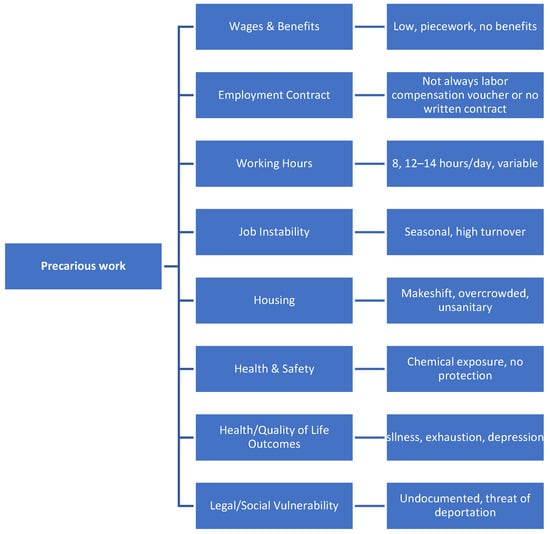
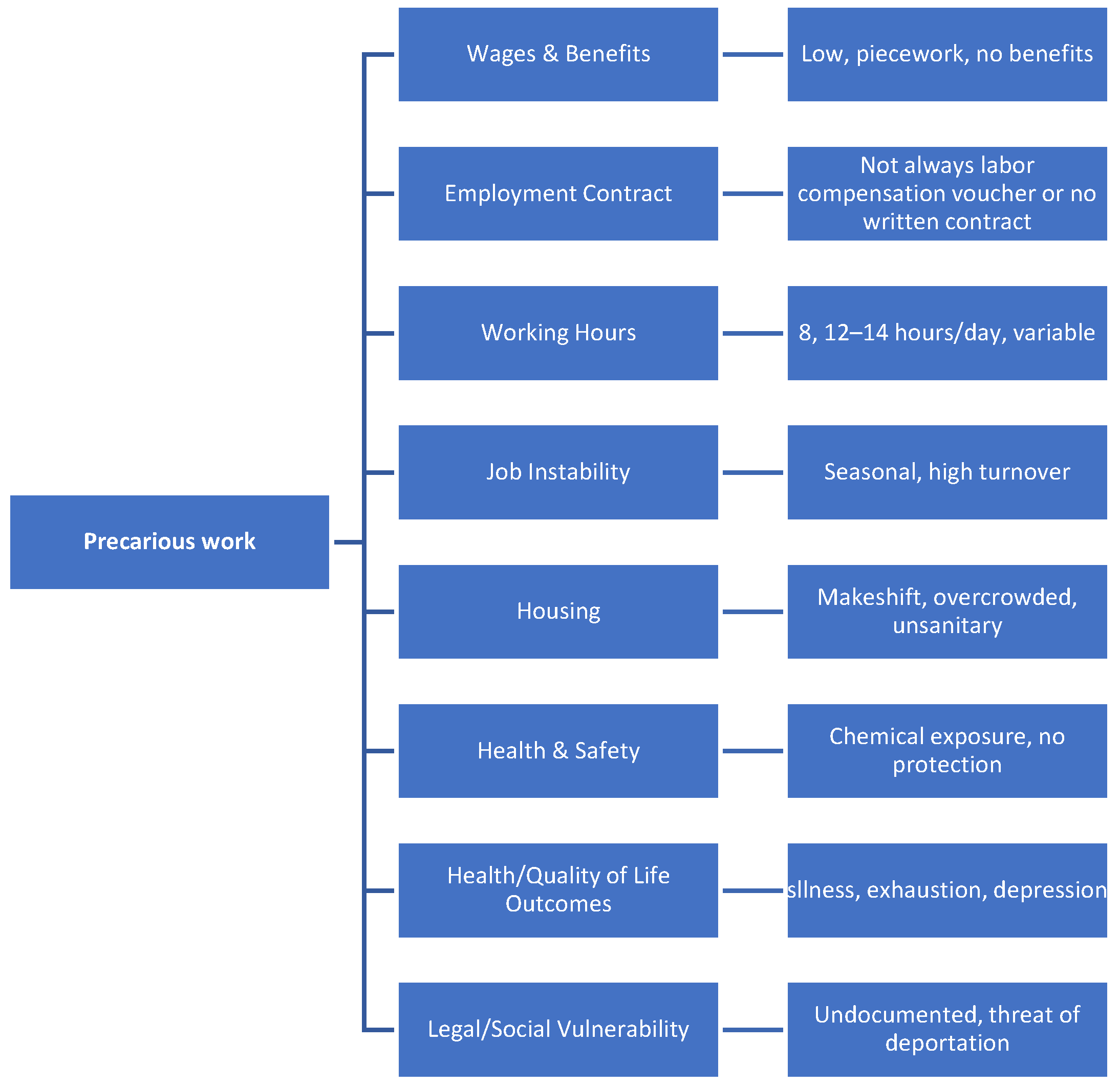
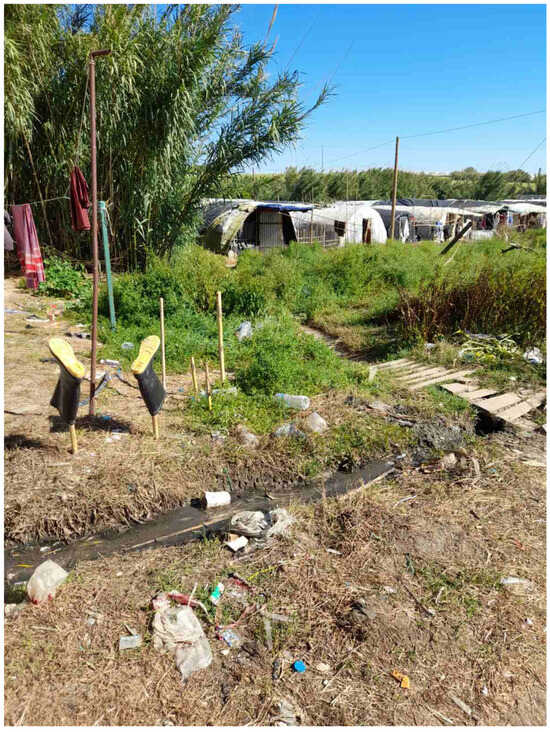
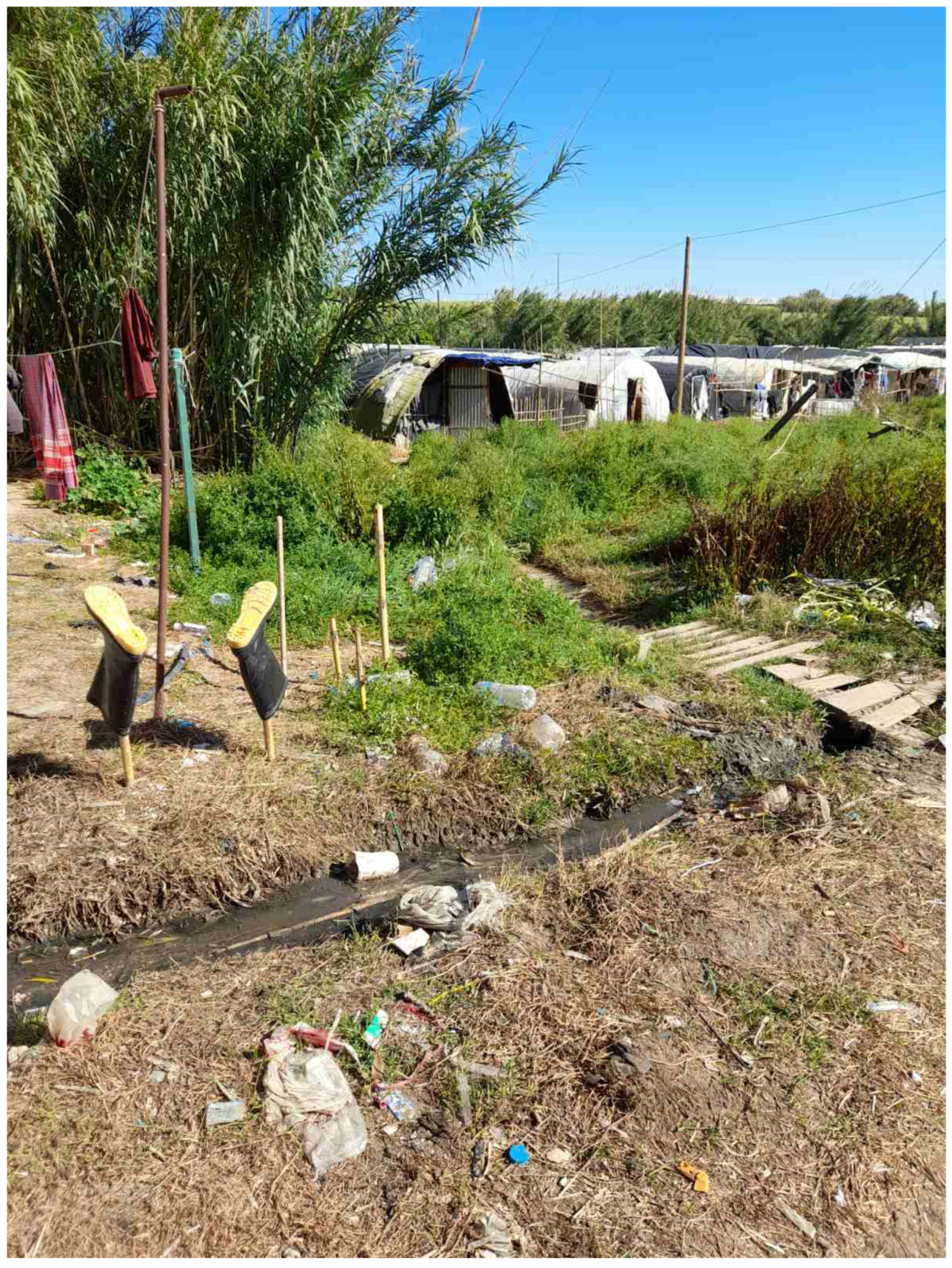
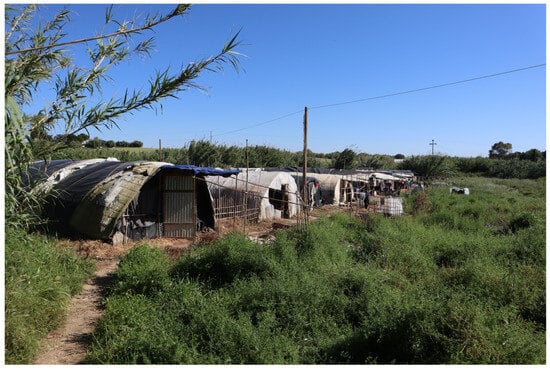
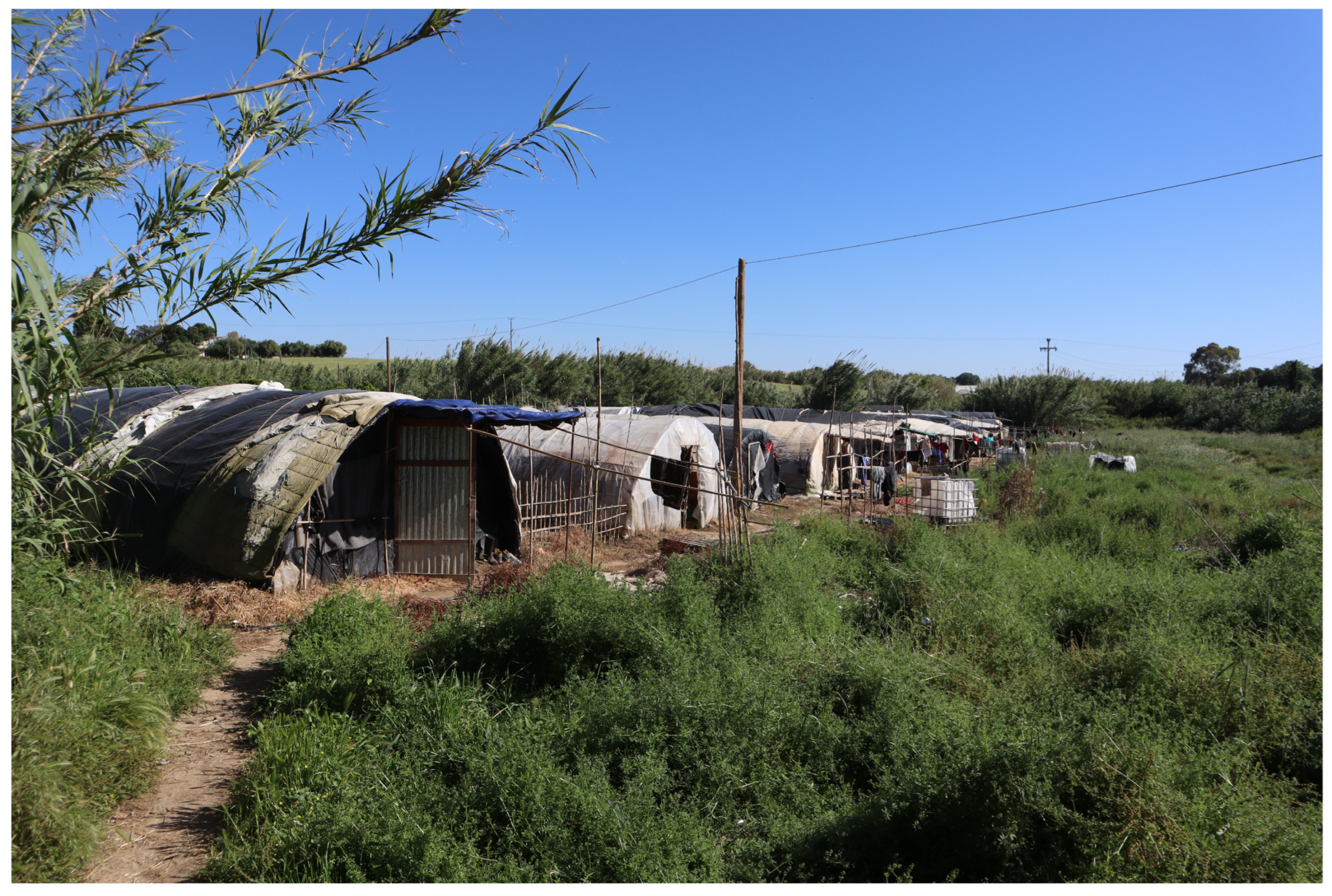
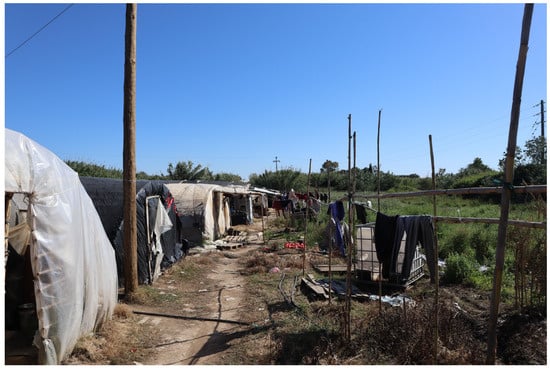
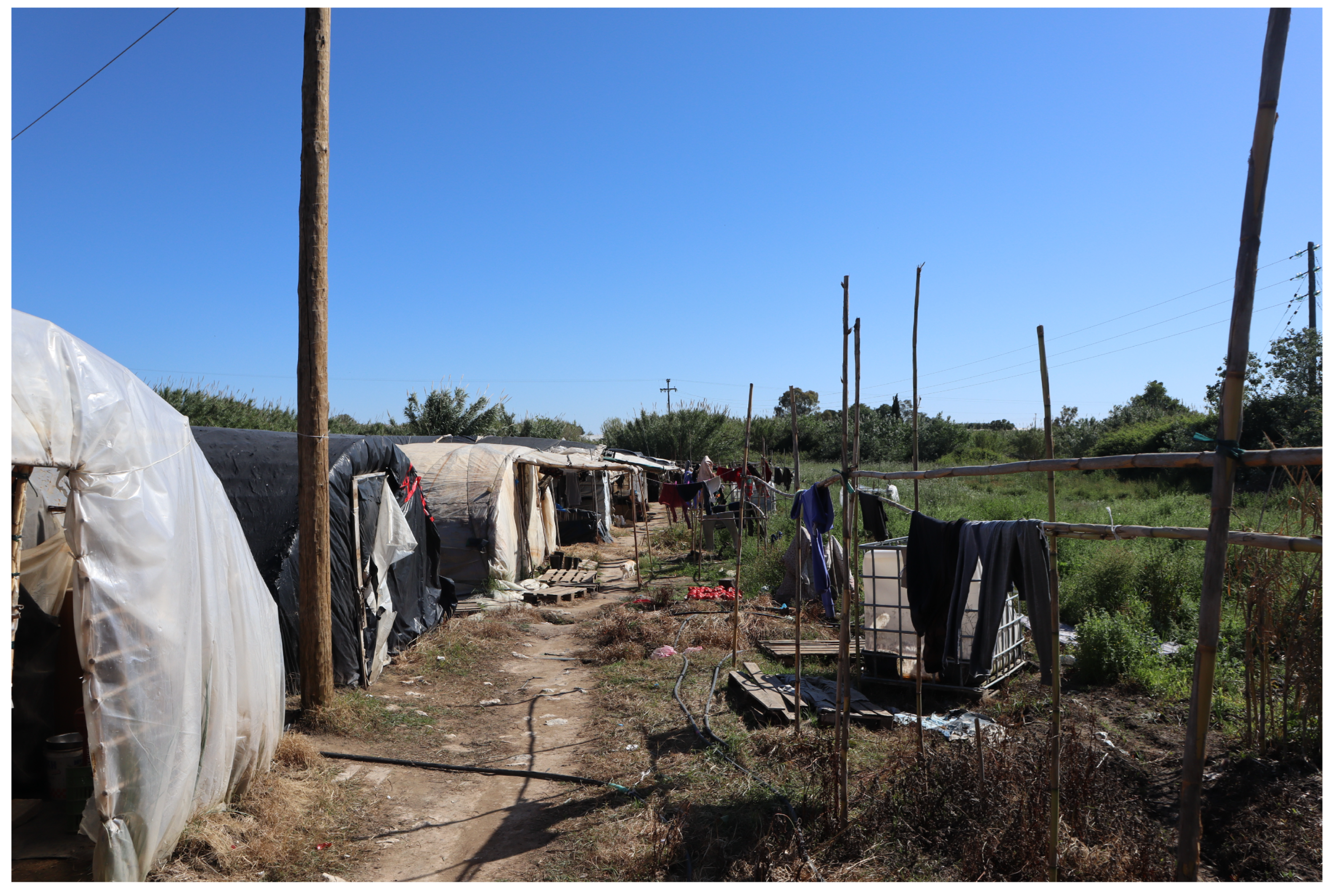
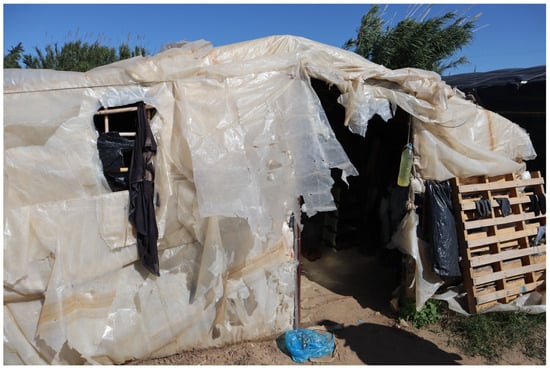
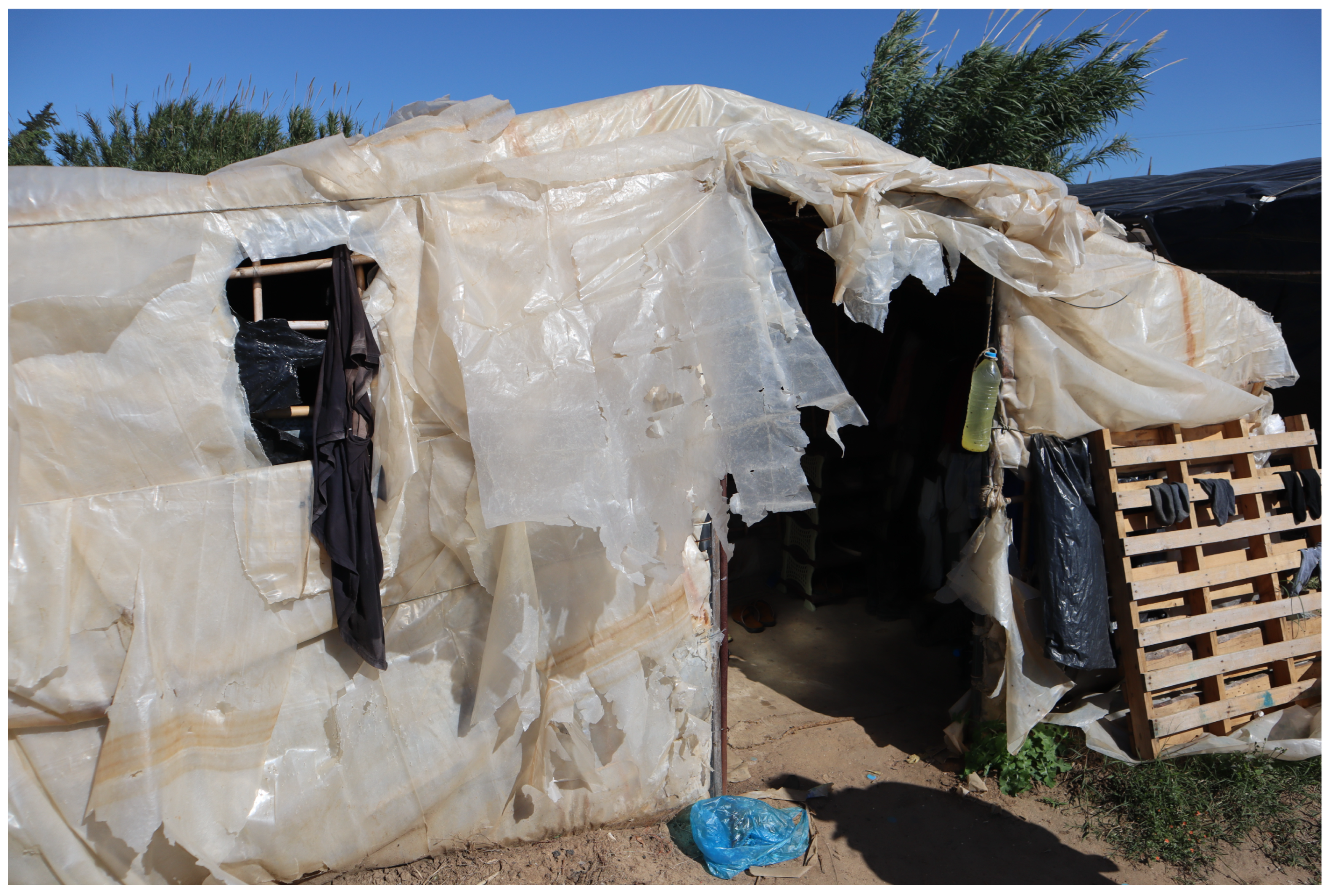
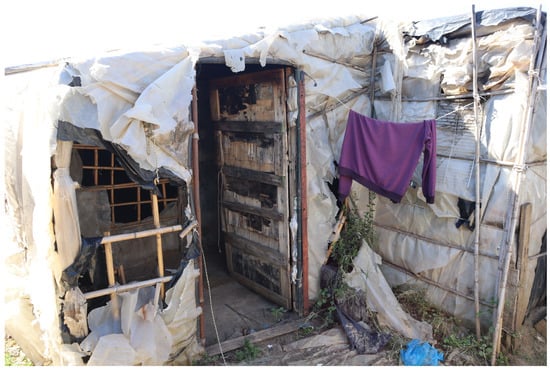
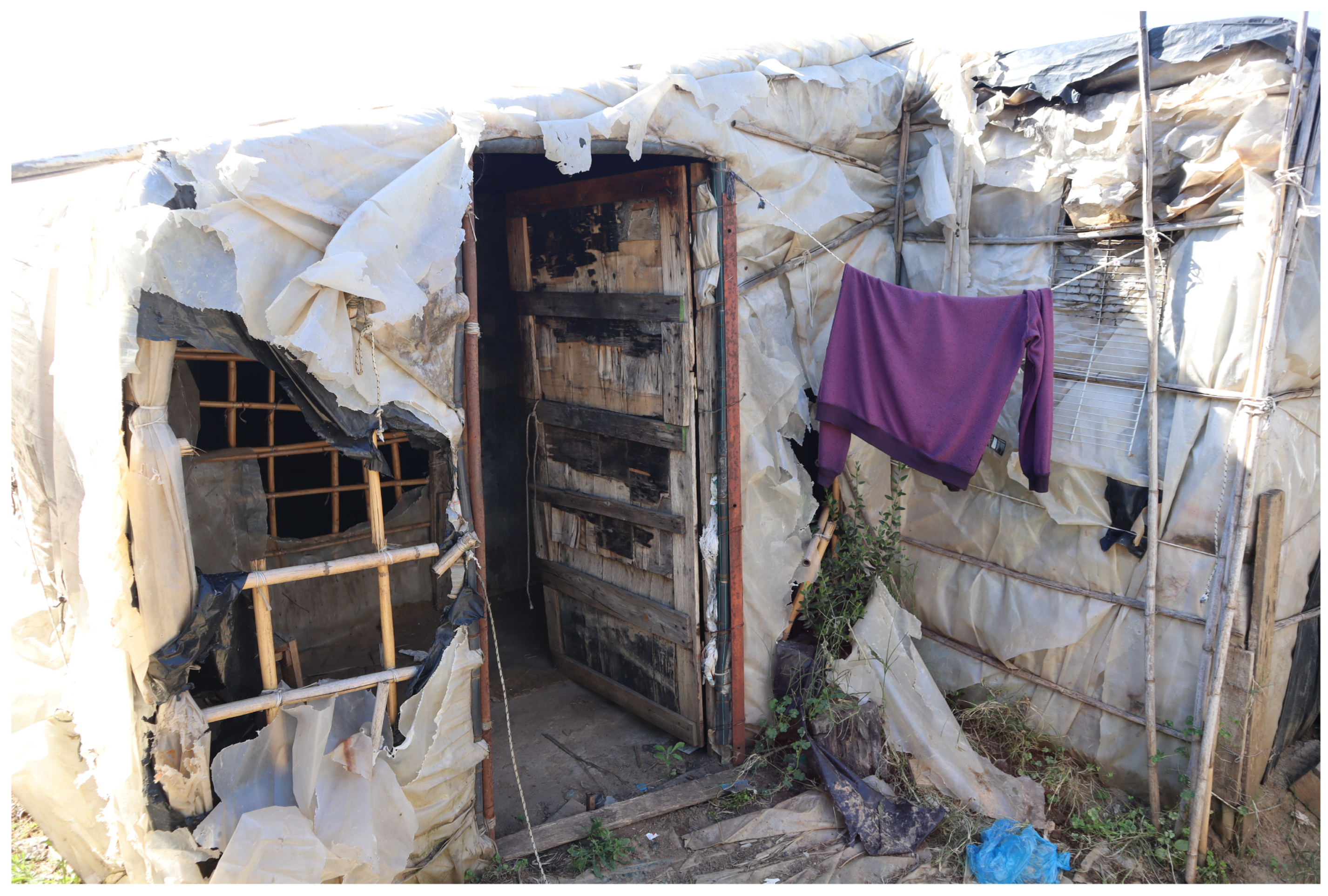
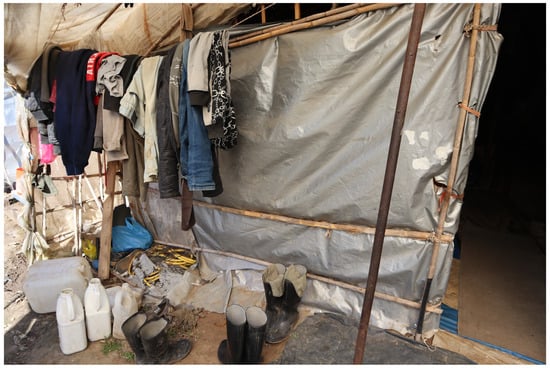
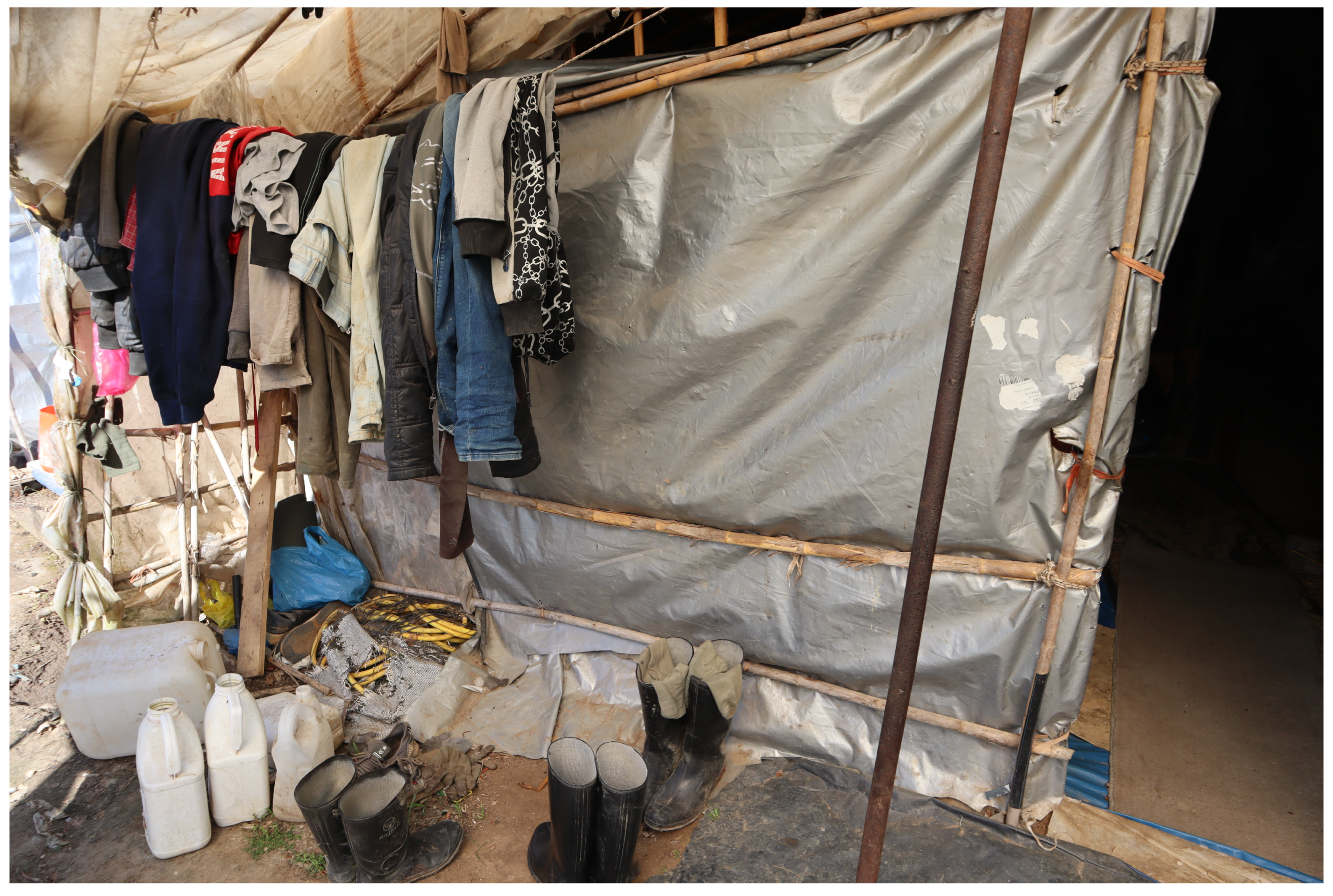
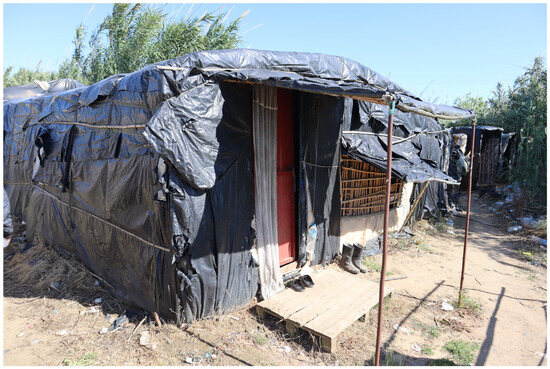
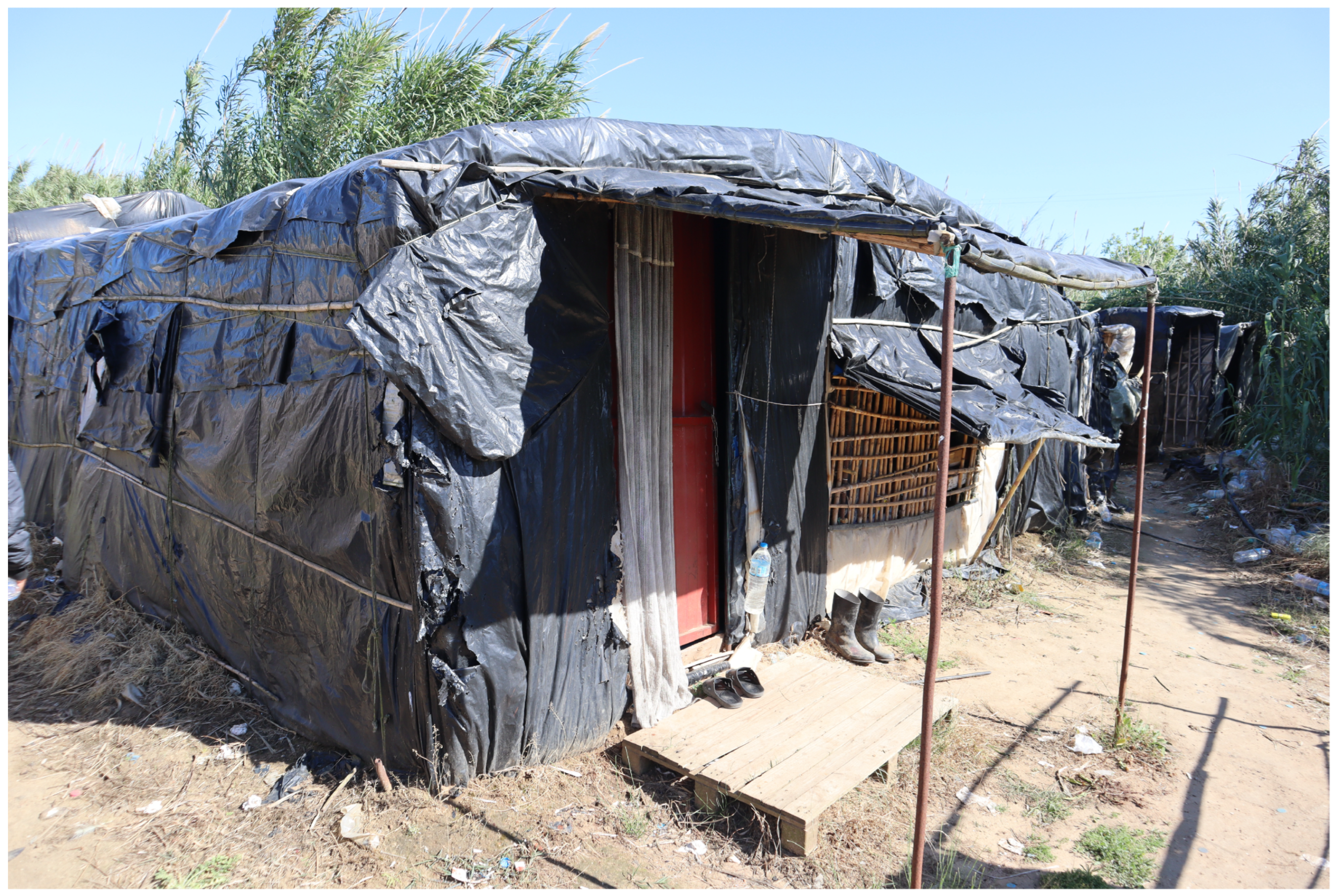
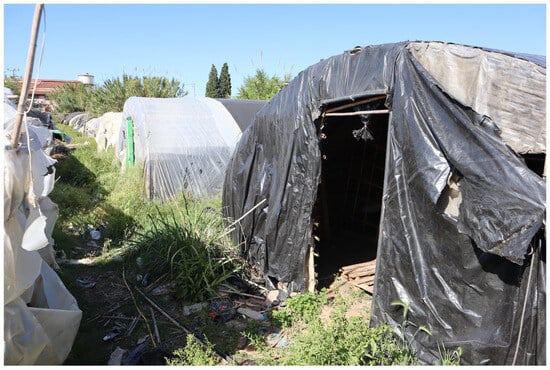
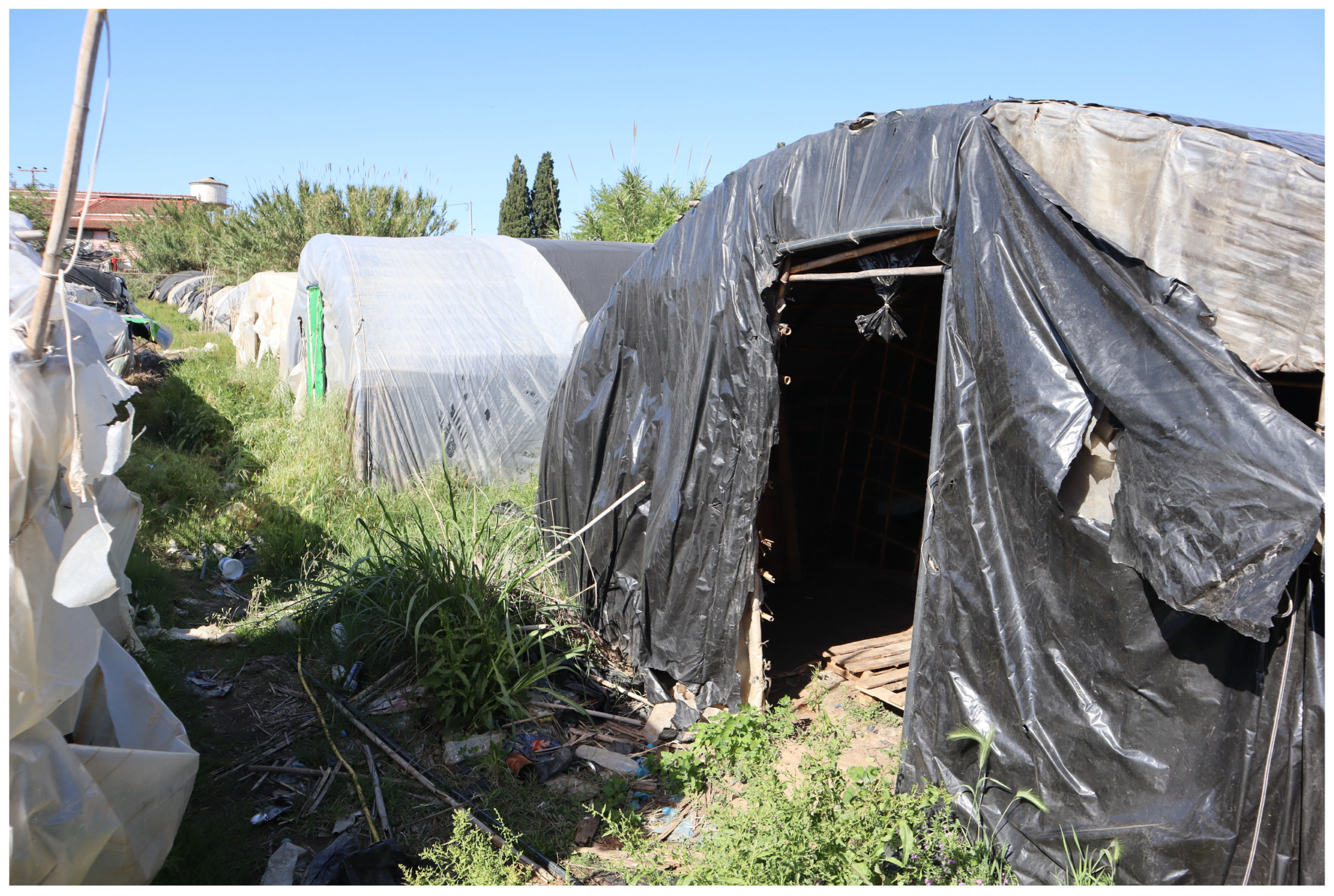
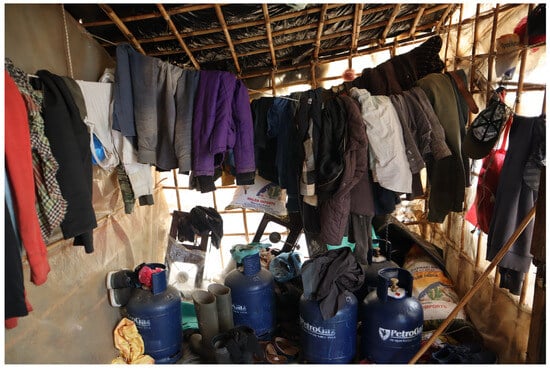
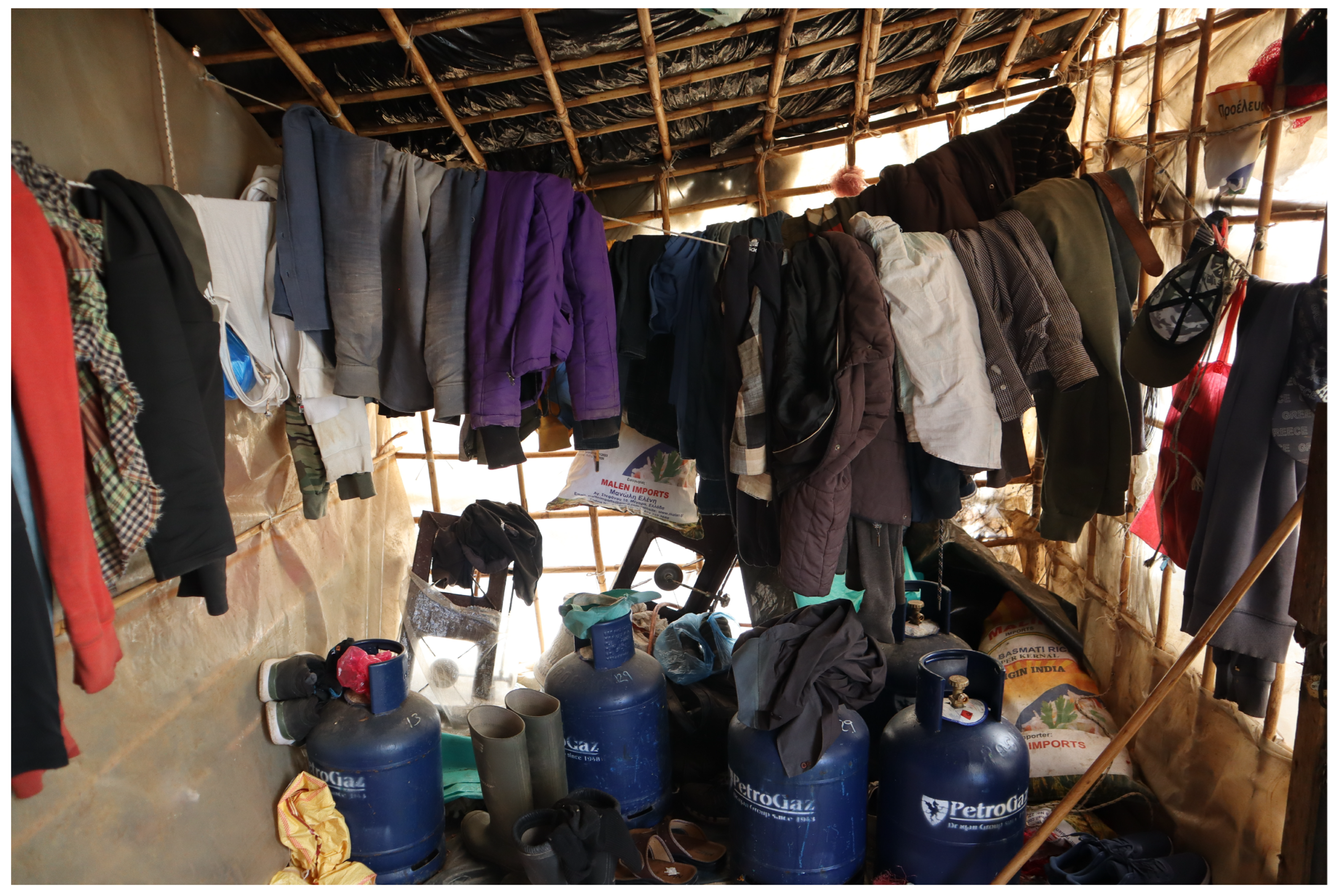
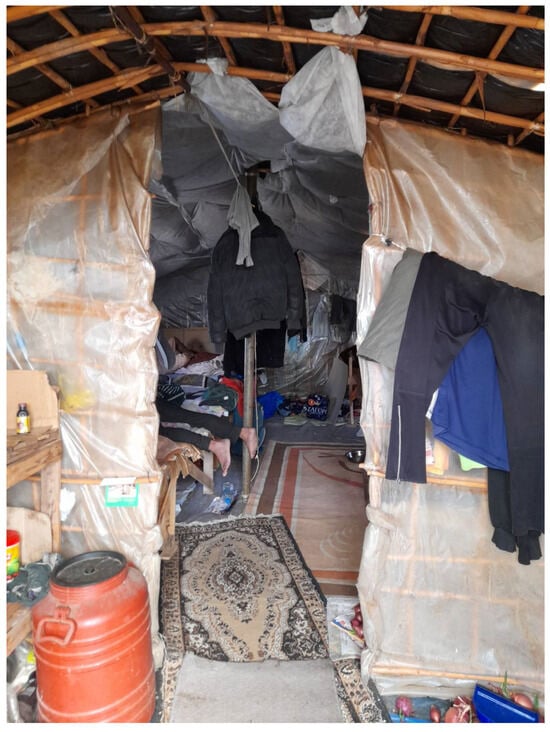
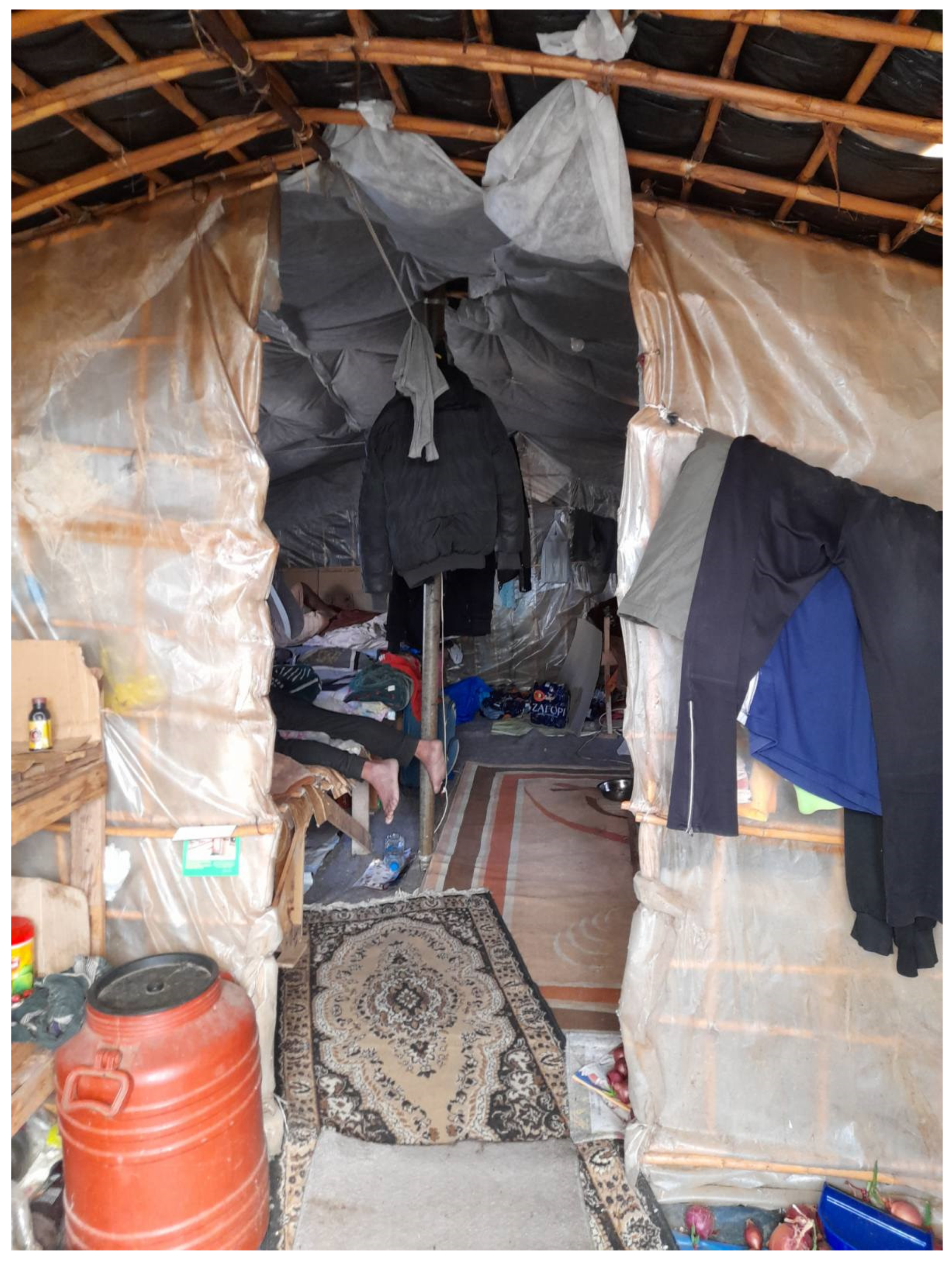
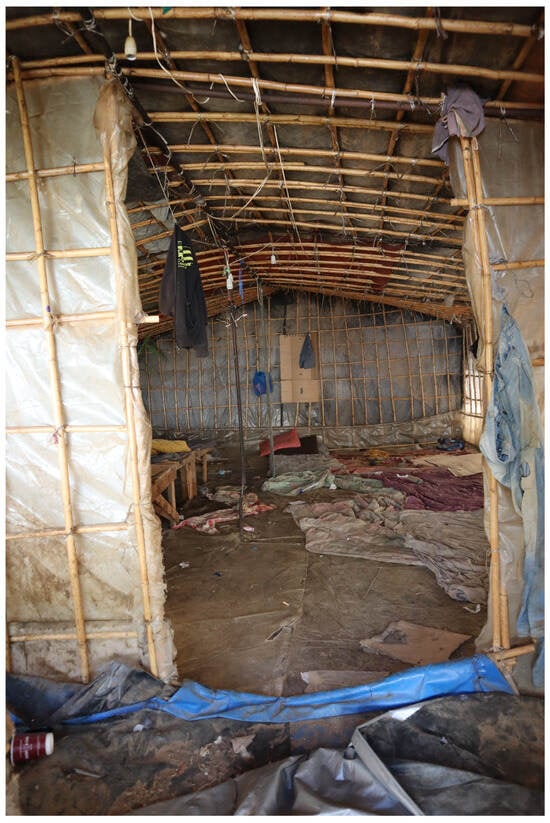
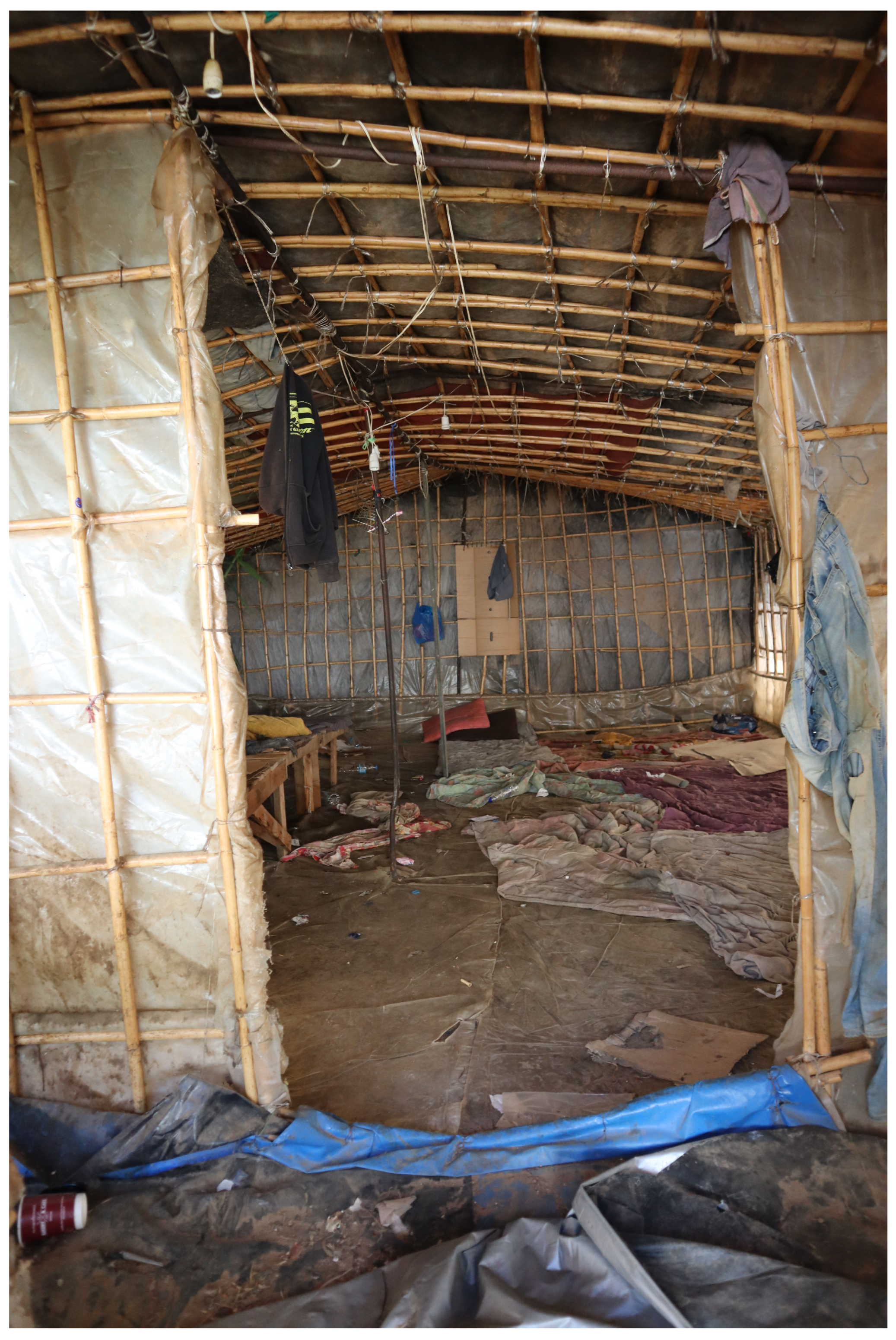
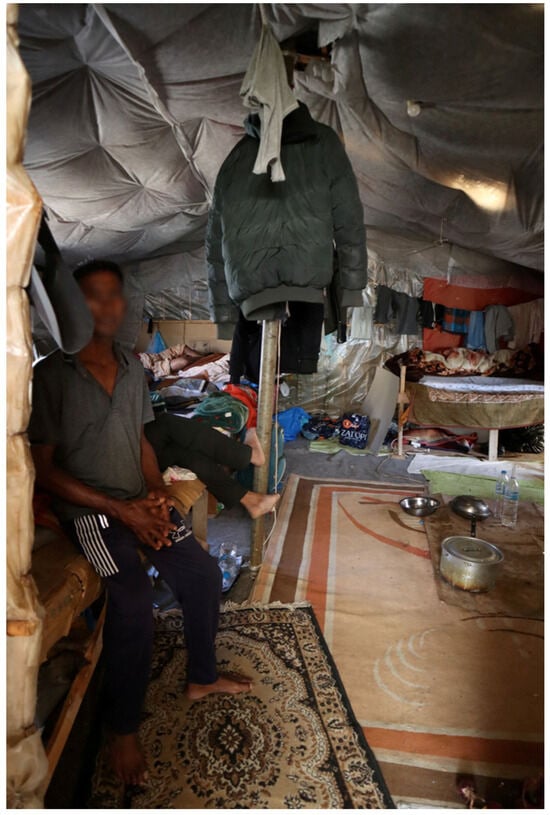
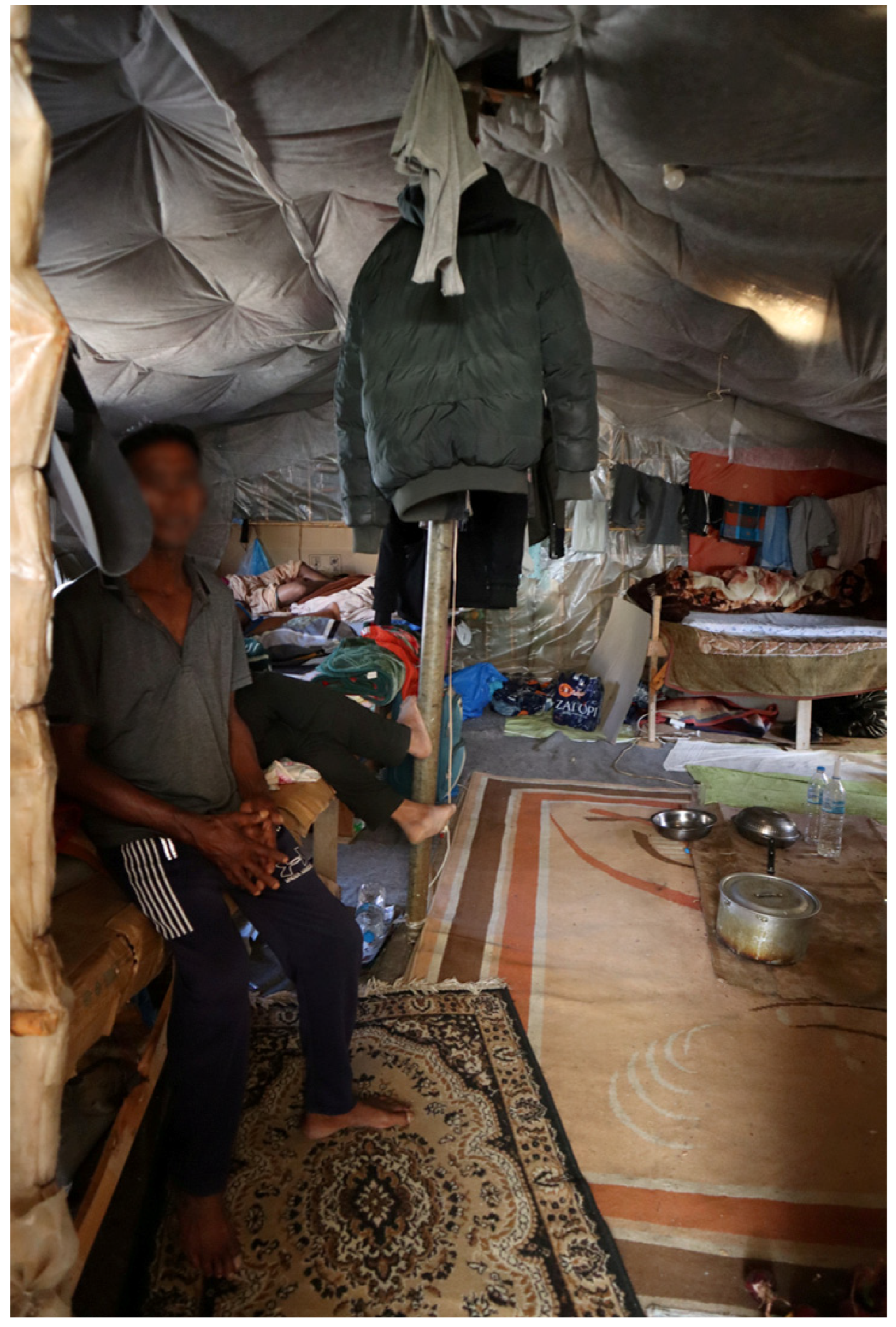
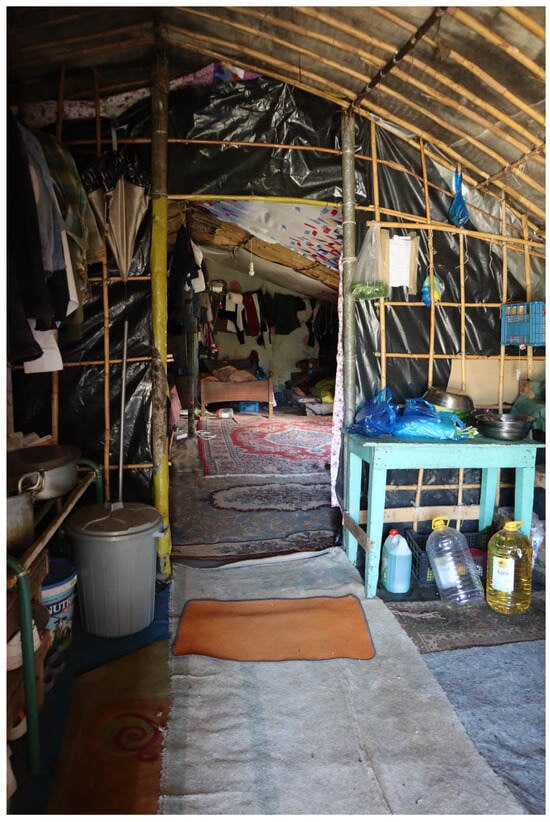
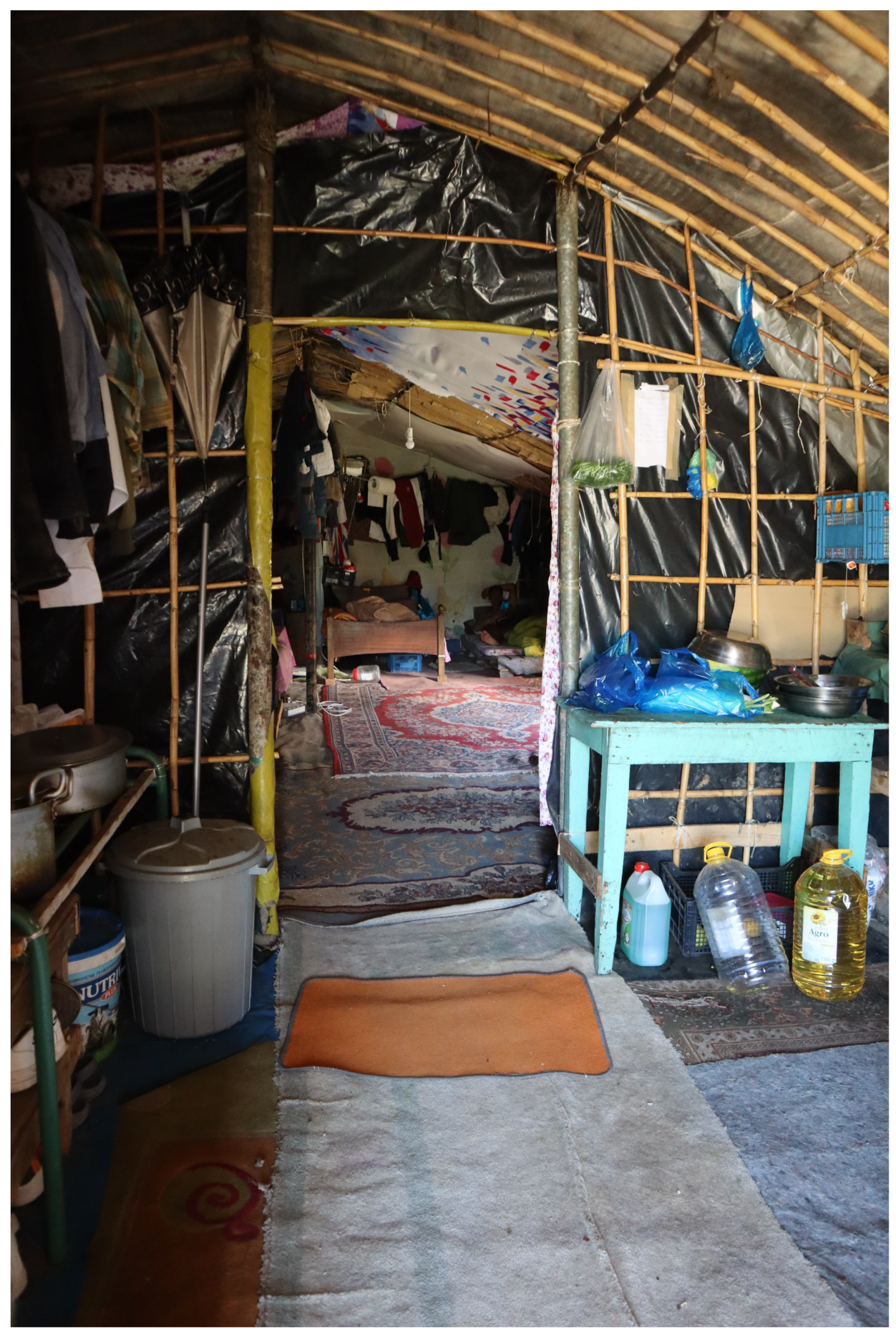
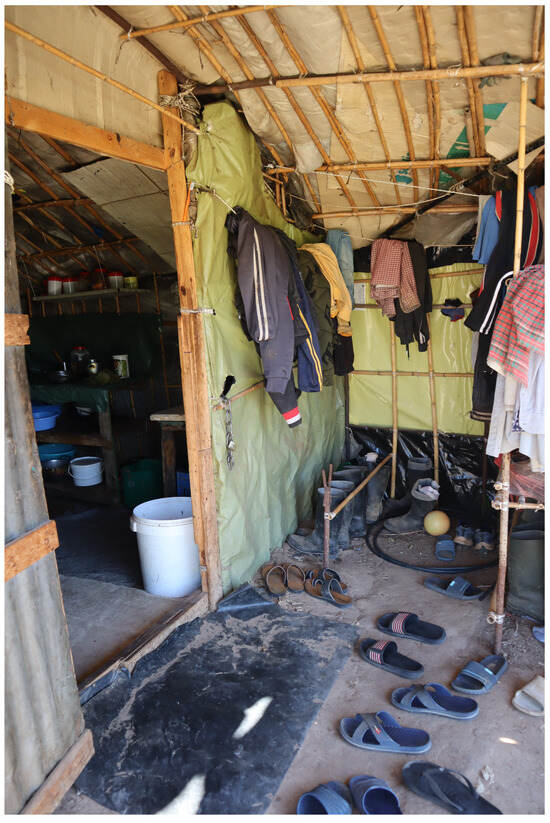
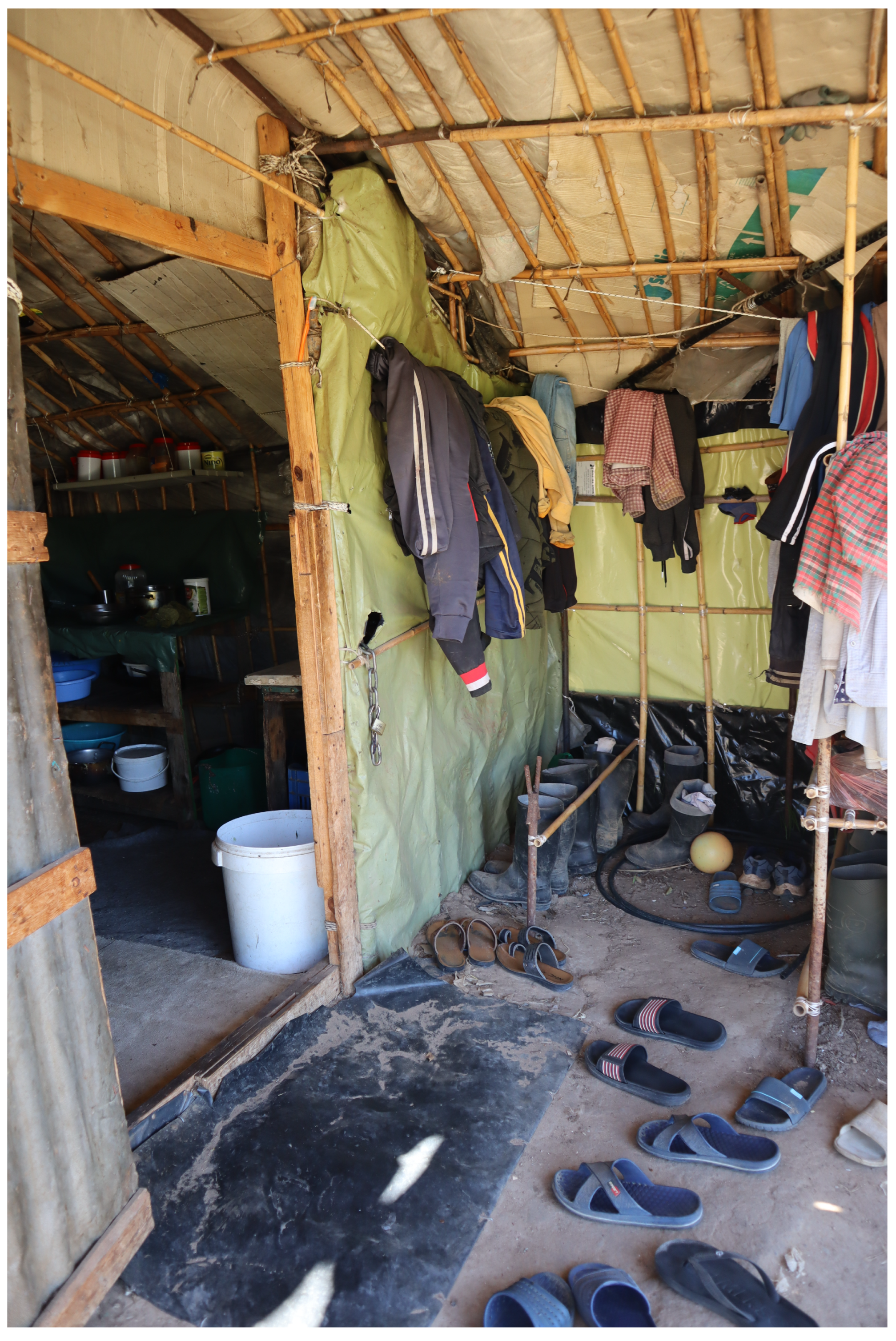
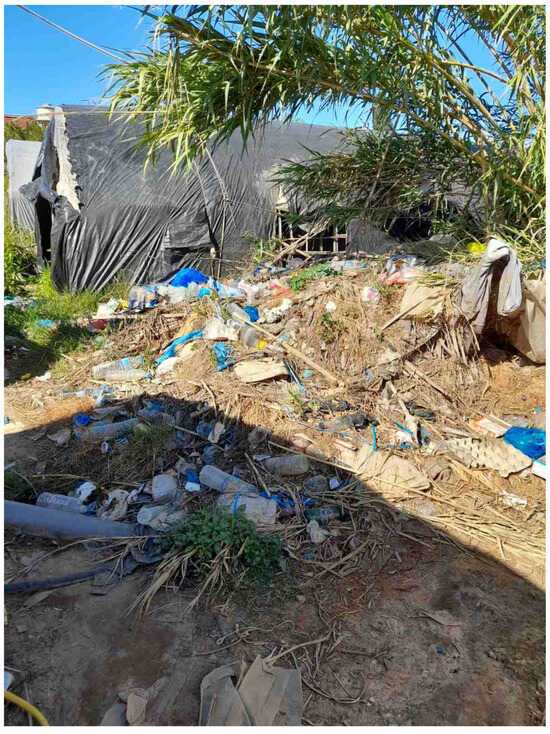
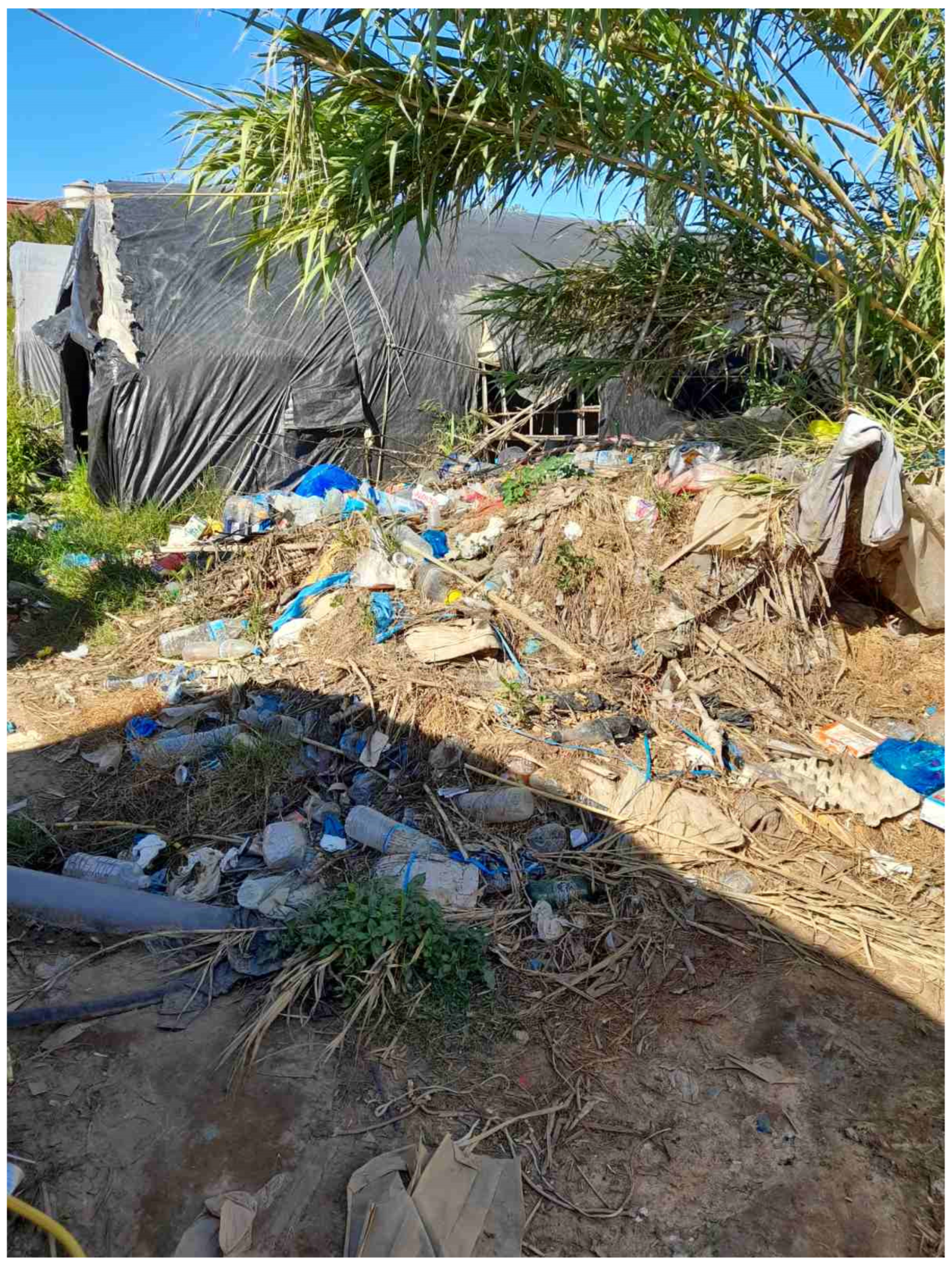
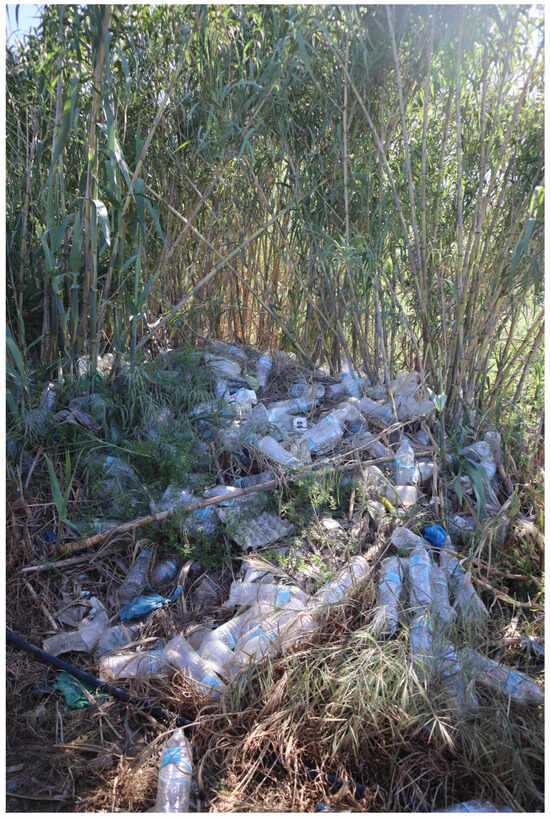
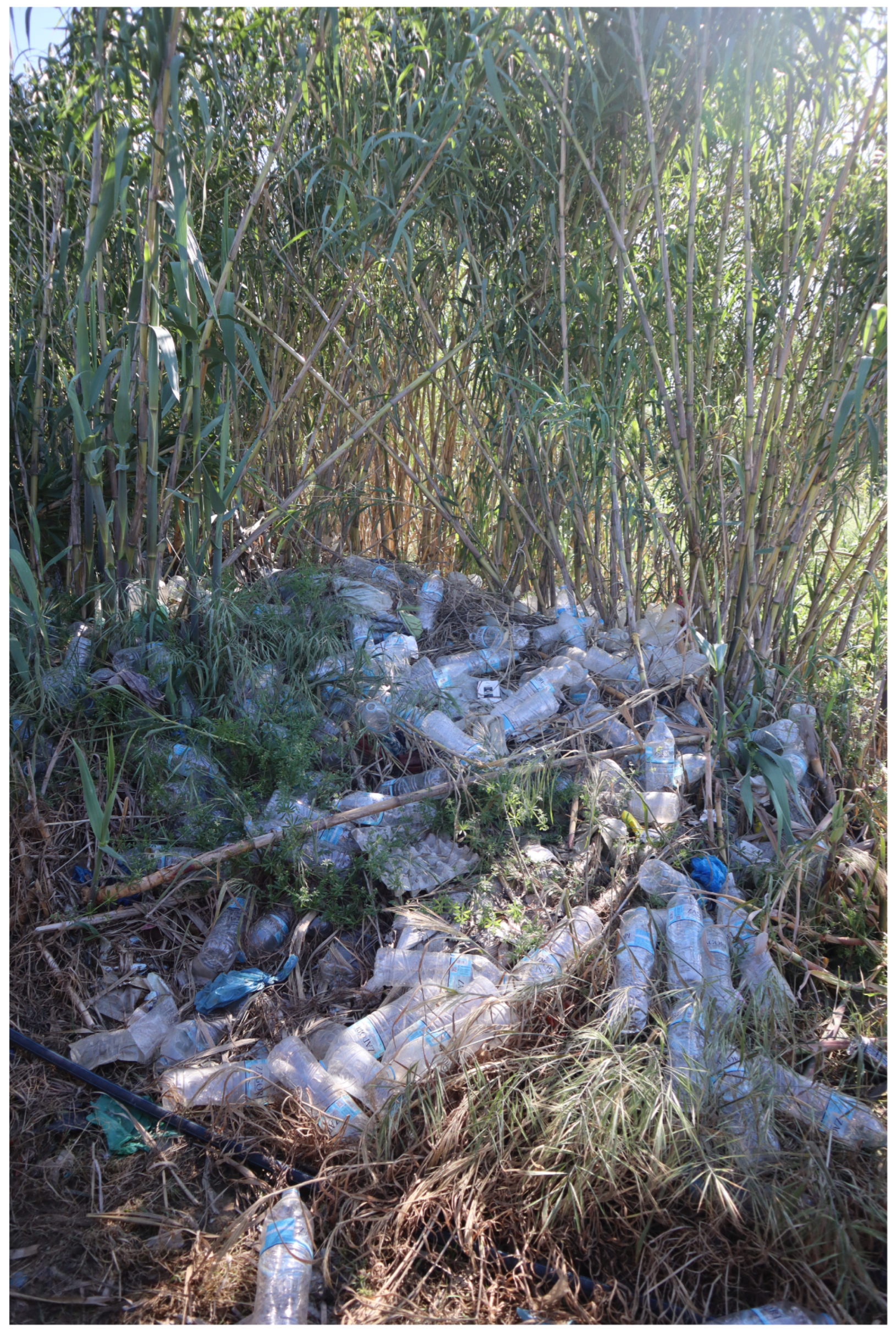
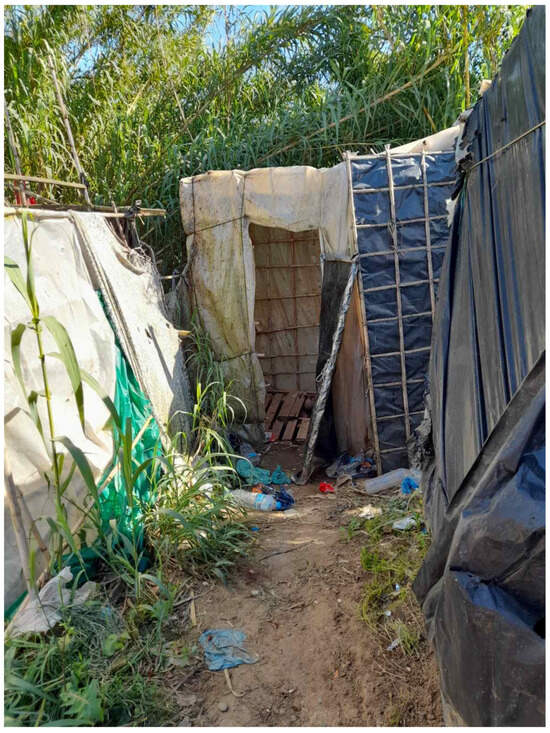
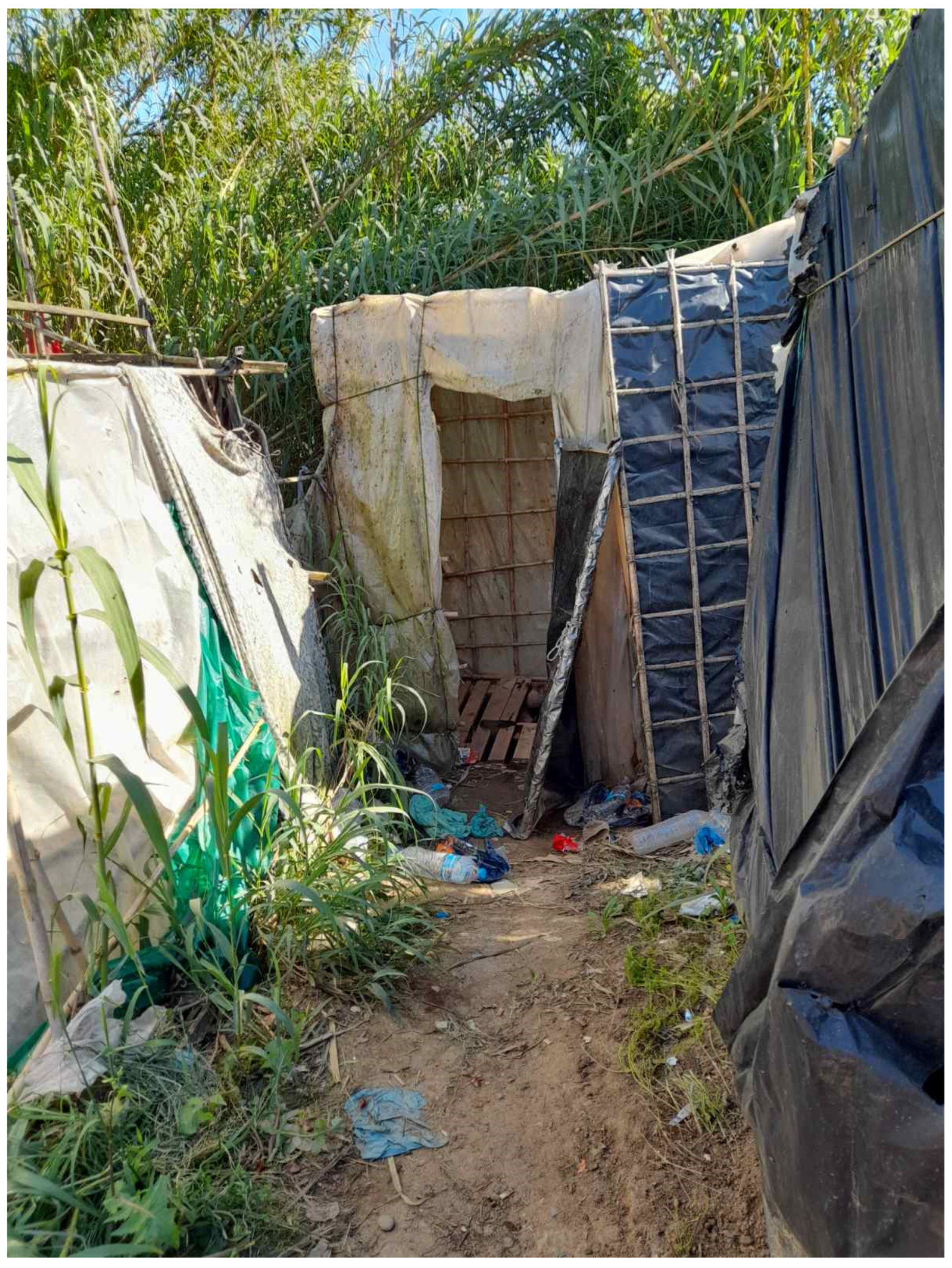
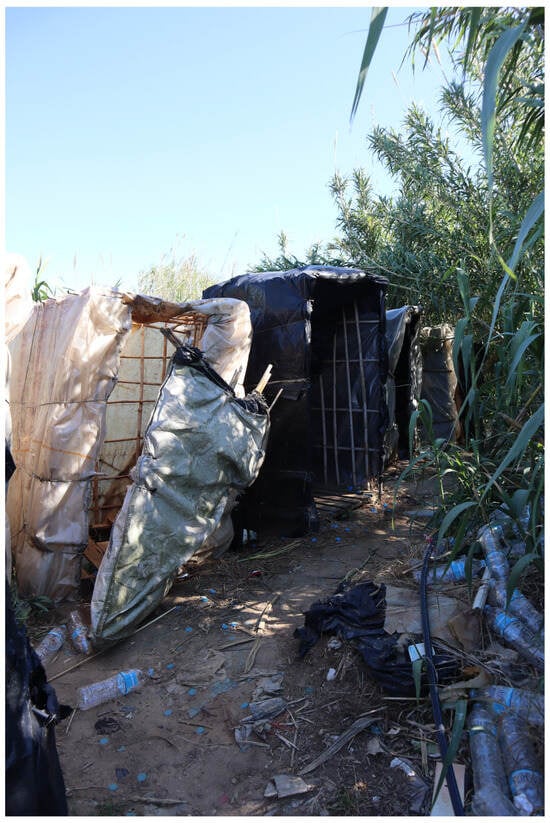
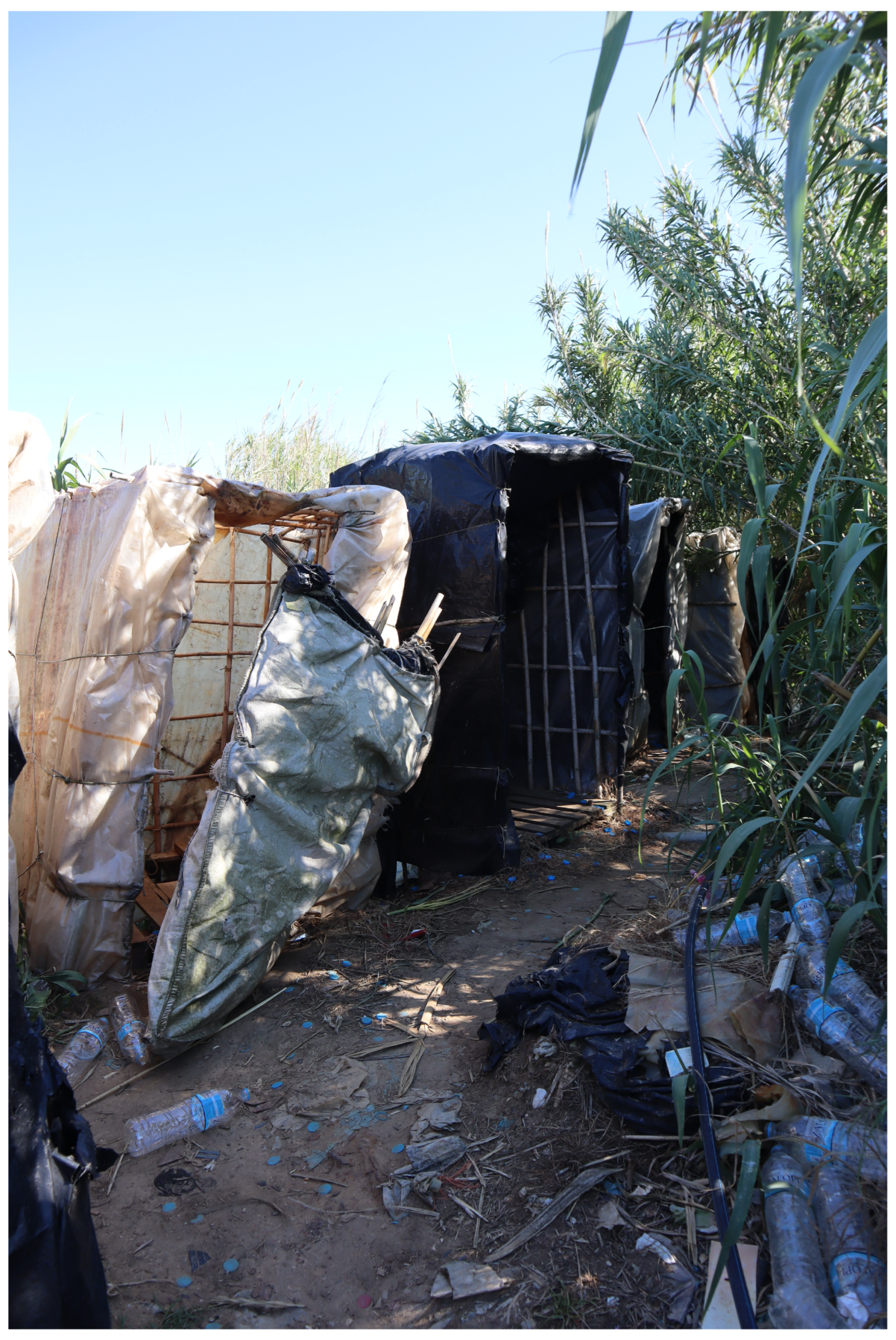
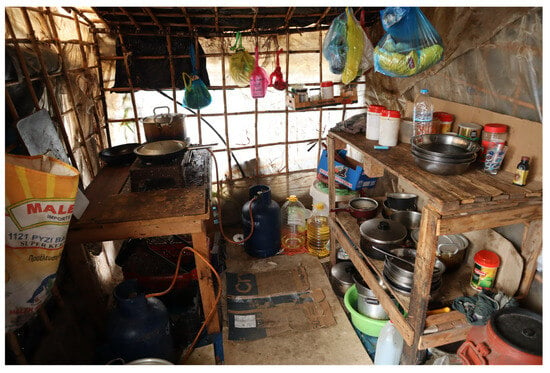
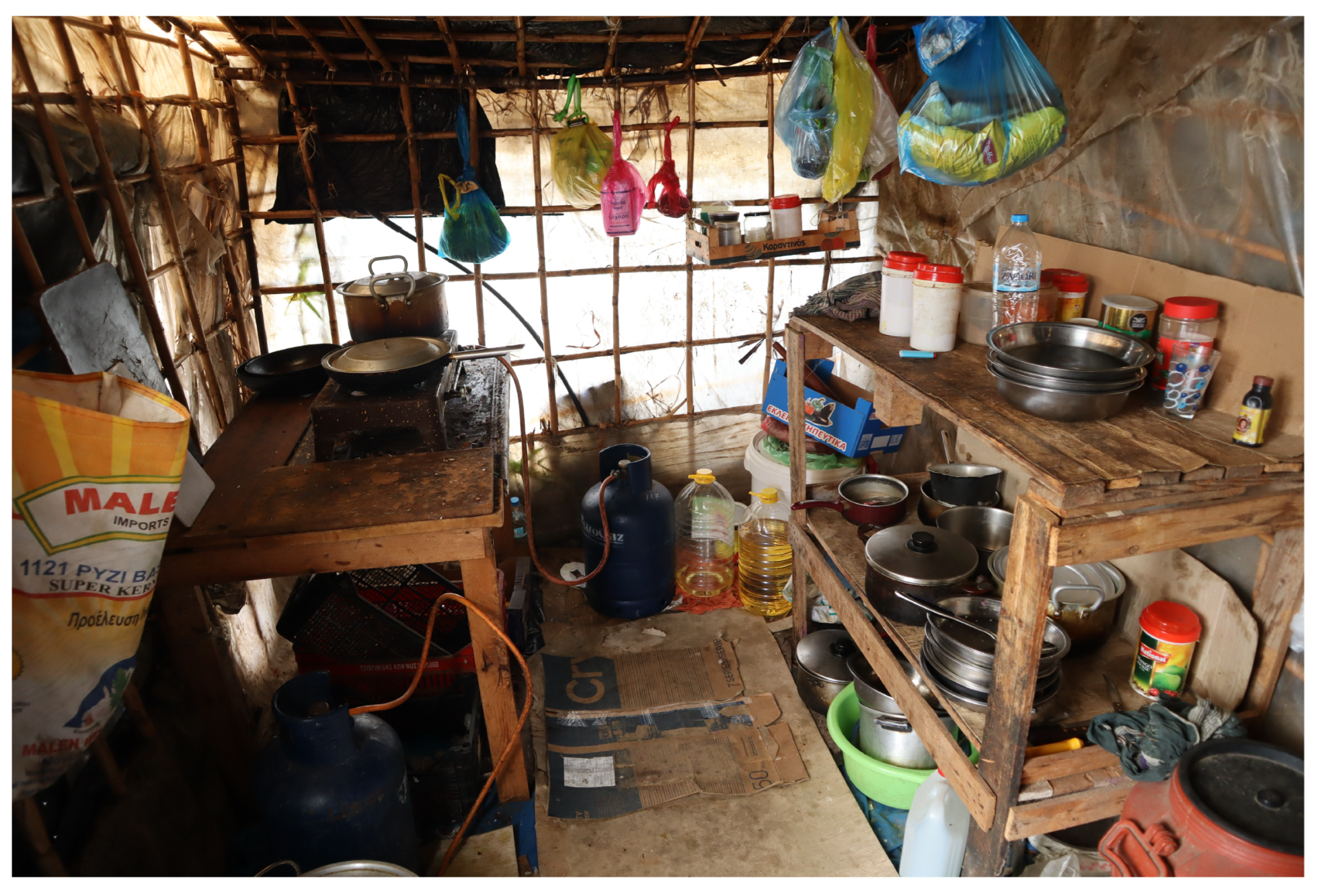
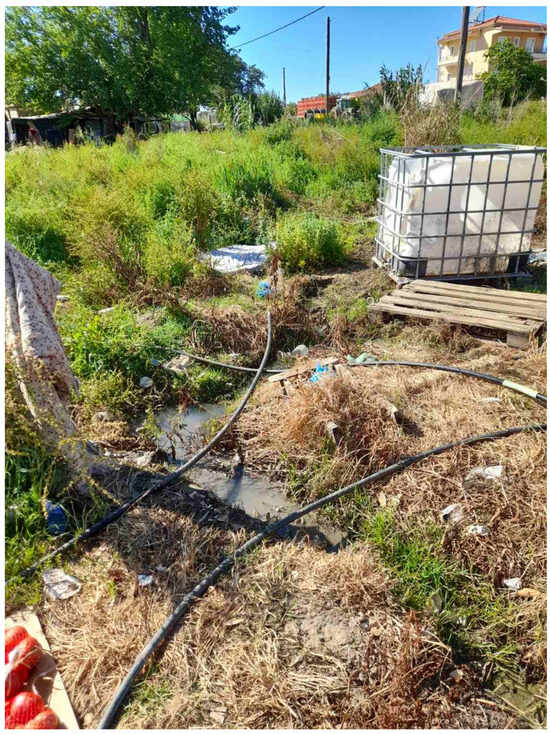
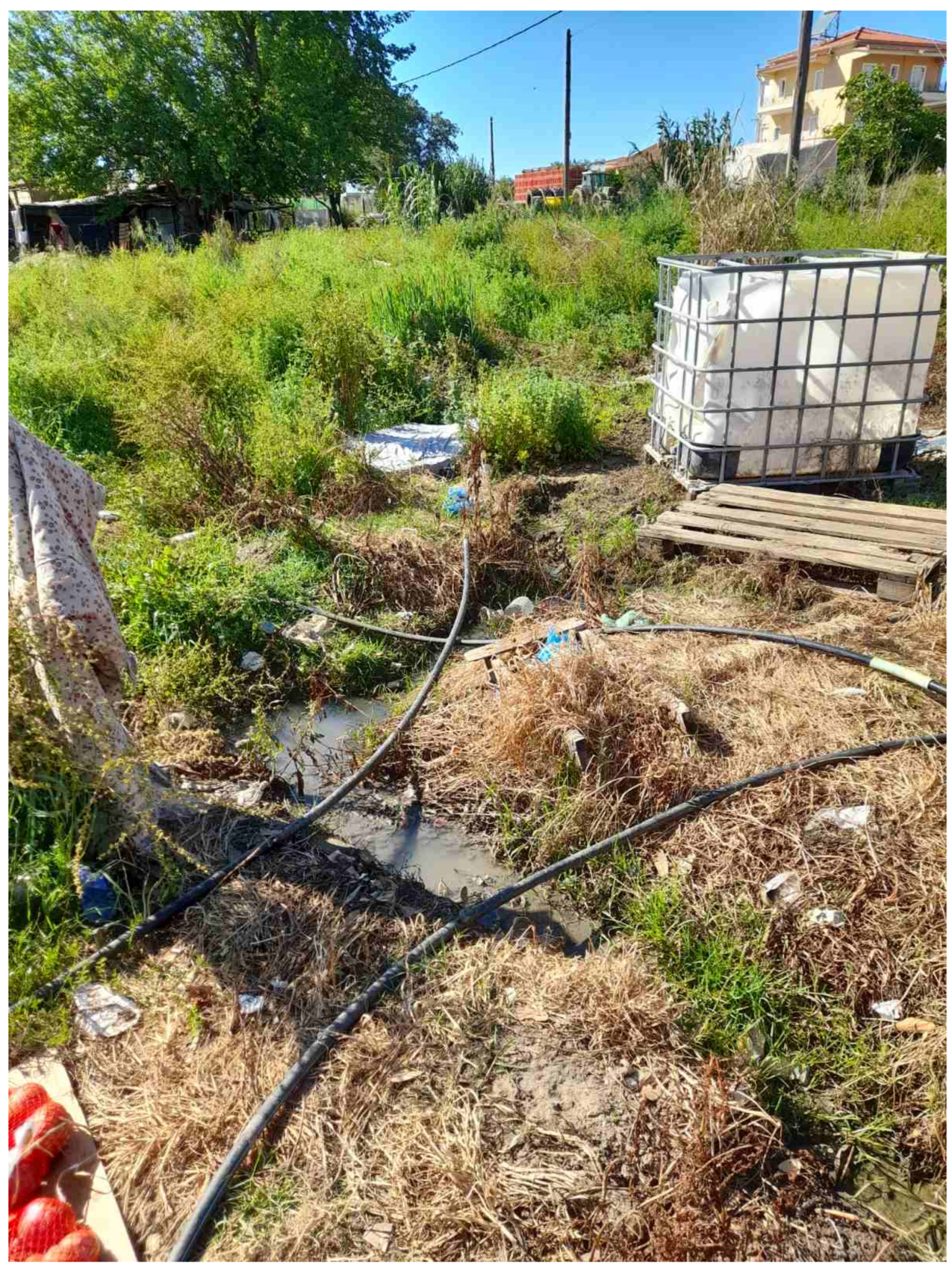
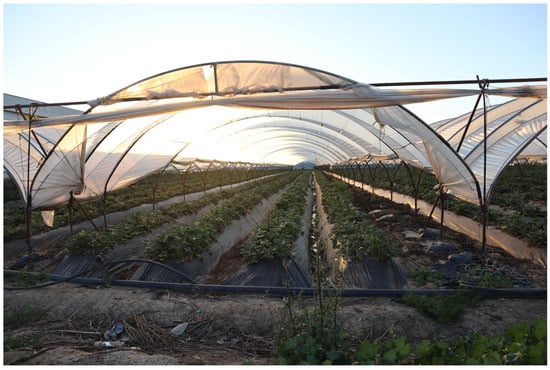
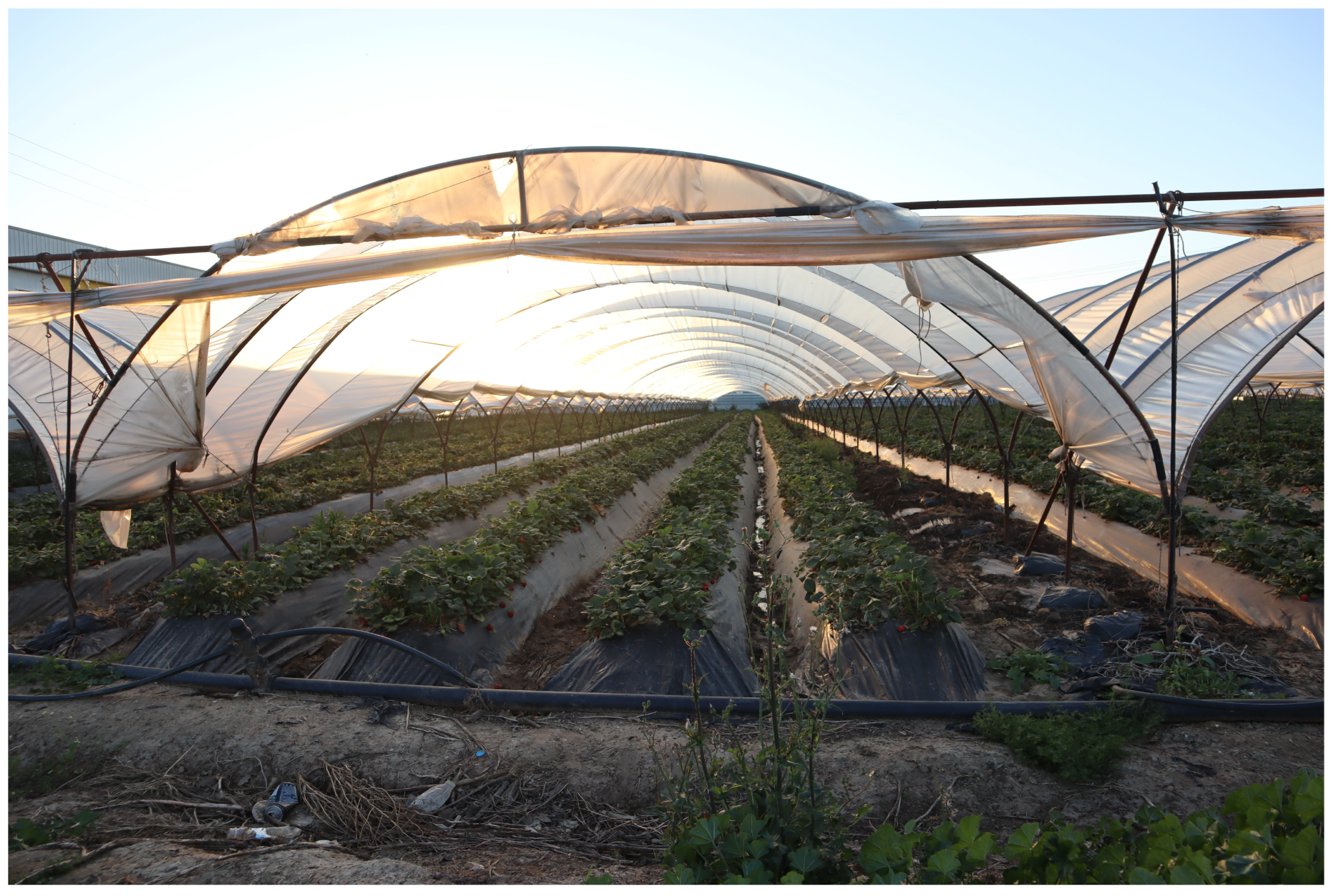
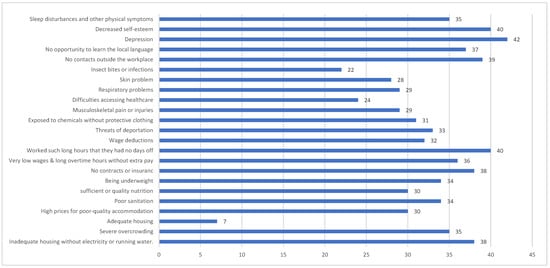

Disclaimer/Publisher’s Note: The statements, opinions and data contained in all publications are solely those of the individual author(s) and contributor(s) and not of MDPI and/or the editor(s). MDPI and/or the editor(s) disclaim responsibility for any injury to people or property resulting from any ideas, methods, instructions or products referred to in the content. |
© 2026 by the author. Licensee MDPI, Basel, Switzerland. This article is an open access article distributed under the terms and conditions of the Creative Commons Attribution (CC BY) license.