


Abstract
This study investigates the supercritical transesterification of waste beef tallow using methanol, with carbon dioxide employed as a cosolvent to reduce the operating pressure. The experimental design, guided by response surface methodology, evaluated the effects of reaction temperature (250–360 °C), carbon dioxide/methanol molar ratio (0.000–0.421), and methanol/beef tallow molar ratio (40–50) on conversion and quality during 60 min in a batch reactor. Bulk properties and spectroscopic analyses confirmed that the fatty acid methyl esters (FAMEs) met reference standard values. The results showed that temperature was the most significant factor affecting conversion, while carbon dioxide addition proved beneficial at high methanol-to-fat ratios. The process proved to be a feasible method for producing high-quality biodiesel while lowering required pressure compared with non-cosolvent supercritical systems.
1. Introduction
As a non-renewable resource, petroleum still serves as a critical global feedstock for chemical production and a primary fuel source (mainly gasoline and diesel) for transportation [1]. While certain nations maximize daily production barrels, others rely heavily on oil revenue to sustain their economies [2]. However, various countries have already reached peak oil production [3], triggering global efforts to mitigate the environmental and social impacts of fossil fuels [4]. Nowadays, oil production is mainly defined by the shift toward a sustainable energy transition. While traditional fossil fuels meet present needs, e.g., ultralow sulfur diesel with <10–15 ppm sulfur, there is a clear move toward prioritizing renewable energy and cleaner technologies to reduce emissions. The growing use of biodiesel as a lower-carbon alternative for the transportation sector has been recognized to be an important part of this strategy.
Regarding the ecological impact of fossil fuels, carbon dioxide emissions are a primary concern due to their well-known effects on global climate and public health [5,6]. Consequently, the energy transition is a major focus of research and development, driven by both declining oil production and its broader socio-economic consequences [3]. To achieve carbon neutrality, various alternatives have been proposed, leveraging renewable sources such as solar, wind, hydro, and geothermal power, as well as energy derived from organic matter [7]. Biomass serves as a versatile feedstock for energy generation; however, it is crucial to distinguish between its various forms, as not all organic matter achieves the goal of carbon neutrality [8]. Biofuels are derived from diverse sources, including wood, agricultural crops, animal and sanitary waste, algae, and fats [9]. Biodiesel stands out as a primary biofuel, produced from a wide range of feedstocks—from edible and non-edible oils to agricultural residues and waste [10,11]. A significant advantage of biodiesel is its compatibility with conventional engines; it can be utilized in blends of up to 20% by volume without requiring mechanical modifications [12].
Biodiesel is synthesized through the transesterification of fats with alcohols using various catalytic systems, including homogeneous or heterogeneous phases in acidic or basic media, as well as biocatalysts and nano-catalysts [13]. An alternative approach is supercritical transesterification, which eliminates the need for catalysts. This method offers distinct advantages over catalytic processes, as the reaction remains unaffected by water content or impurities in the feedstock, thereby simplifying downstream purification. The most common reagents are vegetable oils and methanol [14], with waste animal fats serving as a sustainable alternative to edible oils and agricultural crops [15]; these feedstocks are economically feasible for producing biodiesel with the required quality specifications [16], with the process being technically suitable in terms of scaling up [17] and having recommendations for safe operation [18].
Various studies have investigated the supercritical transesterification of animal fats with methanol [19,20,21,22]. An alternative strategy to achieve supercritical conditions at reduced temperatures and pressures is the addition of a cosolvent [14]. Various substances, such as propane, n-hexane, heptane, cyclohexane, toluene, dimethyl ether, and diethyl ether, have been investigated for the transesterification of coconut oil with supercritical methanol, with carbon dioxide (CO2) emerging as the most frequently utilized [23], with the possibility of being sequestered from the product of combustion to cosolvent for supercritical transesterification to attain carbon neutrality [24]. Similarly, other research on soybean oil transesterification explored the use of CO2 and hexane as cosolvents [25,26,27,28]. These studies are summarized in Table 1, where P, T, t, nCO2:nOH and nOH:nfat stand for pressure, temperature, time, molar ratio of carbon dioxide and methanol and molar ratio of methanol and fat, respectively.
Table 1.
Selected research of supercritical transesterification of fats with methanol and carbon dioxide as cosolvent.
As demonstrated, various parameters significantly influence the yield of supercritical transesterification. Response surface methodology (RSM) is a robust tool for analyzing how these factors and their interactions affect the process; particularly in non-catalytic biodiesel production, most studies utilizing RSM focus on optimizing reaction temperature, alcohol-to-fat molar ratio, and reaction time to maximize yield [29]. Furthermore, research has shown that water content in the feedstock can unexpectedly exert a positive effect on yield [30], alongside the influence of reaction pressure [31,32]. The addition of a cosolvent has also been evaluated as a key factor [33,34]. For instance, Tobar and Núñez investigated the production of methyl and ethyl esters from Spirulina oil, determining that the impact of carbon dioxide was more significant than that of temperature, with higher values of both variables leading to increased yields [35]. Based on these considerations, this study employs RSM to evaluate biodiesel production from waste beef tallow via supercritical transesterification. Using methanol and carbon dioxide as a cosolvent, the research investigates the influence of reaction temperature, the methanol-to-fat molar ratio, and the CO2-to-methanol molar ratio on the final conversion. Additionally, a comprehensive characterization of the resulting methyl esters was performed, supported by a detailed statistical analysis of the experimental data.
2. Materials and Methods
2.1. Materials and Equipment
Waste beef tallow was sourced from butcher shops in Mexico City. Pretreatment involved melting, decantation, and filtration to remove impurities; the purified tallow was then stored in a freezer at −5 °C, to be used for characterization and supercritical transesterification. Technical-grade methanol (99.5%) was supplied by Fermont (Monterrey, Mexico), while high-purity carbon dioxide (99.99%, Coleman-grade) was obtained from Infra (Naucalpan, Mexico).
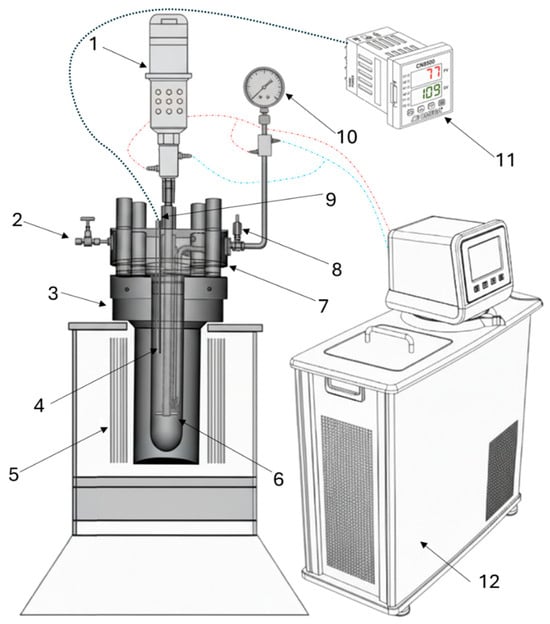
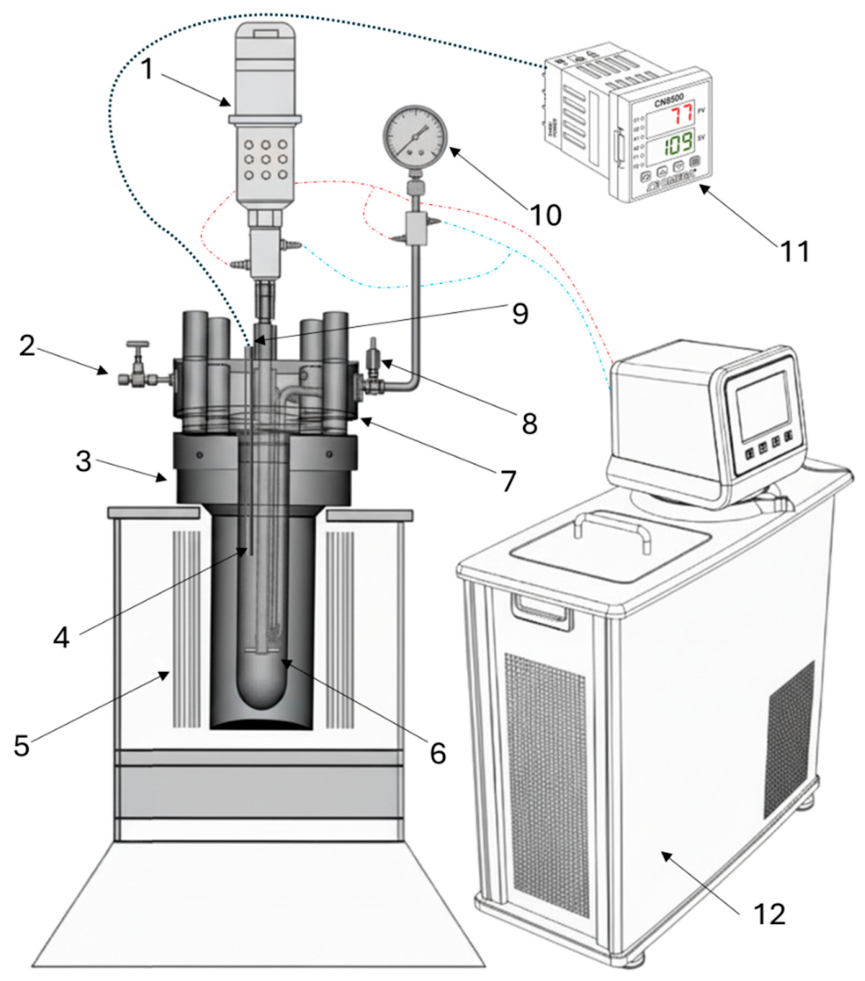
The transesterification reactions were performed in a 170 cm3 batch reactor (diameter and height of approximately 3.8 cm and 16.5 cm, respectively) constructed from Inconel 625, an alloy capable of withstanding temperatures up to 600 °C, pressures up to 45 MPa, and highly corrosive environments. The experimental setup is illustrated in Figure 1, featuring: stirring device (1), valve for gas feeding or degassing (2), reactor vessel body (3), thermocouple well (4), ceramic band heater (5), mixer rod (6), reactor vessel lid (7), rupture disk (8), thermocouple (9), manometer (10), temperature controller (11) and circulating bath (12).
Figure 1.
Schematic diagram of the batch reactor used for supercritical transesterification. Blue for cold fluid, red for hot fluid.
2.2. Experimental Procedure
The experimental process was conducted as follows: waste beef tallow and methanol were loaded into the reactor (quantities according to the design of the experiment described in a later section), which was then hermetically sealed. Residual air was removed using a vacuum pump, followed by the introduction of carbon dioxide in sequential loads using a pycnometer. Once all reagents were charged, the reactor was heated to the target temperature and strictly monitored to ensure isothermal conditions throughout the reaction. The reaction time was set to 60 min from the moment the desired temperature was reached to ensure maximum conversion of triacylglycerides into methyl esters; even though shorter reaction times have been reported [19,20,27], it may depend on feedstock origin, for which the process takes up to 90 min [36].
Upon completion, the heating system was stopped, and the reactor was allowed to cool to room temperature. Gaseous residues, including carbon dioxide, were vented through the degassing valve. The reactor was then opened, and its contents were transferred to a flask for the removal of volatiles using a rotary evaporator (HAHNVAPOR HS-2001NS, Hahn Shin Scientific, Bucheon, South Korea) at a vacuum pressure of 0.095 MPa. The resulting mixture—comprising methyl esters, glycerol, and unreacted fat—was transferred to a separatory funnel to allow phase separation. The lower layer, identified as glycerol, was removed, while the upper layer containing the methyl esters was collected for subsequent analytical characterization.
2.3. Characterization of Products
Molar mass was determined using a cryoscope (Cryette WR 5009, Precision Systems Inc., Natick, MA, USA) with water-saturated benzene as the solvent. The procedure as suggested by the operation manual began by measuring the freezing point of the pure solvent to calibrate the instrument to zero. A sample–solvent mixture was then prepared at a 25:1 mass ratio. The solution was undercooled to 7 °C below the pure solvent freezing point, after which it reached thermal equilibrium at the mixture freezing point. The resulting freezing point depression was used to calculate the molar mass.
The acid number was determined via potentiometric titration [37], while the iodine value was measured by volumetric titration according to the EN 14111 standard [38]. For quality compliance, the acid number has a maximum reference value of 0.50 mg KOH/g per ASTM D6751 [39], and the iodine value must not exceed 120 g I2/100 g [38]. Additionally, water content was measured using a Karl Fischer titrator (Mettler Toledo, Greifensee, Switzerland); per ASTM D6751 standards, the maximum allowable moisture content in biodiesel is 0.05% [39]. The cetane index (CI) was estimated using the correlation proposed by Krisnangkura [40], which is based on the saponification index (SI) and iodine value (IV) as follows:
CN = 46.3 + 5458 ⁄ SI − (0.225 IV),
The cetane index was also calculated with a linear mixing rule, which is based on the mass fraction (wi) of each methyl ester—determined via gas chromatography–mass spectrometry (GC-MS)—and their respective individual cetane numbers (CNi) [41]:
CI = ∑wi CNi,
According to ASTM D6751, the cetane number must be greater than or equal to 47 [39]. The calorific value was determined using an isoperibol bomb calorimeter (Parr 6200, Parr Instrument Company, Moline, IL, USA) equipped with an oxygen combustion vessel (Parr 1108) and a water handling system (Parr 6510). The instrument was calibrated with benzoic acid, establishing an energy equivalent of 10,073.1 J·K−1. Calorific values were obtained directly from the apparatus interface; for biodiesel, the value must be at least 35 MJ·kg−1 to comply with the EN 14214 standard [42]. Table 2 contains the values of different biodiesel properties according to ASTM International as well as the European Committee for Standardization.
Table 2.
Properties of biodiesel as indicated by international standards.
Fourier-transform infrared (FTIR) spectra were obtained using a Perkin Elmer Spectrum GX spectrometer (PerkinElmer, Shelton, CT, USA) to identify functional groups within the biodiesel samples. Specifically, the carbonyl group was monitored to confirm the presence of methyl esters and to compare the spectra of the feedstock with those of the reaction products. Nuclear Magnetic Resonance (NMR) analysis was performed on a Bruker 750 MHz spectrometer (Bruker Corporation, Billerica, MA, USA) using deuterated chloroform as the solvent. 1H NMR spectra were recorded using a zg30 pulse sequence, a relaxation time of 1 s, a pulse width of 7.19 microseconds, and 16 scans, while the parameters for 13C NMR spectra were optimized for each individual sample. This analysis is essential for calculating conversion according to the formula proposed by Knothe [43]:
where Im and It stand for the integration values of the signals between 3.50 and 3.80 ppm and between 4.00 and 4.40 ppm, respectively. The former represents the integration value of the methyl ester peak, while the latter is the integration value of the glyceridic peaks in the triacylglycerides of the fat.
Y = (5 Im) ⁄ ((5 Im + 9 It)) × 100,
For all physicochemical properties determined in this study, the reported values represent the mean of three independent replicates.
2.4. Response Surface Methodology
This statistical framework was employed to examine the variables influencing the transesterification process and to identify the optimal conditions for achieving maximum conversion. The independent variables investigated were reaction temperature (T), the carbon dioxide-to-methanol molar ratio (nCO2:nOH), and the methanol-to-fat molar ratio (nOH:nfat). A three-factor Central Composite Design (CCD) was applied, consisting of factorial points (levels −1 and +1), center points (level 0), and axial points (levels −α and +α). Specifically, a rotatable design was adopted with α = 1.682. The coded and actual values for each variable, along with the corresponding experimental runs, are summarized in Table 3.
Table 3.
Central composite design for the supercritical transesterification of waste beef tallow with methanol and carbon dioxide.
The response variable Y, representing the percentage conversion, was modeled using the following polynomial equation:
where b are the coefficients of the polynomial and X are any of the variables. Statistical analyses were performed manually using spreadsheet software.
Y = b0 + b1X1 + b2X2 + b3X3 + b11X12 + b22X22 + b33X32 + b12X1X2 + b13X1X3 + b23X2X3,
3. Results and Discussion
3.1. Bulk Characterization of Feedstock and Biodiesel
The main properties of the waste beef tallow are summarized in Table 4. Table 5 presents the experimental yields and characterization results of products obtained for each design run outlined in Table 3.
Table 4.
Properties of the waste beef tallow.
Table 5.
Conversion and properties of products from the supercritical transesterification of waste beef tallow with methanol and carbon dioxide.
After determining molar mass by cryoscopy, samples were filtered and other materials were removed from the biodiesel to prepare it for characterization. Experiment 13 produced the lowest yield as well as the highest molar mass, water content and iodine value, indicating the presence of unreacted material due to the reaction occurring at 250 °C.
The yields reported in this study are consistent with the existing literature regarding the transesterification of various feedstocks using supercritical methanol and carbon dioxide. Specifically, Yin et al. achieved a maximum yield of 90.6% using soybean oil at 300 °C, with a carbon dioxide-to-methanol mass ratio of 0.2:1 and a methanol-to-oil molar ratio of 42 [26], while Han et al. reported yields up to 98% at 280 °C and 14.3 MPa, employing a methanol-to-oil molar ratio of 24 and a carbon dioxide-to-methanol mass ratio of 0.1:1 [25]. In the present work, the average yield across 20 experiments was 86.21%, which is in concordance with several of those in Table 1. Conversely, lower yields of approximately 75% observed in other vegetable oil studies (at 320 °C, 28 MPa, 0.1 g of carbon dioxide per gram of methanol and 25 mol of methanol per mol of oil) have been attributed to the reactor vessel design limitations [28].
For the quality parameters, all the properties were within suitable limits for biodiesel. Regarding the correlations for cetane number, there were no significant differences between the two sets of data (by unpaired t-test, p = 0.79), indicating that both correlations are suitable for estimating cetane number, depending on the availability of the necessary properties.
3.2. Spectroscopic Analyses for Waste Beef Tallow and Biodiesel
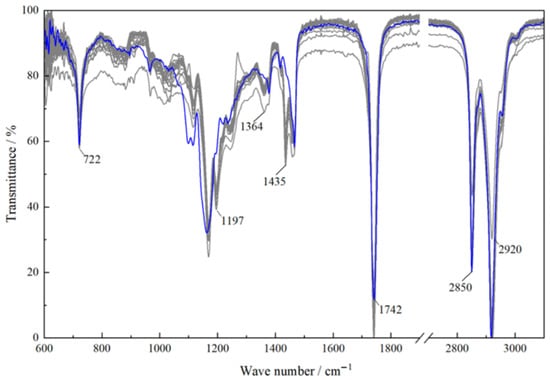
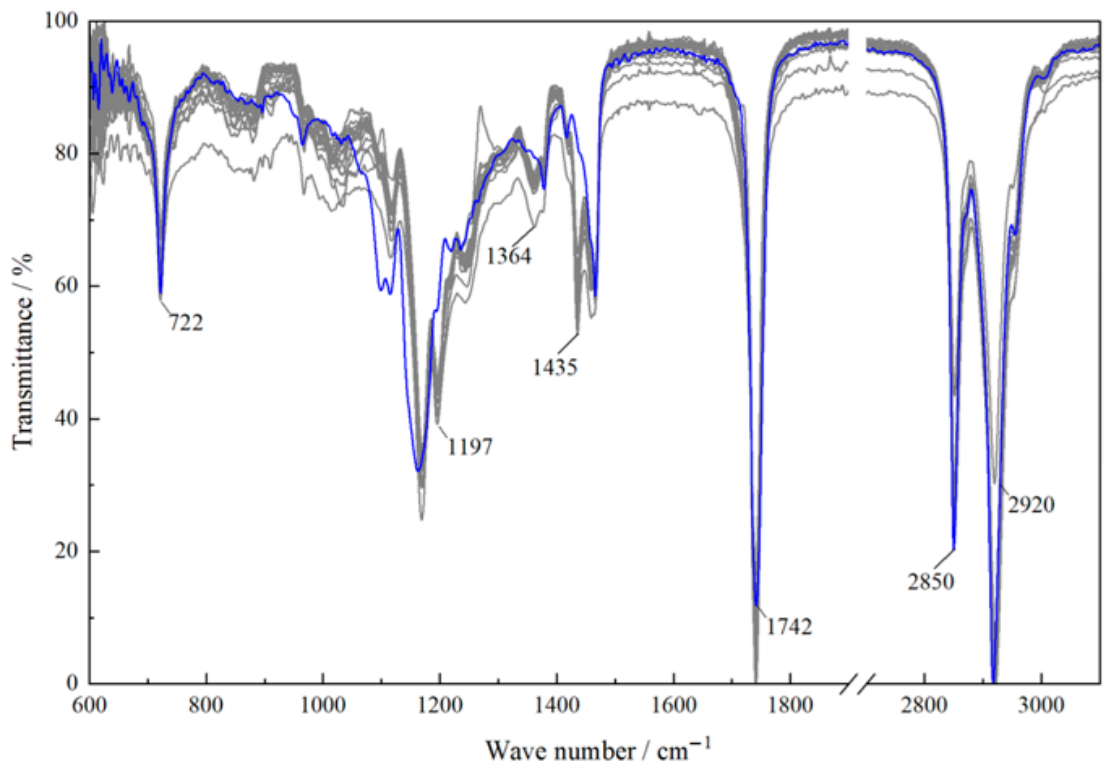
Infrared spectra of the waste beef tallow and biodiesel products are shown in Figure 2. It contains the superposed spectra of all 20 experiments. Both samples exhibit a peak at 1742 cm−1 corresponding to the carbonyl group of esters. Additionally, a shared peak near 722 cm−1 is attributed to the rocking vibration of methylene groups in long-chain hydrocarbons, as well as peaks at 2850 and 2920 cm−1, corresponding to stretching vibrations of methylene groups. Distinct differences emerge at 1197 cm−1, where the methoxy group signal characteristic of methyl esters is prominent in biodiesel but negligible in beef tallow. Following transesterification, the appearance of peaks at 1364 and 1435 cm−1—representing the symmetric and asymmetric bending of the O–CH3 group—confirms the conversion of triacylglycerides into methyl esters (biodiesel) [44].
Figure 2.
Infrared spectra of waste beef tallow (blue line) and fatty acid methyl esters (gray lines).
3.3. NMR Analyses for Waste Beef Tallow and Biodiesel
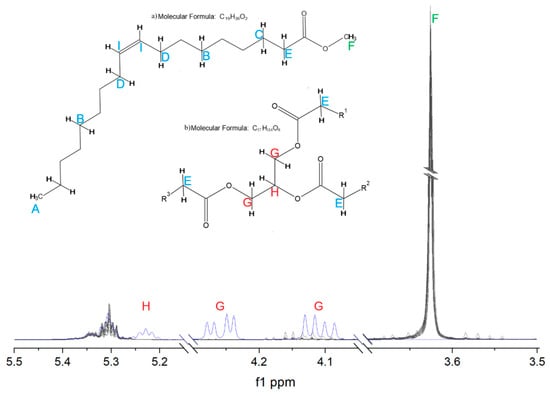
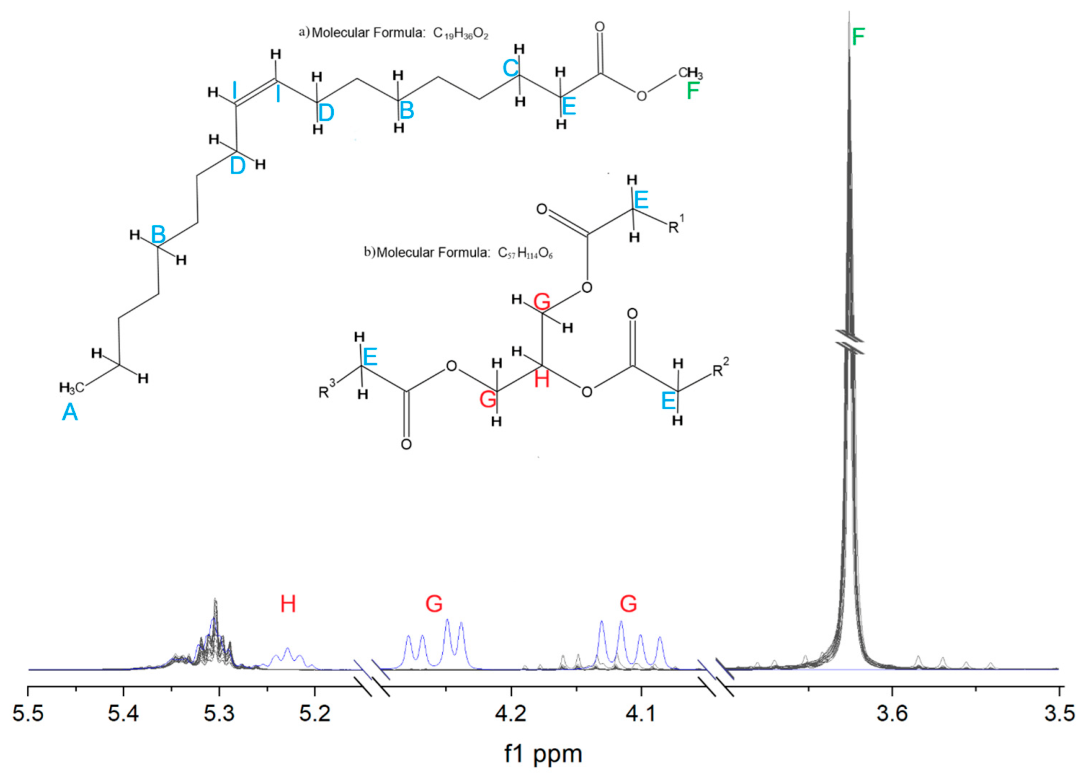
Figure 3 displays the 1H NMR spectra for beef tallow and all biodiesel samples. Structural formulas for triacylglyceride and methyl oleate are included as representative structures for beef tallow and biodiesel, respectively. The appearance of a singlet between 3.50 and 3.80 ppm (Region F, Figure 3), corresponding to the methyl group hydrogens, indicates successful methyl ester production from beef tallow. Furthermore, the disappearance of signals in regions G (4.00–4.40 ppm, distal glycerol backbone protons) and H (multiplet ~5.22 ppm, central glycerol proton) confirms the cleavage of the triacylglyceride backbone [43].
Figure 3.
1H NMR spectra of waste beef tallow (blue line) and fatty acid methyl esters (gray lines): (a) methyl oleate; (b) triacylglyceride. F (green) represents the signal for methyl esters. G and H are signals for triacylglycerides.
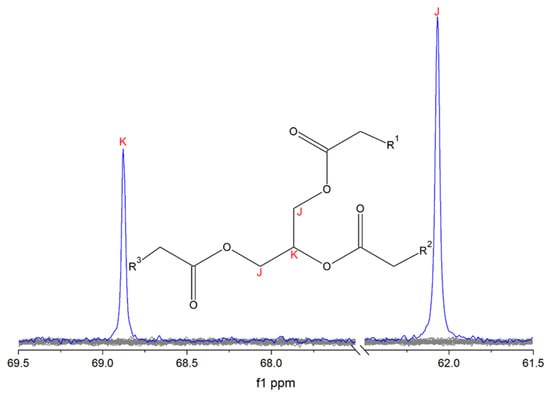
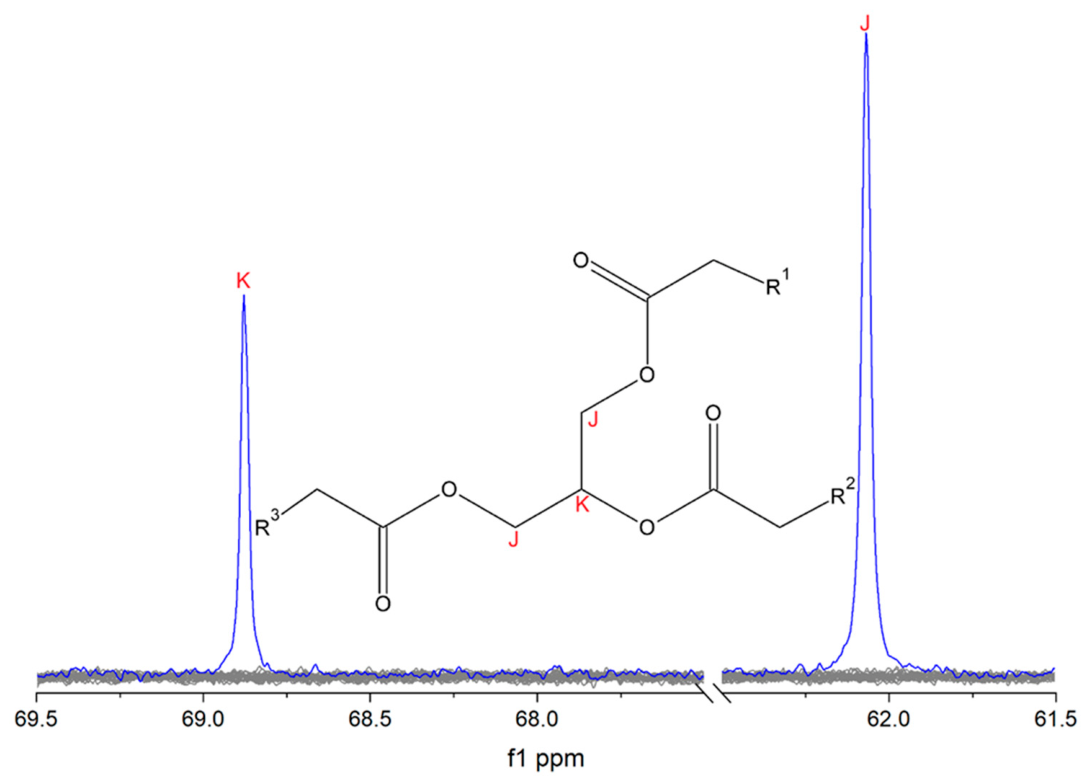
Figure 4 displays the 13C NMR spectra of the waste beef tallow and the resulting biodiesel samples to verify the conversion of triacylglycerols to methyl esters; the structural formula of a triacylglycerol is included for reference. The signals in regions J (approx. 62.1 ppm) and K (approx. 68.9 ppm), corresponding to the distal and central carbons of the glycerol backbone, are absent in the biodiesel spectra, confirming the expected conversion.
Figure 4.
13C NMR spectra of waste beef tallow (blue line) and fatty acid methyl esters (gray lines).
3.4. Response Surface Methodology
The experimental conversion was fitted to a second-order polynomial as a function of temperature, the carbon dioxide-to-methanol molar ratio, and the methanol-to-fat molar ratio; the polynomial contain coded values (X1, X2 and X3) as shown in Table 3, instead of the actual values of the factors. The resulting model is presented in Equation (5), with its corresponding ANOVA results summarized in Table 6.
Y = 88.9398 + 1.5726X1 + 0.2025X2 + 1.0752X3 − 3.4240X12 − 0.0306X22 − 0.5481X32 − 1.4646X1X2 − 0.7195X1X3 + 1.1255X2X3,
Table 6.
Analysis of variance of the RSM for supercritical transesterification of waste beef tallow with methanol and carbon dioxide.
Beyond the data in Table 4, the ANOVA results showed a standard deviation of 1.31 and a coefficient of determination of 0.9362, while the adjusted R2 was 0.8787, indicating that there may be variables that do not contribute to fitting the response. Additionally, the model’s low F-value for lack of fit confirmed its high predictive accuracy for yield.
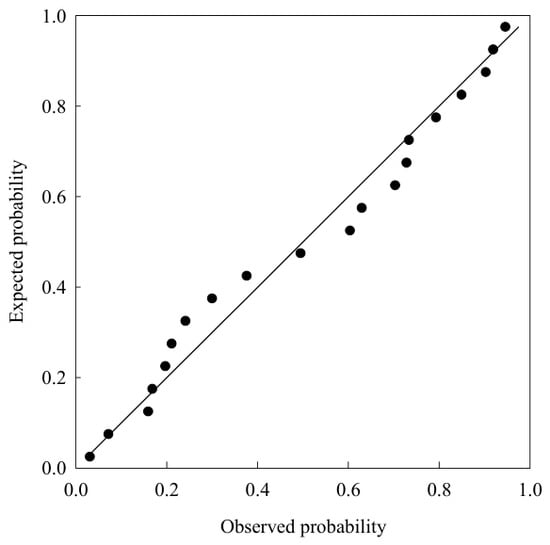
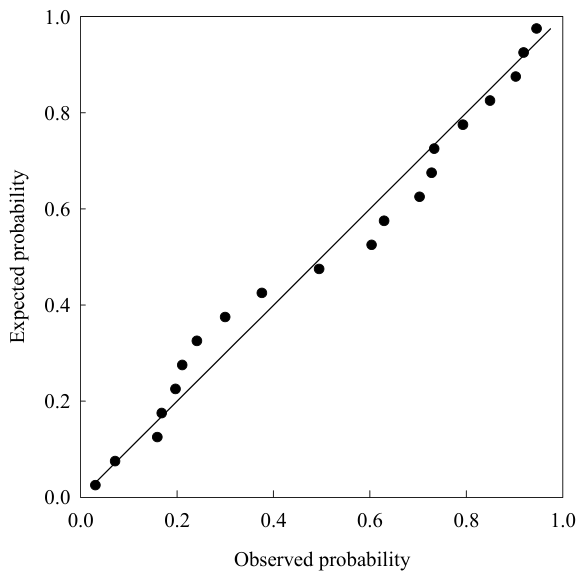
Figure 5 shows the cumulative probability plot for the residuals. Their random distribution indicates that the residuals follow a normal distribution; the Shapiro–Wilk test confirmed this (p-value of 0.65), while the Breusch–Pagan test found that there is constant variance for the residuals (p-value of 0.94).
Figure 5.
Normal plot of residuals for calculated yield of the supercritical transesterification of waste beef tallow with methanol and carbon dioxide.
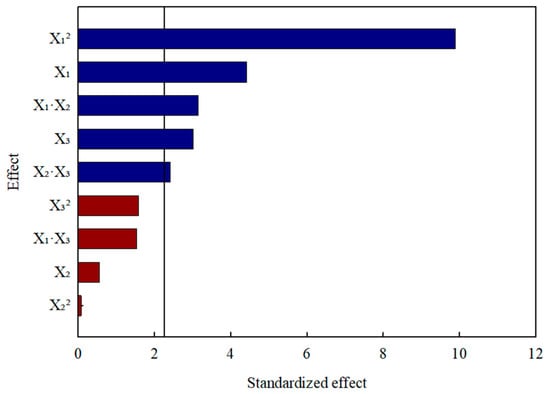
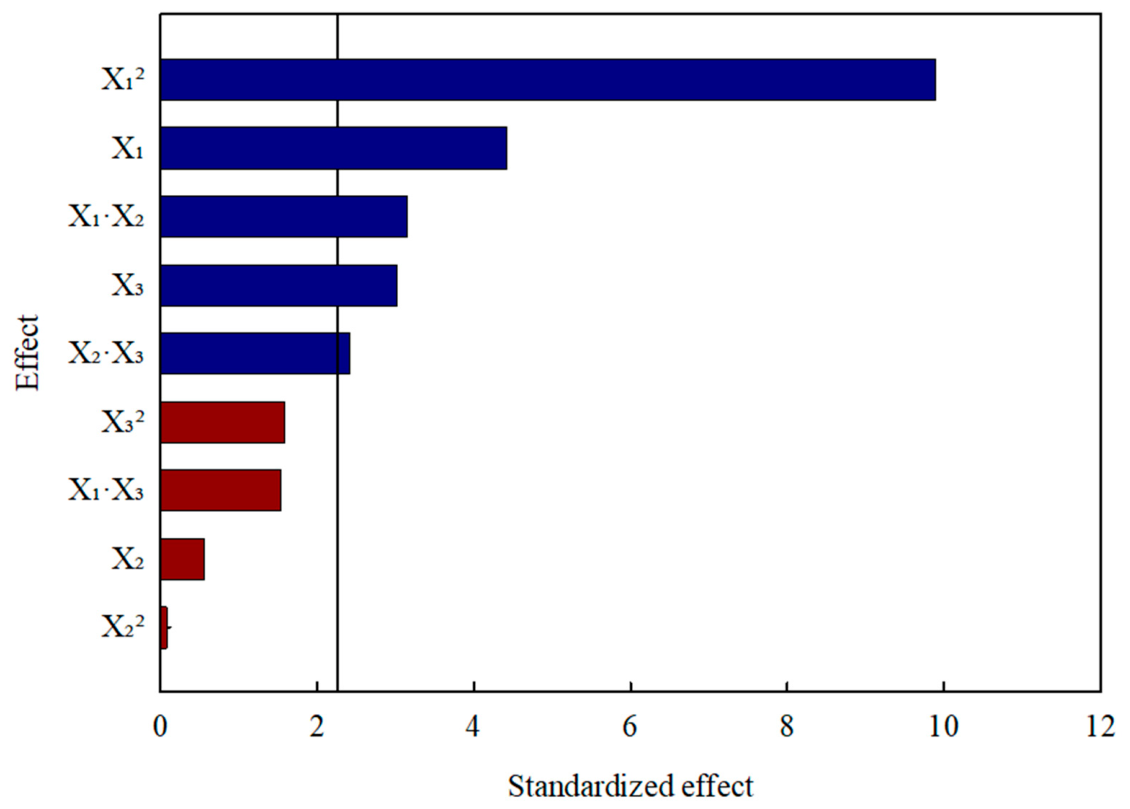
Figure 6 displays the Pareto chart of the model parameters, where the blue bars indicate the factors that are statistically significant, while the red bars denote insignificant factors. Combined with the p-values in Table 4, this analysis shows that the linear and quadratic terms for temperature significantly influence yield. Also, the effect of the molar ratio of carbon dioxide/methanol is not significant; however, interactions between it and both temperature and the alcohol/fat molar ratio make significant contributions, which suggests that the addition of carbon dioxide plays a role only when combined with the other factors. In the other hand, quadratic terms for molar ratios of carbon dioxide/methanol or methanol/fat do not influence yield.
Figure 6.
Pareto chart of the standardized effects of the model for calculating yield of the supercritical transesterification of waste beef tallow with methanol and carbon dioxide.
As shown in Figure 6, the linear term of molar ratio of carbon dioxide/methanol, the interaction between the temperature and the molar ratio of methanol/fat, and the quadratic terms of these ratios are statistically insignificant. Hence, a model without these coefficients was adopted; the linear term of molar ratio of methanol/fat was retained, as this factor is part of one of the significant interaction terms.
Y = 88.5088 + 1.5726X1 + 0.2025X2 + 1.0752X3 − 3.3717X12 − 1.4646X1X2 + 1.1255X2X3,
This model yields a standard deviation of 1.41, with R2 and adjusted R2 at 0.9047 and 0.8608, respectively. This difference may be attributed to the inclusion of the linear term of molar ratio of carbon dioxide and methanol, which cannot be removed to keep hierarchy; however, its interactions especially at lower temperatures (negative interaction term) and high molar ratios of methanol and fat (positive interaction term) become important, provoking a decrement in pressure and temperature. Equation (6) was used for subsequent analysis and plotting as all the other parameters are statistically significant. ANOVA results for this reduced model are shown in Table 7, while the confidence intervals (95%) are in Table 8.
Table 7.
Analysis of variance of the RSM for supercritical transesterification of waste beef tallow with methanol and carbon dioxide (reduced model).
Table 8.
Confidence intervals of the coefficients of the RSM for supercritical transesterification of waste beef tallow with methanol and carbon dioxide (reduced model).
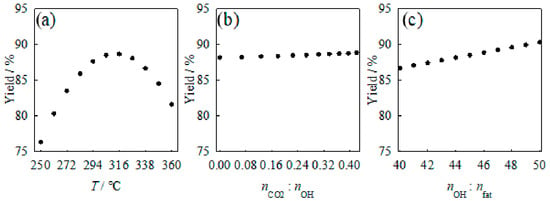
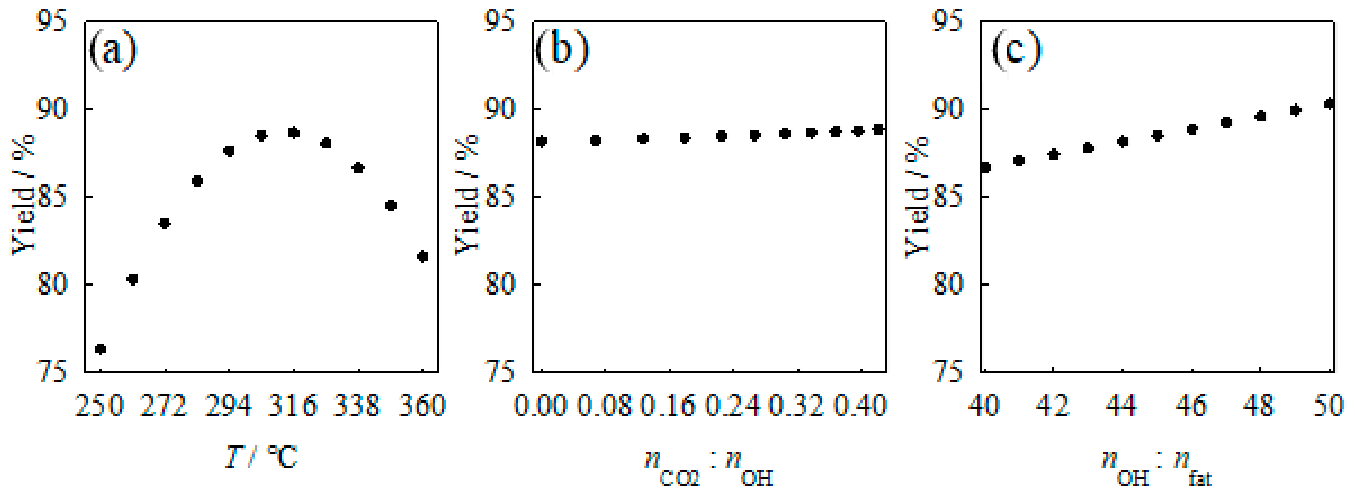
Figure 7 illustrates the individual effect of each factor on yield while maintaining the remaining variables at their central values (305 °C, a carbon dioxide/methanol molar ratio of 0.5, and a methanol/fat molar ratio of 45). Temperature (Figure 7a) emerged as the most significant factor, exhibiting a non-linear relationship with yield; its influence on supercritical transesterification is well-documented, with higher temperatures generally yielding better results [25,26], possibly for due to a decrement in viscosity, an increase in diffusivity and a polarity change in methanol at high temperatures, allowing a better solvation of fat in methanol [45]. Apart from this, thermal degradation or by-side reactions may reduce conversion [19]. While the effects of the other two variables were less pronounced, the addition of large quantities of methanol per fat was observed to slightly enhance yield at the central point conditions.
Figure 7.
Effect of factors in supercritical transesterification of waste beef tallow with methanol and carbon dioxide: (a) temperature, (b) molar ratio of carbon dioxide and methanol, and (c) molar ratio of methanol and fat.
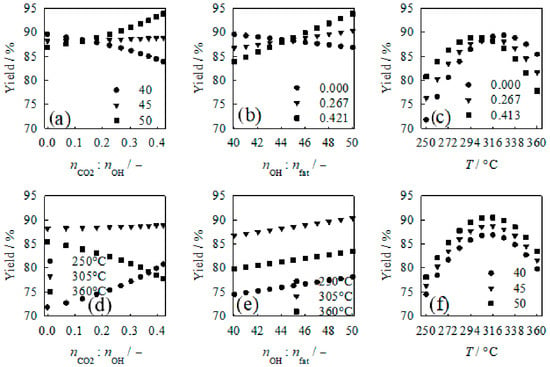
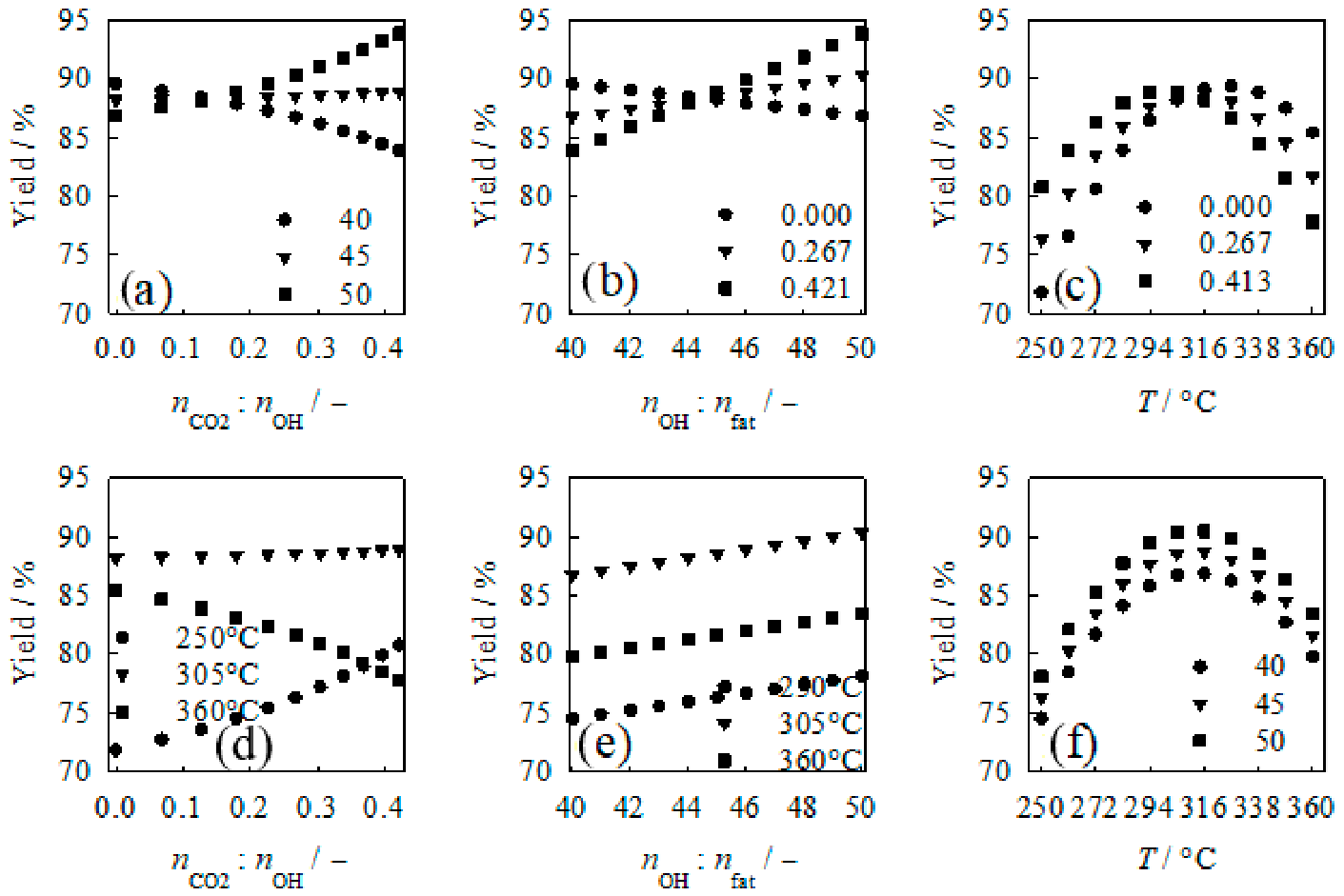
Figure 8 illustrates the interaction effects between factor pairs, with one factor held constant at its central value. Figure 8a,b indicate that adding carbon dioxide enhances yield only when a high amount of methanol is present, suggesting a synergistic relationship. Regarding the interaction between temperature and the molar ratio of carbon dioxide to methanol, the use of a cosolvent improves yield, reaching a maximum at low temperatures before declining. As shown in Figure 8e, yield isotherms as a function of molar ratio demonstrate the existence of temperature for maximum yield. Finally, Figure 8f reveals that variations in the molar ratio of methanol to fat provoke high yield when large quantities of methanol at a carbon dioxide/methanol molar ratio of 0.267, as evidenced by the trend of the molar ratio isopleths of methanol and fat.
Figure 8.
Interaction plots of factors for supercritical transesterification of waste beef tallow with methanol and carbon dioxide: (a) molar ratio of methanol and fat and molar ratio of carbon dioxide and methanol, (b) molar ratio of carbon dioxide and methanol and molar ratio of methanol and fat, (c) molar ratio of carbon dioxide and methanol and temperature, (d) molar ratio of carbon dioxide and methanol and temperature, (e) temperature and molar ratio of methanol and fat, and (f) molar ratio of methanol and fat and temperature.
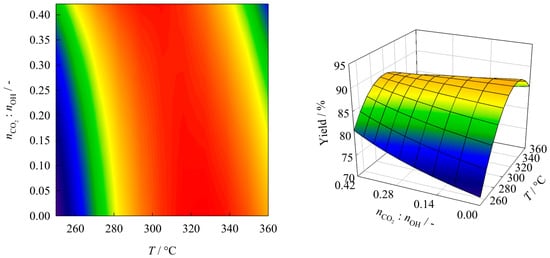
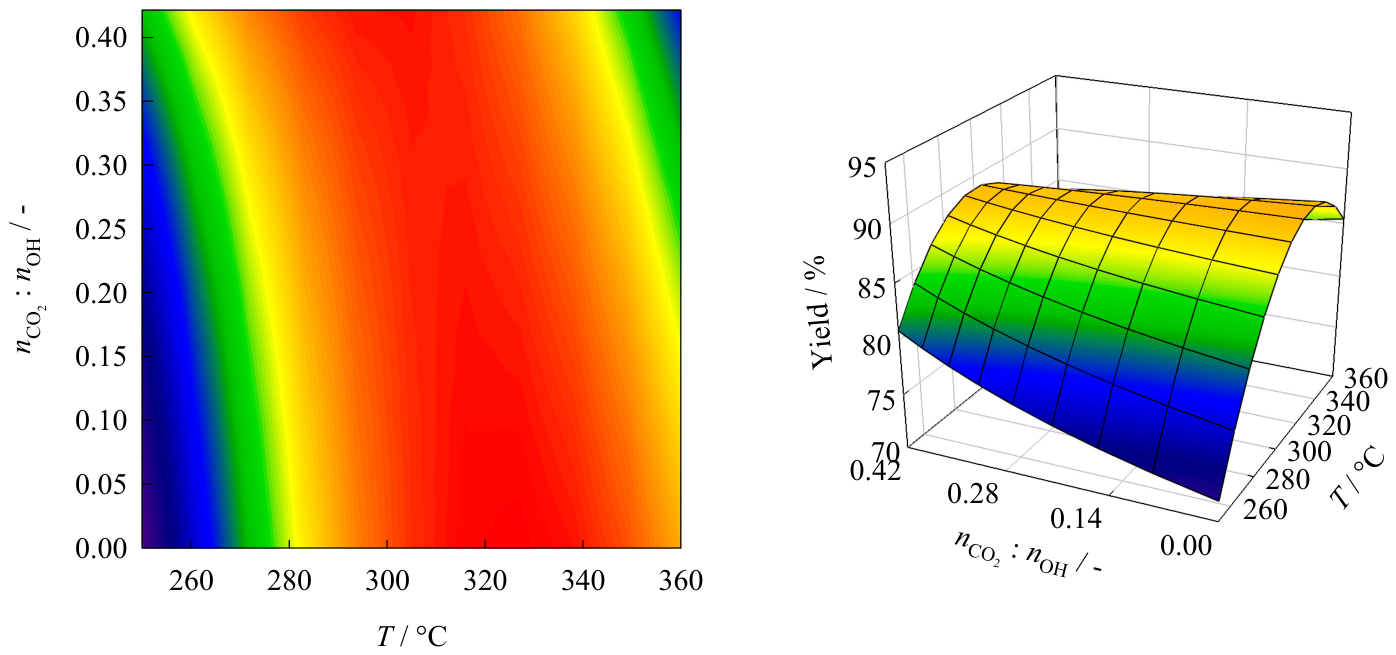
Figure 9 displays the interaction between temperature and the carbon dioxide-to-methanol molar ratio at a fixed methanol-to-fat molar ratio of 45. Two distinct regions of maximum yield are observed: the first occurs near 300 °C with a 0.421 molar ratio of carbon dioxide to methanol, while the second appears at approximately 325 °C in the absence of carbon dioxide.
Figure 9.
Contour plot and yield as a function of temperature and of the molar ratio of carbon dioxide and alcohol for the supercritical transesterification of waste beef tallow with methanol and carbon dioxide at a molar ratio of methanol and fat of 45.
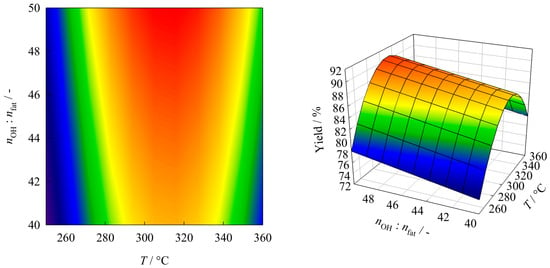
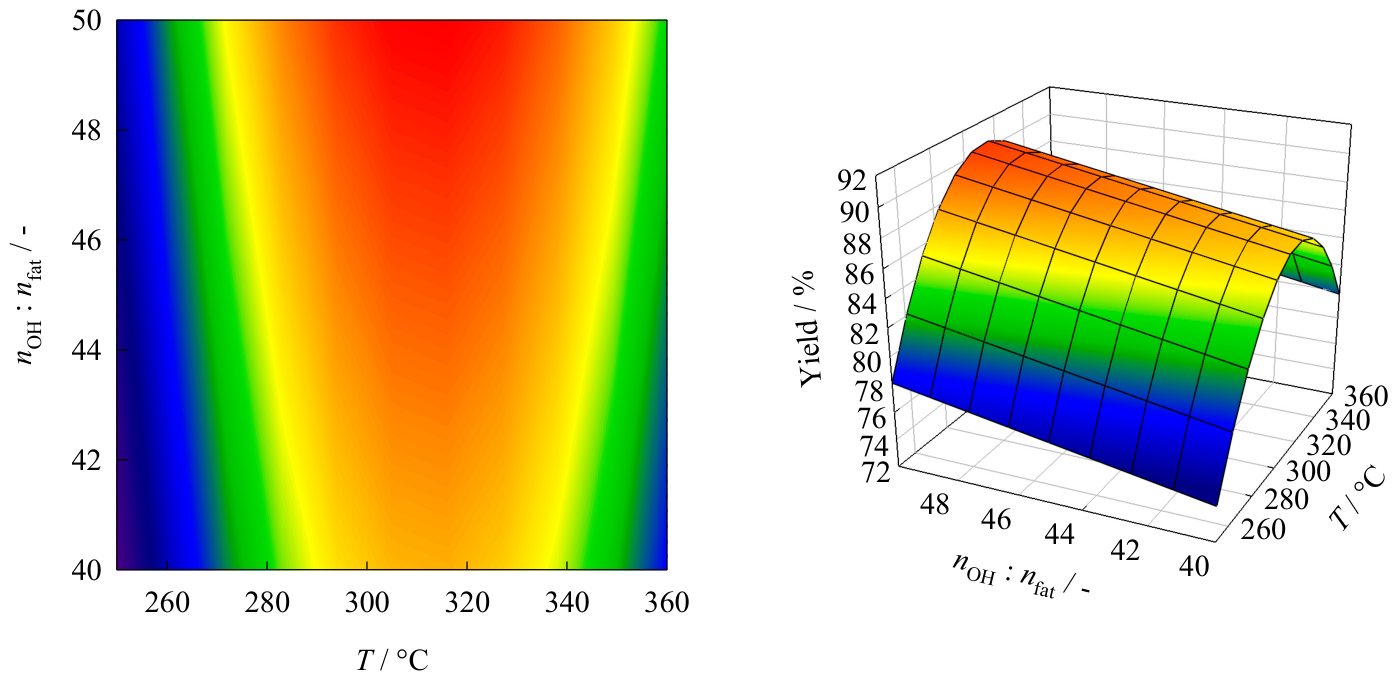
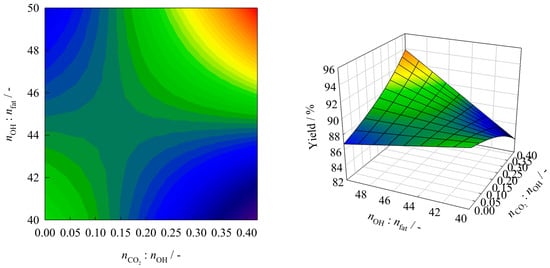
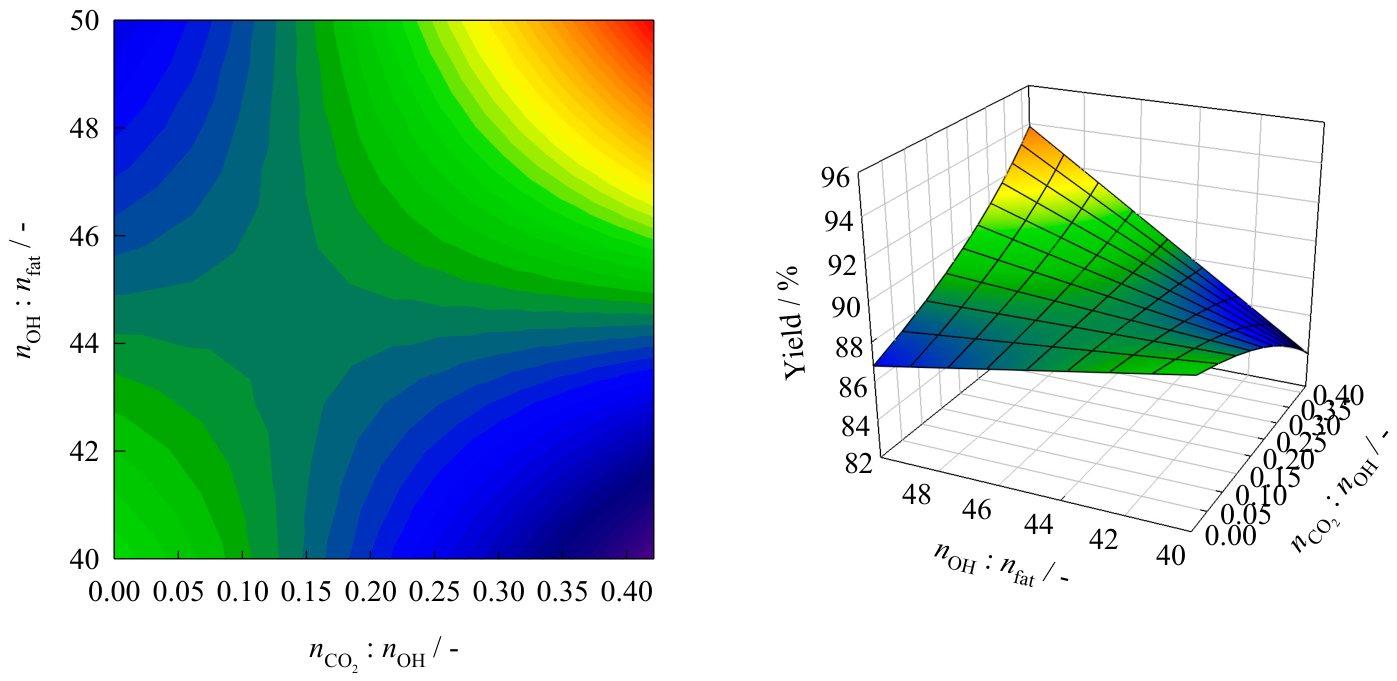
In Figure 10, the effects of temperature and the methanol-to-fat molar ratio are assessed at a constant carbon dioxide-to-methanol molar ratio of 0.267. The data indicate that yield is maximized at approximately 310 °C regardless of the molar ratio of methanol and fat. Figure 11 demonstrates that at a lower temperature of 305 °C, the yield consistently increases with higher quantities of both methanol and carbon dioxide.
Figure 10.
Contour plot and yield as a function of temperature and of the molar ratio of alcohol and fat for the supercritical transesterification of waste beef tallow with methanol and carbon dioxide at a molar ratio of carbon dioxide and methanol of 0.267.
Figure 11.
Contour plot and yield as a function of the molar ratio of carbon dioxide and alcohol and of the molar ratio of alcohol and fat for the supercritical transesterification of waste beef tallow with methanol and carbon dioxide at 305 °C.
Collectively, these results suggest that process efficiency is enhanced by using a 0.421 molar ratio of carbon dioxide to methanol and high methanol-to-fat ratios. Furthermore, these conditions allow for high yields while maintaining temperatures at or below 305 °C.
As noted in Section 1, the impact of carbon dioxide as a cosolvent on transesterification is varied in the literature; however, in this study, it enhanced the yield, particularly at high methanol-to-fat molar ratios. This improvement is likely due to carbon dioxide facilitating better fat solubilization in methanol [25]. The positive effect of high methanol quantities on yield, observed in previous studies, is attributed to the excess methanol acting as a favorable reaction medium [46]. Furthermore, the positive influence of temperature is linked to the reduction in methanol’s polarity at high temperatures, allowing for improved fat dissolution, which is consistent with other supercritical transesterification studies [20,22,45]. Supercritical transesterification of soybean oil with a carbon dioxide/methanol molar ratio of 0.10 [25] and up to 0.75 [26] also obtained a positive effect on the production of methyl esters, as well as decreasing temperature and pressure, with methanol/fat molar ratios of 42. However, when sunflower oil was the feedstock [28], an insignificant effect was attained when the molar ratio of carbon dioxide and methanol was from 0.05 to 0.20 and that of methanol and fat from 20 to 30. The discrepancy with this study likely stems from differences in fat source and composition, as well as lower ratios of methanol/fat and carbon dioxide/methanol, while the phenomenon is a possible dilution of reactants that inhibit the reaction [31]. According to Figure 11, yield tends to increase when larger amounts of carbon dioxide and methanol are used at temperature of 305 °C; when higher temperatures are set, the effect of carbon dioxide is detrimental to the process, as Han and others reported [25]. For a supercritical transesterification process of waste beef tallow, with a carbon dioxide/methanol molar ratio of 0.421 and a methanol/fat molar ratio of 50, the optimum temperature for maximizing yield was 300.7 °C; with a 95% confidence interval from 90.18 to 97.62%. While this condition may disagree with other studies that suggest lower quantities of carbon dioxide and methanol for achieving larger conversions or yields, the composition of the feedstock (mainly saturated fats) may be a factor for explaining those differences. Experimental validation of the optimal conditions was performed in triplicate, reaching a conversion of 91.70% ± 2.10, which is lower than the predicted value (93.90%), but higher than any of the experimental results, attaining the goal of maximizing conversion.
As this work used a batch reactor and it was not possible to modify its setup, pressure was dependent on feeding and temperature and could not be adjusted during the reaction, but it was monitored at regular intervals. Table 9 presents the average pressures obtained from these measurements.
Table 9.
Reaction pressure for the supercritical transesterification of waste beef tallow with methanol and carbon dioxide.
Pressure correlated directly with temperature, rather than the addition of carbon dioxide or methanol. This confirms that the high concentrations of reactants did not adversely affect reaction pressure. Furthermore, lower pressures were achieved compared with previous studies of supercritical transesterification without carbon dioxide, where pressures up to 38.08 MPa were attained [19,41], while agreeing with results that also used carbon dioxide as cosolvent [25,26].
4. Conclusions
Based on the results of supercritical transesterification of waste beef tallow with methanol and carbon dioxide as cosolvent and using response surface methodology, it was found that the resulting products exhibited molar masses ranging from 247.63 to 322.00 g·mol−1, with higher values indicating the presence of unreacted material.
The characterization of products confirmed that all produced biodiesel met established quality standards, showing no statistical deviation from reference values. Qualitative conversion of triacylglycerides to methyl esters and final yields were determined via spectroscopic techniques. The response surface methodology identified reaction temperature as the most significant factor influencing yield, consistent with previous supercritical transesterification studies. Furthermore, synergistic interactions between the carbon dioxide/methanol and methanol/tallow ratios were found to enhance yield. The calculated optimum conditions were a temperature of 300.7 °C, a carbon dioxide/methanol molar ratio of 0.421, and a methanol/fat molar ratio of 50. While the impact of temperature aligns with the existing literature, the observed effects of the carbon dioxide cosolvent differed from prior studies, a variation likely attributable to the specific characteristics of the feedstock.
This study demonstrates that producing biodiesel from waste beef tallow using carbon dioxide as a cosolvent is feasible, achieving high yields without the complications of high pressure.
Author Contributions
Conceptualization, A.A.C.P., A.Z.M. and R.G.M.; methodology, A.A.C.P., O.E.-S., A.Z.M. and R.G.M.; formal analysis, A.A.C.P., E.R.J. and R.G.M.; investigation, A.A.C.P., O.E.-S., S.G.-A. and R.G.M.; resources, O.E.-S. and A.Z.M.; data curation, F.J.V.S., S.G.-A. and R.G.M.; writing—original draft preparation, A.A.C.P., F.J.V.S. and R.G.M.; writing—review and editing, F.J.V.S., J.A., S.G.-A. and R.G.M.; visualization, A.A.C.P. and R.G.M.; supervision, A.Z.M.; project administration, O.E.-S., A.Z.M. and R.G.M.; funding acquisition, A.Z.M., O.E.-S. and S.G.-A. All authors have read and agreed to the published version of the manuscript.
Funding
The authors thank the Instituto Politécnico Nacional for the resources and support provided for this project, as well as the Secretaría de Ciencia, Humanidades, Tecnología e Innovación (Mexico) for the financial support under project CF-2023-I-311.
Data Availability Statement
Data is contained within the article.
Acknowledgments
The authors thank Instituto Politécnico Nacional for all the support given to carry out this work.
Conflicts of Interest
The authors declare no conflicts of interest.
References
- IEA. Oil—Global Energy Review 2025—Analysis. Available online: https://www.iea.org/reports/global-energy-review-2025/oil (accessed on 29 June 2026).
- Plataforma Nacional de Energía, Ambiente y Sociedad. Producción de Crudo Nacional. Available online: https://energia.conacyt.mx/planeas/hidrocarburos/produccion-crudo (accessed on 29 June 2026).
- Ferrari, L.; Flores-Hernández, J.R.; Hernández-Martínez, D. 20 years after the peak of oil in Mexico: Analysis of the hydrocarbon sector and implications for the future of energy. Rev. Mex. Cienc. Geol. 2024, 41, 66–86. [Google Scholar] [CrossRef] [Scilit]
- United Nations Development Programme. Global Decarbonization in Fossil Fuel Export-Dependent Economies. Available online: https://www.undp.org/publications/dfs-global-decarbonization-fossil-fuel-export-dependent-economies (accessed on 29 June 2026).
- Gara, A.; Hadzimustafa, S.; Amaxhekaj, G.; Qehaja, D. Impact of Energy Use on Air Pollution: Evidence from OCED Countries. Ekonomika 2024, 103, 78–90. [Google Scholar] [CrossRef] [Scilit]
- Bardi, U.; Bierwirth, P.; Huang, K.-W.; McIntyre, J. Carbon dioxide as a pollutant: The risks on human health and the stability of the biosphere. Environ. Sci. Adv. 2025, 4, 1364–1372. [Google Scholar] [CrossRef] [Scilit]
- United Nations. Renewable Energy—Powering a Safer and Prosperous Future. Available online: https://www.un.org/en/climatechange/raising-ambition/renewable-energy (accessed on 29 June 2026).
- Kashif, U.; Abbas, S.; Kousar, S.; Lu, H. Linking of bio-energy and carbon neutrality: Navigating economic policy uncertainty and climate change policy in the USA. Energy 2025, 324, 136012. [Google Scholar] [CrossRef] [Scilit]
- U.S. Energy Information Administration. Biomass Explained. Available online: https://www.eia.gov/energyexplained/biomass/ (accessed on 29 June 2026).
- Malik, K.; Capareda, S.C.; Kamboj, B.R.; Malik, S.; Singh, K.; Arya, S.; Kumar Bishnoi, D. Biofuels Production: A Review on Sustainable Alternatives to Traditional Fuels and Energy Sources. Fuels 2024, 5, 157–175. [Google Scholar] [CrossRef] [Scilit]
- El-Araby, R. Biofuel production: Exploring renewable energy solutions for a greener future. Biotechol. Biofuel. Bioprod. 2024, 17, 129. [Google Scholar] [CrossRef] [Scilit] [PubMed]
- ASTM International. Standard Specification for Diesel Fuel Oil, Biodiesel Blend (B6 to B20). Available online: https://store.astm.org/d7467-20a.html (accessed on 29 June 2026). [CrossRef] [Scilit]
- Osman, W.N.A.W.; Rosli, M.H.; Mazli, W.N.A.; Samsuri, S. Comparative review of biodiesel production and purification. Carbon Capture Sci. Technol. 2024, 13, 100264. [Google Scholar] [CrossRef] [Scilit]
- Nayab, R.; Imram, M.; Ramzan, M.; Tariq, M.; Taj, M.B.; Akhtar, M.N.; Iqbal, H.M.N. Sustainable biodiesel production via catalytic and non-catalytic transesterification of feedstock materials—A review. Fuel 2022, 328, 125254. [Google Scholar] [CrossRef] [Scilit]
- Mahmoudi, Z.; Mirmohamadsadeghi, S.; Denayer, J.F.M.; Okoro, O.V.; Shavandi, A.; Karimi, K. High-efficiency bioenergy production from acorn waste through a sustainable biorefining. Energy 2025, 335, 138172. [Google Scholar] [CrossRef] [Scilit]
- Elshehawy, S.K.; Elgendi, E.O.; Shehata, A.S. Construction waste management: For biodiesel production process. Energy Rep. 2022, 8, 67–76. [Google Scholar] [CrossRef] [Scilit]
- Gutiérrez Ortiz, F.J. Techno-economic assessment of supercritical processes for biofuel production. J. Supercrit. Fluids 2020, 160, 104788. [Google Scholar] [CrossRef] [Scilit]
- Parvizsedghy, R.; Sadrameli, S.M. Consequence modeling of hazardous accidents in a supercritical biodiesel plant. J. Supercrit. Fluids 2014, 66, 282–289. [Google Scholar] [CrossRef] [Scilit]
- Marulanda, V.F.; Anitescu, G.; Tavlarides, L.L. Investigations on supercritical transesterification of chicken fat for biodiesel production from low-cost lipid feedstocks. J. Supercrit. Fluids 2010, 54, 53–60. [Google Scholar] [CrossRef] [Scilit]
- Shin, H.-Y.; Lee, S.-H.; Ryu, J.-H.; Bae, S.-Y. Biodiesel production from waste lard using supercritical methanol. J. Supercrit. Fluids 2012, 61, 134–138. [Google Scholar] [CrossRef] [Scilit]
- Shah, M.; Poudel, J.; Kwak, H.; Oh, S.C. Kinetic analysis of transesterification of waste pig fat in supercritical alcohols. Process Saf. Environ. Prot. 2015, 98, 239–244. [Google Scholar] [CrossRef] [Scilit]
- Poudel, J.; Shah, M.; Karki, S.; Oh, S.C. Qualitative Analysis of Transesterification of Waste Pig Fat in Supercritical Alcohols. Energies 2017, 10, 265. [Google Scholar] [CrossRef] [Scilit]
- Kula, K.; Klemeš, J.J.; Van Fan, Y.; Sabev Varvanov, P.; Kumar Gaurav, G.; Jasiński, R. Environmental footprints and implications of converting GHG species to value-added chemicals: A review. Rev. Chem. Eng. 2024, 40, 457–480. [Google Scholar] [CrossRef] [Scilit]
- Müller, L.J.; Kätelhön, A.; Bachmann, M.; Zimmermann, A.; Sternberg, A.; Bardow, A. A Guideline for Life Cycle Assessment of Carbon Capture and Utilization. Front. Energy Res. 2020, 8, 15. [Google Scholar] [CrossRef] [Scilit]
- Han, H.; Cao, W.; Zhang, J. Preparation of biodiesel from soybean oil using supercritical methanol and CO2 as co-solvent. Process Biotechnol. 2005, 40, 908–912. [Google Scholar] [CrossRef] [Scilit]
- Yin, J.-Z.; Xiao, M.; Song, J.-B. Biodiesel from soybean oil in supercritical methanol with co-solvent. Energy Convers. Manag. 2008, 49, 908–912. [Google Scholar] [CrossRef] [Scilit]
- Kasim, N.S.; Tsai, T.-H.; Gunawan, S.; Ju, Y.-H. Biodiesel production from rice bran oil and supercritical methanol. Bioresour. Technol. 2009, 100, 2399–2403. [Google Scholar] [CrossRef] [Scilit] [PubMed]
- García-Jarana, M.B.; Sánchez-Oneto, J.; Portela, J.R.; Casas, L.; Mantell, C.; Martínez de la Ossa, E. Use of supercritical methanol/carbon dioxide mixtures for biodiesel production. Korean J. Chem. Eng. 2016, 33, 2342–2349. [Google Scholar] [CrossRef] [Scilit]
- Hadhoum, L.; Awad, S.; Burnens, G.; Paraschiv, M.; Loubar, K.; Tazerout, M. Experimental Investigation on the Supercritical Rapeseed Methanolysis for Biofuel Production: Effects of the Operating Conditions on the Bio-oil Viscosity. BioEnergy Res. 2022, 15, 1304–1315. [Google Scholar] [CrossRef] [Scilit]
- Nan, Y.; Liu, J.; Lin, R.; Taylarides, L.L. Production of biodiesel from microalgae oil (Chlorella protothecoides) by non-catalytic transesterification in supercritical methanol and ethanol: Process optimization. J. Supercrit. Fluids 2015, 97, 174–182. [Google Scholar] [CrossRef] [Scilit]
- Espootin, S.; Sameti, M.; Zaker, S. Biodiesel from fish waste oil: Synthesis via supercritical methanol and thermodynamic optimization. Clean Energy 2021, 5, 187–195. [Google Scholar] [CrossRef] [Scilit]
- Shaah, M.A.; Hossain, M.S.; Allafi, F.; Kadir, M.O.A.; Ahmad, M.I. Biodiesel production from candlenut oil using a non-catalytic supercritical methanol transesterification process: Optimization, kinetics, and thermodynamic studies. RSC Adv. 2022, 12, 9845–9861. [Google Scholar] [CrossRef] [Scilit] [PubMed]
- El-Galad, M.I.; El-Khatib, K.M.; El-Sheltawy, S.T. Techno-economic and Sensitivity Analyses of Different Biodiesel Production Pathways by Adding Tetrahydrofuran as a Cosolvent. BioEnergy Res. 2023, 16, 550–564. [Google Scholar] [CrossRef] [Scilit]
- Singh, N.K.; Singh, Y.; Sharma, A. Optimization of biodiesel synthesis from Jojoba oil via supercritical methanol: A response surface methodology approach coupled with genetic algorithm. Biomass Bioenergy 2022, 156, 106332. [Google Scholar] [CrossRef] [Scilit]
- Tobar, M.; Núñez, G.A. Supercritical transesterification of microalgae triglycerides for biodiesel production: Effect of alcohol type and co-solvent. J. Supercrit. Fluids 2018, 137, 50–56. [Google Scholar] [CrossRef] [Scilit]
- Lamba, N.; Gupta, K.; Modak, J.M.; Madras, G. Biodiesel synthesis from Calophyllum inophyllum oil with different supercritical fluids. Bioresour. Technol. 2017, 241, 767–774. [Google Scholar] [CrossRef] [Scilit] [PubMed]
- ASTM International. Standard Test Method for Acid Number of Petroleum Products by Potentiometric Titration. Available online: https://store.astm.org/d0664-18e02.html (accessed on 29 June 2026). [CrossRef] [Scilit]
- European Committee for Standardization. Fat and Oil Derivatives—Fatty Acid Methyl Esters (FAME)—Determination of Iodine Value. Available online: https://cdn.standards.iteh.ai/samples/70218/718d2e7978104ddb843452d31d1d6be9/SIST-EN-14111-2022.pdf (accessed on 29 June 2026).
- ASTM International. Standard Specification for Biodiesel Fuel Blend Stock (B100) for Middle Distillate Fuels. Available online: https://store.astm.org/d6751-20a.html (accessed on 29 June 2026). [CrossRef] [Scilit]
- Krisnangkura, K. A simple method for estimation of cetane index of vegetable oil methyl esters. J. Am. Oil Chem. Soc. 1986, 63, 552–553. [Google Scholar] [CrossRef] [Scilit]
- García-Morales, E.; Zúñiga-Moreno, A.; Verónico-Sánchez, F.J.; Domenzain-González, J.; Pérez-López, H.I.; Bouchot, C.; Elizalde-Solis, O. Fatty acid methyl esters from waste beef tallow using supercritical methanol transesterification. Fuel 2022, 313, 122706. [Google Scholar] [CrossRef] [Scilit]
- European Committee for Standardization. Liquid Petroleum Products—Fatty Acid Methyl Esters (FAME) for Use in Diesel Engines and Heating Applications—Requirements and Test Methods. Available online: https://cdn.standards.iteh.ai/samples/68664/f2c4423443d244afa68d894b03089fe1/SIST-EN-14214-2012-A2-2019.pdf (accessed on 29 June 2026).
- Knothe, G. Monitoring a progressing transesterification reaction by fiber-optic near infrared spectroscopy with correlation to 1H nuclear magnetic resonance spectroscopy. J. Am. Oil Chem. Soc. 2000, 77, 489–493. [Google Scholar] [CrossRef] [Scilit]
- Mulula, A.; Manoka, T.N.; Bayindu, E.B.; Bouzina, A.D. Fourier Transform Infrared (FTIR) Analysis of Fatty Acid Methyl Ester from Congolese Non-Edible Afzelia bella Seeds Oil. Asian J. Appl. Chem. Res. 2022, 11, 15–24. [Google Scholar] [CrossRef] [Scilit]
- Hassan, A.A.; Smith, J.D. Laboratory-Scale Research of Non-Catalyzed Supercritical Alcohol Process for Continuous Biodiesel Production. Catalysts 2021, 11, 435. [Google Scholar] [CrossRef] [Scilit]
- Wei, C.-Y.; Huang, T.-C.; Chen, H.-H. Biodiesel Production Using Supercritical Methanol with Carbon Dioxide and Acetic Acid. J. Chem. 2013, 2013, 789594. [Google Scholar] [CrossRef] [Scilit]

Disclaimer/Publisher’s Note: The statements, opinions and data contained in all publications are solely those of the individual author(s) and contributor(s) and not of MDPI and/or the editor(s). MDPI and/or the editor(s) disclaim responsibility for any injury to people or property resulting from any ideas, methods, instructions or products referred to in the content. |
© 2026 by the authors. Licensee MDPI, Basel, Switzerland. This article is an open access article distributed under the terms and conditions of the Creative Commons Attribution (CC BY) license.