


Abstract
Loneliness and social isolation are increasingly recognized as major determinants of health, with physiologic and behavioral effects that rival traditional biomedical risk factors. Populations commonly treated in podiatric practice, including older adults, patients with diabetes, rural residents, and veterans, are disproportionately affected by social isolation, yet its impact on foot and ankle outcomes remains underrecognized. Emerging evidence demonstrates that loneliness alters immune regulation, inflammatory signaling, pain perception, adherence behaviors, and healthcare utilization, all of which directly influence wound healing, postoperative recovery, and limb preservation. This paper introduces the Podiatric Connection Model (PCM), a clinically actionable framework designed to integrate social connection into podiatric care. The PCM provides a structured approach for identifying social risk factors, strengthening therapeutic relationships, engaging caregivers, tailoring follow-up intensity, and monitoring evolving psychosocial needs throughout the course of treatment. By reframing loneliness as a modifiable comorbidity rather than a background social issue, the PCM offers a practical strategy for improving adherence, reducing complications, and strengthening healing trajectories in high-risk foot and ankle populations.
1. Introduction
Loneliness is increasingly understood not merely as an emotional state but as a biopsychosocial hazard with profound effects on physical health. A large meta-analysis of more than three million participants demonstrated that loneliness and social isolation increase the risk of early mortality by 26% and 29%, respectively, an effect size comparable to smoking, obesity, or physical inactivity [1]. For podiatrists, this has direct clinical relevance because the populations most vulnerable to loneliness, including older adults, individuals with diabetes, rural residents, veterans, and those with chronic illness, constitute the core of foot and ankle medical and surgical practice. For the purposes of this paper, “older adult” refers to individuals aged 70 years and older, consistent with epidemiologic definitions used in loneliness and aging research.
Despite this, the podiatric literature has traditionally focused on biological and mechanical determinants of disease, including vascular compromise, neuropathy, deformity, infection, surgical technique, biologics, and reconstruction, with limited attention to psychosocial factors that shape outcomes. Yet in daily practice, loneliness is frequently visible in the patient who apologizes for bothering the doctor, the rural diabetic patient who delays care because of transportation barriers, the older adult widow struggling to comply with offloading, the veteran who avoids follow-up because of distrust and isolation, the postoperative patient with no caregiver at home, or the chronic wound patient whose world has narrowed to the radius of a wound-care chair. These experiences reflect not anecdote but a consistent pattern of social vulnerability that directly influences healing and adherence.
Loneliness exerts its influence on podiatric outcomes through multiple interconnected biological and behavioral pathways. Social isolation is associated with dysregulated inflammatory signaling, impaired immune surveillance, altered neuroendocrine function, increased pain sensitivity, and reduced engagement in health-promoting behaviors. These physiologic changes interfere with wound healing, increase susceptibility to infection, and delay postoperative recovery [2,3]. At the same time, loneliness is associated with reduced adherence to offloading, dressing changes, and follow-up care, as well as delayed presentation for medical evaluation, factors that are central drivers of ulcer recurrence and limb salvage failure. The burden of isolation is particularly pronounced in rural and veteran populations, where limited transportation, fragmented social networks, and caregiver scarcity further compound risk and undermine otherwise appropriate clinical interventions.
Together, these observations suggest that loneliness functions as a hidden but clinically meaningful comorbidity in foot and ankle medicine, operating alongside vascular disease, neuropathy, and infection to shape outcomes. Yet despite its clear physiologic and behavioral impact, loneliness remains largely absent from podiatric assessment, surgical planning, and follow-up protocols. To address this gap, we introduce the Podiatric Connection Model (PCM), a structured and clinically actionable framework that operationalizes the identification and management of social risk within routine podiatric care. The PCM integrates targeted screening, relationship-centered communication, caregiver engagement, individualized follow-up strategies, and ongoing monitoring to mitigate the effects of isolation on healing trajectories. By reframing loneliness as a modifiable clinical variable rather than background context, the PCM positions podiatric practice to more effectively support adherence, reduce complications, and improve outcomes in high-risk populations. Because podiatric care is inherently longitudinal and adherence-dependent, podiatrists are uniquely positioned to identify and modify the social risks that determine healing trajectories.
1.1. The Clinical Burden of Loneliness in Podiatric Populations
Loneliness produces measurable physiologic changes that directly impede wound healing, immune function, and tissue repair, making it highly relevant to podiatric outcomes. Social isolation activates conserved transcriptional responses associated with threat vigilance, characterized by the upregulation of pro-inflammatory genes and downregulation of antiviral pathways [4]. Lonely individuals consistently demonstrate elevated IL-6, TNF-α, CRP, and NF-κB activity, reflecting a persistent inflammatory state that interferes with tissue repair [4,5,6,7]. Loneliness also disrupts regulation of the hypothalamic–pituitary–adrenal axis, leading to increased basal cortisol levels and a flattened diurnal cortisol slope [8]. Chronically elevated cortisol suppresses fibroblast proliferation, impairs angiogenesis, slows granulation tissue formation, and disrupts the critical transition from inflammation to proliferation required for wound healing. Immune function is further compromised by impaired leukocyte activity, increased glucocorticoid resistance, and reduced type I interferon responses [4,9], collectively heightening vulnerability to soft-tissue and bone infections that are central concerns in diabetic foot disease and postoperative wounds. In addition, loneliness contributes to vascular dysfunction, including hypertension, decreased endothelial nitric oxide bioavailability, and impaired microvascular perfusion [10,11,12], which further compromise ischemic wound beds. Persistent low-grade inflammation associated with social isolation also disrupts keratinocyte migration, collagen deposition, and extracellular matrix formation, contributing to delayed repair and increased ulcer recurrence [2,3]. Taken together, these mechanisms demonstrate that loneliness is not an abstract psychosocial concept but a biologically significant condition with direct pathophysiologic relevance to foot and ankle medicine.
1.2. Loneliness and Limb Salvage Outcomes
Limb salvage, perhaps more than any other subspecialty in medicine, depends on sustained adherence, consistent follow-up, and early intervention, requirements that loneliness directly undermines. Patients who live alone demonstrate reduced adherence to offloading, dressing changes, and preventive behaviors, contributing to significantly higher rates of ulcer recurrence [13,14]. Loneliness also leads to delayed presentation for medical care, a pattern with serious consequences; in diabetic foot disease, delays of as little as 48–72 h can substantially increase infection severity and elevate the risk of amputation [15]. Social isolation itself has been linked to higher rates of major amputation among individuals with advanced diabetic complications, particularly when caregiver support is limited [16]. Additionally, lonely patients are more likely to experience malnutrition, poor glycemic control, and inadequate engagement in routine foot inspections, factors that further compromise wound healing and elevate the likelihood of limb-salvage failure [17,18]. These interconnected effects demonstrate that loneliness is not a peripheral concern but a clinically meaningful driver of outcomes in limb preservation.
1.3. Defining Loneliness and Social Isolation
Loneliness and social isolation are related but distinct constructs. Social isolation is generally defined as an objective lack of social contacts or interactions, whereas loneliness refers to the subjective perception of insufficient or unsatisfying social connection. Importantly, there is no single universally accepted objective definition of loneliness, as its clinical relevance depends on an individual’s perceived support, relationships, and sense of connection. Living alone or having limited social contact does not necessarily imply clinically meaningful loneliness if strong emotional, familial, or community support structures are present. Conversely, individuals with frequent social contact may still experience profound loneliness. This distinction is particularly relevant in clinical practice, where risk assessment must extend beyond living arrangements to include functional support, caregiver availability, and perceived connectedness.
1.4. Loneliness and Postoperative Adherence
Postoperative foot and ankle care is uniquely dependent on behavioral adherence, requiring strict compliance with non-weightbearing instructions, elevation, dressing protection, and timely follow-up. Social isolation significantly undermines these behaviors. Loneliness and social isolation have been associated with increased morbidity and mortality, underscoring their importance as modifiable clinical risk factors [19]. Individuals who live alone often struggle to maintain appropriate offloading, particularly after forefoot or midfoot reconstruction, leading to increased rates of dehiscence, infection, and hardware complications. Transportation barriers further compound these challenges, as lonely or socially disconnected patients are more likely to miss postoperative appointments, imaging, or wound checks, limiting opportunities for early intervention [20]. Additionally, postoperative anxiety and depression, both of which are intensified by loneliness, are associated with pain catastrophizing and lower adherence to recovery protocols [21]. These factors highlight that postoperative healing is not purely technical; it is heavily influenced by a patient’s social environment and support network.
1.5. Neurobiology of Pain and Loneliness
Loneliness intensifies pain perception through several interconnected neural pathways. Social isolation has been shown to amplify activation in the thalamus and anterior cingulate cortex during painful stimuli, a form of central sensitization that increases perceived pain in conditions common to podiatry, such as plantar fasciitis, osteoarthritis, neuropathy, and postoperative recovery [22]. Additionally, lonely individuals demonstrate reduced endogenous opioid signaling, which decreases natural pain inhibition and can contribute to greater reliance on analgesics and lower pain tolerance [23]. Loneliness also primes threat-vigilance neural circuits, heightening pain-related anxiety, anticipatory fear, and the overall emotional response to discomfort [24]. Pain, therefore, is not solely a biomechanical phenomenon, it is significantly shaped by the presence or absence of social connection.
1.6. Diabetes, Social Determinants, and Isolation
Loneliness is strongly associated with poorer glycemic control, higher HbA1c, and reduced engagement in diabetic self-management [25,26]. Emerging evidence suggests that loneliness contributes to cardiometabolic risk, with longitudinal data demonstrating an independent association with the development of type 2 diabetes [27]. Transportation instability, food insecurity, limited caregiver support, and inadequate health literacy, all common among socially isolated adults, directly worsen diabetic foot outcomes.
Implications for podiatry include higher ulcer formation rates, poorer wound healing, increased Charcot progression, greater need for hospitalization, and higher 30-day readmission rates.
1.7. Rural Healthcare, Social Isolation, and the Midwest
Practicing in rural settings brings unique challenges. Rural Americans report significantly higher levels of social isolation, lower access to healthcare, fewer transportation options, and increased chronic disease burden [28,29,30]. Rural patients are more likely to: live alone, lack public transportation, delay medical care, have limited home support, and experience higher amputation rates [16,28,29,30]. For podiatrists in rural systems, loneliness is not peripheral, it is central to daily practice.
1.8. Loneliness in Veteran Populations
Veterans exhibit elevated rates of loneliness, post-traumatic stress disorder (PTSD), depression, chronic pain, and physical disability, with these conditions often coexisting and compounding overall health risk [31,32,33]. Many struggle with trust, fragmented social networks, and post-service identity shifts. For podiatric care, this translates to delayed care seeking, poor wound-care adherence, increased chronic pain burden, higher rates of limb salvage complexity, and increased reliance on interdisciplinary care. Veterans with loneliness have significantly worse functional outcomes across multiple domains.
1.9. Loneliness, Interdisciplinary Teams, and Wound Care
Wound care and limb salvage are team sports. Isolation among clinicians impairs communication, coordination, and morale. Evidence shows that psychological safety improves OR performance, connected teams reduce medical errors, and burnout correlates with interpersonal disconnection [34,35]. Supporting team belonging is not about workplace culture alone, it improves clinical outcomes.
1.10. Biopsychosocial Integration for Podiatry
Engel’s biopsychosocial model [36] provides a strong foundation for understanding the intersection of loneliness with podiatric care. When applied to foot and ankle medicine, the biopsychosocial model illustrates how clinical outcomes arise from the interaction of biological factors such as wound healing, infection risk, and pain pathways; psychological factors including motivation, anxiety, and depression; and social factors such as loneliness, transportation barriers, and caregiver support. Recognizing these interconnected domains allows podiatrists to address not only the pathology itself, but also the emotional and social conditions that determine a patient’s ability to heal. Podiatrists inherently practice within all three domains; acknowledging this explicitly strengthens care.
1.11. Evidence-Based Clinic Interventions
Several practical interventions supported by strong evidence can be readily integrated into podiatric practice to address the impact of loneliness and social risk on outcomes. Preoperative social-risk screening has been shown to improve postoperative results by identifying patients who lack support, have transportation barriers, or face other social determinants that may compromise adherence, allowing the care team to proactively plan additional follow-up and resources [19,20]. Incorporating caregivers into clinic visits, particularly for patients with diabetes, has been associated with better treatment adherence, more consistent glucose monitoring, and improved engagement in daily foot-care behaviors [26]. Structured follow-up phone calls after surgery or wound-care interventions further reduce postoperative complications by reinforcing instructions, identifying early warning signs, and providing a sense of ongoing connection and accountability [37]. In addition, multidisciplinary, team-based care models that coordinate podiatry, endocrinology, vascular surgery, wound care, nursing, and social work have been linked to lower amputation rates and better limb-salvage outcomes, underscoring the value of collaborative, relationship-centered approaches in high-risk foot populations [13,14].
1.12. The Podiatric Connection Model (PCM)
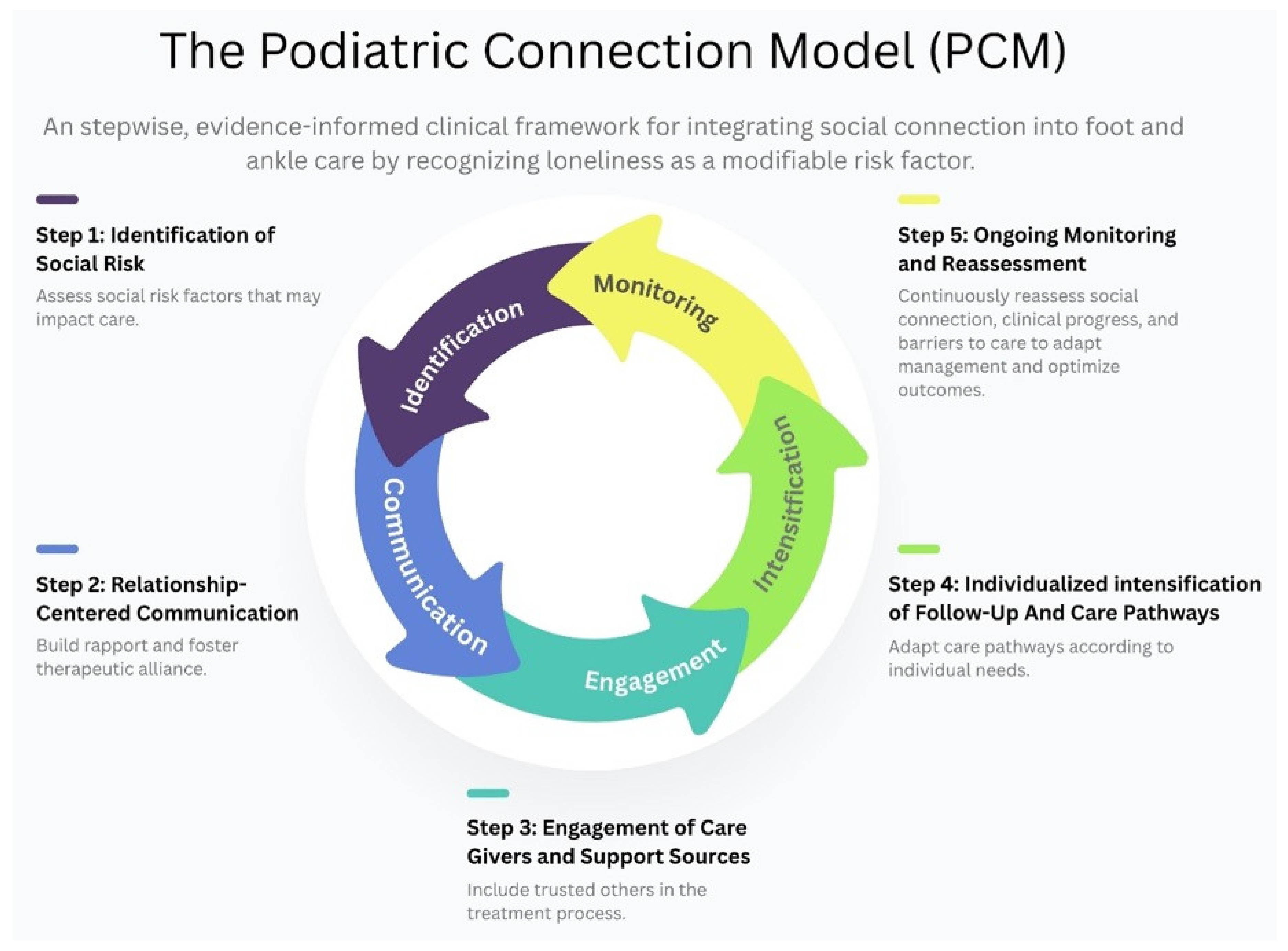
The Podiatric Connection Model (PCM) is an evidence-informed clinical framework designed to integrate social connection into routine foot and ankle care by recognizing loneliness as a modifiable risk factor. The model follows five sequential and iterative steps that correspond directly to common podiatric workflows (Figure 1).
Figure 1.
The Podiatric Connection Model (PCM). The Podiatric Connection Model is a structured clinical framework for integrating social connection into foot and ankle care. The model consists of five sequential and iterative steps: (1) identification of social risk factors through brief intake screening, (2) relationship-centered communication to establish psychological safety and shared understanding, (3) engagement of caregivers and support resources, (4) individualized intensification of follow-up and care pathways based on social context, and (5) ongoing monitoring and reassessment throughout treatment. By embedding these steps into routine podiatric workflows, the PCM reframes loneliness as a modifiable clinical risk factor and provides a practical approach for improving adherence, wound healing, postoperative recovery, and limb preservation outcomes.
The first step is the identification of social risk, accomplished through brief intake screening that assesses caregiver availability, transportation reliability, and whether the patient lives alone. Early recognition allows clinicians to anticipate barriers that frequently undermine wound healing, postoperative recovery, and adherence.
The second step focuses on relationship-centered communication, with the goal of establishing psychological safety and a shared understanding of the care plan. Many high-risk patients experience shame, fear, or perceived burden, which can interfere with adherence if not addressed directly. Clear, compassionate communication strengthens the therapeutic alliance and improves cooperation with complex treatment regimens.
Adverse childhood experiences (ACEs) provide an additional lens through which to understand the behavioral patterns commonly observed in socially isolated podiatric patients. Higher ACE scores are associated with chronic disease, mistrust of healthcare systems, avoidance behaviors, and difficulty engaging in self-care as adults [38,39,40]. These patterns parallel the shame, fear, and withdrawal frequently seen in lonely patients with chronic wounds or postoperative needs. Incorporating a trauma-informed perspective within relationship-centered communication enhances the PCM by promoting trust, psychological safety, and more effective engagement with high-risk individuals.
The third step involves the engagement of caregivers and support resources. When family members or trusted individuals are included in education regarding offloading, dressing care, infection recognition, and postoperative restrictions, adherence improves substantially. For patients without reliable support, this step may involve coordination with home health services, social work, veteran assistance programs, transportation resources, or telehealth monitoring.
The fourth step is individualized intensification of follow-up and care pathways based on the patient’s social environment. Socially isolated patients may benefit from shorter follow-up intervals, proactive phone calls, simplified dressing regimens, or coordinated multidisciplinary visits. In some cases, surgical planning and immobilization strategies may be modified to reduce risk when home support is limited.
The final step is ongoing monitoring and reassessment, recognizing that social circumstances fluctuate over time. Regular evaluation of adherence, wound progression, caregiver availability, transportation stability, and emerging stressors allows clinicians to adapt the treatment plan before setbacks evolve into complications. Together, these steps form a continuous cycle that integrates social context into clinical decision-making and supports more reliable healing trajectories.
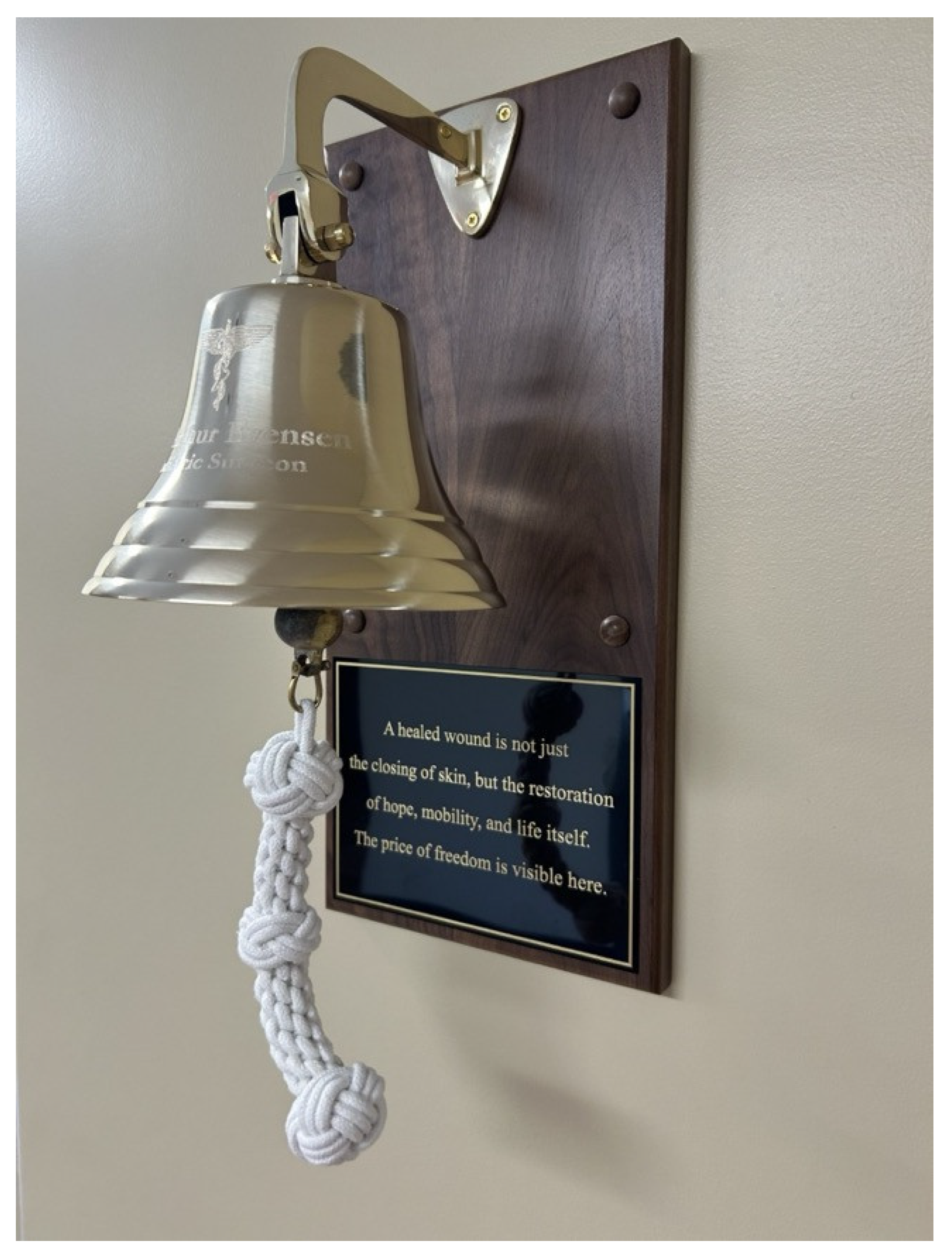
As part of the Podiatric Connection Model, intentional rituals are used to mark milestones in the wound-healing journey. In our clinic, patients who achieve complete wound closure are invited to ring a clinic bell in the presence of family members, caregivers, and clinical staff (Figure 2). This brief, structured ritual serves as a symbolic transition from prolonged illness to recovery, reinforcing progress, shared meaning, and social acknowledgment after months of isolating care. Such moments transform the conclusion of treatment into a collective experience rather than a silent discharge, directly counteracting the invisibility and isolation commonly experienced by patients with chronic wounds. This example illustrates how the PCM translates abstract social risk into observable, clinic-level practices that can be readily adopted across podiatric settings.
Figure 2.
Clinic healing bell used as a structured social connection ritual. Clinic-based healing ritual used to mark wound closure. Patients are invited to ring a bell in the presence of family, caregivers, and clinic staff at the completion of treatment. This moment serves as a structured social connection intervention, reinforcing progress, shared meaning, and community support at the conclusion of prolonged wound care.
Similar healing-ritual practices have been used in oncology settings, where “treatment completion bells” have been associated with improved patient morale, enhanced sense of closure, and strengthened social support among families and care teams [41]. While evidence is largely qualitative, these rituals consistently reinforce meaning-making and community acknowledgment, mechanisms directly relevant to socially isolated wound-care patients.
The Podiatric Connection Model (PCM) reframes loneliness from an invisible background variable into a clinically actionable risk factor, allowing podiatrists to heal not only the foot, but the person attached to it.
2. Limitations
The Podiatric Connection Model (PCM) is a conceptual and experience-informed framework that has not yet been formally evaluated in clinical practice. No prospective data currently exist to determine its effectiveness in improving wound healing, adherence, postoperative recovery, or limb-salvage outcomes. As a perspective piece, this manuscript aims to introduce the model, highlight its clinical rationale, and stimulate further investigation. Future studies are needed to assess implementation feasibility, validate the PCM across diverse podiatric settings, and quantify its impact on patient-centered and clinical outcomes. Despite these limitations, the PCM offers a structured, clinically intuitive approach that aligns with existing evidence on social determinants of health and provides a foundation for future empirical testing.
3. Conclusions
Loneliness is a clinically meaningful and often overlooked comorbidity in podiatric medicine. It negatively influences wound healing, glycemic control, pain perception, postoperative adherence, and overall limb-salvage outcomes. These effects are especially pronounced among rural patients, veterans, older adults, and individuals with chronic disease, groups frequently encountered in foot and ankle practice. Recognizing loneliness as a modifiable risk factor allows podiatrists to intervene not only with scientific precision but also with greater compassion and effectiveness. The Podiatric Connection Model (PCM) provides a structured, clinically actionable framework for addressing these risks. By integrating PCM principles into routine practice, podiatrists can more reliably support adherence, strengthen therapeutic relationships, and improve healing trajectories in socially vulnerable populations. Ultimately, no one sits alone in successful podiatric care, not the patient, not the provider, and not the team.
Author Contributions
Conceptualization, A.C.E.; methodology, A.C.E.; validation, A.C.E. and J.L.M.; formal analysis, A.C.E.; investigation, A.C.E.; resources, A.C.E.; data curation, A.C.E.; writing—original draft preparation, A.C.E.; writing—review and editing, A.C.E. and J.L.M.; visualization, A.C.E.; supervision, A.C.E.; project administration, A.C.E. All authors have read and agreed to the published version of the manuscript.
Funding
This research received no external funding.
Data Availability Statement
No new data were created or analyzed in this study. Data sharing is not applicable to this article.
Acknowledgments
During the writing and preparation of this manuscript, the authors used ChatGPT-5.3 to aid in literature organization, language refinement, and reference verification. We reviewed and edited the content and take full responsibility for the accuracy, integrity, and originality of the work.
Conflicts of Interest
The authors report no financial or personal conflicts of interest that could have influenced the work presented in this manuscript. No external funding, commercial sponsorship, or industry support was received for the development of the Podiatric Connection Model or the preparation of this article.
References
- Holt-Lunstad, J.; Smith, T.B.; Baker, M.; Harris, T.; Stephenson, D. Loneliness and social isolation as risk factors for mortality: A meta-analytic review. Perspect. Psychol. Sci. 2015, 10, 227–237. [Google Scholar] [CrossRef] [Scilit] [PubMed]
- Guo, S.; Dipietro, L.A. Factors affecting wound healing. J. Dent. Res. 2010, 89, 219–229. [Google Scholar] [CrossRef] [Scilit] [PubMed] [PubMed Central]
- Eming, S.A.; Martin, P.; Tomic-Canic, M. Wound repair and regeneration: Mechanisms, signaling, and translation. Sci. Transl. Med. 2014, 6, 265sr6. [Google Scholar] [CrossRef] [Scilit] [PubMed] [PubMed Central]
- Cole, S.W.; Hawkley, L.C.; Arevalo, J.M.; Sung, C.Y.; Rose, R.M.; Cacioppo, J.T. Social regulation of gene expression in human leukocytes. Genome Biol. 2007, 8, R189. [Google Scholar] [CrossRef] [Scilit] [PubMed] [PubMed Central]
- Steptoe, A.; Shankar, A.; Demakakos, P.; Wardle, J. Social isolation, loneliness, and all-cause mortality in older men and women. Proc. Natl. Acad. Sci. USA 2013, 110, 5797–5801. [Google Scholar] [CrossRef] [Scilit] [PubMed] [PubMed Central]
- Hawkley, L.C.; Masi, C.M.; Berry, J.D.; Cacioppo, J.T. Loneliness is a unique predictor of age-related differences in systolic blood pressure. Psychol. Aging 2006, 21, 152–164. [Google Scholar] [CrossRef] [Scilit] [PubMed]
- Jaremka, L.M.; Fagundes, C.P.; Peng, J.; Bennett, J.M.; Glaser, R.; Malarkey, W.B.; Kiecolt-Glaser, J.K. Loneliness promotes inflammation during acute stress. Psychol. Sci. 2013, 24, 1089–1097. [Google Scholar] [CrossRef] [Scilit] [PubMed] [PubMed Central]
- Adam, E.K.; Hawkley, L.C.; Kudielka, B.M.; Cacioppo, J.T. Day-to-day dynamics of experience--cortisol associations in a population-based sample of older adults. Proc. Natl. Acad. Sci. USA 2006, 103, 17058–17063. [Google Scholar] [CrossRef] [Scilit] [PubMed] [PubMed Central]
- Miller, G.E.; Chen, E.; Parker, K.J. Psychological stress in childhood and susceptibility to the chronic diseases of aging: Moving toward a model of behavioral and biological mechanisms. Psychol. Bull. 2011, 137, 959–997. [Google Scholar] [CrossRef] [Scilit] [PubMed] [PubMed Central]
- Valtorta, N.K.; Kanaan, M.; Gilbody, S.; Ronzi, S.; Hanratty, B. Loneliness and social isolation as risk factors for coronary heart disease and stroke: Systematic review and meta-analysis of longitudinal observational studies. Heart 2016, 102, 1009–1016. [Google Scholar] [CrossRef] [Scilit] [PubMed] [PubMed Central]
- Thurston, R.C.; Kubzansky, L.D. Women, loneliness, and incident coronary heart disease. Psychosom. Med. 2009, 71, 836–842. [Google Scholar] [CrossRef] [Scilit] [PubMed] [PubMed Central]
- Hawkley, L.C.; Thisted, R.A.; Cacioppo, J.T. Loneliness predicts reduced physical activity: Cross-sectional & longitudinal analyses. Health Psychol. 2009, 28, 354–363. [Google Scholar] [CrossRef] [Scilit] [PubMed] [PubMed Central]
- Bus, S.A.; Armstrong, D.G.; Gooday, C.; Jarl, G.; Caravaggi, C.; Viswanathan, V.; Lazzarini, P.A.; International Working Group on the Diabetic Foot (IWGDF). Guidelines on offloading foot ulcers in persons with diabetes (IWGDF 2019 update). Diabetes Metab. Res. Rev. 2020, 36, e3274. [Google Scholar] [CrossRef] [Scilit] [PubMed]
- Armstrong, D.G.; Boulton, A.J.M.; Bus, S.A. Diabetic Foot Ulcers and Their Recurrence. N. Engl. J. Med. 2017, 376, 2367–2375. [Google Scholar] [CrossRef] [Scilit] [PubMed]
- Cacioppo, J.T.; Hawkley, L.C.; Thisted, R.A. Perceived social isolation makes me sad: 5-year cross-lagged analyses of loneliness and depressive symptomatology in the Chicago Health, Aging, and Social Relations Study. Psychol. Aging 2010, 25, 453–463. [Google Scholar] [CrossRef] [Scilit] [PubMed] [PubMed Central]
- Margolis, D.J.; Hoffstad, O.; Nafash, J.; Leonard, C.E.; Freeman, C.P.; Hennessy, S.; Wiebe, D.J. Location, location, location: Geographic clustering of lower-extremity amputation among Medicare beneficiaries with diabetes. Diabetes Care 2011, 34, 2363–2367. [Google Scholar] [CrossRef] [Scilit] [PubMed] [PubMed Central]
- Chernew, M.E.; Sabik, L.; Chandra, A.; Newhouse, J.P. Would having more primary care doctors cut health spending growth? Health Aff. 2009, 28, 1327–1335. [Google Scholar] [CrossRef] [Scilit] [PubMed] [PubMed Central]
- Chan, T.L.; Sadler, S.; Searle, A.; Hennessy, K.; Lanting, S.; Chuter, V. Social Determinants of Diabetes-Related Foot Ulcer Healing and Amputation in Australia: A Systematic Review. J. Foot Ankle Res. 2026, 19, e70107. [Google Scholar] [CrossRef] [Scilit] [PubMed] [PubMed Central]
- Wang, F.; Gao, Y.; Han, Z.; Yu, Y.; Long, Z.; Jiang, X.; Wu, Y.; Pei, B.; Cao, Y.; Ye, J.; et al. A systematic review and meta-analysis of 90 cohort studies of social isolation, loneliness and mortality. Nat. Hum. Behav. 2023, 7, 1307–1319. [Google Scholar] [CrossRef] [Scilit] [PubMed]
- Syed, S.T.; Gerber, B.S.; Sharp, L.K. Traveling towards disease: Transportation barriers to health care access. J. Community Health 2013, 38, 976–993. [Google Scholar] [CrossRef] [Scilit] [PubMed] [PubMed Central]
- Pavlin, D.J.; Sullivan, M.J.; Freund, P.R.; Roesen, K. Catastrophizing: A risk factor for postsurgical pain. Clin. J. Pain 2005, 21, 83–90. [Google Scholar] [CrossRef] [Scilit] [PubMed]
- Eisenberger, N.I.; Lieberman, M.D.; Williams, K.D. Does rejection hurt? An FMRI study of social exclusion. Science 2003, 302, 290–292. [Google Scholar] [CrossRef] [Scilit] [PubMed]
- Inagaki, T.K. Neural mechanisms of the link between giving social support and health. Ann. N. Y. Acad. Sci. 2018, 1428, 33–50. [Google Scholar] [CrossRef] [Scilit] [PubMed]
- Cacioppo, J.T.; Cacioppo, S. Social Relationships and Health: The Toxic Effects of Perceived Social Isolation. Soc. Pers. Psychol. Compass 2014, 8, 58–72. [Google Scholar] [CrossRef] [Scilit] [PubMed] [PubMed Central]
- Song, Y.; Zhu, C.; Shi, B.; Song, C.; Cui, K.; Chang, Z.; Gao, G.; Jia, L.; Fu, R.; Dong, Q.; et al. Social isolation, loneliness, and incident type 2 diabetes mellitus: Results from two large prospective cohorts in Europe and East Asia and Mendelian randomization. eClinicalMedicine 2023, 64, 102236. [Google Scholar] [CrossRef] [Scilit] [PubMed] [PubMed Central]
- Roddy, M.K.; Spieker, A.J.; Nelson, L.A.; Greevy, R.A., Jr.; LeStourgeon, L.M.; Bergner, E.M.; El-Rifai, M.; Elasy, T.A.; Aikens, J.E.; Wolever, R.Q.; et al. Well-being outcomes of a family-focused intervention for persons with type 2 diabetes and support persons: Main, mediated, and subgroup effects from the FAMS 2.0 RCT. Diabetes Res. Clin. Pract. 2023, 204, 110921. [Google Scholar] [CrossRef] [Scilit] [PubMed] [PubMed Central]
- Hackett, R.A.; Hudson, J.L.; Chilcot, J. Loneliness and type 2 diabetes incidence: Findings from the English Longitudinal Study of Ageing. Diabetologia 2020, 63, 2329–2338. [Google Scholar] [CrossRef] [Scilit] [PubMed] [PubMed Central]
- Pickering, J.; Wister, A.V.; O’Dea, E.; Chaudhury, H. Social isolation and loneliness among older adults living in rural areas during the COVID-19 pandemic: A scoping review. BMC Geriatr. 2023, 23, 511. [Google Scholar] [CrossRef] [Scilit] [PubMed] [PubMed Central]
- James, C.V.; Moonesinghe, R.; Wilson-Frederick, S.M.; Hall, J.E.; Penman-Aguilar, A.; Bouye, K. Racial/Ethnic Health Disparities Among Rural Adults-United States, 2012-2015: MMWR Surveillance Summaries/November 17, 2017/66(23);1-9. J. Health Care Poor Underserved 2018, 29, 19–34. [Google Scholar] [CrossRef] [Scilit] [PubMed]
- Probst, J.C.; Laditka, S.B.; Wang, J.Y.; Johnson, A.O. Effects of residence and race on burden of travel for care: Cross sectional analysis of the 2001 US National Household Travel Survey. BMC Health Serv. Res. 2007, 7, 40. [Google Scholar] [CrossRef] [Scilit] [PubMed] [PubMed Central]
- Grenawalt, T.A.; Lu, J.; Hamner, K.; Gill, C.; Umucu, E. Social isolation and well-being in veterans with mental illness. J. Ment. Health 2023, 32, 407–411. [Google Scholar] [CrossRef] [Scilit] [PubMed]
- Seal, K.H.; Bertenthal, D.; Miner, C.R.; Sen, S.; Marmar, C. Bringing the war back home: Mental health disorders among 103,788 US veterans returning from Iraq and Afghanistan seen at Department of Veterans Affairs facilities. Arch. Intern. Med. 2007, 167, 476–482. [Google Scholar] [CrossRef] [Scilit] [PubMed]
- Goetter, E.M.; Hoeppner, S.S.; Khan, A.J.; Charney, M.E.; Wieman, S.; Venners, M.R.; Avallone, K.M.; Rauch, S.A.M.; Simon, N.M. Combat-Related Posttraumatic Stress Disorder and Comorbid Major Depression in U.S. Veterans: The Role of Deployment Cycle Adversity and Social Support. J. Trauma Stress. 2020, 33, 276–284. [Google Scholar] [CrossRef] [Scilit] [PubMed] [PubMed Central]
- Edmondson, A. Psychological Safety and Learning Behavior in Work Teams. Adm. Sci. Q. 1999, 44, 350–383. [Google Scholar] [CrossRef] [Scilit]
- Shanafelt, T.D.; Balch, C.M.; Bechamps, G.; Russell, T.; Dyrbye, L.; Satele, D.; Collicott, P.; Novotny, P.J.; Sloan, J.; Freischlag, J. Burnout and medical errors among American surgeons. Ann. Surg. 2010, 251, 995–1000. [Google Scholar] [CrossRef] [Scilit] [PubMed]
- Engel, G.L. The need for a new medical model: A challenge for biomedicine. Science 1977, 196, 129–136. [Google Scholar] [CrossRef] [Scilit] [PubMed]
- Mistiaen, P.; Poot, E. Telephone follow-up, initiated by a hospital-based health professional, for postdischarge problems in patients discharged from hospital to home. Cochrane Database Syst. Rev. 2006, 2006, CD004510. [Google Scholar] [CrossRef] [Scilit] [PubMed] [PubMed Central]
- Felitti, V.J.; Anda, R.F.; Nordenberg, D.; Williamson, D.F.; Spitz, A.M.; Edwards, V.; Koss, M.P.; Marks, J.S. Relationship of childhood abuse and household dysfunction to many of the leading causes of death in adults. The Adverse Childhood Experiences (ACE) Study. Am. J. Prev. Med. 1998, 14, 245–258. [Google Scholar] [CrossRef] [Scilit] [PubMed]
- Hughes, K.; Bellis, M.A.; Hardcastle, K.A.; Sethi, D.; Butchart, A.; Mikton, C.; Jones, L.; Dunne, M.P. The effect of multiple adverse childhood experiences on health: A systematic review and meta-analysis. Lancet Public Health 2017, 2, e356–e366. [Google Scholar] [CrossRef] [Scilit] [PubMed]
- Bellis, M.A.; Lowey, H.; Leckenby, N.; Hughes, K.; Harrison, D. Adverse childhood experiences: Retrospective study to determine their impact on adult health behaviours and health outcomes in a UK population. J. Public Health 2014, 36, 81–91. [Google Scholar] [CrossRef] [Scilit] [PubMed]
- Bridarolli, A.; Spiers, J.; Pituskin, E. To ring or not to ring: An interpretive description of cancer patients and caregivers exiting treatment. Can. Oncol. Nurs. J. 2020, 30, 38–42. [Google Scholar] [CrossRef] [Scilit] [PubMed] [PubMed Central]
Disclaimer/Publisher’s Note: The statements, opinions and data contained in all publications are solely those of the individual author(s) and contributor(s) and not of MDPI and/or the editor(s). MDPI and/or the editor(s) disclaim responsibility for any injury to people or property resulting from any ideas, methods, instructions or products referred to in the content. |
© 2026 by the authors. Published by MDPI on behalf of the American Podiatric Medical Association (APMA). Licensee MDPI, Basel, Switzerland. This article is an open access article distributed under the terms and conditions of the Creative Commons Attribution (CC BY) license.