


Abstract
The latest Cretaceous saw the final diversification of dinosaurs before the K/Pg extinction. Discussions of end-Cretaceous dinosaur diversity have focused on well-sampled faunas from Laurasia; far less is known about dinosaurian faunas of the Southern Hemisphere, especially Africa. The late Maastrichtian Phosphates of Morocco provide a rare window into African dinosaur diversity. Abelisaurids, lambeosaurines, and titanosaurian sauropods are known. However, no diagnostic titanosaur remains have been recovered, leaving the affinities of these sauropods unclear. We describe Phosphatotitan khouribgaensis gen. et sp. nov., a new titanosaur from the Maastrichtian of Sidi Chennane, Khouribga Province. Phosphatotitan is represented by dorsal, sacral, and caudal vertebrae, and the pelvis. The new species differs from titanosaurs described from the Cretaceous of Africa and Europe but resembles South American Lognkosauria, and especially Patagotitan, in having short dorsal and caudal centra, expanded dorsal and caudal neural spines, and a broad pubis. Its small size relative to other Lognkosauria (3.5–4 tonnes) suggests a lineage selected for small size. The close relationships of Morocco’s titanosaurs and abelisaurids to South American species may reflect a wide distribution of these clades prior to the opening of the South Atlantic and the separation of Africa and South America ~100 Ma, while a complex pattern of oceanic dispersal may explain the presence of distinct saltasauroid lineages worldwide. The latest Cretaceous Gondwanan dinosaur faunas were highly endemic due to a combination of continental fragmentation, extinction, and dispersal, creating high endemism in southern continents and within Africa, suggesting that Maastrichtian dinosaur diversity is underestimated.
Keywords:
Dinosauria; Sauropoda; Titanosauria; Argentinosauria; Upper Cretaceous; biogeography; Gondwana 1. Introduction
The end of the Cretaceous saw the evolution of the last non-avian dinosaurs, the final species to exist before their extinction at the Cretaceous-Paleogene (K-Pg) boundary [1]. Patterns of non-avian dinosaur evolution prior to the extinction have been the focus of ongoing study [1,2,3,4,5,6], and it remains debated whether dinosaur diversity was declining [5,6], remaining high [2,3], or even increasing prior to the extinction.
A major shortcoming of these studies is that reconstructed diversity patterns are heavily driven by the well-sampled faunas of the Late Cretaceous of North America [7]. This is obviously the case for local studies of the Western Interior of North America, but global diversity studies [5,6] are also heavily influenced by the North American fossil record, simply because the North American fauna is currently far better documented than the dinosaur faunas of other parts of the world, particularly Gondwana. Approximately half of all known Late Cretaceous dinosaur occurrences come from North America [7], with a large proportion of these coming from the northern Great Plains of the United States and Canada. While the pattern of decline seen in the Great Plains fauna may be real, it remains unclear whether it can be generalized.
Dinosaur faunas were far from uniform, however. Patterns of endemicity are particularly striking when comparing northern and southern continents [8,9,10,11]. Whereas North America and Asia are dominated by ornithischian herbivores and tyrannosaurid predators, the southern continents are instead dominated by titanosaurian sauropods, with abelisaurids filling the apex predator niche. Furthermore, the fragmentation of Gondwana in the Cretaceous and high eustatic sea levels led to the evolution of distinct dinosaur faunas in South America [12,13], Madagascar [14,15,16], India [17], Europe [18], and Africa [8,9,19,20,21,22]. This fragmentation contributed to endemism within Gondwana through differential extinction, with different lineages persisting on different landmasses, and differential dispersal; for example, whereas kritosaurin hadrosaurids dispersed to South America [23], lambeosaurines colonized northwestern Africa [8,9,19].
The dinosaurs of Africa remain the most poorly known among the Gondwanan landmasses. Only a handful of species are known from the latest Cretaceous of East Africa [24,25,26,27,28] and a few fragmentary remains are known from West Africa [29]. Given the sheer size of the continent, Africa likely supported a large percentage of total dinosaur diversity, but there is little terrestrial outcropping from the latest Cretaceous, and what is known remains understudied.
In recent years fossils from the late Maastrichtian Phosphates of Morocco have shed light on dinosaurs in the latest Cretaceous of Africa. Remarkably, Moroccan dinosaurs occur as part of a marine assemblage [30,31], but the high productivity of the beds means that many dinosaur fossils have emerged over the years (Table 1). Morocco has produced the most diverse known dinosaur fauna from the latest Cretaceous in Africa, and one of the most diverse assemblages from the Maastrichtian in Gondwana [8,9,19,20,21,22].
Table 1.
Dinosaurs from the late Maastrichtian Phosphates of the Oulad Abdoun Basin of Morocco. [8,9,19,20,21,22]. Hadrosaurid postcranial remains from Mrah Lahrach and Daoui appear too large to represent any known Moroccan species, but whether they represent one or more new taxa remains uncertain. A significant period of time (≥1 Ma) separates the upper and lower Couche III, suggesting that Phosphatotitan is unlikely to represent the same species as the Daoui titanosaur.
Theropods include the abelisaurid Chenanisaurus barbaricus [20] and several indeterminate abelisaurids [21]. Herbivores include the lambeosaurine hadrosaurids Ajnabia odysseus [9], Minqaria bata [8], and Taleta taleta [19], and a titanosauriform sauropod from Sidi Daoui, known from a partial hindlimb [22]. All previously described dinosaurs are from the upper part of the Cretaceous beds (i.e., latest Maastrichtian).
Here, we report a new sauropod, represented by dorsal and caudal vertebrae, parts of the sacrum and pelvis from the Maastrichtian of Sidi Chennane. It comes from the lower part of the Cretaceous phosphatic beds, likely dating to the late, but not latest, Maastrichtian.
Geological Setting
The Phosphates of the Oulad Abdoun Basin of the Khouribga Province, Morocco (Figure 1), consist of phosphatic sandstones, marls and limestones [31,32]. These were deposited in a warm, shallow epicontinental sea during the Late Cretaceous and Early Paleogene [32,33] as part of a belt of phosphates that formed along the margins of the Atlantic and the Tethys Ocean [34]. The phosphates of the nearby Ganntour basin have been interpreted as forming in a highly productive, low-latitude upwelling zone [35] and the Khouribga phosphates presumably deposited under similar conditions.
Figure 1.
(A), Map of Central Morocco showing the locality of the phosphates; (B), Map showing the Khouribga phosphate mines and the type locality of Phosphatotitan khouribgaensis gen. nov. sp. nov.
The Phosphate sequence is divided into a series of beds or “couches”. Couche III is late Maastrichtian, Couche II is Paleocene, and Couches 0 and I are Early Eocene in age [31,32,36]. Upper Couche III is of latest Maastrichtian age, and dates to the final million years of the Maastrichtian [36]. Lower Couche III appears to be slightly older. Its precise age is unknown, but the shark fauna resembles that of Upper Couche III, suggesting it is late, but not latest, Maastrichtian in age [37,38].
Couche III is exceptional in the abundance and diversity of fossil vertebrates [30,31,32]. The fauna is dominated by dissociated remains, including teeth and bones, but associated remains occur as well. The assemblage includes sharks [38,39], teleosts [30,40], plesiosaurs [41,42], turtles [43,44], mosasaurids [30,31,33,45,46,47,48,49,50,51,52,53,54,55,56,57], crocodiles [58], and pterosaurs [59,60]. Dinosaurs are relatively rare in the phosphates, but over time, a diverse fauna has emerged (Table 1) [8,9,20,21,22,61]. Until now, the only described sauropod material consisted of a partial titanosaur hindlimb [22]. Furthermore, previous dinosaur fossils all came from Upper Couche III. The fossil reported here comes from the lower part of the Maastrichtian at Sidi Chennane (Figure 2); it is the first dinosaur known from Lower Couche III.
Figure 2.
Synthetic stratigraphic column of the Oulad Abdoun Basin showing the position of MHNM.KHG.888, holotype of Phosphatotitan khouribgaensis gen. nov. sp. nov in the lower Couche III, Sidi Chennane, Oulad Abdoun Basin, Khouribga Province, Morocco. After [36]. Institutional abbreviations: MHNM, Muséum d’Histoire naturelle de Marrakech, Marrakech, Morocco; OCP, Office Chérifien des Phosphates, Khouribga, Morocco.
2. Materials and Methods
Phylogenetic analysis was conducted using the dataset of Pérez-Moreno et al. [62], as the matrix is specifically designed to assess the affinities of titanosaurs. To thoroughly test the relationships of Phosphatotitan to other African sauropods, we added the taxa Rukwatitan bisepultus [63], Mnyamawamtuka moyowamkia [64] from the mid-Cretaceous of Tanzania, as well as Igai semkhu [24], and Mansourasaurus shahinae [26], from the latest Cretaceous of Egypt. In addition, given evidence of faunal exchange between Africa and Europe [9,26], we added the European species Lirainosaurus astibiae [65,66], Paludititan nalatzensis [67], Ampelosaurus atacis [68], Lohuecotitan pandafilandi [69], Atsinganosaurus velauciensis [70,71], Abditosaurus kuhnei, Qunkasaura pintiquiniestra [72], and Garrigatitan meridionalis [73]. South American species added include Arackar licanantay [74], Chucarosaurus diripienda [75], and Traukutitan eocaudata [76].
In addition, a number of new characters or character states of existing characters were identified, bringing the total number of characters from 432 to 446. Multistate characters can be broken down into a series of binary characters [77], and, thus, characters were treated as ordered where they formed a clear transitional series, with a nested set of synapomorphies, such that the ordered character can be broken down into a series of binary characters, in keeping with standard practice of using ordered characters in sauropod systematics (e.g., [72,78,79,80]) and morphological cladistics in general (e.g., [81,82]).
A single biogeographic character was added, as biogeography tends to be correlated with phylogeny [83] and has been shown to exhibit a strong phylogenetic signal when mapped against molecular data [84], to help resolve taxa that are wildcards due to missing data, a lack of overlap with other taxa, and/or homoplasy. The phylogenetic analysis using the resulting character-taxon matrix (File S1) was run in TNT [85] using the New Technology Search and a strict consensus was estimated.
3. Results
3.1. Systematic Paleontology
Dinosauria—Owen, 1842 [86].
Sauropoda—Marsh, 1878 [87].
Titanosauria—Bonaparte and Coria, 1993 [88].
Lithostrotia Upchurch, Barrett and Dodson, 2004 [89].
- Argentinosauria n. taxon. Argentinosauria is defined as the stem-based taxon consisting of all species closer to Argentinosaurus huinculensis than to Rinconsaurus caudamirus, Aeolosaurus rionegrinus, or Saltasaurus loricatus.
Lognkosauria Calvo, Porfiri, González-Riga and Kellner, 2007 [90].
- Argentinosauridae n. taxon. Argentinosauridae is defined as the node-based taxon consisting of the common ancestor of Argentinosaurus huinculensis and Patagotitan mayorum, and all of its descendants.
- Phosphatotitan n. gen.
- Type species. Phosphatotitan khouribgaensis, sp. nov.
- LSID identifier: urn:lsid:zoobank.org:act:73C27618-BAE9-4299-9578-7CD1AAF20FB8
- Etymology. The genus name refers to the phosphate deposits of Morocco + Greek titan, “giant”.
- Generic diagnosis. As for the type (and only known) species.
- Phosphatotitan khouribgaensis, n. gen. et sp.
- Etymology. The species name refers to Khouribga Province, Morocco.
- Holotype. MHNM.KHG.888, associated dorsal, sacral and caudal vertebrae, ilium fragments, pubes, ischium (Figure 3, Figure 4, Figure 5, Figure 6, Figure 7, Figure 8, Figure 9 and Figure 10).Figure 3. Phosphatotitan khouribgaensis gen. nov. sp. nov, holotype, MHNM.KHG.888 prior to preparation; Sidi Chennane, Oulad Abdoun Basin, Khouribga Province, Morocco; Phosphates, lower Couche III, late Maastrichtian. (A) Dorsal vertebra; (B) Caudal vertebra; (C) Pelvis; (D) Anterior iliac blade; (E) Posterior iliac blade.Figure 4. Phosphatotitan khouribgaensis gen. nov. sp. nov, holotype, MHNM.KHG.888; Sidi Chennane, Oulad Abdoun Basin, Khouribga Province, Morocco; phosphates, lower Couche III, late Maastrichtian. Dorsal vertebra in (A) anterior; (B) posterior; (C) right lateral; and (D) left lateral views. Abbreviations: ce, centrum; con, condyle; nc, neural canal; nsp, neural spine; pl, pleurocoel; pre, prezygapophyses; tp, transverse process.Figure 5. Phosphatotitan khouribgaensis gen. nov. sp. nov., holotype, MHNM.KHG.888; Sidi Chennane, Oulad Abdoun Basin, Khouribga Province, Morocco; Phosphates, lower Couche III, late Maastrichtian. Dorsal vertebra in (A) anterior view; and (B) lateral view. Abbreviations: acpl, anterior centroparapophyseal lamina; cen, centrum; con, condyle; lpl, lamina dividing pleurocoels; nec, neural canal; nsp, neural spine; pcdl, posterior centrodiapophyseal lamina; pcpl, posterior centroparapophyseal lamina; pl1, primary pleurocoel; pl2, secondary pleurocoel; prcdf, prezygocentrodiapophyseal fossa; pre, prezygapophyses; tp, transverse process.Figure 6. Phosphatotitan khouribgaensis gen. nov. sp. nov., holotype, MHNM.KHG.888; Sidi Chennane, Oulad Abdoun Basin, Khouribga Province, Morocco; phosphates, lower Couche III, late Maastrichtian. Partial sacrum in (A) lateral view; and (B) medial view. Abbreviations: cam, camellate structure; cen, centrum; fos, fossa; pub, fragment of pubis.Figure 7. Phosphatotitan khouribgaensis gen. nov. sp. nov., holotype, MHNM.KHG.888, Sidi Chennane, Oulad Abdoun Basin, Khouribga Province, Morocco; phosphates, lower Couche III, late Maastrichtian. Proximal caudal vertebra in (A) posterior; (B) anterior; (C) right lateral view; and (D) left lateral view. Abbreviations: con, condyle; nsp, neural spine; poz, postzygapophysis; pre, prezygapophyses; tp, transverse process.Figure 8. Phosphatotitan khouribgaensis gen. nov. sp. nov., MHNM.KHG.888, holotype; Sidi Chennane, Oulad Abdoun Basin, Khouribga Province, Morocco; phosphates, lower Couche III, late Maastrichtian. Proximal caudal vertebra of MHNM.KHG.888, holotype in (A) posterior; (B) anterior; (C) right lateral view. Abbreviations: cen, centrum; con, condyle; cot, cotyle; nec, neural canal; nsp, neural spine; poz, postzygapophysis; pne, pneumatopore; prz, prezygapophyses; psl, postspinal lamina; tp, transverse process.Figure 9. Phosphatotitan khouribgaensis gen. nov. sp. nov., MHNM.KHG.888, holotype; Sidi Chennane, Oulad Abdoun Basin, Khouribga Province, Morocco; lower Couche III, late Maastrichtian. Pelvis and interpretive drawing. Abbreviations: ac, acetabulum; dv, dorsal vertebra; fo, pubic foramen; ilp, iliac peduncle; isch, ischium; isp, ischiadic peduncle; isch?, ischium(?); obf, obturator foramen; pbt, pubic boot; pub, pubis; sac, sacrum, tp, transverse process.Figure 10. Phosphatotitan khouribgaensis gen. nov. sp. nov., MHNM.KHG.888, holotype; Sidi Chennane, Oulad Abdoun Basin, Khouribga Province, Morocco; phosphates, lower Couche III, late Maastrichtian. Ilium, interpretative reconstruction.
- Diagnosis. Titanosaur diagnosed by the following unique combination of characters (* = autapomorphy): dorsal vertebrae with short centra relative to diameter; neural spine transversely broad, being wider than the centrum*; very large, wing-like processes projecting perpendicularly from the neural spine*; neural arch anteroposteriorly compressed; prezygapophyses extending subhorizontally in anterior view*; pleurocoels small, triangular, and located anterodorsally on the centrum; sacrum forming a long, slender bar of bone with camellate internal architecture; proximal caudal vertebra short anteroposteriorly; caudal centrum much wider than tall; neural arch plate-like and projecting anterior to the centrum; neural spine spoon-like*, being transversely expanded and anteroposteriorly compressed, wider dorsally than basally, and curved forward anterior to the centrum*; broad fossae on anterior and posterior surfaces of the caudal neural arch, with posterior fossa pneumatic and pierced by multiple pneumatic foramina; transverse processes laterally oriented; pubis broad, over 40% as wide as long; strongly bent at midshaft; pubic boot with a strong, hooked lateral projection*; pubic foramen displaced ventrally*; ischium distal end forming a narrow blade; and ischia with camellate pneumaticity and numerous small pneumatopores*.
- Description and Comparisons. The holotype consists of a dorsal vertebra (Figure 4 and Figure 5), a partial sacrum, an anterior (first?) caudal vertebra, and fragments of the pelvis, including the pubes and parts of the ischium and ilium. The specimen has undergone post-mortem taphonomic alteration, including crushing, shearing and cracking.
- Dorsal vertebrae. One dorsal vertebra has been fully prepared from the matrix (Figure 4 and Figure 5). The posterior surface of the centrum is damaged, and the specimen seems to be slightly anteroposteriorly compressed. The transverse processes lie almost lateral to the prezygapophyses [15,79]. There does not appear to be a parapophysis on the centrum or at the base of the neural arch. This, along with the association of the vertebra with the sacrum and caudal vertebra, suggests it is likely a posterior dorsal. The vertebra measures 452 mm in height by an estimated 393 mm in width across the transverse processes.
The centrum is opisthocoelous, with a strongly ball-shaped anterior condyle, as in other titanosaurs. The centrum is wider than tall, measuring 205 mm in width and 159 mm in height. The lateral and ventral surfaces of the centrum are highly concave, giving the vertebra a spool shape. Although the posterior end of the centrum is damaged, the shape of the preserved centrum suggests the centrum is proportionately short relative to its diameter, in contrast to aeolosaurins [91], lirainosaurines [65] and opisthocoelicaudiines [72], but similar to Lognkosauria such as Patagotitan [79]. These proportions may have been exaggerated by crushing, but even accounting for taphonomy, the centrum is unusually short; compaction of the kind of elongate centrum found in saltasaurs would be expected to result in more cracking and distortion of the centrum than is seen here.
The pleurocoel is small and lies anterodorsally at the junction between the centrum and the neural arch. It is subtriangular in outline, and slightly longer than it is tall. A similar shape is seen in Mendozasaurus [92], while that of Patagotitan is relatively small and anteriorly positioned [79]. The pleurocoels of most other titanosaurs, e.g., Lirainosaurinae [65], Saltasauridae [15,93] and Aeolosaurini [91], differ in being larger, elongated and elliptical or teardrop-shaped, and they extend across the length of the centrum. The pleurocoel is deep, extending at least 35 mm into the vertebra. A thin, vertical lamina of bone divides the pleurocoel into a smaller anterior opening and a larger posterior opening.
The neural arch is anteroposteriorly compressed, as in Lognkosauria including Patagotitan [79], Argentinosaurus [88], Puertasaurus [94], Mendozasaurus [92], and Notocolossus [95]; aeolosaurines [91] and saltasaurids tend to have a more anteroposteriorly expanded neural arch [15,93]. On the right side, the anterior centrodiapophyseal lamina and posterior centrodiapophyseal lamina delimit a deep prezygocentrodiapophyseal fossa. The laminae and fossa are not preserved on the left side, but below where they lay, there is a low, robust ridge passing obliquely up the neural spine.
The neural canal is ovoid and much taller than wide. The floor of the neural canal bears a series of small, smooth depressions that presumably were associated with paramedullary air sacs, as in modern birds [96]. The prezygapophyses are wide and almost horizontally oriented in anterior view, in contrast to other lognkosaurs [88,94,95] and other eutitanosaurs [15,91], where the prezygapophyses are more strongly inclined. Where the edges of the zygapophyses are broken away, they reveal a camellate internal structure. The transverse processes are plate-like and roughly rectangular in shape. The transverse processes are very short but may have been broken distally (Figure 4 and Figure 5).
The neural spine is damaged but appears to have been strongly anteroposteriorly compressed, as in Lognkosauria including Patagotitan [79], Argentinosaurus [88], Puertasaurus [94], Futalognkosaurus [97], Mendozasaurus [92], and Notocolossus [95]. Plate-like neural spines are also seen in derived titanosaurs such as Rapetosaurus [15] and Alamosaurus [98]; whereas neural spines of lirainosaurines are more anteroposteriorly elongate [65]. The neural spine is strongly expanded transversely by a pair of wing-like lateral processes, so that the neural spine is much broader than the centrum. A large hole or notch piercing the neural spine (Figure 4 and Figure 5) was originally assumed to be an artifact of taphonomy or preparation; however, close study shows that the ventrolateral margin of this notch is finished and broadly rounded, rather than broken, suggesting a natural edge to the bone rather than damage. A tentative reconstruction of the neural spine suggests that it bore large, distally expanded lateral wings (Figure 5). The anterior surface of the neural spine bears a pair of deep depressions on either side of the prespinal lamina.
The extreme transverse expansion of the neural spine and the extreme development of the lateral wings of the neural spine are both autapomorphies of Phosphatotitan. However, the expansion of the dorsal neural spine and development of the lateral wings (albeit less extreme) are shared with Patagotitan [79], and, to a lesser degree, Argentinosaurus [88]. The neural spines of Puertasaurus [94], Futalognkosaurus [97], Mendozasaurus and Notocolossus [95] are narrower.
- Sacrum. The main body of the sacrum (Figure 6) is fragmented, but the assembled pieces show that at least four vertebrae contributed to the sacrum. No neural arches are preserved. The sacrum is crushed but has an unusual shape in which individual sacral vertebrae are consolidated and the articulations between them and the swellings where they join are largely obliterated, obscuring the borders between individual vertebrae. The result is that the sacral centra form a long bar or rod of bone.
The sacrum is poorly known for Lognkosauria, but a similar rod-like morphology of the sacrum is seen in the colossosaur Overosaurus [99]; the sacrum is more robust in Saltasauridae [100] and Epachthosaurus (NRL pers. obs.). A centrum preserved lying against the pelvis is connected to a very long transverse process, suggesting that it represents the first sacral. As in the dorsal, the prezygapophyses are horizontally oriented.
Where the internal structure of the sacrum is exposed, a series of thin laminae are visible, forming a camellate architecture, showing that sacral centra were pneumatized. A similar camellate internal structure occurs in the sacra of other Lithostrotia [69].
The anterior articular surface measures 190 mm in width and 162 mm in height, although the centrum is fractured, distorting its shape; the centrum is 55 mm in length. The bone measures 336 mm across the transverse processes and 487 mm in height.
The centrum is very short anteroposteriorly. Again, compaction of the sediment has distorted the vertebra and displaced parts of the centrum, but exposed trabeculae inside the bone are well-preserved, as is the surface of the bone, showing that the short shape of the centrum is real.
Excluding the protruding ball of the articular surface, the centrum is almost three times as tall as it is long, and about four times as wide as it is long. The short centrum contrasts with the condition in opisthocoelicaudiines [72] and lirainosaurines [65], but resembles Patagotitan [79] and other derived Lognkosauria such as Mendozasaurus [92]; the centra in Futalognkosaurus [97] and Notocolossus [95] are more elongated. The centrum is procoelous, with a deeply concave anterior surface, and a strongly convex posterior surface, as in other titanosaurs [15,65,67].
Articular surfaces are much wider than tall, with the width of the posterior articular surface being about one-third greater than its height, as in Futalognkosaurus [97]. The articular surfaces are taller in Patagotitan [79] and Mendozasaurus [92]. The anterior surface is cupped, as is typical of titanosaurs, although that of Patagotitan differs in having a flat anterior surface [79].
The posterior articular surface is not evenly rounded; instead there is a low, concave rim laterally, and especially ventrally. The convex articular ball is located inside this cupped area, with its apex set slightly dorsally, as is common in titanosaurs [65]. This contrasts with the more smoothly convex condyle in Patagotitan [79] and Mendozasaurus [92]. The centrum lacks pleurocoels or other evidence of pneumaticity.
The neural arch is pierced by a triangular neural canal. The entire neural arch is broad and anteroposteriorly compressed, giving it a plate-like morphology. This plate-like morphology occurs in Lognkosauria, including Patagotitan [79] and Mendozasaurus [92], but is absent in the basal argentinosaur Notocolossus [95], in Aeolosaurini [91], Lirainosaurinae [65], and Opisthocoelicaudiinae [93]. The plate is relatively thick towards the base of the neural arch, spanning almost the whole anteroposterior length of the centrum, but becomes thinner towards the top of the neural canal. Laterally, the neural arch extends out to the transverse processes. The entire neural arch is curved forward in lateral view, such that the neural arch projects past the anterior of the centrum.
The transverse processes are short, tall and triangular in shape, as in the anterior caudal vertebrae of Patagotitan [79], Futalognkosaurus [97], and Mendozasaurus [92], but also the Iberoarmorican taxon Lohuecotitan [69]. They present a straight dorsolateral margin, and a concave ventral one, giving them a hooked appearance, as in Lognkosauria [79,92,97]. The transverse processes have a highly rugose texture on their dorsolateral margins. In anterior/posterior views, their bases originate somewhat above the middle of the centrum. The transverse process extends up to the base of the neural arch via the spinodiapophyseal lamina, connecting to the spinoprezygapophyseal lamina that runs up along the lateral surface of the prezygapophyses. The transverse processes are strongly anteroposteriorly compressed, like a thin plate, as in Mendozasaurus [92] and Patagotitan [79], but they are more robust ventrally in those two species. They are robust and anteroposteriorly wide in Notocolossus [95], Lirainosaurinae [65] and Opisthocoelicaudiinae [72]. In lateral view, the transverse process extends obliquely upwards; its base originates posteriorly, and then it slopes more anteriorly. Towards its top, the transverse process curls forward to end anterior to the centrum, a condition not seen in other Lithostrotia.
The prezygapophyses are anteroposteriorly narrow and triangular in lateral view; they project strongly upwards. Their articular surfaces are curved in anterior view, such that they would have curled around the postzygapophyses ventrally. The lateral surfaces of the prezygapophyses are highly rugose. Postzygapophyses are small and they extend up and out at about 30 degrees from the horizontal. Their facets are tall and narrow, and roughly triangular.
The neural spine is very unusual, being anteroposteriorly compressed and transversely expanded, such that it is about twice as broad mediolaterally as it is anteroposteriorly at the base. The neural spine is similarly anteroposteriorly compressed and transversely expanded in Futalognkosaurus [97], Patagotitan [79], and Bonitasaura [101]; the neural spine of Mendozasaurus [92] is anteroposteriorly compressed but not expanded [92]. In lirainosaurines [65] and opisthocoelicaudiines [72], the neural spine is not anteroposteriorly compressed.
Towards the apex, the neural spine gradually becomes even wider, giving it a spoon-like shape. Low, broad prespinal and postspinal laminae extend up the anterior and posterior faces of the neural spine. The lateral and dorsal margins of the neural spine are highly rugose, but the anterior and posterior surfaces are smooth. The posterior surface of the neural spine is covered with a complex series of smooth depressions that appear to be pneumatic in nature; some form foramina that pierce the neural arch. A similar feature appears to be present in Futalognkosaurus [97]. The interior of the neural spine is filled with matrix, rather than bone, suggesting it was pneumatized. In contrast, the bone inside the centrum has a spongy texture, suggesting it was not pneumatized.
The pubes are remarkably short and broad, with their distal ends measuring 42% of the pubis proximodistal length. The broad condition of the pubis is approached by Patagotitan [102], where the distal end of the pubis measures 37% of the length of the pubis. In more primitive Lognkosauria, the pubes are more slender; e.g., in Futalognkosaurus [97] the distal end of the pubis measures 33% of its length. Lirainosaurines [66] and saltasaurids [15] have narrower pubes. Wide pubes are, however, seen in the basal titanosaurs Savannahsaurus [103] and Diamantinasaurus [104].
The pubes are strongly bent at mid-length, with the proximal end deflected anterolaterally relative to the pubic symphysis, so that the two pubes, when articulated, form a Y-shaped structure (Figure 9). This condition is approached in Patagotitan [102]; however, the pubes are straighter in Futalognkosaurus [97] and saltasaurids [15,72]. The tight association of the pubes, when all remaining elements of the skeleton are disarticulated, suggests that they were either tightly joined at the symphysis by cartilage or potentially fused along the symphysis.
The lateral margin of the pubes is L-shaped, extending ventrally and then hooking laterally, where the pubic boot is transversely expanded at the end of the pubis. The pubic boot is extremely large; its distal margin is broadly convex, giving the pubic boot a spatulate shape.
There is a very large pubic foramen, set within a large medial fossa. It is strongly displaced ventrally relative to the condition in either lognkosaurs [102], or saltasaurines [72]; this character appears to represent an autapomorphy of Phosphatotitan.
A bone lying atop the pubes appears to represent the ischium. It is an L-shaped element with a long, narrow distal blade that is very unlike those of other titanosaurs [15,93] which tend to have a broad distal shaft and distal end of the ischium; Patagotitan is similar in having a narrow ischial shaft, but retains a broad distal end. However, additional and better-preserved material from the phosphates, currently under study, shows a similar morphology, corroborating the identification of this element as an ischium.
Two fragments represent part of the ilium, here interpreted as the anterior and posterior ends of the left ilium (Figure 10). The anterior and posterior tips of the ilium are highly rugose. The bones are crushed and reveal a camellate internal architecture, where the ilium was pneumatized, as in other titanosaurs [105].
3.2. Phylogenetic Analysis
The analysis consistently (Figure 11) recovers Phosphatotitan and the Daoui titanosaur [22] as members of a lineage of sauropods more closely related to Argentinosaurus and other Lognkosauria than to either Aeolosaurus or Rinconsaurus; this clade is here defined as Argentinosauria. This result is recovered using either equal-weights parsimony or implied weighting with different concavity constants (SI2).
Figure 11.
Phylogenetic analysis showing the position of Phosphatotitan khouribgaensis gen. nov. sp. nov. within Argentinosauria. Strict consensus of five trees found using New Technology Search; tree length = 1978.
Resolution within Argentinosauria is poor in the strict consensus. This appears to result from a combination of high homoplasy, fragmentary specimens, and non-overlapping material. However, within Argentinosauria a clade containing Argentinosaurus, Patagotitan, and Phosphatotitan consistently emerges (Figure 11, File S2), here named Argentinosauridae.
As in a number of previous studies [62,74,79,92,106], we recover Argentinosauria as the sister to Aeolosaurini, with the two forming the clade Colossosauria [106], but this result is not consistently found when implied weighting is used (SI). The sister taxon to Colossosauria is Saltasauroidea, here found to include the Saltasaurinae and their sister taxon Opisthocoelicaudiinae, with Lirainosaurinae forming a distinct saltasauroid lineage. Mansourasaurus is found to be the sister to the clade containing Qunkasaura and Abditosaurus.
4. Discussion
4.1. Systematics of Phosphatotitan
Phosphatotitan does not appear to be closely related to other latest Cretaceous sauropods from Africa (Table 2), such as the Mansourasaurus shahinae [26] (here recovered as a relative of Qunkasaura from Europe) and Igai semkhu [24] (here recovered within Lirainosaurinae) from the Campanian of Egypt. Likewise, a femur from the Maastrichtian of Egypt [107] does not closely resemble the Daoui titanosaur; titanosaur remains from the Late Cretaceous of the Wadi Milk Formation in Sudan [108] do not resemble the Moroccan remains. Neither does Phosphatotitan resemble Rapetosaurus from the Maastrichtian of Madagascar [15,109].
Table 2.
Sauropods from the latest Cretaceous of Africa and the Arabian Peninsula. Note that the Wadi Milk Formation was originally considered Cenomanian [108] but has recently been redated to the Campanian or younger [25]. The partial humerus reported from Oman [110] exhibits a distinctive curvature shared with Isisaurus [111] suggesting possible affinities with that taxon.
Phosphatotitan also shows little evidence of affinity with European sauropods, such as Lirainosaurinae [65] or Qunkasaura [72], as might have been expected in light of the presence of lambeosaurine hadrosaurids in both Morocco and Europe [8,9,19], which shows that at least limited faunal exchange existed between Europe and Africa during the Late Cretaceous.
Instead, the morphology of the dorsal and caudal vertebrae and the pubis closely resemble Lognkosauria, a clade otherwise only known from the mid-to-late Cretaceous of South America [79,88,92,94,95], and specifically they resemble the derived argentinosaurid Patagotitan. Shared features include the extremely short dorsal and caudal centra, anteroposteriorly compressed and transversely expanded neural spines of the dorsal and caudal vertebrae, reduced pleurocoels, the strong distal expansion and forward curvature of the caudal neural spine, the broad, curved pubis and the narrow shaft of the ischium. Phylogenetic analyses (Figure 11) consistently recover Phosphatotitan as a member of Lognkosauria, and specifically Argentinosauridae, the clade including Argentinosaurus and Patagotitan.
In this light, it is intriguing that a partial hindlimb recovered from the uppermost Maastrichtian of the Phosphates at Sidi Daoui, Oulad Abdoun Basin [22] shares several derived features with Patagotitan that are absent in other lognkosaurs. These include: (i) a sigmoidally curved femoral shaft, in which the shaft is bowed outwards proximally, then bowed inwards below this at midshaft, (ii) a prominent lateral bulge on the femur, and (iii) a low, elongate crest or ‘lateral distal rugosity’ on the lateral surface of the lateral condyle [102]. Phylogenetic analysis including this specimen likewise recovers it as a member of the Argentinosauridae (Figure 11). It is unlikely to represent the same species as Phosphatotitan given that it comes from a younger level of the phosphates.
The systematics of titanosaurs remain in a state of flux, with many taxa occupying different parts within the tree across different analyses [24,26,72,78,112,113]; there is no agreement on the major subgroups of titanosaurs. In this light, we do not consider the phylogeny presented here as the final word; even using different weighting schemes (SI), very different topologies emerge from the same matrix.
However, the relationship between Phosphatotitan, Patagotitan and Argentinosaurus appears to be robustly supported by the data. Even under a variety of different weighting schemes, this grouping consistently emerges (SI). This, and the fact that different parts of the skeleton (dorsals, caudals, pubis, and the femur of the Sidi Daoui titanosaur) consistently show affinities with Argentinosauridae, suggest that this part of the tree is well-supported.
4.2. Body Size
The Moroccan titanosaurs were relatively large animals in absolute terms, but small relative to lognkosaurs such as Argentinosaurus [88], Puertasaurus [94], and Patagotitan [79], which rank among the largest terrestrial animals of all time.
Patagotitan has been estimated to weigh between 57 [102] and 69 [79] tonnes, and measured 30–40 m in length [79,114]. Argentinosaurus [88] and Puertasaurus [94] are fragmentary, but Puertasaurus may have been similar in size [114] to Patagotitan, and Argentinosaurus may have been even larger [114]. Phosphatotitan and the Daoui titanosaur were much smaller animals, around one-third the length and less than 10% of the mass of their giant relatives (Figure 12).
Figure 12.
Silhouettes of the dinosaurs from the late Maastrichtian of Morocco. Phosphatotitan in dark blue, Daoui titanosaur in light blue.
Dorsal centra of Patagotitan average 40 cm in height, while dorsal vertebra of Phosphatotitan has a centrum height of 15.9 cm, 39.75% of that of Patagotitan. Assuming isometric scaling, Phosphatotitan would be 6.28% of the mass of Patagotitan, ~3.5–4.3 tonnes. The Daoui titanosaur has a femur measuring 100 cm [22], versus 238 cm for Patagotitan [79], representing 42% the linear dimensions, suggesting a mass of around 4–5.1 tonnes. These are only meant to be approximate figures, but they show that Moroccan titanosaurs were much smaller than other argentinosaurs. Phosphatotitan and the Daoui titanosaur weighed less than the largest Laramidian ornithischians, such as edmontosaurine hadrosaurids and triceratopsin ceratopsids [115].
There are several possible reasons for the small size of the Moroccan titanosaurs. One is that Morocco may have been separate from the rest of Africa, either as part of an island continent separated from eastern and southern Africa by the Trans-Saharan Seaway [116,117,118], or even as a small island off the coast of northwest Africa [119]. Small landmasses tend to have smaller animals than large land masses [120] and many island lineages, e.g., insular elephants [121,122], deer [122], and goats [122], are characterized by island dwarfism, where they evolve to a much smaller size than their mainland relatives. The relatively small size of titanosaurs on other islands in the European archipelago [72] and Madagascar [15], and the existence of larger sauropods on large landmasses such as South America [94], Western North America [123], and Asia [93], seem consistent with the idea that landmass area constrained the maximum size of herbivores. The relatively small size of Moroccan hadrosaurids is consistent with this hypothesis. A major issue with assessing this hypothesis is that it is unclear whether Morocco formed an island [119], was part of a larger West African landmass, or was connected to the wider African landmass.
A second possibility is that the environmental conditions of the latest Cretaceous may have increasingly favored the diversification of smaller herbivores over giants. Strikingly, in South America, the relatively small saltasaurine [62,74], rinconsaurine [124] and aeolosaurine titanosaurs [125] dominate, while giant forms such as Patagotitan [79] and Dreadnoughtus [126] appear to have been relatively rare and low in diversity. Titanosaurs known from the Egyptian Late Cretaceous are likewise relatively small-bodied forms [24,26,28].
The high diversity of small sauropods may therefore be a more general phenomenon and not simply a function of landmass size, reflecting a broader shift towards small body size among sauropods, or even herbivorous dinosaurs in general. Environmental changes that might drive these changes include changes in plant communities, particularly the diversification of angiosperms [127], or the long-term cooling trend from the mid-Cretaceous to the Maastrichtian [128]. The two hypotheses are not mutually exclusive; body size might reflect both island effects and a trend towards smaller herbivores.
4.3. Biogeography
Not only do Morocco’s late Maastrichtian sauropods show affinities with South American argentinosaurs, but an unnamed abelisaurid from Morocco, the ‘Sidi Chennane abelisaurid’ shows affinities with South American species [21]. Close study of the South American Carnotaurus [129] also reveals characters (a reduced Meckelian groove and small interdental plates: NRL, pers. obs.) that are shared with Chenanisaurus [20] to the exclusion of Majungasaurus [130], providing further evidence of a close relationship with South American carnotaurines rather than with Malagasy majungasaurines or the European Arcovenator. An isolated abelisaurid second metatarsal from Sidi Daoui [21] shows similarities to the recently described Koleken [131] from Argentina.
The faunal connection between Morocco and South America is perhaps unsurprising, given that Africa and South America remained connected well into the Cretaceous, finally separating around 115–105 million years ago [119,132], at which point they were finally separated by the connection of the South Atlantic with the North Atlantic. Vicariance could therefore explain the faunal similarities (Figure 13).
Figure 13.
Biogeography of titanosaurs. (A1,A2) Vicariant biogeography, with a hypothetical mid-Cretaceous distribution of Lognkosauria in West Gondwana (A1) leading to widespread distribution of the clade in South America and Africa following the breakup of West Gondwana (A2); (B) Hypothetical Late Cretaceous dispersal of Saltasauroidea, assuming a Late Cretaceous, South American origin for the clade.
However, even after the final breakup of West Gondwana and the isolation of Africa and South America, the Atlantic Ocean would have initially remained relatively narrow [119,132], potentially permitting dispersal between the two landmasses. Oceanic dispersal appears to have played an important role in dinosaur biogeography during the Late Cretaceous, given the close relationship between east African and European sauropods [26], and the presence of hadrosaurids in Europe, Northwest Africa [8,9,19], and South America [23,133]. Dispersal is therefore difficult to rule out, although the absence of Argentinosauridae in South America after the Turonian (Figure 11) suggests an early exchange between South America and Africa rather than a later migration, potentially occurring prior to the breakup of West Gondwana. Fossils from the Cenomanian of North Africa could help elucidate the timing and patterns of this dispersal: a vicariant origin of Moroccan Argentinosauridae predicts that they were present in Africa by the Albian or Cenomanian. Either way, the history of connection between Africa and South America, and the narrow marine barriers following the breakup, would have allowed for species to move between the two landmasses.
The pattern differs for saltasauroids. Saltasauroids staged a radiation in the Late Cretaceous and then appear in Europe and Asia in the Campanian–Maastrichtian, and in North America in the Maastrichtian (Figure 11). The timing of their appearance requires at least two oceanic dispersal events into Europe, as well as dispersal into Asia, North America, India, and Madagascar, and potentially into Africa from South America (Figure 13). The precise patterns of dispersal are heavily contingent on tree topology and divergence time, and there is almost no consensus [26,72,78,134] on saltasauroid relationships. However, it is difficult to reconstruct saltasauroid phylogeny in a way that does not require multiple oceanic dispersal events, without incurring implausibly long ghost lineages. Almost all published scenarios require multiple oceanic dispersals, differing only in the number and timing of dispersal events.
This pattern is different from the pattern seen with lognkosaurs, which had a far more restricted distribution during the latest Cretaceous. It may be that some aspect of saltasauroid biology, e.g., locomotion or physiology, facilitated oceanic dispersal, in the same way that hadrosaurids and hadrosauroids seem to have dispersed more readily than other ornithischians.
4.4. Gondwanan Endemism
The appearance of distinct sauropod lineages in different parts of Gondwana [26,109] and Europe [72,134] and even in different parts of Africa, emphasizes the high degree of endemism seen in Late Cretaceous dinosaurs.
A survey of African dinosaur diversity suggests that distinct faunas were present in Morocco, eastern and southern Africa, and the Arabian Peninsula; India, Madagascar, and western Europe likewise have distinct faunas (Figure 14).
Figure 14.
Dinosaurian faunas of Africa, Indo-Madagascar and western Europe. Morocco: Argentinosauridae (this paper), Lambeosaurinae [8,9,19], Carnotaurinae [20,21]. East and Southern Africa: Saltasauridae [26,28], Lirainosaurinae(?) [24], Elasmaria [135,136], Carnotaurinae [27], Dromaeosauridae: Unenlagiinae(?) [137]. Arabian Peninsula: aff. Isisaurus(?) [110], Rhabdodontidae [110], Hadrosauroidea [138], Abelisauridae indet. Madagascar: Rapetosaurus [109], Majungasaurinae [139,140], Noasauridae [16], Unenlagiinae. India: Titanosauria incertae sedis (Isisaurus) [111], Majungasaurinae [131,141], Noasauridae [141]. Ibero-Armorica: Lirainosaurinae [142], Saltasauridae [72], Lambeosaurinae [18], Rhabdodontidae [143], Telmatosauridae [144], Struthiosauridae [145], Majungasaurinae [131,146], Unenlagiinae [147].
Dinosaur diversity in the Late Cretaceous was therefore driven not just by high numbers of species in each habitat, but also by distinct species and lineages in each habitat. What is particularly striking is that the Moroccan sauropods are not closely related to sauropods found elsewhere in the world at the same time, instead, they are more closely related to the Albian Patagotitan than to any Campanian or Maastrichtian species. The Moroccan titanosaurs therefore appear to represent an ancient relict lineage, one which had vanished millions of years earlier from South America.
And while Argentinosauria decline in diversity in South America (known only from Puertasaurus [94] and perhaps Austroposeidon [148] in the latest Cretaceous), they appear to persist in Morocco as the dominant large herbivores. Similarly, lambeosaurines declined in North America while remaining diverse in Asia, and radiating in Northwest Africa [8,9,19] and Europe [18]. Campanian–Maastrichtian declines in certain clades may be regional events rather than being indicative of global dinosaur decline.
Endemism therefore makes it difficult to generalize about dinosaur diversity from local studies of areas such as the Western Interior of North America [2]. Meanwhile a lack of information about other parts of the world makes it difficult to reconstruct dinosaur diversity patterns in other areas, especially in Africa. Given its large area and low latitude, Africa would be expected to have supported a diverse dinosaur fauna, perhaps comprising more species than either North America or South America. The isolation of different parts of Africa by high sea levels and seaways [116,117,118] may have increased diversity and endemism still further. The unique and endemic dinosaur fauna emerging from the late Maastrichtian of Northwestern Africa emphasizes how much remains unknown about dinosaur diversity.
5. Conclusions
A new titanosaur, Phosphatotitan khouribgaensis gen. et sp. nov., is reported from the late Maastrichtian of Morocco. It is not closely related to either African titanosaurs or to European species. Instead, it is related to the giant Argentinosauridae from the middle Cretaceous of South America. Phosphatotitan, along with previously reported hadrosaurids, suggests that Morocco supported a unique, endemic fauna in the latest Cretaceous, distinct from those found elsewhere in Africa. High sea levels in the Late Cretaceous may have created isolated landmasses, with distinct faunas emerging that reflect a combination of vicariance, endemism, and regional extinction. The high degree of endemism in latest Cretaceous dinosaurs means that our understanding of dinosaur diversity is likely to be highly incomplete and complicates attempts to understand global patterns in dinosaur diversity prior to the K-Pg extinction.
Supplementary Materials
The following supporting information can be downloaded at: https://www.mdpi.com/article/10.3390/d18050241/s1.
Author Contributions
Conceptualization, N.R.L. and N.-E.J.; formal analysis, N.R.L. and A.P.-M.; investigation, N.R.L., A.P.-M., V.D.D., X.P.-S., N.B. and N.-E.J.; writing, N.R.L., A.P.-M., V.D.D., X.P.-S., N.B. and N.-E.J. All authors have read and agreed to the published version of the manuscript.
Funding
This research received no external funding.
Institutional Review Board Statement
Not applicable.
Data Availability Statement
All data are available in the paper or its online Supporting Materials.
Acknowledgments
Thanks to Fernando Novas and Charlie Scherer for discussions. Thanks to the Universidad de la Patagonia San Juan Bosco for access to specimens. Thanks to Mustapha Meharich for assistance in Ouled Bou Ali. Thanks to Mick Green and Shaun Smith for help with preparation. Research work of XPS is supported by the Basque Government (IT 1485-22) and the Spanish Ministry of Science, Innovation and Universities, The State Research Agency and the European Regional Development Fund (Project PID2024-158833OB-I00 funded by MICIU/AEI/10.13039/501100011033/FEDER,UE).
Conflicts of Interest
The authors declare no conflicts of interest.
References
- Brusatte, S.L.; Butler, R.J.; Barrett, P.M.; Carrano, M.T.; Evans, D.C.; Lloyd, G.T.; Mannion, P.D.; Norell, M.A.; Peppe, D.J.; Upchurch, P. The extinction of the dinosaurs. Biol. Rev. 2014, 90, 628–642. [Google Scholar] [CrossRef] [Scilit] [PubMed]
- Flynn, A.G.; Brusatte, S.L.; Chiarenza, A.A.; García-Girón, J.; Davis, A.J.; Fenley, C.W., IV; Leslie, C.E.; Secord, R.; Shelley, S.; Weil, A. Late-surviving New Mexican dinosaurs illuminate high end-Cretaceous diversity and provinciality. Science 2025, 390, 400–404. [Google Scholar] [CrossRef] [Scilit] [PubMed]
- Bonsor, J.A.; Barrett, P.M.; Raven, T.J.; Cooper, N. Dinosaur diversification rates were not in decline prior to the K-Pg boundary. R. Soc. Open Sci. 2020, 7, 201195. [Google Scholar] [CrossRef] [Scilit] [PubMed]
- Allen, B.J.; Oliveira, M.V.V.; Stadler, T.; Vaughan, T.G.; Warnock, R.C. Mechanistic phylodynamic models do not provide conclusive evidence that non-avian dinosaurs were in decline before their final extinction. Camb. Prism. Extinction 2024, 2, e6. [Google Scholar] [CrossRef] [Scilit]
- Sakamoto, M.; Benton, M.J.; Venditti, C. Dinosaurs in decline tens of millions of years before their final extinction. Proc. Natl. Acad. Sci. USA 2016, 113, 5036–5040. [Google Scholar] [CrossRef] [Scilit]
- Condamine, F.L.; Guinot, G.; Benton, M.J.; Currie, P.J. Dinosaur biodiversity declined well before the asteroid impact, influenced by ecological and environmental pressures. Nat. Commun. 2021, 12, 3833. [Google Scholar] [CrossRef] [Scilit]
- Dean, C.D.; Chiarenza, A.A.; Doser, J.W.; Farnsworth, A.; Jones, L.A.; Lyster, S.J.; Outhwaite, C.L.; Valdes, P.J.; Butler, R.J.; Mannion, P.D. The structure of the end-Cretaceous dinosaur fossil record in North America. Curr. Biol. 2025, 35, 1973–1988. e1976. [Google Scholar] [CrossRef] [Scilit]
- Longrich, N.R.; Pereda-Suberbiola, X.; Bardet, N.; Jalil, N.-E. A new small duckbilled dinosaur (Hadrosauridae: Lambeosaurinae) from Morocco and dinosaur diversity in the late Maastrichtian of North Africa. Sci. Rep. 2024, 14, 3665. [Google Scholar] [CrossRef] [Scilit]
- Longrich, N.R.; Pereda-Suberbiola, X.; Pyron, R.A.; Jalil, N.-E. The first duckbill dinosaur (Hadrosauridae: Lambeosaurinae) from Africa and the role of oceanic dispersal in dinosaur biogeography. Cretac. Res. 2021, 120, 104678. [Google Scholar] [CrossRef] [Scilit]
- Bonaparte, J.F. (Ed.) History of the Cretaceous terrestrial vertebrates of Gondwana. In Evolucion de los Vertebrados Mesozoicos. Actas IV Congreso Argentino de Paleontología y Bioestratigraphia; El Congreso: Mendoza, Argentina, 1986; pp. 63–95. [Google Scholar]
- Weishampel, D.B.; Barrett, P.M.; Coria, R.A.; Le Loeuff, J.; Xu, X.; Zhao, X.; Sahni, A.; Gomani, E.; Noto, C.R. Dinosaur Distribution. In The Dinosauria, 2nd ed.; Weishampel, D.B., Dodson, P., Osmolska, H., Eds.; University of California Press: Berkeley, CA, USA, 2004; pp. 517–606. [Google Scholar]
- de Jesus Faria, C.C.; Riga, B.G.; dos Anjos Candeiro, C.R.; da Silva Marinho, T.; David, L.O.; Simbras, F.M.; Castanho, R.B.; Muniz, F.P.; da Costa, P.V.L.G. Cretaceous sauropod diversity and taxonomic succession in South America. J. S. Am. Earth Sci. 2015, 61, 154–163. [Google Scholar] [CrossRef] [Scilit]
- Novas, F.E.; Agnolín, F.L.; Ezcurra, M.D.; Porfiri, J.; Canale, J.I. Evolution of the carnivorous dinosaurs during the Cretaceous: The evidence from Patagonia. Cretac. Res. 2013, 45, 174–215. [Google Scholar] [CrossRef] [Scilit]
- Carrano, M.T.; Sampson, S.D.; Forster, C.A. The osteology of Masiakasaurus knopfleri, a small abelisauroid (Dinosauria: Theropoda) from the Late Cretaceous of Madagascar. J. Vertebr. Paleontol. 2002, 22, 510–534. [Google Scholar] [CrossRef] [Scilit]
- Currie Rogers, K. The postcranial osteology of Rapetosaurus krausei (Sauropoda: Titanosauria) from the Late Cretaceous of Madagascar. J. Vertebr. Paleontol. 2009, 29, 1046–1086. [Google Scholar] [CrossRef] [Scilit]
- Sampson, S.D.; Carrano, M.T.; Forster, C.A. A bizarre predatory dinosaur from the Late Cretaceous of Madagascar. Nature 2001, 409, 504–506. [Google Scholar] [CrossRef] [Scilit]
- Khosla, A.; Lucas, S.G. Review of the Cretaceous dinosaurs from India and their paleobiogeographic significance. Acta Geol. Pol. 2023, 73, 707–740. [Google Scholar] [CrossRef] [Scilit]
- Prieto-Márquez, A.; Dalla Vecchia, F.M.; Gaete, R.; Galobart, À. Diversity, relationships, and biogeography of the lambeosaurine dinosaurs from the European archipelago, with description of the new aralosaurin Canardia garonnensis. PLoS ONE 2013, 8, e69835. [Google Scholar] [CrossRef] [Scilit]
- Longrich, N.R.; Pereda-Suberbiola, X.; Bardet, N.; Jalil, N.-E. A new hadrosaurid dinosaur from the late Maastrichtian Phosphates of Morocco provides evidence for an African radiation of lambeosaurines. Gondwana Res. 2025, 145, 142–151. [Google Scholar] [CrossRef] [Scilit]
- Longrich, N.R.; Pereda-Suberbiola, X.; Jalil, N.-E.; Khaldoune, F.; Jourani, E. An abelisaurid from the latest Cretaceous (late Maastrichtian) of Morocco, North Africa. Cretac. Res. 2017, 76, 40–52. [Google Scholar] [CrossRef] [Scilit]
- Longrich, N.R.; Isasmendi, E.; Pereda-Suberbiola, X.; Jalil, N.-E. New fossils of Abelisauridae (Dinosauria: Theropoda) from the upper Maastrichtian of Morocco, North Africa. Cretac. Res. 2023, 152, 105677. [Google Scholar] [CrossRef] [Scilit]
- Pereda-Suberbiola, X.; Bardet, N.; Iarochène, M.; Bouya, B.; Amaghzaz, M. The first record of a sauropod dinosaur from the Late Cretaceous phosphates of Morocco. J. Afr. Earth Sci. 2004, 40, 81–88. [Google Scholar] [CrossRef] [Scilit]
- Rozadilla, S.; Brissón-Egli, F.; Agnolín, F.L.; Aranciaga-Rolando, A.M.; Novas, F.E. A new hadrosaurid (Dinosauria: Ornithischia) from the Late Cretaceous of northern Patagonia and the radiation of South American hadrosaurids. J. Syst. Palaeontol. 2021, 19, 1207–1235. [Google Scholar] [CrossRef] [Scilit]
- Gorscak, E.; Lamanna, M.C.; Schwarz, D.; Díaz, V.D.; Salem, B.S.; Sallam, H.M.; Wiechmann, M.F. A new titanosaurian (Dinosauria: Sauropoda) from the Upper Cretaceous (Campanian) Quseir Formation of the Kharga Oasis, Egypt. J. Vertebr. Paleontol. 2022, 42, e2199810. [Google Scholar] [CrossRef] [Scilit]
- Agyemang, P.C.O.; Roberts, E.M.; Bussert, R.; Evans, D.; Müller, J. U-Pb detrital zircon constraints on the depositional age and provenance of the dinosaur-bearing Upper Cretaceous Wadi Milk formation of Sudan. Cretac. Res. 2019, 97, 52–72. [Google Scholar] [CrossRef] [Scilit]
- Sallam, H.M.; Gorscak, E.; O’Connor, P.M.; El-Dawoudi, I.A.; El-Sayed, S.; Saber, S.; Kora, M.A.; Sertich, J.J.; Seiffert, E.R.; Lamanna, M.C. New Egyptian sauropod reveals Late Cretaceous dinosaur dispersal between Europe and Africa. Nat. Ecol. Evol. 2018, 2, 445. [Google Scholar] [CrossRef] [Scilit]
- Salem, B.S.; O’Connor, P.M.; Gorscak, E.; El-Sayed, S.; Sertich, J.J.; Seiffert, E.; Sallam, H.M. Dinosaur remains from the Upper Cretaceous (Campanian) of the Western Desert, Egypt. Cretac. Res. 2021, 123, 104783. [Google Scholar] [CrossRef] [Scilit]
- Wahba, D.G.A.; Abu El-Kheir, G.A.; Tantawy, A.A.; AbdelGawad, M. A new record of saltasaurids in Africa; new evidence from the Middle Campanian, Western Desert, Egypt. Hist. Biol. 2024, 36, 2279–2283. [Google Scholar] [CrossRef] [Scilit]
- Mateus, O.; Polcyn, M.; Jacobs, L.; Araújo, R.; Schulp, A.; Marinheiro, J.; Pereira, B.; Vineyard, D. Cretaceous amniotes from Angola: Dinosaurs, pterosaurs, mosasaurs, plesiosaurs, and turtles. In V Jornadas Internacionales Sobre Paleontología de Dinosaurios y su Entorno; Colectivo Arqueológico y Paleontológico de Salas: Burgos, Spain, 2012; pp. 71–105. [Google Scholar]
- Arambourg, C. Les vertébrés fossiles des gisements de phosphates (Maroc-Algérie-Tunisie). Notes Mémoires Serv. Géologique Maroc. 1952, 92, 1–372. [Google Scholar]
- Bardet, N.; Gheerbrant, E.; Noubhani, A.; Cappetta, H.; Jouve, S.; Bourdon, E.; Pereda-Suberbiola, X.; Jalil, N.-E.; Vincent, P.; Houssaye, A.; et al. Les Vertébrés des phosphates crétacés-paléogènes (72, 1-47, 8 Ma) du Maroc. In Mémoires de la Société Géologique de France N.S. 180; Société Géologique de France: Paris, France, 2017; pp. 351–452. [Google Scholar]
- Yans, J.; Amaghzaz, M.B.; Bouya, B.; Cappetta, H.; Iacumin, P.; Kocsis, L.; Mouflih, M.; Selloum, O.; Sen, S.; Storme, J.-Y. First carbon isotope chemostratigraphy of the Ouled Abdoun phosphate Basin, Morocco; implications for dating and evolution of earliest African placental mammals. Gondwana Res. 2014, 25, 257–269. [Google Scholar] [CrossRef] [Scilit]
- Bardet, N.; Houssaye, A.; Vincent, P.; Pereda-Suberbiola, X.; Amaghzaz, M.; Jourani, E.; Meslouh, S. Mosasaurids (Squamata) from the Maastrichtian phosphates of Morocco: Biodiversity, palaeobiogeography and palaeoecology based on tooth morphoguilds. Gondwana Res. 2015, 27, 1068–1078. [Google Scholar] [CrossRef] [Scilit]
- Lucas, J.; Prévôt-Lucas, L. Tethyan phosphates and bioproductites. In The Tethys Ocean; Springer: Boston, MA, USA, 1995; pp. 367–391. [Google Scholar]
- Martin, J.E.; Vincent, P.; Tacail, T.; Khaldoune, F.; Jourani, E.; Bardet, N.; Balter, V. Calcium isotopic evidence for vulnerable marine ecosystem structure prior to the K/Pg extinction. Curr. Biol. 2017, 27, 1641–1644.e2. [Google Scholar] [CrossRef] [Scilit]
- Kocsis, L.; Gheerbrant, E.; Mouflih, M.; Cappetta, H.; Yans, J.; Amaghzaz, M. Comprehensive stable isotope investigation of marine biogenic apatite from the Late Cretaceous–Early Eocene phosphate series of Morocco. Palaeogeogr. Palaeoclimatol. Palaeoecol. 2014, 394, 74–88. [Google Scholar] [CrossRef] [Scilit]
- Cappetta, H. Chondrichthyes II. Mesozoic and Cenozoic Elasmobranchii. In Handbook of Paleoichthyology; Gustav Fischer Verlag: New York, NY, USA, 1987; Volume 3, pp. 1–193. [Google Scholar]
- Cappetta, H.; Bardet, N.; Pereda-Suberbiola, X.; Adnet, S.; Akkrim, D.; Amalik, M.; Benabdallah, A. Marine vertebrate faunas from the Maastrichtian phosphates of Benguérir (Ganntour Basin, Morocco): Biostratigraphy, palaeobiogeography and palaeoecology. Palaeogeogr. Palaeoclimatol. Palaeoecol. 2014, 409, 217–238. [Google Scholar] [CrossRef] [Scilit]
- Noubhani, A.; Cappetta, H. Les Orectolobiformes, Carcharhiniformes et Myliobatiformes (Elasmobranchii, Neoselachii) des Bassins à phosphate du Maroc (Maastrichtien-Lutétien basal): Systématique, biostratigraphie, évolution et dynamique des faunes. In Palaeo Ichthyologica; Verlag Dr. Friedrich Pfeil: München, Germany, 1997; Volume 8, pp. 1–327. [Google Scholar]
- Vullo, R.; Cavin, L.; Khalloufi, B.; Amaghzaz, M.; Bardet, N.; Jalil, N.-E.; Jourani, E.; Khaldoune, F.; Gheerbrant, E. A unique Cretaceous–Paleogene lineage of piranha-jawed pycnodont fishes. Sci. Rep. 2017, 7, 6802. [Google Scholar] [CrossRef] [Scilit] [PubMed]
- Vincent, P.; Bardet, N.; Pereda-Suberbiola, X.; Bouya, B.; Amaghzaz, M.; Meslouh, S. Zarafasaura oceanis, a new elasmosaurid (Reptilia: Sauropterygia) from the Maastrichtian Phosphates of Morocco and the palaeobiogeography of latest Cretaceous plesiosaurs. Gondwana Res. 2011, 19, 1062–1073. [Google Scholar] [CrossRef] [Scilit]
- Vincent, P.; Bardet, N.; Houssaye, A.; Amaghzaz, M.; Meslouh, S. New plesiosaur specimens from the Maastrichtian Phosphates of Morocco and their implications for the ecology of the latest Cretaceous marine apex predators. Gondwana Res. 2013, 24, 796–805. [Google Scholar] [CrossRef] [Scilit]
- Bardet, N.; Jalil, N.-E.; de Lapparent de Broin, F.; Germain, D.; Lambert, O.; Amaghzaz, M. A Giant Chelonioid Turtle from the Late Cretaceous of Morocco with a Suction Feeding Apparatus Unique among Tetrapods. PLoS ONE 2013, 8, e63586, Erratum in PLoS ONE 2013, 8. https://doi.org/10.1371/annotation/b4b475f1-6bcc-424a-87dc-aa5fabcc9288. [Google Scholar] [CrossRef] [Scilit]
- Lapparent de Broin, F.d.; Bardet, N.; Amaghzaz, M.; Meslouh, S. A strange new chelonioid turtle from the Latest Cretaceous phosphates of Morocco. Comptes Rendus Palevol 2013, 13, 87–95. [Google Scholar] [CrossRef] [Scilit]
- Bardet, N.; Pereda-Suberbiola, X.; Schulp, A.S.; Bouya, B. New material of Carinodens (Squamata, Mosasauridae) from the Maastrichtian (Late Cretaceous) phosphates of Morocco. In Fort Hays Studies, Proceedings of the Second Mosasaur Meeting, Hays, KS, USA, 3–6 May 2007; Special Issue No. 3; Fort Hays State University: Hays, KS, USA, 2008; pp. 29–36. [Google Scholar]
- Longrich, N.R.; Bardet, N.; Schulp, A.S.; Jalil, N.-E. Xenodens calminechari gen. et sp. nov., a bizarre mosasaurid (Mosasauridae, Squamata) with shark-like cutting teeth from the upper Maastrichtian of Morocco, North Africa. Cretac. Res. 2021, 123, 104764. [Google Scholar] [CrossRef] [Scilit]
- Longrich, N.R.; Jalil, N.-E.; Pereda-Suberbiola, X.; Bardet, N. Stelladens mysteriosus: A Strange New Mosasaurid (Squamata) from the Maastrichtian (Late Cretaceous) of Morocco. Fossils 2023, 1, 2–14. [Google Scholar] [CrossRef] [Scilit]
- Longrich, N.R.; Polcyn, M.J.; Jalil, N.-E.; Pereda-Suberbiola, X.; Bardet, N. A bizarre new plioplatecarpine mosasaurid from the Maastrichtian of Morocco. Cretac. Res. 2024, 160, 105870. [Google Scholar] [CrossRef] [Scilit]
- Strong, C.R.; Caldwell, M.W.; Konishi, T.; Palci, A. A new species of longirostrine plioplatecarpine mosasaur (Squamata: Mosasauridae) from the Late Cretaceous of Morocco, with a re-evaluation of the problematic taxon ‘Platecarpus’ ptychodon. J. Syst. Palaeontol. 2020, 18, 1769–1804. [Google Scholar] [CrossRef] [Scilit]
- LeBlanc, A.R.H.; Caldwell, M.W.; Bardet, N. A new mosasaurine from the Maastrichtian (Upper Cretaceous) phosphates of Morocco and its implications for mosasaurine systematics. J. Vertebr. Paleontol. 2012, 32, 82–104. [Google Scholar] [CrossRef] [Scilit]
- Bardet, N.; Pereda-Suberbiola, X.; Iarochène, M.; Bouyahyaoui, F.; Bouya, B.; Amaghzaz, M. Mosasaurus beaugei Arambourg, 1952 (Squamata, Mosasauridae) from the Late Cretaceous phosphates of Morocco. Geobios 2004, 37, 315–324. [Google Scholar] [CrossRef] [Scilit]
- Bardet, N.; Pereda-Suberbiola, X.; Iarochène, M.; Bouya, B.; Amaghzaz, M. A new species of Halisaurus from the Late Cretaceous phosphates of Morocco, and the phylogenetical relationships of the Halisaurinae (Squamata: Mosasauridae). Zool. J. Linn. Soc. 2005, 143, 447–472. [Google Scholar] [CrossRef] [Scilit]
- Longrich, N.R.; Jalil, N.-E.; Khaldoune, F.; Yazami, O.K.; Pereda-Suberbiola, X.; Bardet, N. Thalassotitan atrox, a giant predatory mosasaurid (Squamata) from the Upper Maastrichtian Phosphates of Morocco. Cretac. Res. 2022, 140, 105315. [Google Scholar] [CrossRef] [Scilit]
- Longrich, N.R.; Pereda-Suberbiola, X.; Jalil, N.-E.; Bardet, N. A New Species of the Durophagous Mosasaurid Carinodens from the Late Maastrichtian Phosphates of Morocco and Implications for Maastrichtian Mosasaurid Diversity. Diversity 2024, 17, 25. [Google Scholar] [CrossRef] [Scilit]
- Bardet, N.; Pereda-Suberbiola, X.; Jouve, S.; Bourdon, E.; Vincent, P.; Houssaye, A.; Rage, J.-C.; Jalil, N.-E.; Bouya, B.; Amaghzaz, M. Reptilian assemblages from the latest Cretaceous–Palaeogene phosphates of Morocco: From Arambourg to present time. Hist. Biol. 2010, 22, 186–199. [Google Scholar] [CrossRef] [Scilit]
- Schulp, A.S.; Bardet, N.; Bouya, B. A new species of the durophagous mosasaur Carinodens (Squamata, Mosasauridae) and additional material of Carinodens belgicus from the Maastrichtian phosphates of Morocco. Neth. J. Geosci. 2009, 88, 161–167. [Google Scholar] [CrossRef] [Scilit]
- Bardet, N.; Pereda-Suberbiola, X.; Iarochène, M.; Amalik, M.; Bouya, B. Durophagous Mosasauridae (Squamata) from the Upper Cretaceous phosphates of Morocco, with description of a new species of Globidens. Neth. J. Geosci. 2005, 84, 167–175. [Google Scholar] [CrossRef] [Scilit]
- Jouve, S.; Bardet, N.; Jalil, N.-E.; Pereda-Suberbiola, X.; Bouya, B.; Amaghzaz, M. The oldest African crocodylian: Phylogeny, paleobiogeography, and differential survivorship of marine reptiles through the Cretaceous-Tertiary boundary. J. Vertebr. Paleontol. 2008, 28, 409–421. [Google Scholar] [CrossRef] [Scilit]
- Pereda-Suberbiola, X.; Bardet, N.; Jouve, S.; Iarochène, M.; Bouya, B.; Amaghzaz, M. A new azhdarchid pterosaur from the Late Cretaceous phosphates of Morocco. Geol. Soc. Lond. Spec. Publ. 2003, 217, 79–90. [Google Scholar] [CrossRef] [Scilit]
- Longrich, N.R.; Martill, D.M.; Andres, B. Late Maastrichtian pterosaurs from North Africa and mass extinction of Pterosauria at the Cretaceous-Paleogene boundary. PLoS Biol. 2018, 16, e2001663, Erratum in PLoS Biol. 2018, 16, e1002627. [Google Scholar]
- Buffetaut, E.; Escuillié, F.; Pohl, B. First theropod dinosaur from the Maastrichtian phosphates of Morocco. Kaupia 2005, 14, 3–8. [Google Scholar]
- Pérez-Moreno, A.; Salgado, L.; Carballido, J.L.; Otero, A.; Pol, D. A new titanosaur from the La Colonia Formation (Campanian-Maastrichtian), Chubut Province, Argentina. Hist. Biol. 2025, 37, 792–811. [Google Scholar] [CrossRef] [Scilit]
- Gorscak, E.; O’Connor, P.M.; Stevens, N.J.; Roberts, E.M. The basal titanosaurian Rukwatitan bisepultus (Dinosauria, Sauropoda) from the middle Cretaceous Galula Formation, Rukwa Rift Basin, southwestern Tanzania. J. Vertebr. Paleontol. 2014, 34, 1133–1154. [Google Scholar] [CrossRef] [Scilit]
- Gorscak, E.; O’Connor, P.M. A new African titanosaurian sauropod dinosaur from the middle Cretaceous Galula Formation (Mtuka Member), Rukwa Rift Basin, Southwestern Tanzania. PLoS ONE 2019, 14, e0211412. [Google Scholar] [CrossRef] [Scilit] [PubMed]
- Díaz, V.D.; Pereda-Suberbiola, X.; Sanz, J.L. The axial skeleton of the titanosaur Lirainosaurus astibiae (Dinosauria: Sauropoda) from the latest Cretaceous of Spain. Cretac. Res. 2013, 43, 145–160. [Google Scholar] [CrossRef] [Scilit]
- Díaz, V.D.; Pereda-Suberbiola, X.; Sanz, J.L. Appendicular skeleton and dermal armour of the Late Cretaceous titanosaur Lirainosaurus astibiae (Dinosauria: Sauropoda) from Spain. Palaeontol. Electron. 2013, 16, 1–18. [Google Scholar] [CrossRef] [Scilit]
- Csiki, Z.; Codrea, V.; Jipa-Murzea, C.; Godefroit, P. A partial titanosaur (Sauropoda, Dinosauria) skeleton from the Maastrichtian of Nalat-Vad, Hateg Basin, Romania. Neues Jahrb. Geol. Palaontol.-Abh. 2010, 258, 297–324. [Google Scholar] [CrossRef] [Scilit]
- Le Loeuff, J. Ampelosaurus atacis (nov. gen., nov. sp.), a new titanosaurid (Dinosauria, Sauropoda) from the Late Cretaceous of the Upper Aude Valley (France). Comptes Rendus L’academie Sci. Ser. II-Sci. Terre Planetes 1995, 321, 693–700. [Google Scholar]
- Díaz, V.D.; Mocho, P.; Páramo, A.; Escaso, F.; Marcos-Fernández, F.; Sanz, J.; Ortega, F. A new titanosaur (Dinosauria, Sauropoda) from the Upper Cretaceous of Lo Hueco (Cuenca, Spain). Cretac. Res. 2016, 68, 49–60. [Google Scholar] [CrossRef] [Scilit]
- Díaz, V.D.; Garcia, G.; Pereda-Suberbiola, X.; Jentgen-Ceschino, B.; Stein, K.; Godefroit, P.; Valentin, X. The titanosaurian dinosaur Atsinganosaurus velauciensis (Sauropoda) from the Upper Cretaceous of southern France: New material, phylogenetic affinities, and palaeobiogeographical implications. Cretac. Res. 2018, 91, 429–456. [Google Scholar] [CrossRef] [Scilit]
- Garcia, G.R.; Amico, S.; Fournier, F.; Thouand, E.; Valentin, X. A new titanosaur genus (Dinosauria, Sauropoda) from the Late Cretaceous of southern France and its paleobiogeographic implications. Bull. Société Géologique Fr. 2010, 181, 269–277. [Google Scholar] [CrossRef] [Scilit]
- Mocho, P.; Escaso, F.; Marcos-Fernández, F.; Páramo, A.; Sanz, J.L.; Vidal, D.; Ortega, F. A Spanish saltasauroid titanosaur reveals Europe as a melting pot of endemic and immigrant sauropods in the Late Cretaceous. Commun. Biol. 2024, 7, 1016. [Google Scholar] [CrossRef] [Scilit]
- Díez Díaz, V.; Garcia, G.; Pereda-Suberbiola, X.; Jentgen-Ceschino, B.; Stein, K.; Godefroit, P.; Valentin, X. A new titanosaur (Dinosauria: Sauropoda) from the Upper Cretaceous of Velaux-La-Bastide Neuve (southern France). Hist. Biol. 2021, 33, 2998–3017. [Google Scholar] [CrossRef] [Scilit]
- Rubilar-Rogers, D.; Vargas, A.O.; Riga, B.G.; Soto-Acuña, S.; Alarcón-Muñoz, J.; Iriarte-Díaz, J.; Arévalo, C.; Gutstein, C.S. Arackar licanantay gen. et sp. nov. a new lithostrotian (Dinosauria, Sauropoda) from the Upper Cretaceous of the Atacama Region, northern Chile. Cretac. Res. 2021, 124, 104802. [Google Scholar] [CrossRef] [Scilit]
- Agnolin, F.L.; Riga, B.J.G.; Rolando, A.M.A.; Rozadilla, S.; Motta, M.J.; Chimento, N.R.; Novas, F.E. A new giant titanosaur (Dinosauria, Sauropoda) from the Upper Cretaceous of Northwestern Patagonia, Argentina. Cretac. Res. 2023, 146, 105487. [Google Scholar] [CrossRef] [Scilit]
- Juárez Valieri, R.D.; Calvo, J.O. Revision of MUCPv 204, a Senonian basal Titanosaur from northern Patagonia. In Paleontología y Dinosaurios Desde América Latina; Calvo, G., Riga, B.J., Porfiri, J.D., Dos Santos, D., Eds.; Editorial de la Universidad Nacional del Comahue: Neuquén, Argentina, 2011; pp. 143–152. [Google Scholar]
- Wilkinson, M. Ordered versus unordered characters. Cladistics 1992, 8, 375–385. [Google Scholar] [CrossRef] [Scilit]
- Díaz, V.D.; Mannion, P.D.; Csiki-Sava, Z.; Upchurch, P. Revision of Romanian sauropod dinosaurs reveals high titanosaur diversity and body-size disparity on the latest Cretaceous Haţeg Island, with implications for titanosaurian biogeography. J. Syst. Palaeontol. 2025, 23, 2441516. [Google Scholar] [CrossRef] [Scilit]
- Carballido, J.L.; Pol, D.; Otero, A.; Cerda, I.A.; Salgado, L.; Garrido, A.C.; Ramezani, J.; Cúneo, N.R.; Krause, J.M. A new giant titanosaur sheds light on body mass evolution among sauropod dinosaurs. Proc. R. Soc. B Biol. Sci. 2017, 284, 20171219. [Google Scholar] [CrossRef] [Scilit]
- Upchurch, P. The phylogenetic relationships of sauropod dinosaurs. Zool. J. Linn. Soc. 1998, 124, 43–103. [Google Scholar] [CrossRef]
- Turner, A.H.; Makovicky, P.J.; Norell, M.A. A review of dromaeosaurid systematics and paravian phylogeny. Bull. Am. Mus. Nat. Hist. 2012, 2012, 1–206. [Google Scholar] [CrossRef] [Scilit]
- Gauthier, J.; Kearney, M.; Maisano, J.A.; Rieppel, O.; Behlke, A. Assembling the squamate tree of life: Perspectives from the phenotype and the fossil record. Bull. Yale Peabody Mus. 2012, 53, 3–308. [Google Scholar] [CrossRef] [Scilit]
- Darwin, C.R. The Origin of Species; John Murray: London, UK, 1859. [Google Scholar]
- Oyston, J.W.; Wilkinson, M.; Ruta, M.; Wills, M.A. Molecular phylogenies map to biogeography better than morphological ones. Commun. Biol. 2022, 5, 521. [Google Scholar] [CrossRef] [Scilit]
- Goloboff, P.A.; Farris, J.S.; Nixon, K.C. TNT, a free program for phylogenetic analysis. Cladistics 2008, 24, 774–786. [Google Scholar] [CrossRef] [Scilit]
- Owen, R. Report on British fossil reptiles. Part II. Rep. Br. Assoc. Adv. Sci. 1842, 11, 60–204. [Google Scholar]
- Marsh, O.C. Notice of new dinosaurian reptiles. Am. J. Sci. 1878, 16, 411–416. [Google Scholar] [CrossRef] [Scilit]
- Bonaparte, J.F.; Coria, R.A. A new and huge titanosaur sauropod from the Rio Limay Formation (Albian-Cenomanian) of Neuquen Province, Argentina. Ameghiniana 1993, 30, 271–282. [Google Scholar]
- Upchurch, P.; Barrett, P.M.; Dodson, P.; Weishampel, D.B. Sauropoda. In The Dinosauria, 2nd ed.; Weishampel, D.B., Dodson, P., Osmolska, H., Eds.; University of California Press: Berkeley, CA, USA, 2004; pp. 494–513. [Google Scholar]
- Calvo, J.O.; Porfiri, J.D.; González-Riga, B.J.; Kellner, A.W.A. A new Cretaceous terrestrial ecosystem from Gondwana with description of a new sauropod dinosaur. An. Acad. Bras. Cienc. 2007, 79, 529–541. [Google Scholar] [CrossRef] [Scilit]
- Campos, D.d.A.; Kellner, A.W.; Bertini, R.J.; Santucci, R.M. On a titanosaurid (Dinosauria, Sauropoda) vertebral column from the Bauru group, Late Cretaceous of Brazil. Arq. Mus. Nac. 2005, 63, 565–593. [Google Scholar]
- Gonzalez Riga, B.J.; Mannion, P.D.; Poropat, S.F.; Ortiz David, L.D.; Coria, J.P. Osteology of the Late Cretaceous Argentinean sauropod dinosaur Mendozasaurus neguyelap: Implications for basal titanosaur relationships. Zool. J. Linn. Soc. 2018, 184, 136–181. [Google Scholar] [CrossRef] [Scilit]
- Borsuk-Bialynicka, M. A new camarasaurid sauropod Opisthocoelicaudia skarzynskii gen. n., sp. n. from the Upper Cretaceous of Mongolia. Palaeontol. Pol. 1977, 37, 5–64. [Google Scholar]
- Novas, F.; Salgado, L.; Calvo, J.; Agnolin, F. Giant titanosaur (Dinosauria, Sauropoda) from the Late Cretaceous of Patagonia. Rev. Mus. Argent. Cienc. Nat. Nueva Ser. 2005, 7, 31–36. [Google Scholar] [CrossRef] [Scilit]
- Gonzalez Riga, B.J.; Lamanna, M.C.; Ortiz David, L.D.; Calvo, J.O.; Coria, J.P. A gigantic new dinosaur from Argentina and the evolution of the sauropod hind foot. Sci. Rep. 2016, 6, 19165. [Google Scholar] [CrossRef] [Scilit] [PubMed]
- Atterholt, J.; Wedel, M.J. A computed tomography-based survey of paramedullary diverticula in extant Aves. Anat. Rec. 2023, 306, 29–50. [Google Scholar] [CrossRef] [Scilit] [PubMed]
- Calvo, J.O.; Porfiri, J.D.; Riga, B.J.G.; Kellner, A.W.A. Anatomy of Futalognkosaurus dukei Calvo, Porfiri, González Riga & Kellner, 2007 (Dinosauria, Titanosauridae) from the Neuquén Group (Late Cretaceous), Patagonia, Argentina. Arq. Mus. Nac. Rio Jan. 2007, 65, 511–526. [Google Scholar]
- Lehman, T.M.; Coulson, A.B. A juvenile specimen of the sauropod dinosaur Alamosaurus sanjuanensis from the Upper Cretaceous of Big Bend National Park. J. Paleontol. 2002, 76, 156–172. [Google Scholar] [CrossRef] [Scilit]
- Coria, R.A.; Filippi, L.S.; Chiappe, L.M.; Garcia, R.; Arcucci, A.B. Overosaurus paradasorum gen. et sp. nov., a new sauropod dinosaur (Titanosauria: Lithostrotia) from the Late Cretaceous of Neuquén, Patagonia, Argentina. Zootaxa 2013, 3683, 357–376. [Google Scholar] [CrossRef] [Scilit]
- Salgado, L.; Apesteguía, S.; Heredia, S.E. A new specimen of Neuquensaurus australis, a Late Cretaceous saltasaurine titanosaur from North Patagonia. J. Vertebr. Paleontol. 2005, 25, 623–634. [Google Scholar] [CrossRef] [Scilit]
- Gallina, P.A.; Apesteguía, S. Postcranial anatomy of Bonitasaura salgadoi (Sauropoda, titanosauria) from the Late Cretaceous of Patagonia. J. Vertebr. Paleontol. 2015, 35, e924957. [Google Scholar] [CrossRef] [Scilit]
- Otero, A.; Carballido, J.L.; Moreno, A.P. The appendicular osteology of Patagotitan mayorum (Dinosauria, Sauropoda). J. Vertebr. Paleontol. 2020, 40, e1793158. [Google Scholar] [CrossRef] [Scilit]
- Poropat, S.F.; Mannion, P.D.; Upchurch, P.; Hocknull, S.A.; Kear, B.P.; Kundrát, M.; Tischler, T.R.; Sloan, T.; Sinapius, G.H.; Elliott, J.A. New Australian sauropods shed light on Cretaceous dinosaur palaeobiogeography. Sci. Rep. 2016, 6, 34467. [Google Scholar] [CrossRef] [Scilit] [PubMed]
- Hocknull, S.A.; White, M.A.; Tischler, T.R.; Cook, A.G.; Calleja, N.D.; Sloan, T.; Elliott, D.A. New mid-Cretaceous (latest Albian) dinosaurs from Winton, Queensland, Australia. PLoS ONE 2009, 4, e6190. [Google Scholar] [CrossRef] [Scilit] [PubMed]
- Fronimos, J.A. Patterns and function of pneumaticity in the vertebrae, ribs, and ilium of a titanosaur (Dinosauria, Sauropoda) from the Upper Cretaceous of Texas. J. Vertebr. Paleontol. 2023, 43, e2259444. [Google Scholar] [CrossRef] [Scilit]
- Riga, B.J.G.; Lamanna, M.C.; Otero, A.; David, L.D.O.; Kellner, A.W.; Ibiricu, L.M. An overview of the appendicular skeletal anatomy of South American titanosaurian sauropods, with definition of a newly recognized clade. An. Acad. Bras. Ciências 2019, 91, e20180374. [Google Scholar] [CrossRef] [Scilit]
- Rauhut, O.W.; Werner, C. First record of a Maastrichtian sauropod dinosaur from Egypt. Palaeontol. Afr. 1997, 34, 63–67. [Google Scholar]
- Rauhut, O.W.M. A dinosaur fauna from the Late Cretaceous (Cenomanian) of Northern Sudan. Palaeontol. Afr. 1999, 35, 61–84. [Google Scholar]
- Curry Rogers, K.; Forster, C.A. The last of the dinosaur titans: A new sauropod from Madagascar. Nature 2001, 412, 530–534. [Google Scholar] [CrossRef] [Scilit]
- Schulp, A.S.; O’Connor, P.M.; Weishampel, D.B.; Al Sayigh, A.R.; Al-Harthy, A.; Jagt, J.W.; Hartman, A.F. Ornithopod and sauropod dinosaur remains from the Maastrichtian Al-Khod Conglomerate, Sultanate of Oman. Sultan Qaboos Univ. J. Sci. 2008, 13, 27–32. [Google Scholar] [CrossRef] [Scilit]
- Jain, S.L.; Bandyopadhyay, S. New titanosaurid (Dinosauria: Sauropoda) from the Late Cretaceous of central India. J. Vertebr. Paleontol. 1997, 17, 114–136. [Google Scholar] [CrossRef] [Scilit]
- Moreno, A.P.; Carballido, J.L.; Otero, A.; Salgado, L. Osteological reassessment of Muyelensaurus pecheni (Dinosauria: Sauropoda): Systematics and its phylogenetic implications for the clade Rinconsauria. Hist. Biol. 2026, 1–59. [Google Scholar] [CrossRef] [Scilit]
- Filippi, L.; Bellardini, F.; Carballido, J.L.; Méndez, A.; Garrido, A. Yeneen houssayi gen. et sp. nov. and an overview of the sauropod titanosaurian diversity from Cerro Overo–La Invernada area (Bajo de la Carpa Formation, Santonian), North Patagonia, Argentina. Hist. Biol. 2025, 1–37. [Google Scholar] [CrossRef] [Scilit]
- Paul, G.S. The Princeton Field Guide to Dinosaurs, 2nd ed.; Princeton University Press: Princeton, NJ, USA, 2016. [Google Scholar]
- Benson, R.B.; Campione, N.E.; Carrano, M.T.; Mannion, P.D.; Sullivan, C.; Upchurch, P.; Evans, D.C. Rates of dinosaur body mass evolution indicate 170 million years of sustained ecological innovation on the avian stem lineage. PLoS Biol. 2014, 12, e1001853, Erratum in PLoS Biol. 2014, 12, e1001896. [Google Scholar] [CrossRef] [Scilit] [PubMed]
- Hunter, S.; Valdes, P.; Haywood, A.; Markwick, P. Modelling Maastrichtian climate: Investigating the role of geography, atmospheric CO2 and vegetation. Clim. Past Discuss. 2008, 4, 981–1019. [Google Scholar]
- Lawal, M.; Hassan, M.H.A. Sedimentary and stratigraphic characteristics of the Maastrichtian Dukamaje Formation of southern Iullemmeden Basin: Implications for the paleogeography of the Upper Cretaceous trans-Saharan seaway. J. Afr. Earth Sci. 2023, 200, 104878. [Google Scholar] [CrossRef] [Scilit]
- Edegbai, A.; Schwark, L.; Oboh-Ikuenobe, F. A review of the latest Cenomanian to Maastrichtian geological evolution of Nigeria and its stratigraphic and paleogeographic implications. J. Afr. Earth Sci. 2019, 150, 823–837. [Google Scholar] [CrossRef] [Scilit]
- Blakey, R.C.; Fielding, C.; Frank, T.; Isbell, J. Gondwana paleogeography from assembly to breakup—A 500 my odyssey. In Geological Society of America Special Papers; Geological Society of America: Boulder, CO, USA, 2008; Volume 441, pp. 1–28. [Google Scholar]
- Burness, G.P.; Diamond, J.; Flannery, T. Dinosaurs, dragons, and dwarfs: The evolution of maximal body size. Proc. Natl. Acad. Sci. USA 2001, 98, 14518–15523. [Google Scholar] [CrossRef] [Scilit]
- van der Geer, A.A.; van den Bergh, G.D.; Lyras, G.A.; Prasetyo, U.W.; Due, R.A.; Setiyabudi, E.; Drinia, H. The effect of area and isolation on insular dwarf proboscideans. J. Biogeogr. 2016, 43, 1656–1666. [Google Scholar] [CrossRef] [Scilit]
- Van der Geer, A.; Dermitzakis, M.; De Vos, J. Crete before the Cretans: The reign of dwarfs. Pharos 2006, 13, 121–132. [Google Scholar]
- Fowler, D.W.; Sullivan, R.M. The first giant titanosaurian sauropod from the Upper Cretaceous of North America. Acta Palaeontol. Pol. 2011, 56, 685–690. [Google Scholar] [CrossRef] [Scilit]
- Calvo, J.O.; González-Riga, B.J. Rinconsaurus caudamirus gen. et sp. nov, a new titanosaurid (Dinosauria, Sauropoda) from the Late Cretaceous of Patagonia, Argentina. Rev. Geológica Chile 2003, 30, 333–353. [Google Scholar] [CrossRef] [Scilit]
- Hechenleitner, E.M.; Leuzinger, L.; Martinelli, A.G.; Rocher, S.; Fiorelli, L.E.; Taborda, J.R.; Salgado, L. Two Late Cretaceous sauropods reveal titanosaurian dispersal across South America. Commun. Biol. 2020, 3, 622. [Google Scholar] [CrossRef] [Scilit] [PubMed]
- Lacovara, K.J.; Lamanna, M.C.; Ibiricu, L.M.; Poole, J.C.; Schroeter, E.R.; Ullmann, P.V.; Voegele, K.K.; Boles, Z.M.; Carter, A.M.; Fowler, E.K. A gigantic, exceptionally complete titanosaurian sauropod dinosaur from southern Patagonia, Argentina. Sci. Rep. 2014, 4, 6196. [Google Scholar] [CrossRef] [Scilit] [PubMed]
- De Boer, H.J.; Eppinga, M.B.; Wassen, M.J.; Dekker, S.C. A critical transition in leaf evolution facilitated the Cretaceous angiosperm revolution. Nat. Commun. 2012, 3, 1221. [Google Scholar] [CrossRef] [Scilit]
- Linnert, C.; Robinson, S.A.; Lees, J.A.; Bown, P.R.; Pérez-Rodríguez, I.; Petrizzo, M.R.; Falzoni, F.; Littler, K.; Arz, J.A.; Russell, E.E. Evidence for global cooling in the Late Cretaceous. Nat. Commun. 2014, 5, 4194. [Google Scholar] [CrossRef] [Scilit]
- Bonaparte, J.F.; Novas, F.; Coria, R. Carnotaurus sastrei Bonaparte, the horned, lightly built carnosaur from the Middle Cretaceous of Patagonia. Contrib. Sci. 1990, 416, 1–41. [Google Scholar] [CrossRef] [Scilit]
- Sampson, S.D.; Witmer, L.M. Craniofacial anatomy of Majungasaurus crenatissimus (Theropoda: Abelisauridae) from the late Cretaceous of Madagascar. J. Vertebr. Paleontol. 2007, 27, 32–104. [Google Scholar] [CrossRef] [Scilit]
- Pol, D.; Baiano, M.A.; Černý, D.; Novas, F.E.; Cerda, I.A.; Pittman, M. A new abelisaurid dinosaur from the end Cretaceous of Patagonia and evolutionary rates among the Ceratosauria. Cladistics 2024, 40, 307–356. [Google Scholar] [CrossRef] [Scilit]
- Scotese, C.R. Tutorial: PALEOMAP PaleoAtlas for GPlates and the PaleoData Plotter Program; PALEOMAP Project, Department of Earth & Planetary Sciences, Northwestern University: Evanston, IL, USA, 2016. [Google Scholar]
- Ibiricu, L.M.; Casal, G.A.; Alvarez, B.N.; Tomas, A.D.S.; Lamanna, M.C.; Cruzado-Caballero, P. New hadrosaurid (Dinosauria: Ornithopoda) fossils from the uppermost Cretaceous of central Patagonia and the influence of paleoenvironment on South American hadrosaur distribution. J. S. Am. Earth Sci. 2021, 110, 103369. [Google Scholar] [CrossRef] [Scilit]
- Vila, B.; Sellés, A.; Moreno-Azanza, M.; Razzolini, N.L.; Gil-Delgado, A.; Canudo, J.I.; Galobart, À. A titanosaurian sauropod with Gondwanan affinities in the latest Cretaceous of Europe. Nat. Ecol. Evol. 2022, 6, 288–296. [Google Scholar] [CrossRef] [Scilit]
- Haughton, S.H. On some dinosaur remains from Bushmanland. Trans. R. Soc. S. Afr. 1915, 5, 259–264. [Google Scholar] [CrossRef] [Scilit]
- Rozadilla, S.; Agnolín, F.L.; Novas, F.E. Osteology of the Patagonian ornithopod Talenkauen santacrucensis (Dinosauria, Ornithischia). J. Syst. Palaeontol. 2019, 17, 2043–2089. [Google Scholar] [CrossRef] [Scilit]
- Rauhut, O.W.M.; Werner, C. First record of the family Dromaeosauridae (Dinosauria:Theropoda) in the Cretaceous of Gondwana (Wadi Milk Formation, northern Sudan). Paläontologisches Z. 1995, 69, 475–489. [Google Scholar] [CrossRef] [Scilit]
- Buffetaut, E.; Hartman, A.-F.; Al-Kindi, M.; Schulp, A.S. Hadrosauroid dinosaurs from the Late Cretaceous of the Sultanate of Oman. PLoS ONE 2015, 10, e0142692. [Google Scholar] [CrossRef] [Scilit]
- Lavocat, R. Sur une portion de mandibule de Théropode provenant du Crétacé supérieur de Madagascar. Bull. Muséum Natl. D’histoire Nat. 1955, 27, 256–259. [Google Scholar]
- Sampson, S.D.; Witmer, L.M.; Forster, C.A.; Krause, D.W.; O’Connor, P.M.; Dodson, P.; Ravoavy, F. Predatory dinosaur remains from Madagascar: Implications for the Cretaceous biogeography of Gondwana. Science 1998, 280, 1048–1051. [Google Scholar] [CrossRef] [Scilit] [PubMed]
- Huene, F.R.; Matley, C.A. The Cretaceous Saurischia and Ornithischia of the Central provinces of India. Mem. Geol. Surv. India Palaeontol. India 1933, 21, 1–74. [Google Scholar]
- Sanz, J.L.; Powell, J.E.; Le Loeuff, J.; Martínez, R.; Pereda-Suberbiola, X. Sauropod remains from the Upper Cretaceous of Laño (northcentral Spain). Titanosaur phylogenetic relationships. In Estudios del Museo de Ciencias Naturales de Alava; Museo de Ciencias Naturales de Alava: Vitoria-Gasteiz, Spain, 1999; Volume 14, pp. 235–255. [Google Scholar]
- Augustin, F.J.; Ősi, A.; Csiki-Sava, Z. The rhabdodontidae (Dinosauria, Ornithischia), an enigmatic dinosaur group endemic to the Late Cretaceous European Archipelago. Foss. Rec. 2023, 26, 171–189. [Google Scholar] [CrossRef] [Scilit]
- Prieto-Márquez, A.; Farias, C. A new late-surviving early diverging Ibero-Armorican duck-billed dinosaur and the role of the Late Cretaceous European Archipelago in hadrosauroid biogeography. Acta Palaeontol. Pol. 2021, 66, 425–435. [Google Scholar] [CrossRef] [Scilit]
- Garcia, G.; Pereda-Suberbiola, X. A new species of Struthiosaurus (Dinosauria: Ankylosauria) from the Upper Cretaceous of Villeveyrac (southern France). J. Vertebr. Paleontol. 2003, 23, 156–165. [Google Scholar] [CrossRef] [Scilit]
- Tortosa, T.; Buffetaut, E.; Vialle, N.; Dutour, Y.; Turini, E.; Cheylan, G. A new abelisaurid dinosaur from the Late Cretaceous of southern France: Palaeobiogeographical implications. Ann. Paléontologie 2014, 100, 63–86. [Google Scholar] [CrossRef] [Scilit]
- Le Loeuff, J.; Buffetaut, E. A new dromaeosaurid theropod from the Upper Cretaceous of southern France. Oryctos 1998, 1, 105–112. [Google Scholar]
- Bandeira, K.L.; Medeiros Simbras, F.; Batista Machado, E.; de Almeida Campos, D.; Oliveira, G.R.; Kellner, A.W. A new giant titanosauria (Dinosauria: Sauropoda) from the Late Cretaceous Bauru Group, Brazil. PLoS ONE 2016, 11, e0163373. [Google Scholar] [CrossRef] [Scilit]
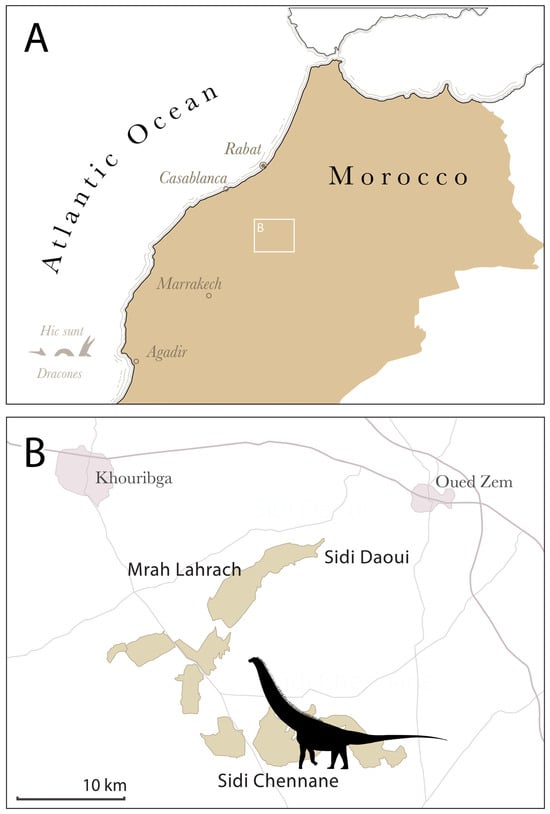
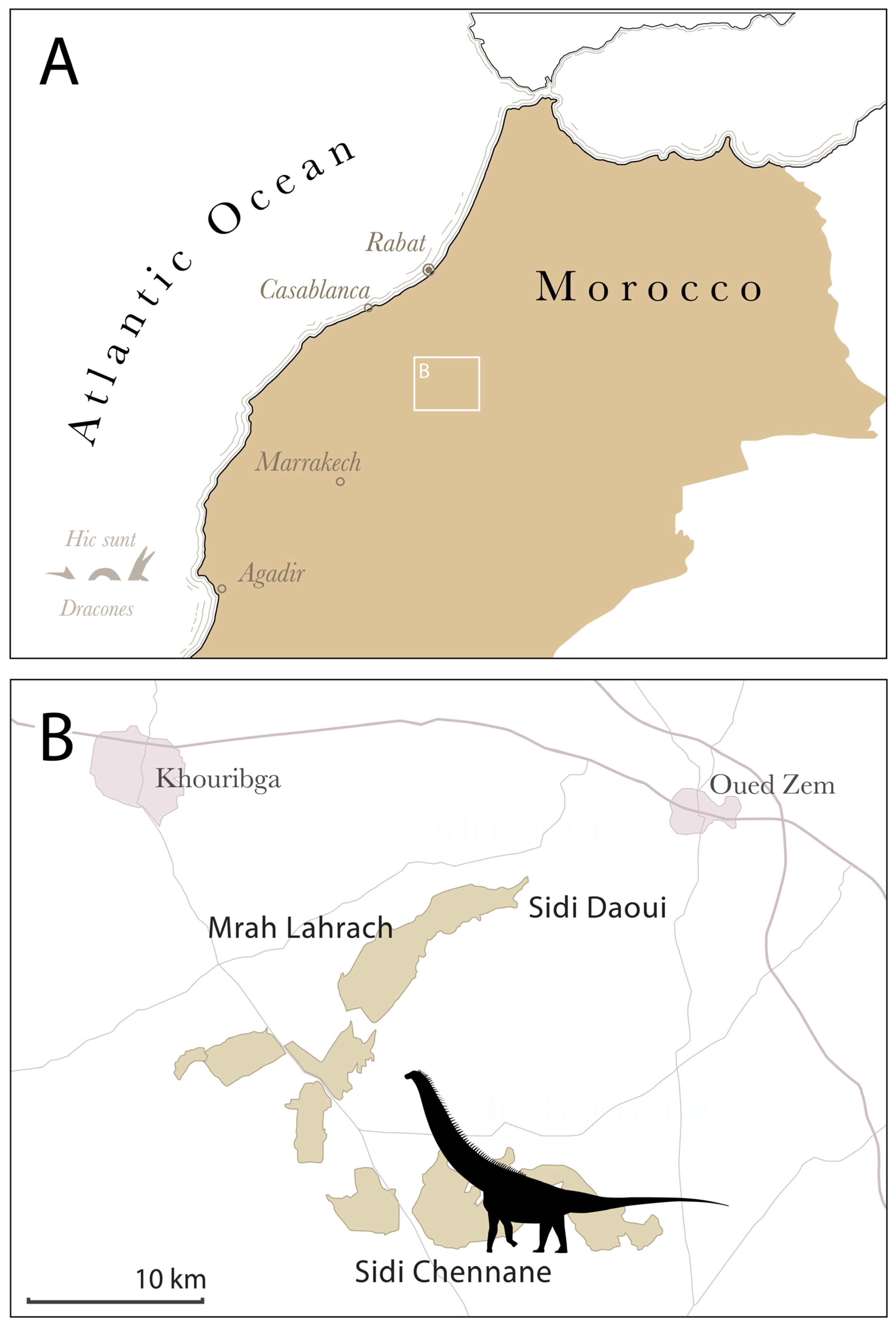
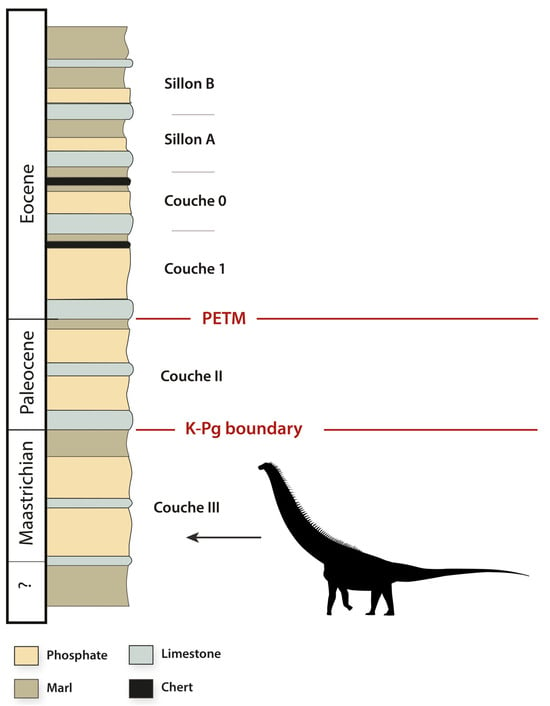
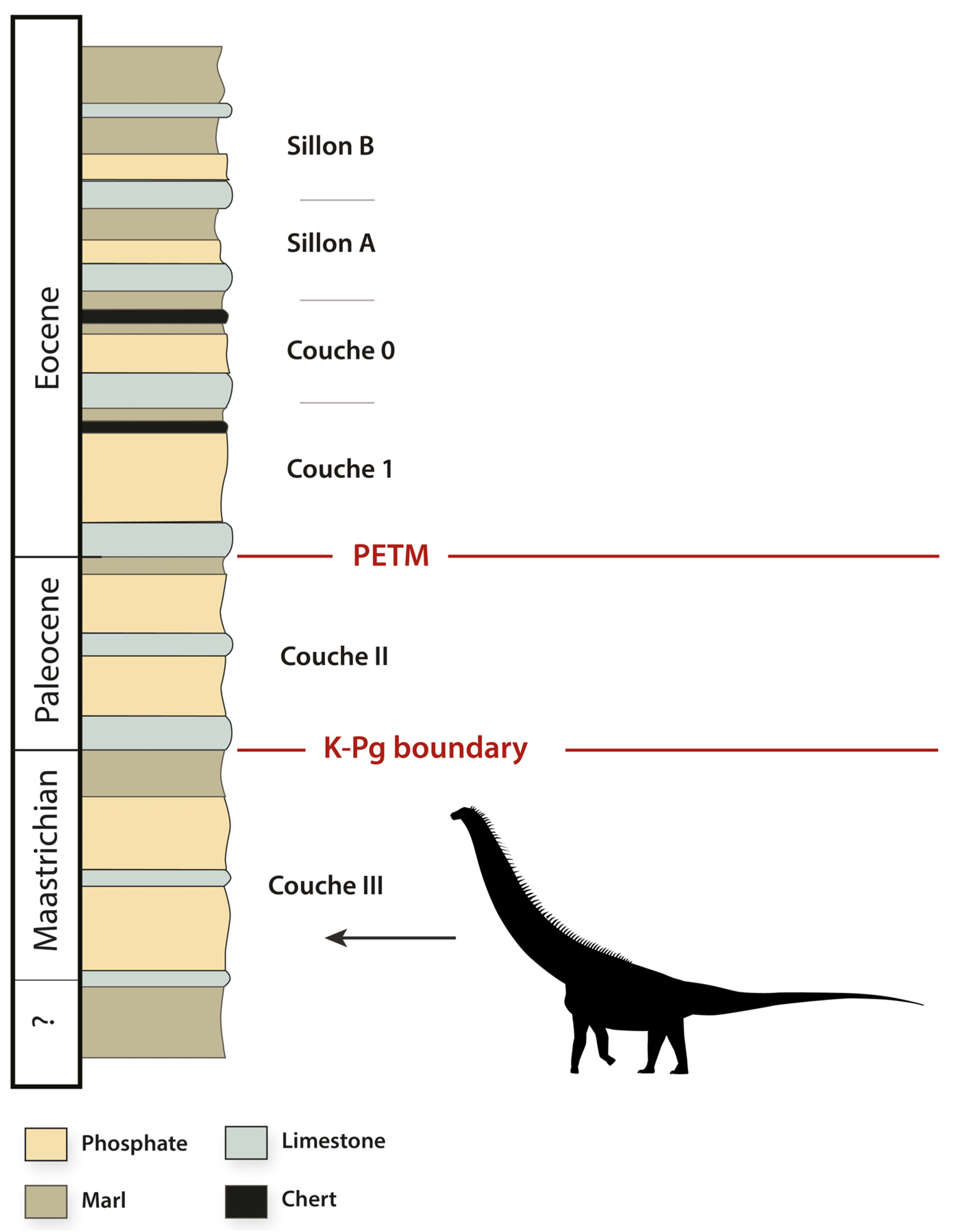
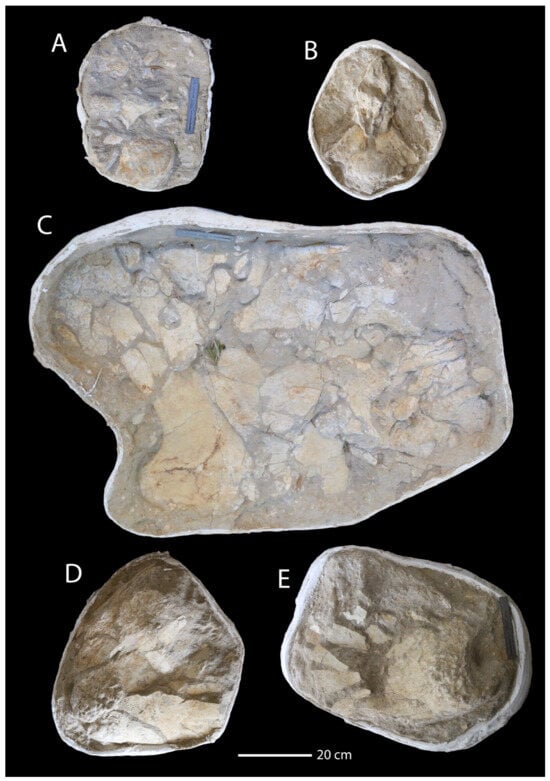
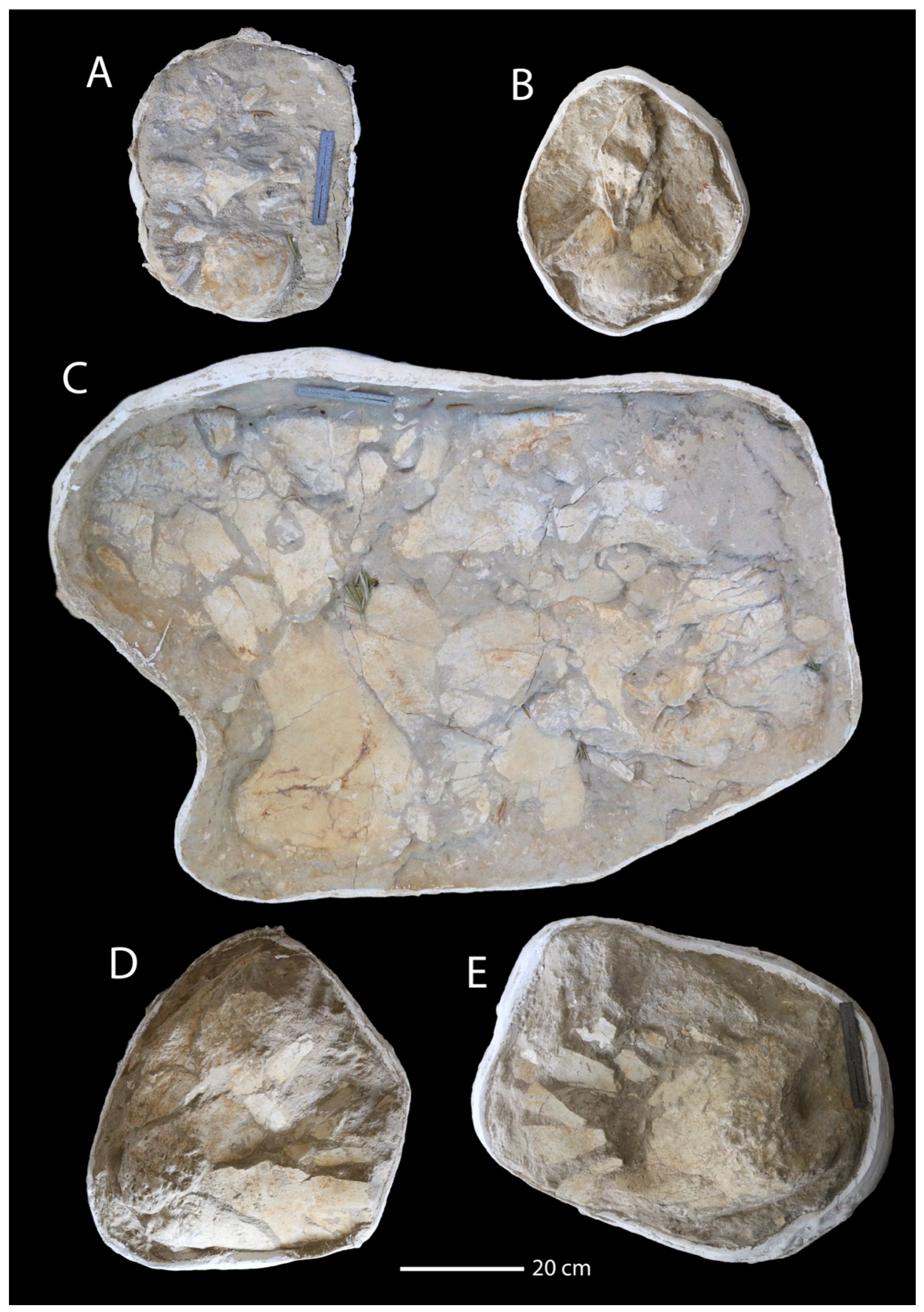
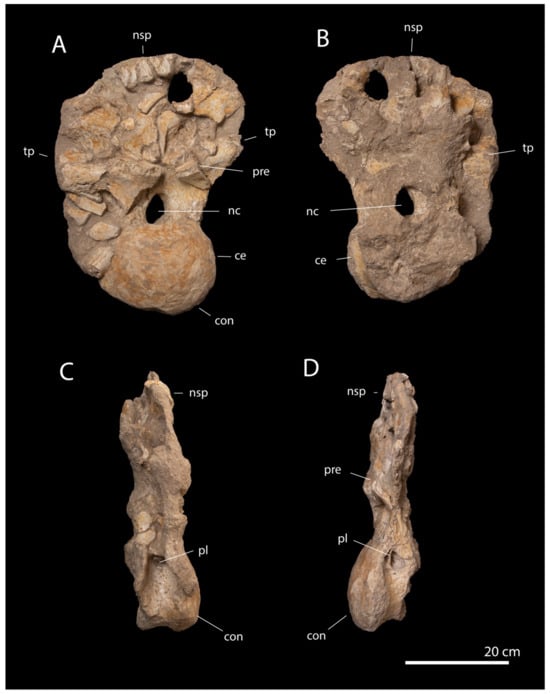
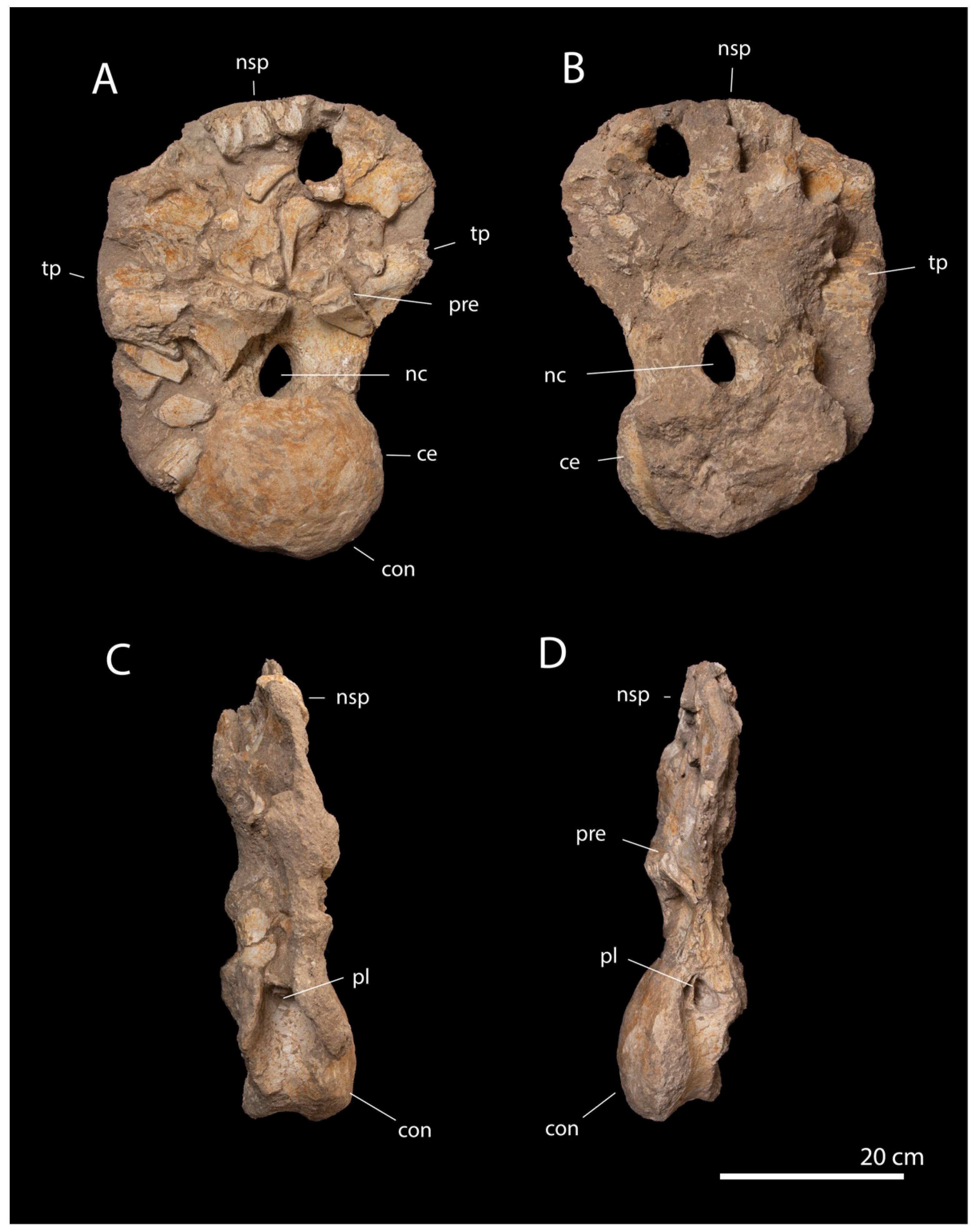
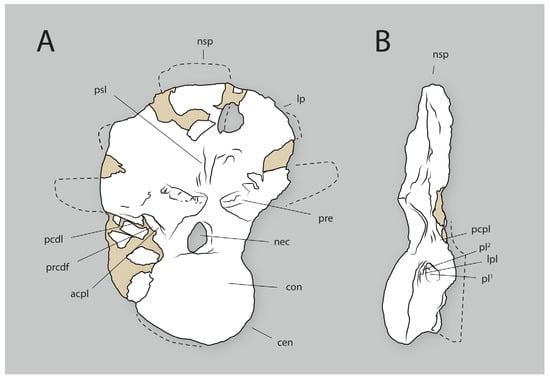
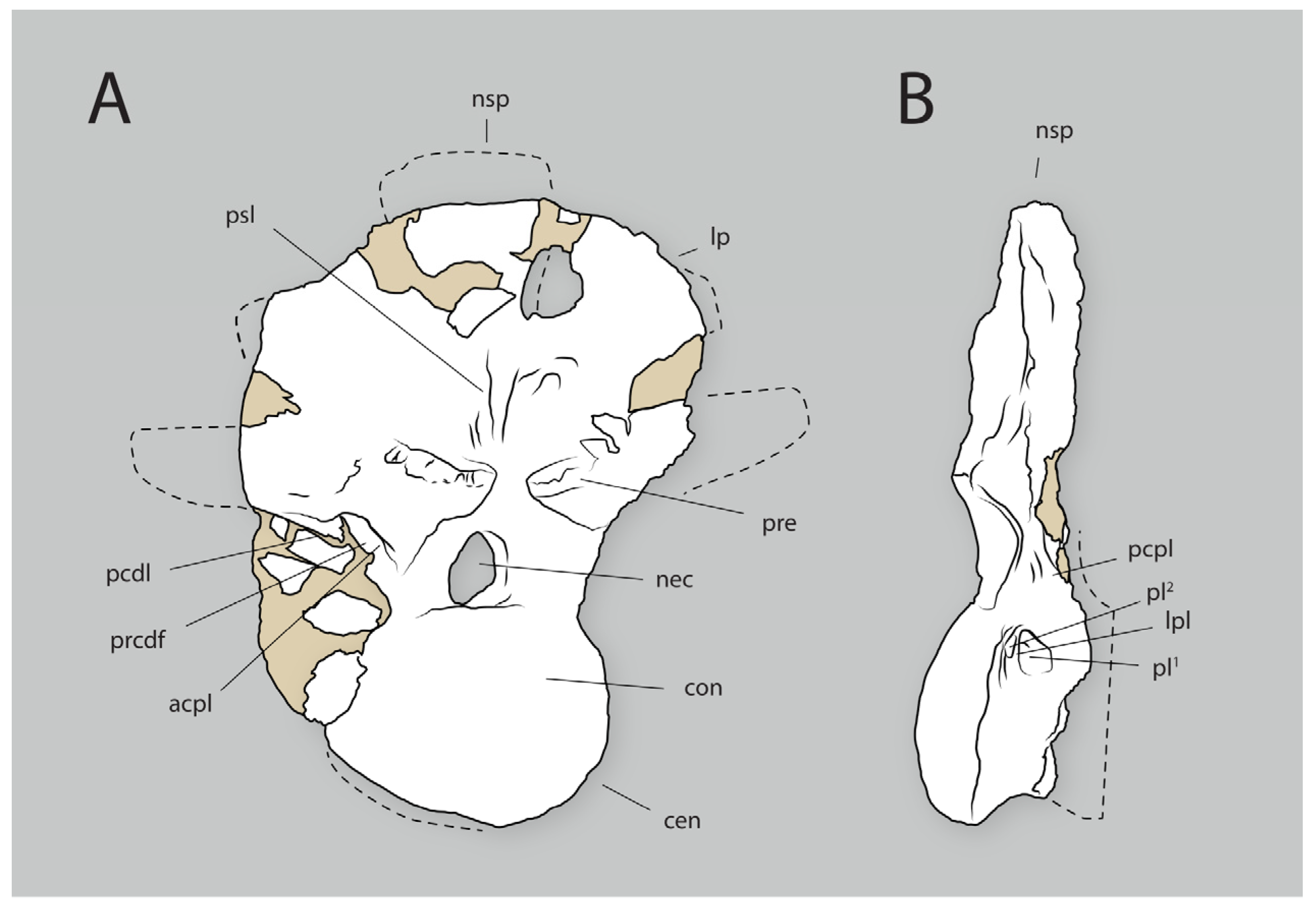
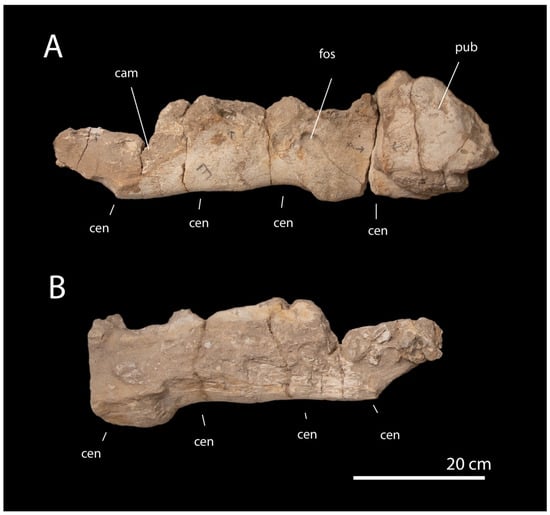
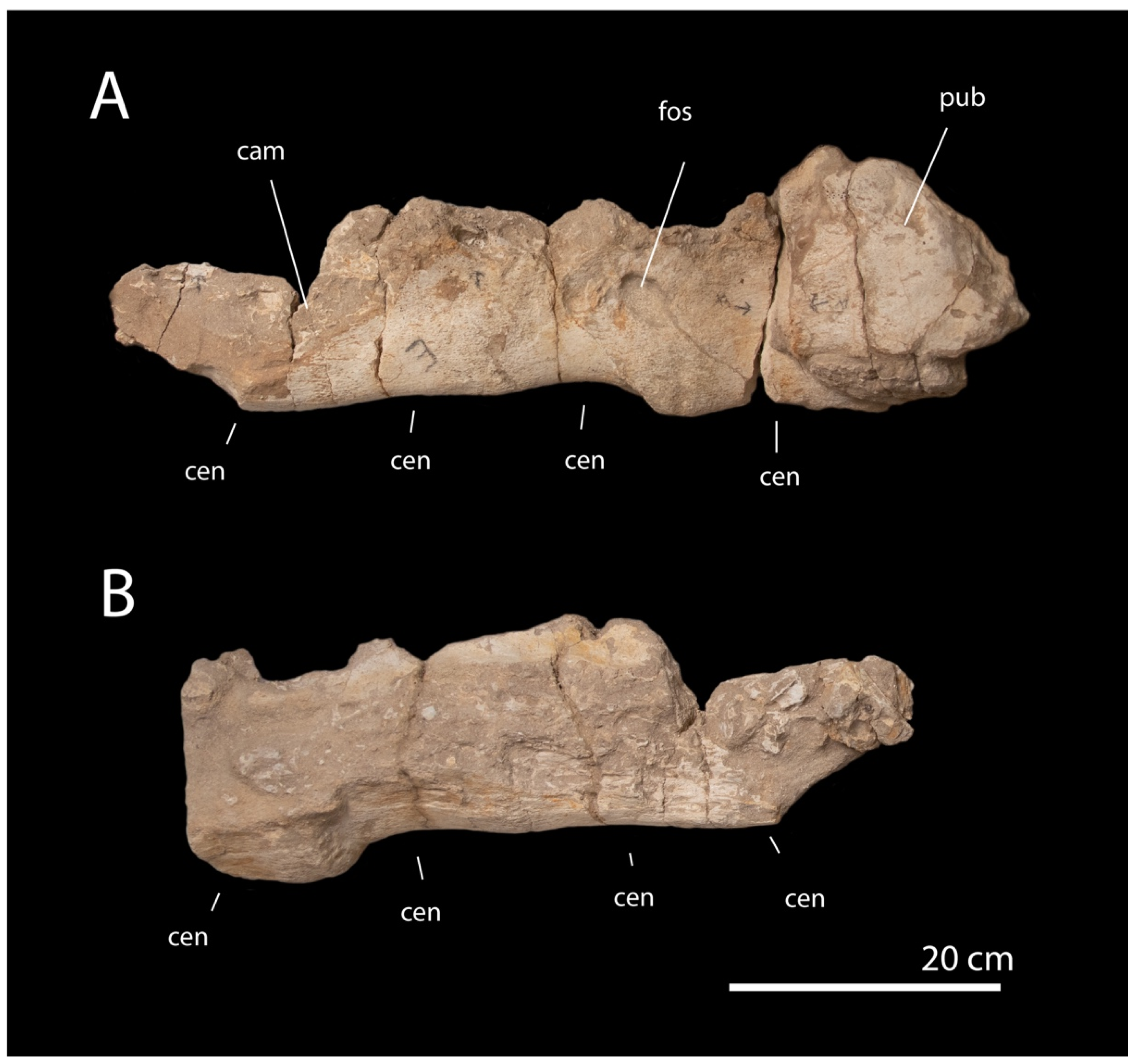
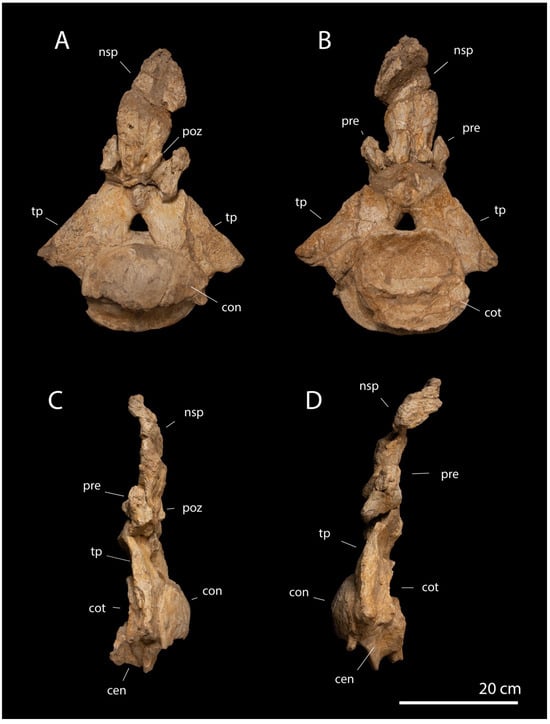
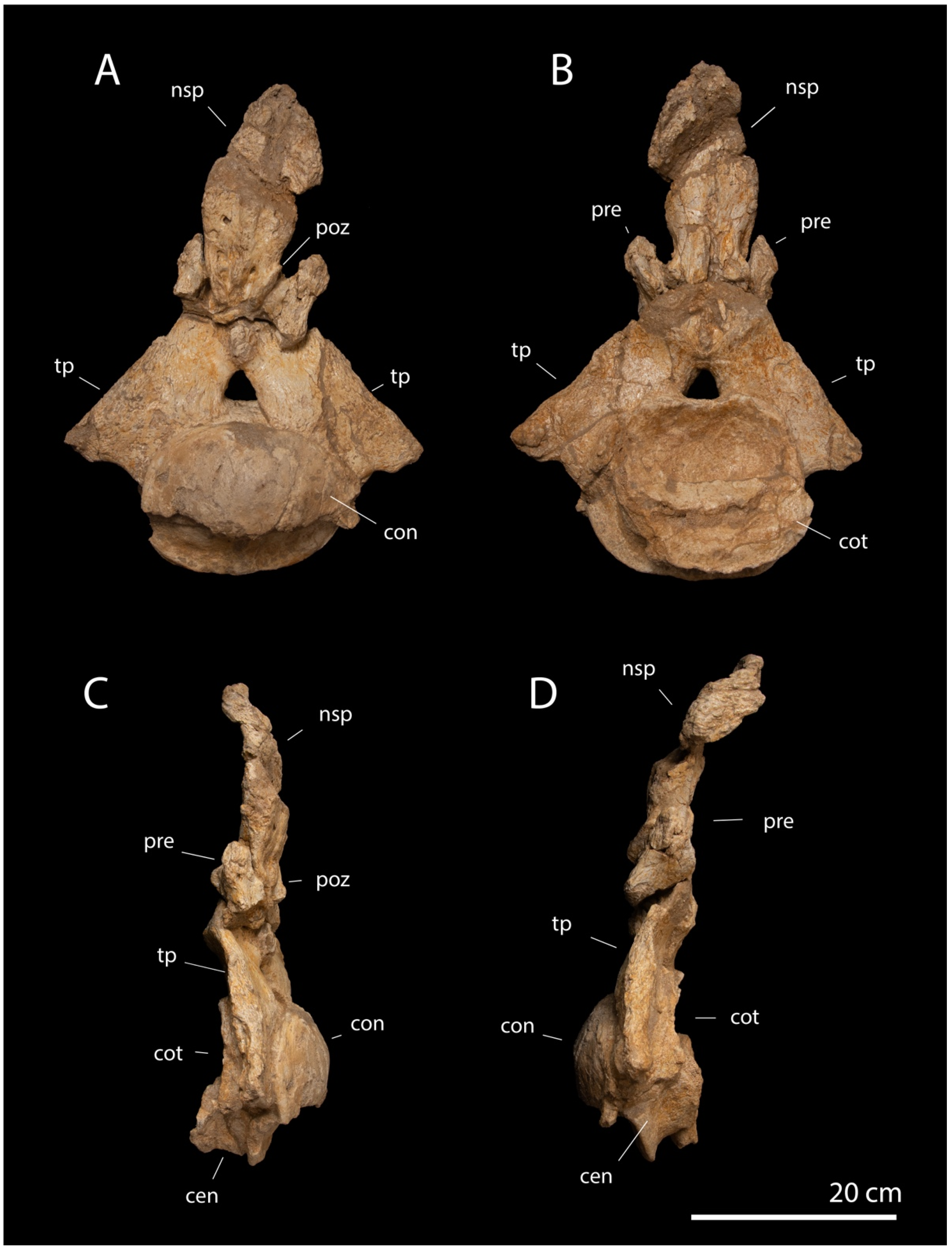
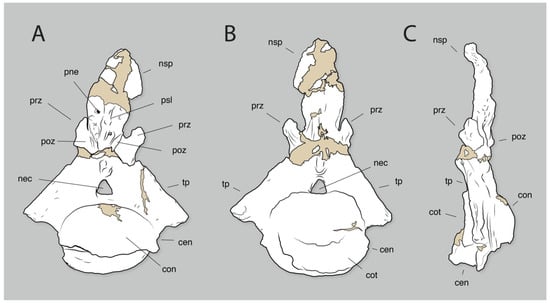
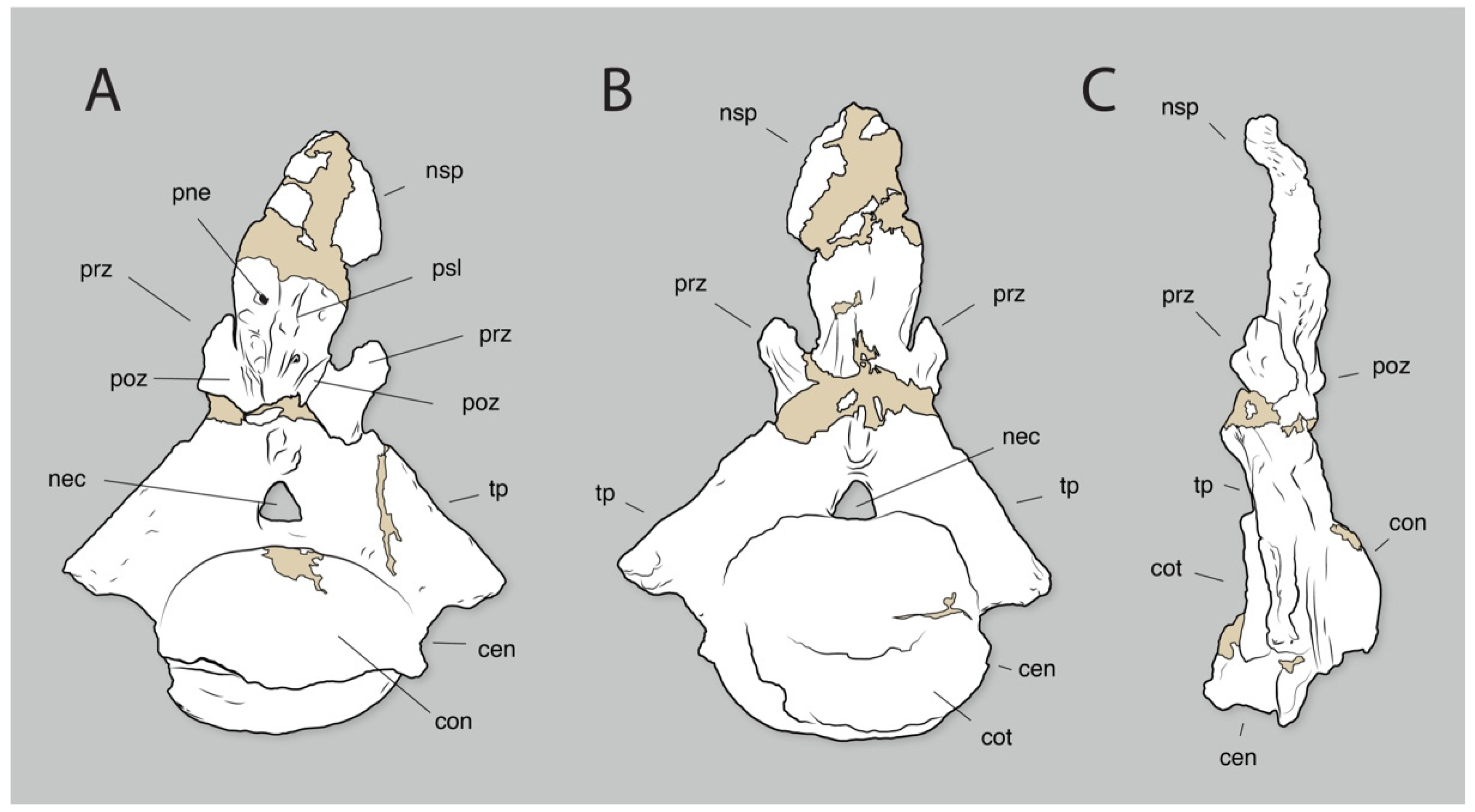
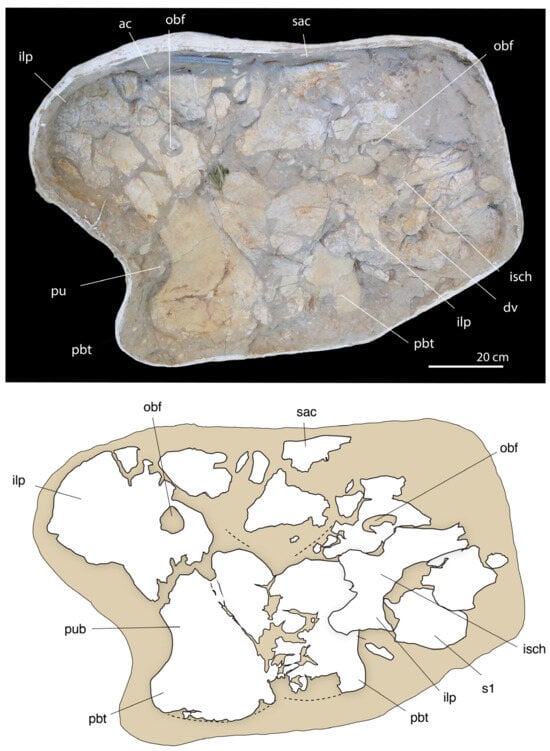
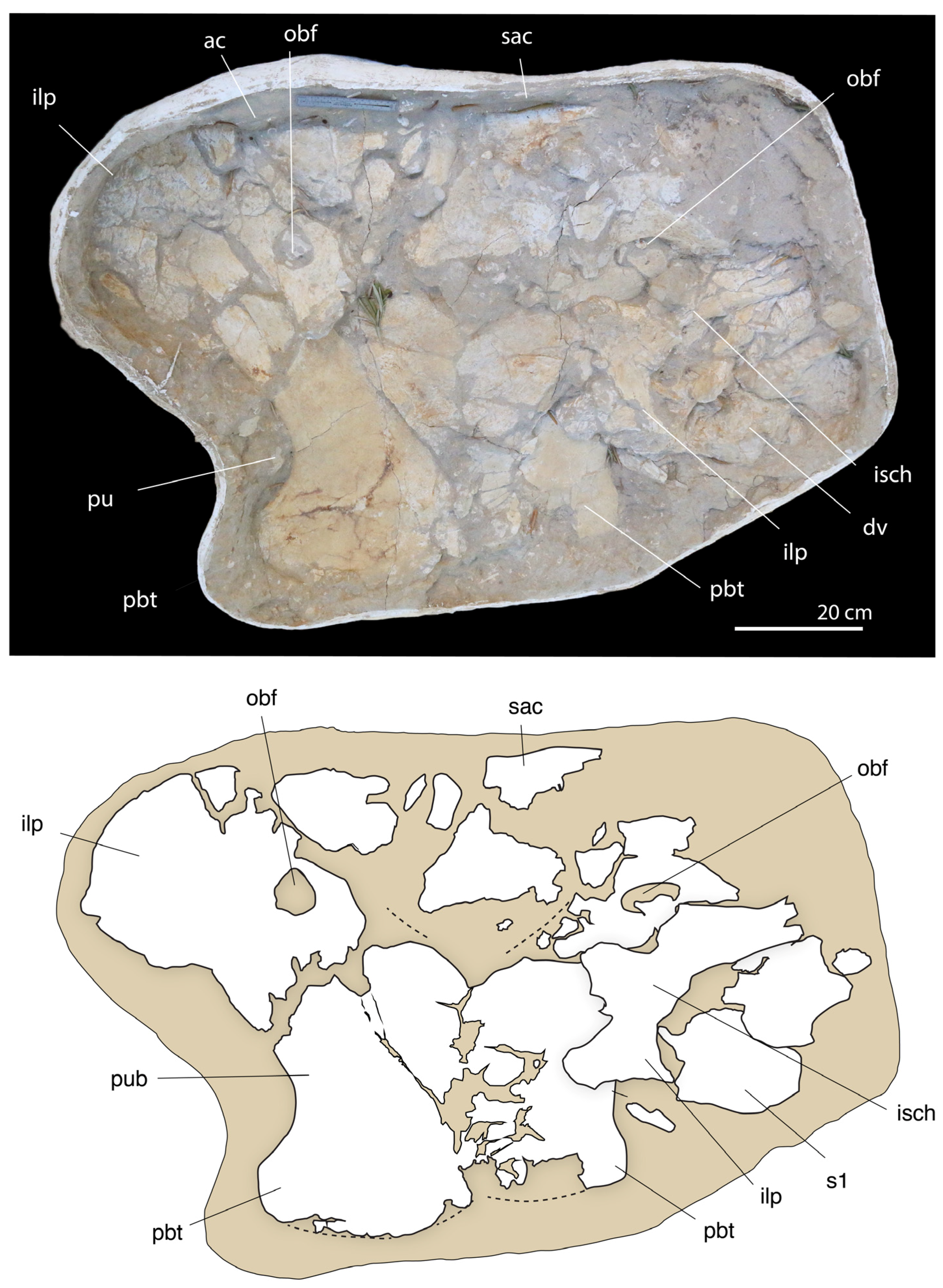
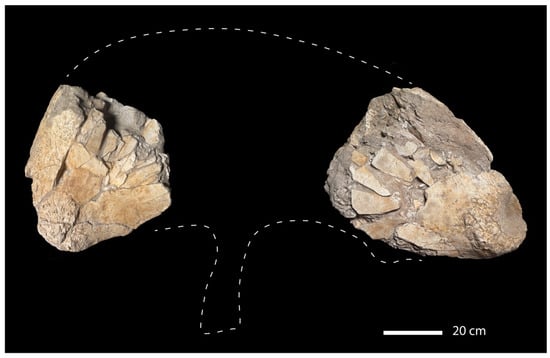
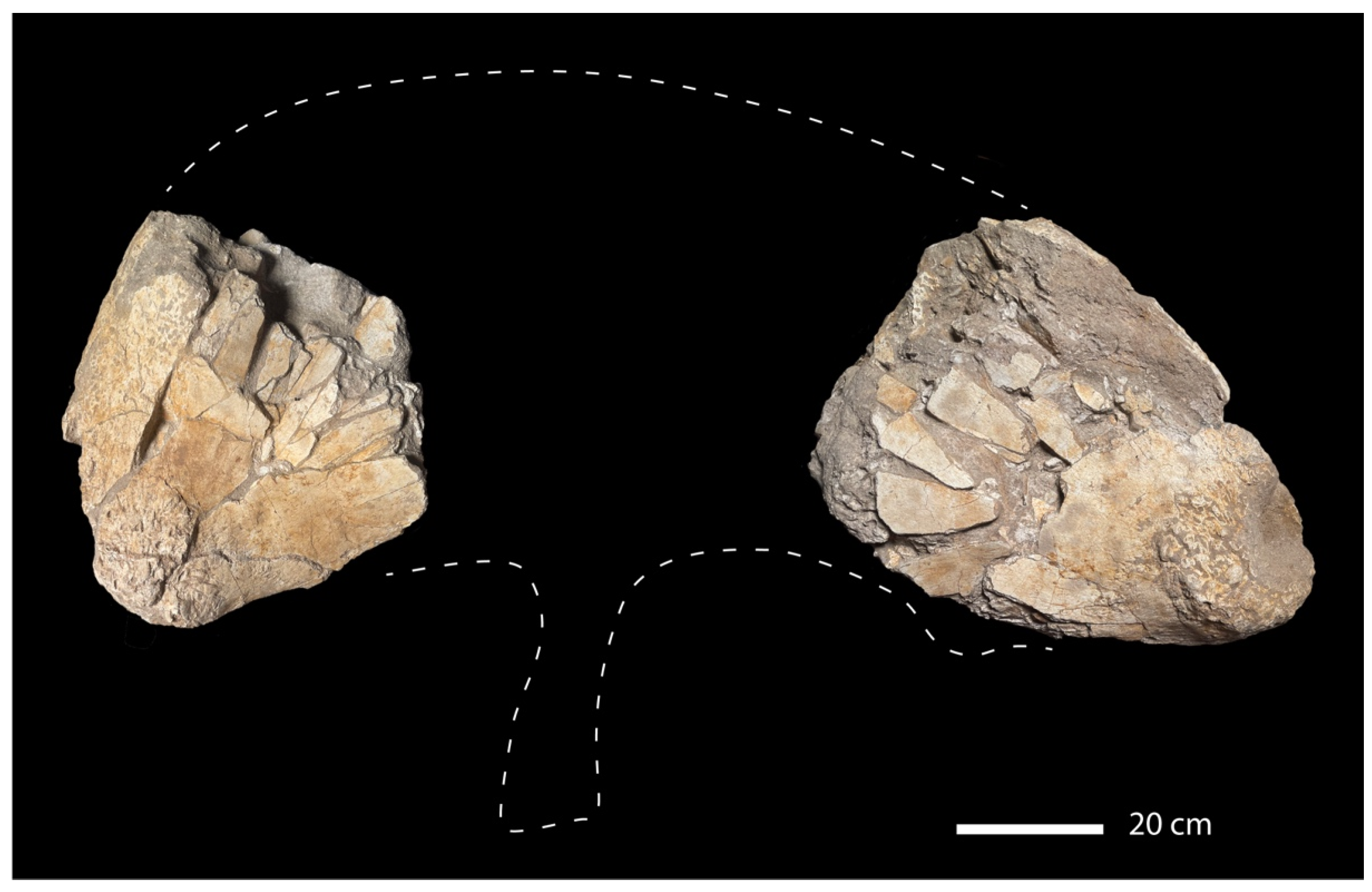
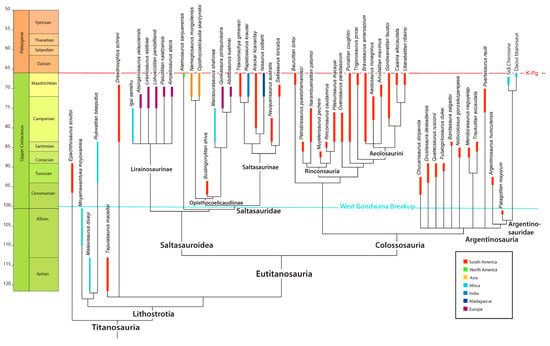
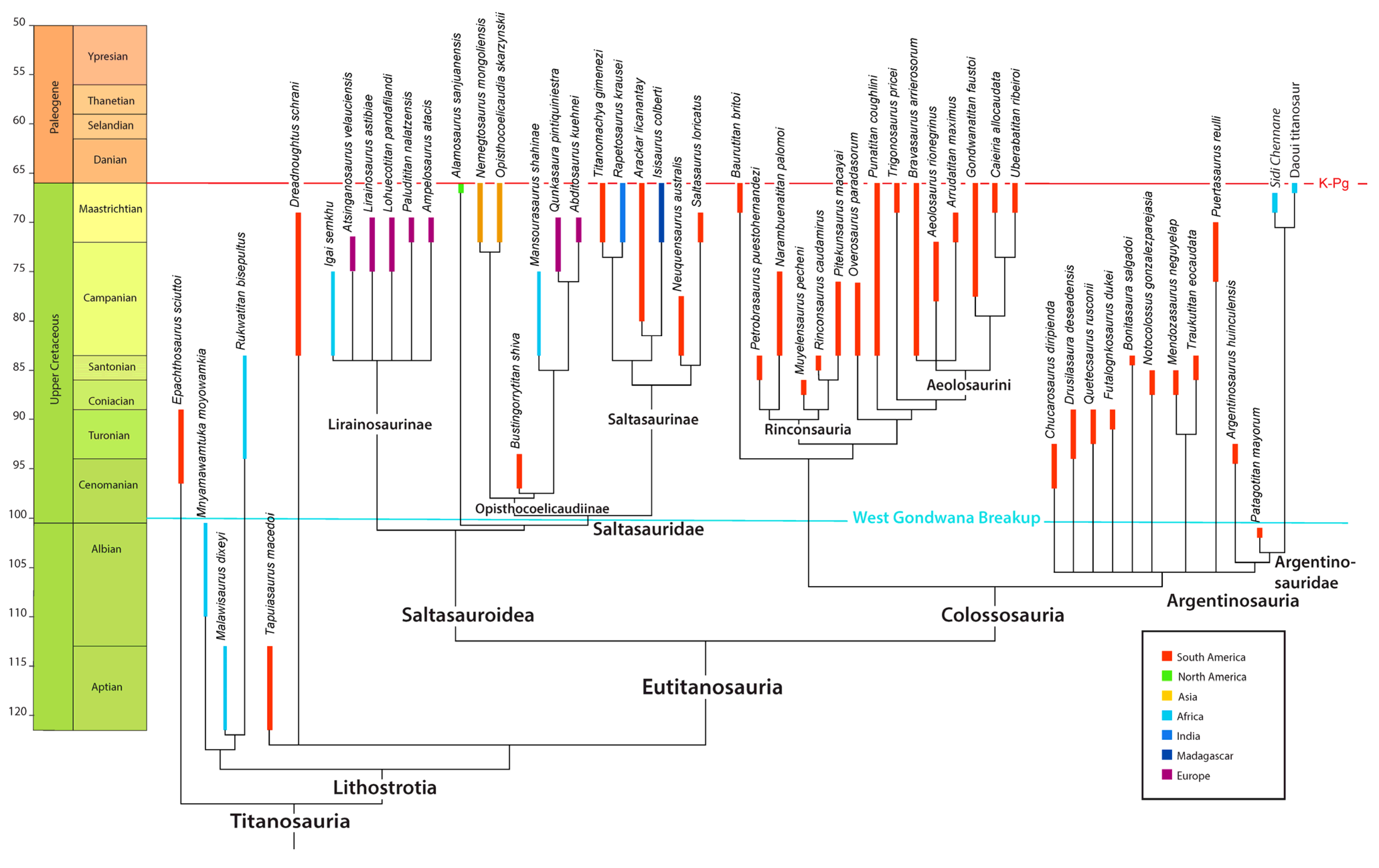
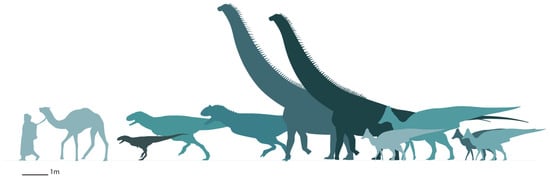
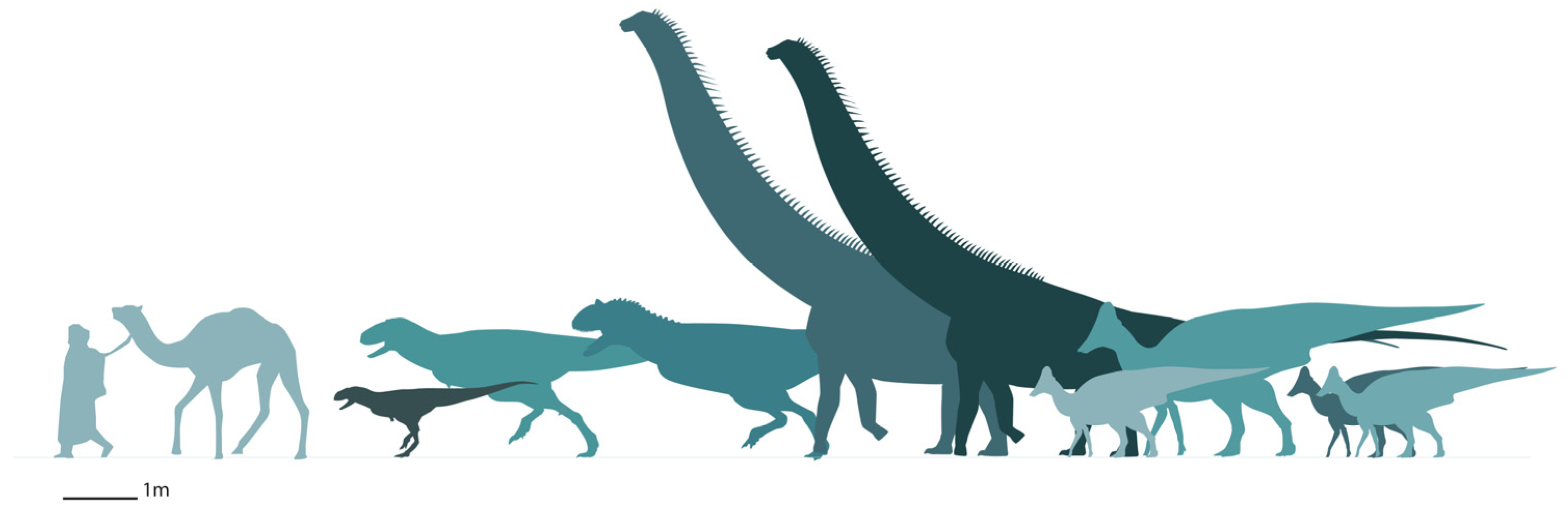
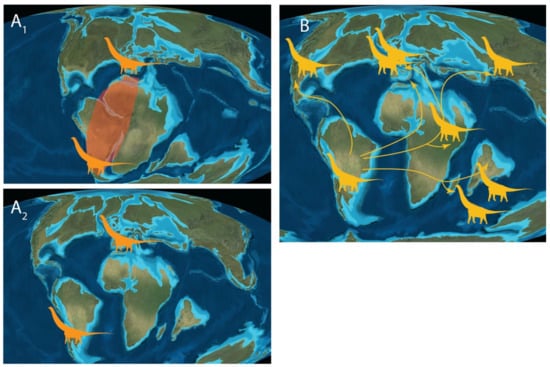
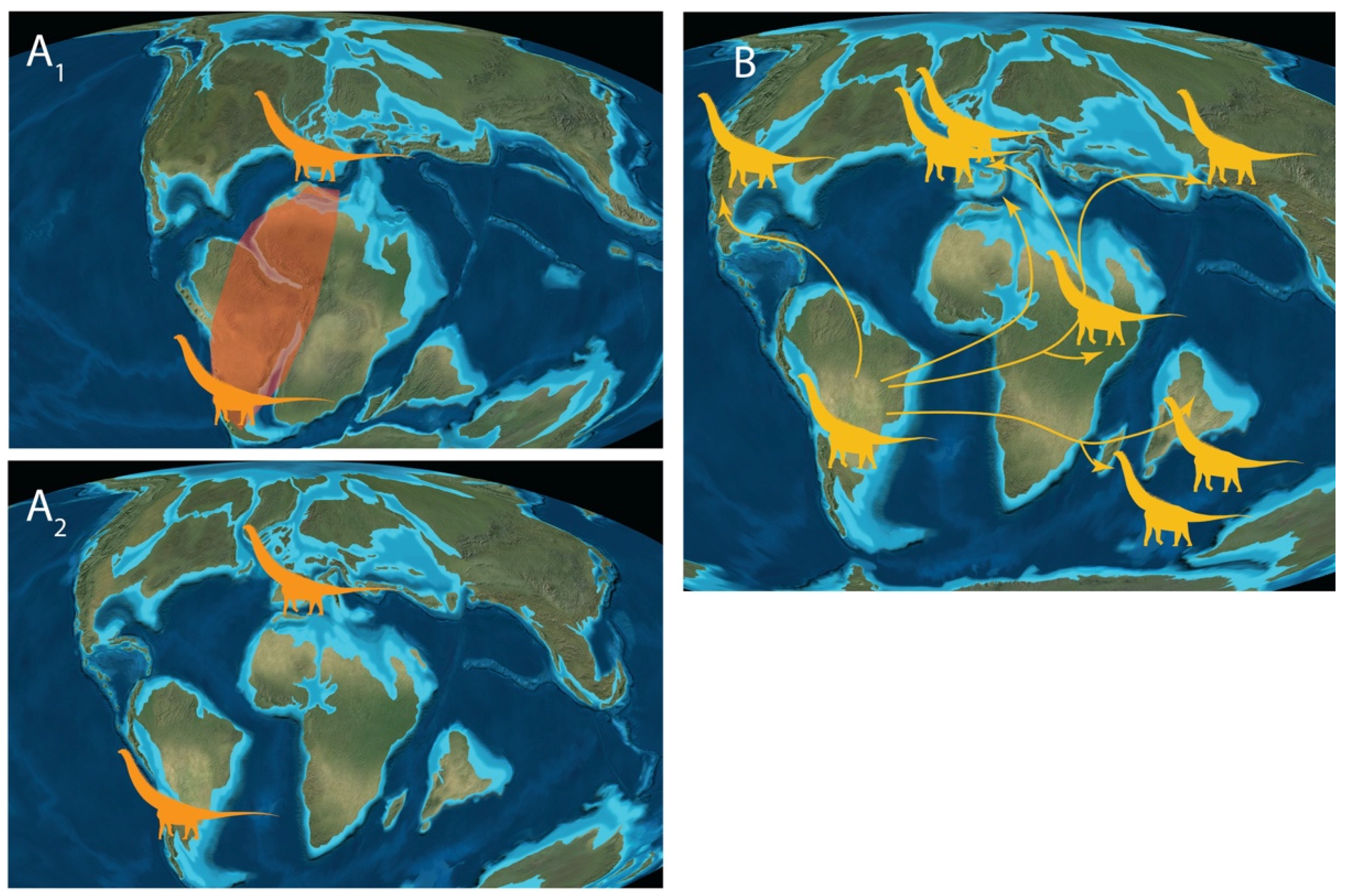
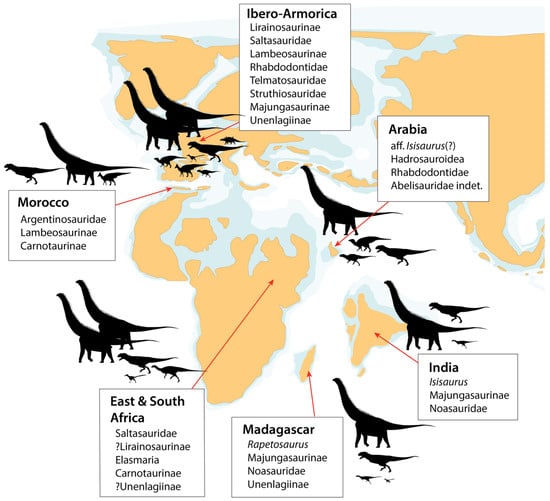
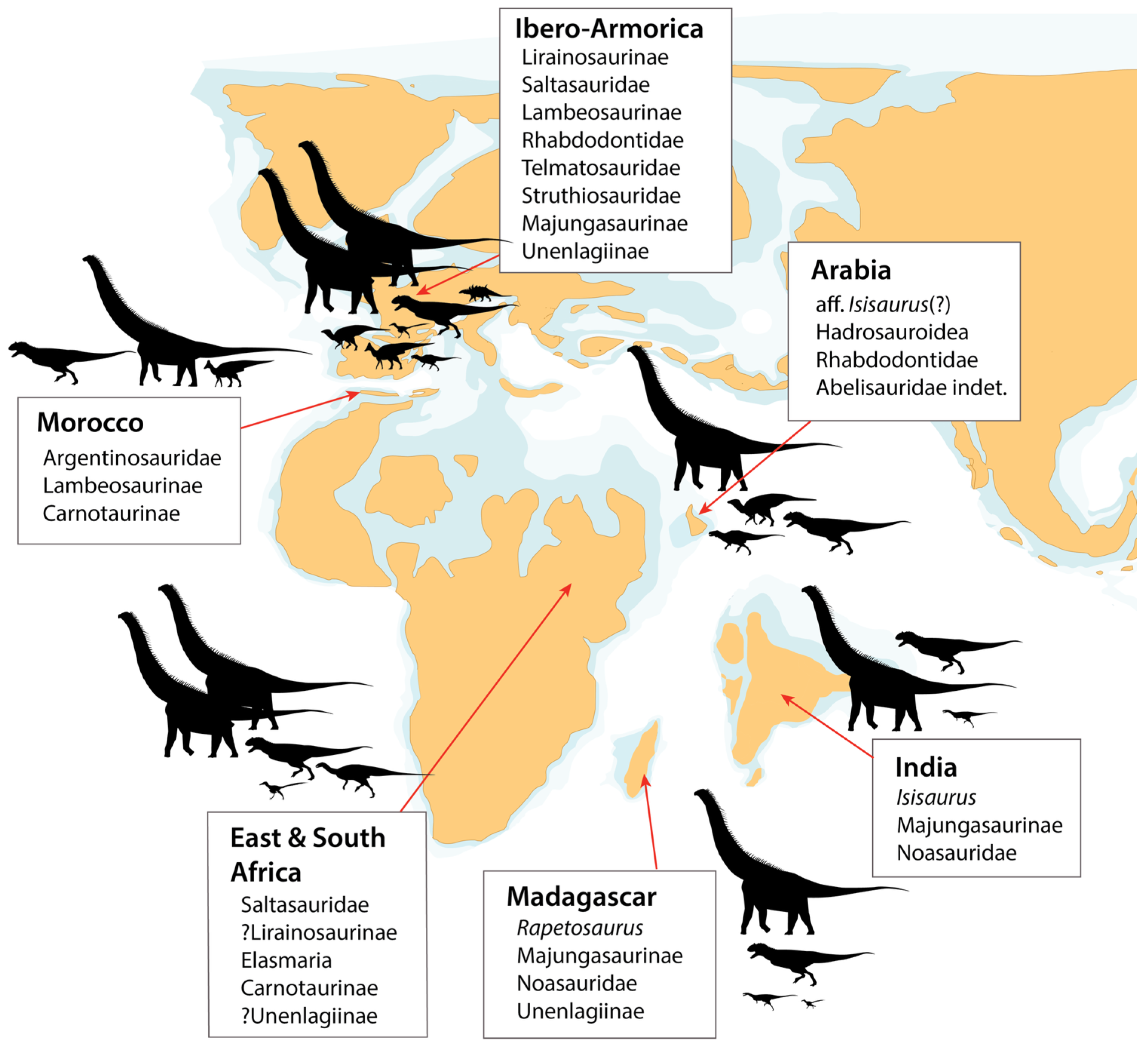

Disclaimer/Publisher’s Note: The statements, opinions and data contained in all publications are solely those of the individual author(s) and contributor(s) and not of MDPI and/or the editor(s). MDPI and/or the editor(s) disclaim responsibility for any injury to people or property resulting from any ideas, methods, instructions or products referred to in the content. |
© 2026 by the authors. Licensee MDPI, Basel, Switzerland. This article is an open access article distributed under the terms and conditions of the Creative Commons Attribution (CC BY) license.