


Abstract
Elevated levels of vitamin B12 (B12 hypervitaminemia) greater than 1000 pg/mL can be toxic and may serve as a marker for conditions such as cancer, autoimmune inflammatory diseases, or renal or hepatic failure. B12 hypervitaminemia, a complex generated by the binding of monomeric vitamin B12 and existing immunoglobulins in serum, can be detected in most available immunoassays. The purpose of this work was twofold: firstly, to evaluate a technique such as polyethylene glycol (PEG) precipitation in samples, before vitamin B12 determination, to prove that not all cases of B12 hypervitaminemia are related to oncological pathologies or serious diseases, and secondly, to address the patient’s condition. Materials and methods: Serum samples were collected from the patient and pre-treated with PEG. Baseline vitamin B12 levels and vitamin B12 levels in the supernatant following PEG precipitation were detected by chemiluminescence. Results: Ten samples were analysed in two different laboratories, classified as public and private; in all cases, vitamin B12 levels were above 1000 pg/mL, with a mean of 2550 pg/mL (1738–3899 pg/mL). PEG precipitation resulted in an 84.25% reduction in vitamin B12 levels. Conclusions: In cases of B12 hypervitaminemia in which there is no correlation between patient clinical symptoms and detected vitamin B12 levels, the PEG immunoprecipitation test before vitamin B12 determination is a simple and low-cost laboratory technique that can be routinely used in clinical practice to determine actual vitamin B12 levels. The technique would spare patients unnecessary complementary tests and inappropriate treatments.
1. Introduction
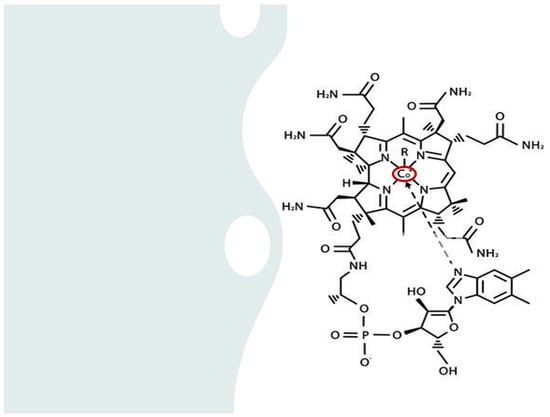
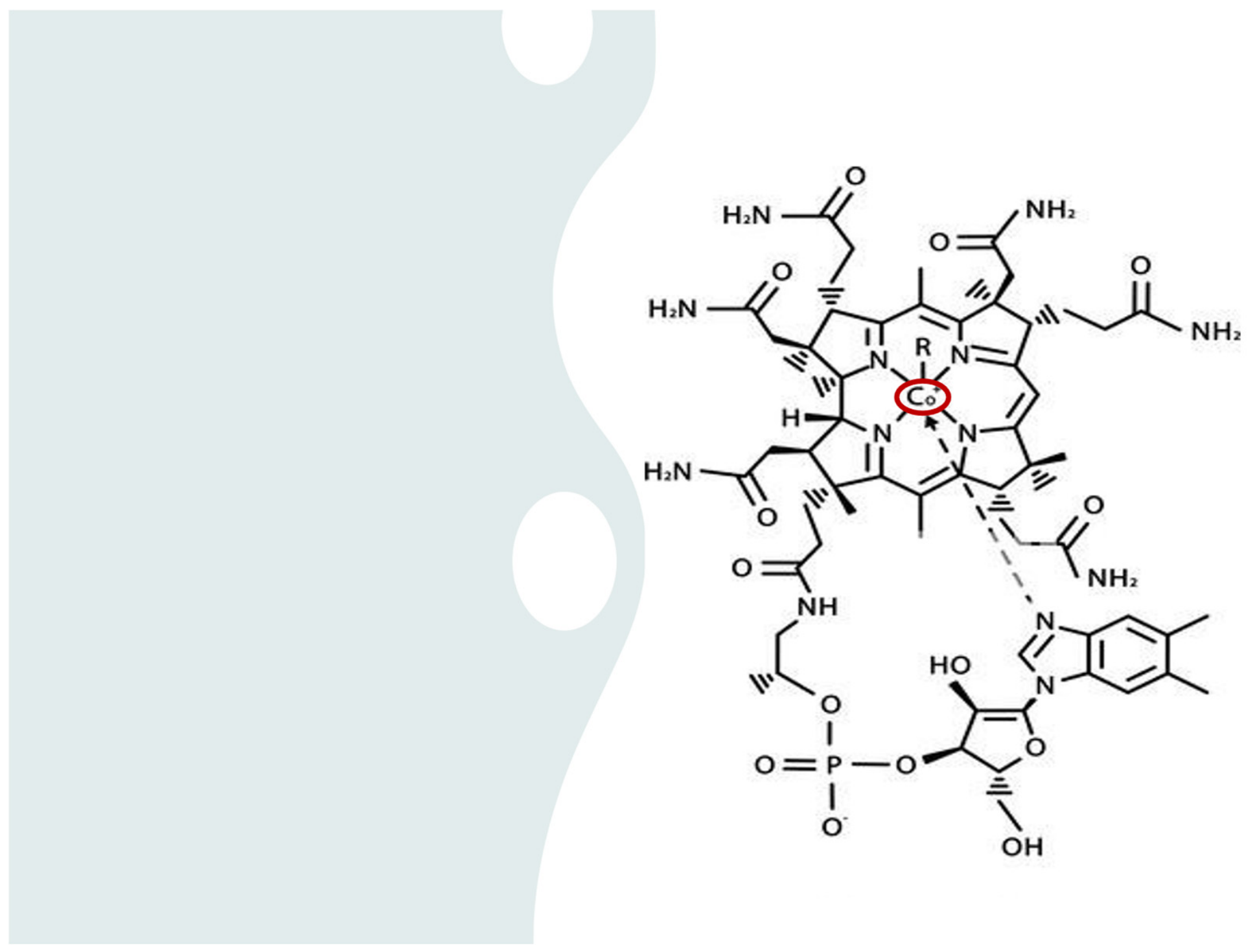
Vitamin B12 or cobalamin (C63H88CoN14O14P) (Figure 1) is a molecule that is part of the eight components that make up the vitamin B complexes. Its main functions include protein metabolism, red blood cell genesis, and ensuring proper functioning of the CNS, such as neurodevelopment [1,2]. Deficiency would alter these procedures, leading to symptoms such as anaemia, mood swings, memory problems, fatigue, and muscle weakness [3]. Although it is an essential molecule, our organism cannot synthesise it; it is synthesised exclusively by bacteria, and our bodies obtain it orally from food, especially from animal products such as red meat, fish, milk, and eggs [4]. Vitamin B12 metabolism begins with adequate absorption by the digestive tract, consisting of a series of steps: (a) Vitamin B12 is released from food by chemical and mechanical digestion in the mouth through the action of saliva and chewing. (b) Once it reaches the stomach, vitamin B12 is dissociated from the carrier protein by the action of gastric and pancreatic juices. It then binds to Castle’s intrinsic factor (IF), which is secreted by gastric parietal cells. (c) The IF + vitamin B12 complex is transported to the terminal ileum, where it is absorbed [1,5]. (d) From here, it passes into the bloodstream thanks to transcobalamin (TCB) types I, II, III, and haptocorrin (HC) proteins [6]. TCB I and III are proteins that bind to vitamin B12 but are unable to transport it, whereas TCB II transports and facilitates the liver and tissue uptake of vitamin B12 [7]. The union of TCB II and vitamin B12 forms the holotranscobalamin (holo-TBC), or a biologically active fraction used for cellular DNA synthesis [8]. Some authors consider holo-TBC to be the most sensitive and specific biomarker for the determination of vitamin B12 deficiency or excess compared to the measurement of total vitamin B12 levels [9,10]. (e) Vitamin B12 is stored in the liver (1–10 mg) by endothelial cells and hepatocytes that possess receptors for TCB II. (f) From the liver, it is distributed to peripheral tissues where it acts as coenzymes (methylcobalamin and deoxyadenosylcobalamin). (g) Vitamin B12 is excreted by the biliary tract and faeces, and a small fraction is eliminated by the kidney, in the urine due to its water-soluble property [4].
Figure 1.
The chemical structure of vitamin B12 (C63H88CoN14O14P). It is a compound organometallic in which a cobalt atom is situated within a corrin ring.
The daily requirement for vitamin B12 is set at 3–7 μg/d, which allows for adequate plasma levels of vitamin B12 of 400 pg/mL [11,12].
Much has been studied about vitamin B12 deficiencies and their clinical consequences [3]. However, very little is known about cases of B12 hypervitaminemia, its causes, and treatment, although cases of hypervitaminemia are also common in the clinic, and we found 7–18% of patients had elevated vitamin B12 levels [12,13,14,15]. Elevated serum concentrations of vitamin B12 have been linked to solid tumours of the digestive tract, such as colon, liver, or pancreatic cancer [16,17,18]. These elevations are an early tumour marker; thus, the higher the levels of vitamin B12, the worse the prognosis [19,20,21]. They have also been linked to immunological diseases, such as autoinflammatory/autoimmune diseases [22] or chronic myeloproliferative syndromes, considering that transcobalamin I and III are synthesised by neutrophil granulocytes [7,23]. Therefore, high levels of vitamin B12 may result from an excess in its synthesis by the tumour or an increase in transcobalamin secondary to hyperleukocytosis [24]. Occasionally, elevated vitamin B12 levels and functional vitamin B12 deficiency may co-occur with clinical manifestations of deficiency despite elevated B12 levels in blood tests [25]. This functional deficit is associated with qualitative abnormalities related to vitamin B12 uptake and tissue processing. In these cases, the determination of homocysteine and methylmalonic acid, two components of the vitamin B12 metabolic pathway, may be the key in the evaluation of this functional deficiency [12].
The literature reports that 25% of B12 hypervitaminemia is of unknown aetiology, and patients are assumed to have idiopathic B12 hypervitaminemia. Thus, while the detection of B12 hypovitaminemia has therapeutic implications, the interpretation of B12 hypervitaminemia in subjects without other symptomatology can be difficult; in most cases, there are incidental findings, where patients do not show any accompanying pathology [26,27].
The aim of this work is to find new laboratory techniques, in addition to those usually used for the determination of vitamin B12, that will allow us to know whether we are dealing with a real case of B12 hypervitaminemia or whether it is an artefact, spurious, or pseudohypervitaminemia.
2. Detailed Case Description
2.1. Collection of Patient Samples
The patient was selected for the study because she had an elevated vitamin B12 level at routine screening (B12 > 2000 pg/mL). Elevations were tested in two different hospital laboratories, public and private, corroborating the results. The study was extended from 2020 to 2025. All samples were extracted and processed under the same conditions of pH, temperature, and ionic strength. They were collected by puncture on the anterior aspect of the elbow flexure in a tube without anticoagulant. Serum was separated from blood cells by centrifugation for 10 min at 2000 rpm. The samples were analysed on the day of extraction. Informed consent was obtained from the patient for sample collection and distribution to other laboratories for analysis.
2.2. Polyethylene Glycol Precipitation Method (PEG)
In view of the suspicion of the formation of immune complexes by binding vitamin B12 to circulating immunoglobulins such as IgM, IgG, and IgA (Igs-B12), it was decided to subject the sample to immunoprecipitation with PEG.
Prepare 25 g of PEG 6000, from the Merck trading company, dissolved in 60 mL of distilled water at room temperature (18–25 °C) and vortex mix, with volume fulfilled until 100 mL of solution [28,29]. To precipitate immunoglobulins from serum, we added 250 microlitres of the 25% PEG solution to an equal volume of the patient’s serum (1:1 dilution). A control sample was generated with 250 microlitres of the patient’s serum plus 250 microlitres of distilled water without PEG. It was mixed and incubated at room temperature for 10 min to stabilise and then centrifuged for 30 min at 2000 rpm. Vitamin B12 determinations were performed by chemiluminescence in unmodified samples, i.e., initial-vit B12 (pre-PEG), and modified or supernatant-vit B12 (post-PEG). Vit B12 levels in the PEG-treated samples decreased below the normal limits established by the laboratory. The treated samples relative to the control showed a decrease compatible with the 1:1 dilution.
3. Results
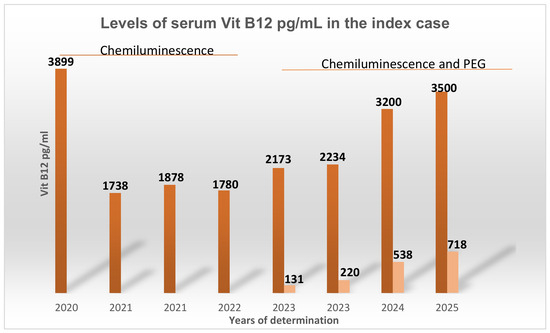
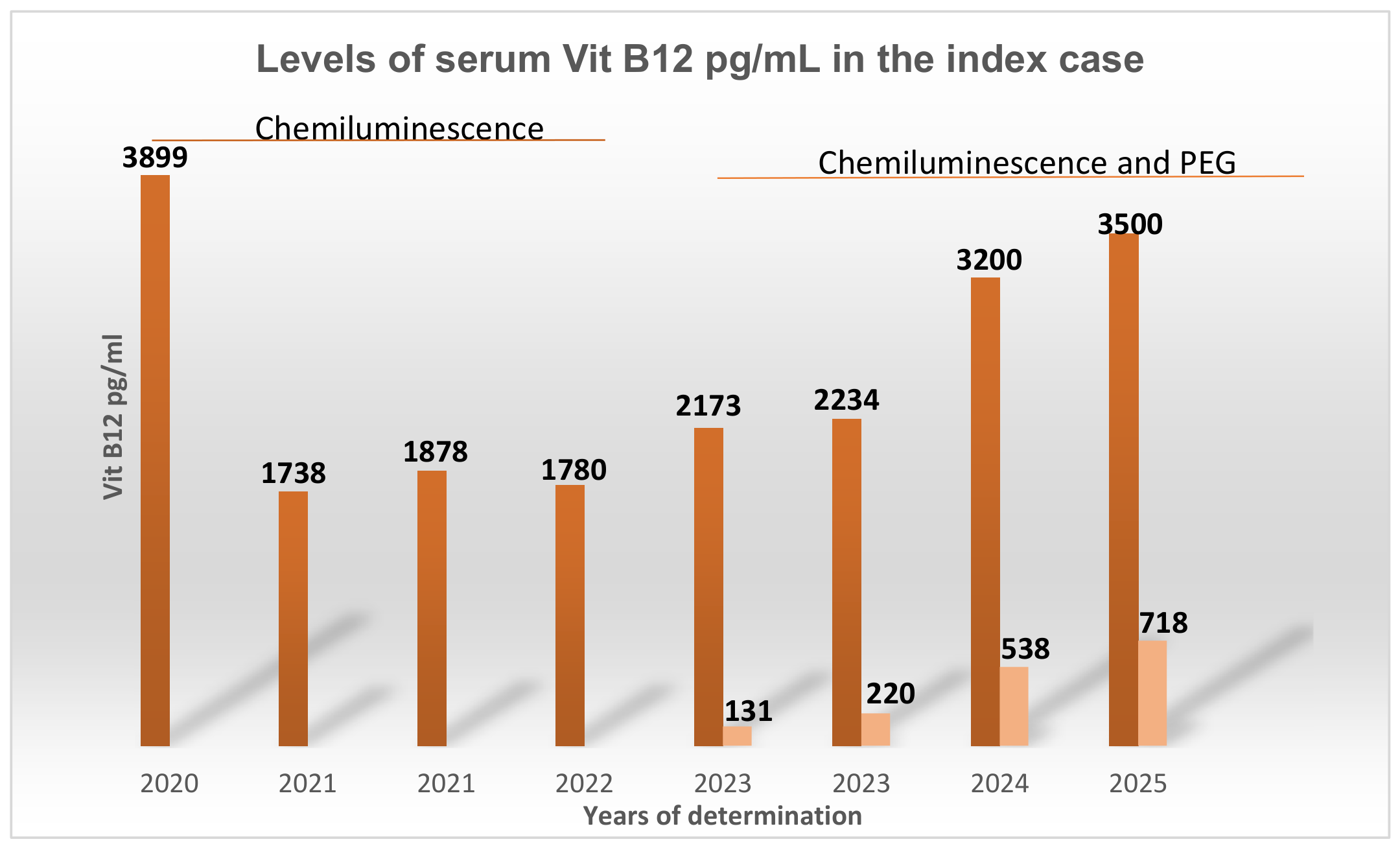
Ten samples were analysed in two different laboratories, classified as public and private. In all cases, vitamin B12 levels were greater than 1000 pg/mL, with a mean of 2550 pg/mL (1738–3899 pg/mL). Precipitation with PEG produced a reduction in vitamin B12 values of 84.25%, shown in Table 1 and Figure 2.
Table 1.
Vitamin B12 levels in the index patient’s serum, determined in two different laboratories, as well as before and after PEG precipitation.
Figure 2.
Average annual serum vitamin B12 levels in the reference patient. Between 2023 and 2025, both baseline vitamin B12 levels (long columns in dark brown) and vitamin B12 levels following precipitation with polyethylene glycol (PEG) (short columns in light brown) were analysed using chemiluminescence.
Case History
A 66-year-old female patient was consulted for B12 hypervitaminemia and diagnosed in a routine blood test, with no other accompanying symptoms. Her personal history includes familial hypercholesterolaemia treated with simvastatin 20 mg for over 30 years; she underwent surgery in 2010 for a pretumoural lesion in the super-external quadrant of the left breast (pathological anatomy: columnar changes without atypia), with annual check-ups (medical examination, mammography and ultrasound scan), without recurrence or any other relevant evaluations. The patient refers to taking 5 mg of melatonin at night to help them fall asleep. The patient has healthy lifestyle habits with regular exercise, no alcohol, no smoking, and a Mediterranean diet. She reports not taking any dietary supplements or external vitamin supplements containing vitamin B12. Since 2020, the date of her first discovery of elevated vitamin B12 levels as a chance finding, the patient has maintained elevated vitamin B12 levels until Sept 2025 (Vit B12: 3500, range 191–663 pg/mL). Vitamin B12 levels were tested in two different hospital laboratories with successive extractions using chemiluminescent immunoassay techniques, all of which confirmed the results (Table 1 and Figure 2). In many laboratories, vitamin B12 values above the upper range established by the assay are reported as >2000 pg/mL, and samples are diluted only when the clinician calls the laboratory and asks for it. Therefore, very high vitamin B12 values may remain undisclosed.
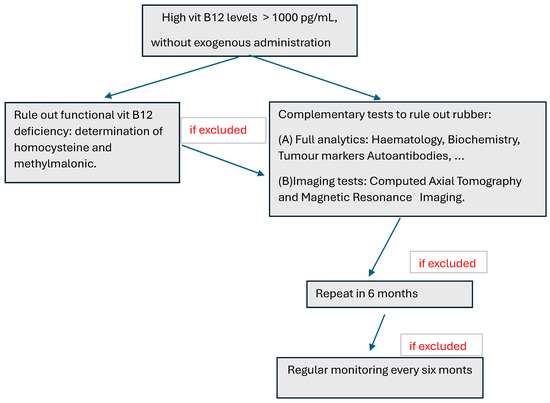
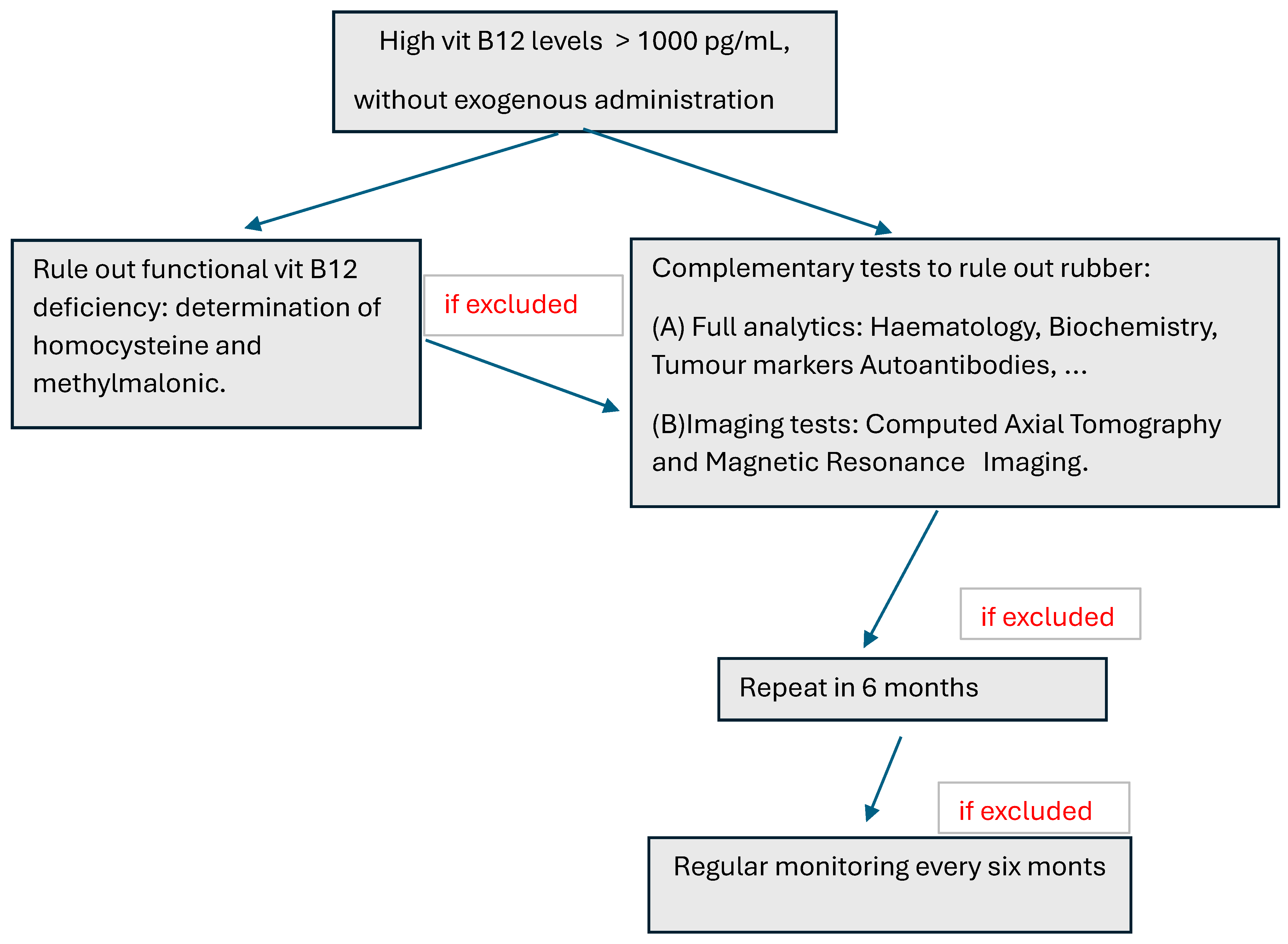
Physical examination of the patient was normal. The haematologic and biochemical tests did not show any symptoms of interest except elevated vitamin B12 levels, so a diagnostic protocol was initiated (Figure 3). All tumour markers tested were negative: CEA, alpha fetoprotein, CA125, CA 15.3, and CA 19.9. Antinuclear, antimitochondrial, and antineutrophil antibodies were negative. Antithyroid antibodies—antithyroglobulin TG and antithyroid peroxidase TPO—were positive in a euthyroid thyroid, compatible with Hashimoto’s thyroiditis, without symptoms for the patient.
Figure 3.
Diagnostic protocol to be followed in primary care in cases of vitamin B12 hypervitaminemia.
After consulting various clinical specialists, such as internal medicine, endocrinology, and oncology, without obtaining a plausible explanation of the reason or cause of B12 hypervitaminemia, a CT scan of the head, neck, face, chest, and abdomen, as well as mammograms, ultrasound, and magnetic resonance imaging, was requested. No findings of interest were found in any case, which is why the patient decided not to undergo further tests and to remain expectant with a diet low in vitamin B12 and two annual reviews of the vitamin B12 test.
In February 2023, after continuing to have elevated vitamin B12 values, a specialist in clinical analysis, and coauthor of this article, at the SAS public laboratory, decided to submit the patient’s blood sample to immunoprecipitation with polyethylene glycol and to re-analyse the vitamin B12 levels. The values obtained were 131 pg/mL, below the laboratory’s range. Three months later, vitamin B12 levels were redetermined and precipitated with PEG in a different private laboratory with values of 2234 and 220 pg/mL, respectively, and the result was confirmed by gel filtration chromatography. In addition, to rule out a possible functional vitamin B12 deficiency, with elevated cobalamin levels, homocysteine values, a metabolite of vitamin B12, were determined and found to be within the normal laboratory range of 1.06 mg/L (range 0.686–2.08 mg/L).
In May 2024 and September 2025, when the patient continued with her normal life and a Mediterranean diet, including foods rich in vitamin B12, vitamin B12 levels were elevated at 3200 and 3500 pg/mL, and the same samples precipitated with PEG showed values of 538 and 718 pg/mL, respectively, consistent with normal and near-normal serum levels of this vitamin in the patient’s serum (Table 1).
4. Discussion
B12 Hypervitaminemia (high serum vitamin B12 levels) is a common and often underestimated laboratory abnormality and is considered diagnostically and clinically irrelevant [25]. However, many studies in the literature link B12 hypervitaminemia with serious diseases such as solid tumours (gastrointestinal: colon, liver, pancreas; breast or lung) [12,15,19,30], autoimmune diseases, myeloproliferative syndromes, and liver or kidney failure, among others [4,12,15,31,32]; it is even considered a predictor of mortality in the elderly [33,34,35], and in certain situations, high levels of vitamin B12 behave or act as an acute phase reactant, especially in infectious, immune, or liver diseases [36]. This is why their systematic identification is key to the prognosis of the underlying disease.
The pilot case in this study showed persistent vitamin B12 levels despite not having received any external vitamin B12 treatment or food supplementation. There was also no evidence of tumour pathology or visceral failure that could explain the measured vitamin B12 concentrations.
In some patients, serum vitamin B12 binds to circulating antibodies that form macrocomplexes or immune complexes (8% of cases) [37,38]. These can lead to false diagnoses due to errors in the laboratory measurement procedure. The failure of the immunoassay to detect actual vitamin B12 levels has been attributed to interference with the presence in human serum of (a) intrinsic factor-blocking antibodies [39]; (b) heterophile antibodies [40]; (c) elevated levels of haptocorrin [41]; and (d) IgM—IgG—IgA vitamin B12 immune complexes (Igs-B12) [42,43].
In the laboratory of our university hospital, tests to determine vitamin B12 levels are conducted with automatic chemiluminescence analysers using the commercial Elecsys Vitamin B12 II test. However, this method is inaccurate when the patient carries in serum antibodies of different isotypes that form immune complexes with vitamin B12. It may give elevated levels of vitamin B12 that do not correspond to the actual status. Commercial companies, aware of the problem, indicate in their brochures the possibility of precipitating antibodies in the serum before the detection of vitamin B12, such as the procedure followed for the determination of prolactin by precipitation with polyethylene glycol [44]. Specifically, this is followed in cases where there is a discrepancy between the patient’s clinical symptoms and the elevated levels of vitamin B12 detected in serum samples.
Not all authors agree with this technique for the identification of Igs-B12. Fedosov, S.N. [38], in a critical review from 2024, considers PEG precipitation to be a non-specific methodology that removes unwanted antibodies from binding to vit B12 and may vary depending on the conditions of the sample (pH, temperature, and ionic strength). The percentage of vit B12 precipitated with PEG can then vary depending on the conditions chosen. Fahie-Wilson M 2008 [45] recommends using PEG precipitation in the case of Igs-B12 as a first step with great caution and performing other screening methods and confirmatory techniques. Seco-Moro MN et al. 2025 [46] recommend a more accurate technique with the ability to separate immune complex Igs-B12 from free vitamin B12 by size-exclusion fractionation columns of chromatography. These columns are based on centrifugal filtration through a Sephadex G-100 cross-linked dextran resin. Although it is a more laborious and expensive technique, not every hospital has a high-performance liquid chromatography machine [27].
Polyethylene glycol is a polymer consisting of several repeating units, most notably ethylene oxide. It can precipitate macromolecules and purify their components. In our case of B12 hypervitaminemia, PEG causes immunoglobulin precipitation, leaving vitamin B12 free in solution and thus allowing the actual value of vitamin B12 to be measured.
In 2023, the patient in question, who has low levels of vitamin B12 after precipitation with PEG (Table 1), continues to be studied because we do not know whether these decreased levels may be due to the restrictive vitamin B12 diet she has been following or if the patient has pernicious anaemia; another possible explanation is that the patient had a marginal B12 status unmasked by PEG, although she remains asymptomatic and without other symptoms of interest. In 2024, the patient had reestablished her diet with a Mediterranean diet and all types of food, including those rich in vitamin B12. We were able to verify that serum vitamin B12 levels, after prior precipitation with polyethylene glycol (Table 1), were normal at 538 pg/mL within the laboratory range of 191–663 pg/mL. Of particular importance is the connection and fluid contact between clinicians and laboratory analysts, especially in cases where it is shown that patients do not take vitamin B12 from outside, and there is no correlation between the clinical symptomatology of the patients and vitamin B12 levels. B12 Hypervitaminemia can be a frequent cause of misdiagnosis and mistreatment in patients. This problem could be avoided if laboratories applied a protocol with a screening test, such as the PEG test, to all samples with hypervitaminosis B12, reporting the actual concentrations of vitamin B12 in the patient’s serum. This protocol would contribute to a clearer diagnosis by avoiding unnecessary imaging tests and treatments. However, further studies are needed to determine the best diagnostic and therapeutic options for patients with these unusual characteristics.
5. Conclusions
This work provides evidence, in agreement with other works [47], of a case in which elevated serum vitamin B12 concentrations do not always correspond to the actual vitamin B12 status. Interferences in analytical testing should be suspected when the results of biochemical and clinical investigations are inconsistent, that is, in cases of B12 hypervitaminemia where there is no clear correlation between the patient’s clinical symptoms and the detected vitamin B12 levels. These situations, involving the formation of Igs-B12 immune complexes, should prompt further research and remain in the minds of physicians as another diagnostic possibility. The PEG precipitation technique for the detection of Igs-B12 immune complexes is a useful screening tool in cases of B12 hypervitaminosis where there is a discrepancy between clinical and laboratory findings. However, further large-scale studies are needed to validate the test.
6. Limitations of the Study
Our work has some limitations. First, the PEG immunoprecipitation method for B12 hypervitaminemia has not been validated. However, it has been validated for the actual determination of prolactin in cases of hyperprolactinemia and is routinely used in clinical analysis laboratories. To address this inter-assay validation gap, we are collecting more cases with similar situations, i.e., patients with elevated vitamin B12 levels (>1000 pg/mL) without any accompanying pathology or symptoms. These studies will include the development of B12 hypervitaminemia profiles stratified by gender, age, or accompanying pathology or absence of one. The lack of a control group and the presentation of a single case limit the generalisability of our findings and underscore the need for caution in interpreting the results. To address these shortcomings, future work should follow the recommendations of the ICHQ2 (International Council for Harmonisation of Technical Requirements for Pharmaceuticals for Human Use), which in this specific case would be:
- Increase the number of cases to be studied.
- Establish a quality control group.
- Take measurements on different days and with different equipment.
- Include cases of both sexes to evaluate possible hormonal differences in vitamin B12 levels.
- Conduct long-term longitudinal studies to evaluate the effects of B12 hypervitaminosis.
- Take measurements using different methods
Author Contributions
M.D.M.: Conceptualisation, Methodology, Validation, Writing—original draft, Project administration and Funding acquisition. A.P.-P.: Investigation, Resources and Supervision. All authors have read and agreed to the published version of the manuscript.
Funding
This research received no external funding.
Institutional Review Board Statement
Ethical review and approval were waived for this study. According to the regulations of the Research Ethics Committee of the University of Seville (CEIUS) and Spanish legislation on data protection (LOPDGDD 3/2018) and patient autonomy (Law 41/2002), ethics committee approval is not required for the publication of a single, fully anonymized retrospective clinical case describing standard clinical practice, provided that no intervention was performed on the patient. These conditions were fulfilled in the present study.
Informed Consent Statement
Written informed consent was obtained from the patient for the publication of this case report, according to the specifications established by the Ethics Committee of the University of Seville for the publication of clinical cases.
Data Availability Statement
The data supporting the results of this study are available from SAS (public health service). In this study, the participant gave her informed consent for the treatment and open access publication. The authors declare that no Generative AI was used in the creation of this manuscript.
Acknowledgments
We appreciate the supporting role of the University of Seville. (Immunology area), Department of Medical Biochemistry, Molecular Biology, and Immunology.
Conflicts of Interest
The authors declare that they have no conflicts of interest.
References
- Fyfe, J.C.; Madsen, M.; Højrup, P.; Christensen, E.I.; Tanner, S.M.; de la Chapelle, A.; He, Q.; Moestrup, S.K. The functional cobalamin (vitamin B12)-intrinsic factor receptor is a novel complex of cubilin and amnionless. Blood 2004, 103, 1573–1579. [Google Scholar] [CrossRef] [Scilit]
- Hope, S.; Nærland, T.; Høiland, A.L.; Torske, T.; Malt, E.; Abrahamsen, T.; Nerhus, M.; Wedervang–Resell, K.; Lonning, V.; Johannessen, J.; et al. Higher vitamin B12 levels in neurodevelopmental disorders than in healthy controls and schizophrenia: A comparison among participants between 2 and 53 years. FASEB J. 2020, 34, 8114–8124. [Google Scholar] [CrossRef] [Scilit] [PubMed]
- Andrès, E.; Vidal-Alaball, J.; Federici, L.; Loukili, N.H.; Zimmer, J.; Kaltenbach, G. Clinical aspects of cobalamin deficiency in elderly patients. Epidemiology, causes, clinical manifestations, and treatment with special focus on oral cobalamin therapy. Eur. J. Intern. Med. 2007, 18, 456–462. [Google Scholar] [CrossRef] [Scilit] [PubMed]
- Pardo-Cabello, A.J.; Manzano-Gamero, V.; Puche-Cañas, E. Vitamin B12: For more than just the treatment of megaloblastic anemia? Rev. Clin. Esp. 2023, 223, 114–119. [Google Scholar] [CrossRef] [PubMed]
- Byron, E.; Hall, M.D. Studies on the nature of the Intrinsic Factor of Castle. Br. Med. J. 1950, 2, 585–589. [Google Scholar]
- Gauchan, D.; Joshi, N.; Gill, A.S.; Patel, V.; DeBari, V.A.; Guron, G.; Maroules, M. Does an elevated serum vitamin B12 level mask actual vitamin B12 deficiency in myeloproliferative disorders? Clin. Lymphoma Myeloma Leuk. 2012, 12, 269–273. [Google Scholar] [CrossRef] [Scilit] [PubMed]
- Montesinos-Fernández, C.; Velázquez-Núñez, J.M.; Ramos-Garrido, A.; Iravedra- Gutiérrez, J.A. B-12 hypervitaminosis due to hypercobalophylinemia. Med. Clin. 2007, 129, 479. [Google Scholar] [CrossRef] [Scilit] [PubMed]
- Kapadia, C.R. Vitamin B12 in health and disease: Part I-inherited disorders of function, absorption, and transport. Gastroenterologist 1995, 3, 329–344. [Google Scholar] [PubMed]
- Dastidar, R.; Sikder, K. Diagnostic reliability of serum active B12 (holo-transcobalamin) in true evaluation of vitamin B12 deficiency: Relevance in current perspective. BMC Res. Notes 2022, 15, 329. [Google Scholar] [CrossRef] [Scilit] [PubMed]
- Fernández-Tomás, P.; Ruiz, L.; Alegre, E.; González, Á. Holotranscobalamin-based algorithm for the identification of macro-vitamin B12 in analytical hypercobalaminemia. Clin. Chim. Acta 2026, 590, 121085. [Google Scholar] [CrossRef] [Scilit] [PubMed]
- Solomon, L.R. Disorders of cobalamin (vitamin B12) metabolism: Emerging concepts in pathophysiology, diagnosis, and treatment. Blood Rev. 2007, 21, 113–130. [Google Scholar] [CrossRef] [Scilit] [PubMed]
- Zulfiqar, A.A.; Andres, E.; Lorenzo-Villalba, N. Hypervitaminosis B12. Our experience and a review. Medicine 2019, 79, 391–396. [Google Scholar]
- Carmel, R.; Vasireddy, H.; Aurangzeb, I.; George, K. High serum cobalamin levels in the clinical setting—Clinical associations and holo-transcobalamin changes. Clin. Lab. Haematol. 2001, 23, 365–371. [Google Scholar] [PubMed]
- Andrès, E.; Serraj, K.; Zhu, J.; Vermorken, A.J. The pathophysiology of elevated vitamin B12 in clinical practice. QJM 2013, 106, 505–515. [Google Scholar] [CrossRef] [Scilit] [PubMed]
- Zulfiqar, A.A.; Sebaux, A.; Dramé, M.; Andres, E. Hypervitaminemia B12 and malignant diseases: Report of a cross-sectional study in an acute geriatric unit. Ann. Biol. Clin. 2017, 75, 193–203. [Google Scholar] [CrossRef] [Scilit] [PubMed]
- Carmel, R.; Eisenberg, L. Serum vitamin B12 and transcobalamin abnormalities in patients with cancer. Cancer 1977, 40, 1348–1353. [Google Scholar] [CrossRef] [Scilit]
- Serraj, K.; Mecili, M.; Housni, I.; Andrès, E. Hypervitaminemia B12 (high level of cobalamin): Physiopathology, role, and interest in clinical practice. Presse Med. 2011, 40, 1120–1127. [Google Scholar] [CrossRef] [Scilit] [PubMed]
- Fernández-Téllez, B.; Franco-Rico, J.A.; Valdez-Martínez, E. Pathophysiology of hypervitaminosis B12: From origin to clinical event. Scoping review. Rev. Med. Inst. Mex. Seg. Soc. 2026, 64, e6764. [Google Scholar] [CrossRef] [Scilit] [PubMed]
- Arendt, J.F.; Pedersen, L.; Nexo, E.; Sørensen, H.T. Elevated plasma vitamin B12 levels as a marker for cancer: A population-based cohort study. J. Natl. Cancer Inst. 2013, 105, 1799–1805. [Google Scholar] [CrossRef] [Scilit] [PubMed]
- Zulfiqar, A.A.; Martin-Kleisch, A. Hypervitaminosis B12 As an Additional Prognostic Indicator in Elderly Adults with a Neoplastic Disease: Report of a Case and Review of the Literature. J. Am. Geriatr. Soc. 2015, 63, 2220–2221. [Google Scholar] [CrossRef] [Scilit] [PubMed]
- Zulfiqar, A.A. Hypervitaminemia B12 in the Elderly: A Forgotten Marker of Serious Underlying Diseases. Eur. J. Case Rep. Intern. Med. 2025, 12, 005553. [Google Scholar] [CrossRef] [Scilit] [PubMed]
- Bowen, R.A.; Drake, S.K.; Vanjani, R.; Huey, E.D.; Grafman, J.; Horne, M.K., 3rd. Markedly increased vitamin B12 concentrations attributable to IgG-IgM-vitamin B12 immune complexes. Clin. Chem. 2006, 52, 2107–2114. [Google Scholar] [CrossRef] [Scilit] [PubMed]
- Johnston, J.; Bollekens, J.; Allen, R.H.; Berliner, N. Structure of the cDNA encoding transcobalamin I, a neutrophil granule protein. J. Biol. Chem. 1989, 264, 15754–15757. [Google Scholar] [CrossRef] [Scilit] [PubMed]
- Chiche, L.; Jean, R.; Romain, F.; Roux, F.; Thomas, G.; Canavese, S. Clinical implications of high cobalamin blood levels for internal medicine. Rev. Med. Interne 2008, 29, 187–194. [Google Scholar] [CrossRef] [Scilit] [PubMed]
- Sánchez-Duque, J.A.; Arce-Villalobos, L.R.; Erazo-Muñoz, M.C.; Santa-Suasa, M. Hypervitaminosis B12: A view from primary care. Semergen 2021, 47, e3–e4. [Google Scholar] [CrossRef] [Scilit] [PubMed]
- Belkhouribchia, J. Macro-Vitamin B12 as Cause of Falsely Elevated Cobalamin Levels. Eur. J. Case Rep. Intern. Med. 2023, 11, 004188. [Google Scholar] [CrossRef] [Scilit] [PubMed]
- Fernández-Landázuri, S.; Baeza-Trinidad, R.; Bernardo González, I. Impact of laboratory involvement in the characterization of B12 hypervitaminosis in clinical practice. Adv. Lab. Med. 2024, 5, 313–319. [Google Scholar] [CrossRef] [Scilit] [PubMed]
- Yang, D.T.; Cook, R.J. Spurious elevation of vitamin B12 with pernicious anemia. N. Engl. J. Med. 2012, 366, 1742–1743. [Google Scholar] [CrossRef] [Scilit] [PubMed]
- Öncel-Van, T.; Demir, L. Presence of macroproteins on the measurement of vitamin B12: Studying high vitamin B12 levels using polyethylene glycol and heterophile antibody blocking tubes. Scand. J. Clin. Lab. Investig. 2023, 83, 125–132. [Google Scholar] [CrossRef] [Scilit] [PubMed]
- Lacombe, V.; Chabrun, F.; Lacout, C.; Ghali, A.; Capitain, O.; Patsouris, A.; Lavigne, C.; Urbanski, G. Persistent elevation of plasma vitamin B12 is strongly associated with solid cancer. Sci. Rep. 2021, 11, 13361. [Google Scholar] [CrossRef] [Scilit] [PubMed]
- Dekker, T.J.A.; Cloos-van Balen, M.; Vlasveld, L.T.T. Hypercobalaminemia in myeloid and lymphoid malignancies. Eur. J. Haematol. 2020, 104, 356–357. [Google Scholar] [CrossRef] [Scilit] [PubMed]
- Lledias, J.P.; Millán, M.M.; Cano, J.M.; Marco, C.A.; Martínez, N.A.; Careaga, B.S.P.; Ursua, E.U.; García, M.I.; Gómez, B.L.; Hernández, J.H. Incidental detection of raised serum levels of vitamin B12 and its association with neoplasms. Rev. Clin. Esp. 2024, 224, 10–16. [Google Scholar] [CrossRef] [Scilit] [PubMed]
- Salles, N.; Herrmann, F.; Sakbani, K.; Rapin, C.H.; Sieber, C. High vitamin B12 level: A strong predictor of mortalityin elderly inpatients. J. Am. Geriatr. Soc. 2005, 53, 917–918. [Google Scholar] [PubMed]
- Sviri, S.; Khalaila, R.; Daher, S.; Bayya, A.; Linton, D.M.; Stav, I.; van Heerden, P.V. Increased Vitamin B12 levels are associated with mortality in critically ill medical patients. Clin. Nutr. 2012, 31, 53–59. [Google Scholar] [CrossRef] [Scilit] [PubMed]
- Couderc, A.-L.; Puchades, E.; Villani, P.; Arcani, R.; Farnault, L.; Daumas, A.; Courcier, A.; Greillier, L.; Barlesi, F.; Duffaud, F.; et al. High Serum Vitamin B12 Levels Associated with C-Reactive Protein in Older Patients with Cancer. Oncologist 2020, 25, e1980–e1989. [Google Scholar] [CrossRef] [Scilit] [PubMed]
- García-Rodríguez, A.M.; Sánchez-Velasco, M.J.; Fernández-García, N.; Garrote-Adrados, A. Hypervitaminosis B12: Reactant and biomarker in cancer. Aten. Prim. Pract. 2019, 1, 45–49. [Google Scholar] [CrossRef] [Scilit]
- Jeffery, J.; Millar, H.; Mackenzie, P.; Fahie-Wilson, M.; Hamilton, M.; Ayling, R.M. An IgG complexed form of vitamin B12 is a common cause of elevated serum concentrations. Clin. Biochem. 2010, 43, 82–88. [Google Scholar] [CrossRef] [Scilit] [PubMed]
- Fedosov, S.N.; Nexo, E. Macro-B12 and Unexpectedly High Levels of Plasma B12: A Critical Review. Nutrients 2024, 16, 648. [Google Scholar] [CrossRef] [Scilit] [PubMed]
- Carmel, R.; Agrawal, Y.P. Failures of cobalamin assays in pernicious anemia. N. Engl. J. Med. 2012, 367, 385–386. [Google Scholar] [CrossRef] [Scilit] [PubMed]
- Boscato, L.M.; Stuart, M.C. Heterophilic antibodies: A problem for all immunoassays. Clin. Chem. 1988, 34, 27–33. [Google Scholar] [CrossRef] [Scilit] [PubMed]
- Lildballe, D.L.; Hardlei, T.F.; Allen, L.H.; Nexo, E. High concentrations of haptocorrin interfere with routine measurement of cobalamins in human serum and milk. A problem and its solution. Clin. Chem. Lab. Med. 2009, 47, 182–187. [Google Scholar] [CrossRef] [Scilit] [PubMed]
- Bowen, R.A.; Dowdell, K.C.; Dale, J.K.; Drake, S.K.; Fleisher, T.A.; Hortin, G.L.; Remaley, A.T.; Nexo, E.; Rao, V.K. Elevated vitamin B12 levels in autoimmune lymphoproliferative syndrome attributable to elevated haptocorrin in lymphocytes. Clin. Biochem. 2012, 45, 490–492. [Google Scholar] [CrossRef] [Scilit] [PubMed]
- Remacha, A.F.; Zapico, E.; Sarda, M.P.; Rojas, E.; Simó, M.; Remacha, J.; Homs, R.; Queralto, J.M. Immune complexes, and persistent high levels of serum vitamin B12. Int. J. Lab. Hematol. 2014, 36, 92–97. [Google Scholar] [CrossRef] [Scilit] [PubMed]
- Rivero-Marcotegui, A.; Garcia-Calvo, A. Biochemical diagnosis of monomeric hyperprolactinaemia. An. Sist. 2011, 34, 145–152. [Google Scholar] [CrossRef] [Scilit] [PubMed]
- Fahie-Wilson, M.; Halsall, D. Polyethylene glycol precipitation: Proceed with care. Ann. Clin. Biochem. 2008, 45, 233–235. [Google Scholar] [CrossRef] [Scilit] [PubMed]
- Seco-Moro, M.N.; Villanueva-Curto, S.; Criado-Gómez, L.; Olmos-Sánchez, I.; Monterrey, D.T.; García-Junceda, E.; Sánchez-Moreno, I. Enhanced detection of immune complexed vitamin B12 in human serum by size-exclusion fractionation (SEF): An upgraded tool for reliable diagnosis. Anal. Chim. Acta 2025, 1342, 343671. [Google Scholar] [CrossRef] [Scilit] [PubMed]
- Stella, M.; Sinico, R.A.; Panvini, F.M.; Manca, A.; Reggiani, F.; Calatroni, M.; Badalamenti, S.; Covini, G. Diagnostic challenge of high vitamin B12 levels: A case report and review of the literature. J. Med. Case Rep. 2026, 20, 188. [Google Scholar] [CrossRef] [Scilit] [PubMed]

Disclaimer/Publisher’s Note: The statements, opinions and data contained in all publications are solely those of the individual author(s) and contributor(s) and not of MDPI and/or the editor(s). MDPI and/or the editor(s) disclaim responsibility for any injury to people or property resulting from any ideas, methods, instructions or products referred to in the content. |
© 2026 by the authors. Published by MDPI on behalf of the Romanian Society of Preventive Medicine. Licensee MDPI, Basel, Switzerland. This article is an open access article distributed under the terms and conditions of the Creative Commons Attribution (CC BY) license.