Article

Inequalities in Second-Dose Measles Vaccination Coverage Among Children Aged 24–35 Months in Ethiopia


1
Ethiopian Public Health Institute, Health System Research Directorate, Addis Ababa 1242, Ethiopia
2
Department of Public Health, College of Medicine and Health Sciences, Debre Markos University, Debre Markos P.O. Box 269, Ethiopia
3
Jemma University, Jemma P.O. Box 378, Ethiopia
4
Ethiopian Ministry of Health, Addis Ababa 1242, Ethiopia
5
Ethiopian Public Health Institute, Addis Ababa 1242, Ethiopia
*
Author to whom correspondence should be addressed.
Rom. J. Prev. Med. 2026, 4(3), 5; https://doi.org/10.3390/rjpm4030005
Submission received: 28 March 2026 / Revised: 4 June 2026 / Accepted: 10 June 2026 / Published: 23 June 2026

Abstract

Background: Measles remains a significant public health challenge in Ethiopia, and the country has not achieved measles elimination despite the commitments outlined in the Immunization Agenda 2030. This study assessed inequalities in MCV2 vaccination among children aged 24–35 months in Ethiopia. Methods: This study used nationally representative data from the 2022/23 National Health Equity Survey, which employed a two-stage stratified cluster sampling design across all regions and city administrations. A total of 1987 mothers/caregivers of eligible children were interviewed. Descriptive statistics, bivariable analyses, and multivariable logistic regression were conducted using Stata 17 software, and determinants of MCV2 uptake were identified. Wealth-related inequality was assessed using concentration index analysis. Statistical significance was set at p < 0.05. Results: Overall MCV2 coverage was 60.4%. The multivariable analysis identified a significant inequality in second-dose measles vaccination (MCV2) in Ethiopia. Children born in health facilities had higher odds of vaccination (AOR = 1.88; 95% CI: 1.49–2.38), and maternal age of 25–34 years was associated with increased uptake compared to younger mothers (AOR = 2.03; 95% CI: 1.18–3.48). Postnatal care utilization and vitamin A supplementation strongly improved vaccination coverage, with children receiving vitamin A showing markedly higher odds of MCV2 uptake (AOR = 16.74; 95% CI: 9.61–29.14). Female children were more likely to be vaccinated than males (AOR = 1.50; 95% CI: 1.01–2.24), and higher maternal education (college or above) significantly increased uptake (AOR = 2.78; 95% CI: 1.02–7.73). Wealth status also influenced coverage. Conclusions: Improving MCV2 coverage in Ethiopia requires strengthening of maternal and child health services and promotion of integrated care, including PNC, vitamin A supplementation, and routine immunization. Early and consistent contact with the health system, along with addressing gaps in health education and supporting younger mothers, is essential. Persistent inequalities by place of birth, household wealth, and region highlight the need for targeted interventions. Strengthening equitable immunization services remains critical to achieving national and global measles elimination goals.

1. Introduction

Measles is a viral disease that is highly contagious and can result in severe complications such as pneumonia, encephalitis, and even death [1]. Global and regional data indicate that second-dose measles vaccine (MCV2) coverage remains below the targets set by the Immunization Agenda 2030 [2]. A systematic review and meta-analysis from East Africa (Tanzania, Kenya, and Ethiopia) reported a pooled second-dose measles vaccine (MCV2) coverage of 32.22% among children under five [3]. In Ethiopia, a 2025 systematic review and meta-analysis found a higher pooled MCV2 coverage of 50.5%, ranging from 21.4% to 75.7%, highlighting substantial regional inequality [4]. Between August 2021 and May 2023, Ethiopia reported 16,814 laboratory-confirmed measles cases and 182 deaths [5]. Despite ongoing immunization efforts, routine coverage for the first dose of the measles-containing vaccine (MCV1) remained suboptimal at around 54% in 2021, and coverage of second-dose measles vaccination (MCV2) in Ethiopia was 50.5% [4].
Immunization is widely recognized as one of the most successful and cost-effective health interventions. It plays a critical role in preventing the spread of infectious diseases and enhancing population health, and is also essential for reducing childhood morbidity, mortality, and disability [6]. The World Health Organization (WHO) advises that all national immunization programs should include two doses of the measles-containing vaccine (MCV2). By achieving second-dose vaccination coverage to at least 95% of the population, the disease can be effectively prevented from occurring and spreading within that community, guaranteeing herd immunity and protecting everyone, even those who are not vaccinated [7].
Measles vaccination is safe and effective. Around 99% of people who receive two doses of the vaccine will be protected for life [8]. Although countries across the six World Health Organization (WHO) regions have committed to eliminating measles, no region has fully achieved and sustained measles elimination as of the end of 2023 [9]. The Immunization Agenda 2030 (IA2030) identifies measles elimination as a key indicator of immunization program performance, highlighting the need for strong measles surveillance systems to detect immunity gaps and the importance of achieving equitable 95% coverage with two doses of measles-containing vaccine (MCV) to close those gaps [10].
Ethiopia has been working on improving vaccination coverage using a catch-up and big catch-up vaccination strategy, in addition to a routine immunization service, to address zero-dose and under-vaccinated children in the country [11,12,13,14]. However, a seasonal pattern of measles outbreaks has been observed over the years, with an increased number of cases during the late-winter-to-early-spring period (December to February) due to low sub-national routine measles coverage [13]. Though for measles to be completely eradicated, vaccination equality is required [14]. A study conducted in Ethiopia highlighted persistent socioeconomic inequalities in vaccine uptake. Children from households with the lowest income were less likely to be vaccinated than those from relatively wealthy families. Decomposition analysis of these inequalities identified maternal education, antenatal care (ANC) utilization, institutional delivery, and media exposure as consistent contributors to the observed disparities in vaccination coverage [15].
Even though numerous studies in Ethiopia have investigated vaccination coverage, its determinants, and socioeconomic inequalities, none have specifically examined socioeconomic inequality in second-dose measles vaccination at the national level by residence, wealth index, regional, and maternal education. Therefore, this study aimed to assess the contributions of individual factors to socioeconomic inequalities in second-dose measles vaccination using a multivariable regression analysis.

2. Methods

2.1. Study Setting and Design

This study was embedded within the 2022/23 National Health Equity Survey conducted in Ethiopia. The survey encompassed all eleven regional states and the two city administrations at the time of data collection: Tigray; Afar; Amhara; Oromia; Somali; Southern Nations, Nationalities and Peoples (SNNP); Gambela; Southwest Ethiopia; Harari; and Sidama; as well as the Addis Ababa and Dire Dawa city administrations. The national cross-sectional survey was carried out from 27 September to 20 December 2022, excluding the Tigray region. Data collection in Tigray was conducted separately, from 28 December 2023 to 14 February 2024, due to security-related constraints.

2.2. Sample Size and Sampling Procedure

In 2019, the Ethiopian Statistical Service conducted the Ethiopian Population and Housing Census of EAs (sampling frame) to collect data on the population and housing. This was used as a sampling frame for this study. It includes 147,602 Enumeration Areas (EAs) that cover the entire country, and each EA represents a manageable number of housing units. The sample was stratified into urban and rural areas, with 23 sampling strata. The first stage involved probability-proportional-to-size selection, followed by household listing operations. The second stage involved a fixed number of 22 households per cluster, selected systematically. This began with one household selected by lottery, followed by additional households at a predefined sampling interval. For this study, interviews were conducted with mothers or caregivers who had children aged 24–35 months, and the child’s and mother’s vaccination cards were reviewed.

2.3. Data Collection and Quality Control

For this investigation, 82 data collectors and 16 supervisors were employed. To ensure data quality, an eight-day intensive training program was provided for both data collectors and supervisors. Training included instruction on interviewing techniques, field procedures, a detailed review of questionnaire content, guidance on administering both paper and electronic questionnaires, mock interviews between participants in the classroom, and practice interviews with real respondents in areas outside the survey sample. A questionnaire was adapted from the Ethiopia Mini Demographic and Health Survey (EDHS) and the Expanded Programme for Immunization, and standard questionnaires were used to assess population and health equity problems in Ethiopia. The final questionnaire was translated into different local languages to maintain internal consistency. Based on the pretest results, adjustments were made to improve the clarity, completeness, and consistency of the tool. Finally, data collection was conducted through face-to-face interviews using the Census and Survey Processing System (CSPro) software. version 8.0.1. The household questionnaire was adapted from the EDHS and the Expanded Programme.
Variables: The outcome variable in this study was the second dose of measles vaccination inequality among children aged 24–35 months. It represents the proportion of children in this age group who received one additional dose of the measles vaccine before the survey. Vaccination status was determined primarily from the child’s vaccination card presented to the interviewer, as reported by the mother. If the vaccination card was not available, the mother’s verbal report was used. In cases where neither a card nor a maternal report was provided, the child was classified as not having received the measles vaccine. Some other variables, such as maternal age, household economic status, maternal education, mother’s employment, place of residence, place of delivery, and region, were also included.

2.4. Definitions of Key Terms

Wealth Index: The household wealth index reflects a family’s overall standard of living. It is derived from household asset data through principal components analysis. This index utilizes various asset types and follows the methodology established by the Ethiopian Demographic and Health Survey (EDHS) [16].
Second measles vaccine dose: is routine dose of a measles-containing vaccine administered after the first dose to provide optimal immunity and ensure protection against measles [17].
Concentration Index: This is a measure of relative inequality, which was used to measure health inequality in ordered subgroups, accounting for differently sized subgroups (education or wealth).

2.5. Data Source

The study utilized data collected during the National Health Equity Survey 2022/23. The NHES is a nationally representative household survey conducted in 2022/2023 using a two-stage cluster sampling design. For this study, a total of 1987 mothers/caregivers of children 23–35 months of age participated. The interview focused on child characteristics (child sex and residence) and characteristics of households and parents, including education, age, marital status, religion, wealth quintiles, etc. The survey sampled 8492 households and successfully completed interviews with 8429 households. Detailed information on the methodology employed was also explained in the main report of the study [3].

2.6. Data Analysis

Stata 17 statistical software was used for processing data, summarizing descriptive statistics along with graphical presentations and running inferential statistics. The nature of the study design had passed through stages in reaching the study participants. The woredas were nested within administrative zones, and the zones were further nested within the regions included in the study. Therefore, a multilevel logistic regression model was employed to account for the hierarchical clustering of woredas within zones and zones within regions. The appropriateness of multilevel modeling was tested by calculating the intra-class correlation (ICC), and we found it reasonable. The data were weighted using the calculated weighting factor prior to generating the descriptive and inferential statistics. This weighting was applied to ensure that the sample accurately represents the national population, thereby enabling reliable statistical inferences.
Characteristics of Study Participants displayed (Table 1) and variables with a p-value < 0.05 were considered statistically significant. The goodness of fit was checked: a model with the smallest AIC and BIC was finally identified and its significant variables are presented in (Table 2). We also computed the concentration index to measure relative inequality; however, for this study, only the statistically significant result of the wealth index was interpreted.

3. Results

3.1. Characteristics of Study Participants

The descriptive results show substantial variation in MCV2 uptake across maternal, child, service-related, and socio-demographic characteristics. Overall, 60.48% of children aged 24–35 months received the second measles dose. The study highlighted important disparities in service utilization across maternal, child, and socio-demographic characteristics. Second-dose measles vaccination was consistently higher among women aged 25–34 years (60.3%) compared to younger (55.8%) and older (55.5%) age groups. Women with four or more ANC visits had substantially higher uptake (72.5%) than those with fewer visits (58.6%). Similarly, institutional delivery and postnatal care (PNC) utilization showed strong positive associations: mothers who delivered in health facilities (68.0%) and those who received PNC services (68.3%) were more likely to have their children vaccinated.
Child vaccination status strongly influenced second-dose measles vaccination uptake. Children who received all basic vaccinations (86.5%) and DPT-HepB-Hib3 (76.5%) showed markedly higher two-dose measles vaccination coverage compared to their counterparts. Urban residents had higher coverage (65.3%) than rural residents (53.7%), highlighting a persistent urban–rural disparity.
Maternal employment and regional variations were also significant. The highest uptake was observed among employed mothers (73.7%), while the lowest was among farmers (48.5%). Regions such as Benishangul-Gumuz (90.9%), Addis Ababa (86.7%), and South-West Ethiopia (76.1%) demonstrated the highest rates, whereas Afar (23.2%) and Tigray (36.3%) showed the lowest levels. Economic status was also influential. Children from the wealthiest households (78.5%) demonstrated substantially higher coverage compared to the households with the lowest income (52%). Enrollment in community-based health insurance (CBHI) was associated with higher utilization (63.4%) than non-members (55.9%). Measles vaccination uptake increased among households living closer to health facilities, particularly those within 16–30 min of travel time (65.6%).
Religious and educational status further shaped coverage patterns. Orthodox and Protestant mothers had higher vaccination uptake (about 63%), while Muslim mothers had lower coverage (47.8%). Second-dose measles vaccination increased with rising maternal education, peaking among women with higher education (78.2%), compared to only 50.3% among women with no formal education (Table 1).

3.2. Factors Associated with Second-Dose Measles Vaccination Inequality

The multivariable logistic regression analysis identified several significant predictors of second-dose measles vaccination (MCV2). Women who delivered in a health facility were 1.87 times more likely to vaccinate their child with MCV2 compared to those who delivered at home (AOR = 1.87; 95% CI: 1.01–3.26; p = 0.043). Maternal age also showed a strong association: women aged 25–34 years had twice the odds of MCV2 utilization compared with the 15–24 age group (AOR = 2.03; 95% CI: 1.18–3.48; p = 0.010). Mothers aged 35–49 years showed marginal significance (AOR = 1.82; 95% CI: 0.90–3.49; p = 0.095). Postnatal care utilization was a strong predictor—mothers who received PNC services had 94% lower odds of missing MCV2 (AOR = 0.06; 95% CI: 0.01–0.31; p = 0.001), indicating a highly protective effect. Vitamin A supplementation was another strong determinant: children who received vitamin A had 16.7 times higher odds of receiving MCV2 (AOR = 16.74; 95% CI: 9.61–29.14; p < 0.001), suggesting a strong linkage between routine child health visits and vaccination uptake. Child sex also influenced coverage, with female children having 1.50 times higher odds of receiving MCV2 compared with males (AOR = 1.50; 95% CI: 1.01–2.24; p = 0.047). Other variables, including ANC visits, residence, maternal employment, household wealth, distance to a health facility, religion, and most vaccination indicators (Penta 3 and OPV3), did not show statistically significant associations with MCV2 uptake in the adjusted model. Higher maternal education (college or above) significantly increased the likelihood of MCV2 utilization (AOR =2.78; 95% CI:1.02–7.73; p = 0.049), underscoring the role of women’s education in improving child immunization behavior.
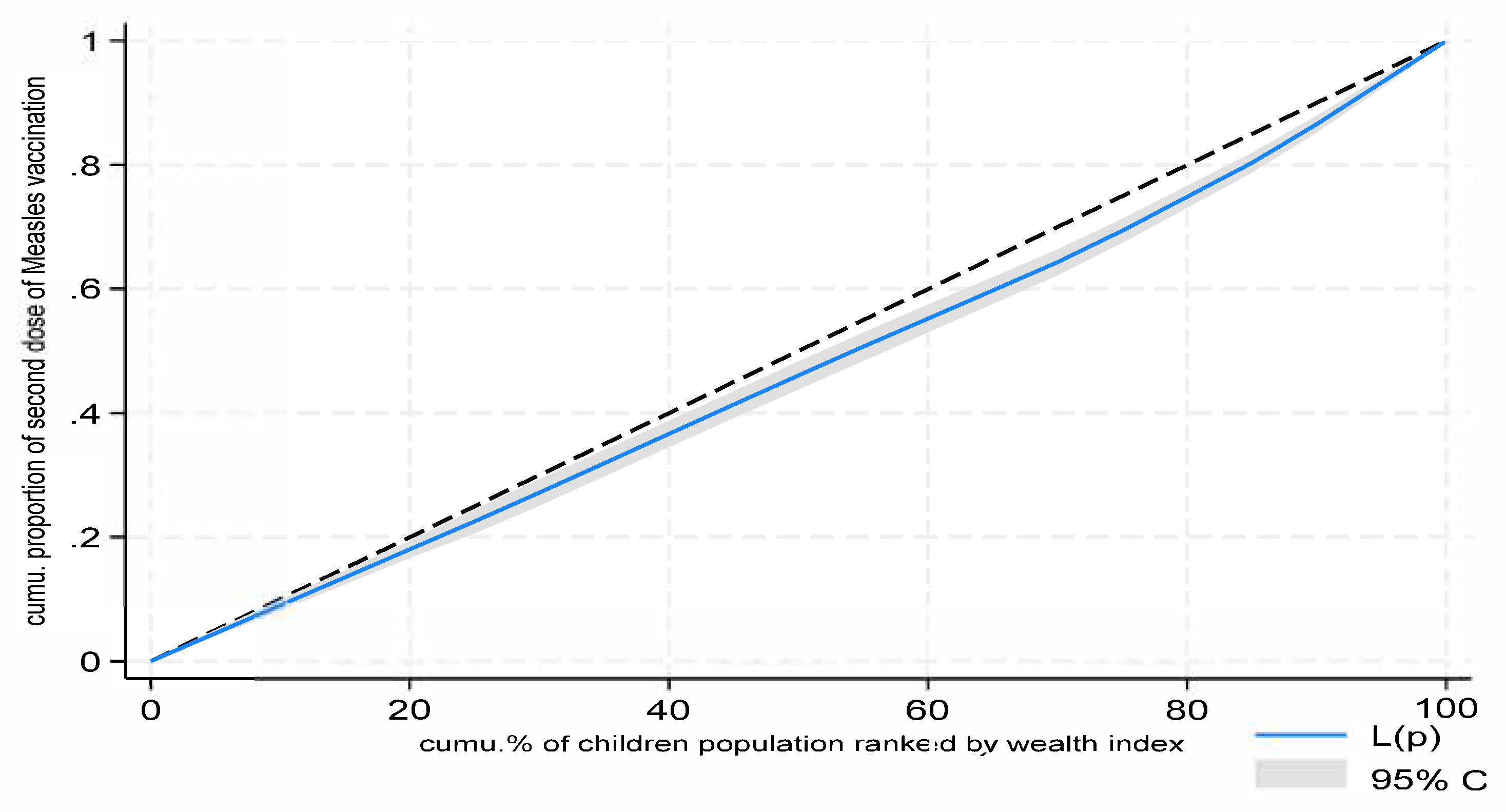
The concentration curve for two-dose measles vaccination coverage lies below the line of equality, and its positive concentration index (con-index: 0.16; 95% CI: 0.06–0.27; p = 0.0025) indicates that coverage is disproportionately concentrated among the wealthiest quintile (Figure 1).

4. Discussion

SDG 3.8 explicitly includes access to essential vaccines as part of universal health coverage by the end of 2030, and the WHO’s goal is to eliminate measles and rubella infection around the world. To reach this goal, it is recommended that all nations and regions reach above 95% coverage for both the first and second doses of measles vaccination to develop herd immunity [9]. However, Ethiopia has not yet achieved the expected coverage target [3]. Our findings revealed that the coverage of the second-dose measles vaccination was 60.48%, which is aligned with the last systematic review study done in Ethiopia [18]. This is also comparable with the WUENIC report’s estimate of MCV2 coverage (approximately 55–60% range) [19] but higher than that of other studies conducted in Ethiopia and East Africa [15]. The difference may be the data we consider in the national survey and the time of the study period. The bivariable and multivariable logistic regression model revealed notable inequalities in the uptake of the second-dose measles vaccine based on institutional delivery, maternal education, urban residence, region, and wealth status. Socioeconomic and geographic inequality are evident, with children from wealthier households, educated mothers, institutional delivery, and better-performing regions showing higher vaccination rates. The results showed that residence also had a borderline yet meaningful effect. Children residing in urban areas had higher vaccination coverage than those in rural settings. This finding is aligned with the last study done in Ethiopia, which reported that second-dose measles vaccination was associated with lower uptake among children living in rural areas [19,20,21].
The results showed that children born in health facilities had significantly higher odds of receiving the second measles vaccine dose than those delivered at home. Mothers who delivered in a health facility were more likely to have their children vaccinated. This may be because they received better access to immunization counseling and services from skilled birth attendants during early postnatal contact. This finding is aligned with the last study done in Ethiopia on mothers who delivered at a health facility and received antenatal care and postnatal follow-up, significant predictors for uptake of second-dose measles vaccination, and caregivers were more likely to vaccinate their children if they gave birth at a health facility [16]. Also, the result was similar to the last study done in Sub-Saharan Africa, where it was found that children delivered in health facilities were 2.24 times more likely to be vaccinated for MCV2 compared to those delivered at home [22]. A community-based matched case–control study done in Ethiopia also identified lack of PNC, poor maternal knowledge, lack of counseling, and long waiting times as important determinants of second-dose measles vaccination dropout [23]. The wealth status construction index showed disproportionate concentration among the wealthiest quintile inequality at the highest level of the socioeconomic gradient. Children from the higher income were more likely vaccinated than with the lowest income. This finding is aligned with the last study done in Ethiopia, where full vaccination coverage was lowest among the poorest quintile and highest in the wealthiest quintile. Children in the wealthiest quintile had six times the odds of full vaccination coverage compared with children in the poorest quintile [24].
Our findings of higher odds of MCV2 utilization among women aged 25–34 compared to younger mothers aligned with findings from the Ethiopian Demographic and Health Survey (EDHS)-based analyses, which show that younger and older mothers may tend to have lower health literacy, limited autonomy, and fewer interactions with health workers [25,26]. East African studies similarly report that adolescent and very young mothers are less likely to complete the full vaccination schedule due to social, economic, and informational barriers [27].
Mothers who received PNC were substantially more likely to ensure MCV2 completion, a finding that aligns with the last study done. It was identified that the absence of PNC follow-up is strongly associated with incomplete immunization and dropout between doses [26].
Our finding that vitamin A supplementation showed a strong association with MCV2 uptake highlights how synchronized child health services can help reduce inequities in access and completion. This finding is aligned with the last study published in Ethiopia revealed that children who receive vitamin A are significantly more likely to be fully immunized [28]. Studies from Tanzania similarly report that children who receive vitamin A are significantly more likely to be fully immunized, suggesting that vitamin A supplementation acts as a proxy indicator of consistent engagement with child preventive services [29]. This finding underscores the value of integrated service delivery models to reduce dropouts for second-dose measles vaccination.
The observed sex differential, with female children being more likely to receive MCV2, reflects a recurring pattern reported in Ethiopia. Although gender biases in healthcare access are often assumed to favor boys, several Ethiopian studies have shown slightly higher vaccination rates among girls for certain vaccines [30]. This may be related to local caregiving norms or random variation, and further qualitative research is needed to understand gendered differences in health-seeking behavior.
The study revealed that maternal education was an important source of inequality in MCV2 vaccination coverage. Evidence consistently shows that higher maternal educational attainment is associated with better childhood vaccination outcomes, as educated mothers are more likely to understand vaccination schedules, trust modern healthcare, and navigate health systems effectively. Studies in Ethiopia demonstrate that children of mothers with primary and higher education have significantly increased odds of completing childhood immunization compared to those whose mothers have no education, with the likelihood rising progressively with higher education levels [31]. This pattern has also been observed in broader equity analyses in Ethiopia, where maternal education was linked to higher rates of full vaccination coverage, and in other sub-Saharan African contexts, such as Kenya, where maternal education positively influences child immunization status, underscoring the far-reaching benefits of women’s education for immunization equity [32].
Interestingly, ANC visits, residence, maternal employment, and distance to health facilities were not significant predictors in the adjusted model.

Strength and Limitation

This study gathered nationally representative data from all regions and cities in Ethiopia, providing comprehensive insights into MCV2 coverage and inequalities. However, vaccination status was determined using vaccination cards when available and maternal recall otherwise, which may introduce differential misclassification, as recall accuracy varies with maternal education and socioeconomic status. Consequently, some observed associations between wealth, residence, or education and vaccination may be partially influenced by information bias.
Moreover, the cross-sectional design limits the ability to establish temporal or causal relationships. Therefore, the findings should be interpreted as associations rather than causal effects.

5. Conclusions and Recommendation

Overall, these findings highlight that improving MCV2 coverage and reducing inequities in Ethiopia require strengthening the continuum of maternal and child health services, promoting integrated care (including PNC, vitamin A supplementation, and routine immunization), and ensuring early and consistent contact with the health system. Addressing gaps in health education, supporting younger mothers, and expanding access to institutional delivery, PNC, and targeted outreach services are critical strategies for achieving equitable measles vaccination. Persistent inequalities by place of birth, household wealth, and region underscore the need for focused interventions to improve access and coverage. Strengthening equitable immunization services and targeted strategies remain essential to meet national and global measles elimination goals.

Author Contributions

S.A.B., conceptualization, writing—formal analysis, and drafting of the manuscript; S.A.B., A.Z., Y.A.B. and W.T., investigation; G.T. (Gemu Tiru) and A.M.G., supervision. All authors (S.A.B., A.Z., T.D., B.T., Y.A.B., T.K., G.T. (Gemu Tiru), T.G., D.A., H.A., W.T., M.S.Z., H.T., M.K., Y.L., G.T. (Getachew Tollera) and A.M.G.) reviewed and approved the manuscript. All authors have read and agreed to the published version of the manuscript.

Funding

This study received financial support from the Ministry of Health, Ethiopia. The funder had no involvement in the conception, study design, data collection, analysis, or in the decisions related to publication and data interpretation.

Institutional Review Board Statement

The study received approval from the scientific and ethical review board of the Ethiopian Public Health Institute, with reference number EPHI-6.13/906. The research methods adhered strictly to the principles outlined in the 1964 Helsinki Declaration and its subsequent amendments, along with other relevant ethical standards.

Informed Consent Statement

Written informed consent was obtained from all participants before data collection began. Throughout the study, confidentiality and privacy of all participants were diligently protected.

Data Availability Statement

The data presented in this study are available on reasonable request from the corresponding author due to ethical and confidentiality restrictions associated with the Institutional Review Board (IRB) approval and participant privacy requirements.

Acknowledgments

We extend our heartfelt gratitude to the Ethiopian Ministry of Health for their financial support.

Conflicts of Interest

The authors declare that they have no competing interests.

Abbreviations

DHS, Demographic and Health Survey; EPI, Expanded Program for Immunization; MoH, Ministry of Health; EDHS, Ethiopian Demographic and Health Survey; MCV2, two doses of the measles-containing vaccine; WUENIC, Estimates of National Immunization Coverage.

References

  1. WHO; UNICEF. Ethiopia: WHO and UNICEF Estimates of Immunization Coverage: 2022 Revision. 2023. Available online: https://data.unicef.org/wp-content/uploads/cp/immunisation/eth.pdf (accessed on 17 February 2026).
  2. Galles, N.C.; Liu, P.Y.; Updike, R.L.; Fullman, N.; Nguyen, J.; Rolfe, S.; Sbarra, A.N.; Schipp, M.F.; Marks, A.; Abady, G.G.; et al. Measuring routine childhood vaccination coverage in 204 countries and territories, 1980–2019: A systematic analysis for the Global Burden of Disease Study 2020, Release 1. Lancet 2021, 398, 503–521. [Google Scholar] [CrossRef] [Scilit]
  3. Alemu, T.G.; Tamir, T.T.; Workneh, B.S.; Mekonen, E.G.; Ali, M.S.; Zegeye, A.F.; Wassie, M.; Kassie, A.T.; Tekeba, B.; Gonete, A.T. Coverage and determinants of second-dose measles vaccination among under-five children in East Africa countries: A systematic review and meta-analysis. Front. Public Health 2024, 12, 1359572. [Google Scholar] [PubMed]
  4. Alemayehu, A.; Tefera, S. Vaccine: X Measles second dose vaccination coverage and associated factors in Ethiopia: A systematic review and meta-analysis. Vaccine X 2025, 25, 100675. [Google Scholar] [CrossRef] [Scilit]
  5. Eshetu, D.; Tosisa, W.; Regassa, B.T.; Hundie, G.B.; Mulu, A. Epidemiology of measles outbreaks, incidence and associated risk factors in Ethiopia from 2000 to 2023: A systematic review and meta-analysis. BMC Infect. Dis. 2024, 24, 914. [Google Scholar] [CrossRef] [Scilit] [PubMed]
  6. Munk, C.; Portnoy, A.; Suharlim, C.; Clarke-Deelder, E.; Brenzel, L.; Resch, S.C.; Menzies, N.A. Systematic review of the costs and effectiveness of interventions to increase infant vaccination coverage in low-and middle-income countries. BMC Health Serv. Res. 2019, 19, 741. [Google Scholar] [PubMed]
  7. WHO. Implementing the Immunization Agenda 2030; WHO: Geneva, Switzerland, 2021; pp. 1–32. [Google Scholar]
  8. WHO European Region. Measles: What You Need to Know; WHO European Region: Copenhagen, Denmark, 2023; pp. 2–3. [Google Scholar]
  9. Minta, A.A.; Ferrari, M.; Antoni, S.; Lambert, B.; Sayi, T.S.; Hsu, C.H. Progress Toward Measles Elimination—Worldwide, 2000–2023. MMWR Morb. Mortal. Wkly. Rep. 2024, 73, 1036–1042. [Google Scholar] [CrossRef] [Scilit] [PubMed]
  10. World Health Organization. Immunization Agenda 2030; WHO: Geneva, Switzerland, 2022; pp. 1–58. Available online: https://www.who.int/docs/default-source/immunization/strategy/ia2030/ia2030-document-en.pdf (accessed on 17 February 2026).
  11. MoH-Ethiopia. Immunization in Practice Participant Manual; MoH-Ethiopia: Addis Ababa, Ethiopia, 2023. [Google Scholar]
  12. EMoH. Catch-Up/BIG Catch-Up Vaccination Field Level Operational Guide. 2024. Available online: http://repository.iphce.org/bitstream/handle/123456789/2940/Catch_up_and_BIG_Catch-up_Operational_Guide%2C_MoH%2C_Eth%2C_May_2024%5B1%5D.pdf?sequence=1&isAllowed=y (accessed on 12 July 2025).
  13. Akalu, H.B. Review on Measles Situation in Ethiopia; Past and Present. J. Trop. Dis. 2015, 4, 2–7. [Google Scholar]
  14. Alemu, M.A.; Dema, S.T.; Anteneh, H.A.; Guade, H.T.; Gebrekidan, A.H.; Mersha, A.M.; Lakew, G.A.; Tufa, Y.A.; Shibeshi, E.Z.; Nibzane, G.T.; et al. Insights from a measles outbreak root cause analysis in Ethiopia—2024. Pan Afr. Med. J. 2025, 51, 8. [Google Scholar] [PubMed]
  15. Bobo, F.T.; Hayen, A. Decomposition of socioeconomic inequalities in child vaccination in Ethiopia: Results from the 2011 and 2016 demographic and health surveys. BMJ Open 2020, 10, e039617. [Google Scholar] [CrossRef] [Scilit] [PubMed]
  16. Ethiopian Statistical Service (ESS); ICF. Ethiopia Demographic and Health Survey 2024–25: Key Indicators Report; ESS: Addis Ababa, Ethiopia; ICF: Rockville, MD, USA, 2026. [Google Scholar]
  17. Tadesse, A.W.; Sahlu, D.; Benayew, M. Second-dose measles vaccination and associated factors among under-five children in urban areas of North Shoa Zone, Central Ethiopia, 2022. Front. Public Health 2022, 10, 1029740. [Google Scholar] [CrossRef] [Scilit] [PubMed]
  18. Ethiopian Public Health Institute (EPHI); ICF. Ethiopia Mini Demographic and Health Survey 2019: Final Report; EPHI: Addis Ababa, Ethiopia; ICF: Rockville, MD, USA, 2021. [Google Scholar]
  19. World Health Organization. Ethiopia: WHO and UNICEF Estimates of Immunization Coverage: 2023 Revision; WHO: Geneva, Switzerland, 2025; pp. 1–30. [Google Scholar]
  20. Shiferie, F.; Gebremedhin, S.; Andargie, G.; Tsegaye, D.A.; Alemayehu, W.A.; Fenta, T.G. Low Measles Vaccination Coverage and Spatial Analysis of High Measles Vaccination Dropout in Ethiopia ’ s Underprivileged Areas. Vaccines 2024, 12, 328. [Google Scholar] [CrossRef] [Scilit] [PubMed]
  21. Adisu, M.A.; Habtie, T.E.; Kitaw, T.A.; Zemariam, A.B. Uptake of the Second Dose of the Measles Vaccine and Its Determinants Among Children Aged Less than 5 Years: Systematic Review and Meta-Analysis. JMIR Public Health Surveill. 2025, 11, e77195. [Google Scholar] [CrossRef] [Scilit] [PubMed]
  22. Chilot, D.; Belay, D.G.; Shitu, K.; Gela, Y.Y.; Getnet, M.; Mulat, B.; Muluneh, A.G.; Merid, M.W.; Bitew, D.A.; Alem, A.Z. Measles second dose vaccine utilization and associated factors among children aged 24–35 months in Sub-Saharan Africa, a multi-level analysis from recent DHS surveys. BMC Public Health 2022, 22, 2070. [Google Scholar] [CrossRef] [Scilit] [PubMed]
  23. Adugna, B.; Tola, A.; Belete, M.; Motuma, A. Heliyon Determinants of second-dose measles vaccination dropout in Ethiopia: A community-based matched case-control study. Heliyon 2024, 10, e30764. [Google Scholar] [CrossRef] [Scilit] [PubMed]
  24. Geweniger, A.; Abbas, K.M. Childhood vaccination coverage and equity impact in Ethiopia by socioeconomic, geographic, maternal, and child characteristics. Vaccine 2020, 38, 3627–3638. [Google Scholar] [CrossRef] [Scilit] [PubMed]
  25. FMOH. Ethiopian Health Sector Transformation Plan-I: 2015/16-2019/20; Ethiopian Federal Ministry of Health: Addis Ababa, Ethiopia, 2015; Volume 20, p. 50.
  26. Mbengue, M.A.; Sarr, M.; Faye, A.; Badiane, O.; Camara, F.B.; Mboup, S.; Dieye, T.N. Determinants of complete immunization among senegalese children aged 12–23 months: Evidence from the demographic and health survey. BMC Public Health 2017, 17, 630. [Google Scholar] [CrossRef] [Scilit] [PubMed]
  27. Tesema, G.A.; Tessema, Z.T.; Tamirat, K.S.; Teshale, A.B. Complete basic childhood vaccination and associated factors among children aged 12–23 months in East Africa: A multilevel analysis of recent demographic and health surveys. BMC Public Health 2020, 20, 1837. [Google Scholar] [CrossRef] [Scilit] [PubMed]
  28. Yirdaw, B.W.; Moges, A.M.; Awoke, S.K.; Agmas, M.A.; Mekonen, A.Y.; Abebe, A.Y.; Gebiru, A.M.; Beyene, J.A.; Yimer, B.B. Vitamin A supplementation coverage and associated factors among Ethiopian children under five years: A systematic review and meta-analysis. BMC Pediatr. 2025, 25, 693. [Google Scholar] [CrossRef] [Scilit] [PubMed]
  29. Masanja, H.; Schellenberg, J.A.; Mshinda, H.M.; Shekar, M.; Mugyabuso, J.K.L.; Ndossi, G.D.; De Savigny, D. Vitamin A supplementation in Tanzania: The impact of a change in programmatic delivery strategy on coverage. BMC Health Serv. Res. 2006, 6, 142. [Google Scholar] [CrossRef] [Scilit] [PubMed]
  30. Lakew, Y.; Bekele, A.; Biadgilign, S. Factors influencing full immunization coverage among 12–23 months of age children in Ethiopia: Evidence from the national demographic and health survey in 2011. BMC Public Health 2015, 15, 728. [Google Scholar] [CrossRef] [Scilit] [PubMed]
  31. Gebreyesus, A.; Tesfay, K. Effect of maternal education on completing childhood vaccination in Ethiopia: Systematic review and meta-analysis. Sci. Rep. 2024, 29, 17453. [Google Scholar]
  32. Allan, S.; Adetifa, I.M.O. Inequities in childhood immunisation coverage associated with socioeconomic, geographic, maternal, child, and place of birth characteristics in Kenya. BMC Infect. Dis. 2021, 21, 553. [Google Scholar] [CrossRef] [Scilit] [PubMed]
Figure 1. Second-dose measles vaccination coverage concentration index by wealth quintile, NHES 2022/23, Ethiopia.
Rjpm 04 00005 g001
Table 1. Characteristics of second-dose measles vaccination from the National Health Equity Survey (2022/2023).
VariablesCategoriesTotal (%)No
Frequency (%)
Yes
Frequency (%)
Total second-dose measles vaccination24–35 months 833 (39.52)1154 (60.48)
Age of women15–24418 (21.06)182 (44.17)230 (55.83)
25–341010 (50.82)419 (39.75)635 (60.25)
35–49559 (28.12)232 (44.53)289 (55.47)
Number of ANC visitsANC < 4474 (42.01)196 (41.35)278 (58.64)
ANC ≥ 4663 (57.99)182 (27.45)481 (72.54)
Institutional deliveryNo843 (44.53)434 (57.63)319 (42.36)
Yes1050 (55.47)365 (32)775 (67.98)
PNC utilizationNo1303 (66.7)616 (47.28)687 (52.72)
Yes684 (33.21)217 (31.72)467 (68.27)
All basic vaccinationsNo911 (45.97)688 (75.52)223 (24.47)
Yes1076 (54.03)145 (13.47)931 (86.52)
DPT-HEP B-HIB 3No634 (27.63)515 (81.23)119 (18.79)
Yes1353 (72.37)318 (23.50)1035 (76.49)
ResidenceRural752 (26.6)572 (46.31)663 (53.68)
Urban1235 (73.4)261 (34.7)491 (65.29)
Mother’s employmentEmployee205 (6.94)54 (26.34)151 (73.66)
Farmers231 (16.14)119 (51.52)112 (48.48)
Homemaker1339 (68.94)567 (42.35)772 (57.65)
(Students’ daily laborer)212 (7.99)93 (43.87)119 (56.13)
RegionTigray223 (0.91)142 (63.68)81 (36.32)
Afar164 (1.16)126 (76.83)38 (23.17)
Amhara218 (29.06)71 (32.57)147 (67.43)
Oromia199 (38.37)89 (44.72)110 (55.28)
Somali139 (4.61)93 (66.91)46 (33.09)
Benishangul Gumuz99 (0.56)9 (9.09)90 (90.91)
SNNP165 (1.83)56 (33.94)109 (66.06)
Sidama186 (3.98)77 (41.40)109 (58.60)
SW-Ethiopia142 (3.92)34 (23.94)108 (76.06)
Gambela99 (0.36)30 (30.30)69 (69.70)
Hareri87 (0.2)48 (55.17)39 (44.83)
Addis Ababa50 (4.61)20 (13.33)130 (86.67)
Dire Dawa116 (0.41)38 (32.76)78 (67.24)
Wealth indexPoorest394 (27.99)189 (47.96)205 (52)
Poor402 (24.73)206 (52.24)196 (48.75)
Middle423 (19.75)196 (46.33)227 (53.66)
Rich386 (14.84)160 (41.45)226 (58.54)
Richest382 (12.7)82 (21.46)300 (78.53)
Community-based health insuranceNo1405 (48.31)620 (44.12)785 (55.87)
Yes582 (51.69)213 (36.59)369 (63.40)
Sex of childMale1710 (90.52)455 (44.34)571 (55.65)
Female276 (9.48)378 (39.33)583 (60.66)
Distance to health facility in minutes≤15535 (37.42)216 (40.37)319 (59.62)
16–30323 (18.89)111 (34.36)212 (65.63)
31–60280 (17.54)124 (44.28)156 (55.72)
Above 60min277 (26.16)144 (51.98)133 (48)
ReligionOrthodox830 (46.68)302 (36.38)528 (63.61)
Protestant459 (16.8)168 (36.60)291 (63.39)
Muslim678 (35.37)354 (52.21)324 (47.78)
Catholic20 (1.14)9 (45)11 (55)
Women’s education statusNo education888 (51.3)441 (49.66)447 (50.33)
Primary632 (30.65)263 (41.63)369 (58.38)
Secondary279 (11.09)88 (31.54)191 (68.45)
Higher188 (6.95)41 (21.80)147 (78.19)
Table 2. Multivariable logistic regression analysis of measles second-dose vaccination from the national health equity survey, Ethiopia (2022/2023).
Variable2nd Dose Measles VaccinationStd. ErrZp > |z|AOR [95% Conf. Int.]
Institutional deliveryYes0.542.020.043 *1.87 [1.01, 3.26]
Age of women25–340.5612.560.010 *2.03 (1.18, 3.48)
35–490.6551.670.0951.82 (0.90, 3.49)
Number of ANC visitsANC ≥ 40.3061.490.1371.39 (0.90, 2.14)
Postnatal careYes0.053.380.001 *0.06 (0.01, 0.31)
PENT 3Yes10.061.210.2276.50 (0.31, 135.00)
Oral polio vaccine 3Yes0.31.120.2620.23 (0.02, 3.04)
ResidenceRural (yes)0.6041.560.1181.72 (0.87, 3.42)
Mother’s employmentFarmers0.241.530.1250.38 (0.11, 1.30)
Homemaker0.3780.30.7640.87 (0.37, 2.04)
Students daily laborer0.5410.160.8731.08 (0.40, 2.88)
Wealth indexPoor0.30.510.6110.83 (0.41, 1.68)
Middle0.40.210.8371.09 (0.52, 2.23)
Rich0.6880.990.3241.55 (0.64, 3.69)
Richest1.0031.240.2151.91 (0.66, 5.34)
Community-based health insuranceYes0.2290.630.5311.50 (1.01, 2.24)
Sex of childFemale0.3071.990.047 *1.50 (1.01, 2.24)
Distance to health facility in minutes16–30 min0.2470.490.6240.87 (0.50, 1.52)
31–60 min0.2360.820.4110.78 (0.43, 1.41)
Above 60min0.4810.710.4771.30 (0.63, 2.69)
ReligionProtestant0.3280.440.6620.84 (0.39, 1.80)
Muslim0.3410.220.8250.92 (1.80, 1.90)
Catholic0.1111.750.0810.07 (0.04, 1.37)
Women’s education statusPrimary0.3480.920.3581.28 (0.75, 2.18)
Secondary0.4570.650.5171.26 (0.62, 2.53)
Higher1.4511.970.049 *2.78 (1.02, 7.73)
Vitamin A supplementationYes4.7369.960.000 *16.74 (9.61, 29.14)
* p < 0.05 or significant predictors.
Disclaimer/Publisher’s Note: The statements, opinions and data contained in all publications are solely those of the individual author(s) and contributor(s) and not of MDPI and/or the editor(s). MDPI and/or the editor(s) disclaim responsibility for any injury to people or property resulting from any ideas, methods, instructions or products referred to in the content.