


Abstract
Wildfires are an emerging socio-ecological disturbance in the United Kingdom. This study synthesised findings from the 2018 wildfire at The Roaches Nature Reserve, examining woodland responses, peatland conditions, and public perceptions about five years after the event. The results highlighted divergent tree species responses, persistent peat-soil changes despite the apparent vegetation recovery, and differences in perceived ecological and recreational recovery. Overall, this evidence revealed several ecological and social consequences of a single wildfire and the importance of considering complementary perspectives when assessing post-fire impacts and recovery, with potential implications for wildfire risk management.
1. Introduction
As wildfire behaviour shifts across regions worldwide, its ecological and societal consequences are becoming a major concern [1,2]. These include changes in vegetation and soil properties, thereby affecting the provision of ecosystem services on which people depend [2,3]. At rural–urban interfaces and in landscapes designated for conservation and recreation, these ecological effects also intersect with social dimensions, exposing people to risks and shaping public concerns [4,5].
The United Kingdom (UK) provides an important context for exploring this issue, as warming is expected to increase hazardous fire-weather patterns, whilst human activities continue to be the main sources of ignition [6]. Indeed, according to the European Forest Fire Information System (EFFIS) UK series, the last decade (2016–2025) exhibited approximately sixfold and elevenfold increases in mapped burnt area and in number of fires compared to 2006–2015 [7,8]. Hence, this combination makes it crucial to understand not only where fires occur, but also which socio-ecological consequences persist after them.
Post-fire recovery nevertheless depends on which ecosystem components and functions are considered. Fire can modify soil conditions [9], vegetation responses [10], and the processes supporting carbon storage, nutrient cycling and water regulation, with effects that vary according to the affected ecosystem and the fire characteristics [2,11]. Vegetation regrowth, for example, offers a different angle on fire-induced changes compared to the effects on soil properties. Visible improvement therefore does not necessarily imply the restoration of ecological processes and ecosystem functionality. Thus, analysing connected dimensions, such as the soil-vegetation system, provides a more comprehensive picture of post-fire circumstances [12].
In addition to their environmental impacts, wildfires can also affect the social and cultural significance associated with landscapes, mainly where conservation, recreation and local communities coexist, thereby influencing how these places are experienced, how risk is understood and what people expect from subsequent recovery [13]. Understanding these perspectives is relevant for assessing people’s relationships with landscapes and the values they attribute to them [13,14].
Notably, perceived recovery reflects lived experience and interpretation, whereas ecological assessments describe measured environmental indicators. The importance of connecting biophysical and social knowledge is broadly recognised in wider interdisciplinary wildfire research [15,16], thereby helping to identify priorities for monitoring and management activities [17,18]. This is of particular concern when a single disturbance event hits different ecosystem types and human uses within the same landscape.
In this context, the present study synthesised outcomes from the 2018 wildfire at The Roaches Nature Reserve (UK) [19,20,21,22]. By considering, collectively, woodland responses [19,20], peatland conditions [21] and public perceptions [22], this work reviewed what these different lines of evidence reveal about post-fire impacts and recovery, with potential implications for future monitoring, landscape management and public engagement.
2. Study Area and Synthesis Approach
2.1. Study Area and the 2018 Wildfire
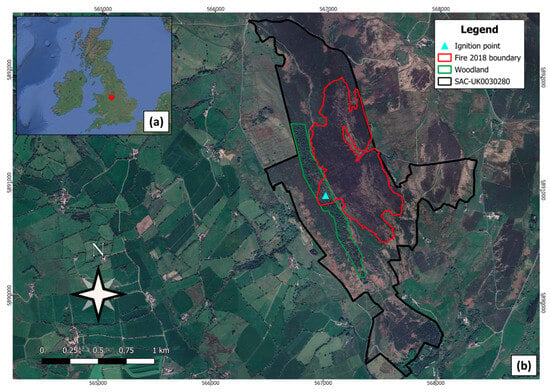
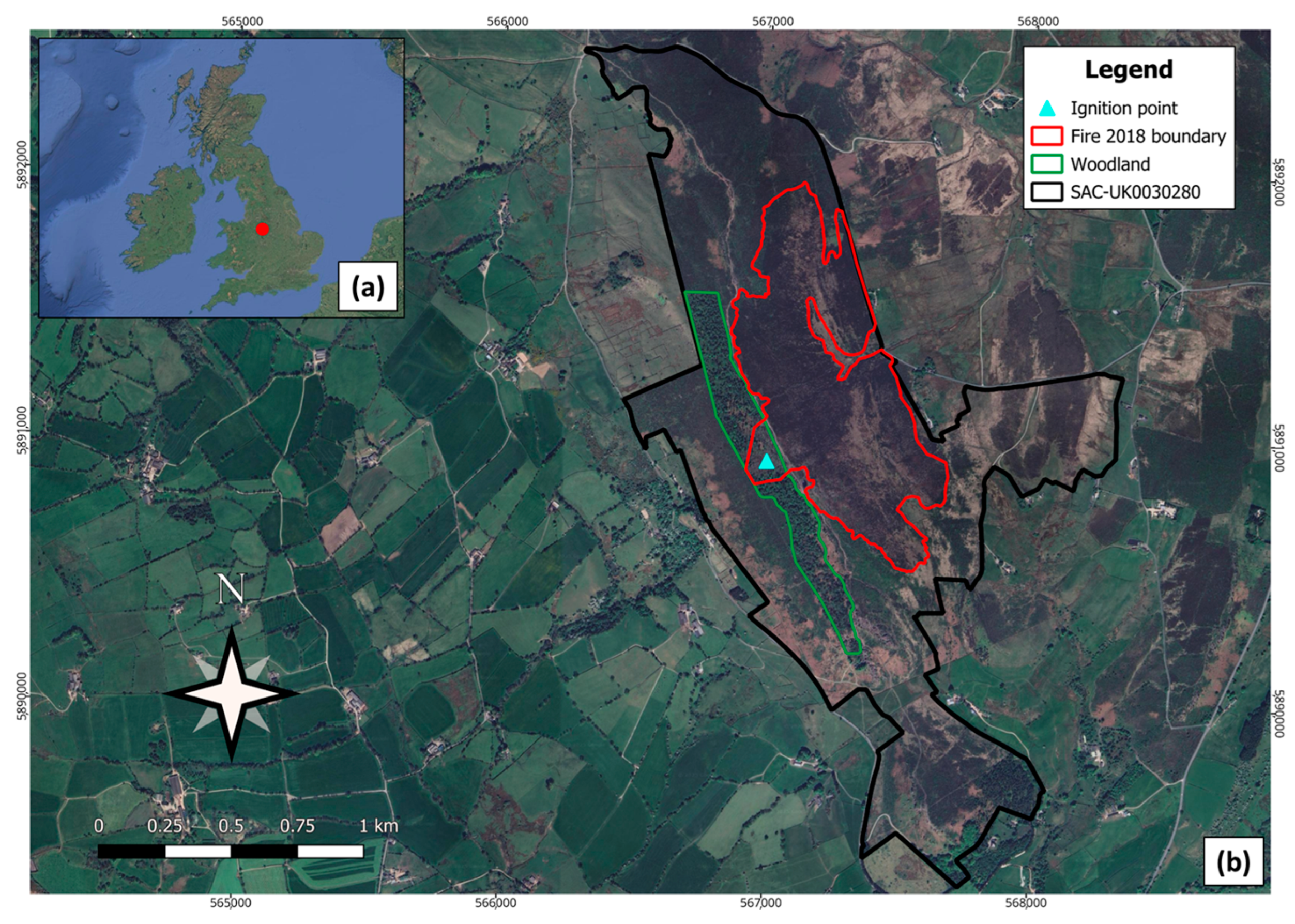
The Roaches Nature Reserve lies within the Peak District National Park in central England (UK) and is part of the Special Area of Conservation designated as UK0030280 [23,24] (Figure 1). Its landscape is dominated by a sandstone escarpment reaching 505 m above sea level, with woodland and open upland vegetation situated, respectively, on the two sides of the rocky ridge [24,25,26]. The woodland investigated is dominated by Scots pine (Pinus sylvestris L.) and European larch (Larix decidua Mill.), while the adjacent peatland is characterised by ericaceous shrubs and mosses. The reserve combines nature conservation with different human activities such as grazing, hiking and climbing. Managed by the Staffordshire Wildlife Trust since 2013, the landscape is subject to conservation practices, including path maintenance and drainage blocking [24]. In August 2018, a wildfire affected approximately 60 ha of woodland (~3 ha) and surrounding peatland (~57 ha) [27]. The fire originated from a campfire in the woodland and spread across the escarpment into the open upland vegetation, aided by strong winds [28,29].
Figure 1.
(a) Geographic location, highlighted by the red dot, and (b) environmental setting of The Roaches Nature Reserve, showing the spatial extent of the August 2018 wildfire.
2.2. Evidence Base and Synthesis Approach
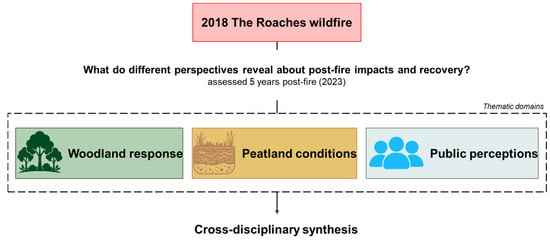
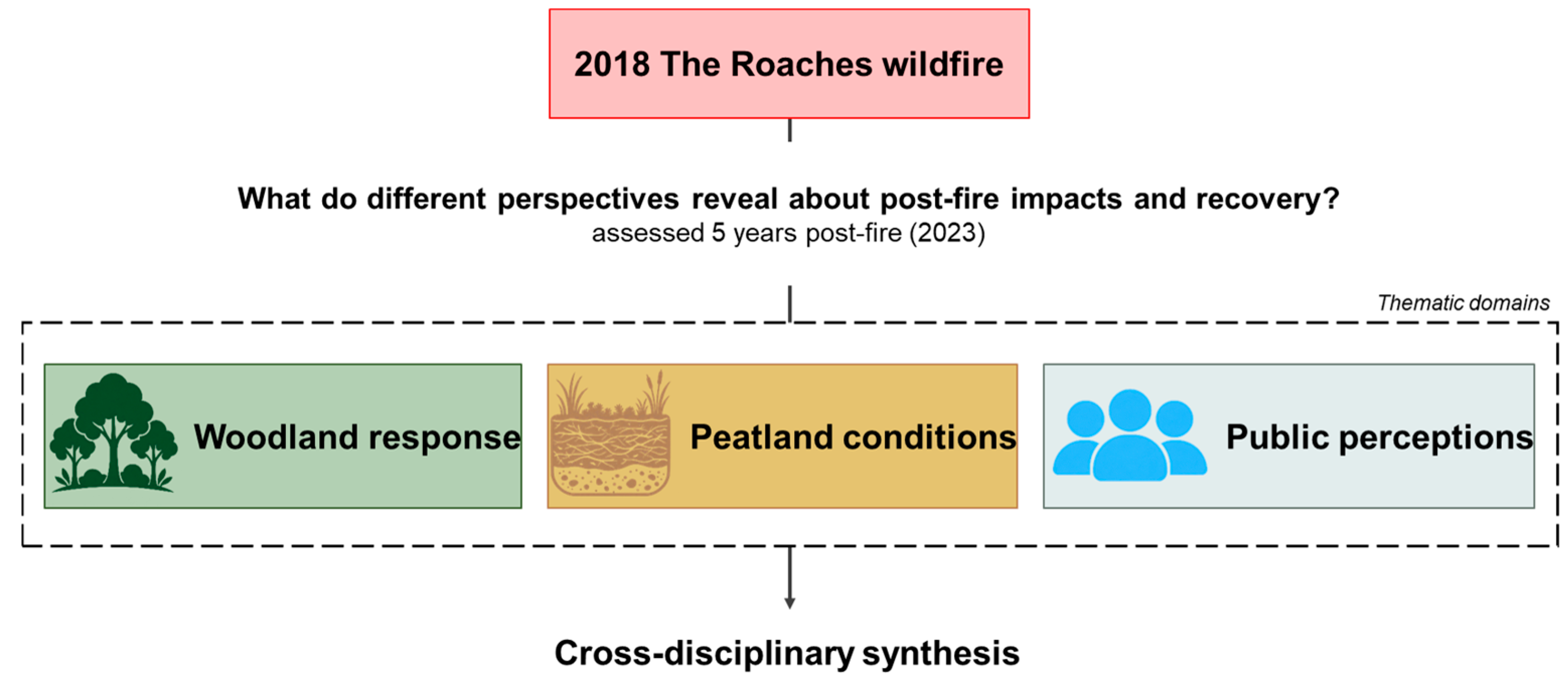
The evidence base comprised four studies examining complementary aspects of the same 2018 wildfire at The Roaches Nature Reserve, which were organised into three thematic domains: woodland responses [19,20], peatland conditions [21] and public perceptions [22] (Figure 2). These studies differ in their main focus, types of data and temporal coverage (Table 1); detailed methods are provided in the original publications. Briefly, peatland and woodland sampling campaigns were conducted in June and September 2023, respectively, whereas an online questionnaire was distributed between May and July 2023. The two woodland studies [19,20] were based on data from the same field campaign but addressed different research objectives, focusing respectively on tree post-fire responses and woodland carbon stocks.
Figure 2.
Conceptual design of the framework underpinning this synthesis, including context, research question, thematic domains, and output.
Table 1.
Overview of the four studies included in the synthesis, indicating their thematic domains, main research focus, evidence considered and temporal perspectives.
The synthesis adopted a qualitative and narrative approach [30], bringing together specific outcomes reported in the four studies to develop a cross-disciplinary interpretation of post-fire impacts and recovery [31]. Given the intrinsic differences in methods and temporal coverage, the findings were described within the respective study context and then collectively interpreted, without direct quantitative comparison across thematic domains.
3. Results and Discussion
3.1. Evidence of Differential Post-Fire Responses
Tree-ring analyses of P. sylvestris and L. decidua revealed several individuals exceeding 100 years of age and roughly similar growth trends before the 2018 wildfire [19]. Following the event, both species experienced a marked reduction in growth within the burned area, whereas control trees showed higher growth rates in subsequent years. Although immediate resistance indices did not differ significantly between species, their medium-term resilience and recovery diverged considerably. Indeed, surviving P. sylvestris trees exhibited partial growth recovery, whereas L. decidua underwent almost complete decline, with forest surveys reporting mortality rates of 39% and 97%, respectively [19]. These findings indicated that comparable initial resistance does not necessarily lead to a corresponding post-fire recovery. However, the near-total mortality of L. decidua cannot be attributed solely to fire, as an infestation of Phytophthora ramorum was subsequently detected by Forestry England [32] and may have contributed as an additional stressor. Accordingly, this interpretation is consistent with several studies on delayed tree mortality and the vulnerability of fire-affected trees to secondary disturbances [33,34].
These species-specific responses translated further into a major functional consequence. In particular, the estimated carbon stock in 2023 for the living aboveground biomass of P. sylvestris and L. decidua and shallow soil (0–5 cm) was approximately 109 Mg C ha−1 in the burned woodland, compared with 317 Mg C ha−1 in the unburned control, with a difference of around 208 Mg C ha−1 [20]. This difference was primarily linked to the lower living-tree biomass of L. decidua in the burned woodland, whereas shallow-soil carbon stocks did not differ significantly between burned and control areas [20]. These results highlighted the contribution of living-tree biomass to woodland carbon storage. Previous research has similarly emphasised the importance of distinguishing between distinct carbon pools when assessing forest carbon dynamics after a fire [35]. It is worth noting that these estimates do not represent total ecosystem carbon stocks and that the observed difference between burned and control areas in 2023 cannot be interpreted as the absolute carbon loss attributable to the wildfire. Although the difference in carbon stocks presented here does not quantify annual CO2 sequestration, the reduction in living-tree biomass in the burned woodland may have implications for future carbon sequestration capacity.
In the adjacent peatland, satellite-derived dNBR indicated high burn severity across much of the area affected by the 2018 wildfire [21]. Vegetation greenness, assessed through NDVI, declined sharply immediately after the fire but returned to approximately pre-fire levels starting from the first year following the event. In contrast, burned peat samples collected five years after the event still differed from control samples, showing significantly higher soil pH and up to approximately 70% lower soil organic carbon content [21]. This difference underscored the distinction between aboveground signals and belowground conditions. Moreover, the observed spatial heterogeneity of the soil properties [21] further highlighted the complexity of peat-fire impacts, potentially influenced by smouldering combustion and uneven subsurface heating [36,37].
Finally, the social investigation showed contrasting perceptions of post-fire recovery at The Roaches. Respondents generally perceived soil quality, biodiversity and landscape aesthetics as recovering more slowly than recreation, safety and health [22]. Although these assessments reflected perceived rather than directly measured recovery, they suggested that respondents associated ecological recovery with longer timescales, consistent with research on the social and experiential dimensions of post-wildfire landscape perceptions [38]. Regarding wildfire prevention, respondents identified visitors and the general public, alongside authorities and land managers, as sharing responsibility for wildfire safety [22]. Furthermore, answers also emphasised the need for clearer communication about fire risks and ongoing management activities, along with public education. These responses illustrated how respondents acknowledged both the consequences of the wildfire and their potential roles in preventing future events, consistent with research highlighting the educational potential of experiencing fire-affected landscapes [13].
3.2. Cross-Disciplinary Implications
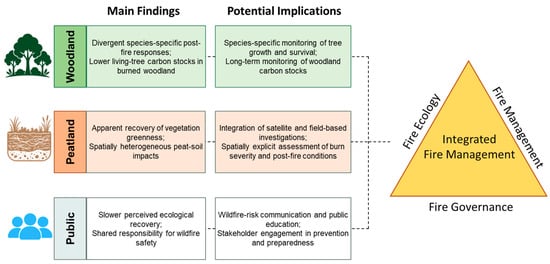
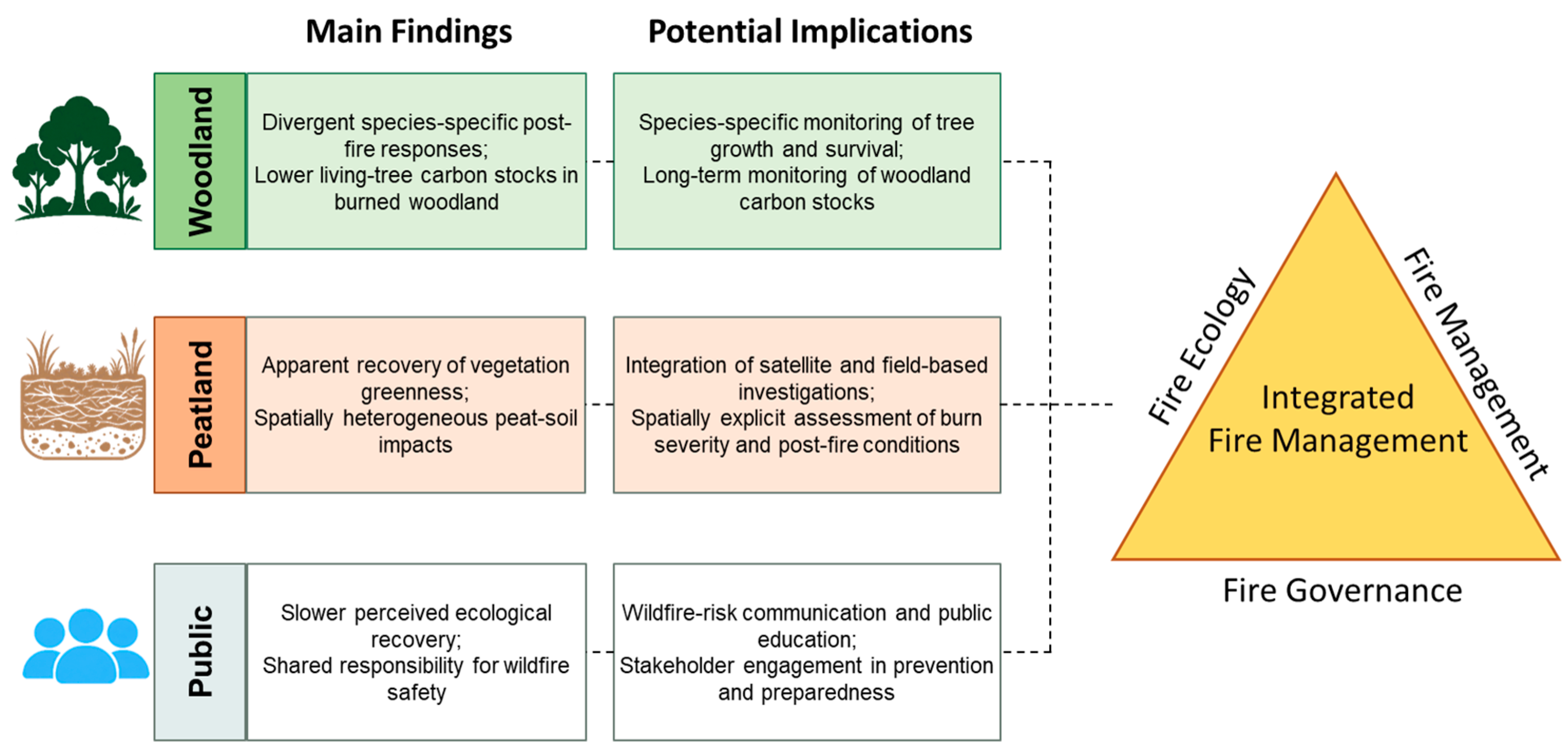
Overall, the three thematic domains captured distinct forms of divergence in post-fire change at The Roaches (Figure 3). In the woodland, broadly similar immediate resistance was followed by species-specific survival trajectories, alongside differences in carbon stock estimates between burned and control areas [19,20]. In the peatland, the apparent recovery of vegetation greenness contrasted with lasting alterations in soil properties [21]. Public perceptions contributed an additional dimension, showing how recovery was understood in relation to both ecological and human-related aspects [22]. Across these domains, the observations are complementary rather than directly comparable, reflecting differences in components, measures and perspectives on recovery. Therefore, no single indicator can adequately characterise the range of post-fire responses documented at the reserve.
Figure 3.
Synthesis of post-fire findings across woodland, peatland and public perceptions at The Roaches, highlighting their potential implications within the Integrated Fire Management (IFM) framework according to the European Forest Institute [39]. Dashed lines indicate conceptual connections rather than demonstrated management outcomes.
From a management perspective, the combined evidence supports continued monitoring that extends beyond visible vegetation recovery, including species-specific responses, carbon stocks and peat-soil conditions [19,20,21]. Such an approach is consistent with UK peatland conservation priorities emphasising coordinated monitoring and restoration [40]. Survey responses also suggest opportunities for clearer wildfire-risk communication, public education and preparedness [22], while communicating the ecosystem services provided by peatlands [41] could further support stakeholder engagement and locally relevant wildfire-prevention efforts [42,43]. This combination of ecological monitoring, risk prevention and public engagement (Figure 3) aligns with the principles of Integrated Fire Management (IFM), which promotes adaptive and context-specific approaches to wildfire management [44].
4. Conclusions
The synthesis of four studies at The Roaches revealed the multidimensional nature of post-fire impacts and recovery within this socio-ecological system. Woodland responses, peatland conditions, and public perceptions collectively illustrated the limitations of relying on a single perspective. Notably, the key messages of the synthesis are as follows:
- Distinct responses among tree species following the fire.
- Visible vegetation recovery in peatland areas does not necessarily indicate the recovery of underlying peat-soil conditions.
- Ecological measurements and public perceptions reveal different dimensions of post-fire recovery.
Although the diversity of the evidence base constrains quantitative comparisons across domains, the focus on a single wildfire also warrants caution when extending these findings to other contexts. Nevertheless, this cross-disciplinary approach may inform practical priorities at The Roaches, including species-specific monitoring of woodland recovery and carbon stocks, the integration of satellite observations with field-based assessments of peat-soil conditions, and targeted wildfire-risk communication and public engagement.
Author Contributions
Conceptualization, L.M. and F.N.; methodology, L.M. and F.N.; validation, D.S., F.A.R., G.B. and H.C.G.; formal analysis, L.M. and F.N.; investigation, L.M., F.N., D.S. and H.C.G.; resources, G.B. and H.C.G.; data curation, L.M. and F.N.; visualization, L.M., F.N. and R.M.; project administration, L.M. and F.N.; writing—original draft preparation, L.M.; writing—review and editing, F.N., R.M., D.S., F.A.R., G.B. and H.C.G. All authors have read and agreed to the published version of the manuscript.
Funding
This research received no external funding.
Institutional Review Board Statement
Not applicable.
Informed Consent Statement
Not applicable.
Data Availability Statement
No new datasets were generated for this synthesis. The data discussed are reported in the original publications [19,20,21,22].
Conflicts of Interest
The authors declare no conflicts of interest.
References
- Burton, C.; Di Giuseppe, F.; Jones, M.W.; Kelley, D.I.; Barbosa, M.L.F.; McNorton, J.; Potts, R.; Segura-Garcia, C.; Abatzoglou, J.T.; Alin Rosu, I.; et al. State of Wildfires 2025–2026. Earth Syst. Sci. Data Discuss. 2026, 18, 8037–8105. [Google Scholar] [CrossRef] [Scilit]
- Roces-Díaz, J.V.; Santín, C.; Martínez-Vilalta, J.; Doerr, S.H. A global synthesis of fire effects on ecosystem services of forests and woodlands. Front. Ecol. Environ. 2022, 20, 170–178. [Google Scholar] [CrossRef] [Scilit]
- Moghli, A.; Santana, V.M.; Baeza, M.J.; Pastor, E.; Soliveres, S. Fire Recurrence and Time Since Last Fire Interact to Determine the Supply of Multiple Ecosystem Services by Mediterranean Forests. Ecosystems 2022, 25, 1358–1370. [Google Scholar] [CrossRef] [Scilit]
- Smith, A.M.S.; Kolden, C.A.; Paveglio, T.B.; Cochrane, M.A.; Bowman, D.M.J.S.; Moritz, M.A.; Kliskey, A.D.; Alessa, L.; Hudak, A.T.; Hoffman, C.M.; et al. The Science of Firescapes: Achieving Fire-Resilient Communities. BioScience 2016, 66, 130–146. [Google Scholar] [CrossRef] [Scilit] [PubMed]
- Bento-Gonçalves, A.; Vieira, A. Wildfires in the wildland-urban interface: Key concepts and evaluation methodologies. Sci. Total Environ. 2020, 707, 135592. [Google Scholar] [CrossRef] [Scilit] [PubMed]
- Perry, M.C.; Vanvyve, E.; Betts, R.A.; Palin, E.J. Past and future trends in fire weather for the UK. Nat. Hazards Earth Syst. Sci. 2022, 22, 559–575. [Google Scholar] [CrossRef] [Scilit]
- European Commission, Joint Research Centre. EFFIS Statistics: United Kingdom—Burnt Areas and Number of Fires. Available online: https://forest-fire.emergency.copernicus.eu/apps/effis.statistics/estimates/GBR (accessed on 10 October 2026).
- European Commission, Joint Research Centre. EFFIS Rapid Damage Assessment. Available online: https://forest-fire.emergency.copernicus.eu/about-effis/technical-background/rapid-damage-assessment (accessed on 10 October 2026).
- Agbeshie, A.A.; Abugre, S.; Atta-Darkwa, T.; Awuah, R. A review of the effects of forest fire on soil properties. J. For. Res. 2022, 33, 1419–1441. [Google Scholar] [CrossRef] [Scilit]
- Niccoli, F.; Pacheco-Solana, A.; Delzon, S.; Kabala, J.P.; Asgharinia, S.; Castaldi, S.; Valentini, R.; Battipaglia, G. Effects of wildfire on growth, transpiration and hydraulic properties of Pinus pinaster Aiton forest. Dendrochronologia 2023, 79, 126086. [Google Scholar] [CrossRef] [Scilit]
- Pausas, J.G.; Keeley, J.E. Wildfires as an ecosystem service. Front. Ecol. Environ. 2019, 17, 289–295. [Google Scholar] [CrossRef] [Scilit]
- Fernández-García, V.; Marcos, E.; Huerta, S.; Calvo, L. Soil-vegetation relationships in Mediterranean forests after fire. For. Ecosyst. 2021, 8, 18. [Google Scholar] [CrossRef] [Scilit]
- Weill, A.M.; Watson, L.M.; Latimer, A.M. Walking through a ‘phoenix landscape’: Hiker surveys reveal nuanced perceptions of wildfire effects. Int. J. Wildland Fire 2020, 29, 561–571. [Google Scholar] [CrossRef] [Scilit]
- Lees, K.J.; Carmenta, R.; Condliffe, I.; Gray, A.; Marquis, L.; Lenton, T.M. Protecting peatlands requires understanding stakeholder perceptions and relational values: A case study of peatlands in the Yorkshire Dales. Ambio 2023, 52, 1282–1296. [Google Scholar] [CrossRef] [Scilit] [PubMed]
- Thomas, A.S.; Escobedo, F.J.; Sloggy, M.R.; Sánchez, J.J. A burning issue: Reviewing the socio-demographic and environmental justice aspects of the wildfire literature. PLoS ONE 2022, 17, e0271019. [Google Scholar] [CrossRef] [Scilit] [PubMed]
- Paveglio, T.B.; Schmidt, A.; Medley-Daniel, M. The Fire Adapted Communities Pathways Tool: Facilitating Social Learning and a Science of Practice. J. For. 2024, 122, 194–205. [Google Scholar] [CrossRef] [Scilit]
- Held, A.; Rodríguez Fernández-Blanco, C.; Martinez de Arano, I.; Pronto, L.; Pülzl, H.; Abruscato, S.; Lindner, M. Integrated Fire Management—Empowering Action for a Fire-Resilient Europe; EFI Policy Brief No. 19; European Forest Institute: Joensuu, Finland, 2026. [Google Scholar] [CrossRef] [Scilit]
- Rego, F.M.C.C.; Moreno Rodríguez, J.M.; Vallejo Calzada, V.R.; Xanthopoulos, G. Forest Fires: Sparking Firesmart Policies in the EU; European Commission, Directorate-General for Research and Innovation; Publications Office of the European Union: Luxembourg, 2018. [Google Scholar] [CrossRef] [PubMed]
- Niccoli, F.; Marfella, L.; Kabala, J.P.; Rowe, J.; Marzaioli, R.; Rutigliano, F.A.; Glanville, H.C.; Battipaglia, G. Different responses of Pinus sylvestris L. and Larix decidua Mill. to forest fire in Central England (UK). Agric. For. Meteorol. 2025, 374, 110804. [Google Scholar] [CrossRef] [Scilit]
- Niccoli, F.; Marfella, L.; Glanville, H.C.; Rutigliano, F.A.; Battipaglia, G. Post-Fire Carbon Dynamics in a UK Woodland: A Case Study from the Roaches Nature Reserve. Forests 2025, 16, 1547. [Google Scholar] [CrossRef] [Scilit]
- Marfella, L.; Ashby, M.A.; Hennessy, G.; Rowe, J.; Marzaioli, R.; Rutigliano, F.A.; Glanville, H.C. Mid-term (5 years) impacts of wildfire on soil chemical and biological properties in a UK peatland. Appl. Soil Ecol. 2025, 207, 105953. [Google Scholar] [CrossRef] [Scilit]
- Marfella, L.; Glanville, H.C.; Niccoli, F.; Wilby, R.L.; Smith, D. Public Perceptions of Wildfire Risk in the UK: A Study of Roaches Nature Reserve in the Peak District. Land 2026, 15, 944. [Google Scholar] [CrossRef] [Scilit]
- Joint Nature Conservation Committee. South Pennine Moors. Available online: https://sac.jncc.gov.uk/site/UK0030280 (accessed on 21 October 2026).
- Staffordshire Wildlife Trust. The Roaches. Available online: https://www.staffs-wildlife.org.uk/nature-reserves/roaches (accessed on 21 October 2026).
- Aitkenhead, N.; Chisholm, J.I.; Stevenson, I.P. Geology of the Country around Buxton, Leek and Bakewell; Memoir for 1:50,000 Geological Sheet 111 (England and Wales); Her Majesty’s Stationery Office: London, UK, 1985. [Google Scholar]
- Morton, R.D.; Marston, C.G.; O’Neil, A.W.; Rowland, C.S. Land Cover Map 2020 (25m Rasterised Land Parcels, GB); NERC Environmental Information Data Centre: Oxfordshire, UK, 2021. [Google Scholar] [CrossRef]
- Staffordshire Wildlife Trust. Roaches Recovery Continues. 14 July 2020. Available online: https://www.staffs-wildlife.org.uk/news/roaches-recovery-continues (accessed on 21 October 2026).
- Titterton, P.; Crouch, T.; Pilkington, M. A Case Study into the Estimated Amount of Carbon Released as a Result of the Wildfire That Occurred on the Roaches in August 2018; Moors for the Future Partnership: Edale, UK, 2019; Available online: https://www.moorsforthefuture.org.uk/__data/assets/pdf_file/0014/90104/MoorLIFE-2020-A-report-into-the-estimated-amount-of-carbon-released-from-the-wildfire-on-The-Roaches-in-August-2018.pdf (accessed on 21 October 2026).
- ITV News. Camp Fire Caused Huge Roaches Fire in Peak District. 17 August 2018. Available online: https://www.itv.com/news/central/2018-08-17/cause-of-huge-roaches-fire-in-peak-district-revealed (accessed on 21 October 2026).
- Sukhera, J. Narrative Reviews: Flexible, Rigorous, and Practical. J. Grad. Med. Educ. 2022, 14, 414–417. [Google Scholar] [CrossRef] [Scilit] [PubMed]
- Kinoshita, A.M.; Chin, A.; Simon, G.L.; Briles, C.; Hogue, T.S.; O’Dowd, A.P.; Gerlak, A.K.; Albornoz, A.U. Wildfire, water, and society: Toward integrative research in the “Anthropocene”. Anthropocene 2016, 16, 16–27. [Google Scholar] [CrossRef] [Scilit]
- Staffordshire Wildlife Trust. Diseased Larch Tree Felling at Moorlands Beauty Spot. 22 January 2024. Available online: https://www.staffs-wildlife.org.uk/news/diseased-larch-tree-felling-moorlands-beauty-spot (accessed on 23 October 2026).
- Hood, S.M.; Varner, J.M.; van Mantgem, P.; Cansler, C.A. Fire and tree death: Understanding and improving modeling of fire-induced tree mortality. Environ. Res. Lett. 2018, 13, 113004. [Google Scholar] [CrossRef] [Scilit]
- Brasier, C.; Webber, J. Sudden larch death. Nature 2010, 466, 824–825. [Google Scholar] [CrossRef] [Scilit] [PubMed]
- Powers, E.M.; Marshall, J.D.; Zhang, J.; Wei, L. Post-fire management regimes affect carbon sequestration and storage in a Sierra Nevada mixed conifer forest. For. Ecol. Manag. 2013, 291, 268–277. [Google Scholar] [CrossRef] [Scilit]
- Rein, G.; Garcia, J.; Simeoni, A.; Tihay, V.; Ferrat, L. Smouldering natural fires: Comparison of burning dynamics in boreal peat and Mediterranean humus. WIT Trans. Ecol. Environ. 2008, 119, 183–192. [Google Scholar] [CrossRef] [Scilit]
- Turetsky, M.R.; Benscoter, B.; Page, S.; Rein, G.; van der Werf, G.R.; Watts, A. Global vulnerability of peatlands to fire and carbon loss. Nat. Geosci. 2015, 8, 11–14. [Google Scholar] [CrossRef] [Scilit]
- Kooistra, C.; Hall, T.E.; Paveglio, T.; Pickering, M. Understanding the factors that influence perceptions of post-wildfire landscape recovery across 25 wildfires in the Northwestern United States. Environ. Manag. 2018, 61, 85–102. [Google Scholar] [CrossRef] [Scilit] [PubMed]
- European Forest Institute. What Is Integrated Fire Management? 2026. Available online: https://efi.int/sites/default/files/2026-07/efi_what_is_integrated-fire-management_2025.pdf (accessed on 24 October 2026).
- IUCN UK Peatland Programme. UK Peatland Strategy 2018–2040; IUCN UK Peatland Programme: Nottinghamshire, UK, 2018; Available online: https://portals.iucn.org/library/node/47692 (accessed on 23 October 2026).
- Wichmann, S.; Brander, L.; Schäfer, A.; Schaafsma, M.; van Beukering, P.; Tinch, D.; Bonn, A. Valuing peatland ecosystem services. In Peatland Restoration and Ecosystem Services: Science, Policy and Practice; Bonn, A., Allott, T., Evans, M., Joosten, H., Stoneman, R., Eds.; Cambridge University Press: Cambridge, UK, 2016; pp. 314–338. [Google Scholar] [CrossRef] [Scilit]
- Hesseln, H. Wildland fire prevention: A review. Curr. For. Rep. 2018, 4, 178–190. [Google Scholar] [CrossRef] [Scilit]
- Soares, F.; Schmidt, L.; Delicado, A. Adapting whilst recovering: Local responses to the 2017 wildfires in Portugal. Int. J. Disaster Risk Reduct. 2025, 124, 105536. [Google Scholar] [CrossRef] [Scilit]
- Food and Agriculture Organization of the United Nations. Integrated Fire Management Voluntary Guidelines: Principles and Strategic Actions, 2nd ed.; Forestry Working Paper No. 41; FAO: Rome, Italy, 2024. [Google Scholar] [CrossRef] [Scilit]

Disclaimer/Publisher’s Note: The statements, opinions and data contained in all publications are solely those of the individual author(s) and contributor(s) and not of MDPI and/or the editor(s). MDPI and/or the editor(s) disclaim responsibility for any injury to people or property resulting from any ideas, methods, instructions or products referred to in the content. |
© 2026 by the authors. Licensee MDPI, Basel, Switzerland. This article is an open access article distributed under the terms and conditions of the Creative Commons Attribution (CC BY) license.