


Abstract
Companion animals have increasingly become central to human emotional life, yet the literature linking living with companion animals, human–animal interaction, and mental health remains fragmented. This study mapped global research trends on companion animals and mental health from 2000 to 2024 using bibliographic records retrieved from the Web of Science Core Collection (WoSCC). A final dataset of 930 peer-reviewed articles was analyzed with Bibliometrix (RStudio), CiteSpace, and VOSviewer to characterize publication growth, national and institutional collaboration, influential authors and journals, co-cited references, keyword clusters, and citation bursts. Results show a strong nonlinear increase in output after 2015, with the United States as the dominant contributor and Australia and the WoSCC country node labelled England (distinct from Scotland) as important international bridges. Core knowledge clusters center on human–animal interaction, animal-assisted intervention, older adults, child/adolescent development, loneliness, attachment, and post-traumatic stress. Recent burst terms and references indicate a shift from general companion-animal caregiving and physiological stress buffering toward intervention design, vulnerable populations, and pandemic-era mental health. Overall, the field has matured into an interdisciplinary research area with growing methodological sophistication, but future work should strengthen cross-cultural evidence, longitudinal designs, standardized outcome measures, and explicit assessment of animal welfare.
1. Introduction
Companion animals, particularly dogs and cats, have become deeply embedded in households worldwide, reflecting a substantial reconfiguration of the cultural, relational, and affective roles assigned to non-human species. In many societies, companion animals are no longer understood merely as property or recreational companions but as family members and emotionally significant relational partners [1,2]. This transformation is linked to broader demographic and social changes, including shrinking household size, urbanization, delayed family formation, and changing expectations of intimacy and support. In the United States, living with companion animals is widespread, and recent survey evidence indicates that most caregivers regard their animals as family members [3,4]. Comparable patterns across Europe, Asia, and South America suggest a broader global shift toward the emotional centrality and anthropomorphic interpretation of companion animals [5]. Recent conceptual work extends this account by linking the growing social salience of companion dogs to shrinking kin networks, unmet support needs, cultural change, and the transfer of caregiving dispositions toward animals; these propositions remain hypotheses requiring cross-cultural and longitudinal testing [6].
Parallel empirical literature has examined whether and how companion animals contribute to human well-being. Large-scale surveys and longitudinal studies associate living with companion animals with higher life satisfaction, lower depression and anxiety, and greater positive affect [7,8,9]. Clinical and qualitative studies further suggest that companion animals can buffer stress and support emotional stability among individuals experiencing anxiety, post-traumatic stress, mood disorders, or social isolation. These effects are plausibly mediated through both biological and psychosocial pathways. Human–animal interaction (HAI) has been associated with changes in oxytocin, cortisol, beta-endorphin, prolactin, dopamine, and autonomic or neural processes involved in stress and affective regulation [10,11,12,13]. Early work reported mutual neurochemical changes during affiliative human–dog contact [11], later research identified an interspecies oxytocin-gaze feedback loop [12], and reviews emphasize context-dependent and method-sensitive oxytocin effects rather than a uniformly beneficial endocrine response [13]. Psychosocially, companion animals may provide nonjudgmental support, structure everyday routines, facilitate social engagement, and satisfy core needs for relatedness and competence [14,15]. Together, these mechanisms support a biopsychosocial account in which companion animals may contribute to resilience, stress regulation, and social integration; however, short-term biomarker changes should not be treated as proof of sustained mental-health benefit.
Nevertheless, the literature remains mixed and fragmented. While some studies highlight strong benefits, others report null or even adverse effects—particularly under conditions of insecure pet attachment, caregiving burden, or socioeconomic strain [16,17]. Methodological limitations—including small sample sizes, lack of randomization, reliance on self-report, and cross-sectional designs—limit the generalizability and causal interpretation of findings [18]. Furthermore, research is geographically concentrated in high-income Western countries, with limited data from Asia, Africa, or Latin America. Despite the exponential growth of literature in recent years, few efforts have systematically synthesized this complex and interdisciplinary field. Bibliometric analysis offers a powerful tool to address this gap. By mapping citation patterns, keyword clusters, and collaboration networks, bibliometrics can reveal intellectual structures, research hotspots, and emerging trends. While prior bibliometric studies have examined animal-assisted interventions broadly [19], no comprehensive analysis has focused specifically on the intersection of companion animals and mental health.
To address this gap, the present study provides a global bibliometric analysis of research on companion animals and mental health from 2000 to 2024. Using data from the Web of Science Core Collection and three complementary scientometric platforms—CiteSpace, VOSviewer, and Bibliometrix—we examine publication trajectories, influential journals, author and institutional networks, keyword clusters, and citation bursts. The objectives are to synthesize the field’s knowledge structure, identify conceptual gaps and underdeveloped subfields, and clarify strategic directions for future research and application. In doing so, this study offers a data-driven foundation for advancing research on human–animal bonds within global mental health science.
2. Materials and Methods
2.1. Search Strategy
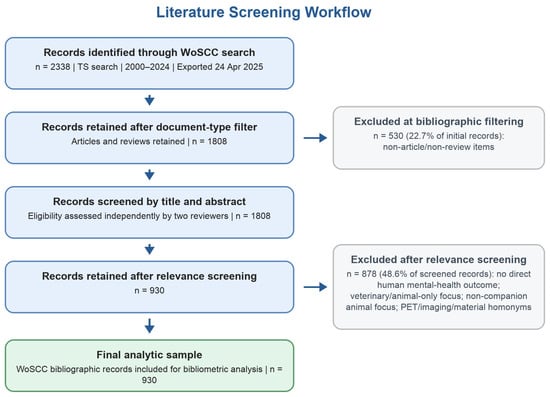
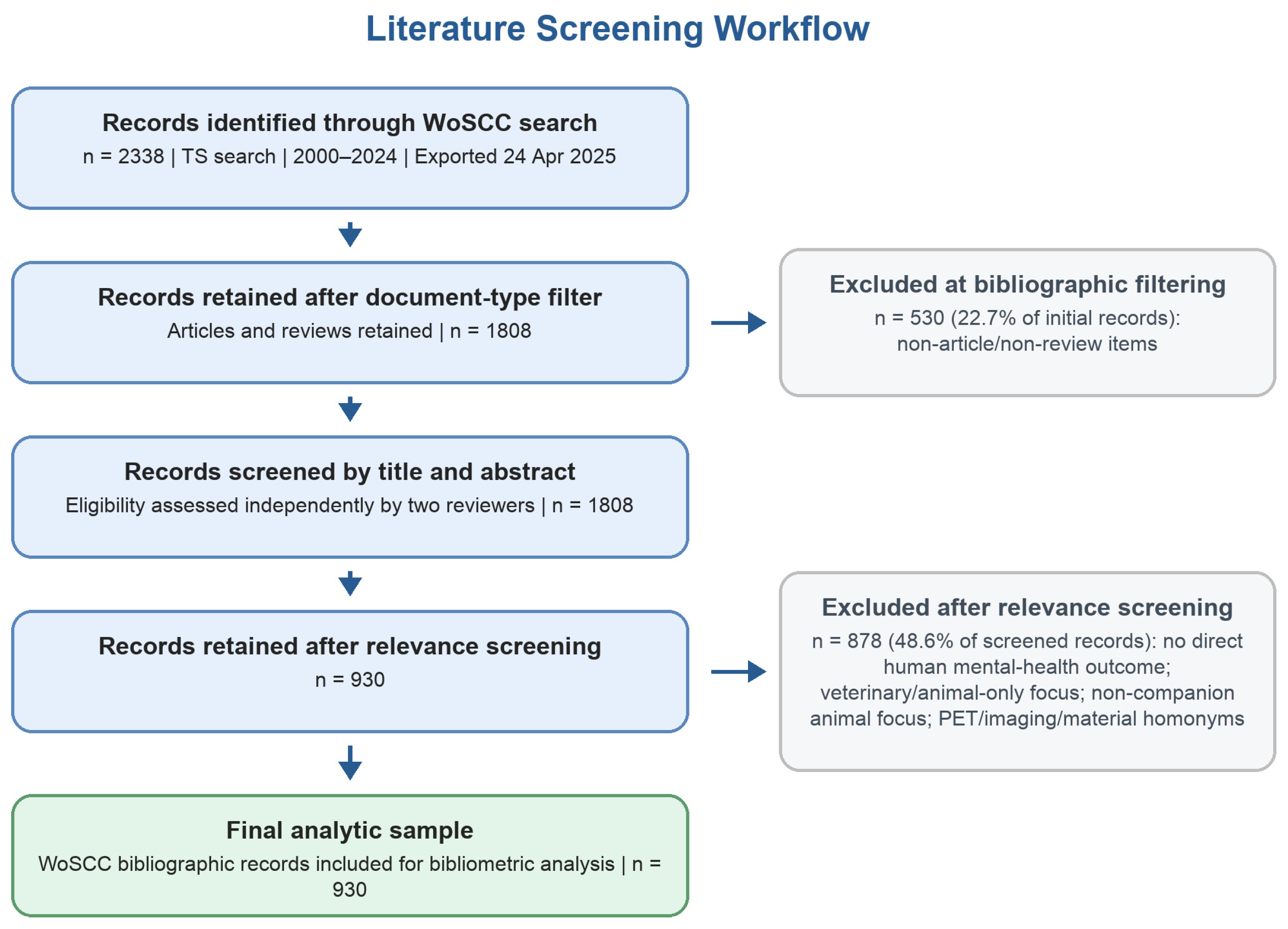
To obtain a comprehensive and conceptually coherent overview of the research landscape on companion animals and mental health, we searched the Web of Science Core Collection (WoSCC) for records published between 1 January 2000 and 31 December 2024; the final dataset was downloaded on 24 April 2025. The year 2000 was selected as the starting point to capture the contemporary phase of human–animal interaction and mental-health research while maintaining a stable twenty-five-year observation window; preliminary scoping also indicated that eligible records before 2000 were sparse and less consistently indexed under the combined companion-animal and mental-health terminology. The search strategy was organized around two conceptual dimensions: companion animal constructs and mental health outcomes. The companion-animal dimension included terms for domestic animals and intervention modalities, including therapy dogs, service animals, and virtual pets. The mental-health dimension covered psychological and clinical constructs such as stress, anxiety, resilience, depression, and quality of life. To improve semantic coverage, core terms were expanded with domain-relevant synonyms derived from human–animal interaction research, stress and coping theory, and well-being studies [20,21,22,23]. Exclusion terms were applied to remove irrelevant records related to medical imaging (e.g., positron emission tomography (PET) and magnetic resonance imaging (MRI), including functional MRI (fMRI)), materials science (e.g., polyethylene terephthalate), and veterinary behavioral research outside the mental-health focus. The full WoSCC query syntax, including all Topic Search terms, Boolean operators, exclusion terms, timespan limits, and document-type filters, is provided in Supplementary File S1 to strengthen reproducibility beyond the summarized keyword matrix shown in Table 1. The initial search yielded 2338 records; after limiting the dataset to peer-reviewed articles and reviews, 1808 publications remained. This bibliographic filtering stage therefore excluded 530 records (22.7% of the initial retrieval), primarily non-article/non-review publication types. Titles and abstracts were independently screened by two reviewers (JL and ZD), with disagreements resolved through discussion or consultation with a third author. At this relevance-screening stage, 878 records (48.6% of the 1808 screened records) were excluded because they did not directly address human mental-health or well-being outcomes, focused solely on veterinary or animal-only outcomes, concerned non-companion animals, or reflected homonymous uses of terms such as PET in medical imaging or materials science. The final analytic sample comprised 930 articles. The selection workflow is illustrated in Figure 1. To respect the sentience of companion animals while preserving analytic reproducibility, the narrative uses “caregiver,” “human companion,” or “living with companion animals” where possible. The terms “owner” and “ownership” are retained only when they occur verbatim in WoSCC metadata, published titles, search terms, or algorithmically generated keyword and cluster labels.
Table 1.
Keyword structure matrix used to guide the literature search strategy.
Figure 1.
Flow chart of the literature screening process, including document-type filtering and title/abstract relevance screening. Abbreviations: WoSCC, Web of Science Core Collection; TS, Topic Search; PET, positron emission tomography.
2.2. Statistical Analysis
Bibliometric data from WoSCC were analyzed using Bibliometrix (version 4.3.0) in RStudio (version 2024.09.0), CiteSpace (version 6.4.R1), and VOSviewer (version 1.6.20). Bibliometrix was selected for its script-based, reproducible R workflow; Biblioshiny is the graphical web interface of the same R package and was therefore not treated as a separate analytical engine. Bibliometrix was used to calculate descriptive indicators, annual publication trends, source productivity, global collaboration patterns, and term-frequency treemaps. CiteSpace was used to detect citation bursts, generate keyword clusters and timeline visualizations, and compute centrality metrics for countries, institutions, and authors. VOSviewer was used to construct co-authorship, institutional, country, and keyword co-occurrence networks; node size represented publication or citation volume, whereas link strength represented the intensity of association between nodes. Combining these platforms enabled a cross-validated mapping of both the structural and temporal evolution of companion animal and mental health research. This division of labor allowed descriptive performance indicators, temporal burst dynamics, and network-topological patterns to be interpreted together rather than as isolated software outputs. This multimethod design follows established science-mapping principles by triangulating performance indicators, relational structures, and temporal patterns [24,25]. For display legibility, the visualized networks included countries with more than three publications, institutions with at least five publications, authors with more than three publications, and journals meeting the stated publication threshold; ranking tables were limited to the top ten. Consequently, absence from a thresholded map or table does not imply absence from the 930-record corpus, and the full records were audited when interpreting specific missing names. Geographic coding preserved the constituent-country labels supplied by WoSCC and the software: England and Scotland were analyzed as separate nodes, “England” was not used as a synonym for the United Kingdom, and University of Edinburgh affiliations were assigned to Scotland. Institutional aggregation used organization-enhanced affiliation fields, which can consolidate specialized centers under their parent universities.
3. Results
3.1. Analysis of Publication Quantity and Annual Trends
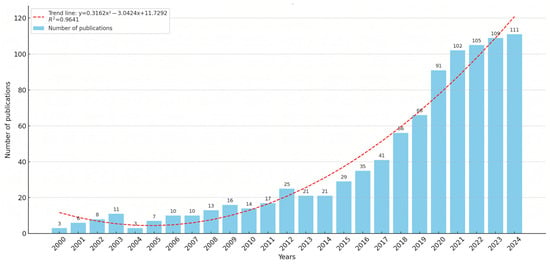
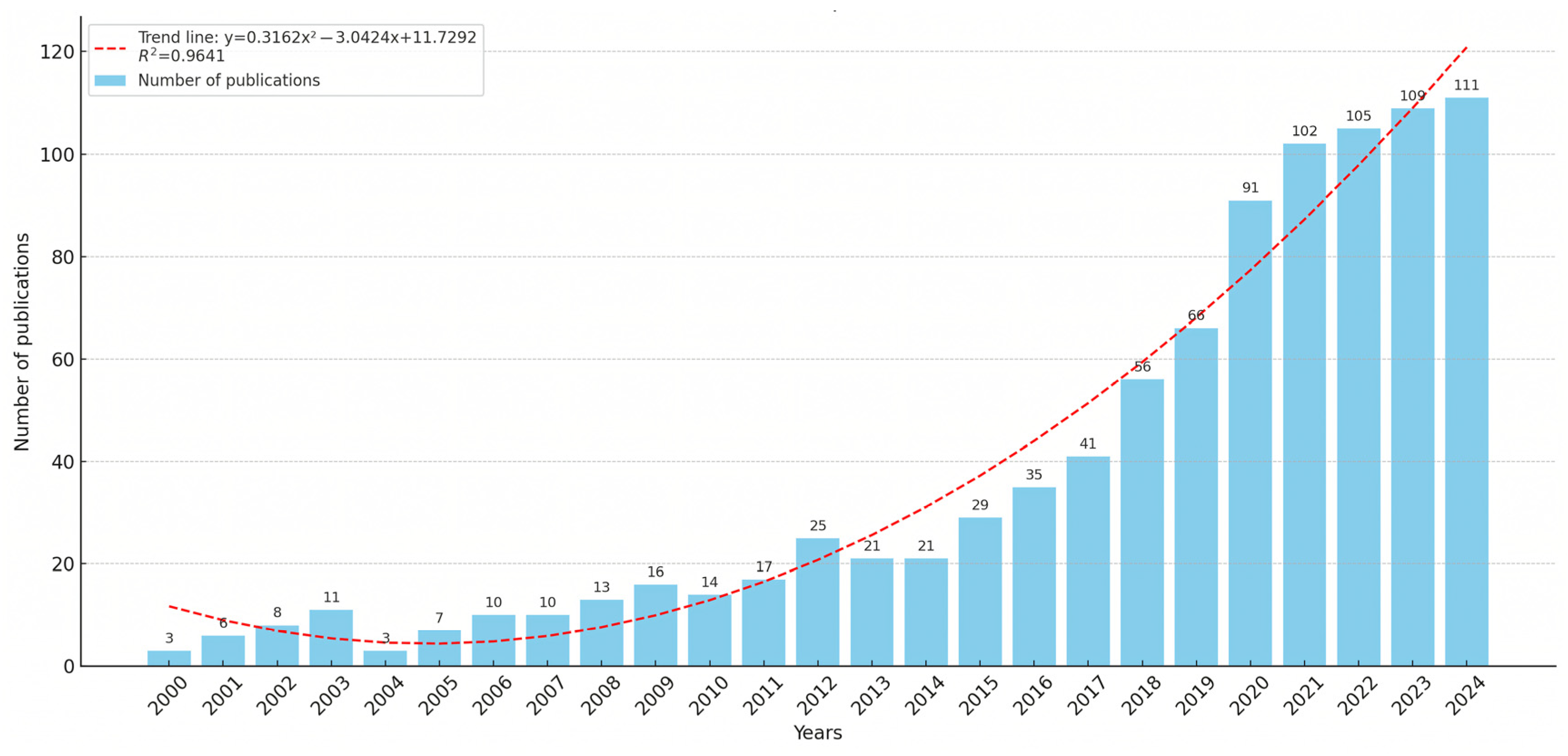
Annual publication output shows a clear upward trajectory (Figure 2). From 2000 to 2004, research output remained modest, with annual publications ranging from 3 to 11. Beginning in 2005, the field entered a phase of steady growth, which accelerated markedly after 2015. The number of publications peaked in 2024, reaching an all-time high of 111 articles. To characterize this trend, linear, exponential, and quadratic functions were compared. The quadratic model yielded the best fit (R2 = 0.9641), indicating strong nonlinear growth. These results suggest that research on companion animals and mental health has transitioned from a niche topic into a dynamic and expanding field of interdisciplinary scholarship.
Figure 2.
Annual publication trends in companion animal and mental health research (2000–2024).
3.2. Country Production Analysis
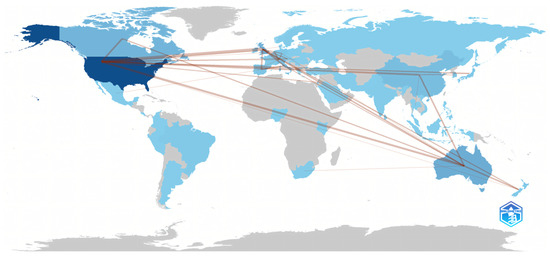
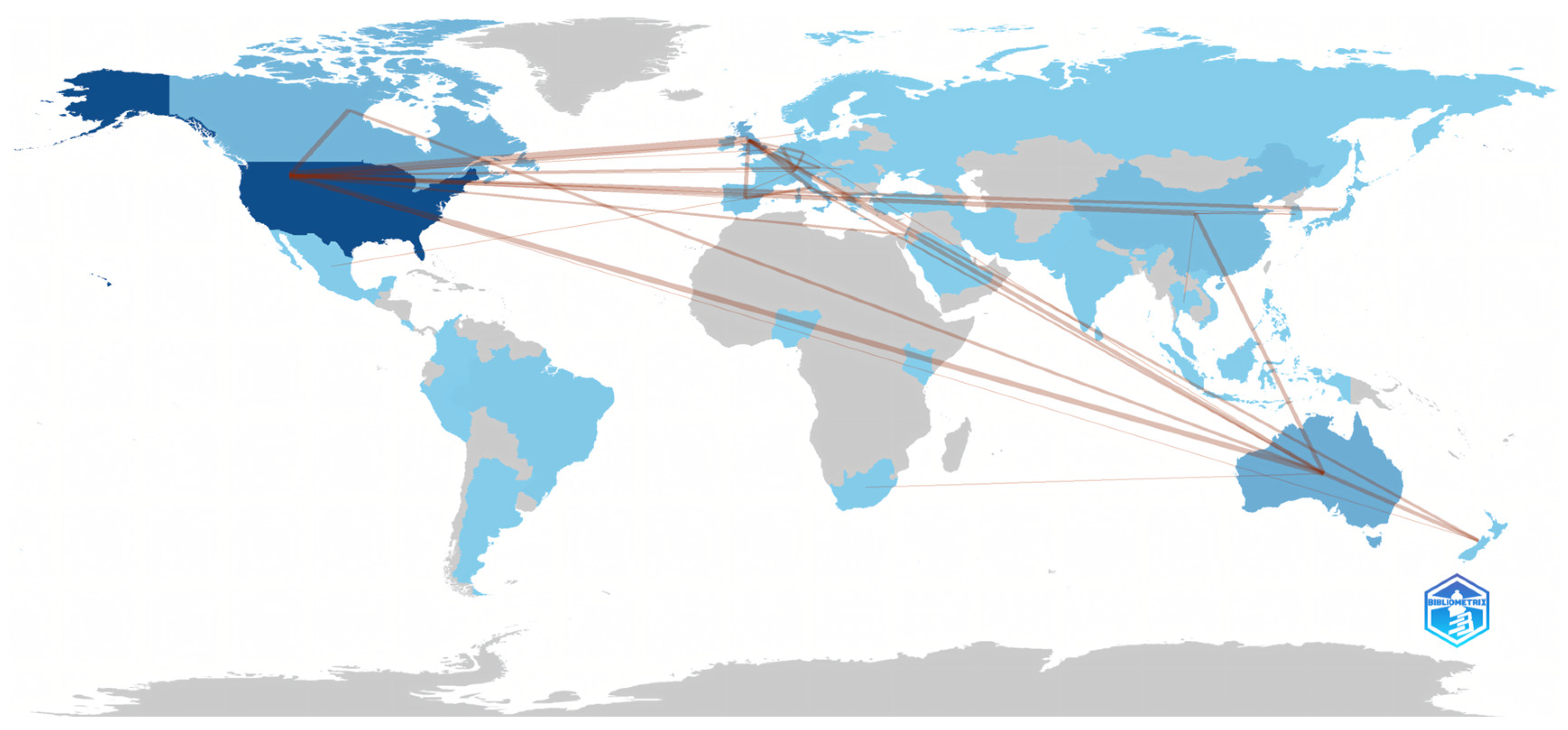
A total of 61 countries and regions across Asia, Europe, North America, South America, Oceania, and Africa contributed to research on companion animals and mental health (Figure 3). Despite broad geographic participation, scholarly output was concentrated in developed nations, particularly English-speaking countries and Western Europe. This pattern represents the geography of WoSCC-indexed, predominantly English-language scholarly visibility rather than definitive evidence that research activity or practice is absent elsewhere. The United States led with 410 publications, followed by Australia (96) and the WoSCC node labelled England (78) (Table 2). The same three nodes also led citation counts (USA, 12,341; Australia, 2694; England, 2128). For international collaboration, measured by total link strength, the USA ranked first (70), followed by England (64) and Australia (42). Centrality identified England (0.28), the USA (0.27), and Italy (0.12) as structural hubs. Because the source metadata and software treated England and Scotland as separate nodes, the value for England does not represent the United Kingdom; records from the University of Edinburgh contributed to Scotland.
Figure 3.
Global collaboration map of countries involved in companion animal and mental health research. The intensity of blue shading represents the number of publications per country, and the width of the connecting lines indicates the strength of co-authorship links between countries. Source: Original visualization created by the authors from the study’s WoSCC bibliographic records; no third-party image was reproduced.
Table 2.
Top 10 countries in terms of publications, citations, total link strength, and network centrality in companion animal and mental health research.
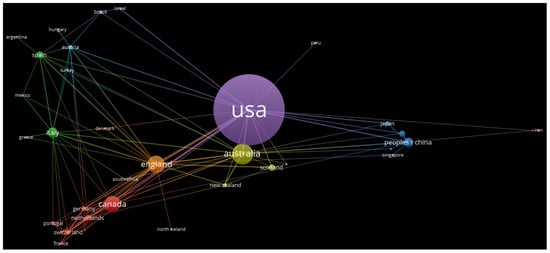
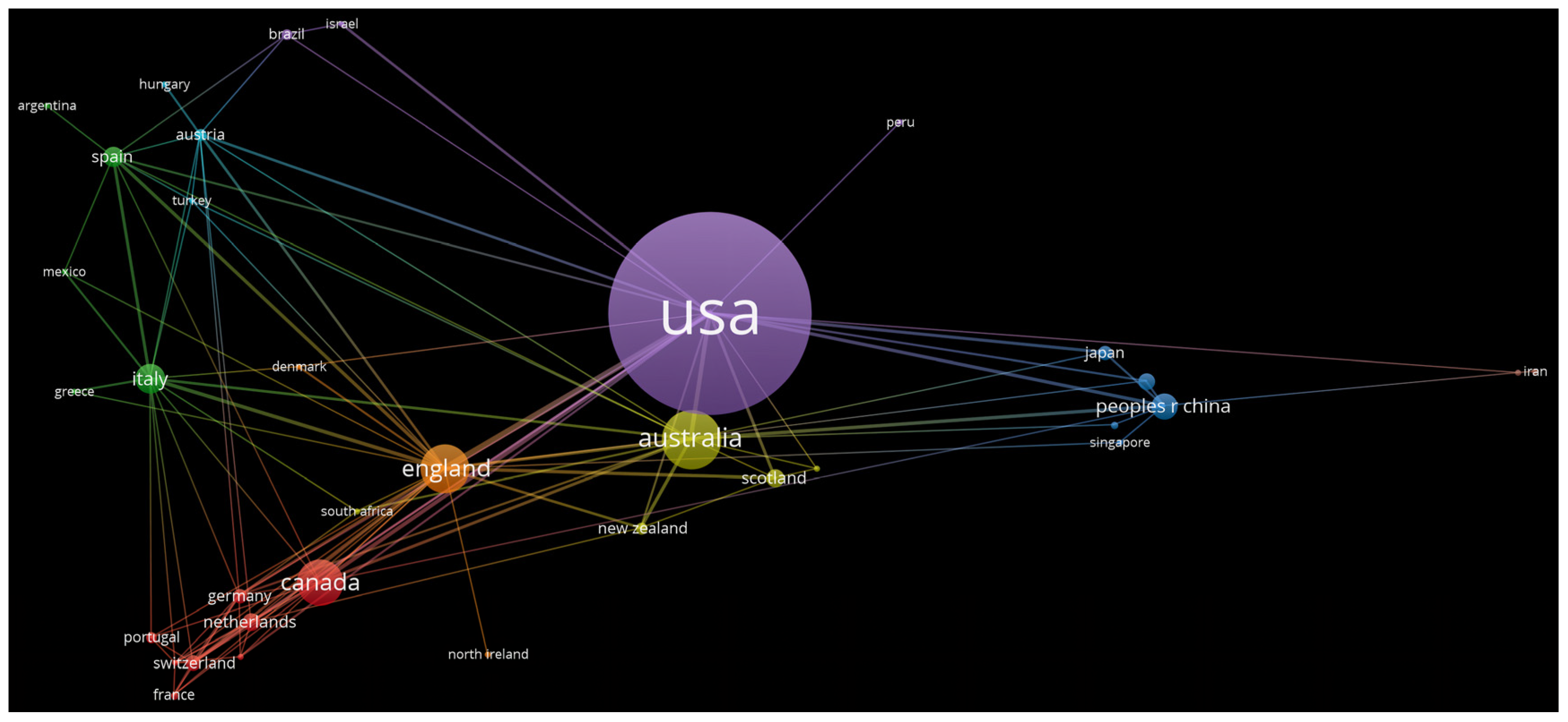
The global collaboration network (Figure 4) further shows the structural organization of international partnerships. The United States occupies the most central and connected position, with strong ties to England, Australia, China, and Canada. Based on co-authorship proximity, the map indicates a trans-Pacific cluster involving the USA, Australia, China, and Singapore; a Commonwealth-linked cluster involving England, Scotland, and New Zealand; and a European cluster centered on Germany, the Netherlands, Switzerland, and France, with links to Canada. This multipolar organization suggests a maturing collaboration structure shaped by historical ties, linguistic commonality, and thematic convergence. The emerging presence of Iran, Peru, Israel, and Republic of Korea indicates growing geographic diversification, although output and influence remain concentrated.
Figure 4.
Collaboration network among countries with more than three publications. Cluster color is supplementary; country labels, node size, and link thickness provide redundant cues for grayscale viewing, with quantitative values in Table 2.
3.3. Institutional Analysis
A total of 414 institutions have contributed to research on companion animals and mental health, reflecting broad institutional engagement across North America, Europe, and Oceania. Among these, Virginia Commonwealth University ranks first in publication volume (30), citation count (892), and total link strength (31), underscoring its dominant influence and centrality within the collaborative network. Purdue University follows closely with 29 publications and 664 citations, while Tufts University is notable for both productivity (20 publications) and a relatively high centrality score (0.04). Other leading institutions include the University of Edinburgh, the University of Saskatchewan, and the University of Florida, each contributing over 15 publications. Notably, the University of California, Davis, exhibits the highest centrality score (0.11), indicating its strategic role as a bridging hub that links otherwise disconnected clusters within the research network. Additional contributors such as the Waltham Centre for Pet Nutrition, the University of Maryland, and the University of Liverpool also demonstrate substantial engagement through strong citation impact and cross-institutional link strength (Table 3).
Table 3.
Top 10 institutions in terms of publications, citations, total link strength, and network centrality in companion animal and mental health research.
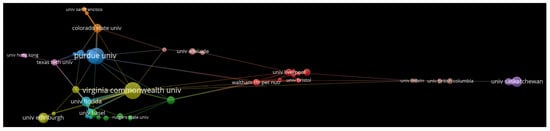
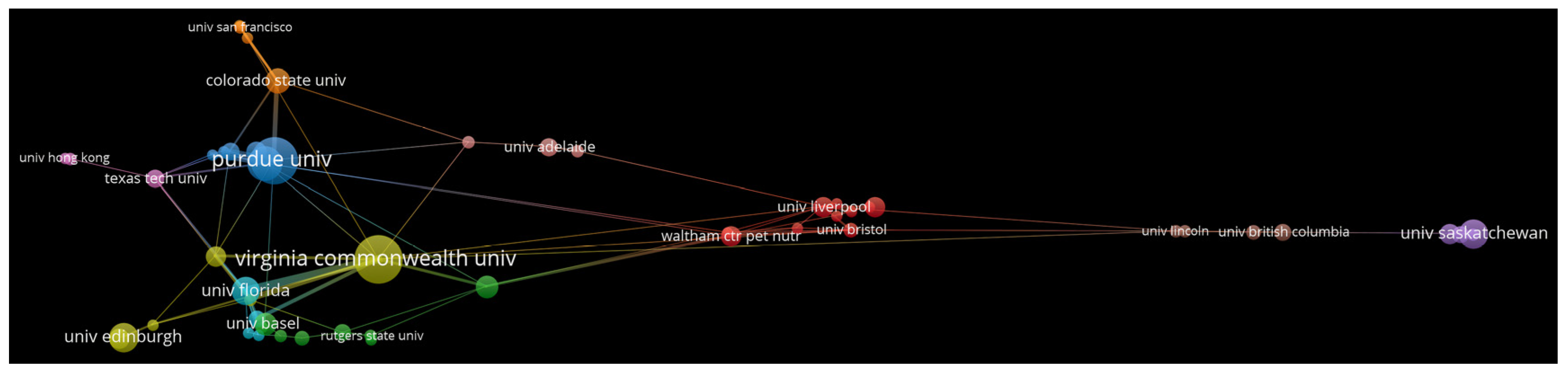
The institutional collaboration network (Figure 5) includes 53 organizations with five or more publications, grouped into three primary clusters. The green cluster, anchored by Virginia Commonwealth University, includes partners such as the University of Georgia and the University of Guelph, reflecting a dense North American academic network. The orange cluster is centred around Purdue University and includes Colorado State University and the University of Arizona, indicating a second hub of U.S.-based collaboration. The red cluster reflects hybrid partnerships between academia and industry, with actors such as Harvard University, the Waltham Centre for Pet Nutrition, and the University of Basel. This structure illustrates a geographically and thematically diverse institutional landscape, characterized by both regional concentration and transnational scholarly cooperation.
Figure 5.
Collaboration network among institutions with five or more publications. Clusters were identified by color, the size of the circles represents the number of publications, and the thickness of the lines shows the strength of the association. Cluster color is supplementary; institution labels, node size, and link thickness provide redundant cues for grayscale viewing, with quantitative values in Table 3.
Because thresholded maps can conceal specialized contributors, we audited all 930 records to distinguish corpus coverage from thresholded display. University of Vienna affiliations appeared in 14 records, affiliations explicitly naming the Messerli Research Institute appeared in six, and Eötvös Loránd University appeared in one. In the organization-enhanced WoSCC fields used for institutional aggregation, Messerli-affiliated records were commonly assigned to parent organizations such as the University of Veterinary Medicine Vienna or Medical University of Vienna; the institute therefore did not form a separate high-ranking node. Non-appearance in Figure 5 or Table 3 thus reflects display thresholds and affiliation normalization rather than exclusion from the corpus.
3.4. Author Analysis
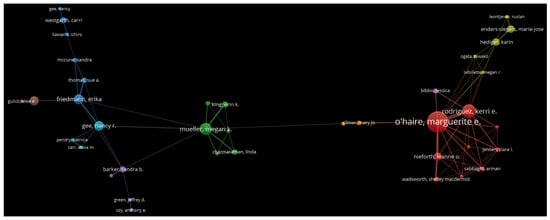
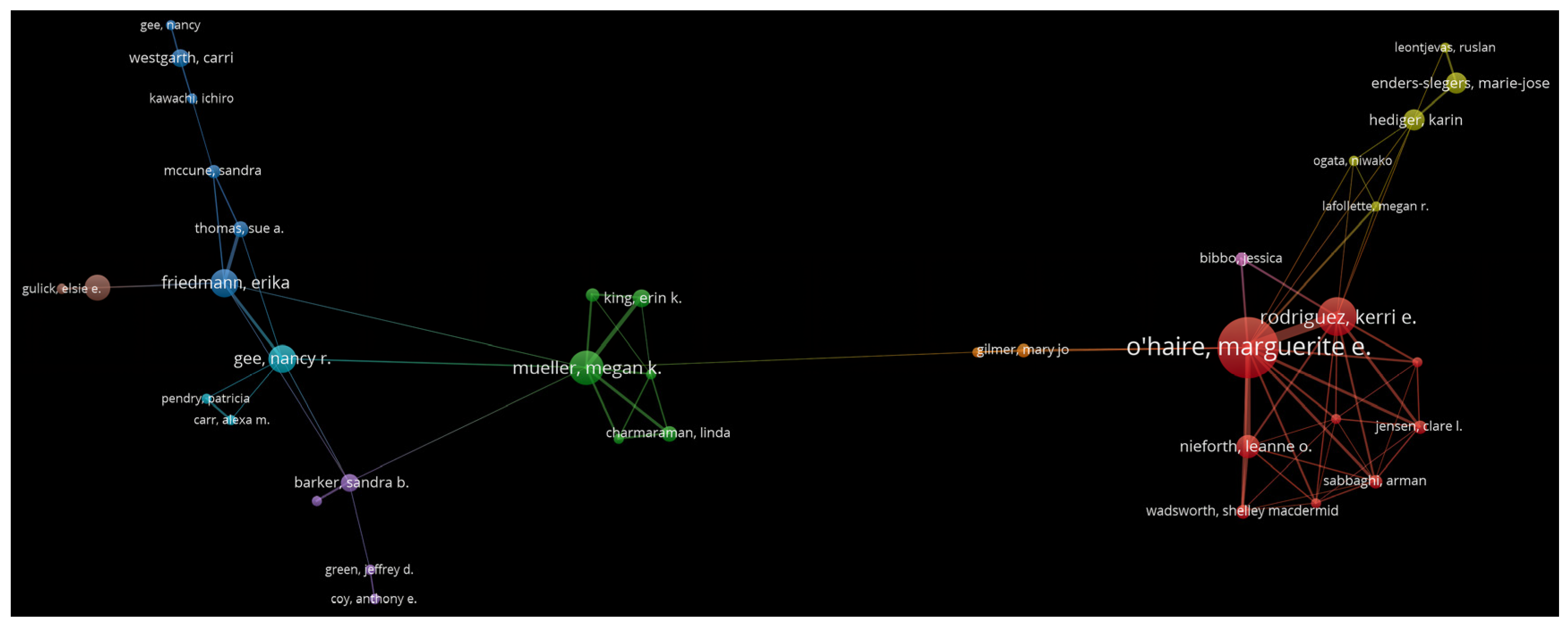
A total of 1596 authors have contributed to research on companion animals and mental health. Among them, 91 authors with more than three publications were included in the co-authorship network visualization (Figure 6). Table 4 lists the top 10 most influential scholars based on publication count, citation frequency, total link strength, and centrality. Marguerite E. O’Haire leads across all four metrics, with 26 publications, 787 citations, the highest total link strength (56), and a centrality score of 0.06—indicating her central role in both knowledge production and scholarly connectivity. She is followed by Megan K. Mueller (13 publications, 245 citations, link strength 24, centrality 0.05) and Kerri E. Rodriguez (15 publications, 244 citations, link strength 38, centrality 0.05). Other prominent contributors include Sandra B. Barker and Erika Friedmann, who, despite slightly fewer publications, demonstrate high citation impact and structural relevance. Authors such as Jessica Bibbo, Mary Jo Gilmer, and Carri Westgarth exhibit notable centrality, underscoring their importance as bridging nodes within the collaborative network.
Figure 6.
Analysis of co-authorship among authors with more than three publications. Cluster color is supplementary; author labels, node size, and link thickness provide redundant cues for grayscale viewing, with quantitative values in Table 4.
Table 4.
Top 10 authors by publications, citations, total link strength, and network centrality in companion animal and mental health research.
The co-authorship map reveals five major clusters, each reflecting distinct thematic orientations. The red cluster, centred around O’Haire and Rodriguez, focuses on psychosocial and developmental outcomes of human–animal interaction, particularly in child and family contexts. The green cluster, led by Mueller, emphasizes interdisciplinary work on youth mental health and socio-emotional development. The blue cluster includes foundational researchers such as Barker, Friedmann, and Gee, whose work explores the physiological and psychological benefits of the human–animal bond. Smaller clusters (e.g., yellow and pink) feature early-career or niche collaborators such as Callina and Carr. Overall, the network exhibits moderate density with a decentralized structure, indicating a maturing yet still evolving field. Both prolific and strategically positioned scholars are shaping this research domain by advancing conceptual frameworks, empirical methods, and cross-sectoral partnerships.
A corresponding author-name audit found one included article authored by Turcsán, two by Wynne, and one by Beetz. These counts were below the more-than-three-publication threshold for Figure 6 and below the top-ten rankings in Table 4. No Kubinyi-authored record met the combined date and human-mental-health eligibility criteria for the final corpus, although Kubinyi’s work appeared in the cited-reference fields. Their absence from the displayed author network should therefore be interpreted as an effect of corpus scope and visualization thresholds, not as evidence that these scholars are unimportant to the wider human–animal relationship literature.
3.5. Analysis of Journal Contributions
A total of 398 journals have published research related to companion animals and mental health, reflecting a broad disciplinary base. Among them, 22 journals published five or more articles. Anthrozoös emerged as the most prolific outlet with 121 publications, followed by Animals (68), International Journal of Environmental Research and Public Health (27), and PLOS ONE (23). Other active contributors include the Journal of Veterinary Behavior (22), Society & Animals (19), Frontiers in Psychology (15), Frontiers in Veterinary Science (15), Human–Animal Interactions (14), and Applied Animal Behaviour Science (13). In terms of citation impact, Anthrozoös again led with 3010 citations, followed by Applied Animal Behaviour Science (692), PLOS ONE (652), Animals (575), and Journal of Personality and Social Psychology (495). Together, these patterns indicate that the field’s most influential outlets combine thematic specialization with interdisciplinary reach [26,27,28] (Table 5).
Table 5.
Top 10 journals in companion animal and mental health research.
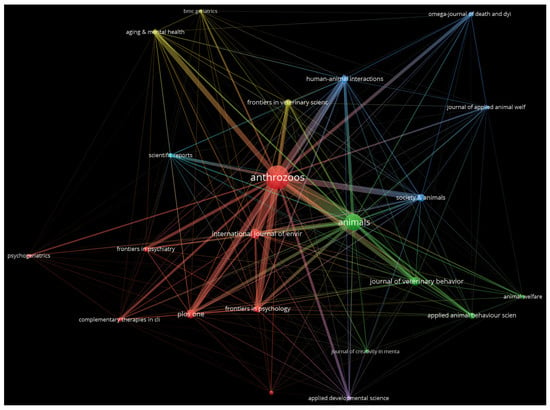
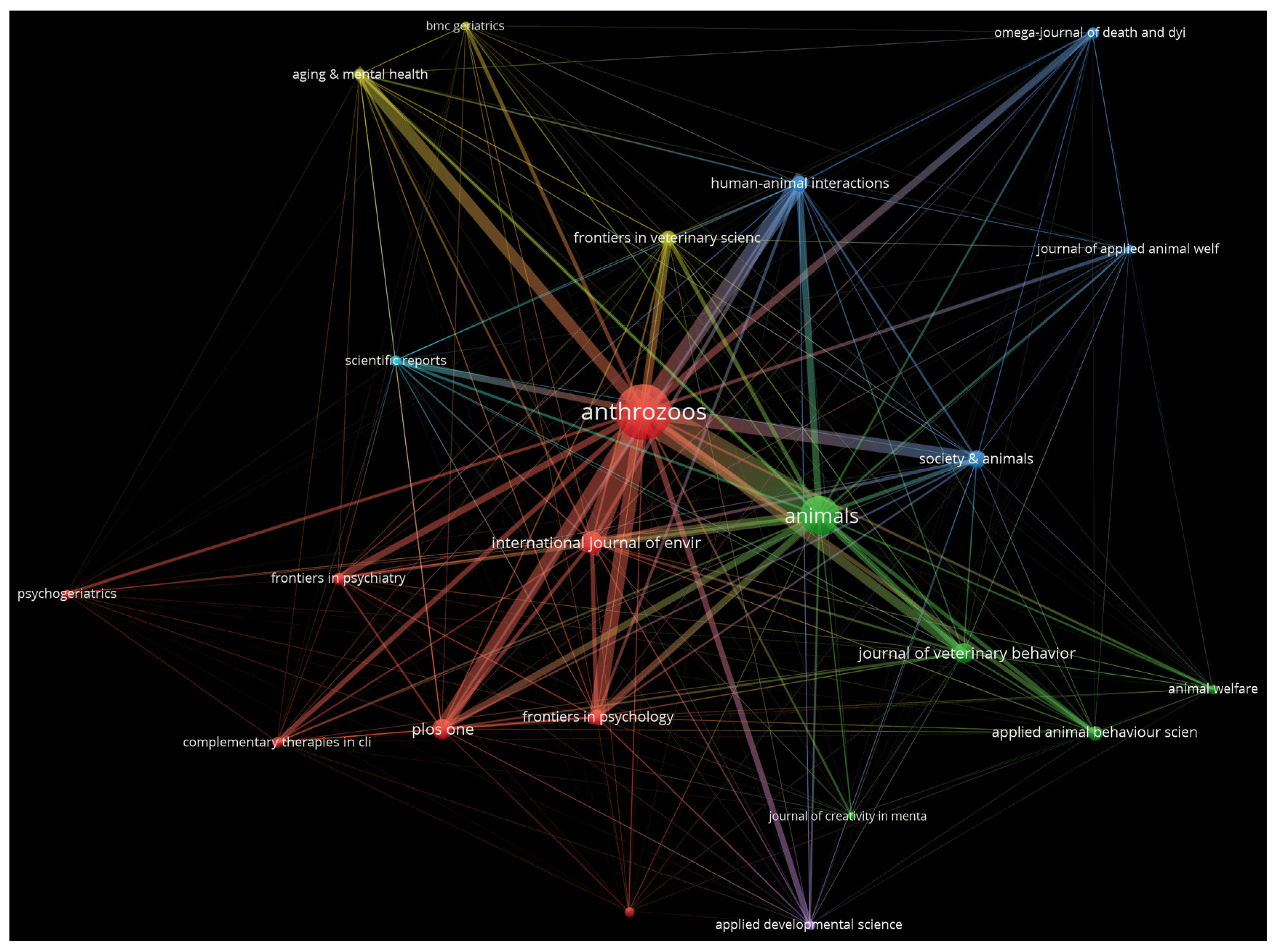
The co-citation and thematic clustering of journals (Figure 7) reveal three major intellectual groupings. The red cluster, centred on Anthrozoös, Society & Animals, and Psychological Reports, represents the humanities and social science tradition, focusing on constructs such as empathy, cultural meaning, and identity in human–animal bonds [29,30]. The green cluster, led by Animals, PLOS ONE, and IJERPH, aligns with One Health and public health perspectives, integrating human–animal interaction research with ecological and physiological markers [31,32]. The yellow cluster, featuring Applied Animal Behaviour Science and the Journal of Veterinary Behavior, emphasizes behavioural outcomes, clinical intervention design, and stress physiology in both humans and animals [33,34]. Multidisciplinary journals such as Frontiers in Psychology, Frontiers in Veterinary Science, and Human–Animal Interactions have also gained momentum by publishing randomized trials and intervention studies among children, older adults, and individuals with mental health conditions [35,36,37]. The network structure indicates substantial cross-cluster connectivity: Anthrozoös bridges social science outlets and empirical research platforms, whereas PLOS ONE functions as a methodological intermediary across domains. These inter-journal linkages indicate growing epistemological convergence among psychological, sociological, veterinary, and public health paradigms.
Figure 7.
Visualization of the published journal network with more than five publications. Cluster color is supplementary; journal labels, node size, and link thickness provide redundant cues for grayscale viewing, with quantitative values in Table 5.
3.6. Reference Analysis
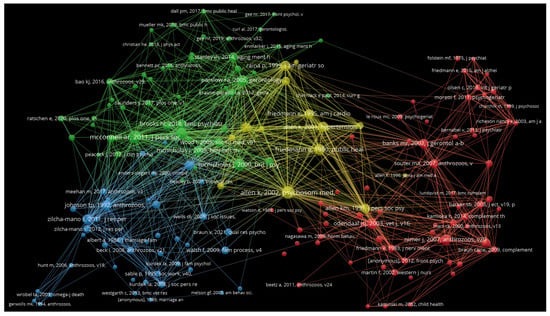
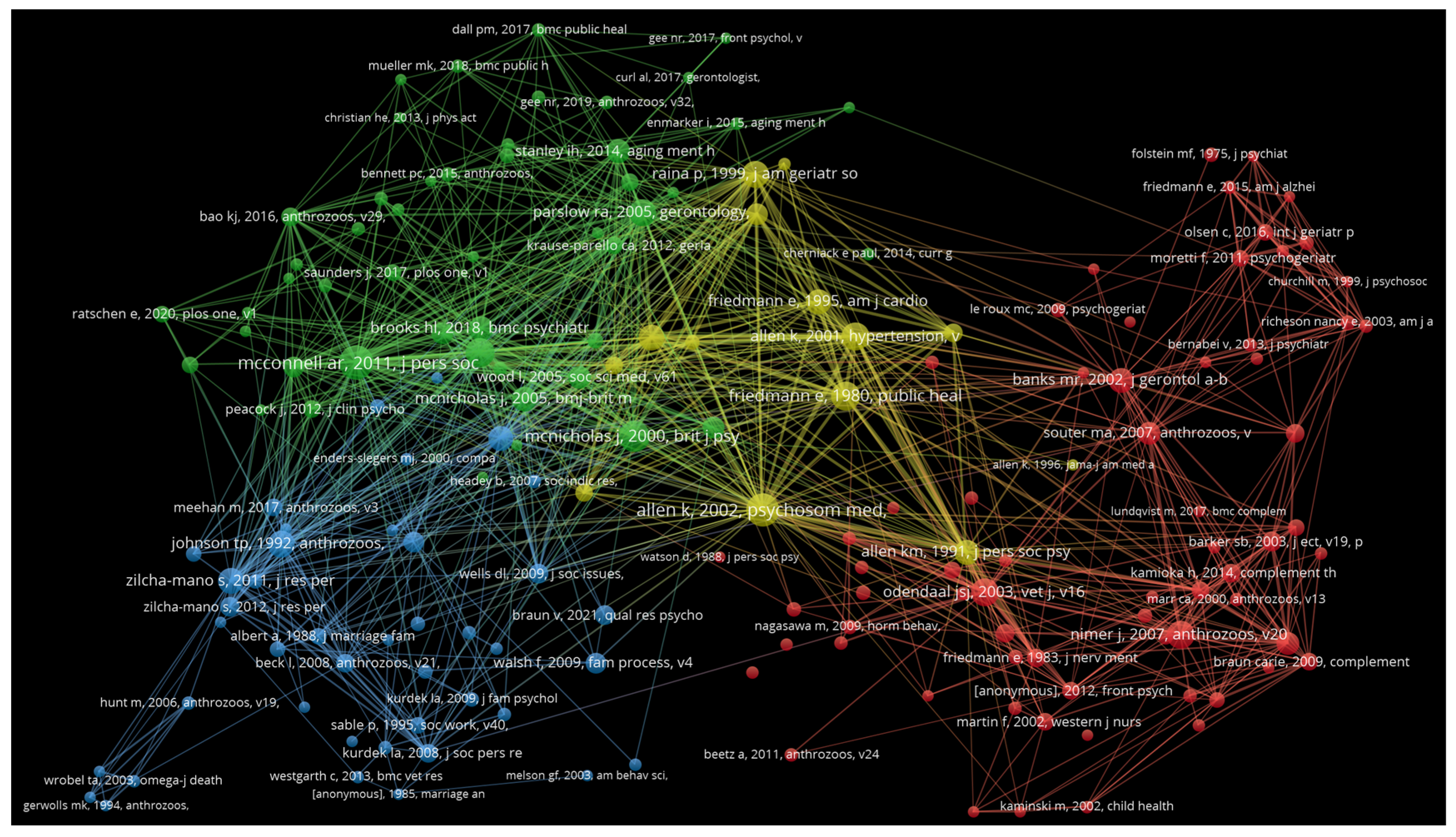
As shown in Table 6, the most highly co-cited references constitute the conceptual core of the companion animal and mental health literature. McConnell et al. (2011), the most frequently co-cited work, positioned companion animals as enhancers of self-concept and social support, embedding them within broader psychological frameworks [7]. Allen et al. (2001, 2002) provided evidence that living with companion animals may attenuate cardiovascular reactivity under stress, thereby bridging human–animal interaction research with psychosomatic medicine [38,39]. Nimer and Lundahl’s (2007) meta-analysis synthesized the therapeutic evidence for animal-assisted interventions [40], while Parslow et al. (2005) and Banks and Banks (2002) expanded the focus to cardiovascular outcomes and geriatric populations [41,42]. Other frequently cited studies, including Zilcha-Mano et al. (2012) and Brooks et al. (2018), underscored the psychological dimensions of companion-animal attachment and its relevance to mental illness, reinforcing the field’s biopsychosocial orientation [14,16]. The co-citation network in Figure 8 illustrates a tightly integrated intellectual landscape characterized by cross-disciplinary linkages rather than discrete thematic silos.
Table 6.
Top 10 co-cited references in companion animal and mental health research.
Figure 8.
Visualization of the co-cited references network with more than five publications. Cluster color is supplementary; reference labels, node size, and link thickness provide redundant cues for grayscale viewing, with quantitative values in Table 6.
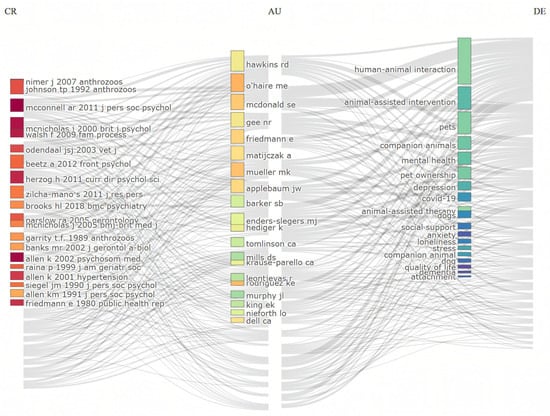
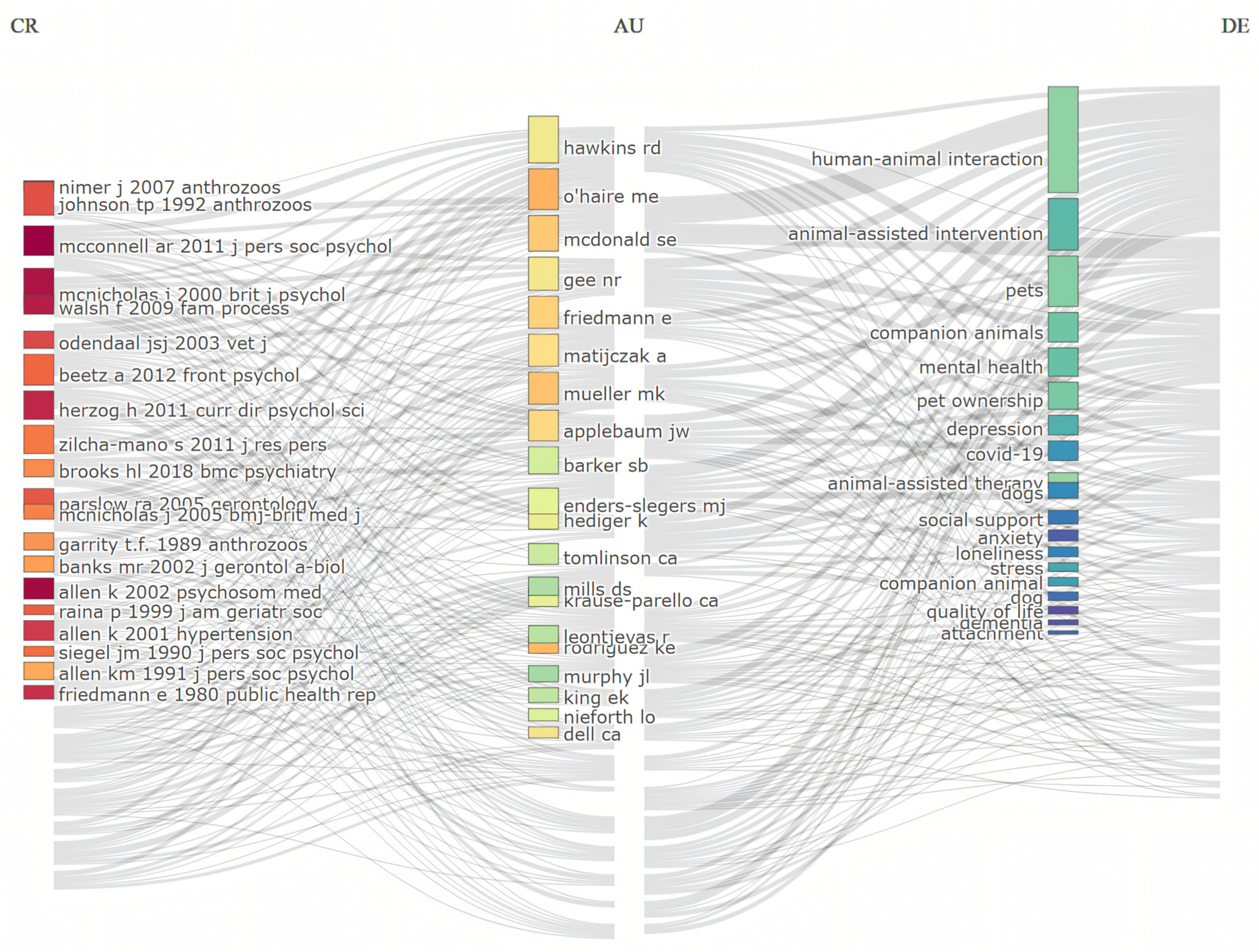
Further insights are revealed in the three-field plot (Figure 9), which maps the dynamic interplay among cited references, contributing authors, and author-defined keywords. The visualization identifies key knowledge brokers—such as McDonald SE, Applebaum JW, and Mueller MK—who mediate foundational work into contemporary thematic directions. Frequently co-cited references are closely associated with high-impact terms such as animal-assisted therapy, mental health, social support, and coronavirus disease 2019 (COVID-19), signalling a shift from theoretical exploration to applied clinical and public health relevance. This triangulated mapping captures the field’s transition from fragmented inquiry to a more integrated and translational research paradigm. By aligning foundational studies with emerging clinical and population-level concerns, the field demonstrates increasing conceptual coherence and practical utility across developmental, psychiatric, and gerontological contexts.
Figure 9.
Three-field plot showing the relationships among cited references (CR), authors (AU), and author keywords (DE) in companion animal and mental health research. Grey bands denote co-occurrence links; band width reflects frequency.
3.7. Analysis of Co-Occurring Keywords and Clusters
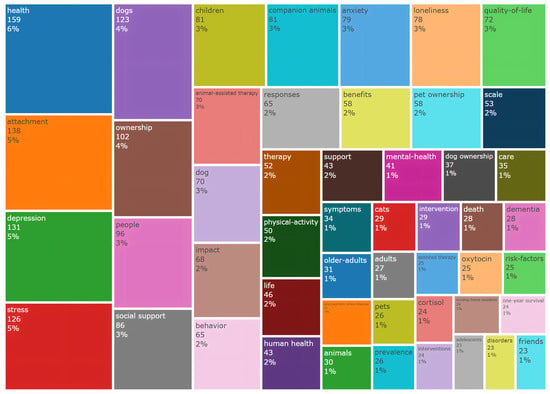
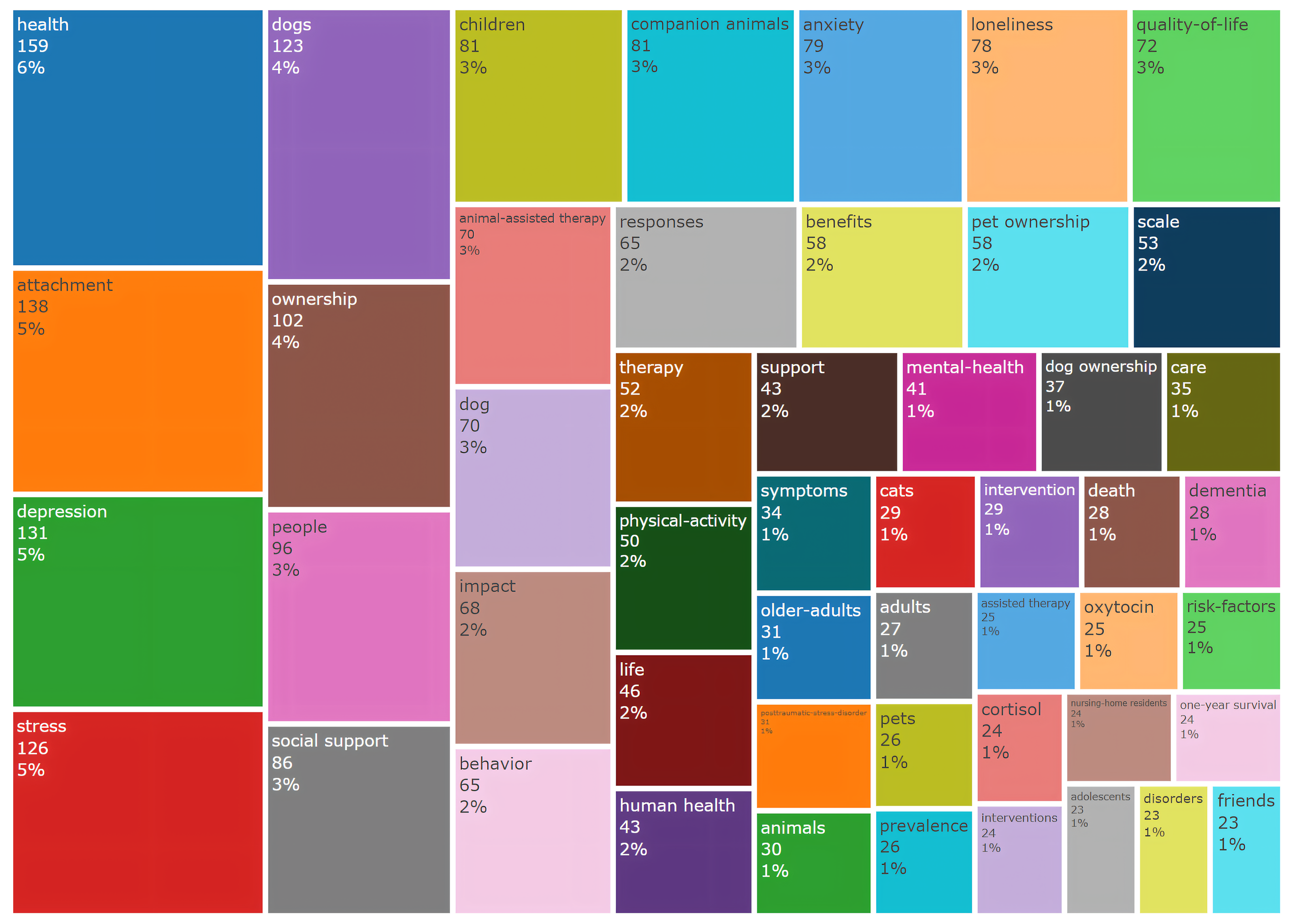
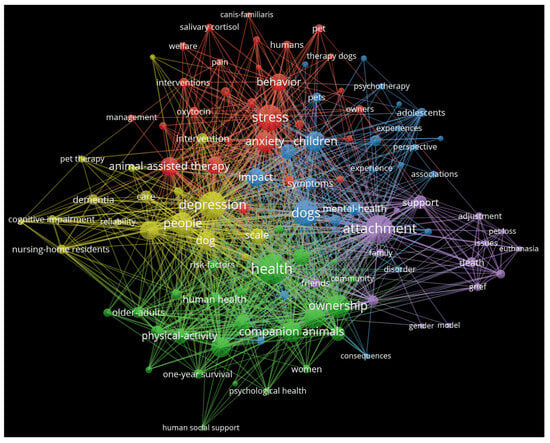
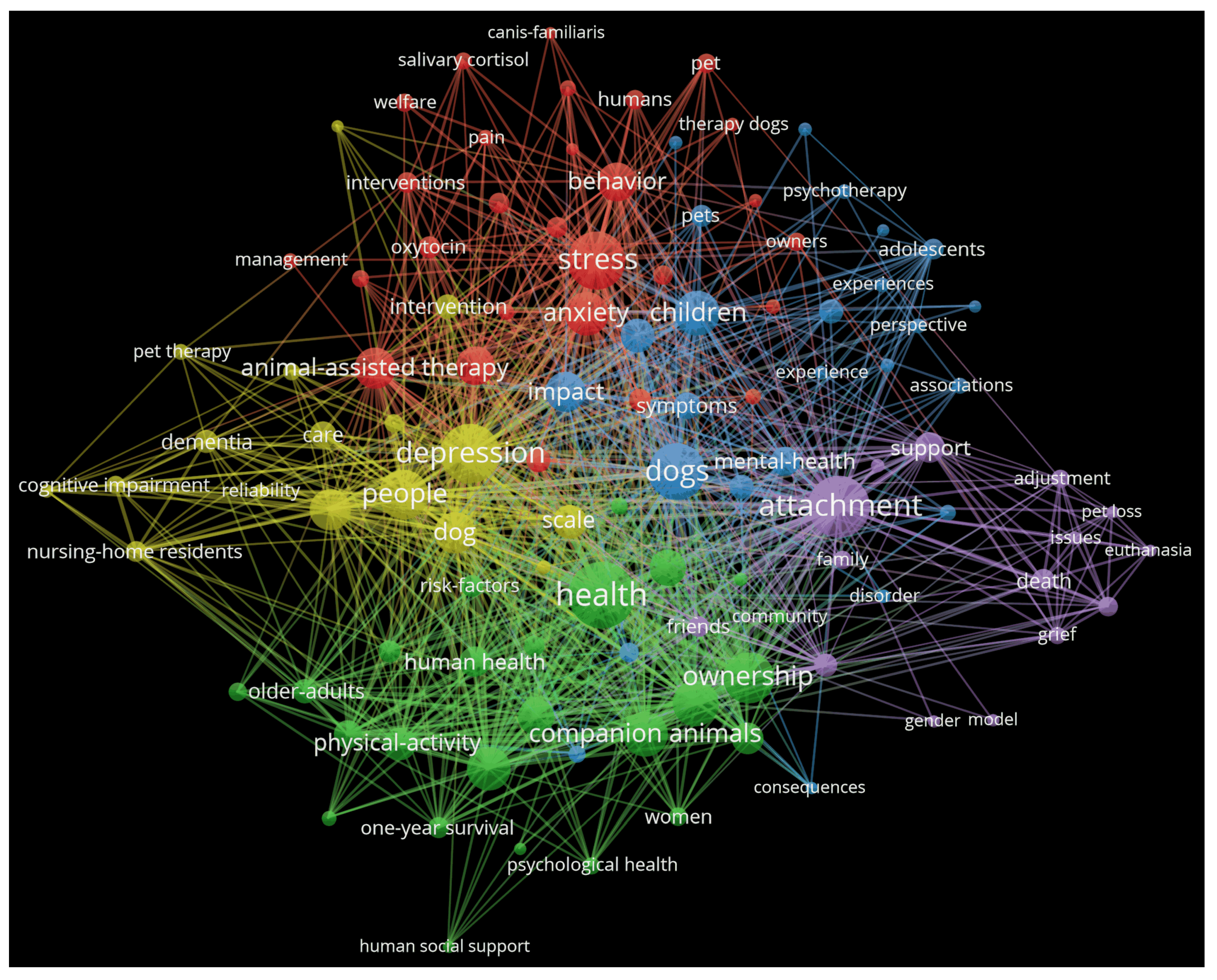
To provide a comprehensive and statistically grounded overview of research hotspots, a total of 1593 keywords extracted from Keywords Plus were analyzed using both TreeMap (Figure 10) and co-occurrence network visualization (Figure 11). The TreeMap revealed high-frequency terms such as health (n = 159, 6%), attachment (138, 5%), depression (131, 5%), stress (126, 5%), and dogs (123, 4%), indicating the centrality of biopsychosocial constructs. These were followed by anxiety, loneliness, animal-assisted therapy, and pet ownership, collectively delineating a conceptual landscape shaped by psychological mechanisms and applied interventions. VOSviewer’s co-occurrence mapping further grouped these terms into semantically coherent clusters, including an affective-health cluster (e.g., stress, anxiety, cortisol), a social-support cluster (attachment, companionship), and an intervention cluster (therapy, animal-assisted therapy, mental health). The disproportionate prominence of dogs over cats (123 vs. 29) highlights a persistent species-specific focus, aligning with prior studies emphasizing dogs’ sociocognitive affinity with humans [45,46,47]. These findings reflect a growing interdisciplinary nexus across psychology, gerontology, public health, and social work, positioning companion animals as both affective agents and structured supports within therapeutic ecosystems [10,16]. Although emerging terms such as virtual pet and robotic companion were included in the search taxonomy to capture interest in technology-mediated animal interaction, they did not appear as high-frequency keywords. This absence suggests that empirical work on digital companion animals remains nascent and fragmented, despite increasing conceptual attention—particularly for ageing and socially isolated populations [48,49].
Figure 10.
TreeMap visualization of the top 50 Keywords Plus terms in companion animal and mental health research. The size of each block indicates keyword frequency.
Figure 11.
Co-occurrence network visualization of the top 50 Keywords Plus terms in companion animal and mental health research. Cluster color is supplementary; keyword labels, node size, and link thickness remain available as grayscale-safe encodings.
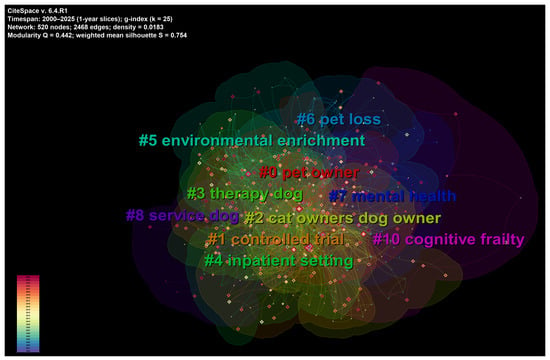
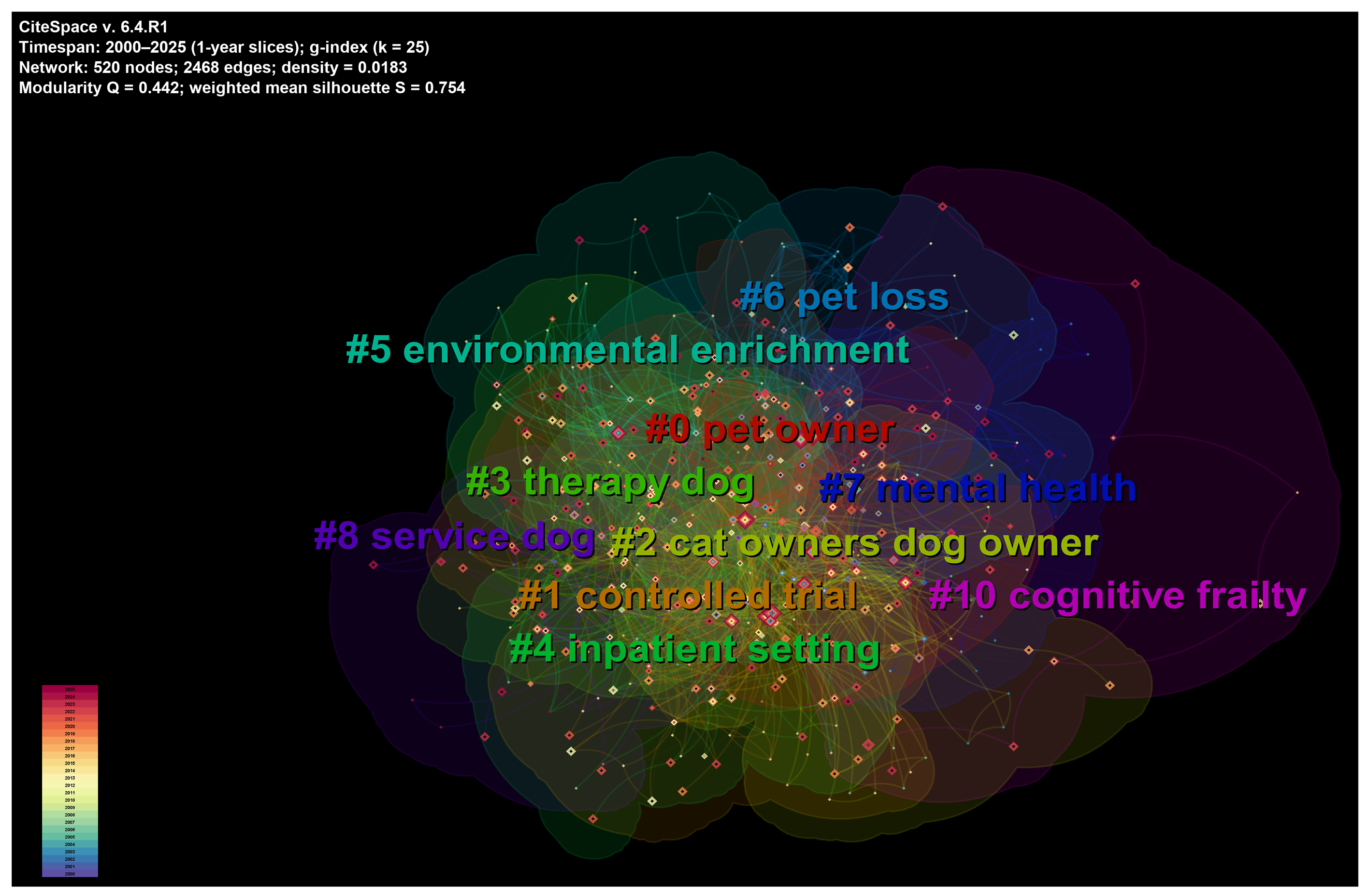
To further delineate thematic structures, keyword cluster analysis was conducted using CiteSpace. As illustrated in Figure 12, nine clusters were generated using the log-likelihood ratio (LLR) algorithm, yielding a modularity Q of 0.402 and a silhouette score of 0.754—indicating robust and coherent clustering. Table 7 summarizes the core features of each cluster. The largest cluster, #0 “Pet owner” (Silhouette = 0.669), contains terms such as companion animals, pet ownership, social support, and depression, underscoring the foundational role of ownership-related variables in psychosocial outcomes [16,50]. Cluster #1 “Controlled trial” (0.716) focuses on randomized controlled trials, older adults, and quality of life, reflecting growing empirical rigour in evaluating animal-assisted interventions, especially among geriatric populations [51,52]. Cluster #3 “Therapy dog” (0.732) emphasizes pediatric care and animal welfare, while Cluster #5 “Environmental enrichment” (0.761) highlights stress regulation, cortisol, and animal welfare—bridging psychological benefit and ethical considerations [52]. Two emerging research frontiers are also noteworthy. Cluster #10 “Cognitive frailty” (Silhouette = 0.983), the most internally consistent, captures studies on ageing, psychological resilience, and qualitative insight [53,54]. Cluster #8 “Service dog” (0.780) involves post-traumatic stress disorder (PTSD), disability support, and autism spectrum disorder, indicating increasing cross-sectoral interest in service animals for neurodivergent and veteran populations [37,55,56].
Figure 12.
Keyword co-occurrence cluster plot for companion animal and mental health research articles. Cluster numbers and labels provide grayscale-safe identifiers; Table 7 reports the corresponding cluster statistics.
Table 7.
Top 10 keyword co-occurrence clusters in companion animal and mental health research.
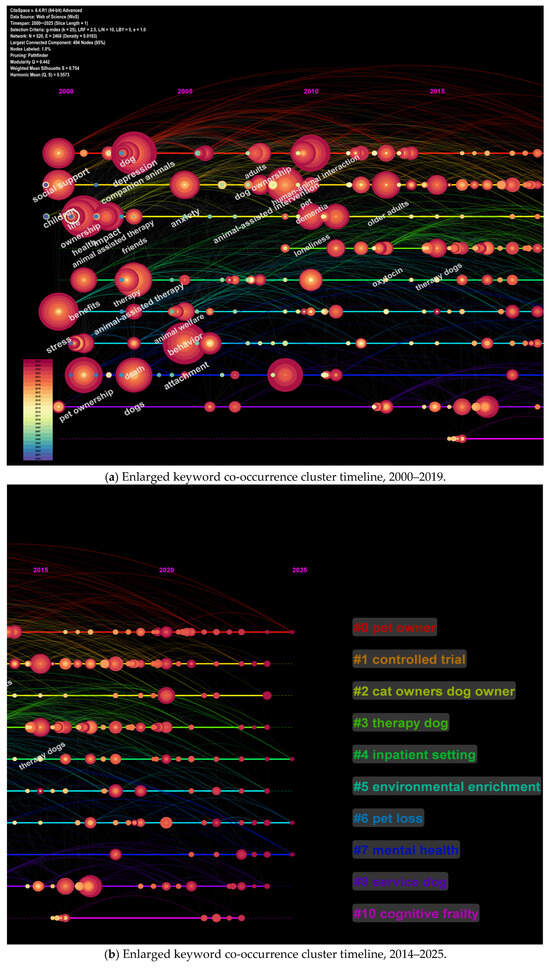
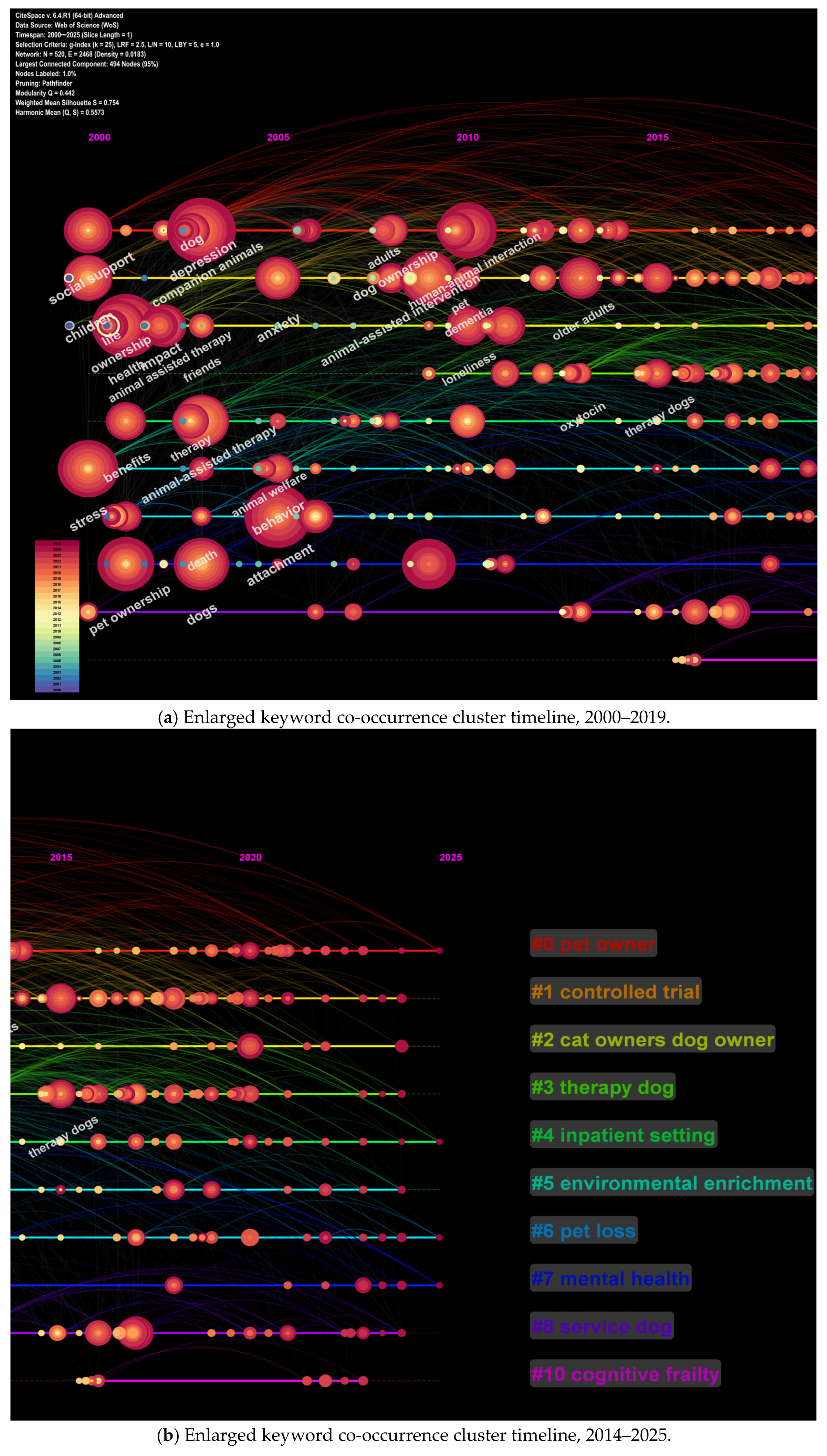
The temporal visualization of clusters (Figure 13) further illuminates the developmental trajectory of the field. Earlier clusters, such as #2 “Cat owners dog owner” (mean year: 2007) and #0 “Pet owner”, centred on foundational themes of emotional bonding and social support. In contrast, recent clusters like #3 “Therapy dog” (2017), #8 “Service dog” (2017), and #10 “Cognitive frailty” (2019) mark a transition toward targeted interventions and ageing-related resilience. The sustained activity of clusters #1 “Controlled trial” and #5 “Environmental enrichment” suggests persistent interest in evidence-based methodologies and physiological mechanisms. Collectively, these patterns reveal a shift from descriptive and correlational studies to more complex, interdisciplinary, and intervention-oriented paradigms—reflecting the field’s increasing theoretical integration and translational value across clinical, psychological, and public health domains.
Figure 13.
Enlarged two-panel timeline visualization of keyword co-occurrence clusters in research on companion animals and mental health. Panel (a) presents the complete 2000–2019 interval, and panel (b) presents the complete 2014–2025 interval; the shared 2014–2019 interval maintains temporal continuity across panels. Both panels are derived from the same CiteSpace timeline and preserve the chronology, node attributes, cluster assignments, and link structure of the original analysis. Each horizontal lane represents an LLR-derived cluster, and node size indicates keyword frequency. Cluster numbers and labels are shown in panel (b), with the corresponding statistics reported in Table 7. Lane position, labels, and node size remain interpretable in grayscale; color is supplementary.
Integratively, the keyword and cluster results suggest that the field is not simply accumulating more studies that treat “pet ownership” as an exposure; it is moving toward mechanism-based and intervention-oriented questions. Early clusters framed companion animals mainly as sources of attachment, companionship, and social support, whereas later clusters increasingly connect animal interaction to measurable stress biology, clinical populations, service-animal functions, cognitive frailty, and ethical considerations in intervention delivery. This progression strengthens the interpretation of companion-animal research as an emerging translational domain linking psychosocial theory, public-health need, and applied therapeutic design.
3.8. Analysis of Burst Keywords and References
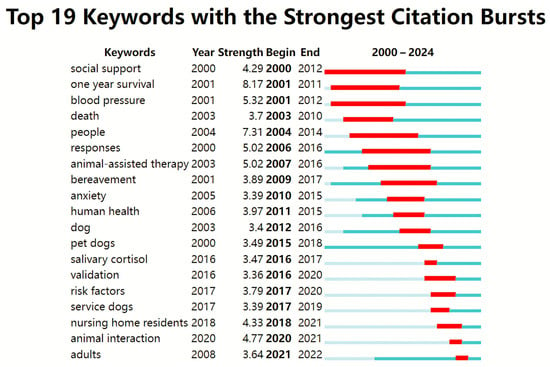
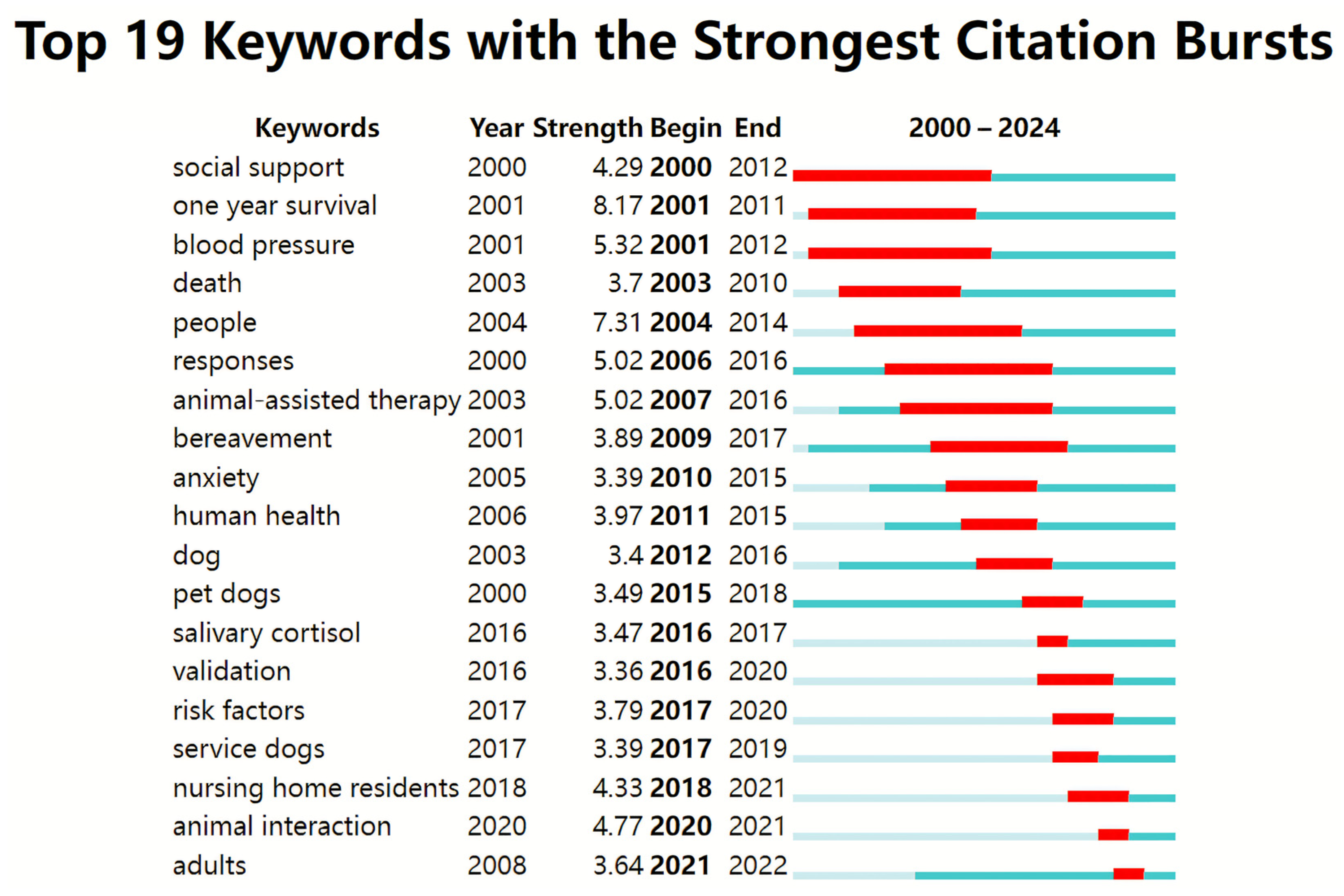
To examine shifts in research focus over time, burst detection analysis was conducted using CiteSpace, identifying 19 keywords with the strongest citation bursts between 2000 and 2024 (Figure 14). Citation bursts capture emerging trends by detecting abrupt increases in term usage, often reflecting paradigm transitions or thematic inflexion points [57]. Early burst terms such as social support (2000–2012), one-year survival (2001–2011), and blood pressure (2001–2012) reflect the field’s initial emphasis on cardiovascular outcomes and psychosocial buffering through relationships with companion animals [58,59]. These foundational studies established physiological and emotional hypotheses that informed subsequent translational inquiry. Since 2015, burst terms such as pet dogs, salivary cortisol, and validation signal a methodological shift toward biomarker precision and psychometric rigor [60,61]. More recent bursts—including animal interaction (2020–2021), adults (2021–2022), and especially mental health (2023–2025)—highlight a broadening clinical relevance and rising interest in population-level mental health outcomes. Mental health exhibited the highest burst strength (9.71), underscoring convergence between companion-animal research and public-health priorities related to loneliness, stress, and emotional support [50,62]. Overall, these trajectories suggest an evolution from physiological validation toward biopsychosocial integration.
Figure 14.
Top 19 keywords with the strongest citation bursts in companion animal and mental health research (2000–2024). Light cyan denotes the pre-burst period, cyan the observation period, and red the burst interval. In grayscale, the burst interval is identifiable as the heavier segment on each year line.
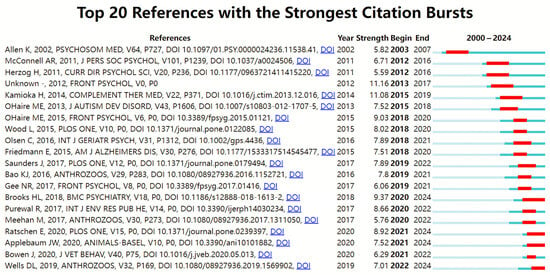
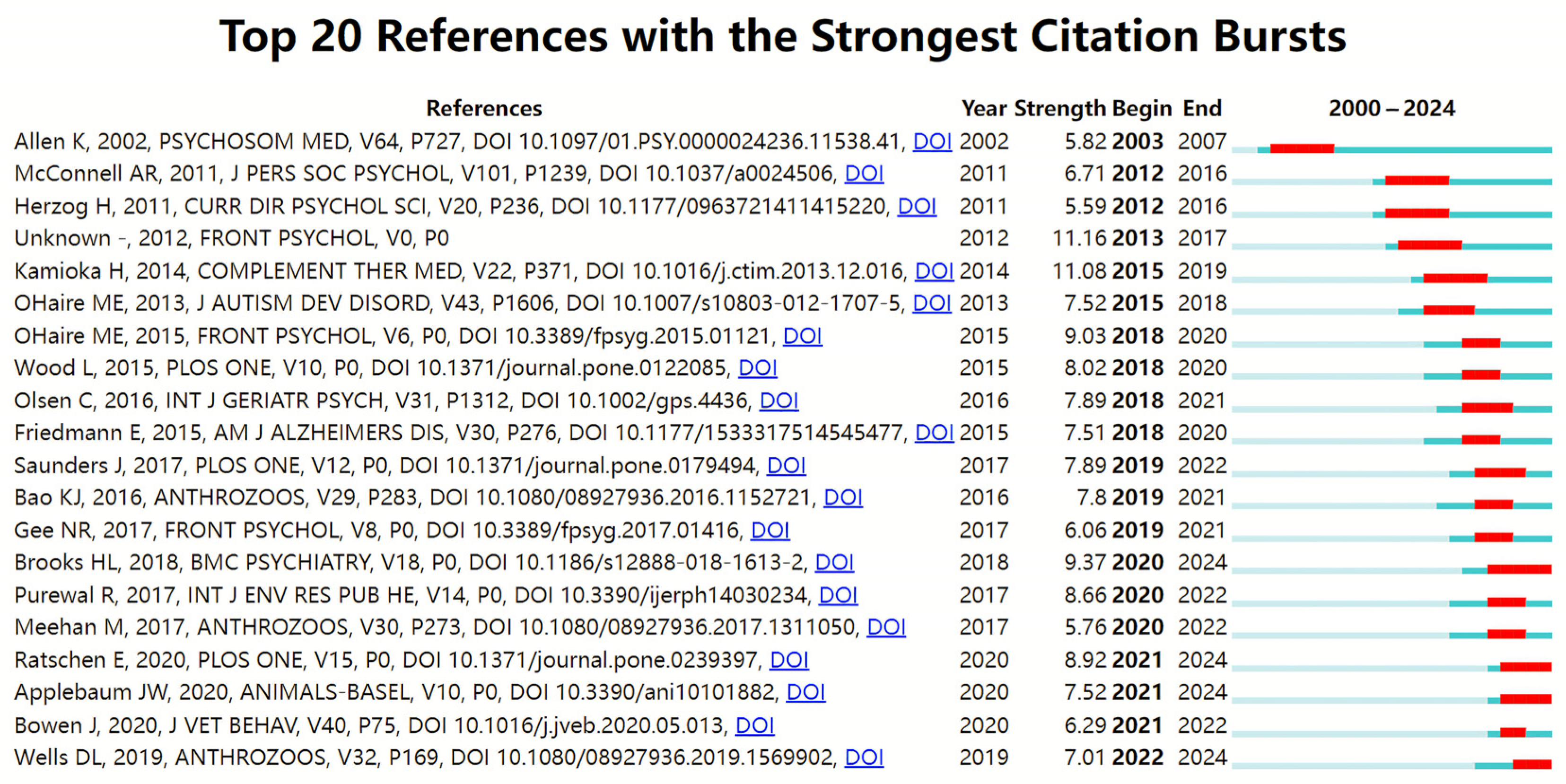
Complementing the keyword burst analysis, reference burst detection identified key intellectual milestones that catalyzed sustained shifts in scholarly attention (Figure 15). Earlier burst references such as Allen et al. (2002), McConnell et al. (2011), and Herzog (2011) illustrate a transition from psychosomatic and self-concept frameworks toward applications in psychological resilience and affective well-being [7,21,38]. More recent bursts—most notably Brooks et al. (2018), Meehan et al. (2017), and Applebaum et al. (2020)—reflect increasing attention to topics such as bereavement, mental illness, and therapeutic frameworks for companion animal integration [16,63,64]. The enduring influence of O’Haire’s work (2013, 2015) on autism spectrum disorder intervention underscores the field’s clinical relevance and population-specific application [65,66]. Post-2020 citations—including studies by Bowen, Wells, and Ratschen—signal a thematic convergence around pandemic-induced stress, emotional reliance on pets, and social isolation [62,67,68]. The sustained duration of many bursts (exceeding three to five years) reflects not only scholarly impact but also disciplinary consolidation. Collectively, these bursts trace the field’s developmental arc toward greater translational applicability and theoretical coherence across health, psychology, and social science domains.
Figure 15.
Top 20 references with the strongest citation bursts in companion animal and mental health research. The reference strings are data-derived analytical entity labels generated by CiteSpace citation-burst analysis, not manuscript citations placed in the figure. Light cyan denotes the pre-burst period, cyan the observation period, and red the burst interval. In grayscale, the burst interval is identifiable as the heavier segment on each year line.
4. Discussion
Our bibliometric analysis confirms a marked expansion of research on companion animals and mental health, consistent with trends observed in recent scientometric studies [69]. Publication output has grown exponentially over the past decade, with a pronounced surge after 2015, suggesting intensifying academic interest and increasing recognition of the field’s interdisciplinary potential.
The central contribution of the present analysis is therefore not the identification of high-frequency items alone, but the integration of performance indicators, collaboration structures, co-citation patterns, keyword clusters, and burst dynamics into a developmental interpretation of the field. Across these layers, companion-animal and mental-health research appears to be consolidating around three linked axes: mechanisms of biopsychological regulation, relational and social-support pathways, and targeted clinical or public-health applications. This integrative reading helps move the analysis beyond descriptive ranking and clarifies how the intellectual structure of the field has evolved over time.
At the country level, collaboration patterns reveal a structurally centralized yet geographically expanding network. The United States dominates across all key metrics—publication volume, citation impact, and total link strength—while England (centrality = 0.28) and Australia maintain strong international connectivity, reinforcing their roles as strategic hubs. Three primary collaboration clusters emerged: a trans-Pacific network (USA, Australia, China, Republic of Korea), a Commonwealth-aligned group (UK, New Zealand), and a European cluster incorporating Switzerland, France, the Netherlands, and Canada. While high-income, English-speaking nations continue to lead, increased participation from China, Israel, and Republic of Korea suggests a progressive diversification and global integration of research activity. These transregional linkages point toward a maturing, interdisciplinary knowledge architecture with expanding epistemic inclusivity [70].
Institutional analysis reveals a similarly concentrated but evolving research ecosystem. Virginia Commonwealth University and Purdue University serve as core academic anchors, combining high productivity with dense collaborative linkages and sustained citation influence [65,71]. The notable citation strength of the Waltham Centre for Pet Nutrition highlights the growing significance of industry-academic partnerships in driving translational outcomes. Bridging institutions such as the University of California, Davis (centrality = 0.11) and the University of Basel (0.06) facilitate cross-cluster integration across veterinary, clinical, and psychosocial domains. As global health discourse increasingly emphasizes mental well-being—particularly in the post-pandemic context—these institutional constellations offer strategic leverage for scaling both empirical innovation and real-world implementation [72,73].
The author-level collaboration network reveals a stratified but increasingly coherent research structure. Marguerite E. O’Haire emerges as the central figure driving scholarly influence and cross-institutional linkage, while clusters led by Megan K. Mueller, Kerri E. Rodriguez, and Erika Friedmann demonstrate thematic diversification across intervention efficacy, psychosocial buffering, and physiological mechanisms. Although overall collaboration density remains moderate, the presence of bridging scholars such as Rodriguez and Bibbo suggests increasing interdisciplinary cohesion and knowledge integration. These patterns reflect not only stable intellectual leadership but also a field-wide shift toward methodological pluralism and translational engagement, positioning companion animal research as a key contributor to the evolving landscape of mental health science.
Core journals such as Anthrozoös, Animals, and Applied Animal Behaviour Science have emerged as central publication venues, reflecting the field’s interdisciplinary convergence across psychology, ethology, and human–animal interaction studies. Anthrozoös not only leads in both publication and citation volume, but also serves as a key intellectual hub, hosting many of the most frequently co-cited foundational works—spanning animal-assisted therapy [40], psychosomatic health [38], and relational bonding [63]. These enduring contributions highlight the journal’s role in shaping the theoretical scaffolding and empirical direction of the field. Likewise, Applied Animal Behaviour Science and Animals support translational advancement by publishing studies on intervention efficacy and animal welfare outcomes. The sustained citation strength and cross-cluster linkages of these journals (Figure 7) underscore the field’s evolving infrastructure, which increasingly supports the integration of diverse research paradigms into a cohesive and application-oriented knowledge base.
The reference co-citation and three-field analyses further validate the structural coherence and translational maturity of the field. Foundational works—such as McConnell et al. (2011) on social self-concept [7], Allen et al. (2001, 2002) on cardiovascular stress buffering [38,39], and Nimer and Lundahl (2007) on therapeutic efficacy—serve as epistemic anchors across both psychological and clinical domains [40]. The dense co-citation network illustrates not isolated knowledge clusters but a tightly interlinked research landscape, wherein studies on physiological outcomes, psychosocial mechanisms, and intervention strategies coalesce into a unified biopsychosocial paradigm. The three-field plot extends this integration by highlighting how key authors—particularly McDonald, Applebaum, and Mueller—bridge foundational literature with emergent themes such as COVID-19-related mental health, quality of life, and social support. The close coupling of authors, citations, and keywords underscores a dynamic shift from exploratory inquiry to application-driven frameworks, affirming the field’s evolution toward greater conceptual integration and real-world relevance.
Co-occurrence and cluster analyses reveal a multidimensional intellectual structure in companion animal and mental health research. Rather than merely mapping keyword frequency, the distribution of clusters across Figure 10, Figure 11, Figure 12 and Figure 13 indicates three interrelated paradigms: physiological modulation, psychosocial buffering, and targeted clinical intervention. The physiological paradigm, anchored by keywords such as dogs, oxytocin, cortisol, stress, and anxiety, reflects the increasing integration of neuroendocrine frameworks into HAI research. Evidence that pet interaction may attenuate hypothalamic–pituitary–adrenal (HPA) axis activity and support affective regulation is consistent with this cluster’s emphasis on stress biology [10,60]. The psychosocial-buffering paradigm is organized around attachment, depression, loneliness, and social support, treating companion animals as emotionally significant others that can provide routine, relational security, and nonjudgmental companionship [7,16]. The intervention paradigm, represented by therapy dogs, rehabilitation, PTSD, children, service dogs, and cognitive frailty, captures the field’s growing translational orientation. Collectively, the clustering solution (Q = 0.402; silhouette = 0.754) indicates a modular but coherent field converging toward a biopsychosocial model in which companion animals are understood as embedded actors within complex human health ecologies. Recent examples further span methodological standardization, psychotherapy processes, dementia, companion-animal-related grief, autism, and PTSD-related service-dog programs [74,75,76,77,78,79].
An important cross-cutting development concerns the welfare and mental health of the animals involved. In the present maps, this literature is visible in Cluster #3 “Therapy dog” and Cluster #5 “Environmental enrichment,” and in studies of handler practice, workload, salivary cortisol, training, suitability, retirement, and opportunities for participating animals to approach or withdraw [28,29,30,31,32,33,34,35,74]. Its absence from the strongest burst list should not be read as evidence that the topic is unimportant or static. Because eligibility required a human mental-health or well-being outcome and excluded animal-only veterinary studies, the analysis likely underestimates the wider literature on canine stress, trauma-related symptoms, and welfare during animal-assisted interventions. Future studies should adopt genuinely dyadic or One Welfare designs in which human outcomes are evaluated alongside animal-centered indicators, including behavioral signs of stress and positive affect, physiological measures, workload and recovery, choice and assent-like participation, handler–animal relationship quality, and long-term follow-up. Human therapeutic gain should not be assumed to justify costs to participating animals.
Burst analysis complements the co-occurrence mapping by clarifying the temporal evolution of conceptual priorities (Figure 14 and Figure 15). Early keyword bursts—including social support (2000–2012), blood pressure (2001–2012), and responses (2000–2016)—reflect an initial phase grounded in behavioural medicine, cardiovascular reactivity, and stress-buffering models [38]. Subsequent bursts of salivary cortisol and oxytocin mark a transition toward neuroendocrine and biomolecular indicators of acute stress and affective regulation [10,80], while validation and risk factors indicate growing attention to psychometric rigor and confounding control. The strongest recent burst, mental health (2023–2025, strength = 9.71), suggests that companion animals are increasingly positioned not only as contributors to well-being but also as potential adjuncts in prevention, trauma recovery, and emotional stabilization [16,63]. Reference bursts provide the intellectual scaffolding for this transition: foundational studies by Allen et al. and McConnell et al. continue to anchor the literature in psychosomatic evidence and self-concept theory [7,38], whereas recent burst references by Brooks et al., O’Haire, and Applebaum et al. foreground population-specific and crisis-responsive applications [16,64,66]. Overall, the burst patterns indicate a field moving from experimental validation to translational application and public-health relevance.
5. Limitations
Several limitations should be acknowledged. First, the bibliometric dataset was exclusively derived from the Web of Science Core Collection (WoSCC). Although WoSCC is curated and widely used, it may introduce systematic bias by excluding relevant publications indexed in Scopus, PubMed, Embase, Google Scholar, or regional databases. The omission of grey literature, dissertations, and conference proceedings may underrepresent emerging findings and locally significant contributions. Because WoSCC coverage is weighted toward English-language and internationally indexed journals, the prominence of the United States, England, Australia, and Western European institutions may partly reflect indexing and language advantages rather than the complete global distribution of knowledge production. Second, inclusion and exclusion criteria constrained the scope. Veterinary care, behavioral clinics, and animal-only outcomes were excluded to maintain a focus on human mental health. This decision may have filtered out interdisciplinary studies and likely underrepresented the rapidly developing literature on therapy-animal welfare, canine mental health, and stress prevention; nonappearance among the strongest bursts must therefore not be interpreted as absence from the wider field. Third, a macro-level scientometric lens cannot capture emotional dynamics, intervention fidelity, ethical variability, or the positive and negative processes through which companion animals influence mental health. Attachment anxiety, caregiver burden, bereavement, and socioeconomic inequalities in access to companion-animal caregiving remain important topics for qualitative and mixed-methods research [17,77,81]. Fourth, author-institution attribution was based on the affiliations attached to each publication and therefore represents time-stamped snapshots rather than stable career locations. When authors move, later work is credited to a new institution while earlier intellectual influence remains associated with a prior affiliation, potentially biasing separate estimates of author and institutional influence and obscuring how influence transfers across organizations. Future bibliometric studies should reconstruct longitudinal affiliation histories, use ORCID or comparable identifiers for disambiguation, and model career trajectories and mobility networks explicitly.
6. Conclusions
This study presents the first comprehensive bibliometric analysis of global research trends on companion animals and mental health from 2000 to 2024. Drawing on 930 peer-reviewed articles from the Web of Science Core Collection and employing CiteSpace, VOSviewer, and Bibliometrix, we mapped the intellectual structure, thematic trajectories, and emerging frontiers of this interdisciplinary domain. The findings reveal sustained and accelerating growth in scholarly output, with the United States, Virginia Commonwealth University, and Anthrozoös leading in national, institutional, and journal contributions, respectively. Keyword clustering and burst analyses delineate three paradigmatic themes—biopsychological modulation, psychosocial support, and therapeutic intervention—as conceptual anchors of the literature. Over time, research has shifted from early cardiovascular and stress-buffering models to neuroendocrine mechanisms, trauma-informed therapies, and applications tailored to clinical populations. The recent emergence of high-burst keywords such as mental health, PTSD, and autism spectrum disorder signals an intensified translational orientation toward psychiatric and public health frameworks.
Overall, this study offers a structured, data-driven synthesis of current knowledge while outlining actionable pathways for future research. These include advancing cross-cultural and longitudinal studies, promoting methodological standardization, and expanding animal-assisted interventions to underserved or vulnerable populations. Future intervention research should also treat animal welfare as a co-primary outcome and require evidence of reciprocal benefit rather than assuming that human benefit alone is sufficient. By tracing both the historical development and future momentum of the field, our findings provide strategic insight for researchers, practitioners, and policymakers seeking to develop ethically responsible human–animal relationships in global mental health.
Supplementary Materials
The following supporting information can be downloaded at: https://www.mdpi.com/article/10.3390/metrics3030017/s1, Supplementary File S1: contains the WoSCC plain-text bibliographic records used in the analysis (n = 930), the full WoSCC search syntax, screening notes, and checksum information for file-integrity verification.
Author Contributions
Conceptualization, J.L. and X.P.; methodology, J.L.; software, J.L.; validation, T.Y., H.Y., Y.W. and Z.D.; formal analysis, J.L.; investigation, J.L. and T.Y.; data curation, J.L. and T.Y.; writing—original draft preparation, J.L.; writing—review and editing, X.P., T.Y., H.Y., Y.W. and Z.D.; visualization, J.L.; supervision, X.P.; funding acquisition, X.P. All authors have read and agreed to the published version of the manuscript.
Funding
This research was funded by the Fundamental Research Funds for the Central Universities (SWU2009106), the Chongqing Municipal Doctoral Research Innovation Program (CYB23085), and the Major Project of the Chongqing Social Science Planning Program (2018ZD007).
Institutional Review Board Statement
Not applicable.
Informed Consent Statement
Not applicable.
Data Availability Statement
This study used bibliographic metadata from WoSCC (Clarivate), as described in Section 2. The bibliographic records analyzed in this study, together with the full WoSCC search syntax and screening notes, are provided in Supplementary File S1. Use of the underlying database records remains subject to Clarivate/Web of Science licensing restrictions.
Conflicts of Interest
The authors declare no conflicts of interest.
Abbreviations
| AAI | Animal-Assisted Intervention |
| AAT | Animal-Assisted Therapy |
| COVID-19 | Coronavirus Disease 2019 |
| fMRI | Functional Magnetic Resonance Imaging |
| HAI | Human–Animal Interaction |
| HPA | Hypothalamic–Pituitary–Adrenal axis |
| MRI | Magnetic Resonance Imaging |
| PET | Positron Emission Tomography |
| PTSD | Post-Traumatic Stress Disorder |
| WoSCC | Web of Science Core Collection |
References
- Bradshaw, J. The Animals Among Us: How Pets Make Us Human; Basic Books: New York, NY, USA, 2017. [Google Scholar]
- Pearson, H.I. Lay Perceptions of Animal Culture. Master’s Thesis, University of Hawai‘i at Mānoa, Honolulu, HI, USA, 2023. [Google Scholar]
- American Veterinary Medical Association. AVMA Pet Ownership and Demographics Sourcebook; AVMA: Schaumburg, IL, USA, 2022. [Google Scholar]
- Brown, A. About Half of U.S. Pet Owners Say Their Pets Are as Much a Part of Their Family as a Human Member. Pew Research Center, 2023. Available online: https://www.pewresearch.org/short-reads/2023/07/07/about-half-us-of-pet-owners-say-their-pets-are-as-much-a-part-of-their-family-as-a-human-member/ (accessed on 19 May 2025).
- HealthforAnimals. Global State of Pet Care. 2022. Available online: https://healthforanimals.org/wp-content/uploads/2022/07/Global-State-of-Pet-Care.pdf (accessed on 19 May 2025).
- Kubinyi, E. The link between companion dogs, human fertility rates, and social networks. Curr. Dir. Psychol. Sci. 2025, 34, 232–239. [Google Scholar] [CrossRef] [Scilit]
- McConnell, A.R.; Brown, C.M.; Shoda, T.M.; Stayton, L.E.; Martin, C.E. Friends with benefits: On the positive consequences of pet ownership. J. Pers. Soc. Psychol. 2011, 101, 1239–1252. [Google Scholar] [CrossRef] [Scilit] [PubMed]
- Kurdek, L.A. Pet dogs as attachment figures. J. Soc. Pers. Relatsh. 2008, 25, 247–266. [Google Scholar] [CrossRef] [Scilit]
- Gan, G.Z.H.; Hill, A.; Yeung, P.; Keesing, S.; Netto, J.A. Pet ownership and its influence on mental health in older adults. Aging Ment. Health 2020, 24, 1605–1612. [Google Scholar] [CrossRef] [Scilit] [PubMed]
- Beetz, A.; Uvnäs-Moberg, K.; Julius, H.; Kotrschal, K. Psychosocial and psychophysiological effects of human-animal interactions: The possible role of oxytocin. Front. Psychol. 2012, 3, 26183. [Google Scholar] [CrossRef] [Scilit] [PubMed]
- Odendaal, J.S.J.; Meintjes, R.A. Neurophysiological correlates of affiliative behaviour between humans and dogs. Vet. J. 2003, 165, 296–301. [Google Scholar] [CrossRef] [Scilit] [PubMed]
- Nagasawa, M.; Mitsui, S.; En, S.; Ohtani, N.; Ohta, M.; Sakuma, Y.; Onaka, T.; Mogi, K.; Kikusui, T. Oxytocin-gaze positive loop and the coevolution of human-dog bonds. Science 2015, 348, 333–336. [Google Scholar] [CrossRef] [Scilit] [PubMed]
- Kis, A.; Ciobica, A.; Topál, J. The effect of oxytocin on human-directed social behaviour in dogs (Canis familiaris). Horm. Behav. 2017, 94, 40–52. [Google Scholar] [CrossRef] [Scilit] [PubMed]
- Zilcha-Mano, S.; Mikulincer, M.; Shaver, P.R. Pets as safe havens and secure bases: The moderating role of pet attachment orientations. J. Res. Pers. 2012, 46, 571–580. [Google Scholar] [CrossRef] [Scilit]
- Teo, J.T.; Thomas, S.J. Psychological Mechanisms Predicting Wellbeing in Pet Owners: Rogers’ Core Conditions versus Bowlby’s Attachment. Anthrozoos 2019, 32, 399–417. [Google Scholar] [CrossRef] [Scilit]
- Brooks, H.L.; Rushton, K.; Lovell, K.; Bee, P.; Walker, L.; Grant, L.; Rogers, A. The power of support from companion animals for people living with mental health problems: A systematic review and narrative synthesis of the evidence. BMC Psychiatry 2018, 18, 31. [Google Scholar] [CrossRef] [Scilit] [PubMed]
- Lass-Hennemann, J.; Schäfer, S.K.; Sopp, M.R.; Michael, T. The relationship between attachment to pets and mental health: The shared link via attachment to humans. BMC Psychiatry 2022, 22, 586. [Google Scholar] [CrossRef] [Scilit] [PubMed]
- Powell, L.; Edwards, K.M.; McGreevy, P.; Bauman, A.; Podberscek, A.; Neilly, B.; Sherrington, C.; Stamatakis, E. Companion dog acquisition and mental well-being: A community-based three-arm controlled study. BMC Public Health 2019, 19, 1428. [Google Scholar] [CrossRef] [Scilit] [PubMed]
- Collado, E.B.; Martín, P.T.; Serena, O.C. Mapping human–animal interaction studies: A bibliometric analysis. Anthrozoös 2023, 36, 137–157. [Google Scholar]
- Serpell, J. The Company of Animals: A Study of Human-Animal Relationships; Cambridge University Press: Cambridge, UK, 1996. [Google Scholar]
- Herzog, H. The impact of pets on human health and psychological well-being: Fact, fiction, or hypothesis? Curr. Dir. Psychol. Sci. 2011, 20, 236–239. [Google Scholar] [CrossRef] [Scilit]
- Lazarus, R.S.; Folkman, S. Stress, Appraisal, and Coping; Springer Publishing Company: Berlin/Heidelberg, Germany, 1984. [Google Scholar]
- Diener, E.; Suh, E.M.; Lucas, R.E.; Smith, H.L. Subjective well-being: Three decades of progress. Psychol. Bull. 1999, 125, 276. [Google Scholar] [CrossRef]
- Chen, C. Science mapping: A systematic review of the literature. J. Data Inf. Sci. 2017, 2, 1–40. [Google Scholar] [CrossRef] [Scilit]
- Börner, K.; Chen, C.; Boyack, K.W. Visualizing knowledge domains. Annu. Rev. Inf. Sci. Technol. 2003, 37, 179–255. [Google Scholar] [CrossRef] [Scilit]
- Schoenfeld-Tacher, R.; Hellyer, P.; Cheung, L.; Kogan, L. Public perceptions of service dogs, emotional support dogs, and therapy dogs. Int. J. Environ. Res. Public Health 2017, 14, 642. [Google Scholar] [CrossRef] [Scilit] [PubMed]
- Nieforth, L.O.; Rodriguez, K.E.; O’Haire, M.E. Benefits and challenges of mobility and medical alert service dogs for caregivers of service dog recipients. Disabil. Rehabil. Assist. Technol. 2023, 18, 743–751. [Google Scholar] [PubMed]
- Ng, Z.; Fine, A. Paving the Path Toward Retirement for Assistance Animals: Transitioning Lives. Front. Vet. Sci. 2019, 6, 39. [Google Scholar] [CrossRef] [Scilit] [PubMed]
- Pręgowski, M.P. Companion Animals in Everyday Life: Situating Human-Animal Engagement Within Cultures; Springer: Berlin/Heidelberg, Germany, 2016. [Google Scholar]
- Mignot, A.; De Luca, K.; Servais, V.; Leboucher, G. Handlers’ Representations on Therapy Dogs’ Welfare. Animals 2022, 12, 580. [Google Scholar] [CrossRef] [Scilit] [PubMed]
- Mignot, A.; de Luca, K.; Leboucher, G.; Servais, V. French handlers’ perspectives on Animal-Assisted Interventions. Complement. Ther. Clin. Pract. 2021, 44, 101356. [Google Scholar] [CrossRef] [Scilit] [PubMed]
- Fine, A.H.; Beck, A.M.; Ng, Z. The state of animal-assisted interventions: Addressing the contemporary issues that will shape the future. Int. J. Environ. Res. Public Health 2019, 16, 3997. [Google Scholar] [CrossRef] [Scilit] [PubMed]
- Clark, S.D.; Smidt, J.M.; Bauer, B.A. Welfare considerations: Salivary cortisol concentrations on frequency of therapy dog visits in an outpatient hospital setting: A pilot study. J. Vet. Behav.-Clin. Appl. Res. 2019, 30, 88–91. [Google Scholar] [CrossRef] [Scilit]
- LaFollette, M.R.; Rodriguez, K.E.; Ogata, N.; O’Haire, M.E. Military veterans and their PTSD service dogs: Associations between training methods, PTSD severity, dog behavior, and the human-animal bond. Front. Vet. Sci. 2019, 6, 23. [Google Scholar] [CrossRef] [Scilit] [PubMed]
- Winkle, M.; Johnson, A.; Mills, D. Dog Welfare, Well-Being and Behavior: Considerations for Selection, Evaluation and Suitability for Animal-Assisted Therapy. Animals 2020, 10, 2188. [Google Scholar] [CrossRef] [Scilit] [PubMed]
- Leighton, S.C.; Rodriguez, K.E.; Nieforth, L.O.; O Haire, M.E. Service dogs for autistic children and family system functioning: A constant comparative analysis. Front. Psychiatry 2023, 14, 1210095. [Google Scholar] [CrossRef] [Scilit] [PubMed]
- O’Haire, M.E.; Rodriguez, K.E. Preliminary efficacy of service dogs as a complementary treatment for posttraumatic stress disorder in military members and veterans. J. Consult. Clin. Psychol. 2018, 86, 179–188. [Google Scholar] [CrossRef] [Scilit] [PubMed]
- Allen, K.; Blascovich, J.; Mendes, W.B. Cardiovascular reactivity and the presence of pets, friends, and spouses: The truth about cats and dogs. Psychosom. Med. 2002, 64, 727–739. [Google Scholar] [CrossRef] [Scilit] [PubMed]
- Allen, K.; Shykoff, B.E.; Izzo, J.L., Jr. Pet ownership, but not ACE inhibitor therapy, blunts home blood pressure responses to mental stress. Hypertension 2001, 38, 815–820. [Google Scholar] [CrossRef] [Scilit]
- Nimer, J.; Lundahl, B. Animal-assisted therapy: A meta-analysis. Anthrozoos 2007, 20, 225–238. [Google Scholar] [CrossRef] [Scilit]
- Parslow, R.A.; Jorm, A.F.; Christensen, H.; Rodgers, B.; Jacomb, P. Pet ownership and health in older adults: Findings from a survey of 2551 community-based australians aged 60–64. Gerontology 2005, 51, 40–47. [Google Scholar] [CrossRef] [Scilit] [PubMed]
- Banks, M.R.; Banks, W.A. The effects of animal-assisted therapy on loneliness in an elderly population in long-term care facilities. J. Gerontol.-Ser. A Biol. Sci. Med. Sci. 2002, 57, M428–M432. [Google Scholar] [CrossRef] [Scilit] [PubMed]
- Stanley, I.H.; Conwell, Y.; Bowen, C.; Van Orden, K.A. Pet ownership may attenuate loneliness among older adult primary care patients who live alone. Aging Ment. Health 2014, 18, 394–399. [Google Scholar] [CrossRef] [Scilit] [PubMed]
- Wood, L.; Martin, K.; Christian, H.; Nathan, A.; Lauritsen, C.; Houghton, S.; Kawachi, I.; McCune, S. The pet factor—Companion animals as a conduit for getting to know people, friendship formation and social support. PLoS ONE 2015, 10, e0122085. [Google Scholar] [CrossRef] [Scilit] [PubMed]
- Serpell, J. The Domestic Dog: Its Evolution, Behavior and Interactions with People; Cambridge University Press: Cambridge, UK, 2016. [Google Scholar]
- Peluso, S.; De Rosa, A.; De Lucia, N.; Antenora, A.; Illario, M.; Esposito, M.; De Michele, G. Animal-Assisted Therapy in Elderly Patients: Evidence and Controversies in Dementia and Psychiatric Disorders and Future Perspectives in Other Neurological Diseases. J. Geriatr. Psychiatry Neurol. 2018, 31, 149–157. [Google Scholar] [CrossRef] [Scilit] [PubMed]
- Topál, J.; Kis, A.; Oláh, K. Dogs’ Sensitivity to Human Ostensive Cues: A Unique Adaptation? The Social Dog; Elsevier: Amsterdam, The Netherlands, 2014; pp. 319–346. [Google Scholar]
- Hudson, J.; Ungar, R.; Albright, L.; Tkatch, R.; Schaeffer, J.; Wicker, E.R. Robotic pet use among community-dwelling older adults. J. Gerontol. Ser. B 2020, 75, 2018–2028. [Google Scholar] [CrossRef] [Scilit] [PubMed]
- Petersen, S.; Houston, S.; Qin, H.; Tague, C.; Studley, J. The utilization of robotic pets in dementia care. J. Alzheimer’s Dis. 2016, 55, 569–574. [Google Scholar] [CrossRef] [Scilit] [PubMed]
- Purewal, R.; Christley, R.; Kordas, K.; Joinson, C.; Meints, K.; Gee, N.; Westgarth, C. Companion animals and child/adolescent development: A systematic review of the evidence. Int. J. Environ. Res. Public Health 2017, 14, 234. [Google Scholar] [CrossRef] [Scilit] [PubMed]
- Cherniack, E.P.; Cherniack, A.R. The benefit of pets and animal-assisted therapy to the health of older individuals. Curr. Gerontol. Geriatr. Res. 2014, 2014, 623203. [Google Scholar] [CrossRef] [Scilit] [PubMed]
- Kamioka, H.; Okada, S.; Tsutani, K.; Park, H.; Okuizumi, H.; Handa, S.; Oshio, T.; Park, S.; Kitayuguchi, J.; Abe, T.; et al. Effectiveness of animal-assisted therapy: A systematic review of randomized controlled trials. Complement. Ther. Med. 2014, 22, 371–390. [Google Scholar] [CrossRef] [Scilit] [PubMed]
- Chur-Hansen, A.; Stern, C.; Winefield, H. Gaps in the evidence about companion animals and human health: Some suggestions for progress. Int. J. Evid.-Based Healthc. 2010, 8, 140–146. [Google Scholar] [CrossRef] [Scilit] [PubMed]
- Krause-Parello, C.A.; Friedmann, E. The effects of an animal- assisted intervention on salivary alpha-amylase, salivary immunoglobulin a, and heart rate during forensic interviews in child sexual abuse cases. Anthrozoos 2014, 27, 581–590. [Google Scholar] [CrossRef] [Scilit]
- Burrows, K.E.; Adams, C.L.; Spiers, J. Sentinels of Safety: Service Dogs Ensure Safety and Enhance Freedom and Well-Being for Families With Autistic Children. Qual. Health Res. 2008, 18, 1642–1649. [Google Scholar] [CrossRef] [Scilit] [PubMed]
- Rodriguez, K.E.; Bibbo, J.; O’Haire, M.E. The effects of service dogs on psychosocial health and wellbeing for individuals with physical disabilities or chronic conditions. Disabil. Rehabil. 2020, 42, 1350–1358. [Google Scholar] [CrossRef] [Scilit] [PubMed]
- Chen, C. CiteSpace II: Detecting and visualizing emerging trends and transient patterns in scientific literature. J. Am. Soc. Inf. Sci. Technol. 2006, 57, 359–377. [Google Scholar] [CrossRef] [Scilit]
- Friedmann, E.; Katcher, A.H.; Lynch, J.J.; Thomas, S.A. Animal companions and one-year survival of patients after discharge from a coronary care unit. Public Health Rep. 1980, 95, 307. [Google Scholar] [PubMed]
- Friedmann, E.; Thomas, S.A. Pet ownership, social support, and one-year survival after acute myocardial infarction in the Cardiac Arrhythmia Suppression Trial (CAST). Am. J. Cardiol. 1995, 76, 1213–1217. [Google Scholar] [CrossRef] [Scilit] [PubMed]
- Pendry, P.; Carr, A.M.; Gee, N.R.; Vandagriff, J.L. Randomized trial examining effects of animal assisted intervention and stress related symptoms on college students’ learning and study skills. Int. J. Environ. Res. Public Health 2020, 17, 1909. [Google Scholar] [CrossRef] [Scilit] [PubMed]
- Pendry, P.; Kuzara, S.; Gee, N.R. Evaluation of undergraduate students’ responsiveness to a 4-week university-based animal-assisted stress prevention program. Int. J. Environ. Res. Public Health 2019, 16, 3331. [Google Scholar] [CrossRef] [Scilit] [PubMed]
- Ratschen, E.; Shoesmith, E.; Shahab, L.; Silva, K.; Kale, D.; Toner, P.; Reeve, C.; Mills, D.S. Human-animal relationships and interactions during the COVID-19 lockdown phase in the UK: Investigating links with mental health and loneliness. PLoS ONE 2020, 15, e0239397. [Google Scholar] [CrossRef] [Scilit] [PubMed]
- Meehan, M.; Massavelli, B.; Pachana, N. Using Attachment Theory and Social Support Theory to Examine and Measure Pets as Sources of Social Support and Attachment Figures. Anthrozoos 2017, 30, 273–289. [Google Scholar] [CrossRef] [Scilit]
- Applebaum, J.W.; Tomlinson, C.A.; Matijczak, A.; McDonald, S.E.; Zsembik, B.A. The concerns, difficulties, and stressors of caring for pets during COVID-19: Results from a large survey of U.S. pet owners. Animals 2020, 10, 1882. [Google Scholar] [CrossRef] [Scilit] [PubMed]
- O’Haire, M.E. Animal-assisted intervention for autism spectrum disorder: A systematic literature review. J. Autism Dev. Disord. 2013, 43, 1606–1622. [Google Scholar] [CrossRef] [Scilit] [PubMed]
- O’Haire, M.E.; Guérin, N.A.; Kirkham, A.C. Animal-Assisted Intervention for trauma: A systematic literature review. Front. Psychol. 2015, 6, 1121. [Google Scholar] [CrossRef] [Scilit] [PubMed]
- Wells, D.L.; Treacy, K.R. Pet attachment and owner personality. Front. Psychiatry 2024, 15, 1406590. [Google Scholar] [CrossRef] [Scilit] [PubMed]
- Bowen, J.; García, E.; Darder, P.; Argüelles, J.; Fatjó, J. The effects of the Spanish COVID-19 lockdown on people, their pets, and the human-animal bond. J. Vet. Behav. 2020, 40, 75–91. [Google Scholar] [CrossRef] [Scilit] [PubMed]
- Chirico, F.; Capitanelli, I.; Nowrouzi-Kia, B.; Howe, A.; Batra, K.; Sharma, M.; Szarpak, L.; Pruc, M.; Nucera, G.; Ferrari, G.; et al. Animal-assisted interventions and post-traumatic stress disorder of military workers and veterans: A systematic review. J. Health Soc. Sci. 2022, 7, 152–180. [Google Scholar] [CrossRef]
- Glänzel, W.; Schubert, A. Analysing Scientific Networks Through Co-Authorship Handbook of Quantitative Science and Technology Research: The Use of Publication and Patent Statistics in Studies of S&T Systems; Springer: Berlin/Heidelberg, Germany, 2004; pp. 257–276. [Google Scholar]
- Applebaum, J.W.; Ellison, C.; Struckmeyer, L.; Zsembik, B.A.; McDonald, S.E. The Impact of Pets on Everyday Life for Older Adults During the COVID-19 Pandemic. Front. Public Health 2021, 9, 652610. [Google Scholar] [CrossRef] [Scilit] [PubMed]
- Townsend, L.; Heatwole, J.K.; Gee, N.R. Reactivation of a Hospital-Based Therapy Dog Visitation Program during the COVID-19 Pandemic. Animals 2022, 12, 1842. [Google Scholar] [CrossRef] [Scilit] [PubMed]
- Fletcher-Hildebrand, S.; Williamson, L.; Lawson, K.; Dell, C. Remotely and collaboratively evaluating a campus-based therapy dog program during the COVID-19 pandemic. Eval. Program Plan. 2023, 98, 102239. [Google Scholar] [CrossRef] [Scilit] [PubMed]
- Santaniello, A.; Dicé, F.; Carratú, R.C.; Amato, A.; Fioretti, A.; Menna, L.F. Methodological and terminological issues in animal-assisted interventions: An umbrella review of systematic reviews. Animals 2020, 10, 759. [Google Scholar] [CrossRef] [Scilit] [PubMed]
- Hunt, M.G.; Chizkov, R.R. Are therapy dogs like xanax? Does animal-assisted therapy impact processes relevant to cognitive behavioral psychotherapy? Anthrozoos 2014, 27, 457–469. [Google Scholar] [CrossRef] [Scilit]
- Brooks, C.; Dell, C.A.; Chalmers, D.; Carey, B.D.B. Witnessing Self-Affirming Moments in Persons with Dementia While Interacting with Therapy Dogs: A Case Report. Animals 2024, 14, 3620. [Google Scholar] [CrossRef] [Scilit] [PubMed]
- Behler, A.M.C.; Green, J.D.; Joy-Gaba, J. “We Lost a Member of the Family”: Predictors of the Grief Experience Surrounding the Loss of a Pet. Hum.-Anim. Interact. Bull. 2020, 8, 54–70. [Google Scholar] [CrossRef] [Scilit]
- Rodriguez, K.E.; Rispoli, M.; Kelleher, B.L.; MacLean, E.L.; O’Haire, M.E. The effects of service dogs for children with autism spectrum disorder and their caregivers: A cross-sectional study. Front. Psychiatry 2024, 15, 1355970. [Google Scholar] [CrossRef] [Scilit] [PubMed]
- Abraham, P.A.; Kazman, J.B.; Bonner, J.A.; Olmert, M.D.; Yount, R.A.; Deuster, P.A. Effects of training service dogs on service members with PTSD: A pilot-feasibility randomized study with mixed methods. Mil. Psychol. 2022, 34, 187–196. [Google Scholar] [CrossRef] [Scilit] [PubMed]
- Pendry, P.; Carr, A.M.; Roeter, S.M.; Vandagriff, J.L. Experimental Trial Demonstrates Effects of Animal-Assisted Stress Prevention Program on College Students’ Positive and Negative Emotion. Hum.-Anim. Interact. Bull. 2018, 6, 81–97. [Google Scholar] [CrossRef] [Scilit]
- Applebaum, J.W.; Zsembik, B.A. Pet Attachment in the Context of Family Conflict. Anthrozoos 2020, 33, 361–370. [Google Scholar] [CrossRef] [Scilit]

Disclaimer/Publisher’s Note: The statements, opinions and data contained in all publications are solely those of the individual author(s) and contributor(s) and not of MDPI and/or the editor(s). MDPI and/or the editor(s) disclaim responsibility for any injury to people or property resulting from any ideas, methods, instructions or products referred to in the content. |
© 2026 by the authors. Licensee MDPI, Basel, Switzerland. This article is an open access article distributed under the terms and conditions of the Creative Commons Attribution (CC BY) license.