


Abstract
The ever-evolving landscape of digital health technology has dramatically enhanced patients’ ability to manage their health through self-care effectively. These advancements have created various categories of self-care products, including medication management, health tracking, and wellness. There is no published research regarding integrating digital health into pharmacy self-care courses. This study aims to identify pertinent digital health devices and applications to incorporate into self-care course education. Digital health limitations, challenges incorporating digital health in self-care pharmacy education, and potential solutions are also reviewed. In conducting this research, many resources, including PubMed, APhA, ASHP, fda.gov, and digital.health, were reviewed in March 2024 to gather information on digital health devices and applications. To supplement this, targeted keyword searches were conducted on topics such as “digital health”, “devices”, “applications”, “technology”, and “self-care” across various online platforms. We identified digital health devices and applications suitable for self-care education across eight topics, as follows: screening, insomnia, reproductive disorders, eye disorders, home medical equipment, GI disorders, pediatrics, and respiratory disorders. Among these topics, wellness screening had the most digital health products available. For all other topics, at least three or more products were identified as relevant to self-care curriculum. By equipping students with digital health knowledge, they can effectively apply it in patient care throughout their rotations and future practice. Many digital health products, including telemedicine, electronic health records, mobile health applications, and wearable devices, are ideal for inclusion in pharmacy curriculum as future educational material. Future research is needed to develop the best strategies for incorporating relevant digital health into self-care education and defining the best student-learning strategies.
Keywords:
applications; devices; digital health; education; self-care; technology; pharmacy students 1. Introduction
Digital health encompasses technologies that help patients monitor and manage their medical conditions more efficiently. It offers tools, like a smartphone or a wearable sensor with medical applications, for accessing health information, tracking progress, and managing care remotely [1]. Patients can receive personalized attention, easily schedule appointments, attend virtual telehealth consultations, and be more engaged in their care, ultimately empowering them to control their health and improve their quality of life [2].
Digital health is transforming the way clinicians interact with patients and handle medicine by providing tools that allow for electronic prescribing, access to patient data, virtual monitoring, telehealth, support tools, virtual health information, patient education, efficiency and workflow, and continuous professional development [3,4]. This improves access to care and enhances clinical decision-making skills, ultimately optimizing healthcare delivery to patients. However, it is important to remember that digital health also has its drawbacks, such as privacy and security concerns [5,6].
It is increasingly important for healthcare providers to embrace digital health practices to improve patient care as technology continues to dominate modern life. This innovative approach, which harnesses the power of technology to diagnose and treat patients, has been recognized by the World Health Organization as a means of advancing global health and improving quality of life [7]. Various mobile applications and user-friendly medical devices are now available to help improve patients’ quality of life and life expectancy. Patients can find areas such as wellness and screening digital health trackers that allow them to independently check their vital signs and health conditions. Across the globe, there are examples of government surveillance in the digital health sector. For instance, the Australian government has established the Australian Digital Health Agency, which is a public online hub that integrates digital health services. These services include accessing personal digital health records, prescribing prescriptions electronically, and making telehealth appointments online [8]. From user-friendly mobile apps to cutting-edge medical devices, digital health technologies are revolutionizing patient care and helping to bridge the gap in access to healthcare for underserved communities [9].
Pharmacists play a crucial role as accessible healthcare providers, offering valuable support to patients seeking self-care solutions. They provide consultations, encourage medication adherence, offer nonpharmacological recommendations for medical conditions, and participate in public health initiatives such as smoking cessation, vaccination, and hypertension management [10]. Pharmacists need to adapt to digital health practices to serve patients better. For instance, they can use telehealth services to assist elderly patients with transportation difficulties. To ensure pharmacy students are well prepared, pharmacy schools should include digital health education in their curriculum, equipping students to effectively advise patients on using electronic medical devices and mobile applications [11].
With the rise of digital health, patients have greater access to tools to improve their quality of life. These tools, including mobile applications and electronic devices, can manage various health conditions in and out of clinical settings. The convenience of digital health empowers patients to take control of their health and strengthens their connection with their healthcare provider(s). Limited research has been conducted to determine suitable digital health education for self-care subjects. This paper presents an outline of pertinent digital health resources relating to self-care. It identifies those fit for incorporation into a pharmacy self-care program for student pharmacists. By acquiring proficiency in this knowledge, aspiring pharmacists can effectively assist patients in practicing self-care to prevent and treat common ailments.
2. Materials and Methods
Data were extracted online using the search term “digital health in self-care” on PubMed which revealed 4713 results across 472 pages. No additional software or tools were utilized. However, only five articles were relevant to our query. The data were independently double-checked by two co-authors. All authors agree with the data extraction process and its results.
We utilized the American Pharmacists Association (APhA) pharmacy library to supplement our research and access digital health resources, including practice tools, health organizations, and publications. Additional information on digital solutions that can improve patient experience through increased data access and sharing is retrieved from the American Society of Health-System Pharmacists (ASHP) website. Additionally, we explored various websites for relevant information and identified “digital.health”, “fda.gov”, and “dtxalliance.org” as the top three resources. The digital health products’ manufacturer websites provided detailed information on various devices, their applications, and corresponding accessories mentioned in this research paper.
2.1. Inclusion and Exclusion Criteria
The primary criteria for the inclusion of the applications and devices discussed in this article are their suitability for self-care, both for patients and their caregivers, as well as their relevance in the self-care education of pharmacy students. Other considerations included cost-effectiveness, FDA clearance, and devices that are currently in development. This ensures that pharmacy students are familiar with the devices and apps that can be used in patient care. FDA clearance indicates that the devices have been approved by the United States Food and Drug Administration as being equivalent to other legally marketed devices.
We excluded applications and devices that are only used in hospitals or ambulatory care clinics because they are not suitable for a self-care pharmacy course. Our search was limited to applications and devices available in English. We also excluded applications and devices that lacked sufficient information and data from the manufacturer’s website, not available for purchase or subscription, as well as those without information in English. Additionally, we excluded applications and devices that were considered too complex for layman-patient use after our validation process.
Our research findings can be replicated by other future researchers, as our investigation was carried out using publicly available data on the Internet. However, it is important to note that the details of digital health products may change in the future due to manufacturers’ updates.
2.2. Validity of Self-Care Digital Health Products/Applications
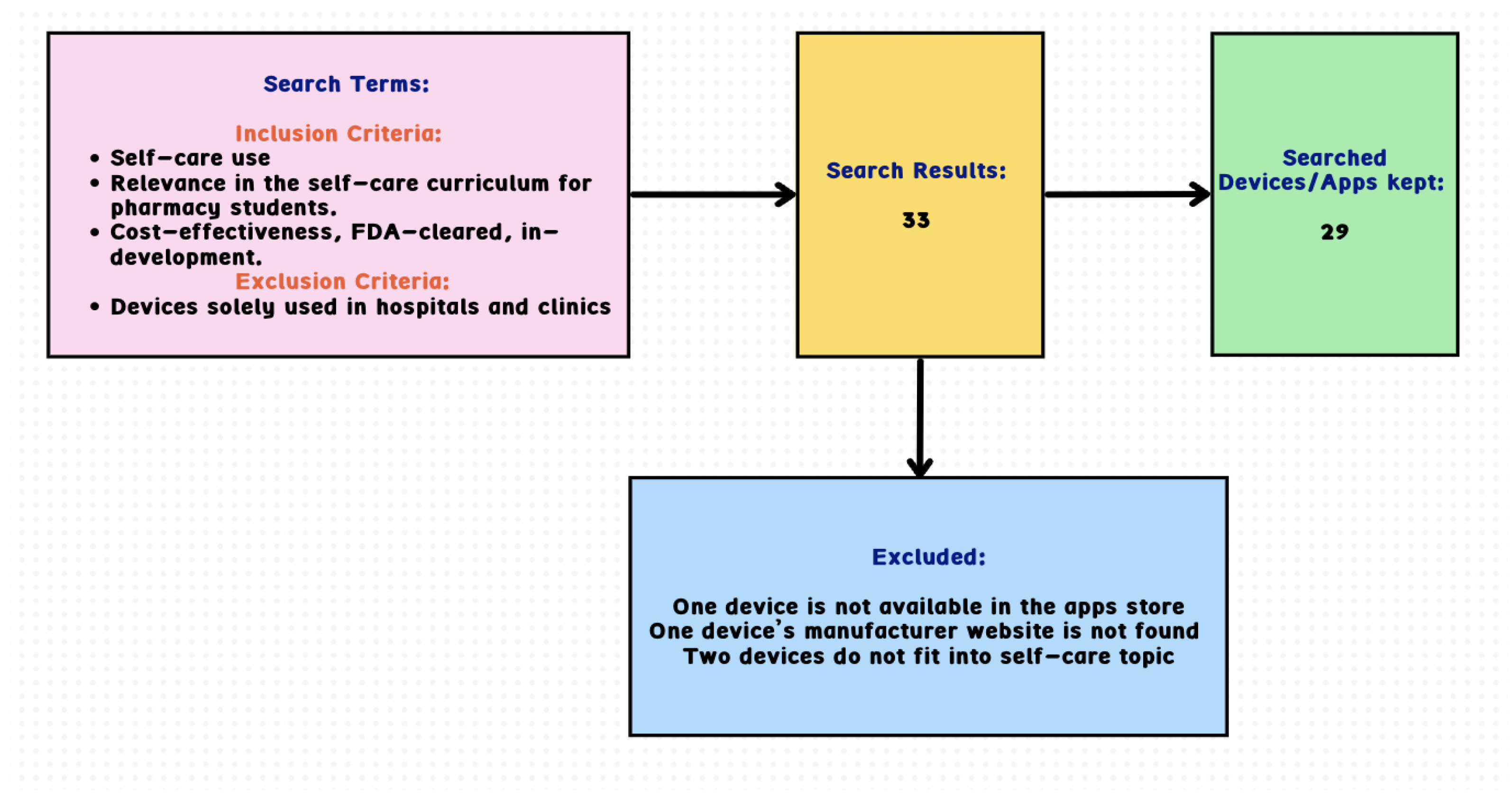
After applying the inclusion and exclusion criteria, 3 devices or applications were excluded and 29 were chosen for independent validation by a group of 13 individuals, comprising the authors, a licensed pharmacist, and other pharmacy students who had completed self-care courses.
We performed a comprehensive validation process for the digital health devices and apps, classifying them into three groups. Firstly, we assessed whether the products/apps were technologically pertinent to self-care. Subsequently, we evaluated their alignment with existing pharmacy self-care curricula. Finally, we looked for evidence of educational enhancement provided by the products/apps, for either pharmacists or patients/caregivers. Each product/app received one point if it was considered relevant to self-care topics by the validator and zero points if not. If the product was compatible with existing self-care curricula, it received one point. Additionally, if there was evidence of educational enhancement for pharmacists or patients/caregivers, it received one point. Following this validation process, all except two of the digital health products were found to be suitable for use as self-care products in educational settings for pharmacy students. Refer to Figure 1 for the inclusion and exclusion criteria for the devices and applications and the search results.
Figure 1.
Inclusion/exclusion criteria for the devices and applications and the search results.
3. Results
3.1. Self-Care Digital Health Products/Applications’ Validation
A comprehensive search of digital health products was conducted from multiple websites as part of the research to identify digital health topics for education in a self-care course.
Thirteen individuals independently rated the products and applications. Two first-year students, five second-year PharmD students, four third-year PharmD students, one pharmacist, and one pharmacy faculty participated in this validation.
Following the validation of these digital health products, all but two were found to be suitable for use as self-care products in educational settings for pharmacy students. See Table 1 for the validation results.
Table 1.
Summary of the self-care-related digital health validation results.
3.2. Summary of Digital Health Products/Applications Pertinent to Self-Care Education
The products mentioned above were categorized and grouped according to the various self-care topics they address. For a detailed breakdown of the products available under each self-care topic, refer to Table 2, Table 3, Table 4, Table 5, Table 6, Table 7, Table 8 and Table 9.
Table 2.
Screening-related devices and applications.
Table 3.
Insomnia-related devices and applications.
Table 4.
Reproductive disorder-related devices and applications.
Table 5.
Eye disorder-related devices and applications.
Table 6.
Home health/rehabilitation clinic equipment.
Table 7.
GI Disorder-related devices and applications.
Table 8.
Pediatric-related devices and applications.
Table 9.
Respiratory disorder-related devices and applications.
4. Discussion
4.1. Digital Health Devices and Applications
Within self-care courses, various digital health products—such as devices and system applications—can be utilized to aid in the learning process. Across different platforms, a number of tools have been identified in this research that are suitable for self-care courses, covering topics such as screening, insomnia, gastrointestinal (GI) disorders, reproductive disorders, eye disorders, pediatrics, respiratory disorders, home medical equipment, and applications compatible with both iOS and Android devices (Table 2, Table 3, Table 4, Table 5, Table 6, Table 7, Table 8 and Table 9). According to the World Health Organization (WHO), digital health encompasses numerous technologies and innovations, including health information technology, telehealth, health analytics, mobile health apps, digital therapeutics, artificial intelligence, blockchain, and robotics. These components work together to enhance healthcare systems and achieve the Sustainable Development Goals (SDGs) by catering to the diverse needs of individuals, healthcare providers, managers, and systems across the globe [40]. Digital health comprises a broad range of technologies designed to improve overall patient outcomes and efficiency within the healthcare system.
4.2. Incorporating Digital Health into Pharmacy Curriculum
4.2.1. Digital Health and Self-Care Education
Previous studies have confirmed that digital health provides a promising opportunity to explore and implement self-care management, but we lack sufficient digital health education in the pharmacy curriculum. Research from Italy found that community pharmacists have insufficient knowledge of digital health, which may impede their ability to assist patients effectively. This deficiency could potentially pose challenges for patients seeking self-care assistance. Additionally, a study from Turkey revealed that more than 80% of pharmacy students believe that mobile health apps enhance the quality of life for their patients. However, approximately 30% feel pharmacists have inadequate digital health knowledge [41].
It is crucial to incorporate digital health education into the pharmacy curriculum. As stated in the article “Digital Health in Pharmacy Education: Preparedness and Responsiveness of Pharmacy Programs”, the author emphasizes that pharmacists must have a clear understanding of the fundamentals of digital health technologies and know how to integrate them into their clinical practices for both pharmacists and their patients to benefit from the potential advantages of digital health fully. Therefore, it is imperative to develop a digital health curriculum that focuses on building competencies to equip students with the necessary knowledge and skills to effectively practice digital health in their future professional careers [11].
However, digital health has not yet been fully integrated into the standard pharmacy curriculum because of its relative newness and constant evolution. It is, therefore, imperative to begin identifying relevant digital health topics and incorporating them into self-care education for pharmacy students. In the paragraphs below, we explore several devices and apps that are particularly pertinent to teaching self-care courses, organized by the relevant self-care topics.
In our program, self-care courses are scheduled during the fall and spring semesters of the first-year curriculum. During the fall semester, we focus on topics such as coughs and the common cold, gastrointestinal disorders, dermatologic conditions, and insomnia. The remaining self-care topics are covered during the spring semester. We can incorporate digital health education tailored to the body systems relevant to each self-care topic. The learning outcomes of our program related to digital health encompass providing patient-centered care, promoting health and wellness, addressing potential health issues, educating patients, and safeguarding the best interests of patients. We can employ effective learning strategies for digital health education, including team-based peer-teaching, preclass preparation (such asprimer readings before lectures), case discussions, or SOAP note applications, role-playing, and observed structured clinical examination (OSCE).
Regarding wellness screening, various digital health devices and apps can monitor blood pressure and heart rate, providing valuable insight into a patient’s well-being (refer to Table 2). Price, patient friendliness, and accuracy are important when evaluating these products or apps. Wellness screenings for blood pressure and EKG through digital health devices have become increasingly popular and convenient.
Various digital health devices and applications are available to help relieve insomnia and enhance sleep quality (refer to Table 3). These tools utilize different approaches, including sleep tracking, relaxation techniques, and cognitive behavioral therapies. Devices and apps for managing insomnia include those focused on sleep sounds, relaxation, and light therapy. These digital health solutions are specifically designed to aid individuals in addressing their sleep disturbances. As future pharmacists, it is essential to recognize the significance of sleep and to incorporate these resources into discussions on self-care.
Digital health apps and devices focused on reproductive disorders are valuable resources for educating individuals dealing with fertility issues, menstrual irregularities, and other sexual health conditions (refer to Table 4). Many patients may feel uncomfortable or hesitant to discuss these sensitive issues with a healthcare provider. Including information about these resources in self-care courses is an effective way for pharmacy students to promote awareness of reproductive and sexual health early in their careers and improve patient access to these digital tools.
Digital health devices and applications related to eye disorders are crucial in empowering individuals to preserve their eye health and maintain good vision (refer to Table 5). We can significantly contribute to improved vision outcomes and overall eye health by leveraging these tools. It is important to educate pharmacy students about their pivotal role in promoting self-care for eye disorders through activities such as patient education, early detection and monitoring, medication management, and virtual consultations. Armed with this knowledge, student pharmacists can effectively aid in the early detection of eye disorders, make appropriate referrals when necessary, and help prevent vision loss.
Using home medical equipment, digital health devices, and user-friendly apps can improve patients’ quality of life. These tools help with medication schedules, physical therapy activities, and overall wellness, leading to better health outcomes and empowering patients to take control of their well-being (refer to Table 6). Integrating these technologies into the self-care curriculum can help student pharmacists stay updated on the latest advancements in home health delivery and contribute to enhancing the quality of life for their patients.
It is common for many gastrointestinal (GI) disorders to go unnoticed until they are too advanced for effective treatment. Therefore, prompt self-care and timely referral can significantly improve patient outcomes. With digital health devices and applications on the market, there are now innovative ways to bridge this gap, allowing patients to manage their GI symptoms proactively through self-care. These advanced technologies encompass symptom tracking, nutritional guidance, medication adherence, telemedicine, and treatment plans (refer to Table 7).
Recognizing the significance of pediatric digital health technologies in monitoring children’s health is crucial. These technologies empower parents and caregivers to encourage healthy behaviors, facilitate medication adherence, provide patient education, and enable telemedicine. Pharmacy students will learn to help manage children’s health by gaining knowledge in pediatric self-care and addressing the unique needs of pediatric patients, who may not always fully communicate their needs (refer to Table 8).
Digital health devices and apps for respiratory disorders integrate innovative technologies to help patients manage and monitor their conditions at home (refer to Table 9). These include symptom monitoring, medication adherence, peak flow measurement, and telehealth. Educating pharmacy students in self-care for respiratory disorders can assist in efficiently managing chronic respiratory diseases at home.
When selecting digital health products, it is important to consider that many devices require a purchase. Most products are FDA cleared; some have undergone validation or other tests to prove their accuracy and feasibility. For example, the QardioArm® device for monitoring blood pressure (Table 2) underwent a validation study, received FDA clearance, and is also eligible for FSA/HSA. These tests and verifications bolster the credibility of the product. Several other products, such as Omron Evolv®, Oura Ring®, ReCIVA®, MyndMove®, KinetiSense®, and OrCam MyEye®, have also undergone validation studies, demonstrating their ability to produce accurate data and clinical effects, ultimately enhancing the trustworthiness of these products [42,43,44,45,46,47,48].
4.2.2. Population-Based Digital Health Education
Many devices and apps are valuable tools for individuals with specific health conditions who use these products for self-care. For instance, a blood pressure monitor, or EKG device can assist patients with heart diseases by monitoring their blood pressure daily and detecting any anomalies in their heart rate that require further medical attention. Additionally, products like KinetiSense® (Table 6), a motion sensor, can detect and record the movements of patients with movement disorders for their self-care. A study has demonstrated that this motion sensor can identify irregularities in patients’ movements during medication wear-off, enabling pharmacists and clinicians to make precise adjustments to medication dosages. Moreover, apps like “Gratitude Affirmations” or “Ten Percent Happier” can support patients experiencing depressive moods, improving their mental well-being.
In self-care, developing patient communication topics around case discussions involving patients who could use digital health devices and applications is beneficial. Surprisingly, a survey revealed that less than half of pharmacy schools currently include digital health education in their curriculum [11]. Furthermore, the extent of coverage varies widely, with some schools providing just one to two lectures per academic year and others offering more comprehensive modules or courses. This indicates a significant educational gap that needs to be addressed in digital health.
4.2.3. Challenges with Incorporating Digital Health in Self-Care Pharmacy Education and Potential Solutions
Education is crucial in developing students’ competencies and enhancing patient care. However, integrating topics related to digital health into the pharmacy curriculum poses notable challenges.
One significant challenge is the lack of standardized approaches for incorporating digital health into existing curricula. The wide variety of digital devices and applications, coupled with the fast pace of technological advancement, presents a challenge for pharmacy education to stay abreast of the latest innovations. Additionally, the diverse backgrounds of pharmacy students may result in varying levels of understanding of digital technologies. These factors contribute to the significant challenge of creating tailored educational experiences that ensure student engagement and practical learning.
Efforts to integrate digital health into pharmacy curricula date back to 2016. One study outlined a well-structured educational intervention designed to train student pharmacists in navigating this field. The program included a web-based lecture and an interactive workshop in which students were taught how to find, evaluate, and utilize medical apps. At the end of the course, students reported significant improvements in their ability to find, evaluate, and use medical apps in patient care. They also expressed high satisfaction with the learning experience [49].
When considering curriculum integration, it is important to consider the logistics of incorporating digital health into self-care courses and other parts of the pharmacy curriculum. It is crucial to avoid overwhelming students and to maintain the focus on core training. A recent study, in 2023, suggested strategies for integrating digital health throughout the pharmacy curriculum, examining the impact of this integration over time. The intervention took place over an academic year. It involved integrating digital health concepts into an existing required course—a weekly case-based, discussion-oriented conference series alongside therapeutic courses. Students were given a case and prework related to digital health topics each week before the interactive learning session. The digital health topics discussed included wearable health technology, mobile health apps, sensor-enabled medication devices, telehealth, and electronic health records. The discussion-oriented nature of the case conference made it possible to incorporate digital health without adding extra teaching hours to the curriculum and encouraged active student participation. Overall, the intervention significantly increased students’ familiarity, comfort, and knowledge regarding digital health [50]. This approach can serve as a model for other pharmacy programs.
Another obstacle is the limited number of qualified faculty with expertise in digital health. There is an evident shortage of faculty with the experience and knowledge to advance digital health education on a larger, formal scale. Half of the faculty surveyed identified the lack of experts as the primary obstacle to integrating digital health into the pharmacy curriculum [11]. To overcome this challenge, developing train-the-trainers programs focused on equipping and supporting faculty with the necessary skills and knowledge in digital health is essential. This will enable them to effectively teach and integrate digital health topics into the existing curriculum.
One other challenge we face is managing the allocation of class lecture time. For instance, while most current digital health products and applications focus on self-care wellness screening, insufficient class time is available to delve deeply into this aspect of digital health. Our self-care wellness screening module consists of five hours of didactic instruction, four hours of practical training, and a one-hour hands-on assessment, totaling ten hours of class time. Therefore, as mentioned earlier, the most effective learning strategies, without increasing additional teaching hours, are likely to involve team-based peer-teaching, independent primer readings outside the classroom, case discussions, SOAP note application, role-playing, or OSCEs.
Moreover, pharmacy institutions can implement various approaches, such as interprofessional collaboration, practical application, and lifelong learning strategies. For example, as an interprofessional education opportunity, pharmacy students can collaborate with peers from other health disciplines to create posters or deliver presentations on topics related to digital health devices and applications. Using real-world scenarios, practical assessments can offer practical training on various digital health concepts. Lastly, fostering student pharmacists’ participation in emerging educational opportunities and professional networking can bolster their academic achievement, life-long learning, and career advancement.
4.3. Drawbacks of Digital Health
Integrating digital technologies into the field of digital health offers numerous advantages, but it also presents several drawbacks and challenges, particularly related to data policies and access to personal information. These challenges can be broadly categorized into privacy concerns, regulatory issues, data security, and digital literacy. Privacy concerns may involve data sensitivity and consent management, while regulatory issues may encompass compliance and approval processes. Data security concerns include cybersecurity threats and data integrity issues. Additionally, individuals may inevitably encounter challenges when learning to use digital health devices and applications. While digital health technologies have demonstrated their ability to enhance healthcare delivery and improve patient outcomes, it is important to consider these aformentioned drawbacks and challenges.
4.4. AI and the Future
In the era of digital health, integrating AI technology into self-care courses can provide students with a profound understanding of various digital health information and telehealth topics, which can be valuable in their future careers, especially in pharmacy. By introducing students to a wide array of digital health devices and applications early in their education, they can gain a comprehensive understanding of these tools and their potential in patient education, medication management, telehealth, and remote monitoring. AI-powered devices and tools can play a crucial role in helping pharmacy students acquire the skills and knowledge needed to excel as healthcare providers in the future.
This research focuses on topics pertinent to digital health in self-care education. As a future educational direction, educating student pharmacists about integrating data policies for digital health technologies is crucial. Understanding how data from these tools can support research and the development of new tools to alert patients and healthcare providers is also important. The curriculum should cover how artificial intelligence can assist patients by tracking and analyzing physical activities and disease progression, educating them about proper nutrition and changing unhealthy eating habits, creating personalized wellness programs, and providing virtual counseling.
4.5. Study Limitations
There are several limitations associated with integrating digital health into self-care courses. Firstly, since the concept of digital health is relatively new, limited research is available, leading to varying perspectives and potential biases. Furthermore, the broad and rapidly evolving nature of digital health, coupled with the wide range of applications and devices, makes it challenging to establish a gold standard for educational strategy. Realistically, we can only cover the digital health concepts most relevant to the self-care curriculum and may not be able to include all products. Lastly, it remains uncertain whether older users or individuals with poor health literacy will find the digital health products discussed in this paper easy to use or effective.
There is a need for standardized ratings and unified categorization for digital health devices or apps. The absence of such standards may result in a biased selection of these devices or apps. Furthermore, the limited number of volunteers conducting our validations may also introduce some level of bias.
In our research, our primary goal was to pinpoint potential applications and devices to be included in pharmacy self-care courses. However, we could not conduct practical pilot testing of these products because of financial constraints. We are aware of this limitation and suggest that future studies involve hands-on testing of these applications and devices once funding is secured to obtain the necessary products.
5. Conclusions
In summary, it is crucial to identify pertinent digital health topics for inclusion in self-care courses at pharmacy schools to equip student pharmacists with the necessary skills for the rapidly advancing field of digital health. Integrating these topics will enhance their capacity to deliver exceptional, patient-centered care and prepare them for emerging self-care technologies.
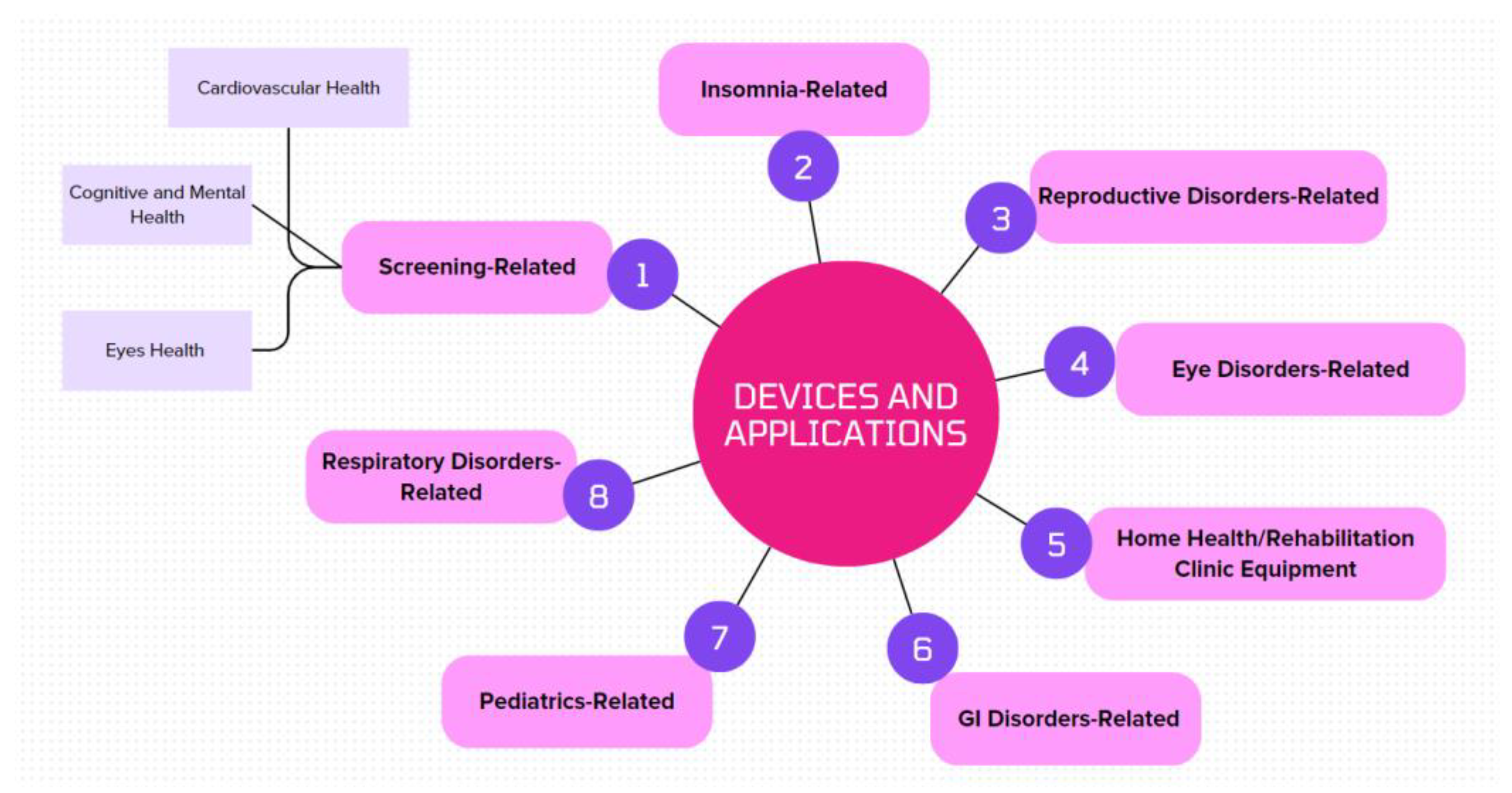
The devices and applications discussed in this research are examples that can be integrated into a pharmacy self-care curriculum, covering various health and wellness areas such as insomnia, gastrointestinal disorders, reproductive disorders, eye disorders, pediatrics, respiratory disorders, and home medical equipment and applications (refer to Figure 2). These topics are typically covered in introductory pharmacy school courses focusing on self-care. It is important to note that while most available devices and applications are related to cardiovascular health and wellness screenings, there are also valuable tools for improving sleep quality, addressing fertility and menstrual issues, maintaining eye health, and early detection of gastrointestinal disorders.
Figure 2.
Summary of all self-care-related devices and applications.
Most of these devices and applications are user-friendly and easy to operate. They can be utilized across different disease topics and age groups. As discussed in Section 4.2.1 and Section 4.2.2, most of these devices are FDA cleared, and some have undergone validation or randomized controlled trial studies to demonstrate their accuracy, efficacy, and feasibility, such as Omron Evolv®, QardioArm®; Oura Ring®, ReCIVA®, MyndMove®, KinetiSense®, and OrCam MyEye®.
In light of the diverse range of devices and applications, each offering unique functionality and complexity, combined with the rapid pace of technological advancement and the lack of faculty experts, lecture hours, and standardized guidelines for integrating digital health into pharmacy education, there are significant challenges to implementing these important topics in the current curriculum. To address these challenges, developing strategies for creating tailored educational experiences, promoting student engagement and effective learning, and staying current with health technologies is crucial.
While digital health use is becoming popular, some limitations prevent it from being a perfect tool for self-care. Concerns about personal information and data security, as discussed in Section 4.3, persist. In addition, digital literacy could challenge specific populations in adapting to this new and rapidly evolving concept. Given the broad nature of self-care, establishing a universally applicable standard for devices and apps to guarantee accuracy and effectiveness may be a formidable task.
Our review encompassed many digital health devices and apps in self-care and their relevance for patient use across different disease states. It is important to note that our research did not specifically focus on practical implications. This sets the stage for future researchers to explore how effectively patients utilize digital health devices and apps in real-world settings and how this relates to pharmacy curriculum coverage.
Furthermore, as discussed in Section 4.4, future research in digital health may include artificial intelligence, telemedicine, portable technology, digital therapeutics, and data security. As digital health technology continues to improve, ongoing research is needed to develop the best strategies for incorporating relevant digital health in self-care education and define the best student-learning strategies.
Author Contributions
J.C.W., L.H., T.B., and F.A.C. contributed to the study design, article search, data collection and analysis, and manuscript writing of this review. All authors have read and agreed to the published version of the manuscript.
Funding
This research received no external funding.
Institutional Review Board Statement
This project does not meet the definition of human subject research under the purview of the IRB, according to federal regulations.
Informed Consent Statement
Not applicable.
Data Availability Statement
Information regarding products and applications was retrieved from publicly available information on the manufacturers’ websites or the Google App Store.
Acknowledgments
This research received no specific grant from funding agencies in the public, commercial, or not-for-profit sectors. We thank Melody Tseng and Pauline Ton for their help with the revision. We thank Shannelle Li, Kali Wong, Kalen Cooper, Sylvia Perez, Philip McMichael, Anna Tran, Lauren Ton, and Yikang Yang for validating the digital health products and applications.
Conflicts of Interest
The authors declare no conflicts of interest.
References
- Fu, J.; Wang, H.; Na, R.; Jisaihan, A.; Wang, Z.; Ohno, Y. Recent advancements in digital health management using multi-modal signal monitoring. Math. Biosci. Eng. 2023, 20, 5194–5222. [Google Scholar] [CrossRef] [Scilit] [PubMed]
- Butcher, C.J.; Hussain, W. Digital healthcare: The future. Future Healthc. J. 2022, 9, 113–117. [Google Scholar] [CrossRef] [Scilit] [PubMed]
- Brands, M.R.; Gouw, S.C.; Beestrum, M.; Cronin, R.M.; Fijnvandraat, K.; Badawy, S.M. Patient-Centered Digital Health Records and Their Effects on Health Outcomes: Systematic Review. J. Med. Internet Res. 2022, 24, e43086. [Google Scholar] [CrossRef] [Scilit] [PubMed]
- Aldughayfiq, B.; Sampalli, S. Digital Health in Physicians’ and Pharmacists’ Office: A Comparative Study of e-Prescription Systems’ Architecture and Digital Security in Eight Countries. OMICS A J. Integr. Biol. 2020, 25, 102–122. [Google Scholar] [CrossRef] [Scilit] [PubMed]
- Nageshwaran, G.; Harris, R.C.; Guerche-Seblain, C.E. Review of the role of big data and digital technologies in controlling COVID-19 in Asia: Public health interest vs. privacy. Digit. Health 2021, 7, 205520762110029. [Google Scholar] [CrossRef] [Scilit] [PubMed]
- McGraw, D.; Mandl, K.D. Privacy protections to encourage use of health-relevant digital data in a learning health system. NPJ Digit. Med. 2021, 4, 2. [Google Scholar] [CrossRef] [Scilit] [PubMed]
- WHO. Digital Health. Available online: https://www.who.int/health-topics/digital-health/#tab=tab_1 (accessed on 29 May 2024).
- Australian Digital Health Agency. Available online: https://www.digitalhealth.gov.au (accessed on 29 May 2024).
- FDA. FDA What is Digital Health? Available online: https://www.fda.gov/medical-devices/digital-health-center-excellence/what-digital-health (accessed on 29 May 2024).
- Crilly, P.; Kayyali, R. A Systematic Review of Randomized Controlled Trials of Telehealth and Digital Technology Use by Community Pharmacists to Improve Public Health. Pharmacy 2020, 8, 137. [Google Scholar] [CrossRef] [Scilit] [PubMed]
- Mantel-Teeuwisse, A.K.; Meilianti, S.; Khatri, B.; Yi, W.; Azzopardi, L.M.; Acosta Gómez, J.; Gülpınar, G.; Bennara, K.; Uzman, N. Digital health in pharmacy education: Preparedness and responsiveness of pharmacy programmes. Educ. Sci. 2021, 11, 296. [Google Scholar] [CrossRef] [Scilit]
- Alivecor. Alivecor Home. Available online: https://alivecor.com (accessed on 29 May 2024).
- OMRON Healthcare. Health, Wellness & Fitness Products by OMRON Healthcare. Available online: https://omronhealthcare.com (accessed on 29 May 2024).
- Qardio. Qardio—State of the Heart Technology. Available online: https://www.qardio.com (accessed on 29 May 2024).
- ASCVD Risk Estimator Plus. Available online: https://cvquality.acc.org/clinical-toolkits/ascvd-risk-estimator (accessed on 29 May 2024).
- Livongo. Available online: https://www.livongo.com (accessed on 29 May 2024).
- Omada Health. San Francisco (CA): Omada Health: The Digital Care Platform. Omada Health. 2023. Available online: https://www.omadahealth.com/platform (accessed on 24 May 2024).
- Lumosity. Lumosity Brain Training: Challenge & Improve Your Mind. Available online: https://www.lumosity.com (accessed on 29 May 2024).
- Neurotrack Technologies Inc. Neurotrack. Available online: https://neurotrack.com (accessed on 29 May 2024).
- 100 Gratitude Affirmations for Building a Thankful Life. Gratitude—The Life Blog. 2021. Available online: https://blog.gratefulness.me/gratitude-affirmations/amp (accessed on 29 May 2024).
- Ten Percent Happier: Mindfulness Meditation Courses with Dan Harris and Joseph Goldstein. Ten Percent Happier. Available online: https://www.tenpercent.com (accessed on 29 May 2024).
- Apple. Apple. iOS—Health. Available online: https://www.apple.com/ios/health (accessed on 29 May 2024).
- Neurosync Inc. NeuroSync. Available online: https://www.neurosync.health (accessed on 29 May 2024).
- The Best Adjustable Firmness Mattress. Isense. Available online: https://www.myisense.com (accessed on 29 May 2024).
- Oura Ring. Oura Ring: The most Accurate Sleep and Activity Tracker. Oura Ring. 2022. Available online: https://ouraring.com (accessed on 29 May 2024).
- Sleepio. Sleepio. 2019. Available online: https://www.sleepio.com (accessed on 29 May 2024).
- CDC Contraception App. Reproductive Health. Available online: https://www.cdc.gov/reproductive-health/hcp/contraception-guidance/app.html (accessed on 29 May 2024).
- Evvy—Vaginal Microbiome Test & Care. Available online: https://www.evvy.com (accessed on 29 May 2024).
- OvuSense. OvuSense Period & Ovulation Tracker: Predict & Confirm Fertile Days. Available online: https://www.ovusense.com/us (accessed on 21 March 2024).
- OrCam Technologies. Empowering Accessibility with AI. Available online: https://www.orcam.com/en-us/home (accessed on 29 May 2024).
- Ophthalytics. Ophthalytics—Our Vision Is Saving Vision. Available online: https://www.ophthalytics.com (accessed on 29 May 2024).
- Kinetisense. Revolutionary Functional Movement Technology. Available online: https://www.kinetisense.com (accessed on 29 May 2024).
- MyndMove. Neuphysio. Available online: https://www.neuphysio.com/myndmove (accessed on 21 March 2024).
- Owlstone Medical. Owlstone Medical—The Home of Breath Biopsy. Available online: https://www.owlstonemedical.com (accessed on 29 May 2024).
- GiHealth. Symptom Tracker App|GI Monitor, Symptom Diary & IBS App|MyGiHealth. Available online: https://mygi.health/app (accessed on 29 May 2024).
- Hearing Test App|Hearing Loss & Auditory Processing Issues. Available online: https://www.soundscouts.com (accessed on 21 March 2024).
- GoCheck Kids. GoCheck Kids—Advancing Early Detection for Better Outcomes. Available online: https://www.gocheckkids.com (accessed on 21 March 2024).
- Smoke Free. Available online: https://smokefreeapp.com (accessed on 29 March 2024).
- Health Horizon. WearOptimo Microwearable Devices. Available online: https://thehealthhorizon.com/showcases/innovations/4b3ae5d3-22a6-4a97-aef8-d5397da8532c (accessed on 29 May 2024).
- WHO. Digital Health Research. Available online: https://www.who.int/observatories/global-observatory-on-health-research-and-development/analyses-and-syntheses/digital-health/background#:~:text=Digital%20health%20research&text=In%20recent%20years%2C%20 (accessed on 21 March 2024).
- FIP Digital Health in Pharmacy Education Developing a Digitally Enabled Pharmaceutical Workforce 2021 FIP Development Goals. Available online: https://www.fip.org/file/4958 (accessed on 31 May 2024).
- Holden, K.A.; Ibrahim, W.; Salman, D.; Cordell, R.; McNally, T.; Patel, B.; Phillips, R.; Beardsmore, C.; Wilde, M.; Bryant, L.; et al. Use of the ReCIVA device in breath sampling of patients with acute breathlessness: A feasibility study. ERJ Open Res. 2020, 6, 00119–2020. [Google Scholar] [CrossRef] [Scilit] [PubMed]
- Cao, R.; Azimi, I.; Sarhaddi, F.; Niela-Vilen, H.; Axelin, A.; Liljeberg, P.; Rahmani, A.M. Accuracy Assessment of Oura Ring Nocturnal Heart Rate and Heart Rate Variability in Comparison With Electrocardiography in Time and Frequency Domains: Comprehensive Analysis. J. Med. Internet Res. 2022, 24, e27487. [Google Scholar] [CrossRef] [Scilit]
- Mazoteras-Pardo, V.; Becerro-De-Bengoa-Vallejo, R.; Losa-Iglesias, M.E.; Martínez-Jiménez, E.M.; Calvo-Lobo, C.; Romero-Morales, C.; López-López, D.; Palomo-López, P. QardioArm Blood Pressure Monitoring in a Population With Type 2 Diabetes: Validation Study. J. Med. Internet Res. 2020, 22, e19781. [Google Scholar] [CrossRef] [Scilit] [PubMed]
- Topouchian, J.; Hakobyan, Z.; Asmar, J.; Gurgenian, S.; Zelveian, P.; Asmar, R. Clinical accuracy of the Omron M3 Comfort® and the Omron Evolv® for self-blood pressure measurements in pregnancy and pre-eclampsia—Validation according to the Universal Standard Protocol. Vasc. Health Risk Manag. 2018, 14, 189–197. [Google Scholar] [CrossRef] [Scilit]
- Anderson, K.D.; Korupolu, R.; Musselman, K.E.; Pierce, J.; Wilson, J.R.; Yozbatiran, N.; Desai, N.; Popovic, M.R. Multi-center, single-blind randomized controlled trial comparing functional electrical stimulation therapy to conventional therapy in incomplete tetraplegia. Front. Rehabil. Sci. 2022, 3, 995244. [Google Scholar] [CrossRef] [Scilit]
- Hssayeni, M.D.; Burack, M.A.; Jimenez-Shahed, J.; Ghoraani, B. Assessment of response to medication in individuals with Parkinson’s disease. Med. Eng. Phys. 2019, 67, 33–43. [Google Scholar] [CrossRef] [Scilit] [PubMed]
- Nisanova, A.; Barrios, L.; Chokshi, T.; Mannis, M.; Bloch, O.; Liu, Y.A. A Feasibility Study on a Portable Vision Device for Patients with Stroke and Brain Tumours. Neuro-Ophthalmology 2023, 48, 3–12. [Google Scholar] [CrossRef] [Scilit] [PubMed]
- Rodis, J.; Aungst, T.D.; Brown, N.V.; Cui, Y.; Tam, L. Enhancing pharmacy student learning and perceptions of medical apps. JMIR mHealth uHealth 2016, 4, e55. [Google Scholar] [CrossRef] [Scilit] [PubMed]
- Darnell, J.C.; Lou, M.; Goldstone, L.W. Evaluating change in student pharmacists’ familiarity, attitudes, comfort, and knowledge as a result of integrating digital health topics into a case conference series: Cohort study. JMIR Med. Educ. 2023, 9, e43313. [Google Scholar] [CrossRef] [Scilit]

Disclaimer/Publisher’s Note: The statements, opinions and data contained in all publications are solely those of the individual author(s) and contributor(s) and not of MDPI and/or the editor(s). MDPI and/or the editor(s) disclaim responsibility for any injury to people or property resulting from any ideas, methods, instructions or products referred to in the content. |
© 2024 by the authors. Licensee MDPI, Basel, Switzerland. This article is an open access article distributed under the terms and conditions of the Creative Commons Attribution (CC BY) license (https://creativecommons.org/licenses/by/4.0/).