


Abstract
Protein therapeutics such as insulin, monoclonal antibodies, peptide hormones, cytokines, enzymes and vaccine antigens have revolutionized the treatment of chronic and complex diseases, but are currently constrained by adherence issues with frequent injection, cold-chain requirements and their intrinsic vulnerability to structural degradation. Dissolving microneedle (DMN) patches have recently been identified as a transdermal platform which allows minimally invasive, self-administered drug delivery and solid-state stabilization of fragile biologics. However, it is a significant challenge to keep the structural integrity and biological activity of proteins when developing the formulation, fabricating the microneedles, drying, storing the fabricates, and applying them to the skin. The mechanisms of molecular degradation (e.g., unfolding, aggregation, fibrillation, oxidation, deamidation, interface-induced denaturation) and stabilization (e.g., water replacement, vitrification, preferential hydration, and molecular confinement) all contribute to the stability of proteins in DMN matrices. Other processes also modulate these processes, such as polymer–protein interactions, residual moisture, glass-transition behavior, molecular mobility and microenvironmental physicochemical conditions. The rational engineering of polymer matrices, excipients systems and processing conditions therefore is the key to preserving a higher-order protein structure while providing sufficient mechanical properties, quick dissolution, higher drug loading efficiency and reproducible intradermal delivery. In recent years, a wide range of multifunctional biomaterials, hybrid polymer architectures, carrier-free insulin formulations and stimuli-responsive matrices have significantly broadened the design space for insulin and other biologic formulations that enables their stabilization during ambient and accelerated storage. Moreover, recent developments in biophysical characterization, solid-state analytical methods and computational modeling have helped to gain insight into formulation–structure–function relationships, and accelerated the rational optimization of protein-loaded DMN systems. Yet, there are still many difficulties to overcome for long-term stability, scalable manufacturing, quality-by-design implementation, regulatory standardization and global deployment. By combining mechanistic protein biophysics, pharmaceutical formulation and translational manufacturing, a platform for robust, cold-chain independent dissolving microneedles with a wide range of clinical applications across next-generation biologic therapeutics can be built.
1. Introduction
The high specificity, potent biological activity and selective modulation of complex biological pathways of protein and peptide biologics make them indispensable components of modern therapeutics [1]. Recombinant insulin is a classic example that changed diabetes management and marked the era of recombinant protein therapeutics. Another example is the glucagon-like peptide-1 (GLP-1) receptor agonists that have broadened the scope of metabolic therapy beyond glycemic control to obesity and cardiovascular risk reduction. Monoclonal antibodies (mAbs) have also transformed the treatment of cancer, autoimmune and inflammatory disorders, and infectious diseases, while cytokines, recombinant enzymes, peptide hormones, and vaccines have expanded the uses of the biologic beyond immunomodulation to enzyme replacement and endocrine disease prevention. These modalities are now increasingly becoming so important in clinical practice that over 200 different therapeutic peptides and proteins have now been approved by the Food and Drug Administration, and the worldwide protein and peptide therapeutics market is estimated to be worth hundreds of billions of dollars [1]. Recent developments in protein engineering that include bispecific antibodies, nanobodies, fusion proteins and stabilized peptide analogs are further broadening the therapeutic potential of biologics by enhancing their specificity, potency, pharmacokinetics, and functional versatility [2]. Despite these advances, however, clinical use of protein therapeutics is still limited because of basic problems in administration, stability and storage.
Proteins and peptides, unlike most small molecule drugs, are not typically used by the oral route of administration because they are large molecules, hydrophilic, poorly permeable to the gastrointestinal system, and prone to degradation in the gastrointestinal tract [3]. As such, many biologics such as insulin and monoclonal antibodies are still injected subcutaneously or intravenously [3]. Parenteral administration may be used to ensure systemic exposure; however, repeated injections place a significant burden on patients who need long-term treatment. Treatment acceptability may be negatively affected by needle sticks, injection site discomfort, inconvenience and disruption of daily activity, needle phobia, pain and psychological burden associated with lifelong self-injection, which may result in missed doses and poor adherence [4]. These challenges are especially significant for diseases like diabetes where long-term exposure to the therapeutic agent is vital to maintaining disease control. Concurrently, proteins are intrinsically physiochemically fragile, making them a fundamentally novel challenge. The biological activity of these molecules relies on maintaining their higher-order structures with a delicate balance of non-covalent interactions and, in some instances, disulfide bonds [4]. Environmental stresses like temperature changes, pH changes, agitation, interfacial exposure, dehydration, oxidation, and others can cause this structural balance to be upset, resulting in unfolding, aggregation, fragmentation or chemical degradation [4]. As a result, the majority of protein therapeutics must be stored under refrigerated conditions (2–8 °C) and need an uninterrupted cold chain during manufacture, distribution, storage and patient use [4]. When combined, these factors can create the interconnected barriers of limited access, convenience, and real-world effectiveness of otherwise highly effective medicines of the biologic type [1].
These constraints have led to the emergence of new platforms for delivering therapeutics that can offer the benefit of enhanced patient convenience while still maintaining the therapeutic integrity of the biologic [1]. Of these, dissolving microneedle (DMN) patches are a more promising approach, as they offer a minimally invasive transdermal delivery system that can benefit from solid-state protein formulation. The DMNs are microscale projections created using water-soluble and biocompatible polymers that embed the therapeutic agent into the matrix of the polymer [5]. The microneedles (MNs), when applied to the skin, penetrate the stratum corneum, the main barrier to transdermal transport, and leave behind temporary entry points into the viable epidermis or upper dermis [5]. The interstitial fluid, which hydrates and dissolves the polymer matrix, releases the encapsulated therapeutic into the microenvironment of the dermis where access to the microcirculation subsequently leads to systemic absorption [5]. This enables it to avoid gastrointestinal breakdown and “first-pass” liver metabolism, as well as removing traditional “sharp waste”. Importantly, DMNs are not limited by molecular size or polarity to passively deliver hydrophilic macromolecules like insulin, peptide hormones and potentially even monoclonal antibodies [6]. Minimally invasive administration, owing to their small dimensions, also provides opportunities for self-administration and better patient adherence, potentially without patient discomfort. In addition to their delivery role, DMNs also offer a special formulation platform where biologics may be loaded into a dry polymeric matrix with the potential to decrease the mobility of the molecules and reduce water-mediated degradation, leading to better solid-state stability [6]. The composition, molecular weight, hydrophilicity, matrix structure, and geometry of the microneedles can also be optimized to achieve the desired mechanical durability, drug loading, dissolution and release profiles [6]. Therefore, DMNs are not just a means of crossing the skin but also an integrated drug–polymer–device platform where the performance of the drug and its molecular stability can potentially be engineered.
In preclinical experiments, this has been shown to be applicable to insulin and insulin analogs, both fast- and long-acting, and several DMN systems have yielded pharmacokinetic and pharmacodynamic results similar to those obtained by subcutaneous injection [7]. Other protein and peptide therapeutics, including vaccines, monoclonal antibodies, and GLP-1 receptor agonists (e.g., liraglutide and exenatide), are also candidates for DMNs [7]. The development of more complex structures such as nanoparticles, polymeric depots, multilayer constructs and stimuli-responsive matrices, in order to improve the protection of proteins, prolonged release and the therapeutic action of the protein, is being investigated. However, the ability to deliver biologic products using DMNs depends on the basic premise that the therapeutic molecule must not only be structurally intact and biologically active during the formulation and delivery process, but that it must also be delivered intact and biologically active to the skin.
The stability of protein is thus one of the most crucial challenges for the development and translation of biologic-loaded DMNs [8]. Conformationally flexible macromolecules, such as therapeutic proteins, have a highly delicate network of molecular interactions that hold their native structure in place, and are thus especially vulnerable to the stresses that occur during the manufacture and application of a DMN [8]. During formulation, mixing, micromolding, and mold filling, proteins can be subjected to shear stress, air–liquid and solid–liquid interfacial adsorption, changes in local pH or ionic strength, and polymers interacting with protein chains [8]. The subsequent drying is especially difficult, since removal of the protein hydration shell may lead to disruption of hydrogen-bonding networks and affect molecular packing, which may cause unfolding, aggregation, oxidation, or deamidation [8]. The stability challenge is not over when the microneedle has been fabricated. Storage conditions may also include residual moisture, high temperature, exposure to oxygen and humidity which can lead to the physical or chemical degradation of the polymers by giving rise to molecular mobility within the polymer matrix [9]. Thus, polymer glass transition behavior and water uptake become important parameters to consider with regard to long-term stability. After topical application, the skin’s dry, immobilized solid-state environment would be rapidly followed by an aqueous physiological environment, creating another conformational stress prior to systemic absorption [9]. In addition, there are analytical challenges when assessing protein integrity in polymer-rich formulations of DMNs; requiring a combination of higher-order structure, aggregation, chemical modification and biological activity [9].
These challenges suggest a new paradigm: protein stability is not just the last quality-control evaluation, but the key design component that should be optimized from design to development to manufacturing. It is essential to have a comprehensive knowledge of protein–polymer interactions, polymer physicochemical properties, excipient-mediated protein stabilization, processing conditions, drying behavior, residual water content, storage conditions, and dissolution behavior [9]. Protein structure can be stabilized during dehydration by using stabilizing excipients like sugars and polyols; molecular immobilization and water replacement by an appropriate selection of polymers can help to stabilize the protein. The use of controlled drying protocols, optimization of the micromolding processes, the introduction of multilayer or compartmentalized architectures, and solid-state stabilization strategies can further reduce process-induced damage while preserving the mechanical integrity and dissolution properties required for successful skin insertion [9]. The key hurdle is thus to find an optimum balance between the protein structural integrity, payload loading, mechanical strength of microneedles, dissolution rate, manufacturing repeatability, and therapeutic bioavailability.
In this context, with the objective of bridging the gap in the existing literature, this review focuses on protein stability as a product-defining attribute throughout the entire dissolving microneedle lifecycle. The mechanical relationships of protein degradation to polymer–protein interactions, formulation composition, processing conditions, mechanical performance and biological activity are emphasized. The review also classifies the evidence derived from physicochemical characterization, in vitro biological testing, animal studies, and human studies to highlight where mechanistic understanding has led to clinically relevant performance. The selected model biologic, insulin, is a protein whose structural and stability properties are well-known, and the data gathered from the other proteins and peptides are regarded as generalizing the applicability and the limits of the proposed principles of stabilization.
2. Mechanistic Principles of Protein Stability in Dissolving Microneedles
2.1. Protein Structure and Stability
The biological activity of therapeutic proteins and peptides, such as insulin, is determined by their three-dimensional architecture. This architecture is presented as a structural hierarchy, comprising primary, secondary, tertiary and quaternary, with each playing a role in conformational integrity, thermodynamic stability, and finally the bioactivity. The importance of preserving the structure of the DMN patch in the formulation process is highlighted by the fact that disruption at any stage during the fabrication, drying, storage or dissolution of the DMN can eliminate or reduce pharmacological activity [8].
2.1.1. Structural Hierarchy
The primary structure is simply the sequence of amino acids that are covalently joined by peptide bonds. This sequence is genetically programmed and is the lowest common denominator of all higher order folding. Minor chemical changes (deamidation, oxidation of methionine or cysteine residues, or hydrolysis) change the primary sequence and can be extended to the structural instability of the sequence downstream. The DMNs’ main structure is usually very robust to mild aqueous processing, but prolonged storage conditions may lead to covalent degradation pathways, depending on the presence of excipients that may react with the product and/or moisture and pH [8].
The secondary structure is the repeating pattern of hydrogen bonding that occurs in the polypeptide backbone, typically α-helices and β-sheets (or β-strands). Intramolecular hydrogen bonds between carbonyl oxygen and amide hydrogen atoms stabilize these motifs and they are extremely sensitive to variations in hydration, temperature and interfacial stress. Far-UV circular dichroism (CD) spectroscopy is a standard technique used to follow the content of the secondary structure; loss of helical signal or increase in random-coil character is a sensitive and early sign of perturbation during DMN casting and drying [10].
The tertiary structure is the three-dimensional shape of a single polypeptide chain of a protein. Held together by a set of non-covalent interactions—the hydrophobic burial of non-polar side chains, hydrogen bonds, salt bridges, and van der Waals contacts—and, in many cases, covalent disulfide bridges [8]. The tertiary structural integrity is an important component of protein stability in microneedle-based delivery systems. Native tertiary conformation cannot be inferred from protein structure preservation, including protein content, molecular size, or secondary structure; thus, conformational characterization should be included as part of the study when characterizing the stability of protein-loaded microneedles. This is especially important since the native conformation of proteins can be disrupted by stresses that may occur during fabrication, such as drying, drying out, exposure to the interface, interaction with organic solvents, and emulsification [8]. This phenomenon has been reported directly in microneedle systems. In a study, the intrinsic fluorescence spectroscopic profile of hyaluronan-based dissolving microneedles filled with IgG was also not detectably different from the control IgG, having the same emission maximum, suggesting that the tertiary structure of IgG was not altered during microneedle preparation [11]. Likewise, Kim et al. (2017) showed that the conditions of fabrication can significantly affect the tertiary structure of bovine serum albumin (BSA) in microneedles made of PVA and PLGA [12]. Intrinsic fluorescence measurements showed that the conformation of BSA was better retained in the fabricated samples by the spray method, while the samples that had been vacuum-casted and emulsified showed a reduction in fluorescence intensity and sometimes a shift in the fluorescence maximum, consistent with the disruption of the native protein conformation [8,12]. The findings emphasize the need to not only consider protein recovery and/or aggregation in microneedle formulations, but also to consider protein stability with regard to tertiary structural integrity, which is best achieved through appropriate conformational analyses, such as intrinsic fluorescence spectroscopy and, if applicable, complementary spectroscopic techniques [8,12].
The evaluation of tertiary structural integrity can be done by complementary methods like near-UV circular dichroism, intrinsic fluorescence spectroscopy, and differential scanning calorimetry, which give information about protein conformation and thermal behavior. The principles of protein stabilization during dehydration also apply to DMN systems, where the protein can be stabilized or destabilized by the transfer from an aqueous, hydrated environment to a dried polymeric matrix, depending on the formulation composition and processing conditions [8]. Changes in molecular mobility, temperature, residual water, and interfacial conditions during drying can affect the conformational stability of proteins, and using water-replacement and glass-forming stabilizers like trehalose and sucrose can help preserve the protein structure by partially replacing protein–water interactions and reducing its mobility in the dry state [13]. However, the protection provided by individual saccharides may not always be the same and could be related to the protein, stabilizer, formulation and drying method. For instance, Jovanović et al. (2006) have shown that sucrose and trehalose had different effect on protein stability during supercritical fluid drying; lysozyme and myoglobin were differently preserved in their structure [14]. The results highlight that the protection of a protein by excipients needs to be assessed with regard to the specific protein and processing conditions and cannot be taken for granted by the presence of a specific stabilizer. Hence, the assessment of protein stability in microneedle formulations must not be restricted to the drug content or its release characteristics; it is also necessary to evaluate the stability of the protein microstructure in the formulations before and after the formulation process, storage, and reconstitution/dissolution.
The quaternary structure is the spatial organization of several folded polypeptide subunits resulting in a functional oligomer (homomeric or heteromeric). Examples of this are the insulin hexamer (bound to zinc ions) or antibody–antigen complexes. Subunit association and dissociation may lead to the aggregation or loss of cooperative function. However, in solid-state DMN formulations, limited molecular mobility usually means that the quaternary assemblies do not break up [15].
These hierarchical levels are all at the same time thermodynamically coupled: the free-energy landscape of a protein is determined by the combined effect of primary-sequence constraints, secondary-structure propensity, tertiary packing and quaternary interfaces. The native state of the protein has minimum free energy under physiological conditions, so that any process that increases energy of the native state or decreases the energy barrier for unfolding and/or aggregation can cause an irreversible loss of structure [16].
2.1.2. Relationship Between Structure and Bioactivity
A native higher-order structure is essential for bioactivity. The exact three-dimensional arrangement of important residues that is only achieved by correct folding determines the functional efficacy of a therapeutic protein, whether it be binding to a receptor, catalytic activity or immunological recognition, as well as its binding to certain other proteins (in the case of a correctly folded tertiary and, where applicable, quaternary structure) [8]. Unfolding or misfolding exposes hydrophobic patches that promote aggregation and neo-epitopes that enhance immunogenicity, or abolishes the stereochemical complementarity needed for target engagement [8].
This relationship between structure and function is evident in empirical systems of the DMN. Optimally formulated DMNs of insulin, lysozyme, and monoclonal antibodies exhibited CD spectra that were close to that of their respective solution reference spectra, correlating with the retention of their respective pharmacological activities, including glucose-lowering potency, enzymatic activity or antigen-binding affinity. In contrast, formulations that undergo high temperatures, extreme drying or inadequate stabilizers show measurable changes in their secondary and tertiary structure, which correlates with decreased bioactivity [10].
Two complementary stabilization mechanisms are at work in the solid state of a DMN matrix. According to the vitrification hypothesis, the high-viscosity glassy polymer matrix entraps the protein, kinetically limiting the protein conformational changes and suppressing molecular motions responsible for unfolding and/or aggregation [8]. The water-replacement hypothesis suggests that the drying-induced loss of the hydration shell should be replaced by the addition of water-replacement agents (otherwise known as excipients such as sugars or polyols) to preserve the native hydrogen-bond network. Both mechanisms are used in contemporary formulations of DMNs to ensure structural stability during fabrication and storage, often enabling cold-chain independent stability for several months [8].
Therefore, understanding protein hierarchical structural organization and the physicochemical stresses of the DMN processing offers rational grounds for further polymer selection, excipient engineering and process optimization strategies for the delivery of bioactive insulin and other biologics by DMN patches.
2.2. Stress Landscape Throughout the DMN Lifecycle
Protein therapeutics incorporated into DMN patches are subject to a continuum of physicochemical stresses ranging from formulation and micromolding to drying, storage, skin insertion and rehydration. In contrast to typical injectable protein formulations, where stability is mostly tested in solution or during lyophilized storage, the DMNs subject the proteins to multiple cycles of transitions between aqueous, concentrated, dehydrated, glassy, and rapid rehydration. Such transition can cause disruption of the equilibrium between native and partially unfolded or aggregated protein states [17,18]. Therefore, protein stability in DMNs must be considered as a property that varies over the lifetime of a drug product, depending on formulation composition, protein–polymer interactions, interfacial exposure, water activity, temperature, humidity, oxygen, mechanical processing, and rehydration kinetics [18]. Importantly, protein concentration does not provide enough information to indicate product quality, as small changes in the protein conformation, chemical modification, or aggregation may not lead to a noticeable decrease in protein concentration. The end goal is thus to ensure the structural integrity, chemical purity, biological activity, and a reproducible dose delivery throughout the entire DMN lifecycle [17,18,19].
Figure 1 illustrates the major formulation, manufacturing, drying, storage, and skin-insertion stresses encountered throughout the dissolving microneedle lifecycle and their effects on protein structural integrity, degradation, and biological activity.
Figure 1.
Mechanistic landscape of protein stability across the dissolving microneedle Lifecycle. Schematic overview of protein stability from formulation and microneedle fabrication through drying, storage, and skin insertion. Process-induced stresses can trigger protein unfolding, aggregation, fibrillation, oxidation, deamidation, and activity loss, whereas water replacement, vitrification, reduced molecular mobility, hydrogen bonding, and molecular confinement contribute to protein stabilization (Image created using Adobe Photoshop 2021 version 22.022.5.8 and Adobe Lightroom Classic version 10.1.2).
2.2.1. Formulation Stresses
The formulation stage is the first significant point for the protection/destabilization of the therapeutic protein. Protein molecules are naturally metastable and can change conformation with changes in pH, ionic strength, temperature, solvent, and protein concentration and with interactions with excipients and polymers [20]. However, for DMNs, these factors become more complex as the goal is to have enough polymers to ensure efficient mold filling, while at the same time keeping the protein stable. The changes in pH have the ability to change the ionization state of the amino-acid side chain, alter the intramolecular electrostatic interaction, and affect the solubility and aggregation of protein molecules. Likewise, an increase in ionic strength can reduce the electrostatic repulsion between protein molecules and/or promote intermolecular association [20,21]. The effects are especially pronounced with insulin, which has an association state and aggregation behavior which are sensitive to the environment. Therefore, insulin stability in microneedle systems can be affected by the pH, high temperature, traces of metal ions and some buffer or processing conditions that can lead to oxidative and physical insulin degradation [20,21].
The addition of proteins to polymeric matrices adds another layer of complexity as polymer–protein interactions may be stabilizing or destabilizing. Restriction of protein mobility and hence unfolding probability may be caused by hydrogen bonding, electrostatic interactions, hydrophobic association and steric confinement, but strong interactions may also destabilize native intramolecular contacts or induce protein–polymer association [22]. The outcome depends on polymer chemistry, molecular weight, charge density, hydration properties, protein surface properties and polymer concentration. In addition, hydrophilic polymers such as carboxymethyl cellulose (CMC), hyaluronic acid, dextran, gelatin and other polysaccharides have been investigated as matrices that could give mechanical support and at the same time a relatively protective microenvironment [22]. Experimental studies have shown that secondary structure and significant enzymatic activity can be preserved in dissolving CMC microneedles containing proteins like lysozyme, thus showing that the polymer matrix used can be designed to provide a relatively mild environment for sensitive biomolecules [22].
Another stress associated with the formulation arises from air–liquid and liquid–solid interfaces. In preparation, mixing, pipetting, filling and transfer, proteins can bind to the newly created interfaces and partially unfold. Exposure of hydrophobic residues may lead to intermolecular association and form soluble oligomers that can finally aggregate and become irreversible. This phenomenon is significant for biologics because the interfaces can form and reform during mechanical agitation and even under seemingly benign processing conditions, and the interfacial adsorption can occur continuously [23,24]. Therefore, formulation should be performed with the goal of reducing unnecessary exposure of the interfaces and, if appropriate, adding surface active stabilizers which, if present, can compete with the protein for the interface. In the case of protein formulation, there is a well-documented link between interfacial adsorption, conformational perturbation and aggregation, and it is important to explicitly take this into account when transferring these principles to DMN manufacturing [23,24].
2.2.2. Casting and Micromolding
After formulation, the protein matrix (containing the protein) is passed through a casting and micromolding process in which the formulation should flow into the micron-scale cavities, and then solidify to form mechanically strong needle structures. While DMN fabrication is relatively mild compared to high-temperature manufacturing processes, the micromolding process can introduce several potentially destabilizing factors into the protein, such as shear, air entrapment, repeated spreading or centrifugation, concentration gradients and extended exposure to polymer–air and polymer–mold interfaces [21,25]. These effects are even more significant due to the DMNs’ micron-scale geometry and large surface-area-to-volume ratio. Insufficient filling of the cavity can result in local variations in protein concentration during mold filling, while excessive handling can lead to more protein exposure at the interfaces, which can result in protein adsorption or partial unfolding. The formulation has to, therefore, meet seemingly conflicting requirements: it has to be sufficiently low in viscosity to fill the mold completely, and sufficiently high in polymer content to ensure that the resulting dried needles have the appropriate mechanical strength [22,25].
Chemical stress can also be created in the processing environment. Proteins can be exposed to high temperatures, UV, reactive surfaces, or trace metals in the making process. These can be an important consideration when referring to insulin, which is prone to oxidative degradation in the presence of transition metals and oxygen [21,26]. Equipment compatibility and control of processing materials is especially important during scale-up as additional trace metal contamination risks may be introduced when used with other metallic processing equipment. Research testing insulin-loaded microneedle systems, however, has shown that insulin activity can be maintained with careful optimization of the fabrication process, suggesting that destabilization during the process does not have to occur, depending upon the formulation and manufacturing conditions [21,26].
2.2.3. Drying-Induced Dehydration
Drying is one of the most critical steps during the DMN manufacturing process since it transforms the protein from a very hydrated, mobile molecular state into a dehydrated solid matrix. The removal of water can cause disruption of protein–water interactions and change the hydration shell of the protein, which can lead to instability. Concurrently, dehydration will reduce the mobility of molecules and can kinetically stabilize the protein in a structurally fixed conformation. Therefore, drying may both cause irreversible conformational damage or increase long-term stability, depending on the composition and physical state of the matrix formed during drying. Drying conditions are an important factor in final product quality because protein can degrade during drying by aggregation, conformational rearrangement, oxidation, deamidation and/or other chemical changes [17,18].
In this context, the protection provided by sugars like trehalose and sucrose are especially significant. These excipients may engage in hydrogen bonding with protein surfaces, and perhaps even replace some of the water-mediated interactions that are lost upon dehydration. At the same time, amorphous sugar matrices can slow down the mobility of molecules through vitrification. Based on the present knowledge, the two mechanisms (water replacement and vitrification) should not be considered as mutually exclusive; a combination of direct protein–sugar interactions, high packing density and local molecular mobility suppression can lead to effective stabilization [27,28].
Trehalose has a certain appeal due to its low chemical reactivity, non-reducing properties, and formation of high-Tg (glass-transition temperature) amorphous matrices, but it is not inherently stable enough in all formulations and drying conditions, nor in all storage conditions [29,30].
The physical stability of dried protein-loaded DMNs is therefore important and is a function of their residual moisture. Water is a plasticizer that may cause the Tg of amorphous matrices to lower. Greater moisture uptake can then increase molecular mobility and make for quicker aggregation or chemical degradation. On the other hand, extreme dehydration can cause the structure of proteins in certain systems to be disturbed. It is therefore not just the amount of water but the relation between water activity, Tg, molecular mobility and protein conformation that is relevant for the design parameter. In the case of DMNs, such a relationship is especially significant, as many of the polysaccharide and polymer matrices used are hygroscopic and can experience considerable shifts in their physical state when challenged by the environment [18,27].
2.2.4. Storage: Temperature, Humidity and Oxygen
Following fabrication, storage is a long period of time during which physical and chemical degradation processes take place at relatively slow rates over time and can gradually degrade protein quality. Temperature is an important determinant as the temperature increases; the reaction rates generally increase and can also enhance the mobility of molecules in amorphous matrices. Protein degradation during storage may involve aggregation, oxidation, deamidation, disulfide exchange and peptide-bond cleavage, with the predominant mechanism being influenced by formulation conditions and the nature of the protein. For a dried DMN matrix, temperature is a critical parameter when storage conditions move close to the effective Tg of the formulation, since molecular mobility can increase significantly, thus greatly enhancing the degradation [17,18].
Humidity also plays an important role since water absorption can plasticize the polymer matrix, thereby lowering its Tg. This forms a mechanism by which the increased molecular mobility that occurs from moisture absorption would lead to further increased protein–protein interactions that would lead to aggregation or chemical degradation. This issue might be more acute for DMNs as many excipients used to stabilize polymers and inhibit their dissolution are hydrophilic [31]. Therefore, packaging must be considered as a part of the protein stabilization process. The physical state of the microneedle matrix can be maintained by moisture barrier packaging, control of headspace humidity, proper sealing, and/or desiccant systems, when required. In previous microneedle studies, it has been shown that storage conditions have a significant effect on their activity, and optimum systems can maintain biological activity over extended periods of time [31].
Oxygen is another chemical stress, especially to proteins that are sensitive to oxidation, e.g., insulin. Oxidation of methionine, cysteine, tryptophan, tyrosine, and other vulnerable residues may lead to changes in protein conformation, receptor interactions, aggregation and biological activity [31]. The transition metals are also able to catalyze oxidative reactions by promoting the production of reactive oxygen species (ROS). These are important at both the manufacture and storage stages, since the headspace can allow oxygen to enter or be trapped by the packaging material. Therefore, control of oxygen exposure, trace metal contamination, temperature and humidity should be considered as part of the overall stability strategy for insulin-loaded DMNs, and not as separate controls [31].
It is important to understand when considering the stability of the DMN that degradation of the polymer matrix does not necessarily mean degradation of the encapsulated protein. In addition to physically damaging the protein, polymer hydrolysis, chain scission or molecular weight changes can also affect the mechanical and dissolution/release properties of microneedles without causing direct chemical or conformational damage to the protein [32]. In contrast, a protein can experience unfolding, aggregation, oxidation, deamidation and other chemical changes while the polymer matrix is physically intact [8]. These processes should consequently be distinguished, and interactions between the degradation of the polymer and the instability of the proteins should also be taken into account. A comprehensive stability assessment should look at polymer-related properties like molecular weight, water uptake, glass transition temperature, and mechanical strength alongside protein-related properties, including secondary and tertiary structure, aggregation, chemical integrity, and biological activity [8,33,34]. This distinction is especially significant as it is not enough to have acceptable physical appearance, mechanical integrity or dissolution performance for a DMN to be proof of protein quality.
2.2.5. Skin Insertion
A different type of stress occurs when the microneedle is inserted into the skin, as the dry, mechanically hard microneedle must be mechanically penetrated in a controlled manner in order to dissolve in the viable skin. The principal effect of insertion is not protein denaturation but rather its effect on device performance. However, mechanical failure could indirectly lead to compromising protein stability and dose. Deformities or nonuniform penetration, needle fracture or incomplete insertion may result in a variation in the amount and/or distribution of drug that reaches the skin, which will lead to a greater inter-individual dose difference [25,35]. Furthermore, the spatial distribution of protein within the needle is significant because localization within the needle tip may affect the amount delivered during partial insertion. Thus, protein stability cannot be fully separated from the mechanical design of the microneedle: both the polymer composition and drying procedure should ensure protein stability in addition to adequate mechanical strength to ensure reliable penetration into the skin [25,35].
2.2.6. Rapid Rehydration and Protein Release
The last and perhaps most unique protein stability challenge for DMNs is rapid rehydration. After the polymer is inserted, the interstitial fluid penetrates the dried polymer matrix rapidly and results in polymer hydration, swelling or dissolution, releasing the encapsulated protein. This creates a sudden shift from a low-water, low-mobility solid state to a very hydrated state in which the mobility of molecules becomes very high. Rehydration is important for the quick release of the drugs, but it can also present partially folded protein molecules with the opportunity to associate intermolecularly. The proteins that have experienced subtle perturbations in structure upon drying may therefore aggregate during the initial stages of rehydration instead of returning to their native structures [18,27].
The dissolution and rehydration of polymers and the rehydration of proteins are therefore kinetic parameters which are important for the quality of the protein after insertion. Rapid hydration can create transient protein–polymer interactions and concentration gradients while slow dissolution can result in extended exposure of the protein to the polymer matrix. As a result, an optimized DMN should be able to coordinate the dissolution of polymer, penetration of water, release of protein, and conformational recovery. This is especially the case for insulin and other proteins that aggregate, as the therapeutic activity relies not only on the release of the protein from the microneedle, but also the release of the protein in a structurally and biologically competent state [22,26]. Experimental studies have shown promising results that the biological activity of proteins can be maintained after fabrication and after dissolution; for example, insulin-loaded DMNs have exhibited preservation of biological activity after fabrication and release, and lysozyme-loaded CMC microneedles have exhibited high enzymatic activity after storage and release [22,26].
2.2.7. Integrated Lifecycle Perspective
These observations suggest that the stability of protein in DMNs must be viewed as a continuum of stress, structure, and function, and not as a final formulation endpoint. The initial microenvironment of a protein in the formulation, the microenvironment at the protein interfaces in the cast and the microenvironment in the process itself, the dehydrated physical state of the protein, the kinetic stability of that state in storage and the microenvironment of the protein in the skin after casting, and rapid rehydration all determine the degree of protein exposure and thus the extent to which the protein may undergo conformational changes that will make it biologically inactive when cast. Importantly, degradation may start at one stage and manifest itself at a later stage [17,18]. For instance, during drying, some unfolding may occur that can then be detected during rehydration as unfolding or aggregation. Likewise, during the storage process, plasticization caused by humidity can change the protein mobility without being clearly visible in the microneedle and therefore can lead to a significant increase in protein degradation. Such an interconnection of behavior suggests the need for stability assessment for each distinct stage of the manufacturing-to-administration pathway—encompassing protein secondary and tertiary structure, aggregation, chemical changes, residual moisture, Tg, release kinetics, and biological potency—in what can be considered a lifecycle approach [17,18,22].
In terms of translation, the stress landscape offers a mechanism to apply the quality-by-design (QbD) principles to protein-loaded DMNs. The critical material properties include polymer molecular weight, polymer concentration, protein/polymer ratio, stabilizer type, residual moisture and matrix Tg, which need to be correlated with the critical process parameters including mixing, casting, drying rate, temperature, and humidity. These variables should ultimately be correlated with critical quality attributes such as protein content, protein aggregation, protein oxidation, conformational integrity, mechanical strength, protein dissolution, delivered dose, and biological potency [21,22]. An integrated approach of this type moves away from an empirical optimization of the DMN and into a mechanism-based protein stabilization, in which polymer engineering and formulation design are used to control molecular mobility, hydration, interfacial exposure, and degradation throughout the whole product lifecycle. This is particularly true with insulin and other biologics, where the ability to maintain chemical and conformational stability ultimately needs to be reflected in reproducible pharmacological activity and clinically relevant therapeutic activity [21,22,35]. Table 1 presents the dominant stress and corresponding molecular risks at each stage of the DMN lifecycle.
Table 1.
Stressors molecular consequences and critical quality attributes across the DMN lifecycle for protein therapeutics.
2.3. Molecular Pathways of Protein Degradation in DMN Systems
When protein therapeutics are formulated into DMN patches, they are subjected to a host of thermal, mechanical, chemical, and interfacial stresses during the manufacturing, storage, and delivery processes that lead to degradation via six major molecular pathways [8,36]. To design formulations that maintain bioactivity from manufacturing to clinical delivery, it is crucial to understand these pathways [8,37].
2.3.1. Unfolding and Conformational Destabilization
The intramolecular forces (hydrophobic contacts, hydrogen bonds, electrostatic forces and van der Waals contacts) that hold together the native three-dimensional fold of a therapeutic protein are easily broken by changes in hydration, temperature, pH, ionic strength and pressure [38]. During DMN fabrication, the transition from aqueous solution to the solid polymer matrix imposes severe dehydration stress that strips the hydration shell that is crucial for maintaining the native conformation [8,36]. In most proteins, denaturation does not occur as a single cooperative event but rather as a series of partially unfolded intermediate states, including molten globule forms, which may be aggregation-prone, meaning that suboptimal processing conditions can populate aggregation-prone conformations even if the protein is not fully unfolded [38].
In particular, the solid-state environment of the dried matrices of DMN is such that it hinders the mobility of molecules, which can have a paradoxical effect of preventing unfolding [39]. Despite the appreciable chemical degradation occurring via other pathways, solid-state insulin has been heated at 60 °C and 75% RH for up to seven days and no unfolding was detected using CD spectroscopy. This discovery highlights a switch from solution to solid-state degradation, as physical unfolding becomes more important in solution, where molecules are highly mobile. On the other hand, chemical degradation pathways involving shorter-range conformational changes are more important in the solid state [39].
2.3.2. Aggregation and Fibrillation
Protein aggregation is the most impactful physical degradation pathway for biologics in DMN systems, with a direct impact on reduced bioavailability, reduced efficacy, and concerns about immunogenicity, all of which can lead to reduced patient safety [40,41,42]. Aggregation cascade starts with conformational stress revealing hydrophobic residues normally hidden in the native fold, which leads to non-native intermolecular interactions that can result in the formation of amorphous aggregates or ordered amyloid fibrils [41].
Insulin is a protein that is especially prone to fibrillation, undergoing fibrillation when subjected to physicochemical stresses during industrial formulation, storage, delivery and transport, such as changes in pH, temperature, ionic strength, agitation, and shear stress [40,43]. The fibrillation process is known to proceed through characteristic kinetic phases: lag phase (thermodynamically unfavorable), the exponential growth phase (due to polymerization of soluble protofibrils), and the saturation phase (when free monomers are depleted and the rate of polymerization slows down). The ability to determine the structural changes occurring in insulin during the lag phase is essential as blocking the nucleation process during this stage may stop the entirety of the aggregation cascade from happening [41,43].
The insulin aggregation transition from solution to solid state corresponds to a shift from non-covalent, conformation-driven interactions to covalent intermolecular interactions mainly driven by disulfide bond exchange [39]. This covalent aggregation occurs only at high residual moisture contents, where intermolecular crosslinking can occur because of the conformational flexibility of the water molecules, which makes formulation water content directly proportional to the risk for aggregation [39]. Proteins can be encapsulated in a zwitterionic polymer matrix containing poly-sulfobetaine, which can suppress protein aggregation within microneedles, thereby protecting encapsulated proteins from denaturation even under external stress and releasing them in their native state without loss of activity [44].
2.3.3. Oxidation and Deamidation
The most common covalent modification pathways for therapeutic proteins, such as monoclonal antibodies and insulin, during manufacture, storage, and administration are chemical degradation pathways through oxidation and deamidation [45]. Oxidation affects the residues that are reactive such as methionine, histidine and tryptophan and may be triggered by the presence of ROS generated during processing, exposure to light or trace metal contamination [36,45]. Deamidation of asparagine and glutamine residues involves a succinimide intermediate, and is accelerated under acidic conditions, elevated temperatures and high humidity [39,45].
Both modifications change the charge, hydrophobicity and higher-order structure of protein, thereby reducing the thermodynamic or kinetic unfolding barrier, thereby making the protein more susceptible to subsequent aggregation [38]. All of these cascading effects can ultimately lead to changes in binding affinity, half-life, and therapeutic efficacy [45]. Deamidation is the most important physical degradation pathway in the solid state because it is the only pathway that requires only short-range conformational flexibility in the protein [39]. The effect of these chemical degradation routes can be reduced by employing lyophilization and encapsulation technologies to protect biologically active products from being degraded by temperature, moisture and oxidative stress during storage and transport [36].
2.3.4. Hydrolysis and Peptide Bond Cleavage
When the protein backbone is broken by the hydrolysis of peptide bonds, the resulting fragments lack structural integrity and biological activity [45]. This degradation pathway is further enhanced at higher temperatures, extreme pH, and at high residual moisture levels, which can happen during the DMN fabrication process or storage [36,39]. The hydrolysis of the acetal linkage in the polymer matrix has been utilized as a triggered release mechanism in the case of glucose-responsive insulin delivery systems, where insulin is released by the hydrolysis of the crosslinker under hyperglycemic conditions [46]. This shows that hydrolysis can be designed to be therapeutic, but uncontrolled hydrolytic degradation of the protein itself or the polymer matrix during storage is a stability challenge which needs to be addressed by formulation design [36].
2.3.5. Interface-Induced Denaturation
Interfacial stress is a significant but underrecognized driver of protein degradation during the entire DMN lifecycle [23,42]. When a protein is fabricated, it experiences vapor–liquid interfaces when the solvent is evaporated, solid–liquid when polymer matrices and container materials are present, and liquid–liquid when emulsion-based processes are used [23,42]. Proteins unfold at hydrophobic interfaces because of adsorption-induced partial unfolding, which involves reorientation to minimize the free energy of the protein at the interface, leading to the exposure of aggregation-prone regions and initiation of aggregate formation [23,47].
In the case of insulin, the preferential early aggregation site is the dynamic triple interface between the protein solution, air and a hydrophobic surface during agitation [47]. Once aggregation has started, growth of the aggregates continues even under weak agitation, but strong agitation is needed for the initial stage of aggregation to induce aggregation. The aggregation rate is directly proportional to the dynamic triple exposure of interface, and a model of cyclic dehydration and re-adsorption at the triple line accounts for the stacking of partially denatured protein layers to form predominant nucleation and growth sites [47].
In addition, phospholipid bilayers can further modulate interfacial aggregation by serving as catalytic scaffolds that promote early nucleation events, but transiently sequester or mask fibrils at the interface [48]. Ionic composition and electrostatic screening adjust the relative contribution of bulk-phase and interfacial nucleation, and the choice of buffer can influence membrane–protein interactions such as those that dictate the aggregation pathway [48]. These interfacial effects add to concurrent hydrodynamic and mechanical stresses during processing, making it challenging to isolate the contribution of each stressor [42]. To prevent aggregation in DMN formulations, it is crucial to evaluate the interfacial stress systematically during product development and implement an appropriate surfactant and stabilizer strategy [23,41].
These six degradation pathways are not mutually independent. Instead, unfolding exposes hydrophobic patches that promote interfacial adsorption, which can induce interfacial denaturation that starts aggregation; oxidation and deamidation decrease the conformational barrier to destabilization, and hydrolysis produces fragments that can seed additional aggregation [41,45]. The interdependency implies that if the protein is stabilized by one pathway, then it may be partially protected from the other pathways, but that a lack of protection from one pathway can lead to multi-pathway degradation—an important problem in DMN formulation engineering. Table 2 compares the different aggregation pathways for proteins in solution versus solid-state DMN matrices.
Table 2.
Comparison of aggregation pathways for proteins in solution versus solid-state DMN matrices.
2.4. Mechanisms of Protein Stabilization in DMN Formulations
Stabilization in DMN protein formulations is based on three interrelated questions: how excipients stabilize the native structure, how the glassy matrix affects the suppression of molecular motion, and how the water content tunes these effects. The combined model is supported by evidence, as opposed to one dominant model, with the following mechanisms working in concert: water replacement, vitrification, preferential hydration/exclusion, confinement, and residual moisture control [28,49,50,51,52].
2.4.1. Structural Preservation
Water replacement and preferential hydration/exclusion are two thermodynamic routes whereby excipients are able to maintain the protein structure during drying and storage. The replacement of lost protein–water hydrogen bonds by sugars, as proposed by water replacement, and preferential exclusion by keeping excipients out of the hydration shell to increase the free-energy penalty for unfolding are possible mechanisms by which such stabilization occurs [27]. Both these mechanisms are not mutually exclusive and they seem to switch according to the composition: water replacement is more likely at high levels of dehydration and high sugar content, while preferential hydration/exclusion is more prevalent when the osmolyte level is low-to-moderate [27].
The stabilizing effect of sucrose and trehalose on proteins is due to the replacement of hydration–shell interactions by hydrogen bonding in the dry state [53]. The preserved size, shape, and denaturation enthalpy in lysozyme–sucrose solids support the assumption of a preserved structure, which is consistent with the assumption of water replacement [50]. Another possible stabilization mechanism for trehalose is preferential hydration; neutron scattering studies indicate that the dynamics of trehalose residues are slowed down through the hydration shell, but not directly through binding to the protein [54].
2.4.2. Matrix Immobilization
Vitrification accounts for kinetic stabilization: in a rigid amorphous matrix, protein motions needed for unfolding, aggregation and many other degradation pathways are suppressed. This mechanism is particularly relevant when the temperature of storage approaches the formulation glass transition temperature, as the loss of the glassy state leads to a significant increase in mobility and risk of destabilization [27,28]. Therefore, the excipients and processes used in DMN matrices can keep the amorphous phase remains below the mobility threshold during drying and storage [53]. Vitrification predominates at a low Tg difference (around 10–20 °C) but further Tg increases do not necessarily improve [27,28]. Above Tg, the mobility of molecules abruptly increases, leading to increased potential for failures such as collapse, densification, crystallization, and matrix failure [23,53]. Even below Tg, residual local relaxations persist, so vitrification alone does not fully explain long-term protein stability [55].
2.4.3. Water, Mobility, and Confinement
The stability of a dried protein in a microneedle matrix is a function of all three parameters: residual moisture, water activity and molecular confinement. While the plasticizing effect of water on amorphous solids and the resulting reduction in Tg are beneficial, too much water may be detrimental because some water contributes to better preservation of the structure and, in some systems, stability is not best at the lowest value possible but rather at an intermediate value [51,55,56]. Confinement adds a second layer of stabilization by restricting motion in nanoscale domains around the protein [50].
Water activity is a measure that combines excipient–water interactions with water content in the form of residual moisture and has proven to be more effective than moisture alone in predicting long-term stability in some lyophilizates [51]. The higher moisture content (1% to 1.5–2% residual moisture) proved to be beneficial to the stability of HSA in some sugar systems, particularly larger sugar molecules that less capable of replacing water [56]. Confinement and vitrification benefits can be lost due to increased mobility and decreased stability windows in amorphous formulations caused by humidity [57].
Therefore, the combination of thermodynamic and kinetic protection of the protein native structure is important for protein stabilization in dissolving microneedle patches. In the case of insulin and other protein biologics in DMNs, the most justifiable design principle is not simply drying to a maximum extent, but controlled excipient chemistry, Tg margin, confinement, residual moisture and water activity of the excipients.
2.5. Stability Requirements of Different Biologics
DMN patches provide a unique solid-state platform for biologics. Macromolecules are trapped in a glassy or semi-crystalline polymer matrix characterized by extremely low molecular mobility. This environment inhibits aggregation and restricts residual moisture that can cause hydrolytic and oxidative degradation. However, there are unique physicochemical requirements for each class of biologic arising from molecular weight, higher-order structure and chemical instability due to stress, interfacial exposure, shear, drying rates, and residual water. Thus, it is necessary to meet these class-specific requirements to ensure potency is maintained throughout fabrication, storage, and intradermal dissolution [58].
- Insulin
Insulin (5.8 kDa) is easily hexamerized and tends to fibrillate through hydrophobic interactions. It undergoes three main modes of degradation, including deamidation (AsnA21 and B3), disulfide scrambling and irreversible aggregation, all of which are enhanced by residual water, high temperature and suboptimal pH. A well-formulated solid-state DMN is able to effectively suppress these routes by removing free water and restricting translational diffusion. Empirical studies demonstrated that insulin polymer matrices based on poly(vinyl alcohol) (PVA), hyaluronic acid (HA), pullulan, or dextran maintain their native secondary structure for up to 1 to 6 months at 4–25 °C and even at 40 °C in optimized systems where moisture is kept approximately below 5% and a stabilizing sugar (such as trehalose or sucrose) is co-incorporated. The polymer molecules and sugar molecules are used as water-replacement agents which can form hydrogen-bond networks to preserve the secondary structure of peptides during the drying process. Maintaining casting pH from neutral to slightly acidic reduces deamidation significantly. Therefore, the majority of insulin–DMN prototypes have significant advantages over liquid insulin in terms of reducing the need for cold-chain storage, thereby facilitating diabetes management in resource-limited areas [58,59,60].
- Monoclonal Antibodies
For therapeutic monoclonal antibodies (mAbs) and related immunoglobulin formats (≈150 kDa), there are additional challenges related to stability, such as aggregation (particularly under air–liquid interfaces and during concentration), fragmentation, deamidation, oxidation of methionine and tryptophan residues, and possible loss of antigen-binding affinity. They are also sensitive to shear and interfacial stresses during micromolding because of their high molecular weight and multi-domain architecture. DMN matrices formulated without a carrier polymer or highly loaded protein can be used to stabilize mAbs by using DMN matrices through intermolecular crowding interactions that favor the retention of their native conformation [10]. Circular dichroism and size-exclusion chromatography analysis revealed that IgG-loaded dissolving microneedles preserve their secondary and tertiary structure after casting and drying, and their antigen-binding activity remained for as long as six months under ambient storage conditions [10]. Additives such as trehalose, sucrose and certain amino acids (histidine, arginine) also inhibit aggregation and oxidation. Even residual moisture left after the drying process can cause chemical degradation over months to years, so exclusion of light becomes crucial. In general, solid-state DMN formulations are a viable route to the production of cold-chain independent or low cold-chain mAb formulations, if the parameters of the process are carefully controlled to avoid interfacial unfolding during the process of solvent-removal [10].
- Vaccines
Vaccine antigens are highly heterogeneous (inactivated viruses, subunit proteins, mRNA–lipid nanoparticles) and are thermally and mechanically sensitive. Denaturation, aggregation of conventional liquid vaccines and hydrolysis and lipid oxidation of mRNA vaccines are fast processes that significantly reduce vaccine potency at temperatures above 8 °C [61]. Embedding of antigens in a DMN matrix that is low in mobility significantly retards these processes. A maltodextrin–sorbitol–histidine formulation of inactivated poliovirus vaccine retained >50% D-antigen activity after one year at 25 °C and measurable activity after prolonged storage at 40 °C, far surpassing the commercial liquid product [61,62]. The influenza hemagglutinin, adenovirus vectors and emerging mRNA vaccines have been reported to be analogously thermostabilized when appropriate lyoprotectants and controlled residual moisture are employed. The main principles of formulation are (i) to dry rapidly without causing high concentration stress, (ii) to ensure protection from oxygen and light, and (iii) to select sugars/polymers which increase the glass-transition temperature of the matrix above the anticipated storage temperature. These characteristics make vaccine-loaded DMNs a potential platform for worldwide immunization programs, which are largely dependent on cold-chain infrastructure [61,62].
- Enzymes
Therapeutic and model enzymes (lysozyme, β-galactosidase, alkaline phosphatase) are very sensitive to irreversible unfolding and aggregation, and their catalytic activity is a direct functional readout of the structural integrity. The residual activity is tightly correlated with the fabrication parameters, casting temperature, drying kinetics and polymer concentration. When the lysozyme is fabricated at low temperatures, drying is mild, and stabilizers such as trehalose or any glass-forming stabilizers are included, its activity is routinely preserved at >95% for 12–24 weeks under refrigerated and ambient conditions [22,63]. High glass-transition polymers like PVA and dextran also lower enzyme mobility and shield the enzyme active site. The principles, namely minimizing the amount of moisture present, minimizing interfacial stress, and substitution of water molecules with hydrogen-bond donors, can easily be extended to more complex therapeutic proteins, for which enzymes are convenient models [22,63].
- Peptide Therapeutics
In addition to insulin, peptide drugs like exenatide/exendin-4, leuprolide and parathyroid-hormone analogs are vulnerable to hydrolysis, oxidation and aggregation, and show sequence-specific chemical labilities and self-association propensities [33]. Many have zinc-coordinating motifs or other residues which stabilize oligomeric states. In DMN systems, high glass-transition polymers (dextran, PVA) combined with zinc salts or histidine have maintained exenatide content and bioactivity for three months at 40 °C [33]. Again, the key is the dry solid state. Here, DMNs remove the bulk water, which is the main source of instability in aqueous peptide solutions, and minimizes conformational excursions through steric constraints on molecular motion [33].
All of these class-specific requirements converge along a common formulation approach to DMNs. The biologic should be stored in a low-mobility solid-state form, the water of hydration should be replaced with glass-forming, biocompatible excipients, and moisture and pH levels should be carefully controlled during the manufacturing process, minimizing process stresses. Optimized for every molecule, DMNs can provide stability to insulin and other peptide therapeutics, monoclonal antibodies, vaccines and enzymes that far surpass that of traditional liquid formulations, enabling clinical translation and enhancing global access [33].
3. Polymer Engineering for Protein Stabilization
3.1. Design Requirements for Matrix Polymers
The performance of DMN is dependent on the matrix polymer used, which needs to have the mechanical strength necessary to penetrate skin, a fast dissolution after the skin has been penetrated, the ability to contain the biomolecule without degradation and sufficient storage stability. These requirements are mutually dependent: higher polymer concentration and/or higher molecular weight will lead to better structural integrity, but may also cause higher viscosity and longer dissolution time. Therefore, polymer blends are becoming more popular to achieve a balance of mechanical strength, penetration, and dissolution properties [35,64,65].
- Mechanical strength and solvability
The matrix should be flexible enough to handle and insert the payload without bending, fracture or deformation, and then dissolve in a repeatable manner in the tissue for an efficient payload release. This balance is heavily dependent on the polymer concentration and composition: with increasing polymer content, mechanical strength increases and penetration efficiency improves while viscosity increases. This makes micromold filling more difficult and decreases the dissolution rate [65]. Therefore, the selection of the polymers should be made to maximize mechanical strength and dissolution rate.
- Biomolecule compatibility
In the case of protein- and peptide-loaded DMNs, the polymer should also be suitable for its formulation in a manner that is not detrimental to the biomolecule integrity during the assembly or disintegration of the DMN. In an experimental comparison of PVA, PVP, PVA/PVP, and hyaluronic acid matrices, ovalbumin remained free from significant degradation and aggregation after being fabricated, as confirmed by SDS-PAGE and ELISA analysis. The results highlight not only the mechanical and dissolution properties of the polymer, but also direct evaluation of protein integrity and, if feasible, biological activity as important factors to consider in the selection of a polymer [66].
- Moisture sensitivity and storage stability
For biomolecules that are sensitive to storage, the physicochemical state of the dried polymer matrix will be of particular importance. Water absorbed during storage can act as a plasticizer which reduces the glass-transition temperature (Tg) and enhances molecular mobility. Controlled hydration resulted in significant shifts in Tg and molecular dynamics in PVP/VA, thus highlighting the sensitivity of the amorphous pharmaceutical polymers to water [67]. Other shifts in Tg and molecular mobility, typical for hydration, have been observed in the case of xanthan gum and humidity can significantly affect the mechanical properties of polymeric matrices [68,69]. Hence, along with traditional mechanical and dissolution parameters, hygroscopicity, residual moisture, Tg and molecular mobility of polymers must be taken into account for the selection of protein-loaded DMNs.
In general, an ideal matrix for a DMN needs a balance of biocompatibility, mechanical strength, predictable dissolution, protein compatibility, and storage stability. The use of polymer blending is a practical way to obtain this balance by using complementary physicochemical properties within the same matrix [64,65].
3.2. Polymer–Protein Interaction Mechanisms
The binding affinity, binding selectivity, complex formation, or the effect of the interaction on the protein function, such as payload retention, protein stabilization or destabilization and delivery, etc., are all regulated by a balance of non-covalent interactions between the polymers and the proteins. Such interactions take place on a variety of length scales and are dependent on environmental factors like solvent quality, temperature, ionic strength, and pH. These are the main mechanisms: hydrogen-bonding, electrostatic interactions, hydrophobic interactions, steric shielding, and molecular confinement. The important point is that the association of polymer to protein or physical confinement cannot be used as the sole evidence of protein stabilization. The term stabilization should be reserved to describe the preservation of native protein conformation—secondary and tertiary structure, prevention of aggregation or chemical degradation, and maintenance of biological activity [70,71].
- Hydrogen bonding
The hydrogen bonds are between the polar groups on the polymer (hydroxyl, amide, carboxyl, or ether oxygen atoms) and complementary donor/acceptor groups on the protein surface (backbone amide groups or side-chain residues such as Ser, Thr, Asn, Gln, Asp, Glu, and Tyr). While individual hydrogen bonds are weak (typically 0.5–1.5 kcal mol−1 when solvent-exposed, 5–8 kcal mol−1 when desolvated), they can add up to make a significant contribution to the binding free energy in aqueous solutions. Many polymers with hydrogen-bond donors and acceptors, like poly(ethylene glycol) (PEG), poly(N-isopropylacrylamide) or carboxylated polymers, form cooperative hydrogen-bonding networks with protein surfaces. Hydrogen bonding, though not necessarily favorable, can influence the stability of the polymer–protein association and can be involved in the association, but should not be equated with the preservation, of the protein’s native structure. The protein adhesion to hydrophilic polymer membranes is also greater in surface chemistry that favors hydrogen-bond propensities, emphasizing that such interactions can contribute either to favorable association or to non-specific protein adsorption and fouling [70,71,72].
- Electrostatic interactions
One of the largest and longest-range contributions to binding is from Coulombic interactions between charged portions of the polymer and oppositely charged patches on the protein surface. The main interactions between polyelectrolytes and proteins are of the entropy counterion-release type. When the highly charged polymer approaches a protein patch of opposite charge, the condensed counterions are released into the bulk solution and the free energy contribution is favorable and scales logarithmically with the distance of approach and therefore with the salt concentration. Even at a low ionic strength, attractive interactions may be experienced between like-charged species simply due to charge-patch asymmetry on the protein surface. Binding strength and stoichiometry are strongly influenced by the charge density, spatial distribution of the charged residues (e.g., Cardin–Weintraub sequences of clustered basic amino acids), and the dielectric environment. They are pH- (with respect to the protein’s isoelectric point) and ionic strength-tunable interactions, and are crucial to stimuli responsive polymer–protein systems [70,73].
Polymer functionalities relevant to the process might comprise carboxylate (–COO−), sulfonate, protonated amine and phosphate groups, which would dictate their charge state and density, and therefore their potential interaction with complementary charged regions on the protein surface [71].
- Hydrophobic interactions
The non-polar contacts occur because hydrophobic polymer segments and non-polar side chains of amino-acids (Leu, Ile, Val, Phe, etc.) prefer to not be in contact with water. The hydrophobic effect is entropy-driven at moderate temperatures and is due to the release of ordered water molecules from non-polar surfaces. At higher ionic strengths, where electrostatic force is screened, hydrophobic interactions can often play a complementary role to electrostatic and hydrogen-bonding forces [70]. In polymer design, the inclusion of hydrophobic monomers can have a positive effect on binding affinity, and can affect the structure and/or tendency of the protein to aggregate. The hydrophobic density should be balanced since too much hydrophobicity may lead to non-specific adsorption or denaturation of proteins. The hydrophobicity of the polymer thus needs to be carefully optimized; too much hydrophobicity can lead to non-specific adsorption, conformational changes, or protein aggregation, while moderate hydrophobic interactions can lead to a controlled association [70].
- Steric shielding
After the conjugation or adsorption on a protein, (classic example: PEGylation) the hydrated polymer chains provide a steric barrier which physically prevents other macromolecules, antibodies or proteolytic enzymes from approaching the polymer. This “stealth” effect may lead to less non-specific interactions with serum components, less opsonization, longer circulation times and less proteolytic recognition and immunogenicity [74,75]. Steric shielding, however, is not necessarily evidence of protein structural stabilization but is more of a delivery and pharmacokinetic effect, and may also hinder target recognition or biological activity [74,75]. The effectiveness of steric shielding is related to the molecular weight of the polymers, grafting density and the architecture of the polymer chain (linear vs branched). The higher the molecular weight or the higher the density of the brush, the greater the exclusion of proteins from the surface. However, too much steric bulk can also decrease the biological activity of the conjugated protein by blocking active sites [74,75].
- Molecular confinement
Protein dynamics can be restricted by the presence of polymers, either by crowding or by being trapped inside nanogels or micelles or by being bound to a polymer surface. Polymer crowding, confinement of proteins into nanogels and/or micelles, as well as protein–polymer interactions on a polymer surface can suppress protein dynamics. Confinement may change the conformational ensemble of the protein and in some systems, it may also favor the native state by excluded-volume effects. But, when confined, there may also be non-specific attractive interactions that disrupt the protein structure or encourage aggregation. The net effect will thus be dependent upon the steric exclusion and polymer–protein interaction and should be determined through the assessment of preservation of native secondary and tertiary structure and biological activity [71,76].
For polymeric micelles and other functionalized delivery systems, the intent of surface modification needs to be differentiated from the stabilization of the protein. For the receptor-mediated localization and/or cellular uptake of targeting molecules (e.g., peptides, antibodies, aptamers or small molecules), targeting may be added to the molecule, while chelating functionalities may be considered for the coordination of metal ions or for further radiolabeling. The functionalization should not be presumed to affect the release of the payload before the protein reaches its target or the protein’s conformation unless these effects have been experimentally proven. Therefore, targeting and payload retention, imaging and radiolabeling should be separated from the molecular stabilization of the therapeutic protein [77].
These mechanisms usually occur simultaneously, and they act together to define the interaction profile and the function of polymer–protein systems. Importantly, the role of these interactions in protein stabilization should be assessed by their influence on the native structure, aggregation and bioactivity properties of the protein instead of binding and retention. Figure 2 shows a schematic representation of the protein–polymer interactions that can be used for conformational preservation, and thus contribute to the important performance characteristics of protein-loaded DMNs.
Figure 2.
Polymer–protein interaction map for protein stability engineering. Schematic representation of hydrogen bonding, electrostatic interactions, hydrophobic/aromatic interactions, and steric shielding or molecular confinement between proteins and stabilizing polymers. These interactions reduce molecular mobility and enhance conformational stability, mechanical strength, dissolution control, drug loading, storage stability, and therapeutic performance (Image created using Adobe Photoshop 2021 version 22.022.5.8 and Adobe Lightroom Classic version 10.1.2).
3.3. Structure–Property Relationships
The molecular architecture of polymer materials influences not only the macroscopic properties, but also the functional properties of polymer–protein materials. The strength of interaction, as well as the mechanics of the network, its responsiveness and biological performance, are influenced by key structural parameters such as molecular weight, charge density, crosslinking density, hydrophilicity, glass-transition behavior, and water uptake.
- Molecular weight
More interaction sites become available with greater binding avidity and multivalency as the polymer chain length is increased. The net charge and hydrodynamic volume are also increased with higher-molecular-weight polyelectrolyte, which will enhance the electrostatic complexation and steric shielding. However, a very high molecular weight may cause entanglement, slow down the diffusion or hinder the accessibility to the protein active site. For a given protein target, there is in general a molecular weight window for optimal value [70].
- Charge density
The strength of electrostatic interactions and extent of counterion condensation depends on the linear charge density of a polyelectrolyte. Increased charge density increases binding to oppositely charged protein patches but may cause conformational changes in the protein or precipitation if the charge is too great. The charge density can be easily controlled by monomer composition or by the degree of ionization (pH-dependent) or the grafting ratio of the charged side chain which gives a great design to leverage the selective protein recognition [70].
- Crosslinking
The crosslinking density (chemical or physical) of polymer–protein hydrogels or networks influences both the swelling capacity and the mechanical modulus, as well as the mesh size. As the crosslinking level of the polymer increases, so does the elastic retractive force, while the equilibrium water content decreases and the diffusion of proteins or drugs slows down. Reversible electrostatic or hydrophobic interactions provide physical crosslinks, which result in self-healing and stimuli-responsiveness while covalent crosslinks confer permanent mechanical integrity. The relative proportion of these modes determines the injectability, toughness and release rate [77].
- Hydrophilicity
Hydration, solubility and the ratio of hydrophobic/polar interactions are influenced by the hydrophilic–lipophilic balance of the polymer. Strongly hydrophilic polymers (such as PEG, zwitterionic polymers) will have strong hydration shells that will not bind with non-specific protein adsorption, and moderate hydrophobicity will improve binding specificity through non-polar contacts. Hydrophilicity also plays a role in protein conformational stability; too much hydrophobic interaction can destabilize native folds, while a balance hydrophilicity can often stabilize native folds by means of preferential hydration [77].
- Glass-transition behavior
Chain mobility and the formation of dynamic interactions with proteins depend on the glass-transition temperature (Tg) of the polymer phase. Increasing conformational adaptation below Tg, while Tg above Tg allows increased segmental mobility, thus increasing hydrogen bonding, hydrophobic contacts, and responsive behavior. In hydrated systems, water is an effective plasticizer which reduces the Tg and increases the flexibility of the chain. For protein–polymer composites, the Tg has also been correlated with mechanical toughness and thermal stability of the material [77].
- Water uptake
The mutual interaction of hydrophilicity, crosslinking density and osmotic pressure caused by charged groups is a direct result of the equilibrium swelling or water content. High water uptake results in networks with high permeability, which are good for protein encapsulation and controlled release, but may have low mechanical strength. Water uptake further modulates interaction mechanisms by altering dielectric constant, ion screening, and availability of hydrogen bond partners. Quantitative relationships such as Flory–Rehner theory link swelling ratio to network parameters, enabling predictive design of hydrogel properties [77].
3.4. Comparative Analysis of Common Matrix Polymers
The matrix polymers are used to construct the structure of hydrogels, scaffolds, and delivery systems used in biomedical applications for protein interactions, controlled release, tissue engineering, and wound healing. They are controlled by their origin (either natural or synthetic), their molecular architecture, charge characteristics, hydrophilicity, crosslinking behavior, mechanical properties, biodegradability and biological activity. Seven commonly used matrix polymers are then compared: hyaluronic acid (HA), polyvinyl alcohol (PVA), carboxymethyl cellulose (CMC), gelatin, pullulan, silk fibroin and gellan gum, with a follow up of novel multifunctional polymers. The relationship between structure and properties for polymer–protein interactions, swelling, mechanical integrity and clinical suitability are highlighted [78,79].
- Hyaluronic acid (HA)
HA is a linear, anionic, non-sulfated glycosaminoglycan made up of repeating units of β-1,4-D glucuronic acid and β-1,3-N-acetyl-D-glucosamine. It is a naturally occurring extracellular-matrix (ECM) component, is highly hydrophilic, has a high water-binding capacity (swelling ratios between 500 and 1000% g/g are typical), and has inherent bioactivity, which stimulates cell adhesion, migration, angiogenesis and anti-inflammatory signaling [78,79]. HA hydrogels are formed easily by the entanglement of HA chains, or by chemical crosslinking (such as Schiff-base or photo-crosslinking of methacrylated HA), and their biodegradation in vitro occurs by hyaluronidases within 3–14 days. It has very low mechanical strength (usually 0.001–0.1 MPa), and needs to be chemically processed or compounded to make it tough. It has a negative charge density which helps in the electrostatic interaction with the positively charged proteins and peptides. It also has a large amount of hydrogen bonding and hydration shells that help in the stabilization of proteins and antifouling properties in certain cases. Although it is rapidly degraded in vivo and has batch-to-batch variations, HA continues to be a gold-standard matrix for cartilage repair, dermal fillers, osteoarthritis therapy, and wound dressings [78,79].
- Polyvinyl alcohol (PVA)
Poly(vinyl acetate) is a synthetic, semi-crystalline polyhydroxy polymer that is produced by the hydrolysis of poly(vinyl acetate). It is non-toxic, non-carcinogenic, and highly biocompatible, and forms physically crosslinked hydrogels through the freeze–thaw process which creates crystallite junctions. The typical swelling ratio is 200–400% g/g (up to 1000% in cryogels), the mechanical robustness (Young’s modulus) is moderate (0.1–0.8 MPa), and the elasticity is excellent. Its high degree of hydration and steric shielding, in addition to the reduction in non-specific adsorption (which is beneficial for blood-contact or antifouling applications), make PVA exhibit low protein-binding affinity. It is slowly biodegradable but, when chemically modified, it permits stable and long-residence matrices for long-term implant use. PVA is often mixed with natural polymers (such as gelatin, silk fibroin, CMC) to achieve both synthetic mechanical strength and natural biological signals. The main fields of application are wound dressings, contact lenses and controlled release systems [79,80].
- Carboxymethyl cellulose (CMC)
CMC is a cellulose derivative that contains hydroxyl groups replaced by carboxymethyl groups and possesses a variable negative charge density depending on the degree of substitution. It can be crosslinked by ionic crosslinking (such as multivalent cations) or by chemical crosslinking and has a high swelling capacity, shear-thinning rheology and good film-forming ability. Mechanical properties are generally low unless reinforced; biodegradable in mammalian systems is low or limited. Strong electrostatic complexation with cationic proteins and drugs is possible due to their anionic character, and hydrogen bonding is facilitated by the high number of hydroxyl/carboxyl groups. The low cost, availability and mucoadhesive properties of CMC make it useful in the oral drug delivery system, as wound dressings, and as a viscosity modifier or co-matrix with proteins or other polysaccharides [81].
- Gelatin
Gelatin is a thermo-responsive, proteinaceous polymer, which is obtained by partially hydrolyzing collagen and has a reversible sol–gel transition temperature around the physiological temperature. It carries cell-adhesive RGD motifs, which provide superior cell attachment, proliferation and migration. They have a high swelling ratio (500–1500% g/g), favorable porosity (70–90%), and are degraded by enzymes (matrix metalloproteinases and collagenases) within 5–20 days after being implanted into the body. Weak mechanical strength (Young’s modulus usually 0.01–0.1 MPa) needs crosslinking (chemical, enzymatic or physical) or hybridization. The gelatin molecule is amphiphilic and can interact with other polymers and proteins by hydrophilic, hydrophobic and electrostatic interactions. Limitations include batch-to-batch variability and rapid degradation. However, gelatin (and methacrylated derivative GelMA) is one of the most commonly used matrices for tissue engineering, drug/cell delivery and 3D bioprinting [78,79].
- Pullulan
Pullulan is a neutral, linear polysaccharide of maltotriose units joined together by α-1,6-glycosidic bonds and is synthesized by the fungus Aureobasidium pullulans. It is highly water-soluble, non-toxic, and non-immunogenic and forms transparent and flexible films/hydrogels upon chemical modification, such as periodate oxidation, methacrylation, or hydrophobic grafting, etc. Swelling ratio is in the range of 400 to 1000% g/g and the mechanical properties are relatively low (Young modulus 0.01 to 0.1 MPa). Maltotriose is characterized by its nine hydroxyl groups, which can be used for versatile functionalization, for example, to self-assembling nanogels, injectable hydrogels or sulfated derivatives mimicking heparin. Pullulan has low non-specific protein adsorption and good blood compatibility. It is the most processable and film-forming polymer, is tunable with chemicals, and is used in oral films and nanogel carriers for immunotherapy and hybrid scaffolds [79,82].
- Silk fibroin
Silk fibroin, the main component of Bombyx mori cocoons, is a protein polymer with repeated hydrophobic β-sheet-forming sequences, which provide exceptional mechanical properties, such as the Young’s modulus in hydrogels or scaffolds of 0.5–5 MPa and tunable degradation (weeks to months, enzyme-mediated). It can be used in cell adhesion and proliferation, is non-immunogenic after the removal of sericin, and is crosslinked physically (β-sheet induction) or chemically into hydrogels, sponges, films or fibers. Swelling is moderate (200–600% g/g). Silk fibroin is able to react with proteins and it binds cells by hydrophobic contacts, hydrogen bonding and topography, and its crystalline domains give it structural strength not found in other natural polymers. Some drawbacks are slower gelation rate and careful processing for controlling β-sheet content. It is widely studied for load-bearing tissue engineering (bone, cartilage, ligament), drug delivery and hybridization with gelatin or HA [79,83].
- Gellan gum
Gellan gum is a naturally produced bacterial polysaccharide (produced by Sphingomonas elodea), formed from repeating tetrasaccharide units, and is anionic. It is thermo-reversible and ionotropic to make firm and brittle hydrogels, particularly when ionized by the divalent cations, like Ca2+ or Mg2+, and it has good shape fidelity. The mechanical properties and swelling can be adjusted by the polymer concentration, high acyl/lower acyl ratio, and type of ions. Its biocompatibility and degradation rate are relatively high. Cationic interactions with proteins and cells are possible via the carboxylate groups. Gellan gum is especially useful as an additive in injectable formulations as well as cartilage tissue engineering, where it can be used together with silk fibroin or other polymers to enhance the toughness and bioactivity [84].
- Emerging Multifunctional Polymers
The new generation of DMN matrices are advancing beyond single-component polymers to multifunctional and hybrid matrices that offer all the properties desired: mechanical strength, rapid or controlled dissolution, protein stabilization, high protein loading, and biological compatibility. However, the number of reports that directly show such high-level polymeric matrices for peptide and monoclonal antibody (mAb) therapeutics is still rather limited, and particularly important is the fact that this type of matrix does not exist. It is important to note, however, that there are relatively few reports that directly demonstrate such advanced polymeric matrices for peptide and monoclonal antibody (mAb) therapeutics, and more importantly, such matrices do not exist. Therefore, the term emerging multifunctional materials is used instead of polymer systems, which has already been shown to be useful for biologic-loaded DMNs in experiments.
Together, several polymer combinations have proven to be feasible to combine mechanical performance with biologic stabilization and delivery. For instance, PVA/sucrose dissolving microneedles have been applied for delivering insulin, which showed sufficient mechanical strength for penetration through the skin, quick dissolution of the tips loaded with insulin, absorption of insulin into the bloodstream and hypoglycemic effect in diabetic animals [85]. In more recent years, a stratified dextran/PVA DMN system has been developed for exenatide, which is optimized to enhance the stability of the peptide during storage and to promote fast dissolution after insertion. The study was found to show that the type of polymer and the spatial arrangement of polymers inside the microneedle could affect the physical stability of the peptide as well as the subsequent delivery [33]. The results emphasize a key principle of multifunctional DMNs: besides acting as a structural scaffold, the polymer matrix can also provide a stabilizing microenvironment for fragile biologics.
In addition, hybrid polymer architectures can be used to further separate mechanical properties from drug-release kinetics. A recently developed double-layered PLGA microparticle–DMN system was designed to deliver exenatide loaded PLGA microparticles to a dissolving microneedle platform, resulting in sustained transdermal peptide delivery and sustained pharmacological activity. The ability to achieve complementary functions such as skin penetration, matrix dissolution and extended drug release, as shown in these systems, with a rapidly dissolving microneedle matrix and a biodegradable polymeric reservoir exemplifies such a combination. Despite this increased complexity, however, polymer–protein interactions, particle incorporation, drug distribution and release kinetics must be carefully controlled to avoid compromising peptide integrity and/or bioavailability [86].
In contrast to insulin and peptide therapeutics, there is significantly less direct evidence showing that mAb can be delivered via DMNs. Tip-loaded dissolving microneedle arrays were used to deliver a polymer-conjugated anti-TNF-α antibody into human skin, with direct evidence that polymer–antibody architectures can be incorporated into dissolving microneedles without compromising the antibody functionality, provided by Korkmaz et al. [87]. This study will be especially interesting for the creation of multifunctional matrices as the polymer itself played a role in the formulation of the antibodies and in the localization of the matrix in the skin.
- Phenolic microgels
Phenolic microgels are dynamic networks that are formed with the exploitation of the rich chemistry of polyphenols (Tannic acid, protocatechualdehyde, etc.) and phenolic-modified polymers (tyramine conjugated biomacromolecules, etc.). Crosslinking is usually performed by metal–phenolic coordination, by enzymatic oxidation (horseradish peroxidase/H2O2), or by oxidative coupling in mild physiological conditions, resulting in the formation of microgels or hydrogels that can be injected or formed in situ. The phenolic moieties possess intrinsic antioxidant, anti-inflammatory, antibacterial and adhesive properties in these systems. Further bioactivity, mechanical robustness, and controlled biodegradability is achieved when polyphenols are combined with polysaccharides or nanohybrids, in hierarchical designs. Phenolic microgels are especially useful in wound healing and tissue regeneration due to their ability to remove ROS, regulate the inflammatory microenvironment, support fibroblast activity and provide long-term drug release at the site of application [88,89,90].
- Organic–clay nanocomplexes
Layered nanoclays (e.g., Laponite, montmorillonite, and halloysite), when incorporated into polymer matrices, result in the formation of organic–inorganic hybrid hydrogels that have significantly improved mechanical strength, injectability, and bioactive-molecule retention. Nanoclays can crosslink each other physically by electrostatic attraction, hydrogen bonding and intercalation with polymer chains; they have a high surface area, which allows for efficient loading and controlled release of proteins, growth factors, or drugs. The reaction–diffusion processes between nanoclay colloids and proteins can create stable 3D protein patterns within the gel network, which can direct the behavior of cells and tissue morphogenesis. Clay–polymer hybrids are also more printable for bioprinting, can act as reservoirs for ions to stimulate osteogenesis or angiogenesis, and can regulate the local chemical environment (e.g., absorbing malodorous compounds or controlling hypoxia). These nanocomplexes are hence a combined reinforcement and biological functionality [91,92,93].
- Self-crosslinking polymers
Self-crosslinking (or spontaneous/dynamic covalent) polymers are the polymers that are capable of forming a network without the use of external initiators, catalysts or harsh conditions, such as a physiological stimulus. The mechanisms involve dynamic covalent bonds (Schiff bases, boronic esters, disulfide exchange), enzymatic coupling, metal–ligand coordination, or physical association that is reversible. The systems are often self-healing, shear-thinning injectable, and adaptively change their mechanical properties in response to damage or environmental changes. The use of click-chemistry variants (thiol–ene, Diels–Alder, strain-promoted azide–alkyne cycloaddition) further allows for quick and bio-orthogonal network formation with precise control over crosslinking density and degradation. The self-crosslinking approach minimizes cytotoxicity due to residual initiators and enables a more minimally invasive delivery, and the dynamic nature of the bonds enables continuous remodeling based on cellular activity or wound progression [94,95,96].
- Carrier-free protein matrices
Synthetic polymer scaffolds are hereby avoided because carrier-free or protein-only matrices are solely based on the self-assembly or crosslinking of proteins, peptides or protein domains. These include recombinant protein hydrogels functionalized with cell-adhesive domains (such as the fibronectin or laminin fragments), co-assembled peptide–protein systems which control the secondary structure of the protein (e.g., the extent of β-sheet content for improved mechanical properties), and simple mixing of model proteins with biocompatible crosslinkers to produce universal antibiotic-free hydrogels. Multimeric proteins specifically designed de novo can be engineered for stimuli-triggered step-growth polymerization into bulk hydrogels or intracellular condensates that have programmable viscoelasticity. These matrices possess excellent biological fidelity, intrinsic bioactivity and minimal foreign-body reaction, as well as computational protein design advances, where the mechanical and functional properties that can be achieved extend. Scaling production and long-term mechanical stability are still challenges, but carrier-free systems are a pure protein paradigm of regenerative scaffolds and therapeutic depots [97,98,99].
- Stimuli-responsive polymers
Stimuli-responsive (or “smart”) polymers are polymers that can undergo reversible and/or irreversible changes in the presence of endogenous (pH, temperature, enzymes, redox potential, glucose, reactive oxygen species) or exogenous (light, magnetic fields, ultrasound, electric fields) stimuli in the form of swelling, degradation, mechanics or release kinetics. Multi-stimuli systems combine orthogonal triggers to enable context-aware, spatiotemporally precise response: glucose/pH-responsive wound dressings or NIR/magnetic targeted depots for tumor-targeted systems. Self-healing and adaptive remodeling are made possible through dynamic covalent and supramolecular architectures; 4D bioprinting uses these materials to create constructs with shape-morphing properties. Recent designs focus on the “intelligent” closed-loop concepts that sense, decide and act in contrast to the traditional open-loop “responsive” concepts. Though these polymers hold promise for precision drug delivery, chronic-wound therapy, and regenerative medicine, clinical translation will necessitate the development of polymers with greater selectivity, long-term stability, and scalability [100,101,102].
These novel approaches together coalesce into dynamic, bio-interactive networks, which resemble more closely the adaptive extracellular matrix. Next-generation polymer systems will feature enhanced therapeutic activity, a decreased immunogenicity, and increased clinical versatility thanks to the innovative combination of phenolic chemistry, inorganic–organic hybridization, autonomous crosslinking, and autonomous pure-protein assembly, and multi-stimuli intelligence.
Table 3 presents emerging polymer engineering strategies that can increase the protein stability and functional performance in the dissolving microneedle systems such as: phenolic microgels, organic–clay nanocomplexes, self-crosslinking polymers, carrier-free protein matrices, stimuli-responsive systems, and hybrid multifunctional networks.
Table 3.
Emerging polymer engineering strategies for enhancing protein stability and functional performance of dissolving microneedle systems.
4. Formulation Strategies for Engineering Protein Stability
4.1. Stabilizing Excipients
Therapeutic proteins naturally undergo physical and chemical degradation mechanisms like aggregation, denaturation, oxidation, deamidation, and adsorption. Thus, in liquid, frozen and lyophilized formulations stabilizing excipients are necessary. They act in several complementary ways such as preferential exclusion or hydration, water replacement, vitrification (glass formation), surface competition, radical scavenging, and ionic strength or pH modulation during manufacturing, storage and administration, preserving native conformation, colloidal stability, or biological activity [103,104]. The most commonly used classes are disaccharides like trehalose and sucrose, polyols (mannitol and related sugar alcohols), amino acids, antioxidants and surfactants [103,104].
- Trehalose
Trehalose is a non-reducing disaccharide of two glucose molecules connected by an α,α-1,1-glycosidic bond, and is considered one of the most powerful cryoprotectants and lyoprotectants. It stabilizes proteins through preferential exclusion in aqueous solution, by making the surface of the protein less accessible to the solvent than that of the denatured state, and thus increasing the chemical potential of the denatured state over the native state and favoring the compact folded state [13,105]. In the freezing and drying processes, trehalose converts the protein into a rigid amorphous glass and replaces water molecules by hydrogen bonding (water-replacement hypothesis), allowing the intramolecular hydrogen-bond networks to remain. Trehalose normally has a higher glass-transition temperature (Tg) and more interactions with the water retained than sucrose, resulting in better long-term solid-state stability, but it can also crystallize under certain freezing conditions [13,105].
- Sucrose
Sucrose is the most commonly used in commercial formulations of monoclonal antibodies and other proteins. Its stabilizing mechanisms are similar to those of trehalose, with preferential exclusion in the liquid state and dual water replacement and vitrification in the solid state [13,106]. Sucrose usually has a lower tendency to crystallize when it is rapidly frozen, and a higher tendency to crystallize during storage of lyophilized cakes when the residual moisture is high. Because of its lower Tg than trehalose, it may require special precautions in controlling residual water and storage temperature. For regulatory familiarity and affordability, sucrose is often used as the preferred selection; effective protein-to-sugar mass ratios are between 1:1 and 1:5 [13,106].
- Mannitol
Mannitol is a six-carbon sugar alcohol used commonly as a crystalline bulking agent in lyophilized formulations for elegant cake structure and reconstitution [104]. It is also a minor lyoprotectant in the amorphous state via hydrogen bonding and vitrification. During freezing or annealing, mannitol crystallizes easily and can lead to the formation of surfaces that favor protein adsorption and aggregation, unless adequate protection is provided by co-solutes [104]. Therefore, mannitol is almost always used in combination with one or more amorphous stabilizers like sucrose or trehalose.
- Polyols
In addition to mannitol, other polyols, like sorbitol, glycerol, erythritol, etc., promote protein stabilization in two ways: preferential exclusion and increasing the viscosity of the solution, reducing the rate of degradation by diffusion-controlled processes. They undergo hydrogen bonding to form water-like networks in the solid state [107]. Sorbitol is particularly used in liquid high-concentration antibody formulations due to its ability to not readily crystallize and offer conformational and colloidal stability. Polyols are considered safe and are typically employed at a concentration that provides the desired osmolality (usually 3–10% w/v) [107].
- Amino acids
Amino acids are building blocks of protein and have several functions such as buffering (histidine); preferential exclusion or direct weak surface interactions (arginine, proline, glycine); viscosity reduction (arginine); and cryoprotection [107]. Arginine has a particular ability to inhibit protein–protein interactions and viscosity in high-concentration formulations via electrostatic shielding and weak hydrophobic interactions. In both liquid and lyophilized systems, proline and glycine can be used as tonicity agents and stabilizers [107]. More recently, a general colloidal stabilization mechanism was identified, in which amino acids bind weakly onto the protein surface and affect interparticle interactions, which contributes to an enhanced dispersion stability at relatively low stoichiometric ratios. The normal concentration used is in the range between 10 and 200 mM, and it varies based on the amino acid and the function targeted [107].
- Antioxidants
The oxidative degradation, such as oxidation of methionine, tryptophans or cysteines, is one of the most significant chemical instability pathways, especially under conditions of light, metal-ion catalysis or residual peroxide stress. Routine incorporation of free radical scavengers (methionine) and metal chelators (EDTA, DTPA) [108]. Methionine is a sacrificial antioxidant, which oxidized first instead of protein residues. Usually concentrations are kept low (1–10 mM for methionine; micromolar for chelators) to prevent unwanted side reactions [108]. Antioxidants are particularly important in formulations because of polysorbates, as they may form peroxides during degradation [108].
- Surfactants
Non-ionic surfactants, mainly Poloxamer 188, Polysorbate 20 (PS20) and Polysorbate 80 (PS80), are protective agents against the interfacial stresses at solid–liquid, ice–liquid and air–liquid interfaces of proteins by competitive adsorption. They occupy hydrophobic surfaces, which stops protein unfolding and aggregation. The majority of commercially available monoclonal-antibody products contain polysorbates [109]. They are chemically heterogeneous mixtures that are susceptible to hydrolysis and autoxidation to produce fatty acids and peroxides, which may degrade proteins or form particles themselves. As a result, there is an increase in more stable alternatives like hydroxypropyl-β-cyclodextrin or poloxamers, as well as strict monitoring of the presence of residues of peroxides and storage conditions. The typical concentrations of surfactant used are low (0.01–0.1% w/v) [109,110].
Sugar or polyols provide thermodynamic and kinetic stability; amino acids control colloidal functions and viscosity. Surfactants prevent damage at the interface, and antioxidants prevent chemical oxidation. These functions are achieved by using carefully optimized multi-excipient systems of modern protein formulations. The preferential interaction parameters, glass-transition phenomena and accelerated-stability studies are all central concepts to the rational selection and optimization of protein concentration for engineering long-term protein stability [109,110].
4.2. Matrix Design Strategies
The polymeric matrix determines the overall dissolving microneedle performance as it should possess adequate mechanical properties to penetrate the skin, should not change its structural integrity during manufacturing and storage, and ensure that the drug product remains structurally intact during formulation and processing of the product and should dissolve predictably after the microneedles have penetrated the skin [5]. The particular demands in insulin-loaded DMNs are the presence of insulin, which can aggregate, unravel, oxidize and otherwise undergo structural changes during rehydration, storage and dehydration. In recent years, from the perspective of DMN research, the design of simple homogeneous matrices has moved towards matrices with engineered architectures that spatially isolate the mechanical and therapeutic functions or matrices that incorporate stimuli-responsive release mechanisms [5,85,111]. The matrix engineering strategies can be divided into single polymer matrices, polymer blends, bilayer matrices, tip-loaded matrices, porous or freeze-dried matrices, and glucose-responsive matrices [85,111].
4.2.1. Single-Polymer Systems
Single-polymer DMNs are the least complex matrices, where a single polymer is used to give the basic structure and to control the mechanical properties of the microneedles, dissolution characteristics, drug load, and their physicochemical properties. A number of polymers, such as water-soluble and water-biodegradable polymers (PVA, polyvinylpyrrolidone, or PVP, hyaluronic acid, or HA, carboxymethyl cellulose, or CMC, hydroxypropyl methylcellulose, or HPMC, dextran, and gelatin) have been widely studied for dissolution microneedle preparation [5,85]. The main benefit of their formulation is that it is simple to correlate alteration of polymer concentration, molecular weight, degree of substitution, or crosslinking with microneedle morphology, mechanical strength, dissolution rate and drug-release properties [5,85].
A single-polymer matrix can offer a relatively uniform microenvironment for the delivery of insulin, in which the insulin is dispersed throughout the dissolving matrix on a molecular or physical level. Among hydrophilic polymers, those that quickly capture interstitial fluid after being implanted into the skin are especially interesting, because they cause the matrix to swell and dissolve, which in turn makes it easier to release insulin [5,85]. Usually, despite the use of a single polymer, a compromise between mechanical strength and dissolution rate is obtained. The higher the concentration or molecular weight of the polymer, higher the viscosity during micromolding and higher the mechanical strength of the dried microneedles, but a too-high concentration of polymer may slow down hydration or dissolution. On the other hand, water-soluble polymers can yield fast release of the drug, but can also result in weak structures that compress or break when inserted into the skin [5,85].
Therefore, the type of polymer used should be carefully selected; not only does it form sharp and mechanically stable microneedles, but also it is not suitable for the therapeutic protein and not biologically safe. Insulin stability during drying and storage can be affected by polymer–protein interactions, glass transition temperature, hygroscopicity, residual moisture, crystallinity and molecular mobility [5,85]. The immobilization of insulin in a glassy or amorphous polymeric matrix might inhibit molecular mobility and protein–protein association and aggregation [5]. Physical immobilization or retention, however, should not be equated with molecular stabilization since strong and non-specific polymer–protein interactions could alter the native protein structure or cause a nonuniform distribution of the drug. Thus, retention of the protein in the polymer matrix should be viewed as only one of the beneficial effects of the polymer matrix, and the true beneficial effect should be considered as maintenance of the protein’s native secondary and tertiary structures and biological activity [71].
4.2.2. Polymer Blends
The blending of polymers offers a more flexible approach to tackling the inherent disadvantages of individual polymers. Combining two or more polymers allows the use of complementary properties rather than a single polymer that must have all the properties necessary to provide protein stability, drug loading, rapid dissolution and mechanical strength. For instance, a mechanically strong polymer may be associated with a polymer that can dissolve rapidly, and a second component may be used to introduce further protein stabilization or change the uptake and release kinetics of protein and water. These blends allow for tuning of viscosity, mechanical properties, dissolution behavior and interactions with the matrix, allowing for independent tuning of each parameter [5,85].
For insulin, blending matrices is important because the therapeutic requires a matrix that protects the structure of the molecule while allowing a rapid release after the matrix is inserted. For insulin, there is a need for blending because the insulin must not only change its form when blended with the matrix, but must also be released quickly after the matrix is inserted. Sugars like sucrose can be used for stabilization while polymers like PVA can be used to impart the structure needed for microneedle formation. In a representative study, insulin-loaded PVA/sucrose dissolving microneedles were produced, and it was found that the resulting microneedles possessed a good mechanical strength to penetrate the skin and could be dissolved quickly after insertion. This shows the ability of different formulation components to deliver structural and protein-stabilizing functions [13,85].
Additionally, polymers can interact with the insulin microenvironment via hydrogen bonding, electrostatic interactions, hydrophobic association and changes in polymer-chain mobility. The interactions are dependent on the chemical functionalities present in the matrix; for instance, hydroxyl and ether groups can hydrogen bond to each other, while carboxylate, sulfonate, phosphate, protonated amine and other charged groups can interact with complementary regions in the protein by electrostatic interactions. Such interactions could affect protein conformational mobility, association of protein with another protein, partitioning and release during hydration/rehydration. But if the polymer is associated with the protein with higher or stronger affinity, this association is not necessarily advantageous, as it may lead to conformational changes in the protein or to aggregation, due to its non-specific nature. Hence, one should determine in polymer optimization whether a polymer–matrix interaction results in the preservation of native secondary and tertiary structures and bioactivity, instead of just considering polymer binding or retention as evidence of stabilization [71].
4.2.3. Bilayer Microneedles
Bilayer or multilayer microneedles introduce the separation of functions into the same microneedle architecture. Different layers can be designed for different types of therapy distributed throughout the entire patch. While one may be mechanically robust to give structural support, the other may be drug-loaded in order to ensure rapid dissolution and efficient delivery of the therapeutic agent into the skin. In the architecture thus created, there is no need to have a single polymeric phase that meets all the performance requirements at one time [5].
In the case of insulin delivery, bilayer devices are especially promising when a therapeutic agent is united within the microneedle that penetrates the skin, while the remaining portion of the microneedle is composed of a nonactive polymer. This can help optimize dose use and minimize drug wastage in the backing layer. Multilayer systems can also be used for sequential or controlled release, using a combination of polymers of varying dissolution rates. For instance, a fast-dissolving drug layer could give a first dose of insulin, and a slower one could maintain the release of the drug [5].
Structural separation is also relevant to protein stability and is also applied to therapeutic functions. The mechanically demanding components of the microneedle might be formulated using a high concentration of polymers or different polymer combinations, while the insulin can be held in a relatively mild formulation environment of the microneedle. This separation could be beneficial to minimize unwanted processing stresses to insulin in very concentrated structural matrices. But in multilayer systems, the thickness of each layer, adhesion at the interfaces, polymer diffusion and drug distribution need to be precisely controlled. If the interlayer compatibility is poor, the layers can separate or the diffusion barriers may affect the desired release profile. Bilayer systems not only offer more flexibility in design than the construction of homogeneous matrices but also require a higher level of manufacturing and quality control [5].
4.2.4. Tip-Loaded Designs
Tip loading is a significant spatial drug localization approach in DMNs, where the drug is mainly carried into the tip of the microneedle and the rest is spread across the rest of the needle and backing. This arrangement could decrease accumulation of drug in uninserted areas and increase drug utilization because the tips penetrate into the stratum corneum and deliver the drug to the viable epidermis or superficial dermis.
Insulin is a good example of this method. A PVA or sucrose-based dissolving microneedle has been designed to allow the delivery of insulin to target the tips, with ~90% of the insulin in the tips being delivered to the skin within ~2 min. In diabetic mice, the system induced systemic insulin absorption and hypoglycemic effects, showing the potential of spatially localized insulin delivery [85]. Likewise, PVA, PVP and hyaluronic acid-based tip-loaded DMNs have been found to enhance the efficiency of transdermal insulin delivery with minimal drug loss from the part of the patch that is not inserted into the skin [112]. The tips have also been extended to biologic therapies like therapeutic antibodies, which enhances the versatility of the tips in macromolecular delivery [87,113].
Another benefit is the possibility to split the drug formulation requirements from the microneedle’s structure. Insulin and stabilizing excipients could be located in the tip region, while the rest of the structure could be designed for optimal mechanical properties and insertion characteristics [87,112]. However, to achieve reproducible tip loading, accurate control of the polymer concentration, viscosity, surface tension, volume of filling, and creation of vacuum and drying conditions are required. Changes in these parameters may lead to changes in the distribution of drugs within individual needles. Total drug content does not therefore constitute proof of successful tip loading so a spatial distribution analysis should also be carried out with techniques like fluorescence or confocal microscopy or other appropriate chemical-imaging or region-specific extraction procedures [87,112,113].
Optimization of protein-loaded DMN should thus be based on not only the total loading of the drug and the encapsulation efficiency but also on the spatial distribution of the drug, the efficiency of insertion, its dissolution, its delivered dose, and its structure and biological activity in the DMN. The use of tip localization along with the right protein-stabilizing excipients could offer a promising approach for enhancing insulin dose efficiency and protein stability in insulin-loaded DMNs [85,112,113].
4.2.5. Materials That Are Porous and Freeze-Dried
Another approach for controlling hydration, dissolution, mechanical properties and drug-release kinetics is the matrices with porous microneedles. The interconnected porosity makes more surface area of the matrix available for contact with interstitial fluid and can permit rapid penetration of water into the matrix. This can enhance the dissolution, release of the polymer, and therapeutic effect following insertion. Porous architectures can thus be very beneficial for delivering insulin or other biologics quickly [85].
Freeze drying is a very interesting method to obtain porous polymeric structures as well as a relatively dry solid-state matrix. Lyophilization involves a freezing process, then the sublimation process under reduced pressure, resulting in a porous structure. Residual water can affect molecular mobility, and the glass transition of the matrix and the impact that water has on protein stability can differ for different formulations and water activity.
Factors such as freezing and drying are important stresses on proteins, so a protein that preserves a native protein structure may be required, either by using a suitable cryoprotectant or by using a lyoprotectant excipient [85].
Porosity is another factor to be controlled carefully since a higher pore volume typically comes at the cost of a decrease in mechanical properties. Microneedles can be highly porous, which can cause them to dissolve quickly but also have lower compressive strength, potentially causing bending or fracture when they are inserted. Thus, the size of pores, porosity, concentration of the polymer, the rate of the freezing process, and the drying process must be optimized together. Importantly, new microneedle studies are increasingly focused on the porosity as a structural parameter to be engineered, and not only a by-product of the drying process, in order to control the penetration and dissolution properties of fluids [85,114].
Tip-loading methods can be utilized with freeze-drying. The insulin-loaded PVA or sucrose system reported by Zhang et al. (2021) used a vacuum freeze-drying process to prepare microneedles with mechanical properties required for insertion, while maintaining fast dissolution in the human body [85]. The study demonstrates optimization of drying technology and composition of the matrix, so that the resulting structure can withstand insertion into the skin and disassemble and release the therapeutic payload quickly [85].
4.2.6. Powder-Based Microneedle Systems
Microneedle (MN) systems containing powder, whether it be a powder-carrying or powder-loaded MN system, is an emerging strategy which could enhance the stability and loading of labile protein therapeutics. Powder-based systems contain a pre-formed dry formulation of the therapeutic that is embedded into the architecture of the microneedles in contrast to conventional DMNs in which the biologic is typically dissolved or dispersed into the polymeric matrix prior to molding and drying. This distinction may minimize the contact of the biologic with some of the aqueous and processing conditions that occur during the manufacture of conventional DMNs and may also enable stabilization of the therapeutic as a dry product before it is added to the MN. This is especially applicable as protein therapeutics are often subject to degradation during reconstitution and processing for the fabrication of DMNs that limit the drug loading [8,115].
There is experimental evidence supporting the potential of this strategy. Kim et al. (2020) engineered powder-loaded microneedles which contained insulin and showed that the formulation allowed for injecting an insulin dose with higher concentration without the constraints of insulin solubility or degradation during microneedle fabrication [115]. Later, He et al. (2024) fabricated powder-loaded crosslinked chitosan MNs containing macromolecular drugs, such as bovine serum albumin and insulin [116]. The loading capacity was increased by direct loading while degradation during loading was reduced, and insulin-loaded MNs had good stability during 6-month storage at 40 °C [116]. The results support the hypothesis that powder-based architectures can be explored as a novel stability-preserving approach, especially for biologically derived drug products that are prone to degradation under aqueous conditions or require high drug loading.
Yet another benefit of powder-based MNs is the ability to use a separate formulation and stabilization step for the biological product to be delivered by the MN. It is possible to prepare and dry the therapeutic according to some known stabilization methods prior to its incorporation into the MN and then to optimize the surrounding MN material primarily for mechanical resistance, skin insertion, powder retention and release properties. The modularity might offer an increased degree of flexibility, as compared to the conventional drug–polymer matrices where the protein should be stable during polymer mixing, molding and drying. However, powder MNs should not be seen as being intrinsically stable. The stability of their drug depends on the composition of the powder formulation, residual moisture, the relative humidity in the environment, the storage temperature, packaging material, particle properties and powder–MN interaction. Thus, measures beyond the total amount of the drug should be used for evaluation, such as measures of aggregation, chemical integrity, higher-order structure, solubility following reconstitution, and biological potency [7,117].
Therefore, powder-based MNs offer more than just a new MN design; they are also a potential strategy for achieving stability, that is, the biologic is kept from degradation during manufacturing by keeping it in a pre-stabilized solid state and stabilizing it during loading into the delivery device under potentially less degradative conditions.
4.2.7. Glucose-Responsive Systems
A glucose-responsive microneedle is a significant leap from passive drug delivery matrices to biologically responsive therapeutic systems. The key effect of conventional dissolving microneedles is mainly the polymer dissolution, diffusion, degradation or all of these. However, glucose-responsive systems include sensing mechanisms that regulate insulin release based on local glucose concentration, which offers the possibility for the system to be a form of endogenous feedback control. The ultimate goal is to simulate the physiological coupling between blood glucose and insulin levels and minimize the possibility of high insulin exposure and hypoglycaemia [111].
Basically, there are two approaches in terms of molecular strategy, namely glucose oxidase (GOx)-based and phenylboronic acid (PBA)-based. GOx catalyzes the oxidation of glucose, and the resulting local biochemical changes can lead to polymer swelling, degradation, destabilization of the nanoparticles or other mechanisms of insulin release. PBA-based systems take advantage of reversible interactions between boronic acid and glucose-containing glycols, which can alter the charge, hydrophilicity, crosslinking or conformation of the polymer and thus influence the release of insulin. Several hybrid GOx/PBA systems have been investigated too, as well as more recent strategies such as a glucose-transporter-based sensing mechanism [111].
New studies have helped to highlight the growing complexity of the structure of the glucose-responsive DMNs. He et al. (2024) created a tristructured insulin microneedle with a glucose-responsive shell, an insulin compartment, and a colored inner core that would allow for visualization of the progression of the drug release [118]. The system displayed glucose-dependent insulin release, excellent drug loading and release completeness, and sustained normoglycemia in diabetic mice, with a small patch inducing a hypoglycemic effect that can last for 24 h [118]. In this structure, the spatial organization is shown to be effective in achieving drug loading, stimulus responsiveness, release completion, and patient feedback.
With all these developments, glucose-responsive systems are still mostly in their preclinical phase. They must have precise control of glucose-response threshold, response kinetics, insulin stability, mechanical properties and manufacturing reproducibility. Hydrogen peroxide can also be produced by GOx-based systems, which might cause local oxidative stress, while PBA-based systems might show pH dependence of glucose recognition and poor selectivity in the physiological environment. Furthermore, glucose concentration in skin interstitial fluid can also vary over time compared to blood glucose concentration, which could influence the time delay between glucose sensing and insulin release [111]. Future glucose-responsive DMNs will therefore need to integrate and incorporate glucose sensing chemistry with the mechanical and protein stabilizing properties of a polymer matrix, and not just a glucose-responsive component into a traditional patch.
4.2.8. Integrated Matrix Engineering
Collectively, these matrix architectures illustrate that DMN design is evolving from the selection of simple polymers to a hierarchical control of structure, composition, drug localization and biological responsiveness. While single-polymer systems are formulation simple and have manufacturing benefits, polymer blends allow for better tuning of mechanical properties, dissolution and protein stability. Two architectures, bilayer and tip-loaded, offer spatial control of therapeutic localization, and porous and freeze-dried matrices offer ways to control hydration and solid-state stability. A further step towards this idea is the glucose-responsive system, which involves insulin release that is controlled by feedback [5,85,111].
It is important to note that these strategies are not mutually exclusive. The next generation of insulin DMNs will most likely feature multiple architectural elements such as a tip-loaded or bilayer microneedle with a protein stabilizing polymer blend, engineered porosity and glucose-responsive nanocarriers. In theory, such hierarchies could allow insulin to be more stable during manufacture, more available for storage, more readily deposited into the skin, more readily dissolved in the skin, more rapidly available for therapeutic action, and better controlled as a function of glucose level. The main question will be how to obtain this multifunctionality without sacrificing the reproducibility of the manufacturing process, uniformity of doses, or mechanical reliability or long-term stability [5,85,111]. Thus, matrix architecture should increasingly be considered as a variable of systems engineering, where formulation chemistry, microneedle mechanics, protein stability, drug-release kinetics, and eventual clinical performance are all interconnected.
In these architectures, it is therefore important to consider different design elements such as physical retention, controlled release and molecular stabilization separately: the matrix architecture defines the location and the type of interactions that promote or inhibit the release of the payload, while the protein-stabilizing environment should be finally assessed based on its capacity to maintain the native structure and the biological activity of the protein.
4.3. Process Engineering
Process engineering plays an important role in the quality of DMNs as it affects the shape of the needles, mechanical strength, loading of the drug, moisture content, porosity, structure of the polymer, and consequently, the therapeutic effect [85,119]. The processing of protein-loaded DMNs should include reduced shear stress, air–liquid interfaces, dehydration, freezing, temperature fluctuations and extended exposure to aqueous and oxidative environments. A series of filling, solidification, drying, and demolding processes, therefore, should be viewed as a sequence of interconnected manufacturing steps, not as an isolated manufacturing step when using micromolding. The focus of recent innovations has been on process intensification and optimizing filling and drying conditions to achieve uniformity of the dose, high level of reproducibility, scalability, and the stability of the protein [5,85,119].
4.3.1. Micromolding
Micromolding is the important method for polymeric DMNs, which consists of drug–polymer formulation filling into an elastomeric or thermoplastic mold, followed by drying or solidification and demolding. Polydimiloxane (PDMS) molds are extensively used because of their flexibility, low surface energy, optical transparency, chemical compatibility and the ability to replicate microscale geometries. But it may be difficult to fill high-aspect-ratio cavities completely for formulations with high-molecular-weight polymers or concentrated proteins with moderate-to-high viscosity [5,119].
The filling behavior is very dependent on the interconnected parameters such as viscosity, surface tension, contact angle, polymer concentration, cavity geometry, applied pressure and temperature. If the viscosity is too high, then there may be some air trapped in the finished product and the needle tips may be incomplete or irregular. If the viscosity is too low, then there may be less polymer in the finished product for the same mechanical strength that resulted. Void and structural discontinuities can also be created due to air entrapment. It is necessary for insulin-loaded DMNs, as it can not only lead to insufficient dose delivery, but also to compromised needle integrity [5,119].
Surface treatment, pre-wetting, adjusting polymer concentration and repeated filling of the cavity can optimize the formulation–mold interface to increase cavity occupancy. More effective filling of hard-to-fill areas by vacuum and centrifugal processes. Importantly, in addition to overall drug recovery, the optimization of the process should consider needle height, sharpness of the needle tip, and the base geometry, since these are all important factors that can impact skin insertion and therapeutic delivery, even when there is a slight change in morphology [85,119].
4.3.2. Vacuum Filling
Vacuum-assisted filling allows for better penetration of the polymer through high-aspect-ratio cavities by evacuating the cavity to create a pressure difference that forces the formulation through. It is especially helpful for viscous formulations and tip-loaded DMNs that require full filling of the tips [5,119].
The uniformity of needles to needles can be improved by using vacuum filling, and it can help to eliminate voids or entrapment of air in the filled needles. It may also allow for the use of higher protein–polymer concentration formulation without compromising cavity filling. But high vacuum can lead to foaming, loss of solvent and increased exposure of protein to the air–liquid interface, which may lead to protein aggregation or compositional changes. Thus, the volume and viscosity of the formulation, the vacuum pressure, and the exposure time all should be optimized in conjunction with one another with the mold geometry [5,119].
Sequential vacuum filling can affect the spatial distribution of drugs for tip-loaded DMNs. If the vacuum is not good, there may be deposition near the cavity opening instead of the needle tip and not as much will be localized. Therefore, these process parameters like vacuum pressure, application time, formulation viscosity, and sequential filling conditions are vital to consider for cavity filling and drug distribution [5,119].
4.3.3. Centrifugation
The use of centrifugation as an alternative or complementary force to fill microneedle cavities. The centrifugal acceleration allows for higher pressures to be applied to the formulation and aids in displacing air from higher-aspect-ratio cavities, which makes for interesting applications of relatively high-viscosity polymer formulations [5,119].
Centrifugation will enable control of rotational speed, centrifugal acceleration, processing time, formulation volume and filling cycles compared to passive filling. Multiple centrifugations can enhance cavity filling and decrease air spaces. But high centrifugal speed or extended processing time can lead to drug redistribution, concentration gradient or sedimentation of suspended particles and nanocarriers. These effects are especially applicable to insulin preparations with nanoparticles or heterogeneities [5,119].
Optimization of centrifugation should, consequently, focus on achieving both complete cavity filling and protein stability in the formulation, as well as formulation homogeneity. Overprocessing can lead to mechanical and interfacial stresses and repeated processing can cause distribution changes. The process that has been preferred is to be able to fill the parts in the fewest cycles possible [5,119].
A further improvement in filling can be achieved by sequential vacuum–centrifugation. Vacuum can initially evacuate entrapped air from the vessel and then use centrifugation to push the formulation towards the tips of the cavity. A combination of these approaches might prove advantageous in the case of high-aspect-ratio and tip-loaded DMNs, which demand both the removal of air and accurate localization of the drug. The most widely studied methods to enhance micromold filling are also vacuum and centrifugation [5,119].
4.3.4. Freeze Drying
Freeze drying or lyophilization is of special interest for DMNs with proteins and other thermolabile biologics since it can yield a porous dry matrix and reduce the requirement for extended exposure to high temperatures. It freezes the product, sublimates the ice from it under reduced pressure (primary drying), and removes additional water that is more tightly bound (secondary drying) [5,85].
Lyophilization can enhance the storage stability of insulin-loaded DMNs by decreasing the water content and molecular mobility. Sugars like sucrose and trehalose are also cryo- and lyoprotectants, which can displace water bound to proteins and aid in the maintenance of proteins’ native conformation under dehydrating conditions. The resulting amorphous matrix will also immobilize protein molecules and decrease aggregation and other degradation pathways [5,85].
But lyophilization is not intrinsically protective. The ice–water interface, concentration of solutes, pH and ionic strength changes are all potential sources of protein alteration when freezing. This may therefore cause the protein to become unstable if the proper cryoprotection is not used. However, over-drying can lead to the loss of necessary hydration and thus negatively influences protein stability. The lyophilization cycle therefore needs to be optimized, taking into account the thermal and structural properties of both polymer and protein [5,85].
Pores can also be created in the freeze-dried structure that increases fluid infiltration and allows for a more rapid dissolution of DMN after insertion. Too high porosity, on the other hand, can make the product weak in compression and cause deformation or fracture. Thus, it is crucial to optimize the operating parameters of the freezing rate, solid concentration, shelf temperature, drying pressure, and primary and secondary drying times towards protein stability, residual moisture, porosity, dissolution, and mechanical performance [5,85].
4.3.5. Drying Optimization
The final solid-state structure of the DMN matrix is highly affected by drying. When the solvent is removed, the concentration of the formulation goes up and the polymer chains reorganize, which may result in amorphous or crystalline structures. These modifications are related to needle strength, dissolution, distribution of the drug, residual moisture, and protein stability [5,119].
Thus, the drying rate plays a crucial role. Too rapid drying may induce concentration gradients, surface skin formation, internal voids, cracking and uneven drug distribution. Slow drying, on the other hand, may increase insulin aggregation or chemical degradation because of a prolonged exposure to concentrated aqueous insulin. Typically, an intermediate drying profile is preferred, one that is fast in drying and does not cause too much drying stress [5,119].
Careful monitoring of the temperature is also required. Increasing temperatures speed up the removal of the solvent but could cause more damage to the protein, while decreasing temperatures would give more thermal protection but could lead to longer drying times and more moisture left behind. Other important variables are relative humidity, formulation thickness, polymer concentration, formulation thermophysical properties and airflow [5,119].
The crystallinity, amorphous structure, thermal transitions and possible changes in protein conformation can be evaluated by solid-state characterization techniques such as differential scanning calorimetry (DSC), thermogravimetric analysis (TGA), X-ray diffraction (XRD) and moisture analysis. Finally, drying optimization should be carried out along with mechanical and dissolution testing as a formulation with good protein stability but poor mechanical strength or vice versa would be inappropriate for transdermal application [5,119].
4.3.6. Residual Moisture Control
The residual moisture is of special importance for protein-loaded DMNs as water can cause plasticization and change the mobility, the glass-transition temperature (Tg), the mechanical strength and the protein stability. Moisture can enhance the mobility of molecules in amorphous matrices and for physical and chemical degradation. Moisture in DMNs can also render the material too soft and less fracture-resistant in storage and insertion [5,85].
Moisture can affect aggregation, deamidation, oxidation and conformational stability for insulin. Dehydration can also cause proteins to become unstable. Hence, the goal is not always the lowest moisture content, but rather the optimum moisture content which provides protein stability and suitable mechanical and solid-state properties [5,85].
Moisture control is intimately related to storage stability due to the fact that moisture content can reduce the Tg of the amorphous polymers. Packaging is an important element of process control because hygroscopic polymers, like PVP, PVA and polysaccharides, will absorb moisture from the environment very rapidly. Primary packaging that is moisture-resistant and involves desiccants may thus be needed for long-term storage [5,85].
The amount of residual moisture should be determined by validated techniques, such as Karl Fischer titration or TGA, rather than simply by the drying time. Monitoring should be performed after fabrication and packaging and throughout accelerated and stability testing, especially for hygroscopic polymer systems [5,85].
4.3.7. Integrated Process Optimization
In DMN fabrication, there are strongly coupled operations, which cannot be optimized separately. The cavity replication is determined by micromolding, filling by vacuum or centrifugation, solid-state organization by drying or lyophilization, and residual moisture control by further storage stability. An alteration at one point can thus impact performance downstream. For instance, higher polymer concentration can be beneficial for mechanical strength, but can also result in more viscous solutions and require vacuum or centrifugation processing; any further drying process, such as prolonged or higher temperatures, will result in dimensional stability, but at the cost of impacting the integrity of the insulin [5,119].
Critical Material Attributes (CMAs), Critical Process Parameters (CPPs) and Critical Quality Attributes (CQAs) should thus be integrated into a rational process-engineering framework. The polymer molecular weight, polymer concentration, formulation viscosity, protein concentration, excipient composition and pH are all important CMAs. The parameters involved in CPPs are filling volume, vacuum pressure, centrifugal force, drying temperature and time, chamber pressure, and humidity. The needle height and sharpness, mechanical strength, drug-content uniformity, tip-loading efficiency, dissolution time, residual moisture, protein aggregation, and biological activity are the corresponding CQAs [5,119].
Therefore, process engineering should not be viewed as a step in the manufacturing process, but as part of the formulation development process. The best process for insulin and other biologics should yield solid and predictable cavity filling, reduce mechanical and interfacial stress, generate mechanically strong but quickly dissolving needles, and create a moisture-controlled environment that maintains protein integrity. The next generation of manufacturing techniques will focus on automated filling, vacuum or centrifugal-assisted molding, controlled lyophilization, and in-line moisture measurement and process analytical technologies to increase the reproducibility of the product, scalability, and clinical translation of DMN platforms [5,119].
Process-development and routine manufacturing controls should be separated from formal process validation. The parameters and ranges of operation discussed in this section as well as the other parameters can be optimized during formulation and process development and controlled by the appropriate manufacturing SOP. Inclusion does not imply that the process(s) are validated. Formal process validation is a regulatory activity that is performed separately and documented to prove that an established process, when performed under specific defined conditions, has the ability to produce a product that possesses predetermined quality characteristics and specifications. Formal validation, therefore, relies on a documented and risk-based validation strategy to meet formal documentation requirements and predetermined acceptance criteria appropriate to the intended manufacturing stage, while process-development studies and routine SOPs serve as a basis for scientific and operational decision-making regarding manufacturing control [120].
4.4. High-Payload Protein Formulations
One of the important formulation challenges of DMN technology is delivery of clinically relevant doses of proteins. DMNs have higher drug-loading capacity than coated or hollow microneedles but high protein loading is still limited by the capacity of the drug loaded into the array, the viscosity of the formulation, the stability of proteins during the manufacturing process, and the mechanical strength needed to penetrate the skin [28,109]. Importantly, the increase in protein concentration is not linearly proportional to the therapeutic delivery because a high loading can change the rheology, the cavity filling, solid-state structure, the needle mechanics, the dissolution, and the localization of the drug. Thus, it is crucial to optimize the payload capacity, spatial localization, mechanical integrity, and release behavior of the DMNs simultaneously [5,35,121].
4.4.1. Loading Efficiency
The quantity of protein that can be included in a patch is one of the basic factors that determine the feasibility of a DMN. Unlike coated microneedles, where the drug is mostly localized at the surface, and hollow systems, where drug is carried in limited fluid channels, dissolving microneedles allow for distribution of the drug in the polymeric body, which leads to higher payloads [35]. However, the addition of protein-to-polymer ratio may significantly change the viscosity, micromolding, needle formation, mechanical strength and dissolution of the product [35].
This is especially true for insulin, where a therapeutic dose can be significantly higher than that for highly potent biologics. Raising the concentration of insulin may lead to aggregation or incomplete cavity filling because of increased insulin viscosity and protein–protein interactions [35,121]. On the other hand, higher polymer concentrations to regain mechanical strength will decrease the relative protein content and can also prolong the dissolution time. Therefore, protein concentration should not be the only criterion for optimization, but also look into the protein-to-polymer ratio and formulation window [35].
The use of polymers like PVA, PVP, hyaluronic acid (HA), carboxymethyl cellulose (CMC), and pullulan has been found to be a versatile method for incorporating biomacromolecules through solvent-casting micromolding [121]. The correct formulation should have a viscosity low enough to ensure full cavity packing and be sufficiently polymer-rich after drying to be structurally competent needles. Hence, optimization of protein concentration, polymer concentration, viscosity, and drying conditions are all required to be optimized simultaneously. It has the potential to further expand payloads in smaller patches with emerging protein-based matrices and highly drug-loaded formulations [121]. Work in the last few years has indicated that protein-based microneedles can serve as a structural biomaterial and therapeutic matrix at the same time, decreasing the requirement of conventional excipients [122]. But a high nominal loading does not always mean a high therapeutic delivery. Drugs that remain in the backing layer or non-permeable areas can have only a minor contribution to transdermal delivery. Thus, the loading efficiency, encapsulation efficiency, the amount of drug to be delivered by the needles, and the amount of the drug delivered to the target site should be differentiated, especially for insulin which is known to be influenced by the effective dose delivered to the target site [122].
4.4.2. Drug Localization
The ability to deliver proteins within the DMN structure in a spatial manner could enhance the delivery efficiency without increasing the overall amount of drug present in the patch. Traditional homogeneous DMNs include a drug that is present throughout the needle and backing layer, with only the portion of the array in contact with the skin providing a direct contact with the skin. Thus, if a drug is not in the penetrating region, it can be inefficiently used [35].
Tip-loaded DMNs resolve this drawback by having a drug-free (or drug reduced) polymeric phase for the rest of the needle and the backing, as well as therapeutic loaded at the tip of the needle. Such an architecture may help to minimize drug wastage and maximize the proportion of the dose that reaches the skin. The transdermal delivery efficiency of tip-loaded multilayer DMNs in experimental systems has been reported to be ~30% higher than that of conventional formulations [37].
This is a very appealing approach for insulin. The PVA/sucrose insulin DMNs had the majority of insulin within the tips of the conical microneedles, which enabled fast dissolution after insertion [85]. Spatial separation can also allow for various parts of the patch to serve different purposes, such as stabilizing the protein, providing mechanical support, and facilitating the quick release of the drug [85].
However, processing has a great impact on drug localization. Redistribution can occur during fabrication as a result of variations in viscosity, surface tension, polymer concentration, cavity geometry, filling volume, vacuum, centrifugation, and drying rate. Drying could create concentration gradients and a movement of solutes to the evaporation surface, which could affect the desired drug distribution. Hence, it is essential to consider localization as measurable product attribute and not assume it based on formulation composition. Spatial intensity profiling and microscopic imaging can quantify a drug distribution from the backing layer to the needle tips and thus can be used to determine spatial distribution as a CQA [58,85].
4.4.3. Mechanical Integrity
High-payload protein DMNs requiring mechanical integrity such as needles must resist bending, collapse and fracture during handling and application, and penetrate the stratum corneum without bending or collapsing. Proteins with high protein content can cause the loss of the matrix due to possible interference with the interactions between polymer-chain or a decrease in the content of the structural polymer. On the other hand, higher polymer concentration can not only strengthen the product, but also lead to lower loading of the drug and may lead to slower dissolution [37,85].
The mechanical performance is dependent on polymer molecular weight and concentration, crosslinking, water content, needle geometry and aspect ratio, drying conditions, and drug–matrix interactions. The fracture force is thus an important CQA as is the insertion force. The array should be strong enough to penetrate the skin, but not so strong that it requires much pushing or such that it causes much damage to the skin [37,85].
The polymer-to-drug ratio is significant. An increase in PVA concentration can result in an increase in fracture force and a change in the drug release. Tip-loaded DMNs made from PVA, PVP and HA have shown fracture forces of about 50 mN/needle, which is higher than the experimental fracture force for skin puncture in this system [30]. But additives in the formulation (usually sugars used for protein stabilization) can modify the glass transition behavior and mechanical properties. Additional residual moisture may also plasticize the matrix and affect fracture resistance [37].
Mechanical testing should then be carried out under controlled conditions and preferably after storage under representative conditions. Significantly, mechanical strength is not enough to prove effective delivery. A good needle can have poor insertion due to improper geometry, while a sharp but weak needle will bend or break. Therefore, the evaluation of microscopy, compression testing, insertion studies and post-insertion imaging needs to be correlated to establish relationships between mechanical performance and actual skin penetration [35,85].
4.4.4. Controlled Release
The release of proteins from the DMNs is controlled by the polymer dissolution, water penetration, swelling, protein diffusion, drug localization, and protein–polymer interactions. Unlike traditional transdermal patches, DMNs pass through the stratum corneum and release the therapeutic directly into the skin which allows for a very fast delivery rate, but may require careful control for prolonged or stimulus-responsive delivery [121].
Rapid dissolution may be beneficial for prandial insulin as it can help absorption in the system. When inserted into the skin, hydrophilic polymers like PVP, PVA, HA and CMC rapidly hydrate and dissolve, allowing insulin to be deposited within minutes [121]. However, very fast dissolution is not appropriate for basal insulin, which is needed to act over a long period of time. Modulation of release can therefore be achieved by varying the polymer molecular weight, crosslinking density, polymer blends, multilayer architectures and nanocarriers [121].
Drug localization is another way to control release. Tip loading will favor rapid deposition as the protein is contained in the area in contact with the interstitial fluid, while incorporation into a slower dissolving matrix will extend the duration of the release. Therefore, release rates depend on the polymer composition as well as the distribution of the drug and the microstructure of the matrix [58].
Additional barriers to diffusion can be added to simplify the process of dissolution and decouple therapeutic delivery from the dissolution of the microneedles, such as with the incorporation of nanoparticles, liposomes, polymerosomes, or stimulus-responsive components. This is especially pertinent for glucose-responsive insulin DMNs, where systems that utilize glucose oxidase (GOx), phenylboronic acid (PBA) or other glucose sensing mechanisms can provide feedback-controlled insulin release [111]. Additionally, such modifications to the matrix (higher density, crosslinking, nanocarriers) can modify the protein microenvironment and increase the chances of adsorption, aggregation or conformational changes. Hence, the study of the release should not be limited to the amount of insulin recovered but should also evaluate aggregation, structural integrity and biological activity [111].
4.4.5. Combination Strategies for High-Payload Protein Delivery
The simultaneous optimization of loading, localization, mechanical integrity and release of high-payload protein DMNs. Just increasing the protein concentration will not necessarily be a good solution since, when concentrated, the formulation may be too viscous to be molded effectively, and when a too-high protein-to-polymer ratio is used, the needle strength may be reduced. However, high polymer concentration can enhance the structural characteristics but can lower drug loading and dissolution [5,121].
Instead, the best approach is to make as much of the loaded protein available for treatment. Tip loading may be used to localize insulin in the penetrating area, bilayer and multilayer systems can be used to spatially separate structural from therapeutic functions, polymer blends can be used to optimize strength and dissolution properties, and nanocarriers or stimulus-responsive materials can provide further release control. These architectures can lead to greater effective delivery without the proportionate addition of patch size or protein concentration [5,121].
One of the most promising designs for insulin is an insulin-enriched needle tip that dissolves quickly enough to allow insulin to be released into the soft tissues, but not into the blood, and is reinforced by a protein-stabilizing, mechanically strong matrix. Feedback-controlled release may be further enabled by the inclusion of glucose-responsive carriers in the drug-containing compartment. Still, there are manufacturing demands and an increasing number of CQAs that must be controlled with increased architectural complexity [5,121].
High-payload DMN development should be aimed not just at the quantity of drug per dose, but at the number of structurally intact and biologically active protein in the target site of administration reproducibly. Here, this distinction is important for insulin and other biologics, which require maintaining their molecular integrity during the whole formulation, fabrication, storage, insertion and release process [35,58].
Dose feasibility is an important translational restriction for protein-loaded DMNs as the therapeutic dose needs to be taken into account along with the payload capacity of the microneedle array. However, loading concentration is not necessarily indicative of clinical feasibility, and the amount of drug that is actually encapsulated in the array, the drug’s location within the penetrating microneedles, the percentage of the loaded dose actually reaching the target tissue, and the possibility of drug loss should all be taken into account [33,123]. These parameters should finally be compared to the therapeutic dose of the particular biologic [123]. Furthermore, the concentration or loading of protein formulations can also pose formulation and device trade-offs such as viscosity and filling of the mold, stability of the protein during processing and drying, mechanical properties, and behavior upon dissolution or release [12,34,123]. Hence, dose feasibility should be considered as a multidimensional dose and device constraint, not just as a loading-efficiency parameter.
4.5. Formulation Optimization
Development of formulations is one of the crucial challenges in the development of DMN, especially for protein-based drugs like insulin, where the type of polymer(s), excipient concentration, viscosity and processing conditions all affect morphology, mechanical properties, loading, dissolution, stability and transdermal delivery. A conventional one-factor-at-a-time method is inadequate to consider interactions between variables; therefore, Design of Experiments (DoE), QbD and computational modeling offer more systematic approaches to formulation development [5,64].
4.5.1. Design of Experiments (DoE)
DoE allows for simultaneous consideration of several formulation and process parameters and interactions, and requires fewer experiments than the traditional method. The use of factorial, fractional factorial, response-surface, central composite, Box–Behnken, and mixture designs allows variables like polymer concentration, drug loading, stabilizer concentration, polymer ratios, drying temperature and processing time to be investigated [64].
DMNs that are loaded with insulin can have independent variables such as insulin and polymer concentrations, β-casein or sugar stabilizers, polymer-blend ratios, formulation pH, and drying conditions. Responses include needle height, sharpness, fracture force, insertion efficiency, drug loading efficiency, insulin recovery, dissolution time, moisture content, aggregation and biological activity. This enables optimization for various performance criteria instead of just maximizing the one response [64].
It is important to note that formulation variables can sometimes have conflicting effects. It is possible to increase the fracture resistance by increasing the polymer concentration, but it also increases the time to dissolve it. Similarly, it is possible to increase the protein stability and dissolution with increasing sugar concentration, but at the same time reduce mechanical strength. Such interactions can be quantified using response-surface methodology, and an optimal region of formulation space for the multidimensional formulation can be identified [64].
In addition, sequential DoE has been shown for optimization of microneedles. In a 2024 QbD/DoE study, the concentrations of PVP, PVA and sucrose in lidocaine-loaded dissolving microneedles were optimized and drug content, dissolution, mechanical strength, insertion and physical properties were subsequently evaluated with a desirability value of 85.15%. These may be especially important for protein-loaded DMNs, where protein stability can be directly included in the optimization process without post-mechanical optimization testing [64].
4.5.2. Quality by Design (QbD)
QbD is an extension of DoE and is an all-encompassing development framework in which quality is built in at the initial stages of formulation and manufacturing.
A practical approach for structuring a QbD framework for protein-loaded DMNs can be based on the integration of the quality target product profile (QTPP) with CQAs, CMAs, and critical process parameters (CPPs). The CQA may encompass mechanical strength, skin insertion, dissolution, application of the microneedle, spatial payload distribution, physical stability, or dose/content uniformity for the DMN platform [124,125,126]. In the case of formulations containing proteins, these platform-level CQAs need to be complemented by product-specific quality attributes related to protein integrity and biological performance, including conformational integrity, aggregation, chemical stability, and potency [8]. The CMAs can include polymer type, molecular weight, molecular weight distribution, concentration of polymer, excipients, and payload concentration, while the CPPs can include mixing, centrifugation, casting, drying temperature, and drying time [64,125,126]. Then other risk-based tools like Ishikawa analysis or FMECA can be used to identify and prioritize material attributes and process parameters that might affect the CQAs. This was shown with a DMN system by Yong et al. (2025), where formulation CMAs were identified using risk assessment, followed by sequential DoE to define the relationships between formulation variables and CQAs, as well as to create an optimized design space [126]. These can then be translated into an experimentally testable approach where formulation and process variables are quantitatively related to predefined quality attributes and then introduced into a design space and control strategy for QbD [126].
4.5.3. Computational Formulation Design
Computational formulation design relies on mathematical modeling, finite-element analysis (FEA), machine learning (ML) and artificial intelligence (AI) to predict formulation and device performance prior to extensive experimental testing. These methods can be used to detect the nonlinear relationships between formulation, processing, geometry and performance variables, thus minimizing experiments [122].
FEA can simulate deformation, stress distribution, fracture, insertion mechanics, fluid transport, and polymer swelling. Formulations and designs can be screened prior to their fabrication by changing the geometry of the needles, material properties and loading conditions numerically.
Another approach to minimizing experimental or computational trials is to use Bayesian optimization to choose conditions that will be likely to yield a better target response. This is especially useful for costly and destructive experiments and can be combined with computational models like FEA [122].
The design, fabrication, sensing, and therapeutic applications of microneedles are becoming increasingly popular for implementing ML, as it can uncover more intricate relationships that are challenging to resolve with traditional experimental approaches, as reported by He et al. (2024) [118]. Likewise, in vitro permeation, based on formulation and device parameters, has been shown to be predicted using data-driven models [123].
Experimental data for a protein-loaded DMN would be available for prediction models based on polymer and protein concentration, stabilizer ratio, viscosity, drying conditions, and CQAs (fracture force, dissolution time, residual moisture, protein aggregation, insulin recovery). Such models would be useful to find formulations that had high mechanical strength, rapid or controlled dissolution, and preserve the integrity of the protein [123].
One new area is physics-informed machine learning, which combines physics equations like those for diffusion, mechanical deformation, fluid transport and protein stability with experimental data. These models can help to lessen reliance on large datasets and make predictions more interpretable. Physics-informed graph neural network methods have also been shown to predict microneedle stress distributions quickly, which could allow for computational screening that is close to real time [37].
4.5.4. A Combination of DoE, QbD and Computational Modeling
The greatest promise is the combination of DoE, QbD and computational modeling into a single formulation development process. DoE provides structured experimental data, QbD outlines desired quality attributes and acceptable design space, while computational modeling or ML predicts unexplored areas of the formulation space [58].
The rational insulin-loaded DMN workflow could start with the definition of QTPP and CQA which includes insulin loading, mechanical strength, insertion efficiency, dissolution, moisture content, aggregation, and biological activity. DoE can then systematically investigate polymer, insulin, stabilizer, blend and drying parameters. The data can then be used to build the either response surface or ML model, to determine an optimal region of response surfaces, and to validate the model in the laboratory before putting it in the QbD design space [58,123].
This is an integrated approach, which is especially significant due to DMN’s inherent multidimensional performance. A drug-loaded formulation with maximum patient loading may not be mechanically strong, a mechanically strong formulation may not be rapidly dissolved, and a rapid dissolution matrix may lead to loss of protein integrity. The polymer-to-protein ratios can also influence the morphology, mechanical properties, spatial distribution, dissolution, and permeation [58].
Figure 3 presents a systematic engineering workflow linking protein characterization, polymer and excipient selection, fabrication, solid-state optimization, and analytical validation to the development of stable protein-loaded DMNs.
Figure 3.
Rational engineering strategy for stable protein-loaded dissolving microneedles. Integrated workflow for designing protein-loaded DMNs, progressing from protein characterization and polymer/excipient selection to fabrication, solid-state optimization, and analytical validation. Major formulation and process parameters are optimized to achieve structural stability, mechanical integrity, efficient loading and dissolution, and reproducible therapeutic performance (Image created using Adobe Photoshop 2021 version 22.022.5.8 and Adobe Lightroom Classic version 10.1.2).
5. Analytical Strategies for Evaluating Protein Stability
5.1. Structural Characterization
In the DMN system, structural characterization is fundamental aspect of protein-stability assessment because the native higher-order structure is a prerequisite for maintaining biological activity. Proteins incorporated within DMNs are exposed to several conditions that may be destabilizing: shear and interfacial stresses during the micromolding process, drying during manufacture, polymer–protein interactions, changes in pH and ionic strength, and extended storage at temperature and humidity [127]. These stresses can cause slight changes in the secondary and tertiary structure, which may not necessarily be detected by traditional drug-content measurements. Therefore, it is recommended that structural analysis should be carried out before formulation, after fabrication, storage, and extraction or release from the DMN matrix, if possible. The methods such as circular dichroism or CD, Fourier-transform infrared spectroscopy or FTIR, fluorescence spectroscopy, and Raman spectroscopy are complementary to each other and can be used together to determine if the native conformation of a protein has been retained [25,121,127]. Significantly, recent research is devoted to the analytical characterization of dissolving MNs stresses that polymeric excipients can pose a challenge in the development of existing protein-assessment methods, necessitating the use of relevant blank-matrix controls and validated sample-preparation procedures [127].
- Circular dichroism (CD)
CD spectroscopy is the most informative method to assess the conformational changes in protein therapeutics, as it is sensitive to secondary and tertiary structure changes. Far-UV CD (typically below ~250 nm) primarily reports on the conformation of the peptide backbone and thus can be used to obtain information about α-helical, β-sheet and disordered structural elements. The near-UV CD (around 250–320 nm) is sensitive to the aromatic residues and disulfide environment, and gives information about the tertiary structural organization [25,85]. For the DMNs, CD can be employed to compare the structural profile of the native protein with the protein recovered right after its fabrication by microneedles and after a set storage period. If there is a significant change in the characteristic of CD spectrum, this could signify an unfolding or conformational rearrangement caused by formulation or processing [25,85]. Thermal unfolding transitions and conformational stability can also be determined by coupling CD with temperature-dependent measurements, which can be used to compare different polymer–excipient systems [25,85]. One notable application of the usefulness of CD in DMNs was conducted by using Lysozyme loaded dissolving CMC microneedles, which showed no detectable difference in CD spectrum immediately post-encapsulation and after 2 months of storage compared to thermally denatured lysozyme, which exhibited a drastically different spectrum [13]. Therefore, CD is a direct way to identify if the fabrication of the DMN maintains the native secondary structure of the protein or if it only maintains the total protein in the DMN.
CD application to DMNs is, however, restricted to careful sample preparation since there can be a contribution from the dissolved polymeric components to the optical background or they can interfere with measurements. It is important that the protein be separated or sufficiently diluted after it is dissolved in the microneedle matrix, and that the polymer only be used as a baseline for the sample [127]. This is true for highly concentrated polymer matrices, such that the presence of residual excipient signals may interfere with relatively subtle conformational changes. Therefore, it is best to use CD data in conjunction with an orthogonal analytical method and a functional assay to interpret the results and not as a single measure of protein stability [127].
- Fourier-transform infrared (FTIR) spectroscopy
FTIR spectroscopy offers additional information regarding secondary structure of protein and is especially useful for studying proteins in dried or solid formulations. The amide I band, which generally appears at 1600–1700 cm−1, is very sensitive to peptide backbone conformation, and is used to determine changes in α-helical, β-sheet, turns and disordered structures. This is significant for the use of FTIR in DMNs as many protein-loaded microneedles are transformed from an aqueous formulation to a polymeric matrix during fabrication. Spectrum changes after drying or storage may be indicative of conformational changes in the protein; if the spectrum remains similar to that of the untreated protein, the protein does not appear to have undergone conformational change [2,7]. Rehydration can also be used to determine the structural changes which are made during the drying process, whether it be reversible or permanent (can be detected by FTIR) [2,7].
In pharmaceutical development, the ability of attenuated total reflectance FTIR (ATR-FTIR) to reduce sample preparation and to allow characterization of solid formulations for which these techniques are applicable is particularly appealing. It can thus be employed to study protein–excipient interactions and conformational changes in dried matrices directly [128,129]. The interpretation of FTIR spectra of DMNs is difficult; however, due to the possible overlap with the polymer, sugars, and other excipients. The infrared spectrum can make a significant contribution from trehalose, sucrose, PVA, PVP, HA, etc., which comprise the matrix. Therefore, it is necessary to perform appropriate placebo-matrix subtraction, spectral deconvolution and comparison of the obtained spectrum with the corresponding unformulated protein. Although these problems exist, FTIR is extremely useful to determine whether the secondary structure of the protein is changed due to dehydration and solid-state processing [25,128,129].
- Fluorescence spectroscopy
Fluorescence spectroscopy gives sensitive data on changes in protein tertiary structure, which is especially useful when large changes in secondary structure are not observed in the conformational transitions. The intrinsic protein fluorescence is mainly due to the aromatic residues, especially tryptophan and, to a lesser extent, tyrosine and phenylalanine. A shift in fluorescence intensity or maximum wavelength emission can be a sign of changes in the local environment of these residues and thus represent an indirect indicator of protein unfolding, aggregation, or tertiary structure changes [127,130]. For instance, the previously buried tryptophan residues might become exposed to a more polar environment during unfolding, resulting in a shift in fluorescence emission towards longer wavelengths, and changes in fluorescence intensity might correspond to changes in the accessibility of the residues or changes in protein–excipient interactions. The fluorescence-based methods can thus be used to supplement the CD measurements, as they give information about tertiary structural changes and not only secondary structural changes [127,130].
Fluorescence spectroscopy can also be applied to assess thermal or chemical stability using methods such as intrinsic fluorescence monitoring and differential scanning fluorimetry (DSF). Because DSF can provide an estimate of the thermal transition or aggregation-onset temperatures, it can help make comparisons of protein formulations quickly and easily. This is especially helpful when screening polymers/excipients during the early formulation phase to assess their ability to increase conformational stability [130]. However, the components of the formulation, excipients that are fluorescent and light-scattering, and changes in protein concentration after extraction may interfere with the fluorescence measurements in DMN. Thus, correct placebos and established sample preparation guidelines are essential. Fluorescence analysis of protein-loaded DMNs should be combined with CD or FTIR to confirm if the formulation maintains secondary and tertiary structure of proteins [13,121,127].
5.2. Aggregation and Chemical Stability
Protein therapeutics embedded in DMN patches need to be assessed for aggregation and chemical degradation to determine stability. Preserving secondary or tertiary structure is not sufficient in ensuring chemical integrity. Proteins may suffer intermolecular association, fragmentation, deamidation, oxidation, disulfide scrambling, and other chemical modifications during the formulation process, micromolding, drying, storage, and rehydration, which may lead to loss of biological activity or enhancement of immunogenicity [131,132]. Especially for insulin, aggregation and fibrillation may occur when agitation, elevated temperature, interfaces, and unfavorable formulation environments occur. A comprehensive analytical protocol should include size-exclusion chromatography (SEC), sodium dodecyl sulfate–polyacrylamide gel electrophoresis (SDS-PAGE), dynamic light scattering (DLS) and high-performance liquid chromatography (HPLC) to separate molecular size, aggregation state, and chemical integrity changes [128,131,132].
- Size-exclusion chromatography (SEC)
SEC is one of the main analytical methods for quantifying protein aggregation as it separates molecules based on their hydrodynamic size under relatively mild, non-denaturing conditions. The relative amount of monomer, soluble oligomeric species and high-molecular-weight aggregates can be determined because they tend to elute from the column later than the larger oligomers or aggregates. SEC can be used in DMN formulations to analyze the protein that has been extracted from freshly prepared patches and contrasted to the same protein without patches and to samples stored at specific temperature and humidity. If the monomer peak decreases and the early eluting peaks increase, then this is an indication of aggregation during the fabrication or storage process [131,132]. The native protein is not necessarily predominantly monomeric after exposure to micromolding and dehydration, and SEC is performed under relatively mild conditions, making it particularly useful in this instance [131,132].
SEC is particularly useful for the characterization of high-protein-concentration formulations, as the concentration of the protein can increase protein–protein interaction and increase the chances of oligomerization [128,133]. It can also be used to elucidate if any polymers or excipients used for stabilization prevent aggregation during drying. For instance, analysis of SEC chromatograms before and after DMN fabrication can be used to estimate directly the recovery of monomer and formation of soluble aggregates. But SEC has its restrictions. Very large or insoluble material aggregates could miss the chromatographic column or are excluded during the sample preparation and not be accurately quantified. Further, dilution in the course of preparation may cause it to split back into weakly associated oligomers, which may lead to underestimation of the aggregation. Thus, orthogonal methods like DLS and SDS-PAGE should ideally be used in conjunction with SEC [128,133].
- SDS-PAGE
Denatured proteins can be separated primarily by molecular mass with SDS-PAGE and is a complementary tool for assessing the integrity of proteins. SDS disrupts protein complexes and polypeptide chains can be seen following an electrophoretic separation. This method can be used to identify fragmentation and degradation products of lower molecular weight as well as the more persistent covalent oligomers that do not dissociate upon denaturation [128]. In the case of protein-loaded DMNs, SDS-PAGE can be used to compare the protein before and after fabrication, after drying and storage. Preservation of a dominant band at the expected molecular weight with minimal additional bands is evidence of maintaining molecular integrity, while a lower-molecular-weight band would suggest peptide cleavage or degradation [128].
SDS-PAGE is also useful in an orthogonal method to SEC, as the two methods investigate different properties. SEC primarily measures changes in hydrodynamic size under near-native conditions, while SDS-PAGE is used to measure changes in molecular-size distribution after denaturation. As a result, a protein sample may have an apparently acceptable SEC profile with some covalently linked species still present; however, they are still detected by SDS-PAGE [128]. On the other hand, non-covalent aggregates can be disrupted in the presence of SDS and may not be as prominent. Analysis under reducing and non-reducing conditions may give further insight into the disulfide content of insulin, as well as into covalent aggregation. SDS-PAGE is only semi-quantitative and cannot detect subtle changes in protein chemical structure that do not result in a significant change in molecular mass; it should therefore not be relied only on the assay for protein stability [128].
- Dynamic light scattering (DLS)
DLS is a quick and non-destructive technique for determining the hydrodynamic diameter and size distribution of protein particles in solution. DLS is very sensitive to the formation of soluble oligomers and larger particles, and can thus be used in conjunction with SEC measurements [132,134]. This technique is useful for the early detection of aggregation, which may not yet give a defined peak. For DMN formulations, DLS can be carried out following the reconstitution of protein extracted from the dried matrix and compared to freshly prepared controls of the protein. If the hydrodynamic diameter or polydispersity increases after fabrication or storage, it may be an indication of alteration in the particle size distribution due to aggregation [132,134].
DLS is helpful in studying the aggregation kinetics under accelerated stress. The DMN formulation can be systematically varied to define its effect on the tendency of the protein to aggregate to larger particles, through changes in temperature, agitation, pH, ionic strength and protein concentration. This is especially important for insulin, as the environment and the interface play an important role in fibrillation and aggregation [132,134]. Therefore, DLS can give a preliminary indication of the formulation instability prior to the appearance of a significant number of aggregates that are detectable by SEC. DLS is, however, strongly intensity-weighted and a few very large particles can significantly contribute to the scattering signal. Therefore, it gives good sensitivity to large aggregates but fails to identify the molecular identity of the species observed. It is therefore recommended that DLS be taken in conjunction with SEC or microscopy or other orthogonal particle-sizing methods [132,134].
- High-performance liquid chromatography (HPLC)
HPLC is a very flexible method for assessing the chemical stability, purity, attributes associated with potency, and degradation products of protein therapeutics. HPLC can be used for analysis in two modes, and it has the ability to detect chemical modifications that might not cause significant differences in molecular size. For instance, reverse-phase HPLC (RP-HPLC) is used for the separation of protein variants based on variations in their hydrophobicity and can detect degradation products resulting from oxidation, deamidation, fragmentation, or other structural changes. In addition, charge variants due to protein deamidation, succinimide formation, terminal modification and other protein charge variations can be further separated by ion-exchange HPLC. Therefore, HPLC can be used in conjunction with SEC and provide some information on chemical heterogeneity as well [135].
HPLC analysis can also be useful for insulin-loaded DMNs, as insulin can be chemically degraded and aggregated during processing and storage. Insulin remaining intact following extraction from the patch is quantified and, following chromatographic separation of related species, degradation that might not have been detected by total protein assays is identified. It is important to note that the extraction process should be validated, as incomplete removal from the polymer matrix could be mistaken as chemical degradation. Therefore, in order to distinguish between protein degradation and analytical loss, recovery tests should be carried out with known quantities of protein added to a placebo DMN matrix. HPLC should also be integrated with mass spectrometry to determine specific oxidation, deamidation, truncation or other chemical modifications [128,135].
One of the great strengths of HPLC-based methods is that they can be used to create a stability-indicating analytical profile rather than just measuring the overall protein concentration. However, a seemingly unaffected overall insulin level after storage does not necessarily reflect the protein quality when there is a significant amount of oxidized, deamidated, or aggregated insulin. SEC and biological potency testing combined with quantitative chromatographic assays can thus give a more meaningful assessment of the performance of a formulation. Peptide mapping and liquid chromatography–mass spectrometry can be used in addition to chromatographic methods for highly complex protein therapeutics to identify site-specific chemical modifications [131,135].
Each of the four approaches to analysis is complementary to the others, and this means that they should be integrated into an orthogonal analytical matrix. The soluble molecular-size heterogeneity and aggregation is evaluated primarily in SEC; molecular-weight integrity and fragmentation is assessed by SDS-PAGE; changes in particle size or aggregation in solution are detected by DLS; and chemical purity and degradation products are evaluated by HPLC. A possible protein-loaded DMN workflow would include SEC to determine the amount of monomer and high-molecular-weight species present, SDS-PAGE under reduced and non-reduced conditions to ensure molecular integrity, DLS to determine if the particle size had changed post-reconstitution, and RP-HPLC or ion-exchange HPLC to determine if there is any chemically modified species present. The use of these methods significantly decreases the chances of a false stability conclusion of a formulation from one analytical endpoint [128,131,132].
These measurements should be conducted at several points during the product lifecycle for DMN development: before formulation, after polymer–protein mixing, micromolding, drying, during accelerated and long-term storage, and after reconstitution and/or skin-relevant dissolution. This stage-specific analysis can be useful for determining where the instability occurs and for determining whether the degradation is formulation- or process-induced. If the SEC results suggest that a protein is apparently monomeric but can be chemically modified or is shown to exhibit a changed secondary structure or loss of biological activity, it should not be assumed to be fully stable. Based on this, use of chromatographic, electrophoretic, particle-sizing, spectroscopic, and bioactivity assays gives a stricter set of data to substantiate the molecular quality and therapeutic activity of protein biologics when fabricated using DMN [8,131].
- Raman spectroscopy
Raman spectroscopy offers a complementary vibrational structure of protein; in addition, it has the advantage of being useful for analyzing dried pharmaceutical matrices, which experience much less interference from water than standard infrared measurements. Raman spectra on protein carry information on peptide backbone conformation and side-chain environments, disulfide bonds, aromatic residues, etc. Therefore, Raman spectroscopy is applicable to detect conformational changes, protein-excipient interactions, solid-state alteration and aggregation [8,132]. In the context of DMNs, Raman analysis has potential for characterization of protein distribution and chemical composition of spatially heterogeneous structures. Raman mapping can also be used to give information about the location of the protein in individual needles, and could complement normal extraction-based assays, which are able to provide a measurement of drug content but cannot determine spatial distribution [8,132].
Raman spectroscopy is particularly relevant to freeze-dried or highly dehydrated DMNs, because it can be interrogated without extensive sample preparation. The shifts in the characteristic amide, aromatic, or disulfide-related Raman bands could be used to indicate structural changes that may occur during drying or storage. Furthermore, Raman spectroscopy can be used together with chemical imaging to study if the protein is distributed evenly in the matrix or is concentrated in the needle tips. This information is especially useful for tip-loaded and high-payload DMNs where there may be a gradient in the protein concentration affecting stability or delivery efficiency [8,132]. However, matrix-specific validation and spectral preprocessing for Raman spectra are necessary due to the presence of fluorescence background, weak protein signals, and spectral overlap between the protein and polymeric excipients [8,132].
The information from CD, FTIR, fluorescence and Raman are complementary and not inter-changeable. CD is especially useful for the detection of secondary and tertiary conformational changes, FTIR is well suited to the characterization of secondary structure in dried or solid-state formulations, fluorescence is sensitive to tertiary structure environments and unfolding, and Raman spectroscopy gives molecular fingerprints with special properties applicable to solid-state and spatially resolved analysis [128,132]. A comprehensive analytical approach for DMN-based protein delivery is suggested to be based on several orthogonal techniques instead of a single spectroscopic measurement. For instance, CD can be used for secondary structure preservation, FTIR or Raman can be used to check conformational integrity of the dried matrix, tertiary structure disruption can be identified by fluorescence, and an accompanying biological activity assay can be used to determine if the observed structure is accompanied by a retained function. For insulin and other biologic drugs, there is a need to use a multimodal approach to address the fact that subtle changes in conformation can have important effects on aggregation, receptor binding, potency, and therapeutic activity [131].
It is worth noting that the recovery of protein from the DMN matrix may also bring analytical bias. The recovered protein can be subject to new interfaces or changes in its concentration or conformation during the polymer matrix dissolution, filtration, centrifugation, and dilution processes. Hence, it is best to compare the untreated protein and freshly formulated protein, immediately recovered following the fabrication process and recovered after storage to the placebo-matrix protein, at each stage. Analytical workflow should also be connected with orthogonal measurements of aggregation, chemical degradation and biological activity. With such an integrated approach, investigators are able to differentiate between the loss of total protein, structural alteration, aggregation and loss of biological function, and thus gain mechanistic insight into the effects of DMN formulation and processing on protein stability [128,131].
5.3. Solid-State and Microneedle Characterization
To ensure the physical stability, structural integrity, insertion performance, and dissolution behavior of DMNs, it is crucial to comprehensively characterize them. Thermal transitions, such as glass-transition, melting-related events and possible changes in the physical state of the polymer–protein matrix, may be determined by differential scanning calorimetry (DSC). Water is valuable to measure quantitatively by Karl Fischer titration, especially since moisture can plasticize polymeric matrices and affect mechanical properties, as well as the degradation of incorporated proteins [136].
A scanning electron microscope (SEM) is commonly used to study microneedle morphology, such as the height of the needles, the base dimensions, the sharpness of tips, surface defects, cracks, and uniformity in the array. Mechanical testing usually involves compression or fracture-force measurements, which will determine if the needles are able to resist the forces involved in application without bending or breaking. The composition of the formulation and moisture content have a strong influence on the mechanical properties, and these measurements should be carried out in a controlled environment [137].
The efficiency of insertion is used to assess the ability of the array to penetrate the skin or a skin surrogate and can be measured by a variety of methods, including dye staining, optical imaging, histological analysis or insertion depth. Finally, dissolution studies are used to assess the rate and extent of polymer dissolution and drug release after polymer insertion into a hydrated skin or an appropriate in vitro model. These analyses can together be used to make a comprehensive link between the solid-state properties and microneedle architecture and delivery performance, and the analyses can assist in the identification of critical quality attributes for the reproducible manufacturing of microneedles [125,136,138].
5.4. Biological Activity Assessment
A protein therapeutic may not retain its biological function when incorporated into a DMN patch, even if it is structurally intact, aggregates in a specific manner and is chemically pure. There may be negligible changes in higher-order structure, chemical modification or conformational changes in proteins that modify receptor binding, enzyme activity or pharmacological activity without being detected by traditional physicochemical tests [8]. Hence, biological activity assessment is the highest functional level of stability evaluation and should thus be considered alongside structural and analytical characterizations during the entire DMN development. Especially for insulin and other biologics, apparently minor changes at a molecular level, like in conformation and chemical integrity, can have a significant impact on receptor recognition and subsequent biological responses. The combined use of immunochemical methods (e.g., enzyme-linked immunosorbent assay (ELISA)), cell-based potency assays, enzyme activity assays (when applicable) and in vivo pharmacokinetic (PK) and pharmacodynamic (PD) studies should be used in a comprehensive assessment [8,128,131].
It is crucial to differentiate protein recovery or protein content from structural integrity and biological activity. Total protein recovery, based on measurements of protein by UV or ELISA, will provide a quantitative determination of recovered protein from the DMN matrix, but by themselves, these measurements will not provide any evidence of native conformation or biological function [139,140]. Likewise, the physicochemical determinations of molecular integrity, purity or aggregation yield serve as supporting evidence of product quality, but not as a replacement for functional potency determination. Therefore, protein recovery, chemical and structural characterization, and biological activity should be considered complementary data to assess the stability of therapeutic proteins during DMN fabrication and storage [8,128].
- ELISA
ELISA is a highly sensitive and relatively high-throughput method to measure protein recovery and to monitor antigenic or immunoreactive epitope preservation after DMN fabrication and storage. With protein-loaded microneedles, ELISA can be used to assess the immunoreactive protein, which can be recovered from freshly fabricated patches and from stored patches under well-defined temperature and humidity conditions. Immunoassays can be useful for estimating the levels of intact or immunoreactive insulin which remain after micromolding and drying. In particular, ELISA does not assess biological activity but rather only antibody recognition, so that a conformational change in the protein might leave enough epitopes exposed for antibody binding, but their ability to activate receptors or drugs proper may be lower. Thus, ELISA must be evaluated as a recovery and immunoreactivity assay rather than a standalone potency assay [131,139].
However, the information obtained by ELISA may be used in conjunction with chromatographic and structural analyses as well. A reduction in the level of protein detected by ELISA following DMN fabrication, for instance, may be due to loss, degradation, adsorption or extraction inefficiency. Conversely, whereas no change in ELISA recovery with increased aggregation detected by SEC would suggest that the protein is not immunoreactive but instead molecular-associated. The analytical extraction procedure is thus very important: if the polymer matrix is not completely dissolved or the protein is not completely recovered, an apparent loss of biological material may occur. Known amounts of protein should be added in matrices to serve as recovery controls to differentiate true degradation from analytical loss [128,139]. In addition, ELISA may be employed for high-payload DMNs to measure dose uniformity between different patches, but chromatography will still be required to determine molecular purity and aggregation state [128,139].
- Cell-based assays
Functional relevance of the assessment is achieved by cell-based bioassays, which assess the recovered protein’s interaction with the biological target and its ability to provoke the appropriate cellular response. These assays are used to measure receptor activation, intracellular signaling, proliferation, differentiation, reporter-gene expression, production of cytokines, or other pharmacological endpoints depending on the therapeutic protein. Cell-based assays can be used to determine if insulin recovered from the microneedle is active enough to bind and activate the insulin receptor, leading to the activation of downstream insulin signaling pathways, like the phosphorylation of IR substrate proteins and AKT. This type of assay delivers information that cannot be obtained by measuring only protein content or by immunoassays [140].
Cell-based potency assays are especially useful to detect subtle functional differences that are not detectable with CD, FTIR, SEC or HPLC. Apparently native secondary structures and a substantial amount of monomeric protein can occur in the presence of reduced receptor binding ability or biological activity. Ideally, cell-based assays should therefore be performed on the protein extracted from DMNs prior to and after storage, and the results should be compared to a freshly prepared reference standard. An assay for regulatory development should have acceptable specificity, precision, accuracy, linearity and dose–response relationship. Importantly, the biological response should be reported on the basis of the actual amount of recovered protein to differentiate reduced potency per unit mass from simply differences in recovery [140].
- Enzyme activity assays
Direct enzyme activity measurements are one of the most informative ways of monitoring functional stability for enzymes and other proteins whose therapeutic efficacy is dependent on catalytic activity. Enzyme assays measure the capacity of the protein to transform a specific substrate into a specific product under specific conditions and can thus indicate the loss of activity after polymer incorporation, drying, storing and rehydration. The residual activity of the protein recovered by the DMN can be expressed relative to a fresh or untreated sample to directly estimate the protein’s functional activity. These assays are especially applicable to enzyme-replacement therapies, therapeutic oxidoreductases, hydrolases, nucleases and other catalytic proteins [8,128].
Activity assays are not only relevant to the activity of enzyme therapeutics but also serve as a general principle for assessing structural preservation and function. An example is a change in catalytic activity of an enzyme, which is accompanied by an unchanged CD spectrum due to only slight changes in the shape of the active site, flexibility, or chemical modification. Likewise, residues in close proximity to functional domains can be oxidized or deamidated without causing significant change in molecular weight, and without a significant loss of activity. Incorporating enzyme activity measurements, in conjunction with SEC, HPLC and spectroscopic analyses, should therefore be used to determine a relationship between the molecular integrity and functional potency of the product [8,128]. Activity retention after fabrication of DMN is especially relevant when assessing drying conditions, as adequate preservation of the total protein content only indicates that the biologic is not destroyed by the process and does not indicate the biologic is therapeutically active [8].
- Pharmacokinetics and pharmacodynamics studies in vivo
In vivo PK/PD studies are the most physiologically relevant means for determining if the protein stability seen in solution translates into successful delivery and therapeutic effect. Pharmacokinetic analysis is used to calculate the systemic exposure following administration of DMN, such as the maximum plasma concentration (Cmax), time to maximum plasma concentration (Tmax), area under the concentration–time curve (AUC), and elimination half-life [141]. Pharmacodynamic analysis, by definition, measures the response in the biology caused by the protein delivered. Insulin has a direct endpoint pharmacodynamic response to changes in blood glucose concentration; plasma insulin concentrations can be used to describe systemic exposure. The information that can be obtained by comparing administration of DMN to conventional subcutaneous injection includes relative bioavailability, absorption kinetics, and pharmacological equivalence [85,129,141].
In animal studies, insulin-loaded DMNs have been shown to release biologically active insulin upon dissolution, leading to a measurable lowering of glucose. This type of study is of great importance because it incorporates several parameters that would be difficult to assess in vitro, such as insertion into the skin, dissolution, deposition into the skin, absorption into the systemic bloodstream, degradation in the skin, and receptor-mediated pharmacological activity. Therefore, in vivo studies can test the stability of a formulation in extraction and analytical testing and determine if this can be maintained after transdermal administration to ensure a therapeutic effect. Thus, in vivo studies may be used to assess whether a formulation that is stable in extraction and analytical testing is also stable after transdermal formulation administration and to ensure therapeutic efficacy. But interpretation of the PK/PD data is complicated by the need to apply controls because the variation in absorption rate, dose delivered, application time, skin condition and animal physiology can have an effect on the pharmacological activity, which is not necessarily related to the protein degradation [85,129,141].
Therefore, PK/PD studies should be included as the functional endpoint in a hierarchical stability-assessment process and not used as an alternative to physicochemical characterization. A study using a well-designed should compare the DMN formulation with a reference protein formulation at the same dose and, if applicable, include a conventional subcutaneous protein formulation [85,129]. In addition to exposure parameters, relative bioavailability, and dose–response relationships, pharmacodynamic equivalence or superiority should be assessed. For insulin, for instance, the apparent reduction in glucose response could be due to inadequate dose delivery or inadequate insertion of the microneedle, instead of the insulin’s loss of potency. Therefore, in vivo efficacy must be considered in conjunction with insertion efficiency, delivered dose, protein recovery, and in vitro bioactivity [85,129,141].
However, it is important to assess biological activity at several points during DMN development. ELISA can be used to determine protein recovery and immunoreactivity, cell-based assays can be used to assess receptor-mediated biological potency, enzyme assays (when applicable) can be used to determine retained catalytic activity, and in vivo PK/PD studies can be used to determine systemic exposure and therapeutic efficacy. This strategy is especially relevant for the clinical translation of therapeutic proteins since the final evaluation of regulatory approval is not only based on the presence of the right protein levels, but also on the fact that the product maintains its desired biological activity after production and throughout its shelf life [128,140].
Potency is, therefore, a quality attribute and not an endpoint for any high-impact development of a DMN. Protein recovery, structural integrity, aggregation profile, chemical purity, in vitro potency and in vivo pharmacological activity are the most convincing examples of protein stability, with protein recovery and structural integrity, aggregation profile and chemical purity within acceptance criteria, and in vitro potency and in vivo pharmacological activity being within standards after fabrication and storage [8,128]. It is an integrated framework that can assist in differentiating protein degradation due to formulation from protein delivery failure due to the process and offer a mechanistic rationale for choosing the stabilizing excipients, polymer matrices, and manufacturing conditions. Preservation of biological activity, not simply preservation of mass, is the ultimate test for determining the successful protection of a therapeutic protein during the manufacturing, storage and administration lifecycle [8,128,131].
Stability assessment should be based on an orthogonal analytical approach, as no single analytical technique has the ability to comprehensively characterize the integrity of therapeutic proteins in a dissolving microneedle matrix [8,36]. Preservation of secondary and tertiary structure should be evaluated by structural characterization, and chemical integrity, purity, molecular-size changes and aggregation should be assessed by chromatographic and electrophoretic methods, as appropriate [8,12,40]. Mass spectrometry can also, if appropriate, offer more information about the molecular mass and specific modifications, such as oxidation and deamidation [142]. To assess the retention of the functional activity following physicochemical preservation, biological assays must be employed [8,40]. Other DMN quality attributes like mechanical strength, insertion efficiency, dissolution behavior, residual moisture, protein/drug content, and dose uniformity should be measured in addition to these [8,11,36]. Importantly, the analytical characterization should be able to differentiate between evidence of structural preservation and evidence of retained biological potency, as physicochemical similarity is not sufficient to relate to the preservation of functional activity.
5.5. Emerging Analytical Approaches
New computational modeling and AI tools are becoming available to study protein–polymer interactions, to predict aggregation propensity, and to speed up formulation development. Molecular dynamics simulations can also be used to gain an understanding of the mechanism of protein–matrix interactions, such as conformational behavior and non-covalent interactions, and recently have been applied to the protein-loaded microneedle system [143]. Machine-learning methods have also been employed to speed up biopharmaceutical formulation optimization, for example, by guiding the experimental selection of formulations with better stability properties, and computational methods have been used to predict protein aggregation and formulation-related properties [144,145]. The application of their approach to the development of DMNs, however, is limited by the availability of large, standard, and experimental data that are relevant to the formulation. Computational predictions may also be sensitive to the conditions that are represented in the training data or simulation environment, so it is important that simulation conditions are validated under specific conditions of the formulation [144,145]. Thus, computational methods are best seen as hypothesis generation tools, mechanistic analysis tools and formulation screening tools, and not as alternatives to stability and potency testing [143,146]. To achieve future progress, curated, formulation-relevant datasets of material and process properties coupled with experimentally verified functional outcomes and protein stability are needed [143,145].
- Molecular dynamics simulations
Molecular dynamics (MD) studies offer a computational approach to investigate the atomistic response of proteins to various formulation environments and can provide insights into protein conformation in response to the presence of polymers and excipients, as well as the presence of water and environmental stresses. MD simulations allow the counting of the motions of atoms over time, and thus can be used to characterize changes in protein flexibility, stability of the secondary structure, solvent exposure, hydrogen bonding, radius of gyration, intramolecular interactions, and contacts between the protein and the excipients. This type of information is important for DMNs as the molecular surroundings of the protein are significantly modified if it is dehydrated. Progressive dehydration during drying may change the hydration of proteins, enhance protein–polymer interactions and influence the mobility of molecules. The favorable interaction of the polymer or the excipient with the protein during partial or complete dehydration and the increased susceptibility of the protein to unfolding upon partial or complete dehydration can then be studied by MD simulation [147,148].
For instance, it can be simulated whether a therapeutic protein reacts to the presence of trehalose, sucrose, amino acids or a particular polymer chain, and how these factors affect the hydration and conformational fluctuations of the protein. These analyses could provide some explanation as to why some excipients help to preserve the protein structure during the drying process while others act as destabilizing agents during the process. MD can also be used to study how proteins respond to different conditions such as altering the temperature, ionic strength, protonation states of proteins as a function of pH, and water activity. For insulin-loaded DMNs, there could be a theoretical simulation of how insulin interacts with the polymers (e.g., PVA, PVP, hyaluronic acid or gellan gum) and if the interaction would stabilize the native conformation or would expose some aggregation-prone part. The molecular-level insights could then inform experiments to select polymers and stabilizers, without just relying on trial-and-error screening [147,148].
One of the significant new applications is the use of coarse-grained MD which is being developed and multiscale simulations to cope with the computational cost of atomistic simulations. While atomistic simulations offer detailed information but are typically very limited in both molecular size and length of time, coarse-grained methods may be used to study larger polymer–protein assemblies and longer timescales. Multiscale modeling could thus prove useful for studies of the transition from molecular interactions through the macroscopic properties of DMNs (e.g., phase separation, polymer mobility, protein localization, etc.) [148,149]. However, computational predictions need to be experimented, as a set of limitations in the forcefields, lack of consideration of the polymer complexity, and the use of simplified dehydration conditions can lead to discrepancies between the formulation behavior in the simulation and in reality [148,149].
- AI-assisted stability prediction
The use of AI and ML models represents a novel challenge that can be used to predict protein stability, as it involves the analysis of large multidimensional datasets, including the protein’s sequence, structural properties, formulation composition, processing conditions, and experimental stability data. When a large number of polymers, stabilizers, concentrations, drying conditions, and storage environments need to be screened, the serial screening of excipients and process conditions can become ineffective and time-consuming. Machine-learning models can be used to potentially detect the nonlinear relationships between these variables and stability characteristics like aggregation, degradation rate, residual potency or thermal stability [150,151].
AI-based prediction may combine data from protein sequence and structure with formulation-specific factors such as polymer type and concentration, excipient type, pH, residual moisture content, glass-transition temperature, drying temperature, humidity, and storage time for the development of DMNs. The models that were trained with large amounts of well-designed data could then be used to order candidate formulations by their probability of maintaining the integrity of the protein. This approach can be especially useful for high-payload formulations, where the interactions between the content of excipients, polymer viscosity, protein concentration, and drying behavior render the problem multidimensional in the optimization process. AI might also aid in uncovering key process parameters that most affect protein aggregation or loss of potency [150,151].
With the recent progress in AI that centers on proteins, the picture is further enriched by the ability to characterize the structure, sequence–function relationships, and interactions of proteins with increasing accuracy. Prediction of protein stability in a complex pharmaceutical matrix, however, is much more challenging than just protein structure prediction. The stability of a protein in a DMN depends not only on the intrinsic sequence and structure but also on the nature of the polymer, water activity, interaction between the polymer and the protein, manufacturing history, packaging, and exposure to the environment. Thus, the most useful AI models that are likely to be useful for the creation of DMN will most likely be hybrid models where molecular descriptors are used in conjunction with formulation and process data instead of just sequence-based prediction [150,151,152].
In addition, machine learning can help assist with manufacturing decisions in real time or near real time. For instance, spectroscopic information that is collected during drying may be used for non-destructive prediction of residual moisture, polymer state, or emerging protein instability by applying machine-learning algorithms. In the same manner, image analysis using AI would allow for the analysis of the morphology of the microneedles, the integrity of the tips, the filling of the microneedles, and the presence of defects to be determined at high throughput. This integration may eventually be used to aid process analytical technology (PAT) and real-time release strategies for protein-loaded DMN [150,153]. Model interpretability, limited size of the datasets, external validation, batch-to-batch variability, and regulatory acceptance, however, remain important hurdles. AI predictions should thus be viewed as an adjunct to but not a substitute for experiments to prove stability-indicating assays [150,153].
- Non-destructive spectroscopy
Another field in the development of DMN analytical techniques that is of great interest is the use of non-destructive spectroscopic methods to extract molecular and physicochemical information without destroying the microneedle patch. Traditional methods of protein analysis usually involve dissolution, extraction, dilution or separation of the protein from the polymer matrix, which can also change the structure or distribution of the protein. The distribution of proteins, polymer state, water content and chemical changes within intact DMN could be potentially interrogated using non-destructive methods such as Raman spectroscopy, near-infrared (NIR) spectroscopy, terahertz spectroscopy and hyperspectral imaging [153,154].
A significant advantage of Raman spectroscopy is that it is well suited for dried pharmaceutical matrices due to the fact that the Raman scattering of water is relatively weak. Raman mapping can be able to identify the uniformity of the protein distribution across the patch, or preferential localization to the tips of the microneedles. It may also detect the alterations of the molecular fingerprints caused by the conformation changes of proteins or the interactions between polymer and protein. This spatial ability is especially important for high payload/large tip-loaded DMNs, where the total amount of drug does not necessarily indicate if the protein has been deposited in a reproducible manner within the region of the penetrating needle [153,154].
An attractive alternative for the fast and non-destructive evaluation of moisture and solid-state properties is near-infrared spectroscopy. The NIR absorption bands of water make it possible to monitor changes in moisture without dissolving the patch. Chemometric models can also be used to correlate NIR spectral features to formulation parameters like the water content, polymer concentration, and perhaps protein concentration. This might be used to quickly monitor drying endpoints or uniformity in a manufacturing setting. Greatly significant is that moisture monitoring is also relevant to protein stability, as too much moisture can lead to higher molecular mobility and therefore to more aggregation or chemical degradation in the amorphous matrices [153].
Terahertz spectroscopy and imaging can also offer insights into molecular interactions, hydration, crystallinity and the internal structure of pharmaceutical formulations. Terahertz-based approaches are still relatively new in the study of DMN but could be useful for evaluating solid-state transformations and spatial heterogeneity without destructive extraction. Likewise, hyperspectral imaging can be used to fuse both spectral and spatial data and thus determine compositional differences between individual microneedles and patches. These technologies might be especially beneficial for tip loading, polymer distribution, drying heterogeneity and manufacturing structural defects during the process [153,154].
Coupling non-destructive spectroscopy with chemometrics and machine learning could prove to be the greatest benefit of the approach. Spectral datasets may include complicated information that is hard to get a handle on with standard univariate analysis. A multivariate statistical model and machine-learning algorithms are therefore able to correlate spectral signatures with experimentally derived CQAs such as residual moisture, protein content, aggregation and potency. Such models could then be used to screen individual patches in a rapid manner without losing the sample for destructive testing. It opens up the potential for spectroscopic monitoring to be incorporated into the DMN manufacturing processes and for process analytical technology-based control strategies to be developed [150,153].
In combination, these novel approaches can enable a paradigm shift in protein-stability assessment, shifting from a predominantly retrospective analytical process to a predictive and process-integrated approach. MD simulations can give molecular level explanations for interactions between proteins and polymers or proteins and excipients; AI can synthesize multidimensional datasets to predict formulation and process risks; and non-destructive spectroscopy can give rapid spatial and solid-state data without requiring destruction of the product. Together, they might form a feedback loop in which computational models predict a promising formulation, spectroscopic measurements track the procedure and storage, and experimental assays test the stability and potency of the formulation to verify predictions [150,153].
But at the present time, these technologies should be viewed as complementary rather than replacement technologies for existing stability-indicating technologies. The predictions of MDs must be experimentally verified, AI models need large and representative sets of data, and spectroscopic methods need strong calibration and chemometric models. The analytical methods should also be accurate, precise, specific, reproducible, robust and fit for its intended use for clinical translation. A realistic future approach would therefore involve the use of a mix of orthogonal assays (SEC, HPLC, CD, FTIR, biological potency tests), computational prediction and non-destructive monitoring. Eventually, this integration may contribute to a digital, predictive, and quality-by-design approach to create protein-loaded DMNs that could improve formulation optimization, reduce batch-to-batch variability, assist in stability testing and determination, and enhance translational readiness and development [8,147,153].
6. Evidence from Insulin and Other Biologics
6.1. Insulin as the Model Protein
Insulin is a highly relevant model protein for testing insulin stability within a dissolving microneedle (DMN) device, as it is extremely clinically significant, structurally sensitive, has relatively complex aggregation behavior, and has a well-measurable pharmacological readout. Insulin can conformationally change, oxidize, deamidate, aggregate and fibrillate as a function of temperature, pH, interfaces, mechanical stress, trace metal ions and hydration [8,21]. The sensitivity of insulin is a good reason to investigate the ability to conserve protein integrity during formulation and fabrication, drying, storage, rehydration and transdermal delivery using the DMN strategy [8]. Simultaneously, insulin offers an extraordinary translational readout due to the ability to establish a direct correlation between the preservation of the molecular integrity and the pharmacodynamic response, systemic exposure, and glucose-lowering activity [21,59].
- Stability during fabrication
One of the earliest critical stability issues for insulin loaded DMNs was fabrication. In conventional micromolding, insulin may come into contact with shear stress, air–liquid interfaces, concentration gradients, dehydration/drying, vacuum or centrifugation and, depending on the polymer-processing method, high temperature or UV irradiation. These stresses may lead to unfolding, aggregation, oxidation or other changes in structure [21,25]. Thus, the preferred fabrication processes for insulin should be aqueous and at low temperatures, and they should minimize exposure to heat and strong radiation. Water-soluble polymers like hyaluronic acid, carboxymethyl cellulose, dextrin, gelatin, PVP, and starch-based systems have therefore been thoroughly examined because it is possible to process them without the added stress of high temperatures that is required for thermoplastic polymer molding [21,25]. Importantly, the choice of manufacturing process should be used in conjunction with the formulation since the stability of the same protein could be different depending on the concentration of the polymers, drying rate, interfacial exposure, and processing time [21,25].
Experimental results showed that when appropriate materials and manufacturing processes are used, insulin retains significant structural and functional integrity after being incorporated into dissolving MNs. Insulin-loaded DMNs have been analyzed using various approaches such as RP-HPLC, SEC, DLS, CD, SDS PAGE and ELISA, which show complimentary analyses of chemical integrity, aggregation, secondary structure and immunoreactivity [8]. The orthogonal approach is critical as it allows for the preservation of the total insulin content without implying the preservation of molecular quality. The casting and drying stresses, in particular, should be separated from the storage stresses and should be considered on their own as possible sources of formulation changes that could cause degradation during storage [8].
- Ambient and accelerated storage
A key potential benefit of DMNs is that insulin can be converted from an aqueous solution into a dry polymeric matrix, which can be more stable than aqueous insulin formulations. A few studies have shown the promising stability of insulin in dry MN matrices at ambient and elevated temperatures [21]. Insulin was, for instance, reported to be active in DMNs based on dextrins after storage for 1 month at 40 °C, indicating that the dependence on continuous cold-chain storage could be decreased by the appropriate design of a solid-state matrix [1,4]. In a similar manner, the insulin relative bioavailability (RI) in the starch–gelatin microneedles were maintained above 90% after 1 month of storage at 25 °C and 37 °C [4,19].
But the formulation and residual moisture content are critical to stability. One important study comparing the insulin contained in powder-carrying microneedles and DMNs showed that after 8 weeks, about 93.3% of the insulin was recovered from the powder-filled system and 88.7% was recovered from the DMNs at 25 °C, while both systems proved to be stable at −20 °C [5,8]. The authors correlated the slight decrease in DMN stability at 25 °C with the presence of water in the polymeric matrix. Optimization of the freeze-dried insulin-loaded DMNs more recently led to a decrease of the residual moisture to levels of less than 3% and to significantly enhance the insulin yield after 2-month storage at 40 °C/75%RH. It is highlighted here that the residual moisture is a very important factor that may influence the stability of the protein in a dry DMN matrix, besides the temperature [5,8].
The evidence presented above indicates that the mobility of proteins and the likelihood of intermolecular association can be significantly reduced by dry-state stabilization, but it also shows that DMNs are not always stable [5,8]. Moisture content of the product, glass-transition behavior, packaging and humidity in the surrounding environment need to be controlled. High humidity can enhance the mobility of the polymer, reduce the mechanical strength of the microneedle and accelerate insulin degradation [5,8]. Hence, moisture barrier packaging, use of desiccants, optimized drying and suitable storage conditions are likely to be key factors for a clinically viable insulin–DMN product.
- Structural integrity
One of the most important characteristics that determine the success of the insulin’s molecular structure integrity in its formulation is the protection of the native molecular structure of the insulin. Insulin is a multiple-disulfide-bonded protein that is dynamic with regard to association with oligomers and conformation that is alterable by environment. Thus, the secondary and tertiary structure of insulin can be potentially modified during the fabrication process due to dehydration of the material and other interactions between the polymers [19,20]. Complementary evidence to confirm whether the protein is conformationally intact after being incorporated into the DMN matrix can be obtained through structural characterization using CD, FTIR, FL, RAMAN, SEC and electrophoretic techniques [15,16]. Insulin microneedle systems have been reviewed to show that a suitable formulation of dissolving MNs can help maintain the activity of insulin and prevent significant changes in the chemical and secondary structure of insulin during the manufacturing process and storage [19,20].
The polymer matrix itself could play some part in the preservation of the structure. Insulin immobilized within the dry polymer network will have significantly reduced molecular mobility, which may reduce protein–protein collisions and thus inhibit protein aggregation and/or phase separation and/or recrystallization. This mechanism is suggested for insulin in biodegradable and dissolving MNs [19]. However, this protection is strongly dependent on the type of formulation. Excessive residual moisture, inadequate polymer–protein interactions, inappropriate pH or oxidative conditions can offset the stabilizing effect of immobilization [19]. Hence, it is important to set a structural preservation based on orthogonal analytical measurements, and not just because the insulin is converted into a dry microneedle formulation.
- Pharmacological performance
The last question is whether the previously mentioned glucose-lowering effect is maintained when the recovered insulin is administered transdermally. In animal studies, a decrease in blood glucose levels has been achieved repeatedly using insulin-loaded dissolving MNs that penetrate the skin and release insulin into the viable skin and subcutaneous tissue. Importantly, several systems have matched or exceeded the relative pharmacological activity and relative bioavailability compared to conventional subcutaneous administration [21]. Alginate/hyaluronic acid insulin MN systems have reported relative pharmacological activity and relative bioavailability of more than 90%, while another PVP-based insulin DMN system shows relative bioavailability and relative pharmacological activity of more than 90% [21]. The relative pharmacological activity and relative bioavailability of approximately 98.2% and 96.6%, respectively, were obtained by incorporating CaCO3 microparticles [21].
The results presented here illustrate an important principle: that molecular stability and delivery performance are two separable but related properties [1]. The structural stability of a formulation may be maintained but it fails to provide an effective dose due to incomplete skin insertion, insufficient localization into the skin, incomplete dissolution or drug entrapment in the backing layer. However, if protein degradation or aggregation is significant, effective skin penetration cannot make up for it. Thus, insulin DMN evaluation should include analytical stability testing with delivered dose, pharmacokinetics, and pharmacodynamics [19,21]. The protein is expected to be active during the fabrication and storage process, and the in vivo data support this conclusion, including glucose reduction, exposure to plasma insulin, Cmax, Tmax, AUC, relative bioavailability, and relative pharmacodynamic activity [19,21].
Glucose-responsive insulin microneedles, which release insulin in response to the local glucose level, have emerged as a particularly important development. These systems show how stability engineering could be incorporated into the responsive delivery and not as a standalone formulation challenge [19,21]. Glucose-sensitive matrices containing glucose-sensitive vesicles, phenylboronic acid-containing polymers, or glucose-oxidase-mediated mechanisms have been shown to regulate insulin release with response to hyperglycemia and have shown to lower the blood glucose level in diabetic animal models. For additional responsive components, however, a greater formulation complexity and possible protein material interactions arise, and the characterization of stability becomes much more crucial [19,21].
- Mechanical performance
Mechanical performance and protein stability are quality attributes that should not be viewed as two separate formulation endpoints. Polymer concentration, residual moisture, and polymer–protein or intermolecular interactions can all impact microneedle mechanical integrity and the stability or performance of the encapsulated biomolecule [8,34,124]. For instance, increasing polymer concentration can enhance fracture resistance and structural integrity but may also alter dissolution and drug-release behavior, while increased residual water can reduce the fracture force of dissolving microneedles [124,125]. Likewise, changes in the molecular interactions and conformational changes in the matrix can influence mechanical robustness, dissolution behavior and biomolecule stability; for example, the conformational transition from low to high intermolecular interactions may be associated with an increase in mechanical properties but decrease in dissolvability, while excipients with a stabilizing effect can maintain biomolecule structure while also impacting fracture force [8,34]. Mechanical parameters, such as fracture force and insertion efficiency, should be assessed alongside protein recovery, aggregation, structural integrity, biological potency, dissolution behavior and moisture content under defined conditions of formulation and storage in an integrated assessment [8,35,155]. A multidimensional assessment could be useful in identifying a formulation design space that allows for mechanical performance and protein-quality attributes to be maintained within specified limits, as is commonly used in a quality-by-design approach to microneedle development [35].
Taken together, evidence for the stability of insulin in the DMN formulation suggests that protein stability can be a significant limitation that can be engineered into the product. Selection of an appropriate polymer, excipients to stabilize insulin, low-stress micromolding, optimized drying, control of residual moisture, and protective packaging can ensure the preservation of the insulin during its manufacture and storage, while the localization of the insulin tip and optimized mechanics of the microneedles can contribute to the effective transfer of the stabilized portion of the protein to the skin [5,156]. However, the evidence available is largely preclinical and there are significant translational issues that have yet to be addressed such as dose uniformity, long-term stability, manufacturing reproducibility, environmental sensitivity, mechanical reliability and the regulatory requirements [5,156].
In general, insulin is used as a template for protein-stability engineering in DMNs: immediately after processing, manufacturing, long-term, and accelerated storage stability must be confirmed, followed by structural integrity with orthogonal analytical techniques. Finally, in vitro potency and in vivo PK/PD studies must be performed to confirm biological activity. This hierarchical evidence chain offers a helpful example for the application of DMN technology to other sensitive biologics that require the same molecular integrity and biological activity such as peptides, enzymes, antibodies, vaccines, and growth factors [5,156].
6.2. Other Therapeutic Proteins
While insulin is one of the most widely studied protein therapeutics for the DMN platform, this platform has applicability for other protein therapeutics including monoclonal antibodies (mAbs), interferons, botulinum neurotoxins, growth factors, incretin-based peptides, parathyroid hormone (PTH), and vaccine antigens. These molecules possess significant differences in their molecular size, conformational complexity, potency, dose requirement, aggregation tendency, dehydration, temperature, interfacial stress, and polymer interaction sensitivity. Thus, it is important to consider that the development of a successful DMN requires the engineering of the polymer matrix, excipient environment, loading strategy, and drying process that is specific to each payload and cannot be done with a generic formulation. Recent reviews highlight the importance of pH changes, shear, dehydration, temperature, excipient interactions, and liquid-to-solid transition in the process of DMN fabrication and storage, which may affect protein integrity [8,127].
6.2.1. Monoclonal Antibodies
A key challenge is incorporating monoclonal antibodies into the DMN, due to their large molecular size, complex tertiary and quaternary structure, high molecular weight, susceptibility to aggregation, and relatively high therapeutic doses. The standard way of giving the medication is by injection, usually into a vein or under the skin, but under-the-skin injection has become more popular since it is easier to take the medication and may lead to a shorter treatment time [157]. The microneedle systems provide a chance to inject antibodies into the epidermal and dermal compartments without the need for a hypodermic injection. Importantly, delivery of the antibody is not only about keeping the total protein concentration but also about maintaining a higher-order structure, antigen binding, Fc integrity, and aggregation state to ensure therapeutic performance [157].
Initial research has shown that IgG can be loaded into hyaluronan-based dissolving microneedles and injected into human skin, proving the potential of intradermal antibody delivery with microneedles [11,158]. Further, more recent work has focused on developing the microneedle matrix specifically to overcome the stability and loading constraints of proteins. For instance, a 2024 study shows that a dissolvable microneedle patch can be used to deliver an anti-PBP2a monoclonal antibody paired with an antimicrobial peptide locally in infected wounds, which illustrates the potential use of DMNs for local therapeutic delivery of biologic agents in infected wounds [159].
The design of the polymers in the formulation of mAbs should reduce non-specific binding, protein unfolding and mechanical strength for penetration into the skin. Rapid dissolution in hydrophilic matrices—for example, hyaluronic acid, PVP, PVA or related polymers—and a decrease in aggregation during the drying process—for example, using protein-compatible stabilizers like sugars, amino acids, or polyols—can be achieved. Emerging approaches are very promising; in particular, a 2026 microgel-integrated microneedle system was developed to biofortify the microneedles with protein-capturing microgels, which were also shown to stabilize the storage stability and delivery of several labile proteins, such as human interferon-α2a, and the SARS-CoV-2 receptor-binding domain (RBD) antigen [160]. These strategies represent a shift from passive polymer encapsulation to the active control of protein loading in space and time.
6.2.2. Interferons
Another class of therapeutic proteins where DMNs might offer benefits over traditional parenteral delivery are interferons. Normally, they are limited by relatively high molecular weight and low passive skin permeability which restricts transdermal transport. Most importantly, it is necessary for interferons to be receptor-binding competent and biologically active after formulation and drying. Very recently, a study has created a double-layer soluble-polymer microneedle patch that contains recombinant interferon-α1b (rhIFNα-1b), with a negative pressure-assisted molding approach placing the protein in the tip of the needles. The tips of these microneedles dissolved in situ within ~30 min after insertion and delivered interferon to the epidermal and dermal compartments, resulting in therapeutic effects in the hyperplastic scarring model [161].
The tip-localization strategy is especially important for protein stability due to the reduced unnecessary spreading of the therapeutic agent in the backing layer and the enhanced capability to improve dose utilization. But interferon formulations are still susceptible to aggregation and adsorption on the surface, as well as to oxidation and changes in conformation during the dehydration process. Hence, not only the dissolution kinetics but also the capacity to preserve the native protein conformation must be taken into account when selecting a matrix [161]. The stability of interferon-α2a in the microneedles during storage at 25 °C is also enhanced by the use of recent protein-capturing microgel technology, showing how molecular interactions within the microneedle matrix can help ensure the stability of the protein during the storage process. This result is in line with a general design concept where protein–polymer interactions are engineered instead of being regarded as unavoidable formulation parameters [161].
6.2.3. Botulinum Toxin
Botulinum neurotoxin (BoNT) is an extremely challenging protein payload due to its high biological activity, large molecular weight and degradation sensitivity. The traditional approach to BoNT therapy involves a careful injection, which can be equally uncomfortable and likewise complex to administer, especially if they are repeated. An attractive alternative is offered by the DMNs, which allow the deposition of the toxin in the superficial layers of the skin while maintaining a potentially higher degree of spatial control [162].
This approach has been experimentally shown to be feasible in the recent past. Ma-lek-Khatabi et al. prepared BoNT-A-loaded dissolving microneedle patches based on polyvinylpyrrolidone and hyaluronic acid. The optimized patches were found to have the right mechanical properties and demonstrated the following advantages: safe skin penetration, sustainable release, and stability for approximately three months in the model mice, which were also hyperhidrotic [162]. Another study has shown that the microneedle environment can be tailored to enhance the thermal stability of botulinum-derived antigens by developing a thermostable dissolving microneedle vaccine based on the recombinant botulinum neurotoxin serotype A protein [163].
BoNT is an example of a molecule that requires stability engineering; the need to balance molecular protection, dose localization, mechanical robustness and controlled dissolution. Therapeutic performance can be influenced by even minor changes in structural integrity or dose uniformity due to the narrow therapeutic window and high biological potency [162,163]. Therefore, protein preserving excipients, low-temperature processing and reduced drying time are of special importance as well as optimized polymer concentration.
6.2.4. Growth Factors
Regenerative proteins such as epidermal growth factor (EGF), fibroblast growth factors, vascular endothelial growth factor, and other growth factors are promising candidates for targeted delivery with DMNs, especially for their therapeutic activity that requires localized delivery within skin or injured tissue. Typical topical delivery is often hindered by the inability to penetrate the SC, while DMNs are able to penetrate and deliver growth factors directly to the viable epidermis and dermis [164,165].
The principal formulation problem lies in the ability to maintain the three-dimensional structure of the protein necessary for receptor recognition. Dehydration may cause growth factors to aggregate and/or stick to polymer surfaces, to be oxidized, and/or to lose their activity. Therefore, the formulations of DMNs should be made with stabilizing excipients and polymers that can hold a hydration-protective environment during the drying process. The polysaccharides that are compatible with proteins, e.g., hyaluronic acid, dextran, chitosan, and related materials, are of particular interest because they can provide mechanical strength, biocompatibility and stabilization simultaneously [164,165].
Localized delivery can be more critical than systemic bioavailability for regenerative applications. Tip-loaded DMNs are able to target growth factors to the injured tissue site with reduced systemic exposure. This idea is similar to recent developments in tip-localized protein delivery, where unique microgels have been designed to load a higher amount of protein in the microneedle tip and enhance the storage stability of the protein [160]. A future formulation may thus include growth factors and affinity-binding domains polymers or nanoparticles which mimic the extracellular matrix, so as to deliver extended release of the factor at the site while maintaining biological activity [160].
6.2.5. GLP-1 Receptor Agonists
GLP-1 receptor agonists (GLP-1RAs) are one of the most significant new classes of peptide drugs that can be delivered using DMNs. Liraglutide and semaglutide have demonstrated significant clinical benefits for diabetes and obesity management, but face limitations due to injection burden for certain patients. They can be used to produce dissolving microneedles that can offer a non-invasive alternative and may allow for extended or controlled release [166].
A 2021 study created a system of DMNs with the inclusion of liraglutide-loaded PLGA nanoparticles. The nanoparticles and DMN formulation allowed for sustained release of the peptide for 15 days and the CD results showed that the native secondary structure of the peptide was preserved after solidification of the DMN. An additional study published in 2023 created a multilayered, “egg microneedle” structure to shield the liraglutide during manufacturing while also delivering it into the skin. This system was effective after transdermal liraglutide treatment in diabetic mice, and the effects were similar to those obtained by injection [166].
More recently, another promising drug has come into the spotlight: semaglutide. In 2026, the mechanical strength, skin penetration, peptide deposition and long-term release of an L-arginine-containing dissolving microneedle formulation made of hyaluronic acid and PETOX were studied. L-arginine has been studied in particular as a method to enhance the stability of semaglutide in the DMN matrix [167]. The studies point to an important guideline for the choice of excipients in peptide-loaded DMNs which insist that it should be chosen based on the aggregation and degradation pathway of the individual peptide, not just based on the polymer dissolution properties [167].
6.2.6. Parathyroid Hormone
As an example of the potential of microneedles to enhance the delivery of peptide therapeutics with systemic exposure, the parathyroid hormone, especially PTH(1–34), is explored. While PTH is used subcutaneously, alternative routes of delivery would be appealing due to its relatively short duration of action and frequent dosing [168].
Measurement of actual PTH levels in the skin showed that hyaluronic acid-based arrays were able to deliver PTH through the skin and enhance the stability of the peptide when compared to PTH solution. DMNs were found to have a relative bioavailability of ~100% in an animal model when tested against subcutaneous injection and to have therapeutic effects on bone density. This basic research study is not within the preferred 5-year time frame but is nonetheless mechanistically significant because of its direct proof of feasibility of PTH-loaded dissolving arrays [168].
More recent research on microneedles has continued to explore the use of advanced microchannel systems and electrically assisted systems for transdermal PTH delivery. The same study in 2025 demonstrated that a multi-microchannel microneedle array system with microcurrent improves PTH transport and reduces systemic exposure, thus providing a more osteoanabolic response in an osteoporosis model [169]. Based on these results, the developing PTH patches may incorporate controlled electrical or physicochemical enhancement, microchannel engineering, and dissolution matrices to achieve the desired pharmacokinetic profiles [169].
6.2.7. Vaccine Antigens
Among the most promising uses of dissolving microneedles are vaccine antigens, which contain a high density of antigen-presenting cells, such as Langerhans cells and dermal dendritic cells. Intradermal deposition may consequently offer an immune benefit and allow for more painless delivery, disposal and potentially greater thermostability [170]. Recent reviews stress that one of the main challenges for the development of vaccine-loaded microneedles is antigen stability during manufacturing, which involves the antigen being exposed to stress factors such as dehydration, temperature changes, mechanical processing at the interfaces and during processing.
DMNs can be engineered using stabilizing sugars, polymers, proteins and other excipients, which will help to maintain the structure of the antigen during the drying and storage processes. For example, antigen-loaded nanotechnology modified with dissolving microneedles has been studied to obtain an intradermal delivery system that releases the antigen in a controlled manner from the nanotechnology component of the microneedle [170]. Advanced DMN matrices have been shown to greatly enhance vaccine stability in more recent work. A microneedle patch consisting of a dissolving polymer (PVA/PVP) and SARS-CoV-2 mRNA-LNPs has been shown to retain essential physicochemical and biological properties after 30 days of storage at room temperature and induce an immune response similar to that following intramuscular vaccination, albeit with a lower delivered dose, in 2025 [171].
For proteins, it is important to pay special attention to preserving epitope because maintaining the total concentration of protein does not mean the same thing as maintaining the immunogenicity. Thus, structural characterization should be coupled with antigenicity assays (e.g., ELISA) and, if applicable, assays that measure antibody-response function (e.g., FACS, functional assays). Preservation of conformational B-cell epitopes is a special consideration, as the unfolding of the protein could be present without any noticeable degradation of the peptide backbone [171].
6.2.8. Translational Perspective
Overall, these examples illustrate the potential for the use of DMNs for therapeutic proteins and show that the use of DMNs is not limited to replacing hypodermic needles. The main engineering challenge is to define a relationship between the stability of the protein, the process used to perform it, and the delivery method. Large, structurally complex proteins like monoclonal antibodies (mAbs) must be protected from aggregation and loss of higher-order structures, interferons must retain receptor-mediated biological activity, botulinum toxin must have an extremely high degree of control of potency and localization, growth factors must be delivered locally, GLP-1 receptor agonists must not be degraded or aggregate, PTH must be systemically accessible with reproducible exposure, and vaccine antigens must maintain conformational epitopes and immunogenicity [8,160,164].
For this reason, future DMN platforms should be increasingly designed to be both QbD and mechanistic formulation platforms where the polymer composition, interactions between the protein and the excipients, drying kinetics, residual moisture, glass-transition behavior, needle geometry, drug localization, dissolution rate, and biological activity are optimized simultaneously. The development of protein-capturing microgels, affinity-based matrices, multilayer tip loading and nanoparticle-in-DMN systems, and biomimetic stabilizing polymers, suggest the current trend towards multifunctional matrices that can concurrently provide mechanical support and molecular stabilization [8,160,164].
Evidently diverse in that while some proteins and peptides have shown good in vivo delivery capabilities in the preclinical stage, clinical translation of dissolving microneedles is still much less advanced than the conventional injection delivery systems. Problems that continue to hinder are dose capacity, content uniformity, sterilization, long-term stability, skin-to-skin variability, insertion reproducibility, manufacturing scale-up, packaging, and regulatory characterization [35,117]. Future development should thus focus on standardized proof-of-concept assays for stability, clinical dose-ranging studies, robust manufacturing processes, and long-term real-time stability programs. In this context, other therapeutic proteins serve as a useful test platform for assessing the translatability of the mechanistic principles developed for insulin to other biologics that have significantly different structural and pharmacological demands [35,117].
6.3. Comparative Analysis Across Biologics
The ability of DMN systems to perform is greatly influenced by the physicochemical and biological properties of the therapeutic included in such system. While drying, storage and skin administration are all important factors to consider, the degradation pathways are not identical for all biologics, and some require additional formulation considerations, such as insulin, mAbs, interferons, botulinum toxin, growth factors, GLP-1 receptor agonists, parathyroid hormone (PTH) and vaccine antigens [117]. Therefore, the formulation approach for the development of DMNs should be individually tailored to the biologic and should incorporate formulation parameters and considerations related to the molecule’s properties and clinical needs such as polymer composition, stabilizer selection, storage conditions and therapeutic endpoints. Recent evaluation of proteins in DMNs highlight the simultaneous nature of the stresses that proteins encounter in these formulations involve temperature, shear, interfacial stresses, pH changes, dehydration and solid-state transitions. Hence, these formulation process and optimization are inextricable linked to protein stability [117].
Physicochemical studies give evidence for the integrity of the formulation and the preservation of the structure, while in vitro studies give information about the biological activity, as well as the release and the preservation of the active substance’s functionality. Studies conducted in animals provide information about pharmacokinetics, pharmacodynamics, tolerability, and therapeutic performance in in vivo settings, whilst studies conducted in humans provide the most clinically relevant information with respect to safety, usability, dose feasibility and, if appropriately designed, therapeutic benefit [7,15,172]. Therefore, protein loading or preservation of a secondary structure should not be seen as proof of efficacy when studying a product. There should therefore be special focus on the level of demonstration on this reported finding, whether it be at a material or formulation level or at a biological, animal, or human level [7,15,172].
6.3.1. Polymer Selection
The choice of polymer is a first key factor in the performance of a DMN because the matrix needs to be sufficiently strong for insertion into the skin, dissolvable at a rapid or controlled rate, biocompatible, have a high drug-loading capacity, and, most importantly, protect the biologic from physical and chemical degradation. Many materials based on polysaccharide polymers or proteins such as hyaluronic acid (HA), polyvinylpyrrolidone (PVP), polyvinyl alcohol (PVA), chitosan, alginate, dextran, gelatin, etc., have been used extensively for the fabrication of DMNs [8,164].
Rapidly dissolving hydrophilic polymers, like HA, PVP and PVA, are desirable for insulin and other relatively small proteins or peptides due to their ability to achieve efficient skin insertion and rapid hydration and drug release. But not all biologics are necessarily suited for rapid dissolution. Matrices capable of greater molecular confinement and lower mobility during storage (such as mAbs) may be more suited to matrices with more robust properties. Growth factors and vaccine antigens, on the other hand, may need matrices in which preserving higher-order structures and biological/immunological activity is a priority. These are especially interesting and attractive because they are biocompatible and formulation-flexible polysaccharide-based materials, which can form hydrogen bonding or other interactions that can affect protein stabilization [8,164].
Polymer selection for peptides that are long-acting (e.g., GLP-1 receptor agonists) needs to consider release kinetics as well. The entrapment of peptides in polymeric nanoparticles or multilayer matrices may enable decoupling of mechanical properties from release kinetics and allow for extended drug release after skin insertion. In contrast, applications of vaccines could benefit from polymers that are quickly dissolved and that are efficient in delivering antigen to antigen-presenting cell-rich compartments in the skin. Therefore, polymer selection should be taken as a problem of compatibility of the payload and matrix, and not just a mechanical material selection [117,164].
Most importantly, the polymer need not have a negative effect on the protein when fabricating the material. The interactions with the polymer, the glass-transition temperature, residual moisture, molecular weight and polymer concentration can all contribute to the determination of the molecular mobility and degradation during storage. Recent studies have focused on the change from liquid to dry polymeric matrix as a critical stress point because dehydration can change the protein’s conformation and cause aggregation or chemical degradation [117].
6.3.2. Excipient Combinations
Typically, the selection of polymer is not enough to ensure the long-term stability of biologics. Combinations of excipients offer an extra layer of molecular stabilization through minimizing aggregation, preservation of secondary and tertiary structure, residual water control and protein–surface interaction control. Trehalose and sucrose are of special interest as they can protect proteins during drying and decrease the mobility of molecules in the solid state. They have been related to protein stability and longer storage time for the formulations developed by them using microneedles [11,117,158].
The ideal combination of the excipients, however, depends on the biologic. Sugar, amino-acid and surfactant combinations which minimize aggregation and adsorption during casting and drying are known to benefit insulin. Sugar-based stabilizers can be used in combination with amino acid-based excipients or surfactants to minimize surface induced unfolding in mAbs and aggregation in particular. Similarly, combinations involving interferons and growth factors may be required to retain conformation of the receptor binding site rather than just the protein content [11,117,158].
Amino acids like arginine can be especially beneficial when aggregation or intermolecular association is an issue for GLP-1 receptor agonists. L-arginine has been studied as a component of a semaglutide loaded DMN in recent work to enhance the peptide stability, while preserving acceptable mechanical and dissolution properties. In the case of vaccine antigens, the excipient system must not only retain structural integrity, but also retain antigenicity, which means that excipients such as sugars, proteins, surfactant, and adjuvant-compatible components may require investigation as a system [11,117].
New strategies are emerging that go beyond standard excipient mixtures and move toward functional polymer–excipient architectures. The use of protein capturing microgels (e.g., incorporated into DMN tips) to deliver higher local protein loadings and to ensure the protection of recombinant proteins during storage has recently been explored [159]. This method is more applicable for high-value proteins as it tries to incorporate control over the distribution of the biologic in the patch and its environment in the patch.
6.3.3. Storage Performance
One of the most significant differences between biologics is their ability to be stored. While conventional formulations of proteins are usually refrigerated or frozen, the dry state produced during DMN manufacturing can significantly enhance molecular mobility and, in some cases, storage stability. The fixed, glass-like matrix may hinder molecular mobility and thus minimize exposure to reactive environmental factors, but this effect is heavily dependent on moisture content, glass-transition properties, oxygen exposure, package type and the type of protein formulation [125,152].
Insulins, peptides, and other moderately stable and small therapeutic proteins have the potential to be stabilized in a dry state as long as they are kept from aggregating and chemically degrading. Complex higher-order structures such as mAbs, interferons and growth factors pose a higher challenge. Minor changes in the conformation of the protein, even if it is not a chemical change, may lead to a loss of biological activity. Thus, for these types of biologics, the assessment of storage should be based on traditional purity assays and structural and functional assays [125,152].
Improved thermostability is especially important for vaccine antigens as it can directly impact vaccine distribution and accessibility. DMN systems have thus been explored as a platform to decrease reliance on cold chains. Antigen stability should, however, be measured with immunologically relevant measures, not only protein concentration or electrophoretic integrity. Recent reports have focused on the vitality of formulation and packaging being considered in parallel, due to the fact that the sterilization steps could negatively affect biologic stability [140].
Comparative evaluation of stability is therefore useful when considering the chemical integrity, conformational integrity, aggregation state, residual moisture, biological activity and antigenicity of the product. The right stability-indicating assay should be paired with the biologic. Insulin needs to be tested for aggregation and biological activity; mAbs for aggregation, fragmentation, higher-order structure, and antigen binding; growth factors for receptor-mediated activity; and vaccine antigens for the preservation of antigenicity and immunogenicity.
6.3.4. Therapeutic Efficacy
Finally, the efficacy of a biologic-loaded DMN cannot be assessed by mechanical strength, dissolution time, loading capacity of the drug, and/or physicochemical stability alone. An interesting endpoint is therapeutic efficacy, as preservation of molecular structure is relevant only when there is appropriate pharmacological/immunological activity.
Insulin efficacy includes glucose-lowering activity and pharmacokinetic/pharmacodynamic (PK/PD) performance. Appropriate outcomes include glucose control, insulinotropic activity and weight reduction, as well as prolonged pharmacological action, for GLP-1 receptor agonists [117]. The efficacy of mAbs and interferons is dependent on maintaining the integrity of the specific binding and downstream biological activity. Growth factor-containing DMNs need to show evidence of tissue regeneration/cellular responses, while PTH formulations need to show osteoanabolic responses. Vaccine-loaded DMNs must be immunogenic (both antibody and cellular response) [11,117,158].
Of importance is that the pharmacokinetic profiles after intradermal injection can differ from those obtained by subcutaneous injection. The presence of a vast vascular and lymphatic network in the dermis could have effects on absorption; the dissolution properties of the polymer matrix could also influence the rate of biologic release for systemic or local absorption [161]. Therefore, the delivered dose is not the same as the therapeutic dose and should be avoided by the same as the therapeutic dose. This is especially critical for high-potency proteins and peptides as small changes in the rate of absorption/bioavailability can significantly affect the pharmacodynamics response.
Current evidence suggests that in preclinical models, DMNs can deliver therapeutically equivalent results to the conventional administration of several biologics. However, this evidence is quite dependent on the molecule and formulation. A review in 2025 showed that three key factors—formulation, sterility, and clinical evaluation—are critical for the successful translation of biologic-loaded microneedles and that promising laboratory efficacy needs to be translated into reproducible manufacturing, stability, dose uniformity, safety, and clinical pharmacology [160].
6.3.5. Integrated Comparison
A comparative analysis of the different polymer/excipient systems shown here demonstrates that there is no one best polymer/excipient system for all biologics. Rather, formulation needs lie on a spectrum that depends on molecular size, structure, dosage, tendency to aggregate, release rate, and therapeutic objective. In general, insulin and PTH can be formulated in hydrophilic matrices which are designed to dissolve quickly and contain the stabilizer(s) appropriate for the drug product. Peptide aggregation and sustained release must be taken into account when using GLP-1 receptor agonists. Preservation of the higher-order structure and biological activity is emphasized for mAbs, interferons and growth factors. The challenge of vaccine antigen optimization is to achieve both structural integrity and immunogenicity, sometimes coupled with thermostability and cold-chain reduction [117]. This comparative evidence suggests that a “molecule-first” design approach to DMN engineering.
In the future, instead of choosing a polymer and then having to work with it, the biologic’s dominant degradation pathways and therapeutic needs should be determined, and then the polymer or excipient combination, drying conditions, packaging, and delivery architecture should be selected rationally. The significance of this approach is especially evident when the same dry-state matrix can stabilize one protein while destabilizing another due to the pH microenvironment, hydrogen bonding, ionic interactions and/or molecular mobility [117].
The future of DMNs will thus likely shift from the use of dissolving matrices to multifunctional platforms specific to the biologic. These systems could include tip-localized loading, affinity-based protein capture, incorporation of nanoparticles, controlled release, and moisture and oxygen protection, all in a single patch. A successful formation of the microneedle is not the only criterion for success, but the maintenance of molecular integrity is also essential throughout the entire TMN lifecycle from [117,160].
Based on this, the future of DMNs is anticipated to become biologic-specific, multifunctional stabilization platforms that include tip-localized loading, protein affinity, incorporation of nanoparticles, controlled release, and moisture and oxygen protection. The crucial factor should be the integrity of the molecules during each stage of the DMN lifecycle, ranging from formulation, manufacture and storage to skin insertion, dissolution, absorption and therapeutic activity. This integrated strategy can accelerate the translation of DMNs from proof-of-concept systems to clinically viable products for insulin and other biologics [117,160].
Table 4 summarizes biologic-specific formulation priorities, polymer strategies, stabilizing considerations, and efficacy endpoints for incorporating diverse therapeutic biologics into dissolving microneedle (DMN) platforms.
Table 4.
Biologic-specific formulation and polymer strategies for stabilizing therapeutic biologics in dissolving microneedle patches.
7. Clinical Translation and Manufacturing
7.1. Current Clinical Status
Although significant advances have been made in preclinical development, the clinical evidence base for DMN delivery is much less robust and developed than the extensive body of formulation and preclinical data. In a systematic investigation of the DMN literature, it was found that 23 clinical trials had been conducted in the field of DMN, but at the time of analysis, no DMN product had been approved by the FDA, and there were many DMN clinical trials in early clinical stages [173]. There is information on safety, tolerability, immunogenicity, usability, acceptability and feasibility of self-administration from human studies conducted, including in vaccination, but the clinical studies available are limited in scope to a few applications and antigens [174,175]. Therefore, the results of laboratory and animal studies cannot be directly translated to humans as evidence of efficacy, dose feasibility or therapeutic equivalence. While microneedles offer these potential benefits, clinical evaluation is crucial as inter-individual variations in body composition, hydration, anatomic location, skin thickness and age will impact insertion and delivery of microneedles [175]. Human studies are thus required to ensure repeatability of dose delivery and pharmacokinetics or pharmacodynamics performance, as well as to define the nature of pain, tolerability, usability, acceptability, and repeated or self-administration. However, the overall evidence presented here indicates that DMN platforms could have a potential role in translation, with the need for increased clinical study of the platforms in a broader context and additional studies that have been designed to demonstrate clinical validity, and the resolution of manufacturing, dose-loading, cost, and regulatory issues before broad claims of clinical efficacy and routine clinical adoption can be made [173,175].
7.1.1. Preclinical Evidence
Preclinical evidence provides the most solid basis for the development of biologic-loaded DMNs. Macromolecules such as a wide variety of proteins, peptides, nucleic acids, vaccines, and other biocompatible polymers have been introduced into dissolving matrices, including those made from hyaluronic acid, PVP, PVA, chitosan, dextran, and others. These systems have proven to be capable of forming microneedles, maintaining mechanical strength, penetrating the skin, and dissolving quickly to deliver a therapeutic drug locally or systemically [117,176].
Preclinical development has shifted the technology of protein therapeutics from basic encapsulation to stable-oriented protein engineering. The study of polymer–protein interactions, stabilizing excipients, tip-localized loading, nanoparticle incorporation, and controlled drying to maintain protein conformation and biological activity formed the basis for the evaluation of the formulation studies. These approaches are relevant for insulin. With insulin, GLP-1 receptor agonists, monoclonal antibodies, interferons, growth factors, vaccine antigens, aggregation, oxidation, and dehydration-induced unfolding can lead to the loss of biological activity during manufacture and storage. Recent studies emphasize the growing recognition in formulation chemistry, polymer molecular weight, drug loading, microneedle geometry and how dissolution behavior must be optimized simultaneously, as it will affect other parameters negatively when optimized [117,176].
Animal studies also have shown that DMNs can produce significant pharmacological effects. Reported endpoints include the lowering of glucose, prolonged action of peptides, tissue regeneration, immunization, tumor activity, and local action for therapeutic purposes depending on the payload. However, the results may not be directly applicable to humans due to variations in skin thickness, hydration, mechanical properties, immune responses, and drug metabolism [176]. Thus, it is important to consider successful animal efficacy as a necessary, but not sufficient, milestone towards clinical development.
Table 5 highlights the expanding preclinical use of DMNs for insulin, protein antigens, vaccines, peptides, enzymes, and antibody-based therapeutics, with increasing emphasis on polymer engineering, excipient stabilization, nanoparticle encapsulation, and preservation of biological activity.
Table 5.
Preclinical studies of protein, peptide vaccine, and enzyme-loaded dissolving microneedles: Formulation, Stability, and Therapeutic Performance.
7.1.2. Clinical Studies
Data from human clinical studies provided evidence that supports the feasibility, safety, tolerability, and usability of microneedle-based delivery. Importantly, there are far fewer resources in the clinical literature for insulins like protein therapeutics and monoclonal antibodies than for vaccine delivery and some small-molecule therapeutics. Recently, studies revealed a growing clinical interest in microneedles, with 173 clinical trials being identified, and 23 of these trials included dissolving microneedles, which are still a relatively small contribution to the overall microneedles clinical landscape [173].
Vaccination is the most sophisticated clinical record of dissolving microneedles. The phase I trials of influenza vaccine microneedle patches showed acceptable safety, tolerability and immunogenicity, supporting the feasibility of the use of polymeric microneedle patches as a platform for intradermal influenza vaccination [173].
Subsequent clinical trials of measles–rubella vaccination using Micron Biomedical’s platform showed immune responses comparable to traditional vaccination, with a high percentage of participants favoring the microneedle route of vaccination [173]. The implications of these findings are significant as they not only reflect biological activity, but also the potential benefits of self-administration, decreased needle related anxiety, and easier disposal.
The clinical development of protein therapeutics based on DMN remains substaintially less mature. The majority of protein-based treatments such as insulin, GLP-1 receptor agonists, monoclonal antibodies, interferons and growth factors are still a long way from clinical trials or the market [173].
The absence of large, late-phase clinical trials for these payloads reflect several questions that remain unanswered, such as how much does the payload holds, whether there is a uniform dose, whether the protein will remain active, whether there will be manufacturing reproducibility, whether the product will be sterilizable, how it will be packaged, and what constitutes a clinically meaningful pharmacokinetic and pharmacodynamic equivalence [117,176].
Recent clinical evidence, summarized in Table 6, indicates that biologic-loaded microneedles have progressed furthest in vaccination, particularly influenza and measles–rubella vaccines. Clinical evidence for insulin, monoclonal antibodies, and therapeutic peptides remains largely based on non-dissolving MN platforms.
Table 6.
Clinical translation of biologic-loaded microneedle systems: Evidence for dissolving microneedle platforms and relevant human studies.
7.1.3. Products in Development
The ecosystem for the development of the current DMN is therefore best described as a pipeline and not as a commercial product class. A few microneedle platforms have advanced to human trials, including vaccines, dermatological products, and some small molecular drug products. In the DMN category, both Micron Biomedical and Vaxess have conducted clinical trial of influenza vaccine microneedle patches, while Micron Biomedical has followed up with a clinical study of the microneedle platform for other vaccine antigens [173].
The development landscape also shows that clinical progress does not necessarily lead to commercialization. A few programs with microneedles were discontinued due to poor clinical efficacy and bioavailability, manufacturing constraints, or strategic reasons. This experience underscores the need to not only prove successful skin insertion, but also reproducible dose delivery and therapeutic equivalence to accepted routes of administration. Low loading capacity, dose variability, high manufacturing costs for sterility, lack of standardization, and lack of regulatory pathways have been identified as significant barriers to commercialization of dissolving systems in recent critical evaluations [176].
For biologic-loaded DMNs, the more promising near-term applications are likely to involve high-potency molecules that require comparatively low dosage, vaccines, localized biologics, and peptides that have significant adherence or usability challenges [176].
High-dose proteins such as insulin and many monoclonal antibodies are a more challenging translation because the loading capacity of dissolving arrays may be insufficient to deliver clinically relevant doses in a compact patch. Recent studies highlight the development of high loading formulations, tip-localized drug deposition, multilayer architectures, and manufacturing approaches capable of maintaining dose uniformity at scale [117,127,176].
There is quantitative evidence from human studies that microneedle patches can be consistently inserted into the skin and have an acceptable user experience, but the existing human data are not extensive and have not yet been tested for repeated self-administration of high-payload therapeutic proteins. A human study was conducted with 15 participants to assess the effect of the placebo dissolving microneedle patches when delivered by investigators or by the patient after a short training. The mean microneedle puncture efficiency for investigator administration and self-administration was 99 ± 1% and 98 ± 2%, respectively, and was not statistically different from one another (p = 0.16), whereas the mean delivery efficiency (calculated from the amount of microneedle material dissolved after application) was 74 ± 11% and 67 ± 23%, respectively, and was not statistically different from one another (p = 0.16) [188]. Notably, 86% were somewhat or completely confident that they had put the patch on correctly and 93% preferred the microneedle patch over conventional intramuscular injection. Of the 14 participants, none reported any pain at application, and only erythema and slight tenderness were reported as any skin reaction, which was temporary and averted by Day 7 [188].
In fact, larger human usability data have shown the significance of the application technique and device design. A randomized repeated-measures study of 91 adults showed that self-administration with thumb pressure alone resulted in a median of 90% insertion of the microneedles in first use, and 94% in later use, which was statistically significant (p = 0.003). The median insertion on the first attempt (96%) and on subsequent attempts (93–95%) was higher with the use of a snap-based applicator than with the other applicators, and the use of a snap-based applicator reduced the variability between participants [189]. The same study reported that the percentage of those reporting intent to be vaccinated rose from 44% at baseline to 65% with the addition of self-administered microneedle vaccination and that 64% of participants who reported a desire to vaccinate preferred self-vaccination over vaccination by a healthcare worker [189]. Median pain scores were also much lower with microneedle administration than intramuscular injection (1.5 versus 15 on a 100-point scale) and did not differ significantly between self- and investigator-administered microneedles [189].
Collectively, these findings provide quantitative evidence that microneedle systems can achieve high insertion reliability, favorable tolerability, and substantial user acceptance. However, the evidence should be interpreted cautiously. The dissolving-microneedle study used placebo patches rather than drug- or vaccine-loaded systems, and the larger usability study evaluated a microneedle vaccination scenario rather than therapeutic protein delivery [188,189]. Therefore, these studies establish important evidence for human usability and practical feasibility but do not by themselves demonstrate reproducible therapeutic dosing, long-term adherence, or successful repeated self-administration of high-payload biologics.
Overall, DMNs are clinically validated mainly for vaccines, while protein therapeutics remain largely preclinical, requiring good manufacturing practice, standardized quality control, stability, dose uniformity, and clinical PK/PD validation for translation.
7.2. Manufacturing Considerations
Extensive modifications of the manufacturing approach are necessary to translate DMN systems from lab to clinical products. Well-defined arrays can be achieved at the laboratory scale using the micromolding technique, centrifugation, vacuum-assisted filling, or solvent-casting under strictly controlled conditions. However, for commercial production, these processes need to be reproducible, scalable, compatible with GMP (Good Manufacturing Practice) and preserve the structural and biological integrity of the sensitive proteins during their processing. A few recent analyses have identified limited dose capacity, manufacturing complexity, poor standardization, insufficient quality-control (QC) methodology, lack of sterilization, batch-to-batch variability, and other factors as significant obstacles to DMN commercialization [136,156,176].
7.2.1. Scale-Up
One of the most significant challenges is scale-up, as DMNs comprise hundreds to thousands of micron-scale structures, which need to be manufactured with a highly reproducible geometry, mechanical properties, drug distribution and dissolution properties. An adequate filling process in a small lab mold may not be suitable for a larger mold or continuous manufacturing systems due to differences in filling efficiency, drying rate, polymer distribution, and/or drug localization. At a larger production scale, for instance, incomplete filling of the cavity, air entrapment, variable needle height, polymer accumulation and drying gradients can be more significant. Therefore, scale-up must keep the critical process parameters established during the formulation development stage to monitor their impact on CQAs [136,176].
Scale-up is a special challenge for protein-loaded DMNs as higher throughput brings additional thermal, mechanical, interfacial or dehydration stress to the protein that will affect its structural integrity. Vacuum filling and centrifugation can be used to enhance cavity filling, but these processes may expose sensitive biologics during pressure gradients and repeated handling. Likewise, drying should be sufficiently fast and uniform to avoid differences in moisture and protein content. Hence, automated filling, controlled environmental conditions, closed processing, in-line monitoring, and continuous or semi-continuous production should be used in industrial-scale manufacturing [136,176].
Advanced manufacturing technologies may provide additional opportunities. Other than that, additive manufacturing and high-resolution 3D printing can offer precise control of the geometry of the microneedles and the creation of the molds, while improving reproducibility and decreasing the reliance on complex master-mold fabrication. QbD strategies, in which process variables and CQAs are systematically defined before scale-up, can reduce empirical optimization and provide the process understanding needed to support subsequent process validation [187].
7.2.2. GMP Production
Manufacturing under suitable GMP conditions is an important step in clinical translation, especially if the DMNs include proteins, peptides, vaccines, or other biologically active components. GMP production involves control of raw materials, manufacturing environment, equipment, personnel procedure, manufacturing records and batch traceability, which are controlled by routines and procedures established in the manufacturing process. Formal process validation is an independent, documented process that demonstrates, by predetermined criteria and adequate qualification studies, that the established manufacturing process can produce products that meet the predetermined quality attributes in a reproducible manner [156,176]. Bioburden control, aseptic processing, sterilization compatibility, protein stability and protection from particulate as well as microbial contamination are particularly important for drug-loaded DMNs [156,176].
The manufacturing controls outlined above should be separated from formal process validation. A Standard Operating Procedure (SOP) that is performed in a routine fashion with parameters well-defined can consistently generate a product with quality characteristics and acceptance criteria that are predetermined. Thus, the process parameters, environment, processing times, and other operational controls outlined in this section are process-development, routine manufacturing considerations unless they are specifically included in a formally approved validation protocol. Adequately qualified equipment and predetermined protocols and acceptance criteria should be used in validation activities that should be appropriate for the stage of manufacturing for which they are intended [120].
Sterilization is one of the most difficult aspects due to the fact that conventional sterilization methods such as autoclaving, ethylene oxide, electron beam, gamma ray, and dry heat may damage polymers or biologic payloads. Protein aggregation, oxidation, degradation, polymer modification or loss of biological activity may result from heat, radiation, or reactive sterilizing agents [156,176].
Therefore, sterilization strategy must be selected only after evaluating its effect on both the microneedle matrix and therapeutic payload. If terminal sterilization cannot be used, aseptic processing or other suitable low-impact manufacturing approaches may be considered, subject to appropriate qualification and validation of the relevant facilities, equipment and processes. Sterile and aseptic production has been identified in a recent study as an important factor for complexity and cost of clinically intended DMN systems [156,176].
GMP development should also establish a design space linking formulation and manufacturing parameters to final product quality. Important parameters may include polymer concentration, molecular weight, drug-to-polymer ratio, viscosity, mold-filling conditions, vacuum pressure, centrifugation speed, drying temperature/humidity, residual moisture, demolding conditions and conditions during packaging. These variables can be incorporated into a QbD framework to determine manufacturing steps at high risk even before clinical-scale production using a risk-assessment technique like failure mode and effects analysis [190].
7.2.3. Quality Control
To ensure the quality of the DMNs, it is important to go beyond the usual pharmaceutical assays, since the product is both a drug formulation and a microstructured delivery device. Thus, the physical aspect of the microneedle array, as well as the chemical aspects of formulation, drug disposition, mechanical strength, dissolution profile, microbiological safety, molecular integrity and biological activity, should be assessed to develop a comprehensive control strategy [125,138].
The important CQA include microneedle height, width, sharpness of the microneedle tips, uniformity of the microneedle array, mechanical strength, ability to insert into skin, dissolution time, drug content, content uniformity, spatial distribution of the drug, residual moisture, characteristics of the polymer, and degradation products. Other assays must be performed for protein therapeutics for aggregation, fragmentation, oxidation, conformational integrity, and biological potency. Experimental research in recent years has shown that the polymer-to-drug ratio can simultaneously affect the mechanical properties, drug distribution and the release property of the microneedles, indicating that the evaluation of CQAs collectively [125].
The physical performance of the array can be characterized using microscopic imaging, optical profilometry, mechanical compression testing, insertion studies into skin, and dissolution testing with validated skin-mimicking substrates. Chemical and biological characterization can include HPLC, SEC, SDS-PAGE, DLS, spectroscopic, ELISA and cell-based potency assays. The dose uniformity must be assessed at the level of individual patches and, if applicable, in different parts of the same array, because the uniformity of doses in the needle tips may have a significant effect on the efficiency of drug delivery [125,176].
The standardization of quality control methods remains a major challenge in clinical translation. The lack of universally accepted specifications on parameters like insertion efficiency, mechanical strength, dissolution, drug distribution, and delivery efficiency still makes it difficult to make comparisons between studies and regulatory development [125,176].
7.2.4. Packaging
Packaging is an important aspect of DMN production since it is important to maintain the integrity of the micron-size needles as well as the chemical and biological stability of the therapeutic incorporated in the DMNs. This is especially significant for protein-loaded DMNs which are sensitive to moisture, oxygen, temperature and light. Many dissolving polymers are hygroscopic, which can affect the glass-transition behavior, mechanical strength, dissolution and protein stability [156,176].
Therefore, the packaging system must provide an effective barrier to prevent moisture and oxygen, must be resistant to mechanical damage to the surface of the microneedles and must keep the environmental conditions necessary during the shelf life. In particular, individual-unit packaging can be beneficial as it reduces exposure of the environment to the product repeatedly and provides traceability of the dosage level. Humidity-control material or desiccants can be added, if suitable to the product [156,176].
Packaging development should be integrated with stability studies rather than performed after formulation optimization. The concentration, morphology, mechanical strength, dissolution characteristics, moisture content of microneedles, and biological activity of drug products should be evaluated using real-time or accelerated-stability programs. For a biologic, the stability-indicating program should also evaluate for aggregation, chemical change, and loss of biological activity during storage. Long-term storage stability and packaging innovations are important unresolved issues in the clinical translation of DMNs [156,176].
7.3. Regulatory Considerations
The regulatory translation of DMN systems has a unique challenge as it combines pharmaceutical/biological product with a microstructured drug delivery system. In the case of a biomolecule loaded onto DMNs, regulatory assessment should consider the quality characteristics of the biomolecule to be evaluated and the microneedle delivery system, as the performance of the whole product is dependent on the interaction between both. The biologic attributes include identity, purity, assay/content, chemical integrity, aggregation, conformational integrity, biological activity/potency, and stability, as proteins can be subject to thermal, interfacial, shear, pH, and excipient stresses during fabrication and storage that can affect their biological activity and structural integrity [8]. The quality attributes that are relevant for the microneedle component are related to the shape and geometry of the needles, the mechanical strength, the ability of the needles to penetrate the skin, uniformity of dose/content, spatial distribution of the drug, dissolution or release properties, water content, microbial quality, physical stability, and packaging integrity [35,125,191].
Importantly, these properties should not be viewed in isolation as they can be influenced by formulation composition, manufacturing conditions, exposure to moisture, and distribution of the drug and biomolecule and they also impact mechanical properties, dissolution, dose delivery, and biomolecule stability [8,125]. The concept of QbD can thus be employed to specify the Quality Target Product Profile (QTPP), determine the CQA, define the CPP, and establish scientifically sound acceptance criteria with analytical methods [35,190]. Furthermore, the ability to manufacture at scale, demonstrate sterility or aseptic processing, and display reproducibility must be demonstrated, along with moisture- and contamination-protective packaging to ensure that the biologic quality and the ability of the microneedles to function in the delivery system is maintained throughout shelf life [35,176,192]. An integrated quality strategy is crucial for establishing a consistent performance of the product and for the development of biologic-loaded DMN from the laboratory to clinically and commercially viable manufacturing.
7.3.1. Combination Products
DMN is considered as a combination product when the therapeutic biologic and microneedle device are used together to provide the desired therapeutic effect. Prefilled microneedle patches containing biological products are specifically listed by the U.S. FDA as an example of a biologic–device combination product [190]. Therefore, the biologic constituent and the device constituent and their interactions throughout manufacturing, storage and administration must be taken into account in regulatory assessment.
As a rule, the primary regulatory center and the main premarket pathway are determined by the PMOA. In the case of a DMN used to deliver a therapeutic protein or vaccine antigen, the therapeutic protein or vaccine antigen is likely the primary regulatory component, and the delivery device component is likely to be the microneedle array. The exact route, however, would depend on the product and should be determined at an early stage in the process of contacting the appropriate regulatory body. Since the FDA’s current framework focuses on the coordinated assessment of combination products, it offers a way to obtain regulatory feedback during product development [193].
It is important to note that safety and performance of the combined product cannot be predicted from the individual evaluations of drug and device. The biologic formulation can impact the mechanical or chemical properties of the microneedle and the interaction with the polymer matrix can impact protein stability, drug adsorption, delivered dose or release rate. Therefore, the characterization of the final product must reflect the combination product, and not only the data from individual constituents. Changes in drug stability, drug adhesion to device materials, leachables or extractables, and effects of manufacturing or sterilization on the combined product have been specifically noted as potential changes by the FDA [193].
7.3.2. Stability Requirements
For biologic-loaded DMNs, stability is especially important, as the active ingredient needs to maintain its chemical structure without any noticeable change. The active ingredient must be biologically active, structurally stable for the intended shelf life, and distributed within the intended shelf life. Stability should be evaluated in addition to traditional content analysis of the drug, and a complete stability-indicating profile of the biologic and microneedle matrix should be developed [117,193].
For protein therapeutics, relevant attributes include aggregation, fragmentation, oxidation, deamination, conformational change, potency, residual moisture, and dissolution performance. Preservation of antigenicity and immunogenicity is also crucial for vaccines. Changes in needle morphology, mechanical strength, insertion efficiency, dissolution time and drug distribution should also be monitored at the product level over the course of stability studies [193].
Many dissolving polymers are hygroscopic, and DMNs are especially sensitive to the humidity in their surroundings. Water adsorption may raise polymer mobility, change glass-transition temperature, affect mechanical properties, facilitate drug degradation, and affect drug dissolution properties. Thus, real-time stability studies should be conducted at several temperatures under different relative humidity conditions, along with the appropriate moisture barrier packaging. The shelf life and storage condition of the finished combination product should ultimately be determined by the stability program based upon scientific rationale [193].
Importantly, the stability of the biologic in the DMN matrix may differ from the conventional formulation of the same biologic. FDA guidance for combination products highlights the potential differences in the stability of the individual constituents as compared to the combined product [193]. Therefore, stability studies should be conducted on the final packaged DMN and not just on the bulk biologic.
7.4. Immunogenicity Considerations
Anti-drug antibody (ADA) responses may be affected by product-related attributes, treatment-related factors, and route of administration, making immunogenicity a specific factor that needs to be evaluated when dissolving microneedles are used to deliver protein. While some product changes, such as aggregation, impurities, altered protein structure and some chemical or post-translational modifications, may play a role in immunogenicity, the relationship between individual quality attributes and clinical ADA formation is complex and not all the product modifications might lead to clinically relevant immune response [194,195]. However, the association of protein aggregation with improvements in protein-specific immune response and the formation of antibodies into aggregates (ADA) is seen, but the amount and characteristics of aggregation that lead to clinically significant risks are insufficiently described [194]. The route of administration must also be factored into the overall immunogenicity risk assessment since differing levels of exposure and tissue uptake by the antigen-presenting cell may affect immune responses; however, the existing data shows that while the route of administration may have a product- and/or modality-specific effect on immunogenicity, it is not broadly predictive of increased immunogenicity [194,195]. Based on this, the physicochemical characterization of aggregation, particles, structural integrity and chemical modification and associated impurities should be combined with risk-based immunogenicity assessment (preclinical and clinical) and, where scientifically appropriate, monitoring of ADAs should be performed. Therefore, immunogenicity is a product-, formulation- and route-dependent risk and not a consequence of microneedle administration, particularly for DMNs [195].
7.5. Remaining Challenges
Despite significant progress, many challenges continue to limit the development of DMNs for insulin and other biologics, from the laboratory to commercially viable, clinically relevant products. Long-term stability, humidity sensitivity, dose reproducibility, manufacturing scalability, cost and patient acceptance are the major challenges. These factors are interconnected and require the integrated optimization of formulation, manufacturing, packaging, quality control and usability [117,127,176].
7.5.1. Long-Term Stability
One of the biggest challenges with biologic-loaded DMNs is the long-term stability of these drugs. Dry-state formulations can decrease the mobility of the molecules, but dehydration can lead to aggregation, oxidation, deamidation, conformational changes, and loss of biological activity. The protein integrity, aggregation, potency, residual moisture, mechanical strength, dissolution and dose distribution should therefore be included in the stability assessment, rather than drug content alone. There is a need for additional long-term stability data in real time to determine shelf-life and storage conditions [117,127,176].
7.5.2. Humidity Sensitivity
Most DMN polymers are hygroscopic, so moisture control is essential. The absorption of water may lead to plasticization of the polymer matrix, decrease in mechanical properties, change in dissolution behavior and increase in biological degradation. The correct moisture range for each protein–polymer system should be determined. For products that will be used in hot, humid environments, high barrier packaging, desiccants and individually sealed units must be considered [117,127,176].
7.5.3. Dose Reproducibility
It is crucial to deliver a consistent amount of drug to the patient, rather than the total amount of drug loaded onto the formulation for clinical translation. Dose delivery can be impacted by variations in drug localization, mold filling, drying, demolding, needle fracture and skin insertion. Therefore, there is a need to differentiate between nominal loading, skin-deposited dose and biologically available dose in standardized assays. Factors related to patients, such as skin characteristics and application method, must also be taken into account [117,127].
7.5.4. Manufacturing Scalability
Transition from laboratory designing to high-throughput production may bring variability in the cavity-filling process, air entrapment, drying, geometry of microneedles, and distribution of the drug. In addition to this, protein-loaded systems must be processed under mild conditions to ensure the maintenance of the biological function. To ensure reproducible large-scale production, automated manufacturing, precision molding, controlled manufacturing environments, in-line monitoring, machine-vision inspection and the control of the manufacturing process through quality-based design will be essential [127].
7.5.5. Cost
Even though DMNs can lower administration and cold-chain expenses, advanced manufacturing, aseptic processing, analytical testing and moisture barrier packaging can increase initial production costs. The manufacturing yield, throughput, process robustness, cost of materials, packaging, and shelf life will play an important role in determining economic feasibility. Comprehensive cost-effectiveness analyses are required to show their economic advantages over conventional delivery systems [117,127,176].
7.5.6. Patient Acceptance
Reduced pain is not enough to improve patient acceptance. Adoption can be affected by patch size, time of application, adhesion, pressure required, dissolution time, user-friendliness and confidence in the dose delivery. Human-factors engineering and user studies should be used to optimize applicator design, instructions and application procedures. Patient preference, adherence and willingness to use as an alternative to conventional injections should also be taken into account for clinical evaluation [117,127,176].
7.6. Benchmarking to Other Delivery Methods
The clinical utility of DMNs needs to be considered in the context of alternative and newer delivery systems, and not just because they have been successfully used to deliver drugs transdermally. Depending on the therapeutic and clinical indications, subcutaneous and intravenous injections are important clinical comparators, and other minimally invasive delivery technologies such as intradermal, oral, and pulmonary delivery or implantable or long-acting systems are available [7,37,196]. Clinically relevant factors such as delivered dose/dose uniformity, bioavailability, pharmacokinetic profile, duration of therapeutic exposure, dosing frequency, patient acceptance, ease of use, safety, tolerability, storage requirements, manufacturing complexity, scalability, and cost should be taken into consideration for comparative assessment. For example, microneedle systems have been studied as alternatives to traditional injections due to their potential for minimally invasive and self-administration, and long-acting microneedle formulations could also decrease the number of administration times and enhance the convenience of treatment [196]. These potential benefits should be weighed against platform-specific challenges, such as limited drug-loading capacity, drug dose homogeneity, manufacturing complexity and clinical drug exposure requirements [176]. Recent evidence also highlights the relevance of direct benchmarking: comparative studies of microneedle systems versus conventional administration pathways have demonstrated similar, better, or worse results for different therapeutic modalities, comparing administration pathways, and for different clinical goals [173]. Therefore, a systematic comparison with suitable alternative delivery platforms can be used to identify the therapeutic situations where a meaningful advantage can be gained from DMNs and to ensure assessment of the delivery performance in the laboratory would be properly interpreted in light of the other delivery platforms and their clinical needs [6,7].
Despite the promising results in the lab, a number of evidence gaps remain for translating protein-loaded DMNs from the lab to a clinically relevant product. The first translation issue is the ability to consistently provide a therapeutic dose of DMN without affecting protein integrity or biological activity during their fabrication, storage and therapeutic use. Protein and peptide therapeutics are especially prone to formulation and process stresses, and there are relatively few systematic investigations of the influence of formulation and manufacturing factors on the stability and functional activity of proteins in DMN matrices [19,37].
A second big gap is regarding dose feasibility and delivery consistency. The loading capacity of DMNs tends to be small and incompleteness or variable delivery may be of particular importance for biologics that require doses significantly higher than those typically investigated in proof-of-concept studies [176]. The formulation–performance relationships are also not well established and there is no standardization of tests for various critical attributes like needle integrity, mechanical strength, drug distribution, puncture performance, dissolution, and release/permeation [125].
A related unmet need is the lack of integration of mechanical and biochemical quality attributes. The mechanical properties should be adequate for reliable skin insertion but compositional changes in formulations, drug loading, and residual water can create different fracture behaviors, which can make structural performance and drug delivery optimization difficult [124]. However, even maintaining the structural integrity is not enough for protein therapeutics as it may lead to denaturation or degradation, which can affect biological activity and ultimately therapeutic efficacy [197]. Thus, reproducible clinically relevant delivery of dose, maintenance of protein quality and potency, adequate mechanical and insertion performance, stable protein over the intended shelf life, scalable and reproducible manufacture, and human studies that provide clinically relevant pharmacokinetic, pharmacodynamic, safety, and usability outcomes should be priorities in the area of translational research.
Figure 4 outlines the translational pathway for protein-stabilized DMNs, from protein discovery and formulation engineering through preclinical development, manufacturing, regulatory evaluation, and clinical implementation.
Figure 4.
Bench-to-bedside translation of protein-stabilized dissolving microneedles. Translational roadmap depicting the progression of protein-stabilized DMNs from laboratory discovery and formulation engineering to fabrication, stability validation, preclinical evaluation, scalable manufacturing, regulatory approval, and clinical translation. Major barriers include long-term stability, humidity sensitivity, dose uniformity, sterility, manufacturing scalability, regulatory complexity, cost, and cold-chain dependence. The future vision emphasizes patient self-administration, decentralized healthcare, improved adherence, and accessible biologic delivery (Image created edited using Adobe Photoshop 2021 version 22.022.5.8 and Adobe Lightroom Classic version 10.1.2).
8. Future Perspectives
8.1. Next-Generation Materials
Beyond the use of polymers as passive structural matrices, the next-generation technology of DMN systems will include multifunctional, bioinspired, and protein engineered materials that will simultaneously possess mechanical strength and fast dissolution, high loading capacity, and protein structural stability during manufacturing and storage [8].
This transition is especially significant for insulin and other biologics since their properties can undergo unfolding, aggregation, oxidation, deamidation, and loss of biological activity, when exposed to thermal, interfacial, shear, dehydration and pH-related stresses incurred during DMN manufacture and storage [193]. Therefore, there is a growing awareness to consider the stability of proteins as a material design parameter rather than protein formulation properties [8].
- Multifunctional Polymers
An important aspect of the evolution of MN technology is the development of multifunctional polymers. Commonly used DMN polymers such as poly(vinylpyrrolidone), hyaluronic acid, poly(vinyl alcohol), carboxymethylcellulose and polysaccharides provide as the mechanical structure and dissolution properties needed for skin insertion and drug release. Multifunctional polymers combine multiple functions within a single polymer network, such as mechanical reinforcement, moisture control, stabilization of proteins, controlled dissolution, tissue adhesion, and possibly stimulus-responsive release. Polymer–protein interactions can be design through hydrogen bonding, electrostatic interaction, hydrophobic interaction, and steric effect to reduce the conformational mobility of proteins and suppress aggregation during the transformation from the liquid formulation to the dry state. Advances in the polymer-mediated protein stabilization showed that tailored polymers such as polysaccharides, polypeptides, zwitterionic materials and other functional macromolecules can offer better protection against environmental and processing stresses, with favorable biocompatibility and delivery properties [75]. These strategies enable the DMN matrices to optimize for unstable biologics instead of relying on a generic polymer platform.
- Bioinspired materials
Bioinspired materials imitate molecular stabilization mechanism in living systems with a naturally inspired structure such as those found in silk fibroin, in extracellular matrices, or in mussel adhesion can combine the mechanical strength of materials with a good protein–matrix interaction. Silk matrices in particular have gained significant interest due to the ability to organize the molecules and adjust the intermolecular interactions to reinforce and stabilize biomolecules incorporated into them. Recent studies showed that modified silk-protein DMNs could provide rapid dissolution and enhance the mechanical properties and the long-term stability of biomolecules, reducing the need for the traditional cold-chain conditions for storage and transportation [34]. Bioinspired designs can be especially useful for insulin, vaccines, peptides, antibodies, and other biologics whose clinical deployment is hindered by temperature sensitivity [34].
- Protein-engineered matrices
The protein-engineered matrix is an advanced tissue-engineering concept in which the matrix is created or modified from engineered proteins with predetermined structure, mechanical and biochemical properties. Instead of treating protein therapeutic and the matrix as independent components, the protein-engineering approach could create matrices with specific binding domains or molecular motifs that have a preferential interaction with the therapeutic protein and reduce its destabilizing molecular motions. Recombinant structural proteins, proteins resembling synthetic materials such as engineered silk-like proteins, elastin-inspired sequences, and hybrid protein–polymer networks may be developed to ensure controlled intermolecular interactions, tunable degradation and enhanced mechanical properties. These matrices enable a DMN platform integrated with the biological and structural functions of proteins. These materials will require careful optimization as very strong matrix–protein interactions can have a negative effect on the dissolution or drug release, while weak interactions can lead to insufficient stabilization. Future material development efforts should be directed towards creating quantitative correlations between polymer–protein composition, intermolecular interactions, glass-transition properties, moisture content, mechanical properties, dissolution rates, and retention of biological activity [34,75].
The next-generation DMN materials should be based on a stable design approach, in which mechanical performance, manufacturability, protein stability, drug loading, dissolution, and clinical functionality should be optimized simultaneously. These approach could have a significant impact on insulin and other biologics by solving the problems of maintaining molecular integrity and the reliable delivery of clinically relevant doses, making the treatment more convenient for patients and reducing the need for cold-chain storage [34,75].
8.2. Intelligent Formulation Design
DMN formulations that contain structurally sensitive proteins, such as insulin, are increasingly complex and have a large multidimensional design space involving polymer composition, protein concentration, excipients, pH level, moisture content, drying conditions, mechanical properties and dissolution kinetics. When there are many formulation and process variables that interact in a nonlinear way, conventional one-factor-at-a-time optimization or even classical Design of Experiments (DoE) can be inefficient. As a result, AI/ML, high-throughput screening and predictive polymer–protein modeling are becoming complementary methods for speeding up DMN formulation development and enhancing the stability-by-design approach.
AI and machine learning: Linear and nonlinear relationships can be established between the variables of a formulation and CQAs such as protein aggregation, conformational stability, residual moisture, needle mechanical strength, dissolution time, drug recovery, and biological activity, using AI and machine learning. In particular, the Bayesian optimization and other active-learning methods can choose the most informative experiments in an iterative manner, rather than testing all of the formulation combinations. Bayesian optimization has been used to successfully narrow down a small number of protein formulations that show greater thermal and interfacial stability, compared to conventional DoE approaches, in biopharmaceutical formulation development, where complex biologics are used [138,146]. In the case of DMNs, similar methods may combine polymer identity, polymer molecular weight, stabilizer concentration, drying conditions, and microneedle geometry to be able to predict an optimal formulation prior to a lengthy process of manufacturing and testing. The utility of ML models to predict the permeation of drugs through microneedle patches has also shown potential, and predictive algorithms can be used to link formulation and structural variables to mechanical and drug delivery performance, which could be expanded to other applications [123].
High-throughput screening (HTS): To generate the large datasets and high-quality data needed for accurate models using AI/ML, high-throughput screening (HTS) serves as the experimental basis. Thermal, colloidal, conformational and chemical stability of hundreds of combinations of proteins, polymers and excipients can be assessed simultaneously using the miniaturized assays on micro-plates, automated liquid handling, microfluidic systems and rapid analytical measurements. Recently, it has been shown that a combination of 384-well high-throughput biophysical screening with accelerated thermal and freeze–thaw studies can significantly shorten the time required for protein formulation-selection processes [198]. The same workflow could be applied to the development of DMN formulations by screening the polymer–protein formulations prior to casting the microneedles, and then automatically assessing the integrity of the protein following the process of drying and rehydration. This step-by-step method would allow the unstable formulations to be eliminated early, before significant resources are invested in a full-scale fabrication of microneedles and long-term stability tests [198].
Predictive polymer–protein modeling: One particularly promising approach is to use predictive polymer–protein modeling to gain insight into and control of the interactions between polymers in the dry DMN matrix. Hydrogen bonding, electrostatic interactions, hydrophobic contacts, hydration behavior and conformational changes on dehydration and rehydration can be predicted using computational models, which combine protein sequence and structure with polymer physicochemical properties. Others have shown that ML can help identify polymer chemistries that can preserve protein activity under stress by using active-learning approaches to explore a large compositional design space for protein-stabilizing polymer chemistries [198]. Molecular dynamics simulations and ML-based models could then be used to assess the likely stability of insulin in the polymers or polymer blends and their ability to provide rapid dissolution and acceptable mechanical strength for DMNs [198].
Ultimately, the closed loop from prediction, towards high-throughput experimental screening, towards mechanistic polymer-to-protein modeling and towards targeted validation may become a formulation development platform based on the application of AI. This would not only decrease experimental loads, but also accelerate the search for optimal formulations and allow the simultaneous optimization of several CQAs as opposed to optimizing the protein stability, mechanical performance and drug release separately [46,198]. More importantly, AI/ML cannot replace experimental validation: In the case of DMNs, there are many complex, coupled phenomena (such as dehydration, polymer relaxation, interfacial stress, skin insertion, and rapid rehydration) that may not be captured by available datasets. The standardization of these datasets, the ability to interpret these models, and the development of experimental prediction models will thus be crucial for the translation of the intelligent formulation design into clinically reliable insulin and other biologic-loaded DMN systems [198].
8.3. Advanced DMN Architectures
The future of the DMN platforms will undergo evolution from relatively simple polymeric arrays to multi-component and functionally integrated architectures that will facilitate the simultaneous enhancement of drug loading, protein stability, spatial targeting, controlled release, and responsiveness to physiological signals. Three directions stand out as highly promising: the use of hybrid systems, the integration of nanoparticles into DMNs and the development of smart responsive microneedles. They are particularly important for insulin and other biologics, where the conventional DMNs can be restricted in payload stability, inability to control release rates, and inability to mimic the physiological drug delivery profile [59,111].
- Hybrid Systems
Hybrid systems integrate the benefits of various microneedle designs or materials in a single patch. For example, a DMN may include dissolving tips having a mechanically strong backing layer, hydrogel-forming areas, nanocarriers, or drug reservoirs. These compartmental designs can “spatially isolate” incompatible components and allow for independent control of mechanical insertion, dissolution and drug release. A sequential delivery could also be achieved with hybrid architectures, where a first therapeutic dose is quickly released from the tips of the dissolving needles and the remaining dose from an underlying reservoir or a hydrogel is sustained over time. This could enable higher amounts of drugs to be encapsulated in a separate compartment and more excipients or protective polymers to be concentrated in the needle matrix, particularly for protein therapeutics. As the architecture of DMNs becomes more advanced, the ability to optimize mechanical strength and drug delivery independently, using different materials to meet different functional needs, is greater [111,199,200].
- Nanoparticle-integrated DMNs
Another significant approach to enhancing biologics delivery is through the use of nanoparticle-integrated DMNs. The use of polymeric nanoparticles or lipid-based nanocarriers, nanogels or other nanoscale systems embedded in dissolving microneedles can provide further in vivo protection from protein degradation and allow for controlled or localized drug release following microneedle insertion. Another possible advantage for using nanocarriers is their ability to render fragile macromolecules more apparent stable by minimizing exposure at interfaces and environmental stresses. The synergy of microneedles and nanotechnology is becoming the focus of increasing interest, as the microneedles could penetrate the stratum corneum barrier and the nanoparticles offer additional control over cargo protection, cellular uptake, targeting, and cargo release [111,199,201]. Nanoparticle-loaded DMNs may have the ability to shield insulin from degradation during preparation and storage, as well as to control the release of insulin in the skin. The incorporation of nanoparticles, however, should be carefully controlled as the complexity of the formulation can impact the mechanical strength of the needle, dissolution, payload uniformity, manufacturing reproducibility and regulatory characterization [111,199,201].
- Smart responsive microneedles
Smart responsive microneedles are the most sophisticated architectural concept in which the therapeutic release is controlled by endogenous or externally introduced stimuli and not just by passive dissolution. Glucose-sensitive, pH-sensitive, temperature-sensitive, enzyme-responsive or redox-responsive materials can be used in stimuli-responsiveness systems [111,199]. The insulin delivery application is of special interest for glucose-responsive DMNs, which are designed to modulate insulin output as a function of local glucose levels, mimicking the physiological feedback control. Two major strategies being studied are glucose oxidase (GOx)-based systems that rely on the generation of biochemical changes at the site of glucose oxidation that initiate insulin release and phenylboronic acid (PBA)-based systems that use glucose-dependent molecular interactions that are reversible. Electronic closed-loop and glucose-transporter systems are more advanced systems. Recent categorizations also differentiate between integrated, all-in-one and core–shell glucose-sensitive structures, emphasizing the role that structural organization can play in determining glucose responsiveness and insulin release behavior [111,199,201].
The development of advanced DMN architectures will thus rely on the ability to combine structural, molecular and sensing ability into one protein entity without loss of protein stability and manufacturability. Specific requirements such as mechanical integrity for reliable skin penetration, protection from fabrication and storage stresses for the therapeutic protein, reproducible deposition, and predictable release after insertion are required for insulin and other biologics. In conclusion, the combination of hybrid materials, nanocarriers, and stimulus-responsive components would enable the development of intelligent DMNs that are able to detect physiological signals and trigger the release of biologics as needed for each patient’s specific therapeutic needs [111,199,201].
8.4. Towards Global Clinical Adoption
In order for microneedle technology to progress the promising bench-top platforms to accessible therapies for the world, the next steps in development need to include overcoming challenges of temperature stability, personalized dosing, manufacturing cost-effectiveness, regulatory standardization and supply-chain considerations. Such factors are especially critical for insulin and other biologics, which require refrigeration, have complex administration requirements, and are dependent on a healthcare system that needs to be centralized. While microneedles have significant promise as a self-administered and minimally invasive drug delivery system, recent translational evaluations highlight the critical need for scalable manufacturing, product consistency, sterilization, and quality-control processes and regulatory pathways to enable commercialization [177,199,200].
Cold-chain independent formulations could significantly broaden the distribution of biologic therapy. Increased temperature and humidity can cause the unfolding, aggregation, oxidation and loss of biological activity of many protein therapeutics (including conventional insulin), necessitating controlled-temperature storage. DMNs can be used to formulate proteins in a dry, glassy polymeric matrix with the appropriate stabilizing excipients, which may enhance resistance to degradation caused by changes in temperature. Recently, multiple-layer detachable microneedles were used to show feasibility of the insulin stability at room temperature along with the accurate delivery of insulin via the skin and sustained action, which offers potential for the development of temperature-stable insulin delivery devices. Future formulations should take into account the low moisture content, high glass-transition temperature, resistance to plasticization by moisture and stability of the biological activity during long storage. However, for true cold-chain independence, long-term (real-time) and accelerated-stability studies under realistic tropical and subtropical temperature–humidity conditions are needed beyond the simple short-term laboratory studies [177,199,200].
Another key pathway to clinical adoption is personalized biologic delivery. Biologics like insulin dosage depends on body weight, insulin sensitivity, type of food, rate of disease, treatment plan, as well as glycemic control. This variability could be overcome in the future by using a tunable drug loading, spatially patterned arrays, multilayer structures, or digitally controlled drug-release mechanisms, among others, in the case of advanced DMNs. Personalized microneedle systems, for instance, have shown the capability of changing drug loading and release profiles within a single patch design, which represents the flexibility of the system design to accommodate different therapeutic regimens. Inkjet-based manufacturing has also shown very precise control of the drug’s content in each array of microneedles, which could provide a pathway towards a personalized dosage and a significant reduction in drug waste. Closed-loop or semi-automated delivery of biologics will require much more validation of safety, dose accuracy, device reliability and cyber security, which poses substantial challenges in the longer-term, and may be possible when DMNs are integrated with glucose sensors, wearable devices, and algorithm-based dosing systems [177,199,200].
Ultimately, large-scale production will make the difference between a meaningful impact on the global scale or not for DMN-based biologic delivery. Laboratory-scale micromolding is not yet large enough to be used on a broad scale to make commercial products because high throughput and good control over the geometry of the needles, the amount of drug contained, their mechanical strength, residual moisture, dissolution behavior, sterility and consistency between batches are required. Continuous molding, automated filling and demolding processes, precision printing and scalable drying technologies can help cut production times and material waste. Specifically, there are opportunities for precise dose deposition and customized patch production by using additive and digital manufacturing approaches, as well as advancements in automation and process analytical technologies for quality control. However, scaling up manufacturing requires uniform quality specifications, proven critical process parameters, reliable supply chains of polymers for pharmaceutical use, and cost-effective manufacturing sites. These challenges—scale-up, cost-effective fabrication, sterility and regulatory uncertainty, and reproducible performance—continue to be pivotal to the widespread clinical adoption of recent translational analyses [177,199,200].
Overall, the successful global translation of DMN-based biologics will demand a “stability–personalization–manufacturability” paradigm where molecular stability, patient-specific dosing and industrial manufacturing will be optimized all at once. A patch of this type for insulin may one day allow for a small, portable, thermally stable patch that can be self-patched with a steady dose without the need for any daily injections or refrigeration. These could be especially beneficial in areas with limited cold-chain systems, trained healthcare workers, and regular clinical visits, especially in low-resource and geographically distant communities. However, vision will take concerted formulation science, material engineering, automated manufacturing development, clinical validation, regulatory science, and a health-economic evaluation. The future success of DMNs will not only depend on their technological complexity, but also on their capacity to provide safe, stable, reproducible and cost-effective biologic therapy in a population scale.
9. Conclusions
Successful delivery of biologics using DMNs is mainly governed by protein stability. Therapeutic proteins and peptides face a complex stress environment throughout the product lifecycle, from aqueous formulation and micromolding to drying, to storage under ambient or accelerated conditions, to rapid rehydration when they are inserted into the skin. Interfacial adsorption, dehydration-induced conformational strain, residual moisture and water activity, temperature and humidity changes, oxidative and chemical degradation, and mechanical stresses during penetration pose threats to native structure and bioactivity. Unfolding, aggregation and fibrillation, oxidation, deamidation, hydrolysis and interface-driven denaturation can quickly strip even mechanically strong or beautifully designed microneedles of their pharmacological activity. Thus, the preservation of a higher-order structure and biological activity is not an add-on aspect of a formulation, but an engineering constraint, which determines clinical acceptability, shelf stability, dose uniformity and ultimately patient benefit.
A substantial mechanistic understanding of these degradation pathways and understanding of polymer–protein interaction mechanisms and systematic formulation engineering now provides a rational basis for the design of stable high-performance DMN systems. The concepts of water replacement, vitrification and restricted mobility of molecules in a glassy matrix, preferential hydration/exclusion, steric confinement, and strict control of the residual moisture content have been adapted to material and process solutions. The mechanical integrity, dissolution rate, and protein compatibility of matrix polymers is critically dependent on their molecular weight, charge density, hydrophilicity, crosslinking density, glass-transition temperature and hydrogen-bonding capacity. For insulin as the model biologic, complementary approaches using disaccharides (trehalose, sucrose), polyols, amino acids, antioxidants, and surfactants, along with bilayer or tip-loaded geometries, polymer blends, freeze-dried or porous matrices and optimized drying protocols, have been successful in achieving structural and functional integrity. A series of studies with monoclonal antibodies, interferons, growth factors, GLP-1 receptor agonists, parathyroid hormone, botulinum toxin and vaccine antigens provide parallel evidence that a well-designed polymer–excipient system ensures maintenance of secondary and tertiary structure, reduces aggregation, and enables the delivery of pharmacologically equivalent or better results compared with conventional parenteral delivery for both ambient and accelerated storage conditions.
However, the process of taking a demonstration to a readily available therapy is not complete. Difficulties remain in long-term stability in the presence of humidity and temperature fluctuations under real-world conditions, dose uniformity at the commercial scale, good manufacturing practice (GMP) manufacturing, sterility assurance for combination products, moisture- and oxygen-sensitive packaging, and patient acceptance in different clinical environments. The lack of generally agreed upon analytical standards that relate a protein’s structure in the solid state to in vivo performance, the fact that many matrices are sensitive to humidity, and a lack of understanding of solid-state protein dynamics over multi-year shelf lives remains a challenge for both regulatory approval and market adoption.
The deliberate integration of a number of converging advances will therefore be crucial for future progress. Next-generation materials, inspired by biomolecules, must be designed not just with regard to mechanical and dissolution properties, but to their intrinsic protein-stabilizing capacity, such as bioinspired polymers, phenolic microgels, organic–clay nanocomplexes, self-crosslinking systems, carrier-free protein matrices, and stimuli-responsive architectures. Strategies that involve the integration of molecular-dynamics simulation, machine-learning models trained with data on polymer–protein interactions, high-throughput screening, and quality by design will help to speed the discovery of robust formulations and minimize empirical iteration. Development of a standardized multimodal analytical pipeline that connects the CD, FTIR, fluorescence, size-exclusion chromatography, solid-state calorimetry, residual moisture quantification, and biological activity assays will be key to building regulatory assurance. At the same time, scalable continuous manufacturing platforms, cold-chain independent packaging solutions and international harmonization of the regulatory landscape of DMNs must change the successes of the lab into therapies that can be accessed worldwide. The ultimate promise of dissolving microneedles as patient-friendly, thermostable platforms that can be used to efficiently deliver a vast array of other biologics alongside insulin can only be achieved through this multidimensional effort—combining advanced materials science, mechanistic formulation science, predictive analytics, manufacturing innovation and regulatory clarity.
Author Contributions
B.L., as the first author, was responsible for data collection and drafting the manuscript. M.M.K.S. helped during the preparation of the manuscript. V.K. provided data analysis and guidance during manuscript preparation. S.V. supervised the study, contributed to data analysis, conceptualized the review, supervised the study, and finalized the manuscript. All authors have read and agreed to the published version of the manuscript.
Funding
The research was supported by the DST-INSPIRE Fellowship (Fellowship No. IF220543) awarded by the Department of Science and Technology, Government of India.
Institutional Review Board Statement
Not applicable.
Informed Consent Statement
Not applicable.
Data Availability Statement
This narrative review synthesizes information from previously published studies, which are appropriately cited within the manuscript. No new data were generated or analyzed in this study. Therefore, data sharing is not applicable.
Acknowledgments
The authors thank Manipur University, Canchipur, Manipur, India for providing library and information resources used in the preparation of this manuscript. The authors also acknowledge the Department of Science and Technology (DST), Government of India, for providing financial support through the DST-INSPIRE Fellowship.
Conflicts of Interest
The authors declare no conflicts of interest.
Abbreviations
The following abbreviations are used in this manuscript:
| Abbreviation | Full form |
| 3D | Three-Dimensional |
| 4D | Four-Dimensional |
| AI | Artificial Intelligence |
| AKT | Protein Kinase B |
| Anti-pbp2a | Anti-Penicillin-Binding Protein 2a |
| AsnA21 | Asparagine at Position 21 |
| ATR-FTIR | Attenuated Total Reflectance Fourier-Transform Infrared Spectroscopy |
| AUC | Area Under the Concentration–Time Curve |
| B3 | B3 Domain/Sequence* |
| BoNT | Botulinum Neurotoxin |
| BoNT-A | Botulinum Neurotoxin Type A |
| CD | Circular Dichroism |
| CMC | Carboxymethyl Cellulose |
| CMA | Critical Material Attribute |
| CQA | Critical Quality Attribute |
| CPP | Critical Process Parameter |
| Cmax | Maximum Plasma Concentration |
| DLS | Dynamic Light Scattering |
| DMN | Dissolving Microneedle |
| DoE | Design of Experiments |
| DSC | Differential Scanning Calorimetry |
| DSF | Differential Scanning Fluorimetry |
| DTPA | Diethylenetriaminepentaacetic Acid |
| ECM | Extracellular Matrix |
| EDDO | Essential Drug Delivery Output |
| EDTA | Ethylenediaminetetraacetic Acid |
| EGF | Epidermal Growth Factor |
| ELISA | Enzyme-Linked Immunosorbent Assay |
| FACS | Fluorescence-Activated Cell Sorting |
| FEA | Finite-Element Analysis |
| FL | Fluorescence |
| FMEA | Failure Mode and Effects Analysis |
| FTIR | Fourier-Transform Infrared Spectroscopy |
| GelMA | Gelatin Methacryloyl |
| GLP-1 | Glucagon-Like Peptide-1 |
| GLP-1RAs | Glucagon-Like Peptide-1 Receptor Agonists |
| GMP | Good Manufacturing Practice |
| GOx | Glucose Oxidase |
| GRAS | Generally Recognized as Safe |
| HA | Hyaluronic Acid |
| HPLC | High-Performance Liquid Chromatography |
| HPV | Human Papillomavirus |
| HPMC | Hydroxypropyl Methylcellulose |
| HSA | Human Serum Albumin |
| HPβCD | Hydroxypropyl-β-Cyclodextrin |
| HRP | Horseradish Peroxidase |
| HTS | High-Throughput Screening |
| IgG | Immunoglobulin G |
| IR | Infrared |
| LNP | Lipid Nanoparticle |
| mAb | Monoclonal Antibody |
| mAbs | Monoclonal Antibodies |
| MD | Molecular Dynamics |
| MeHA | Methacrylated Hyaluronic Acid |
| ML | Machine Learning |
| MN | Microneedle |
| mRNA | Messenger RNA |
| NIR | Near-Infrared |
| PBA | Phenylboronic Acid |
| PAT | Process Analytical Technology |
| PD | Pharmacodynamics |
| PDMS | Polydimethylsiloxane |
| PEG | Polyethylene Glycol |
| PETOX | Poly(2-ethyl-2-oxazoline) |
| PK | Pharmacokinetics |
| PLGA | Poly(lactic-co-glycolic acid) |
| PMOA | Primary Mode of Action |
| POEGMA | Poly(oligo(ethylene glycol) methacrylate) |
| PS20 | Polysorbate 20 |
| PS80 | Polysorbate 80 |
| PTH | Parathyroid Hormone |
| PTH(1–34) | Parathyroid Hormone (1–34) |
| PVA | Poly(vinyl alcohol) |
| PVP | Poly(vinylpyrrolidone) |
| QC | Quality Control |
| QbD | Quality by Design |
| QTPP | Quality Target Product Profile |
| RBD | Receptor-Binding Domain |
| RH | Relative Humidity |
| RI | Refractive Index |
| RGD | Arginine–Glycine–Aspartic Acid |
| RAMAN | Raman Spectroscopy |
| RSV | Respiratory Syncytial Virus |
| RSV F | Respiratory Syncytial Virus Fusion Protein |
| rhIFNα-1b | Recombinant Human Interferon-α1b |
| RP-HPLC | Reverse-Phase High-Performance Liquid Chromatography |
| ROS | Reactive Oxygen Species |
| SARS-CoV-2 | Severe Acute Respiratory Syndrome Coronavirus 2 |
| SC | Stratum Corneum |
| SDS-PAGE | Sodium Dodecyl Sulfate–Polyacrylamide Gel Electrophoresis |
| SEC | Size-Exclusion Chromatography |
| SEM | Scanning Electron Microscopy |
| TGA | Thermogravimetric Analysis |
| Tg | Glass-Transition Temperature |
| TMN | Triple-Layered Microneedle* |
| Tmax | Time to Maximum Concentration |
| UV | Ultraviolet |
| VLP | Virus-Like Particle |
| XRD | X-Ray Diffraction |
| aw | Water Activity |
References
- Hornsby, B.D.; Lee, C.H.; Steele, C.A.; Tuekpe, J.K.K.; Lim, C.S. Therapeutic Peptides and Proteins: Status and Developments in Drug Delivery. J. Control. Release 2026, 394, 114895. [Google Scholar] [CrossRef] [Scilit] [PubMed]
- López-Laguna, H.; Parladé, E.; Favaro, M.T.P.; Palacín, C.; Voltà-Durán, E.; Ferrer-Miralles, N.; Corchero, J.L.; Rodríguez-Rodríguez, R.; Vázquez, E.; Unzueta, U.; et al. Recombinant Protein Drugs: A 2025 Update. BioDrugs 2026, 40, 673–692. [Google Scholar] [CrossRef] [Scilit] [PubMed]
- Liu, M.; Svirskis, D.; Proft, T.; Loh, J.; Yin, N.; Li, H.; Li, D.; Zhou, Y.; Chen, S.; Song, L.; et al. Progress in Peptide and Protein Therapeutics: Challenges and Strategies. Acta Pharm. Sin. B 2025, 15, 6342–6381. [Google Scholar] [CrossRef] [Scilit] [PubMed]
- Dela Ahator, S.; Franzè, S.; Obuobi, S.; Anderluzzi, G.; Flaten, G.E.; Škalko-Basnet, N. Overcoming Barriers to Delivery of Biologics by Novel Approaches and Advanced Delivery Systems. Adv. Drug Deliv. Rev. 2026, 234, 115875. [Google Scholar] [CrossRef] [Scilit] [PubMed]
- Starlin Chellathurai, M.; Mahmood, S.; Mohamed Sofian, Z.; Wan Hee, C.; Sundarapandian, R.; Ahamed, H.N.; Kandasamy, C.S.; Hilles, A.R.; Hashim, N.M.; Janakiraman, A.K. Biodegradable Polymeric Insulin Microneedles—A Design and Materials Perspective Review. Drug Deliv. 2024, 31, 2296350. [Google Scholar] [CrossRef] [Scilit] [PubMed]
- Gattu, K.; Godugu, D.; Jain, H.; Jadhav, K.; Cho, H.; Rojekar, S. Microneedle Technologies for Drug Delivery: Innovations, Applications, and Commercial Challenges. Micromachines 2026, 17, 102. [Google Scholar] [CrossRef] [Scilit] [PubMed]
- Younas, S.; Kumar, M.; Khalid, R.; Gopal, K.; Kumar, A.; Aramwit, P.; Mahmood, S. Microneedle-Assisted Delivery of Biologics: From Large Molecules to Cancer Vaccines. AAPS PharmSciTech 2026, 27, 160. [Google Scholar] [CrossRef] [Scilit] [PubMed]
- Koenitz, L.; Crean, A.; Vucen, S. Stress Factors Affecting Protein Stability during the Fabrication and Storage of Dissolvable Microneedles. RPS Pharm. Pharmacol. Rep. 2024, 3, rqae018. [Google Scholar] [CrossRef] [Scilit]
- Pahal, S.; Huang, F.; Singh, P.; Sharma, N.; Pham, H.-P.; Tran, T.B.T.; Sakhrie, A.; Akbaba, H.; Duc Nguyen, T. Enhancing Vaccine Stability in Transdermal Microneedle Platforms. Drug Deliv. Transl. Res. 2025, 15, 3414–3438. [Google Scholar] [CrossRef] [Scilit] [PubMed]
- Wang, Z.; Liu, L.; Liu, E.; Chen, R.; Huang, Y.; Li, Q. Carrier Polymer-Free Dissolvable Microneedles Enable Superhigh Drug Payload for Percutaneous Protein Delivery. ACS Mater. Lett. 2024, 6, 4980–4987. [Google Scholar] [CrossRef] [Scilit]
- Mönkäre, J.; Nejadnik, M.R.; Baccouche, K.; Romeijn, S.; Jiskoot, W.; Bouwstra, J.A. IgG-loaded hyaluronan-based dissolving microneedles for intradermal protein delivery. J. Control. Release 2015, 218, 53–62. [Google Scholar] [CrossRef] [Scilit] [PubMed]
- Kim, M.J.; Park, S.C.; Choi, S.-O. Dual-nozzle spray deposition process for improving the stability of proteins in polymer microneedles. RSC Adv. 2017, 7, 55350–55359. [Google Scholar] [CrossRef] [Scilit]
- Li, J.; Wang, H.; Wang, L.; Yu, D.; Zhang, X. Stabilization effects of saccharides in protein formulations: A review of sucrose, trehalose, cyclodextrins and dextrans. Eur. J. Pharm. Sci. 2024, 192, 106625. [Google Scholar] [CrossRef] [Scilit] [PubMed]
- Jovanović, N.; Bouchard, A.; Hofland, G.W.; Witkamp, G.-J.; Crommelin, D.J.A.; Jiskoot, W. Distinct effects of sucrose and trehalose on protein stability during supercritical fluid drying and freeze-drying. Eur. J. Pharm. Sci. 2006, 27, 336–345. [Google Scholar] [CrossRef] [Scilit] [PubMed]
- PDB101. Learn: Guide to Understanding PDB Data: Protein Hierarchical Structure. Available online: https://pdb101.rcsb.org/learn/guide-to-understanding-pdb-data/protein-hierarchical-structure (accessed on 31 August 2026).
- Agno Pharmaceuticals. Protein Structure: Primary, Secondary, Tertiary, Quatemary Structures; Agno Pharmaceuticals: Bethlehem, PA, USA, 2019. [Google Scholar]
- Chang, L.; Pikal, M.J. Mechanisms of Protein Stabilization in the Solid State. J. Pharm. Sci. 2009, 98, 2886–2908. [Google Scholar] [CrossRef] [Scilit] [PubMed]
- Chen, Y.; Mutukuri, T.T.; Wilson, N.E.; Zhou, Q. Pharmaceutical Protein Solids: Drying Technology, Solid-State Characterization and Stability. Adv. Drug Deliv. Rev. 2021, 172, 211–233. [Google Scholar] [CrossRef] [Scilit] [PubMed]
- Kirkby, M.; Hutton, A.R.J.; Donnelly, R.F. Microneedle Mediated Transdermal Delivery of Protein, Peptide and Antibody Based Therapeutics: Current Status and Future Considerations. Pharm. Res. 2020, 37, 117. [Google Scholar] [CrossRef] [Scilit] [PubMed]
- Chen, X.; Wang, L.; Yu, H.; Li, C.; Feng, J.; Haq, F.; Khan, A.; Khan, R.U. Preparation, Properties and Challenges of the Microneedles-Based Insulin Delivery System. J. Control. Release 2018, 288, 173–188. [Google Scholar] [CrossRef] [Scilit] [PubMed]
- Zhao, J.; Xu, G.; Yao, X.; Zhou, H.; Lyu, B.; Pei, S.; Wen, P. Microneedle-Based Insulin Transdermal Delivery System: Current Status and Translation Challenges. Drug Deliv. Transl. Res. 2022, 12, 2403–2427. [Google Scholar] [CrossRef] [Scilit] [PubMed]
- Lee, J.W.; Park, J.-H.; Prausnitz, M.R. Dissolving Microneedles for Transdermal Drug Delivery. Biomaterials 2008, 29, 2113–2124. [Google Scholar] [CrossRef] [Scilit] [PubMed]
- Li, J.; Krause, M.E.; Chen, X.; Cheng, Y.; Dai, W.; Hill, J.J.; Huang, M.; Jordan, S.; LaCasse, D.; Narhi, L.; et al. Interfacial Stress in the Development of Biologics: Fundamental Understanding, Current Practice, and Future Perspective. AAPS J. 2019, 21, 44. [Google Scholar] [CrossRef] [Scilit] [PubMed]
- Velankar, K.Y.; Gawalt, E.S.; Wen, Y.; Meng, W.S. Pharmaceutical Proteins at the Interfaces and the Role of Albumin. Biotechnol. Prog. 2024, 40, e3474. [Google Scholar] [CrossRef] [Scilit] [PubMed]
- Zhang, L.; Guo, R.; Wang, S.; Yang, X.; Ling, G.; Zhang, P. Fabrication, Evaluation and Applications of Dissolving Microneedles. Int. J. Pharm. 2021, 604, 120749. [Google Scholar] [CrossRef] [Scilit] [PubMed]
- Lahiji, S.F.; Dangol, M.; Jung, H. A Patchless Dissolving Microneedle Delivery System Enabling Rapid and Efficient Transdermal Drug Delivery. Sci. Rep. 2015, 5, 7914. [Google Scholar] [CrossRef] [Scilit] [PubMed]
- Mensink, M.A.; Frijlink, H.W.; Van Der Voort Maarschalk, K.; Hinrichs, W.L.J. How Sugars Protect Proteins in the Solid State and during Drying (Review): Mechanisms of Stabilization in Relation to Stress Conditions. Eur. J. Pharm. Biopharm. 2017, 114, 288–295. [Google Scholar] [CrossRef] [Scilit] [PubMed]
- Grasmeijer, N.; Stankovic, M.; De Waard, H.; Frijlink, H.W.; Hinrichs, W.L.J. Unraveling Protein Stabilization Mechanisms: Vitrification and Water Replacement in a Glass Transition Temperature Controlled System. Biochim. Biophys. Acta (BBA) Proteins Proteom. 2013, 1834, 763–769. [Google Scholar] [CrossRef] [Scilit] [PubMed]
- Jain, N.K.; Roy, I. Trehalose and Protein Stability. CP Protein Sci. 2010, 59, 4–9. [Google Scholar] [CrossRef] [Scilit] [PubMed]
- Crowe, J.H.; Crowe, L.M.; Oliver, A.E.; Tsvetkova, N.; Wolkers, W.; Tablin, F. The Trehalose Myth Revisited: Introduction to a Symposium on Stabilization of Cells in the Dry State. Cryobiology 2001, 43, 89–105. [Google Scholar] [CrossRef] [Scilit] [PubMed]
- Kim, Y.-C.; Park, J.-H.; Prausnitz, M.R. Microneedles for Drug and Vaccine Delivery. Adv. Drug Deliv. Rev. 2012, 64, 1547–1568. [Google Scholar] [CrossRef] [Scilit] [PubMed]
- Chavoshi, S.; Rabiee, M.; Rafizadeh, M.; Rabiee, N.; Shamsabadi, A.S.; Bagherzadeh, M.; Salarian, R.; Tahriri, M.; Tayebi, L. Mathematical modeling of drug release from biodegradable polymeric microneedles. Bio-Des. Manuf. 2019, 2, 96–107. [Google Scholar] [CrossRef] [Scilit]
- Liu, H.; Wang, B.; Xing, M.; Meng, F.; Zhang, S.; Yang, G.; Cheng, A.; Yan, C.; Xu, B.; Gao, Y. Thermal stability of exenatide encapsulated in stratified dissolving microneedles during storage. Int. J. Pharm. 2023, 636, 122863. [Google Scholar] [CrossRef] [Scilit] [PubMed]
- Rajendran, J.; Jeyashree, K.; Sujith, M.S.; Alluri, L.D.; Giri, J. Bioinspired silk protein modification to develop instant dissolvable microneedles with superior mechanical properties and long-term biomolecule stabilization. J. Mater. Chem. B 2025, 13, 7072–7089. [Google Scholar] [CrossRef] [Scilit] [PubMed]
- Sartawi, Z.; Blackshields, C.; Faisal, W. Dissolving Microneedles: Applications and Growing Therapeutic Potential. J. Control. Release 2022, 348, 186–205. [Google Scholar] [CrossRef] [Scilit] [PubMed]
- Adhikari, D.; Pokhrel, S. Microneedle Delivery of Protein and Peptides: Advances in Drug Delivery. J. Drug Deliv. Ther. 2025, 15, 86–94. [Google Scholar] [CrossRef] [Scilit]
- Liu, T.; Chen, M.; Fu, J.; Sun, Y.; Lu, C.; Quan, G.; Pan, X.; Wu, C. Recent Advances in Microneedles-Mediated Transdermal Delivery of Protein and Peptide Drugs. Acta Pharm. Sin. B 2021, 11, 2326–2343. [Google Scholar] [CrossRef] [Scilit] [PubMed]
- Masson, P.; Lushchekina, S. Conformational Stability and Denaturation Processes of Proteins Investigated by Electrophoresis under Extreme Conditions. Molecules 2022, 27, 6861. [Google Scholar] [CrossRef] [Scilit] [PubMed]
- Fagan, A.; Bateman, L.M.; O’Shea, J.P.; Crean, A.M. Elucidating the Degradation Pathways of Human Insulin in the Solid State. J. Anal. Test. 2024, 8, 288–299. [Google Scholar] [CrossRef] [Scilit] [PubMed]
- Panda, C.; Kumar, S.; Gupta, S.; Pandey, L.M. Insulin Fibrillation under Physicochemical Parameters of Bioprocessing and Intervention by Peptides and Surface-Active Agents. Crit. Rev. Biotechnol. 2025, 45, 643–664. [Google Scholar] [CrossRef] [Scilit] [PubMed]
- Rojekar, S.; Gholap, A.D.; Jadhav, K.; Shevalkar, G.; Sugandhi, V.V.; Pai, R.; Parikh, K.; Prajapati, M.K.; Desai, N.; Vora, L.K.; et al. Exploring Protein Aggregation in Biological Products: From Mechanistic Understanding to Practical Solutions. AAPS PharmSciTech 2025, 26, 189. [Google Scholar] [CrossRef] [Scilit] [PubMed]
- Kopp, M.R.G.; Grigolato, F.; Zürcher, D.; Das, T.K.; Chou, D.; Wuchner, K.; Arosio, P. Surface-Induced Protein Aggregation and Particle Formation in Biologics: Current Understanding of Mechanisms, Detection and Mitigation Strategies. J. Pharm. Sci. 2023, 112, 377–385. [Google Scholar] [CrossRef] [Scilit] [PubMed]
- Panda, C.; Kumar, S.; Gupta, S.; Pandey, L.M. Structural, Kinetic, and Thermodynamic Aspects of Insulin Aggregation. Phys. Chem. Chem. Phys. 2023, 25, 24195–24213. [Google Scholar] [CrossRef] [Scilit] [PubMed]
- Pitakjakpipop, H.; Rajan, R.; Tantisantisom, K.; Opaprakasit, P.; Nguyen, D.D.; Ho, V.A.; Matsumura, K.; Khanchaitit, P. Facile Photolithographic Fabrication of Zwitterionic Polymer Microneedles with Protein Aggregation Inhibition for Transdermal Drug Delivery. Biomacromolecules 2022, 23, 365–376. [Google Scholar] [CrossRef] [Scilit] [PubMed]
- Gupta, S.; Jiskoot, W.; Schöneich, C.; Rathore, A.S. Oxidation and Deamidation of Monoclonal Antibody Products: Potential Impact on Stability, Biological Activity, and Efficacy. J. Pharm. Sci. 2022, 111, 903–918. [Google Scholar] [CrossRef] [Scilit] [PubMed]
- Ma, Y.; Wang, W.; He, M.; Liu, Y.; Li, C.; Zhong, Y.; Bu, Q.; Huang, D.; Qian, H.; Chen, W. PVA-Based Bulk Microneedles Capable of High Insulin Loading and pH-Triggered Degradation for Multi-Responsive and Sustained Hypoglycemic Therapy. Biomater. Sci. 2024, 12, 507–517. [Google Scholar] [CrossRef] [Scilit] [PubMed]
- Chouchane, K.; Frachon, T.; Marichal, L.; Nault, L.; Vendrely, C.; Maze, A.; Bruckert, F.; Weidenhaupt, M. Insulin Aggregation Starts at Dynamic Triple Interfaces, Originating from Solution Agitation. Colloids Surf. B Biointerfaces 2022, 214, 112451. [Google Scholar] [CrossRef] [Scilit] [PubMed]
- Tsurumoto, S.; Goto, S.; Kasai, T.; Sakaguchi, T.; Shiratori, T.; Horizumi, Y.; Wada, T.; Tsuchida, T.; Terada, H. Interfacial Sequestration by Phospholipid Membranes and Buffer-Dependent Dual Pathways in Heat-Induced Insulin Fibrillation. Colloids Surf. B Biointerfaces 2026, 264, 115663. [Google Scholar] [CrossRef] [Scilit] [PubMed]
- Ling, J.; Du, Y.; Wuelfing, W.P.; Buist, N.; Krishnamachari, Y.; Xi, H.; Templeton, A.C.; Su, Y. Molecular Mechanisms for Stabilizing Biologics in the Solid State. J. Pharm. Sci. 2025, 114, 736–765. [Google Scholar] [CrossRef] [Scilit] [PubMed]
- Bogdanova, E.; Lages, S.; Phan-Xuan, T.; Kamal, M.A.; Terry, A.; Millqvist Fureby, A.; Kocherbitov, V. Lysozyme–Sucrose Interactions in the Solid State: Glass Transition, Denaturation, and the Effect of Residual Water. Mol. Pharm. 2023, 20, 4664–4675. [Google Scholar] [CrossRef] [Scilit] [PubMed]
- Zäh, M.; Brandenbusch, C.; Groël, S.; Winter, G.; Sadowski, G. Water Activity as an Indicator for Antibody Storage Stability in Lyophilized Formulations. Mol. Pharm. 2025, 22, 918–926. [Google Scholar] [CrossRef] [Scilit] [PubMed]
- Jonsson, O.; Lundell, A.; Rosell, J.; You, S.; Ahlgren, K.; Swenson, J. Comparison of Sucrose and Trehalose for Protein Stabilization Using Differential Scanning Calorimetry. J. Phys. Chem. B 2024, 128, 4922–4930. [Google Scholar] [CrossRef] [Scilit] [PubMed]
- Karunnanithy, V.; Abdul Rahman, N.H.B.; Abdullah, N.A.H.; Fauzi, M.B.; Lokanathan, Y.; Min Hwei, A.N.; Maarof, M. Effectiveness of Lyoprotectants in Protein Stabilization During Lyophilization. Pharmaceutics 2024, 16, 1346. [Google Scholar] [CrossRef] [Scilit] [PubMed]
- Olsson, C.; Genheden, S.; García Sakai, V.; Swenson, J. Mechanism of Trehalose-Induced Protein Stabilization from Neutron Scattering and Modeling. J. Phys. Chem. B 2019, 123, 3679–3687. [Google Scholar] [CrossRef] [Scilit] [PubMed]
- Chang, L.; Shepherd, D.; Sun, J.; Ouellette, D.; Grant, K.L.; Tang, X.; Pikal, M.J. Mechanism of Protein Stabilization by Sugars during Freeze-Drying and Storage: Native Structure Preservation, Specific Interaction, and/or Immobilization in a Glassy Matrix? J. Pharm. Sci. 2005, 94, 1427–1444. [Google Scholar] [CrossRef] [Scilit] [PubMed]
- Lo Presti, K.; Frieß, W. Adjustment of Specific Residual Moisture Levels in Completely Freeze-Dried Protein Formulations by Controlled Spiking of Small Water Volumes. Eur. J. Pharm. Biopharm. 2021, 169, 292–296. [Google Scholar] [CrossRef] [Scilit] [PubMed]
- Kabedev, A.; Zhuo, X.; Leng, D.; Foderà, V.; Zhao, M.; Larsson, P.; Bergström, C.A.S.; Löbmann, K. Stabilizing Mechanisms of β-Lactoglobulin in Amorphous Solid Dispersions of Indomethacin. Mol. Pharm. 2022, 19, 3922–3933. [Google Scholar] [CrossRef] [Scilit] [PubMed]
- Zhang, X.P.; Jing, L.Y.; Feng, Y.H.; Jiao, J.; Li, Z.L.; Yu, B.B.; Yu, R.; Chen, B.Z.; Shahbazi, M.-A.; Guo, X.D. Assessing Insulin Stability in Dissolving MNs: Potential for Clinical Applications. Health Eng. 2025, 1, 9460003. [Google Scholar] [CrossRef] [Scilit]
- Loushambam, B.; Krishnaswami, V.; Kumar, M.; Vijayaraghavalu, S. Advances in Nanomedicine-Enabled Transdermal Patches for Insulin Delivery: From Design to Clinical Translation. J. Pharm. BioTech Ind. 2026, 3, 5. [Google Scholar] [CrossRef] [Scilit]
- Su, T.; Tang, Z.; Hu, J.; Zhu, Y.; Shen, T. Innovative Freeze-Drying Technique in the Fabrication of Dissolving Microneedle Patch: Enhancing Transdermal Drug Delivery Efficiency. Drug Deliv. Transl. Res. 2024, 14, 3112–3127. [Google Scholar] [CrossRef] [Scilit] [PubMed]
- Mistilis, M.J.; Joyce, J.C.; Esser, E.S.; Skountzou, I.; Compans, R.W.; Bommarius, A.S.; Prausnitz, M.R. Long-Term Stability of Influenza Vaccine in a Dissolving Microneedle Patch. Drug Deliv. Transl. Res. 2017, 7, 195–205. [Google Scholar] [CrossRef] [Scilit] [PubMed]
- Kolluru, C.; Gomaa, Y.; Prausnitz, M.R. Development of a Thermostable Microneedle Patch for Polio Vaccination. Drug Deliv. Transl. Res. 2019, 9, 192–203. [Google Scholar] [CrossRef] [Scilit] [PubMed]
- Fakhraei Lahiji, S.; Jang, Y.; Ma, Y.; Dangol, M.; Yang, H.; Jang, M.; Jung, H. Effects of Dissolving Microneedle Fabrication Parameters on the Activity of Encapsulated Lysozyme. Eur. J. Pharm. Sci. 2018, 117, 290–296. [Google Scholar] [CrossRef] [Scilit] [PubMed]
- Bauleth-Ramos, T.; El-Sayed, N.; Fontana, F.; Lobita, M.; Shahbazi, M.-A.; Santos, H.A. Recent Approaches for Enhancing the Performance of Dissolving Microneedles in Drug Delivery Applications. Mater. Today 2023, 63, 239–287. [Google Scholar] [CrossRef] [Scilit]
- Bodnar, L.; Kovalova, T.; Yakovenko, V.; Koshovyi, O.; Georgiev, K.D.; Slavov, I.Z.; Vyshnevska, L. Development and Optimization of Polymer-Based Dissolving Microneedles Fabricated by Mold Casting Method. Polymers 2026, 18, 1255. [Google Scholar] [CrossRef] [Scilit] [PubMed]
- Wu, Y.; Vora, L.K.; Donnelly, R.F.; Singh, T.R.R. Rapidly Dissolving Bilayer Microneedles Enabling Minimally Invasive and Efficient Protein Delivery to the Posterior Segment of the Eye. Drug Deliv. Transl. Res. 2023, 13, 2142–2158. [Google Scholar] [CrossRef] [Scilit] [PubMed]
- Santitewagun, S.; Zeitler, J.A. Probing the Influence of Water on the Molecular Mobility of PVP/VA Using Terahertz Spectroscopy. Mol. Pharm. 2025, 22, 5928–5938. [Google Scholar] [CrossRef] [Scilit] [PubMed]
- Ramírez Marrero, I.A.; Kaiser, N.; Von Vacano, B.; Konradi, R.; Crosby, A.J.; Perry, S.L. Brittle-to-Ductile Transitions of Polyelectrolyte Complexes: Humidity, Temperature, and Salt. Macromolecules 2025, 58, 2925–2938. [Google Scholar] [CrossRef] [Scilit] [PubMed]
- Tegopoulos, S.N.; Papagiannopoulos, A.; Kyritsis, A. Hydration Effects on Thermal Transitions and Molecular Mobility in Xanthan Gum Polysaccharides. Phys. Chem. Chem. Phys. 2024, 26, 3462–3473. [Google Scholar] [CrossRef] [PubMed]
- Le, S.P.; Krishna, J.; Gupta, P.; Dutta, R.; Li, S.; Chen, J.; Thayumanavan, S. Polymers for Disrupting Protein–Protein Interactions: Where Are We and Where Should We Be? Biomacromolecules 2024, 25, 6229–6249. [Google Scholar] [CrossRef] [Scilit] [PubMed]
- Kamerzell, T.J.; Esfandiary, R.; Joshi, S.B.; Middaugh, C.R.; Volkin, D.B. Protein–excipient interactions: Mechanisms and biophysical characterization applied to protein formulation development. Adv. Drug Deliv. Rev. 2011, 63, 1118–1159. [Google Scholar] [CrossRef] [Scilit] [PubMed]
- Karla, S.; Sorci, M.; Moussa, B.; Banik, R.; Petersen, P.B.; Plawsky, J.; Belfort, G. Hydrogen Bonds and Electrostatics Drive Adhesion of Polar Proteins to Hydrophilized Polymer Membranes. J. Colloid Interface Sci. 2026, 701, 138530. [Google Scholar] [CrossRef] [Scilit] [PubMed]
- Lauster, D.; Osterrieder, K.; Haag, R.; Ballauff, M.; Herrmann, A. Respiratory Viruses Interacting with Cells: The Importance of Electrostatics. Front. Microbiol. 2023, 14, 1169547. [Google Scholar] [CrossRef] [Scilit] [PubMed]
- Mao, L.; Russell, A.J.; Carmali, S. Moving Protein PEGylation from an Art to a Data Science. Bioconjugate Chem. 2022, 33, 1643–1653. [Google Scholar] [CrossRef] [Scilit] [PubMed]
- Sivasankaran, R.P.; Snell, K.; Kunkel, G.; Georgiou, P.G.; Puente, E.G.; Maynard, H.D. Polymer-Mediated Protein/Peptide Therapeutic Stabilization: Current Progress and Future Directions. Prog. Polym. Sci. 2024, 156, 101867. [Google Scholar] [CrossRef] [Scilit]
- Grassmann, G.; Miotto, M.; Desantis, F.; Di Rienzo, L.; Tartaglia, G.G.; Pastore, A.; Ruocco, G.; Monti, M.; Milanetti, E. Computational Approaches to Predict Protein–Protein Interactions in Crowded Cellular Environments. Chem. Rev. 2024, 124, 3932–3977. [Google Scholar] [CrossRef] [Scilit] [PubMed]
- Semanie, D. Hydrogel Polymers: Structure-Property Relationships in Biomedical Scaffolds. In Advances in Polymer Science; NC State University Libraries: Raleigh, NC, USA, 2025. [Google Scholar]
- Parvin, N.; Joo, S.W.; Mandal, T.K. Injectable Biopolymer-Based Hydrogels: A Next-Generation Platform for Minimally Invasive Therapeutics. Gels 2025, 11, 383. [Google Scholar] [CrossRef] [Scilit] [PubMed]
- Segneanu, A.-E.; Bejenaru, L.E.; Bejenaru, C.; Blendea, A.; Mogoşanu, G.D.; Biţă, A.; Boia, E.R. Advancements in Hydrogels: A Comprehensive Review of Natural and Synthetic Innovations for Biomedical Applications. Polymers 2025, 17, 2026. [Google Scholar] [CrossRef] [Scilit] [PubMed]
- Karami, F.; Nouri, M.; Kakrodi, S.H.; Mirnajafi, M.; Saber-Samandari, S. Cryogels in Wound Healing: A Comprehensive Review of Recent Developments. Iran. Polym. J. 2026, 35, 1733. [Google Scholar] [CrossRef] [Scilit]
- Lupu, A.; Gradinaru, L.M.; Gradinaru, V.R.; Bercea, M. Diversity of Bioinspired Hydrogels: From Structure to Applications. Gels 2023, 9, 376. [Google Scholar] [CrossRef] [Scilit] [PubMed]
- Rathi, N.; Bhotiya, L.; Mittal, K.; Rajinikanth, P.S.; Pandey, P. Pullulan-Based Biomaterials: Bridging Structural Chemistry and Modification Strategies with Clinical Translation. Carbohydr. Polym. 2026, 387, 125441. [Google Scholar] [CrossRef] [Scilit] [PubMed]
- Patel, K.D.; Lamarra, K.A.; Sawadkar, P.; Ludwig, A.; Perriman, A.W. Silk Fibroin/GelMA-Based Hydrogels as a Platform for Tissue Adhesives and Tissue Engineering. ACS Biomater. Sci. Eng. 2025, 11, 3893–3931. [Google Scholar] [CrossRef] [Scilit] [PubMed]
- Lee, S.; Choi, J.; Youn, J.; Lee, Y.; Kim, W.; Choe, S.; Song, J.; Reis, R.L.; Khang, G. Development and Evaluation of Gellan Gum/Silk Fibroin/Chondroitin Sulfate Ternary Injectable Hydrogel for Cartilage Tissue Engineering. Biomolecules 2021, 11, 1184. [Google Scholar] [CrossRef] [Scilit] [PubMed]
- Zhang, N.; Zhou, X.; Liu, L.; Zhao, L.; Xie, H.; Yang, Z. Dissolving polymer microneedles for transdermal delivery of insulin. Front. Pharmacol. 2021, 12, 719905. [Google Scholar] [CrossRef] [Scilit] [PubMed]
- Xu, B.; Liu, H.; Yang, G.; Zhang, S.; Zhou, Z.; Gao, Y. Novel double-layered PLGA microparticles-dissolving microneedle (MPs-DMN) system for peptide drugs sustained release by transdermal delivery. Int. J. Pharm. 2025, 670, 125128. [Google Scholar] [CrossRef] [Scilit] [PubMed]
- Korkmaz, E.; Friedrich, E.E.; Ramadan, M.H.; Erdos, G.; Mathers, A.R.; Ozdoganlar, O.B.; Washburn, N.R.; Falo, L.D. Tip-loaded dissolvable microneedle arrays effectively deliver polymer-conjugated antibody inhibitors of tumor-necrosis-factor-alpha into human skin. J. Pharm. Sci. 2016, 105, 3453–3457. [Google Scholar] [CrossRef] [Scilit] [PubMed]
- Mansouri Moghaddam, M.; Imani, R.; Jooybar, E. Tyramine-Modified Hydrogels for Tissue Engineering: Characterizations, Crosslinking Methods, and Applications—A Review. Biomed. Mater. 2025, 20, 062002. [Google Scholar] [CrossRef] [Scilit] [PubMed]
- Barani, P.K.; Yadav, I.; Meena, M.; Singh, A.; Joshi, A.; Gajjar, D.; Seshadri, S.; Bhatia, D.; Dhanka, M. Hierarchically Engineered Injectable Hydrogels Loaded with Polyphenol for Enhanced Wound Healing and Tissue Regeneration. J. Mater. Chem. B 2026, 14, 5291–5313. [Google Scholar] [CrossRef] [Scilit] [PubMed]
- Liu, J.; Chen, R.; Saw, P.E.; Xie, L. Recent Advances in Intelligent Polyphenol-Based Hydrogels: Engineering Strategies for Tumor Microenvironment Modulation. ACS Nano Med. 2026, 1, 1163–1190. [Google Scholar] [CrossRef] [Scilit]
- Ruiz-Fresneda, M.A.; González-Morales, E.; Gila-Vilchez, C.; Leon-Cecilla, A.; Merroun, M.L.; Medina-Castillo, A.L.; Lopez-Lopez, M.T. Clay–Polymer Hybrid Hydrogels in the Vanguard of Technological Innovations for Bioremediation, Metal Biorecovery, and Diverse Applications. Mater. Horiz. 2024, 11, 5533–5549. [Google Scholar] [CrossRef] [Scilit] [PubMed]
- Ramnarine-Sanchez, R.S.; Kanczler, J.M.; Evans, N.D.; Oreffo, R.O.C.; Dawson, J.I. Self-Assembly of Structured Colloidal Gels for High-Resolution 3D Micropatterning of Proteins at Scale. Adv. Mater. 2023, 35, 2304461. [Google Scholar] [CrossRef] [Scilit] [PubMed]
- Shadi, M.; Vafaei-Nezhad, S.; Ahangar, A.G. Nanoclay-Engineered Scaffolds for the Controlled Delivery of Biomolecules in Regenerative Medicine. Asia-Pac. J. Chem. Eng. 2026, 21, e70229. [Google Scholar] [CrossRef] [Scilit]
- Chang, J.; Wang, X.; Huang, Y.; Gu, W.; Ma, X.; Lu, B. Recent Advances in Crosslinking Strategies for Designing Self-Healing Hydrogels in Biomedical Applications: A Review. Front. Mater. Sci. 2025, 19, 250740. [Google Scholar] [CrossRef] [Scilit]
- Wong, J.H.M.; Chang, J.J.; Owh, C.; Tan, Y.L.; Lin, Q.; Ow, V.; Sim, B.; Leow, Y.; Goh, R.; Loh, X.J. Dynamic Covalent Hydrogels for Wound Healing. Annu. Rev. Chem. Biomol. Eng. 2025, 16, 93–117. [Google Scholar] [CrossRef] [Scilit] [PubMed]
- Kalaoglu-Altan, O.I.; Sangermano, M. Recent Progress in Click-Crosslinked Bio-Based Hydrogels for Biomedical Applications. React. Funct. Polym. 2026, 225, 106771. [Google Scholar] [CrossRef] [Scilit]
- Kozlowski, M.T.; Zook, H.N.; Chigumba, D.N.; Johnstone, C.P.; Caldera, L.F.; Shih, H.-P.; Tirrell, D.A.; Ku, H.T. A Matrigel-Free Method for Culture of Pancreatic Endocrine-like Cells in Defined Protein-Based Hydrogels. Front. Bioeng. Biotechnol. 2023, 11, 1144209. [Google Scholar] [CrossRef] [Scilit] [PubMed]
- Ouyang, J.; Bu, Q.; Tao, N.; Chen, M.; Liu, H.; Zhou, J.; Liu, J.; Deng, B.; Kong, N.; Zhang, X.; et al. A Facile and General Method for Synthesis of Antibiotic-Free Protein-Based Hydrogel: Wound Dressing for the Eradication of Drug-Resistant Bacteria and Biofilms. Bioact. Mater. 2022, 18, 446–458. [Google Scholar] [CrossRef] [Scilit] [PubMed]
- Gregorio, N.E.; Li, Z.; Hoye, J.W.; Baker, D.; DeForest, C.A. Stimuli-Triggered Formation of de Novo-Designed Protein Biomaterials. Cell Biomater. 2026, 2, 100239. [Google Scholar] [CrossRef] [Scilit] [PubMed]
- Kwan, J.C.; Pillai, S.; Munguia-Lopez, J.G.; Kinsella, J.M.; Tran, S.D. Smart Hydrogels for Tissue Engineering and Regenerative Medicine: How Far Have We Come. Regen. Med. 2025, 20, 585–608. [Google Scholar] [CrossRef] [Scilit] [PubMed]
- Yun, M.; Langford, L.; Russell, L.; Ndiforamang, N.; Zhang, A.; Bai, W. Emerging Stimuli-Responsive Hydrogels for Enhancing Chronic Wound Healing. RSC Appl. Polym. 2026, 4, 53–82. [Google Scholar] [CrossRef] [Scilit] [PubMed]
- Khonakdar, H.; Ehsani, M.; Naderi, G.; Shokrolahi, F.; Khonakdar, H.A. Recent Advances in Injectable Stimuli-Responsive Hydrogels for Biomedical Applications. J. Polym. Environ. 2025, 33, 3512–3554. [Google Scholar] [CrossRef] [Scilit]
- Rao, V.A.; Kim, J.J.; Patel, D.S.; Rains, K.; Estoll, C.R. A Comprehensive Scientific Survey of Excipients Used in Currently Marketed, Therapeutic Biological Drug Products. Pharm. Res. 2020, 37, 200, Correction in Pharm. Res. 2022, 39, 825. [Google Scholar] [CrossRef] [Scilit] [PubMed]
- Thakral, S.; Sonje, J.; Munjal, B.; Suryanarayanan, R. Stabilizers and Their Interaction with Formulation Components in Frozen and Freeze-Dried Protein Formulations. Adv. Drug Deliv. Rev. 2021, 173, 1–19. [Google Scholar] [CrossRef] [Scilit] [PubMed]
- Brom, J.A.; Petrikis, R.G.; Pielak, G.J. How Sugars Protect Dry Protein Structure. Biochemistry 2023, 62, 1044–1052. [Google Scholar] [CrossRef] [Scilit] [PubMed]
- Ghosh, I.; Gutka, H.; Krause, M.E.; Clemens, R.; Kashi, R.S. A Systematic Review of Commercial High Concentration Antibody Drug Products Approved in the US: Formulation Composition, Dosage Form Design and Primary Packaging Considerations. mAbs 2023, 15, 2205540. [Google Scholar] [CrossRef] [Scilit] [PubMed]
- Castañeda Ruiz, A.J.; Shetab Boushehri, M.A.; Phan, T.; Carle, S.; Garidel, P.; Buske, J.; Lamprecht, A. Alternative Excipients for Protein Stabilization in Protein Therapeutics: Overcoming the Limitations of Polysorbates. Pharmaceutics 2022, 14, 2575. [Google Scholar] [CrossRef] [Scilit] [PubMed]
- Pharma Excipients. Introduction to Biopharmaceutical Excipients. Available online: https://www.pharmaexcipients.com/antibody-drug-conjugates/intro-biophaceutical-excipients/ (accessed on 31 August 2026).
- Manning, M.C.; Holcomb, R.E.; Payne, R.W.; Stillahn, J.M.; Connolly, B.D.; Katayama, D.S.; Liu, H.; Matsuura, J.E.; Murphy, B.M.; Henry, C.S.; et al. Stability of Protein Pharmaceuticals: Recent Advances. Pharm. Res. 2024, 41, 1301–1367. [Google Scholar] [CrossRef] [Scilit] [PubMed]
- Zhang, H.; Hong, S.; Tan, S.S.K.; Peng, T.; Goh, L.Y.H.; Lam, K.H.; Chow, K.T.; Gokhale, R. Polysorbates versus Hydroxypropyl Beta-Cyclodextrin (HPβCD): Comparative Study on Excipient Stability and Stabilization Benefits on Monoclonal Antibodies. Molecules 2022, 27, 6497. [Google Scholar] [CrossRef] [Scilit] [PubMed]
- Martínez-Navarrete, M.; Pérez-López, A.; Guillot, A.J.; Cordeiro, A.S.; Melero, A.; Aparicio-Blanco, J. Latest Advances in Glucose-Responsive Microneedle-Based Systems for Transdermal Insulin Delivery. Int. J. Biol. Macromol. 2024, 263, 130301. [Google Scholar] [CrossRef] [Scilit] [PubMed]
- Zhuang, J.; Rao, F.; Wu, D.; Huang, Y.; Xu, H.; Gao, W.; Zhang, J.; Sun, J. Study on the Fabrication and Characterization of Tip-Loaded Dissolving Microneedles for Transdermal Drug Delivery. Eur. J. Pharm. Biopharm. 2020, 157, 66–73. [Google Scholar] [CrossRef] [Scilit] [PubMed]
- Bediz, B.; Korkmaz, E.; Khilwani, R.; Donahue, C.; Erdos, G.; Falo, L.D., Jr.; Ozdoganlar, O.B. Dissolvable Microneedle Arrays for Intradermal Delivery of Biologics: Fabrication and Application. Pharm. Res. 2014, 31, 117–135. [Google Scholar] [CrossRef] [Scilit] [PubMed]
- Bao, L.; Park, J.; Bonfante, G.; Kim, B. Recent Advances in Porous Microneedles: Materials, Fabrication, and Transdermal Applications. Drug Deliv. Transl. Res. 2022, 12, 395–414. [Google Scholar] [CrossRef] [Scilit] [PubMed]
- Kim, S.; Yang, H.; Eum, J.; Ma, Y.; Fakhraei Lahiji, S.; Jung, H. Implantable powder-carrying microneedles for transdermal delivery of high-dose insulin with enhanced activity. Biomaterials 2020, 232, 119733. [Google Scholar] [CrossRef] [Scilit] [PubMed]
- He, Y.; Zang, M.; Zhang, J.; Cheng, H.; Cui, Y.; Wang, D.; Zhang, H.; Guan, X.; Wang, S.; Yuan, Y.; et al. A universal powder-laden crosslinked chitosan microneedle patch for high-dose controllable drug delivery. Int. J. Biol. Macromol. 2024, 255, 127988. [Google Scholar] [CrossRef] [Scilit] [PubMed]
- Sanjanwala, D.; Shinde, A.; Patravale, V. Formulation, Sterilization, and Clinical Evaluation of Microneedles for Vaccine and Biologic Delivery: A Review. Int. J. Pharm. 2025, 682, 125874. [Google Scholar] [CrossRef] [Scilit] [PubMed]
- He, Y.; Chen, N.; Zang, M.; Zhang, J.; Zhang, Y.; Lu, H.; Zhao, Q.; Mao, Y.; Yuan, Y.; Wang, S.; et al. Glucose-Responsive Insulin Microneedle Patches for Long-Acting Delivery and Release Visualization. J. Control. Release 2024, 368, 430–443. [Google Scholar] [CrossRef] [Scilit] [PubMed]
- Dave, R.; Shinde, S.; Kalayil, N.; Budar, A. Engineering Microscopic Delivery Systems: A Review of Dissolving Microneedle Design, Fabrication, and Function. Micro Nano Syst. Lett. 2024, 12, 14. [Google Scholar] [CrossRef] [Scilit]
- U.S. Food and Drug Administration. Process Validation: General Principles and Practices; U.S. Food and Drug Administration: Silver Spring, MD, USA, 2011. Available online: https://www.fda.gov/regulatory-information/search-fda-guidance-documents/process-validation-general-principles-and-practices (accessed on 1 October 2026).
- Andranilla, R.K.; Anjani, Q.K.; Hartrianti, P.; Donnelly, R.F.; Ramadon, D. Fabrication of Dissolving Microneedles for Transdermal Delivery of Protein and Peptide Drugs: Polymer Materials and Solvent Casting Micromoulding Method. Pharm. Dev. Technol. 2023, 28, 1016–1031. [Google Scholar] [CrossRef] [Scilit] [PubMed]
- Zeng, K.; Xie, Y.; Zhang, Y.; Dong, Y.; Cheng, H.; Xiong, D.; Li, Y.; Lou, F.; Hu, Z.; Shi, Y.; et al. Chaotrope-Guided Protein Microneedles with High Drug-Loading Capacity, Ultrafast Dissolution, and High Mechanical Strength. Acta Biomater. 2026, 216, 156–171. [Google Scholar] [CrossRef] [Scilit] [PubMed]
- Biswas, A.A.; Dhondale, M.R.; Singh, M.; Agrawal, A.K.; Muthudoss, P.; Mishra, B.; Kumar, D. Development and Comparison of Machine Learning Models for In Vitro Drug Permeation Prediction from Microneedle Patch. Eur. J. Pharm. Biopharm. 2024, 199, 114311, Corrigendum in Eur. J. Pharm. Biopharm. 2024, 202, 114424. [Google Scholar] [CrossRef] [Scilit] [PubMed]
- Ando, D.; Miyatsuji, M.; Sakoda, H.; Yamamoto, E.; Miyazaki, T.; Koide, T.; Sato, Y.; Izutsu, K. Mechanical characterization of dissolving microneedles: Factors affecting physical strength of needles. Pharmaceutics 2024, 16, 200. [Google Scholar] [CrossRef] [Scilit] [PubMed]
- Kamal, N.S.; Acheampong, S.; Zaman, R.U.; Strasinger, C.; Clark, A.G.; Zhu, A.; Tang, Y.; Zidan, A.; Ashraf, M. Technical challenges and quality considerations for dissolving microneedles. Int. J. Pharm. 2026, 696, 126830. [Google Scholar] [CrossRef] [Scilit] [PubMed]
- Yong, P.G.; Segorean, A.-M.; Cordeiro, A.S. Quality-by-Design Principles Applied to the Development and Optimisation of Lidocaine-Loaded Dissolving Microneedle Arrays—A Proof-of-Concept. Drug Deliv. Transl. Res. 2025, 15, 2643–2662. [Google Scholar] [CrossRef] [Scilit] [PubMed]
- Kolekar, K.A.; Vishwas, S.; Kumbhar, P.S.; Bashir, B.; Dureja, H.; Rajput, A.; Gupta, G.; Patravale, V.; Disouza, J.; Singh, S.K. Dissolving Microneedles as Emerging Tools in Delivery of Biological Macromolecules: Current Practices and Future Opportunities. J. Drug Deliv. Sci. Technol. 2025, 112, 107259. [Google Scholar] [CrossRef] [Scilit]
- Butreddy, A.; Janga, K.Y.; Ajjarapu, S.; Sarvepalli, S.; Pon, R.; Sunkara, S. Instability of Therapeutic Proteins—An Overview of Stresses, Stabilization Mechanisms and Analytical Techniques Involved in Lyophilized Proteins. Int. J. Biol. Macromol. 2021, 167, 309–325. [Google Scholar] [CrossRef] [Scilit] [PubMed]
- Lee, I.; Lin, W.; Shu, J.; Tsai, S.; Chen, C.; Tsai, M. Formulation of Two-Layer Dissolving Polymeric Microneedle Patches for Insulin Transdermal Delivery in Diabetic Mice. J. Biomed. Mater. Res. Part A 2017, 105, 84–93. [Google Scholar] [CrossRef] [Scilit] [PubMed]
- Gooran, N.; Kopra, K. Fluorescence-Based Protein Stability Monitoring—A Review. Int. J. Mol. Sci. 2024, 25, 1764. [Google Scholar] [CrossRef] [Scilit] [PubMed]
- Wang, W.; Nema, S.; Teagarden, D. Protein Aggregation—Pathways and Influencing Factors. Int. J. Pharm. 2010, 390, 89–99. [Google Scholar] [CrossRef] [Scilit] [PubMed]
- Mahler, H.C.; Friess, W.; Grauschopf, U.; Kiese, S. Protein Aggregation: Pathways, Induction Factors and Analysis. J. Pharm. Sci. 2009, 98, 2909–2934. [Google Scholar] [CrossRef] [Scilit] [PubMed]
- Fekete, S.; Beck, A.; Veuthey, J.-L.; Guillarme, D. Ion-Exchange Chromatography for the Characterization of Biopharmaceuticals. J. Pharm. Biomed. Anal. 2015, 113, 43–55. [Google Scholar] [CrossRef] [Scilit] [PubMed]
- Filipe, V.; Hawe, A.; Jiskoot, W. Critical Evaluation of Nanoparticle Tracking Analysis and Dynamic Light Scattering for the Measurement of Submicron Protein Aggregates. Pharm. Res. 2010, 27, 796–810. [Google Scholar] [CrossRef] [Scilit] [PubMed]
- Cromwell, M.E.M.; Hilario, E.; Jacobson, F. Protein Aggregation and Bioprocessing: Stability Considerations. Curr. Pharm. Biotechnol. 2006, 7, 317–329. [Google Scholar] [CrossRef] [Scilit] [PubMed]
- Zhuo, Y.; Wang, F.; Lv, Q.; Fang, C. Dissolving Microneedles: Drug Delivery and Disease Treatment. Colloids Surf. B Biointerfaces 2025, 250, 114571. [Google Scholar] [CrossRef] [Scilit] [PubMed]
- Pyo, S.; Kim, J.; Ahn, H.; Jeong, O.C. Precision Design of Dissolving Microneedles via Mechanically Induced Micro-Vent and Capillary-Controlled Molding: From Fabrication to Mechanical Characterization. Mater. Des. 2026, 266, 116166. [Google Scholar] [CrossRef] [Scilit]
- U.S. Food and Drug Administration. Essential Drug Delivery Outputs for Devices Intended to Deliver Drugs and Biological Products: Draft Guidance for Industry; FDA: Silver Spring, MD, USA, 2024. Available online: https://www.fda.gov/regulatory-information/search-fda-guidance-documents/essential-drug-delivery-outputs-devices-intended-deliver-drugs-and-biological-products (accessed on 31 August 2026).
- Muttenthaler, M.; King, G.F.; Adams, D.J.; Alewood, P.F. Trends in Peptide and Protein Therapeutics. Nat. Rev. Drug Discov. 2021, 20, 309–325. [Google Scholar] [CrossRef] [Scilit] [PubMed]
- Mire-Sluis, A. Reference Standards for Therapeutic Proteins. BioProcess Int. 2014, 12, 5. Available online: https://www.bioprocessintl.com/therapeutic-modalities/reference-standards-for-therapeutic-proteins (accessed on 30 August 2026).
- Sullivan, S.P.; Koutsonanos, D.G.; del Pilar Martin, M.; Lee, J.W.; Zarnitsyn, V.; Choi, S.-O.; Murthy, N.; Compans, R.W.; Skountzou, I.; Prausnitz, M.R. Dissolving Polymeric Microneedle Patches for the Delivery of Therapeutic Proteins. Adv. Mater. 2010, 22, 1954–1962. [Google Scholar] [CrossRef] [Scilit] [PubMed]
- Pot, S.; Gstöttner, C.; Heinrich, K.; Hoelterhoff, S.; Grunert, I.; Leiss, M.; Bathke, A.; Domínguez-Vega, E. Fast analysis of antibody-derived therapeutics by automated multidimensional liquid chromatography–mass spectrometry. Anal. Chim. Acta 2021, 1184, 339015. [Google Scholar] [CrossRef] [Scilit] [PubMed]
- Gu, J.; Zhang, H.; Liu, H.; Peng, B.; Qiao, Y.; Gong, P. Molecular Dynamics Simulation and Characterization of GelMA/HA Composite Microneedles for Potential Growth Hormone Transdermal Delivery. Gels 2026, 12, 666. [Google Scholar] [CrossRef] [Scilit] [PubMed]
- Navarro, S.; Ventura, S. Computational methods to predict protein aggregation. Curr. Opin. Struct. Biol. 2022, 73, 102343. [Google Scholar] [CrossRef] [Scilit] [PubMed]
- Walden, D.M.; Bundey, Y.; Jagarapu, A.; Antontsev, V.; Chakravarty, K.; Varshney, J. Molecular simulation and statistical learning methods toward predicting drug–polymer amorphous solid dispersion miscibility, stability, and formulation design. Molecules 2021, 26, 182. [Google Scholar] [CrossRef] [Scilit] [PubMed]
- Narayanan, H.; Dingfelder, F.; Condado Morales, I.; Patel, B.; Heding, K.E.; Bjelke, J.R.; Egebjerg, T.; Butté, A.; Sokolov, M.; Lorenzen, N.; et al. Design of Biopharmaceutical Formulations Accelerated by Machine Learning. Mol. Pharm. 2021, 18, 3843–3853. [Google Scholar] [CrossRef] [Scilit] [PubMed]
- Wewers, M.; Finke, J.H.; Czyz, S.; Van Eerdenbrugh, B.; John, E.; Büch, G.; Juhnke, M.; Bunjes, H.; Kwade, A. Molecular Dynamics Simulations in Protein Formulation and Stability Studies: Mechanisms and Applications. Pharmaceutics 2022, 14, 1688. [Google Scholar] [CrossRef] [Scilit] [PubMed]
- Pandya, A.; Zhang, C.; Barata, T.S.; Brocchini, S.; Howard, M.J.; Zloh, M.; Dalby, P.A. Molecular Dynamics Simulations Reveal How Competing Protein-Surface Interactions for Glycine, Citrate, and Water Modulate Stability in Antibody Fragment Formulations. Mol. Pharm. 2024, 21, 5497–5509. [Google Scholar] [CrossRef] [Scilit] [PubMed]
- Kmiecik, S.; Gront, D.; Koliński, M.; Wieteska, Ł.; Dawid, A.E.; Koliński, A. Coarse-Grained Protein Models and Their Applications. Chem. Rev. 2016, 116, 7898–7936. [Google Scholar] [CrossRef] [Scilit] [PubMed]
- Rathore, A.S.; Nikita, S.; Thakur, G.; Mishra, S. Intelligence and Machine Learning Applications in Biopharmaceutical Development and Manufacturing. Trends Biotechnol. 2023, 41, 497–510. [Google Scholar] [CrossRef] [Scilit] [PubMed]
- Jumper, J.; Evans, R.; Pritzel, A.; Green, T.; Figurnov, M.; Ronneberger, O.; Tunyasuvunakool, K.; Bates, R.; Žídek, A.; Potapenko, A.; et al. Highly Accurate Protein Structure Prediction with AlphaFold. Nature 2021, 596, 583–589. [Google Scholar] [CrossRef] [Scilit] [PubMed]
- Akdel, M.; Pires, D.E.V.; Pardo, E.P.; Jänes, J.; Zalevsky, A.O.; Mészáros, B.; Bryant, P.; Good, L.L.; Laskowski, R.A.; Pozzati, G.; et al. A Structural Biology Community Assessment of AlphaFold2 Applications. Nat. Struct. Mol. Biol. 2022, 29, 1056–1067. [Google Scholar] [CrossRef] [Scilit] [PubMed]
- Markl, D.; Zeitler, J.A. A Review of the Applications of Terahertz Spectroscopy and Imaging in Pharmaceutical Sciences. J. Pharm. Sci. 2017, 106, 137–154. [Google Scholar] [CrossRef] [Scilit] [PubMed]
- Rantanen, J. Process Analytical Applications of Raman Spectroscopy. J. Pharm. Pharmacol. 2007, 59, 171–177. [Google Scholar] [CrossRef] [Scilit] [PubMed]
- Leone, M.; Priester, M.I.; Romeijn, S.; Nejadnik, M.R.; Mönkäre, J.; O’Mahony, C.; Jiskoot, W.; Kersten, G.; Bouwstra, J.A. Hyaluronan-Based Dissolving Microneedles with High Antigen Content for Intradermal Vaccination: Formulation, Physicochemical Characterization and Immunogenicity Assessment. Eur. J. Pharm. Biopharm. 2019, 134, 49–59. [Google Scholar] [CrossRef] [Scilit] [PubMed]
- Gopal, K.; Khalid, R.; Mahmood, S. Dissolvable Microneedles with Their Design, Materials, and Limitations in Translation: A Technical Review. AAPS PharmSciTech 2025, 27, 13. [Google Scholar] [CrossRef] [Scilit] [PubMed]
- Davis, J.D.; Bravo Padros, M.; Conrado, D.J.; Ganguly, S.; Guan, X.; Hassan, H.E.; Hazra, A.; Irvin, S.C.; Jayachandran, P.; Kosloski, M.P.; et al. Subcutaneous Administration of Monoclonal Antibodies: Pharmacology, Delivery, Immunogenicity, and Learnings from Applications to Clinical Development. Clin. Pharmacol. Ther. 2024, 115, 422–439. [Google Scholar] [CrossRef] [Scilit] [PubMed]
- Chen, J.; Qiu, Y.; Zhang, S.; Gao, Y. Dissolving Microneedle-Based Intradermal Delivery of Interferon-α-2b. Drug Dev. Ind. Pharm. 2016, 42, 890–896. [Google Scholar] [CrossRef] [Scilit] [PubMed]
- Su, Y.; Shahriar, S.S.M.; Andrabi, S.M.; Wang, C.; Sharma, N.S.; Xiao, Y.; Wong, S.L.; Wang, G.; Xie, J. It Takes Two to Tangle: Microneedle Patches Co-Delivering Monoclonal Antibodies and Engineered Antimicrobial Peptides Effectively Eradicate Wound Biofilms. Macromol. Biosci. 2024, 24, 2300519. [Google Scholar] [CrossRef] [Scilit] [PubMed]
- Bae, K.H.; Liang, K.; Seow, B.Y.L.; Loh, J.M.; Li, L.; Lai, F.; Chen, Q.; Kurisawa, M.; Thng, S.T.G.; Yang, Y.Y. Protein-Capturing Microgel-Integrated Microneedle Array Patches for Enhanced Tip-Loading, Storage Stability, and Transdermal Delivery of Recombinant Proteins. Small 2026, 22, e12624. [Google Scholar] [CrossRef] [Scilit] [PubMed]
- Wang, B.; Zhang, S.; Cheng, A.; Yan, J.; Gao, Y. Soluble Polymer Microneedles Loaded with Interferon Alpha 1b for Treatment of Hyperplastic Scar. Polymers 2023, 15, 2621. [Google Scholar] [CrossRef] [Scilit] [PubMed]
- Malek-Khatabi, A.; Rad-Malekshahi, M.; Shafiei, M.; Sharifi, F.; Motasadizadeh, H.; Ebrahiminejad, V.; Rad-Malekshahi, M.; Akbarijavar, H.; Rad, Z.F. Botulinum Toxin A Dissolving Microneedles for Hyperhidrosis Treatment: Design, Formulation and in vivo Evaluation. Biomater. Sci. 2023, 11, 7784–7804. [Google Scholar] [CrossRef] [Scilit] [PubMed]
- Zhao, B.; Jin, Z.; Yu, Y.; Li, Y.; Wang, J.; Wan, W.; Hu, C.; Li, X.; Li, Y.; Xin, W.; et al. A Thermostable Dissolving Microneedle Vaccine with Recombinant Protein of Botulinum Neurotoxin Serotype A. Toxins 2022, 14, 881. [Google Scholar] [CrossRef] [Scilit] [PubMed]
- Kenchegowda, M.; Hani, U.; Al Fatease, A.; Haider, N.; Ramesh, K.V.R.N.S.; Talath, S.; Gangadharappa, H.V.; Raj, G.K.; Padmanabha, S.H.; Osmani, R.A.M. Tiny Titans—Unravelling the Potential of Polysaccharides and Proteins Based Dissolving Microneedles in Drug Delivery and Theranostics: A Comprehensive Review. Int. J. Biol. Macromol. 2023, 253, 127172. [Google Scholar] [CrossRef] [Scilit] [PubMed]
- Dalvi, M.; Kharat, P.; Thakor, P.; Bhavana, V.; Singh, S.B.; Mehra, N.K. Panorama of Dissolving Microneedles for Transdermal Drug Delivery. Life Sci. 2021, 284, 119877. [Google Scholar] [CrossRef] [Scilit] [PubMed]
- You, J.; Juhng, S.; Song, J.; Park, J.; Jang, M.; Kang, G.; Yang, H.; Min, H.S.; Shin, J.; Lee, S.; et al. Egg Microneedle for Transdermal Delivery of Active Liraglutide. Adv. Healthc. Mater. 2023, 12, 2202473. [Google Scholar] [CrossRef] [Scilit] [PubMed]
- Panchal, P.; Daware, S.; Guo, Y.; Mao, G.; Billack, B.; Khatri, P.; Patel, K. Enhanced Stability and Transdermal Delivery of Semaglutide Using an L-Arginine-Based Dissolving Microneedle System. AAPS PharmSciTech 2026, 27, 249. [Google Scholar] [CrossRef] [Scilit] [PubMed]
- Naito, C.; Katsumi, H.; Suzuki, T.; Quan, Y.S.; Kamiyama, F.; Sakane, T.; Yamamoto, A. Self-Dissolving Microneedle Arrays for Transdermal Absorption Enhancement of Human Parathyroid Hormone (1–34). Pharmaceutics 2018, 10, 215. [Google Scholar] [CrossRef] [Scilit] [PubMed]
- Mo, X.; Meng, K.; Li, Z.; Lan, S.; Ren, Z.; Fu, X.; Li, C.; Sun, T.; Xie, D.; Zhang, Z.; et al. An Integrated Microcurrent Delivery System Facilitates Human Parathyroid Hormone Delivery for Enhancing Osteoanabolic Effect. Small Methods 2025, 9, 2401144. [Google Scholar] [CrossRef] [Scilit] [PubMed]
- Gomes, K.B.; D’Souza, B.; Vijayanand, S.; Menon, I.; D’Souza, M.J. A Dual-Delivery Platform for Vaccination Using Antigen-Loaded Nanoparticles in Dissolving Microneedles. Int. J. Pharm. 2022, 613, 121393. [Google Scholar] [CrossRef] [Scilit] [PubMed]
- Tang, Z.; Su, T.; Jiang, T.; Hu, J.; Chen, D.; Li, X.; Lu, J.; Lin, J.; Shen, T. Development of a Dissolving Microneedle Patch for Transdermal Delivery of SARS-CoV-2 mRNA Vaccine with Enhanced Stability and Immunogenicity. J. Control. Release 2025, 388, 114263. [Google Scholar] [CrossRef] [Scilit] [PubMed]
- Dul, M.; Alali, M.; Ameri, M.; Burke, M.D.; Craig, C.M.; Creelman, B.P.; Dick, L.; Donnelly, R.F.; Eakins, M.N.; Frivold, C.; et al. Assessing the risk of a clinically significant infection from a microneedle array patch (MAP) product. J. Control. Release 2023, 361, 236–245. [Google Scholar] [CrossRef] [Scilit] [PubMed]
- Tobos, C.I.; Woodrow, K.A. Dissolving Microneedles for Nucleic Acid Delivery: A Systematic Search, Review, and Data Synthesis. Acta Biomater. 2025, 200, 115–131. [Google Scholar] [CrossRef] [Scilit] [PubMed]
- Berger, M.N.; Mowbray, E.S.; Farag, M.W.A.; Mathieu, E.; Davies, C.; Thomas, C.; Booy, R.; Forster, A.H.; Skinner, S.R. Immunogenicity, safety, usability and acceptability of microarray patches for vaccination: A systematic review and meta-analysis. BMJ Glob. Health 2023, 8, e012247. [Google Scholar] [CrossRef] [Scilit] [PubMed]
- Nguyen, H.X.; Nguyen, C.N. Microneedle-mediated transdermal delivery of biopharmaceuticals. Pharmaceutics 2023, 15, 277. [Google Scholar] [CrossRef] [Scilit] [PubMed]
- Moawad, F.; Pouliot, R.; Brambilla, D. Dissolving Microneedles in Transdermal Drug Delivery: A Critical Analysis of Limitations and Translation Challenges. J. Control. Release 2025, 383, 113794. [Google Scholar] [CrossRef] [Scilit] [PubMed]
- Phoka, T.; Thanuthanakhun, N.; Visitchanakun, P.; Dueanphen, N.; Wanichwecharungruang, N.; Leelahavanichkul, A.; Palaga, T.; Ruxrungtham, K.; Wanichwecharungruang, S. Detachable-Dissolvable-Microneedle as a Potent Subunit Vaccine Delivery Device That Requires No Cold-Chain. Vaccine X 2023, 15, 100398. [Google Scholar] [CrossRef] [Scilit] [PubMed]
- Menon, I.; Patil, S.; Bagwe, P.; Vijayanand, S.; Kale, A.; Braz Gomes, K.; Kang, S.M.; D’Souza, M. Dissolving Microneedles Loaded with Nanoparticle Formulation of Respiratory Syncytial Virus Fusion Protein Virus-Like Particles (F-VLPs) Elicits Cellular and Humoral Immune Responses. Vaccines 2023, 11, 866. [Google Scholar] [CrossRef] [Scilit] [PubMed]
- Ou, J.; Xing, M.; Lu, G.; Wan, C.; Li, K.; Jiang, W.; Qian, W.; Liu, Y.; Xu, R.; Cheng, A.; et al. Transcutaneous Immunization of 1D Rod-Like Tobacco-Mosaic-Virus-Based Peptide Vaccine via Tip-Loaded Dissolving Microneedles. Nano Lett. 2024, 24, 13118–13125. [Google Scholar] [CrossRef] [Scilit] [PubMed]
- Kim, E.; Shin, J.; Ferrari, A.; Huang, S.; An, E.; Han, D.; Khan, M.S.; Kenniston, T.W.; Cassaniti, I.; Baldanti, F.; et al. Fourth Dose of Microneedle Array Patch of SARS-CoV-2 S1 Protein Subunit Vaccine Elicits Robust Long-Lasting Humoral Responses in Mice. Int. Immunopharmacol. 2024, 129, 111569. [Google Scholar] [CrossRef] [Scilit] [PubMed]
- Kim, H.; Hwang, I.; Seo, J.; Kim, C.; Choi, I.; Kang, M.; Rha, M.; Hong, Y.; Kim, J.; Baek, S.; et al. Dissolving Microneedle for Maintaining the Integrity of HPV Virus-Like Particles Enabling Durable Sterile Protection Across Various Mucosal Tissues. Adv. Healthc. Mater. 2025, 14, 2500963, Correction in Adv. Healthc. Mater. 2026, 15, e70629. [Google Scholar] [CrossRef] [Scilit] [PubMed]
- Vander Straeten, A.; Sarmadi, M.; Daristotle, J.L.; Kanelli, M.; Tostanoski, L.H.; Collins, J.; Pardeshi, A.; Han, J.; Varshney, D.; Eshaghi, B.; et al. A Microneedle Vaccine Printer for Thermostable COVID-19 mRNA Vaccines. Nat. Biotechnol. 2024, 42, 510–517. [Google Scholar] [CrossRef] [Scilit] [PubMed]
- Dillon, C.; Hughes, H.; O’Reilly, N.J.; Allender, C.J.; Barrow, D.A.; McLoughlin, P. Dissolving Microneedle Based Transdermal Delivery of Therapeutic Peptide Analogues. Int. J. Pharm. 2019, 565, 9–19. [Google Scholar] [CrossRef] [Scilit] [PubMed]
- Panda, A.; Shettar, A.; Sharma, P.K.; Repka, M.A.; Murthy, S.N. Development of Lysozyme Loaded Microneedles for Dermal Applications. Int. J. Pharm. 2021, 593, 120104. [Google Scholar] [CrossRef] [Scilit] [PubMed]
- Li, L.; Wang, F.; Mo, S.; Deng, J.; Wang, X.; Ai, J.; Xiao, Y.; Zeng, Y.; Li, Q.; Zhang, Y.; et al. A Spatially Distributed Microneedle System for Bioorthogonal T Cell-Guided Cancer Therapy. Adv. Sci. 2025, 12, 2416841. [Google Scholar] [CrossRef] [Scilit] [PubMed]
- Rouphael, N.G.; Paine, M.; Mosley, R.; Henry, S.; McAllister, D.V.; Kalluri, H.; Pewin, W.; Frew, P.M.; Yu, T.; Thornburg, N.J.; et al. The Safety, Immunogenicity, and Acceptability of Inactivated Influenza Vaccine Delivered by Microneedle Patch (TIV-MNP 2015): A Randomised, Partly Blinded, Placebo-Controlled, Phase 1 Trial. Lancet 2017, 390, 649–658. [Google Scholar] [CrossRef] [Scilit] [PubMed]
- Qiao, X.; Liu, D.; Pan, W.; He, M.; Meng, F. Research Progress of Microneedles in Vaccine Delivery. Curr. Med. Chem. 2026, 33, 501–522. [Google Scholar] [CrossRef] [Scilit] [PubMed]
- Arya, J.; Henry, S.; Kalluri, H.; McAllister, D.V.; Pewin, W.P.; Prausnitz, M.R. Tolerability, usability and acceptability of dissolving microneedle patch administration in human subjects. Biomaterials 2017, 128, 1–7. [Google Scholar] [CrossRef] [Scilit] [PubMed]
- Norman, J.J.; Arya, J.M.; McClain, M.A.; Frew, P.M.; Meltzer, M.I.; Prausnitz, M.R. Microneedle patches: Usability and acceptability for self-vaccination against influenza. Vaccine 2014, 32, 1856–1862. [Google Scholar] [CrossRef] [Scilit] [PubMed]
- Correia, A.; Cordeiro, M.A.; Mendes, M.; Ribeiro, M.M.; Mascarenhas-Melo, F.; Vitorino, C. Additive Manufacturing of Microneedles: A Quality by Design Approach to Clinical Translation. Int. J. Pharm. 2026, 687, 126399. [Google Scholar] [CrossRef] [Scilit] [PubMed]
- Weimer, P.; Rossi, R.C.; Koester, L.S. Dissolving microneedles developed in association with nanosystems: A scoping review on the quality parameters of these emerging systems for drug or protein transdermal delivery. Pharmaceutics 2021, 13, 1601. [Google Scholar] [CrossRef] [Scilit] [PubMed]
- Shriky, B.; Babenko, M.; Whiteside, B.R. Dissolving and swelling hydrogel-based microneedles: An overview of their materials, fabrication, characterization methods, and challenges. Gels 2023, 9, 806. [Google Scholar] [CrossRef] [Scilit] [PubMed]
- U.S. Food and Drug Administration. Combination Product Definition and Combination Product Types. Available online: https://www.fda.gov/combination-products/about-combination-products/combination-product-definition-combination-product-types (accessed on 31 August 2026).
- Ratanji, K.D.; Derrick, J.P.; Dearman, R.J.; Kimber, I. Immunogenicity of therapeutic proteins: Influence of aggregation. J. Immunotoxicol. 2014, 11, 99–109. [Google Scholar] [CrossRef] [Scilit] [PubMed]
- Grudzinska-Goebel, J.; Benstein, K.; Bloem, K.; Cowan, K.J.; Gorovits, B.; Jadhav, M.; Janssen, M.; Jawa, V.; Kiessling, A.; Kramer, D.; et al. Immunogenicity risk assessment for tailored mitigation and monitoring of biotherapeutics during development: Recommendations from the European Immunogenicity Platform. Front. Immunol. 2025, 16, 1581153. [Google Scholar] [CrossRef] [Scilit] [PubMed]
- Vora, L.K.; Moffatt, K.; Tekko, I.A.; Paredes, A.J.; Volpe-Zanutto, F.; Mishra, D.; Peng, K.; Thakur, R.R.S.; Donnelly, R.F. Microneedle array systems for long-acting drug delivery. Eur. J. Pharm. Biopharm. 2021, 159, 44–76. [Google Scholar] [CrossRef] [Scilit] [PubMed]
- Ye, Y.; Yu, J.; Wen, D.; Kahkoska, A.R.; Gu, Z. Polymeric microneedles for transdermal protein delivery. Adv. Drug Deliv. Rev. 2018, 127, 106–118. [Google Scholar] [CrossRef] [Scilit] [PubMed]
- Xin, L.; Prorok, M.; Zhang, Z.; Barboza, G.; More, R.; Bonfiglio, M.; Cheng, L.; Robbie, K.; Ren, S.; Li, Y. Rapid Development of High Concentration Protein Formulation Driven by High-Throughput Technologies. Pharm. Res. 2025, 42, 151–171. [Google Scholar] [CrossRef] [Scilit] [PubMed]
- Zheng, M.; Sheng, T.; Yu, J.; Gu, Z.; Xu, C. Microneedle Biomedical Devices. Nat. Rev. Bioeng. 2024, 2, 324–342. [Google Scholar] [CrossRef] [Scilit]
- Lammerding, L.C.; Breitkreutz, J. Technical Evaluation of Precisely Manufacturing Customized Microneedle Array Patches via Inkjet Drug Printing. Int. J. Pharm. 2023, 642, 123173. [Google Scholar] [CrossRef] [Scilit] [PubMed]
- Chen, X.; Dou, X.; Qiu, W. Promising Strategies for Smart Insulin Delivery System: Glucose-Sensitive Microneedle. Eur. J. Med. Chem. 2024, 278, 116793. [Google Scholar] [CrossRef] [Scilit] [PubMed]
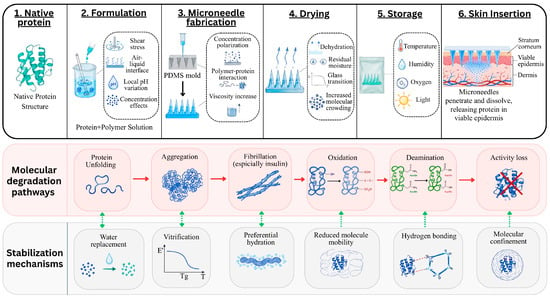
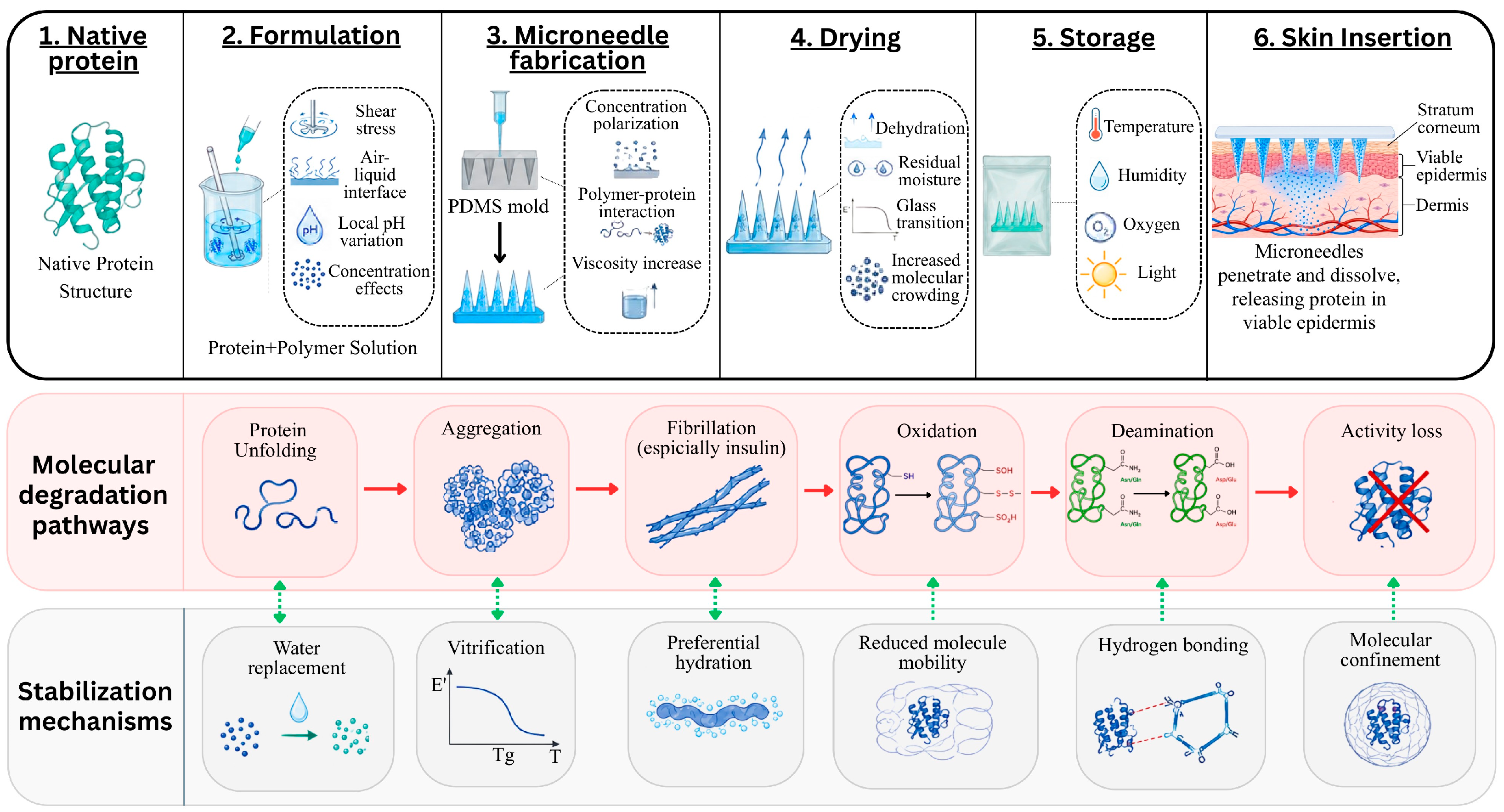
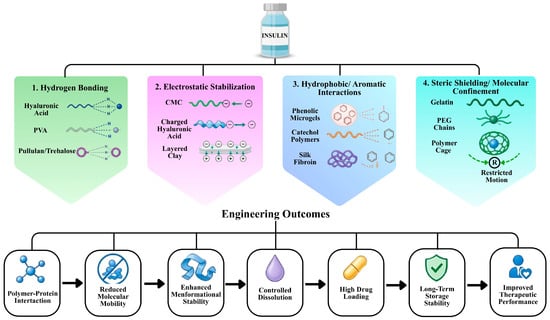
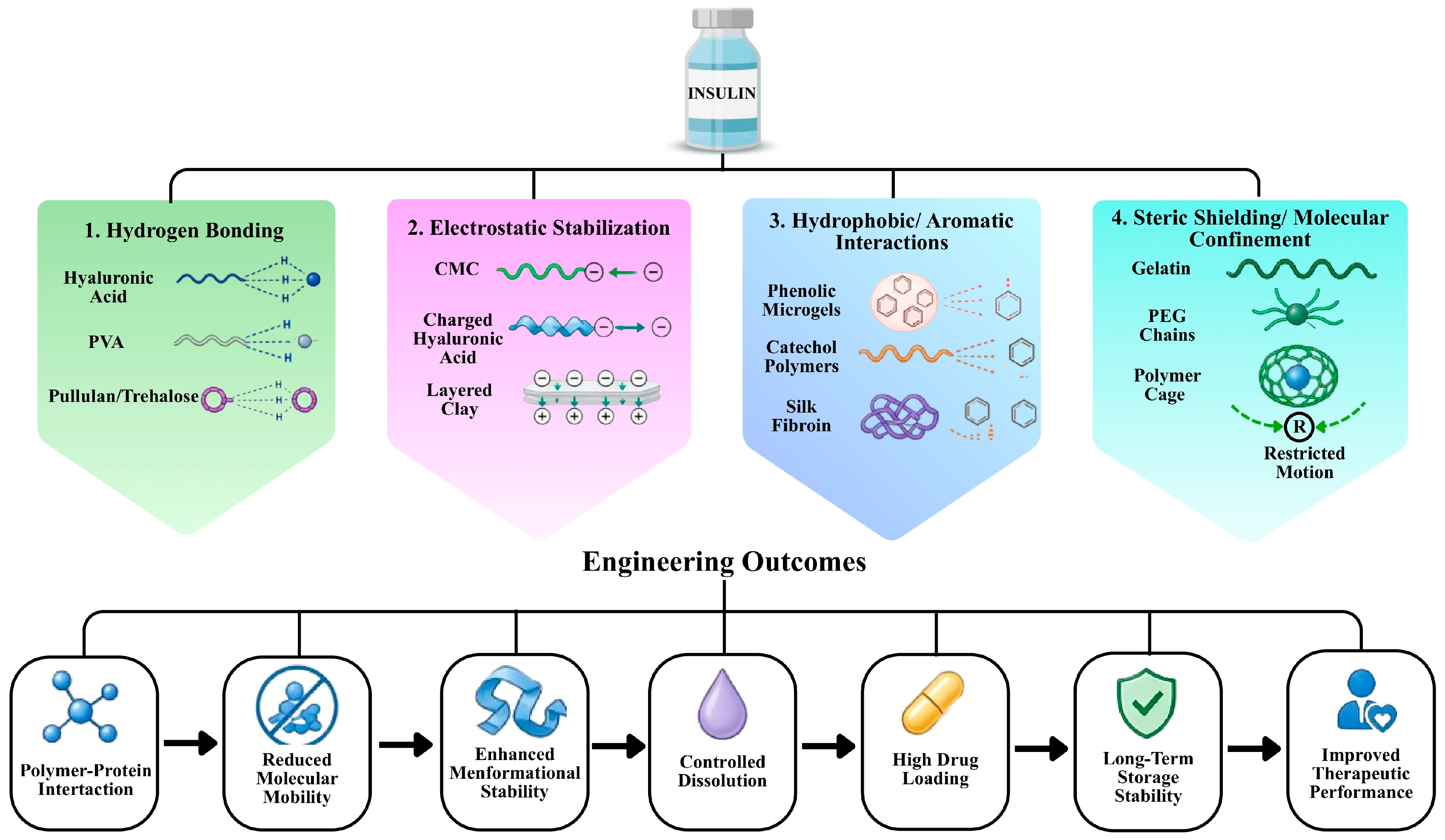
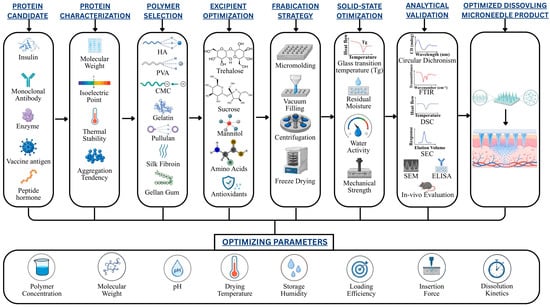
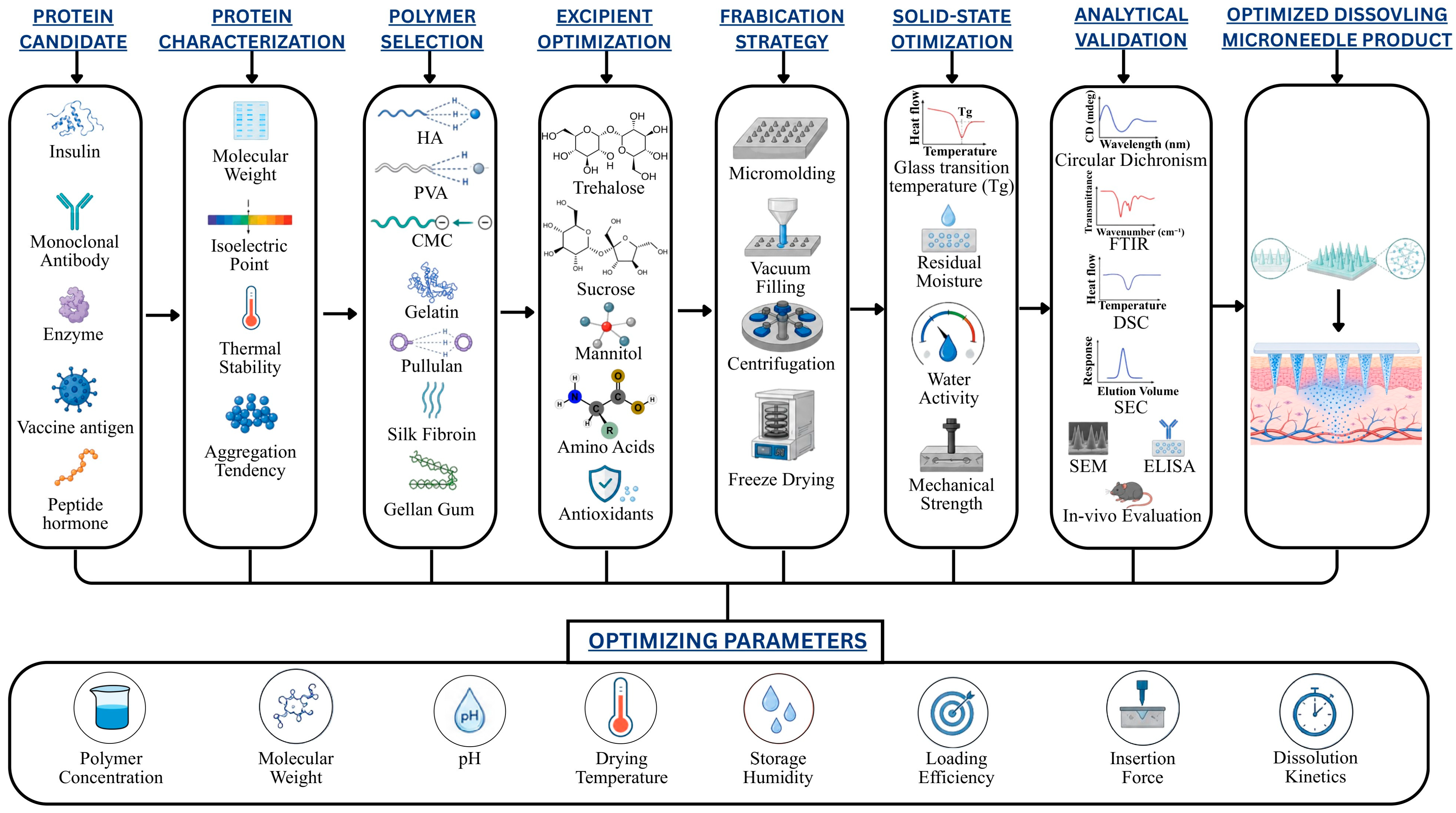
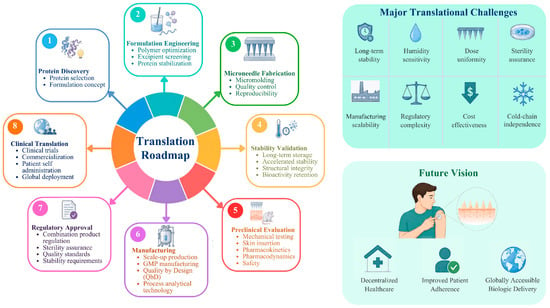
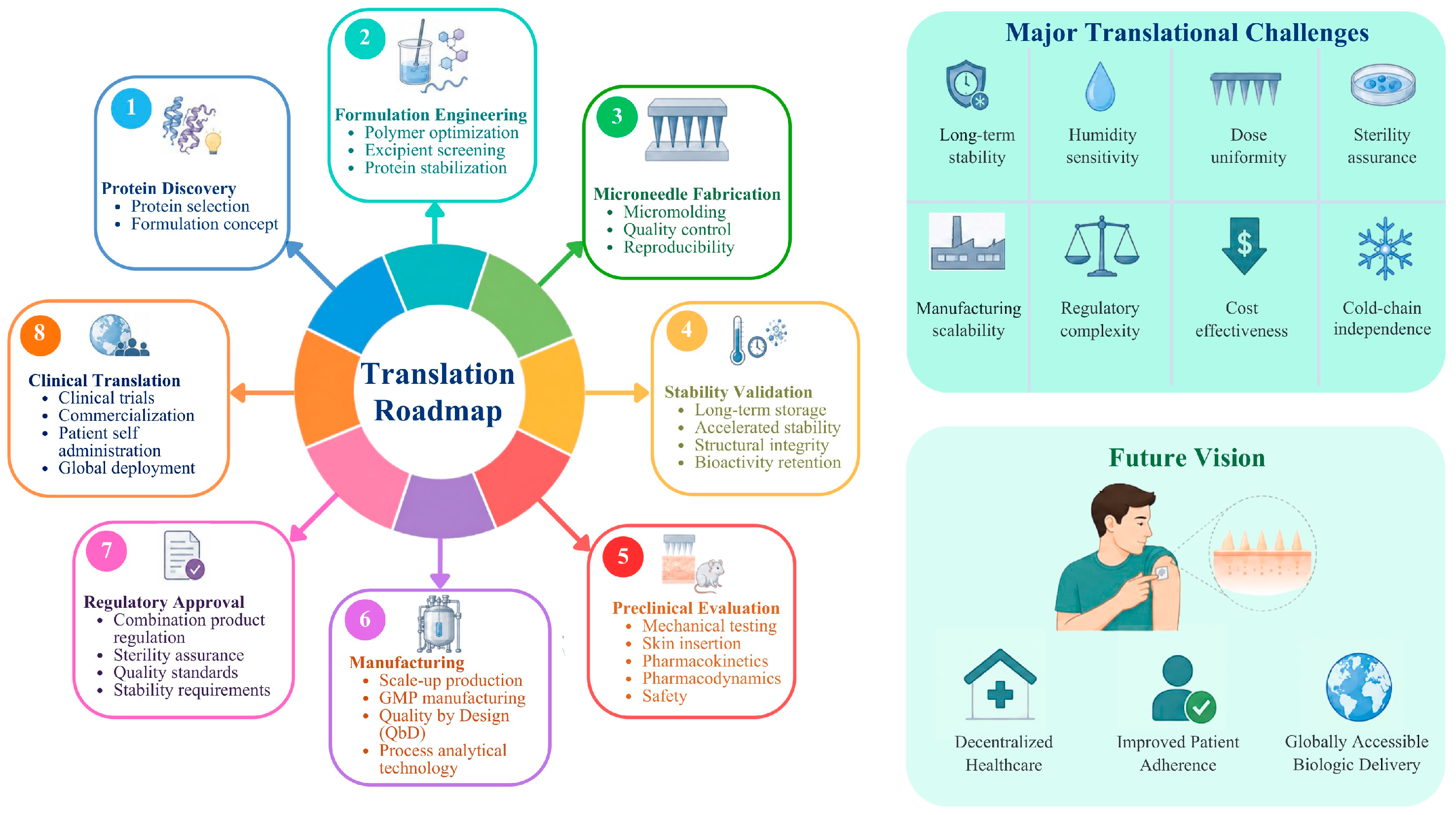

Disclaimer/Publisher’s Note: The statements, opinions and data contained in all publications are solely those of the individual author(s) and contributor(s) and not of MDPI and/or the editor(s). MDPI and/or the editor(s) disclaim responsibility for any injury to people or property resulting from any ideas, methods, instructions or products referred to in the content. |
© 2026 by the authors. Licensee MDPI, Basel, Switzerland. This article is an open access article distributed under the terms and conditions of the Creative Commons Attribution (CC BY) license.