


Abstract
It is well-established that technical and research experiences can support undergraduate retention in science, technology, engineering, and mathematics (STEM) disciplines, but little published research examines outcomes for community college students in internships provided by Department of Energy (DOE) national laboratories. To address this gap, we examined the academic and career activities of alumni who participated in two DOE-sponsored programs at Lawrence Berkeley National Laboratory (LBNL) between 2009 and 2016: the Community College Internship (CCI) and Science Undergraduate Laboratory Internship (SULI). Using self-reported academic and career information collected through alumni surveys, we compared outcomes for CCI alumni from community colleges with those for SULI alumni from baccalaureate-granting institutions. Among CCI alumni, 90% earned a STEM bachelor’s degree and 88% were on a STEM career pathway. For SULI alumni, 91% earned a STEM bachelor’s degree and 71% were on a STEM career pathway. Overall, 80% of CCI alumni and 56% of SULI alumni had entered the STEM workforce. In this sample, community college students who completed national laboratory internships completed academic degrees and pursued STEM careers at rates comparable to students from baccalaureate-granting institutions.
1. Introduction
To support scientific innovation, technological advancement, and the national economy, the United States (U.S.) will need to continue investing in and attending to the development of its science, technology, engineering, and mathematics (STEM) workforce [1,2]. For the past decade, increasing the number of U.S. trainees in STEM fields has been a major focus of various federal calls to action [3,4,5]. Due to concerns about a shortage of STEM-trained professionals and the collaborative advantages of teams representing different career stages and backgrounds, there has been a growing focus on addressing the “aging workforce” in STEM [6,7,8,9,10,11,12,13]. Federal agencies such as the U.S. Department of Defense (DOD), U.S. Department of Energy (DOE), National Aeronautics and Space Administration (NASA), National Institute of Standards and Technology (NIST), National Science Foundation (NSF), and U.S. Department of Veterans Affairs (VA) are important contributors to major scientific and technological discoveries, efforts to raise awareness about the importance of the STEM workforce, and opportunities for people at various education levels and career stages to explore STEM careers.
Established in 1977, the DOE is the largest federal sponsor of physical sciences research and carries out much of its environmental science, nuclear security, and energy work at its 17 national laboratories [14,15]. Across bipartisan policy discussions, the “concentration of scientific expertise and infrastructure” at the DOE national laboratories is viewed as integral to the laboratories’ scientific and technological contributions [16,17,18]. In the current study, we focus on the needs of the DOE national laboratory system, which anticipates staffing challenges and the loss of institutional knowledge due to the impending retirement of a large proportion of its workforce [19,20,21]. To address this issue, the DOE supports internships and professional development opportunities for students at DOE national laboratories and facilities throughout the U.S. Ultimately, the DOE hopes to retain some of these students as future employees [19,22,23,24]. The DOE Office of Science (SC) Office of Workforce Development for Teachers and Scientists (WDTS) hosts a suite of national programs for undergraduates, post-baccalaureates, graduate students, and faculty members. For example, the Science Undergraduate Laboratory Internship (SULI) program provides STEM internship opportunities to undergraduates from community colleges and baccalaureate-granting institutions, although it serves more individuals from the latter. The Community College Internship (CCI) program is similar to the SULI program in many respects, but it is only open to undergraduates from community colleges who have completed STEM coursework. As the country’s primary provider of workforce training, the U.S. community college system has been identified as critical to educating and training the future STEM workforce [5,25,26]. Community colleges contribute to the higher education system by supporting local economies and provide educational opportunities across U.S. regions to people from all backgrounds [26,27,28,29,30]. For example, many military veterans choose community colleges over other schools because of the flexibility of course schedules and availability of student services [31]. Similarly, many student parents choose community colleges because of their caregiving and financial obligations [32,33]. Thus, the current study focused on CCI and used SULI as a point of comparison.
Previous work by Foltz and colleagues in 2011 recommended evaluating DOE program outcomes related to “educational advancement and workforce development” [34]. This project also highlighted the importance of collecting data on “long-term outcomes” and maintaining communication with program alumni [34]. Similarly, more recent DOE reports have called for the collection of quantitative data to assess the impact of “educational and community outreach efforts,” support longitudinal tracking of program participants, determine participants’ entry into the DOE workforce, and evaluate the success of programs in promoting STEM careers [22,23]. In the current study, we address these recommendations by examining undergraduates’ academic and career activities in the years following their participation in two DOE internship programs.
As described in the literature review, STEM technical and research internships have the potential to support undergraduate learning, academic success, and retention in STEM [35]. These benefits have been well documented for undergraduates at baccalaureate-granting institutions, especially for students from groups historically excluded from STEM fields, and many prior studies have examined whether outcomes vary by participants’ background characteristics [36,37]. However, relatively few studies have examined how professional development opportunities affect community college students’ academic achievement and career pathways [38,39,40,41], and even fewer compare the activities of community college or transfer students with those of students who began their studies at baccalaureate-granting institutions [42]. Given these gaps, the central focus of the current study was to examine the academic and career trajectories of CCI alumni from community colleges and compare them with outcomes for SULI alumni from baccalaureate-granting institutions. The following research questions guided the study:
Research Question 1: What are the academic and career trajectories of Community College Internship (CCI) alumni in the years following their participation in the program at Lawrence Berkeley National Laboratory (LBNL)?
Research Question 2: How do the academic and career trajectories of CCI alumni compare with those of a similar program, the Science Undergraduate Laboratory Internship (SULI) program at LBNL?
To address these questions, we examined the percentage of CCI alumni who earned degrees, entered graduate programs, and joined the workforce. Our previous work on CCI alumni highlighted the unique learning environments of DOE national laboratories [43], so in the current study we examined the percentage of CCI alumni who are currently working at a DOE national laboratory, or who are interested in doing so in the future. Note that we use the term “community college” to distinguish higher education institutions that offer associate degrees, workforce education, and certificate programs from those that offer bachelor’s and graduate degrees, which we refer to as “baccalaureate-granting institutions.” However, the U.S. has various institution types that fall into the “community college” category, including city colleges, community colleges, junior colleges, technical colleges, technical schools, trade schools, and vocational schools. We avoid referring to baccalaureate-granting institutions as “4-year” institutions or community colleges as “2-year” institutions, because undergraduates spend varying amounts of time at these institutions in pursuit of their academic goals.
1.1. Literature Review
1.1.1. Technical and Research Experiences Can Support Undergraduate STEM Persistence
Undergraduates who believe that their professional development activities have contributed to learning, personal growth, and positive working relationships with professionals in the field are more likely to have a favorable view of their undergraduate education and career prospects [44,45,46]. Many students are motivated to participate in technical or research experiences to gain new skills or knowledge, or because they are curious about graduate programs and careers in a particular field [43,47,48,49]. Participation in a STEM-focused mentored internship or research experience reduces degree completion time and increases academic achievement, degree completion rates, interest in pursuing a graduate degree, and persistence in STEM [35,37,50,51,52,53,54,55,56]. Students benefit from completing technical and research experiences when they develop interpersonal relationships with members of the STEM community, including graduate students and professionals [43,49,56,57]. This professional network can be leveraged over the course of their careers and can lead to additional opportunities. Although these findings demonstrate the potential value of technical and research experiences, the existing evidence primarily reflects students attending baccalaureate-granting institutions. Consequently, less is known about whether community college students experience similar academic and career outcomes.
1.1.2. Community College Students Remain Understudied in Research on Technical and Research Experiences
Although nearly half of all students with STEM degrees in the U.S. attend a community college during their educational careers, limited research has focused on internships and research experiences for community college and transfer students [58,59,60,61,62,63,64,65,66]. Community colleges enroll disproportionately high numbers of Black, Hispanic/Latinx, Native American, and disabled students, but these groups have very low rates of retention, certificate or degree completion, and transfer to baccalaureate-granting institutions [28,46,67,68,69]. Thus, participation in technical or research internships could provide community college students from all backgrounds with experiences and resources that support their academic and career success. Addressing this gap is particularly important because community colleges enroll students from varied backgrounds and play a central role in preparing the future STEM workforce.
1.1.3. Community Colleges Play an Important Role in STEM Workforce Development
U.S. community colleges provide opportunities for students to develop skills or certifications needed to enter the workforce through middle-skill jobs or to transfer to a baccalaureate-granting institution. However, these are not the only motivations for enrollment [70,71]. Middle-skill jobs, which are projected to increase in number and availability in the STEM workforce, require certification beyond a high school diploma but below the bachelor’s degree level [72,73,74]. Examples of middle-skill jobs include electricians, hydrologic technicians, industrial machinery mechanics, nuclear reactor operators, solar thermal installers, telecommunications engineering specialists, and wind facilities managers [75]. Community college students who transfer to baccalaureate-granting institutions to obtain bachelor’s degrees can enter the STEM workforce in roles such as agricultural engineers, biodiesel division managers, chemical engineers, data scientists, field engineers, microbiologists, supply chain managers, and system programmers [75]. The DOE has identified a critical need to develop the energy and domestic manufacturing workforces, which will require engagement and partnerships with community colleges across the U.S. [15]. Beyond the DOE complex, numerous reports have examined the untapped potential of the U.S. education system to support STEM workforce development, highlighting the need to leverage community colleges as part of this broad strategy [24,74]. In fact, 22% of U.S. workers who received their education from the community college system are part of the STEM workforce, illustrating the value of gaining a deeper understanding of this population [70]. Despite the importance of community colleges to STEM workforce development, relatively little is known about the long-term outcomes of community college students who participate in internships hosted outside traditional academic institutions, including DOE national laboratories.
1.1.4. Programs Hosted at National Laboratories Are Unique, Yet Understudied
In collaboration with more than 450 academic institutions in the U.S. and Canada, DOE national laboratories invest over $500 million each year to sponsor technical and research experiences for students, recent graduates, postdoctoral fellows, and faculty. However, these institutions are almost entirely absent from the educational research literature [19,59]. A review of the literature identified only one project, a doctoral capstone, has compared DOE internships with other federally funded programs and evaluated their outcomes [34]. Conducted in partnership with DOE Office of Science (SC) Office of Workforce Development for Teachers and Scientists (WDTS), this project examined survey data from alumni of the Science Undergraduate Laboratory Internship (SULI) and the joint NSF and NIST Summer Undergraduate Research Fellowship (SURF) programs [34].
Compared with the typical internship or research experience highlighted in the literature, programs at national laboratories are unique in that (a) they are not situated at a college or university, (b) individuals who participate as mentors typically are scientists, engineers, technical staff, and postdoctoral researchers rather than faculty and graduate students, (c) some projects give students access to large-scale interdisciplinary research facilities beyond the capability of the typical faculty-led research group. Similar to Research Experiences for Undergraduates (REU) programs funded by the NSF, internships at national laboratories collectively engage thousands of participants each year from U.S. colleges and universities in a variety of disciplines [34]. The current study is among a small number of academic publications that includes both data from DOE national laboratory program participants and documentation of human subjects committee review/approval at the host institution [43,76,77]. Including this information increases the visibility of programs hosted by DOE national laboratories and awareness of their role in U.S. STEM education. Publishing studies about DOE national laboratory programs and other workforce development activities in peer-reviewed journals and conference proceedings will enable scholars from other institutions to access, contribute to, and engage with the findings. The limited scholarship on these programs is compounded by the fact that most evaluations of undergraduate technical and research experiences focus on short-term outcomes rather than participants’ later degree completion and professional activities.
1.1.5. Longitudinal Tracking Is Needed to Understand Program Outcomes
Studies about STEM research experiences typically focus on the experiences and outcomes of students enrolled at baccalaureate-granting institutions [59,61,63]. Many studies designed to measure the impacts of research experiences on student success and persistence in STEM are descriptive only or do not track student success beyond the undergraduate degree [59,78]. In fact, few studies track STEM majors’ long-term career outcomes, and few report on impacts more than 4 years after a research experience [49,79]. Studies about science training programs commonly rely on short-term outcomes, such as motivation, interest, and intention to stay in STEM, but they would be more informative if they included long-term academic and career data [80]. Thus, in this study, we examined data collected 5 to 12 years after students participated in the CCI and SULI programs at LBNL to understand community college students’ academic achievement and retention in STEM.
Taken together, the literature identifies several intersecting gaps. Technical and research experiences can support undergraduate STEM persistence, but most studies focus on students from baccalaureate-granting institutions. Community colleges are important contributors to STEM workforce development, yet their students remain underrepresented in research on these experiences. DOE national laboratories provide distinctive scientific and technical learning environments, but their internship programs are rarely examined in the literature, particularly over extended periods. The current study addresses these gaps by examining the academic and career trajectories of CCI alumni 5 to 12 years after participation and comparing their outcomes with those of similarly situated SULI alumni.
2. Description of Programs
In support of the DOE mission to ensure America’s security and prosperity by addressing its energy, environmental, and nuclear challenges through transformative science and technology solutions, WDTS collaborates with national laboratories and other facilities to sponsor a suite of internship programs. Two of these, the Community College Internship (CCI) and Science Undergraduate Laboratory Internship (SULI) programs, are highlighted in this study. These programs are designed to encourage students and recent graduates to enter STEM careers through immersive technical and research experiences at national laboratories. CCI and SULI support the development of the DOE workforce, and national laboratories engage in outreach efforts to increase the likelihood that students and recent graduates from a variety of backgrounds will apply to participate [23,81]. Within the DOE national laboratory context, these programs are intended primarily to support scientific and technical workforce development related to the DOE mission, rather than to prepare participants for health professions. Applicants must be 18 years or older at the start of the program. For applicants who have not yet completed their undergraduate studies, eligibility requires full-time enrollment at an undergraduate institution, a minimum grade point average of 3.0 on a 4.0 scale, and completion of at least six credit hours of STEM coursework and 12 h of coursework overall.
These programs are hosted by national laboratories across the U.S., but this study focuses on one laboratory in particular, Lawrence Berkeley National Laboratory (LBNL). Participating undergraduates and recent graduates are referred to as “interns.” Each intern is placed with a “Mentor Group,” which consists of the individuals responsible for the interns’ daily supervision, teaching, and mentoring. Altogether the team may consist of permanent staff, temporary staff, postdoctoral scholars, and/or graduate students, though the structure of these teams varies widely. In support of interns’ development from novice to expert, these Mentor Groups engage in both teaching (e.g., technical skills training) and mentoring (e.g., sponsorship, conversations about STEM careers) over the course of the internship term [82,83].
Interns attend orientation, meetings, and training sessions throughout the term. An internship coordinator facilitates check-in meetings to discuss interns’ experiences, address any issues, and connect them with resources (e.g., online training courses, health services, computer equipment, information about events) at LBNL. They have opportunities to attend optional enrichment activities, such as tours and seminars. Interns also attend workshops during which they learn about effective presentation techniques. Throughout the program, interns complete a technical report or research paper and poster, and present at a poster session during the final week of the program.
Interns receive a stipend and housing supplement and are reimbursed for travel costs to and from LBNL. To receive these funds, interns must submit any required onboarding forms, dedicate 40 h per week to the internship for the duration of the program, attend mandatory events, and complete written deliverables. Prior to 2013, interns received $500 per week, which included both stipend and housing. In 2013, interns received a stipend of $16.25 per hour ($650 per week) and $150 per week for housing. In 2016, interns received a stipend of $16.25 per hour ($650 per week) and $300 per week for housing. For comparison, the minimum wage in California was $8.00 per hour in 2013, $9.00 per hour in 2014, and $10.00 per hour in 2016 [84]. Providing financial support is important because students who need to work during their undergraduate studies to fund their education are less likely to participate in unpaid professional development opportunities [85,86,87,88]. Additionally, paid opportunities can support students’ self-esteem, self-efficacy, feelings of being valued by the sponsor, interest in participation, and likelihood of staying in school [43,56,88].
3. Methods
3.1. Data Collection
Email was the primary mode of communication with potential study participants. We emailed all individuals for whom we had contact information and who had completed CCI or SULI between 2009 and 2016. This recruitment method was not purposive; the sample was not selected based on specific characteristics, but instead included all individuals for whom contact information was available. However, some contact information was missing or inactive, including temporary email addresses from undergraduate institutions. For those individuals, we attempted to reach them through online social media platforms, such as Facebook and LinkedIn. We obtained written consent through surveys administered through Qualtrics. Alumni self-reported their academic accomplishments, current enrollment in academic programs, current employment, and professional activities. Responses were reviewed for consistency with information previously collected from participants during their CCI or SULI participation, information available through public online profiles, and interactions with alumni. These sources served as contextual checks rather than as a formal independent verification process. The survey responses constituted the source data used to characterize alumni academic and career outcomes. These methods resulted in data collection from 86 CCI alumni, out of 93 individuals who completed CCI between 2009 and 2016 (retention rate: 92.5%), and 90 SULI alumni, out of 99 individuals who completed SULI between 2009 and 2016 (retention rate: 90.9%). Data collection and follow-up communication with study participants occurred between 26 January 2018 and 1 December 2021. A.M., A.N.Z., E.W.L., G.O.M., J.J.S., L.E.C., and S.V.D. maintained and organized data throughout the project. As shown in Figures S1 and S2, the surveys asked CCI and SULI alumni to respond to survey questions about their professional activities across the DOE complex in the years following their internship at LBNL and their interest in working at a DOE national laboratory or facility. These methods were approved by the Institutional Review Board at LBNL (Protocol ID: Pro00023065) with the University of California, Berkeley, as the relying institution (Reliance Registry Study #2593). All contributing researchers have completed training in the responsible and ethical conduct of research administered through LBNL or the University of California, Berkeley. Author contributions to data collection and analysis are reported using the Method Reporting with Initials for Transparency (MeRIT) approach as described by Nakagawa and colleagues [89].
3.2. Study Population and Comparison Group
This study included two groups of alumni. The first group was the study population, consisting of 93 individuals who completed the CCI program at LBNL between Summer 2009 and Fall 2016. These individuals were community college students at the time of their participation in CCI at LBNL in Alabama, Arizona, California, Florida, Illinois, Massachusetts, Nevada, New York, and Washington. We collected data about the academic and career activities of 86 individuals from this group, of whom 77 (90%) attended community colleges in California and 9 (10%) attended colleges in Alabama, Arizona, Florida, Illinois, Massachusetts, Nevada, New York, and Washington. Almost half of CCI alumni attended one of six community colleges, listed here in descending order of attendance: Contra Costa College, Diablo Valley College, City College of San Francisco, College of Marin, College of San Mateo, and Hartnell College. CCI interns are defined as community college students taking coursework equivalent to that of first- or second-year undergraduates, even if they have spent more than two years taking lower-division coursework.
The second group, which served as the comparison group, consisted of individuals who participated in the SULI program. To maximize comparability between the study population and comparison group, we included only those SULI participants who were first- or second-year undergraduates at the time of their participation in SULI at LBNL. Between 2009 and 2016, there were approximately 500 SULI participants at LBNL. We had access to program records that included each participant’s institution at the time of application to SULI, academic year of study, and previous higher education institutions attended. Academic year of study and previously attended higher education institutions were used to determine which SULI alumni met the comparison group criteria. Ultimately, the comparison group constructed for this study included the 99 individuals who (a) participated in SULI at LBNL between 2009 and 2016, (b) were in the first or second year of their undergraduate studies during their first SULI term, and (c) did not begin their studies at a community college. We collected data on the academic and career trajectories from 90 individuals who attended baccalaureate-granting institutions across the U.S. Of these 90 alumni, 36 (40%) attended institutions in California, 9 (10%) attended institutions in Massachusetts, 7 (8%) attended institutions in New York, 5 (6%) attended institutions in Pennsylvania, 4 (4%) attended institutions in North Carolina, and the remaining 29 (32%) attended institutions in Colorado, Florida, Idaho, Illinois, Kansas, Kentucky, Michigan, Minnesota, Missouri, Nevada, New Jersey, Ohio, Oregon, Puerto Rico, Rhode Island, Tennessee, Texas, Vermont, Virginia, and Washington. Nearly 40% of SULI alumni attended the following seven universities, listed in descending order: University of California, Berkeley; University of Southern California; Princeton University; State University of New York at Stony Brook; University of California, Los Angeles; University of North Carolina, and University of Pennsylvania.
Of the CCI alumni who attended California Community Colleges, 60/77 (78%) attended a community college in the Bay Area, which consists of Alameda, Contra Costa, Marin, Napa, San Francisco, San Mateo, Santa Clara, Solano, and Sonoma counties [90]. At the time of data collection for this study, the LBNL main site was located in Alameda County, and off-site LBNL offices were located in Alameda and Contra Costa counties. Considering previous findings about community college student preference for academic/career opportunities within a “comfortable distance,” we compared the race and ethnicity of CCI participants with Bay Area census data from a similar time frame [91,92,93,94], as shown in Figure 1. Additionally, we included SULI alumni data to compare how the CCI and SULI programs differ based on the race and ethnicity of participants.
Figure 1.
Race/ethnicity of study participants and the 2010 Bay Area Census. Based on the 2010 Census, the Bay Area population was 0.7% American Indian or Alaska Native, 23.3% Asian, 6.4% Black or African American, 23.5% Hispanic or Latinx, 0.6% Native Hawaiian or Other Pacific Islander, 10.8% some other race, 5.4% two or more races, and 55.6% White in 2010 (U.S. Census Bureau, 2011) [90]. During the 2009–2016 time frame, the CCI participants were 27.9% Asian, 5.8% Black or African American, 22.1% Hispanic or Latinx, 8.1% two or more races, 30.2% White, and 5.8% unknown; and the SULI participants were 1.1% American Indian or Alaska Native, 26.7% Asian, 2.2% Black or African American, 5.6% Hispanic or Latinx, 6.7% two or more races, 52.5% White, and 2.2% unknown.
3.3. Differences in School Type and Resources Between Groups
We constructed a comparison group (SULI alumni) that shares many similarities with the study population (CCI alumni), given the common features between the SULI and CCI programs. At the time of this writing, the primary difference is that SULI is open to all U.S. undergraduates and recent graduates, while CCI is specifically for U.S. community college students. Many alumni from both groups interacted at LBNL, attended the same weekly meetings, and worked with the same Mentor Groups.
However, there are some important differences between the two groups. For example, many U.S. colleges and universities, particularly those attended by the SULI alumni in this study, have large endowments that can be used to support many types of activities, including student financial aid and stipends, professional development programs, research supplies and facilities [95]. According to the 2024 American Council on Education (ACE) report, which analyzed institutional endowment data from fiscal year 2022, approximately 44% of public and 40% of private nonprofit baccalaureate-granting institutions had endowments of at least $50 million [95,96]. In contrast, only 6% institutions in each sector has endowments exceeding $1 billion, and 68 (76%) of SULI alumni attended schools in this category [95,96]. Additionally, the eight baccalaureate-granting institutions that make up the “Ivy League” in the U.S. (i.e., Brown University, Columbia University, Cornell University, Dartmouth College, Harvard University, Princeton University, University of Pennsylvania, and Yale University) are known for their high selectivity and large endowments, and 14 (16%) of SULI alumni attended one of these schools [97].
Moreover, of the SULI alumni who make up the comparison group, 75 (83%) attended schools in the 80th to 100th percentile of selectivity among all baccalaureate-granting institutions, 73 (81%) attended schools classified as “research institutions,” 68 (76%) attended doctoral universities with “very high research activity,” 39 (43%) attended private schools, and 15 (17%) attended minority-serving institutions [98]. In comparison, of the CCI alumni in this study, 74 (86%) attended minority-serving institutions, and none attended private schools, schools that would be considered to have high levels of “research activity,” or schools with large endowments [98]. In 2024 the California Community College system had a permanent endowment of $25 million per year, shared among 116 colleges [99].
3.4. Data Analysis
The survey responses described in Section 3.1 included alumni-reported academic accomplishments, current enrollment in academic programs, and current professional activities. These responses were organized into analytic variables representing degree completion, graduate school participation, workforce participation, and current career pathway. For example, reported degree and enrollment information was used to determine how many alumni had completed bachelor’s or graduate degrees, or were currently enrolled in graduate programs. Reported employment and enrollment information was also used to assign alumni to STEM, health, or non-STEM career pathways. Although degree names and acronyms vary, in this study we refer to the following common undergraduate and graduate degrees in STEM disciplines: Associate of Arts (A.A.), Associate of Science (A.S.), Bachelor of Arts (B.A.), Bachelor of Science (B.S.), Master of Arts (M.A.), Master of Science (M.S.), and Doctor of Philosophy (Ph.D.). Academic and career information for CCI and SULI alumni was reviewed and categorized by A.M., A.N.Z., L.E.C., J.J.S., and S.V.D. using the classification criteria described below. Cases that could not be categorized clearly from the available survey responses were discussed by the research team and resolved through consensus. This method of analysis was also used in our previous study on the CCI program [43]. These categories were used to determine the proportion of each group that had persisted in STEM or was engaged in STEM graduate-level training. To assess whether there were statistically significant differences in outcomes between the CCI and SULI alumni groups, including academic achievement, career activities, and interest in working at LBNL in the future, we applied Fisher’s exact test to our data and reported two-tailed p-values [100,101]. Fisher’s exact test was chosen because of our small sample size and independent categorical data. This test is particularly appropriate when the expected frequency of some categories is less than 5, because it provides an exact p-value rather than relying on large-sample approximations.
Throughout this study, we refer to the “STEM workforce” and the majors, degrees, and pathways related to students preparing to enter this workforce. Studies about STEM education, majors, careers, and workforce do not always specify which disciplines or professions are included in the “STEM” category [102]. In the current study, we followed guidance provided by the National Academies of Sciences, Engineering, and Medicine (NASEM) and National Science Board (NSB), using what they refer to as “science and engineering occupations” (e.g., computer scientists, mathematicians, life scientists, physical scientists, engineers) and “science and engineering-related occupations” (e.g., laboratory managers, science and engineering teachers, lab technicians) [103,104]. Roles that fit into either of these groups were included in the “STEM” category. Although the NSF includes health care workers within its “science- and engineering-related occupations” group [103], these occupations were analyzed separately in the current study. CCI and SULI focus primarily on scientific and technical workforce development related to DOE priority areas, rather than on preparation for health careers. Separating health pathways therefore allowed the analysis to assess more directly whether alumni entered careers aligned with the programs’ goals. This distinction is analytic and programmatic rather than hierarchical, and does not imply a judgment about the value of health careers. In the current study, we separated health care workers (e.g., physicians, nurses, audiologists, pharmacists) into the “health” category. A.M.B., A.N.Z., J.J.S., L.E.C., and S.V.D. reviewed the resulting classifications, discussed ambiguous cases, and refined the data representation for accuracy and clarity.
To illustrate the variety of academic and career trajectories of study participants more clearly, we present these data in Sankey diagrams in Figure 2 and Figure 3. The vertical bars are “nodes,” which represent the number of individuals in each group, including the total number of individuals in the study and comparison groups, degree type, and current academic or career activity. The curved bands running from the left side of each diagram to the right side are the “flows,” which become thinner as the number of individuals on a given path decreases. These flows show participants’ academic and career trajectories from undergraduate studies to entry into the workforce or graduate studies.
Figure 2.
Academic and career trajectories of Community College Internship (CCI) alumni. This Sankey diagram shows the academic and career trajectories of Community College Internship (CCI) alumni (n = 86) who participated in the program at LBNL between 2009 and 2016. Node labels indicate the number of alumni associated with each academic milestone or current activity, and the width of each flow is proportional to the number of alumni represented. The numbers next to each node indicate the number of individuals within the larger group of CCI alumni. For example, of the original 86 “STEM majors” (shown on the left side of the diagram), 38 obtained an A.A./A.S. degree, 77 obtained a STEM B.A./B.S. degree, and 5 obtained a non-STEM B.A./B.S. degree. This information is current through December 2021, which is 5 to 12 years after alumni participation in the CCI program. We used guidance from NASEM and NSB to determine which programs and roles should be included in the STEM, health, and non-STEM categories [103,104]. All occupations included in the NSF “science and engineering occupations” and “science- and engineering-related occupations” groups are included in our “STEM” category, except for the “health care workers” sub-group of the NSF “science- and engineering-related occupations” group, which was used to form our “health” category. All other occupations are included in our “non-STEM” category. “CC” denotes community college.
Figure 3.
Academic and career trajectories of Science Undergraduate Laboratory Internship (SULI) alumni. This Sankey diagram shows the academic and career trajectories of Science Undergraduate Laboratory Internship (SULI) alumni (n = 90) who participated in the program at LBNL between 2009 and 2016. Node labels indicate the number of alumni associated with each academic milestone or current activity, and the width of each flow is proportional to the number of alumni represented. The numbers next to each node indicate the number of individuals within the larger group of SULI alumni. For example, of the original 90 “STEM majors” (shown on the left side of the diagram), 82 obtained a STEM B.A./B.S. and 2 obtained a non-STEM B.A./B.S. This information is current through December 2021, which is 5 to 12 years after alumni participation in the SULI program. We used guidance from NASEM and NSB to determine which programs and roles should be included in the STEM, health, and non-STEM categories [103,104]. All occupations included in the NSF “science and engineering occupations” and “science- and engineering-related occupations” groups are included in our “STEM” category, except for the “health care workers” sub-group of the NSF “science- and engineering-related occupations” group, which was used to form our “health” category.
4. Limitations
4.1. Sample Size
Between 2009 and 2016, there were approximately 625 intern placements in CCI and 5150 intern placements in SULI across the DOE national laboratory system. These counts describe placements rather than unique individuals, because some individuals may have participated in more than one term during this period. In the current study, the relatively small number of participants from each program limits the extent to which the results can be generalized to all CCI and SULI alumni from the same period. However, when compared to previous studies or reports referencing DOE-sponsored internships, the current study includes more detailed information about the academic and career activities of program alumni. Future multi-site studies that include data from multiple DOE national laboratories would help determine whether these trends are consistent across institutions.
4.2. Selection Bias
Selection bias is commonly described as a limitation of studies examining the impacts of internships and undergraduate research experiences [105,106]. It refers to a scenario where students who apply to or participate in a program are more likely to achieve academic and professional success than their peers. For example, students who have completed a STEM internship may, on average, have better grades, more relevant experience, and greater knowledge of STEM careers than students who have not completed one. We do not claim that participation in the CCI or SULI programs directly caused the academic or career activities of alumni after completing these programs. Similarly, because alumni completed CCI or SULI between 2009 and 2016, broader macroeconomic and labor-market conditions, including the aftermath of the 2008 financial crisis and the coronavirus disease 2019 (COVID-19) pandemic, may have influenced participants’ academic and career opportunities and cannot be excluded as potential confounding factors. Our study builds on an existing body of research linking participation in mentored internships and research experiences to increased confidence and interest in STEM, higher rates of STEM degree completion, and persistence in STEM fields [35,37,51,52,54,55,107,108,109,110].
4.3. Demographic Information
Although we constructed a comparison group (SULI alumni) that is similar to the study population in many ways, there are some differences in terms of race/ethnicity. As shown in Figure 1, the CCI program included more Black/African American and Hispanic/Latinx participants, whereas the SULI program included more White participants. During the initial collection of demographic information, program participants could select only one race/ethnicity option, including “two or more races.” This is a commonly used demographic category in academic and professional records and surveys. However, this category is not descriptive enough to allow for accurate classification of all participants into the commonly used “underrepresented minority” category, which generally includes individuals from the following groups: Alaska Native, Black/African American, Hispanic/Latinx, Native American, Native Hawaiian or other Pacific Islander [111]. Without more specific information, individuals in the “two or more races” category are aggregated together, limiting the accuracy of data analysis related to race/ethnicity. One alternative is to use a checkbox question that allows respondents to select the exact combination of categories they choose to report.
4.4. Survey Response Rate
As part of the data collected for this study, we asked CCI and SULI alumni to respond to survey questions. However, a potential limitation of this study is nonresponse error, in which not all of the individuals in the study population have provided a response [112]. Among the individuals included in this study, 41 of 86 (48%) CCI alumni and 57 of 90 (63%) SULI alumni responded to questions about their interest in working for LBNL or another DOE national laboratory or facility in the future. A 2019 study by Hendra and Hill suggests that an 80% response rate, often used in federal reports, may not be necessary to ensure generalizable results [113]. However, we recognize that response bias may limit the generalizability of our findings because program alumni who responded to these questions may not be representative of all program alumni. We did not apply weighting adjustments or conduct sensitivity analyses for these survey responses because the number of respondents was relatively small and the available background variables were limited. Instead, we assessed potential nonresponse bias by comparing the demographic makeup of survey respondents with the full CCI and SULI groups. The similarities shown in Table 1 reduce, but do not eliminate, concerns about response bias [113]. Although survey responses were consistent with other information available to the research team, academic and career outcomes were self-reported and were not formally verified using official academic or employment records.
Table 1.
Gender, ethnicity, and race of study participants.
5. Results
5.1. Academic and Career Trajectories for CCI Alumni
The analysis included academic and career activity data for 86 CCI alumni, collected 5 to 12 years after their participation in the CCI program at LBNL (Table 2). As shown in Figure 2, all 86 (100%) CCI alumni were “STEM majors” attending a community college at the time of their participation, 38 (44%) obtained one or more A.A./A.S. degrees, 77 (90%) obtained a STEM B.A./B.S., 5 (6%) obtained a non-STEM B.A./B.S. degree, and 1 (1%) is currently an undergraduate student. Nearly all CCI alumni (81; 94%) transferred from a community college to a baccalaureate-granting institution; 46 (53%) transferred without first obtaining an A.A./A.S. degree; and 35 (41%) transferred after obtaining one or more A.A./A.S. degrees. After completing their CCI term at LBNL, 14 (16%) alumni participated in the SULI program at LBNL, 5 (6%) participated in a different internship at LBNL, and 9 (10%) participated in an internship at a different DOE national laboratory.
Table 2.
Current academic and career activities of study participants.
Of the 77 CCI alumni who obtained a STEM B.A./B.S., 73 (95%) entered a STEM field through the workforce or graduate studies, 4 (5%) joined the health workforce, and none (0%) joined the non-STEM workforce. In comparison, of the 5 individuals who obtained a non-STEM B.A./B.S. degree, 2 (40%) joined the non-STEM workforce, 2 (40%) joined the STEM workforce, and 1 (20%) joined the health workforce. Among CCI alumni who obtained a STEM B.A./B.S., 20 (26%) obtained a STEM M.A./M.S. degree, 2 (3%) are currently enrolled in a STEM M.A./M.S. degree program, 7 (9%) obtained a STEM Ph.D. degree, 7 (9%) are currently enrolled in a STEM Ph.D. program, 3 (4%) obtained a health degree (e.g., Doctor of Dental Surgery, D.D.S., Doctor of Medicine, M.D., Doctor of Pharmacy, Pharm.D.), 65 (84%) are currently part of the STEM workforce, and 3 (4%) are currently part of the health workforce. Finally, 5 (6%) CCI alumni graduated with a B.A./B.S. degree in a non-STEM subject and joined the non-STEM workforce before enrolling in a community college to take STEM coursework.
5.2. Academic and Career Trajectories for SULI Alumni
The analysis included academic and career activity data for 90 SULI alumni who were first- or second-year undergraduates at the time of their internship. The data were collected 5 to 12 years after they participated in the SULI program at LBNL. As shown in Figure 3, of the 90 SULI alumni in this study, 82 (91%) obtained a STEM B.A./B.S., 2 (2%) obtained a non-STEM B.A./B.S. degree, 5 (6%) did not obtain a B.A./B.S. degree in any subject, and 1 (1%) is currently an undergraduate student. Of the 82 SULI alumni who obtained a STEM B.A./B.S. degree, 66 (80%) entered a STEM field through the workforce or graduate studies, 10 (12%) joined the health workforce, and 5 (6%) joined the non-STEM workforce. All individuals who obtained non-STEM B.A./B.S. degrees or did not obtain B.A./B.S. degrees have entered the non-STEM workforce. Of the 82 SULI alumni who obtained a STEM B.A./B.S., 18 (22%) obtained a STEM M.A./M.S. degree, 1 (1%) is currently enrolled in a STEM M.A./M.S. degree program, 22 (27%) obtained a STEM Ph.D. degree, 15 (18%) are currently enrolled in a STEM Ph.D. program, 7 (9%) obtained a health degree (e.g., D.D.S., M.D., Pharm.D.), 50 (61%) are currently part of the STEM workforce, 10 (12%) are currently part of the health workforce, and 5 (6%) are currently part of the non-STEM workforce.
5.3. Comparing the Trajectories of CCI and SULI Alumni
As described in Section 3.4, we used three categories to identify those individuals who are currently working and/or attending school in a STEM, health, or non-STEM discipline. Unlike the current academic and career activity data shown in Table 2, Figure 4 combines data from individuals in the workforce with data from those enrolled in graduate programs to produce STEM, health, or non-STEM “career pathway” categories. For example, individuals working in the health workforce as medical staff, dentists, or physicians were combined with individuals enrolled in nursing, dental, or medical degree programs to produce a single “health career pathway” group. Concurrent employment and academic activities for each alumnus were within the same pathway category, so each individual was represented in only one career pathway in Figure 4. Based on the “career pathway” data (see Table S3 for details), a significantly greater proportion of CCI alumni (88%) than SULI alumni (71%) are currently on a STEM career pathway (p-value = 0.0051; odds ratio = 3.088 with 95% CI of 1.439 to 6.682). The odds of being on a STEM career pathway were approximately 3.1 times as high for CCI alumni as for SULI alumni. The analysis showed that 6% of CCI alumni and 13% of SULI alumni were on a health career pathway, and 6% of CCI alumni and 16% of SULI alumni were on a non-STEM career pathway (p-value = 0.0509; odds ratio = 0.3351 with 95% CI of 0.1286 to 0.9344).
Figure 4.
Career pathways for study participants by program. For CCI alumni—who were community college students during the internship—76 (88%) are on a STEM career pathway, five (6%) are on a health career pathway, and five (6%) are on a non-STEM career pathway. We used guidance from NASEM and NSB to determine which programs and roles should be included in the STEM, health, and non-STEM categories [103,104]. For SULI alumni—who were first- or second-year undergraduates attending baccalaureate-granting institutions at the time of their internship—64 (71%) are on a STEM career pathway, 12 (13%) are on a health career pathway, and 14 (16%) are on a non-STEM career pathway. Fisher’s exact test was applied to determine if there was a significant difference between the number of alumni from each program associated with each career pathway. Two-tailed p-values are labeled as follows: *, p < 0.1 significance level; ***, p < 0.01 significance level. This information is current through December 2021, which is 5 to 12 years after alumni participation in the CCI and SULI programs.
Among currently employed alumni, a significantly greater proportion of CCI alumni (80%) than SULI alumni (56%) have joined the STEM workforce (p-value = 0.0007; odds ratio = 3.247 with 95% CI of 1.660 to 6.148). The odds of being in the STEM workforce were approximately 3.2 times as high for CCI alumni as for SULI alumni. Additionally, 5% of CCI alumni and 11% of SULI alumni have joined the health workforce, and 6% of CCI alumni and 13% of SULI alumni have joined the non-STEM workforce.
As shown in Table S3, 90% of CCI alumni and 91% of SULI alumni completed a STEM B.A./B.S. degree, while 23% of CCI alumni and 20% of SULI alumni completed a STEM master’s degree. A significantly smaller proportion of CCI alumni (8%) than SULI alumni (24%) completed a STEM Ph.D. degree (p-value = 0.0042; odds ratio = 0.2739 with 95% CI of 0.1071 to 0.6949). The odds of having completed a STEM Ph.D. were approximately 3.7 times as high for SULI alumni as for CCI alumni. Among alumni who completed degrees outside STEM, 6% of CCI alumni and 2% of SULI alumni completed a non-STEM B.A./B.S. degree, while 5% of CCI alumni and 7% of SULI alumni completed a health or non-STEM graduate degree.
5.4. Alumni Experience and Interest in Working at National Laboratories
The CCI and SULI programs are part of a suite of programs hosted at DOE national laboratories designed to expose students and recent graduates to career opportunities at these institutions [22]. Alumni from these programs are therefore considered candidate pools from which DOE national laboratories can “recruit new permanent hires” [23]. As described in Section 4, a smaller set of program alumni responded to survey questions about their interest in working at LBNL or another DOE national laboratory or facility in the future. Since participating in the internship at LBNL, 19 of 41 (46%) CCI alumni and 17 of 57 (30%) SULI alumni have worked at LBNL in some capacity. A significantly greater proportion of CCI alumni (26 of 41, 63%) than SULI alumni (21 of 57, 37%) have worked at any DOE national laboratory or facility in some capacity (p-value = 0.0137; odds ratio = 2.971 with 95% CI of 1.250 to 7.041). The odds of having worked at a DOE national laboratory or facility were approximately three times as high for CCI alumni as for SULI alumni. Most commonly, alumni worked at a DOE national laboratory or facility, including LBNL, after completing an additional internship program.
Currently, 8 of 41 (20%) CCI alumni and 5 of 57 (9%) SULI alumni who responded to these survey questions work at one of six different national laboratories. Their roles include analysts, engineers, postdoctoral scholars, research assistants, research associates, and scientists. These alumni work in various disciplines, including chemical engineering, chemistry, environmental science, materials science, mechanical engineering, nuclear engineering, nuclear science, operations, and physics. Additionally, a significantly greater proportion of CCI alumni (33 of 41, 80%) than SULI alumni (29 of 57, 51%) are interested in working at LBNL in the future (p-value = 0.0031; odds ratio = 3.983 with 95% CI of 1.596 to 10.01). The odds of reporting interest in future employment at LBNL were approximately four times as high for CCI alumni as for SULI alumni. Both CCI alumni (15 of 41, 37%) and SULI alumni (24 of 57, 42%) were interested in working at a different DOE national laboratory in the future. Across both groups, 13 of 98 (13%) alumni currently work at a national laboratory, and 64 of 98 (65%) of alumni are interested in working within the DOE complex now or in the future.
6. Discussion
Many individuals who enroll in community colleges hope to gain new knowledge, develop valuable skills, and advance their careers; these goals align with our previous findings about outcomes for alumni of the CCI program at LBNL [43,46]. The long-term academic and career outcomes of CCI alumni were consistent with the program’s goal of supporting degree completion and entry into STEM careers. Programs such as CCI may support favorable academic and career outcomes for community college participants. CCI alumni attended public community colleges, whereas many SULI alumni attended highly selective, well-funded, and research-intensive baccalaureate-granting institutions. Given the differences between the institutions attended by members of each group, particularly in the resources available to support student professional development and success, substantial differences in academic and career activities might be expected. Nevertheless, high rates of degree attainment, retention in STEM majors, and entry into the STEM workforce were observed among both CCI and SULI alumni.
The two alumni groups likely differed in important ways beyond their program participation. Since the study did not involve random assignment or include a non-participant comparison group, observed differences between CCI and SULI alumni cannot be attributed solely to either program. Nevertheless, the findings from our previous study of CCI at LBNL [43], together with the long-term career pathway data presented here, document high rates of degree completion and STEM participation among CCI alumni. These results support the continued offering of discipline-specific professional development opportunities for community college students.
Multiple studies have shown that students who enroll in community college to obtain a STEM degree often do not have the support needed to accomplish this goal, particularly Alaska Native, Black/African American, Hispanic/Latinx, Native American, female, first-generation college, and low-income students [46,114,115,116,117,118,119,120]. More than two-thirds of STEM majors attending community colleges end up “leaving STEM” by selecting a non-STEM course of study or dropping out of their undergraduate institution [115].
Relative to published community college benchmarks, CCI alumni transferred and completed bachelor’s degrees at higher rates than expected. Data collected from students who attended U.S. community colleges during the time frame we studied revealed that 20–30% graduated with an associate degree and 9–16% graduated with a bachelor’s degree within 6 years [114,119,121,122,123]. In comparison, 44% of the CCI alumni in our study graduated with an associate degree and 96% graduated with a bachelor’s degree. A previous study of the CCI program found that one-third of alumni reported greater interest in graduating with a bachelor’s degree after participating in CCI at LBNL [43]. Consistent with previous studies, participation in STEM technical or research experiences can provide academic and attitudinal benefits to community college participants [55,107,124].
Approximately 62% of people who graduate from high school begin their undergraduate studies at a college or university in the same calendar year [125]. However, there are many pathways into higher education, and some individuals choose to attend college later in life. The average age of enrolled students at U.S. community colleges is 27 years, and some students possess a non-STEM bachelor’s degree before enrolling in community college with the goal of entering the STEM workforce [27,126]. Similarly, 5 (6%) CCI alumni in our study had graduated with a non-STEM B.A./B.S. degree and joined the non-STEM workforce before enrolling in a community college to take STEM coursework. The trajectories of these CCI alumni illustrate how community colleges and programs such as CCI can provide pathways into STEM for “career changers” with prior degrees and professional experience. Further longitudinal research could determine whether this pattern is observed at other institutions that host CCI or similar programs for community college students.
In the U.S., most STEM professional development opportunities for undergraduate students are either hosted by baccalaureate-granting institutions or involve partnerships between community colleges and nearby baccalaureate-granting institutions [55,127]. Most CCI alumni remained on STEM career pathways, and CCI survey respondents were more likely than SULI respondents to report interest in future employment at LBNL. The high rate of STEM persistence aligns with previous studies that have recommended partnerships between community colleges and industry partners to support “gainful employment for students” [29,128].
A number of reports have documented discipline- or industry-specific workforce needs in the U.S., analyzed gaps in workforce development, and identified strategies to address these [24,74,129]. Many of these reports highlight the need for more evidence on whether internships and other training programs support alumni retention in STEM fields or specific industries. Our data on alumni interest in working at a DOE national laboratory are relevant to efforts across the DOE complex to train students and recent graduates through internships and retain some of these alumni as permanent staff [22,23]. Based on survey data about the career activities and perspectives of past program participants, 65% of alumni expressed interest in working at a DOE national laboratory or facility, but only 13% are currently employed at one of these institutions. Notably, the odds of having worked at a DOE national laboratory or facility after the internship were approximately three times as high for CCI alumni as for SULI alumni. Additionally, the odds of reporting interest in future employment at LBNL were approximately four times as high for CCI alumni as for SULI alumni. Replication with a larger sample and with alumni of other discipline- or industry-specific programs would help determine whether similar patterns are observed. The 13% employment rate observed in the current sample was lower than the previous estimate that approximately 50% of program participants eventually work at a DOE national laboratory [34]. Thus, maintaining long-term communication with this population may help connect alumni with job opportunities and increase alumni employment in the DOE national laboratory system. Taken together, these findings are consistent with the CCI program goal of supporting participants’ entry into STEM careers.
A wide variety of studies about students attending baccalaureate-granting institutions have found that gains related to retention in STEM, including graduation rates, entry into the STEM workforce, and graduate school attendance, are supported through participation in research experiences, especially for students from groups historically excluded from STEM fields [36,78,130,131]. Most SULI alumni had either entered the STEM workforce or were actively completing a STEM graduate degree. Further, the SULI learning environment at DOE national laboratories, including access to supportive mentors, may be associated with participants’ subsequent graduate school enrollment. Previous studies have shown that, compared to students with similar backgrounds and achievement levels, undergraduates who participate in research experiences are more likely to complete a bachelor’s degree and pursue a Ph.D., especially when mentors discuss graduate school and career options [35,49,56,132,133].
As described in Section 1, a previous study examined the programmatic elements of SULI and reported findings related to alumni perspectives. The researchers administered surveys to 316 individuals who completed SULI between 2001 and 2007 at a variety of DOE national laboratories, and received responses from 70 individuals [34]. They found that 66% of SULI alumni were interested in obtaining “a doctoral degree or other terminal degree in a STEM discipline.” In the current study, 37 SULI alumni (41%) had either completed or were currently pursuing a Ph.D. degree in STEM. Although the language used by Foltz and colleagues may have included other terminal degrees (e.g., M.D., D.D.S., Doctor of Osteopathic Medicine, D.O.), the results of these two studies are generally complementary regarding SULI alumni interest in pursuing STEM doctoral degrees [34]. Additionally, although many alumni from both programs pursued graduate studies, the odds of having completed a Ph.D. in a STEM discipline were nearly four times as high for SULI alumni as for CCI alumni. Taken together, these findings are consistent with the SULI program goal of supporting participants to enter careers in STEM.
Scholars have identified several factors that may affect the representation of community college alumni in doctoral programs, often referred to as the “community college to Ph.D. pipeline” [134]. These include academic advising that fails to introduce graduate school as an option, the lack of technical or research experiences available to community college students, challenges after transferring to baccalaureate-granting institutions, and biases against community college students embedded in graduate school admissions processes [53,134,135]. Although these issues are beyond the scope of the current study, they warrant future investigation.
7. Recommendations for Future Studies
7.1. Understand Graduation and Retention in the Community College Context
Many studies and national reports have used retention and graduation rates to determine the success of a community college or baccalaureate-granting institution and to award funding or other forms of support [71]. Although these metrics can be useful for understanding student success at an undergraduate institution, many researchers neglect to distinguish between community college students who “drop out” of school (i.e., leave their undergraduate studies without obtaining any degree), students who transfer between community colleges, and students who transfer without first obtaining an associate degree [136,137,138]. Additionally, students at community colleges commonly switch between full-time and part-time enrollment, which can have substantial impacts on graduation rates within a 3-year period [71]. In other words, not all undergraduates attend a community college for 2 years, or a baccalaureate-granting institution for 4 years [71,139,140,141].
In our study, if we had not collected data on transfer status or tracked students beyond their attendance in community college, it would have been possible to conclude that 46 (53%) CCI alumni “did not graduate.” Instead, we know that 81 (94%) CCI alumni completed their studies at a community college, with or without obtaining an associate degree, and 78 (96%) of these transfer students completed their studies at a baccalaureate-granting institution by obtaining one or more bachelor’s degrees. We recommend considering the nuances inherent in studying retention and graduation rates across different institution types.
7.2. Consider Alignment of Community College Outcomes with Workforce Goals
As described in the previous section, we found that nearly all community college students who completed the CCI program at LBNL transferred to a baccalaureate-granting institution and obtained a bachelor’s degree. If institutions would like to encourage more community college students to enter the middle-skill STEM workforce, they may need to examine the Mentor Groups participating in the program to ensure that professionals with relevant technical expertise are working with student participants. For example, many jobs in the energy workforce do not require a bachelor’s degree, and U.S. community colleges play an important role in providing education and training to individuals who would like to enter this sector [15,142]. To contribute to this goal, institutions could strategically recruit Mentor Groups whose projects provide training in skills aligned with entry into the middle-skill STEM workforce, such as computer-aided design, cybersecurity, digital imaging, information technology, manufacturing, mechanical systems, microscopy equipment maintenance, operations management, procurement, robotics, vacuum systems, and vehicle technology [2,73,129,143]. However, the outcomes observed in this sample suggest that the LBNL model may align with the goals of supporting participants’ completion of bachelor’s degrees and entry into the STEM workforce. Host institutions and funding agencies should consider the intended academic and career activities of their program alumni. Data collected from program alumni about these activities can be used by institutions to determine how to modify programs like CCI to better align with their goals.
7.3. Maintain Contact with Program Alumni
Considering the dearth of research on this topic, this study is a first step toward understanding long-term outcomes for community college students and how those outcomes compare with outcomes for students from baccalaureate-granting institutions. These findings provide insight into the academic and career activities of alumni years after their participation in CCI or SULI. However, like many studies, this work does not capture all subsequent academic and career activities. We were unable to communicate with every individual who completed these programs at LBNL during the 2009–2016 time frame because much of the contact information we had on file was outdated at the time of data collection. This was especially true for those individuals who participated in the program in earlier years (2009–2011). Some individuals could be contacted only through temporary institutional email addresses that expired after they were no longer enrolled. Inspired by the NSF Survey of Earned Doctorates, an annual exit survey of all U.S. doctoral graduates, we recommend that programs administer post-program surveys to past participants to collect personal email addresses, track completion of higher education degrees, and gather information about academic and career activities. To further enhance access to information about academic and career trajectories, we encourage programs to learn more about how their study populations use professional networking websites, such as LinkedIn.
7.4. Provide Opportunities for Community College Students in STEM
Many individuals who complete some portion of their undergraduate studies at a community college join the STEM workforce after graduation, either in middle-skill jobs or in roles that require a higher degree [70]. Unfortunately, only a small percentage of credentials offered by community colleges are “in demand by industry,” which has contributed to a shortage of skilled workers in the STEM workforce [1]. Implementing research or technical experiences, such as faculty-led research projects, course-based research experiences, and internships, can increase the number of individuals with the skills and knowledge needed to enter the STEM workforce after their undergraduate studies. However, in the U.S., far fewer of these opportunities are available to students at community colleges than to students at baccalaureate-granting institutions. For example, in 2022, approximately 100 CCI interns and 1000 SULI interns worked at one of the participating DOE national laboratories and facilities across the country.
Across the DOE national laboratory complex, there are other workforce development strategies that engage community colleges. For example, Los Alamos National Laboratory (LANL) partnered with Santa Fe Community College to develop curriculum and activities related to metalworking in alignment with LANL staffing needs [144]. Similarly, Oak Ridge National Laboratory (ORNL) partnered with Roane State Community College on initiatives that provide coursework and skill development in nuclear technology, chemical engineering, and project management aligned with ORNL workforce needs [145,146]. The STEM Core Community College program at SLAC National Accelerator Laboratory has provided community college students with research and technical internships [147]. Future partnerships among community colleges, DOE national laboratories, and industry could provide additional STEM-based professional development opportunities for community college students.
8. Conclusions
The primary goals of this study were to identify and characterize the long-term academic and career activities of CCI and SULI alumni and evaluate the extent to which the observed outcomes aligned with the programs’ goals of supporting participants’ entry into STEM careers. Most alumni from both programs were retained in STEM through degree programs or the workforce. Across both groups, 80% of alumni were on a STEM career pathway, 90% completed a STEM bachelor’s degree, 22% completed a STEM master’s degree, and 16% completed a STEM Ph.D. Although the observational design of this study does not allow these outcomes to be attributed solely to program participation, the high rates of degree completion, STEM retention, and workforce participation provide strong evidence that alumni outcomes were aligned with the goals of CCI and SULI. Overall, the findings support previous scholarship showing that undergraduates who complete STEM technical or research experiences are more likely to stay in a STEM major, transfer to a baccalaureate-granting institution if attending a community college, graduate with a STEM degree, and enter a STEM career [148].
Many federal calls to action, DOE reports and strategic plans, and STEM education studies about professional development opportunities for undergraduates include recommendations to collect data on outcomes related to retention in STEM majors, graduation rates, and entry into the STEM workforce. However, most studies do not distinguish between outcomes for students who began their studies at a community college and those who began at a baccalaureate-granting institution. Beyond this, publicly available scholarly research on the academic and career trajectories of STEM internship and research experience participants almost always involves programs hosted at baccalaureate-granting institutions. In this sample, CCI alumni completed their academic degrees and pursued STEM careers at rates comparable to SULI alumni who attended well-resourced baccalaureate-granting institutions. Together with our previous study [43], these findings strengthen the evidence supporting discipline-specific professional development opportunities for community college students. Thus, we encourage educational researchers and scientists from other disciplines to collaborate and publish studies about work internships, research experiences, and technical experiences hosted at community colleges, DOE national laboratories, companies, and other types of institutions [60,149,150]. Partnerships between community colleges and other institutions could provide community college students with additional opportunities to learn about STEM careers.
Supplementary Materials
The following supporting information can be downloaded at: https://www.mdpi.com/article/10.3390/laboratories3030016/s1, Table S1. Primary Academic Major of Study Participants. Table S2. Current Jobs held by Study Participants. Table S3. Academic Achievements of Study Participants by Career Pathway. Figure S1. Selection of Questions from the Community College Internship (CCI) Alumni Survey. Figure S2. Selection of Questions from the LBNL Internship Alumni Survey. Figure S3. Current Activities of Study Participants by Time Frame and Program.
Author Contributions
Conceptualization: L.E.C. and A.M.B.; data curation: L.E.C., A.N.Z., J.J.S., S.V.D., A.M., G.O.M. and E.W.L.; formal analysis: L.E.C., A.N.Z., J.J.S., S.V.D., A.M., G.O.M. and E.W.L.; funding acquisition: L.E.C.; investigation: L.E.C., A.N.Z., J.J.S., S.V.D., A.M., G.O.M. and E.W.L.; methodology: L.E.C. and A.M.B.; project administration: L.E.C.; supervision: A.M.B.; validation: L.E.C., A.N.Z., J.J.S., S.V.D., E.W.L. and A.M.B.; visualization: L.E.C. and A.M.B.; writing—original draft: L.E.C.; writing—review and editing: L.E.C., A.N.Z., J.J.S., S.V.D. and A.M.B. All authors have read and agreed to the published version of the manuscript.
Funding
This material is based upon work supported by the National Science Foundation Graduate Research Fellowship Program under Grant No. DGE 1106400; Wheelhouse: The Center for Community College Leadership and Research at the University of California, Davis; the Berkeley School of Education Barbara Y. White Fund; and Workforce Development & Education at Lawrence Berkeley National Laboratory.
Institutional Review Board Statement
The study was conducted in accordance with the Declaration of Helsinki. This study was approved by the Institutional Review Board at Lawrence Berkeley National Laboratory (Protocol ID #Pro00023065, approved on 6 December 2017) with the University of California, Berkeley, as the relying institution (Reliance Registry Study #2593, approved on 26 January 2018).
Informed Consent Statement
Informed consent was obtained from all subjects involved in the study.
Data Availability Statement
The dataset collected for this study contains detailed information about academic and career activities that could compromise the privacy of research participants. Therefore, the full dataset generated for the current study will not be made publicly available. Upon reasonable request, a selection of data that support the findings of this study will be made available by the authors.
Acknowledgments
We are grateful to Laura Armstrong, Katie Blackford, Dianna Bolt, Sara Bourne, Beatriz Brando, Sean Burns, Chris Byrne, Christel Cantlin, Rachel Carl, Joseph Crippen, Michelle Douskey, Faith Dukes, Colette Flood, Ping Ge, Lloyd Goldwasser, Kris Gutiérrez, Ibrahim Hajar, Nakeiah Harrell, Max Helix, Abigail Hinojosa, Lady Idos, Bill Johansen, Terry Johnson, Geri Kerstiens, Kelsey Miller, Rey Morales, Colette Patt, Laura Pryor, Michael Ranney, Alexis Shusterman, Renée Schwartz, Christina Teller, Matt Traxler, Yukiko Watanabe, Michelle Wilkerson, Brieanna Wright, Marissa Yáñez, and the Baranger (ChemEd) Research Group at the University of California, Berkeley for their assistance, support, and feedback on this work.
Conflicts of Interest
Author Esther W. Law was employed by the company Milliman, Inc. The remaining authors declare that the research was conducted in the absence of any commercial or financial relationships that could be construed as a potential conflict of interest.
Abbreviations
The following abbreviations are used in this manuscript:
| STEM | science, technology, engineering, and mathematics |
| DOE | Department of Energy |
| U.S. | United States |
| LBNL | Lawrence Berkeley National Laboratory |
| CCI | Community College Internship |
| SULI | Science Undergraduate Laboratory Internship |
| DOD | Department of Defense |
| NASA | National Aeronautics and Space Administration |
| NIST | National Institute of Standards and Technology |
| NSF | National Science Foundation |
| VA | Department of Veterans Affairs |
| SC | Office of Science |
| WDTS | Office of Workforce Development for Teachers and Scientists |
| SURF | Summer Undergraduate Research Fellowship |
| REU | Research Experiences for Undergraduates |
| MeRIT | Method Reporting with Initials for Transparency |
| A.A. | Associate of Arts |
| A.S. | Associate of Science |
| B.A. | Bachelor of Arts |
| B.S. | Bachelor of Science |
| M.A. | Master of Arts |
| M.S. | Master of Science |
| Ph.D. | Doctor of Philosophy |
| p-value | probability value |
| NASEM | National Academies of Sciences, Engineering, and Medicine |
| NSB | National Science Board |
| COVID-19 | coronavirus disease 2019 |
| D.D.S. | Doctor of Dental Surgery |
| M.D. | Doctor of Medicine |
| Pharm.D. | Doctor of Pharmacy |
| CI | confidence interval |
| LANL | Los Alamos National Laboratory |
| ORNL | Oak Ridge National Laboratory |
References
- National Academies of Sciences, Engineering, and Medicine (NASEM). Developing Human Capital to Support U.S. Innovation Capacity: Proceedings of a Workshop—In Brief; National Academies Press: Washington, DC, USA, 2023. [Google Scholar] [CrossRef] [Scilit] [PubMed]
- National Laboratory Directors Council (NLDC). Ensuring U.S. Leadership in a Competitive Future. 2024. Available online: https://nationallabs.org/wp-content/uploads/2024/08/NLDC-Ensuring-US-Leadership-2024.pdf (accessed on 1 February 2026).
- America COMPETES Act of 2022, H.R.4521, 117th Cong. United States Innovation and Competition Act of 2021. 2022. Available online: https://www.congress.gov/bill/117th-congress/house-bill/4521 (accessed on 5 May 2022).
- President’s Council of Advisors on Science and Technology (PCAST). Engage to Excel: Producing One Million Additional College Graduates with Degrees in Science, Technology, Engineering, and Mathematics. 2012. Available online: https://obamawhitehouse.archives.gov/sites/default/files/microsites/ostp/pcast-engage-to-excel-final_2-25-12.pdf (accessed on 1 February 2026).
- President’s Council of Advisors on Science and Technology (PCAST). Industries of the Future Institutes: A New Model for American Science and Technology Leadership. 2021. Available online: https://science.osti.gov/-/media/About/pdf/organization/pcast/202012/PCAST---IOTFI-FINAL-Report.pdf (accessed on 1 February 2026).
- Blau, D.M.; Weinberg, B.A. Why the US science and engineering workforce is aging rapidly. Proc. Natl. Acad. Sci. USA 2017, 114, 3879–3884. [Google Scholar] [CrossRef] [Scilit] [PubMed]
- Byrd, M.Y.; Scott, C.L. (Eds.) Diversity in the Workforce: Current Issues and Emerging Trends; Routledge: Oxfordshire, UK, 2018. [Google Scholar] [CrossRef] [Scilit]
- Conway, E.; Monks, K. Designing a HR system for managing an age-diverse workforce: Challenges and opportunities. In The Palgrave Handbook of Age Diversity and Work; Palgrave Macmillan: London, UK, 2017; pp. 585–606. [Google Scholar] [CrossRef] [Scilit] [PubMed]
- Lim, M.; Lynch, A.J.; Fernández-Llamazares, Á.; Balint, L.; Basher, Z.; Chan, I.; Jaureguiberry, P.; Mohamed, A.; Mwampamba, T.H.; Palomo, I.; et al. Early-career experts essential for planetary sustainability. Curr. Opin. Environ. Sustain. 2017, 29, 151–157. [Google Scholar] [CrossRef] [Scilit]
- Sinnott, S.B.; Bahr, D.F.; Rockett, A.; Williams, M.D.; Zurob, H. Workshop focuses on the rise in MSE undergraduates. MRS Bull. 2021, 46, 5–11. [Google Scholar] [CrossRef] [Scilit] [PubMed]
- Smith-Doerr, L.; Alegria, S.N.; Sacco, T. How diversity matters in the US science and engineering workforce: A critical review considering integration in teams, fields, and organizational contexts. Engag. Sci. Technol. Soc. 2017, 3, 139–153. [Google Scholar] [CrossRef] [Scilit]
- White, M.S.; Burns, C.; Conlon, H.A. The impact of an aging population in the workplace. Workplace Health Saf. 2018, 66, 493–498. [Google Scholar] [CrossRef] [Scilit] [PubMed]
- Zerhouni, E.; Berg, J.; Hrabowski, F.A.; Kington, R.; Landis, S. Training the Workforce for 21st-Century Science: A Vital Direction for Health and Health Care; NAM Academy of Medicine: Washington, DC, USA, 2016; Available online: https://nam.edu/wp-content/uploads/2016/09/Training-the-Workforce-for-21st-Century-Science.pdf (accessed on 1 February 2026).
- Department of Energy. DOE National Laboratories. Energy.gov. Available online: https://www.energy.gov/doe-national-laboratories (accessed on 1 February 2026).
- 21st Century Energy Workforce Advisory Board (EWAB). Strategy for a 21st Century Energy Workforce. Report of the Energy Workforce Advisory Board to Jennifer M. Granholm, Secretary, U.S. Department of Energy. 2024. Available online: https://www.energy.gov/sites/default/files/2024-09/Strategy%20for%20a%2021st%20Century%20Energy%20Workforce.pdf (accessed on 1 February 2026).
- Office of Congressman Bill Foster. Foster Announces Bipartisan National Labs Caucus. 2018. Available online: https://foster.house.gov/media/press-releases/foster-announces-bipartisan-national-labs-caucus (accessed on 1 February 2026).
- U.S. Senate. Dear Colleague Letter. 2023. Available online: https://www.blackburn.senate.gov/services/files/60FED39E-82B5-496F-8113-2DC32F00D729 (accessed on 1 February 2026).
- Widener, A. New house caucus advocates for science, national labs. Chem. Eng. News Arch. 2013, 91, 43. [Google Scholar] [CrossRef] [Scilit]
- Department of Energy. Annual Report on the State of the DOE National Laboratories. 2017. Available online: https://energy.gov/downloads/annual-report-state-doe-national-laboratories (accessed on 1 February 2026).
- Bakhtian, N. Energy Workforce Opportunities and Challenges [Testimony] Hearings Before the U.S. House of Representatives Committee on Appropriations Subcommittee on Energy and Water Development, and Related Agencies, 116th Cong. 2019. Available online: https://docs.house.gov/meetings/AP/AP10/20190307/109013/HHRG-116-AP10-Wstate-BakhtianN-20190307.pdf (accessed on 1 February 2026).
- National Research Council. Emerging Workforce Trends in the US Energy and Mining Industries: A Call to Action; National Academies Press: Washington, DC, USA, 2015. [Google Scholar] [CrossRef] [Scilit] [PubMed]
- U.S. Department of Energy, Office of Technology Transitions. Technology Commercialization Internship: Fiscal Year 2023 Annual Report; U.S. Department of Energy: Washington, DC, USA, 2024. Available online: https://www.energy.gov/documents/technology-commercialization-internship-fiscal-year-2023-annual-report (accessed on 1 February 2026).
- U.S. Department of Energy, Office of Science. Science/Workforce Development for Teachers and Scientists: FY 2026 Congressional Justification; U.S. Department of Energy: Washington, DC, USA, 2025. Available online: https://www.energy.gov/media/346290 (accessed on 1 February 2026).
- McDowell, B.; Stefek, J.; Smith, E.; Pon, B.; Ahmad, Q. National Wind Energy Workforce Assessment: Challenges, Opportunities, and Future Needs; NREL/TP-5000-87670; National Renewable Energy Laboratory: Golden, CO, USA, 2024. Available online: https://www.nrel.gov/docs/fy24osti/87670.pdf (accessed on 1 February 2026).
- Community College Research Center (CCRC). Strengthening Community College Workforce Training; Teachers College, Columbia University: New York, NY, USA, 2021; Available online: https://ccrc.tc.columbia.edu/media/k2/attachments/workforce-federal-policy-brief.pdf (accessed on 1 February 2026).
- Jacobs, J.; Worth, J. The Evolving Mission of Workforce Development in the Community College (CCRC Working Paper No. 107); Community College Research Center, Teachers College, Columbia University: New York, NY, USA, 2019; Available online: https://ccrc.tc.columbia.edu/media/k2/attachments/EvolvingMissionWorkforceDevelopment.pdf (accessed on 1 February 2026).
- American Association of Community Colleges (AACC). Fast Facts 2024; American Association of Community Colleges (AACC): Washington, DC, USA,, 2024; Available online: https://www.aacc.nche.edu/wp-content/uploads/2024/02/Fast_Facts_2024.pdf (accessed on 1 February 2026).
- Camardelle, A.; Kennedy, I.I.B.; Nalley, J. The State of Black Students at Community Colleges. Joint Center for Political and Economic Studies. 2022. Available online: https://www.luminafoundation.org/wp-content/uploads/2022/11/the-state-of-black-students-at-community-colleges.pdf (accessed on 1 February 2026).
- D’Amico, M.M.; Sublett, C.M.; Bartlett, J. Preparing the Workforce in Today’s Community Colleges: Issues and Implications for Higher Education Leaders; American Council on Education: Washington, DC, USA, 2019; Available online: https://www.acenet.edu/Documents/Preparing-the-Workforce-in-Todays-Comty-Colleges.pdf (accessed on 1 February 2026).
- National Center for Education Statistics (NCES). Number and Percentage Distribution of Students Enrolled in Postsecondary Institutions, by Level, Disability Status, and Selected Student Characteristics: Academic Year 2019-20 (Table 311.10); Digest of Education Statistics, U.S. Department of Education: Washington, DC, USA, 2022. Available online: https://nces.ed.gov/programs/digest/d22/tables/dt22_311.10.asp (accessed on 1 February 2026).
- Jones, K.C. Understanding transition experiences of combat veterans attending community college. Community Coll. J. Res. Pract. 2017, 41, 107–123. [Google Scholar] [CrossRef] [Scilit]
- Cruse, L.R.; Holtzman, T.; Gault, B.; Croom, D.; Polk, P. Parents in College: By the Numbers; Institute for Women’s Policy Research: Washington, DC, USA, 2019; Available online: https://iwpr.org/parents-in-college-by-the-numbers/ (accessed on 1 February 2026).
- Reed, S.; Grosz, M.; Kurlaender, M.; Cooper, S. A Portrait of Student Parents in the California Community Colleges; UC Davis Wheelhouse Research Brief; Wheelhouse: The Center for Community College Leadership and Research: Davis, CA, USA, 2021; Volume 6, pp. 1–3. Available online: https://education.ucdavis.edu/sites/main/files/wheelhouse_research_brief_vol_6_no_2_v2.pdf (accessed on 1 February 2026). [CrossRef] [Scilit]
- Foltz, L.G.; Gannon, S.C.; Kirschmann, S.L. Making Comparisons & Examining Experiences: A Program Evaluation of the Department of Energy’s Student Undergraduate Laboratory Internship (SULI) Program. Ph.D. Dissertation, Vanderbilt University, Nashville, TN, USA, 2011. Available online: https://ir.vanderbilt.edu/handle/1803/5198 (accessed on 1 February 2026).
- Haeger, H.; Bueno, E.H.; Sedlacek, Q. Participation in undergraduate research reduces equity gaps in STEM graduation rates. CBE—Life Sci. Educ. 2024, 23, ar11. [Google Scholar] [CrossRef] [Scilit] [PubMed]
- Carpi, A.; Ronan, D.M.; Falconer, H.M.; Lents, N.H. Cultivating minority scientists: Undergraduate research increases self-efficacy and career ambitions for underrepresented students in STEM. J. Res. Sci. Teach. 2017, 54, 169–194. [Google Scholar] [CrossRef] [Scilit]
- Prunuske, A.; Wilson, J.; Walls, M.; Marrin, H.; Clarke, B. Efforts at broadening participation in the sciences: An examination of the mentoring experiences of students from underrepresented groups. CBE—Life Sci. Educ. 2016, 15, ar26. [Google Scholar] [CrossRef] [Scilit] [PubMed]
- Bulman, G.; Fairlie, R. The impact of COVID-19 on community college enrollment and student success: Evidence from California administrative data. Educ. Financ. Policy 2022, 17, 745–764. [Google Scholar] [CrossRef] [Scilit]
- Crisp, G.; Carales, V.D.; Núñez, A.M. Where is the research on community college students? Community Coll. J. Res. Pract. 2016, 40, 767–778. [Google Scholar] [CrossRef] [Scilit]
- Monaghan, D.B.; Sommers, O.K. And now for some good news: Trends in student retention at community colleges, 2004–2017. Res. High. Educ. 2022, 63, 425–452. [Google Scholar] [CrossRef] [Scilit] [PubMed]
- Taylor, J.L.; Jain, D. The multiple dimensions of transfer: Examining the transfer function in American higher education. Community Coll. Rev. 2017, 45, 273–293. [Google Scholar] [CrossRef] [Scilit]
- Xu, D.; Jaggars, S.S.; Fletcher, J.; Fink, J.E. Are community college transfer students “a good bet” for 4-year admissions? Comparing academic and labor-market outcomes between transfer and native 4-year college students. J. High. Educ. 2018, 89, 478–502. [Google Scholar] [CrossRef] [Scilit]
- Coté, L.E.; Van Doren, S.; Zamora, A.N.; Jaramillo Salcido, J.; Law, E.W.; Munoz, G.O.; Manocha, A.; Flood, C.L.; Baranger, A.M. “When I talk about it, my eyes light up!” Impacts of a national laboratory internship on community college student success. PLoS ONE 2025, 20, e0317403. [Google Scholar] [CrossRef] [Scilit] [PubMed]
- Andrade, M.S.; Miller, R.M.; McArthur, D.; Ogden, M. The impact of learning on student persistence in higher education. J. Coll. Stud. Retent. Res. Theory Pract. 2022, 24, 316–336. [Google Scholar] [CrossRef] [Scilit]
- Johnson, Z.D.; LaBelle, S. College students’ intent to persist with their education: The direct and indirect effects of classroom confirmation and academic self-efficacy. West. J. Commun. 2023, 87, 451–470. [Google Scholar] [CrossRef] [Scilit]
- Torpey-Saboe, N.; Clayton, D. The Value of Community Colleges: Recent Students’ Motivations and Outcomes; Strada Education Foundation: Indianapolis, IN, USA, 2023; Available online: https://stradaeducation.org/report/the-value-of-community-colleges-recent-students-motivations-and-outcomes/ (accessed on 1 February 2026).
- Craney, C.; McKay, T.; Mazzeo, A.; Morris, J.; Prigodich, C.; De Groot, R. Cross-discipline perceptions of the undergraduate research experience. J. High. Educ. 2011, 82, 92–113. [Google Scholar] [CrossRef] [Scilit]
- Nolan, J.R.; McConville, K.S.; Addona, V.; Tintle, N.L.; Pearl, D.K. Mentoring undergraduate research in statistics: Reaping the benefits and overcoming the barriers. J. Stat. Educ. 2020, 28, 140–153. [Google Scholar] [CrossRef] [Scilit]
- Trott, C.D.; Sample McMeeking, L.B.; Bowker, C.L.; Boyd, K.J. Exploring the long-term academic and career impacts of undergraduate research in geoscience: A case study. J. Geosci. Educ. 2020, 68, 65–79. [Google Scholar] [CrossRef] [Scilit]
- Chemers, M.M.; Zurbriggen, E.L.; Syed, M.; Goza, B.K.; Bearman, S. The role of efficacy and identity in science career commitment among underrepresented minority students. J. Soc. Issues 2011, 67, 469–491. [Google Scholar] [CrossRef] [Scilit]
- Eagan, M.K., Jr.; Hurtado, S.; Chang, M.J.; Garcia, G.A.; Herrera, F.A.; Garibay, J.C. Making a difference in science education: The impact of undergraduate research programs. Am. Educ. Res. J. 2013, 50, 683–713. [Google Scholar] [CrossRef] [Scilit] [PubMed]
- Hernandez, P.R.; Woodcock, A.; Estrada, M.; Schultz, P.W. Undergraduate research experiences broaden diversity in the scientific workforce. BioScience 2018, 68, 204–211. [Google Scholar] [CrossRef] [Scilit]
- Hewlett, J.A. Undergraduate Research at the Community College: Barriers and Opportunities. In The Power and Promise of Early Research; American Chemical Society: Washington, DC, USA, 2016; pp. 137–151. [Google Scholar] [CrossRef] [Scilit]
- Jelks, S.M.; Crain, A.M. Sticking with STEM: Understanding STEM career persistence among STEM bachelor’s degree holders. J. High. Educ. 2020, 91, 805–831. [Google Scholar] [CrossRef] [Scilit]
- Nerio, R.; Webber, A.; MacLachlan, E.; Lopatto, D.; Caplan, A.J. One-year research experience for associate’s degree students impacts graduation, STEM retention, and transfer patterns. CBE—Life Sci. Educ. 2019, 18, ar25. [Google Scholar] [CrossRef] [Scilit] [PubMed]
- Romero, L.S.; Polhemus, J.T.; Saubolle-Camacho, B.M. Changing the shape of the river: (Re) privileging STEM research for Latinx community college student. J. Lat. Educ. 2024, 23, 781–795. [Google Scholar] [CrossRef] [Scilit]
- Zydney, A.L.; Bennett, J.S.; Shahid, A.; Bauer, K.W. Impact of undergraduate research experience in engineering. J. Eng. Educ. 2002, 91, 151–157. [Google Scholar] [CrossRef] [Scilit]
- Creech, C.; Just, J.; Hammarlund, S.; Rolle, C.E.; Gonsar, N.Y.; Olson, A.; Campbell, N.; Mennes, K.; Adoradio, C.; Soneral, P. Evaluating the representation of community colleges in biology education research publications following a call to action. CBE—Life Sci. Educ. 2022, 21, ar67. [Google Scholar] [CrossRef] [Scilit] [PubMed]
- Krim, J.S.; Coté, L.E.; Schwartz, R.S.; Stone, E.M.; Cleeves, J.J.; Barry, K.J.; Burgess, W.; Buxner, S.R.; Gerton, J.M.; Horvath, L.; et al. Models and impacts of science research experiences: A review of the literature of CUREs, UREs, and TREs. CBE—Life Sci. Educ. 2019, 18, ar65. [Google Scholar] [CrossRef] [Scilit] [PubMed]
- Lucero, J.E.; Gallego, S.; Hedgepeth, C.; Sanders, D. Structure and characteristics for successful outcomes: A review of community college internships programs. Community Coll. J. Res. Pract. 2021, 45, 103–116. [Google Scholar] [CrossRef] [Scilit]
- Linn, M.C.; Palmer, E.; Baranger, A.; Gerard, E.; Stone, E. Undergraduate research experiences: Impacts and opportunities. Science 2015, 347, 1261757. [Google Scholar] [CrossRef] [Scilit] [PubMed]
- Mooney, G.M.; Foley, D.J. Community Colleges: Playing an Important Role in the Education of Science, Engineering, and Health Graduates (NSF 11-317); InfoBrief; National Science Foundation: Washington, DC, USA, 2011. Available online: http://www.nsf.gov/statistics/infbrief/nsf11317/nsf11317.pdf (accessed on 1 February 2026).
- National Academies of Sciences, Engineering, and Medicine (NASEM). Undergraduate Research Experiences for STEM Students: Successes, Challenges, and Opportunities; National Academies Press: Washington, DC, USA, 2017. [Google Scholar] [CrossRef] [Scilit] [PubMed]
- National Science Foundation (NSF). Women, Minorities, and Persons with Disabilities in Science and Engineering: 2011 (NSF 11-309). 2011. Available online: https://files.eric.ed.gov/fulltext/ED516940.pdf (accessed on 1 February 2026).
- Tuthill, M.C.; Berestecky, J.M. Two-year community: Integrating undergraduate research at two-year colleges. J. Coll. Sci. Teach. 2017, 46, 12–17. [Google Scholar] [CrossRef] [Scilit]
- Tsapogas, J. The Role of Community Colleges in the Education of Recent Science and Engineering Graduates (NSF 04-315); InfoBrief; National Science Foundation: Washington, DC, USA, 2004. Available online: https://wayback.archive-it.org/5902/20150628084151/http://www.nsf.gov/statistics/infbrief/nsf04315/nsf04315.pdf (accessed on 1 February 2026).
- Genthe, C.B.; Harrington, C. Low completion rates of Latinx community college students. Impacting Educ. J. Transform. Prof. Pract. 2022, 7, 32–38. [Google Scholar] [CrossRef] [Scilit]
- Madaus, J.W.; Gelbar, N.W.; Dukes, L.L., III; Faggella-Luby, M.N.; Glavey, E.; Romualdo, A. Students with disabilities in the community college professional literature: A systematic review. Community Coll. J. Res. Pract. 2021, 45, 31–40. [Google Scholar] [CrossRef] [Scilit]
- The Campaign for College Opportunity. The State of Higher Education for Black Californians. 2021. Available online: https://collegecampaign.org/wp-content/uploads/2023/03/SHE-Black-Californians-2021-FINAL.pdf (accessed on 1 February 2026).
- Belfield, C.R.; Brock, T. How Important Are Community Colleges in Promoting STEM? Community College Research Center, Teachers College, Columbia University: New York, NY, USA, 2023; Available online: https://ccrc.tc.columbia.edu/publications/how-important-community-colleges-promoting-stem.html (accessed on 1 February 2026).
- Cohen, R.; Kelly, A.M. The impact of community college science and mathematics coursetaking on graduation, transfer, and non-completion. Rev. High. Educ. 2019, 42, 595–617. [Google Scholar] [CrossRef] [Scilit]
- Carnevale, A.P.; Strohl, J.; Ridley, N.; Gulish, A. Three Educational Pathways to Good Jobs: High School, Middle Skills, and Bachelor’s Degree; Center on Education and the Workforce, Georgetown University: Washington, DC, USA, 2018; Available online: https://cew.georgetown.edu/cew-reports/3pathways/ (accessed on 1 February 2026).
- National Academies of Sciences, Engineering, and Medicine (NASEM). Building America’s Skilled Technical Workforce; National Academies Press: Washington, DC, USA, 2017. [Google Scholar] [CrossRef] [Scilit] [PubMed]
- Paz-Soldan, C.; Belonohy, E.; Carter, T.; Coté, L.E.; Kostadinova, E.; Lowe, C.; Sharma, S.L.; de Clark, S.; Deshpande, J.; Kelly, K.; et al. Accelerating the fusion workforce in the USA. Plasma Phys. Control. Fusion 2025, 67, adfa40. [Google Scholar] [CrossRef] [Scilit]
- O*NET. Job Zone Three: Medium Preparation Needed; O*NET OnLine: Raleigh, NC, USA, 2024; Available online: https://www.onetonline.org/find/zone?z=3 (accessed on 1 February 2026).
- Fong, M.M.; Egan, H.; Day, M.; Potter, K.; Martin, M.J. Understanding computational science and domain science skills development in national laboratory graduate internships. arXiv 2025, arXiv:2501.10601. [Google Scholar] [CrossRef] [Scilit]
- Ivory, M.; Bettale, A.; Boren, R.; Burch, A.D.; Douglass, J.; Hackett, L.; Kiefer, B.; Kononov, A.; Long, M.; Metcalf, M.; et al. Quantum computing, math, and physics (QCaMP): Introducing quantum computing in high schools. In Proceedings of the 2023 IEEE International Conference on Quantum Computing and Engineering (QCE), Bellevue, WA, USA, 17–22 September 2023; IEEE: New York, NY, USA, 2023; Volume 3, pp. 1–9. [Google Scholar] [CrossRef] [Scilit]
- Estrada, M.; Hernandez, P.R.; Schultz, P.W. A longitudinal study of how quality mentorship and research experience integrate underrepresented minorities into STEM careers. CBE—Life Sci. Educ. 2018, 17, ar9. [Google Scholar] [CrossRef] [Scilit] [PubMed]
- Dou, R.; Cian, H.; Espinosa-Suarez, V. Undergraduate STEM majors on and off the pre-med/health track: A STEM identity perspective. CBE—Life Sci. Educ. 2021, 20, ar24. [Google Scholar] [CrossRef] [Scilit] [PubMed]
- Estrada, M.; Young, G.R.; Flores, L.; Yu, B.; Matsui, J. Content and quality of science training programs matter: Longitudinal study of the Biology Scholars Program. CBE—Life Sci. Educ. 2021, 20, ar44. [Google Scholar] [CrossRef] [Scilit] [PubMed]
- Hampton-Marcell, J.; Bryson, T.; Larson, J.; Childers, T.; Pasero, S.; Watkins, C.; Reed, T.; Flucas-Payton, D.; Papka, M.E. Leveraging national laboratories to increase Black representation in STEM: Recommendations within the Department of Energy. Int. J. STEM Educ. 2023, 10, 4. [Google Scholar] [CrossRef] [Scilit]
- Helix, M.R.; Coté, L.E.; Stachl, C.N.; Linn, M.C.; Stone, E.M.; Baranger, A.M. Measuring integrated understanding of undergraduate chemistry research experiences: Assessing oral and written research artifacts. Chem. Educ. Res. Pract. 2022, 23, 313–334. [Google Scholar] [CrossRef] [Scilit]
- Zalaquett, C.P.; Lopez, A.D. Learning from the stories of successful undergraduate Latina/Latino students: The importance of mentoring. Mentor. Tutoring 2006, 14, 337–353. [Google Scholar] [CrossRef] [Scilit]
- State of California Department of Industrial Relations. History of California Minimum Wage; Industrial Welfare Commission (IWC): Sacramento, CA, USA, 2023. Available online: https://www.dir.ca.gov/iwc/minimumwagehistory.htm (accessed on 1 February 2026).
- Coté, L.E. Making the Case for Paying Undergraduate Researchers in STEM Disciplines; The Cuvette; Lawrence Berkeley National Laboratory: Berkeley, CA, USA, 2023; Volume 1, Available online: https://escholarship.org/uc/item/3qv510n0 (accessed on 1 February 2026).
- Thiry, H.; Weston, T.J.; Harper, R.P.; Holland, D.G.; Koch, A.K.; Drake, B.M. Talking About Leaving Revisited: Persistence, Relocation, and Loss in Undergraduate STEM Education; Springer Nature: Berlin/Heidelberg, Germany, 2019. [Google Scholar] [CrossRef] [Scilit]
- Pierszalowski, S.; Bouwma-Gearhart, J.; Marlow, L. A systematic review of barriers to accessing undergraduate research for STEM students: Problematizing under-researched factors for students of color. Soc. Sci. 2021, 10, 328. [Google Scholar] [CrossRef] [Scilit]
- Pratt, I.S.; Harwood, H.B.; Cavazos, J.T.; Ditzfeld, C.P. Should I stay or should I go? Retention in first-generation college students. J. Coll. Stud. Retent. Res. Theory Pract. 2019, 21, 105–118. [Google Scholar] [CrossRef] [Scilit]
- Nakagawa, S.; Ivimey-Cook, E.R.; Grainger, M.J.; O’Dea, R.E.; Burke, S.; Drobniak, S.M.; Gould, E.; Macartney, E.L.; Martinig, A.R.; Morrison, K.; et al. Method Reporting with Initials for Transparency (MeRIT) promotes more granularity and accountability for author contributions. Nat. Commun. 2023, 14, 1788. [Google Scholar] [CrossRef] [Scilit] [PubMed]
- U.S. Census Bureau. San Francisco Bay Area, American Community Survey 2006–2010. 2011. Available online: https://census.bayareametro.gov (accessed on 1 February 2026).
- Backes, B.; Velez, E.D. Who Transfers and Where Do They Go? Community College Students in Florida (Working Paper 126); National Center for Analysis of Longitudinal Data in Education Research: Washington, DC, USA, 2015; Available online: https://www.semanticscholar.org/paper/Who-Transfers-and-Where-Do-They-Go-Community-in-Backes-Velez/e03e2e4a7cb52e25ff5200e0215544cbb21dd0b0 (accessed on 1 February 2026).
- Holland Zahner, D.G. Opening the black box of vertical transfer admission: The experiences of community college students in STEM majors. Community Coll. J. Res. Pract. 2024, 48, 344–368. [Google Scholar] [CrossRef] [Scilit]
- Jabbar, H.; Sánchez, J.; Epstein, E. Getting from here to there: The role of geography in community college students’ transfer decisions. Urban Rev. 2017, 49, 746–776. [Google Scholar] [CrossRef] [Scilit] [PubMed]
- Reyes, M.; Dache-Gerbino, A.; Rios-Aguilar, C.; Gonzalez-Canche, M.; Deil-Amen, R. The “geography of opportunity” in community colleges: The role of the local labor market in students’ decisions to persist and succeed. Community Coll. Rev. 2019, 47, 31–52. [Google Scholar] [CrossRef] [Scilit]
- American Council on Education (ACE). Understanding College and University Endowments. 2024. Available online: https://www.acenet.edu/Documents/Understanding-College-and-University-Endowments.pdf (accessed on 1 February 2026).
- National Association of College and University Business Officers (NACUBO). NACUBO-TIAA Study of Endowments (NTSE). 2022. Available online: https://web.archive.org/web/20231001210858/https://www.nacubo.org/Research/2022/Public-NTSE-Tables (accessed on 1 February 2026).
- U.S. News. Ivy League Schools; U.S. News Best Colleges: Washington, DC, USA, 2022; Available online: https://www.usnews.com/education/best-colleges/ivy-league-schools (accessed on 1 February 2026).
- American Council on Education (ACE). Carnegie Classification of Institutions of Higher Education (Version 10). 2022. Available online: https://carnegieclassifications.acenet.edu/ (accessed on 1 February 2026).
- Foundation for California Community Colleges. California Community Colleges Scholarship Endowment (CCCSE). 2024. Available online: https://foundationccc.org/our-work/system-support/providing-financial-assistance-and-scholarships/california-community-colleges-scholarship-endowment-cccse/ (accessed on 1 February 2026).
- Armitage, P.; Berry, G.; Matthews, J.N. Statistical Methods in Medical Research; John Wiley & Sons: Hoboken, NJ, USA, 2013. [Google Scholar]
- Greenland, S. Randomization, statistics, and causal inference. Epidemiology 1990, 1, 421–429. [Google Scholar] [CrossRef] [Scilit] [PubMed]
- van den Hurk, A.; Meelissen, M.; van Langen, A. Interventions in education to prevent STEM pipeline leakage. Int. J. Sci. Educ. 2019, 41, 150–164. [Google Scholar] [CrossRef] [Scilit]
- National Academies of Sciences, Engineering, and Medicine (NASEM). Indicators for Monitoring Undergraduate STEM Education; National Academies Press: Washington, DC, USA, 2018. [Google Scholar] [CrossRef] [Scilit] [PubMed]
- National Science Board. Science and Engineering Indicators 2016 (NSB-2016-1). National Science Foundation. 2016. Available online: https://www.nsf.gov/reports/indicators/science-engineering-indicators-2016/nsb20161 (accessed on 1 February 2026).
- Provencher, A.; Kassel, R. High-impact practices and sophomore retention: Examining the effects of selection bias. J. Coll. Stud. Retent. Res. Theory Pract. 2019, 21, 221–241. [Google Scholar] [CrossRef] [Scilit]
- Taraban, R.; Logue, E. Academic factors that affect undergraduate research experiences. J. Educ. Psychol. 2012, 104, 499. [Google Scholar] [CrossRef] [Scilit]
- Gamage, K.; McCall, J.; Daigle, H.; Miller, C. Supporting STEM transfer students through cross-institutional undergraduate research experiences. J. Geosci. Educ. 2022, 70, 339–353. [Google Scholar] [CrossRef] [Scilit]
- Higgins, T.B. Undergraduate research with community college students: Models and impacts. In Trajectories of Chemistry Education Innovation and Reform; American Chemical Society: Washington, DC, USA, 2013; pp. 171–184. [Google Scholar] [CrossRef] [Scilit]
- Hirst, R.A.; Bolduc, G.; Liotta, L.; Wai-Ling Packard, B. Two-year community: Cultivating the STEM transfer pathway and capacity for research: A partnership between a community college and a 4-year college. J. Coll. Sci. Teach. 2014, 43, 12–19. [Google Scholar] [CrossRef] [Scilit]
- Leggett-Robinson, P.M.; Mooring, S.R.; Villa, B.C. Two-year community: A 3 + 8 model of undergraduate research for community college STEM majors. J. Coll. Sci. Teach. 2015, 44, 12–18. [Google Scholar] [CrossRef] [Scilit]
- Robnett, R.D.; Chemers, M.M.; Zurbriggen, E.L. Longitudinal associations among undergraduates’ research experience, self-efficacy, and identity. J. Res. Sci. Teach. 2015, 52, 847–867. [Google Scholar] [CrossRef] [Scilit]
- Ponto, J. Understanding and evaluating survey research. J. Adv. Pract. Oncol. 2015, 6, 168. [Google Scholar] [CrossRef] [Scilit]
- Hendra, R.; Hill, A. Rethinking response rates: New evidence of little relationship between survey response rates and nonresponse bias. Eval. Rev. 2019, 43, 307–330. [Google Scholar] [CrossRef] [Scilit] [PubMed]
- Community College Survey of Student Engagement (CCSSE). Survey of Entering Student Engagement (SENSE); The University of Texas at Austin: Austin, TX, USA, 2021; Available online: https://www.ccsse.org/sense/survey/nationalbenchmark.cfm (accessed on 1 February 2026).
- Chen, X. STEM Attrition: College Students’ Paths into and Out of STEM Fields (NCES 2014-001); National Center for Education Statistics: Washington, DC, USA, 2013. Available online: https://nces.ed.gov/use-work/resource-library/report/statistical-analysis-report/stem-attrition-college-students-paths-and-out-stem-fields (accessed on 1 February 2026).
- Hill, C.; Corbett, C.; St Rose, A. Why so Few? Women in Science, Technology, Engineering, and Mathematics; American Association of University Women: Washington, DC, USA, 2010; Available online: https://www.aauw.org/app/uploads/2020/03/why-so-few-research.pdf (accessed on 1 February 2026).
- Huang, G.; Taddese, N.; Walter, E. Entry and Persistence of Women and Minorities in College Science and Engineering Education Research and Development (NCES 2000-601); National Center for Education Statistics: Washington, DC, USA, 2000. Available online: https://files.eric.ed.gov/fulltext/ED566411.pdf (accessed on 1 February 2026).
- Kokkelenberg, E.C.; Sinha, E. Who succeeds in STEM studies? An analysis of Binghamton University undergraduate students. Econ. Educ. Rev. 2010, 29, 935–946. [Google Scholar] [CrossRef] [Scilit]
- Sansing-Helton, B.; Coover, G.; Benton, C.E., Jr. Increasing STEM transfer readiness among underrepresented minoritized two-year college students: Examining course-taking patterns, experiences, and interventions. In Frontiers in Education; Frontiers Media SA: Lausanne, Switzerland, 2021; Volume 6, p. 667091. [Google Scholar] [CrossRef] [Scilit]
- Varty, A.K. Promoting achievement for community college STEM students through equity-minded practices. CBE—Life Sci. Educ. 2022, 21, ar25. [Google Scholar] [CrossRef] [Scilit] [PubMed]
- Horn, L.; Skomsvold, P. Community College Student Outcomes: 1994–2009 (NCES 2012-253); National Center for Education Statistics: Washington, DC, USA, 2011. Available online: https://nces.ed.gov/use-work/resource-library/report/web-table/community-college-student-outcomes-1994-2009 (accessed on 1 February 2026).
- Juszkiewicz, J. Trends in Community College Enrollment and Completion Data, Issue 6; American Association of Community Colleges: Washington, DC, USA, 2020. Available online: https://files.eric.ed.gov/fulltext/ED610261.pdf (accessed on 1 February 2026).
- De Brey, C.; Snyder, T.D.; Zhang, A.; Dillow, S.A. Digest of Education Statistics 2019 (NCES 2021-009); National Center for Education Statistics: Washington, DC, USA, 2021. Available online: https://files.eric.ed.gov/fulltext/ED611019.pdf (accessed on 1 February 2026).
- McIntyre, N.; Amelink, C.T.; Bokor, J. Positive effects of summer research program on diverse community college students. In Proceedings of the 2020 IEEE Global Engineering Education Conference (EDUCON), Porto, Portugal, 27–30 April 2020; IEEE: New York, NY, USA, 2020; pp. 465–471. [Google Scholar] [CrossRef] [Scilit]
- National Center for Education Statistics (NCES). Immediate College Enrollment Rate; Condition of Education, U.S. Department of Education: Washington, DC, USA, 2024. Available online: https://nces.ed.gov/programs/coe/indicator/cpa (accessed on 1 February 2026).
- Allison, A.B.; York, V.V.; Hoefner, D.M.; Clark, M.E.; Yost, M.C.; Vondrasek, J.R. Supervised study: Required independent research at a community college supports persistence in science. CBE—Life Sci. Educ. 2022, 21, ar44. [Google Scholar] [CrossRef] [Scilit] [PubMed]
- Draganov, T.; Kim, J.; Yoon, S.W. Increasing retention of underrepresented students in STEM fields at California community colleges: A study of the STEM2 program. J. Coll. Stud. Retent. Res. Theory Pract. 2025, 26, 1147–1164. [Google Scholar] [CrossRef] [Scilit]
- Atwell, A.; Ecton, W.; Klein, S.; D’Amico, M.M.; Sublett, C. Community college responses to align career and technical education programs with changing labor markets. New Dir. Community Coll. 2022, 2022, 45–58. [Google Scholar] [CrossRef] [Scilit]
- The Fusion Cluster. Growing the Fusion Workforce: Challenges and Opportunities for the Future. Reports & Documents. 2023. Available online: https://thefusioncluster.com/content-hub/#downloads (accessed on 7 November 2023).
- Rodenbusch, S.E.; Hernandez, P.R.; Simmons, S.L.; Dolan, E.L. Early engagement in course-based research increases graduation rates and completion of science, engineering, and mathematics degrees. CBE—Life Sci. Educ. 2016, 15, ar20. [Google Scholar] [CrossRef] [Scilit] [PubMed]
- Sadler, T.D.; Burgin, S.; McKinney, L.; Ponjuan, L. Learning science through research apprenticeships: A critical review of the literature. J. Res. Sci. Teach. 2010, 47, 235–256. [Google Scholar] [CrossRef] [Scilit]
- Camacho, T.C.; Vasquez-Salgado, Y.; Chavira, G.; Boyns, D.; Appelrouth, S.; Saetermoe, C.; Khachikian, C. Science identity among Latinx students in the biomedical sciences: The role of a critical race theory–informed undergraduate research experience. CBE—Life Sci. Educ. 2021, 20, ar23. [Google Scholar] [CrossRef] [Scilit] [PubMed]
- Wilson, A.E.; Pollock, J.L.; Billick, I.; Domingo, C.; Fernandez-Figueroa, E.G.; Nagy, E.S.; Steury, T.D.; Summers, A. Assessing science training programs: Structured undergraduate research programs make a difference. BioScience 2018, 68, 529–534. [Google Scholar] [CrossRef] [Scilit]
- Nguyen, D.V.; Rios-Aguilar, C.; Gaddis, S.M. Community College to PhD Scholars Program: Short-term outcome evaluation of an undergraduate research and PhD preparation program. Community Coll. J. Res. Pract. 2024, 48, 714–726. [Google Scholar] [CrossRef] [Scilit]
- Kogan, L.R.; Stewart, S.M.; Schoenfeld-Tacher, R.; Hellyer, P.W. Perceptions of veterinary admissions committee members of undergraduate credits earned from community colleges or online compared to traditional 4-year institutions. Open Vet. J. 2015, 5, 71–84. [Google Scholar] [CrossRef] [Scilit]
- Bahr, P.R. Student flow between community colleges: Investigating lateral transfer. Res. High. Educ. 2012, 53, 94–121. [Google Scholar] [CrossRef] [Scilit]
- Bahr, P.R.; Jackson, G.; McNaughtan, J.; Oster, M.; Gross, J. Unrealized potential: Community college pathways to STEM baccalaureate degrees. J. High. Educ. 2017, 88, 430–478. [Google Scholar] [CrossRef] [Scilit]
- Porter, S.R. Understanding retention outcomes: Using multiple data sources to distinguish between dropouts, stopouts, and transfer-outs. J. Coll. Stud. Retent. Res. Theory Pract. 2003, 5, 53–70. [Google Scholar] [CrossRef] [Scilit]
- Complete College America. Four-Year Myth: Make College More Affordable. Restore the Promise of Graduating on Time; ERIC Clearinghouse: Washington, DC, USA, 2014. Available online: http://files.eric.ed.gov/fulltext/ED558792.pdf (accessed on 1 February 2026).
- Jain, D.; Melendez, S.N.; Herrera, A.R. Power to the Transfer: Critical Race Theory and a Transfer Receptive Culture; Michigan State University Press: East Lansing, MI, USA, 2020. [Google Scholar] [CrossRef] [Scilit]
- Ocean, M.; McLaughlin, J.; Hodes, J. “We take EVERYONE”: Perceptions of external assessment and accountability at the community college. Community Coll. J. Res. Pract. 2022, 46, 223–239. [Google Scholar] [CrossRef] [Scilit]
- National Institute of Standards and Technology (NIST). CHIPS for America; Workforce Development Planning Guide; Guidance for CHIPS Incentives Applicants, U.S. Department of Commerce: Washington, DC, USA, 2023. Available online: https://www.nist.gov/document/archived-workforce-development-planning-guide (accessed on 1 February 2026).
- Moore, E.; Field, F.; Roth, R.; Kirchain, R. Preparing the Advanced Manufacturing Workforce: A Study of Occupation and Skills Demand in the Advanced Robotics Industry. 2021. Available online: https://dspace.mit.edu/bitstream/handle/1721.1/143869/Robotics%20Roadmap%20Report%20Nov%202021.pdf (accessed on 1 February 2026).
- Santa Fe Community College. SFCC and Los Alamos National Laboratory Announce Collaboration in Support of SFCC’s Machining Engineering Technologies Certificate; U.S. News Best Colleges: Washington, DC, USA, 2020; Available online: https://www.sfcc.edu/press/sfcc-and-los-alamos-national-laboratory-announce-collaboration-in-support-of-sfccs-machining-engineering-technologies-certificate/ (accessed on 1 February 2026).
- Butler, M.; McKinney, W. Oak Ridge’s Partnership with College Fills Critical Cleanup Roles; U.S. Department of Energy Office of Environmental Management (DOE EM): Washington, DC, USA, 2023. Available online: https://www.energy.gov/em/articles/oak-ridges-partnership-college-fills-critical-cleanup-roles (accessed on 1 February 2026).
- Shoemaker, S. Roane State Community College, ORNL Partner for Educational, Workforce Development Opportunities; Oak Ridge National Laboratory News: Oak Ridge, TN, USA, 2024. Available online: https://www.ornl.gov/news/roane-state-community-college-ornl-partner-educational-workforce-development-opportunities (accessed on 1 February 2026).
- SLAC National Accelerator Laboratory. STEM Core Community College Internship Program (Developed by Growth Sector). Careers at SLAC. 2025. Available online: https://careers.slac.stanford.edu/stem-core-community-college-internship-program (accessed on 1 February 2026).
- McDaniel, A.; Van Jura, M. High-impact practices: Evaluating their effect on college completion. J. Coll. Stud. Retent. Res. Theory Pract. 2022, 24, 740–757. [Google Scholar] [CrossRef] [Scilit]
- Collins, S.N. How Can We Make STEM an Inclusive Space for All? The Disruptor; American Association for the Advancement of Science—Improving Undergraduate STEM Education (AAAS-IUSE Initiative): Washington, DC, USA, 2023; Available online: https://www.aaas-iuse.org/how-can-we-make-stem-inclusive/ (accessed on 1 February 2026).
- Hora, M.T.; Wolfgram, M.; Thompson, S. What Do We Know About the Impact of Internships on Student Outcomes? Results from a Preliminary Review of the Scholarly and Practitioner Literatures; Center for Research on College-Workforce Transitions: Madison, WI, USA, 2017; Volume 2, pp. 1–20. Available online: https://ccwt.wisc.edu/wp-content/uploads/2022/04/CCWT-report-Designing-Internship-Programs.pdf (accessed on 1 February 2026).
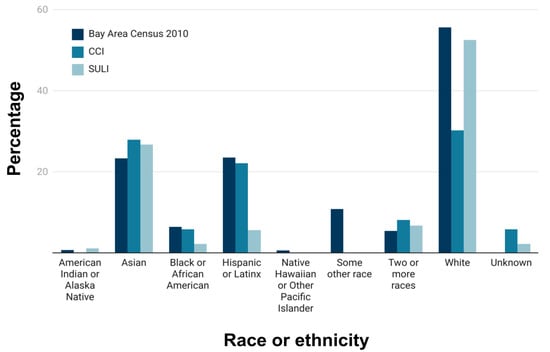
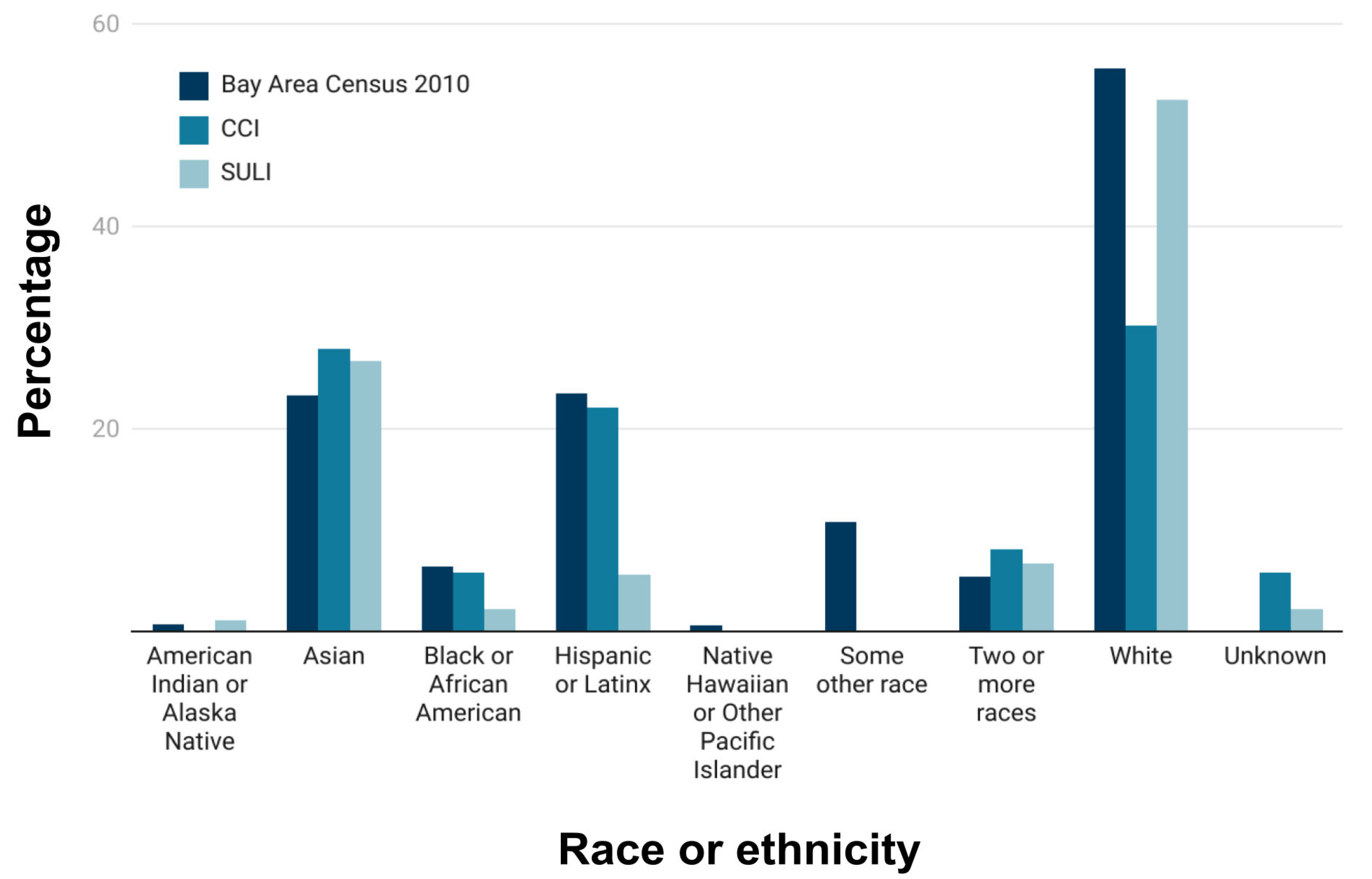
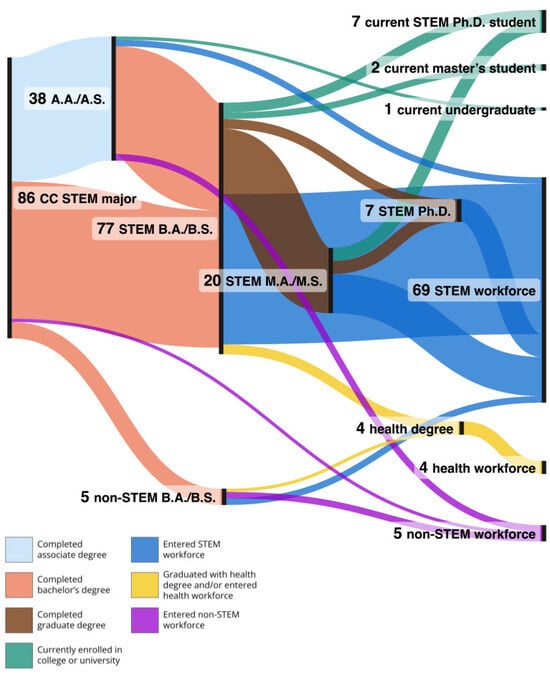
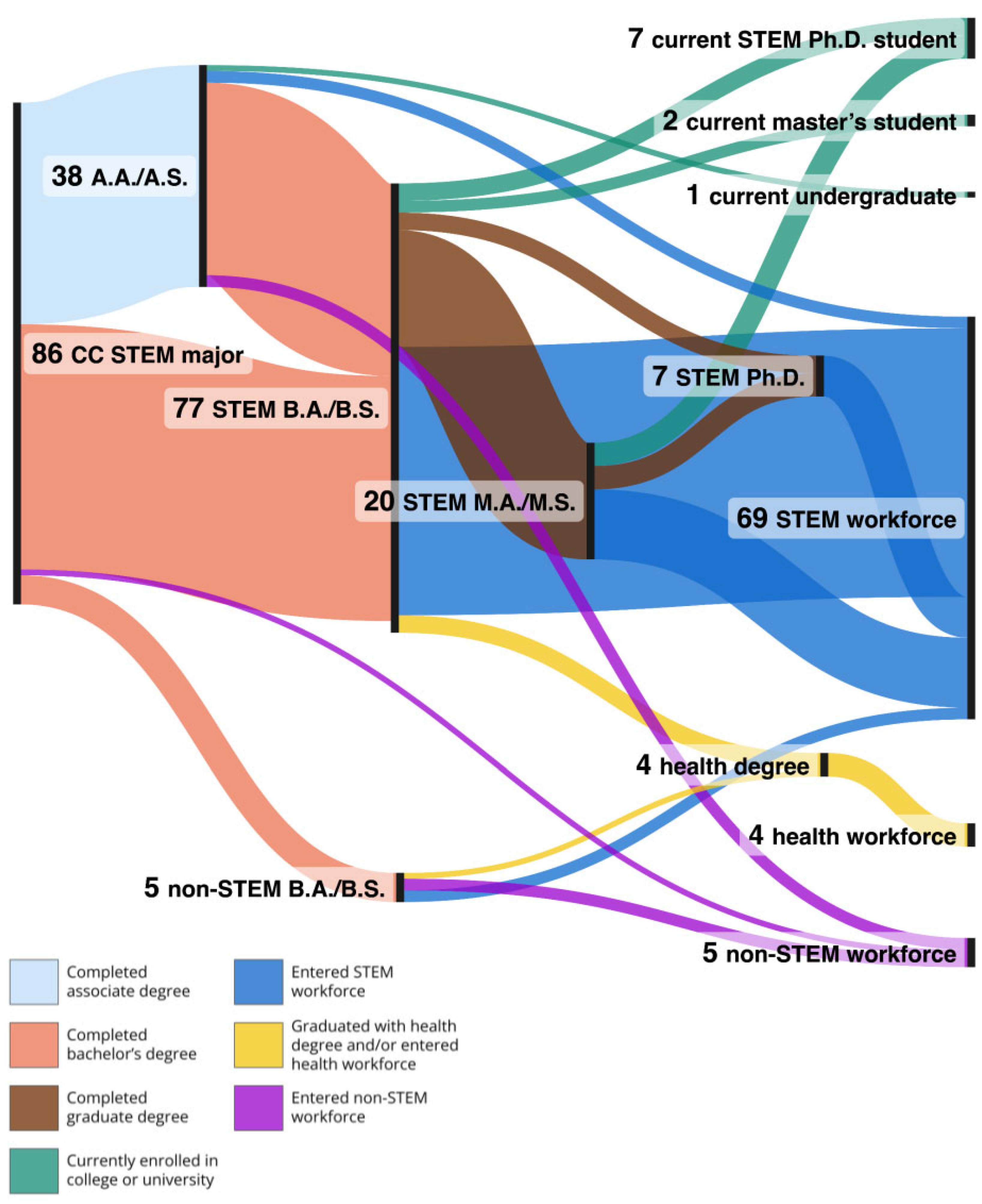
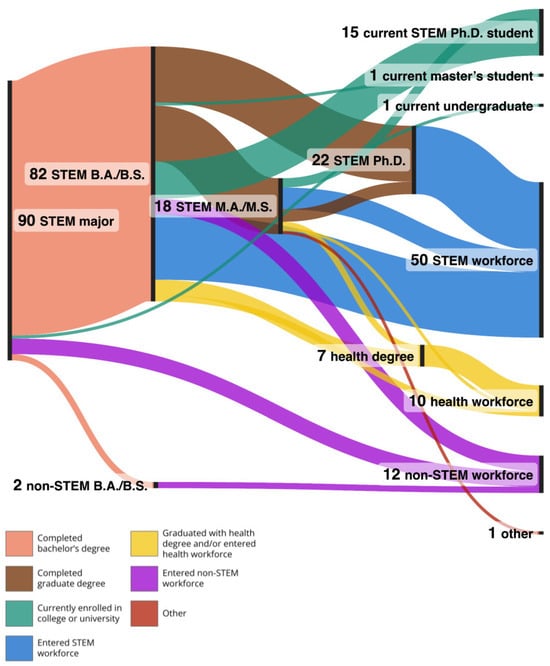
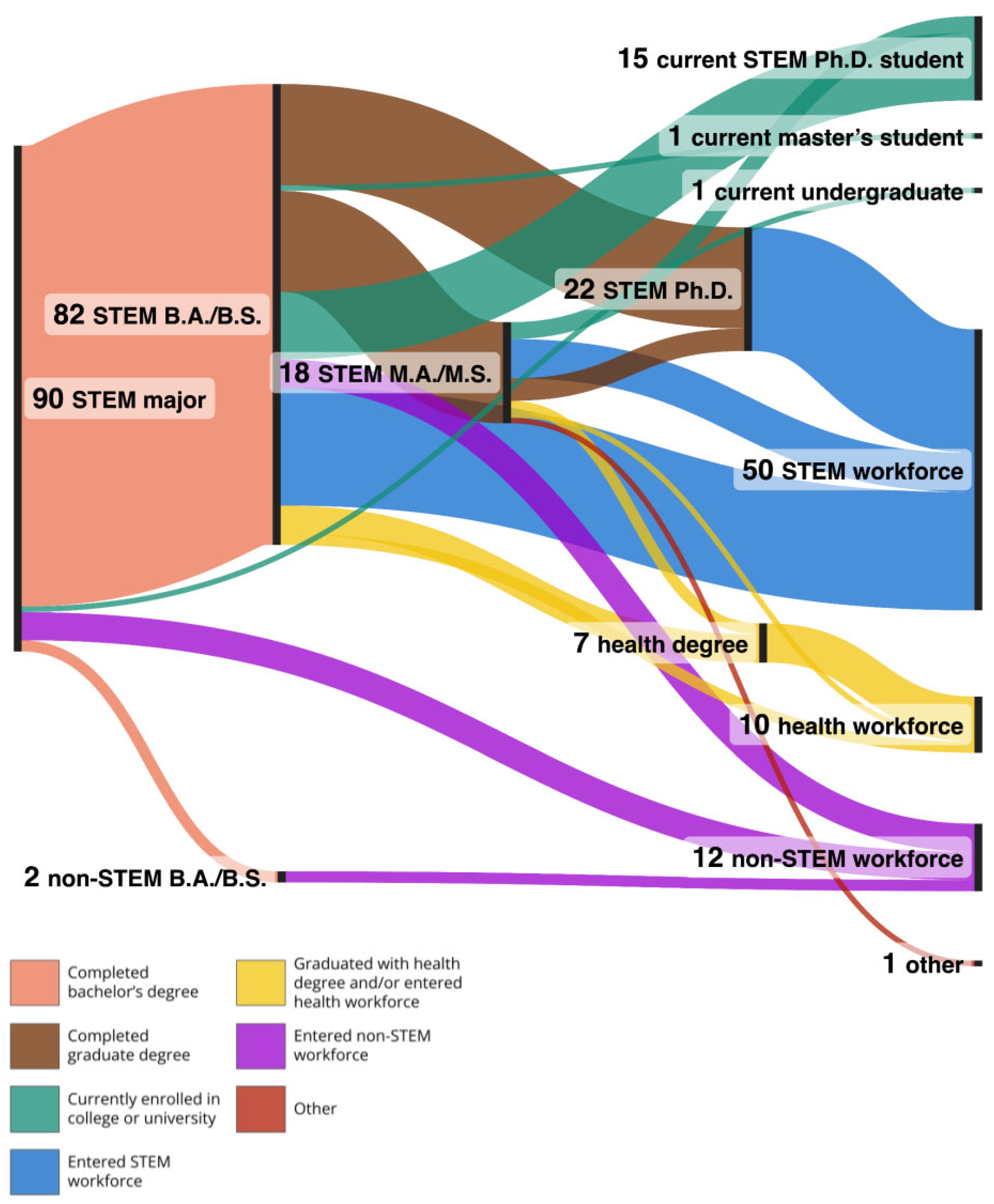
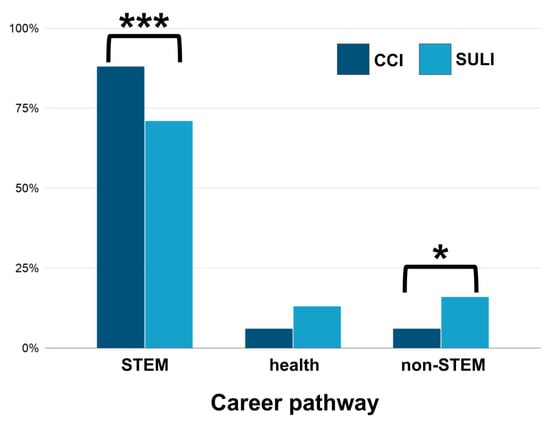
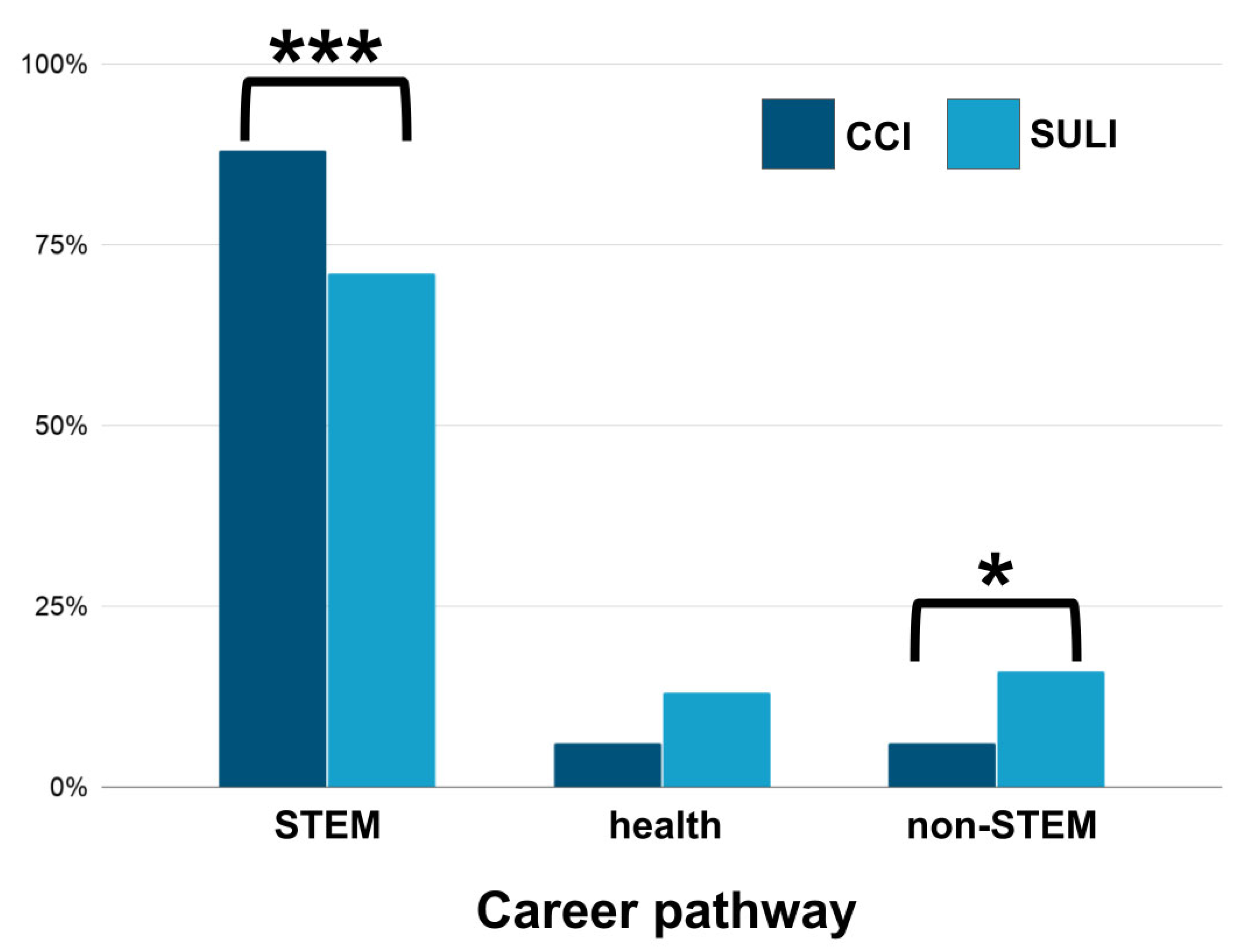

Disclaimer/Publisher’s Note: The statements, opinions and data contained in all publications are solely those of the individual author(s) and contributor(s) and not of MDPI and/or the editor(s). MDPI and/or the editor(s) disclaim responsibility for any injury to people or property resulting from any ideas, methods, instructions or products referred to in the content. |
© 2026 by the authors. Licensee MDPI, Basel, Switzerland. This article is an open access article distributed under the terms and conditions of the Creative Commons Attribution (CC BY) license.