


Abstract
Nanxiong Basin (Guangdong Province, southern China) preserves one of the most complete nanhsiungchelyid turtle records from the latest Cretaceous in Asia. In this study, we review nanhsiungchelyid remains recorded from Nanxiong Basin within a refined stratigraphical framework. Nanhsiungchelyids show constant occurrence in the Nanxiong Basin, recorded from most formations of the Nanxiong Group, with their probable last occurrence close to the Cretaceous–Paleogene boundary.
1. Introduction
The mass extinction event at the Cretaceous–Paleogene boundary eliminated many groups of plants and animals, most notably non-avian dinosaurs; however, turtles were among the vertebrate groups least affected by this event. Studies of turtle faunas from the Cretaceous–early Paleogene in Montana indicate an extinction rate of only 16% [1]. A subsequent study from the same region documented that 18 of 24 turtle lineages crossed the Cretaceous–Paleogene boundary, representing a minimum survivorship of 75% [2]. As an exception, the family Nanhsiungchelyidae is among the few turtle groups that became extinct at the end of the Cretaceous.
Nanhsiungchelyidae Ye, 1966 is a clade of large terrestrial turtles known from the Cretaceous in Asia and North America, with a stratigraphic range extending into the Maastrichtian on both continents [3,4,5]. The latest records of the family are well documented in North America, whereas those from Asia are comparatively scarce [1,2,4,5]. The red beds of the Nanxiong Group in the Nanxiong Basin have yielded numerous nanhsiungchelyid remains [6,7,8,9]. Due to the continuous sedimentation across the Cretaceous–Paleogene boundary, the geology of the basin has been intensively studied. In this paper, we review nanhsiungchelyid remains from the Nanxiong Basin using accurate geological information obtained from first-hand field observations and published sources. These data clarify their stratigraphic distribution and provide evidence for the relationship between nanhsiungchelyids and the Cretaceous–Paleogene boundary in the Nanxiong Basin. We adopt the stratigraphic subdivisions of the Nanxiong Group proposed by Zhang et al. [10] because of their higher precision, allowing nanhsiungchelyid specimens to be placed within a reliable stratigraphic framework.
2. Nanxiong Basin
2.1. Stratigraphy
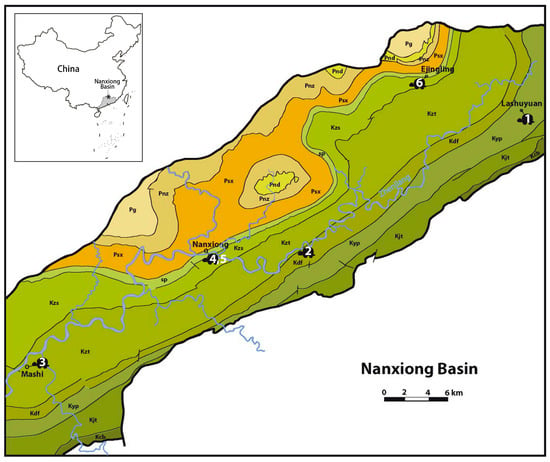
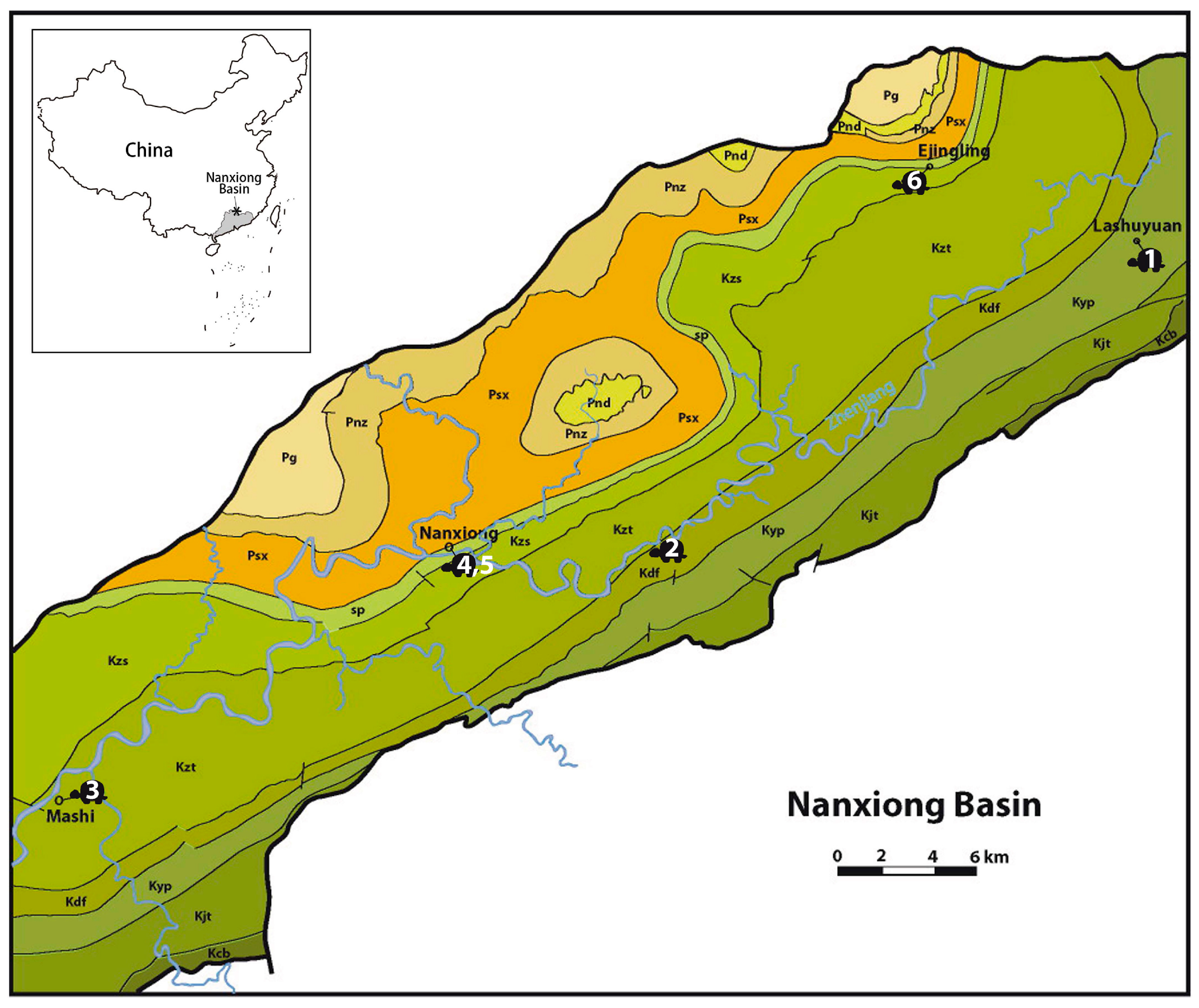
The Nanxiong Basin is an elongated faulted basin extending NE-SW in the northern part of Guangdong Province, southern China. It is filled with a more than 3000 m thick sequence of non-marine red beds of Late Cretaceous–Paleogene age (Figure 1). The Upper Cretaceous deposits are known as the Nanxiong Group, and those of the Paleocene as the Luofozhai Group, although the location of the Cretaceous–Paleogene boundary in the basin is debated (see below). Over the course of geological surveys conducted since the 1960s, different subdivisions, as well as names, have been used for the Nanxiong Group, causing some confusion. For instance, Zhao et al. [11] divided the Nanxiong Group into the Yuanpu and Pingling Formations. The Guangdong Geological Survey Institute divided the Nanxiong Group, in ascending order, into the Dafeng, Zhutian, and Zhenshui Formations [12,13]. Zhang et al. [10] provided a subdivision with higher precision for the lower part of the Nanxiong Group. The Dafeng Formation, sensu Guangdong Geological Survey Institute, was further divided, in ascending order, into the Changba, Jiangtou, Yuanpu, and Dafeng Formations. Zhang et al.’s [10] subdivision is more congruent with that of Erben et al. [14] (Table 1) (See also Zhang et al. [10] for the history of the subdivisions and correlations).
Figure 1.
Geological map of the Nanxiong Basin (Redrawn after Zhang et al. [10]). Pg, Guchengcun Fm.; Psx, Xianhui Member of Shanghu Fm.; Pnd, Datang Member of Nongshan Fm.; Pnz, Zhuguikeng Member of Nongshan Fm.; Kcb, Changba Fm.; Kdf, Dafeng Fm.; Kjt, Jiangtou Fm.; Kyp, Yuanpu Fm.; Kzs, Zhenshui Fm.; Kzt, Zhutian Fm.; sp, Pingling Member of Shanghu Fm. 1. Nanhsiungchelys wuchingensis (IVPP V 3106); 2. Nanhsiungchelys yangi (CUGW VH108); 3. Nanhsiungchelys sp. (SXCM unnumbered); 4. Nanhsiungchelys cf. yangi (SNHM 1558); 5. Nanhsiungchelys sp. (NXM FS30); 6. ?Nanhsiungchelyidae.
The Luofozhai Group conformably overlies the Nanxiong Group, and is further divided into the Shanghu (including Pingling and Xiahui members), Nongshan (including Zhuguikeng and Datang members), and Guchengcun (including Maojiwan and Zhenxianyan members) Formations [10,11,12,13]. The entire Nanxiong Group is considered to have a time span from the Cenomanian to Maastrichtian, but the age of the lower limit is not well constrained [15,16]. 40Ar/39Ar and U-Ph radiometric dating of the basalts at Pubei, at the upper part of the Yuanpu Formation, sensu Zhao et al. [11] (corresponding to the Zhutian Formation, sensu Zhang et al. [10]), yielded an age of 67.04 ± 2.31 and 67.37 ± 1.49 Ma [11] or 66.7 ± 0.3 Ma [17], providing a minimum age for the Zhutian Formation at the moment of eruption (Maastrichtian). Based on a combination of radiometric, palaeontological, and palaeomagnetic data, the age of the Datang section, comprising the strata of the upper part of the Zhutian Formation, Zhenshui Formation, and Shanghu Formation, ranges from 72 to 62.8 Ma (Maastrichtian–Danian) [18].
Table 1.
Correlation of stratigraphical subdivision of Nanxiong Group (updated from [10]).
2.2. The Cretaceous–Paleogene Boundary in the Nanxiong Basin
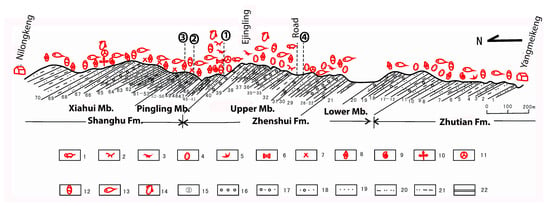
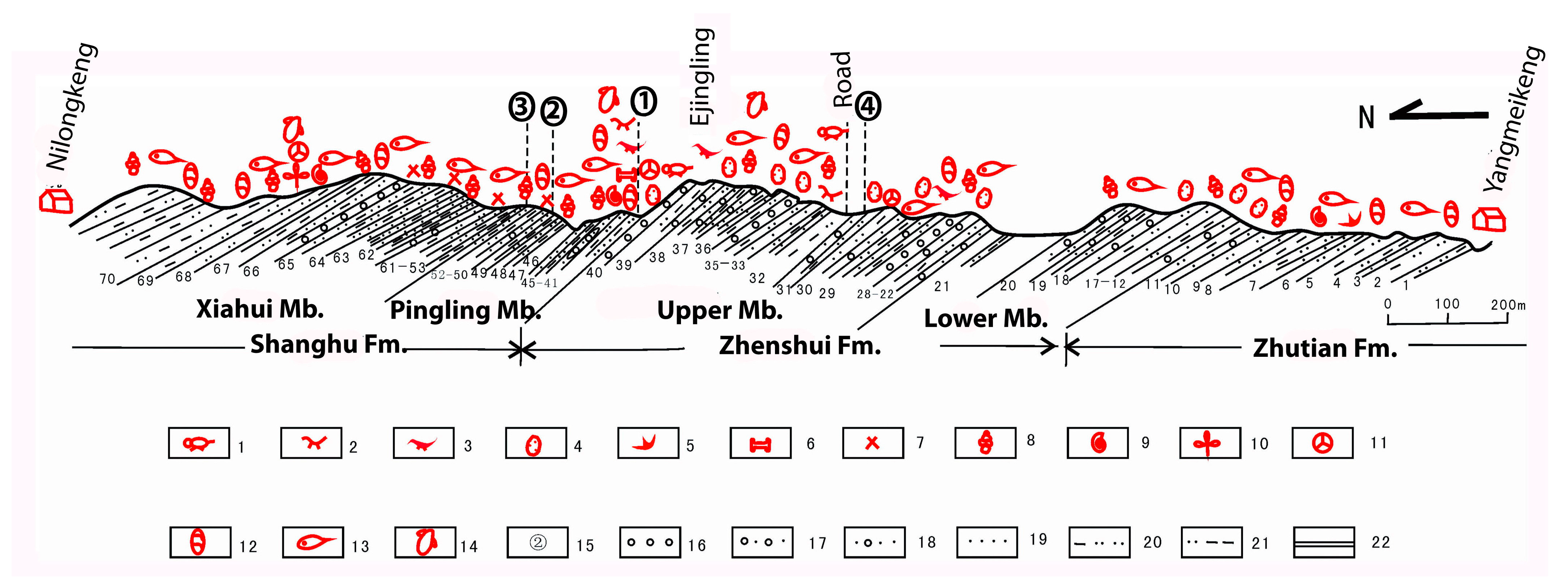
The Cretaceous–Paleogene boundary has been intensively studied in the Nanxiong Basin. Studies have revealed that the K/Pg boundary is not represented by a sharp line or a thin clay layer in the basin, but instead passage beds of approximately 20 m thickness [14]. Based on palynology, invertebrate or vertebrate palaeontology, the K/Pg boundary has been placed at different places in the stratigraphic column (Figure 2): (1) at the base of the Shanghu Formation based on the last dinosaur remains [11]; (2) in the upper part of the Pingling Member of the Shanghu Formation based on mammals and the assemblage of gastropods [20,21]; (3) between the Pingling and Xiahui members of the Shanghu Formation based on the assemblage of the ostracods [22], and (4) in the middle–upper part of the Zhenshui Formation based on palynomorphs [14]. Further comprehensive analyses have revealed that boundary 1, at the base of the Shanghu Formation, corresponding to the last dinosaur remains and within the 29R of the magnetostratigraphy, is the closest to the real Cretaceous–Paleogene boundary [23,24].
Figure 2.
Datang section (based on Zhang et al. 2013 [10]). 1. Turtle, 2. lizard, 3. dinosaur bone, 4. dinosaur egg, 5. dinosaur footprint, 6. mammal, 7. Bemalambda, 8. gastropod, 9. conchostraca, 10. plant, 11. palynomorph, 12. charophyte, 13. ostracod, 14. bivalve, 15. boundary, 16. conglomerate, 17. sandy conglomerate, 18. gravelly sandstone, 19. sandstone, 20. siltstone, 21. mudstone, 22. shale.
2.3. Paleoenvironment and Paleoclimate
Based on the lithostratigraphy, the red beds of the Nanxiong Basin represent four sedimentary cycles deposited in the fluvial–lacustrine environment [10]. Geological and geochemical studies have indicated a long period of extremely dry climate with arid vegetation during the latest Cretaceous, followed by significant floral change at the K/Pg boundary, and a relatively wet climate during the Early Paleocene [25]. The paleoclimate changes from 72 to 62.8 Ma in the Nanxiong Basin can be divided into three stages: a relatively hot and wet stage during 72–71.5 Ma, a cool and arid stage during 71.5–66 Ma, and a relatively hot and wet stage again during 66–62.8 Ma with a notable drying and cooling event at 64.7–63.4 Ma, with several sub-fluctuations during each stage [18].
2.4. Vertebrate Fauna
The red beds of the Nanxiong Basin are rich in vertebrate fossils. The Cretaceous Nanxiong Group has yielded various dinosaur bones and eggs, as well as dinosaur and pterosaur footprints, and the Paleocene Luofozhai Group has yielded abundant mammal remains [11,19,26,27,28,29,30,31]. In addition, crocodiles and turtles have been recorded in both groups [6,7,8,9,10,26,32,33,34,35].
3. Nanhsiungchelyid Records from the Nanxiong Basin
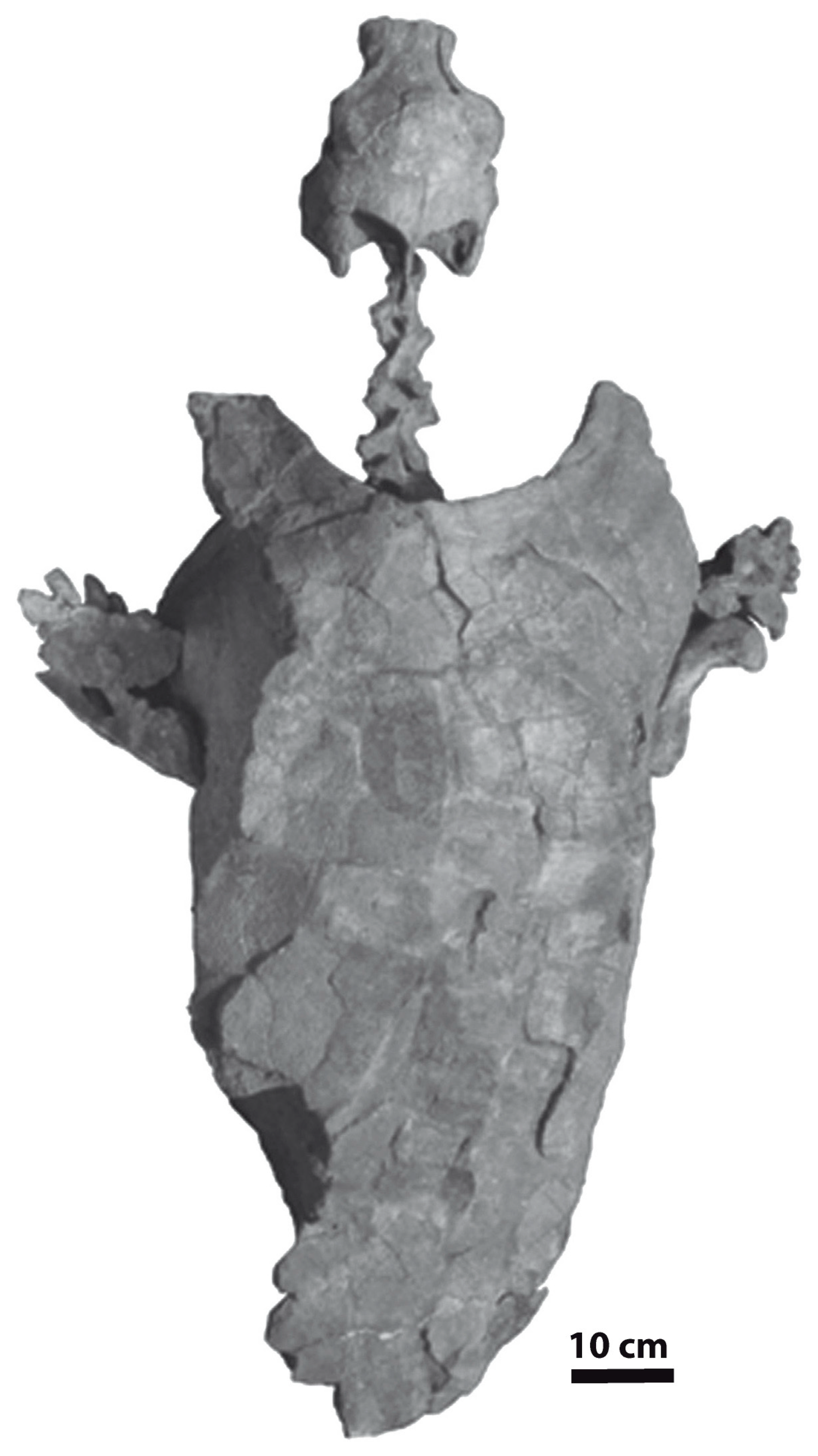
3.1. Nanhsiungchelys wuchingensis Ye, 1966 (IVPP V 3016, Figure 3)
Nanhsiungchelys wuchingensis is the first nanhsiungchelyid turtle reported from the Nanxiong Basin. The holotype and only specimen of this species, a partial skeleton consisting of the skull, lower jaw, cervical vertebrae series, forelimbs, girdle bones, carapace, and plastron in articulation, was collected by a team from IVPP in the winter of 1962 [36]. IVPP V 3106 (field number 6225) was unearthed at Lashuyuan, Wujingzhen (Wujing Town), Nanxiong County, Shaoguan Prefecture, Guangdong Province [6,37]. Two eggs (IVPP V 2789), collected along with IVPP V 3106 and bearing the same field number as the latter (6225), have been studied by Young [38]; they are supposed to belong to N. wuchingensis. According to Zhang et al. [10], the Lashuyuan site is located stratigraphically in the Yuanpu Formation. On the basis of this specimen, Ye erected the family Nanhsiungchelyidae [6].
Figure 3.
Nanhsiungchelys wuchingensis Ye, 1966 (IVPP V 3106) from Lashuyuan, Yuanpu Fm.
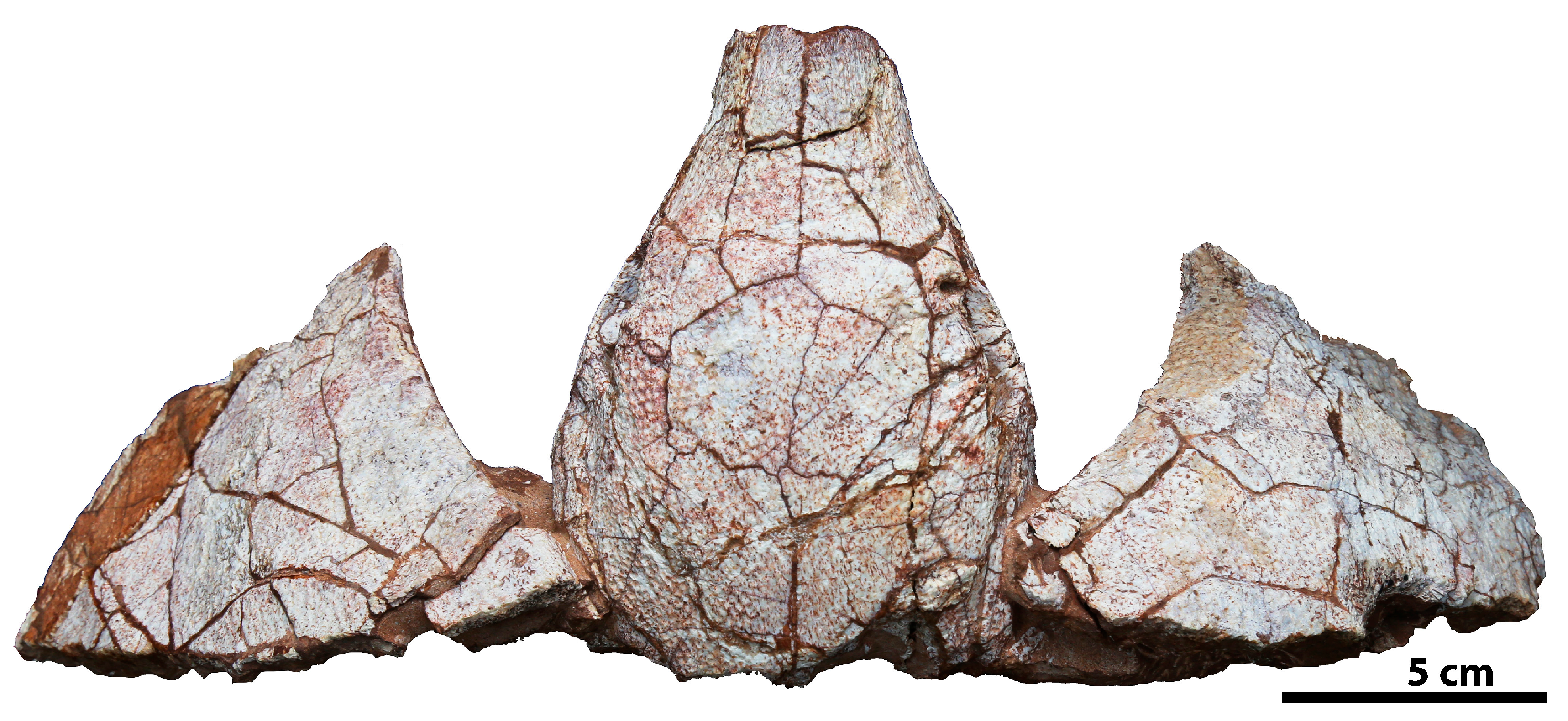
3.2. Nanhsiungchelys yangi Ke et al., 2023 (CUGW VH108, Figure 4)
Described by Ke et al. in 2023, this species is represented by a single specimen (CUGW VH108), the anterior part of a skeleton including the skull, lower jaw, and anterior extremity of the carapace and plastron [8]. The specimen was collected by a local farmer near Zhenjiang (Zhen River), but the exact location is uncertain, and it is unclear if the specimen comes from the north or south of the river. Stratigraphically, based on the matrix surrounding the specimen (brownish-red siltstone), it is believed to be from the Dafeng Formation, sensu Guangdong Geological Survey Institute [8,13]. The location indicated on the map ([8], Figure 1) is south of Luofozhai. If this indication is reliable, at this location, Zhenjiang is meandering and crosses the boundary several times between the Zhutian Formation above (North) and the Dafeng Formation below (South) [10]. Thus, even though CUGW VH108 is considered to be from the Dafeng Formation, it is not totally excluded that it could come from the overlying Zhutian Formation.
Figure 4.
Nanhsiungchelys yangi Ke et al., 2023 (CUGW VH108) from Dafeng Fm (after Ke et al. [8]).
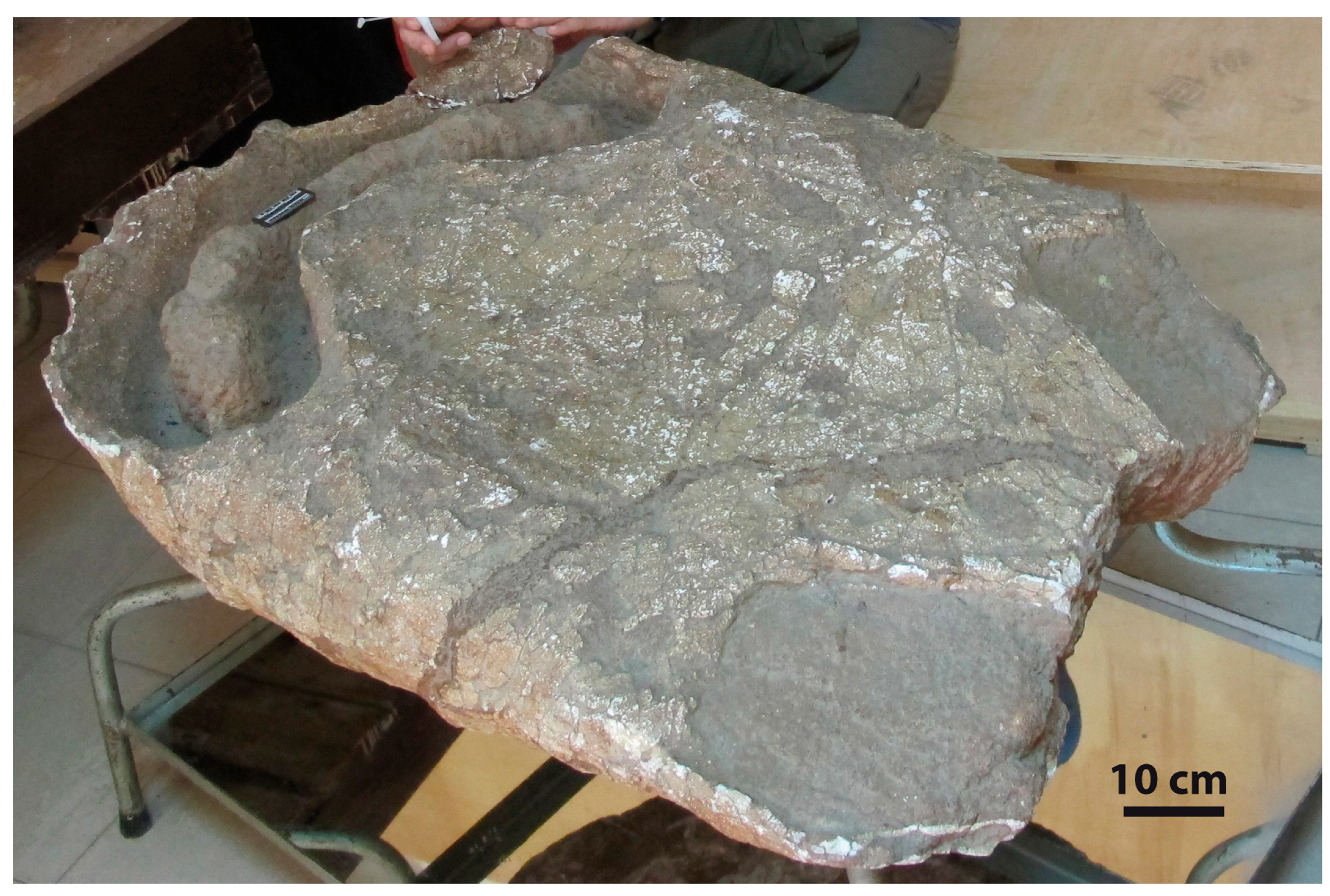
3.3. Nanhsiungchelys sp. (SXCM unnumbered, Figure 5)
Ye [39] reported a large turtle shell collected by the Shixing County Museum. This almost complete large shell, housed in this museum, was collected at Mashizhen (Mashi Town), Shixing County. Stratigraphically, this site is located within the Zhutian Formation, sensu Zhang et al. [10].
Figure 5.
Nanhsiungchelys sp. (SXCM unnumbered) from Mashi, Zhutian Fm.
3.4. Nanhsiungchelys cf. yangi (SNHM 1558, Figure 6)
From May to July 1972, a team from Shanghai Natural History Museum, with the help of Mr. Cunyi Wang from IVPP, collected vertebrate fossils from the Cretaceous–Paleocene strata in the Nanxiong Basin. Among numerous fossils collected during the expedition (mainly mammals and dinosaur eggs), there was a nearly complete large turtle skeleton (field number 72005), consisting of an articulated skull, lower jaw, and shell. The specimen was sent to Shanghai and housed in the Shanghai Sciences & Technology Museum (now the Shanghai Natural History Museum) under the collection number SNHM 1558. Its first mention in a scientific publication was by Ye, who examined the specimen and assigned it to Nanhsiungchelyidae [39]. Hirayama et al. [40] provided a brief description of specimen SNHM 1558 in an abstract and noticed that the stick-like anterolateral processes of the carapace are reminiscent of Anomalochelys angulata from Japan and the skull is somewhat different from N. wuchingensis. From a stratigraphical point of view, Ye [39] considered SNHM 1558 to be from the same stratigraphic horizon as N. wuchingensis (Late Cretaceous), without further precision, whereas Hirayama et al. [40] incorrectly reported that SNHM 1558 was from the same locality as N. wuchingensis. Tong [7] assigned SNHM 1558 to Nanhsiungchelys sp. based on the first-hand observation that the anterolateral processes of the carapace are formed by the peripherals 1. A recent systematic study assigned SNHM 1558 to Nanhsiungchelys cf. yangi based on the similarity of the skull [9].
Figure 6.
Nanhsiungchelys cf. yangi (SNHM 1558), Zhenshui Fm.
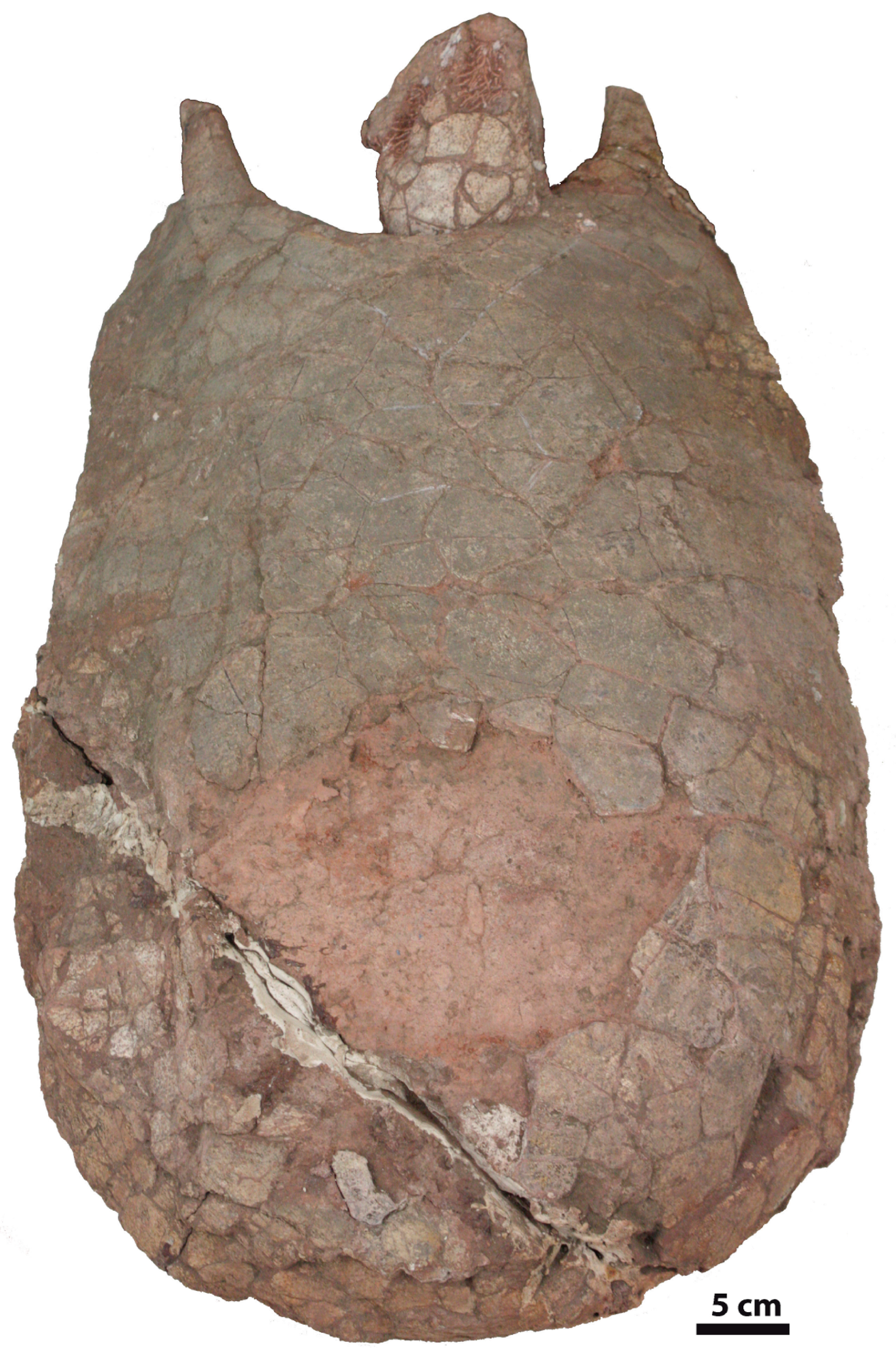
According to an original short report on the Shanghai Natural History Museum expedition in 1972, specimen 72005 (SNHM 1558) was unearthed at a locality south of Nanxiong old town, and south of Zhen River. In the overlying strata at locality 72001, a dinosaur egg was collected. More detail about the location where 72005 was collected was provided in the Nanxiong County Annals: ‘From May to July 1972, when the Shanghai Natural History Museum came to Nanxiong for an investigation, they discovered a Late Cretaceous turtle fossil on the pedestrian path from Shuinan to Guzikeng. The fossil was about 78 cm in length and 58 cm in width.’ [41]. In this area, the Cretaceous–Paleogene boundary passes through Nanxiong City in the NEE/SWW direction, north of the Zhen River [10]. Zhang et al. [10] located 72005 in the Zhenshui Formation, which is congruent with our field survey. This is further supported by the coarse matrix inside specimen SNHM 1558.
3.5. Nanhsiungchelys sp. (NXM FS 30, Figure 7)
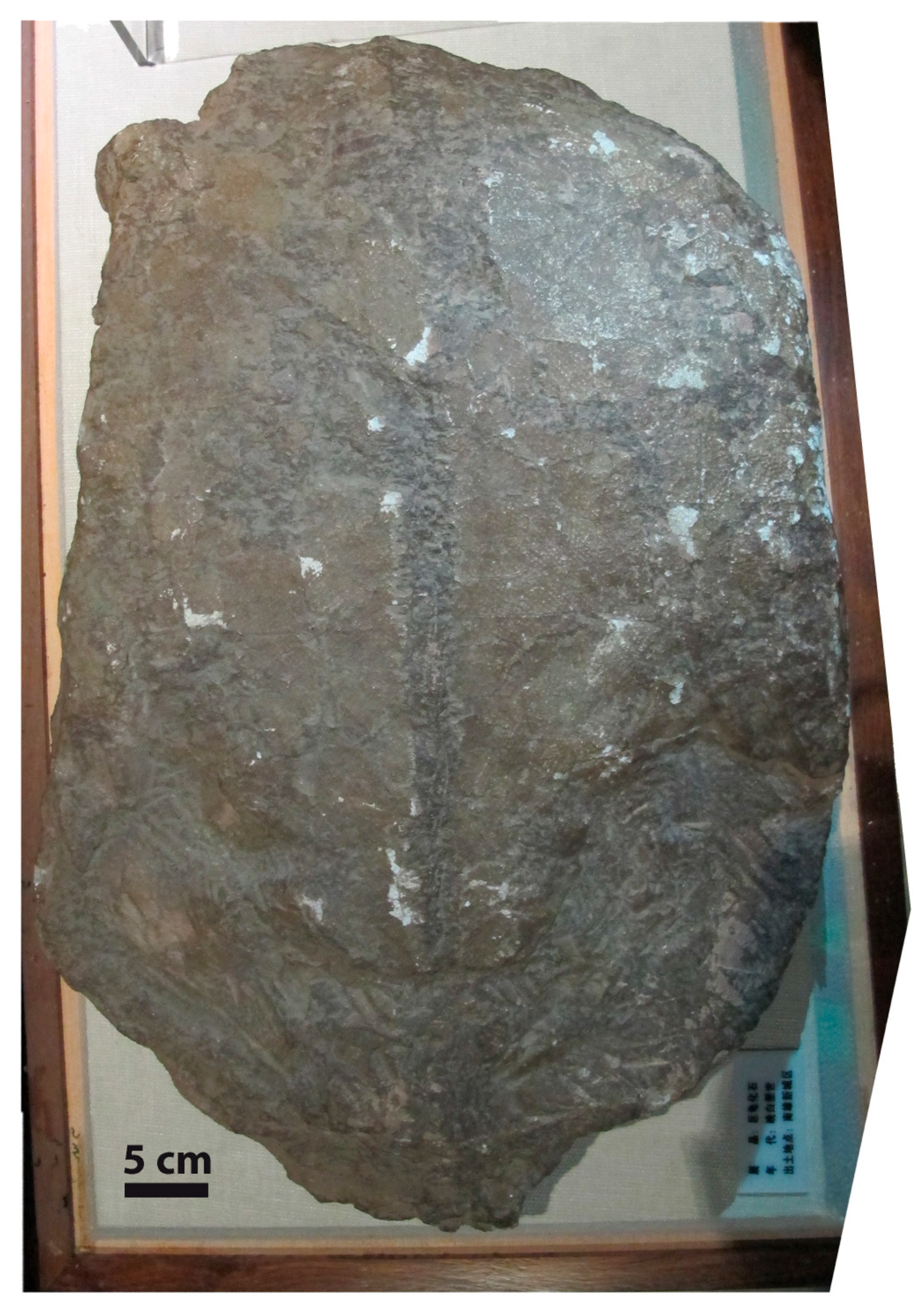
Another Nanhsiungchelys shell is exhibited in the Nanxiong Museum. The shell is exposed in ventral view with a nearly complete plastron. As indicated on the label, this shell is from the ‘Nanxiong new town’, the part of the town south of the Zhen River that was developed since 1985 [41]. This specimen is from the same area as SNHM 1558, and is likely also from the Zhenshui Formation.
Figure 7.
Nanhsiungchelys sp. (NXM FS 30), Zhenshui Fm.
3.6. ?Nanhsiungchelyidae from Ejingling (Unnumbered, Figure 8)
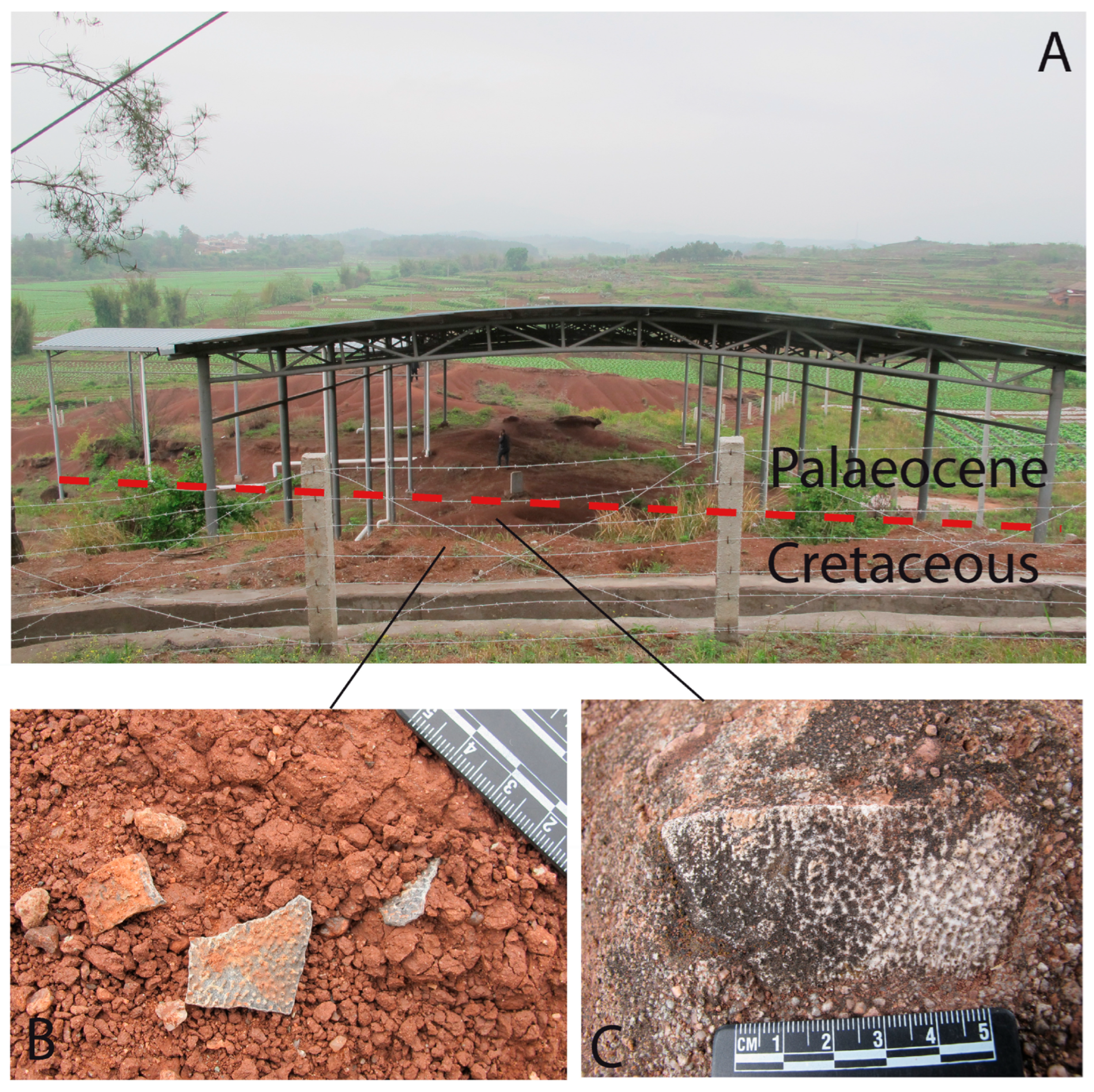
The Datang profile is the most studied section in the Nanxiong Basin regarding the Cretaceous–Paleogene boundary. In this section, the K/Pg boundary 1 is located at Ejingling, where a protected area has been established. Below the K/Pg boundary, abundant dinosaur eggshell fragments are visible on the surface, and a turtle shell fragment with ornamentation that is somewhat reminiscent of that of Nanhsiungchelyidae was found during our investigation in 2014. Considering the fragmentary nature of the specimen, we assigned it to ?Nanhsiungchelyidae, pending further investigation. Above these layers, there were no more dinosaur eggshells, but some Anosteira shell fragments. Zhang and Li [34] considered these turtle remains to be from the lower part of the Pingling Member of the Shanghu Formation.
Figure 8.
(A) Ejingling K/Pg boundary protected area, (B) dinosaur eggshells, (C) a shell fragment of ?Nanhsiungchelyidae.
4. Discussion
4.1. Nanhsiungchelyids from the Nanxiong Basin and Their Relationship to the K/Pg Boundary
Originating in Asia in the Early Cretaceous (Barremian–Aptian), nanhsiungchelyids were widespread across Central and East Asia in the Late Cretaceous, with a rich fossil record. According to a review of the Asian fossil record of the family Nanhsiungchelyidae by Danilov and Syromyatnikova [5], the most complete record comes from Mongolia, with a peak diversity from the Cenomanian–Campanian. The presence of nanhsiungchelyids in the Maastrichtian (Nemegt Formation) of Mongolia, however, remains questionable and requires confirmation.
Since this revision, several additional taxa and specimens of Nanhsiungchelyidae have been described from the Late Cretaceous in China, notably from the Ganzhou Basin (Jiangxi Province), where nanhsiungchelyids have been recorded from the latest Cretaceous. Compared to the Nanxiong Basin, nanhsiungchelyids from the Ganzhou Basin are more diverse, with three genera (Nanhsiungchelys, Jiangxichelys, and Xianyuechelys), and are more abundant, being represented by a large number of individuals. However, with the exception of a carapace of Xianyuechelys yingliangi from the Maastrichtian Lianhe Formation, and a partial plastron of Nanhsiungchelys sp. from the Campanian Tangbian Formation [16,42,43], most specimens lack precise stratigraphic information [44,45,46]. Therefore, the Nanxiong Basin provides one of the most complete and reliable latest Cretaceous records of the family Nanhsiungchelyidae in Asia.
Although the material available for our study is relatively limited, the occurrence of nanhsiungchelyid turtles in the Nanxiong Basin appears to be constant, being recorded in all formations of the Nanxiong Group (Yuanpu, Dafeng, Zhutian, and Zhenshui), except for the two lowermost formations (Changba and Jiangtou). If the assignment of the shell fragment from Ejingling to Nanhsiungchelyidae is confirmed, the youngest specimen would be recorded from the lowermost part of the Pingling Member, close to the Cretaceous–Paleogene boundary 1, in association with the dinosaur eggshells.
All reliable nanhsiungchelyid specimens currently known from the Nanxiong Basin are referred to the genus Nanhsiungchelys. According to the geological fieldwork, nanhsiungchelyid remains, often mentioned in the literature as “large” or “huge turtles”, appear to be relatively common within the Nanxiong Group [10,34]; however, most of these fragmentary remains are not collected or curated in public collections.
4.2. Other Turtle Remains from the Nanxiong Basin
The red beds of the Nanxiong Basin have yielded additional turtle remains from both the Nanxiong and Luofozhai groups. In addition to nanhsiungchelyid specimens from the Nanxiong Group mentioned above, remains of the carettochelyid turtle Anosteira lingnanica have been recorded in the Zhutian Formation [7,26] and in both the Xiahui and Pingling members of the Shanghu Formation. The Paleocene Luofozhai Group has yielded testudinoid Lindholmemydidae, including Elkemys australis from the Xiahui Member of the Shanghu Formation and Hokouchelys chenshuensis from the Nongshan Formation [7,33]. Elkemys sp. has also been collected from the Zhutian Formation of the Nanxiong Group. A summary of turtle records from the Nanxiong Basin is provided in Table 2. Of the three families known from the Cretaceous–Paleogene of the Nanxiong Basin, two crossed the K/Pg boundary, while Nanhsiungchelyidae, represented by the genus Nanhsiungchelys, did not.
Table 2.
Turtle remains from the Cretaceous–Paleogene deposits of the Nanxiong Basin.
5. Conclusions
The Nanxiong Basin preserves one of the most complete records of the family Nanhsiungchelyidae from the latest Cretaceous in Asia, with reliable occurrences documented in the Yuanpu, Dafeng, Zhutian, and Zhenshui Formations of the Nanxiong Group. The youngest known nanhsiungchelyid specimen, if the assignment is confirmed, is located at the base of the Pingling Member, where it is associated with dinosaur eggshells and lies close to the Cretaceous–Paleogene boundary. Considering records from other regions of Asia and North America, our study provides additional evidence on the extinction of the family Nanhsiungchelyidae at the end of the Cretaceous.
Author Contributions
Conceptualization, H.T. and L.L.; validation, H.T., L.L., Y.K., and Y.W.; investigation, H.T., L.L., Y.K., and Y.W.; writing—original draft preparation, H.T.; writing—review and editing, H.T., L.L., and Y.K.; supervision, H.T. All authors have read and agreed to the published version of the manuscript.
Funding
This study is supported by the National Natural Science Foundation of China (Grant 41172017).
Data Availability Statement
The original contributions presented in this study are included in the article. Further inquiries can be directed to the corresponding author(s).
Acknowledgments
We thank Xianqiu Zhang (Sanshui, Guangdong), Delin Zhu (Nanxiong), Sheng Wu (Shixing), and Yufeng Liu (Xuchang, Henan) for their help during our field work.
Conflicts of Interest
The authors declare no conflicts of interest.
Abbreviations
| CUGW | China University of Geosciences (Wuhan) |
| IVPP | Institute of Vertebrate Paleontology and Paleoanthropology, Chinese Academy of Sciences |
| NXM | Nanxiong Museum |
| SXCM | Shixing County Museum |
| SNHM | Shanghai Natural History Museum |
References
- Hutchison, J.H.; Archibald, J.D. Diversity of Turtles across the Cretaceous/Tertiary Boundary in Northeastern Montana. Palaeogeogr. Palaeoclimatol. Palaeoecol. 1986, 55, 1–22. [Google Scholar] [CrossRef] [Scilit]
- Holroyd, P.A.; Wilson, G.P.; Hutchison, J.H. Temporal Changes within the Latest Cretaceous and Early Paleogene Turtle Faunas of Northeastern Montana. In Through the End of the Cretaceous in the Type Locality of the Hell Creek Formation in Montana and Adjacent Areas; Special Paper 503; The Geological Society of America: Boulder, CO, USA, 2014; pp. 299–312. [Google Scholar]
- Hutchison, J.H. Diversity of Cretaceous Turtle Faunas of Eastern Asia and Their Contribution to the Turtle Faunas of North America. Paleontol. Soc. Korea Spec. Publ. 2000, 4, 27–38. [Google Scholar]
- Sukhanov, V.B. Mesozoic Turtles of Middle and Central Asia. In The Age of Dinosaurs in Russia and Mongolia; Benton, M.J., Shishkin, M.A., Unwin, D.M., Kurochkin, E.N., Eds.; Cambridge University Press: Cambridge, UK, 2000; pp. 309–367. [Google Scholar]
- Danilov, I.G.; Syromyatnikova, E.V. New Materials on Turtles of the Family Nanhsiungchelyidae from the Cretaceous of Uzbekistan and Mongolia, with a Review of the Nanhsiungchelyid Record in Asia. Proc. Zool. Inst. RAS 2008, 312, 3–25. [Google Scholar] [CrossRef] [Scilit]
- Ye, X.-K. A New Cretaceous Turtle of Nanhsiung, Northern Kwangtung. Vertebr. Palasiat. 1966, 10, 191–200. [Google Scholar]
- Tong, H. Testudines. In Parareptilians, Captorhines and Testudines; Li, J., Tong, H., Eds.; Palaeovertebrata Sinica; Science Press: Beijing, China, 2017; Volume 2, Fascicle 2, pp. 92–365. [Google Scholar]
- Ke, Y.; Rahman, I.A.; Song, H.; Hu, J.; Niu, K.; Lou, F.; Li, H.; Han, F. A New Species of Nanhsiungchelys (Testudines: Cryptodira: Nanhsiungchelyidae) from the Upper Cretaceous of Nanxiong Basin, China. PeerJ 2023, 11, e15439. [Google Scholar] [CrossRef] [Scilit]
- Ke, Y.; Shi, Z.; Tong, H.; Li, B.; Zhang, Y.; Han, F.; Joyce, W. Taxonomy, Morphology, and Phylogeny of a Nearly Complete Nanhsiungchelyid (Testudines) Specimen from the Upper Cretaceous of the Nanxiong Basin, China. Swiss J. Geosci. 2025, 144, 48. [Google Scholar]
- Zhang, X.Q.; Zhang, X.M.; Hou, M.C.; Li, G.; Li, H.M. Lithostratigraphic Subdivision of Red Beds in Nanxiong Basin, Guangdong. J. Stratigr. 2013, 37, 441–451. [Google Scholar]
- Zhao, Z.; Ye, J.; Li, H.-M.; Zhao, Z.-H.; Yan, Z. Extinction of the Dinosaurs across the Cretaceous-Tertiary Boundary in Nanxiong Basin, Guandong Province. Vertebr. Palasiat. 1991, 29, 1–20. [Google Scholar]
- Guangdong Geological Survey Institute. Guangdong Province Rock Strata; China University of Geosciences Press: Wuhan, China, 1996. [Google Scholar]
- Guangdong Geological Survey Institute. Regional Geology of Guangdong, Xianggang, and Aomen; Geological Publishing House: Beijing, China, 2020. [Google Scholar]
- Erben, H.K.; Ashraf, A.R.; Böehm, H.; Hahn, G.; Hambach, U.; Krumsiek, K.; Stets, J.; Thein, J.; Wurster, P. The Cretaceous/Tertiary Boundary in the Nanxiong-Basin (Continental Facies, SE-China); Franz Steiner Verlag Wiesbaden GmbH: Sttutgart, Germany, 1995; Volume 32. [Google Scholar]
- Xi, D.P.; Wan, X.Q.; Li, G.B.; Li, G. Integrated Stratigraphy and Time Frame of the Cretaceous in China. Chin. Sci. (Earth Sci.) 2019, 49, 257–288. [Google Scholar]
- Xi, D.; Sun, L.; Qin, Z.; Li, G.; Li, G.; Wan, X.Q. Lithostratigraphic Subdivision and Correlation of the Cretaceous in China. J. Stratigr. 2021, 45, 375–401. [Google Scholar]
- Rigby, J.K.; Sneel, L.W.; Unruh, D.M.; Harland, S.S.; Guan, J.; Li, F.; Rigby, J.K.; Kowalis, B.J. 40Ar/39Ar and U-Pb Dates for Dinosaur Extinction, Nanxiong Basin, Guangdong Province, People’s Republic of China. Geol. Soc. Am. Abstr. Programs 1993, 25, A296. [Google Scholar]
- Ma, M.; Liu, X.; Wang, W. Palaeoclimate Evolution across the Cretaceous–Palaeogene Boundary in the Nanxiong Basin (SE China) Recorded by Red Strata and Its Correlation with Marine Records. Clim. Past 2018, 14, 287–302. [Google Scholar] [CrossRef] [Scilit]
- Fang, X.; Li, P.; Zhang, Z.; Zhang, X.; Lin, Y.; Guo, H.; Cheng, Y.; Li, Z.; Zhang, X.; Cheng, Z. Cretaceous Strata in Nanxiong Basin of Guangdong and the Evolution from the Dinosaur Egg to the Bird Egg. Acta Geosci. Sin. 2009, 30, 167–186. [Google Scholar]
- Yu, W.; Gu, H.; Zhang, X. Assemblage Sequence of Late Cretaceous and Early Tertiary Non-Marine Gastropods from Nanxiong Basin, Guangdong. Acta Palaeontol. Sin. 1990, 29, 160–182. [Google Scholar]
- Ling, Q.; Zhang, X.; Lin, J. New Advance in the Study of the Cretaceous and Paleogene Strata of the Nanxiong Basin. J. Stratigr. 2005, 29, 596–601. [Google Scholar]
- Zhang, X. A Study on Ostracod Fauna of Shanghu Formation and Cretaceous-Tertiary Boundary in Nanxiong Basin, Guangdong. Acta Paleontol. Sin. 1992, 31, 678–702. [Google Scholar]
- Clyde, W.C.; Ting, S.; Snell, K.E.; Bowen, G.J.; Tong, Y.; Koch, P.L.; Li, Q.; Wang, Y. New Paleomagnetic and Stable-Isotope Results from the Nanxiong Basin, China: Implications for the K/T Boundary and the Timing of Paleocene Mammalian Turnover. J. Geol. 2010, 118, 131–143. [Google Scholar] [CrossRef] [Scilit]
- Zhao, M.; Ma, M.; He, M.; Qiu, Y.; Liu, X. Evaluation of the Four Potential Cretaceous-Paleogene (K-Pg) Boundaries in the Nanxiong Basin Based on Evidences from Volcanic Activity and Paleoclimatic Evolution. Sci. China Earth Sci. 2021, 64, 631–641. [Google Scholar] [CrossRef] [Scilit]
- Yan, Y.; Xia, B.; Lin, G.; Cui, X.; Hu, X.; Yan, P.; Zhang, F. Geochemistry of the Sedimentary Rocks from the Nanxiong Basin, South China and Implications for Provenance, Paleoenvironment and Paleoclimate at the K/T Boundary. Sediment. Geol. 2007, 197, 127–140. [Google Scholar] [CrossRef] [Scilit]
- Young, C.C.; Chow, M. Some Reptilian Fossils from the “Red-Beds” of Kwangtung and Chekiang. Vertebr. Palasiat. 1962, 1962, 130–135. [Google Scholar]
- Chow, M.; Zhang, Y.; Wang, B.; Ding, S. Paleocene Mammalian Fauna from the Nanxiong Basin, Guangdong Province. Paleontol. Sin. New Ser. C 1977, 20, 153. [Google Scholar]
- Dong, Z. Dinosaurs from the Cretaceous of South China. In Proceedings of the Mesozoic and Cenozoic Red Beds of South China: Selected Papers from the Cretaceous–Tertiary Workshop, Nanxiong, Guangdong Province; Science Press: Beijing, China, 1979; pp. 342–350. [Google Scholar]
- Lü, J.; Zhang, B. A New Oviraptorid (Theropod: Oviraptorosauria) from the Upper Cretaceous of the Nanxiong Basin, Guangdong Province of Southern China. Acta Palaeontol. Sin. 2005, 44, 412. [Google Scholar]
- Xing, L.; Harris, J.D.; Dong, Z.; Lin, Y.; Chen, W.; Guo, S.; Ji, Q. Ornithopod (Dinosauria: Ornithischia) Tracks from the Upper Cretaceous Zhutian Formation in the Nanxiong Basin, Guangdong, China and General Observations on Large Chinese Ornithopod Footprints. Geol. Bull. China 2009, 28, 829–843. [Google Scholar]
- Xing, L.; Lockley, M.G.; Li, D.; Klein, H.; Ye, Y.; Persons, W.S., IV; Ran, H. Late Cretaceous Ornithopod-Dominated, Theropod, and Pterosaur Track Assemblages from the Nanxiong Basin, China: New Discoveries, Ichnotaxonomy, and Paleoecology. Palaeogeogr. Palaeoclimatol. Palaeoecol. 2017, 466, 303–313. [Google Scholar] [CrossRef] [Scilit]
- Young, C.C. New Fossil Crocodiles from China. Vertebr. Palasiat. 1964, 8, 189–208. [Google Scholar]
- Ye, X.-K. Cenozoic Chelonian Fossils from Nanhsiung, Kwangtung. Vertebr. Palasiat. 1974, 12, 26–37. [Google Scholar]
- Zhang, X.Q.; Li, G. Discussion on Geological Age of the Pingling Member of Shanghu Formation in the Nanxiong Basin, Guangdong Province. Stratigraphy 2015, 39, 74–80. [Google Scholar]
- Wang, Y.; Sullivan, C.; Liu, J. Taxonomic Revision of Eoalligator (Crocodylia, Brevirostres) and the Paleogeographic Origins of the Chinese Alligatoroids. PeerJ 2016, 4, e2356. [Google Scholar] [CrossRef] [Scilit]
- Chang, Y.; Tung, Y. Subdivision of “Redbeds” of Nanhsiung Basin, Kwangtung. Vertebr. Palasiat. 1963, 7, 249–260. [Google Scholar]
- Tong, H.; Li, L. A Revision of the Holotype of Nanhsiungchelys wuchingensis, Ye, 1966 (Testudines: Cryptodira: Trionychoidae: Nanhsiungchelyidae). Cretac. Res. 2019, 95, 151–163. [Google Scholar] [CrossRef] [Scilit]
- Young, C.-C. Fossil Eggs from Nanhsiung, Kwangtung and Kanchou, Kiangsi. Vertebr. Palasiat. 1965, 9, 141–170. [Google Scholar]
- Ye, X. Fossil and Recent Turtles of China; Science Press: Beijing, China, 1994. [Google Scholar]
- Hirayama, R.; Zhong, Y.; Di, Y.; Yonezawa, T.; Hasegawa, M. A New Nanhsiungchelyid Turtle from Late Cretaceous of Guangdong, China. Abstract. In Gaffney Turtle Symposium; Brinkman, D., Ed.; Abstract and Program; Royal Tyrell Museum of Paleontology: Drumheller, AB, Canada, 2009; pp. 72–73. [Google Scholar]
- Nanxiong County Local Chronicles Editorial Committee. Nanxiong County Annals; Nanxiong County Local Chronicles Editorial Committee: Nanxiong, China, 1991. [Google Scholar]
- Ke, Y.; Niu, K.; Rummy, P.; Tong, H.; Hu, J.; Han, F. Xianyuechelys yingliangi: A New Nanhsiungchelyid Turtle from the Late Cretaceous of Ganzhou Basin, China. J. Syst. Palaeontol. 2024, 22, 2346838. [Google Scholar] [CrossRef] [Scilit]
- Ke, Y.; Tong, H.; Qiu, W.; Shi, Z.; Han, F. A Partial Plastron of Nanhsiungchelys (Testudines: Cryptodira: Nanhsiungchelyidae) from the Upper Cretaceous of Ganzhou Basin, China. Hist. Biol. 2025, 37, 2097–2102. [Google Scholar] [CrossRef] [Scilit]
- Tong, H.; Mo, J. Jiangxichelys, a New Nanhsiungchelyid Turtle from the Late Cretaceous of Ganzhou, Jiangxi Province, China. Geol. Mag. 2010, 147, 981–986. [Google Scholar] [CrossRef] [Scilit]
- Tong, H.; Li, L.; Jie, C.; Yi, L. New Material of Jiangxichelys ganzhouensis Tong & Mo, 2010 (Testudines: Cryptodira: Nanhsiungchelyidae) and Its Phylogenetic and Palaeogeographical Implications. Geol. Mag. 2017, 154, 456–464. [Google Scholar]
- Tong, H.; Li, L.; Ke, Y.; Wang, Y.; Jie, G.; Yi, L. Remarkable Carapace Morphology of Nanhsiungchelys (Testudines: Nanhsiungchelyidae) Revealed by New Material from Ganzhou Basin, Jiangxi Province, China. Geosciences 2024, 14, 14070184. [Google Scholar] [CrossRef] [Scilit]

Disclaimer/Publisher’s Note: The statements, opinions and data contained in all publications are solely those of the individual author(s) and contributor(s) and not of MDPI and/or the editor(s). MDPI and/or the editor(s) disclaim responsibility for any injury to people or property resulting from any ideas, methods, instructions or products referred to in the content. |
© 2026 by the authors. Licensee MDPI, Basel, Switzerland. This article is an open access article distributed under the terms and conditions of the Creative Commons Attribution (CC BY) license.