


Abstract
Ammonia (NH3) emissions from intensive livestock farming are a major contributor to the formation of secondary particulate matter (PM2.5) in northern Italy, particularly during winter, when high humidity and low temperatures promote ammonium nitrate formation. This phenomenon is further exacerbated by the extensive use of maize monoculture, which leaves the soil bare for most of the winter season, thereby reducing aerodynamic roughness and limiting dry deposition processes. This study evaluates the potential of winter cover crops to enhance atmospheric ammonia removal by increasing dry deposition velocities. Drawing on established deposition models and regional air-quality data, we estimate that replacing bare soil with autumn–winter vegetation can increase deposition velocities by up to an order of magnitude (from <0.1 to ≈1 cm s−1). In hotspot areas of the Cuneo–Turin plain, where winter NH3 concentrations regularly exceed 30 µg m−3, cover crops can generate additional deposition fluxes of approximately 30–70 kg NH3 ha−1 yr−1. Applied to the 90,000 ha of intensive monoculture identified in the study area, this corresponds to a potential removal of ~2800 t NH3 yr−1, equivalent to 8–9% of total agricultural emissions in Piedmont. These reductions would also decrease the availability of precursors for secondary PM2.5 formation. Existing regional rural-development measures provide a suitable policy framework, but they are currently underutilized, indicating substantial potential for large-scale implementation.
1. Introduction
Air pollution adversely affects community health and well-being. Particulate matter (PM), especially PM2.5, is known to increase the risk of a wide range of health effects, including respiratory and cardiovascular diseases [1,2,3,4,5,6,7,8]. Furthermore, air pollution entails substantial economic and social consequences, such as reduced agricultural productivity, damage to buildings and infrastructure, and the acidification of soils and water bodies, among others [9,10].
A variety of technologies and management practices have been developed to monitor and mitigate air pollution. Many cities and governments have established networks of fixed air-quality monitoring stations to measure pollution levels. In recent years, these networks have been complemented by innovative solutions, such as low-cost stationary sensors and drones equipped with sensing devices, sometimes coordinated through artificial intelligence (AI) algorithms. A comprehensive review is provided in [11].
In addition to passive air pollution monitoring, active control measures—such as policies and regulations aimed at reducing emissions from industry, transportation, and domestic heating—have been implemented. These initiatives target reductions in hourly, daily, and annual mean concentrations of key pollutants and have proven effective within the European Union (EU). Over the fifteen-year period from 2005 to 2019, emissions of several pollutants declined significantly in EU Member States: particulate matter (PM2.5, −29%), nitrogen oxides (NOx, −42%), sulfur oxides (SOx, −76%), and non-methane volatile organic compounds (NMVOCs, −29%). These reductions have been achieved through strong, sector-specific EU legislation, such as the Industrial Emissions Directive, the Large Combustion Plants Directive, and Euro vehicle standards [12].
Despite these achievements, several challenges remain unresolved. In some regions, regulatory measures alone may be insufficient to meet air-quality targets due to unfavorable geomorphological conditions (e.g., the Po Valley in northern Italy, which is enclosed on three sides by the Alps and the Apennines). In this regard, a recent study showed that even when emission reductions in the Po Valley matched or exceeded those in comparable EU regions, improvements in air quality were less pronounced. This is primarily because, during the colder seasons, wind, planetary boundary layer (PBL) height, and atmospheric pressure are three to five times less effective at dispersing pollutants compared with regions north of the Alps [13]. Therefore, complementary technical solutions need to be explored.
In regions with intensive livestock production (e.g., the Po Valley), intensive farming systems are a major source of ammonia (NH3) and methane (CH4) emissions, originating from housing, storage of manure and slurry, and land application. Ammonia is the limiting precursor for the formation of ammonium nitrate, which can account for up to 30% of atmospheric particulate matter [14]. The reaction leading to ammonium nitrate formation is
NH3 (g) + HNO3 (g) ⇌ NH4NO3 (s)
This reaction occurs under high relative humidity (RH) and low temperatures, conditions typical of the winter season. Reductions in ammonia emissions can effectively contribute to improvements in urban air quality only when they occur under favorable atmospheric and geographical conditions. Specifically, emission reductions should take place upwind of the urban area during the winter season, when temperature and humidity conditions favor the formation of secondary ammonium nitrate aerosols. Reference [13] highlighted the key role of ammonia availability in secondary particulate formation. The study showed that PM2.5 concentrations observed in Turin during the COVID-19 lockdown period remained similar to those measured in previous years despite the substantial reduction in road traffic emissions. This evidence suggests that residual NOx emissions from traffic and residential heating, together with ammonia transported from surrounding agricultural areas, were sufficient to sustain secondary particulate formation, indicating that ammonia may represent a limiting precursor under these conditions.
Based on stoichiometric considerations, the theoretical maximum conversion ratio is approximately 4.7 kg of solid particulate matter per 1 kg of gaseous NH3. The estimated PM2.5 reduction should be interpreted as a theoretical upper-bound estimate, based on the assumption of full conversion and ammonia-limited conditions, rather than as a prediction of the actual PM2.5 reduction that would occur under all atmospheric conditions.
In addition to direct ammonia emissions and indirect particulate formation, another factor contributing to the critical role of intensive livestock farming in air quality is associated with intensive maize monocultures used for silage production. These cropping systems leave the soil bare throughout the winter period, thereby reducing dry deposition processes that would otherwise partially remove atmospheric ammonia.
Dry deposition is the direct transfer of gases and particles from the atmosphere to surfaces in the absence of precipitation [15]. It is described by the following relationship:
where F is the deposition flux, C is the atmospheric concentration, and Vd is the deposition velocity. The latter is influenced by surface resistance, including: (1) aerodynamic resistance (ra): related to air turbulence; (2) quasi-laminar boundary layer resistance (rb): related to molecular diffusion near leaf surfaces; (3) surface resistance (rc): related to surface affinity (e.g., plant stomata, leaf moisture).
F = Vd (ra, rb, rc) × C
The dry deposition velocity Vd depends strongly on land cover and is markedly reduced over bare soil. Large areas of bare soil during winter decrease the “aerodynamic roughness” of the landscape [16], allowing ammonia emitted from livestock housing and storage facilities to travel over long distances, reaching urban areas where it reacts with traffic-related NOx to form secondary particulate matter (PM2.5). Conversely, the transition from bare soil to vegetated cover, such as cover crops, significantly reduces surface resistances and increases Vd. Based on chemical transport models (e.g., EMEP or CHIMERE) and experimental studies [17,18,19], winter dry deposition velocities can be estimated as reported in Table 1. It is important to note that literature-derived deposition velocities may differ from actual field values due to variations in canopy characteristics, meteorological conditions, and surface properties.
Table 1.
Variation in deposition velocity (Vd) for bare soil and autumn–winter cover crops (values taken from [17,18,19]).
A study from the United Kingdom [20] reports ammonia (dry and wet) deposition of approximately 8 kg N/ha/year in areas of southern Scotland characterized by low atmospheric concentrations (0.7 µg/m3). An Irish study [21] reports total nitrogen deposition ranging from 5.9 to 17.8 kg N/ha/year, with the majority attributable to dry deposition, for mean NH3 concentrations between 0.47 and 4.59 µg/m3. These findings are consistent with the deposition flux equation reported in the literature. Assuming an average ammonia concentration of 1 µg/m3 and a deposition velocity of 1 cm/s, the estimated dry deposition rate is
F = 1 μg m−3 × 1 cm s−1 = 0.036 mg NH3 m−2 h−1 = 0.32 g NH3 m−2 yr−1 = 2.6 kg N ha−2 yr−1
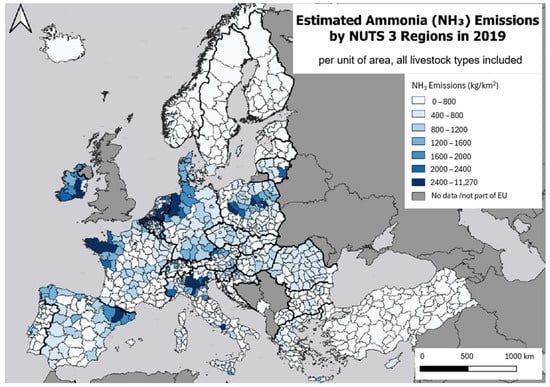
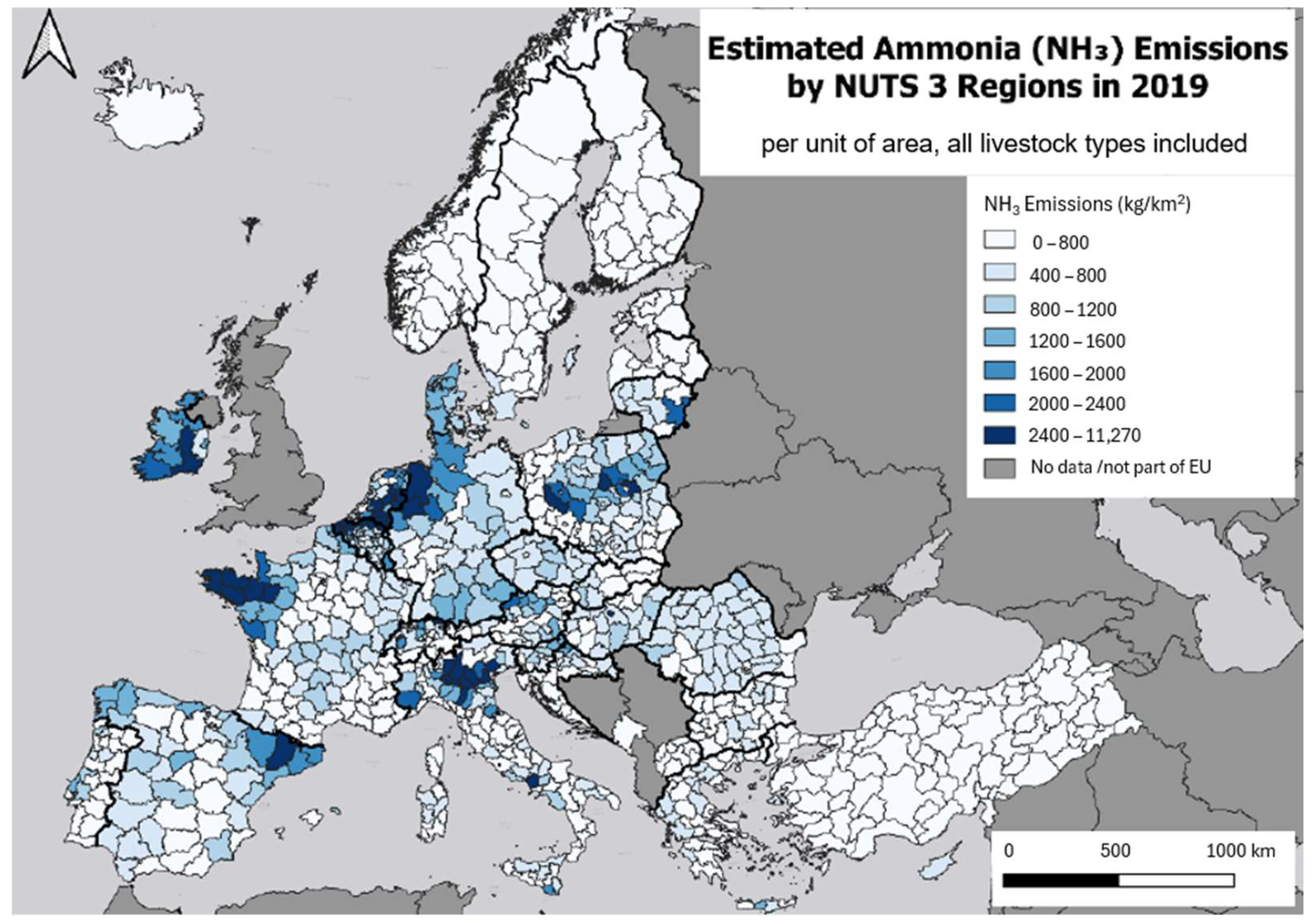
Higher deposition rates may occur depending on the agricultural and livestock intensity of the study area, which directly influences atmospheric ammonia concentrations. Literature reports total deposition values ranging from 15 to 20 kg N/ha/year in the United Kingdom to significantly higher values (40–50 kg N/ha/year) in the Netherlands [15]. Similarly, EMEP (European Monitoring and Evaluation Programme) models indicate total deposition in intensive agricultural regions in the range of 15–45 kg N/ha/year, with local peaks exceeding these values under high ammonia concentrations (>30 µg/m3) [22,23]. These data highlight the wide variability of atmospheric ammonia emissions and, consequently, concentrations across Europe, as illustrated in Figure 1
Figure 1.
Ammonia emissions (kg/km2) in Europe and identification of hotspot areas (from [23]).
It is therefore important to note that the Po Valley, including the Cuneo–Turin plain, represents a major emission hotspot due to the high density of intensive livestock operations, as shown in Figure 1 and in [24]. In such areas, atmospheric ammonia concentrations can be particularly high, enabling significant dry deposition fluxes, provided that winter vegetation cover is suitable.
To maximize ammonia dry deposition, not all cover crops are equally effective. The objective is to select species that are cold-resistant, with high surface roughness and substantial leaf area already developed during December and January. The main alternatives, ranked by technical effectiveness, include: (1) grasses (poaceae); these are the most suitable as they create a dense, turf-like cover that significantly increases surface roughness; (2) brassicaceae, having broad, waxy leaves providing a large interception surface for ammonia; (3) legumes: less commonly used solely for dry deposition, but essential for soil health.
It must be noted also that maximum effectiveness in incrementing dry deposition is achieved when land-use change occurs within 500–1000 m of the emission source (e.g., livestock housing or storage facilities). Within this zone, ammonia concentration (C) is highest, resulting in locally elevated deposition fluxes (F).
To enhance dry deposition in areas surrounding metropolitan regions, the proposed strategy could integrate, in addition to cover crops, the establishment of permanent vegetative barriers acting as three-dimensional aerodynamic filters. While cover crops operate at the soil level within “source” areas, the implementation of multilayer hedgerows and forest buffer strips would enable interception of ammonia fluxes and, potentially, secondary particulate matter transported horizontally toward the urban core. Species selection should prioritize evergreen plants characterized by dense canopies and morphologically complex leaves, favoring specimens with rough, pubescent, or waxy surfaces that substantially increase air turbulence and the likelihood of chemical gas capture. In a context such as the peri-urban belt of a big city, the use of evergreen species such as yew (Taxus baccata) or holly (Ilex aquifolium) could ensure that dry deposition processes remain active during the most critical months, when deciduous species are leafless. These vegetative structures should not be conceived as impermeable barriers but rather as porous membranes that allow airflow through their interior, thereby maximizing contact time between pollutants and leaf surfaces (the “wedge model” [25]). Such an approach effectively transforms the pre-urban rural landscape into environmental defense infrastructure that complements the action of cover crops, sequestering atmospheric ammonia before it can react with urban pollutants.
This study focuses on a study area in south-western Piedmont, characterized by approximately 90,000 hectares of intensive monoculture and intensive livestock production (approximately 80% of the total cattle and pigs in Piedmont). It investigates the potential and effects of implementing winter cover crops on air quality, in terms of reducing ammonia and PM2.5 concentrations. The paper includes an overview of air quality conditions in Piedmont and the impact of intensive livestock farming (Section 3); an analysis of the effects of winter cover crops on NH3 emissions and PM2.5 formation in a study area in the Cuneo–Torino plain (Section 4); a review of the regulatory framework (Section 5); and a discussion of the results (Section 6). The aim is to assess whether cover crops can be effectively used as a strategy to reduce air pollution in the Po Valley, northern Italy.
2. Materials and Methods
The objective of this study is to estimate the potential effects, in terms of increased dry NH3 deposition, associated with the expansion of autumn–winter cover crop adoption within a study area located in the south-western sector of Regione Piemonte (north-western Italy). This area is situated upwind of the city of Turin during the winter season and contains the overwhelming majority of the livestock population of the entire region.
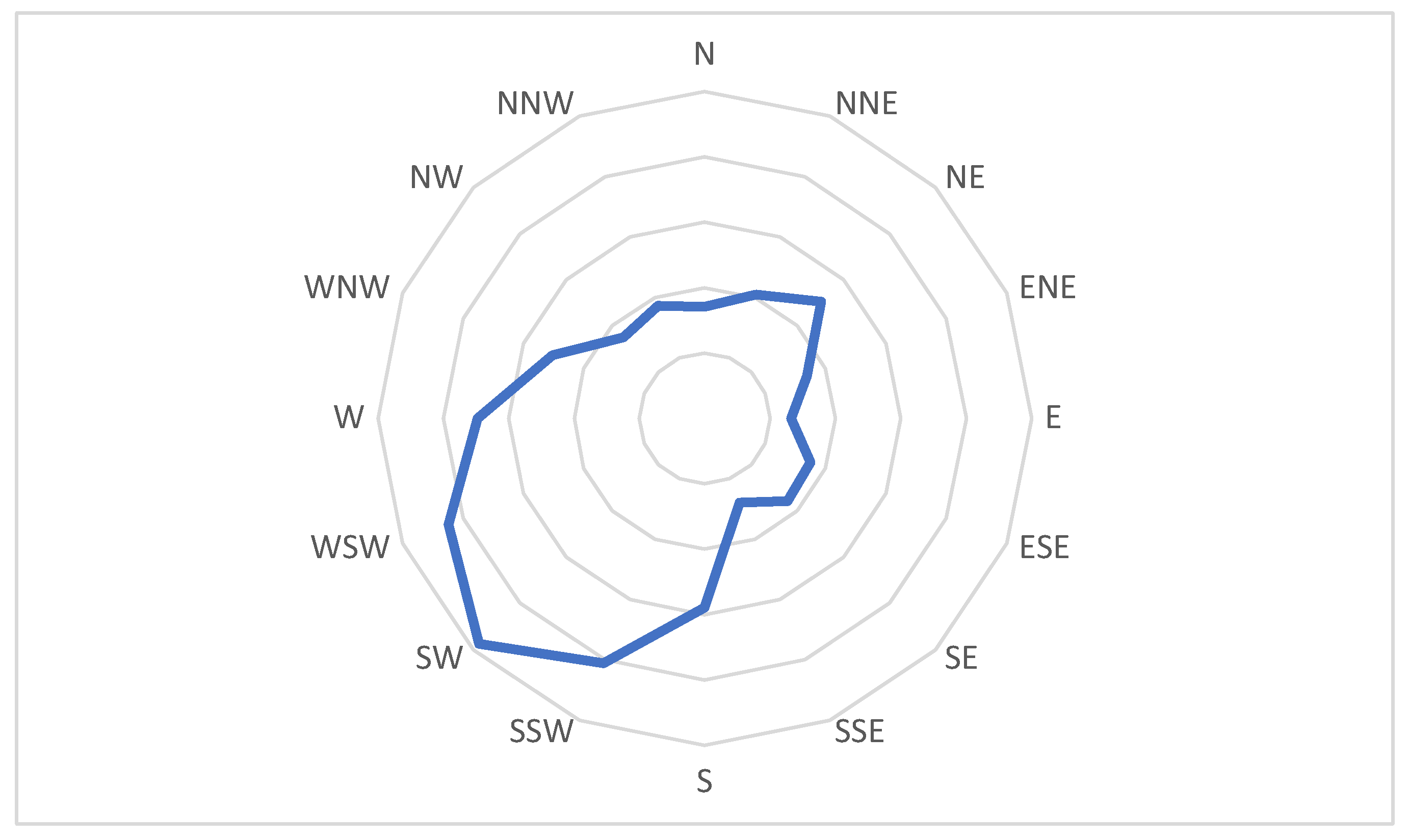
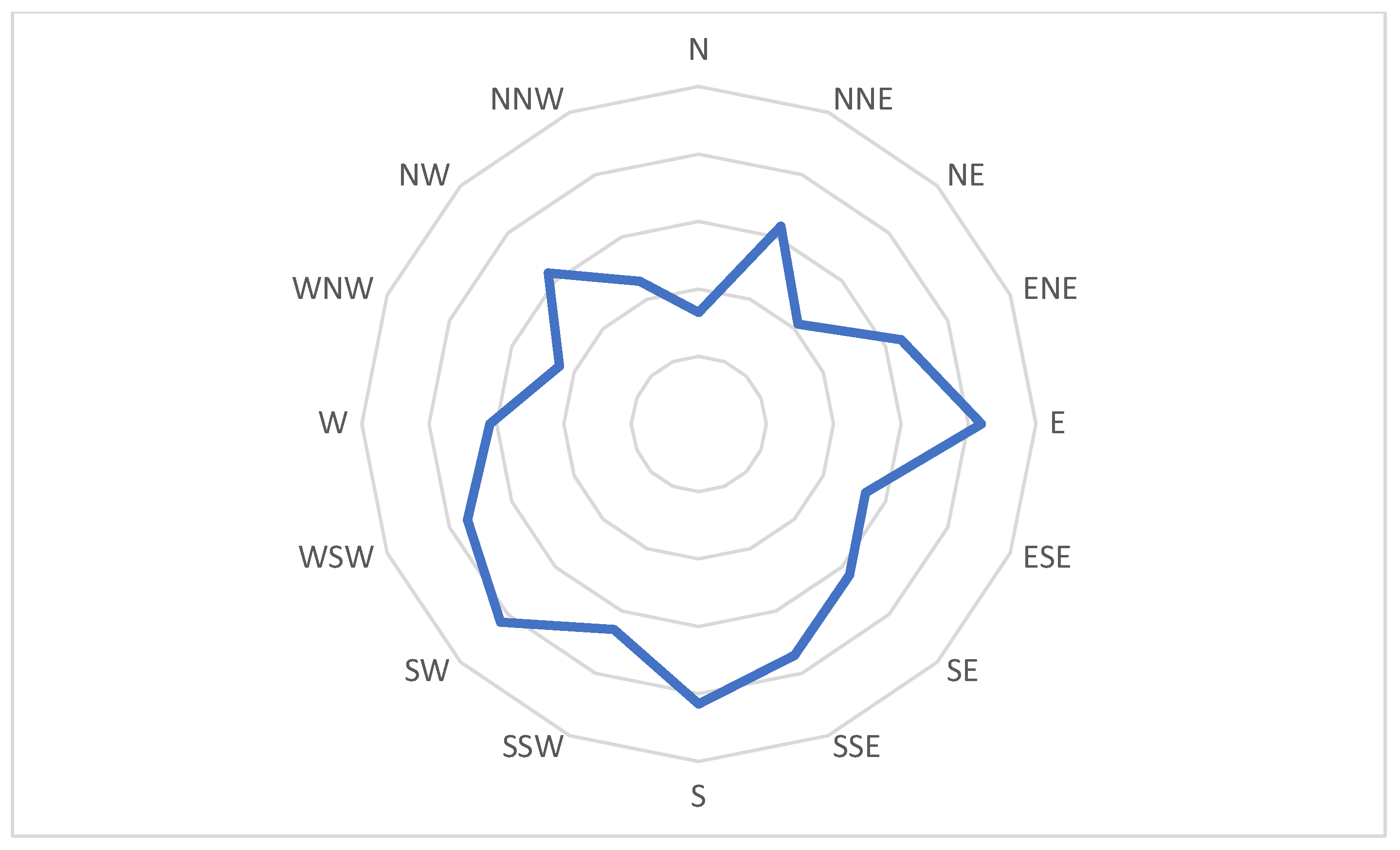
To achieve this objective, it is necessary to identify the prevailing wind directions affecting Turin during the autumn and winter periods. These were derived from analyses carried out by the Regional Environmental Protection Agency of Piedmont (ARPA Piemonte) [26]. Beyond the analyses presented in [26], wind roses for the autumn-winter season of 2025 were developed from observations collected at two ARPA Piemonte meteorological stations located south-west of Turin. The underlying meteorological dataset is available online upon request [27].
Data on livestock numbers and their geographical distribution across Piedmont were also required. These data were obtained from the Piedmont Regional Agricultural Register, which is publicly accessible online [28].
Air quality data, particularly ammonia concentration measurements representative of the study area, were also needed. For this purpose, data provided by ARPA Piemonte were used. ARPA has operated a fixed air-quality monitoring station in the municipality of Cavallermaggiore, which is in the heart of the study area, for several years. A detailed description of ammonia monitoring activities and measurement results can be found in the Air Quality Report of Piedmont 2024 [24].
Finally, land-cover data were required. These data, updated to 2023, were obtained from the Piedmont Regional Geoportal (Land Cover Piemonte 2023, Level V), whose characteristics are described in [29]. The dataset was produced through an experimental application of the European EAGLE project [30]. The methodology is based on the Regional Topographic Database (BDTRE), enriched with thematic information from the Regional Forest Map, the Regional Landscape Plan, and the prevailing land-use classification derived from the Agricultural Census. These data were further integrated with information extracted from satellite imagery and remote sensing products, including Copernicus datasets, the Piemonte Remote Sensing Programme, and the National Institute for Environmental Protection of Italy (ISPRA) Soil Consumption database, all referenced to cadastral parcels through the Regional Cadastral Mosaic. Additional methodological details are provided in [29].
Information on agricultural parcels receiving financial support for the establishment of winter cover crops and understory grassing in permanent woody crops was supplied by the Piedmont Regional Administration upon specific request. These data refer to Measures SR05 [31] and SR06 [32] under the Regional Programme funded by the European Agricultural Fund for Rural Development (EAFRD) for the 2027–2033 programming period.
Land-cover and agricultural-support datasets were processed and analyzed within a Geographic Information System (GIS) environment using QGIS software (version 3.34.6 Prizren).
M365 Copilot Basic, released by Microsoft Corporation Redmond, WA 98052-7329 USA, has been used for the language editing of the manuscript.
3. Overview of Air Quality Conditions in Piedmont and the Impact of Intensive Livestock Farming
In northern Italy, the Po Valley experiences some of the poorest air quality in Europe due to the combination of high anthropogenic emissions and unfavorable geomorphological conditions [33,34,35]. The basin is enclosed on three sides by the Alps and Apennines and, as noted above, during the colder seasons, wind speed, planetary boundary layer (PBL) height, and atmospheric pressure-driven dispersion processes are three to five times less effective in removing pollutants compared with regions north of the Alps [13].
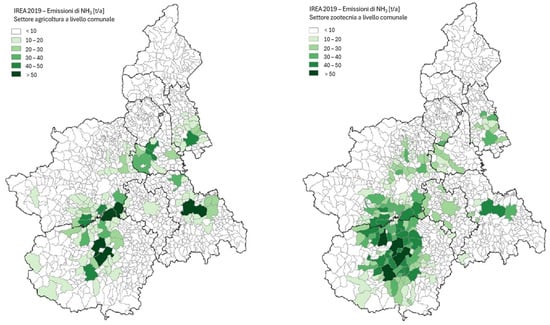
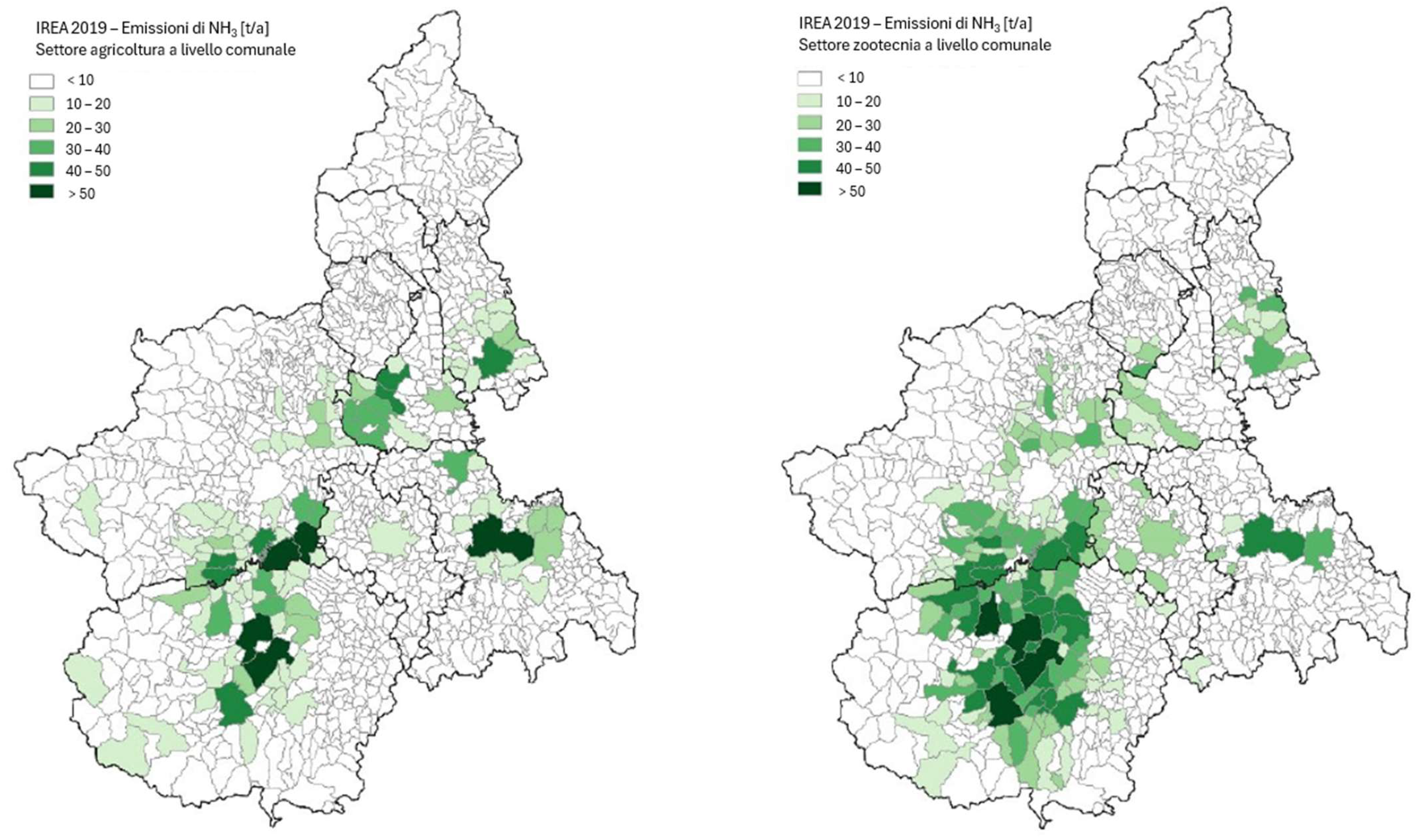
The Po Valley is also a region with intensive livestock production. Intensive farming systems are a major source of ammonia (NH3), as can be seen in Figure 2, where municipality-level NH3 emissions for all emission sectors and for the agriculture and livestock sector only, expressed in t/a, are shown.
Figure 2.
Municipality-level NH3 emissions for the agriculture sector (left) and for the livestock sector (right), expressed in t/a. Dark green stands for over 50 t/a of ammonia emitted from a single municipality. From [36].
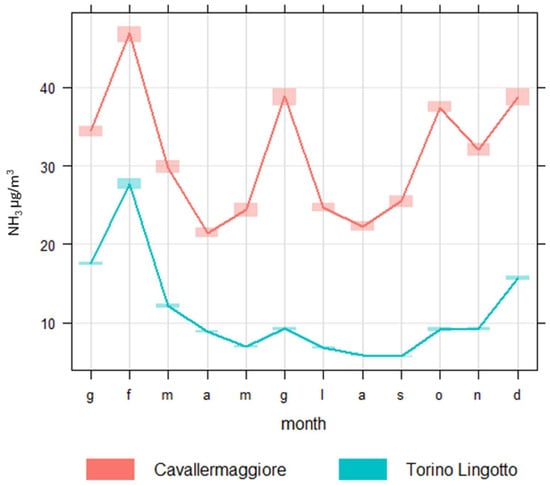
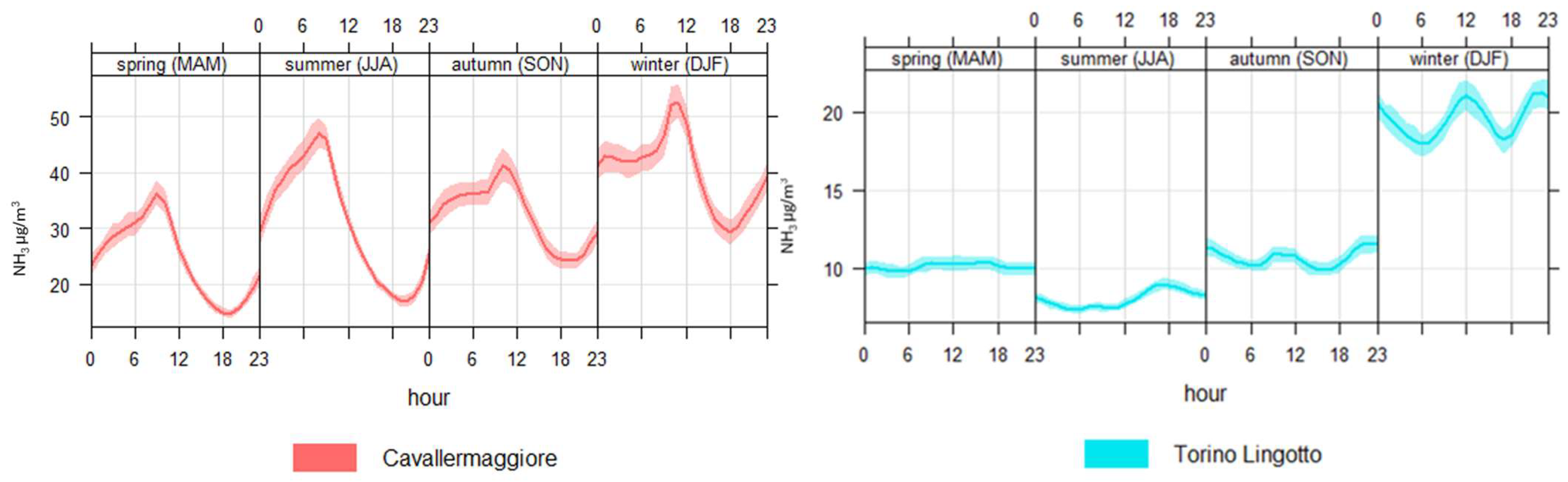
Ammonia concentration data collected from analyzers installed by ARPA Piemonte since 2016 were processed to compare the distributions of measured concentrations across different time periods and monitoring sites. Analyses of monthly averages for the period 22 April 2021–21 April 2024 at the Cavallermaggiore and Torino–Lingotto air quality monitoring stations (Figure 3) indicate that, at the Cavallermaggiore site—representative of the Cuneo–Turin plain—mean concentrations during the autumn and winter period (October–March) consistently exceed 30 µg m−3, with monthly average peaks approaching 50 µg m−3 in February [24]. These findings are further supported by the seasonal “typical day” profiles shown in Figure 4.
Figure 3.
Monthly average ammonia concentrations over the period 22 April 2021–21 April 2024 at Cavallermaggiore and Torino–Lingotto. Shaded bands indicate the 95% confidence interval of the mean.
Figure 4.
Seasonal “typical day” concentration profiles at Cavallermaggiore and Torino–Lingotto. Shaded bands indicate the 95% confidence interval of the mean.
Adopting a conservative approach and applying the equation introduced in the previous section to one hectare of land transitioning from bare soil to winter vegetative cover (with a deposition velocity, Vd, of 1 cm s−1) under an ammonia concentration of 30 µg m−3, the additional dry deposition is estimated to exceed 35 kg N ha−1 over the autumn–winter semester alone (corresponding to approximately 43 kg ha−1 year−1 of additional ammonia removal compared with bare winter soil conditions).
Based on the same stoichiometric conversion ratio, the additional removal of 38 tonnes of NH3 over 1000 hectares of cover crops would theoretically prevent the formation of approximately 180 tonnes of PM2.5.
4. An Analysis of the Potential Effects of Winter Cover Crops on NH3 Emissions and PM2.5 Formation in a Study Area in the Cuneo–Torino Plain
To test the proposed hypotheses, a representative study area was identified. The selection was based on the need to consider emission sources located upwind, from an anemological perspective, relative to the city of Turin. As previously discussed, under conditions of low deposition velocity (Vd), ammonia emitted from livestock housing and manure storage facilities can travel over long distances, transported by wind, ultimately reaching urban areas where it reacts with traffic-related NOx to form secondary particulate matter (PM2.5).
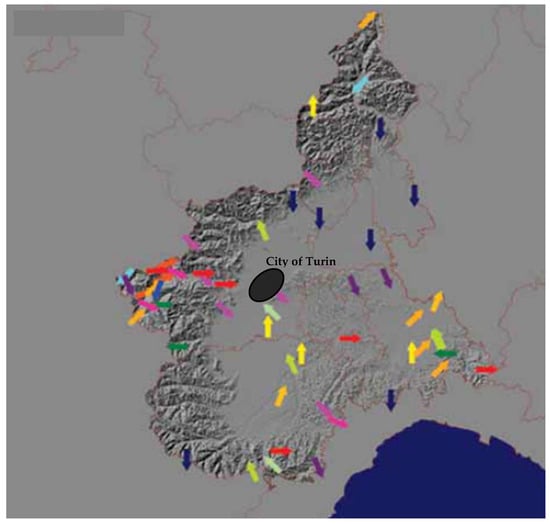
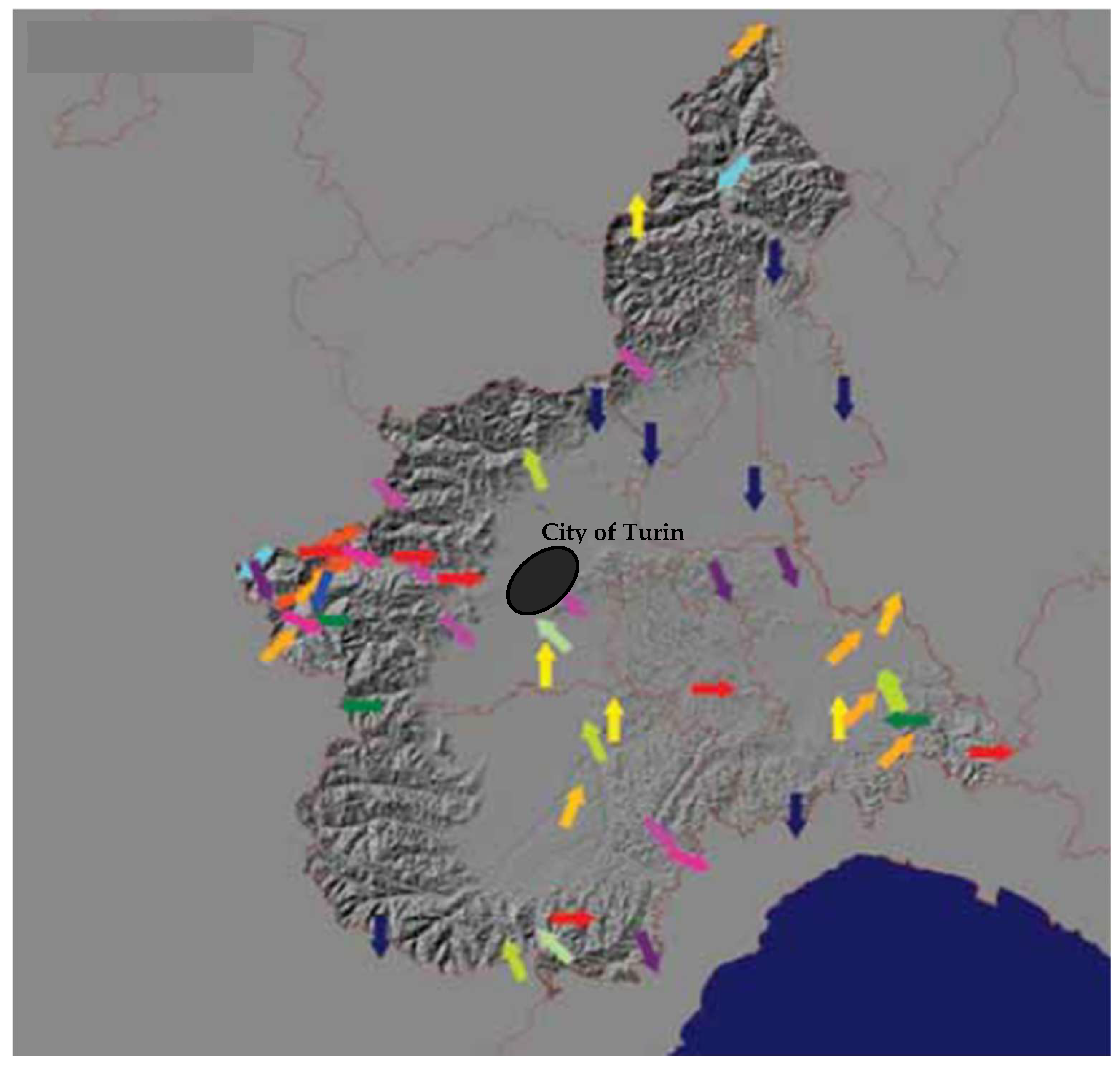
According to [26], during the winter season in Piedmont, the prevailing winds affecting the city of Turin mainly originate from the south–southwest and from the west, with additional contributions from the north and northeast, as illustrated in Figure 5. However, among these directions, the areas characterized by a high density of intensive livestock farming in the surroundings of Turin are primarily located to the southwest. Consequently, this sector represents the most relevant source region affecting urban air quality under typical winter atmospheric conditions.
Figure 5.
Prevailing winds during the winter season in Piedmont, according to [26]. The black oval identifies the City of Turin.
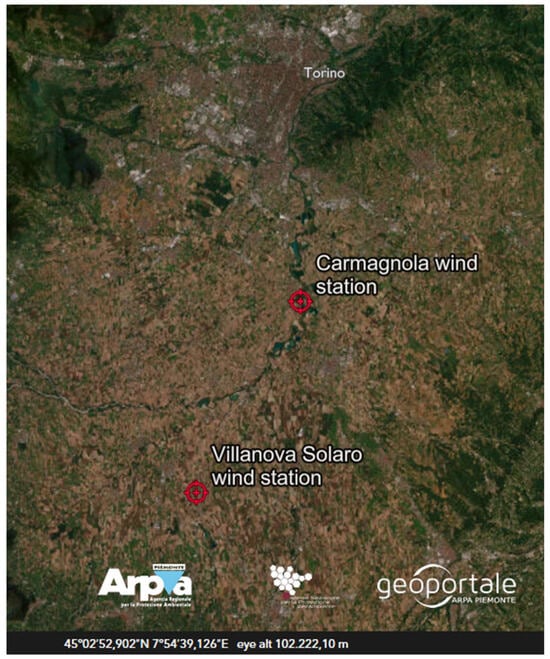
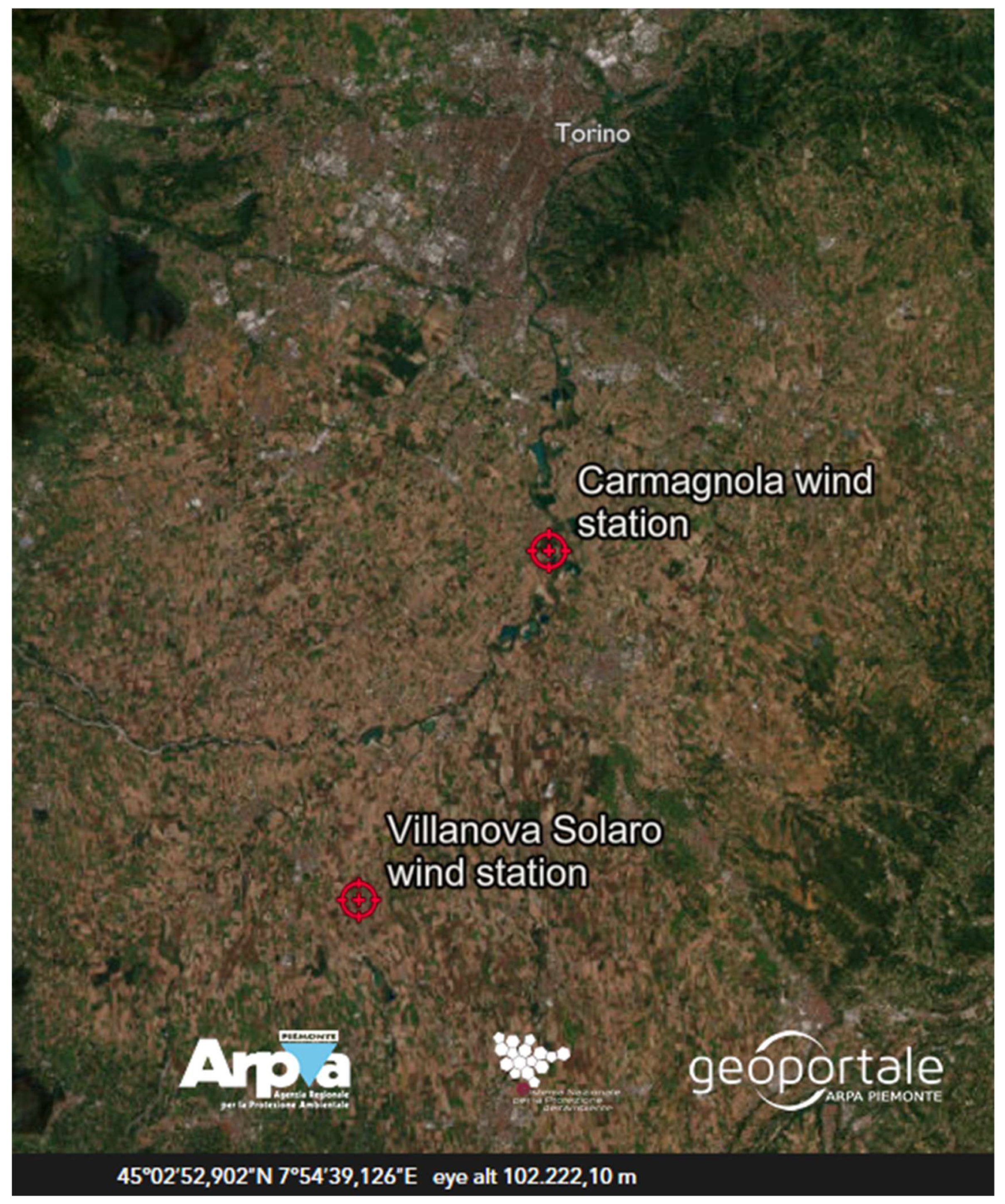
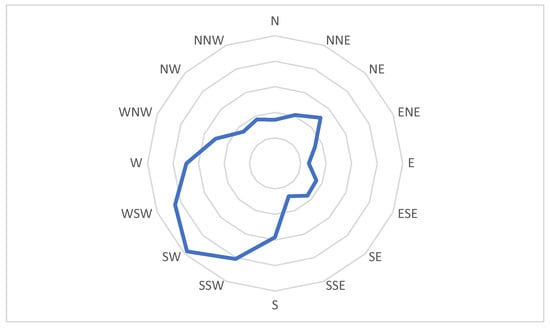
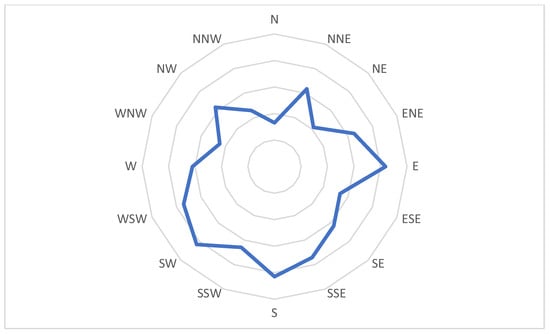
Further evidence supporting the findings reported by [26] was obtained from the analysis of hourly wind direction data measured during the autumn and winter months of 2025 at two ARPA Piemonte meteorological stations located south-west of Turin, namely Villanova Solaro and Carmagnola (Figure 6). The corresponding wind roses (Figure 7 and Figure 8) show a clear prevalence of south-westerly winds at Villanova Solaro and southerly winds at Carmagnola. In both cases, the prevailing airflow is directed toward the Turin metropolitan area, providing additional quantitative support for the hypothesis that atmospheric transport from major agricultural and livestock-farming areas located south and south-west of Turin may contribute to pollutant transfer toward the urban area.
Figure 6.
Location of the ARPA Piemonte meteorological stations used in this study (Villanova Solaro and Carmagnola) and their position with respect to the Turin metropolitan area.
Figure 7.
Wind rose based on hourly wind direction measurements collected at the ARPA Piemonte meteorological station of Villanova Solaro during the autumn–winter period of 2025.
Figure 8.
Wind rose based on hourly wind direction measurements collected at the ARPA Piemonte meteorological station of Carmagnola during the autumn–winter period of 2025.
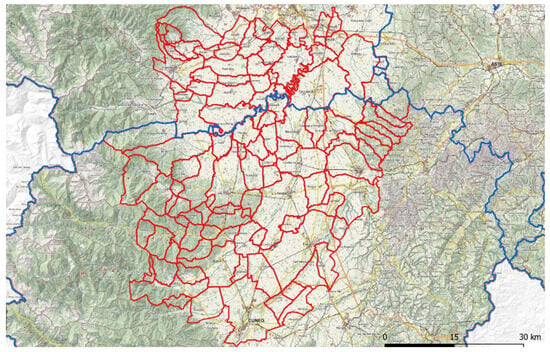
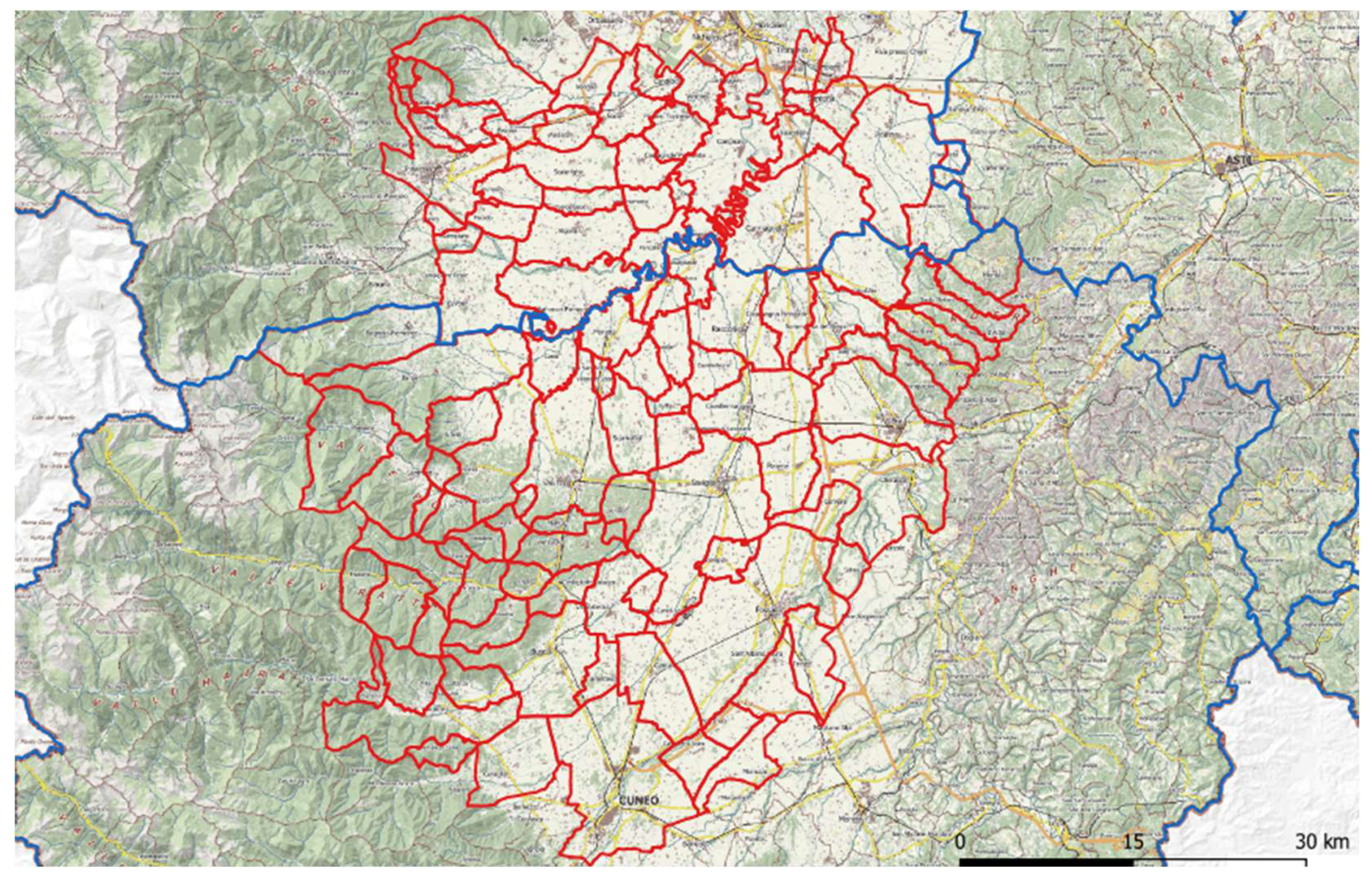
The study area was defined across the boundary between the Provinces of Cuneo and Turin, encompassing 117 predominantly lowland municipalities and the major ammonia-emitting municipalities according to [36] and Figure 2. The full list is provided in Appendix A and spatially represented in Figure 9.
Figure 9.
Study area located between the Provinces of Cuneo and Turin, including the municipalities whose administrative boundaries are highlighted in red; provincial borders are shown in blue.
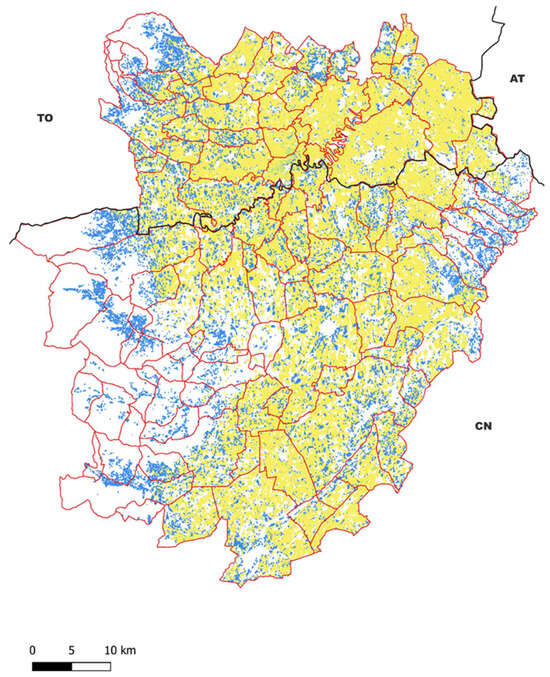
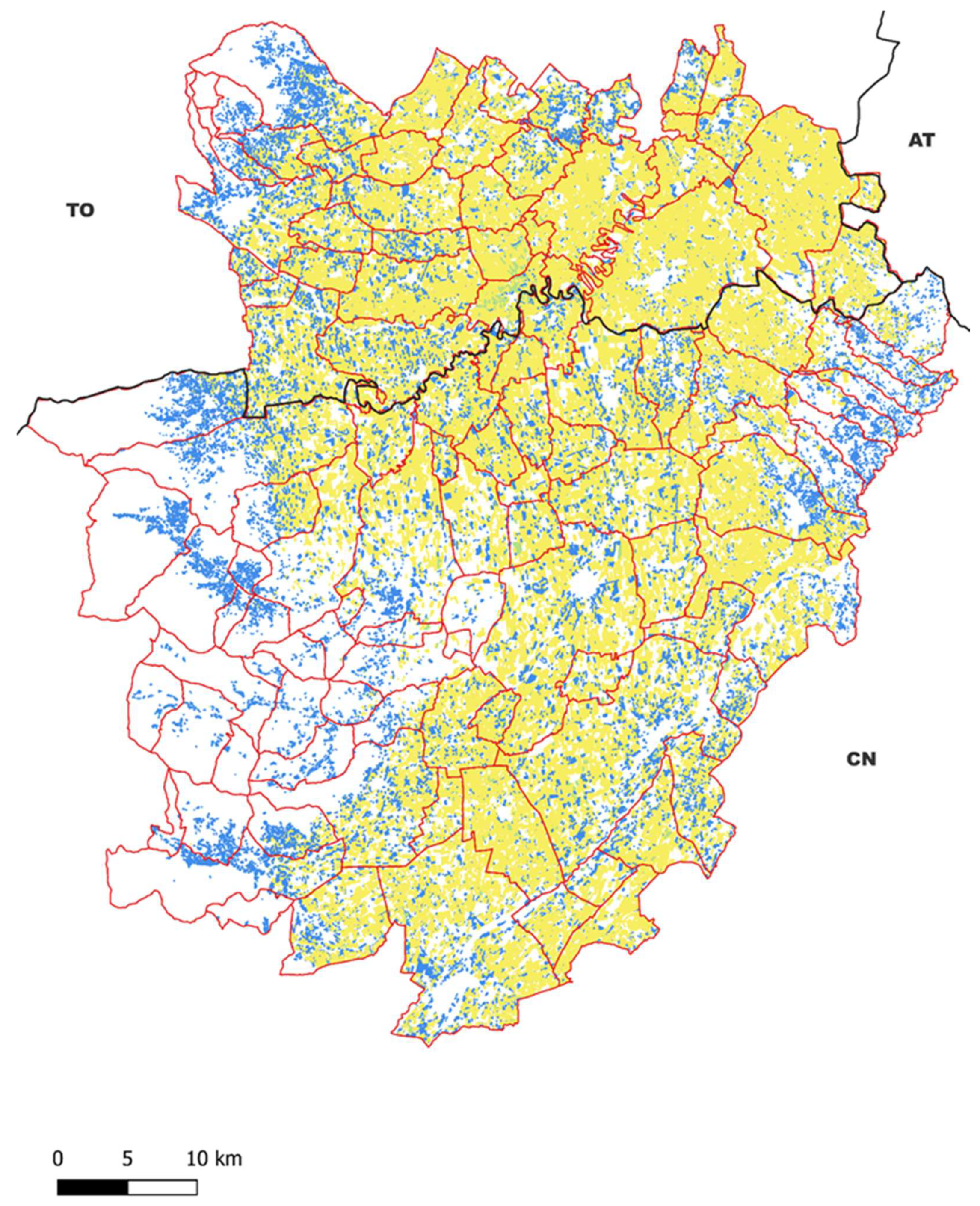
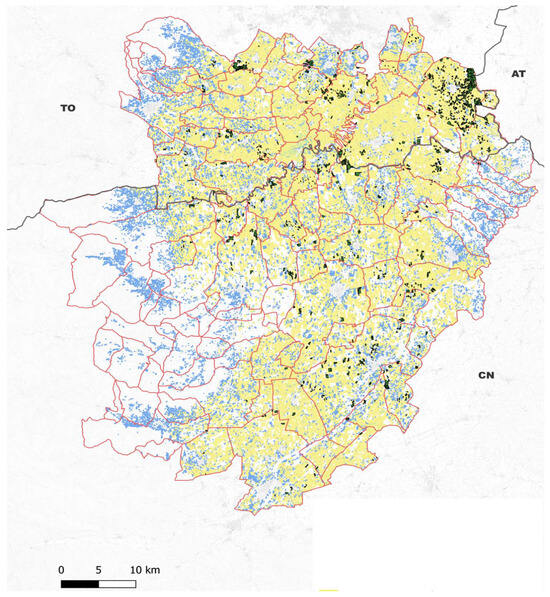
Table 2 presents the land-use classification of the study area, while Figure 10 illustrates the land-cover types where the implementation of autumn–winter cover crops could potentially be applied to reduce periods of bare soil (data source: Land Cover Piemonte 2023, level V classification [29]). These areas mainly correspond to category 2—intensive monocultures.
Table 2.
Land-use distribution within the study area.
Figure 10.
Portion of the study area characterized by intensive monocultures (yellow), extensive monocultures (green), and non-irrigated arable land (blue) (source: Land Cover Piemonte 2023, level 5 [29]).
In the study area, as previously noted, ARPA monitoring data indicate elevated ammonia concentrations, with winter averages exceeding 30 µg m−3. These values, combined with the average deposition velocity (Vd) of 1 cm s−1 reported in Table 1, lead to an estimated additional ammonia deposition flux of approximately 43 kg ha−1 yr−1 compared with bare winter soil conditions. This value could increase up to 70 kg ha−1 yr−1 if a deposition velocity of 1.5 cm s−1, as reported in reference [18], is considered.
To avoid overestimation, the present analysis accounts for the fact that, even with autumn–winter cover crops, a certain number of days within the winter semester would still involve bare soil. The period between maize harvest (September–October) and the following maize sowing (April–May) typically ranges from approximately 150 to more than 180 days, during which soils may remain largely bare in the absence of cover crops. The adoption of autumn-winter cover crops can substantially reduce the duration of bare soil conditions, typically to less than 20–40 days, depending on sowing date and establishment success [37]. Therefore, autumn–winter Vd values were calculated as a weighted average between values for vegetated soil (1 cm s−1) and bare soil (0.1 cm s−1), using the number of bare-soil days as weighting factors, for mainly bare soil and in the case of winter cover crops. The results are reported in Table 3.
Table 3.
Weighted average deposition velocities (Vd) based on the number of days with and without bare soil (land-cover classification consistent with Table 3).
Using the calculated Vd values and an ambient NH3 concentration of 30 µg m−3, based on ARPA Piemonte measurements in the Cuneo–Turin plain hotspot, the additional dry deposition attributable to winter cover crops was estimated at 31 kg NH3 ha−1 yr−1. The calculation was restricted to the autumn-winter period, when meteorological conditions are most favorable for secondary ammonium nitrate (NH4NO3) formation. Scaling this value to the 90,258 ha of intensive monoculture identified within the study area yields an estimated ammonia removal of approximately 2800 t NH3 yr−1, corresponding to about 8.5% of total regional agricultural NH3 emissions (approximately 33,000 t yr−1 according to IREA 2019 [38]).
Uncertainty in the estimated ammonia removal is mainly associated with the deposition velocity (Vd) and the ambient NH3 concentration used in the calculations. However, both parameters were selected conservatively. A deposition velocity of 0.8 cm s−1 was adopted, representing a cautious estimate based on the evidence discussed above, while the assumed ambient NH3 concentration of 30 µg m−3 is lower than both the annual mean concentration measured at Cavallermaggiore (31.4 ± 7.75 µg m−3) and the autumn–winter mean concentration (36.5 ± 5.95 µg m−3) reported in [24]. Since 30 µg m−3 falls below the mean minus one standard deviation for the autumn-winter period, the resulting estimate of approximately 2800 t NH3 yr−1 is likely conservative and should be interpreted as a lower-bound estimate rather than a best estimate of the achievable removal.
5. Existing Regulatory Framework in Regione Piemonte
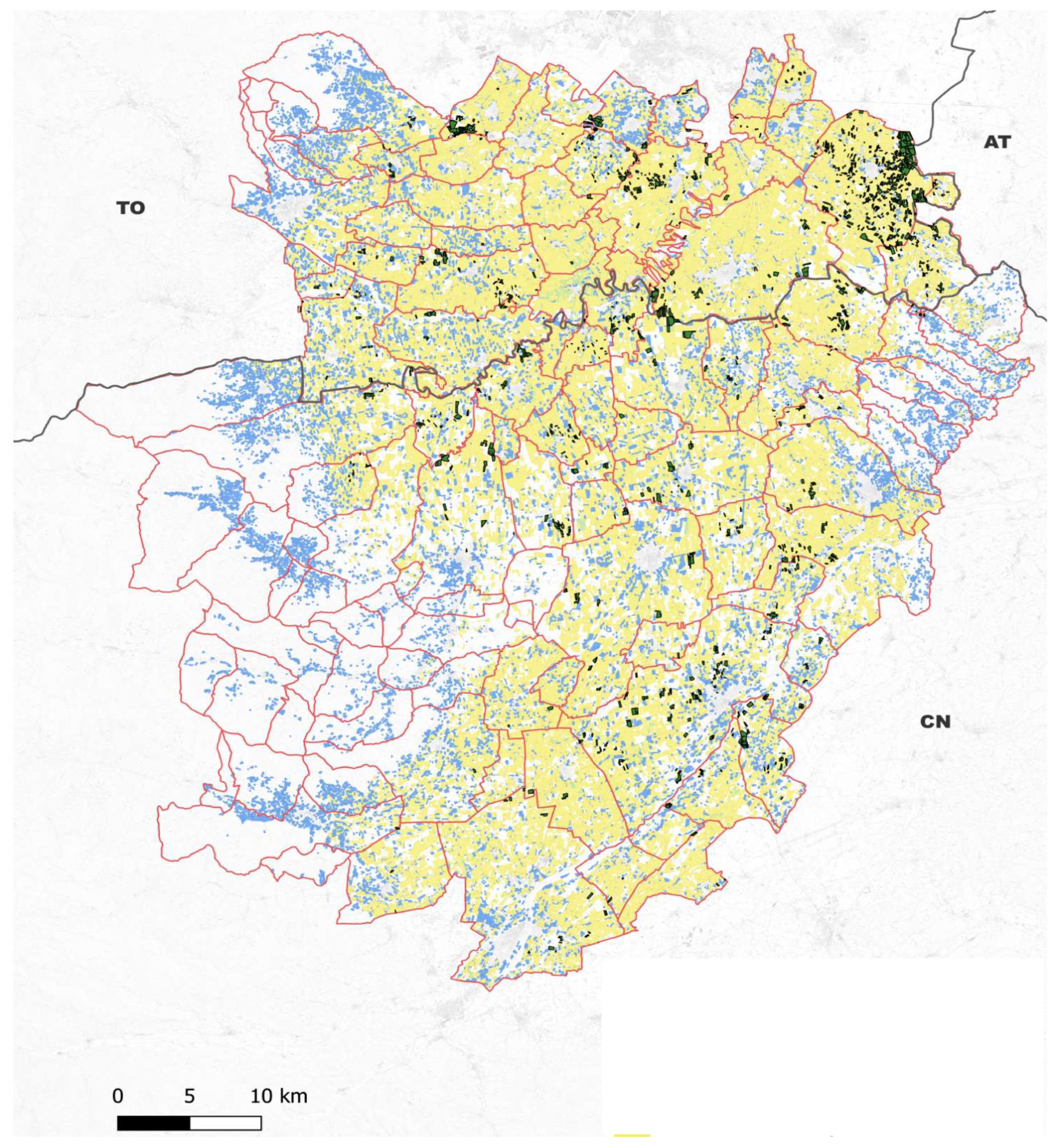
Within the study area, a portion of agricultural land is already subject to agri-environmental incentives for the establishment of autumn–winter cover crops or grass cover in orchards (measures SRA05 [31] and SRA06 [32]; georeferenced data provided by Regione Piemonte, Directorate of Agriculture). These areas, totaling approximately 3978 hectares, are shown in dark green in Figure 8. They represent 1.3% of the total study area and approximately 4.4% of land currently under intensive monoculture. This latter percentage highlights the substantial potential for further expansion of incentive-based measures. Currently incentivized areas account for an estimated ammonia removal of about 123 t yr−1 (0.37% of total regional emissions), corresponding to a PM2.5 emissions reduction of around 580,6 t yr−1.
If all submitted applications were approved, and assuming the same proportional distribution between the regional territory and the study area, the incentivized surface in the study area would increase to 9945 hectares, corresponding to an ammonia removal capacity of approximately 308 t yr−1. Under a full implementation scenario—expanding from 3978 ha to 90,258 ha—the total ammonia removal would reach approximately 2800 t yr−1, as previously estimated.
Refs. [31,32] demonstrate that an administrative and financial framework supporting the implementation of cover crops is already in place. The main limitation to the implementation of this measure is therefore not the absence of policy instruments but rather the availability of financial resources to support large-scale adoption. Until 2 July 2026, the area funded under the relevant schemes was limited to approximately 3978 ha, corresponding to about 4.4% of the 90,258 ha currently managed under monoculture systems in the study area (see Figure 11).
Figure 11.
Portion of the study area characterized by intensive monocultures (yellow), extensive monocultures (green), and non-irrigated arable land (blue). Dark green highlights areas currently receiving subsidies for the establishment of autumn–winter cover crops or grass cover under orchards.
However, Regione Piemonte has recently approved an amendment to its Regional Air Quality Plan [39], allocating an additional €10 million to support cover crop implementation. Assuming a support level of €230 ha−1 yr−1, according to [31], and a four-year implementation period (2027–2030), as established in [39], this additional funding could support approximately 10,900 ha of cover crops per year. This would increase the potentially incentivized area from 4.4% to approximately 16,5% of the current monoculture area and result in an additional reduction of about 337.9 t NH3 y−1.
Considering both the existing funding schemes [31,32] and the additional resources allocated through the Regional Air Quality Plan [39], a total area of approximately 14,878 ha could be supported in 2027. This corresponds to an overall ammonia emission reduction of approximately 461.2 t NH3 yr−1 for that year, when the three funding mechanisms are simultaneously in operation. This corresponds to about 1.4% of total agricultural emissions of NH3 at the regional level and to a PM2.5 emissions reduction of 2179 t yr−1.
Additional ammonia removal could be achieved through the implementation of permanent vegetative barriers strategically located in rural areas at the interface with peri-urban zones undergoing initial urbanization. These interventions could benefit from incentive measures, already foreseen by the Piedmont Region within the regional complement of the European Funds for Rural Development 2023–2027 (measure SRD05 [40])
6. Conclusions
The analysis shows how winter vegetation cover could represent one of the most effective, immediate, and territorially scalable measures for reducing atmospheric ammonia concentrations in agricultural areas characterized by high livestock intensity, such as the Cuneo–Turin plain in Piedmont, northwestern Italy. The widespread presence of bare soil during winter, typical of maize monocultures, drastically reduces surface roughness, thereby favoring ammonia dispersion and the subsequent formation of fine particulate matter (PM2.5). Conversely, the adoption of autumn–winter cover crops can increase dry deposition velocity by up to an order of magnitude. Under local conditions, where NH3 concentrations frequently exceed 30 µg/m3, cover crops can generate additional dry deposition fluxes on the order of approximately 31 kg NH3/ha/year, reaching up to 70 kg/ha/year according to some literature sources. When these values are extrapolated to the 90,258 hectares of intensive monocultures within the study area, the resulting mitigation potential is estimated at approximately 2800 tonnes per year of ammonia, corresponding to about 8–9% of total emissions from the agricultural sector in Piedmont. This removal can directly improve urban air quality, as a fraction of ammonia removed from the atmosphere prevents the formation of secondary PM2.5. The effectiveness of this measure is significantly enhanced when vegetation cover is established within 500–1000 m of emission sources (livestock housing and manure storage), where NH3 concentrations are highest. Current regional measures under Piedmont’s contribution to European Rural Development Funds (SRA05 [31], SRA06 [32], SRD05 [40]) provide an already operational framework; however, they remain underutilized, with only 4.4% of potentially suitable areas currently supported, indicating substantial room for expansion. Regione Piemonte has recently approved an amendment to its Regional Air Quality Plan [39], allocating an additional €10 million to support cover crop implementation. This allows the increase in the incentivized area to approximately 16.5% of the 90,258 hectares of intensive monocultures within the study area and results in an additional reduction in ammonia emissions of about 337.9 t y−1. This corresponds to an overall emission reduction of approximately 461.2 t NH3 y−1 (1.4% of total agricultural emissions at the regional level), and of 2179 t PM2.5 yr−1. In addition to cover crops, permanent vegetative barriers—such as hedgerows, shelterbelts, and evergreen tree strips—can provide a further contribution by intercepting ammonia and particulate matter along the margins of agricultural areas and within peri-urban zones.
Author Contributions
Conceptualization, E.B.; methodology, E.B.; software, E.B.; validation, E.B., A.R. and S.P.B.; formal analysis, S.P.B.; investigation, E.R.; resources A.R.; data curation, E.B.; writing—original draft preparation, E.R. and C.B.; writing—review and editing, E.R. and E.B.; visualization, E.R.; supervision, E.B., C.B., A.R. and S.P.B. All authors have read and agreed to the published version of the manuscript.
Funding
This research received no external funding.
Institutional Review Board Statement
Not applicable.
Informed Consent Statement
Not applicable.
Data Availability Statement
The original contributions presented in this study are included in the article. Further inquiries can be directed to the corresponding author.
Acknowledgments
The authors wish to thank Massimiliano Ferrarato of ARPA Piemonte for his kind support in preparing Figure 6, Figure 7 and Figure 8. The authors are also grateful to Monica Bassanino and Manuela Macrì of Regione Piemonte for providing the data on agricultural areas supported under SRA05 and SRA06 measures. During the preparation of this manuscript, M365 Copilot Basic, released by Microsoft Corporation (Redmond, WA 98052-7329 USA), has been used for the language editing of the manuscript. The authors have reviewed and edited the output and take full responsibility for the content of this publication.
Conflicts of Interest
Author Angelo Robotto was employed by Regione Piemonte. Author Cristina Bargero was employed by IRES Piemonte. Authors Enrico Racca, Enrico Brizio and Secondo Paolo Barbero were employed by ARPA Piemonte. The authors declare that the research was conducted in the absence of any commercial or financial relationships that could be construed as a potential conflict of interest.
Abbreviations
The following abbreviations are used in this manuscript:
| NH3 | Ammonia |
| PM2.5 | Secondary Particulate Matter |
| PM | Particulate Matter |
| EU | European Union |
| AI | Artificial Intelligence |
| PBL | Planetary Boundary Layer |
| Vd | Deposition Velocity |
| RH | Relative Humidity |
| EMEP | European Monitoring and Evaluation Programme |
| ARPA | Environmental Protection Agency of Piedmont |
| BDTRE | Regional Topographic Database |
| ISPRA | National Institute for Environmental Protection of Italy |
| EAFRD | European Agricultural Fund for Rural Development |
| IREA | Regional Atmospheric Emissions Inventory of Piedmont |
Appendix A
Table A1.
List of municipalities included in the study area (with corresponding municipal surface area in hectares).
References
- Pope, C.A.; Dockery, D.W. Health effects of fine particulate air pollution: Lines that connect. J. Air Waste Manag. 2006, 56, 709–742. [Google Scholar] [CrossRef] [Scilit] [PubMed]
- Ostro, B.; Feng, W.Y.; Broadwin, R.; Malig, B.J.; Green, R.S.; Lipsett, M.J. The impact of components of fine particulate matter on cardiovascular moratality in susceptibile subpopulations. Occup. Environ. Med. 2008, 65, 750–756. [Google Scholar] [CrossRef] [Scilit] [PubMed]
- Mills, N.L.; Donaldson, K.; Hadoke, P.W.; Boon, N.A.; MacFee, W.; Cassee, F.R.; Sandstrom, T.; Blomberg, A.; Newby, D.E. Adverse cardiovascular effects of air pollution. Nat. Clin. Pract. Cardiovasc. Med. 2009, 6, 36–44. [Google Scholar] [CrossRef] [Scilit] [PubMed]
- Franklin, M.; Koutrakis, P.; Schwartz, J. The role of particle composition on the association between PM2.5 and mortality. Epidemiology 2009, 19, 680–689. [Google Scholar] [CrossRef] [Scilit] [PubMed]
- Atkinson, R.W.; Kang, S.; Anderson, H.R.; Mills, I.C.; Walton, H.A. Epidemiological time series studies of PM2.5 and daily mortality and hospital admissions: A systematic review and meta analysis. Thorax 2014, 69, 660–665. [Google Scholar] [CrossRef] [Scilit] [PubMed]
- Mimura, T.; Ichinose, T.; Yamagami, S.; Fujishima, H.; Kamei, Y.; Goto, M.; Takada, S.; Matsubara, M. Airborne particulate matter (PM2.5) and the prevalenge of allergic conjiunctivitis in Japan. Sci. Total Environ. 2014, 487, 493–499. [Google Scholar] [CrossRef] [Scilit] [PubMed]
- Lu, F.; Xu, D.; Cheng, Y.; Dong, S.; Guo, C.; Jiang, X.; Zheng, X. Systematic review and meta-analysis of the adverse health effects of ambient PM2.5 and PM10 pollution in the Chinese population. Environ. Res. 2015, 136, 196–204. [Google Scholar] [CrossRef] [Scilit] [PubMed]
- Ostro, B.; Hu, J.L.; Goldberg, D.; Reynolds, P.; Hertz, A.; Bernstein, L.; Kleeman, M.J. Association of mortality with long-term exposures to fine and ultrafine particles, species and sources: Results from the California Teachers Study Cohort. Environ. Health Perspect. 2015, 123, 549–556. [Google Scholar] [CrossRef] [Scilit] [PubMed]
- Gautam, D.; Bolia, N.B. Air pollution: Impact and interventions. Air Qual. Atmos. Health 2020, 13, 209–223. [Google Scholar] [CrossRef] [Scilit]
- Stevens, C.; Bell, J.; Brimblecombe, P.; Clark, C.; Dise, N.; Fowler, D.; Lowett, G.; Wolseley, P. The impact of air pollution on terrestrial managed and natural vegetation. Philos. Trans. R. Soc. A 2020, 378, 20190317. [Google Scholar] [CrossRef] [Scilit] [PubMed]
- Robotto, A.; Bargero, C.; Marchesi, L.; Racca, E.; Brizio, E. Innovative Tools to Contrast Traffic Pollution in Urban Areas: A Review of the Use of Artificial Intelligence. Air 2024, 2, 402–418. [Google Scholar] [CrossRef] [Scilit]
- European Environmental Agency. Emissions of the Main Air Pollutants in Europe. Available online: https://www.eea.europa.eu/publications/air-quality-in-europe-2020-report (accessed on 4 May 2025).
- Robotto, A.; Barbero, S.; Bracco, P.; Cremonini, R.; Ravina, M.; Brizio, E. Improving Air Quality Standards in Europe: Comparative Analysis of Regional Differences, with a Focus on Northern Italy. Atmosphere 2022, 13, 642. [Google Scholar] [CrossRef] [Scilit]
- Results of the European Project LIFE-Prepair. Available online: https://www.lifeprepair.eu/ (accessed on 20 June 2026).
- Pearson, J.; Stewart, G.R. The deposition of atmospheric ammonia and its effects on plants. N. Phytol. 1993, 125, 283–305. [Google Scholar] [CrossRef] [Scilit] [PubMed]
- Zhang, L.; Gong, S.; Padro, J.; Barrie, L. A size-segregated particle dry deposition scheme for an atmospheric aerosol module. Atmos. Environ. 2001, 35, 549–560. [Google Scholar] [CrossRef] [Scilit]
- Aneja, V.P.; Rogers, H.; Stahel, E.P. Dry Deposition of Ammonia at Environmental Concentrations on Selected Plant Species. J. Air Pollut. Control Assoc. 1986, 36, 1338–1341. [Google Scholar] [CrossRef] [Scilit] [PubMed]
- Schrader, F.; Brümmer, C. Land Use Specific Ammonia Deposition Velocities: A Review of Recent Studies (2004–2013). Water Air Soil Pollut. 2014, 225, 2114. [Google Scholar] [CrossRef] [Scilit] [PubMed]
- Massad, R.-S.; Nemitz, E.; Sutton, M.A. Review and parameterisation of bi-directional ammonia exchange between vegetation and the atmosphere. Atmos. Chem. Phys. 2010, 10, 10359–10386. [Google Scholar] [CrossRef] [Scilit]
- Leith, I.D.; Sheppard, L.J.; Fowler, D.; Cape, J.N.; Jones, M.; Crossley, A.; Hargreaves, K.J.; Tang, Y.S.; Theobald, M.; Sutton, M.R. Quantifying dry NH3 deposition to an ombrotrophic bog from an automated NH3 release system. Water Air Soil Pollut. Focus 2010, 4, 207–218. [Google Scholar]
- Study of the Agricolture and Food Development Authority of Ireland. Available online: https://teagasc.ie/wp-content/uploads/media/website/publications/2022/Ammonia-emissions-impacts-and-solutions.pdf (accessed on 20 June 2026).
- Simpson, D.; Benedictow, A.; Berge, H.; Bergström, R.; Emberson, L.D.; Fagerli, H.; Flechard, C.R.; Hayman, G.D.; Gauss, M.; Jonson, J.E.; et al. The EMEP MSC-W chemical transport model—Technical description. Atmos. Chem. Phys. 2012, 12, 7825–7865. [Google Scholar] [CrossRef] [Scilit]
- Malherbe, L.; German, R.; Couvidat, F.; Zanatta, L.; Blannin, L.; James, A.; Lètinois, L.; Schucht, S.; Berthelot, B.; Raoult, J. Emissions of ammonia and methane from the agricultural sector. In Emissions from Livestock Farming (Eionet Report-ETC HE 2022/21); European Topic Centre on Human Health and the Environment: Kjeller, Norway, 2022. [Google Scholar]
- Environmental Protection Agency of Piedmont, Italy. La Qualità Dell’aria in Piemonte. Rapporto 2024. Available online: https://www.arpa.piemonte.it/pubblicazione/qualita-dellaria-piemonte-rapporto-2024 (accessed on 20 June 2026).
- Santiago, J.L.; Borge, R.; Martin, F.; de la Paz, D.; Martilli, A.; Lumbreras, J.; Sanchez, B. Evaluation of a CFD-based approach to estimate pollutant distribution within a real urban canopy by means of passive samplers. Sci. Total Environ. 2017, 576, 46–58. [Google Scholar] [CrossRef] [Scilit] [PubMed]
- Fratianni, S.; Caganzzi, B.; Cremonini, R. Il vento in Piemonte. In Proceedings of the Convegno Nazionale dell’Associazione Italiana di Geografia Fisica e Geomorfologia (AIGEO), Turin, Italy, 28–30 March 2007. [Google Scholar]
- Meteorological Data Collected by ARPA Piemonte. Available online: https://webgis.arpa.piemonte.it/radar/open-scripts/richiesta_dati_hh_2024.php (accessed on 30 August 2026).
- Agricoltural register of Regione Piemonte. Available online: http://www.sistemapiemonte.it/fedwanau/elenco.jsp (accessed on 12 July 2026).
- Land Cover Piemonte 2023, Level V Classification. Characteristics. Available online: https://www.geoportale.piemonte.it/geonetwork/serv/api/records/r_piemon:35df8a16-5d89-461f-a0f2-abc2180713d2 (accessed on 11 July 2026).
- European Eagle Project. Available online: https://land.copernicus.eu/eagle (accessed on 12 July 2026).
- Regione Piemonte Complement to European Regional Development Funds 2023-2027-SRA05|ACA5—Grassing Under Tree Crops. Available online: https://www.regione.piemonte.it/web/temi/fondi-progetti-europei/sviluppo-rurale-piemonte/complemento-regionale-per-sviluppo-rurale-2023-2027-csr/sra05-aca5-inerbimento-colture-arboree (accessed on 11 July 2026).
- Regione Piemonte Complement to European Regional Development Funds 2023-2027-SR06 Incentive Measure for Autumn-Winter Cover Crops. Available online: https://www.regione.piemonte.it/web/temi/fondi-progetti-europei/sviluppo-rurale-piemonte/complemento-regionale-per-sviluppo-rurale-2023-2027-csr/sra06-aca6-cover-crops (accessed on 11 July 2026).
- Pernigotti, D.; Gerogieva, E.; Thunis, P.; Bessagnet, B. Impact of meteorology on air quality modeling over the Po valley in northern Italy. Atmos. Environ. 2012, 51, 303–310. [Google Scholar] [CrossRef] [Scilit]
- EEA. Air Quality in Europe—2019 Report; EEA—European Environment Agency: Copenhagen, Denmark, 2019. [Google Scholar]
- Crova, F.; Forello, A.C.; Bernardoni, V.; Calzolai, G.; Canepari, S.; Argentini, S.; Costabile, F.; Frezzini, M.A.; Giardi, F.; Lucarelli, F.; et al. Assessing the role of atmospheric dispersion vs. emission strength in the southern Po Valley (Italy) using dispersion-normalised multi-time receptor modelling. Atmos. Environ. 2024, 316, 120168. [Google Scholar] [CrossRef] [Scilit]
- Regione Piemonte Air Quality Protection Plan, Approved with Deliberazione 10 Dicembre 2024, n. 18–28783. Available online: https://www.regione.piemonte.it/web/temi/ambiente-territorio/ambiente/aria/piano-regionale-qualita-dellaria-prqa (accessed on 21 June 2026).
- Tadiello, T.; Potenza, E.; Marino, P.; Perego, A.; Della Torre, D.; Michelon, L.; Bechini, L. Growth, weed control, and nitrogen uptake of winter-killed cover crops, and their effects on maize in conservation agriculture. Agron. Sustain. Dev. 2022, 42, 18. [Google Scholar] [CrossRef] [Scilit]
- Regional Inventory of Atmospheric Emissions, Latest Consolidated Update 2019. Available online: https://www.servizi.piemonte.it/osservatori/cruscotto-conoscenze-ambientali/emissioni-atmosfera-01.shtml (accessed on 11 July 2026).
- Regione Piemonte Amendment to Air Quality Protection Plan, Approved with Deliberazione Della Giunta Regionale 26 Giugno 2026, n. 19-2742. Available online: https://www.regione.piemonte.it/web/temi/ambiente-territorio/ambiente/aria/aggiornamento-piano-regionale-qualita-dellaria-prqa (accessed on 22 August 2026).
- Regione Piemonte Complement to European Regional Development Funds 2023-2027-SDR05 Forestry/Afforestation Systems and Agro-Forestry Systems on Agricultural Land. Available online: https://www.regione.piemonte.it/web/temi/fondi-progetti-europei/sviluppo-rurale-piemonte/complemento-regionale-per-sviluppo-rurale-2023-2027-csr/srd05-impianti-forestazioneimboschimento-sistemi-agro-forestali-terreni-agricoli (accessed on 11 July 2026).

Disclaimer/Publisher’s Note: The statements, opinions and data contained in all publications are solely those of the individual author(s) and contributor(s) and not of MDPI and/or the editor(s). MDPI and/or the editor(s) disclaim responsibility for any injury to people or property resulting from any ideas, methods, instructions or products referred to in the content. |
© 2026 by the authors. Licensee MDPI, Basel, Switzerland. This article is an open access article distributed under the terms and conditions of the Creative Commons Attribution (CC BY) license.