


Abstract
Air pollution in urban and coastal regions is increasingly shaped by interactions among port operations, freight logistics, urban mobility systems, spatial development patterns, and governance arrangements. Although emission reduction technologies and regulatory measures have advanced significantly, their implementation frequently remains distributed across sector-specific institutional and operational domains. This paper introduces the concept of Air-Aware Port–City–Logistics Systems, proposing an integrated governance framework that treats air quality as a system-level outcome of linked maritime, logistics, urban transport, spatial, technological, and adaptive processes. Drawing on a structured interdisciplinary synthesis of literature in transport planning, maritime economics, logistics, environmental governance, air-quality management, and resilience, the study identifies key gaps in cross-sectoral coordination and in the governance of interdependencies influencing air-quality outcomes. The framework maps relationships among emission sources, transport and logistics flows, spatial configurations, population exposure, institutional coordination, technological and data systems, and adaptive capacity, thereby identifying potential intervention points across the port–city–logistics system. Its distinctive contribution lies not merely in combining these dimensions, but in organising them through a governance-oriented architecture in which monitoring, operational decisions, institutional responses, and adaptive learning are treated as interconnected processes. The framework also incorporates resilience and risk perspectives, emphasising adaptive governance approaches capable of responding to disruptions, changing demand patterns, climatic pressures, and other external environmental influences. By advancing a systems-based perspective, the paper contributes to air quality management and policy development through the integration of port–city interfaces, freight distribution networks, mobility planning, exposure considerations, and institutional decision-making within a unified analytical framework. As a conceptual framework, AAPCLS provides a transferable basis for future empirical application, contextual adaptation, and policy-oriented analysis rather than a validated operational model.
1. Introduction
Air pollution remains a major environmental and public health challenge, particularly in urban regions where emissions from transport, industrial activity, energy use, and other anthropogenic sources interact [1,2]. Port–city regions are particularly exposed to this problem because maritime transport, freight logistics, terminal operations, and urban mobility systems converge within shared spatial and atmospheric environments. Rather than functioning as isolated emission sources, these regions operate as interconnected socio-technical systems in which port operations, freight distribution, urban mobility, land-use patterns, industrial activities, tourism, and governance structures collectively influence environmental quality and public health.
Transport-related activities are important contributors to both greenhouse gas emissions and local air pollutants. In the European Union, transport, including international aviation and maritime transport, accounted for approximately 28.9% of total greenhouse-gas emissions in 2022 [3]. Maritime transport also remains a significant source of carbon dioxide (CO2), nitrogen oxides (NOx), sulphur oxides (SOx), and particulate matter, especially in coastal and port areas [4,5]. Recent European assessments indicate that ports constitute important environmental hotspots where emissions from shipping interact with road transport, cargo-handling equipment, industrial activities, and urban traffic, resulting in elevated pollutant concentrations and increased population exposure [6,7]. Beyond vessel emissions, air-quality outcomes in port–city regions are shaped by cargo-handling equipment, port trucks, rail freight, warehousing, distribution networks, and urban traffic flows [8,9,10]. Cruise tourism, passenger transport, and the increasing movement of visitors within waterfront districts further contribute to traffic congestion and localised emissions, particularly where port terminals are integrated with dense urban environments. Recent research also demonstrates that non-exhaust emissions generated by heavy vehicles, including brake and tyre wear, constitute an increasingly important source of particulate pollution in and around port areas [11].
Air-quality conditions in port–city regions are additionally influenced by atmospheric processes extending beyond local emission sources. Meteorological conditions affect pollutant dispersion, chemical transformation, and atmospheric accumulation, while long-range transport can introduce particulate matter originating from desert dust, wildfires, industrial regions, and transboundary pollution episodes. Climate change further intensifies these challenges through rising temperatures, altered wind patterns, more frequent heatwaves, and an increasing occurrence of extreme wildfire events, all of which influence pollutant formation, transport, and population exposure [12,13]. Consequently, effective air-quality management requires consideration of both local operational activities and broader atmospheric and climatic processes. Existing mitigation measures include cleaner fuels, Emission Control Areas, shore-side electricity, equipment electrification, low-emission zones, modal-shift policies, and digital optimisation tools. Recent advances in smart-port technologies, Internet of Things (IoT) applications, artificial intelligence (AI), sensor networks, digital twins, cloud computing, and integrated data platforms have significantly enhanced the capability of ports to monitor emissions, optimise logistics operations, and support evidence-based environmental decision-making [14,15,16,17]. However, these measures are often developed within sector-specific governance frameworks. Maritime emissions, urban freight, port sustainability, urban mobility, and air-quality management are frequently addressed separately, despite their operational and spatial interdependence [18,19,20].
Although integrated initiatives such as green-port programmes, sustainable urban mobility plans, digital-port strategies, and climate-neutral transport policies have advanced, coordination across institutional responsibilities, operational processes, environmental monitoring, and resilience planning remains limited. Consequently, these initiatives do not yet constitute a coherent air-quality governance system. Existing research provides valuable insights into individual domains, including maritime emissions, port sustainability, urban freight transport, environmental governance, and resilience. Nevertheless, comparatively less attention has been devoted to understanding how these domains interact as an integrated governance system shaping air-quality outcomes in port–city regions [21,22,23]. Although these research traditions offer complementary perspectives, they have largely evolved independently, with limited attention given to the governance mechanisms required to connect them into a coherent systems framework. Existing studies commonly emphasise individual aspects of the problem—such as emission reduction technologies, logistics efficiency, environmental monitoring, institutional coordination, or resilience planning—without fully explaining how these dimensions interact to influence air-quality outcomes across the wider port–city–logistics system. Consequently, the principal challenge is no longer the absence of technical solutions but the lack of an integrated governance architecture capable of coordinating environmental, operational, technological, spatial, and institutional dimensions within a single conceptual framework.
To address this fragmentation, the present study introduces the Air-Aware Port–City–Logistics Systems (AAPCLS) framework, which conceptualises air quality as an emergent outcome of interactions among operational, spatial, institutional, technological, and adaptive processes.
The novelty of the proposed framework lies not simply in bringing together previously recognised dimensions, but in organising them within a governance-oriented systems architecture. Specifically, the framework integrates six interdependent dimensions: (i) emission sources; (ii) logistics and mobility flows; (iii) spatial and exposure dynamics; (iv) governance and institutional coordination; (v) technological and data systems; and (vi) resilience and adaptive capacity. Institutional coordination functions as the integrating mechanism linking these dimensions, enabling information exchange, coordinated interventions, adaptive management, and continuous learning across the port–city–logistics system.
The framework also recognises that interactions among these dimensions are dynamic rather than linear. Operational decisions influence logistics flows and emissions; spatial configurations determine pollutant dispersion and population exposure; technological systems generate information that supports institutional decision-making; governance arrangements coordinate policy implementation; and resilience mechanisms enable adaptation under changing environmental, operational, and climatic conditions.
The study addresses three research questions:
- What limitations characterise existing approaches to air-quality management within port–city–logistics systems?
- How can air quality be integrated into a governance framework connecting maritime transport, freight logistics, and urban mobility?
- What institutional, technological, and adaptive governance mechanisms are required to support integrated and resilient air-quality management?
The AAPCLS framework should therefore be viewed as a governance-oriented analytical architecture that supports future empirical research, comparative case studies, digital decision-support tools, and integrated policy development for sustainable port–city systems.
2. Materials and Methods
2.1. Research Design
This study adopts an integrative literature review supporting conceptual framework development. Integrative reviews are particularly suitable for addressing complex and interdisciplinary problems because they enable the synthesis of knowledge from multiple research domains and support the development of new conceptual frameworks [24,25].
The objective of the study is not to test empirical hypotheses or quantify causal relationships, but to develop a governance-oriented framework capable of integrating fragmented perspectives on air quality, maritime transport, freight logistics, urban mobility, environmental governance, and resilience. The research therefore follows a theory-building rather than a theory-testing approach, with emphasis placed on identifying relationships among concepts, governance mechanisms, and system components that have largely been examined independently within the existing literature. Given the multidimensional nature of air-quality challenges in port–city regions, a conceptual synthesis approach was considered appropriate for identifying relationships among these domains and for constructing an integrated analytical structure.
The research follows a framework-development methodology in which existing knowledge is critically examined and synthesised into a new conceptual model. This process involved identifying common concepts, recurring governance challenges, institutional relationships, technological developments, and resilience mechanisms reported across the literature. These elements were subsequently grouped into broader thematic categories and organised into the six interdependent dimensions that constitute the Air-Aware Port–City–Logistics Systems (AAPCLS) framework.
The resulting Air-Aware Port–City–Logistics Systems (AAPCLS) framework is intended as a conceptual analytical model rather than a validated operational or predictive tool. It provides a structured representation of the principal components and interactions influencing air-quality governance within port–city–logistics systems and establishes a foundation for future empirical testing, comparative case studies, indicator development, systems modelling, and policy analysis.
2.2. Literature Identification and Selection
The literature review focused on publications addressing air quality, maritime transport, port sustainability, freight logistics, urban mobility, environmental governance, systems thinking, and resilience. Sources were identified through searches of major academic databases, including Scopus, Web of Science, ScienceDirect, and Google Scholar, supplemented by reports published by international organisations such as the World Health Organization (WHO), the International Maritime Organization (IMO), the European Environment Agency (EEA), the Organisation for Economic Co-operation and Development (OECD), and the United Nations Environment Programme (UNEP). The literature search was conducted iteratively and included publications available up to July 2026. No lower publication-date cutoff was imposed, allowing earlier seminal studies to be retained where they provided relevant conceptual foundations.
The search strategy was designed to capture both foundational studies and recent developments relevant to integrated air-quality governance in port–city–logistics systems. Consistent with the integrative review approach adopted in this study, the search aimed to achieve conceptual breadth across multiple disciplines rather than exhaustive retrieval within a narrowly defined research field. This approach supported the identification of recurring concepts, governance challenges, and cross-domain relationships relevant to framework development.
The search process employed combinations of keywords including “air quality management”, “air quality governance”, “port emissions”, “maritime emissions”, “port-city governance”, “urban freight”, “city logistics”, “environmental governance”, “systems thinking”, “resilience”, “smart ports”, “digital ports”, “sustainable transport”, “maritime sustainability”, “urban mobility”, and “environmental monitoring”. Boolean operators (AND, OR) were used to combine these terms in different configurations depending on the scope of individual database searches.
Selection criteria emphasised:
- Relevance to air-quality challenges in transport and logistics systems;
- Governance and policy implications;
- Port–city interactions;
- Systems-oriented analytical perspectives;
- Sustainability and resilience dimensions.
Priority was given to peer-reviewed journal articles, authoritative institutional reports, international policy documents, and widely cited conceptual contributions that provided theoretical, methodological, or policy insights relevant to the development of the framework. Recent publications (particularly from 2020 onwards) were incorporated where appropriate to ensure that the framework reflects current developments in smart-port technologies, environmental governance, digitalisation, resilience, and sustainable transport. Earlier seminal studies were retained where they continue to provide the conceptual foundations of port–city relationships, logistics governance, and systems thinking.
The selection process was guided by the objective of identifying literature capable of contributing to one or more of the six conceptual dimensions of the AAPCLS framework. Consequently, publications were evaluated not only for their individual findings but also for their relevance to explaining interactions among emission sources, logistics and mobility systems, spatial exposure, governance structures, technological infrastructures, and resilience mechanisms. Studies with a narrow technical focus and limited relevance to the integrated governance perspective were considered less suitable for inclusion.
Because the objective of this research was conceptual framework development rather than evidence synthesis for intervention effectiveness, no formal quality scoring, risk-of-bias assessment, or statistical meta-analysis was undertaken. Instead, emphasis was placed on the conceptual relevance, scientific credibility, and contribution of each source to the development of an integrated governance framework.
2.3. Analytical Framework Development
The analytical process consisted of three sequential and iterative stages.
In the first stage, the reviewed literature was examined to identify the principal factors influencing air-quality outcomes within port–city environments. Particular attention was devoted to emission-generating activities, transport and logistics processes, spatial characteristics affecting pollutant exposure, governance structures, technological developments, and resilience-related mechanisms. Rather than analysing these topics independently, emphasis was placed on identifying recurring relationships and interdependencies reported across different research domains.
The analysis sought to determine which concepts consistently appeared across the literature and how these concepts interacted within the broader port–city–logistics system. This stage provided the conceptual basis for defining the principal components of the proposed framework.
The second stage involved thematic synthesis of the identified concepts. Related concepts were grouped into broader analytical categories according to their functional role in influencing air-quality governance. During this process, similarities, complementarities, and interdependencies among the identified themes were examined to reduce conceptual overlap and improve the internal coherence of the framework.
This iterative synthesis resulted in the identification of six interdependent dimensions representing the principal components of integrated air-quality governance within port–city–logistics systems:
- Emission Sources;
- Logistics and Mobility Systems;
- Spatial Environment and Exposure;
- Governance and Institutional Coordination;
- Technology and Data Systems;
- Resilience and Adaptive Capacity.
The dimensions were selected because they repeatedly emerged across multiple disciplinary perspectives and collectively capture the operational, environmental, institutional, technological, and adaptive characteristics of port–city–logistics systems. Each dimension therefore represents a broader conceptual category synthesising multiple themes identified throughout the literature rather than a single disciplinary perspective.
The third stage focused on framework integration. The six dimensions were organised into a governance-oriented systems architecture that explicitly recognises their interactions rather than treating them as independent components. Particular attention was given to the relationships among operational activities, environmental conditions, technological infrastructures, institutional decision-making, and adaptive governance processes.
Framework development was guided by systems-thinking principles, recognising that changes within one dimension may influence multiple other dimensions through feedback mechanisms and interdependencies. For example, operational changes in freight transport may alter emission patterns, which subsequently affect spatial exposure, influence environmental monitoring requirements, trigger governance responses, and ultimately contribute to resilience planning. Similarly, technological innovations may improve environmental monitoring and decision support while simultaneously strengthening institutional coordination and adaptive management.
Consequently, the AAPCLS framework is intended to represent a dynamic governance structure rather than a linear sequence of cause-and-effect relationships. The interactions among dimensions provide the conceptual foundation for understanding how coordinated interventions can improve air-quality management across the wider port–city–logistics system.
The analytical process was iterative throughout framework development. As additional literature was examined, the thematic categories and relationships among dimensions were refined to improve conceptual consistency and ensure that the framework reflected the multidisciplinary nature of the research field. This iterative refinement continued until the proposed dimensions and their interactions provided a coherent representation of the principal governance challenges and opportunities identified across the reviewed literature.
2.4. Research Contribution Pathway
Figure 1 illustrates how five major research traditions are synthesised into six analytical dimensions that together constitute the AAPCLS framework. These five traditions are maritime emissions research, freight and logistics research, port–city governance research, environmental governance research, and resilience and adaptive governance research. Rather than proposing additional disciplinary concepts, the framework synthesises existing knowledge into a governance-oriented systems architecture. The figure shows how these previously fragmented research streams are integrated into a unified analytical framework for understanding air-quality governance in port–city–logistics systems.
Figure 1.
Research contribution pathway: From five research streams to integrated air-quality governance through the development of the AAPCLS framework.
3. Results
The analytical process described above resulted in the identification of six interdependent dimensions that constitute the AAPCLS framework. The following section discusses each dimension and their interactions.
3.1. Maritime and Port Emission Research: Advances and Limitations
Research on maritime and port-related emissions has expanded considerably over the past two decades, reflecting growing concerns regarding the environmental impacts of shipping and port activities. Existing studies have substantially improved understanding of emissions generated by ocean-going vessels, cargo-handling equipment, terminal operations, port trucks, rail systems, and associated logistics activities [5,7,26]. Particular attention has been devoted to the quantification of emissions, the evaluation of fuel regulations, and the assessment of technological mitigation measures, including shore-side electricity, alternative fuels, equipment electrification, exhaust-gas cleaning systems, and vessel efficiency improvements [5,26,27]. More recently, digitalisation, smart-port technologies, integrated environmental monitoring systems, artificial intelligence, and digital-twin technologies have further enhanced the capacity of ports to monitor emissions, optimise operations, and support evidence-based environmental management [15,17,28]. This body of research has generated important evidence regarding the contribution of maritime transport to atmospheric pollution and climate change. Numerous studies demonstrate that ports constitute significant emission hotspots, particularly in densely populated coastal regions where shipping activities intersect with freight distribution networks, industrial operations, and urban development [8,18,29]. Consequently, considerable research efforts have focused on identifying major emission sources, improving emission inventories, evaluating regulatory measures, and assessing the environmental performance of ports and shipping systems.
Recent studies further demonstrate that air-quality conditions in port–city regions are influenced not only by shipping emissions but also by interactions among freight transport, cargo-handling activities, road traffic, rail operations, and surrounding industrial activities [7]. In addition, atmospheric dispersion processes, meteorological conditions, and climate-related changes influence pollutant transport, chemical transformation, and atmospheric accumulation, affecting population exposure and environmental risk [6,12]. These findings indicate that improvements in individual emission sources do not necessarily produce proportional improvements in urban air quality unless they are accompanied by integrated environmental monitoring, cross-sectoral coordination, and adaptive governance.
Technological innovation has further strengthened the capacity of ports to reduce environmental impacts. Applications of the Internet of Things (IoT), artificial intelligence (AI), digital twins, sensor networks, and big-data analytics increasingly support real-time environmental monitoring, predictive analysis, operational optimisation, and evidence-based environmental management [14,17]. However, these technologies are frequently implemented to improve operational efficiency within individual organisations rather than as components of integrated air-quality governance systems.
Despite these significant advances, existing research remains predominantly centred on emission sources, technological mitigation measures, and operational performance. Air pollution is frequently analysed as the direct outcome of individual activities, whereas considerably less attention has been devoted to understanding how maritime transport interacts with freight logistics, urban mobility, governance arrangements, technological infrastructures, and resilience mechanisms [18,21,22,23]. As a result, the institutional and systemic processes through which emissions are translated into air-quality outcomes remain insufficiently understood, particularly within complex port–city environments where multiple stakeholders, transport systems, and governance structures operate simultaneously.
Furthermore, many studies evaluate environmental interventions within sector-specific boundaries without explicitly examining interactions among shipping, freight logistics, urban mobility, environmental monitoring, and governance processes. Consequently, opportunities for coordinated decision-making, integrated policy development, and adaptive environmental management remain limited [21,22,23].
These observations suggest that the principal challenge is no longer limited to improving emission-control technologies or strengthening individual regulatory measures. Rather, it lies in understanding how operational activities, governance arrangements, technological infrastructures, spatial exposure patterns, and resilience capacities collectively influence air-quality outcomes across port–city–logistics systems. This limitation provides the conceptual rationale for the development of the Air-Aware Port–City–Logistics Systems (AAPCLS) framework presented in the following sections.
3.2. Freight Logistics and Urban Air Quality: Missing Integration
Urban freight transport constitutes a critical component of contemporary economic systems, facilitating the movement of goods between ports, logistics facilities, businesses, and consumers. Research in freight and city logistics has traditionally focused on operational efficiency, network optimisation, routing strategies, consolidation mechanisms, and the planning and evaluation of urban freight measures [9,20,30]. More recent studies have increasingly acknowledged the environmental implications of freight activity, including greenhouse-gas emissions, air pollution, congestion, noise, and energy consumption [31]. Sustainable logistics measures such as urban consolidation centres, low-emission freight zones, clean vehicle technologies, route optimisation, and modal shift have demonstrated considerable potential to reduce environmental impacts while maintaining logistics performance.
Recent research has further highlighted the role of digital freight management, intelligent transport systems (ITS), Internet of Things (IoT) applications, artificial intelligence (AI), and real-time traffic information in improving both logistics efficiency and environmental performance [14,17]. These technologies support dynamic route optimisation, reduce unnecessary vehicle kilometres travelled, and facilitate evidence-based decision-making for sustainable freight operations.
Nevertheless, freight planning remains only partially integrated into broader air-quality management frameworks. Environmental impacts are often treated as secondary outcomes of logistics operations rather than as primary governance objectives. Furthermore, urban freight research rarely incorporates maritime transport and port operations, despite the substantial influence of ports on freight generation and distribution patterns [9,10,31].
This separation is particularly evident in port–city regions, where freight flows constitute the principal interface between maritime transport and urban environments. Port-generated freight movements influence traffic volumes, congestion, fuel consumption, vehicle emissions, and population exposure well beyond port boundaries. Consequently, decisions regarding port operations, terminal capacity, and freight distribution have direct implications for urban air quality and public health [7].
Although logistics research increasingly recognises sustainability objectives, these are commonly evaluated in terms of operational efficiency, energy consumption, or greenhouse gas emissions rather than their contribution to integrated air-quality governance.
In addition, growing evidence indicates that non-exhaust emissions generated by heavy-duty vehicles—including brake wear, tyre wear, and road-surface abrasion—remain important sources of particulate matter, even as vehicle electrification progresses [11]. Consequently, improving vehicle technology alone is unlikely to eliminate freight-related air-quality impacts without complementary measures involving logistics planning, infrastructure management, traffic regulation, modal integration, and coordinated governance.
Another limitation of the existing literature is the limited integration among freight logistics, maritime transport, urban mobility, environmental monitoring, and institutional governance. These research domains have largely evolved independently, resulting in fragmented strategies that often optimise individual transport components while overlooking cumulative environmental impacts across the wider port–city–logistics system [21,22,23].
From a systems perspective, freight logistics should therefore be viewed not only as an operational transport function but also as a governance dimension influencing emission generation, pollutant dispersion, accessibility, land-use interactions, technological deployment, and resilience. Integrating freight logistics with maritime transport, environmental monitoring, governance, and spatial planning represents an essential component of the proposed Air-Aware Port–City–Logistics Systems (AAPCLS) framework.
3.3. Governance and Institutional Coordination
Governance plays a central role in translating air-quality objectives into planning, regulation, and operational decision-making within port–city–logistics systems. Existing studies recognise that effective environmental management requires collaboration among port authorities, local governments, transport agencies, environmental regulators, logistics operators, shipping companies, and other stakeholders [18,21,22]. More broadly, air-quality governance can also be constrained by institutional barriers affecting the incorporation of scientific evidence into policy and decision-making [32]. However, these actors frequently operate within separate institutional structures and regulatory frameworks, resulting in fragmented policies, overlapping responsibilities, and limited coordination across sectors [33,34].
Traditional governance approaches have largely addressed maritime transport, freight logistics, urban mobility, environmental protection, and land-use planning independently. Although these sector-specific approaches have contributed to improvements within individual domains, they often fail to recognise the interdependencies among transport operations, environmental monitoring, spatial planning, public health, and policy implementation. Consequently, fragmented decision-making can reduce policy coherence and limit the effectiveness of air-quality interventions [22,23,34,35].
Recent studies advocate collaborative and adaptive governance models that promote cross-sectoral coordination, stakeholder engagement, evidence-based decision-making, and policy integration as essential components of sustainable port–city development [7,36]. Furthermore, advances in digital governance, shared environmental information systems, and real-time monitoring platforms provide new opportunities to improve institutional coordination, environmental transparency, and data-driven decision-making [7,15,16]. Nevertheless, technological capabilities alone cannot ensure effective environmental management without clearly defined institutional responsibilities, governance mechanisms, and cross-sector collaboration. Another limitation identified in the literature concerns the relatively weak integration between environmental governance and transport planning. Environmental policies frequently establish emission targets and regulatory standards, whereas transport and logistics strategies primarily emphasise operational efficiency, infrastructure capacity, and economic competitiveness. Bridging these objectives requires governance structures capable of simultaneously considering environmental quality, logistics performance, technological innovation, public health, and long-term regional sustainability [21,22,23].
Adaptive governance has therefore emerged as an increasingly important approach for managing complex socio-technical systems operating under conditions of uncertainty, climate change, technological transformation, and evolving regulatory requirements [34,35,37,38]. Rather than relying solely on static regulatory frameworks, adaptive governance promotes continuous monitoring, institutional learning, stakeholder collaboration, and iterative policy adjustment, thereby enhancing the long-term resilience of port–city systems.
Within the proposed Air-Aware Port–City–Logistics Systems (AAPCLS) framework, governance functions as the central coordinating mechanism linking emissions, freight logistics, spatial planning, environmental monitoring, technological systems, and resilience. By facilitating cross-sector collaboration and integrated decision-making, governance enables more coherent and adaptive strategies for improving air quality in complex port–city environments.
3.4. Systems Thinking as the Conceptual Foundation
Systems-thinking approaches have increasingly been applied to complex sustainability challenges characterised by interdependent environmental, social, economic, and technological processes [21]. Within urban and environmental governance, systems perspectives emphasise that outcomes emerge from interactions among multiple actors, infrastructures, institutions, and spatial dynamics rather than from isolated components. This perspective is particularly relevant to port–city environments, where maritime transport, freight logistics, urban mobility, environmental governance, and technological systems operate as interconnected socio-technical networks whose combined interactions determine environmental performance rather than any single component alone.
Air-quality management represents a particularly suitable domain for systems-oriented analysis because pollution levels are influenced not only by emission sources but also by transport flows, land-use configurations, governance arrangements, technological capacities, and behavioural patterns [22]. Consequently, effective air-quality governance requires coordination across sectors and scales rather than reliance on isolated technical interventions. Recent studies increasingly recognise that system-wide interactions, feedback mechanisms, and cross-sectoral coordination are essential for addressing complex environmental challenges, particularly where multiple stakeholders and competing policy objectives coexist [6,36]. Recent disruptions associated with climate change, supply-chain instability, pandemics, and geopolitical uncertainty have further highlighted the importance of resilience and adaptive governance within transport and logistics systems. Resilience research emphasises the capacity of systems to absorb shocks, adapt to changing conditions, and maintain functionality under uncertainty [37,38]. However, environmental governance and resilience planning are often examined separately, limiting understanding of how adaptive capacities influence long-term air-quality performance.
From a systems-thinking perspective, resilience should not be regarded as an independent objective but as an integral characteristic of effective environmental governance. Integrating resilience with governance, environmental monitoring, logistics management, and technological innovation enhances the capacity of port–city systems to anticipate, respond to, and adapt to evolving environmental and operational challenges. This systems perspective provides the theoretical foundation for the proposed Air-Aware Port–City–Logistics Systems (AAPCLS) framework, which conceptualises air quality as an emergent property of dynamic interactions among operational, spatial, institutional, technological, and adaptive processes rather than the outcome of isolated emission sources.
3.5. Synthesis of Knowledge Gaps
The preceding review demonstrates that substantial progress has been made in understanding maritime emissions, freight logistics, governance, environmental monitoring, and resilience. However, these research areas have largely evolved as independent disciplines, resulting in fragmented approaches to air-quality management that rarely consider the interdependencies among operational, environmental, technological, and institutional processes [21,22,23].
Four principal knowledge gaps emerge from the literature. First, maritime-emission research remains predominantly focused on source-level mitigation and technological solutions, with limited consideration of interactions among logistics systems, urban mobility, and governance processes [5,27]. Second, freight and logistics research increasingly incorporates environmental-performance considerations [9,31], while the integrative synthesis indicates only partial integration with broader air-quality planning and governance frameworks. Third, governance studies emphasise institutional coordination but rarely connect governance arrangements with operational transport processes, technological systems, and air-quality outcomes [18,33]. Fourth, resilience and adaptive-governance research generally focuses on system continuity and disruption management without explicitly incorporating environmental performance and air-quality objectives [37,38]. Collectively, these gaps demonstrate the absence of an integrated framework capable of linking maritime operations, freight logistics, urban mobility, environmental monitoring, governance structures, technological infrastructures, spatial exposure dynamics, and resilience within a unified air-quality perspective. This fragmentation limits the development of coordinated strategies for improving environmental performance across complex port–city systems.
To address these limitations, Table 1 synthesises the principal research streams, identifies their dominant analytical focus and associated limitations, and illustrates how the proposed Air-Aware Port–City–Logistics Systems (AAPCLS) framework extends existing knowledge through a governance-oriented systems perspective. Rather than replacing existing approaches, the framework integrates their complementary strengths into a coherent conceptual architecture for air-quality governance.
Table 1.
Research Gaps and Contributions of the Air-Aware Port–City–Logistics Systems (AAPCLS) Framework.
3.6. Positioning the AAPCLS Framework Within Existing Research
Although existing research has generated important insights into maritime emissions, freight logistics, air-quality management, port–city governance, resilience, and systems thinking, these research streams have largely evolved independently. As a result, air-quality outcomes are frequently examined through sector-specific analytical perspectives that emphasise individual components while providing limited integration across operational, spatial, institutional, technological, and adaptive processes. This fragmentation constrains the development of comprehensive governance strategies to address the complexity of air-quality management in port–city environments [21,22,23].
Table 2 comparatively positions the AAPCLS framework against the dominant research traditions by showing the relative emphasis each approach places on the six analytical dimensions. This comparison highlights the framework’s distinctive contribution: the simultaneous integration of all six dimensions within a single governance-oriented architecture.
Table 2.
Comparative Positioning of the Air-Aware Port–City–Logistics Systems (AAPCLS) Framework within Existing Research Traditions.
The AAPCLS framework builds upon these complementary research traditions by integrating six interdependent dimensions: emission sources, logistics and mobility flows, spatial and exposure dynamics, governance and institutional coordination, technological and data systems, and resilience and adaptive capacity. Unlike previous approaches that examine these dimensions independently, AAPCLS conceptualises air quality as a system-level outcome emerging from their interactions. In doing so, the framework provides a governance-oriented perspective that supports coordinated environmental planning, evidence-based decision-making, and adaptive management across complex port–city–logistics systems [21,22,23,34,35].
The principal contribution of the AAPCLS framework is not the introduction of entirely new system components but the integration of previously disconnected research domains into a coherent governance architecture. By explicitly linking transport operations, environmental monitoring, spatial exposure, institutional coordination, technological innovation, and resilience, the framework addresses the fragmentation identified in the literature and provides a conceptual foundation for integrated air-quality governance in port–city regions. This positioning establishes the basis for the conceptual framework presented in the following section.
3.7. Conceptual Foundation of the AAPCLS Framework
The Air-Aware Port–City–Logistics Systems (AAPCLS) framework conceptualises air quality as a system-level outcome generated through interactions among transport operations, logistics activities, spatial structures, governance arrangements, technological infrastructures, and adaptive capacities. Rather than treating air pollution as the direct result of isolated emission sources, the framework adopts a systems-oriented perspective in which environmental performance emerges from interconnected operational, institutional, and spatial processes.
The framework is founded on the premise that port–city regions operate as complex socio-technical systems. Maritime transport, freight logistics, urban mobility, land-use planning, environmental regulation, and technological infrastructures continuously interact across multiple spatial and governance scales. Consequently, air-quality outcomes are influenced not only by the quantity of emissions generated but also by the effectiveness of institutional coordination, the organisation of logistics flows, the spatial distribution of emission sources, technological capabilities, and the adaptive capacity of the system [21,22,23,37,38].
Building on the knowledge gaps identified in the previous sections, the AAPCLS framework integrates six interdependent dimensions: (1) emission sources, (2) logistics and mobility flows, (3) spatial and exposure dynamics, (4) governance and institutional coordination, (5) technological and data systems, and (6) resilience and adaptive capacity. Each dimension represents a critical component of air-quality governance; however, their value lies not in their individual contribution but in the dynamic interactions that collectively influence environmental performance.
Figure 2 illustrates the conceptual architecture of the AAPCLS framework. Governance occupies a central coordinating role by facilitating communication, policy integration, and decision-making across the remaining dimensions. Technological and data systems provide the information infrastructure required for monitoring, analysis, and evidence-based management, while resilience supports the system’s capacity to anticipate, adapt to, and recover from environmental, operational, and institutional changes. Together, these dimensions form an integrated governance architecture for understanding and managing air quality in complex port–city–logistics systems.
Figure 2.
Air-Aware Port–City–Logistics Systems (AAPCLS) framework.
Unlike conventional approaches that focus on individual sectors or policy instruments, AAPCLS places air quality at the centre of analysis and considers environmental performance as an emergent property of system interactions. Accordingly, the framework serves both as an analytical model for understanding the complexity of air-quality dynamics and as a governance framework capable of supporting integrated planning, environmental policy development, and sustainable decision-making across transport, logistics, and urban systems [22,23,34,35].
3.8. System Dynamics
The AAPCLS framework assumes that air-quality outcomes emerge through a sequence of interconnected relationships rather than from isolated emission sources. Emission-generating activities associated with maritime transport, freight operations, and urban mobility create pollutant loads that are subsequently influenced by logistics and mobility flows. These operational processes affect the spatial distribution of emissions and determine the extent to which human populations and ecosystems are exposed to environmental risks.
Unlike conventional approaches that examine these processes independently, the AAPCLS framework emphasises the dynamic interactions and feedback mechanisms among its six dimensions. Changes in one component of the system can influence multiple others, creating cascading effects on environmental performance. For example, improvements in freight logistics may reduce congestion and vehicle emissions, while enhanced environmental monitoring can support more effective governance decisions and adaptive management strategies. Similarly, land-use planning influences exposure patterns, whereas governance decisions shape the implementation of technological innovations and resilience measures.
Governance structures, technological systems, and resilience capacities operate as cross-cutting dimensions that influence each stage of this process. Governance mechanisms determine the degree of coordination among actors and institutions. Technological systems provide monitoring, analytical, and decision-support capabilities. Resilience and adaptive capacities enable systems to respond to disruptions, environmental change, and emerging risks. Together, these dimensions facilitate continuous learning, information exchange, and evidence-based decision-making, thereby strengthening the capacity of port–city systems to manage complex environmental challenges [21,22,23,37,38].
The framework therefore conceptualises air quality as an emergent property of interconnected operational, spatial, institutional, technological, and adaptive processes rather than as the direct consequence of individual emission sources. This systems-oriented perspective provides the analytical basis for integrating environmental management, transport planning, logistics operations, and governance within a unified framework for sustainable air-quality management.
3.9. Emission Sources
Emission sources constitute the operational foundation of the AAPCLS framework. In port–city environments, emissions originate from multiple interconnected activities, including maritime transport, port operations, freight distribution systems, cargo-handling equipment, and urban mobility networks. These activities generate atmospheric pollutants, including particulate matter (PM), nitrogen oxides (NOx), sulphur oxides (SOx), volatile organic compounds (VOCs), and greenhouse gases, which contribute to both local air-quality degradation and broader climate impacts [5,8].
Existing research has substantially improved the quantification of emissions from individual sources through emission inventories, dispersion modelling, and source-apportionment studies. However, these approaches frequently assess emission sources independently, providing limited consideration of the cumulative interactions among maritime transport, freight logistics, industrial activities, and urban traffic that collectively determine air-quality conditions [5,7].
A key assumption of the AAPCLS framework is that emission sources should not be analysed independently. Maritime operations generate freight movements that extend beyond port boundaries, while urban transport conditions influence logistics efficiency and vehicle emissions. Consequently, environmental performance depends not only on the characteristics of individual sources but also on the interactions among them. This perspective shifts the analytical focus from isolated emission inventories towards system-wide emission generation processes that recognise the interconnected nature of transport, logistics, land use, and governance [21,22,23].
Furthermore, the environmental significance of emission sources depends not only on the quantity of pollutants released but also on their spatial distribution, meteorological conditions, atmospheric transport, population exposure, and the effectiveness of mitigation measures. Consequently, reducing emissions requires coordinated interventions across maritime operations, freight transport, urban mobility, technological innovation, and environmental governance rather than isolated sector-specific actions [6,12].
Within the AAPCLS framework, emission sources represent the starting point of a broader systems process. Their environmental impacts are mediated by logistics and mobility flows, spatial and exposure dynamics, governance arrangements, technological capabilities, and resilience mechanisms. This integrated perspective enables a more comprehensive understanding of how operational activities ultimately influence air-quality outcomes in complex port–city–logistics systems.
3.10. Logistics and Mobility Flows
Logistics and mobility flows constitute the operational mechanisms through which emissions are generated, transferred, and distributed across port–city systems. Freight movements connecting ports with inland logistics facilities, industrial zones, distribution centres, and urban markets determine transport intensity, congestion levels, modal choices, and energy consumption patterns. Consequently, logistics performance is directly linked to environmental performance.
Recent studies increasingly recognise that efficient logistics systems contribute not only to economic competitiveness but also to improved environmental performance by reducing vehicle kilometres travelled, fuel consumption, congestion, and associated emissions [30,31]. Furthermore, advances in intelligent transport systems (ITS), digital freight management, artificial intelligence (AI), and real-time traffic monitoring support more efficient freight operations and facilitate evidence-based decision-making for sustainable urban logistics [14,15,28].
Within the AAPCLS framework, logistics and mobility flows are viewed not merely as transport activities but as dynamic processes that shape both emission generation and exposure pathways. Inefficient freight operations, fragmented intermodal connections, congestion, and poorly coordinated distribution systems can increase vehicle kilometres travelled, idling times, and fuel consumption, thereby exacerbating air-pollution impacts. Conversely, integrated logistics planning, intermodal transport solutions, route optimisation, and coordinated scheduling can contribute to substantial emission reductions. These interactions highlight the importance of considering logistics planning and mobility management as integral components of air-quality governance rather than solely as operational transport functions.
In port–city environments, logistics and mobility flows also influence the spatial distribution of emissions and the exposure of surrounding communities. Freight corridors, terminal accessibility, modal integration, and last-mile delivery operations determine where emissions occur and which populations are most affected. Consequently, decisions regarding freight routing, infrastructure investment, and transport planning have direct implications for environmental quality and public health [6,7].
The framework therefore positions logistics governance as a critical component of air-quality management. Decisions regarding freight corridors, terminal connectivity, modal integration, distribution networks, and urban delivery systems influence not only supply-chain efficiency but also environmental quality and public-health outcomes. Air-aware logistics requires the incorporation of environmental considerations into operational and strategic transport planning, ensuring that logistics performance and air-quality objectives are pursued simultaneously.
Accordingly, the AAPCLS framework conceptualises logistics and mobility flows as the connecting dimension between emission generation and environmental exposure. Through their interactions with governance, technological systems, spatial planning, and resilience, logistics processes become a key mechanism for achieving integrated and sustainable air-quality management in port–city regions [21,22,23].
3.11. Spatial and Exposure Dynamics
Air-quality impacts are influenced not only by the quantity of emissions generated but also by the spatial distribution of emission sources and the exposure of human populations. The AAPCLS framework therefore incorporates spatial and exposure dynamics as a distinct dimension linking transport activities with environmental and public-health outcomes.
Port–city regions frequently exhibit complex spatial configurations in which ports, logistics facilities, industrial activities, transport corridors, and residential areas coexist within limited geographic space. Under such conditions, the environmental consequences of emissions depend on factors such as land-use patterns, urban density, transport-network configuration, meteorological conditions, atmospheric dispersion, and proximity between emission sources and sensitive receptors. Consequently, identical emission levels may result in different air-quality and health outcomes depending on local spatial characteristics, meteorological conditions, and atmospheric transport processes [6,12].
Recent studies increasingly recognise that integrating spatial analysis with environmental monitoring improves the identification of pollution hotspots, supports exposure assessment, and enables more targeted policy interventions [6,22,29]. Geographic Information Systems (GIS), atmospheric dispersion modelling, and high-resolution air-quality monitoring have become valuable tools for understanding the spatial variability of pollutant concentrations and their implications for vulnerable populations [6].
A key contribution of this dimension is the explicit integration of environmental justice considerations into air-quality governance. Numerous studies have shown that communities located near ports, freight corridors, and logistics clusters often experience disproportionate exposure to air pollutants and associated health risks [1,7,29]. These inequalities are frequently reinforced by historical land-use decisions, socio-economic conditions, and uneven access to environmental protection measures, highlighting the need for equitable and inclusive planning approaches.
Consequently, effective air-quality management requires not only reducing emissions but also understanding how exposure is distributed across different population groups and geographic areas. Integrating spatial planning with transport, logistics, and environmental policies enables decision-makers to identify vulnerable locations, prioritise mitigation measures, and minimise adverse health impacts through coordinated interventions [21,22,23].
Within the AAPCLS framework, spatial analysis functions as a bridge between operational transport systems and environmental outcomes. Exposure mapping, hotspot identification, land-use planning, and vulnerability assessment become essential tools for supporting evidence-based decision-making and ensuring that environmental benefits are distributed equitably across port–city regions.
Accordingly, spatial and exposure dynamics provide the geographical context through which emissions are translated into environmental and public-health impacts. Their integration with governance, technological monitoring systems, logistics planning, and resilience strengthens the capacity of the AAPCLS framework to support sustainable and equitable air-quality management in complex port–city–logistics systems.
3.12. Governance as an Integrating Mechanism
Governance and institutional coordination constitute the central integrating dimension of the AAPCLS framework. While emission control technologies and operational improvements contribute to reducing environmental impacts, their effectiveness ultimately depends on the capacity of institutions to coordinate policies, align stakeholder objectives, and implement coherent regulatory strategies across multiple sectors and administrative levels.
Port–city systems involve a diverse range of public and private stakeholders, including port authorities, municipal governments, environmental agencies, transport operators, logistics providers, urban planners, and local communities. These actors frequently operate under different institutional mandates, regulatory frameworks, and planning priorities, creating fragmented governance structures that can hinder coordinated responses to air-quality challenges [18,33,34,35].
Within the AAPCLS framework, governance is not treated as an independent policy domain but as the coordinating mechanism that links the remaining five dimensions. Decisions regarding emissions, logistics operations, spatial planning, technological deployment, and resilience strategies require continuous institutional coordination to ensure that interventions are mutually supportive rather than fragmented. Consequently, governance provides the institutional architecture through which system-wide environmental objectives can be translated into coordinated operational actions [21,22,23].
The framework also recognises the growing importance of digital governance. Advances in environmental monitoring, integrated information systems, artificial intelligence, digital twins, and data-sharing platforms enable institutions to improve situational awareness, evaluate policy effectiveness, and support evidence-based decision-making. These technologies strengthen institutional capacity by enhancing transparency, facilitating cross-sector collaboration, and enabling more adaptive governance approaches [7].
Furthermore, governance contributes directly to system resilience by establishing mechanisms for learning, policy adaptation, and continuous improvement. Institutional flexibility allows governance systems to respond effectively to evolving environmental conditions, technological innovation, regulatory changes, and emerging climate-related risks. Adaptive governance therefore strengthens both environmental performance and the long-term sustainability of port–city systems [37,38].
Accordingly, the AAPCLS framework positions governance and institutional coordination as the central mechanism through which environmental objectives, logistics operations, spatial planning, technological innovation, and resilience strategies are integrated into a coherent air-quality management system. This governance-oriented perspective distinguishes the framework from previous studies that primarily address individual sectors or policy instruments, reinforcing its contribution as an integrated conceptual framework for sustainable port–city–logistics management.
3.13. Technological and Data Systems
Technology and data systems constitute the enabling infrastructure of the AAPCLS framework, supporting the collection, integration, analysis, and dissemination of information required for effective air-quality governance. As port–city systems become increasingly interconnected and data-driven, technological innovation plays a critical role in improving environmental monitoring, operational efficiency, and evidence-based decision-making.
Within the AAPCLS framework, technology is viewed as more than a monitoring tool. It functions as an integrative mechanism that connects operational activities, environmental observations, and governance processes through the timely exchange of reliable information. Real-time environmental monitoring, intelligent transport systems, automated freight management, and integrated decision-support platforms facilitate communication among stakeholders while improving the accuracy, transparency, and responsiveness of policy implementation [15,16,17,28].
The framework also recognises the increasing importance of interoperable data systems. Air-quality governance depends on the integration of heterogeneous data originating from maritime operations, freight transport, traffic management, meteorological monitoring, environmental sensors, and public-health observations. Establishing common data standards and information-sharing mechanisms enhances institutional coordination and enables comprehensive assessments of environmental performance [7].
Technology further contributes to adaptive governance by supporting scenario analysis, predictive modelling, and continuous performance evaluation. Digital twins and AI-assisted decision-support systems allow policymakers to simulate alternative transport strategies, evaluate mitigation measures, and assess the potential environmental impacts of infrastructure investments before implementation. Such capabilities improve policy effectiveness while reducing uncertainty in complex planning environments.
Nevertheless, technological innovation alone cannot ensure improved environmental outcomes. Its effectiveness depends on appropriate governance arrangements, institutional capacity, data quality, cybersecurity, stakeholder trust, and equitable access to information. Consequently, technology should be understood as an enabling component of integrated governance rather than as an independent solution to air-quality challenges [21,22,23,37,38].
Accordingly, the AAPCLS framework positions technology and data systems as the informational backbone that supports interactions among emissions, logistics, spatial analysis, governance, and resilience. By strengthening monitoring, transparency, predictive capability, and cross-sector collaboration, technological systems enhance the capacity of port–city stakeholders to implement coordinated, evidence-based, and adaptive air-quality management strategies.
3.14. Resilience and Adaptive Capacity
Resilience and adaptive capacity represent the strategic dimension of the AAPCLS framework, enabling port–city systems to anticipate, respond to, and recover from environmental, operational, and institutional disruptions while maintaining progress towards sustainable air-quality objectives. Rather than viewing resilience solely as the ability to withstand unexpected events, the framework conceptualises it as the capacity for continuous learning, adaptation, and improvement across interconnected transport, logistics, governance, and environmental systems.
Increasing climate variability, extreme weather events, supply-chain disruptions, infrastructure failures, and evolving regulatory requirements have highlighted the need for resilient port–city systems capable of maintaining both operational continuity and environmental performance [37,38]. These challenges demonstrate that air-quality management cannot rely exclusively on static policies but requires adaptive governance mechanisms that respond effectively to changing environmental and socio-economic conditions.
Within the AAPCLS framework, resilience is closely linked to governance, technological innovation, and evidence-based decision-making. Real-time environmental monitoring, predictive analytics, early-warning systems, and integrated information platforms enhance the ability of institutions to identify emerging risks, evaluate response options, and implement timely interventions. Consequently, resilience depends not only on physical infrastructure but also on institutional capacity, stakeholder collaboration, access to reliable environmental information, and adaptive governance mechanisms [23,37,38]. Adaptive capacity also supports the long-term sustainability of transport and logistics systems by enabling continuous policy evaluation, organisational learning, and the incorporation of technological innovations into environmental management practices. Through iterative assessment and feedback, governance institutions can refine mitigation strategies, improve operational efficiency, and strengthen preparedness for future environmental and climate-related challenges [21,22,23].
The framework therefore views resilience as a cross-cutting capability that strengthens all other dimensions. Emission reduction strategies become more effective when supported by adaptive governance; logistics systems become more robust through flexible operational planning; spatial planning becomes more responsive through risk-informed decision-making; and technological systems enhance resilience by improving monitoring, forecasting, and coordination. These interactions reinforce the systems-oriented nature of the AAPCLS framework, where resilience functions as a mechanism for sustaining integrated environmental performance under dynamic and uncertain conditions.
Accordingly, resilience and adaptive capacity extend the AAPCLS framework beyond traditional environmental management by integrating preparedness, learning, flexibility, and continuous improvement into air-quality governance. This perspective supports the development of port–city–logistics systems that are not only environmentally sustainable but also capable of adapting to future technological, institutional, and climate-related challenges.
3.15. Framework Contribution
The Air-Aware Port–City–Logistics Systems (AAPCLS) framework contributes to the existing body of knowledge by providing an integrated conceptual architecture for understanding and managing air quality within complex port–city environments. While previous studies have generated valuable insights into maritime emissions, freight logistics, urban air pollution, environmental governance, and resilience, these research streams have generally evolved independently. The AAPCLS framework addresses this fragmentation by synthesising these perspectives into a unified systems-based governance framework that explicitly recognises their interdependencies and collective influence on environmental performance.
The principal theoretical contribution of the framework lies in its integration of six interdependent dimensions—emission sources, logistics and mobility flows, spatial and exposure dynamics, governance and institutional coordination, technology and data systems, and resilience and adaptive capacity—within a single conceptual model. Rather than treating these dimensions as separate areas of investigation, the framework explains how their interactions shape air-quality outcomes and identifies governance as the coordinating mechanism that aligns environmental, operational, and institutional objectives [21,22,23].
From a methodological perspective, the framework demonstrates how an integrative synthesis of interdisciplinary literature can be used to develop a coherent conceptual model for analysing complex environmental systems. The framework is intended as a theory-building contribution that organises existing knowledge into a structured analytical architecture capable of guiding future empirical investigation. It does not constitute a validated predictive model; instead, it provides a conceptual foundation that can be refined and tested through comparative case studies, indicator development, systems modelling, and policy evaluation.
The AAPCLS framework also offers practical value for policymakers, port authorities, transport planners, logistics operators, and environmental agencies. By highlighting the interactions among operational activities, institutional arrangements, technological capabilities, spatial planning, and resilience strategies, the framework supports more coordinated and evidence-based approaches to air-quality management. It encourages decision-makers to move beyond isolated sectoral interventions towards integrated governance strategies that simultaneously address environmental protection, transport efficiency, public health, and sustainable urban development [6,7].
Another important contribution is the explicit incorporation of emerging digital technologies into environmental governance. By recognising the role of artificial intelligence (AI), the Internet of Things (IoT), digital twins, intelligent transport systems (ITS), and integrated environmental monitoring, the framework reflects the ongoing digital transformation of port–city systems and demonstrates how technological innovation can strengthen adaptive governance, institutional coordination, and evidence-based environmental decision-making [14,17].
Finally, the framework establishes a foundation for future research. Its conceptual architecture provides opportunities for empirical validation across different geographical contexts, comparative analyses of port–city governance systems, development of quantitative performance indicators, simulation modelling of system interactions, and assessment of policy interventions under varying environmental and operational conditions. These future applications will enable researchers to evaluate, refine, and extend the AAPCLS framework while preserving its role as an integrated conceptual model for sustainable air-quality governance.
Overall, the AAPCLS framework advances the literature by shifting the focus from isolated analyses of emissions or transport systems towards a governance-oriented, systems-based understanding of air quality in port–city–logistics environments. Through the integration of interdisciplinary knowledge and the explicit recognition of dynamic interactions among its six dimensions, the framework provides an integrated conceptual foundation for supporting resilient, evidence-based, and sustainable air-quality management.
4. Discussion
4.1. From Sectoral Air-Quality Management to Systems Governance
The findings suggest that contemporary approaches to air-quality management remain largely influenced by sector-specific governance structures. Maritime transport, freight logistics, urban mobility, environmental regulation, and land-use planning are frequently managed through separate institutional arrangements, despite their substantial interdependencies [18,33,34,35]. While such approaches may achieve localised improvements, they often fail to address the broader system interactions that shape air-quality outcomes [21,22].
The AAPCLS framework challenges this fragmented perspective by conceptualising air quality as an emergent outcome of interconnected operational, spatial, institutional, technological, and adaptive processes. From this perspective, effective environmental management requires coordination across policy domains rather than isolated interventions targeting individual emission sources [21,22,35]. Air-quality governance therefore becomes a systems-governance challenge that extends beyond traditional environmental regulation and incorporates transport planning, logistics management, urban development, and resilience strategies [34,35].
This shift from sectoral management to systems governance represents a fundamental change in how air-quality challenges are understood and addressed within port–city environments. Rather than optimising individual sectors independently, the framework emphasises the interactions among institutions, transport and logistics activities, environmental processes, technological capabilities, and adaptive mechanisms that collectively determine environmental performance.
4.2. Theoretical Contributions of the AAPCLS Framework
The AAPCLS framework contributes to the literature by integrating research streams that have traditionally evolved independently. Existing studies have generated valuable knowledge regarding maritime emissions, freight transport, urban sustainability, environmental governance, and resilience; however, these domains are rarely examined within a unified analytical structure [21,22,23,34,35].
The first contribution of the framework is the reconceptualisation of air quality as a system-level governance outcome. Rather than treating environmental quality as a direct consequence of individual emission sources, the framework recognises that air-quality conditions emerge from interactions among transport systems, logistics operations, spatial structures, institutional arrangements, technological infrastructures, and adaptive capacities [21,22,34]. This perspective shifts analytical attention from individual sources and interventions towards the relationships and feedback mechanisms through which environmental outcomes are produced across the wider port–city–logistics system.
The second contribution lies in positioning governance as the central integrating mechanism within the system. While previous studies often focus on technological solutions or regulatory instruments, the framework highlights the importance of coordination processes that connect environmental objectives with operational decision-making across multiple sectors and governance levels [18,33,34,35]. Governance therefore functions not simply as one component of the framework but as the mechanism through which environmental, transport, logistics, spatial, technological, and institutional priorities can be aligned.
The third contribution is the incorporation of resilience and adaptive capacity into air-quality governance. By explicitly linking environmental management with disruption response and long-term adaptation, the framework extends existing approaches that tend to examine resilience and environmental performance as separate analytical domains [23,37,38]. This integration recognises that maintaining environmental performance under changing climatic, operational, technological, and institutional conditions requires governance systems capable of learning, adaptation, and coordinated response.
4.3. Governance Implications for Port–City Regions
The framework has important implications for governance in port–city regions. Because air-quality outcomes are influenced by decisions made across multiple institutions and sectors, environmental improvements depend on the ability of stakeholders to coordinate planning and implementation processes [18,33,34]. Port authorities, municipalities, transport agencies, environmental regulators, logistics operators, and public-health institutions all influence environmental performance through their respective responsibilities.
Within the AAPCLS framework, port authorities emerge as particularly important actors because they operate at the interface between maritime transport, freight logistics, and urban development [8,18,33]. Their role extends beyond infrastructure management to include environmental coordination, stakeholder engagement, data sharing, and sustainability leadership. However, responsibility for air-quality governance cannot rest solely with ports. Effective governance requires collaborative arrangements that facilitate information exchange, policy alignment, and joint decision-making among relevant stakeholders [8,34,35].
The framework therefore supports the development of governance mechanisms capable of integrating environmental objectives within broader transport, logistics, and urban-development strategies. Such arrangements can reduce institutional fragmentation by clarifying responsibilities, improving information exchange, and creating mechanisms through which environmental and operational objectives can be considered jointly rather than through separate sectoral processes.
4.4. Environmental Justice and Spatial Equity
A significant implication of the framework concerns the distribution of environmental risks and benefits across urban populations. Port–city regions frequently exhibit uneven exposure patterns, with communities located near ports, freight corridors, industrial facilities, and logistics clusters often experiencing disproportionate exposure to air pollution and associated environmental-health burdens [29,39].
By incorporating spatial and exposure dynamics as a core dimension, the framework highlights the importance of environmental justice within air-quality governance. Effective environmental management requires not only reducing overall emissions but also addressing disparities in exposure and vulnerability [22,29,39]. Consequently, policy interventions should be evaluated according to both environmental effectiveness and equity considerations.
This perspective has implications for how environmental performance is assessed. System-wide reductions in emissions do not necessarily imply equitable improvements if environmental burdens remain concentrated in particular neighborhoods or population groups. Spatially explicit monitoring, exposure assessment, and consideration of vulnerable populations are therefore important for identifying where environmental interventions are most needed and whether their benefits are distributed equitably [29,39].
The integration of environmental justice into governance processes can also improve policy legitimacy, strengthen stakeholder participation and trust, and contribute to more inclusive and sustainable development outcomes [34,39]. Within the AAPCLS framework, environmental justice is therefore not treated as a separate social objective but as an integral consideration in the spatial distribution and governance of air-quality outcomes.
4.5. Policy Integration Across Governance Scales
Air-quality governance in port–city regions operates across multiple spatial and institutional scales. International maritime regulations, national environmental policies, regional transport strategies, municipal planning frameworks, and local community initiatives collectively influence environmental outcomes [7,34,36]. As a result, governance effectiveness depends on both vertical and horizontal policy integration.
Vertical integration refers to the alignment of objectives and instruments across governance levels, ensuring consistency between international, national, regional, and local policies. Horizontal integration refers to coordination among transport, logistics, environmental, public-health, and urban-planning institutions operating at the same governance level [34,35,36]. Both forms of integration are important because decisions taken at one governance level or within one policy domain may reinforce, constrain, or unintentionally undermine interventions undertaken elsewhere.
The AAPCLS framework highlights the need for both forms of integration. Air-quality improvements are unlikely to be achieved through isolated policy actions; rather, they require coordinated governance arrangements capable of linking environmental objectives with transport systems, logistics networks, urban development, and resilience planning [34,35,36]. Such integration represents a critical prerequisite for sustainable and adaptive air-quality governance.
From this perspective, the value of multi-level governance lies not simply in the involvement of multiple authorities but in their capacity to align objectives, exchange information, coordinate instruments, and respond collectively to environmental challenges. The AAPCLS framework therefore provides a conceptual basis for examining how policy coherence across sectors and governance scales can influence air-quality outcomes in port–city regions.
4.6. Resilience and Adaptive Governance
The increasing exposure of port–city systems to climate-related risks, supply-chain disruptions, operational disturbances, and wider systemic uncertainty highlights the importance of resilience within air-quality governance [12,23,37,38].
Within the AAPCLS framework, resilience is conceptualised as the capacity of institutions and operational systems to maintain air-quality objectives under conditions of uncertainty and change. Adaptive governance mechanisms, including continuous monitoring, data-driven decision-making, stakeholder coordination, organisational learning, and scenario-based planning, can enhance the ability of port–city systems to respond to evolving environmental and operational challenges [23,34,35].
Integrating resilience into air-quality governance extends conventional environmental-management approaches by emphasising long-term adaptability rather than short-term regulatory compliance [23,37,38]. This perspective is particularly relevant in port–city systems because disruptions affecting shipping, freight networks, infrastructure, or supply chains can redistribute transport activity and alter environmental pressures across the wider urban and regional system.
Consequently, resilient governance structures should be capable not only of maintaining operational continuity but also of preserving environmental objectives during periods of disruption and transformation. Linking resilience with monitoring, institutional coordination, technological systems, and environmental planning therefore strengthens the capacity of port–city regions to sustain air-quality improvements while supporting transport efficiency, logistics performance, and urban-development objectives.
4.7. Future Research Directions
The Air-Aware Port–City–Logistics Systems (AAPCLS) framework provides a conceptual foundation for understanding air quality as a system-level outcome shaped by interactions among transport operations, logistics activities, spatial structures, governance arrangements, technological infrastructures, and adaptive capacities. While the framework contributes an integrated perspective to air-quality governance, further research is required to support its empirical application and refinement.
A first research priority concerns empirical validation. Future studies should examine the applicability of the framework across different port–city contexts, considering variations in port size, governance structures, freight intensity, urban development patterns, and environmental conditions. Comparative case studies could provide valuable insights into how the proposed dimensions interact under different institutional and operational settings.
A second priority involves the development of indicators and assessment methodologies capable of measuring relationships among emissions, logistics performance, exposure patterns, governance effectiveness, and environmental outcomes. Such indicators would facilitate the operationalisation of the framework and support performance evaluation.
Future research may also explore the use of digital technologies, including real-time monitoring systems, digital twins, predictive analytics, and artificial intelligence, to enhance decision-support capabilities and improve integrated air-quality management. These tools could support scenario analysis, policy evaluation, and adaptive governance processes.
Finally, further investigation is needed into the social dimensions of air-quality governance, particularly issues related to environmental justice, public participation, and stakeholder collaboration. Understanding how environmental risks and benefits are distributed across communities will be essential for developing more equitable and socially sustainable air-quality strategies.
Although the framework was developed to address air-quality challenges in port–city regions, its underlying systems perspective may also be applicable to other transport-intensive environments where logistics, mobility, governance, and environmental management intersect.
5. Conclusions
Air pollution in port–city regions represents a complex governance challenge that extends beyond individual emission sources and sector-specific interventions. Maritime transport, freight logistics, urban mobility, spatial development, and institutional arrangements interact continuously, influencing both environmental performance and population exposure. As a result, fragmented approaches to air-quality management are often insufficient to address the systemic nature of pollution in contemporary port–city environments.
This study addressed three research questions concerning the limitations of existing air-quality management approaches, the integration of air quality within port–city–logistics governance structures, and the mechanisms required to support coordinated and resilient environmental management. In response, the paper introduced the Air-Aware Port–City–Logistics Systems (AAPCLS) framework, a governance-oriented systems architecture that conceptualises air quality as an outcome of interactions among six interrelated dimensions: emission sources, logistics and mobility flows, spatial and exposure dynamics, governance and institutional coordination, technological and data systems, and resilience and adaptive capacity.
The principal contribution of the framework lies in its integration of research domains that have traditionally been examined separately. By linking operational, spatial, institutional, technological, and adaptive dimensions within a unified analytical structure, the framework advances a systems-based understanding of air-quality governance and provides a foundation for more coordinated decision-making across ports, logistics networks, and urban environments.
The findings highlight the importance of governance integration, cross-sectoral coordination, data-driven decision support, and adaptive management in improving air-quality outcomes. They further suggest that effective environmental management requires not only technological and operational interventions but also institutional arrangements capable of aligning environmental, transport, logistics, and urban-development objectives.
Several limitations should be acknowledged. The study is conceptual in nature and does not include empirical testing of the proposed framework. Consequently, the relationships among framework dimensions remain theoretically derived and require validation through case studies, quantitative modelling, and comparative analysis. In addition, the framework is intentionally broad in order to accommodate diverse port–city contexts, which may limit its immediate operational application without further contextual adaptation.
Despite these limitations, the AAPCLS framework offers a transferable foundation for future research and policy development. By positioning air quality at the centre of port–city–logistics governance, the framework contributes to ongoing efforts to promote sustainable transport systems, healthier urban environments, and more resilient pathways for regional development.
Funding
This research received no external funding.
Institutional Review Board Statement
Not applicable.
Informed Consent Statement
Not applicable.
Data Availability Statement
The original contributions presented in this study are included in the article. Further inquiries can be directed to the corresponding author.
Use of Artificial Intelligence
AI-assisted tools were used in the preparation of the manuscript for language editing and to improve the visualization of the author’s diagrams.
Conflicts of Interest
The author declares no conflicts of interest.
References
- World Health Organization. WHO Global Air Quality Guidelines: Particulate Matter (PM2.5 and PM10), Ozone, Nitrogen Dioxide, Sulfur Dioxide and Carbon Monoxide; World Health Organization: Geneva, Switzerland, 2021. [Google Scholar]
- United Nations Environment Programme. Actions on Air Quality: A Global Summary of Policies and Programmes to Reduce Air Pollution; United Nations Environment Programme: Nairobi, Kenya, 2021. [Google Scholar]
- European Environment Agency. Trends in the Mobility System. In Europe’s Environment 2025; European Environment Agency: Copenhagen, Denmark, 2025; Available online: https://www.eea.europa.eu/en/europe-environment-2025/thematic-briefings/climate-change/trends-in-the-mobility-system/ (accessed on 30 June 2026).
- International Maritime Organization. Fourth IMO Greenhouse Gas Study 2020; International Maritime Organization: London, UK, 2020. [Google Scholar]
- Tokaya, J.P.; Kranenburg, R.; Timmermans, R.M.A.; Coenen, P.W.H.G.; Kelly, B.; Hullegie, J.S.; Megaritis, T.; Valastro, G. The impact of shipping on the air quality in European port cities with a detailed analysis for Rotterdam. Atmos. Environ. X 2024, 23, 100278. [Google Scholar] [CrossRef] [Scilit]
- European Environment Agency. Air Quality Status Report 2025; European Environment Agency: Copenhagen, Denmark, 2025. [Google Scholar] [CrossRef]
- European Environment Agency; European Maritime Safety Agency. European Maritime Transport Environmental Report 2025; Publications Office of the European Union: Luxembourg, 2025. [Google Scholar]
- Acciaro, M.; Vanelslander, T.; Sys, C.; Ferrari, C.; Roumboutsos, A.; Giuliano, G.; Lam, J.S.L. Environmental sustainability in seaports: A framework for successful innovation. Marit. Policy Manag. 2014, 41, 480–500. [Google Scholar] [CrossRef] [Scilit]
- Browne, M.; Allen, J.; Nemoto, T.; Patier, D.; Visser, J. Reducing Social and Environmental Impacts of Urban Freight Transport: A Review of Some Major Cities. Procedia Soc. Behav. Sci. 2012, 39, 19–33. [Google Scholar] [CrossRef] [Scilit]
- Lindholm, M.; Behrends, S. Challenges in urban freight transport planning: A review in the Baltic Sea Region. J. Transp. Geogr. 2012, 22, 129–136. [Google Scholar] [CrossRef] [Scilit]
- Fang, T.; Wang, T.; Zou, C.; Guo, Q.; Lv, J.; Zhang, Y.; Wu, L.; Peng, J.; Mao, H. Heavy vehicles’ non-exhaust exhibits competitive contribution to PM2.5 compared with exhaust in port and nearby areas. Environ. Pollut. 2023, 333, 122124. [Google Scholar] [CrossRef] [Scilit] [PubMed]
- Intergovernmental Panel on Climate Change. Climate Change 2023: Synthesis Report—Contribution of Working Groups I, II and III to the Sixth Assessment Report of the Intergovernmental Panel on Climate Change; IPCC: Geneva, Switzerland, 2023; Available online: https://www.ipcc.ch/report/ar6/syr/ (accessed on 29 July 2026).
- Huang, X.; Ding, K.; Liu, J.; Wang, Z.; Tang, R.; Xue, L.; Wang, H.; Zhang, Q.; Tan, Z.-M.; Fu, C.; et al. Smoke-weather interaction affects extreme wildfires in diverse coastal regions. Science 2023, 379, 457–461. [Google Scholar] [CrossRef] [Scilit] [PubMed]
- Behdani, B. Port 4.0: A Conceptual Model for Smart Port Digitalization. Transp. Res. Procedia 2023, 74, 346–353. [Google Scholar] [CrossRef] [Scilit]
- Belmoukari, B.; Audy, J.-F.; Forget, P. Smart port: A systematic literature review. Eur. Transp. Res. Rev. 2023, 15, 4. [Google Scholar] [CrossRef] [Scilit]
- Paraskevas, A.; Madas, M.; Zeimpekis, V.; Fouskas, K. Smart Ports in Industry 4.0: A systematic literature review. Logistics 2024, 8, 28. [Google Scholar] [CrossRef] [Scilit]
- Klar, R.; Fredriksson, A.; Angelakis, V. Digital Twins for Ports: Derived from Smart City and Supply Chain Twinning Experience. IEEE Access 2023, 11, 71777–71799. [Google Scholar] [CrossRef] [Scilit]
- Hall, P.V.; Jacobs, W. Why are maritime ports (still) urban, and why should policy-makers care? Marit. Policy Manag. 2012, 39, 189–206. [Google Scholar] [CrossRef] [Scilit]
- Notteboom, T.; Rodrigue, J.-P. Port regionalization: Towards a new phase in port development. Marit. Policy Manag. 2005, 32, 297–313. [Google Scholar] [CrossRef] [Scilit]
- Crainic, T.G.; Ricciardi, N.; Storchi, G. Models for evaluating and planning city logistics systems. Transp. Sci. 2009, 43, 432–454. [Google Scholar] [CrossRef] [Scilit]
- Bai, X.; van der Leeuw, S.; O’Brien, K.; Berkhout, F.; Biermann, F.; Brondizio, E.S.; Cudennec, C.; Dearing, J.; Duraiappah, A.; Glaser, M.; et al. Plausible and desirable futures in the Anthropocene: A new research agenda. Glob. Environ. Change 2016, 39, 351–362. [Google Scholar] [CrossRef] [Scilit]
- Okello, G.; Nantanda, R.; Awokola, B.; Thondoo, M.; Okure, D.; Tatah, L.; Bainomugisha, E.; Oni, T. Air quality management strategies in Africa: A scoping review of the content, context, co-benefits and unintended consequences. Environ. Int. 2023, 171, 107709. [Google Scholar] [CrossRef] [Scilit] [PubMed]
- Tsoulfas, G.T. Port resilience: A systematic literature review. Marit. Econ. Logist. 2026, 28, 388–408. [Google Scholar] [CrossRef] [Scilit]
- Torraco, R.J. Writing integrative literature reviews: Guidelines and examples. Hum. Resour. Dev. Rev. 2005, 4, 356–367. [Google Scholar] [CrossRef] [Scilit]
- Snyder, H. Literature review as a research methodology: An overview and guidelines. J. Bus. Res. 2019, 104, 333–339. [Google Scholar] [CrossRef] [Scilit]
- Li, X.; Zhao, Y.; Cariou, P.; Sun, Z. The impact of port congestion on shipping emissions in Chinese ports. Transp. Res. Part D Transp. Environ. 2024, 128, 104091. [Google Scholar] [CrossRef] [Scilit]
- Alamoush, A.S.; Ballini, F.; Ölçer, A.I. Ports’ technical and operational measures to reduce greenhouse gas emission and improve energy efficiency: A review. Mar. Pollut. Bull. 2020, 160, 111508. [Google Scholar] [CrossRef] [Scilit] [PubMed]
- Li, K.X.; Li, M.; Zhu, Y.; Yuen, K.F.; Tong, H.; Zhou, H. Smart port: A bibliometric review and future research directions. Transp. Res. Part E Logist. Transp. Rev. 2023, 174, 103098. [Google Scholar] [CrossRef] [Scilit]
- Ducruet, C.; Polo Martin, B.; Sene, M.A.; Lo Prete, M.; Sun, L.; Itoh, H.; Pigné, Y. Ports and their influence on local air pollution and public health: A global analysis. Sci. Total Environ. 2024, 915, 170099. [Google Scholar] [CrossRef] [Scilit] [PubMed]
- Russo, F.; Comi, A. Measures for Sustainable Freight Transportation at Urban Scale: Expected Goals and Tested Results in Europe. J. Urban Plan. Dev. 2011, 137, 142–152. [Google Scholar] [CrossRef] [Scilit]
- Muñoz-Villamizar, A.; Santos, J.; Montoya-Torres, J.R.; Velázquez-Martínez, J.C. Measuring environmental performance of urban freight transport systems: A case study. Sustain. Cities Soc. 2020, 52, 101844. [Google Scholar] [CrossRef] [Scilit]
- Muñoz-Pizza, D.M.; Villada-Canela, M.; Rivera-Castañeda, P.; Osornio-Vargas, Á.; Martínez-Cruz, A.L.; Texcalac-Sangrador, J.L. Barriers and opportunities to incorporate scientific evidence into air quality management in Mexico: A stakeholders’ perspective. Environ. Sci. Policy 2022, 129, 87–95. [Google Scholar] [CrossRef] [Scilit]
- Merk, O. The Competitiveness of Global Port-Cities: Synthesis Report; OECD Regional Development Working Papers, No. 2013/13; OECD Publishing: Paris, France, 2013. [Google Scholar] [CrossRef]
- Lemos, M.C.; Agrawal, A. Environmental governance. Annu. Rev. Environ. Resour. 2006, 31, 297–325. [Google Scholar] [CrossRef] [Scilit]
- van Assche, K.; Beunen, R.; Duineveld, M. Evolutionary Governance Theory: An Introduction; SpringerBriefs in Economics; Springer: Cham, Switzerland, 2014. [Google Scholar] [CrossRef] [Scilit]
- Organisation for Economic Co-operation and Development. The Governance of Land Use in OECD Countries: Policy Analysis and Recommendations; OECD Publishing: Paris, France, 2017. [Google Scholar] [CrossRef] [Scilit]
- Ivanov, D.; Dolgui, A. Viability of intertwined supply networks: Extending the supply chain resilience angles towards survivability. Int. J. Prod. Res. 2020, 58, 2904–2915. [Google Scholar] [CrossRef] [Scilit]
- Loh, H.S.; Thai, V.V. Managing port-related supply chain disruptions (PSCDs): A management model and empirical evidence. Marit. Policy Manag. 2016, 43, 436–455. [Google Scholar] [CrossRef] [Scilit]
- Greenberg, M.R. Ports and Environmental Justice in the United States: An Exploratory Statistical Analysis. Risk Anal. 2021, 41, 2112–2126. [Google Scholar] [CrossRef] [Scilit] [PubMed]
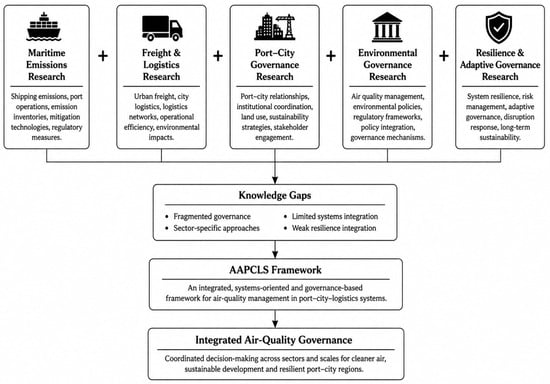
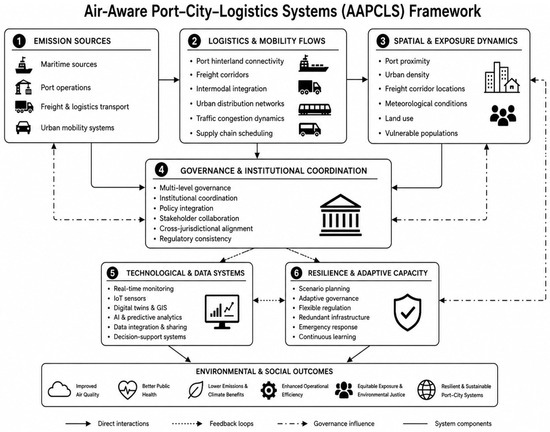
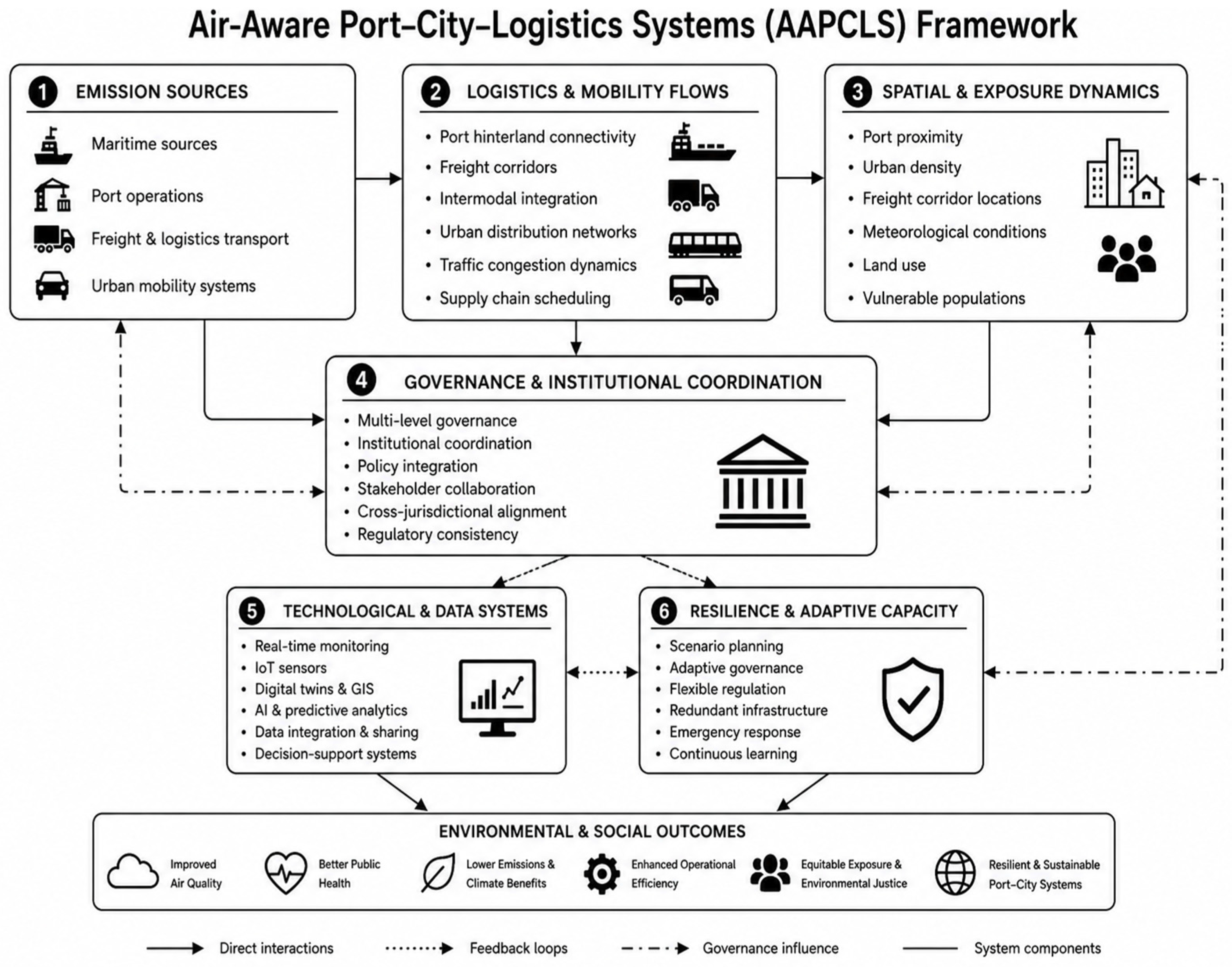

Disclaimer/Publisher’s Note: The statements, opinions and data contained in all publications are solely those of the individual author(s) and contributor(s) and not of MDPI and/or the editor(s). MDPI and/or the editor(s) disclaim responsibility for any injury to people or property resulting from any ideas, methods, instructions or products referred to in the content. |
© 2026 by the author. Licensee MDPI, Basel, Switzerland. This article is an open access article distributed under the terms and conditions of the Creative Commons Attribution (CC BY) license.