


Highlights
What are the main findings?
- Forage phosphorus (P) content was lowest in winter and highest in summer, remaining below the adequacy threshold in most samples.
- Plasma P concentrations differed among animal categories, with the highest prevalence of below-threshold values in lactating cows (65%) and heifers (59%).
- Plasma P concentration was positively associated with forage P content in lactating and pregnant non-lactating cows.
What are the implications of the main findings?
- Lactating cows and heifers may be particularly susceptible to inadequate P supply under extensive grazing in the Wet Chaco region.
- P supplementation strategies should consider animal category and seasonal forage P availability, although their effectiveness requires further evaluation.
Abstract
Phosphorus (P) deficiency is a common constraint in extensive grazing systems. This study evaluated P concentrations in forage and plasma of 22 beef cattle farms under extensive grazing across seasons in the Wet Chaco region between winter 2023 and summer 2025. Forage P content was lowest in winter and highest in summer (p < 0.01), with intermediate values in spring and autumn. Forage P content was positively related to digestible organic matter (adjusted R2 = 0.42; p < 0.001) and negatively related to acid detergent fiber (adjusted R2 = 0.51; p < 0.001). Plasma P concentration and the prevalence of values below the adequacy threshold differed among animal categories (p < 0.001). Plasma P was highest in calves (7.29 ± 0.28 mg/dL) and lowest in lactating cows (4.25 ± 0.28 mg/dL), with intermediate values in pregnant non-lactating cows (5.02 ± 0.23 mg/dL) and heifers (5.62 ± 0.25 mg/dL). Lactating cows and heifers had the highest prevalence of plasma P concentration below the adequacy threshold (65 and 59%, respectively), followed by pregnant non-lactating cows (35%) and calves (27%). Forage P was positively associated with plasma P in lactating and pregnant non-lactating cows (residual RMSE = 0.849 mg/dL; p < 0.001). These findings indicate that lactating cows and heifers may be particularly susceptible to inadequate P supply under extensive grazing in the Wet Chaco region.
1. Introduction
Phosphorus (P) is one of the minerals with the greatest functional diversity in cattle [1], playing key roles in skeletal development, energy metabolism, cellular signaling, ruminal microbial activity, and reproductive function [2,3,4]. In the body, approximately 80–85% of total P is found in bone, whereas the remaining 15–20% is distributed in soft tissues and body fluids [5]. Of this fraction, less than 1% is present in the extracellular space as inorganic P, and its concentration in plasma is commonly used as an indicator of P status in both growing and adult cattle [6,7]. However, its interpretation is influenced by dietary P supply, age, physiological stage, and the duration and severity of P deficiency [8].
When P intake is severely limited over prolonged periods, cattle may develop allotriophagia and osteophagia [9], behaviors that increase the risk of botulism through the ingestion of contaminated bones [10]. Prolonged severe P restriction can also predispose animals to bone fragility and locomotion disorders [11]. However, under grazing conditions, P deficiency commonly occurs in a subclinical form, which is more prevalent and economically more detrimental, as it can reduce forage intake, growth performance, and reproductive efficiency in beef cattle [12,13,14]. Therefore, assessing P status can help identify inadequate P supply in beef cattle under extensive grazing systems where clinical signs may not always be evident.
Phosphorus deficiency in cattle has been reported in several regions worldwide, including South Africa, North America, Australia and Brazil [15,16,17,18]. It is considered the main mineral constraint in grazing-based production systems [19], primarily because grazing beef cattle depend largely on forage as their source of dietary P, which is often deficient [14]. In South America, this issue is particularly relevant in the Wet Chaco region, a subregion of the Gran Chaco, which encompasses approximately 50 million hectares across northern Argentina and central Paraguay [20,21]. The cattle herd in this region was estimated at approximately 22 million head in 2022 [22,23], with cow–calf systems predominating [24,25,26] and production relying mainly on natural rangelands, and to a lesser extent, on cultivated tropical pastures. In these rangelands, soils have low natural fertility, with a large proportion of P immobilized in organic forms [21,27,28,29], potentially limiting P availability to grazing cattle and making this region particularly prone to cattle P deficiency.
Previous studies conducted in the Wet Chaco reported inadequate P content in forage and low plasma P concentrations in cattle. Mufarrege [30] reported that 70% of evaluated grasslands (n = 263) were deficient in P (<1.7 g P/kg dry matter; DM) relative to the annual requirements of a 400-kg beef cow. Similarly, Balbuena et al. [31] found that 67% of lactating cows and 22% of growing animals (1–2 years old) had plasma P below the adequate reference threshold (i.e., 4.6 mg/dL) during spring. Despite this evidence, P status in other animal categories, such as pregnant non-lactating cows and suckling calves, has not been evaluated, nor has P status been assessed across seasons in this region.
In view of these findings, we hypothesized that beef cattle herds in the Wet Chaco region would show a high prevalence of animals with plasma P concentration below the reference threshold, with a greater prevalence expected among lactating cows because of their higher P requirements for milk production. We also hypothesized that this prevalence would vary across seasons as a consequence of seasonal fluctuations in forage nutritional quality, which may influence the dietary supply of P to grazing cattle [6,11]. Therefore, this study aimed to evaluate the P concentrations in forage and plasma of 22 beef cattle herds kept under extensive grazing sampled across seasons in the Wet Chaco region, as well as the prevalence of plasma P concentration below the adequacy threshold among calves, heifers, lactating cows, and pregnant non-lactating cows.
2. Materials and Methods
2.1. Study Area and Period
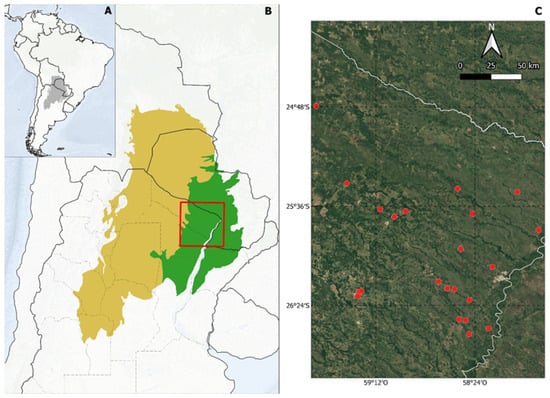
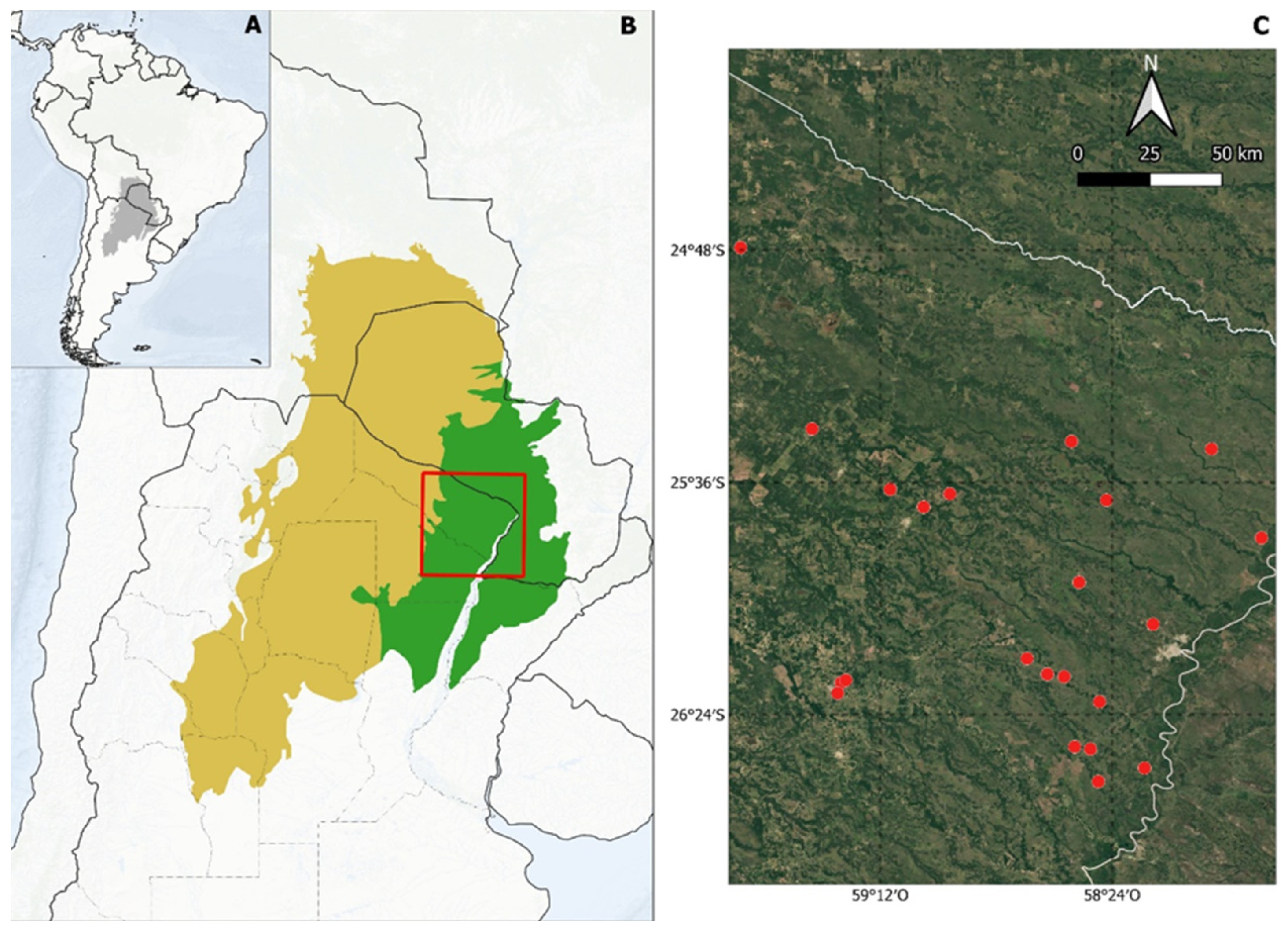
The study was conducted from winter 2023 to summer 2025 on 22 beef cattle farms located in the east-central region of Formosa Province, Argentina, corresponding to the South American Wet Chaco region (Figure 1). This region is characterized by a wet subtropical climate with marked seasonality, annual precipitation ranging from 1000 to 1300 mm, and mean annual temperatures between 22 and 25 °C, with extremes exceeding 40 °C in summer and occasional frosts in winter [28,32]. The landscape consists of a low, flat plain with poor drainage and alternating periods of flooding and drought [28,32]. In elevated areas (albardones), soils are better drained and support riparian forests. Intermediate zones are characterized by moderately drained soils associated with palm savannas (Copernicia alba), whereas low-lying areas have heavy, clayey soils with restricted drainage, supporting extensive flood-prone natural grasslands dominated by tall grasses (e.g., Sorghastrum setosum and Paspalum intermedium) [28,32].
Figure 1.
Geographical location of the study area and the sampled farms in the South American Wet Chaco region. (A) Location of the Gran Chaco region in South America. (B) Delimitation of the Wet Chaco region (green area), where the red rectangle indicates the study area shown in detail in panel (C). Panels (A,B) were generated based on the terrestrial ecoregions map of Olson et al. (2001) [33]. (C) Spatial distribution of the 22 sampled cattle farms (red circles) under extensive grazing systems.
Farms were identified and recruited through a collaborative network involving local veterinary practitioners, zootechnical engineers, agricultural extension agents, and regional producer associations. Following recruitment, farms were selected based on their reliance on rangelands or cultivated tropical pastures as the primary cattle feed source, the absence of dietary mineral supplementation, and the use of tropically adapted breeds (e.g., Brangus, Braford or Bonsmara). Field sampling was conducted from winter 2023 to summer 2025 using a staggered cohort entry. Individual farms were enrolled progressively across seasons: winter 2023 (n = 2), spring 2023 (n = 4), summer 2024 (n = 5), autumn 2024 (n = 3), and winter 2024 (n = 8) (Table 1). Each farm was initially scheduled for one sampling event per season, corresponding to four sampling events over an annual cycle. However, not all scheduled visits were completed because of logistical constraints, including heavy rainfall that limited site accessibility and grassland fires. As a result, sampling frequency varied among farms, with 6, 4, 9, and 3 farms sampled in one, two, three, and four seasons, respectively, resulting in 53 overall farm visits (Table 1).
Table 1.
Staggered farm enrollment and seasonal sampling schedule for blood and forage collection by entry cohort, farm, and animal category.
2.2. Forage Sampling, Animal Selection and Blood Sampling
In each farm, forage samples were collected using the hand-plucking technique, which simulates cattle grazing behavior, to estimate the chemical composition of the forage selected by the animals [34]. The evaluated natural grasslands were characteristic of the Wet Chaco region, dominated by native C4 grasses (e.g., Paspalum spp., Sorghastrum setosum, and Andropogon lateralis). Due to limited access to paddocks on certain occasions, forage samples could only be obtained during 42 of the total 53 farm visits (15 in winter, 10 in spring, 8 in summer, and 9 in autumn; Table 1). Under the extensive management conditions of the evaluated farms, all animal categories grazed together as a single herd in one large paddock. Consequently, one forage sample was collected per farm visit whenever sampling was possible. Five subsamples were collected at random locations within the paddock by manually clipping plant parts resembling those selected by cattle using stainless-steel knives. The five subsamples were pooled into a single composite sample and transported to the laboratory for drying and processing.
Blood samples were collected whenever possible during the same farm visits as forage collection to ensure temporal alignment between forage composition and animal mineral status. However, because forage collection was not always possible and blood sampling could not be completed on every visit, the two types of sampling did not always occur simultaneously. For blood sampling, the first 15 to 20 animals from each category entering the working chute were selected at each farm. Sampling was conducted in the early morning under the routine management conditions of each commercial farm. Consequently, the time elapsed since the last grazing event or water access could not be standardized. The evaluated categories included heifers between 10 and 18 months of age that had not yet been bred, pregnant non-lactating cows, and lactating cows. In addition, calves of the previously selected lactating cows were also included in the study. Given the long or continuous breeding seasons typical of these systems, exact individual records for calf age, days in milk, or stage of gestation were unavailable. Animals were individually identified to facilitate re-sampling in subsequent seasonal visits whenever possible. If an animal changed its physiological status between visits (e.g., a pregnant cow calved), it was reclassified into its new category for that sampling event. Due to logistical constraints during cattle handling on certain dates, blood samples were obtained in 50 of the total 53 farm visits (15 in winter, 13 in spring, 12 in summer, and 10 in autumn; Table 1). Approximately 8 mL of blood was collected via jugular venipuncture using a 10-mL syringe (Monoject™, New York, NY, USA). Blood samples were transferred to tubes containing sodium EDTA as an anticoagulant and temporarily kept in chilled coolers. Within 4 h of collection, samples were centrifuged using a portable centrifuge (Eubric Z-29, Buenos Aires, Argentina) at 3000× g for 15 min, after which plasma was separated, inspected to discard visibly hemolyzed samples, and frozen at −20 °C without freeze–thaw cycles until subsequent analyses.
2.3. Chemical Analysis
Forage samples were dried in a forced-air oven at 55 °C for 72 h and ground in a cyclone mill (CT 293 Cyclotec™, Analytical A/S, Hillerød, Denmark) to pass through a 1 mm sieve. Dry matter content was determined by oven-drying at 110 °C for 8 h. Ash content was determined by combustion at 600 °C for 4 h, and organic matter (OM) content was calculated by difference. Crude protein (CP) was calculated as total N × 6.25, with total N determined using the Kjeldahl method [35]. Neutral detergent fiber (NDF) and acid detergent fiber (ADF) were analyzed according to Mertens et al. [36] and [35], respectively, except that samples were weighed into polyester filter bags (16 µm porosity) and treated with neutral or acid detergent in an autoclave at 110 °C for 40 min [37]. To determine P content (g/kg DM) in forage, samples were digested in two stages using 65% nitric acid followed by 70% perchloric acid according to Palma et al. [38], and P content was quantified in the filtrate using a colorimetric method [39]. Plasma samples were thawed and diluted with 10% (w/v) trichloroacetic acid for protein precipitation, and P concentration was also determined by colorimetry using the same procedure described for forage samples, which was previously validated to ensure no interference from the TCA precipitation matrix, with analytical calibration ensured in each assay batch using a standard phosphorus curve.
2.4. In Situ Digestibility Assay
The in situ digestibility of forage samples was determined by weighing 1 g of dried and ground forage samples (1-mm screen) into polyester bags (5 × 5 cm; 40 µm pore size; SEFAR® PET 1500, Heiden, Switzerland), according to Nocek (1988) [40]. For each sample, two bags were incubated in each of the two cannulated cows (four bags per sample in total) for 48 h. The cows had an average body weight of 420 kg and grazed on a local natural grassland, where they received a commercial concentrate composed of corn grain, rice bran, and soybean expeller at a rate of 5 g/kg body weight. After incubation, bags were washed with tap water and subsequently treated with neutral detergent to remove adherent microbial biomass [41]. The bags were then ashed to determine the ash content, and residual organic matter was calculated by difference. No correction for blank bag residues was applied [42]. Digestible OM content (DOM, g/kg DM), representing the OM disappearance after 48 h of ruminal incubation, followed by neutral-detergent treatment of the incubation residue to correct for microbial contamination, was calculated as [(incubated OM (g) − residual OM (g))/DM incubated] × 1000. Results from duplicate bags were averaged within each cow, and then the mean across both cows was calculated.
2.5. Statistical Analysis
All statistical analyses were performed using SAS OnDemand for Academics (SAS Institute Inc., Cary, NC, USA; version 9.4). Linear mixed models were fitted using the GLIMMIX procedure. The study constituted an unbalanced longitudinal repeated-measures design, as farms were entered progressively under a staggered schedule and sampled repeatedly across seasons, with missing visits resulting from extreme weather conditions (including flooding) and logistical limitations. The repeated nature of the observations was accounted for by including farm as a random effect and by modeling within-farm residual correlation across seasons using appropriate covariance structures, as detailed below. The definitions of the experimental unit, random terms, and weighting schemes differed according to the target response variable, as detailed below. Calendar year and farm enrollment cohort were not included as separate effects in the models because of their potential collinearity and the unbalanced sampling design. Consequently, seasonal effects should be interpreted considering that their separation from potential year and enrollment cohort effects could not be fully assessed.
2.5.1. Forage Analysis
For forage chemical composition and digestibility, the experimental unit was the individual farm evaluated in each season. The statistical model was:
where Yij is the observed value of the forage variable, μ is the overall mean, Si is the fixed effect of season (i = winter, spring, summer, autumn), fj is the random effect of farm (j = 1–22), assumed ~N (0, ); and εij is the residual error, assumed ~N (0, R). N stands for Gaussian distribution, whereas is the variance associated with the farm random effect. R is a matrix of variance and covariance due to repeated measures. To account for within-farm residual correlation across seasons, various covariance structures were fitted and compared using the Bayesian information criterion (BIC): first-order autoregressive [AR(1)], heterogeneous first-order autoregressive [ARH(1)], compound symmetry (CS), heterogeneous compound symmetry (CSH), first-order ante-dependence [ANTE(1)], Toeplitz (TOEP), heterogeneous Toeplitz (TOEPH), first-order factor analytic [FA(1)], and unstructured (UN). Differences among season least-squares means were evaluated using Fisher’s protected least significant difference (LSD) test, with statistical significance declared at p ≤ 0.05.
Yij = μ + Si + fj + εij
2.5.2. Plasma Analysis
For plasma P concentrations, the experimental unit was the animal category within each farm. Farm-level category means were evaluated using the following model:
where Yijk is the farm-level mean plasma P concentration; µ is the overall mean; Ci is the fixed effect of animal category; fj is the random effect of farm, assumed fj~N (0, ); Sk is the fixed effect of season; C × Sik is the interaction between animal category and season; and εijk is the residual error, assumed ~N (0, R). To account for within-subject residual correlation across seasons, previously listed covariance structures were evaluated using BIC. To account for unequal animal group sizes and heterogeneous within-group variance among sampled farms, category means were weighted by the inverse of their squared standard error (1/SEM2). This meta-analytical approach assigns greater weight to means estimated with higher precision [43]. Plasma P concentrations < 4.6 mg/dL in cows and <6.0 mg/dL in calves and heifers were considered below the adequate threshold [6,44,45]. The proportion of animals with plasma P concentration below the adequate threshold was analyzed using a generalized linear mixed model with a binomial distribution and a logit link function. For this binary response, individual animal records were modeled, and a random effect of animal category nested within the farm by season combination [distributed ~N (0, was included. is the experimental unit random variance. This random specification was implemented to: (1) account for the clustering of individual animals within their respective cohort at each sampling event; (2) properly recognize the category-by-farm-by-season cohort as the experimental sub-unit (observational unit) to avoid pseudoreplication; and (3) accommodate potential overdispersion (extra-binomial variation) often present in clustered binary field data. In all models, season and animal category effects were decomposed using Fisher’s LSD test. Statistical significance was declared at p ≤ 0.05.
Yijk = μ + Ci + fj + Sk + C × Sik + εijk
2.5.3. Regression Analysis
Predictions of forage P content from forage DOM and ADF concentrations were obtained using simple linear regression, considering the individual farm-by-season sampling event as the experimental unit. To evaluate the relationship between forage P content and cow plasma P concentration, the experimental unit was defined as the cow physiological category within each farm and season (n = 40 paired observations: 22 lactating cow cohorts and 18 pregnant non-lactating cow cohorts). Only farm visits in which forage and blood samples were collected simultaneously were included in the regression analysis. For each observation, the mean plasma P concentration for each cow category was paired with the forage P content measured in the paddock grazed by the animals. Prior to pooling the data, an analysis of covariance (ANCOVA) was conducted to test differences in slopes and intercepts between lactating and pregnant non-lactating cows. Because neither the interaction term (p > 0.05) nor the main effect of category (p > 0.05) was significant, the data were pooled into a single regression model. To account for the structure and potential clustering due to repeated farm visits and seasonal variation, a linear mixed model was fitted using the GLIMMIX procedure:
where Yij is the average plasma P concentration; β0 is the intercept; β1 is the regression coefficient; Xij is forage P content; fj is the random intercept of farm, assumed N (0, ); Si is the fixed effect of season (i = winter, spring, summer, autumn); εij is the residual error, assumed ~N (0, ), where is the residual variance.
Yij = β0
+ β1Xij + fj + Si + εij
3. Results
Winter showed the lowest (p ˂ 0.001) DOM content and the highest (p ˂ 0.001) ADF concentration compared to the other seasons (Table 2). The NDF concentration was higher (p < 0.05) in winter, lower in summer, and intermediate in spring and autumn. There was no season effect on forage CP content (p = 0.089). Forage P content was lowest in winter and highest in summer (p ˂ 0.01). Winter values were lower than those in spring and summer but did not differ from autumn, whereas summer values were higher than those in winter and autumn.
Table 2.
Seasonal variation in forage chemical composition and digestible organic matter (g/kg dry matter, means ± standard error of mean) in the Wet Chaco region.
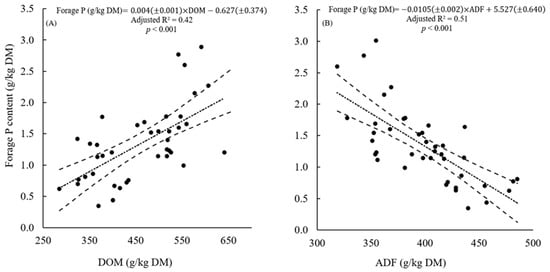
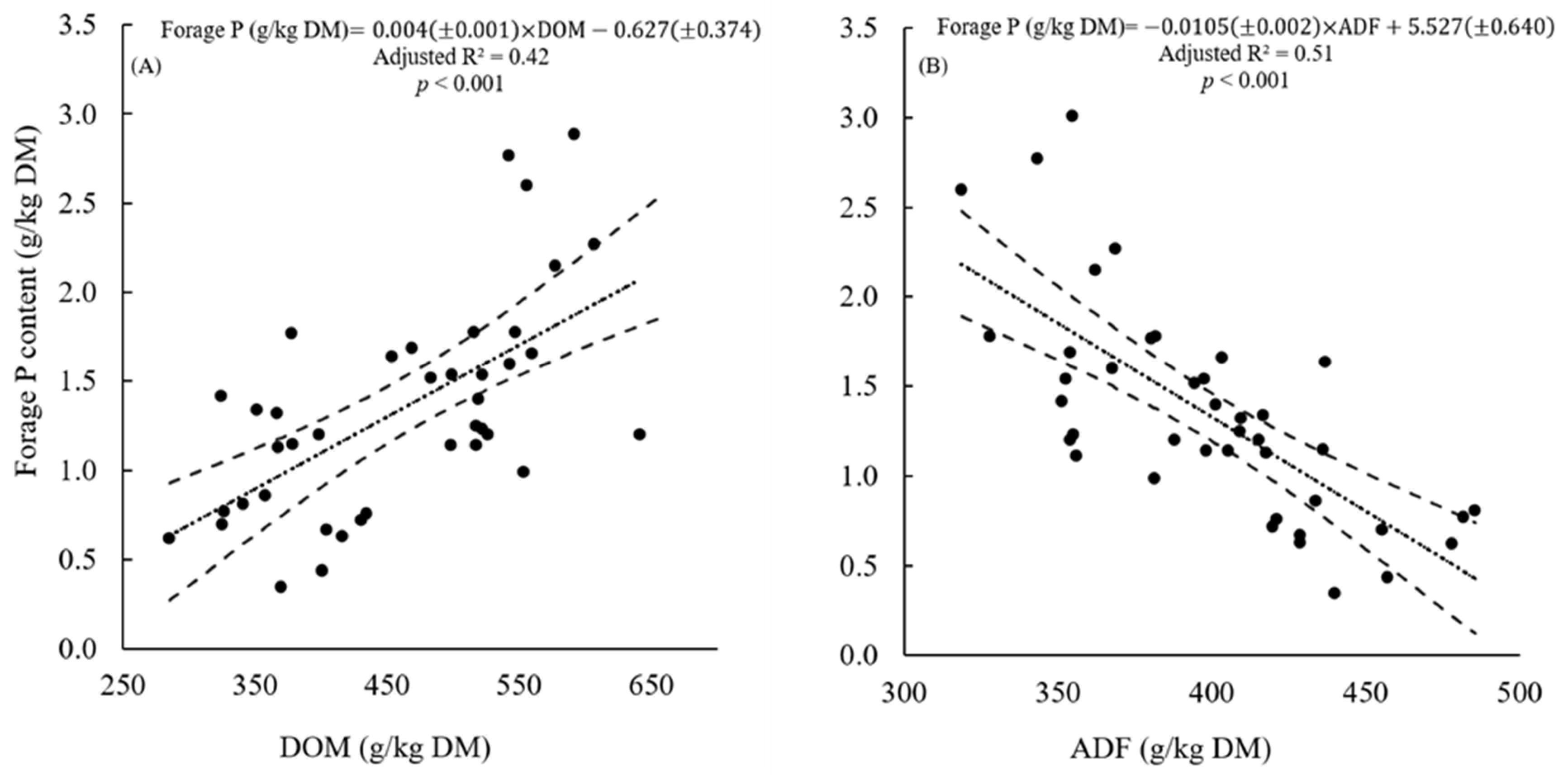
Forage P content was positively associated with DOM (adjusted R2 = 0.42, p ˂ 0.001; 95% CI: 0.003 to 0.006) and negatively associated with ADF (adjusted R2 = 0.51, p ˂ 0.001; 95% CI: −0.014 to −0.008; Figure 2).
Figure 2.
Relationships between phosphorus (P) content and digestible organic matter content (DOM; panel (A)) and acid detergent fiber (ADF; panel (B)) in forage samples from the Wet Chaco region (n = 42). The central dotted line represents the fitted simple linear regression equation, and the dashed lines represent the 95% confidence limits. Values in parentheses represent the standard errors of the regression coefficients. DOM = organic matter disappeared after 48 h of ruminal incubation, followed by neutral-detergent treatment of the incubation residue to correct for microbial contamination.
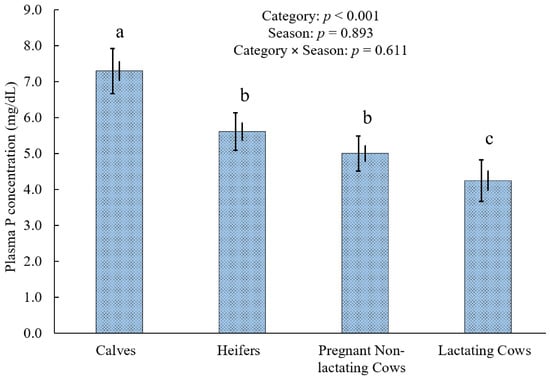
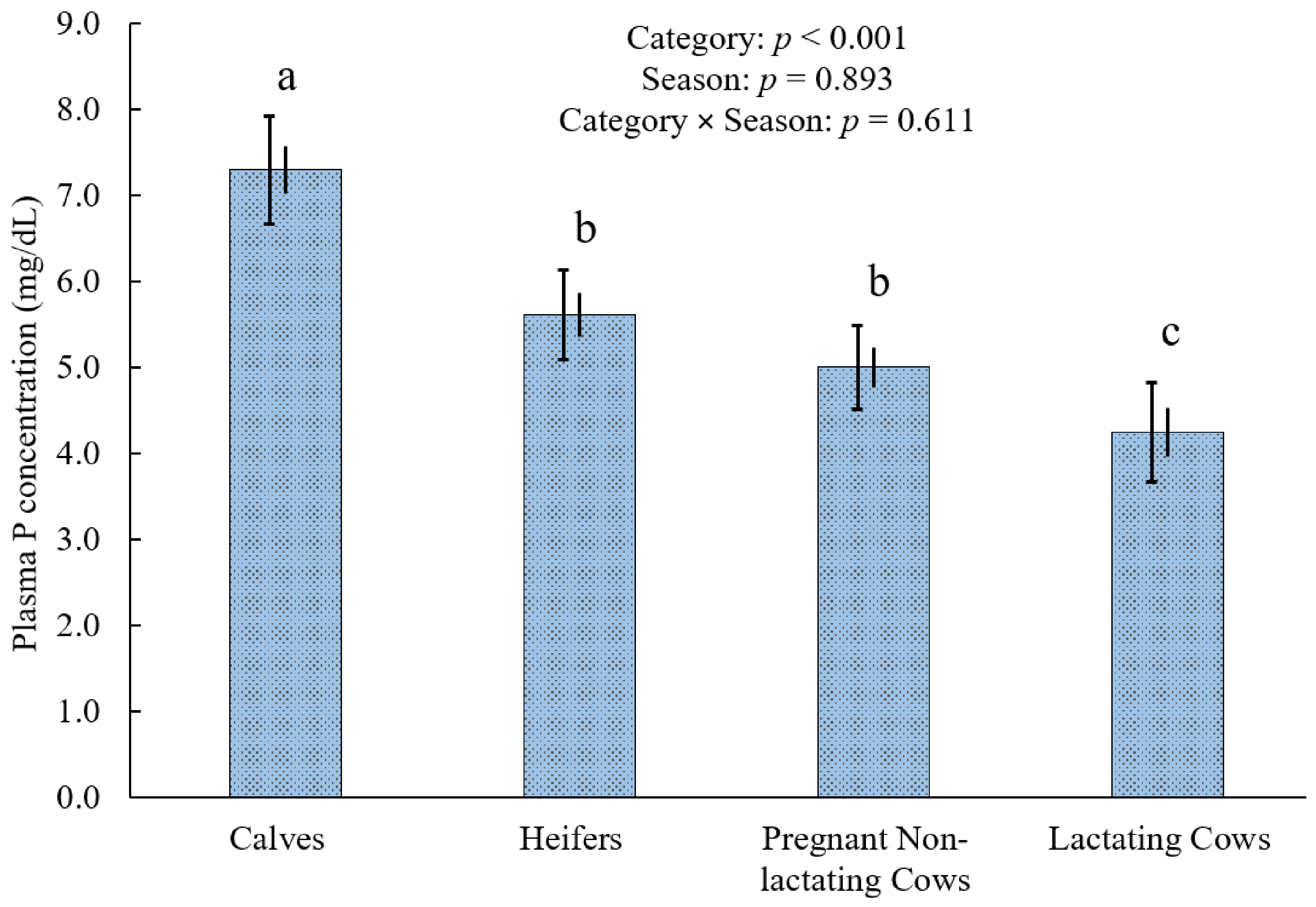
Plasma P concentration was affected by animal category (p < 0.001; Figure 3), being higher in calves (7.29 ± 0.28 mg/dL; 95% CI: 6.67–7.93) and lower in lactating cows (4.25 ± 0.28 mg/dL; 95% CI: 3.66–4.82), whereas pregnant non-lactating cows (5.02 ± 0.23 mg/dL; 95% CI: 4.52–5.48) and heifers (5.62 ± 0.25 mg/dL; 95% CI: 5.09–6.13) showed intermediate values. No significant season × animal category interaction (p = 0.611) or main effect of season (p = 0.893) was detected. Seasonal plasma P concentrations were 5.48 ± 0.27 mg/dL (95% CI: 4.93–6.02) in winter, 5.69 ±0.19 mg/dL (95% CI: 5.31–6.06) in spring, 5.54 ± 0.18 mg/dL (95% CI: 5.18–5.90) in summer, and 5.44 ± 0.33 mg/dL (95% CI: 4.78–6.11) in autumn.
Figure 3.
Plasma phosphorus (P) concentration by animal category in beef cattle under extensive grazing in the Wet Chaco region. A total of 659 unique animals contributed 1070 blood-sampling records across repeated visits, with some individuals transitioning between categories over time: calves, 172 animals (269 records); heifers, 133 animals (214 records); pregnant non-lactating cows, 197 animals (237 records); and lactating cows, 248 animals (350 records). Bars are adjusted least-squares means, uncapped vertical lines represent the standard errors of means (SE), and capped vertical lines represent 95% confidence intervals. Different letters (a, b, c) indicate significant differences among categories (Fisher’s LSD test, p ≤ 0.05).
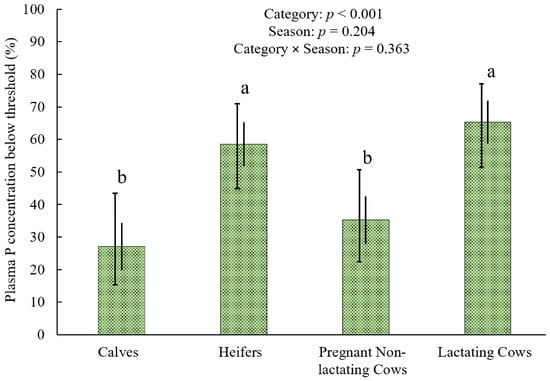
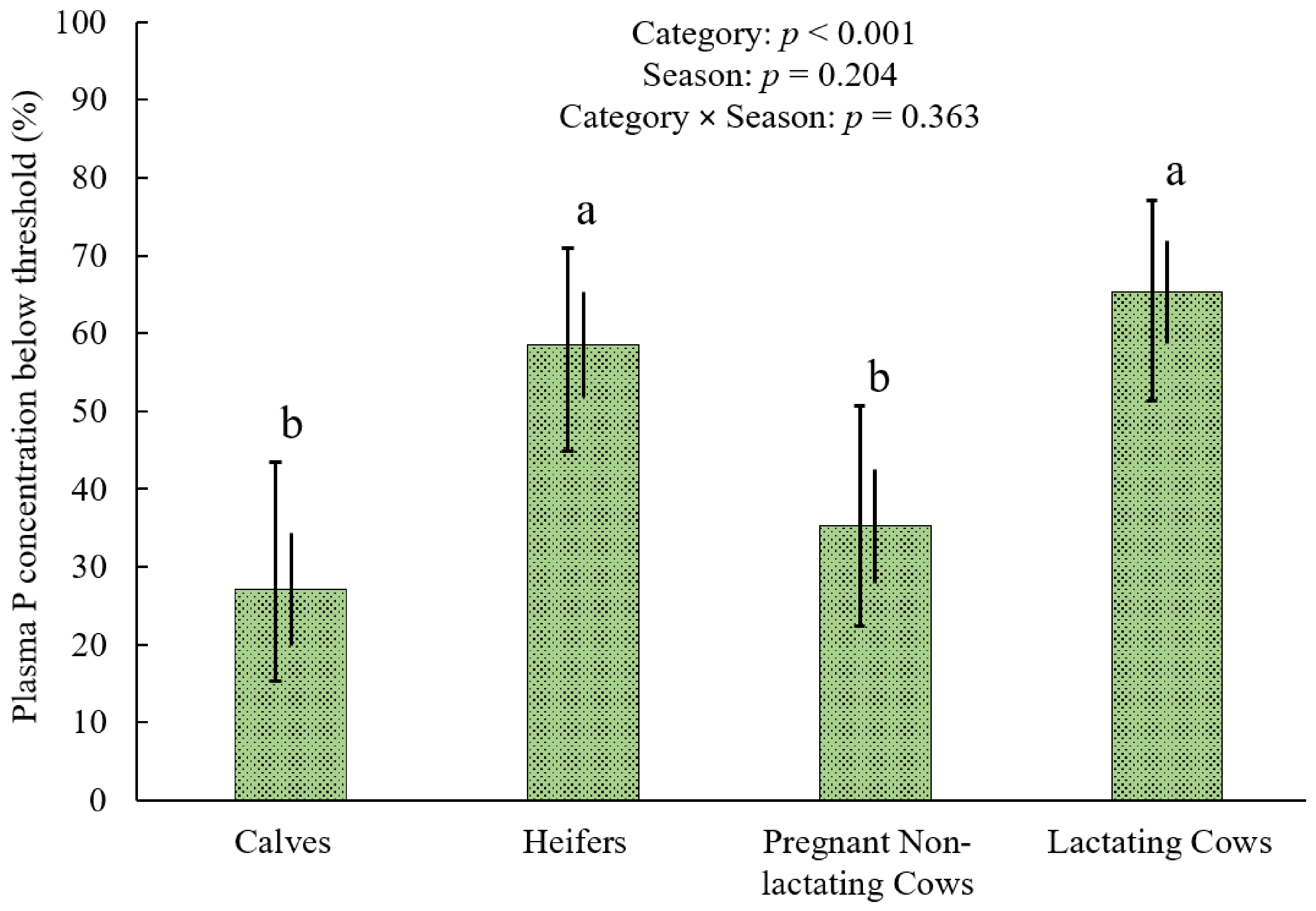
The percentage of animals with plasma P concentration below the adequate threshold was affected by animal category (p < 0.001; Figure 4), being higher in lactating cows (65.31 ± 6.63%; 95% CI: 51.3–77.1) and heifers (58.51 ± 6.73%; 95% CI: 44.8–71.0) than in pregnant non-lactating cows (35.30 ± 7.30%; 95% CI: 22.4–50.7) and calves (27.18 ± 7.22%; 95% CI: 15.3–43.5). No significant season × animal category interaction (p = 0.363) or main effect of season (p = 0.204) was detected. The seasonal percentages of animals with plasma P concentrations below the adequate threshold were 54.30 ± 7.40% (95% CI: 39.7–68.3) in winter, 36.90 ± 6.69% (95% CI: 24.8–51.0) in spring, 39.26 ± 8.17% (95% CI: 24.6–56.1) in summer, and 54.60 ± 8.19% (95% CI: 38.4–69.9) in autumn.
Figure 4.
Prevalence of plasma phosphorus (P) concentration below the adequacy threshold by animal category under extensive grazing in the Wet Chaco region. A total of 659 unique animals contributed 1070 blood-sampling records across repeated visits, with some individuals transitioning between categories over time: calves, 172 animals (269 records); heifers, 133 animals (214 records); pregnant non-lactating cows, 197 animals (237 records); and lactating cows, 248 animals (350 records). The adequacy threshold was defined as plasma P < 6.0 mg/dL in calves and heifers [6,45] and <4.6 mg/dL in pregnant non-lactating and lactating cows [44]. Bars represent inverse-logit back-transformed model-adjusted proportions, uncapped vertical lines represent the back-transformed standard errors of means (SE), and capped vertical lines represent 95% confidence intervals. Different letters (a, b) indicate significant differences among categories (Fisher’s LSD test, p ≤ 0.05).
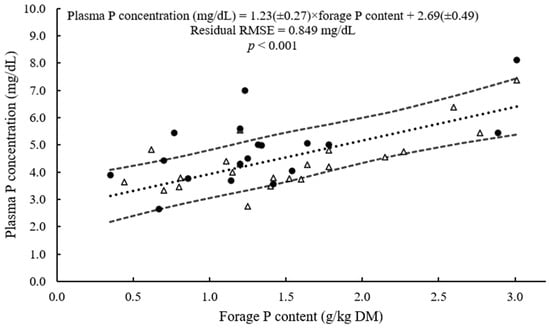
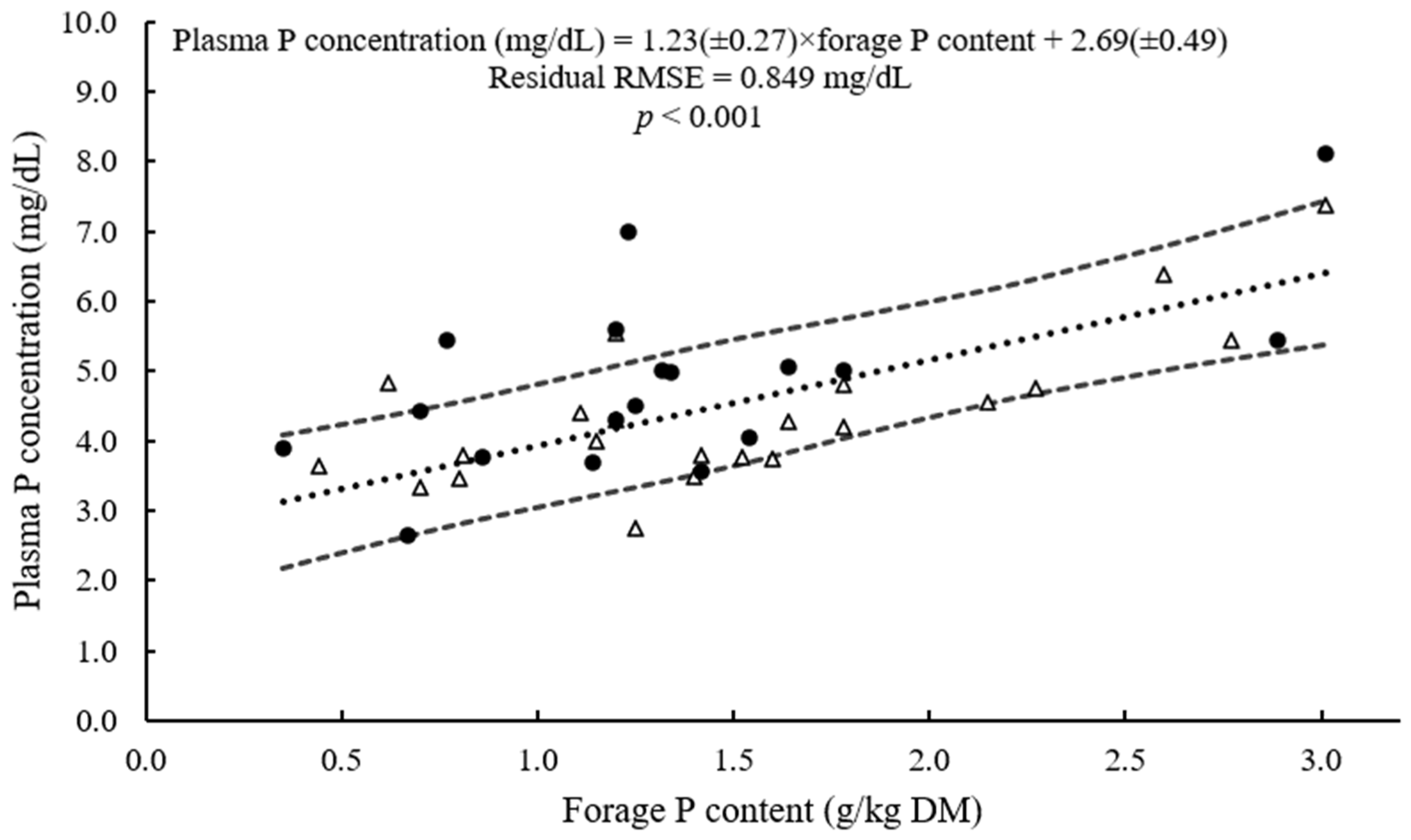
Pregnant non-lactating and lactating cows showed similar relationships between forage P content and plasma P concentration, with slopes of 1.26 (±0.36; 95% CI: 0.53–1.98) and 1.22 (±0.31; 95% CI: 0.59–1.85), respectively. Neither the category effect (p = 0.436) nor the category × forage P interaction (p = 0.923) was significant, supporting the pooling of both categories into a single regression model. In the pooled model (Figure 5), forage P content was positively associated with plasma P concentration (p < 0.001; residual RMSE = 0.849 mg/dL), with a slope of 1.23 (95% CI: 0.68–1.78).
Figure 5.
Relationship between forage phosphorus (P) content and cow plasma P concentration in the Wet Chaco region (n = 40 category-level observations; 22 group means of lactating cows and 18 group means of pregnant non-lactating cows). Open triangles (△) represent lactating cows, whereas filled circles (●) represent pregnant non-lactating cows. As neither the category effect nor the category × forage P interaction was significant (p > 0.05), data were pooled into a single mixed-model regression. The central dotted line represents the population-level prediction adjusted for season and farm effects. Outer dashed lines represent the 95% confidence limits. Values in parentheses within the regression equation represent the standard errors of the estimated intercept and slope.
4. Discussion
One of our hypotheses was that seasonal fluctuations in forage nutritional quality would influence the dietary supply of P to grazing cattle in the Wet Chaco region. As expected, forage quality varied markedly across seasons, as indicated by changes in DOM and fiber fractions. Lower DOM values, together with an increase in fiber fractions (NDF and ADF) during winter, are characteristic of this region in that season [28]. These changes are likely associated with the more advanced phenological stage of tropical C4 grasses during the cool season, when forage contains a greater proportion of structural and senescent tissues, and a lower proportion of metabolically active tissues, resulting in reduced digestibility [46]. Forage P content was also lowest in winter, likely reflecting the progressive dilution of P as forage matured [47]. In fact, Schild et al. [48] reported that senescent forage contains approximately 50% less P than green forage. This may explain the positive association between forage P content and DOM and its negative association with ADF.
Mean forage P content in summer was consistent with the 1.80 g/kg DM reported by Balbuena et al. (1989) [31] for temporarily flooded rangelands in the Wet Chaco region and exceeded the 1.60 g/kg DM considered adequate for growing heifers (200 kg live weight; LW) gaining 0.5 kg/d [14]. However, this concentration remained below the requirement of early-lactating beef cows, estimated at approximately 2.40 g/kg DM [49]. According to Dixon et al. [13], forage P content above 2.00 g/kg DM is considered adequate for grazing beef cattle, whereas values between 1.00 and 1.50 g/kg DM are marginal. Approximately 86% of all forage samples had P content below this reference adequate value. Furthermore, the autumn mean (1.40 g/kg DM) fell within the marginal range, whereas the spring mean (1.52 g/kg DM) was slightly above it. The winter mean (0.99 g/kg DM) fell slightly below the lower limit of the marginal range. However, even these marginal concentrations may represent a relevant nutritional concern, as Schild et al. [48] documented clinical outbreaks of osteomalacia in beef cattle grazing subtropical native pastures with forage P contents as low as 1.10 g/kg DM.
The differences in plasma P concentration observed among cattle categories are likely explained primarily by physiological factors associated with age. Plasma P concentrations generally decline as cattle approach skeletal maturity, and growing cattle typically maintain circulating P concentrations about 1–2 mg/dL higher than adult animals [50]. This is consistent with the higher plasma P concentrations observed in calves and, to a lesser extent, heifers compared with adult cows. Among the growing animals, calves had higher plasma P concentrations than heifers, which may be related to intense bone turnover and high renal P reabsorption regulated by growth hormone, contributing to the maintenance of higher circulating P concentrations [51]. Among adult cows, physiological state appears to further influence plasma P concentrations. Lactating cows consistently exhibited lower plasma P concentrations than pregnant non-lactating cows, which may be explained by the transfer of P into milk during lactation [52], as well as by endocrine changes during early lactation, when corticosteroids can alter the balance between extracellular and intracellular P [45]. The lack of P secretion through milk and of the endocrine changes associated with early lactation could account for the higher plasma P concentrations observed in pregnant non-lactating cows, despite their P demand, which is associated with fetal development. Given that specific physiological stages were not recorded, we hypothesize that this may be because many of the cows were in early gestation, a period characterized by limited fetal growth and comparatively low fetal P requirements [44].
Given that absolute plasma P concentration values are influenced by age and physiological factors, the percentage of animals with plasma P concentration below adequacy thresholds established for each category may provide a more appropriate indicator of dietary P adequacy. According to Grünberg [45], plasma P concentration is a limited indicator of overall P status because bone P mobilization can partially mask chronic P depletion. However, it is useful for assessing short-term dietary P supply and availability [8]. In this context, the lower percentage of plasma P concentration below thresholds observed in calves is likely due to the high P content of maternal milk (i.e., 0.95 g/L) [53], which constitutes their primary nutrient source until approximately four months of age [54]. In contrast, heifers showed a high prevalence (i.e., ≈59%) of plasma P concentration below the adequacy threshold, potentially reflecting their greater reliance on forage, which was frequently within the marginal P range.
According to Grünberg [45], adequate plasma P concentrations for growing cattle range from 6 to 8 mg/dL. In addition, Dixon et al. [6] reported that maximum liveweight gain was generally achieved when plasma P exceeded 6.2 mg/dL. Therefore, a plasma P concentration of 6 mg/dL was adopted in the present study as the adequacy threshold for calves and heifers. However, plasma P concentration adequacy thresholds may vary with diet quality. For example, plasma P concentrations between 4.6 and 6.2 mg/dL may indicate deficiency in growing cattle grazing high-quality pastures (i.e., >60% digestibility) but may be considered adequate under poor-quality pasture conditions (i.e., <54% digestibility) [14]. Therefore, the high prevalence of heifers with plasma P concentration below the adequacy threshold should be interpreted with caution, and further studies are needed to determine whether these concentrations are associated with biologically relevant P deficiency under Wet Chaco grazing conditions.
Along with heifers, lactating cows showed a high prevalence of plasma P concentration below the adequacy threshold, reaching 65% throughout the year. According to Dixon et al. (2020) [13], P requirements in cows increase approximately sixfold during early lactation compared with the dry period due to the higher demand associated with milk production. This high P demand, combined with the low P supply from forage, likely contributed to lactating cows being among the categories with the highest prevalence of plasma P concentration below the adequacy threshold, supporting our hypothesis regarding category susceptibility. Nevertheless, Dixon et al. (2025) [7] demonstrated that mature cows can maintain milk production and calf growth for up to 14 weeks, even with plasma P concentrations below 2.5 mg/dL, through the mobilization of body reserves at the expense of live weight, body condition, and bone mineral density. This suggests that, under conditions of inadequate P supply, lactating cows prioritize milk production through substantial mobilization of these endogenous reserves. However, this occurs during a critical period when reproductive activity must resume and a new pregnancy must be established, which may be compromised by prolonged inadequate P supply [55].
Finally, the positive association between plasma P concentrations and forage P content in lactating and pregnant non-lactating cows provides further support for the relationship between current dietary P supply and plasma P concentration described above. This finding is consistent with previous evidence that plasma P concentration responds to dietary P intake [6,7,56].
These findings suggest that P supplementation strategies should consider periods of lower forage P content, such as winter. However, forage P content was below adequacy thresholds across all seasons, suggesting that P supply may be a nutritional constraint for categories with higher P requirements, particularly lactating cows, which showed the greatest proportion of animals below the plasma P adequacy threshold regardless of season. Therefore, P supplementation could be directed toward these categories, although its effectiveness under commercial grazing conditions requires further evaluation.
A limitation of this study was the lack of complementary indicators of long-term P status, such as bone tissue P concentration, cortical bone thickness, or phosphorus per unit of cortical bone surface area [7,48]. These measurements were not feasible under the commercial herd conditions in which this study was conducted. Additionally, the partial animal follow-up due to missed visits on some farms, as well as the inherent uncertainty in diagnostic P thresholds, and the lack of strict temporal control regarding pre-sampling fasting or water access, may have introduced variability into the seasonal and category comparisons. Future longitudinal studies should integrate complementary indicators of P status with productive and reproductive performance to establish the biological relevance of the plasma P concentrations observed in grazing cattle in the Wet Chaco region.
5. Conclusions
Overall, forage P content across the sampled farms in the Wet Chaco was mostly below the applied reference values for beef cattle throughout most of the year, particularly during the winter. Despite seasonal fluctuations in forage P content, no seasonal differences were detected in the prevalence of plasma P concentration below the adequacy threshold but it was consistently higher in heifers and lactating cows. These categories therefore warrant particular attention when assessing P nutrition in these production systems. Further studies should evaluate productive and reproductive responses to P supply to determine whether P deficiency occurs under Wet Chaco grazing conditions.
Author Contributions
Conceptualization, G.V.K., G.A.M. and C.A.P.; methodology, M.E.A.V., G.A.M., O.A.M., I.D.F., R.N.V.I., S.S.R.R., D.A.F.R., C.M.B., J.R.T. and C.A.P.; formal analysis, M.E.A.V., G.V.K. and G.A.M.; investigation, M.E.A.V., O.A.M., I.D.F., R.N.V.I., S.S.R.R., D.A.F.R., C.M.B. and J.R.T.; resources, M.E.A.V.; data curation, M.E.A.V., G.V.K. and T.A.D.V.; writing—original draft preparation, M.E.A.V.; writing—review and editing, M.E.A.V., G.V.K., G.A.M., T.A.D.V., I.D.F. and C.A.P.; supervision, G.A.M. and C.A.P.; project administration, M.E.A.V.; funding acquisition, C.A.P. All authors have read and agreed to the published version of the manuscript.
Funding
Mauro E. A. Vargas received a doctoral fellowship from the Consejo Nacional de Investigaciones Científicas y Técnicas (CONICET), Argentina (RESOL-2022-2312-APN-DIR#CONICET). Additional institutional support was provided by the Centro de Investigaciones y Transferencia de Formosa (CIT-Formosa, CONICET) and the Universidade Federal de Santa Maria (UFSM).
Institutional Review Board Statement
The animal study protocol was approved by the Centro de Investigaciones y Transferencia de Formosa, in accordance with its institutional guidelines for animal care and use (protocol code 011/23 and 22 August 2023 of approval).
Data Availability Statement
The data presented in this study are available on request from the corresponding author due to privacy considerations regarding the commercial farms involved.
Acknowledgments
The authors would like to express their sincere gratitude to the farm owners who generously collaborated in this study and granted us access to their facilities and animals. In particular, we thank Carlos Silva (La Nueva Primavera), Estancia Monte Claro, Establecimiento Santa Renata, Sebastián de la Rosa (La Criolla), Establecimiento Don Enrique, Leonardo García (García), Establecimiento El Guazuncho, Osvaldo Díaz (Santa Teresa), Santiago Rodríguez (Rincón del Pombero), Estancia San Miguel, Estancia San Lorenzo, Estancia El Palomar, Luis Carné (Estancia El Trébol), Paulo Etchepare (El Oñate), Johnny Nelson (Salvación), Aroldo Boss (Doña Susy), Fabian Mora (Establecimiento San Cayetano), Omar A. Chalé (Establecimiento El Abuelo), Silvia Florentín (Primero de Mayo), and Marcelo Silva (San Pablo) for their valuable support and collaboration. We also wish to thank the Zootechnical Engineers Lucas Avila, Lucas Roggero, Alcides Cancino, Mario Triay, Víctor Sheridan, Richard Garay, Jorge González, Eric Cabello, and Leonela Ortellado for their technical assistance and support during field activities. Finally, we acknowledge the valuable help of the student Ailen Bernie during the sample collection and fieldwork.
Conflicts of Interest
The authors declare no conflicts of interest.
References
- Warner, J.M.; Fike, G.E.; Schwartz, A.G.; Waggoner, J.W.; Johnson, S.K. Sustainable phosphorus use in the United States beef cow-calf industry—Requirements, forage, soil, and water content, supplementation, and nutritional recommendations for producers. Appl. Anim. Sci. 2025, 41, 129–145. [Google Scholar] [CrossRef] [Scilit]
- Humer, E.; Zebeli, Q. Phytate in feed ingredients and potentials for improving the utilization of phosphorus in ruminant nutrition. Anim. Feed. Sci. Technol. 2015, 209, 1–15. [Google Scholar] [CrossRef] [Scilit]
- Beck, L.; Sitara, D. Animal models of phosphorus homeostasis. Curr. Mol. Biol. Rep. 2019, 5, 34–47. [Google Scholar] [CrossRef] [Scilit]
- Pan, S.; Zou, J.; Mao, H.; Hu, Z.; Sun, S.; Wu, W.; Wang, C. Available phosphorus levels modulate growth performance, serum indices, metabolome, rumen fermentation, and microorganism in Hu lambs. Anim. Feed. Sci. Technol. 2025, 322, 116259. [Google Scholar] [CrossRef] [Scilit]
- Goselink, R.; Klop, G.; Dijkstra, J.; Bannink, A. Phosphorus Metabolism in Dairy Cattle: Literature Study on Recent Developments and Gaps in Knowledge; Wageningen Livestock Research: Wageningen, The Netherlands, 2015; Available online: https://edepot.wur.nl/363222 (accessed on 14 June 2026).
- Dixon, R.M.; Anderson, S.; Kidd, L.; Fletcher, M. Blood phosphorus concentration as an indicator of phosphorus deficiency in growing cattle. Proceedings 2020, 36, 136. [Google Scholar] [CrossRef] [Scilit]
- Dixon, R.M.; Benvenutti, M.A.; Goodwin, K.L.; Anderson, S.T.; Mayer, R.J.; Isherwood, P.; Fletcher, M.T. Mobilisation and replenishment of phosphorus reserves in Bos indicus cows. 2. Mature lactating cows fed diets deficient or adequate in phosphorus. Anim. Prod. Sci. 2025, 65, AN24216. [Google Scholar] [CrossRef] [Scilit]
- Karn, J.F. Phosphorus nutrition of grazing cattle: A review. Anim. Feed. Sci. Technol. 2001, 89, 133–153. [Google Scholar] [CrossRef] [Scilit]
- Dixon, R.M.; Fletcher, M.T.; Goodwin, K.L.; Reid, D.J.; McNeill, D.M.; Yong, K.W.; Petherick, J.C. Learned behaviours lead to bone ingestion by phosphorus-deficient cattle. Anim. Prod. Sci. 2019, 59, 921–932. [Google Scholar] [CrossRef] [Scilit]
- Salvarani, F.M.; Vieira, E.V. Clostridial infections in cattle: A comprehensive review with emphasis on current data gaps in Brazil. Animals 2024, 14, 2919. [Google Scholar] [CrossRef] [Scilit]
- Malafaia, P.; Barbosa, J.D.; Brito, M.F.; Souza, V.C.D.; Costa, D.F.A. Phosphorus for cattle and buffaloes in Brazil: Clinical signs and diagnosis of its deficiency and relevance, and recommended strategies to alleviate issues observed under grazing conditions. Ruminants 2023, 3, 55–75. [Google Scholar] [CrossRef] [Scilit]
- Bowen, M.K.; Chudleigh, F.; Dixon, R.M.; Sullivan, M.T.; Schatz, T.; Oxley, T. The economics of phosphorus supplementation of beef cattle grazing northern Australian rangelands. Anim. Prod. Sci. 2020, 60, 683–693. [Google Scholar] [CrossRef] [Scilit]
- Dixon, R.M.; Anderson, S.T.; Kidd, L.J.; Fletcher, M.T. Management of phosphorus nutrition of beef cattle grazing seasonally dry rangelands: A review. Anim. Prod. Sci. 2020, 60, 863–879. [Google Scholar] [CrossRef] [Scilit]
- Jackson, D.; Dixon, R.M.; Quigley, S.P.; Schatz, T.; Rolfe, J.W.; Corbett, E.; Perry, L. Phosphorus Management of Beef Cattle in Northern Australia; Meat & Livestock Australia Limited: Sydney, Australia, 2023. Available online: https://era.dpi.qld.gov.au/id/eprint/9503/1/mla---phosphorus-management-of-beef-cattle-in-northern-australia---2nd-edition_v19.pdf (accessed on 14 June 2026).
- Theiler, A.; Green, H.H.; du Toit, P. Phosphorus in the Livestock Industry. J. Dept. Agric. S. Afr. 1924, 8, 460–504. Available online: https://hdl.handle.net/10520/AJA0000020_364 (accessed on 14 June 2026).
- Black, W.H. Effects of Phosphorus Supplements on Cattle Grazing on Range Deficient in This Mineral; US Department of Agriculture: Washington, DC, USA, 1943; p. 856. [Google Scholar]
- Barnes, J.E.; Jephcott, B.R. Phosphorus deficiency in cattle in the Northern Territory and its control. Aust. Vet. J. 1955, 31, 302–312. [Google Scholar] [CrossRef] [Scilit]
- Valle, S.D.F.; González, F.D.; Rocha, D.; Scalzilli, H.B.; Campo, R.; Larosa, V.L. Mineral deficiencies in beef cattle from southern Brazil. Braz. J. Vet. Res. Anim. Sci. 2003, 40, 47–53. [Google Scholar] [CrossRef] [Scilit]
- Suttle, N.F. Mineral Nutrition of Livestock, 5th ed.; CABI: Wallingford, UK, 2022. [Google Scholar]
- Fehlenberg, V.; Baumann, M.; Gasparri, N.I.; Piquer-Rodriguez, M.; Gavier-Pizarro, G.; Kuemmerle, T. The role of soybean production as an underlying driver of deforestation in the South American Chaco. Glob. Environ. Change 2017, 45, 24–34. [Google Scholar] [CrossRef] [Scilit]
- Villalba-Martínez, C.J.; Souza-Alonso, P.; Piñeiro, V.; Etchevers, J.D.; Merino, A. Soil sustainability challenges in eucalypt afforestation of floodplain grasslands in Paraguay’s Humid Chaco: Carbon and phosphorus dynamics. For. Ecol. Manag. 2025, 595, 123034. [Google Scholar] [CrossRef] [Scilit]
- SENACSA. Servicio Nacional de Calidad y Salud Animal Sistema de Trazabilidad del Paraguay, 2020. Available online: https://senacsa.gov.py/servicios/sanidad-animal-identidad-y-trazabilidad/campo/sitrap-sistema-de-trazabilidad-del-paraguay/ (accessed on 14 June 2026).
- SENASA. Servicio Nacional de Sanidad y Calidad Agroalimentaria, 2022. Available online: https://www.argentina.gob.ar/senasa/mercados-y-estadisticas/estadisticas/animal-estadisticas/bovinos (accessed on 14 June 2026).
- Arelovich, H.M.; Bravo, R.D.; Martínez, M.F. Development, characteristics, and trends for beef cattle production in Argentina. Anim. Front. 2011, 1, 37–45. [Google Scholar] [CrossRef] [Scilit]
- Laino, L.D.; Musálem, K.; Laino, R. Perspectivas para un desarrollo sustentable: Un estudio de caso de producción ganadera en la región del Chaco Paraguayo. Poblac. Desarro. 2017, 23, 95–106. [Google Scholar] [CrossRef] [Scilit]
- Pellerano, L.L.; Chavez Clemente, M.D.; Calvi, M.; Balbuena, O.; Rosello Brajovich, J.E. Identificación de indicadores de sustentabilidad de los sistemas de cría bovina del Este de la provincia de Chaco, Argentina. Rev. Agron. Noroeste Argent. 2017, 37, 45–54. Available online: https://www.produccion-animal.com.ar/informacion_tecnica/cria/234-indicadores_chaco.pdf (accessed on 14 June 2026).
- Baumann, M.; Levers, C.; Macchi, L.; Bluhm, H.; Waske, B.; Gasparri, N.I.; Kuemmerle, T. Mapping continuous fields of tree and shrub cover across the Gran Chaco using Landsat 8 and Sentinel-1 data. Remote Sens. Environ. 2018, 216, 201–211. [Google Scholar] [CrossRef] [Scilit]
- Barbera, P.; Bendersky, D.; Calvi, M.; Cetra, B.M.; Flores, A.J.; Hug, M.G.; Sarmiento, N.F. Cría Vacuna en el NEA; Ediciones INTA: Buenos Aires, Argentina, 2018. [Google Scholar]
- Milán, M.J.; González, E. Beef cattle ranching in the Paraguayan Chaco: Typological approach to a livestock frontier. Environ. Dev. Sustain. 2022, 25, 5185–5210. [Google Scholar] [CrossRef] [Scilit]
- Mufarrege, D. Los Minerales en la Alimentación de Vacunos Para Carne en la Argentina; INTA: Mercedes, Argentina, 1999; Available online: https://fcvinta.wordpress.com/wp-content/uploads/2013/10/st-minerales-_mefarrege.pdf (accessed on 14 June 2026).
- Balbuena, O.; Luciani, C.A.; McDowell, L.R.; Conrad, J.H.; Martin, F.G. Estudios de la nutrición mineral de los bovinos para carne del este de las provincias de Chaco y Formosa (Argentina). 1. Fósforo y calcio. Vet. Arg. 1989, 6, 241–253. Available online: https://produccion-animal.com.ar/suplementacion_mineral/194-fosforo_calcio.pdf (accessed on 14 June 2026).
- Bigerna, M.; Bazylenko, A.; Torrella, S. Vegetation phenology in the Argentinean Wet Chaco: Assessing seasonality and precipitation dependence through NDVI MODIS time series. Austral Ecol. 2022, 47, 629–640. [Google Scholar] [CrossRef] [Scilit]
- Olson, D.M.; Dinerstein, E.; Wikramanayake, E.D.; Burgess, N.D.; Powell, G.V.N.; Underwood, E.C.; D’Amico, J.A.; Itoua, I.; Strand, H.E.; Morrison, J.C.; et al. Terrestrial Ecoregions of the World: A New Map of Life on Earth. BioScience 2001, 51, 933–938. [Google Scholar] [CrossRef] [Scilit]
- De Vries, M.W. Estimating forage intake and quality in grazing cattle: A reconsideration of the hand-plucking method. Rangel. Ecol. Manag. 1995, 48, 370–375. [Google Scholar] [CrossRef] [Scilit]
- Association of Official Analytical Chemists (AOAC). Official Methods of Analysis, 15th ed.; AOAC: Arlington, VA, USA, 1997. [Google Scholar]
- Mertens, D.R.; Allen, M.; Carmany, J.; Clegg, J.; Davidowicz, A.; Drouches, M.; Frank, K.; Gambin, D.; Garkie, M.; Gildemeister, B. Gravimetric determination of amylase-treated neutral detergent fiber in feeds using refluxing in beakers or crucibles: Collaborative study. J. AOAC Int. 2002, 85, 1217–1240. [Google Scholar] [CrossRef] [Scilit]
- Senger, C.C.; Kozloski, G.V.; Sanchez, L.M.B.; Mesquita, F.R.; Alves, T.P.; Castagnino, D.S. Evaluation of autoclave procedures for fibre analysis in forage and concentrate feedstuffs. Anim. Feed. Sci. Technol. 2008, 146, 169–174. [Google Scholar] [CrossRef] [Scilit]
- Palma, M.N.N.; Rocha, G.C.; Valadares Filho, S.D.C.; Detmann, E. Evaluation of acid digestion procedures to estimate mineral contents in materials from animal trials. Asian-Australas. J. Anim. Sci. 2015, 28, 1624–1628. [Google Scholar] [CrossRef] [Scilit]
- Tedesco, M.J. Análises de Solo, Plantas e Outros Materiais; Universidade Federal do Rio Grande do Sul: Porto Alegre, Brazil, 1995. [Google Scholar]
- Nocek, J.E. In situ and other methods to estimate ruminal protein and energy digestibility: A review. J. Dairy Sci. 1988, 71, 2051–2069. [Google Scholar] [CrossRef] [Scilit]
- Foster, J.L.; Smith, W.B.; Rouquette, F.M.; Tedeschi, L.O. Forages and pastures symposium: An update on in vitro and in situ experimental techniques for approximation of ruminal fiber degradation. J. Anim. Sci. 2023, 101, skad097. [Google Scholar] [CrossRef] [Scilit]
- Pozo, C.A.; Jaurena, G.; Ribeiro, A.A.; Kozloski, G.V. Impact of incubation method, bag porosity, and sample grinding size on dry matter digestibility of ruminant feedstuffs. Anim. Feed. Sci. Technol. 2026, 347, 117103. [Google Scholar] [CrossRef] [Scilit]
- Martínez, M.F.; Sánchez, M.J. Weighting by inverse variance or by sample size in random-effects meta-analysis. Educ. Psychol. Meas. 2010, 70, 56–73. [Google Scholar] [CrossRef] [Scilit]
- Mattioli, G.A. Nutrición Mineral y Vitamínica de Bovinos, 2nd ed.; CCB Academic Press: La Plata, Argentina, 2013. [Google Scholar]
- Grünberg, W. Treatment of phosphorus balance disorders. Vet. Clin. Food Anim. 2014, 30, 383–408. [Google Scholar] [CrossRef] [Scilit]
- Van Soest, P.J. Nutritional Ecology of the Ruminant; Cornell University Press: Ithaca, NY, USA, 1994. [Google Scholar]
- Türk, M.; Albayrak, S.; Bozkurt, Y. Seasonal trends in chemical composition of different artificial pastures. Turk. J. Field Crops 2014, 19, 53–58. [Google Scholar] [CrossRef] [Scilit]
- Schild, C.O.; Boabaid, F.M.; Olivera, L.G.; Machado, M.; Vildoza, A.; Saravia, A.; Riet-Correa, F. Osteomalacia as a result of phosphorus deficiency in beef cattle grazing subtropical native pastures in Uruguay. J. Vet. Diagn. Investig. 2021, 33, 1018–1022. [Google Scholar] [CrossRef] [Scilit]
- Satter, L.D.; Klopfenstein, T.J.; Erickson, G.E.; Powell, J.M. Phosphorus and dairy/beef nutrition. In Phosphorus: Agriculture and the Environment; American Society of Agronomy: Madison, WI, USA, 2005; pp. 587–606. Available online: https://digitalcommons.unl.edu/animalscifacpub/549 (accessed on 14 June 2026).
- Herdt, T.H.; Rumbeiha, W.; Braselton, W.E. The use of blood analyses to evaluate mineral status in livestock. Vet. Clin. Food Anim. 2000, 16, 423–444. [Google Scholar] [CrossRef] [Scilit]
- Anderson, S.T.; Kidd, L.J.; Benvenutti, M.A.; Fletcher, M.T.; Dixon, R.M. New candidate markers of phosphorus status in beef breeder cows. Anim. Prod. Sci. 2017, 57, 2291–2303. [Google Scholar] [CrossRef] [Scilit]
- Keanthao, P.; Goselink, R.M.A.; Dijkstra, J.; Bannink, A.; Schonewille, J.T. Effects of dietary phosphorus concentration during the transition period on plasma calcium concentrations, feed intake, and milk production in dairy cows. J. Dairy Sci. 2021, 104, 11646–11659. [Google Scholar] [CrossRef] [Scilit]
- National Academies of Sciences, Engineering, and Medicine (NASEM). Nutrient Requirements of Beef Cattle, 8th ed.; The National Academies Press: Washington, DC, USA, 2016. [Google Scholar]
- Lopes, S.P.; Garcia, F.Z.; Cosma, F.; Brito, M.F.; Ubiali, D.G.; Souza, V.C.; Malafaia, P. Clinical parameters and calf liveweight of Nellore breeders supplemented or not with phosphorus, during pregnancy and lactation-a case study. Arq. Bras. Med. Vet. Zootec. 2022, 74, 1101. [Google Scholar] [CrossRef] [Scilit]
- Schatz, T.J.; McCosker, K.D.; Heeb, C. Phosphorus supplementation improves the growth and reproductive performance of female Brahman cattle grazing phosphorus-deficient pastures in the Victoria River District, Northern Territory, Australia. Anim. Prod. Sci. 2023, 63, 544–559. [Google Scholar] [CrossRef] [Scilit]
- Dixon, R.M.; Castells, L.; Goodwin, K.L.; Kidd, L.J.; Anderson, S.T.; Mayer, R.J.; Fletcher, M.T. Mobilisation and replenishment of phosphorus reserves in Bos indicus cows. 1. Mid-pregnant mature cows post-weaning. Anim. Prod. Sci. 2024, 64, AN24213. [Google Scholar] [CrossRef] [Scilit]

Disclaimer/Publisher’s Note: The statements, opinions and data contained in all publications are solely those of the individual author(s) and contributor(s) and not of MDPI and/or the editor(s). MDPI and/or the editor(s) disclaim responsibility for any injury to people or property resulting from any ideas, methods, instructions or products referred to in the content. |
© 2026 by the authors. Licensee MDPI, Basel, Switzerland. This article is an open access article distributed under the terms and conditions of the Creative Commons Attribution (CC BY) license.