


Abstract
The treatment of chronic lymphocytic leukemia (CLL) has shifted from chemoimmunotherapy to targeted therapy, resulting in improved outcomes and patient survival. The aim of this study was to evaluate the efficacy and safety of venetoclax-based regimens in patients with relapsed/refractory CLL, as well as their effectiveness in patients previously treated with ibrutinib. We retrospectively analyzed 98 patients with CLL who received venetoclax in the second or later lines of therapy in Slovakia between 2018 and 2024. The median age was 68 years, and treatment was administered either as monotherapy or in combination with rituximab. Response to treatment was assessed according to the iwCLL 2018 criteria and clinical practice. Patients who achieved complete hematologic and clinical remission but did not undergo confirmatory bone marrow examination were classified as having unconfirmed complete remission (uCR). An overall response was achieved in the majority of patients (in 99%), with 2% achieving complete remission, 65% incomplete complete remission and 32% partial remission. At a median follow-up of 34 months, median overall survival was not reached (mean 52.5 months), and median progression-free survival was 45 months. Survival outcomes were evaluated using Kaplan–Meier analysis. Patients previously treated with ibrutinib had significantly worse outcomes (p = 0.022). Adverse events were predominantly hematological (64%), with 19% being grade 3–4. In line with the conclusions of clinical trials and retrospective analysis from real-life practice, we can say that venetoclax-based treatment regimens are highly effective in patients with CLL in higher lines of treatment, with acceptable and well-manageable toxicity.
1. Introduction
Chronic lymphocytic leukemia (CLL) is among the most frequently diagnosed hematologic malignancies in adults in Western countries, with a median age at diagnosis of around 70 years. The disease incidence is estimated at 4.2 cases per 100,000 individuals annually and increases significantly with advancing age. Despite its relatively high prevalence, routine population screening is not currently recommended [1,2,3]. CLL exhibits considerable clinical heterogeneity, and the growing number of diagnosed cases is partly related to improvements in diagnostic techniques. Enhanced understanding of the biological mechanisms underlying the disease has substantially influenced the development of modern therapeutic strategies [4,5]. Treatment is recommended for patients with active, symptomatic disease or advanced-stage CLL as defined by the Binet or Rai classification systems. Over recent years, traditional chemoimmunotherapy has been progressively replaced by targeted therapies, particularly Bruton’s tyrosine kinase inhibitors and BCL-2 inhibitors [6]. Venetoclax, a selective BCL-2 inhibitor and BH3 mimetic, promotes apoptosis through inhibition of antiapoptotic signaling pathways and has become an important component of modern CLL therapy [7,8,9,10]. Initially approved in 2016 for patients harboring del(17p)/TP53 abnormalities, venetoclax was later approved in combination with rituximab for use in a wider patient population [11]. Although clinical trials have demonstrated the efficacy and safety of venetoclax, they have mainly involved carefully selected patient populations. Consequently, real-world evidence is needed to provide a more accurate representation of everyday clinical practice. The treatment sequence plan for patients with CLL remains an open question, taking into account disease risk, overall patient status, and patient selection for a specific treatment. The aim of this retrospective study was to assess the efficacy and safety of venetoclax in unselected patients with CLL treated in second and subsequent lines of therapy, including patients previously treated with a Bruton’s kinase inhibitor, in hematology centers throughout the Slovak Republic.
2. Results
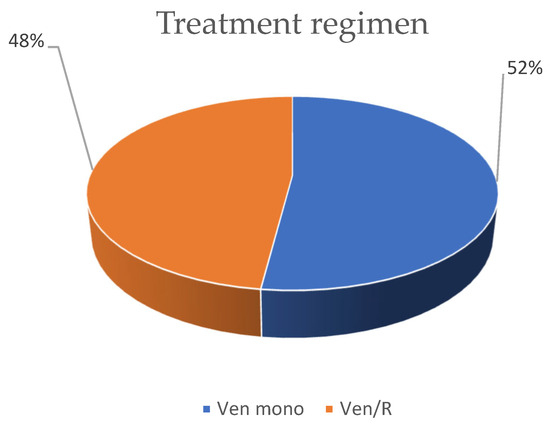
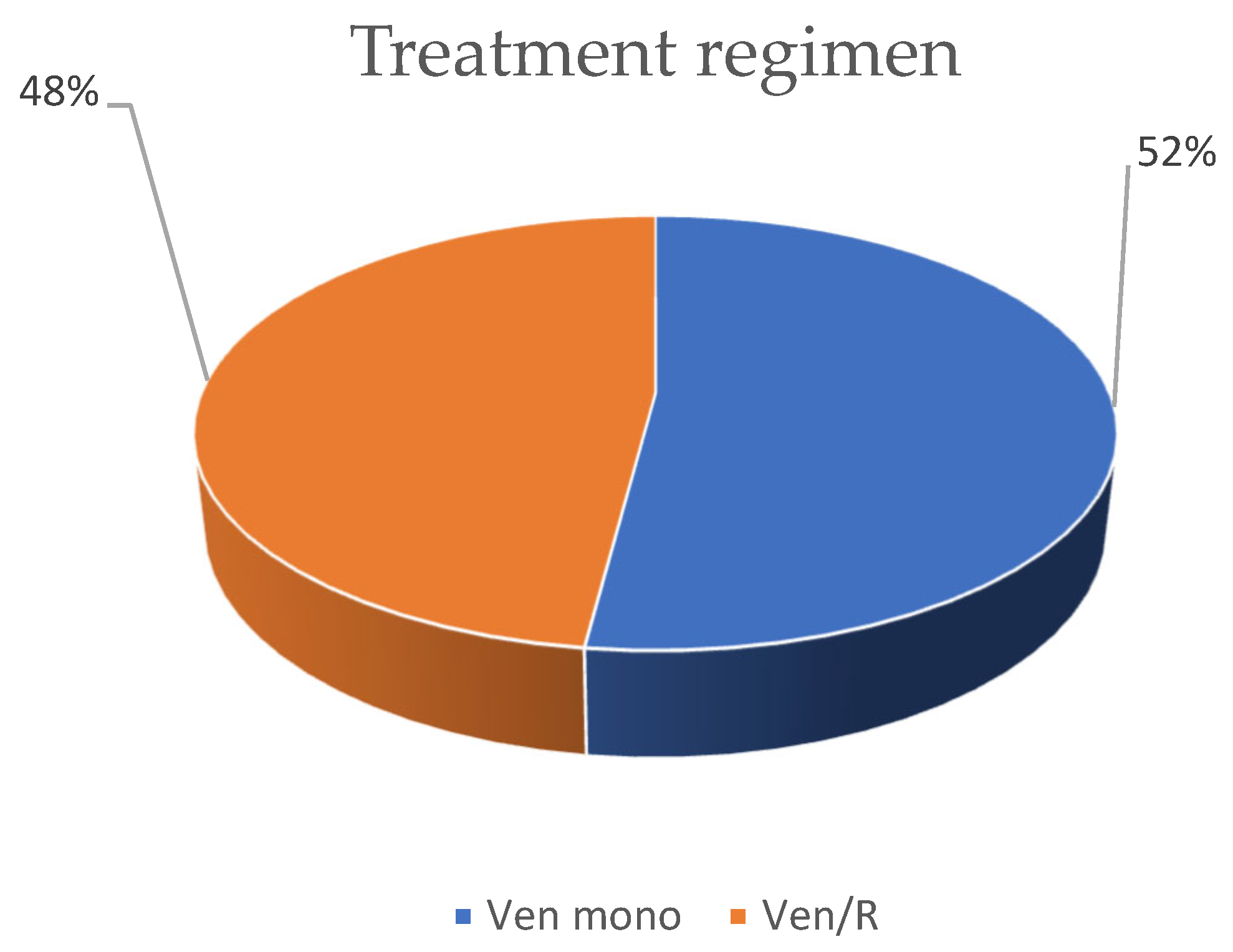
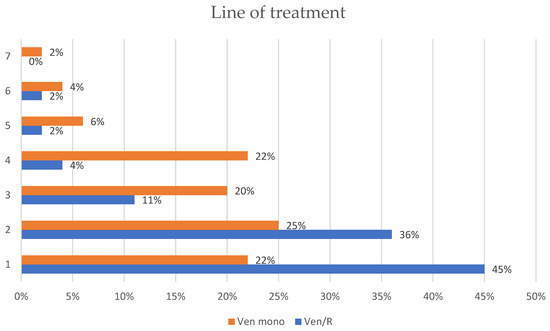
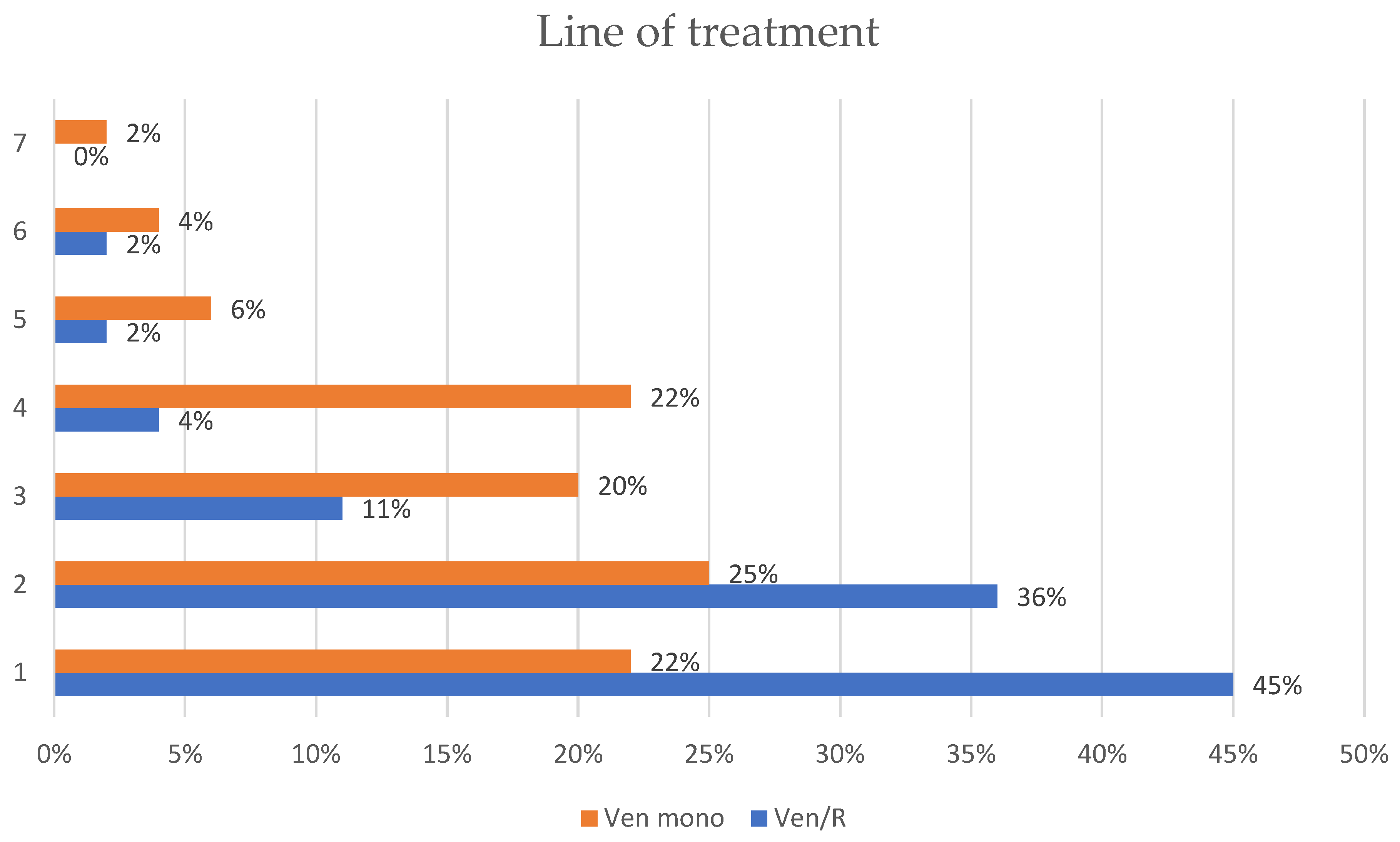
A total of 98 patients with CLL treated with venetoclax were included in the study. Of these, 47 (48%) received venetoclax in combination with rituximab (VR), while 51 (52%) received venetoclax monotherapy (V) (Figure 1). Venetoclax was administered between the second and eighth lines of therapy; the VR regimen was used from the second to seventh line, whereas V monotherapy was used from the second to eighth line (Figure 2).
Figure 1.
Treatment regimens. Venetoclax was given in combination with rituximab (VR) in 47 patients (48%) and as monotherapy in 51 patients (52%).
Figure 2.
Treatment regimens vs line of treatment. Distribution of venetoclax-based treatment regimens by line of therapy.
The risk of tumor lysis syndrome (TLS) was classified as high in 17 (17%) patients and intermediate in 53 (54%) patients. Prior to venetoclax initiation, tumor debulking was performed in 22 (21%) patients using either rituximab–bendamustine or chlorambucil monotherapy, while the remaining 77 (79%) patients proceeded directly to treatment according to the standard protocol.
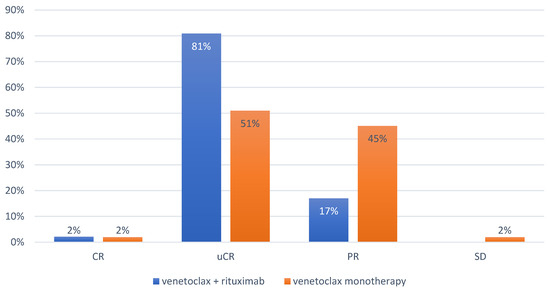
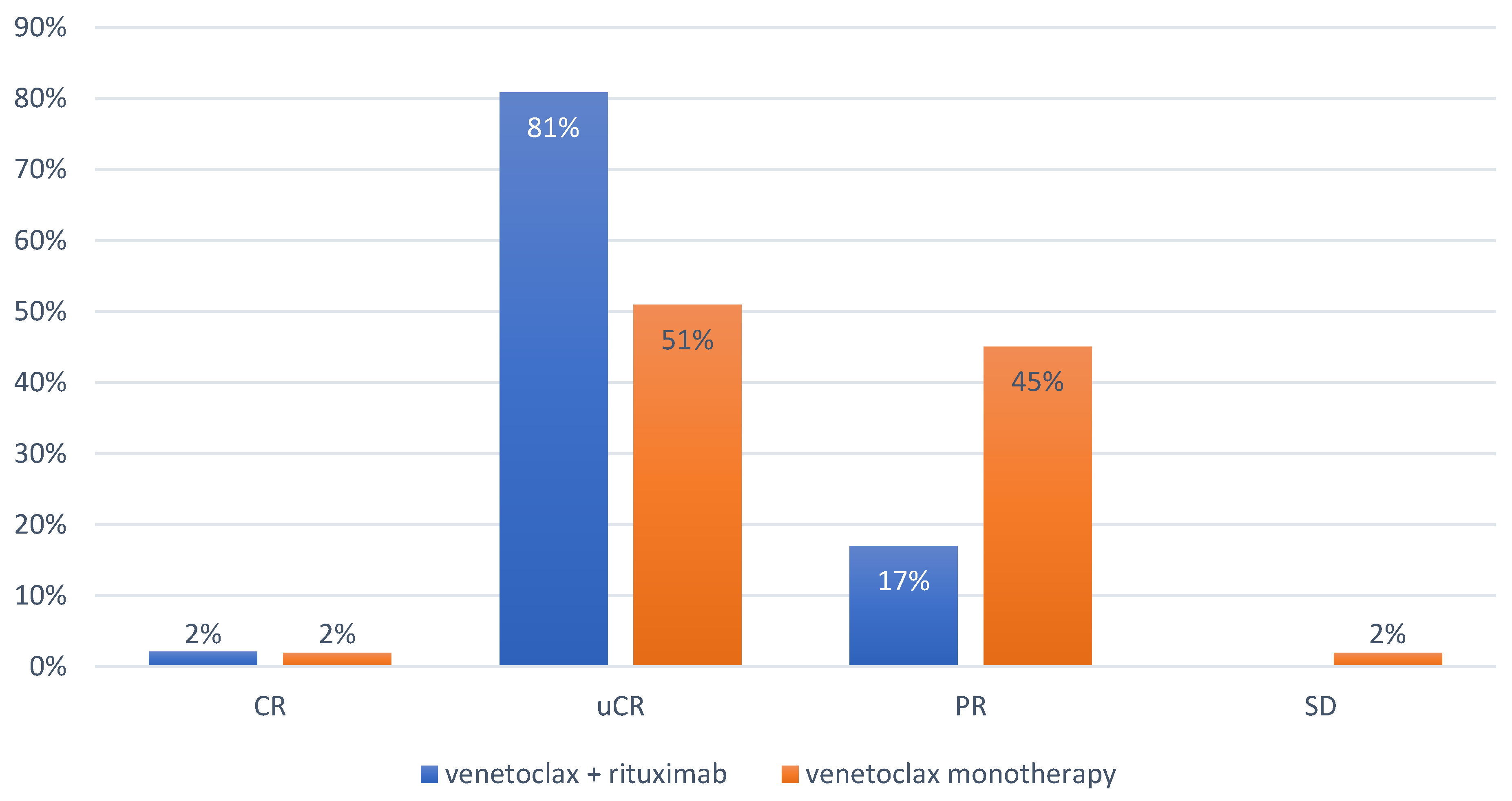
Infusion-related reactions occurred in 4 (4%) patients and manifested as fever and chills; all cases were managed on an outpatient basis. Treatment efficacy was evaluated after at least two months according to the iwCLL criteria and clinical practice. Patients who achieved complete hematologic and clinical remission but did not undergo confirmatory bone marrow examination were classified as having unconfirmed complete remission (uCR). The overall response rate (ORR) in the evaluated population was 99%, including complete remission (CR) in 2% of patients, unconfirmed complete remission (uCR) in 65%, and partial remission (PR) in 32%. In the VR subgroup, 2% of patients achieved CR, 81% achieved uCR, and 17% achieved PR. In the V subgroup, CR was observed in 2% of patients, uCR in 51%, and PR in 45% (Figure 3).
Figure 3.
Assessment of treatment response. Distribution of treatment responses according to individual treatment regimens.
Patients previously exposed to ibrutinib (n = 48) also responded to venetoclax therapy, although their outcomes were significantly worse compared with those of ibrutinib-naïve patients (p = 0.022), with CR/uCR achieved in 56% versus 78% and PR in 42% versus 22%.
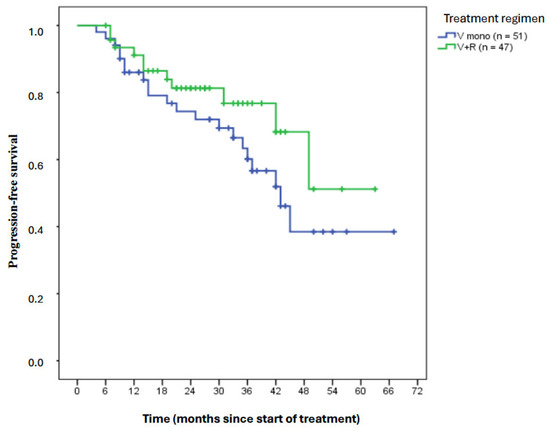
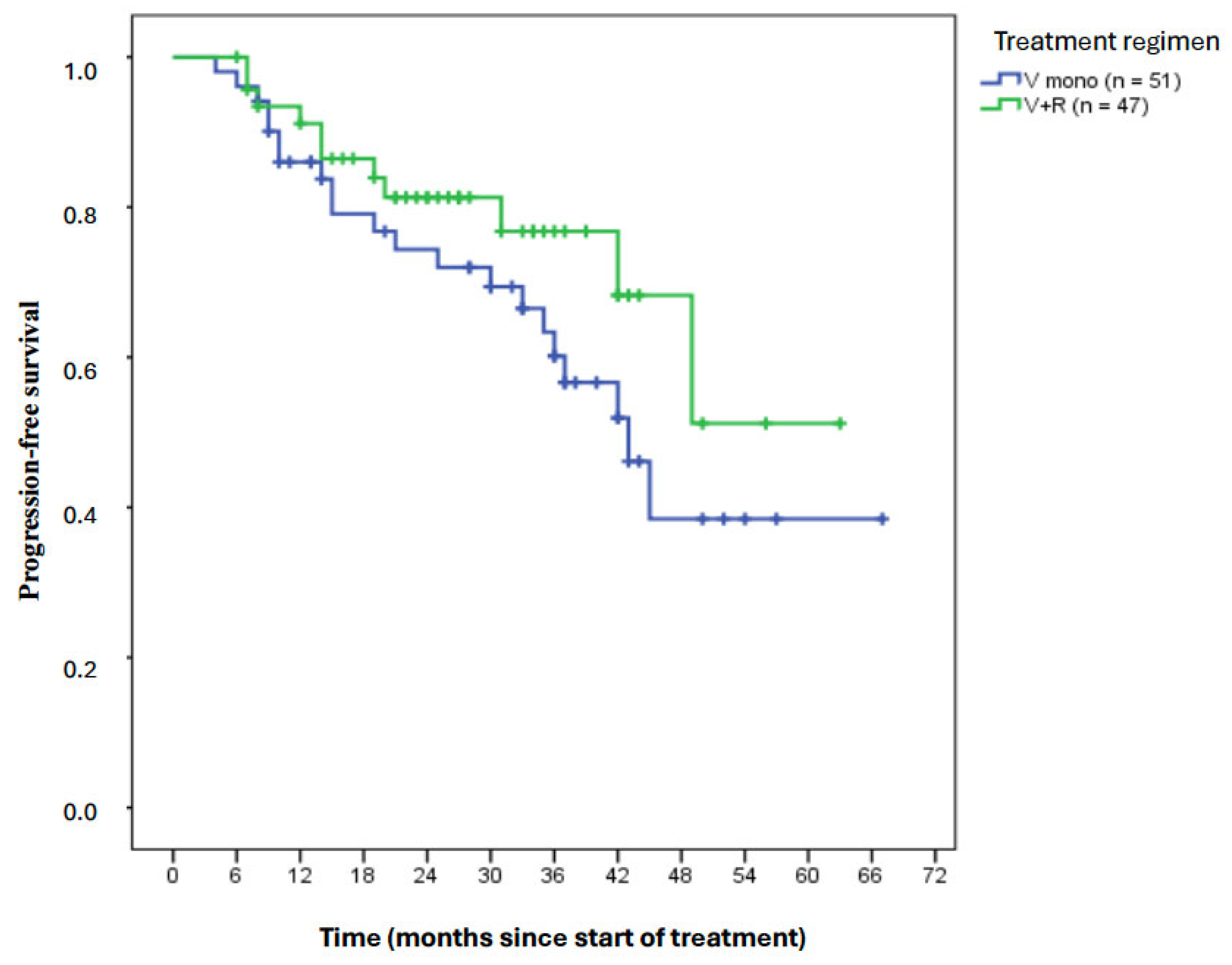
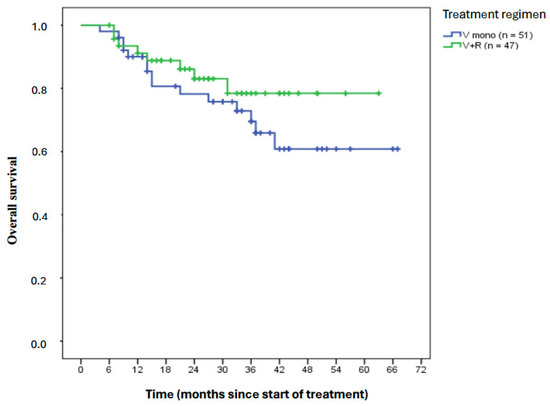
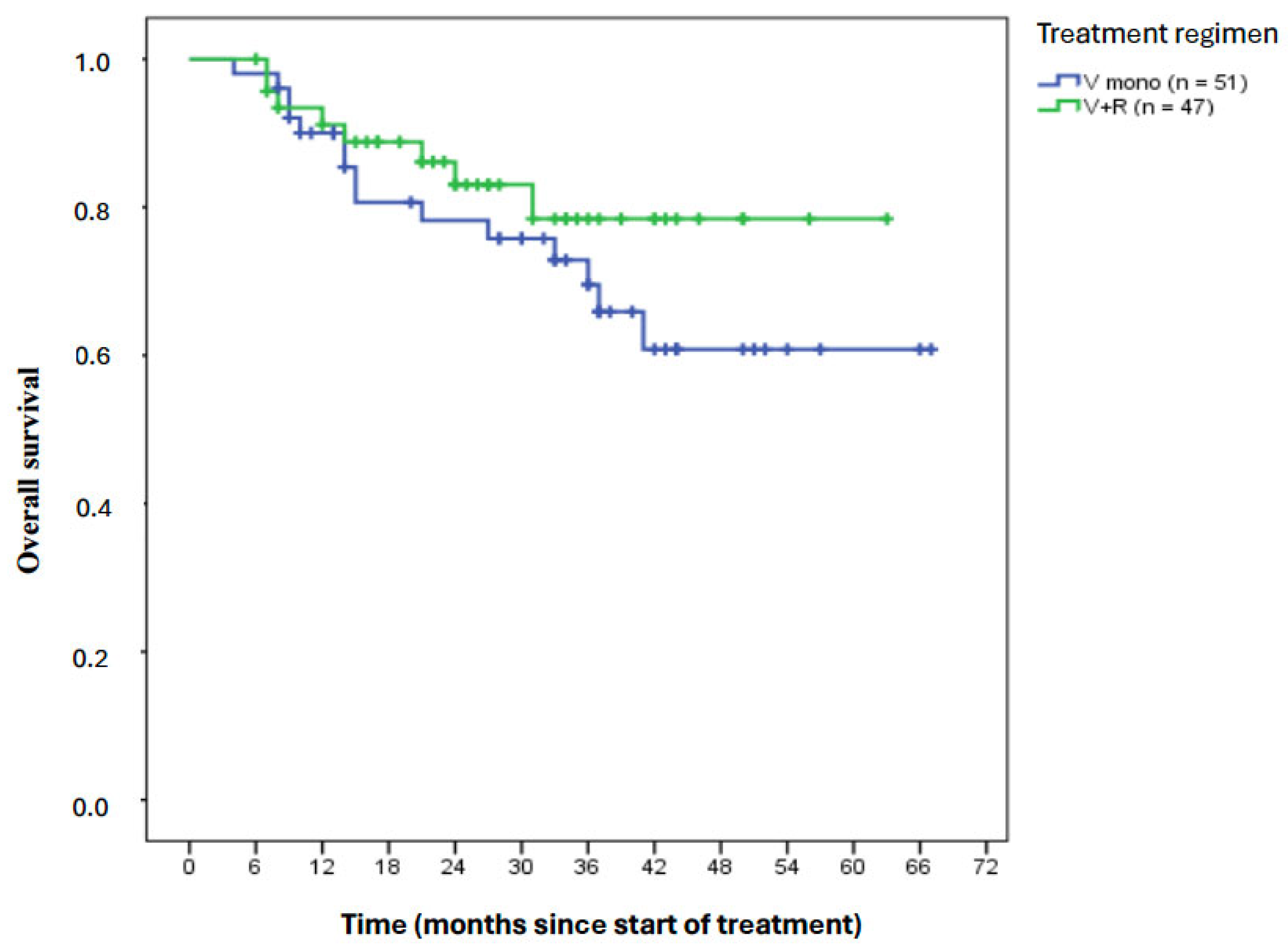
Notably, patients with a 17p deletion also achieved complete or partial remission following venetoclax therapy. The median follow-up was 34 months (range, 2–66 months). Median progression-free survival (PFS) for the entire cohort was 45 months (95% CI, 37.2–57.8). Median PFS was not reached in the VR group, whereas it was 43 months (95% CI, 34.8–51.1) in the V group (Figure 4). Overall survival (OS) at 24 and 36 months was 84% and 80%, respectively, in the VR group, compared with 78% and 70%, respectively, in the V group (Figure 5).
Figure 4.
Progression-free survival. Progression-free survival according to individual treatment regimens.
Figure 5.
Overall survival. Overall survival of patients according to individual treatment regimens.
Hematologic adverse events of any grade occurred in 64% of VR-treated patients and 67% of V-treated patients. Grade 3–4 neutropenia was observed in 17% of patients in the VR group and 22% in the V group. Grade 3–4 anemia occurred in 2% of VR-treated patients, while grade 3–4 thrombocytopenia was reported in 2% of V-treated patients. No grade 3–4 non-hematologic adverse events were reported. The most common complications were infections, all of which were managed on an outpatient basis without the need for parenteral antibiotics.
3. Discussion
Our findings confirmed the efficacy and safety of venetoclax both in combination with rituximab (VR) and as monotherapy (V) in patients with chronic lymphocytic leukemia (CLL) treated in second and subsequent lines of therapy. The patient populations were numerically comparable, but the venetoclax monotherapy group had a higher proportion of patients in higher-line therapies. Although the study was limited by a relatively small sample size and a median follow-up of 34 months, the results further support the high effectiveness of venetoclax-based regimens and their manageable toxicity profile. The median age of patients in our cohort was 68 years, which is comparable to findings from other real-world studies. In the multicenter analysis conducted by the UK CLL Working Group [12], the median age was 67 years, while in the French non-interventional VERONE study, the median age was 74 years [13], both of which were higher than the median age reported in the MURANO trial (64 years) [14]. Treatment efficacy was evaluated based on the best response achieved after at least 2 months of therapy. Response assessment was performed according to the iwCLL criteria, irrespective of response duration, as patients were evaluated after only 2 months of treatment. Patients who achieved complete hematologic and clinical remission but did not undergo confirmatory bone marrow examination were classified as having unconfirmed complete remission (uCR). Our findings confirmed the rapid onset of action of venetoclax in patients with CLL. The overall response rate (ORR) in our study was 99% for both the VR and V regimens, exceeding the rates reported in the MURANO trial (VR, 92.3%) [14], the UK CLL Working Group analysis (V, 88%) [12], and the VERONE study (VR and V, 94.1%) [13]. The rate of complete remission (CR), including unconfirmed complete remission (uCR), was 83% in the VR group and 53% in the venetoclax monotherapy group. In comparison, the UK CLL Working Group analysis [12] reported a complete remission (CR) rate of 38% for venetoclax monotherapy in patients previously treated with Bruton’s tyrosine kinase inhibitors. In the VERONE study [13], CR rates were 80.4% for the VR regimen and 71.3% for venetoclax monotherapy. The slightly lower CR rate observed in our monotherapy cohort compared with the VERONE study likely reflects the smaller sample size (51 vs. 225 patients) and the higher proportion of heavily pretreated patients in our cohort (56% treated in the third or later line vs. 35.6% in VERONE). In the MURANO study, undetectable minimal residual disease (MRD) was evaluated as the deepest treatment response in patients receiving the VR regimen, with MRD negativity achieved in 70.3% of patients [14]. In our cohort, patients previously treated with ibrutinib also responded to venetoclax therapy, with significantly worse outcomes (p = 0.022): with CR/uCR achieved in 56% versus 78% and PR in 42% versus 22%. Notably, patients with a 17p deletion also achieved complete or partial remission following venetoclax therapy. Given the small sample size, statistical comparison between the groups was not considered meaningful. With a median follow-up of 34 months, median progression-free survival (PFS) was 43 months in the V group, while it had not been reached in the VR group. Median overall survival (OS) was not reached in either treatment group. The 2-year PFS rates were 75% for the V group and 82% for the VR group. Overall survival at 24, 36, and 48 months was 78%, 70%, and 62%, respectively, in the V group, compared with 82%, 80%, and 80%, respectively, in the VR group. Patients previously treated with ibrutinib demonstrated a shorter median overall survival (OS) and progression-free survival (PFS) compared with ibrutinib-naïve patients, with median OS of 46 versus 56 months and median PFS of 40.6 versus 48.8 months, respectively. These patients had a higher median number of prior treatment lines (3 vs. 1.8) and were older (70 vs. 66 years). These outcomes are consistent with those reported in the VERONE study (2-year PFS: 71.7% for V and 77.9% for VR; 2-year OS: 79.6% for V and 80.6% for VR) [13] and appear superior to the results of the UK CLL Working Group analysis [12], likely due to differences in patient risk profiles and prior treatment exposure. Overall, adverse events of any grade occurred in 64% of patients treated with VR and in 67% of those receiving venetoclax monotherapy. The most common grade 3–4 hematologic adverse event was neutropenia, occurring in 17% of patients in the VR group and 22% in the V group. Grade 3–4 anemia and thrombocytopenia were rare. Compared with the VERONE study [13], the incidence of grade 3–4 neutropenia was lower in our cohort (VR: 17% vs. 40.4%; V: 22% vs. 28.2%). In the MURANO study [14], which evaluated patients with relapsed/refractory CLL treated with VR, neutropenia was the most frequently reported adverse event, occurring in 60.8% of patients overall, with grade ≥3 neutropenia observed in 57.7% of patients. Non-hematologic adverse events in our cohort were predominantly low-grade infections that were manageable on an outpatient basis without the need for parenteral therapy. In contrast to the VERONE study [13], gastrointestinal toxicities were not observed in our study, which may reflect the smaller sample size and possible underreporting of mild adverse events. In conclusion, our findings support the high efficacy and favorable safety profile of venetoclax in real-world patients with CLL, including those previously exposed to targeted therapies and those with high-risk cytogenetic abnormalities. These results further support the use of venetoclax-based regimens in routine clinical practice, while emphasizing the importance of continued monitoring for adverse events, particularly in heavily pretreated patient populations.
4. Materials and Methods
In this retrospective analysis, 98 patients with chronic lymphocytic leukemia (CLL) treated with venetoclax in the second or later lines of therapy at hematology centers in Slovakia between 2018 and 2024 were evaluated. Patient characteristics are summarized in Table 1.
Table 1.
Patient characteristics.
The median age at venetoclax initiation was 68 years (range, 49–83 years), and the cohort included 65 (66%) men and 33 (34%) women. Venetoclax was administered either as monotherapy or in combination with rituximab, depending on the treatment line. Most patients were in good clinical condition, with an Eastern Cooperative Oncology Group (ECOG) performance status of 0 in 37 (38%) patients and 1 in 44 (45%) patients.
Comorbidities were assessed using the Cumulative Illness Rating Scale (CIRS), with a median score of 7. A total of 56 (57%) patients had a CIRS score > 7, while 42 (43%) had a score ≤7. Renal function, evaluated by estimated glomerular filtration rate (eGFR), had a mean value of 1.22 ± 0.27 mL/s/1.73 m2.
The baseline absolute lymphocyte count, an important predictor of tumor lysis syndrome, averaged 43 ± 54 × 106/L. Nearly half of the cohort, 48 (49%) patients, had previously been treated with ibrutinib. According to Rai staging, 32 (33%) patients had stage II disease, and 30 (31%) had stage IV disease. According to the CLL-IPI prognostic index, 6 (6%) patients were classified as low risk, 27 (28%) as intermediate risk, 39 (40%) as high risk, and 24 (24%) as very high risk. Cytogenetic and molecular characteristics included deletion 17p in 29 (30%) patients and unmutated IgVH status in 53 (54%) patients.
Treatment indications and response assessment were based on the 2018 International Workshop on Chronic Lymphocytic Leukemia (iwCLL) criteria [15] and clinical practice. Bone marrow examination was not routinely performed in patients to confirm response to treatment, mainly due to the invasive nature of the examination. Most physicians assessed response to treatment in the evaluated patients based on objective patient examination, imaging studies, and blood parameters.
Treatment regimens were selected according to prior therapy: venetoclax in combination with rituximab (VR) was used primarily in the second-line setting, whereas venetoclax monotherapy (V) was administered in both second- and later-line treatment settings.
Venetoclax was administered orally at a dose of 400 mg once daily in 28-day cycles following a 5-week dose ramp-up phase. In the VR regimen, rituximab was introduced after completion of the ramp-up phase, starting on day 8 of cycle 2, at an initial dose of 375 mg/m2, followed by 500 mg/m2 in subsequent cycles, for a total of six cycles. Venetoclax treatment was continued for up to 24 months. Venetoclax monotherapy was continued until disease progression or treatment intolerance.
Standard premedication consisting of paracetamol 1000 mg orally, hydrocortisone 100 mg intravenously, and bisulepin 1 mg intravenously was administered prior to anti-CD20 therapy to minimize infusion-related reactions. Patients were monitored at least every two months, and treatment response was assessed using clinical examination, imaging studies (ultrasound or CT), and laboratory parameters. Adverse events were graded according to the Common Terminology Criteria for Adverse Events (CTCAE), version 5.0. Venetoclax treatment was discontinued upon disease progression. Patient consent was waived since it was a retrospective, anonymous data evaluation, based on Slovak legislation.
4.1. Statistical Methodology
Quantitative variables (e.g., age, laboratory values) were processed using descriptive statistics, using the number of measurements, mean, standard deviation, or median. Qualitative variables (e.g., gender, disease stage, response to treatment) were processed using absolute and relative frequencies. Data on overall patient survival and progression-free survival were processed using the Kaplan–Meier curve. The difference between groups in the qualitative variable was tested by the Chi-square test of independence. The difference between groups in the quantitative variable was tested by the t-test or the Mann–Whitney U test. The difference in survival between groups was tested by the Log-Rank test. The level of significance was chosen as α = 0.05.
4.2. Limitations of Our Review
This study has several limitations. As a retrospective analysis of routine clinical practice, it is subject to inherent methodological constraints, including non-randomized treatment allocation and the potential for selection bias. Another limitation is the lack of information regarding the reasons for ibrutinib discontinuation, such as treatment resistance or toxicity. Furthermore, bone marrow confirmation was not routinely performed, minimal residual disease (MRD) was not systematically assessed, and adverse events may have been underreported. These limitations should be considered when interpreting the study results and assessing their generalizability.
5. Conclusions
Our results are consistent with findings from clinical trials; however, differences in patient selection, supportive care, and treatment adherence in real-world settings should be considered when making direct comparisons. In line with both prospective clinical studies and retrospective real-world analyses, venetoclax-based regimens, whether administered in combination with anti-CD20 antibodies or as monotherapy, demonstrate substantial efficacy in patients with CLL receiving second-line or later therapy. Our data suggest that venetoclax is effective even in patients with high-risk genetic characteristics, although longer follow-up is required to confirm outcomes comparable to those reported in clinical trials. Treatment-related toxicities were manageable in the outpatient setting, with excellent patient tolerance and adherence, and complications were resolved without the need for hospitalization.
These advances in CLL therapy contribute to improved quality of life, as patients can avoid the systemic toxicities associated with conventional chemotherapy, which—unlike targeted therapies—affects all dividing cells and may exert mutagenic effects.
Author Contributions
Investigation, J.H.; Resources, A.W., J.C., E.F., L.V., N.S., M.H. (Monika Hlebaskova), K.U., H.S., Z.S., F.F., L.D. and A.V.; Writing—original draft, J.H.; Supervision, M.H. (Mikulas Hrubisko); Project administration, J.H. All authors have read and agreed to the published version of the manuscript.
Funding
This research received no external funding.
Institutional Review Board Statement
Ethical review and approval were waived for this study, since it was a retrospective anonymous data evaluation, based on Slovak legislation.
Informed Consent Statement
Patient consent was waived since it was a retrospective anonymous data evaluation, based on Slovak legislation.
Data Availability Statement
The original contributions presented in this study are included in this article. Further inquiries can be directed at the corresponding author.
Acknowledgments
The authors acknowledge the entire team of the Hematology Department of the FNsP FDR BB.
Conflicts of Interest
The authors declare no conflict of interest.
References
- Siegel, R.L.; Miller, K.D.; Jemal, A. Cancer statistics. CA-Cancer. J. Clin. 2019, 69, 7–34. [Google Scholar] [CrossRef] [Scilit]
- Bewarder, M.; Stilgenbauer, S.; Thurner, L.; Kaddu-Mulindwa, D. Current Treatment Options in CLL. Cancers 2021, 13, 2468. [Google Scholar] [CrossRef] [Scilit] [PubMed]
- Eichhorst, B.; Robak, T.; Montserrat, E.; Ghia, P.; Niemann, C.U.; Kater, A.P.; Gregor, M.; Cymbalista, F.; Buske, C.; Hillmen, P.; et al. Chronic lymphocytic leukemia: ESMO Clinical Practice Guidelines for diagnosis, treatment and follow-up. Ann. Oncol. 2021, 32, 23–33. [Google Scholar] [CrossRef] [Scilit] [PubMed]
- Pozzati, G.; Zhou, J.; Hazan, H.; Klement, G.L.; Siegelmann, H.T.; Tuszynski, J.A.; Rietman, E.A. A Systems Biology Analysis of Chronic Lymphocytic Leukemia. Onco 2024, 4, 163–191. [Google Scholar] [CrossRef] [Scilit]
- Hrubiško, M. Súčasné možnosti liečby chronickej lymfocytovej leukémie na Slovensku a vo svete. Onkológia 2022, 17, 33–37. [Google Scholar]
- Hallek, M. First line therapy of CLL. Hematol. Oncol. 2023, 41, 129–135. [Google Scholar] [CrossRef] [Scilit] [PubMed]
- Gibson, C.J.; Davids, M.S. BCL-2 Antagonism to Target the Intrinsic Mitochondrial Pathway of Apoptosis. Clin. Cancer Res. 2015, 21, 5021–5029. [Google Scholar] [CrossRef] [Scilit] [PubMed]
- Krejčíř, R.; Valík, D.; Vojtěšek, B. Mitochondrial Processes in Targeted Cancer Therapy. Klin. Onkol. 2018, 31, 14–20. (In Czech) [Google Scholar] [CrossRef] [Scilit] [PubMed]
- Czabotar, P.E.; Lessene, G.; Strasser, A.; Adams, J.M. Control of apoptosis by the BCL-2 protein family: Implications for physiology and therapy. Nat. Rev. Mol. Cell. Biol. 2014, 15, 49–63. [Google Scholar] [CrossRef] [Scilit] [PubMed]
- Ashkenazi, A.; Fairbrother, W.J.; Leverson, J.D.; Souers, A.J. From basic apoptosis discoveries to advanced selective BCL-2 family inhibitors. Nat. Rev. Drug. Discov. 2017, 16, 273–284. [Google Scholar] [CrossRef] [Scilit] [PubMed]
- Deeks, E.D. Venetoclax: First Global Approval. Drugs 2016, 76, 979–987. [Google Scholar] [CrossRef] [Scilit] [PubMed]
- Eyre, T.A.; Kirkwood, A.A.; Gohill, S.; Follows, G.; Walewska, R.; Walter, H.; Cross, M.; Forconi, F.; Shah, N.; Chasty, R.; et al. Efficacy of venetoclax monotherapy in patients with relapsed chronic lymphocytic leukaemia in the post-BCR inhibitor setting: A UK wide analysis. Br. J. Haematol. 2019, 185, 656–669. [Google Scholar] [CrossRef] [Scilit] [PubMed]
- Ysebaert, L.; Troussard, X.; Levy, V.; Le Calloch, R.; Guieze, R.; Laribi, K.; Lepretre, S.; Sophie Michallet, A.; Leblond, V.; Feugier, P.; et al. P650: Effectiveness of venetoclax according to the characteristics of patients with CLL in monotherapy and combination with rituximab. Interim analysis of real-life data from Verone study. HemaSphere 2023, 7, e578244e. [Google Scholar] [CrossRef] [Scilit]
- Seymour, J.F.; Kipps, T.J.; Eichhorst, B.; Hillmen, P.; D’Rozario, J.; Assouline, S.; Owen, C.; Gerecitano, J.; Robak, T.; De la Serna, J.; et al. Venetoclax-Rituximab in Relapsed or Refractory Chronic Lymphocytic Leukemia. N. Engl. J. Med. 2018, 378, 1107–1120. [Google Scholar] [CrossRef] [Scilit] [PubMed]
- Hallek, M.; Cheson, B.D.; Catovsky, D.; Caligaris-Cappio, F.; Dighiero, G.; Döhner, H.; Hillmen, P.; Keating, M.; Montserrat, E.; Chiorazzi, N.; et al. iwCLL guidelines for diagnosis, indications for treatment, response assessment, and supportive management of CLL. Blood 2018, 131, 2745–2760. [Google Scholar] [CrossRef] [Scilit] [PubMed]

Disclaimer/Publisher’s Note: The statements, opinions and data contained in all publications are solely those of the individual author(s) and contributor(s) and not of MDPI and/or the editor(s). MDPI and/or the editor(s) disclaim responsibility for any injury to people or property resulting from any ideas, methods, instructions or products referred to in the content. |
© 2026 by the authors. Licensee MDPI, Basel, Switzerland. This article is an open access article distributed under the terms and conditions of the Creative Commons Attribution (CC BY) license.