


Abstract
Agrochemicals sustain modern crop production, but broadcast application wastes inputs and contaminates the environment. Robotic platforms that combine sensing, artificial intelligence (AI), and controlled application offer a route to treating only what needs treatment. This narrative review examines robotics-driven agrochemical management along the full chain from sensor to deposit. Peer-reviewed English-language studies published between 2010 and 2026 were identified in Scopus, Web of Science, ScienceDirect, IEEE Xplore, and PubMed, supplemented by Google Scholar, and 74 sources were cited. Reported results were classified by evidence tier (simulation or offline, laboratory, greenhouse, and field) and were not pooled because baselines differ. Field trials reported herbicide savings of 28.4–62.4% in soybean and an average of 35% in sugarcane, together with a 39% lower runoff concentration, whereas the highest savings (65–85%) came from greenhouse plots. Detection accuracy alone was a weak predictor of spray outcome: end-to-end delay, navigation error, and nozzle behavior at low duty cycles (flow deviations above 25% at 20% duty cycle) all altered the treated area and dose. Evidence on drift, life-cycle impact, economics, and long-term resistance remains scarce, and most studies come from single sites or seasons. We also relate AI-assisted discovery of natural-product and phytochemical agrochemicals to robotic application, and find that the two fields have developed largely apart. We propose a minimum reporting set and a staged validation roadmap to make future studies comparable and to move robotic systems from prototype to farm practice.
1. Introduction
Agrochemicals are chemicals applied to plants, soil, or animals to control pests and to stimulate growth [1]. When used correctly, they can improve yield and quality; when used incorrectly, they can cause residues, off-target drift, operator exposure, and higher input costs. The scale is considerable: in 2023, approximately 3.73 million tons of pesticide active ingredient were used globally, approximately double the amount in 1990 [2], and fertilizers add to the chemical load. Regulation has become correspondingly stricter: a European Union regulation on the placing of plant protection products on the market [3] and a directive on the sustainable use of pesticides [4] increasingly require farmers to achieve more with fewer chemicals.
In conventional broadcast application, the entire field is treated as one unit, but weeds and diseases are seldom distributed evenly within a field (for example, grapevine infections usually start as small, local patches rather than as large areas) [5]. A full-canopy spray therefore wets many plants that do not need treatment. Precision agriculture addresses this mismatch by matching inputs to space and time, and weed management is its best-known example [6]. Robotics goes one step further by integrating sensing, localization, computation, and automatic actuation in the same machine [7,8,9,10]. In this review, an unmanned ground vehicle (UGV), also called a ground robot, is a self-propelled, unmanned ground platform; the two terms are used synonymously, and the abbreviation UGV is used throughout. In weed control, UGVs now act at the plant level [9], precision spraying systems (also called smart sprayers) link detection directly to the nozzle [8], and several recent reviews have described this shift [7,10].
Table 1 outlines three levels of management, and Figure 1 shows the same progression from left to right: the treated area becomes smaller, decisions become more automatic, and all actions are recorded digitally.
Table 1.
Conventional, precision, and robotic agrochemical management compared. Qualitative synthesis based on the cited reviews.
Figure 1.
From conventional broadcast application to robotic, target-aware, closed-loop agrochemical management. Original schematic drawn by the authors; symbols are explained in the legend within the figure.
The evidence is beginning to support this picture. In soybean, machine-vision spraying reduced herbicide use while weed control remained close to that of broadcast spraying [11]; in sugarcane, a robotic spot sprayer reduced herbicide use by an average of 35% [12], and a related sugarcane study showed that spot spraying lowered herbicide concentrations in runoff [14]. Robots may also protect people, and fleets of robots have been proposed for safer pest control, with reduced operator exposure as one aim [13]. These results are encouraging, but most originate from a single crop, season, or site and rely on different baselines.
The available platforms are diverse. UGVs carry sprayers through row crops and orchards [9,15], whereas unmanned aerial vehicles (UAVs) reach large or awkward areas quickly, although their droplet settings affect both deposition and drift [16], and variable-rate control on UAVs remains an active research topic [17]. One orchard field study used canopy volume to set the application rate [18]. Robotic arms place a small applicator on a single target; they offer high positioning accuracy, but their limited working speed and high cost currently restrict throughput [19]. Hybrid systems combine air and ground units: in one design, a UGV carries the chemical for the UAV [20], others cover orchard canopies with both layers [21], and a European project built a complete aerial–ground system for precision farming [22]. All of these machines require reliable navigation and sensor fusion in real fields [23].
Detecting the target is the next challenge. Deep learning now drives most weed detection [24,25], and public datasets, such as DeepWeeds [26], and a sugar beet dataset that adds localization and mapping data [27] support this work. Real-time detectors must run fast enough on the machine, and a recent study compares YOLO-based and transformer-based models for this purpose [28]; edge computing keeps inference on the sprayer and removes the need for a network link [29]. Generalization remains a barrier, however, because a detector trained on one farm often fails on another, and domain adaptation is one answer to this problem [30]. Foundation models may also reduce the need for manual labels [31,32].
Many studies stop at the detection stage, although detection alone is not enough: the chemical must also reach the target. Application hardware is important. The dose can be adjusted with pulse-width modulation (PWM) valves without altering application pressure [33,34], so that droplet size changes little with dose, although low duty cycles can widen the droplet spectrum and raise the share of drift-prone droplets [35]; in orchards, such valves have reduced ground and airborne losses [36]. Precision weed control can use boom-section or single-nozzle control [37], and the delay between image capture and spraying also affects the result. According to [7,38], mobility, localization, perception, and spraying are the most important design dimensions of robotic sprayers.
Technology alone does not determine adoption, which also depends on cost, safety, and regulation. Although economic evidence for robots in field crops is scarce, retrofit kits for existing sprayers could reduce entry cost [39]. Life-cycle analyses indicate that robots carry their own environmental costs, which depend on machine lifetime, energy source, and context of use [40,41], and that precision technologies can raise productivity and reduce greenhouse-gas emissions [42]. Connected machines also create cyber risk, and the rules for autonomous machines are changing. The new EU Machinery Regulation covers machines with self-evolving behavior [43], and the EU Artificial Intelligence Act introduces additional obligations [44].
Many good reviews exist, but most focus on one element of the chain, such as weed detection, nozzles or platforms [7,8,9,10,38]. Few ask the harder question: if a target is correctly identified, is it also treated correctly? This review addresses the whole chain. It links platforms, sensing, AI, application hardware, evaluation, sustainability, regulation, and economics, contrasts published results in new tables and figures, and culminates in a staged roadmap for the field.
This review has four goals. The first is to explain how robotic platforms, sensors, AI, and application hardware can function as one agrochemical-management system. The second is to compare published performance on a common footing and to show where published results do not match. The third is to examine the non-technical considerations that determine adoption: regulatory, safety, cybersecurity, and economic. The fourth is to use the gaps we identify as a roadmap for research. A further aim is to relate the AI-assisted discovery of natural-product and phytochemical agrochemicals to robotic application (Section 7.2).
The article follows a traditional scientific format. Section 2 outlines the review method, including the databases searched, the search strings, the inclusion and exclusion criteria, and the evidence tiers. Section 3, Section 4, Section 5, Section 6, Section 7, Section 8, Section 9, Section 10, Section 11 and Section 12 present the evidence on platforms, sensing, AI, application technologies, agrochemical classes (including natural-product agrochemicals, Section 7.2), crops, evaluation, sustainability, regulation, and economics, and each section concludes with a brief summary of key points. Section 13 critically appraises the evidence, evaluates its real-world applicability, and highlights limitations and research gaps; Section 14 presents the roadmap; and Section 15 concludes.
2. Review Approach
This review follows a structured narrative design. The following databases were searched: Scopus, Web of Science, ScienceDirect, IEEE Xplore, and PubMed, with Google Scholar as a supplementary source. The searches were run between 22 January 2026 and 2 October 2026 and covered peer-reviewed English-language papers published from 2010 to 2026. Reference lists of selected reviews were also scanned. The most common search terms were:
- agricultural robotics AND agrochemical management;
- robotic spraying AND precision agriculture;
- autonomous spraying AND pesticide;
- robot AND herbicide AND weed detection;
- machine vision AND precision spraying;
- UAV AND pesticide application;
- UGV AND agrochemical application.
The seven search strings were combined with the Boolean operator OR and applied to titles, abstracts, and keywords. For example, in Scopus syntax: TITLE-ABS-KEY ((“agricultur* robot*” AND agrochemical*) OR (“robotic spray*” AND “precision agriculture”) OR (“autonomous spray*” AND pesticide*) OR (robot* AND herbicide* AND “weed detection”) OR (“machine vision” AND “precision spray*”) OR (UAV AND pesticide*) OR (UGV AND agrochemical*)) AND PUBYEAR > 2009.
The database searches produced candidate records that were screened first by title and abstract and then by full text against the criteria below. The evidence base retained for synthesis is the set of studies cited in this review: 69 sources, comprising 68 journal articles published between 2010 and 2026 and one conference paper. Four European Union legal instruments and one FAO statistical brief were added directly to provide regulatory and statistical context; they were not part of the database screening.
Studies reporting a robotic or automated platform, sensing, AI-based target detection, application control, field validation, environmental results, or operating performance were included. Studies describing only detection, without application, were not used for the performance comparison and are cited only as supporting evidence on perception and AI (Section 4 and Section 5). Studies with too little method detail were excluded. The numbers used are those taken from the original papers; numbers from other reviews were not copied.
Studies were first identified by title and abstract, and the full texts of those meeting the criteria were then read. Where results were presented in several papers from the same group, the most complete field report was selected. Quantitative findings were extracted as reported, together with crop, target, baseline, test setting, and scale. Because savings are measured against different baselines, they were not pooled. Instead, studies were clustered by the type of test conducted (simulation or offline, laboratory, greenhouse, or field) and each result was read within its own cluster.
We emphasized field trials conducted over more than one site or season, reporting a measure of application quality (deposition, weed control etc.) as well as the savings, and studies that provided a complete description of the baseline. Tests that were conducted offline or in a simulated environment were kept to demonstrate technical feasibility and are identified as such throughout.
This is a narrative review, which is not registered and is described in Section 13.3.
The representativeness of the literature was verified in two ways. The reference list is based on 74 sources (53 of these (72%) published between 2021 and 2026, while the remaining 21 (28%) were published between 2009 and 2020 so that the review is recent but retains foundational studies. The list includes 74 journal articles, four legal instruments from the European Union, one conference paper, and one FAO statistical brief. Second, the evidence is separated by test setting, allowing readers to appreciate the extent of each conclusion that is based on field evidence. The number 83 that appears in Section 3 and Section 8 refers to the studies analyzed in the systematic review of Furnitto et al. [45]; it is not the number of sources cited here.
Table 2 compares this review with recent related reviews. Their scope is taken from their own abstracts. This review covers the full chain from sensor to deposit. It also adds regulation, cybersecurity, and economics.
Table 2.
Recent related reviews and what this review adds. Scope is taken from each paper’s abstract.
3. Robotic Platforms for Agrochemical Management
Reviews repeatedly identify four design dimensions: mobility, localization, perception, and spraying arrangement [7,38]. These dimensions are combined in one generic architecture in which sensing is followed by perception, which drives a decision, followed by actuation and then by verification, which feeds back into sensing. Enabling layers such as edge computing and emergency stops support every stage. To illustrate the scheme, Figure 2 lists the quantities that a designer must specify or check at each stage of a spot sprayer: time-stamped frames during sensing; class probability p during perception; cost-based threshold (Equation (2)) during decision; permissible lateral error (Equation (1)) during navigation; duty cycle (Equations (3)–(5)) during dose calculation; valve-open time (Equation (6)) during actuation; and the deposit compared with the target dose during verification. As Figure 2 shows, the delay between sensing and actuation, multiplied by the travel speed, determines the distance traveled by the vehicle before the spray lands (Section 6). For instance, if the total delay of the UGV is 200 ms and the UGV is moving at 8 km h−1, the distance traveled between image capture and spraying must be compensated for with odometry, and a safety margin must allow for time jitter.
Figure 2.
Integrated robotic agrochemical-management architecture: sensing, perception, decision, navigation, dose calculation, actuation, and verification, with enabling layers. The boxes below each stage give the quantity that is specified or checked in practice for a spot sprayer, with the equation or table in which it is treated; the bracket marks the sensing-to-actuation delay.
UGVs operate close to plants and can therefore treat individual rows or individual plants, and they can carry a substantial payload. Their main disadvantages are limited speed and area capacity, and they are also restricted by moisture, slope, and soil conditions. Among the studies analyzed by Furnitto et al. [45] (not by this review), the most common topics were weeding (30 studies), spraying (15), and combined weeding and spraying (15).
UAVs can quickly access large or awkward areas but are limited by payload, downwash, droplet behavior, and drift. The droplet size setting impacts both deposition and drift for plant-protection UAVs [16], and variable-rate control is an active research area [17]. A field study in orchards developed a variable-rate spraying method for a UAV equipped with light detection and ranging (LiDAR) [18]. Regulation is also a factor: under the EU framework for the sustainable use of pesticides, aerial spraying is permitted only under certain derogations [4].
A small applicator can be attached to a robotic arm to position it on a single target. In the CROPS project, a six-degree-of-freedom (DOF) manipulator carrying a spraying end-effector with disease sensing was used to spray powdery mildew on grapevine canopies [5]. Manipulators have so far been used mostly for high-value crops and specific disease settings; they are slow, require calibration, and have a high initial price, although they offer high positioning accuracy [19].
In hybrid systems, a UAV can scan the field while a UGV applies the treatment. In some designs, the UGV instead carries the chemicals and power for the UAV [20], and other designs combine an aerial layer with a ground layer for orchard canopies [21]. The EU Flourish project developed an aerial–ground system for precision farming [22]. Hybrid systems combine coverage with precision but add costs, coordination requirements, and regulatory burden.
Each platform must establish its position relative to the crop row and the position of each nozzle relative to the target. Most outdoor UGVs use global navigation satellite system (GNSS) positioning, typically with real-time kinematic (RTK) corrections, together with inertial and odometry data; where the satellite signal is degraded under canopies or near buildings, row following relies on LiDAR or camera data [23,46]. Path following is another control problem: for an orchard traction sprayer controlled by a double deep Q-network, the largest lateral deviation in field tests was 0.233 m at 0.36 m s−1, and 0.266 m at 0.75 m s−1 [47]. These deviations are acceptable for treating whole orchard rows but too large when the targets are small and centimeter-level accuracy is needed, as in plant-level treatment.
Application error is directly related to navigation error. A lateral error ey causes the spray pattern to miss the target to the left or right. The target remains fully covered only if the nozzle swath width ws is at least the target width wt and the lateral error satisfies Equation (1); if ws is smaller than wt, the target cannot be fully covered even with zero lateral error.
|ey| ≤ (ws − wt)/2
A longitudinal error arises from timing and equals the travel speed multiplied by the timing error (Section 6). If the error sources are independent, they combine approximately in quadrature, etotal = [σnav2 + (vsσt)2 + σcal2]1/2, where σnav is the navigation error, vs the travel speed in m s−1, σt the jitter of the sensing-to-spray delay, and σcal the camera-to-nozzle calibration error. As an illustration, for a 0.10 m wide weed treated with a 0.50 m swath, Equation (1) allows a lateral error of 0.20 m, which the deviations of 0.233–0.266 m reported in [47] would exceed; the same machine would nevertheless be adequate for treating a whole orchard row. Coverage lost to navigation error cannot be recovered by the detector, and widening the swath to compensate increases the chemical applied and erodes the saving. Navigation requirements should therefore be derived from the application geometry rather than specified independently of it.
Every platform also has a working window set by payload and energy. Liquid is heavy and large volumes are sprayed, so tanks must be refilled frequently; electric UGVs produce less noise and soil load but are smaller, and UAV spray payload is the smallest because flight time and battery mass are limited. Targeted application helps with both limits: if fewer plants are treated, one tank lasts longer, and fewer refill trips are required. This secondary benefit of chemical saving is rarely quantified in the studies reviewed here.
When a robotic arm is mounted on a moving base, the planner must coordinate the arm and the base. In vineyard spraying, a model predictive controller determined the vehicle and nozzle-tool trajectories along the row so as to minimize spray loss while maintaining vine coverage [48]. This task-space approach shows that application quality can be embedded in the control objective rather than evaluated after the fact. It was tested in a vineyard setting and in a laboratory setting using motion capture, but field data remain limited [48].
Operational considerations by platform are summarized in Table 3. The entries are qualitative; they are not measurements, and they serve only to guide platform selection.
Table 3.
Operational considerations by platform type. Qualitative synthesis from the cited sources.
Platform selection should start from the operational requirements rather than from the platform. Four requirements dominate: the crop structure and the resolution at which targets must be treated, the area to be covered per day, the terrain and weather conditions, and the regulatory and economic setting. Table 4 links each requirement to the platform class that best satisfies it. For example, open-field crops with sparse weeds favor retrofit units, which combine the lowest entry cost with the largest body of field-trial evidence [11,12,39]; row crops and vineyards that need plant-level precision favor UGVs [9,45]; tall canopies and awkward terrain favor UAVs where aviation rules permit [4,16]; and high-value crops with localized disease foci justify the cost of a manipulator [5,19]. Where no single platform meets all requirements, hybrid systems become relevant, at the price of coordination and regulatory effort [20,22].
Table 4.
Platform selection by operational requirement. Qualitative synthesis from the cited sources; evidence is stronger for retrofit units than for the other platform classes.
These trade-offs are summarized qualitatively in Figure 3. The scores reflect the authors’ synthesis of the literature and are not measurements. Figure 4 shows what has actually been built and tested in research: open-field crops dominate (46 of 83 studies), followed by orchards (19) and vegetables (8), and only one study addressed a greenhouse [45].
Figure 3.
Qualitative comparison of UGV, UAV, manipulator, and hybrid spraying platforms. Scores (1–5) are the authors’ synthesis of the cited literature, not measurements.
Figure 4.
Distribution of 83 studies on weed and pest control robots by (a) main robotic function and (b) crop system. Counts are redrawn from data reported by Furnitto et al. [45], published under a CC BY license.
Table 5 lists representative studies and reports only values stated in the original papers. Two points stand out: reported savings vary widely, and the test settings differ, with results coming from offline video analysis, laboratory tests, greenhouse plots, and field trials. To make the evidence comparable, each study is assigned to one of four evidence tiers (simulation or offline, laboratory, greenhouse, and field).
Table 5.
Representative robotic and automated agrochemical studies. All values are as reported in the original papers. Savings use each study’s own baseline and are not directly comparable. Test settings follow the four evidence tiers defined.
First, the highest reported savings (65–85%) come from greenhouse plots with localized disease [5], whereas field trials report 28.4–62.4% in soybean [11] and an average of 35% in sugarcane [12]. Second, only a few studies pair a saving with a measure of application quality. Examples are weed control within about 1% of broadcast spraying in soybean [11], unchanged deposition on water-sensitive paper in potato [51], and measured runoff reductions in sugarcane [12]. Third, retrofit systems on existing booms and tractors are more field-ready than new, independent systems [11,12]. This suggests that near-term gains will come from adding perception and valve control to current machines, with fully autonomous platforms maturing in the longer term.
Table 6 summarizes the same studies by evidence tier. Of the eight studies in Table 5, one is a simulation or offline study, one is a laboratory study, one is a greenhouse study, and five are field studies. Savings reported in the laboratory (42–43%) fall within the field range (28.4–62.4%), whereas the greenhouse range (65–85%) lies above it, consistent with the highly localized disease in those plots. Only the field tier combines savings with measures of application quality or environmental outcome, and even there the studies use different baselines, so the ranges are reported side by side and are not pooled.
Table 6.
Evidence tiers for the studies in Table 5 and the nozzle tests in [35]. Values are as reported; ranges are not pooled.
Platform choice should follow the operational requirement (Table 4) and not the reverse. Retrofit units have the strongest field evidence, whereas manipulators and hybrid systems remain at prototype stage. Navigation and timing errors set a lower bound on application accuracy (Equation (1); Section 6). Reported savings come from different evidence tiers and cannot be pooled (Table 6).
4. Perception and Sensing Technologies
Sensing is the ability to know what the robot can know about the field. Table 7 presents the summary of the main sensing options, and Figure 5 illustrates multiple sensors feeding into a single perception pipeline. While they are low cost and offer high spatial resolution, RGB cameras are still the primary tools used for weed and crop detection, with the limitations of light, shadow, occlusion, and look-alike backgrounds) reducing their effectiveness [10,23]. These efforts are aided by public datasets: DeepWeeds offers labeled weed images [26], a sugar beet dataset contains localization and mapping data [27], and OpenWeedLocator reveals a simple open-source device can identify green weeds growing on a brown background [53]. Other spectral bands are added to help distinguish similar-shaped plants: the CROPS grapevine robot used both RGB and near-infrared cameras to detect mildew [5], and hyperspectral cameras provide much richer signatures, but data volume and cost will also grow.
Table 7.
Comparison of sensing technologies for agrochemical target detection. Qualitative synthesis from the cited sources.
Figure 5.
Multimodal sensing pipeline for crop, weed, pest, and disease target detection. Original diagram.
Cameras are complemented by depth and physiological sensors. Three-dimensional (3D) LiDAR is used for navigation and canopy characterization; a single 3D LiDAR was applied in an orchard for both navigation and estimation of canopy volume, with cost and integration effort still being the primary challenges [10]. Thermal and fluorescence sensors can detect stress before symptoms appear and have been suggested for disease and water status investigations [56], while, in spraying systems, active fluorescence can be mentioned as one of the possible options for target recognition [10]. Not every type of sensor used in the design of useful systems is a camera—one orchard system used wind-excited sound to estimate Leaf Area Density (LAD) and combine this with GNSS positions to create prescription maps [52].
Real fields are cluttered: vegetation blocks the view, terrain is uneven, and conditions are constantly varying. In such a scenario, the fusion of GNSS, IMU, LiDAR and cameras is utilized to assist navigation, similarly to the target detection scenario in which a second sensor can complement the first sensor’s lack of information.
Passive cameras are most strongly affected by solar illumination. Shadows, specular reflection, and changes in color temperature can alter the appearance of the same plant within minutes. Common countermeasures are shrouds, short exposure times, and radiometric calibration with reference panels, but each has a cost: a shroud adds weight and limits speed, and calibration targets must be maintained. Calibration is even more demanding for multispectral and hyperspectral sensing, because band ratios and indices are meaningful only when the reflected radiation is normalized [54,56].
A detection is useful only if its position at the time of spraying is known. The camera is mounted ahead of the nozzle by a fixed distance, and the vehicle moves between exposure and actuation. Position errors arise from camera calibration, speed changes, pitch and roll on irregular terrain, and offsets between sensors and controllers. Time-stamping all measurements and projecting detections forward with vehicle odometry are therefore basic design requirements [10,23], and Section 6 shows how quickly these errors grow with speed.
Data are the foundation of any learning system. Several public datasets now support crop and weed perception. They differ in platform, label type, and the extent to which they test generalization to unseen fields. Table 8 lists examples. The UAV-based PhenoBench provides pixel-wise labels for crops and weeds as well as crop leaf instances, and its benchmark uses a hidden test set that includes unseen fields [57]. WeedMap addresses semantic weed mapping from aerial multispectral imagery [58]. CropAndWeed offers 74 crop and weed species, about 112,000 annotated instances, and more than 8000 high-resolution images [59]. Together with DeepWeeds [26] and the sugar beet dataset [27], these resources have supported much of the recent progress. Most, however, were collected in a small number of regions and crops. We did not find a public dataset that pairs images with the applied dose and the resulting deposit. That missing link is one reason why detection quality is rarely tied to spray outcome.
Table 8.
Selected public datasets for crop and weed perception. Entries summarize what each source reports.
RGB remains the workhorse for detection; additional bands, 3D, and thermal or fluorescence sensing add information at the cost of calibration, data volume, and integration effort. Illumination and timing errors, and not only the detector, limit what the sensor contributes at the nozzle. No public dataset links images to the applied dose and the measured deposit.
5. Artificial Intelligence for Agrochemical Target Detection
Classical machine learning relies on hand-crafted features. An early vineyard study located grape clusters using edge statistics and a decision tree and reached 90% detection accuracy in offline video tests [49]. Deep learning now dominates because it learns features directly from images, and two reviews cover its use in weed management [24,25].
Object detectors such as the YOLO family are popular for sprayers because they run fast. A smart variable-rate sprayer for potato used tiny-YOLOv3, trained on about 24,000 field images and chosen for its speed [50]. Speed must, however, be judged at the system level, because a model that is fast in the laboratory may still be too slow once camera, computer, valve, and vehicle speed are counted together [45].
Edge AI moves inference onto the machine, which cuts latency and removes the need for a network link. A machine-vision sprayer built on an edge-computing design illustrates this approach for row crops [29], and low-cost designs also exist [60].
Pests and diseases are harder to detect than weeds, because symptoms change with time and cultivar and because timing decides whether a treatment works at all [56]. Many disease tests still use simulated symptoms; for example, one potato sprayer was tested with simulated diseased plants [50].
Detection scores should be judged by application outcome. One study argued for application-specific evaluation of a weed detector used for plant-specific spraying [61]: a good F1-score is not the goal; a correct dose on the right plant is. Table 9 summarizes the main AI approaches.
Table 9.
AI approaches for target detection and decision support, with published examples.
Recent benchmarks compare one-stage detectors and transformer-based models under real-time constraints (Table 10). In a study of 5611 images of 16 plant species, YOLOv9e reached an mAP50 of 79.86% and an mAP50-95 of 47.00% on the second of two datasets, while RT-DETR-l reached a precision of 82.44% and 81.46% on the two datasets [28]. The fastest variants (YOLOv8n, YOLOv9t, and YOLOv10n) processed an image in 7.64 ms on a high-end desktop graphics card [28], and performance changes on embedded hardware. On an NVIDIA Jetson Xavier AGX, YOLOv4 required 80 ms per image with an mAP@0.5 of 93.4%, and YOLOv4-tiny required 24.5 ms per image with an mAP@0.5 of 89% for 13 weed species [62]. The reciprocals of these latencies are 12.5 and 40.8 frames per second, whereas the same study reported 14 and 52 frames per second [62]. The difference is not an arithmetic error: in that study, inference time was averaged over a set of still images, whereas frame rate was obtained separately by running the models on 1280 × 720 weed videos and recording the reciprocal of the execution time of each frame [62]. The two figures are therefore independent throughput measurements, and the source does not state whether batching, pipelining, or the exclusion of pre- and post-processing contributes to the higher rates. This distinction matters for design. Pipelining can raise throughput above the reciprocal of latency without shortening the latency itself, so frame rate governs how far apart successive detections are, whereas latency governs how far the vehicle travels before a given detection is acted on, and only the latter enters the delay budget of Section 6. The trade-off is clear: a smaller model is faster but less accurate, and the best compromise depends on target density, nozzle spacing, and vehicle speed.
Table 10.
Selected recent results on detection, label efficiency, and generalization. Values are as reported; datasets, target categories, test scenarios, metrics, and hardware differ, so rows are not ranked and must not be compared directly; only within-row comparisons (for example, supervised versus label-free) are meaningful. Evidence tiers follow Table 6; n.r., not reported in the source summary used here.
Generalization is the main barrier to deployment. A detector trained on one field often loses accuracy on another because of different soil, lighting, growth stage, and weed community. Unsupervised domain adaptation has been proposed for crop-weed recognition in diverse farmland, with improvements reported on four unseen test fields [30]. Another approach generates semantic labels without manual annotation. On a managed sugar beet field, such a method reached an IoU of 88.6% for crops and 22.7% for weeds, against 83.4% and 33.5% for fully supervised methods, and fine-tuning with the generated labels raised mean IoU on unseen fields by up to 17.6% [63]. The weed class remains the weak point in both settings. This matters because the weed class is the one that triggers the valve.
Labeling is expensive, so synthetic data and foundation models are attractive. Detectors trained on composite, generated, or merged synthetic images of lab-grown plants were tested on 253 real canola and soybean images, reaching mAP@0.5 of 0.454, 0.479, and 0.528, respectively, against 0.010 for the baseline reported in that study [64]. The Segment Anything Model offers zero-shot segmentation and has been assessed for smart farming [31]. A pipeline built on it for potato leaf segmentation reached recall of 73.1 and precision of 73.9 with no training data, compared with 87.6 and 84.4 for a Mask R-CNN fine-tuned on a small dataset [32]. Zero-shot methods therefore reduce labeling effort but, for now, do not match a model trained for the task. They are most useful for bootstrapping labels.
Disease recognition shows an even larger laboratory-to-field gap. In a cross-domain few-shot study, the best model reached 63.95% accuracy with one example per class and 80.13% with five, when transferring from the pest domain to a field crop-disease domain [65]. Multi-domain learning transferred better than single-domain learning when the gap was large [65]. For insects, a light-trap detector (AgriPest-YOLO) reached 71.3% mAP on 24 pest classes with an inference time of 8.8 ms [66]. Light-trap images are collected under controlled conditions. This result therefore shows feasibility for pest monitoring but not yet for in-canopy spraying decisions.
A decision layer lies between detection and valve. It converts class probabilities into a spray decision, and its threshold should be set by the application rather than by the F1-score, because the cost of a miss differs from the cost of a false spray. A simple expected-cost rule makes the point. Let p be the probability that the detected object is a target weed, Cmiss the cost of leaving a weed untreated, and Cfalse the cost of spraying a crop plant or bare soil, both expressed in the same monetary or yield-equivalent unit. Spraying is preferred when the expected cost of not spraying exceeds that of spraying, p·Cmiss > (1 − p)·Cfalse, which gives the dimensionless probability threshold
p > p* = Cfalse/(Cfalse + Cmiss)
The probability p is thus compared with p*, which is a ratio of costs, and never directly with a cost value. High crop sensitivity, such as for selective herbicides applied near sensitive crops, increases Cfalse and raises the threshold, whereas a high Cmiss, which is common where escapes reproduce, lowers it. If, for example, Cmiss is four times Cfalse, then p* = 0.2, and a detection with p = 0.3 should be treated even though it would fall below a default threshold of 0.5. Reinforcement learning and model predictive control generalize this rule to sequences of actions, but the applications identified so far are limited to path tracking and trajectory planning [47,48] and do not extend to dose selection.
Large language and vision-language models are an emerging topic. A recent review covers their applications in agriculture, including question answering and robotics, and notes that agriculture remains somewhat under-represented in this field [67]. Potential uses in spraying include natural-language task specification, report generation, and label bootstrapping. Because such models are slow, expensive, and prone to confident errors, they are not suited to the actuation loop, but they can support supervision and logging.
Models should be selected by application outcome and not by F1-score or mAP alone. Latency and frame rate are different quantities and must be measured end to end. Generalization to unseen fields and the weed class remain the main weaknesses. The decision threshold should follow the cost ratio of Equation (2).
6. Robotic Agrochemical Application Technologies
Spot spraying turns continuous broadcast into event-based actuation. A nozzle opens only when a target passes beneath it. Variable-rate systems go further: they adjust the dose according to target density, canopy volume, or sensed condition. Two hardware routes are used for precision chemical weed control: boom-section control and single-nozzle control [37].
Flow can be controlled by PWM, in which a valve switches on and off many times per second and the duty cycle is the fraction of each cycle for which the valve is open. This allows the sprayer to vary the flow rate while keeping nozzle pressure nearly constant [33,34], so that droplet size changes mainly with pressure and not with dose, which makes PWM attractive.
PWM is not without side effects. A recent study tested flat-fan nozzles with PWM valves at duty cycles from 20% to 100% and pressures of 276 and 414 kPa [35]. Flow rose linearly with duty cycle (R2 ≥ 0.99), yet measured flow matched theory only at duty cycles of about 60% and above. At 20%, measured flow exceeded the calculated value, often by more than 25%. Air-induction designs were more sensitive, and low duty cycles also tended to widen the droplet spectrum and to raise the share of drift-prone droplets (<150 µm), with the effect varying by nozzle and pressure [35]. Figure 6 redraws the flow results, and similar work on hollow-cone nozzles supports the need for nozzle-by-nozzle checks [68].
Figure 6.
Difference between measured and theoretical nozzle flow under PWM control for eight flat-fan nozzles at (a) 276 kPa and (b) 414 kPa. Positive values mean measured flow exceeded the calculated value. The shaded band marks duty cycles of 50% or less. Redrawn from Table 2 of Cunha et al. [35], published under a CC BY license.
The practical lesson is to avoid very low duty cycles or to calibrate them explicitly. Deposition and drift also depend on nozzle type, pressure, droplet size, wind, and travel speed, and PWM-controlled systems have been evaluated for reducing ground and airborne losses in orchards [36]. The speed of the sensor and the speed of the valve should also match [69], because lags between sensing and actuation blur the treated area [10]. The main application mechanisms are compared in Table 11.
Table 11.
Robotic application mechanisms and their main design points.
The volume application rate R (L ha−1) of a sprayer is a function of nozzle flow Q (L min−1), travel speed v (km h−1), and working width w (m). The constant 600 collects the unit conversions (60 min h−1 × 10⁴ m2 ha−1 ÷ 103 m km−1), so that Equation (3) is valid only for these units.
R = 600·Q/(v·w)
Nozzle flow follows the orifice relation Q = Qref·(P/Pref)0.5, so changing pressure to change flow also changes droplet size. With PWM, flow is instead scaled by the duty cycle D at constant pressure:
Qeff = D·Qnom
Equation (4) is an ideal approximation, and its applicability is limited. It assumes that the valve opens and closes instantaneously, that line pressure stays constant while the valve cycles, and that the flow while the valve is open equals the nominal flow at the set pressure. These assumptions hold best at high duty cycles, where the open time is long compared with the valve response. At low duty cycles, the open time becomes comparable with the opening and closing delays of the solenoid, the pressure fluctuates with each pulse, and the droplet spectrum changes. A first-order correction accounts for the delay: if the valve stays open for an extra time Δt per cycle (closing lag minus opening lag) at PWM frequency f, the effective duty cycle is
and the effective flow is Deff·Qnom. The relative error, fΔt/D, grows as 1/D. For illustration (values chosen by the authors, not taken from [35]), with f = 10 Hz and Δt = 5 ms the error is 6% at D = 80%, 8% at D = 60%, and 25% at D = 20%, which is of the same order as the deviation of more than 25% measured at 20% duty cycle [35]. In the range where measured and calculated flows agreed (about 60% duty cycle and above in [35]), the ideal relation is adequate; below it, flow should be calibrated for each nozzle, pressure, and frequency, for example with a lookup table of measured flow against commanded duty cycle, or the duty cycle should be restricted. The relation also says nothing about droplet size or drift, which must be assessed separately [35].
Deff = D + f·Δt
Under the ideal relation, a target rate Rt is met by setting D = Rt·v·w/(600·Qnom) [33,34]; where the correction of Equation (5) matters, the commanded duty cycle is reduced by f·Δt. In a spot sprayer, the same logic is applied per nozzle and per event, and the valve opens for a time as follows:
where Lt (m) is the desired treated length in the direction of travel, m (m) is a safety margin on each side, and vs is the travel speed in m s−1 obtained from v in km h−1 as used in Equation (3); topen is then in seconds. For example, Lt = 0.20 m, m = 0.05 m, and v = 8 km h−1 (2.22 m s−1) give topen = 0.30/2.22 ≈ 0.135 s. Each centimeter of margin costs chemical, but the margin helps to absorb localization and timing errors. As a numerical illustration of the PWM limit, if the target rate at 20% duty cycle is 100 L ha−1 and the measured flow exceeds the calculated flow by more than 25%, the rate delivered in the pulsed zone would exceed 125 L ha−1 [35]. This should be adjusted or eliminated when duty cycles are low.
topen = (Lt + 2m)/vs, vs = v/3.6
The delays in the chain from the image capture to the droplet deposition are exposure and readout, data transfer, inference, decision logic, valve actuation and droplet flight. The distance the vehicle travels before the spray lands is equal to vs·ttotal, where vs = v/3.6 is the speed in m s−1 (v in km h−1) and ttotal is in seconds. Arithmetic examples are provided in Table 12 and plotted in Figure 7. If there is no compensation, the total delay of 200 ms occurs at a speed of 8 km/h (2.2 m/s), which translates to 44 cm of separation between the time of capture and the spray. Look-ahead geometry and odometry compensation do not eliminate the fixed component of displacement, but they do eliminate the variance in the displacement (jitter). It is the jitter, rather than the mean delay, that sets the margin around each target, and a wider margin erodes the savings [10]. Model inference speed alone therefore does not describe real-time capability [45,61].
Table 12.
Distance traveled by the vehicle during the total sensing-to-spray delay (cm). Calculated by the authors as d = (v/3.6) × ttotal with v in km h−1 and ttotal in s, converted to cm; illustrative arithmetic, not field data.
Figure 7.
Vehicle displacement during the sensing-to-spray delay as a function of travel speed, for four total delays. Calculated by the authors from d = (v/3.6) × ttotal (v in km h−1, ttotal in s).
The other half of the physical link is droplet size. Fine droplets are carried by the wind and evaporate rapidly, whereas coarse droplets bounce or run off the leaves. In the PWM nozzle study [35], droplets below 150 µm were treated as the drift-prone class. Droplet size affects both deposition and drift, particularly in aerial application [16], and PWM-controlled systems have been studied in orchards for reducing ground and airborne drift losses [36]. However, PWM can broaden the droplet spectrum at low duty cycles [35], which can make a robot that conserves chemicals more prone to drift at the same time. The two effects should be assessed together and reported as such. Water-sensitive paper is commonly used to assess coverage, as in the potato trials [51], but it gives only a semi-quantitative view of deposition and cannot distinguish between dose to the target and dose to adjacent leaves.
Application hardware degrades over time. Nozzle orifices wear and enlarge, filters clog, valves wear out, and pressure sensors lose calibration. This is because the sprayer that targets operates more valves than the broadcast sprayer, and so valve life and response time should be checked specifically. Flow checks should be regular before every season, every valve should perform a self-test at start-up, and records should be maintained of actual flow vs. commanded flow at the valve. For certain crops, cross-contamination may be a problem with multi-product machines, and it is important to clean and wash lines between products, especially when using tank mixing. These tasks are rarely discussed in research papers, yet they determine whether a system keeps its accuracy beyond a single trial.
PWM allows dose control at near-constant pressure, but the ideal flow relation fails at low duty cycles (Equations (4) and (5)). Units must be used consistently: km h−1 in Equation (3) and m s−1 in Equation (6). Delay jitter sets treatment margins and erodes savings. Valve maintenance and product properties determine whether accuracy persists beyond a single trial.
7. Robotic Management of Different Agrochemical Classes
The same robot hardware can serve several agrochemical classes. The sensing target and treatment logic differ, though. Natural-product and phytochemical agrochemicals form a further group, in which AI-assisted discovery and robotic application meet, and they are treated in Section 7.2.
7.1. Conventional Agrochemical Classes
Herbicide application is the largest use case. The system finds weeds and sprays them, or sprays around the crop, and field trials of machine-vision targeted sprays in soybean and in sugarcane both reported large herbicide savings with similar weed control [11,12].
Fungicide systems need symptom or risk data. The grapevine robot targeted mildew-infected canopy areas [5], and the potato sprayer used simulated disease symptoms in its tests [50,51].
Robotic pest control is less mature. European work on fleets of ground and aerial robots aimed to cut chemical inputs in weed and pest control [13], and an orchard variable-rate system reported droplet density on leaves above the level needed for low-volume insecticide application [52].
Fertilizer robots follow crop status or nutrient maps. Examples include deep-learning nitrogen-stress detection for variable-rate fertilizer application in wheat [70] and a dual-face variable spraying robot for foliar fertilizers [71].
Growth regulators require precise placement on specific organs; a vineyard study proposed detecting grape clusters so that hormones reach the fruit but not the foliage [49].
Robotic spraying sits inside integrated pest management, which combines prevention, monitoring, thresholds, and several control tactics before chemicals are used [4]. A robot that records the position and density of each treated target creates the monitoring data that threshold-based decisions need. Spot spraying also changes what is treated. The studies reviewed here do not show how leaving undetected or sub-threshold plants untreated affects the long-term evolution of herbicide resistance. Resistance management typically requires rotation of modes of action and the removal of survivors before they set seed. Robots could facilitate the treatment of escapes, but they could also be detrimental if the weeds they miss are systematically of the same biotype. Long-term trials that follow weed seedbanks and resistance frequencies under targeted application are therefore needed.
Product properties also restrict what a robot can do. Viscosity, particle size, and foaming influence valve performance and droplet formation, and suspension concentrates can clog fine filters and small orifices. The nozzle-type, droplet-size, boom-height, and wind restrictions that apply to conventional sprayers apply equally to robotic sprayers, and a system designed for one product class may need redesign for another. Developers should therefore report the formulations and carrier volumes used in their trials.
7.2. Natural-Product and Phytochemical Agrochemicals
Natural-product agrochemicals, which include plant extracts, essential oils, microbial metabolites, and the biological control agents derived from them, are often presented as lower-impact alternatives to synthetic products. Two parts of the theme of this review connect to them. First, AI is increasingly used to find and prioritize active compounds, so that the discovery of new products is becoming a data-driven process. Second, the robotic sensing and application systems of Section 3, Section 4, Section 5 and Section 6 would have to deliver these products, whose properties differ from those of synthetic chemistries. The studies reviewed in this paper deal almost entirely with synthetic products, and we did not identify a study that couples the AI-assisted discovery of a natural-product active with its robotic application. This section therefore outlines how the two fields connect and states which points are our own reasoning rather than findings of the reviewed studies.
Computational discovery follows a sequence of steps. Libraries of phytochemicals or microbial metabolites are screened virtually, molecular docking estimates how a candidate binds to a target protein, and quantitative structure–activity relationship (QSAR) and other machine-learning models predict activity, selectivity, and toxicity from molecular descriptors. Such predictions are hypotheses that rank candidates, and they have to be confirmed in laboratory and plant bioassays before any conclusion about efficacy is drawn. Computational optimization of biosynthetic pathways, through genome mining and metabolic engineering, addresses a different problem, which is the supply of active compounds that plant extraction delivers only with variable yield and composition.
Automation connects prediction with testing. The sensing and machine-learning tools described in Section 4 and Section 5, namely RGB, spectral, and fluorescence imaging combined with classifiers, can in principle be applied to automated bioassays, in which treated plants or pests are imaged on standardized plates or trays and the response is scored without manual rating. Robotic liquid handling and image-based phenotyping can raise the number of candidates tested and make the scoring more reproducible. These possibilities are a transfer of methods from the preceding sections. We do not present them as results reported for natural products.
For robotic application, natural-product agrochemicals are likely to impose constraints that the hardware and the decision logic must respect. Botanical and microbial products are generally less stable in the field than synthetic active ingredients; their composition can vary between batches, and they may be sensitive to sunlight, temperature, and moisture. Four consequences follow for robots, and they are inferences, not tested results. (i) Timing matters more, so the decision layer should use weather and canopy-wetness data in addition to target detection. (ii) Particulate or living formulations make the clogging and filtration limits described in Section 7.1 more serious, and living agents may be affected by pumps and recirculation, so line materials, pressure, and tank agitation need to be validated for each product. (iii) Short persistence favors the targeted, repeated, and well-timed treatments that robots are suited to, although more frequent passes raise the operating cost. (iv) Because the active content can vary, the application record should include the product batch and formulation, which should be added to the minimum reporting set.
Four gaps follow. No study reviewed couples computational discovery with the robotic application of the same product. Evidence of efficacy under robotic spot application is lacking for botanical and microbial products. Predicted activity from docking or QSAR models still has to be confirmed in bioassays and in the field. Finally, natural origin does not remove the regulatory burden, because plant protection products in the European Union are in general subject to the same approval framework [3], which has to be satisfied irrespective of how the product is applied.
Herbicides dominate the evidence; robots for fungicides, insecticides, and fertilizers are less mature. The effect of untreated areas on resistance evolution is unknown. Formulation properties limit hardware choices and should be reported. AI-assisted discovery of natural-product actives and their robotic application have developed separately, and linking them requires products that are validated for robotic delivery.
8. Crop-Specific Applications
Crop structure determines the design. Orchards and vineyards are planted in rows and have regular canopies, which favors plant-level targeting, and LiDAR-guided robots are well suited to such environments [15,46]. In one orchard field study, a GNSS- and audio-based prescription system reduced ground runoff of spray solution by 62.29% compared with constant-rate spraying [52].
Open fields show greater variation in terrain, row configuration, weather, and weed distribution. They also attract most of the research effort [45]. Targeted sprays in soybean and sugarcane show that spot spraying can work at field scale [11,12]. Spraying only part of a plot also matters downstream. In sugarcane rainfall-simulator trials, herbicide concentrations in runoff generally fell as the sprayed fraction fell [14].
Greenhouses and high-value horticulture need small, safe machines. They are also scarce in the literature. Only one of the 83 studies in a recent systematic review targeted greenhouses [45]. This is an open research opportunity.
The crop-specific evidence suggests three design rules. First, the choice of sensing should follow canopy structure: 3D sensing for tree crops, and color or spectral imaging for row crops with separated plants [46,52]. Second, the dosing unit depends on the crop: canopy volume or leaf density in orchards [18,52], plant or patch in open fields [11,12], and single organs in vineyards [5,49]. Third, the carrier should suit the field: retrofit units and large carriers are preferred in open fields, whereas small, light platforms are preferred in narrow-row and protected crops, for which few studies exist [45].
Canopy structure determines the sensing and the dosing unit. Evidence is concentrated in open fields, and greenhouses are almost absent. Retrofit units suit open fields, whereas small, light platforms suit narrow-row and protected crops.
9. Performance Evaluation
A robot can score very highly on one metric and very poorly on another, so evaluation should cover six domains: detection, application, operation, environment, safety, and economics. Table 13 lists useful measures for each.
Table 13.
Performance metrics for detection, application, operation, environment, safety, and economics.
Detection metrics include precision, recall, F1-score, and intersection over union. Recommended application metrics are deposited dose, coverage, flow accuracy, and off-target deposition. Operational metrics include speed, area capacity, energy consumption, navigation reliability, and downtime. Real-time claims should be evaluated for the whole chain and not by model inference speed alone [45,61].
Application metrics deserve particular attention. In the potato field trials, spray volume was reduced by 47% for weeds and by 51% for diseased plants, and water-sensitive paper showed no significant difference in deposition between constant-rate and variable-rate modes [51]. This is the type of paired evidence that links savings to quality, whereas many studies report only the savings.
Comparing studies is difficult because each reports a different subset of metrics. We propose a minimum reporting set (Table 14). The items are chosen because each one is needed to interpret a chemical saving, and each has been reported in at least some of the studies reviewed here [10,11,12,35,51]. A study that reports all of them lets a reader judge whether the saving came at the expense of coverage, drift, or biological efficacy.
Table 14.
Proposed minimum reporting set for robotic agrochemical studies.
Evaluation should cover six domains rather than detection alone. Paired evidence that links saving to deposition and efficacy is rare. The minimum reporting set (Table 14) supports comparability between studies.
10. Sustainability and Environmental Implications
Robotic precision application can reduce unnecessary chemical applications where targets are patchy. Figure 8 compares the reductions reported in six studies. The bars are not directly comparable, because baselines, crops, targets, and test settings differ, and some studies report spray volume whereas others report herbicide use.
Figure 8.
Six studies report decreases in chemical or spray amounts. The values have been extracted from the original abstracts [5,11,12,49,50,51]. Bars should not be compared with each other as they represent different baselines and metrics.
Two reading rules help. First, the savings depend on target density: the average saving in sugarcane was 35% and rose to 65% in strips with lower weed pressure [12], and in soybean, the savings depended on machine settings such as nozzle angle [11]. Second, a lower input should produce a lower environmental load, and the sugarcane trials measured this: runoff concentration fell by 39% and load by 54% compared with broadcast spraying [12]. Figure 9 shows these field results together with weed control.
Figure 9.
Field results of robotic spot spraying in sugarcane compared with broadcast spraying over 25 ha. Weed control is shown as a share of broadcast efficacy. Runoff was measured 3–6 days after spraying. Values are taken from Rahimi Azghadi et al. [12].
Sustainability must be judged at the system level. Batteries, electricity, manufacturing, maintenance, sensor replacement, and end-of-life all carry impacts. Life-cycle studies of weeding robots show that benefits depend on lifetime, energy source, and context [40,41]. Reviews of precision agriculture also link technology adoption to gains in productivity and greenhouse-gas mitigation [42]. Claims should still rest on measured field or life-cycle data. Automation alone is not evidence.
A lower input per hectare does not guarantee a lower total impact. Three effects can offset it. The first is embodied impact: manufacturing, batteries, and sensor replacement carry burdens that are spread over the machine’s lifetime, and life-cycle studies of weeding robots show that outcomes depend on lifetime, energy source, and context [40,41]. The second is rebound. A lower treatment cost per pass may result in the need for more passes, or for treating marginal weed densities, the cost savings will be offset. The third is burden shifting, which involves reducing the herbicide load and increasing the energy use. The data from the sugarcane runoff suggest actual benefits off-field [12,14], but the degree of runoff is dependent on the timing of the rain, soil and site-to-site runoff variations. Sustainability statements should thus include the functional unit (e.g., per hectare, per tonne of crop or per unit of weed control) as well as the system boundary and the energy source.
Reported savings depend on target density and on the baseline. Measured runoff reductions in sugarcane (39% in concentration and 54% in load) show off-field benefit but are site-dependent. Life-cycle effects, rebound, and burden shifting must be assessed at system level.
11. Safety, Regulation, and Ethical Issues
Autonomous handling of chemicals requires robust safeguards: emergency stops, containment, application limits, fault detection, and complete logging. An advantage of the use of robot fleets in crop protection is that the operators are better protected from direct exposure when spraying, but still exposed when filling, cleaning and maintaining them.
UAV activities are also governed by aviation and agricultural regulations that are specific to each country. In the EU sustainable use framework, aerial spraying is limited [4]. Other operators are governed by other licensing requirements and buffer zones.
Cyber risk is created by connected farms. Smart-farming systems can be vulnerable to data privacy threats, device security threats, and control integrity threats [73]. Crops and/or the environment can be damaged by a hijacked sprayer. Rules must be established for the ownership of the data and for responsibility over the decisions made autonomously: the farmer should know who is responsible if a robot gets it wrong and who owns the data that are stored in the treatment logs.
There are three other EU instruments relevant to autonomous sprayers, in addition to the Sustainable Use Directive [4]. The registration of plant protection products (PPPs) and approval and labeling provide guidance on how, when and at what rates PPPs can be applied [3]. The Machinery Regulation (EU) 2023/1230 introduces requirements for machinery with evolving behavior and for the corruption protection of safety functions and supersedes the Machinery Directive [43]. The Artificial Intelligence Act (Regulation (EU) 2024/1689) provides risk-based rules for AI systems and is being implemented in phases [44]. An AI function that serves as a safety component of machinery may fall under high-risk obligations, depending on the circumstances, and readers are urged to check the most recent application dates. Table 15 summarizes the instruments.
Table 15.
Regulatory instruments relevant to robotic agrochemical application in the EU. Qualitative summary; not legal advice.
Outside the EU, aviation authorities and agricultural agencies regulate UAV spraying separately, and the requirements for operator licenses, buffer zones, and permitted autonomy levels are not uniform. Because no consistent peer-reviewed comparison across regions was found, a detailed treatment is left for future work, and developers should consult national rules.
Technical standards on sprayer environmental requirements, on the safety of highly automated agricultural machinery, and on ISOBUS communication are also relevant to design and should be checked by developers. As machines become more automated, these standards will need to cover tasks such as verified stop and chemical containment.
Ethics and responsibility. When decisions about chemical use are autonomous, questions of responsibility, transparency, and fairness arise. Logs that record each decision allow audits but also contain commercially valuable information about farm practice. Contracts should specify who owns the treatment log and who bears responsibility for misuse of an autonomous machine. A technology gap may emerge for small farms if systems are priced for larger farms.
Another factor to consider is the impact of labor, as robots can help to de-risk work, but can also take jobs. The use of shared-service and training models can be helpful.
Questions of safety, liability and data ownership arise from autonomy. There are four EU instruments that outline sprayer design (Table 15), and the AI safety functions may have high-risk obligations. Rules outside the EU are not homogeneous, and a systematic comparison is not available.
12. Economic and Practical Barriers
The initial costs are substantial. Platforms, sensors, batteries, computers and application equipment are all costly, and maintenance, connectivity, crop diversity, terrain, weather, training and interoperability are also significant challenges. A recent systematic review cites high cost, technical complexity, and cultural resistance as limiting uptake [45].
Economic evidence is scarce. A systematic review of robot and automation economics screened 4817 documents and selected 18 studies for qualitative analysis (Figure 10). All 18 found some profitable scenarios; partial budgeting was the most common method (it includes only the costs and revenues changed by automation), and all the studies came from developed countries [72].
Figure 10.
Economics database for field crop production (robots and automation). The counts have been redrawn from Lowenberg-DeBoer et al. [72], who released it under a CC BY license.
Retrofit routes offer opportunities to reduce entry cost. One example is a techno-economic evaluation of retrofitting conventional constant-rate sprayers with a laser-guided variable-rate system [39]. Total ownership cost should be compared to measurable savings from chemical, labor, crop loss and time. It should also include a statement of who conducted the trial. A few field studies involve authors who are connected with the company that develops the tested system [11,12]. This is not a criticism in itself, but independent replication would add confidence.
A simple break-even model. Payback can be framed as
where C is the extra capital cost, A the treated area per year, ΔM the chemical saving per hectare, ΔL the labor saving, ΔY the yield effect, and ΔO the added operating cost for maintenance, energy, software, and data. The chemical saving is ΔM = c·r·f, where c is the product price, r is the broadcast rate, and f is the saving fraction. For illustration, suppose a product costs 40 currency units per hectare at the broadcast rate and has a saving fraction of 0.35, the average reported in sugarcane [12]. Then ΔM is 14 units per hectare, or 2800 units per year on 200 ha. If ΔL, ΔY, and ΔO are zero, a system with a capital cost of 28,000 units needs ten years to pay back. Under the same scenario, the field savings of 28.4%, 35%, 47%, 51%, and 62.4% in Table 5 would give payback times of about 12.3, 10.0, 7.4, 6.9, and 5.6 years, respectively (T = 3.5/f years for these inputs), which puts the reported savings on a common economic footing. These numbers are estimates only. They demonstrate that the value of chemical savings is limited to cases where the cost of the product and the treated area are high, and labor, yield, and timeliness benefits may make up the difference or even outweigh it, if detection recall is low. ΔY can even be negative if detection recall is low. This is consistent with the evidence that profitable situations exist but are dependent on the context and that partial budgeting is more prevalent than the evidence [72]. Retrofit routes reduce C [39].
T = C/[A·(ΔM + ΔL + ΔY − ΔO)]
The economic evidence is limited and is largely in the form of partial budgets from developed nations. Capital recovery from chemical savings is seldom rapid, and it is often the case that labor, yield, and timeliness are the determinants. Retrofit roads reduce entry cost.
13. Critical Discussion and Research Gaps
13.1. Critical Appraisal of the Evidence
The studies discussed here demonstrate the technical feasibility of robotic agrochemical management better than its overall effectiveness. Four methodological patterns recur. First, most studies are short: the field trials that report both savings and quality measures ran for one or two seasons at a small number of sites [11,12], and only a few trials in the field tier (Table 6) were conducted independently. Second, baselines are not homogeneous: a saving measured in sugarcane (35%) [12] cannot be transferred to potato (47–51%) [51]. Third, the detection and application literatures are largely separate. Most detectors are tested offline using F1-score or mAP (Table 10), whereas studies reporting deposition or runoff rarely report detection errors, and the causal chain from a missed or false detection to an application outcome is rarely quantified [61]. Fourth, several of the most frequently cited results come from groups affiliated with the developers of the evaluated system [11,12]; this is not a flaw in itself, but it makes independent replication important.
Several questions remain unanswered. It is uncertain whether plot-level savings carry over to the farm level, where target densities vary and operators may widen margins. The impact of spot spraying on the evolution of herbicide resistance (Section 7) is unknown. It has yet to be determined whether the change in droplet spectrum induced by PWM at low duty cycles cancels out the drift advantage of treating less area [35]. Errors in detection, navigation, timing, and valve response are reported separately, and their combined effect on application error is almost never analyzed. Life-cycle and economic benefits have not been demonstrated in developing countries or outside high-value crops [72]. Finally, regulation of AI safety functions in autonomous sprayers (Section 11) remains unclear.
13.2. Real-World Applicability
Real-world applicability depends on how well performance under controlled conditions transfers to commercial operation. Three considerations stand out. The first is environmental variability: illumination, canopy occlusion, mud, dust, and wind change both detection and deposition, yet the highest reported savings and accuracies come from simulation, laboratory, or greenhouse tests (Table 6), where such variability is limited. The second is operational throughput: UGV speed and tank capacity set the area capacity, and a precision machine that is too slow or needs too many refills may not be adopted even where it saves chemical (Section 3). The third is readiness: only retrofit units on existing booms and tractors have multi-site field evidence [11,12,39], so these are the systems that can realistically be deployed now, whereas manipulators, UAV variable-rate control, hybrid systems, and closed-loop application remain at prototype or pilot stage. Table 16 summarizes the conditions under which each technology is likely to perform as reported and the limits that apply outside them.
Table 16.
Conditions of applicability and performance limits of the main technologies. Qualitative synthesis from the cited sources.
13.3. Limitations of This Review
This review has limitations. It is a narrative review without a registered protocol and without a complete flow diagram of screened records. English was the only language searched, which may under-represent work in other languages. Commercial systems are often documented only in trade material and therefore appear here only when peer-reviewed field data exist. Publication in this field is rapid, so newer work may have appeared after the search was completed. The assignment of studies to evidence tiers and the platform scores in Figure 3 reflect the authors’ judgment. The conclusions should therefore be read as a structured synthesis and not as a pooled estimate of effect.
13.4. Research Gaps and Priorities
The main gaps and suggested directions are listed in Table 17. Five deserve emphasis.
Table 17.
Research gaps, practical barriers, and recommended directions.
- Many results come from offline images, simulated symptoms, or greenhouse plots (Table 5). Few studies run across seasons, crops, and weather years.
- Papers report savings against different baselines. Some report volume rather than active ingredient [45].
- Detection accuracy is not the same as deposition or biological control.
- Runoff, life-cycle, and full-cost data are rare [12,72].
- Drift data are scarce. PWM work shows that low duty cycles can raise the share of drift-prone droplets [35].
Four actions would address the largest gaps. The first is a public reference dataset in which each record contains an image, the decision taken, the dose applied, and the deposit measured; without such data, detectors cannot be evaluated against application outcome. The second is multi-season, multi-site field trials with independent replicates that report at least the minimum set in Table 14. The third is joint reporting of drift and runoff alongside chemical saving and wind conditions, because both PWM physics and detection errors influence these outcomes [12,35]. The fourth is life-cycle and whole-farm cost studies in developing countries, where economic evidence is lacking.
The best evidence exists for retrofit herbicide spot spray and the least for drift, resistance, life-cycle impact, and economics. Real-world transfer depends on environmental variability, throughput, and readiness (Table 16). Four actions would close the largest gaps.
14. Future Perspectives and Roadmap
The next stage for robotic systems should move beyond detection-centered design toward closed-loop agrochemical management, shown in Figure 11. The robot detects, computes a dose, acts, and then senses the result; the measured error is passed to an update step. A log of each decision is kept and can be used for auditing.
Figure 11.
Closed-loop precision spraying framework with feedback from post-application sensing. Original diagram.
The multimodal sensing can provide more detailed information about targets and crops. With Edge AI, decisions can be made on the machine with low latency. Digital twins can help simulation and predictive maintenance. A recent review points to the potential for Cyber-Physical, Digital-Twin systems for Multimodal sensing and feed-forward control that aim to reduce spray drift and to enhance efficiency [10]. Early work points in this direction [20,22] identified aerial–ground work points in a multi-robot system that shares scouting and treatment tasks on large farms.
Figure 12 and Table 18 describe a staged roadmap. It comprises 11 steps, starting from a conventional broadcast application to autonomous farm-level management of agrochemicals. Steps 1–4 are in existence today, steps 5–7 are developing, and steps 8–11 are research objectives.
Figure 12.
Technology roadmap from conventional broadcast application to farm-scale cooperative autonomy. Original diagram.
Table 18.
Technology roadmap from current systems to farm-scale autonomous agrochemical management.
The roadmap in Table 18 describes capabilities; a parallel validation pathway describes the evidence. Stage 1 is bench testing of detection, valves, and nozzles, with flow and droplet data. Stage 2 consists of controlled plot trials under known weed or disease pressure, in which saving, efficacy, and deposition are measured together. Stage 3 consists of single-site field trials under commercial conditions. Stage 4 consists of multi-site, multi-season trials with independent partners. Stage 5 is a commercial pilot with logging, a safety audit, and cost accounting. Most studies in Table 5 are at Stages 1–3, and only a few are at Stage 4 [11,12].
Digital twins are often described as the next phase. In a review of 34 studies on digital twins in agriculture and forestry, only six were classified as digital twins, whereas 10 were digital models and 18 were digital shadows; by maturity, one was deployed, 21 were prototypes, and 12 were concepts [74]. A twin would be useful for spraying if it were fed with real deposition and drift data. Simulation can guide design until such data are available but cannot replace them.
In the short term, retrofit units on existing sprayers are the most likely to be adopted because they reduce capital cost and fit current workflows [39]. In the medium term, autonomous ground platforms and UAVs are likely to spread where labor is scarce, crop value is high, and regulations permit. In the long term, cooperative systems will depend on standards, trust, and economics, as indicated in Table 18.
A further direction is to couple discovery with delivery. A first step is to test natural-product candidates that have been validated in the laboratory and formulated for stability on bench or robotic sprayers, following the evidence stages described above, and to record droplet, deposition, and efficacy data. Automated imaging bioassays and models of formulation stability could then supply product-specific timing rules to the decision layer. We regard this as a research opportunity and not as a near-term adoption path, because the supporting evidence is at present indirect (Section 7.2).
The roadmap separates capability stages from evidence stages. Retrofit units are the most likely near-term adoption path. Digital twins will be useful for spraying only if they are fed with real deposition and drift data.
15. Conclusions
Robotics promises a more selective, measurable, and automated approach to agrochemical management. The best systems integrate perception, navigation, decision making, and controlled application; improving any single component is not sufficient. Reported chemical savings are substantial, ranging from approximately 30% to 85% in the studies compared here, but test settings differ, and the best evidence comes from a limited number of field trials. Nozzle physics can undermine a good detector; PWM behavior at low duty cycles is one example. Further progress is expected to rely on standardized evaluation, multimodal sensing, edge AI, closed-loop control, digital twins, and cooperative autonomy. Sustainability statements must remain substantiated and should address environmental, operational, and economic impacts together. Studies should report savings together with efficacy, deposition, timing, and context (Table 14), test detectors on unseen fields, and select them by application outcome. Where a company supplies the system, independent partners should be involved. PWM and valve behavior should be characterized across the full operating range, round-trip latency should be reported, and decision logs should be maintained for audit. Systems should be designed for retrofit and for safe-stop behavior. The legal status of autonomous applications and of AI safety functions should be clarified, rules for log ownership and liability should be set, and independent field validation should be supported. Advisers can help farmers compare systems on the same set of metrics. The review also finds that the AI-assisted discovery of natural-product and phytochemical agrochemicals and their robotic application have developed largely apart, and that products validated for robotic delivery are needed to connect them (Section 7.2).
Author Contributions
Conceptualization, M.M.R. and M.A.H.; Methodology, M.M.R.; Formal analysis, M.M.K. and M.A.H.; Investigation, M.M.R. and J.A.; Validation, M.M.R.; Writing—original draft preparation, M.M.R.; Writing—review and editing, M.M.K., M.A.H. and J.A.; Resources, M.A.H.; Supervision, M.A.H.; Project administration, M.A.H. All authors have read and agreed to the published version of the manuscript.
Funding
This research is supported by the Miyan Research Institute, International University of Business Agriculture and Technology, Dhaka 1230, Bangladesh. Research Grant number: IU-BAT-MRI-RG-2026.
Institutional Review Board Statement
Not applicable.
Informed Consent Statement
Not applicable.
Data Availability Statement
No new experimental data were created in this study. Data sharing is not applicable.
Conflicts of Interest
The authors declare no conflicts of interest.
Abbreviations
The following abbreviations are used in this manuscript.
| AI | Artificial intelligence |
| CC BY | Creative Commons Attribution license |
| CNN | Convolutional neural network |
| DOF | Degrees of freedom |
| EU | European Union |
| FAO | Food and Agriculture Organization of the United Nations |
| GNSS | Global navigation satellite system |
| GPU | Graphics processing unit |
| IMU | Inertial measurement unit |
| IoU | Intersection over union |
| LAD | Leaf area density |
| LiDAR | Light detection and ranging |
| mAP | Mean average precision |
| ML | Machine learning |
| NIR | Near-infrared |
| PPP | Plant protection product |
| PRISMA | Preferred Reporting Items for Systematic Reviews and Meta-Analyses |
| PWM | Pulse-width modulation |
| QSAR | Quantitative structure–activity relationship |
| RGB | Red, green, blue |
| RTK | Real-time kinematic |
| UAV | Unmanned aerial vehicle |
| UGV | Unmanned ground vehicle |
| YOLO | You Only Look Once |
References
- Prisa, D.; Matsoukis, A.; Jamal, A.; Spagnuolo, D. Environmental Impacts of Plant Growth Regulators in Modern Agriculture: Advances, Risks, and Sustainable Perspectives. Agrochemicals 2026, 5, 14. [Google Scholar] [CrossRef] [Scilit]
- Food and Agriculture Organization of the United Nations (FAO). Pesticides Use and Trade 1990–2023; FAOSTAT Analytical Briefs; FAO: Rome, Italy, 2025. [Google Scholar] [CrossRef] [Scilit]
- European Parliament; Council of the European Union. Regulation (EC) No 1107/2009 of 21 October 2009 Concerning the Placing of Plant Protection Products on the Market and Repealing Council Directives 79/117/EEC and 91/414/EEC. Off. J. Eur. Union 2009, L 309, 1–50. Available online: https://eur-lex.europa.eu/eli/reg/2009/1107/oj (accessed on 3 August 2026).
- European Parliament; Council of the European Union. Directive 2009/128/EC of 21 October 2009 Establishing a Framework for Community Action to Achieve the Sustainable Use of Pesticides. Off. J. Eur. Union 2009, L 309, 71–86. Available online: https://eur-lex.europa.eu/eli/dir/2009/128/oj (accessed on 27 August 2026).
- Oberti, R.; Marchi, M.; Tirelli, P.; Calcante, A.; Iriti, M.; Tona, E.; Hočevar, M.; Baur, J.; Pfaff, J.; Schütz, C.; et al. Selective Spraying of Grapevines for Disease Control Using a Modular Agricultural Robot. Biosyst. Eng. 2016, 146, 203–215. [Google Scholar] [CrossRef] [Scilit]
- Gerhards, R.; Andújar Sanchez, D.; Hamouz, P.; Peteinatos, G.G.; Christensen, S.; Fernandez-Quintanilla, C. Advances in Site-Specific Weed Management in Agriculture—A Review. Weed Res. 2022, 62, 123–133. [Google Scholar] [CrossRef] [Scilit]
- Meshram, A.T.; Vanalkar, A.V.; Kalambe, K.B.; Badar, A.M. Pesticide Spraying Robot for Precision Agriculture: A Categorical Literature Review and Future Trends. J. Field Robot. 2022, 39, 153–171. [Google Scholar] [CrossRef] [Scilit]
- Vijayakumar, V.; Ampatzidis, Y.; Schueller, J.K.; Burks, T. Smart Spraying Technologies for Precision Weed Management: A Review. Smart Agric. Technol. 2023, 6, 100337. [Google Scholar] [CrossRef] [Scilit]
- Upadhyay, A.; Zhang, Y.; Koparan, C.; Rai, N.; Howatt, K.; Bajwa, S.; Sun, X. Advances in Ground Robotic Technologies for Site-Specific Weed Management in Precision Agriculture: A Review. Comput. Electron. Agric. 2024, 225, 109363. [Google Scholar] [CrossRef] [Scilit]
- Song, Q.; Zhang, F.; Ma, Z.; Cui, B.; Wang, C. Intelligent Perception, Decision-Making and Actuation Technologies for Precision Agrochemical Spraying: Current Advances and Future Perspectives. Sensors 2026, 26, 5403. [Google Scholar] [CrossRef] [Scilit] [PubMed]
- Avent, T.H.; Norsworthy, J.K.; Patzoldt, W.L.; Schwartz-Lazaro, L.M.; Houston, M.M.; Butts, T.R.; Vazquez, A.R. Comparing Herbicide Application Methods with See & SprayTM Technology in Soybean. Weed Technol. 2024, 38, e74. [Google Scholar] [CrossRef] [Scilit]
- Rahimi Azghadi, M.; Olsen, A.; Wood, J.; Saleh, A.; Calvert, B.; Granshaw, T.; Fillols, E.; Philippa, B. Precision Robotic Spot-Spraying: Reducing Herbicide Use and Enhancing Environmental Outcomes in Sugarcane. Comput. Electron. Agric. 2025, 235, 110365. [Google Scholar] [CrossRef] [Scilit]
- Gonzalez-de-Santos, P.; Ribeiro, A.; Fernandez-Quintanilla, C.; Lopez-Granados, F.; Brandstoetter, M.; Tomic, S.; Pedrazzi, S.; Peruzzi, A.; Pajares, G.; Kaplanis, G.; et al. Fleets of Robots for Environmentally-Safe Pest Control in Agriculture. Precis. Agric. 2017, 18, 574–614. [Google Scholar] [CrossRef] [Scilit]
- Melland, A.R.; Silburn, D.M.; McHugh, A.D.; Fillols, E.; Rojas-Ponce, S.; Baillie, C.; Lewis, S. Spot Spraying Reduces Herbicide Concentrations in Runoff. J. Agric. Food Chem. 2016, 64, 4009–4020. [Google Scholar] [CrossRef] [Scilit] [PubMed]
- Seol, J.; Kim, J.; Son, H.I. Field Evaluations of a Deep Learning-Based Intelligent Spraying Robot with Flow Control for Pear Orchards. Precis. Agric. 2022, 23, 712–732. [Google Scholar] [CrossRef] [Scilit]
- Chen, S.; Lan, Y.; Zhou, Z.; Ouyang, F.; Wang, G.; Huang, X.; Deng, X.; Cheng, S. Effect of Droplet Size Parameters on Droplet Deposition and Drift of Aerial Spraying by Using Plant Protection UAV. Agronomy 2020, 10, 195. [Google Scholar] [CrossRef] [Scilit]
- Taseer, A.; Han, X. Advancements in Variable Rate Spraying for Precise Spray Requirements in Precision Agriculture Using Unmanned Aerial Spraying Systems: A Review. Comput. Electron. Agric. 2024, 219, 108841. [Google Scholar] [CrossRef] [Scilit]
- Chen, P.; Ma, H.; Cui, Z.; Li, Z.; Wu, J.; Liao, J.; Liu, H.; Wang, Y.; Lan, Y. Field Study of UAV Variable-Rate Spraying Method for Orchards Based on Canopy Volume. Agriculture 2025, 15, 1374. [Google Scholar] [CrossRef] [Scilit]
- Jin, T.; Han, X. Robotic Arms in Precision Agriculture: A Comprehensive Review of the Technologies, Applications, Challenges, and Future Prospects. Comput. Electron. Agric. 2024, 221, 108938. [Google Scholar] [CrossRef] [Scilit]
- Chen, Y.; Liu, Z.; Lin, Z.; Xu, Z.; Guan, X.; Zhou, Z.; Zheng, D.; Hewitt, A. UAV-UGV Cooperative Targeted Spraying System for Honey Pomelo Orchard. Int. J. Agric. Biol. Eng. 2024, 17, 22–31. [Google Scholar] [CrossRef] [Scilit]
- Jiang, S.; Chen, B.; Li, W.; Yang, S.; Zheng, Y.; Liu, X. Stereoscopic Plant-Protection System Integrating UAVs and Autonomous Ground Sprayers for Orchards. Front. Plant Sci. 2022, 13, 1040808. [Google Scholar] [CrossRef] [Scilit] [PubMed]
- Pretto, A.; Aravecchia, S.; Burgard, W.; Chebrolu, N.; Dornhege, C.; Falck, T. Building an Aerial–Ground Robotics System for Precision Farming: An Adaptable Solution. IEEE Robot. Autom. Mag. 2021, 28, 29–49. [Google Scholar] [CrossRef] [Scilit]
- Boros, N.; Ambrus, B.; Nyéki, A. Navigation and Sensor Fusion for Autonomous Field Robots in Precision Agriculture: Narrative Review. Sensors 2026, 26, 5169. [Google Scholar] [CrossRef] [Scilit] [PubMed]
- Hasan, A.S.M.M.; Sohel, F.; Diepeveen, D.; Laga, H.; Jones, M.G.K. A Survey of Deep Learning Techniques for Weed Detection from Images. Comput. Electron. Agric. 2021, 184, 106067. [Google Scholar] [CrossRef] [Scilit]
- Rai, N.; Zhang, Y.; Ram, B.G.; Schumacher, L.; Yellavajjala, R.K.; Bajwa, S.; Sun, X. Applications of Deep Learning in Precision Weed Management: A Review. Comput. Electron. Agric. 2023, 206, 107698. [Google Scholar] [CrossRef] [Scilit]
- Olsen, A.; Konovalov, D.A.; Philippa, B.; Ridd, P.; Wood, J.C.; Johns, J.; Banks, W.; Girgenti, B.; Kenny, O.; Whinney, J.; et al. DeepWeeds: A Multiclass Weed Species Image Dataset for Deep Learning. Sci. Rep. 2019, 9, 2058. [Google Scholar] [CrossRef] [Scilit] [PubMed]
- Chebrolu, N.; Lottes, P.; Schaefer, A.; Winterhalter, W.; Burgard, W.; Stachniss, C. Agricultural Robot Dataset for Plant Classification, Localization and Mapping on Sugar Beet Fields. Int. J. Robot. Res. 2017, 36, 1045–1052. [Google Scholar] [CrossRef] [Scilit]
- Allmendinger, A.; Saltık, A.O.; Peteinatos, G.G.; Stein, A.; Gerhards, R. Assessing the Capability of YOLO- and Transformer-Based Object Detectors for Real-Time Weed Detection. Precis. Agric. 2025, 26, 52. [Google Scholar] [CrossRef] [Scilit]
- Upadhyay, A.; Sunil, G.C.; Zhang, Y.; Koparan, C.; Sun, X. Development and Evaluation of a Machine Vision and Deep Learning-Based Smart Sprayer System for Site-Specific Weed Management in Row Crops: An Edge Computing Approach. J. Agric. Food Res. 2024, 18, 101331. [Google Scholar] [CrossRef] [Scilit]
- Ilyas, T.; Lee, J.; Won, O.; Jeong, Y.; Kim, H. Overcoming Field Variability: Unsupervised Domain Adaptation for Enhanced Crop-Weed Recognition in Diverse Farmlands. Front. Plant Sci. 2023, 14, 1234616. [Google Scholar] [CrossRef] [Scilit] [PubMed]
- Carraro, A.; Sozzi, M.; Marinello, F. The Segment Anything Model (SAM) for Accelerating the Smart Farming Revolution. Smart Agric. Technol. 2023, 6, 100367. [Google Scholar] [CrossRef] [Scilit]
- Williams, D.; Macfarlane, F.; Britten, A. Leaf Only SAM: A Segment Anything Pipeline for Zero-Shot Automated Leaf Segmentation. Smart Agric. Technol. 2024, 8, 100515. [Google Scholar] [CrossRef] [Scilit]
- Butts, T.R.; Butts, L.E.; Luck, J.D.; Fritz, B.K.; Hoffmann, W.C.; Kruger, G.R. Droplet Size and Nozzle Tip Pressure from a Pulse-Width Modulation Sprayer. Biosyst. Eng. 2019, 178, 52–69. [Google Scholar] [CrossRef] [Scilit]
- Meena, R.; Virk, S.; Rains, G.; Porter, W. Comparative Performance of a Sprayer Rate Controller and Pulse Width Modulation (PWM) Systems for Site-Specific Pesticide Applications. AgriEngineering 2024, 6, 3312–3326. [Google Scholar] [CrossRef] [Scilit]
- Cunha, J.P.A.R.d.; Ozkan, E.; Jeon, H. Droplet Size Distributions and Flow Rates of Pulse-Width-Modulated Low-Drift Nozzles. Agrochemicals 2026, 5, 25. [Google Scholar] [CrossRef] [Scilit]
- Salcedo, R.; Zhu, H.; Ozkan, E.; Falchieri, D.; Zhang, Z.; Wei, Z. Reducing Ground and Airborne Drift Losses in Young Apple Orchards with PWM-Controlled Spray Systems. Comput. Electron. Agric. 2021, 189, 106389. [Google Scholar] [CrossRef] [Scilit]
- Allmendinger, A.; Spaeth, M.; Saile, M.; Peteinatos, G.G.; Gerhards, R. Precision Chemical Weed Management Strategies: A Review and a Design of a New CNN-Based Modular Spot Sprayer. Agronomy 2022, 12, 1620. [Google Scholar] [CrossRef] [Scilit]
- Lochan, K.; Khan, A.; Elsayed, I.; Suthar, B.; Seneviratne, L.; Hussain, I. Advancements in Precision Spraying of Agricultural Robots: A Comprehensive Review. IEEE Access 2024, 12, 129447–129483. [Google Scholar] [CrossRef] [Scilit]
- Manandhar, A.; Zhu, H.; Ozkan, E.; Shah, A. Techno-Economic Impacts of Using a Laser-Guided Variable-Rate Spraying System to Retrofit Conventional Constant-Rate Sprayers. Precis. Agric. 2020, 21, 1156–1171. [Google Scholar] [CrossRef] [Scilit]
- Pradel, M.; De Fays, M.; Seguineau, C. Comparative Life Cycle Assessment of Intra-Row and Inter-Row Weeding Practices Using Autonomous Robot Systems in French Vineyards. Sci. Total Environ. 2022, 838, 156441. [Google Scholar] [CrossRef] [Scilit] [PubMed]
- Bručienė, I.; Savickas, D.; Šarauskis, E. Comparative Environmental Analysis of Sugar Beet Production Using a Solar-Driven Robot and Conventional Systems from a Sustainability Perspective. Clean. Environ. Syst. 2024, 13, 100186. [Google Scholar] [CrossRef] [Scilit]
- Balafoutis, A.; Beck, B.; Fountas, S.; Vangeyte, J.; Van der Wal, T.; Soto, I.; Gómez-Barbero, M.; Barnes, A.; Eory, V. Precision Agriculture Technologies Positively Contributing to GHG Emissions Mitigation, Farm Productivity and Economics. Sustainability 2017, 9, 1339. [Google Scholar] [CrossRef] [Scilit]
- European Parliament; Council of the European Union. Regulation (EU) 2023/1230 of 14 June 2023 on Machinery and Repealing Directive 2006/42/EC of the European Parliament and of the Council and Council Directive 73/361/EEC. Off. J. Eur. Union 2023, L 165, 1–102. Available online: https://eur-lex.europa.eu/eli/reg/2023/1230/oj (accessed on 15 September 2026).
- European Parliament; Council of the European Union. Regulation (EU) 2024/1689 of 13 June 2024 Laying Down Harmonised Rules on Artificial Intelligence (Artificial Intelligence Act). Off. J. Eur. Union 2024, 2024/1689. Available online: https://eur-lex.europa.eu/eli/reg/2024/1689/oj (accessed on 29 September 2026). [CrossRef] [Scilit]
- Furnitto, N.; Todde, G.; Spagnuolo, M.; Sottosanti, G.; Caria, M.; Schillaci, G.; Failla, S.I.G. Innovations in Robots for Weed and Pest Control: A Systematic Review of Cutting-Edge Research. Mach. Learn. Knowl. Extr. 2026, 8, 51. [Google Scholar] [CrossRef] [Scilit]
- Liu, L.; Liu, Y.; He, X.; Liu, W. Precision Variable-Rate Spraying Robot by Using Single 3D LIDAR in Orchards. Agronomy 2022, 12, 2509. [Google Scholar] [CrossRef] [Scilit]
- Ren, Z.; Liu, Z.; Yuan, M.; Liu, H.; Wang, W.; Qin, J.; Yang, F. Double-DQN-Based Path-Tracking Control Algorithm for Orchard Traction Spraying Robot. Agronomy 2022, 12, 2803. [Google Scholar] [CrossRef] [Scilit]
- Vatavuk, I.; Vasiljević, G.; Kovačić, Z. Task Space Model Predictive Control for Vineyard Spraying with a Mobile Manipulator. Agriculture 2022, 12, 381. [Google Scholar] [CrossRef] [Scilit]
- Berenstein, R.; Ben-Shahar, O.; Shapiro, A.; Edan, Y. Grape Clusters and Foliage Detection Algorithms for Autonomous Selective Vineyard Sprayer. Intell. Serv. Robot. 2010, 3, 233–243. [Google Scholar] [CrossRef] [Scilit]
- Hussain, N.; Farooque, A.A.; Schumann, A.W.; McKenzie-Gopsill, A.; Esau, T.; Abbas, F.; Acharya, B.; Zaman, Q. Design and Development of a Smart Variable Rate Sprayer Using Deep Learning. Remote Sens. 2020, 12, 4091. [Google Scholar] [CrossRef] [Scilit]
- Farooque, A.A.; Hussain, N.; Schumann, A.W.; Abbas, F.; Afzaal, H.; McKenzie-Gopsill, A.; Esau, T.; Zaman, Q.; Wang, X. Field Evaluation of a Deep Learning-Based Smart Variable-Rate Sprayer for Targeted Application of Agrochemicals. Smart Agric. Technol. 2023, 3, 100073. [Google Scholar] [CrossRef] [Scilit]
- Zhao, H.; Yang, S.; Li, W.; Feng, H.; Jiang, S.; Liu, W.; Li, J.; Zheng, Y.; Zhang, S. Orchard Variable-Rate Spraying Method Integrating GNSS and Wind-Excited Audio-Conducted Leaf Area Density. Front. Plant Sci. 2025, 16, 1621080. [Google Scholar] [CrossRef] [Scilit] [PubMed]
- Coleman, G.R.Y.; Salter, W.T.; Walsh, M.J. OpenWeedLocator (OWL): An Open-Source, Low-Cost Device for Fallow Weed Detection. Sci. Rep. 2022, 12, 170. [Google Scholar] [CrossRef] [Scilit] [PubMed]
- Lu, B.; Dao, P.D.; Liu, J.; He, Y.; Shang, J. Recent Advances of Hyperspectral Imaging Technology and Applications in Agriculture. Remote Sens. 2020, 12, 2659. [Google Scholar] [CrossRef] [Scilit]
- Rosell, J.R.; Sanz, R. A Review of Methods and Applications of the Geometric Characterization of Tree Crops in Agricultural Activities. Comput. Electron. Agric. 2012, 81, 124–141. [Google Scholar] [CrossRef] [Scilit]
- Mahlein, A.-K. Plant Disease Detection by Imaging Sensors—Parallels and Specific Demands for Precision Agriculture and Plant Phenotyping. Plant Dis. 2016, 100, 241–251. [Google Scholar] [CrossRef] [Scilit] [PubMed]
- Weyler, J.; Magistri, F.; Marks, E.; Chong, Y.L.; Sodano, M.; Roggiolani, G.; Chebrolu, N.; Stachniss, C.; Behley, J. PhenoBench: A Large Dataset and Benchmarks for Semantic Image Interpretation in the Agricultural Domain. IEEE Trans. Pattern Anal. Mach. Intell. 2024, 46, 9583–9594. [Google Scholar] [CrossRef] [Scilit] [PubMed]
- Sa, I.; Popović, M.; Khanna, R.; Chen, Z.; Lottes, P.; Liebisch, F.; Nieto, J.; Stachniss, C.; Walter, A.; Siegwart, R. WeedMap: A Large-Scale Semantic Weed Mapping Framework Using Aerial Multispectral Imaging and Deep Neural Network for Precision Farming. Remote Sens. 2018, 10, 1423. [Google Scholar] [CrossRef] [Scilit]
- Steininger, D.; Trondl, A.; Croonen, G.; Simon, J.; Widhalm, V. The CropAndWeed Dataset: A Multi-Modal Learning Approach for Efficient Crop and Weed Manipulation. In Proceedings of the IEEE/CVF Winter Conference on Applications of Computer Vision (WACV), Waikoloa, HI, USA, 2–7 January 2023; pp. 3729–3738. [Google Scholar]
- Partel, V.; Kakarla, S.C.; Ampatzidis, Y. Development and Evaluation of a Low-Cost and Smart Technology for Precision Weed Management Utilizing Artificial Intelligence. Comput. Electron. Agric. 2019, 157, 339–350. [Google Scholar] [CrossRef] [Scilit]
- Ruigrok, T.; van Henten, E.; Booij, J.; van Boheemen, K.; Kootstra, G. Application-Specific Evaluation of a Weed-Detection Algorithm for Plant-Specific Spraying. Sensors 2020, 20, 7262. [Google Scholar] [CrossRef] [Scilit] [PubMed]
- Mwitta, C.; Rains, G.C.; Prostko, E. Evaluation of Inference Performance of Deep Learning Models for Real-Time Weed Detection in an Embedded Computer. Sensors 2024, 24, 514. [Google Scholar] [CrossRef] [Scilit] [PubMed]
- Roggiolani, G.; Rückin, J.; Popović, M.; Behley, J.; Stachniss, C. Unsupervised Semantic Label Generation in Agricultural Fields. Front. Robot. AI 2025, 12, 1548143. [Google Scholar] [CrossRef] [Scilit] [PubMed]
- Krosney, A.E.; Sotoodeh, P.; Henry, C.J.; Beck, M.A.; Bidinosti, C.P. Inside Out: Transforming Images of Lab-Grown Plants for Machine Learning Applications in Agriculture. Front. Artif. Intell. 2023, 6, 1200977. [Google Scholar] [CrossRef] [Scilit] [PubMed]
- Yang, S.; Feng, Q.; Zhang, J.; Yang, W.; Zhou, W.; Yan, W. From Laboratory to Field: Cross-Domain Few-Shot Learning for Crop Disease Identification in the Field. Front. Plant Sci. 2024, 15, 1434222. [Google Scholar] [CrossRef] [Scilit] [PubMed]
- Zhang, W.; Huang, H.; Sun, Y.; Wu, X. AgriPest-YOLO: A Rapid Light-Trap Agricultural Pest Detection Method Based on Deep Learning. Front. Plant Sci. 2022, 13, 1079384. [Google Scholar] [CrossRef] [Scilit] [PubMed]
- Zhu, H.; Qin, S.; Su, M.; Lin, C.; Li, A.; Gao, J. Harnessing Large Vision and Language Models in Agriculture: A Review. Front. Plant Sci. 2025, 16, 1579355. [Google Scholar] [CrossRef] [Scilit] [PubMed]
- Salcedo, R.; Zhu, H.; Jeon, H.; Ozkan, E.; Wei, Z.; Gil, E.; Campos, J.; Román, C. Droplet Size Distributions from Hollow-Cone Nozzles Coupled with PWM Valves. Trans. ASABE 2022, 65, 695–706. [Google Scholar] [CrossRef] [Scilit]
- Jeon, H.; Zhu, H. Stereo Vision Controlled Variable Rate Sprayer for Specialty Crops: Part I. Controller Development. J. ASABE 2022, 65, 1397–1410. [Google Scholar] [CrossRef] [Scilit]
- Upadhyay, A.; Chandel, N.S.; Chakraborty, S.K.; Singh, K.P.; Singh, K.; Kumar, M.; Kumar, M. Deep Learning Assisted Real-Time Nitrogen Stress Detection for Variable Rate Fertilizer Applicator in Wheat Crop. Comput. Electron. Agric. 2025, 237, 110545. [Google Scholar] [CrossRef] [Scilit]
- Zhu, C.; Hao, S.; Liu, C.; Wang, Y.; Jia, X.; Xu, J.; Guo, S.; Huo, J.; Wang, W. An Efficient Computer Vision-Based Dual-Face Target Precision Variable Spraying Robotic System for Foliar Fertilisers. Agronomy 2024, 14, 2770. [Google Scholar] [CrossRef] [Scilit]
- Lowenberg-DeBoer, J.; Huang, I.Y.; Grigoriadis, V.; Blackmore, S. Economics of Robots and Automation in Field Crop Production. Precis. Agric. 2020, 21, 278–299. [Google Scholar] [CrossRef] [Scilit]
- Gupta, M.; Abdelsalam, M.; Khorsandroo, S.; Mittal, S. Security and Privacy in Smart Farming: Challenges and Opportunities. IEEE Access 2020, 8, 34564–34584. [Google Scholar] [CrossRef] [Scilit]
- Tagarakis, A.C.; Benos, L.; Kyriakarakos, G.; Pearson, S.; Sørensen, C.G.; Bochtis, D. Digital Twins in Agriculture and Forestry: A Review. Sensors 2024, 24, 3117. [Google Scholar] [CrossRef] [Scilit] [PubMed]
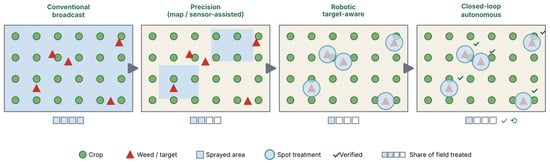
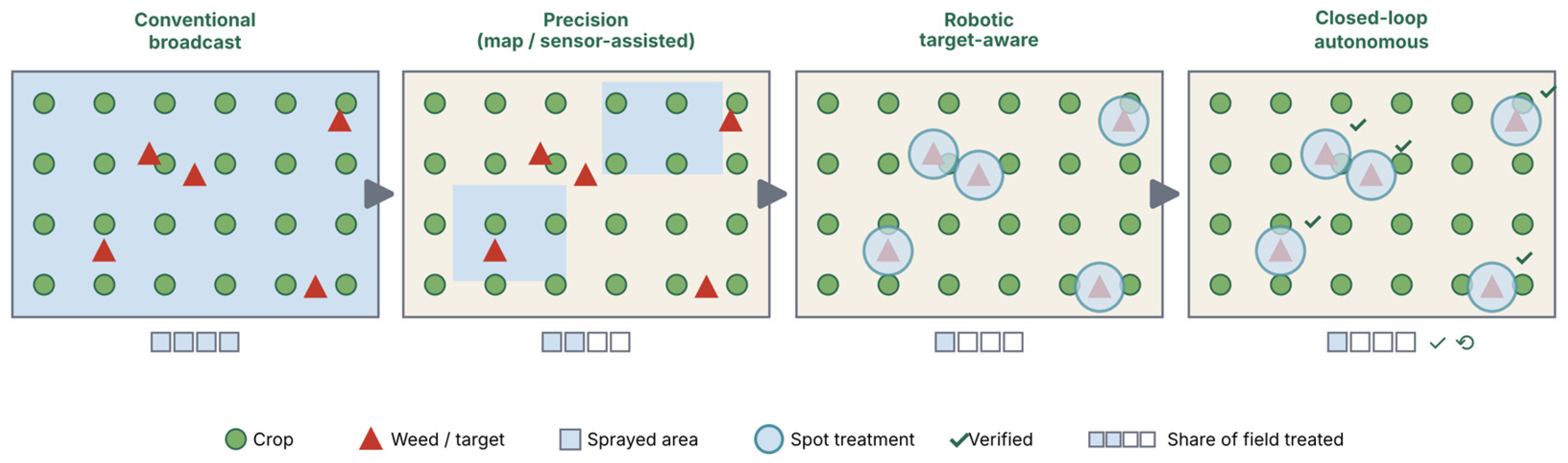
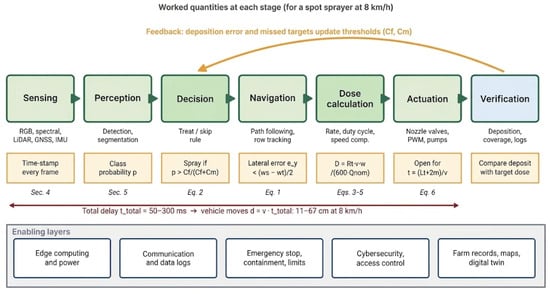
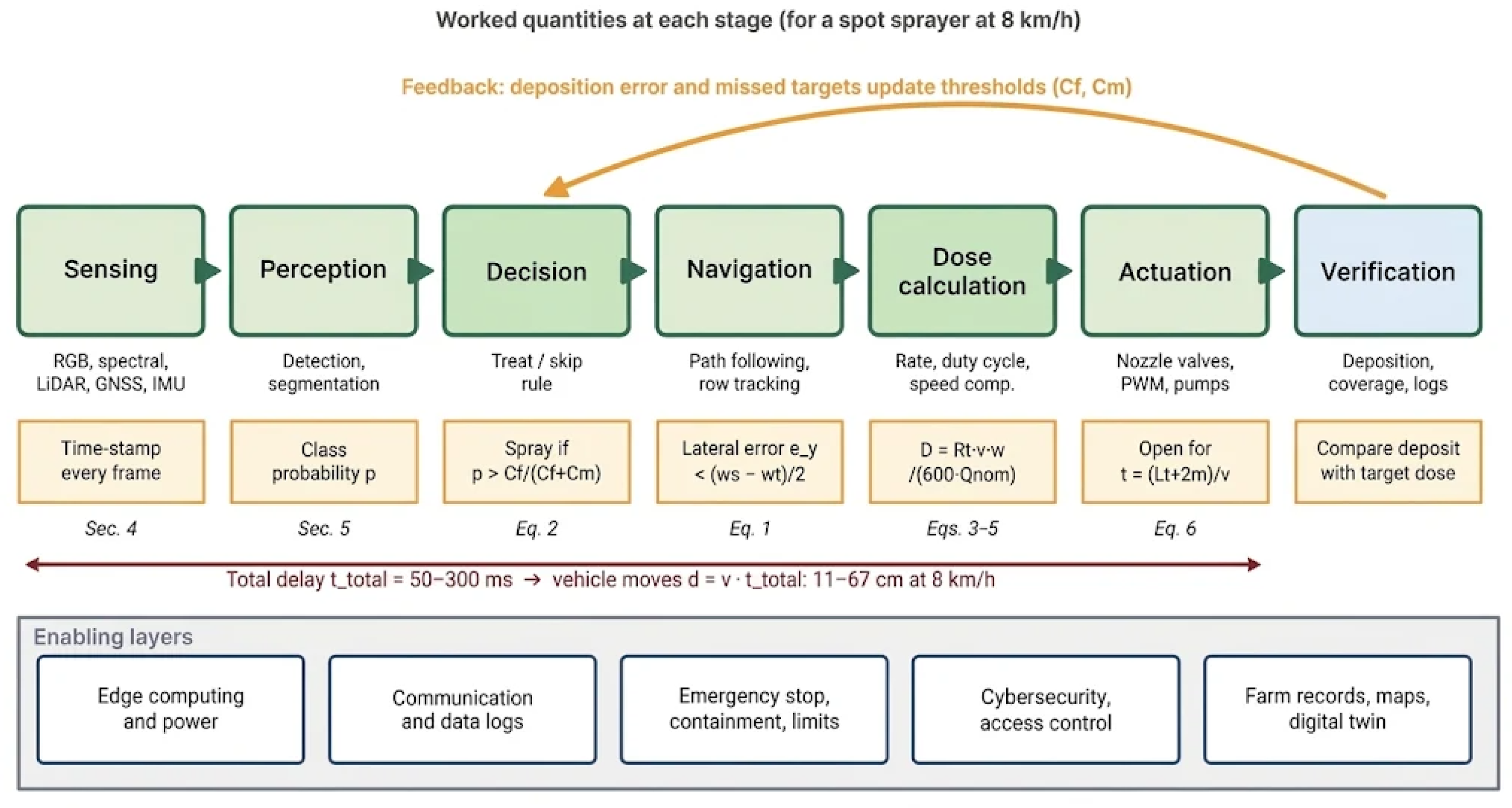
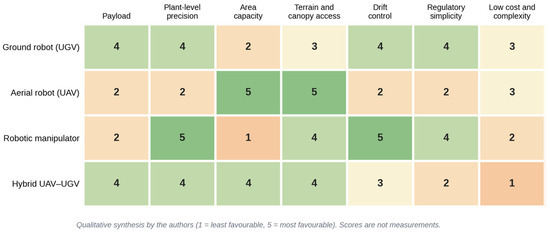
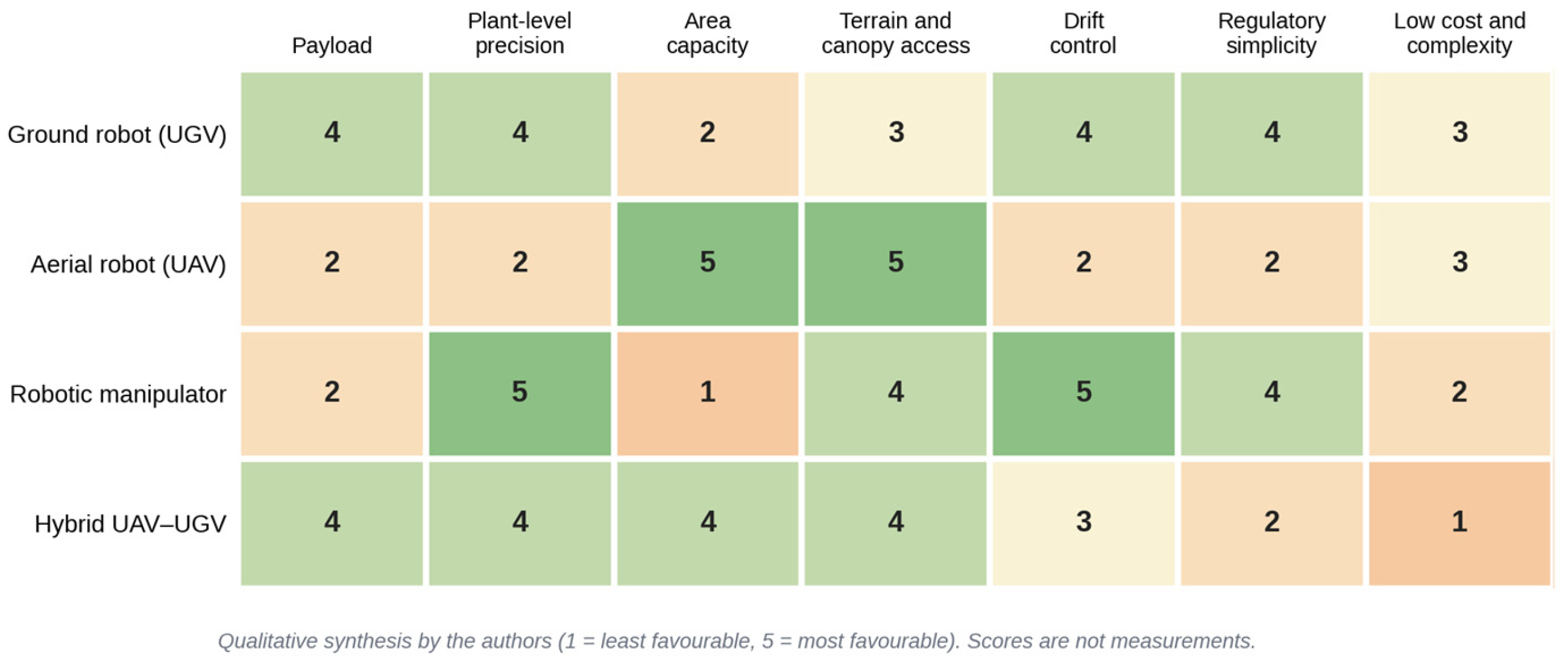
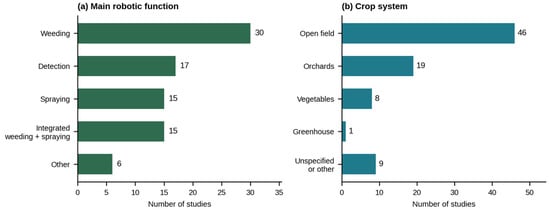
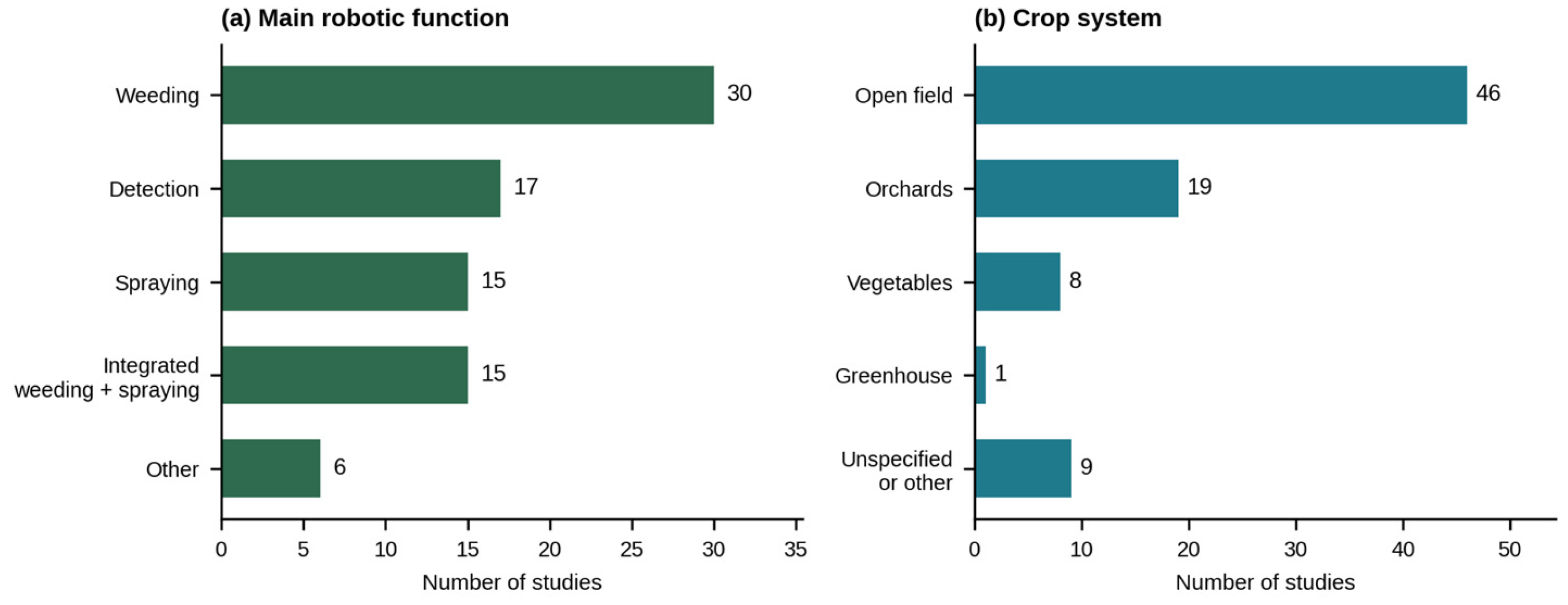
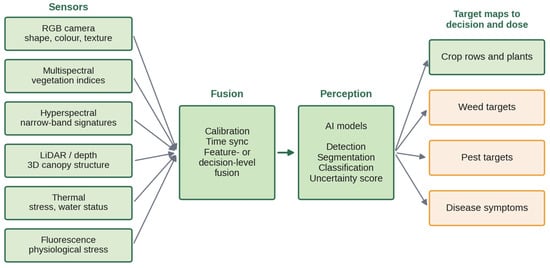
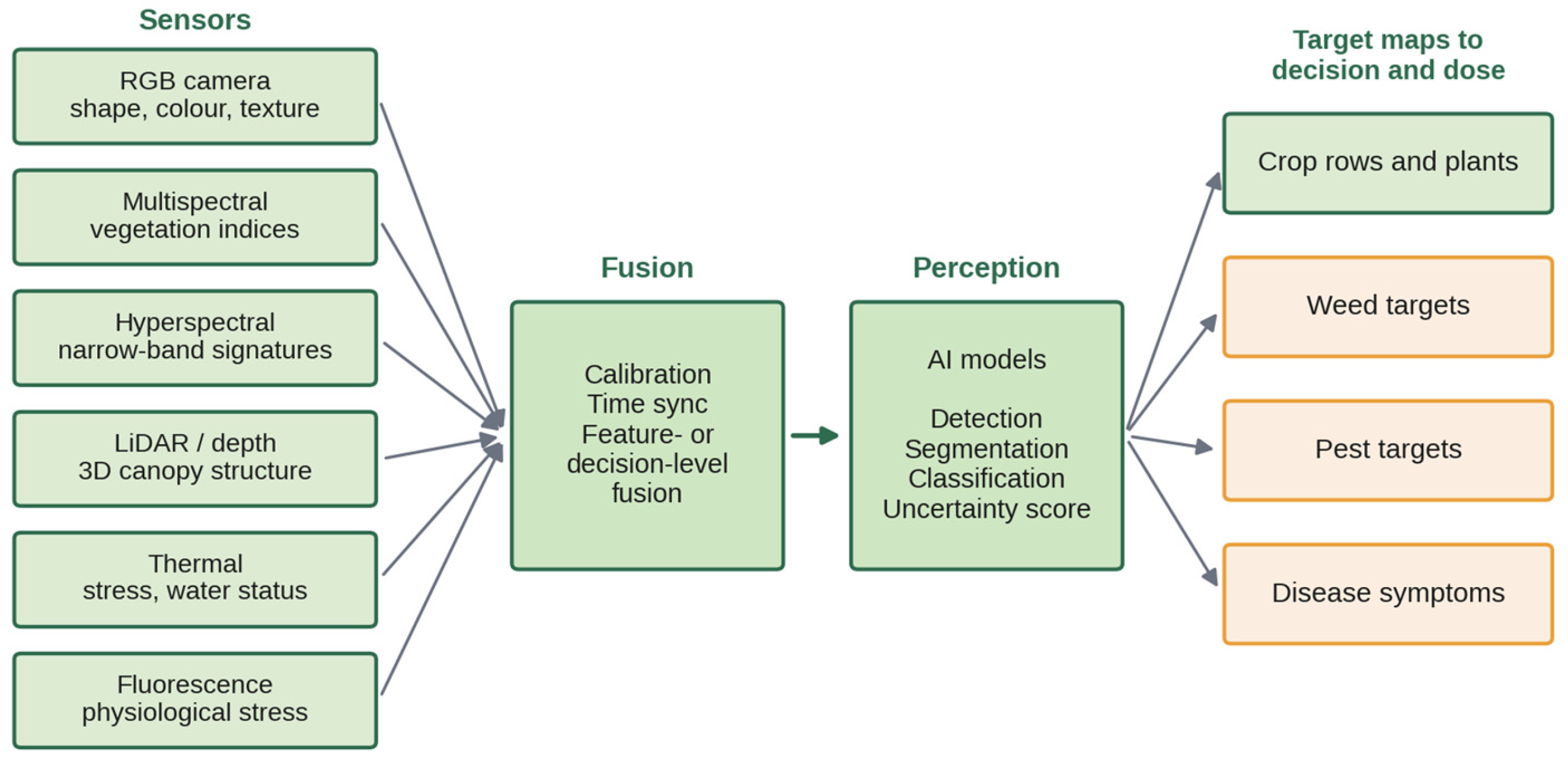
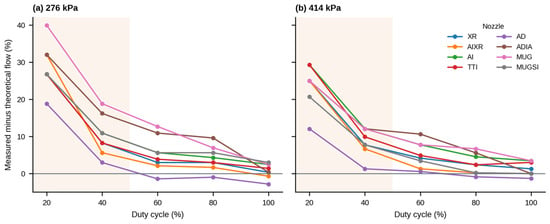
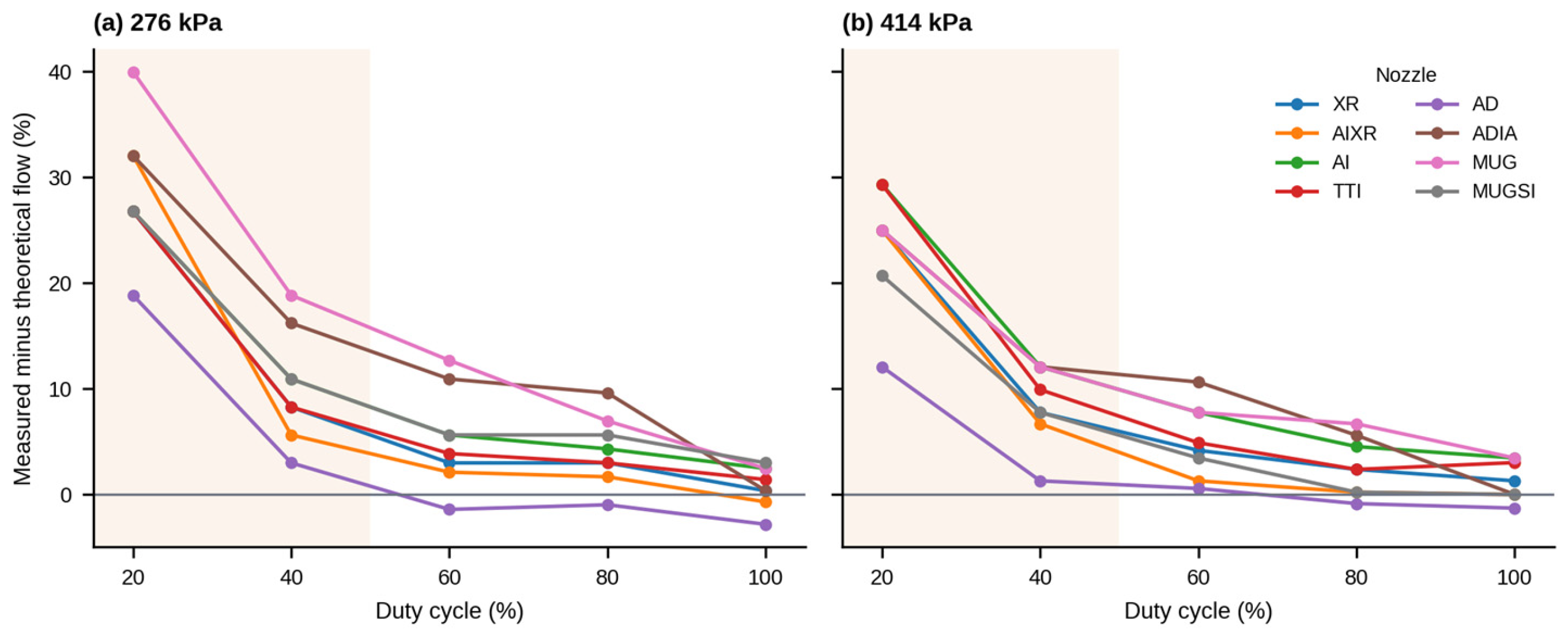
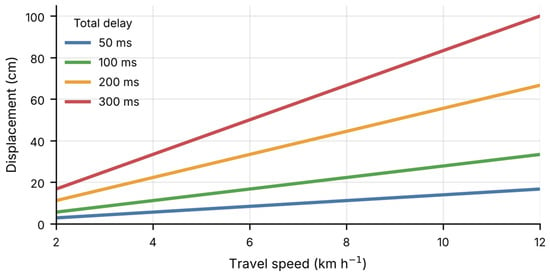
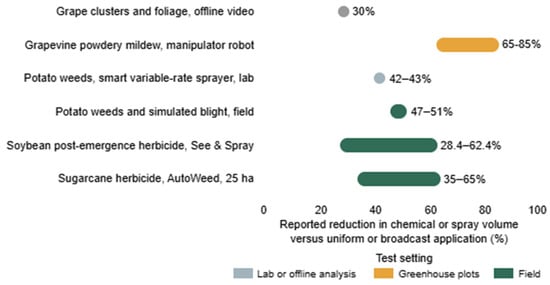
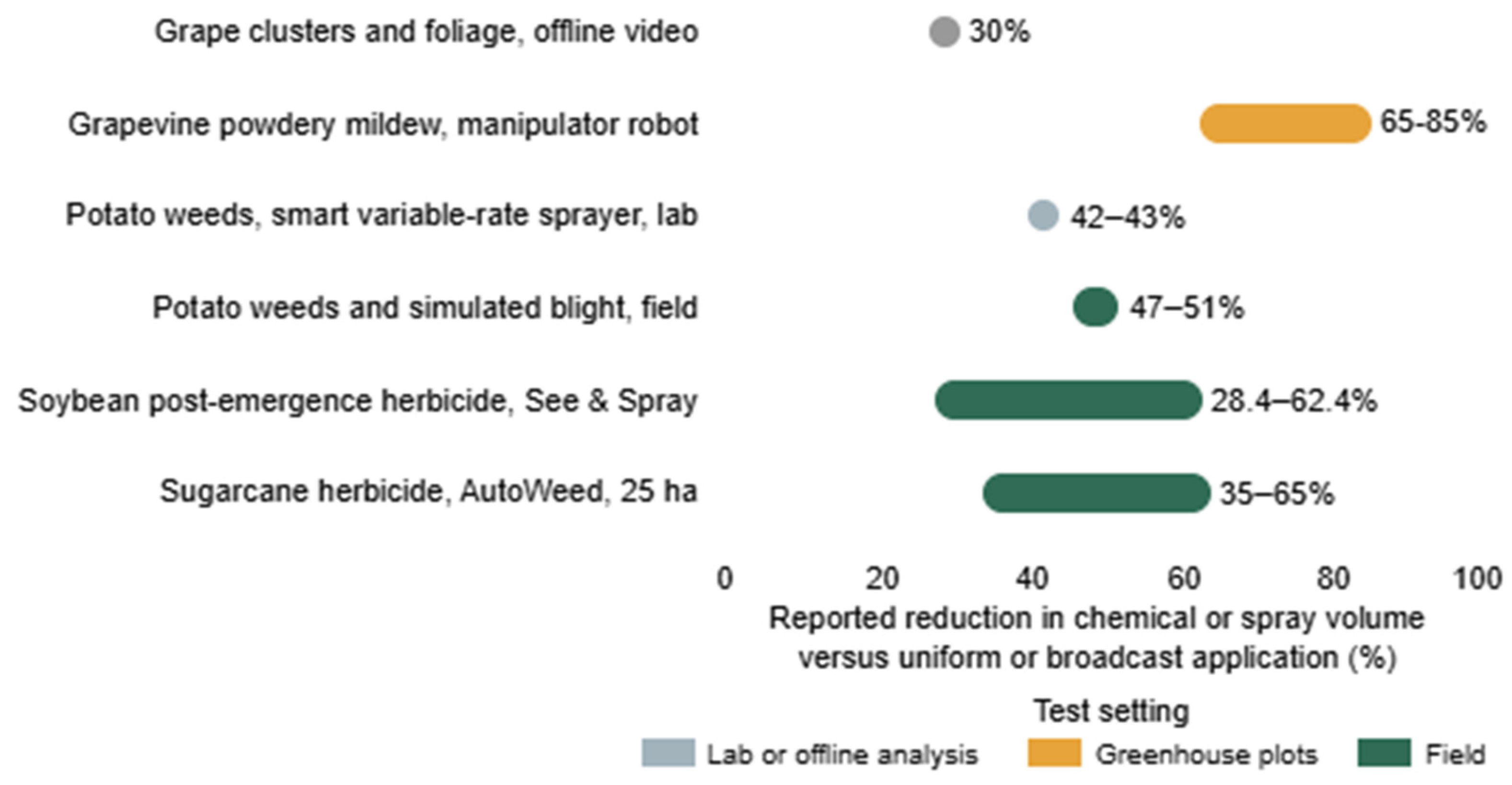
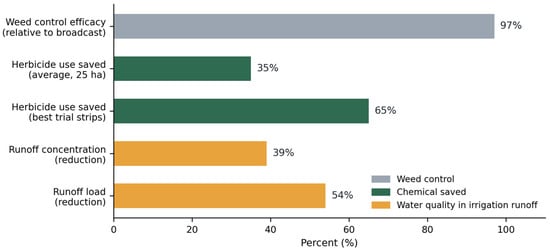
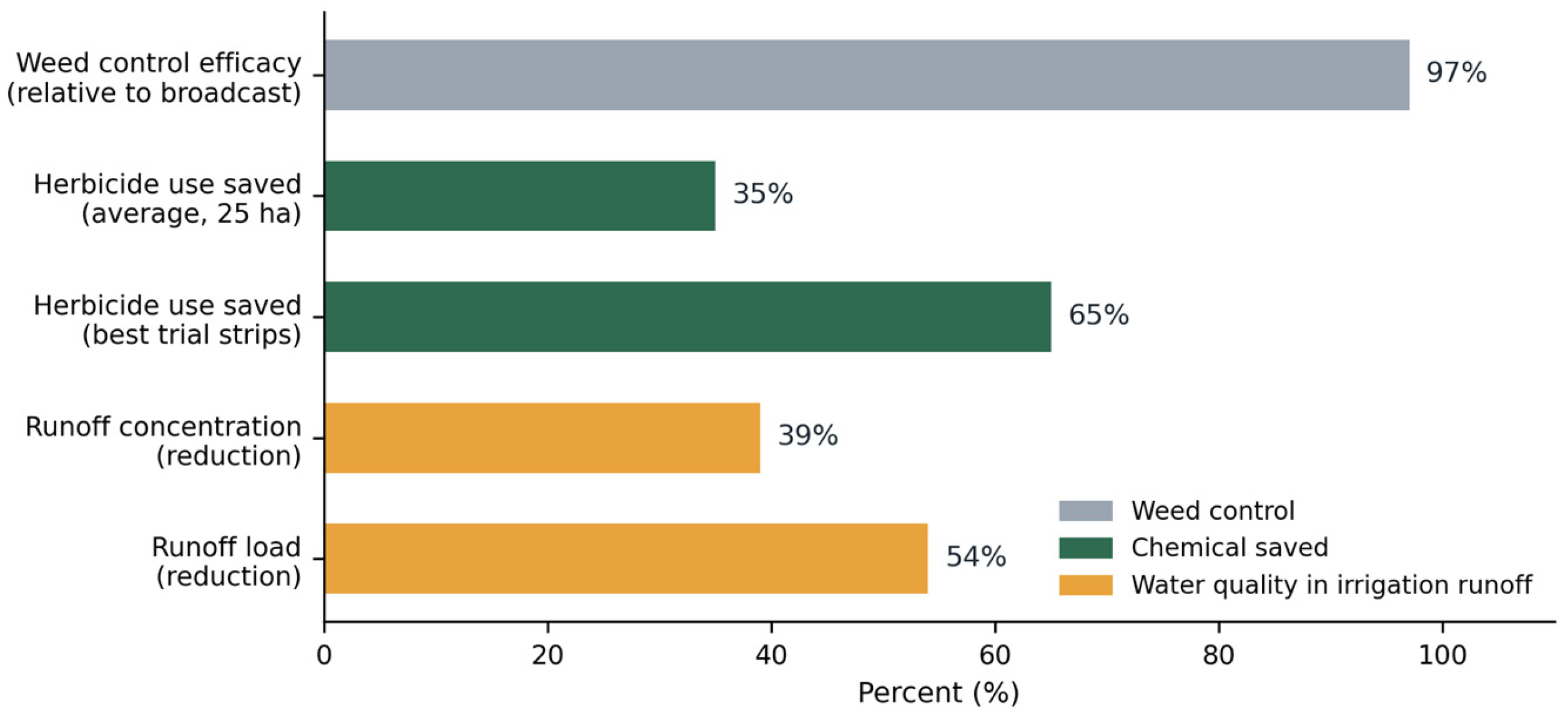
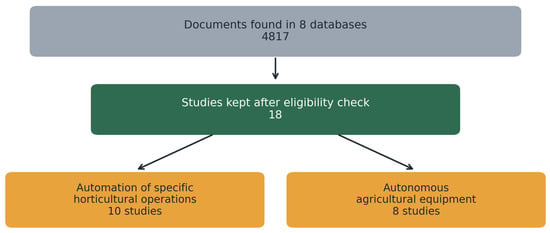
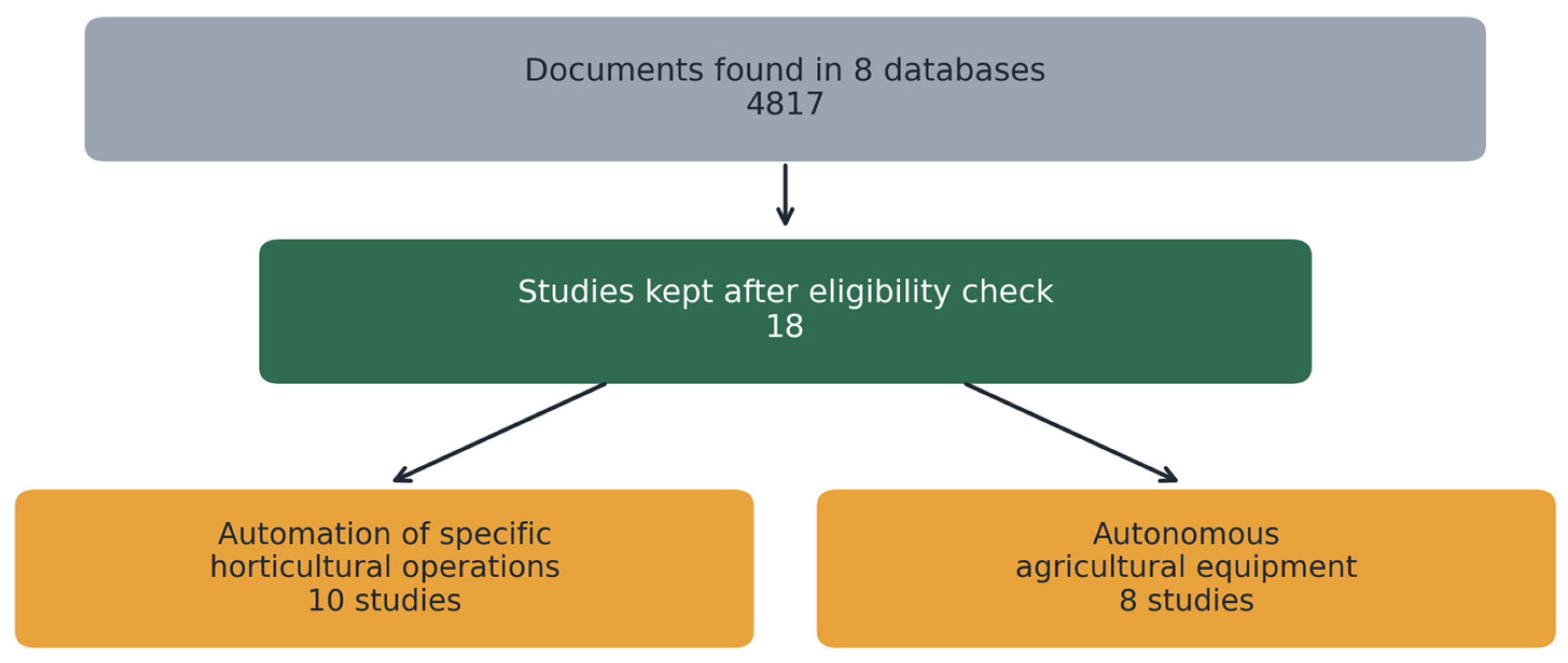
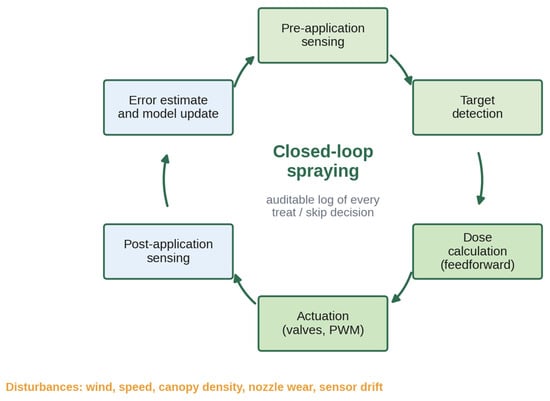
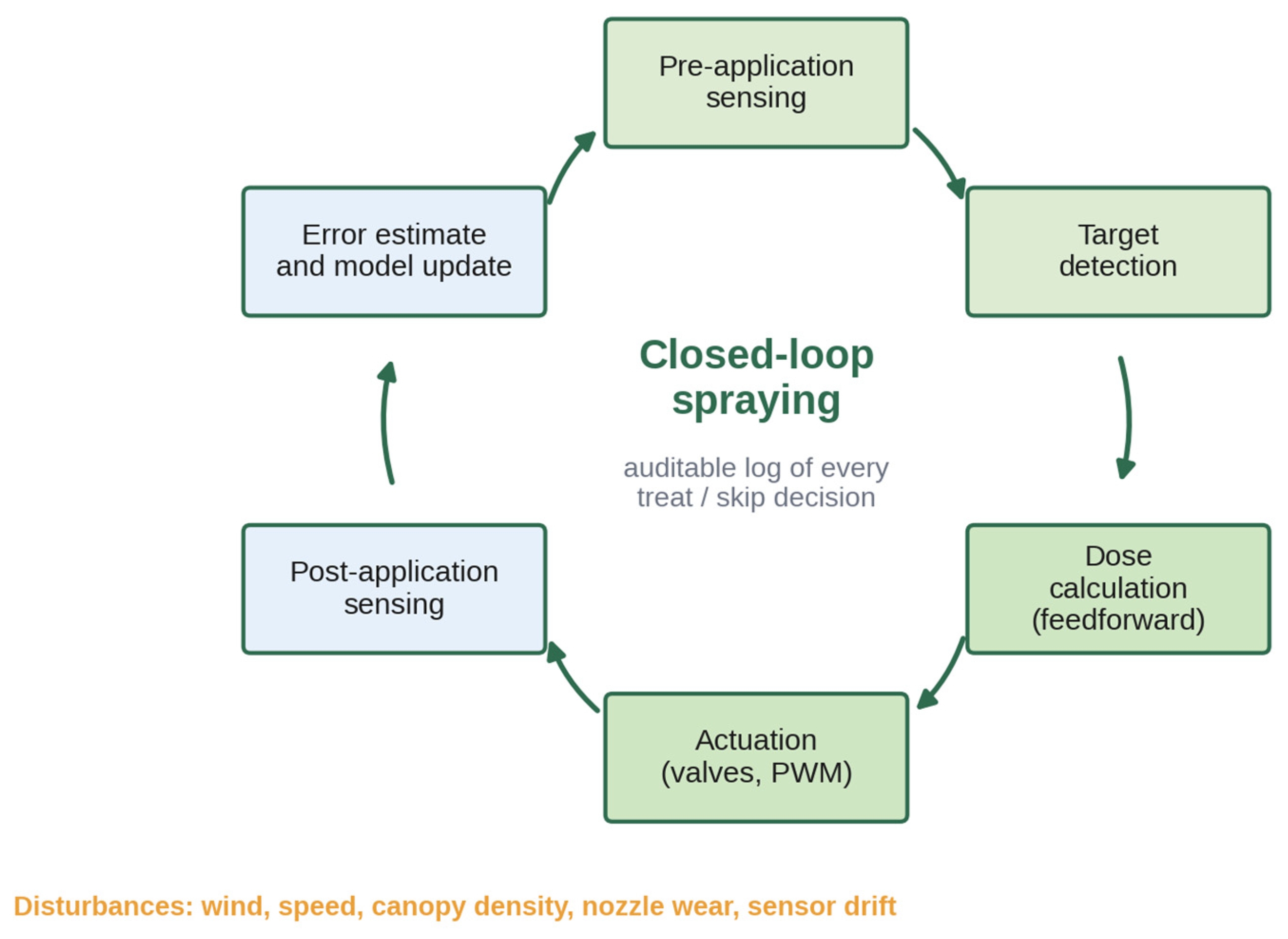
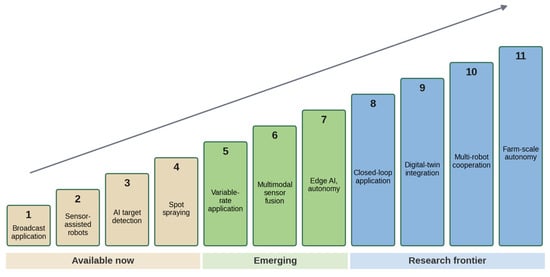
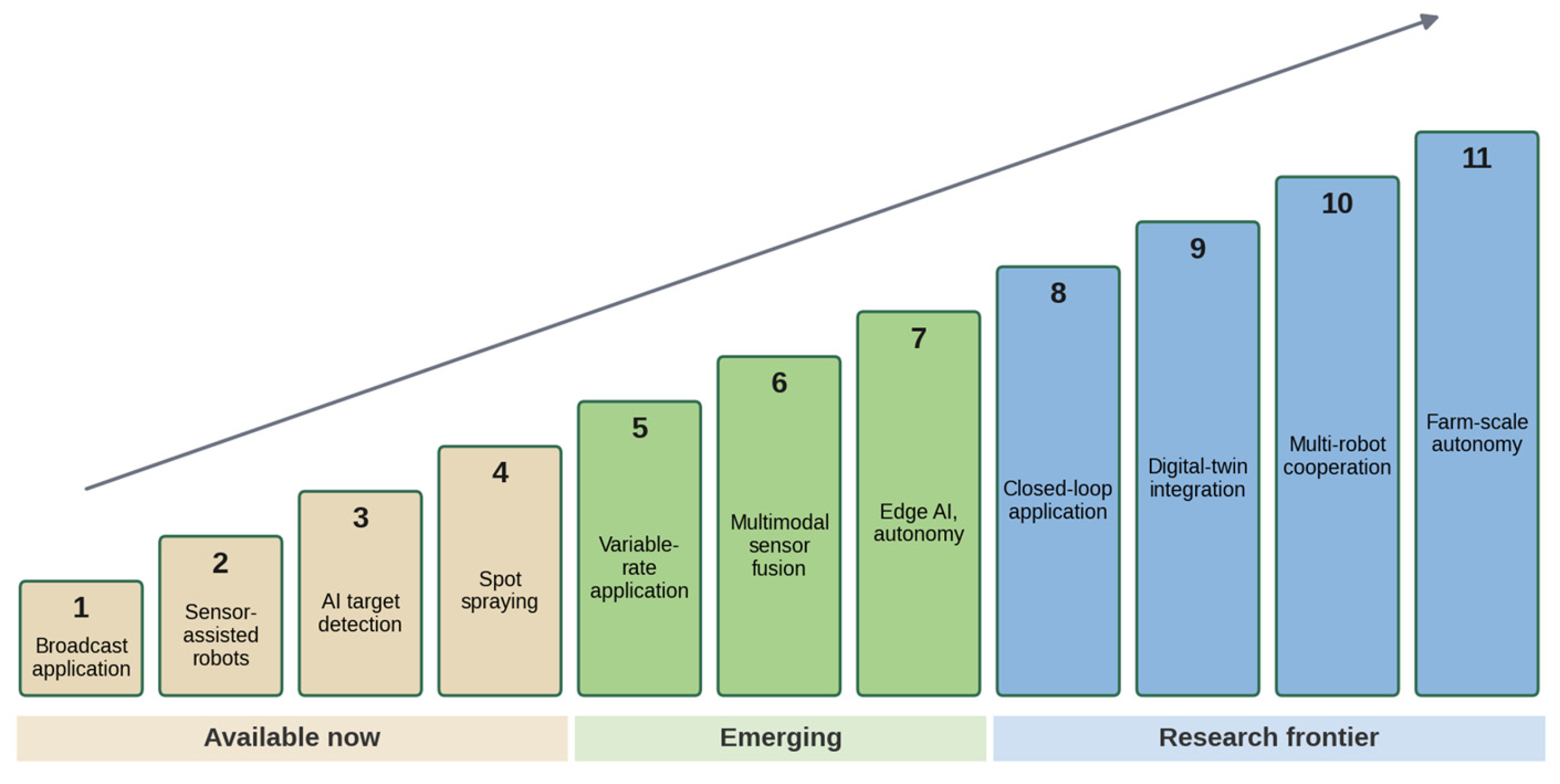

Disclaimer/Publisher’s Note: The statements, opinions and data contained in all publications are solely those of the individual author(s) and contributor(s) and not of MDPI and/or the editor(s). MDPI and/or the editor(s) disclaim responsibility for any injury to people or property resulting from any ideas, methods, instructions or products referred to in the content. |
© 2026 by the authors. Licensee MDPI, Basel, Switzerland. This article is an open access article distributed under the terms and conditions of the Creative Commons Attribution (CC BY) license.