


Highlights
School burnout is a complex and still not fully understood phenomenon affecting students at different educational levels. Considering the deterioration of students’ mental health and psychoemotional functioning, particularly observed in the post-COVID era, it is important to provide effective preventive and supportive programs. To achieve this goal, further research on school burnout is necessary. The existing literature contains inconsistent and sometimes ambiguous findings regarding the prevalence, onset, and course of school burnout. Although researchers often attribute these inconsistencies to methodological and cultural differences, it seems important to include an additional variable in this context, namely repression–sensitization proneness. The tendency to avoid difficulties, typical of repressors, and the tendency to approach threatening stimuli, characteristic of sensitizers, may function as mediating factors between risk factors and the onset of school burnout, as they bias the perception of the self and the situation and influence long-term coping with difficulties. This article presents a theoretical analysis of the hypothetical relationships between school burnout and repression–sensitization proneness, which may serve as a starting point for future empirical research and for the development of preventive programs in the area of school burnout.
What are the main findings?
- Current research on school burnout remains inconsistent, suggesting that additional factors should be considered in future studies in this area.
- It is hypothesized that the complexity of school burnout may be better understood by incorporating the concept of repression–sensitization proneness as a factor mediating between risk factors and the onset of school burnout.
- To date, no studies have examined repression–sensitization proneness in the context of school burnout.
What are the implications of the main findings?
- A better understanding of the correlates of school burnout may facilitate the development of more appropriately tailored preventive and supportive programs for students at different educational levels and with different individual predispositions.
- An in-depth analysis of the role of repression–sensitization in the development and maintenance of school burnout may support modifications of school curricula in accordance with students’ needs.
Abstract
School burnout is a detrimental factor contributing to a decline in students’ well-being. Coping strategies are frequently mentioned among factors associated with school burnout; however, no analyses have yet examined the possible relationship between school burnout and repression–sensitization proneness, understood as a generalized coping tendency oriented toward avoidance of or vigilance for threatening stimuli. It is hypothesized that repression–sensitization proneness functions as a mediator between risk factors and the development of school burnout by influencing the way individuals perceive their school demands and their own well-being. Based on a scoping review, a general description of the concepts of school burnout and repression–sensitization proneness is presented, together with a brief discussion of the role of coping in the development and maintenance of school burnout. The hypothetical role of repression–sensitization proneness in the development and maintenance of school burnout is also discussed. The article proposes directions for future research on repression–sensitization proneness in the context of school burnout, including the assessment of the prevalence of repressive and sensitizing tendencies among students. Several hypotheses for future empirical verification are formulated, along with practical implications for preventive interventions. The article provides a theoretical foundation for future empirical studies and practical preventive programs and contributes to broadening the discussion on students’ mental health at different educational levels in the context of school burnout predictors.
1. Introduction
School burnout is defined as a process of physical, emotional, and cognitive exhaustion that develops in response to excessive demands imposed by the school environment [1]. It leads to decreased engagement in academic activities and the development of negative attitudes toward school and the broader educational system [2]. Also referred to as student burnout or school fatigue, this phenomenon may affect individuals at various stages of education, with some researchers indicating that its onset may occur as early as approximately 11 years of age [3]. It should be emphasized, however, that data regarding the onset and prevalence of school burnout vary across cultural contexts. Differences in the perceived importance of academic achievement, as well as the intensity of educational pressure exerted by parents, teachers, and society at large, may significantly influence the manifestation of burnout symptoms [4]. As these cross-cultural variations are not the primary focus of the present article, they will not be discussed in detail. For comprehensive analyses, the reader is referred to previous studies (e.g., [4,5]). Currently, school burnout is considered one of the most detrimental factors contributing to decreased student well-being and academic engagement [6]. Empirical findings indicate that factors associated with its development include excessive academic stress, competitive school environments, pressure from teachers and parents, and ineffective coping strategies [7]. Moreover, a student’s poor psychoemotional condition constitutes an additional risk factor for the development and intensification of burnout symptoms (e.g., [8]).
The consequences of school burnout are substantial. It has been associated with declining academic performance, the development of dysfunctional beliefs regarding one’s ineffectiveness, and increasingly negative attitudes toward school [9,10]. As beliefs concerning personal incompetence intensify, levels of stress and anticipatory anxiety about the future also increase. Concerns related to future career prospects, financial stability, independence, and interpersonal relationships may further exacerbate stress levels [11]. Consequently, experiencing school burnout during early developmental stages may predispose individuals to a range of physical and mental health problems later in life. In addition, persistent negative experiences within the educational system may significantly diminish overall well-being. These considerations underscore the importance of identifying factors that contribute to the development and maintenance of school burnout symptoms.
The literature suggests a strong association between burnout symptoms and maladaptive coping strategies. In contrast, seeking social support and engaging in cognitive reappraisal appear to reduce burnout levels [12]. Studies conducted among high school students have demonstrated that greater burnout intensity is positively correlated with a higher tendency to employ maladaptive emotion-focused coping strategies and negatively correlated with the use of problem-focused coping strategies [13]. Furthermore, maladaptive coping styles have been shown to exacerbate the impact of stress on life satisfaction and to contribute to increased internalization of psychopathological symptoms [14]. Within this context, the constructs of repression–sensitization—understood as cognitive coping strategies reflecting distinct approaches to unpleasant or threatening life events—may provide a valuable framework for understanding the school burnout process (e.g., [15]). Despite their theoretical relevance, these constructs have not yet been systematically examined in relation to school burnout.
The primary aim of the present paper is therefore to conceptualize school burnout from the perspective of coping mechanisms and to analyze the hypothetical relationship between school burnout and repression–sensitization proneness as a form of cognitive coping strategy. The article is structured as follows. First, a concise overview of the concept of school burnout and the repression–sensitization framework is provided. Next, empirical findings concerning the relationship between coping strategies and school burnout are discussed, followed by an exploration of the potential applicability of repression–sensitization constructs to burnout research. Finally, the theoretical significance of the repression–sensitization construct for future studies and the practical implications of integrating this framework into models of school burnout are outlined. Such an approach is particularly important in the context of the post-COVID era, characterized by rapid social and educational changes, and addresses a timely yet still insufficiently explored issue in the domain of students’ mental health.
2. Methods
The literature review and analysis presented in this article were conducted in accordance with the guidelines outlined in the Preferred Reporting Items for Systematic Reviews and Meta-Analyses (PRISMA) criteria [16], extended by recommendations for scoping reviews [17]. A scoping review methodology was adopted due to the heterogeneous nature of the available research concerning the variables analyzed in the present study.
A systematic search was performed in the Scopus, PubMed, and EBSCO databases to identify peer-reviewed articles. The following keywords were applied: “student school burnout”, “school burnout”, “student burnout”, “school fatigue”, and “coping strategies”, combined using the Boolean operator AND. Only articles published in English were included, with no temporal restrictions imposed. Titles and abstracts were screened for relevance, and full-text versions of potentially eligible articles were subsequently assessed.
The search strategy was expanded to include the keyword “repression”, combined with the aforementioned terms using the Boolean operator AND. However, this search yielded no records. Consequently, studies addressing the concept of repression were identified separately based on predefined eligibility criteria. The inclusion criteria comprised: (1) an empirical approach to the concept of repression, (2) conceptualization of repression as a cognitive coping mechanism, (3) assessment of repression using self-report measures, and (4) analysis of repression as an individual differences variable.
Due to the limited number of studies meeting these criteria, an additional manual search was conducted in the Google Scholar database using the same set of keywords. Scientific publications— including empirical research articles and meta-analyses published in peer-reviewed journals or scientific monographs—available in English or Polish and meeting the above-described criteria were selected for further analysis.
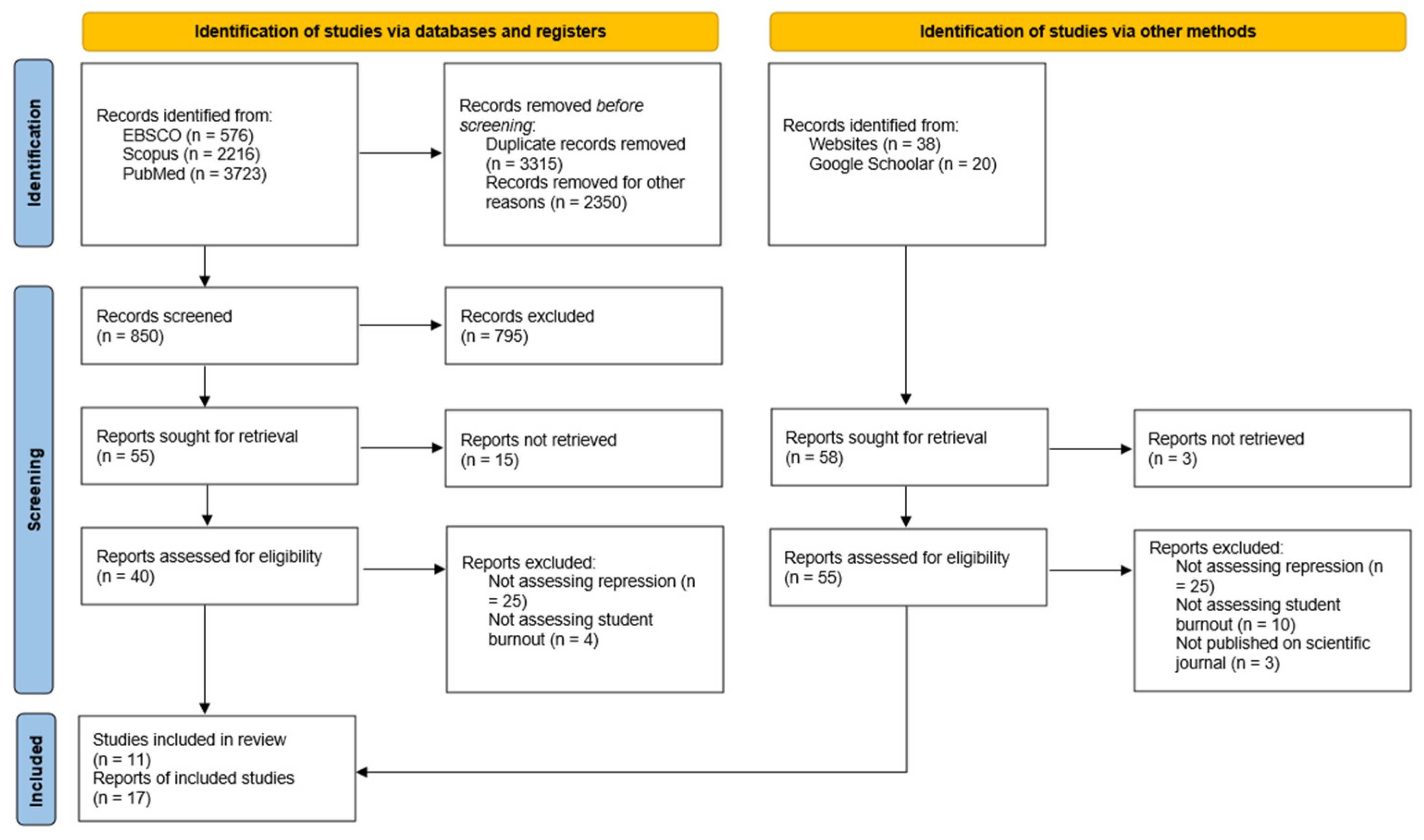
The search strategy yielded 2216 records in Scopus, 3723 in PubMed, and 576 in EBSCO. An additional 38 records were identified through a manual search of relevant websites, while 20 additional records were obtained through a supplementary search in Google Scholar (the original search in the Scopus, PubMed, and EBSCO databases did not yield articles retrieved from websites and Google Scholar due to the applied language criteria and the specific sources of these additional materials. The articles identified through this supplementary search were published in Polish and originated from peer-reviewed scientific monographs and from a scientific journal not indexed in the analyzed databases). In total, 6515 records were identified. After removing 5665 duplicate records, 850 articles remained for title and abstract screening. During the screening process, 795 articles were excluded, leaving 55 records for further assessment. Of these, 15 articles could not be retrieved, and an additional 29 papers were excluded because they did not meet the inclusion criteria (25 studies did not address repression and 4 did not assess student burnout). The additional search conducted through websites and Google Scholar identified 58 further records (38 from websites and 20 from Google Scholar). Among these, 3 articles could not be retrieved. Of the remaining 55 records, 38 were excluded because they did not meet the inclusion criteria (25 did not assess repression, 10 did not consider school burnout, and 3 were not published in scientific journals). Ultimately, 28 articles were included in the final review. The study selection process is summarized in the PRISMA flow diagram (see Figure 1).
Figure 1.
PRISMA flow diagram illustrating the study selection process.
3. School Burnout
School burnout is recognized as a significant loss of interest and decreased involvement in activities related to school life, accompanied by negative attitudes toward school and feelings of maladjustment to the school environment [18]. In the literature, school burnout is defined as a complex process of emotional, cognitive, and physical exhaustion resulting from excessive demands imposed by the school system and educational processes [1]. Empirical analyses indicate that school burnout is associated with persistent and/or gradually increasing levels of stress and repeated academic failures [19].
According to the current state of knowledge, school burnout develops gradually and sequentially [9,10,20]. The process typically begins with a progressive increase in somatic complaints (e.g., headaches, stomach pain). Growing tension associated with these somatic symptoms contributes to elevated stress levels, which may in turn lead to reduced immunity and further health problems. The second stage of school burnout involves difficulties in social functioning (e.g., reluctance to initiate and maintain interpersonal interactions). Due to diminished physical and psychological well-being, students experiencing burnout symptoms often report problems with voluntary social engagement [21]. Negative self-perceptions (e.g., noticing decreased engagement in school and social life), reinforced by feedback or concern from others, may intensify worry and rumination [22]. Subsequently, cognitive impairments may emerge (e.g., memory deficits and concentration difficulties), followed by psychoemotional problems such as lowered mood and increased irritability [23]. The final stage of school burnout encompasses existential or spiritual symptoms, including a diminished sense of meaning in life [9].
School burnout is assessed based on the severity of dysfunction across three domains: (1) exhaustion, (2) cynicism, and (3) perceived ineffectiveness [10]. Severe burnout symptoms are associated with elevated levels of helplessness and demoralization, which may lead to socially undesirable behaviors and/or violations of social norms [11]. Typically, a diagnosis of school burnout is made following prolonged somatic and psychoemotional complaints that significantly impair overall functioning [24]. However, symptoms of burnout may remain unrecognized due to their similarity to other manifestations of psychoemotional dysfunction [25].
School burnout is associated with increased irritability, helplessness, and discouragement. Students experiencing burnout frequently exhibit cognitive impairments, including learning difficulties and problems with information recall. Decision-making processes may also be compromised. In the long-term perspective, school burnout contributes to decreased life satisfaction, a substantial reduction in quality of life, and a diminished sense of autonomy [26]. Research findings indicate that exhaustion resulting from excessive academic demands, a cynical attitude toward school, and strong beliefs about one’s own ineffectiveness in educational contexts may be linked to the development of cardiovascular diseases, gastrointestinal disorders, and hormonal disturbances [27]. Consequently, individuals experiencing school burnout may suffer a significant decline in overall well-being and quality of life.
Researchers emphasize the role of both external and internal factors in the development of school burnout [28]. External factors include academic demands and pressure, characteristics of the school environment, and relationships with peers and family members. Internal factors encompass individual motivation, temperamental and personality traits, emotional functioning, and stress-coping strategies [29,30]. Overloaded schedules, high levels of pressure and competition, academic difficulties, and excessive teacher expectations substantially contribute to the development of school burnout [31]. Poor relationships with teachers and a generally unsupportive school climate also play a significant role [32,33]. Moreover, high levels of parental or societal pressure, a perceived lack of meaning in one’s current educational activities, and the absence of long-term goals may increase the risk of burnout [34]. Among the internal determinants of school burnout are individual characteristics such as high emotional reactivity, low endurance, low self-esteem, and low self-efficacy [35]. Elevated levels of mood and affective disorders have also been shown to correlate with higher levels of school burnout [36]. Additionally, maladaptive coping strategies—such as the inability to employ task-oriented coping in controllable situations, a tendency to avoid confronting stressors, or reliance on emotion-oriented coping—have been identified as risk factors for the development of school burnout [37].
4. Repression–Sensitization
Repression–sensitization is a concept introduced into the literature by psychoanalysts and subsequently developed by cognitive psychologists, who redefined it as a cognitively based coping mechanism employed in difficult and threatening situations [38]. The contemporary understanding of repression–sensitization is largely organized according to the approach proposed by Weinberger and colleagues [39]. On the basis of their empirical studies, Weinberger et al. [40] distinguished independent types of individuals who either underestimate or exaggerate their levels of arousal. These groups were identified according to self-reported anxiety and social desirability indices. Individuals who underestimated their arousal were characterized by low levels of reported anxiety combined with high levels of social desirability and were labeled repressors. In contrast, individuals who overestimated their arousal reported high levels of anxiety and high social desirability scores, were labeled sensitizers. Accordingly, repression is conceptualized as a tendency to underestimate experienced anxiety and overall arousal, whereas sensitization refers to a tendency to overestimate these experiences [39].
In order to clarify the relevance of incorporating the repression–sensitization construct into the existing coping framework used in burnout research, it is necessary to explicitly delineate the differences between coping strategies and the repression–sensitization mechanism. Coping strategies are generally understood as flexible, predominantly conscious processes used to manage distress [41]. Coping may take the form of problem-solving, emotion regulation, or attentional disengagement from a stressful event. In general, coping facilitates resilience, enabling individuals to adjust to or manage situations perceived as overwhelming or challenging [42]. When dealing with stress, individuals employ a range of strategies that may be classified as adaptive (i.e., reducing distress in the long-term and effectively addressing the source of difficulty) or maladaptive (i.e., ineffective in the long-term and associated with an increased risk of psychopathological symptoms) [43]. Thus, specific coping strategies may be functional in particular contexts, either by resolving the stressor or by facilitating adaptation to situations that cannot be directly changed [44]. Notably, empirical findings indicate the absence of direct associations between neuroendocrinological secretions and individually oriented coping styles [45], which may be interpreted as evidence of nonspecific physiological arousal during coping with stress.
In contrast, repression–sensitization constitutes more complex and less flexible regulatory processes. Previous research has demonstrated that both repressors (i.e., individuals with a strong tendency to minimize experienced arousal) and sensitizers (i.e., individuals with a strong tendency to exaggerate experienced arousal) experience difficulties in accurately identifying their emotional states. This difficulty may result in self-deception and the misinterpretation of internal and external stimuli, leading to the underestimation of arousal-related cues in repressors and their overestimation in sensitizers [40]. The majority of studies to date have focused primarily on repressors. Evidence suggests that individuals who consistently avoid awareness of their emotional arousal experience both physical and mental health consequences. They tend to divert attention from ambiguous, unpleasant, or threatening stimuli, present themselves in a socially desirable manner, and systematically underestimate their physiological arousal. This pattern has been associated with increased vulnerability to various health problems, including cardiovascular diseases and cancer [15,40]. Although sensitizers have been studied less extensively, available data indicate that they also experience somatic and psychological difficulties, likely related to their heightened vigilance toward threatening stimuli. The distortions characteristic of both repressors and sensitizers are therefore considered significant contributors to reduced well-being and increased risk of mental health problems [15].
Table 1 presents the general characteristics that capture the principal differences between coping strategies and the repression–sensitization mechanism.
Table 1.
Differences between coping strategies and the repression–sensitization mechanism.
As illustrated above, repression–sensitization differs from coping strategies across multiple dimensions. Nevertheless, both processes are activated in situations involving significant stress or psychological threat. Given that proneness to repression or sensitization represents a generalized and relatively inflexible trait-like disposition, it may constitute a substantial risk factor for reduced well-being among students and contribute to the development and maintenance of school burnout symptoms. In this respect, repression–sensitization differs fundamentally from situational coping strategies while remaining highly relevant to the analysis of school burnout. It is therefore plausible that a tendency toward repression or sensitization increases the likelihood of both the onset and persistence of burnout symptoms. Coping strategies, in contrast, may serve diverse roles in the development and maintenance of burnout, which justifies further comprehensive investigation of the relationships between these constructs.
5. The Correspondence Between Coping Strategies and School Burnout
Since repression–sensitization is conceptualized as a generalized coping tendency, it is essential to examine the relationship between coping and school burnout. Empirical evidence indicates that school burnout is influenced by a variety of factors, including environmental (e.g., school climate, use of digital tools, social support), psychosocial (e.g., competencies and coping strategies), and other variables (e.g., academic achievement, demographic characteristics, lifestyle) [28].
Coping strategies appear to be particularly significant, as they are among the most modifiable factors and largely depend on individual dispositions and choices [45,46]. Consequently, they may be regarded as variables that are relatively amenable to change. Research findings suggest that individuals are capable of modifying their coping strategies and flexibly selecting those that are most appropriate to situational demands and personal needs [46,47].
Recent studies have demonstrated that adaptive coping strategies—such as problem-solving, cognitive restructuring, seeking social support, and emotional expression—serve as protective factors against school burnout [48]. In contrast, maladaptive coping strategies, including problem avoidance, self-criticism, wishful thinking, and social withdrawal, are associated with higher levels of school burnout. The use of maladaptive coping has been linked to increased emotional exhaustion and cynicism [49]. Furthermore, proactive and problem-focused coping strategies have been shown to mitigate the negative impact of poor sleep quality and reduce burnout symptoms [50]. Conversely, maladaptive strategies such as self-blame, rumination, and catastrophizing are strongly associated with elevated levels of burnout symptoms [51]. Based on these findings, it can be assumed that the application of adaptive, individually tailored coping strategies may function as a protective factor and contribute to the reduction in burnout symptoms among students.
Coping strategies provide individuals with specific tools for effective stress management and the regulation of emotional responses [52]. Empirical evidence indicates that adaptive coping strategies are associated with a greater capacity to manage life difficulties, solve problems constructively, and foster resilience, whereas maladaptive strategies contribute to diminished well-being and poorer health outcomes [53]. As coping strategies mediate the effects of stress reactions, they may either attenuate or exacerbate the intensity of burnout symptoms. Coping has been conceptualized in the literature as a factor directly correlated with school burnout [54], a mediator between various determinants and students’ well-being [55], a predictor of school burnout [55], and a protective factor preventing its development [56]. Therefore, further investigation of the relationship between coping strategies and school burnout is warranted, alongside a more in-depth conceptual analysis of coping itself, given the complexity and multidimensional nature of this construct.
6. The Possible Role of Repression–Sensitization in the Development and Maintenance of School Burnout
Active involvement in school life is associated with intensive emotional interactions with peers and teachers. It also entails meeting various expectations imposed by teachers, parents, and the students themselves [57,58,59,60,61]. All of these factors may generate elevated levels of stress which, if prolonged and insufficiently managed, can contribute to mental health problems and burnout [57]. School attendance may therefore evoke both high levels of satisfaction and significant feelings of pressure. In other words, the multidimensional demands inherent in educational settings may result in emotional exhaustion. Consequently, students may experience difficulties engaging in academic duties and may develop psychoemotional problems [58].
Coping with challenges arising from school-related demands constitutes a complex process that involves both external and internal determinants. Engagement in school responsibilities may either be satisfying or burdensome, leading to improvements or declines in well-being. Arslan [62] demonstrated that the number of previous adverse experiences influences an individual’s propensity to adopt adaptive or maladaptive coping strategies, which in turn affects the development of subsequent symptoms [63]. It therefore appears justified to examine the potential relationship between repression–sensitization proneness and school burnout, particularly given the limited scientific attention devoted to this issue to date.
Based on previously published findings [15], it may be assumed that biologically determined reactivity to arousing stimuli, in combination with environmentally shaped behavioral, emotional, and cognitive response patterns characteristic of repressors and sensitizers, mediates the manner in which individuals experience stress and cope with difficult situations. In other words, innate biological sensitivity, reinforced by environmental demands, may modify individuals’ reactions within the educational context described above. Repressors, due to their tendency to avoid or deny stressful stimuli, may underestimate the initial symptoms of burnout. In contrast, sensitizers, who are highly attentive to signs of arousal, may overestimate even minor symptoms of discomfort experienced in the school environment and consequently develop burnout symptoms more rapidly.
It is therefore plausible that repression–sensitization proneness plays a significant role in both the development and maintenance of school burnout. The emergence of school burnout may be conceptualized, at least in part, as a biologically conditioned phenomenon subsequently shaped by environmental demands [64]. According to this assumption, biological reactivity predisposes individuals to develop avoidance- or vigilance-oriented response patterns toward emotionally evocative stimuli. Within the educational context, such tendencies may result in repressors diverting attention away from internal signs of exhaustion, whereas sensitizers may focus excessively on internal signals of discomfort. Continued exposure to environmental demands may further intensify these experiences, leading individuals to adopt socially desirable behaviors that contribute to burnout symptoms—either through functional overload in repressors or through the exaggerated interpretation of perceived pressure in sensitizers, which may ultimately become maladaptive.
7. Hypothetical Role of Repression–Sensitization Factor in the Future Research on School Burnout
As stated previously, no empirical studies have yet examined the relationship between school burnout and the repression–sensitization construct. This gap should be addressed, particularly because the generalized tendency to avoid or approach situations perceived as threatening or problematic may result in a biased perception of school demands, impaired functioning, and decreased student well-being. It is highly probable that incorporating the repression–sensitization factor into research on school burnout would enhance our understanding of the specific characteristics involved in the development and maintenance of school fatigue symptoms. Furthermore, it could facilitate a more accurate assessment of school functioning and the challenges experienced by students who exhibit a tendency toward repression or sensitization.
An inaccurate evaluation of functioning, influenced by biased beliefs and perceptions typical of repressors and sensitizers, may lead to the misinterpretation of research data. In the long-term, this could hinder or even prevent the empirical explanation of the mechanisms and processes underlying school burnout.
Based on previous studies on repression–sensitization [65], it can be hypothesized that the use of self-assessment methods in school burnout research may lead to systematic distortions of the results. Difficulties in accurately describing one’s level of arousal, needs, and emotional states—typical of both repressors and sensitizers—can introduce systematic biases that impede the proper interpretation of data [15].
Given the psychoemotional condition of students across various educational levels, it seems crucial to develop a comprehensive description of their functioning. Overloaded school schedules, combined with internal and external pressures, contribute to a decline in student well-being and may lead to long-term mental health issues [29], which are often difficult to detect and address—particularly in repressors. Therefore, it is essential to observe, analyze, and interpret all factors contributing to this situation, including the predisposition toward repression or sensitization.
As no dedicated empirical tools or research methods currently exist to assess students’ proneness to repression or sensitization, the research process should begin with the traditional approach proposed by Weinberger and colleagues [39]. Initially, students at various educational levels should complete questionnaires measuring anxiety and social desirability. Based on these indicators, individuals with tendencies toward repression or sensitization could be identified. In the subsequent phase, these participants should be invited to take part in a qualitative research program, such as panel interviews. Their narratives regarding life experiences, perceptions of school responsibilities, beliefs, and preferred coping strategies could then serve as a foundation for developing a screening tool applicable in school settings.
Once such a screening tool has been developed, further research could focus on verifying the prevalence of repression–sensitization tendencies among students across educational levels. Subsequently, associations between repression–sensitization proneness and other psychological or contextual factors should be assessed. Drawing on prior research on the repression–sensitization construct [15,40], it may be expected that repressors tend to exhibit high levels of perfectionism. Many of them are likely to achieve excellent grades and report somatic complaints rather than direct psychoemotional difficulties. It is also plausible that repressive students experience depressive symptoms masked by perfectionistic tendencies. In contrast, sensitizers are expected to perform below their academic potential, often displaying anxiety disorders and intense emotional reactions in stressful situations.
Furthermore, the repression–sensitization construct should be analyzed in depth to determine its role in the development and maintenance of school burnout. Considering its psychological properties, it is plausible that this construct mediates the relationship between risk factors and the onset of burnout. Repressors may divert their attention from threatening stimuli, reinterpreting adverse circumstances in a positive manner—viewing them as motivating or beneficial. In the long-term, however, they may suffer from burnout symptoms that are ignored for extended periods; when they finally seek help, they tend to be psychologically and emotionally exhausted. Sensitizers, on the other hand, may exaggerate risks, demands, or negative feedback, and interpret challenging situations catastrophically. Over time, this could lead to elevated anxiety levels, which they might misinterpret as symptoms of burnout.
It is therefore crucial to design and conduct studies that simultaneously address repression–sensitization proneness and school burnout. Incorporating this construct may facilitate a deeper understanding of the deteriorating mental health observed among students at various educational stages. Moreover, inconsistencies identified in existing studies on school burnout [65,66,67,68] may stem not only from differences in measurement tools, methodologies, or respondent age, but also from unaccounted individual variations in repression–sensitization tendencies.
8. Possible Practical Implications of Including Repression–Sensitization Variable in Models of School Burnout
The tendency to avoid threatening stimuli, characteristic of repressors, and the inclination to approach such stimuli, typical of sensitizers, may lead to the misinterpretation of one’s genuine emotional states. In the long-term, these regulatory styles can contribute to additional psychoemotional or somatic difficulties [15,40]. Chronic avoidance of distressing cues or, conversely, hypervigilance toward any signs of psychoemotional strain may result in impairments in emotional regulation [69] and, consequently, exacerbate symptoms of school burnout.
In light of these considerations, it appears justified to incorporate the concept of repression–sensitization into preventive programs addressed to students at risk of school burnout. Preventive interventions enriched with knowledge about repression–sensitization may foster greater self-awareness, particularly regarding the importance of remaining attentive and responsive to one’s own psychological needs. Over time, such awareness may facilitate more effective emotional regulation. Moreover, understanding the repression–sensitization continuum may promote greater coping flexibility and psychological plasticity, both of which are regarded as adaptive resources [47].
From a practical perspective, it is also essential to consider the relationship between repression–sensitization tendencies and the role of interpersonal dynamics in the functioning of repressors and sensitizers. Empirical findings indicate that repressors allocate considerable psychological resources to impression management [70]. They are attentive not only to how they perceive themselves, but also to how they are perceived by others. As a result, they may invest substantial effort in concealing their authentic emotions and needs in favor of maintaining an idealized self-image. Although empirical evidence concerning sensitizers is less consistent, it may be hypothesized that they likewise construct particular self-presentations, both for themselves and for others.
Previous research suggests that, in line with their characteristic needs, repressors tend to rely predominantly on themselves when confronting difficulties, whereas sensitizers are more inclined to seek social support at an early stage [15]. This knowledge may inform the development of tailored support programs. For example, interventions for repressors could emphasize autonomy and a sense of control, whereas programs for sensitizers might incorporate structured opportunities for interpersonal engagement and support-seeking.
An optimal approach may involve pairing students with complementary regulatory styles—for instance, assigning a repressor and a sensitizer to act as mutual “support buddies”. Such an arrangement could facilitate exposure to alternative coping strategies, thereby enhancing flexibility in problem-solving and behavioral responses. However, despite its potential benefits, the implementation of this approach in real-life settings may prove challenging. It would require providing students with incentives to collaborate with specific partners, which could limit the voluntariness of their choices. At the same time, it would be necessary to avoid disclosing sensitive information regarding students’ individual tendencies toward repression or sensitization.
Furthermore, such an intervention would necessitate encouraging paired students to engage in mutual learning about their coping styles and personal experiences in dealing with difficult situations. It should be acknowledged that not all researcher-assigned pairs will function effectively, and adjustments may therefore be required. This process may pose significant logistical challenges. Consequently, such an intervention could initially take the form of structured, supervised activities carried out in pairs consisting of a repressor and a sensitizer. These activities might include assignments focused on discussing and reflecting upon issues related to mental health and well-being. The supervisor (e.g., a teacher or psychologist) should closely monitor the interactions between students during these tasks and, when necessary, modify pairings to achieve a better fit.
At the same time, it is essential to ensure that all such interventions are conducted in an ethical and voluntary manner. Careful planning and attention to detail are therefore required.
Assessing individual proneness to repression or sensitization may contribute to a more nuanced understanding of students’ psychological functioning and needs, enabling the provision of targeted psychoeducation and appropriately structured support interventions. At the same time, it is crucial to ensure that both the assessment process and the communication of its results to students, parents, and teachers are conducted in a manner that fully respects the students’ privacy. It should therefore be emphasized that although knowledge of individual characteristics is essential for creating a supportive school environment, the assessment and application of such information must be undertaken with particular caution, taking into account ethical, psychoemotional, and logistical considerations.
9. Conclusions
Recently, increasing attention has been devoted to students’ well-being and burnout. New models aimed at explaining stress and coping in school environments across different educational levels are currently being developed. One such framework is the Job Demands–Resources (JD–R) model, adapted to educational settings. This model explains students’ stress through two core processes: strain (the overall costs associated with the situations in which an individual is engaged) and motivation (the availability of resources that buffer demands and support performance) [71,72].
Although the JD–R model contributes to a better understanding of students’ functioning under conditions of elevated educational stress, it does not fully account for existing ambiguities or individual variability in coping mechanisms within educational contexts. Consequently, despite the growing body of research, the problem of burnout among school and university students remains unresolved. It is widely suggested that further studies incorporating additional variables are needed. Moreover, previous research highlights the importance of employing diverse methodological approaches. Consideration of cultural differences is also essential, as educational pressure varies across cultural contexts, potentially leading to inconsistent or unclear findings.
As noted above, inconsistencies in previous research outcomes may stem from the omission of important variables relevant to students’ functioning at different developmental stages, such as repression–sensitization proneness. Repression–sensitization tendencies in response to life difficulties are conceptualized as generalized, largely unconscious coping dispositions that shape individuals’ beliefs, emotions, and behaviors, and may interfere with their perception of school-related demands. Therefore, it is plausible that the JD–R model, when based solely on self-reported data, may be insufficient to fully explain students’ experiences of stress and burnout, particularly when individuals have limited insight into their own functioning.
The model could be enriched by incorporating data on repression–sensitization. Given that the JD–R framework relies heavily on self-descriptions, individuals with pronounced repression–sensitization tendencies may provide less accurate self-assessments. Thus, including this construct could enhance the understanding of both risk and protective factors associated with stress and burnout among students at various educational levels.
Incorporating repression–sensitization into research on school burnout may broaden the understanding of students’ functioning and support the development of more effective preventive and intervention programs tailored to individual coping tendencies. Assessing repression–sensitization proneness may also help identify individuals who struggle to adequately recognize and articulate their needs and emotions. Consequently, integrating this construct into research frameworks such as the JD–R model may provide deeper insight into student functioning and improve the explanatory power of existing models of stress and burnout in educational settings.
To date, no empirical studies addressing this issue have been conducted. It should be clearly stated that the present paper only provides a theoretical framework and a set of assumptions that should be considered in future research. Empirical validation of the usefulness of incorporating repression–sensitization into this field is therefore highly needed. First, it is necessary to verify whether the discussed construct can be considered a mediating factor between students’ stress and their proneness to school burnout. Second, it is important to examine potential cultural differences in the levels and manifestations of repression–sensitization tendencies. It is possible that this construct plays a particularly significant role in the development and maintenance of school burnout in societies characterized by high academic pressure. Therefore, it is necessary to investigate potential cultural limitations regarding its application in burnout research. Such research would contribute to a better understanding of the role of this construct in the functioning of students at risk of burnout and support the formulation of practical implications.
Consequently, no fully effective preventive programs for student burnout have yet been developed. In light of the data and hypothetical considerations presented above, repression–sensitization appears to be a key factor that should be taken into account in future research. It is possible that repression–sensitization proneness plays a mediating role between risk factors and the development of school burnout. In particular, it may modify the ways in which students perceive and interpret their school experiences, understand their emotional functioning, and identify their own needs.
It is therefore highly probable that incorporating knowledge about repression–sensitization proneness will significantly increase the effectiveness of preventive interventions offered to students experiencing school burnout. However, extensive research is required to achieve this goal. First, a general assessment of the prevalence of repression–sensitization proneness among students at different educational levels is needed. Next, more extensive qualitative analyses of experiences characteristic of repressors and sensitizers should be conducted. Studies aimed at identifying the correlates of school burnout among students with tendencies toward repression or sensitization would also be valuable. Subsequently, large-scale population-based studies involving students at different educational levels should be undertaken in order to fully understand the role of repression–sensitization proneness in the pathomechanism of school burnout.
Since the present paper only provides a theoretical analysis of repression–sensitization in the context of school burnout, it is essential to design and conduct empirical studies in the near future and to apply the knowledge obtained in the development of preventive and supportive programs for students.
Funding
This research received no external funding.
Institutional Review Board Statement
Not applicable.
Informed Consent Statement
Not applicable.
Data Availability Statement
No new data were created or analyzed in this study. Data sharing is not applicable to this article.
Conflicts of Interest
The author declares no conflicts of interest.
References
- Aypay, A.; Sever, M. School as if a workplace: Exploring burnout among high school students. J. Theory Prac. Educ. 2015, 11, 460–472. [Google Scholar]
- Salmela-Aro, K.; Kiuru, N.; Pietikäinen, M.; Jokela, J. Does school matter? The role of school context for school burnout. Eur. Psych. 2008, 13, 12–23. [Google Scholar] [CrossRef] [Scilit]
- Güler, G.; Bedel, A. School burnout in middle school students: Role of problem solving skills, peer relations and perceived school experiences. Int. J. Psychol. Educ. Stud. 2022, 9, 340–352. [Google Scholar] [CrossRef] [Scilit]
- Gabola, P.; Meylan, N.; Hascoët, M.; De Stasio, S.; Fiorilli, C. Adolescents’ school burnout: A comparative study between Italy and Switzerland. Eur. J. Investig. Health Psychol. Educ. 2021, 11, 849–859. [Google Scholar] [CrossRef] [Scilit]
- Cabras, C.; Konyukhova, T.; Lukianova, N.; Mondo, M.; Sechi, C. Gender and country differences in academic motivation, coping strategies, and academic burnout in a sample of Italian and Russian first-year university students. Helyion 2023, 9, e16617. [Google Scholar] [CrossRef] [Scilit]
- Rahmatpour, P.; Chehrzad, M.; Ghanbari, A.; Sadat-Ebrahimi, S.R. Academic burnout as an educational complication and promotion barrier among undergraduate students: A cross-sectional study. J. Educ. Health Promot. 2019, 8, 201. [Google Scholar] [CrossRef] [Scilit]
- Aypay, A. A positive model for reducing and preventing school burnout in high school students. Edu. Sci. Theory Pract. 2017, 17, 1345–1359. [Google Scholar]
- Pereira, M.G.; Santos, M.; Magalhães, R.; Rodrigues, C.; Araújo, O.; Durães, D. Burnout risk profiles in psychology students: An exploratory study with machine learning. Behav. Sci. 2025, 15, 505. [Google Scholar] [CrossRef] [Scilit] [PubMed]
- Widlund, A.; Tuominen, H.; Korhonen, J. Development of school engagement and burnout across lower and upper secondary education: Trajectory profiles and educational outcomes. Contemp. Educ. Psychol. 2021, 66, 101997. [Google Scholar] [CrossRef] [Scilit]
- Salmela-Aro, K.; Upadyaya, K. Developmental trajectories of school burnout: Evidence from two longitudinal studies. Learn. Individ. Differ. 2014, 36, 60–68. [Google Scholar] [CrossRef] [Scilit]
- Salmela-Aro, K.; Upadyaya, K. School engagement and school burnout profiles during high school—The role of socio-emotional skills. Eur. J. Dev. Psychol. 2020, 17, 943–964. [Google Scholar] [CrossRef] [Scilit]
- Shin, H.; Park, Y.M.; Ying, J.Y.; Kim, B.; Noh, H.; Lee, S.M. Relationships between coping strategies and burnout symptoms: A meta-analytic approach. Prof. Psychol. Res. Pract. 2014, 45, 44–56. [Google Scholar] [CrossRef] [Scilit]
- Tomaszek, K.; Muchacka-Cymerman, A. How do high and low burnout students cope with stressful situations? Examining associations between coping mechanism and school burnout syndrome. Educ. Stud. Rev. 2022, 1, 199–215. [Google Scholar] [CrossRef] [Scilit]
- Suldo, S.M.; Shaunessy, E.; Hardesty, R. Relationships among stress, coping, and mental health in high-achieving high school students. Psychol. Sch. 2008, 45, 273–290. [Google Scholar] [CrossRef] [Scilit]
- Kleszczewska-Albińska, A. Tłumienie i Uwrażliwienie w Perspektywie Psychologii Różnic Indywidualnych. Teoria i Praktyka [Repression and Sensitization in Individual Differences Psychology Perspective. Theory and Practice]; Wydawnictwo Menedżerskiej Akademii Nauk Stosowanych: Warsaw, Poland, 2024. [Google Scholar]
- Page, M.J.; McKenzie, J.E.; Bossuyt, P.M.; Boutron, I.; Hoffmann, T.C.; Mulrow, C.D.; Shamseer, L.; Tetzlaff, J.M.; Akl, E.A.; Brennan, S.E.; et al. The PRISMA 2020 Statement: An updated guideline for reporting systematic reviews. BMJ 2021, 372, 71. [Google Scholar] [CrossRef] [Scilit]
- Tricco, A.C.; Lillie, E.; Zarin, W.; O’Brien, K.K.; Colquhoun, H.; Levac, D.; Moher, D.; Peters, M.D.J.; Horsley, T.; Weeks, L.; et al. PRISMA extension for scoping reviews (PRISMA-ScR): Checklist and explanation. Ann. Intern. Med. 2018, 169, 467–473. [Google Scholar] [CrossRef] [Scilit]
- Salmela-Aro, K.; Kiuru, N.; Nurmi, J.E. The role of educational track of adolescents’ school burnout: A longitudinal study. Brit. J. Educ. Psychol. 2008, 78, 663–689. [Google Scholar] [CrossRef] [Scilit] [PubMed]
- Yıldız, V.A.; Kılıç, D. Investigation of school burnout and school attachment among secondary school students. Educ. Sci. Theory Pract. 2020, 20, 44–55. [Google Scholar]
- Markiewicz, K. Trajectories of the development of school burnout mediated by the psychological state of students in grades 5–8 in Polish elementary school. New Educ. Rev. 2024, 78, 217–229. [Google Scholar] [CrossRef] [Scilit]
- Pietluch, A.; Trinder, M.; Dick-Bursztyn, M. Student engagement, life satisfaction, and academic burnout among Polish tertiary students: A mixed-methods analysis. Multidiscip. J. Sch. Educ. 2024, 13, 441–462. [Google Scholar] [CrossRef] [Scilit]
- Brueckmann, M.; Hachenberger, J.; Wild, E.; Lemola, S. Repetitive negative thinking mediates the relationship between self-esteem and burnout in an ecological momentary assessment study. Commun. Psychol. 2025, 3, 134. [Google Scholar] [CrossRef] [Scilit] [PubMed]
- Iuga, I.A.; David, O.A. Emotion regulation and academic burnout among youth: A quantitative meta-analysis. Educ. Psychol. Rev. 2024, 36, 106. [Google Scholar] [CrossRef] [Scilit]
- Pawlicka, H.; Komorowska, K.; Michalak, M.; Gabryś, A.; Larionow, P. Risk and protective factors for academic burnout: The search for effective psychological help for students. Pol. Psychol. Forum. 2024, 29, 206–230. [Google Scholar]
- Parviainen, M.; Aunola, K.; Torppa, M.; Koskenvuo, K.; Saarikallio-Torp, M.; Poikkeus, A.M.; Vasalampi, K. Symptoms of school burnout in comprehensive school and mental health problems in late adolescence. Scand. J. Psychol. 2025, 67, 747–756. [Google Scholar] [CrossRef] [Scilit]
- Salmela-Aro, K.; Tynkkynen, L. Gendered pathways in school burnout among adolescents. J. Adol. 2012, 35, 929–939. [Google Scholar] [CrossRef] [Scilit]
- Tomaszek, K.; Muchacka-Cymerman, A. Examining the relationship between student school burnout and problematic Internet use. Educ. Sci. Theory Pract. 2020, 20, 16–31. [Google Scholar] [CrossRef] [Scilit]
- Bochniarz, K.; Jurek, P.; Atroszko, P. Sustainable education challenges: Structure of educational burnout and associations with problematic overstudying. Sustainability 2025, 17, 3478. [Google Scholar] [CrossRef] [Scilit]
- Chong, L.Z.; Foo, L.K.; Chua, S.L. Student burnout: A review on factors contributing to burnout across different student populations. Behav. Sci. 2025, 15, 170. [Google Scholar] [CrossRef] [Scilit]
- Lin, F.; Yang, K. The external and internal factors of academic burnout advances in social science. In Proceedings of the 2021 4th International Conference on Humanities Education and Social Sciences (ICHESS 2021); Atlantis Press: Dordrecht, The Netherlands, 2021; Volume 615, pp. 1815–1821. [Google Scholar]
- Meylan, N.; Meylan, J.; Rodriguez, M.; Bonvin, P.; Tardif, E. What types of educational practices impact school burnout levels in adolescents? Int. J. Environ. Res. Public Health 2020, 17, 1152. [Google Scholar] [CrossRef] [Scilit]
- Gray, C.; Wilcox, G.; Nordstokke, D. Teacher mental health, school climate, inclusive education and student learning: A review. Can. Psychol. 2017, 58, 203–210. [Google Scholar] [CrossRef] [Scilit]
- Grech, M. The effect of the educational environment on the rate of burnout among postgraduate medical trainees—A narrative literature review. J. Med. Educ. Curric. Dev. 2021, 8, 23821205211018700. [Google Scholar] [CrossRef] [Scilit]
- Yusof, R.; Harith, N.H.M.; Lokman, A.; Abd Batau, M.F.; Zain, Z.M.; Rahmat, N.H. A study of perception on students’ motivation, burnout and reasons for dropout. Int. J. Acad. Res. Bus. Soc. Sci. 2023, 13, 403–432. [Google Scholar] [CrossRef] [Scilit]
- Maltseva, N.V. Temperament properties as a predisposition factor to the burnout syndrome occurrence in the process of teacher’s professional formation. Int. J. Psychosoc. Rehabil. 2020, 24, 3034–3046. [Google Scholar] [CrossRef] [Scilit]
- Pourghaz, A.; Marziyeh, A.; Bikar, S. Affective structures among students and their relationship with academic burnout. New Educ. Rev. 2017, 50, 47–55. [Google Scholar] [CrossRef] [Scilit]
- Schwarz Terra, M.E.; Pereira de Moraes, C.; Pereira de Souza, A.; Murgo, C.S. Correlations between academic burnout, coping and social support in college students. Psicol. Desde Caribe 2024, 41, 18–39. [Google Scholar] [CrossRef] [Scilit]
- Kleszczewska-Albińska, A. Tłumienie i wyolbrzymianie bodźców emocjonalnych—próba systematyzacji badań [Re-pression and sensitization of emotional stimuli—A systematization attempt]. Stud. Psychol. 2008, 46, 5–16. [Google Scholar]
- Myers, L.B. The importance of the repressive coping style: Findings from 30 years of research. Anxiety Stress Coping 2010, 23, 3–17. [Google Scholar] [CrossRef] [Scilit] [PubMed]
- Weinberger, D.A.; Schwartz, G.E.; Davidson, R.J. Low-anxious, high-anxious, and repressive coping styles: Psychometric patterns and behavioral and physiological responses to stress. J. Abnorm. Psychol. 1979, 88, 369–380. [Google Scholar] [CrossRef]
- Algorani, E.B.; Gupta, V. Coping Mechanisms. Available online: https://www.ncbi.nlm.nih.gov/books/NBK559031/ (accessed on 19 February 2026).
- Folkman, S.; Moskowitz, J.T. Coping: Pitfalls and promise. Annu. Rev. Psychol. 2004, 55, 745–774. [Google Scholar] [CrossRef] [Scilit]
- Coppens, C.M.; de Boer, S.F.; Koolhaas, J.M. Coping styles and behavioural flexibility: Towards underlying mechanisms. Philos. Trans. R. Soc. B Biol. Sci. 2010, 365, 4021–4028. [Google Scholar] [CrossRef] [Scilit] [PubMed]
- Kato, T. Frequently used coping scales: A meta-analysis. Stress Health 2015, 31, 315–323. [Google Scholar] [CrossRef] [Scilit]
- Godor, B.P.; Van der Hallen, R. Investigating the susceptibility to change of coping and resiliency during COVID-19. Scand. J. Psychol. 2022, 63, 238–245. [Google Scholar] [CrossRef] [Scilit]
- Schurr, T.; Frajo-Apor, B.; Pardeller, S.; Plattner, B.; Tutzer, F.; Schmit, A.; Conca, A.; Fronthaler, M.; Haring, C.; Holzner, B.; et al. Overcoming times of crisis: Unveiling coping strategies and mental health in a transnational general population sample during and after the COVID-19 pandemic. BMC Psychol. 2024, 12, 493. [Google Scholar] [CrossRef] [Scilit]
- Strelau, J.; Jaworowska, A. Kwestionariusz Radzenia Sobie w Sytuacjach Stresowych [Coping Inventory for Stressful Situations]; Pracownia Testów Psychologicznych Polskiego Towarzystwa Psychologicznego: Warsaw, Poland, 2020. [Google Scholar]
- Xie, Y.J.; Cao, D.P.; Sun, T.; Yang, L.B. The effects of academic adaptability on academic burnout, immersion in learning, and academic performance among Chinese medical students: A cross-sectional study. BMC Med. Educ. 2019, 19, 211. [Google Scholar] [CrossRef] [Scilit] [PubMed]
- Vizoso, C.; Arias-Gundín, O.; Rodríguez, C. Exploring coping and optimism as predictors of academic burnout and performance among university students. Educ. Psychol. 2019, 39, 768–783. [Google Scholar] [CrossRef] [Scilit]
- Wang, Y.; Xiao, H.; Zhang, X.; Wang, L. The role of active coping in the relationship between learning burnout and sleep quality among college students in China. Front. Psychol. 2020, 11, 647. [Google Scholar] [CrossRef] [Scilit] [PubMed]
- Vinter, K. Examining academic burnout: Profiles and coping patterns among Estonian middle school students. Educ. Stud. 2021, 47, 1–18. [Google Scholar] [CrossRef] [Scilit]
- Compas, B.E.; Connor-Smith, J.K.; Saltzman, H.; Thomsen, A.H.; Wadsworth, M.E. Coping with stress during childhood and adolescence: Problems, progress, and potential in theory and research. Psychol. Bul. 2001, 127, 87–127. [Google Scholar] [CrossRef]
- Shi, H.; Zhao, H.; He, M.; Ren, Z.; Wang, S.; Cui, L.; Zhao, J.; Li, W.; Wei, Y.; Zhang, W.; et al. The mediating roles of coping styles and academic burnout in the relationship between stressors and depressive symptoms among Chinese postgraduates. PeerJ 2023, 11, e16064. [Google Scholar] [CrossRef] [Scilit]
- Robles, L.B.T.; Ramos, E.J.F.; Balmes, E.J.F.; Feniquito, J.J.R.; Cheungkock, M.L.V.; San Juan, K.D.U. Coping mechanism on academic burnout reduction. Psych. Educ. 2024, 26, 98–107. [Google Scholar]
- Tomaszek, K.; Muchacka-Cymerman, A.; Aypay, A. Polish high school student’s coping strategies as predictors of school burnout syndrome. Psychol. Rozw. 2023, 28, 43–61. [Google Scholar] [CrossRef] [Scilit]
- Popa-Velea, O.; Stoian-Bǎlǎşoiu, I.R.; Mihai, A.; Mihǎilescu, A.I.; Diaconescu, L.V. Prevention strategies against academic burnout: The perspective of Romanian health sciences students in the aftermath of the COVID-19 pandemic. Front. Psychol. 2025, 16, 1465807. [Google Scholar] [CrossRef] [Scilit]
- Martinez-Yarza, N.; Solabarrieta-Eizaguirre, J.; Santibáñez-Gruber, R. The impact of family involvement on students’ social-emotional development: The mediational role of school engagement. Eur. J. Psychol. Educ. 2024, 39, 4297–4327. [Google Scholar] [CrossRef] [Scilit]
- Li, P.-H.; Mayer, D.; Malmberg, L.-E. Student engagement and teacher emotions in student-teacher dyads: The role of teacher involvement. Learn. Instr. 2024, 91, 101876. [Google Scholar] [CrossRef] [Scilit]
- Cai, L.; Huang, P.; Guo, Y. Relationship between parental involvement and children’s positive mental character during early years: The moderating role of parent-teacher relationship and teacher-parent relationship. Front. Psychol. 2024, 15, 1438784. [Google Scholar] [CrossRef] [Scilit] [PubMed]
- Iuga, I.A.; David, O.A.; Danet, M. Student burnout in children and adolescents: The role of attachment and emotion regulation. Children 2023, 10, 1443. [Google Scholar] [CrossRef] [Scilit]
- Mingoia, J.; Engfors, L.M.; Le Busque, B.; Burton, O. The relationships between students’ expectations, approaches to learning, academic performance, and wellbeing in an online undergraduate psychology program. Teach. Psychol. 2025, 00986283251365869. [Google Scholar] [CrossRef] [Scilit]
- Arslan, G. Psychological maltreatment, coping strategies, and mental health problems: A brief and effective measure of psychological maltreatment in adolescents. Child Abus. Negl. 2017, 68, 96–106. [Google Scholar] [CrossRef] [Scilit]
- Henderson, K.A.; Obeid, N.; Buchholz, A.; Schubert, N.; Flament, M.F.; Thai, H.; Goldfield, G.S. Coping in adolescents: A mediator between stress and disordered eating. Eat. Behav. 2022, 47, 101626. [Google Scholar] [CrossRef] [Scilit] [PubMed]
- Vansoeterstede, A.; Lichtlé, J.; Cappe, E.; Boujut, E. A systematic review of longitudinal changes in school burnout among adolescents: Trajectories, predictors, and outcomes. J. Adolesc. 2023, 95, 224–247. [Google Scholar] [CrossRef] [Scilit] [PubMed]
- Garssen, B. Repression: Finding our way in the maze of concepts. J. Behav. Med. 2007, 30, 471–481. [Google Scholar] [CrossRef] [Scilit]
- Gao, X. Academic stress and academic burnout in adolescents: A moderated mediating model. Front. Psychol. 2023, 14, 1133706. [Google Scholar] [CrossRef] [Scilit]
- Madigan, D.J.; Curran, T. Does burnout affect academic achievement? A meta-analysis of over 100,000 students. Educ. Psychol. Rev. 2020, 33, 387–405. [Google Scholar] [CrossRef] [Scilit]
- Dresen, V.; Staggl, S.; Fischer-Jbali, L.; Canazei, M.; Weiss, E. Stress, burnout and study-related behavior in university students: A cross-sectional cohort analysis before, during, and after the COVID-19 pandemic. Brain Sci. 2025, 15, 718. [Google Scholar] [CrossRef] [Scilit] [PubMed]
- Gross, J.J.; Thompson, R.A. Emotion regulation: Conceptual foundations. In Handbook of Emotion Regulation; Gross, J.J., Ed.; The Guilford Press: New York, NY, USA, 2007; pp. 3–24. [Google Scholar]
- Derakshan, N.; Eysenck, M.W. Are repressors self-deceivers or other-deceivers? Cogn. Emot. 1999, 13, 1–17. [Google Scholar] [CrossRef] [Scilit]
- Lesener, T.; Pleiss, L.S.; Gusy, B.; Wolter, C. The study demands-resources framework: An empirical introduction. Int. J. Environ. Res. Public Health 2020, 17, 5183. [Google Scholar] [CrossRef] [Scilit] [PubMed]
- Jagodics, B.; Szabó, É. Student burnout in higher education: A Demand-Resource Model approach. Trends Psychol. 2023, 31, 757–776. [Google Scholar] [CrossRef] [Scilit]

Disclaimer/Publisher’s Note: The statements, opinions and data contained in all publications are solely those of the individual author(s) and contributor(s) and not of MDPI and/or the editor(s). MDPI and/or the editor(s) disclaim responsibility for any injury to people or property resulting from any ideas, methods, instructions or products referred to in the content. |
© 2026 by the author. Licensee MDPI, Basel, Switzerland. This article is an open access article distributed under the terms and conditions of the Creative Commons Attribution (CC BY) license.