


Abstract
Clinically significant thrombosis of surgical and transcatheter biological valves is increasingly recognised, yet most reviews have concentrated on subclinical leaflet thrombosis after transcatheter aortic valve implantation. This narrative review examines treatment and outcomes after diagnosis of clinical bioprosthetic valve thrombosis in the aortic or mitral position, keeping asymptomatic hypoattenuated leaflet thickening separate. The evidence consists of 17 observational cohorts and case series, several of which overlap, include right-sided valves or use treatment response as part of the diagnosis; no randomised treatment trial has been reported. After anticoagulation, mainly with vitamin K antagonists, most studies reported haemodynamic improvement in most patients assessed, but endpoints and denominators varied; in one transcatheter registry, complete resolution was reported in 12 of 26 patients (46%), a figure that included two patients who were not anticoagulated. Recovery often took several months. Recurrence and bleeding estimates come mainly from one mixed-valve cohort that included right-sided prostheses: thrombosis recurred in 23% of initial responders, and major bleeding occurred in 12% of treated patients versus 2% of matched controls, an observational difference that cannot be attributed wholly to anticoagulation. Evidence for thrombolysis, redo surgery and transcatheter reintervention is limited to small series and case reports. The evidence supports confirming suspected thrombosis with transoesophageal echocardiography or four-dimensional computed tomography, starting a vitamin K antagonist in haemodynamically stable patients, referring unstable patients or those with persistent obstruction for a Heart Team decision, and individualising extended anticoagulation against bleeding risk. Direct oral anticoagulants are not established for clinical thrombosis, and the optimal duration of treatment is unknown.
1. Introduction
Biological prostheses are increasingly implanted in the aortic and mitral positions by surgical and transcatheter routes [1]. Thrombosis of these valves was long regarded as rare, but pathological, echocardiographic and computed tomography (CT) studies have shown that it is under-recognised and can present several years after implantation [1,2,3]. In a Mayo Clinic series of explanted bioprostheses, thrombosis accounted for 11.6% of explants, and median valve longevity in these cases was 24 months compared with 108 months for structural failure [3].
Two entities have emerged. The first is clinically significant valve thrombosis, in which thrombus causes symptoms, embolism or haemodynamic valve deterioration. The second is subclinical leaflet thrombosis, detected on four-dimensional CT as hypoattenuated leaflet thickening (HALT), with or without reduced leaflet motion (RLM), in patients with normal or near-normal gradients [4,5]. The Valve Academic Research Consortium 3 (VARC-3) framework separates these entities when classifying bioprosthetic valve dysfunction [6]. Most recent reviews and meta-analyses have focused on the incidence, predictors and prevention of subclinical thrombosis after transcatheter aortic valve implantation (TAVI) [7,8,9,10]. Combining the two entities makes treatment effects difficult to interpret, because HALT can regress without treatment [11].
The 2025 European Society of Cardiology/European Association for Cardio-Thoracic Surgery (ESC/EACTS) guidelines address HALT and clinically significant valve thrombosis separately, recommending confirmation of suspected thrombosis by transoesophageal echocardiography (TEE) and/or four-dimensional CT and treatment of biological valve thrombosis with a vitamin K antagonist (VKA) before reintervention is considered [12]. The 2020 American College of Cardiology/American Heart Association guideline similarly favours anticoagulation as initial therapy in stable patients [13]. The evidence beneath these recommendations, and what happens to patients after treatment begins, has not been brought together across surgical and transcatheter valves.
This narrative review examines the treatment strategies, and the subsequent clinical and haemodynamic outcomes, that have been reported in adults with clinical bioprosthetic valve thrombosis after surgical or transcatheter aortic or mitral valve replacement. Because comparative studies are scarce, the aim is to describe what has been reported and how secure that evidence is, rather than to rank treatments.
A 2024 review by Adrichem et al. addressed the treatment of transcatheter aortic valve thrombosis [10]. The present review differs in three respects. It includes surgical as well as transcatheter bioprostheses, in both the aortic and mitral positions; it appraises each primary report by its case definition, its treated and assessed denominators and its overlap with other cohorts; and it compares the evidence available for each valve type and position, to show where current recommendations rest on direct data and where they are extrapolated from other valve types or positions.
2. Scope and Sources of Evidence
PubMed/MEDLINE was searched for articles published from 1 January 2000, with the final search on 20 October 2026, using the string: (bioprosthetic valve thrombosis OR bioprosthetic heart valve thrombosis OR transcatheter heart valve thrombosis OR leaflet thrombosis OR prosthetic valve thrombosis bioprosthetic) AND (anticoagulation OR warfarin OR vitamin K antagonist OR thrombolysis OR fibrinolysis OR reoperation OR valve-in-valve) NOT Case Reports[Publication Type]. This returned 574 records. Six supplementary PubMed searches were run on the same date: (1) thrombosis[ti] AND (bioprosthetic[ti] OR bioprosthesis[ti] OR transcatheter[ti] OR TAVI[ti] OR TAVR[ti] OR valve-in-valve[ti]) AND (treatment OR outcomes OR management) NOT Case Reports[pt]; (2) (“clinical valve thrombosis” OR “obstructive valve thrombosis” OR “bioprosthetic valve thrombosis”[ti]) AND (cohort OR registry OR series OR outcomes) NOT Case Reports[pt]; (3) (mitral valve-in-valve OR transcatheter mitral valve replacement OR transcatheter mitral valve implantation) AND (valve thrombosis OR leaflet thrombosis); (4) (explantation OR redo TAVR OR reoperation OR reintervention) AND (transcatheter aortic valve OR bioprosthetic) AND thrombosis[tiab]; (5) (thrombolysis[ti] OR fibrinolysis[ti] OR thrombolytic[ti]) AND (bioprosthetic[ti] OR transcatheter[ti] OR TAVI[ti] OR TAVR[ti]); and (6) (apixaban OR rivaroxaban OR edoxaban OR dabigatran OR direct oral anticoagulant) AND (bioprosthetic valve thrombosis OR transcatheter valve thrombosis OR leaflet thrombosis) AND treatment[tiab]. Searches 5 and 6 included case reports. Europe PMC, ClinicalTrials.gov and the reference lists of key articles were also examined. When the seven PubMed searches were re-executed with the same date limits during revision, they returned 1241 records (575, 242, 27, 134, 169, 46 and 48, respectively; the main search returned one more record than at the original search because of later indexing), of which 927 remained after the removal of duplicates. Titles and abstracts were screened by the author, and a report was selected for the main analysis if it described at least two adults with clinical thrombosis of an aortic or mitral bioprosthesis and reported at least one outcome after treatment; when several reports came from one institution and period, each was used only for the outcomes it uniquely reported. Seventeen reports met these criteria (Table 1). Records were excluded at screening or full-text review mainly because they concerned HALT or RLM detected on surveillance imaging without a separately reported clinical subset; reported incidence, predictors or prevention without outcomes after treatment; were confined to mechanical, tricuspid or pulmonary prostheses; described a single patient; were reviews, editorials or guidelines; or reported a cohort already included without additional outcome data. All 17 included reports were retrieved by the PubMed searches. Reviews, guidelines, meta-analyses and case reports identified by the searches or reference lists were used for context and are cited where relevant, but were not counted among the 17 reports. Data on design, valve type and position, case definition, treatment, response endpoint, denominator, timing and adverse events were extracted by the author without independent checking. Priority was given to cohort studies, registries and case series reporting outcomes after the treatment of clinical thrombosis of aortic or mitral bioprostheses. Case reports were consulted only where no other evidence existed, chiefly for thrombolysis and direct oral anticoagulant (DOAC) treatment, and are identified as such. Reports confined to mechanical, tricuspid or pulmonary valves were not considered; reports that combined left- and right-sided valves were retained because they include the largest treated cohorts. Where outcomes could not be separated by position, results are given for the whole cohort, are labelled as mixed-population evidence in Table 1 and the text, and are not treated as direct evidence for aortic or mitral bioprostheses.
Table 1.
Reports providing primary treatment data for clinical bioprosthetic valve thrombosis, with the diagnostic certainty category assigned in this review (A to C; Section 3). For each report, the number diagnosed, the number treated and the number assessed for response are given where reported; overlapping cohorts and mixed-position populations are marked.
3. Definitions and Diagnostic Certainty
Clinical thrombosis is defined here as new symptoms, embolism or haemodynamic valve deterioration (a rise in mean gradient, reduction in effective orifice area or new regurgitation relative to the post-implantation baseline) accompanied by imaging or pathological evidence of thrombus or by prespecified clinical and echocardiographic criteria. HALT or RLM detected on surveillance imaging without symptoms or haemodynamic deterioration is treated as a separate entity [6]. An elevated transvalvular gradient is not by itself evidence of haemodynamic valve deterioration. VARC-3 defines haemodynamic valve deterioration as a change from the echocardiogram obtained 1 to 3 months after implantation, measured from the same Doppler window and assuming normal flow: moderate deterioration is a rise in mean gradient of at least 10 mmHg to at least 20 mmHg, and severe deterioration a rise of at least 20 mmHg to at least 30 mmHg, each accompanied by a fall in effective orifice area or Doppler velocity index [6]. A gradient that has been high since implantation may instead reflect patient–prosthesis mismatch or a small prosthesis, and a newly raised gradient may reflect a high-flow state, such as anaemia, fever or tachycardia, or measurement variability [6,30]. In the absence of symptoms or embolism, VARC-3 classifies valve thrombosis as clinically significant only when severe haemodynamic deterioration is accompanied by imaging evidence of thrombus [6]. VARC-3 applies to aortic valves; mitral prosthetic gradients are likewise interpreted against the post-implantation baseline and the heart rate at the time of measurement [30]. Imaging confirmation of thrombus does not by itself establish clinical significance. In this review, a report is regarded as describing clinical thrombosis only when patients also had symptoms, embolism or haemodynamic deterioration; reports in which this could not be confirmed for every patient are identified in Table 1 and the text, and imaging-confirmed thrombus is distinguished from clinically significant thrombosis throughout.
Case definitions in the published series fall into three groups, which matter when interpreting treatment results: (A) thrombosis confirmed by imaging or pathology in all patients; (B) probable thrombosis based on prespecified clinical and echocardiographic criteria; and (C) thrombosis inferred partly from the response to antithrombotic treatment. These categories are an appraisal framework devised for this review, not validated diagnostic grades. A report was assigned to category A if thrombus was documented by TEE, CT or histology in every patient; to category B if diagnosis rested on prespecified clinical and echocardiographic criteria, with imaging in only some patients, and response was not part of the definition; and to category C if the published definition included response to treatment or the diagnostic basis was not stated. The basis for each assignment is given in Table 1. Category C definitions can inflate apparent treatment success, because patients who do not respond may be assigned another diagnosis. An echocardiographic combination of a gradient rise of 50% within 5 years, increased cusp thickness and abnormal cusp mobility, together with paroxysmal atrial fibrillation and subtherapeutic anticoagulation, distinguished thrombosis from structural failure in a pathology-matched series [3]; when all five features were present, the model had a sensitivity of 76%, specificity of 93%, positive predictive value of 85% and negative predictive value of 89%. Imaging confirmation with TEE or four-dimensional CT reduces reliance on treatment response to establish the diagnosis [12,30].
4. Treatment of Clinical Thrombosis
4.1. Characteristics of the Evidence
Seventeen observational reports provide primary treatment data (Table 1). Eight describe surgical or mixed surgical populations [2,14,15,16,17,18,19,20], one both surgical and transcatheter aortic valves [21], seven transcatheter aortic valves [22,23,24,25,26,27,28] and one transcatheter mitral valves [29]. Two were prospective [18,24]; the remainder were retrospective. Four Mayo Clinic reports overlap in time and population, although complete nesting cannot be established, and all four include tricuspid or pulmonary valves [17,18,19,20]. Two Bad Krozingen reports are probably nested [14,15], and a 12-centre TAVI registry shares investigators and centres with a single-centre registry and a valve-in-valve registry [22,23,25]. The number of unique patients therefore cannot be determined precisely; individual cohorts contained between two and 83 patients with clinical thrombosis. Four reports confirmed thrombosis by imaging or pathology in all patients [2,21,25,29], although in one of these the clinical significance of CT-confirmed thrombus could not be established for every patient [21]; five used prespecified clinical and echocardiographic criteria, with imaging in some patients [16,18,19,24,28]; and eight used definitions that included treatment response in at least some patients or did not specify the diagnostic basis [14,15,17,20,22,23,26,27]. Two systematic reviews of published TAVI cases provide additional case-level data [31,32]. Because the four Mayo Clinic reports probably include some of the same patients, they are considered below as one body of evidence from a single institution rather than as independent confirmation of treatment effect. Of their outcomes, only gradient change in the comparison series, reported separately for mitral and for aortic or pulmonary valves [17], and time to recovery [20] were reported by valve position; response proportions, recurrence and bleeding [18,19] are available only for populations that included four of 52 and 25 of 83 right-sided valves, respectively.
4.2. Anticoagulation in Surgical Bioprostheses
Anticoagulation was the initial treatment in most surgical series (Table 1). In a prospective Mayo Clinic study of 52 patients with suspected thrombosis of surgically implanted valves (31 aortic, 17 mitral and four right-sided), warfarin produced a 50% reduction in prosthetic gradient in 43 patients (83%) within a median of 11 weeks; outcomes were not reported separately for left-sided valves [18]. The nine non-responders underwent surgical replacement (n = 5), transcatheter replacement (n = 1) or another intervention (n = 3) [18]. A three-point echocardiographic score (gradient rise of 50% within 5 years, increased cusp thickness and abnormal cusp motion) predicted response with a sensitivity of 88% and a specificity of 93% [18] (positive and negative predictive values are given above for the five-feature model in the pathology-matched derivation series [3]), building on the pathology-matched analysis described above [3].
A matched analysis of 83 Mayo Clinic patients treated with warfarin for suspected thrombosis between 1999 and 2017 (40 aortic, 18 mitral, 21 tricuspid and four pulmonary valves) reported normalisation of echocardiographic findings in 62 (75%) within a median of 3 months [19]. Both Mayo estimates are indirect for the present question because right-sided valves were included. They also come from overlapping populations and therefore do not provide two independent estimates of the response to warfarin. In Bad Krozingen, obstructive thrombosis developed in 17 of 749 porcine aortic valves and in none of 1002 bovine pericardial valves; VKA treatment was described as safe and effective in 15 of 17 [15], although the return of stenosis parameters under VKA was itself one of the diagnostic criteria. An earlier report from the same centre described a fall in mean gradient from 57 to 23.5 mmHg in all five patients treated with phenprocoumon [14]. In mitral bioprostheses, all six patients given anticoagulation in a Jerusalem series had complete thrombus resolution on echocardiography [16]. In a Houston series, CT performed for clinical or echocardiographic indications confirmed leaflet thrombosis in 15 of 46 surgical aortic valves; after anticoagulation, follow-up CT in six of these patients showed improvement or resolution of thrombus burden in four and improved leaflet excursion in five [21]. Because CT was triggered by indications that included paravalvular leak, reduced ejection fraction and thickened leaflets, not every patient with CT-confirmed thrombus necessarily had symptoms or haemodynamic valve deterioration, and these results are presented as imaging-confirmed thrombosis of uncertain clinical significance.
The only non-randomised comparison between treatments came from Mayo Clinic: 15 patients treated initially with a VKA and 17 treated with redo surgery (n = 15) or thrombolysis (n = 2) had similar reductions in mean gradient (mitral 13 to 6 mmHg with VKA and 16 to 5 mmHg with invasive treatment; aortic or pulmonary 39 to 24 mmHg and 57 to 18 mmHg) and similar functional improvement [17]. Allocation reflected clinical judgement, the groups were small, diagnosis in the invasive group was often made at surgery, and surgery and thrombolysis were not reported separately, so no inference about relative effectiveness can be drawn.
4.3. Anticoagulation in Transcatheter Aortic Valves
In a 12-centre registry, clinical thrombosis was reported in 26 of 4266 TAVI patients (0.61%), with a mean gradient of 40.5 mmHg at diagnosis; a significant fall in gradient within 2 months after anticoagulation was reported in 23 of the 26 diagnosed patients (88%), but the number treated, the number assessed and the agents used were not stated, so this proportion cannot be interpreted as a treatment response rate [22]. A single-centre registry reported clinical thrombosis in 18 of 642 patients (2.8%), none of whom were receiving oral anticoagulation; all 18 were treated with phenprocoumon, and gradients normalised in 17 and fell without normalising in the remaining patient [23]. Its diagnostic criteria included response to anticoagulation [23]. In the Bern registry, where imaging confirmation was required only for one of three diagnostic criteria, eight of 10 patients received anticoagulation (VKA in 6, DOAC in 2), with normalisation of gradients within 1 month; the outcomes of the two untreated patients were not reported [24].
A French cohort of 54 patients from 17 centres received anticoagulation in 53 cases (VKA 42, DOAC 11), and a significant reduction in gradient, defined as a 50% fall or return to the post-procedural value, was documented in 51 of 53 (96.2%) at a median of 62 days; both non-responders died [27]; outcomes were not reported separately for the 42 patients given a VKA and the 11 given a DOAC. The Polish ZAK-POLTAVI registry reported outcomes for all 26 diagnosed patients: 24 received anticoagulation (alone in eight, with aspirin in six, with clopidogrel in eight and with dual antiplatelet therapy in two) and two remained on antiplatelet therapy alone; resolution was complete in 12 (46% of the 26), there was only slight improvement in eight, and the gradient was unchanged in six [26]. Because the denominator includes the untreated patients and outcomes were not reported separately for the 24 treated, 12 of 26 is the proportion of the whole cohort with complete resolution, not the response rate to anticoagulation. The original report gives the number anticoagulated as 24 but the corresponding proportion as 84.6%, which would correspond to 22 of 26; the figure of 24 (92.3%) is used here because it agrees with the reported breakdown of regimens and with the two patients who remained on antiplatelet therapy alone. The report also describes four of the six patients without change as treatment-naive, a term it does not define, so outcomes cannot be separated by treatment [26]. These two results are not directly comparable because the endpoints differ. After aortic valve-in-valve implantation, clinical thrombosis was diagnosed in 23 of 300 patients (7.6%), 21 of whom had elevated gradients; the cohort median gradient was 39 mmHg at diagnosis and 17.5 mmHg after oral anticoagulation, but the number of patients treated and re-assessed was not reported [25]; this is a cohort-level change in gradient rather than a treatment success rate. Case-level reviews of early TAVI experience reported restoration of baseline gradients within 2 months with warfarin and success of prolonged anticoagulation in about three-quarters of the cases [31,32].
4.4. Diagnostic Certainty and Apparent Response
Response rates were highest in reports whose case definitions incorporated treatment response [15,22,23,27] and lowest when complete resolution was reported [26]. Among reports that confirmed thrombosis by imaging in all patients, median gradients fell after anticoagulation in a valve-in-valve registry [25], follow-up CT showed improvement or resolution of thrombus in 10 of 10 transcatheter and four of six surgical valves [21], and one of two transcatheter mitral valves responded [29]. In two of the seven transcatheter aortic reports, the number of patients treated or evaluated was not stated [22,25], and in a third the reported proportions used all diagnosed patients, including untreated patients, as the denominator [26]. The available data are too few to quantify the effect of diagnostic definition on response, but they indicate that reported response proportions should be interpreted together with the case definition and the stringency of the response endpoint (Table 1).
4.5. Time Course of Response
A Mayo Clinic analysis included only patients whose gradient fell by at least 25% on warfarin; 65 of 77 (84.4%) went on to full recovery, at a median of 3.8 months [20]. Median time to recovery was 2.5 months for mitral and 4.8 months for aortic valves, although this difference was no longer significant after adjustment for valve type, and surgical porcine aortic valves recovered faster than pericardial aortic valves (median 2.9 vs. 20.3 months) [20]. Because only responders were included, these figures describe the pace of recovery among patients who eventually responded; they do not show that prolonged anticoagulation is safe or effective in unselected patients with persistent obstruction. The same analysis found that aortic gradients had begun to rise a median of 21 months before diagnosis [20], and most patients with early thrombotic dysfunction were asymptomatic when the gradient rise was first detected [33].
4.6. Choice of Anticoagulant
Most patients received a VKA. In the French TAVI cohort, 11 of 53 treated patients received a DOAC; three patients in whom thrombosis developed during DOAC therapy were switched to a VKA, and one non-responder treated with reduced-dose apixaban died [27]. In the Bern registry, two of eight treated patients received a DOAC, without separate reporting of their outcome [24]. The resolution of transcatheter valve thrombosis with apixaban after warfarin failure, and with rivaroxaban, has been described in individual patients [34,35], whereas large thrombi and clinical leaflet thrombosis have also developed during DOAC therapy [36,37]. Indirect data are mixed: DOACs and warfarin were equally effective against subclinical leaflet thrombosis in the RESOLVE and SAVORY registries [5], but a meta-analysis of bioprosthetic mitral valves found a lower incidence of thrombosis with VKAs than with DOACs [38]. No study has compared the two classes for the treatment of clinical thrombosis. In the two cohorts that included DOAC-treated patients, outcomes were not reported by drug class [24,27], so these cohorts provide no reliable comparison between agents. Evidence that DOACs and warfarin were similarly effective against subclinical HALT [5] does not establish the efficacy of DOACs for clinical thrombosis, in which obstruction is present and thrombus burden is usually greater. Table 2 therefore separates reports in which a VKA was specified from those using mixed or other agents and those in which the agent was not reported.
Table 2.
A summary of the evidence for each treatment strategy in clinical bioprosthetic valve thrombosis.
4.7. Recurrence and Duration of Anticoagulation
Recurrence data came mainly from one cohort. Among 62 responders in the Mayo Clinic matched series, thrombosis recurred in 14 (23%) after a median of 23 months, and all but one responded again to anticoagulation [19]. This proportion refers only to the patients who initially responded to warfarin; it is not the recurrence rate among all 83 patients treated or among all patients diagnosed with thrombosis, and it comes from a cohort that included right-sided valves. Patients with thrombosis had a higher probability of valve re-replacement than matched patients without thrombosis (68% vs. 24% at 10 years), although the composite primary endpoint did not differ [19]; this comparison describes the prognosis of thrombosis rather than the effect of any treatment. No recurrence was reported over a mean of 685 days among 49 surviving patients in the French TAVI cohort, 44 of whom continued anticoagulation [27], and one recurrence after interruption of warfarin was described in ZAK-POLTAVI [26]. No study compared different durations of anticoagulation after recovery.
4.8. Bleeding and Other Complications
Bleeding and embolic events were reported inconsistently, and events at presentation, events during treatment and treatment-related bleeding were rarely distinguished, so their true frequency is unknown. Major bleeding (intracranial bleeding or bleeding requiring transfusion or intervention) during follow-up (median 34 months) occurred in 12% of anticoagulated patients and 2% of matched controls in the largest cohort [19]. This was an observational comparison between anticoagulated patients with thrombosis and matched controls without thrombosis; differences between the groups, including the indication for, intensity and duration of anticoagulation and other bleeding risk factors, may have contributed, so the whole difference cannot be attributed to anticoagulation. In the Mayo Clinic comparison, one gastrointestinal bleed requiring transfusion occurred in each treatment group [17], and in a transcatheter mitral series one patient stopped anticoagulation because of gastrointestinal bleeding [29]. The French TAVI cohort reported bleeding in three of 53 treated patients (one major); its composite of severe complications (peripheral embolism, heart failure, cardiogenic shock or death) in 31.5% of patients usually led to the diagnosis, and cardioembolic events at presentation occurred in 9.3% [27]. In ZAK-POLTAVI, both thromboembolic events (a retinal artery embolism and an ischaemic stroke) occurred shortly after anticoagulation was started [26]. These events reflect the course of the disease and cannot be attributed to treatment. Most TAVI registries did not report bleeding.
4.9. Thrombolysis
No cohort study reported thrombolysis specifically for clinical bioprosthetic valve thrombosis. The Mayo Clinic comparison included two patients treated with thrombolysis but did not report their outcomes separately [17]. The remaining evidence consists of case reports describing patients treated with low-dose, slow-infusion tissue plasminogen activator for transcatheter aortic, transcatheter mitral and surgical mitral valve thrombosis, often in shock or at prohibitive surgical risk [39,40,41]. A review of transcatheter valve thrombosis proposed ultraslow, low-dose thrombolysis for patients who fail anticoagulation or are unstable [10]. Supporting data come largely from mechanical valve thrombosis, in which an ultraslow regimen achieved success in 90% of 120 episodes, with major non-fatal complications in 3.3% and death in 0.8% [42], and from a literature analysis comparing thrombolysis with surgery for obstructive thrombosed prosthetic valves [43]. Extrapolation to biological valves is uncertain, because thrombus on bioprostheses involves the leaflets themselves [3,4] and its age at diagnosis is often unknown.
4.10. Surgical Reintervention
Redo surgery was the primary treatment in older series and was used for patients who did not respond to anticoagulation. All eight patients reoperated for early thrombosis of porcine aortic valves at Mayo Clinic were reported to have had a satisfactory outcome, without a defined endpoint [2]. Surgery was also used for five of nine warfarin non-responders [18], for three of nine patients with mitral thrombosis [16] and for three of 16 published TAVI thrombosis cases [32]. The outcomes of redo surgery performed specifically for thrombosis are otherwise unavailable. As context only, thrombosis accounted for about 6% of indications in two series of surgery after TAVI [44,45] and was found macroscopically in four of 21 explanted transcatheter valves in a third [46]; operative mortality in these mixed-indication series, many with endocarditis, does not apply to elective reoperation for isolated thrombosis [44,45,47].
4.11. Transcatheter Reintervention
Transcatheter reintervention for thrombosis was described in only one patient in the cohorts reviewed [18]. The Redo-TAVR registry did not report thrombosis as a separate indication [48]. Implanting a new valve over residual thrombus raises concern about embolism and thrombosis of the second prosthesis, particularly because valve-in-valve configurations themselves carry a higher thrombosis risk [23,25].
4.12. Death, Stroke and Systemic Embolism
Few deaths were reported, but the mortality data are incomplete: most reports did not state follow-up duration or cause of death. No thrombosis-related deaths were reported in a TAVI registry or after aortic valve-in-valve implantation [23,25], and there were no deaths or strokes in the Mayo Clinic comparison [17]. Deaths were concentrated among non-responders: both non-responders in the French cohort died [27], and in patients with a mechanically expandable transcatheter valve, haemodynamics returned to baseline with a VKA or heparin in seven of eight patients, the remaining patient dying of cardiogenic shock [28]. In ZAK-POLTAVI, one patient died after surgery [26]. In a meta-analysis of 20 TAVI studies including 12,128 patients, clinical valve thrombosis (prevalence 1.2%) was associated with a higher risk of stroke (relative risk 7.51) but not of death [7]. This is an observational association in TAVI populations and does not establish causation or apply directly to surgical valves. A second meta-analysis that combined clinical and subclinical leaflet thrombosis found no association with stroke [8], illustrating how combining the entities can obscure risk.
4.13. Mitral Bioprostheses
Data for the mitral position were sparse. In surgical mitral valves, anticoagulation was followed by complete resolution in all six treated patients in one series [16], and responders recovered faster than in the aortic position, although not after adjustment for valve type [20]. After transcatheter mitral implantation, valve thrombosis was found in 12.3% of 130 patients, but 93.7% of cases were subclinical; outcomes of the clinical subset were not reported separately [49]. Two-year valve thrombosis reached 14.4% in another transcatheter mitral series [50], and thrombotic dysfunction occurred in two of 13 patients treated with dual antiplatelet therapy in a third [29]. A meta-analysis estimated the incidence of clinically significant bioprosthetic mitral valve thrombosis at 7.91 per 100 patient-years [38].
4.14. Subclinical Leaflet Thrombosis
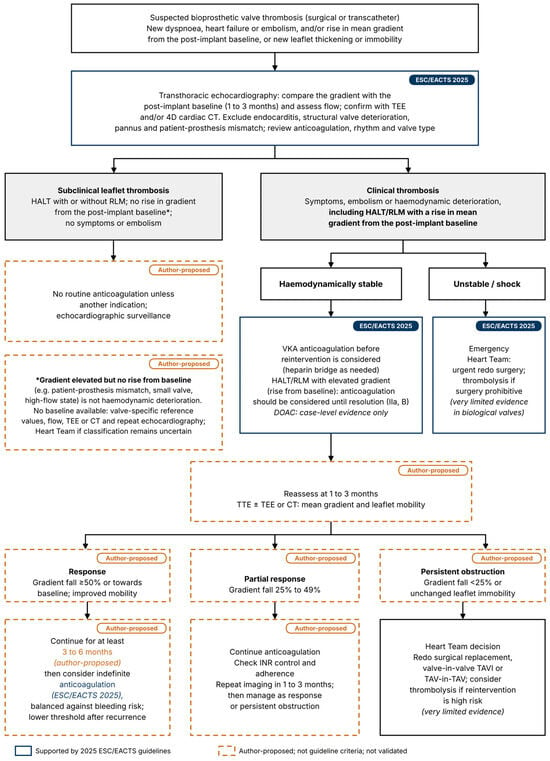
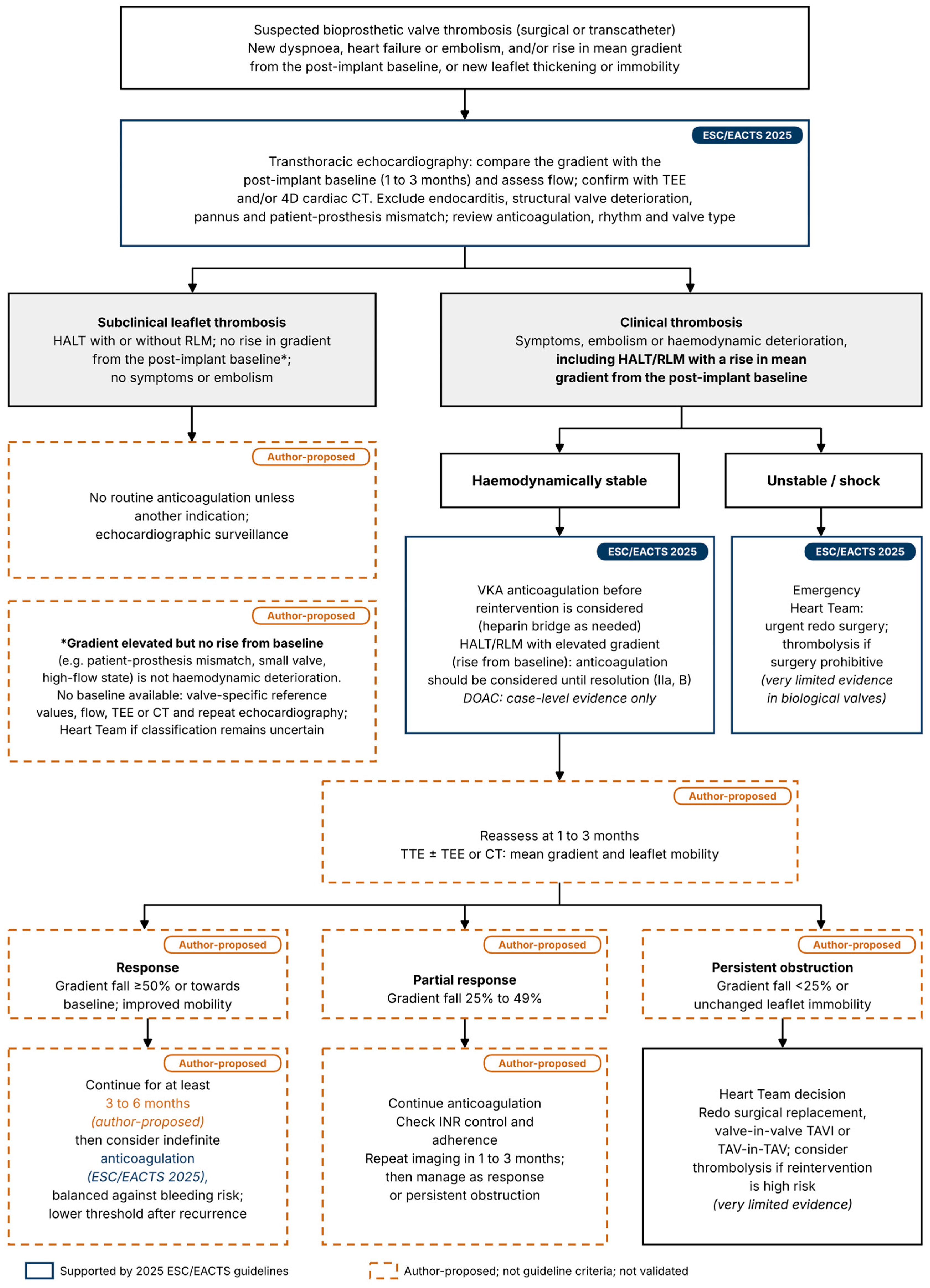
HALT and RLM affected about 11% to 12% of patients on surveillance CT after aortic bioprosthesis implantation, more often after transcatheter than surgical replacement [5,51]. Anticoagulation reduced and reversed these findings [4,5,52], but HALT also regressed without treatment [11]. Meta-analyses linked CT-defined leaflet thrombosis to transient ischaemic attack and cerebrovascular events [9,53], whereas long-term cohorts, a randomised trial substudy and a 2026 meta-analysis found no clear effect on major clinical outcomes [51,54,55,56]. Prophylactic anticoagulation reduced HALT and RLM without clinical benefit [57,58]. The 2025 ESC/EACTS guideline recommends that anticoagulation should be considered for leaflet thickening with reduced motion and elevated gradients, at least until resolution (Class IIa, Level B) [12]. An elevated gradient in a patient with HALT or RLM does not, however, establish haemodynamic valve deterioration unless a relevant rise from the post-implantation baseline has been documented (Section 3) [6]. When such a rise is present, consistent with at least moderate haemodynamic valve deterioration, the presentation meets the definition of clinical thrombosis used in this review even in the absence of symptoms, and it is placed in the clinical branch of Figure 1. VARC-3 would classify an asymptomatic patient as having clinically significant thrombosis only if the deterioration were severe [6]; the lower threshold used in Figure 1 follows the guideline recommendation on treatment rather than this research definition. A gradient that is high but unchanged from baseline, for example because of patient–prosthesis mismatch, or one raised by a high-flow state, does not indicate haemodynamic deterioration, and HALT or RLM in that setting is managed as subclinical leaflet thrombosis. When no baseline study is available, the gradient should be interpreted against valve-specific reference values, together with an assessment of flow, leaflet morphology and mobility on TEE or CT, and repeat echocardiography; classification may remain uncertain until serial measurements are available [6,30]. Studies of HALT inform its management but not conclusions about clinical thrombosis.
Figure 1.
The proposed management framework for suspected bioprosthetic valve thrombosis, derived from the reviewed evidence and current guidelines. The boxes with a solid blue outline and the label ‘ESC/EACTS 2025’ indicate steps supported by the 2025 ESC/EACTS guidelines [12]; the boxes with a dashed orange outline and the label ‘Author-proposed’ indicate review intervals, response thresholds and treatment durations proposed by the author, which are not guideline criteria and have not been validated. Haemodynamic valve deterioration, defined as a rise in mean gradient, with a fall in effective orifice area or Doppler velocity index, from the post-implantation baseline [6], places a patient with leaflet thickening or reduced motion in the clinical branch even without symptoms. An elevated gradient without a documented rise from baseline, as with patient–prosthesis mismatch or a high-flow state, does not, and such a patient is managed in the subclinical branch unless symptoms or embolism are present. The asterisk (*) in the subclinical branch denotes an elevated gradient without a documented rise from the post-implant baseline, which is explained in the box marked * below it. When no baseline study is available, classification relies on valve-specific reference values, assessment of flow, TEE or CT and serial echocardiography. Response: a fall in the mean gradient of at least 50% or a return towards the post-implant baseline, with improved leaflet mobility on echocardiography or CT. Partial response: a fall of 25% to 49%, for which anticoagulation is continued, anticoagulation control and adherence are reviewed, and imaging is repeated. Persistent obstruction: a fall of less than 25% or unchanged leaflet immobility. Options for unstable patients and for persistent obstruction are supported by very limited evidence in biological valves, and the suggested minimum duration of anticoagulation is not based on comparative evidence. 4D, four-dimensional; CT, computed tomography; DOAC, direct oral anticoagulant; HALT, hypoattenuated leaflet thickening; INR, international normalised ratio; RLM, reduced leaflet motion; TAV, transcatheter aortic valve; TAVI, transcatheter aortic valve implantation; TEE, transoesophageal echocardiography; TTE, transthoracic echocardiography; VKA, vitamin K antagonist.
4.15. Strength of the Evidence
Table 2 summarises the evidence for each strategy. The strength ratings are qualitative judgements by the author rather than a formal grading: evidence was rated weak when several observational series reported outcomes in the same direction without a controlled comparison; very weak when it consisted only of case reports, isolated patients within larger series or indirect data from other valve types; and absent when no outcome data were found. Reports of anticoagulation are grouped in Table 2 according to whether a VKA was specified, mixed or other agents were used without agent-specific outcomes, or the agent was not reported. For anticoagulation, the reported proportions with haemodynamic improvement are affected by selective inclusion, response-based case definitions, differing endpoints and mixed-position populations, and the benefit of anticoagulation over any alternative cannot be estimated from uncontrolled data. For thrombolysis and reintervention, outcome data specific to biological valve thrombosis are almost absent.
5. Practical Approach and Discussion
This review separates clinically significant bioprosthetic valve thrombosis from subclinical imaging findings and examines what has been reported after diagnosis in surgical and transcatheter valves. Four main findings emerged. First, haemodynamic improvement after anticoagulation, almost always with a VKA, was reported in most patients assessed in both surgical and transcatheter valves, but treated and assessed denominators were often incomplete, and the proportions depended on the case definition and on whether partial or complete resolution was required [18,19,26,27]. Second, recovery among responders often took several months [20]. Third, thrombosis was frequently followed by recurrence, bleeding during treatment and later valve re-replacement in the only cohort with long follow-up, which included right-sided valves [19]. Fourth, there is essentially no comparative evidence for thrombolysis, redo surgery or transcatheter reintervention.
These observations are consistent with the 2025 ESC/EACTS recommendation to confirm thrombosis with TEE and/or four-dimensional CT and to begin VKA therapy before considering reintervention in stable patients, while urgent reintervention or thrombolysis is considered for haemodynamic instability [12]. Imaging confirmation matters because the differential diagnosis includes structural valve deterioration, pannus, patient–prosthesis mismatch and endocarditis, and because CT performed for clinical or echocardiographic indications confirmed leaflet thrombosis in only about one-third of suspected cases in one series [21,30]. Confirmation before treatment also reduces reliance on response to establish the diagnosis, which otherwise complicates the interpretation of treatment outcomes.
Considering surgical and transcatheter valves, and aortic and mitral positions, together shows where the evidence differs. For surgical aortic valves, the largest treated cohorts come from one institution, and they overlap and include right-sided valves, so position-specific response rates are unavailable [17,18,19,20]; aortic-specific data are limited to two small, probably nested German series [14,15] and CT follow-up of six patients [21]. For transcatheter aortic valves, the evidence comes from seven registries from different centres with exclusively aortic valves [22,23,24,25,26,27,28], but four used case definitions that included treatment response, two did not report treated or assessed denominators, follow-up was short, and no transcatheter cohort reported long-term recurrence or bleeding comparable with the surgical data. Recommendations on extended anticoagulation after transcatheter valve thrombosis are therefore extrapolated largely from a surgical, mixed-position cohort [19]. Conversely, transcatheter registries contribute most of the information on early response, on outcomes after valve-in-valve implantation and on DOAC use [24,25,27], none of which is available for surgical valves.
The mitral position is the least studied. Direct treatment evidence consists of six surgical mitral valves with complete resolution after anticoagulation [16], two transcatheter mitral valves of which one responded [29], and position-specific time to recovery from a mixed cohort [20]; the mitral subsets of the larger Mayo Clinic cohorts were not reported separately for response, recurrence or bleeding [18,19]. The relatively high incidence of thrombosis reported after surgical and transcatheter mitral bioprosthesis implantation [38,49,50]; the low-velocity flow across the mitral prosthesis; and the frequent coexistence of atrial fibrillation, which often requires anticoagulation for its own sake, suggest that results from the aortic position should not be assumed to apply to the mitral position. Because many patients with a mitral bioprosthesis already have an indication for anticoagulation, the question of extended treatment after thrombosis may arise less often, but no study has examined treatment duration, recurrence or bleeding specifically after mitral thrombosis, and mitral-specific cohorts are needed.
The higher rate of thrombosis in porcine compared to pericardial surgical aortic valves [2,15] and the higher incidence after valve-in-valve implantation and with balloon-expandable transcatheter valves [23,25,59] suggest that leaflet design, neosinus flow and stent geometry influence the occurrence of thrombus. Immobile leaflets at the time of surgical implantation have been linked to later thrombosis and reintervention [60]. These factors may identify patients who need closer echocardiographic surveillance in the first years after implantation [33].
For patients who do not respond, or who present with instability, the choice between thrombolysis, redo surgery and transcatheter reintervention depends on surgical risk, valve anatomy and local expertise rather than on comparative data. Low-dose, slow-infusion thrombolysis has been proposed for patients at high operative risk [10], but its safety in elderly patients with biological valves has not been established in any series, and redo TAVI over a thrombosed valve has not been studied. Figure 1 summarises a framework derived from the reviewed evidence and current guidelines [12,13]. Steps supported by the 2025 ESC/EACTS guidelines are labelled as such within the figure. The review intervals; the gradient thresholds for response, partial response and persistent obstruction; and the minimum treatment period are labelled within the relevant boxes as author-proposed; they are not guideline criteria and the framework has not been validated. Patients with a partial response are shown as a separate branch, in which anticoagulation is continued and imaging repeated before deciding between continued treatment and reintervention.
The optimal duration of anticoagulation after recovery is unknown. The 2025 ESC/EACTS guideline states that indefinite anticoagulation may be considered after confirmed bioprosthetic valve thrombosis, balanced against the risk of bleeding [12]. The 23% recurrence rate among initial responders in one mixed-valve cohort [19] is consistent with that position, but major bleeding was also more frequent than in matched controls in the same observational cohort [19], and no study has compared durations. The approach in Figure 1, at least 3 to 6 months of anticoagulation followed by an individualised decision on indefinite therapy, with a lower threshold after recurrence, is an author-proposed practice approach that sets a minimum period within the guideline position; it is not derived from comparative data. Slower recovery reported among pericardial aortic valve responders [20] does not indicate how long to persist with anticoagulation before escalation in a patient with continuing obstruction; that decision should be individualised by the Heart Team.
6. Evidence Gaps and Future Research
Future studies should apply the VARC-3 definitions of clinically significant valve thrombosis and HALT [6]; establish the diagnosis before treatment; report outcomes separately by valve type and position; and record treated and evaluable denominators, timing of assessment, recurrence, reintervention, bleeding and embolic events separated by timing and attribution. Priorities include a comparison of VKAs and DOACs for established thrombosis, a randomised comparison of short and extended anticoagulation after recovery, and prospective registries of thrombolysis and reintervention in non-responders. The ongoing RESOLVE registry (NCT02318342) may provide part of this evidence. Cohorts of transcatheter and mitral bioprosthesis thrombosis with long-term follow-up are a particular need.
7. Limitations
This is a narrative review, and the literature was not identified or appraised with systematic review methods; relevant reports may have been missed, and selection by a single author may have introduced bias. The underlying studies were small, mostly retrospective and heterogeneous in their definitions of thrombosis and response; several overlapped, and some included right-sided valves without separate reporting. Positive results are more likely to be published, particularly for thrombolysis and DOAC therapy. Because the largest cohorts overlap and include right-sided valves, conclusions specific to the aortic or mitral position, and to transcatheter valves, rest on few patients.
8. Conclusions
Observational reports describe frequent haemodynamic improvement after anticoagulation, predominantly with VKAs, for suspected or confirmed clinical bioprosthetic valve thrombosis in haemodynamically stable patients. Heterogeneous diagnostic and response criteria, overlapping cohorts and minimal comparative evidence prevent reliable estimates of comparative effectiveness or optimal treatment duration. Recurrence and bleeding warrant attention, and evidence for thrombolysis and reintervention remains sparse. Evidence specific to transcatheter and mitral bioprostheses is particularly limited, and recommendations for their long-term management are largely extrapolated from surgical, mixed-position cohorts. HALT without haemodynamic consequence should be considered separately from clinical thrombosis.
Funding
This research received no external funding.
Institutional Review Board Statement
Not applicable.
Informed Consent Statement
Not applicable.
Data Availability Statement
No new data were created or analyzed in this study. Data sharing is not applicable to this article.
Acknowledgments
During the preparation of this manuscript the author did not use artificial intelligence. The author has reviewed and edited the output and takes full responsible for the content of this publication.
Conflicts of Interest
The author declares no conflicts of interest.
Abbreviations
The following abbreviations are used in this manuscript:
| CT | computed tomography |
| DOAC | direct oral anticoagulant |
| EACTS | European Association for Cardio-Thoracic Surgery |
| ESC | European Society of Cardiology |
| HALT | hypoattenuated leaflet thickening |
| NYHA | New York Heart Association |
| RLM | reduced leaflet motion |
| SAVR | surgical aortic valve replacement |
| TAV | transcatheter aortic valve |
| TAVI | transcatheter aortic valve implantation |
| TEE | transoesophageal echocardiography |
| TMVR | transcatheter mitral valve replacement |
| TTE | transthoracic echocardiography |
| VARC-3 | Valve Academic Research Consortium 3 |
| VKA | vitamin K antagonist |
References
- Dangas, G.D.; Weitz, J.I.; Giustino, G.; Makkar, R.; Mehran, R. Prosthetic Heart Valve Thrombosis. J. Am. Coll. Cardiol. 2016, 68, 2670–2689. [Google Scholar] [CrossRef] [Scilit]
- Brown, M.L.; Park, S.J.; Sundt, T.M.; Schaff, H.V. Early thrombosis risk in patients with biologic valves in the aortic position. J. Thorac. Cardiovasc. Surg. 2012, 144, 108–111. [Google Scholar] [CrossRef] [Scilit]
- Egbe, A.C.; Pislaru, S.V.; Pellikka, P.A.; Poterucha, J.T.; Schaff, H.V.; Maleszewski, J.J.; Connolly, H.M. Bioprosthetic Valve Thrombosis Versus Structural Failure: Clinical and Echocardiographic Predictors. J. Am. Coll. Cardiol. 2015, 66, 2285–2294. [Google Scholar] [CrossRef] [Scilit]
- Makkar, R.R.; Fontana, G.; Jilaihawi, H.; Chakravarty, T.; Kofoed, K.F.; De Backer, O.; Asch, F.M.; Ruiz, C.E.; Olsen, N.T.; Trento, A.; et al. Possible Subclinical Leaflet Thrombosis in Bioprosthetic Aortic Valves. N. Engl. J. Med. 2015, 373, 2015–2024. [Google Scholar] [CrossRef] [Scilit]
- Chakravarty, T.; Søndergaard, L.; Friedman, J.; De Backer, O.; Berman, D.; Kofoed, K.F.; Jilaihawi, H.; Shiota, T.; Abramowitz, Y.; Jørgensen, T.H.; et al. Subclinical leaflet thrombosis in surgical and transcatheter bioprosthetic aortic valves: An observational study. Lancet 2017, 389, 2383–2392. [Google Scholar] [CrossRef] [Scilit]
- Généreux, P.; Piazza, N.; Alu, M.C.; Nazif, T.; Hahn, R.T.; Pibarot, P.; Bax, J.J.; Leipsic, J.A.; Blanke, P.; Blackstone, E.H.; et al. VARC-3 Writing Committee. Valve Academic Research Consortium 3: Updated Endpoint Definitions for Aortic Valve Clinical Research. J. Am. Coll. Cardiol. 2021, 77, 2717–2746. [Google Scholar] [CrossRef] [Scilit]
- Rheude, T.; Pellegrini, C.; Stortecky, S.; Marwan, M.; Xhepa, E.; Ammon, F.; Pilgrim, T.; Mayr, N.P.; Husser, O.; Achenbach, S.; et al. Meta-Analysis of Bioprosthetic Valve Thrombosis After Transcatheter Aortic Valve Implantation. Am. J. Cardiol. 2020, 138, 92–99. [Google Scholar] [CrossRef] [Scilit]
- Sannino, A.; Hahn, R.T.; Leipsic, J.; Mack, M.J.; Grayburn, P.A. Meta-analysis of Incidence, Predictors and Consequences of Clinical and Subclinical Bioprosthetic Leaflet Thrombosis After Transcatheter Aortic Valve Implantation. Am. J. Cardiol. 2020, 132, 106–113. [Google Scholar] [CrossRef] [Scilit]
- Bogyi, M.; Schernthaner, R.E.; Loewe, C.; Gager, G.M.; Dizdarevic, A.M.; Kronberger, C.; Postula, M.; Legutko, J.; Velagapudi, P.; Hengstenberg, C.; et al. Subclinical Leaflet Thrombosis After Transcatheter Aortic Valve Replacement: A Meta-Analysis. JACC Cardiovasc. Interv. 2021, 14, 2643–2656. [Google Scholar] [CrossRef] [Scilit]
- Adrichem, R.; Rodes Cabau, J.; Mehran, R.; Park, D.W.; Ten Berg, J.M.; de Backer, O.; Hengstenberg, C.; Budde, R.P.J.; Dangas, G.D.; Makkar, R.; et al. Treatment of Transcatheter Aortic Valve Thrombosis: JACC Review Topic of the Week. J. Am. Coll. Cardiol. 2024, 84, 848–861. [Google Scholar] [CrossRef] [Scilit]
- Sondergaard, L.; De Backer, O.; Kofoed, K.F.; Jilaihawi, H.; Fuchs, A.; Chakravarty, T.; Kashif, M.; Kazuno, Y.; Kawamori, H.; Maeno, Y.; et al. Natural history of subclinical leaflet thrombosis affecting motion in bioprosthetic aortic valves. Eur. Heart J. 2017, 38, 2201–2207. [Google Scholar] [CrossRef] [Scilit]
- Praz, F.; Borger, M.A.; Lanz, J.; Marin-Cuartas, M.; Abreu, A.; Adamo, M.; Ajmone Marsan, N.; Barili, F.; Bonaros, N.; Cosyns, B.; et al. 2025 ESC/EACTS Guidelines for the management of valvular heart disease. Eur. Heart J. 2025, 46, 4635–4736. [Google Scholar] [CrossRef] [Scilit]
- Otto, C.M.; Nishimura, R.A.; Bonow, R.O.; Carabello, B.A.; Erwin, J.P.; Gentile, F.; Jneid, H.; Krieger, E.V.; Mack, M.; McLeod, C.; et al. 2020 ACC/AHA Guideline for the Management of Patients With Valvular Heart Disease: A Report of the American College of Cardiology/American Heart Association Joint Committee on Clinical Practice Guidelines. Circulation 2020, 143, e72–e227. [Google Scholar] [CrossRef] [Scilit]
- Jander, N.; Kienzle, R.P.; Kayser, G.; Neumann, F.J.; Gohlke-Baerwolf, C.; Minners, J. Usefulness of phenprocoumon for the treatment of obstructing thrombus in bioprostheses in the aortic valve position. Am. J. Cardiol. 2012, 109, 257–262. [Google Scholar] [CrossRef] [Scilit]
- Jander, N.; Sommer, H.; Pingpoh, C.; Kienzle, R.P.; Martin, G.; Zeh, W.; Pache, G.; Siepe, M.; Beyersdorf, F.; Schumacher, M.; et al. The porcine valve type predicts obstructive thrombosis beyond the first three postoperative months in bioprostheses in the aortic position. Int. J. Cardiol. 2015, 199, 90–95. [Google Scholar] [CrossRef] [Scilit]
- Butnaru, A.; Shaheen, J.; Tzivoni, D.; Tauber, R.; Bitran, D.; Silberman, S. Diagnosis and treatment of early bioprosthetic malfunction in the mitral valve position due to thrombus formation. Am. J. Cardiol. 2013, 112, 1439–1444. [Google Scholar] [CrossRef] [Scilit]
- Pislaru, S.V.; Hussain, I.; Pellikka, P.A.; Maleszewski, J.J.; Hanna, R.D.; Schaff, H.V.; Connolly, H.M. Misconceptions, diagnostic challenges and treatment opportunities in bioprosthetic valve thrombosis: Lessons from a case series. Eur. J. Cardiothorac. Surg. 2015, 47, 725–732. [Google Scholar] [CrossRef] [Scilit]
- Egbe, A.C.; Connolly, H.M.; Pellikka, P.A.; Schaff, H.V.; Hanna, R.; Maleszewski, J.J.; Nkomo, V.T.; Pislaru, S.V. Outcomes of Warfarin Therapy for Bioprosthetic Valve Thrombosis of Surgically Implanted Valves: A Prospective Study. JACC Cardiovasc. Interv. 2017, 10, 379–387. [Google Scholar] [CrossRef] [Scilit]
- Petrescu, I.; Egbe, A.C.; Ionescu, F.; Nkomo, V.T.; Greason, K.L.; Pislaru, C.; Pellikka, P.A.; Connolly, H.M.; Pislaru, S.V. Long-Term Outcomes of Anticoagulation for Bioprosthetic Valve Thrombosis. J. Am. Coll. Cardiol. 2020, 75, 857–866. [Google Scholar] [CrossRef] [Scilit]
- Naser, J.A.; Petrescu, I.; Ionescu, F.; Nkomo, V.T.; Pislaru, C.; Schaff, H.V.; Pellikka, P.A.; Connolly, H.M.; Egbe, A.C.; Pislaru, S.V. Gradient changes in bioprosthetic valve thrombosis: Duration of anticoagulation and strategies to improve detection. Open Heart 2021, 8, e001608. [Google Scholar] [CrossRef] [Scilit]
- Basra, S.S.; Gopal, A.; Hebeler, K.R.; Baumgarten, H.; Anderson, A.; Potluri, S.P.; Brinkman, W.T.; Szerlip, M.; Gopal, D.; Filardo, G.; et al. Clinical Leaflet Thrombosis in Transcatheter and Surgical Bioprosthetic Aortic Valves by Four-Dimensional Computed Tomography. Ann. Thorac. Surg. 2018, 106, 1716–1725. [Google Scholar] [CrossRef] [Scilit]
- Latib, A.; Naganuma, T.; Abdel-Wahab, M.; Danenberg, H.; Cota, L.; Barbanti, M.; Baumgartner, H.; Finkelstein, A.; Legrand, V.; de Lezo, J.S.; et al. Treatment and clinical outcomes of transcatheter heart valve thrombosis. Circ. Cardiovasc. Interv. 2015, 8, e001779. [Google Scholar] [CrossRef] [Scilit]
- Jose, J.; Sulimov, D.S.; El-Mawardy, M.; Sato, T.; Allali, A.; Holy, E.W.; Becker, B.; Landt, M.; Kebernik, J.; Schwarz, B.; et al. Clinical Bioprosthetic Heart Valve Thrombosis After Transcatheter Aortic Valve Replacement: Incidence, Characteristics, and Treatment Outcomes. JACC Cardiovasc. Interv. 2017, 10, 686–697. [Google Scholar] [CrossRef] [Scilit]
- Franzone, A.; Pilgrim, T.; Haynes, A.G.; Lanz, J.; Asami, M.; Praz, F.; Räber, L.; Roost, E.; Langhammer, B.; Windecker, S.; et al. Transcatheter aortic valve thrombosis: Incidence, clinical presentation and long-term outcomes. Eur. Heart J. Cardiovasc. Imaging 2018, 19, 398–404. [Google Scholar] [CrossRef] [Scilit]
- Abdel-Wahab, M.; Simonato, M.; Latib, A.; Goleski, P.J.; Allali, A.; Kaur, J.; Azadani, A.N.; Horlick, E.; Testa, L.; Orvin, K.; et al. Clinical Valve Thrombosis After Transcatheter Aortic Valve-in-Valve Implantation. Circ. Cardiovasc. Interv. 2018, 11, e006730. [Google Scholar] [CrossRef] [Scilit]
- Sorysz, D.; Dziewierz, A.; Bagieński, M.; Parma, R.; Grygier, M.; Dębiński, M.; Kübler, P.; Stąpór, M.; Jagielak, D.; Kleczyński, P.; et al. Early results of the ongoing Polish Registry of Valve Thrombosis after Transcatheter Aortic Valve Implantation (ZAK-POLTAVI). Kardiol. Pol. 2020, 78, 681–687. [Google Scholar] [CrossRef] [Scilit]
- Mouyen, T.; Manigold, T.; Collet, J.P.; Durand, E.; Barbey, C.; Lhermusier, T.; Tchetche, D.; Chollet, T.; Mulliez, A.; Motreff, P.; et al. Transcatheter aortic valve thrombosis: Data from a French multicenter cohort analysis. Catheter. Cardiovasc. Interv. 2021, 98, 352–362. [Google Scholar] [CrossRef] [Scilit]
- Nuis, R.J.; Yee, J.; Adrichem, R.; Hokken, T.W.; Lenzen, M.; Daemen, J.; de Jaegere, P.P.; Van Mieghem, N.M. Incidence and mechanisms of bioprosthetic dysfunction after transcatheter implantation of a mechanically-expandable heart valve. EuroIntervention 2022, 18, 769–776. [Google Scholar] [CrossRef] [Scilit]
- Eng, M.H.; Greenbaum, A.; Wang, D.D.; Wyman, J.; Arjomand, H.; Yadav, P.; Nemeh, H.; Paone, G.; Guerrero, M.; O’Neill, W. Thrombotic valvular dysfunction with transcatheter mitral interventions for postsurgical failures. Catheter. Cardiovasc. Interv. 2017, 90, 321–328. [Google Scholar] [CrossRef] [Scilit]
- Lancellotti, P.; Pibarot, P.; Chambers, J.; Edvardsen, T.; Delgado, V.; Dulgheru, R.; Pepi, M.; Cosyns, B.; Dweck, M.R.; Garbi, M.; et al. Recommendations for the imaging assessment of prosthetic heart valves: A report from the European Association of Cardiovascular Imaging endorsed by the Chinese Society of Echocardiography, the Inter-American Society of Echocardiography, and the Brazilian Department of Cardiovascular Imaging. Eur. Heart J. Cardiovasc. Imaging 2016, 17, 589–590. [Google Scholar] [CrossRef] [Scilit]
- Mylotte, D.; Andalib, A.; Thériault-Lauzier, P.; Dorfmeister, M.; Girgis, M.; Alharbi, W.; Chetrit, M.; Galatas, C.; Mamane, S.; Sebag, I.; et al. Transcatheter heart valve failure: A systematic review. Eur. Heart J. 2015, 36, 1306–1327. [Google Scholar] [CrossRef] [Scilit]
- Córdoba-Soriano, J.G.; Puri, R.; Amat-Santos, I.; Ribeiro, H.B.; Abdul-Jawad Altisent, O.; del Trigo, M.; Paradis, J.M.; Dumont, E.; Urena, M.; Rodés-Cabau, J. Valve thrombosis following transcatheter aortic valve implantation: A systematic review. Rev. Esp. Cardiol. (Engl. Ed.) 2015, 68, 198–204. [Google Scholar] [CrossRef] [Scilit]
- Egbe, A.; Pislaru, S.V.; Ali, M.A.; Khan, A.R.; Boler, A.N.; Schaff, H.V.; Akintoye, E.; Connolly, H.M.; Nkomo, V.T.; Pellikka, P.A. Early Prosthetic Valve Dysfunction Due to Bioprosthetic Valve Thrombosis: The Role of Echocardiography. JACC Cardiovasc. Imaging 2018, 11, 951–958. [Google Scholar] [CrossRef] [Scilit]
- Khan, S.; Achike, O.; Nekkanti, R.; Carabello, B. Successful Apixaban Treatment of TAVR Thrombosis after Warfarin Failure. Cardiology 2018, 140, 199–203. [Google Scholar] [CrossRef] [Scilit]
- Mathiassen, O.N.; Grove, E.L.; Hansson, N.C.; Norgaard, B.L. Late Obstructive Transcatheter Heart Valve Thrombosis Resolved by Rivaroxaban. Am. J. Case Rep. 2017, 18, 573–575. [Google Scholar] [CrossRef] [Scilit]
- Bamford, P.; Rogers, J.; Bassin, L.; Kull, A. Large Bioprosthetic Aortic Valve Thrombi on DOACs. Heart Lung Circ. 2019, 28, e139–e142. [Google Scholar] [CrossRef] [Scilit]
- Nishimura, Y.; Yasuda, M.; Sudo, K.; Watanabe, H.; Okamura, A.; Iwanaga, Y. Sub-acute clinical leaflet thrombosis after transcatheter aortic valve implantation under direct oral anticoagulants. Cardiovasc. Interv. Ther. 2026, in press. [Google Scholar] [CrossRef] [Scilit]
- Zorman, M.J.; Vibhishanan, J.; Dangas, K.; Castle, J.; Li, K.H.C.; Coronelli, M.; Eastwick-Jones, K.; Swan, A.; Johnson, N.; Choksey, A.; et al. Valve thrombosis and antithrombotic therapy after bioprosthetic mitral valve replacement: A systematic review and meta-analysis. Eur. Heart J. Cardiovasc. Pharmacother. 2025, 11, 251–263. [Google Scholar] [CrossRef] [Scilit]
- Adrichem, R.; Budde, R.P.J.; Van Mieghem, N.M. Intravenous thrombolysis for bioprosthetic valve thrombosis. Eur. Heart J. 2023, 44, 3104. [Google Scholar] [CrossRef] [Scilit]
- Roosen, J.; Haemers, P.; Verhamme, P.; Ameloot, K.; De Praetere, H. Low-dose and slow-infusion thrombolysis for prosthetic valve thrombosis after a transcatheter valve in the mitral position. JACC Cardiovasc. Interv. 2017, 10, 738–739. [Google Scholar] [CrossRef] [Scilit]
- Vinnakota, S.; Jentzer, J.C.; Luis, S.A. Thrombolysis for COVID-19-associated bioprosthetic mitral valve thrombosis with shock. Eur. Heart J. 2021, 42, 4093. [Google Scholar] [CrossRef] [Scilit]
- Özkan, M.; Gündüz, S.; Gürsoy, O.M.; Karakoyun, S.; Astarcıoğlu, M.A.; Kalçık, M.; Aykan, A.Ç.; Çakal, B.; Bayram, Z.; Oğuz, A.E.; et al. Ultraslow thrombolytic therapy: A novel strategy in the management of PROsthetic MEchanical valve Thrombosis and the prEdictors of outcomE: The Ultra-slow PROMETEE trial. Am. Heart J. 2015, 170, 409–418. [Google Scholar] [CrossRef] [Scilit]
- Huang, G.; Schaff, H.V.; Sundt, T.M.; Rahimtoola, S.H. Treatment of obstructive thrombosed prosthetic heart valve. J. Am. Coll. Cardiol. 2013, 62, 1731–1736. [Google Scholar] [CrossRef] [Scilit]
- Szekely, M.; Lopez-Trevino, M.G.; Gecse, I.I.; Kritya, M.; Kharsa, C.; Sarfaraz, Z.K.; Aoun, J.; Reul, R.M.; Quarti, A.G.; Lawrie, G.M.; et al. 10-year experience with transcatheter aortic valve explants in a high-volume center. Cardiovasc. Revasc. Med. 2026, in press. [Google Scholar] [CrossRef] [Scilit]
- Qamar, Y.; Schaff, H.V.; Greason, K.L.; Bagameri, G.; Dearani, J.A.; Holst, K.A.; Pochettino, A.; Arghami, A.; Todd, A.; Crestanello, J.A. Indications and Outcomes of Non-Emergent Cardiac Surgery Following Transcatheter Aortic Valve Replacement. Interdiscip. Cardiovasc. Thorac. Surg. 2026, 41, ivag142. [Google Scholar] [CrossRef] [Scilit]
- Guimaron, S.; Kalavrouziotis, D.; Maranda-Robitaille, M.; Dumont, E.; Joubert, P.; Babaki, S.; Rodés-Cabau, J.; Mohammadi, S. Macroscopic and microscopic features of surgically explanted transcatheter aortic valve prostheses. J. Card. Surg. 2022, 37, 3178–3187. [Google Scholar] [CrossRef] [Scilit]
- Bapat, V.N.; Zaid, S.; Fukuhara, S.; Saha, S.; Vitanova, K.; Kiefer, P.; Squiers, J.J.; Voisine, P.; Pirelli, L.; von Ballmoos, M.W.; et al. Surgical Explantation After TAVR Failure: Mid-Term Outcomes From the EXPLANT-TAVR International Registry. JACC Cardiovasc. Interv. 2021, 14, 1978–1991. [Google Scholar] [CrossRef] [Scilit]
- Landes, U.; Webb, J.G.; De Backer, O.; Sondergaard, L.; Abdel-Wahab, M.; Crusius, L.; Kim, W.K.; Hamm, C.; Buzzatti, N.; Montorfano, M.; et al. Repeat Transcatheter Aortic Valve Replacement for Transcatheter Prosthesis Dysfunction. J. Am. Coll. Cardiol. 2020, 75, 1882–1893. [Google Scholar] [CrossRef] [Scilit]
- Kikoïne, J.; Urena, M.; Chong Nguyen, C.; Fischer, Q.; Carrasco, J.L.; Brochet, E.; Ducrocq, G.; Vahanian, A.; Iung, B.; Himbert, D. Predictors and clinical impact of thrombosis after transcatheter mitral valve implantation using balloon-expandable bioprostheses. EuroIntervention 2021, 16, 1455–1462. [Google Scholar] [CrossRef] [Scilit]
- Urena, M.; Brochet, E.; Lecomte, M.; Kerneis, C.; Carrasco, J.L.; Ghodbane, W.; Abtan, J.; Alkhoder, S.; Raffoul, R.; Iung, B.; et al. Clinical and haemodynamic outcomes of balloon-expandable transcatheter mitral valve implantation: A 7-year experience. Eur. Heart J. 2018, 39, 2679–2689. [Google Scholar] [CrossRef] [Scilit]
- Yasuda, N.; Kato, S.; Horita, N.; Sawamura, S.; Utsunomiya, D. Clinical significance of CT-detected hypoattenuated leaflet thickening after transcatheter aortic valve replacement: A systematic review and meta-analysis. J. Cardiovasc. Comput. Tomogr. 2026, in press. [Google Scholar] [CrossRef] [Scilit]
- Tudella, G.C.N.; Fagundes, C.S.; De Conto, T.; Marques, M.D.; Chemello, D. Efficacy and safety of anticoagulant therapy for hypoattenuated leaflet thickening Post-TAVR: A systematic review and meta-analysis. J. Thromb. Thrombolysis 2025, 59, 587–597. [Google Scholar] [CrossRef] [Scilit]
- Rashid, H.N.; Gooley, R.P.; Nerlekar, N.; Ihdayhid, A.R.; McCormick, L.M.; Nasis, A.; Cameron, J.D.; Brown, A.J. Bioprosthetic aortic valve leaflet thrombosis detected by multidetector computed tomography is associated with adverse cerebrovascular events: A meta-analysis of observational studies. EuroIntervention 2018, 13, e1748–e1755. [Google Scholar] [CrossRef] [Scilit]
- Imaeda, S.; Inohara, T.; Yoshijima, N.; Kobari, Y.; Myojin, S.; Ryuzaki, T.; Hattori, O.; Shinada, K.; Tsuruta, H.; Takahashi, T.; et al. Natural History of Leaflet Thrombosis After Transcatheter Aortic Valve Replacement: A 5-Year Follow-Up Study. J. Am. Heart Assoc. 2022, 11, e026334. [Google Scholar] [CrossRef] [Scilit]
- Yanagisawa, R.; Tanaka, M.; Yashima, F.; Arai, T.; Jinzaki, M.; Shimizu, H.; Fukuda, K.; Watanabe, Y.; Naganuma, T.; Higashimori, A.; et al. Early and Late Leaflet Thrombosis After Transcatheter Aortic Valve Replacement. Circ. Cardiovasc. Interv. 2019, 12, e007349. [Google Scholar] [CrossRef] [Scilit]
- Choi, Y.; Ahn, J.M.; Kang, D.Y.; Kim, H.J.; Kim, H.; Lee, J.; Kim, M.; Park, J.; Kim, K.W.; Koo, H.J.; et al. Frequency, Predictors, and Clinical Impact of Valvular and Perivalvular Thrombus After Transcatheter Aortic Valve Replacement. JACC Cardiovasc. Interv. 2023, 16, 2967–2981. [Google Scholar] [CrossRef] [Scilit]
- De Backer, O.; Dangas, G.D.; Jilaihawi, H.; Leipsic, J.A.; Terkelsen, C.J.; Makkar, R.; Kini, A.S.; Veien, K.T.; Abdel-Wahab, M.; Kim, W.K.; et al. Reduced Leaflet Motion after Transcatheter Aortic-Valve Replacement. N. Engl. J. Med. 2020, 382, 130–139. [Google Scholar] [CrossRef] [Scilit]
- Montalescot, G.; Redheuil, A.; Vincent, F.; Desch, S.; De Benedictis, M.; Eltchaninoff, H.; Trenk, D.; Serfaty, J.M.; Charpentier, E.; Bouazizi, K.; et al. Apixaban and Valve Thrombosis After Transcatheter Aortic Valve Replacement: The ATLANTIS-4D-CT Randomized Clinical Trial Substudy. JACC Cardiovasc. Interv. 2022, 15, 1794–1804. [Google Scholar] [CrossRef] [Scilit]
- Abdel-Wahab, M.; Landt, M.; Neumann, F.J.; Massberg, S.; Frerker, C.; Kurz, T.; Kaur, J.; Toelg, R.; Sachse, S.; Jochheim, D.; et al. 5-Year Outcomes After TAVR With Balloon-Expandable Versus Self-Expanding Valves: Results From the CHOICE Randomized Clinical Trial. JACC Cardiovasc. Interv. 2020, 13, 1071–1082. [Google Scholar] [CrossRef] [Scilit]
- Naser, J.A.; Crestanello, J.A.; Nkomo, V.T.; Luis, S.A.; Thaden, J.J.; Geske, J.B.; Anderson, J.H.; Sinak, L.J.; Michelena, H.I.; Pislaru, S.V.; et al. Immobile Leaflets at Time of Bioprosthetic Valve Implantation: A Novel Risk Factor for Early Bioprosthetic Failure. Heart Lung Circ. 2022, 31, 1166–1175. [Google Scholar] [CrossRef] [Scilit]

Disclaimer/Publisher’s Note: The statements, opinions and data contained in all publications are solely those of the individual author(s) and contributor(s) and not of MDPI and/or the editor(s). MDPI and/or the editor(s) disclaim responsibility for any injury to people or property resulting from any ideas, methods, instructions or products referred to in the content. |
© 2026 by the author. Licensee MDPI, Basel, Switzerland. This article is an open access article distributed under the terms and conditions of the Creative Commons Attribution (CC BY) license.