


The story of International Medical Education (IME) began only five years ago with a simple but ambitious vision. Professor Hideki Kasuya, the founding Editor in Chief, together with the authors of this Editorial, recognized that medical education was becoming increasingly global, yet there was no dedicated international journal focusing specifically on the challenges and opportunities arising from the internationalization of health profession education. Student mobility, cross-border institutional partnerships, joint degree programs, multicultural classrooms, and globally connected healthcare systems were transforming the educational landscape. These developments required a scholarly platform where educators and researchers could exchange ideas, evaluate innovations, and share evidence-based practices from around the world.
This vision was enthusiastically embraced by MDPI. We remain deeply grateful to the MDPI Japan Office and Peter Roth for their confidence in this new initiative and unwavering support during the journal’s formative years. Their encouragement transformed an ambitious concept into a sustainable international publication. From its inception, IME was envisioned not merely as another medical education journal but as the official scholarly outlet of the Academic Society for International Medical Education (ASIME), providing a forum that reflected the increasingly international nature of medical education and healthcare.
The journal’s development would have been impossible without the MDPI editorial team’s exceptional dedication. Over these first five years, Weina Li, Echo Zhang, and Bommie Xiong have provided outstanding editorial guidance, professional management, and continuous support. They assisted the editorial team through every stage of the journal’s growth, from manuscript handling and editorial development to the demanding process of achieving international indexing. Their professionalism, efficiency, and commitment have played a central role in establishing IME as a respected journal within the field of medical education.
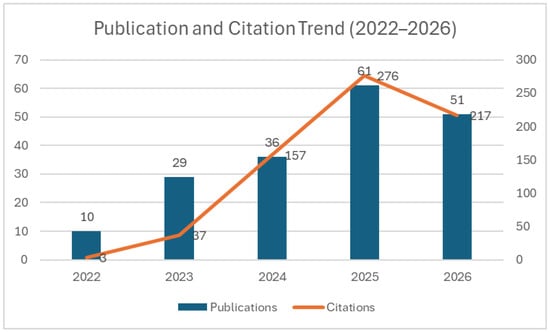
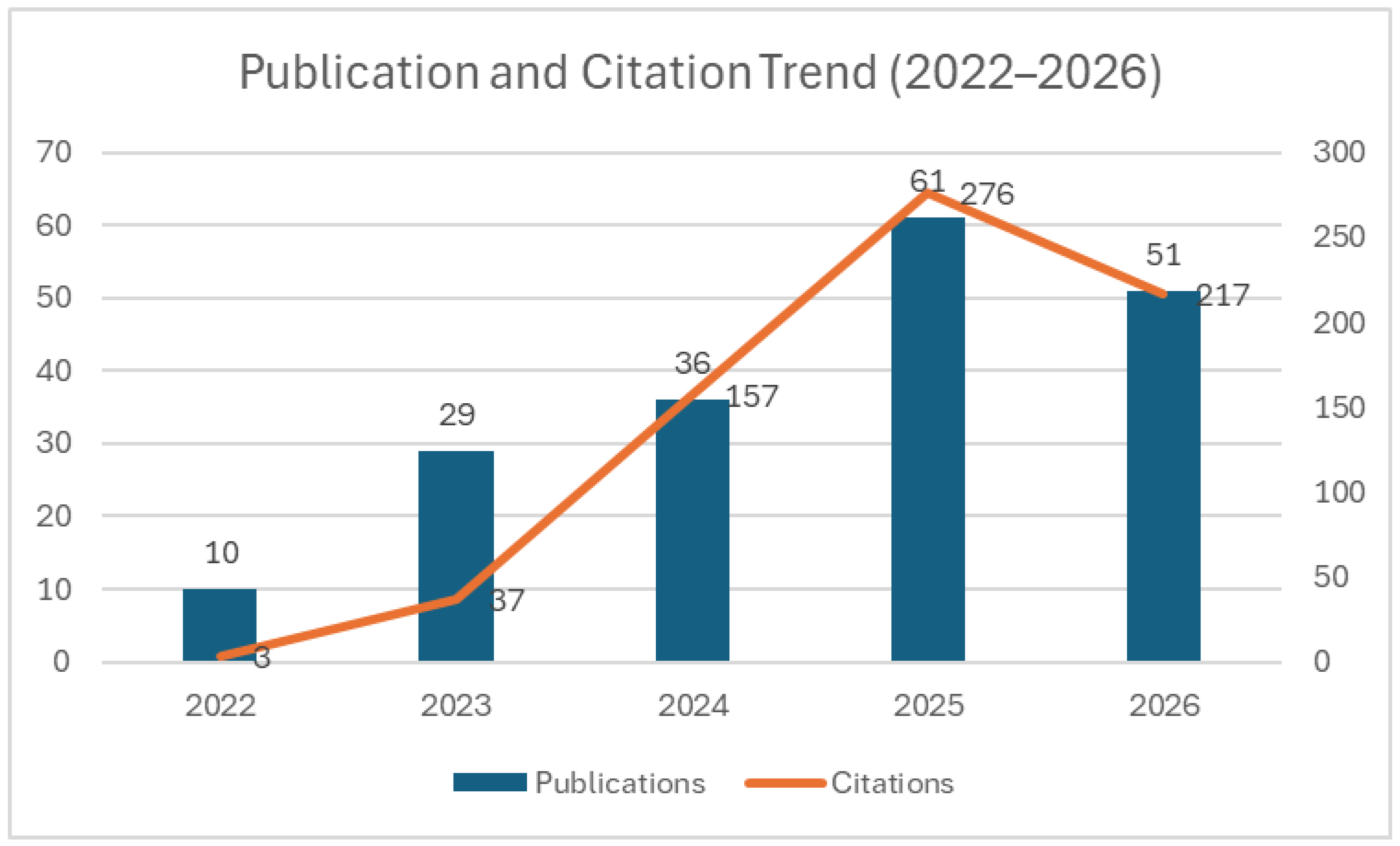
One of the clearest indicators of this success has been the journal’s rapid progression (Figure 1). Within only five years of its launch, IME has been indexed in major international databases, including Scopus, and received its first Journal Impact Factor. Although citation metrics alone cannot fully measure the quality or influence of a journal, these achievements represent important milestones that reflect increasing visibility, credibility, and recognition within the global academic community. They also demonstrate the collective efforts of our authors, reviewers, editorial board members, readers, and publishing staff, all of whom have contributed to the journal’s steady growth.
Figure 1.
Total number of citations received in a calendar year according to all published articles (as of 30 June 2026).
Another of IME’s major strengths is its distinguished Editorial Board. The journal has assembled an international team of highly respected scholars representing diverse disciplines, healthcare professions, educational systems, and geographical regions. Their expertise has ensured rigorous peer review while providing strategic guidance that has shaped the journal’s direction. Equally importantly, IME quickly attracted submissions from researchers worldwide addressing a broad spectrum of topics related to international medical education, including curriculum innovation, intercultural competence, student mobility, educational technology, global health education, faculty development, competency-based education, assessment, and international collaboration.
Our own experiences at Nagoya University have strongly influenced the journal’s mission. The Graduate School of Medicine has long been committed to the internationalization of undergraduate and postgraduate medical education through collaborative teaching with overseas partner universities, international student exchange, faculty mobility, and joint doctoral degree programs. Our educational research focuses on developing culturally inclusive learning environments that prepare future physicians to work effectively within increasingly diverse societies. We believe that cultural competence, global awareness, and international collaboration are no longer optional components of medical education but essential competencies for healthcare professionals practicing in the twenty-first century.
The awarding of our first Impact Factor therefore represents not an endpoint but the beginning of a new chapter in the journal’s development. Medical education continues to evolve rapidly in response to technological innovation, demographic changes, globalization, and changing healthcare needs. Educational research plays a crucial role in ensuring that these changes are supported by robust evidence rather than tradition or intuition. Through this Editorial, we celebrate an important milestone while simultaneously looking toward the future of health profession education.
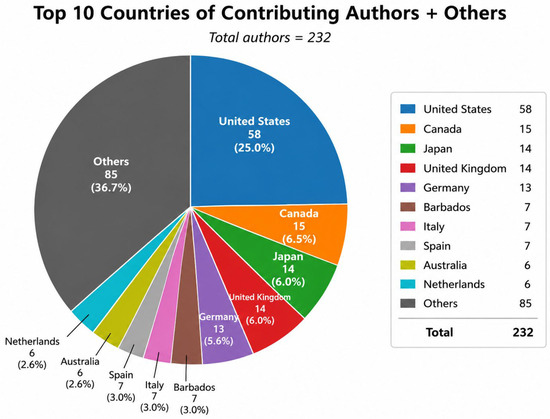
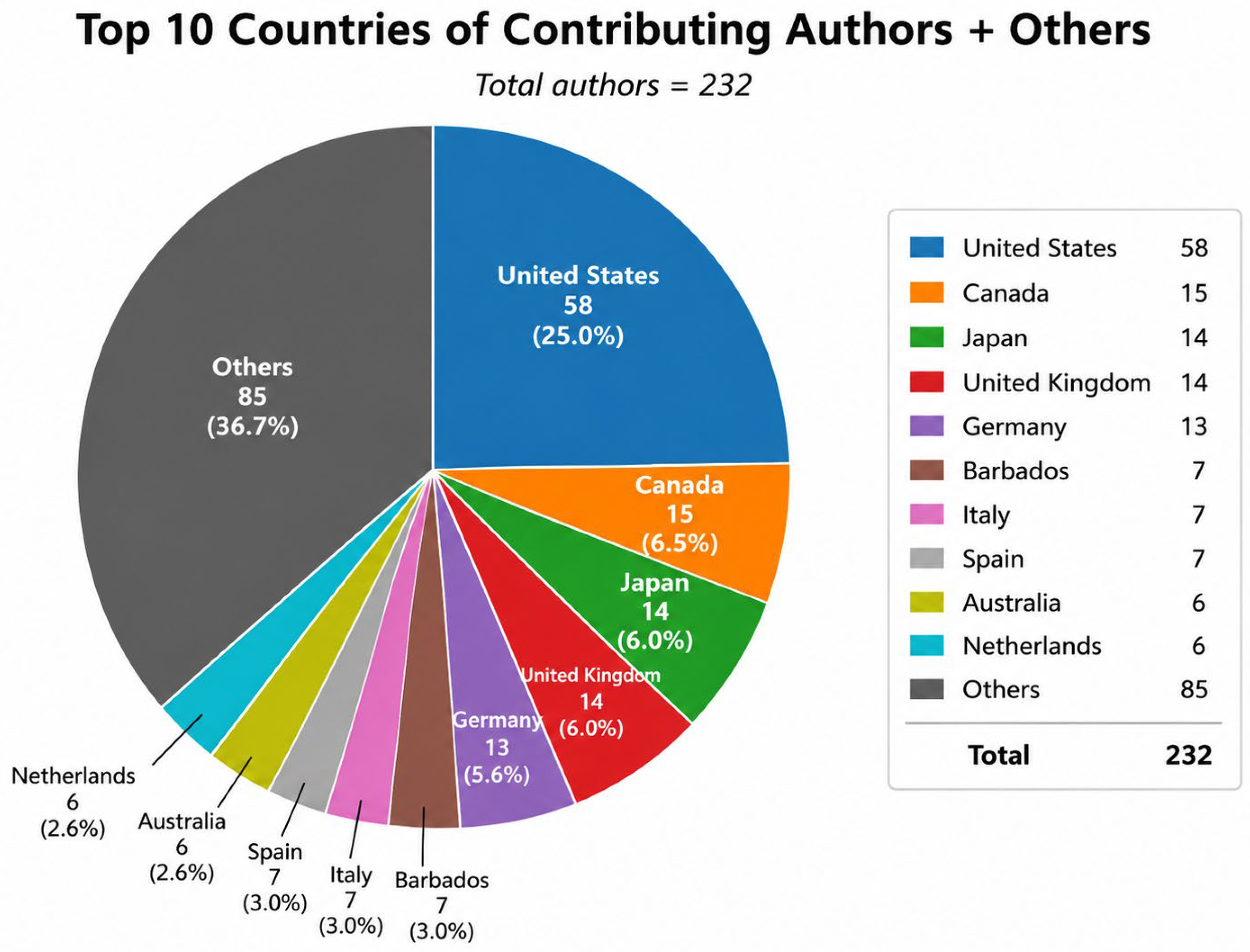
Receiving an Impact Factor also brings increased responsibility. As the journal continues to grow, maintaining scientific rigor, editorial transparency, ethical publishing standards, and timely peer review will remain our highest priorities. Citation metrics provide useful indicators of visibility and influence, but the lasting value of a journal ultimately depends upon the quality, originality, and practical relevance of the research it publishes. Our commitment is to continue serving the international medical education community by providing a fair, inclusive, and academically rigorous platform that welcomes contributions from educators and researchers representing diverse healthcare systems, cultures, and professional backgrounds (Figure 2).
Figure 2.
Distribution of authors by country.
Today, IME has established itself as one of Japan’s leading international journals dedicated to medical education. While we take great pride in this achievement, we remain committed to continuous improvement. Our ambition is not simply to increase citation metrics but to enhance the scientific quality, methodological rigor, educational impact, and international reach of every article we publish.
Medical education itself has undergone a remarkable transformation during the past decade. Competency-based education has become widely implemented across undergraduate, postgraduate, and continuing professional development programs. Traditional lecture-based teaching has increasingly been complemented by problem-based learning, team-based learning, simulation, virtual patients, workplace-based assessment, and digitally supported learning environments. Universities have also strengthened international partnerships through student exchange, joint degree programs, collaborative research initiatives, and faculty development activities, recognizing that preparing future healthcare professionals requires an increasingly global perspective.
Looking ahead, IME seeks to expand its role as a catalyst for innovation and international collaboration. We hope to strengthen connections between educators, researchers, clinicians, policymakers, and institutions working across national borders to improve health profession education. By encouraging interdisciplinary research and fostering global partnerships, the journal aims to contribute meaningfully to addressing the educational challenges faced by healthcare systems worldwide.
Every published article represents a shared commitment to improving medical education and, ultimately, patient care. The future of healthcare depends upon the quality of today’s medical education, and by working together across institutions, professions, cultures, and countries, we can continue to advance educational scholarship and prepare the next generation of healthcare professionals to meet the needs of an increasingly interconnected world.
Author Contributions
Conceptualization, B.A. and I.B.V.; writing—original draft preparation, B.A.; writing—review and editing B.A. and I.B.V. All authors have read and agreed to the published version of the manuscript.
Conflicts of Interest
The authors declare no conflict of interest.
Disclaimer/Publisher’s Note: The statements, opinions and data contained in all publications are solely those of the individual author(s) and contributor(s) and not of MDPI and/or the editor(s). MDPI and/or the editor(s) disclaim responsibility for any injury to people or property resulting from any ideas, methods, instructions or products referred to in the content. |
© 2026 by the authors. Published by MDPI on behalf of the Academic Society for International Medical Education. Licensee MDPI, Basel, Switzerland. This article is an open access article distributed under the terms and conditions of the Creative Commons Attribution (CC BY) license.