


Abstract
The production of volatile fatty acids (VFA) through acidogenic fermentation of organic waste is a promising strategy for resource recovery in circular bioeconomy systems, especially in those conditions where efficient resource utilisation is imperative, such as in future lunar missions. In this study, in collaboration with the Italian Space Agency, the organic waste conversion was investigated to produce VFA-rich effluent obtained under optimal conditions represents a promising potential feedstock for future downstream applications, such as photofermentative hydrogen production, although downstream biological validation was beyond the scope of the present study. In this experimental work, a synthetic mixture of organic waste and waste-activated sludge was fermented across varying organic loads (20–50 gTVS/L) with and without zeolite, supplemented as an ammonium absorbent. Results showed that VFA production increased with organic loads, with the highest volatile fatty acid yields observed at 40 gVS/L. Keeping the organic loads constant at 40 gVS/L, zeolite addition further enhanced volatile fatty acid concentrations in a dose-dependent manner, reaching a maximum at 15 g/L and 20 g/L; the highest yield was obtained at 30 and 40 gVS/L with 15 g/L, reaching a peak of 0.8 gCOD/gVS. Zeolite addition reduced the ammonia conversion by about 6% at OL 40 and 50.
1. Introduction
The management of organic wastes (such as waste-activated sludge (WAS), the organic fraction of municipal solid waste (OFMSW), and food wastewater (FWW)) presents a major challenge for urban areas [1,2,3]. These waste streams are rich in organic carbon and essential nutrients like nitrogen and phosphorus [2,3]. As highlighted by Atasoy et al. [1], such nutrient-rich streams serve as valuable substrates for producing volatile fatty acids (VFAs) and biofuels, directly supporting the circular economy [2,3]. The valorisation of organic residues through acidogenic fermentation (AF) to VFA has been extensively investigated within terrestrial circular bioeconomy frameworks [2]. AF of food and municipal organic wastes can yield high VFA concentrations (15–35 g COD/L) under controlled pH conditions (pH 9.0–11.0) and hydraulic retention times (HRT of 2–12 days), while uncontrolled pH strategies operating naturally at lower pH levels (pH 5.0–5.5) have also been explored to simplify operations while still achieving substantial VFA yields [3,4]. These VFAs constitute versatile intermediates that can be subsequently converted to energy carriers or biochemicals, thereby enhancing the sustainability of waste-management systems.
The integration of such bioprocesses into bioregenerative life-support systems (BLSS) for long-duration space missions is attracting growing attention. The Italian Space Agency (ASI) has prioritised research on bio-regenerative waste-recycling technologies for lunar bases [5] and is funding initiatives such as the ReBUS project, which investigates microbial and insect-based resource-recovery systems for lunar habitats (ReBUS project, contract No. DTA.AD002.558). In parallel, the BioMoon mission concept, developed under ESA’s scientific coordination, aims to advance the study of bioregenerative and astrobiological processes in lunar environments [6]. Building on this framework, the concept of acidogenic fermentation of organic residues was developed to generate VFA that can be valorised through downstream pathways such as UASB biogas recovery and photofermentation for hydrogen production, establishing a closed-loop chain that positions AF not merely as a waste-treatment step but as a central element in a self-sufficient lunar base bioregenerative system, as investigated in the BioMoon project (BioMoon—Low Gravity Biorefinery Platform contract No. 2024-3-E.0).
The efficiency of AF is influenced by a variety of factors, including temperature, pH conditions, and the presence of additives. Acidic conditions, particularly around pH 5.5–6.0, favour hydrolytic and acidogenic microbial activity, leading to enhanced VFA accumulation, predominantly acetic, butyric, and propionic acids [7]. In contrast, elevated ammonia concentrations (>1500 mg/L) can inhibit VFA degradation by disrupting microbial enzymatic processes, particularly affecting acetate and propionate pathways, thereby reducing overall VFA yields [8]. Moreover, high pH conditions (pH > 8.0–9.0) can intensify ammonia toxicity by increasing the proportion of free ammonia, which further suppresses microbial activity and destabilises fermentation, ultimately diminishing VFA production.
In addition, high ammonia concentration is known to inhibit purple non-sulphur bacteria (PNSB) by disrupting nitrogen metabolism and suppressing nitrogenase activity, which is essential for biohydrogen production [9]. This study aimed to produce a VFA-rich and low-ammonia effluent suitable for photofermentation. Recent strategies have focused on adsorptive additives to mitigate this toxicity. Zeolites (Z), an abundant and low-cost resource, can be used to remove ammonia by ion exchange from the residual solution of dark fermentation [10]. Gracia et al. [3] demonstrate that the addition of natural zeolite to food waste and sludge mixtures in fermentation effectively adsorbs free ammonium, thereby reducing inhibition and significantly enhancing the production of acetic acid and hydrogen. Furthermore, Ramos-Suarez et al. [4] support this approach, reporting that zeolite addition in sludge co-fermentation systems not only buffers pH fluctuations but also reduces the lag phase of hydrolysis, leading to maximised VFA accumulation compared to no-zeolite controls.
Natural zeolites are widely recognised as cost-effective materials for water and wastewater treatment. Owing to their cation-exchange properties, they exhibit strong adsorption capacity toward cationic species in aqueous solutions, including ammonium and heavy metals [11]. However, their adsorption performance can vary depending on ion selectivity, particularly in multicomponent systems where competitive adsorption may occur. Furthermore, natural zeolites generally have limited affinity for anionic species and organic contaminants. Surface modification with cationic surfactants can enhance their surface properties and improve their adsorption capacity toward these otherwise poorly adsorbed contaminants [12].
In this study, the optimisation of VFA production and ammonia mitigation in acidogenic fermentation was explored without controlling pH. Specifically, the combined effects of varying organic load (OL) and zeolite addition on VFA and ammonia accumulation were investigated. The main goal of the study was to identify the optimal OL that maximises VFA production while minimising ammonia buildup, thereby enhancing process efficiency under simplified operational settings. By integrating zeolite as an additive, the aim was to improve acidogenesis and enable higher OLs without compromising system stability, advancing the potential for sustainable process integration (photofermentation) and resource recovery.
2. Materials and Methods
2.1. Substrate Characterisation
The primary feedstocks used in this study were thickened municipal waste-activated sludge (WAS) and organic waste mixture (OWM). The WAS were collected from the wastewater treatment plant located in the Veneto region, northeast Italy. The OWM was composed of red beet (RB), lettuce (L), straw (S), and toilet paper (TP) in a ratio of 6:6:6:1, respectively, based on dried matter content. This specific ratio was selected based on previous research results (MELiSSA project, contract No. 19297/05/NL/SFe). Both the WAS and OWM were independently characterised (Table 1) to determine their suitability for acidogenic fermentation.
Table 1.
Total solids (TS), volatile solids (VS), and chemical oxygen demand (COD) of substrates.
The zeolite used in this study was a natural chabazite-type zeolite with a high ion-exchange capacity. It consisted of approximately 64% chabazite (), with a water retention capacity of 37.8%. The particle size distribution showed that 98% of the material was smaller than 0.15 mm [13].
The organic waste components were mechanically crushed to reduce particle size and increase the specific surface area, thereby enhancing the bioavailability of organic matter for microbial degradation during anaerobic fermentation.
2.2. Experimental Setup
A series of batch experiments was conducted to evaluate the impact of organic load and zeolite addition on VFA production and yield and ammonia accumulation during anaerobic fermentation of organic waste. The tests were structured into three experimental sets:
- Experiment 1: Control test (OL = 20, 25, 30, 40, 50 gTVS/L), without zeolite addition.
- Experiment 2: Fixed OL = 40 gTVS/L, varying zeolite doses (0, 5, 10, 15, 20 g/L).
- Experiment 3: Zeolite fixed at 15 g/L, varying OL (20, 25, 30, 40, 50 gTVS/L).
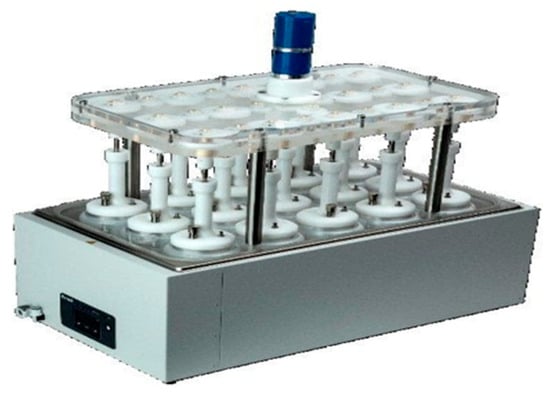
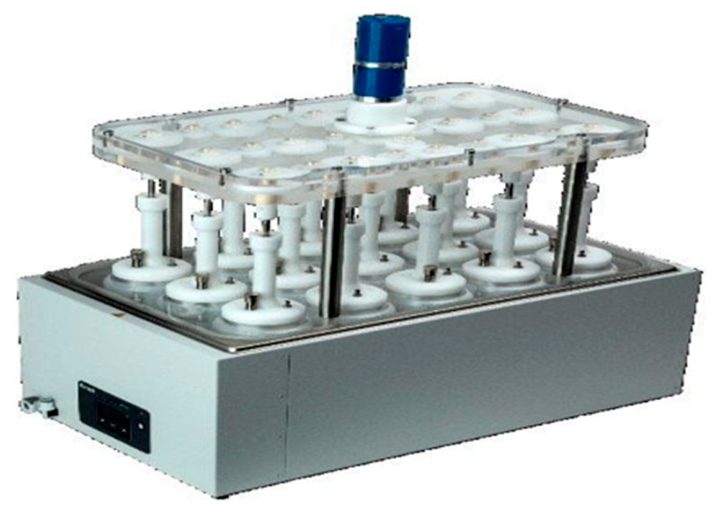
The experiments were conducted in duplicate in 400 mL working-volume batch reactors. Each reactor was loaded with a different OL (20–50 gTVS/L) by varying the relative quantities of the feedstock components. Water was added to reach the total working volume. The anaerobic fermentation tests were conducted using an automated BMP batch system (Nautilus BMP system, Anaero Technology, Cambridge, UK) specifically designed for standardised biochemical methane potential (BMP) and fermentation assays (Figure 1). The experiments were run under mesophilic conditions at 37.0 ± 0.1 °C by means of a water bath and mixed by a central mechanical stirrer at 20 rpm. Liquid samples were periodically collected using a syringe connected to the sampling port of each reactor.
Figure 1.
BMP batch system (Nautilus).
2.3. Analytical Methods
Total solids (TS) and total volatile solids (TVS) content, the chemical oxygen demand (COD and sCOD as soluble COD), and the ammonium ion concentration were determined according to Standard Methods for the Examination of Water and Wastewater [14]. VFAs were determined with an Agilent 1100 SERIES high-performance liquid chromatograph (HPLC) equipped with a 0.5 μm × 4.0 mm × 150 mm column (AcclaimTM Organic Acid column, Thermo Scientific, Waltham, MA, USA) and a diode array detector (DAD). A 2.5 mM methansulfonic acid (Sigma-Aldrich, St. Louis, MO, USA, ≥99.0% purity) aqueous solution and acetonitrile (Sigma-Aldrich, gradient grade, ≥99.9% purity) were used as mobile phases A and B, respectively, in a ratio of 45/55 (A/B). The column was maintained at 30 °C, and the detection wavelength was set at 210 nm. VFA concentration was calculated using a calibration curve ranging from 1 to 10 mM obtained by diluting a Volatile Free Acid Mix (certified reference material, Sigma-Aldrich). All VFA concentrations were presented as chemical oxygen demand (COD) based on their complete stoichiometric conversion. Prior to HPLC analysis, samples were centrifuged at 9000 rpm for 10 min and filtered through 0.2 µm cellulose acetate syringe filters (Whatman, Kent, UK) to remove particulates. Total COD values of the initial substrate mix were calculated considering the COD value of every single substrate and the amount of substrates used in each experiment.
Ammonia concentration (NH4+-N) was measured using an ammonia-selective ion probe on centrifuged (9000 rpm, 10 min) and filtered (0.2 µm) samples. The probe was calibrated regularly using standard ammonium solutions within a range of 0.1–100 mM. The measured NH4+ values are reported as total ammonia nitrogen (TAN), considering free ammonia negligible at the experimental pH values.
2.4. Calculations
The fermentative yields (FY, gCOD(VFA)/gTVS) were calculated as the ratio between the overall increase in VFA concentration and the tested OL, as in Equation (1).
The fermentative rates (FR, gCOD(VFA)/Ld) were calculated as the increase in VFA concentration between two consecutive samplings multiplied by the reactor volume and divided by the time interval, as in Equation (2).
where VFA(0) and VFA(f) are the concentrations of VFA at the beginning and at the end of the experiment, respectively; OL is the tested organic load (gTVS/L); and VFA(i) and VFA(i−1) are the concentrations of VFA at a given time t(i) and t(i−1), respectively.
Free ammonia nitrogen (, mg N-NH3/L) was calculated using the measured (), , and temperature (T = 37 °C/310.15 K) according to Equation (3):
where is the acid dissociation constant for ammonium, calculated as ( at 37 °C) [15].
3. Results
3.1. Effect of Zeolite on VFA Production and Ammonia Concentration
This section presents the outcomes of batch fermentation experiments designed to assess the effects of organic load (OL) and zeolite addition on VFA production and ammonia accumulation. Three sets of experiments were conducted under pH-uncontrolled conditions (with an initial pH of approximately 6.5–6.8) to simulate low-maintenance AF environments. The first experiment served as a control test without zeolite, while the subsequent sets varied either the amount of zeolite (ranging from 0 to 20 g/L) or the OL to evaluate their influence on fermentation performance. The results are discussed in terms of VFA, yield, ammonia concentration trends, and the interaction between process parameters.
3.1.1. Experiment 1
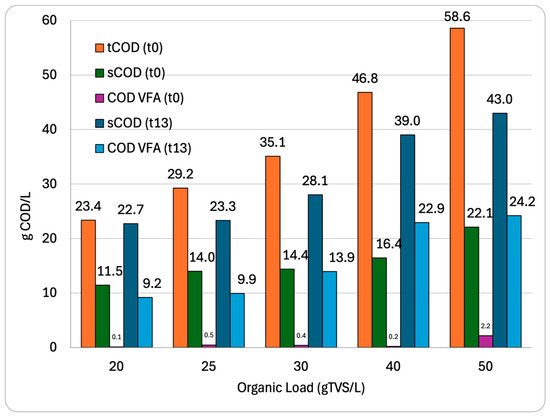
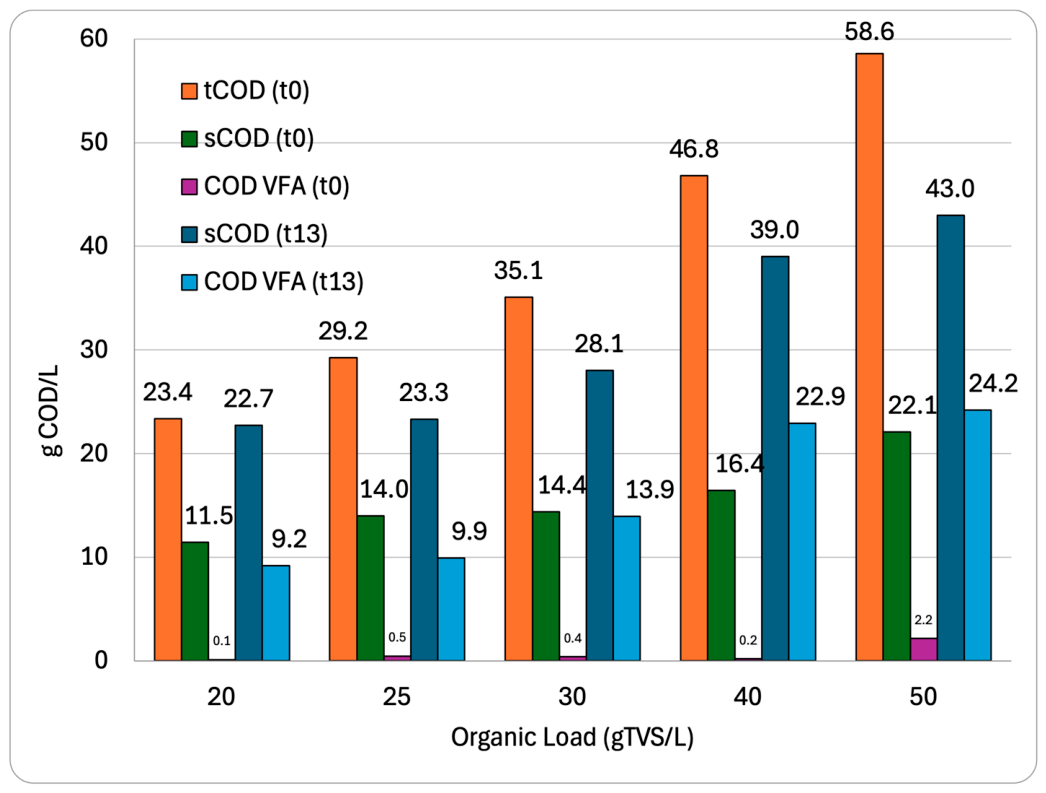
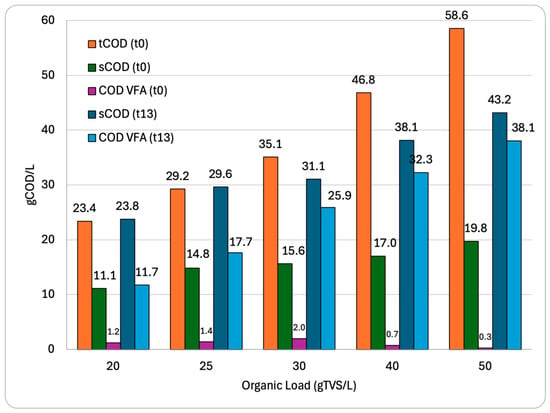
In Experiment 1, a series of control batch fermentations was performed without the addition of zeolite at different organic loads (OLs) of 20, 25, 30, 40, and 50 gTVS/L. This experiment aimed to establish a baseline for VFA and ammonia production in pH-uncontrolled conditions. As reported in Figure 2, the COD conversion into VFA was directly correlated to OL variation and fermentation performance. Increasing the amount of organic matter, it was possible to observe that at the end of the experiment (after 13 days, the final day) the sCODt13/CODt0 ratio, related to the COD solubilisation, was higher than 0.8 in all OLs tested except for the OL of 50 (0.73) probably due to the highest organic content, while the amount of VFA produced in terms of CODVFA(t13)/sCODt13 increase from 40.4% at an OL of 20 to 58.8 at an OL of 40, with slight decrease at an OL of 50 (56.2%).
Figure 2.
Experiment 1: Initial and final COD amount varying the OL.
The final VFA yield obtained, as reported in Figure 2, highlights that an OL of 40 (as gTVS/L) was the most suitable process condition (0.57 g COD(VFA)/gTVS) that allows a better conversion into VFA with a final concentration of about 23 g COD(VFA)//L.
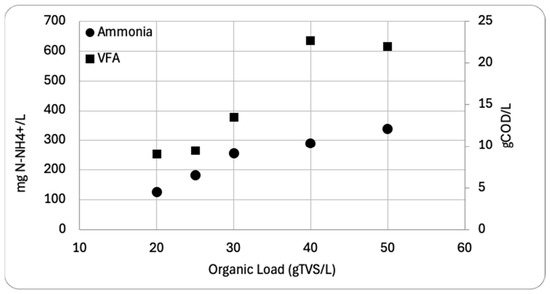
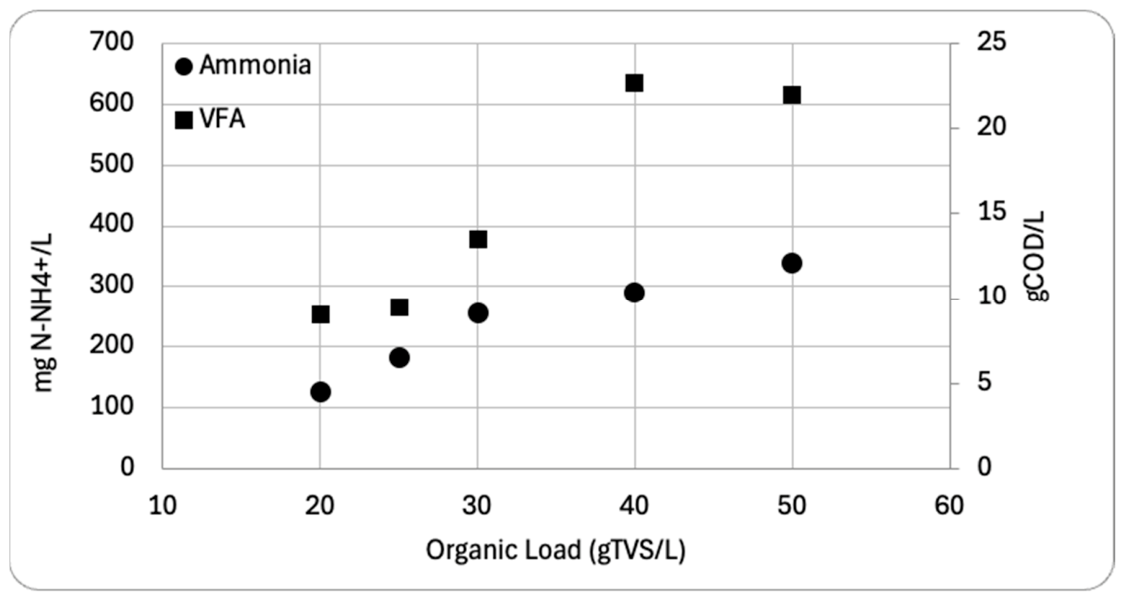
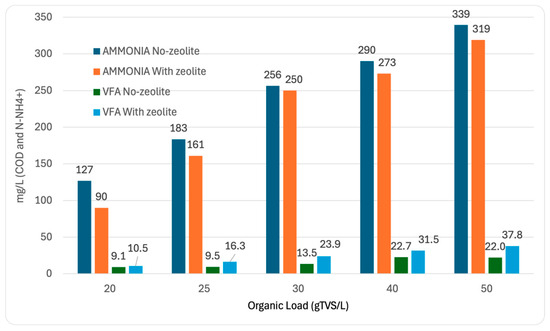
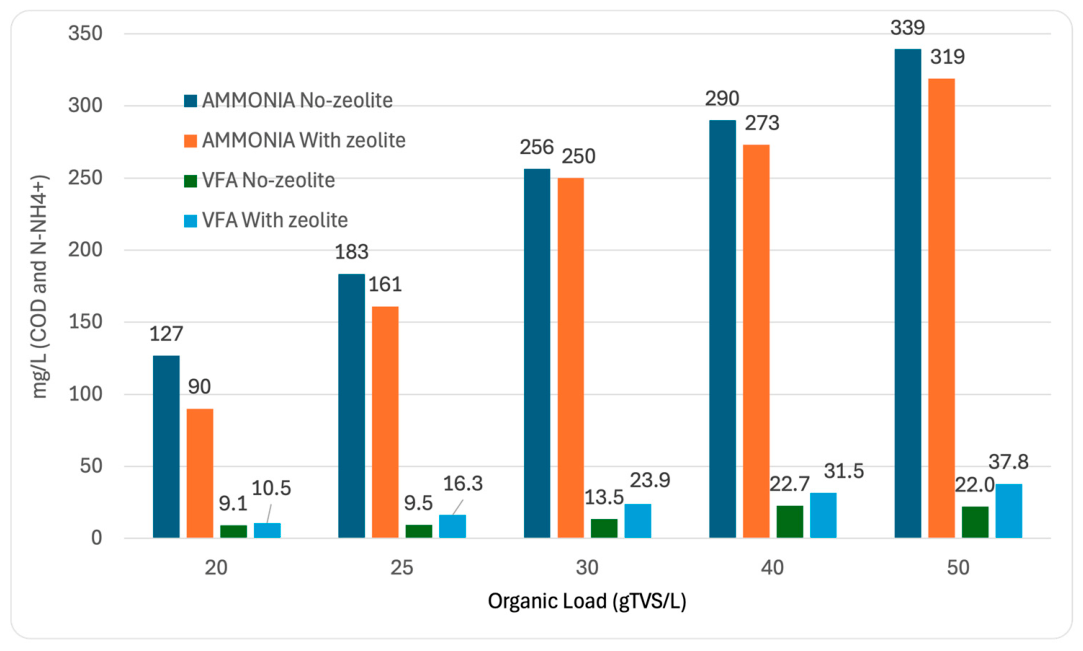
To complete the evaluation, it was also important to consider the ammonia conversion at different OLs. As reported in Table 2 and Figure 3, the ammonia produced, due to biological conversion of organic nitrogen, increased almost linearly with 20–25–30 OL values, while at 40 and 50 gTVS/L the organic nitrogen content conversion into ammonia was slowed down, probably due to the high TVS concentration and lower pH by the end of the experiment. Nevertheless, ammonia did not seem to severely inhibit fermentation, as evidenced by the VFA conversion. This suggests that under these batch conditions, the microbial community could tolerate the ammonia produced from substrate degradation. Similarly, Cheah et al. [16] showed that ammonia inhibition in acidogenic fermentation was avoided when N-NH4+ concentration was ≤0.7 g/L. Based on Equation (3), the calculated levels across all reactors remained extremely low, ranging from to 0.20 mgN-NH3/L due to the acidic conditions (pH 5.0–5.5). These values are orders of magnitude below the acknowledged toxicity threshold for acidogenic communities (>50–100 mg/L), confirming that free ammonia inhibition was negligible during fermentation.
Table 2.
Changes in ammonia and VFA in Experiment 1.
Figure 3.
Correlation of ammonia and VFA produced and OLs in Experiment 1.
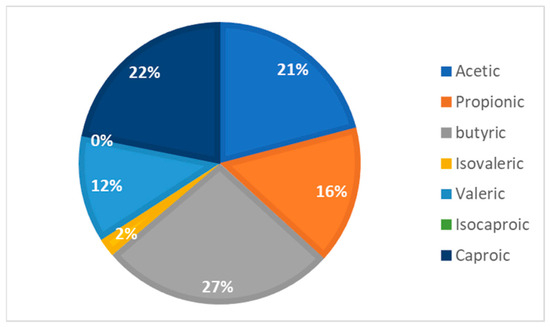
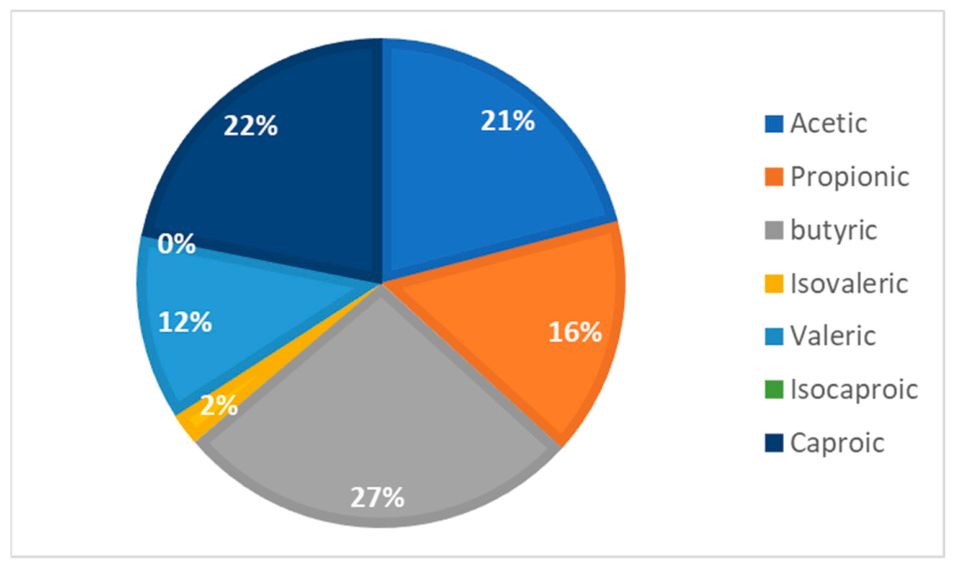
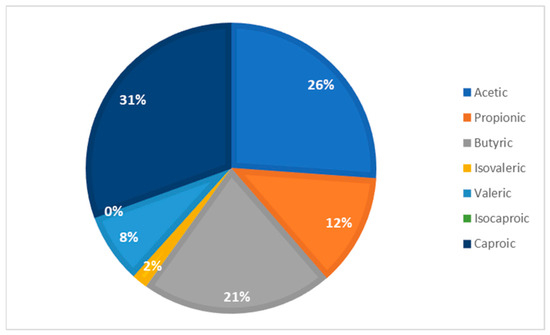
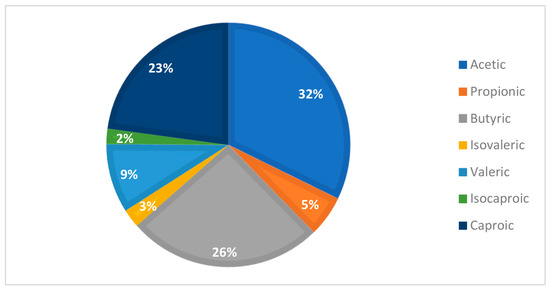
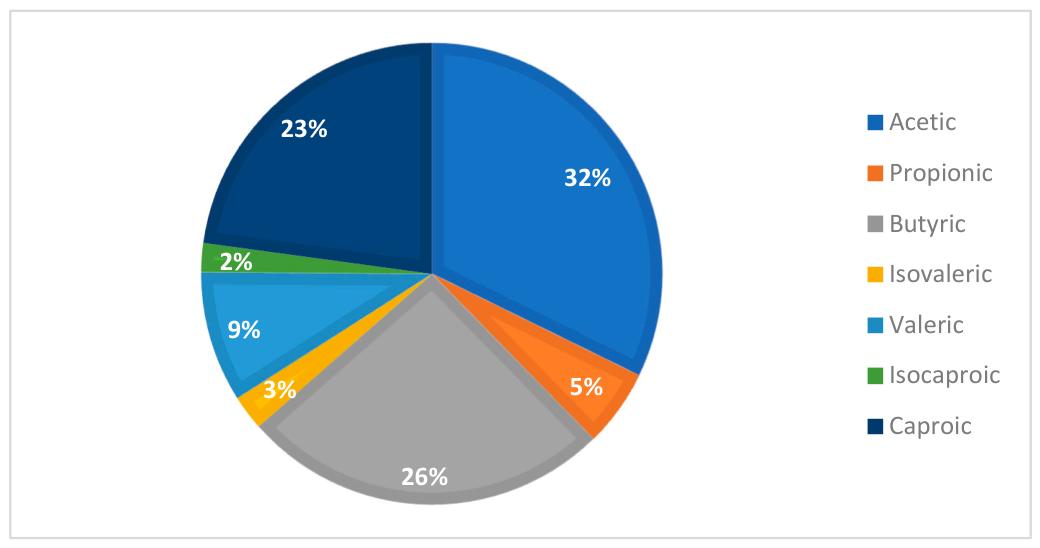
Considering the aim of this study, the OL that best fits with high VFA production and low ammonia accumulation was the OL at 40 gTVS/L. The fermentation profile for an OL of 40 g VS/L (Figure 4) was dominated by acetic, butyric, and caproic acids. The pH on the first day dropped below 5, but after day 2 onward it stabilised around 5.5.
Figure 4.
VFA composition in an OL of 40 (Experiment 1).
3.1.2. Experiment 2
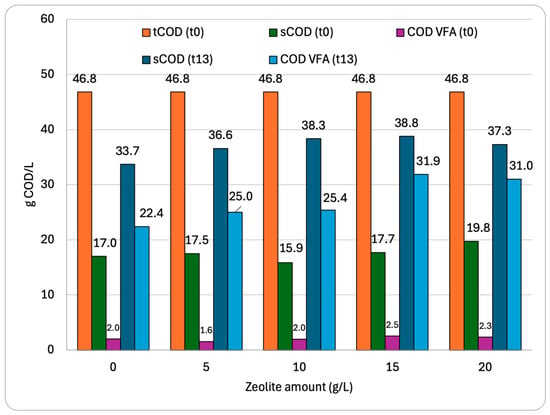
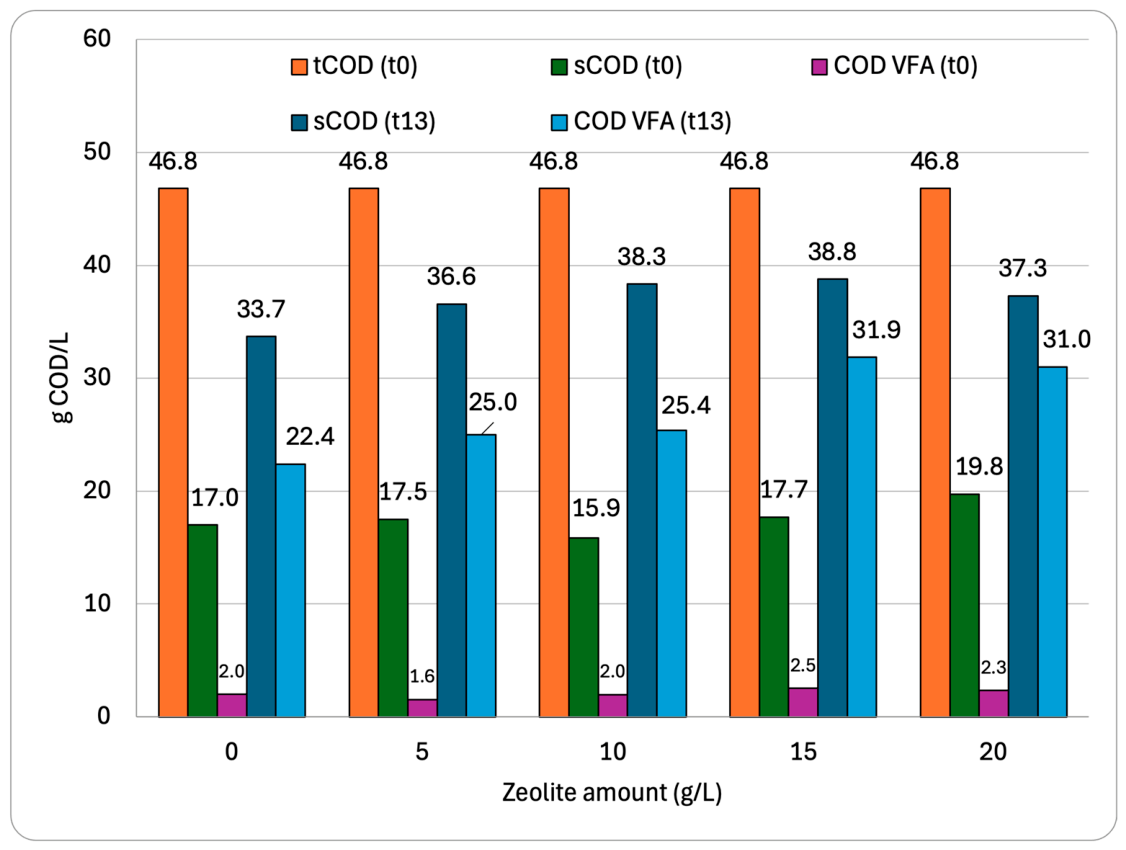
In Experiment 2, the organic load (OL) was fixed at 40 gTVS/L, while the zeolite dosage was varied (0, 5, 10, 15, and 20 g/L) to investigate its impact on fermentation performance. This experiment aims to identify the optimal zeolite concentration for maximising VFA production and minimising ammonia accumulation under different conditions. An OL of 40 gTVS/L was selected as an intermediate condition to investigate the balance between productivity and potential inhibition. Thus, by testing an OL of 40 gTVS/L separately, the aim was to determine how to combine relatively high VFA yields with a reduced risk of ammonia stress, thereby identifying an operationally robust condition for further optimisation. The VFA concentration of each test can be observed in Figure 5.
Figure 5.
Experiment 2: Initial and final COD amount varying the zeolite amount at an OL of 40.
Starting from the control condition (0 g/L), each stepwise addition of zeolite enhanced the COD solubilisation and its conversion into VFA. Maintaining the OL, it was possible to observe that at the end of the experiment (after 13 days, the final day), the sCODt13/CODt0 ratio, related to the COD solubilisation, was around 0.8 in all batches (increasing zeolite amount). The amount of VFA produced in terms of CODVFA(t13)/sCODt13 was around 67% at lower zeolite dose, while at 15 and 20 g zeolite the ratio reached 80%, confirming a positive effect on acidification yields. The highest VFA concentration was achieved at 15 g/L (29.3 gCOD/L) and 20 g/L of zeolite (28.7 gCOD/L), indicating that at this load level, zeolite addition continued to promote acidogenesis without signs of microbial inhibition. While specific abiotic adsorption assays were not conducted in this study, the observed improvement in fermentation parameters upon zeolite addition is hypothesised to result from a combination of indirect microbial effects, potential surface colonisation, and minor pH buffering, as previously suggested in the literature. These findings align with previous work by Gottardo et al. [17], who reported increased acetic acid yields using chabazite-type zeolite.
In Table 3, the ammonia and VFA conversion results are summarised. As can be seen, maintaining the same OL, the ammonia production was lower than the control condition without zeolite, with improved performance at higher zeolite dose, and this was also confirmed considering the ratio ammonia/TVS.
Table 3.
Changes in ammonia and VFA in Experiment 2.
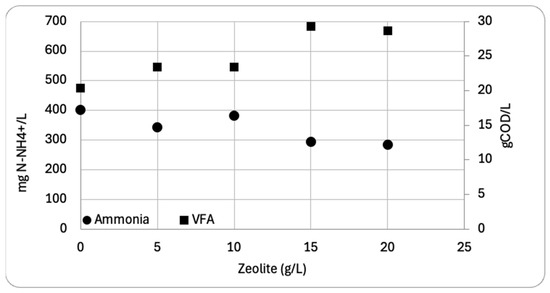
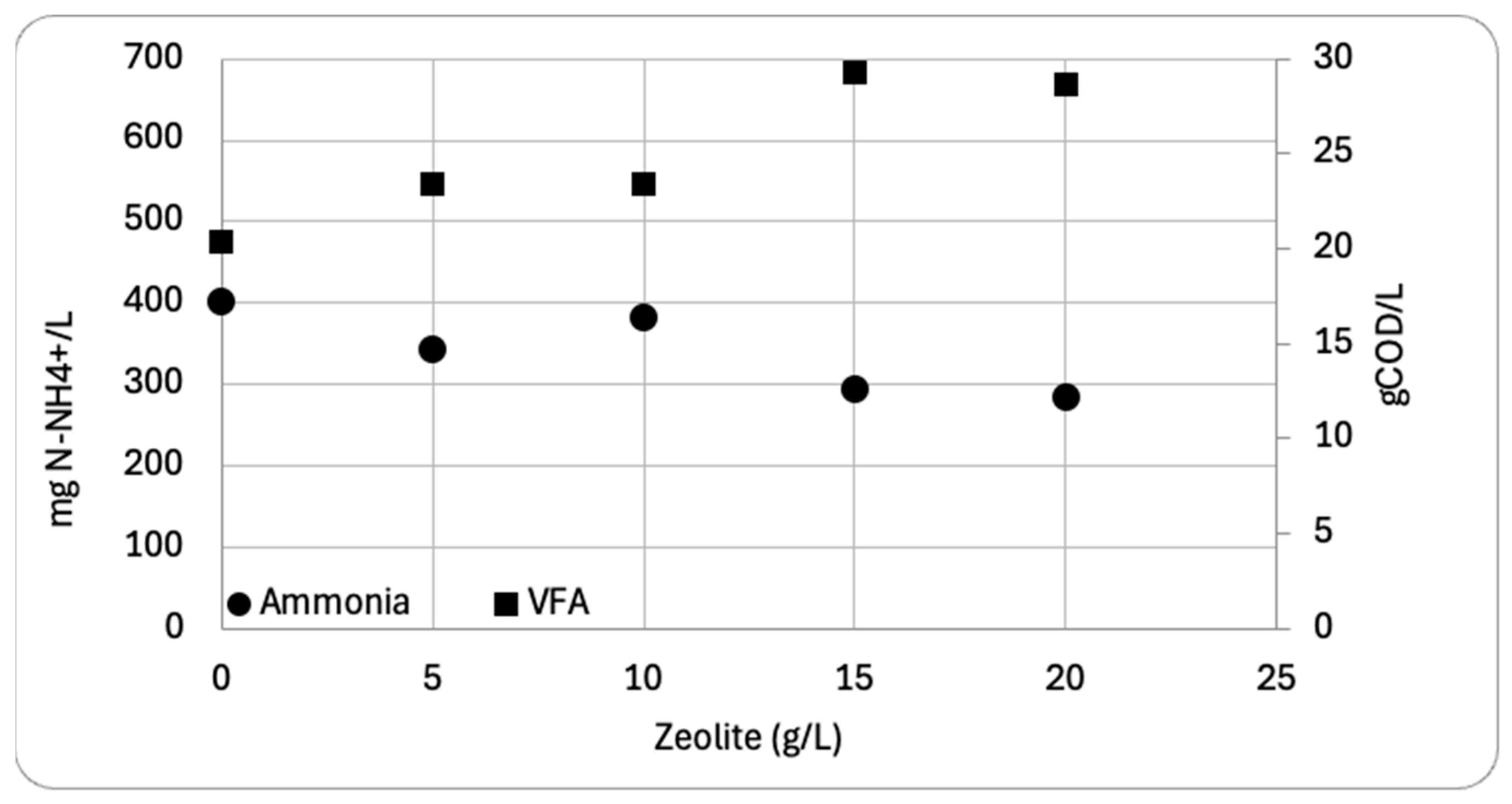
Considering the results obtained, the most suitable conditions applied were at 15 and 20 g/L of zeolite concentration, where the low yields of ammonia (7.4 and 7.1 mgN-NH4+/gTVS, respectively) correspond to high values in fermentation yields (0.73 and 0.72 gCODVFA/gTVS, respectively) (Figure 6). Moreover, the fermentation yield obtained with 0–5–10 g/L was comparable to the yield obtained in Experiment 1 without zeolite, while using 15 and 20 g/L, the yields were improved by about 30%.
Figure 6.
Correlation of ammonia, VFA and g Zeolite in Experiment 2.
These findings suggest that under the evaluated pH conditions, TAN removal via adsorption was not the primary driver of enhanced AF performance. Instead, we hypothesise that zeolite may act predominantly by stabilising environmental conditions or facilitating microbial attachment, though further targeted abiotic control experiments are required to fully isolate these mechanisms. Tang et al. [18] showed that natural zeolite can enhance hydrolysis and acidification steps at an optimal dose of ~0.4–0.5 gzeolite/gVSS.
Throughout this experiment, and taking into account the OL of 40 at 15 g/L of zeolite, acetic, butyric and caproic acids remained the dominant components of the VFA mixture, suggesting that the pathway of fermentation remained stable across conditions (Figure 7). Zeolite did not significantly change the acid profile but, rather, amplified the overall VFA and yield.
Figure 7.
VFA composition in an OL of 40 at 15 g/L of zeolite (Experiment 2).
Zeolite addition reduced TAN accumulation by ~6%, which may be due to ammonium ion exchange on chabazite, altered microbial nitrogen mineralisation, or both. However, without abiotic controls, the exact split between zeolite adsorption and microbial metabolism cannot be separated in this study.
3.1.3. Experiment 3
In Experiment 3, zeolite was fixed at 15 g/L across varying OLs (20–50 gTVS/L), selecting this dose from Experiment 2 to minimise additive use. While testing a single dose does not establish dose independence across all OLs (a limitation to be addressed via a full factorial design in future work), this setup provides a clear baseline to evaluate OL effects under zeolite supplementation.
Considering the results obtained (Figure 8) it is possible to observe that increasing the amount of organic matter and maintaining the dose of zeolite at 15 g/L, at the end of the experiment (after 13 days) the sCODt13/CODt0 ratio, related to the COD solubilisation, was similar to Experiment 1 (without zeolite) with a ratio above 0.8 except for an OL of 50 confirming that the zeolite did not improve the solubilisation yields. On the other hand, the amount of VFA produced in terms of CODVFA(t13)/sCODt13 increased up to 50% at an OL of 20 (20% more compared to Experiment 1) and up to 85% on average at an OL of 30, 40 and 50.
Figure 8.
Experiment 3: Initial and final COD at different OL and zeolite amounts of 15 g/L.
The highest VFA concentration was observed at an OL of 50 gTVS/L with about 38 gCOD/L. At lower OLs (20–25 gTVS/L), VFAs were comparatively moderate (11.7 and 17.6 gCOD/L, respectively), indicating that although zeolite contributed to enhanced acidogenesis, the substrate availability was still a limiting factor. As OL increased to 30, 40 and then 50 gTVS/L, a substantial boost in VFA production was recorded. Notably, an OL of 50 g VS/L with 15 g/L of zeolite produced the highest total VFA concentration across all experiments, and 70% more than an OL of 50 g VS/L without zeolite (22.0 vs. 37.8 gCOD/L). Considering the yields, the ratio was comparable for OLs of 30 and 40 (about 0.8 gCOD(VFA)/gTVS). In Table 4 and Figure 9, the ammonia and VFA content are shown.
Table 4.
Changes in ammonia and VFA in Experiment 3.
Figure 9.
Correlation of ammonia and VFA at different OLs without zeolite (Experiment 1) and with zeolite at a concentration of 15 g/L (Experiment 3).
In Figure 10, it is possible to observe the organic acid profile dominated by acetic, butyric and caproic acids, reaffirming that the pathway of fermentation was maintained. Ref. [18] investigated a DF of mixed urban organic and sludge under pH-controlled conditions (pH 5–6). They found that adding chabazite-type zeolite significantly boosted the proportion of VFA, especially for acetic acid. The authors attributed these gains to microbial adhesion on the zeolite’s high surface area and proton adsorption effects rather than ammonia removal. These findings align closely with our observations of elevated VFA (especially acetic) production under zeolite addition, without significant decreases in ammonia concentrations.
Figure 10.
VFA composition in an OL of 40 at 15 g/L of zeolite (Experiment 3).
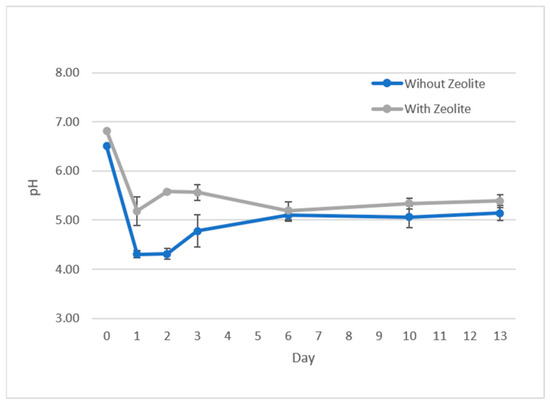
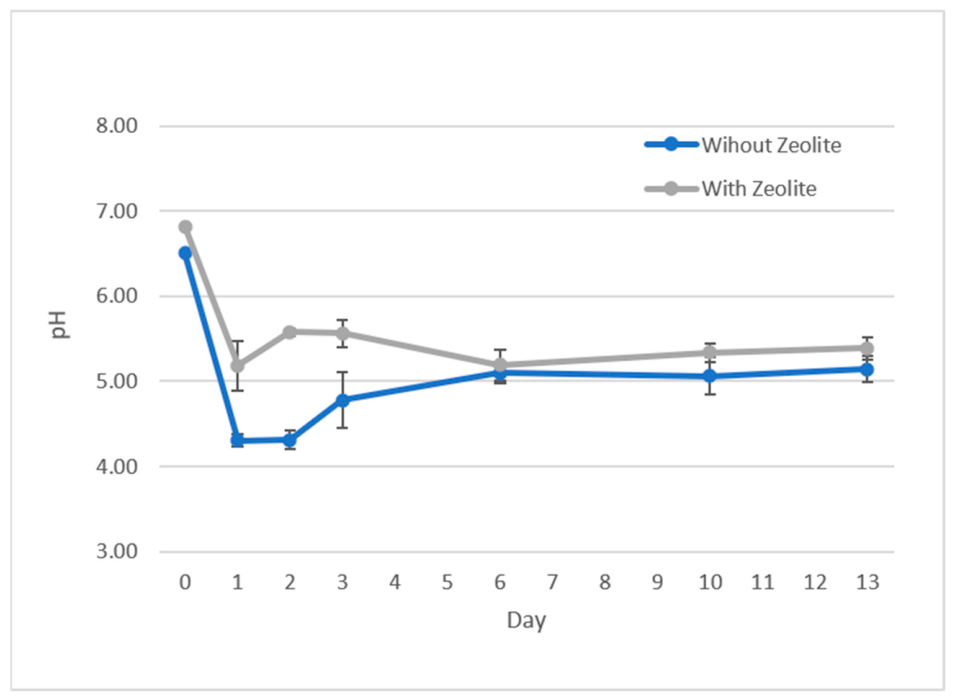
Regarding pH variations, it was observed that the presence of zeolite resulted in greater pH stability throughout the experimental period, as shown in Figure 11. In the figure, the values represent the mean pH measured during the tests conducted with and without zeolite under different OLs. The standard deviation indicates the variability of the measurements within each OL. The results suggest that, in the presence of zeolite, the pH value did not decrease below 5 at any stage of the experiment, whereas in the samples without zeolite, the pH remained below this value on days 1, 2 and 3. Furthermore, at the end of the experiment, the bottles containing zeolite maintained slightly higher pH values compared with those without zeolite. These findings suggest that although zeolite may be associated with increased acidification processes, its ability to regulate the chemical conditions of the system enabled it to minimise pH fluctuations and maintain a more stable pH throughout the experiment. Montalvo et al. [11] showed that the zeolite adsorbs ammonia, thus having an effect not only on the toxicity of ammonia and on the C/N proportion but also on the regulation of acidity (pH) of the pig wastes.
Figure 11.
Changing pH through Experiment 1 (without zeolite) and 3 (with zeolite).
3.2. Yields Comparison
To evaluate the efficiency of substrate conversion into VFA, the yield and fermentation rate were calculated based on the ratio of total VFA (expressed as gCOD) to the initial total volatile solids added. This metric provides insight into how effectively the organic matter was transformed into target products under different organic loads (OLs) and zeolite supplementation. Across the experiments, fermentation yields and rates in Table 5 varied depending on both the OL and the presence or absence of zeolite.
Table 5.
Fermentative yield and rate of experiments.
The experiments revealed how organic load (OL) and zeolite together shape VFA yields. In Experiment 1, without any zeolite, yields rose steadily with increasing OL, reaching 0.57 gCOD(VFA)/gTVS at 40 g VS/L and dropped to 0.44 gCOD(VFA)/gTVS at 50 g VS/L. Building on this, Experiment 2 kept the OL fixed at 40 g VS/L while introducing zeolite, which produced a striking improvement—from 0.57 gCOD(VFA)/gTVS with no zeolite to a peak of 0.73 gCOD(VFA)/gTVS at 15 g/L of zeolite, before a slight drop at 20 g indicated diminishing returns. Finally, in Experiment 3, zeolite was fixed at 15 g while OL was varied again, revealing that the highest yield of about 0.8 gCOD(VFA)/gTVS occurred at an OL of 30 and 40 g VS/L. Performance remained high even at 50 g VS/L, suggesting that under these conditions, an OL range of 30–40 g VS/L with 15 g of zeolite provides the most effective balance for maximising yield. Interestingly, the ammonia production yield was lower compared to the experiment without zeolite, with 6.6 mgNH4+/gTVS on average. For instance, Gottardo et al. [13] reported a maximum VFA yield of 0.48 gCOD/gTVS, whereas the integration of our substrates with natural chabazite in the present study achieved higher yields.
When evaluating the process, it is important to distinguish between maximum VFA concentration, fermentation yield, and fermentation rate (productivity). While the highest VFA concentration () and the highest fermentation rate () were achieved at with zeolite, the maximum fermentative yield peaked at and (). Therefore, the definition of the optimal condition depends on the objective: is the optimum for maximum substrate conversion efficiency, while is optimal if the goal is to obtain a highly concentrated VFA stream.
The fermentation rate (gCOD(VFA)/Ld) followed the same overall trend observed in experiments 1 and 2 for the yields. In all cases, VFA production reached completion by day 10, after which no further increase was detected. In experiments 1 and 2, the fermentation rate showed a relation to the final yields—higher-yielding conditions also exhibited faster fermentation. In Experiment 3, the highest rate was recorded for the sample with an organic load of 50 gVS/L combined with zeolite addition.
4. Conclusions
This study investigated the influence of organic load (OL) and zeolite supplementation on VFA production and ammonia accumulation during anaerobic fermentation of mixed organic waste. The experiments demonstrated that both parameters (organic load and zeolite dosage) critically affect the efficiency and stability of the fermentation process. This study demonstrates that process optimisation varies depending on the specific operational metric targeted. An organic load of 50 g VS/L with 15 g/L zeolite maximises total VFA concentration (37.8 gCOD/L) and volumetric productivity (3.78 gCOD/L ·d). Conversely, moderate organic loads of 30–40 gTVS/L with 15 g/L zeolite provide peak substrate conversion efficiency, achieving 0.79–0.80 gCOD/gTVS. The VFA profile was dominated by acetic, butyric, and caproic acids, which are valuable intermediates for bio-based chemicals and energy carriers.
In terms of conversion efficiency, the maximum yield—reaching about 0.80 gCOD/gVS —was observed at OL 30 and 40 gTVS/L with 15 g/L of zeolite, suggesting that moderate OL levels may enhance substrate-to-product efficiency, even if total VFA concentrations are slightly lower. Zeolite addition enhanced both VFA production and yield in a dose-dependent manner but showed no significant effect on ammonia reduction, indicating its benefits likely stem from microbial or physicochemical interactions rather than TAN adsorption. These findings provide practical insights for optimising anaerobic fermentation systems targeting VFA recovery, especially in scenarios where pH control is not feasible. The results also open pathways for integrating such systems into circular bioeconomy models by valorising organic waste while minimising process inputs. Future studies should focus on continuous operation, microbial community dynamics, and the downstream processing of VFA-rich effluents.
Author Contributions
Conceptualisation, data curation, investigation, writing—original draft, writing—review and editing, N.K.; data curation, investigation, methodology, writing—review and editing, M.B.; conceptualisation, methodology, supervision, funding acquisition, G.T.; conceptualisation, data curation, funding acquisition, resources, writing—review and editing, supervision, C.C. All authors have read and agreed to the published version of the manuscript.
Funding
The research was funded by Agenzia Spaziale Italiana for contract No. 2024-3-E.0 “BioMoon Low Gravity Biorefinery Platform”.
Data Availability Statement
The original data presented in the study are openly available in Datarepository Unive at https://doi.org/10.71731/DATA_UNIVE/EPMOSY.
Acknowledgments
This work was supported by the DoE 2023–2027 (MUR, AIS.DIP.ECCELLENZA2023_27. FF project). The Green Propulsion Laboratory of VERITAS S.p.a. is gratefully acknowledged for its support and hospitality.
Conflicts of Interest
Graziano Tassinato was employed by VERITAS GROUP spa. The remaining authors declare that the research was conducted in the absence of any commercial or financial relationships that could be construed as a potential conflict of interest. The company had no role in the design of the study; in the collection, analyses, or interpretation of data; in the writing of the manuscript; or in the decision to publish the results.
References
- Prem, E.M.; Markt, R.; Wunderer, M.; Wagner, A.O. Meso- and Thermophilic Posttreatment of Press Water Coming from a Thermophilic Municipal Solid Waste Digester. Biotechnol. Bioeng. 2024, 121, 266–280. [Google Scholar] [CrossRef] [Scilit] [PubMed]
- Sun, J.; Zhang, L.; Loh, K.C. Review and Perspectives of Enhanced Volatile Fatty Acids Production from Acidogenic Fermentation of Lignocellulosic Biomass Wastes. Bioresour. Bioprocess. 2021, 8, 68. [Google Scholar] [CrossRef] [Scilit] [PubMed]
- Gracia, J.; Montenegro, C.; Acevedo, P.; Cabeza, I. Acidogenic Fermentation at a Thermophilic Temperature from Municipal Sewage Sludge for the Production of VFAs. Chem. Eng. Trans. 2023, 100, 553–558. [Google Scholar] [CrossRef]
- Ramos-Suarez, M.; Zhang, Y.; Heaven, S. Acidogenic Fermentation of Organic Residual Solids: Effect of Different Alkaline Sources on pH, Alkalinity, and Fermentation Performance. Fermentation 2024, 10, 571. [Google Scholar] [CrossRef] [Scilit]
- ASI Annual Report. 2023. Available online: https://www.asi.it/wp-content/uploads/2025/02/ENG_Asi-Annual-Report_2023_DEF-PER-STAMPA.pdf (accessed on 8 May 2026).
- Cockell, C.S.; Green, D.A.; Caplin, N.; Grenouilleau, J.; McDonald, F.E.; Calvaruso, M.; Billi, D.; Cullen, D.C.; Davey, M.P.; De Micco, V.; et al. BioMoon: A Concept for a Mission to Advance Space Life Sciences and Astrobiology on the Moon. Discov. Space 2024, 128, 5. [Google Scholar] [CrossRef] [Scilit]
- Atasoy, M.; Cetecioglu, Z. The Effects of pH on the Production of Volatile Fatty Acids and Microbial Dynamics in Long-Term Reactor Operation. J. Environ. Manag. 2022, 319, 115700. [Google Scholar] [CrossRef] [Scilit] [PubMed]
- Bonk, F.; Popp, D.; Weinrich, S.; Sträuber, H.; Kleinsteuber, S.; Harms, H.; Centler, F. Ammonia Inhibition of Anaerobic Volatile Fatty Acid Degrading Microbial Communities. Front. Microbiol. 2018, 9, 2921. [Google Scholar] [CrossRef] [Scilit] [PubMed]
- Maeda, I. Potential of Phototrophic Purple Nonsulfur Bacteria to Fix Nitrogen in Rice Fields. Microorganisms 2022, 10, 28. [Google Scholar] [CrossRef] [Scilit] [PubMed]
- Cheng, J.; Xia, A.; Liu, Y.; Lin, R.; Zhou, J.; Cen, K. Combination of Dark- and Photo Fermentation to Improve Hydrogen Production from Arthrospira platensis Wet Biomass with Ammonium Removal by Zeolite. Int. J. Hydrogen Energy 2012, 37, 13330–13337. [Google Scholar] [CrossRef] [Scilit]
- Montalvo, S.; Guerrero, L.; Borja, R.; Sánchez, E.; Milán, Z.; Cortés, I.; de la Rubia, M.A. Application of natural zeolites in anaerobic digestion processes: A review. Appl. Clay Sci. 2012, 58, 125–133. [Google Scholar] [CrossRef] [Scilit]
- Wang, S.; Peng, Y. Natural zeolites as effective adsorbents in water and wastewater treatment. Chem. Eng. J. 2010, 156, 11–24. [Google Scholar] [CrossRef] [Scilit]
- Gottardo, M.; Khorramian, N.; Pavan, P.; Battista, F.; Bolzonella, D.; Lauri, R.; Valentino, F. Assessment of the Hydrogen Production Potential in a Zeolite Assisted Two-Phase Dark and Photo-Fermentation Process from Urban Waste Mixture. Resources 2025, 14, 43. [Google Scholar] [CrossRef] [Scilit]
- Baird, R.; Bridgewater, L. American Public Health Association, American Water Works Association, Water Environment Federation: Standard Methods for the Examination of Water and Wastewater, 23rd ed.; American Public Health Association: Washington, DC, USA, 2017. [Google Scholar]
- Emerson, K.; Russo, R.C.; Lund, R.E.; Thurston, R.V. Aqueous Ammonia Equilibrium Calculations: Effect of pH and Temperature. J. Fish. Res. Bd. Can. 1975, 32, 2379–2383. [Google Scholar] [CrossRef] [Scilit]
- Cheah, Y.K.; Vidal-Antich, C.; Dosta, J.; Mata-Álvarez, J. Volatile Fatty Acid Production from Mesophilic Acidogenic Fermentation of Organic Fraction of Municipal Solid Waste and Food Waste under Acidic and Alkaline pH. Environ. Sci. Pollut. Res. 2019, 26, 35509–35522. [Google Scholar] [CrossRef] [Scilit] [PubMed]
- Gottardo, M.; Battista, F.; Bolzonella, D.; Lauri, R.; Girotto, L.; Piasentin, A.; Valentino, F. Enhancing Hydrogen Production by Zeolite Addition in the Dark Fermentation Process of Urban Organic Waste. Chem. Eng. Trans. 2024, 110, 265–270. [Google Scholar] [CrossRef]
- Tang, C.C.; Zhang, B.C.; Yao, X.Y.; Sangeetha, T.; Zhou, A.J.; Liu, W.; Ren, Y.X.; Li, Z.; Wang, A.; He, Z.W. Natural Zeolite Enhances Anaerobic Digestion of Waste Activated Sludge: Insights into the Performance and the Role of Biofilm. J. Environ. Manag. 2023, 345, 118704. [Google Scholar] [CrossRef] [Scilit] [PubMed]

Disclaimer/Publisher’s Note: The statements, opinions and data contained in all publications are solely those of the individual author(s) and contributor(s) and not of MDPI and/or the editor(s). MDPI and/or the editor(s) disclaim responsibility for any injury to people or property resulting from any ideas, methods, instructions or products referred to in the content. |
© 2026 by the authors. Licensee MDPI, Basel, Switzerland. This article is an open access article distributed under the terms and conditions of the Creative Commons Attribution (CC BY) license.