


Abstract
Gamma (γ)-aminobutyric acid (GABA) is a non-proteinogenic amino acid recognized for its primary function as the main inhibitory neurotransmitter in the mammalian central nervous system and its role as a stress-responsive metabolite in various microorganisms. This review critically examines the biosynthesis of GABA by lactic acid bacteria (LAB) via the glutamate decarboxylase (GAD) system and evaluates its potential applications in food and health sectors. The mechanistic details of the GAD pathway are analyzed, focusing on the integrated roles of gadA/gadB decarboxylases, the gadC antiporter, and pyridoxal−5′-phosphate (PLP) dependency in relation to acid resistance, metabolic flux, and strain variability. Taxonomic and strain-level diversity among GABA-producing LAB is assessed, with emphasis on the highly strain-specific nature of GABA production rather than broad species or genus generalizations. Fermentation optimization parameters (pH, temperature, substrate loading, and cofactor management) and scale-up challenges, including techno-economic feasibility and downstream recovery efficiency, are critically evaluated. Integration of LAB-derived GABA into fermented food matrices is discussed with attention to sensory compromises, stability, regulatory factors, and clean-label considerations. Evidence from clinical and preclinical studies is synthesized to assess the physiological significance of dietary GABA, distinguishing between purified GABA supplementation, GABA-enriched fermented foods, and probiotic effects of live LAB, while addressing the GABA paradox and gut–brain axis interactions. Significant research gaps are identified, including the need for standardized quantification methodologies, multi-omics-guided strain engineering, predictive bioprocess modeling, and rigorously designed human trials in realistic food matrices. This review provides a systems-oriented, critical framework to promote scalable and evidence-based advancement of GABA-enriched functional foods.
1. Introduction
Gamma (γ)-aminobutyric acid (GABA) is a non-proteinogenic amino acid that serves as a crucial bioactive signaling molecule in various biological systems, extending from prokaryotic cells to intricate multicellular organisms [1,2]. In mammals, GABA functions as the primary inhibitory neurotransmitter within the central nervous system (CNS), playing a crucial role in regulating neuronal excitability and preserving the essential equilibrium between excitatory and inhibitory synaptic transmission [1,2,3,4,5]. GABAergic neurons have a significant neurophysiological impact, with GABA levels in various brain regions reported to be considerably elevated—up to three orders of magnitude—compared to classical monoamine neurotransmitters [1,3,4].
In addition to its neurophysiological function, GABA has notable biochemical and therapeutic significance [1,4,5], as indicated in Figure 1. The dysregulation or deficiency of GABAergic signaling has been linked to a range of pathological conditions, such as anxiety disorders, stress-related syndromes, depression, epilepsy, and other neurological dysfunctions [1,4,5,6,7]. GABA serves as the main inhibitory neurotransmitter within the mammalian CNS [8,9]. It reduces neuronal excitability by activating GABA_A and GABA_B receptors [7], leading to anxiolytic and sedative effects [4,7]. Nonetheless, the ability of exogenous GABA to traverse the blood–brain barrier (BBB) is recognized to be quite restricted [4,7,8]. The gut–brain axis offers a foundational understanding of the two-way communication that occurs between the gastrointestinal system and the CNS. This interaction takes place via neural pathways, especially the vagus nerve, along with endocrine, immune, and metabolic signaling mechanisms [4,7,9]. GABA-producing lactic acid bacteria (LAB) and dietary GABA have the potential to impact host neurophysiology through various mechanisms. These may include modulation of signaling within the enteric nervous system, activation of vagal afferents, regulation of immune responses, or changes in the composition of the gut microbiota. Significantly, these pathways could facilitate GABA-related effects without necessitating the direct transport of GABA through the BBB [4,7,8,9]. The heightened focus on GABA-enriched functional foods and nutraceuticals reflects a growing interest in their potential role as adjunctive approaches for regulating neurochemical equilibrium and enhancing mental health outcomes.
Figure 1.
Conceptual framework for GABA synthesis through the glutamate decarboxylase (GAD) pathway in LAB when subjected to environmental stress, along with its implications for functional food and health benefits. In the illustrative representation, environmental stressors such as acid, salt, heat, and osmotic pressure trigger the GAD system, facilitating the PLP-dependent decarboxylation of L-glutamate into GABA, along with the release of carbon dioxide (CO2) [10]. This adaptive metabolic response improves bacterial acid resistance and supports intracellular pH balance [10,11]. The resulting GABA can be integrated into various functional food products, such as fermented dairy items, cereal- and millet-based foods, functional beverages, and plant-derived fermented products [10]. In addition to its technological relevance, dietary GABA offers a range of health benefits, including alleviating anxiety, stress, and depression; enhancing sleep quality; providing neuroprotective effects; influencing the gut–brain axis; and promoting cardiovascular health by regulating blood pressure [7,10]. To summarize, the figure illustrates the intricate connection between environmental stress adaptation in LAB, the biosynthesis of microbial GABA, the advancement of functional foods, and the substantiated health benefits, offering a framework for the creation of next-generation GABA-enriched functional foods.
In microorganisms, especially LAB, the synthesis of GABA fulfills a distinctly different biological function (Figure 1). GABA production in LAB serves as a vital mechanism for acid resistance and adaptation to stress, rather than playing a role in neurotransmission [11,12,13]. The biosynthesis of GABA is facilitated through the GAD pathway, wherein glutamate undergoes irreversible decarboxylation to form GABA, catalyzed by the enzyme GAD, which is dependent on pyridoxal−5′-phosphate (PLP) [14,15,16,17,18,19]. The decarboxylation reaction utilizes an intracellular proton (H+), thus playing a role in maintaining cytoplasmic pH balance in acidic environments [12,20]. This mechanism is especially beneficial in fermented food matrices, such as Korean kimchi and Chinese suan cai (fermented vegetables), where low pH conditions exert significant stress on microbial cells [18,21,22].
The GAD system frequently functions alongside a glutamate/GABA antiporter, enabling the uptake of extracellular glutamate and the export of intracellular GABA, which further improves acid tolerance and aids in the stabilization of membrane potential [11,20,23]. Furthermore, the activation of the GAD-dependent pathway facilitates cellular energy conservation indirectly through the preservation of H+ gradients, which are crucial for metabolic processes such as ATP (Adenosine Triphosphate) synthesis [12,17]. Consequently, in humans, GABA is predominantly recognized for its physiological and therapeutic roles, whereas in bacteria, it serves as an adaptive metabolic mechanism that improves survival in the face of environmental stressors [11,12].
Recent comprehensive reviews have consolidated information on GABA production by LAB and its potential health implications, while the current study provides a unique critical synthesis. It highlights the unique strain-specific characteristics of GABA biosynthesis, avoiding broad generalizations across different genera or species. Additionally, it addresses the techno-economic and downstream processing challenges that hinder industrial application, as well as the clean-label and sensory issues linked to prevalent precursor supplementation methods. Furthermore, it provides a thorough, evidence-based assessment of physiological impacts, clearly differentiating between purified GABA supplementation, the intake of GABA-enriched fermented foods, and the probiotic benefits of live GABA-producing LAB. We thoroughly analyze reported yields and their practical relevance, emphasize misunderstandings that may arise from citation chains lacking verification, and outline a practical strategy that incorporates multi-omics, synthetic biology, AI-driven process design, and the requirements for pilot-scale validation.
From an industrial and biotechnological viewpoint, the effective production of microbial GABA necessitates meticulous optimization of environmental and fermentation conditions that activate the GAD system. Substrate availability, including glutamate concentration, pH levels, temperature, cofactor supplementation such as PLP, and genetic regulation specific to the strain, are pivotal factors affecting GABA yield. Consequently, comprehending the physiological triggers and regulatory mechanisms that control GABA biosynthesis in LAB is crucial for the advancement of scalable production systems intended for functional food and health-related applications.
Using the critical examination of the existing literature described in the preceding paragraphs, we present a complete, evidence-driven synthesis of current knowledge. This synthesis focuses on mechanistic findings, practical problems, and translational potential. The study achieves increased methodological rigor by establishing distinct, quantifiable objectives that advance the discipline and are consistent with the logical framework of the report.
Thus, this review aims to (1) thoroughly investigate the biochemical pathways, genetic regulation, and environmental influences that control GABA biosynthesis in LAB, highlighting strain-specific differences; (2) evaluate the taxonomic and strain-level diversity among GABA-producing LAB, including screening methods and industrial applicability, while addressing the need for validation in real food matrices; (3) analyze bioprocess optimization, challenges in scaling up, downstream recovery considerations, economic feasibility, and clean-label factors; and (4) compile evidence regarding the integration of LAB-derived GABA into functional food matrices, focusing on sensory characteristics, stability, regulatory issues, and physiological effects, while differentiating mechanisms and evidence quality across purified GABA, enriched foods, and live LAB, and pinpointing key research gaps and future research directions.
2. GABA Biosynthesis and Microbial Mechanisms
In microorganisms, GABA biosynthesis predominantly occurs through the GAD pathway, a metabolically efficient one-step (Figure 2) irreversible α-decarboxylation of L-glutamate catalyzed by GAD (EC 4.1.1.15) [16,24,25]:
L-Glutamate + H+ → GABA + CO2
Figure 2.
Metabolic pathway of GABA biosynthesis and its integration with central carbon metabolism and stress adaptation in LAB. Schematic illustration of the metabolic pathway associated with the biosynthesis of GABA and its connection to central carbon metabolism in LAB as they adapt to environmental stressors. Glucose undergoes metabolism via glycolysis, resulting in the production of pyruvate. This pyruvate is then transformed into acetyl coenzyme A (acetyl-CoA) by the enzyme pyruvate dehydrogenase (PDH), allowing it to enter the tricarboxylic acid (TCA; Krebs) cycle. The TCA intermediate α-ketoglutarate acts as a precursor for the biosynthesis of glutamate, establishing a connection between carbon metabolism and nitrogen assimilation [10,26]. In response to environmental stresses like acidic pH, osmotic pressure, salinity, and elevated temperatures, intracellular glutamate undergoes decarboxylation catalyzed by the enzyme GAD, which is dependent on PLP. This reaction results in the formation of GABA and the simultaneous release of CO2 [10,26,27]. GABA is then transformed into succinic semialdehyde (SSA) through the action of GABA aminotransferase (GABA-T), followed by its oxidation by succinic semialdehyde dehydrogenase (SSADH) to produce succinate. This succinate subsequently re-enters the TCA cycle via the GABA shunt [10,26]. This metabolic bypass creates a direct link between GABA biosynthesis and central carbon metabolism, promoting intracellular pH homeostasis, osmoprotection, redox balance maintenance, detoxification of reactive oxygen species, energy conservation, and improved survival in challenging environmental conditions [10,12,26,27]. The integration of the GABA shunt with glycolysis and the TCA cycle underscores its dual function in enhancing microbial stress tolerance while facilitating the efficient production of GABA, which is crucial for the advancement of functional foods that may offer health benefits [5,10,26].
PLP, the active form of vitamin B6, is an essential cofactor that stabilizes reaction intermediates and enables efficient catalysis [1,17,18,24].
The diagram depicts the synthesis of GABA from intermediates derived from glucose through glycolysis and the TCA cycle, commonly referred to as the Krebs cycle, highlighting the GABA shunt as an alternative pathway [28,29,30]. Glucose undergoes metabolism through glycolysis, resulting in the production of pyruvate. This pyruvate subsequently enters the TCA cycle through the action of PDH, leading to the formation of acetyl-CoA. α-Ketoglutarate, an intermediate in the TCA cycle, undergoes conversion to glutamate. This glutamate is subsequently decarboxylated by the enzyme GAD, resulting in the formation of GABA, a process that consumes a H+ and releases CO2 [12,28,31]. Following this, GABA is transaminated by GABA transaminase (GABA-T) to produce succinic semialdehyde. This compound is then oxidized by succinic semialdehyde dehydrogenase (SSADH) to form succinate, which re-enters the TCA cycle. This shunt circumvents two steps in the TCA cycle, connecting carbon flux from glycolysis to succinate and simultaneously producing reducing equivalents [10,26]. The pathway facilitates acid resistance through GAD-mediated proton consumption and modulates stress responses, including oxidative, osmotic, and thermal stress, by regulating intracellular pH, redox balance, and the homeostasis of reactive oxygen species in bacteria, plants, and animals [12,28,30,32].
In LAB, the GAD system functions as a coordinated molecular complex rather than as an isolated enzymatic entity. The system generally consists of two isoforms of GAD, which are encoded by the gadA and gadB genes, in addition to a glutamate/GABA antiporter that is encoded by the gadC gene [11,13,20,23,33]. The antiporter serves a crucial physiological function by facilitating the transport of extracellular L-glutamate into the cytoplasm, concurrently expelling GABA that has been synthesized within the cell. This integrated transport system maintains substrate accessibility, promotes product release, and aids in the regulation of intracellular pH by utilizing cytoplasmic protons throughout the decarboxylation process [13,20].
The GAD system is generally enhanced in response to acidic stress conditions, especially during the stationary growth phase [12,24]. Acidic environments serve as significant inducers of gad gene expression, with the decarboxylation reaction playing a crucial role in enhancing acid resistance by mitigating intracellular acidification. In addition to GABA biosynthesis, the GAD system functions as an adaptive mechanism for acid tolerance, thereby improving microbial survival in environments with low pH [12,24,34]. The production of GABA is not limited to LAB; it has been documented in a variety of microorganisms, encompassing bacteria, yeasts, and filamentous fungi [35]. Nevertheless, LAB continue to be the favored microbial cell factories for the production of food-grade GABA owing to their extensive history of safe application, generally recognized as safe (GRAS), compatibility with environmental conditions, and their established function as starter cultures in the fermentation of food products [16,18,19,24,33].
The production of GABA on an industrial scale is significantly influenced by the specific strain used due to considerable variability both between different species and within the same species regarding their capacity for GABA biosynthesis. Consequently, the choice and enhancement of high-yielding strains are essential factors influencing commercial viability and operational efficiency [16,27,33,35,36].
The critical analysis of the outcomes and conclusions from the previously published scientific literature indicates that, despite comprehensive characterization of the GAD pathway, numerous mechanistic and translational gaps persist in microbial GABA biosynthesis. Subsequent studies ought to progress from enzyme-centric analyses to comprehensive systems-level examinations that elucidate the overarching regulatory networks governing the expression of gadA, gadB, and gadC [11]. Integrating multi-omics methodologies with metabolic flux analysis is essential for addressing strain-dependent variability and for establishing dependable genotype–phenotype correlations [10,18]. The dynamics of cofactors, especially the availability of intracellular PLP, signify a potential yet insufficiently investigated constraint that necessitates metabolic engineering or co-culture strategies [1,18]. The efficiency of transport, particularly concerning the kinetics and regulatory mechanisms of the gadC antiporter, necessitates further exploration to mitigate product accumulation and enhance secretion efficiency [13,20]. It is crucial that the majority of insights are obtained from synthetic media; thus, validation within intricate food matrices—where factors such as buffering capacity, polyphenols, and substrate bioavailability affect GAD activity—is necessary [24,37]. Recent developments in synthetic biology, the engineering of stress-independent promoters, and the optimization of fermentation processes through artificial intelligence present significant opportunities for the creation of high-yield strains in the next generation [33,38]. The integration of systems biology and process engineering is essential for the translation of microbial GABA production into scalable, stable, and functionally effective food applications [5,10,18,26].
3. Diversity of GABA-Producing Lactic Acid Bacteria and Strain-Level Variation
Lactic acid bacteria (LAB) constitute a phylogenetically diverse group of Gram-positive, generally regarded as GRAS microorganisms. However, the capacity to biosynthesize GABA via the GAD system is highly strain-specific rather than a universal trait of the group or even of individual species [11,16,23,27]. The presence, organization, and regulated expression of the gadA/gadB/gadC operon, combined with intracellular cofactor (PLP) availability and environmental triggers, determine GABA productivity [12,13,20]. Consequently, significant intra- and inter-species variability exists in GAD activity, glutamate uptake efficiency, acid tolerance, and overall GABA yield [36,39].
While Levilactobacillus brevis and Lactiplantibacillus plantarum remain the most frequently reported high-GABA producers [21,24,39,40,41,42], recent studies have identified promising strains belonging to other genera and species isolated from a wider range of ecological niches [43,44]. These include traditional plant-based fermented foods, cereal and legume ferments, fruit and vegetable substrates, and under-explored spontaneous fermentation ecosystems in different geographical regions [37,42,44,45,46,47,48]. Such diversity offers opportunities for discovering novel, robust, and food-grade GABA-producing strains with unique technological properties. Table 1 summarizes selected GABA-producing LAB strains, their isolation sources, and key production characteristics, with emphasis on expanding coverage beyond commonly studied dairy and kimchi-associated strains [16,26].
Table 1.
Selected GABA-producing LAB strains from diverse ecological niches and traditional fermented foods.
The expanded list in Table 1 illustrates that GABA-producing capability exists across multiple LAB genera and is not restricted to a few well-studied species [27,33,43,44]. Notably, several promising strains have been isolated from traditional fermented foods in Africa, India, and Southeast Asia—ecosystems that remain relatively under-explored for GABA-producing microorganisms [44,46,48,60].
Despite notable progress in identifying GABA-producing LAB, current knowledge remains heavily biased toward a limited number of species (Levilactobacillus brevis and Lactiplantibacillus plantarum) and traditional fermentation matrices (kimchi, yogurt, and cheese) [16,26]. Significant research gaps persist regarding the distribution and performance of GABA-producing strains in under-explored fermented ecosystems, including African cereal and root crop ferments; Indian and Southeast Asian plant-based foods; wild spontaneous ferments; and non-dairy substrates such as legumes, cereals, and fruits [18,60]. Future efforts should prioritize systematic bioprospecting campaigns in these less-studied ecological niches, combined with high-throughput genomic and metabolic screening to establish robust genotype–phenotype correlations [11,36]. Integration of culture-independent approaches (e.g., metagenomics) with targeted isolation strategies will be essential to uncover novel, technologically robust, and potentially stress-tolerant GABA-producing strains [38]. Such expanded biodiversity exploration is critical for developing next-generation starter cultures suitable for a wider range of clean-label and sustainable functional food applications [18,26,61].
4. Optimization and Scale-Up Challenges
The production of GABA on an industrial scale using LAB requires careful optimization of fermentation conditions, as these parameters are highly strain-specific and strongly dependent on the food matrix [10,18]. Environmental factors affecting GABA biosynthesis differ markedly across strains, highlighting the necessity for customized process design instead of uniform operating conditions [13,35,62]. The specified parameters directly impact microbial growth kinetics as well as the catalytic efficiency of GAD, the principal enzyme responsible for GABA synthesis [12].
Among the operational variables, pH is the most critical factor influencing GABA production [18,33]. The GAD system is fundamentally associated with the acid resistance mechanism of LAB and is significantly activated under acidic stress conditions [11,12]. Maximal GAD activity is generally observed within a pH range of 3.5 to 5.0, while activity decreases substantially as the pH approaches neutrality [16,18,36]. However, optimal pH values can vary between strains. For example, in Lactiplantibacillus plantarum, an initial pH of 5.5 has been shown to result in nearly double the GABA production compared to pH 4.0 [24], indicating that the optimal pH for enzyme activity may not always align with the pH that maximizes total GABA accumulation [18]. During LAB fermentation, the gradual acidification of the medium necessitates careful pH control, usually achieved through the controlled addition of alkali or acid, to maintain optimal enzymatic activity and metabolic flux [33,42,54].
Temperature is another critical parameter affecting both microbial growth and GAD activity [18,46]. Optimal temperature ranges vary significantly depending on the strain, typically between 30 °C and 55 °C [16,18,63]. Maximum GAD activity has been recorded in Latilactobacillus sakei at 55 °C, while Lactiplantibacillus plantarum often shows peak activity around 40 °C [15,18,52,55,63]. This variability underscores the importance of strain-specific thermal profiling, especially during scale-up, where limitations in heat transfer and temperature gradients can significantly impact metabolic performance.
Substrate concentration, particularly L-glutamic acid (commonly supplied as monosodium glutamate, MSG), is equally important (Table 2). Although adequate precursor availability enhances GABA production, excessive MSG concentrations can exert inhibitory effects on cell growth and metabolic activity [1,18,35,45,55]. Therefore, optimization of substrate loading is required to balance precursor availability with osmotic and metabolic stress. The cofactor PLP, essential for GAD catalytic activity, also requires careful management. Strategic timing of PLP supplementation has been shown to improve yields, with notable increases in GABA production observed when PLP is added 48 h after the start of fermentation [18].
Table 2.
Optimal fermentation conditions and GABA yields for selected LAB strains.
From the standpoint of food technology and consumer acceptance, the prevalent application of MSG as a direct precursor presents notable clean-label issues. Numerous consumers possess unfavorable views regarding the inclusion of added MSG [64]. Future process development should focus on utilizing natural substrates rich in glutamate, such as yeast extracts, soy, or whey protein hydrolysates [37,42]. Additionally, co-fermentation strategies that involve proteolytic LAB or yeasts can be employed to release endogenous glutamate from food proteins during the fermentation process [37,48]. These methods can enhance GABA production while adhering to the clean-label and “no added MSG” standards that are becoming more prevalent in the market [37,42,64].
In addition to fermentation optimization, scaling up presents further technical and economic challenges, particularly in downstream processing. Fermentation broths are complex matrices containing microbial biomass, residual substrates, organic acids, pigments, and structurally similar amino acids. Achieving food- or pharmaceutical-grade purity typically requires multi-step purification processes. Downstream processing usually begins with cell removal through flocculation followed by filtration or centrifugation, decolorization using adsorbent resins, and ion-exchange chromatography (IEC) for separation from other amino acids [65,66,67]. Final purification is often completed via warm ethanol precipitation, which can achieve purities exceeding 98% [66,67]. However, high purity frequently comes at the cost of recovery efficiency. Some studies reported a final GABA purity of 98.66% but with an overall recovery yield of only 50% [66,67]. Such significant product loss substantially increases the cost per kg of GABA and often renders processes economically unviable at an industrial scale without process intensification or integrated separation strategies [66,67].
According to the findings and critical analysis of the existing literature [16,26], the industrial production of GABA by LAB remains constrained by high strain- and matrix-specific variability in fermentation performance [16,27], limited predictive process models, and inefficiencies in downstream recovery [10,18]. Significant research gaps persist, particularly in the development of robust computational models capable of predicting optimal parameters across different strains and matrices; mechanistic understanding of GAD behavior under real food processing conditions [39]; and high-cell-density fermentation strategies that minimize substrate inhibition [16,41]. Furthermore, current purification technologies often compromise yield in favor of purity, as recent reviews emphasize the advantages of direct GABA-enriched functional food production to circumvent complex extraction and recovery steps [16,26,61,68]. Future initiatives should focus on interdisciplinary approaches, including machine learning-assisted process design; CRISPR (Clustered Regularly Interspaced Short Palindromic Repeats)-based strain engineering for improved environmental tolerance and GAD performance [26]; hybrid membrane–chromatography systems or nanomaterial adsorbents to achieve recovery yields above 80%; and the integration of techno-economic analysis and green chemistry principles [10,26,66]. Collaborative efforts between academia and industry will be essential to translate laboratory achievements into commercially viable and sustainable GABA production processes [16,26].
5. Food Applications: Sensory and Regulatory Aspects
Fermented foods have historically served as natural dietary sources of GABA due to the metabolic activity of indigenous and starter LAB [14,16,19]. Recent advances in fermentation technology using high GABA-producing LAB strains have enabled significant increases in GABA concentrations beyond baseline levels found in raw substrates [5,18,26]. A variety of LAB strains isolated from traditional fermented foods such as cheese, kimchi, yogurt, and fermented soy products have demonstrated the ability to synthesize GABA in situ through the GAD pathway [16,17,18,21,26,42,65]. GABA accumulation is highly variable and depends on the specific strain used, as well as fermentation parameters including pH, temperature, substrate availability, precursor supplementation (glutamate or MSG), oxygen levels, and fermentation duration [5,16,18,47]. From a technological perspective, LAB-mediated fermentation provides a flexible and scalable platform for producing GABA-enriched functional foods [5,18,26]. Commercial strategies generally involve the use of high-GAD-activity starter cultures, optimized fermentation protocols, and controlled precursor supplementation [18,26,43]. However, many of the highest reported GABA concentrations have been achieved under laboratory-optimized conditions, often with significant MSG supplementation. These values may not be directly transferable to industrial-scale production without compromising product quality or incurring high costs [5,18,26]. The LAB fermentation platform has been successfully applied across multiple food categories, including dairy, cereal-based products, fruits, vegetables, legumes, fermented beverages, and meat products [5,16,18,26,44]. This versatility enables the development of value-added GABA-enriched foods such as fermented milk, sourdough bread, fruit juices, plant-based beverages, and legume-based products [37,42,45,47,68]. Table 3 provides a summary of representative examples.
Table 3.
Examples of GABA-enriched fermented foods and beverages produced using LAB.
5.1. Sensory Considerations
Although GABA enrichment is technically feasible through microbial fermentation with LAB [16,18,24,39], optimizing sensory attributes remains a significant challenge in product development. GABA itself contributes a mildly bitter (or umami-like) taste at higher concentrations, and excessive precursor supplementation (such as MSG/glutamate) or prolonged fermentation can negatively affect flavor, aroma, texture, or color of the final product through byproducts, acidity shifts, or gel instability [5,26,61]. Therefore, product development must balance biochemical enhancement of GABA synthesis with the preservation of desirable sensory characteristics [5,61,68].
Several technological strategies can be employed to mitigate GABA-associated bitterness or off-notes while maintaining product quality. These include microencapsulation or spray-drying with carriers such as maltodextrin or gum arabic [61,70], complexation with cyclodextrins [71], incorporation into high-fat or high-protein dairy matrices where fat globules and casein micelles effectively mask bitterness through enhanced mouthfeel and flavor partitioning [61,68], and strategic blending with complementary flavors (e.g., citrus, vanilla, or subtle umami modulators). Systematic descriptive sensory analysis combined with consumer testing across target demographic segments is recommended to optimize formulations while maintaining the intended health positioning [26,61,72,73].
Research on consumer acceptance indicates that intrinsic product attributes—particularly taste, aroma, mouthfeel, and overall palatability—are key determinants of purchase intention [72,73,74,75]. While health benefits drive initial interest in functional foods, sensory attributes ultimately determine continued consumption [72]. Some studies suggest that demographic factors such as age and gender may influence sensory expectations and acceptance [5,72]; however, these differences should be interpreted cautiously and validated through targeted consumer research rather than generalized assumptions.
5.2. Regulatory and Market Perspectives
The long-standing presence of GABA in traditionally fermented foods provides indirect evidence supporting its safety at customary dietary exposure levels [5,14]. Regulatory classification of GABA varies across jurisdictions depending on whether it is considered a naturally occurring constituent, a functional ingredient, or a novel food component. In many regions, GABA-enriched products are marketed as functional foods or dietary supplements, subject to specific labeling and health claim regulations [26,61]. Manufacturers must comply with regional frameworks governing health claims, safety assessments, and permissible levels of bioactive compounds. The growing consumer interest in health-focused foods has increased demand for naturally fermented products with potential benefits such as blood pressure modulation, glycemic regulation, and stress reduction [1,5,7,72,73,75].
5.3. Disagreements, Gaps in Understanding, and Potential
Significant discrepancies exist in the interpretation of reported GABA yields across studies. These arise from methodological inconsistencies in quantification techniques (different chromatographic methods, derivatization protocols, and matrix effects), variations in fermentation scale (laboratory vs. pilot/industrial), and inconsistent reporting units [16,65,66,67]. Extreme values reported in certain yogurt or sourdough systems often reflect highly optimized laboratory conditions with substantial precursor supplementation, which may not translate to real-world matrices without compromising product quality or increasing costs [5,17,26,45,68].
Important knowledge gaps remain. There is a scarcity of extensive, well-designed human clinical trials that establish causal relationships between consumption of specific GABA-enriched fermented foods and health outcomes such as stress reduction, blood pressure regulation, or improved sleep quality [5,7,26,61,76,77]. The long-term stability of GABA during processing (e.g., pasteurization, drying) and storage, as well as its behavior during gastrointestinal digestion, has not been fully elucidated [5,8]. Furthermore, sensory trade-offs associated with high GABA levels or excessive MSG use are frequently described qualitatively, but systematic quantitative sensory profiling across different matrices and consumer groups is lacking [64,71,72]. Regulatory fragmentation across jurisdictions also creates challenges in substance classification, health claim substantiation, and the establishment of harmonized safety data [26].
To improve the clarity and accessibility of the identified research gaps and opportunities, a graphical summary is proposed (Figure 3). This visual representation consolidates the major scientific, technological, and translational challenges discussed above and highlights corresponding strategic priorities for future research and development.
Figure 3.
Key knowledge gaps and strategic research priorities for advancing GABA-enriched fermented foods using LAB. The development and marketing of fermented foods enhanced with GABA are hindered by significant gaps in scientific and translational knowledge, which are illustrated schematically, along with the related research goals. Here are four important areas that need to be explored further: (1) Limited Clinical Evidence, emphasizing the need for large-scale randomized controlled trials (RCTs) using GABA-enriched fermented foods, standardized GABA quantification, microbiome profiling, biomarker validation, and dose–response evaluation [5,26,61]; (2) Insufficient Stability and Bioavailability Data, focusing on systematic assessment of GABA stability during industrial processing and storage, as well as comprehensive in vitro (INFOGEST protocol) and in vivo bioavailability studies to elucidate matrix-dependent GABA release and absorption [5,8,70]; (3) Lack of Quantitative Sensory Data, underscoring the importance of standardized sensory profiling, consumer acceptance studies, bitterness-masking technologies, and demographic-based market segmentation [71,72]; and (4) Regulatory and Safety Fragmentation, highlighting the need for comprehensive genomic safety assessment of production strains, harmonized regulatory data packages, and international collaboration to establish consistent guidelines for GABA-enriched fermented foods [26,39,44]. The overarching goal of this research agenda is to expedite the creation of GABA-enriched functional foods that are safe, effective, and commercially viable; improve product quality and consumer acceptance; ensure regulatory compliance; and generate robust scientific evidence.
Future progress will require multi-omics approaches (genomics, metabolomics, and transcriptomics) combined with response surface methodology (RSM) or machine learning to optimize fermentation processes while minimizing sensory defects [11,27,38,39,54]. Comprehensive RCTs that include standardized GABA quantification, microbiome profiling, and validated biomarkers are essential to substantiate health claims [5,26,76]. Advances in clean-label precursor delivery (using natural glutamate-rich substrates or co-fermentation strategies) and bitterness-masking technologies will be critical to improve consumer acceptability [18,48,71]. Coordinated efforts to develop standardized safety documentation and harmonized regulatory guidelines will further support market growth. Addressing these gaps through interdisciplinary research will enable the development of reproducible, effective, and appealing GABA-enriched functional foods.
6. Implications for the Development of GABA-Enriched Functional Foods
The biotechnological synthesis of GABA through LAB in food-grade fermentations offers a unique foundation for the advancement of functional foods. In contrast to purified supplements, the GABA present in these products is produced in situ through the GAD system of specific LAB strains [16,18,26]. Yield and the associated metabolite profiles are influenced by fermentation parameters such as pH, which is generally optimal in the range of 4.5 to 5.5; temperature; availability of glutamate substrates; incubation duration; and co-culture strategies [12,18,26,41,42,54]. The resulting food matrix, which includes live or attenuated microorganisms, organic acids, bioactive peptides, and exopolysaccharides, has the potential to affect GABA stability, gastrointestinal release kinetics, local gut signaling, and interactions with the gut–brain axis [8,26,61,68]. Matrix-embedded characteristics set fermented products apart from isolated GABA and should be carefully taken into account when analyzing clinical data or planning intervention studies [5,8,26,78].
Clinical evidence regarding GABA’s impact on sleep and blood pressure primarily stems from studies on supplements or extracts, providing valuable mechanistic and dosing information pertinent to the advancement of functional food development [4,5,7,79]. GABA serves as the primary inhibitory neurotransmitter within the CNS, diminishing neuronal excitability by activating GABA_A and GABA_B receptors, which in turn facilitates anxiolytic and sedative effects [2,4]. Exogenous GABA shows restricted permeability across the BBB, often referred to as the “GABA paradox.” This results in only slight or insignificant increases in both circulating and central levels, even when administered at high doses [3,4,8,26]. Peripheral mechanisms are likely at play, facilitated by vagal afferent activation, direct modulation of the enteric nervous system, immune signaling, or alterations in microbiota composition that affect brain function through the gut–brain axis [2,4,5,8,9,80,81].
In LAB-fermented food systems, these peripheral pathways are especially significant [81,82]. Viable strains that produce GABA could facilitate localized generation of GABA or associated signaling molecules within the gut lumen following ingestion. Additionally, co-produced metabolites such as short-chain fatty acids, along with matrix components like proteins, fibers, and pH levels, have the potential to influence gastric emptying; safeguard GABA from swift degradation; modify local concentrations at epithelial and immune interfaces; and enhance interactions between the microbiota, gut, and brain [2,8,22,26,61,78,82]. As a result, the pharmacokinetic and efficacy characteristics seen with purified GABA supplements cannot be directly applied to whole fermented foods; the intricate matrix may alter the effective dose, onset, duration, or even the range of physiological responses [5,8,26].
In support of this distinction, a randomized, double-blind, placebo-controlled trial revealed that a daily dosage of 300 mg of naturally sourced GABA, obtained from fermented rice germ, significantly enhanced total sleep duration and decreased sleep onset latency in adults experiencing insomnia symptoms [76]. The findings indicated good tolerability and an absence of the adverse effects commonly associated with traditional hypnotics [26,76]. This material of fermented origin serves as a more relevant conceptual parallel to functional food applications compared to synthetic supplements. In pediatric populations, the existing evidence is still in its early stages: a randomized, double-blind, placebo-controlled trial (ClinicalTrials.gov identifier NCT06226259) is currently assessing the effects of 100 mg/day GABA supplementation over a 14-day period on sleep onset latency and markers of emotional and cognitive development in children aged 6–12 years [77]. However, there is a lack of data regarding whole fermented food matrices in this demographic. Clinical observations indicate that GABA intake may lead to slight, temporary reductions in blood pressure, possibly through mechanisms involving peripheral vasodilation or autonomic regulation [4,5,26]. In the realm of functional foods, such effects necessitate validation at concentrations attainable within typical serving sizes of the particular product, alongside an evaluation of potential additive hypotensive risks for individuals undergoing antihypertensive treatment.
Despite these indications, substantial human clinical data specifically investigating health outcomes from the consumption of LAB-fermented, GABA-enriched foods (as opposed to extracts or supplements) are still limited [5,8,26,61,79]. Larger-scale, long-term, and meticulously designed RCTs are crucial before any definitive claims can be made regarding the applications of functional foods. Future research should integrate standardized measurements of GABA and other bioactive compounds in the final product, thorough microbiome analysis, and validated mechanistic biomarkers (such as heart rate variability for vagal tone, SCFA profiles, and inflammatory markers) along with product-specific outcomes [2,8,9].
Key technical priorities for development include the following:
(1) Selection of strains and optimization of fermentation parameters are essential to attain desired GABA concentrations, typically ranging from 50 to 500 mg/L or more, influenced by the specific matrix and conditions, with instances of several hundred mg/L observed in dairy and juice systems. It is crucial to maintain sensory quality, ensure microbial safety, and enhance shelf-life stability [16,17,18,26,36,37,39,42,78].
(2) Assessment of GABA retention and bioaccessibility throughout downstream processing, storage, and simulated gastrointestinal digestion in potential carriers such as fruit juices, dairy beverages, or cereal matrices [5,26].
(3) Comprehensive evaluation of matrix–GABA interactions that could either amplify or diminish peripheral efficacy and gut–brain communication [2,8,9,26].
(4) Exploration of possible interactions or conflicts between GABA and various compounds produced during fermentation, focusing on their effects on sleep patterns, stress resilience, or the regulation of blood pressure [8,22,26].
In short, initial clinical observations—especially those utilizing GABA derived from fermentation—indicate possible advantages for sleep quality and slight regulation of blood pressure through mechanisms involving the peripheral and gut–brain axes [2,7,76]. However, significant translational gaps remain regarding the application of functional foods [8,26]. Addressing these gaps requires a cohesive approach to research that clearly connects LAB physiology and fermentation engineering with matrix effects and focused human trials [5,26,61]. Implementing this strategy will be essential for determining safe and effective intake levels from whole foods, validating health claims, and promoting GABA-enriched fermented products as scientifically supported alternatives for applications related to sleep, anxiety, and cardiovascular health.
7. In Situ Fortification of GABA in Food by Fermentation with Lactic Acid Bacteria
Lactic acid bacteria (LAB) can be widely employed in food fermentation without posing serious regulatory or safety issues for human consumption since they are GRAS [83,84,85,86]. This status, along with their long history of use in traditional fermented foods and their ability to produce bioactive compounds, makes LAB perfect microbial factories for directly fortifying GABA in food matrices [78,87,88,89]. Anxiolytic, antihypertensive, antidiabetic, antioxidant, and sleep-promoting effects are just a few of the physiological advantages of GABA, the main inhibitory neurotransmitter in the mammalian central nervous system [8,90,91]. Due to clean-label preferences, potential regulatory limits in some countries, and the desire for “natural” functional foods, consumers are resistant to chemical synthesis or direct addition of synthetic GABA to meals [61,91]. By using the GAD system to convert L-glutamate (or MSG) into GABA while consuming a proton, in situ production via LAB fermentation gets around these restrictions (Figure 4A) [13,33,78,88].
Figure 4.
Schematic overview of in situ GABA fortification in fermented foods using LAB: (A) Diagram depicting the GAD pathway that facilitates microbial GABA biosynthesis in acidic environments. Environmental acid stress triggers the expression of the gad operon (such as gadB/gadC), which boosts the activity of GAD [11,12,20]. With the involvement of the cofactor PLP, L-glutamate undergoes an irreversible decarboxylation process to form GABA, accompanied by the release of CO2. This reaction utilizes intracellular protons, playing a significant role in maintaining cytoplasmic pH balance, enhancing acid tolerance, promoting cellular survival, and optimizing fermentation efficiency [13,16,88]. The panel underscores significant regulatory elements that affect GABA synthesis, such as the availability of substrates (glutamate), pH levels, temperature, PLP concentration, and the genetic potential specific to different strains [15,23,33]. (B) Food matrices that are ideal for in situ GABA enrichment via LAB fermentation encompass a variety of options. These include dairy products such as yogurt, kefir, cheese, and fermented milk. Additionally, plant-based foods like soy yogurt, tempeh, miso, and kimchi, as well as cereal and vegetable fermentations, are also suitable. Furthermore, fermented meat products, including sausages and cured meats, contribute to this diverse range [5,14,22,26]. Common high-GABA-producing LAB species include Levilactobacillus brevis, Lactiplantibacillus plantarum, Limosilactobacillus reuteri, Leuconostoc mesenteroides, Pediococcus pentosaceus, Weissella cibaria, and Latilactobacillus sakei, which are recognized as key microbial biocatalysts [17,19,24,39]. GABA concentrations reported show significant variability influenced by factors such as microbial strain, substrate composition, fermentation conditions, and analytical techniques. Typically, these concentrations range from several hundred milligrams per liter to over 2 g/L in optimized fermentation processes [18,42,92]. (C) Overview of the procedural framework for developing GABA-enriched fermented foods. The process encompasses the isolation of strains and screening for phenotypes that produce high levels of GABA, preparation of starter cultures, and the optimization of various fermentation parameters such as pH, temperature, fermentation duration, glutamate addition, inoculum size, and oxygen levels. Additionally, there may be an optional phase involving symbiotic or mixed-culture fermentations with compatible probiotic microorganisms or yeasts to improve metabolic efficiency. This is followed by a thorough assessment of post-fermentation quality, quantification of GABA, sensory evaluation, stabilization of the product, packaging, and ensuring compliance with regulatory standards [10,18,36]. The integrated workflow demonstrates the synergy of microbial selection, metabolic optimization, and process engineering in fostering the sustainable production of naturally GABA-enriched functional foods. These foods boast enhanced nutritional value, probiotic functionality, clean-label attributes, and potential health benefits, such as promoting gut health, modulating stress, and regulating blood pressure [1,4,7,8]. Values presented reflect commonly reported ranges in the literature and may differ based on fermentation conditions, food matrix, and analytical methods employed [5,26].
The GAD pathway serves as the primary mechanism for GABA biosynthesis in LAB (Figure 4A) [16,88]. It generally entails an enzyme known as GAD, which is dependent on PLP and is encoded by either gadB or gadA. This process is frequently associated with a glutamate/GABA antiporter, identified as gadC [8,13,33,93]. In acidic environments typically encountered during lactic fermentation, the system is activated, offering a protective function for the cell while simultaneously enhancing the surrounding medium with GABA [8,13,33]. Species that are commonly recognized as effective producers encompass Lactiplantibacillus plantarum, Levilactobacillus brevis, members of the Lactobacillus plantarum group, and Streptococcus thermophilus, along with specific strains of Lactococcus and Pediococcus [16,94,95]. Strain-to-strain variability is significant; high-performing isolates are capable of converting considerable portions of available glutamate under optimized conditions, whereas others yield only minimal amounts (Figure 4B). Recent studies conducted between 2023 and 2026 have highlighted the effective implementation of in situ fortification within various food systems [61,78,96,97,98]. In the realm of dairy matrices, yogurt and fermented milk enriched with GABA have emerged as the most extensively researched products [91,97]. Optimization of fermentation parameters—temperature (typically 37–43 °C), inoculation level (generally 2–8%), sucrose or other carbohydrate supplementation, and controlled addition of L-MSG (0.5–1.5 g/L)—has resulted in GABA concentrations approaching approximately 75 mg/100 g of yogurt after 40 h of fermentation with Levilactobacillus brevis CGMCC 1306, often in co-culture with S. thermophilus [96,97]. Mixed-culture strategies leverage symbiotic interactions: S. thermophilus quickly acidifies the medium and releases peptides that enhance the growth and GAD activity of the main GABA producer. Meanwhile, the final product maintains commercial-grade viscosity, water-holding capacity, viable cell counts exceeding 108 CFU/mL, and sensory acceptability throughout refrigerated storage [61,97,99].
Plant-based substrates have garnered significant interest with the increasing popularity of alternative proteins and dairy-free functional beverages [100,101,102,103,104]. Legume flours and beverages, inherently abundant in free glutamate, provide outstanding foundations [37]. Screening of Lactiplantibacillus plantarum strains derived from traditional fermented foods has revealed isolates that can produce over 2 g/L of GABA in vitro when cultured in MRS medium enriched with elevated levels of MSG [37,55]. When utilized as mixed starters in a legume-based beverage devoid of exogenous MSG, these strains produced a notable GABA enrichment (around 7 mg/L) after 24 h at 30 °C. This indicates the potential for fortification without any additives, provided that the raw materials offer an adequate supply of precursors [37]. Comparable methodologies have been utilized for soy-based yogurt alternatives, orange juice, and various fruit or vegetable matrices. In these cases, RSM has been employed to optimize pH, temperature, and substrate concentrations to achieve maximal GABA accumulation while maintaining sensory quality [42,89,105,106,107].
Fermented meat products, exemplified by Vietnamese nem chua, showcase the advancement of fermentation technology beyond its traditional applications in dairy and plant-based beverages [94,95]. Co-inoculation of Lactiplantibacillus plantarum and Pediococcus acidilactici, along with optimized levels of seasoning (salt, sugar, and MSG), resulted in GABA concentrations surpassing 8 mg/g [95]. Packaging selection (polyethylene vs. polypropylene) significantly affected GABA retention and microbial stability throughout storage, underscoring the critical role of post-fermentation process design (Figure 4C) [95]. These findings highlight that in situ GABA fortification can be effectively applied to both conventional and innovative fermented foods [94,95].
Advancements in technology have significantly expedited progress across various domains [92]. High-throughput screening of food-derived isolates is continuously broadening the range of GRAS GABA producers [108,109]. Optimization of culture media and the application of statistical experimental designs, such as factorial designs, steepest-ascent methods, and central-composite designs, consistently enhance yields from several g per L to over 30 g/L in laboratory settings. However, the transfer of these results to intricate food matrices is less pronounced due to factors like reduced free glutamate availability, competing metabolic pathways, and the influence of the matrix on enzyme activity [55,95,105]. Genomic and transcriptomic analyses have delineated the distribution of gad genes throughout LAB genomes, facilitating the informed selection of strains possessing resilient GAD systems and their corresponding transporters [23,24,92]. While the complete metabolic engineering of food-grade LAB faces limitations due to regulatory issues surrounding genetically modified organisms in various markets, specific strategies—such as the overexpression of gadB, enhancement of PLP cofactor availability, or the elimination of competing pathways—have been successfully shown in model systems and present promising avenues for developing industrial strains [23,92,110]. Innovations at the process level encompass accurate control of pH and temperature, the sequential addition of precursors, and co-fermentation techniques that integrate GABA production with various functional characteristics such as exopolysaccharide synthesis, vitamin generation, or bacteriocin activity [41,75,83,95,97,111,112].
Current market and scientific trends align on the emergence of clean-label functional foods that provide quantifiable health advantages devoid of synthetic additives [26,92]. There has been a notable increase in consumer interest in products that promote mental wellness, manage blood pressure, and support metabolic health, leading to a rise in GABA-enriched yogurts, plant-based beverages, and snack options [26,78]. Regulatory frameworks in numerous areas promote in situ generation rather than direct fortification, enhancing the attractiveness of LAB-based methods [24,113,114,115]. Recent developments in analytical techniques, such as UPLC-MS/MS and enzymatic assays, enable precise measurement of GABA, even at the low concentrations commonly found in food matrices. This progress supports both research initiatives and quality control efforts [92,96].
Nonetheless, various obstacles remain. GABA concentrations found in natural foods are often significantly lower than those produced in controlled laboratory conditions, which restricts the amount that can be effectively administered in a typical serving size [37,92,106]. Strain performance is significantly influenced by the matrix, requiring thorough re-optimization when transitioning between different food systems [37,92]. Sensory attributes may be influenced by residual glutamate, changes in acidity profiles, or the presence of secondary metabolites [96,97,116]. It is essential to confirm the storage stability of both the GABA molecule and the organisms responsible for its production under commercial conditions [95,97,117]. Scaling up from laboratory to industrial fermentation brings forth new factors such as oxygen transfer, heat dissipation, and variability in raw materials [92,95]. Ultimately, while LAB are recognized as GRAS, the intentional incorporation of MSG as a precursor may lead to labeling and consumer perception challenges in specific markets. However, utilizing natural glutamate-rich substrates provides a potential solution to navigate this limitation [26,37].
Anticipating future developments, the combined use of multi-omics data, machine learning-driven process enhancement, and synthetic biology tools designed for food-grade organisms is projected to bridge the divide between laboratory capabilities and commercial viability [92,117,118]. Expanding into less-explored areas—such as cereal beverages, fermented vegetables, and hybrid plant–dairy systems—will enhance product diversity [24,37,92]. Clinical validation of the health benefits of GABA obtained through these foods, as opposed to isolated supplements, continues to be a significant area of research [26,97]. An ongoing focus on non-GMO, traditional, and regionally adapted starter cultures will facilitate the alignment of technological advancements with cultural food practices and regulatory acceptance [24,37,95].
In short, the GRAS status of LAB establishes a robust basis for the safe and consumer-acceptable in situ fortification of GABA. By employing systematic strain selection, optimizing processes, and designing thoughtful matrices, researchers and industry professionals have shown that fermented foods can be naturally enhanced with this valuable bioactive compound. Continuous advancements in technology are set to enhance yields, improve consistency, and expand applications, establishing GABA-enriched fermented products as a notable addition to the functional food sector in the upcoming decade.
8. Future Perspectives and Challenges
The future development of GABA production by LAB and its integration into functional foods and health applications represents a rapidly evolving interdisciplinary field. Despite significant advances in understanding the GAD pathway, strain diversity, and key bioprocess parameters, the translation of laboratory findings into reliable, scalable, and commercially viable systems continues to face several persistent challenges. These include high strain- and matrix-specific variability, inefficiencies in downstream processing, limited predictive modeling capabilities, insufficient long-term clinical validation, and regulatory fragmentation across jurisdictions. To address these bottlenecks, a coordinated and prioritized research agenda is required. Table 4 and Figure 5 outline the key strategic research priorities, focusing on areas with the highest potential to enable scalable, evidence-based, and sustainable applications of LAB-derived GABA in functional foods.
Table 4.
Strategic research priorities for the development of scalable, evidence-based GABA-enriched functional foods using LAB.
Figure 5.
Translational roadmap for developing scalable, evidence-based GABA-enriched functional foods using LAB. The roadmap presents a structured five-stage framework for converting laboratory findings into commercially viable GABA-enriched functional foods. The process initiates with (1) Discovery, which encompasses the identification of LAB strains that produce high levels of GABA and the detailed examination of GABA biosynthetic pathways utilizing systems biology and strain characterization techniques. (2) Strain Development emphasizes the engineering and selection of safe, food-grade, high-performance LAB strains through the utilization of advanced breeding techniques, adaptive evolution, and genome-editing methodologies. (3) Bioprocess and Recovery focuses on enhancing fermentation conditions, scaling up processes, and effectively recovering and purifying food-grade GABA using sustainable downstream technologies. (4) Food Product Development incorporates GABA into clean-label food matrices, enhancing sensory quality, stability, and consumer acceptance. Ultimately, (5) Clinical and Regulatory Validation encompasses the generation of substantial clinical evidence, the establishment of dose–response relationships, the demonstration of product safety, and the acquisition of regulatory approval for health claims. Dashed feedback loops emphasize the cyclical process of innovation, where fresh biological insights, product efficacy, clinical results, and consumer responses consistently guide strain enhancement, process refinement, and product reconfiguration, thus expediting the creation of scalable, safe, and scientifically substantiated GABA-enriched functional foods.
Significant obstacles remain in achieving consistent performance across strains and in translating laboratory successes into industrial processes. Although high-yielding LAB strains have been identified, notable variability in GAD expression, glutamate uptake kinetics, cofactor utilization, and stress resilience continues to limit predictability in real food matrices. Downstream processing remains a major bottleneck, as multi-step purification methods often achieve high purity at the expense of recovery efficiency, undermining techno-economic viability. Sensory challenges, particularly the bitterness associated with GABA and off-flavors from excessive MSG supplementation, further constrain consumer acceptance.
To overcome these limitations, a systems-level approach is essential. The integration of multi-omics technologies, synthetic biology, and artificial intelligence-driven process optimization offers powerful tools for next-generation strain development and bioprocess design. Advanced fermentation strategies, including fed-batch and continuous systems with real-time monitoring, combined with hybrid downstream separation technologies, have the potential to significantly improve both yield and recovery. Simultaneously, greater emphasis must be placed on clean-label approaches, matrix-specific formulation strategies, and rigorously designed human clinical trials that evaluate GABA-enriched fermented foods rather than purified supplements alone. Coordinated efforts between academia and industry, supported by techno-economic analyses and life-cycle assessments, will be critical to transforming microbial GABA production from a promising biotechnological concept into a scientifically validated and economically sustainable platform for functional foods and preventive nutrition.
9. Conclusions
This review has provided a critical and updated synthesis of GABA production by LAB and its potential applications in functional foods and health. Unlike many previous overviews, this work has emphasized the highly strain-specific nature of GABA biosynthesis, rather than generalizing across genera or species, and has critically examined the techno-economic bottlenecks, clean-label challenges, and limitations in translating laboratory findings into industrial and clinical applications. By expanding the coverage of GABA-producing strains to include taxa from under-explored fermented ecosystems and by redesigning key summary tables for greater clarity and utility, this review offers a more comprehensive and practically oriented perspective than earlier works. The analysis reveals that while the GAD system provides an efficient metabolic route for GABA production in selected LAB strains, significant variability in performance, limited predictive bioprocess models, and inefficiencies in downstream recovery continue to hinder industrial translation. Furthermore, reliance on MSG supplementation raises clean-label concerns, while the majority of existing clinical evidence is derived from purified GABA rather than GABA-enriched fermented foods. These limitations underscore the need for more rigorous, matrix-specific validation and well-designed human trials. Moving forward, coordinated interdisciplinary efforts that integrate systems biology, synthetic biology, advanced bioprocess engineering, and clinical research will be essential. Priority should be given to the development of robust, food-grade strains, predictive process models, efficient downstream technologies, clean-label formulations, and robust clinical evidence specific to fermented food matrices. By addressing these interconnected challenges, microbial GABA production has the potential to evolve from a promising biotechnological concept into a scientifically validated and commercially sustainable foundation for next-generation functional foods aimed at supporting mental health, stress resilience, and overall well-being.
Author Contributions
Investigation was conducted by S.T.G.A.-S.; the design and planning of concepts were carried out by S.T.G.A.-S.; supervision was provided by N.M.A.-T.; S.T.G.A.-S. and A.K.A.-R.; writing, reviewing, and editing were performed by N.M.A.-T. and S.T.G.A.-S.; all authors participated in reading and reviewing the draft for the final version. All authors have read and agreed to the published version of the manuscript.
Funding
This research received no external funding.
Institutional Review Board Statement
Not applicable.
Informed Consent Statement
Not applicable.
Data Availability Statement
Data are contained within the article.
Acknowledgments
The authors express their sincere gratitude to Deepak Kumar Verma, a former researcher at the Agricultural and Food Engineering Department at the Indian Institute of Technology Kharagpur, Bharat, for his invaluable scientific and technical assistance, as well as his support in refining the English language of our manuscript. Furthermore, we acknowledge the AI tools employed in this study, such as “QuillBot 4” “ChatGPT 5” and “Grok 4,” which provided support in addressing English language errors, grammar, and inaccuracies in scientific and technical content.
Conflicts of Interest
The authors declare no conflicts of interest.
Abbreviations
| Acetyl-CoA | Acetyl coenzyme A |
| ATP | Adenosine Triphosphate |
| BBB | Blood–brain barrier |
| CNS | Central nervous system |
| CO2 | Carbon dioxide |
| CRISPR | Clustered Regularly Interspaced Short Palindromic Repeats |
| GABA | Gamma (γ)-aminobutyric acid |
| GABA-T | GABA aminotransferase |
| GAD | Glutamate decarboxylase |
| GRAS | Generally Recognized as Safe |
| H+ | Proton |
| IEC | Ion-exchange chromatography |
| LAB | Lactic acid bacteria |
| MSG | Monosodium glutamate |
| PDH | Pyruvate dehydrogenase |
| PLP | Pyridoxal−5′-phosphate |
| RCTs | Randomized controlled trials |
| RSM | Response surface methodology |
| SCF | Short-chain fatty acids |
| SSADH | Succinic semialdehyde dehydrogenase |
| TCA | Tricarboxylic acid |
References
- Zhang, Q.; Zhu, L.; Li, H.; Chen, Q.; Li, N.; Li, J.; Zhao, Z.; Xiao, D.; Tang, T.; Bi, C.; et al. Insights and progress on the biosynthesis, metabolism, and physiological functions of gamma-aminobutyric acid (GABA): A review. PeerJ 2024, 12, e18712. [Google Scholar] [CrossRef] [Scilit] [PubMed]
- Belelli, D.; Lambert, J.J.; Wan, M.L.Y.; Monteiro, A.R.; Nutt, D.J.; Swinny, J.D. From bugs to brain: Unravelling the GABA signalling networks in the brain–gut–microbiome axis. Brain 2025, 148, 1479–1506. [Google Scholar] [CrossRef] [Scilit] [PubMed]
- Sears, S.M.; Hewett, S.J. Influence of glutamate and GABA transport on brain excitatory/inhibitory balance. Exp. Biol. Med. 2021, 246, 1069–1083. [Google Scholar] [CrossRef] [Scilit] [PubMed]
- Almutairi, S.; Sivadas, A.; Kwakowsky, A. The effect of oral GABA on the nervous system: Potential for therapeutic intervention. Nutraceuticals 2024, 4, 241–259. [Google Scholar] [CrossRef] [Scilit]
- Hou, D.; Tang, J.; Feng, Q.; Niu, Z.; Shen, Q.; Wang, L.; Zhou, S. Gamma-aminobutyric acid (GABA): A comprehensive review of dietary sources, enrichment technologies, processing effects, health benefits, and its applications. Crit. Rev. Food Sci. Nutr. 2024, 64, 8852–8874. [Google Scholar] [CrossRef] [Scilit] [PubMed]
- Rezaei, M.; Ghasemi, Y.; Sharifan, A.; Bakhoda, H. Gamma-aminobutyric acid (GABA) biosynthesis from Lactobacillus plantarum subsp. plantarum IBRC10817 optimized and modeled in response to heat and ultrasonic shock. Probiotics Antimicrob. Proteins 2023, 16, 1304–1312. [Google Scholar] [CrossRef] [Scilit] [PubMed]
- Jiang, C.; Chen, Y.; Sun, T. From the gut to the brain, mechanisms and clinical applications of γ-aminobutyric acid (GABA) on the treatment of anxiety and insomnia. Front. Neurosci. 2025, 19, 1570173. [Google Scholar] [CrossRef] [Scilit] [PubMed]
- Braga, J.D.; Thongngam, M.; Kumrungsee, T. Gamma-aminobutyric acid as a potential postbiotic mediator in the gut–brain axis. npj Sci. Food 2024, 8, 16. [Google Scholar] [CrossRef] [Scilit] [PubMed]
- Zielińska, E.; Kycia, K.; Mikołajczuk-Szczyrba, A.; Piłka, N.; Juszczuk-Kubiak, E. GABA-Producing Bacteria as Potential Psychobiotics in Gut–Brain Axis Regulation. Int. J. Mol. Sci. 2026, 27, 4969. [Google Scholar] [CrossRef] [Scilit] [PubMed]
- Milon, R.B.; Hu, P.; Zhang, X.; Hu, X.; Ren, L. Recent advances in the biosynthesis and industrial biotechnology of Gamma-amino butyric acid. Bioresour. Bioprocess. 2024, 11, 32. [Google Scholar] [CrossRef] [Scilit] [PubMed]
- Sezgin, E.; Tekin, B. Molecular evolution and population genetics of glutamate decarboxylase acid resistance pathway in lactic acid bacteria. Front. Genet. 2023, 14, 1027156. [Google Scholar] [CrossRef] [Scilit] [PubMed]
- Feehily, C.; Karatzas, K.A.G. Role of glutamate metabolism in bacterial responses towards acid and other stresses. J. Appl. Microbiol. 2013, 114, 11–24. [Google Scholar] [CrossRef] [Scilit] [PubMed]
- Lyu, C.; Zhao, W.; Peng, C.; Huo, S.; Fang, H.; Huo, Y.; Yao, S.; Huang, J.; Mei, L. Exploring the contributions of two glutamate decarboxylase isozymes in Lactobacillus brevis to acid resistance and γ-aminobutyric acid production. Microb. Cell Factories 2018, 17, 180. [Google Scholar] [CrossRef] [Scilit] [PubMed]
- Diana, M.; Quílez, J.; Rafecas, M. Gamma-aminobutyric acid as a bioactive compound in foods: A review. J. Funct. Foods 2014, 10, 407–420. [Google Scholar] [CrossRef] [Scilit]
- Shin, S.-M.; Kim, H.; Joo, Y.; Lee, S.J.; Lee, Y.J.; Lee, S.J.; Lee, D.W. Characterization of glutamate decarboxylase from Lactobacillus plantarum and its C-terminal function for the pH dependence of activity. J. Agric. Food Chem. 2014, 62, 12186–12193. [Google Scholar] [CrossRef] [Scilit] [PubMed]
- Cui, Y.; Miao, K.; Niyaphorn, S.; Qu, X. Production of gamma-aminobutyric acid from lactic acid bacteria: A systematic review. Int. J. Mol. Sci. 2020, 21, 995. [Google Scholar] [CrossRef] [Scilit] [PubMed]
- Galli, V.; Venturi, M.; Mari, E.; Guerrini, S.; Granchi, L. Gamma-aminobutyric acid (GABA) production in fermented milk by lactic acid bacteria isolated from spontaneous raw milk fermentation. Int. Dairy J. 2022, 127, 105284. [Google Scholar] [CrossRef] [Scilit]
- Pannerchelvan, S.; Rios-Solis, L.; Wong, F.W.F.; Zaidan, U.H.; Wasoh, H.; Mohamed, M.S.; Tan, J.S.; Mohamad, R.; Halim, M. Strategies for improvement of gamma-aminobutyric acid (GABA) biosynthesis via lactic acid bacteria (LAB) fermentation. Food Funct. 2023, 14, 3929–3948. [Google Scholar] [CrossRef] [Scilit] [PubMed]
- Matta, T.; Bhatia, R.; Joshi, S.R.; Bishnoi, M.; Chopra, K.; Kondepudi, K.K. GABA synthesizing lactic acid bacteria and genomic analysis of Levilactobacillus brevis LAB6. 3 Biotech 2024, 14, 62. [Google Scholar] [CrossRef] [Scilit] [PubMed]
- Wu, Q.; Tun, H.M.; Law, Y.S.; Khafipour, E.; Shah, N.P. Common distribution of gad operon in Lactobacillus brevis and its GadA contributes to efficient GABA synthesis toward cytosolic near-neutral PH. Front. Microbiol. 2017, 8, 206. [Google Scholar] [CrossRef] [Scilit] [PubMed]
- Liu, W.; Li, H.; Liu, L.; Ko, K.; Kim, I. Screening of gamma-aminobutyric acid producing lactic acid bacteria and the characteristic of glutamate decarboxylase from Levilactobacillus brevis F109-MD3 isolated from kimchi. J. Appl. Microbiol. 2022, 132, 1967–1977. [Google Scholar] [CrossRef] [Scilit] [PubMed]
- Ampemohotti, T.; Golneshin, A.; Pillidge, C.; Brennan, C.; Hao Van, T.T. Fermented vegetables: Their microbiology and impact on gut microbiota and overall health benefits. Food Rev. Int. 2025, 41, 2570–2593. [Google Scholar] [CrossRef] [Scilit]
- Yunes, R.A.; Poluektova, E.U.; Dyachkova, M.S.; Klimina, K.M.; Kovtun, A.S.; Averina, O.U.; Orlova, V.S.; Danilenko, V.N. GABA production and structure of gadB/gadC genes in Lactobacillus and Bifidobacterium strains from human microbiota. Anaerobe 2016, 42, 197–204. [Google Scholar] [CrossRef] [Scilit] [PubMed]
- Iorizzo, M.; Paventi, G.; Di Martino, C. Biosynthesis of gamma-aminobutyric acid (GABA) by Lactiplantibacillus plantarum in fermented food production. Curr. Issues Mol. Biol. 2023, 46, 200–220. [Google Scholar] [CrossRef] [Scilit] [PubMed]
- Chen, Z.; Wang, R.; Song, Y.; Ma, A.; Li, S.; Jia, Y. Expression and transformation characteristics of a novel glutamic acid decarboxylase LcGAD10s and its application on Sufu processing. Foods 2023, 12, 3186. [Google Scholar] [CrossRef] [Scilit] [PubMed]
- Icer, M.A.; Sarikaya, B.; Kocyigit, E.; Atabilen, B.; Celik, M.N.; Capasso, R.; Agagunduz, D.; Budan, F. Contributions of gamma-aminobutyric acid (GABA) produced by lactic acid bacteria on food quality and human health: Current applications and future prospects. Foods 2024, 13, 2437. [Google Scholar] [CrossRef] [Scilit] [PubMed]
- Laroute, V.; Aubry, N.; Audonnet, M.; Mercier-Bonin, M.; Daveran-Mingot, M.L.; Cocaign-Bousquet, M. Natural diversity of lactococci in γ-aminobutyric acid (GABA) production and genetic and phenotypic determinants. Microb. Cell Factories 2023, 22, 178. [Google Scholar] [CrossRef] [Scilit] [PubMed]
- Li, L.; Dou, N.; Zhang, H.; Wu, C. The versatile GABA in plants. Plant Signal. Behav. 2021, 16, 1862565. [Google Scholar] [CrossRef] [Scilit] [PubMed]
- Lourkisti, R.; Antoine, S.; Pailly, O.; Luro, F.; Gibon, Y.; Oustric, J.; Santini, J.; Berti, L. GABA shunt pathway is stimulated in response to early defoliation-induced carbohydrate limitation in Mandarin fruits. Heliyon 2023, 9, e15573. [Google Scholar] [CrossRef] [Scilit] [PubMed]
- Xu, B.; Feng, X.; Piechatzek, A.; Zhang, S.; Konrad, K.R.; Kromdijk, J.; Hedrich, R.; Gilliham, M. The GABA shunt contributes to ROS homeostasis in guard cells of Arabidopsis. New Phytol. 2024, 241, 73–81. [Google Scholar] [CrossRef] [Scilit] [PubMed]
- Otaru, N.; Ye, K.; Mujezinovic, D.; Berchtold, L.; Constancias, F.; Cornejo, F.A.; Krzystek, A.; de Wouters, T.; Braegger, C.; Lacroix, C.; et al. GABA production by human intestinal Bacteroides spp.: Prevalence, regulation, and role in acid stress tolerance. Front. Microbiol. 2021, 12, 656895. [Google Scholar] [CrossRef] [Scilit] [PubMed]
- Ansari, M.I.; Jalil, S.U.; Ansari, S.A.; Hasanuzzaman, M. GABA shunt: A key-player in mitigation of ROS during stress. Plant Growth Regul. 2021, 94, 131–149. [Google Scholar] [CrossRef] [Scilit]
- Lyu, C.; Yao, L.; Zhu, Q.; Mei, J.; Cao, Y.; Hu, S.; Zhao, W.; Huang, J.; Mei, L.; Yao, S.; et al. Reconstruction of the glutamate decarboxylase system in Lactococcus lactis for biosynthesis of food-grade γ-aminobutyric acid. Appl. Microbiol. Biotechnol. 2021, 105, 4127–4140. [Google Scholar] [CrossRef] [Scilit] [PubMed]
- Wang, Y.; Wu, J.; Lv, M.; Shao, Z.; Hungwe, M.; Wang, J.; Bai, X.; Xie, J.; Wang, Y.; Geng, W. Metabolism Characteristics of Lactic acid bacteria and expanding applications in food industry. Front. Bioeng. Biotechnol. 2021, 9, 612285. [Google Scholar] [CrossRef] [Scilit] [PubMed]
- Ghailan, A.Z.; Niamah, A.K. Streptococcus thermophilus: Metabolic Properties, Functional Features, and Useful Applications. Appl. Microbiol. 2025, 5, 101. [Google Scholar] [CrossRef] [Scilit]
- Rehman, A.; Di Benedetto, G.; Bird, J.K.; Dabene, V.; Vadakumchery, L.; May, A.; Schyns, G.; Sybesma, W.; Mak, T.N. Development of a workflow for the selection, identification and optimization of lactic acid bacteria with high γ-aminobutyric acid production. Sci. Rep. 2023, 13, 13663. [Google Scholar] [CrossRef] [Scilit] [PubMed]
- Montagano, F.; Prete, R.; Fanti, F.; Dell’Orco, F.; Oliva, E.; Compagnone, D.; Corsetti, A. Enrichment of γ-aminobutyric acid (GABA) in a legume-based beverage through the fermentation by Lactiplantibacillus plantarum. Curr. Res. Food Sci. 2025, 11, 101176. [Google Scholar] [CrossRef] [Scilit] [PubMed]
- Wu, M.; Wang, J.; Wang, Y.; Xu, Y.; Sun, B. Traditional fermented food microbial ecosystems oriented towards industrial standards: Multi-dimensional characterization and artificial regulation. npj Sci. Food 2026. [Google Scholar] [CrossRef] [Scilit] [PubMed]
- Cataldo, P.G.; Urquiza Martínez, M.P.; Villena, J.; Kitazawa, H.; Saavedra, L.; Hebert, E.M. Comprehensive characterization of γ-aminobutyric acid (GABA) production by Levilactobacillus brevis CRL 2013: Insights from physiology, genomics, and proteomics. Front. Microbiol. 2024, 15, 1408624. [Google Scholar] [CrossRef] [Scilit] [PubMed]
- Ko, C.Y.; Lin, H.T.V.; Tsai, G.J. Gamma-aminobutyric acid production in black soybean milk by Lactobacillus brevis FPA 3709 and the antidepressant effect of the fermented product on a forced swimming rat model. Process. Biochem. 2013, 48, 559–568. [Google Scholar] [CrossRef] [Scilit]
- Cataldo, P.G.; Villegas, J.M.; de Giori, G.S.; Saavedra, L.; Hebert, E.M. Enhancement of γ-aminobutyric acid (GABA) production by Lactobacillus brevis CRL 2013 based on carbohydrate fermentation. Int. J. Food Microbiol. 2020, 333, 108792. [Google Scholar] [CrossRef] [Scilit] [PubMed]
- Wang, X.; Wang, Y.; Nan, B.; Cao, Y.; Piao, C.; Li, X.; Wang, Y. Optimization of fermentation for gamma-aminobutyric acid (GABA) production by Lactiplantibacillus plantarum Lp3 and the development of fermented soymilk. LWT 2024, 195, 115841. [Google Scholar] [CrossRef] [Scilit]
- Zhu, H.; Sadiq, F.A.; Li, Y.; Yang, S.A.; Zhou, F. Application of ion-exchange resin as solid acid for buffer-free production of γ-aminobutyric acid using Enterococcus faecium cells. Lwt 2018, 98, 341–348. [Google Scholar] [CrossRef] [Scilit]
- Phuengjayaem, S.; Pakdeeto, A.; Kingkaew, E.; Tunvongvinis, T.; Somphong, A.; Tanasupawat, S. Genome sequences and functional analysis of Levilactobacillus brevis LSF9-1 and Pediococcus acidilactici LSF1-1 from fermented fish cake (Som-fak) with gamma-aminobutyric acid (GABA) production. Funct. Integr. Genom. 2023, 23, 158. [Google Scholar] [CrossRef] [Scilit] [PubMed]
- Villegas, J.M.; Brown, L.; de Giori, G.S.; Hebert, E.M. Optimization of batch culture conditions for GABA production by Lactobacillus brevis CRL 1942, isolated from quinoa sourdough. LWT-Food Sci. Technol. 2016, 67, 22–26. [Google Scholar] [CrossRef] [Scilit]
- Sanchart, C.; Rattanaporn, O.; Haltrich, D.; Phukpattaranout, P.; Maneerat, S. Enhancement of gamma-aminobutyric acid (GABA) levels using an autochthonous Lactobacillus futsaii CS3 as starter culture in Thai fermented shrimp (Kung-Som). World J. Microbiol. Biotechnol. 2017, 33, 152. [Google Scholar] [CrossRef] [Scilit] [PubMed]
- Moore, J.F.; DuVivier, R.; Johanningsmeier, S.D. Formation of γ-aminobutyric acid (GABA) during the natural lactic acid fermentation of cucumber. J. Food Compos. Anal. 2021, 96, 103711. [Google Scholar] [CrossRef] [Scilit]
- Thongruck, K.; Maneerat, S. Enhanced production of gamma-aminobutyric acid (GABA) from Lactobacillus futsaii CS3 using agri-food industries by-products under batch and fed-batch fermentation. Indian J. Microbiol. 2023, 63, 467–482. [Google Scholar] [CrossRef] [Scilit] [PubMed]
- Gardini, F.; Özogul, Y.; Suzzi, G.; Tabanelli, G.; Özogul, F. Technological factors affecting biogenic amine content in foods: A review. Front. Microbiol. 2016, 7, 1218. [Google Scholar] [CrossRef] [Scilit] [PubMed]
- Alvarez, M.; Rodriguez, A.; Peromingo, B.; Nunez, F.; Rodriguez, M. Enterococcus faecium: A promising protective culture to control growth of ochratoxigenic moulds and mycotoxin production in dry-fermented sausages. Mycotoxin Res. 2020, 36, 137–145. [Google Scholar] [CrossRef] [Scilit] [PubMed]
- Belleggia, L. New Insights into the Microbiota of European Typical Fermented Foods of Animal Origin. Ph.D. Thesis, Polytechnic University of Marche, Ancona, Italy, 2023. Available online: https://hdl.handle.net/11566/315221 (accessed on 15 December 2024).
- Rodríguez-Gómez, F.; Valero, A.; Vives Lara, E.; Marín, A.; Ramírez, E.M. LP309 a new strain of Lactiplantibacillus pentosus that improves the lactic fermentation of Spanish-style table olives. J. Food Sci. 2023, 88, 5191–5202. [Google Scholar] [CrossRef] [Scilit] [PubMed]
- Lekocaj, G.; López-García, E.; Monis-Vidarte, J.J.; Garrido-Fernández, A.; Martín-Arranz, V.; Arroyo-López, F.N.; Benítez-Cabello, A. A novel fermentation system for the production of Spanish-style green table olives. Innov. Food Sci. Emerg. Technol. 2025, 106, 104294. [Google Scholar] [CrossRef] [Scilit]
- Giavalisco, M.; Ricciardi, A.; Lavanga, E.; Matera, A.; Condelli, N.; Zotta, T. Use of Lactiplantibacillus pentosus O17 as a Starter Culture for the Production of Gaeta-like Table Olives. Foods 2026, 15, 1257. [Google Scholar] [CrossRef] [Scilit] [PubMed]
- Pannerchelvan, S.; Wong, F.W.F.; Wasoh, H.; Mohamed, M.S.; Mohamad, R.; Halim, M. Medium Formulation and Optimisation of Fermentation Condition Enhancing γ-aminobutyric Acid (GABA) Biosynthesis by Lactiplantibacillus plantarum B7. J. Pure Appl. Microbiol. 2024, 18, 1931–1948. [Google Scholar] [CrossRef] [Scilit]
- Li, W.; Tang, P.; Meng, F.; Wang, W.; Zhang, Y.; Guo, Q.; Song, J.; Wang, X.; Ye, D.; Shi, Y.; et al. Effects of Mixed Fermentation With Lactic Acid Bacteria and Yeast on Nitrite Degradation, Color Protection, Antimicrobial Activity, and Flavor Characteristics of Sauerkraut. J. Food Sci. 2025, 90, e70772. [Google Scholar] [CrossRef] [Scilit] [PubMed]
- Somashekaraiah, R.; Mottawea, W.; Gunduraj, A.; Joshi, U.; Hammami, R.; Sreenivasa, M.Y. Probiotic and antifungal attributes of Levilactobacillus brevis MYSN105, isolated from an Indian traditional fermented food Pozha. Front. Microbiol. 2021, 12, 696267. [Google Scholar] [CrossRef] [Scilit] [PubMed]
- Hu, C.Y.; Dai, C.Y.; Anh, P.N.T.; Tsai, H.Y.; Chen, Y.C. Tetragenococcus halophilus A003 altered microbiota and repressed the accumulation of biogenic amines in the fermentation of fish sauce. Lett. Appl. Microbiol. 2025, 78, ovaf128. [Google Scholar] [CrossRef] [Scilit] [PubMed]
- Boonroumkaew, P.; Kanchanangkul, N.; Rodpai, R.; Sadaow, L.; Sanpool, O.; Janwan, P.; Thanchomnang, T.; Blair, D.; Intapan, P.M.; Maleewong, W. Great Diversity of Bacterial Microbiota in Thai Local Food: “Tai-Pla”, the Salty Fermented Fish-Entrail Sauce. Foods 2025, 14, 4104. [Google Scholar] [CrossRef] [Scilit] [PubMed]
- Bouakkaz, S.; Zerizer, H.; Rachedi, K.; Accettulli, A.; Racioppo, A.; Bevilacqua, A. African cereal-based fermented foods: Microbiota, functional microorganisms, starter cultures and nutritional properties. Food Biosci. 2024, 62, 105212. [Google Scholar] [CrossRef] [Scilit]
- Ushidee-Radzi, M.A.; Yee, C.S.; Raja-Razali, R.B.; Zahia-Azizan, N.A.; Di Renzo, T.; Reale, A.; Nazzaro, S.; Marena, P.; Ilham, Z.; Abd Rahman, N.A.; et al. Advances in GABA-Enriched Yogurt and Frozen Yogurt: Microbial Biosynthesis, Functional Properties, and Health Perspectives—A Comprehensive Review. Foods 2025, 14, 4254. [Google Scholar] [CrossRef] [Scilit] [PubMed]
- Lin, Q.; Li, D.; Qin, H. Molecular cloning, expression, and immobilization of glutamate decarboxylase from Lactobacillus fermentum YS2. Electron. J. Biotechnol. 2017, 27, 8–13. [Google Scholar] [CrossRef] [Scilit]
- Sa, H.D.; Park, J.Y.; Jeong, S.-J.; Lee, K.W.; Kim, J.H. Characterization of glutamate decarboxylase (GAD) from Lactobacillus sakei A156 isolated from Jeot-gal. J. Microbiol. Biotechnol. 2015, 25, 696–703. [Google Scholar] [CrossRef] [Scilit] [PubMed]
- Iannilli, E.; Pötz, E.L.; Hummel, T. A survey on the evaluation of monosodium glutamate (MSG) taste in Austria. Foods 2024, 14, 22. [Google Scholar] [CrossRef] [Scilit] [PubMed]
- Gao, Q.; Duan, Q.; Wang, D.; Zhang, Y.; Zheng, C. Separation and purification of γ-aminobutyric acid from fermentation broth by flocculation and chromatographic methodologies. J. Agric. Food Chem. 2013, 61, 1914–1919. [Google Scholar] [CrossRef] [Scilit] [PubMed]
- Jing, Y.; Zhang, J.; You, S.; Wang, M.; Su, R.; Qi, W. Development and Techno-Economic Evaluation of Crystallization Techniques for GABA Purification from Fermentation Broth. Molecules 2025, 30, 897. [Google Scholar] [CrossRef] [Scilit] [PubMed]
- Zhang, Z.; Ding, J.; Wu, M.; Liu, B.; Song, H.; You, S.; Qi, W.; Su, R.; He, Z. Development of an integrated process for the production of high-purity γ-aminobutyric acid from fermentation broth. Chin. J. Chem. Eng. 2022, 50, 361–368. [Google Scholar] [CrossRef] [Scilit]
- Garavand, F.; Daly, D.F.; Gómez-Mascaraque, L.G. Biofunctional, structural, and tribological attributes of GABA-enriched probiotic yoghurts containing Lacticaseibacillus paracasei alone or in combination with prebiotics. Int. Dairy J. 2022, 129, 105348. [Google Scholar] [CrossRef] [Scilit]
- Woraratphoka, J.; Innok, S.; Soisungnoen, P.; Tanamool, V.; Soemphol, W. Γ-Aminobutyric acid production and antioxidant activities in fresh cheese by Lactobacillus plantarum L10-11. Food Sci. Technol. 2021, 42, e03121. [Google Scholar] [CrossRef] [Scilit]
- Nilkamheang, T.; Thanaseelangkoon, C.; Sangsue, R.; Parisaka, S.; Nghiep, L.K.; Wanyo, P.; Toontom, N.; Tudpor, K. Encapsulation of ɣ-Aminobutyric Acid Compounds Extracted from Germinated Brown Rice by Freeze-Drying Technique. Molecules 2024, 29, 5119. [Google Scholar] [CrossRef] [Scilit] [PubMed]
- Ueda, T.; Yamaguchi, M.S.; Christian-Tabak, L.; Takai, Y.; Tode, C. Quantifying the bitter masking effect of drug-cyclodextrin complexation: Nmr-roesy mixing time approach. Carbohydr. Res. 2024, 537, 109067. [Google Scholar] [CrossRef] [Scilit] [PubMed]
- García-Barón, S.E.; Carmona-Escutia, R.P.; Herrera-López, E.J.; Leyva-Trinidad, D.A.; Gschaedler-Mathis, A. Consumers’ drivers of perception and preference of fermented food products and beverages: A systematic review. Foods 2025, 14, 713. [Google Scholar] [CrossRef] [Scilit] [PubMed]
- Hanlon, M.; Van Beeck, W.; Wei, L.; Tosta, I.; Liao, R.; Marco, M.L.; DiCaprio, E. Consumer knowledge and motivations for consumption of fermented foods. Front. Microbiol. 2026, 17, 1789825. [Google Scholar] [CrossRef] [Scilit] [PubMed]
- Verma, D.K.; Al-Sahlany, S.T.G.; Niamah, A.K.; Thakur, M.; Shah, N.; Singh, S.; Baranwal, D.; Patel, A.R.; Utama, G.L.; Aguilar, C.N. Recent Trends in Microbial Flavour Compounds: A Review on Chemistry, Synthesis Mechanism and Their Application in Food. Saudi J. Biol. Sci. 2021, 29, 1565–1576. [Google Scholar] [CrossRef] [Scilit] [PubMed]
- Niamah, A.K.; Al-Sahlany, S.T.G.; Abdul-Sada, H.K.; Prabhakar, P.; Tripathy, S.; Dadrwal, B.K.; Singh, S.; Verma, D.K.; Gapta, A.K.; Shukla, R.M.; et al. Phytophagous probiotic foods: Exploring the intersection of characteristics, quality implications, health benefits, and market dynamics. Trends Food Sci. Technol. 2024, 154, 104795. [Google Scholar] [CrossRef] [Scilit]
- Byun, J.I.; Shin, Y.Y.; Chung, S.E.; Shin, W.C. Safety and efficacy of gamma-aminobutyric acid from fermented rice germ in patients with insomnia symptoms: A randomized, double-blind trial. J. Clin. Neurol. 2018, 14, 291–295. [Google Scholar] [CrossRef] [Scilit] [PubMed]
- Kim, S.; Jo, K.; Hong, K.B.; Han, S.H.; Suh, H.J. GABA and l-theanine mixture decreases sleep latency and improves NREM sleep. Pharm. Biol. 2019, 57, 64–72. [Google Scholar] [CrossRef] [Scilit] [PubMed]
- Jena, R.; Choudhury, P.K. Lactic acid bacteria in fermented dairy foods: Gamma-aminobutyric acid (GABA) production and its therapeutic implications. Food Biosci. 2024, 62, 105276. [Google Scholar] [CrossRef] [Scilit]
- Li, S.; Li, Y.; Xue, C.; Zhang, Y.; Tong, T.; Ouyang, Z.; Liu, D.; Cai, J.; Sun, H. Progress in Research on the Mechanism of GABA in Improving Sleep. Foods 2025, 14, 3856. [Google Scholar] [CrossRef] [Scilit] [PubMed]
- Zou, Q.; Han, S.; Liang, J.; Yan, G.; Wang, Q.; Wang, Y.; Zhang, Z.; Hu, J.; Li, J.; Yuan, T.; et al. Alleviating effect of vagus nerve cutting in Salmonella-induced gut infections and anxiety-like behavior via enhancing microbiota-derived GABA. Brain Behav. Immun. 2024, 119, 607–620. [Google Scholar] [CrossRef] [Scilit] [PubMed]
- Kraimi, N.; Dawkins, M.; Gebhardt-Henrich, S.G.; Velge, P.; Rychlik, I.; Volf, J.; Creach, P.; Smith, A.; Colles, F.; Leterrier, C. Influence of the microbiota-gut-brain axis on behavior and welfare in farm animals: A review. Physiol. Behav. 2019, 210, 112658. [Google Scholar] [CrossRef] [Scilit] [PubMed]
- Niamah, A.K.; Al-Sahlany, S.T.G.; Verma, D.K.; Shukla, R.M.; Patel, A.R.; Tripathy, S.; Singh, S.; Baranwal, D.; Singh, A.K.; Utama, G.L.; et al. Emerging Lactic Acid Bacteria Bacteriocins as Anti-cancer and Anti-tumor Agents for Human Health. Heliyon 2024, 10, e37054. [Google Scholar] [CrossRef] [Scilit] [PubMed]
- Patel, A.; Shah, N.; Verma, D.K. Lactic Acid Bacteria (LAB) Bacteriocins: An Ecological and Sustainable Biopreservative Approach to Improve the Safety and Shelf-life of Foods. In Microorganisms in Sustainable Agriculture, Food and the Environment; Verma, D.K., Srivastav, P.P., Eds.; Volume-1, as Part of Book Series on Innovations in Agricultural Microbiology; CRC Press: Boca Raton, FL, USA; Apple Academic Press: Palm Bay, FL, USA, 2017; pp. 197–258. [Google Scholar]
- Zapaśnik, A.; Sokołowska, B.; Bryła, M. Role of lactic acid bacteria in food preservation and safety. Foods 2022, 11, 1283. [Google Scholar] [CrossRef] [Scilit] [PubMed]
- Akpoghelie, P.O.; Edo, G.I.; Ali, A.B.; Yousif, E.; Zainulabdeen, K.; Owheruo, J.O.; Isoje, E.F.; Igbuku, U.A.; Essaghah, A.E.A.; Makia, R.S.; et al. Lactic acid bacteria: Nature, characterization, mode of action, products and applications. Process. Biochem. 2025, 152, 1–28. [Google Scholar] [CrossRef] [Scilit]
- Zhang, Y.; Li, L.; Pang, X.; Zhang, S.; Liu, Y.; Wang, Y.; Xie, N.; Li, X. Lactic Acid Bacteria as the Green and Safe Food Preservatives: Their Mechanisms, Applications and Prospects. Foods 2026, 15, 241. [Google Scholar] [CrossRef] [Scilit] [PubMed]
- Linares, D.M.; Gómez, C.; Renes, E.; Fresno, J.M.; Tornadijo, M.E.; Ross, R.P.; Stanton, C. Lactic acid bacteria and bifidobacteria with potential to design natural biofunctional health-promoting dairy foods. Front. Microbiol. 2017, 8, 846. [Google Scholar] [CrossRef] [Scilit] [PubMed]
- Yogeswara, I.B.A.; Maneerat, S.; Haltrich, D. Glutamate decarboxylase from lactic acid bacteria—A key enzyme in GABA synthesis. Microorganisms 2020, 8, 1923. [Google Scholar] [CrossRef] [Scilit] [PubMed]
- Yin, S.; Wang, Y.; Zhao, R.; Zhao, N.; Liu, H.; Tang, Y.; Qin, N.; Dai, Y.; Lin, X. Screening of Lactic Acid Bacteria and RSM-Based Optimization for Enhancing γ-Aminobutyric Acid (GABA) Accumulation in Orange Juice. Foods 2025, 15, 71. [Google Scholar] [CrossRef] [Scilit] [PubMed]
- Hepsomali, P.; Groeger, J.A.; Nishihira, J.; Scholey, A. Effects of oral gamma-aminobutyric acid (GABA) administration on stress and sleep in humans: A systematic review. Front. Neurosci. 2020, 14, 559962. [Google Scholar] [CrossRef] [Scilit] [PubMed]
- Heli, Z.; Hongyu, C.; Dapeng, B.; Yee Shin, T.; Yejun, Z.; Xi, Z.; Yingying, W. Recent advances of γ-aminobutyric acid: Physiological and immunity function, enrichment, and metabolic pathway. Front. Nutr. 2022, 9, 1076223. [Google Scholar] [CrossRef] [Scilit] [PubMed]
- Hernandez-Tenorio, F.; Mejía-Rúa, M.; Marín-Palacio, L.D.; Klotz-Ceberio, B.; Orrego, D.; Giraldo-Estrada, C. Advances in Biotechnological GABA Production: Exploring Microbial Diversity, Novel Food Substrates, and Emerging Market Opportunities. Int. J. Mol. Sci. 2025, 27, 306. [Google Scholar] [CrossRef] [Scilit] [PubMed]
- Guan, F.; Fu, B.; Wang, P.; Yan, C.; Wu, M.; Xu, X.; Wang, H.; Yu, P. Directed evolution of glutamate decarboxylase B for enhancing its enzyme activity towards nearly neutral pHs based on error-prone PCR. Int. J. Biol. Macromol. 2025, 292, 139283. [Google Scholar] [CrossRef] [Scilit] [PubMed]
- Ngoc Thanh, N.; Nguyen, T.V.; Thao, M.T.; Van Thanh, N.; Phong, H.X. Optimization of GABA-enriched fermented meat using lactic acid bacteria and response surface methodology: Nem chua as a case study. CyTA-J. Food 2025, 23, 2595750. [Google Scholar] [CrossRef] [Scilit]
- Ngoc Thanh, N.; Tu, S.T.C.; Chau, L.M.; Dang Long, B.H.; Nguyen, T.T.N.H.; Pham, B.A.; Vu, N.D.; Van Thanh, N.; Phong, H.X. Response Surface Optimization of GABA-Enriched Fermented Pork with Co-Fermentation of Lactiplantibacillus plantarum CP1. 2 and Pediococcus acidilactici CP1. 4 and Packaging Effects on Product Shelf-Life. Fermentation 2025, 11, 649. [Google Scholar] [CrossRef] [Scilit]
- Fan, X.; Yu, L.; Shi, Z.; Li, C.; Zeng, X.; Wu, Z.; Pan, D. Characterization of a novel flavored yogurt enriched in γ-aminobutyric acid fermented by Levilactobacillus brevis CGMCC1. 5954. J. Dairy Sci. 2023, 106, 852–867. [Google Scholar] [CrossRef] [Scilit] [PubMed]
- Zhu, F.; Hu, S.; Mei, L. Production and quality evaluation of a novel γ-aminobutyric acid-enriched yogurt. Front. Nutr. 2024, 11, 1404743. [Google Scholar] [CrossRef] [Scilit] [PubMed]
- Farid, M.S.; Hussain, M.I.; Saba, A.; Aniqa, A.; Mahwish, T.; Sania, K.; Izabela, D.; Łukasz, Ł. Recent Progress in the Applications of Levilactobacillus brevis in Food Fermentation: A Review. Fermentation 2026, 12, 225. [Google Scholar] [CrossRef] [Scilit]
- Han, M.; Liao, W.Y.; Wu, S.M.; Gong, X.; Bai, C. Use of Streptococcus thermophilus for the in situ production of γ-aminobutyric acid-enriched fermented milk. J. Dairy Sci. 2020, 103, 98–105. [Google Scholar] [CrossRef] [Scilit] [PubMed]
- Plamada, D.; Teleky, B.E.; Nemes, S.A.; Mitrea, L.; Szabo, K.; Călinoiu, L.F.; Pascuta, M.S.; Varvara, R.-A.; Ciont, C.; Martău, G.A.; et al. Plant-based dairy alternatives—A future direction to the milky way. Foods 2023, 12, 1883. [Google Scholar] [CrossRef] [Scilit] [PubMed]
- Xie, A.; Dong, Y.; Liu, Z.; Li, Z.; Shao, J.; Li, M.; Yue, X. A review of plant-based drinks addressing nutrients, flavor, and processing technologies. Foods 2023, 12, 3952. [Google Scholar] [CrossRef] [Scilit] [PubMed]
- Sharma, N.; Yeasmen, N.; Dube, L.; Orsat, V. Rise of plant-based beverages: A consumer-driven perspective. Food Rev. Int. 2024, 40, 3315–3341. [Google Scholar] [CrossRef] [Scilit]
- Nair, A.S.; Syama, A.; Senan, S.; Prabhu, R.R. The era of plant-based probiotics: An overview of potential benefits and future aspects. Appl. Food Biotechnol. 2025, 12, e18. [Google Scholar] [CrossRef]
- Pacheco, A.F.C.; Pacheco, F.C.; Paiva, P.H.C. Plant-based alternative source for dairy products. In Dietary, Sensory and Gastronomic Applications; Academic Press: Cambridge, MA, USA, 2026; pp. 359–375. [Google Scholar] [CrossRef] [Scilit]
- Rayavarapu, B.; Tallapragada, P.; Ms, U. Optimization and comparison of ℽ-aminobutyric acid (GABA) production by LAB in soymilk using RSM and ANN models. Beni-Suef Univ. J. Basic Appl. Sci. 2021, 10, 14. [Google Scholar] [CrossRef] [Scilit]
- Diez-Gutiérrez, L.; Vicente, L.S.; Sáenz, J.; Esquivel, A.; Barron, L.J.R.; Chávarri, M. Biosynthesis of gamma-aminobutyric acid by Lactiplantibacillus plantarum K16 as an alternative to revalue agri-food by-products. Sci. Rep. 2022, 12, 18904. [Google Scholar] [CrossRef] [Scilit] [PubMed]
- Edalatian Dovom, M.R.; Habibi Najafi, M.B.; Rahnama Vosough, P.; Norouzi, N.; Ebadi Nezhad, S.J.; Mayo, B. Screening of lactic acid bacteria strains isolated from Iranian traditional dairy products for GABA production and optimization by response surface methodology. Sci. Rep. 2023, 13, 440. [Google Scholar] [CrossRef] [Scilit] [PubMed]
- Qiu, Y.; Fan, D.; Wang, J.; Zhou, X.; Teng, X.; Rao, C. High throughput construction of species characterized bacterial biobank for functional bacteria screening: Demonstration with GABA-producing bacteria. Front. Microbiol. 2025, 16, 1545877. [Google Scholar] [CrossRef] [Scilit] [PubMed]
- Langa, S.; Santos, S.; Flores, J.A.; Peirotén, Á.; Rodríguez, S.; Curiel, J.A.; Landete, J.M. Selection of GABA-Producing Lactic Acid Bacteria Strains by Polymerase Chain Reaction Using Novel gad B and gad C Multispecies Primers for the Development of New Functional Foods. Int. J. Mol. Sci. 2024, 25, 13696. [Google Scholar] [CrossRef] [Scilit] [PubMed]
- Abdul Hakim, B.N.; Xuan, N.J.; Oslan, S.N.H. A comprehensive review of bioactive compounds from lactic acid bacteria: Potential functions as functional food in dietetics and the food industry. Foods 2023, 12, 2850. [Google Scholar] [CrossRef] [Scilit] [PubMed]
- Uriho, A.; Omedi, J.O.; Chen, C.; Chen, K.; Zhang, S.; Liang, L.; Xu, Y.; Li, N.; Huang, W. Screening of LAB strains and their co-culture fermentation with Bacillus subtilis of Cili fruit substrate: Impact on γ-aminobutyric acid enrichment, key enzyme activities, bioactive and functional properties. Front. Nutr. 2025, 12, 1622745. [Google Scholar] [CrossRef] [Scilit] [PubMed]
- Rahman, M.S.; Soltani, S.; LaPointe, G.; Karboune, S.; Fliss, I. Lactic acid bacteria: Beyond fermentation to bio-protection against fungal spoilage and mycotoxins in food systems. Front. Microbiol. 2025, 16, 1580670. [Google Scholar] [CrossRef] [Scilit] [PubMed]
- Ali, R.M.; Arshad, H.; Zafar, A.Q.; Gull, S.; Gul, A.; Mansoor, F.; Zahid, R. A Comprehensive Review on Engineering Lactic Acid Bacteria: Emerging Genetic Tools and Synthetic Biology Strategies. Biotechnol. Appl. Biochem. 2026, 73, 1611–1625. [Google Scholar] [CrossRef] [Scilit] [PubMed]
- Li, M.; Naeem, M.; Guo, Z.; Dong, T.; Zhu, X.; Hussain, N.; Ni, Z.; Chen, H. Synthetic Biology for Next-Generation Lactic Acid Bacteria: Engineering the Future of Food. J. Agric. Food Chem. 2026, 74, 15989–16014. [Google Scholar] [CrossRef] [Scilit] [PubMed]
- Yee, C.S.; Ilham, Z.; Cheng, A.; Abd Rahim, M.H.; Hajar-Azhari, S.; Yuswan, M.H.; Zaini, N.A.M.; Reale, A.; Di Renzo, T.; Wan, W.A.A.Q.I. Optimisation of fermentation conditions for the production of gamma-aminobutyric acid (GABA)-rich soy sauce. Heliyon 2024, 10, e33147. [Google Scholar] [CrossRef] [Scilit] [PubMed]
- Ghazanfari, N.; Falah, F.; Yazdi, F.T.; Behbahani, B.A.; Vasiee, A. Development and characterization of gamma-aminobutyric acid (GABA)-enriched functional yogurt using Limosilactobacillus fermentum 4–17. Appl. Food Res. 2024, 4, 100557. [Google Scholar] [CrossRef] [Scilit]
- Liu, Y.; Sun, J.; Liu, X.; Zheng, M.; Ma, W.; Jin, G. A multi-omics technology to the study of lactic acid bacteria responses to environmental stress: The past, current and future trends. Food Sci. Hum. Wellness 2025, 14, 9250152. [Google Scholar] [CrossRef] [Scilit]
- Yuan, J.; Ma, D.; Yang, Y.; Zhao, Y.; Ren, H.; Liu, X.; Tan, M.; Li, K. A review and prospects: Multi-omics and artificial intelligence-based approaches to understanding the effects of lactic acid bacteria and yeast interactions on fermented foods. Innov. Food Sci. Emerg. Technol. 2025, 99, 103874. [Google Scholar] [CrossRef] [Scilit]
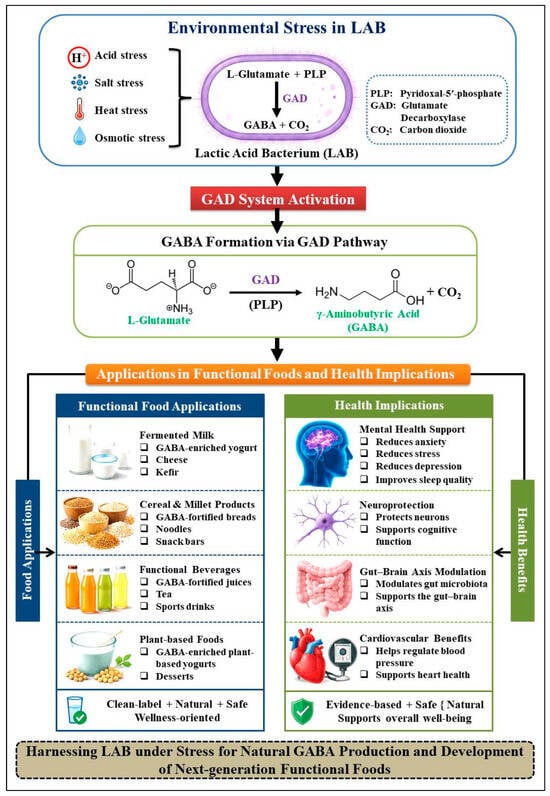
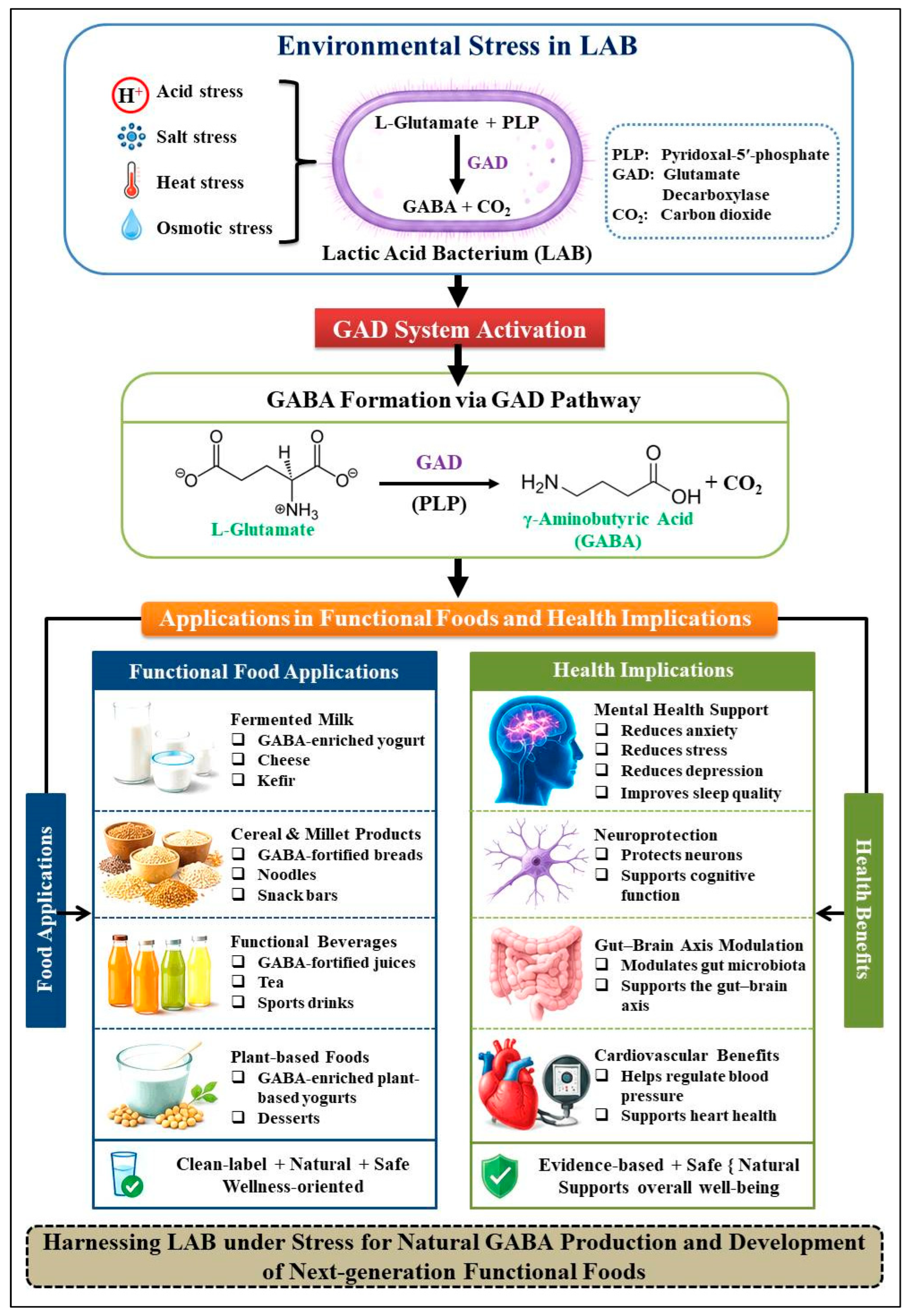
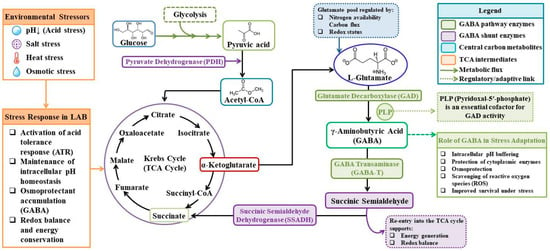
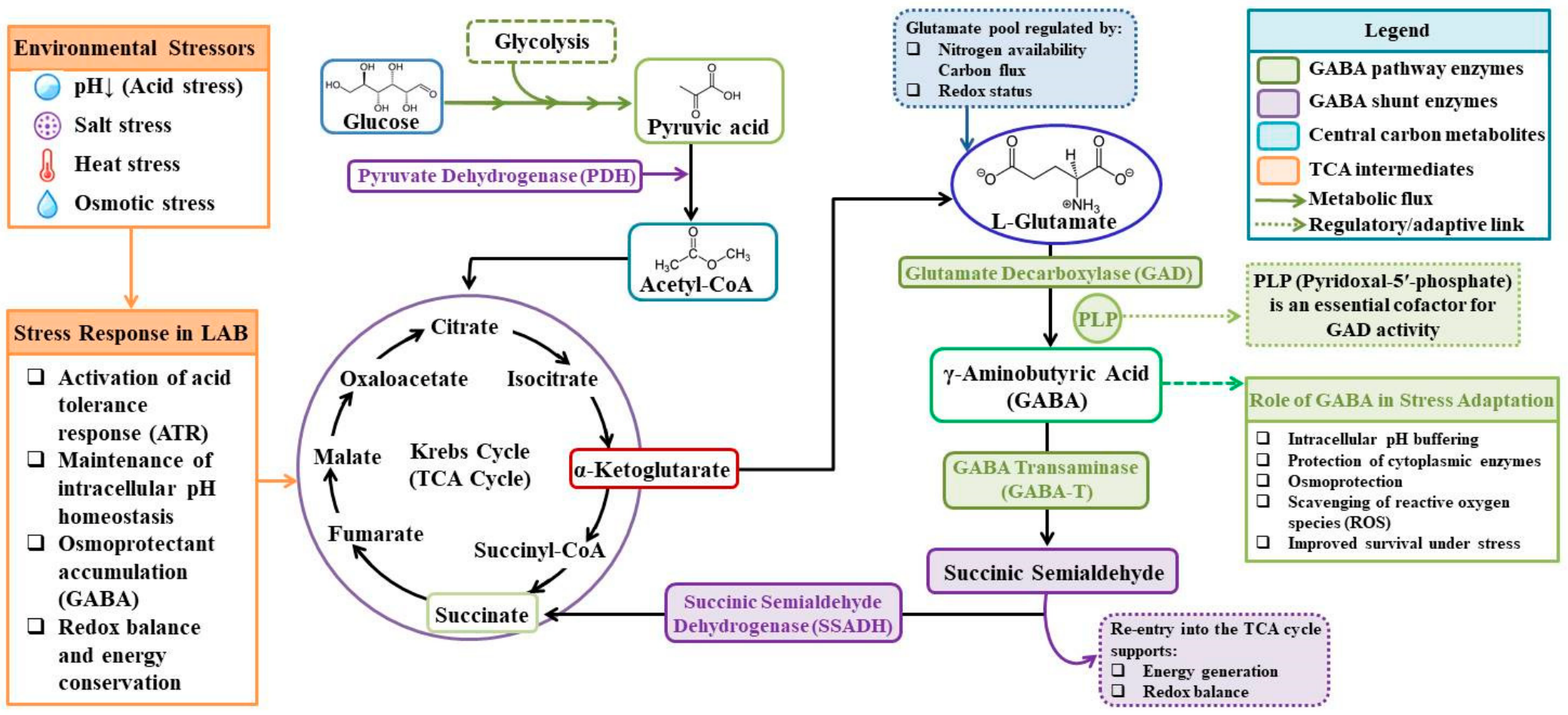
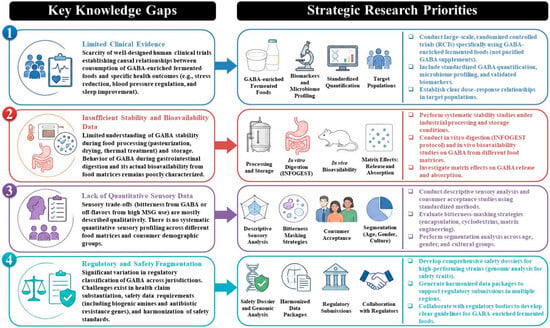
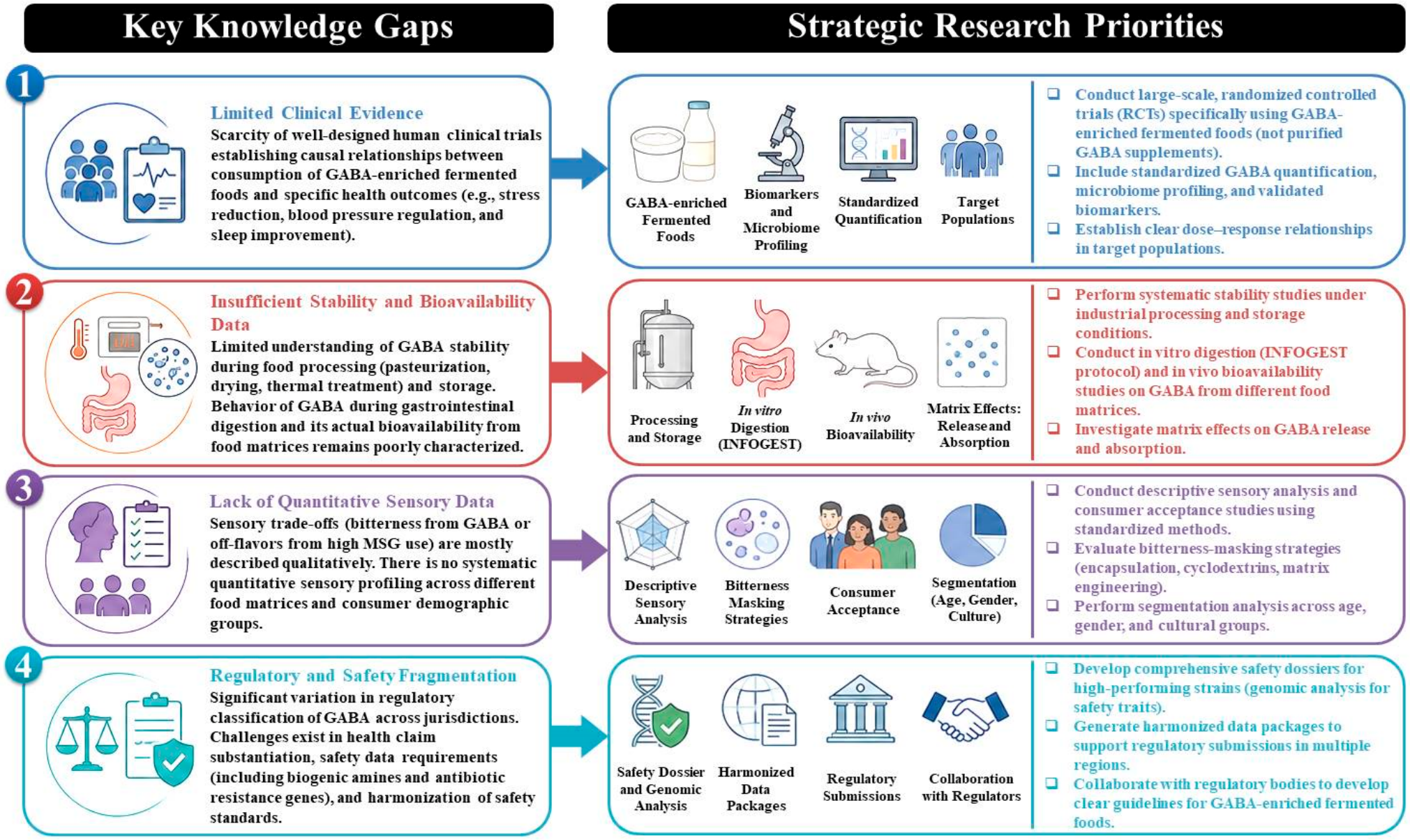
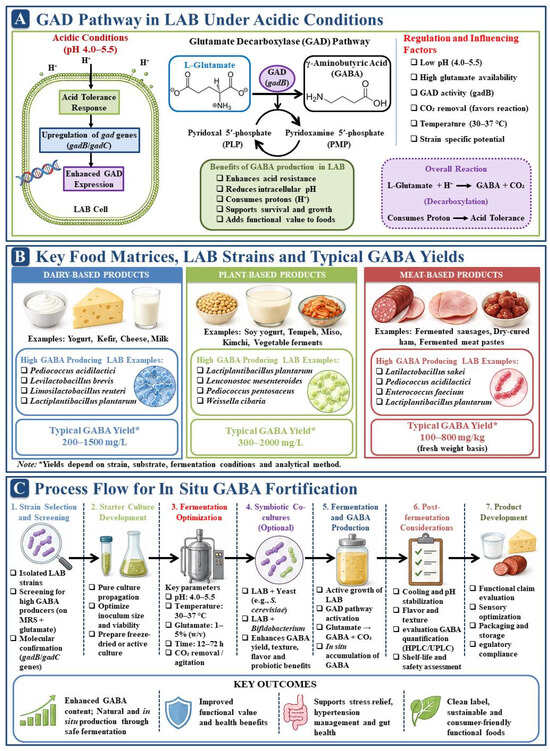
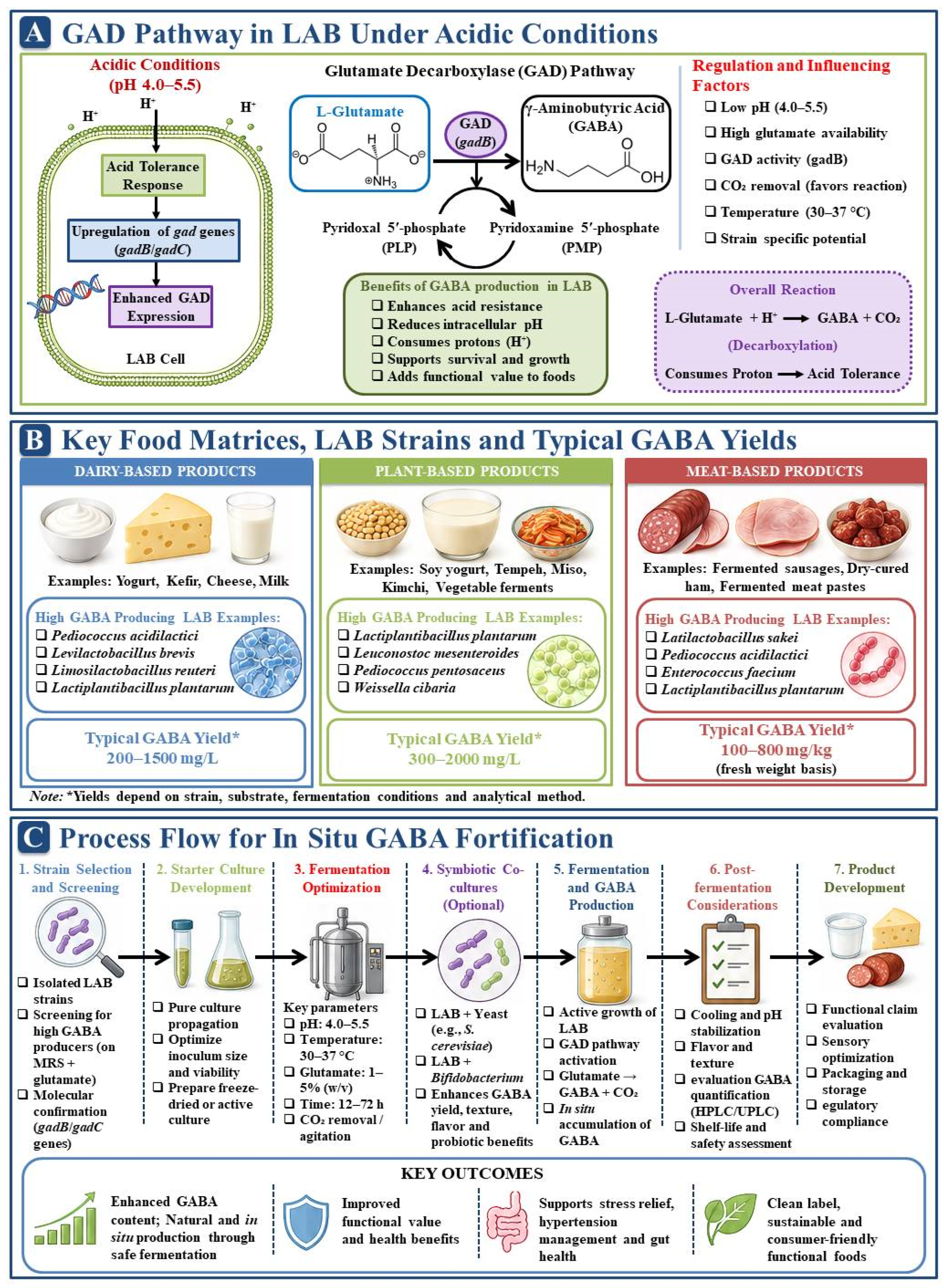
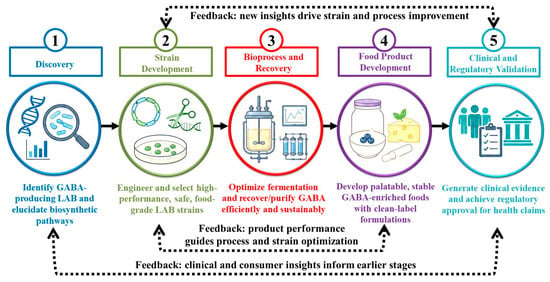
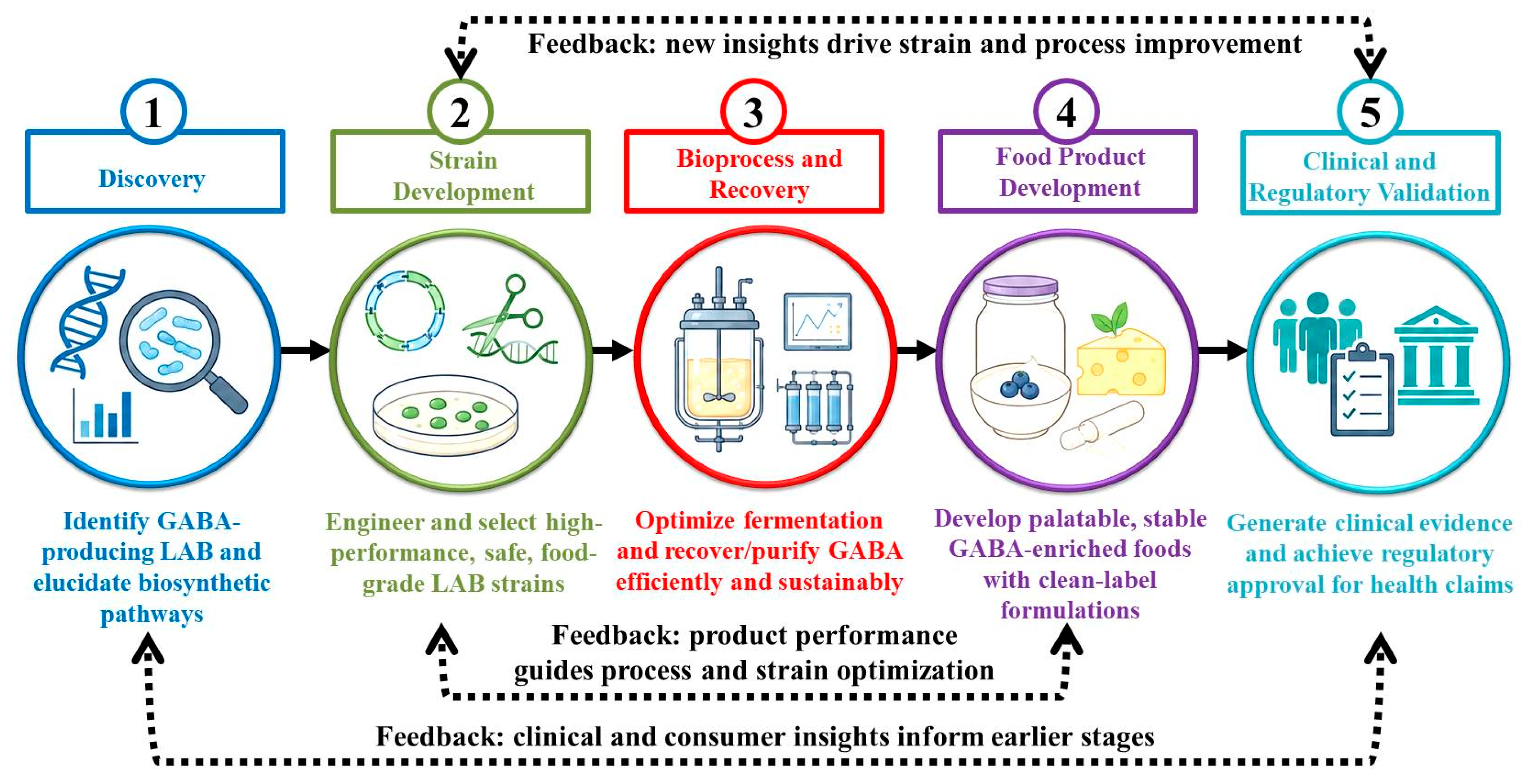

Disclaimer/Publisher’s Note: The statements, opinions and data contained in all publications are solely those of the individual author(s) and contributor(s) and not of MDPI and/or the editor(s). MDPI and/or the editor(s) disclaim responsibility for any injury to people or property resulting from any ideas, methods, instructions or products referred to in the content. |
© 2026 by the authors. Licensee MDPI, Basel, Switzerland. This article is an open access article distributed under the terms and conditions of the Creative Commons Attribution (CC BY) license.