


Abstract
Requirements prioritization methods increasingly consider multiple quality dimensions simultaneously, but the way these dimensions are aggregated determines what information reaches decision-makers: methods that combine dimensions into a single score can mask trade-offs that Pareto-based or outranking methods keep visible, and no evidence currently guides which choice is appropriate for a given project. This paper presents a systematic literature review of 56 studies of requirements prioritization methods published between 2010 and 2025, identified through a search of Scopus, IEEE Xplore, Web of Science, and ACM Digital Library and screened against explicit inclusion and exclusion criteria. The review characterizes how aggregation strategies are distributed across this literature and examines whether prior studies have empirically evaluated their effects on rank stability and decision transparency. The results show that 33 of 56 papers (58.9%) use compensatory aggregation, 16 (28.6%) produce dimensionality-preserving Pareto fronts, 6 are partially compensatory, and only 1 is non-compensatory under this classification framework, with compensatory methods accelerating in the most recent publication period as fuzzy extensions grow more sophisticated. No study in the retrieved corpus directly evaluates the effect of aggregation strategy on rank stability or decision transparency. This review provides the first systematic characterization of aggregation strategies in requirements prioritization and outlines the design of the comparison study needed to give practitioners and method designers an evidence-based basis for choosing among them.
1. Introduction
Requirements prioritization determines the order in which software requirements should be implemented by balancing competing considerations such as business value, implementation cost, technical risk, and stakeholder urgency [1,2]. As software systems have grown in complexity and stakeholder groups have become more diverse, prioritization has evolved from single-criterion ranking toward multi-criteria approaches that consider several quality dimensions simultaneously.
Combining multiple dimensions requires an aggregation strategy. Compensatory methods combine criterion scores into a single value, allowing for strengths in one dimension to offset weaknesses in another. Pareto-based methods instead preserve trade-offs by producing a set of non-dominated solutions, while outranking methods establish pairwise preference relations without relying solely on a single aggregate score. These approaches differ fundamentally in how they represent trade-offs and how much criterion-level information remains visible in the final prioritization outcome. This distinction motivates the concept of dimension preservation, defined formally in Section 2.3.
Requirements prioritization research has produced a wide range of methods, including approaches based on the Analytic Hierarchy Process (AHP), the Technique for Order Preference by Similarity to Ideal Solution (TOPSIS), their fuzzy extensions [1], multi-objective evolutionary algorithms [3], and outranking methods such as PROMETHEE [4] and ELECTRE [5]. Previous systematic reviews have classified requirements prioritization methods by technique [1] or by the rigor of their empirical evaluation [6]. To the best of our knowledge, however, no systematic review has examined how requirements prioritization methods are distributed across aggregation strategies or whether aggregation strategy has itself been evaluated as a factor affecting rank stability or decision transparency (see Section 2.4).
This review makes three contributions. First, it introduces aggregation strategy, whether and how a method resolves trade-offs among quality dimensions into a single output, as an explicit classification axis for requirements prioritization research, distinct from the technique-family and evaluation-rigor axes used in prior reviews (Section 2.4). Second, it provides the first systematic count of how the published literature distributes across compensatory, Pareto-preserving, outranking, and hybrid aggregation strategies. Third, it identifies a practical consequence of this gap: without evidence on whether aggregation strategy changes which requirements get prioritized, or whether stakeholders act differently when given a resolved ranking versus a visible trade-off, method designers and practitioners have no way to judge what a compensatory method’s simplicity actually costs. Section 5 and Section 6 outline the design of the comparison study needed to answer this.
This review asks to what extent existing methods preserve quality dimensions as distinct, interpretable components of their output, and what empirical evidence exists on the consequences of compensatory aggregation for rank stability and decision transparency. Section 3.1 states this research question formally.
To answer this question, a systematic literature review of studies on requirements prioritization methods published between 2010 and 2025 was conducted. A systematic search of Scopus, IEEE Xplore, Web of Science, and ACM Digital Library identified a final corpus of 56 studies. The review finds that compensatory aggregation dominates the literature, that non-compensatory methods are rare, and that no study directly evaluates how aggregation strategy influences rank stability or decision transparency. As a result, researchers and practitioners currently lack empirical evidence to inform the selection of aggregation strategies for different prioritization contexts.
2. Background
2.1. Requirements Prioritization
Software development projects rarely have the resources to implement all identified requirements within a single release. Requirements prioritization is the process by which development teams, product owners, and stakeholders determine the order in which requirements should be addressed, trading off competing considerations such as business value, implementation cost, technical risk, and stakeholder urgency [1,2]. The outcome of a prioritization process is typically a ranked list or a selected subset of requirements designated for the next release.
A poorly prioritized backlog leads to wasted development effort, missed stakeholder expectations, and delayed delivery of high-value functionality [1,2]. In agile development contexts, where release cycles are short and requirement backlogs are large, prioritization decisions recur frequently across iterations [7]. In safety-critical and regulated domains, the consequences of deprioritizing a high-risk requirement can extend beyond schedule and budget to system reliability and compliance [8].
Early approaches to requirements prioritization treated it as a single-criterion ranking problem: requirements were ordered by one dominant attribute, typically business value or estimated cost [2,9]. The limitations of single-criterion ranking became apparent as projects grew in complexity. A requirement with high business value but prohibitive implementation cost and unresolved technical dependencies presents a different decision problem than one with lower business value but negligible cost and no dependencies. Methods that rank on a single criterion cannot capture this structure. The response from the research community was to develop multi-criteria methods that accept several quality dimensions simultaneously and produce a priority ordering that reflects all of them.
2.2. Aggregation in Multi-Criteria Decision-Making
Multi-criteria decision-making (MCDM) provides the theoretical foundation for requirements prioritization methods that accept multiple quality dimensions [10]. The central challenge in MCDM is combining scores on multiple criteria into an output that supports a decision. This combination step is called aggregation, and the choice of aggregation operator determines the structural properties of the output.
A compensatory aggregation operator combines dimensional scores through weighted arithmetic, allowing for a high score on one dimension to offset a low score on another. The Analytic Hierarchy Process (AHP) and the Technique for Order Preference by Similarity to Ideal Solution (TOPSIS) are the canonical examples [11,12]. Their operation relies on an assumption that trade-offs among dimensions can be represented through weighted aggregation.
Non-compensatory operators are designed to avoid full compensatory substitution among dimensions [13]. In outranking methods such as PROMETHEE [4,14] and ELECTRE [5,13], alternatives are compared pairwise on each criterion and a global preference order is derived from the dominance relations, without relying solely on a single weighted aggregate score representing full compensatory substitution among criteria. These methods retain explicit information about criterion-level trade-offs in the preference structure.
A third family of methods does not aggregate at all. Multi-objective optimization approaches treat requirements selection as a search problem in which multiple objectives must be satisfied simultaneously. The output is a Pareto front: a set of non-dominated solutions in which no solution is strictly better than another on all objectives [3,15]. The decision-maker chooses from the front based on contextual priorities, deferring the resolution of dimensional trade-offs to a post-computation selection step.
The three families represent different positions on whether dimensional trade-offs should be resolved by the method or by the decision-maker. Each approach involves different assumptions about how dimensions relate to one another and what information the decision-maker needs.
The volume and sophistication of research within these three families have grown substantially over the review period. As this review’s own corpus indicates (Section 4), compensatory methods account for the majority of published techniques, with increasingly sophisticated fuzzy extensions, including intuitionistic fuzzy sets, type-2 fuzzy sets, neutrosophic sets, and hesitant fuzzy linguistic term sets, appearing with growing frequency in more recent work. This reflects a broader trend in multi-criteria decision-making research toward representing vagueness and stakeholder disagreement more faithfully, a trend this review characterizes quantitatively in Section 4.
2.3. Dimension Preservation
In this review, dimension preservation refers to the extent to which information from individual quality dimensions remains visible and interpretable in the final prioritization output. The term is used here as an analytical construct for classifying prioritization outputs and does not refer to formal utility-theoretic independence assumptions, preferential independence, or mutual preferential independence as defined in multi-criteria decision analysis. Methods differ in the degree to which they preserve or collapse this information, as described above. Criterion-level information is retained more explicitly in Pareto-based and outranking output structures than in compensatory output, allowing for the decision-maker to inspect trade-offs directly instead of having them fully absorbed into a scalar value.
The practical relevance of this distinction depends on the context in which prioritization is applied. When dimensions measure quantities that stakeholders agree can be traded off freely, scalar aggregation produces an efficient and interpretable output. When dimensions measure properties that stakeholders consider difficult to compare directly, the choice of aggregation approach determines how much of that incommensurability is visible in the final ranking. Whether this distinction affects the quality of prioritization decisions in practice is an empirical question that has not been examined in the literature.
In this review, decision transparency refers to the extent to which stakeholders can trace a prioritization outcome back to the criterion-level evaluations and trade-offs that produced it, distinct from rank stability, which concerns whether a method’s output ordering remains consistent under small perturbations to inputs or weights. Dimension preservation and decision transparency are related but distinct constructs. Dimension preservation is a structural property of the output: whether criterion-level information remains present rather than being collapsed into a single value. Decision transparency concerns whether stakeholders can actually trace and interpret that information in practice, which depends on more than output structure alone. A Pareto front preserves dimension-level information by construction, but a front containing many non-dominated solutions across several objectives does not automatically make the underlying trade-offs transparent to a decision-maker; navigating such a front toward an actionable choice is itself a nontrivial task, a gap this review returns to in Section 5. Dimension preservation is therefore better understood as a precondition for decision transparency rather than a guarantee of it: retained criterion-level information can support transparency when presented in an interpretable way, but preservation alone does not ensure that outcome.
2.4. Relationship to Existing Reviews
Requirements prioritization has been the subject of prior secondary studies, and this review’s contribution must be positioned against them explicitly. Achimugu et al. [1] conducted a systematic literature review of requirements prioritization research, cataloging proposed techniques and the limitations reported for each. That review organizes the literature by method family, such as AHP-based, cost–value, and cumulative voting approaches, and its central concern is which techniques exist and what practical limitations they report, not how those techniques structurally combine multiple quality dimensions into an output.
Bukhsh et al. [6] conducted a follow-up systematic literature review covering 2007 to 2019 that addresses a different gap left by Achimugu et al.: the extent to which proposed prioritization techniques have been empirically evaluated. That review performs a meta-analysis of 102 papers proposing or evaluating RP methods, reporting that the Analytic Hierarchy Process is the most accurate and extensively used method in industry and that experiments were the most common research method used to validate proposed approaches. Its organizing axis is evaluation rigor and empirical validation status, not aggregation architecture.
Both prior reviews examine the literature from perspectives that differ from the aggregation-focused lens adopted here. Achimugu et al. ask which techniques exist. Bukhsh et al. ask which techniques have been empirically validated. Neither asks how a technique structurally combines its input dimensions into an output, or whether that structural choice has itself been treated as a variable under study, because aggregation architecture was not their classification basis. This is the specific gap that motivates the aggregation-strategy lens adopted in the present review, and it is a gap that persists regardless of how thoroughly the existing techniques have been cataloged or empirically validated along other dimensions.
2.5. The Gap This Review Addresses
Requirements prioritization research has produced a substantial body of multi-criteria methods over the past fifteen years, developing increasingly sophisticated techniques for preference elicitation, handling uncertainty in stakeholder judgments, and scaling prioritization methods to large backlogs and multiple stakeholder groups.
Two questions remain insufficiently addressed in this literature. The first is descriptive: across the published record of multi-criteria requirements prioritization methods, what proportion use compensatory aggregation, what proportion preserve criterion-level information through Pareto-based output, and what proportion use non-compensatory outranking? The second is evaluative: has any study directly measured the effect of aggregation strategy choice on rank stability or decision transparency? This review addresses both questions through a systematic search of the requirements prioritization literature published between 2010 and 2025.
3. Materials and Methods
The central question driving this review is how requirements prioritization methods that accept multiple quality dimensions transform those dimensions into a prioritization output. Methods may collapse criterion-level information into a compensatory scalar score, retain dimensional trade-offs in a Pareto-based solution set, or retain trade-off information through non-compensatory or hybrid structures. Answering this question requires a systematic search across the literature, because the distribution of aggregation strategies within the retrieved literature is itself the finding. The search strategy, eligibility criteria, quality-assessment rubric, and aggregation categories were defined before any database searches were executed. The thematic coding scheme was developed inductively during analysis, as described in Section 3.8. The evaluative component of the research question, whether any study has measured the consequences of aggregation choice, is answered with respect to the papers retrieved by this strategy and not as a claim about the broader literature. The protocol follows the Kitchenham and Charters guidelines for systematic literature reviews in software engineering [16] and is reported in accordance with the PRISMA 2020 statement [17]. The review combines a quantitative synthesis of aggregation type and thematic code distributions across the corpus with a qualitative thematic synthesis characterizing the methodological approach within each category. The PRISMA 2020 flow diagram is presented as Figure 1.
Figure 1.
PRISMA 2020 flow diagram. Records were identified from four databases across two search sessions (June 2026 and August 2026) and screened against five inclusion and six exclusion criteria. Two additional records were added through backward snowballing, and one further record was added through forward snowballing.
3.1. Research Question
Requirements prioritization research has invested heavily in methods that accept several criteria simultaneously, yet the mechanism by which those criteria are combined has received little critical attention. When a method accepts business value, implementation cost, and stakeholder urgency as three distinct inputs and returns a single ranked list, it has necessarily made a decision about whether those dimensions can offset one another. In compensatory aggregation, a high score on one dimension can offset a low score on another. In non-compensatory or Pareto-based approaches, the conflict between dimensions remains visible to the decision-maker. Whether this difference matters empirically, and how widely compensatory methods dominate the published record, has not been examined in a systematic review.
The primary research question for this review is:
To what extent do requirements prioritization methods that handle multiple quality dimensions simultaneously preserve those dimensions as distinct and interpretable components of the output, and what empirical or design-science evidence exists regarding the effects of compensatory aggregation on rank stability and decision transparency?
The question has two distinct parts. The first is descriptive and structural: it asks how the published literature distributes across aggregation strategies, and whether any structurally distinct categories of method have emerged beyond the compensatory mainstream. The second is evaluative: it asks whether any study has directly compared aggregation strategies and measured the consequences. Both parts are reported in Section 4.
3.2. PICO Framework
The search strategy and inclusion criteria were derived using the PICO framework, adapted here for a method-oriented literature review. The four elements are defined in Table 1.
Table 1.
PICO framework for this systematic review.
The PICO decomposition shaped the three-block structure of the Boolean search string, the five inclusion criteria, and the six exclusion criteria described in the following subsections.
3.3. Search Strategy
3.3.1. Database Selection
Scopus, IEEE Xplore, Web of Science, and ACM Digital Library were selected as the four primary sources. Scopus was selected as the primary broad-coverage database because it indexes a wide range of computer science and software engineering venues and supports field-restricted Boolean queries. IEEE Xplore was included to provide direct coverage of IEEE-sponsored conferences and transactions central to software and requirements engineering, including the RE conference series, ICSE, and ICSM proceedings. Web of Science was included as a second broad-coverage database to support cross-validation of retrieval and to capture journal papers indexed there but absent from Scopus. ACM Digital Library was added to ensure coverage of ACM-sponsored venues, including conferences and workshops in requirements engineering and software engineering that publish primarily or exclusively through ACM.
Google Scholar was evaluated and excluded. It does not support reproducible field-restricted queries, and its ranking algorithm introduces retrieval variance that cannot be documented or replicated across search sessions. Its exclusion is consistent with the approach taken in established software engineering SLRs that prioritize retrieval transparency [16].
3.3.2. Search String Design
The search string is structured as three thematic blocks connected by AND, each targeting a different element of the PICO framework.
Block one targets the Population. It captures requirements prioritization and closely related activities, including backlog prioritization, feature prioritization, and requirements selection, using both British and American spellings. The breadth of this block is intentional. Terms such as “feature prioritization” and “backlog prioritization” appear in agile-oriented work that uses different vocabulary for the same underlying activity.
Block two targets the multi-dimensional character required by IC2. It includes terms for multiple criteria, multiple objectives, multiple dimensions, multi-stakeholder contexts, and group decision-making. This block removes most single-criterion prioritization papers before full-text screening is needed.
Block three targets the Intervention and Outcome. It includes compensatory aggregation terms such as AHP, TOPSIS, weighted, composite score, and fuzzy variants, alongside dimension-preserving terms such as Pareto, non-compensatory, outranking, ELECTRE, and PROMETHEE. Including terms associated with multiple aggregation families was intended to reduce the risk of systematically favoring one category of method over another in the distribution finding that is central to the review, a limitation revisited in Section 5.4.
The string was developed through four iterative refinement cycles. Each candidate string was evaluated against five seed papers known to be relevant. The string was accepted only when all five seed papers were retrieved. The final strings as executed are reproduced below.
Scopus:
TITLE-ABS-KEY(
("requirements prioritization" OR "requirements prioritisation"
OR "requirements ranking" OR "requirements ordering"
OR "backlog prioritization" OR "backlog prioritisation"
OR "feature prioritization" OR "feature prioritisation"
OR "requirement selection")
AND
("multi-criteria" OR "multiple criteria" OR "multiple attributes"
OR "multi-objective" OR "multiple objectives" OR "multi-dimensional"
OR "multiple dimensions" OR "multi-factor" OR "multiple factors"
OR "stakeholder priority" OR "stakeholder weights"
OR "stakeholder weighting" OR "multi-stakeholder"
OR "group decision" OR "multi-expert")
AND
("aggregation" OR "weighted" OR "composite score" OR "scalar"
OR "Pareto" OR "non-compensatory" OR "outranking" OR "ELECTRE"
OR "TOPSIS" OR "AHP" OR "PROMETHEE" OR "fuzzy aggregation"
OR "fuzzy ranking" OR "fuzzy prioritization"
OR "fuzzy prioritisation" OR "linguistic aggregation"
OR "intuitionistic fuzzy" OR "interval-valued fuzzy"
OR "type-2 fuzzy" OR "linguistic labels" OR "group prioritization"
OR "group prioritisation")
)
AND PUBYEAR > 2009 AND PUBYEAR < 2026
AND DOCTYPE(ar OR cp)
IEEE Xplore: The same three blocks shown above for Scopus were submitted to the All Metadata search field, connected by AND, with the outer TITLE-ABS-KEY() wrapper omitted since IEEE Xplore’s All Metadata field does not require one. A publication year filter of 2010 to 2025 was applied separately through the platform’s year-range filter.
Web of Science: The same three blocks were submitted as three separate Topic field rows connected by AND, with each block wrapped as TS=(...) in place of Scopus’s single TITLE-ABS-KEY() wrapper. A publication year filter of 2010 to 2025 was applied.
ACM Digital Library: The same three blocks were submitted as a single combined query against the Abstract field, entered directly through the Edit Query raw syntax option, since the standard row-based query builder is limited to two rows and could not accommodate all three blocks. ACM’s syntax tags each individual term rather than wrapping a block once; Block one, for example, was entered as follows:
[[Abstract: "requirements prioritization"] OR [Abstract:
"requirements prioritisation"] OR [Abstract: "requirements
ranking"] OR [Abstract: "requirements ordering"] OR [Abstract:
"backlog prioritization"] OR [Abstract: "backlog
prioritisation"] OR [Abstract: "feature prioritization"] OR
[Abstract: "feature prioritisation"] OR [Abstract: "requirement
selection"]]
Blocks two and three were entered the same way, with every term from the corresponding Scopus block above individually tagged [Abstract: "..."] and the three blocks connected by AND. A publication date filter of 2010 to 2025 was applied.
The search was executed in two sessions. Scopus, IEEE Xplore, and Web of Science were first searched in a single session in June 2026 with a publication year filter of 2010 to 2024, returning 48, 20, and 20 records respectively (88 records combined). At the time of this session, IEEE Xplore and Web of Science had already indexed two records as early-access publications with a formal 2025 publication year; these records satisfied the eligibility criteria in Table 2 and were retained in the corpus. To verify the completeness of this initial search and extend systematic coverage through 2025, all three databases were searched again in a second session in August 2026 with the publication year filter widened to 2010 to 2025, and a fourth database, ACM Digital Library, was searched for the first time under the same window. This second session returned 51 records from Scopus, 19 from IEEE Xplore, 20 from Web of Science, and 1 from ACM Digital Library (91 records combined). Combining both sessions across all four databases and removing 112 duplicates identified through DOI and title matching yielded 67 unique records. Of these, all but one were already present in the first session’s retrieval; the single additional record identified only in the second session was excluded at title and abstract screening as ineligible (Table 2, EC1). This indicates that the original three-database search had already achieved substantial coverage of the eligible literature prior to the second session.
Table 2.
Inclusion and exclusion criteria applied during screening.
3.4. Inclusion and Exclusion Criteria
Each record was evaluated against five inclusion criteria and six exclusion criteria, shown in Table 2. Inclusion required all five criteria to be met. A single exclusion criterion was sufficient for exclusion. Where a record met more than one exclusion criterion, the most directly applicable was recorded.
3.5. Screening Procedure
The 179 records retrieved across both search sessions and all four databases were deduplicated before screening. Duplicates were identified through DOI matching across the combined set of retrieved records, supplemented by title comparison, and included records retrieved independently in both the June 2026 and August 2026 sessions. The 112 duplicates identified were removed, leaving 67 unique records for screening.
Title and abstract screening was applied first. A record was excluded at this stage only when the title and abstract together provided unambiguous evidence for at least one exclusion criterion. Any record where the abstract was ambiguous or incomplete was retained for full-text review. Eleven records were excluded at title and abstract stage, leaving 56 records for full-text assessment.
Full-text retrieval was attempted for all 56 records through institutional access and inter-library requests where direct access was unavailable. Three records were excluded at full-text stage. One paper was confirmed to address a library service domain with no applicability claim to software requirements engineering (EC5). One paper was confirmed on full-text review to address a single quality dimension only (EC2). One record was excluded because no accessible source contained sufficient methodological information to assess eligibility or classify its aggregation strategy after all retrieval attempts (EC6). The 53 papers remaining after full-text exclusions form the database search contribution to the corpus. All screening decisions are recorded in the replication package linked in the data availability statement.
3.6. Quality Assessment
Each included paper was scored on three dimensions using a structured Quality Assessment (QA) rubric designed to assess the aspects of reporting quality most relevant to the research question.
QA1 assesses method clarity. A score of 1.0 indicates the proposed prioritization method is described with sufficient precision to be reproduced or independently compared. A score of 0.5 indicates the method is partially described with ambiguities that cannot be resolved from the text. A score of 0 indicates the method is not described in reproducible terms.
QA2 assesses evaluation presence. A score of 1.0 indicates at least one empirical or design-science evaluation is reported. A score of 0.5 indicates a limited evaluation, such as a single toy example or evaluation against one criterion only. A score of 0 indicates no evaluation.
QA3 assesses aggregation explicitness. A score of 1.0 indicates the mechanism by which dimensional scores are combined is explicitly stated and formally defined. A score of 0.5 indicates the aggregation operator is described informally or can be inferred from the method description without ambiguity, for example, when a paper names AHP or TOPSIS as its method without stating the formula but the operator is well established. A score of 0 indicates the aggregation mechanism is not addressed. The maximum total score across all three dimensions is 3.0.
Quality scores were used as a descriptive stratifier and not as an exclusion threshold, consistent with the approach recommended for mapping studies and broad SLRs in software engineering [16]. No paper was excluded on QA grounds alone. One paper in the corpus received a total score of 1.0 and is identified in Section 4. The full distribution of QA scores across the corpus is reported in Section 4.
3.7. Data Extraction
A structured extraction form was applied to each included paper. The extracted fields were paper identifier, title, authors, year, venue, DOI, originating database, primary method description, aggregation type classification, full-text retrieval status, individual and total QA scores, extraction notes, and thematic code. The aggregation type field was constrained to four controlled values defined prior to extraction: compensatory, dimensionality-preserving Pareto, partially compensatory, and non-compensatory. Compensatory and dimensionality-preserving Pareto were operationalized as described in Section 2: a paper was classified as compensatory if its output was a single scalar priority score produced by weighted aggregation, and as dimensionality-preserving Pareto if its output was a set of non-dominated solutions with no scalar aggregation step. A paper was classified as non-compensatory when its prioritization output was produced solely through an outranking mechanism such as PROMETHEE or ELECTRE, without a compensatory scalar component. Papers combining an outranking method with a compensatory method, such as a direct comparison between AHP and ELECTRE, were classified as partially compensatory instead. The partially compensatory category was operationalized as hybrid methods in which the aggregation operator combined more than one mechanism. One of the six papers in this category, Morales-Ramirez et al. [18], received a QA3 score of 0 because its aggregation mechanism was not addressed in the available text, so its classification reflects insufficient reporting rather than a confirmed hybrid structure, a distinction discussed further as a construct validity limitation in Section 5.4. T3 was defined to include both PROMETHEE and ELECTRE variants, and both are present in the final corpus: Hosseini Motlagh et al. [4] use PROMETHEE and Fernandes et al. [5] use ELECTRE I. Thematic codes and aggregation type classifications were assigned independently. A paper’s thematic code reflects its primary methodological family, while its aggregation type reflects the structural properties of its output. The two dimensions are related but not equivalent: T5 and T6 papers, for example, span more than one aggregation type.
Extraction was performed from full text wherever available. For 15 papers where only abstract-level access was achieved after all retrieval attempts (IDs 2, 9, 17, 27, 29, 32, 41, 44, 45, 51, 54, 56, 59, 61, and 62), extraction was performed from the available text and annotated accordingly. Classification based on abstracts is inherently less reliable than full-text classification, and this limitation is acknowledged as a threat to internal validity in Section 5.4. Classification of the full corpus was performed by a single reviewer; an independent second coder subsequently validated a subsample of this classification, as described in Section 5.4. To reduce the risk of error from incomplete information, all classifications for these 15 papers were re-examined in a subsequent review pass using a structured checklist derived from the four controlled aggregation type definitions, which did not result in any reclassification. As a further verification step, full text was subsequently retrieved for all 15 of these papers. This additional verification did result in changes: four papers were reclassified (Abou-Elseoud et al. [19], Zhao et al. [20], Sureka [21], and Divya and Anandhi [22]), and one paper’s evaluation-presence score was revised after the full text showed its reported evaluation covered only part of the proposed method (Cabeza de Vaca et al. [23]), as described in Section 5.4. These corrections are reflected throughout the results reported in Section 4. Separately, one paper with full-text availability throughout, using multi-objective whale optimizer variants to produce a Pareto front, had been initially coded as compensatory during general full-text extraction and was corrected to dimensionality-preserving Pareto after confirming that no scalar aggregation step was present in the method. Across the 15 papers extracted from abstract-level sources, QA1 (method clarity) and QA2 (evaluation presence) averaged 0.93 and 0.87 respectively, close to the corpus-wide averages of 0.94 and 0.89, while QA3 (aggregation explicitness) averaged 0.57 against a corpus-wide average of 0.71. This suggests that limited access primarily affected the ability to assess the aggregation mechanism itself rather than the method description or the presence of an evaluation.
3.8. Thematic Coding Scheme
Each paper was assigned one thematic code representing the primary mechanism through which it handles multi-dimensional prioritization. Six codes were defined inductively from the first ten papers reviewed and then validated against the seed papers before being applied to the full corpus.
T1 covers Fuzzy MCDM methods: AHP, TOPSIS, and their extensions under fuzzy set theory, including intuitionistic fuzzy sets, interval-valued fuzzy sets, neutrosophic sets, and hesitant fuzzy linguistic term sets. In the retrieved corpus, T1 methods aggregate dimensional scores into a single scalar priority value through weighted operators and were therefore classified as compensatory.
T2 covers multi-objective evolutionary algorithms and NRP solvers. These methods treat requirements selection as a multi-objective optimization problem, and their output is a Pareto front of non-dominated requirement sets. Methods in this group include NSGA-II variants, differential evolution, teaching–learning-based optimization, and anytime algorithms for the bi-objective Next Release Problem. In the papers assigned to this group, no scalar aggregation step is present, and criterion-level information is preserved in the output.
T3 covers outranking and non-compensatory methods: PROMETHEE and ELECTRE variants that use pairwise preference relations and threshold-based indifference modeling to rank requirements without aggregating dimensional scores into a scalar.
T4 covers hybrid and partially specified methods. These methods combine elements from more than one approach, or the aggregation operator is not fully stated in the paper.
T5 covers goal- and dependency-based methods that use a softgoal hierarchy, goal model, or requirement inter-dependency graph as the primary structural organizer. Aggregation behavior varies across T5 papers, and aggregation type is assigned individually.
T6 covers data-driven and evidential reasoning methods that derive priorities from historical data, association rule mining, machine learning classifiers, or Dempster-Shafer belief functions. As with T5, aggregation behavior varies, and aggregation type is assigned individually.
Coding was performed by a single reviewer using the structured coding scheme described above. All thematic code assignments were re-examined against the most complete accessible source in a second review pass after the initial coding had been completed, as a self-consistency check; no thematic code assignments changed between the two passes.
A second, independent coder subsequently assigned a thematic code to a stratified sample of 10 papers (18.2% of the corpus), selected to weight the rarer categories: both T3 papers, all three T5 papers, two of the four T4 papers, and one paper each from T1, T2, and T6. The second coder classified papers from the same title, abstract, and method description used in the original extraction, without seeing the original code. Agreement was substantial (Cohen’s ; exact agreement in 8 of of 10 cases). Both disagreements involved papers with full text available throughout the original review (Fernandes et al. [5] coded T3 originally and T4 by the second coder; Misaghian and Motameni [24] coded T4 originally and T6 by the second coder), so neither disagreement reflects new information resolving an abstract-only gap; both are retained as the original codes and reported as genuine differences in category-boundary judgment. Both disagreements concentrate on papers this review’s own discussion already identifies as structurally ambiguous (Section 4.5.3 and Section 4.5.4), which corroborates rather than undermines the coding scheme’s discriminating power.
3.9. Snowballing
Backward snowballing was conducted from three seed papers: Fernandes et al. [5], Hosseini Motlagh et al. [4], and Veerappa and Letier [3]. These papers were selected because they were directly relevant to the research question, spanned different aggregation strategy categories (partially compensatory, non-compensatory, and dimensionality-preserving Pareto respectively), and collectively covered a wide range of cited works within the corpus. Reference lists were scanned for candidates satisfying IC1 and IC2, and each candidate was evaluated against the full set of inclusion and exclusion criteria before a decision was recorded.
Four candidates emerged across the three reference lists. Two were included. Dabbagh and Lee [25] integrate functional and non-functional requirement prioritization as two distinct weighted dimensions using a fuzzy aggregation procedure. That paper was classified as compensatory (T1). Gay et al. [26] apply multi-objective search to requirements models to find robust solutions across conflicting objectives without scalar collapse. That paper was classified as dimensionality-preserving Pareto (T2). Two candidates were excluded: a practice survey that did not address a prioritization method (EC1), and a stakeholder clustering paper that did not address requirements prioritization directly (EC1).
Limited forward snowballing was subsequently conducted from the same three seed papers, checking papers citing each seed paper for relevance to the research question. This was a targeted check rather than exhaustive citation-chasing: candidates were screened for an explicit software requirements prioritization focus before full evaluation against the inclusion and exclusion criteria. One candidate satisfying all five inclusion criteria was identified from the papers citing Veerappa and Letier [3]. Ibriwesh et al. [27] propose the Multiple Perspective Prioritization Technique, which combines customer, business, and technical perspective scores into a single priority value per requirement group through an explicit formula, and evaluate it empirically against AHP and Wiegers’ technique with 159 participants. This paper was classified as compensatory (T4), since it combines a simple ranking procedure for the customer perspective with an AHP-inspired pairwise comparison procedure for the business and technical perspectives, resolving to a single compensatory formula. No candidates satisfying the inclusion criteria were identified from the papers citing Fernandes et al. [5] or Hosseini Motlagh et al. [4]. This limited check does not constitute an exhaustive forward snowball of the full corpus, and a residual recall limitation remains: citation chasing and keyword-based database search operate through different retrieval mechanisms, and a paper citing one of the seed studies may not use the same aggregation terminology in its own title, abstract, or keywords. A complete forward snowball from all 56 papers in the final retrieved corpus is identified as a direction for a future replication or extension of this review.
The two backward snowball additions and the one forward snowball addition bring the final corpus to 56 papers.
4. Results
4.1. Corpus Overview
This section reports the quantitative distribution of papers across aggregation types, quality scores, and publication periods, followed by a qualitative thematic synthesis of how each methodological family handles aggregation. The systematic search, executed across two sessions as described in Section 3.3, retrieved 179 records across four databases: 99 from Scopus, 39 from IEEE Xplore, 40 from Web of Science, and 1 from ACM Digital Library. After removing 112 duplicates identified through DOI and title matching, 67 unique records proceeded to title and abstract screening. Eleven records were excluded at that stage. Full-text retrieval was attempted for the remaining 56 records, of which 3 were excluded at full-text stage (EC5: 1, EC2: 1, EC6: 1). Two papers were added through backward snowballing from the three seed papers, and one further paper was added through forward snowballing from the same seed papers, giving a final corpus of 56 papers spanning 2010 to 2025.
The corpus is distributed across three time periods. The period 2010 to 2015 contains 16 papers, 2016 to 2020 contains 17 papers, and 2021 to 2025 contains 23 papers. The increase in the most recent period is driven almost entirely by T1 (Fuzzy MCDM) papers, which account for 18 of the 23 papers published from 2021 onward. The corpus comprises 27 journal articles and 29 conference or workshop papers. The complete corpus with classifications for all 56 papers is provided in Appendix A.
Figure 2 shows publication counts by aggregation type across the three time periods. The dominance of compensatory methods is visible from the earliest period and intensifies in 2021 to 2025. Pareto-based methods are concentrated in the 2010 to 2015 period and show relative stagnation since 2016.
Figure 2.
Publication counts by aggregation type across three time periods. Compensatory methods dominate throughout and accelerate from 2021 onward. Pareto-based methods are concentrated in 2010–2015 and show relative stagnation in more recent years.
4.2. Quality Assessment Score Distribution
Table 3 reports the distribution of total QA scores across the 56 included papers. Twenty-two papers scored 3.0 and 21 papers scored 2.5, meaning 43 of 56 papers (76.8%) received a score of 2.5 or above. Ten papers scored 2.0, two scored 1.5, and one paper received a total score of 1.0. One paper, Morales-Ramirez et al. [18], received the lowest QA score (1.0), discussed further in Section 4.5.4. It is retained in the corpus in accordance with the review protocol, and its reporting limitations are considered in the qualitative synthesis.
Table 3.
Quality assessment score distribution across 56 included papers.
The quality assessment indicates that the majority of the evidence base is reasonably well reported. More than three quarters of the included papers received a QA score of 2.5 or higher, providing confidence that the reported aggregation classifications are based predominantly on studies with sufficiently detailed methodological reporting. Lower-scoring papers were retained in accordance with the review protocol to preserve coverage of the literature, and their reporting limitations were taken into account when interpreting the qualitative findings.
4.3. Aggregation Type Distribution
Table 4 summarizes the distribution of aggregation strategies across the 56 included studies. Compensatory methods are the most common, accounting for 33 papers (58.9%). Dimensionality-preserving Pareto methods form a distinct second group with 16 papers (28.6%). Six papers (10.7%) are classified as partially compensatory, while only one paper (1.8%) is classified as non-compensatory under the classification framework adopted in this review. As discussed in Section 4.5.3, this classification is based on a single domain-adjacent study.
Table 4.
Aggregation type distribution across 56 included papers.
Compensatory aggregation remains the dominant approach throughout the review period. It accounts for 4 of 16 papers published between 2010 and 2015, 10 of 17 between 2016 and 2020, and 19 of 23 between 2021 and 2025. The increase in the most recent period appears to be largely driven by the growth of T1 (Fuzzy MCDM) studies. Overall, these results indicate that requirements prioritization research has overwhelmingly favored aggregation strategies that collapse multiple quality dimensions into a single prioritization outcome. Methods that preserve criterion-level information remain comparatively uncommon.
4.4. Evaluative Finding: Absence of Aggregation Comparison Studies
On the evaluative component of the research question, whether any study has directly compared aggregation strategies and measured the consequences for rank stability or decision transparency, the answer across the retrieved corpus is no. Fernandes et al. [5] compare AHP and ELECTRE I applied to the same prioritization task, but evaluate the two methods on practical criteria such as scalability and ease of use, not on rank stability outcomes. Voola and Vinaya Babu [28] examine several algorithms for aggregating imprecise priority estimates using Dempster-Shafer belief functions, but focus on handling input uncertainty and do not report rank stability as a measured outcome. No paper in the corpus treats aggregation strategy as an independent variable with rank stability or decision transparency as a measured outcome. This absence is a direct finding within the retrieved corpus and not a claim about the broader literature.
4.5. Thematic Synthesis
Table 5 shows the distribution of papers across the six thematic codes.
Table 5.
Thematic code distribution across 56 included papers.
4.5.1. T1: Fuzzy MCDM Methods (25 Papers)
T1 is the largest group, accounting for 25 of 56 papers (44.6%). In the retrieved corpus, all T1 papers are compensatory: they assign weights to quality dimensions, compute a score for each requirement across those dimensions, and aggregate the scores into a single scalar ranking. Two method families dominate. Seven papers use TOPSIS or a fuzzy extension of TOPSIS as the primary ranking mechanism [29,30,31,32,33,34,35]. Seven further papers use AHP or a fuzzy extension of AHP as the primary weighting mechanism [23,36,37,38,39,40,41]. Two papers combine AHP and TOPSIS in a pipeline [42,43]. The remaining nine papers use other compensatory operators including the Choquet integral [44], hesitant fuzzy linguistic term sets [45], IOWA operators [46], utility function weighted sums [47], and integrated MCDM frameworks [25,48,49,50,51].
The dominant pattern across T1 is the treatment of multi-dimensionality as an input engineering problem. Research effort is directed at increasingly sophisticated techniques for eliciting and representing stakeholder preferences under uncertainty, using fuzzy set extensions to handle vagueness and group decision-making protocols to reconcile conflicting stakeholder judgments. The aggregation step, the point at which dimensional scores are combined into a scalar, is present in all 25 papers and is not examined as a variable in any of them.
The temporal pattern within T1 is pronounced. Of the 25 papers, 3 were published in 2010 to 2015, 4 in 2016 to 2020, and 18 from 2021 onward. The recent growth is accompanied by increasing complexity of fuzzy extensions: papers from 2021 onward routinely use type-2 fuzzy sets [33], neutrosophic sets [31,32], and combined frameworks [48,49], where earlier work typically used crisp or type-1 fuzzy AHP [36,37]. The aggregation architecture of weights times scores summed to a scalar remains unchanged across the full sixteen-year period.
4.5.2. T2: Multi-Objective Evolutionary Algorithms and NRP Solvers (17 Papers)
T2 covers 17 papers (30.9%). Fifteen are classified as dimensionality-preserving Pareto; these methods treat requirements selection as a multi-objective optimization problem and produce a Pareto front of non-dominated solution sets, with no scalar aggregation step present. The remaining two papers, Sureka [21] and Divya and Anandhi [22], are classified as Partially compensatory: Sureka’s paper formally defines a single-objective compensatory scalar with cost as a budget constraint, but its empirical work instead runs Pareto-based multi-objective evolutionary algorithms and reports Pareto-specific quality indicators, an internal inconsistency between the stated formulation and the actual technique; Divya and Anandhi’s proposed framework runs two structurally different solution-generation branches, an unformalized manual scenario-based approach and an exact Pareto-front-enumerating algorithm, without specifying a rule for reconciling their outputs into a final selection.
Within T2, two sub-groups are distinguishable. Nine papers address the Next Release Problem (NRP) specifically, formulating requirements selection as a bi-objective or multi-objective optimization problem balancing stakeholder satisfaction against development cost [21,22,52,53,54,55,56,57,58]. Eight further papers apply multi-objective search to broader requirements prioritization problems beyond the NRP framing [3,26,59,60,61,62,63,64].
The contrast with T1 in temporal distribution is notable. T2 papers are spread across the full corpus period, with 9 papers from 2010 to 2015, 5 from 2016 to 2020, and only 3 from 2021 onward, a pattern that contrasts with the accelerating growth of T1 in the same period.
4.5.3. T3: Outranking and Non-Compensatory Methods (2 Papers)
T3 is the smallest group and the one most directly relevant to the evaluative component of the research question. Only two papers address non-compensatory or outranking methods for requirements prioritization.
Hosseini Motlagh et al. [4] propose a fuzzy PROMETHEE group decision support system for ranking technical requirements in a quality function deployment context. PROMETHEE uses pairwise preference functions and net flow scores to rank alternatives. Under the classification framework adopted in this review, this is the only method classified as non-compensatory in the corpus. The application domain is product design, which is adjacent to software requirements engineering. The method operates on technical requirements evaluated against design criteria, which maps directly to IC2, and the paper was included on that basis.
Fernandes et al. [5] compare AHP and ELECTRE I applied to the same software requirements prioritization task. This paper is classified as T3 because it introduces an outranking method into the requirements prioritization literature, but its aggregation type is Partially compensatory because AHP is one of the two methods under comparison and neither is clearly advocated over the other. The comparison in Fernandes et al. evaluates practical usability and output characteristics on a case study and does not report rank stability or the effect of aggregation choice as measured outcomes.
Outranking methods for requirements prioritization are extremely sparsely represented in the retrieved corpus. PROMETHEE and ELECTRE are established outranking methods in the broader MCDM literature. Their limited representation indicates that outranking approaches have received relatively little attention within requirements prioritization research, a pattern discussed further in Section 5.
4.5.4. T4: Hybrid and Partially Specified Methods (5 Papers)
Five papers use methods with hybrid or multi-technique framing, though their aggregation mechanisms differ in whether a single logic clearly dominates. Misaghian and Motameni [24] use tensor decomposition to structure multi-stakeholder preference data before producing a priority ranking, combining multiple aggregation mechanisms and achieving the highest QA score in the group at 3.0; this is classified as Partially compensatory. Morales-Ramirez et al. [18] use user feedback in a tool-supported multi-criteria prioritization setting and received the lowest QA total in the corpus (1.0), also classified as Partially compensatory because the aggregation mechanism is insufficiently described. Abou-Elseoud et al. [19] combine cumulative voting, a QFD-inspired importance scale, and AHP-style weight elicitation, but the combination logic across all three inputs is uniformly a weighted linear sum; despite the hybrid framing in the title, this is classified as Compensatory. Gupta and Gupta [65] similarly use a dependency-based collaborative weighting mechanism classified as Compensatory, though the hybrid character of the method places it analytically closer to T4. Ibriwesh et al. [27] combine a simple ranking procedure for the customer perspective with an AHP-inspired pairwise comparison procedure for the business and technical perspectives, resolving all three perspective scores into a single priority value through an explicit formula; this is classified as Compensatory.
The T4 group is therefore best viewed as a collection of methods with hybrid or multi-technique framing, only some of which combine genuinely distinct aggregation mechanisms: two papers (Misaghian, Morales-Ramirez) are classified as Partially compensatory, while three (Abou-Elseoud, Gupta and Gupta, Ibriwesh et al.) resolve to a single compensatory mechanism despite their hybrid names.
4.5.5. T5: Goal- and Dependency-Based Methods (3 Papers)
Three papers use goal models or requirement dependency structures as the primary organizer of the prioritization process. Sumesh and Krishna [66] combine AHP with a satisfaction propagation model derived from the softgoal inter-dependency graph, scoring 3.0 on the QA rubric, and are classified as Compensatory. Elsood et al. [67] use goal-based weighting applied to functional and non-functional requirements via a fully specified multiplicative weighted-sum mechanism, also classified as Compensatory. Zhao et al. [20] use a goal model with AHP-derived link weights, but the satisfaction-propagation mechanism itself mixes a weighted sum for contribution links with min/max veto-style rules for AND and OR decomposition, plus a lexicographic tie-breaking rule for the final ranking; this genuine mixture of compensatory and non-compensatory logic is classified as Partially compensatory.
Two of the three papers in this group resolve goal contributions into a single compensatory scalar; the third combines compensatory and non-compensatory rules depending on decomposition type, illustrating that goal-based methods do not uniformly commit to one aggregation logic.
4.5.6. T6: Data-Driven and Evidential Reasoning Methods (4 Papers)
Four papers use data-driven mechanisms as the primary source of priority evidence. Gupta et al. [68] derive non-functional requirement priorities from historical project data using weighted aggregation (Compensatory). Voola and Vinaya Babu [28] compare several algorithms for aggregating imprecise priority estimates using Dempster-Shafer belief functions (Compensatory). Ali et al. [69] apply association rule mining and data mining to a configuration prioritization problem, producing a Pareto-front output (dimensionality-preserving Pareto). Nabot et al. [70] use evidential reasoning with a quality attributes framework to produce a scalar priority ranking (Compensatory).
Three of the four T6 papers are Compensatory and one is dimensionality-preserving Pareto, confirming that the data-driven framing does not commit a method to either aggregation strategy. The paper by Voola and Vinaya Babu [28] is the paper in the corpus that most directly engages with aggregation as a methodological concern, though, as noted earlier, it does not treat aggregation strategy as a measured variable.
Table 6 summarizes the key characteristics of each thematic group discussed above.
Table 6.
Summary of key characteristics across the six thematic groups.
4.6. Summary of Findings
Across all six thematic groups, compensatory aggregation is the default architectural choice for requirements prioritization. Dimensionality-preserving Pareto methods form a technically distinct second tradition, concentrated in the 2010 to 2015 period and showing relative stagnation as the fuzzy MCDM family has grown. Non-compensatory outranking approaches are extremely sparsely represented: one paper in the corpus uses a method classified as non-compensatory under the framework adopted here, and it is applied in a product design context. No paper across any of the six groups measures the effect of aggregation strategy choice on rank stability or decision transparency within the retrieved corpus. That absence is the central empirical finding of this review and the basis for the discussion that follows.
5. Discussion
5.1. Interpretation of Compensatory Dominance
The finding that 33 of 56 papers use compensatory aggregation is not surprising in isolation. AHP and TOPSIS are well-documented, widely taught, and supported by mature tooling. A practitioner building a multi-criteria prioritization method has strong practical reasons to adopt them: they produce a single ranked list that maps directly to sprint planning or release scheduling, and the literature provides abundant guidance on parameter setting and consistency checking. The dominance of compensatory methods reflects rational adoption of established tools.
Examining the finding alongside the temporal pattern provides a more informative picture. The T1 group grew from 3 papers in 2010 to 2015 to 18 papers in 2021 to 2025, driven by increasingly sophisticated fuzzy extensions: type-2 fuzzy sets, neutrosophic sets, and combined MCDM frameworks. Each of these extensions addresses a genuine problem, namely how to represent vagueness and stakeholder disagreement more faithfully. None of them changes the fact that the output is a scalar ranking. The reviewed literature shows substantial methodological investment in the front end of the process, where preferences are elicited, with limited attention to examining what the aggregation step does to the dimensional information it receives.
For practitioners, the choice of aggregation approach determines what information is available at the point of decision. When business value and security risk are combined into a single priority score, a requirement with very high values on both dimensions receives the same treatment as one with moderate scores on both, if the weighted total matches. Whether that is the right behavior depends on whether those dimensions are substitutable in the specific project context. The corpus provides no guidance on when substitutability holds and when it does not, because no paper examines that question.
5.2. The Significance of Missing Empirical Evidence
Section 4.4 reported that no study in the retrieved corpus directly compares aggregation strategies and measures the consequences for rank stability or decision transparency. This absence deserves more attention than a simple gap statement provides.
Fifty-five papers introduce, apply, or evaluate prioritization methods across sixteen years. Each paper makes an implicit claim that its chosen aggregation strategy is appropriate for the task. Compensatory papers claim, implicitly, that dimensional trade-offs can be resolved through weighted arithmetic. Pareto papers claim, implicitly, that surfacing the trade-off front is more useful to the decision-maker than resolving it. The retrieved corpus contains no study that evaluates these competing assumptions directly. No paper takes two methods with different aggregation strategies, applies them to the same requirements set, and measures whether the resulting rankings differ and whether those differences are consequential for downstream decisions.
This is a structural gap in the retrieved literature. Practitioners choosing between a fuzzy TOPSIS approach and a multi-objective evolutionary approach have no empirical basis within this corpus for comparing the consequences of those aggregation choices. The paper by Voola and Vinaya Babu [28] is the paper that most directly engages with aggregation as a methodological variable, but, as noted in Section 4, its focus is on handling input uncertainty and rank stability is not reported as an outcome. A controlled study applying a compensatory method such as AHP or TOPSIS, a Pareto-based method such as an NSGA-II variant, and a non-compensatory method such as PROMETHEE, the three most common representatives of each category in the retrieved corpus, to the same documented requirements set, and measuring rank correlation (for example, Kendall’s tau) alongside decision-maker preferences elicited through a controlled experiment would directly address this gap. The choice of requirements dataset and the sample size needed for adequate statistical power remain open design questions that this review does not resolve.
5.3. Implications for Method Design
Three implications follow from the findings for researchers designing requirements prioritization methods.
The 16 dimensionality-preserving Pareto papers in the corpus demonstrate that producing a non-aggregated output is technically feasible across a wide range of problem sizes and stakeholder configurations. NSGA-II variants, differential evolution, teaching–learning-based optimization, and anytime algorithms have all been reported in NRP formulations with well-established benchmark datasets available for comparison [52,53,54]. The methodological challenge of producing a Pareto front is well addressed. What is less well addressed is the decision support layer: how a practitioner should interact with a Pareto front of non-dominated requirement sets to arrive at an actionable release plan. The T2 papers largely leave this question to the decision-maker. Future method design work in this group would benefit from focusing on the human side of Pareto-based prioritization.
The near-absence of outranking methods from the corpus points to a design direction that has received limited attention. Outranking methods retain criterion-level information without asking the decision-maker to navigate a Pareto front. They produce a total or partial order that reflects pairwise dominance relationships between requirements, and the threshold structure of these methods allows for the method designer to make explicit decisions about when dimensions are difficult to compare directly. Hosseini Motlagh et al. [4] demonstrate that PROMETHEE is applicable in a technical requirements context. The requirements engineering community has not followed that direction extensively, as the corpus shows.
Both design directions point to the same methodological need. The field requires a study that directly compares aggregation strategies as the independent variable. Such a study would apply a compensatory method such as AHP or TOPSIS, a Pareto-based method such as an NSGA-II variant, and a non-compensatory method such as PROMETHEE to the same documented requirements set and measure the degree to which the resulting priority orderings agree or diverge. Rank correlation metrics such as Kendall’s tau and decision-maker preference elicitation through a controlled experiment are available for this purpose, though the choice of requirements dataset and the sample size needed for adequate statistical power remain open design questions. The absence of such a study is not a resource constraint.
For practitioners choosing a prioritization method for a specific project, the findings suggest a simple diagnostic question: are the quality dimensions being prioritized ones that stakeholders agree can be substituted for one another, or ones where a low score on one dimension should not be masked by a high score on another? Each of the three aggregation families carries a distinct trade-off. A compensatory method such as AHP or TOPSIS suits the first case and offers mature tooling, extensive practitioner guidance, and a single ranked list that maps directly onto sprint planning, but risks masking a critical weakness on one dimension behind strength on another. A Pareto-based approach suits the second case and keeps every trade-off visible instead of resolving them automatically, but places the burden of navigating a full front of non-dominated solutions on the decision-maker, a decision-support gap this review identifies as largely unaddressed. An outranking method such as PROMETHEE or ELECTRE offers a middle path, retaining criterion-level information through pairwise comparison without requiring navigation of a full Pareto front, but has received minimal attention in this literature since 2015, meaning less established tooling and fewer worked examples are available to practitioners considering this route. Because no study in the retrieved corpus measures how this choice affects the resulting priority order, a project manager or product owner should treat the choice of aggregation strategy as a project-specific judgment call and should not assume that the most widely used technique is automatically the most appropriate one for their context.
5.4. Threats to Validity
5.4.1. Internal Validity
The primary internal validity concern is aggregation type misclassification. Each paper was assigned one of four controlled aggregation type values, and for papers where only abstract-level access was available, classification rested on incomplete information. Fifteen of the 56 papers (26.8%) were classified using abstract-level information only. To mitigate this risk, all 15 papers were re-examined in a structured second pass against the available text, which did not result in any reclassification. As a further verification step, full text was subsequently retrieved for all 15 papers, which did result in four reclassifications and one quality-assessment score revision, as described in Section 3; these corrections are reflected throughout the results and tables reported in this paper. This indicates that the abstract-level classification risk this mitigation step was designed to catch was real, not merely hypothetical. The QA3 dimension of the quality assessment rubric explicitly captured papers where the aggregation mechanism was not fully described, and these papers received lower QA scores, which were taken into account when interpreting their contribution to the synthesis.
A second and more general internal validity concern is that all aggregation type classification and thematic coding for the full corpus were performed by a single reviewer. To assess inter-rater reliability for aggregation type classification specifically, a second coder independently classified a sample of 16 papers (29.1% of the corpus). This sample was constructed to give complete coverage of every paper in the categories most likely to be uncertain: all six partially compensatory papers (Table 7), all three papers in the goal- and dependency-based thematic group, all four papers in the data-driven and evidential reasoning thematic group, and the sole non-compensatory paper, together with three additional papers spanning the remaining categories as anchors. The second coder classified papers from the same title, authors, abstract, and method description used in the original extraction, without seeing the original classification. Agreement was almost perfect (Cohen’s , 95% confidence interval [0.56, 1.00]; exact agreement in 14 out of 16 cases). The wide confidence interval reflects the modest sample size and should be read alongside the point estimate rather than in place of it. Both disagreements involved papers combining more than one internal aggregation mechanism (tensor decomposition in Misaghian and Motameni [24]; hybrid cumulative voting and a decision-weighted matrix in Abou-Elseoud et al. [19]), where the second coder classified each paper as compensatory based on its scalar output, while the original classification placed both as partially compensatory based on the mechanism’s internal complexity. All eight additional papers added to extend coverage to the goal- and dependency-based and data-driven thematic groups showed exact agreement, indicating that the two disagreements are specific to the construct ambiguity in the partially compensatory category rather than a broader reliability problem. This disagreement pattern is not noise: it concentrates precisely on the construct ambiguity in the partially compensatory category discussed in Section 5.4.3, and independently corroborates that concern. Subsequent full-text verification of the 15 abstract-only papers confirmed the second coder’s reading for Abou-Elseoud et al. (Section 4.5.4): the paper’s aggregation logic is a single weighted linear sum despite its hybrid framing, and its classification has been corrected to compensatory accordingly throughout this manuscript. This correction is independent of the validation exercise reported here but converges with it, providing a second line of evidence for the same conclusion. Misaghian and Motameni’s classification as partially compensatory is retained, since that paper’s full text was already available during the original review and the disagreement reflects a defensible difference in expert judgment rather than new evidence. In both cases, the disagreement was resolved by re-examining which classification best matched the paper’s own described aggregation mechanism, rather than by discussion to consensus: where independent full-text verification confirmed the second coder’s reading, the classification was corrected; where no such independent evidence was available, the original classification was retained and the disagreement was reported rather than resolved by majority. To mitigate the risk of single-coder bias across the remaining corpus, all classifications were re-examined in a structured second pass against the most complete accessible source, which surfaced one reclassification, described in Section 3, in a paper with full-text availability throughout. The independent validation described above now provides complete coverage of the partially compensatory, non-compensatory, goal- and dependency-based, and data-driven thematic groups, the categories where aggregation type was most likely to require judgment. A residual risk remains that a full second coding of the corpus would reach different classifications on additional borderline cases within the compensatory and dimensionality-preserving Pareto groups, which were validated only through the anchor papers included in the sample above and the structured second pass rather than complete independent coverage.
Table 7.
Partially compensatory papers: Classification rationale and reporting quality.
A third internal validity concern is the thematic coding scheme. Six codes were defined inductively from the first ten papers reviewed and validated against seed papers before being applied to the full corpus. Inductive coding introduces the risk that the category structure reflects the composition of the early sample. In this case, the risk is reduced because the six codes correspond to well-established method families in the MCDM and search-based software engineering literatures, no paper required a new code to be added after the initial scheme was applied, and the independent inter-rater reliability check reported in Section 3.8 found substantial agreement (Cohen’s ) with disagreements concentrated on papers already identified elsewhere as structurally ambiguous, rather than scattered evidence of insufficient discrimination among codes.
5.4.2. External Validity
The corpus is drawn from four databases with complementary coverage: Scopus, IEEE Xplore, Web of Science, and ACM Digital Library. The combination covers the major venues for requirements engineering and search-based software engineering research, including ACM-sponsored conferences and workshops. Google Scholar was excluded because it does not support reproducible field-restricted queries, and this exclusion may have missed papers published in venues not indexed by the four selected databases. Systematic database coverage extended from 2010 to 2025 following the second search session described in Section 3.3, the period in which both the fuzzy MCDM family and the multi-objective EA family reached publication density sufficient for systematic analysis. Two papers published in 2025 were initially captured through early-access indexing in IEEE Xplore and Web of Science during the first search session and are included under IC5; the second session subsequently confirmed 2025 as a systematically searched year across all four databases. Papers published before 2010 are not represented and the findings do not generalize to work predating the review window.
The corpus of 56 papers is sufficient for thematic analysis and aggregation type distribution but is too small for quantitative meta-analysis. The distribution percentages in Table 4 describe this corpus and are not claims about the true population proportion of compensatory methods across all requirements prioritization research.
A further external validity concern is the lexical coverage of the search string itself, a limitation common to keyword-based systematic reviews. Block three of the search string includes terms for the compensatory and Pareto-preserving families and for outranking methods specifically (PROMETHEE, ELECTRE, non-compensatory), but it cannot be guaranteed to represent all vocabulary used in the broader MCDM literature for non-aggregative or dominance-preserving approaches. Subsequent inspection of related terminology identified rough-set theory and the Applied Effect of Changes Intensity in Each Indicator (AECIEI) [71] as examples of terminology not explicitly represented in Block three. AECIEI was introduced as an extension to TOPSIS-style aggregation that incorporates the intensity of change in each indicator’s value, and has to date been applied within civil engineering and transportation sustainability evaluation rather than software requirements engineering; it would not have satisfied IC1 or would have required an explicit applicability claim under EC5 had it been retrieved, but its absence from the search vocabulary illustrates the same lexical coverage limitation. This illustrates the inherent difficulty of designing an exhaustive keyword-based search. It does not confirm that eligible studies were missed, since no additional records identified through this inspection were subjected to the formal screening process described in Section 3. This possibility should therefore be considered when interpreting the reported distribution of aggregation strategies.
To assess the evaluative finding reported in Section 4.4 directly, a supplementary search was conducted combining the Population terms from Block one with a new pair of blocks: aggregation-strategy terms (aggregation strategy, aggregation method, compensatory, non-compensatory, Pareto, outranking, compare, comparison) and evaluative terms specific to the finding under review (rank stability, sensitivity analysis, robustness, decision transparency, Kendall’s tau, rank correlation). This search was run across all four databases with the same 2010 to 2025 date restriction used throughout this review. Scopus returned 3 records, IEEE Xplore returned 2, and Web of Science returned 4. ACM Digital Library does not support a combined title-and-abstract field restriction; searching the title field alone and the abstract field alone each returned 0 records, and a search of all indexed fields returned 97 records that were not screened further, since this broader field scope is not comparable to the title-and-abstract scope used for the other three databases and for this review’s primary search.
Of the 9 records returned by Scopus, IEEE Xplore, and Web of Science, 5 were already present in the corpus (Cabeza de Vaca et al. [23], returned by all three databases, and Li et al. [64], returned by Web of Science), and 2 were records unrelated to software requirements engineering returned by Web of Science, evidently matched on generic terms such as “comparison” or “robustness” rather than on subject matter. The remaining 2 records were not previously part of the corpus. Palma et al. [72] compare an SMT-based interactive prioritization method against other interactive techniques, but the property compared is robustness to erroneous pairwise input from the decision-maker, not the effect of aggregation strategy choice on the resulting priority order. Li et al. [73] compare an exact multi-objective solver against the approximate NSGA-II algorithm on the same Next Release Problem instances, but both methods are dimensionality-preserving Pareto approaches; the comparison concerns the exactness of the computed Pareto front, not a comparison across aggregation strategy families. Neither paper measures the effect of aggregation strategy on rank stability or decision transparency as defined in this review, and neither was subjected to the formal screening process described in Section 3. This supplementary search corroborates the evaluative finding reported in Section 4, while the lexical coverage limitation discussed above still applies to it in principle.
A related concern is whether Block three’s term composition itself favors retrieval of compensatory methods over Pareto-based or outranking methods. Of the 22 terms in Block three, 14 (63.6%) are compensatory or fuzzy-extension terms (including named methods such as AHP and TOPSIS and their fuzzy variants), 4 (18.2%) are specific to outranking methods (non-compensatory, outranking, ELECTRE, PROMETHEE), and only 1 (4.5%), the word “Pareto”, targets dimensionality-preserving methods specifically. This asymmetry is real and is not an artifact of miscounting. It most plausibly reflects genuine asymmetry in how these method families are named in the literature rather than an arbitrary choice in string construction: compensatory and fuzzy MCDM methods have proliferated into many distinctly named variants (AHP, TOPSIS, and their intuitionistic, interval-valued, type-2, and hesitant fuzzy extensions among others), each requiring its own term to retrieve, whereas Pareto-based methods are referred to consistently using the single term “Pareto” or “multi-objective” (already present in Block two) regardless of the specific algorithm used. A term-count asymmetry is therefore expected even under a search string designed with no bias toward either family, since it reflects the number of named variants requiring separate terms rather than the weight given to each family conceptually.
This does not fully rule out under-representation of non-compensatory or Pareto-based vocabulary not captured by the terms used, an instance of the same lexical coverage limitation discussed above. It is also not possible to rule out that this term-count asymmetry contributed in part to the corpus’s observed distribution. However, the observed compensatory dominance in this corpus is consistent with findings from an independently conducted review using a different search strategy and a different date range: Bukhsh et al. [6] similarly found the Analytic Hierarchy Process to be the most accurate and extensively used requirements prioritization method in industry. This convergence across two independently constructed searches suggests the observed dominance of compensatory methods reflects a genuine feature of the literature rather than an artifact specific to Block three’s term construction, though it does not eliminate the possibility that the degree of dominance is somewhat overstated by this review’s search string.
5.4.3. Construct Validity
The central construct in this review is aggregation type. The four-category scheme distinguishes compensatory, dimensionality-preserving Pareto, partially compensatory, and non-compensatory methods. As noted in Section 3, the non-compensatory category was operationalized as outranking-based methods with no compensatory scalar component, and the construct of dimension preservation does not refer to formal utility-theoretic independence assumptions. The most consequential classification decision was the treatment of hybrid or unclearly specified methods: six papers could not be assigned to either the compensatory or the Pareto category on straightforward grounds. Three of these six, Fernandes et al. [5], Misaghian and Motameni [24], and Zhao et al. [20], were classified as partially compensatory on structural grounds, with the aggregation mechanism explicitly described in the source text (QA3 of 1.0 in each case): these papers combine genuinely distinct aggregation mechanisms, such as a compensatory scalar alongside an outranking or veto-style rule. The remaining three, Morales-Ramirez et al. [18], Sureka et al. [21], and Divya and Anandhi [22], received a QA3 score of 0, meaning their partially compensatory classification reflects an aggregation mechanism that could not be determined or was internally inconsistent in the available text, rather than a confirmed hybrid structure. Classifying these papers as partially compensatory rather than assigning them to an ad hoc fifth category preserves this uncertainty in the data and prevents the compensatory or Pareto counts from being overstated, but it means the category combines two conceptually distinct grounds for inclusion. Table 7 summarizes the classification rationale for all six papers in this category, distinguishing confirmed hybrid mechanisms from cases where classification instead reflects insufficient or inconsistent reporting.
Three of the six papers therefore rest on a confirmed structural basis for hybrid classification, while the other three are placed in this category because their aggregation mechanism could not be determined or was internally inconsistent, not because a hybrid mechanism was confirmed. Both groups are retained under the same label because assigning the latter three papers to an ad hoc fifth category would not resolve the underlying uncertainty, but this conflation is acknowledged as a limitation on the discriminant validity of the partially compensatory category.
A second construct concern applies to the T5 and T6 groups, where aggregation type was assigned individually and not derived from the thematic code. This was the correct decision given the heterogeneity within those groups, but it means the thematic code and the aggregation type carry independent information for those papers.
A third construct concern applies to the operationalization of dimension preservation itself. This review defines dimension preservation in terms of output structure: whether a method’s final output is a single scalar value, a Pareto front, or an outranking relation. Under this operationalization, a compensatory method that reports only a final priority score is classified identically to one that also reports each requirement’s component scores alongside the aggregate, even though the latter arguably preserves more dimension-level information for a reader than the former. This review did not extract or code whether component scores were reported alongside the final aggregate for the compensatory papers, so this possibility cannot be quantified within the corpus. Output structure was retained as the primary construct because it reflects a property of the method, what information a decision-maker receives when the method is applied to a new project, rather than a property of how thoroughly a given publication happened to report its own results: a method that outputs only a scalar ranking does not carry per-dimension scores forward into practical use even if the paper introducing it displayed a component-score table for illustrative purposes. Whether individual publications additionally reported component-level detail is a distinct, unaddressed question that a future coding pass could capture.
5.4.4. Conclusion Validity
The primary conclusion, that compensatory aggregation dominates and that no paper within the retrieved corpus measures the effect of aggregation choice, is supported directly by the corpus data and does not depend on inference or extrapolation. The distribution in Table 4 is a count. The absence of aggregation comparison studies is similarly a direct observation: the systematic search found no instance of a study that treats aggregation strategy as an independent variable with rank stability or decision transparency as a measured outcome.
The conclusion that this absence constitutes a research gap involves an inferential step. One interpretation of this absence is that scalar output reflects a settled practitioner preference and that the field has implicitly converged on compensatory aggregation as the appropriate output form. The persistence of both compensatory and Pareto-based methods throughout the review period suggests that the choice of aggregation strategy remains an active methodological question, not a settled design decision. Resolving that question requires empirical comparison studies that isolate aggregation strategy as the independent variable.
6. Conclusions
This review examined 56 requirements prioritization methods published between 2010 and 2025, retrieved through a systematic search of Scopus, IEEE Xplore, Web of Science, and ACM Digital Library, to determine how multi-criteria methods handle the aggregation of quality dimensions and whether any empirical evidence exists on the consequences of that choice.
The descriptive finding is that compensatory aggregation dominates the literature. Thirty-three of 56 papers (58.9%) produce a scalar priority ranking through weighted aggregation of dimensional inputs. Dimensionality-preserving Pareto methods form a technically distinct second group at 16 papers (28.6%), with publication activity declining across the review period. Six papers use partially compensatory or hybrid methods and one paper uses a method classified as non-compensatory under the framework adopted here. The evaluative finding is equally direct: no paper in the retrieved corpus measures the effect of aggregation strategy choice on rank stability or decision transparency. Fifty-six papers across sixteen years introduce and evaluate prioritization methods without any of them treating the aggregation decision as a variable under study.
Taken together, these findings provide a systematic map of aggregation strategies across the requirements prioritization literature. They establish that the field has not converged on a single output form, as the concurrent presence of Pareto-based methods across the same period demonstrates, yet the literature provides no empirical basis for choosing between those forms.
Three directions follow directly from these findings. The most pressing is an empirical comparison study that applies a compensatory method such as AHP or TOPSIS, a Pareto-based method such as an NSGA-II variant, and a non-compensatory method such as PROMETHEE to the same documented requirements set and measures the degree to which the resulting priority orderings agree or diverge. Rank correlation metrics such as Kendall’s tau and decision-maker preference elicitation through a controlled experiment are available for this purpose, though the choice of requirements dataset and the sample size needed for adequate statistical power remain open design questions, and the retrieved corpus does not identify methodological barriers that would preclude such a study. The second direction concerns decision support for Pareto-based methods. The methodological challenge of producing a Pareto front has been addressed across 16 papers in the corpus, but the human side of navigating a front of non-dominated requirement sets toward an actionable release plan has received limited attention. Tools and interaction models for this step are a concrete design target. The third direction is the application of outranking methods to software requirements prioritization. PROMETHEE and ELECTRE are established techniques in the broader MCDM literature. One paper in this corpus demonstrates applicability in a technical requirements context [4]. The requirements engineering community has not followed that direction extensively, leaving an opportunity for future work to evaluate whether outranking methods provide practical advantages over compensatory approaches.
These three directions form a natural research agenda for the field. The empirical comparison study is the most foundational of the three, since its results would directly inform whether the decision-support work needed for Pareto-based methods and the design work needed for outranking methods should proceed on the assumption that dimension preservation matters in practice, or whether compensatory aggregation is in fact an adequate simplification for most prioritization contexts. Researchers taking up any of these three directions would extend the systematic map this review provides into a program of empirical and design-oriented work that the field has not yet undertaken. Systematically characterizing this gap, rather than resolving it through new primary research, is consistent with the scope of a systematic literature review: mapping the distribution and assumptions of existing work is a necessary precursor to designing a rigorous comparison study, since such a study depends on first knowing which compensatory, Pareto-based, and non-compensatory methods exist and how they are currently justified. Conducting the comparison study itself falls outside the systematic review methodology adopted here and is intentionally left as the identified future direction.
Author Contributions
Conceptualization, S.A. (Sali Alsafadi), S.A. (Sanaa Alwidian) and K.E.; methodology, S.A. (Sali Alsafadi); investigation, S.A. (Sali Alsafadi); data curation, S.A. (Sali Alsafadi); validation, S.A. (Sanaa Alwidian); writing—original draft preparation, S.A. (Sali Alsafadi); writing—review and editing, S.A. (Sali Alsafadi), S.A. (Sanaa Alwidian) and K.E.; supervision, S.A. (Sanaa Alwidian) and K.E. All authors have read and agreed to the published version of the manuscript.
Funding
This research received no external funding.
Institutional Review Board Statement
Not applicable.
Data Availability Statement
The screening master file, search strings, quality assessment data, and replication package supporting this review are openly available at https://doi.org/10.5281/zenodo.20713906.
Conflicts of Interest
The authors declare no conflicts of interest.
Appendix A. Corpus Overview and Classification Results
Table A1 lists all 56 papers included in this review with their aggregation type classification, thematic code, and total quality assessment score. Aggregation type abbreviations: Comp. = compensatory; Pareto = dimensionality-preserving Pareto; Part. = partially compensatory; Non-comp. = non-compensatory. Thematic codes are defined in Section 3. QA scores are on a scale of 0 to 3.0 as described in Section 3.
Table A1.
All 56 included papers with aggregation type classification, thematic code, and QA total.
References
- Achimugu, P.; Selamat, A.; Ibrahim, R.; Mahrin, M.N. A systematic literature review of software requirements prioritization research. Inf. Softw. Technol. 2014, 56, 568–585. [Google Scholar] [CrossRef] [Scilit]
- Karlsson, J.; Ryan, K. A cost-value approach for prioritizing requirements. IEEE Softw. 1997, 14, 67–74. [Google Scholar] [CrossRef] [Scilit]
- Veerappa, V.; Letier, E. Understanding clusters of optimal solutions in multi-objective decision problems. In Proceedings of the 2011 IEEE 19th International Requirements Engineering Conference, Trento, Italy, 29 August–2 September 2011. [Google Scholar] [CrossRef] [Scilit]
- Hosseini Motlagh, S.M.; Behzadian, M.; Ignatius, J.; Goh, M.; Sepehri, M.M.; Hua, T.K. Fuzzy PROMETHEE GDSS for technical requirements ranking in HOQ. Int. J. Adv. Manuf. Technol. 2015, 76, 1993–2002. [Google Scholar] [CrossRef] [Scilit]
- Fernandes, J.M.; Rodrigues, S.P.; Costa, L.A. Comparing AHP and ELECTRE I for prioritizing software requirements. In Proceedings of the 2015 IEEE/ACIS 16th International Conference on Software Engineering, Artificial Intelligence, Networking and Parallel/Distributed Computing (SNPD), Takamatsu, Japan, 1–3 June 2015. [Google Scholar] [CrossRef] [Scilit]
- Bukhsh, F.A.; Bukhsh, Z.A.; Daneva, M. A systematic literature review on requirement prioritization techniques and their empirical evaluation. Comput. Stand. Interfaces 2020, 69, 103389. [Google Scholar] [CrossRef] [Scilit]
- Jarzębowicz, A.; Sitko, N. Agile requirements prioritization in practice: Results of an industrial survey. Procedia Comput. Sci. 2020, 176, 3446–3455. [Google Scholar] [CrossRef] [Scilit]
- Martins, L.E.G.A.; Gorschek, T. Requirements engineering for safety-critical systems: A systematic literature review. Inf. Softw. Technol. 2016, 75, 71–89. [Google Scholar] [CrossRef] [Scilit]
- Berander, P.; Andrews, A. Requirements Prioritization. In Engineering and Managing Software Requirements; Aurum, A., Wohlin, C., Eds.; Springer: Berlin/Heidelberg, Germany, 2005; pp. 69–94. [Google Scholar] [CrossRef] [Scilit] [PubMed]
- Triantaphyllou, E. Multi-Criteria Decision Making Methods: A Comparative Study; Applied Optimization; Springer: Boston, MA, USA, 2000; Volume 44. [Google Scholar] [CrossRef] [Scilit]
- Saaty, T.L. The Analytic Hierarchy Process: Planning, Priority Setting, Resource Allocation; McGraw-Hill: New York, NY, USA, 1980. [Google Scholar]
- Hwang, C.L.; Yoon, K. Multiple Attribute Decision Making: Methods and Applications; Springer: New York, NY, USA, 1981. [Google Scholar] [CrossRef] [Scilit]
- Roy, B. The outranking approach and the foundations of ELECTRE methods. Theory Decis. 1991, 31, 49–73. [Google Scholar] [CrossRef] [Scilit]
- Brans, J.; Vincke, P. A preference ranking organisation method: The PROMETHEE method for MCDM. Manag. Sci. 1985, 31, 647–656. [Google Scholar] [CrossRef] [Scilit]
- Deb, K.; Pratap, A.; Agarwal, S.; Meyarivan, T. A fast and elitist multiobjective genetic algorithm: NSGA-II. IEEE Trans. Evol. Comput. 2002, 6, 182–197. [Google Scholar] [CrossRef] [Scilit]
- Kitchenham, B.; Charters, S. Guidelines for Performing Systematic Literature Reviews in Software Engineering; Technical Report EBSE-2007-01; Keele University: Staffordshire, UK; Durham University: Durham, UK, 2007. [Google Scholar]
- Page, M.J.; McKenzie, J.E.; Bossuyt, P.M.; Boutron, I.; Hoffmann, T.C.; Mulrow, C.D.; Shamseer, L.; Tetzlaff, J.M.; Moher, D. The PRISMA 2020 statement: An updated guideline for reporting systematic reviews. Syst. Rev. 2021, 10, 89. [Google Scholar] [CrossRef] [Scilit] [PubMed]
- Morales-Ramirez, I.; Muñante, D.; Kifetew, F.; Perini, A.; Susi, A.; Siena, A. Exploiting User Feedback in Tool-Supported Multi-criteria Requirements Prioritization. In Proceedings of the 2017 IEEE 25th International Requirements Engineering Conference (RE), Lisbon, Portugal, 4–8 September 2017. [Google Scholar]
- Abou-Elseoud, M.A.; Nasr, E.S.; Hefny, H.A. Enhancing requirements prioritization based on a hybrid technique. In Proceedings of the 2016 11th International Conference on Computer Engineering and Systems, Cairo, Egypt, 20–21 December 2016; pp. 248–253. [Google Scholar] [CrossRef] [Scilit]
- Zhao, T.; Zhao, H.; Zhang, W.; Jin, Z. Goal model driven alternative selection: A quantitative approach. In Proceedings of the 2015 IEEE Fifth International Workshop on Model-Driven Requirements Engineering (MoDRE), Ottawa, ON, Canada, 24 August 2015. [Google Scholar] [CrossRef] [Scilit]
- Sureka, A. Requirements Prioritization and Next-Release Problem under Non-additive Value Conditions. In Proceedings of the 2014 23rd Australian Software Engineering Conference, Milsons Point, Australia, 7–10 April 2014. [Google Scholar] [CrossRef] [Scilit]
- Divya, K.V.; Anandhi, R.J. Analysis of the Next Release Problem to Tackle Requirement Selection. In Proceedings of the 2023 7th International Conference on Intelligent Computing and Control Systems (ICICCS), Madurai, India, 17–19 May 2023. [Google Scholar]
- Cabeza de Vaca, M.A.M.; Sánchez-García, Á.J.; Ocharán-Hernández, J.O.; Domínguez-Isidro, S. A Swarm Intelligence-Based Method for Requirements Prioritization Using Particle Swarm Optimization and the Analytic Hierarchy Process. In Proceedings of the 2025 13th International Conference in Software Engineering Research and Innovation (CONISOFT), La Paz, Mexico, 27–31 October 2025; pp. 46–53. [Google Scholar] [CrossRef] [Scilit]
- Misaghian, N.; Motameni, H. An approach for requirements prioritization based on tensor decomposition. Requir. Eng. 2018, 23, 169–188. [Google Scholar] [CrossRef] [Scilit]
- Dabbagh, M.; Lee, S.P. An approach for integrating the prioritization of functional and nonfunctional requirements. Sci. World J. 2014, 2014, 737626. [Google Scholar] [CrossRef] [Scilit] [PubMed]
- Gay, G.; Menzies, T.; Jalali, O.; Mundy, G.; Gilkerson, B.; Feather, M.; Kiper, J. Finding robust solutions in requirements models. Autom. Softw. Eng. 2010, 17, 87–116. [Google Scholar] [CrossRef] [Scilit]
- Ibriwesh, I.; Ho, S.B.; Chai, I.; Tan, C.H. Prioritizing solution-oriented software requirements using the multiple perspective prioritization technique algorithm: An empirical investigation. Concurr. Eng. Res. Appl. 2019, 27, 68–79. [Google Scholar] [CrossRef] [Scilit]
- Voola, P.; Vinaya Babu, A. Study of aggregation algorithms for aggregating imprecise software requirements priorities. Eur. J. Oper. Res. 2017, 259, 1191–1199. [Google Scholar] [CrossRef] [Scilit]
- Sadiq, M.; Khan, S.; Mohammad, C.W. Selection of software requirements using TOPSIS under fuzzy environment. Int. J. Comput. Appl. 2022, 44, 503–512. [Google Scholar] [CrossRef] [Scilit]
- Nazim, M.; Ahmad, S.; Arif, M.; Mishra, V.; Ahmad, J. Optimizing Software Requirements Selection: A Hybrid K-Means and Intuitionistic Fuzzy TOPSIS Approach. In Proceedings of the 2024 13th International Conference on System Modeling & Advancement in Research Trends (SMART), Moradabad, India, 6–7 December 2024; pp. 750–755. [Google Scholar] [CrossRef] [Scilit]
- Cañizares Galarza, F.P.; Becerra Arévalo, N.P.; Jalón Arias, E.J.; Acosta Espinoza, J.L. Prioritization of Software Requirements Using Neutrosophic TOPSIS. Neutrosophic Sets Syst. 2021, 44, 199–206. [Google Scholar] [CrossRef] [Scilit]
- Eldrandaly, B.K. A Framework of Type-2 Neutrosophic for Requirements Prioritization. Neutrosophic Sets Syst. 2023, 53, 421–432. [Google Scholar] [CrossRef]
- Oztaysi, B.; Onar, S.C.; Kahraman, C. Requirement Prioritization by Using Type-2 Fuzzy TOPSIS. In Intelligent and Fuzzy Systems; Kahraman, C., Sari, I.U., Oztaysi, B., Cebi, S., Cevik Onar, S., Tolga, A.Ç., Eds.; Lecture Notes in Networks and Systems; Springer: Cham, Switzerland, 2023; Volume 758. [Google Scholar] [CrossRef] [Scilit]
- Akram, F.; Ahmad, T.; Sadiq, M. An integrated fuzzy adjusted cosine similarity and TOPSIS based recommendation system for information system requirements selection. Decis. Anal. J. 2024, 11, 100443. [Google Scholar] [CrossRef] [Scilit]
- Hujainah, F.; Bakar, R.B.A.; Nasser, A.B.; Al-haimi, B.; Zamli, K.Z. SRPTackle: A semi-automated requirements prioritisation technique for scalable requirements of software system projects. Inf. Softw. Technol. 2021, 131, 106501. [Google Scholar] [CrossRef] [Scilit]
- Sadiq, M.; Jain, S. Applying fuzzy preference relation for requirements prioritization in goal oriented requirements elicitation process. Int. J. Syst. Assur. Eng. Manag. 2014, 5, 711–723. [Google Scholar] [CrossRef] [Scilit]
- Sadiq, M.; Jain, S. A fuzzy based approach for requirements prioritization in goal oriented requirements elicitation process. In Proceedings of the 25th International Conference on Software Engineering and Knowledge Engineering (SEKE), Boston, MA, USA, 27–29 June 2013. [Google Scholar]
- Gerogiannis, V.; Fitsilis, P.; Kakarontzas, G.; Born, C. Handling Vagueness and Subjectivity in Requirements Prioritization. In Proceedings of the 22nd Pan-Hellenic Conference on Informatics (PCI’18), Athens, Greece, 29 November–1 December 2018. [Google Scholar] [CrossRef] [Scilit]
- Gerogiannis, V.; Kitsis, N.; Tzimos, D.; Son, L. A Novel Requirements Prioritization Approach based on 360 Degree Feedback and Group Recommendation. In Proceedings of the 5th International Conference on Algorithms, Computing and Systems, Xi’an, China, 24–26 September 2021. [Google Scholar] [CrossRef] [Scilit]
- Gupta, A.; Gupta, C. A collaborative effort-benefit-value analysis model to support requirements reuse for software requirements prioritization. Int. J. Softw. Innov. 2021, 9, 37–51. [Google Scholar] [CrossRef] [Scilit]
- Amelia, T.; Mohamed, R.B. A Proposed Requirements Prioritization Model Based on Cost-Value Approach with Collaboration Perspective. In Proceedings of the 2021 International Conference on Software Engineering & Computer Systems and 4th International Conference on Computational Science and Information Management (ICSECS-ICOCSIM), Pekan, Malaysia, 24–26 August 2021; pp. 10–15. [Google Scholar] [CrossRef] [Scilit]
- Liubchenko, V.; Komleva, N.; Zinovatna, S. Hierarchical evaluation methodology for software requirements prioritization. In Proceedings of the VIII International Scientific Conference “Information Technology and Implementation” (IT&I-2021), Kyiv, Ukraine, 1–3 December 2021; Volume 3132, pp. 73–82. [Google Scholar]
- Muhammad, A.; Siddique, A.; Mubasher, M.; Aldweesh, A.; Naveed, Q.N. Prioritizing Non-Functional Requirements in Agile Process Using Multi Criteria Decision Making Analysis. IEEE Access 2023, 11, 24631–24654. [Google Scholar] [CrossRef] [Scilit]
- Amroune, M.; Zarour, N.; Charrel, P.-J. A new multi-criteria decision process to prioritise requirements. Int. J. Inf. Commun. Technol. 2018, 13, 6–19. [Google Scholar] [CrossRef] [Scilit]
- Cevik Onar, S.; Oztaysi, B.; Kahraman, C. Hesitant Fuzzy Evaluation of System Requirements in Job Matching Platform Design. In Advances in Fuzzy Logic and Technology 2017; Springer: Cham, Switzerland, 2018; Volume 643, pp. 48–55. [Google Scholar] [CrossRef] [Scilit]
- Rottoli, G.D.; Casanova, C. Multi-criteria group requirement prioritization in software engineering using fuzzy linguistic labels. In Proceedings of the ICAIW 2021: Workshops at the Fourth International Conference on Applied Informatics, Buenos Aires, Argentina, 28–30 October 2021; Volume 2992, pp. 16–28. [Google Scholar]
- Wohlrab, R.; Garlan, D. A negotiation support system for defining utility functions for multi-stakeholder self-adaptive systems. Requir. Eng. 2023, 28, 3–22. [Google Scholar] [CrossRef] [Scilit]
- Butt, S.A.; Naz, S.; ul Hassan, M.M.; Ahmad, S.; Diaz-Martinez, J.; De-La-Hoz-Franco, E. Software requirements prioritization: IDOCRIW and QUALIFLEX approach. Results Eng. 2025, 28, 107949. [Google Scholar] [CrossRef] [Scilit]
- Gupta, A.; Gupta, C. A novel collaborative requirement prioritization approach to handle priority vagueness and inter-relationships. J. King Saud Univ.–Comput. Inf. Sci. 2022, 34, 2288–2297. [Google Scholar] [CrossRef] [Scilit]
- Mohammad, C.W.; Khan, S.; Sadiq, M. Software requirements selection using different patterns of pairwise comparison matrices of analytic hierarchy process. In Communication and Computing Systems, Proceedings of the 2nd International Conference on Communication and Computing Systems (ICCCS 2018); CRC Press: London, UK, 2019. [Google Scholar] [CrossRef] [Scilit]
- Li, J.; Zhang, S.; Song, J.; Li, M.; Sun, L.; Wu, J. Product Requirements Reliability Analysis Based on Review Data and Entropy Weight TOPSIS. In Proceedings of the 2024 International Conference on Generative Artificial Intelligence and Information Security (GAIIS ’24), Kuala Lumpur, Malaysia, 10–12 May 2024; pp. 84–88. [Google Scholar] [CrossRef] [Scilit]
- Chaves-González, J.M.; Pérez-Toledano, M.A.; Navasa, A. Teaching learning based optimization with Pareto tournament for the multiobjective software requirements selection. Eng. Appl. Artif. Intell. 2015, 43, 89–101. [Google Scholar] [CrossRef] [Scilit]
- Chaves-González, J.M.; Pérez-Toledano, M.A. Differential evolution with Pareto tournament for the multi-objective next release problem. Appl. Math. Comput. 2015, 252, 1–13. [Google Scholar] [CrossRef] [Scilit]
- Domínguez-Ríos, M.Á.; Chicano, F.; Alba, E.; del Águila, I.; del Sagrado, J. Efficient anytime algorithms to solve the bi-objective Next Release Problem. J. Syst. Softw. 2019, 156, 217–231. [Google Scholar] [CrossRef] [Scilit]
- Pitangueira, A.M.; Tonella, P.; Susi, A.; Maciel, R.S.; Barros, M. Risk-aware multi-stakeholder next release planning using multi-objective optimization. In Proceedings of the International Working Conference on Requirements Engineering: Foundation for Software Quality (REFSQ), Gothenburg, Sweden, 14–17 March 2016. [Google Scholar] [CrossRef] [Scilit]
- Kumari, A.; Srinivas, K. Comparing the performance of quantum-inspired evolutionary algorithms for the solution of software requirements selection problem. Inf. Softw. Technol. 2016, 76, 31–64. [Google Scholar] [CrossRef] [Scilit]
- Ghasemi, M.; Bagherifard, K.; Parvin, H.; Nejatian, S.; Pho, K.-H. Multi-objective whale optimization algorithm and multi-objective grey wolf optimizer for solving next release problem with developing fairness and uncertainty quality indicators. Appl. Intell. 2021, 51, 5358–5387. [Google Scholar] [CrossRef] [Scilit]
- Kumari, A.; Srinivas, K.; Gupta, M. Software requirements selection using quantum-inspired elitist multi-objective evolutionary algorithm. In Proceedings of the 2012 IEEE International Conference on Advances in Engineering, Science and Management, Nagapattinam, India, 30–31 March 2012. [Google Scholar]
- Zhang, Y.; Harman, M.; Lim, S.L. Empirical evaluation of search based requirements interaction management. Inf. Softw. Technol. 2013, 55, 126–152. [Google Scholar] [CrossRef] [Scilit]
- Zhang, Y.; Alba, E.; Durillo, J.J.; Eldh, S.; Harman, M. Today/Future importance analysis. In Proceedings of the 12th Annual Conference on Genetic and Evolutionary Computation (GECCO), Portland, OR, USA, 7–11 July 2010. [Google Scholar] [CrossRef] [Scilit]
- Kifetew, F.M.; Susi, A.; Muñante, D.; Perini, A.; Siena, A.; Busetta, P. Towards multi-decision-maker requirements prioritisation via multi-objective optimisation. In Proceedings of the Forum and Doctoral Consortium Papers Presented at the 29th International Conference on Advanced Information Systems Engineering (CaiSE), Essen, Germany, 12–16 June 2017; pp. 137–144. [Google Scholar]
- Kumari, A.; Srinivas, K.; Gupta, M. Software requirements selection using Quantum-inspired multi-objective differential evolution algorithm. In Proceedings of the 2012 CSI 6th International Conference on Software Engineering, CONSEG 2012, Indore, India, 5–7 September 2012. [Google Scholar] [CrossRef] [Scilit]
- Dukhan, W.H.; Mohamed, M.H.; Amer, A.A.; Zanaty, E.A.; Reyad, O. Software requirement selection using a combined multi-objective optimisation technique. IET Softw. 2022, 16, 558–575. [Google Scholar] [CrossRef] [Scilit]
- Li, Y.; Zhang, M.; Yue, T.; Ali, S.; Zhang, L. Search-Based Uncertainty-Wise Requirements Prioritization. In Proceedings of the 22nd International Conference on Engineering of Complex Computer Systems (ICECCS), Fukuoka, Japan, 5–8 November 2017. [Google Scholar] [CrossRef] [Scilit]
- Gupta, A.; Gupta, C. Towards Dependency Based Collaborative Method for Requirement Prioritization. In Proceedings of the 2018 Eleventh International Conference on Contemporary Computing (IC3), Noida, India, 2–4 August 2018; pp. 1–3. [Google Scholar] [CrossRef] [Scilit]
- Sumesh, S.; Krishna, A. Hybrid analytic hierarchy process-based quantitative satisfaction propagation in goal-oriented requirements engineering through sensitivity analysis. Multiagent Grid Syst. 2020, 16, 433–462. [Google Scholar] [CrossRef] [Scilit]
- Elsood, M.; Hefny, H.; Nasr, E. A goal-based technique for requirements prioritization. In Proceedings of the 9th International Conference on Informatics and Systems (INFOS), Cairo, Egypt, 15–17 December 2014. [Google Scholar] [CrossRef] [Scilit]
- Gupta, V.; Khan, M.T.; Gupta, C. Non-functional requirement prioritization approach based on historical similar project. In Proceedings of the 2017 International Conference on Infocom Technologies and Unmanned Systems (Trends and Future Directions) (ICTUS), Dubai, United Arab Emirates, 18–20 December 2017; pp. 396–399. [Google Scholar] [CrossRef] [Scilit]
- Ali, A.; Hafeez, Y.; Ali, S. A data mining technique to improve configuration prioritization framework for component-based systems. Inf. Technol. Control 2021, 50, 424–442. [Google Scholar] [CrossRef] [Scilit]
- Nabot, A.; Aljawawdeh, H.; Al-Qerem, A.; Al-Qerem, M. Software Quality Attributes Assessment and Prioritization Using Evidential Reasoning (ER) Approach*. In International Conference on Cyber Security, Privacy and Networking (ICSPN 2022); Nedjah, N., Martínez Pérez, G., Gupta, B.B., Eds.; Lecture Notes in Networks and Systems; Springer: Cham, Switzerland, 2023; Volume 599. [Google Scholar] [CrossRef] [Scilit]
- Shishegaran, A.; Shishegaran, A.; Mazzulla, G.; Forciniti, C. A Novel Approach for a Sustainability Evaluation of Developing System Interchange: The Case Study of the Sheikhfazolah-Yadegar Interchange, Tehran, Iran. Int. J. Environ. Res. Public Health 2020, 17, 435. [Google Scholar] [CrossRef] [Scilit] [PubMed]
- Palma, F.; Susi, A.; Tonella, P. Using an SMT Solver for Interactive Requirements Prioritization. In Proceedings of the 19th ACM SIGSOFT Symposium and the 13th European Conference on Foundations of Software Engineering (ESEC/FSE ’11), Szeged, Hungary, 5–9 September 2011. [Google Scholar] [CrossRef] [Scilit]
- Li, L.; Harman, M.; Wu, F.; Zhang, Y. The Value of Exact Analysis in Requirements Selection. IEEE Trans. Softw. Eng. 2017, 43, 580–596. [Google Scholar] [CrossRef]
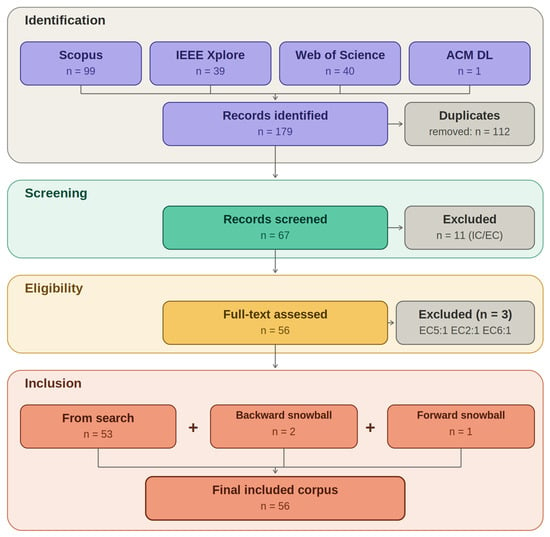
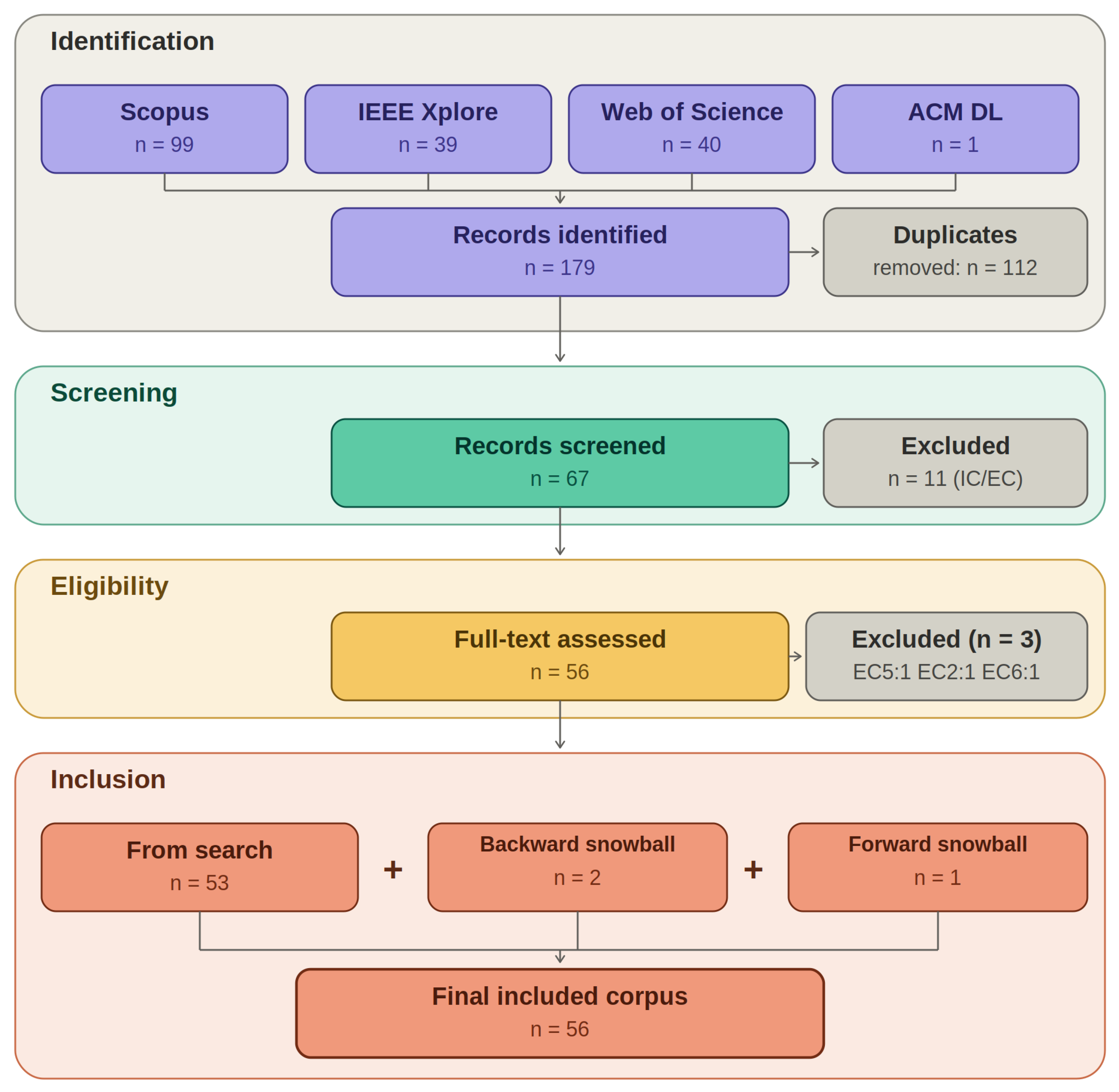
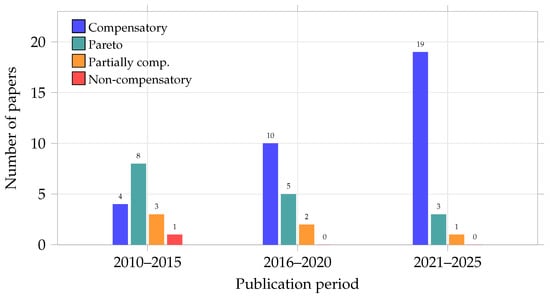
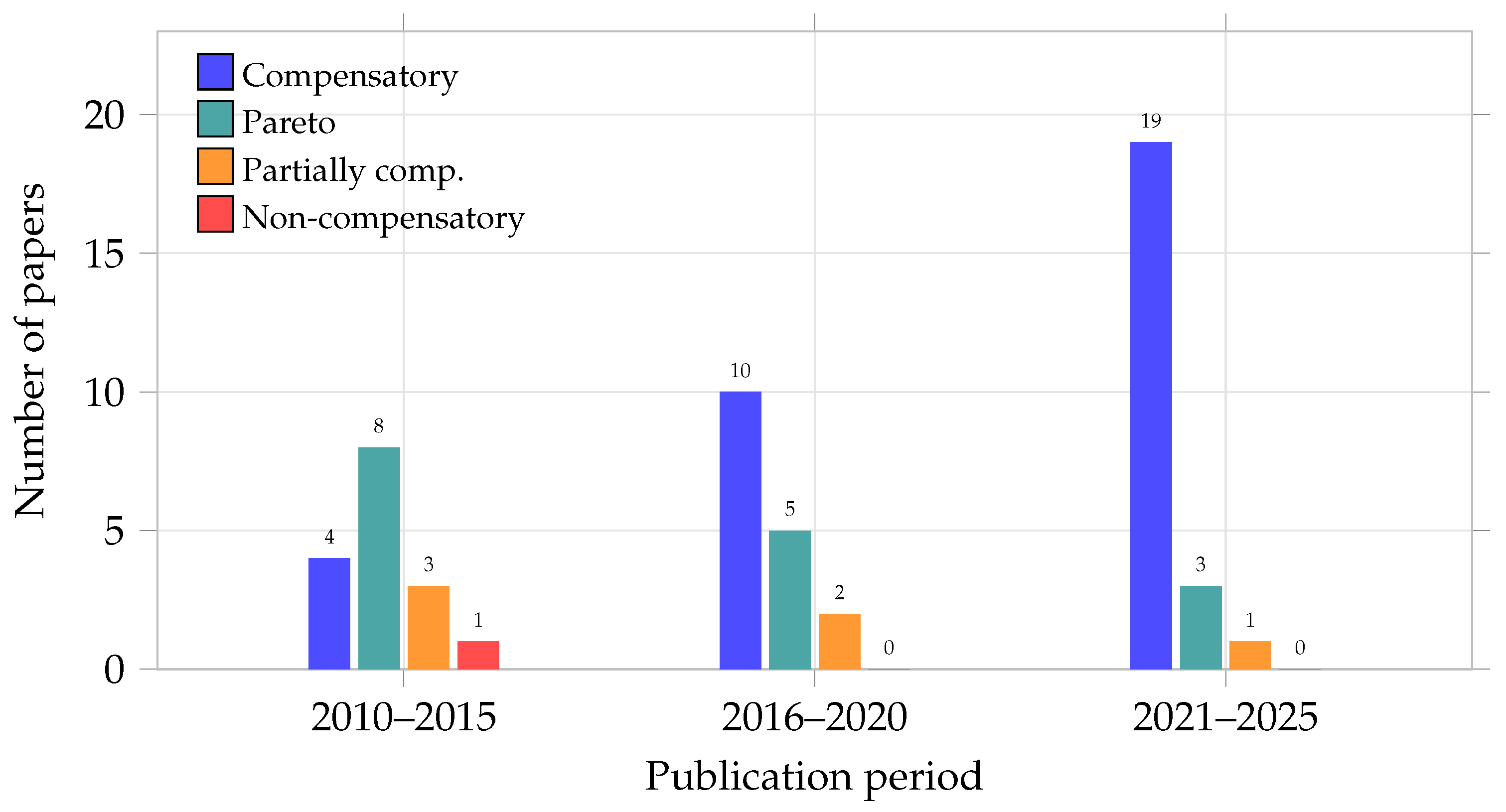

Disclaimer/Publisher’s Note: The statements, opinions and data contained in all publications are solely those of the individual author(s) and contributor(s) and not of MDPI and/or the editor(s). MDPI and/or the editor(s) disclaim responsibility for any injury to people or property resulting from any ideas, methods, instructions or products referred to in the content. |
© 2026 by the authors. Licensee MDPI, Basel, Switzerland. This article is an open access article distributed under the terms and conditions of the Creative Commons Attribution (CC BY) license.