


Abstract
This study examines how banking professionals in Morocco perceive the role of artificial intelligence (AI) in assessing the credit risk of small and medium-sized enterprises (SMEs). Based on a survey of 300 banking professionals, it explores whether perceptions of AI’s analytical capabilities, its limitations, information asymmetry, borrower behavioral uncertainty, and SME financing constraints are related to the perceived improvement in credit risk assessment. The study uses descriptive statistics, factor analysis, and generalized ordered logistic regression. The results show that banking professionals recognize AI’s potential to process information, identify risks, and support credit analysis, but their overall views of its contribution remain cautious. Professionals who have more positive perceptions of AI’s analytical capabilities tend to believe more strongly that it can improve credit risk assessment. Conversely, those who perceive greater limitations tend to be less convinced of its contribution. Both relationships are statistically significant. However, the results do not show a clear relationship between perceived information asymmetry and the perceived contribution of AI. Similarly, perceived borrower behavioral uncertainty and financing constraints are not significantly associated with this assessment. Overall, the findings show that banking professionals recognize the potential benefits of AI while remaining cautious about its contribution to SME credit risk assessment.
Keywords:
artificial intelligence; SME credit risk assessment; SME financing; information asymmetry; moral hazard; credit rationing; Morocco JEL Classification:
G21; D82; G32; O33
1. Introduction
Artificial intelligence (AI) has attracted growing attention in banking as a potential means of enhancing credit risk assessment through machine learning, advanced data analytics, and algorithmic decision-support tools. These technologies offer opportunities to process large and heterogeneous datasets, identify complex patterns, and generate information relevant to borrower evaluation. Nevertheless, their potential contribution to small and medium-sized enterprise (SME) lending raises important questions concerning the availability and interpretation of information, the role of professional judgment, and the assessment of borrower behavior.
Access to bank credit remains a significant challenge for SMEs, partly because lenders face incomplete financial information, limited transparency, and uncertainty regarding borrower characteristics. The theoretical literature identifies information asymmetry as an important source of credit market imperfections. Ref. [1] demonstrates how asymmetric information can contribute to adverse selection and credit rationing, explaining why adjustments in lending rates may not always ensure market clearing. These mechanisms are particularly relevant to SME financing, where informational opacity can complicate borrower screening and risk evaluation.
Recent developments in data-driven credit assessment have created opportunities to reconsider how lenders collect, process, and interpret borrower information. Research on machine learning and alternative data has examined their potential contribution to predictive assessment and lending decisions [2,3]. However, SME lending involves more than the statistical processing of standardized financial information. Relationship banking, managerial characteristics, and contextual knowledge may provide valuable information that is difficult to codify or communicate through formal information systems [4,5,6]. Consequently, evaluating the potential contribution of AI requires consideration of both its analytical capabilities and the informational characteristics of SME lending.
A further challenge concerns borrower behavior and the distinction between observable credit risk characteristics and uncertainty surrounding managerial decisions after financing is granted. Although algorithmic tools may assist in identifying observable patterns and generating risk signals, they cannot necessarily anticipate future borrower actions or distinguish incentive-driven behavior from ordinary business uncertainty. Similarly, more granular risk assessment may facilitate borrower differentiation without necessarily expanding access to credit. Greater analytical precision and the alleviation of financing constraints should therefore be treated as conceptually distinct possibilities.
These considerations highlight an important distinction between the technical potential of AI-supported credit assessment and banking professionals’ evaluations of its usefulness. Existing research on algorithmic lending provides insights into predictive methods and credit-market outcomes, but these findings do not, by themselves, explain how practitioners assess the potential contribution of AI when confronted with informational opacity, behavioral uncertainty, and persistent financing constraints. Understanding these perceptions is relevant because professionals involved in lending and risk assessment may evaluate algorithmic tools through the challenges encountered in their banking activities.
Against this background, the present study addresses the following research question: How are banking professionals’ perceptions of AI analytical capabilities, AI limitations, and SME financing-related challenges associated with their overall perceived improvement in SME credit risk assessment through AI?
The study focuses on the Moroccan conventional banking sector and adopts an exploratory approach based on banking professionals’ perceptions. It distinguishes two dimensions directly related to artificial intelligence (AI), perceived analytical capabilities and perceived limitations, from three dimensions associated with SME financing: perceived information asymmetry, borrower behavioral uncertainty, and persistent financing constraints. The objective is to examine the associations among these perceptions within the Moroccan conventional banking context, rather than to assess the operational performance of AI systems or determine their effects on actual lending decisions.
This study seeks to make three contributions. First, it provides exploratory evidence from banking professionals in Morocco, contributing a practitioner-oriented perspective to research on AI-supported SME credit risk assessment. Second, it considers perceived AI analytical capabilities and limitations within a common conceptual framework, while recognizing that these evaluations may be closely related to respondents’ overall assessments of AI-related improvement. Third, it integrates perceptions of SME financing-related challenges into the analysis, thereby examining whether the informational, behavioral, and financing difficulties associated with SME lending are related to professionals’ evaluations of AI-supported assessment.
The scope of these contributions is deliberately limited to reported perceptions. The study does not directly examine whether AI reduces information asymmetry, mitigates moral hazard, alleviates credit rationing, or improves the accuracy of lending decisions. Accordingly, its purpose is to contribute to the understanding of how banking professionals evaluate the potential role of AI in SME credit risk assessment, rather than to establish the effectiveness of AI-based lending technologies.
The remainder of the article is organized as follows. Section 2 reviews the relevant theoretical and empirical literature. Section 3 develops the conceptual framework, research hypotheses, and exploratory questions. Section 4 describes the survey design, measurements, and empirical methodology. Section 5 presents the empirical findings. Section 6 discusses the interpretation and implications of the findings, while Section 7 concludes the article and outlines its limitations and directions for future research.
2. Literature Review
2.1. Information Asymmetry, Agency Problems, and SME Bank Financing
Small and medium-sized enterprise (SME) financing is characterized by informational frictions that complicate borrower evaluation, credit allocation, and post-lending monitoring. Compared with external lenders, SME owners and managers generally possess more detailed information about their firms’ operating conditions, project quality, financial prospects, and intended use of borrowed resources. Banks must therefore assess creditworthiness using information that may be incomplete, imperfectly verifiable, or unevenly distributed across borrowers. These informational limitations provide an important theoretical foundation for understanding financing constraints and the organization of bank–SME relationships.
Ref. [7] demonstrates how differences in information between market participants can undermine market functioning, while [1] establishes that adverse selection and incentive effects may prevent interest rates from clearing credit markets. In their framework, increases in lending rates may change the composition of borrowers or influence their risk-taking incentives, making credit rationing possible under specific conditions. This theoretical mechanism is particularly relevant to SME lending, where limited financial transparency and heterogeneous borrower characteristics may increase the difficulty of distinguishing credit applicants according to their underlying risk profiles. Nevertheless, credit rationing in this theoretical sense should not be conflated with every form of financing difficulty experienced by SMEs.
The institutional and organizational characteristics of SME lending further influence how informational problems are addressed. Ref. [5] develops a conceptual framework in which different lending technologies rely on distinct combinations of financial information, collateral, borrower characteristics, and institutional conditions. Their contribution challenges the assumption that SME financing is governed by a single uniform assessment process. Ref. [8], examining financing patterns across countries, documents important differences associated with firm size and financial access. Taken together, these studies suggest that informational frictions interact with institutional and firm-specific characteristics rather than operating independently of the broader lending environment.
Relationship lending represents one response to these information problems. Ref. [9] investigates how banking relationships are associated with financing availability among small firms, while [4] emphasizes the role of repeated interactions in producing borrower-specific information. Unlike standardized financial statements or numerical credit scores, relationship-based information may be accumulated through direct contact, transaction histories, discussions with managers, and observations of borrower conduct. Such information can be informative precisely because it reflects circumstances that may not be captured by formal reporting systems.
Ref. [6] provides an important distinction between hard and soft information. Hard information is generally more standardized and transferable, whereas soft information is often context-dependent and difficult to communicate without losing part of its meaning. This distinction is particularly relevant to the introduction of artificial intelligence into SME credit assessment. Algorithmic systems may process large amounts of structured or digitally recorded information, but the existence of such analytical capacity does not ensure that all relevant qualitative information has been observed, accurately represented, or appropriately interpreted.
Managerial characteristics also complicate the information environment of SME lending. Ref. [10], in a study of new technology-based firms, examines the relationship between founders’ human capital and business growth. Although the findings do not directly concern bank credit decisions, they support the broader proposition that managerial capabilities may matter for firm outcomes. For SME lenders, the assessment of management quality, organizational capacity, and the credibility of business plans may therefore require contextual information beyond standardized accounting indicators.
Information asymmetry must also be distinguished from post-contractual incentive problems. Ref. [11] explains how agency conflicts can arise when contractual parties have different objectives and monitoring is imperfect. Ref. [12] further formalizes the significance of unobservable actions in contractual relationships. Applied to bank lending, these contributions help explain why the assessment of a borrower before credit approval does not eliminate uncertainty concerning subsequent managerial decisions or the use of borrowed resources.
However, imperfect observability does not imply that every unexpected managerial decision constitutes moral hazard. Borrower behavior may be influenced by ordinary business uncertainty, liquidity shocks, seasonal conditions, or unforeseen operational constraints. Consequently, detecting unusual financial patterns and establishing incentive-driven opportunism are analytically different tasks. This distinction is especially important for research based on professional perceptions, since questionnaire responses cannot directly establish whether a borrower has engaged in hidden or opportunistic conduct.
These theoretical perspectives identify three related but distinct challenges in SME credit assessment: evaluating borrower quality under incomplete information, interpreting firm-specific qualitative information, and anticipating behavior that remains partly unobservable after financing. They also clarify the potential and limitations of data-driven credit technologies. Artificial intelligence may support the processing of available information, but it cannot automatically eliminate informational asymmetry, reveal unobservable managerial intentions, or resolve contractual incentive problems.
2.2. Artificial Intelligence in Credit Risk Assessment: Predictive Capabilities, Limitations, and Professional Perceptions
Advances in artificial intelligence, machine learning, and financial data analytics have expanded the range of techniques available for credit assessment. Compared with conventional statistical approaches, machine-learning methods may offer greater flexibility in representing nonlinear relationships, processing heterogeneous datasets, and identifying patterns relevant to borrower risk. Nevertheless, the potential contribution of these techniques depends on the information available, the performance criterion considered, the lending population examined, and the conditions under which analytical outputs are interpreted and used.
Ref. [13] provides early empirical evidence of the potential contribution of machine-learning techniques to consumer credit-risk assessment. Using customer transaction and credit-bureau data from a major commercial bank, they develop nonlinear forecasting models that improve out-of-sample predictions of credit-card delinquencies and defaults. Under specified assumptions concerning credit-line adjustments, the authors also estimate potential reductions in credit losses. However, these findings concern consumer credit and cannot be directly generalized to SME lending, where borrower information, managerial characteristics, and credit-assessment practices may differ. Moreover, improvements in predictive performance do not necessarily demonstrate reductions in information asymmetry, moral hazard, or credit rationing.
Ref. [14] provides a large-scale comparative assessment of credit-scoring techniques, benchmarking 41 classification algorithms across eight real-world datasets. Their study examines predictive performance using six evaluation measures and considers the potential financial implications of alternative scorecards. By extending earlier benchmarking research to newer classification techniques and ensemble selection methods, the authors highlight the importance of evaluating credit-scoring models beyond a single measure of predictive accuracy. Nevertheless, their findings concern credit-scoring methodology and do not directly establish whether artificial intelligence improves SME lending decisions, reduces information asymmetry, or alleviates credit rationing.
The emergence of fintech lending and alternative data has further expanded the empirical literature on credit assessment. Ref. [2] examines the geographical reach of fintech lenders, particularly in areas potentially underserved by traditional banking institutions. In a subsequent study, Ref. [15] investigates the role of alternative data and machine learning in lending decisions using evidence from the LendingClub consumer platform. They document a decline in the correlation between LendingClub’s internal loan grades and borrowers’ FICO scores, from approximately 80% for loans originated in 2007 to 35% for those originated in 2014–2015. The authors interpret this development as suggesting an increasing reliance on information not captured by conventional credit scores. They also find that LendingClub’s loan grades are informative about default risk and that some borrowers classified as subprime under traditional criteria received more favorable risk grades and lower borrowing costs. These findings suggest that alternative information may contribute to more differentiated credit assessments and financing conditions. Nevertheless, the evidence relates to the US consumer lending market and cannot be directly generalized to SME financing or interpreted as demonstrating a reduction in information asymmetry or credit rationing in the Moroccan banking sector.
Ref. [16] provides further evidence that digital-footprint information can contain predictive information about borrower default. The study illustrates how nontraditional data may supplement established creditworthiness indicators. However, the usefulness of digital traces depends on their availability, quality, relevance, and relationship to the underlying risk being assessed. Greater access to digitally generated observations does not necessarily provide complete information about a firm’s financial condition, managerial quality, or future conduct.
Evidence concerning the consequences of machine-learning-based assessment is also more complex than a simple improvement narrative might suggest. Ref. [3], studying the US mortgage market, shows that increased flexibility in credit prediction can have heterogeneous distributional implications across borrower groups. The findings challenge the assumption that more accurate prediction necessarily produces uniformly favorable outcomes for credit applicants. In a review of the fintech lending literature, Ref. [17] emphasizes that the expansion of technology-enabled lending appears to have been driven more by improvements in convenience and processing speed than by demonstrated advances in borrower screening or monitoring. Although fintech lending offers potential opportunities for more effective credit assessment and broader financial inclusion, the available evidence does not establish that these benefits are systematically realized. The authors also highlight vulnerabilities revealed during the COVID-19 pandemic. Their review therefore underscores the importance of distinguishing improvements in lending processes from measurable advances in credit-risk assessment and financing outcomes.
The distinction between predictive accuracy and financing access is particularly important in the SME context. More detailed risk assessment may help lenders recognize borrowers whose creditworthiness is inadequately represented by conventional indicators. Conversely, the same information may reveal previously unobserved vulnerabilities and support more selective lending decisions. The effect of advanced screening on financing constraints is therefore theoretically ambiguous. Its direction depends on lender policies, borrower characteristics, risk appetite, lending conditions, and institutional arrangements. Without observing credit applications, approvals, loan conditions, or actual financing outcomes, an improvement or deterioration in credit rationing cannot be empirically established.
The relevance of algorithmic assessment is further conditioned by the informational characteristics of SMEs. Unlike consumer lending, where standardized historical records may be relatively accessible, SME credit evaluation can require combining financial statements, transactional information, collateral, management assessments, business plans, and contextual knowledge. Some of these inputs may be difficult to codify, incomplete, or available only periodically. Consequently, the analytical flexibility of machine-learning models does not eliminate the importance of data coverage, measurement quality, professional interpretation, or relationship-based information.
These limitations are especially relevant when considering the distinction between ex ante screening and ex post borrower behavior. Models trained on historical information may identify observable patterns associated with subsequent repayment problems, but prediction is not equivalent to the direct observation of managerial intentions. Agency theory suggests that hidden actions and incentive conflicts may persist after lending decisions, even when initial borrower classification improves. Therefore, artificial intelligence should not be assumed to identify moral hazard simply because it detects statistical anomalies or predicts adverse outcomes.
The application of AI to credit risk assessment also raises challenges concerning model interpretability, transparency, data quality, and accountability. Ref. [18] investigates explainable artificial intelligence in credit risk management by applying LIME and SHAP to machine-learning-based credit-scoring models using data from the US-based peer-to-peer lending platform LendingClub. The study illustrates how LIME provides local explanations of model predictions, while SHAP enables both local and global interpretations. The authors also discuss practical challenges associated with implementing these techniques. In contrast, Ref. [19] questions reliance on post-hoc explanations of black-box models in high-stakes decision-making and advocates the use of inherently interpretable models. The author highlights an important distinction between explaining an opaque model after its development and designing a model whose decision logic is interpretable from the outset.
In a related financial governance context, Ref. [20] examines the application of artificial intelligence to tax auditing through a systematic literature review and textometric analysis. The findings highlight the importance of balancing predictive capabilities with algorithmic fairness, transparency, and explainability. Although the study focuses on tax auditing rather than bank credit assessment, it provides a complementary perspective on the governance challenges associated with AI-supported financial decisions.
From a complementary empirical perspective, Ref. [21] examines AI and alternative data in fintech lending through a qualitative study involving 26 experts. The findings identify opportunities and challenges reported by participants, including predictive assessment, financial inclusion, algorithmic transparency, data quality, privacy, bias, and accountability. As these findings are based on qualitative expert evidence, they should not be interpreted as causal demonstrations of improved credit outcomes. Taken together, these contributions indicate that the analytical potential of AI must be distinguished from the interpretability, governance, and demonstrated effectiveness of its applications in lending decisions.
The preceding literature primarily concerns technological capabilities, predictive performance, lending processes, or market outcomes. A different but related research stream considers how professionals perceive and evaluate the adoption of AI. This distinction matters because perceptions of usefulness, trust, limitations, and professional judgment are not direct measures of model accuracy or realized lending performance.
Recent Moroccan research provides useful contextual evidence. Ref. [22] draws on questionnaire evidence from banking professionals to examine the factors associated with AI adoption and proactive banking risk management. The findings emphasize the role of perceived trust, data quality, and technological robustness, while reporting that perceived usefulness was not a significant factor in the specified model. The study suggests that favorable assessments of technological potential need not translate mechanically into adoption intentions or perceived organizational benefits. Ref. [23] draws on the existing literature and the Moroccan banking context and discusses the opportunities associated with AI integration alongside ethical, organizational, and regulatory challenges. The authors emphasize the importance of internal competencies, algorithmic transparency, and appropriate governance arrangements for responsible AI adoption. In a separate empirical study, Ref. [24] examines AI adoption intentions among 131 Moroccan banking professionals using an extended Technology Acceptance Model and partial least squares structural equation modeling (PLS-SEM). The findings identify perceived usefulness as an important determinant of adoption intentions, while explainability, trust, and ease of use are not statistically significant in the estimated model. These studies provide complementary conceptual and perception-based evidence concerning AI integration in Moroccan banking. However, neither establishes the actual effectiveness of AI systems in SME credit risk assessment or their effects on credit allocation outcomes.
Overall, the literature supports the view that AI-based credit assessment presents potentially valuable analytical opportunities while remaining subject to informational, organizational, behavioral, and governance constraints. The empirical evidence does not justify assuming that these technologies necessarily reduce asymmetric information, identify moral hazard, or alleviate credit rationing. The contribution of the present study is accordingly more limited and specific: it provides exploratory evidence on how Moroccan banking professionals evaluate AI’s perceived contribution to SME credit risk assessment in relation to technological and financing-related concerns. The following section develops the conceptual framework and associated empirical expectations.
3. Conceptual Framework, Research Hypotheses, and Exploratory Questions
This study develops an exploratory conceptual framework to examine banking professionals’ perceptions of artificial intelligence (AI) in SME credit risk assessment. The framework investigates how perceived AI analytical capabilities, perceived AI limitations, and perceptions of SME financing-related challenges are associated with respondents’ overall assessment of AI’s potential contribution to credit risk evaluation.
Two groups of constructs are distinguished. The first concerns perceptions of AI itself, encompassing its analytical capabilities and limitations. The second concerns the informational, behavioral, and financing constraints that characterize SME lending. This distinction allows the study to examine how professionals’ assessments of these different dimensions relate to their overall evaluation of AI-supported credit risk assessment, without assuming that the underlying financing frictions are directly altered by AI.
3.1. Perceived AI Analytical Capabilities and Limitations
AI-based analytical methods offer opportunities to process large and heterogeneous datasets, identify complex patterns, and generate information relevant to borrower assessment. Research on alternative data and machine-learning approaches has examined their potential contribution to credit evaluation and lending decisions [2,3].
In SME lending, where financial information may be incomplete or insufficiently standardized, such analytical capabilities may be particularly relevant. Banking professionals who perceive AI as capable of improving data processing, risk identification, borrower screening, and predictive analysis may consequently express more favorable overall assessments of its contribution to SME credit risk evaluation.
This reasoning provides the basis for the following hypothesis:
H1.
Perceived AI analytical capabilities are positively associated with perceived improvement in SME credit risk assessment through AI.
Nevertheless, the usefulness of algorithmic tools depends not only on their analytical capabilities but also on their ability to incorporate relevant borrower characteristics and interpret information appropriately. SME credit assessment frequently involves qualitative factors, contextual knowledge, managerial characteristics, and judgments regarding future borrower behavior that may not be fully represented in structured datasets.
Moreover, algorithmic approaches may face limitations related to data quality, explainability, and the interpretation of information that is difficult to codify. Banking professionals who attach greater importance to these limitations may therefore express less favorable assessments of AI’s potential contribution to credit risk evaluation.
Accordingly, the second hypothesis is formulated as follows:
H2.
Perceived AI limitations are negatively associated with perceived improvement in SME credit risk assessment through AI.
These hypotheses concern relationships between respondents’ self-reported evaluations of AI capabilities, limitations, and overall perceived improvement. The associated constructs are conceptually related and may partly reflect broader favorable or unfavorable attitudes toward AI. Their examination should therefore be distinguished from the evaluation of actual AI system performance.
3.2. Perceived Information Asymmetry
Information asymmetry constitutes a fundamental challenge in credit markets, particularly in SME financing. Borrowers generally possess information about their financial circumstances, business prospects, and managerial decisions that may not be fully available to lenders. Such informational differences complicate credit assessment and may contribute to adverse selection and financing frictions.
Data-driven analytical methods may potentially broaden the informational basis of credit evaluation by processing additional financial and non-financial information. From this perspective, professionals who perceive substantial informational gaps may regard AI-supported analysis as particularly relevant to borrower assessment.
However, the value of algorithmic analysis depends on the availability, reliability, and interpretability of the underlying information. Certain borrower characteristics may remain difficult to observe or codify, particularly when credit decisions depend on qualitative knowledge developed through banking relationships.
These considerations suggest competing theoretical expectations. Greater perceived information asymmetry may increase the perceived usefulness of AI-based analytical methods, but it may also reinforce concerns about their ability to address incomplete or unobservable information.
Because these mechanisms do not establish an unambiguous directional prediction, the study formulates the following exploratory research question:
RQ1. How is perceived information asymmetry associated with banking professionals’ overall perceived improvement in SME credit risk assessment through AI?
3.3. Perceived Borrower Behavioral Uncertainty and Moral Hazard
Credit risk assessment involves not only evaluating borrower characteristics before lending but also considering risks associated with managerial decisions and borrower behavior after financing has been granted.
Within agency theory, moral hazard arises when post-contractual actions are imperfectly observable and may be influenced by the incentives of the borrower. In SME lending, the lender may face difficulties monitoring the use of borrowed funds, changes in managerial decisions, and other behaviors relevant to repayment risk.
However, not all uncertainty surrounding borrower behavior constitutes moral hazard. Managerial decisions may affect repayment capacity without necessarily involving opportunistic conduct or incentive-driven deviations from contractual expectations. It is therefore necessary to distinguish moral hazard in its strict theoretical sense from broader behavioral uncertainty.
In this study, the relevant perceptual construct encompasses concerns regarding borrower behavior, managerial decisions, and post-lending uncertainty. It is consequently interpreted as perceived borrower behavioral uncertainty related to moral-hazard concerns, rather than a direct measure of actual opportunistic behavior.
AI-supported analytical and monitoring methods may potentially help lenders identify observable patterns, detect anomalies, and generate signals relevant to borrower assessment. Nevertheless, future managerial actions and their underlying incentives may remain difficult to anticipate from historical or observable information alone.
Professionals who perceive substantial behavioral uncertainty may therefore evaluate AI-supported credit assessment differently. Some may emphasize the potential contribution of algorithmic monitoring, whereas others may attach greater importance to the limitations of predictive tools when borrower behavior is incompletely observable.
Given these competing considerations, the following exploratory research question is proposed:
RQ2. How is perceived borrower behavioral uncertainty associated with banking professionals’ overall perceived improvement in SME credit risk assessment through AI?
3.4. Perceived Persistence of SME Financing Constraints
The literature on credit rationing highlights how asymmetric information and imperfections in credit markets may restrict firms’ access to external financing. In particular, the distinction between borrower risk and the information available to lenders may influence credit allocation decisions.
However, financing constraints and credit rationing are not conceptually identical. Financing difficulties may arise from several factors, whereas credit rationing in its strict theoretical sense concerns specific lending outcomes under imperfect information.
The present framework therefore considers the perceived persistence of SME financing constraints as a broader financing-related dimension, rather than treating it as direct evidence of credit rationing.
AI-supported credit assessment may potentially contribute to more differentiated evaluations of borrowers by incorporating additional information and identifying risk characteristics that conventional assessment methods may insufficiently capture.
Such differentiation may improve the informational basis of lending decisions. However, more detailed borrower assessment does not necessarily imply broader credit access. It may also facilitate more selective lending decisions when additional information reveals previously unidentified risks.
Consequently, professionals who perceive persistent SME financing constraints may evaluate AI-supported credit assessment favorably because of its analytical potential or less favorably because improved risk differentiation does not necessarily alleviate financing difficulties.
In the absence of a clear directional theoretical expectation, the following exploratory research question is formulated:
RQ3. How is the perceived persistence of SME financing constraints associated with banking professionals’ overall perceived improvement in SME credit risk assessment through AI?
3.5. Synthesis of the Conceptual Framework
The conceptual framework comprises two directional hypotheses and three exploratory research questions.
H1 and H2 address the expected associations between perceived AI analytical capabilities, perceived AI limitations, and respondents’ overall assessment of AI-related improvement in SME credit risk assessment.
RQ1, RQ2, and RQ3 examine whether perceptions of information asymmetry, borrower behavioral uncertainty, and persistent SME financing constraints are associated with this overall assessment. These questions reflect theoretical mechanisms whose implications for professionals’ evaluations of AI may operate in different directions.
The framework is therefore designed to investigate associations among perceptions rather than to establish whether AI directly reduces informational frictions, changes borrower behavior, or modifies credit allocation outcomes.
This distinction provides the conceptual basis for the empirical analysis while preserving the exploratory nature and measurement boundaries of the study.
4. Research Methodology
4.1. Research Design
This study adopts an exploratory quantitative approach to examine Moroccan banking professionals’ perceptions of the role of artificial intelligence (AI) in SME credit risk assessment. This approach is particularly relevant in the context of the progressive and uneven adoption of AI across Moroccan banking activities, as documented in previous research [22,25,26].
The objective is to examine how banking professionals perceive the potential analytical capabilities and limitations of AI in SME credit risk assessment, rather than to measure its actual effectiveness or causal impact on lending decisions. A perception-based research design is appropriate for investigating professional assessments of emerging technologies, particularly when their operational applications and levels of adoption may differ across banking institutions.
Although previous studies document the development of AI applications in Moroccan banking, the present research did not independently verify whether AI-based SME credit decision systems were operational within the institutions represented in the sample. Consequently, the findings are interpreted as associations among banking professionals’ reported perceptions, rather than as evidence of the operational performance of AI systems or their effects on SME lending outcomes.
4.2. Sample and Data Collection
The study targeted banking professionals in Morocco involved in SME financing, credit assessment, risk management, loan recovery, and related lending activities. Given the specialized nature of the target population and the exploratory objectives of the research, a non-probability purposive sampling strategy was adopted. This approach was intended to obtain informed assessments from practitioners with relevant professional experience and familiarity with AI applications in banking, rather than statistically representative estimates of the Moroccan banking workforce.
Data were collected between January 2024 and December 2025 from professionals employed by several Moroccan banking institutions. A structured questionnaire was distributed through Google Forms, face-to-face administration, and professional networks. The questionnaire addressed perceived information asymmetry, borrower behavioral uncertainty related to moral-hazard concerns, persistent SME financing constraints, perceived AI analytical capabilities and limitations, and overall perceived improvement in SME credit risk assessment through AI. Respondents’ age, banking experience, and professional positions were also recorded.
Two screening questions were included at the beginning of the questionnaire. The first assessed respondents’ familiarity with AI applications in banking, particularly their potential use in SME credit assessment. The second concerned previous professional involvement in SME lending activities, including investment loans, short-term credit facilities, and medium- or long-term financing. Both criteria were required for inclusion in the analytical sample. Eligibility was established through self-reported familiarity and experience rather than independent verification of technical expertise.
A total of 550 questionnaire responses were initially received. Two screening questions were used to assess respondents’ eligibility. The first assessed their familiarity with artificial intelligence and its potential applications in the banking sector, while the second concerned their previous professional experience with SME financing applications. Respondents who did not meet either eligibility criterion were excluded, as were those whose questionnaires contained insufficient information for the empirical analysis. Some submissions met multiple exclusion criteria, including insufficient familiarity with AI applications in banking, lack of experience in SME financing, and incomplete responses. Following these eligibility and completeness checks, 250 questionnaires were excluded, resulting in a final analytical sample of 300 eligible and sufficiently complete responses. As the excluded questionnaires were not retained after data cleaning, the exact number of exclusions attributable to each reason cannot be reliably reconstructed. The final sample represents 54.5% of the questionnaires initially received. This percentage corresponds to the questionnaire retention rate rather than the survey response rate, since the total number of professionals invited to participate was not recorded. The screening outcomes and final analytical sample are summarized in Table 1.
Table 1.
Screening Outcomes and Final Analytical Sample.
The introductory section of the questionnaire informed prospective respondents that the survey was conducted for scientific research purposes and that participation was entirely voluntary. Respondents were free to decide whether to complete and submit the questionnaire, without any obligation or coercion. The information collected was used exclusively for scientific research purposes.
The analytical sample comprised professionals performing operational, analytical, and managerial functions related to SME lending, credit assessment, risk management, loan recovery, and financial activities. These professional backgrounds provided different perspectives on the potential role of AI in SME credit risk assessment.
Nevertheless, the purposive sampling strategy and the eligibility requirements may have favored respondents with greater familiarity with, or interest in, AI-related technologies. Furthermore, the non-probability design limits statistical generalizability to the broader Moroccan banking workforce. Without detailed information on the distribution of responses across individual institutions, the representativeness of participating banks and potential institution-level dependence cannot be established. The findings are therefore interpreted as exploratory associations within the surveyed sample.
4.3. Variable Measurement
4.3.1. Questionnaire Development and Pretesting
The questionnaire was developed by the authors specifically for the exploratory objectives of this study. The measurement domains were identified based on the theoretical and empirical literature concerning information asymmetry, borrower behavioral uncertainty, SME financing constraints, and the potential analytical capabilities and limitations of artificial intelligence in credit risk assessment. The individual items were formulated by the authors rather than directly adopted or adapted from previously validated scales. The full questionnaire is provided in Appendix A.
The questionnaire was reviewed by university professors to assess the relevance and clarity of the proposed items in relation to the study’s conceptual framework. A preliminary pretest was subsequently conducted with 25 banking professionals to examine question comprehension, identify ambiguous wording, and obtain feedback on the survey instrument. Following this pretest, the wording of questions identified as insufficiently clear was revised before the main survey.
The 25 pretest participants were not included in the main survey or in the 550 initial questionnaire submissions. Consequently, none of the pretest questionnaires formed part of the final analytical sample of 300 respondents. The main data collection was conducted using the revised questionnaire.
4.3.2. Questionnaire Language and Interpretation of Artificial Intelligence
The questionnaire was administered in French, a language commonly used in professional banking activities in Morocco. Although the eligibility screening required prior familiarity with artificial intelligence and its applications in banking, no standardized technical definition of AI was provided to respondents during questionnaire administration.
For the purposes of this study, AI is conceptually understood as encompassing data-driven computational methods, including machine-learning techniques, that may support borrower information analysis, risk identification, and credit assessment. This definition reflects the analytical scope adopted in the manuscript and was not communicated to respondents as a standardized definition during the survey.
Accordingly, respondents may have interpreted AI-related technologies differently when evaluating their perceived capabilities, limitations, and potential contribution to SME credit risk assessment. The findings should therefore be interpreted as reflecting respondents’ reported perceptions rather than assessments of a uniform or independently verified technological system.
The expert review and pretesting procedures supported the preliminary assessment of item relevance and comprehensibility. However, these procedures do not establish comprehensive psychometric validity or ensure uniform interpretations of AI. Reliability and exploratory factor analyses were subsequently conducted on the analytical sample to examine internal consistency and the measurement structure of the explanatory constructs. These analyses do not, by themselves, establish discriminant validity between the AI-related measures and the dependent variable.
4.3.3. Operationalization of the Study Variables
The questionnaire used five-point Likert-type response categories ranging from 1 (“strongly disagree”) to 5 (“strongly agree”), consistent with the attitude-measurement approach introduced by [27].
The study includes five explanatory constructs: perceived AI analytical capabilities (AI_SCORE), perceived AI limitations (LIMIT_SCORE), perceived information asymmetry (INFO_SCORE), perceived borrower behavioral uncertainty related to moral-hazard concerns (MORAL_SCORE), and perceived persistence of SME financing constraints (RATION_SCORE). Each construct was measured using four items, with composite scores calculated as the arithmetic mean of the corresponding responses. Higher values indicate stronger agreement with the underlying statements.
The dependent variable, AI_IMPROV, measures respondents’ overall perception of AI-related improvement in SME credit risk assessment. It was assessed using a single five-point item and retained as an ordinal outcome in the primary regression analyses. Table 2 presents the operational definitions and questionnaire items.
Table 2.
Summary of Variables and Questionnaire Items.
4.3.4. Measurement Scope and Conceptual Distinctions
The study distinguishes perceived financing difficulties from objectively observed lending outcomes. MORAL_SCORE reflects professionals’ assessments of borrower behavioral uncertainty and post-loan risks, rather than directly observed moral hazard. Similarly, RATION_SCORE captures perceptions of persistent SME financing constraints and does not measure credit rationing in its strict theoretical sense or distinguish between rejection, partial rationing, and self-rationing.
The AI-related measures also require careful interpretation. AI_SCORE reflects perceived analytical capabilities, whereas AI_IMPROV measures an overall assessment of AI-related improvement. Their conceptual proximity may produce associations partly reflecting favorable attitudes toward AI. LIMIT_SCORE, meanwhile, captures perceived constraints on AI-supported assessment, including the continued relevance of human judgment. Agreement that human judgment remains necessary should not be interpreted as evidence of an inherent technical deficiency of AI.
These distinctions define the scope of the empirical analysis. Because the measures are self-reported and some are conceptually related, the estimated coefficients are interpreted as conditional associations between professional perceptions. The implications for common-method bias and discriminant validity are considered in the measurement diagnostics and limitations discussion.
4.3.5. Control Variables
As shown in Table 3, the multivariate analysis includes respondents’ age (AGE), banking experience (EXPERIENCE), professional position (POSITION), and reported bank size (BANK_SIZE, coded SIZE_CAT in the estimations). These variables account for observable demographic, professional, and institutional differences among respondents.
Table 3.
Definition of Control Variables.
Professional position was recorded using ten original occupational categories. These categories were retained in the descriptive analysis and the staged ordered-logit specifications M1–M3. For the subsequent partial proportional-odds analysis, positions were consolidated into three functional groups (POS_GROUP) to address sparse categories and numerical instability: credit and lending commitments; risk management and recovery; and finance, financial planning, and asset–liability management.
A supplementary analysis was also conducted on 200 respondents directly involved in credit-related functions. The corresponding models omitted professional-position indicators, as the restricted sample was defined by professional responsibilities.
4.4. Statistical Analysis
The empirical analysis was conducted using Stata 17.0 and followed a multistage approach to examine the measurement properties of the questionnaire and the associations between banking professionals’ perceptions of artificial intelligence and their overall perceived improvement in SME credit risk assessment.
First, descriptive statistics were used to summarize respondents’ characteristics and the distributions of the study variables. The internal consistency of the five explanatory constructs was assessed using Cronbach’s alpha. Each construct comprised four items, and composite scores were calculated as the arithmetic mean of the corresponding responses.
Second, exploratory factor analysis (EFA) was performed on the 20 items measuring the five explanatory constructs. Principal-factor extraction with oblique Promax rotation was employed, and five factors were specified in accordance with the conceptual framework. Sampling adequacy was assessed using the Kaiser–Meyer–Olkin (KMO) statistic. The dependent variable, AI_IMPROV, was not included in this analysis because it was measured using a single item.
A separate unrotated single-factor diagnostic was conducted on all 21 principal measurement items, comprising the 20 explanatory items and AI_IMPROV, to examine whether one factor dominated the response structure. This diagnostic was used as a preliminary assessment of potential common-method variance; it was not considered sufficient to exclude common-method bias or demonstrate discriminant validity.
Third, Spearman rank correlations were calculated to examine bivariate associations between the study variables, taking account of the ordinal origin of the questionnaire responses. Variance inflation factors (VIFs) were also examined to assess multicollinearity among the explanatory variables.
The main multivariate analysis employed ordered logistic regression because AI_IMPROV was measured using five ordered response categories. Three specifications were estimated using the same sample of 300 respondents. Model M1 included the three SME financing-related perception scores (INFO_SCORE, MORAL_SCORE, and RATION_SCORE). Model M2 included the two AI-related perception scores (AI_SCORE and LIMIT_SCORE). Model M3 combined all five explanatory scores. Each specification controlled for age, banking experience, the original ten professional-position categories, and reported bank size.
The full ordered-logit specification (M3) can be expressed as:
Logit [P(Yi ≤ j | Xi)] = κj − ηi,
j = 1, …, 4
ηi = β1 AI_SCOREi + β2 LIMIT_SCOREi + β3 INFO_SCOREi
+ β4 MORAL_SCOREi + β5 RATION_SCOREi + γᵀ Zi
Here, Yi denotes AI_IMPROV, κj represents the cumulative cutpoints, and Zi contains the demographic, professional-position, and bank-size controls. Models M1 and M2 use the corresponding subsets of explanatory scores. The specification follows the cumulative-logit parameterization used by Stata.
Under the proportional-odds assumption, slope coefficients are constant across the four cumulative thresholds. The three models were compared using information criteria and likelihood-ratio tests for the nested comparisons M1 versus M3 and M2 versus M3. M1 and M2 were not treated as nested specifications. These comparisons were used to assess model fit and the additional explanatory contribution of each group of perception scores, without implying causal relationships.
The proportional-odds assumption was subsequently examined using the generalized ordered logit framework implemented through gologit2. The diagnostic indicated non-proportionality for INFO_SCORE, motivating the estimation of a partial proportional-odds model. Initial generalized specifications using the ten original professional-position categories encountered numerical instability. For the preferred full-sample model, these positions were therefore consolidated into three groups based on professional responsibilities: (i) credit analysis, SME/corporate lending, business-center management, and lending commitments; (ii) risk management and recovery; and (iii) finance, financial planning, and asset–liability management.
In the preferred partial proportional-odds specification, the coefficient of INFO_SCORE was allowed to vary across the four cumulative thresholds, while common-slope constraints were retained for the other predictors. In the preceding formulation, this corresponds to replacing β3 with threshold-specific coefficients β3j. Age, banking experience, professional function, and bank size remained included as controls. Heteroskedasticity-robust standard errors were used for statistical inference. However, because respondent-level bank identifiers were unavailable, potential within-bank dependence could not be directly accounted for.
A supplementary analysis was conducted on the 200 respondents directly involved in credit-related functions. The corresponding ordered-logit and partial proportional-odds specifications included age, banking experience, and bank size. Professional-position indicators were omitted because the restricted sample was defined by professional function. The estimates were compared descriptively with those obtained from the full sample, without interpreting similar results as evidence of statistical equivalence.
Several sensitivity analyses were also performed. First, AI_SCORE was recalculated by sequentially excluding each of its four component items, and the preferred partial proportional-odds specification was re-estimated using the alternative scores. Second, LIMIT_SCORE was recalculated after excluding LIMIT2, the item concerning the continuing necessity of human judgment. An additional specification included LIMIT2 separately alongside the three-item limitations score. These analyses examined whether the principal associations were sensitive to the composition of the AI-related measures.
Ordinary least squares (OLS) regression was also employed as a supplementary robustness check, treating the five ordered response categories of AI_IMPROV as approximately continuous. This alternative specification was used to examine the consistency of the direction and statistical significance of the principal associations. Given the ordinal nature of the dependent variable, the OLS results were interpreted as supplementary evidence rather than as a substitute for the preferred partial proportional-odds model.
Potential heterogeneity was examined through two additional partial proportional-odds specifications. The first included an interaction between LIMIT_SCORE and banking experience, while the second included interactions between LIMIT_SCORE and professional-function categories. The interaction terms were assessed using Wald tests. A lack of statistical significance was not interpreted as evidence of equivalent associations across respondents or professional groups.
Finally, average marginal effects (AMEs) were calculated from the preferred partial proportional-odds model for each of the five AI_IMPROV response categories. For continuous explanatory scores, these effects represent the sample-average derivatives of predicted category probabilities with respect to the corresponding score. They provide a probability-scale interpretation of the estimated associations but should not be interpreted as causal effects or as exact discrete changes resulting from a one-point increase.
Overall, the analytical strategy was designed to assess the consistency of the observed associations across model specifications, measurement choices, and respondent groups. The findings remain exploratory because the data are cross-sectional, self-reported, and obtained through non-probability sampling. In addition, the conceptual proximity of certain AI-related measures limits the extent to which the estimated associations can be interpreted as reflecting distinct underlying mechanisms.
5. Empirical Results
5.1. Descriptive Analysis
5.1.1. Professional and Demographic Characteristics of Respondents
Table 4 presents the professional distribution of the 300 respondents. The sample includes banking professionals working in credit assessment, SME lending, risk management, recovery, financial analysis, and asset–liability management.
Table 4.
Professional Profile of Respondents.
Credit and risk analysts represent the largest category (24.33%), followed by corporate/SME relationship managers (19.33%), business center managers (18.33%), and recovery/distressed exposure management professionals (14.00%). Together, these four categories account for 76.00% of respondents, indicating a concentration of participants in credit-related and recovery functions. The remaining respondents are distributed across six other professional categories. Given the non-probability sampling approach, this distribution should not be interpreted as representative of the Moroccan banking workforce.
Table 5 reports respondents’ age and banking experience. The mean age is 42.58 years (SD = 9.51), with a range of 25–58 years. Mean banking experience is 11.37 years (SD = 7.78), ranging from 1 to 30 years. These characteristics indicate variation in age and professional seniority within the surveyed sample.
Table 5.
Age and Banking Experience of Respondents.
5.1.2. Descriptive Statistics of the Main Constructs
Table 6 reports the descriptive statistics of the five explanatory constructs and the dependent variable for the 300 respondents.
Table 6.
Descriptive Statistics of the Main Constructs.
Among the explanatory constructs, MORAL_SCORE records the highest mean (3.950), followed by RATION_SCORE (3.820) and INFO_SCORE (3.732). These results indicate relatively strong agreement with statements concerning borrower behavioral uncertainty, persistent SME financing constraints, and information asymmetry. They reflect respondents’ professional perceptions rather than directly observed lending conditions or borrower behavior.
Regarding artificial intelligence, AI_SCORE has a mean of 3.421, indicating moderately favorable perceptions of its analytical capabilities. At the same time, LIMIT_SCORE records a mean of 3.662, suggesting that respondents also acknowledge limitations associated with qualitative risk assessment, borrower behavior, and the continued role of human judgment.
The dependent variable, AI_IMPROV, has a mean of 2.800 (SD = 1.121). Given its ordinal measurement, Table 7 provides the distribution of responses across the five categories. Overall, 42.00% of respondents disagree or strongly disagree that AI improves SME credit risk assessment, compared with 28.33% who agree or strongly agree. The remaining 29.67% selected the neutral category.
Table 7.
Distribution of Perceived AI Improvement in SME Credit Risk Assessment.
The distribution indicates mixed assessments of AI’s contribution to SME credit risk evaluation, with disagreement more frequent than agreement. Thus, while respondents generally recognize certain analytical capabilities of AI, this does not necessarily translate into an equally favorable overall assessment of its contribution to credit risk evaluation. These findings describe reported perceptions and do not establish the actual performance of AI-based credit assessment systems.
5.2. Preliminary Tests
5.2.1. Reliability Analysis of the Measurement Scales
To assess the internal consistency of the five multi-item measurement scales, Cronbach’s alpha coefficients were calculated. As reported in Table 8, the coefficients range from 0.8392 to 0.8986, exceeding the commonly used threshold of 0.70. These results indicate satisfactory internal consistency among the items within each scale.
Table 8.
Reliability Analysis of the Measurement Scales.
Among the constructs, AI_SCORE exhibits the highest reliability coefficient (α = 0.8986), followed by INFO_SCORE (α = 0.8702), RATION_SCORE (α = 0.8692), LIMIT_SCORE (α = 0.8602), and MORAL_SCORE (α = 0.8392). The results provide evidence of consistent responses across the items composing each scale and support their use as composite measures in the subsequent empirical analyses, subject to the additional assessment of their measurement properties.
Nevertheless, Cronbach’s alpha evaluates internal consistency and does not, by itself, establish construct validity or discriminant validity. In particular, the high reliability of AI_SCORE does not resolve its conceptual proximity to the single-item dependent variable AI_IMPROV. Furthermore, internal consistency coefficients do not exclude potential common-method bias arising from the use of self-reported questionnaire data. These limitations are taken into consideration when interpreting the factor analysis and subsequent regression results.
5.2.2. Exploratory Factor Analysis and Measurement Structure
An exploratory factor analysis was conducted on the 20 items underlying the five explanatory constructs using the principal-factor extraction method. Five factors were specified according to the conceptual measurement framework, and an oblique Promax rotation was applied to allow correlations among the factors. The analysis was based on 300 observations.
The overall Kaiser–Meyer–Olkin (KMO) measure of sampling adequacy was 0.8081, with individual KMO values ranging from 0.7647 to 0.8492, indicating satisfactory sampling adequacy for factor analysis. The test comparing the observed correlation matrix with an independent correlation structure was statistically significant (χ2(190) = 2929.15, p < 0.001), indicating that the item correlation matrix differed from an identity matrix.
As shown in Table 9, the Promax-rotated pattern matrix revealed five interpretable factors corresponding to the proposed measurement dimensions. The four items measuring perceived AI analytical capabilities loaded primarily on the first factor (0.800–0.837), the information-asymmetry items on the second factor (0.759–0.803), the items measuring persistent SME financing constraints on the third factor (0.746–0.793), the perceived AI-limitation items on the fourth factor (0.743–0.777), and the moral-hazard-related behavioral uncertainty items on the fifth factor (0.721–0.765).
Table 9.
Exploratory Factor Analysis: Promax-Rotated Pattern Matrix.
All 20 items exhibited their highest loading on the theoretically corresponding factor, with generally small cross-loadings. These findings support the proposed five-dimensional organization of the explanatory measures.
However, the five-factor solution was specified in advance rather than established through an independent factor-retention assessment. Moreover, the analysis included only the 20 explanatory items and excluded the single-item dependent variable, AI_IMPROV. Consequently, the observed factorial structure does not establish discriminant validity between the AI-related explanatory measures and AI_IMPROV.
The findings are therefore interpreted as evidence supporting the factorial organization of the explanatory items rather than definitive confirmation of construct independence.
5.2.3. Common Method Variance Diagnostic
Because the explanatory and dependent variables were measured using the same self-reported questionnaire, potential common method variance was examined using Harman’s single-factor diagnostic. A separate unrotated analysis was conducted on all 21 measurement items, including the 20 items underlying the five explanatory constructs and the single-item dependent variable, AI_IMPROV.
As shown in Table 10, the first unrotated component had an eigenvalue of 3.665 and accounted for 17.45% of the total variance. Five components had eigenvalues greater than one. These results indicate that the first component did not account for a majority of the observed variance.
Table 10.
Harman’s Single-Factor Diagnostic for Common Method Variance.
However, Harman’s diagnostic is a limited assessment of potential common method variance and cannot establish the absence of common method bias. In particular, it does not resolve possible shared response tendencies or the conceptual overlap between AI_SCORE, LIMIT_SCORE, and AI_IMPROV. The findings should therefore be interpreted as associations among self-reported professional perceptions.
5.2.4. Multicollinearity Test
Multicollinearity was assessed using variance inflation factors (VIFs) calculated for the five explanatory constructs and the control variables included in the preferred full-sample specification. The diagnostic incorporated age, banking experience, professional function (POS_GROUP), and bank size (SIZE_CAT).
As shown in Table 11, the VIFs for the five explanatory constructs range from 1.01 to 1.04. Among the control variables, banking experience (2.27) and age (2.21) have the highest values. The mean VIF is 1.30. These results provide no indication of substantial linear multicollinearity among the predictors included in the diagnostic.
Table 11.
Multicollinearity Diagnostics.
5.2.5. Spearman Correlation
Table 12 presents Spearman’s rank correlations between the five explanatory constructs and the dependent variable, AI_IMPROV, based on 300 observations. Spearman’s correlation was used to examine bivariate monotonic associations without assuming linear relationships.
Table 12.
Spearman Correlation Matrix.
AI_SCORE is positively correlated with AI_IMPROV (ρ = 0.5209, p < 0.001), indicating that respondents who report more favorable perceptions of AI’s analytical capabilities also tend to assess its contribution to SME credit risk evaluation more positively. Conversely, LIMIT_SCORE is negatively correlated with AI_IMPROV (ρ = −0.4317, p < 0.001), suggesting that stronger perceptions of AI limitations are associated with less favorable overall assessments.
The correlations between AI_IMPROV and INFO_SCORE (ρ = −0.0397, p = 0.4936), MORAL_SCORE (ρ = 0.0359, p = 0.5353), and RATION_SCORE (ρ = −0.0231, p = 0.6901) are small and not statistically significant at conventional levels. Correlations among the explanatory constructs are also generally weak. The largest reported association is between INFO_SCORE and LIMIT_SCORE (ρ = 0.1316, p = 0.0226).
Overall, the bivariate results show that AI_IMPROV is more strongly associated with perceived AI capabilities and limitations than with perceptions of information asymmetry, borrower behavioral uncertainty, or SME financing constraints. Nevertheless, these associations may partly reflect shared evaluative tendencies, particularly given the conceptual proximity between AI_SCORE and AI_IMPROV. The results are therefore interpreted as descriptive associations rather than evidence of distinct causal mechanisms.
5.3. Regression Models
5.3.1. Ordered Logistic Regression Results
Three ordered logistic regression models were estimated to examine the associations between banking professionals’ perceptions and AI_IMPROV. All specifications were estimated on the same sample of 300 respondents and included age, banking experience, the ten original professional-position categories, and bank size as control variables. Model M1 included perceived information asymmetry (INFO_SCORE), borrower behavioral uncertainty (MORAL_SCORE), and persistent SME financing constraints (RATION_SCORE). Model M2 included perceived AI analytical capabilities (AI_SCORE) and perceived AI limitations (LIMIT_SCORE), whereas Model M3 combined all five explanatory constructs.
Table 13 compares the three specifications. M1 exhibited limited fit (pseudo-R2 = 0.0142), whereas M2 showed substantially better fit (pseudo-R2 = 0.1974). Incorporating the three SME financing-related constructs into M2 resulted in only a marginal increase in pseudo-R2 (0.1980). M2 also produced the lowest AIC (758.685) and BIC (829.057), indicating that the more parsimonious AI-related specification offered the most favorable balance between model fit and complexity among the three models.
Table 13.
Comparison of Ordered Logistic Regression Specifications.
Nested-model likelihood-ratio comparisons were consistent with these information criteria. Adding AI_SCORE and LIMIT_SCORE to M1 improved fit substantially (χ2(2) = 165.04, p < 0.001), whereas adding INFO_SCORE, MORAL_SCORE, and RATION_SCORE to M2 provided no statistically significant improvement (χ2(3) = 0.54, p = 0.909). These comparisons are based on maximized log-likelihoods and should be interpreted as conventional likelihood-ratio tests rather than tests adjusted for robust variance estimation.
Table 14 reports the coefficient estimates for M3. AI_SCORE exhibits a positive and statistically significant association with AI_IMPROV (β = 1.2542, p < 0.001), whereas LIMIT_SCORE exhibits a negative and statistically significant association (β = −1.1563, p < 0.001). Holding the included covariates constant, higher perceived analytical capabilities of AI are associated with greater odds of reporting a higher AI_IMPROV response category, while stronger perceived AI limitations are associated with lower odds of reporting a higher category.
Table 14.
Ordered Logistic Regression Results—Full Specification (M3).
In contrast, INFO_SCORE (β = 0.0318, p = 0.815), MORAL_SCORE (β = −0.0365, p = 0.790), and RATION_SCORE (β = 0.0827, p = 0.553) do not exhibit statistically significant conditional associations in this specification. The coefficients for age (β = −0.0005, p = 0.977) and banking experience (β = −0.0233, p = 0.397) are also statistically nonsignificant.
Overall, the results indicate that perceptions of AI’s analytical capabilities and limitations are more strongly associated with AI_IMPROV than the three SME financing-related perceptions in the specifications considered. Nevertheless, the conceptual proximity between AI_SCORE and AI_IMPROV may contribute to the observed association, as both measures reflect respondents’ evaluations of AI. These findings should therefore be interpreted as associations among self-reported perceptions rather than evidence of improvements in actual credit assessment performance.
5.3.2. Parallel-Lines Assumption and Partial Proportional-Odds Robustness
The proportional-odds assumption was examined using the generalized ordered logistic regression framework implemented through the gologit2 procedure, with automatic constraint selection and robust standard errors. The analysis included the five explanatory constructs and controls for age, banking experience, professional function, and bank size (N = 300).
As shown in Table 15, the diagnostic identified a departure from the proportional-odds assumption for INFO_SCORE (χ2(3) = 8.62, p = 0.0348). A partial proportional-odds model was therefore estimated, allowing the coefficient of INFO_SCORE to vary across the four cumulative thresholds while retaining common coefficients for the remaining predictors. The joint Wald test did not reject the retained proportionality restrictions (χ2(30) = 27.20, p = 0.6128).
Table 15.
Proportional-Odds Diagnostics.
Table 16 presents the partial proportional-odds estimates. AI_SCORE remains positively associated with AI_IMPROV (β = 1.2317, p < 0.001), whereas LIMIT_SCORE shows a negative association (β = −1.1729, p < 0.001). Both results are consistent in direction with the conventional ordered-logit estimates.
Table 16.
Partial Proportional-Odds Regression Results.
Neither MORAL_SCORE (β = −0.0006, p = 0.997) nor RATION_SCORE (β = 0.0531, p = 0.690) exhibits a statistically significant association. The age, banking experience, professional-function, and bank-size coefficients are also individually non-significant at the 5% level.
The threshold-specific coefficients for INFO_SCORE range from −0.2006 to 0.3825, with none individually significant at the 5% level. Nevertheless, the non-proportionality diagnostic indicates statistically detectable variation in its coefficients across thresholds. These two findings are not contradictory, as the diagnostic assesses the equality of coefficients across thresholds rather than whether individual coefficients differ from zero.
5.3.3. Item-Exclusion Sensitivity Analyses
To examine whether the association between perceived AI analytical capabilities and AI_IMPROV depended on a particular questionnaire item, a leave-one-item-out sensitivity analysis was conducted. AI_SCORE was recalculated four times by successively excluding one of its component items and averaging the remaining three responses.
Each alternative score was included in the partial proportional-odds specification, retaining the other explanatory constructs and controls for age, banking experience, professional function, and bank size. INFO_SCORE was allowed to vary across cumulative thresholds, while common coefficients were retained for the remaining predictors. All specifications used robust standard errors and the same sample of 300 respondents.
As shown in Table 17, the coefficients of the alternative AI capability scores remained positive and statistically significant, ranging from 1.1406 to 1.2147 (all p < 0.001), compared with 1.2317 in the baseline model. The negative association of LIMIT_SCORE was also maintained across specifications. The pseudo-R2 values ranged from 0.1896 to 0.1969, compared with 0.1979 in the baseline model.
Table 17.
Leave-One-Item-Out Sensitivity Analysis of the AI Capability Measure.
These results suggest that the positive association between AI_SCORE and AI_IMPROV is not exclusively attributable to any single AI capability item. However, they do not eliminate the potential conceptual overlap between these measures.
A second sensitivity analysis examined the contribution of LIMIT2, which concerns the perceived necessity of human judgment in credit assessment. Two alternative specifications were estimated. The first replaced the original four-item LIMIT_SCORE with a three-item measure excluding LIMIT2 (LIMIT_EXCL2). The second included LIMIT_EXCL2 and LIMIT2 as separate explanatory variables.
As reported in Table 18, LIMIT_EXCL2 remained negatively associated with AI_IMPROV when LIMIT2 was excluded (β = −1.1147, p < 0.001). When both measures were included separately, LIMIT_EXCL2 (β = −0.8369, p < 0.001) and LIMIT2 (β = −0.3330, p = 0.022) exhibited negative associations. The positive association of AI_SCORE was maintained across both specifications.
Table 18.
Sensitivity Analysis of the Human-Judgment Item (LIMIT2).
These findings indicate that the negative association of perceived AI limitations is not solely attributable to the human-judgment item. Nevertheless, the coefficient of LIMIT2 reflects respondents’ expressed perceptions and does not establish an inherent technical deficiency of AI or demonstrate the operational effectiveness of human–AI complementarity.
5.3.4. Multiple Linear Regression Results
As a supplementary sensitivity analysis, an ordinary least squares (OLS) regression was estimated by treating the five-category dependent variable, AI_IMPROV, as approximately continuous. The specification included the five explanatory constructs and controls for age, banking experience, professional function, and bank size. Heteroskedasticity-robust standard errors were used, with 300 observations.
As reported in Table 19, the model was jointly statistically significant (F(11, 288) = 24.64, p < 0.001), with an R2 of 0.4488. This indicates that the included regressors accounted for approximately 44.9% of the variation in the numerically coded outcome within the surveyed sample. The R2 is not directly comparable with the pseudo-R2 statistics of the ordinal regression models.
Table 19.
Multiple Linear Regression Results (OLS Sensitivity Analysis).
AI_SCORE was positively associated with AI_IMPROV (β = 0.5656, p < 0.001), while LIMIT_SCORE exhibited a negative association (β = −0.5383, p < 0.001). These findings are consistent in direction and statistical significance with the principal ordinal regression results.
In contrast, INFO_SCORE (β = 0.0218, p = 0.698), MORAL_SCORE (β = −0.0072, p = 0.905), and RATION_SCORE (β = 0.0377, p = 0.512) were not statistically significant. None of the demographic, professional-function, or bank-size controls was individually significant at the 5% level.
Overall, the OLS results support the stability of the direction and statistical significance of the two main AI-related associations across the estimation approaches considered. However, OLS assumes equal spacing between the numerically coded response categories, an assumption that is not required by the ordinal models. The OLS estimates are therefore interpreted as supplementary sensitivity evidence rather than as a replacement for the preferred partial proportional-odds specification.
5.3.5. Additional Heterogeneity Analysis
Two supplementary partial proportional-odds specifications were estimated to examine whether the association between perceived AI limitations and AI_IMPROV differed according to banking experience or professional function. The first model included an interaction between LIMIT_SCORE and EXPERIENCE, while the second included interactions between LIMIT_SCORE and professional-function categories. Both specifications retained the other explanatory constructs and control variables, with INFO_SCORE allowed to vary across cumulative thresholds. Heteroskedasticity-robust standard errors were used.
As reported in Table 20, the interaction between LIMIT_SCORE and banking experience was not statistically significant (Wald χ2(1) = 0.22, p = 0.6414). Similarly, the joint test of interactions with professional-function categories was not significant (Wald χ2(2) = 0.15, p = 0.9285). These results provide no statistically significant evidence that the association between perceived AI limitations and AI_IMPROV varies with banking experience or professional function within the surveyed sample. However, non-significant interaction tests do not establish that the associations are equivalent across respondents or groups.
Table 20.
Heterogeneity Analysis of Perceived AI Limitations by Banking Experience and Professional Function.
5.4. Post-Estimation Analysis and Visual Interpretation
5.4.1. Average Marginal Effects
To facilitate the interpretation of the preferred partial proportional-odds model, average marginal effects (AMEs) were calculated for the highest category of AI_IMPROV (Outcome = 5, “Strongly agree”). The estimates were obtained from the model including the five explanatory constructs and controls for age, banking experience, professional function, and bank size, with INFO_SCORE allowed to vary across cumulative thresholds.
As shown in Table 21, AI_SCORE exhibits a positive and statistically significant average marginal effect (dy/dx = 0.0637, p < 0.001). This represents an average derivative of approximately 6.37 percentage points per unit of AI_SCORE, indicating that higher perceived AI analytical capabilities are associated with a greater predicted probability of selecting the highest response category.
Table 21.
Average Marginal Effects for the Highest Category of AI_IMPROV (Outcome = 5).
Conversely, LIMIT_SCORE exhibits a negative and statistically significant average marginal effect (dy/dx = −0.0606, p < 0.001), corresponding to an average derivative of approximately −6.06 percentage points per unit. This indicates that stronger perceived AI limitations are associated with a lower predicted probability of strongly agreeing that AI improves SME credit risk assessment.
The average marginal effects of INFO_SCORE (dy/dx = 0.0171, p = 0.240), MORAL_SCORE (dy/dx = −0.00003, p = 0.997), and RATION_SCORE (dy/dx = 0.0027, p = 0.692) are not statistically significant at the 5% level.
Overall, the results provide a probability-scale interpretation of the associations identified in the preferred model. The reported marginal effects are sample-average derivatives rather than exact discrete changes associated with a one-point increase in the explanatory scores. They should not be interpreted as causal effects.
5.4.2. Graphical Analysis and Visual Interpretation
Figure 1 presents the average marginal effects derived from the controlled partial proportional-odds model for the five response categories of AI_IMPROV, together with their 95% confidence intervals. The figure provides a probability-scale illustration of how the explanatory constructs are associated with the predicted distribution of responses, from Outcome 1 (strongly disagree) to Outcome 5 (strongly agree).
Figure 1.
Average Marginal Effects Across AI_IMPROV Categories with 95% Confidence Intervals. Note: Average marginal effects are estimated from the controlled partial proportional-odds model (N = 300), with heteroskedasticity-robust standard errors. Error bars represent 95% confidence intervals calculated using the delta method. The specification includes age, banking experience, professional function, and bank size as controls. Marginal effects are average derivatives of predicted probabilities and should not be interpreted as causal effects. Source: Authors’ survey data.
AI_SCORE displays negative and statistically significant marginal effects for the two least favorable response categories, Outcome 1 (dy/dx = −0.1008, p < 0.001) and Outcome 2 (dy/dx = −0.0994, p < 0.001), and positive effects for Outcome 3 (dy/dx = 0.0224, p = 0.009), Outcome 4 (dy/dx = 0.1141, p < 0.001), and Outcome 5 (dy/dx = 0.0637, p < 0.001). The largest positive effect is observed for Outcome 4. Overall, this pattern indicates that stronger perceived AI analytical capabilities are associated with a shift in predicted probabilities away from unfavorable assessments and toward neutral or favorable evaluations of AI-related improvement.
By contrast, LIMIT_SCORE exhibits the opposite pattern. It has positive and statistically significant marginal effects for Outcome 1 (dy/dx = 0.0960, p < 0.001) and Outcome 2 (dy/dx = 0.0947, p < 0.001), and negative effects for Outcome 3 (dy/dx = −0.0213, p = 0.014), Outcome 4 (dy/dx = −0.1087, p < 0.001), and Outcome 5 (dy/dx = −0.0606, p < 0.001). This pattern indicates that stronger perceived AI limitations are associated with a reallocation of predicted probabilities toward less favorable response categories.
The marginal effects of MORAL_SCORE and RATION_SCORE are small and statistically non-significant across the five response categories, suggesting no robust probability-shifting pattern for these constructs in the estimated model.
INFO_SCORE shows a more heterogeneous profile. A positive and statistically significant marginal effect appears for Outcome 2 (dy/dx = 0.0639, p = 0.011), whereas the effects for the other response categories are not statistically significant. Given the isolated nature of this result and the multiple category-specific comparisons involved, this finding should be interpreted cautiously.
Overall, Figure 1 highlights the contrasting probability patterns associated with AI_SCORE and LIMIT_SCORE. Perceived AI analytical capabilities are associated with a shift toward more favorable evaluations of AI-related improvement, whereas perceived AI limitations are associated with a shift toward less favorable evaluations. These estimates remain model-based associations between self-reported perceptions and predicted response probabilities; they do not constitute evidence of causal effects or objectively verified improvements in SME credit risk assessment.
AI Capability and Perceived Improvement in SME Credit Risk Assessment
Figure 2 presents the adjusted predicted probability of selecting the highest category of AI_IMPROV (Outcome = 5, “Strongly agree”) across different levels of perceived AI analytical capabilities. The predictions are derived from the partial proportional-odds model, incorporating the other explanatory constructs and controls for age, banking experience, professional function, and bank size.
Figure 2.
Adjusted Predicted Probability of Strong Agreement by Perceived AI Analytical Capabilities. Note: Predicted probabilities of AI_IMPROV = 5 (“Strongly agree”) are derived from the controlled partial proportional-odds model (N = 300). The shaded area represents 95% confidence intervals. The specification includes the other explanatory constructs, age, banking experience, professional function, and bank size. Predictions are conditional on the estimated model. Source: Authors’ survey data.
The predicted probability of reporting the highest response category increases nonlinearly with AI_SCORE. Specifically, it rises from approximately 0.25% at AI_SCORE = 1 to 2.69% at AI_SCORE = 3 and 19.95% at AI_SCORE = 5. This pattern indicates that respondents reporting stronger perceptions of AI analytical capabilities have higher model-predicted probabilities of strongly agreeing that AI improves SME credit risk assessment.
The shaded 95% confidence intervals widen as AI_SCORE increases, indicating greater uncertainty surrounding the predicted probabilities at higher score values. Nevertheless, the overall upward pattern is consistent with the positive association identified in the regression estimates and average marginal effects.
Unlike the earlier bivariate linear visualization, Figure 2 reflects predictions from the controlled ordinal model. However, the predicted probabilities remain conditional on the model specification and observed survey characteristics. They should not be interpreted as causal effects or as evidence of objectively improved SME credit risk assessment.
AI Limitations and Perceived Improvement in SME Credit Risk Assessment
Figure 3 presents the adjusted predicted probability of selecting the highest category of AI_IMPROV (Outcome = 5, “Strongly agree”) across different levels of perceived AI limitations (LIMIT_SCORE). The predictions are derived from the controlled partial proportional-odds model, incorporating the other explanatory constructs and controls for age, banking experience, professional function, and bank size.
Figure 3.
Adjusted Predicted Probability of Strong Agreement by Perceived AI Limitations. Note: The figure displays the predicted probability of AI_IMPROV = 5 across LIMIT_SCORE values ranging from 1 to 5, derived from the controlled partial proportional-odds model (N = 300). Predictions are averaged over the observed values of the other explanatory variables and controls. The shaded area represents 95% confidence intervals calculated using the delta method and heteroskedasticity-robust variance estimates. Source: Authors’ survey data.
The predicted probability of reporting the highest response category decreases nonlinearly as LIMIT_SCORE increases. Specifically, it declines from approximately 41.84% at LIMIT_SCORE = 1 to 9.31% at LIMIT_SCORE = 3 and 1.07% at LIMIT_SCORE = 5. This pattern indicates that respondents reporting stronger perceived AI limitations have lower model-predicted probabilities of strongly agreeing that AI improves SME credit risk assessment.
The shaded 95% confidence intervals are wider at lower LIMIT_SCORE values and become narrower as the predicted probability approaches zero. This pattern reflects variation in the absolute uncertainty surrounding the fitted probabilities across the score range.
The results are consistent with the negative association identified in the partial proportional-odds regression (β = −1.1729, p < 0.001) and the negative average marginal effect estimated for Outcome 5 (dy/dx = −0.0606, p < 0.001).
Unlike the earlier bivariate linear visualization, Figure 3 illustrates adjusted predictions from the ordinal regression model. Nevertheless, these predictions remain model-dependent and are based on self-reported perceptions. They should not be interpreted as evidence of a causal effect or objectively measured limitations in AI-based SME credit risk assessment.
6. Discussion
The findings provide exploratory evidence on how Moroccan banking professionals’ perceptions of artificial intelligence relate to their overall assessment of its potential contribution to SME credit risk evaluation. The preferred partial proportional-odds model identifies a positive association between perceived AI analytical capabilities (AI_SCORE) and AI_IMPROV, alongside a negative association involving perceived AI limitations (LIMIT_SCORE). Both relationships remain statistically significant across the sensitivity specifications examined. However, the results concern reported professional perceptions rather than observed AI performance or lending outcomes.
The positive association between AI_SCORE and AI_IMPROV is statistically consistent with H1. Respondents who perceive AI as capable of improving information processing, risk identification, screening efficiency, and predictive analysis tend to report more favorable overall assessments of its contribution to SME credit risk evaluation. This finding is relevant to research examining the potential of data-driven methods in credit assessment. Ref. [15], for example, investigates alternative data and machine-learning techniques in US fintech consumer lending, while [16] examines the predictive value of digital footprints in consumer credit scoring. These studies provide evidence concerning particular information sources and predictive applications, whereas the present research examines professionals’ assessments of AI capabilities in the Moroccan banking context. Consequently, the observed association cannot be interpreted as confirmation of comparable predictive improvements in SME lending.
The interpretation of H1 also requires attention to measurement overlap. AI_SCORE evaluates specific analytical functions, while AI_IMPROV captures a general favorable assessment of AI-related improvement. Their conceptual and semantic proximity may contribute to the observed association through a shared positive orientation toward AI. Although the leave-one-item-out analyses indicate that the association is not exclusively driven by any single capability item, they cannot establish that the two measures represent fully distinct constructs. The evidence therefore supports an association between related evaluations rather than an independently identified mechanism through which AI capabilities improve credit assessment.
The negative association between LIMIT_SCORE and AI_IMPROV is statistically consistent with H2. Respondents expressing stronger concerns about AI’s capacity to capture qualitative information, anticipate borrower behavior, and address judgment-intensive aspects of credit assessment tend to report less favorable overall evaluations of its contribution. This finding can be considered in relation to relationship-lending research. Refs. [4,6] emphasize the role of borrower-specific information and the distinction between information that can be readily transmitted and information that depends more heavily on contextual knowledge. Such considerations provide a theoretical basis for understanding why banking professionals may perceive limitations in technology-supported credit assessment, particularly in information-intensive SME lending relationships.
Nevertheless, these perceptions should not be confused with evidence of objectively established technological deficiencies. LIMIT_SCORE includes an item concerning the continuing necessity of human judgment, which may reflect professional preferences or views about decision responsibility rather than demonstrated shortcomings in AI performance. The sensitivity analysis excluding this item indicates that the negative association persists, but does not establish the superiority of human judgment or the effectiveness of human–AI complementarity. Accordingly, H2 is supported at the level of perceived limitations and overall evaluations, not through evidence of actual technological performance.
The results concerning information asymmetry, borrower behavioral uncertainty, and persistent financing constraints provide a more qualified picture. For RQ1, the proportional-odds diagnostic indicates that the relationship involving INFO_SCORE differs across cumulative response thresholds. However, none of the threshold-specific coefficients is individually significant at the 5% level. The marginal-effects analysis identifies a positive association for the second response category, but this isolated finding warrants caution given the number of category-specific comparisons. The evidence for RQ1 therefore remains heterogeneous and inconclusive.
This result does not contradict the established theoretical importance of information asymmetry in lending markets. Ref. [1] demonstrates how imperfect information may contribute to credit rationing, while [5] explains the relevance of information characteristics and lending technologies in SME financing. The distinction is that INFO_SCORE measures professionals’ perceptions of informational difficulties rather than objective information gaps or changes attributable to AI. The present analysis therefore cannot determine whether AI reduces information asymmetry in actual lending decisions.
For RQ2, MORAL_SCORE does not exhibit a statistically significant independent association with AI_IMPROV in the preferred model. This finding does not imply that borrower behavior or post-disbursement uncertainty is unimportant to credit risk management. The construct reflects respondents’ assessments of behavioral uncertainty rather than direct observations of borrower incentives, opportunistic actions, or contractual deviations. The study consequently provides no direct evidence of AI’s effectiveness in detecting or reducing realized moral hazard.
Similarly, RATION_SCORE is not statistically significantly associated with AI_IMPROV, providing no evidence of an independent relationship for RQ3 in the estimated specification. The questionnaire captures perceptions of persistent financing difficulties, but does not observe lending applications, approvals, refusals, partial rationing, or borrower self-rationing. It is therefore not possible to infer whether AI adoption improves SME access to credit or changes the allocation of bank financing. Importantly, a non-significant statistical association should not be interpreted as evidence that technological developments have no implications for financing constraints.
Taken together, H1 and H2 are statistically supported as associations among self-reported perceptions, whereas RQ1 remains inconclusive and no statistically significant independent associations are identified for RQ2 and RQ3. These results indicate that respondents’ overall assessments of AI-related improvement are more consistently associated with their perceptions of AI capabilities and limitations than with their assessments of broader SME financing difficulties. They do not establish that the latter difficulties are less important for actual credit decisions.
The study contributes to the literature by documenting these relationships among banking professionals in Morocco, a setting in which SME financing involves institutional, informational, and risk-assessment challenges. Previous research on Moroccan SME financing, including [28], provides relevant context for the persistence of credit access difficulties. The present study adds a practitioner-based perspective focused on AI-related perceptions rather than on realized credit allocation or algorithmic performance. This distinction is important because improved predictive differentiation does not necessarily translate into greater financial inclusion. Ref. [3], for example, examines distributional implications of machine-learning applications in mortgage lending, illustrating the need to distinguish predictive improvements from their consequences for different borrower groups. Their setting differs from Moroccan SME lending, and the present study cannot establish comparable distributional effects.
Several limitations qualify the interpretation of these findings. The data are cross-sectional and self-reported, and AI_IMPROV is a single-item measure conceptually related to the AI-specific explanatory constructs. The questionnaire items were developed for this study, and the reliability and exploratory factor analyses do not constitute comprehensive evidence of construct or discriminant validity. Common-method effects also remain possible. Furthermore, purposive non-probability sampling limits statistical generalizability, while the absence of bank identifiers prevents assessment of within-bank dependence. The analysis does not examine changes in perceptions during the January 2024–December 2025 collection period. These limitations restrict the findings to exploratory associations within the surveyed sample and preclude causal conclusions.
Managerial and Public Policy Implications
The findings suggest several considerations for banking institutions and policymakers interested in AI-supported SME credit risk assessment. These implications are informed by the observed professional perceptions and the broader literature; they should not be regarded as evidence that implementing AI will necessarily improve credit decisions or financing outcomes.
For banking institutions, the positive association involving perceived AI analytical capabilities highlights the relevance of evaluating specific potential applications rather than relying on general expectations about AI. Information processing, borrower screening, and risk identification represent possible areas of application, but their operational value should be assessed using clearly defined objectives and comparisons with existing credit assessment procedures. Such evaluations would require appropriate performance measures and, where available, observed borrower and lending outcomes.
The findings concerning perceived AI limitations also support careful examination of the role of qualitative information and professional judgment in AI-supported decision processes. Banks may consider arrangements in which analytical tools inform credit officers while decisions remain subject to appropriate review and accountability. However, the present evidence does not demonstrate that human–AI collaboration outperforms alternative arrangements. Its effectiveness would need to be established through independent evaluation.
From a governance perspective, potential AI applications in credit assessment require attention to data quality, model validation, transparency, explainability, accountability, and decision traceability. These considerations are especially relevant when analytical outputs may influence credit eligibility, pricing, collateral requirements, or borrower treatment. They are governance priorities rather than outcomes directly tested by the present study.
For policymakers and supervisory authorities, the distinction between improved analytical performance and improved access to financing is particularly important. More refined risk differentiation could have different implications across borrower categories, depending on lending policies and institutional practices. Evaluating these implications would require information on actual credit applications, approvals, refusals, pricing, collateral, and repayment outcomes, including differences across SME segments.
The central practical implication is therefore the importance of evidence-based and appropriately governed evaluation of AI-supported credit assessment. Greater automation should not be assumed to produce more accurate, equitable, or inclusive SME lending without independent empirical verification.
7. Conclusions
This study examined Moroccan banking professionals’ perceptions of artificial intelligence in SME credit risk assessment. It provides exploratory evidence on how perceived AI analytical capabilities, limitations, and broader SME financing concerns relate to respondents’ overall assessment of AI-related improvement.
The findings reveal a distinction between recognizing the analytical potential of AI and expressing confidence in its overall contribution to credit risk evaluation. Although respondents acknowledged certain AI capabilities, their overall assessments remained mixed. The estimated associations involving perceived AI capabilities and limitations were statistically significant, whereas the relationships involving information asymmetry, borrower behavioral uncertainty, and financing constraints were less conclusive.
The study’s contribution lies in documenting these differentiated perceptions within the Moroccan banking context. It highlights the importance of distinguishing expectations about technological capabilities from demonstrated improvements in credit assessment and financing outcomes. The findings provide a basis for further investigation rather than evidence that AI adoption necessarily enhances lending performance or SME access to finance.
Limitations and Future Research
Several limitations should be acknowledged. First, the study relies on cross-sectional, self-reported perceptions rather than observed AI implementation, credit decisions, or borrower outcomes. Although respondents were screened for familiarity with AI and previous experience in SME financing, their actual exposure to AI-based credit assessment systems was not independently verified. Differences in professional responsibilities and experience may therefore have influenced their evaluations.
Second, the dependent variable was measured using a single ordinal item and is conceptually related to the AI-specific explanatory measures. This raises concerns regarding construct overlap and common-method effects that cannot be resolved by internal consistency, exploratory factor analysis, or the sensitivity checks performed. Furthermore, the questionnaire was developed specifically for the study, and no standardized technical definition of AI was provided during its administration. These characteristics limit measurement comparability and the extent of psychometric validation.
Third, the measures of information asymmetry, borrower behavioral uncertainty, and SME financing constraints capture professional perceptions rather than directly observed lending conditions. In particular, the study does not measure realized moral hazard or distinguish between credit denial, partial rationing, and borrower self-rationing.
Fourth, the purposive non-probability sample limits statistical generalizability. The absence of institution-level identifiers prevents the assessment of potential within-bank dependence and bank-specific characteristics. Moreover, although data were collected between January 2024 and December 2025, potential changes in respondents’ perceptions over this period were not examined.
Finally, the observational design and the possibility of unmeasured confounding preclude causal interpretation. Future research should employ independently validated and conceptually distinct measures, involve respondents with documented exposure to AI applications, and incorporate longitudinal, institution-level, and observed lending data. Such evidence would be necessary to assess whether AI-supported credit assessment produces measurable improvements in risk evaluation, lending decisions, and SME financing conditions.
Author Contributions
Conceptualization, A.B. and S.B.; methodology, A.B. and A.S.; software, A.B.; validation, A.B., S.B. and N.M.; formal analysis, A.B. and A.S.; investigation, A.B. and M.J.; resources, A.B. and M.J.; data curation, A.B. and A.S.; writing—original draft preparation, A.B.; writing—review and editing, A.B., S.B., A.S., N.M. and M.J.; visualization, A.B.; supervision, S.B.; project administration, A.B. and S.B. All authors have read and agreed to the published version of the manuscript.
Funding
This research received no external funding.
Institutional Review Board Statement
This study falls outside the scope of Law No. 28-13. To the best of our knowledge, no other provision of Moroccan law requires ethics committee approval for an anonymous survey of professionals on matters within their field of expertise. Ethical review and approval were waived for this study because it involved an anonymous survey administered to consenting adult participants. No personally identifiable information was collected, and the study was conducted in accordance with the principles of the General Data Protection Regulation (GDPR, EUR 2016/679).
Informed Consent Statement
All respondents were informed that the survey was conducted for scientific research purposes. Participation was entirely voluntary, and respondents freely chose to complete and submit the questionnaire without any obligation or coercion.
Data Availability Statement
The data presented in this study are available on request from the corresponding author.
Acknowledgments
The authors used an AI-based tool solely for English language editing and grammatical corrections.
Conflicts of Interest
The authors declare no conflicts of interest.
Appendix A. Questionnaire–AI and SME Credit Risk Assessment
Purpose of the Study
As part of an academic research project, we are examining how professionals in the Moroccan banking sector perceive the role of artificial intelligence (AI) in assessing the credit risk of small and medium-sized enterprises (SMEs). This study is not intended to evaluate your individual performance, your institution, or its internal practices; its sole purpose is to gather professional insights.
- What Participation Involves
You will be asked to respond to closed-ended questions: a few questions regarding your professional profile (age, years of experience, current position, and the size of your banking institution), followed by statements to be rated on a scale from 1 (“strongly disagree”) to 5 (“strongly agree”). Estimated time: approximately 10 min.
- Voluntary Participation
Your participation is entirely voluntary and independent of your employer. You are free to decline, choose not to complete the questionnaire, or withdraw at any time, without any consequences. No compensation is provided.
- Anonymity and Confidentiality
The questionnaire is anonymous. You are not asked to provide your name, contact details, identification number, the name of your bank, your city, or your specific branch. Please ensure that no such information is included in your responses. Data will be analyzed only in the aggregate; therefore, no individual response can be identified in any publication or report.
- Consent
By submitting this questionnaire, you confirm that you have read this information and voluntarily consent to your responses being used for the purposes of this research.
Thank you for your valuable contribution. Thank you for your valuable cooperation.
- Section A–Screening questions
- A1. Do you have knowledge of, or familiarity with, artificial intelligence and its potential applications in the banking sector, particularly in SME credit assessment?
- ☐ Yes
- ☐ No
- A2. Have you ever handled SME financing applications as part of your duties (investment loans, overdrafts and short-term credit facilities, medium- or long-term financing)?
- ☐ Yes
- ☐ No
- Section B–Respondent profile
- B1. age: ______
- B2. experience in the banking sector: ______
- B3. current position:
- B4. Size of your banking institution:
- ☐ Large bank
- ☐ Medium-sized bank
- ☐ Small bank
- Section C–Bank financing of SMEs
Please indicate your level of agreement with each statement: 1 = Strongly disagree, 2 = Disagree, 3 = Neutral, 4 = Agree, 5 = Strongly agree.
- C1. Information asymmetry
| Statement | 1 | 2 | 3 | 4 | 5 |
| SMEs suffer from informational opacity. | |||||
| Banks lack sufficient information on SME borrowers. | |||||
| SME financial information is difficult to assess. | |||||
| Information asymmetry limits SME credit evaluation. |
- C2. Borrower behavioral uncertainty
| Statement | 1 | 2 | 3 | 4 | 5 |
| The behavior of SME borrowers remains difficult to predict. | |||||
| The borrower’s behavior after the loan is granted increases uncertainty. | |||||
| SME managers’ decisions affect repayment risk. | |||||
| Moral hazard remains difficult to evaluate. |
- C3. Persistence of SME financing constraints
| Statement | 1 | 2 | 3 | 4 | 5 |
| SMEs remain financially constrained. | |||||
| SMEs’ difficulties in accessing credit persist. | |||||
| Banks’ risk selection remains strict. | |||||
| Technological progress does not eliminate SME financing constraints. |
- Section D–Artificial intelligence and SME credit risk
Please indicate your level of agreement with each statement: 1 = Strongly disagree, 2 = Disagree, 3 = Neutral, 4 = Agree, 5 = Strongly agree.
- D1. Analytical capabilities of AI
| Statement | 1 | 2 | 3 | 4 | 5 |
| AI improves the processing of data on SME borrowers. | |||||
| AI can detect risks that are difficult to identify with traditional methods. | |||||
| AI improves the efficiency of credit application screening. | |||||
| AI enhances predictive analysis of credit risk. |
- D2. Limitations of AI
| Statement | 1 | 2 | 3 | 4 | 5 |
| AI cannot fully capture the qualitative dimensions of risk. | |||||
| Human judgment remains necessary in SME credit assessment. | |||||
| AI has limitations regarding the behavioral aspects of risk. | |||||
| AI cannot fully anticipate the borrower’s behavior. |
- D3. Overall assessment
| Statement | 1 | 2 | 3 | 4 | 5 |
| Overall, AI improves SME credit risk assessment. |
Thank you very much for the time you devoted to this questionnaire. Your responses will contribute to a better understanding of the role of artificial intelligence in SME financing in Morocco.
References
- Stiglitz, J.E.; Weiss, A. Credit rationing in markets with imperfect information. Am. Econ. Rev. 1981, 71, 393–410. [Google Scholar]
- Jagtiani, J.; Lemieux, C. Do fintech lenders penetrate areas that are underserved by traditional banks? J. Econ. Bus. 2018, 100, 43–54. [Google Scholar] [CrossRef] [Scilit]
- Fuster, A.; Goldsmith-Pinkham, P.; Ramadorai, T.; Walther, A. Predictably unequal? The effects of machine learning on credit markets. J. Financ. 2022, 77, 5–47. [Google Scholar] [CrossRef] [Scilit]
- Boot, A.W.A. Relationship banking: What do we know? J. Financ. Intermed. 2000, 9, 7–25. [Google Scholar] [CrossRef] [Scilit]
- Berger, A.N.; Udell, G.F. A more complete conceptual framework for SME finance. J. Bank. Financ. 2006, 30, 2945–2966. [Google Scholar] [CrossRef] [Scilit]
- Liberti, J.M.; Petersen, M.A. Information: Hard and soft. Rev. Corp. Financ. Stud. 2019, 8, 1–41. [Google Scholar] [CrossRef] [Scilit]
- Akerlof, G.A. The market for “lemons”: Quality uncertainty and the market mechanism. Q. J. Econ. 1970, 84, 488–500. [Google Scholar] [CrossRef] [Scilit]
- Beck, T.; Demirgüç-Kunt, A.; Maksimovic, V. Financing patterns around the world: Are small firms different? J. Financ. Econ. 2008, 89, 467–487. [Google Scholar] [CrossRef] [Scilit]
- Petersen, M.A.; Rajan, R.G. The benefits of lending relationships: Evidence from small business data. J. Financ. 1994, 49, 3–37. [Google Scholar] [CrossRef]
- Colombo, M.G.; Grilli, L. Founders’ human capital and the growth of new technology-based firms: A competence-based view. Res. Policy 2005, 34, 795–816. [Google Scholar] [CrossRef] [Scilit]
- Jensen, M.C.; Meckling, W.H. Theory of the firm: Managerial behavior, agency costs and ownership structure. J. Financ. Econ. 1976, 3, 305–360. [Google Scholar] [CrossRef] [Scilit]
- Holmström, B. Moral hazard and observability. Bell J. Econ. 1979, 10, 74–91. [Google Scholar] [CrossRef] [Scilit] [PubMed]
- Khandani, A.E.; Kim, A.J.; Lo, A.W. Consumer credit-risk models via machine-learning algorithms. J. Bank. Financ. 2010, 34, 2767–2787. [Google Scholar] [CrossRef] [Scilit]
- Lessmann, S.; Baesens, B.; Seow, H.-V.; Thomas, L.C. Benchmarking state-of-the-art classification algorithms for credit scoring: An update of research. Eur. J. Oper. Res. 2015, 247, 124–136. [Google Scholar] [CrossRef] [Scilit]
- Jagtiani, J.; Lemieux, C. The roles of alternative data and machine learning in fintech lending: Evidence from the LendingClub consumer platform. Financ. Manag. 2019, 48, 1009–1029. [Google Scholar] [CrossRef] [Scilit]
- Berg, T.; Burg, V.; Gombović, A.; Puri, M. On the rise of FinTechs: Credit scoring using digital footprints. Rev. Financ. Stud. 2020, 33, 2845–2897. [Google Scholar] [CrossRef] [Scilit]
- Berg, T.; Fuster, A.; Puri, M. FinTech lending. Annu. Rev. Financ. Econ. 2022, 14, 187–207. [Google Scholar] [CrossRef] [Scilit]
- Misheva, B.H.; Osterrieder, J.; Hirsa, A.; Kulkarni, O.; Lin, S.F. Explainable AI in credit risk management. arXiv 2021, arXiv:2103.00949. [Google Scholar] [CrossRef] [Scilit]
- Rudin, C. Stop explaining black box machine learning models for high stakes decisions and use interpretable models instead. Nat. Mach. Intell. 2019, 1, 206–215. [Google Scholar] [CrossRef] [Scilit] [PubMed]
- Azenzoul, A.; Mahouat, N.; Vandapuye, S.; Nait Slimane, S.; Jbene, M.; Mokhlis, K. From predictive accuracy to algorithmic justice: Mapping the multidimensional impact of AI in tax auditing. J. Risk Financ. Manag. 2026, 19, 354. [Google Scholar] [CrossRef] [Scilit]
- Tigges, M.; Mestwerdt, S.; Tschirner, S.; Mauer, R. Who gets the money? A qualitative analysis of fintech lending and credit scoring through the adoption of AI and alternative data. Technol. Forecast. Soc. Change 2024, 205, 123491. [Google Scholar] [CrossRef] [Scilit]
- Lahrach, F.Z.; Bentahar, A. L’intelligence artificielle et la gestion proactive des risques dans le secteur bancaire marocain. Rev. Int. Sci. Gest. 2025, 8, 1971–2000. [Google Scholar]
- Boumhidi, J.; Marghich, A. Gestion du risque de crédit par l’IA au Maroc: Vers un modèle éthique et durable. Int. J. Appl. Manag. Econ. 2026, 2, 1–19. [Google Scholar] [CrossRef]
- Boumhidi, J.; Marghich, A. Determinants of AI adoption intention in credit risk management: Evidence from Moroccan banks. Int. J. Account. Econ. Stud. 2026, 13, 392–402. [Google Scholar] [CrossRef] [Scilit]
- El Ouidani, R.; Oul-Caid, B. L’adoption de l’IA dans le secteur bancaire marocain: Entre enjeux économiques et enjeux juridiques. J. d’Écon. Manag. d’Environ. Droit 2023, 6, 37–56. [Google Scholar]
- Darraz, S.; Karim, K.; Ktiri, F. L’intelligence artificielle au service des banques: Étude comparative Maroc-Afrique. Rev. Fr. d’Écon. Gest. 2025, 6, 1–13. [Google Scholar]
- Likert, R. A technique for the measurement of attitudes. Arch. Psychol. 1932, 140, 5–55. [Google Scholar]
- Boutfssi, A.; Quamar, T. The determinants of SME credit rationing in Morocco: Case of SMEs in the Casablanca-Settat region. Theor. Pract. Res. Econ. Fields 2024, 15, 831–848. [Google Scholar] [CrossRef] [Scilit] [PubMed]
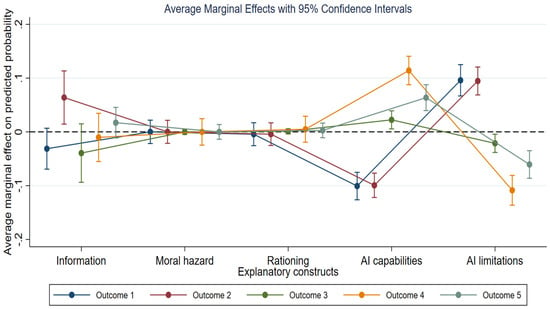
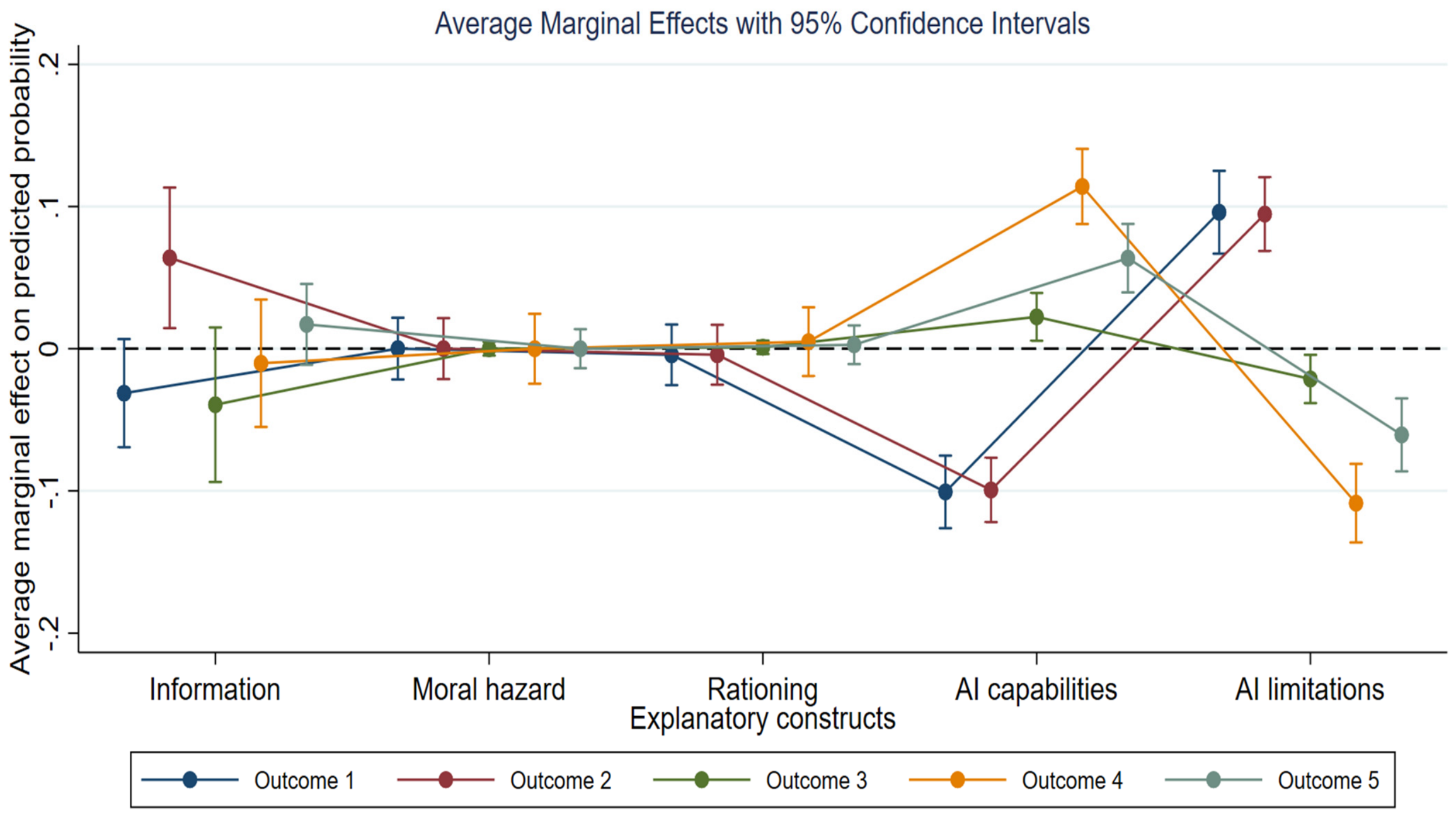
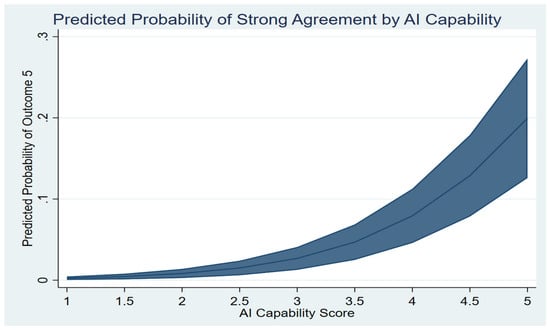
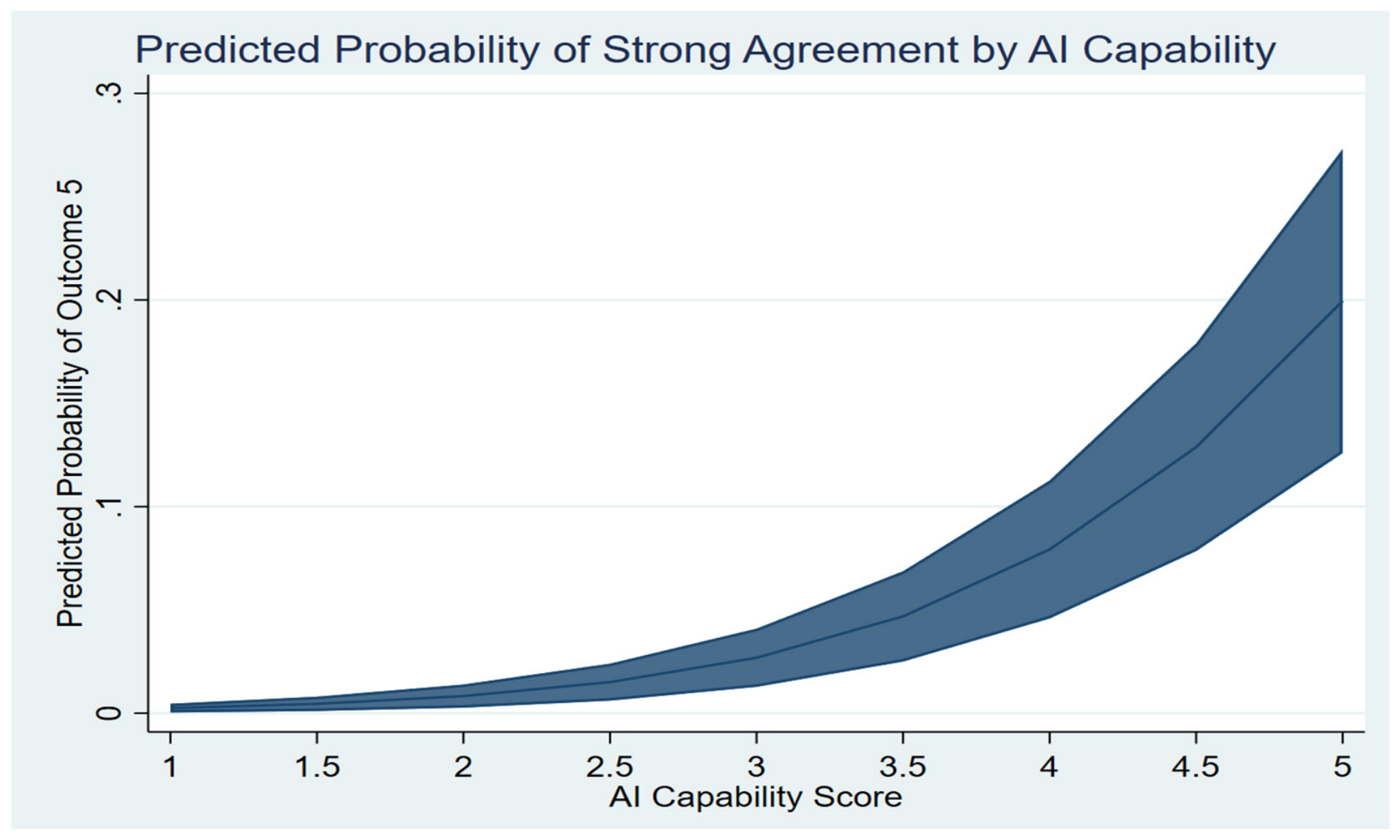
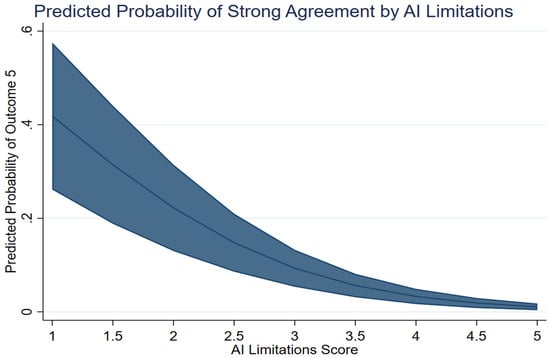

Disclaimer/Publisher’s Note: The statements, opinions and data contained in all publications are solely those of the individual author(s) and contributor(s) and not of MDPI and/or the editor(s). MDPI and/or the editor(s) disclaim responsibility for any injury to people or property resulting from any ideas, methods, instructions or products referred to in the content. |
© 2026 by the authors. Licensee MDPI, Basel, Switzerland. This article is an open access article distributed under the terms and conditions of the Creative Commons Attribution (CC BY) license.