


Abstract
Two edible lilies, Lilium davidii var. unicolor and L. leichtlinii var. maximowiczii Baker, were hybridized with six ornamental cultivars to evaluate interspecific hybridization efficiency and generate potential breeding materials combining ornamental and bulb-quality traits. Pollen viability, assessed by Alexander staining and impedance flow cytometry, showed a strong positive correlation (r = 0.996), with L. leichtlinii var. maximowiczii Baker exhibiting the highest viability (95.86%). Among the tested cross combinations, crosses using diploid L. leichtlinii var. maximowiczii Baker as the maternal parent and tetraploid cultivars as pollen parents produced high embryo numbers, reaching 113.33 embryos per capsule, with seedling rates of up to 80.44%. The F1 progeny derived from the cross between ‘Tiny Double You’ and L. davidii var. unicolor showed continuous variation in floral size traits, while discrete segregation was observed for stamen petalody, flower orientation, and tepal spotting. Notably, bulb non-starch polysaccharide content ranged from 18.25 to 103.52 mg·g−1 DW, with 8.70% of the progeny showing transgressive segregation exceeding the high-value parent. These findings provide useful information for selecting compatible parental combinations and potential breeding materials for combining ornamental and bulb-quality traits in lily breeding.
1. Introduction
The genus Lilium (family Liliaceae) encompasses approximately 110–115 perennial bulbous species, primarily distributed across temperate regions of the Northern Hemisphere, with centers of diversity in the Himalayas and southwestern China [1,2]. Lilies are among the most economically important monocotyledonous plants worldwide, extensively cultivated as cut flowers, garden ornamentals, and potted plants. Beyond their ornamental value, the bulbs of several Lilium species are edible and rich in bioactive compounds, including polysaccharides, phenolic acids, flavonoids, saponins, and sterols, conferring notable nutritional and health-promoting properties [3]. Edible lilies play a particularly important role in traditional Chinese agriculture and the health-related food industry due to their high nutritional value, medicinal potential, and economic significance, with representative fresh-consumption cultivars including L. davidii var. unicolor, L. brownii var. viridulum, and L. leichtlinii var. maximowiczii Baker [4]. With increasing demand for functional foods and plant-based health products, edible lilies are gaining growing industrial importance, highlighting Lilium as a dual-purpose genus with integrated ornamental, edible, and medicinal value [5,6].
Although lilies have been cultivated for centuries, modern lily breeding has a relatively short history of just over a century and has been largely driven by ornamental objectives. Intensive hybridization programs initiated in the early twentieth century led to the development of major horticultural groups, including Asiatic (A), Oriental (O), Longiflorum (L), and interdivisional hybrids such as LA and OT lilies, which currently dominate global markets [7,8]. Over the past decades, breeding efforts have mainly focused on ornamental traits such as flower color, fragrance, plant architecture, disease resistance, and post-harvest performance [6,9,10,11]. In contrast, the breeding and improvement of edible lily cultivars have received relatively limited attention worldwide.
As a result, current edible lily varieties are constrained by a narrow genetic base, a limited number of cultivars, and poor differentiation in specific edible-quality traits. This reduced diversity hinders the ability to meet growing market demand, which is driven by shifting consumption patterns and a growing preference for high-quality, diversified plant-based foods. Traditional edible lilies, such as L. davidii var. willmottiae and L. brownii var. viridulum Baker, typically exhibit small flowers, limited floral variation, and downward-facing flowers with strongly reflexed tepals, leading to relatively low ornamental value [12]. These factors limit market acceptance and constrain further value improvement. In this context, increasing attention has been given to the development of lilies that combine ornamental and edible traits. Such breeding materials can be used for fresh consumption while also providing ornamental value, thereby expanding utilization scenarios and improving overall economic efficiency. From a breeding perspective, this approach requires the introduction of favorable ornamental traits into edible lily backgrounds.
Distant hybridization has long been recognized as an effective approach for broadening genetic diversity and introducing favorable traits across different sections of Lilium [13,14]. Through crosses between edible species and ornamental cultivars, it is possible to combine traits such as improved floral appearance, desirable bulb quality, and environmental adaptability [15]. However, interspecific hybridization in lilies is often constrained by reproductive barriers, including unilateral incompatibility, embryo abortion, and endosperm imbalance [16,17]. To improve hybridization success, recent breeding efforts increasingly rely on integrated strategies involving careful parental evaluation, standardized pollen viability assessment, optimized pollen storage, and rapid hybrid identification, which together help shorten breeding cycles and improve efficiency [18,19,20,21]. Molecular methods, such as transcriptome-derived EST-SSR markers, have been widely applied for germplasm evaluation and hybrid authentication, providing reliable support for breeding programs [22,23]. In addition, in vitro techniques including embryo rescue and ovule culture have proven effective in overcoming post-fertilization barriers and ensuring the recovery of true hybrids [24,25]. The feasibility of this integrated approach has been demonstrated by the successful development of dual-purpose lily cultivars such as ‘Dandie’ and ‘Jinghe’, derived from crosses between L. ‘Brunello’ × L. pumilum and L. ‘Vermeer’ × L. ‘Brunello’, respectively, which exhibit improved edible quality and broader environmental adaptability compared with traditional edible lilies [26,27].
In this study, an interspecific hybridization strategy was used to evaluate cross compatibility among edible and ornamental lily parents and to generate potential breeding materials combining ornamental and bulb-quality traits. Two traditional edible species, L. davidii var. unicolor and L. leichtlinii var. maximowiczii Baker, were crossed with six ornamental cultivars from the A and LA hybrid groups. Hybridization efficiency was first compared among the 12 cross combinations, after which the cross between ‘Tiny Double You’ and L. davidii var. unicolor was selected for detailed F1 evaluation based on the availability of sufficient surviving and flowering progeny. The parental materials and the selected F1 progeny were systematically evaluated for morphological and nutritional traits, while pollination procedures were optimized and reproductive barriers were addressed using embryo rescue techniques. Hybrid authenticity was verified using SSR markers, and the segregation patterns of selected floral and bulb carbohydrate traits were analyzed in the F1 progeny. This work provides information for evaluating parental combinations and identifying potential breeding materials with complementary ornamental and bulb-quality traits, and contributes to a better understanding of trait variation in interspecific lily hybrids.
2. Materials and Methods
2.1. Plant Materials
Two traditional Asiatic edible lilies, L. leichtlinii var. maximowiczii Baker (2n = 2x = 24) and L. davidii var. unicolor (2n = 2x = 24), were collected from Jilin and Gansu Provinces, China. Four Asiatic hybrid cultivars—‘Tiny Double You’ (2n = 2x = 24), ‘Pink Flight’ (2n = 4x = 48), ‘Trendy Dakota’ (2n = 2x = 24), and ‘Tresor’ (2n = 4x = 48)—along with two Longiflorum × Asiatic (LA) hybrid cultivars, ‘Indian Summerset’ (2n = 3x = 36) and ‘Armandale’ (2n = 3x = 36), were provided by Zhejiang Hongyue Flower Co., Ltd. All materials were cultivated under controlled greenhouse conditions at the Shanghai Academy of Agricultural Sciences, Shanghai, China.
2.2. Lily Resource Characteristics
Morphological characterization of the six ornamental cultivars was conducted in accordance with the Lilium International Union for the Protection of New Varieties of Plants (UPOV) guidelines for distinctness, uniformity, and stability (DUS). For each cultivar, five representative plants were evaluated for key traits, including plant height, stem diameter, flower diameter, flower color, spot distribution, flower shape, and flower orientation.
2.3. Pollen Viability and Germination
Pollen viability was evaluated using Alexander staining and impedance flow cytometry (IFC; Amphasys AG, Root, Switzerland). For IFC analysis, pollen grains were collected on the first day of anthesis prior to anther dehiscence. Following collection, fresh anthers were suspended in AmphaFluid 6 buffer and measured using an analyzer equipped with AmphaSoft 2.0. The resulting data were processed via the accompanying software to quantify viable and non-viable pollen grains. In vitro pollen germination was assessed in a medium containing 100 g/L sucrose, 20 mg/L CaCl2, and varying concentrations of H3BO3 to identify the optimal boric acid concentration for pollen germination. For pollen viability and in vitro germination assays, three independent biological replicates were performed for each cultivar, and each replicate consisted of pollen collected from different flowers.
2.4. Cross-Pollination and Embryo Culture
Hybridization experiments were conducted at the Shanghai Academy of Agricultural Sciences from 2019 to 2020. Twelve cross combinations were evaluated for hybridization efficiency, with ten flowers pollinated per combination. All twelve combinations were pollinated during the same growing season. The cross ‘Tiny Double You’ × L. davidii var. unicolor was additionally repeated in subsequent seasons to obtain sufficient progeny for trait evaluation. Hybrid seed set was assessed 50 days after pollination. Capsules were harvested at 50–60 days post-pollination, and the average number of embryos per capsule was recorded under sterile conditions. Enlarged capsules (50–60 days old) were surface-sterilized with 75% ethanol for 1 min and 0.5% NaClO for 10 min, followed by six rinses with sterile distilled water. Embryos were aseptically excised in a laminar flow hood and placed on germination medium (MS medium supplemented with 30 g/L sucrose and 4.5 g/L agar, pH 5.8), overlaid with a thin layer of sterile water to maintain humidity. Cultures were incubated at 22 °C under a 12-h light/12-h dark photoperiod. After 4–5 weeks, germinated seedlings were counted and transferred to regeneration medium (MS supplemented with 60 g/L sucrose and 4.5 g/L agar, pH 5.8) for further growth. Capsules lost to contamination or poor development during handling were excluded from the embryo counts (Supplemental Table S8).
The following parameters were calculated:
2.5. Identification of Hybrids with SSR Molecular Markers
Total genomic DNA was extracted from young leaves using a plant genomic DNA kit (Tolo Biotech, Shanghai, China) following the manufacturer’s instructions. DNA quality was verified by 0.8% agarose gel electrophoresis, and DNA concentration and purity were determined using a NanoDrop Lite spectrophotometer (Thermo Scientific, Waltham, MA, USA). DNA samples were stored at –20 °C for subsequent analysis. Four EST-SSR primer pairs (Supplemental Table S1) were selected to authenticate hybrids derived from crosses between ‘Tiny Double You’ and L. davidii var. unicolor. PCR amplification was performed using Premix TaqTM Hot Start Version (TaKaRa, Dalian, China) on an ABI2720 Thermo Cycler (Applied Biosystems, Carlsbad, CA, USA). Hybrid authenticity was confirmed by detecting male parent-specific bands in the F1 progeny.
2.6. The Progeny Phenotypes of F1 Hybrid Progenies
Morphological traits of 16 flowering F1 hybrid progenies derived from the cross ‘Tiny Double You’ × L. davidii var. unicolor were recorded during the first flowering season. This cross was selected because it was the only cross combination that provided sufficient flowering progeny for phenotypic evaluation at the time of the study. Morphological observations were conducted on all available flowering F1 individuals. All flowers that opened on each individual were measured, giving one to three flowers per individual (34 flowers in total across the 16 progenies). Evaluated traits included flower diameter, outer and inner tepal length and width, tepal number, number of stamens, degree of stamen petalody, pollen presence, tepal spotting, flowering direction and flower shape. All traits were scored in accordance with the UPOV DUS (Distinctness, Uniformity, and Stability) guidelines for distinctness, uniformity, and stability (DUS) in Lilium. Parental plants were evaluated in the same season and under the same growing conditions as the F1 progeny, and these values were used to calculate mid-parent values and to classify F1 individuals relative to the parents.
For the analysis of polysaccharide, glucose, and sucrose content, bulbs from 46 F1 genotypes were used. Each genotype originated from an independent rescued embryo and was clonally propagated in vitro to obtain multiple plants per genotype, which were transplanted to the field and grown for one year before harvest. Three replicate bulbs of the same genotype were analysed per genotype. Bulbs (10–15 g) of the parents and F1 progeny were sampled immediately after harvest (0 d), cleaned, freeze-dried to constant weight, and ground into a fine powder. Glucose and sucrose were extracted following the method described by Hendrix [28]. Non-starch polysaccharides were quantified using a commercial kit (G0593W, Suzhou Grace Biotechnology Co., Suzhou, China), with a modified procedure involving triple hot-water extraction and α-amylase treatment (0.03%, w/v) to remove starch.
2.7. Data Analysis
Differences among accessions or cross combinations were analyzed by one-way ANOVA, followed by Duncan’s multiple range test (p ≤ 0.05). Normality of trait distributions was assessed using the Shapiro–Wilk test prior to frequency distribution analysis. The relationship between the results of Alexander staining and IFC was assessed by Pearson’s and Spearman’s correlation analyses on the mean pollen viability of each accession (n = 7). All statistical analyses were performed using SPSS 26.0.
3. Result
3.1. Phenotypic Characterization of Parental Lily Germplasm
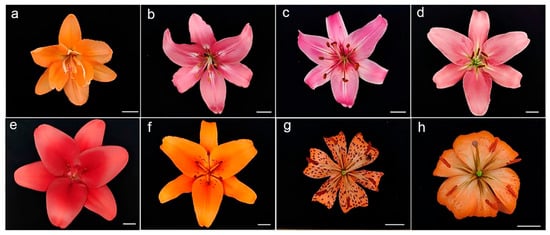
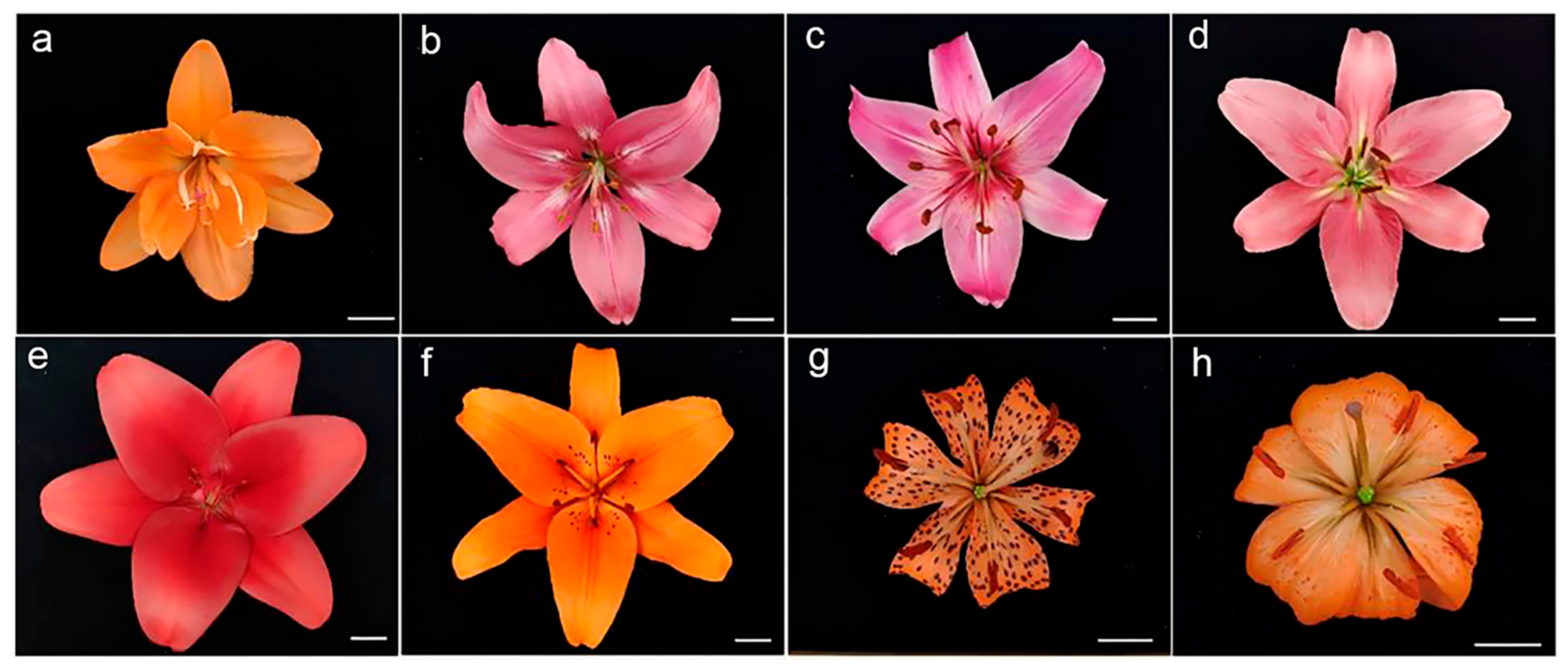
A comparative analysis of phenotypic traits was conducted among the parental lily cultivars, including plant height, stem diameter, flower diameter, flower color, petal spotting, flower shape, and flowering orientation (Figure 1, Supplemental Table S2). Plant height ranged from 38.70 ± 1.71 cm (‘Trendy Dakota’) to 133.70 ± 16.24 cm (L. leichtlinii var. maximowiczii Baker), stem diameter from 3.50 ± 0.50 mm (L. davidii var. unicolor) to 15.33 ± 2.31 mm (‘Indian Summerset’), and flower diameter from 6.60 ± 0.50 cm (L. davidii var. unicolor) to 18.07 ± 0.51 cm (‘Indian Summerset’). Flower color varied among cultivars, including orange (‘Tiny Double You’, L. davidii var. unicolor, L. leichtlinii var. maximowiczii Baker), orange-red (‘Tresor’), pink (‘Trendy Dakota’, ‘Pink Flight’, ‘Indian Summerset’), and red (‘Armandale’). Petal spotting ranged from absent to minimal, moderate, or abundant. Flower shape varied among the accessions. It was predominantly bowl-shaped, while ‘Pink Flight’ exhibited dish-shaped flowers, and both L. davidii var. unicolor and L. leichtlinii var. maximowiczii Baker displayed reflexed tepals. Flower orientation was mostly upright, with lateral orientation in ‘Pink Flight’, and drooping orientation in L. davidii var. unicolor and L. leichtlinii var. maximowiczii Baker. Given the compact growth habit of L. davidii var. unicolor, crossing it with cultivars that exhibit vivid flower color, upright flower orientation, and vigorous growth is recommended to enhance both ornamental and edible traits in the progeny.
Figure 1.
Floral phenotypes of the eight parental lily accessions used for interspecific hybridization. (a) ‘Tiny Double You’; (b) ‘Trendy Dakota’; (c) ‘Pink Flight’; (d) ‘Indian Summerset’; (e) ‘Armandale’; (f) ‘Tresor’; (g) L. leichtlinii var. maximowiczii Baker; (h) L. davidii var. unicolor, bar = 2 cm.
3.2. Determination of Pollen Viability and Pollen Germination Rate
Pollen viability determined by Alexander staining and impedance flow cytometry (IFC) varied significantly among lily accessions (Table 1). Preliminary assays identified that pollen collected on the first day of anthesis (before anther dehiscence) showed optimal IFC viability and was selected for subsequent analyses. L. leichtlinii var. maximowiczii Baker exhibited the highest viability (95.86 ± 0.29% by Alexander staining, 89.72 ± 2.40% by IFC), while relatively high viability was also observed in ‘Pink Flight’, ‘Trendy Dakota’, L. davidii var. unicolor, and ‘Tresor’. Although Alexander staining consistently produced slightly higher viability values than the IFC assay, results from the two methods were positively correlated (Pearson’s r = 0.996, p < 0.001; Spearman’s ρ = 0.893, p = 0.012).
Table 1.
Pollen viability determination of Lilium spp. by two methods.
Effects of different H3BO3 concentrations on pollen germination of ‘Trendy Dakota’ and L. davidii var. unicolor were investigated, identifying 100 mg/L as the optimal concentration (Supplemental Table S3). When cultured on the optimized germination medium (100 g/L sucrose, 100 mg/L H3BO3, and 20 mg/L CaCl2), in vitro pollen germination rates were consistently higher at 24 h than at 12 h across all varieties (Table 1). Specifically, L. leichtlinii var. maximowiczii Baker maintained the highest rates (85.44 ± 3.30% and 87.44 ± 4.41% at 12 h and 24 h, respectively). ‘Pink Flight’ showed a substantial increase from 9.29 ± 4.10% at 12 h to 58.22 ± 3.23% at 24 h. In contrast, no germination was observed in ‘Indian Summerset’ or ‘Armandale’.
3.3. Hybridization Efficiency Across Different Hybrid Combinations
Hybridization success varied substantially among the specific cross combinations (Table 2; Supplemental Tables S4 and S8). Diploid parents (‘Tiny Double You’, ‘Trendy Dakota’, L. leichtlinii var. maximowiczii Baker, L. davidii var. unicolor), tetraploid cultivars (‘Pink Flight’, ‘Tresor’), and triploid cultivars (‘Indian Summerset’, ‘Armandale’) exhibited different hybridization efficiencies.
Table 2.
Hybrid combinations involving L. leichtlinii var. maximowiczii Baker or L. davidii var. unicolor.
When L. leichtlinii var. maximowiczii Baker was used as the maternal parent in crosses with tetraploid cultivars (‘Pink Flight’, ‘Tresor’), high seed-set rates (70–80%), elevated embryo numbers per capsule (97.80 ± 27.58 to 113.33 ± 22.03, p < 0.05), and high seedling rates (79–80%) were obtained. In the reciprocal combinations with L. leichtlinii var. maximowiczii Baker as the pollen parent, seed set remained high (90–100%), but embryo numbers were significantly reduced (2.80 ± 0.84 to 57.80 ± 11.82), resulting in widely varying seedling rates (3.81–57.14%).
Using L. davidii var. unicolor as the maternal parent in a cross with the diploid cultivar ‘Trendy Dakota’ achieved 100% seed set, moderate embryo numbers (76.33 ± 9.81), and a seedling rate of 31.00%. By contrast, when L. davidii var. unicolor served as the paternal parent, embryo numbers were substantially lower (0.17 ± 0.41 to 17.50 ± 2.12, p < 0.05). No seedlings were obtained from the cross ‘Indian Summerset’ × L. davidii var. unicolor. Triploid cultivars (‘Indian Summerset’ and ‘Armandale’), when used exclusively as maternal parents, generally produced lower seedling rates in the combinations evaluated here compared to some diploid and tetraploid combinations. Overall, the results showed substantial variation in embryo production and seedling recovery among the different parental combinations, with differences observed between reciprocal crosses in several cases.
3.4. Identification of the Authenticity of Hybrid Progeny
Among the 12 cross combinations, ‘Tiny Double You’ × L. davidii var. unicolor was selected for subsequent F1 evaluation because the resulting progeny were sufficient for flowering and subsequent assessment of floral and bulb traits. The 46 F1 genotypes evaluated were obtained from the repeated pollinations of this cross described in Section 2.4, each originating from an independent rescued embryo. Early identification of hybrids derived from the cross ‘Tiny Double You’ × L. davidii var. unicolor was performed using SSR markers. Amplification products ranged from 159 bp to 316.36 bp, and the four markers differed markedly in their efficiency in detecting paternal alleles in the progeny (Supplemental Table S5). DNA from both parents and eight F1 individuals was initially screened. Progeny displaying paternal-specific bands were classified as true hybrids. Among the markers tested, SSR001 failed to detect any paternal-specific allele in the progeny, probably because of a null allele in the pollen parent, while SSR007 and IVFLMRE141 detected paternal bands in only three of the eight progenies. In contrast, marker SSR015 enabled clear differentiation: the maternal parent ‘Tiny Double You’ produced characteristic peaks at 310.84 bp and 312.95 bp, whereas the paternal parent L. davidii var. unicolor showed distinct peaks at 315.22 bp and 316.03 bp. All eight progenies simultaneously exhibited characteristic alleles from both parents, supporting their identification as true F1 hybrids. Therefore, SSR015 was selected for subsequent large-scale hybrid authentication.
SSR015 was subsequently used to authenticate additional progenies (Supplemental Table S6). All 46 progenies showed the expected parental allele patterns, and were classified as true F1 hybrids.
3.5. Floral and Bulb Carbohydrate Traits of F1 Progeny
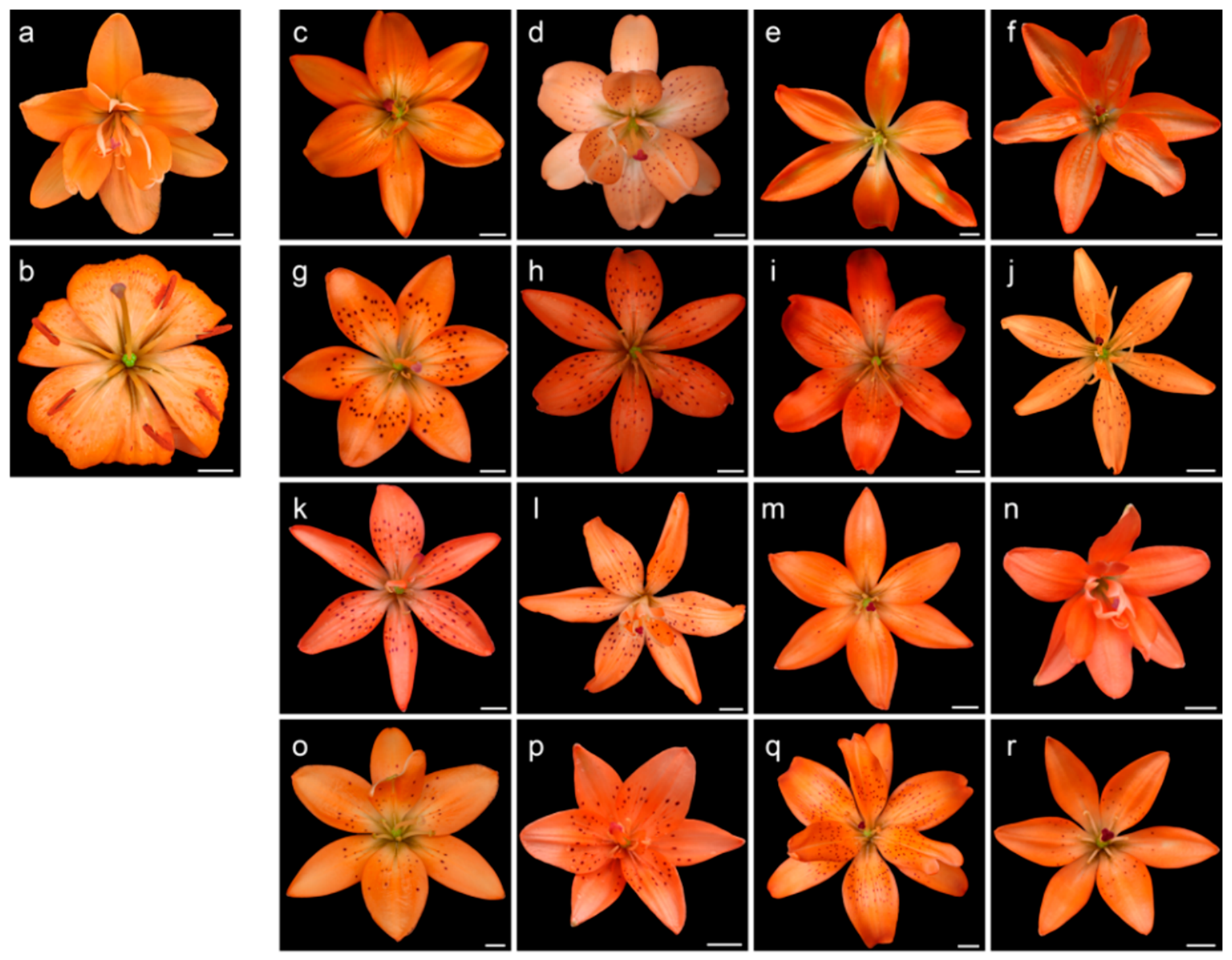
Floral traits were evaluated in one parental combination (‘Tiny Double You’ × L. davidii var. unicolor) and their F1 hybrid progeny (Figure 2 and Figure 3; Table 3 and Table 4). A total of 16 F1 individuals that completed flowering were assessed for floral characteristics, while bulb carbohydrate traits were examined in a larger set of 46 progeny. The parental lines exhibited distinct floral morphologies. ‘Tiny Double You’ produced large, upright, bowl-shaped double flowers characterized by complete stamen petalody and pollen sterility. In contrast, L. davidii var. unicolor bore smaller, drooping flowers with strongly recurved tepals and fertile stamens.
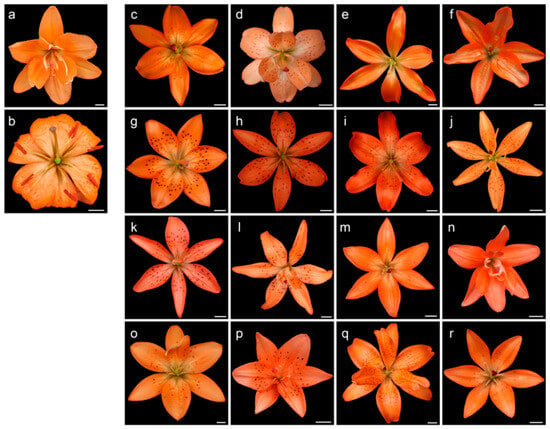
Figure 2.
Floral phenotypes of the parental lines and F1 progenies derived from the cross between ‘Tiny Double You’ and L. davidii var. unicolor. (a) ♀: ‘Tiny Double You’; (b) ♂: L. davidii var. unicolor; (c–r) Hybrid 1–16. Bar = 1 cm.
Figure 3.
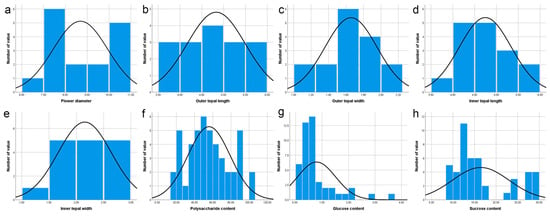
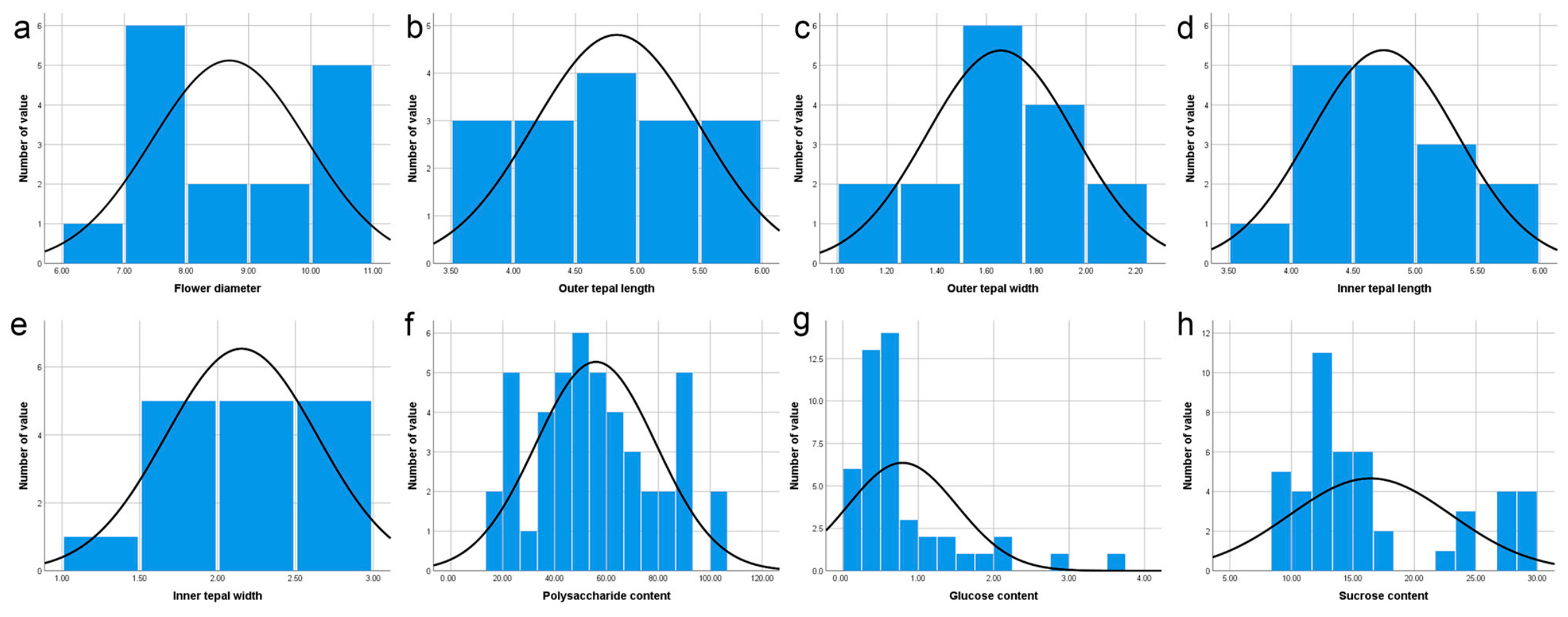
Frequency distributions of floral and bulb carbohydrate traits in F1 progenies from the cross between ‘Tiny Double You’ and L. davidii var. unicolor. (a–e) Frequency distributions of floral morphological traits in the F1 progeny, including flower diameter, outer tepal length and width, and inner tepal length and width. (f–h) Frequency distributions of bulb carbohydrate contents, including polysaccharides, glucose, and sucrose, in the F1 progeny. Solid lines represent fitted normal distribution curves.
Table 3.
Floral and bulb carbohydrate traits of the parental lines and F1 progenies from the cross between ‘Tiny Double You’ (♀) and L. davidii var. unicolor (♂).
Table 4.
Floral characteristics of the parental lines and F1 progenies derived from the cross between ‘Tiny Double You’ and L. davidii var. unicolor.
Within the F1 population, flower size-related traits exhibited continuous variation and generally unimodal frequency distributions (Figure 3, Supplemental Table S7), consistent with continuous phenotypic variation. Flower diameter ranged from 6.50 to 10.40 cm (mean 8.69 ± 1.25 cm). Most individuals (75.00%) displayed intermediate values relative to the parental lines, while 25.00% exceeded the high-value parent. Outer tepal length ranged from 3.93 to 5.89 cm and fell within the parental range across all individuals. In contrast, outer tepal width (1.16–2.21 cm) was consistently lower than that of the smaller parent. Similar patterns were observed for inner tepal dimensions: length was largely intermediate, whereas width was lower than that of the smaller parent in all individuals. All five flower size-related traits showed no significant deviation from normality (Table 3, Supplemental Table S7).
In contrast to the continuous traits, discrete floral characters also exhibited distinct segregation patterns (Table 4). The same 16 flowering F1 individuals were evaluated for these discrete floral traits. Tepal number ranged from six to twelve, with partial to complete stamen petalody observed in several individuals. Most hybrids produced upright or bowl- to-dish-shaped flowers, while only a minority retained the paternal parent’s droop, reflexed floral morphology. Orange perianths predominated, and over half of the individuals displayed tepal spotting. For example, Hybrid 13, which had the largest flower diameter (10.40 cm), had seven tepals and five stamens, exhibited stamen petaloidy, and retained pollen production, while showing slight tepal spotting and a drooping, reflexed flower. These results indicated substantial segregation of floral characteristics within the F1 population.
Substantial variation was also observed in bulb carbohydrate traits (Figure 3, Table 3, Supplemental Table S7). Non-starch polysaccharide content ranged from 18.25 to 103.52 mg g−1 DW, with a mean of 55.91 ± 23.21 mg g−1 DW. Among the individuals evaluated, 45.65% exhibited values below the lower parent, 45.65% were intermediate, and 8.70% exceeded the higher parent. Its frequency distribution showed no significant deviation from normality (Supplemental Table S7). Glucose and sucrose contents ranged from 0.09 to 3.51 mg g−1 DW and 9.52 to 28.78 mg g−1 DW, respectively. In contrast to polysaccharides, the distributions of both glucose and sucrose deviated significantly from normality (p < 0.001) and were positively skewed, with 28.26% (glucose) and 26.09% (sucrose) of individuals exceeding the higher parent.
In summary, the F1 population exhibited substantial variation in both floral and bulb carbohydrate traits, with continuous variation observed for the quantitative traits and clear segregation for several discrete floral characters.
4. Discussion
Interspecific hybridization has played a central role in modern lily breeding. Understanding the genetic mechanisms underlying ornamental and nutritional traits enables rational selection of parental lines and shortens the breeding cycle. In this study, two edible lily germplasms, L. davidii var. unicolor and L. leichtlinii var. maximowiczii Baker, were used as the main breeding materials for crosses with six other ornamental lily cultivars. The phenotypic diversity and pollen viability of the eight lily accessions were systematically characterized, hybridization efficiency across ploidy levels was assessed, and the phenotypic variation and segregation patterns of floral and bulb carbohydrate traits were characterized in the F1 progeny derived from the cross ‘Tiny Double You’ × L. davidii var. unicolor. These results provide information on parental compatibility and the segregation of key ornamental and bulb carbohydrate traits, and provide potential breeding materials for combining ornamental and bulb-quality traits.
Phenotypic evaluation revealed substantial diversity among the parental lines across vegetative growth and floral traits. L. davidii var. unicolor was the most widely cultivated edible lily germplasm from Gansu province, China, while, L. leichtlinii var. maximowiczii Baker has been reported to possess favorable bulb quality and carbohydrate composition, making both species important edible genetic resources [29]. Both were characterized by compact growth, small recurved flowers and a downward-facing flowering direction. In contrast, the ornamental parents, mainly derived from A or LA hybrid groups, had enlarged floral organs, upright flower orientation, or diverse tepal coloration. The observed phenotypic differences among the parental resources provide opportunities for combining contrasting ornamental and bulb-related traits through interspecific hybridization.
Pollen viability of the parental lily accessions was assessed using both Alexander staining and IFC, revealing a strong positive correlation between the two methods (Pearson’s r = 0.996, p < 0.001; Spearman’s ρ = 0.893). This correlation is consistent with findings reported in other crops, such as wheat, where IFC-derived estimates align with, but are not necessarily identical to, staining- or germination-based assays [30]. Despite their strong correlation, the two methods emphasize distinct aspects of pollen quality. Alexander staining provides a rapid and cost-effective cytological evaluation of pollen integrity based on cytoplasmic staining, whereas IFC provides a high-throughput assessment of pollen viability based on cellular and membrane properties [18,31]. In the present study, Alexander staining generally yielded slightly higher viability estimates than IFC, although the two methods showed a strong positive correlation [18]. For small-scale breeding programs with limited equipment and sample throughput, Alexander staining may therefore be a more practical option, whereas IFC may be advantageous for large-scale screening where rapid and high-throughput assessment is required [32,33]. For lily breeding programs, this combined evaluation strategy offers practical guidance for screening pollen quality and selecting potential male parents.
Hybridization success in Lilium varied substantially among parental combinations, with differences observed among ploidy combinations and between reciprocal crosses in several cases [34,35]. Crosses using L. leichtlinii var. maximowiczii Baker as the maternal parent and ‘Pink Flight’ or ‘Tresor’ as pollen parents produced high embryo numbers and seedling rates, whereas the corresponding reciprocal crosses produced fewer embryos and more variable seedling recovery. In most angiosperms with a Polygonum-type embryo sac, 2× × 4× crosses often fail because of endosperm imbalance [36]. Lilium has a Fritillaria-type embryo sac, in which the central cell contains four maternal genomes, so a 2× × 4× cross produces a hexaploid endosperm. This is consistent with the “five-same-genomes” requirement proposed for normal endosperm development in Lilium and may partly explain the high embryo production in these two crosses [37,38,39]. However, the same model also predicts a balanced endosperm in the reciprocal 4× × 2× crosses. The lower embryo numbers in these crosses may therefore reflect other factors, such as differences in female fertility among the cultivars. This is supported by the low embryo number of ‘Tiny Double You’ × L. leichtlinii var. maximowiczii Baker, a 2× × 2× cross. In addition, the ploidy of the progeny was not determined, and the present crossing design was unbalanced. The independent effects of parental ploidy, cross direction and genotype therefore could not be separated, and these results should be interpreted as differences among specific cross combinations.
The relatively low seedling recovery observed in several combinations involving triploid cultivars may be associated with reduced gamete fertility and meiotic irregularities, as reported previously for triploid lilies [39,40]. When the triploid cultivars ‘Indian Summerset’ and ‘Armandale’ were used as maternal parents, the low seedling recovery is more likely attributable to irregular chromosome segregation during megasporogenesis, which produces aneuploid egg cells and leads to embryo abortion, rather than to their own reduced pollen fertility. Consistent with impaired gamete development in both sexes, these two cultivars also showed very low or undetectable pollen viability and germination. Previous studies have also reported that triploid genotypes often exhibit reduced pollen fertility and that their use as pollen donors can result in low or failed hybridization, highlighting the importance of ploidy compatibility and appropriate parental role assignment in interspecific and interploidy crosses [41,42]. Notably, several crosses in this study exhibited relatively high capsule set but low embryo or seedling recovery, indicating that successful capsule formation did not necessarily result in efficient embryo development or seedling establishment. Post-fertilization barriers, potentially including endosperm imbalance or early embryo developmental arrest, may therefore contribute to the reduced recovery observed in some interspecific and interploidy combinations.
Early and reliable authentication of hybrid progenies is critical for breeding programs, particularly in Lilium, where low seed set and high cross failure rates are common. In this study, SSR marker SSR015 clearly differentiated the two parental genotypes and enabled the early authentication of progenies from the selected cross (Supplemental Table S6), thereby ensuring the accuracy of subsequent phenotypic analyses [43]. SSR markers have been widely recognized as cost-effective, codominant, and highly informative tools for parentage verification and genetic analysis in Lilium [11,21]. Their utility is especially pronounced under conditions of low hybridization success, where morphological identification is unreliable due to developmental plasticity and incomplete trait expression in juvenile plants. Compared with morphology-based approaches, SSR-based identification can provide earlier genetic evidence of hybrid origin. Notably, SSR015 was sufficient for the authentication of the progenies examined in this study, underscoring the practical value of targeted marker selection in edible × ornamental lily breeding programs. This strategy facilitated the selection of progenies for subsequent phenotypic evaluation and improved the reliability of the breeding population. However, SSR-based authentication primarily confirms the presence of parental alleles and does not provide information on chromosome number, ploidy balance, or the detailed recombination patterns of F1 progenies. Therefore, additional cytological or genome-wide approaches, such as flow cytometry, chromosome counting, or SNP-based genotyping, would be required for comprehensive characterization of the genetic constitution of the hybrids.
Finally, the phenotypic variation observed in the F1 progeny derived from the cross between ‘Tiny Double You’ and L. davidii var. unicolor suggests different patterns of variation among floral and bulb carbohydrate traits. The continuous, normally distributed variation in floral size-related traits, such as diameter and tepal length, is consistent with the involvement of multiple genetic factors in these quantitative traits [44,45]. In contrast, stamen petalody, flower orientation (upright vs. drooping), and the presence of tepal spotting showed discrete segregation among the F1 individuals. However, the genetic basis of these traits could not be determined from the present F1 population, and segregation analysis in larger F2 or backcross populations will be required. The observed variation in these traits provides useful material for further genetic analysis of floral organ identity, flower orientation, and tepal pigmentation. From a developmental perspective, stamen petalody represents a homeotic transformation potentially regulated by mutations in B- or C-class MADS-box genes within the ABCE model of floral development [46]. For breeding purposes, the continuous variation observed in quantitative traits and the segregation of discrete floral traits provide different opportunities for selection, although their genetic architectures require further investigation. Furthermore, the broad variation observed in bulb non-starch polysaccharide content, a key bulb quality trait, including progeny exceeding the higher parent, indicates potential for further selection of progeny with elevated carbohydrate content. However, the edible value of these hybrids was assessed here only by three bulb carbohydrate components. Further evaluation of bulb size and yield, nutritional and flavor components, and food safety is required before they can be considered as edible or ornamental-edible cultivars.
This study established an interspecific hybrid population and systematically characterized the phenotypic variation and segregation of selected floral and bulb carbohydrate traits, providing both valuable germplasm resources and a reference framework for breeding lilies with combined edible and ornamental value. The observed continuous variation and transgressive segregation in target traits provide opportunities for further genetic investigation and selection. Although EST-SSR markers proved sufficient for early hybrid verification and preliminary genetic analysis, future integration of SNP genotyping and genotyping-by-sequencing (GBS) could facilitate the population-scale analysis of quantitative trait loci (QTLs) associated with floral and bulb traits. Such advances will facilitate the development of molecular markers for marker-assisted selection (MAS)—a particularly valuable approach given the extended breeding cycles and limited population sizes typical of lily breeding programs.
5. Conclusions
This study demonstrates the feasibility of using interspecific hybridization to generate lily progenies combining ornamental and bulb-quality traits. Comprehensive evaluation of parental lines revealed significant phenotypic diversity, providing useful information for parental combination and trait complementation. The strong correlation between Alexander staining and impedance flow cytometry indicated that both methods could be used to assess pollen viability, with complementary advantages for practical breeding applications. Hybridization success varied substantially among parental combinations, and reciprocal differences were observed in several crosses. The SSR marker SSR015 enabled early authentication of progenies from the selected cross. Phenotypic evaluation of their F1 population between ‘Tiny Double You’ and L. davidii var. unicolor showed continuous variation in floral size traits, while clear segregation was observed for several discrete floral characteristics, including stamen petalody, flower orientation, and tepal spotting. Notably, transgressive segregation in bulb non-starch polysaccharide content (8.70% of progeny exceeding the high parent) identified progeny with potential for further selection for elevated bulb carbohydrate content. These findings provide breeding materials and useful information for further development of lily germplasm combining ornamental and bulb-quality traits.
Supplementary Materials
The following supporting information can be downloaded at: https://www.mdpi.com/article/10.3390/seeds5060079/s1, Table S1: Primer sequences; Table S2: Comparison of phenotypic traits of lily hybrid parents; Table S3: The effect of H3BO3 concentration on the pollen germination rate; Table S4: One-way ANOVA of the mean number of embryos per capsule among the 12 cross combinations; Table S5: Early-stage hybrid identification efficiency of the four SSR primers; Table S6: Results of hybrid authentication using SSR015 marker; Table S8: Shapiro–Wilk normality test of floral and bulb carbohydrate traits in the F1 population of ‘Tiny Double You’ × L. davidii var. unicolor; Table S8: Pollination, capsule, embryo and seedling records for each hybrid combination. Data S1. Pollen viability of the seven parental accessions; Data S2. Floral traits of the 16 flowering F1 progenies of the cross between ‘Tiny Double You’ and L. davidii var. unicolor; Data S3. Bulb carbohydrate contents of the parents and the 46 F1 progenies.
Author Contributions
M.C.: Conceptualization, Data curation, Methodology, Writing—original draft; X.C.: Data curation, Writing—original draft; C.M.: Investigation, Data curation; Y.Y., X.H., G.N., L.Z.: Investigation; L.Y.: Writing—review & editing, Project administration, Funding acquisition; Y.Z.: Conceptualization, Resources, Supervision, Writing—review & editing. All authors have read and agreed to the published version of the manuscript.
Funding
This work was supported by the Novel Germplasm Creation and Application for Characteristic Functional Flowers in Yunnan under Grant 24010700400, Shanghai Agriculture Applied Technology Development Program under Grant X2023-02-08-00-12-F04593, Shanghai Agriculture Applied Technology Development Program under Grant Hu Nong Ke Tui Zi (2022) No. 4-1 and Functional Flower Germplasm Innovation and Application Team under Grant ZY222202, and Shanghai Professional Technical Service Platform Capacity Enhancement Project (21DZ2292300).
Data Availability Statement
The authors confirm that the data supporting the findings of this study are available within the article and its Supplementary Materials.
Conflicts of Interest
The authors report there are no competing interests to declare. All authors certify that they have no affiliations with or involvement in any organization or entity with any financial interest or non-financial interest in the subject matter or materials discussed in this manuscript.
References
- Wang, T.; Yuan, Y.; Zhou, T.H.; Gao, Y. Lilium huanglongense (Liliaceae): A newly-discovered species in north-western Sichuan, China. PhytoKeys 2025, 252, 9–24. [Google Scholar] [CrossRef] [Scilit] [PubMed]
- Lu, R.-S.; Yang, T.; Chen, Y.; Wang, S.-Y.; Cai, M.-Q.; Cameron, K.M.; Li, P.; Fu, C.-X. Comparative plastome genomics and phylogenetic analyses of Liliaceae. Bot. J. Linn. Soc. 2021, 196, 279–293. [Google Scholar] [CrossRef] [Scilit]
- Tang, Y.C.; Liu, Y.J.; He, G.R.; Cao, Y.W.; Bi, M.M.; Song, M.; Yang, P.P.; Xu, L.F.; Ming, J. Comprehensive Analysis of Secondary Metabolites in the Extracts from Different Lily Bulbs and Their Antioxidant Ability. Antioxidants 2021, 10, 1634. [Google Scholar] [CrossRef] [Scilit] [PubMed]
- Mi, L.; Wang, K.; Gan, Z.; Lin, Y.; Wang, X.; Yang, S.; Xu, Z. A comparative metabolomics study on two fresh edible lilies for vegetable: Lilium brownii var. viridulum and Lilium davidii var. unicolor. Food Biosci. 2024, 57, 103583. [Google Scholar] [CrossRef] [Scilit]
- Liang, Z.X.; Zhang, J.Z.; Xin, C.; Li, D.; Sun, M.Y.; Shi, L. Analysis of edible characteristics, antioxidant capacities, and phenolic pigment monomers in Lilium bulbs native to China. Food Res. Int. 2022, 151, 110854. [Google Scholar] [CrossRef] [Scilit] [PubMed]
- Yu, J.; Xu, S.; Liu, X.; Li, T.; Zhang, D.; Teng, N.; Wu, Z. Starch degradation and sucrose accumulation of lily bulbs after cold storage. Int. J. Mol. Sci. 2022, 23, 4366. [Google Scholar] [CrossRef] [Scilit] [PubMed]
- Marasek-Ciolakowska, A.; Nishikawa, T.; Shea, D.J.; Okazaki, K. Breeding of lilies and tulips-Interspecific hybridization and genetic background. Breed. Sci. 2018, 68, 35–52. [Google Scholar] [CrossRef] [Scilit] [PubMed]
- Lim, K.-B.; Barba Gonzalez, R.; Zhou, S.; Ramanna, M.S.; Tuyl, J. Interspecific hybridization in Lily (Lilium): Taxonomic and commercial aspects of using species hybrids in breeding. Floric. Ornam. Plant Biotechnol. 2008, 5, 138–145. [Google Scholar]
- Bakhshaie, M.; Khosravi, S.; Azadi, P.; Bagheri, H.; van Tuyl, J.M. Biotechnological advances in Lilium. Plant Cell Rep. 2016, 35, 1799–1826. [Google Scholar] [CrossRef] [Scilit] [PubMed]
- Yang, Y.; Liu, X.; Hu, Z.; Zhang, Y.; Yu, H.; Yang, L.; Leng, P. Negative regulatory role of LiSRM1 in monoterpene biosynthesis in Lilium ‘Siberia’. Plant Physiol. Biochem. 2024, 216, 109167. [Google Scholar] [CrossRef] [Scilit] [PubMed]
- Howlader, J.; Robin, A.H.K.; Natarajan, S.; Biswas, M.K.; Sumi, K.R.; Song, C.Y.; Park, J.I.; Nou, I.S. Transcriptome analysis by RNA-Seq reveals genes related to plant height in two sets of parent-hybrid combinations in Easter lily (Lilium longiflorum). Sci. Rep. 2020, 10, 9082. [Google Scholar] [CrossRef] [Scilit] [PubMed]
- Wei, W.; Guo, T.; Fan, W.; Ji, M.; Fu, Y.; Lian, C.; Chen, S.; Ma, W.; Ma, W.; Feng, S. Integrative analysis of metabolome and transcriptome provides new insights into functional components of Lilii Bulbus. Chin. Herb. Med. 2024, 16, 435–448. [Google Scholar] [CrossRef] [Scilit] [PubMed]
- Liu, Y.; Zhang, L.; Sun, Y.; Zhou, S. The common occurrence of 2n eggs by lily F1 distant hybrids and its significance on lily breeding: A case of analyzing OT hybrids. Euphytica 2021, 217, 204. [Google Scholar] [CrossRef] [Scilit]
- Zhang, X.; Ren, G.; Li, K.; Zhou, G.; Zhou, S. Genomic variation of new cultivars selected from distant hybridization in Lilium. Plant Breed. 2012, 131, 227–230. [Google Scholar] [CrossRef] [Scilit]
- Liu, S.; Sun, Y.; Peng, M.; Zhang, X.; Zhou, S. F1 distant hybrids between two edible lilies (Lilium brownii var. viridulum and L. davidii var. unicolor) produce more n than 2n functional eggs with more recombinant chromosomes. Euphytica 2023, 220, 4. [Google Scholar] [CrossRef] [Scilit]
- Bino, R.J.; van Creij, M.G.M.; van der Leede-Plegt, L.M.; van Tunen, A.J.; van Tuyl, J.M. Application of in vitro pollination and fertilization techniques for breeding and genetic manipulation of Lilium. In Sexual Plant Reproduction; Cresti, M., Tiezzi, A., Eds.; Springer: Berlin, Heidelberg, 1992; pp. 127–134. [Google Scholar] [CrossRef] [Scilit]
- Fu, Y.; Liu, F.; Qi, X.; Xu, W.; Yang, L. Salt solution treatment plays an important role in overcoming pre-fertilization barriers during Asiatic and Oriental lily crossbreeding. Sci. Hortic. 2021, 288, 110343. [Google Scholar] [CrossRef] [Scilit]
- Impe, D.; Reitz, J.; Köpnick, C.; Rolletschek, H.; Börner, A.; Senula, A.; Nagel, M. Assessment of pollen viability for wheat. Front. Plant Sci. 2020, 10, 1588. [Google Scholar] [CrossRef] [Scilit] [PubMed]
- Li, J.W.; Zhang, X.C.; Wang, M.R.; Bi, W.L.; Faisal, M.; Teixeira da Silva, J.A.; Volk, G.M.; Wang, Q.C. Development, progress and future prospects in cryobiotechnology of Lilium spp. Plant Methods 2019, 15, 125. [Google Scholar] [CrossRef] [Scilit] [PubMed]
- Josia, C.; Mashingaidze, K.; Amelework, A.B.; Kondwakwenda, A.; Musvosvi, C.; Sibiya, J. SNP-based assessment of genetic purity and diversity in maize hybrid breeding. PLoS ONE 2021, 16, e0249505. [Google Scholar] [CrossRef] [Scilit] [PubMed]
- Du, F.; Jiang, J.; Jia, H.; Zhao, X.-y.; Wang, W.-h.; Gao, Q.-k.; Mao, W.-h.; Wu, Y.; Zhang, L.; Grierson, D.; et al. Selection of generally applicable SSR markers for evaluation of genetic diversity and identity in Lilium. Biochem. Syst. Ecol. 2015, 61, 278–285. [Google Scholar] [CrossRef] [Scilit]
- Chen, M.; Nie, G.; Li, X.; Yang, L.; Cai, Y.; Zhang, Y. Development of EST-SSR markers based on transcriptome sequencing for germplasm evaluation of 65 lilies (Lilium). Mol. Biol. Rep. 2023, 50, 3259–3269. [Google Scholar] [CrossRef] [Scilit] [PubMed]
- Biswas, M.K.; Bagchi, M.; Nath, U.K.; Biswas, D.; Natarajan, S.; Jesse, D.M.I.; Park, J.-I.; Nou, I.-S. Transcriptome wide SSR discovery cross-taxa transferability and development of marker database for studying genetic diversity population structure of Lilium species. Sci. Rep. 2020, 10, 18621. [Google Scholar] [CrossRef] [Scilit] [PubMed]
- Rogo, U.; Fambrini, M.; Pugliesi, C. Embryo rescue in plant breeding. Plants 2023, 12, 3106. [Google Scholar] [CrossRef] [Scilit] [PubMed]
- Su, M.; Zhang, C.; Feng, S. Identification and genetic diversity analysis of hybrid offspring of azalea based on EST-SSR markers. Sci. Rep. 2022, 12, 15239. [Google Scholar] [CrossRef] [Scilit] [PubMed]
- Yuan, S.; Liu, C.; Ming, J. A new variety of lily ‘Dandie’. Acta Hortic. Sin. 2016, 43, 2065–2066. (In Chinese) [Google Scholar] [CrossRef]
- Yuan, S.; Liu, C.; Ming, J. A New Lily Cultivar‘Jinghe’. Acta Hortic. Sin. 2016, 43, 1845–1846. (In Chinese) [Google Scholar] [CrossRef]
- Hendrix, D.L. Rapid Extraction and Analysis of Nonstructural Carbohydrates in Plant Tissues. Crop Sci. 1993, 33, 1306–1311. [Google Scholar] [CrossRef] [Scilit]
- Mao, Y.; Li, Z.; Duan, Q.; Du, W.; Cui, G. Comparative analysis of nutritional components in four Lilium species. J. Yunnan Agric. Univ. (Nat. Sci.) 2017, 32, 366–370. [Google Scholar] [CrossRef]
- Bokshi, A.I.; Tan, D.K.Y.; Trethowan, R.M. A robust and rapid pollen viability test using impedance flow cytometry for high throughput screening of heat tolerant wheat (Triticum aestivum) germplasm. In Proceedings of the 2019 Agronomy Australia Conference, Wagga Wagga, Australia, 25–29 August 2019. [Google Scholar]
- Heidmann, I.; Schade-Kampmann, G.; Lambalk, J.; Ottiger, M.; Di Berardino, M. Impedance flow cytometry: A novel technique in pollen analysis. PLoS ONE 2016, 11, e0165531. [Google Scholar] [CrossRef] [Scilit] [PubMed]
- Ascari, L.; Cristofori, V.; Macrì, F.; Botta, R.; Silvestri, C.; De Gregorio, T.; Huerta, E.S.; Di Berardino, M.; Kaufmann, S.; Siniscalco, C. Hazelnut pollen phenotyping using label-free impedance flow cytometry. Front. Plant Sci. 2020, 11, 615922. [Google Scholar] [CrossRef] [Scilit] [PubMed]
- Lin, S.-w.; Lin, T.-h.; Yee, C.K.M.; Chen, J.; Wang, Y.-w.; Nalla, M.K.; Barchenger, D.W. Impedance flow cytometry for selection of pollen traits under high temperature stress in pepper. HortScience 2022, 57, 181–190. [Google Scholar] [CrossRef] [Scilit]
- Barba-Gonzalez, R.; Lim, K.B.; Ramanna, M.S.; Visser, R.G.F.; Van Tuyl, J.M. Occurrence of 2n gametes in the F1 hybrids of Oriental × Asiatic lilies (Lilium): Relevance to intergenomic recombination and backcrossing. Euphytica 2005, 143, 67–73. [Google Scholar] [CrossRef] [Scilit]
- Zhou, M.; Zhang, D.; Zhao, Q.Y.; Wen, Y.H.; Wang, Q.; Huang, H.Q. Reciprocal cross and embryo rescue of oriental Lily ‘Siberia’. North. Hortic. 2023, 1, 55–63. (In Chinese) [Google Scholar] [CrossRef]
- Johnston, S.; Den Nijs, T.; Peloquin, S.; Hanneman, R., Jr. The significance of genic balance to endosperm development in interspecific crosses. Theor. Appl. Genet. 1980, 57, 5–9. [Google Scholar] [CrossRef] [Scilit] [PubMed]
- Zhou, S.; Zhou, G.; Li, K. Euploid Endosperm of Triploid × Diploid/tetraploid Crosses Results in Aneuploid Embryo Survival in Lilium. HortScience 2011, 46, 558–562. [Google Scholar] [CrossRef] [Scilit]
- Zhou, S.; Li, K.; Zhou, G. Analysis of endosperm development of allotriploid × diploid/tetraploid crosses in Lilium. Euphytica 2012, 184, 401–412. [Google Scholar] [CrossRef] [Scilit]
- Zhou, S.; Yuan, G.; Xu, P.; Gong, H. Study on lily introgression breeding using allotriploids as maternal parents in interploid hybridizations. Breed. Sci. 2014, 64, 97–102. [Google Scholar] [CrossRef] [Scilit] [PubMed]
- Cui, L.; Sun, Y.; Xiao, K.; Wan, L.; Zhong, J.; Liu, Y.; Xie, Q.; Zhou, S. Analysis on the abnormal chromosomal behaviour and the partial female fertility of allotriploid Lilium—‘Triumphator’ (LLO) is not exceptional to the hypothesis of lily interploid hybridizations. Sci. Hortic. 2021, 293, 110746. [Google Scholar] [CrossRef] [Scilit]
- Chung, M.Y.; Chung, J.D.; Ramanna, M.; van Tuyl, J.M.; Lim, K.B. Production of polyploids and unreduced gametes in Lilium auratum × L. henryi hybrid. Int. J. Biol. Sci. 2013, 9, 693–701. [Google Scholar] [CrossRef] [Scilit] [PubMed]
- Huang, Y.X.; Yu, P.C.; Zhang, Q.; Yue, Z.Y.; Piao, M.L.; Gao, X.; Jia, G.X. Effective induction of fertile gametes in Oriental × Trumpet (OT) lily by high temperatures. Plants 2023, 12, 1563. [Google Scholar] [CrossRef] [Scilit] [PubMed]
- Mishra, A.; Singh, P.K.; Bhandawat, A.; Sharma, V.; Sharma, V.; Singh, P.; Roy, J.; Sharma, H. Chapter 8—Analysis of SSR and SNP markers. In Bioinformatics; Singh, D.B., Pathak, R.K., Eds.; Academic Press: Cambridge, MA, USA, 2022; pp. 131–144. [Google Scholar] [CrossRef] [Scilit]
- Li, J.; Chen, J.; Zhang, Q.; Yu, P.; Zhou, Y.; Jia, G. The composition of anthocyanins and carotenoids influenced the flower color heredity in Asiatic hybrid lilies. Horticulturae 2022, 8, 1206. [Google Scholar] [CrossRef] [Scilit]
- Han, Y.; Yu, P.; Jiang, Y.; Chen, N.; Gong, T.; Kong, X.; Gao, L.; Jia, G. Genetic variation in ornamental and growth traits in hybrid populations of Lilium davidii var. unicolor. Plants 2025, 14, 656. [Google Scholar] [CrossRef] [Scilit] [PubMed]
- Xie, T.; Kawabata, S. An AP2-Family Gene Correlates with the Double-Flower Trait in Petunia × hybrida. Plants 2025, 14, 1314. [Google Scholar] [CrossRef] [Scilit] [PubMed]

Disclaimer/Publisher’s Note: The statements, opinions and data contained in all publications are solely those of the individual author(s) and contributor(s) and not of MDPI and/or the editor(s). MDPI and/or the editor(s) disclaim responsibility for any injury to people or property resulting from any ideas, methods, instructions or products referred to in the content. |
© 2026 by the authors. Licensee MDPI, Basel, Switzerland. This article is an open access article distributed under the terms and conditions of the Creative Commons Attribution (CC BY) license.