


Abstract
Background/Objectives: Sexually transmitted infections (STIs) continue to pose a global public health problem, exacerbated by barriers to access, stigma and the limitations of traditional screening models. Artificial intelligence (AI) has emerged as a tool with the potential to enhance early detection, risk stratification and personalised counselling. This article critically analyses the current role of AI in STI prevention (encompassing primary and secondary prevention, including early detection), identifying validated applications, limitations and ethical implications. Methods: A narrative review was conducted of the literature published between 2020 and 2026, using biomedical databases, with a focus on original studies, systematic reviews and documents from leading organisations on the applications of machine learning, computer vision and conversational agents in the prevention, diagnosis and surveillance of STIs, including HIV. Results: Machine learning algorithms applied to clinical and behavioural data stratify the individual risk of STIs with satisfactory performance, supporting the recommendation for pre-exposure prophylaxis. Computer vision systems for the early detection of STIs identify skin and genital lesions with reasonable accuracy, although generalisation to diverse populations remains limited. Chatbots have proven to be acceptable and effective in promoting HIV testing and adherence to PrEP, particularly among key populations. Challenges remain regarding algorithmic bias, privacy and the lack of established regulatory frameworks. Conclusions: AI is a promising complementary tool, rather than a substitute for conventional STI prevention strategies, and its implementation must be accompanied by rigorous clinical validation, human oversight and a deliberate focus on health equity.
1. Introduction
Sexually transmitted infections (STIs), notably human immunodeficiency virus (HIV) infection, syphilis, gonorrhoea, Chlamydia trachomatis infection, genital herpes and human papillomavirus (HPV) infection, represent one of the greatest public health challenges worldwide, with a significant impact on morbidity, quality of life and health systems [1].
The World Health Organisation estimates that, every day, more than one million new cases of treatable STIs occur worldwide, disproportionately affecting young people, men who have sex with men (MSM), transgender people and those in situations of socio-economic vulnerability [2]. The 2022 global mpox outbreak further highlighted the speed with which new and emerging threats can overwhelm traditional STI surveillance systems [3].
Traditional strategies for STI prevention and control combine primary prevention measures, such as sex education, with secondary prevention measures aimed at early case detection and interrupting transmission chains, including laboratory screening, syndromic management, and in-person counselling. Collectively, these strategies face structural limitations: a shortage of specialised human resources, stigma associated with seeking care, geographic and digital-access inequalities, and difficulties in monitoring epidemiological trends in real time. It is against this backdrop that artificial intelligence (AI), a set of computational techniques capable of learning patterns from data and supporting decision-making, is being explored as a complementary tool for STI prevention, diagnosis, and surveillance [4,5].
For the purposes of this review, STI prevention is understood in alignment with the framework adopted by international public health agencies, wherein prevention and control extend beyond primary prevention (education, risk reduction, and vaccination) to include the identification of infected individuals—whether asymptomatic or symptomatic—alongside effective diagnosis, treatment, and partner management, in order to reduce the period of transmissibility and break the chain of transmission [6,7]. Thus, early detection and diagnosis are considered here as components of secondary prevention rather than as isolated clinical objectives. This is particularly relevant for STIs, given that many infections are asymptomatic or go unrecognised, and delays in identifying suggestive lesions can prolong chains of transmission.
The recent scientific literature highlights a significant increase in the use of AI in this field, primarily across four areas: (i) the prediction and stratification of the individual risk of contracting HIV and other STIs, based on clinical, behavioural and sociodemographic data; (ii) the computer vision-assisted early detection of STIs, as a component of secondary prevention, particularly through the identification of skin and genital lesions; (iii) counselling and the promotion of preventive behaviours through conversational agents (chatbots); and (iv) epidemiological surveillance and support for public health management. This article aims to critically synthesise this evidence on the primary and secondary prevention of STIs, including early detection, whilst discussing both the transformative potential of AI and the ethical, technical and social risks that its implementation entails in the field of sexual health.
2. Materials and Methods
A narrative review of the literature was conducted, involving a search of biomedical databases (PubMed/MEDLINE, Scopus) using combinations of the terms ‘artificial intelligence’, ‘machine learning’, ‘deep learning’, ‘chatbot’, ‘sexually transmitted diseases’, ‘HIV/AIDS prevention’ and ‘sexual health’. Preference was given to articles published between 2020 and 2026, with priority accorded to original studies presenting performance or acceptability data, systematic reviews and guidance documents from internationally recognised bodies. We also gave preference in the case of the PubMed/MEDLINE search to: Language: English, Portuguese, Spanish; Text availability: Free full text. In the case of the Scopus search, we also gave priority to: Language: English, Portuguese, Spanish; Open access: All open access. The selection did not follow a formal systematic review protocol; instead, a narrative synthesis was adopted, aimed at identifying trends, validated applications and research gaps, in line with the exploratory and integrative objectives of this study.
2.1. Inclusion Criteria
Peer-reviewed original research comprising original studies presenting data on performance or acceptability, systematic reviews and guidance documents from internationally recognised bodies; published between 1 January 2020 and 2 August 2026; available in English, Portuguese or Spanish, with the full text accessible. In line with the framework described in the Introduction, studies were considered eligible when the AI application addressed primary prevention (e.g., individual risk assessment, behavioural counselling, promotion of HIV testing and PrEP) or secondary prevention (early detection of infection, including lesion-based screening and diagnostic support, as well as surveillance).
2.2. Exclusion Criteria
Studies in which AI was applied exclusively to laboratory or molecular processes (for example, genomic sequence classification, or bench-top prediction of antimicrobial resistance) without application in prevention, clinical practice or public health; studies addressing digital health interventions without an AI component (e.g., static SMS reminders, non-adaptive mobile apps, or telemedicine without algorithmic decision support); editorials, commentaries, letters, conference abstracts and preprints without peer review; studies addressing reproductive health outcomes not related to sexually transmitted infections.
2.3. Selection of Studies
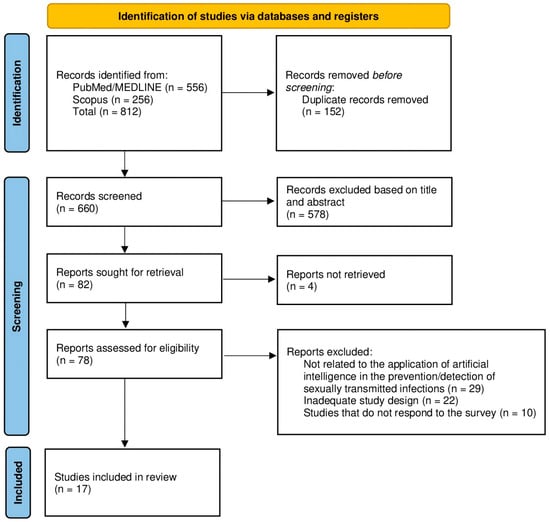
A search of the PubMed/MEDLINE and Scopus electronic databases identified a total of 812 records (n = 556 in PubMed/MEDLINE; n = 256 in Scopus). After removing 152 duplicates, 660 records were screened based on their titles and abstracts. This stage resulted in the exclusion of 578 records for failing to meet the eligibility criteria, leaving 82 reports selected for retrieval of the full text. Of these, 4 could not be retrieved; consequently, 78 reports were assessed in full for eligibility. At this stage, 58 reports were excluded for the following reasons: results unrelated to the application of artificial intelligence in the prevention/detection of sexually transmitted infections (n = 29); inappropriate study design, including letters to the editor, commentaries and study protocols (n = 22); studies not relevant to the search (n = 10). At the end of the selection process, 17 studies were included in this review. To minimise bias, two reviewers independently assessed the inclusion of studies by reading the titles and abstracts, excluding those that did not meet the inclusion criteria. In the event of disagreement, a consensus was reached. Subsequently, we proceeded to the full-text assessment phase using the same method. The selection process followed the PRISMA 2020 guidelines and is illustrated in Figure 1 (Figure 1. PRISMA flowchart) [8].
Figure 1.
PRISMA flowchart.
2.4. Assessment of Study Quality
To assess the quality of the articles included in this review, we used the Joanna Briggs Institute (JBI) critical appraisal tools [9]. This stage was carried out independently by the same two reviewers, and any disagreements regarding the quality assessment of the studies were resolved by consensus.
3. Applications of Artificial Intelligence in the Prevention and Early Detection of STIs
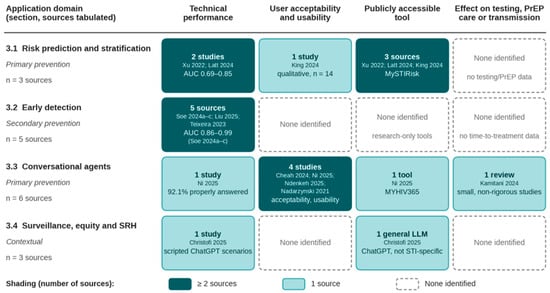
To make the evidence underpinning this section transparent, each subsection is accompanied by a summary table (Table 1, Table 2, Table 3 and Table 4) presenting, for each cited study, the following: (i) the study design and population or setting; (ii) the AI tool and its functionality, including whether it is available for public use or was developed solely for research purposes; (iii) key performance or outcome metrics; (iv) strengths and limitations; and (v) the contribution to STI prevention. Availability was classified as “public” when end-users could access the tool online, as “research-only” when only a prototype or a model evaluated using retrospective data was described, and as “N/A” (not applicable) for reviews and conceptual articles, which were identified as such and used to provide context rather than to quantify AI tool performance. Strengths and limitations reflect information reported in each study as well as our own critical assessment. Unless otherwise indicated, performance data refer to discrimination capability (area under the Receiver Operating Characteristic curve, AUC) within the study’s own dataset, rather than effects on clinical or epidemiological outcomes. A cross-cutting synthesis of the tabulated studies is provided in Table 5 and Figure 2.
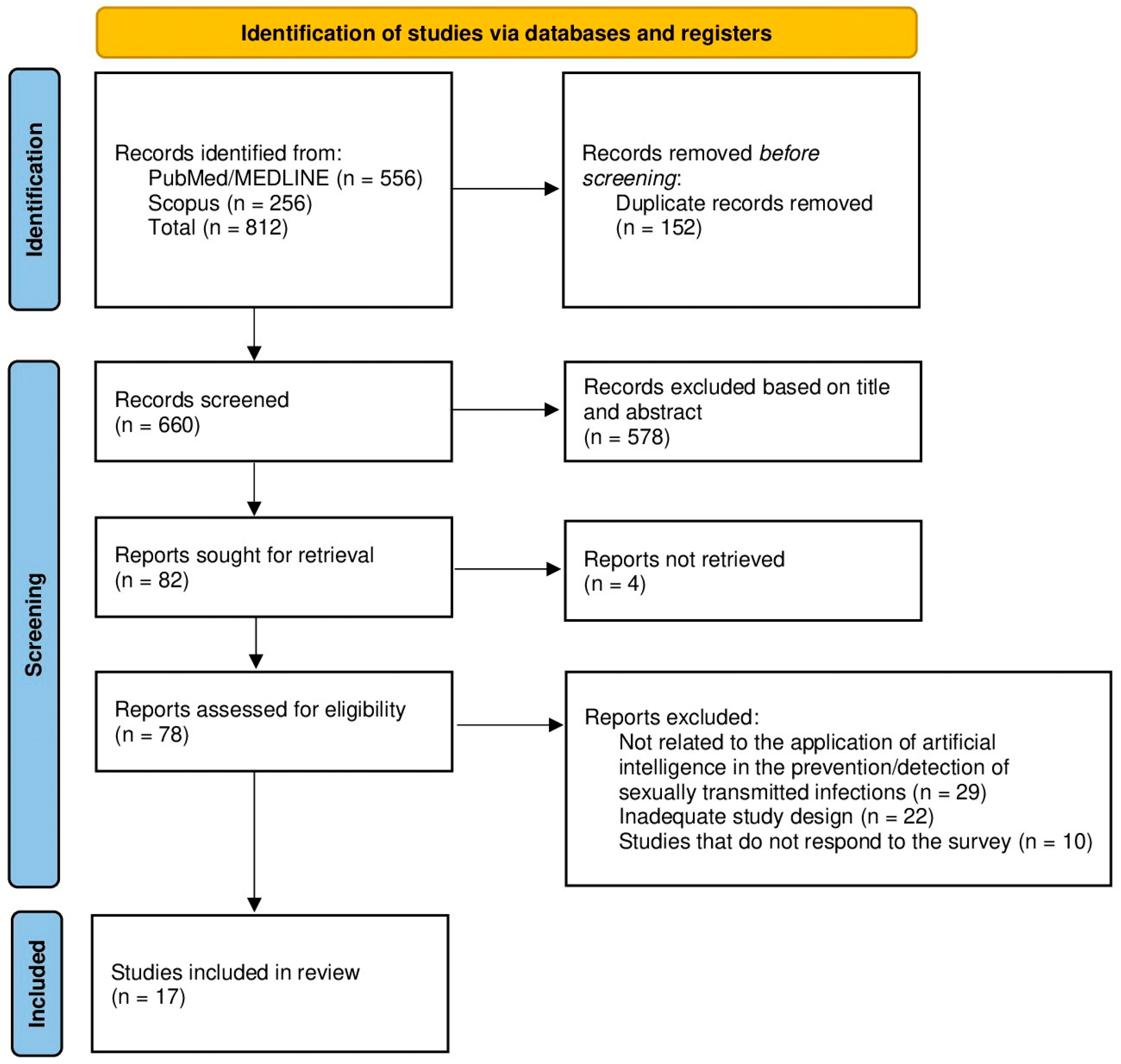
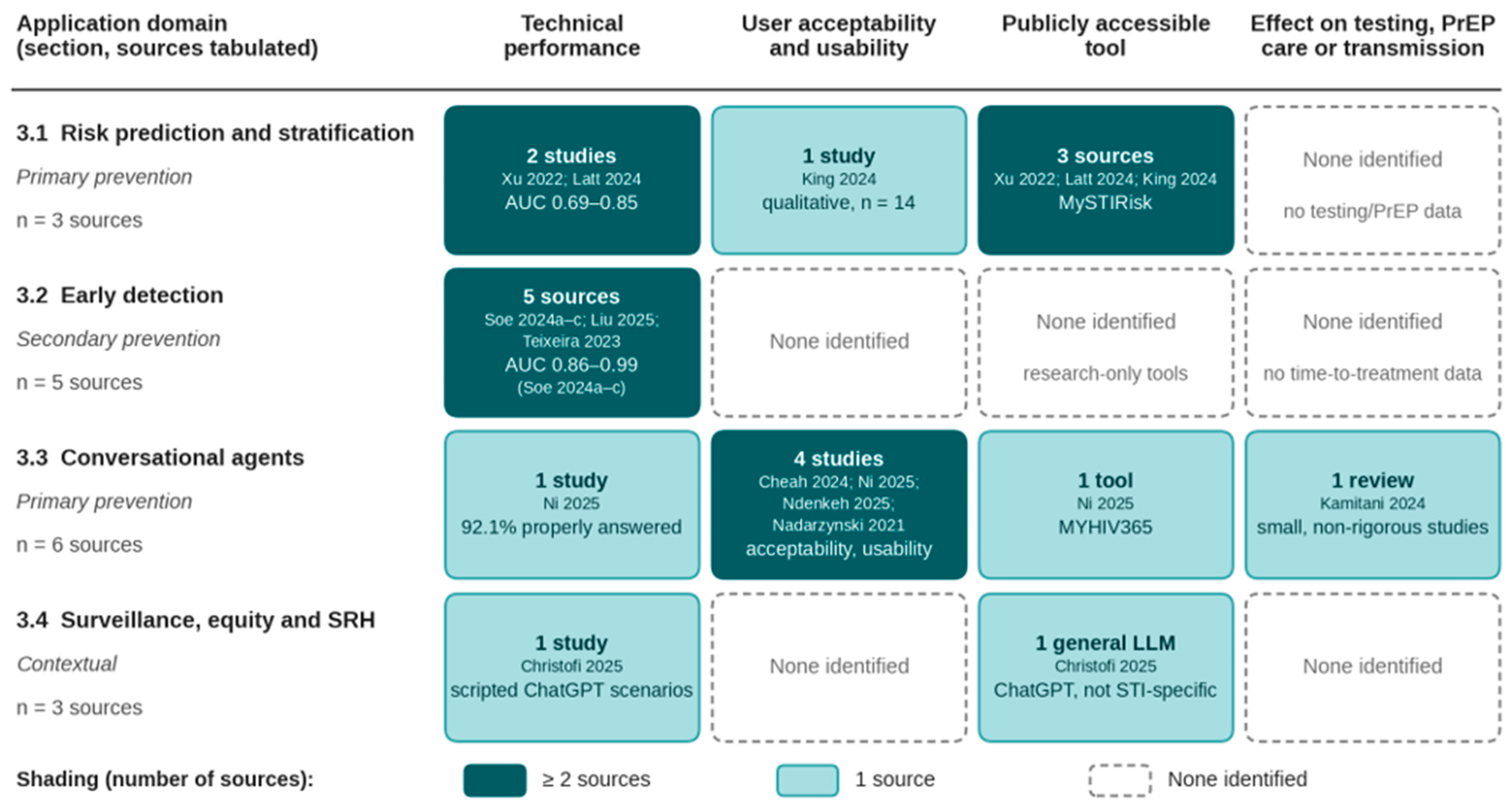
Figure 2.
Evidence map of the sources tabulated in Table 1, Table 2, Table 3 and Table 4, by application domain and type of evidence reported. Shading indicates the number of sources reporting each type of evidence (dark, two or more; light, one; dashed outline, none identified), as classified by the authors from Table 1, Table 2, Table 3 and Table 4. Only sources tabulated in Table 1, Table 2, Table 3 and Table 4 are shown; methodological references on tabular-data machine learning cited in the text [10,11,12] are not included. Sources are identified in the figure by first author and year, as follows: Christofi 2025 [4]; Xu 2022 [13]; Latt 2024 [14]; King 2024 [15]; Soe 2024a [16]; Soe 2024b [17]; Soe 2024c [18]; Liu 2025 [19]; Teixeira 2023 [20]; Cheah 2024 [21]; Ni 2025 [22]; Ndenkeh 2025 [23]; Kamitani 2024 [24]; Nadarzynski 2021 [25]. AUC, area under the receiver operating characteristic curve; PrEP, pre-exposure prophylaxis; SRH, sexual and reproductive health; STI, sexually transmitted infection.
Table 1.
Studies on AI-based risk prediction and stratification (Section 3.1).
3.1. Prediction and Stratification of Individual Risk
One of the most well-established areas of AI application in STI prevention is the development of individual risk prediction tools, designed to support clinical decisions such as the prescription of pre-exposure prophylaxis (PrEP) for HIV or the intensification of screening frequency. Xu et al. developed and externally validated a web-based tool, utilising machine learning algorithms, to estimate individual risk of HIV infection and other STIs based on self-reported behavioural variables, demonstrating superior predictive performance compared with conventional risk-scoring models [13].
Latt et al. took this approach a step further, proposing an AI-based risk assessment tool capable of identifying individuals at high risk of HIV and STIs within a large sample of sexual health clinic users [14].
The acceptability of these tools among users has also been studied: King et al. reported generally positive experiences among users of an AI application for predicting the risk of STIs, although they identified concerns regarding trust in the results and the need for the tool to be used in conjunction with human counselling [15].
These tools are based on a common principle: the ability of machine learning to identify complex and non-linear patterns in large volumes of behavioural, sociodemographic, and clinical data, overcoming the limitations of traditional risk screening instruments, typically based on linear scores and a small number of variables.
Critical appraisal. The four sources in Table 1 [16,17] originate from one research programme and describe a single tool, MySTIRisk, at successive stages of maturity: development and temporal validation [13], definition of operational cut-offs [14] and exploration of user experience [15]. In the development study, discrimination was acceptable to good, highest for syphilis (AUC 0.84–0.85) and lowest for chlamydia (about 0.70) [13]. Because the models rely on a short set of self-reported variables, they can be completed anonymously online, which is the main practical advantage for remote use. The conversion of continuous scores into “high” and “average” risk categories is a further step towards use: at the proposed HIV cut-off, 35% of consultations were classified as high risk and accounted for 86% of HIV diagnoses [14].
3.2. Early Detection of STIs: Diagnosis Assisted by Computer Vision and Machine Learning
Early detection is treated here as a component of secondary prevention: identifying an infection or recognising suggestive lesions at an early stage reduces the interval between the onset of symptoms (or asymptomatic acquisition), testing, treatment, and partner notification, thereby limiting subsequent transmission [6,7]. The applications discussed in this section operate at this stage of the prevention continuum and have been evaluated in the literature primarily as screening or decision-support tools within sexual health services, rather than as standalone substitutes for laboratory confirmation or clinical assessment.
The application of convolutional neural networks and other deep learning models to the analysis of clinical images of skin and genital lesions is another rapidly expanding field. Soe et al. evaluated an AI system for screening for skin lesions associated with STIs using clinical images and metadata, reporting clinically relevant diagnostic accuracy at a sexual health clinic [16]. The same researchers developed and validated a specific algorithm to distinguish mpox lesions from other common skin conditions in the context of sexual health, at a time when the clinical response to this outbreak required rapid and scalable screening tools [17].
Furthermore, it has been shown that machine learning models based exclusively on clinical features (without the use of imaging) are able to distinguish STIs from other genital skin conditions with good accuracy, with a gradient boosting model (CatBoost) proving particularly effective in identifying the duration and morphology of the lesion as the most relevant predictors [18].
This distinction is not merely technical but reflects a broader pattern well-documented in the machine learning literature regarding tabular data. Large-scale benchmarking studies have demonstrated that gradient boosting-based decision trees, including CatBoost, consistently outperform deep neural networks on small- to medium-sized tabular datasets; this advantage stems from the fact that deep architectures are optimised for data with spatial or sequential structure and require substantially larger sample sizes, more extensive hyperparameter tuning, and more homogeneous variable types than those typically available in outpatient clinical practice [10,11]. This advantage has also been confirmed specifically in the context of medical diagnosis, where gradient boosting models such as CatBoost, XGBoost, and LightGBM achieved the best average performance across various benchmark tabular clinical datasets while requiring considerably less computational power than deep learning alternatives [12]. Given that clinical datasets related to STIs, including those discussed earlier, are typically limited in size and heterogeneous regarding variable types, tree-based gradient boosting models like CatBoost currently represent the most practical and high-performing choice for this type of application, although this advantage may diminish as larger and more standardised clinical datasets become available for training deep learning models.
A recent systematic review and meta-analysis, published in “The Lancet Digital Health”, summarised the performance of deep learning algorithms in the early detection of STIs based on skin lesions, concluding that, despite the demonstrated diagnostic potential, significant generalisation challenges remain due to the limited diversity and heterogeneity of the available training datasets, a problem common to the application of AI in dermatology. This issue is particularly critical in sexual health, given the risk that models may underperform on more pigmented skin or in atypical clinical presentations, which are under-represented in the training datasets [19].
Beyond the field of clinical imaging, machine learning algorithms have also been applied to administrative and sociodemographic data to predict relevant public health outcomes, such as the occurrence of congenital syphilis. Teixeira et al., using clinical and sociodemographic data from a Brazilian social programme providing antenatal care, compared the performance of different machine learning models in predicting adverse outcomes of congenital syphilis, demonstrating the potential of these tools to support resource allocation and the prioritisation of interventions in resource-limited settings [20].
Taken together, these studies indicate that AI-assisted early detection can address the same access barriers (stigma, limited specialist availability, and delays in seeking care) that drive the applications analysed in Section 3.1 and Section 3.3, which is why it is considered in this review as part of the prevention continuum. However, the available evidence primarily concerns diagnostic performance, and evidence linking these tools to shorter times to treatment or reduced transmission is still lacking (see Section 5).
Table 2.
Studies on early detection and population-level prediction (Section 3.2).
Critical appraisal. The studies in Table 2 address different data types (clinical images, images with metadata, structured clinical features and antenatal records) and different objectives, which explains the wide variation in performance. The Melbourne studies [16,17,18] were retrospective, single-centre analyses of images or records from a specialised clinic. Adding metadata improved the discrimination of STI from non-STI lesions (AUC 0.893 versus 0.859), but at a sensitivity of about 95%, specificity was only 59–62%, so a substantial proportion of non-STI lesions would be flagged as possible STIs [17]. The mpox classifier reached very high AUC values (0.93–0.99) [14], but it addresses a binary, single-disease task in a dataset combining clinic and web images, and its performance in unselected clinical presentations is unknown. The clinical-feature model (AUC 0.912) does not require images, which reduces privacy concerns, but its sensitivity of 77.6% would miss about one in five STIs at the chosen threshold [18]. None of these models was described as publicly deployed.
The systematic review by Liu et al. [19] provides the broader context: 88% of the 101 included studies addressed mpox, 85% used public datasets, only one study each addressed syphilis and molluscum, and the quality assessment revealed deficiencies in labelling, benchmarking and bias assessment; pooled sensitivity and specificity were high for mpox (0.97 and 0.99), but the authors caution that generalisability across diverse populations is uncertain. Teixeira et al. [20] illustrate a different, population-level use: prediction of congenital syphilis from antenatal programme data, in which accuracy never exceeded 70% and missing data were extensive; so these models are, at present, more useful for exploring how to prioritise follow-up than for individual decisions. Overall, the evidence shows technical feasibility, but it does not yet show that these tools shorten the time to treatment, improve partner notification or reduce transmission (see Section 5).
3.3. AI-Based Conversational Agents for Digital Advice and the Promotion of Preventive Behaviours
AI-based chatbots have established themselves as one of the most promising tools for promoting preventive behaviours, particularly as they offer anonymous, round-the-clock access that is potentially less stigmatising than face-to-face counselling. Cheah et al. tested the feasibility and acceptability of an AI chatbot designed to promote HIV testing and adherence to PrEP among men who have sex with men in Malaysia, demonstrating good acceptance and perceived usefulness during a beta testing phase [21]. This work was subsequently expanded into a larger-scale national observational study, making the chatbot available via a public platform and confirming high levels of satisfaction and a significant number of requests for HIV self-tests generated through interaction with the system [22].
Qualitative studies carried out in the United States have identified the features and characteristics preferred by black, gay, and bisexual men and other men who have sex with men (MSM) in relation to HIV prevention chatbots, highlighting the importance of culturally and linguistically adapting these tools to maximise their impact on key populations that have historically been under-represented in research [23].
A narrative review of chatbots for HIV prevention and care summarised the available evidence, identifying applications ranging from promoting testing and adherence to PrEP to supporting symptom management and sexual health literacy [26]. A subsequent systematic review, focusing specifically on the use of AI and automation to improve adherence to PrEP, identified several interventions, including text message (SMS) chatbots and more sophisticated conversational assistants, which were associated with improvements in user recruitment and retention in PrEP programmes [24].
Nevertheless, the evidence regarding barriers to the adoption of these technologies is significant: Nadarzynski et al. identified, through qualitative analysis, facilitating factors (perceived confidentiality, convenience, and reduced stigma) and barriers (distrust in the accuracy of the information, privacy concerns, and a preference for human interaction in emotionally sensitive situations) to users’ engagement with AI chatbots for sexual and reproductive health counselling [26]. These findings reinforce the view that the effectiveness of chatbots depends not only on their technical performance, but also on the trust that users place in them.
Table 3.
Studies on conversational agents and digital advice (Section 3.3).
Critical appraisal. Table 3 shows that the chatbot literature is dominated by formative, feasibility and usability studies in men who have sex with men (Malaysia [21,22]; Southern United States [23]), complemented by two reviews [24,26] and a qualitative study in the UK general population [24]. Only the Malaysian chatbot has progressed from a beta test with 14 users [21] to a publicly accessible service, in which it properly answered 92.1% of HIV and PrEP questions across 393 interactions, while 31 interactions contained questions outside its programmed content [22]. This suggests that current tools mainly deliver information and linkage to services (for example, self-test kits and clinic directories) using predefined content, rather than personalised counselling; the authors themselves note that more sophisticated machine learning models would be needed to personalise the interaction [22].
The evidence on behavioural impact is weaker than the evidence on acceptability. The systematic review by Kamitani et al. [24] identified 12 studies in which AI or automation improved PrEP-related outcomes (knowledge, uptake, adherence and discussion with providers), but the primary studies were small and lacked rigorous designs. Trust and perceived accuracy recur as determinants of engagement [25,26], and users in the UK study regarded chatbots as useful for anonymous information but less suitable for matters requiring empathy [25]. Chatbots therefore contribute to STI prevention mainly by lowering stigma-related and logistic barriers to information and testing; robust trials measuring testing, PrEP initiation and retention are still needed, as are safety and privacy evaluations of chatbots based on large language models [26].
3.4. Epidemiological Surveillance, Equity, and Sexual and Reproductive Health
In addition to direct clinical applications, AI has been explored as a tool to support epidemiological surveillance and the formulation of public health policies, notably through the analysis of large volumes of data from administrative sources, social media and health information systems, in order to identify emerging trends in STI transmission and guide the allocation of resources [4,5]. Taking a broader view, Ameyaw and Yaya discuss the potential contribution of AI to advancing sexual and reproductive health and rights, framing it as a technology with the potential to accelerate progress towards Target 3.7 of the United Nations Sustainable Development Goals, which relates to universal access to sexual and reproductive healthcare [27]. The authors emphasise, however, that this potential can only be fully realised if it is accompanied by explicit policies on digital inclusion and health literacy.
The application of AI to international travel and mobility contexts is another emerging example: Christofi et al. analysed the use of generative AI conversational tools, such as ChatGPT, by young travellers in their search for information and strategies to prevent and manage potential STIs before, during and after their trip, identifying both opportunities to improve travellers’ health literacy and risks associated with the variable quality and reliability of the information generated [4].
Table 4.
Conceptual and exploratory contributions on surveillance, equity and sexual and reproductive health (Section 3.4).
Critical appraisal. The three sources in Table 4 are conceptual or exploratory. Marcus et al. [5] reviewed machine learning applications in HIV prevention, the most mature being the identification of PrEP candidates from healthcare records, whereas smartphone, social-media and chatbot applications were at proof-of-concept stage. Gbagbo et al. [27] is a commentary, mainly on reproductive medicine, that argues for capacity building and attention to ethical and human-rights implications, and Christofi et al. [4] tested ChatGPT (version 3.5) with 21 young travellers using scripted scenarios, in which the responses were relevant and encouraged medical consultation. None of these contributions evaluates an AI-based STI surveillance system directly; the closest empirical population-level example in this review is the prediction of congenital syphilis outcomes [20] (Section 3.2). The role of AI in STI surveillance, equity-oriented policy and traveller health should therefore be regarded as prospective rather than established, and these sources are used to contextualise, not to quantify, the effectiveness of AI.
3.5. Overview of the Evidence
To provide a cross-cutting summary of the key studies discussed in Section 3.1, Section 3.2, Section 3.3 and Section 3.4, Table 5 synthesises, for each application domain, the number and design of the sources tabulated in Table 1, Table 2, Table 3 and Table 4, the AI approach and availability of the tools, the main findings and the main evidence gaps. Figure 2 complements this synthesis with an evidence map, adapted from the evidence-mapping approach [28], which shows which types of evidence (technical performance; user acceptability and usability; availability of a publicly accessible tool; and effect on testing, PrEP care or transmission) were reported in the tabulated sources of each domain. Because this is a narrative review of heterogeneous study designs, the map is descriptive: it counts sources, does not weight them by design or quality, and several sources originate from the same research programme.
Table 5.
Cross-cutting summary of the key studies, by application domain (Section 3.1, Section 3.2, Section 3.3 and Section 3.4).
Table 5 and Figure 2 show that the evidence is concentrated in technical performance (risk prediction and lesion classification, Section 3.1 and Section 3.2) and in acceptability and usability (conversational agents, Section 3.3). Evidence on effects on testing, PrEP care or transmission is limited to a single systematic review of small studies [24] and is absent for risk prediction, early detection and surveillance. Six of the twelve primary studies come from a single Melbourne clinic [13,14,15,16,17,18], and only two STI/HIV-specific tools (MySTIRisk and MYHIV365) were publicly accessible; the remaining tools were research prototypes or were evaluated only through user perspectives.
4. Cross-Cutting Ethical, Equity and Privacy Considerations for AI in STI Prevention
Section 3.1, Section 3.2, Section 3.3 and Section 3.4 summarise the functionalities and performance of the AI tools analysed. This section addresses a distinct yet complementary issue: the ethical, equity, and privacy conditions under which these tools can be safely used in sexual health services. It is presented separately from Section 3 because it does not report results drawn from the selected studies; instead, it offers a critical analysis spanning all four application domains, grounded in ethical, regulatory, and methodological sources [29,30,31,32,33,34,35,36,37,38] that are not among the studies listed in Table 1, Table 2, Table 3 and Table 4. It must also be distinguished from the methodological limitations of the evidence base discussed in Section 5, as this section is not intended to present the limitations of the current review. The analysed studies themselves highlight the relevance of these issues: limited diversity in the datasets used to train lesion classifiers [19]; concerns regarding user trust in the results of a risk prediction tool [15]; distrust, privacy concerns, and a preference for human interaction among chatbot users [25]; ethical, privacy, and bias concerns raised by chatbots based on large language models [26]; questions regarding the reliability of information generated by a general-purpose model [4]; and the concentration of six of the twelve primary studies in a single clinic [13,14,15,16,17,18] (Section 3.5). The section is organised into four parts: algorithmic bias and health equity (Section 4.1); privacy, confidentiality, and consent (Section 4.2); governance, lifecycle monitoring, and privacy-by-design safeguards (Section 4.3); and human oversight (Section 4.4).
4.1. Algorithmic Bias and Health Equity
The integration of AI into STI prevention is not without risks, which must be explicitly considered by healthcare professionals, researchers and policymakers. Firstly, algorithmic bias is a key concern: models trained on data sets with limited diversity tend to reproduce and, in some cases, amplify pre-existing health inequalities, particularly in relation to ethnicity, gender, sexual orientation or socio-economic status [29,30]. This risk is particularly relevant in the field of sexual health, an area historically characterised by stigma and the under-representation of key populations, such as transgender people, men who have sex with men, and ethnic minorities, in the datasets used to train clinical algorithms [19,39,40].
In direct response to this concern, we consider it essential that studies applying computer vision to dermatological and genital lesions in the context of STI diagnosis report performance metrics disaggregated by skin phenotype, rather than relying solely on aggregate accuracy. This includes stratifying sensitivity, specificity, and ROC-AUC by Fitzpatrick skin type (FST I–VI) and reporting “worst-group performance” accuracy, as combined metrics can mask substantial disparities: state-of-the-art dermatological AI algorithms, evaluated using the “Diverse Dermatology Images” (DDI) dataset—the first publicly available, pathologically confirmed dataset covering diverse skin tones—showed ROC-AUC reductions of approximately 27% to 36% compared to their original test results, driven largely by poorer performance on darker skin tones [32]. Established criteria for algorithmic fairness, such as “equalized odds” and “equal opportunity,”—which require comparable true-positive and false-positive rates across skin-tone subgroups, as well as subgroup-level calibration—offer a more rigorous quantitative basis for detecting and monitoring this bias than a merely descriptive discussion [33]. Beyond a single validation exercise prior to implementation, mitigating this risk requires continuous monitoring throughout the entire lifecycle; mechanisms such as the US FDA’s Predetermined Change Control Plan for AI-enabled device software functions—which requires manufacturers to pre-specify performance monitoring metrics, acceptable thresholds, and triggers for retraining [34]—and the post-market monitoring and fundamental rights impact assessment obligations for high-risk healthcare AI systems under the EU AI Act [35], provide concrete regulatory models for the continuous and stratified revalidation of dermatological AI tools used in STI prevention.
4.2. Privacy, Confidentiality and Consent
Secondly, the highly sensitive nature of the data involved, serological status, sexual orientation, sexual practices and history of STIs, requires enhanced safeguards regarding privacy, confidentiality and informed consent. The use of AI systems capable of inferring sensitive personal characteristics, even from seemingly innocuous data, raises the risk of ‘predictive harm’, that is, the possibility that such systems may infer and exploit intimate information without the user’s knowledge or explicit consent [39,40].
4.3. Governance, Life-Cycle Monitoring and Privacy-by-Design
The World Health Organisation, in its guidance document on ethics and governance of AI in healthcare, emphasises the need for principles such as transparency, accountability, continuous human oversight and the promotion of equity, whilst warning of the risk that AI could widen the digital divide between populations and countries with different levels of access to technology [36]. Accordingly, Abràmoff et al. propose the integration of strategies for detecting and mitigating bias throughout the entire life cycle of AI devices in healthcare, from data collection to post-implementation monitoring, as an essential prerequisite for ensuring equity [30]. Dankwa-Mullan reinforces this view, arguing that promoting health equity through AI requires active community involvement, inclusive data practices, and auditable and transparent algorithms [29].
From the perspective of healthcare systems engineering, various architectural strategies can directly mitigate these risks. Client-side applications and Progressive Web Apps (PWAs) capable of running AI models locally, for example, through browser-based inference mechanisms accelerated via WebGPU or equivalent on-device execution frameworks, would allow sensitive data (such as descriptions of symptoms, interactions with chatbots or images of genital lesions) to be processed entirely on the user’s own device, without transmission to centralised servers [37,38]. Complementarily, federated learning enables multiple institutions to collaboratively train and refine AI models using decentralised datasets, exchanging only aggregated model parameters rather than raw patient records; this approach has been shown to reduce the risk of re-identification and unauthorised data exposure in medical research, whilst facilitating compliance with data protection regulations such as the GDPR [37,38]. However, these architectures have limitations: on-device inference is constrained by the computational capacity of consumer-grade hardware, which may reduce the accuracy or complexity of implementable models compared with cloud-based alternatives, and federated learning remains susceptible to indirect information leaks via shared model updates, whilst also facing as yet unresolved challenges regarding interoperability and cross-institutional governance [37,38]. We therefore agree that the future development of AI-based tools for the prevention of STIs should explicitly incorporate privacy-by-design principles at the architectural level, and we recommend that hybrid models, which combine local or federated processing of the most sensitive data types with a centralised infrastructure for less sensitive functions, be considered a priority direction for future research and implementation.
4.4. Human Oversight and Complementarity
Finally, it is important to note that none of the AI tools reviewed in this article were designed, nor should they be interpreted, as substitutes for face-to-face clinical counselling, informed consent or professional judgement. On the contrary, the available evidence consistently points to a model of complementarity, in which AI expands the reach and efficiency of sexual health services, whilst clinical decision-making and the therapeutic relationship remain rooted in human intervention.
In summary, the considerations discussed in this section can be read as conditions for the responsible implementation of the applications reviewed in Section 3.
5. Discussion
This section interprets the evidence synthesised in Section 3 and Section 4 rather than repeating it. It discusses the main findings in the light of previous reviews and of the design of the included studies (Section 5.1), the limitations of the evidence base and of this review (Section 5.2), and the implications for clinical practice and for the translation of these tools into sexual health services (Section 5.3 and Section 5.4). The Conclusions (Section 6) are then confined to the key messages; the main evidence gaps and the priorities for future research.
5.1. Principal Findings and Interpretation of the Evidence
A review of the evidence suggests that artificial intelligence is already proving useful in at least three areas of STI prevention: individualised risk stratification, support for the early detection of STIs through the visual diagnosis of genital and skin lesions, and the promotion of preventive behaviours through conversational agents. These applications share a common feature, namely the ability to reduce barriers to access—particularly stigma and geographical distance—which have traditionally kept key populations away from conventional sexual health services [21,22,25].
These findings are consistent with earlier syntheses, whose scope they extend. Marcus et al. [5] described the identification of PrEP candidates from healthcare records as the most mature application of machine learning in HIV prevention, with smartphone, social-media and chatbot applications still at proof-of-concept stage; Liu et al. [19] found that the evidence on lesion detection was dominated by mpox and limited by heterogeneous datasets; and Kamitani et al. [24] reported improvements in PrEP-related outcomes, but from twelve small studies with non-rigorous designs. Whereas these reviews addressed HIV, PrEP or skin-lesion classification separately, the present review examines, within a single framework, the primary and secondary prevention of STIs across risk prediction, early detection and conversational agents, and shows that the same pattern recurs in all three domains: evidence of technical feasibility and acceptability is considerably more developed than evidence of preventive benefit.
Two features of the included evidence should temper its interpretation. First, its apparent breadth overstates its independence: six of the twelve primary studies come from a single Melbourne clinic [13,14,15,16,17,18], and the two Malaysian chatbot studies [21,22] concern successive versions of the same tool. Second, the metrics reported are not interchangeable across domains: the AUC values for risk prediction and lesion classification describe discrimination within each study’s own dataset, whereas the chatbot studies mostly report usability and acceptability. High technical performance should therefore not be read as evidence that testing, PrEP care or transmission will change; this gap between performance and impact is what the studies reviewed have yet to bridge.
Reading Section 3 and Section 4 together also shows that each domain is exposed to a different dominant risk. For lesion classifiers, the principal concern is performance across skin tones, given the limited diversity of training datasets [19,33]; for risk prediction tools, it is the use of sensitive self-reported behavioural data and the trust that users place in the result [15,39,40]; and for conversational agents, it is distrust, privacy concerns and the reliability of the information generated [4,25,26]. Safeguards should therefore be matched to the type of tool rather than treated as a generic addition, and they are a precondition for the staged evaluation and implementation discussed in Section 5.4.
5.2. Limitations of the Evidence and of This Review
It is important, however, to highlight methodological limitations common to the literature analysed. A large proportion of the studies are based on convenience samples, which are small in size and have limited geographical representativeness (predominantly North America, Australia and South-East Asia), which compromises the generalisability of the results to other contexts, particularly the European and Portuguese contexts. Furthermore, few studies assess specific clinical outcomes (for example, the incidence of new infections or medium-term PrEP adherence rates), focusing mainly on measures of acceptability, usability and the technical performance of the algorithms, which limits conclusions regarding the actual effectiveness of these technologies in reducing the transmission of STIs [19,24].
5.3. Implications for Clinical Practice
From the perspective of clinical practice in sexual and mental health, the integration of these technologies requires investment in the digital literacy of healthcare professionals, the establishment of clear protocols for human supervision, and the training of multidisciplinary teams capable of critically interpreting the results generated by AI systems. Healthcare professionals, due to their close relationship with patients and their central role in health education, are in a unique position to facilitate the integration of these tools into care, ensuring that technology enhances, rather than replaces, the caring relationship.
5.4. Clinical Workflow Integration and Governance
The transition of these predictive, computer vision-based tools from the prototyping and acceptability testing phases to routine sexual health practice requires attention to integration with clinical workflows and governance, and not merely to methodological validation. Reporting frameworks developed specifically for the initial clinical evaluation of AI-based decision-support systems, such as DECIDE-AI, advocate for the generation of evidence in stages, progressing from small-scale pilot studies involving human intervention (human-in-the-loop), which assess safety and usability, to larger comparative trials prior to large-scale implementation [41]. At a technical level, interoperability standards such as HL7 Fast Healthcare Interoperability Resources (FHIR), the SMART on FHIR application framework, and CDS Hooks allow external decision-support services to be integrated directly into electronic health record workflows, providing risk stratification results or diagnoses to healthcare professionals at the point of care, rather than operating as standalone applications; this approach has already been shown to increase the practical adoption of decision-support tools amongst prescribers [42]. This is particularly relevant for the management of STIs in regional and outpatient settings, where AI-based risk prediction and lesion classification results would need to interact with existing laboratory and prescribing systems to support, rather than duplicate, clinical decision-making. Interoperability with prescribers’ workflows also has direct implications for the rational use of antimicrobials (antimicrobial stewardship): given the growing resistance of Neisseria gonorrhoeae and other pathogens to first-line antimicrobials, AI-based decision support integrated at the point of prescribing could, in principle, help align therapeutic choices with local resistance patterns and guidelines for the rational use of antimicrobials, an application already explored for other infectious syndromes, although evidence in the specific context of STI management remains limited and also requires formal governance mechanisms and clinical oversight prior to implementation [43]. We therefore consider that governance frameworks that jointly address phased clinical validation, interoperability standards and safeguards for the prudent use of antimicrobials are a priority for future research aimed at bridging the gap between AI tool prototypes and ready-to-use clinical decision-support systems in sexual health services.
6. Conclusions and Future Directions
Artificial intelligence represents an emerging and growing contribution to the prevention (primary and secondary) of sexually transmitted infections, with validated applications in the prediction of individual risk, in the assisted early diagnosis of skin and genital lesions, and in the promotion of preventive behaviours through conversational agents. The available evidence, however, remains largely exploratory, focusing on acceptability and technical performance studies, and lacks robust trials demonstrating a sustained impact on specific epidemiological outcomes. The ethical, equity and privacy considerations examined in Section 4 further indicate that responsible implementation will depend on subgroup-level performance reporting, privacy-by-design safeguards, life-cycle governance and human oversight.
Future research should prioritise the following: (i) the external, multicentre validation of predictive and diagnostic algorithms in European and Portuguese populations, which are currently under-represented in the literature; (ii) the development of more diverse and representative training datasets, particularly with regard to different skin tones, genders and sexual orientations; (iii) the assessment of medium- and long-term clinical and epidemiological outcomes, in addition to measures of acceptability; and (iv) the development of specific regulatory and ethical frameworks for the application of AI in sexual health, which simultaneously ensure responsible innovation and robust protection of privacy and equity. Only by following this path can artificial intelligence fulfil its potential as an effective, safe and equitable ally in the prevention and early detection of sexually transmitted infections.
Author Contributions
Conceptualization, C.S.; methodology, C.S. and M.L.T.; validation, C.S.; formal analysis, C.S. and M.L.T.; investigation, C.S. and M.L.T.; resources, C.S.; data curation, C.S.; writing—original draft preparation, C.S.; writing—review and editing, C.S. and M.L.T.; visualisation, C.S. and M.L.T.; supervision, C.S.; All authors have read and agreed to the published version of the manuscript.
Funding
This research received no external funding.
Data Availability Statement
No new data were created or analyzed in this study. Data sharing is not applicable to this article.
Conflicts of Interest
The authors declare no conflicts of interest.
References
- Abouelhag, H.A. Comprehensive Review on Venereal Diseases Transmission: Transmission Routes, Diagnosis, Treatment, Prognosis, Future Medications, and Recommendations. Ricos Biol. 2025, 3, 10–22. [Google Scholar] [CrossRef] [Scilit]
- WHO. OMS: 1 Milhão de Novos Casos de ISTs Curáveis São Registrados Diariamente No Mundo. 2019. Available online: https://brasil.un.org/pt-br/83361-oms-1-milhão-de-novos-casos-de-ists-curáveis-são-registrados-diariamente-no-mundo (accessed on 10 August 2026).
- WHO. Mpox (Monkeypox) Outbreak. 2022. Available online: https://www.who.int/emergency/situations/monkeypox-oubreak-2022 (accessed on 10 August 2026).
- Christofi, A.; Neophytou, R.; Liasidou, S. Using artificial intelligence to address sexually transmitted infections during and after travel of young travellers. Worldw. Hosp. Tour. Themes 2025, 17, 91–105. [Google Scholar] [CrossRef] [Scilit]
- Marcus, J.L.; Sewell, W.C.; Balzer, L.B.; Krakower, D.S. Artificial Intelligence and Machine Learning for HIV Prevention: Emerging Approaches to Ending the Epidemic. Curr. HIV/AIDS Rep. 2020, 17, 171–179. [Google Scholar] [CrossRef] [Scilit]
- Workowski, K.A.; Bachmann, L.H.; Chan, P.A.; Johnston, C.M.; Muzny, C.A.; Park, I.; Reno, H.; Zenilman, J.M.; Bolan, G.A. Sexually Transmitted Infections Treatment Guidelines, 2021. Morb. Mortal. Wkly. Rep. Recomm. Rep. 2021, 70, 1–187. [Google Scholar] [CrossRef] [Scilit]
- World Health Organization. Global Health Sector Strategies on, Respectively, HIV, Viral Hepatitis and Sexually Transmitted Infections for the Period 2022–2030. 2022. Available online: https://www.who.int/publications/m/item/global-health-sector-strategies-on-respectively--hiv-viral-hepatitis-and-stis-for-2022-2030 (accessed on 19 September 2026).
- Page, M.J.; McKenzie, J.E.; Bossuyt, P.M.; Boutron, I.; Hoffmann, T.C.; Mulrow, C.D.; Shamseer, L.; Tetzlaff, J.M.; Akl, E.A.; Brennan, S.E.; et al. The PRISMA 2020 statement: An updated guideline for reporting systematic reviews. BMJ 2021, 372, n71. [Google Scholar] [CrossRef] [Scilit]
- Munn, Z.; Barker, T.H.; Moola, S.; Tufanaru, C.; Stern, C.; McArthur, A.; Stephenson, M.; Aromataris, E. Methodological quality of case series studies: An introduction to the JBI critical appraisal tool. JBI Evid. Synth. 2020, 18, 2127–2133. [Google Scholar] [CrossRef] [Scilit]
- Grinsztajn, L.; Oyallon, E.; Varoquaux, G. Why Do Tree-Based Models Still Outperform Deep Learning on Typical Tabular Data? In Proceedings of the Advances in Neural Information Processing Systems 35; Neural Information Processing Systems Foundation, Inc. (NeurIPS): San Diego, CA, USA, 2022; pp. 507–520. [Google Scholar] [CrossRef] [Scilit]
- Shwartz-Ziv, R.; Armon, A. Tabular data: Deep learning is not all you need. Inf. Fusion 2022, 81, 84–90. [Google Scholar] [CrossRef] [Scilit]
- Yıldız, A.Y.; Kalayci, A. Gradient Boosting Decision Trees on Medical Diagnosis Over Tabular Data. In Proceedings of the 2025 IEEE International Conference on AI and Data Analytics (ICAD), Medford, MA, USA, 24 June 2025; pp. 1–8. [Google Scholar] [CrossRef] [Scilit]
- Xu, X.; Yu, Z.; Ge, Z.; Chow, E.P.F.; Bao, Y.; Ong, J.J.; Li, W.; Wu, J.; Fairley, C.K.; Zhang, L. Web-Based Risk Prediction Tool for an Individual’s Risk of HIV and Sexually Transmitted Infections Using Machine Learning Algorithms: Development and External Validation Study. J. Med. Internet Res. 2022, 24, e37850. [Google Scholar] [CrossRef] [Scilit]
- Latt, P.M.; Soe, N.N.; Xu, X.; Ong, J.J.; Chow, E.P.F.; Fairley, C.K.; Zhang, L. Identifying Individuals at High Risk for HIV and Sexually Transmitted Infections with an Artificial Intelligence—Based Risk Assessment Tool. Open Forum Infect. Dis. 2024, 11, ofea011. [Google Scholar] [CrossRef] [Scilit]
- King, A.J.; Latt, P.M.; Soe, N.N.; Temple-Smith, M.; Fairley, C.K.; Chow, E.P.; Phillips, T.R. User experiences of an AI application for predicting risk of sexually transmitted infections. Digit. Health 2024, 10, 20552076241289646. [Google Scholar] [CrossRef] [Scilit]
- Soe, N.N.; Yu, Z.; Latt, P.M.; Lee, D.; Ong, J.J.; Ge, Z.; Fairley, C.K.; Zhang, L. Evaluation of artificial intelligence-powered screening for sexually transmitted infections-related skin lesions using clinical images and metadata. BMC Med. 2024, 22, 296. [Google Scholar] [CrossRef] [Scilit]
- Soe, N.N.; Yu, Z.; Latt, P.M.; Lee, D.; Samra, R.S.; Ge, Z.; Rahman, R.; Sun, J.; Ong, J.J.; Fairley, C.K.; et al. Using AI to Differentiate Mpox from Common Skin Lesions in a Sexual Health Clinic: Algorithm Development and Validation Study. J. Med. Internet Res. 2024, 26, e52490. [Google Scholar] [CrossRef] [Scilit]
- Soe, N.N.; Latt, P.M.; Yu, Z.; Lee, D.; Kim, C.-M.; Tran, D.; Ong, J.J.; Ge, Z.; Fairley, C.K.; Zhang, L. Clinical features-based machine learning models to separate sexually transmitted infections from other skin diagnoses. J. Infect. 2024, 88, 106128. [Google Scholar] [CrossRef] [Scilit]
- Liu, M.; Yi, X.-Y.; Chen, Y.-Z.; Li, M.-N.; Zhang, Y.-Y.; Zhang, C.J.P.; Huang, J.; Ming, W.-K. Early detection of sexually transmitted infections from skin lesions with deep learning: A systematic review and meta-analysis. Lancet Digit. Health 2025, 7, 100894. [Google Scholar] [CrossRef] [Scilit]
- Teixeira, I.V.; da Silva Leite, M.T.; de Morais Melo, F.L.; da Silva Rocha, É.; Sadok, S.; Pessoa da Costa Carrarine, A.S.; Santana, M.; Pinheiro Rodrigues, C.; de Lima Oliveira, A.M.; Vieira Gadelha, K.; et al. Predicting congenital syphilis cases: A performance evaluation of different machine learning models. PLoS ONE 2023, 18, e0276150. [Google Scholar] [CrossRef] [Scilit]
- Cheah, M.H.; Gan, Y.N.; Altice, F.L.; Wickersham, J.A.; Shrestha, R.; Salleh, N.A.M.; Ng, K.S.; Azwa, I.; Balakrishnan, V.; Kamarulzaman, A.; et al. Testing the Feasibility and Acceptability of Using an Artificial Intelligence Chatbot to Promote HIV Testing and Pre-Exposure Prophylaxis in Malaysia: Mixed Methods Study. JMIR Hum. Factors 2024, 11, e52055. [Google Scholar] [CrossRef] [Scilit]
- Ni, Z.; Oh, S.; Saifi, R.; Azwa, I.; Altice, F.L. Evaluating the Usability of an HIV Prevention Artificial Intelligence Chatbot in Malaysia: National Observational Study. JMIR Hum. Factors 2025, 12, e70034. [Google Scholar] [CrossRef] [Scilit]
- Ndenkeh, J.J.N.; Aidoo-Frimpong, G.A.; Nelson, L.E.; Peng, M.L.; Balakrishnan, V.; Barnhart, V.; Davis, B.; Prayer, J.D.; Quamina, A.; Ni, Z. Formative evaluation of the acceptance of HIV prevention Artificial Intelligence chatbots by Black gay, bisexual, and other men who have sex with men in the Southern United States: Focus group study. PLoS Digit. Health 2025, 4, e0000891. [Google Scholar] [CrossRef] [Scilit]
- Kamitani, E.; Mizuno, Y.; Khalil, G.M.; Viguerie, A.; DeLuca, J.B.; Mishra, N. Improving HIV preexposure prophylaxis uptake with artificial intelligence and automation: A systematic review. AIDS 2024, 38, 1560–1569. [Google Scholar] [CrossRef] [Scilit]
- Nadarzynski, T.; Puentes, V.; Pawlak, I.; Mendes, T.; Montgomery, I.; Bayley, J.; Ridge, D. Barriers and facilitators to engagement with artificial intelligence (AI)-based chatbots for sexual and reproductive health advice: A qualitative analysis. Sex. Health 2021, 18, 385–393. [Google Scholar] [CrossRef] [Scilit]
- van Heerden, A.; Bosman, S.; Swendeman, D.; Comulada, W.S. Chatbots for HIV Prevention and Care: A Narrative Review. Curr. HIV/AIDS Rep. 2023, 20, 481–486. [Google Scholar] [CrossRef] [Scilit]
- Gbagbo, F.Y.; Ameyaw, E.K.; Yaya, S. Artificial intelligence and sexual reproductive health and rights: A technological leap towards achieving sustainable development goal target 3.7. Reprod. Health 2024, 21, 196. [Google Scholar] [CrossRef] [Scilit]
- Miake-Lye, I.M.; Hempel, S.; Shanman, R.; Shekelle, P.G. What is an evidence map? A systematic review of published evidence maps and their definitions, methods, and products. Syst. Rev. 2016, 5, 28. [Google Scholar] [CrossRef] [Scilit]
- Dankwa-Mullan, I. Health Equity and Ethical Considerations in Using Artificial Intelligence in Public Health and Medicine. Prev. Chronic Dis. 2024, 21, 240245. [Google Scholar] [CrossRef] [Scilit]
- Abràmoff, M.D.; Tarver, M.E.; Loyo-Berrios, N.; Trujillo, S.; Char, D.; Obermeyer, Z.; Eydelman, M.B.; Maisel, W.H. Considerations for addressing bias in artificial intelligence for health equity. npj Digit. Med. 2023, 6, 170. [Google Scholar] [CrossRef] [Scilit]
- Dondea, D. Trends in Ethical Issues of Using Artificial Intelligence in 2024. Available online: https://www.sunrisegeek.com/post/trends-in-ethical-issues-of-using-artificial-intelligence-in-2024 (accessed on 11 August 2026).
- Daneshjou, R.; Vodrahalli, K.; Novoa, R.A.; Jenkins, M.; Liang, W.; Rotemberg, V.; Ko, J.; Swetter, S.M.; Bailey, E.E.; Gevaert, O.; et al. Disparities in dermatology AI performance on a diverse, curated clinical image set. Sci. Adv. 2022, 8, 32. [Google Scholar] [CrossRef] [Scilit]
- Hardt, M.; Price, E.; Srebro, N. Equality of Opportunity in Supervised Learning. Adv. Neural Inf. Process. Syst. 2016, 29, 1–9. Available online: https://proceedings.neurips.cc/paper_files/paper/2016/hash/6a9659feb1216f14f7384ba499518b38-Abstract.html (accessed on 17 September 2026).
- U.S. Food and Drug Administration. Marketing Submission Recommendations for a Predetermined Change Control Plan for Artificial Intelligence-Enabled Device Software Functions. Guidance for Industry and Food and Drug Administration Staff. Available online: https://www.fda.gov/regulatory-information/search-fda-guidance-documents/marketing-submission-recommendations-predetermined-change-control-plan-artificial-intelligence (accessed on 17 September 2026).
- European Union. Regulation (EU) 2024/1689 of the European Parliament and of the Council of 13 June 2024 Laying down Harmonised Rules on Artificial Intelligence and Amending Regulations (EC) No 300/2008, (EU) No 167/2013, (EU) No 168/2013, (EU) 2018/858, (EU) 2018/1139 and (EU) 2019/2144 and Directives 2014/90/EU, (EU) 2016/797 and (EU) 2020/1828. Available online: https://eur-lex.europa.eu/eli/reg/2024/1689/oj/eng (accessed on 18 September 2026).
- WHO Guidance. Ethics and Governance of Artificial Intelligence for Health. 2021. Available online: https://iris.who.int/server/api/core/bitstreams/f780d926-4ae3-42ce-a6d6-e898a5562621/content?_sp=1200914d-6508-45e8-9afc-95fac535f403 (accessed on 11 August 2026).
- Mir, B.A.; Abbas, S.R.; Lee, S.W. Federated Learning in Healthcare Ethics: A Systematic Review of Privacy-Preserving and Equitable Medical AI. Healthcare 2026, 14, 306. [Google Scholar] [CrossRef] [Scilit]
- Brauneck, A.; Schmalhorst, L.; Kazemi Majdabadi, M.M.; Bakhtiari, M.; Völker, U.; Baumbach, J.; Baumbach, L.; Buchholtz, G. Federated Machine Learning, Privacy-Enhancing Technologies, and Data Protection Laws in Medical Research: Scoping Review. J. Med. Internet Res. 2023, 25, e41588. [Google Scholar] [CrossRef] [Scilit]
- Kamila, M.K.; Jasrotia, S.S. Ethical issues in the development of artificial intelligence: Recognizing the risks. Int. J. Ethics Syst. 2025, 41, 45–63. [Google Scholar] [CrossRef] [Scilit]
- Giarmoleo, F.V.; Ferrero, I.; Rocchi, M.; Pellegrini, M.M. What ethics can say on artificial intelligence: Insights from a systematic literature review. Bus. Soc. Rev. 2024, 129, 258–292. [Google Scholar] [CrossRef] [Scilit]
- Vasey, B.; Nagendran, M.; Campbell, B.; Clifton, D.A.; Collins, G.S.; Denaxas, S.; Denniston, A.K.; Faes, L.; Geerts, B.; Ibrahim, M.; et al. Reporting guideline for the early-stage clinical evaluation of decision support systems driven by artificial intelligence: DECIDE-AI. Nat. Med. 2022, 28, 924–933. [Google Scholar] [CrossRef] [Scilit]
- Morgan, K.L.; Kukhareva, P.V.; Warner, P.B.; Wilkof, J.; Snyder, M.; Horton, D.; Madsen, T.; Habboushe, J.; Kawamoto, K. Using CDS Hooks to increase SMART on FHIR app utilization: A cluster-randomized trial. J. Am. Med. Inform. Assoc. 2022, 29, 1461–1470. [Google Scholar] [CrossRef] [Scilit]
- Pinto-de-Sá, R.; Sousa-Pinto, B.; Costa-de-Oliveira, S. Brave New World of Artificial Intelligence: Its Use in Antimicrobial Stewardship—A Systematic Review. Antibiotics 2024, 13, 307. [Google Scholar] [CrossRef] [Scilit]
Disclaimer/Publisher’s Note: The statements, opinions and data contained in all publications are solely those of the individual author(s) and contributor(s) and not of MDPI and/or the editor(s). MDPI and/or the editor(s) disclaim responsibility for any injury to people or property resulting from any ideas, methods, instructions or products referred to in the content. |
© 2026 by the authors. Licensee MDPI, Basel, Switzerland. This article is an open access article distributed under the terms and conditions of the Creative Commons Attribution (CC BY) license.