


Abstract
Machine learning (ML) is becoming an established part of alloy research, offering new ways to link composition, processing routes, and microstructure with measured properties. In this work, recent studies using ML for predicting or optimizing alloy behavior are reviewed, covering mechanical, corrosion, phase-related, and physical properties. Unlike previous reviews organized by alloy system or modeling approach, this review is structured by target property (mechanical, corrosion, phase/structure, and physical), which helps identify the input features commonly used to model each property and highlights existing gaps in data and validation. For each study, the main property of interest, dataset features, model type, algorithm choice, use of hyperparameter tuning, and validation strategy were examined. Comparing these reports shows that ensemble models such as random forest and XGBoost, together with deep neural networks, usually perform better than linear approaches. At the same time, issues related to small datasets and inconsistent reporting remain major challenges. Attention is also drawn to new directions, particularly physics-based learning and multi-objective optimization, that are changing how ML is applied in materials design. Overall, this review summarizes current practices and outlines areas where closer integration of data-driven and experimental methods could accelerate the development of next-generation alloys.
1. Introduction
Since early civilization, alloys have played an important role in technological progress for tools, machines, and structural design. Production of alloys began during the Bronze Age (around 3000 BCE), when copper was combined with tin to form bronze, to improve strength and hardness compared to pure metals [1]. This era is known as the beginning of empirical alloy design, which for centuries relied on trial-and-error experimentation and knowledge of metallurgists. The modern physical metallurgy and systematic alloying established in the 19th and early 20th centuries, along with the development of the iron-carbon phase diagram [2]. Later advances in thermodynamics and kinetics science have helped the establishment of predictive tools such as the Calculation of Phase Diagrams (CALPHAD) method in the 1970s. These advances allowed the rationalization of composition–processing–property relationships [3]. Even with these advances, traditional alloy design remained slow and repetitive, limited by the need for extensive experimental work and by the difficulty of exploring complex compositional spaces. To address these limitations, modern alloy design is increasingly adapting machine learning (ML), which combines experimental and computational data to predict and optimize material properties more efficiently across complex, high-dimensional composition–processing spaces. Figure 1 shows the progression of alloy design over time.
Figure 1.
Progression of alloy design from empirical methods to modern ML-guided frameworks, showing the shift toward predictive and autonomous materials discovery.
ML approaches have been applied in various stages of alloy development, such as property prediction, phase stability classification, microstructure design, and process optimization [4]. Supervised learning algorithms, such as linear and ridge regression, random forest (RF), Gradient boosting (GB), support vector machines (SVMs), and artificial neural networks (ANNs), have been widely used to predict mechanical strength, corrosion resistance, and phase fractions from chemical composition and thermodynamic descriptors [5]. Hyperparameter tuning and feature selection methods have further improved model accuracy and interpretability, enabling the identification of critical alloying elements and process parameters [6]. Unsupervised learning, including clustering and methods like PCA and t-SNE, has been used to group microstructural patterns and examine composition trends without labels [7,8,9].
The growth of ML in materials research has been supported by data produced through high-throughput experiments and first-principles simulations [10]. These datasets often include descriptors derived from elemental properties (e.g., atomic radius, electronegativity, and valence electron concentration), thermodynamic quantities (e.g., mixing enthalpy and phase fraction), and processing parameters (e.g., heat treatment). When coupled with density functional theory (DFT) or CALPHAD simulations, ML models can accelerate the prediction of phase diagrams and guide composition selection for targeted properties [11]. In addition, the integration of Bayesian optimization and reinforcement learning has enabled inverse design strategies, where ML models actively suggest new alloy compositions with optimized performance metrics [12].
Recent studies have shown that ML can be used not only to predict alloy behavior but also to guide experimental synthesis and validation. High prediction accuracies have been achieved for mechanical and corrosion properties using models trained on properly processed data, which were further verified through mechanical and electrochemical experiments [13]. Still, there are challenges to overcome, especially when it comes to data quality, applying models to different alloy systems, and interpreting complex ML outputs. To move forward, researchers need standardized databases, stronger feature engineering, and hybrid methods that merge physical principles with data-driven approaches.
Several review articles are available in the field of ML for alloy design. Hu et al. [14] provided an overview of ML applications in various alloy systems, focusing on algorithm selection, data preprocessing, and the integration of forward and inverse design strategies. Zhao et al. [15] reviewed computational design methods for high-entropy alloys. In their study, the focus was on the importance of feature construction, dataset quality, and interpretability challenges in predictive modeling. Dewangan et al. [16] concentrated on high-entropy alloys, specifically on the application of ANNs to predict their phase formation and mechanical properties. Other studies have discussed the coupling of ML with established computational techniques such as CALPHAD and DFT to accelerate alloy discovery [17].
While these reviews provide insights into algorithms, data types, and alloy systems, they generally classify studies by alloy category or modeling technique. In contrast, the present review is organized according to the target property optimized through ML, specifically, mechanical, corrosion, phase/structure, and physical properties. Organizing existing studies by target property follows the classical composition–processing–structure–performance framework in metallurgy, where performance ultimately defines material selection and application [18]. Grouping studies by the property they target allows direct comparison, even when different datasets or ML models are used. It also reveals gaps in the field, such as missing data or limited experimental validation. This way of organizing the information clarifies how model inputs relate to specific performance goals and supports more informed decisions in alloy design and optimization.
For each study, factors like input and output variables, dataset size, learning type (supervised or unsupervised), specific algorithms, hyperparameter tuning, model accuracy, and experimental validation are examined. Studies focused on mechanical properties are covered in Section 3, corrosion studies in Section 4, phase and microstructure studies in Section 5, and physical property studies in Section 6. This property-based classification enables readers to understand how ML approaches have been applied to specific design goals, compare methodologies across different property domains, and identify existing research gaps and opportunities for future alloy development.
2. Search Strategy and Criteria
The primary method employed to identify relevant literature for this review involved using the Google Scholar search engine, a comprehensive database that primarily indexes peer-reviewed journal articles and conference proceedings. Overall, the reviewed articles were published in journals with moderate to high impact factors, generally spanning the low-to-mid single digits up to the low teens, with most concentrated in the upper single-digit range when outliers are excluded. The articles are also well cited, typically receiving tens of citations, and in many cases exceeding 50 citations.
Keywords such as “ML”, “metallic alloys”, “corrosion prediction”, “mechanical properties”, “phase classification”, and “alloy design” were used individually and in combination to retrieve studies that applied ML approaches to alloy systems. The search was refined by focusing on publications from the past decade to ensure inclusion of recent methodological advancements. Each selected paper was analyzed to extract key information, including: the target property investigated (e.g., corrosion, mechanical, phase-microstructural, or physical alloy properties); dataset characteristics such as input and output features, data source, and dataset size; the type of ML approach (supervised or unsupervised) and the specific algorithms employed; whether hyperparameter tuning was performed; the best-performing model and its reported accuracy or evaluation metric; the primary objective of the study (prediction, classification, or optimization); and whether the model results were experimentally validated. This data extraction enabled direct comparison of methodologies and performance metrics across studies to highlight current trends, strengths, and limitations in data-driven alloy design.
Regarding the selection criteria of alloy groups, alloys were not pre-selected based on a fixed list of alloy families. Instead, the review was structured around target properties and machine learning tasks (for example, predicting strength, corrosion resistance, phase fractions, or process–microstructure–property relationships). Therefore, the alloy families most frequently discussed are those for which the largest body of machine learning-related research and accessible published data currently exist. This resulted in a strong representation of steels, given their broad industrial use and the large number of published studies and datasets available [19,20]. Aluminum, titanium, and magnesium alloys were also widely covered due to their high strength-to-weight ratio and relevance to aerospace, transportation, and biomedical applications [21,22]. In addition, high-entropy alloys were included because ML is particularly useful for exploring their complex composition space and mapping composition–microstructure–property trends [15,23].
3. ML for Mechanical Properties
Mechanical properties describe how a material responds to applied forces and are critical for ensuring structural integrity, safety, and reliability in engineering applications such as aerospace, automotive, energy, and structural components. Among these properties, the elastic modulus (E), yield strength (YS), ultimate tensile strength (UTS), and elongation (EL) are the most commonly used parameters to quantify mechanical performance [24]. The E reflects the stiffness of a material and its resistance to elastic deformation, and YS reflects the stress at which permanent plastic deformation begins. The UTS represents the maximum stress a material can withstand before failure, and EL indicates the ductility of a material by measuring the strain at fracture [25]. Accurate prediction of these properties is therefore essential for material selection, design optimization, and performance assessment, motivating the growing use of ML approaches in this area.
Liu et al. [26] used ML to optimize the mechanical properties of magnesium alloys, aiming to achieve a high E while maintaining good ductility. They collected 131 records of high-modulus magnesium alloys, extracting six features related to reinforcement added to the melt: Young’s modulus of the reinforcement, its size, volume fraction, shape, and dispersion, as well as the grain size of the matrix. Four ML models, linear regression, support vector regression (SVR), backpropagation neural network (BPNN), and extreme gradient boosting (XGBoost), were trained and evaluated based on the mean absolute error (MAE) on both training and test sets. XGBoost outperformed the others, yielding a testing error of 2.4% for E and 4.5% for EL. A search space was designed using combinations of properties from six reinforcement materials, and all combinations were fed into the optimized XGBoost model to predict mechanical properties. The model identified a promising composition of Mg-Al-Y that was predicted to be E of 50 GPa and EL of 6%. Experimental validation of the designed alloy confirmed E of 51.5 GPa and an EL of 7%, closely matching the predictions.
Churyumov et al. [27] demonstrated that ML can accurately capture the highly non-linear dependence of mechanical response on both alloy chemistry and thermomechanical conditions by developing an ANN model to predict the true stress during hot deformation of high-manganese lightweight steels. Their ANN used alloying element concentrations (C, Mn, Si, Al) together with deformation temperature, strain rate, and strain as inputs, and it was trained on a literature-derived dataset (3648 records). The model achieved low average relative errors of 5.4% for training and approximately 6–7% for validation/testing datasets. Importantly, the model was further verified using independent compression experiments on Fe–28Mn–8Al–1C at 900–1150 °C and 0.1–10 s−1, where the prediction error remained low (average relative error of ~7.5%). Overall, this work supports ANN-based approaches as practical, data-driven constitutive tools for predicting flow stress across a broad processing window, enabling more efficient process optimization and improved integration into forming simulations.
Lee et al. [28] used ML to design high-strength medium-Mn steels by optimizing mechanical properties, specifically focusing on UTS and EL. A dataset of 1075 steels was compiled, including chemical composition, processing parameters (cold/hot rolling and heat treatment conditions), and the two target properties. Five ML models—linear regression (LR), Bayesian linear regression (BR), decision forest regression (DF), boosted decision tree regression (BD), and neural network regression (NN)—were trained and evaluated. Among them, BD showed the best performance with R2 values of 0.81, resulting in MEAs of ~65 MPa for UTS prediction and ~4.9% for EL prediction. The BD model predicted that Fe–5.5Mn–0.2C–0.3Si steel would achieve 1957 MPa UTS and 10.7% EL after austenitizing at 780 °C for 4 min, followed by air cooling, which was confirmed experimentally with values of 1952 MPa and 9.9%.
Hosseini et al. [29] developed an ANN to predict UTS and uniform EL of Si–Mn TRIP steels based on alloy composition and two-stage heat treatment parameters. The dataset, comprising 85 records, was compiled from literature and included 10 input variables (C, Si, Mn, P, S, Al content, intercritical annealing temperature/time, bainitic holding temperature/time) and two outputs (TS, UEl%). A feed-forward ANN with backpropagation was used, and performance was optimized by training multiple architectures and selecting a committee of the top five models to improve prediction accuracy. The committee approach reduced errors, achieving standard errors of 26–34 MPa for TS and 0.76–0.81% for EL%. The best model’s predictions were experimentally validated on a low-carbon, low-silicon TRIP steel, confirming that short bainitic holding maximizes both TS and EL through higher retained austenite and martensite fractions.
Jung et al. [30] highlight the limitations of physical modeling techniques, and the ANN model relies only on chemical composition for the prediction of the mechanical behavior of alloys. Their research further developed an artificial intelligence framework to predict tensile properties of high-strength steels using microstructural volume fractions as input features, as it incorporates the effects of material composition and process conditions. The database consisted of over 80 experimental datasets collected from literature and new measurements, where the input features were the volume fractions of polygonal ferrite, acicular ferrite, granular bainite, bainitic ferrite, and martensite, and the outputs were YS, UTS, and EL. Two modeling approaches were applied: back-propagation linear regression and a deep ANN with hyper-parameter tuning and cross-validation. Model performance was assessed using root mean square error (RMSE) and mean absolute percentage error (MAPE). The optimized ANN achieved high predictive accuracy with an average MAPE of 6.59% (validation) and 10.78% (test). Importantly, predictions were benchmarked against experimental tensile tests, and the ANN reliably reproduced experimental trends, even on new microstructure data with ~10.4% MAPE.
Jung et al. [31] employed a Bayesian Gaussian process regression (GPR) framework to predict the mechanical property yield ratio (YR) of dual-phase (DP) steels. The dataset consisted of inputs including martensite fraction, martensite morphology, ferrite grain size, and nominal carbon content, obtained from microstructure-based finite element simulations calibrated with experimental and literature data, supplemented by synthetic microstructures to bridge data gaps. Outputs were mechanical responses (YS, UTS, and YR), with a dataset of ~95 points (10 experimental/literature and 85 simulations). A supervised learning approach was applied, using GPR with radial basis function kernels, where hyperparameters were optimized through marginal likelihood maximization. Uncertainty-driven sampling reduced the need for large datasets, with model training terminated after 60 full-field simulations. The best-performing model (GPR) achieved average relative errors of ~3.6% for simulations and ~7.9% for experimental data, demonstrating effective prediction of YR. The primary goal was property prediction and establishing accurate structure–property linkages, and results were experimentally verified through tensile testing and SEM-based microstructural characterization.
Xie et al. [32] developed a deep learning framework for online prediction of the mechanical properties of hot-rolled steel plates, focusing on YS, UTS, EL, and impact energy (Akv). The dataset consisted of 11,101 samples obtained from a steel plant’s manufacturing executive system, with 27 input variables (composition and process parameters) and 4 outputs (mechanical properties). Several ML models (SVM, k-NN, linear regression, RF, DNN) were compared, with the deep neural network (27 × 200 × 200 × 4, Adam optimizer, Z-score scaling, learning rate 0.0001) achieving the best accuracy (R2 = 0.907, RMSE: 21.06 MPa YS, 16.67 MPa UTS, 2.36% EL, 39.33 J Akv). Hyperparameter tuning was carried out on network structure, preprocessing, learning rate, and optimizers. The model’s predictions were further interpreted with LIME to link metallurgical variables with mechanical response, showing consistency with physical metallurgy. Finally, the tuned DNN was experimentally verified by online deployment in an industrial steel plant, where it guided production control and reduced reliance on destructive testing.
Bhat et al. [33] applied unsupervised ML to identify classes of aluminum alloys based on their mechanical property–related features (composition and processing conditions). A dataset of 1154 alloys (34 features, including alloying element concentrations and processing types) was compiled from literature and laboratory sources. The iterative label spreading (ILS) clustering algorithm, which requires no hyperparameter tuning, revealed eight distinct alloy classes. To validate and interpret the clusters, a DT classifier (supervised) was trained, achieving near-perfect separability (cross-validation score 0.994) and showing that only 11 features (notably Cu, Zn, Ti, and specific processing types) were essential. The study’s goal was the classification and rationalization of alloy design space, providing a data-driven alternative to traditional designation systems. While not experimentally verified with new synthesis, the classes were cross-checked with known alloy families and their corresponding mechanical property ranges (YS, UTS, EL).
Chai et al. [34] targeted the design of low YS β-type medical titanium alloys to mitigate the stress-shielding effect in implants. A dataset of 75 Ti–Mo–Nb–Zr–Sn alloy compositions with corresponding elastic modulus values was compiled from literature, with an expanded version including Mo equivalent (Moeq) and valence electron concentration ratio (e/a) to represent β-phase stability. Three supervised models—XGBoost, RF, and GBDecision Tree—were trained with grid-search hyperparameter tuning. XGBoost performed best, achieving R2 = 97% (train) and 95% (test) with RMSE ~2–3 GPa. The goal was prediction and optimization of alloy compositions, aided by genetic algorithms constrained by physical metallurgy models (Moeq, d-electron theory, e/a). Two optimized alloys were designed, Ti79.08Mo1.96Nb18Sn0.96 and Ti75.11Mo0.24Nb23.32Zr0.5Sn0.83, with predicted elastic modulus of 43 and 39 GPa. Experimental validation confirmed stable β-phase structures and measured moduli of 40 and 37 GPa, respectively, demonstrating close agreement with predictions and verifying the model’s effectiveness in alloy design.
Raj and Datta [35] investigated the design of titanium alloys for hard tissue implants by targeting mechanical properties, specifically reducing elastic modulus while retaining adequate YS. A dataset of ~200 cases was compiled from published literature, with alloying elements (Al, Zr, Fe, Sn, Cr, Mo, Nb, etc.) and processing parameters (aging temperature/time, cooling rate, deformation and solutionizing temperatures) as inputs, and elastic modulus (46–125 GPa) and YS (250–1317 MPa) as outputs. Three supervised ML models were developed: multiple linear regression (MLR), ANN, and fuzzy inference systems (FIS). MLR provided rough estimates with low accuracy (R2 = 52.37% for elastic modulus, 42.28% for YS). ANN models, optimized by varying hidden layer neurons, achieved the best performance with correlation coefficients of R = 0.8848 (elastic modulus) and R = 0.9186 (YS). FIS extracted transparent if–then rules, but with less predictive accuracy. Hyperparameter tuning was applied in ANN (neuron number adjustment). ANN was identified as the most effective model for prediction, while FIS provided interpretability. The study found Mo, Nb, Zr, Sn, and V as preferred alloying elements to reduce elastic modulus with adequate strength. Results were validated against prior experimental findings in the literature, but not by new experiments within this study.
Wu et al. [36] developed an ML framework, βLow, to design β-Ti alloys with low elastic modulus for biomedical implants. The target property was mechanical (E), and the dataset consisted of 164 alloy compositions with measured moduli and 112 with martensitic start (Ms) temperatures, both collected from the literature. Two supervised ANNs were trained separately for modulus and Ms prediction, using grid search to optimize hidden layer size. The best networks (6-11-6-1 for modulus and 6-8-8-1 for Ms) achieved prediction errors within ~10% of experimental values. βLow recommended new alloys under cost and biocompatibility constraints, with Ti-12Nb-12Zr-12Sn predicted to have a modulus < 50 GPa. Experimental synthesis and testing confirmed its β phase stability, modulus of ~42 GPa, UTS > 900 MPa, and favorable osteogenic differentiation of hBMSCs, validating the model’s predictions. The goal was high-throughput prediction and optimization of affordable, biocompatible Ti alloys, experimentally verified through alloy fabrication, mechanical testing, and cell studies.
Focusing on the simultaneous optimization of multiple material properties, Feng et al. [37] developed a ML framework to enhance both mechanical strength and corrosion resistance of Al–Mg–Si alloys. Using a dataset of 178 alloy samples, they considered alloy composition (Mg, Si, Cu, Mn, Fe, Cr, Zr, and Ti), heat treatment conditions (solutionizing and aging temperatures and times), and processing parameters (casting, rolling, and extrusion) as inputs. The target outputs were YS, UTS, and corrosion resistance. Four ML algorithms—SVM, RF, BPNN, and gradient-boosted regression (GBR)—were trained for each property. The RF model outperformed others in all cases. A grid search optimization was then used to identify compositions and processing conditions that maximized mechanical strength while minimizing corrosion rate. The study revealed that increasing Mg and Si improved strength, while controlling Fe, Cu, and Mn content helped reduce corrosion rate. The optimized Al–Mg–Si alloy was subsequently fabricated and experimentally evaluated, achieving a YS of 375–380 MPa, a UTS of 410–416 MPa, and an EL of 13.7–15.2%.
Table 1 provides an overview of the articles discussed in this section as a structured summary.
Table 1.
Comparison of ML approaches for mechanical property prediction, showing dataset size, input features, models, and experimental validation across alloy systems.
4. ML for Corrosion Properties
Corrosion properties describe a material’s resistance to chemical and electrochemical degradation in service environments and are critical for applications in energy, marine, infrastructure, and nuclear systems, where material failure can lead to safety and economic risks [19]. Key parameters used to quantify corrosion behavior include corrosion current density, mass loss rate, pitting potential (Epit), and corrosion potential (Ecorr). The corrosion current density reflects the overall corrosion rate under electrochemical control, while the mass loss rate provides a direct measure of material degradation over time. The Epit indicates the susceptibility of a material to localized corrosion, with higher values corresponding to improved pitting resistance. The Ecorr represents the thermodynamic tendency of a material to corrode in a given environment [38,39]. Predicting these parameters accurately is therefore essential for assessing durability and guiding materials design, motivating the application of ML techniques in corrosion research.
Sasidhar et al. [40] developed a supervised deep-learning framework to predict the corrosion property Epit of corrosion-resistant alloys and to guide composition optimization as shown in Figure 2. The dataset contains 769 records across five alloy classes with inputs comprising numerical (bulk composition, solution pH, chloride concentration, and temperature), categorical (microstructure and material class), and textual fields (heat treatment, test method, comments, and scan rate), and the output is pitting potential (mV). They train two models: (i) a process-aware DNN that merges tokenization → embedding → long-short–term memory (LSTM) of textual descriptions with numerical/categorical features in a fully connected network, and (ii) a feature-transformed DNN that replaces compositions by matminer (“WenAlloys”) descriptors (e.g., configurational entropy, atomic packing efficiency, local electronegativity and atomic-radii differences) plus environmental parameters; both are regression models (prediction goal) and are also used for in silico composition optimization via gradient descent. Limited hyperparameter tuning is reported (Adam lr = 0.001, dropout = 0.5; 64-64-32 hidden units for the process-aware model; 128-64-32 for the feature-transformed model; six-fold cross-validation). The best performance is achieved by the process-aware DNN with MAE ≈ 150 mV and R2 ≈ 0.78 ± 0.06 (improving on a prior “simple DNN” baseline at MAE ≈ 170 mV, R2 ≈ 0.61); the feature-transformed DNN attains MAE ≈ 168 mV and R2 ≈ 0.66 while highlighting key mechanistic descriptors (configurational entropy, APE, local electronegativity, and radii mismatch). The study further demonstrates predictions for unseen systems (e.g., Al–Cu–Sc–Zr) and uses the models for composition optimization, but it does not report new experimental validation of the model-suggested alloys within this work.
Figure 2.
Process-aware DNN model architecture. (A) Schematic representation of the entire process-aware DNN model. (B) Schematic illustration of the data processing workflow carried out within the natural language processing (NLP) module (adapted from [40]).
Yang et al. [41] applied ML to atmospheric corrosion of low-alloy steels micro-alloyed with 0.05 wt% Sn and 0.10 wt% Sb (target property: corrosion) by mining a year-long “big data” set collected at Qingdao via ACM sensors: inputs included hourly environmental variables (temperature, relative humidity, CO, NO2, O3, SO2, PM2.5, PM10) and alloy indicators (Sn, Sb), and the output was corrosion current density (jcorr); the data comprised ~520,000 one-minute records, with additional cyclic dry–wet chamber tests for rapid evaluation (3.5% NaCl + 0.01 M NaHSO3 and 5% NaCl + 0.05% CaCl2 + 0.05% Na2SO4) to mirror polluted/tropical marine atmospheres. A supervised RF (CART) regression (200 trees, out-of-bag validation) was used; no explicit hyperparameter tuning beyond model size was reported. The RF achieved R2 ≈ 0.983 (months 0–2), 0.987 (months 3–5), 0.994 (months 6–12), and 0.988 (full year), identifying relative humidity (and then temperature/O3/SO2 seasonally) as dominant drivers. Best model: RF (R2 up to 0.994). The goal was prediction and factor attribution (not optimization/classification). Experimental verification showed predictions tracked measurements closely, and chamber tests reproduced outdoor trends: 0.10 wt% Sb consistently lowered cumulative corrosion, while 0.05 wt% Sn increased early-stage corrosion but reduced it after rust-layer stabilization.
Taylor and Tossey [42] investigate corrosion-related high-temperature oxidation by predicting the parabolic rate constant (kp) from alloy composition and temperature. They curate a literature dataset of 237 kp entries covering 75 alloys (ferritic/austenitic steels, Ni-base superalloys, and aluminides) measured in air, CO2 (ambient/supercritical), steam, and supercritical water; inputs are elemental compositions (at.%) and temperature, and outputs are kp (and Arrhenius slope/activation-energy proxies). Supervised models tested include linear regression, ANN, SVM, k-nearest neighbors, decision tree (DT), and RF; unsupervised analysis used t-SNE with k-means. Five-fold cross-validation is applied, with limited hyperparameter tuning reported (mainly model selection and physically motivated Arrhenius intercept choice). RF performs best (R2 ≈ 0.83 with low RMSE/MAE) for predicting the Arrhenius slope, and feature importance highlights Ni, Cr, Al, and Fe (with Mo and Co as secondary) as most influential. The goal is prediction (kp/activation-energy) and composition-space classification; results are validated against the curated literature rather than new experiments.
Diao et al. [43] established machine learning models to predict the corrosion rate of low-alloy steels (target property: corrosion) in marine environments using a dataset of 85 rows covering 20 steels exposed for 1–2 years at four Chinese test stations; inputs comprised 12 composition features (element wt%), 12 environmental descriptors (temperature, pH, dissolved oxygen, salinity; max/mean/min), and immersion time, with annual corrosion depth (mm·a−1) as output (data sourced from the China Gateway to Corrosion and Protection). They compared supervised models (k-nearest neighbors, multilayer perceptron, SVR with linear/polynomial/RBF kernels, and RF), selecting RF as best; feature selection (GBDT importance + Kendall correlation) yielded a test R2 ≈ 0.92 (RMSE ≈ 0.020), while a principal-component fusion baseline reached R2 ≈ 0.75. They also created composition-agnostic descriptors from elemental atomic/physical properties; the improved “method II” (separating metal/non-metal contributions) achieved test R2 ≈ 0.90 and enabled generalization to Ni-containing steels absent from training. Hyperparameters were fixed (scikit-learn defaults with stated values), and leave-one-out cross-validation was used; no explicit hyperparameter tuning was reported. The study’s goal was prediction (with ancillary what-if simulations of element interactions); validation relied on independent exposure data rather than new experiments.
Hakimian et al. [6] developed supervised ML models to classify the corrosion behavior of 34 stainless-steel grades in various environments for material selection. The dataset (>4000 samples) included alloy composition (13 elemental features), environmental parameters (electrolyte type, concentration, and temperature), and corrosion labels (Resistant, Good, Poor, and Severe). Four algorithms—DT, RF, SVM, and Bagging classifier—were trained using 80% of the data for training and 20% for testing. Hyperparameter tuning was performed for each model (e.g., SVM: C = 1.38, γ = 0.019; RF: n_estimators = 42), and two datasets were compared: Dataset 1 (electrolyte type) and Dataset 2 (critical ion concentrations [Cl−], [H+], [OH−], [S2−]). The Bagging classifier achieved the best performance for Dataset 1 with 94.4% accuracy, while the DT model showed 93.5% accuracy for Dataset 2. Feature importance analysis identified hydrogen and sulfide ion concentrations and iron content as the dominant corrosion predictors, contributing up to 77.8% to model decision-making. The models were designed for prediction and classification rather than optimization, and their results were validated against established corrosion literature and datasets, confirming their practical reliability for stainless-steel selection in corrosive environments.
Roy et al. [44] developed a machine learning framework to predict the corrosion resistance of multi-principal element alloys (MPEAs). A dataset of 142 alloys with experimentally measured corrosion rates (potentiodynamic polarization in acid, base, and salt solutions) was compiled, with 117 alloys for training and 25 for validation. Thirty descriptors covering thermodynamic, atomic, compositional, and environmental parameters were initially considered. A two-stage feature selection narrowed these to five key descriptors: pH, halide molarity, atomic % of the element with minimum reduction potential, lattice constant difference (Δa), and average reduction potential. Multiple supervised models were tested (LASSO, RF, SVM, and GBregressor). GBachieved the best performance after hyperparameter optimization of learning rate and estimators, yielding a training R2 of 0.93 and a testing R2 of 0.61. The optimized model correctly predicted corrosion rates for 19 of 25 validation alloys within 2.5× of experimental values. The study demonstrates ML’s ability to screen and down-select corrosion-resistant MPEAs, though accuracy remains limited by dataset size and quality.
Building on the concept of integrating high-throughput data with ML, Wang et al. [45] present an integrated high-throughput (HTP) and machine learning framework for molten-salt corrosion (target property: corrosion) in Cr–Fe–Mn–Ni alloys, where LENS in situ alloying produced 25 bulk compositions and HTP corrosion tests (500 °C chloride salt, 96 h) were characterized by ICP-MS and GDOES to quantify dissolved Fe/Mn and depletion depths (inputs: 15 physics-based descriptors including composition, thermodynamics, diffusion, surface energy/work function; outputs: Fe and Mn concentrations in post-corrosion salt; dataset size: 28 alloys including four repeats). A supervised RF Regressor (scikit-learn) was used with five-fold cross-validation; hyperparameters (estimators = 1000, max depth = None) were tuned, and feature-importance analyses were repeated for robustness. The best model achieved Pearson correlations of R = 0.797 (Fe) and R = 0.891 (Mn) between CV predictions and ICP-MS measurements, meeting the study’s goal of prediction and mechanistic ranking rather than classification/optimization. Findings were experimentally verified within the same HTP workflow (predictions vs measured concentrations), and the broader platform revealed a sacrificial protection mechanism governing Fe/Mn dissolution in these alloys, informing alloy design for high-temperature molten-salt service. The schematic of their framework is shown in Figure 3.
Figure 3.
Schematic of the developed HTP and automated methods for corrosion-resistant alloy development (adapted from [45]).
Focusing on practical alloy selection for aggressive industrial environments, Pourrahimi et al. [46] developed supervised ML models to predict the corrosion behavior of stainless steels in lactic acid environments, which are relevant to food and pharmaceutical industries. A dataset of 198 entries was compiled from the ASM Handbook of Corrosion Data, using 15 input features including 13 alloying elements (C, Cr, Ni, Mo, Fe, etc.), lactic acid concentration, and temperature, while the output was qualitative corrosion behavior labeled as Resistant, Good, Poor, or Questionable. Three algorithms—DT, RF, and SVM—were trained using an 80/20 data split. Hyperparameter tuning was performed for each model (e.g., DT: max_depth = 5, criterion = ‘gini’; SVM: C = 1.38, γ = 0.019; RF: n_estimators = 8). The DT achieved the best performance, with 97.47% training and 92.50% testing accuracy, followed by SVM and RF (both ≈87.5% after tuning). ANOVA feature selection identified nine dominant inputs—Fe, Ni, Cr, Mn, C, N, Mo, temperature, and lactic acid concentration—without reducing accuracy. The models were used for prediction and classification rather than optimization and were validated using cross-validation and ROC analysis, demonstrating that ML can reliably classify stainless-steel corrosion performance in labeled datasets.
Extending the application of ML to lightweight structural materials, Moses et al. [47] present a supervised ML framework to predict the electrochemical corrosion behavior of Mg alloys, targeting Ecorr (V) and jcorr (A·cm−2) as outputs from inputs comprising alloy composition (e.g., Al, Zn, Mn, Si, Fe, Cu, Ca, Sn, and Sr) and chloride concentration; the dataset includes 137 literature-derived samples (70/30 train–test split) and an additional 10 experimentally measured specimens for validation. Models evaluated were linear regression, DT, Extra Trees, RF, k-nearest neighbors, XGBoost, and a feedforward ANN; hyperparameters were tuned with Optuna’s Tree-structured Parzen Estimator. The best performance for Ecorr was obtained with Extra Trees (R2 ≈ 0.809, MAE ≈ 0.0446 V), while jcorr was best predicted by RF (R2 ≈ 0.984, MAE ≈ 2.89 × 10⁻⁴ A·cm−2); SHAP analysis identified Al, Zn, Mn, Ca, and Si as influential features. The study’s goal was to predict enabling composition-level optimization for improved corrosion resistance, and experimental verification on 10 Mg-alloy samples showed close agreement between measured and predicted values.
Lu et al. [48] investigated the corrosion behavior of magnesium alloys by developing ML models to predict corrosion potential (Ecorr) and corrosion current density (jcorr). A dataset of 164 alloy compositions with nine elemental features, one environmental parameter (Cl− concentration), and two corrosion outputs was collected from the literature, with missing values imputed and standardized. Four supervised regression models, including random forest, SVR, multiple linear regression (MLR), and XGBoost, were trained, with hyperparameters optimized using grid search and 5-fold cross-validation. RF achieved the best performance (Ecorr: R2 = 0.79, MAE = 0.042; jcorr: R2 = 0.73, MAE = 0.041 on the test set), outperforming others, while XGBoost showed signs of overfitting. Feature creation, replacing elemental compositions with 16 atomic and physical descriptors, expanded model generalization. Validation with nine unseen alloy compositions containing Zr, Ni, and Nd confirmed predictive reliability. The study demonstrates that ML, particularly RF, can effectively predict corrosion properties of Mg alloys, serving as a tool for alloy design, though no new experimental validation was conducted beyond literature data.
Pei et al. [49] developed an ML framework to predict the corrosion behavior of Mg-RE-Ni alloys based on alloy composition and microstructural parameters of Long-Period Stacking Ordered (LPSO) phases. A dataset of 106 samples was compiled from 62 literature sources and 44 new experiments, with inputs including composition (Er, Gd, Ni) and LPSO characteristics (volume fraction, size, morphology, distribution), and output as weight-loss corrosion rate. Metallographic images were segmented, and features were extracted for modeling. Several supervised algorithms were compared (ANN, RF, GBDT, and SVR), with hyperparameter tuning of SVR (C and γ) performed via Bayesian optimization. After recursive feature elimination, the SVR model achieved a prediction error below 7%, outperforming others. Experimental validation on new alloy compositions confirmed good generalization, with average errors of ~8–15%. The model provided both predictive capability and mechanistic insights (via SHAP analysis), quantitatively linking alloy chemistry and LPSO morphology to corrosion rates, thereby supporting alloy design and microstructure optimization for advanced degradable Mg-RE-Ni systems.
Zou et al. [50] integrated data mining and ML to design high-strength ductile titanium alloys, focusing on mechanical properties (YS and ductility). The dataset was built from high-throughput first-principles (FP) calculations on 44 Ti–X binary systems combined with 41 reported experimental alloys, where inputs included electronic descriptors (electron work function, Fermi energy, bonding charge density, and lattice distortion energy) and outputs were YS and ductility indicators. A supervised SVM with radial basis kernel was used, with hyperparameters optimized by grid search and 10-fold cross-validation. The best model, coupling electron work function (Φ) with Mo-equivalence concentration, achieved high predictive accuracy (R2 up to 0.927). The goal was property prediction and alloy screening, guiding defect-engineering criteria (stacking fault energy, dislocation width) for ductility and strength optimization. Three designed multi-component alloys (e.g., Ti-7443 and Ti-7543) were fabricated and tensile tested, confirming experimental YS up to 1239 MPa with 8.2% ductility, thus experimentally validating the model.
Shi et al. [51] developed a multi-objective alloy design strategy targeting corrosion resistance, UTS, and ductility in weathering steel. A dataset of 417 corrosion samples, 148 UTS samples, and 130 EL samples (inputs: alloy composition, grain size, corrosion environment, and time; outputs: corrosion rate, UTS, and EL) was compiled from databases and literature. A supervised deep learning model based on a Transformer with an attention mechanism was used, trained with fixed hyperparameters (three layers, three attention heads, Adam optimizer, dropout, and L2 regularization). Feature selection identified nine key physicochemical factors, and the model achieved high prediction accuracy (R2 ≈ 0.86–0.87). The approach enabled prediction and optimization of alloy composition via a utility function balancing performance and cost. The best-designed alloy achieved UTS of 808 MPa, EL of 20.3%, and corrosion rate of 0.54 g/(m2·h) after 576 h in simulated marine conditions, with strong agreement between predictions and experiments. The study demonstrates experimentally verified, interpretable optimization of weathering steel using attention-based deep learning.
Zeng et al. [52] proposed a physics-informed ML workflow to screen corrosion-resistant high-entropy alloys, using three corrosion-relevant metrics: single-phase formability (phase stability), surface energy, and oxide-film compactness quantified by the Pilling–Bedworth ratio. Single-phase formability was learned with a supervised random forest classifier trained on 1807 experimental entries (inputs: composition converted to eight physicochemical descriptors; output: single-phase vs multiphase label), using five-fold cross-validation with hyperparameter tuning, and achieving ~89% test accuracy. Surface energies and Pilling–Bedworth ratio trends were obtained from moment tensor ML interatomic potentials trained on 1569 DFT structures (outputs: energies and forces; typical errors ≈ 5 meV/atom for energy), enabling rapid atomistic evaluation across composition space. The approach was used for high-throughput screening/optimization rather than direct corrosion-rate prediction and was demonstrated for AlCrFeCoNi, where the predicted corrosion-favorable composition region agreed with published experimental trends in phase formation and corrosion behavior.
Table 2 provides an overview of the articles discussed in this section as a structured summary.
Table 2.
Comparison of ML approaches for corrosion property prediction, showing dataset size, input features, models, and experimental validation across alloy systems.
5. ML for Phase/Microstructural Features
Phase constitution and microstructural features provide the structural basis for alloy performance, as they directly influence deformation mechanisms, diffusion kinetics, and degradation behavior. Accordingly, recent ML studies increasingly target structure-related outputs to link composition and processing to the resulting microstructure. Common target properties include the phase type (e.g., martensite, bainite, ferrite, and austenite), the crystallographic structure (e.g., BCC, FCC), and phase fractions. Phase fractions quantify the relative amounts of individual phases and are often used to explain trends in properties such as strength, ductility, and corrosion resistance across alloy systems [53].
Chokshi et al. [54] developed an ANN model to predict the phase distribution (martensite, bainite, and ferrite) in 22MnB5 boron steel during tailored hot stamping, addressing the limitations of conventional numerical simulations that could not adequately account for the effects of deformation. The database was generated from 50 Gleeble thermo-mechanical simulations combined with nanoindentation-based phase quantification, supported by metallography and microscopy. Input features included thermal history, deformation temperature, and strain, while the outputs were the measured phase fractions. The ANN model achieved a root mean square (RMS) error of 7.7% on independent test data, which was significantly better than conventional models (≈12.2% error). The predictions were directly validated against experimental results, demonstrating robustness and reliability.
Huang et al. [23] focused on phase microstructural properties of high-entropy alloys (HEAs) and developed ML models for phase prediction. They constructed a dataset of 401 experimentally reported HEAs (174 solid solution, 54 intermetallic, and 173 mixed) using five input features (valence electron concentration, electronegativity difference, atomic size difference, mixing entropy, and mixing enthalpy), with the output being the phase label. Both supervised and unsupervised models were used: K-nearest neighbors (KNN), SVM, and ANN (including self-organizing maps and multilayer feed-forward networks). Hyperparameter tuning was performed for ANN through neuron number selection, layer depth, and learning rate optimization, and four-fold cross-validation was used to avoid overfitting. The best-performing model was the supervised ANN (MLFFNN), which achieved testing accuracies of 86.7% (SS vs. IM), 94.3% (SS + IM vs. IM), and 78.9% (SS vs. SS + IM), outperforming KNN and SVM. The study’s goal was the classification of phases to guide HEA design, and results were benchmarked against experimental data, confirming the ANN’s predictive usefulness for alloy discovery.
Islam et al. [55] investigated phase microstructural properties of multi-principal element alloys (MPEAs) using a supervised NN model for phase classification. They compiled a dataset of 118 experimentally reported alloys with inputs including valence electron concentration, electronegativity difference, atomic size difference, mixing enthalpy, and mixing entropy, and outputs labeled as amorphous, solid solution, or intermetallic phases. The NN architecture with two hidden layers and ReLU/softmax activation was trained in TensorFlow. Hyperparameters such as learning rate (0.01), neuron count, and epochs were optimized by trial and error, and four-fold cross-validation was applied. The model achieved >99% accuracy when trained on the full dataset and ~83% average accuracy in cross-validation, with valence electron concentration identified as the most influential feature. The goal was the classification of phases to support alloy design, and while predictions were benchmarked against experimental data, no additional experimental verification was performed.
Gubaev et al. [56] developed an active learning framework for predicting alloy phase stability using moment tensor potentials (MTPs) as machine learning interatomic potentials. The target property was alloy phase stability. Large datasets of candidate structures were generated (40,000 for Cu–Pd, 27,000 for Co–Nb–V, and 377,000 for Al–Ni–Ti), with inputs consisting of crystal configurations and outputs being formation energies from density functional theory (DFT). The dataset size used for final training was reduced to 523, 383, and 976 structures, respectively, selected through active learning. The supervised model (MTP) was iteratively retrained with DFT-labeled data, and hyperparameter control was applied through the choice of basis level (levmax = 16 or 20), which governs model complexity. The best models achieved root-mean-square errors as low as 2.3 meV/atom (Cu–Pd) and 7–9 meV/atom (Al–Ni–Ti), enabling predictions three to four orders of magnitude faster than high-throughput DFT. The goal was the prediction of convex hulls and the discovery of new stable phases, which were experimentally unverified but benchmarked against AFLOW DFT databases, where several previously unreported stable structures were identified.
Singh et al. [57] developed an ML framework for phase prediction of high-entropy alloys (HEAs), targeting phase microstructural properties. A curated dataset of 1200 experimentally synthesized HEAs produced by melting and casting was compiled, with input features including five key descriptors (mixing enthalpy, mixing entropy, atomic size difference, electronegativity difference, and valence electron concentration) and output labels of four phases (FCC, BCC, FCC + BCC, and mixture of intermetallic phases). Five supervised models—KNN, SVM, DT, RF, and XGBoost—were trained, with the RF classifier (RFC) performing best (average test accuracy 84%, ROC–AUC 0.965, 10-fold CV score 0.93), further improved to ~87% after hyperparameter tuning. Although synthetic data augmentation (SMOTE–Tomek) increased nominal accuracy to 92%, the authors concluded it gave unreliable predictions. The goal was multiclass classification of HEA phases to accelerate alloy discovery. Model predictions were validated against literature data and experimentally confirmed by synthesizing a novel HEA, Ni25Cu18.75Fe25Co25Al6.25, which exhibited the predicted FCC phase, demonstrating the robustness of the approach.
Zhu et al. [58] established a titanium alloy design strategy centered on microstructure prediction, using diffusion multiples combined with a supervised BPNN. The dataset consisted of 396 measurements (inputs: Mo and Cr contents; outputs: α-phase volume fraction and size). No hyperparameter tuning was reported, and the model achieved correlation coefficients above 0.92, enabling reliable prediction of α-phase evolution during heat treatment. Guided by this model, a Ti–3Al–2Nb–1.2V–1Zr–1Sn–4Cr–4Mo alloy was designed to generate a bimodal microstructure, which was then experimentally validated through tensile testing. The designed alloy exhibited a favorable combination of YS (~1200 MPa) and EL (~12%), confirming that microstructure-guided design effectively optimizes mechanical performance.
Table 3 provides an overview of the articles discussed in this section as a structured summary.
Table 3.
Comparison of ML approaches for phase/microstructure property prediction, showing dataset size, input features, models, and experimental validation across alloy systems.
6. ML for Physical Properties
Physical properties are often the main design constraint when an alloy is selected for a functional role rather than primarily for load-bearing. As a result, recent ML studies have also targeted properties such as thermal conductivity and magnetic behavior, since they directly control performance in applications including thermal management, heat exchangers, electronics packaging, electric machines, and sensing components [59]. Thermal conductivity determines how efficiently heat is transported through a material and is therefore central to temperature control, efficiency, and lifetime in service. Magnetic properties, which describe a material’s magnetic response and stability of magnetic states, are equally important for alloys used in motors, transformers, actuators, and magnetic devices [60].
Shawon et al. [59] developed an ML framework to predict the thermal conductivity of aluminum alloys based on composition and tempering process, targeting thermal property optimization. A dataset of 271 commercial Al alloys (series 1XXX–8XXX) was compiled from MatWeb, including 14 alloying elements, two mechanical properties (UTS, YTS), and temper designations. After preprocessing and label encoding, nine supervised models—XGBoost, CatBoost, Gradient Boosting, RF, AdaBoost, DT, Stacking Ensemble, KNN, and linear regression—were trained using five-fold cross-validation and Bayesian optimization for hyperparameter tuning. Among them, XGBoost achieved the best performance with R2 = 0.91, which improved to 0.95 when mechanical properties were excluded from inputs. Feature-importance analysis using SHAP indicated that aluminum content and temper designation were the most influential features, while transition elements such as Fe, Cr, and Ti negatively affected thermal conductivity. The study demonstrated that reliable thermal-property prediction can be achieved using small datasets, providing a fast, cost-effective alternative to experimental alloy screening without additional experimental validation.
Visaria and Jain [61] investigated the prediction and discovery of high thermal conductivity alloys using a generative ML approach. The target property was thermal conductivity in hypothetical graphene-like two-dimensional materials composed of light and heavy carbon atoms. The dataset consisted of 79,200 augmented configurations derived from 1800 unique unit-cell arrangements, where atomic masses were varied while keeping interatomic interactions fixed. Thermal conductivities were initially computed using Boltzmann Transport Equation (BTE)-based solutions and then used to train various supervised models, including linear regression, ridge, LASSO, SVM, RF, feedforward neural network, convolutional neural network, and an autoencoder coupled with a feedforward regressor. Hyperparameters such as convolutional filter size, activation functions, and optimizer (Adam) were tuned for model convergence. The autoencoder model achieved the best accuracy with a root mean square error of 7 W/mK, successfully learning the latent space that clustered materials according to thermal conductivity. The model was employed for property-guided sampling to generate new configurations with higher predicted conductivities, achieving a 44.6% improvement over the training dataset. These results were verified through BTE calculations, confirming the model’s predictions and demonstrating that ML-assisted latent-space transformation accelerates the discovery of materials with superior thermal transport properties.
Bhandari et al. [62] developed a machine learning framework to predict the thermal conductivity of additively manufactured (AM) alloys. The study focused on the thermophysical property of thermal conductivity, a key cross-cutting parameter influencing alloy performance in high-temperature and electronic applications. The dataset comprised 294 instances of experimentally measured thermal conductivities for nickel-, copper-, iron-, and cobalt-based AM alloys fabricated by laser powder bed fusion and direct energy deposition, measured between 300 and 1273 K. Inputs included elemental composition and temperature, while outputs were thermal conductivity values. Five supervised regression models—RF, Gradient Boosting, XGB, LASSO and Ridge—were trained and evaluated using 10-fold cross-validation. Hyperparameter tuning was performed via grid search for large datasets and Bayesian optimization for smaller ones. The XGB model achieved the best predictive accuracy with R2 = 0.96 and a MEA of 0.86 W/mK. Experimental validation using Inconel 718 and GRCop-42 alloys, unseen during training, confirmed predictive errors of only 3.9% and 2.1%, respectively. The model was thus experimentally verified, demonstrating its capability to rapidly predict and optimize thermal conductivity in newly designed AM alloys.
Tang et al. [60] developed Fe-based amorphous alloys with high Fe content and superior soft magnetic properties using an incremental ML strategy. The study targeted the optimization of glass-forming ability (GFA) and magnetic flux density (Bs) in Fe-Si-B-P-C alloys. Two datasets were collected from the literature, comprising 5794 samples for GFA (45 input elements, binary output) and 354 samples for Bs (31 input elements, continuous output). Several supervised models, including DT, RF, XGBoost, SVM, k-Nearest Neighbors (kNN), and Gaussian Process Regression (GPR), were trained and evaluated using 10-fold cross-validation. After hyperparameter tuning via grid search, kNN achieved the best accuracy for GFA classification (95.4%), and GPR yielded the best Bs prediction (R2 = 0.94, MAE = 0.04). The models were iteratively updated with experimental data to refine predictions. The optimized Fe85.5Si2B8.5P2C2 alloy, predicted to have good GFA and high Bs, was experimentally fabricated and verified, showing an amorphous structure and Bs of 1.68 T, in close agreement with predictions. The goal of the model was property prediction and optimization for designing high-Fe amorphous alloys, experimentally validated through alloy synthesis and characterization.
Iwasaki et al. [63] developed an autonomous materials search system combining supervised ML with ab initio calculations to identify magnetic alloys exceeding the Slater–Pauling limit. The target property was magnetization in multicomponent Fe-based alloys. The dataset was generated iteratively: the input was alloy composition (Fe, Co, Ni, Ru, Rh, Pd, Ir, and Pt), and the output was the magnetic moment calculated via the Korringa–Kohn–Rostoker coherent potential approximation (KKR-CPA). A Gaussian process regression with an upper confidence bound strategy and a game tree search algorithm guided the exploration–exploitation balance during optimization. No explicit hyperparameter tuning beyond preset constants was reported. After six weeks of autonomous iteration, the model predicted Fe82Co13Ir4Pt1 as the optimal composition with magnetization beyond Fe3Co1. Experimental synthesis and characterization using combinatorial sputtering, XRD, MOKE, and SQUID confirmed that small Ir and Pt additions enhanced magnetization. Thus, the approach achieved successful prediction and experimental validation of a previously unknown magnetic alloy.
In an effort to accelerate the discovery of functional alloys, Vaddi et al. [64] applied a data-driven framework to design NiTi-based shape memory alloys (SMAs) with improved thermomechanical performance. The study focused on optimizing the martensitic transformation range (defined as the difference between austenite finish and martensite finish temperatures) and actuation strain under various stress levels. The approach involved both compositional tuning and thermal processing optimization. While Ni and Ti were the primary constituents, the dataset also included multi-component SMAs with minor additions of elements such as Cu, Pd, Au, and Hf. Several ML models were employed, including RF, XGBoost, and deep neural networks, with the deep neural network achieving the best performance (R2 > 0.90). The final optimized alloy, Ni32Ti47Cu21, was found to maintain a narrow thermal hysteresis and stable transformation behavior under stress. This composition was synthesized and experimentally validated, with the predicted austenite finish temperature (Af) matching the experimental value within 4 °C.
Table 4 provides an overview of the articles discussed in this section as a structured summary.
Table 4.
Comparison of ML approaches for physical property prediction, showing dataset size, input features, models, and experimental validation across alloy systems.
7. Discussion
Across gaps and contradictions in the property-oriented literature surveyed here, three issues recur. First, heterogeneous targets and protocols make head-to-head comparisons difficult: the same phenomenon is variously framed as corrosion rate, Ecorr/Epit/jcorr, or qualitative classes, and mechanical behavior spans YS/UTS/EL with differing split strategies and metrics. This heterogeneity is visible throughout the mechanical and corrosion summaries and helps explain why model rankings vary across studies. Second, many promising results rely on internally cross-validated performance without rigorous external tests across alloy families or laboratories, which limits claims of transferability; even where models are deployed, consistent reporting of external validation is rare in the corpus summarized here. Third, the under-representation of processes and microstructure persists relative to composition—despite clear motivation to couple physics/processing with data—leading to inconsistent feature importance across algorithms and data regimes. Contradictions in reported “best models” (e.g., tree ensembles vs. deep nets) often trace to these design choices rather than the intrinsic superiority of an algorithm.
As a result of the analysis of the reviewed papers, Figure 4 summarizes the reported predictive performance (R2) as a function of dataset size for ML models applied to mechanical, corrosion, and physical property prediction. It should be noted that the surveyed studies use heterogeneous evaluation metrics, including R2/R, MAE, RMSE, MAPE, and other error measures, which are not directly interchangeable or comparable across different target properties and data scales. Therefore, incorporating all reported metrics into a single quantitative plot would be misleading. For this reason, only R2 was considered in Figure 4, as it was the most frequently reported metric across the reviewed literature and enables a consistent, qualitative comparison. Although a general tendency toward improved performance with increasing dataset size can be observed, the scatter in R2 values indicates that dataset size alone does not determine model accuracy. In particular, tree-based models often achieve high R2 values even for relatively small datasets, suggesting robust performance in data-limited regimes, whereas deep learning approaches more commonly appear in studies with larger datasets and show competitive performance when sufficient training data are available. Kernel-based models are less frequently reported but demonstrate strong predictive capability for specific physical property datasets.
Figure 4.
Reported coefficient of determination (R2) as a function of dataset size for machine learning models applied to mechanical, corrosion, and physical property prediction. Marker shape denotes the property category, while color indicates the model family (tree-based, deep learning, and kernel-based).
Given these realities, ML models in alloy design are most reliable for screening within a documented domain—specific composition ranges and test windows—rather than unconstrained extrapolation. The review’s property-based organization supports practice by aligning inputs and models to concrete performance targets, aiding preliminary and down-selection. Where plant/field data streams exist, online predictors can reduce destructive testing and inform control actions, as demonstrated in large-scale mechanical property prediction and corrosion monitoring exemplars summarized here. Practitioners should pair predictions with calibration and uncertainty awareness, reserving external tests for proposed out-of-domain uses—especially when optimizing trade-offs (e.g., strength–ductility–corrosion).
A consistent data/reporting schema is pivotal: test protocol (environment, pH/[Cl−], temperature, scan/exposure parameters), processing history, microstructure quantification, exact split strategy and metrics, and tuned hyperparameters. This aligns with the review’s emphasis on linking inputs and models to target properties and with its call for standardized databases and hybrid (physics + data) frameworks. Evaluation should prioritize grouped/blocked splits (holding out alloy families, heat treatments, or labs) and report confidence intervals, not just point scores, to better reflect real-world generalization. To strengthen interpretability and extrapolation, integrate physics-aware descriptors/constraints (CALPHAD/DFT, thermodynamics/kinetics), as the review highlights for accelerating phase diagrams and inverse design. Finally, release clean datasets and fixed splits so that mechanical, corrosion, and physical property studies can be compared reproducibly across the community.
Three near-term efforts would materially advance the field. (1) Public, property-stratified benchmarks with fixed training/validation/test splits—covering corrosion endpoints (Ecorr/Epit/jcorr and rate), mechanical properties (YS/UTS/EL), phases/structures, and thermal/magnetic properties—plus at least one external test site to assess transfer. This follows directly from the review’s property-based approach. (2) Microstructure-aware and process-aware learning, fusing EBSD/SEM or process time-temperature histories with tabular/thermo-physical descriptors to complete the composition–process–structure–performance loop advocated in the manuscript. (3) Physics-informed inverse design, combining Bayesian optimization with CALPHAD/DFT constraints to propose candidates that are both performant and metallurgically plausible—an integration the review identifies as a key trend for accelerating discovery. In parallel, curated high-throughput (HTP) data + ML platforms should be expanded beyond the exemplars summarized here to standardize rapid hypothesis/validation loops.
Although ML models in materials research are developed for forward prediction (from inputs to properties), a growing body of work shows that they can be used for reverse search (inverse design) by coupling the trained predictor with an explicit search/optimization strategy rather than relying on a single “ready-made” inverse algorithm. In particular, active learning and Bayesian optimization frameworks use the ML model (often with uncertainty estimates) to iteratively propose new candidate compositions or processing conditions that are likely to achieve target properties while minimizing the number of trials, which has been highlighted as a practical route for targeted materials design and accelerated discovery [65]. Complementarily, evolutionary and genetic-algorithm-based inverse design is widely used in alloy development, where an ML regressor serves as a fast surrogate “fitness function” and a genetic algorithm searches the input space under multiple objectives and constraints (for example, strength–ductility trade-offs) [66]. Finally, gradient-based inverse optimization becomes feasible when the design variables are represented in a differentiable space (e.g., latent variables from generative models), enabling direct property-targeted searches while enforcing constraints through the optimization formulation [67]. Collectively, these strategies demonstrate that reverse search is achievable in practice by integrating ML predictors with optimization engines, even though the inverse mapping is generally non-unique and must be constrained by processing feasibility and data limitations [68].
As noted by the authors, the search strategy emphasized the past decade and English-language, Google Scholar-indexed literature, which may under-sample older foundational work, non-English sources, and non-indexed proceedings. Moreover, protocol/metric heterogeneity across included studies, an unavoidable consequence of the current literature, precluded formal meta-analysis; synthesis is therefore qualitative and comparative rather than a pooled effect-size estimate. Finally, rapid evolution in datasets, benchmarks, and open models means conclusions represent a snapshot that should be revisited as standardized corpora and external validations grow.
8. Conclusions
This property-oriented review shows that ML is already a practical tool for predicting and optimizing alloy behavior when inputs capture composition together with well-defined test conditions, and that performance improves further when processing history and microstructure are included. Across mechanical, corrosion, phase, and physical properties, tree ensembles and deep neural network models generally outperform linear baselines, and several studies demonstrate successful experimental validation and even plant deployment. At the same time, progress is limited by data scarcity, heterogeneous protocols and targets, and a lack of external validation across alloy families and laboratories. These issues explain many of the apparent contradictions in reported model rankings and restrict confident extrapolation. To convert promise into dependable practice, the field should prioritize standardized datasets and reporting, fixed public train–validation–test splits with at least one external test set, and routine reporting of uncertainty and model calibration. Future gains will come from microstructure-aware learning that fuses EBSD, SEM, physics-informed models that incorporate CALPHAD, DFT, and kinetics, and active learning coupled to high-throughput synthesis and testing. Multi-objective optimization should move from a single “best” answer to a transparent set of trade-off options with uncertainty ranges, enabling practitioners to choose designs according to their risk tolerance. With these steps, ML workflows can mature from case-by-case demonstrations to reliable, reproducible tools that accelerate alloy discovery and deployment.
Author Contributions
Conceptualization, S.P. and S.H.; methodology, S.P. and S.H.; investigation, S.P. and S.H.; data curation, S.P. and S.H.; writing—original draft preparation, S.P. and S.H.; writing—review and editing, S.P. and S.H.; visualization, S.H.; supervision, S.P.; project administration, S.P. All authors have read and agreed to the published version of the manuscript.
Funding
This research received no external funding.
Institutional Review Board Statement
Not applicable.
Informed Consent Statement
Not applicable.
Data Availability Statement
Not applicable.
Conflicts of Interest
The authors declare no conflicts of interest.
Abbreviations
The following abbreviations are used in this manuscript:
| ML | Machine Learning |
| CALPHAD | Calculation of Phase Diagrams |
| GB | Gradient Boosting |
| RF | Random Forest |
| SVM | Support Vector Machine |
| ANN | Artificial Neural Network |
| PCA | Principal Component Analysis |
| DFT | Density Functional Theory |
| SVR | Support Vector Regression |
| BPNN | Back Propagation Neural Network |
| XGBoost | Extreme Gradient Boosting |
| MAE | Mean Absolute Error |
| EL | Elongation |
| UTS | Ultimate Tensile Stress |
| LR | Linear Regression |
| BR | Bayesian Linear Regression |
| DF | Decision Forest Regression |
| BD | Boosted Decision Tree Regression |
| YS | Yield Strength |
| RMSE | Root Mean Square Error |
| MAPE | Mean Absolute Percentage Error |
| GPR | Gaussian Process Regression |
| DP | Dual Phase |
| YR | Yield Ratio |
| SEM | Scanning Electron Microscope |
| DNN | Deep Neural Network |
| K-NN | K-Nearest Neighbors |
| ILS | Iterative Label Spreading |
| DT | Decision Tree |
| MLR | Multiple Linear Regression |
| FIS | Fuzzy Inference Systems |
| LSTM | Long Short-Term Memory |
| MPEA | Multi-Principal Element Alloys |
| LPSO | Long-Period Stacking Ordered |
| HEA | High-Entropy Alloy |
| BTE | Boltzmann Transport Equation |
| AM | Additive Manufacturing |
| EBSD | Electron Backscatter Diffraction |
| HTP | High-Throughput |
References
- Tylecote, R.F. A History of Metallurgy. Br. Corros. J. 1977, 12, 137–140. [Google Scholar] [CrossRef] [Scilit]
- Rashid, M.S. High-Strength, Low-Alloy Steels. Science 1980, 208, 862–869. [Google Scholar] [CrossRef] [Scilit] [PubMed]
- Pergamon Materials Series; Pergamon Press: Oxford, UK, 1998; p. ii. [CrossRef] [Scilit]
- Jha, D.; Ward, L.; Paul, A.; Liao, W.-k.; Choudhary, A.; Wolverton, C.; Agrawal, A. ElemNet: Deep Learning the Chemistry of Materials From Only Elemental Composition. Sci. Rep. 2018, 8, 17593. [Google Scholar] [CrossRef] [Scilit]
- Durodola, J.F. Machine Learning for Design, Phase Transformation and Mechanical Properties of Alloys. Prog. Mater. Sci. 2022, 123, 100797. [Google Scholar] [CrossRef] [Scilit]
- Hakimian, S.; Pourrahimi, S.; Bouzid, A.H.; Hof, L.A. Application of Machine Learning for the Classification of Corrosion Behavior in Different Environments for Material Selection of Stainless Steels. Comput. Mater. Sci. 2023, 228, 112352. [Google Scholar] [CrossRef] [Scilit]
- Kitahara, A.R.; Holm, E.A. Microstructure Cluster Analysis with Transfer Learning and Unsupervised Learning. Integr. Mater. Manuf. Innov. 2018, 7, 148–156. [Google Scholar] [CrossRef] [Scilit]
- Kumar, V.; Hussain, S.; Priyanka, S.; Kubendran Amos, P.G. Interpretable MA-Island Clusters and Fingerprints Relating Bainite Microstructures to Composition and Processing Temperature. Comput. Mater. Sci. 2025, 247, 113492. [Google Scholar] [CrossRef] [Scilit]
- Hakimian, S.; Bouzid, A.H.; Hof, L.A. Corrosion Type Identification in Flanged Joints Using Recurrent Neural Networks on Electrochemical Noise Measurements. npj Mater. Degrad. 2025, 9, 88. [Google Scholar] [CrossRef] [Scilit]
- Zhichao, L.; Dong, M.; Xiongjun, L.; Lu, Z. High-Throughput and Data-Driven Machine Learning Techniques for Discovering High-Entropy Alloys. Commun. Mater. 2024, 5, 76. [Google Scholar] [CrossRef] [Scilit]
- Jha, R.; Chakraborti, N.; Diercks, D.R.; Stebner, A.P.; Ciobanu, C.V. Combined Machine Learning and CALPHAD Approach for Discovering Processing-Structure Relationships in Soft Magnetic Alloys. Comput. Mater. Sci. 2018, 150, 202–211. [Google Scholar] [CrossRef] [Scilit]
- Honarmandi, P.; Attari, V.; Arroyave, R. Accelerated Materials Design Using Batch Bayesian Optimization: A Case Study for Solving the Inverse Problem from Materials Microstructure to Process Specification. Comput. Mater. Sci. 2022, 210, 111417. [Google Scholar] [CrossRef] [Scilit]
- Fu, H.; Zhang, H.; Wang, C.; Yong, W.; Xie, J. Recent Progress in the Machine Learning-Assisted Rational Design of Alloys. Int. J. Miner. Metall. Mater. 2022, 29, 635–644. [Google Scholar] [CrossRef] [Scilit]
- Hu, M.; Tan, Q.; Knibbe, R.; Xu, M.; Jiang, B.; Wang, S.; Li, X.; Zhang, M.X. Recent Applications of Machine Learning in Alloy Design: A Review. Mater. Sci. Eng. R Rep. 2023, 155, 100746. [Google Scholar] [CrossRef] [Scilit]
- Zhao, Y.M.; Zhang, J.Y.; Liaw, P.K.; Yang, T. Machine Learning-Based Computational Design Methods for High-Entropy Alloys. High Entropy Alloys Mater. 2025, 3, 41–100. [Google Scholar] [CrossRef] [Scilit]
- Dewangan, S.K.; Nagarjuna, C.; Jain, R.; Kumawat, R.L.; Kumar, V.; Sharma, A.; Ahn, B. Review on Applications of Artificial Neural Networks to Develop High Entropy Alloys: A State-of-the-Art Technique. Mater. Today Commun. 2023, 37, 107298. [Google Scholar] [CrossRef] [Scilit]
- Gao, X.; Wang, H.; Tan, H.; Xing, L.; Hu, Z. Data-Driven Machine Learning for Alloy Research: Recent Applications and Prospects. Mater. Today Commun. 2023, 36, 106697. [Google Scholar] [CrossRef] [Scilit]
- Hashemi, S.M.; Parvizi, S.; Baghbanijavid, H.; Tan, A.T.L.; Nematollahi, M.; Ramazani, A.; Fang, N.X.; Elahinia, M. Computational Modelling of Process–Structure–Property–Performance Relationships in Metal Additive Manufacturing: A Review. Int. Mater. Rev. 2022, 67, 1–46. [Google Scholar] [CrossRef] [Scilit]
- Hakimian, S.; Bouzid, A.H.; Hof, L.A. Corrosion Failures of Flanged Gasketed Joints: A Review. J. Adv. Join. Process. 2024, 9, 100200. [Google Scholar] [CrossRef] [Scilit]
- Maroufkhani, M.; Hakimian, S.; Khodabandeh, A.; Radu, I.; Hof, L.A.; Jahazi, M. Influence of Oxygen Content in the Protective Gas on Pitting Corrosion Resistance of a 316L Stainless Steel Weld Joint. Materials 2023, 16, 5968. [Google Scholar] [CrossRef] [Scilit]
- Pourrahimi, S.; Milanese, J.; Habibnejad-Korayem, M.; Bocher, P.; Hof, L.A. Impact of Powder Reuse on Corrosion Properties in Ti-6Al-4V Alloy Parts Fabricated by Laser Beam Powder Bed Fusion. Prog. Addit. Manuf. 2025, 10, 11849–11867. [Google Scholar] [CrossRef] [Scilit]
- Pourrahimi, S.; Hof, L.A. On the Post-Processing of Complex Additive Manufactured Metallic Parts: A Review. Adv. Eng. Mater. 2024, 26, 2301511. [Google Scholar] [CrossRef] [Scilit]
- Huang, W.; Martin, P.; Zhuang, H.L. Machine-Learning Phase Prediction of High-Entropy Alloys. Acta Mater. 2019, 169, 225–236. [Google Scholar] [CrossRef] [Scilit]
- Callister, W.D., Jr.; Rethwisch, D.G. Materials Science and Engineering: An Introduction, 10th ed.; John Wiley & Sons: Hoboken, NJ, USA, 2020. [Google Scholar]
- Pelleg, J. Mechanical Properties of Materials; Solid Mechanics and Its Applications; Springer: Berlin/Heidelberg, Germany, 2013; Volume 190, pp. 1–634. [Google Scholar] [CrossRef] [Scilit]
- Liu, Z.; Wang, T.; Jin, L.; Zeng, J.; Dong, S.; Wang, F.; Wang, F.; Dong, J. Towards High Stiffness and Ductility—The Mg-Al-Y Alloy Design through Machine Learning. J. Mater. Sci. Technol. 2025, 221, 194–203. [Google Scholar] [CrossRef] [Scilit]
- Churyumov, A.Y.; Kazakova, A.A. Prediction of True Stress at Hot Deformation of High Manganese Steel by Artificial Neural Network Modeling. Materials 2023, 16, 1083. [Google Scholar] [CrossRef] [Scilit]
- Lee, J.Y.; Kim, M.; Lee, Y.K. Design of High Strength Medium-Mn Steel Using Machine Learning. Mater. Sci. Eng. A 2022, 843, 143148. [Google Scholar] [CrossRef] [Scilit]
- Hosseini, S.M.K.; Zarei-Hanzaki, A.; Yazdan Panah, M.J.; Yue, S. ANN Model for Prediction of the Effects of Composition and Process Parameters on Tensile Strength and Percent Elongation of Si–Mn TRIP Steels. Mater. Sci. Eng. A 2004, 374, 122–128. [Google Scholar] [CrossRef] [Scilit]
- Jung, I.D.; Shin, D.S.; Kim, D.; Lee, J.; Lee, M.S.; Son, H.J.; Reddy, N.S.; Kim, M.; Moon, S.K.; Kim, K.T.; et al. Artificial Intelligence for the Prediction of Tensile Properties by Using Microstructural Parameters in High Strength Steels. Materialia 2020, 11, 100699. [Google Scholar] [CrossRef] [Scilit]
- Jung, J.; Yoon, J.I.; Park, H.K.; Kim, J.Y.; Kim, H.S. Bayesian Approach in Predicting Mechanical Properties of Materials: Application to Dual Phase Steels. Mater. Sci. Eng. A 2019, 743, 382–390. [Google Scholar] [CrossRef] [Scilit]
- Xie, Q.; Suvarna, M.; Li, J.; Zhu, X.; Cai, J.; Wang, X. Online Prediction of Mechanical Properties of Hot Rolled Steel Plate Using Machine Learning. Mater. Des. 2021, 197, 109201. [Google Scholar] [CrossRef] [Scilit]
- Bhat, N.; Barnard, A.S.; Birbilis, N. Unsupervised Machine Learning Discovers Classes in Aluminium Alloys. R. Soc. Open Sci. 2023, 10, 220360. [Google Scholar] [CrossRef] [Scilit]
- Chai, C.-r.; Wang, Y.; Zhao, S.; Zhang, Y.-x.; Fang, F.; Peng, L.; Zhang, X.-M. Machine Learning-Assisted Design of Low Elastic Modulus β-Type Medical Titanium Alloys and Experimental Validation. Comput. Mater. Sci. 2024, 238, 112902. [Google Scholar] [CrossRef] [Scilit]
- Raj, A.C.A.; Datta, S. Designing Ti Alloy for Hard Tissue Implants: A Machine Learning Approach. J. Mater. Eng. Perform. 2023, 32, 11205–11216. [Google Scholar] [CrossRef] [Scilit]
- Wu, C.T.; Chang, H.T.; Wu, C.Y.; Chen, S.W.; Huang, S.Y.; Huang, M.; Pan, Y.T.; Bradbury, P.; Chou, J.; Yen, H.W. Machine Learning Recommends Affordable New Ti Alloy with Bone-like Modulus. Mater. Today 2020, 34, 41–50. [Google Scholar] [CrossRef] [Scilit]
- Feng, X.; Wang, Z.; Jiang, L.; Zhao, F.; Zhang, Z. Simultaneous Enhancement in Mechanical and Corrosion Properties of Al-Mg-Si Alloys Using Machine Learning. J. Mater. Sci. Technol. 2023, 167, 1–13. [Google Scholar] [CrossRef] [Scilit]
- Pourrahimi, S.; Hof, L.A. On the Optimization of Roughness and Corrosion Resistance of Laser Beam Powder Bed Fusion Fabricated Ti–6Al–4V Parts—An Electrochemical Approach. Adv. Eng. Mater. 2024, 26, 2401395. [Google Scholar] [CrossRef] [Scilit]
- Hakimian, S.; Bouzid, A.H.; Hof, L.A. An Improved Fixture to Quantify Corrosion in Bolted Flanged Gasketed Joints. J. Press. Vessel. Technol. 2024, 146, 011302. [Google Scholar] [CrossRef] [Scilit]
- Sasidhar, K.N.; Siboni, N.H.; Mianroodi, J.R.; Rohwerder, M.; Neugebauer, J.; Raabe, D. Enhancing Corrosion-Resistant Alloy Design through Natural Language Processing and Deep Learning. Sci. Adv. 2023, 9, eadg7992. [Google Scholar] [CrossRef] [Scilit]
- Yang, X.; Yang, J.; Yang, Y.; Li, Q.; Xu, D.; Cheng, X.; Li, X. Data-Mining and Atmospheric Corrosion Resistance Evaluation of Sn- and Sb-Additional Low Alloy Steel Based on Big Data Technology. Int. J. Miner. Metall. Mater. 2022, 29, 825–835. [Google Scholar] [CrossRef] [Scilit]
- Taylor, C.D.; Tossey, B.M. High Temperature Oxidation of Corrosion Resistant Alloys from Machine Learning. npj Mater. Degrad. 2021, 5, 38. [Google Scholar] [CrossRef] [Scilit]
- Diao, Y.; Yan, L.; Gao, K. Improvement of the Machine Learning-Based Corrosion Rate Prediction Model through the Optimization of Input Features. Mater. Des. 2021, 198, 109326. [Google Scholar] [CrossRef] [Scilit]
- Roy, A.; Taufique, M.F.N.; Khakurel, H.; Devanathan, R.; Johnson, D.D.; Balasubramanian, G. Machine-Learning-Guided Descriptor Selection for Predicting Corrosion Resistance in Multi-Principal Element Alloys. npj Mater. Degrad. 2022, 6, 9. [Google Scholar] [CrossRef] [Scilit]
- Wang, Y.; Goh, B.; Nelaturu, P.; Duong, T.; Hassan, N.; David, R.; Moorehead, M.; Chaudhuri, S.; Creuziger, A.; Hattrick-Simpers, J.; et al. Integrated High-Throughput and Machine Learning Methods to Accelerate Discovery of Molten Salt Corrosion-Resistant Alloys. Adv. Sci. 2022, 9, 2200370. [Google Scholar] [CrossRef]
- Pourrahimi, S.; Hakimian, S.; Bouzid, A.H.; Hof, L.A. On the Use of Machine Learning Algorithms to Predict the Corrosion Behavior of Stainless Steels in Lactic Acid. Metals 2023, 13, 1459. [Google Scholar] [CrossRef] [Scilit]
- Moses, A.; Chen, D.; Wan, P.; Wang, S. Prediction of Electrochemical Corrosion Behavior of Magnesium Alloy Using Machine Learning Methods. Mater. Today Commun. 2023, 37, 107285. [Google Scholar] [CrossRef] [Scilit]
- Lu, Z.; Si, S.; He, K.; Ren, Y.; Li, S.; Zhang, S.; Fu, Y.; Jia, Q.; Jiang, H.B.; Song, H.; et al. Prediction of Mg Alloy Corrosion Based on Machine Learning Models. Adv. Mater. Sci. Eng. 2022, 2022, 9597155. [Google Scholar] [CrossRef] [Scilit]
- Pei, S.; Dai, C.; Yang, X.; Zhang, L.; Wang, H.; Zhang, S.; Han, Y.; Li, Q.; Wang, J. Quantitative Prediction of Mg-RE-Ni Alloy Corrosion Behavior by Machine Learning. Corros. Sci. 2024, 237, 112324. [Google Scholar] [CrossRef] [Scilit]
- Zou, C.; Li, J.; Wang, W.Y.; Zhang, Y.; Lin, D.; Yuan, R.; Wang, X.; Tang, B.; Wang, J.; Gao, X.; et al. Integrating Data Mining and Machine Learning to Discover High-Strength Ductile Titanium Alloys. Acta Mater. 2021, 202, 211–221. [Google Scholar] [CrossRef] [Scilit]
- Shi, B.; Guo, X.; Wang, L.; Huang, W.; Luo, H.; Qin, L.; Yang, G.; Cheng, X.; Li, X. Multi-Objective Optimization of Corrosion Resistance, Strength, Ductility Properties of Weathering Steel Utilizing Interpretable Attention-Based Deep Learning Model. npj Mater. Degrad. 2025, 9, 103. [Google Scholar] [CrossRef] [Scilit]
- Zeng, C.; Neils, A.; Lesko, J.; Post, N. Machine Learning Accelerated Discovery of Corrosion-Resistant High-Entropy Alloys. Comput. Mater. Sci. 2024, 237, 112925. [Google Scholar] [CrossRef] [Scilit]
- Wang, Z.L.; Adachi, Y. Property Prediction and Properties-to-Microstructure Inverse Analysis of Steels by a Machine-Learning Approach. Mater. Sci. Eng. A 2019, 744, 661–670. [Google Scholar] [CrossRef] [Scilit]
- Chokshi, P.; Dashwood, R.; Hughes, D.J. Artificial Neural Network (ANN) Based Microstructural Prediction Model for 22MnB5 Boron Steel during Tailored Hot Stamping. Comput. Struct. 2017, 190, 162–172. [Google Scholar] [CrossRef] [Scilit]
- Islam, N.; Huang, W.; Zhuang, H.L. Machine Learning for Phase Selection in Multi-Principal Element Alloys. Comput. Mater. Sci. 2018, 150, 230–235. [Google Scholar] [CrossRef] [Scilit]
- Gubaev, K.; Podryabinkin, E.V.; Hart, G.L.W.; Shapeev, A.V. Accelerating High-Throughput Searches for New Alloys with Active Learning of Interatomic Potentials. Comput. Mater. Sci. 2019, 156, 148–156. [Google Scholar] [CrossRef] [Scilit]
- Singh, S.; Katiyar, N.K.; Goel, S.; Joshi, S.N. Phase Prediction and Experimental Realisation of a New High Entropy Alloy Using Machine Learning. Sci. Rep. 2023, 13, 4811. [Google Scholar] [CrossRef] [Scilit]
- Zhu, C.; Li, C.; Wu, D.; Ye, W.; Shi, S.; Ming, H.; Zhang, X.; Zhou, K. A Titanium Alloys Design Method Based on High-Throughput Experiments and Machine Learning. J. Mater. Res. Technol. 2021, 11, 2336–2353. [Google Scholar] [CrossRef] [Scilit]
- Shawon, A.R.; Ghosh, R.; Islam, M.A. Analysis of Thermal Conductivity of Aluminum Alloys by Compositions and Tempering Process Using Machine Learning. Sci. Rep. 2025, 15, 33352. [Google Scholar] [CrossRef] [Scilit]
- Tang, Y.; Zhang, Y.; Ma, R.; Liu, S.; Li, S.; Wang, K.; Fang, M.; Cao, K.; Zhou, C.; Cheng, C.; et al. Discovery of High Fe Content Amorphous Alloys with Desired Soft Magnetic Properties by Incremental Machine Learning. J. Alloys Compd. 2025, 1026, 180505. [Google Scholar] [CrossRef] [Scilit]
- Visaria, D.; Jain, A. Machine-Learning-Assisted Space-Transformation Accelerates Discovery of High Thermal Conductivity Alloys. Appl. Phys. Lett. 2020, 117, 202107. [Google Scholar] [CrossRef] [Scilit]
- Bhandari, U.; Chen, Y.; Ding, H.; Zeng, C.; Emanet, S.; Gradl, P.R.; Guo, S. Machine-Learning-Based Thermal Conductivity Prediction for Additively Manufactured Alloys. J. Manuf. Mater. Process. 2023, 7, 160. [Google Scholar] [CrossRef] [Scilit]
- Iwasaki, Y.; Sawada, R.; Saitoh, E.; Ishida, M. Machine Learning Autonomous Identification of Magnetic Alloys beyond the Slater-Pauling Limit. Commun. Mater. 2021, 2, 31. [Google Scholar] [CrossRef] [Scilit]
- Trehern, W.; Ortiz-Ayala, R.; Atli, K.C.; Arroyave, R.; Karaman, I. Data-Driven Shape Memory Alloy Discovery Using Artificial Intelligence Materials Selection (AIMS) Framework. Acta Mater. 2022, 228, 117751. [Google Scholar] [CrossRef] [Scilit]
- Lookman, T.; Balachandran, P.V.; Xue, D.; Yuan, R. Active Learning in Materials Science with Emphasis on Adaptive Sampling Using Uncertainties for Targeted Design. npj Comput. Mater. 2019, 5, 21. [Google Scholar] [CrossRef] [Scilit]
- Bhat, N.; Barnard, A.S.; Birbilis, N. Inverse Design of Aluminium Alloys Using Genetic Algorithm: A Class-Based Workflow. Metals 2024, 14, 239. [Google Scholar] [CrossRef] [Scilit]
- Sanchez-Lengeling, B.; Aspuru-Guzik, A. Inverse Molecular Design Using Machine Learning:Generative Models for Matter Engineering. Science 2018, 361, 360–365. [Google Scholar] [CrossRef] [Scilit]
- Wang, J.; Wang, Y.; Chen, Y.; Wang, J.; Wang, Y.; Chen, Y. Inverse Design of Materials by Machine Learning. Materials 2022, 15, 1811. [Google Scholar] [CrossRef] [Scilit] [PubMed]
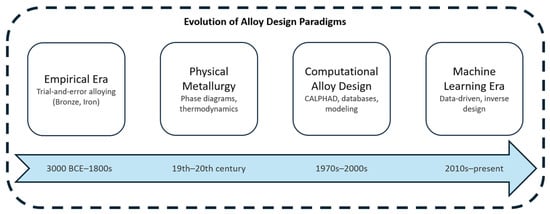
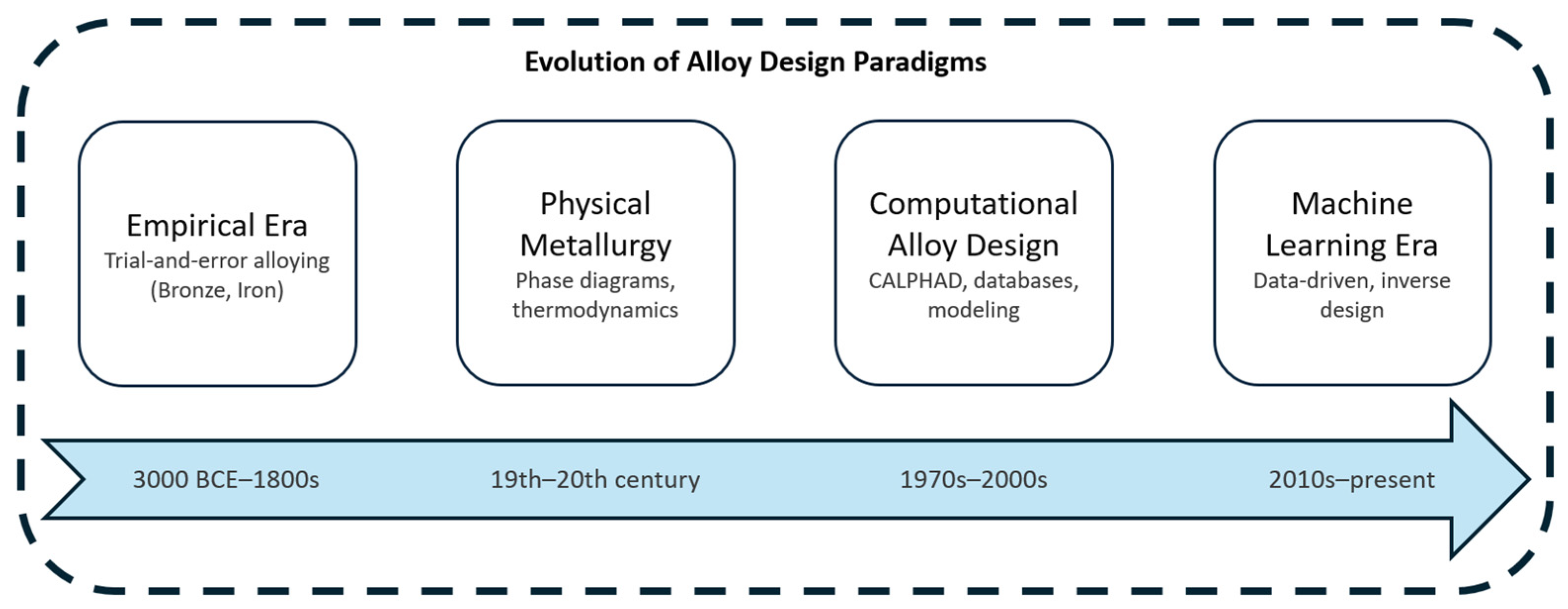
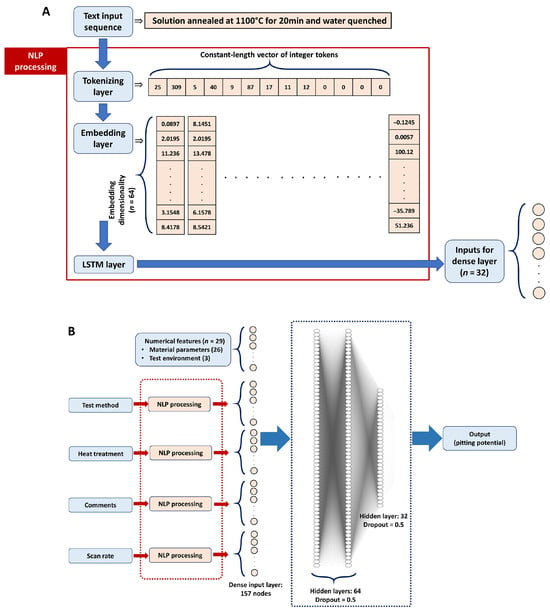
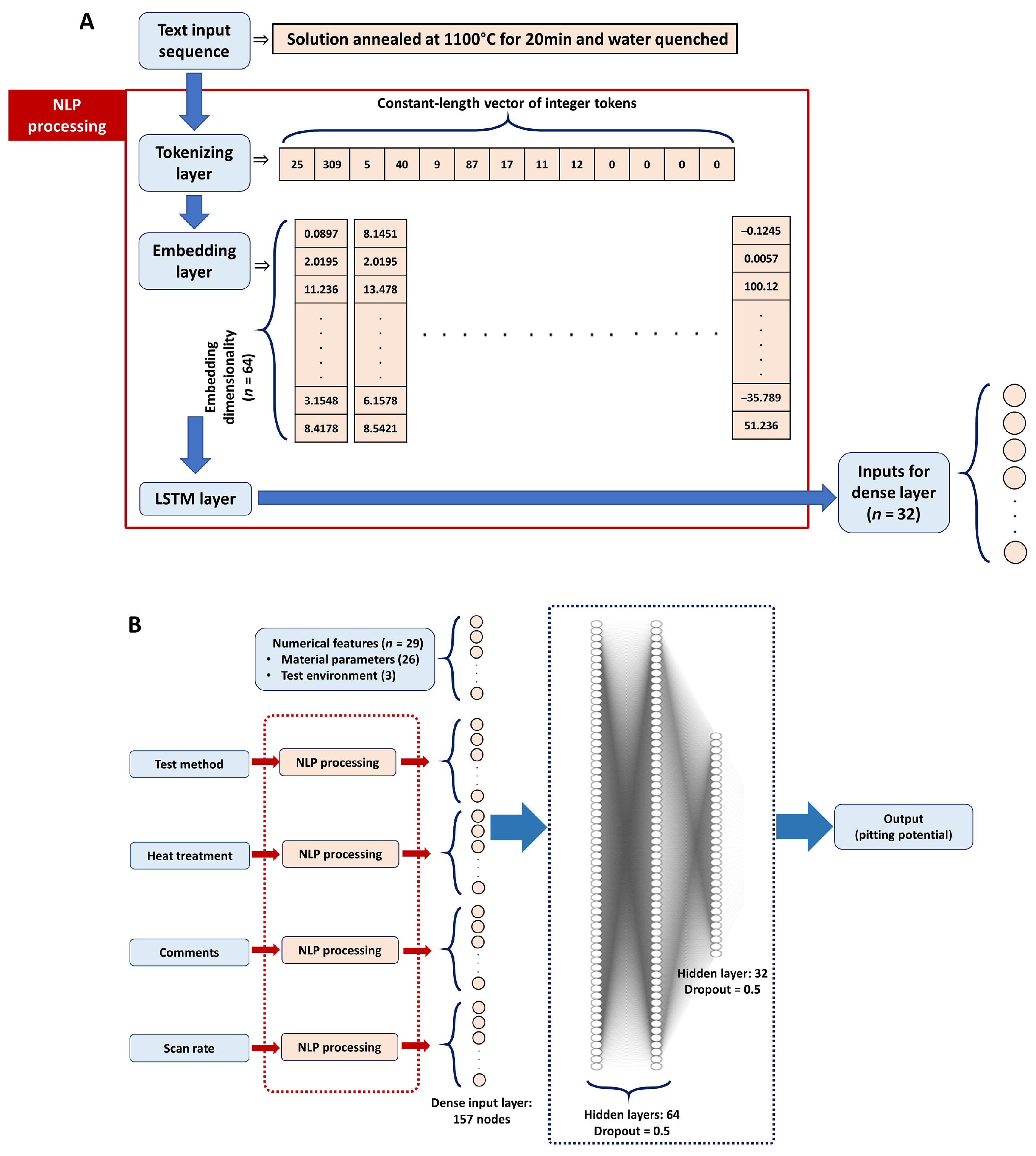
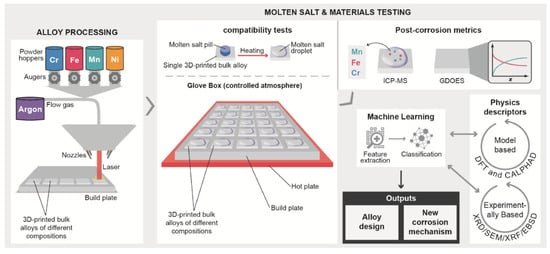
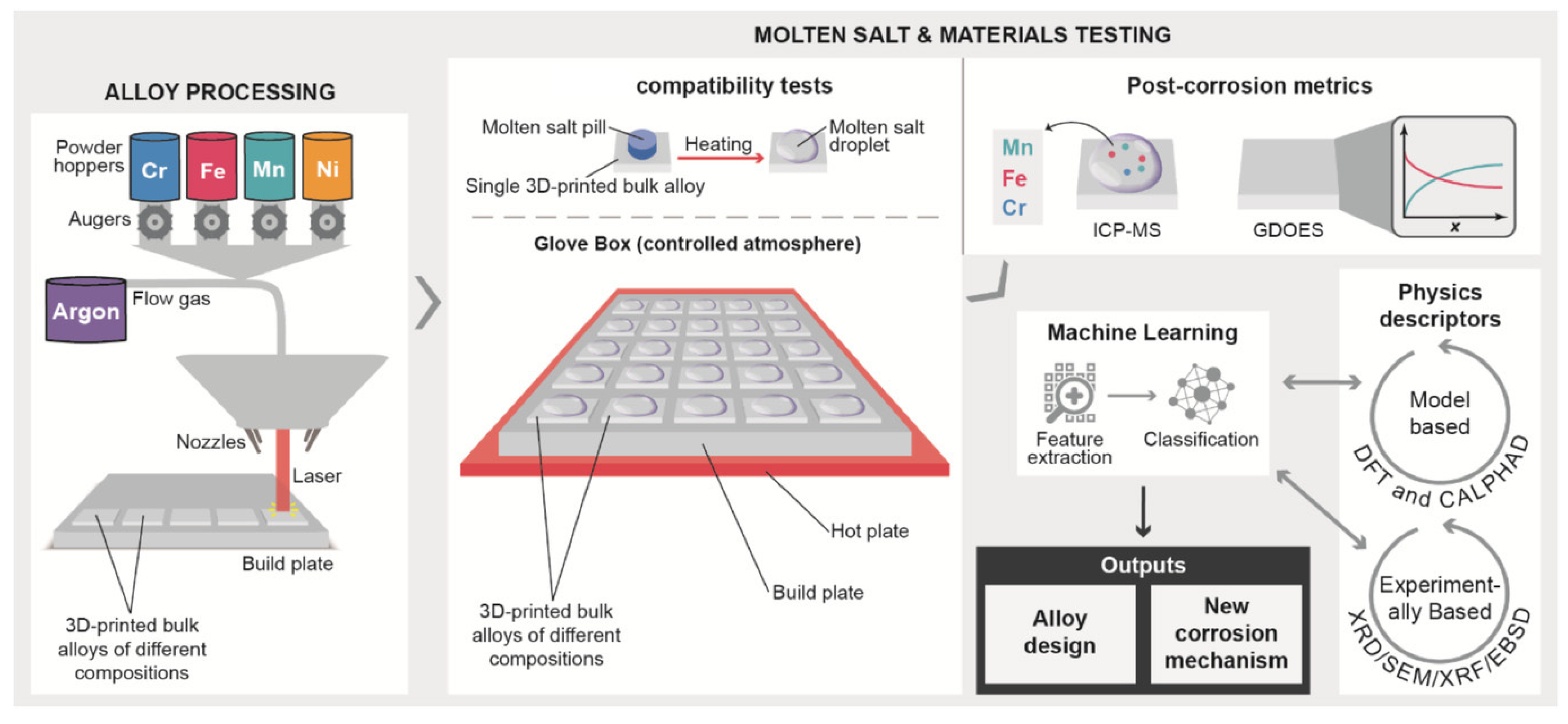
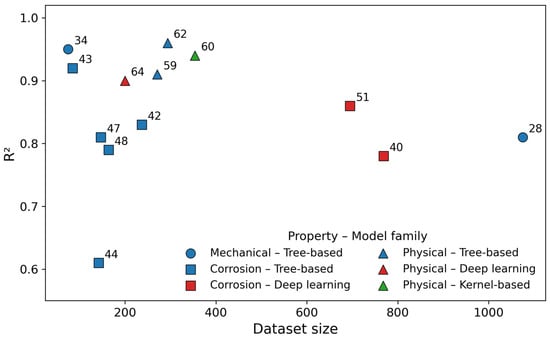
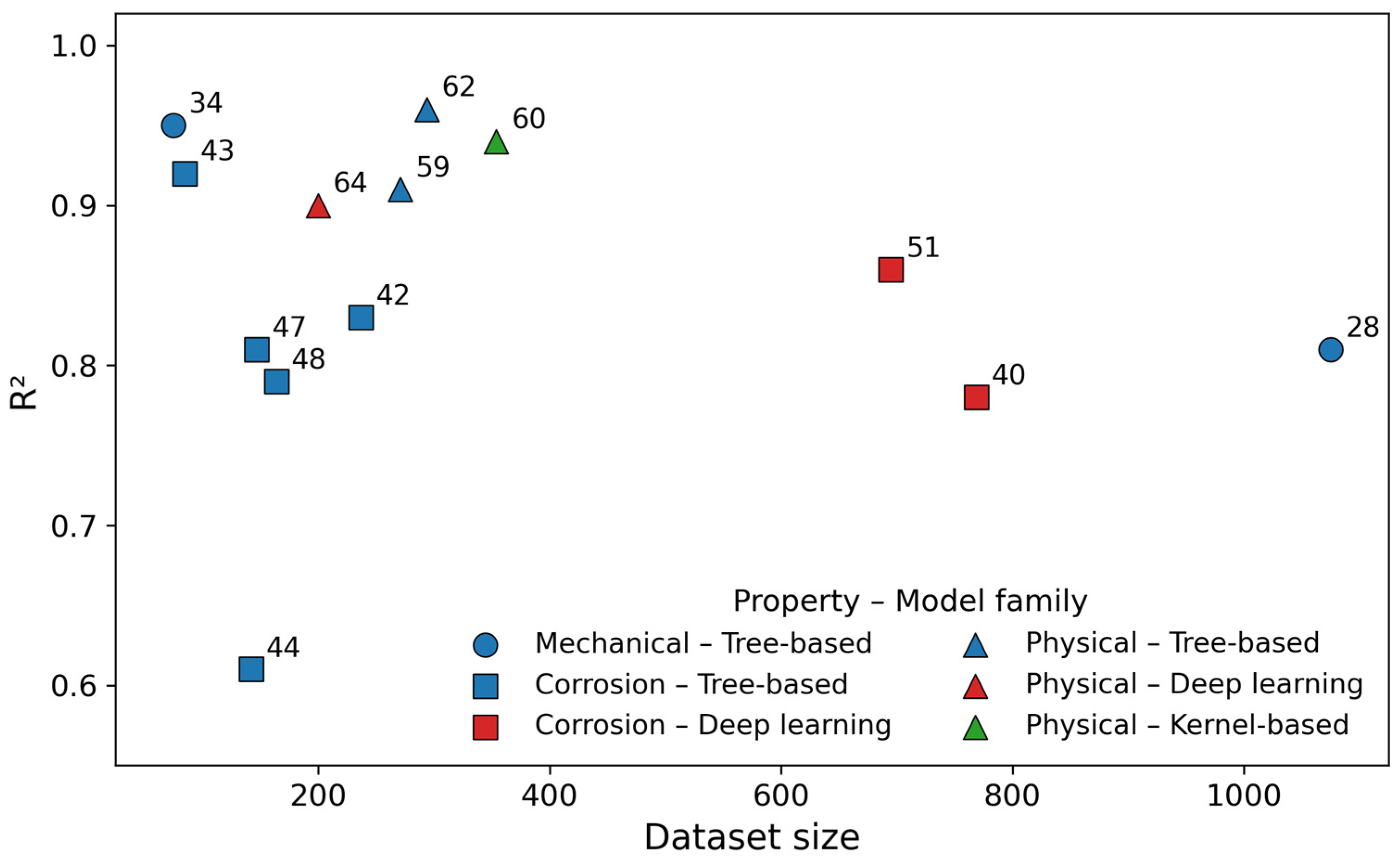

Disclaimer/Publisher’s Note: The statements, opinions and data contained in all publications are solely those of the individual author(s) and contributor(s) and not of MDPI and/or the editor(s). MDPI and/or the editor(s) disclaim responsibility for any injury to people or property resulting from any ideas, methods, instructions or products referred to in the content. |
© 2026 by the authors. Licensee MDPI, Basel, Switzerland. This article is an open access article distributed under the terms and conditions of the Creative Commons Attribution (CC BY) license.