


Abstract
Aspergillus species combine eukaryotic protein processing, efficient secretion, and established industrial fermentation, making them important hosts for enzymes, food proteins, and natural products. However, heterologous production is jointly determined by genetic architecture, expression regulation, protein processing and secretion, host physiology, and cultivation conditions rather than by promoter strength alone. This review examines the construction of programmable expression systems in Aspergillus, with emphasis on host selection, DNA maintenance and genome integration, gene dosage and regulatory elements, multigene expression, secretion engineering, and chassis optimization. We further discuss standardized genetic parts and landing sites, quantitative evaluation, high-throughput screening, and product-oriented strain design. Collectively, these advances support a transition from empirical construct-and-screen approaches toward expression systems with more defined genetic structures, tunable outputs, improved production stability, and greater reproducibility and predictability under production-relevant conditions.
1. Introduction
Filamentous fungi possess eukaryotic cellular compartments, eukaryotic post-translational protein-processing capacity, and diverse metabolic capabilities, making them important hosts for industrial biotechnology and synthetic biology [1,2,3,4]. Aspergillus species are widely used in the production of industrial enzymes, organic acids, fermented foods, and natural products, but their distinct genetic and physiological characteristics determine different application scenarios [1,2,3,4,5]. Aspergillus niger has a well-established foundation in submerged fermentation and extracellular enzyme production and is suitable for the production of industrial enzymes and some recombinant proteins for which secretion is the primary output mode [2,5,6,7,8]; Aspergillus oryzae has a long history of use in food fermentation and the potential to express large fungal biosynthetic enzymes, making it suitable for food-related proteins and natural-product pathway development [9,10,11,12,13]; Aspergillus nidulans has a well-characterized genetic background and a mature molecular toolbox and is more suitable for genetic-element evaluation, studies of expression mechanisms, and pathway prototyping [14,15]. Compared with prokaryotic hosts, Aspergillus can perform eukaryotic processing steps including protein folding, disulfide-bond formation, glycosylation, and vesicular transport; compared with yeasts, some industrial Aspergillus strains have potential advantages in producing extracellular enzymes and large fungal multidomain enzymes [2,3,4,16]. Thus, the expression advantages of Aspergillus are not universal for all products but depend on how well host characteristics match the processing and production requirements of the target product [2,3,8,16].
However, the strong natural secretory capacity of Aspergillus does not guarantee effi-cient formation of every heterologous product [2,3,8,16]. Expression performance can vary with host background and genomic context, whereas excessive expression may increase cellular burden and secretory stress [2,3,8,16,17,18,19,20,21]. The central challenge is therefore to establish defined and tunable relationships among genetic architecture, expression output, and functional-product formation [3,4,8,15,19,22]. To address these issues, this review focuses on programmable expression systems, defined here as systems in which genetic structures and expression parameters are controllably designed so that target products are formed in a tunable, reproducible, and relatively predictable manner under specified cultivation conditions [3,15,19,22]. Programmability first requires that the integration site, copy number, and expression architecture of foreign genes be defined [7,15,19]. Evaluation should not stop at genetic structure or expression level. It should also determine whether expression output is converted into structurally intact, biologically active products and whether the associated production phenotype remains stable without selection pressure and under production-relevant cultivation conditions [2,3,7,8,16,22]. Therefore, evaluation of Aspergillus expression systems should include not only mRNA levels and total protein amounts but also functional activity, specific production rate, product quality, and long-term production stability [2,3,7,8,16]. Previous reviews have addressed heterologous protein production, protein secretion and associated stress, modular synthetic-biology tools, and broader strategies for engineering filamentous fungi as biomanufacturing chassis [2,3,4,8,13,15,16,22]. The distinctive focus of the present review is to treat Aspergillus expression engineering as an integrated programmable system rather than as a collection of individual genetic tools. Specifically, we connect defined genetic architecture—including integration site, copy number, and multigene organization—with quantitative expression control, protein processing and secretion, chassis properties, functional-product formation, and production stability. We further emphasize standardized evaluation, predictable input–output relationships, and product-oriented validation under production-relevant conditions. This integrated perspective distinguishes the present review from previous tool-centered or secretion-centered summaries and provides a framework for moving Aspergillus engineering from empirical construct-and-screen workflows toward more reproducible and predictable design.
This review first discusses host selection, exogenous DNA delivery and extrachromosomal maintenance, genome integration, gene dosage and position effects, regulatory elements, and multigene organization in Aspergillus. It then analyzes how protein folding and secretion, host resources, hyphal morphology, and cultivation processes affect the formation of functional products. Finally, in relation to the production requirements of different target products, it discusses standardized evaluation of genetic elements and genomic landing sites, high-throughput construction and screening, quantitative measurement of production performance, and optimization of product-specific chassis, providing a reference for improving the comparability, reproducibility, and predictability of Aspergillus expression systems.
Relevant literature on Aspergillus expression engineering was collected through searches of PubMed, Web of Science, and Google Scholar. Searches were performed using combinations of keywords including “Aspergillus”, “heterologous expression”, “genome integration”, “promoter engineering”, “protein secretion”, “synthetic biology”, and “chassis optimization”. Literature published up to August 2026 was considered. Studies were prioritized based on their relevance to programmable expression systems, including genetic architecture, genome engineering, regulatory elements, protein secretion, host optimization, quantitative evaluation, and production performance. Particular attention was given to studies that provided experimentally validated engineering strategies and quantitative measurements of expression output, product formation, or strain performance.
2. Exogenous Gene Construction and Expression Regulation
2.1. Host Selection
Host selection should not be based on whether an Aspergillus species has a broadly defined “high secretory capacity,” but on whether its genetic and physiological characteristics meet the requirements for target-product formation, processing, and production [2,3,6,8,10,12]. The first consideration is whether the target product is formed mainly intracellularly or must enter the ER–Golgi secretory pathway for folding, glycosylation, and other processing before extracellular release, together with its intended use and scale-up cultivation requirements [2,3,6,16]. A. nidulans has a well-characterized genetic background and a relatively mature molecular toolbox, making it suitable for genetic-element evaluation, mechanistic studies, and pathway prototyping [14,15]; A. niger has an established foundation in submerged fermentation and extracellular enzyme production and is suitable for industrial enzymes and some recombinant proteins produced mainly by extracellular secretion [2,5,6,7,8]; A. oryzae has a long history of food-fermentation applications and the potential to express fungal biosynthetic enzymes and reconstruct natural-product pathways, making it suitable for food-related proteins and natural-product pathway development [4,9,10,11,12,13]. Other Aspergillus species may also be developed as specialized chassis on the basis of specific substrate-utilization, metabolite-biosynthesis, or protein-processing capabilities [4,23]. However, substantial differences in genome composition and metabolic potential exist among species, and their suitability and associated engineering tools must therefore be validated in each host [4,13,23] (Table 1). Therefore, although some engineering strategies are broadly applicable to filamentous fungi, their implementation in Aspergillus requires consideration of species-specific genetic backgrounds, available molecular tools, and host-dependent production characteristics [3,4,13,15,23].
Table 1.
Core strengths, key limitations, and preferred applications of representative microbial expression hosts.
Comparison with established yeast chassis further illustrates the product dependence of host selection. S. cerevisiae benefits from exceptionally mature genetic and synthetic-biology tools and robust cultivation, but secretion efficiency and yeast-type glycosylation may limit the production of some heterologous proteins [24]. K. phaffii supports high-cell-density cultivation and efficient secretion of many recombinant proteins with relatively low endogenous-protein background; however, methanol-based induction, glycosylation, and oxygen-transfer requirements can complicate process development [25,26]. In contrast, Aspergillus species are particularly attractive for extracellular enzymes and large fungal proteins that benefit from their native secretory and processing capacity, but filamentous morphology, extracellular proteolysis, and host-specific protein processing remain important constraints [2,3,6,8,16]. Thus, no host is universally superior, and chassis selection should be based on the processing, secretion, product-quality, and scale-up requirements of the target product [3,8,24,25,26].
Host evaluation can be divided into two levels: suitability for genetic manipulation and suitability for production [2,6]. The former includes DNA-delivery and targeted-integration efficiencies, available regulatory elements and selectable markers, and the extent to which the genetic background is defined; the latter includes the background of highly abundant endogenous secreted proteins and proteases, glycosylation and organelle environments, growth and hyphal morphology in liquid culture, and fermentation performance [2,6]. Hosts used to compare genetic elements or prototype pathways should generally be evaluated at the same genomic locus and copy number to minimize interference from position effects and copy-number differences [10,19]. However, elements or pathway designs selected in such hosts must still be transferred into candidate production chassis and revalidated under cultivation conditions close to those used in practice [2,6]. A host suitable for element evaluation and pathway prototyping therefore does not necessarily have optimal large-scale production performance [2,6]. Modular expression tools and predefined integration-site systems recently developed in A. oryzae and A. niger further illustrate that convenience of genetic manipulation and final production performance should be evaluated separately [10,19].
After the species and strain have been selected, it is also necessary to determine whether the host’s existing production traits are genuinely favorable for formation of the target product [2,6,7]. The high-producing phenotype of an industrial strain is usually established for its natural product or a specific product selected over many years; highly abundant endogenous proteins may occupy transcriptional, translational, and secretory resources, whereas endogenous proteases may degrade heterologous products [2,6,7]. Using a glucoamylase-hyperproducing industrial A. niger strain as an example, Gou et al. used CRISPR/Cas9-assisted marker recycling to delete 13 of 20 heterologous TeGlaA copies and disrupt the major extracellular protease gene pepA. The resulting AnN2 chassis showed a 61% reduction in total extracellular protein relative to the parental strain while retaining multiple transcriptionally active, high-expression integration sites [7]. The authors subsequently integrated expression cassettes for four heterologous or homologous proteins into sites previously occupied by TeGlaA and achieved effective expression and secretion of all four target proteins [7]. These results show that production hosts should not be evaluated solely on the basis of their established industrial yields; the occupation of cellular resources and the secretory pathway by highly abundant endogenous proteins, the degradation environment encountered by the target product, and the potential reuse of existing high-expression sites for target-protein production should also be considered [2,6,7,19].
2.2. DNA Delivery, Extrachromosomal Maintenance, and Genome Integration
Protoplast PEG-mediated transformation is the most commonly used DNA-delivery method in Aspergillus and can be used to introduce plasmids, linear donors, and Cas9-sgRNA ribonucleoproteins [2,27,28]. Agrobacterium-mediated transformation does not require protoplast preparation and can serve as a complementary method for some industrial strains and for hosts in which protoplast preparation or regeneration is difficult [29,30,31]. Importantly, DNA delivery determines only whether exogenous genetic material enters the cell; it does not determine the form in which the material is maintained after entry or the final genetic structure [2,15]. Exogenous DNA may be maintained as an extrachromosomal vector or integrated into the genome randomly or at a defined site; the appropriate strategy should be selected according to construction time, control over genetic structure, expression stability, and the intended application [2,15,19,32]. The main delivery routes and fates of exogenous DNA after entry into Aspergillus cells are shown in Figure 1.
Figure 1.
Major DNA-delivery routes and subsequent fates of exogenous DNA in Aspergillus. Exogenous DNA can be introduced into Aspergillus cells through PEG-mediated protoplast transformation or Agrobacterium-mediated transformation. PEG-mediated transformation can deliver AMA1 plasmids, linear donor DNA, Cas9–sgRNA ribonucleoproteins, or Cas9 expression vectors, whereas Agrobacterium-mediated transformation delivers T-DNA carrying an expression module or donor DNA. After cell entry, exogenous DNA may be maintained extrachromosomally on an AMA1 vector, integrated randomly into the genome, or inserted at a defined locus through homologous recombination or CRISPR/Cas-assisted targeted integration. The delivery route does not by itself determine the subsequent fate, copy number, orientation, or structural integrity of the introduced DNA. These alternative strategies involve different trade-offs in construction speed, control over genetic structure, reproducibility, and long-term expression stability [2,15,19,32,33]. AMA1-based episomal maintenance is particularly suitable for rapid prototyping [15,32,33], random integration remains useful for exploratory screening of high-producing transformants [2,15,19], whereas targeted chromosomal integration is better suited for standardized comparisons and construction of genetically defined production strains [7,15,19]. AMA1, autonomously maintained in Aspergillus; T-DNA, transfer DNA; PEG, polyethylene glycol; RNP, ribonucleoprotein; NHEJ, non-homologous end joining.
From an engineering perspective, these DNA-maintenance and integration strategies represent different trade-offs rather than a simple hierarchy [2,15,19,32,33]. AMA1-based episomal systems prioritize construction speed and flexibility [15,32,33], random integration facilitates rapid generation and screening of diverse transformants [2,15,19], whereas targeted chromosomal integration prioritizes structural definition and reproducibility [7,15,19]. Accordingly, the appropriate strategy should be selected according to the development stage and intended application [2,15,19]. Once a genetically defined production configuration has been established, subsequent chassis engineering can then focus on product-specific limitations in protein processing and secretion, cellular resource allocation, morphology, and cultivation robustness [2,6,7,16,34,35,36,37,38,39], as discussed in Section 3.
For extrachromosomal maintenance, AMA1 vectors can replicate autonomously in multiple filamentous fungi. They offer high transformation efficiency, short construction cycles, and gradual loss after removal of selection pressure, and are therefore suitable for genetic-element screening, protein localization, functional complementation, pathway prototyping, and delivery of CRISPR tools [15,32,33]. However, vector copy number and maintenance status may vary among cells or transformants, making these vectors unsuitable for rigorous comparison of genetic-element performance and limiting expression stability during long-term production [32,33]. AMA1 vectors are therefore more appropriate for rapid construction and early-stage validation, whereas final production systems usually require stable chromosomal integration of the selected expression modules [2,32,33].
Random integration occurs mainly through non-homologous end joining. It is technically simple and may generate single-copy insertions, tandem multicopy insertions, or dispersed integrations at multiple sites, and has therefore long been used to construct and screen high-producing transformants [2,15,40]. However, the insertion site, orientation, copy number, and structural integrity cannot be controlled in advance, and vector-backbone integration or unintended rearrangements may also occur [19,41]. The resulting position effects and transformant-to-transformant variation make random integration suitable for “construct-and-screen” workflows, but not for rigorous quantitative comparison of genetic-element performance, gene dosage, or expression architecture [2,15,19].
By contrast, homologous recombination can insert an expression cassette into a predefined chromosomal site, whereas CRISPR/Cas creates a DNA double-strand break at the target site, increasing the probability that the donor participates in local repair and thereby facilitating targeted integration [19,27,28,41]. Attenuating non-homologous end-joining components such as Ku70/Ku80 can improve homologous-integration efficiency; however, long-term loss of DNA-repair factors may affect genome stability and host fitness [42,43]. Cas9 can be supplied from the chromosome, an AMA1 vector, or as a ribonucleoprotein to support continuous editing, removable delivery, or avoidance of residual Cas expression cassettes, respectively [27,28,33]. Nevertheless, CRISPR/Cas does not automatically ensure accurate integration. Cleavage-site location, donor configuration, homology-arm design, and the host repair background continue to affect integration efficiency and structural integrity [19,27,28,41]. In Aspergillus, these parameters are further shaped by species-specific DNA repair capacities and genome contexts, which can influence the balance between homologous recombination and non-homologous end joining during targeted integration [41,42,43,44]. Recent work further showed that spatial alignment between Cas9 cleavage sites, donor homology arms, and the endogenous strand-invasion path is a critical determinant of HDR efficiency. A dual-sgRNA design placing two cuts on either side of the intended insertion site substantially improved targeted integration across different insert sizes and editing tasks in multiple Aspergillus species [44]. In multiplex modifications or large-fragment insertions, random donor integration and unintended rearrangements must still be specifically excluded [19,27,28,41].
Beyond conventional double-strand-break-dependent genome editing, base editing and prime editing are expanding the precision of genome engineering in Aspergillus. Cytosine base editing has recently been applied in A. nidulans to introduce targeted C-to-T substitutions without generating conventional DNA double-strand breaks and has also been coupled with combinatorial sgRNA delivery for iterative in vivo evolution [45]. More recently, the fungal prime-editing platform fPE7max was established in A. nidulans and other filamentous fungi, enabling precise base substitutions and defined insertions and deletions, with editing efficiencies approaching 90% across tested loci [46]. The system further supported insertions of up to 1 kb, deletions of up to 10 kb, and multiplex prime editing at multiple genomic loci [46]. These approaches provide new options for precise sequence modification and multiplex engineering without relying on conventional donor-directed double-strand-break repair; however, editing efficiency, sequence context, unintended edits, and genetic stability still require systematic evaluation [45,46].
Regardless of the delivery or integration method, recovery of a transformant under selection indicates only that an exogenous molecule entered the cell or that a selectable marker was expressed; it does not prove that the target expression cassette integrated at the intended genomic location or retained the expected structure [19,41]. For chromosomal integration, junction PCR at both boundaries should be used to verify integration borders, together with copy-number analysis, Southern blotting, or sequencing to determine insertion site, orientation, copy number, and structural integrity [19,41]. Landing sites used for targeted integration should also be evaluated for transcriptional activity, effects on neighboring genes and host fitness, and genetic and expression stability without selection pressure and under production conditions [7,10,19]. Representative defined genomic integration sites that have been experimentally used in different Aspergillus species, together with the extent of their characterization, are summarized in Table 2. Thus, evaluation of exogenous gene construction in Aspergillus should not focus only on whether transformants are obtained but should further establish whether the genetic structure is defined, reproducible, and suitable for the intended application [2,6,19].
Table 2.
Representative defined genomic integration sites in Aspergillus and the extent of their experimental characterization.
2.3. Gene Dosage, Position Effects, and Genetic Stability
Increasing target-gene copy number can improve transcription and product yield within a certain range, but the relationship is generally nonlinear [2,19,49,50]. Once translation, protein folding, secretory transport, or precursor or cofactor supply becomes limiting, further increases in copy number may only raise mRNA levels and cellular burden, and may even induce stress and reduce production performance [2,16,49]. Gene-dosage optimization should therefore not aim for the highest possible copy number but should establish a structurally defined copy-number series to identify the effective dosage range that stably increases functional-product yield [19,49,50].
In addition to copy number, chromosomal integration site can substantially affect expression [17,18,51]. Local chromatin state, nucleosome distribution, transcriptional activity of neighboring genes, and subtelomeric silencing can cause the same expression cassette to produce different expression levels at different loci [18,51]. Accordingly, promoter and other genetic-element comparisons should use a fixed integration site and copy number to avoid mistaking position effects for differences in element performance [10,17,19]. For gene-dosage optimization, the same expression cassette can be integrated sequentially into multiple precharacterized chromosomal sites, while retaining the corresponding single-site strains as controls to distinguish copy-number effects from site-specific effects [7,19,50]. Compared with random multicopy integration, this strategy produces a dosage series in which both insertion sites and copy-number composition are traceable and is therefore better suited for analyzing the relationship between gene dosage and product yield [19,50].
Multicopy expression structures must also be evaluated for genetic stability. Tandem repeats can readily generate high copy numbers, but recombination between repeated sequences may cause copy loss, changes in arrangement, or structural rearrangement; construction of dispersed integrations at multiple loci is more complex, but individual insertion sites are generally easier to identify independently, and the long-term stability of each expression cassette can be tracked [19,50,52]. Multicopy strains should therefore not be assessed solely by their initial copy number; the stability of genetic structure, expression level, and production performance should also be examined [19,50,52]. These three forms of stability should be distinguished explicitly. Genetic stability refers to maintenance of the integration site, copy number, cassette arrangement, and structural integrity during cultivation or serial passage [7,19,41,50,51]. Expression stability refers to maintenance of transcriptional or protein-output levels from a genetically intact construct; expression may change even when the underlying DNA structure is preserved because of chromatin state, physiological changes, or cultivation conditions [7,17,18,52]. Production stability is a further downstream property and reflects whether the functional-product phenotype is maintained over time [7,50,51]. Accordingly, structural integrity, expression output, and production performance should be evaluated independently rather than inferred from one another [7,19,41,50,51]. qPCR or digital PCR can be used to estimate copy number, whereas Southern blotting and long-read sequencing can further resolve insertion sites, orientation, and structural integrity [19,41,50]. Final production strains should also be screened for additional random insertions and vector-backbone remnants, and genetic structure, expression level, and product yield should be compared before and after serial cultivation without selection pressure, in liquid culture, and under conditions approaching production [7,50,52].
2.4. Regulatory Elements and Multigene Design
Expression output in Aspergillus is determined not only by promoters but also by untranslated regions, introns, terminators, coding sequences, and the organization of multigene systems [2,13,15]. The objective of expression regulation is not to maximize every gene, but to control expression strength, timing, and the ratios among different components according to the formation process of the target product and the carrying capacity of the host, so that transcriptional output is efficiently converted into functional product [2,15].
Promoters primarily determine transcriptional strength and timing [2,13,15]. Constitutive promoters such as P_gpdA, P_tef1, P_pgkA, and P_enoA are suitable for continuous expression of genes with low toxicity and limited host burden; however, their relative activities are affected by host species, strain background, integration site, medium composition, and growth phase, and strength rankings established in other hosts or culture conditions cannot be directly transferred [2,13,15,17]. For membrane proteins, regulatory factors, toxic enzymes, or metabolically burdensome pathways, moderate or stage-specific expression is often more effective than continuous strong expression in balancing biomass formation and product synthesis [2,15,16].
Inducible promoters can separate biomass accumulation from product synthesis in time and thereby reduce the effect of target-gene expression on early growth [2,53,54]. A variety of nutrient-responsive promoters have been established in different Aspergillus species [2,13,15]. For example, P alcA in A. nidulans is induced by ethanol and related compounds and repressed by glucose, whereas P niaD and P niiA respond to nitrogen-source status; P amyB in A. oryzae and P glaA in A. niger are mainly regulated by carbon-source utilization [2,13,15]. Their induction strength, basal expression, and regulatory range must still be reevaluated in the specific host and cultivation conditions [13,15,53,54]. Because addition of inducers or switching carbon or nitrogen sources can itself alter host metabolism, hyphal morphology, and protease expression, comparisons of yields and phenotypes before and after induction should include host controls under the same cultivation conditions [2,16,54]. Orthogonal small-molecule systems such as Tet-on can reduce the dependence of expression control on host nutrient metabolism, but basal leakage, dynamic range, host sensitivity, and costs at production scale must still be evaluated [53,54].
When the expression range of natural promoters is insufficient, synthetic promoter libraries can be constructed by combining core promoters, upstream activating sequences, and transcription-factor binding sites [13,15,55]. Zheng et al. tandemly assembled upstream activating sequences from A. niger to generate synthetic promoters spanning a broad activity range; some reached 5.4-fold the activity of P_gpdA. Using promoters of different strengths to regulate the citrate exporter CexA increased citric acid production by 1.6- to 2.3-fold relative to the parental strain, with a maximum titer of 145.3 g/L [55]. However, further increases in the number of repeated upstream activating sequences did not continuously enhance expression, indicating that synthetic regulatory elements also have an optimal strength range [55]. Their engineering value is therefore not limited to obtaining stronger expression but also includes providing expression gradients for flux matching [55]. Artificial transcription factors and programmable transcriptional systems such as CRISPRa and CRISPRi can further enable relatively independent control of different gene modules, but their regulatory efficiency, target-site dependence, and stability must be evaluated in a uniform genetic background [15,56,57].
Beyond promoters, 5′ untranslated regions, introns, and coding sequences influence transcript processing, translation efficiency, and protein formation [2,13,58,59,60]. RNA secondary structure and upstream AUG codons in the 5′ region may alter translation initiation, whereas intron-mediated enhancement is strongly dependent on sequence and position [13,58,59]. Heterologous coding regions may also contain cryptic splice sites that generate aberrant transcripts [11,13]. Coding-sequence optimization should therefore consider not only host codon usage, but also GC content, mRNA structure, the risk of aberrant splicing, and cotranslational folding [2,11,13,60].
Terminators and 3′ untranslated regions participate in transcription termination, mRNA maturation and stability, and transcriptional insulation between adjacent expression cassettes [61]. Zhang et al. compared 15 heterologous 3′ terminators in A. oryzae and found more than fivefold differences in mCherry expression and more than 50-fold differences in transcriptional readthrough, whereas expression strength and termination efficiency were only weakly correlated [61]. These findings show that promoting expression and suppressing readthrough are relatively independent properties of terminators and should be evaluated separately. Terminators should not be treated merely as promoter accessories, nor should terminators commonly used in other hosts be assumed to function directly in Aspergillus [61].
Multigene systems require expression architectures matched to the functional relationships among their components [10,13,15,62,63]. Independent expression cassettes allow each gene to be adjusted separately, but increase overall construct size, and repeated use of promoters and terminators may increase the risk of homologous recombination. Bidirectional promoters reduce the number of regulatory elements, but expression strengths in the two directions may differ and must be measured separately [10,13,15]. 2A polycistronic architectures are compact; however, after 2A-mediated ribosomal skipping, the upstream protein generally retains 2A-derived residues at its C-terminus, the downstream protein generally begins with proline, and protein separation may be incomplete. Actual output is also affected by differences in the stability of individual proteins [62,63]. Cotransformation of AMA1 vectors can be used to test gene combinations and expression ratios at an early stage, but because vector copy number and maintenance are not sufficiently stable, selected modules should subsequently be integrated into the chromosome in a structurally defined manner [32,33,62].
The central task in multigene design is to match expression among components rather than simply maximize every gene [2,15,55,63]. In metabolic pathways, the relative levels of upstream and downstream enzymes should be adjusted according to enzyme kinetics, precursor and cofactor supply, accumulation and toxicity of key intermediates; for multisubunit proteins, component expression should be controlled according to subunit stoichiometry and assembly efficiency [2,15]. Promoter strength, gene copy number, cassette arrangement, and induction timing can all be used to adjust module output [15,53,54,55,63]. Only when upstream supply, downstream conversion, and host resources are matched can enhanced expression be efficiently converted into higher yields of functional product [2,15,55,63]. The main functions, advantages, and limitations of different regulatory elements and multigene organization strategies are summarized in Table 3.
Table 3.
Regulatory elements and multigene expression designs in Aspergillus.
AMA1-based episomal expression is suitable for the initial screening of gene combinations and expression ratios. For stable production, selected designs should generally be transferred to defined chromosomal loci and evaluated for genetic structure, expression ratios, and long-term stability. Taken together, no single genetic-engineering strategy is universally optimal for Aspergillus expression systems [2,7,15,19]. AMA1-based episomal systems enable rapid construction and pathway prototyping but provide limited control over copy number and long-term expression stability [15,32,33], whereas random integration is technically simple and useful for screening high-producing transformants but sacrifices structural definition and reproducibility [2,15,19,40,41]. Targeted integration through homologous recombination or CRISPR/Cas provides better control over genomic position and genetic architecture, but its efficiency remains dependent on host repair background, donor design, and the availability of well-characterized landing sites [7,19,27,28,41,43]. Similarly, stronger promoters and higher gene copy numbers may improve expression only within the processing and resource capacity of the host, while compact multigene architectures can reduce construct complexity at the cost of independent control or protein-processing fidelity [10,13,15,62,63]. Strategy selection should therefore be based on the development stage, target-product requirements, and the dominant production bottleneck rather than on maximizing expression alone [2,6,7,15,16].
3. Protein Processing, Secretion, and Chassis Optimization
3.1. Protein Folding, Trafficking, and Extracellular Stability
The yield and quality of secreted proteins are determined by successive steps from ER entry to extracellular stability, and limitation at any stage can prevent transcriptional output from being converted into intact, active product [2,16,20,21,64,65,66,67,68,69]. The dominant bottleneck should therefore be identified using measurements of intracellular precursor accumulation, extracellular target-protein concentration, protein integrity, and functional activity [2,16,20,21,64,65,69]. The major secretion bottlenecks and corresponding engineering strategies are summarized in Figure 2 [2,16,20,21,64,65,66,67,68,69].
Figure 2.
Major bottlenecks and corresponding engineering strategies in heterologous protein secretion by Aspergillus. Heterologous protein secretion involves four major stages: entry into the endoplasmic reticulum, protein folding and quality control, processing and vesicular trafficking, and extracellular stability. Limitations may arise from inefficient signal-peptide recognition or cleavage, protein misfolding and ER-associated degradation, insufficient vesicular transport or aberrant glycosylation and proteolytic processing, and degradation by extracellular proteases. Corresponding optimization strategies include screening or engineering signal peptides, enhancing folding capacity while balancing the unfolded protein response and ER-associated degradation, optimizing fusion orientation and linker design, improving glycosylation, proteolytic processing, cargo sorting, and vesicular trafficking, and reducing extracellular degradation through targeted protease deletion and optimization of culture pH and harvest time. ER, endoplasmic reticulum; UPR, unfolded protein response; ERAD, ER-associated degradation; PDI, protein disulfide isomerase; Ero1, endoplasmic reticulum oxidoreductin 1.
Classically secreted proteins depend on an N-terminal signal peptide for entry into the ER, but signal-peptide performance is strongly target-protein dependent [2,16]. Linking the same signal peptide to different mature proteins can produce substantial differences in ER translocation and signal-peptide cleavage, and high natural secretion of the source protein does not guarantee that its signal peptide will be suitable for another protein [2,16]. Therefore, the native signal peptide of the target protein, signal peptides from highly secreted host proteins, and engineered variants should be compared under identical promoter, integration-site, and copy-number conditions. Intracellular precursors, intact extracellular protein, and functional activity should be measured simultaneously to distinguish insufficient ER translocation, aberrant signal-peptide cleavage, and limitations in downstream trafficking [2,16].
Fusion of a target protein to a highly secreted host protein such as glucoamylase or alpha-amylase is a common strategy for improving heterologous protein expression and secretion [2,64]. A Kex2-like protease recognition sequence is typically placed between the fusion partner and the target protein to release the mature protein during secretion [64,65]. Gouka et al. constructed single-copy expression strains at the same chromosomal locus and found that an N-terminal glucoamylase fusion increased extracellular human interleukin-6 production from approximately 0.05 mg/L to 5–10 mg/L, whereas a C-terminal fusion had no comparable effect. This quantitative comparison highlights that fusion architecture, rather than simply the presence of a secretion-enhancing carrier, is a critical determinant of recombinant protein production. For codon-optimized guar alpha-galactosidase, glucoamylase fusion increased both steady-state mRNA levels and extracellular active-protein yield [64]. These results show that fusion expression can affect transcript stability, translation, folding, and secretion, but that its effectiveness depends on the target protein and fusion orientation [64]. Because Kex2-like cleavage is also influenced by adjacent sequences and local protein structure, fusion strategies should be evaluated by confirming the cleavage site, the termini of the mature protein, and functional activity; mass spectrometry or terminal sequencing should be used for products with stringent terminal-structure requirements [65].
When protein entry into the ER exceeds the host’s folding and processing capacity, accumulation of misfolded proteins induces ER stress and activates the unfolded protein response [16,20]. The transcription factor HacA regulates molecular chaperones, foldases, and other secretory-pathway genes, and expression of genes such as bipA and pdiA can be used as indicators of ER burden [16,20,21]. The importance of disulfide-bond isomerization is further illustrated in A. fumigatus, where Pdi1 is required for correct folding of the disulfide-rich hydrophobin RodA and its subsequent delivery from the inner to the outer layer of the conidial cell wall for rodlet assembly [66]. Valkonen et al. constitutively activated the unfolded protein response by expressing an activated form of hacA, increasing extracellular activities of a white-rot fungal laccase and bovine chymosin by 3.0–7.6-fold and 1.3–2.8-fold, respectively; however, this modification also slowed growth, reduced total secreted protein, and decreased endogenous alpha-amylase activity [20]. Thus, enhancing folding capacity may improve processing of specific heterologous proteins, but may also redistribute host resources and impair growth and endogenous secretion [20]. Increased expression of unfolded-protein-response genes therefore indicates ER burden but does not establish that folding capacity is the only limitation, and constitutive pathway activation is not a universally applicable strategy for improving production [16,20].
Proteins that fail to fold correctly can also be retrotranslocated from the ER to the cytosol through ER-associated degradation and removed by the ubiquitin–proteasome system [16,21]. Attenuation of this pathway may delay degradation of the target protein, but may also retain misfolded proteins and further intensify ER stress [21]. Carvalho et al. deleted derA in a strain expressing a multicopy glucoamylase–beta-glucuronidase fusion, increasing intracellular accumulation of the fusion protein by approximately sixfold while also strengthening the unfolded protein response. Deletion of other ER-associated degradation components produced inconsistent effects, and doaA deletion caused defects in growth and conidiation [21]. Intracellular accumulation of a target protein therefore cannot be equated with increased extracellular active product [21]. Engineering of the unfolded protein response, molecular chaperones, or ER-associated degradation should be evaluated by simultaneously assessing extracellular active product, intracellular aggregation, host growth, and stress status [16,20,21].
Target proteins also undergo glycosylation and other modifications during transport through the ER and Golgi apparatus [2,16,67]. Glycosylation can affect protein folding, secretion, stability, and catalytic activity, and can determine the molecular homogeneity and quality attributes of structurally sensitive proteins [67,68]. Complete removal of glycosylation may reduce the stability of some proteins, whereas products with stringent glycan requirements may require reconstruction of host glycan-synthesis and modification pathways [67,68]. Such engineering should be evaluated by measuring glycan composition, protein activity, and aggregation; for therapeutic or other structurally sensitive proteins, the potential immunological risks associated with abnormal glycans should also be considered [67,68]. Because individual glycosylation sites can have different effects on protein function, the suitability of glycosylation cannot be inferred solely from apparent molecular-mass shifts on SDS-PAGE [67,68].
After release into the culture medium, target proteins may still be degraded by extracellular proteases [2,69]. Starting from an A. oryzae strain lacking five protease genes, Yoon et al. disrupted five additional protease genes and increased the maximum yields of bovine chymosin and human lysozyme by approximately 30% and 35%, respectively [69]. This finding indicates that multiple proteases with overlapping substrate spectra may jointly degrade heterologous proteins, but the benefits of broader protease deletion are strongly product-dependent and may be accompanied by physiological costs to the host [2,69]. Major degradative enzymes should therefore be identified by integrating secretome analysis under production conditions, in vitro degradation assays of the target protein, and changes in culture pH [2,16]. When target-protein loss occurs mainly late in cultivation, adjusting culture pH, shortening the production period, or harvesting earlier may be more effective than deleting additional proteases [2,16].
Systems-biology and multi-omics approaches can complement stepwise analysis of the secretory pathway by identifying bottlenecks that are not apparent from individual measurements [3,16,70]. Transcriptomics can reveal expression changes associated with protein synthesis, secretion, and cellular stress, whereas proteomics and secretomics can help distinguish intracellular protein accumulation, secretory output, and changes in the extracellular-protein background [16,70]. Metabolomics can further identify limitations in precursor, energy, or cofactor availability that indirectly restrict protein synthesis and secretion [3,8,70]. Integrating these datasets with target-protein concentration, intracellular precursor accumulation, protein integrity, functional activity, biomass, and specific production rate can help distinguish whether the dominant limitation lies in expression, folding and processing, secretion, extracellular stability, or host-resource availability [3,7,8,12,16,70]. However, multi-omics analyses primarily generate associations, and candidate bottlenecks should therefore be validated through targeted genetic perturbation and quantitative product-level measurements before being incorporated into strain-engineering strategies [7,12,55,70].
Representative promoters, secretion signals, CRISPR-based tools, and selectable markers commonly used in Aspergillus engineering are summarized in Table 4. These components differ substantially in host dependence, controllability, recyclability, and suitability for final production strains and should therefore be selected according to the intended engineering stage and application.
Table 4.
Representative genetic parts and genome-engineering tools used in Aspergillus expression systems.
3.2. Host Resources, Hyphal Morphology, and Cultivation Processes
Target-protein synthesis consumes amino acids, energy, and reducing power and occupies translational resources such as ribosomes; secreted and membrane proteins additionally consume ER-folding, membrane, and vesicular-trafficking capacity [2,16,20,21]. When these resources approach the host’s carrying capacity, stronger promoters or additional gene copies may mainly increase cellular burden rather than proportionally increasing the yield of intact, active product [2,16,20,49]. Different products may also be limited by precursor supply, cofactor regeneration, transmembrane transport, or the subcellular environment [12,15]. In multienzyme pathways, increasing the expression of catalytic enzymes without coordinating substrate supply and flux through individual steps may cause unproductive enzyme accumulation, intermediate accumulation, and growth inhibition [12,15,55]. Product concentration should therefore be interpreted together with biomass, specific production rate, key metabolites, and changes in enzyme activity to determine whether production is limited by insufficient expression, insufficient host resources, or imbalance among pathway components [2,12,15,55].
Hyphal morphology further affects nutrient and oxygen utilization and protein secretion [34,35,36]. In liquid culture, Aspergillus can grow as dispersed hyphae or as pellets that differ in size, density, and surface structure; these morphologies alter broth viscosity, oxygen and nutrient transfer, mechanical shear, and the number of actively secreting hyphal tips [34,35,36,37]. Smaller, looser pellets generally favor internal mass transfer, whereas excessive hyphal dispersion markedly increases broth viscosity and reduces mixing and oxygen transfer. Increased hyphal branching may enlarge the actively secreting region, but may also cause cell-wall defects, reduced growth, and greater shear sensitivity [34,35,36,37,38]. Morphology engineering should therefore not simply aim for smaller pellets or more dispersed hyphae, but should balance mass-transfer efficiency, rheological properties, cell viability, and product formation according to the cultivation system and target product [34,35,36,38].
Hyphal morphology, resource allocation, and product formation also change with cultivation conditions, and strain engineering should therefore be optimized together with the fermentation process [34,35,39]. Induction timing should balance biomass accumulation during the early phase with product synthesis during the production phase; culture pH, temperature, dissolved oxygen, and feeding strategy affect promoter activity, metabolic resource allocation, protein folding, extracellular protease activity, and hyphal morphology [2,16,34,35,53]. A strain that performs well in shake flasks may not retain the same advantage in a bioreactor because mixing, oxygen transfer, shear, and substrate gradients change during scale-up [34,35,39]. Candidate strains should therefore be evaluated early under controlled cultivation conditions, with integrated comparison of final titer, specific production rate, cultivation time, and batch-to-batch stability, to determine whether the advantage conferred by genetic engineering is maintained under conditions approaching production [34,35,39].
Industrial implementation requires additional criteria beyond high productivity under laboratory conditions. Production strains should maintain a defined genetic structure, stable expression output, and reproducible product performance during prolonged cultivation without selection pressure [7,19,41,50,51]. The final strain configuration should also be verified to exclude unintended integrations and unnecessary vector-backbone sequences, while selectable-marker use should be minimized or eliminated where required by the intended application [19,33,41,51]. For food-related or other products involving direct human exposure, host background, secondary-metabolite potential, product quality, and application-specific regulatory requirements must also be considered [2,6,10,71]. Accordingly, industrial evaluation should integrate genetic stability, fermentation robustness, batch-to-batch reproducibility, product quality, biosafety, and regulatory suitability rather than relying on peak laboratory-scale yield alone [6,7,34,35,36,37,38,39,71].
4. Product-Oriented Design and Future Directions
4.1. Expression Strategies for Different Target Products
Different target products have distinct requirements for expression location, protein processing, component ratios, and quality attributes; therefore, a uniform strategy based on “strong promoters, high copy numbers, and universal signal peptides” is inappropriate [2,12,15,16]. Product-oriented design should first establish whether the target product is formed intracellularly or secreted extracellularly, and whether it is produced by a single protein or depends on a multienzyme reaction or multisubunit assembly. The host, expression strength, subcellular localization, and chassis-engineering strategy can then be selected accordingly [2,12,15,16].
For extracellular industrial enzymes and food proteins, optimization commonly focuses on gene dosage, signal-peptide matching, ER folding and trafficking, extracellular proteolysis, and fermentation morphology [2,6,16,34,35,36]. A. niger and A. oryzae have favorable secretion and fermentation foundations, but their suitability for a specific protein still depends on the folding, glycosylation, and extracellular stability of that protein and cannot be inferred solely from the host’s natural secretory output [2,6,10,16]. Food proteins should also be evaluated in relation to host background, selectable markers, medium composition, target-protein integrity, and intended use [2,10]. For food-related products and other applications involving direct human exposure, chassis evaluation should additionally consider the potential for undesirable secondary-metabolite production, whether selectable markers remain in the final strain, and the final genetic configuration of the engineered host [6,10,71]. Unintended integrations and vector-backbone sequences should be excluded [19,33,41], and the resulting production strain should be evaluated according to its intended application and applicable regulatory requirements [6,10,71]. The optimization objective for these products should therefore not be limited to increasing protein concentration in the culture supernatant, but should also ensure structural integrity, functional activity, and production stability of the mature protein [2,7,10,16].
Expression of intracellular enzymes primarily requires optimization of solubility, stability, and subcellular localization [2,12,15]. Multienzyme cascades and natural-product pathways additionally require coordination of precursor supply, cofactor regeneration, and flux through individual reaction steps [12,15,55]. Excessive upstream activity may cause intermediate accumulation and cytotoxicity, whereas excess downstream enzyme may consume resources without improving final-product yield [12,15,55]. Accordingly, the outputs of individual modules should be adjusted through promoter strength, gene copy number, subcellular localization, and induction timing, while monitoring key enzyme activities, intermediates, and final-product yield [12,15,53,54,55]. Once an appropriate gene combination and expression ratio have been identified, the pathway modules should be converted into a genetically defined and stably maintained production configuration to minimize changes in expression ratios and product yield during long-term cultivation [19,33,41,50].
For multisubunit or structurally sensitive proteins, the main limitations often extend beyond expression level to subunit stoichiometry, disulfide-bond formation, protein assembly, glycosylation, and proteolysis [2,16,67,68,72]. Independent expression cassettes allow separate adjustment of each subunit, but increase construct length and the number of repeated elements; 2A polycistronic architectures are more compact, but may alter protein termini and are affected by release efficiency and differences in subunit stability [62,63]. Such products should therefore be evaluated by measuring intact assembled product, free subunits, aggregates, glycan profiles, and functional activity, rather than total protein alone [67,68,72]. For products with stringent structural consistency or glycan requirements, the capacity of Aspergillus to perform the required processing should first be assessed before deciding whether to engineer glycosylation, folding, or quality-control pathways [16,67,68,72].
Product-oriented design should first identify the principal limitation to formation of the functional product and then apply the least complex strategy sufficient to overcome that limitation [2,12,15,16]. Evaluation metrics should likewise be centered on product function and the dominant bottleneck, avoiding simultaneous application of strong promoters, high copy numbers, and multiple chassis modifications before that bottleneck has been defined [2,12,15,16].
4.2. Standardization, High-Throughput Screening, and Quantitative Design
Reliable comparison of expression elements requires systematic evaluation under standardized conditions [10,13,15,19,55]. Comparisons should therefore control host background, genomic context, gene copy number, and cultivation conditions, while reporting expression level, transformant-to-transformant variation, dynamic range, and stability across serial passages [10,13,17,19,52,53,54,55]. Reference landing sites should additionally be evaluated for transcriptional activity, position effects, effects on neighboring genes and host fitness, and long-term genetic stability [7,10,19,52]. From a quantitative perspective, programmability requires genetic parts to be characterized by reproducible input–output relationships rather than simply classified as “strong” or “weak” [15,19,55]. Promoters, terminators, genomic landing sites, and other regulatory elements should therefore be evaluated under defined genetic and cultivation backgrounds using parameters such as expression strength, dynamic range, transformant-to-transformant variation, and long-term stability [7,10,17,19,52,55,61]. Standardized datasets generated in this manner can support empirical or mechanistic models that relate design variables, such as promoter strength, gene copy number, integration site, and expression ratios, to transcriptional, protein, or functional-product outputs [15,19,51,55,73,74]. These models can then be iteratively refined through design–build–test–learn cycles, allowing subsequent genetic designs to be selected on the basis of predicted performance rather than trial-and-error screening alone [15,22,55,73,74]. In this sense, programmability is reflected by the reproducibility and predictive accuracy of the relationship between defined genetic inputs and functional-product outputs [15,19,22].
On the basis of standardized evaluation conditions, high-throughput construction and screening can expand the number of genetic elements and combinations tested [10,15,55,73,74]. However, larger test numbers cannot replace sound experimental design; each comparison should address a defined question and, as far as possible, vary only one major factor [10,15,19,55]. For example, promoter comparisons should use the same target protein, integration site, and copy number; signal-peptide comparisons should use the same promoter and mature-protein sequence; and gene-dosage comparisons should keep the remaining expression elements and cultivation conditions constant [10,19,55]. Microplate cultivation, multiplex CRISPR editing, and fluorescence, protein quantification, or enzyme-activity assays can improve strain construction and initial-screening throughput [27,28,73,74,75]. During the Aspergillus life cycle, spores germinate and develop into filamentous hyphae, in which multiple nuclei can coexist within a shared cytoplasm. Genetically distinct nuclei may further coexist within the same mycelium, resulting in a heterokaryotic state. Consequently, transformed colonies may initially contain mixtures of nuclei with different genetic compositions. Because hyphal morphology can also affect microplate cultivation, promising transformants identified in the initial screen should undergo single-spore purification and genetic-structure verification and should then be retested in shake flasks or small-scale bioreactors [27,28,34,35,36,74,75].
High-throughput screening also requires quantitative metrics that reflect actual production capacity [2,16,74]. An increase in total yield may result from greater biomass and does not necessarily indicate improved production per unit biomass or more efficient formation of functional product [2,16,34,74]. Total yield, yield per unit biomass, and specific production rate should therefore be distinguished, with additional quality attributes selected according to product type [2,16,74]. For secreted proteins, target-protein concentration, biomass, protein integrity, and functional activity should be measured in addition to total enzyme activity in the supernatant to determine whether an engineering intervention primarily improves growth, protein expression, effective secretion, or extracellular stability [2,16,20,21,64,69]. For multienzyme pathways, key intermediates, final-product yield, and cofactor status should be examined to identify flux distribution and potential rate-limiting steps [12,15,55]. The stability of genetic structure, expression level, and production performance should also be evaluated separately to avoid mistaking transient high expression for a production advantage that can be maintained over time [7,19,50,52].
After strains with improved performance have been obtained, transcriptomics, proteomics, secretomics, and metabolomics can be used to compare molecular changes among strains or cultivation conditions and identify candidate factors affecting protein synthesis and secretion, precursor supply, cofactor balance, and stress responses [7,12,16,73]. However, omics analyses primarily reveal correlations. Changes in a gene or pathway may promote product formation, but may also be secondary responses to high-level expression, metabolic burden, or cellular stress [7,12,16,73]. Candidate targets should therefore be validated through independent genetic modifications, expression gradients, and product-phenotype measurements [7,12,55,73]. Only targets whose modification reproducibly and stably improves functional-product formation under production-relevant conditions should be incorporated into subsequent rounds of strain optimization [7,12,55,74].
Artificial intelligence and machine-learning approaches may further accelerate the transition from empirical screening to predictive strain design [76,77]. Sequence–function datasets generated from standardized promoter libraries can be used to train models for promoter-activity prediction and in silico design of regulatory elements [76], whereas integrated genetic, omics, and cultivation datasets may support prioritization of promising strain-engineering combinations before experimental construction [77]. When coupled with automated DNA assembly, multiplex genome editing, microplate or microfluidic cultivation, quantitative phenotyping, and iterative model updating, these approaches could enable increasingly automated design–build–test–learn workflows and biofoundry-style strain optimization [73,74,77]. However, such approaches are currently more mature in bacterial and yeast systems than in Aspergillus. Their effective application to filamentous fungi will require sufficiently large and standardized training datasets, robust phenotype measurements, and explicit consideration of species-specific features such as multicellular growth, heterokaryosis, morphology, and strong context dependence of genetic-element performance [15,34,35,36,77].
Future work should progressively establish libraries of genetic elements and genomic landing sites characterized under standardized conditions to support combined selection of promoter strength, gene copy number, subcellular localization, and multigene expression ratios [10,13,15,19,55]. Product-specific chassis can also be developed according to the principal limitations of different products, including chassis with reduced background secretion, lower protease activity, enhanced folding capacity, or improved precursor and cofactor supply [7,12,16,20,21,69]. Controlled cultivation conditions should be introduced early in strain screening, and genetic construction, expression level, functional product, and cultivation-process data should be recorded in a standardized manner to compare designs across shake flasks, small-scale bioreactors, and scale-up conditions [34,35,39,74]. These standardized foundations will provide reusable guidance for selecting genetic elements, constructing product-specific chassis, and validating subsequent scale-up performance [10,15,19,74].
5. Conclusions
The central objective of programmable expression systems in Aspergillus is not simply to increase foreign-gene expression, but to controllably design integration site, gene copy number, expression strength, expression timing, and multigene ratios, and to ensure that these genetic parameters are stably converted into structurally intact, functionally active target products. Strong promoters and high copy numbers are not universally suitable; when protein translation, folding and secretion, precursor and cofactor supply, or host resource capacity becomes limiting, further increases in expression may instead intensify cellular burden and reduce production performance. Optimization of Aspergillus expression systems should therefore be organized around the dominant limitation of the specific product and should coordinate genetic construction, protein processing, host resources, and cultivation processes. Several key challenges must still be addressed before programmable expression systems can be routinely applied in industrial biotechnology: genetic parts and genomic landing sites need to be standardized across relevant host backgrounds; relationships between genetic design and functional-product output must become more quantitatively predictable; production strains must maintain genetic, expression, and production stability during prolonged cultivation and scale-up; and product-specific secretion, morphology, process robustness, and regulatory requirements must be integrated into strain design. Addressing these challenges will be essential for moving Aspergillus engineering from empirical screening toward reproducible, predictable, and industrially robust product-oriented design.
Author Contributions
Conceptualization, S.Z.; methodology, Z.J. and S.Z.; software, Z.J. and T.H.; validation, Z.J., Y.L., Y.H., Y.D., X.H., X.L., Q.B., X.Z., T.H. and S.Z.; formal analysis, Z.J. and S.Z.; investigation, Z.J., Y.L., Y.H., Y.D., X.H., X.L., Q.B., X.Z. and T.H.; data curation, Z.J. and S.Z.; writing—original draft preparation, Z.J.; writing—review and editing, S.Z.; visualization, Z.J. and T.H.; supervision, S.Z.; project administration, S.Z.; funding acquisition, S.Z. All authors have read and agreed to the published version of the manuscript.
Funding
This work was supported by the National Natural Science Foundation of China (22077032 and 21672065) and the State Key Laboratory of Natural and Biomimetic Drugs (K202415).
Data Availability Statement
No new data were created or analyzed in this study. Data sharing is not applicable to this article.
Acknowledgments
We sincerely appreciate Xiaohui Zhang from the State Key Laboratory of Natural and Biomimetic Drugs, Peking University, China, and Naoki Takaya from the University of Tsukuba, Japan, for their valuable technical discussions and assistance during the compilation of this review. During the preparation of this manuscript, the authors used ChatGPT 5.6 (OpenAI) solely for English language polishing, including improvements in grammar, wording, and readability. The authors have reviewed and edited the output and take full responsibility for the content of this publication.
Conflicts of Interest
The authors declare no conflicts of interest.
References
- Meyer, V.; Basenko, E.Y.; Benz, J.P.; Braus, G.H.; Caddick, M.X.; Csukai, M.; De Vries, R.P.; Endy, D.; Frisvad, J.C.; Gunde-Cimerman, N.; et al. Growing a circular economy with fungal biotechnology: A white paper. Fungal Biol. Biotechnol. 2020, 7, 5. [Google Scholar] [CrossRef] [PubMed]
- Liu, D.; Garrigues, S.; de Vries, R.P. Heterologous protein production in filamentous fungi. Appl. Microbiol. Biotechnol. 2023, 107, 5019–5033. [Google Scholar] [CrossRef] [PubMed]
- Li, Q.; Lu, J.; Zhang, G.; Liu, S.; Zhou, J.; Du, G.; Chen, J. Recent advances in the development of Aspergillus for protein production. Bioresour. Technol. 2022, 348, 126768. [Google Scholar] [CrossRef] [PubMed]
- Sheng, Y.; Qiu, S.; Deng, Y.; Zeng, B. Recent advances in heterologous protein expression and natural product synthesis by Aspergillus. J. Fungi 2025, 11, 534. [Google Scholar] [CrossRef] [PubMed]
- Cairns, T.C.; Nai, C.; Meyer, V. How a fungus shapes biotechnology: 100 years of Aspergillus niger research. Fungal Biol. Biotechnol. 2018, 5, 13. [Google Scholar] [CrossRef] [PubMed]
- Li, C.; Zhou, J.; Du, G.; Chen, J.; Takahashi, S.; Liu, S. Developing Aspergillus niger as a cell factory for food enzyme production. Biotechnol. Adv. 2020, 44, 107630. [Google Scholar] [CrossRef] [PubMed]
- Gou, F.; Liu, D.; Gong, C.; Wang, K.; Wang, X.; Chen, Y.; Liu, Q.; Tian, C. Development of an efficient heterologous protein expression platform in Aspergillus niger through genetic modification of a glucoamylase hyperproducing industrial strain. Microb. Cell Fact. 2025, 24, 160. [Google Scholar] [CrossRef] [PubMed]
- Shi, Z.; Li, J.; Zhu, F.; Liu, X.; Zhou, J.; Li, J.; Xu, W. Multidimensional strategies for efficient heterologous protein expression in Aspergillus niger. Biotechnol. Adv. 2025, 84, 108690. [Google Scholar] [CrossRef] [PubMed]
- Machida, M.; Asai, K.; Sano, M.; Tanaka, T.; Kumagai, T.; Terai, G.; Kusumoto, K.-I.; Arima, T.; Akita, O.; Kashiwagi, Y.; et al. Genome sequencing and analysis of Aspergillus oryzae. Nature 2005, 438, 1157–1161. [Google Scholar] [CrossRef] [PubMed]
- Maini Rekdal, V.; van der Luijt, C.R.; Chen, Y.; Kakumanu, R.; Baidoo, E.E.; Petzold, C.J.; Cruz-Morales, P.; Keasling, J.D. Edible mycelium bioengineered for enhanced nutritional value and sensory appeal using a modular synthetic biology toolkit. Nat. Commun. 2024, 15, 2099. [Google Scholar] [CrossRef] [PubMed]
- Chiang, C.-Y.; Ohashi, M.; Tang, Y. Deciphering chemical logic of fungal natural product biosynthesis through heterologous expression and genome mining. Nat. Prod. Rep. 2023, 40, 89–127. [Google Scholar] [CrossRef] [PubMed]
- Saito, N.; Katayama, T.; Minami, A.; Oikawa, H.; Maruyama, J.-I. Versatile filamentous fungal host highly-producing heterologous natural products developed by genome editing-mediated engineering of multiple metabolic pathways. Commun. Biol. 2024, 7, 1263. [Google Scholar] [CrossRef] [PubMed]
- Yang, H.; Song, C.; Liu, C.; Wang, P. Synthetic biology tools for engineering Aspergillus oryzae. J. Fungi 2024, 10, 34. [Google Scholar] [CrossRef] [PubMed]
- Pinheiro, Â.; Piontkivska, D.; Sequeira, P.; Martins, T.M.; Pereira, C.S. Aspergillus nidulans. Trends Microbiol. 2023, 31, 212–213. [Google Scholar] [CrossRef] [PubMed]
- Mózsik, L.; Pohl, C.; Meyer, V.; Bovenberg, R.A.; Nygård, Y.; Driessen, A.J. Modular synthetic biology toolkit for filamentous fungi. ACS Synth. Biol. 2021, 10, 2850–2861. [Google Scholar] [CrossRef] [PubMed]
- Jadhav, R.; Mach, R.L.; Mach-Aigner, A.R. Protein secretion and associated stress in industrially employed filamentous fungi. Appl. Microbiol. Biotechnol. 2024, 108, 92. [Google Scholar] [CrossRef] [PubMed]
- Lubertozzi, D.; Keasling, J.D. Marker and promoter effects on heterologous expression in Aspergillus nidulans. Appl. Microbiol. Biotechnol. 2006, 72, 1014–1023. [Google Scholar] [CrossRef] [PubMed]
- Chiou, C.-H.; Miller, M.; Wilson, D.L.; Trail, F.; Linz, J.E. Chromosomal location plays a role in regulation of aflatoxin gene expression in Aspergillus parasiticus. Appl. Environ. Microbiol. 2002, 68, 306–315. [Google Scholar] [CrossRef] [PubMed]
- Arentshorst, M.; Kooloth Valappil, P.; Mózsik, L.; Regensburg-Tuïnk, T.J.; Seekles, S.J.; Tjallinks, G.; Fraaije, M.W.; Visser, J.; Ram, A.F. A CRISPR/Cas9-based multicopy integration system for protein production in Aspergillus niger. FEBS J. 2023, 290, 5127–5140. [Google Scholar] [CrossRef] [PubMed]
- Valkonen, M.; Ward, M.; Wang, H.; Penttilä, M.; Saloheimo, M. Improvement of foreign-protein production in Aspergillus niger var. awamori by constitutive induction of the unfolded-protein response. Appl. Environ. Microbiol. 2003, 69, 6979–6986. [Google Scholar] [CrossRef] [PubMed]
- Carvalho, N.D.; Arentshorst, M.; Kooistra, R.; Stam, H.; Sagt, C.M.; van den Hondel, C.A.; Ram, A.F. Effects of a defective ERAD pathway on growth and heterologous protein production in Aspergillus niger. Appl. Microbiol. Biotechnol. 2011, 89, 357–373. [Google Scholar] [CrossRef] [PubMed]
- Jo, C.; Zhang, J.; Tam, J.M.; Church, G.M.; Khalil, A.S.; Segrè, D.; Tang, T.-C. Unlocking the magic in mycelium: Using synthetic biology to optimize filamentous fungi for biomanufacturing and sustainability. Mater. Today Bio. 2023, 19, 100560. [Google Scholar] [CrossRef] [PubMed]
- De Vries, R.P.; Riley, R.; Wiebenga, A.; Aguilar-Osorio, G.; Amillis, S.; Uchima, C.A.; Anderluh, G.; Asadollahi, M.; Askin, M.; Barry, K.; et al. Comparative genomics reveals high biological diversity and specific adaptations in the industrially and medically important fungal genus Aspergillus. Genome Biol. 2017, 18, 28. [Google Scholar] [CrossRef] [PubMed]
- Zhao, M.; Ma, J.; Zhang, L.; Qi, H. Engineering strategies for enhanced heterologous protein production by Saccharomyces cerevisiae. Microb. Cell Fact. 2024, 23, 32. [Google Scholar] [CrossRef] [PubMed]
- Lv, W.; Cai, M. Advancing recombinant protein expression in Komagataella phaffii: Opportunities and challenges. FEMS Yeast Res. 2025, 25, foaf010. [Google Scholar] [CrossRef] [PubMed]
- Khlebodarova, T.M.; Bogacheva, N.V.; Zadorozhny, A.V.; Bryanskaya, A.V.; Vasilieva, A.R.; Chesnokov, D.O.; Pavlova, E.I.; Peltek, S.E. Komagataella phaffii as a platform for heterologous expression of enzymes used for industry. Microorganisms 2024, 12, 346. [Google Scholar] [CrossRef] [PubMed]
- Al Abdallah, Q.; Ge, W.; Fortwendel, J.R. A simple and universal system for gene manipulation in Aspergillus fumigatus: In vitro-assembled Cas9-guide RNA ribonucleoproteins coupled with microhomology repair templates. mSphere 2017, 2, e00446-17. [Google Scholar] [CrossRef] [PubMed]
- Nødvig, C.S.; Nielsen, J.B.; Kogle, M.E.; Mortensen, U.H. A CRISPR-Cas9 system for genetic engineering of filamentous fungi. PLoS ONE 2015, 10, e0133085. [Google Scholar] [CrossRef] [PubMed]
- De Groot, M.J.; Bundock, P.; Hooykaas, P.J.; Beijersbergen, A.G. Agrobacterium tumefaciens-mediated transformation of filamentous fungi. Nat. Biotechnol. 1998, 16, 839–842, Erratum in Nat. Biotechnol. 1998, 16, 1074. [Google Scholar] [CrossRef] [PubMed]
- Sun, Y.; Niu, Y.; He, B.; Ma, L.; Li, G.; Tran, V.-T.; Zeng, B.; Hu, Z. A dual selection marker transformation system using Agrobacterium tumefaciens for the industrial Aspergillus oryzae 3.042. J. Microbiol. Biotechnol. 2019, 29, 230–234. [Google Scholar] [CrossRef] [PubMed]
- Tokashiki, J.; Hayashi, R.; Yano, S.; Watanabe, T.; Yamada, O.; Toyama, H.; Mizutani, O. Influence of α-1, 3-glucan synthase gene agsE on protoplast formation for transformation of Aspergillus luchuensis. J. Biosci. Bioeng. 2019, 128, 129–134. [Google Scholar] [CrossRef] [PubMed]
- Roux, I.; Woodcraft, C.; Sbaraini, N.; Pepper, A.; Wong, E.; Bracegirdle, J.; Chooi, Y.H. Next-generation AMA1-based plasmids for enhanced heterologous expression in filamentous fungi. Microb. Biotechnol. 2024, 17, e70010. [Google Scholar] [CrossRef] [PubMed]
- Katayama, T.; Nakamura, H.; Zhang, Y.; Pascal, A.; Fujii, W.; Maruyama, J.-I. Forced recycling of an AMA1-based genome-editing plasmid allows for efficient multiple gene deletion/integration in the industrial filamentous fungus Aspergillus oryzae. Appl. Environ. Microbiol. 2019, 85, e01896-18. [Google Scholar] [CrossRef] [PubMed]
- Cairns, T.C.; Zheng, X.; Zheng, P.; Sun, J.; Meyer, V. Moulding the mould: Understanding and reprogramming filamentous fungal growth and morphogenesis for next generation cell factories. Biotechnol. Biofuels 2019, 12, 77. [Google Scholar] [CrossRef] [PubMed]
- Meyer, V.; Cairns, T.; Barthel, L.; King, R.; Kunz, P.; Schmideder, S.; Müller, H.; Briesen, H.; Dinius, A.; Krull, R. Understanding and controlling filamentous growth of fungal cell factories: Novel tools and opportunities for targeted morphology engineering. Fungal Biol. Biotechnol. 2021, 8, 8. [Google Scholar] [CrossRef] [PubMed]
- Veiter, L.; Rajamanickam, V.; Herwig, C. The filamentous fungal pellet—Relationship between morphology and productivity. Appl. Microbiol. Biotechnol. 2018, 102, 2997–3006. [Google Scholar] [CrossRef] [PubMed]
- Wösten, H.A.; Moukha, S.M.; Sietsma, J.H.; Wessels, J.G. Localization of growth and secretion of proteins in Aspergillus niger. Microbiology 1991, 137, 2017–2023. [Google Scholar] [CrossRef] [PubMed]
- Sun, X.; Wu, H.; Zhao, G.; Li, Z.; Wu, X.; Liu, H.; Zheng, Z. Morphological regulation of Aspergillus niger to improve citric acid production by chsC gene silencing. Bioprocess Biosyst. Eng. 2018, 41, 1029–1038. [Google Scholar] [CrossRef] [PubMed]
- Cerrone, F.; O’Connor, K.E. Cultivation of filamentous fungi in airlift bioreactors: Advantages and disadvantages. Appl. Microbiol. Biotechnol. 2025, 109, 41. [Google Scholar] [CrossRef] [PubMed]
- Tilburn, J.; Scazzocchio, C.; Taylor, G.G.; Zabicky-Zissman, J.H.; Lockington, R.A.; Davies, R.W. Transformation by integration in Aspergillus nidulans. Gene 1983, 26, 205–221. [Google Scholar] [CrossRef] [PubMed]
- Fritsche, S.; Reinfurt, A.; Fronek, F.; Steiger, M.G. NHEJ and HDR can occur simultaneously during gene integration into the genome of Aspergillus niger. Fungal Biol. Biotechnol. 2024, 11, 10. [Google Scholar] [CrossRef] [PubMed]
- Zhang, J.; Mao, Z.; Xue, W.; Li, Y.; Tang, G.; Wang, A.; Zhang, Y.; Wang, H. Ku80 gene is related to non-homologous end-joining and genome stability in Aspergillus niger. Curr. Microbiol. 2011, 62, 1342–1346. [Google Scholar] [CrossRef] [PubMed]
- Álvarez-Escribano, I.; Sasse, C.; Bok, J.W.; Na, H.; Amirebrahimi, M.; Lipzen, A.; Schackwitz, W.; Martin, J.; Barry, K.; Gutiérrez, G.; et al. Genome sequencing of evolved aspergilli populations reveals robust genomes, transversions in A. flavus, and sexual aberrancy in non-homologous end-joining mutants. BMC Biol. 2019, 17, 88. [Google Scholar] [CrossRef] [PubMed]
- Fu, M.; Wang, J.; Li, J.; Zhou, Y.; Huang, X.; Jia, Z.; Luo, Y.; Tan, X.; Gao, Y.; Yu, B.; et al. Dual-single-guide RNA strategy improves CRISPR-mediated homology-directed repair in Aspergillus. Nucleic Acids Res. 2026, 54, gkag095. [Google Scholar] [CrossRef] [PubMed]
- Tian, Y.; Xu, Q.; Pang, M.; Ma, Y.; Zhang, Z.; Zhang, D.; Guo, D.; Wang, L.; Li, Q.; Li, Y.; et al. CRISPR-Cas9 cytidine-base-editor mediated continuous in vivo evolution in Aspergillus nidulans. ACS Synth. Biol. 2025, 14, 621–628. [Google Scholar] [CrossRef] [PubMed]
- Sun, C.; Nie, Q.; Straub, N.; Keum, C.; Shen, Y.; Gao, X. Prime editing for precise genome engineering and modulation of fungal metabolism. Nat. Biotechnol. 2026; Online ahead of print. [CrossRef] [PubMed]
- Hansen, B.G.; Salomonsen, B.; Nielsen, M.T.; Nielsen, J.B.; Hansen, N.B.; Nielsen, K.F.; Regueira, T.B.; Nielsen, J.; Patil, K.R.; Mortensen, U.H. Versatile enzyme expression and characterization system for Aspergillus nidulans, with the Penicillium brevicompactum polyketide synthase gene from the mycophenolic acid gene cluster as a test case. Appl. Environ. Microbiol. 2011, 77, 3044–3051. [Google Scholar] [CrossRef] [PubMed]
- Nielsen, M.T.; Nielsen, J.B.; Anyaogu, D.C.; Holm, D.K.; Nielsen, K.F.; Larsen, T.O.; Mortensen, U.H. Heterologous reconstitution of the intact geodin gene cluster in Aspergillus nidulans through a simple and versatile PCR based approach. PLoS ONE 2013, 8, e72871, Erratum in PLoS ONE 2013, 8. [Google Scholar] [CrossRef] [PubMed]
- Jeenes, D.J.; Mackenzie, D.A.; Archer, D.B. Transcriptional and post-transcriptional events affect the production of secreted hen egg white lysozyme by Aspergillus niger. Transgenic Res. 1994, 3, 297–303. [Google Scholar] [CrossRef] [PubMed]
- Antsotegi-Uskola, M.; D’Ambrosio, V.; Mo, B.K.H.; Jarczynska, Z.D.; Vanegas, K.G.; Morera-Gómez, M.; Wang, X.; Larsen, T.O.; Mouillon, J.-M.; Mortensen, U.H. RoCi—A single-step multi-copy integration system based on rolling-circle replication. Nucleic Acids Res. 2026, 54, gkaf1488. [Google Scholar] [CrossRef] [PubMed]
- Palmer, J.M.; Mallaredy, S.; Perry, D.W.; Sanchez, J.F.; Theisen, J.M.; Szewczyk, E.; Oakley, B.R.; Wang, C.C.; Keller, N.P.; Mirabito, P.M. Telomere position effect is regulated by heterochromatin-associated proteins and NkuA in Aspergillus nidulans. Microbiology 2010, 156, 3522–3531. [Google Scholar] [CrossRef] [PubMed]
- Takahashi, T.; Ogawa, M.; Sato, A.; Koyama, Y. Translocated duplication of a targeted chromosomal segment enhances gene expression at the duplicated site and results in phenotypic changes in Aspergillus oryzae. Fungal Biol. Biotechnol. 2018, 5, 17. [Google Scholar] [CrossRef] [PubMed]
- Wanka, F.; Cairns, T.; Boecker, S.; Berens, C.; Happel, A.; Zheng, X.; Sun, J.; Krappmann, S.; Meyer, V. Tet-on, or Tet-off, that is the question: Advanced conditional gene expression in Aspergillus. Fungal Genet. Biol. 2016, 89, 72–83. [Google Scholar] [CrossRef] [PubMed]
- Meyer, V.; Wanka, F.; van Gent, J.; Arentshorst, M.; van den Hondel, C.A.; Ram, A.F. Fungal gene expression on demand: An inducible, tunable, and metabolism-independent expression system for Aspergillus niger. Appl. Environ. Microbiol. 2011, 77, 2975–2983. [Google Scholar] [CrossRef] [PubMed]
- Zheng, X.; Guo, Y.; Chen, M.; Lu, Y.; Du, Y.; Lei, Y.; Zheng, P.; Sun, J. Promoter engineering with programmable upstream activating sequences in Aspergillus niger cell factory. Microb. Cell Fact. 2025, 24, 20. [Google Scholar] [CrossRef] [PubMed]
- Roux, I.; Woodcraft, C.; Hu, J.; Wolters, R.; Gilchrist, C.L.; Chooi, Y.-H. CRISPR-mediated activation of biosynthetic gene clusters for bioactive molecule discovery in filamentous fungi. ACS Synth. Biol. 2020, 9, 1843–1854. [Google Scholar] [CrossRef] [PubMed]
- Yu, L.Y.; Li, L.X.; Yao, L.L.; Zheng, J.W.; Wang, B.; Pan, L. A special phenotype of aconidial Aspergillus niger SH2 and its mechanism of formation via CRISPRi. J. Fungi 2022, 8, 679. [Google Scholar] [CrossRef] [PubMed]
- Koda, A.; Minetoki, T.; Ozeki, K.; Hirotsune, M. Translation efficiency mediated by the 5′ untranslated region greatly affects protein production in Aspergillus oryzae. Appl. Microbiol. Biotechnol. 2004, 66, 291–296. [Google Scholar] [CrossRef] [PubMed]
- Rojas-Sanchez, U.; López-Calleja, A.C.; Millan-Chiu, B.E.; Fernandez, F.; Loske, A.M.; Gomez-Lim, M.A. Enhancing the yield of human erythropoietin in Aspergillus niger by introns and CRISPR-Cas9. Protein Expr. Purif. 2020, 168, 105570. [Google Scholar] [CrossRef] [PubMed]
- Tokuoka, M.; Tanaka, M.; Ono, K.; Takagi, S.; Shintani, T.; Gomi, K. Codon optimization increases steady-state mRNA levels in Aspergillus oryzae heterologous gene expression. Appl. Environ. Microbiol. 2008, 74, 6538–6546. [Google Scholar] [CrossRef] [PubMed]
- Zhang, C.; Elemosho, R.; Brancato, E.S.; van der Luijt, C.R.B.; Hoof, J.B.; Mumm, N.A.; Mak, T.; Jahn, L.J.; Sommer, M.O.A. Profiling heterologous 3′ terminator-dependent expression variation in Aspergillus oryzae. Synth. Syst. Biotechnol. 2026, 14, 378–387. [Google Scholar] [CrossRef] [PubMed]
- Unkles, S.E.; Valiante, V.; Mattern, D.J.; Brakhage, A.A. Synthetic biology tools for bioprospecting of natural products in eukaryotes. Chem. Biol. 2014, 21, 502–508. [Google Scholar] [CrossRef] [PubMed]
- Schuetze, T.; Meyer, V. Polycistronic gene expression in Aspergillus niger. Microb. Cell Fact. 2017, 16, 162. [Google Scholar] [CrossRef] [PubMed]
- Gouka, R.J.; Punt, P.J.; van den Hondel, C.A. Glucoamylase gene fusions alleviate limitations for protein production in Aspergillus awamori at the transcriptional and (post) translational levels. Appl. Environ. Microbiol. 1997, 63, 488–497. [Google Scholar] [CrossRef] [PubMed]
- Spencer, J.A.; Jeenes, D.J.; Mackenzie, D.A.; Haynie, D.T.; Archer, D.B. Determinants of the fidelity of processing glucoamylase-lysozyme fusions by Aspergillus niger. Eur. J. Biochem. 1998, 258, 107–112. [Google Scholar] [CrossRef] [PubMed]
- Hu, X.; Zhou, Y.; Liu, R.; Wang, J.; Guo, L.; Huang, X.; Li, J.; Yan, Y.; Liu, F.; Li, X.; et al. Protein disulfide isomerase 1 is required for RodA assembling-based conidial hydrophobicity of Aspergillus fumigatus. Appl. Environ. Microbiol. 2024, 90, e01260-23. [Google Scholar] [CrossRef] [PubMed]
- Anyaogu, D.C.; Hansen, A.H.; Hoof, J.B.; Majewska, N.I.; Contesini, F.J.; Paul, J.T.; Nielsen, K.F.; Hobley, T.J.; Yang, S.; Zhang, H.; et al. Glycoengineering of Aspergillus nidulans to produce precursors for humanized N-glycan structures. Metab. Eng. 2021, 67, 153–163. [Google Scholar] [CrossRef] [PubMed]
- Zhou, Q.; Qiu, H. The mechanistic impact of N-glycosylation on stability, pharmacokinetics, and immunogenicity of therapeutic proteins. J. Pharm. Sci. 2019, 108, 1366–1377. [Google Scholar] [CrossRef] [PubMed]
- Yoon, J.; Maruyama, J.-I.; Kitamoto, K. Disruption of ten protease genes in the filamentous fungus Aspergillus oryzae highly improves production of heterologous proteins. Appl. Microbiol. Biotechnol. 2011, 89, 747–759. [Google Scholar] [CrossRef] [PubMed]
- Antoniel, E.P.; Bernardi, J.V.; Wassano, N.S.; Gerhardt, J.A.; Rodrigues, A.G.; de Figueiredo, F.L.; Morera-Gómez, M.; Mortensen, U.H.; Damasio, A. Overexpression of msnA reprograms metabolism to enhance recombinant protein secretion across Aspergillus species. Microb. Cell Fact. 2026, 25, 98. [Google Scholar] [CrossRef] [PubMed]
- Lehmbeck, J.; Andersen, B.; Sáez-Sáez, J.; Frisvad, J.C.; Arnau, J. Mycotoxin-free Aspergillus oryzae strain lineage for alternative and novel protein production at industrial scale. Appl. Microbiol. Biotechnol. 2025, 109, 94. [Google Scholar] [CrossRef] [PubMed]
- Huynh, H.H.; Morita, N.; Sakamoto, T.; Katayama, T.; Miyakawa, T.; Tanokura, M.; Chiba, Y.; Shinkura, R.; Maruyama, J.-I. Functional production of human antibody by the filamentous fungus Aspergillus oryzae. Fungal Biol. Biotechnol. 2020, 7, 7. [Google Scholar] [CrossRef] [PubMed]
- Li, Q.; Lu, J.; Liu, J.; Li, J.; Zhang, G.; Du, G.; Chen, J. High-throughput droplet microfluidics screening and genome sequencing analysis for improved amylase-producing Aspergillus oryzae. Biotechnol. Biofuels Bioprod. 2023, 16, 185. [Google Scholar] [CrossRef] [PubMed]
- Jansen, R.; Morschett, H.; Hasenklever, D.; Moch, M.; Wiechert, W.; Oldiges, M. Microbioreactor-assisted cultivation workflows for time-efficient phenotyping of protein producing Aspergillus niger in batch and fed-batch mode. Biotechnol. Prog. 2021, 37, e3144. [Google Scholar] [CrossRef] [PubMed]
- Reyes Márquez, F.C.; Auxier, B.; Briggeman, B.; Snelders, E. High-throughput culture and DNA isolation methods for Aspergillus fumigatus. Curr. Protoc. 2025, 5, e70112. [Google Scholar] [CrossRef] [PubMed]
- Zhao, M.; Yuan, Z.; Wu, L.; Zhou, S.; Deng, Y. Precise prediction of promoter strength based on a de novo synthetic promoter library coupled with machine learning. ACS Synth. Biol. 2022, 11, 92–102. [Google Scholar] [CrossRef] [PubMed]
- Matzko, R.; Konur, S. Technologies for design-build-test-learn automation and computational modelling across the synthetic biology workflow: A review. Netw. Model. Anal. Health Inform. Bioinform. 2024, 13, 22. [Google Scholar] [CrossRef]
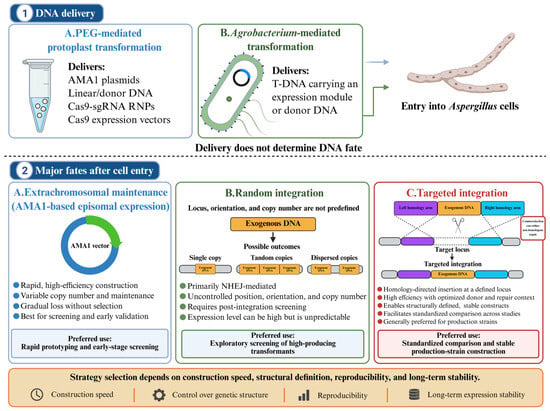
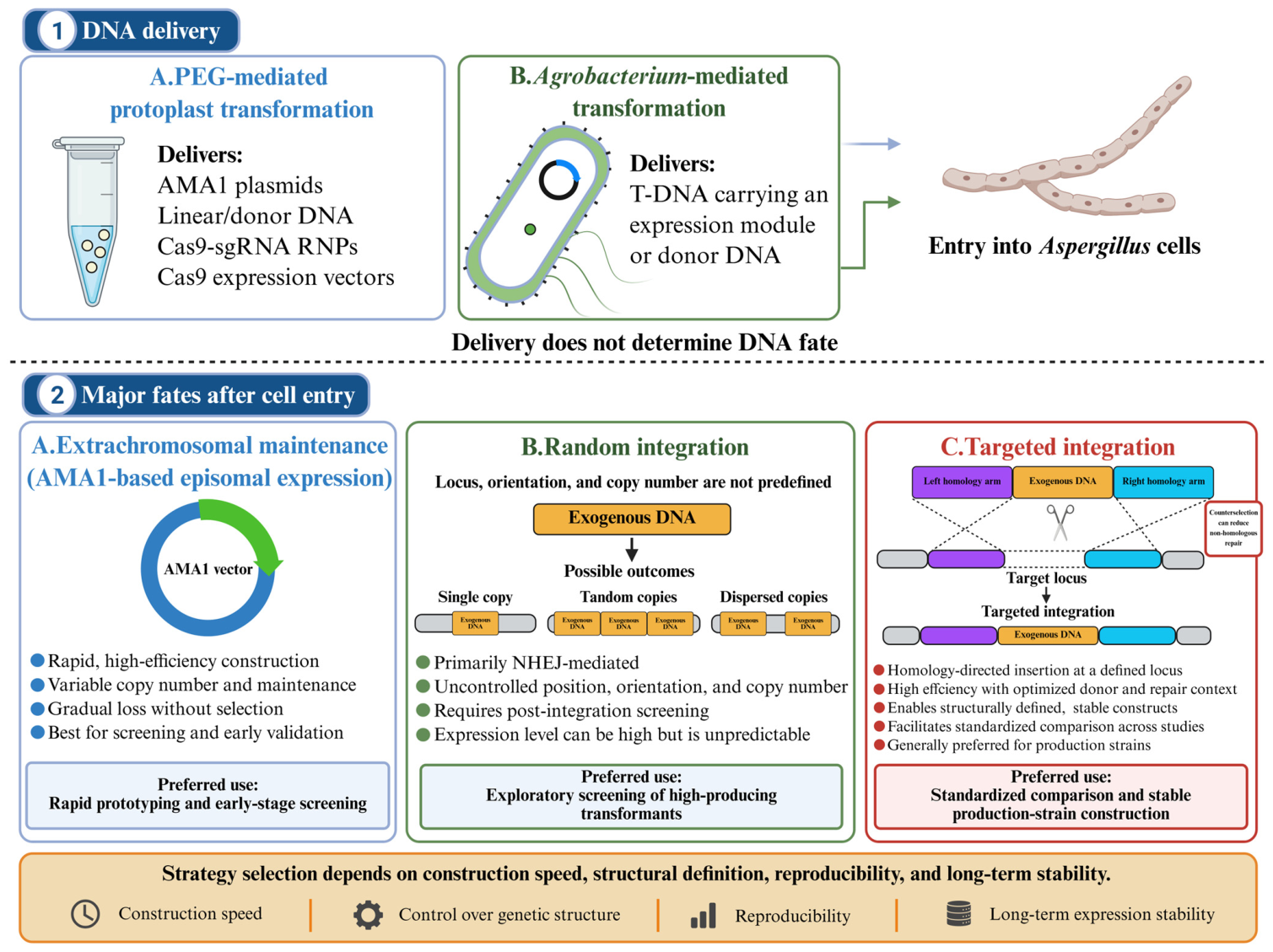
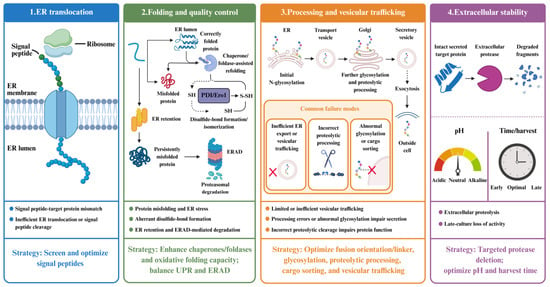
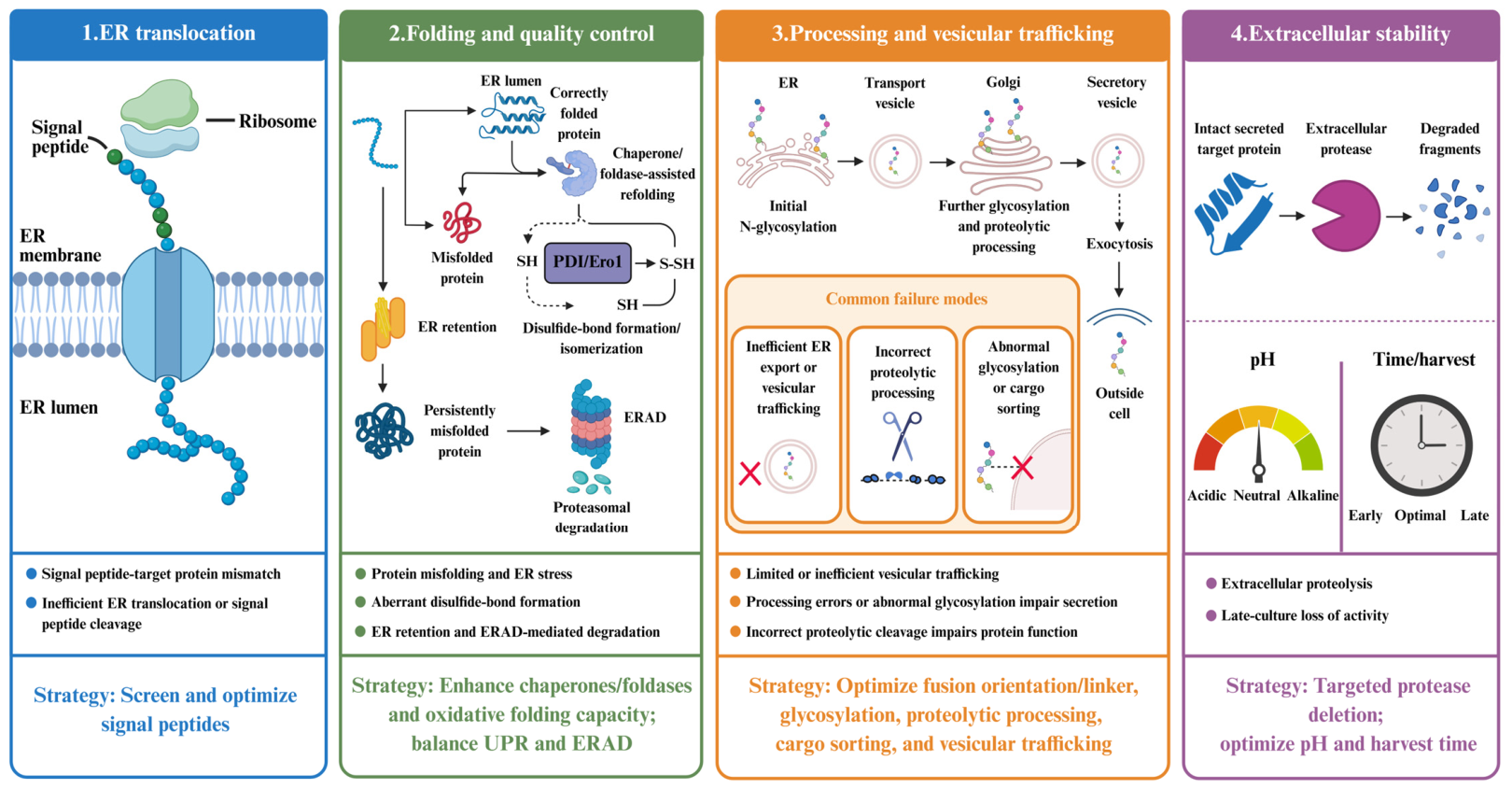

Disclaimer/Publisher’s Note: The statements, opinions and data contained in all publications are solely those of the individual author(s) and contributor(s) and not of MDPI and/or the editor(s). MDPI and/or the editor(s) disclaim responsibility for any injury to people or property resulting from any ideas, methods, instructions or products referred to in the content. |
© 2026 by the authors. Licensee MDPI, Basel, Switzerland. This article is an open access article distributed under the terms and conditions of the Creative Commons Attribution (CC BY) license.