


Abstract
The increasing penetration of renewable energy sources (RESs), such as solar and wind power, introduces significant operational and economic challenges due to their variability and the rising frequency of negative day-ahead electricity price hours in recent years. Negative price conditions lead to substantial revenue losses when wind turbines deliver power during hours of negative prices. This study combines mixed-integer linear programming (MILP) optimization of pumped hydro storage (PHS) operation with a revenue assessment of a 140 MW wind farm consisting of twenty Siemens Gamesa 7.0 MW wind turbines. Historical hourly day-ahead prices for 2024 and measured wind data are used to quantify PHS market revenue and the revenue and energy effects of a prescribed wind-curtailment rule. Three scenarios are analysed: PHS revenue alone, PHS revenue plus wind revenue without curtailment, and PHS revenue plus wind revenue with wind injection set to zero during negative-price hours. The results show that injecting wind power during negative-price hours reduces the wind farm’s annual day-ahead market revenue. Price-based curtailment avoids these negative-revenue injections, while optimized PHS scheduling exploits temporal price differences through pumping and generation. These findings concern market-participant revenues under exogenously specified historical prices; they do not quantify effects on market-clearing prices, grid balancing, or system reliability.
1. Introduction
The rapid expansion of wind power capacity in recent years has significantly increased the electricity production variability and uncertainty of electricity systems. Due to winds’ fluctuating availability, wind and other renewable energy sources (RESs) frequently lower day-ahead market prices and contribute to price volatility, which includes prolonged periods of very low or negative market prices [1,2]. The merit-order effect, where wind displaces conventional baseload generators, amplifies these price fluctuations and reduces revenue predictability for market participants [3,4]. The consequences are especially visible during periods of low demand and high RES generation, which eventually lead to frequent occurrences of negative electricity prices, especially visible in countries with substantial wind or solar installed capacity [2,5].
Recent studies have increasingly addressed the optimization and market-oriented scheduling of wind-based energy systems under uncertain operating conditions. For example, Zhu et al. (2025) [6] proposed a day-ahead planning and scheduling framework for wind-storage systems based on multi-scenario generation and Conditional Value at Risk (CVaR), emphasizing the role of uncertainty-aware dispatch and risk control in improving economic performance. Li et al. (2025) [7] developed a multi-objective day-ahead optimization scheduling model for active distribution networks with distributed wind and photovoltaic integration, showing that economic and operational objectives can be coordinated under uncertain renewable output. In addition, Aghamohammadloo et al. (2026) [8] investigated multi-market revenue optimization for integrated wind and hybrid energy storage systems, highlighting the importance of coordinated market participation, revenue stacking, and flexibility in maximizing the economic value of wind generation under evolving electricity market conditions.
As RES penetration levels continue to rise, the mismatch between wind production and electricity demand is reaching problematic levels, which subsequently creates an even higher need for flexibility and controllability in power system operation. This challenge is also reflected in long-term energy system studies. Large-scale optimization analyses of the European energy transition indicate that wind and solar power will become the dominant sources of electricity generation [9].
Pumped hydro storage (PHS) is known to be one of the oldest, most mature, and efficient technologies for large-scale energy storage and has proven to be one of the best technologies for integrating variable renewable energy sources into future power systems. PHS has a very important role in integrating intermittent RES into the power grid and does so by absorbing excess electricity and releasing it during peak demand [10,11]. With its high, non-degradable round-trip efficiency (from 70% to 85%), PHS systems provide operational flexibility and economic viability under increasingly volatile market conditions [12,13,14,15,16].
Among grid-scale energy storage technologies, lithium-ion batteries are currently widely used because of their high energy density, fast response, and modular scalability, which makes them particularly suitable for short-duration balancing applications [17]. However, review studies also emphasize that their economic and material constraints become more pronounced when moving toward larger-scale and longer-duration storage applications [17,18]. In contrast, mechanical storage technologies, such as pumped hydro storage and compressed air energy storage, are considered especially relevant for bulk and long-duration energy shifting over time scales from several hours to multiple days [19,20,21]. Within this context, pumped hydro storage retains a particular advantage as the most established large-scale storage technology, combining high installed power, long lifetime, negligible self-discharge, and proven suitability for balancing variable renewable electricity generation in real power systems [14,16,20]. These characteristics make PHS especially relevant for the type of large-scale market-based wind integration problem considered in the present study, where multi-hour storage capability and high energy output are more important than very fast short-duration response.
From a market point of view, PHS absorbs low-value or negative-valued (surplus) energy through pumping, potentially generating revenue pumping during periods of negative prices, and generates electricity during high-price periods, thereby increasing revenue and enhancing system reliability and stability. When day-ahead prices are negative, electricity consumption when pumping water into the upper reservoir can itself produce a positive market cash flow. This payment for electricity consumption is separate from the revenue earned through subsequent generation. Pumping nevertheless remains an electricity-consuming process. Previous research on PHS scheduling has demonstrated that mixed-integer linear programming (MILP) works very well at modelling the binary operating modes, operational constraints, and temporal coupling of reservoir dynamics that characterize PHS plants [22,23,24].
Previous studies have considered uncertainty-aware wind-storage scheduling [6], multi-market revenue optimization [8], and capacity planning of wind–PV–PHS systems [24]. These studies address different aspects of renewable generation and storage, including operating risk, market participation, and the selection of installed capacities.
The present study focuses on a retrospective Slovenian case study using 2024 day-ahead prices, measured wind data, and a commercial turbine power curve. It quantifies PHS arbitrage revenue and wind-farm revenue separately and assesses the gross revenue and energy effects of a prescribed negative-price curtailment rule. The direction of the curtailment effect follows directly from the revenue assumptions; its magnitude depends on the timing and magnitude of negative prices and their coincidence with available wind generation.
The case study evaluates PHS operation and the revenues of a 140 MW wind farm consisting of twenty Siemens Gamesa 7 MW wind turbines [25].
Choosing 140 MW as the power for the wind farm capacity follows the trajectory set by the National Energy and Climate Plan [26], which entails gradual wind power installation during the course of the following years, reaching a peak in 2030.
The wind component is modelled using a turbine-specific power curve and real hourly wind availability, while day-ahead prices are taken from 2024 market data. The proposed MILP scheduling model evaluates three scenarios:
- Standalone PHS operation;
- PHS + wind without curtailment;
- PHS + wind with price-based curtailment, where wind production is halted during negative-price hours.
This comparison quantifies PHS arbitrage revenue, wind-farm revenue, and the gross revenue and energy effects of the prescribed curtailment rule. The wind operating rule does not alter the PHS optimization.
This enables an analysis of how price volatility, negative prices, and wind variability influence PHS operation, wind utilization, and annual revenue.
This study provides the following case-specific results:
- A retrospective estimate of PHS day-ahead market revenue under the adopted technical and storage constraints, using Slovenian electricity prices for 2024.
- Monthly and annual revenue estimates for a 140 MW wind farm, calculated using measured wind data, hub-height extrapolation, and a commercial turbine power curve.
- A quantitative comparison of wind revenue and generated energy with and without prescribed negative-price curtailment, establishing the magnitude and monthly distribution of the gross revenue benefit.
This study was conducted independently. Publicly available sources were used for the PHS project information and electricity prices, while wind-speed measurements were supplied by a private company. It was not prepared in cooperation with the investor or project developer of the PHS Kozjak project [27], and it does not include any confidential technical, financial, commercial, or strategic information related to the project. All assumptions, calculations, interpretations, and conclusions presented in this paper are, therefore, solely those of the authors.
2. Materials and Methods
The case study focuses on Slovenia. In 2009, Slovenia committed to achieving a 25% share of renewable energy sources (RESs) in final energy consumption by 2020, in line with the EU Directive 2009/28/EC on the promotion of renewable energy use. This target will not be met by 2025. According to the updated National Energy and Climate Plan [26], Slovenia has set highly ambitious goals of increasing the overall RES share in gross final energy consumption to 33% by 2030, with sectoral targets of 55% for electricity generation, 45% for heating and cooling, and 26% for transport. Furthermore, the country aims to expand installed wind power capacity from the current 3 MW to 150 MW by 2030. As the share of electricity generation from intermittent and variable renewable sources grows, the plan also includes the construction of the Kozjak pumped-storage hydropower plant, with a nominal turbine capacity of 2 × 219.8 MW, 2 × 213 MW pump capacity and an effective storage capacity of 5644 MWh, which will be analysed in the following sections.
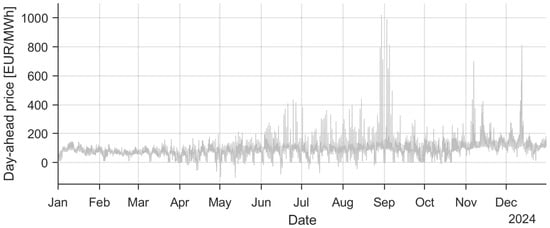
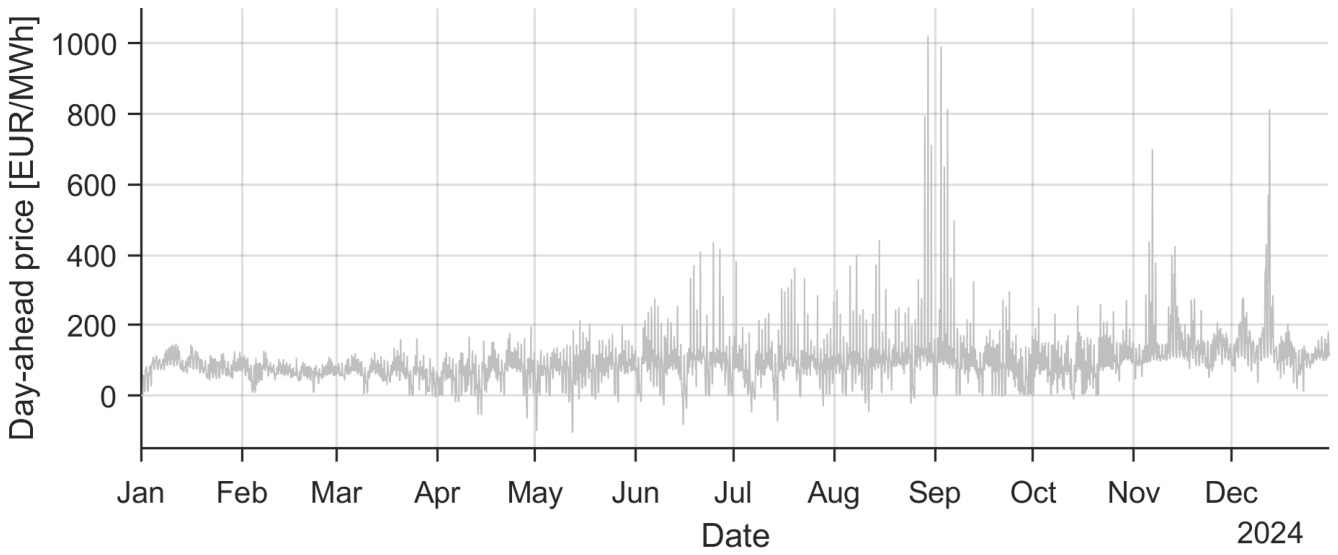
The case study evaluates PHS operation and the revenues of a 140 MW wind farm under the same historical 2024 day-ahead prices [28]. The MILP determines the PHS schedule, while wind injection is prescribed by the selected operating rule and its revenue is added to the optimized PHS revenue. The day-ahead prices used in the analysis are historical hourly market-clearing prices for the year 2024, directly obtained from BSP Southpool [28]. Therefore, no price forecasting model is used in this study, and the analysis is performed as a retrospective evaluation under realized market conditions. Hourly day-ahead prices are shown in Figure 1.
Figure 1.
Hourly day-ahead prices in Slovenia for the year 2024.
Wind speed measurements for 2024 were aggregated to hourly resolution and extrapolated from the measured height of 8 m to the hub height of Hhub = 170 m using the following standard power-law relation:
where α is the wind shear exponent, and for the purpose of this study, its value was set to α = 0.13. The available wind power was computed by applying the Siemens Gamesa 7 MW power curve interpolated in MATLAB® 2024b, yielding the hourly available wind energy Pavail(t). Wind generation is subject to the standard definition of a multi-MW turbine:
Extrapolation from 8 m to 170 m using a fixed shear exponent introduces uncertainty into the estimated hub-height wind speed. Kelly et al. (2019) [29] develop and test methods for evaluating uncertainty associated with shear-based vertical extrapolation. No site-specific uncertainty interval is assigned to the estimates in the present study. Wind-generation and revenue results therefore remain conditional on the adopted vertical wind profile.
2.1. Pumped Hydro Storage Model with Mathematical Formulation
The PHS model follows the MILP methodology optimization study of PHS Kozjak [10,20,30]. In pumped hydro storage systems, electrical energy is stored as the gravitational potential energy of water. In this study, the storage state variable V(t) represents energy-equivalent storage (MWh) rather than geometric water volume (m3), assuming constant hydraulic head and steady operating conditions. Under this assumption, hydraulic parameters are lumped into fixed efficiencies, enabling a linear energy-based reservoir balance suitable for market-oriented MILP scheduling. At the current planning stage of the PHS Kozjak project, detailed unit-specific data such as head-dependent efficiency curves, start-up cost coefficients, and partial-load operating characteristics are not publicly available. Therefore, the PHS plant is represented using aggregated technical parameters and constant efficiency assumptions.
Typical technical characteristics of PHS are shown in Table 1.
Table 1.
Typical technical characteristics of pumped hydro storage (PHS) systems [14,15,16].
Reservoir operational limits are enforced for all time steps:
Turbine and pump powers must remain within nominal bounds and be consistent with binary operating modes:
Mutual exclusivity of turbine and pump operation is ensured through
In addition, the model supports daily start-up limits, represented by
In addition, we have
with a corresponding limit for pumping mode, limiting excessive cycling.
2.2. Wind Turbine Integration and Curtailment Logic
Wind injection is bounded by the available wind power, with its value prescribed by the selected operating rule:
The revenue assessment considers the following two prescribed wind operating rules:
- No-Curtailment Regime:
Wind is always injected, even if price(t) < 0.
- 2.
- Price-Based Curtailment Regime:
The gross revenue benefit of this rule is calculated directly from the wind revenues avoided during negative-price hours. This calculation is independent of the PHS MILP.
2.3. MILP Optimisation Model
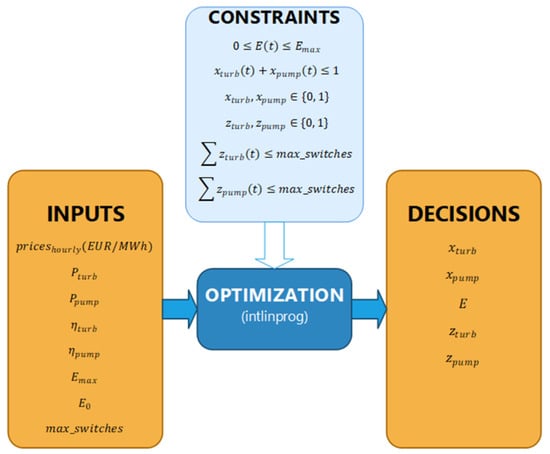
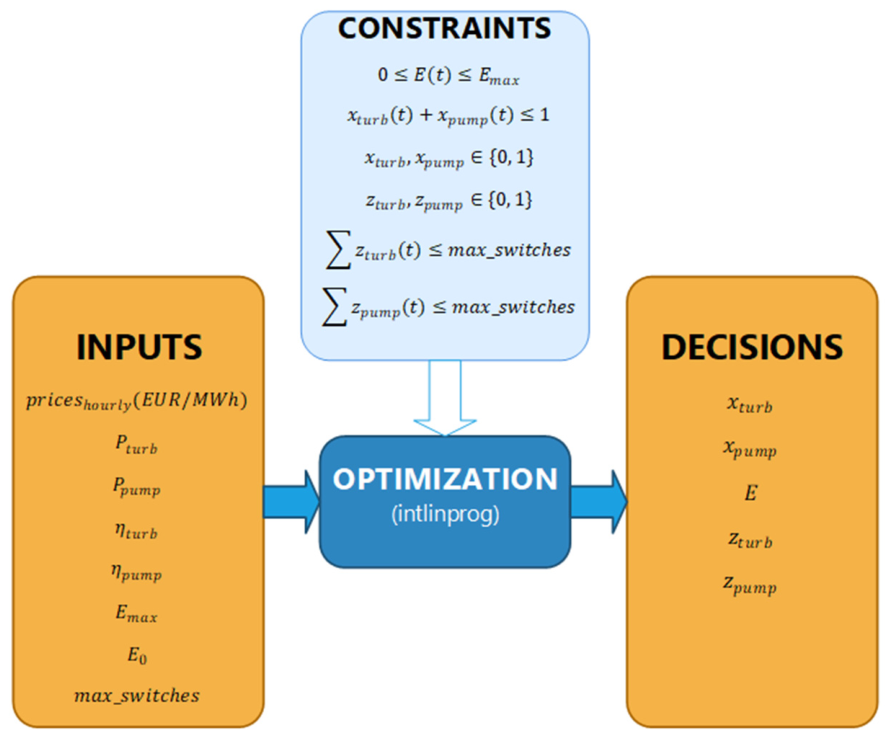
The operational planning of the hybrid PHS–wind system is formulated as a mixed-integer linear programming problem, where the objective is to determine the hourly schedule that maximizes the annual market revenue of PHS under real 2024 price conditions. For each analysed operating scenario, the MILP model is formulated over the hourly time horizon of the year 2024. The optimization variables include pumped hydro storage turbine power, pump power, reservoir state, binary operating variables for turbine and pump modes, and the corresponding startup indicators. A schematic overview of the MILP framework is shown in Figure 2.
Figure 2.
Schematic overview of the MILP framework, showing the main input parameters, operational constraints, optimization block, and decision variables.
Wind power injection is treated in a scenario-dependent manner according to the selected wind operating regime. The objective function maximizes the market-based revenue of the hybrid system, subject to storage balance, reservoir limits, turbine and pump operating bounds, mutual exclusivity, startup limitations, and scenario-specific wind operating rules. Accordingly, the optimization problem can be written in compact form as follows:
where the three terms represent turbine generation, pumping consumption, and predetermined wind power generation in scenario (s). The objective function is evaluated under the selected operating scenario, while the corresponding feasible solution space is defined by Equations (3)–(12).
The objective combines PHS revenue with wind-farm revenue under the selected operating rule. Wind injection is prescribed by Equation (11) or Equation (12), so its revenue contribution is constant with respect to the PHS decision variables. The MILP determines the PHS schedule, while wind revenue is calculated from the prescribed injection and the same hourly electricity prices. Under identical PHS parameters and constraints, the same PHS optimization applies in all three scenarios. Comparing scenarios 2 and 3 therefore isolates the revenue effect of the prescribed wind-curtailment rule.
The optimization problem is solved using MATLAB’s intlinprog, which applies a branch-and-bound strategy supported by cutting planes, heuristics, and presolve reductions to reduce problem complexity [31,32,33,34]. The implementation procedure consists of the following steps: preprocessing of hourly market prices and wind-speed data; calculation of scenario-dependent wind power; formulation of the MILP objective function and constraints; solution using MATLAB’s intlinprog; and post-processing of the resulting hourly schedules, energy balances, and revenues.
3. Results
The results are presented for three operating modes of the system:
- Pumped hydro storage (PHS) operating alone;
- A hybrid configuration with PHS and a 140 MW wind turbine farm without curtailment;
- A hybrid configuration with price-based curtailment of the wind turbine during negative day-ahead prices.
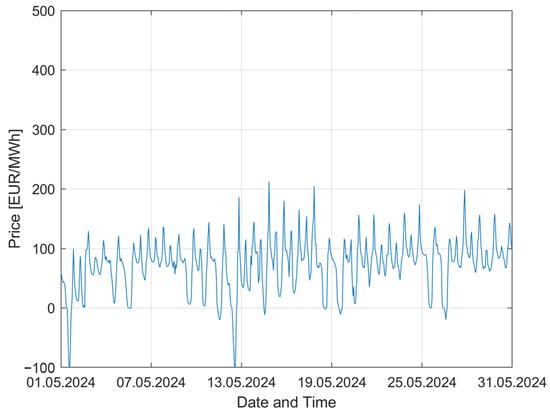
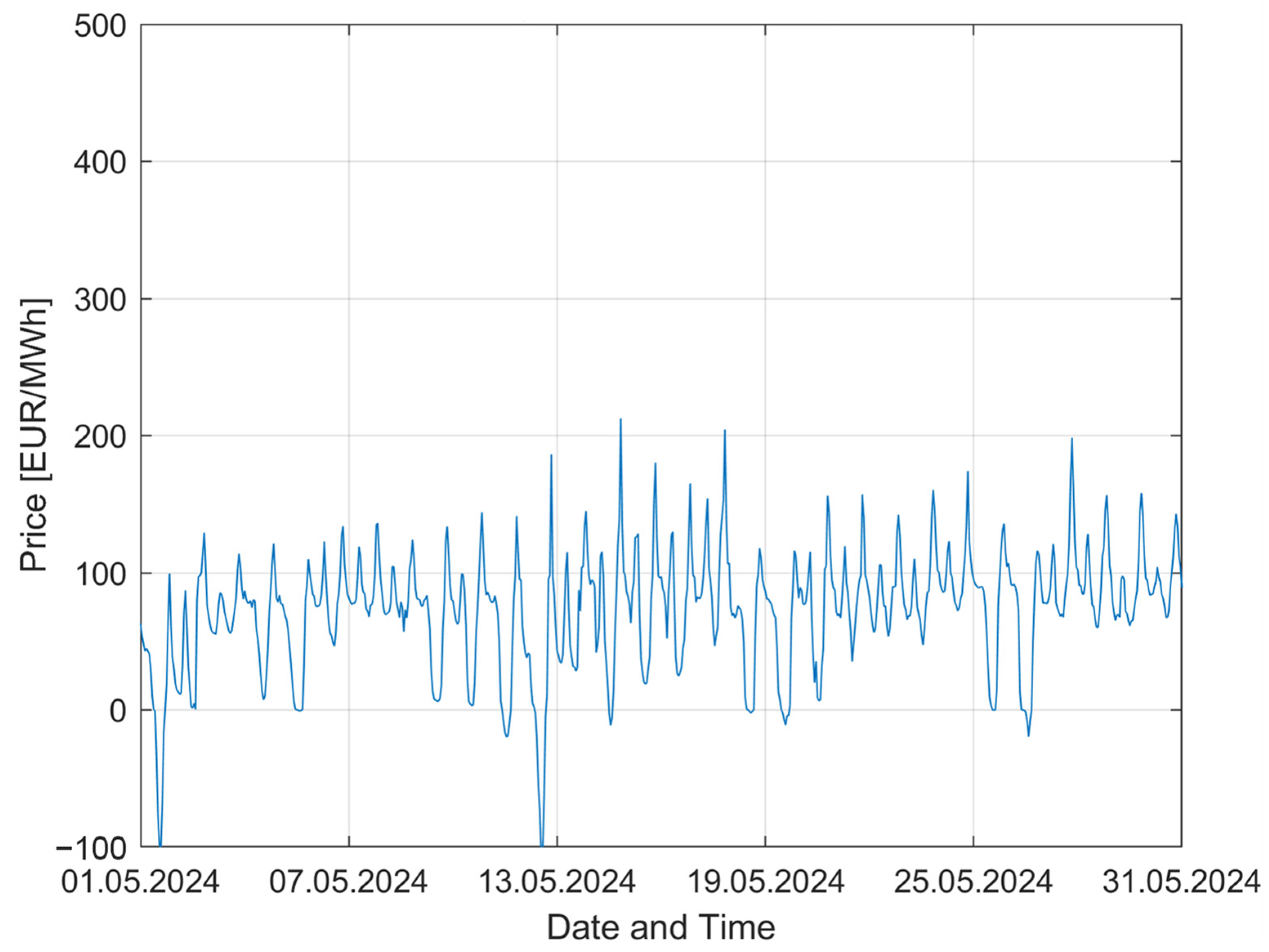
The results are analysed for the month of May 2024. Figure 3 represents day-ahead prices for the month of May. Using those prices, we calculated hourly income for the PHS operation with optimized pump and turbine regimes, wind farm revenue, and wind farm revenue when enabling curtailment logic.
Figure 3.
Hourly day-ahead electricity prices, May 2024.
As can be seen from modest price fluctuations for the month of May in Figure 3, we obtained 42 h of negative prices, which represents 5.6% of the month’s hours; therefore, during negative price hours, revenue was generated by pumping water to the higher reservoir. Negative price hours in May can be seen in Table 2.
Table 2.
Day-ahead electricity price statistics for May 2024.
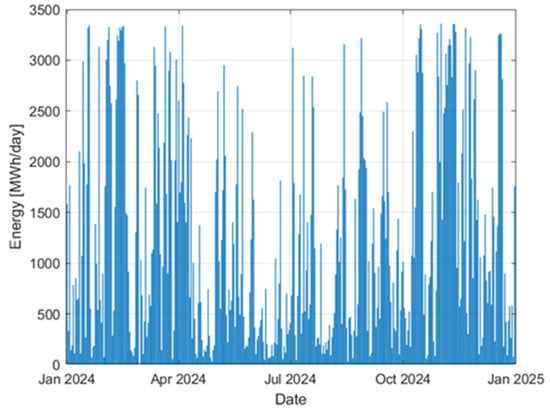
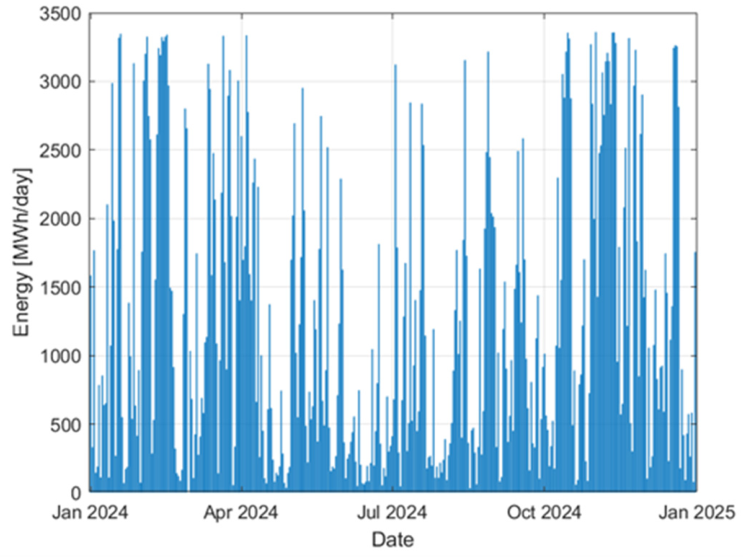
Figure 4 shows the daily production of a wind farm calculated based on wind measurements.
Figure 4.
Calculated daily wind farm energy generation based on the extrapolated measurements for 2024 and the selected power curve.
The baseline operation of the PHS plant, obtained from the MILP optimization without wind, shows a typical arbitrage pattern. The plant primarily carries out pumping operations during low-price night hours and generation operations during higher daytime prices, thereby smoothing price variability over the year. Daily revenue values remain positive for almost all days of the optimization horizon, and almost no negative-revenue days are observed in the PHS-only case. This confirms that the underlying PHS model behaves as expected and provides a robust reference against which the hybrid scenarios can be evaluated.
Next, we calculated the hourly cash flow of the wind turbine over the year 2024, obtained by combining the calculated wind farm output, which uses the wind turbine power curve [25] and location-extrapolated wind data (Figure 4) with the rebased 2024 day-ahead prices (Figure 1).
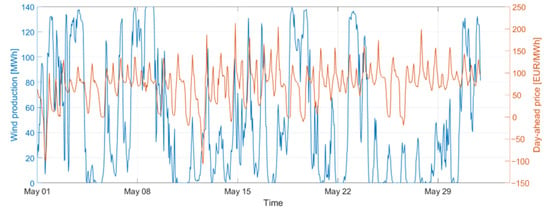
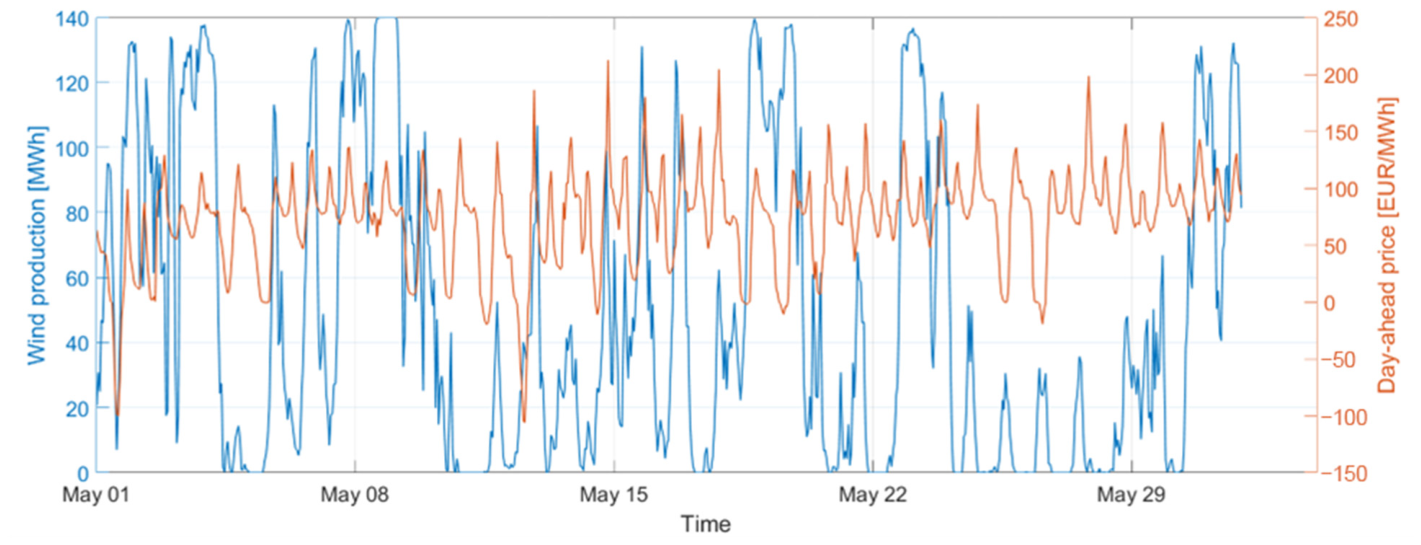
Figure 5 represents hourly wind turbine production in MWh and day-ahead prices for the month of May. It can be seen that production and day-ahead price spikes are rarely aligned, meaning that wind turbines do not produce energy when needed, but just the opposite, it produces energy when the demand is low or even when the price of energy is negative. This is evidently visible in Figure 5, where the power output is close to zero during high day-ahead electricity price periods and only rises during negative price hours.
Figure 5.
Hourly wind farm generation (blue, left axis) and day-ahead prices (orange, right axis) for May 2024.
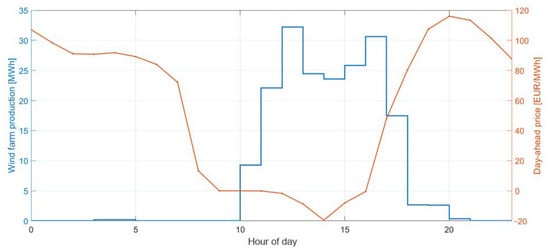
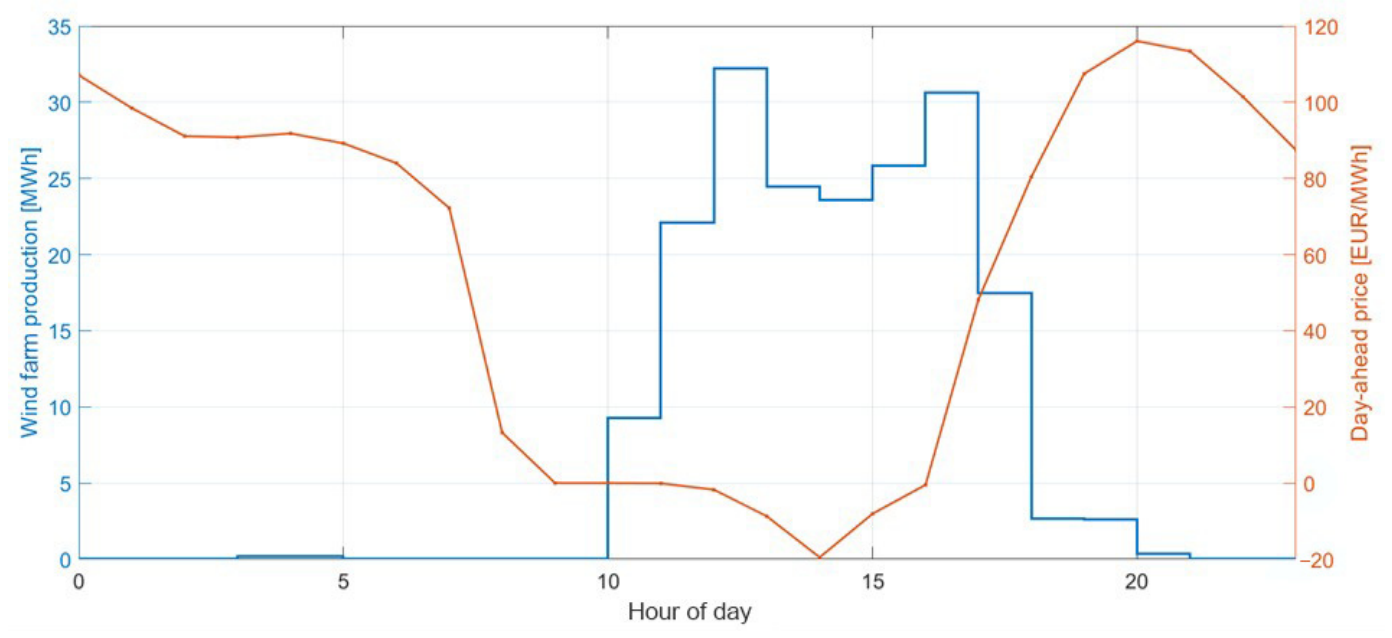
Figure 6 provides a closer view of hourly wind farm generation and day-ahead prices on 26 May 2024.
Figure 6.
Hourly wind farm generation (blue, left axis) and day-ahead electricity prices (orange, right axis) on 26 May 2024.
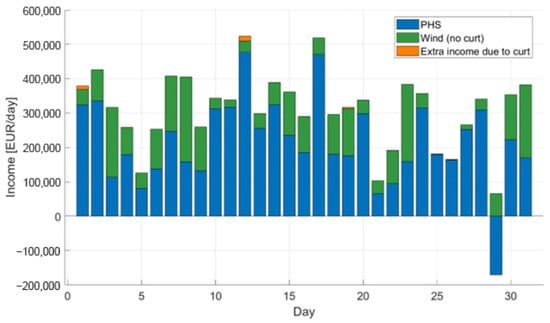
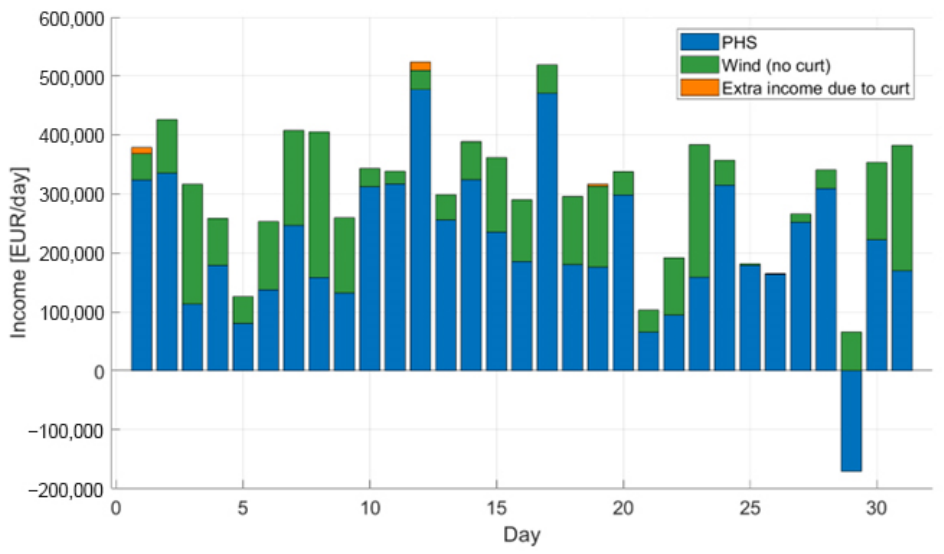
Therefore, in the last step, we added curtailment logic to the wind farm. When the day-ahead prices were negative, we shut down the wind turbines in order not to incur losses at those specific hours. In Figure 7, this extra income, due to enabled curtailment, is shown as extra revenue (with the orange colour bar). This is the revenue that would otherwise be a loss. It was calculated using
Figure 7.
Daily market revenue in May 2024: PHS revenue (blue), wind farm revenue without curtailment (green), and additional wind revenue from negative-price curtailment (orange).
Table 3 shows detailed results of PHS optimization, PHS + wind without curtailment, PHS + wind farm with curtailment, and loss due to not using curtailment logic for May 2024. Monetary values are rounded to the nearest euro. Consequently, the difference between the two displayed rounded revenue values may not exactly equal the separately rounded revenue difference.
Table 3.
Daily PHS and wind farm energy and market revenue in May 2024, with and without wind curtailment.
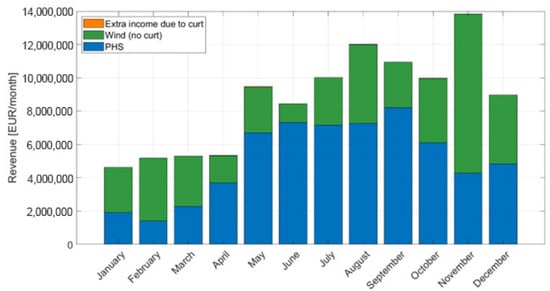
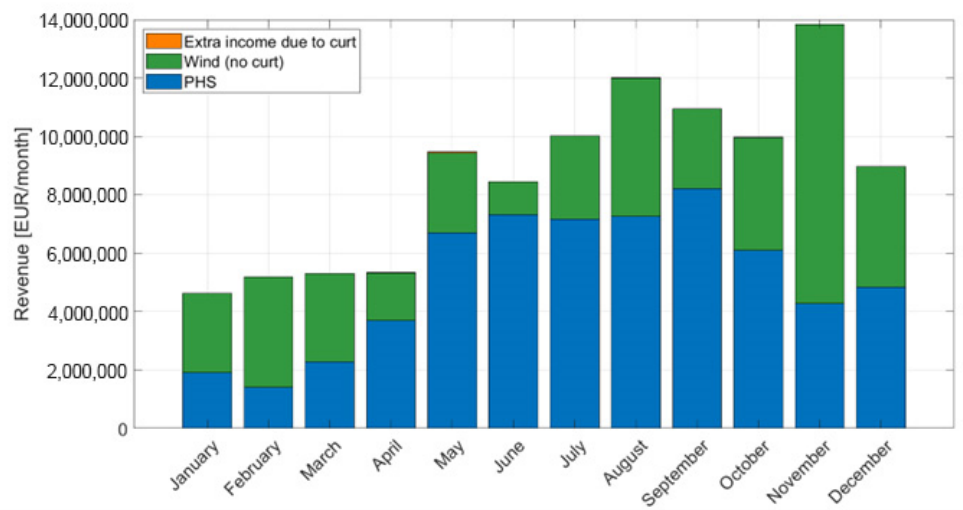
Figure 8 shows monthly revenues, while Table 4 reports monthly and annual energy and revenue totals.
Figure 8.
Monthly market revenue in 2024: PHS revenue (blue), wind farm revenue without curtailment (green), and additional wind revenue from negative-price curtailment (orange).
Table 4.
Monthly and annual PHS and wind farm energy and market revenue in 2024, with and without wind curtailment.
From Table 4, it is evident that the PHS produces the most energy in the months of May, July, September, and October. The results show that year-round operation of the PHS is economically reasonable. The highest revenues occur in the summer months, as electricity price fluctuations are greatest during that time. The operation of the PHS complements the operation of wind farms well, since wind generation is higher when PHS generation is lower and vice versa. Using curtailment logic further increases the revenue from wind farms, especially in the spring and summer months.
4. Discussion
Lorenzo Dambrosio et al. conducted a comprehensive multi-objective sensitivity analysis of a wind turbine equipped with a pumped hydro storage system using a reversible hydraulic machine, commonly referred to as a Pump as Turbine (PAT). Their research introduced an innovative wind system configuration that eliminates or significantly reduces the need for battery storage by enabling bidirectional operation of a single hydraulic machine. By reversing the impeller’s rotation, the PAT operates either in pumping or generating mode, allowing flexible energy storage and recovery. The primary objective of their study was to assess the robustness of different PAT configurations under stochastic variations in wind speed and AC generator power, identifying solutions that maintain stable performance under uncertain operating conditions [12].
While the study by Dambrosio et al. focused on component-level sensitivity and hydraulic-machine-based storage concepts, the present work extends the scope of analysis to a system-level, market-oriented framework. In contrast to idealized or probabilistic wind scenarios, this study employs real hourly wind measurements from a selected location in Slovenia and applies a turbine-specific power curve corresponding to wind turbines planned for installation under national development strategies. Furthermore, technical characteristics of a large-scale pumped-storage hydropower plant scheduled for construction by 2030 according to the National Energy and Climate Plan are incorporated. This enables an assessment that reflects realistic operational constraints, storage capacities, and market participation conditions.
In line with findings reported by Kulpa et al. [35], which emphasize that pumped hydro storage cannot be evaluated solely through energy price arbitrage, the results of this study confirm the strategic importance of storage flexibility in systems with a growing share of intermittent renewable energy sources. The optimization results demonstrate that pumped hydro storage significantly benefits from negative electricity price periods by converting excess low-value electricity into stored potential energy. At the same time, uncontrolled wind power injection during negative-price hours leads to direct revenue losses, reinforcing observations from earlier market studies on the merit-order effect and price volatility induced by wind generation [1,4].
The case study quantifies PHS arbitrage revenue and wind-farm revenue under the same historical price series. The gross annual benefit of wind curtailment is 75,942 EUR, approximately 0.18% of wind revenue without curtailment, while wind generation decreases by 6903 MWh, approximately 1.54%. These results establish the modest magnitude of the benefit for the investigated price and wind series. The wind-curtailment calculation does not change PHS scheduling, which is optimized independently of wind injection.
The modest curtailment benefit obtained for 2024 should not be interpreted as a fixed expectation for future market conditions. If variable renewable generation expands without sufficient investment in energy storage and other sources of flexibility, negative-price events could become more frequent, longer, or more pronounced. Under such conditions, the gross revenue benefit of avoiding negative-price wind injections could increase substantially. Its magnitude would nevertheless depend on the coincidence of negative prices with available wind generation and on the costs and operational restrictions associated with curtailment. These future effects are not quantified in the present study.
Beyond its market value, the role of pumped hydro storage should also be considered from the perspective of public resilience and the continuity of vital services. In practical energy-system planning, part of the available storage capacity or operational flexibility may need to be reserved for critical infrastructure such as hospitals, emergency telecommunications, data centers, civil protection systems, and public safety services. The present study does not explicitly model reserved capacity or priority supply constraints for such services, as its main objective is to assess market-based operation under real day-ahead price conditions. Nevertheless, the obtained results indicate that large-scale pumped hydro storage can provide an important flexibility buffer that is relevant not only for economic optimization but also for broader security of supply and public interest planning.
5. Conclusions
The results represent three working regimes: optimized PHS operation using the MILP optimization algorithm, optimized PHS results with wind farm production not using curtailment, and optimized PHS results with wind farm production using curtailment.
Day-ahead prices for May are moderately fluctuating, spanning from positive 220 EUR/MWh to negative 100 EUR/MWh. This positively affects total PHS revenue, since it enables many opportunities to sell electricity at periods of high prices and profit from negative price hours; this is because PHS generates revenue when using electricity to pump water into higher reservoirs. The total PHS monthly revenue for May was 6,691,060 EUR, with 87,041 MWh of produced energy and 120,345 MWh of consumed energy.
Added to the PHS monthly revenue is wind farm revenue without using curtailment logic. The wind farm used available wind power to generate electricity based on the Siemens-Gamesa 7.0 MW turbine power curve [25]. Wind speed was extrapolated from the measured height of 8 m to a hub height of 170 m using standard power law relations. The installed wind farm power is 140 MW, in correspondence with the National Energy and Climate Plan [26]. For the historical 2024 price series and wind profile considered, price-based curtailment increases annual wind-farm revenue by approximately 76,000 EUR, corresponding to about 0.18% of the revenue without curtailment. Annual wind-energy generation decreases from 448,588 to 441,685 MWh, a reduction of approximately 1.54%. The relatively small revenue increase is an outcome of the analysis and indicates that the economic value of curtailment was modest under the conditions examined.
This increase represents a gross day-ahead market benefit under idealized assumptions. Shutdown and restart costs, transition times, and minimum shutdown durations are not included; therefore, the results do not establish the net profitability of implementing the strategy under practical operating conditions. Total wind farm revenue in May without using curtailment logic was 2,744,849 EUR while producing 36,125 MWh.
In contrast to PHS, the wind farm incurred losses when operating during negative day-ahead price periods. The logic is to implement curtailment during those hours. There were 42 negative price hours in May 2024, which cumulatively increased the revenue of PHS + wind farm using curtailment by 30,144 EUR. The total revenue was 2,774,993 while producing 34,462 MWh.
Cumulative energy production for 2024 was 842,318 MWh, and using MILP optimization, we managed to gain 61,176,976 EUR in revenue. Without using curtailment logic, the wind farm produced 448,588 MWh, yielding revenue of 42,881,164 EUR, while using curtailment produced less energy at 441,685 MWh but increased revenue to 42,957,105 EUR.
The results demonstrate the economic value of price-responsive operation for the investigated PHS–wind portfolio under historical 2024 day-ahead market conditions. PHS scheduling exploits temporal price differences, while wind curtailment during negative-price hours avoids negative day-ahead revenues from wind generation. These findings are conditional on the assumed technical parameters and exogenous price series.
The analysis does not establish effects on the frequency or magnitude of negative electricity prices, grid balancing, network stability, or security of supply. Evaluating these effects would require additional modelling of market-price formation, system-wide generation and demand, network constraints, and the relevant operational or reliability criteria.
The results show that wind farm revenue using curtailment logic aligns with day-ahead electricity market conditions. During periods of stable or positive prices, curtailment is not required, whereas under increasing price volatility, especially in summer months, negative-price hours occur more frequently and make curtailment economically beneficial.
In the context of market-based operation, the coordinated behaviour of the wind–PHS system follows system needs reflected through electricity prices. When electricity generation exceeds demand and prices become low or negative, pumped hydro storage consumes electricity for pumping, thereby reducing surplus energy in the system. Conversely, when electricity becomes scarce and prices increase, the system generates electricity, supplying energy back to the grid.
While the present study does not include a detailed power system model, such price-driven operation represents system-supportive behaviour that contributes to balancing supply and demand at the market level. Future research should extend the model by incorporating power system constraints and dynamic stability analysis in order to quantify these effects more explicitly. Particular emphasis will be placed on hourly-resolution modelling of electricity generation, storage, and demand in order to assess the combined impact of new renewable capacities and storage facilities on system autonomy, market behaviour, and grid stability. Such analyses will enable a more comprehensive evaluation of long-term energy transition pathways and support strategic planning of future investments in flexible generation and storage technologies. We should also examine the role of pumped hydro storage in ensuring the continuity of vital services and critical infrastructure, including the possible reservation of part of the available storage capacity or flexibility for emergency supply and security of supply purposes.
Author Contributions
Conceptualization, M.F. and A.R.; methodology, M.F. and A.R.; validation, M.F. and A.R.; formal analysis, M.F. and A.R.; investigation, M.F.; data curation, M.F., A.R., and G.B.; writing—original draft preparation, M.F. and A.R.; writing—review and editing, M.F., A.R., and G.B. All authors have read and agreed to the published version of the manuscript.
Funding
This research received no external funding.
Institutional Review Board Statement
Not applicable.
Informed Consent Statement
Not applicable.
Data Availability Statement
The wind-speed measurements used in this study were supplied by a private company and are not publicly available because the provider does not permit their public disclosure. The sources of the electricity-price data and PHS project information are cited in the manuscript.
Conflicts of Interest
The authors declare no conflicts of interest.
Abbreviations
The following abbreviations are used in this manuscript:
| AC | Alternating current |
| MILP | Mixed-integer linear programming |
| MW | Megawatt |
| MWh | Megawatt hour |
| PHS | Pumped hydro storage |
| PV | Photovoltaic |
| RES | Renewable energy sources |
| PAT | Pump as turbine |
References
- Woo, C.K.; Horowitz, I.; Moore, J.; Pacheco, A. The impact of wind generation on the electricity spot-market price level and variance: The Texas experience. Energy Policy 2011, 39, 3939–3944. [Google Scholar] [CrossRef] [Scilit]
- Brancucci Martinez-Anido, C.; Brinkman, G.; Hodge, B.-M. The impact of wind power on electricity prices. Renew. Energy 2016, 94, 474–487. [Google Scholar] [CrossRef] [Scilit]
- Pereira, A.J.C.; Saraiva, J.T. Long term impact of wind power generation in the Iberian day-ahead electricity market price. Energy 2013, 55, 1159–1171. [Google Scholar] [CrossRef] [Scilit]
- Ketterer, J.C. The impact of wind power generation on the electricity price in Germany. Energy Econ. 2014, 44, 270–280. [Google Scholar] [CrossRef] [Scilit]
- Prokhorov, O.; Dreisbach, D. The impact of renewables on the incidents of negative prices in the energy spot markets. Energy Policy 2022, 167, 113073. [Google Scholar] [CrossRef] [Scilit]
- Zhu, J.; Chen, S.; Ji, C. Day-Ahead Planning and Scheduling of Wind/Storage Systems Based on Multi-Scenario Generation and Conditional Value-at-Risk. Appl. Sci. 2025, 15, 5386. [Google Scholar] [CrossRef] [Scilit]
- Li, W.; Li, W.; Zhang, J.; Yu, X. Multi-Objective Day-Ahead Optimization Scheduling Based on MOEA/D for Active Distribution Networks with Distributed Wind and Photovoltaic Power Integration. Energies 2025, 18, 6235. [Google Scholar] [CrossRef] [Scilit]
- Aghamohammadloo, H.; Mohammadi-Ivatloo, B.; Safdarian, A.; Tikka, V.; Aghaei, J.; Pinto Mendes, G. Multi-market revenue optimization for integrated wind and hybrid energy storage systems. Appl. Energy 2026, 402, 126773. [Google Scholar] [CrossRef] [Scilit]
- Potrč, S.; Čuček, L.; Martin, M.; Kravanja, Z. Sustainable renewable energy supply networks optimization—The gradual transition to a renewable energy system within the European Union by 2050. Renew. Sustain. Energy Rev. 2021, 146, 111186. [Google Scholar] [CrossRef] [Scilit]
- Fan, J.; Xie, H.; Chen, J.; Jiang, D.; Li, C.; Ngaha Tiedeu, W.; Ambre, J. Preliminary feasibility analysis of a hybrid pumped-hydro energy storage system using abandoned coal mine goafs. Appl. Energy 2020, 258, 114007. [Google Scholar] [CrossRef] [Scilit]
- Bamoshmoosh, A.; Catania, M.; Dipierro, V.; Ficili, M.; Fusco, A.; Gioffrè, D.; Parolin, F.; Pilotti, L.; Zelaschi, A.; Vincenti, F. Techno-economic optimization of pumped hydro storage plants integrated with floating photovoltaic. Appl. Energy 2025, 382, 125268. [Google Scholar] [CrossRef] [Scilit]
- Dambrosio, L.; Manzari, S.P. Multi-Objective Sensitivity Analysis of a Wind Turbine Equipped with a Pumped Hydro Storage System Using a Reversible Hydraulic Machine. Energies 2024, 17, 4078. [Google Scholar] [CrossRef] [Scilit]
- Chen, C.; Huang, S.; Yin, Y.; Tang, Z.; Shuai, Q. Enhancing Pumped Hydro Storage Regulation Through Adaptive Initial Reservoir Capacity in Multistage Stochastic Coordinated Planning. Energies 2025, 18, 2707. [Google Scholar] [CrossRef] [Scilit]
- Beaudin, M.; Zareipour, H.; Schellenberglabe, A.; Rosehart, W. Energy storage for mitigating the variability of renewable electricity sources: An updated review. Energy Sustain. Dev. 2010, 14, 302–314. [Google Scholar] [CrossRef] [Scilit]
- Chen, H.; Cong, T.N.; Yang, W.; Tan, C.; Li, Y.; Ding, Y. Progress in electrical energy storage system: A critical review. Prog. Nat. Sci. 2009, 19, 291–312. [Google Scholar] [CrossRef] [Scilit]
- Luo, X.; Wang, J.; Dooner, M.; Clarke, J. Overview of current development in electrical energy storage technologies and the application potential in power system operation. Appl. Energy 2015, 137, 511–536. [Google Scholar] [CrossRef] [Scilit]
- Tasneem, O.; Tasneem, H.; Xian, X. Lithium-ion Battery Technologies for Grid-scale Renewable Energy Storage. Next Res. 2025, 2, 100297. [Google Scholar] [CrossRef] [Scilit]
- Elalfy, D.A.; Gouda, E.; Kotb, M.F.; Bureš, V.; Sedhom, B.E. Comprehensive review of energy storage systems technologies, objectives, challenges, and future trends. Energy Strategy Rev. 2024, 54, 101482. [Google Scholar] [CrossRef] [Scilit]
- Schoenung, S.; Hassenzahl, W. Long-vs. Short-Term Energy Storage Technologies Analysis A Life-Cycle Cost Study A Study for the DOE Energy Storage Systems Program; Sandia Report SAND; Sandia National Laboratories: Albuquerque, NM, USA, 2003. [Google Scholar]
- Barbour, E.; Wilson, I.A.G.; Radcliffe, J.; Ding, Y.; Li, Y. A review of pumped hydro energy storage development in significant international electricity markets. Renew. Sustain. Energy Rev. 2016, 61, 421–432. [Google Scholar] [CrossRef] [Scilit]
- Zhang, X.; Gao, Z.; Zhou, B.; Guo, H.; Xu, Y.; Ding, Y.; Chen, H. Advanced Compressed Air Energy Storage Systems: Fundamentals and Applications. Engineering 2024, 34, 246–269. [Google Scholar] [CrossRef] [Scilit]
- Cao, M.; Hu, Z.; Cai, J. Optimal scheduling of pumped storage hydropower plants with multi-type of units in day-ahead electricity market considering water head effects. Front. Energy Res. 2023, 11, 1326068. [Google Scholar] [CrossRef] [Scilit]
- Favaro, P.; Gobert, M.; Toubeau, J.-F. Multi-fidelity optimization for the day-ahead scheduling of Pumped Hydro Energy Storage. J. Energy Storage 2024, 103, 114096. [Google Scholar] [CrossRef] [Scilit]
- Li, Y.; Li, O.; Wu, F.; Shi, L.; Ma, S.; Zhou, B. Coordinated multi-objective capacity optimization of wind-photovoltaic-pumped storage hybrid system. Energy Rep. 2022, 8, 1303–1310. [Google Scholar] [CrossRef] [Scilit]
- Siemens Gamesa. SG 7.0-170 Onshore Wind Turbine. Available online: https://www.siemensgamesa.com/global/en/home/products-and-services/onshore/wind-turbine-sg-7-0-170.html (accessed on 15 October 2024).
- Ministrstvo za Okolje, Podnebje in Energijo, Nacionalni Energetski in Podnebni Načrt Republike Slovenije 2024. Available online: https://www.energetika-portal.si/dokumenti/strateski-razvojni-dokumenti/nacionalni-energetski-in-podnebni-nacrt-2024/ (accessed on 27 April 2025).
- Uredba o Državnem Prostorskem Načrtu za Črpalno Hidroelektrarno na Dravi in Daljnovodno Povezavo ČHE–RTP Maribor. Available online: https://pisrs.si/pregledPredpisa?id=URED5745 (accessed on 24 April 2025).
- BSP Southpool. Available online: https://bsp-southpool.com/sl (accessed on 16 September 2024).
- Kelly, M.; Kersting, G.; Mazoyer, P.; Yang, C.; Hernández Fillols, F.; Clark, S.; Matos, J.C. Uncertainty in Vertical Extrapolation of Measured Wind Speed via Shear; DTU Wind Energy: Roskilde, Denmark, 2019. [Google Scholar]
- Castorino, G.A.M.; Dahlquist, E.; Kyprianidis, K.; Losi, E.; Manservigi, L.; Pinelli, M.; Renuke, A.; Spina, P.R.; Venturini, M. Optimization of sizing and operation of pumped hydro storage plants under current and future economic scenarios. J. Energy Storage 2025, 119, 116130. [Google Scholar] [CrossRef] [Scilit]
- Cornuéjols, G. Valid inequalities for mixed integer linear programs. Math. Program. 2008, 112, 3–44. [Google Scholar] [CrossRef] [Scilit]
- Achterberg, T.; Bixby, R.; Gu, Z.; Rothberg, E.; Weninger, D. Presolve Reductions in Mixed Integer Programming. INFORMS J. Comput. 2019, 32, 473–506. [Google Scholar] [CrossRef] [Scilit]
- Atamtürk, A.; Nemhauser, G.L.; Savelsbergh, M.W.P. Conflict graphs in solving integer programming problems. Eur. J. Oper. Res. 2000, 121, 40–55. [Google Scholar] [CrossRef] [Scilit]
- Berthold, T. Primal Heuristics for Mixed Integer Programs. Diploma Thesis, Technische Universität Berlin, Berlin, Germany, 2006. [Google Scholar]
- Kulpa, J.; Kopacz, M.; Stecuła, K.; Olczak, P. Pumped Storage Hydropower as a Part of Energy Storage Systems in Poland—Młoty Case Study. Energies 2024, 17, 1830. [Google Scholar] [CrossRef] [Scilit]

Disclaimer/Publisher’s Note: The statements, opinions and data contained in all publications are solely those of the individual author(s) and contributor(s) and not of MDPI and/or the editor(s). MDPI and/or the editor(s) disclaim responsibility for any injury to people or property resulting from any ideas, methods, instructions or products referred to in the content. |
© 2026 by the authors. Licensee MDPI, Basel, Switzerland. This article is an open access article distributed under the terms and conditions of the Creative Commons Attribution (CC BY) license.