


Abstract
Offshore wind is expanding globally, driven by energy security and decarbonization goals. Brazil’s world-class potential for this resource is challenged by its unique context: an already clean electricity matrix and abundant, low-cost onshore alternatives, which reduce the immediate urgency for deployment. This paper starts with a global offshore wind market analysis, understanding why the main countries pursue this technology, in contrast with Brazil’s already high share of renewable generation. The following examination focuses on Brazil’s recently approved new offshore wind framework and the governance-related issues, revealing that the legislative process was distorted by unrelated riders mandating costly, non-competitive energy procurement. These riders threatened to absorb future market growth, undermining competition and jeopardizing the emergence of the entire offshore wind industry. While presidential vetoes of these riders were essential to preserve this opportunity, remaining market distortions still favor mature technologies. The study concludes that Brazil’s primary barrier to offshore wind is not technical or resource-based but institutional: the need for stable, transparent governance to foster a truly competitive and predictable policy environment.
1. Introduction
The global expansion of offshore wind energy has emerged as a strategic response to intertwined challenges of energy security, climate change, and industrial development. Since 2010, installed capacity has increased more than twentyfold, projected to reach 83.2 GW by the end of 2024, driven primarily by investments in China, the United Kingdom, and Germany. These countries have adopted deliberate policies to foster offshore wind, even with its historically higher costs, viewing it as a central pillar for decarbonizing their energy systems and achieving geopolitical resilience.
This global momentum, however, unfolds within diverse national contexts, giving rise to distinct transition pathways. The academic literature on energy transitions has extensively documented the challenges of displacing fossil-fuel incumbency in developed nations. Less explored are the unique dynamics within developing countries that already possess a highly renewable electricity portfolio. Brazil presents such a case: with 93% of its electricity generated from clean sources in 2023, the classic decarbonization driver for adopting higher-cost technologies is substantially weaker. This context raises critical questions about the rationale of introducing a capital-intensive technology like offshore wind when abundant, low-cost onshore wind and solar resources are available.
This paper aims to provide an in-depth analysis of Brazil’s attempt to establish an offshore wind industry at this critical juncture. The analysis seeks to inform policymakers and stakeholders by examining the international drivers for offshore wind, evaluating the particularities of the Brazilian context, and, most critically, assessing the implications of recent legislative developments—specifically the insertion and partial veto of unrelated riders—on the future competitiveness and feasibility of offshore wind projects in the country.
To analyze these dynamics, this paper draws on theories from the political economy of energy transitions. Specifically, it employs the concept of carbon lock-in, which explains how energy systems based on fossil fuels tend to persist due to reinforcing technological, institutional, and behavioral mechanisms. We argue that legislative riders, such as the ones observed in Brazil, function as a form of institutional lock-in, designed to protect incumbent assets and interests. Furthermore, we frame this legislative process through the lens of regulatory capture and interest group politics, where well-organized groups seek to influence policy to secure concentrated benefits, often at the expense of diffuse public interests and the competitiveness of new technologies. This framework allows for an analysis that goes beyond the technicalities of the law to uncover the underlying political forces shaping Brazil’s energy future.
Through this analysis, we reveal the profound impact that legislative governance can have on the trajectory of a country’s energy transition, demonstrating that Brazil’s main challenge is not resource scarcity but the institutional quality of its policymaking process.
The central contribution of this paper lies in analyzing the institutional governance of energy transitions within systems that already possess a highly renewable electricity matrix. Rather than merely evaluating the technical or economic feasibility of offshore wind or providing a disconnected international overview, this study uses the global-to-national contrast as an empirical foundation to investigate a broader political economy question. Specifically, it demonstrates how legislative distortions and regulatory capture by incumbent energy sectors can create institutional barriers that crowd out emerging clean technologies. The primary focus is therefore shifted from resource availability to the institutional quality and coherence of the policymaking process.
2. Analytical Framework and Methodology
This study employs a qualitative research design to analyze the development prospects for offshore wind energy in Brazil, starting from the country’s favorable status in terms of renewable electricity compared to the leading offshore wind markets. In the sequence, the legal framework is detailed, revealing several mandatory procurements for other technologies approved in the same law. The consequences of these mandates are then assessed by analyzing their impact on the country’s supply-demand structural balance of electricity.
2.1. Comparative Case Study Analysis
The research first establishes the global context for offshore wind development through a comparative analysis of the world’s three leading markets: China, the United Kingdom, and Germany. This approach allows for the identification of key international drivers, including energy security, decarbonization, and industrial policy goals, that have underpinned successful offshore wind deployment. By examining the tailored policy approaches, governance structures, and incentive mechanisms in these mature markets, a benchmark of best practices is established. This benchmark is then used to analyze and contrast Brazil’s unique energy context, characterized by a predominantly renewable electricity matrix and the availability of low-cost onshore alternatives, thereby highlighting the country’s distinct challenges and opportunities.
For this, the study employs a qualitative research design based on a comparative case study approach and systematic policy document analysis. To evaluate the institutional and regulatory challenges of introducing offshore wind energy in a country with an already clean electricity matrix, such as Brazil, the research is guided by three core questions:
- What are the structural and geopolitical drivers underpinning offshore wind development in leading international markets?
- How do mature regulatory frameworks mitigate macroeconomic and supply chain risks in these markets?
- To what extent do legislative interventions and non-competitive mandates distort long-term energy planning and the deployment of new renewable technologies?
2.2. Policy and Documentary Analysis
The core of the analysis is based on a comprehensive review of official documents. This method allows for a detailed examination of the institutional and regulatory landscape shaping offshore wind in Brazil.
- Primary Sources: The study draws on legal and regulatory texts, most notably the recent Law No. 15,097/2025, which created the legal framework for leasing marine spaces, and the preceding Decree No. 10,946/2022. Furthermore, it utilizes technical reports and long-term energy plans from key Brazilian institutions, including the Energy Research Office (EPE), such as the Ten-Year Energy Expansion Plans (PDE) and the National Energy Plan (PNE 2050), to access official data on technical potential, cost projections, and optimal expansion pathways.
- Secondary Sources: To contextualize the national analysis, the research incorporates data and reports from international organizations like the International Energy Agency (IEA), the International Renewable Energy Agency (IRENA), the Global Wind Energy Council (GWEC) and the World Bank Group, as well as analyses from specialized energy consultancies. These sources provide crucial information on global installation trends, cost reductions, and investment forecasts.
The analysis of the legislative process of Law No. 15,097/2025 should go beyond a purely legal description, but rather to understand the underlying interests and power dynamics influencing energy policy. The analysis focuses specifically on the insertion of unrelated legislative riders, known in Brazil as jabutis.
The goal is not to interpret the law itself, but rather to assess how these legislative maneuvers impact coherent long-term planning. This allows for an examination of the potential impacts of such riders on the broader energy system, including the distortion of market competition, the undermining of least-cost expansion principles, and the “crowding out” of emerging technologies like offshore wind. By applying this lens, the study evaluates the economic and systemic consequences of political interventions in Brazil’s energy sector.
The analytical process involved coding these documents to contrast the technical and least-cost expansion paths defined by planning agencies against the non-competitive market reserves introduced during the legislative process. This method isolates the economic and structural variables required to assess the concepts of institutional lock-in and regulatory capture in the Brazilian power sector.
3. Global Drivers for Offshore Wind Development
Offshore wind deployment has accelerated in several countries due to a combination of strategic energy policies, industrial development goals, and environmental commitments. This section examines the drivers behind offshore wind investments in the three leading markets (China, the United Kingdom, and Germany), highlighting their respective motivations and policy approaches. These cases illustrate how national energy transitions are not only shaped by decarbonization targets but also by broader objectives related to energy security, technological leadership, and geopolitical realignments.
This section presents the evolution of the three major international markets and the lessons that can be learned and transferred to the offshore wind policy in Brazil.
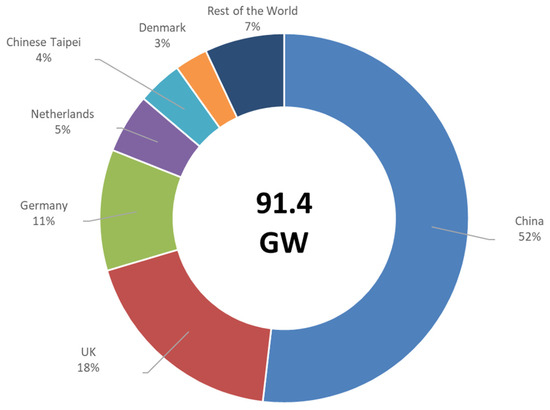
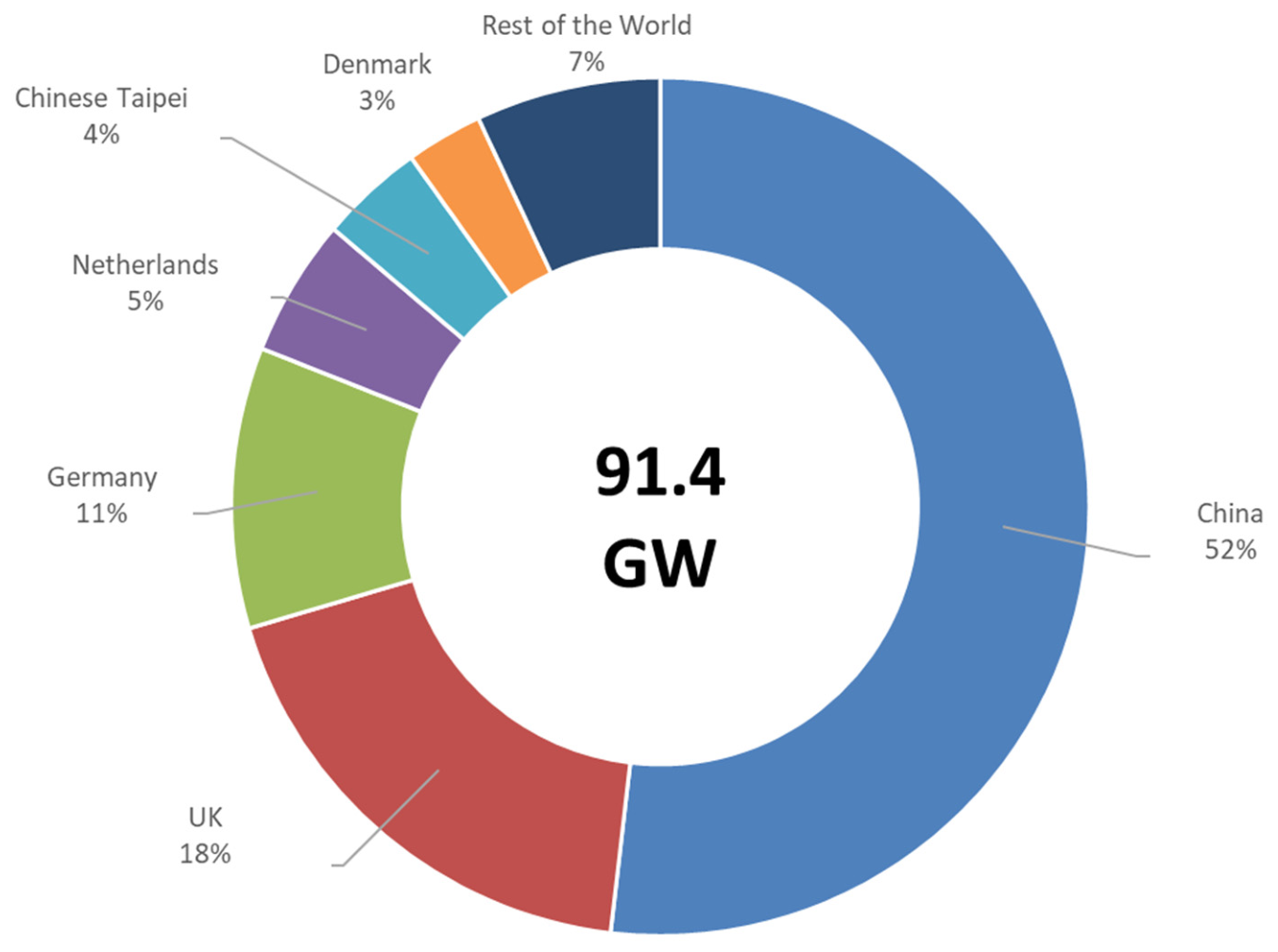
After a record year in 2023, when 10.8 GW of offshore wind capacity were added globally, installations fell to 7.7 GW in 2024 due to supply chain disruptions, inflationary pressures, and policy uncertainties in some markets. With that, total installations surpassed 80 GW, and the ranking by country remained the same among the top four, as shown in Figure 1. However, a wave of leasing auctions totaling 55 GW (mostly in China, Europe, and the United States) signals a renewed acceleration. Forecasts for 2025 project the addition of 19 GW in new capacity, corresponding to over US $80 billion in investments. China is expected to account for 65% of this growth, followed by the United Kingdom (13%) and Germany (9%) [1,2]. These figures reinforce the role of these three countries as structural leaders in the offshore wind sector.
Figure 1.
Total installations of offshore wind by country by 2025. From the authors, based on [1].
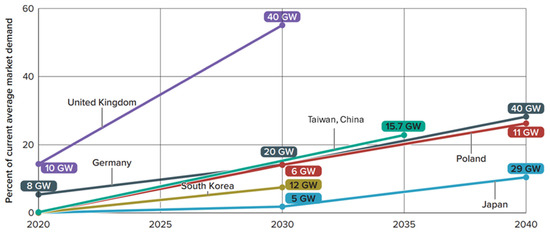
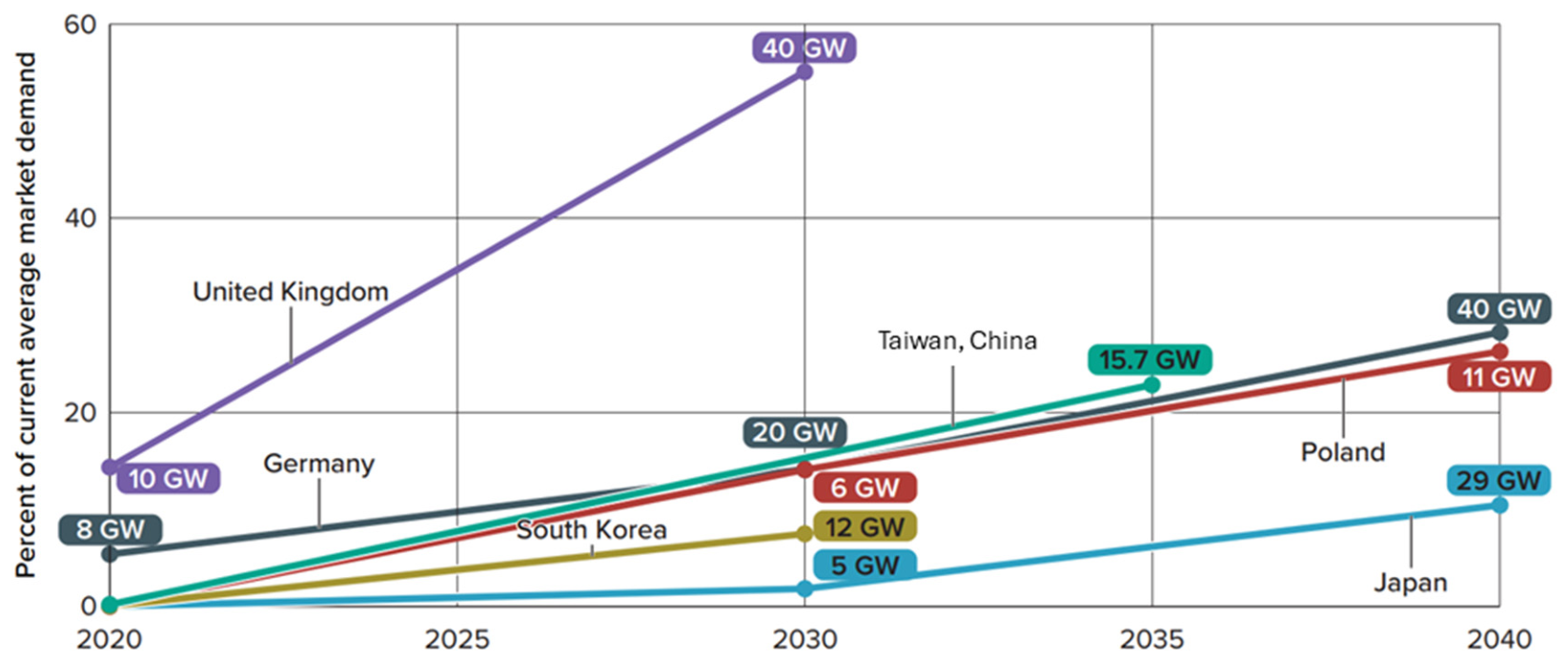
In Europe, offshore wind has increasingly become a tool of geopolitical strategy and regional resilience. In response to the Ukraine war and the need to reduce dependence on Russian fossil fuels, countries have issued multilateral declarations to coordinate offshore expansion. The Esbjerg Declaration (Denmark, Germany, the Netherlands, and Belgium) set targets of 65 GW of offshore wind and 20 GW of green hydrogen in the North Sea by 2030. The Ostend Declaration, which added France, Ireland, Luxembourg, Norway, and the UK, raised the target to 120 GW. Similarly, the Marienborg Declaration by Baltic Sea countries committed to increasing offshore wind from 2.8 GW to 19.6 GW by 2030. These coordinated goals reflect a view of offshore wind not only as a climate tool but as a central pillar of energy sovereignty and industrial competitiveness, resulting in binding targets from some countries in terms of installed capacity in the coming years, as noted in Figure 2.
Figure 2.
Examples of published national offshore wind targets, expressed as a fraction of market demand between 2020 and 2040. From [3], under CC BY 4.0 license.
When analyzing the cases of China, the United Kingdom, and Germany, it becomes clear that these countries are investing in offshore wind to decarbonize the electricity production and to foster industrial development, which does not seem to be the case in Brazil, as discussed in Section 4. The country now has a regulatory framework, but it lacks strategy, as there is no clear role or driver for the technology. The best international practices suggest, however, that Strategy should come before Policy, as the former can orient the latter, which is not the case in Brazil. In other words, Policy refers to the underlying political ambitions, laws, and agreements that will turn the Strategy into reality [3].
To provide a systematic evaluation of how international deployment dynamics contrast with the Brazilian context, the analyzed jurisdictions are examined across five structural dimensions: decarbonization need, energy security concerns, industrial policy objectives, market design, and governance structure. Table 1 synthesizes these dimensions, establishing the baseline parameters that differentiate the resource-driven context of Brazil from the policy-driven pathways of leading markets.
Table 1.
Comparative dimensions of offshore wind development across selected jurisdictions.
3.1. China
China currently holds the largest offshore wind market worldwide, accounting for 50% of global installed capacity by the end of 2025 [1]. The rapid expansion of offshore wind in China reflects deliberate governmental strategies aimed at diversifying the electricity supply, enhancing energy security, promoting technological innovation, and reducing greenhouse gas (GHG) emissions [2]. These objectives align with China’s commitment to achieving carbon neutrality by 2060 [4]. To commit to these objectives, the Chinese government has allocated several areas for offshore wind in its Exclusive Economic Zone (EEZ).
Despite its scale, offshore wind is still expected to supply only 2.5% of electricity demand in 2025. However, the share could rise to 11% by 2050, supported by growing installations and integration into coastal demand centers. Nearly 76% of China’s population lives in coastal provinces, which consume 72% of the nation’s electricity [5]. Offshore wind farms close to these regions can reduce land-use conflicts, ease transmission bottlenecks, and serve as a platform for green hydrogen development.
The offshore wind sector has benefited from favorable governmental policies, including feed-in tariffs (FiTs) that provided revenue certainty for developers until their termination in 2021 [3]. Although the termination of FiTs in 2021 slowed new additions (from 26.4 GW installed in 2021 to 6.3 GW in 2023) [1], China continues to lead global offshore wind deployment.
Geographical and demographic conditions further favor offshore wind development. Offshore wind farms located near these demand centers reduce transmission losses and mitigate land use pressures in densely populated regions. Offshore wind also supports China’s broader industrial strategy, fostering domestic manufacturing of turbines, foundations, and auxiliary components [2].
Looking forward, offshore wind is projected to supply up to 11% of China’s electricity demand by 2050, supporting national goals of strengthening energy independence, reducing fossil fuel imports, and advancing the country’s leadership in renewable energy technologies [3,4].
While China’s offshore wind expansion was initially anchored on feed-in tariffs, its trajectory offers a structural lesson for Brazil regarding spatial economic planning. China managed to bypass transmission bottlenecks by clustering offshore projects directly adjacent to its coastal major cities, which account for 72% of national electricity consumption and for 70% of total CO2 emissions [5]. In contrast, Brazil’s current expansion logic remains heavily dependent on long-distance transmission lines hauling low-cost onshore wind and solar from the Northeast to the Southeast load centers. As these transmission corridors face growing physical and economic constraints, the Chinese model suggests that offshore wind’s value proposition in Brazil should not be measured solely by its generation cost (LCOE) but by its systemic capacity to provide high-capacity-factor generation directly to coastal industrial hubs, thereby reducing long-term grid expansion costs.
3.2. United Kingdom
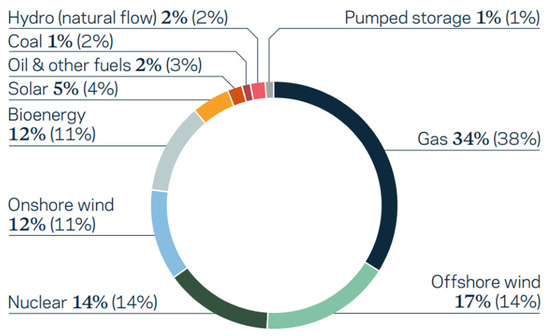
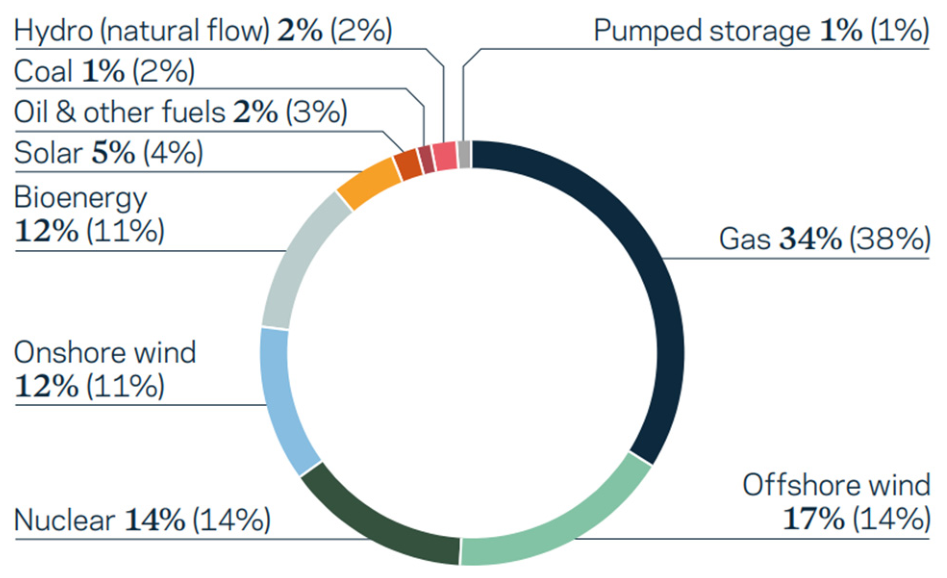
The United Kingdom has established one of the most mature and successful offshore wind markets globally. By 2024, it had almost 15 GW of offshore capacity in operation, with an additional 95 GW in the project pipeline [3]. Offshore wind expansion has been integral to the UK’s strategy for achieving net-zero carbon emissions by 2050 and decarbonizing its electricity system by 2035, as it is still heavily dependent on fossil fuels, as shown in Figure 3.
Figure 3.
2023 UK electricity generation mix (2022 comparison). From [6]. © Crown Copyright (2023).
A robust governance framework, notably through The Crown Estate and Contracts for Difference (CfD) mechanisms, has underpinned market growth. The CfD Allocation Rounds scheme is the government’s main mechanism for supporting low-carbon electricity generation by conducting energy auctions.
Six competitive allocation rounds have been conducted, progressively reducing offshore wind strike prices, which fell from £117/MWh in the first round to £37/MWh in the fourth [7].
Offshore wind has also benefited from favorable geography and political support, particularly as onshore wind has faced growing local opposition. Planning barriers and “NIMBYism” (Not in my backyard movement) have led to a 52% rejection or withdrawal rate for onshore projects [8]. In contrast, offshore development offers fewer social conflicts and has seen rapid gains in efficiency. The national capacity factor for offshore wind reached 41% in 2023 due to taller towers and larger rotors [6].
However, recent challenges have emerged. The fifth CfD round (2023) failed to contract new offshore projects, as shown in Table 2, primarily due to underestimated cost escalations following supply chain disruptions from the COVID-19 pandemic and the Russia-Ukraine war. This outcome has prompted adjustments in auction design and pricing structures for the following rounds. In fact, the sixth tender resulted in almost 5 GW of offshore wind projects, at an average price of £55/MWh.
Table 2.
Results of the UK Allocation Rounds by technology.
Despite these setbacks, offshore wind remains central to the UK’s decarbonization and energy security agenda. The sector’s continued growth will depend on maintaining investor confidence, addressing supply chain bottlenecks, and ensuring competitive auction frameworks.
The institutional evolution of the UK’s Contracts for Difference (CfD) framework provides a cautionary tale for implementation of Brazil’s offshore wind law (#15,097/2025). The failure of the UK’s fifth allocation round to secure any offshore wind bids demonstrates that even mature governance structures can break down if auction price caps fail to reflect macroeconomic realities, such as supply chain inflation and rising capital costs.
As Brazil prepares to regulate its planned offer model under the new legal framework, policymakers must avoid the temptation of setting rigid, artificially low ceiling prices based on outdated international benchmarks. Furthermore, the UK’s shift from onshore to offshore wind, largely driven by local opposition (‘NIMBYism’), presents an inverted mirror to Brazil. Since Brazil still possesses vast social and political capital for onshore expansion, offshore wind auctions cannot simply mimic the UK’s volume-driven push; they must be explicitly designed as targeted mechanisms for early-stage price discovery and local supply chain maturation.
3.3. Germany
Germany ranks third globally in offshore wind capacity, with 9.1 GW installed as of 2024. Offshore wind has been a cornerstone of the country’s Energiewende strategy, complementing the phase-out of nuclear and fossil energy. Initial support came through feed-in tariffs under the German Renewable Energy Sources Act (EEG acronym in German) EEG and annual auction volumes introduced by the WindSeeG law in 2016 [9]. Following the Ukraine crisis, Germany revised its offshore wind targets upward: 30 GW by 2030, 40 GW by 2035, and 70 GW by 2045 [10]. The 2022 amendment to WindSeeG allowed private-sector proposals, breaking with the previous top-down model. The same reform introduced dedicated auctions for offshore wind-to-hydrogen projects; six per year at 500 MW each.
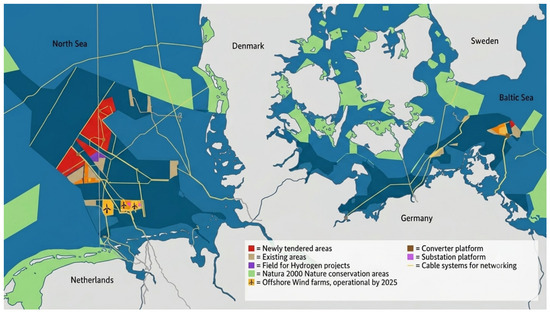
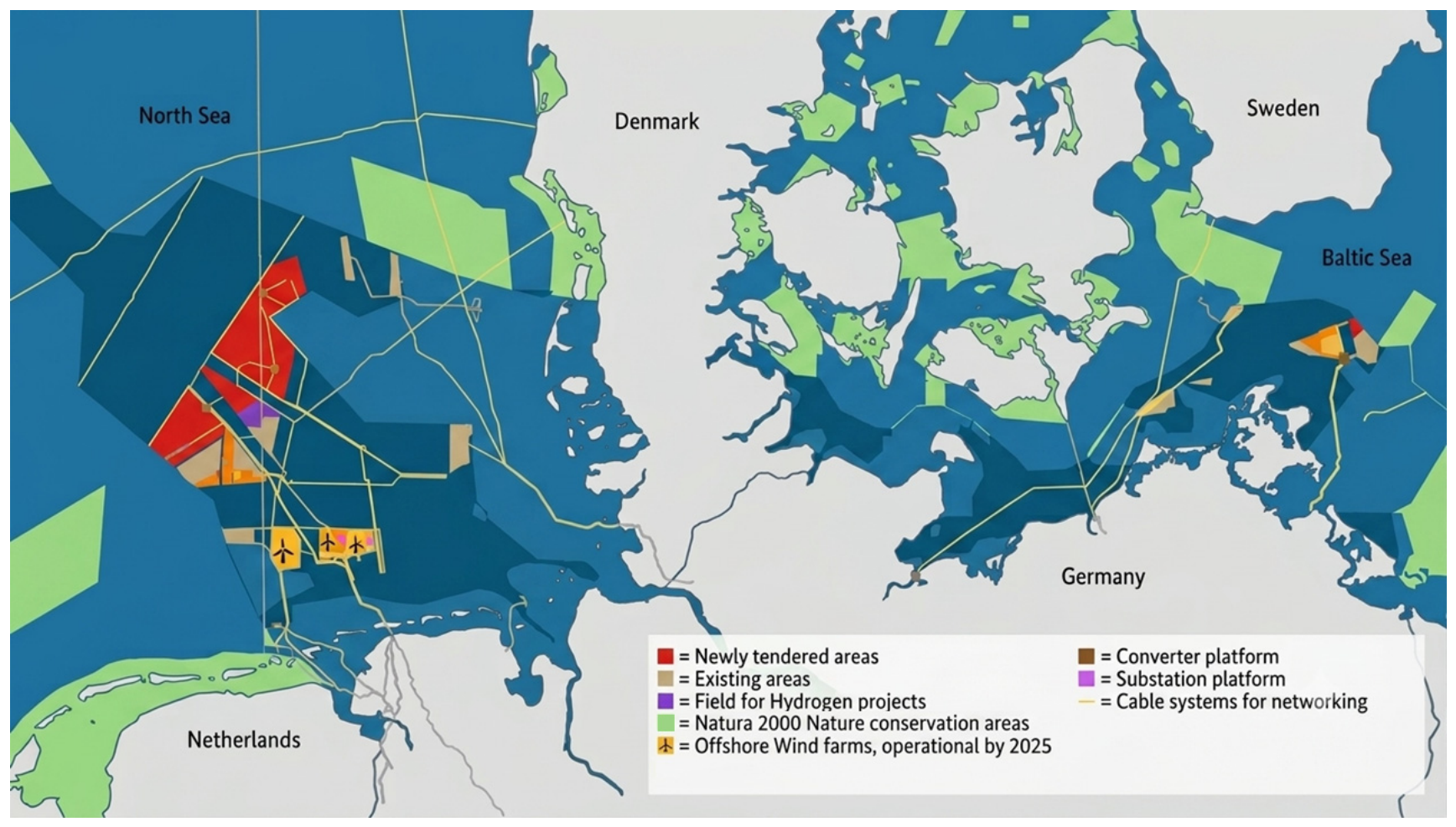
In 2024, Germany auctioned 8 GW without subsidies in the North Sea. Site planning is coordinated by the Federal Maritime and Hydrographic Agency (BSH), which evaluates environmental and technical constraints and in 2023 published a development plan identifying 36.5 GW in feasible areas [11], shown in Figure 4.
Figure 4.
Centralized planned areas for offshore wind projects in the North and Baltic Seas. Adapted from [11] © BSH.
A major anchor project is AquaVentus, a 10 GW offshore wind-to-hydrogen initiative involving over 100 partners. Located in a 100 km2 area of the North Sea, it reflects the deep integration between offshore renewables and Germany’s industrial decarbonization pathway [12].
Germany’s reliance on offshore wind showcases that the technology’s deployment in a high-cost environment can only be sustained when deeply integrated with industrial policy through sector coupling. The German deployment path is no longer just about displacing fossil generation but tied to industrial decarbonization via green hydrogen initiatives, exemplified by the AquaVentus project.
This provides an important lesson for Brazil: given that the Brazilian power grid is already 93% clean, pushing for offshore wind under a traditional power procurement logic is inherently non-competitive against cheap onshore alternatives. Therefore, following the German paradigm, Brazil’s regulatory framework must pivot away from pure electricity sector planning and explicitly align offshore space leasing with export-oriented green hydrogen hubs and maritime infrastructure. Without this strategic alignment, offshore wind in Brazil risks remaining a speculative policy exercise rather than an industrial reality.
4. Brazilian Context and Challenges for Offshore Wind Development
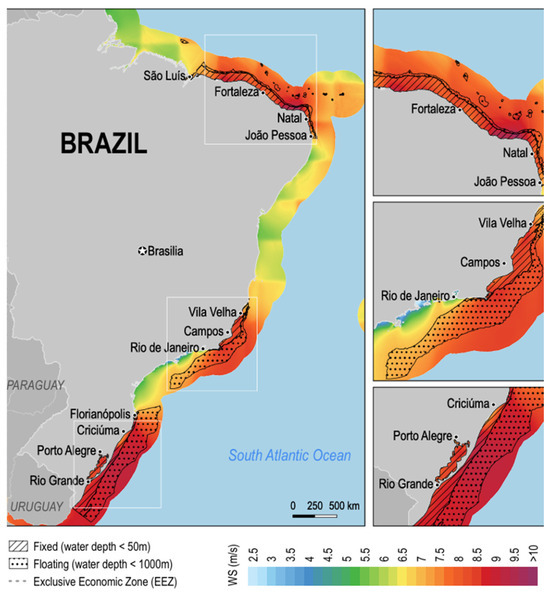
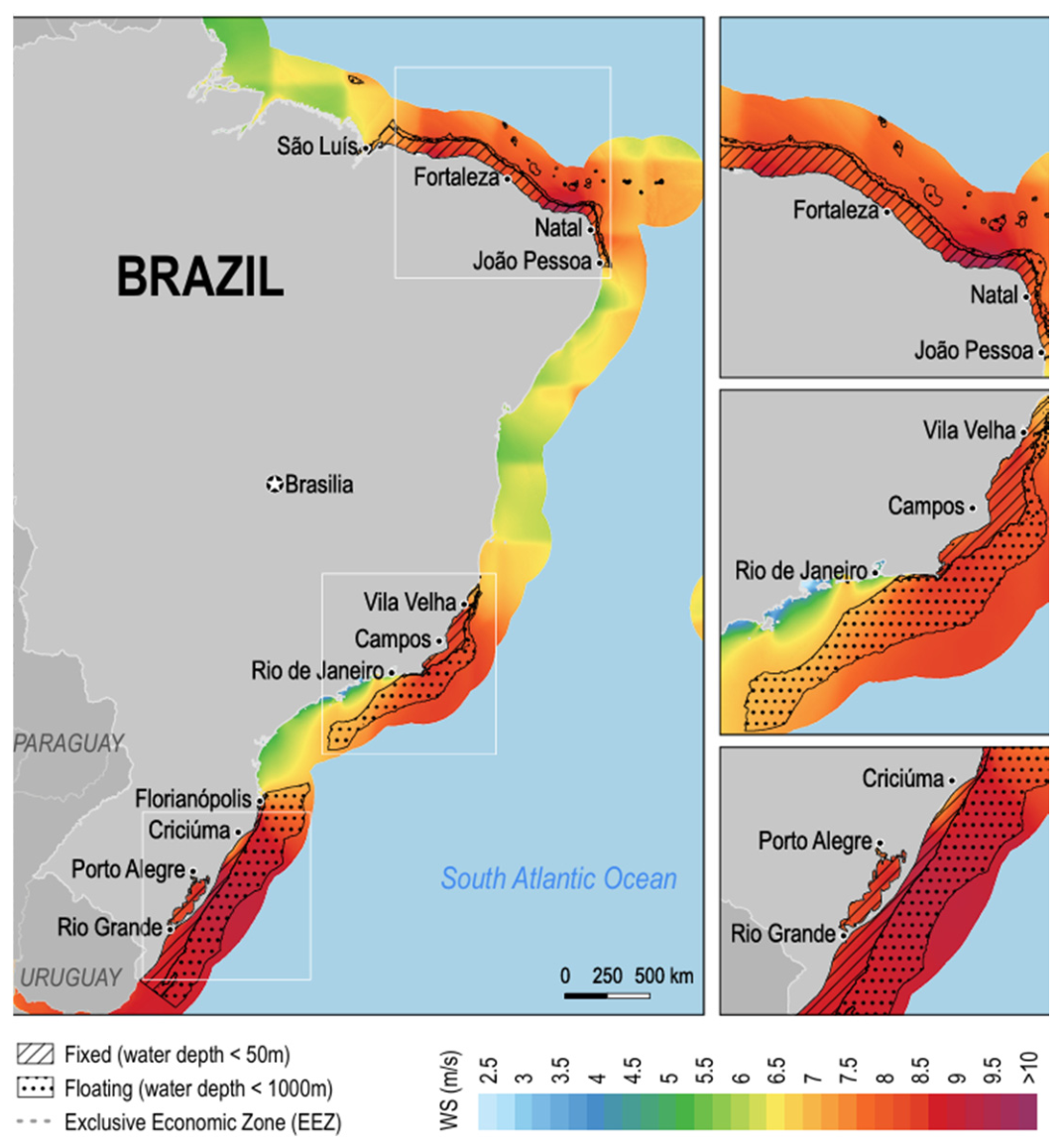
Brazil possesses one of the largest technical potentials for offshore wind energy globally, ranking first among the main emerging markets. The country’s Exclusive Economic Zone (EEZ) could accommodate more than 1.2 TW of offshore wind capacity, with three major hotspots (in terms of average wind speed), shown in Figure 5. When restricting the analysis to areas favorable to fixed foundations, the potential remains substantial, reaching 480 GW [13].
Figure 5.
Offshore wind technical potential in Brazil. From [13].
Beyond the sheer scale of the potential, Brazil’s offshore wind resources exhibit strong technical characteristics. In the Northeast region, projects could reach capacity factors of up to 67%, compared to the onshore wind average of 50% in the same region [14]. For context, the average offshore wind capacity factor is approximately 41% in Denmark and 40% in Germany, while their respective onshore averages are 35% and 23% [15,16]. These high Brazilian offshore values theoretically contribute to a lower Levelized Cost of Energy (LCOE), enhancing competitiveness.
However, these advantages must be weighed against Brazil’s highly competitive onshore renewable resources. Onshore wind and solar PV are among the cheapest sources of electricity in the country, with LCOEs of US $30/MWh, while offshore wind projects currently have a global average LCOE of US $79/MWh. Although international trends show a 62% reduction in offshore wind LCOEs between 2010 and 2024 [17], with projections indicating potential drops to US $40/MWh by 2050 [18], this gap is still insufficient to guarantee competitiveness in the current Brazilian electricity market.
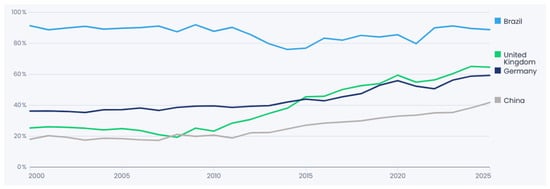
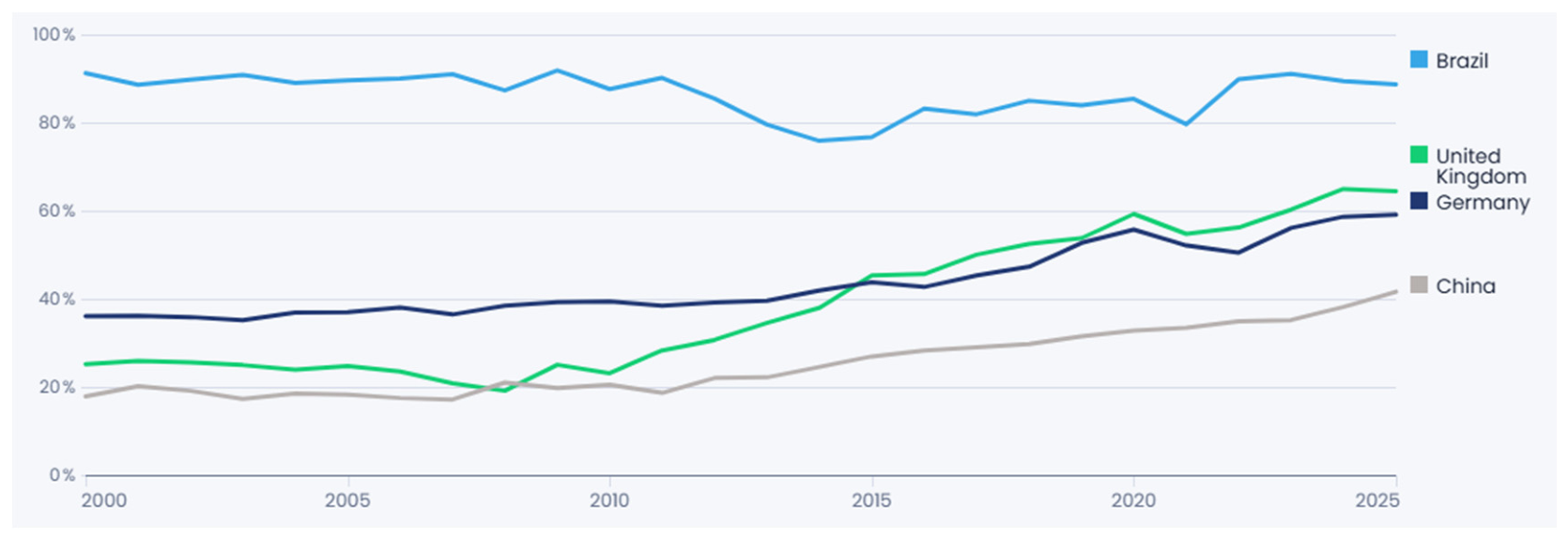
From a planning perspective, Brazil’s electricity system does not exhibit an urgent need for offshore wind deployment. As of 2025, 89% of the country’s electricity generation came from clean sources, primarily hydropower, onshore wind, and solar energy [19], leading to a historical share of clean generation, unlike the three countries analyzed in Section 3, as noted in Figure 6. The power sector accounted for just 4.4% of Brazil’s total greenhouse gas emissions in 2024 [20], a striking contrast to countries whose energy transitions rely on displacing fossil-intensive generation. Consequently, while offshore wind supports decarbonization and diversification elsewhere, in Brazil it offers little additionality in terms of climate benefits under present conditions.
Figure 6.
Historical share of clean electricity in selected countries. From [19]. Licensed under CC BY 4.0.
Moreover, the abundance of low-cost onshore resources raises questions about the opportunity cost of investing in offshore technologies. Castro and Cordeiro [21] argue that the availability of large tracts of land with high wind quality makes Brazil an outlier among emerging markets, capable of expanding renewable energy at scale without resorting to higher-cost offshore generation. In this context, subsidizing offshore projects could distort market efficiency and lead to cross-subsidization, whereby a more expensive technology is promoted at the expense of broader consumer affordability.
This is reflected in Brazil’s energy planning process. Offshore wind has been included as a candidate resource in the past four editions of the Ten-Year Energy Expansion Plans (PDEs 2029, 2030, 2031, and 2034) but was excluded from the optimal expansion path due to its relatively high cost [22]. In the longer-term National Energy Plan (PNE 2050), offshore wind is again considered non-competitive under baseline assumptions. However, in a sensitivity scenario where investment costs fall by 20%, the technology could reach 16 GW of installed capacity by 2050, partially displacing onshore wind [23]. This reinforces that offshore wind may only gain viability if supported by favorable cost trajectories or targeted policy interventions.
That said, offshore wind in Brazil may hold strategic value under certain future scenarios. Potential synergies include the integration of offshore wind with green hydrogen production, especially in port areas with export infrastructure, as the government committed to creating hydrogen hubs close to the main ports, focusing on exports, which can boost renewable generation. Brazil’s existing offshore oil and gas expertise could also be leveraged to facilitate workforce transitions and reduce supply chain risks for offshore wind deployment. These elements may justify early-stage pilot projects or targeted auctions to test technical and logistical viability without prematurely committing to large-scale rollout.
A major signal of growing interest in offshore wind is the volume of projects undergoing preliminary environmental licensing. As of early 2025, over 100 projects totaling 247 GW in capacity had been registered with IBAMA (The Brazilian Institute of the Environment and Renewable Natural Resources, a government agency in charge of the environmental licensing process) [24]. While many of these are speculative, they reflect rising private sector attention. The approval of Decree No. 10,946/2022 and Law No.15,097/2025 has further clarified site leasing rules, creating a legal foundation for project maturation. However, the absence of a structured demand signal, through auctions or long-term contracts, limits near-term bankability.
If the exceptional potential does not guarantee a competitive LCOE, and the legal framework lacks an explicit economic development strategy comparable to international markets, as discussed in Section 3, the immediate rationale for deployment remains constrained.
In summary, while offshore wind is not a near-term, least-cost solution for the expansion of the Brazilian electricity grid, its viability remains conditional upon integration with broader industrial policies. Specifically, the technology can achieve strategic relevance when coupled with export-oriented green hydrogen production and port infrastructure development, rather than serving as a primary tool for electricity matrix decarbonization.
5. Legal and Regulatory Framework for Offshore Wind in Brazil
The establishment of a clear and robust legal framework is essential for the development of offshore wind markets, particularly in emerging economies. International experience shows that regulatory uncertainty is one of the main barriers to attracting investment in large-scale offshore energy projects. Until recently, Brazil lacked a comprehensive legal and institutional foundation for managing the use of its maritime territory for electricity generation, despite having one of the world’s largest offshore wind potentials.
Recognizing this regulatory vacuum, the Brazilian government introduced Decree No. 10,946/2022 in January 2022 [25]. The decree represented an interim mechanism, allowing the initiation of area leasing processes while a definitive legal framework was being debated in Congress. It enabled developers to apply for the right to use marine areas, outlined basic coordination procedures with environmental licensing authorities, and set general principles for coexistence with other maritime uses. While limited in scope, the decree served as a transitional step that stimulated early interest from private developers and prepared the institutional environment for more structured regulation.
A major breakthrough came with the enactment of Law No. 15,097/2025, approved in January 2025 [26]. The law established Brazil’s long-awaited legal framework for the leasing of federal marine spaces for the development of offshore power generation projects. Its main contributions include:
- Definition of two leasing modalities: a permanent offer, in which developers can request specific areas, and a planned offer, where the government predefines zones to be auctioned competitively.
- Establishment of public, transparent, and competitive auctions for planned areas, ensuring cost efficiency and equitable access.
- Clear allocation of responsibilities across institutions: IBAMA is responsible for environmental licensing, the Brazilian Navy oversees navigation and maritime safety, ANTAQ (National Waterway Transportation Agency) handles port infrastructure compatibility, and ANEEL (Electricity Regulatory Agency) regulates power sector compliance.
- Integration with other public policies, including coastal management, biodiversity protection, and national defense.
By reducing uncertainty over marine space access and defining the role of each institution, the law mitigates legal and procedural risk, a prerequisite for long-term infrastructure investment. It also aligns Brazil’s offshore governance model with best practices observed in Europe, particularly the UK and Germany, where area designation, environmental studies, and auction procedures are centrally coordinated to reduce risk and accelerate deployment.
The competitive nature of the planned leasing process is especially noteworthy. Instead of allocating areas through administrative concessions or political negotiation, the law mandates public tenders. This not only encourages cost-effective project development but also opens the door to price discovery, local supply chain stimulation, and transparency in selection criteria. Such an approach mirrors frameworks seen in countries with mature offshore industries and sends a clear signal to investors about Brazil’s institutional commitment to market-based expansion.
While the law represents a foundational step forward, several challenges remain. Key technical and operational aspects were left for subsequent regulation, such as procedures for grid connection, decommissioning requirements, and technical specifications for area demarcation. The Ministry of Mines and Energy, alongside the Brazilian Electricity Regulatory Agency (ANEEL), is expected to publish complementary rules and guidelines. The efficiency, speed, and coherence with which this regulatory detailing is carried out will be decisive for transforming legal potential into bankable projects.
In parallel, the legal framework also creates the conditions for broader innovation in offshore energy use. Projects focused on green hydrogen production, offshore energy hubs, and hybrid infrastructure could be developed under the same leasing structure, provided they meet environmental and maritime requirements. This versatility positions offshore wind as part of a multifunctional offshore energy platform, extending beyond electricity generation alone.
In summary, the approval of Law No. 15,097/2025 represents a major institutional advance for Brazil’s energy sector. Together with Decree No. 10,946/2022, it lays the legal groundwork for a future offshore wind market that is transparent, competitive, and aligned with global standards. However, the success of this framework will depend on the implementation of secondary regulations, the performance of involved agencies, and the government’s ability to maintain clarity and consistency in policymaking.
7. Conclusions
This article examined the development of offshore wind energy in Brazil by integrating two complementary perspectives: the international drivers shaping its expansion in leading countries and the unique institutional and political conditions defining Brazil’s domestic potential. Through a comparative analysis of China, the United Kingdom, and Germany, the study identified the multifaceted nature of offshore wind deployment, which encompasses not only decarbonization goals but also industrial policy, energy security, and regional development agendas. A common thread in their success has been regulatory consistency, state-led coordination, and long-term policy signals that align infrastructure, market, and innovation goals.
For Brazil, given its already decarbonized electricity matrix, these international experiences indicate that offshore wind cannot be justified under traditional, cost-based power procurement planning. Instead, any future deployment depends on aligning the technology with specific industrial and regional development objectives, such as green hydrogen export hubs or port infrastructure integration, which decouple the technology from direct cost-competitiveness pressures with onshore wind and solar.
However, the legislative process also revealed severe institutional risks. The insertion of unrelated riders (jabutis) threatened to undermine Brazil’s long-standing planning logic by mandating inflexible, non-competitive capacity additions. These provisions would have absorbed nearly all available market growth for the next decade, leaving space for a maximum of only one or two offshore wind projects, a scale insufficient to foster a national supply chain. The presidential vetoes were essential to correct these distortions, but the episode exposed deep vulnerabilities in the country’s regulatory governance.
The energy transition has several challenges by itself, but in countries with already clean grids, the primary obstacles to new renewable technologies may not be economic or technical but rather lie in the policymaking. The analysis of the jabutis provides a concrete example of how legislative governance can derail sectoral development. Brazil’s challenge is not one of scarcity but of governance.
Overcoming the deep-rooted forces of institutional lock-in and mitigating the effects of interest group politics on policymaking is paramount. As a broad body of literature suggests [27,30,31], fostering innovation in clean technologies like offshore wind depends on providing a stable, credible, and long-term policy environment, precisely the kind of environment that legislative riders are designed to undermine. Therefore, Brazil’s success hinges on its ability to ensure transparent and competitive policymaking that is resilient to capture by vested interests.
Author Contributions
Conceptualization, G.P.d.P.; methodology, G.P.d.P.; validation, N.J.d.C. and E.R.; formal analysis, G.P.d.P.; investigation, G.P.d.P.; data curation, G.P.d.P.; writing—original draft preparation, G.P.d.P.; writing—review and editing, N.J.d.C. and E.R.; visualization, N.J.d.C. and E.R.; supervision, N.J.d.C. and E.R. All authors have read and agreed to the published version of the manuscript.
Funding
This research received no external funding.
Institutional Review Board Statement
Not applicable.
Informed Consent Statement
Not applicable.
Data Availability Statement
Data sets generated during the current study are available from the corresponding author on reasonable request.
Acknowledgments
During the preparation of this work, the authors utilized Gemini (https://gemini.google.com) to enhance images, readability and correct grammatical issues. After using this tool/service, the authors reviewed and edited the content as needed and takes full responsibility for the content of the publication.
Conflicts of Interest
The authors declare no conflict of interest.
References
- IRENA. Renewable Capacity Statistics 2026; International Renewable Energy Agency: Abu Dhabi, United Arab Emirates, 2026. [Google Scholar]
- Deng, X.; Yu, Y.; Xu, Y.; Zhang, X.; He, G. Offshore wind power in China: A potential solution to electricity transformation and carbon neutrality. Fundam. Res. 2024, 4, 1206–1215. [Google Scholar] [CrossRef] [Scilit] [PubMed]
- World Bank Group. Key Factors for Successful Development of Offshore Wind in Emerging Markets; ESMAP Technical Report; ESMAP: Washington, DC, USA, 2021; Available online: https://www.esmap.org/Offshore-Wind-Key-Factors (accessed on 20 June 2025).
- International Energy Agency (IEA). Energy Research Institute (ERI). China Wind Energy Development Roadmap 2050; IEA: Paris, France, 2011; Available online: https://www.iea.org/reports/technology-roadmap-china-wind-energy-development-roadmap-2050 (accessed on 21 June 2025).
- Guo, X.; Chen, X.; Sherman, P.; Wen, J.; McElroy, M. Grid integration feasibility and investment planning of offshore wind power under carbon-neutral transition in China. Nature 2023, 616, 591–598. [Google Scholar] [CrossRef] [Scilit] [PubMed]
- The Crown Estate. UK Offshore Wind Report 2023. London. 2024. Available online: https://www.thecrownestate.co.uk/our-business/marine/offshore-wind-report-2023 (accessed on 20 June 2025).
- GOV.UK. Energy Infrastructure. 2025. Available online: https://www.gov.uk/environment/climate-change-energy-energy-infrastructure (accessed on 20 June 2025).
- Harper, M.; Anderson, B.; James, P.A.; Bahaj, A.S. Onshore wind and the likelihood of planning acceptance: Learning from a Great Britain context. Energy Policy 2019, 128, 954–966. [Google Scholar] [CrossRef] [Scilit]
- Germany. Gesetz zur Entwicklung und Förderung der Windenergie auf See (Windenergie-auf-See-Gesetz-WindSeeG). 2016. Available online: http://www.gesetze-im-internet.de/windseeg/BJNR231000016.html#BJNR231000016BJNG000100000 (accessed on 27 May 2026).
- European Commission. State Aid: Commission Approves Amendments to German Scheme to Support Offshore Wind Energy Generation. 2022. Available online: https://ec.europa.eu/commission/presscorner/api/files/document/print/en/ip_22_7836/IP_22_7836_EN.pdf (accessed on 27 May 2026).
- BSH. Flächenentwicklungsplan 2023 für die Deutsche Nordsee und Ostsee. Bundesamt für Seeschifffahrt und Hydrographie: Hamburg, Germany; Rostock, Germany, 2023; Available online: https://www.bsh.de/DE/THEMEN/Offshore/Meeresfachplanung/Flaechenentwicklungsplan_2023/flaechenentwicklungsplan_2023_node.html (accessed on 14 June 2025).
- GWEC. Global Offshore Wind Report 2024; GWEC: Brussels, Belgium, 2024. [Google Scholar]
- World Bank Group. Going Global: Expanding Offshore Wind to Emerging Markets; ESMAP Technical Report; ESMAP: Washington, DC, USA, 2021. [Google Scholar] [CrossRef] [Scilit]
- Davis, N.N.; Badger, J.; Hahmann, A.N.; Hansen, B.O.; Mortensen, N.G.; Kelly, M.; Larsén, X.G.; Olsen, B.T.; Floors, R.; Lizcano, G.; et al. The Global Wind Atlas: A high-resolution dataset of climatologies and associated web-based application. Bull. Am. Meteorol. Soc. 2023, 104, E1507–E1525. [Google Scholar] [CrossRef] [Scilit]
- Hevia-Koch, P.; Jacobsen, H.K. Comparing offshore and onshore wind development considering acceptance costs. Energy Policy 2019, 125, 9–19. [Google Scholar] [CrossRef] [Scilit]
- Vogel, E.E.; Saravia, G.; Kobe, S.; Schuster, R. Onshore versus offshore capacity factor and reliability for wind energy production in Germany: 2010–2022. Energy Sci. Eng. 2024, 12, 2198–2208. [Google Scholar] [CrossRef] [Scilit]
- IRENA. Renewable Power Generation Costs in 2024 [Internet]; International Renewable Energy Agency: Abu Dhabi, United Arab Emirates, 2025; Available online: https://www.irena.org/Publications/2025/Jun/Renewable-Power-Generation-Costs-in-2024 (accessed on 5 June 2026).
- World Bank. Scenarios for Offshore Wind Development in Brazil [Internet]; World Bank: Washington, DC, USA, 2024; Available online: https://documents.worldbank.org/en/publication/documents-reports/documentdetail/099071824152541731/p179030-a6fb9723-4928-4f21-9dfe-73210dbb9b56 (accessed on 1 November 2025).
- Ember. Electricity Data Explorer. 2026. Available online: https://ember-energy.org/data/electricity-data-explorer/ (accessed on 21 June 2026).
- Crippa, M.; Guizzardi, D.; Pagani, F.; Banja, F.; Muntean, M. GHG Emissions of All World Countries—2025 Report; European Commission: Luxembourg, 2025. [Google Scholar] [CrossRef]
- Castro, N.; Cordeiro, R. O Desenvolvimento da Geração Eólica Offshore no Brasil; Gesel—UFRJ: Rio de Janeiro, Brazil, 2019; Available online: https://gesel.ie.ufrj.br/app/webroot/files/publications/55_castro_2019_10_14.pdf (accessed on 14 June 2025).
- Empresa de Pesquisa Energética (EPE). Plano Decenal de Expansão de Energia 2034; EPE: Brasília, Brazil, 2024. Available online: https://www.gov.br/mme/pt-br/assuntos/secretarias/sntep/publicacoes/plano-decenal-de-expansao-de-energia/pde-2034/relatorio_aprovado (accessed on 14 June 2025).
- Empresa de Pesquisa Energética (EPE). Plano Nacional de Energia—PNE 2050 [Internet]; EPE: Rio de Janeiro, Brazil, 2020. Available online: https://www.gov.br/mme/pt-br/assuntos/secretarias/sntep/publicacoes/plano-nacional-de-energia/plano-nacional-de-energia-2050/relatorio-final/relatorio-final (accessed on 22 February 2025).
- IBAMA. Mapas de Projetos em Licenciamento—Complexos Eólicos Offshore. 2024. Available online: https://www.gov.br/ibama/pt-br/assuntos/laf/consultas/mapas-de-projetos-em-licenciamento-complexos-eolicos-offshore (accessed on 22 February 2025).
- Brazil. Decreto nº 10.946, de 25 de Janeiro de 2022. Available online: https://www.planalto.gov.br/ccivil_03/_ato2019-2022/2022/decreto/d10946.htm (accessed on 22 February 2025).
- Brazil. Lei nº 15.097, de 10 de Janeiro de 2025. Available online: https://www.planalto.gov.br/ccivil_03/_ato2023-2026/2025/lei/l15097.htm (accessed on 22 February 2025).
- Seto, K.C.; Davis, S.J.; Mitchell, R.B.; Stokes, E.C.; Unruh, G.; Ürge-Vorsatz, D. Carbon lock-in: Types, causes, and policy implications. Annu. Rev. Environ. Resour. 2016, 41, 425–452. [Google Scholar] [CrossRef] [Scilit]
- PSR. Avaliação dos Impactos do PL 11.247/2018; PSR: São Paulo, Brazil, 2023; Available online: https://storage.epbr.com.br/2023/12/20231213-PSR-Relatorio-Impactos-do-PL-11247-v2-1.pdf (accessed on 23 February 2025).
- Agência Nacional de Energia Elétrica (ANEEL). Benefícios Tarifários Decorrentes da Prorrogação de Contratos do PROINFA; Nota Técnica nº 39/2023-SRM/SGT/ANEEL; ANEEL: Brasília, Brazil, 2023. [Google Scholar]
- Wüstenhagen, R.; Wolsink, M.; Bürer, M.J. Social acceptance of renewable energy innovation: An introduction to the concept. Energy Policy 2007, 35, 2683–2691. [Google Scholar] [CrossRef] [Scilit]
- Hochstetler, K. Political Economies of Energy Transition: Wind and Solar Power in Brazil and South Africa; Cambridge University Press: Cambridge, UK, 2020. [Google Scholar] [CrossRef] [Scilit]

Disclaimer/Publisher’s Note: The statements, opinions and data contained in all publications are solely those of the individual author(s) and contributor(s) and not of MDPI and/or the editor(s). MDPI and/or the editor(s) disclaim responsibility for any injury to people or property resulting from any ideas, methods, instructions or products referred to in the content. |
© 2026 by the authors. Licensee MDPI, Basel, Switzerland. This article is an open access article distributed under the terms and conditions of the Creative Commons Attribution (CC BY) license.