


Abstract
COVID-19 disrupted daily routines, altering eating patterns. However, it could encourage individuals to adopt healthier behaviors. While extensive research documented changes in dietary behaviors during the COVID-19 lockdown, few studies explored whether they persisted over time. This study aimed to identify the long-term effects of the pandemic on lifestyle and eating behaviors of families from a private primary school in Funes County, Rosario, Argentina. A total of 51 families (192 individuals) completed an anonymous survey on food intake and perceived dietary and lifestyle changes since the pandemic began. Multiple correspondence analysis revealed increased consumption of fast/processed foods, larger portion sizes, and snacking linked to eating from boredom, stress, or tiredness. Increased home-cooked meals, physical activity, interest in healthy habits, and leisure time enjoyment were also found. Dietary analysis revealed that higher intake of fruits, vegetables, legumes, and water was inversely associated with consumption of refined grains, cold cuts, pastries, and sugary drinks. Boredom, stress, or tiredness led to unfavorable changes. Interest in health, changes in home routines, spending more time together, and preparing meals with family resulted in healthier behaviors that remained present at the time of this study.
1. Introduction
Severe Acute Respiratory Syndrome Coronavirus 2 (SARS-CoV-2), identified as the cause of the disease later known as “coronavirus disease 2019” (COVID-19), was declared a pandemic by the World Health Organization (WHO) in March 2020. It has led to changes that have impacted people’s eating behavior. Lifestyle habits were modified by different schedules, work patterns, food shopping, anxiety, and boredom, which can cause an overall increase in food consumption [1,2].
COVID-19 has become a stress factor affecting eating behaviors, which can result in undereating or overeating [3]. Previous research reported a greater consumption of added sugars and emotional overeating among U.S. adults [4,5]. Snacking behaviors due to boredom, stress, and other psychological issues were associated with the COVID-19 pandemic [6].
However, COVID-19 could encourage people to reassess their eating behaviors and move toward a healthier eating pattern. In a survey across 10 European countries, the prevalence rate of shifting from eating out to preparing meals at home was 35% [7]. This reassessment could indicate that meals may be cooked with natural foods and fewer preservatives or additives. Concern about one’s health also contributes to some people trying to change their diet to increase their immune response by consuming more fruits and vegetables [2,8,9,10,11]. Some individuals may be afraid of the unusual pandemic situation, and that fear acts as a motivation for reconsidering the importance of health and well-being and improving nutrient content in their diets. As a result, some individuals chose their food carefully during the COVID-19 pandemic, increasing their health consciousness [12].
At the time of the present research, no long-term studies evaluating the sustained effects of the COVID-19 pandemic on eating behavior were found. Several studies have examined eating behavior changes among adults during the lockdown or isolation periods [11,12,13,14,15,16,17,18]. Only a few studies have compared pre-pandemic and pandemic data related to adult eating behaviors during lockdown or isolation periods [4,14,19]. During the COVID-19 pandemic, the relationship between economics and the food supply was particularly evident, revealing inequities and vulnerabilities in the global food system, resulting in food insecurities [20]. The cost of food can influence food purchasing and consumption. Less nutritious, energy-dense foods are often less expensive sources of calories [21], and higher diet quality has been associated with higher dietary costs [22].
In this context, the present research focuses on the lasting effects of the COVID-19 pandemic on the eating behaviors and lifestyles of families with school-age children in Rosario, Argentina. The onset of the COVID-19 pandemic has significantly altered dietary habits, affecting how families, particularly those with school-age children, approach food consumption.
The objective of this study was to identify the long-term effects of the COVID-19 pandemic on the lifestyle and eating behaviors of families with school-age children in Funes County, Rosario, Argentina. The period from March 2020 to December 2022 was defined “long-term” for this study, corresponding to the timeframe captured in the survey. This research aimed to identify changes in lifestyle and eating behaviors that began with the COVID-19 pandemic and were sustained at the time of this study, exploring habits and perceptions of change in families of Funes, a small city 9 miles away from Rosario, the principal city of Santa Fe Province, located in central-eastern Argentina.
In the past 30 years, Funes, a subdivision of Rosario County, has undergone a significant transformation from a quiet town to a vital commuter town, where new gated neighborhoods have sprung up around the Rosario–Cordoba interstate highway exits. This influx of homeowners and professionals from Rosario, Buenos Aires, and other locations has expanded the city’s income and fostered the growth of new services and eateries in the area.) The population in Funes is mainly the upper-middle class, who live in spacious houses with backyards. Dietary behaviors and food choices in this community sample were not expected to be affected primarily by economic restrictions that could interfere with study outcomes.
2. Materials and Methods
2.1. Study Design
An online survey was conducted in a private primary school in Funes, Rosario, Argentina. The school and affiliated university reviewed and approved the research protocol and survey. The Borough of Manhattan Community College City University of New York Institutional Review Board ethics committee approved this study (protocol code 2022-0767-BMCC). Families were invited to participate in the study by providing a link to an anonymized questionnaire created on Google Forms. The survey was distributed through the online school platform “GoSchool”, a web-based integrated platform that connects with parents. This distribution method allows the survey to be accessible to all families using the platform. The school posted an announcement inviting parents to participate in the survey by entering the platform using their mobile phones or computers. The invitations included a description, a consent form, and a link to the Google Forms survey.
The eligibility criteria for participants were: (1) individuals aged 18 years and older, (2) parents or guardians of primary school students, and (3) volunteers who were willing to participate in the survey and represent a household. Respondents first answered eligibility questions and proceeded only after providing voluntary digital informed consent. Participants could withdraw at any time without consequence by simply exiting the survey. The sampling was based on convenience, composed of families volunteering to take part in the study, and no incentive was provided.
This study employed a cross-sectional survey design with retrospective self-reporting on families’ perceptions of changes in their dietary behavior, food intake, and lifestyle modifications since the beginning of the COVID-19 pandemic through the end of 2022. The estimated time to complete the online survey was 10 min, and it was available for three weeks. All the material used in this study was originally written in Spanish and was specifically tailored for the intended audience at an 8th-grade level.
2.2. Survey Development
The survey was developed through formative research, including three informal focus groups of 2–3 parents each. These discussions highlighted that perceptions of “positive” and “negative” dietary changes were subjective and often overlapping. Accordingly, participants were first asked whether they had experienced positive and negative changes in their family’s eating habits (response options: yes/no), with those answering “yes” invited to specify which ones in an open-ended format. These questions remained in the final survey. However, the originally planned closed-ended lists of positive and negative reasons were collapsed into a single item asking: “What are the reasons for those changes? (Check all that apply).” This adaptation allowed for more consistent reporting and avoided forcing participants into potentially artificial distinctions. Insights from the focus groups also informed item wording and structure, ensuring cultural relevance and feasibility.
The final instrument consisted of two modules designed for analysis with multiple correspondence analysis (MCA). Prior to the lifestyle module, participants were presented with the prompt: “Questions about your family and your current eating habits as compared to during the COVID-19 pandemic/post-pandemic (not including isolation/lockdown periods).” This wording explicitly instructed respondents to exclude lockdown or isolation phases when reflecting on their current habits. The intention was to capture long-term, stabilized post-pandemic behaviors rather than temporary adaptations to confinement, ensuring that reported changes reflected sustainable lifestyle shifts rather than short-term restrictions. They were then asked: “Since the beginning of the COVID-19 pandemic, have the following eating habits changed in your family?” This module included 12 categorical variables on lifestyle and eating behaviors (e.g., meals, snacks, screen time, sleep quality, stress), each with three modalities (increase, no change, decrease). The second module focused on food intake and began with the question: “How often does your family currently eat/drink the following foods/beverages as compared to before the COVID-19 pandemic?” It included 18 food and beverage items (e.g., fruits, vegetables, beef, pastries, soda, alcohol), each with four modalities (more, same, less, never). Pilot-testing with five individuals unaffiliated with the school confirmed clarity and feasibility across laptops and mobile devices and led to refinements such as the use of “check all that apply” formatting and the addition of the “never” response option.
2.3. Variables
Lifestyle and eating behavior change variables: Eating behavior was defined as an interaction of three domains: dietary patterns, lifestyle components, and self-perceived health orientation. This framework guided the selection and standardization of variables to ensure that changes in food choice, meal preparation, and daily routines were examined in an integrated and comparable way across families. After reviewing validated questionnaires used in related studies by the Ammar et al. (2020) international online survey, Rodríguez-Pérez et al. (2020) in Spain, and Vidal et al. (2021) in Uruguay, the survey items were adapted and culturally tailored for the Argentine context, while maintaining a comparable structure to ensure alignment with international research on COVID-19-related eating behavior [9,10,14].
The following domains were subsequently standardized for analysis:
- (1)
- Dietary patterns: meal frequency (e.g., skipping meals, snacking), portion size, food preparation methods (home-cooked meals vs. food prepared outside the home), and eating practices (eating due to boredom, stress, or tiredness).
- (2)
- Lifestyle components: sleep duration and quality, use of free time, perceived stress and anxiety levels, and screen time use.
- (3)
- Self-reported health orientation: interest in learning healthy habits and engagement in physical activity.
Respondents were asked about perceived changes in behaviors such as skipping meals, snacking between meals, portion size, consumption of processed foods, preparation of homemade meals, eating due to stress or boredom, interest in healthy habits, physical activity, leisure time, screen use, sleep time/quality, and stress or tiredness. Responses were classified as increase, no change, or decrease.
Food-frequency variables: Frequency of consumption for specific foods and beverages was assessed using the categories more, same, less, or never compared with pre-pandemic intake.
Additional diet-related variables: These included perceived healthiness of household eating habits before and during the pandemic (yes/no) and household-level weight change (gained, lost, or maintained), with the proportion affected reported as almost none, half, or almost everyone. The question regarding weight was not included in the analysis due to the low response proportion that limited the dataset and made it difficult to generate reliable comparisons.
Reasons for change: A single multiple-response (check all that apply) item identified reasons for changes in eating habits. Options included more or less time available, changes in household economic situation, increased interest in health, stress or tiredness, boredom, altered household routines, and an “other, please specify” category.
Sociodemographic and socioeconomic variables: Collected characteristics included respondent age, sex, highest educational attainment, change in household income, number of family members in the home, and primary residence location and type.
2.4. Statistical Analysis
The data were analyzed using SPSS statistical software, version 30, for descriptive statistics, cross-tabulation, chi-square tests, and McNemar’s test. Multiple correspondence analysis (MCA), a method for analyzing multivariate categorical data, was employed to identify patterns and associations among categorical variables related to changes in eating behaviors and lifestyles that occurred since the onset of the COVID-19 pandemic and were sustained at the time of the study. MCA is an exploratory multivariate statistical technique used to detect and visualize underlying structures in categorical survey data.
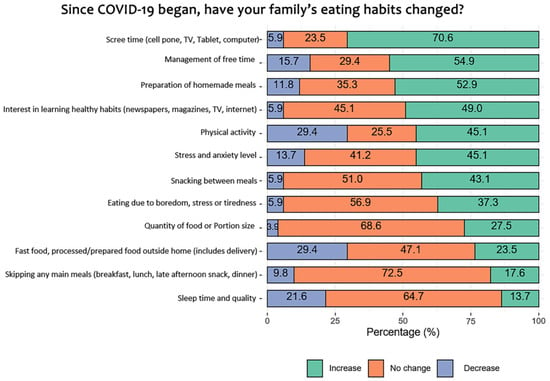
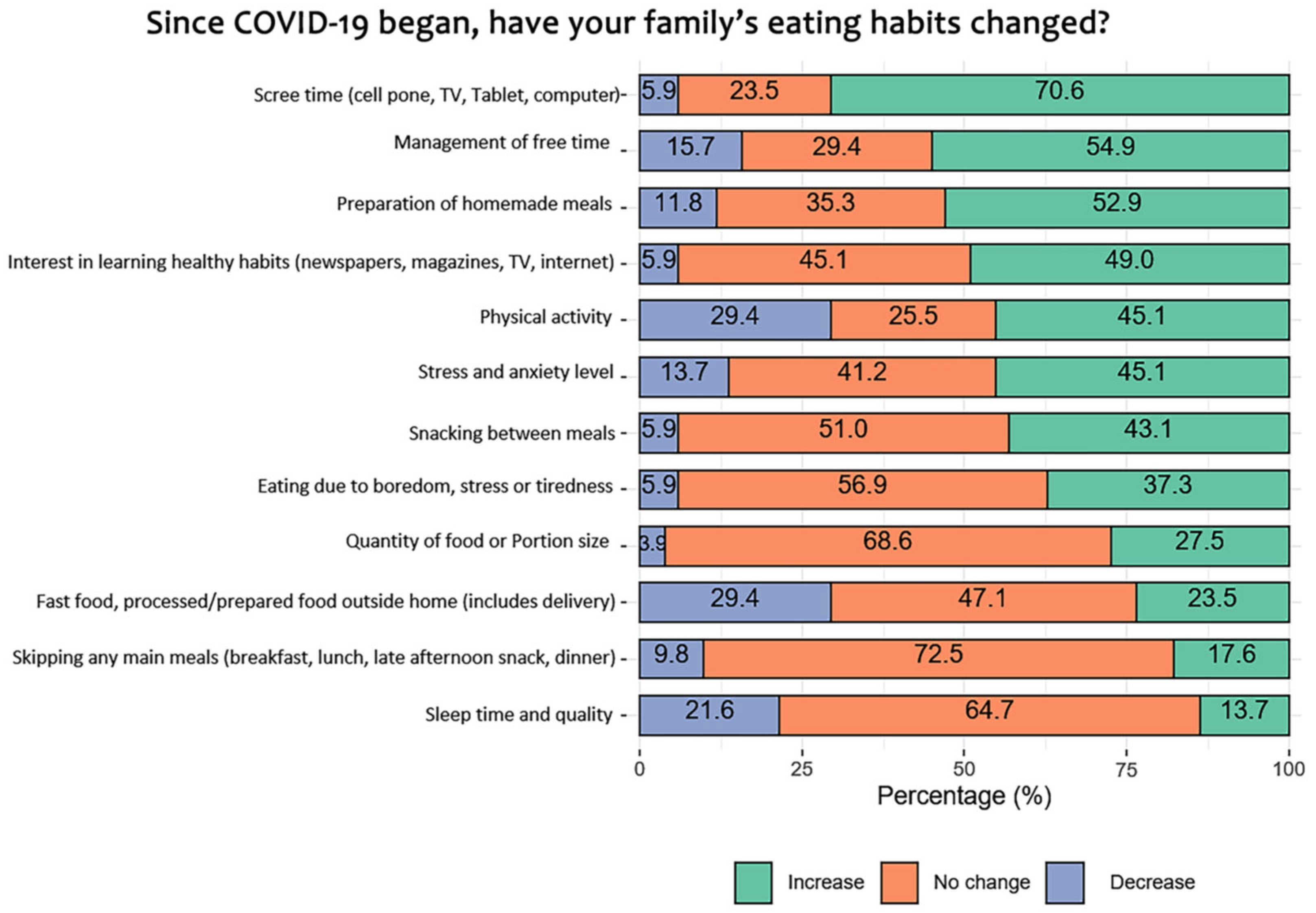
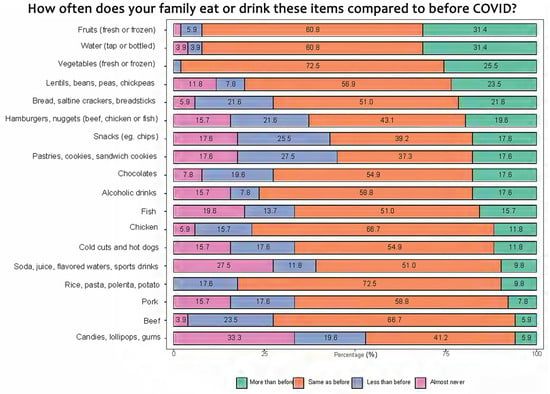
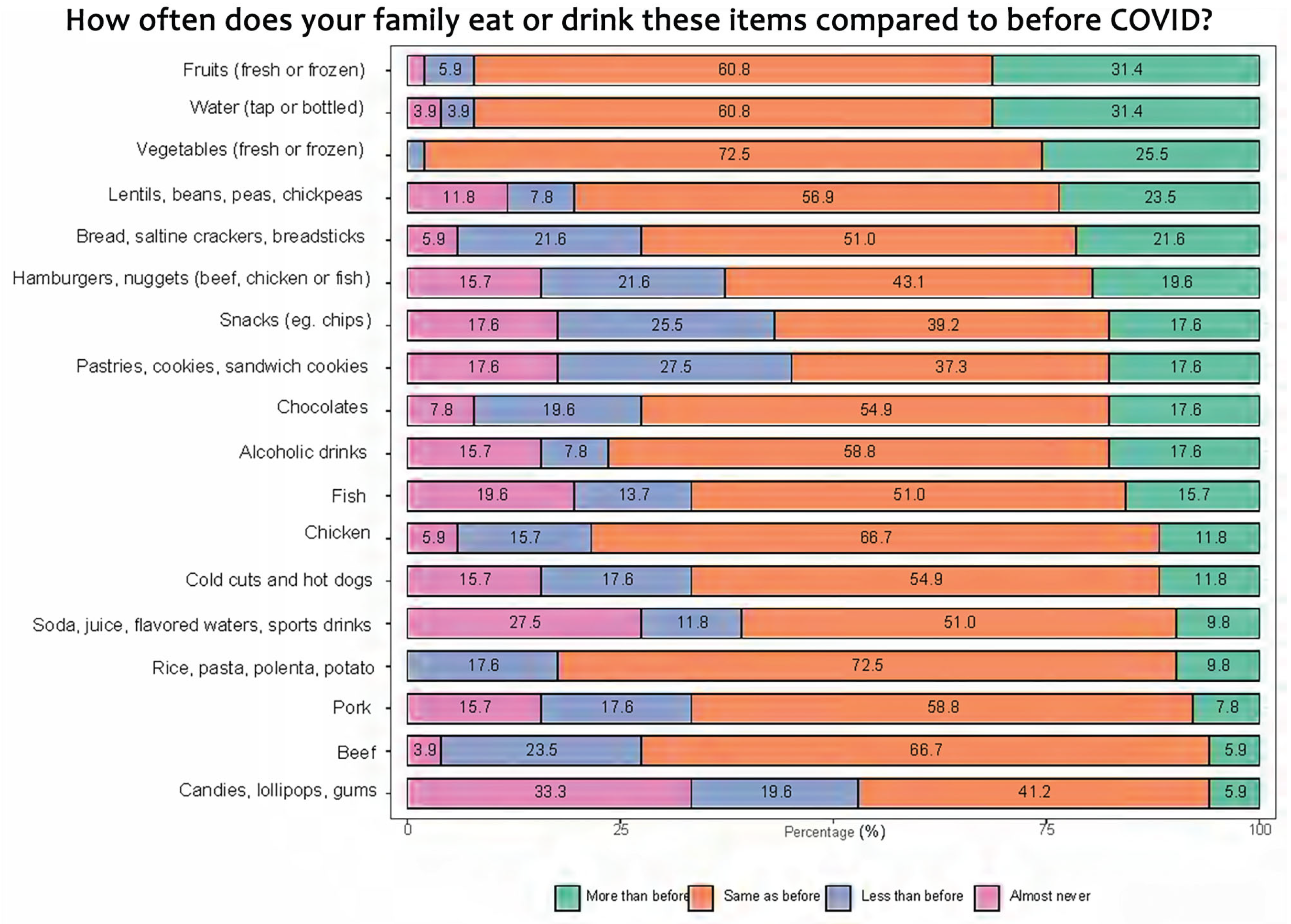
The analysis was based on the following survey items: associations between changes in lifestyle and eating behaviors and patterns in food and beverage consumption frequencies before and after almost two years after the onset of the pandemic, as shown in Figure 1 and Figure 2, respectively.
Figure 1.
Changes in lifestyles and eating behaviors. The title of the figure corresponds to the question presented in the survey. Each bar represents the percentage of families reporting specific behaviors since the beginning of the COVID-19 pandemic that increased, decreased, or remained unchanged over a period of nearly two years.
Figure 2.
Frequency of food and beverage consumption. The title of the figure corresponds to the question presented in the survey. The figure illustrates the quality of the diet that persisted over time for a period of nearly two years (excluding lockdown periods), showing the percentage of families reporting that they consumed foods and beverages more, the same, less frequently, or almost never since the beginning of the COVID-19 pandemic.
For each MCA, only the first two dimensions were retained based on their explanatory power. These components together explained the majority of the observed variance (54% and 42% for the respective models). They were used to visualize and interpret meaningful patterns, such as clusters of families exhibiting similar health behavior changes during the pandemic.
To assess changes in families’ overall perception of healthy eating between the pre-pandemic period and the time of the survey, we applied McNemar’s test, which is appropriate for paired categorical (yes/no) responses. This analysis was based on a binary item asking whether families considered their eating habits to be healthy at two time points: before the pandemic and at the time of the survey. Unlike the MCA, which analyzed multiple directional variables capturing perceived increases or decreases in individual food items and behaviors, the McNemar test focused on a single paired yes/no measure of overall healthy eating to compare the proportion of families reporting “healthy eating” before and after the pandemic.
To handle missing data, complete case analysis was employed. Of the 56 individuals who opened the survey, 52 provided consent. Among these, 51 completed the survey in full and were included in the analysis, yielding a 98% completion rate among consented participants (91% of all who opened the survey).
3. Results
A total of 51 families, comprising 192 individuals, completed the survey. Most respondents were mothers (76.5%) aged 35–59 years. A marked interest in preparing homemade meals (52.9%) and learning healthy habits (49%) was found. Families enjoyed more free time (54.9%) and practiced more physical activity (45%). An increase in screen time (70.6%), stress/tiredness (45.1%), and snacking between meals (43.1%) was observed. Fruits (31.4%), vegetables (25.5%), and legumes (23.5%) were consumed more, while processed meats, bread, pastries, and snacks were consumed less frequently (24%) than before the pandemic. MCA revealed increased consumption of fast/processed foods, larger portion sizes, and snacking linked to eating from boredom, stress, or tiredness. Increased home-cooked meals, physical activity, interest in healthy habits, and leisure time enjoyment were also found. Dietary analysis revealed higher intake of fruits, vegetables, legumes, and water inversely associated with consumption of refined grains, cold cuts, pastries, and sugary drinks. McNemar’s test revealed a decrease in perceived healthy eating compared with the pre-pandemic period (p < 0.001). Boredom, stress, or tiredness led to unfavorable changes. Interest in health, changes in home routines, spending more time together, and preparing meals with the family resulted in healthier behaviors that remained present at the time of this study.
3.1. Study Variables
3.1.1. Household and Family Characteristics
The parents who responded to the survey were mainly female (76.5% mothers, 21.6% fathers, and 1.9% grandfather) and were 35–59 years old (93.9%). Their educational attainment by household was broken down as follows: 72% had a university degree, 18% had a technical school certificate, and 10% had a high school diploma.
The families mainly resided in Funes (56%) and Roldan (26%), another subdivision of Rosario, and the remaining in Rosario, the central city (7%). Most participants lived in houses (96%), had four people (49%), three people (26.5%), five or more (18.4%), or two people per household (6.1%). With respect to changes in income due to COVID-19, 54% of the families reported no change, 28% reported an increase in income, and 18% reported a decrease in income.
3.1.2. Eating Behavior and Lifestyle
Most families reported having healthy eating habits before the pandemic (92.2%). Many families (62.7%) reported healthier eating habits now than before the pandemic.
An increase in homemade meals (52.9%), learning healthy habits (49%), free time enjoyment (54.9%), and physical activity (45%) was observed (Figure 1).
An increase in screen time (70.6%), stress/tiredness levels (45.1%), and snacking between meals (43.1%) were also reported (Figure 1).
With respect to diet quality, fruits (31.4%), vegetables (25.5%), and legumes (23.5%) were consumed more often, while processed meats (17.6%), bread (21.6%), pastries (27.5%), and snacks were consumed less frequently (25.5%) than before the COVID-19 pandemic began in March 2020 (Figure 2).
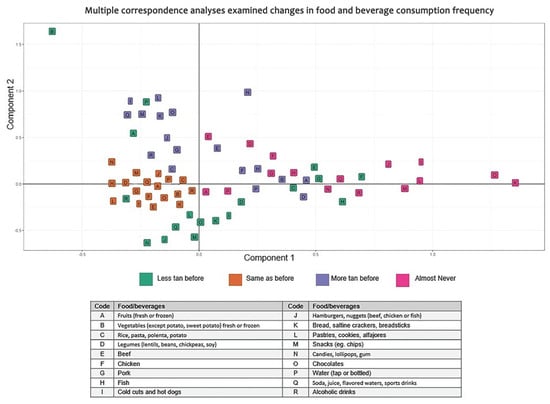
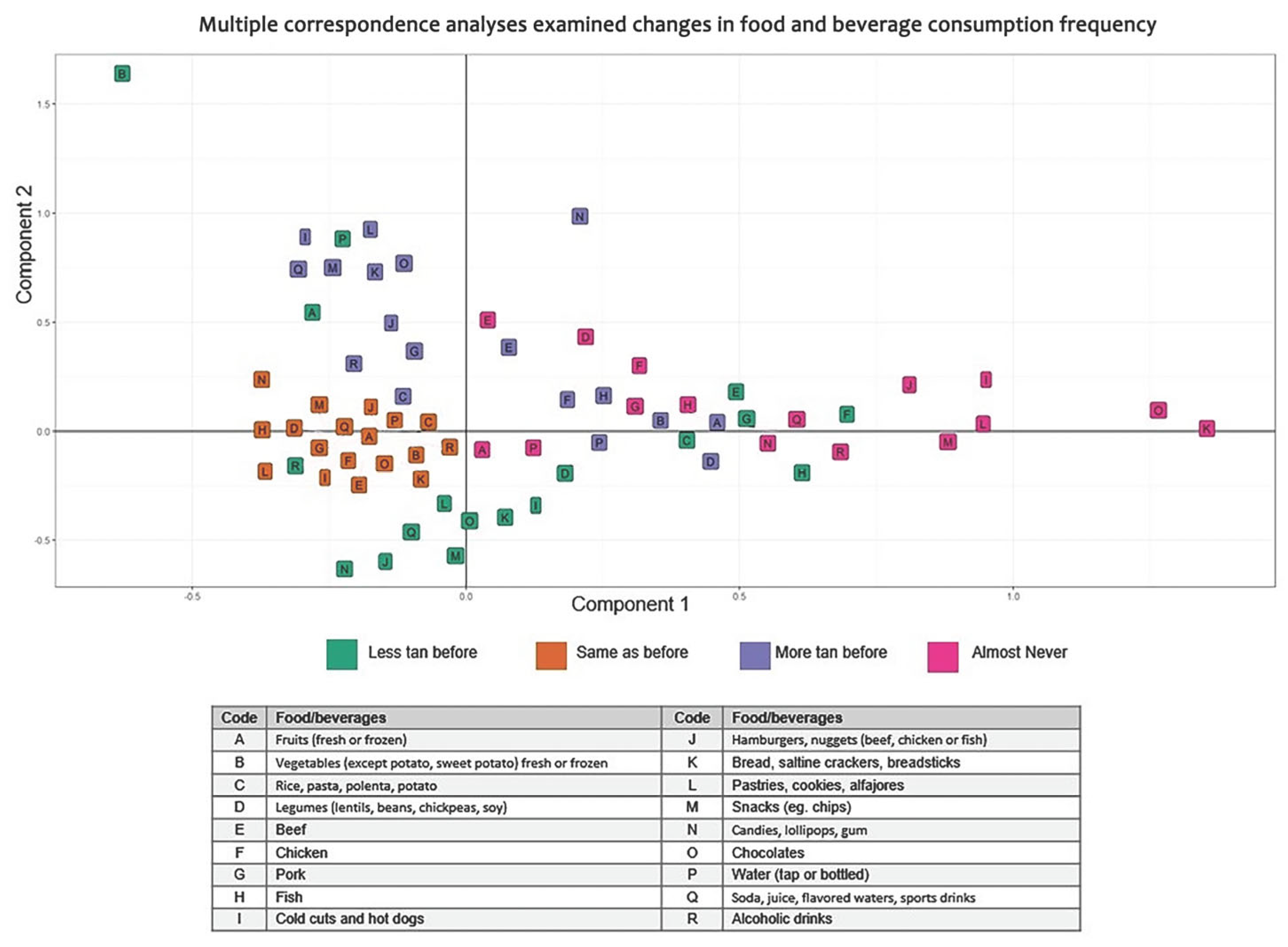
The MCA revealed that participants who consumed more cold cuts, bread, pastries, snacks, chocolate, and soda consumed less water and fruit (Figure 3). A greater frequency of consumption of vegetables, fruits, legumes, and water was associated with less consumption of refined grains. People who consumed less meat (beef, pork, chicken, and fish) almost never consumed soda, candies, or alcoholic drinks (Figure 3). A higher frequency of consumption of pork, refined grains, hamburgers, and alcoholic beverages and a lower intake of cold cuts, bread, hamburgers, salty snacks, candies, chocolate, pastries, and soda were observed (Figure 3).
Figure 3.
Frequency of food and beverage consumption (MCA associations). Multiple correspondence analysis (MCA) revealed two distinct dietary patterns that summarize the contrast between higher and lower nutritional quality. These long-term consumption patterns persisted over time, reflecting sustained differences in families’ dietary behaviors nearly two years after the onset of the COVID-19 pandemic.
3.1.3. Shared Lifestyle and Eating Behaviors
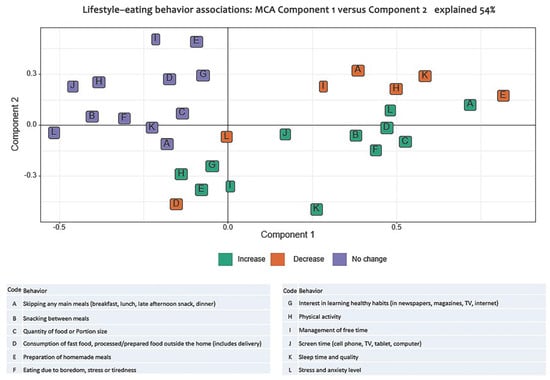
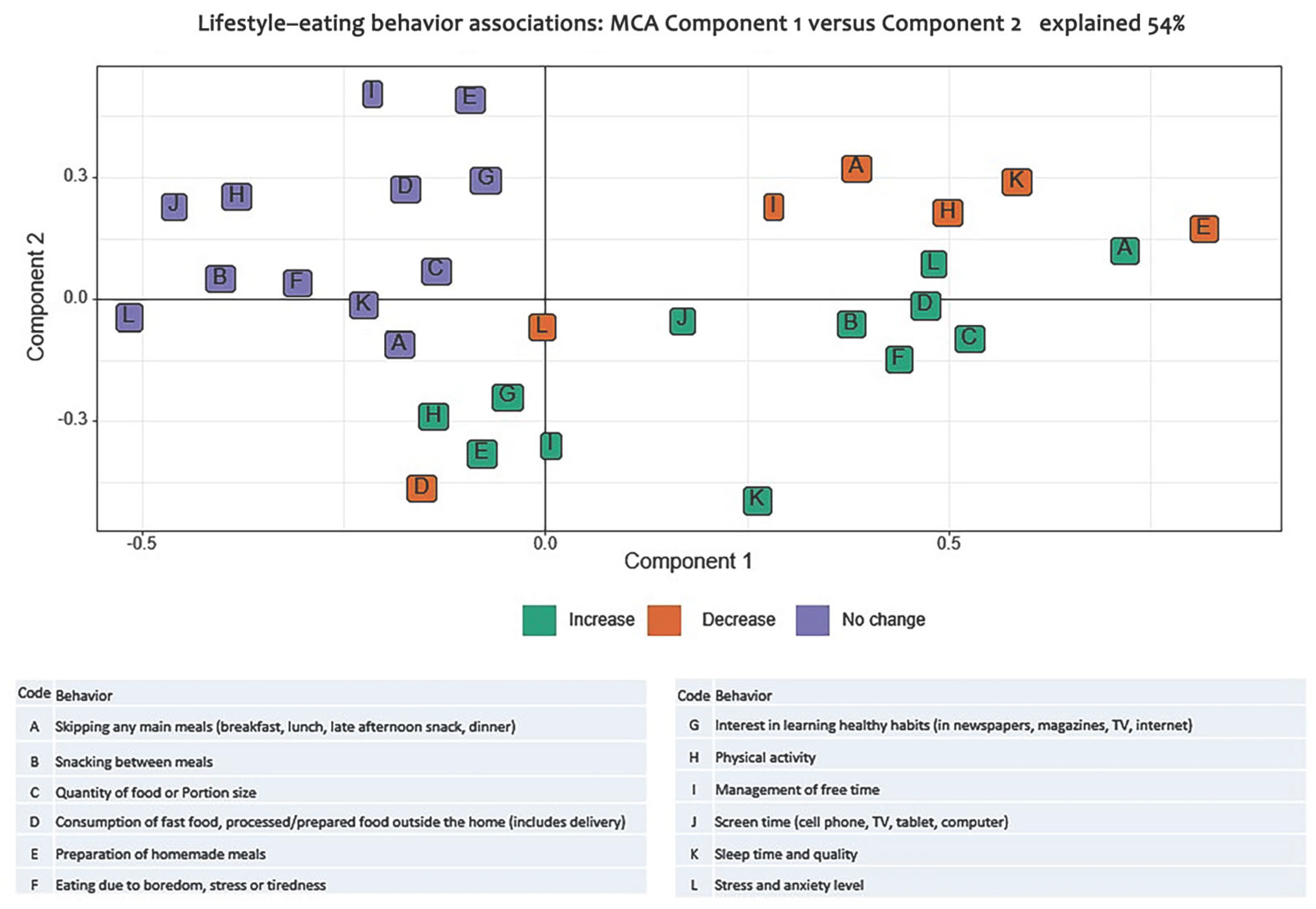
Multiple correlation analysis (MCA) revealed that the sample shared a group of favorable and unfavorable eating and lifestyle behaviors rather than isolated behaviors. Some families showed an increase in shared unfavorable eating and lifestyle behaviors; the consumption of fast/processed/delivered foods, larger portion sizes, and snacking were simultaneously correlated with eating due to boredom and higher stress and tiredness levels. Other families showed increased shared favorable lifestyles and eating behaviors: home-cooked meals, physical activity, interest in healthy habits, and leisure time enjoyment (Figure 4).
Figure 4.
Associations of lifestyle and eating behaviors (MCA Components 1 vs. 2). Multiple correspondence analysis (MCA) identified shared behavior patterns rather than isolated habits. This analysis revealed two distinct patterns, which explained 54% of the total variance, capturing over half of the variation in family behavior patterns.
The MCA revealed an association between homemade meals and physical activity. The participants who consumed more homemade meals practiced more physical activity, whereas those who prepared fewer homemade meals also had less physical activity (Figure 4).
This study revealed a relationship between snacking and eating due to boredom, stress, or tiredness. When snacking habits increased or decreased, eating due to boredom, stress, or tiredness also changed in the same direction (Figure 4).
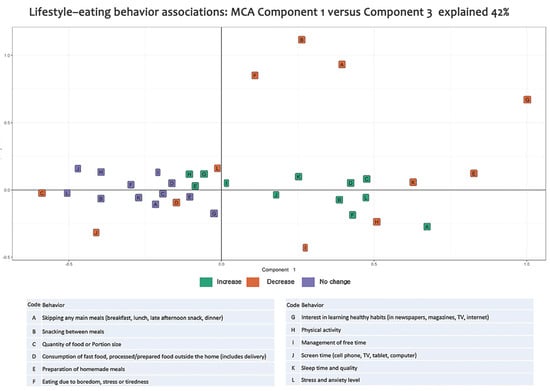
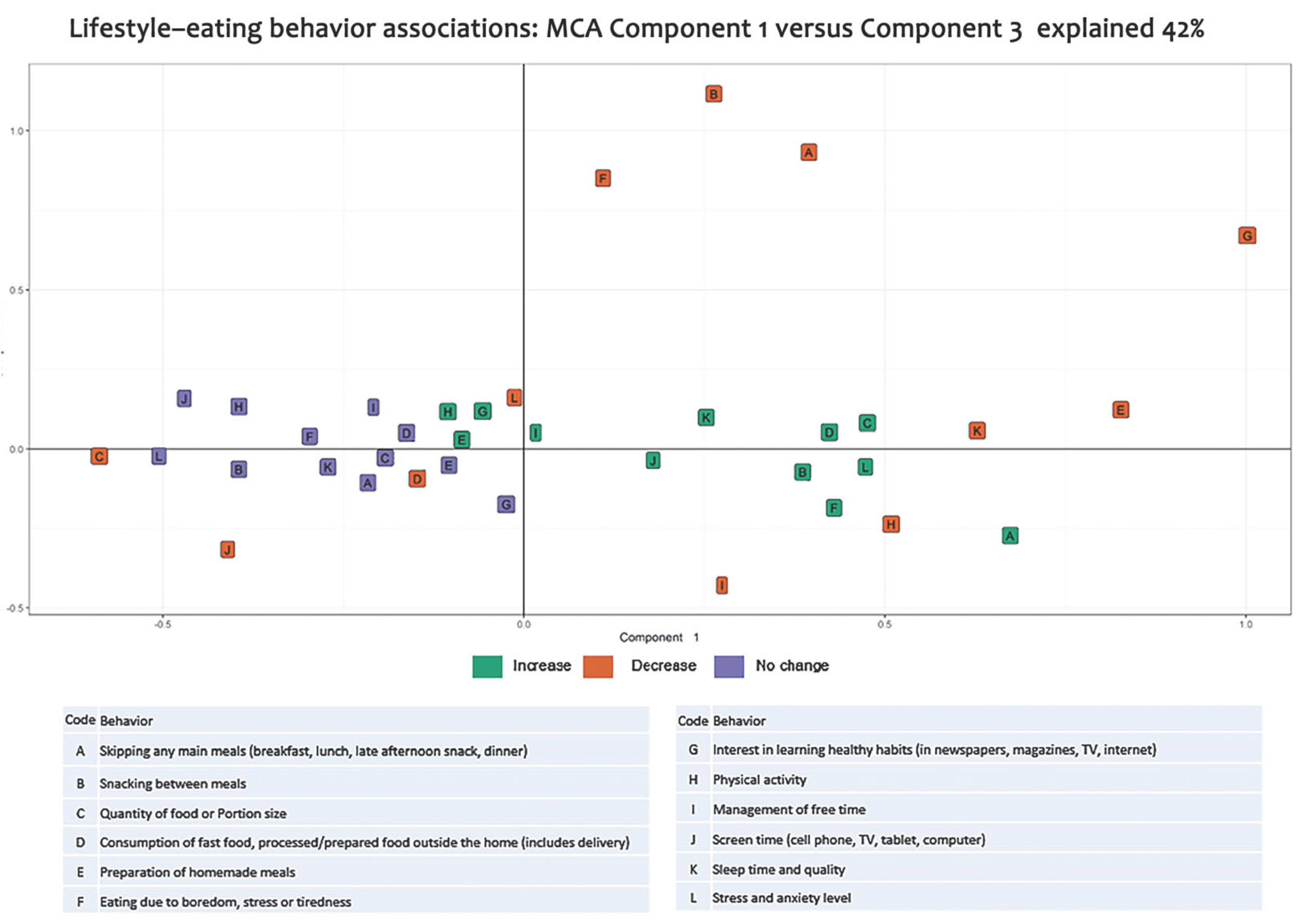
Another finding of our research was that a decrease in stress levels was associated with increased healthy behaviors such as physical activity, homemade meals, interest in healthy habits, and leisure time enjoyment. These healthy behaviors were also associated with decreased fast, processed, and delivery food consumption (Figure 5).
Figure 5.
Associations of lifestyle and eating behaviors (MCA Components 1 vs. 3). Multiple correspondence analysis (MCA) revealed shared behavioral patterns reflecting the relationship between boredom, stress, or tiredness and families’ lifestyle and eating habits. The first and third MCA dimensions together explained 42% of the total variance, capturing meaningful differences in family behavior patterns.
4. Discussion
This cross-sectional study examined the effects of the COVID-19 pandemic on families’ eating behaviors nearly two years after the World Health Organization declared the pandemic. Some families reported adopting positive lifestyle changes that started with the pandemic and were maintained over time; others reported unfavorable ones [23] and decreased physical activity during the COVID-19 lockdown, as well as increased sedentary time, increased snacking, reduced consumption of fresh food, and increased consumption of sweets, cookies, and cakes. They also reported increased home cooking and physical activity, similar to the findings of this study [23].
Nearly half of the families surveyed (49.6%) did not experience a change in their eating habits compared to before the COVID-19 pandemic began. COVID-19 constituted an unpredictable, stressful event for most people worldwide; research has suggested that some families may experience resilience to traumatic experiences, even when facing highly adverse life events [24,25]. This resilience could lead families to perceive minimal changes or to quickly return to their usual routines. Scarmozzino and Visioli assessed the effects of COVID-19-induced confinement on self-reported food consumption, confirming that there was no evident modification in the diet [26]. Chenarides et al. reported that food consumption patterns for significant food groups remained the same as before the COVID-19 pandemic for 60% of participants [27]. Poelman et al. reported that most participants did not change their eating behaviors (83.0%) or food purchases (73.3%) during the lockdown period [15]. Similarly, Grunert et al. reported that despite pandemic and lockdown restrictions, most consumers (60%) maintained similar food-related behaviors [7].
4.1. Interest in Better Health
Families reported having healthier eating behaviors (67%) and learning habits (49%) than before the pandemic. There was an increased interest in better health, which translated into healthier eating behaviors, prioritizing nutrient-dense foods and being more conscious of physical and mental well-being, leading to maintaining a healthy lifestyle. Many individuals learned new skills often related to health and wellness, cooking, or fitness. Some studies have revealed that healthier eating habits are unintended consequences of the COVID-19 pandemic [8,9,10,11,12,28,29]. This research showed a long-term effect of the lifestyle and eating behaviors changes implemented during the pandemic, suggesting that it may have encouraged families to make a lasting shift toward healthier patterns.
4.2. Family Meal Time and Homemade Meals
This study revealed that half of the families had increased interest in preparing homemade meals (52.9%), especially when cooking and eating together as a family, compared with before the pandemic.
An increase in homemade meals (52.9%) was observed in this study population. COVID-19 confinement resulted in spending more time with families and sharing daily spaces and activities. Mealtimes may provide a central place for families to feel connected while enjoying one another’s company. Research associated with family mealtimes has revealed healthier eating habits, lower reported rates of mental health concerns (eating disorders, alcohol and substance use, violent behavior, depression, and suicidal thoughts in adolescents), and protection against overweight and obesity through adulthood [30,31,32].
These findings suggest that eating home-cooked meals regularly may benefit diet and health, and the COVID-19 pandemic presented a natural way of increasing family mealtime frequency. Similar results were published by Grunert et al., who reported more enjoyment in cooking and eating, more time in the kitchen, and more family meals in a study that included ten European countries in nine languages, with a sample size of 5618 collected in September 2020 [7]. Vidal et al. explored factors that moderated the impact of the COVID-19 pandemic on eating habits and reported that the majority of participants who experienced changes in their eating habits presented an increased frequency of homemade meal consumption and a decrease in the frequency of takeaway food consumption during lockdown [10]. An increase in the consumption of homemade meals has been associated with increased nutritional quality of the diet and improved overall health [33]. Consistent with these earlier reports, our findings indicate that, as of December 2022, families continued to report an increased frequency of preparing home-cooked meals nearly two years after the onset of the pandemic.
4.3. Eating Healthy
The participants in this study reported greater intakes of fruits (31.4%), vegetables (25.5%), and legumes (23.5%). A welcoming outcome of the pandemic was better nutrition and more engagement with health and food. One year into the pandemic, Scott and Ensaff reported favorable results in families from the United Kingdom, including spending more time together, increased home cooking, and more efficient shopping practices, and unfavorable results related to increased snacking and more take-out food [34]. These authors, in their qualitative study, revealed that a year after the pandemic started, children were more autonomous in determining what they wanted to eat and in making their snacks because they spent more time learning how to cook with their parents during lockdown [34].
Since the pandemic began, consumers have focused on healthy eating in various regions of the world. In Canada, Lamarche et al. reported favorable changes, including small increases in the consumption of whole grains, vegetables, greens, beans, seafood, plant protein, and dairy and small reductions in the consumption of refined grains and added sugar [28]. In France, Marty et al. reported that the lockdown induced a temporary decrease in the nutritional quality of dietary patterns as an adaptation to an emergency context rather than a reconsideration of food habits, followed by a trend toward increased organic and local food consumption [16]. The Spanish COVIDiet Study revealed an improvement in dietary behaviors during confinement, with a greater intake of fruits, vegetables, and legumes and a lower intake of red meat, alcohol, fried foods, and pastries after the onset of the COVID-19 pandemic compared to pre-pandemic patterns [9]. Scarmozzino and Visioli studied the effects of confinement on food consumption and reported increased consumption of fresh fruit and vegetables (21.2%) and that purchases of ready-made meals were reduced by nearly 50% in an Italian sample [26]. Similar results were reported by Lombardo et al. in the Italian region of Lazio [29]. Our study was consistent with these findings, with improved home meal planning and fruit, vegetable, and legume intake among these families.
4.4. Adoption of Physical Activity
An increase in physical activity was found in 45% of families compared with before the COVID-19 pandemic. Flexible time schedules during lockdown periods could allow people to exercise more often, instilling a lasting positive effect. For many individuals, lockdown and self-isolation measures had a negative impact on physical activity levels [14,19,35]. Navarro-Pérez et al. reported that more than two-thirds of their respondents maintained or increased physical activity [36]. Similar values were reported by Di Renzo et al. [2], Lombardo et al. [29], and Scarmozzino and Visioli [26]. An early study by Dunton et al. likewise observed that some participants increased their activity to support immune function and reduce stress, possibly due to participant perceptions of these behaviors as beneficial if infected [37].
An association between physical activity and homemade meals was found in our study. Participants who engaged in more physical activity also reported consuming more homemade meals, while those who prepared fewer homemade meals tended to perform less physical activity. Christofaro et al. similarly reported that individuals with greater physical activity were more likely to follow a healthy diet, reinforcing the consistency of our findings with prior research [38].
4.5. Enjoying Free Leisure Time
In this study, 54.9% of the families surveyed enjoyed additional free time. Morse et al. revealed that creative activities, including home crafts and artisanship, information technology interests, language activities, arts, and musical engagement, were more likely to increase or begin as new activities during the COVID-19 pandemic [39]. Lades et al. reported that time spent outdoors (exercising, walking, gardening), finding hobbies, and caring for children in a daily life context had the most significant affective benefits and reduced negative emotions during COVID-19 self-isolation measures [40]. All these findings suggest that increased leisure time fostered opportunities for healthier routines and coping strategies that supported family well-being during the pandemic.
4.6. Spending More Time on Screens
The amount of time spent on devices has increased globally during the COVID-19 pandemic, with 70.6% of participants reporting increased screen time usage in this study. There is an extensive amount of literature that supports increased screen time during the pandemic and its adverse effects on physical activity and mental health.
Pandemic restrictions accelerated existing trends in remote work. Home office and virtual meetings continue to persist, albeit to a lesser extent than they did at the pandemic’s peak. In a family context, these high levels of screen time could be attributed to relaxed parental rules that began with the lockdown and may persist, even in the absence of pandemic restrictions, to allow children to connect with friends virtually. Rolland et al. assessed addiction-related habits during the early COVID-19 lockdown in France and reported a 64.6% increase in screen use [41]. Bahkir and Grandee evaluated the impact of lockdown on screen time for 407 individuals who used digital devices and reported that 93.6% of their respondents had increased their screen time by an average of 4.8 ± 2.8 h per day, with a total of 8.65 ± 3.74 h of screen time per day [42]. Chen et al. found that substantial increases in screen time during the pandemic were associated with higher levels of anxiety, an effect mediated in part by reduced physical activity and poorer sleep quality [43]. Similarly, our findings indicate that elevated screen time persisted in this population for nearly two years after the onset of the pandemic, underscoring its relevance as a continuing lifestyle factor, alongside dietary and physical activity behaviors.
4.7. Increased Stress
In this study, higher levels of stress and tiredness (45.1%) were reported than before the pandemic. In previous outbreaks (SARS 2003), the mental health impact of lockdowns (including stress and anxiety) was identified, and it is considered the most predictive factor of stress and posttraumatic stress, even three years later [44,45]. COVID-19 lockdowns led to anxiety, depression, sleep problems, and other psychological problems, with more people developing these symptoms during confinement than before that period [46,47].
Our study asked parents to reflect on the pandemic period while excluding isolation or lockdown phases, revealing that lower stress levels were associated with healthier lifestyle behaviors, such as physical activity, homemade meals, interest in healthy habits, and free time enjoyment. The same healthy behaviors were related to decreased consumption of fast, processed, and delivery foods. Lifestyle habits, such as regular physical activity, proper nutrition, good sleep, social connection, and time in nature, can reduce stress [48,49]. Understanding how families adapt their routines in response to external stressors provides insight into promoting resilient, health-supportive behaviors worldwide, emphasizing the importance of family systems in shaping long-term public health outcomes.
4.8. Snacking and Skipping Meals
In this study, 43.1% of the families reported increased snacking between meals. During the COVID-19 lockdown, Ammar et al. [14] reported that the number of snacks significantly increased across international online platforms in seven languages, and Bakaloudi et al. [6] reported greater snacking frequency for almost one-third of their population in a systematic review of 32 cross-sectional studies. Sadler et al. reported a positive interaction between stress and emotional overeating, resulting in increased intake of sweets and desserts, based on a sample of 428 people recruited through Amazon Mechanical Turk [5].
This study revealed a relationship between snacking and eating due to boredom, stress, or tiredness, with an increase in skipping main meals. Snacking has been primarily associated with anxiety or stress levels and with eating because of boredom, which has been more common during the COVID-19 pandemic [6,50,51,52]. The association between skipping main meals and eating snacks between meals was not found in previous research.
5. Conclusions
The COVID-19 pandemic could have prompted families in this study to reassess their eating habits, leading to an increase in home-cooked meals and a shift toward less processed, more natural foods. Notably, these changes persisted over time, with families reporting higher consumption of fruits and vegetables, reflecting sustained efforts to adopt healthier dietary choices. Conversely, the stress and uncertainty associated with the pandemic and lockdown period contributed to an increase in screen time and snacking between meals, behaviors that were also maintained over time. The long-term effects of these changes suggest that the pandemic may have encouraged families to a lasting shift toward healthier eating patterns, although challenges such as the persistence of unfavorable dietary habits remain.
These mixed trajectories underscore how families can function as both sources of protection and points of vulnerability during times of crisis. The results of this research contribute to the broader understanding of how families adapt to health challenges and how such adaptations can shape long-term health outcomes. The study highlights our understanding of the enduring effects of the COVID-19 pandemic and the role of family dynamics in influencing eating behaviors, demonstrating how the immediate family environment directly impacts individuals’ dietary practices.
Addressing societal and cultural factors is essential to support sustainable nutritional improvement. It is known that feeding practices are influenced by sociocultural factors and mainly learned from parents to children and from social groups (e.g., families, schools, peers). In Argentina, as in many cultures, eating habits are deeply rooted in family routines, social gatherings, and local food traditions. Public health efforts that recognize these cultural contexts by promoting shared meals, community-based cooking programs, and family engagement in meal preparation are more likely to reinforce healthy behaviors over time. Practical implications include supporting families to preserve the positive changes achieved during the pandemic, such as cooking more at home and making healthier food choices. Encouraging shared meals, promoting culinary skills, and incorporating stress management strategies can help sustain these habits and reduce the risk of chronic disease. Future studies should continue to explore how family systems interact with broader societal and cultural factors to foster healthy lifestyles and eating behaviors, particularly in times of crisis, while accounting for these changing dynamics to promote sustainable, healthier family practices and address long-term nutritional challenges.
6. Limitations
This study relied on participants’ retrospective self-reports to assess changes in eating behaviors and lifestyle patterns from the onset of the COVID-19 pandemic to December 2022. Such reliance introduces the potential for recall bias, as participants may have difficulty accurately recalling past behaviors or may be influenced by their current perceptions. Additionally, the study’s cross-sectional design limits the ability to establish causality between the pandemic and the observed behavioral changes. A cross-sectional design is used in public health research to assess perceived shifts in behavior when baseline data are not available. The use of convenience sampling from a single private primary school may also affect the generalizability of the findings to broader populations. These limitations should be considered when interpreting the results.
Author Contributions
Conceptualization, M.S.K. and S.d.C.; methodology, M.S.K. and S.d.C.; software, M.S.K.; formal analysis, M.S.K., S.d.C., and A.C.; investigation, M.S.K. and S.d.C.; resources, S.d.C., and A.C.; data curation, M.S.K. and S.d.C.; writing—original draft preparation, M.S.K. and S.d.C.; writing—review and editing, M.S.K., S.d.C., and A.C. All authors have read and agreed to the published version of the manuscript.
Funding
This research received no external funding. Chung was funded by NIH K01HL169419-01.
Institutional Review Board Statement
The study was conducted in accordance with the Declaration of Helsinki and was approved by the Institutional Review Board of the Borough of Manhattan Community College, City University of New York (protocol code 2022-0767-BMCC on 5 December 2022), and by the affiliated university, which reviewed and approved the research protocol and survey on 14 October 2022. All participants were fully informed in writing prior to participation and provided digital written informed consent to participate in this study. The dataset generated and analyzed during the current study was collected anonymously and fully de-identified at the time of collection. As such, the data cannot be re-identified.
Informed Consent Statement
Informed consent was obtained electronically from all subjects participating in the study. The study involved anonymous survey data, and no identifiable individual data are included in this article.
Data Availability Statement
The dataset collected for this study is stored in the REDCap repository under PID 5002. Researchers can access the data upon reasonable requests to the corresponding author, in accordance with institutional and ethical guidelines.
Acknowledgments
The authors would like to thank all participant families and extend our sincere gratitude to the Universidad del Gran Rosario (UGR), especially to Vice-Rector Lic. Natalia Perren’s collaboration in making this research possible.
Conflicts of Interest
The authors declare no conflicts of interest.
Abbreviations
The following abbreviations are used in this manuscript:
| SARS-CoV-2 | Severe Acute Respiratory Syndrome Coronavirus 2 |
| COVID-19 | Coronavirus Disease 2019 |
| MCA | Multiple Correspondence Analysis |
| WHO | World Health Organization |
| IRB | Institutional Review Board |
| BMCC | Borough of Manhattan Community College |
| CUNY | City University of New York |
References
- Park, S.; Lee, S.H.; Yaroch, A.L.; Blanck, H.M. Reported changes in eating habits related to less healthy foods and beverages during the COVID-19 pandemic among US adults. Nutrients 2022, 14, 526. [Google Scholar] [CrossRef] [Scilit] [PubMed]
- Di Renzo, L.; Gualtieri, P.; Pivari, F.; Soldati, L.; Attinà, A.; Cinelli, G.; Leggeri, C.; Caparello, G.; Barrea, L.; Scerbo, F.; et al. Eating habits and lifestyle changes during COVID-19 lockdown: An Italian survey. J. Transl. Med. 2020, 18, 229. [Google Scholar] [CrossRef] [Scilit] [PubMed]
- Sominsky, L.; Spencer, S.J. Eating behavior and stress: A pathway to obesity. Front. Psychol. 2014, 5, 434. [Google Scholar] [CrossRef] [Scilit] [PubMed]
- Cummings, J.R.; Ackerman, J.M.; Wolfson, J.A.; Gearhardt, A.N. COVID-19 stress and eating and drinking behaviors in the United States during the early stages of the pandemic. Appetite 2021, 162, 105163. [Google Scholar] [CrossRef] [Scilit]
- Sadler, J.R.; Thapaliya, G.; Jansen, E.; Aghababian, A.H.; Smith, K.R.; Carnell, S. COVID-19 stress and food intake: Protective and risk factors for stress-related palatable food intake in U.S. adults. Nutrients 2021, 13, 901. [Google Scholar] [CrossRef] [Scilit]
- Bakaloudi, D.R.; Jeyakumar, D.T.; Jayawardena, R.; Chourdakis, M. The impact of COVID-19 lockdown on snacking habits, fast-food and alcohol consumption: A systematic review of the evidence. Clin. Nutr. 2022, 41, 3038–3045. [Google Scholar] [CrossRef] [Scilit]
- Grunert, K.G.; De Bauw, M.; Dean, M.; Lähteenmäki, L.; Maison, D.; Pennanen, K.; Sandell, M.A.; Stasiuk, K.; Stickel, L.; Tarrega, A.; et al. No lockdown in the kitchen: How the COVID-19 pandemic has affected food-related behaviours. Food Res. Int. 2021, 150, 110752. [Google Scholar] [CrossRef] [Scilit]
- Murphy, B.; Benson, T.; McCloat, A.; Mooney, E.; Elliott, C.; Dean, M.; Lavelle, F. Changes in consumers’ food practices during the COVID-19 lockdown, implications for diet quality and the food system: A cross-continental comparison. Nutrients 2021, 13, 20. [Google Scholar] [CrossRef] [Scilit]
- Rodríguez-Pérez, C.; Molina-Montes, E.; Verardo, V.; Artacho, R.; García-Villanova, B.; Guerra-Hernández, E.J.; Ruíz-López, M.D. Changes in dietary behaviours during the COVID-19 outbreak confinement in the Spanish COVIDiet study. Nutrients 2020, 12, 1730. [Google Scholar] [CrossRef] [Scilit]
- Vidal, L.; Brunet, G.; Curutchet, M.R.; Girona, A.; Pardiñas, V.; Guerra, D.; Platero, E.; Machado, L.; González, F.; Gugliucci, V.; et al. Is COVID-19 a threat or an opportunity for healthy eating? An exploration of the factors that moderate the impact of the pandemic on eating habits in Uruguay. Appetite 2021, 167, 105651. [Google Scholar] [CrossRef] [Scilit]
- Pérez-Rodrigo, C.; Citores, M.G.; Hervás Bárbara, G.; Litago, F.R.; Casis Sáenz, L.; Aranceta-Bartrina, J.; Val, V.A.; López-Sobaler, A.M.; Martínez De Victoria, E.; Ortega, R.M.; et al. Changes in eating habits during lockdown period due to the COVID-19 pandemic in Spain. Rev. Esp. Nutr. Comunitaria 2020, 26, 101–111. [Google Scholar] [CrossRef] [Scilit]
- Aksoy, N.C.; Kabadayi, E.T.; Alan, A.K. An unintended consequence of COVID-19: Healthy nutrition. Appetite 2021, 166, 105430. [Google Scholar] [CrossRef] [Scilit] [PubMed]
- De Backer, C.; Teunissen, L.; Cuykx, I.; Decorte, P.; Pabian, S.; Gerritsen, S.; Matthys, C.; Al Sabbah, H.; Van Royen, K. The Corona Cooking Survey Study Group. An evaluation of the COVID-19 pandemic and perceived social distancing policies in relation to planning, selecting, and preparing healthy meals: An observational study in 38 countries worldwide. Front. Nutr. 2021, 7, 621726. [Google Scholar] [CrossRef] [Scilit] [PubMed]
- Ammar, A.; Brach, M.; Trabelsi, K.; Chtourou, H.; Boukhris, O.; Masmoudi, L.; Bouaziz, B.; Bentlage, E.; How, D.; Ahmed, M.; et al. Effects of COVID-19 home confinement on eating behaviour and physical activity: Results of the ECLB-COVID19 international online survey. Nutrients 2020, 12, 1583. [Google Scholar] [CrossRef] [Scilit]
- Poelman, M.P.; Gillebaart, M.; Schlinkert, C.; Dijkstra, S.C.; Derksen, E.; Mensink, F.; Hermans, R.C.; Aardening, P.; de Ridder, D.; de Vet, E. Eating behavior and food purchases during the COVID-19 lockdown: A cross-sectional study among adults in the Netherlands. Appetite 2021, 157, 105002. [Google Scholar] [CrossRef] [Scilit]
- Marty, L.; De Lauzon-Guillain, B.; Nicklaus, S. Short- and mid-term impacts of COVID-19 outbreak on the nutritional quality and environmental impact of diet. Front. Nutr. 2022, 9, 838351. [Google Scholar] [CrossRef] [Scilit]
- Panagiotakos, D.; Kosti, R.I.; Pitsavos, C. How will the way we live look different in the wake of the COVID-19 pandemic? A nutrition survey in Greece. Nutr. Health 2022, 28, 677–683. [Google Scholar] [CrossRef] [Scilit]
- Durán-Agüero, S.; Ortiz, A.; Pérez-Armijo, P.; Vinueza-Veloz, M.F.; Ríos-Castillo, I.; Camacho-Lopez, S.; Cavagnari, B.M.; Nava-González, E.J.; Carpio-Arias, V.; Cordón-Arrivillaga, K.; et al. Quality of the diet during the COVID-19 pandemic in 11 Latin-American countries. J. Health Popul. Nutr. 2022, 41, 33. [Google Scholar] [CrossRef] [Scilit]
- Souza, T.C.d.M.; Oliveira, L.A.; Daniel, M.M.; Ferreira, L.G.; Della Lucia, C.M.; Liboredo, J.C.; Anastácio, L.R. Lifestyle and eating habits before and during COVID-19 quarantine in Brazil. Public Health Nutr. 2022, 25, 65–75. [Google Scholar] [CrossRef] [Scilit]
- Rivera-Ferre, M.G.; López-I-Gelats, F.; Ravera, F.; Oteros-Rozas, E.; di Masso, M.; Binimelis, R.; El Bilali, H. The two-way relationship between food systems and the COVID-19 pandemic: Causes and consequences. Agric. Syst. 2021, 191, 103134. [Google Scholar] [CrossRef] [Scilit]
- Jones, H.E.; Manze, M.; Ngo, V.; Lamberson, P.; Freudenberg, N. The impact of the COVID-19 pandemic on college students’ health and financial stability in New York City: Findings from a population-based sample of City University of New York (CUNY) students. J. Urban Health 2021, 98, 187–196. [Google Scholar] [CrossRef] [Scilit] [PubMed]
- Rehm, C.; Monsivais, P.; Drewnowski, A. The quality and monetary value of diets consumed by adults in the United States. Am. J. Clin. Nutr. 2011, 94, 1333–1339. [Google Scholar] [CrossRef] [Scilit] [PubMed]
- Deschasaux-Tanguy, M.; Druesne-Pecollo, N.; Esseddik, Y.; de Edelenyi, F.S.; Allès, B.; Andreeva, V.A.; Baudry, J.; Charreire, H.; Deschamps, V.; Egnell, M.; et al. Diet and physical activity during the Coronavirus disease 2019 (COVID-19) lockdown (March–May 2020): Results from the French NutriNet-Santé cohort study. Am. J. Clin. Nutr. 2021, 113, 924–938. [Google Scholar] [CrossRef] [Scilit] [PubMed]
- Chen, S.; Bonanno, G.A. Psychological adjustment during the global outbreak of COVID-19: A resilience perspective. Psychol. Trauma. 2020, 12, S51–S54. [Google Scholar] [CrossRef] [Scilit]
- Zhang, N.; Yang, S.; Jia, P. Cultivating resilience during the COVID-19 pandemic: A socioecological perspective. Annu. Rev. Psychol. 2022, 73, 575–598. [Google Scholar] [CrossRef] [Scilit]
- Scarmozzino, F.; Visioli, F. COVID-19 and the subsequent lockdown modified dietary habits of almost half the population in an Italian sample. Foods 2020, 9, 675. [Google Scholar] [CrossRef] [Scilit]
- Chenarides, L.; Grebitus, C.; Lusk, J.L.; Printezis, I. Food consumption behavior during the COVID-19 pandemic. Agribusiness 2021, 37, 44–81. [Google Scholar] [CrossRef] [Scilit]
- Lamarche, B.; Brassard, D.; Lapointe, A.; Laramée, C.; Kearney, M.; Côté, M.; Bélanger-Gravel, A.; Desroches, S.; Lemieux, S.; Plante, C. Changes in diet quality and food security among adults during the COVID-19-related early lockdown: Results from NutriQuébec. Am. J. Clin. Nutr. 2021, 113, 984–992. [Google Scholar] [CrossRef] [Scilit]
- Lombardo, M.; Guseva, E.; Perrone, M.A.; Müller, A.; Rizzo, G.; Storz, M.A. Changes in eating habits and physical activity after COVID-19 pandemic lockdowns in Italy. Nutrients 2021, 13, 4522. [Google Scholar] [CrossRef] [Scilit]
- Walton, K.; Horton, N.J.; Rifas-Shiman, S.L.; Field, A.E.; Austin, S.B.; Haycraft, E.; Breen, A.; Haines, J. Exploring the role of family functioning in the association between frequency of family dinners and dietary intake among adolescents and young adults. JAMA Netw. Open 2018, 1, e185217. [Google Scholar] [CrossRef] [Scilit]
- Berge, J.M.; Wall, M.; Hsueh, T.F.; Fulkerson, J.A.; Larson, N.; Neumark-Sztainer, D. The protective role of family meals for youth obesity: 10-year longitudinal associations. J. Pediatr. 2015, 166, 296–301. [Google Scholar] [CrossRef] [Scilit] [PubMed]
- Harrison, M.E.; Norris, M.L.; Obeid, N.; Fu, M.; Weinstangel, H.; Sampson, M. Systematic review of the effects of family meal frequency on psychosocial outcomes in youth. Can. Fam. Physician 2015, 61, e96–e106. [Google Scholar] [PubMed]
- Mills, S.; Brown, H.; Wrieden, W.; White, M.; Adams, J. Frequency of eating home cooked meals and potential benefits for diet and health: Cross-sectional analysis of a population-based cohort study. Int. J. Behav. Nutr. Phys. Act. 2017, 14, 109. [Google Scholar] [CrossRef] [Scilit] [PubMed]
- Scott, L.; Ensaff, H. COVID-19 and the national lockdown: How food choice and dietary habits changed for families in the United Kingdom. Front. Nutr. 2022, 9, 847547. [Google Scholar] [CrossRef] [Scilit]
- Martínez-de-Quel, Ó.; Suárez-Iglesias, D.; López-Flores, M.; Pérez, C.A. Physical activity, dietary habits and sleep quality before and during COVID-19 lockdown: A longitudinal study. Appetite 2021, 158, 105019. [Google Scholar] [CrossRef] [Scilit]
- Navarro-Pérez, C.F.; Fernández-Aparicio, Á.; González-Jiménez, E.; Montero-Alonso, M.Á.; Schmidt-RioValle, J. Effects of COVID-19 lockdown on the dietary habits and lifestyle in a population in southern Spain: A cross-sectional questionnaire. Eur. J. Clin. Nutr. 2022, 76, 883–890. [Google Scholar] [CrossRef] [Scilit]
- Dunton, G.F.; Do, B.; Wang, S.D. Early effects of the COVID-19 pandemic on physical activity and sedentary behavior in children living in the U.S. BMC Public Health 2020, 20, 1351. [Google Scholar] [CrossRef] [Scilit]
- Christofaro, D.G.D.; Werneck, A.O.; Tebar, W.R.; Lofrano-Prado, M.C.; Botero, J.P.; Cucato, G.G.; Malik, N.; Correia, M.A.; Ritti-Dias, R.M.; Prado, W.L. Physical activity is associated with improved eating habits during the COVID-19 pandemic. Front. Psychol. 2021, 12, 664568. [Google Scholar] [CrossRef] [Scilit]
- Morse, K.F.; Fine, P.A.; Friedlander, K.J. Creativity and leisure during COVID-19: Examining the relationship between leisure activities, motivations, and psychological well-being. Front. Psychol. 2021, 12, 609967. [Google Scholar] [CrossRef] [Scilit]
- Lades, L.K.; Laffan, K.; Daly, M.; Delaney, L. Daily emotional well-being during the COVID-19 pandemic. Br. J. Health Psychol. 2020, 25, 902–911. [Google Scholar] [CrossRef] [Scilit]
- Rolland, B.; Haesebaert, F.; Zante, E.; Benyamina, A.; Haesebaert, J.; Franck, N. Global changes and factors of increase in caloric/salty food intake, screen use, and substance use during the early COVID-19 containment phase in the general population in France: Survey study. JMIR Public Health Surveill. 2020, 6, e19630. [Google Scholar] [CrossRef] [Scilit] [PubMed]
- Bahkir, F.A.; Grandee, S.S. Impact of the COVID-19 lockdown on digital device-related ocular health. Indian J. Ophthalmol. 2020, 68, 2378–2383. [Google Scholar] [CrossRef] [Scilit] [PubMed]
- Chen, Q.; Dai, W.; Li, G.; Ma, N. The impact of screen time changes on anxiety during the COVID-19 pandemic: Sleep and physical activity as mediators. Sleep. Biol. Rhythm. 2022, 20, 521–531. [Google Scholar] [CrossRef] [Scilit] [PubMed]
- Digiovanni, C.; Conley, J.; Chiu, D.; Zaborski, J. Factors influencing compliance with quarantine in Toronto during the 2003 SARS outbreak. Biosecur. Bioterror. 2004, 2, 265–272. [Google Scholar] [CrossRef] [Scilit]
- Wu, P.; Fang, Y.; Guan, Z.; Fan, B.; Kong, J.; Yao, Z.; Liu, X.; Fuller, C.J.; Susser, E.; Lu, J.; et al. The psychological impact of the SARS epidemic on hospital employees in China: Exposure, risk perception, and altruistic acceptance of risk. Can. J. Psychiatry 2009, 54, 302–311. [Google Scholar] [CrossRef] [Scilit]
- Wang, C.; Pan, R.; Wan, X.; Tan, Y.; Xu, L.; Ho, C.S.; Ho, R.C. Immediate psychological responses and associated factors during the initial stage of the 2019 Coronavirus disease (COVID-19) epidemic among the general population in China. Int. J. Environ. Res. Public Health 2020, 17, 1729. [Google Scholar] [CrossRef] [Scilit]
- Ammar, A.; Mueller, P.; Trabelsi, K.; Chtourou, H.; Boukhris, O.; Masmoudi, L.; Bouaziz, B.; Brach, M.; Schmicker, M.; Bentlage, E.; et al. Psychological consequences of COVID-19 home confinement: The ECLB-COVID19 multicenter study. PLoS ONE 2020, 15, e0240204. [Google Scholar] [CrossRef] [Scilit]
- Baban, K.A.; Morton, D.P. Lifestyle medicine and stress management. J. Fam. Pract. 2022, 71, S24–S29. [Google Scholar] [CrossRef] [Scilit]
- Morton, D.P. Combining lifestyle medicine and positive psychology to improve mental health and emotional well-being. Am. J. Lifestyle Med. 2018, 12, 370–374. [Google Scholar] [CrossRef] [Scilit]
- Curtin, E.L.; Johnson, L.; Salway, R.; Hinton, E.C. Snacking and anxiety during the Coronavirus disease (COVID-19) pandemic: A prospective cohort study. Appetite 2023, 183, 106491. [Google Scholar] [CrossRef] [Scilit]
- Moynihan, A.B.; Van Tilburg, W.A.P.; Igou, E.R.; Wisman, A.; Donnelly, A.E.; Mulcaire, J.B. Eaten up by boredom: Consuming food to escape awareness of the bored self. Front. Psychol. 2015, 6, 369. [Google Scholar] [CrossRef] [Scilit]
- Van Tilburg, W.A.P.; Pekrun, R.; Igou, E.R. Consumed by boredom: Food choice motivation and weight changes during the COVID-19 pandemic. Behav. Sci. 2022, 12, 366. [Google Scholar] [CrossRef] [Scilit]
Disclaimer/Publisher’s Note: The statements, opinions and data contained in all publications are solely those of the individual author(s) and contributor(s) and not of MDPI and/or the editor(s). MDPI and/or the editor(s) disclaim responsibility for any injury to people or property resulting from any ideas, methods, instructions or products referred to in the content. |
© 2026 by the authors. Licensee MDPI, Basel, Switzerland. This article is an open access article distributed under the terms and conditions of the Creative Commons Attribution (CC BY) license.