


Abstract
Milk thistle seed cake, a by-product of silymarin production, contains residual oil with valuable bioactive compounds. This study compared oils extracted using microwave-assisted extraction (MAE) and Soxhlet extraction. MAE produced higher yields and better preserved polyunsaturated fatty acids. It also generated oils with lower acid and peroxide values, higher total phenolic content, and greater antioxidant capacity. Oxidative stability evaluated by pressure differential scanning calorimetry (PDSC) showed longer induction times for MAE-derived oils, indicating improved resistance to oxidation. These trends are consistent with the shorter extraction times and reduced thermal exposure associated with MAE. Overall, MAE proved more effective for recovering high-quality oil from milk thistle seed cake, supporting its use as a valuable resource in waste-to-value applications.
1. Introduction
The increasing global emphasis on sustainable food production has intensified interest in the valorization of agricultural by-products. Oilseed cakes, generated in large quantities during mechanical pressing or solvent extraction, represent a major stream of plant-based waste. Although traditionally used for animal feed or discarded, seed cakes often retain considerable amounts of residual oil and bioactive compounds, making them promising raw materials for high-value applications [1]. Recovering these constituents contributes both to waste reduction and to the development of circular, resource-efficient processing systems.
Milk thistle (Silybum marianum L. Gaertn.) is cultivated primarily for the extraction of silymarin, a bioactive complex widely used in hepatoprotective and pharmaceutical formulations [2]. Poland is one of the leading European producers of milk thistle, where the high-yielding domestic variety Silma is widely cultivated, producing approximately 1.5 t/ha of achenes, and the processing of its seeds generates substantial quantities of seed cake [3]. Despite being treated as a secondary by-product, milk thistle seed cake can contain up to 8–15% residual oil, along with proteins, minerals, and phenolic constituents [4]. This makes it an underexplored but valuable substrate for oil recovery and further bioactive extraction.
Milk thistle oil itself is recognized for its high proportion of unsaturated fatty acids, particularly linoleic and oleic acids, as well as tocopherols and other antioxidant compounds. These attributes suggest that oil retained within the cake may retain similar nutritional benefits.
Oil extraction methodology plays a critical role in determining both the yield and quality of recovered oils, particularly when processing plant by-products such as seed cakes. Conventional Soxhlet extraction remains a widely used reference method due to its robustness and ability to achieve high lipid recovery through prolonged solvent reflux. However, extended extraction times and elevated temperatures may promote oxidative degradation of thermolabile compounds [5]. In contrast, microwave-assisted extraction (MAE) has emerged as a promising alternative, offering rapid volumetric heating, reduced solvent consumption, and shorter extraction times. By enhancing cell wall disruption and mass transfer, MAE can improve extraction efficiency while better preserving unsaturated fatty acids and natural antioxidants. Because MAE performance is strongly influenced by process parameters, particularly irradiation power and extraction time, careful selection of these conditions is essential when comparing MAE with conventional extraction techniques [6]. Given these fundamental differences, a comparative evaluation of Soxhlet and MAE is essential to assess their suitability for the valorization of milk thistle seed cake as a sustainable source of high-quality oil. The present study therefore aimed to characterize the physicochemical properties, fatty acid composition, and antioxidant capacity of milk thistle seed cake oil obtained using MAE and Soxhlet extraction. By focusing specifically on seed cake, this work addresses the growing need for sustainable waste-to-value strategies and provides new insights into the potential of milk thistle processing residues as a source of high-quality edible oil and bioactive compounds.
2. Materials and Methods
2.1. Materials
Milk thistle seed cake samples (MTC1 and MTC2) were obtained after cold pressing of seeds for oil production from two Polish manufacturers (SOSTA sp. z o.o. and Pliczko Gospodarstwo Rolne, Warsaw, Poland). All chemicals used in this study, including solvents and reagents were of analytical or chromatographic grade and sourced from Kemika (Zagreb, Croatia) and Sigma-Aldrich (St. Louis, MO, USA). The cakes were received as intact solid material and were ground in the laboratory immediately prior to extraction. No additional pre-treatment, such as drying or chemical processing, was applied. After grinding, samples were stored in closed plastic containers at approximately 4 °C and protected from light until extraction, which was performed the following day.
2.2. Extraction Methods
Prior to extraction, milk thistle seed cakes were ground to obtain a homogeneous material. For microwave-assisted extraction (MAE), the ground material was manually mixed with n-hexane in microwave-compatible vessels before irradiation, while for Soxhlet extraction (SE), it was mixed automatically in the glass chamber of the Soxhlet apparatus. For each extraction method and seed cake source, the procedure was performed once using three parallel extraction vessels (approximately 15 g each), and the resulting oils were pooled prior to analysis.
Soxhlet extraction (SE): approximately 15 g of ground milk thistle seed cake was placed in a cellulose thimble and extracted with 150 mL of n-hexane (1:10 w/v) using a standard laboratory Soxhlet apparatus equipped with a heating mantle (Warsaw University of Life Sciences, Warsaw, Poland). Extraction was carried out under continuous solvent reflux for 6 h at the boiling point of n-hexane (approximately 69 °C), ensuring constant contact between the solvent and the solid matrix. After completion, the mixture was allowed to cool to room temperature and filtered through filter paper to remove solid residues. The solvent was then removed using a rotary evaporator under reduced pressure at a bath temperature of 40 °C to minimize thermal and oxidative degradation. The extracted oils were transferred to sealed containers and kept at 4 °C in the dark until analysis [7].
Microwave-assisted extraction (MAE) was conducted using n-hexane as a solvent in a laboratory microwave system (University of Zagreb, Zagreb, Croatia). Ground milk thistle seed cake (approximately 15 g) was manually mixed with 150 mL of n-hexane (1:10 w/v) in microwave-compatible vessels prior to extraction to ensure uniform wetting of the material. Samples were subjected to microwave irradiation at a fixed power of 300 W for 3 min. These conditions were selected based on preliminary trials aimed at achieving effective oil recovery while limiting excessive thermal exposure and were used consistently for all samples to enable comparative evaluation. The extraction temperature was governed by microwave heating under these conditions rather than direct temperature control. After extraction, the mixture was cooled and filtered, and the solvent was removed using a rotary evaporator under reduced pressure at a bath temperature of 40 °C to minimize thermal and oxidative degradation. The obtained oils were placed in airtight containers and stored at 4 °C under dark conditions until analysis [8].
After extraction and solvent removal, the oils were transferred into closed containers, stored under refrigerated conditions (approximately 4 °C), and protected from light. All analyses were performed within a few days of extraction to minimize oxidative changes, and all analytical determinations were carried out in triplicate for each extracted oil sample.
2.3. Fatty Acid Composition
Fatty acid composition was determined by gas chromatography (GC–FID) following EN ISO 12966-2:2011 standard [9]. Oils were converted to fatty acid methyl esters (FAME) using methanolic esterification and analyzed using a YL6100 GC–FID system (Young Lin Instruments, Anyang, South Korea) equipped with a BPX-70 capillary column (60 m × 0.25 mm, 0.25 µm film thickness). Nitrogen was used as the carrier gas and was supplied by Multax s.c. (Stare Babice, Poland). The oven program ranged from 70 °C to 225 °C, and injector and detector temperatures were set to 225 °C and 250 °C, respectively. Fatty acids were identified by comparing retention times with commercial FAME standards (Supelco, Sigma Aldrich, St. Louis, MO, USA).
2.4. Distribution of Fatty Acids in Triacylglycerol Structure
The positional distribution of fatty acids in triacylglycerols was determined according to the method of Bryś et al. [10]. Pancreatic lipase was used to selectively hydrolyze the sn-1 and sn-3 positions, yielding sn-2 monoacylglycerols (MAG). The hydrolysis products were extracted with diethyl ether and separated by preparative thin-layer chromatography. The isolated sn-2 MAG fraction was eluted and analyzed by gas chromatography to determine its fatty acid profile. All analytical conditions, including chromatographic instrumentation, column type, and operating parameters, were identical to those described in Bryś et al. [10]. Fatty acids in the sn-1,3 positions were calculated from the composition of the original oil and the sn-2 fraction.
2.5. Oxidative Stability
Pressure Differential Scanning Calorimetry (PDSC) was used to assess the oxidative stability of milk thistle oil [11]. To determine the induction time for the oxidation reactions of the oils, experiments were carried out with the help of a DSC Q20 instrument (TA Instruments, Newcastle, WA, USA) equipped with an oxygen pressurization chamber. Oil samples (3–4 mg) were placed in aluminum pans under an oxygen atmosphere (100%) under a pressure of 1400 kPa. Measurements were taken isothermally at 140 °C. The oxidation induction time was determined from the PDSC curves.
2.6. Determination of Acid Value
The degree of hydrolysis was assessed by determining the acid value according to the ISO 660:2020 method [12]. The acid value was determined using titration of oil samples dissolved in the mixture of toluene/ethanol (1:1, v/v) with 0.1 M ethanolic potassium hydroxide solution. Free fatty acid content was calculated using the molar mass of oleic acid.
2.7. Determination of Peroxide Value
The content of the primary oxidation products of the oils was examined by the peroxide value according to the ISO 3960:2017 method [13]. The peroxide value was determined by the iodometric method. Oil samples were dissolved in acetic acid-chloroform (3:2, v/v), treated with saturated potassium iodide, and kept in the dark for 5 min. The liberated iodine was titrated with sodium thiosulfate solution (0.01 N) using starch indicator.
2.8. Determination of Total Phenolic Content
Total phenolic content was determined using the Folin–Ciocalteu method [14]. Oil samples were dissolved in n-hexane and extracted with methanol; the methanolic phase was separated by centrifugation. An aliquot of the extract was mixed with Folin–Ciocalteu reagent and sodium carbonate solution, and absorbance was measured using UV-Vis spechtrophotometer (Shimadzu UV-1800, Kyoto, Japan) at 760 nm after 60 min. in the dark. Phenolic content was quantified using a gallic acid calibration curve, and results were expressed as mg gallic acid equivalents (GAE) per gram of oil.
2.9. Antioxidant Activity
Antioxidant activity was determined using a total antioxidant capacity (TAC) colorimetric assay and expressed as µmol Trolox equivalents (TE) per 100 g of oil [15]. Oil samples (0.1 g) were dissolved in 10 mL of methanol and mixed thoroughly. An aliquot of 0.1 mL of the oil solution was reacted with 1 mL of reagent solution containing 0.6 M sulfuric acid, 28 mM sodium phosphate, and 4 mM ammonium molybdate. The mixture was incubated at 95 °C for 90 min in a water bath. After cooling to room temperature, the absorbance was measured at 695 nm using a UV-Vis spectrophotometer (Shimadzu UV-1800, Kyoto, Japan) against a blank. Antioxidant activity was quantified using a Trolox calibration curve (concentration range: 0–1000 µM) prepared under identical conditions. Results reflect the combined radical-scavenging capacity of phenolics, tocopherols, and other antioxidants present in the oils.
2.10. Data Analysis
For each extraction method (SE and MAE) and each seed cake source (MTC1 and MTC2), three parallel extraction vessels were used, and the resulting oils were pooled to obtain one representative sample per condition. All analytical measurements (GC, physicochemical parameters, DSC/PDSC, antioxidant assays) were performed in triplicate on the same oil sample and are presented as mean ± standard deviation (SD).
3. Results and Discussion
Oil yield serves as a primary measure of extraction efficiency. Microwave-assisted extraction (MAE) consistently achieved higher yields than Soxhlet extraction (SE) for both seed cake sources: 13.15% vs. 9.12% for milk thistle cake 1 (MTC1) and 12.49% vs. 9.60% for milk thistle cake 2 (MTC2), with overall averages of 12.82% for MAE and 9.36% for SE. Although each extraction was performed once (three parallel vessels, pooled oil), these results clearly demonstrate the superior efficiency of MAE in recovering residual oil from milk thistle seed cake. The higher yields reflect enhanced cell disruption and improved mass transfer under microwave heating and may influence the composition of the extracted oils as discussed below.
3.1. Fatty Acid Composition
The fatty acid profile plays a major role in determining both the nutritional properties and oxidative stability of edible oils. Eleven fatty acids were identified in all milk thistle seed cake oils (Table 1). Linoleic (C18:2 n-6), oleic (C18:1 n-9), palmitic (C16:0), and stearic acid (C18:0) collectively accounted for more than 90% of total fatty acids in oils obtained from both MTC1 and MTC2 seed cakes supplied by the two Polish producers. Linoleic acid was the predominant fatty acid in all samples. In MTC1 oils, its proportion was higher in the MAE extract (51.205 ± 1.02%) compared to the Soxhlet extract (40.730 ± 1.05%). A similar pattern was observed for MTC2, where linoleic acid reached 37.220 ± 0.03% in MAE oil and 34.130 ± 0.02% in Soxhlet oil. In contrast, oleic acid was more abundant in Soxhlet-extracted oils (38.100 ± 0.09% in MTC1; 32.510 ± 0.08% in MTC2) than in corresponding MAE oils (25.030 ± 0.11% in MTC1; 28.110 ± 0.09% in MTC2). These differences may reflect the longer extraction time and higher thermal exposure associated with Soxhlet extraction, which can promote oxidation of polyunsaturated fatty acids and lead to a relative increase in monounsaturated fatty acids, as reported previously for thermally processed seed oils [16,17]. It is also possible that the modest differences observed in oil composition reflect variation in lipid recovery rather than thermal effects alone, as oil yield directly influences the extractable lipid fraction.
Table 1.
Fatty acid composition of extracted oil from milk thistle cake of two polish producers.
Palmitic and stearic acids were the major saturated fatty acids across all oils. Palmitic acid ranged from 7.040 to 8.045% in MTC1 and 6.830 to 7.210% in MTC2 oils, while stearic acid exhibited greater natural variability between seed sources and extraction types, particularly in the MTC2–MAE oil (10.870 ± 0.11%). Despite these differences in individual fatty acids, the overall compositional pattern remained similar across both extraction methods and seed batches. In all samples, polyunsaturated fatty acids (PUFA) were present at roughly twice the proportion of monounsaturated fatty acids (MUFA). Total PUFA ranged from 51.94 to 53.46% in MTC1 oils and 52.51 to 53.08% in MTC2 oils. The unsaturated-to-saturated fatty acid (U/S) ratio was higher in MAE-extracted oils (3.94 for MTC1; 3.83 for MTC2) than in Soxhlet oils (3.49 for MTC1; 3.32 for MTC2), suggesting better preservation of unsaturated fatty acids under microwave conditions.
3.2. TAG Positional Distribution
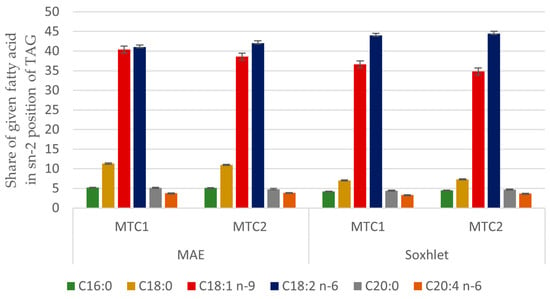
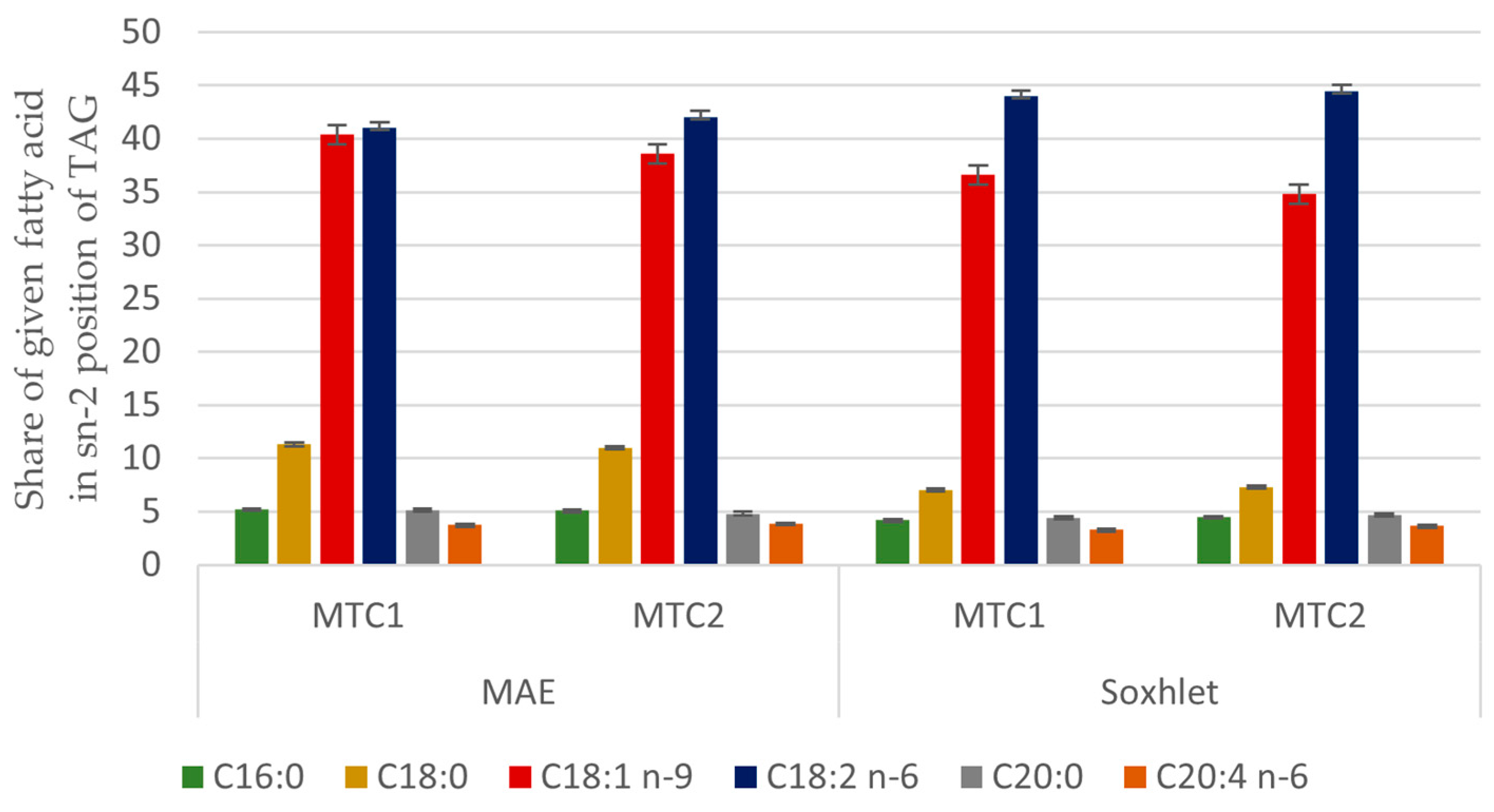
Figure 1 shows the distribution of fatty acids at the sn-2 position of triacylglycerols (TAGs), which is nutritionally relevant because fatty acids esterified at sn-2 are retained during digestion as 2-monoacylglycerols and are therefore readily absorbed [18]. In both extraction methods, linoleic acid dominated the sn-2 position, and its proportion was higher in Soxhlet oil than in MAE oil. During digestion, pancreatic lipase preferentially hydrolyzes the sn-1 and sn-3 positions, releasing the fatty acids at these positions as free acids, while the sn-2 fatty acid remains attached as a monoacylglycerol. Palmitic acid was mainly located at the sn-1 and sn-3 positions, but due to its relatively low overall abundance, its limited presence at sn-2 is not expected to have a major nutritional impact. The predominance of linoleic acid at sn-2 is advantageous from a nutritional perspective, as polyunsaturated fatty acids at this position are efficiently absorbed and utilized [19,20].
Figure 1.
Percentage of a given fatty acid in sn-2 position of TAG of milk thistle seeds cake samples (mean ± SD, n = 3 analytical replicates).
3.3. Acid and Peroxide Values
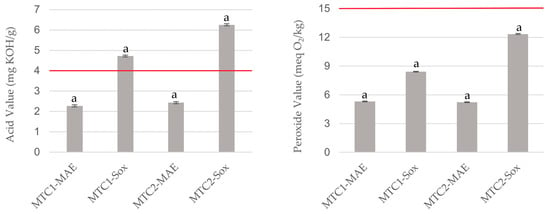
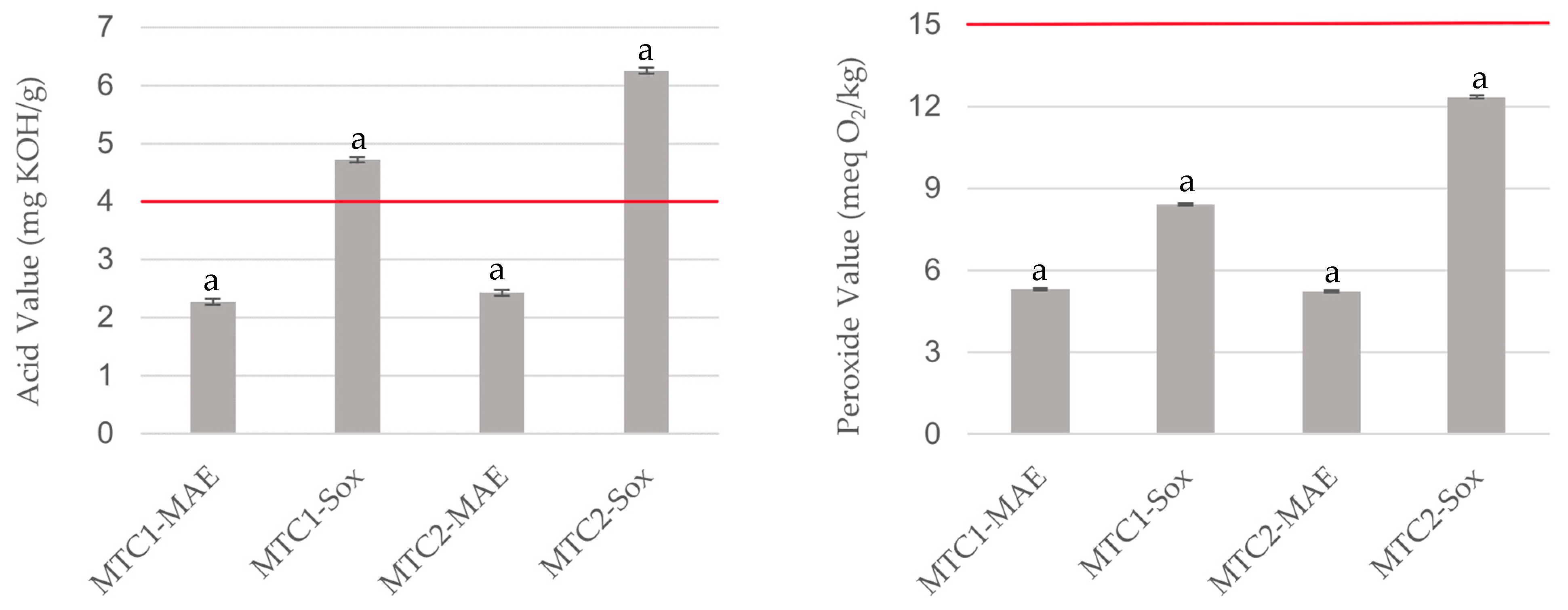
Acid value (AV) and peroxide value (PV) provide key information on the hydrolytic and oxidative status of oils. As shown in Figure 2, MAE extracts exhibited lower AVs (2.27–2.43 mg KOH/g) compared with Soxhlet-extracted oils (4.72–6.25 mg KOH/g). The highest Soxhlet AV exceeded the Codex Alimentarius limit of 4 mg KOH/g for cold-pressed seed oils, suggesting a greater degree of hydrolysis, likely related to the longer thermal exposure (approximately 69 °C) associated with 6 h of reflux [21,22]. A comparable trend was observed for PV, where MAE oils showed lower values (5.23–5.31 meq O2/kg) and Soxhlet oils displayed higher PVs (8.41–12.34 meq O2/kg), indicating more pronounced primary oxidation under conventional extraction conditions. Although all samples met the Codex limit of 15 meq O2/kg, the MTC2-Soxhlet oil exceeded the stricter ISO guideline of 10 meq O2/kg, reflecting more advanced oxidation.
Figure 2.
Acid and Peroxide Values of milk thistle seed cake oils (mean ± SD, n = 3 analytical replicates). Identical letters indicate that no statistical comparison was applied and values are presented descriptively.
These results clearly indicate that Soxhlet extraction with the chosen parameters exposes the oil to greater thermal and oxidative stress, accelerating both FFA formation and hydroperoxide generation. In contrast, the shorter processing time and rapid heating of MAE better preserve the oil’s oxidative quality, reducing degradation and supporting greater stability and sensory integrity [23,24].
3.4. Oxidative Stability
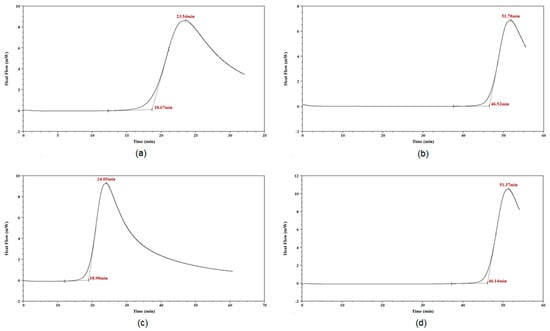
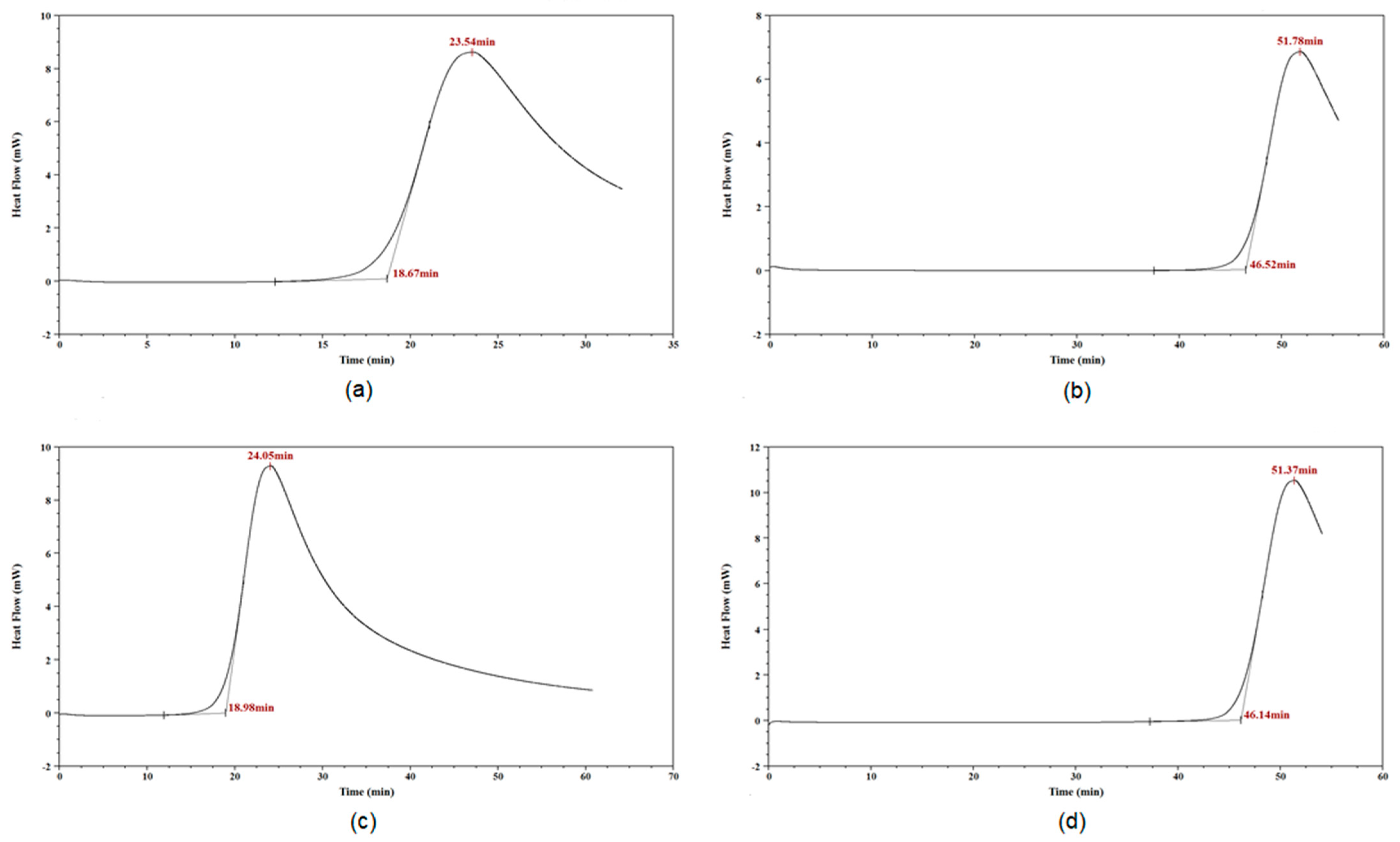
To further evaluate the oxidative behavior of the oils extracted from milk thistle seed cake, Pressure Differential Scanning Calorimetry (PDSC) was performed under isothermal conditions. The induction time determined at 140 °C clearly reflected the influence of the extraction technique on oxidative stability. Oils obtained by microwave-assisted extraction (MAE) demonstrated longer induction times (46.52 min for MTC1 and 46.14 min for MTC2) compared with those extracted by the Soxhlet method (18.67 and 18.98 min, respectively) (Figure 3). The markedly longer induction times of the MAE oils indicate a greater resistance to the early stages of oxidation, consistent with their lower peroxide and acid values. In contrast, the shorter induction times observed in Soxhlet-extracted oils reflect their reduced oxidative stability, likely resulting from the extended heating period required during reflux extraction [24].
Figure 3.
PDSC curves of milk thistle seed cake samples (mean ± SD, n = 3 analytical replicates): (a) MTC1−Soxhlet; (b) MTC1−MAE; (c) MTC2−Soxhlet; (d) MTC2−MAE.
3.5. Total Phenolic Content and Antioxidant Activity
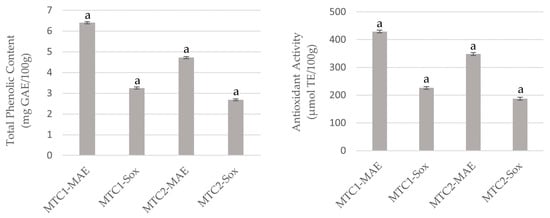
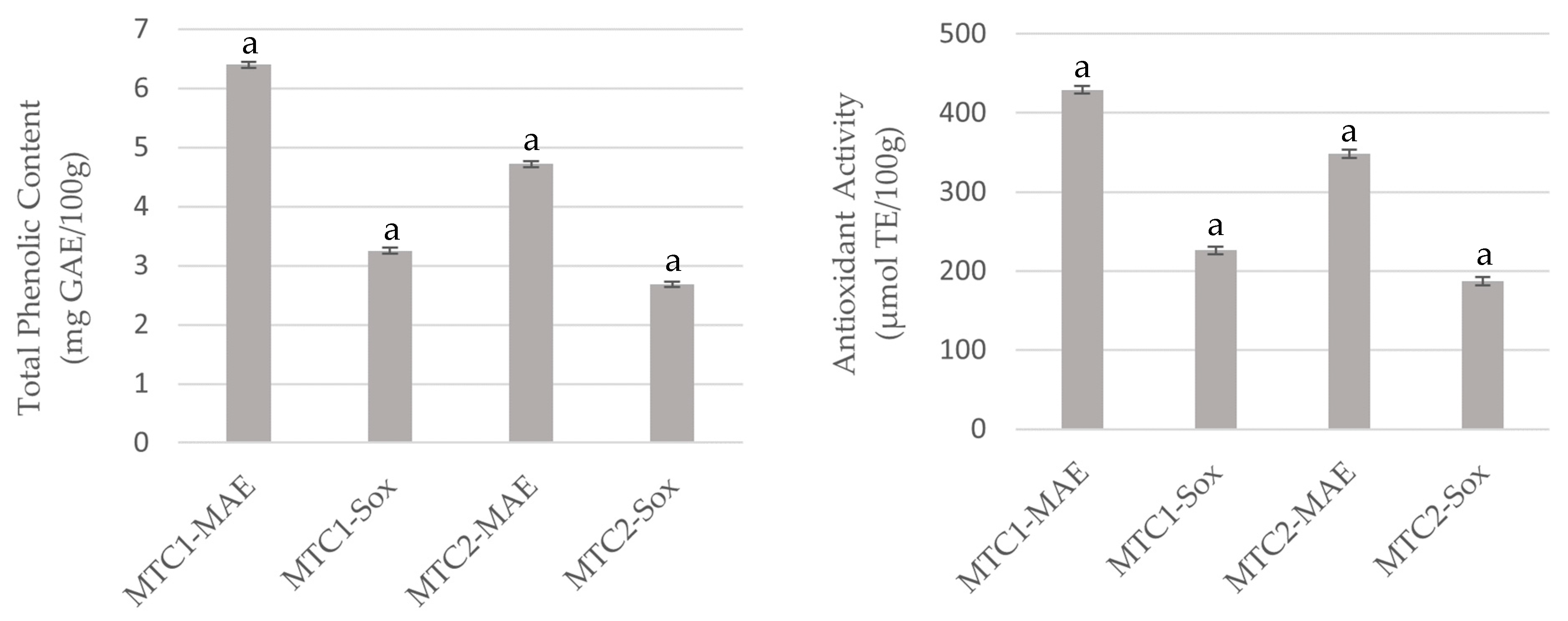
The total phenolic content (TPC) of the milk thistle seed cake oils varied markedly with the extraction method (Figure 4). MAE oils showed higher TPC values (6.40 and 4.72 mg GAE/100 g for MTC1 and MTC2) compared with Soxhlet oils (3.25 and 2.68 mg GAE/100 g). This reflects the milder thermal conditions of MAE, which better preserve heat-sensitive phenolic compounds. While literature values differ due to cultivar, environmental factors, and extraction conditions, the TPC of MAE-derived seed cake oils falls within or above the range reported for many cold-pressed milk thistle oils [25,26].
Figure 4.
Total Phenolic Content and Antioxidant Activity of milk thistle seed cake samples (mean ± SD, n = 3 analytical replicates). Identical letters indicate that no statistical comparison was applied and values are presented descriptively.
A similar trend was observed in antioxidant activity. MAE samples exhibited higher total antioxidant capacity (429.03 and 348.19 µmol TE/100 g) than their Soxhlet counterparts (226.13 and 187.07 µmol TE/100 g). This strong correspondence between TPC and antioxidant capacity highlights the contribution of naturally occurring antioxidants—including tocopherols, tocotrienols, phenolics, phytosterols, and carotenoids—in enhancing radical-scavenging ability. Because MAE limits prolonged heat exposure, these compounds are better retained, which is consistent with the improved oxidative stability of MAE oils reported in this study [27].
4. Conclusions
This preliminary study compared oil yields and quality attributes of milk thistle seed cake oils extracted using Soxhlet and microwave-assisted extraction (MAE). Across both seed batches, MAE produced higher oil yields and oils with lower acid and peroxide values, higher oxidative stability, and greater antioxidant capacity relative to Soxhlet extraction. Fatty acid profiles were similar between methods and dominated by linoleic and oleic acids.
It should be noted that extraction was performed once for each condition, and thus the results reflect analytical replicates rather than biological extraction replicates. While the trends observed are consistent with expectations based on extraction temperature and duration, future work involving replicated extractions and broader sample sets would allow statistical inference and increase the robustness of the conclusions.
Overall, the findings support the potential of MAE as a rapid and energy-efficient alternative for recovering high-quality oil from milk thistle seed cake, contributing to the valorization of oil-pressing by-products within a sustainable processing framework.
Author Contributions
Conceptualization, S.M., J.B. and M.O.; methodology, S.M., J.B. and M.O.; validation, J.B., J.M. and M.O.; formal analysis, S.M., J.M. and M.O.; investigation, S.M., J.M. and M.O.; resources, J.B., E.G.-S. and M.O.; data curation, J.B.; writing—original draft preparation, S.M.; writing—review and editing, S.M., J.B., J.M., E.G.-S. and M.O.; visualization, E.G.-S.; supervision, J.B., E.G.-S. and M.O.; project administration, S.M., J.B. and M.O. All authors have read and agreed to the published version of the manuscript.
Funding
This research received no external funding.
Institutional Review Board Statement
Not applicable.
Informed Consent Statement
Not applicable.
Data Availability Statement
The original contributions presented in the study are included in the article, further inquiries can be directed to the corresponding author.
Acknowledgments
This work was supported by the SGGW University’s Own Scholarship Fund (Własny Fundusz Stypendialny SGGW). Part of the experimental work was carried out at the University of Zagreb during a research visit funded by this scholarship. The authors thank the colleagues at University of Zagreb for their support and for providing access to their facilities.
Conflicts of Interest
The authors declare no conflict of interest.
References
- Laguta, I.; Stavinskaya, O.; Kuzema, P.; Anishchenko, V.; Ivannikov, R. Bio-waste of vegetable oil production as a source of natural phenols with antioxidant properties. Biomass Conv. Bioref. 2025, 15, 15385–15398. [Google Scholar] [CrossRef] [Scilit]
- Hackett, E.S.; Twedt, D.C.; Gustafson, D.L. Milk Thistle and Its Derivative Compounds: A Review of Opportunities for Treatment of Liver Disease. J. Vet. Intern. Med. 2013, 27, 10–16. [Google Scholar] [CrossRef] [Scilit]
- Makouie, S.; Bryś, J.; Małajowicz, J.; Koczoń, P.; Siol, M.; Palani, B.K.; Bryś, A.; Obranović, M.; Mikolčević, S.; Gruczyńska-Sękowska, E. A Comprehensive Review of Silymarin Extraction and Liposomal Encapsulation Techniques for Potential Applications in Food. Appl. Sci. 2024, 14, 8477. [Google Scholar] [CrossRef] [Scilit]
- Marceddu, R.; Dinolfo, L.; Carrubba, A.; Sarno, M.; Di Miceli, G. Milk Thistle (Silybum Marianum L.) as a Novel Multipurpose Crop for Agriculture in Marginal Environments: A Review. Agronomy 2022, 12, 729. [Google Scholar] [CrossRef] [Scilit]
- Zhang, Q.W.; Lin, L.G.; Ye, W.C. Techniques for extraction and isolation of natural products: A comprehensive review. Chin. Med. 2018, 13, 20. [Google Scholar] [CrossRef] [Scilit]
- Dey, S.; Rathod, V.K. Ultrasound assisted extraction of β-carotene from Spirulina platensis. Ultrason. Sonochem. 2013, 20, 271–276. [Google Scholar] [CrossRef] [Scilit]
- Wallace, S.N.; Carrier, D.J.; Clausen, E.C. Extraction of nutraceuticals from milk thistle. Appl. Biochem. Biotechnol. 2003, 108, 891–903. [Google Scholar] [CrossRef] [Scilit]
- Wang, X.; Zheng, X.; Liu, C. Optimization of microwave-assisted extraction of silymarin from milk thistle seeds. Int. J. Agric. Biol. Eng. 2008, 1, 75–81. [Google Scholar]
- Zaborskienė, G.; Stimbirys, A.; Zakarienė, G.; Juknienė, I. Evaluation of Fatty Acids Composition and Quantity in Raw and Processed Salmon, Herring and Mackerel Products in Lithuanian Market. Vet. Zootech. 2021, 79, 57–64. [Google Scholar]
- Bryś, J.; Flores lnês, F.V.; Górska, A.; Wirkowska-Wojdyła, M.; Ostrowska-Ligęza, E.; Bryś, A. Use of GC and PDSC methods to characterize human milk fat substitutes obtained from lard and milk thistle oil mixtures. J. Therm. Anal. Calorim. 2017, 130, 319–327. [Google Scholar] [CrossRef] [Scilit]
- Walayat, N.; Yurdunuseven-Yıldız, A.; Kumar, M.; Goksen, G.; Öztekin, S.; Lorenzo, J.M. Oxidative stability, quality, and bioactive compounds of oils obtained by ultrasound and microwave-assisted oil extraction. Crit. Rev. Food Sci. Nutr. 2024, 64, 9974–9991. [Google Scholar] [CrossRef] [Scilit] [PubMed]
- Slavinskienė, G.; Grigonis, A.; Ivaškienė, M.; Sinkevičienė, I.; Andrulevičiūtė, V.; Ivanauskas, L.; Juodžentė, D.; Ramanauskienė, K.; Daunoras, G. A Comparative Study of the Chemical Properties and Antibacterial Activity of Four Different Ozonated Oils for Veterinary Purposes. Vet. Sci. 2024, 11, 161. [Google Scholar] [CrossRef] [Scilit]
- Romanić, R.; Lužaić, T.; Grgić, K. Examining the Possibility of Improving the Properties of Sunflower Oil in Order to Obtain a Better Medium for the Process of Frying Food. Proceedings 2020, 70, 104. [Google Scholar] [CrossRef] [Scilit]
- Bártová, V.; Bárta, J.; Jarošová, M.; Bedrníček, J.; Lorenc, F.; Stupková, A.; Švajner, J.; Smetana, P.; Kyselka, J.; Filip, V.; et al. Milk thistle (Silybum marianum L. Gaertner) oilseed cake flour functional, nutritional and antioxidant characteristics as effect of cultivar and preparation process. Food Biosci. 2025, 63, 105735. [Google Scholar] [CrossRef] [Scilit]
- van den Berg, R.; Haenen, G.R.M.M.; van den Berg, H.; Bast, A. Applicability of an improved Trolox equivalent antioxidant capacity (TEAC) assay for evaluation of antioxidant capacity measurements of mixtures. Food Chem. 1999, 66, 511–517. [Google Scholar] [CrossRef] [Scilit]
- Fathi-Achachlouei, B.; Azadmard-Damirchi, S. Milk Thistle Seed Oil Constituents from Different Varieties Grown in Iran. J. Am. Oil Chem. Soc. 2009, 86, 643–649. [Google Scholar] [CrossRef] [Scilit]
- El-Mallah, M.H.; El-Shami, S.M.; Hassanein, M.M. Detailed studies on some lipids of Silybum marianum (L.) seed oil. Grasas Y Aceites 2003, 54, 397–402. [Google Scholar] [CrossRef] [Scilit]
- Berry, S.E.E. Triacylglycerol structure and interesterification of palmitic and stearic acid-rich fats: An overview and implications for cardiovascular disease. Nutr. Res. Rev. 2009, 22, 3–17. [Google Scholar] [CrossRef] [Scilit] [PubMed]
- Dabbour, I.R.; Al-Ismail, K.M.; Takruri, H.R.; Azzeh, F.S. Chemical Characteristics and Antioxidant Content Properties of Cold Pressed Seed Oil of Wild Milk Thistle Plant Grown in Jordan. Pak. J. Nutr. 2014, 13, 67–78. [Google Scholar] [CrossRef] [Scilit]
- Aparicio, R.; Roda, L.; Albi, M.A.; Gutiérrez, F. Effect of Various Compounds on Virgin Olive Oil Stability Measured by Rancimat. J. Agric. Food Chem. 1999, 47, 4150–4155. [Google Scholar] [CrossRef] [Scilit]
- Ivanišová, E.; Juricová, V.; Árvay, J.; Kačániová, M.; Čech, M.; Kobus, Z.; Krzywicka, M.; Cichocki, W.; Kozłowicz, K. Physicochemical, Antioxidant, Antimicrobial, and Sensory Characteristics of Selected Kinds of Edible Oils. Appl. Sci. 2024, 14, 3630. [Google Scholar] [CrossRef] [Scilit]
- Ayduğan, A.; Ok, S.; Yılmaz, E. Cold-pressed milk thistle seed oil: Physico-chemical properties, composition and sensory analysis. Grasas Aceites 2022, 73, e481. [Google Scholar] [CrossRef] [Scilit]
- Tarasevičienė, Ž.; Laukagalis, V.; Paulauskienė, A.; Baltušnikienė, A.; Meškinytė, E. Quality Changes of Cold-Pressed Black Cumin (Nigella sativa L.), Safflower (Carthamus tinctorius L.), and Milk Thistle (Silybum marianum L.) Seed Oils during Storage. Plants 2023, 12, 1351. [Google Scholar] [CrossRef] [Scilit]
- Sebii, H.; Karra, S.; Ghribi, A.M.; Danthine, S.; Blecker, C.; Attia, H.; Besbes, S. Moringa, Milk Thistle, and Jujube Seed Cold-Pressed Oils: Characteristic Profiles, Thermal Properties, and Oxidative Stability. Foods 2024, 13, 1402. [Google Scholar] [CrossRef] [Scilit]
- Saleh, I.A.; Vinatoru, M.; Mason, T.J.; Abdel-Azim, N.S.; Shams, K.A.; Aboutabl, E.; Hammouda, F.M. Extraction of silymarin from milk thistle (Silybum marianum) seeds—A comparison of conventional and microwave-assisted extraction methods. J. Microw. Power Electromagn. Energy 2017, 51, 124–133. [Google Scholar] [CrossRef] [Scilit]
- Fathi-Achachlouei, B.; Azadmard-Damirchi, S.; Zahedi, Y.; Shaddel, R. Microwave pretreatment as a promising strategy for increment of nutraceutical content and extraction yield of oil from milk thistle seed. Ind. Crops Prod. 2019, 128, 527–533. [Google Scholar] [CrossRef] [Scilit]
- Zhang, Z.S.; Wang, S.; Liu, H.; Li, B.Z.; Che, L. Constituents and thermal properties of milk thistle seed oils extracted with three methods. LWT 2020, 126, 109282. [Google Scholar] [CrossRef] [Scilit]

Disclaimer/Publisher’s Note: The statements, opinions and data contained in all publications are solely those of the individual author(s) and contributor(s) and not of MDPI and/or the editor(s). MDPI and/or the editor(s) disclaim responsibility for any injury to people or property resulting from any ideas, methods, instructions or products referred to in the content. |
© 2026 by the authors. Licensee MDPI, Basel, Switzerland. This article is an open access article distributed under the terms and conditions of the Creative Commons Attribution (CC BY) license.