


Abstract
This study aimed to collect natural pigments of edible mushroom waste (stalk and cap) via adsorption on a heavy metal at room temperature. At 45 min of adsorption, the sample concentrations were recorded as initial levels (t = 0 min). Then, concentrations over time were noted (t = 10, 20, 45 min). Maximum RE (removal efficiency) and AC (adsorption capacity) values were obtained at a 0.4 g/L Ni (II) solution concentration and a 45 min adsorption time, equaling 61% and 3783 mg dried mushroom pigment/g Ni (II). Furthermore, the most suitable kinetic model for all the studied Ni (II) solution concentrations was determined to be the pseudo-second-order model (R2 ≥ 0.9). ANOVA analysis, applied to the experimental data, showed that AC was mostly affected by time and initial concentration parameters.
1. Introduction
Solid agricultural waste (SAW) has increased around the world due to the increasing human population. SAW originates from crop residues (rice and wheat straw), aquaculture (fish waste), industry (fruit peel and pulp, rice husk), and animals (poultry waste). So, transforming this waste into value-added products has importance within the scope of sustainability [1].
Biofuel production is one of the strategies to achieve this. Crop residues can be utilized to produce bioethanol. However, setting up a biomass energy plant for this purpose is expensive. The rest of the sunflower and oil after oil production can be used in industrial enzyme synthesis, but this process takes time. Animal waste and husks can be effective in generating electricity. Area and money requirements for this purpose pose a problem for start-up. Biochar production from SAW is another popular solution. However, every biochar has a unique feature regarding its waste origin. As an adsorbent, SAW can be effective in removing heavy metals from wastewater [1].
An unusual strategy is the possibility of removing valuable natural pigments of SAW from water. Natural pigments are an alternative to petroleum-based synthetic pigments. By using peels, pomace, and seeds of fruits and vegetables, natural pigments can be obtained via several green processing and extraction techniques. Then, these pigments can be used to produce several pharmaceuticals and cosmeceuticals [2].
This study aimed to investigate the adsorption of natural pigments of edible mushroom waste (EMW) via nickel metal. Considering nickel is released into water resulting from several industrial processes in silver refineries and battery industries, utilizing nickel in an adsorption process can be a solution to solve environmental pollution [3].
2. Materials and Methods
2.1. Materials
EMW that included the stalk and cap of locally purchased cultivated mushroom was collected as kitchen waste. The brand of the cultivated mushroom was DAL (Antalya, Turkey). Ni (II) stock solution was obtained to dissolve Ni (NO3)2·6 H2O salt, which was obtained from Merck (Darmstadt, Germany) in deionized water.
2.2. Experimental Method
The EMW was first dried at 100 °C. Then, it was calcinated in a muffle furnace at 800 °C for 1 h. Then, adsorption was carried out in Ni (II) solutions (0.4, 0.6, and 0.8 g/L) with 0.1 g calcinated EMW at a 200 rpm shaking rate and at 25 °C. Another sample was prepared that covered only calcinated EMW and water, which was processed similarly to see the effect of nickel on natural pigment removal. UV-VIS was utilized to analyze the mushroom pigment concentration against time at a 400 nm wavelength that was appropriate for detection of Ni(II). Adsorption capacity (AC, mg/g) and removal efficiency (RE, %) of the nickel as the adsorbent were calculated as follows:
where V (L) is the volume of solution, W (g) is the weight of nickel in the solution, and C0 and Ct (mg/L) are the initial and time t concentrations of the mushroom solution, respectively [4,5].
Pseudo-first-order (Equation (3)), pseudo-second-order (Equation (4)), and intra-particle diffusion (Equation (5)) kinetic models were tested [6,7]. The model equations are given below.
log(qe − qt) = log(qe) − k1t
Hence, qe and qt represent the adsorption capacities at equilibrium and time t, respectively. Rate constants of the related kinetic models are k1 (1/min), k2 (g/(mg*min)), and ki (mg/(g*min0.5)). C (mg/g) is a constant for the intra-particle diffusion model.
2.3. Statistical Analysis
The statistical analysis was conducted by using one-way ANOVA. The experimental data were embedded in OriginPro (8.5, OriginLab, Northampon, MA, United States) to perform a one-way ANOVA. The levels were selected as time, solution concentration, RE, and AC. The Tukey test was applied to compare the level pairs. The homogeneity of variance test was determined by using Levene’s test.
3. Results and Discussion
3.1. Adsorption Capacity
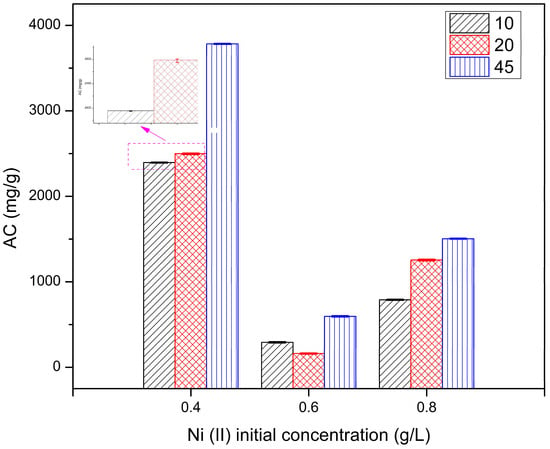
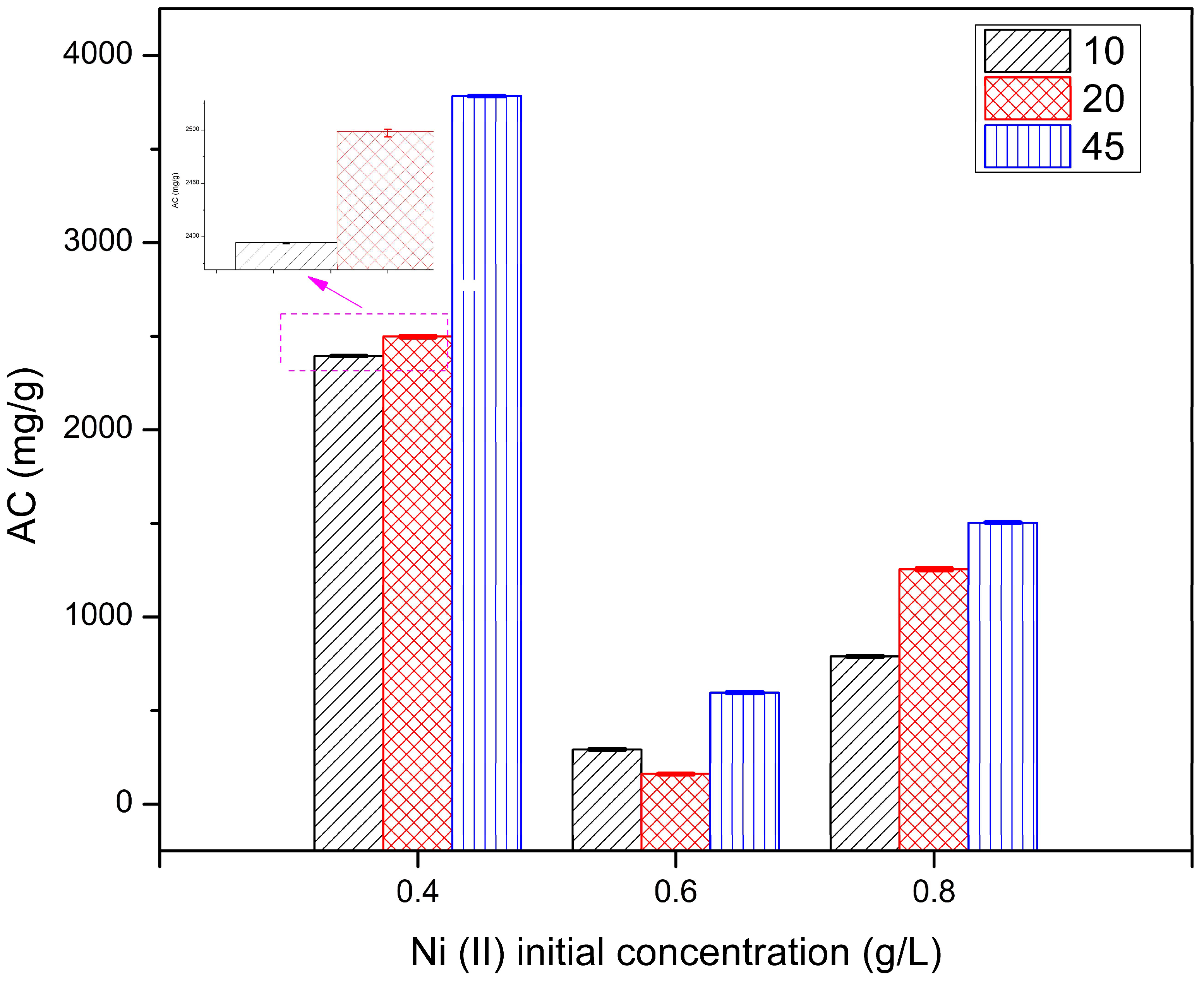
The kinetic behavior of nickel metal for removing a natural dye is observed in Figure 1. Nickel solutions with an initial concentration of 0.4 g/L were found to be more efficient in removing pigments for all studied times. The failure of more concentrated solutions could have been due to the aggregation of nickel particles in the solution. This meant that the surface area for the adsorption of the pigments decreased [8]. Vertical error bars were added to the graph. Since the maximum error was obtained as 2%, the bars were lost in the graph data.
Figure 1.
Adsorption capacity (AC, mg/g) values for different initial Ni(II) solution concentrations.
3.2. Removal Efficiency
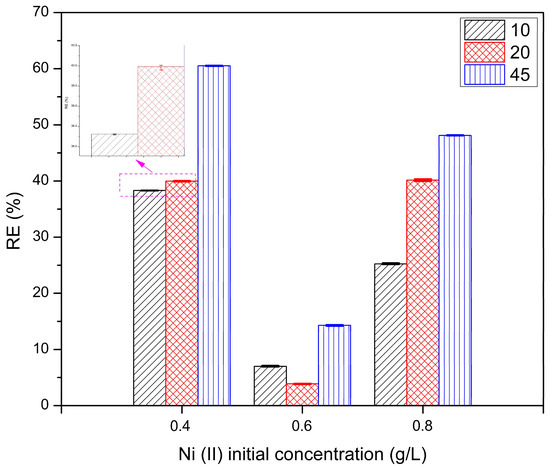
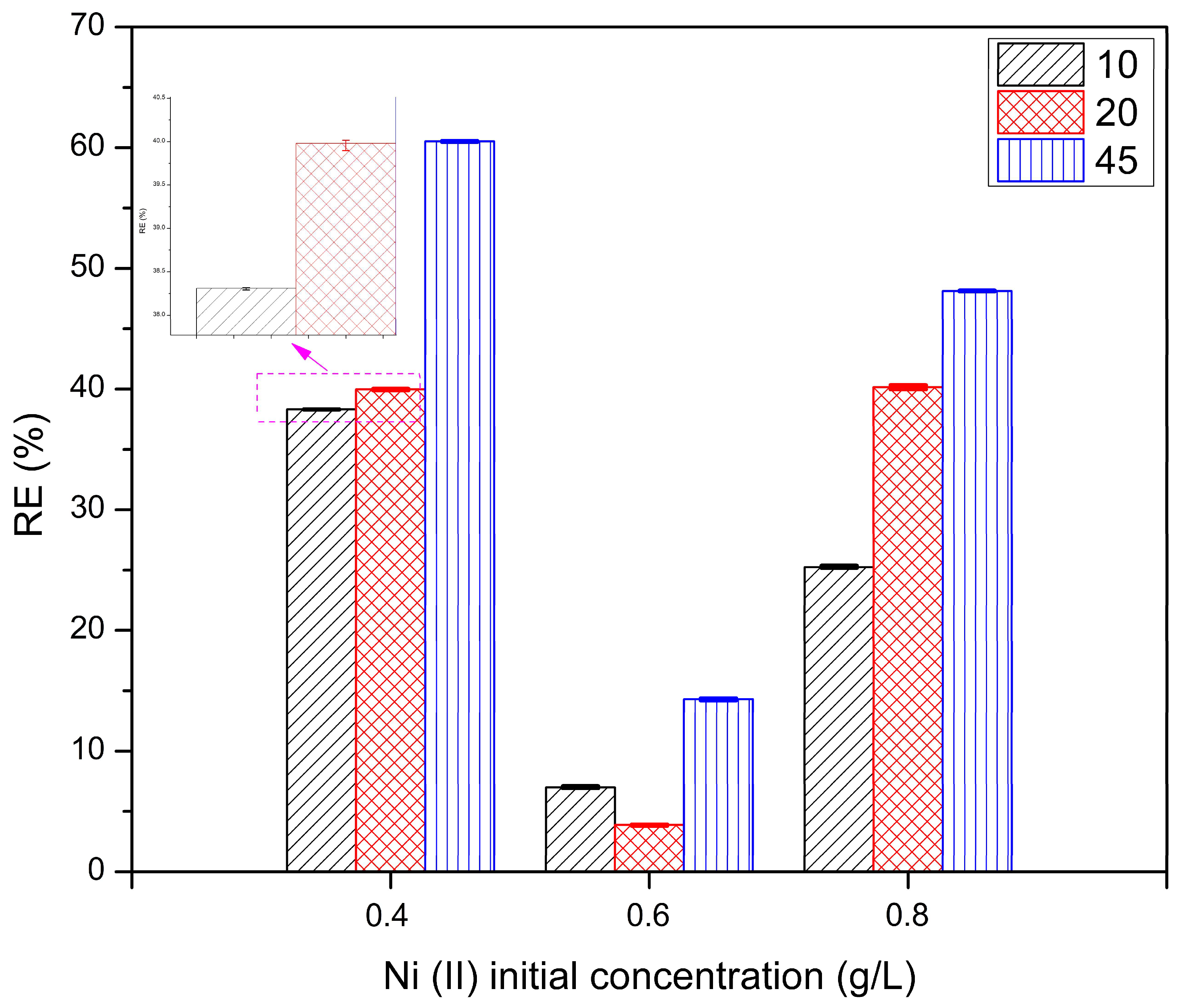
As shown in Figure 2, the removal efficiency followed the same trend as the adsorption capacity in this study. The maximum removal efficiency was obtained as nearly 60% with a 0.4 g/L nickel solution after 45 min of adsorption. It is known that metal-containing materials could be effective for organic dye adsorption. However, even though metal–organic frameworks had a higher surface area, they were not effective for whole organic dyes. For example, Lv and co-workers synthesized a type of Zr-based MOF to remove methyl orange. The researchers met a 50% removal efficiency at room temperature [9]. So, further studies can be conducted by impregnating metallic nickel on carbonaceous materials. It is known that carbonaceous materials like activated carbon and reduced graphene oxide are effective adsorbents for organic dye adsorption [10]. Like the AC graph, errors in the RE values were observed with 3% as the maximum. This meant that the results obtained were reliable.
Figure 2.
Removal efficiency (RE, %) values for different initial Ni(II) solution concentrations.
3.3. Kinetic Model
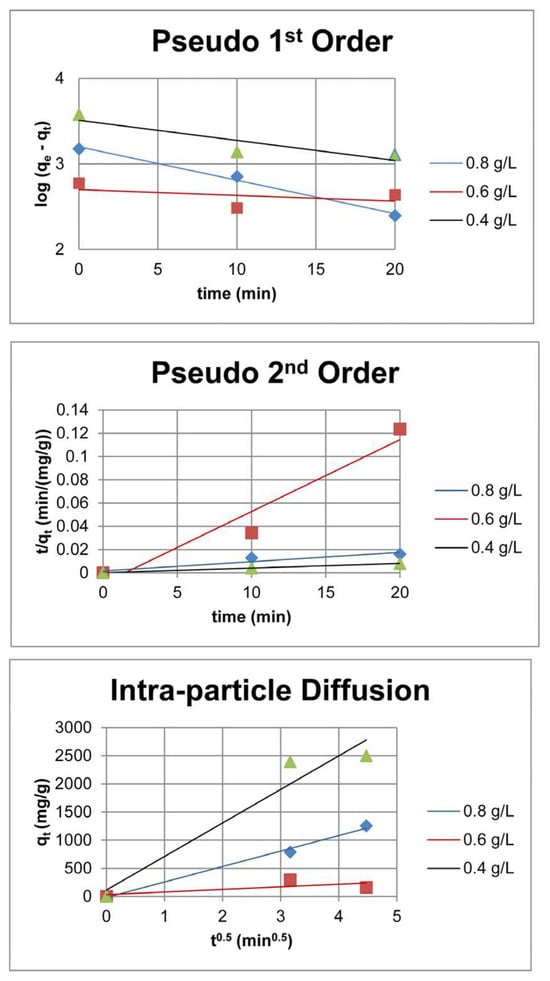
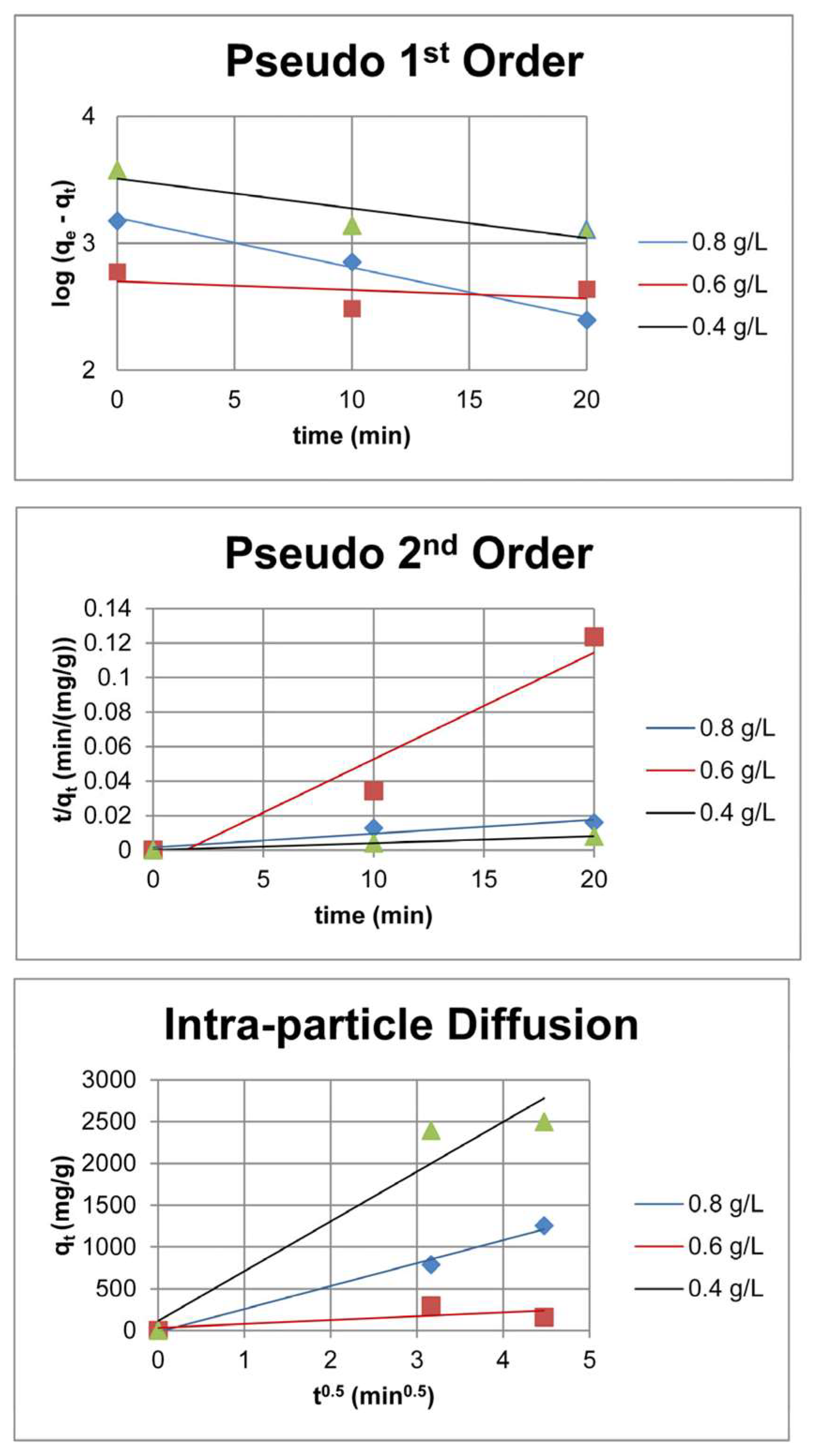
Figure 3 represents the linear fitting of pseudo-first-order, pseudo-second-order, and intra-particle diffusion kinetic models with the experimental data obtained in this study. Hence, it was determined that the most appropriate model with the data selected was the pseudo-second-order kinetic model; regarding its R2 value, it was higher than 0.9 at all nickel solutions. This model assumes that the adsorption rate is mainly dependent on the concentration of the adsorbent and adsorbate [11]. At a 0.6 g/L dye concentration, pseudo-first-order and intra-particle diffusion models had 0.2 and 0.5 R2 values, respectively. Although these kinetic models are popular for adsorption studies, this means that these models are not suitable to model the adsorption of pigments on nickel at this concentration. This is because intra-particle diffusion kinetics are more suitable for the adsorption of aromatic compounds on activated carbon [12]. In addition, compared to the pseudo-first-order kinetic model, the pseudo-second-order kinetic model has been represented in many studies in the literature for many adsorption systems [13].
Figure 3.
Comparison of kinetic models (The shapes of triangle: 0.4 g/L, square: 0.6 g/L, diamond: 0.8 g/L represented the linearized original experimental data).
3.4. Statistical Analysis
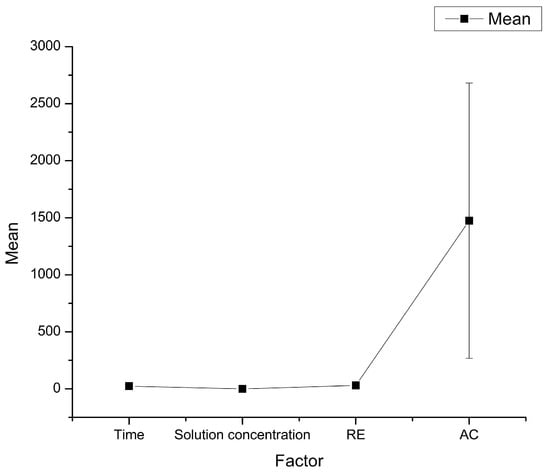
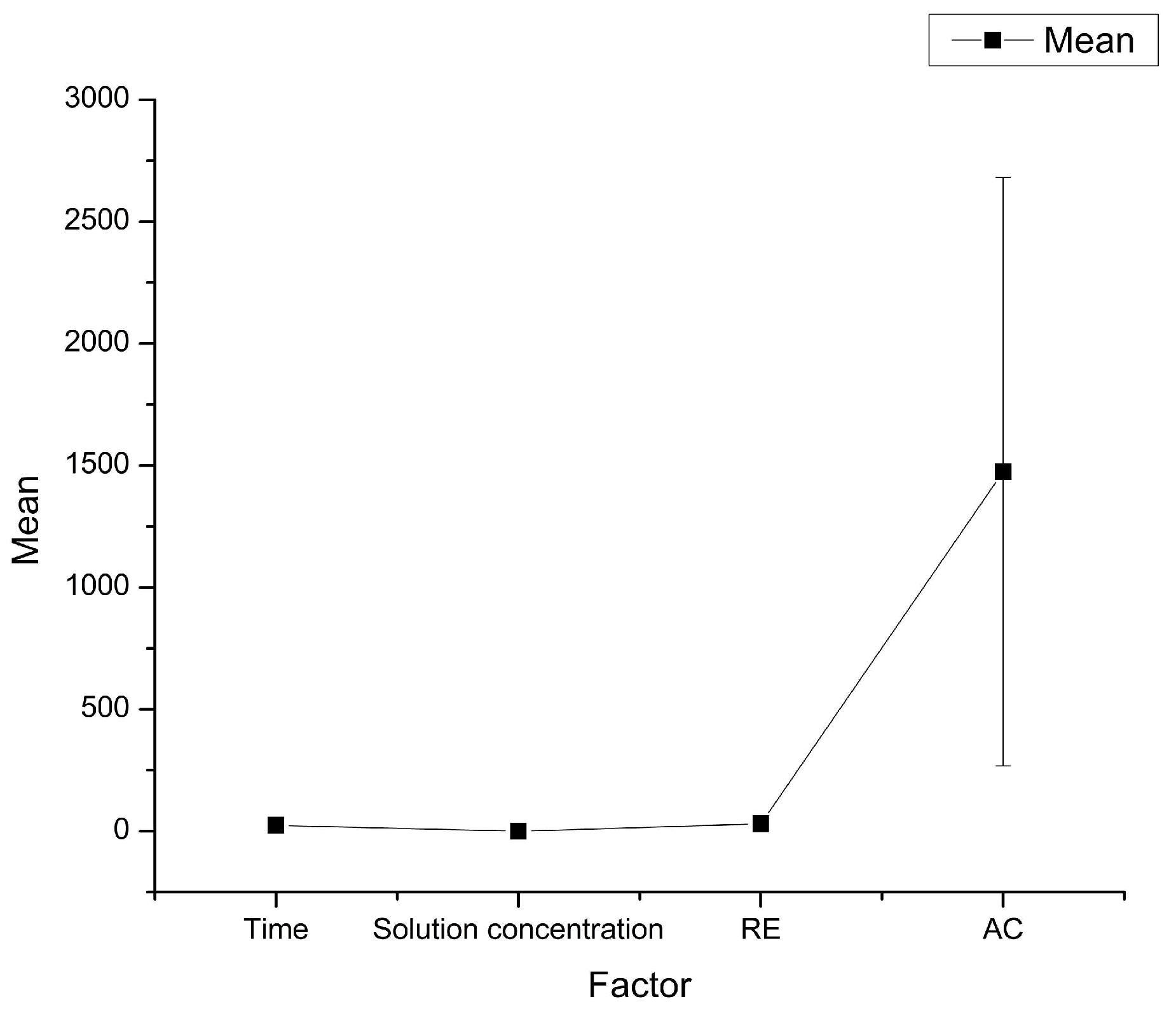
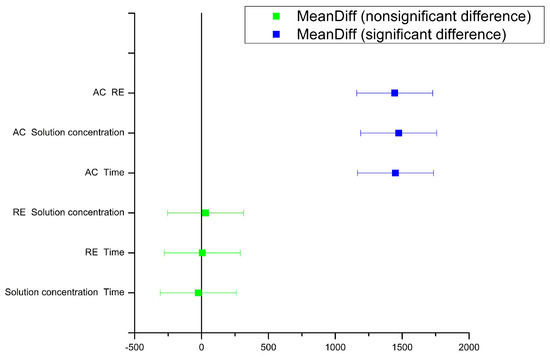
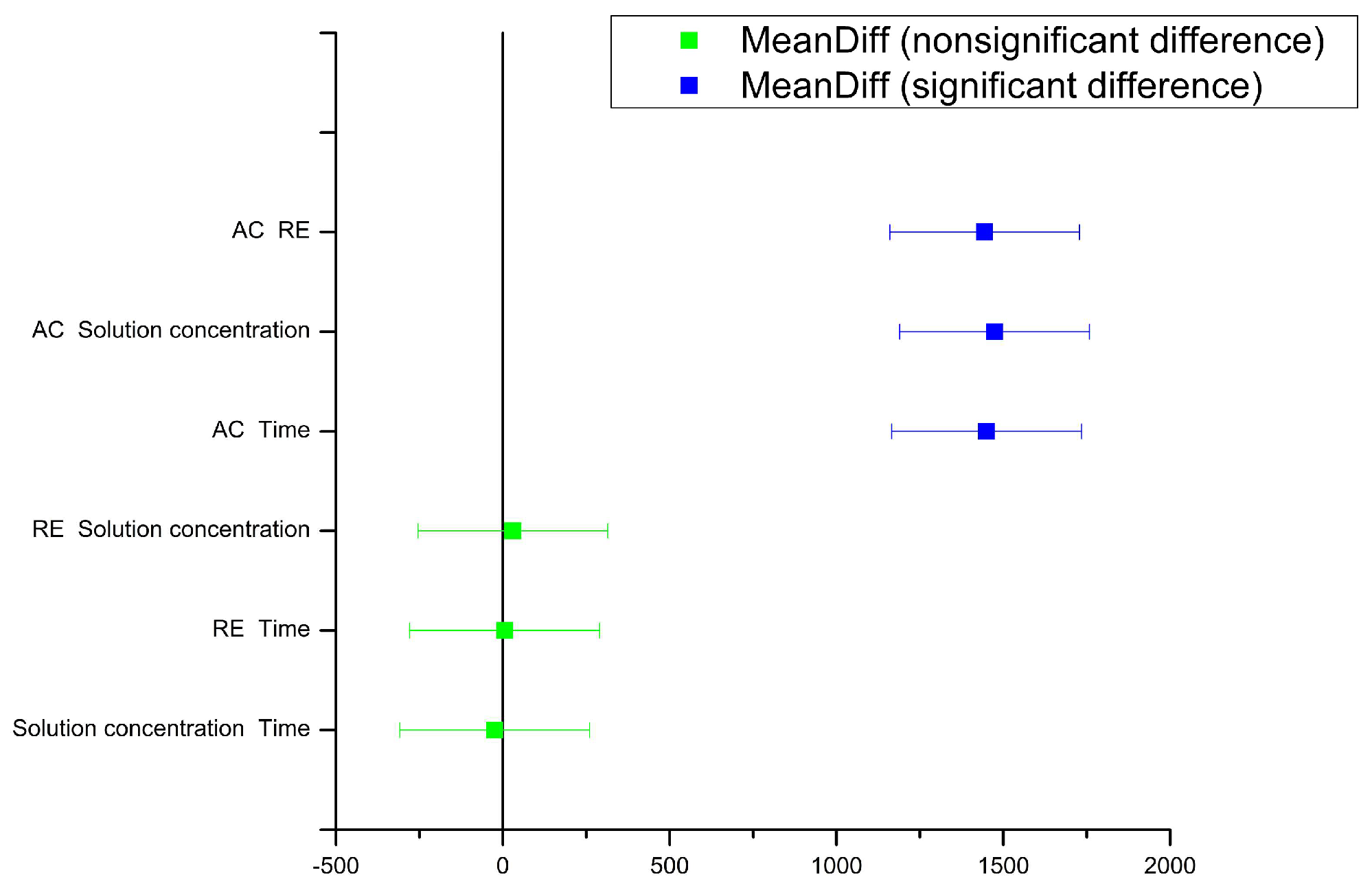
Statistical interpretations started with the assessment of Levene’s test (Table 1). Hence, the p-value was smaller than 0.05. This meant that the four groups were thought to have non-equal variance. Similarly, the evaluated overall ANOVA results supported this idea. As shown in Table 2, the p-value was smaller than 0.05, so at least two of the four groups had significantly different means [14]. Mean comparison results, which originated from the Tukey test, are presented in Table 3. These results confirmed that adsorption capacity was crucially affected by time and initial solution concentration, as p-values were lower than 0.05. However, the effect of these parameters on removal efficiency was ignorable. As seen in Figure 4, AC displayed a significant difference from the RE, time, and solution concentration. In addition, it was obvious that AC differed from the other three groups regarding Figure 5. The R2 value of the analysis was determined as 0.55.
Table 1.
The results of Levene’s test.
Table 2.
The results of the overall ANOVA.
Table 3.
Mean comparison results.
Figure 4.
Mean plot.
Figure 5.
Mean comparison plot.
4. Conclusions
Nickel is a popular transition metal used as a catalyst in several reactions, including polymerization, hydrogenation, and oxidation. So, metallic waste formation is inevitable. In addition, natural pigments and chemicals have gained attention nowadays because of their environmentally friendly nature concerning global warming issues. Hence, this study aimed to collect the natural pigments of waste mushrooms on metallic nickel via adsorption. A total of 61% pigment removal was achieved. It was considered that the calcination of mushroom waste could be effective for achieving this positive result. This study will be expanded by using different metals, such as Ga and La, which are popular today. Also, different metals containing nanomaterials, such as MOFs or carbonaceous materials, can be utilized for further studies in the same adsorption system.
Funding
This research received no external funding.
Institutional Review Board Statement
Not applicable.
Informed Consent Statement
Not applicable.
Data Availability Statement
The data presented in this study are available within this manuscript.
Conflicts of Interest
The author declares no conflicts of interest.
References
- Koul, B.; Yakoob, M.; Shah, M.P. Agricultural waste management strategies for environmental sustainability. Environ. Res. 2022, 206, 112285. [Google Scholar] [CrossRef] [Scilit] [PubMed]
- Sharma, M.; Usmani, Z.; Gupta, V.K.; Bhat, R. Valorization of fruits and vegetable wastes and by-products to produce natural pigments. Crit. Rev. Biotechnol. 2021, 41, 535–563. [Google Scholar] [CrossRef] [Scilit] [PubMed]
- Erdoğan, S.; Önal, Y.; Akmil-Başar, C.; Bilmez-Erdemoğlu, S.; Sarıcı-Özdemir, Ç.; Köseoğlu, E.; Icduygu, G. Optimization of nickel adsorption from aqueous solution by using activated carbon prepared from waste apricot by chemical activation. Appl. Surf. Sci. 2005, 252, 1324–1331. [Google Scholar] [CrossRef] [Scilit]
- Liu, W.J.; Zeng, F.X.; Jiang, H.; Zhang, X.S. Preparation of high adsorption capacity bio-chars from waste biomass. Bioresour. Technol. 2011, 102, 8247–8252. [Google Scholar] [CrossRef] [Scilit] [PubMed]
- Vimonses, V.; Jin, B.; Chow, C.W.; Saint, C. Enhancing removal efficiency of anionic dye by combination and calcination of clay materials and calcium hydroxide. J. Hazard. Mater. 2009, 171, 941–947. [Google Scholar] [CrossRef] [Scilit] [PubMed]
- Simonin, J.P. On the comparison of pseudo-first order and pseudo-second order rate laws in the modeling of adsorption kinetics. Chem. Eng. J. 2016, 300, 254–263. [Google Scholar] [CrossRef] [Scilit]
- Rajabi, M.; Moradi, O.; Zare, K. Kinetics adsorption study of the ethidium bromide by graphene oxide as adsorbent from aqueous matrices. Int. Nano Lett. 2017, 7, 35–41. [Google Scholar] [CrossRef] [Scilit]
- Goksu, A.; Tanaydin, M.K. Adsorption of hazardous crystal violet dye by almond shells and determination of optimum process conditions by Taguchi method. Desalination Water Treat. 2017, 88, 189–199. [Google Scholar] [CrossRef] [Scilit]
- Lv, S.W.; Liu, J.M.; Ma, H.; Wang, Z.H.; Li, C.Y.; Zhao, N.; Wang, S. Simultaneous adsorption of methyl orange and methylene blue from aqueous solution using amino functionalized Zr-based MOFs. Microporous Mesoporous Mater. 2019, 282, 179–187. [Google Scholar] [CrossRef] [Scilit]
- Gupta, K.; Khatri, O.P. Fast and efficient adsorptive removal of organic dyes and active pharmaceutical ingredient by microporous carbon: Effect of molecular size and charge. Chem. Eng. J. 2019, 378, 122218. [Google Scholar] [CrossRef] [Scilit]
- Debnath, S.; Das, R. Strong adsorption of CV dye by Ni ferrite nanoparticles for waste water purification: Fits well the pseudo second order kinetic and Freundlich isotherm model. Ceram. Int. 2023, 49, 16199–16215. [Google Scholar] [CrossRef] [Scilit]
- Benjelloun, M.; Miyah, Y.; Evrendilek, G.A.; Zerrouq, F.; Lairini, S. Recent advances in adsorption kinetic models: Their application to dye types. Arab. J. Chem. 2021, 14, 103031. [Google Scholar] [CrossRef] [Scilit]
- Revellame, E.D.; Fortela, D.L.; Sharp, W.; Hernandez, R.; Zappi, M.E. Adsorption kinetic modeling using pseudo-first order and pseudo-second order rate laws: A review. Clean. Eng. Technol. 2020, 1, 100032. [Google Scholar] [CrossRef] [Scilit]
- OriginLab. Available online: https://www.originlab.com/doc/en/Tutorials/1WayANOVA (accessed on 23 December 2025).

Disclaimer/Publisher’s Note: The statements, opinions and data contained in all publications are solely those of the individual author(s) and contributor(s) and not of MDPI and/or the editor(s). MDPI and/or the editor(s) disclaim responsibility for any injury to people or property resulting from any ideas, methods, instructions or products referred to in the content. |
© 2026 by the author. Licensee MDPI, Basel, Switzerland. This article is an open access article distributed under the terms and conditions of the Creative Commons Attribution (CC BY) license.