


Abstract
Unaccompanied asylum-seeking youth navigate adolescence and the transition to adulthood under prolonged legal and institutional uncertainty. This grounded theory study examined how minors and young adults experience living in liminality in Greece and how relational, psychosocial, and systemic conditions shape vulnerability and resilience. We conducted 69 semi-structured interviews with unaccompanied minors, young adults, facility coordinators, frontline workers, child and adolescent mental health professionals, NGO board members, and juvenile prosecutors across three Greek regions. Analysis identified liminality as fluctuation between three interconnected worlds: the world of origin, present life in Greece, and an aspired future. Four dimensions emerged—temporal, spatial, relational, and aspirational—together with four meaning attributions: impasse, time-out, opportunity, and challenge to overcome. Vulnerability and resilience were described as dynamic rather than opposing states, with participants reporting changes associated with personal histories, family expectations, accommodation practices, community relationships, and institutional support. Supportive environments were associated with trust, agency, belonging, goal formation, and continuity of care, whereas legal uncertainty, discrimination, service fragmentation, and abrupt transitions around legal adulthood were associated with distress and marginalization. Liminality is therefore conceptualized as a developmental and relational process through which young people negotiate identity, belonging, agency, vulnerability, and resilience while transitioning toward adulthood.
1. Introduction
Unaccompanied asylum-seeking youth experience adolescence and the transition to adulthood under conditions that differ markedly from those of most young people. Alongside the normative developmental tasks of identity formation, autonomy, belonging, and future orientation, they must also navigate forced displacement, separation from family, legal uncertainty, disrupted education, and unstable living arrangements. These intersecting pressures increase the risk of psychological distress, including anxiety, depression, post-traumatic stress symptoms, sleep disturbance, self-harm, and suicidality, while also constraining access to the relational, educational, and social resources that normally support healthy development. At the same time, unaccompanied youth should not be understood solely through a deficit or trauma-based lens. Systematic evidence indicates that, alongside substantial risks for post-traumatic stress, depression, anxiety, and other forms of psychological distress, mental health is also shaped by modifiable protective conditions, including stable accommodation, social support, family contact, and culturally responsive environments (Daniel-Calveras et al., 2022; Höhne et al., 2022). More recent studies further show that post-migration living conditions and access to supportive environments influence psychological well-being and adaptation after arrival (Walg et al., 2024; Hornfeck et al., 2025).
The transition to legally defined adulthood is particularly consequential for unaccompanied asylum-seeking youth because chronological age often determines access to accommodation, protection, education, legal assistance, and psychosocial support even when substantial developmental needs remain. Turning 18 may therefore create a discontinuity in care rather than a gradual transition toward autonomy, particularly where coordinated transition arrangements and adult support are limited (Gimeno-Monterde et al., 2021). In Greece, Mishra et al. (2020b) showed that age-based interpretations of vulnerability may disadvantage older adolescents whose prior exposure to poverty, displacement, homelessness, social isolation, and prolonged migration has produced cumulative disadvantage. Their findings further showed that access to specialized accommodation could provide stability, skills, social networks, and pathways into adult housing. In contrast, young people who had not entered such accommodation before age 18 could lose access to these opportunities. Vulnerability should therefore not be assumed to diminish automatically with chronological age but understood in relation to cumulative adversity, developmental needs, and access to protective environments.
These developmental challenges become especially pronounced when unaccompanied asylum-seeking youth remain in countries they perceive not as final destinations but as temporary points along an interrupted migration trajectory. Greece has frequently been experienced in this way: many unaccompanied minors have viewed it as a stopover or “stepping stone” toward another European country rather than as their intended place of settlement. Many unaccompanied minors arriving in Greece have faced prolonged and uncertain periods while attempting to pursue family reunification or onward movement to another EU Member State, with legal and procedural barriers delaying or preventing the realization of these aspirations (Melissourgos et al., 2023). In these conditions, young people may remain physically present in one country while emotionally connected to their place of origin and psychologically oriented toward an imagined future elsewhere. Existing research has described comparable experiences through concepts of limbo, waiting, stuckness, and liminality, with particular emphasis on temporal and spatial uncertainty (Braakman & Schlenkhoff, 2007; Biehl, 2015; Rotter, 2016; Gazit, 2018; Hartonen et al., 2022). Studies involving asylum-seeking children and unaccompanied adolescents have further shown that prolonged waiting and uncertain transit conditions can affect psychosocial well-being, identity development, adaptation, and future orientation (Wolter et al., 2023; Wischmann, 2023; Corona Maioli et al., 2024). However, these established dimensions have less often been examined as interrelated components of a single youth-specific explanatory model showing how prolonged liminality is interpreted and negotiated across adolescence and the transition to adulthood.
Research conducted in Greece has documented substantial challenges in the protection and support of unaccompanied minors, including limitations in accommodation and child-protection provision, barriers to social and educational inclusion, gaps in psychosocial and mental health services, and discontinuities associated with legal and institutional arrangements (Buchanan & Kallinikaki, 2020; Kourachanis, 2021; Giannopoulou et al., 2024). Other qualitative work has shown that child-protection and migration-management systems can shape young people’s trajectories, aspirations, opportunities for integration, and exposure to vulnerability, particularly as they navigate prolonged uncertainty and the transition toward adulthood (Mishra et al., 2020b; Kovner et al., 2021). Although previous research has examined many of the component processes involved—including waiting, legal and spatial uncertainty, belonging, aspirations, agency, vulnerability, and resilience—less attention has been given to how these processes are configured together within an explanatory account centred on unaccompanied young people’s own interpretations of prolonged uncertainty. A youth-centred model is therefore needed to explain how these dimensions interact across adolescence and emerging adulthood and how their meanings are shaped by changing relational and institutional contexts.
Against this background, the present study used grounded theory to examine how unaccompanied asylum-seeking minors and young adults experience prolonged uncertainty while living in Greece and how they interpret and respond to this condition during adolescence and the transition to adulthood. Rather than approaching liminality solely as waiting or spatial entrapment, the study sought to identify the processes, relationships, and contextual conditions through which this experience was constructed and negotiated. Young people’s accounts were examined alongside those of professionals and stakeholders involved in their care and protection to develop an empirically grounded explanatory model of living in liminality. The study addressed the following research questions:
- How is living in liminality experienced by unaccompanied asylum-seeking minors and young adults?
- How do young people interpret prolonged uncertainty, and how do these interpretations relate to their responses and transition toward adulthood?
- What conditions and processes shape how young people experience and respond to Prolonged Uncertainty?
- How is the experience of living in liminality understood by professionals and stakeholders involved in their care, protection, and support?
2. Materials and Methods
2.1. Study Design and Epistemological Approach
A grounded theory design was adopted to generate an empirically grounded explanatory model of how unaccompanied asylum-seeking minors and young adults experience and negotiate living in liminality in Greece. This approach was selected because the study sought not only to describe participants’ experiences, but also to identify the processes, conditions, interactions, and consequences through which vulnerability and resilience were shaped over time. Grounded theory was particularly appropriate in a context characterised by prolonged uncertainty, fragmented institutional responses, and limited existing theorisation of liminality as a developmental and relational experience among unaccompanied youth.
The study followed the systematic but flexible grounded theory approach described by Corbin and Strauss (2015), with iterative data collection and analysis and theoretical sampling guided by emerging concepts. Section 2.5 describes the detailed analytic procedures.
The study was informed by a post-positivist epistemological stance. It was acknowledged that participants’ accounts and researchers’ interpretations were shaped by their respective social, professional, and institutional positions. At the same time, methodological transparency, systematic comparison, reflexivity, and collaborative analysis strengthened the credibility and explanatory adequacy of the emerging model. Reflexivity was therefore treated not merely as a means of critically examining researcher influence, but as an analytic resource for identifying and interrogating assumptions concerning vulnerability, resilience, waiting, youth agency, and institutional support.
This epistemological and methodological orientation also supported the inclusion of multiple perspectives. The experiences of unaccompanied minors and young adults were examined alongside the accounts of frontline workers, facility coordinators, mental health professionals, organizational leaders, and juvenile prosecutors. These perspectives were not treated as interchangeable or as substitutes for the voices of young people; rather, they were compared to illuminate how liminality was experienced and interpreted across different relational, professional, and institutional contexts.
2.2. Study Context
The study was conducted in Greece between February and December 2022 across three geographical regions: Athens, Thessaloniki, and Lesvos. These locations were selected because they included major urban and island settings in which unaccompanied asylum-seeking minors were accommodated and supported through different organizational and service structures. Including diverse settings enabled the study to capture variation in accommodation practices, access to services, institutional arrangements, and local community contexts.
At the time of the study, most unaccompanied minors living in long-term accommodation facilities in Greece were adolescent boys originating from countries in the Middle East, Asia, and Africa. Long-term accommodation was provided primarily through shelters and supported independent living arrangements for older adolescents. These structures were intended to provide safety, daily care, education, legal assistance, and psychosocial support, while reducing minors’ exposure to homelessness, detention, large reception centres, and accommodation shared with unrelated adults.
Despite these protective arrangements, the transition to legal adulthood remained a critical point of instability. Young people approaching the age of 18 faced uncertainty regarding the continuation of accommodation, financial assistance, education, legal support, and access to psychosocial or mental health services. During the study period, some young people reaching legal adulthood were required to leave child-protection accommodation and move to camps, shared housing, or other less supportive arrangements. Such transitions could disrupt established relationships and educational and developmental opportunities at a time when some young people were still awaiting decisions concerning asylum, family reunification, or longer-term settlement.
This institutional and socio-political context was central to interpreting how legal uncertainty, accommodation conditions, support relationships, and the transition to adulthood were experienced within the broader condition of living in liminality.
2.3. Participants and Sampling
A purposive maximum-variation sampling strategy was initially used to recruit participants from Athens, Thessaloniki, and Lesvos. Sampling was designed to capture variation across age, gender, country of origin, legal and accommodation status, duration of stay in Greece, professional role, and level of involvement in the care and protection of unaccompanied asylum-seeking youth.
Participants were organized into five groups. The first group comprised 26 unaccompanied asylum-seeking minors and young adults, including 20 minors aged 15 to <18 years and six young adults aged 18–19 years. The second group included 30 facility coordinators and frontline workers, such as psychologists, social workers, caregivers, cultural mediators, educators, and legal professionals. The third group consisted of six professionals working in public child and adolescent mental health services. The fourth group comprised five members of the boards of organizations providing long-term accommodation to unaccompanied minors, and the fifth group included two juvenile prosecutors. For unaccompanied minors, current psychiatric treatment at the time of recruitment was an exclusion criterion; previous psychiatric hospitalization or psychological support within the accommodation setting did not, in itself, preclude participation. Table S1 presents detailed participant characteristics and inclusion and exclusion criteria.
The initial maximum-variation sampling was subsequently extended through iterative theoretical sampling. As analysis progressed, emerging categories and contrasts indicated the need to include additional perspectives, particularly those of young adults, juvenile prosecutors, and professionals in child and adolescent mental health services. These participants were recruited later in the study to elaborate emerging categories, clarify differences across institutional and developmental contexts, and refine relationships within the developing grounded theory model. Theoretical sampling also guided attention to contrasts associated with age, legal uncertainty, accommodation arrangements, educational opportunities, duration of stay, and access to psychosocial support.
The final sample size was determined by theoretical saturation rather than by a predefined numerical target. Saturation was considered reached when successive interviews no longer generated new properties of the core categories or new relationships among the major components of the emerging model. The team reviewed this judgment during meetings by constantly comparing interview data, category definitions, and discrepant cases.
2.4. Data Collection
Semi-structured interviews were conducted with all 69 participants by four members of the research team. Each participant received information about the purpose and procedures of the study and was invited to take part in an interview at an appropriate and convenient location, including accommodation facilities, professional offices, or organizational premises. Interviews were conducted in settings that protected privacy and minimized the possibility of conversations being overheard. Interviews lasted approximately 45–90 min, were audio-recorded in their entirety, and were transcribed verbatim in the original language of the interview.
Most interviews were conducted in Greek, particularly those with professionals and stakeholders. A small number of interviews with young participants were conducted directly in English or French. When a young participant could not communicate adequately with the interviewer in Greek, English or French, an experienced intercultural mediator with no prior relationship to the participant provided consecutive interpretation between the young person and the interviewer. The mediator conveyed the participant’s responses to the interviewer and the interviewer’s questions to the participant and was briefed regarding the aims of the study, confidentiality requirements, and the importance of preserving participants’ intended meanings as accurately as possible.
Transcripts were prepared in the original language in which each interview was conducted. An experienced researcher fluent in English translated material selected for presentation in the English-language manuscript. The researcher who conducted the corresponding interview subsequently checked the translations against the original account, with particular attention to preserving intended meaning and contextual nuance. Systematic field notes were not maintained. However, following some interviews, interviewers recorded brief audio reflections concerning the emotional tone of the encounter and aspects of non-verbal communication. On some occasions, interviewers also documented relevant comments that participants or staff offered after the formal audio-recorded interview had ended. These observations were retained as contextual material rather than treated as a separate systematically coded dataset.
Separate semi-structured interview guides were adapted for the five participant groups. The guides covered four broad areas: (1) experiences before departure, during the migration journey, and after arrival in Greece; (2) experiences and meanings associated with living in liminality; (3) the nature and availability of psychosocial, educational, legal, and relational support; and (4) factors that facilitated or hindered coping with prolonged uncertainty. Questions were open-ended and were followed by probes that allowed participants to elaborate on experiences, interpretations, and changes over time. Section 2.7 describes ethical, consent, safeguarding, and confidentiality procedures.
2.5. Data Analysis
Data collection and analysis proceeded concurrently, in accordance with the grounded theory procedures described by Corbin and Strauss (2015). This iterative process enabled emerging concepts and comparisons to inform subsequent interviews and theoretical sampling. Analysis was informed by the research questions and proceeded through open, axial, and selective coding, with constant comparison across interviews, participant groups, codes, categories, and emerging relationships. Analysis drew primarily on the verbatim interview transcripts; the occasional post-interview reflections and contextual observations described in Section 2.4 were used to support interpretation but were not treated as a separate systematically coded dataset.
NVivo 12 Plus (QSR International Pty Ltd., Melbourne, Australia) was used initially to organize the interview material, but the subsequent grounded theory analysis was conducted iteratively outside the software. Coding, constant comparison, and category development informed regular research-team discussions in which analytic questions, emerging categories, relationships, and alternative interpretations were collectively reviewed. The analysis did not employ independent duplicate coding or calculate inter-coder agreement. Instead, coding decisions, emerging categories, relationships among categories, discrepant interpretations, and analytic questions were examined during regular research-team meetings involving all members of the research team. Differences in interpretation were discussed, alternative explanations were considered, and analytic decisions were used to refine the developing grounded theory model.
During open coding, interview transcripts were examined line by line to identify discrete meaning units relating to participants’ experiences, actions, emotions, interpretations, and responses to prolonged uncertainty. Initial codes remained close to participants’ accounts and captured both recurrent patterns and contrasting experiences. Codes were continuously compared within and across the five participant groups and progressively grouped into preliminary categories according to conceptual similarities and differences.
During axial coding, categories were refined and linked by examining the conditions in which particular experiences occurred, the relational and institutional contexts in which they were embedded, participants’ actions and responses, and the consequences associated with these processes. Particular attention was paid to variation associated with age, accommodation arrangements, legal uncertainty, family expectations, access to education and psychosocial support, community relationships, and the transition to adulthood. Constant comparison was used to examine both convergence and divergence across young participants and the different professional and stakeholder groups.
During selective coding, the major categories were progressively integrated around the core category of living in liminality. Theoretical integration involved examining how the three interconnected worlds of origin, present life in Greece, and an aspired future were related to the temporal, spatial, relational, and aspirational dimensions of liminality; how young people attributed different meanings to this condition; and how personal, relational, community, and institutional conditions shaped changing patterns of vulnerability and resilience. The developing model was repeatedly compared with accounts from young participants and adult stakeholders to determine whether it accounted for both recurrent processes and meaningful differences across experiences and contexts.
The final stage of theoretical integration organized the analysis around the core category of “living in liminality” and linked five levels of the emerging explanatory structure: (1) the three interconnected experiential worlds of origin, present life in Greece, and an aspired future; (2) the temporal, spatial, relational, and aspirational dimensions of liminality; (3) the four dominant meaning attributions of impasse, time-out, opportunity, and challenge to overcome; (4) the six multilevel domains shaping young people’s experiences; and (5) the dynamic interplay between vulnerability and resilience. These components were not treated as independent thematic lists but were progressively related through constant comparison to explain how changing personal, relational, institutional, and structural conditions shaped the meaning and consequences of living in liminality. Illustrative empirical-to-theoretical pathways showing how selected excerpts were linked to analytic categories, theoretical relationships, and components of the final model are presented in Supplementary Table S7.
Analysis continued iteratively until the theoretical saturation described in Section 2.3 was reached.
2.6. Trustworthiness and Reflexivity
Trustworthiness was supported through methodological transparency, constant comparison, collaborative analytic discussion, reflexive examination of researcher influence, and attention to discrepant accounts. Rather than relying on independent duplicate coding or formal inter-coder agreement, analytic credibility was developed through regular research-team meetings in which the team examined emerging codes, categories, relationships, alternative interpretations, and areas of uncertainty collectively. The team discussed disagreements and divergent interpretations until the underlying assumptions and evidential basis of each interpretation were clarified.
The multidisciplinary composition of the research team supported reflexive interpretation of the data. Three team members had professional backgrounds in psychology and extensive clinical and professional experience in loss, grief, and trauma; one had a background in sociology and extensive research experience in addictions; and one had a background in law, politics, international studies, and social sciences. These different disciplinary and professional perspectives were explicitly considered during analytic discussions, particularly when interpreting vulnerability, resilience, trauma-related experiences, institutional responses, youth agency, and the transition to adulthood.
Reflexivity focused on how researchers’ professional backgrounds, prior experience, assumptions, language concordance with participants, and the use of intercultural mediation might shape rapport, participants’ narratives, and interpretation. Team discussions examined whether emerging interpretations reflected the data or were influenced by professional expectations, disciplinary assumptions, or dominant narratives about unaccompanied asylum-seeking youth. Particular attention was also paid to power asymmetries between researchers and participants, as well as to the possibility that young people or professionals might hesitate to criticize organizations providing accommodation, care, or employment.
Credibility was further supported by comparing accounts across the five participant groups and by examining both recurrent patterns and discrepant or contrasting cases. Professional and stakeholder perspectives were used to contextualize and interrogate, rather than replace, young people’s accounts. The developing categories and theoretical relationships were repeatedly compared against the full range of available accounts to assess whether the emerging model adequately represented both shared processes and meaningful variation across participants and settings.
Formal member checking with participants was not undertaken. Credibility was instead supported through constant comparison, collaborative analytic review, reflexive discussion, and examination of discrepant accounts. These procedures were intended to strengthen the credibility, dependability, and confirmability of the developing grounded theory while preserving the interpretive and context-sensitive nature of the analysis.
For reporting transparency, the study was assessed against the 32-item Consolidated Criteria for Reporting Qualitative Research (COREQ) checklist (Tong et al., 2007), which is provided as Supplementary Table S6.
2.7. Ethical Considerations
The study was conducted in accordance with the principles of the Declaration of Helsinki and was approved by the Ethics Committee of the Department of Nursing, School of Health Sciences, National and Kapodistrian University of Athens (approval number 324-11/2/2020).
Particular attention was given to safeguarding, confidentiality, and the possibility of emotional distress during interviews. Interviews were conducted in private settings, and identifying information was not included in the analytic dataset or in the presentation of findings. Where an intercultural mediator was involved, the mediator was briefed regarding confidentiality and the sensitive nature of the material discussed. Interviewers monitored participants’ responses throughout the interview and were prepared to pause or discontinue the interview if continuing was judged inappropriate. If significant distress or a safeguarding concern emerged, the interviewer could facilitate referral to the appropriate psychosocial or mental health professional within the participant’s care setting, in accordance with the approved study procedure. However, no interview required activation of an additional safeguarding or referral pathway.
Confidentiality was further protected by removing or coding identifying information. Names of participating organizations and accommodation facilities were not disclosed. Interview data and quotations were reported using participant codes, and potentially identifying contextual details were omitted or modified without altering the substantive meaning of participants’ accounts.
3. Results
Analysis generated an integrated account of how unaccompanied asylum-seeking minors and young adults experienced and negotiated prolonged uncertainty in Greece. The findings are presented in six interrelated sections: living between three worlds; the four dimensions of liminality; meanings attributed to liminality; multilevel risk and protective factors; the dynamic interplay between vulnerability and resilience; and the resulting grounded theory model.
3.1. Living Between Three Worlds
Young participants’ accounts indicated that departure from the country of origin was shaped by immediate danger, extreme poverty, forced recruitment, and the expectation that migration would provide safety and future opportunities. Family members frequently made the decision to leave. One young person described how this decision only became clear over time:
“My mother and I encountered several difficulties and problems, so she was forced to tell me: ‘Now you must leave. Please leave’, with no goal or project in view… I couldn’t understand why I had to leave given that I was too young. I did not know what ‘setting a goal’ meant. Now, I understand it all, as well as my mother’s encouragement to flee.”(UAM.Y.0-1)
Participants described journeys marked by exposure to traffickers, violence, robbery, detention, repeated pushbacks, and life-threatening sea crossings. Some had witnessed deaths, while others had spent prolonged periods in transit countries under exploitative or insecure conditions. After arrival in Greece, young people were initially placed in reception centers, held in detention conditions, or accommodated in other insecure environments before being transferred to long-term accommodation for unaccompanied minors. Once in the safety of shelters or supported living arrangements, they remained uncertain about asylum, family reunification, relocation, and the possibility of continuing their journey. Their accounts, as well as the accounts of field workers, revealed that minors lived simultaneously in relation to three interconnected worlds: the world of origin, the present world in Greece, and an aspired future world (Figure 1).
Figure 1.
Living between three worlds: the world of origin, the present world in Greece, and the aspired future world.
The world of origin remained psychologically and relationally present. It was associated with memories of danger, deprivation, violence, or abuse, but also with family attachment, nostalgia, feelings of guilt about having left or being safer than relatives who remained behind, obligations to repay family debts, and pressure to provide financial support. For some young people, leaving represented an escape from a threatening environment; for others, it created an enduring sense of separation and responsibility toward relatives who remained behind.
The present world in Greece was commonly perceived as an entry point into Europe rather than as a chosen destination. Long-term accommodation provided safety, structure, access to services, education, and supportive relationships, yet these benefits coexisted with uncertainty about legal status, social integration, job opportunities to repay family debts, and future mobility. The present was therefore experienced as both protective and provisional: safer than previous circumstances, yet not sufficiently secure to be experienced as a place for a settled life.
The aspired future world was invested with hopes of relocation, family reunification, higher education, employment, social recognition, intimate relationships, and the creation of an independent adult or family life. For many, this future was associated with a particular European country that they believed would provide educational or employment opportunities or enable family reunification. However, prolonged waiting and repeated disappointments affected these aspirations, and across young participants’ and field workers’ accounts, some minors were described as having no clear future goal or sense of belonging anywhere.
The simultaneous pull of these three worlds formed the experiential basis of living in liminality and shaped how young people understood their present circumstances, relationships, belonging, and future possibilities.
3.2. Temporal, Spatial, Relational, and Aspirational Liminality
Participants’ accounts showed that living in liminality was not limited to waiting for legal decisions or being physically located between countries. Four interrelated dimensions emerged from the data: temporal, spatial, relational, and aspirational liminality (Figure 2). These dimensions reflected uncertainty about when legal and life transitions would occur, where a stable life could be established, how and with whom belonging could be achieved, and what kind of future could still be imagined.
Figure 2.
Temporal, spatial, relational, and aspirational dimensions of living in liminality illustrated by participant quotations.
3.2.1. Temporal Liminality
Temporal liminality was associated with prolonged waiting for asylum decisions, legal documentation, relocation, or reunification with family members settled in a European country. Participants did not experience waiting as a neutral pause. Its undefined duration disrupted planning, education, sleep, emotional regulation, and confidence in realizing their plans. Repeated postponements of anticipated decisions intensified the sense that time was suspended.
Temporal uncertainty became particularly distressing as young people approached the age of 18. Legal adulthood introduced new deadlines and the prospect of losing child-protection accommodation, educational opportunities, and other forms of support. Time was therefore experienced not only as delay but also as a source of threat, because its passage could reduce available forms of protection without providing certainty about what would follow in adulthood.
3.2.2. Spatial Liminality
Spatial liminality concerned uncertainty about where participants would ultimately live and rebuild their lives. Greece was almost invariably perceived as a ‘stepping stone’, a temporary location rather than a chosen destination. At the same time, return to the country of origin was viewed as unsafe, impossible, or socially intolerable. Onward movement to another European country remained uncertain and dependent on legal and institutional decisions.
For young people approaching adulthood, relocation to camps or other less supportive settings was described as potentially disrupting access to education, employment opportunities, established social networks, and everyday safety. Spatial liminality therefore involved more than geographic mobility; it reflected the absence of a place that could be confidently regarded as stable, secure, and socially meaningful.
3.2.3. Relational Liminality
Relational liminality reflected uncertainty about belonging and about the continuity of significant relationships. Participants remained connected to families and communities of origin, but these relationships evoked nostalgia, guilt, obligation, pressure, or fear of disappointment. In Greece, supportive relationships with peers, field workers, educators, cultural mediators, and other professionals were described as providing safety and belonging. Yet these ties were often fragile or changed abruptly because of peer conflicts, school or community transitions, accommodation changes, and legal decisions.
Participants described exclusion, racism, mistrust, loneliness, and the experience of being socially present without feeling accepted. Belonging was therefore negotiated across several relational worlds without being fully secured in any of them.
Relational liminality was not limited to an absence of relationships. Rather, it involved simultaneous connection and disconnection: young people valued the care received within accommodation settings while remaining uncertain whether relationships with field workers would endure, particularly in the context of staff turnover; similarly, contact with family members, although valued in many cases, could become distressing when young people felt unable to meet family expectations.
3.2.4. Aspirational Liminality
Aspirational liminality concerned uncertainty about what young people could achieve and who they might become. Education, employment, family reunification, legal recognition, intimate relationships, and independent adulthood were recurring aspirations. However, prolonged waiting, restricted mobility, and repeated institutional disappointment could limit engagement in educational and social activities, weaken future orientation, and undermine previously held goals.
Aspirational liminality therefore ranged from preserving hope and goal-directed action to uncertainty, disengagement, and a loss of future orientation. Young people’s aspirations were not fixed; they were strengthened or eroded through experiences of legal recognition, supportive relationships, accommodation and labour opportunities after age 18, and opportunities to exercise agency.
Taken together, the four dimensions demonstrate that liminality was experienced simultaneously through time, place, relationships, and imagined futures. Although analytically distinguishable, they were closely interconnected. Participants’ accounts illustrated how these dimensions could become mutually reinforcing: legal uncertainty could coincide with residential instability, changes in residence could disrupt relationships and community ties, and these disruptions could in turn weaken belonging and future orientation.
The interconnection among these dimensions was also evident within individual accounts. For example, one young participant described waiting as especially threatening because the passage of time toward legal adulthood could prevent onward movement: “Now, I wait… the worst thing in life is waiting… I am terrified that while waiting, I will turn 18 and they may tell me: ‘Now you can’t go [to another country].’” (UAM-Z-05). In this account, temporal uncertainty was inseparable from spatial uncertainty regarding onward mobility and from aspirational uncertainty concerning the participant’s imagined future. Similarly, another participant described how limited opportunities for education and employment were accompanied by the collapse of previously held goals: “The goal I once had fell apart. Now I do not have any goal… here things are not easy. You cannot find any job, and it is not easy to pursue schooling.” (UAM.I.M-1). These accounts illustrate that the four dimensions were analytically distinguishable but could become mutually reinforcing within the same lived trajectory.
3.3. Meaning-Making in Liminality
Young people did not experience or interpret living in liminality uniformly. The participants’ accounts revealed four analytically distinguishable but potentially shifting meaning attributions: liminality as an impasse, a time-out, an opportunity, or a challenge to overcome. These meanings influenced how young people engaged with education, relationships, daily activities, future planning, and the opportunities available in Greece. They should not be understood as fixed or mutually exclusive meaning attributions; rather, participants’ retrospective accounts suggested that these orientations could shift as legal decisions, family expectations, accommodation conditions, relationships with staff and peers, and perceived future possibilities changed.
3.3.1. Liminality as an Impasse
For some young people, liminality was experienced as an impasse in which meaningful action was postponed until they could reach their intended destination or obtain a decisive legal outcome. They withdrew from school, language learning, group activities, peers, professionals, and the wider community. Participation in the current environment appeared pointless or emotionally intolerable. Heightened anxiety and loss of future orientation were sometimes accompanied by marked social withdrawal, self-harming behaviour, or difficulty formulating plans. The impasse therefore involved both restricted agency and suspended developmental opportunities.
“You meet minors who put a ‘stop’ in their lives; they refuse school and activities and freeze, saying they will act only when they reach ‘there’.”(NGO-1)
3.3.2. Liminality as a Time-Out
Other participants experienced liminality as a time-out after long and dangerous journeys. Safe, structured accommodation, regular meals, school attendance, sports, daily activities, and temporary friendships provided an opportunity to slow down, regain routine, and temporarily disengage from the demands of the migration journey. However, apparent participation in routine activities did not necessarily indicate psychological well-being. Sleep disturbance, psychosomatic symptoms, emotional exhaustion, and/or social withdrawal sometimes coexisted with adequate daytime functioning.
“I do not have anything else to do. I do all the activities… I do not have the power to do anything else.”(UAM.SA.0-4)
For some young people, this time-out involved a prolonged withdrawal, particularly after cumulative exposure to trauma and instability. Others became active only as they approached legal adulthood and could no longer defer decisions concerning accommodation, work, legal status, or onward movement.
Time-out could end abruptly following asylum rejection, increasing family pressure, or the imminent loss of child-protection arrangements. In these circumstances, some young people withdrew further, while others redefined their goals or pursued urgent and potentially hazardous strategies to regain control over their trajectories.
3.3.3. Liminality as an Opportunity
Some young people perceived their transitory settlement in Greece as an opportunity to invest in education, language acquisition, social participation, relationships, and skill development. They engaged with available resources and gradually revised goals, priorities, and aspirations. The present environment could acquire new meaning, influencing their identity formation and, at times, their future goals. For a few young people, Greece became a possible place of settlement.
“My biggest wish is to settle in Greece… to make my own family and business.”(YA.G.0-4)
This orientation sometimes involved temporarily distancing themselves from painful memories or family expectations to work and send money. Experiencing liminality as an opportunity did not imply the absence of distress or structural barriers. Rather, this orientation was more evident when young people had access to stable accommodation, education, encouragement, trusting relationships, and opportunities to exercise agency.
3.3.4. Liminality as a Challenge to Overcome
Other minors framed liminality as a challenge demanding immediate action. They attempted to regain control over their trajectories through urgent goal-directed action, which could include seeking income through irregular or illegal activities to finance onward migration, or redefining their goals in response to changing circumstances.
Such actions involved both adaptive and hazardous strategies, depending on available opportunities and constraints. This orientation reflected determination and agency but did not necessarily protect young people from harm.
“I do not remember myself back then… I have changed… I understood that I must try hard to find solutions and reach my goals.”(UAM-Y-01)
Two female minors did not fit clearly within the four dominant meaning attributions. One assumed a caregiving role toward younger siblings while awaiting relocation. The other, who had fled severe abuse, experienced the Greek shelter as her ‘home’, flourished academically, and gradually developed trust in others; for these minors, safety, responsibility, and relational stability appeared more salient than the future-oriented uncertainty that characterized many other accounts.
These discrepant cases indicate that the four meaning attributions should be understood as dominant analytic patterns rather than as an exhaustive typology encompassing every possible experience of liminality. They also illustrate that, for some young people, relational safety, caregiving responsibility, or stability in the present may organize experience more strongly than future-oriented uncertainty. The model should therefore be interpreted as an explanatory framework that accommodates meaningful variation rather than as a fixed classification system.
Meaning attributions could also shift during the transition to adulthood. For some young people, turning 18 disrupted accommodation, legal assistance, psychosocial support, and relationships with peers and familiar professionals. Even young people who had invested in life in Greece could experience renewed insecurity and marginalization when these supports were disrupted.
These findings indicate that meaning-making shaped how young people responded to liminality, while remaining closely dependent on changing relational, legal, and institutional conditions. The same young person could shift from opportunity to impasse, from time-out to urgent action, or from challenge to withdrawal as circumstances changed.
3.4. Multilevel Risk and Protective Factors
Analysis identified six interrelated domains that shaped how young people experienced and responded to living in liminality: (1) migration trajectory; (2) personal resources and coping; (3) family relationships; (4) accommodation and psychosocial support; (5) community context; and (6) institutional and systemic conditions. Each domain could operate protectively, adversely, or in both directions. Their effects depended not only on the presence of resources or stressors, but also on their accumulation, timing, interaction, and continuity.
3.4.1. Migration Trajectory
Young people’s experiences before departure and throughout the migration journey formed an important background to their subsequent responses to uncertainty. Exposure to threats, family loss, violence, abuse, trafficking, repeated pushbacks, detention, and prolonged periods of immobility contributed to fear, mistrust, distress, and a diminished sense of control. Several described journeys fragmented by repeated attempts to cross borders and alternating periods of movement and forced waiting.
“The journey was tough; nine times I entered Greece, and I was beaten up and sent back to Turkey.”(UAM.NA.0-4)
However, migration trajectories did not consist exclusively of exposure to harm. Some young people were protected or guided by relatives, trusted adults, or community members who financed their departure, accompanied them for part of the journey, provided temporary shelter, or helped them reach safety. Such experiences were described as providing protection, practical assistance, and continuity of support during otherwise hazardous trajectories. Extended illustrative quotations concerning adverse and protective trajectory experiences are provided in Tables S2 and S3.
3.4.2. Personal Resources and Coping
Personal histories, educational experiences, social skills, emotional regulation capacities, faith, hope, and goal orientation affected how young people interpreted and managed liminality. Cumulative exposure to violence, death, and victimization was often associated with nightmares, sleep disturbance, social withdrawal, hopelessness, self-harm, anger, interpersonal conflict, and other forms of risk-taking behaviour.
“I have terrible nightmares and cannot sleep. I wake up and cannot fall asleep again because I have negative thoughts that bad things may happen.”(UAM.Z.0-12)
Conversely, prior educational experience, social competence, emotional self-regulation, religious or spiritual beliefs, and the capacity to formulate attainable goals were associated in participants’ accounts with greater engagement in school, relationships, and daily life. These resources were not treated as stable individual traits. They were strengthened or weakened by the environments in which young people lived and by the opportunities available to exercise agency.
3.4.3. Family Relationships
Family relationships were often described as providing emotional continuity, encouragement, identity, and motivation. Supportive parents or relatives sometimes served as role models, helped young people preserve hope, or encouraged education and safe decision-making. For some young people who had fled abusive relationships, separation was associated with greater autonomy and the possibility of constructing alternative futures.
For some minors, family relationships generated substantial pressure. Expectations to reach another European country, obtain legal documentation, secure family reunification, find employment, repay migration debts, or send remittances could intensify anxiety and guilt. Some feared rejection or humiliation by their families and communities of origin if they did not secure asylum and returned without having achieved the expected migration outcome.
“Parents exert a lot of pressure that renders minors vulnerable; they carry a heavy weight on their shoulders.”(ED.S.M.5)
Family ties therefore functioned neither uniformly as protective resources nor as sources of burden. Their effects depended on the nature of expectations, the quality of communication, and the extent to which young people experienced support alongside obligation.
3.4.4. Accommodation and Psychosocial Support
Participants distinguished between supportive, authoritarian, and laissez-faire organizational cultures. Accommodation settings characterized by a community-oriented organizational culture were described as combining clear rules with opportunities for autonomy, dialogue, and shared decision-making. Within these settings, facility coordinators and frontline workers were described as showing sustained interest, explaining decisions, maintaining appropriate boundaries, and cultivating trust, belonging, and participation. Transitional rituals (e.g., farewell gatherings) and opportunities to maintain contact after departure were described as supporting relational continuity and reducing the abruptness of transition for young adults moving to less supportive settings.
By contrast, authoritarian organizational cultures relied on rigid rules, punitive responses, or repeated transfers when behaviour became difficult to manage.
“They become a ping-pong ball (between facilities).”(ED.P.A.1)
Laissez-faire cultures provided insufficient boundaries, safety, or meaningful engagement, leaving young people feeling neglected because of field workers’ inaction or lack of structure, which undermined safety and belonging.
Staff burnout, inadequate training, ineffective supervision, and frequent turnover further disrupted relational continuity. Even well-intentioned field workers reported emotional exhaustion within rigid or fragmented systems, reducing their capacity to provide sustained and reflective support. Tables S2 and S3 present detailed illustrative quotations on adverse and protective accommodation and psychosocial-support processes, while Table S4 summarizes participants’ recommendations for supporting young people through liminality with illustrative quotations.
The perspectives of young people and professionals were not treated as interchangeable. Professional accounts were particularly informative in describing organizational constraints, staff workload, institutional procedures, and intended forms of support, whereas young people’s accounts remained central to understanding how these arrangements were experienced in everyday life. Convergence between the two perspectives strengthened interpretation where both groups described the importance of continuity, trust, and supportive relationships. Where perspectives differed, however, the young people’s accounts remained distinct rather than subsumed within professional interpretations, particularly when organizational practices intended as supportive were experienced by young people as restrictive, unstable, or insufficiently responsive to their needs.
3.4.5. Community Context
Community environments either reinforced exclusion or created opportunities for recognition and participation. Racism in schools, public transport, neighborhoods, and interactions with authorities intensified mistrust and the perception of not belonging. Some young people described discriminatory police practices, harassment, humiliation, or restricted mobility:
“What hurts me most is racism… They believe that I enter a train to steal or that I am not a human being.”(YA.K.0-4)
Conversely, community initiatives that brought asylum-seeking young people and local youth together through sport, education, volunteering, or everyday social activities reduced distance and supported integration. These initiatives created opportunities for reciprocity, social recognition, peer relationships, and participation in a shared social environment. Local networks also helped accommodation facilities secure material resources, tutoring, access to recreation, and practical assistance. Young adults described mentoring programs as particularly valuable, especially after losing the structured support previously available in child-protection settings.
3.4.6. Institutional and Systemic Conditions
Institutional and systemic arrangements shaped the opportunities and constraints operating across all other domains. Participants across stakeholder groups identified delays in asylum and relocation procedures, inadequate educational responses and barriers to school integration, limited intercultural competence, understaffed community mental health services, fragmented referral pathways, shortages of interpreters, and insufficient provision for young adults.
The transition at age 18 emerged as a particularly important point of systemic vulnerability. Some young people were required to leave child-protection accommodation and experienced reductions or discontinuities in legal guidance, relational support, educational access, and psychosocial care despite continuing developmental and mental health needs. For those transferred to camps or other less supportive settings, participants described reduced access to education, social services, established support networks, and employment opportunities.
This finding should be interpreted in light of the relatively small number of young adults in the youth sample (n = 6). The analysis does not therefore imply statistical representativeness of experiences after age 18. Rather, the transition to legal adulthood emerged as an analytically important process through convergence between the accounts of these young adults and those of professional and institutional participants who described discontinuities in accommodation, legal guidance, psychosocial support, education, and relational continuity at this transition.
“Young adults are weakened because the system weakens them too much, not because they themselves lack the resources to build strength and stand up.”(ED.P.A.1)
Participants nevertheless described some institutional initiatives that functioned protectively. These included emergency-response mechanisms for unaccompanied minors living without shelter, mentoring programs for young adults, and initiatives providing education and supervision to field workers and facility coordinators. Their effectiveness depended on accessibility, continuity, and the capacity to remain available for minors, young adults, and service providers.
Across the six domains, risk and protection were not symmetrical lists of independent variables. A protective relationship could reduce the effects of legal uncertainty, while an abrupt institutional transition could undermine previously developed coping resources. Similarly, stable accommodation could buffer the effects of accumulated adversity, whereas personnel turnover could reactivate earlier experiences of abandonment, instability, or exclusion. Figure 3 presents the six domains centrally, with adverse and protective processes shown on opposing sides to emphasize their bidirectional, context-dependent influence over time. Illustrative quotations are presented in Table S2 for risk factors and in Table S3 for protective factors.
Figure 3.
Multilevel risk and protective factors shaping living in liminality among unaccompanied asylum-seeking youth. The six domains may operate adversely or protectively and interact over time.
3.5. Dynamic Interplay Between Vulnerability and Resilience
The findings indicated that vulnerability and resilience were not experienced as mutually exclusive or linear states. Participants’ retrospective accounts described changes in vulnerability and resilience across different legal, relational, accommodation, educational, and institutional circumstances. Young people with histories of severe trauma, violence, exploitation, loss, or prolonged instability could nevertheless move toward greater stability and engagement when protective relational and institutional conditions were sustained. One participant described this transition:
“When I arrived at the shelter, I was not well and had to take antidepressants. I locked myself in the room… I felt lonely… But when I was medicated and supported, I began to want to come out… Now, I think of the future. Back then, I hated life… Now, doors are opening up.”(UAM.Y.0-5)
In this account, resilience did not emerge as an individual trait detached from context. Rather, the participant linked improved functioning and renewed future orientation to treatment, supportive relationships, and greater accommodation stability. Previous suffering was not erased, but his account reflected movement from withdrawal and hopelessness toward participation and goal formation.
The opposite movement was also evident. Young people who had developed greater stability within protective environments could become vulnerable again when important legal, relational, or institutional supports were disrupted. Participants described renewed distress, hopelessness, substance use, self-harm, or suicidal thinking following such disruptions. A field worker described one such transition:
“A minor with increased vulnerability who was taking drugs and had been transferred through several facilities received lots of support. Everything went very well as he recovered. Then came the day he turned 18. They placed him in a camp… and unfortunately, he relapsed into drugs.”(SS.B.G.1)
For some young people, the transition to legal adulthood functioned as an institutional rupture that could undermine gains achieved within previously protective environments.
These fluctuations were also linked to changing interpretations of the liminal condition. Meaning attributions shifted as legal circumstances, family expectations, discrimination, relationships, and available opportunities changed, reinforcing that meaning-making and adaptation were interdependent rather than separate processes.
Some accounts contained qualitative descriptions of negative changes in perceptions of the self, other people, life, or spirituality that were compatible with dimensions described in the literature as post-traumatic depreciation. Other accounts contained descriptions compatible with aspects of post-traumatic growth, such as increased personal strength, appreciation of relationships, renewed purpose, spiritual change, or recognition of new possibilities. Extended illustrative material concerning these patterns is presented in Table S5.
Neither pattern was absolute. Post-traumatic growth did not imply the absence of distress, and post-traumatic depreciation did not eliminate all coping capacities. Participants could experience hope and despair, trust and mistrust, strength and fragility simultaneously. These findings further support a non-binary and context-sensitive understanding of adaptation during prolonged liminality.
Overall, the findings support a theoretical interpretation of vulnerability and resilience as dynamic and potentially coexisting processes rather than fixed characteristics of individual young people. Participants’ accounts suggested that their expression could vary as meanings, relationships, opportunities, and wider circumstances changed.
3.6. Grounded Theory Model of Living in Liminality
The grounded theory model integrates the principal findings into a dynamic account of how unaccompanied asylum-seeking youth experience and negotiate living in liminality (Figure 4). At its foundation lies the experience of living between three interconnected worlds: the world of origin, the present world in Greece, and an aspired future world. These worlds remained simultaneously active in participants’ lives through memories, obligations, present conditions, and anticipated possibilities.
Figure 4.
Grounded theory model of living in liminality among unaccompanied asylum-seeking youth. The model integrates the three interconnected worlds, four dimensions of liminality, shifting meaning attributions, multilevel influences, and the dynamic interplay between vulnerability and resilience.
Living between these worlds was experienced through four interrelated dimensions of liminality—temporal, spatial, relational, and aspirational—which together captured uncertainty concerning transition, place, belonging, and future possibility. These dimensions were mutually reinforcing rather than independent. Young people interpreted this liminal condition through four shifting meaning attributions: an impasse, a time-out, an opportunity, or a challenge to overcome. These meanings were not presented as fixed; participants’ accounts suggested that they could be reshaped by changing relational, legal, and institutional circumstances.
Six multilevel domains shaped the experience of liminality: migration trajectory; personal resources and coping; family relationships; accommodation and psychosocial support; community context; and institutional and systemic conditions. Each domain could operate adversely, protectively, or in both directions, with its influence depending on timing, continuity, and interaction with the other domains. The interaction of these dimensions, meanings, and multilevel conditions produced a dynamic interplay between vulnerability and resilience. Neither represented a fixed endpoint; both could coexist, and participants’ retrospective accounts suggested that their expression varied with changes in circumstances and available support.
The resulting model conceptualizes living in liminality as a transitional, relational, and potentially transformative process. It is transitional because young people remain oriented across past, present, and future worlds; relational because belonging, recognition, and continuity of support shape how uncertainty is experienced; and potentially transformative because prolonged liminality may be accompanied by distress and post-traumatic depreciation, adaptation, and post-traumatic growth, or elements of both. The model therefore moves beyond understanding liminality as passive waiting and instead explains how youth development, meaning-making, agency, vulnerability, and resilience are continuously negotiated within unequal social and institutional environments.
4. Discussion
4.1. Principal Findings and Conceptual Contribution
This study developed a grounded theory model explaining how unaccompanied asylum-seeking youth experience and negotiate prolonged liminality while living in Greece as an intermediate rather than final destination. Liminality emerged not simply as passive waiting, geographic displacement, or legal uncertainty, but as a dynamic developmental and relational process unfolding between the world of origin, the present world in Greece, and an aspired future world. This accords with socioecological research showing that access to services and support among migrant and refugee youth can be shaped across individual, interpersonal, organizational, community, and policy levels (Aibangbee et al., 2024), and with Greek findings linking cumulative disadvantage and support continuity to developmental trajectories into adulthood (Mishra et al., 2020b). The present model extends this literature by showing how multiple dimensions of liminality, shifting interpretations of uncertainty, and multilevel conditions interact to shape changing patterns of vulnerability and resilience across adolescence and the transition to adulthood.
The conceptual contribution of the present model lies not in proposing liminality, waiting, uncertainty, or belonging as new phenomena in forced migration, but in integrating these previously documented experiences within a single process-oriented framework centred on adolescence and the transition to adulthood. Rather than treating liminality primarily as a temporal condition of waiting or as a consequence of uncertain legal status, the model shows how temporal, spatial, relational, and aspirational forms of liminality operate simultaneously across three psychologically and socially active worlds—the world of origin, present life in Greece, and an aspired future. It further links these dimensions to shifting meanings attributed by young people to their situation and to multilevel conditions that may intensify vulnerability, support resilience, or contribute to both. In this respect, the model conceptualizes liminality as a dynamic developmental and relational process whose meaning and consequences are negotiated within changing personal, interpersonal, institutional, and structural contexts.
The four dimensions indicate that liminality extends beyond temporal delay and geographic uncertainty to include uncertainty about relationships, belonging, and the possibility of constructing a viable future. This is developmentally important because migration-related disruption coincides with identity formation, autonomy, and future planning. Wischmann (2023) similarly describes departure and arrival as interconnected psychosocial and educational transitions in which learning, recognition, and participation shape adolescent development. The present findings add that uncertainty about belonging and future possibilities is not secondary to legal or spatial uncertainty; it is constitutive of the liminal experience itself.
The findings also refine how vulnerability and resilience are understood. Rather than representing fixed, mutually exclusive attributes, both emerged as dynamic processes that could coexist and change as young people moved through different relational, legal, accommodation, and institutional conditions. This is consistent with evidence that resilience among adolescent refugees reflects interacting personal, family, social, and cultural resources (Danga et al., 2022) and with Mishra et al.’s (2020b) demonstration that cumulative disadvantage can be disrupted when supportive accommodation provides stability, relationships, education, and opportunities for skill formation. The present findings add that these processes appear context-dependent: capacities developed within protective environments may weaken when relational or institutional supports are disrupted, particularly during the transition to legal adulthood. Vulnerability and resilience should therefore be understood as relationally and institutionally shaped processes rather than qualities located solely within the young person.
Finally, the four meaning attributions—impasse, time-out, opportunity, and challenge to overcome—suggest that young people actively interpret their circumstances and revise their responses as opportunities, relationships, and constraints changed. Agency, however, cannot be separated from the environments in which it is exercised. The range of available choices and the meanings attached to them were nevertheless constrained or enabled by young people’s relational and institutional environments. The importance of relational and cultural environments is consistent with Ayallo’s (2025) finding that culturally safe spaces can support migrant-background youth in navigating multiple identities and strengthening belonging. The present study extends this insight by identifying belonging and future orientation not merely as outcomes of support, but as central mechanisms through which liminality is interpreted and negotiated.
4.2. Liminality as a Temporal, Spatial, Relational and Aspirational Process
Prolonged liminality intersected directly with the developmental tasks of adolescence and emerging adulthood. Participants awaited asylum, relocation, family reunification, or settlement while simultaneously attempting to establish identity, autonomy, belonging, educational continuity, and an adult future. Migration-related transitions therefore unfolded alongside developmental transitions, but often without the temporal predictability, stable relationships, or institutional continuity that usually support them. Wischmann (2023) likewise conceptualized departure and arrival as interconnected psychosocial and educational processes rather than discrete events. Prolonged uncertainty could foster autonomy in one domain while sustaining dependence, disconnection, or blocked planning in another.
Relational liminality reflected young people’s simultaneous connection to and uncertainty within several social worlds. Family relationships could provide continuity and identity while also carrying obligation, pressure, or fear of disappointing those who remained behind. Relationships formed in Greece could support care and belonging but remained vulnerable to institutional change, staff turnover, accommodation transitions, and discrimination. This pattern is consistent with relational accounts of migrant youth belonging across interpersonal, community, and national settings (Bruhn & Gonzales, 2023) and with evidence that refugee-background adolescents negotiate identity and belonging within specific sociocultural contexts (Khawaja & Schweitzer, 2024). In the present study, belonging therefore remained provisional rather than securely anchored in a single relational or social world.
Aspirational liminality concerned not only future destinations but also the capacity to imagine a viable adult self. However, when legal procedures remained indeterminate, and opportunities for education, mobility, or work were repeatedly deferred, aspirations could become suspended, fragmented, or replaced by immediate survival concerns. Hope among refugee-background youth has been described as both a motivational and coping resource, linked to goals, self-reliance, and supportive relationships (Dimoski et al., 2025), while adolescent refugees’ well-being is shaped by how past, present, and future are connected into a meaningful life trajectory (Kira et al., 2024). Uncertainty about the future is therefore integral to liminality, with distress increasing when desired futures remain inaccessible.
The four dimensions were analytically distinct but experienced as interconnected. Changes in one dimension could alter how others were experienced, meaning that legal, spatial, relational, and aspirational uncertainty often accumulated rather than operating separately. Conversely, relational continuity, participation, and realistic opportunities could stabilize several dimensions of liminality even when legal uncertainty remained unresolved. Research with unaccompanied migrant adolescents traveling through transit settings similarly shows that violence, restricted mobility, interrupted access to education, and structural exclusion can constrain personal development, while agency, peer interaction, faith, hope, and goal-oriented narratives may support resilience and future orientation (Corona Maioli et al., 2024). Such resources do not merely coexist with an unchanged liminal condition; they appear to shape how time, place, relationships, and future possibilities are experienced. Liminality can therefore be understood as a multidimensional and non-linear developmental process in which changes in one dimension may reverberate across the others.
4.3. Transition to Adulthood, Cumulative Disadvantage, and Institutional Discontinuity
Turning 18 was one of the most consequential points in young adults’ liminal trajectories. Legal adulthood did not necessarily indicate developmental readiness and autonomy in a foreign country and culture. For some young people, however, reaching legal adulthood was associated with the loss or reduction of safe accommodation, psychosocial support, legal guidance, and educational opportunities. This closely aligns with Mishra et al. (2020b), who showed that age-based interpretations of vulnerability may disadvantage older adolescents whose prolonged exposure to poverty, displacement, homelessness, child labour, exploitation, and social isolation has generated cumulative disadvantage. Access to supportive accommodation may interrupt cumulative disadvantages by providing stability, opportunities for skill development, social relationships, and pathways toward more supported transitions into adulthood. The present study extends these findings by showing that age-18 discontinuity may not only perpetuate earlier disadvantage, but also affect resilience already developed within protective environments.
Across young-adult and professional participants’ accounts, 18-year-old young adults were described as being expected to become independent rapidly, seek employment, manage legal procedures on their own, pursue educational activities or skill development, address health or mental health care issues, and become socially integrated in the camp environment. A systematic review of 71 studies identified formal and informal relationships as influential across four major transition challenges: education and employment, preparation for independent living, development of social networks, and construction of identity and belonging (Winkens et al., 2023). In a Spanish study, Gimeno-Monterde et al. (2021) similarly identified insufficiently structured transition programmes, inadequate resources, and limited legal, educational, and employment support as major barriers to continuity and social inclusion. Demands for rapid self-reliance can therefore deepen liminality when young people are expected to function as autonomous adults while remaining legally uncertain, relationally unsupported, and structurally excluded from the resources required to exercise autonomy. Mishra et al. (2020a) showed that interactions with child-protection institutions and staff can shape how unaccompanied young people understand their options, envisage their futures, and decide whether to remain in Greece or continue their migration trajectories. The present findings add that institutions also shape the subjective experience of liminality by either restoring or disrupting continuity, trust, and future orientation.
Importantly, these findings suggest that liminality is not produced solely by individual uncertainty or by the psychological experience of waiting. It is also generated institutionally and structurally. Age-based eligibility rules, discontinuities between child- and adult-oriented services, unstable accommodation pathways, and restricted access to legal, educational, employment, and psychosocial resources can actively reproduce uncertainty when young people are expected to become autonomous. The transition to legal adulthood may therefore intensify several dimensions of liminality simultaneously: temporal uncertainty about legal and institutional trajectories, spatial uncertainty about accommodation and settlement, relational uncertainty through disruption of established support networks, and aspirational uncertainty about education, employment, and future belonging. From this perspective, the experience of liminality reflects not only how young people interpret uncertain circumstances, but also how legal and institutional arrangements structure the range of viable transitions available to them.
These findings have direct implications for vulnerability assessment. Chronological age may determine legal entitlements, but it does not adequately capture developmental readiness, cumulative adversity, educational disruption, current living conditions, relational support, functional autonomy, legal uncertainty, or exposure to exploitation. Mishra et al. (2020b) demonstrate why age alone can obscure substantial need, while longitudinal qualitative evidence indicates that unaccompanied refugee adolescents continue to value practical and emotional professional support beyond age 18, although its form may become more flexible and individualized as autonomy develops (Hacquebord et al., 2026). Assessment should therefore be multidimensional and periodically reviewed, incorporating developmental, psychosocial, relational, housing, legal, and functional considerations. Such an approach would replace abrupt withdrawal of services with support proportionate to individual needs, capacities, and circumstances, without implying indefinite extension of child-protection arrangements.
4.4. Meaning-Making, Agency, Vulnerability, and Resilience
The four meaning attributions show that unaccompanied asylum-seeking youth actively interpret prolonged uncertainty rather than merely endure it. These orientations influenced whether they withdrew, temporarily suspended action, engaged with available opportunities, or attempted to regain control over their trajectories. Their responses are not direct indicators of motivation or resilience because agency operates within unequal legal, relational, and institutional environments. Refugee agency may take different forms, including purposive action, resistance, endurance, and strategic engagement with limited resources; behaviours that appear passive or non-compliant may therefore still express agency under constrained circumstances (Renkens et al., 2022). In this study, meaning-making shaped action, while changes in legal status, accommodation, family pressure, relationships, and opportunities reshaped both meaning and agency.
The emphasis on changeability does not imply that previous research necessarily portrays asylum-seeking youth as having a literally “fixed mindset.” Rather, it addresses the risk of interpreting observed behaviour, vulnerability, or resilience as relatively stable individual attributes. In practice, withdrawal may be read as poor motivation or vulnerability, while participation, apparent coping, or goal-directed behaviour may be interpreted as evidence of resilience. The present findings indicate that such classifications can be misleading when detached from context: the same young person may withdraw, engage, redefine goals, or adopt urgent forms of action as legal circumstances, relationships, institutional support, and perceived opportunities change. The theoretical significance of the model therefore lies in locating vulnerability, resilience, and agency within changing person–environment relationships rather than treating them as fixed characteristics or enduring orientations.
Apparently similar behaviours could also reflect different psychosocial needs. Withdrawal from school or activities might express hopelessness and perceived impasse, a temporary need for recovery, mistrust of institutions, fear of failure, a sense of non-belonging, or strategic refusal to invest in a setting considered temporary. Conversely, visible participation and compliance might coexist with exhaustion, sleep disturbance, emotional numbing, or uncertainty about the future. Qualitative evidence similarly indicates that refugee children’s well-being is shaped by adverse and protective experiences occurring across different stages of migration and multiple socio-ecological levels (Abdelhamid et al., 2023). Behaviour should therefore be interpreted in relation to its meaning and context rather than classified as pathology, manipulation, poor motivation, or successful adaptation. Support responses should acknowledge what withdrawal, passivity, compliance, urgency, or risk-taking communicates for each young person.
Resilience was not a stable personality trait or evidence that adversity had been overcome. In participants’ accounts, it was sustained through access to personal, relational, educational, cultural, community, and institutional resources that supported trust, participation, belonging, and future orientation. This aligns with socio-ecological models that locate resilience in interactions among individual, family, community, and societal systems (Fadhlia et al., 2025) and refugee-specific evidence indicating that resilience draws on multiple personal, relational, social, and cultural resources (Danga et al., 2022). The present findings further suggest that resilience is conditional and context-dependent: capacities developed within supportive environments can weaken when accommodation, trusted relationships, legal guidance, or psychosocial care are withdrawn. Resilience is therefore better understood here as an ongoing process of accessing, mobilizing, and sustaining protective resources within changing liminal conditions.
Participants’ accounts also contained patterns that were compatible with both post-traumatic depreciation and post-traumatic growth. Negative beliefs about the self, others, life, or spirituality sometimes appeared alongside increased independence, appreciation of relationships, renewed purpose, or recognition of new possibilities. These are related but independent aspects of change rather than opposite ends of a single continuum (Cann et al., 2010; Zięba et al., 2019). Perceived post-traumatic growth may also coexist with post-traumatic stress symptoms among adolescent refugees (Sleijpen et al., 2016). Because neither construct was assessed using standardized measures and neither was used as a diagnostic or psychometric classification, these terms are used only as interpretive descriptors for qualitative patterns in participants’ accounts. The presence of qualitative accounts compatible with both post-traumatic depreciation and growth is nevertheless consistent with the model’s central proposition that adaptation during prolonged liminality is non-linear, multidirectional, and dependent on changing relational and institutional conditions.
4.5. Implications for Psychosocial Support, Cross-Sector Services and Policy
The present findings suggest that psychosocial support may benefit from prioritizing continuity, relational safety, participation, and realistic pathways into adulthood, rather than focusing exclusively on crises or symptoms. Continuity across accommodation, relationships, education, legal support, and community participation may strengthen belonging, agency, and future orientation, whereas fragmentation and abrupt transitions can undermine gains achieved within supportive environments. A socioecological analysis of sexual and reproductive health service access among migrant and refugee youth similarly identified barriers operating across individual, interpersonal, organizational, community, and policy levels (Aibangbee et al., 2024). Taken together with the external evidence, these findings support a broader conception of psychosocial support that encompasses specialist care as well as the relational, educational, legal, cultural, and community conditions associated with safety, belonging, and a credible future. These practice implications are also grounded in participants’ recommendations for supporting young people through liminality, presented with illustrative quotations in Table S4.
The findings further support relationship-based and culturally responsive practice as an important component of psychosocial services for unaccompanied youth. Participants’ accounts emphasized the value of consistent frontline workers and professionals who explain procedures, recognize distress beneath behaviour, maintain appropriate boundaries, and support participation in daily and future decisions. Longitudinal qualitative evidence indicates that unaccompanied refugee adolescents value practical and emotional support from professionals, clearer and earlier guidance, support tailored to individual needs, and continuity in professional relationships during the transition to adulthood (Hacquebord et al., 2026). Our findings further suggest that disruptions in established supportive relationships, particularly around legal adulthood, may intensify insecurity and undermine previously developed stability. Cultural responsiveness extends beyond access to interpreters. It requires environments in which language, cultural identity, faith, family meanings, and multiple forms of belonging can be expressed without stereotyping or pressure to assimilate (Ayallo, 2025). This approach supports the value of sustained key-worker or mentoring relationships, alongside trained personnel and intercultural mediators who actively involve minors and young adults in decisions concerning their everyday lives.
Participants’ accounts and the supporting literature indicate that organizational conditions are important for enabling staff to provide consistent and reflective care. Increased caseloads, administrative burden, repeated exposure to traumatic narratives, role ambiguity, and lack of training and supervision contribute to staff burnout and turnover, as often reported by participants. Occupational distress can negatively affect relational continuity and encourage either rigid, control-oriented responses or minimal involvement. Child-welfare workers and psychotherapists working with traumatized unaccompanied young refugees may experience occupational strain, including burnout and secondary traumatic stress, although levels and patterns vary across professional groups (Schwegler et al., 2025), while social workers supporting refugees report workload, bureaucratic constraints, limited resources, clients’ suffering, and difficulty maintaining boundaries (Wirth et al., 2019). Accordingly, reflective supervision, manageable caseloads, interdisciplinary consultation, appropriate training, and clear crisis procedures may represent important organizational conditions for supporting continuity and quality of care.
The findings suggest a need for stronger coordination across accommodation, education, legal assistance, primary care, mental health services, and community participation. Fragmentation can compound distress, disrupt continuity, and require young people to repeatedly navigate or recount difficult experiences across services.
Multicomponent approaches that combine mental health care with social, educational, relational, and practical support may be particularly appropriate for refugee adolescents and young adults whose needs extend beyond symptom-focused treatment (Lloyd et al., 2025). A cross-sector transition plan could help specify responsible professionals, housing, legal needs, education or employment, mental health follow-up, community support, and contingencies before and after age 18. Information should be provided in accessible language, reviewed with the young person, and transferred between services with consent so that continuity does not depend on the young person’s capacity to coordinate a complex system.
The findings, together with the wider literature, support consideration of more graduated and needs-responsive policy approaches across the transition to adulthood, rather than abrupt age-based termination of support. Age 18 may determine formal status and eligibility, but should not determine accommodation, employment options, psychosocial follow-up, or readiness for independence. Assessments should begin early and address housing stability, educational continuity, legal needs, mental health, relational supports, practical autonomy, and exploitation risk, followed by periodic review as circumstances change. This approach aligns with prevention frameworks that combine structural prevention, systems prevention, early intervention, and sustained housing stabilization (Gaetz et al., 2024), and with evidence from Greece that exclusion from protective accommodation can produce lasting cumulative disadvantage (Mishra et al., 2020b). These findings therefore provide a rationale for policy approaches that facilitate planned handovers, access to suitable adult accommodation, continuity of key relationships, and flexible aftercare. This would reduce institutional discontinuity and acknowledge that transition depends on both developing capacities and enabling environments.
4.6. Strengths and Limitations
Principal strengths were the dataset’s breadth, heterogeneity, and multi-perspective design. The grounded theory model drew on 69 interviews across three Greek regions and included unaccompanied minors and young adults alongside frontline workers, facility coordinators, child and adolescent mental health professionals, organizational leaders, and juvenile prosecutors.
Methodologically, concurrent data collection and analysis allowed emerging categories to guide theoretical sampling, comparative questioning, and model refinement. Constant comparison, collaborative analytic discussion, reflexive examination of researcher influence, and attention to discrepant interpretations strengthened transparency and credibility. Saturation was assessed by examining the properties of core categories and the relationships among them, rather than by simple repetition of themes. These procedures supported the progressive integration of categories into the final grounded theory model. Reflexive attention to power asymmetries, professional positioning, and social desirability further supported a critical interpretation of accounts.
Several limitations qualify the findings. Recruitment mainly from long-term accommodation and supported living limits the transferability of the findings to youth living predominantly in camps, informal housing, homelessness, or other highly unstable circumstances. The recruitment strategy did not reach young adults experiencing street homelessness, limiting insight into the experiences of those facing the most severe forms of housing instability and social exclusion. In addition, excluding minors who were receiving psychiatric treatment at the time of recruitment may have limited insight into the experiences of young people with more acute mental health needs.
The youth sample was predominantly male, with only four female participants, and the young adults were mainly 18–19 years old; this limited both gender-specific analysis and insight into later emerging adulthood. The experiences of the two female minors who did not fit clearly within the four dominant meaning attributions further suggest that gendered or relationally specific forms of liminality may not have been fully captured in the present sample. These observations should therefore be interpreted cautiously and require examination in studies including larger and more gender-diverse samples. Because the study was conducted within the Greek asylum and child-protection system, transferability to other transit or destination contexts requires careful contextual assessment.
The cross-sectional, interview-based design captured perceived processes and trajectories. However, it could not establish how stable the four meaning attributions were over time or determine the temporal sequence through which particular risk and protective conditions were associated with later experiences or outcomes. Multilingual interviewing and intercultural mediation may have influenced the expression, translation, or interpretation of linguistically and culturally specific meanings, despite efforts to preserve participants’ intended accounts. Although stakeholder perspectives enriched the analysis, professional accounts were shaped by different roles, responsibilities, and institutional positions and may therefore not fully correspond with young people’s interpretations of their own experiences.
Finally, mental health symptoms, resilience, post-traumatic growth, post-traumatic depreciation, belonging, and functional autonomy were not assessed with standardized measures; references to these constructs are qualitative and should not be interpreted as diagnoses, psychometric classifications, or prevalence estimates. Theoretical saturation does not imply that all possible experiences were captured, and formal member checking with participants was not undertaken; credibility was instead supported through constant comparison, collaborative analytic review, reflexive discussion, and examination of discrepant accounts. Future research should further examine and refine the model through longitudinal and comparative designs, include more female and gender-diverse youth and participants in highly precarious settings, and use quantitative, mixed-methods, and participatory approaches to examine legal uncertainty, continuity of support, belonging, future orientation, vulnerability, and resilience.
5. Conclusions
This study conceptualizes living in liminality among unaccompanied asylum-seeking youth as a dynamic developmental, relational, and institutionally shaped process. Young people navigated interconnected uncertainties concerning place, time, relationships, belonging, and future possibility while remaining oriented toward the world of origin, their present circumstances in Greece, and an aspired future. Their interpretations of liminality—as an impasse, a time-out, an opportunity, or a challenge to overcome—were not presented as fixed; participants’ accounts suggested that they could vary with changing personal, relational, legal, and institutional circumstances.
Vulnerability and resilience were likewise neither fixed nor mutually exclusive. Participants’ accounts suggested that they could coexist and vary in relation to supportive relationships, accommodation, education, psychosocial and legal assistance, community participation, and future opportunities. The transition to legal adulthood emerged as a particularly important point of vulnerability when developmental needs continued, but child-protection and other forms of support were reduced or withdrawn.
These findings support psychosocial and service responses that extend beyond crisis management and symptom-focused care. Developmentally appropriate and culturally responsive provision should promote continuity of relationships and accommodation, meaningful youth participation, coordinated legal, educational, health, and psychosocial pathways, and graduated transition planning across legal adulthood. Vulnerability assessment should account for cumulative adversity, current living conditions, relational resources, mental health needs, functional autonomy, legal circumstances, and future opportunities rather than chronological age alone. Overall, the grounded theory model offers an explanatory framework for understanding how prolonged liminality is negotiated through the interaction of youth meaning-making, multilevel conditions, and dynamically changing patterns of vulnerability and resilience.
Supplementary Materials
The following supporting information can be downloaded at: https://www.mdpi.com/article/10.3390/youth6040167/s1, Table S1: Participant characteristics and inclusion and exclusion criteria by participant group; Table S2: Multilevel risk factors affecting living in liminality: Illustrative quotations; Table S3: Multilevel protective factors affecting living in liminality: Illustrative quotations; Table S4: Recommended principles of support for unaccompanied asylum-seeking youth living in liminality: Illustrative quotations; Table S5: Illustrative accounts of possible post-traumatic depreciation and post-traumatic growth among unaccompanied asylum-seeking youth living in liminality; Table S6: COREQ 32-item checklist; Table S7: Illustrative empirical-to-theoretical pathways supporting the grounded-theory model of living in liminality.
Author Contributions
Conceptualization, D.P.; Methodology, D.P.; Formal analysis, D.P., K.T. and T.B.; Investigation, D.P., K.T., E.V. and G.P.; Data curation, E.V.; Writing—original draft preparation, D.P. and T.B.; Writing—review and editing, D.P. and T.B.; Visualization, D.P. and T.B.; Supervision, D.P.; Project administration, E.V.; Funding acquisition, D.P. All authors have read and agreed to the published version of the manuscript.
Funding
This research was funded by the Hellenic Foundation for Research and Innovation, grant number HFRI-FM17-1116. The funder had no role in the design of the study; in the collection, analysis, or interpretation of the data; in the writing of the manuscript; or in the decision to publish the results.
Institutional Review Board Statement
The study was conducted in accordance with the Declaration of Helsinki and was approved by the Ethics Committee of the Department of Nursing, School of Health Sciences, National and Kapodistrian University of Athens (approval number 324-11/2/2020; date of approval: 11 February 2020).
Informed Consent Statement
Written informed consent was obtained from all participants. For unaccompanied minor participants, permission was additionally obtained from the relevant district prosecutor for each minor’s place of residence, in accordance with the approved procedure and in lieu of parental consent.
Data Availability Statement
The qualitative data are not publicly available because they contain sensitive narratives from a highly vulnerable population and cannot be fully anonymized without risking deductive disclosure. The corresponding author may consider requests for access to de-identified supporting materials, subject to ethical, legal, and confidentiality restrictions.
Acknowledgments
The authors wish to express their gratitude to MERIMNA—Society for the Care of Children and Families Facing Illness and Death—for its support throughout the study. The authors also sincerely thank all young people and professionals who shared their experiences and perspectives.
Conflicts of Interest
The authors declare no conflicts of interest.
References
- Abdelhamid, S., Lindert, J., Fischer, J., & Steinisch, M. (2023). Negative and protective experiences influencing the well-being of refugee children resettling in Germany: A qualitative study. BMJ Open, 13(4), e067332. [Google Scholar] [CrossRef] [Scilit] [PubMed]
- Aibangbee, M., Micheal, S., Liamputtong, P., Pithavadian, R., Hossain, S. Z., Mpofu, E., & Dune, T. M. (2024). Barriers to sexual and reproductive health and rights of migrant and refugee youth: An exploratory socioecological qualitative analysis. Youth, 4(4), 1538–1566. [Google Scholar] [CrossRef] [Scilit]
- Ayallo, I. (2025). The critical role of cultural identity and the use of ‘safe cultural spaces’ as a model of care for ethnic youth: A case example in youth with African heritage living in Aotearoa—New Zealand. Youth, 5(3), 73. [Google Scholar] [CrossRef] [Scilit]
- Biehl, K. S. (2015). Governing through uncertainty: Experiences of being a refugee in Turkey as a country for temporary asylum. Social Analysis, 59(1), 57–75. [Google Scholar] [CrossRef] [Scilit]
- Braakman, M., & Schlenkhoff, A. (2007). Between two worlds: Feelings of belonging while in exile and the question of return. ASIEN, 104, 9–22. [Google Scholar] [CrossRef] [Scilit]
- Bruhn, S., & Gonzales, R. G. (2023). Geographies of belonging: Migrant youth and relational, community, and national opportunities for inclusion. Social Sciences, 12(3), 167. [Google Scholar] [CrossRef] [Scilit]
- Buchanan, A., & Kallinikaki, T. (2020). Meeting the needs of unaccompanied children in Greece. International Social Work, 63(2), 206–219. [Google Scholar] [CrossRef] [Scilit]
- Cann, A., Calhoun, L. G., Tedeschi, R. G., & Solomon, D. T. (2010). Posttraumatic growth and depreciation as independent experiences and predictors of well-being. Journal of Loss and Trauma, 15(3), 151–166. [Google Scholar] [CrossRef] [Scilit]
- Corbin, J., & Strauss, A. (2015). Basics of qualitative research: Techniques and procedures for developing grounded theory (4th ed.). SAGE Publications. [Google Scholar]
- Corona Maioli, S., Devakumar, D., Berenzon Gorn, S., & Burgess, R. A. (2024). Growing up in transit: Personal development and resistance of migrant adolescents travelling through Mexico unaccompanied. Journal of Migration and Health, 10, 100245. [Google Scholar] [CrossRef] [Scilit] [PubMed]
- Danga, S. D., Adebiyi, B. O., Koegler, E., Joseph, C., & Roman, N. V. (2022). Associations between traumatic experience and resilience in adolescent refugees: A scoping review. Youth, 2(4), 681–690. [Google Scholar] [CrossRef] [Scilit]
- Daniel-Calveras, A., Baldaquí, N., & Baeza, I. (2022). Mental health of unaccompanied refugee minors in Europe: A systematic review. Child Abuse & Neglect, 133, 105865. [Google Scholar] [CrossRef] [Scilit] [PubMed]
- Dimoski, J., Vukčević Marković, M., Stojadinović, I., Milić, A., & Ajduković, D. (2025). Conceptualization of hope among adolescents and youth from refugee backgrounds in a transit context. Children and Youth Services Review, 171, 108171. [Google Scholar] [CrossRef] [Scilit]
- Fadhlia, T. N., Doosje, B., & Sauter, D. A. (2025). The socio-ecological factors associated with mental health problems and resilience in refugees: A systematic scoping review. Trauma, Violence, & Abuse, 26(3), 598–616. [Google Scholar] [CrossRef] [Scilit] [PubMed]
- Gaetz, S., Buchnea, A., Fournier, C., Dej, E., & Schwan, K. (2024). Towards the prevention of youth homelessness. Youth, 4(4), 1694–1725. [Google Scholar] [CrossRef] [Scilit]
- Gazit, O. (2018). The sociology of the limit: Reformulating the question of migration through Van Gennep. Journal of Classical Sociology, 18(4), 266–282. [Google Scholar] [CrossRef] [Scilit]
- Giannopoulou, I., Papanastasatos, G., Vathakou, E., Bellali, T., Tselepi, K., Papadopoulos, P., Kazakou, M., & Papadatou, D. (2024). Mapping psychosocial challenges, mental health difficulties, and MHPSS services for unaccompanied asylum-seeking children in Greece: Insights from service providers. Children, 11(12), 1413. [Google Scholar] [CrossRef] [Scilit] [PubMed]
- Gimeno-Monterde, C., Gómez-Quintero, J. D., & Aguerri, J. C. (2021). Unaccompanied young people and transition to adulthood: Challenges for child care services. Children and Youth Services Review, 121, 105858. [Google Scholar] [CrossRef] [Scilit]
- Hacquebord, L. N., Zijlstra, A. E., Post, W. J., & Smit, M. (2026). Unaccompanied refugee adolescents’ experiences with professional support during their transition to adulthood. Child & Family Social Work, 1–14. [Google Scholar] [CrossRef] [Scilit]
- Hartonen, V. R., Väisänen, P., Karlsson, L., & Pöllänen, S. (2022). A stage of limbo: A meta-synthesis of refugees’ liminality. Applied Psychology, 71(3), 1132–1167. [Google Scholar] [CrossRef] [Scilit]
- Hornfeck, F., Garbade, M., Kappler, S., Rosner, R., Pfeiffer, E., Sachser, C., & Kindler, H. (2025). Trajectories of mental health problems in unaccompanied young refugees in Germany and the impact of post-migration factors: A longitudinal study. European Child & Adolescent Psychiatry, 34, 1051–1062. [Google Scholar] [CrossRef] [Scilit] [PubMed]
- Höhne, E., van der Meer, A. S., Kamp-Becker, I., & Christiansen, H. (2022). A systematic review of risk and protective factors of mental health in unaccompanied minor refugees. European Child & Adolescent Psychiatry, 31(8), 1–15. [Google Scholar] [CrossRef] [Scilit] [PubMed]
- Khawaja, N. G., & Schweitzer, R. D. (2024). A qualitative study of adolescents from refugee backgrounds living in Australia: Identity and resettlement. International Journal of Environmental Research and Public Health, 21(3), 281. [Google Scholar] [CrossRef] [Scilit] [PubMed]
- Kira, M., Belgrade, A., Saleem, N., Salim, R., & Lee, F. (2024). The role of temporality in adolescent refugees’ sense of well-being. Journal of Community Psychology, 52(4), 574–598. [Google Scholar] [CrossRef] [Scilit] [PubMed]
- Kourachanis, N. (2021). Housing and social policies for unaccompanied refugee minors in Greece. Journal of Immigrant & Refugee Studies, 19(4), 587–600. [Google Scholar] [CrossRef] [Scilit]
- Kovner, B., Zehavi, A., & Golan, D. (2021). Unaccompanied asylum-seeking youth in Greece: Protection, liberation and criminalisation. The International Journal of Human Rights, 25(10), 1744–1767. [Google Scholar] [CrossRef] [Scilit]
- Lloyd, K., Shaw, S. A., & LeBrun, K. (2025). Mental health services for refugee youth in the United States. Children and Youth Services Review, 176, 108404. [Google Scholar] [CrossRef] [Scilit]
- Melissourgos, S., Leerkes, A., & Klaassen, M. (2023). Stuck in Greece? Unaccompanied minors’ stratified access to family reunification on the way to other EU Member States. European Journal of Migration and Law, 25(3), 301–327. [Google Scholar] [CrossRef] [Scilit]
- Mishra, D., Digidiki, V., & Winch, P. J. (2020a). The endings of journeys: A qualitative study of how Greece’s child protection system shapes unaccompanied migrant children’s futures. Children and Youth Services Review, 116, 105236. [Google Scholar] [CrossRef] [Scilit]
- Mishra, D., Spiegel, P. B., Digidiki, V. L., & Winch, P. J. (2020b). Interpretation of vulnerability and cumulative disadvantage among unaccompanied adolescent migrants in Greece: A qualitative study. PLoS Medicine, 17(3), e1003087. [Google Scholar] [CrossRef] [Scilit] [PubMed]
- Renkens, J., Rommes, E., & van den Muijsenbergh, M. (2022). Refugees’ agency: On resistance, resilience, and resources. International Journal of Environmental Research and Public Health, 19(2), 806. [Google Scholar] [CrossRef] [Scilit] [PubMed]
- Rotter, R. (2016). Waiting in the asylum determination process: Just an empty interlude? Time & Society, 25(1), 80–101. [Google Scholar] [CrossRef] [Scilit]
- Schwegler, P. M., Kasparik, B., Thielemann, J., Eilers, R., Pfeiffer, E., Sachser, C., & Rosner, R. (2025). Professional quality of life of child welfare workers and psychotherapists working with traumatized young unaccompanied refugees in Germany: A cross-sectional study. Child and Adolescent Psychiatry and Mental Health, 19, 77. [Google Scholar] [CrossRef] [Scilit] [PubMed]
- Sleijpen, M., Haagen, J., Mooren, T., & Kleber, R. J. (2016). Growing from experience: An exploratory study of posttraumatic growth in adolescent refugees. European Journal of Psychotraumatology, 7(1), 28698. [Google Scholar] [CrossRef] [Scilit] [PubMed]
- Tong, A., Sainsbury, P., & Craig, J. (2007). Consolidated criteria for reporting qualitative research (COREQ): A 32-item checklist for interviews and focus groups. International Journal for Quality in Health Care, 19(6), 349–357. [Google Scholar] [CrossRef] [Scilit]
- Walg, M., Khatib, A., Laufer, A., Böttche, M., Maoz-Dotan, C., Hassan, H., Hapfelmeier, G., & Finkelstein, M. (2024). Post-migration stress, quality of life, and mental health among accompanied and unaccompanied young refugees in Germany: How do adolescents feel after fleeing? Stress and Health, 40(4), e3378. [Google Scholar] [CrossRef] [Scilit] [PubMed]
- Winkens, K., van Eijbergh, L., & van der Put, C. E. (2023). Unaccompanied, but not alone: A systematic review of the influence of social relationships on the transition of unaccompanied refugee adolescents to adulthood. Children and Youth Services Review, 155, 107190. [Google Scholar] [CrossRef] [Scilit]
- Wirth, T., Mette, J., Prill, J., Harth, V., & Nienhaus, A. (2019). Working conditions, mental health and coping of staff in social work with refugees and homeless individuals: A scoping review. Health & Social Care in the Community, 27(4), e257–e269. [Google Scholar] [CrossRef] [Scilit] [PubMed]
- Wischmann, A. (2023). Learning to adapt? Leave and arrival as major psycho-social challenges for newly arrived adolescent immigrants in Germany. Youth, 3(3), 809–822. [Google Scholar] [CrossRef] [Scilit]
- Wolter, S., Tatzber, R., & Sauer, B. (2023). Waiting in the Austrian asylum system: The well-being of asylum-seeking children in a phase of liminality. Children & Society, 37, 806–819. [Google Scholar] [CrossRef] [Scilit]
- Zięba, M., Wiecheć, K., Biegańska-Banaś, J., & Mieleszczenko-Kowszewicz, W. (2019). Coexistence of post-traumatic growth and post-traumatic depreciation in the aftermath of trauma: Qualitative and quantitative narrative analysis. Frontiers in Psychology, 10, 687. [Google Scholar] [CrossRef] [Scilit] [PubMed]
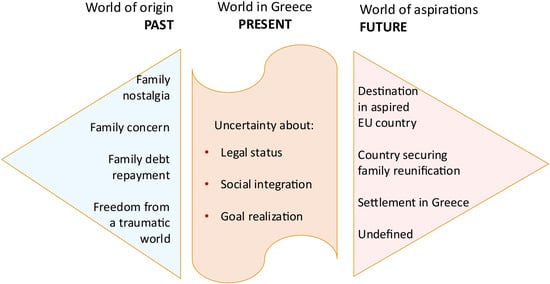
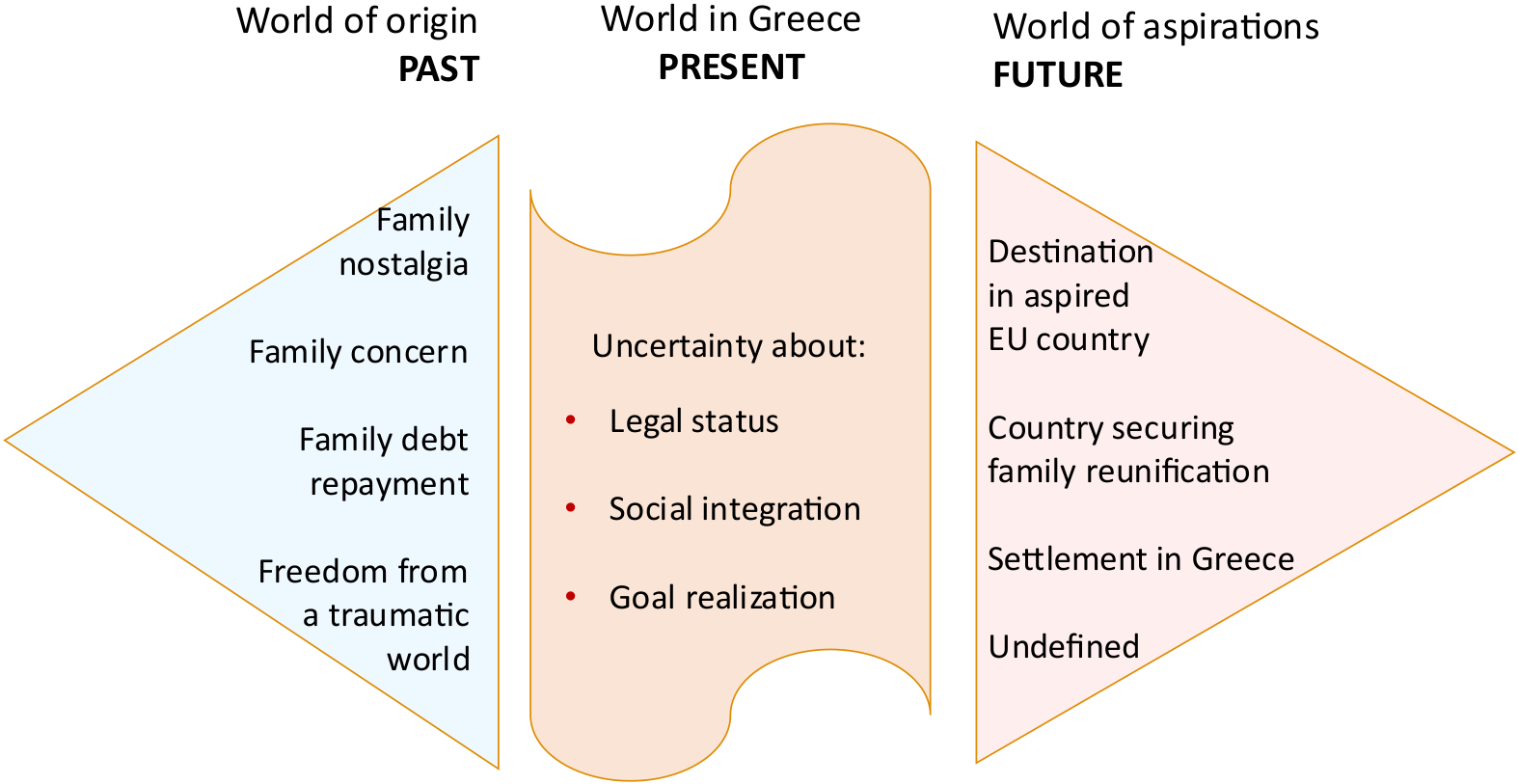
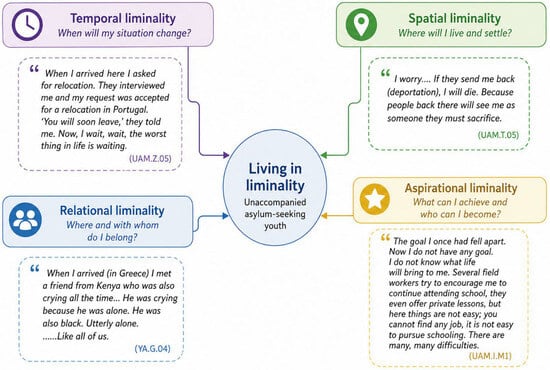
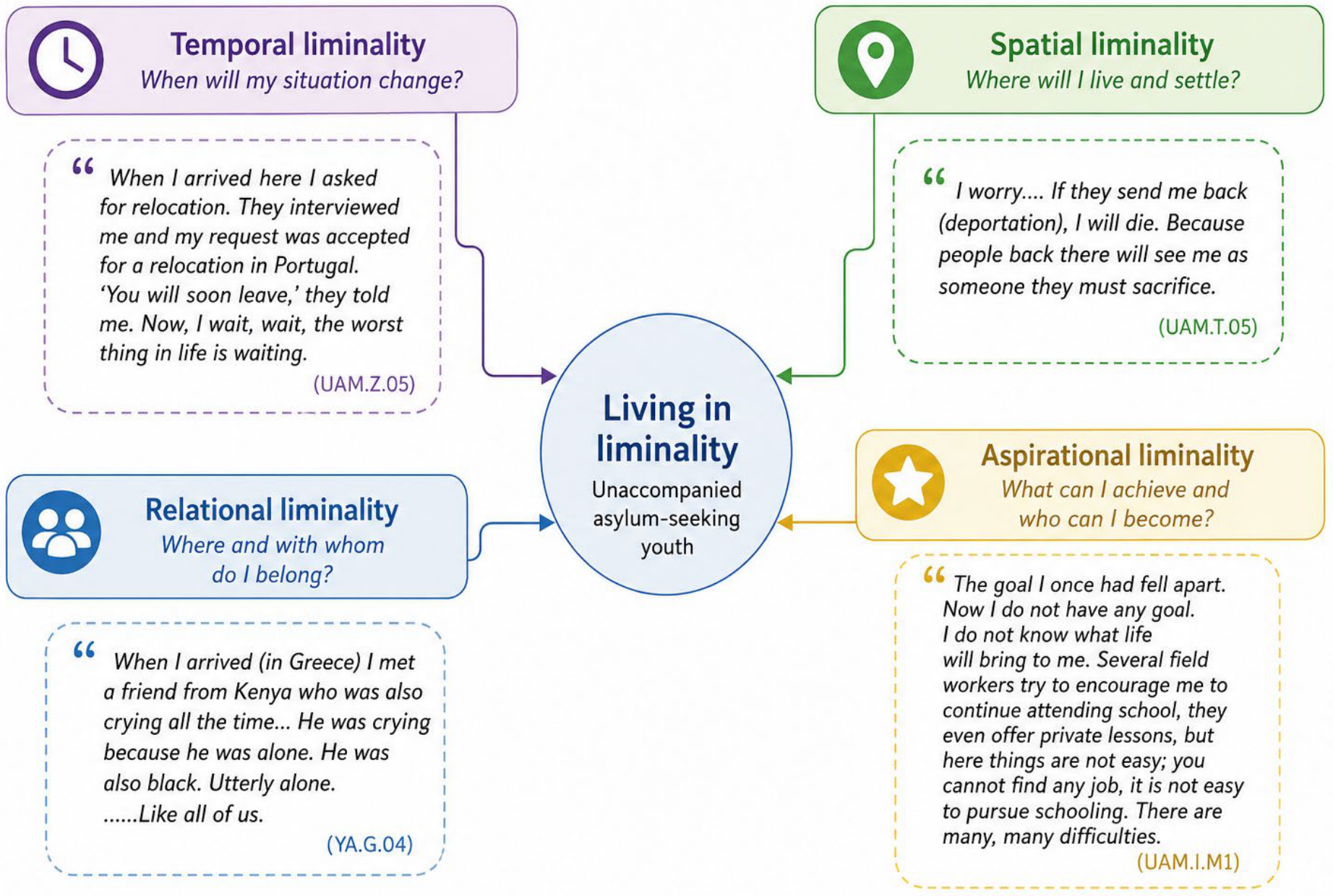
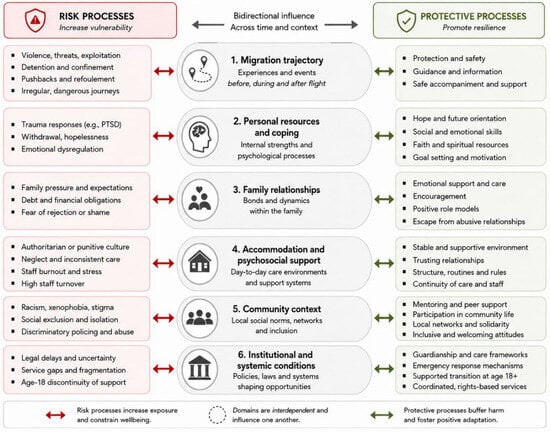
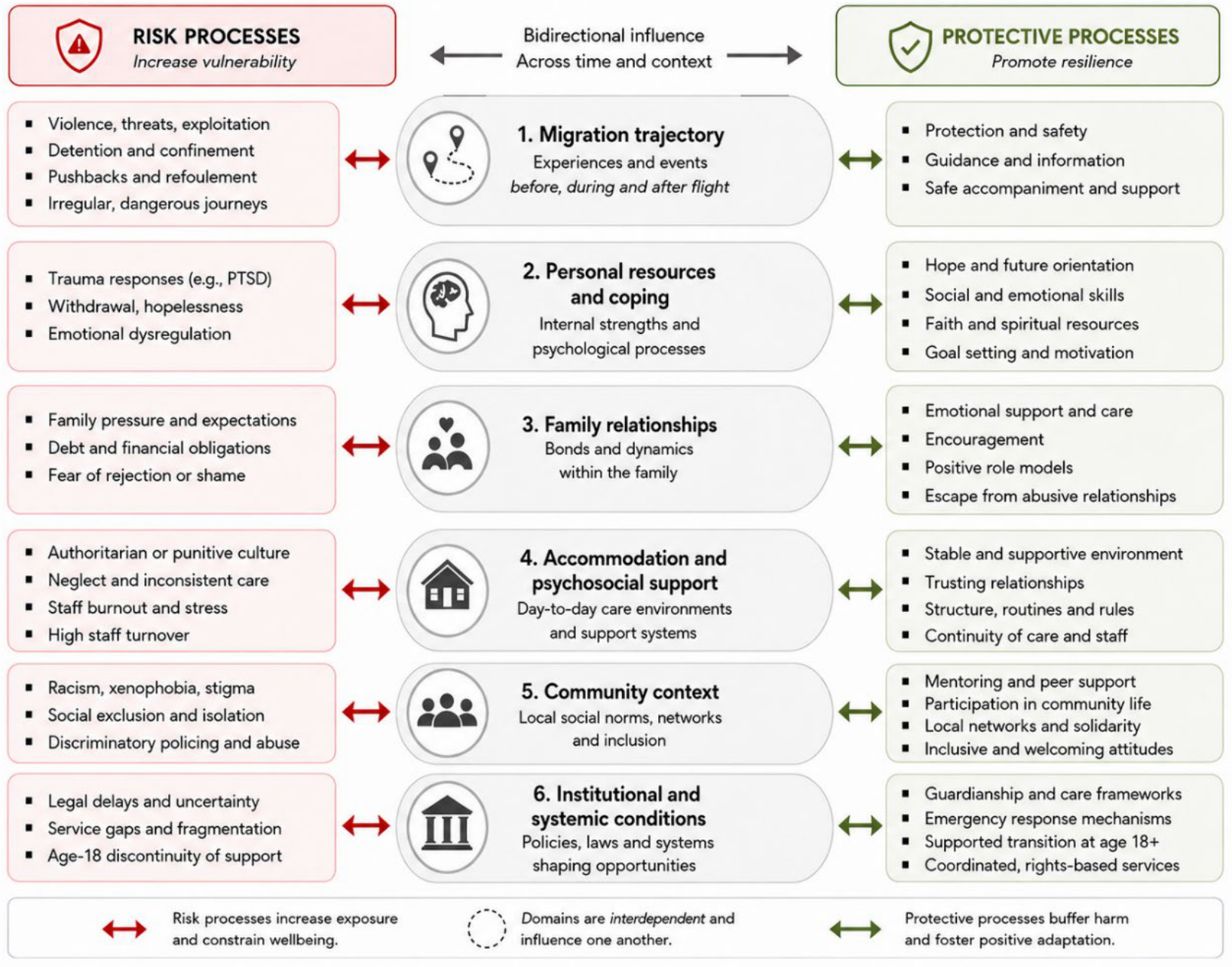
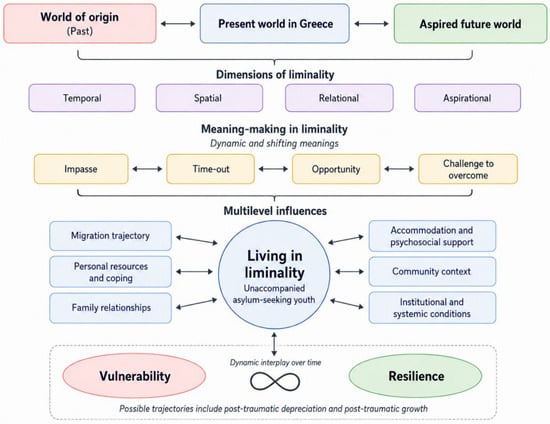
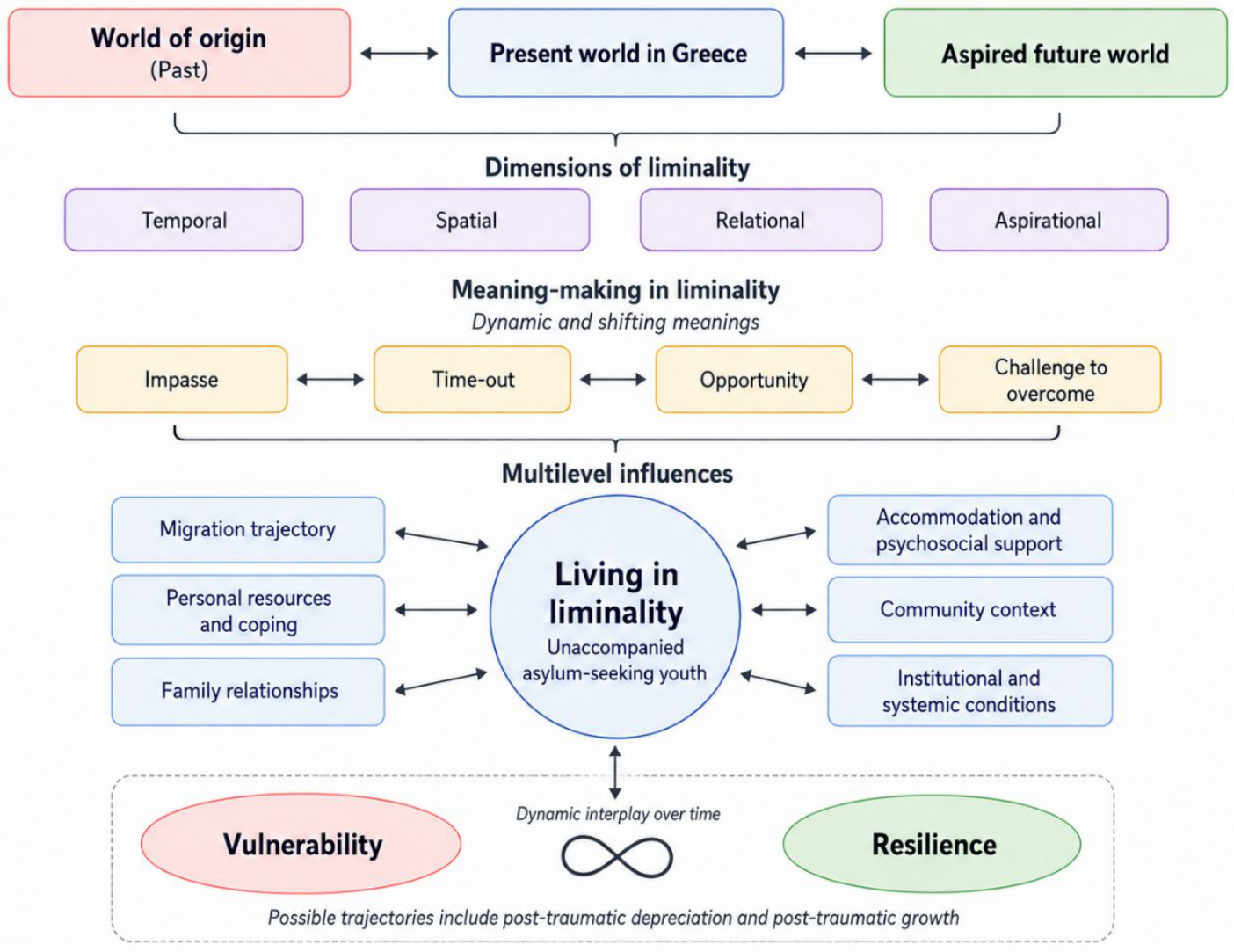
Disclaimer/Publisher’s Note: The statements, opinions and data contained in all publications are solely those of the individual author(s) and contributor(s) and not of MDPI and/or the editor(s). MDPI and/or the editor(s) disclaim responsibility for any injury to people or property resulting from any ideas, methods, instructions or products referred to in the content. |
© 2026 by the authors. Licensee MDPI, Basel, Switzerland. This article is an open access article distributed under the terms and conditions of the Creative Commons Attribution (CC BY) license.