


Abstract
Organized youth sport has considerable potential to promote young people’s physical health, well-being, and personal and social development. However, these positive outcomes are not guaranteed. When sport environments are poorly structured, excessively performance-oriented, or inadequately supervised, participation may also lead to exclusion, excessive pressure, and other harmful experiences. Creating genuinely youth-centered sport environments is therefore essential, both to foster positive developmental outcomes and to prevent transgressive behavior. Despite growing attention to these issues, the field of youth sport lacks an overarching framework for the development of pedagogically sound, development-oriented, and socially safe sport environments. This study aimed to develop an overarching framework that integrates the developmental, motivational, and safeguarding dimensions of youth sport into one coherent model for creating optimal learning environments. Through an iterative process, a practice-based framework was developed, theoretically grounded, and initially operationalized. Early versions of the framework were subsequently examined for conceptual alignment through expert opinions, focus groups, and group discussions with existing European youth sport initiatives. This process resulted in the development of the Youth Sport Compass (YSC), a coherent conceptual and practical framework designed to support youth-centered and socially safe sport environments. Experts from different countries and disciplines considered the framework highly relevant, conceptually robust, and broadly applicable in practice. The YSC provides a strong conceptual and practical foundation for coaches, sport organizations, and policymakers seeking to create pedagogically sound, youth-centered, and socially safe sport environments. Although the YSC is firmly grounded in theory and practice, it has yet to be empirically validated. Further research is needed to assess its validity and practical effectiveness.
1. Introduction
Within the broader domain of youth leisure, organized youth sport represents one of the primary contexts in which young people spend their free time while engaging in physical activity. In Europe, participation in organized sports is the most common form of sport engagement among youth (Aubert et al., 2018). In the Netherlands, approximately 1.9 million of the 3 million individuals aged 5 to 18 participate in sport, with around 1.3 million involved in one of the 22,000 sport clubs (NOC*NSF, 2020), highlighting the extensive reach of organized youth sport.
Sport is widely recognized as a valuable learning environment, offering young people unique opportunities for experiential learning and development through physical activity (Kirk & Haerens, 2014; Storm et al., 2024). Research consistently demonstrates a broad range of positive physical, psychological, and social outcomes associated with sport participation (Bailey et al., 2009), including improved health, social connectedness, and personal development, considered the ‘value of sport’. As such, organized sport is increasingly viewed as a “third educational setting,” alongside home and school.
Given this potential, youth sport can contribute to the development of a “healthy generation.” The World Health Organization has emphasized the importance of increasing physical activity and sport participation among children and adolescents (Chaput et al., 2020). Crucially, the quality of the sport environment plays a decisive role: positive experiences in organized sport during childhood and adolescence are linked to sustained participation into adulthood (Eime et al., 2013; Kjonniksen et al., 2009). Organized youth sport therefore forms a key foundation for lifelong physical activity and continued engagement in sport (Schipper-van Veldhoven, 2017).
At the same time, this sector faces significant challenges. Organized sport faces considerable dropout rates beginning around the age of 13 (Lara-Bercial et al., 2022a; NOC*NSF, 2020). Young people report leaving sport because they “prefer other activities,” “lack sufficient time,” or “no longer enjoy participation” (Faber et al., 2023). Research further highlights that dropout is influenced by a combination of intrapersonal constraints (e.g., low enjoyment, low perceived competence, internal pressure), interpersonal factors (e.g., parental pressure, negative coach or team dynamics, limited autonomy), and structural barriers (e.g., travel time, costs, injuries, and inadequate facilities) (Lara-Bercial et al., 2025; Witt & Dangi, 2018). As a result, a substantial proportion of young people do not meet the recommended physical activity guidelines necessary for maintaining a healthy lifestyle (CBS/RIVM, 2023).
In addition, research has increasingly pointed to the risks and transgressive experiences that can occur within sport environments, highlighting a more problematic side of youth sport participation (Gaedicke et al., 2021). Evidence shows that such experiences—psychological, physical, and sexual—are widespread across different sports and different countries (Hartill et al., 2023; Pankowiak et al., 2023; Schipper-van Veldhoven et al., 2022). Poorly structured or inadequately supervised environments can contribute to harmful outcomes, including depression, burnout, eating disorders, and anxiety (Johansson & Lundqvist, 2017; Ohlert et al., 2021). Moreover, the culture of organized sport is widely recognized as a key factor in the emergence and normalization of such risks. Characteristics such as hierarchical structures, authoritarian leadership, gender and power inequalities, strict training regimes, and a strong emphasis on performance and winning may foster environments in which transgressive behaviors are tolerated or overlooked (Gaedicke et al., 2021). Within a “win-at-all-costs” culture, success is often prioritized over athlete well-being, increasing the likelihood that harmful practices are justified. The long-term consequences of such experiences can include persistent stress and a reduced quality of life in adulthood (Vertommen et al., 2016).
Preventing these negative outcomes is therefore essential for fostering a healthier generation. The duty to protect athletes from transgressive experiences is firmly anchored in the governance structures of international sport, including the Olympic Charter (IOC, 2020b) and the IOC Code of Ethics (IOC, 2020a). Beyond the Olympic Movement, the right of every child and young person to participate in sport within a socially safe environment is explicitly articulated in The Rights of the Child in Sport (UNICEF, n.d.) and the Panathlon Declaration on Ethics in Youth Sport (Panathlon International, n.d.). Collectively, these frameworks affirm a central principle: all athletes are entitled to engage in sport in conditions that are safe, respectful, and protective of their physical and psychosocial well-being.
Sport clubs are, therefore, confronted with a significant challenge: to create and maintain an appealing sports participation experience while ensuring a safe sporting environment. As research indicates, fulfilling the full potential of sport depends on its context: the environment in which sport is offered and practiced (Bailey et al., 2009). Simply offering youth sports is inadequate to fully harness the potential health and personal development benefits, underscoring the importance of maintaining high-quality standards within organized youth sports (Perck et al., 2016; Ricour et al., 2023).
In the Netherlands, organized youth sport policy has increasingly focused on strengthening its educational value and preventing transgressive behavior. Initiatives such as Towards a Safe Sports Climate (2011–2017) (VWS, 2011), the National Sports Agreement (Nationaal Sportakkoord, 2018), and the Dutch Sports Council’s advice “Kids Central, Advice on the pedagogical environment in sport” (NL Sportraad, 2023) reflect this ambition. While many clubs have adopted measures such as codes of conduct and house rules, these isolated instruments have rarely led to sustained cultural change (Romijn & van Kalmthout, 2018). Structural adjustments, systematic monitoring, and rigorous evaluation remain limited, leaving insufficient evidence about what works, how it works, and under which conditions it works (Mergaert et al., 2016; Romijn & van Kalmthout, 2018). As a result, sport clubs still lack a coherent, evidence-based approach to creating a youth-centered and safe sport climate, leaving them uncertain about how to effectively develop such environments in practice.
To address a persistent gap in knowledge of an overarching framework that integrates the developmental, motivational, and safeguarding dimensions of youth sport into a coherent model for optimal learning environments, we developed a practice-based framework through an iterative process. Although these dimensions have been studied in isolation, there remains a lack of an integrated and applicable framework to support coaches, sport clubs, and policymakers in fostering youth-centered and safe sport environments.
The primary aim of the study is therefore to develop, theoretically ground, and initially operationalize a coherent conceptual and practical framework for youth-centered and safe sport environments. A secondary aim was to examine the conceptual alignment with existing European youth sport initiatives to explore its broader relevance and applicability.
2. Materials and Methods
For the development of the framework, we integrated theoretical perspectives related to a pedagogical sport climate, conducted a heuristic and integrative synthesis of the literature, consulted researchers, practitioners, policymakers, and experts from national and international youth sport contexts, and reflected on its application in practice. Initial conceptual mapping was further informed through stakeholder feedback and convergent alignment with existing European youth sport initiatives.
A qualitative, heuristic, and iterative approach (Kleining & Witt, 2000) guided the process. The framework evolved through several iterative phases (see Appendix A), involving continuous cycles of literature review, comparison, stakeholder dialogue, and conceptual refinement. Consistent with heuristic methodology, this approach assumes that conceptual understanding develops progressively through exploration, reflection, and the integration of insights from both theory and practice.
Because the term “pedagogical sport climate” is not clearly or consistently defined in the international literature (Tinning, 2008), the first phase of the framework development process focused on identifying its core dimensions. Using a qualitative, heuristic approach (Kleining & Witt, 2000), we compared relevant theoretical perspectives to identify recurring concepts and areas of convergence. Rather than aiming for an exhaustive or quantitative synthesis, we sought to establish a coherent conceptual foundation for understanding youth-centered and safe sport environments. To do so, we conducted an integrative literature review (Whittemore & Knafl, 2005). Relevant studies were identified through iterative searches of academic databases, reference tracking, and expert recommendations. Search terms included combinations of youth sport, sport pedagogy, pedagogical climate, motivational climate, caring climate, ethical climate, safe sport, safeguarding, positive youth development, self-determination theory, coach behavior, and youth development. We included papers addressing developmental, motivational, relational, ethical, or safeguarding dimensions of organized youth sport and provided insights into conditions that support positive youth experiences. Studies focused exclusively on elite adult sport or performance outcomes unrelated to youth development were excluded. The review covered both empirical and conceptual contributions from sport pedagogy, sport psychology, coaching science, youth development, and safeguarding research. Through iterative comparison and interpretation of the literature, several complementary theoretical perspectives were identified as particularly relevant, including the Self-Determination Theory (Ryan & Deci, 2000), caring climate research (Fry et al., 2012), and Positive Youth Development approaches (Fraser-Thomas et al., 2005; Vella et al., 2011) and research on ethical and safe sport climates. Central to this synthesis was the premise that youth sport should support the personal and social development of young people while fostering autonomy and self-determination. Across these perspectives, recurring themes of development, motivation, supportive relationships, and safety emerged. These themes were synthesized into four dimensions that formed the conceptual foundation of a pedagogical sport climate: developmental, motivational, caring, and socially safe.
In the second phase, these foundations were further elaborated within the Kids First: Towards a Pedagogical Sports Climate project (2018–2021), which aimed to develop a shared conceptual language around youth-centered sport, stimulate cultural change within sport clubs, and create a practical framework for fostering a pedagogical sport climate (Bronkhorst et al., 2021). Rather than identifying additional dimensions or studying these perspectives in isolation, this phase focused on examining the conceptual relationships, complementarities, and interdependencies among the developmental, motivational, caring, and socially safe dimensions. Given the interdisciplinary and practice-oriented nature of the topic, this phase followed an iterative and interpretive process involving repeated cycles of comparison, reflection, and conceptual refinement (Smith & McGannon, 2018). Ongoing discussion and critical reflection among project partners (N = 15) further informed the interpretation of findings and the identification of converging principles across theoretical perspectives. This process resulted in a preliminary framework in which the four dimensions were conceptualized as interconnected pillars of a pedagogical sport climate. Whereas Phase 1 focused on identifying the core dimensions of a pedagogical sport climate, Phase 2 focused on examining the relationships and interdependencies among these dimensions and integrating them into a coherent framework.
In the third phase, the emerging framework was presented and discussed with a broad network of researchers, practitioners, policymakers, and experts from national and international youth sport contexts across multiple workshops, conference presentations, and educational settings (approximately N = 1500 participants across all activities). Rather than serving as formal study participants, these stakeholders functioned as critical friends, providing constructive feedback on the framework’s conceptual clarity, practical relevance, and applicability. Their reflections informed the ongoing refinement of the framework.
In the fourth phase, the refined framework was compared with existing European youth sport initiatives to explore its broader relevance and applicability. Key principles from the ICoachKids project (Fix et al., 2017; Lara-Bercial et al., 2022b) and Keep Youngsters Involved (Kenniscentrum Sport en Bewegen, 2019) were systematically mapped onto the framework. This process served as a form of conceptual triangulation and convergent alignment, providing an external comparison of the framework with established European youth sport initiatives.
In the fifth phase, the framework was operationalized for practical use within sport settings and translated into tools, guidelines, and educational resources for coaches, sport clubs, and policymakers. This process enabled further refinement of the framework while supporting the development of actionable strategies to foster youth-centered, developmental, caring, motivational, and socially safe sport environments (Wang et al., 2023).
3. Results
3.1. Theoretical Foundation of the Framework
Scholars from various disciplines conceptualize a youth-centered climate in different ways; consequently, its definition and measurement depend largely on the theoretical lens applied. In primary education and many physical education contexts, such a climate is often grounded in the Self-Determination Theory (Ryan & Deci, 2000), which emphasizes the fulfillment of young people’s basic psychological needs for relatedness, competence, and autonomy. Within this perspective, the focus is on fostering autonomous motivation through the creation of a supportive “motivational climate.” Motivational theories further distinguish between mastery-oriented climates—centered on personal improvement and learning—and performance-oriented climates—focused on comparison and ego involvement. Research consistently associates mastery climates with higher motivation, better learning outcomes, and more ethical behavior among athletes compared with performance-oriented climates (Duda, 2005).
In other educational and sport settings, the concept of a caring climate is considered fundamental. Such environments emphasize the cultivation of safety, belonging, appreciation, and respect, and they reflect the extent to which coaches demonstrate genuine care for young athletes. Research shows that caring climates enhance enjoyment, commitment, and mutual support within teams (Fry & Gano-Overway, 2010; Fry et al., 2012). Central to this concept is the development of meaningful relationships, expressed through empathy, attentiveness, and the ability to understand the perspectives of others (Leduc et al., 2012). Recent research further indicates that the benefits of a caring climate extend beyond sport, contributing to adaptive motivational processes and improved well-being among youth (Hogue, 2025). Notably, Hogue found that more than one-third of boys and approximately one in four girls perceive their coach as one of the few adults who genuinely care about them, underscoring the critical role coaches can play during adolescence.
Aligned with Positive Youth Development (Fraser-Thomas et al., 2005; Vella et al., 2011), a development-oriented climate is understood as one that promotes positive behavioral change through dynamic interactions between young athletes and their environment. Core features include physical and psychological safety, supportive relationships, positive social norms, opportunities for competence development, and connections across educational contexts. These conditions are associated with positive developmental outcomes and enhanced opportunities for personal and social growth (Hilhorst et al., 2014). In addition, Critical Positive Youth Development (Gonzalez et al., 2020) explicitly incorporates how power, privilege, and inequality shape young people’s experiences in sport and argues that critical reflection, political efficacy, and critical action are needed so that the sport environment is beneficial for all young people.
While the previous models addressed positive desired behavior, research on safe sport has also focused on sexual harassment and abuse (Brackenridge, 1997). Historically, it drew from Finkelhor’s work (Finkelhor, 1980) to identify risk factors related to coaches, sport contexts, and athletes. Subsequent efforts concentrated on developing preventive measures and sanctioning policies to safeguard youth. More recent sociological perspectives, however, emphasize the broader influence of sport culture itself. Competitive sport environments are often characterized by a strong emphasis on performance and winning, high emotional and physical demands, authoritarian leadership styles, and unequal power relations (Alexander et al., 2011; Moget & Weber, 2007). Such features may inadvertently normalize harmful behaviors or silence concerns. Within this line of research, attention has shifted toward the values and norms embedded in sport (Haandrikman & Schipper-van Veldhoven, 2024; Knoppers et al., 2001), conceptualized as the moral or ethical climate (de Martelaer et al., 2013). This climate is reflected in the prevalence of prosocial behaviors (intended to benefit others) and antisocial behaviors (intended to harm or disadvantage others). Empirical studies show that when prosocial norms dominate, young athletes display more supportive and respectful behavior and fewer antisocial actions (Rutten et al., 2007; Spruit et al., 2019). Notably, research suggests that during adolescence, peer norms and teammate behavior exert a stronger influence than coaches or broader club policies (Spruit et al., 2019). Therefore, while formal rules and codes of conduct are essential, fostering a safe sport climate ultimately depends on shaping the everyday socio-moral environment created by peers (group dynamics), parents, coaches, and club members. The concept of moral climate thus encompasses both shared norms and values and the presence of a caring, supportive interpersonal atmosphere (Fry & Gano-Overway, 2010; Rutten et al., 2007; Shields et al., 2005).
All theoretical perspectives discussed above provide valuable insights into the characteristics of a youth-centered and safe sport climate. Therefore, rather than adopting one dominant perspective, we integrated the complementary strengths of these approaches into a comprehensive framework. Although each theoretical perspective contributed most strongly to one pillar, it is important to emphasize that the relationship is not one-to-one: Positive Youth Development also includes safety and relationships; the Self-Determination Theory includes relatedness, which overlaps with caring; the Caring climate contributes to safety, and the Ethical climate contributes to development. The four pillars, therefore, represent analytically distinct but conceptually interconnected pillars of a pedagogical sport climate.
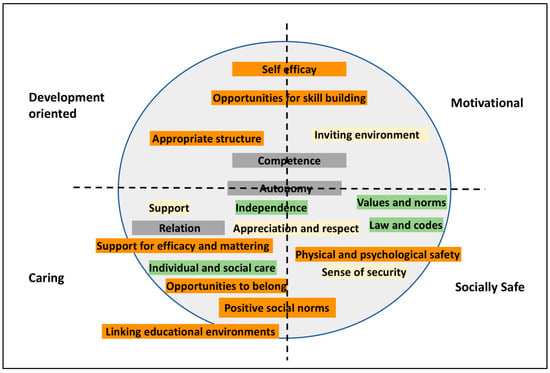
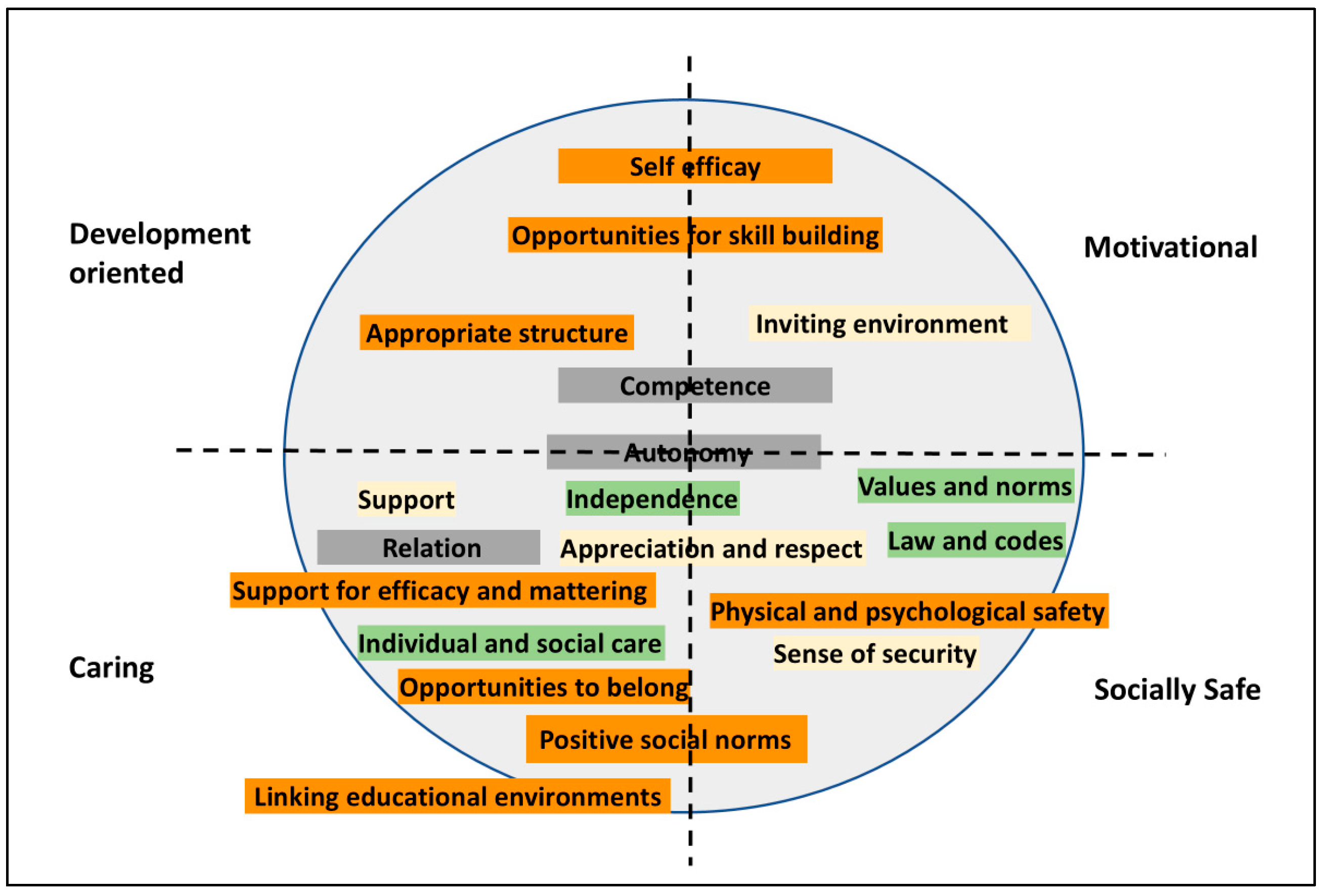
To visualize the relationships among these elements, they were mapped within a shared youth sport context, represented by the central circle (Figure 1). Each theoretical perspective contributed distinct, yet complementary, components: Positive Youth Development Theory identifies eight key ingredients that promote youth development: physical and psychological safety; appropriate structure; supportive relationships; opportunities to belong; positive social norms; support for efficacy and mattering; opportunities for skill building; and integration of family, school, and community efforts (orange blocks). Self-Determination Theory emphasizes three core needs—competence, autonomy, and relatedness (gray blocks)—that foster intrinsic motivation and engagement. Caring Climate Theory highlights four essential elements: sense of security, welcome (an inviting environment), support, and appreciation and respect, focusing on how coaches genuinely ‘care for the athlete’ (yellow blocks). Moral and Ethical Theories introduce four components aimed at creating an environment of integrity: shared values and norms, adherence to laws and codes, promotion of independence, and individual and social care (green blocks).
Figure 1.
A valuable sport context—the plotted elements from the diverse theories and their orientation within the four pillars.
By mapping these key elements, a compass-like structure naturally emerged through the intersection of horizontal and vertical axes. This synthesis resulted in four essential pillars that formed the foundation of the initial Pedagogical Sport Compass.
Together, these quadrants provide a framework for creating an optimal learning environment in youth sport—one that is developmental, motivational, caring, socially safe, and responsive to the needs and developmental stages of young participants.
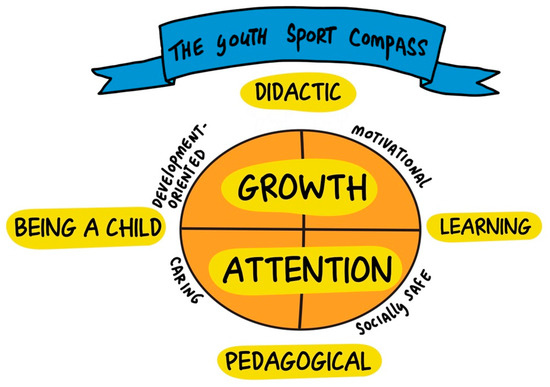
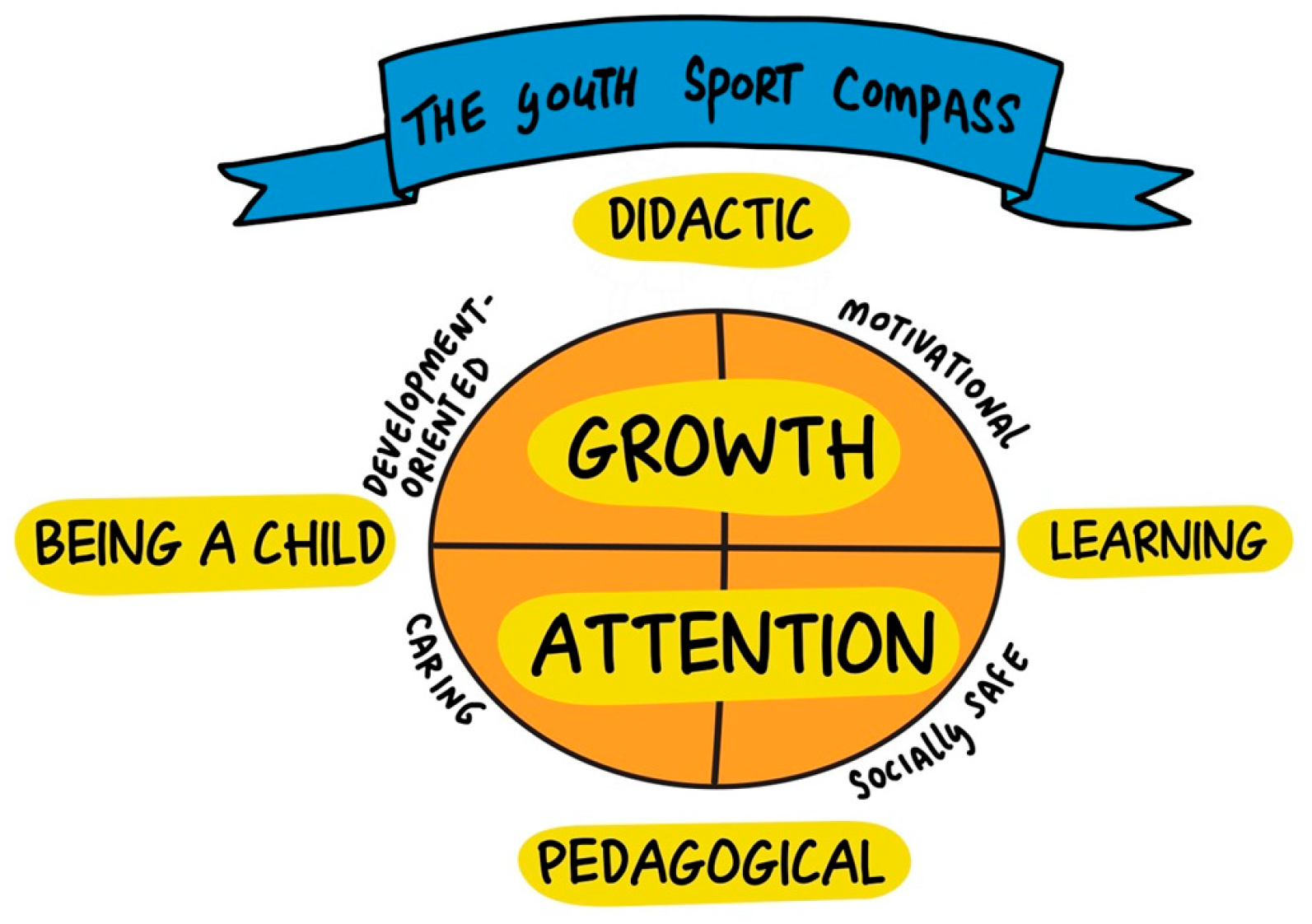
Across the stakeholder consultation rounds, participants acting as critical friends contributed to the further refinement of the framework. Key adaptations included clarifying the interdependent relationships between developmental, motivational, caring, and socially safe processes within youth sport environments, revisions to the visual structure to better reflect the interconnected nature of these dimensions, and the renaming of the Pedagogical Sport Compass as the Youth Sport Compass. These refinements resulted in a more coherent, accessible, and practice-oriented framework, represented in the current Youth Sport Compass model (Figure 2).
Figure 2.
The Youth Sport Compass.
3.2. The Youth Sport Compass
The framework was subsequently coined the Youth Sport Compass (YSC). To operationalize the YSC’s four pillars, the underlying theories highlight key features that translate these principles into practice:
- Developmental-oriented climate: an environment is needed that properly supports the holistic development of youth. In this environment, appropriate and flexible (individual) sports are offered, and trainers and coaches pay attention to motor, social, and personal differences in the developmental level of all youngsters. This requires finding the right balance between ‘wanting to win’ and ‘personal development’, between investing in the best teams and in all other teams. Every young person is entitled to receive effective didactic guidance and a fitting sports program. At the club level, achieving this necessitates the appointment of competent trainers and coaches who are held to high standards and careful consideration of the sports offerings.
- Motivational climate: Enjoyment stems from performing well and receiving positive reinforcement. Achieving this necessitates trainers and coaches to provide ample positive attention throughout the learning process and attribute successes to individual strengths. Effective positive guidance is also crucial for all youth, encouraging autonomous motivation.
- Caring climate: young individuals seek a sense of belonging, emphasizing the significance of consciously fostering relational and social skills in sports. Elements such as mutual involvement, kindness, and caring for one another should be actively cultivated. The relationship between the “educator” and the youth plays a pivotal role, necessitating the setting of a positive example. This demands self-reflection on the part of adults and supervisors, prompting them to assess their supervisory style by asking, ‘What is my approach to supervision?’ Effective communication skills are also essential for the coaching staff and within the club culture for sports managers in facilitating this process.
- Socially safe climate: By fostering a sense of safety, an ideal learning environment is established. Youngsters should feel free to express themselves with dignity, unthreatened in an environment that ensures both psychological and physical well-being. Achieving this necessitates that trainers, coaches, and supervisors possess a sound understanding of group dynamics and address behavioral issues openly. This responsive approach builds trust and aids in preventing inappropriate behavior. Additionally, the club must implement an effective preventive and corrective policy, ensuring that individuals are aware of the appropriate actions to take in the event of an incident.
Each of the four pillars has its unique rationale, and the YSC serves as a framework for considering various situations, requiring attention to all four pillars within both training sessions and the overall vision of a sport club. In practical scenarios, behaviors may intertwine, where the caring aspect becomes integral to the safe aspect, for instance. However, it is essential to recognize that the didactic aspect (upper part of the compass) demands different qualities than the relational aspect (lower part of the compass). Moreover, the YSC underscores the importance of understanding youth in their being ‘a child’ (left part of the compass) and establishing a conducive learning context for them (right part of the compass). This highlights the inherent complexity involved in realizing a youth-centered and safe sport climate (see Figure 2).
For example, a youth football club wants to improve its training environment. The coach designs technically strong sessions focused on skill development (development-oriented pillar) but notices that several players are losing motivation, and some feel excluded. By using the YSC, the coach reflects more broadly: introduces more autonomy and choice in exercises to increase enjoyment (motivational pillar), actively builds team cohesion through inclusive activities and positive communication (caring pillar), and establishes clear agreements about respectful behavior and positive group dynamics (socially safe pillar). As a result, training sessions become not only technically effective but also more engaging, inclusive, and supportive. This example illustrates how addressing all four interconnected pillars leads to a more balanced and effective learning environment, rather than focusing on a single dimension in isolation.
Altogether, the YSC functions as a conceptual and practical framework, guiding coaches and sport clubs in creating the most supportive environment for young athletes through their practices, training methods, coaching style, policies, and practical applications. While each pillar can be considered individually, it is important to recognize that they are interconnected, often influencing and reinforcing one another. Addressing all four pillars to some degree is essential to fostering an optimal learning environment and stimulating a pedagogical sport climate.
3.3. Alignment with European Projects
3.3.1. EU Project ICoachKids
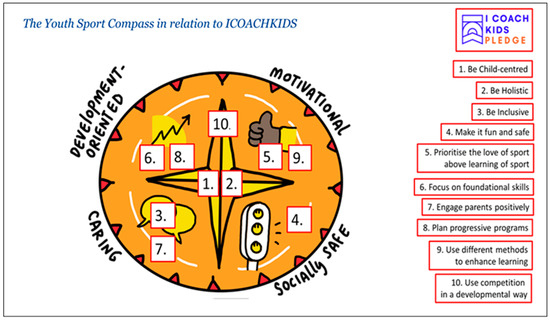
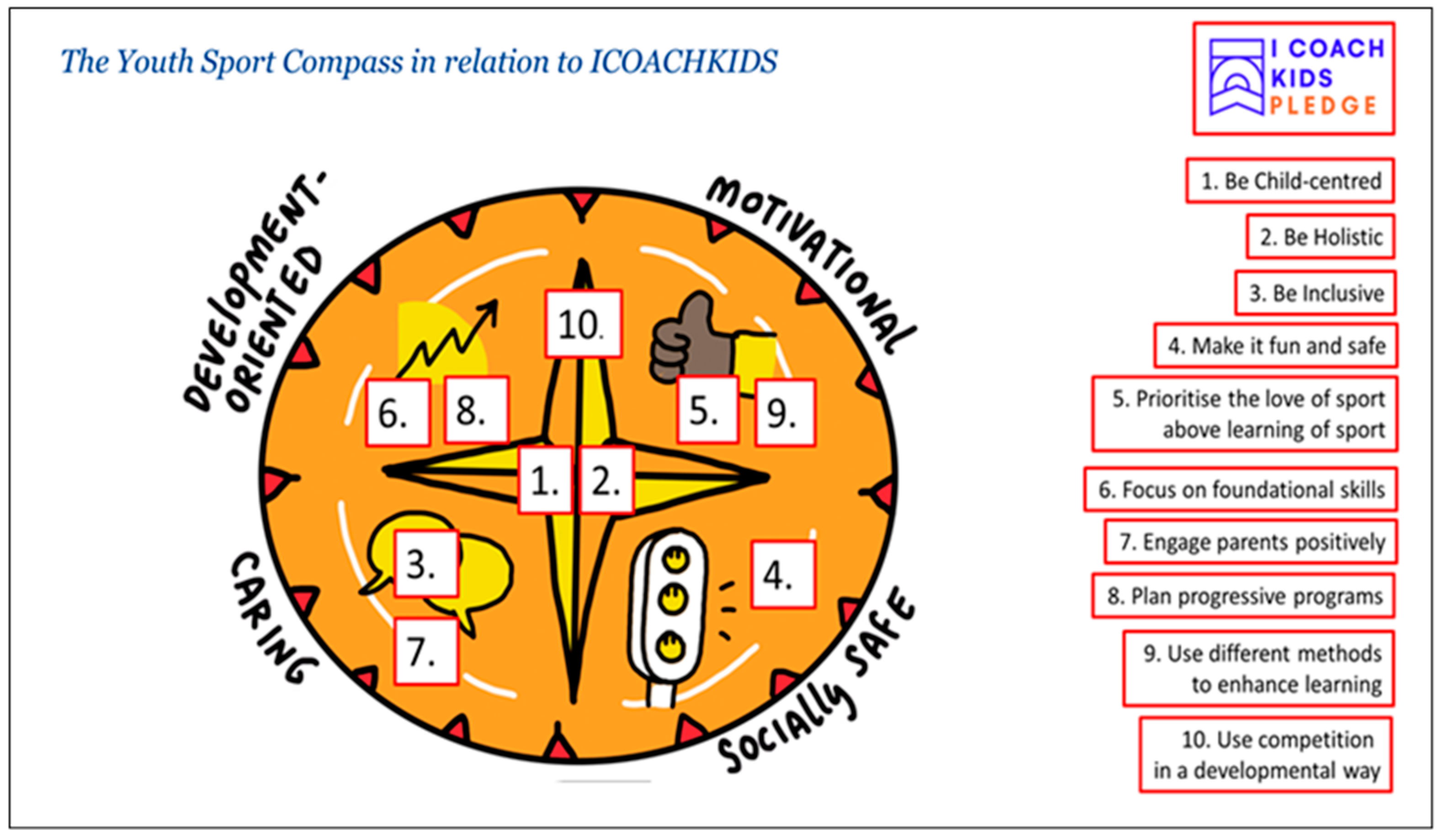
At the request of the project managers of the EU-funded ICoachKids project (aimed at young people aged 6–12 and 13–18) [see www.icoachkids.eu], we conducted a comparative analysis of the ICoachKids Pledge (Lara-Bercial et al., 2022b), comprising 10 key principles designed to ensure sport is a positive experience for all, particularly young participants, and the YSC. These 10 principles were mapped onto the Compass, discussed collaboratively, and ultimately found to align fully with its pillars (see Figure 3) and its underlying principles.
Figure 3.
Mapping of the 10 factors from ICoachKids onto the Youth Sport Compass.
The YSC is supported through convergent alignment with the ICoachKids framework, as both independently developed approaches align on core principles such as child-centeredness, holistic development, and safe sport environments.
3.3.2. EU Project Keep Youngsters Involved
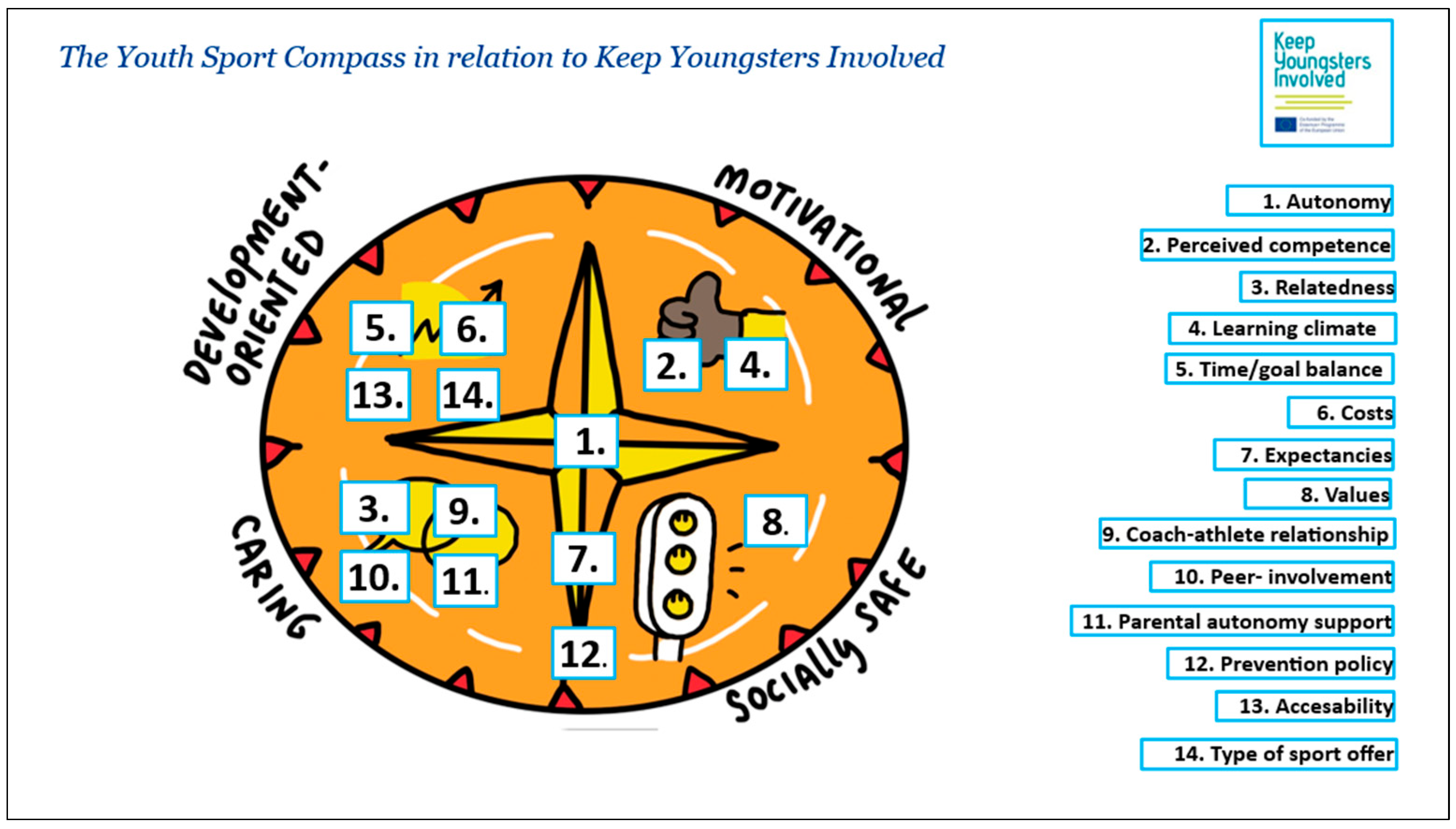
The project lead of Keep Youngsters Involved [see www.kenniscentrumsportenbewegen.nl/en/keep-youngsters-involved] (accessed on 23 March 2026), the Dutch Knowledge Centre for Sport and Human Movement, invited us to conduct a comparative analysis between their results and the Youth Sport Compass. This large EU project identified 14 key factors for preventing youth dropout (Kenniscentrum Sport en Bewegen, 2019). We again mapped these factors onto the Youth Sport Compass, discussed their alignment, and found that each could be meaningfully integrated within the framework (see Figure 4). The relevance and applicability of the YSC to the objectives of the Keep Youngsters Involved project were validated, as all four pillars were addressed.
Figure 4.
Mapping of the 14 factors from Keep Youngsters Involved onto the Youth Sport Compass.
The YSC is supported by convergent alignment from the Project Keep Youngsters Involved, as both initiatives emphasize youth engagement, motivation, and supportive sport environments to reduce dropout and promote long-term participation.
3.4. Applicability in Real-World Sport Settings
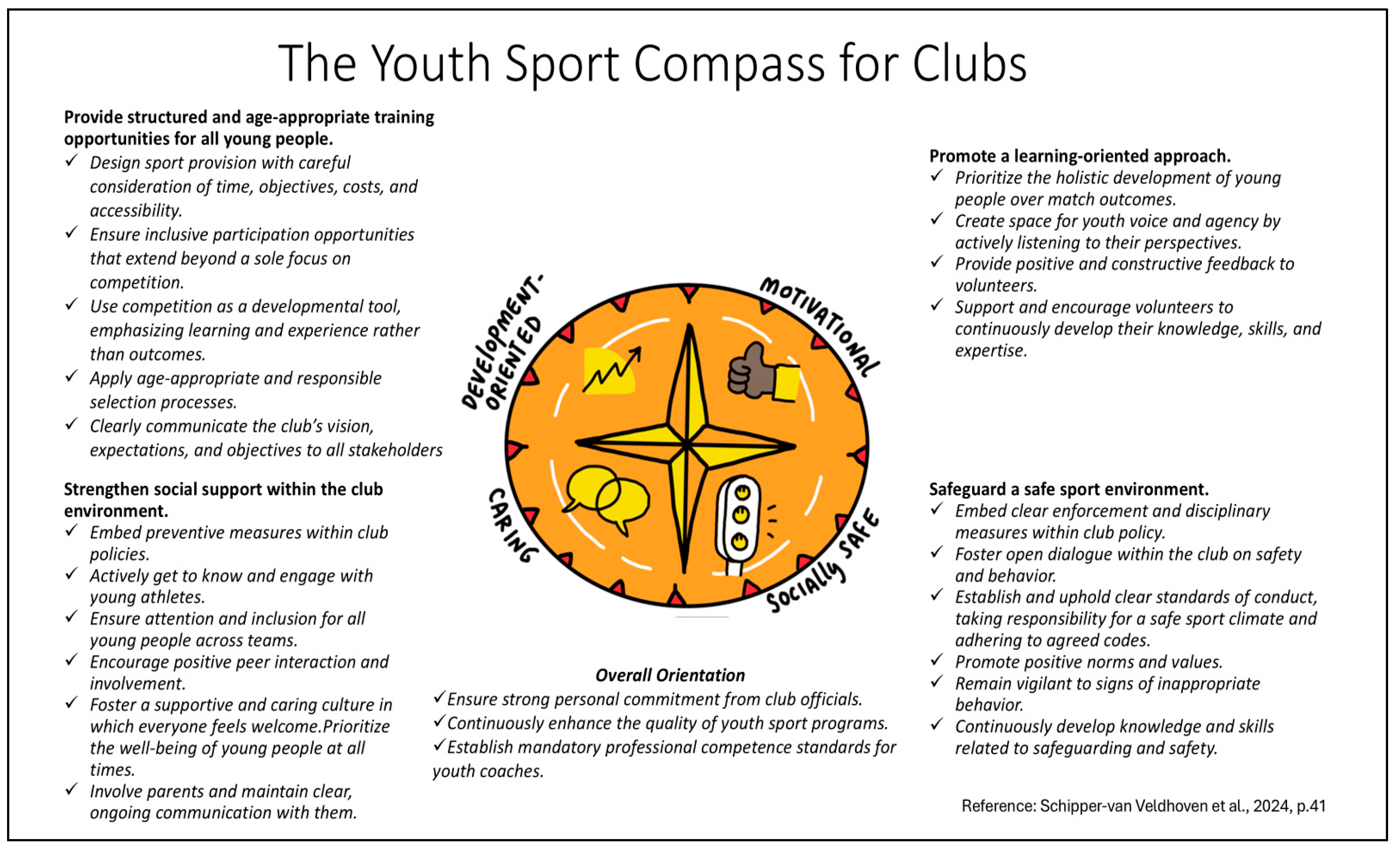
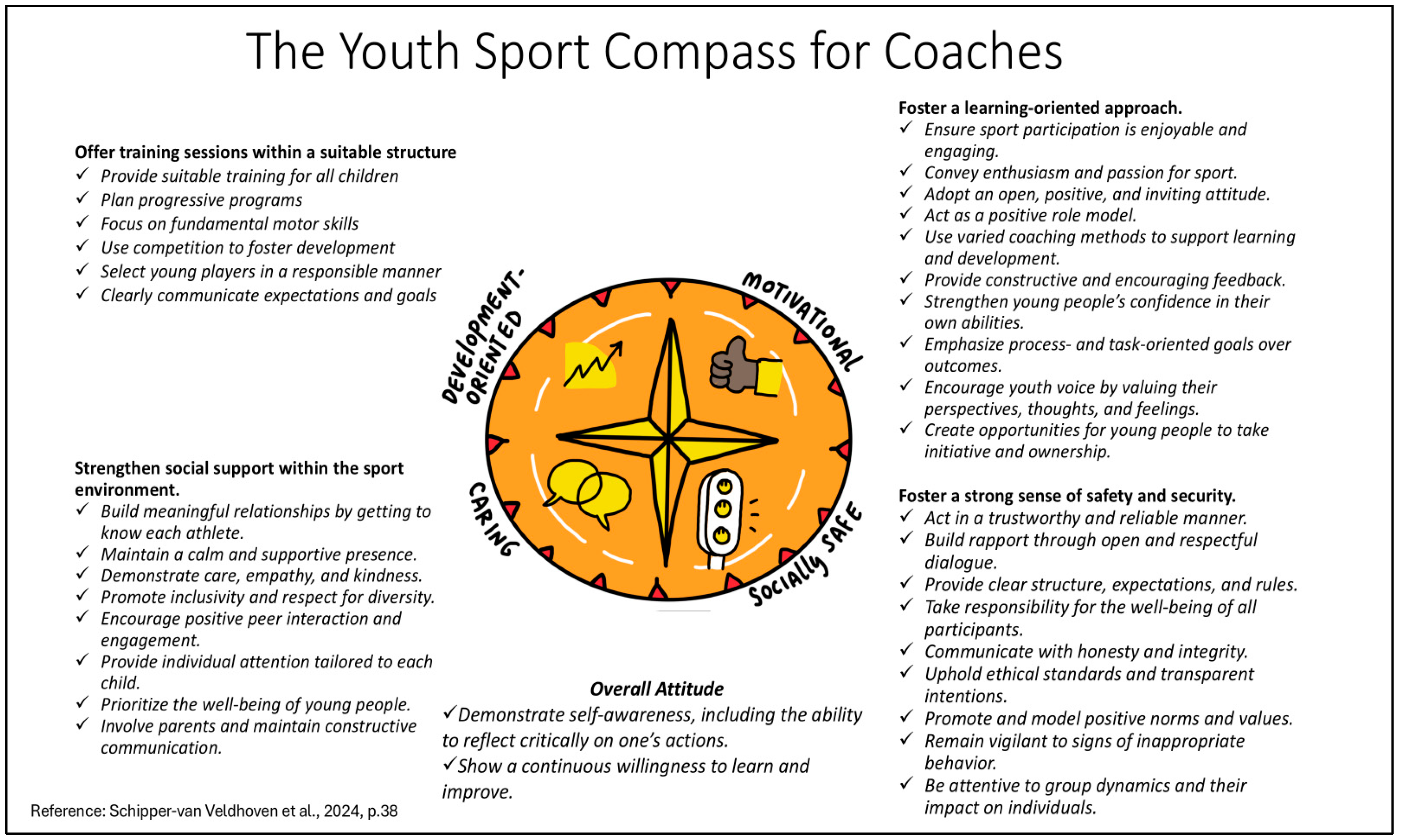
At the sport club level, leadership commitment is essential for implementing youth-centered and safe sport policies. To support understanding and application of the YSC, two animations were developed in Dutch and, following international interest, translated into English. One animation illustrates its application within sport clubs (Windesheim, 2023a), while the other explains the rationale underlying the framework (Windesheim, 2023b) (see Supplementary Materials). To further facilitate implementation, the YSC was operationalized at the organizational level to support sport clubs in shaping their policies and practices (see Appendix B). Recognizing the central role of coach–athlete relationships and coaching behavior in shaping young people’s motivation and experiences in sport (Claringbould, 2011), the framework was also translated into the key knowledge, skills, and attitudes required of youth sport coaches (see Appendix C). These operationalizations were generally well received, providing stakeholders with a shared language and practical guidance for fostering a pedagogical climate. At the same time, questions remain regarding the effective implementation of these principles in everyday practice (Bronkhorst et al., 2021; Faber et al., 2023; Schipper-van Veldhoven, 2022).
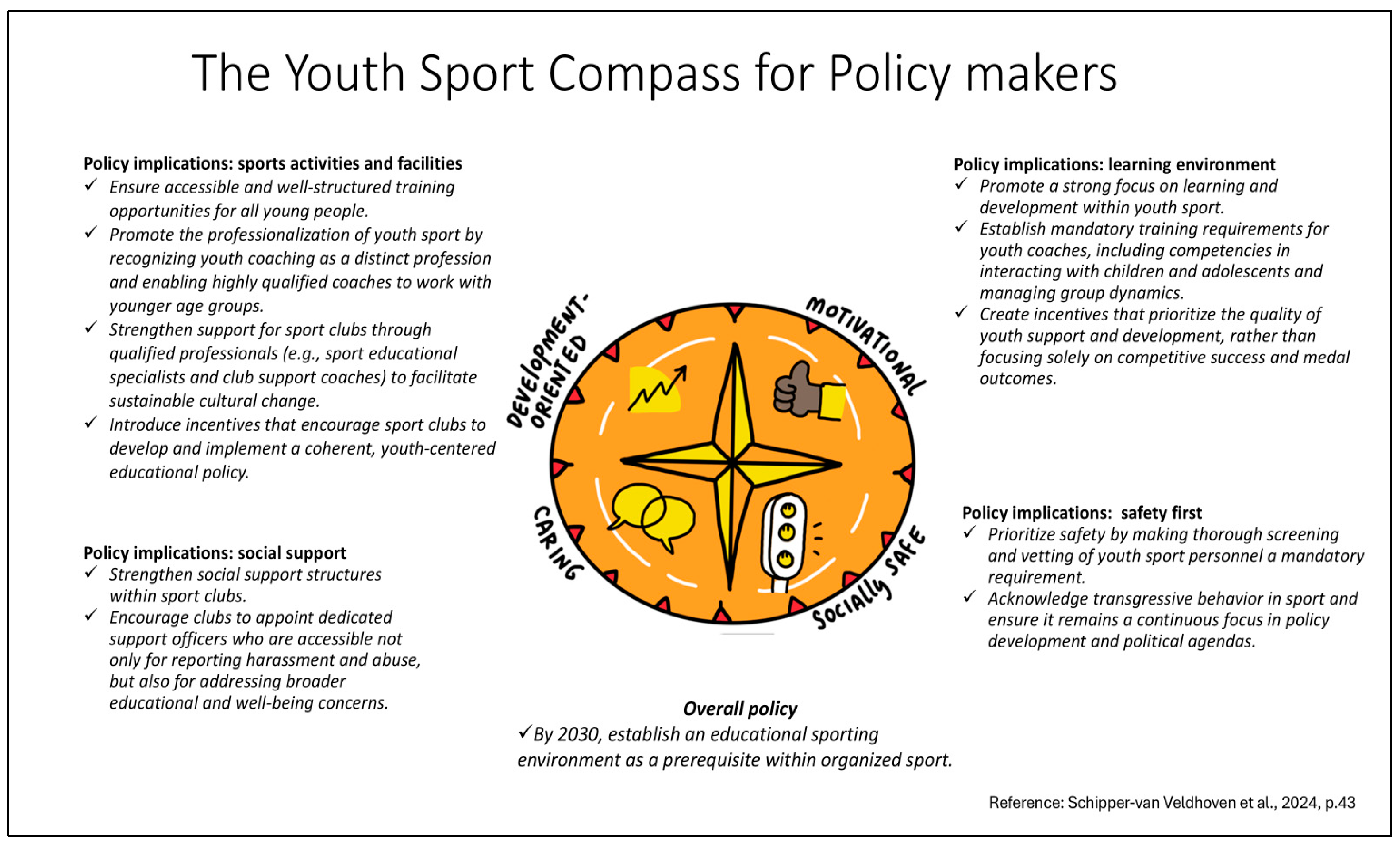
In response to requests from sport policymakers, federations, and municipalities, an infographic grounded in the YSC was developed as a practical tool for dialogue and reflection on creating youth-centered and safe sport environments. This “conversation starter”, grounded in the YSC (available at Kenniscentrum Sport en Bewegen & Hogeschool Windesheim, n.d.), promotes a shared vision and offers concrete starting points for collective action. The YSC was also operationalized at the policy level (see Appendix D).
Overall, this phase involved the development of tools, guidelines, and dissemination materials for coaches, sport clubs, policymakers, and educational contexts. As part of this effort, the book ‘A Pedagogical Sport Climate’ was revised and republished under the subtitle Placing the Child at the Center of Youth Sport (Schipper-van Veldhoven et al., 2024). In this revised edition, the YSC serves as the central framework and is operationalized across the micro, meso, and macro levels of youth sport.
4. Discussion
This study described the development and initial operationalization of the Youth Sport Compass (YSC) as a practical framework for creating youth-centered and safe sport environments. The YSC emerged through an iterative and practice-based process that integrated insights from scientific literature, expert consultation, and experiences from the youth sport sector. Drawing on complementary theoretical perspectives—including Positive Youth Development, Self-Determination Theory, Caring Climate, and Ethical Climate research—the framework offers a structured yet flexible approach to conceptualizing a pedagogical sport climate.
The development process was characterized by continuous interaction with stakeholders from both the sport and youth sectors, enabling the framework to evolve in response to practical experiences and emerging insights. Workshops, conference presentations, dialogue sessions, comparative analyses with European initiatives, and subsequent operationalizations at coach and club levels all contributed to its refinement. Across these activities, the four pillars of the YSC—development-oriented, motivational, caring, and socially safe—were consistently recognized as relevant, coherent, and applicable for fostering positive youth sport environments.
While existing research often examines developmental, motivational, caring, and safeguarding dimensions separately, the YSC brings these perspectives together within a single, interconnected framework. By spanning the micro, meso, and macro levels of youth sport, it addresses a persistent gap between theory and practice and translates established knowledge into a practical tool for coaches, sport clubs, policymakers, and educators. This integrative design represents the principal contribution of the YSC and advances a more holistic understanding of the conditions that support positive youth development in sport.
Recent research in youth sport and development increasingly emphasizes the importance of integrated and multi-level systems perspectives, highlighting that youth sport environments consist of interdependent actors and contexts that mutually influence developmental outcomes (Dorsch et al., 2022). Similarly, contemporary ecological approaches corroborate this and stress that the interplay between these elements is critical for understanding outcomes in sport settings (Robledo et al., 2022). In line with these perspectives, the YSC structure reflects a relational system in which the developmental, motivational, caring, and socially safe dimensions continuously interact and co-evolve. This moves beyond linear or hierarchical representations and instead captures the complexity of youth sport environments, thereby enhancing both the explanatory strength of the YSC and its practical relevance for stakeholders at various levels, including club environments (meso level), policies (macro level), and interactions among trainers, players, and training coordinators (micro level).
Considerable research in sport management has concentrated on the quality of sports services, particularly from an organizational standpoint, encompassing governance and administration (De Knop et al., 2004; Swierzy et al., 2018). Academic research has neglected the evaluation of youth sports policies (Grix et al., 2018), resulting in a lack of consensus on the conceptualization of quality in youth sports (Bean et al., 2018; Hulsebos et al., 2015). Moreover, limited attention has been devoted to operational quality, which concerns how sport policies are implemented at the sport club level and their impact on the experiences and specific needs of youth (Battaglia & Kerr, 2020). A recent study by Ricour et al. (2023) examined youth sport policies to better understand how organized youth sport is operationalized in practice. They introduced an operational quality model for sport clubs, emphasizing youth-friendly delivery tailored to the needs of young participants. The model comprises four dimensions with 23 items: (1) development of sport skills, (2) motivational coaching, (3) integrity and cohesion, and (4) involvement within the club. This model aligns closely with the YSC, which is grounded in psychological theory, whereas Ricour’s model is rooted in sport management literature and validated through the perspectives of federations, club administrators, coaches, parents, and youth in Flanders. Their findings highlight that perceived competence and the role of a motivating coach are key factors in sustaining sport participation, while competition-related aspects such as rankings are considered less important. In contrast, cohesion and integrity are highly valued but experienced as insufficiently present. These findings are consistent with our own and reinforce the need to address all four pillars of the YSC at both the coach and club levels. Moreover, the study points to a prevailing focus on participation rates and organizational structures, rather than on the quality of the sport experience itself. The YSC directly addresses this gap by emphasizing the importance of the sport delivery climate in fostering development, enjoyment, and safe participation.
Empirical evidence consistently demonstrates that coach-created positive developmental climates (e.g., Cronin & Allen, 2018), empowering motivational climates (Appleton & Duda, 2016), caring climates (Hogue, 2024), and moral or ethical sport climates (e.g., Spruit et al., 2019) contribute to a wide range of positive youth outcomes, including life skills development, psychological well-being, resilience, prosocial behavior, teamwork, and sustained sport participation. Together, these findings provide strong support for the four pillars underpinning the YSC. At the same time, creating such environments remains challenging in practice. Denison et al. (2017) argue that coaching often falls short of these ideals, as many sport settings continue to be dominated by performance-oriented approaches and power imbalances. While safeguarding is shaped by interacting individual, relational, and organizational factors (Schwab et al., 2026). These challenges underscore the need for both context-sensitive coach education and broader organizational change. The YSC offers a practical framework to support critical reflection and guide coaches and sport clubs toward more development-oriented, caring, motivational, and socially safe practices. However, evidence from voluntary sport clubs suggests that such initiatives are most effective when embedded within supportive organizational structures and cultures (Wicker & Breuer, 2013). Consequently, successful implementation of the YSC requires active facilitation, leadership commitment, and sustained organizational support, rather than dissemination alone.
Several European countries, including the Netherlands, Norway, and England, have witnessed an increased involvement of government and institutional actors in organized sports, aiming to boost sports participation to maximize health benefits. Numerous studies (Lake, 2013; Skille, 2011; Steen-Johnsen & Enjolras, 2011) indicate that the success of central sports policies heavily relies on active engagement, interpretation, and local implementation. Lake (2013) highlights the limitations of top-down policy implementation, emphasizing that sport clubs, even with subsidies, often only superficially align with the broader goals of sports policies. These sport clubs tend to prioritize their existing culture and practices, believing this focus is crucial for the club’s survival (Martin, 2002). Unlike education, where ensuring a safe environment is a legitimate responsibility of schools (OCW, 2015), the organized sports sector in the Netherlands does not have the same obligation due to its association status, making it challenging to impose legal obligations. Policies and measures within the sports sector are typically subject to discussion and adoption by members during the general assembly. Raising awareness, facilitating communication, implementing comprehensive programs like ‘Towards a Safe Sports Climate’, and establishing mandatory requirements for obtaining grants are crucial steps to mobilize the sports sector (Romijn et al., 2015). These initiatives are essential for fostering recognition within the sports community that attention should be devoted to both desirable and undesirable behavior in sports.
To catalyze the change process within a sport club, a comprehensive change strategy is essential (NOC*NSF, 2020). Understanding culture change in a sport club can, for instance, be achieved through the concept of organizational socialization. Organizational socialization is the process through which organizational members learn, share, and transfer values, norms, and appropriate behaviors to participate effectively in the organization (Bauer et al., 2007; Benson & Eys, 2017; Stokvis, 2012). The YSC serves as a guiding tool to initiate discussions, redirect norms and values toward desirable behavior, and establish a pedagogical context in youth sports. In line with the Critical Positive Youth Development theory (Gonzalez et al., 2020), this requires critical reflection, political efficacy, and collective action to ensure the inclusion of all young people, including marginalized youth, LGBTQ+ athletes, athletes of color, and athletes with disabilities. It recognizes that responsibility for creating a pedagogical and safe sport climate lies within the entire sport system in order to support all young people (Schipper-van Veldhoven, 2026).
The development of the YSC followed a qualitative, iterative, and heuristic research approach that combined literature synthesis, expert consultation, and interaction with practice. Such an approach is particularly appropriate when the aim is to develop a conceptual framework that integrates insights from multiple theoretical perspectives while remaining relevant to real-world contexts (Dorsch et al., 2022; Holt et al., 2017). By combining evidence from youth development literature with insights from practitioners and stakeholders in the sport sector, the framework was able to bridge scientific knowledge and practical applicability.
At the same time, this approach has methodological limitations. First, the development process relied largely on qualitative synthesis, expert dialogue, and practice-based validation rather than systematic empirical testing. While this allowed flexibility and responsiveness to the needs of the field, it also means that the framework should be regarded as an initial conceptual model rather than a fully empirically validated theory. Second, much of the development and validation process took place within the Dutch sport context. While international discussions and comparisons with European initiatives suggested broader relevance, cultural and organizational differences between sport systems may influence how the framework can be applied. Third, the evaluation of acceptance was largely based on qualitative feedback from stakeholders, which provides valuable insights but does not constitute formal empirical validation.
Future research should thus focus on empirically examining the implementation and impact of the YSC across different sporting contexts. In particular, the items identified as contributors to operational quality in Ricour’s (2024) model provide a relevant starting point for further validating the YSC and its associated change strategy at the sport club level. Furthermore, while the present study offers a promising conceptual and practical foundation, additional research is needed to further develop the YSC into a monitoring instrument capable of assessing operational quality in organized youth sport from an educational, youth-centered perspective within a systemic approach. The qualitative heuristic results provide a theoretical and practical foundation for the YSC framework. Quantitative follow-up is needed to test the validity, structure, relationships, and generalizability of this initial model (Creswell, 2009). This line of research is currently underway, and its findings will be reported in forthcoming publications (see Appendix A, phase 6). Finally, future studies could also explore how the four pillars—development-oriented, motivational, caring, and socially safe—interact in practice and how they contribute to positive developmental outcomes, sustained sport participation, and safer sport environments. Moreover, comparative and longitudinal studies would be particularly valuable for assessing whether and how the YSC can contribute to structural–cultural change within youth sport organizations.
Nevertheless, the iterative co-creation process with stakeholders from both the sport and youth sectors can also be considered a strength of the approach. Engaging practitioners, policymakers, and researchers in the development process increases the ecological validity of the framework (Wang et al., 2023) and enhances the likelihood that it will be adopted and applied in practice.
5. Conclusions
The YSC offers a promising conceptual and practical framework to guide the development of youth-centered and safe sport environments. By integrating complementary theoretical perspectives into a coherent structure, it provides stakeholders in youth sport with a shared language and orientation for reflection and action. Its iterative development, grounded in dialogue between research, policy, and practice, enhances its practical relevance and applicability in real-world sport settings. The YSC represents an important step toward strengthening the developmental, motivational, caring, and safety dimensions of youth sport, which are essential for creating meaningful and positive youth leisure experiences through sport.
Further research is needed to empirically validate this well-grounded theoretical framework and assess its effectiveness in reducing sport dropout, preventing transgressive behavior, and improving developmental outcomes.
Supplementary Materials
The following supporting information can be downloaded at: https://www.youtube.com/watch?v=83McfP3FUOk (accessed on 18 April 2026), Video Explanation Youth Sport Compass; https://www.youtube.com/watch?v=fIs8t-yfruY (accessed on 18 April 2026), Video Why was the Youth Sport Compass established. For further information in Dutch, see https://www.pedagogischsportklimaat.nl/jeugdsportkompas/ (accessed on 18 April 2026).
Author Contributions
Conceptualization, N.S.-v.V.; methodology, N.S.-v.V. and A.T.-v.d.B.; validation, N.S.-v.V., A.T.-v.d.B., A.W., L.E., M.H. and M.T.; formal analysis, N.S.-v.V. and A.T.-v.d.B.; investigation, N.S.-v.V., A.T.-v.d.B., A.W. and M.H.; resources, N.S.-v.V., A.T.-v.d.B. and M.H.; data curation, N.S.-v.V. and A.T.-v.d.B.; writing—original draft preparation, N.S.-v.V.; writing—review and editing, N.S.-v.V., A.T.-v.d.B., A.W., L.E., M.H. and M.T.; visualization, N.S.-v.V., A.T.-v.d.B., A.W. and M.H.; supervision, N.S.-v.V.; project administration, N.S.-v.V.; funding acquisition, N.S.-v.V. All authors have read and agreed to the published version of the manuscript.
Funding
This research was partly funded by ZonMW, the Netherlands, grant number 546001 001.
Institutional Review Board Statement
The study was conducted in accordance with the Declaration of Helsinki, and approved by the Medical Ethics Review Committee of the University of Twente (protocol code RP 2018-61 and date of approval 29 October 2018).
Informed Consent Statement
Informed consent was obtained from all subjects involved in the study.
Data Availability Statement
The Dutch written report ‘Kids First. Towards a Pedagogical Sports Climate’ is available at https://www.pedagogischsportklimaat.nl/wp-content/uploads/sites/7/2022/03/Onderzoeksrapportage-Kids-First-546001001.pdf (accessed on 4 March 2026).
Acknowledgments
We thank Arnold Bronkhorst, Marck de Greeff, Harold Hofenk, Frank Jacobs, Anne Luderus, Carolien Rieffe, Lisa van Klaveren, Maedeh Nasri, Joost Kok, Cláudio Rebelo de Sá, Ramón Spaaij, Remo Mombarg, Agnes Elling, Marieke Reitsma, Annejan Alberts, Irene Faber, Antoine de Schipper, Roel van der Weide, Job van Eunen, Geert Geurken, Roos Verhoeven, Dorien Dijk, Sergio Lara-Bercial, Sheelagh Quinn, Declan O’Leary, Ruth Brazier, Gary Hodgson, Kris van der Haegen, Ommar Yasser for their research contribution to the Kids First project and/or their active involvement in the iterative process regarding the Youth Sport Compass. We are grateful to all the participants in the workshops and conferences with whom we had fruitful discussions about the Youth Sports Compass.
Conflicts of Interest
The authors declare no conflicts of interest.
Appendix A
Table A1.
The iterative phases in the development of the Youth Sport Compass.
Appendix B
Figure A1.
Operationalization of the Youth Sport Compass for Sport Clubs (Schipper-van Veldhoven et al., 2024, p. 41).
Appendix C
Figure A2.
Operationalization of the Youth Sport Compass for Coaches (Schipper-van Veldhoven et al., 2024, p. 38).
Appendix D
Figure A3.
Operationalization of the Youth Sport Compass for Policy makers (Schipper-van Veldhoven et al., 2024, p. 43).
References
- Alexander, K., Stafford, A., & Lewis, R. (2011). The experiences of children participating in organized sport in the UK. Dunedin Academic Press. [Google Scholar]
- Appleton, P. R., & Duda, J. L. (2016). Examining the interactive effects of coach-created empowering and disempowering climate dimensions on athletes’ health and functioning. Psychology of Sport and Exercise, 26, 61–70. [Google Scholar] [CrossRef] [Scilit]
- Aubert, S., Barnes, J. D., Abdeta, C., Abi Nader, P., Adeniyi, A. F., Aguilar-Farias, N., Andrade Tenesaca, D. S., Bhawra, J., Brazo-Sayavera, J., Cardon, G., Chang, C. K., Delisle Nystrom, C., Demetriou, Y., Draper, C. E., Edwards, L., Emeljanovas, A., Gaba, A., Galaviz, K. I., Gonzalez, S. A., … Tremblay, M. S. (2018). Global matrix 3.0 physical activity report card grades for children and youth: Results and analysis from 49 countries. Journal of Physical Activity and Health, 15(S2), S251–S273. [Google Scholar] [CrossRef] [Scilit] [PubMed]
- Bailey, R., Armour, K., Kirk, D., Jess, M., Pickup, I., & Sandford, R. (2009). The educational benefits claimed for physical education and school sport: An academic review. Research Papers in Education, 24(1), 1–27. [Google Scholar] [CrossRef] [Scilit]
- Battaglia, A., & Kerr, G. (2020). Exploring sport stakeholders’ interpretations of the term dropout from youth sport. Journal of Applied Sport Psychology, 34(1), 67–88. [Google Scholar] [CrossRef] [Scilit]
- Bauer, T. N., Bodner, T., Erdogan, B., Truxillo, D. M., & Tucker, J. S. (2007). Newcomer adjustment during organizational socialization: A meta-analytic review of antecedents, outcomes, and methods. Journal of Sport and Exercise Psychology, 92(3), 707–721. [Google Scholar] [CrossRef] [Scilit]
- Bean, C., Harlow, M., Mosher, A., Fraser-Thomas, J., & Forneris, T. (2018). Assessing differences in athlete-reported outcomes between high and low-quality youth sport programs. Journal of Applied Sport Psychology, 30(4), 456–472. [Google Scholar] [CrossRef] [Scilit]
- Benson, A. J., & Eys, M. (2017). Understanding the consequences of newcomer integration processes: The sport team socialization tactics questionnaire. Journal of Sport and Exercise Psychology, 39(1), 13–28. [Google Scholar] [CrossRef] [Scilit] [PubMed]
- Brackenridge, C. (1997). ‘He owned me basically …’: Women’s experience of sexual abuse in sport. International Review for the Sociology of Sport, 32(2), 115–130. [Google Scholar] [CrossRef] [Scilit]
- Bronkhorst, A., de Greef, M., Hofenk, H., Jacobs, F., Luderus, A., & Schipper-van Veldhoven, N. (2021). Kids first: Towards a pedagogical sport climate. Onderzoeksrapport ‘kids first. Available online: https://www.pedagogischsportklimaat.nl/wp-content/uploads/sites/7/2022/03/Onderzoeksrapportage-Kids-First-546001001.pdf (accessed on 23 March 2026).
- Bronkhorst, A., Van der Kerk, J., & Schipper-van Veldhoven, N. (2018). Een pedagogisch sportklimaat. Het realiseren van een positieve clubcultuur. Coutinho. [Google Scholar]
- CBS/RIVM. (2023). Beweegrichtlijnen. Het aandeel van de Nederlandse bevolking van 4 jaar en ouder dat voldoet aan de beweegrichtlijnen. Available online: https://www.sportenbewegenincijfers.nl/kernindicatoren/beweegrichtlijnen (accessed on 23 March 2026).
- Chaput, J. P., Willumsen, J., Bull, F., Chou, R., Ekelund, U., Firth, J., Jago, R., Ortega, F. B., & Katzmarzyk, P. T. (2020). 2020 WHO guidelines on physical activity and sedentary behaviour for children and adolescents aged 5–17 years: Summary of the evidence. International Journal of Behavioral Nutrition and Physical Activity, 17(1), 141. [Google Scholar] [CrossRef] [Scilit] [PubMed]
- Claringbould, I. (2011). Sport is geen kinderspel—Een onderzoek naar de betrokkenheid van volwassenen bij jeugdsport in sportverenigingen. Arko Sports Media. [Google Scholar]
- Creswell, J. (2009). Research design. Qualitative, quantitative and mixed method approaches. SAGE. [Google Scholar]
- Cronin, L. D., & Allen, J. (2018). Examining the relationships among the coaching climate, life skills development and well-being in sport. International Journal of Sports Science & Coaching, 13(6), 815–827. [Google Scholar] [CrossRef] [Scilit]
- De Knop, P., Hoecke, J. V., & De Bosscher, V. (2004). Quality management in sports clubs. Sport Management Review, 7(1), 57–77. [Google Scholar] [CrossRef] [Scilit]
- de Martelaer, K., de Bouw, J., & Struyven, K. (2013). Youth sport ethics, teaching prosocial behavior. In Ethics in youth sport: Policy and pedagogical applications (pp. 55–73). Routledge. [Google Scholar]
- Denison, J., Mills, J. P., & Konoval, T. (2017). Sports’ disciplinary legacy and the challenge of ‘coaching differently’. Sport, Education and Society, 22(6), 772–783. [Google Scholar] [CrossRef] [Scilit]
- Dorsch, T. E., Smith, A. L., Blazo, J. A., Coakley, J., Côté, J., Wagstaff, C. R. D., Warner, S., & King, M. Q. (2022). Toward an integrated understanding of the youth sport system. Research Quarterly for Exercise and Sport, 93(1), 105–119. [Google Scholar] [CrossRef] [Scilit] [PubMed]
- Duda, J. L. (2005). Motivation in sport: The relevance of competence and achievement goals. In Handbook of competence and motivation (pp. 318–335). The Guilford Press. [Google Scholar]
- Eime, R. M., Young, J. A., Harvey, J. T., Charity, M. J., & Payne, W. R. (2013). A systematic review of the psychological and social benefits of participation in sport for children and adolescents: Informing development of a conceptual model of health through sport. International Journal of Behavioral Nutrition and Physical Activity, 10, 98. [Google Scholar] [CrossRef] [Scilit] [PubMed]
- Faber, I., Schipper-van Veldhoven, N., Brazier, R., & Lara-Bercial, S. (2023). Reintroducing girls to sport and physical activity. Available online: https://faded-duck.files.svdcdn.com/production/Guide-1-ReIntroducting-Girls-to-Sport-and-Physical-Activity.pdf?dm=1762265476 (accessed on 18 April 2026).
- Finkelhor, D. (1980). Risk factors in the sexual victimization of children. Child Abuse & Neglect, 4(4), 265–273. [Google Scholar] [CrossRef] [Scilit]
- Fix, M., Schipper-van Veldhoven, N., Lara-Bercial, S., North, J., & Rankin-Wright, A. J. (2017). Coaching children literature review practical summmary. I Coach Kids. [Google Scholar] [CrossRef]
- Fraser-Thomas, J. L., Côté, J., & Deakin, J. (2005). Youth sport programs: An avenue to foster positive youth development. Physical Education and Sport Pedagogy, 10(1), 19–40. [Google Scholar] [CrossRef] [Scilit]
- Fry, M. D., & Gano-Overway, L. A. (2010). Exploring the contribution of the caring climate to the youth sport experience. Journal of Applied Sport Psychology, 22(3), 294–304. [Google Scholar] [CrossRef] [Scilit]
- Fry, M. D., Guivernau, M., Kim, M.-s., Newton, M., Gano-Overway, L. A., & Magyar, T. M. (2012). Youth perceptions of a caring climate, emotional regulation, and psychological well-being. Sport, Exercise, and Performance Psychology, 1(1), 44–57. [Google Scholar] [CrossRef] [Scilit]
- Gaedicke, S., Schäfer, A., Hoffmann, B., Ohlert, J., Allroggen, M., Hartmann-Tews, I., & Rulofs, B. (2021). Sexual violence and the coach–athlete relationship—A scoping review from sport sociological and sport psychological perspectives. Frontiers in Sports and Active Living, 3, 643707. [Google Scholar] [CrossRef] [Scilit] [PubMed]
- Gonzalez, M., Kokozos, M., Byrd, C., & McKee, K. (2020). Critical positive youth development: A framework for centering critical consciousness. Journal of Youth Development, 15(6), 24–43. [Google Scholar] [CrossRef] [Scilit]
- Grix, J., Lindsey, I., De Bosscher, V., & Bloyce, D. (2018). Theory and methods in sport policy and politics research. International Journal of Sport Policy and Politics, 10(4), 615–620. [Google Scholar] [CrossRef] [Scilit]
- Haandrikman, M., & Schipper-van Veldhoven, N. (2024). Building European safe sports together: A conceptual framework of transgressive behaviour. Available online: https://besst-safesport.eu/safe-sport/ (accessed on 18 April 2026).
- Hartill, M., Rulofs, B., Allroggen, M., Demarbaix, S., Diketmüller, R., Lang, M., Martin, M., Nanu, I., Sage, D., Stativa, E., Kampen, J., & Vertommen, T. (2023). Prevalence of interpersonal violence against children in sport in six European countries. Child Abuse & Neglect, 146, 106513. [Google Scholar] [CrossRef] [Scilit] [PubMed]
- Hilhorst, J., Schipper-van Veldhoven, N., Jacobs, F., Theeboom, M., & Steenbergen, J. (2014). Trainer-kind INterACTIE: Onderzoek naar het gedrag van trainer/coaches en de betekenis ervan voor de ontwikkeling van kinderen in de georganiseerde sport. BlackBoxPublishers. [Google Scholar]
- Hogue, C. M. (2024). Caring coaching climates emerge as key factor in promoting high school athletes’ well-being and motivation, complimented by a task-involving climate. International Journal of Sport and Exercise Psychology, 24(1), 194–212. [Google Scholar] [CrossRef] [Scilit]
- Hogue, C. M. (2025). Division I level athletes respond more favorably to caring, task-involving climates while ego-involving climates trigger concerning psychophysiological stress responses during a brief experimental investigation. Journal of Applied Sport Psychology, 1–28. [Google Scholar] [CrossRef] [Scilit]
- Holt, N. L., Neely, K. C., Slater, L. G., Camiré, M., Côté, J., Fraser-Thomas, J., MacDonald, D., Strachan, L., & Tamminen, K. A. (2017). A grounded theory of positive youth development through sport based on results from a qualitative meta-study. International Review of Sport and Exercise Psychology, 10(1), 1–49. [Google Scholar] [CrossRef] [Scilit] [PubMed]
- Hulsebos, L., Knaapen, T., & Jentink, I. (2015). Sportaanbiedersmonitor. Available online: https://nocnsf.nl/media/1343/sportaanbiedersmonitor-2015-nocnsf-sportonderzoek.pdf (accessed on 23 March 2026).
- IOC. (2020a). IOC code of ethics, 2020. International Olympic Committee. Available online: https://www.olympic.org/code-of-ethics (accessed on 26 March 2026).
- IOC. (2020b). Olympic charter in force as from 17 July 2020. International Olympic Committee. Available online: https://www.olympic.org/documents/olympic-charter (accessed on 26 March 2026).
- Johansson, S., & Lundqvist, C. (2017). Sexual harassment and abuse in coach—Athlete relationships in Sweden. European Journal for Sport and Society, 14(2), 117–137. [Google Scholar] [CrossRef] [Scilit]
- Kenniscentrum Sport en Bewegen. (2019). Keep youngsters involved. Available online: https://tools.kenniscentrumsportenbewegen.nl/keep-youngsters-involved/tool/keep-youngsters-involved/ (accessed on 23 March 2026).
- Kenniscentrum Sport en Bewegen & Hogeschool Windesheim. (n.d.) Pedagogisch sportklimaat. Available online: https://www.pedagogischsportklimaat.nl/jeugdsportkompas/ (accessed on 18 April 2026).
- Kirk, D., & Haerens, L. (2014). New research programmes in physical education and sport pedagogy. Sport, Education and Society, 19(7), 899–911. [Google Scholar] [CrossRef] [Scilit]
- Kjonniksen, L., Anderssen, N., & Wold, B. (2009). Organized youth sport as a predictor of physical activity in adulthood. Scandinavian Journal of Medicine & Science in Sports, 19(5), 646–654. [Google Scholar] [CrossRef] [Scilit] [PubMed]
- Kleining, G., & Witt, H. (2000). The qualitative heuristic approach: A methodology for discovery in psychology and the social sciences. Rediscovering the method of introspection as an example. In Forum: Qualitative social research. Freie Universität Berlin. [Google Scholar]
- Knoppers, A., ten Boom, A., Buisman, A., Elling, A., & de Knop, P. (2001). Values and norms in sport. In Values and norms in sports A critical reflection on the position and meanings of sport in society. Meyer & Meyer Sport. [Google Scholar]
- Lake, R. J. (2013). ‘They treat me like I’m scum’: Social exclusion and established-outsider relations in a British tennis club. International Review for the Sociology of Sport, 48(1), 112–128. [Google Scholar] [CrossRef] [Scilit]
- Lara-Bercial, S., Emmonds, S., Till, K., Jowett, G., Gledhill, A., Weaving, D., McKenna, J., & Schipper-Van Veldhoven, N. (2022a). Enhancing youth sport participation in the EU: Rates, motivations, barriers and ways forward. ICOACHKIDS. Available online: https://faded-duck.files.svdcdn.com/production/IO1-Infographic-English.pdf?dm=1683661754 (accessed on 23 March 2026).
- Lara-Bercial, S., Hodgson, G., North, J., & Schipper-Van Velthoven, N. (2022b). The 10 golden principles for coaching children: Introducing the ICOACHKIDS pledge. Forum Kinder- und Jugendsport, 3(2), 154–160. [Google Scholar] [CrossRef] [Scilit]
- Lara-Bercial, S., McKenna, J., Hill, M., Jowett, G. E., Gledhill, A., Sargent-Megicks, B., Schipper-Van Veldhoven, N., Navarro-Barragán, R., Balogh, J., & Petrovic, L. (2025). Part II: Why do children and young people drop out of sport? A dynamic tricky mix of three rocks, some pebbles, and lots of sand. Youth, 5(2), 51. [Google Scholar] [CrossRef] [Scilit]
- Leduc, M., Culver, D. M., & Werthner, P. (2012). Following a coach education programme: Coaches’ perceptions and reported actions. Sports Coaching Review, 1(2), 135–150. [Google Scholar] [CrossRef] [Scilit]
- Martin, J. (2002). Organizational culture: Mapping the terrain. SAGE Publications. [Google Scholar]
- Mergaert, L., Arnaut, C., Vertommen, T., & Lang, M. (2016). Study on gender-based violence in sports. Available online: https://sport.ec.europa.eu/sites/default/files/gender-based-violence-sport-study-2016_en.pdf (accessed on 23 March 2026).
- Moget, P., & Weber, M. (2007). De twee kanten van sport. In De weerbare sporter macht, misbruik en kwetsbaarheid (pp. 190–221). daM Uitgeverij. [Google Scholar]
- Nationaal Sportakkoord. (2018). Sport verenigt Nederland. Initiatief van ministerie van volksgezondheid, welzijn en sport (VWS), vereniging sport en gemeenten (VSG), vereniging van nederlandse gemeenten (VNG) en NOC*NSF. Available online: https://www.sportakkoord.nl/ (accessed on 23 March 2026).
- NL Sportraad. (2023). Kinderen centraal. Advies over het pedagogisch sportklimaat in de sport. Available online: https://www.nederlandse-sportraad.nl/adviezen/documenten/publicaties/2023/03/29/kinderen-centraal-advies-over-het-pedagogisch-klimaat-in-de-sport (accessed on 23 March 2026).
- NOC*NSF. (2020). Zo sport Nederland. Trends en ontwikkelingen in sportdeelname 2020 [Sports in the Netherlands. Trends and developments in sports participation 2020]. Available online: https://nocnsf.nl/media/4412/zo-sport-nederland-2020_def.pdf (accessed on 23 March 2026).
- OCW. (2015). Veilig leren en werken in het onderwijs. Ministerie van Onderwijs, Cultuur en Wetenschap. Available online: https://www.rijksoverheid.nl/onderwerpen/veilig-leren-en-werken-in-het-onderwijs/inhoud/veiligheid-op-school (accessed on 23 March 2026).
- Ohlert, J., Vertommen, T., Rulofs, B., Rau, T., & Allroggen, M. (2021). Elite athletes’ experiences of interpersonal violence in organized sport in Germany, the Netherlands, and Belgium. European Journal of Sport Science, 21(4), 604–613. [Google Scholar] [CrossRef] [Scilit] [PubMed]
- Panathlon International. (n.d.) . Available online: https://www.panathlon-international.org/index.php/en/64-carte/420-panathlon-declaration-on-ethics-in-youth-sport (accessed on 26 March 2026).
- Pankowiak, A., Woessner, M. N., Parent, S., Vertommen, T., Eime, R., Spaaij, R., Harvey, J., & Parker, A. G. (2023). Psychological, physical, and sexual violence against children in Australian community sport: Frequency, perpetrator, and victim characteristics. Journal of Interpersonal Violence, 38(3–4), 4338–4365. [Google Scholar] [CrossRef] [Scilit] [PubMed]
- Perck, J., Van Hoecke, J., Westerbeek, H., & Breesch, D. (2016). Organisational change in local sport clubs: The case of Flemish gymnastics clubs. Sport, Business and Management, 6(2), 158–181. [Google Scholar] [CrossRef] [Scilit]
- Ricour, M. (2024). Operational quality within youth sport clubs: A multidimensional and multiperspective approach. Crazy Copy Center Productions. Available online: https://researchportal.vub.be/en/publications/operational-quality-within-youth-sport-clubs-a-multidimensional-a/ (accessed on 23 March 2026).
- Ricour, M., De Bosscher, V., & Shibli, S. (2023). The logic behind the initiatives of national governing bodies in Flanders to improve organised youth sport: A theory-based evaluation approach. International Journal of Sport Policy and Politics, 15(1), 81–108. [Google Scholar] [CrossRef] [Scilit]
- Robledo, M. V., Edwards, M. B., Bocarro, J. N., Behnke, A. O., & Casper, J. M. (2022). Examination of ecological systems contexts within a Latino-based community sport youth development initiative. Frontiers in Sports and Active Living, 4, 869589. [Google Scholar] [CrossRef] [Scilit] [PubMed]
- Romijn, D., & van Kalmthout, J. (2018). VSK monitor 2018: Voortgangsrapportage actieplan ‘Naar een veiliger sportklimaat’. Available online: https://www.mulierinstituut.nl/publicaties/22950/vsk-monitor-2017/ (accessed on 23 March 2026).
- Romijn, D., van Kalmthout, J., & Breedveld, K. (2015). VSK monitor 2015: Voortgangsrapportage actieplan ‘Naar een veiliger sportklimaat’. Available online: https://www.eerstekamer.nl/overig/20151117/vsk_monitor_2015/meta (accessed on 23 March 2026).
- Rutten, E. A., Stams, G. J., Biesta, G. J., Schuengel, C., Dirks, E., & Hoeksma, J. B. (2007). The contribution of organized youth sport to antisocial and prosocial behavior in adolescent athletes. Journal of Youth and Adolescence, 36(3), 255–264. [Google Scholar] [CrossRef] [Scilit] [PubMed]
- Ryan, R. M., & Deci, E. L. (2000). Self-determination theory and the facilitation of intrinsic motivation, social development, and well-being. American Psychologist, 55(1), 68–78. [Google Scholar] [CrossRef]
- Schipper-van Veldhoven, N. (2017). Sports and physical education from a pedagogical perspective: A golden opportunity. Available online: https://www.researchgate.net/publication/316042160_Sports_and_physical_education_from_a_pedagogical_perspective_a_golden_opportunity (accessed on 18 April 2026).
- Schipper-van Veldhoven, N. (2022, September 1–4). The compass for coaching children [Keynote lecture]. iCoachKids Regional Coaching Conferences, Waterford, Ireland. [Google Scholar]
- Schipper-van Veldhoven, N. (2026). Social safety and risk management in organised sport: The responsibility of the entire system. Available online: https://www.utwente.nl/en/eemcs/hmi/hmi-documents/inaugural-booklet-professor-nicolette-schipper-van-veldhoven-in-english.pdf (accessed on 26 May 2026).
- Schipper-van Veldhoven, N., Faber, I., & Van der Weide, R. (2024). Een pedagogisch sportklimaat. Het kind centraal in de jeugdsport. Coutinho. [Google Scholar]
- Schipper-van Veldhoven, N., Mulder, J., Cuelenaere, B., Zandvliet, R., Farzan, K., & Reijnen, M. (2022). Transgressive behavior in dutch youth sport. Social Sciences, 11(8), 348. [Google Scholar] [CrossRef] [Scilit]
- Schwab, L., Röthlin, P., Antonini Philippe, R., & Horvath, S. (2026). Exploring coaches’ responses to interpersonal violence in sport: Recognition, severity perception, and likelihood of reporting. Journal of Interpersonal Violence, 08862605251408112. [Google Scholar] [CrossRef] [Scilit] [PubMed]
- Shields, D. L., Bredemeier, B. L., LaVoi, N. M., & Power, F. C. (2005). The sport behavior of youth, parents, and coaches: The good, the bad and the ugly. Journal of Research in Character Education, 3(1), 43–59. [Google Scholar] [CrossRef] [Scilit]
- Skille, E. Å. (2011). The conventions of sport clubs: Enabling and constraining the implementation of social goods through sport. Sport, Education and Society, 16(2), 241–253. [Google Scholar] [CrossRef] [Scilit]
- Smith, B., & McGannon, K. R. (2018). Developing rigor in qualitative research: Problems and opportunities within sport and exercise psychology. International Review of Sport and Exercise Psychology, 11(1), 101–121. [Google Scholar] [CrossRef] [Scilit]
- Spruit, A., Kavussanu, M., Smit, T., & M, I. J. (2019). The relationship between moral climate of sports and the moral behavior of young athletes: A multilevel meta-analysis. Journal of Youth and Adolescence, 48(2), 228–242. [Google Scholar] [CrossRef] [Scilit] [PubMed]
- Steen-Johnsen, K., & Enjolras, B. (2011). Norway: Towards a volatile civil society? In F. Wijkström, & A. Zimmer (Eds.), Nordic civil society at a cross-roads; transforming the popular movement tradition (pp. 55–73). Nomos. [Google Scholar]
- Stokvis, R. (2012). Social stratification and sports in Amsterdam in the 20th century. International Review for the Sociology of Sport, 47(4), 511–525. [Google Scholar] [CrossRef] [Scilit]
- Storm, L. K., Svendsen, A. M., Stambulova, N., Barker, D., Ronkainen, N., Bjørndal, C. T., Larsen, S. H., Book, R., Jr., Kuettel, A., Larsen, C. H., & Henriksen, K. (2024). Cultural leadership in physical education and youth sport: Consensus from a Nordic think tank. Scandinavian Journal of Sport and Exercise Psychology, 6, 1–9. [Google Scholar] [CrossRef] [Scilit]
- Swierzy, P., Wicker, P., & Breuer, C. (2018). The impact of organizational capacity on voluntary engagement in sports clubs: A multi-level analysis. Sport Management Review, 21(3), 307–320. [Google Scholar] [CrossRef] [Scilit]
- Tielens-van den Bos, A. M., Friehs, M. A., & Schipper-Van Veldhoven, N. (2026). The Youth Sport Climate Scale. Development and Initianal Validation. in preparation.
- Tinning, R. (2008). Pedagogy, sport pedagogy, and the field of kinesiology. Quest, 60(3), 405–424. [Google Scholar] [CrossRef] [Scilit]
- UNICEF. (n.d.) Article 31. Available online: https://www.unicef.nl/wie-we-zijn/kinderrechten/art-31-spel-en-vrije-tijd (accessed on 26 March 2026).
- Vella, S., Oades, L., & Crowe, T. (2011). The role of the coach in facilitating positive youth development: Moving from theory to practice. Journal of Applied Sport Psychology, 23(1), 33–48. [Google Scholar] [CrossRef] [Scilit]
- Vertommen, T., Schipper-van Veldhoven, N., Wouters, K., Kampen, J. K., Brackenridge, C. H., Rhind, D. J., Neels, K., & Van Den Eede, F. (2016). Interpersonal violence against children in sport in the Netherlands and Belgium. Child Abuse & Neglect, 51, 223–236. [Google Scholar] [CrossRef] [Scilit] [PubMed]
- VWS. (2011). Actieplan ‘Naar een veiliger sportklimaat’. Den Haag: Ministerie van volksgezondheid, welzijn en sport. Available online: http://www.rijksoverheid.nl/nieuws/2011/04/22/schippers-komt-met-breed-gedragen-actieplan-voor-veiliger-sportklimaat.html (accessed on 23 March 2026).
- Wang, Y., Wong, E. L.-Y., Nilsen, P., Chung, V. C.-H., Tian, Y., & Yeoh, E.-K. (2023). A scoping review of implementation science theories, models, and frameworks—An appraisal of purpose, characteristics, usability, applicability, and testability. Implementation Science, 18(1), 43. [Google Scholar] [CrossRef] [Scilit] [PubMed]
- Whittemore, R., & Knafl, K. (2005). The integrative review: Updated methodology. Journal of Advanced Nursing, 52(5), 546–553. [Google Scholar] [CrossRef] [Scilit] [PubMed]
- Wicker, P., & Breuer, C. (2013). Understanding the importance of organizational resources to explain organizational problems: Evidence from nonprofit sport clubs in Germany. VOLUNTAS: International Journal of Voluntary and Nonprofit Organizations, 24(2), 461–484. [Google Scholar] [CrossRef] [Scilit]
- Windesheim. (2023a). Windesheim—The youth sport compass. Available online: https://www.youtube.com/watch?v=83McfP3FUOk (accessed on 18 April 2026).
- Windesheim. (2023b). Windesheim—Why was the youth sport compass established? Available online: https://www.youtube.com/watch?v=fIs8t-yfruY (accessed on 18 April 2026).
- Witt, P., & Dangi, T. (2018). Why children/youth drop out of sports. Journal of Park and Recreation Administration, 36(3), 191–199. [Google Scholar] [CrossRef] [Scilit]
Disclaimer/Publisher’s Note: The statements, opinions and data contained in all publications are solely those of the individual author(s) and contributor(s) and not of MDPI and/or the editor(s). MDPI and/or the editor(s) disclaim responsibility for any injury to people or property resulting from any ideas, methods, instructions or products referred to in the content. |
© 2026 by the authors. Licensee MDPI, Basel, Switzerland. This article is an open access article distributed under the terms and conditions of the Creative Commons Attribution (CC BY) license.