


Abstract
Gun violence is a leading cause of death among youth in the United States, and effective prevention requires community engagement and cultural alignment. This exploratory mixed-methods pilot study examined whether On Sight, a performance-based violence-prevention intervention guided by the Johnson Model of Forensic Sociology, could mobilize communities, identify indication needs, and demonstrate alignment before implementation. This study analyzed de-identified registration data from 1315 eligible adults and 34 adult post-event records. Analyses included descriptive statistics, chi-square tests, Pearson correlations, logistic regression, and thematic analysis of open-ended responses. Among adult registrants, 54.3% reported low emotional-regulation tools, 38.9% reported low violence-avoidance tools, 23.0% reported low confidence, and 61.1% reported at least one low skill or confidence indicator. Youths aged 18–25 and male respondents had higher odds of endorsing that youth need guns for safety, while both groups had lower odds of low confidence than their respective reference groups. Emotional-regulation tools, violence-avoidance tools, and confidence formed a connected skill-based indication profile, while youth gun-safety endorsement represented a distinct safety-belief domain. Qualitative themes included relational pedagogy, skill uptake, humor-mediated engagement, cultural and youth resonance, and perceived utility. Assessing Intervention Capital may help violence-prevention programs determine whether an intervention can mobilize communities, identify indication needs, and demonstrate alignment before implementation.
1. Introduction
Gun violence is a leading cause of death among children, adolescents, and young adults in the United States (Nance et al., 2026; Taylor et al., 2025). The consequences of firearm violence extend beyond victims and families, producing long-lasting social, psychological, developmental, and economic harms across communities (Semenza & Kravitz-Wirtz, 2025; Semenza et al., 2023). Gun violence is a multidimensional social phenomenon shaped by individual, interpersonal, community, cultural, and structural factors. Effective prevention strategies include addressing the structural, social, and physical conditions that shape risk while also providing the tools and resources needed to empower individuals for change (Branas et al., 2021; Dong et al., 2024; Gillum et al., 2025; Johnson, 2018; Semenza & Kravitz-Wirtz, 2025; Semenza et al., 2023). Despite considerable attention to youth violence prevention, important limitations remain. Many interventions emphasize individual risk, behavior change, or downstream outcomes without examining earlier processes that determine whether the intended community possesses the necessary capacity to engage with the intervention. Many programs have not assessed whether participants have indicated prevention needs, and whether attendees experience the intervention as useful, credible, and culturally meaningful (Bancalari et al., 2022; Rajan et al., 2022). Stakeholders often assume that if an intervention is available, those who need it can access it, attend it, trust it, understand it, and apply it. However, participants may face barriers related to transportation, time, housing instability, childcare, distrust, trauma, cognitive burden, or perceived danger (Branas et al., 2021; Rajan et al., 2022; Sullivan et al., 2026). Early-stage community intervention research should therefore assess not only outcomes, but also whether an intervention can mobilize the community, identify indication needs, and demonstrate alignment before larger-scale implementation or effectiveness testing.
Youth violence prevention also occurs within a broader social ecology. Parents, caregivers, educators, service providers, peers, community organizations, and other adults shape young people’s exposure to violence, access to behavioral health resources, perceptions of safety, and engagement with prevention programs. Accordingly, community-level youth violence interventions may appropriately engage both youth and the adults and institutions that comprise their social and implementation environments.
Behavioral and community interventions should not be interpreted as substitutes for structural approaches to firearm violence. Firearm availability, neighborhood disadvantage, policy environments, and other structural conditions remain central determinants of firearm injury and mortality (Branas et al., 2021; Semenza & Kravitz-Wirtz, 2025). On Sight addresses a complementary level of prevention: the behavioral health skills, safety perceptions, social relationships, and community conditions that may influence how individuals respond to conflict and engage with violence-prevention resources. A multilevel public health response requires attention to both structural determinants of firearm exposure and interventions that strengthen individual and community capacities for nonviolent conflict management.
1.1. Forensic Sociology: The Johnson Model
Forensic sociology applies sociological theory, epidemiological reasoning, and social science methods to understand violence, victimization, justice involvement, mitigation, prevention, and rehabilitation (Campbell, 2025; Forsyth, 2014). The Johnson Model of Forensic Sociology is introduced in this study as a novel conceptual framework for organizing factors relevant to violence risk, prevention, and intervention development. The model was developed by the lead author through the integration of interdisciplinary scholarship and more than a decade of applied forensic sociology practice. It has not previously been formally described or empirically evaluated in the peer-reviewed literature. Accordingly, one objective of the present study is to introduce the model and demonstrate its application to early-stage violence-prevention research. The model proposes that violence risk and Intervention Capital are partly shaped by six interrelated domains. First, the social context domain includes the structural, cultural, and community conditions that shape human behavior. Second, the trauma and adversity domain includes the individual and cumulative impact of stressors, including adversity, victimization, and trauma. Third, the substance-misuse domain focuses on the role of intoxication, dependency, coping-related use, and related instability in shaping vulnerability and behavioral control. It also considers other forms of addiction. Fourth, the peers and social networks domain emphasizes the relational pathways through which both risk and protection are transmitted, including peer groups, family systems, mentors, gangs, and social support. Fifth, the mental health history and tools domain centers on mental health diagnoses, conditions, risks, and indicators, as well as mental health-related tools, skills, and resources. Sixth, the systems and interventions domain involves institutions, organizations, programs, and interventions, such as healthcare, justice systems, schooling, and social services.
Although the Johnson Model is newly introduced, its domains build upon established traditions in violence prevention, sociology, public health, and behavioral health. Its emphasis on social context and systems is consistent with socioecological approaches that locate violence within interacting individual, interpersonal, community, and structural environments (Gillum et al., 2025). Its attention to trauma, adversity, and neighborhood conditions reflects evidence linking cumulative adversity and community disadvantage with violence exposure and behavioral risk (Johnson, 2018; Semenza et al., 2023; Semenza & Kravitz-Wirtz, 2025). Its emphasis on behavioral health tools is also consistent with research demonstrating the relevance of cognitive and behavioral strategies to emotional regulation and aggression reduction (Kendall et al., 2023; Lesure-Lester, 2002). The Johnson Model integrates these established domains within a forensic-sociological framework intended to connect the assessment of violence risk with intervention development and implementation.
1.2. Intervention Capital
The Johnson Model introduces Intervention Capital as a new conceptual construct referring to the structural, relational, and psychological assets needed to access, engage with, complete, and use an intervention. Intervention Capital can be understood as the “currency” required to access, trust, engage with, and apply a given intervention. Structural assets may include housing stability, transportation, childcare, time, and access. Relational assets include supportive family members, mentors, trusted adults, and trust in the intervention team. Psychological assets include cognitive bandwidth, self-efficacy, perceived safety, and readiness for behavioral change. This distinction matters because low engagement is often interpreted as lack of motivation. The Intervention Capital framework asks a different question: did the intervention require more capital than the participant or community had available? A person or community may desire recovery but lack the resources needed to access, complete, or use the intervention. From this perspective, programs can improve uptake by building Intervention Capital through the intervention process.
1.3. Mobilization, Indication, and Alignment
There are three key components of Intervention Capital: mobilization, indication, and alignment. Intervention mobilization is similar to but not synonymous with political mobilization (Lippman et al., 2016). Mobilization for an intervention refers to an individual or community’s capacity to be reached, take action, and moved toward engagement despite barriers. Mobilization includes the structural, relational, and cultural resources needed to encounter the invitation, trust the messenger, register, and begin engagement with the intervention. Developing the capacity of mobilization is especially important in community violence prevention because populations most affected by violence may also face the greatest barriers to prevention services (Branas et al., 2021; Semenza & Kravitz-Wirtz, 2025). Indication refers to the characteristics, conditions, and perceptions that suggest whether an intervention is warranted and responsive to community needs. It is distinct from a community-based needs assessment for mental health services (Delman et al., 2024), which typically identifies community needs and priorities before implementation, whereas indication refers to data collected throughout the intervention process to determine whether the intervention is warranted, responsive, and appropriate to the specific target population. Indication should be integrated during the needs assessment, at the earliest stages of intervention development, and reassessed throughout the intervention process. Alignment refers to whether an intervention’s content, approach, and messengers are congruent with the individuals and communities the intervention intends to serve. Alignment includes scientific evidence of acceptability, appropriateness, cultural relevance, and perceived usefulness. Many prevention programs that are deemed evidence-informed and “appropriate” by implementation science standards are not fully aligned to engage youth, families, or community members. Interventions that align with the lived experiences, language, humor, and cultural references often experience notable improvements in outcomes (Conner & Grote, 2008).
1.4. Intervention
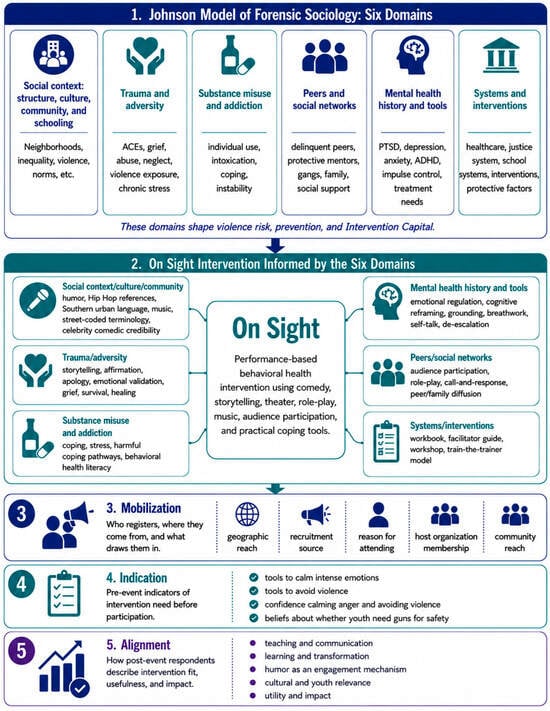
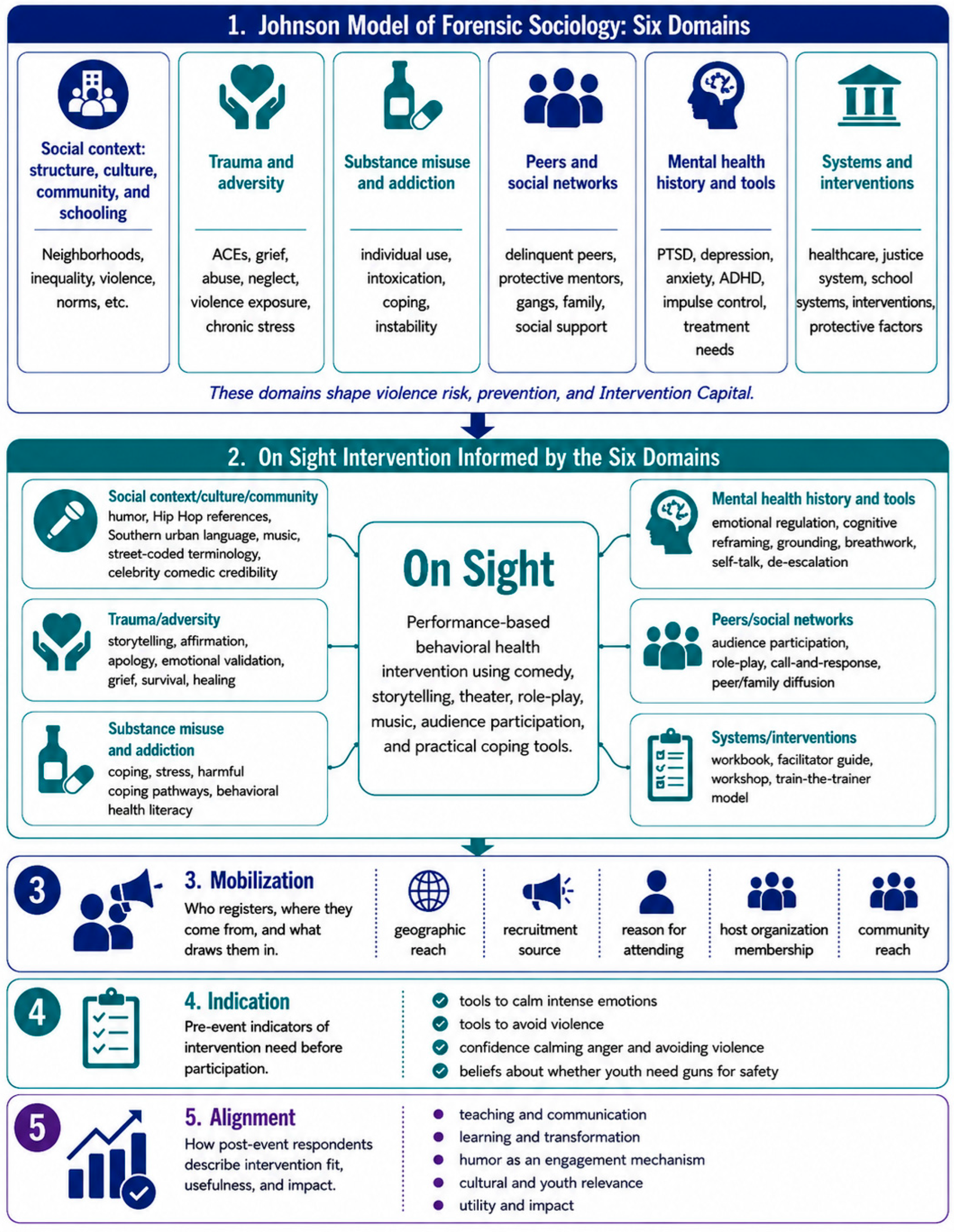
On Sight is a performance-based behavioral health intervention designed to prevent youth gun violence by teaching emotional regulation, conflict resolution, and mental health literacy (Johnson, 2026a). The intervention uses comedy, storytelling, theater, role-play, music, and audience participation. It is multimodal, including a film, a workbook, and a facilitator guide (Johnson, 2026b, 2026c). The live performance was converted into a film to amplify dissemination and translation. The workbook intends to reinforce learning through reflection, practice, and re-engagement. The facilitator guide uses a train-the-trainer model to help individuals who may be at risk of violence become credible messengers, peer educators, and interventionists within their own communities. The Johnson Model’s core domains guided all aspects of the intervention, including its development and dissemination. The model’s emphasis on social context, culture, and community informed the use of humor, Hip Hop references, Southern urban language, music, street-coded terminology, and a celebrity comedian with credibility among the intended audience. Its attention to trauma and adversity shaped the use of storytelling; affirmation; the apology; emotional validation; and themes of grief, survival, and healing. Its focus on mental health history and coping tools informed the inclusion of emotional regulation, cognitive reframing, grounding, breathwork, self-talk, and de-escalation strategies. Its emphasis on peers and social networks shaped the use of audience participation, role-play, call-and-response, and peer and family diffusion. Figure 1 displays how the Johnson Model of Forensic Sociology informed the intervention and the three components of intervention capital needed for meaningful change: mobilization, indication, and alignment.
Figure 1.
Johnson Model of Forensic Sociology, introduced and applied in the present study.
The intervention integrates several behavioral health tools that are associated with reduced violence and positive mental health outcomes (Kendall et al., 2023; Lesure-Lester, 2002). “Clock it, Drop it, Swap it” teaches cognitive restructuring through a brief rhyme that helps participants practice identifying negative thoughts and replacing them with healthier thoughts (Kendall et al., 2023). “Good-Chi Goggles,” a reference to the designer brand Gucci, teaches positive orientation and cognitive reframing by encouraging participants to look for the good in themselves, their neighbors, and their surroundings. “Good-Chi Goggles” also supports self-esteem and collective self-esteem by affirming participants’ identities, communities, and cultural contexts, which can be a strong protective factor for underserved youth (Barrie et al., 2016). “Deep Breaths” refers to a rhythmic breathwork exercise. The phrase “5 Cents” refers to a five-senses countdown exercise that grounds participants in the present moment by focusing attention on what they can see, hear, feel, smell, and taste to regulate nervous system arousal, redirect attention, and restore emotional control. “Wind, Water, Walk, Rest” is a brief phrase to remind participants that mood, stress, and impulse control are shaped by basic physiological needs, including breath regulation, fluid intake, physical movement, and sleep hygiene. De-escalation strategies are introduced via call-and-response and a drill rap song (Allen et al., 2025). Participants are encouraged to “slide,” which is to physically remove themselves from a conflict before escalation, and “drill”, which is using role-play and storytelling as therapeutic and pedagogical strategies to practice nonviolent behavior in moments of crisis. Together, these tools draw on cognitive restructuring, perceptual reframing, grounding, breathwork, self-talk, and role-play and other tools to improve wellness and reduce violence.
1.5. The Current Study
This study applies the Johnson Model of Forensic Sociology to On Sight, a culturally grounded, performance-based violence-prevention intervention. Using registration and post-event survey data from the Gainesville On Sight event, this exploratory mixed-methods pilot study had three aims. First, we examined community mobilization by describing who registered, where registrants came from, and what drew them to the intervention. Second, we examined indication among registrants using four pre-event indicators: tools to calm rage and fear, tools to avoid violence, confidence calming anger and avoiding violence, and beliefs about whether youth need guns for safety. Third, we examined alignment using post-event feedback, assessing tool recall, cultural relevance, credibility, and perceived applicability to youth and the broader community. Consistent with these aims, we evaluated three testable expectations. First, we expected mobilization to be demonstrated by registration extending beyond the intervention’s immediate organizational network and occurring through multiple recruitment pathways. Second, we expected a substantial proportion of eligible adult registrants to demonstrate indication for intervention, reflected by limited emotional-regulation tools, limited violence-avoidance tools, low confidence managing anger and avoiding violence, or endorsement of guns as necessary for youth safety; we further expected the three skill-based indication measures to be positively associated. Third, we expected post-event responses to provide evidence of alignment through reported recall and applicability of intervention tools, perceived cultural relevance, and perceived usefulness for youth and communities. Given the exploratory nature of the pilot, demographic and recruitment-source differences were examined without directional hypotheses. This study does not test intervention effectiveness. Instead, it focuses on mobilization, indication, and alignment before future feasibility, implementation, and effectiveness testing.
2. Methods
2.1. Study Design
This exploratory mixed-methods pilot study used registration survey data and post-event open-ended responses to examine three components of Intervention Capital: mobilization, indication, and alignment. The survey was designed and distributed in June 2025 using Qualtrics XM (Qualtrics, Provo, UT, USA; web-based software, 2025). Registration data were collected during event marketing and outreach and were used to examine mobilization and indication. Post-event open-ended responses were collected via a separate survey after the event and were analyzed qualitatively to examine alignment. The event took place in a small city in the Southeastern United States with a large university presence, surrounding rural communities, and local concerns related to youth violence, behavioral health, and community safety. The site was selected because it offered a feasible pilot setting with local partnerships. This study was approved by the University of California, Los Angeles Office of the Human Research Protection Program. The approved research population was restricted to adults aged 18 years or older; individuals younger than 18 years were not eligible for enrollment. For the post-event survey, prospective participants reviewed online study information and indicated consent before proceeding, and individuals who did not consent or who reported being under 18 were screened out. Consent for research use of the de-identified registration data was waived because the data were de-identified and the research involved minimal risk. The registration and post-event datasets served different analytic purposes and should not be interpreted as a longitudinal pre–post-sample. Registration data were used to examine mobilization and indication, whereas the post-event survey provided a separate source of feedback regarding alignment. Responses were not linked across the two datasets at the individual level. Thus, the 34 post-event records do not represent retention of 34 participants from the adult analytic sample of 1315; rather, they constitute a separate, smaller source of post-event feedback. No estimates of individual-level pre–post change or intervention effectiveness were attempted.
2.2. Sample
The registration dataset consisted of 2022 individuals who initiated the On Sight event registration survey in 2025. Of the 2022 registration records, 1290 were marked as finished, yielding a conservative completed-registration proportion of 63.8%. Consistent with the approved protocol, quantitative research analyses were restricted to adults aged 18 years or older. The original fixed complete-case registration dataset contained 1431 records; 116 records reporting age below 18 were excluded, yielding a final adult-only quantitative analytic sample of 1315. Within this adult analytic sample, 49.6% were ages 35–54, 23.7% were ages 26–34, 17.9% were ages 18–25, and 8.9% were ages 55 or older; 72.9% were female. The post-event analytic sample included 34 adult records; 52.9% were female, 17.6% were male, and 29.4% had missing sex data. The modal age group in the post-event sample was 41–50 years (32.4%), followed by 30–40 years (20.6%).
2.3. Measures
2.3.1. Mobilization Variables
There were six variables used to explore mobilization: age, sex, geographic reach, hosting organization membership, recruitment source, and reason for attending. These variables were used to describe who registered for the intervention, how broadly the event reached the community, and which outreach pathways appeared to mobilize participation. Age was collected as a six-category registration variable, but the approved research protocol restricted eligibility to adults aged 18 years or older. Accordingly, records reporting age below 18 were excluded from the research analytic sample before final analysis. Adult age categories are 18 to 25, 26 to 34, 35 to 54, and 55 or older. For multivariable analyses, ages 35 to 54 serve as the reference category because this is the largest adult age group. Sex was measured as a three-item categorical variable (0 = female, 1 = male, and 2 = other). Female respondents were used as the reference group in regression models. Geographic reach was measured using self-reported ZIP code and IP-based location metadata. ZIP code was treated as a categorical/string variable and summarized using individual ZIP codes and ZIP-code prefixes. IP-based latitude and longitude were treated as continuous metadata fields and used only to describe broad geographic clustering. They were not interpreted as exact residential addresses or precise GPS coordinates. Hosting organization membership was measured as a three-item categorical variable (0 = no, 1 = yes, and 2 = not sure) and used descriptively, but it was not retained in the final multivariable models. Recruitment source was measured as a six-item categorical variable: Facebook, family/friends, TikTok/Snapchat, school/work, group/organization, and other. Facebook was used as the reference category in multivariable models because it was the most common recruitment source. Reason for attending was measured as a six-item categorical variable: celebrity, the speaker, topic/cause, family/friends, group/school, and prizes. Celebrity was used as the reference category in multivariable models because it was the most frequently selected reason for attending.
2.3.2. Indication Variables
There were four indication variables: emotional-regulation tools, violence-avoidance tools, regulation confidence, and youth gun-safety beliefs. Emotional-regulation tools was measured as a four-item ordinal variable by asking respondents whether they knew tools to calm intense emotions such as rage and fear (0 = none, 1 = a few, 2 = some, and 3 = many). Violence-avoidance tools were measured as a four-item ordinal variable by asking respondents whether they knew tools to avoid violence (0 = none, 1 = a few, 2 = some, and 3 = many). Regulation confidence was measured as a four-item ordinal variable by asking respondents how confident they were in calming anger and avoiding violence (0 = not at all, 1 = a little, 2 = somewhat, and 3 = very confident). Youth gun-safety beliefs were measured as a four-item ordinal variable by asking respondents whether youth need guns for safety (0 = never, 1 = almost never, 2 = sometimes, and 3 = always). For descriptive analyses, the four indication variables were retained in their original ordinal categories. For bivariate analyses and logistic regression outcomes, the items were dichotomized to support logistic regression, reduce sparse cells, and improve interpretability. In multivariable models, binary indicators were used as outcomes, while ordinal versions of the other indication variables were retained as predictors when they did not directly define the outcome. Emotional-regulation tools and violence-avoidance tools were recoded to distinguish low tools from higher tools: respondents who answered “none” or “a few” were coded as low tools, while those who answered “some” or “many” were coded as higher tools. Regulation confidence was recoded to distinguish low confidence from higher confidence: respondents who answered “not at all” or “a little” were coded as low confidence, while those who answered “somewhat” or “very confident” were coded as higher confidence. Youth gun-safety beliefs were recoded to distinguish endorsement from non-endorsement: respondents who answered “sometimes” or “always” were coded as endorsing youth gun-safety beliefs, while those who answered “never” or “almost never” were coded as non-endorsing. A supplemental dichotomous composite variable, any low skills or confidence, was created from the three skill-based indication items: emotional-regulation tools, violence-avoidance tools, and regulation confidence (0 = no low skills or confidence; 1 = any low skills or confidence). Respondents were coded as 1 if they reported low emotional-regulation tools, low violence-avoidance tools, or low regulation confidence. Youth gun-safety beliefs were not included in this composite because they measured perceived safety logic rather than behavioral tools or self-efficacy.
2.3.3. Post-Event Alignment and Qualitative Data
Alignment was assessed using post-event free-response items designed to capture respondents’ interpretations of the intervention’s content, delivery, cultural relevance, and perceived usefulness. The qualitative analytic sample consisted of 34 adult post-event survey records; respondents contributed narrative data through one or more of three open-ended questions: “What tools or tips did you learn or practice to manage stress and conflict?” “What was your favorite part of the event, or what stood out most to you?” “Is there anything else you would like to share with Dr. Johnson or the producers?” The unit of analysis was the post-event survey record. Because the post-event survey was not linked to registration records, qualitative respondents could not be matched to individual registration responses. Closed-ended post-event measures were used descriptively to characterize the post-event sample and contextualize the narrative responses; they were not used to estimate intervention effects.
2.3.4. Analytic Strategy
Quantitative data were analyzed using Stata/SE 13.1 (StataCorp, 2013). Descriptive analyses summarized respondent characteristics, mobilization pathways, and indication variables using frequencies and percentages. Bivariate analyses included column percentages, chi-square tests, and Pearson correlations among the core mobilization and indication variables. Survey duration was log-transformed to reduce skew. Motivation for attending and recruitment source were excluded from the correlation matrix because they were nominal categorical variables. Multivariable logistic regression models estimated adjusted odds ratios (aORs) and 95% confidence intervals for five binary indication outcomes: low emotional-regulation tools, low violence-avoidance tools, low confidence, youth gun-safety endorsement, and any low skills or confidence. Models adjusted for age group, sex, motivation for attending, recruitment source, survey progress, log-transformed survey duration, and the other indication domains. Ordinal indication variables were used as predictors when they did not define the outcome. Robust standard errors were used in all multivariable models. Analyses were restricted to respondents aged 18 years or older, producing a final adult-only multivariable analytic sample of 1315 complete records. Imputation was not used. Post-event open-ended responses were analyzed using an inductive thematic approach. Responses to the three open-ended questions were reviewed across records to identify recurring descriptions of the intervention’s content, delivery, relevance, and perceived usefulness. Initial codes were generated from the language and concepts appearing in the responses and were subsequently grouped into broader thematic categories. Themes were retained when they captured recurring patterns relevant to this study’s conceptualization of alignment. This process resulted in five overarching themes: relational pedagogy, skill uptake, humor-mediated engagement, cultural and youth resonance, and perceived utility. Because this was an exploratory pilot with a small post-event sample, the qualitative analysis was intended to characterize patterns in participant feedback rather than establish thematic prevalence or population-level generalizability.
3. Results
3.1. Univariate
As shown in the first column of Table 1, the adult analytic sample was primarily middle-aged and female. Respondents ages 35–54 represented the largest age group (49.6%), followed by ages 26–34 (23.7%), ages 18–25 (17.9%), and ages 55 or older (8.9%). Females comprised 72.9% of respondents. Mobilization appeared to be driven largely by cultural and network-based pathways: the celebrity special guest was the most common motivation for attending (57.9%), and Facebook was the most common recruitment source (63.8%), followed by family/friends (19.1%). Indication needs were common. More than half of respondents reported low emotional-regulation tools (54.3%), 38.9% reported low violence-avoidance tools, and 23.0% reported low confidence. Overall, 61.1% reported any low skills or confidence. Youth gun-safety endorsement was less common, with 12.5% endorsing that youth need guns for safety sometimes or always.
Table 1.
Sample characteristics stratified by indication outcomes.
3.2. Bivariate
The bivariate results in Table 1 demonstrate substantial overlap among the three skill-based indication domains. Among respondents with low violence-avoidance tools, 87.9% also reported low emotional-regulation tools, compared with 33.0% of respondents with higher violence-avoidance tools (chi-square(1) = 379.56, p < 0.001). Similarly, among respondents with low confidence, 83.2% reported low emotional-regulation tools, compared with 45.7% of respondents with higher confidence (chi-square(1) = 132.26, p < 0.001). Low confidence was also strongly associated with low violence-avoidance tools: 79.2% of respondents with low confidence reported low violence-avoidance tools, compared with 26.8% of respondents with higher confidence (chi-square(1) = 269.79, p < 0.001). Youth gun-safety endorsement showed a more distinct demographic pattern. Male respondents represented 36.6% of the high-endorsement group compared with 25.7% of the low-endorsement group (chi-square(1) = 8.59, p = 0.003). Age distributions also differed across gun-safety endorsement groups (chi-square(3) = 9.57, p = 0.023); respondents ages 18–25 represented 25.6% of the high-endorsement group compared with 16.8% of the low-endorsement group.
The correlation matrix in Table 2 showed a similar pattern. Emotional-regulation tools were positively correlated with violence-avoidance tools (r = 0.56; p < 0.001) and confidence (r = 0.40; p < 0.001), and violence-avoidance tools were positively correlated with confidence (r = 0.55; p < 0.001). The composite any-low-need indicator was also strongly correlated with low emotional-regulation tools (r = 0.87; p < 0.001), low violence-avoidance tools (r = 0.64; p < 0.001), and low confidence (r = 0.44; p < 0.001). In contrast, gun-safety endorsement was only weakly correlated with the skill-based indication variables (r = −0.06 to −0.01), supporting its interpretation as a distinct safety-belief dimension rather than the same prevention-need profile.
Table 2.
Pairwise correlations among mobilization and core analytic variables.
3.3. Multivariate
Table 3 presents multivariable logistic regression models predicting the five indication outcomes. Model 1 examined low emotional-regulation tools. Respondents recruited through family/friends had lower odds of low emotional-regulation tools than those recruited through Facebook (aOR = 0.54; 95% CI [0.39, 0.76]). Lower violence-avoidance tools and lower confidence were associated with higher odds of low emotional-regulation tools (aOR = 2.93, and 95% CI [2.51, 3.43]; aOR = 1.52, and 95% CI [1.27, 1.82], respectively), while youth gun-safety belief risk was associated with lower odds (aOR = 0.76; 95% CI [0.64, 0.90]). Model 2 predicted low violence-avoidance tools. Lower emotional-regulation tools were associated with higher odds of low violence-avoidance tools (aOR = 4.22; 95% CI [3.41, 5.22]), as was lower confidence (aOR = 2.94; 95% CI [2.44, 3.54]). Model 3 examined low confidence. Respondents ages 18–25 had lower odds of low confidence than respondents ages 35–54 (aOR = 0.54; 95% CI [0.33, 0.86]), and male respondents had lower odds than female respondents (aOR = 0.54; 95% CI [0.37, 0.79]). Respondents motivated by family/friends had higher odds of low confidence than those motivated by celebrity (aOR = 1.76; 95% CI [1.01, 3.07]). Lower emotional-regulation tools and lower violence-avoidance tools were also associated with higher odds of low confidence (aOR = 1.57, and 95% CI [1.27, 1.94]; aOR = 3.04, and 95% CI [2.48, 3.73], respectively).
Table 3.
Multivariable logistic regression models predicting indication outcomes.
Model 4 predicted youth gun-safety endorsement. Respondents ages 18–25 had higher odds of youth gun-safety endorsement than respondents ages 35–54 (aOR = 1.93, 95% CI [1.19, 3.15]), and male respondents had higher odds than female respondents (aOR = 1.64, 95% CI [1.14, 2.38]). Respondents motivated by prizes had higher odds than those motivated by celebrity (aOR = 7.64; 95% CI [1.58, 36.88]), while respondents recruited through family/friends had lower odds than those recruited through Facebook (aOR = 0.58; 95% CI [0.35, 0.94]). Emotional-regulation tools’ risk was also associated with lower odds of youth gun-safety endorsement (aOR = 0.77; 95% CI [0.62, 0.96]). Model 5 examined any low skills or confidence. Respondents recruited through family/friends or group/organization sources had lower odds of any low skills or confidence than those recruited through Facebook (aOR = 0.67, and 95% CI [0.49, 0.91]; aOR = 0.37, and 95% CI [0.15, 0.89], respectively). No adult age-group contrast was statistically associated with the composite outcome. Overall, the models reinforce the close connection among emotional-regulation tools, violence-avoidance tools, and confidence, while youth gun-safety endorsement showed a more distinct pattern associated with age, sex, motivation, and recruitment source.
3.4. Qualitative
The post-event analytic sample included 34 records. The modal age category was 41–50 (n = 11), and the modal sex category was female (n = 18). Closed-ended post-event items were used descriptively to contextualize the qualitative responses. Tool-learning data were provided by 24 respondents, and among them, the modal response was learning or practicing five or more tools (n = 11), followed by three or four tools (n = 9). Confidence data were provided by 24 respondents; the modal response was being very confident managing thoughts, emotions, and reactions (n = 18). Youth gun-safety beliefs were reported by 24 respondents, and the modal response was that youth never need guns for safety (n = 16), followed by almost never (n = 5). Thematic coding identified five themes related to perceived alignment: relational pedagogy, skill uptake, humor-mediated engagement, cultural and youth resonance, and perceived utility.
Theme 1: Relational pedagogy. Respondents described the intervention’s teaching style as clear, accessible, and relational. Rather than interpreting the performance as a conventional lecture, participants emphasized that serious behavioral health content was delivered in a way that felt direct, culturally grounded, and easy to understand. One respondent stated that the presenter “did a great job communicating and relating to the youth and even representing the culture” (30–40, Female). Another wrote that he “didn’t portray himself as a doctor,” but “as family and a friend wanting you to strive for better in your life and yourself” (25–29, Female). These responses suggest that credibility was produced not only through expertise, but through relational proximity and audience-centered communication.
Theme 2: Skill uptake and cognitive reframing. Respondents identified specific tools from the intervention, including “Deep Breaths”; “5 Cents”; “Clock it, Drop it, Swap it”; “Good-Chi Goggles” or “Gucci glasses”; de-escalation; “my bad”; self-talk; self-worth; and positive affirmations. One respondent recalled, “Clock it, Drop it, Swap it. Deep Breaths. 5 Senses. Good Chi goggles” (30–40, Female). Another described learning “the my bad tool,” “the 5 s breath tool,” and “self-support talk,” including “speaking positive affirmations over my life on the day-to-day basis” (30–40, Male). Participants also described applying these tools to emotional regulation and conflict interruption. One summarized the lesson as learning to “talk myself down before I react” (41–50, Female), while another referenced “deescalation processes” and taking “time to think” (30–40, Male). This theme indicates that participants did not merely evaluate the intervention as entertaining; they recalled concrete behavioral strategies and interpreted them as relevant to self-regulation, decision-making, and violence prevention.
Theme 3: Humor-mediated engagement. Humor emerged as a mechanism for attention, emotional access, and receptivity to difficult content. Respondents described laughter as a way to engage material related to violence, trauma, emotional dysregulation, and consequences without feeling overwhelmed. One respondent described the event as “very motivational for those who need to laugh and shake off the world sometimes,” while also helping people “learn how to cope with self emotion” (30–40, Male). Another described laughter as “a natural remedy that refreshes the soul,” noting that it “didn’t erase my problems” but gave her “strength to face them with new perspective” (50+, Female). These responses suggest that humor functioned as a delivery mechanism that made serious content more accessible, memorable, and emotionally tolerable.
Theme 4: Cultural and youth resonance. Respondents emphasized the intervention’s cultural and generational fit. They noted that the performance used language, humor, slang, and references that appeared to resonate with youth. One respondent wrote that the performer was “talking directly to the youth in their language slang, which they very well understood,” while “some parents in the audience didn’t have a clue what they meant” (41–50, Female). Another stated, “How I was raised isn’t the way to raise the newer generation” (41–50, Female). These responses suggest that cultural relevance was not peripheral to the intervention; it was part of how behavioral health content became legible and reachable to the intended audience.
Theme 5: Perceived utility and transferability. Respondents described the intervention as useful beyond the event itself, particularly for youth, families, juvenile justice settings, and broader community violence-prevention contexts. One respondent wished the message could “reach more youth, especially juveniles in the … Correctional Institute…” (41–50, Female). Another stated, “So glad I brought my children. They will never forget this experience” (30–40, Female). A third described the event as “a life-changing experience” for people who need help coping with emotions and avoiding decisions that can alter one’s life “because of a few seconds” (30–40, Male). These responses indicate perceived transferability across family, community, and justice-related settings.
Overall, the qualitative findings suggest that respondents perceived On Sight as aligned with the audience and community context. Alignment was reflected in how participants described the intervention’s relational teaching style, recall of specific behavioral tools, humor-mediated engagement, youth-centered cultural resonance, and practical utility. These themes may support the interpretation of On Sight as a culturally responsive, performance-based behavioral health intervention with perceived relevance, acceptability, and applied value for violence prevention.
4. Discussion
The Johnson Model of Forensic Sociology proposes that violence risk and Intervention Capital are shaped by six primary domains: social context, trauma and adversity, substance use, peers and social networks, mental health history, and systems and interventions. Intervention Capital refers to the resources a person or community needs to access, trust, engage with, and achieve meaningful change through an intervention. This exploratory mixed-methods pilot study applied the Johnson Model to examine whether On Sight, a culturally grounded gun violence prevention intervention, could mobilize a community registration audience, identify indicators of prevention need among registrants, and provide preliminary evidence of alignment among post-event respondents.
4.1. Mobilization
Mobilization, a component of Intervention Capital, refers to the structural, relational, and cultural conditions that allow individuals and communities to encounter an intervention, trust or value the messenger, and move toward engagement. The adult registration data suggest that On Sight generated substantial mobilization through multiple pathways. Celebrity influence was the most common reason for attending (57.9%), while Facebook (63.8%) and family/friend networks (19.1%) were the leading recruitment sources. These patterns suggest that On Sight moved through cultural, interpersonal, and digital channels rather than through institutional outreach alone. As the Johnson Model proposes, network-mediated prevention strategies may expand the routes through which communities encounter violence-prevention resources. External and informal pathways may be particularly important because youth and families with substantial prevention needs can be socially disconnected, institutionally marginalized, or less likely to participate in formal organizations (Semenza et al., 2023). Broad platforms such as social media and interpersonal networks may therefore help reach not only individuals directly, but also relatives, peers, and community members who can serve as bridges to higher-need youth and families.
4.2. Indication
Indication refers to the conditions, capacities, and perceptions reported by a community that suggest whether an intervention is warranted and potentially relevant. The adult-only findings provide evidence that On Sight reached a community sample with meaningful prevention needs. More than half of respondents reported low emotional-regulation tools (54.3%), 38.9% reported low violence-avoidance tools, nearly one-quarter reported low confidence (23.0%), and 61.1% had at least one low skill or confidence indicator. The strongest indication finding was not a single isolated deficit; instead, it was the clustering of emotional-regulation tools, violence-avoidance tools, and confidence. Bivariate, correlation, and multivariable results all suggested that these domains were closely connected. This pattern is consistent with the Johnson Model’s premise that violence-related prevention needs are multidimensional and mutually reinforcing. A person who lacks tools to calm intense emotions may also have fewer strategies to avoid violence and less confidence in the ability to interrupt conflict. Gun-violence interventions may therefore need to develop a broader spectrum of skills, including emotional regulation, nonviolent conflict management, and perceived self-efficacy. Because the approved research population was adult-only, this pilot does not provide direct evidence about adolescent outcomes. The young-adult subgroup nevertheless remains relevant to youth and emerging-adult violence prevention. Adults ages 18–25 had lower odds of low confidence than adults ages 35–54, but higher odds of endorsing that youth need guns for safety; male respondents similarly had lower odds of low confidence but higher odds of youth gun-safety endorsement than female respondents. This divergence reinforces the interpretation of youth gun-safety endorsement as a related but distinct prevention domain. In communities affected by violence, beliefs about guns may be tied to perceived threat, protection, status, social norms, or distrust in formal systems of safety. These findings support research suggesting that violence-prevention interventions may benefit from addressing both behavioral health skills and the social–cultural dynamics that shape perceptions of safety and the perceived necessity of guns (Kravitz-Wirtz et al., 2022).
4.3. Alignment
Alignment refers to the degree to which an intervention’s content, delivery style, setting, outreach strategy, and messengers fit the individuals and communities the intervention is intended to reach. Post-event responses suggested alignment across several intervention features. Respondents recalled specific tools, including grounding, breathing, cognitive reframing, de-escalation, apology, self-talk, and disengagement from conflict. They also identified humor, culturally familiar language, messenger credibility, emotional resonance, and youth/community applicability as important features. The qualitative findings suggest that On Sight was perceived as more than an informational presentation. Respondents described the intervention as relational, culturally familiar, emotionally accessible, and applicable to real-world conflict situations. Humor appeared to function as a mechanism of engagement rather than a distraction from the seriousness of the topic. Prior research suggests that alignment may improve intervention outcomes, especially when adopting culturally relevant approaches to mental health interventions (Conner & Grote, 2008). Humor, storytelling, Hip Hop references, Southern urban language, audience participation, and credible messengers may be central to making behavioral health tools accessible, credible, digestible, and functional. Together, the mobilization, indication, and alignment findings provide a conceptual and empirical basis for assessing Intervention Capital in early-stage community intervention development. This approach may help public health programs determine whether a violence-prevention intervention reaches the intended community; addresses an indicated prevention need; and fits the communication, cultural, and implementation context needed for larger-scale evaluation. These findings should be interpreted within the broader social and structural contexts that shape exposure to violence, perceptions of safety, and responses to conflict.
4.4. Limitations and Future Directions
Several limitations should guide interpretation of these findings. First, this study was an exploratory pilot and was not designed to test intervention effectiveness. Registration records should not be interpreted as verified attendee baseline assessments because attendance could not be confirmed for all registrants. Second, the registration and post-event datasets differed substantially in size and were not linked at the individual level. The registration dataset was used to examine mobilization and indication, whereas the 34 post-event records provided a separate and considerably more limited source of evidence regarding alignment. The post-event findings therefore cannot establish the prevalence of these perceptions among all registrants or attendees and may disproportionately reflect individuals who were sufficiently engaged or motivated to complete the follow-up survey. They should be interpreted as preliminary qualitative evidence of perceived alignment rather than evidence of intervention effectiveness or population-level acceptability. The unlinked design also prevents estimates of individual-level change or causal effects. Third, the approved research population was restricted to adults aged 18 years or older. Consequently, this pilot does not directly estimate intervention needs or outcomes among minors, even though On Sight is designed to address youth gun violence. Adults remain relevant to the family, community, service, and implementation environment surrounding youth, while young adults ages 18–25 represent an important transitional population. Future studies should use protocols specifically designed to recruit and evaluate adolescents directly, with appropriate protections, while also expanding young-adult recruitment. Race and ethnicity were unavailable, limiting analysis of racial and ethnic differences. Self-reported data may also be affected by social desirability, recall, and selection biases. Finally, this study was conducted in one southeastern community without long-term follow-up, limiting conclusions regarding generalizability, sustained behavior change, violence involvement, or safety outcomes.
Despite these limitations, this study has several strengths. It used a sizable registration dataset to examine community mobilization and intervention indication before moving to questions of effectiveness. It also integrated quantitative and qualitative data, allowing this study to assess who was drawn to On Sight; what prevention needs were present; and whether post-event respondents perceived the intervention as memorable, credible, culturally meaningful, and applicable. Future research should conduct a feasibility and process evaluation of the full On Sight intervention system, including the film, workbook, and facilitated implementation materials. This work should examine reach, fidelity, engagement, usability, and acceptability before testing effectiveness. Subsequent studies should include linked pre/post-data; longer-term follow-up; larger young-adult samples and, under appropriately approved protocols, adolescent samples; and outcomes related to emotional regulation, violence avoidance, confidence, safety beliefs, help-seeking, and violence-related behavior.
5. Conclusions
This study introduced the Johnson Model of Forensic Sociology as a framework for understanding violence and early-stage intervention development. Using On Sight as a pilot case, this study examined whether a culturally grounded, performance-based youth gun-violence intervention could generate community mobilization, identify indication needs among eligible adult registrants, and provide preliminary evidence of alignment among adult post-event respondents. The findings suggest meaningful unmet needs related to emotional regulation, violence avoidance, and confidence within the adult community sample. Beliefs about whether youth need guns for safety may represent a distinct prevention domain tied to perceived threat, safety logic, and trust in protection systems. Overall, this study provides a conceptual and empirical basis for assessing mobilization, indication, and alignment before expanding community-based violence-prevention interventions. Direct evaluation among adolescents will require future research conducted under protocols specifically approved for minors.
Funding
The research reported in this publication was supported by the National Institutes of Health under award numbers K01DA052679 (Micah E. Johnson, PI), R25DA059073 (Micah E. Johnson, Co-MPI), and 1R25DA060501-01A1 (Micah E. Johnson, co-MPI), as well as funding through the City of Gainesville, the UCLA Department of Family Medicine, and the UCLA Ralph J. Bunche Center for African American Studies. The content is solely the responsibility of the authors and does not necessarily represent the official views of the National Institutes of Health, the City of Gainesville, the UCLA Department of Family Medicine, or the UCLA Ralph J. Bunche Center for African American Studies.
Institutional Review Board Statement
This study was conducted in accordance with the Declaration of Helsinki and approved by the University of California, Los Angeles Office of the Human Research Protection Program (date of approval: 26 August 2025). The approved research population was restricted to adults aged 18 years or older. Online informed consent was obtained for the post-event survey; consent for research use of de-identified registration data was waived under the approved minimal-risk protocol. Minors were not eligible research participants.
Informed Consent Statement
Informed consent was obtained from all subjects involved in this post-event study.
Data Availability Statement
The original contributions presented in this study are included in the article. Further inquiries can be directed to the corresponding author.
Acknowledgments
The author would like to acknowledge renowned actor and comedian DC Young Fly and the extraordinary leadership of Barzella Papa. The author also gratefully acknowledges Brandy Stone, Brittany Cole, and Cynthia Curry for their support and contributions to this work.
Conflicts of Interest
The author wrote, performed, owns the copyright to, and may receive financial benefits from On Sight, the work examined in this study.
References
- Allen, K. R., Levy, I., & Adjapong, E. (2025). “That’s real stuff though”: Understanding drill music as dialogic expression for black youth. Urban Education, 61, 1556–1584. [Google Scholar] [CrossRef] [Scilit]
- Bancalari, P., Sommer, M., & Rajan, S. (2022). Youth exposure to endemic community gun violence: A systematic review. Adolescent Research Review, 7(3), 383–417. [Google Scholar] [CrossRef] [Scilit]
- Barrie, R. E., Langrehr, K., Jerémie-Brink, G., Alder, N., Hewitt, A., & Thomas, A. (2016). Stereotypical beliefs and psychological well-being of African American adolescent girls: Collective self-esteem as a moderator. Counselling Psychology Quarterly, 29(4), 423–442. [Google Scholar] [CrossRef] [Scilit]
- Branas, C. C., Reeping, P. M., & Rudolph, K. E. (2021). Beyond gun laws—Innovative interventions to reduce gun violence in the US. JAMA Psychiatry, 78(3), 243–244. [Google Scholar] [CrossRef] [Scilit] [PubMed]
- Campbell, B. (2025). Violent time, violent space: Donald black and the behavior of violence. The American Sociologist, 56(2), 321–336. [Google Scholar] [CrossRef] [Scilit]
- Conner, K. O., & Grote, N. K. (2008). Enhancing the cultural relevance of empirically-supported mental health interventions. Families in Society, 89(4), 587–595. [Google Scholar] [CrossRef] [Scilit] [PubMed]
- Delman, J., Arntz, D., Whitman, A., Skiest, H., Kritikos, K., Alves, P., Chambers, V., Markley, R., Martinez, J., Piltch, C., Whitney-Sarles, S., London, J., Shtasel, D., & Cather, C. (2024). Using community-based participatory research to conduct a collaborative needs assessment of mental health service users: Identifying research questions and building academic-community trust. Health Promotion Practice, 25(5), 855–864. [Google Scholar] [CrossRef] [Scilit] [PubMed]
- Dong, B., Houser, T., & Koper, C. S. (2024). Gun violence research from a micro-place perspective: A scoping review. Aggression and Violent Behavior, 78, 101951. [Google Scholar] [CrossRef] [Scilit]
- Forsyth, C. J. (2014). The work of the sociologist as mitigation expert in cases of violent crime. In Handbook of forensic sociology and psychology. Springer. [Google Scholar] [CrossRef] [Scilit]
- Gillum, T. L., Hampton, C. J., & Coppedge, C. (2025). Using the socio-ecological model to understand increased risk of gun violence in the African American community. Psychological Reports, 128(1), 126–148. [Google Scholar] [CrossRef] [Scilit] [PubMed]
- Johnson, M. E. (2018). Trauma, race, and risk for violent felony arrests among Florida juvenile offenders. Crime & Delinquency, 64(11), 1437–1457. [Google Scholar] [CrossRef] [Scilit] [PubMed]
- Johnson, M. E. (2026a). On sight (Full movie)|UCLA professor & death row activist. YouTube. Available online: https://www.youtube.com/watch?v=9FYau_J5uK4 (accessed on 21 June 2026).
- Johnson, M. E. (2026b). On sight: The facilitator guide. Amazon Kindle Direct Publishing. [Google Scholar]
- Johnson, M. E. (2026c). On sight: The workbook. Amazon Kindle Direct Publishing. [Google Scholar]
- Kendall, P. C., Ney, J. S., Maxwell, C. A., Lehrbach, K. R., Jakubovic, R. J., McKnight, D. S., & Friedman, A. L. (2023). Adapting CBT for youth anxiety: Flexibility, within fidelity, in different settings. Frontiers in Psychiatry, 14, 1067047. [Google Scholar] [CrossRef] [Scilit] [PubMed]
- Kravitz-Wirtz, N., Bruns, A., Aubel, A. J., Zhang, X., & Buggs, S. A. (2022). Inequities in community exposure to deadly gun violence by race/ethnicity, poverty, and neighborhood disadvantage among youth in large US cities. Journal of Urban Health, 99(4), 610–625. [Google Scholar] [CrossRef] [Scilit] [PubMed]
- Lesure-Lester, G. E. (2002). An application of cognitive-behavior principles in the reduction of aggression among abused African American adolescents. Journal of Interpersonal Violence, 17(4), 394–402. [Google Scholar] [CrossRef] [Scilit]
- Lippman, S. A., Neilands, T. B., Leslie, H. H., Maman, S., MacPhail, C., Twine, R., Peacock, D., Kahn, K., & Pettifor, A. (2016). Development, validation, and performance of a scale to measure community mobilization. Social Science & Medicine, 157, 127–137. [Google Scholar] [CrossRef] [Scilit] [PubMed]
- Nance, M. L., Croughan, A. M., Allukian, M., Hwang, R., Krumbhaar, C. J., & Nace, G. W. (2026). Firearm mortality in the US pediatric population. JAMA Pediatrics, 80(1), 110–112. [Google Scholar] [CrossRef] [Scilit] [PubMed]
- Rajan, S., Reeping, P. M., Ladhani, Z., Vasudevan, L. M., & Branas, C. C. (2022). Gun violence in K-12 schools in the United States: Moving towards a preventive (versus reactive) framework. Preventive Medicine, 165, 107280. [Google Scholar] [CrossRef] [Scilit] [PubMed]
- Semenza, D. C., & Kravitz-Wirtz, N. (2025). Gun violence exposure and population health inequality: A conceptual framework. Injury Prevention, 31(1), 1–8. [Google Scholar] [CrossRef] [Scilit] [PubMed]
- Semenza, D. C., Stansfield, R., Silver, I. A., & Savage, B. (2023). Reciprocal neighborhood dynamics in gun violence exposure, community health, and concentrated disadvantage in one hundred US cities. Journal of Urban Health, 100(6), 1128–1139. [Google Scholar] [CrossRef] [Scilit] [PubMed]
- StataCorp. (2013). Stata statistical software: Release 13. StataCorp LP. [Google Scholar]
- Sullivan, T. N., Leslie, C. E., Walsh, C. S., Lazarus, K., Ross, K. M., Radabaugh, S. A., Weihl, A., Angulo, A., Bishop, D. L., & Thomson, N. (2026). Community-identified priorities for improving safety in low-income urban communities experiencing high rates of firearm violence. Youth, 6(2), 55. [Google Scholar] [CrossRef] [Scilit]
- Taylor, B. G., Mitchell, K. J., Turner, H. A., Sheridan-Johnson, J., & Mumford, E. A. (2025). Prevalence of gun carrying and gun violence victimization and perpetration among a nationally representative sample of U.S. youth and young adults. AJPM Focus, 4(1), 100294. [Google Scholar] [CrossRef] [Scilit] [PubMed]

Disclaimer/Publisher’s Note: The statements, opinions and data contained in all publications are solely those of the individual author(s) and contributor(s) and not of MDPI and/or the editor(s). MDPI and/or the editor(s) disclaim responsibility for any injury to people or property resulting from any ideas, methods, instructions or products referred to in the content. |
© 2026 by the author. Licensee MDPI, Basel, Switzerland. This article is an open access article distributed under the terms and conditions of the Creative Commons Attribution (CC BY) license.