


Abstract
Child marriage remains a persistent barrier to girls and young women’s education, health, and socioeconomic advancement in many parts of Sub-Saharan Africa. This paper examines the perceived economic empowerment initiatives contributed to expanding life choices, including the prevention of child marriage and the delay of early marriage, within the Girls Get Equal (GGE) project implemented between 2020 and 2024 across three districts (Nkasi, Kalambo and Sumbawanga DC) in the Rukwa Region of Tanzania between 2020 and 2024. The paper adopted an explanatory mixed-methods case study design to explain aggregated project outcome indicators with participants’ lived experiences captured through focus group discussions and key informant interviews. Endline evaluation interviews and focus group discussions were re-analyzed using a six-stage thematic analysis approach. The paper demonstrates that imparting skills in technical and business fields leads to robust job creation outcomes. A large majority of trained youth transitioned into employment or self-employment and a substantial proportion maintained stable income-generating activities. On top of that, community-based infrastructures, particularly savings and loan groups, emerged as important financial mechanisms as they enabled structures supporting enterprise development and household resilience. The integration of quantitative trends and qualitative narratives suggests that economic empowerment interventions can expand girls’ economic agency and influence their informed decision-making processes related to marriage. Finally, the findings suggest that combining vocational skills development with access to financial capital represents a promising pathway for addressing structural drivers of early and child marriage in economically vulnerable contexts.
1. Introduction
1.1. Background and Context
Child marriage remains a development threat to more than 12 million girls under age 18 worldwide (UNICEF, 2023, 2024). Child marriage refers to any formal or informal union between a child below the age of 18 years and an adult or another child (UNICEF, 2025). Accordingly, this paper uses the term “early marriage” as an umbrella concept encompassing these forms of adolescent and youth marriage within the context of the project’s target population. Sub-Saharan Africa constitutes one of the regions with the highest prevalence of early marriage (Hailu & Beyene, 2025). For example, in West Africa, more than 40% of marriages occur among teenage girls. Niger has one of the world’s highest child marriage rates, with 28% of girls married before age 15 (Alinsato & Houssou, 2026). These high rates are partly attributable to entrenched cultural norms and widespread poverty (Aluga & Okolie, 2021). In Bangladesh, more than 60% of girls are married by the age of 15, likely owing to religious and social norms that discourage premarital sexual relationships, economic pressures, and concerns about social security (Khan et al., 2024).
Across the East African region, child marriage remains a serious challenge. According to UNICEF Child marriage data, Tanzania’s records show that 5% of women marry before age 15 and 29% marry before age 18 (Tanzania National Bureau of Statistics, 2022). In comparison, Uganda reports 13.2% married before 15 and 32.8% before 18 (Uganda Bureau of Statistics [UBOS], 2023), while Kenya shows lower levels (2% before 15; 13% before 18) (Kenya National Bureau of Statistics & ICF Macro, 2023). Rwanda appears to have achieved a significant reduction in the proportion of girls marrying, particularly before the age of 15. For instance, in 2020, it recorded the lowest prevalence (0.3% before 15 and 6% before 18) (National Institute of Statistics of Rwanda, 2020). Overall, Tanzania and Uganda are relatively close on marriage before 15, but the disparity becomes much larger by age 18, especially when Tanzania is compared with Kenya and Rwanda.
1.2. Negative Consequences of Early Marriage
Early marriage has both short-term and long-term consequences for health, social well-being, and economic outcomes (Feyissa et al., 2023). Many girls become pregnant within a year of marriage (Han et al., 2025), and before even turning 18, they have had a second baby (Yaya et al., 2019). Most critically, they represent the largest group lacking access to health support services before, during, and after childbirth, because the majority give birth at home (Ahinkorah et al., 2022a; Fan & Koski, 2022). All of this happens before their bodies and reproductive systems are fully developed. For example, a study in Bangladesh found that pregnancies occurring between ages 13 and 15 were associated with a substantially higher risk of perinatal death compared with pregnancies among adult women (Han et al., 2025; Khan et al., 2024).
Evidence also shows that child marriage increases the likelihood of intimate partner violence, particularly where there is a large spousal age gap and unequal power within the relationship (Han et al., 2025). For example, across 16 Sub-Saharan African countries, young women who married before age 18 had consistently higher past-year intimate partner violence than those who married as adults (36.9% vs. 32.5%) (Ahinkorah et al., 2022b). This suggests that girls and young women who marry early often have limited autonomy, reduced bargaining power within marriage, and a weaker voice in decisions affecting their lives. In Bangladesh, delaying marriage significantly improves women’s decision-making power, control over income, asset ownership, and public participation (Tauseef & Sufian, 2024). In addition, child marriage interrupts girls at a stage when they should be in school or pursuing skills training and higher education (Soler-Hampejsek et al., 2021). Consequently, early marriage reduces investments in human capital and limits young people’s subsequent access to productive employment.
Recent research also indicates that child marriage negatively affects women’s socioeconomic empowerment, particularly in relation to education and employment (Soler-Hampejsek et al., 2021). The continued economic marginalization of girls and women reinforces structural gender inequalities, thereby perpetuating poverty across families and communities (Psaki et al., 2021; Khan et al., 2024). Beyond these social and economic consequences, girls who marry early also face psychological harms, including stress, depression, anxiety, social isolation, and reduced overall well-being (Burgess et al., 2022). Overall, child marriage not only deprives girls of their rights to childhood, education, and health, but also limits their participation in family, community, and broader national development because of restricted access to resources, voice, and decision-making power over their own lives (Fan & Koski, 2022). The need to address both the drivers and the consequent effects of child marriage has been central to policy and regulatory discussions.
1.3. Policy and Legal Responses
Policy and legal instruments are critical vehicles for driving girls’ rights and promoting gender equality. At the global level, international frameworks such as the Convention on the Elimination of All Forms of Discrimination against Women (CEDAW) establish legally binding obligations for member states to eliminate discrimination against women in all spheres of life (United Nations, 1979). Similarly, the Declaration on the Elimination of Violence against Women emphasizes the responsibility of governments to prevent, investigate, and punish acts of violence against women (United Nations, 1993). The Beijing Declaration and Platform for Action further reinforced global commitments to women’s rights, highlighting the elimination of harmful practices, including early and forced marriage, as priority for achieving gender equality and women’s empowerment (United Nations, 1995).
Over the last decade, the world has taken ambitious steps to bridge the gap between women and men, and between boys and girls, across key thematic areas of development (United Nations, 2022). These themes appear as Sustainable Development Goals/Targets, including the economy, public life, and policy. For example, SDG Target 5.3 calls for the elimination of all forms of child, early, and forced marriage by 2030. In addition, Target 5.5 seeks to ensure women’s full and effective participation and promote equal opportunities for leadership in economic and public life. Most importantly, Member States have committed themselves to promoting inclusive access to employment and decent work for girls and women under SDG Target 8.5.
At the regional level, African policy frameworks have also strengthened commitments to addressing gender-based violence and harmful traditional practices. For example, the Maputo Protocol calls on African Union Member States to eliminate practices that undermine gender equality, including by raising the minimum age of marriage to 18. The Protocol goes further by emphasizing the importance of promoting equality in access to formal employment while also extending this commitment to the informal sectors in which women predominate (African Union, 2003). More broadly, the aspiration is that by 2063, Africa will have achieved full gender parity, with women occupying 50% of leadership and managerial positions (African Union Commission, 2015). Such policy commitments call for effective interpretation and implementation within broader economic, social, and political transformations at the country level.
Within the Tanzanian context specially, it is important to consider the national policy and legal environment addressing gender-based violence and harmful practices. Ongoing policy discussions emphasize the need to reflect on the Law of Marriage Act of 1971 in order to raise the minimum age of marriage and align it with international human rights standards. Such reform would help ensure consistency with the Law of the Child Act of 2010 and support the establishment of stronger legal and institutional mechanisms to protect children from harmful practices, including early and forced marriage. In efforts to economically empower the girl child and enhance her participation in decision-making, the government has committed itself to eliminating discrimination in the workplace in order to provide equal economic opportunities for girls (URT & ILO, 2024). This forms part of broader efforts to eliminate gender-based oppression and violence, as reflected in the National Strategy for 2024/2025–2028/2029 (URT, 2024).
Positioning early and forced marriage within the broader framework of gender-based violence highlights the structural barriers that limit girls’ access to education and economic opportunities. This provides a rationale for examining economic empowerment interventions, such as the Girls Get Equal Project in Rukwa Region, which aims to enhance girls’ skills, financial literacy, and agency, thereby reducing incidences of early marriage.
1.4. Contribution of Girl Economic Empowerment to Reduced Early Marriage
Differences in teenage pregnancy rates signal underlying variation in policy environments, legal frameworks, and institutional capacity, both across countries and across sub-national areas within the same country. For instance, education policies in southern Africa have expanded opportunities for pregnant girls and young mothers to continue their education. For example, countries such as Malawi and Botswana have adopted official school re-registration policies that allow girls who became pregnant to return to school (Chilisa, 2002; Chinkondenji, 2025). In Tanzania, for example, the government introduced a significant policy shift in 2022 by issuing new guidelines that allow teenage mothers to re-enroll in Alternative Secondary Education Pathway (ASEP) centers (Nalaila & Massawe, 2026).
Evidence from skills-development interventions in Sub-Saharan Africa suggests that market-aligned vocational training can play an important role in improving young women’s economic prospects. Evidence from Liberia indicates that when adolescent girls received training aligned with local labor market demand, approximately 47% transitioned into employment (Adoho et al., 2014). By comparison, in the Philippines, employment outcomes reached 52% among girls who had been unemployed prior to undertaking TVET training (Talento et al., 2022). Moreover, other studies have demonstrated an increased number of hours in paid work among young women (Tripney et al., 2013). This suggests that employability gains are strongest where training aligns directly with market demand, rather than relying on generalized or supply-driven instructions. However, not every trained young person will secure formal employment; some will need to become job creators rather than job seekers.
Research indicates that teenagers and young women are capable of establishing small businesses upon receiving vocational training and life skills (International Labour Organization, 2022). However, the success of these initiatives heavily depends on whether the training program incorporates access to finance, such as grants or credit (International Labour Organization, 2022). This is critical because young graduates often lack the credit history or collateral to be considered “bankable” by traditional financial institutions, making start-up capital a significant barrier (Sarwar & Khan, 2021). This is where collective capital development mechanisms, such as village savings and loan associations (VSLAs) or savings and credit cooperatives (SACCOs), become essential (Ninsiima, 2018). Studies suggest that these community-based financial sources tend to be more reliable and supportive for the start-up and development of businesses (Anania & Gikuri, 2015). What is critical is whether having income translates into real independence, particularly the ability of a girl to resist pressure and avoid being subjected to early or forced marriage.
Studies increasingly suggest that economic empowerment programs targeting girls, both those in school and those out of school, on the one hand, and poor households on the other, have partly resulted in reduced incidences of early marriage (Kalamar et al., 2016). This reduction is largely attributed to a decreased incentive for families to marry off girls as a livelihood strategy (Kabeer & Waddington, 2015). For example, families that receive cash transfers or benefit from social support programs are less likely to marry off their children (Indira et al., 2023). Such households are better able to meet basic needs and invest resources in educating their daughters (Kabeer & Waddington, 2015).
Although various policies and strategies have been introduced to promote gender equality and address child and teenage marriage, empirical evidence on how these initiatives are experienced and perceived at the community level is limited. Reliable data and context-specific information on the status and trends of child and teenage marriage, as well as the socioeconomic conditions associated with these outcomes, remain insufficient. Thus, this study adopted a descriptive approach to examine program-related outcomes, participants’ experience, and perceptions of the relationship between economic empowerment and child and teenage marriage. Specifically, the study attempts to answer the following questions
- What are the participants’ perceptions about the project’s role in improving youth employability through skill development?
- In what ways do trained girls perceive the project to have influenced their financial stability?
- How do participants and stakeholders perceive the relationship between financial stability and pressures related to early or forced marriage?
1.5. The Conceptual Model
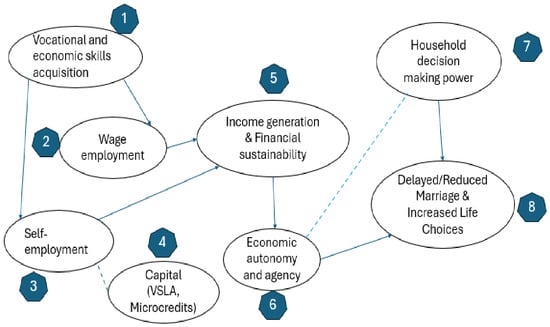
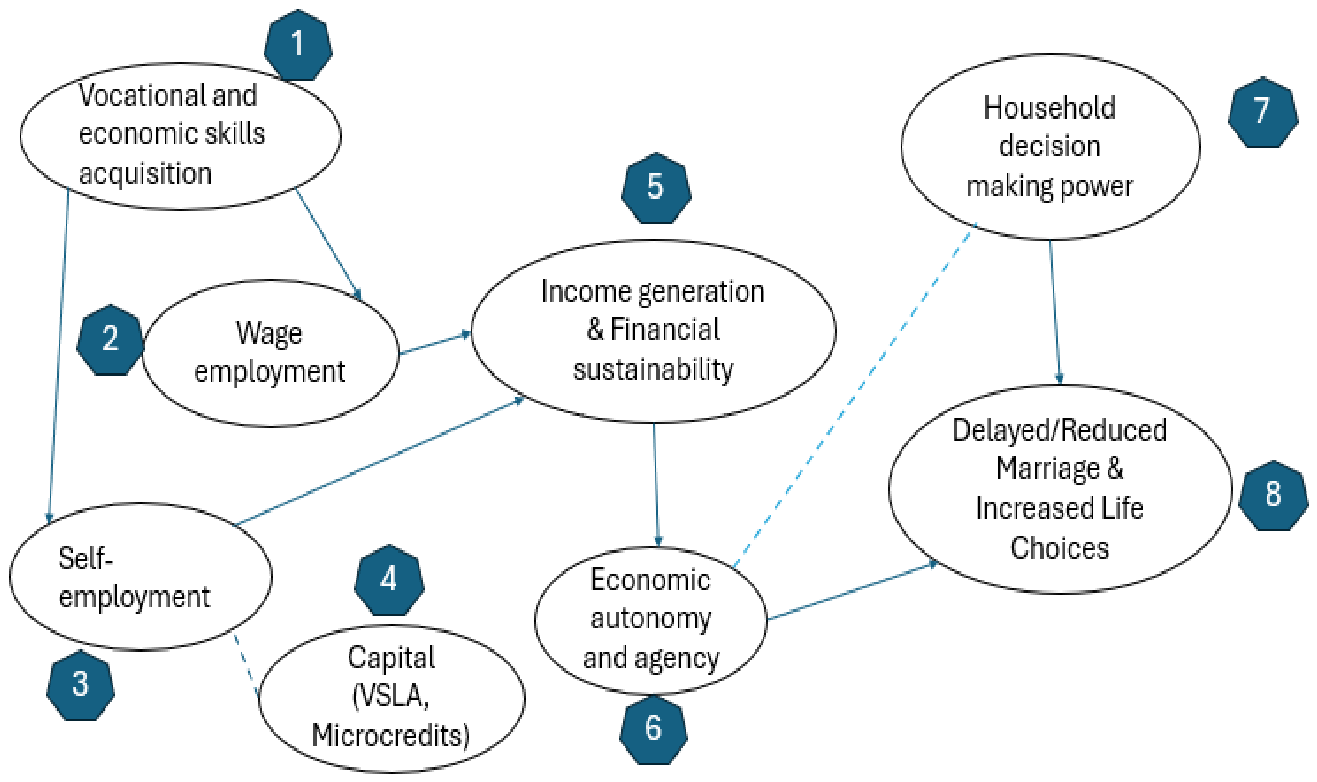
The Girls Get Equal (GGE) project implemented the Skills and Opportunities for Youth Economic Empowerment (SOYEE) framework to address the economic vulnerability of girls and their respective families in the Rukwa region. Although the framework is primarily programmatic in nature, it demonstrates conceptual alignment with well-established theoretical perspectives. Consequently, the SOYEE framework, together with related constructions drawn from broader theoretical perspectives such as human capital, was used to guide the interpretation of the GGE results including the baseline, midline and endline (2025).
SOYEE conceptualizes that strengthened capacities of young people, particularly girls, may take the form of the transfer of technical skills and competencies. The framework emphasizes practical skills development, market-relevant training, mentorship, and the creation of an enabling environment to facilitate meaningful youth participation in economic activities. These skills are critical for youth seeking wage employment as well as for those determined to establish and manage their own enterprises, as they enhance employability, entrepreneurial competence, and long-term economic sustainability (Knox et al., 2025).
However, for girls and young women emerging from economically vulnerable and unstable contexts, training alone is often insufficient. In this regard, community-based savings and loan groups play a critical role in facilitating credit. Such platforms enhance access to small-scale capital and contribute to improved financial stability.
Even modest financial resources can strengthen young women’s economic autonomy, foster independent decision-making and expand life choices, including the ability to delay marriage or early pregnancy (Ambler et al., 2026). Nonetheless, economic empowerment does not occur in a vacuum. Household and community dynamics significantly shape individual outcomes. Consequently, integrating family-level economic and social support mechanisms is essential to mitigate economic pressures that may otherwise incentivize practices such as early marriage in pursuit of a bride price. For details, see Figure 1.
Figure 1.
Conceptual framework: Girls’ economic skills acquisition, economic autonomy, and increased life choices.
2. Methods and Procedures
2.1. Design and Population
This paper was developed based on the findings of the Girls Get Equal Project (GGE). The GGE project was implemented in the Rukwa region, southern Tanzania between 2020 and 2024. The GGE project covered three districts of Kalambo, Nkasi, and Sumbawanga Rural, where the three districts comprise 36 wards (Kalambo—11 wards, Nkasi—15 wards, and Sumbawanga DC—10 wards). The study used a mixed-method explanatory approach for its case study analysis.
The paper focused on a single project outcome indicator: economic empowerment. This indicator was deliberately chosen due to its significant relevance for out-of-school girls, who tend to be at greater risk of early or forced marriage compared to their peers who continue their education. Again, the indicator was also chosen because it reflects a broader empowerment dimension by expanding girls and their families’ economic choices beyond marriage. Overall, the indicator and its sub-indicators targeted between 1000 and 5000 girls aged 15–24, while the household economic support component aimed to reach about 5000 vulnerable families.
2.2. Sources of Data and Data Collection
This paper was based primarily on secondary project data, particularly the measurement of the selected outcome indicator and its quantitative sub-indicators. These included, among others, the proportion of girls engaged in different skills, employment and self-employment status, access to capital, and the extent to which economically supported families expressed views that either supported or discouraged child, early, and forced marriage (CEFM). These data were drawn mainly from the Girls Get Equal (GGE) project’s summarized logical framework produced at the end of the project cycle in 2024.
Since the data were derived from routine project monitoring and consolidated reports, the analysis was primarily descriptive, focusing on program performance and observed outcomes rather than attributing causality to program interventions. In addition, the aggregated structure of the indicators constrained opportunities for independent statistical validation at the beneficiary level and limited the ability to assess longitudinal changes or conduct comparison-group analysis over time. In addition, the study benefited from seventeen key informant interviews that had been collected during the endline evaluation in August 2025. Participants included local government officials, school administrators, matrons/patrons, staff, and trainers. Key informants were selected through purposive role-based sampling. The discussions focused on lived experiences and perceptions around youth employability, household financial resilience, and how economic empowerment initiatives are understood in relation to child, early, and forced marriage. Bringing together routine program indicators with these key informant interviews allowed triangulation across data sources. In addition, this approach strengthened the interpretation by situating observed quantitative patterns within locally grounded explanations from implementers and community actors.
2.3. Data Analysis
The analysis of outcome indicators was primarily descriptive, as the data available were largely aggregated. Consequently, results were mainly presented as percentages. In addition, the findings were visualized using line graphs in some cases to illustrate trends over time, and in other instances to enable comparisons across demographic groups, such as male and female participants, or actual achievements against planned targets. Where graphical presentation was not necessary, the results were also presented in tabular form to facilitate clear interpretation and reporting.
Consistent with Braun and Clarke’s (2006) six-phase thematic analysis framework, the qualitative analysis involved familiarization with the data, generation of initial codes, review and refinement of codes, development and naming of themes, and integration of themes into the final narrative. From a quantitative data perspective, the data were systematically extracted, organized, and tabulated to enable structured analysis.
2.4. Integration of Data
Data integration was undertaken at the discussion stage, where outcome indicators from the quantitative results served primarily as a reference point for interpreting the findings, while qualitative evidence provided the explanatory depth behind the observed patterns. In this process, qualitative data assumed a more prominent role, as they offered richer and more flexible insights that could be explored and interpreted in relation to the quantitative trends. Unlike the quantitative indicators, which mainly reflected measurable outcomes, the qualitative findings helped to unpack the underlying experiences, perceptions, and contextual factors shaping those results.
3. Results
This section presents both the quantitative and qualitative findings, essentially beginning with the quantitative results and followed by the corresponding qualitative insights. The findings focused on three key areas: the transition of acquired skills into employment or entrepreneurial activities, the sustainability of income generated from these activities, and lastly, the economic agency of young women and its relationship with patterns of early marriage.
3.1. Skills Transitions into Employment and Enterprising
Project monitoring reports indicate that by 2024, a total of 2792 youth had received vocational training across different trades from various vocational training institutions (see Table 1). Overall, females constituted the majority of trainees, accounting for 1605 (57.5%) compared to 1187 males (42.5%). However, this aggregate pattern masks substantial variation across trades. Female participation was overwhelmingly concentrated in tailoring, where 1447 out of 1564 trainees (92.5%) were women. In contrast, their participation was less dominant in trades such as carpentry, electricity, masonry, motor vehicle mechanics, and welding.
Table 1.
Distribution of vocational trainees by sector and sex.
Moreover, monitoring data showed that by the end of the intervention period, over 93% of trained youth were either employed or running their own income-generating activities. Within the project logframe, employment means sustained economic activity and a regular income, rather than strictly formal sector placement. This broader framing captures transitions into apprenticeships and self-employment supported through training outputs and post-training linkage mechanisms. Performance outcomes exceeded the 70% intervention target by more than 20% points. Similarly, eight in ten youth with disabilities had secured employment. Therefore, the results point to strong uptake into program-linked economic activities across both formal employment and informal self-employment pathways. However, they should be understood as measures of youth participation in income-generating work rather than as indicators of job quality, earnings stability, or longer-term employment sustainability.
Claims of improved employment outcomes were also consistently echoed across the interviews. For instance, a project partner reiterated:
“Now they’ve acquired skills; some are tailors, others are self-employed electricians, and one even works with TANESCO. They were provided with everything they needed, including tools and equipment.”(Community Radio Staff, Nkasi)
Those who did not pursue formal employment pathways but instead engaged in self-employment perceived benefits that extended beyond income and purely economic gains:
“My life has changed since joining the course. Now I can make clothes and earn an income which makes me feel very happy. I am proud of my work and enjoy being my own boss. It has changed my life; from the way I look to the way I think.”[SOYEE Graduate girl, Sumbawanga district]
However, another respondent acknowledged that although economic improvements had been observed, the extent of change varied among beneficiaries. As one trainer explained:
“As a trainer of some of these beneficiaries, I have observed economic changes. Though they differ from one individual to another. Some acquire the skills but lack motivation, while others are goal-oriented and demonstrate clear transformation.”(Tailor and Trainer, Sumbawanga DC)
The role of local trainers in sustaining and extending the project’s training model became evident at this stage. As one trainer reflected:
“These students can also become trainers; I have no objection to that. Even when they face challenges, they return to seeking guidance. Many of them aspire to mentor others one day and to experience that sense of accomplishment themselves.”[Tailor, Female Kalambo]
One of the change agents cautioned against the practice of covering operational costs for duty bearers through project resources. In his view, this is a potential loophole that diverts attention and resources away from direct beneficiaries. He explains:
“If we target 30 youth, then those 30 should be the main beneficiaries. But often you find that leaders, such as head teachers, politicians, and others, end up using those opportunities, even though they were not the intended recipients.”[Community Radio Staff, Nkasi]
3.2. Income Stability and Household Contribution
Table 2 demonstrates that by the end of the project in 2024, a total of 1310 young people had sustained over USD 60, equivalent to TZS 150,000 per month, representing approximately 77% of the overall project target (1705). Of these beneficiaries, 769 were vulnerable young women and adolescent girls, accounting for about 59% of all participants who sustained income and 75% of the female target (1023). In contrast, 541 male beneficiaries achieved sustained income, representing approximately 79% of their target (682). A particularly notable trend emerged among youth with disabilities. All 15 targeted female participants with disabilities successfully established income-generating activities, indicating a 100% achievement rate.
Table 2.
Number of youths sustaining USD 60, or TZS 150,000–160,000 between 2021 and 2024.
Regarding girls with disabilities, the reported proportion, when assessed against the established targets and documented achievements, indicates that the target of 15 was attained.
The outcome indicators presented above are corroborated by the participants’ lived experiences and narrative accounts. For example, the most explicit articulation of income emerged from the beneficiary perspective. A female tailor, from Nkasi district, linked earning to self-sustenance:
“When a girl learns a skill like sewing, even if she gets married, she cannot just sit and wait for the husband to provide everything. She can make clothes, sell them, and earn her own income. If there is any misunderstanding in the marriage, she is not completely helpless because she can manage herself.”
This narrative reflects a growing pattern of economic resilience, where vocational skills are not only a source of subsistence income but also a practical safety net. The key effect lies in having an independent way to generate income, which can matter during periods of household stress or marital instability. Beyond securing income for subsistence and potentially reducing their dependence on parents and male partners, this account extends the narrative toward structured micro-enterprise development:
“Now I have my own office. I didn’t have this before. I sew properly, I have customers who bring materials, and sometimes I buy fabrics myself, sew clothes, and sell them. The money I get helps me buy more materials and continue working.”[Beneficiary, Tailor, Girl]
This narrative indicates the reinvestment of earnings into productive inputs. The decision to channel income back into fabric and materials suggests an emergent working capital cycle, albeit at a small scale. From an economic standpoint, this indicates a partial transition from purely subsistence-oriented activity toward a gradual process of micro-capital formation, where income is partially retained for further production continuity. This shift suggests a gradual redefinition of the boundary between survival-oriented livelihood strategies and incremental enterprise formation.
3.3. Capital Accessibility as a Pathway to Business Growth
Project results demonstrate that by 2024, more than 3500 young people had gained access to capital to support the establishment or expansion of their enterprises. In absolute terms, females constituted the most beneficiaries, representing over 55% of those reached.
However, a closer examination against planned targets revealed a more nuanced picture. Women achieved approximately 61% of their projected target, while male beneficiaries surpassed expectations, reaching over 119% of their intended target. A comparable pattern emerged among youth with disabilities. Marginalized female participants in this category recorded an achievement rate of below 50%, in contrast to roughly 60% among their male counterparts.
Moreover, efforts to sustain capital included the establishment and strengthening of savings and credit associations. However, by project closure, only 35% of the intended target had been achieved, indicating that this component did not fully meet expectations. As one beneficiary further suggests, the operationalization of such systems requires time and sustained commitment, yet many participants lack the patience necessary to allow these structures to mature and stabilize,
“Yes, they trained us on how to lend small loans among ourselves. They provided us with savings boxes and record books and showed us how to manage the group with transparency and accountability. We were then officially registered through the local council. After about two or three years, we saw an announcement from the district council regarding loan opportunities. We were well prepared, met all the requirements, filled in the necessary forms, and were granted a loan of 33 million Tanzanian shillings. We were initially 14 members, but due to various challenges, we have since remained only five.”
According to the Community Development Officer responsible for social development groups in Sumbawanga DC, the performance of Plan International-supported economic groups appeared to reflect both institutional stability and creditworthiness. He argued that these groups had become procedurally mature and financially reliable, making them well-positioned to access larger loans. He further noted that their consistent monthly repayment performance had opened opportunities for them to seek loans exceeding TZS 10,000,000 for investment in more tangible and sustainable projects.
3.4. Households Economic Support and Stance Against Girls’ Early Marriages
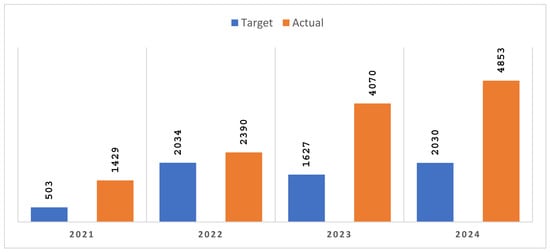
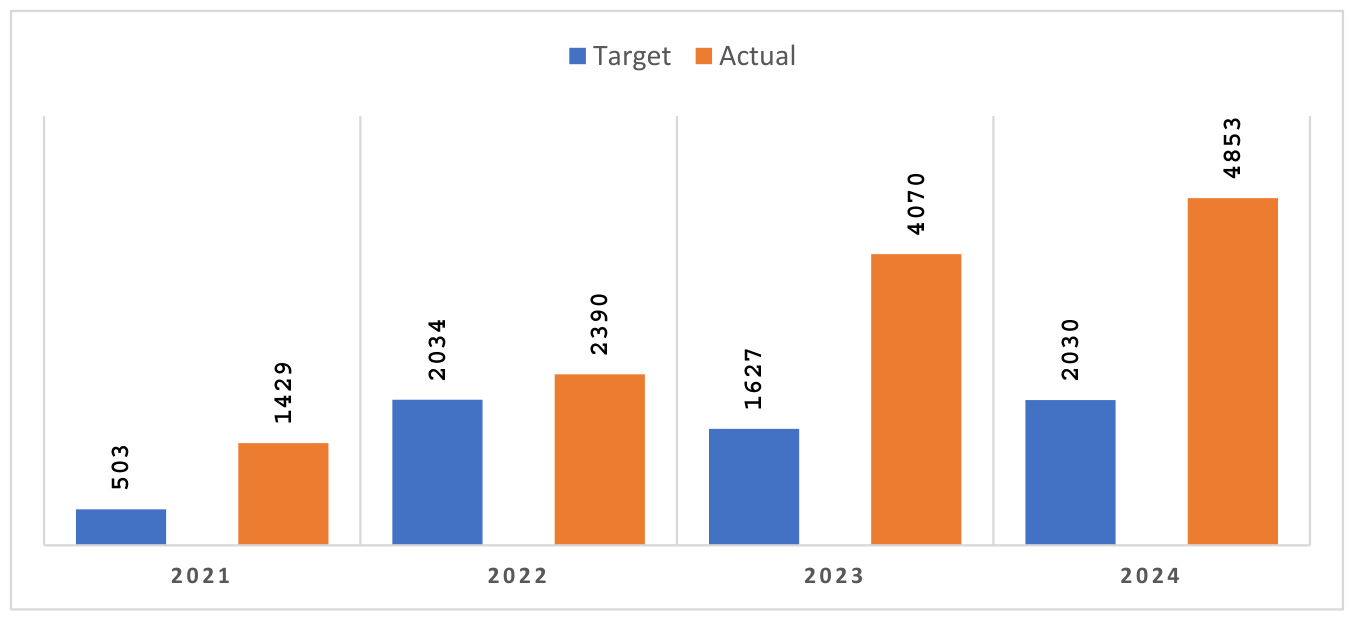
Figure 2 shows that by the end of the project, more than 4800 economically vulnerable households out of the targeted 5000 had received economic support, representing approximately 96% coverage. The support ranged from entrepreneurial training to business education. Moreover, the project demonstrated a steady increase in the number of vulnerable families receiving economic support, first rising from 1429 in 2021 to 2390 in 2022 (+67.2%), 4070 in 2023 (+70.3%), and 4853 in 2024 (+19.2%). Overall, this represents an increase of 239.6% between 2021 and 2024. By 2024, the project had reached 4853 families against an intervention target of 2030, or more than double the intended level.
Figure 2.
Families economically supported between 2021–2024.
The qualitative findings complement the quantitative results by further clarifying the nature of the support provided. As one VSLA representative from Sumbawanga district explained:
“Through the savings groups, many parents are now able to support their children’s education. Before, some families would marry off their daughters because of poverty, but now that they can access loans and improve their income.”[VSLA Representative, Sumbawanga district]
Parents and other organized groups were provided with loans to enhance their household livelihoods. As the Community Development Officer emphasized:
“The goal is to raise them economically so that their children are not left behind in education. These loans have greatly helped in preventing girls from entering early marriages or pregnancies due to economic hardship.”[District Community Development Officer]
3.5. The Role of Economic Empowerment on Early Marriage Reduction
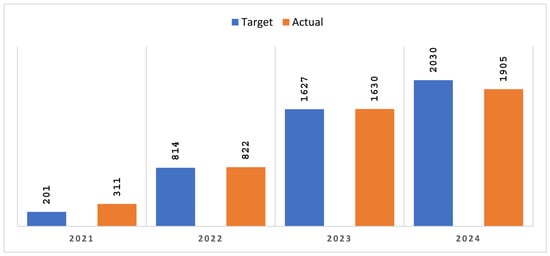
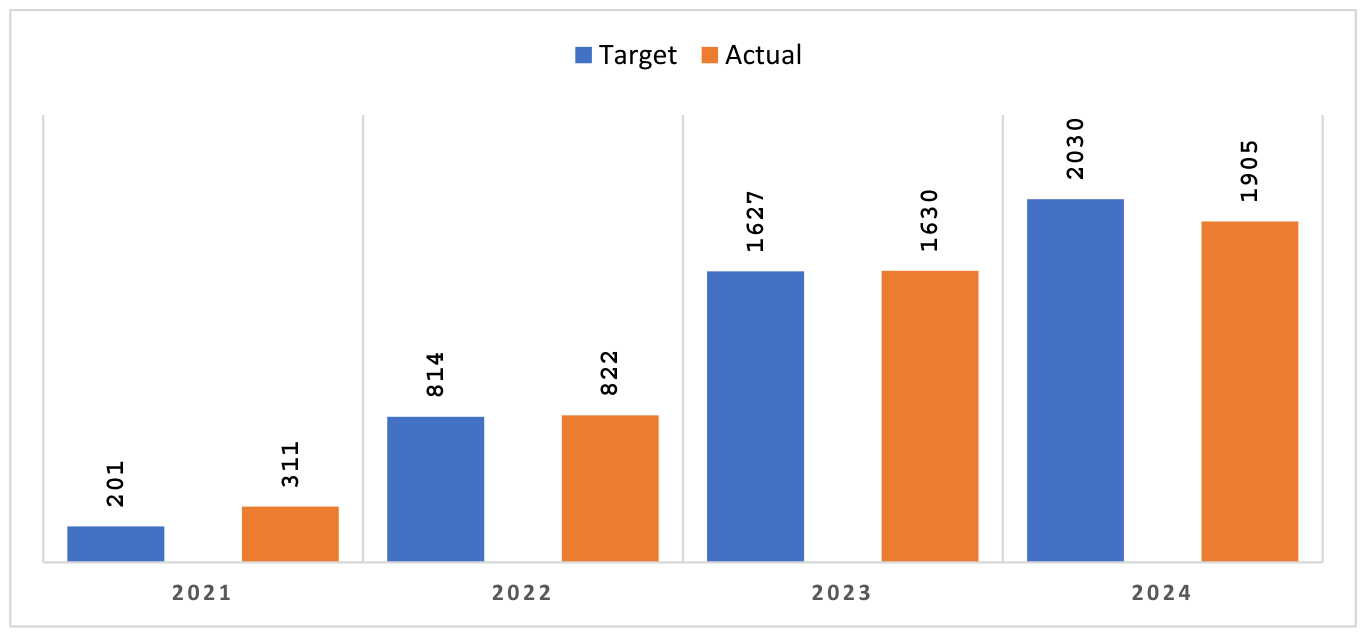
Figure 3 shows a marked increase in the number of parents choosing not to marry their daughters between 2021 and 2024, representing an overall rise of 512.5%. The figure increased from 311 in 2021 to 822 in 2022 (+164.3%), then to 1630 in 2023 (+98.3%), and 1905 in 2024 (+16.9%). Overall, this equated to 93.8% of its target, and 1905 parents out of the projected 2030.
Figure 3.
Families against marrying off their daughters (2021–2024).
The observed trend likely reflects the cumulative effect of project interventions, including community awareness sessions, engagement with local leaders, and girls’ skills development. However, this result may not be attributed solely to project activities. Other contextual variables, such as evolving community norms, increased access to girls’ education, or parallel government and civil society initiatives operating in the same districts, may also have contributed to shifting parental attitudes. This does not undermine the scale of the change, but it does suggest that the project was operating within and perhaps reinforcing a wider social environment already moving in the same direction. Disentangling the project’s specific contribution from these concurrent influences remains an important consideration for any causal interpretation of these results.
More compelling, however, is a case in which economic investment directly influenced a marriage decision:
“One girl came from a village to train here. After one and a half months, she was called and told to go and get married. She refused and said she wanted to complete her training first. Although her father insisted, but eventually she stood firm, completed her training, and now she is a good tailor with her own work.”[Tailoring MasterCraft, Nkasi]
Reflecting on the role of vocational mentorship in preventing early marriage and related vulnerabilities, one trainer emphasized the broader social impact of their work:
“Although we were not well paid, the achievements have been substantial. First, many of my students completed their training and are now self-employed. None from my group became pregnant, unlike what happened among some other trainers’ groups. Some of the students have since married and are now working in tailoring or running small businesses. I also devoted my time to guiding them on life matters, values, self-awareness, and personal growth, so that they would develop the motivation to continue learning.”[Master Craft, Sumbawanga Rural]
In addition to enhancing basic income, engagement in structured vocational activities has reduced unproductive time, fostering routine, responsibility, and purposeful participation in economic life.
“Before the project, we were just roaming around without any work. Now at least we earn some money that helps us meet basic needs such as soap, exercise books, or even food. It is a very big difference from how life used to be.”[Tailor & Beneficiary, Nkasi town]
Across districts, stakeholders who work directly with school-going children, including teachers, reported a noticeable reduction in early marriage cases, providing qualitative evidence of progress:
“Previously, there were many cases, but after the training, things have improved. We’ve seen a significant drop in teenage pregnancies, by more than 50%.”[School Patron, Nkasi]
This quantified comparison (“more than 50%”) suggests that stakeholders perceive not merely a marginal decline, but a substantial shift in trend. The reduction is attributed directly to training and awareness efforts, implying a behavioral transformation among both students and parents.
This pattern is reinforced by another Nkasi respondent who situated the decline within active school, parent collaboration mechanisms,
“We have followed up cases and worked closely with parents to make sure girls attend trainings instead of being married off.”[School Matron, Nkasi]
A similar narrative emerged in Kalambo district, suggesting cross-district consistency rather than localized improvement. The framing, however, shifts slightly from reduction to delay and prevention:
“This project has really helped delay and prevent child marriages among our students. In the past, early marriages were more common, but now students are more determined to continue with school. We see fewer cases, and there is more awareness both among students and parents.”[School Patron, Kalambo]
Whether these shifts will be sustained over time remains uncertain. Longer-term follow-up studies would be necessary to assess continuity. Again, continued engagement of government actors and religious leaders, who were trained and worked closely with the project, may be critical in reinforcing and institutionalizing emerging norms within the community. As one tailoring trainee from Nkasi explained:
“To reduce early marriages, our trainers should continue encouraging, educating, and guiding us. Even though we’ve been trained, others haven’t. We need to guide and teach them so we can all help end early marriages.”[Tailoring Trainee, Nkasi]
4. Discussion
4.1. Employment and Self-Employment Outcomes
The beneficiary testimonies provide insight into how key inputs within the SOYEE model, particularly vocational training, may facilitate participants’ entry into economic activities. The narrative highlights several key dimensions. Firstly, it demonstrates the acquisition of tangible skills, enabling income generation, a direct outcome of vocational training aligned with local market needs. Secondly, the emphasis on emotional fulfilment and autonomy reflects enhanced self-efficacy and entrepreneurial agency, both of which are central to empowerment theory (Psaki et al., 2021; Pastory & Mushi, 2022). From the policy perspective, the testimonial validates the intervention’s holistic design, which synergizes vocational skills training with pathways to self-employment (Tripney et al., 2013; Shi & Bangpan, 2017). Scaling up the adoption of models including the SOYEE offers a viable strategy for reducing youth unemployment by prioritizing tailored enterprises that demand low initial capital outlay. This is where the practical value of capital opportunities generated through the participants’ own savings becomes evident within the SOYEE framework. Young women completing vocational training are often regarded as unbankable by formal financial institutions because they lack collateral, credit histories, and other lending requirements. Therefore, self-financed savings mechanisms can provide an accessible source of start-up and working capital, while supporting the gradual expansion of income-generating activities within informal markets (Pastory & Mushi, 2022). However, the extent to which these outcomes are scalable across heterogeneous settings remains uncertain and would require more systematic empirical evidence to establish with confidence.
The findings demonstrating participants’ access to employment following vocational training in public institutions provide empirical support for the formal-sector integration pathway proposed in the SOYEE program model. This further suggests that the program’s skill-development package is aligned with the local labor market demands (Beber et al., 2025). These findings resonate with assumptions that human capital development in vocational training yields positive economic returns when paired with enabling productive assets and capital endowments (Tripney et al., 2013; Talento et al., 2022). However, the relatively low employment rate reflects a wider labor-market challenge in Tanzania and East Africa, where the growth of formal employment remains slow and is consistently outpaced by the expansion of informal employment (National Bureau of Statistics, United Republic of Tanzania, 2025).
In policy terms, the findings support integrating vocational training with mentoring and psychosocial support to improve employment outcomes (Nkhoma et al., 2020). Furthermore, the narrative revealed the emergence of a train-the-trainer mechanism, whereby skilled beneficiaries transition into program perpetuators, fostering a self-reinforcing cycle of knowledge transfer and institutional resilience. This dynamic not only demonstrates the effective transmission of technical competencies, but also the development of a relational support ecosystem in which continuous mentorship and peer support help sustain the long-term retention and practical application of acquired skills (Beber et al., 2025).
4.2. Income Sustainability
The evidence from this project case study suggests the emergence of reinvestment practices, whereby revenue is reinjected into productive activities. Such circulation of capital reflects early-stage enterprise consolidation and the potential for business diversification, signaling a sustained business income. Over time, this may contribute to risk mitigation by distributing economic exposure across multiple income-generating activities. As noted by Barrett et al. (2022), this works as it helps to distribute economic exposures across varying livelihood exposures.
Moreover, the testimonies illustrate the transition from employment or self-employment to sustained income within the SOYEE framework. Firstly, it outlines the distinct causal pathways linking skills acquisition to economic autonomy. For example, sewing proficiency enables the production of marketable goods (clothing), thereby promoting entrepreneurship and income diversification. Additionally, this mechanism might strengthen household financial resilience and reduces vulnerability to shocks by enhancing economic autonomy, consistent with the principles of the sustainable livelihoods framework (Tabares et al., 2022). Secondly, the testimonies indicate empowerment dynamics at the intersection of economic and social domains. Rejecting reliance on a spouse’s financial support suggests how acquired skills challenge entrenched patriarchal norms, enhancing women’s bargaining power within the household and communities (Fawole et al., 2026).
There is also a clear trajectory of entrepreneurial maturation, suggesting a causal link from skills acquisition to business formalization. For example, sewing attracts a steady client base, enabling the reinvestment of revenue into inventory and infrastructure. This self-reinforcing cycle enhances financial independence, business acumen, and resilience against economic volatility. This suggests a shift from traditional economic dependence toward greater self-reliance, consistent with previous studies, as participants establish dedicated workspaces and independently procure materials (Leerlooijer et al., 2013; Fawole et al., 2026).
Moreover, project outcomes appear to have persisted beyond the formal implementation period, particularly among women beneficiaries. Similar studies indicate that improved access to income and other economic resources may strengthen women’s autonomy and decision-making within household structures (Ambler et al., 2026). However, the time span between the endline evaluation and the subsequent impact assessment was relatively short. Moreover, these achievements should be interpreted with caution, as the long-term sustainability of the observed outcomes cannot yet be conclusively established. Avoiding attempts to draw conclusions on full impact is highly emphasized (OECD, 2024).
4.3. Capital Accessibility for Enterprise Development
The monitoring indicators and testimonies vividly portray the evolution of long-term group-based lending, echoing social capital theory (Nafukho et al., 2004). It traces a direct causal pathway from practical training to institutional strengths. Additionally, the provision of practical tools and transparent governance facilitates formal registration and preparedness for loan acquisition, thereby initiating a self-reinforcing cycle that strengthens collective financial resilience and expands access to broader economic opportunities. The testimony is consistent with the findings of Shi and Bangpan (2017), who reported that participation in vocational education and intervention training affected social capital, including bonding, aspirations, and bridging social relationships. Moreover, the narrative underscores the group’s resilience amid challenges, contracting from 14 to 5 members, yet achieving substantial success. This underscores the interplay of solidarity and perseverance, paralleling patterns in empowerment programs that catalyze institutional progress, funding successes such as grants, and community enhancements.
Moreover, this account not only reflects institutional maturation, but also access to formal credit facilities beyond the lifespan of the project. Qualification for external loans signals continuity of the project’s initiative and suggests the potential for multiplier economic effects within the community, including the creation of new employment opportunities. However, the experience equally illustrates that sustainability in community-based financial groups is shaped by more than capital availability alone. It is contingent upon internal governance, member cohesion, leadership stability, and broader contextual factors that influence group resilience over time.
This shortfall may partly reflect the limited dedication and resilience among members. In some cases, when VSLAs are externally initiated by donors, they risk fostering a degree of dependency (Gikuri & Sanka, 2018) as they tend to run counter to the foundational principles of microfinance as a self-driven and member-owned financial mechanism.
4.4. Effect of Economic Agency on Reduced Pressures on Early Marriage
Skills training in diverse livelihood areas appears to have created pathways to employment and self-employment, findings resonating with studies on the African continent (Feyissa et al., 2023). This enhanced economic positioning may have strengthened their bargaining power in household and social decision-making, including decisions related to marriage timing. The findings on the reduction in early marriage may reflect broader national trends. First, national data show a decline in teenage marriage from 37% to 29%. This pattern is further evidenced by a gradual increase in the mean age at first marriage in key areas, indicating a shift toward later entry into marriage. In districts such as Sumbawanga, the mean age at first marriage, at 22.7 years, is above the national average of 20.3 years (Tanzania National Bureau of Statistics, 2022). In a historically marginalized region such as Rukwa, such progress suggests that targeted interventions are yielding results. However, these changes should still be understood alongside broader improvements in education, community awareness, and the policy environment.
The narrative indicates that resisting paternal pressure merely after a month and a half of training yet persevering to completion reflects emergent self-assurance from vocational skill acquisition. This in turn cultivates enduring economic resilience via tailoring expertise and entrepreneurial self-employment. Furthermore, this testimony illustrates how vocational training can support girls in resisting cultural norms while attempting to build an independent livelihood. The young girl’s journey from rural vulnerability to tailoring proficiency shows how skills building intervention can strengthen self-efficacy, giving her the confidence to resist paternal pressure and pursue tailoring as a craft-based enterprise. This finding aligns with evidence that interventions targeting girls’ well-being can improve adolescent decision-making and contribute to shifting social norms, including delays in early marriage and improved welfare outcomes (Kohli et al., 2021).
Moreover, the growing number of parents openly opposing child marriage and expressing unwillingness to marry their daughters at an early age may partly indicate improved economic security (Feyissa et al., 2023). First, such interventions appear to have contributed to stabilizing household livelihoods by promoting the diversification of income-generating activities. Stable livelihoods reduce the tendency among parents to view girls as immediate and low-cost economic assets. With improved household income, families are better able to provide food, education, and other basic needs for their children, which in turn enhances the perceived value of girls within the household. This is also reflected in the apparent decline in school dropout associated with pregnancy.
However, these achievements are unlikely to have been realized through a single intervention alone, i.e., economic empowerment. Therefore, these findings underscore the adoption of an integrated gender-transformative approach that addresses behavioral change, transforms restrictive social norms, and strengthens system-level support.
5. Conclusions and Recommendations
This study suggests that structured economic empowerment interventions can function as both livelihood strategies and protective mechanisms against early marriage. Evidence from the GGE project in Rukwa indicates that vocational skills training, apprenticeship placement, and access to capital strengthened girls’ income stability and enhanced their decision-making autonomy to challenge harmful cultural norms, particularly early marriage. As economic vulnerability appeared to decline among participating households, the incentive for families to marry off daughters as a coping strategy also seemed to weaken. However, the extent to which this relationship is causal, rather than associative, cannot be established from project-level data alone. While the study findings are noteworthy, they should be best understood as suggestive rather than conclusive. The findings highlight the need to integrate vocational training more effectively within national policies and strategies aimed at preventing violence against girls and child marriage. Beyond expanding access to vocational training, greater emphasis should be placed on strengthening the economic resilience of adolescent girls and young women through market-driven livelihood interventions. In particular, savings and loan associations should be designed as demand-driven initiatives that respond to local market opportunities and changing economic conditions, rather than following uniform implementation models.
From a practical perspective, partner and grassroots organizations should complement vocational and financial literacy training with a well-structured mentorship program, business development support, and stronger market linkages to enhance enterprise sustainability and long-term economic outcomes. Such integrated approaches are more likely to enable girls and young women to translate acquired skills into viable and sustainable livelihoods.
However, the findings should be interpreted with caution. This study was primarily observational, and therefore cannot establish a causal relationship between the interventions and the observed reduction in child or teenage marriage. Future research should adopt more robust longitudinal and comparative study designs to assess the long-term effectiveness of integrated economic empowerment interventions. In addition, cost-effectiveness analyses would provide valuable evidence on the efficiency and scalability of such interventions, thereby informing policy decisions and resource allocation.
Author Contributions
Conceptualization, A.G.N., A.M., A.K., G.J.B., V.U.M., J.V., P.P. and M.B.S.; methodology, A.G.N., V.U.M., M.B.S. and P.P.; software, A.G.N. and M.B.S.; validation, A.G.N.; formal analysis, A.G.N. and M.B.S.; investigation, A.G.N., M.B.S. and P.P.; resources, V.U.M., A.M., G.J.B. and A.K.; data curation, A.G.N. and M.B.S.; writing—original draft preparation, A.G.N. and M.B.S.; writing-review and editing, A.G.N., A.M., V.U.M., J.V. and M.B.S.; visualization, A.G.N.; supervision, A.G.N.; project administration, P.P.; funding acquisition, A.G.N. and P.P. All authors have read and agreed to the published version of the manuscript.
Funding
This study was conducted under the Girls Get Equal project, funded by NORAD under grant/project number TZA100248.
Institutional Review Board Statement
The study was conducted in accordance with the Declaration of Helsinki, and approved by Tanzania’s National Bureau of Statistics (protocol code AB 323/01 “R”/150 on 22 May 2025).
Informed Consent Statement
Informed consent was obtained from all subjects involved in the study.
Data Availability Statement
The data used in this study are client-owned and are not publicly available. Access to the data may be requested from Plan International, subject to organisational approval.
Conflicts of Interest
The authors declare no conflict of interest.
References
- Adoho, F., Chakravarty, S., Korkoyah, D. T., Lundberg, M. K., & Tasneem, A. (2014). The impact of an adolescent girls employment program: The EPAG project in Liberia. The World Bank. [Google Scholar] [CrossRef] [Scilit]
- African Union. (2003). Protocol to the African charter on human and peoples’ rights on the rights of women in Africa. Adopted by the 2nd ordinary session of the assembly of the union, maputo, mozambique, 11 July 2003; entered into force 25 November 2005. African Union. Available online: https://au.int/en/treaties/protocol-african-charter-human-and-peoples-rights-rights-women-africa (accessed on 16 March 2026).
- African Union Commission. (2015). Agenda 2063: The Africa we want. Available online: https://www.afdb.org/fileadmin/uploads/afdb/Documents/Policy-Documents/Agenda2063_Popular_Version_English.pdf (accessed on 2 November 2024).
- Ahinkorah, B. O., Budu, E., Seidu, A.-A., Bolarinwa, O. A., Agbaglo, E., Adu, C., Arthur-Holmes, F., Samad, N., & Yaya, S. (2022a). Girl child marriage and its association with maternal healthcare services utilization in sub-Saharan Africa. BMC Health Services Research, 22(1), 777. [Google Scholar] [CrossRef] [Scilit] [PubMed]
- Ahinkorah, B. O., Onayemi, O. M., Seidu, A. A., Awopegba, O. E., & Ajayi, A. I. (2022b). Association between girl-child marriage and intimate partner violence in Sub-Saharan Africa: Insights from a multicountry analysis of demographic and health surveys. Journal of Interpersonal Violence, 37(15–16), NP13560–NP13580. [Google Scholar] [CrossRef] [Scilit] [PubMed]
- Alinsato, A. S., & Houssou, K. P. (2026). Informal institutions in Sub-Saharan Africa: Is teenage marriage an obstacle to stronger economic growth? Discover Sustainability, 7(1), 9. [Google Scholar] [CrossRef] [Scilit]
- Aluga, D., & Okolie, E. A. (2021). Socioeconomic determinants of teenage pregnancy and early motherhood in the United Kingdom: A perspective. Health Promotion Perspectives, 11(4), 426–429. [Google Scholar] [CrossRef] [Scilit] [PubMed]
- Ambler, K., Jones, K. M., & O’Sullivan, M. (2026). Increasing women’s empowerment: Evaluating two interventions in Uganda. Journal of Development Economics, 178, 103575. [Google Scholar] [CrossRef] [Scilit]
- Anania, P., & Gikuri, A. (2015, November 8–10). Saccos and members’ expectations: Factors affecting saccos capacity to meet members’ expectations. Co-Operative Research Workshop, Paris, France. [Google Scholar]
- Barrett, C. B., Reardon, T., Swinnen, J., & Zilberman, D. (2022). Agri-food value chain revolutions in low- and middle-income countries. Journal of Economic Literature, 60(4), 1316–1377. [Google Scholar] [CrossRef] [Scilit]
- Beber, B., Lakemann, T., Schnars, R., & Lay, J. (2025). Employment effects of skills trainings in Sub-Saharan Africa: A systematic review of recent randomized controlled trials. De Economist, 173(1), 87–120. [Google Scholar] [CrossRef] [Scilit]
- Braun, V., & Clarke, V. (2006). Using thematic analysis in psychology. Qualitative Research in Psychology, 3(2), 77–101. [Google Scholar] [CrossRef] [Scilit]
- Burgess, R. A., Jeffery, M., Odero, S. A., Rose-Clarke, K., & Devakumar, D. (2022). Overlooked and unaddressed: A narrative review of mental health consequences of child marriages. PLoS Global Public Health, 2(1), e0000131. [Google Scholar] [CrossRef] [Scilit] [PubMed]
- Chilisa, B. (2002). National policies on pregnancy in education systems in Sub-Saharan Africa: The case of Botswana. Gender and Education, 14(1), 21–35. [Google Scholar] [CrossRef] [Scilit]
- Chinkondenji, P. (2025). ‘Having a child is not a barrier:’ An African-feminist perspective in (un)making schooling for pregnant learners and re-integration of student mothers. Compare: A Journal of Comparative and International Education, 56(1), 106–124. [Google Scholar] [CrossRef] [Scilit]
- Fan, S., & Koski, A. (2022). The health consequences of child marriage: A systematic review of the evidence. BMC Public Health, 22(1), 309. [Google Scholar] [CrossRef] [Scilit] [PubMed]
- Fawole, O. I., Okedare, O. O., Salawu, M. M., Kiene, S. M., Lundgren, R., Frost, E., Atsbeha, T., Lin, C.-D., & Reed, E. (2026). Evaluation of Girls Invest, an economic empowerment intervention to address social and economic risks associated with intimate partner violence among adolescent girls in Ibadan, Nigeria. BMC Women’s Health, 26(1), 187. [Google Scholar] [CrossRef] [Scilit] [PubMed]
- Feyissa, G. T., Tolu, L. B., Soboka, M., & Ezeh, A. (2023). Effectiveness of interventions to reduce child marriage and teen pregnancy in sub-Saharan Africa: A systematic review of quantitative evidence. Frontiers in Reproductive Health, 5, 1105390. [Google Scholar] [CrossRef] [Scilit] [PubMed]
- Gikuri, A., & Sanka, M. (2018). Status of Saccos growth before and during JK billion fund in Tanzania mainland. International Journal of Community and Cooperative Studies, 6(2), 8–18. [Google Scholar]
- Hailu, B. A., & Beyene, J. (2025). Adolescent marriage, maternity, and limited access to education in 106 countries: Bayesian analysis of prevalence, trend, and prediction. Scientific Reports, 15(1), 9584. [Google Scholar] [CrossRef] [Scilit] [PubMed]
- Han, Q., Ye, W., Fang, Z., Eagling-Peche, S., Wang, Y., Zheng, B., & Lachman, J. (2025). Prevalence of intimate partner violence among child marriage victims and the comparison with adult marriages: A systematic review and meta-analysis. eClinicalMedicine, 81, 103084. [Google Scholar] [CrossRef] [Scilit] [PubMed]
- Indira, F. N., Luseba, G. N., Tesfaye, E., & Tallen, P. K. (2023). Towards a world with no child marriage: Four countries pledge action. The Lancet, 401(10378), 712–713. [Google Scholar] [CrossRef] [Scilit] [PubMed]
- International Labour Organization. (2022). Global employment trends for youth 2022: Investing in transforming futures for young people. Available online: https://www.ilo.org/publications/major-publications/global-employment-trends-youth-2022-investing-transforming-futures-young (accessed on 26 February 2026).
- Kabeer, N., & Waddington, H. (2015). Economic impacts of conditional cash transfer program: A systematic review and meta-analysis. Journal of Development Effectiveness, 7(3), 290–303. [Google Scholar] [CrossRef] [Scilit]
- Kalamar, A. M., Lee-Rife, S., & Hindin, M. J. (2016). Interventions to prevent child marriage among young people in low- and middle-income countries: A Systematic review of the published and gray literature. Journal of Adolescent Health, 59(3), S16–S21. [Google Scholar] [CrossRef] [Scilit] [PubMed]
- Kenya National Bureau of Statistics & ICF Macro. (2023). Kenya demographic and health survey 2022. Kenya National Bureau of Statistics (KNBS).
- Khan, M. N., Khanam, S. J., Khan, M. M. A., Billah, M. A., & Akter, S. (2024). Exploring the impact of perceived early marriage on women’s education and employment in Bangladesh through a mixed-methods study. Scientific Reports, 14(1), 21683. [Google Scholar] [CrossRef] [Scilit] [PubMed]
- Knox, S., Gok, A., Aydogdu, E., Carter, S., Levie, J., & Shaw, E. (2025). Empowering women’s entrepreneurship: An evidence synthesis of policy and practice in developing countries. Entrepreneurship & Regional Development, 38(3–4), 410–434. [Google Scholar] [CrossRef] [Scilit]
- Kohli, A., Shaw, B., Guntzberger, M., Aubel, J., Coulibaly, M., & Igras, S. (2021). Transforming social norms to improve girl-child health and well-being: A realist evaluation of the girls’ holistic development program in rural Senegal. Reproductive Health, 18(1), 243. [Google Scholar] [CrossRef] [Scilit] [PubMed]
- Leerlooijer, J. N., Bos, A. E., Ruiter, R. A., Van Reeuwijk, M. A., Rijsdijk, L. E., Nshakira, N., & Kok, G. (2013). Qualitative evaluation of the teenage mothers project in Uganda: A community-based empowerment intervention for unmarried teenage mothers. BMC Public Health, 13(1), 816. [Google Scholar] [CrossRef] [Scilit] [PubMed]
- Nafukho, F. M., Hairston, N. R., & Brooks, K. (2004). Human capital theory: Implications for human resource development. Human Resource Development International, 7(4), 545–551. [Google Scholar] [CrossRef] [Scilit]
- Nalaila, S., & Massawe, H. (2026). From policy to practice: Inclusion, exclusion, and the gendered realities of school re-entry program for teenage mothers in Tanzania. International Journal of Adolescence and Youth, 31(1), 2614426. [Google Scholar] [CrossRef] [Scilit]
- National Bureau of Statistics, United Republic of Tanzania. (2025). 2024 Integrated Labour Force Survey (ILFS): Key findings report. NBS.
- National Institute of Statistics of Rwanda. (2020). Rwanda demographic and health survey 2019–20. Ministry of Health.
- Ninsiima, B. J. (2018). Factors affecting youth participation in savings and credit cooperative societies (SACCOS) activities among selected SACCOS in Kiruhura district, Western Uganda. Uganda Management Institute. Available online: https://umispace.umi.ac.ug/items/0f023bf5-4c25-4d04-87a5-3639f2688e2d (accessed on 13 March 2026).
- Nkhoma, D. E., Lin, C.-P., Katengeza, H. L., Soko, C. J., Estinfort, W., Wang, Y.-C., Juan, S.-H., Jian, W.-S., & Iqbal, U. (2020). Girls’ empowerment and adolescent pregnancy: A systematic review. International Journal of Environmental Research and Public Health, 17(5), 1664. [Google Scholar] [CrossRef] [Scilit] [PubMed]
- OECD. (2024). Effective results frameworks for sustainable development. OECD Publishing. [Google Scholar] [CrossRef] [Scilit]
- Pastory, M., & Mushi, P. S. D. (2022). Vocational Education Training (VET) skills demanded by informal sector for self-employment in Tanzania: Views of the stakeholders in Morogoro region, Tanzania. East African Journal of Education Studies, 5(3), 63–72. [Google Scholar] [CrossRef] [Scilit]
- Psaki, S. R., Melnikas, A. J., Haque, E., Saul, G., Misunas, C., Patel, S. K., Ngo, T., & Amin, S. (2021). What are the drivers of child marriage? A conceptual framework to guide policies and programs. Journal of Adolescent Health, 69(6), S13–S22. [Google Scholar] [CrossRef] [Scilit] [PubMed]
- Sarwar, F., & Khan, R. E. A. (2021). Factors contributing towards women employability: An impact assessment of a women skill development training program. Review of Economics and Development Studies, 7(3), 417–431. [Google Scholar] [CrossRef] [Scilit]
- Shi, Y., & Bangpan, M. (2017). Young people’s participation experiences of technical and vocational education and training interventions in low- and middle-income countries: A systematic review of qualitative evidence. Empirical Research in Vocational Education and Training, 9(1), 8. [Google Scholar] [CrossRef] [Scilit]
- Soler-Hampejsek, E., Kangwana, B., Austrian, K., Amin, S., & Psaki, S. R. (2021). Education, child marriage, and work outcomes among young people in rural Malawi. Journal of Adolescent Health, 69(6), S57–S64. [Google Scholar] [CrossRef] [Scilit] [PubMed]
- Tabares, A., Londoño-Pineda, A., Cano, J. A., & Gómez-Montoya, R. (2022). Rural entrepreneurship: An analysis of current and emerging issues from the sustainable livelihood framework. Economies, 10(6), 142. [Google Scholar] [CrossRef] [Scilit]
- Talento, M. S. D. P., Tandang, N. A., Rogelio, R. A. O., & Araña-Roldan, R. A. S. (2022). Factors influencing employment of female graduates of technical and vocational education and training program in the Philippines. Philippine Journal of Science, 151(3), 1171–1184. [Google Scholar] [CrossRef] [Scilit]
- Tanzania National Bureau of Statistics. (2022). Tanzania demographicand health survey and malaria indicator survey 2022 final report. Ministry of Health. Available online: https://www.nbs.go.tz/nbs/takwimu/dhs/Tanzania_DHS-MIS_2022_Final_Report.pdf (accessed on 26 February 2026).
- Tauseef, S., & Sufian, F. D. (2024). The causal effect of early marriage on women’s bargaining power: Evidence from Bangladesh. World Bank Economic Review, 38(3), 598–624. [Google Scholar] [CrossRef] [Scilit]
- Tripney, J., Hombrados, J., Newman, M., Hovish, K., Brown, C., Steinka-Fry, K., & Wilkey, E. (2013). Technical and Vocational Education and Training (TVET) Interventions to improve the employability and employment of young people in low- and middle-income countries: A systematic review. Campbell Systematic Reviews, 9(1), 1–171. [Google Scholar] [CrossRef] [Scilit]
- Uganda Bureau of Statistics (UBOS). (2023). Uganda demographic and health survey 2022. Uganda Bureau of Statistics. Available online: https://www.ubos.org/wp-content/uploads/publications/UDHS-2022-Report.pdf (accessed on 10 March 2026).
- UNICEF. (2023). Is an end to child marriage within reach? Latest trends and future prospects 2023 update. UNICEF. Available online: https://data.unicef.org/resources/is-an-end-to-child-marriage-within-reach/ (accessed on 8 March 2026).
- UNICEF. (2024). Child marriage. UNICEF. Available online: https://data.unicef.org/topic/child-protection/child-marriage/ (accessed on 10 March 2026).
- UNICEF. (2025). Percentage of women aged 15–24 married, child marriage database. UNICEF. Available online: https://data.unicef.org/resources/dataset/child-marriage/ (accessed on 13 February 2026).
- United Nations. (1979). Convention on the elimination of all forms of discrimination against women. United Nations. Available online: https://www.ohchr.org/sites/default/files/Documents/ProfessionalInterest/cedaw.pdf (accessed on 21 February 2026).
- United Nations. (1993). Declaration on the elimination of violence against women. United Nations. Available online: https://documents.un.org/doc/resolution/gen/nr0/711/88/img/nr071188.pdf (accessed on 22 February 2026).
- United Nations. (1995). Beijing declaration and platform for action. United Nations. Available online: https://www.un.org/womenwatch/daw/beijing/pdf/BDPfA E.pdf (accessed on 22 February 2026).
- United Nations. (2022). The sustainable development goals report 2022. United Nations. Available online: https://unstats.un.org/sdgs/report/2022/The-Sustainable-Development-Goals-Report-2022.pdf (accessed on 2 March 2026).
- URT. (2024). The national plan of action to end violence against women and children (NPA-VAWC II) 2024/25–2028/29. Government of the United Republic of Tanzania. Available online: https://jamii.go.tz/uploads/documents/sw-1739175592-NPA-VAWC-II.24.25.pdf (accessed on 12 March 2026).
- URT & ILO. (2024). Promoting equal opportunity and elimination of discrimination at workplaces: A guide to employers. Government of the United Republic of Tanzania. Available online: https://www.kazi.go.tz/uploads/documents/en-1758864920-GUIDELINE%20FOR%20EMPLOYMENT%20POLICY(PROMOTING%20EQUAL%20OPPORTUNITY%20)(1).pdf (accessed on 9 March 2026).
- Yaya, S., Odusina, E. K., & Bishwajit, G. (2019). Prevalence of child marriage and its impact on fertility outcomes in 34 sub-Saharan African countries. BMC International Health and Human Rights, 19(1), 33. [Google Scholar] [CrossRef] [Scilit] [PubMed]

Disclaimer/Publisher’s Note: The statements, opinions and data contained in all publications are solely those of the individual author(s) and contributor(s) and not of MDPI and/or the editor(s). MDPI and/or the editor(s) disclaim responsibility for any injury to people or property resulting from any ideas, methods, instructions or products referred to in the content. |
© 2026 by the authors. Licensee MDPI, Basel, Switzerland. This article is an open access article distributed under the terms and conditions of the Creative Commons Attribution (CC BY) license.