


Abstract
This study employs a qualitative narrative inquiry to explore how support systems and industry engagement influence youth employability and entrepreneurial aspirations within South Africa’s TVET sector. The central research question examines how young people’s personal stories reveal the impact of systemic barriers and support mechanisms on their identity construction, resilience, and agency. Using in-depth interviews and focus groups with 24 purposively sampled youth across Gauteng’s TVET colleges, the analysis combines thematic and narrative approaches to uncover recurring patterns and narrative structures. Participants ranged in age from 18 to 30, with a balanced gender distribution, representing various socio-economic backgrounds and career interests, selected through purposive sampling to ensure data richness and saturation. The analysis integrated thematic and narrative approaches, with a detailed coding process, theme development, and measures to mitigate bias through member checking and peer debriefing. Findings indicate that experiential learning, mentorship, family encouragement, and industry connections serve as critical support mechanisms that shape youth perceptions of opportunity and self-efficacy. Conversely, systemic barriers such as resource limitations and skills mismatches are frequently narrated as obstacles constraining pathways to employment and entrepreneurship. The study concludes that integrating youth narratives into policy development can foster more inclusive and effective strategies for youth empowerment. These insights contribute to the literature on youth employment by highlighting the active role of storytelling in identity negotiation and social critique within socio-economic contexts.
1. Introduction
Youth unemployment in South Africa remains a persistent challenge with complex socio-economic dimensions (Demana et al., 2025). Despite policy efforts positioning TVET as a strategic pathway for skills development and economic participation, many youths face systemic barriers such as resource constraints, skill mismatches, and weak industry links (Majola, 2025; Moloto et al., 2025). Prior research emphasises structural issues but offers limited exploration of how young people personally experience and interpret these challenges through their own stories. Understanding these personal narratives is crucial because they reveal how youth make sense of their circumstances and mobilise their resilience. These stories also shape their perceptions of possibility and influence their decisions to pursue employment or entrepreneurship.
Furthermore, storytelling serves as a tool for social critique and envisioning alternative futures. This study aims to address this gap by exploring how youth construct their narratives around their educational journeys, support systems, and engagement with industry and how these stories influence their perceptions of employability and entrepreneurship. In doing so, the research seeks to provide nuanced insights into the socio-emotional dimensions of youth empowerment and the role of support mechanisms and industry engagement in shaping their futures within the South African TVET landscape.
1.1. Background to the Study
In South Africa, youth unemployment remains alarmingly high, with estimates of about 44.6% (Statistics South Africa [Stats SA], 2022). The government has prioritised Technical and Vocational Education and Training (TVET) as a strategic approach to develop relevant skills and stimulate economic participation. Despite increased enrolment, many graduates face barriers such as outdated curricula, limited practical exposure, and weak links with industry. These systemic issues hinder the transition from training to employment, leaving many youths disillusioned and unemployed. Additionally, a significant number of youths lack entrepreneurial skills or access to the resources needed to establish their own businesses. Research shows that the mismatch between TVET training programmes and labour market demands contributes to persistent youth unemployment (Moloto et al., 2025), while socio-economic inequalities and resource constraints further limit opportunities for youth empowerment. Previous studies highlight the importance of understanding young people’s perceptions and lived experiences to improve the relevance and effectiveness of TVET programmes.
This study focuses on Gauteng because it is South Africa’s economic hub, characterised by a high concentration of industries, businesses, and TVET colleges, as well as greater opportunities for work-integrated learning, employment, and entrepreneurship than many other provinces. Gauteng also attracts large numbers of young people from across the country seeking education and employment, making it an appropriate setting for exploring how TVET influences employability and entrepreneurial development. However, Gauteng’s relatively advanced infrastructure, stronger industrial base, and broader employment opportunities distinguish it from provinces with more rural economies and fewer institutional and industry resources. Consequently, while the findings provide valuable insights into youth experiences within a major economic centre, they should be interpreted in light of regional differences in labour market conditions, industry partnerships, and access to support systems across South Africa.
1.2. Statement of the Problem
Despite policy commitments to leverage TVET for youth empowerment, high levels of unemployment and underemployment persist. The skills provided often do not align with labour market needs, and systemic barriers such as resource scarcity, inadequate practical training, and limited industry engagement impede youth progress. The lack of detailed understanding of youth perceptions and their personal narratives limits the effectiveness of current interventions. Without capturing these stories, policies risk being disconnected from youth realities. This study seeks to explore how youth in Gauteng perceive and narrate their experiences with TVET, support systems, and industry engagement to better inform policy and practice.
1.3. Research Questions
- How do youth perceive and experience TVET programs in relation to their employment and entrepreneurial goals?
- What stories emerge from their journeys through skills acquisition, industry engagement, and support networks?
1.4. Theoretical Framework
This study employs a narrative theory framework that guides the entire research process, from data collection to analysis. Drawing on the idea that storytelling is a fundamental way through which individuals make sense of their experiences and construct their identities, the framework emphasises this perspective (Turner, 2025). During data collection, the narrative approach shaped interview protocols by prioritising participants’ stories, focusing on their experiences, turning points, and meaning-making processes. In the coding phase, the framework structured analysis around identifying narrative structures, motifs, and moments of transformation, allowing for a nuanced understanding of how youth interpret systemic barriers, support mechanisms, and aspirations within the context of TVET in South Africa. Turner highlights that stories are active constructs that both reflect and shape social reality, which this study leverages to explore how youth re-author their identities and aspirations amid socio-economic challenges. Within the South African TVET landscape, this application of narrative theory advances the framework by illustrating how marginalised youth actively re-author their stories of resilience, failure, and aspiration amidst systemic challenges. It demonstrates that storytelling functions as a dynamic social practice that influences empowerment, agency, and entrepreneurial identity, especially in environments characterised by structural inequality. This contextualised use of narrative theory contributes to scholarship by showing how socio-cultural and economic factors shape storytelling processes and identity construction among youth in TVET programmes, thereby enriching the understanding of storytelling as a tool for social transformation and youth empowerment in contexts of inequality (Turner, 2025).
2. Research Methodology
2.1. Research Approach and Design
A qualitative narrative inquiry was employed to explore detailed personal stories of youth enrolled in TVET programmes across Gauteng. This approach facilitates capturing the emotional, cultural, and contextual dimensions of youth experiences, aligning with the study’s focus on identity construction and social critique (Lim, 2025). Narrative inquiry was chosen because the study sought to understand not only what participants experienced but also how they interpreted, organised, and gave meaning to those experiences over time through storytelling (Clandinin, 2022). Unlike phenomenology, which primarily explores the essence of lived experience, or grounded theory, which seeks to generate explanatory theory, narrative inquiry is particularly suited to examining how individuals construct identities, negotiate agency, and make sense of changing life circumstances within broader social and institutional contexts. This made narrative inquiry the most appropriate methodological framework for investigating how TVET graduates re-author their educational and employment journeys while responding to systemic barriers and support structures. The approach enabled participants to recount significant life events, educational journeys, and career aspirations while revealing how support systems and systemic barriers influenced their identity construction, resilience, and agency. The study followed a systematic methodological process beginning with the development of a narrative inquiry research design and semi-structured interview and focus group guides informed by the study objectives and relevant literature. Participants were subsequently recruited through purposive sampling, with the assistance of college coordinators, to identify information-rich cases that met the inclusion criteria. Data were then collected through individual interviews, focus group discussions, observation notes, and document review to capture diverse perspectives and enhance data triangulation. Following data collection, all audio recordings were transcribed verbatim and analysed using an integrated thematic and narrative analysis involving data familiarisation, coding, theme development, and interpretation of participants’ narratives. Throughout the study, methodological rigour was maintained through member checking, peer debriefing, and triangulation. Ethical principles of informed consent, confidentiality, anonymity, and voluntary participation were observed to ensure the credibility and trustworthiness of the findings (Almusaed et al., 2025). Given the relational nature of narrative inquiry, particular attention was also paid to ethical issues surrounding participant representation and researcher–participant power dynamics. Participants were afforded opportunities during member checking to review and clarify their narratives, ensuring that their experiences were represented accurately and respectfully while minimising the risk of researcher misinterpretation. The researcher further adopted a reflexive stance throughout the research process by critically examining personal assumptions, maintaining reflexive field notes, and remaining sensitive to the unequal power relations that can emerge during narrative interviews. These strategies promoted collaborative knowledge production, respected participants’ ownership of their stories, and strengthened the ethical integrity of the narrative inquiry.
2.2. Sample
A purposive sample of 24 participants was selected from four different TVET campuses to ensure diversity in gender, age, field of study, and entrepreneurial aspirations. Participants ranged in age from 18 to 30, with a balanced gender distribution, representing various socio-economic backgrounds and career interests. Inclusion criteria focused on active engagement in TVET programs, interest in entrepreneurship, and experience of systemic barriers, ensuring relevance. Participants were recruited via college coordinators, and ethical protocols, including informed consent, confidentiality, and voluntary participation, were strictly followed. The sample size aligns with qualitative standards aiming for depth and data saturation (Braun & Clarke, 2023). The sample size is consistent with existing qualitative narrative studies focusing on socio-economic and educational experiences (Dube-Addae, 2019).
2.3. Data Collection
Data were collected using multiple qualitative techniques to capture both individual experiences and shared perspectives. The primary methods included semi-structured individual interviews and focus group discussions, supplemented by observation notes and document analysis to strengthen data triangulation. The data collection process followed four stages. First, college coordinators facilitated access to potential participants by distributing participant information sheets and invitation letters to eligible students. Interested students confirmed to the researcher directly, after which the study was explained in detail and written informed consent was obtained. Second, semi-structured individual interviews were conducted in private, neutral venues within participating TVET colleges to provide a comfortable environment for open discussion. Interviews lasted approximately 60–90 min and followed an interview guide consisting of open-ended questions exploring participants’ educational experiences, support systems, industry exposure, employability challenges, entrepreneurial aspirations, and perceptions of systemic barriers. Follow-up probing questions were used to encourage participants to elaborate on significant life events and critical turning points in their narratives. Third, focus group discussions were conducted after the individual interviews to explore shared experiences and collective reflections among participants. Each focus group included 6 and lasted approximately 90 min. The discussions encouraged participants to compare experiences, reflect on common challenges, and discuss the role of institutional support, family encouragement, mentorship, and industry engagement in shaping their career aspirations. Fourth, observational field notes were recorded throughout the data collection process to document contextual information, participant interactions, non-verbal communication, and reflections that complemented the interview data. Relevant institutional documents, including TVET curricula, entrepreneurship support materials, and assessment reports, were also reviewed to provide contextual understanding and corroborate participants’ narratives. All interviews and focus group discussions were audio-recorded with participants’ permission and transcribed verbatim immediately after data collection. Transcripts were reviewed alongside field notes to ensure completeness and accuracy before analysis commenced. To enhance the credibility of the findings, participants were provided opportunities to verify the accuracy of their interview transcripts and clarify any ambiguous statements during the member-checking process (McKim, 2023).
2.4. Data Analysis
The data analysis combined thematic and narrative analysis techniques in a complementary and sequential manner. Thematic analysis served as the primary analytical strategy by systematically identifying recurrent patterns, categories, and meanings across participants’ accounts through open coding, axial coding, and theme refinement (Braun & Clarke, 2023). The resulting themes—including resilience, systemic barriers, mentorship, and industry engagement—provided a coherent framework for organising the data. Narrative analysis was subsequently applied to deepen interpretation by examining how participants structured their stories, constructed identities, described turning points, and attributed meaning to their experiences over time. Rather than functioning as independent analyses, the two approaches were integrated, with thematic analysis identifying common patterns across narratives and narrative analysis explaining how those patterns were expressed through participants’ individual stories and identity constructions. Coding and data management were supported by qualitative analysis software (NVivo 12), which facilitated systematic organisation and retrieval of the data. This integrated analytical framework enabled both cross-case comparisons and in-depth interpretation of individual narratives, providing a comprehensive understanding of how youth construct their experiences of employability and entrepreneurship within the TVET context. To ensure trustworthiness, member checking and peer debriefing were employed throughout the analytical process.
2.4.1. Bias Mitigation
Reflexivity journals and peer validation sessions were maintained to reduce subjectivity. Member checking involved sharing preliminary themes with participants for validation, ensuring authenticity and credibility.
2.4.2. Limitations of the Study
The study’s scope is limited to Gauteng and a purposive sample, which may not fully capture the diversity of youth experiences across South Africa. Future research should include broader geographical contexts and larger samples.
3. Discussion and Findings
3.1. Resilience and Motivation in Skill Acquisition
The narratives under the theme of “Resilience and Motivation in Skills Acquisition” reveal a profound engagement with the inner dynamics that sustain youth perseverance in TVET programmes, which are critical pathways toward enhancing youth employability and fostering entrepreneurship in South Africa. Participants’ stories reveal resilience as an active, narrative-driven process rooted in personal goals and social support. FP1’s reflection, “Even when the skills were hard to grasp, I kept pushing because I believed in my future,” exemplifies a narrative of hope and future-orientated motivation, aligning with narrative theory’s emphasis on storytelling as a means of constructing identity and purpose (Bradbury, 2026). FP1’s story of perseverance highlights how family and internal motivation reinforce resilience. Her mention of family support and self-determination highlights how external and internal narratives intertwine to reinforce resilience, which is vital for youth facing challenges in acquiring vocational skills necessary for employability and entrepreneurship in South Africa (Majola, 2024). Her story underscores that perseverance in TVET is closely linked to developing a resilient mindset capable of overcoming systemic barriers to skills development. Analytically, FP1’s narrative demonstrates that resilience is not merely an individual psychological attribute, but a socially constructed process mediated through family support and future-orientated identity formation. Rather than depicting perseverance as a personal characteristic, her account suggests that employability aspirations are sustained through relational networks that reinforce confidence and purpose. This finding indicates that youth resilience is embedded within broader social contexts, where external affirmation becomes integral to maintaining commitment to skills acquisition despite structural constraints. Consequently, resilience emerges as both a personal and collective resource that enables participants to negotiate uncertainty while sustaining long-term career aspirations.
Similarly, MP10’s account highlights the role of a shared social narrative—“Seeing others succeed also pushed me to stay resilient”—which exemplifies how social validation and communal stories of success bolster individual perseverance. MP10’s account of communal success stories underscores the importance of social validation. This social aspect of resilience is especially relevant in South Africa, where community and peer support motivate youth to finish vocational training and pursue entrepreneurship despite economic challenges. Shared stories of success motivate others, highlighting collective resilience (Baldry et al., 2019). His recounting of financial struggles coupled with internal motivation “I reminded myself why I started” aligns with the narrative notion that individuals reframe adversity within a larger story of perseverance and achievement (Payi, 2024), which is fundamental for fostering employability and entrepreneurial resilience. Beyond describing peer encouragement, MP10’s narrative illustrates how resilience is socially reproduced through collective experiences and observational learning. His account suggests that witnessing the success of others creates a shared sense of possibility that challenges narratives of inevitable unemployment. This implies that employability is influenced not only by individual competence but also by exposure to positive social role models that reshape perceptions of attainable futures. The findings therefore position peer success as an important mechanism through which resilience is reinforced and entrepreneurial confidence is cultivated. FP6’s narrative emphasises resilience as a “stepping stone”, framing challenges as integral to the journey toward personal dreams of opening a salon—an entrepreneurial aspiration. Her passion-driven motivation exemplifies how personal stories of aspiration shape resilience as a process of meaning-making (Adderley, 2026), which is essential for youth aiming to translate skills acquired in TVET into sustainable livelihoods and small business ventures. Her framing of obstacles as growth opportunities aligns with the goal of promoting entrepreneurial mindsets within skills development programmes. From an analytical perspective, FP6’s narrative shifts resilience from coping with adversity to actively transforming challenges into opportunities for entrepreneurial development. Her story demonstrates that vocational learning acquires meaning when participants connect acquired skills with clearly envisioned future enterprises. This suggests that entrepreneurial aspirations function as motivational frameworks that help participants reinterpret barriers as temporary rather than permanent obstacles. Consequently, resilience becomes closely associated with entrepreneurial identity construction rather than simply persistence within educational programmes.
MP7’s reflection introduces the element of internal dialogue—“I kept reminding myself why I started”—which is central to narrative theory’s focus on self-narratives that sustain coherence through difficulties. Internal dialogues, such as “I reminded myself why I started,” sustain perseverance and self-efficacy (Borg, 2020). His view that resilience involves “pushing past fear and believing I can succeed someday” highlights the storytelling process that constructs a future self-capable of overcoming current struggles, a vital component in fostering self-efficacy for youth striving toward employment or entrepreneurship in South Africa’s competitive economy. Collectively, these stories underscore that resilience in skills acquisition and entrepreneurial development is a dynamic narrative process, where youth actively craft stories of perseverance, drawing on personal ambitions, social support, and internal dialogues. This narrative framework reveals that resilience is not static but a continual re-authoring of identity, which enables youth to see their skills development journey as a pathway toward sustainable employment and entrepreneurial success within South Africa’s TVET landscape (Selane & Odeku, 2024). MP7’s narrative further reveals that self-talk functions as a mechanism for maintaining agency under conditions of uncertainty. Rather than merely reflecting positive thinking, his internal dialogue illustrates an ongoing process of identity negotiation in which participants continually reaffirm their capacity to achieve future goals despite present limitations. This indicates that resilience is sustained through continuous self-reconstruction, enabling youth to resist narratives of failure often associated with unemployment and limited economic opportunities. The finding reinforces the central premise of narrative inquiry that personal stories shape both identity and future action.
These narratives demonstrate that resilience is continually re-authored through storytelling, fostering a forward-looking, agency-driven outlook essential for transitioning into employment or entrepreneurship. Participants’ stories critique systemic neglect, emphasizing the need for policy reforms targeting resource access, practical training, and industry linkage (Majola et al., 2024). They reveal that youth participants continuously reframe their experiences through storytelling, which helps them make sense of challenges and sustain their motivation to improve employability and succeed as entrepreneurs. In this way, resilience emerges not just as a trait but as an active, ongoing narrative act—an empowering process of re-authoring their journey toward economic self-sufficiency and community development within the TVET landscape.
3.2. Systemic Barriers to Employment and Entrepreneurship
Narratives frequently depict systemic failures—such as resource scarcity, skills gaps, and limited industry absorption—as major obstacles among the youth participants, which can be critically analysed through the lens of narrative theory. Participants’ stories are laden with recurring motifs of systemic failure, resource scarcity, and personal agency constrained by structural limitations. MP9’s reflection, “The industry is not enough to absorb all the graduates, so many of us remain unemployed,” encapsulates a narrative of oversaturation and institutional inadequacy, positioning the youth as passive victims of a broken system. MP9’s story of oversaturated industries reflects societal narratives of economic marginalisation, which can reinforce feelings of helplessness. This comment aligns with the broader societal stories of economic marginalisation and highlights the importance of aligning TVET programmes with labour market needs to improve employability (Majola et al., 2024). This narrative of systemic failure emphasises that despite skills development efforts, the limited absorption capacity of industries constrains employment opportunities, underscoring the necessity for entrepreneurial skills as alternative pathways (Moleko et al., 2025). Analytically, MP9’s narrative extends beyond describing unemployment to expose a structural disconnect between skills production and labour market absorption. His account suggests that employability is shaped not only by individual competence but also by institutional and economic conditions that determine whether acquired skills can be converted into employment opportunities. This challenges policy assumptions that increasing access to TVET alone will reduce youth unemployment. Instead, the findings indicate that without stronger industry partnerships and expanded labour market opportunities, skills acquisition may produce qualified yet economically excluded graduates (Habiyaremye et al., 2022). Consequently, the narrative reframes unemployment as evidence of systemic inefficiency rather than individual failure.
Similarly, FP5’s account that “Lack of practical exposure made me doubt whether I’m ready for real work” highlights a narrative of self-doubt rooted in systemic gaps in training and experiential learning. This story constructs a barrier between education and employment, resonating with the argument that practical training is crucial for employability. Stories of self-doubt and lack of practical exposure reveal structural gaps between training and employment (Kailo & Njagi, 2025). The gap between education and employment becomes a story of unfulfilled potential, emphasising that TVET must incorporate more hands-on learning to bridge this divide. The feeling of being “stuck”, compounded by the perception that “many job posts are asking for experience I don’t have”, underscores a narrative of structural exclusion that limits youth agency and redefines their identities from hopeful graduates to marginalised job seekers. It also reflects how individual stories of doubt are intertwined with societal narratives that perpetuate limited opportunities, reinforcing feelings of helplessness and emphasising the importance of targeted support systems within TVET frameworks (Majola & Madimabe-Mofokeng, 2025). From an analytical perspective, FP5’s account demonstrates that confidence is socially and institutionally constructed rather than developed solely through classroom learning. Her narrative reveals that the absence of practical workplace exposure undermines professional identity formation, making graduates question the value and applicability of their acquired skills. This suggests that experiential learning functions not only as a mechanism for technical competence but also as a process through which employability identities are validated. The findings therefore imply that strengthening work-integrated learning may simultaneously improve technical readiness and psychological preparedness for labour market participation.
Stories of systemic failure—such as resource scarcity, skills gaps, and limited industry absorption—highlight the systemic challenges faced by youth. Stories of self-doubt and resource constraints (e.g., MP12, FP4) reveal how systemic barriers shape collective identities and perceptions of agency. Participant MP12’s assertion that “Starting a business is difficult without access to finance or mentorship” narrates a story of entrepreneurial aspiration thwarted by resource scarcity and systemic neglect. The phrase “it feels like the system is against us” is emblematic of a victimised narrative, where systemic forces are cast as antagonistic entities. This aligns with narrative theory’s understanding that stories shape perceptions of agency—when systemic barriers dominate, individuals’ stories tend to emphasise helplessness (Turner, 2025). FP4’s narrative further illustrates how repeated experiences of institutional exclusion shape collective perceptions of opportunity and agency among TVET students. Rather than presenting resource shortages as isolated challenges, her account reflects an accumulated pattern of disadvantage that influences how young people evaluate their future prospects. This suggests that persistent structural barriers gradually become incorporated into participants’ identities, potentially reducing entrepreneurial confidence and willingness to pursue self-employment. At the same time, the narrative functions as a form of social critique by exposing institutional shortcomings and advocating for systemic interventions capable of transforming dependency into sustainable economic participation. It also demonstrates how collective storytelling around systemic neglect fosters a shared identity of disempowerment, which can hinder proactive efforts toward entrepreneurship. Furthermore, MP3’s reflection that “I know I have the skills, but the system isn’t helping us succeed as entrepreneurs” underscores a dissonance between personal capacity and systemic failure, framing a narrative of unrealised potential. This dissonance highlights the importance of integrating entrepreneurial training and mentorship into TVET programmes to foster confidence and self-efficacy among youth (Mncwango et al., 2024). It also shows how such narratives serve to reinforce a sense of frustration and alienation, which may impede motivation to pursue entrepreneurial ventures further, emphasising the need for systemic reforms that provide accessible resources and support. Collectively, the narratives of MP12 and MP3 reveal that entrepreneurial intentions are constrained less by a lack of motivation than by deficiencies within the entrepreneurial ecosystem. Their accounts illustrate a significant mismatch between individual agency and institutional support, suggesting that entrepreneurial aspirations cannot be realised through personal determination alone. Rather, access to finance, mentorship, and business networks emerges as a prerequisite for translating vocational skills into viable enterprises. These findings therefore reposition entrepreneurship as a systemic rather than purely individual endeavour, highlighting the importance of supportive institutional environments in enabling entrepreneurial action.
FP4’s statement that “Lack of access to finance, mentorship, and practical experience keeps us from realising our potential” consolidates this theme by depicting systemic barriers as a collective obstacle, reinforcing a narrative of dependency rather than empowerment. This shared story emphasises how structural deficiencies shape collective identities, positioning youth as victims of systemic neglect. It further reveals how such narratives can serve as a form of social critique, calling for policy reforms that prioritise accessible financing, mentorship programmes, and experiential learning opportunities within TVET (Majola et al., 2025). These reforms are essential for transforming stories of dependency into narratives of empowerment and agency, fostering a culture of entrepreneurial resilience.
Collectively, these findings demonstrate that systemic barriers operate not as isolated obstacles but as interconnected structural conditions that shape how participants understand their identities, capabilities, and future opportunities. The narratives reveal that employability and entrepreneurship are negotiated within institutional contexts that either enable or constrain agency, reinforcing the central proposition of narrative inquiry that personal stories are simultaneously accounts of individual experience and critiques of broader social structures. Rather than portraying youth as passive recipients of disadvantage, the narratives expose the dynamic interaction between personal aspiration and systemic limitation, highlighting the need for policy interventions that address structural inequalities while strengthening mechanisms that support youth agency and entrepreneurial development.
3.3. Support Systems and Industry Engagement
Stories of mentorship, industry visits, and family support highlight their role in shaping positive identities and fostering confidence of how social and institutional support structures facilitate youth employability through TVET. These stories emphasise that practical exposure, mentorship, familial encouragement, and industry connections are not merely supplementary but are central to transforming skills development into meaningful employment and entrepreneurial opportunities (Van der Westhuizen, 2024). MP2’s reflection underscores the significance of experiential learning through industry visits and projects, which serve as a bridge between theoretical knowledge and real-world expectations. His statement, “Participating in industry visits and projects gave me real insights that I couldn’t learn in class alone,” exemplifies how narratives of hands-on experiences serve as a form of “knowing” that transcends textbook learning. Such narratives resonate with the narrative theory framework, which posits that individuals construct their identities and understanding of the world through stories grounded in lived experiences (Rachmad, 2025). MP2’s assertion that these experiences “improved my confidence” aligns with the concept that storytelling aids in the internalisation of skills and self-efficacy, crucial for employability. Moreover, his story highlights the importance of experiential learning as a narrative tool that fosters a sense of agency and competence, essential elements in the journey of youth transitioning into the workforce. MP2’s narrative demonstrates that experiential learning functions as more than a pedagogical strategy; it represents a mechanism through which employability identities are constructed and validated (Burton, 2026). His account suggests that confidence develops through direct engagement with authentic workplace environments rather than through classroom instruction alone. This finding indicates that industry exposure enables participants to translate theoretical knowledge into practical competence while simultaneously reshaping their perceptions of professional readiness. Consequently, experiential learning emerges as a critical process through which vocational education acquires relevance within the labour market, strengthening both employability and entrepreneurial preparedness.
Similarly, FP10’s account of mentorship highlights the role of narrative support in shaping entrepreneurial identity. She states, “My trainer introduced me to a mentorship programme, which helped me learn about entrepreneurship and industry trends,” illustrating how mentorship functions as a narrative device that offers guidance, validation, and a sense of belonging (Krishna et al., 2023). Mentorship programs inspire entrepreneurial identity (Saefong, 2025). The phrase “Support networks are key to youth empowerment” encapsulates the collective nature of narrative construction—where individual stories are intertwined with wider social and institutional narratives that foster agency. Additionally, her story demonstrates how mentorship creates a shared narrative of growth and possibility, which encourages youths to see themselves as capable entrepreneurs with a clear pathway to success. This underscores the importance of institutional support in shaping positive entrepreneurial identities through storytelling. Beyond describing the value of mentorship, FP10’s narrative illustrates how mentors act as facilitators of identity transformation by expanding participants’ understanding of what is professionally and entrepreneurially possible. Her account suggests that mentorship provides more than technical guidance; it legitimises entrepreneurial aspirations by offering access to knowledge, networks, and positive role models. This finding implies that entrepreneurial confidence is socially cultivated rather than individually acquired, reinforcing the importance of relational support within TVET programmes. The narrative therefore positions mentorship as an institutional mechanism that bridges the gap between aspiration and opportunity.
The importance of familial and peer support emerges vividly in MP1’s narrative, where “family encouragement and peer support kept me motivated even when I faced setbacks”. Family and peer support serve as social capital, fostering resilience and motivation (Davis, 2025). Here, the stories of collective resilience serve as a narrative anchor, reinforcing the idea that youth empowerment is rooted in social cohesion. These stories function as affirmations of identity, transforming moments of adversity into opportunities for growth, echoing narrative theory’s emphasis on the interpretive and meaning-making aspects of storytelling (Saefong, 2025). Furthermore, MP1’s account illustrates how personal stories of support serve as a form of social capital that sustains motivation and perseverance, which are critical for navigating the uncertainties of youth employment pathways (Davis, 2025). This highlights the interconnectedness of personal and social narratives in constructing a resilient youth identity. MP1’s narrative reveals that family and peer support function as forms of social capital that sustain motivation during periods of uncertainty. Rather than serving only as emotional encouragement, these relationships reinforce participants’ belief in their ability to persist despite educational and economic challenges. This suggests that employability is shaped not only by institutional interventions but also by informal support systems that strengthen resilience and reinforce positive identity formation. The findings therefore highlight the interconnected nature of personal, social, and institutional influences on youth development within the TVET context.
FP2’s reflection on industry attachments and mentorships, “opened my eyes to opportunities I didn’t know existed”, demonstrates how narratives of discovery and possibility are cultivated through experiential learning. These stories motivate youths to see themselves as active agents in the labour market, aligning with the idea that identities are shaped through stories of potential and aspiration (Horne & Majola, 2026). Moreover, this narrative underscores the transformative power of experiential learning in expanding the horizons of young people, allowing them to reframe their future possibilities through stories of newfound opportunities. It also emphasises that such narratives help youth challenge limiting beliefs about their capabilities, fostering a growth-orientated mindset essential for entrepreneurial ventures. FP2’s narrative further demonstrates that industry attachments broaden participants’ perceptions of opportunity by exposing them to career pathways that were previously unknown or perceived as unattainable. Her account indicates that practical engagement with industry challenges existing assumptions about employment and entrepreneurship, encouraging participants to reimagine their future roles within the economy (Madondo, 2025). This suggests that industry engagement contributes to cognitive transformation as much as skills development, enabling youth to develop more ambitious and realistic career aspirations. The findings therefore reinforce the importance of sustained collaboration between TVET institutions and industry partners in facilitating successful school-to-work transitions. Finally, MP9’s declaration, “Connecting with industry professionals gave me a sense of belonging and purpose,” exemplifies how social narratives of community and contribution foster a sense of agency and self-worth. His words emphasise that narratives of belonging are vital for youth empowerment, as they help young people see themselves as part of a larger socio-economic fabric, which is essential for sustained engagement and motivation (Dube-Addae, 2019). Additionally, his story illustrates the role of social storytelling in cultivating a collective identity that motivates continued participation in industry networks and entrepreneurial activities. This reinforces the idea that narratives of community and shared purpose are powerful tools for fostering long-term resilience and active engagement among youth in the labour market (Pantazidis & Pechtelidis, 2025). MP9’s narrative illustrates that a sense of belonging within professional networks strengthens both personal agency and occupational identity. His account suggests that engagement with industry professionals provides symbolic recognition that validates participants as emerging members of their chosen professions. This recognition appears to reduce feelings of exclusion while increasing commitment to long-term career development. The findings therefore indicate that industry engagement serves not only as a source of employment opportunities but also as a mechanism for strengthening professional identity, motivation, and sustained participation in entrepreneurial and labour market activities.
Collectively, these narratives demonstrate that support systems operate as interconnected mechanisms through which participants construct confidence, agency, and professional identity. Rather than functioning as isolated interventions, mentorship, family support, experiential learning, and industry engagement reinforce one another to create enabling environments that facilitate employability and entrepreneurial development. The findings further reveal that youth agency is relationally produced through continuous interactions with supportive individuals and institutions, supporting the narrative inquiry perspective that identities are socially negotiated rather than individually formed. Consequently, effective youth empowerment requires integrated support systems that simultaneously strengthen technical competence, social capital, and access to meaningful industry opportunities, thereby improving the likelihood of successful transitions from education into employment or entrepreneurship. The narratives underscore that storytelling is central to identity construction and social critique, aligning with Turner’s (2025) perspective. They demonstrate that systemic barriers are internalised and narrated as collective challenges, which can hinder proactive efforts unless addressed through supportive policies. Conversely, stories of support foster agency and are crucial for empowerment, underscoring the importance of strengthening support networks. Table 1 below summarises the findings from the study.
Table 1.
Concise table summarising the key findings from the study.
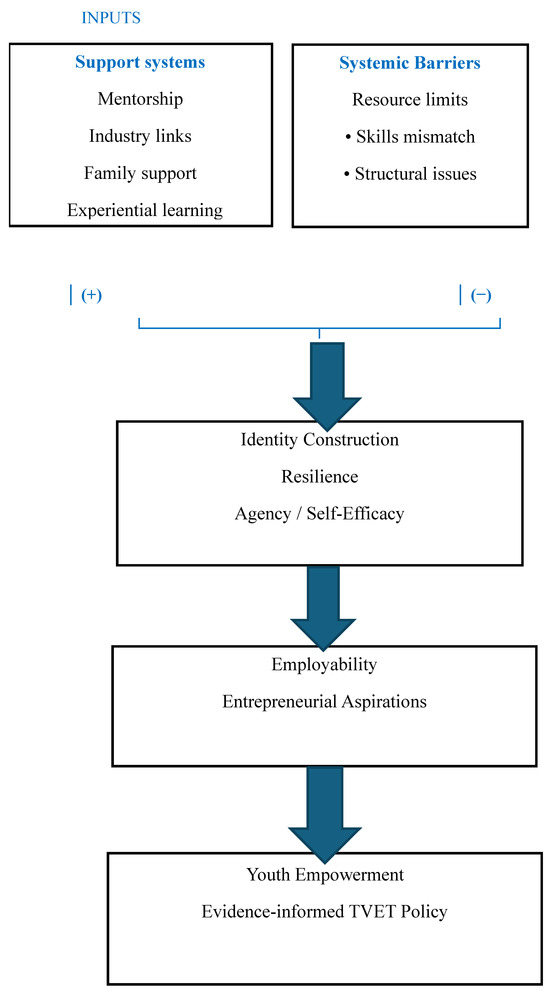
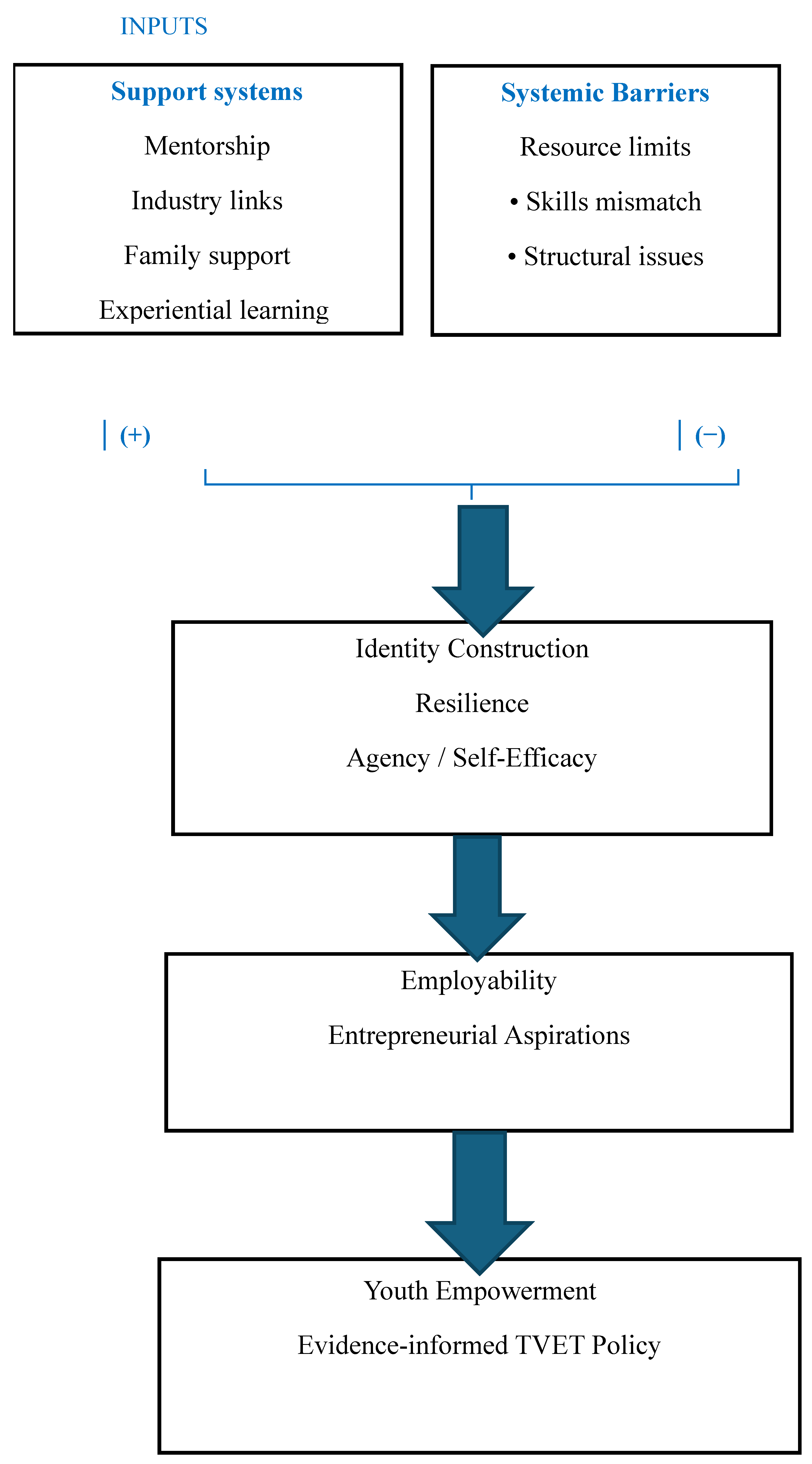
Following the summary presented in Table 1 above, Figure 1 presents the theoretical model underpinning this study. The figure visually integrates the key concepts emerging from the narrative inquiry, demonstrating how support systems and industry engagement, alongside systemic barriers, interact to shape youth identity, resilience, agency, employability, and entrepreneurial aspirations.
Figure 1.
Theoretical model illustrating how support systems and systemic barriers shape youth identity construction, resilience, and agency, thereby influencing employability and entrepreneurial aspirations among TVET students in South Africa. Youth narratives provide the interpretive lens through which these relationships are understood and inform inclusive policy development.
4. Conclusions
This study explored youth employability and entrepreneurship in South Africa’s Technical and Vocational Education and Training (TVET) sector through a narrative inquiry approach, revealing how resilience, systemic barriers, and support systems shape participants’ employment and entrepreneurial journeys. The findings demonstrate that employability The findings reveal that personal agency, institutional support, and broader socio-economic conditions co-construct employability, rather than technical skills alone. through the interaction of personal agency, institutional support, and broader socio-economic conditions rather than through technical skills alone. Participants’ narratives show that resilience is continuously re-authored through storytelling, enabling them to navigate challenges while exposing structural inequalities that constrain opportunities for employment and entrepreneurship. The study also highlights that mentorship, family support, experiential learning, and industry engagement operate as interconnected mechanisms that strengthen employability, entrepreneurial capacity, and professional identity. Empirically, the research contributes rich contextual evidence on how South African TVET graduates interpret and negotiate their transition from education to employment and entrepreneurship within challenging socio-economic environments. Theoretically, the study extends narrative inquiry by demonstrating that storytelling functions as a process of identity construction, agency development, and social critique, supporting the view that personal narratives simultaneously reflect individual experiences and broader structural realities. These findings emphasise the necessity of developing integrated TVET policies that strengthen industry partnerships, practical training opportunities, and holistic support systems that address structural inequalities while fostering youth agency. The study is limited by its focus on a relatively small sample from a specific TVET context, which may restrict the transferability of its findings to other institutions and regions. Future research should include comparative and longitudinal studies across multiple TVET colleges, while also incorporating employers’ perspectives and mixed methods approaches to deepen understanding of youth employability and entrepreneurship. Overall, the study demonstrates that placing young people’s narratives at the centre of TVET policy and practice provides valuable theoretical and empirical insights for developing more inclusive and sustainable pathways to employment, entrepreneurship, and community development.
Funding
This research received no external funding.
Institutional Review Board Statement
The study was conducted in accordance with the Declaration of Helsinki, and approved by University of South Africa Ethics Committee (protocol code 12338 and date of approval: 17 February 2026). Furthermore, consent from principals was obtained, acting as gatekeepers to facilitate access to the participants and the study site. Consent from the participants was sought and given to their involvement, and parents or guardians also consented on behalf of minors or dependent participants. Confidentiality and privacy were strictly maintained throughout the research process, with all data handled with utmost care to protect the identities and personal information of the participants.
Informed Consent Statement
Written informed consent has been obtained from all human subjects involved in this study prior to their participation. Participants were explicitly informed about the purpose of the research, their rights, and the use of their data for publication purposes. Efforts were made to anonymise all data; identifying information was masked or concealed in transcripts and any published material to protect participants’ privacy and confidentiality. No images or photographs of participants were used in the publication.
Data Availability Statement
The original contributions presented in this study are included in the article. Further inquiries can be directed to the corresponding author.
Acknowledgments
I would like to acknowledge all the participants who voluntarily took part in this study.
Conflicts of Interest
The author declares no conflict of interest.
References
- Adderley, S. (2026). Harnessing the entrepreneurial paradox. Springer. [Google Scholar]
- Almusaed, A., Almssad, A., & Yitmen, I. (2025). Qualitative data collection and management. In Practice of research methodology in civil engineering and architecture: A comprehensive guide (pp. 417–454). Springer Nature. [Google Scholar] [CrossRef] [Scilit]
- Baldry, K., Graham, L., & De Lannoy, A. (2019). The agency and resilience of NEET youth and what we can do to support them. Available online: http://hdl.handle.net/11090/968 (accessed on 26 March 2026).
- Borg, K. (2020). Narrating trauma: Judith Butler on narrative coherence and the politics of self-narration. In Philosophy and life writing (pp. 141–159). Routledge. [Google Scholar] [CrossRef] [Scilit]
- Bradbury, J. (2026). Narrative subjectivity: Restorying hope. Theory & Psychology. [Google Scholar] [CrossRef] [Scilit]
- Braun, V., & Clarke, V. (2023). Toward good practice in thematic analysis: Avoiding common problems and becoming a knowing researcher. International Journal of Transgender Health, 24(1), 1–6. [Google Scholar] [CrossRef] [Scilit] [PubMed]
- Burton, K. (2026). Building first-generation student confidence through practice-based entrepreneurship. International Journal of Innovative Teaching and Learning in Higher Education (IJITLHE), 7(1), 1–16. [Google Scholar] [CrossRef] [Scilit]
- Clandinin, D. J. (2022). Engaging in narrative inquiry. Routledge. [Google Scholar] [CrossRef] [Scilit]
- Davis, O. T. (2025). Navigating the college-to-career transition [Doctoral dissertation, University of South Florida]. [Google Scholar]
- Demana, S., Molepo, J. N., & Mokgadinyane, A. (2025). The state of unemployment in South Africa: Trends, factors, impacts and recommendations. IAHRW International Journal of Social Sciences Review, 13(7), 1554. [Google Scholar]
- Dube-Addae, T. (2019). Narrative identities: Voices of the unemployed youth in a low-income community in South Africa [Doctoral dissertation, Stellenbosch University]. [Google Scholar]
- Habiyaremye, A., Habanabakize, T., & Nwosu, C. (2022). Bridging the labour market skills gap to tackle youth unemployment in South Africa. The Economic and Labour Relations Review, 33(4), 786–805. [Google Scholar] [CrossRef] [Scilit]
- Horne, A., & Majola, E. (2026). Towards a humanising vocational pedagogy. Journal of Education and Work, 38, 229–247. [Google Scholar] [CrossRef] [Scilit]
- Kailo, M., & Njagi, L. (2025). Relationship between training pedagogy and employable skills at TVET institutions. International Journal of Current Science Research and Review, 8(6), 2778–2785. [Google Scholar] [CrossRef] [Scilit]
- Krishna, L. K. R., Pisupati, A., Ong, Y. T., Teo, K. J., Teo, M. Y., Venktaramana, V., Quek, C. W., Chua, K. Z., Raveendran, V., Singh, H., & Wong, S. L. (2023). Assessing the effects of a mentoring program on professional identity formation. BMC Medical Education, 23(1), 799. [Google Scholar] [CrossRef] [Scilit] [PubMed]
- Lim, W. M. (2025). What is qualitative research? An overview and guidelines. Australasian Marketing Journal, 33(2), 199–229. [Google Scholar] [CrossRef] [Scilit]
- Madondo, E. (2025). Exploring youth entrepreneurial cognition: Opportunities and challenges in the South African context. International Journal of Business Ecosystem & Strategy (2687-2293), 7(3), 195–203. [Google Scholar] [CrossRef] [Scilit]
- Majola, E. (2024). Vocational education and the relentless struggles of TVET graduates in the Eastern Cape, South Africa: A Freirean approach [Unpublished Ph.D. thesis, Nelson Mandela University]. [Google Scholar]
- Majola, E. (2025). Reimagining TVET in South Africa: Student agency, conscientisation, and a Freirean pedagogy of transformation. Journal of Vocational Education & Training, 78, 528–542. [Google Scholar] [CrossRef] [Scilit]
- Majola, E., Jordaan, C., & Powell, L. (2024). Vocational education and graduate struggles in the Eastern Cape, South Africa. Education as Change, 28(1), 1–23. [Google Scholar] [CrossRef] [Scilit] [PubMed]
- Majola, E., & Madimabe-Mofokeng, M. (2025). Exploring traces of humanising pedagogy in South African TVET colleges. International Journal of Educational Development in Africa, 10, 16. [Google Scholar] [CrossRef] [Scilit]
- Majola, E., Rangana, N., & Geduld, D. (2025). Rethinking Paulo Freire’s critical pedagogy. Educational Research for Social Change, 14(1), 26–42. [Google Scholar] [CrossRef]
- McKim, C. (2023). Meaningful member-checking: A structured approach to member-checking. American Journal of Qualitative Research, 7(2), 41–52. [Google Scholar]
- Mncwango, S. I., Adanlawo, E. F., & Vezi-Magigaba, M. F. (2024). Training interventions that enhance entrepreneurship self-efficacy. International Journal of Business Ecosystem & Strategy, 6(4), 113–121. [Google Scholar] [CrossRef] [Scilit]
- Moleko, A., Mncayi-Makhanya, P., Makhalima, J., & Habanabakize, T. (2025). Determinants of youth labour absorption in South Africa. International Journal of Research in Business and Social Science, 14(7), 369–386. [Google Scholar] [CrossRef] [Scilit]
- Moloto, A. N., Ramasimu, N. F., Motsei, L. L., & Muchie, M. (2025). Graduate unemployment, skills mismatch, and the dynamics of labour mobility in South Africa: A systematic literature review. International Journal of Applied Research in Business and Management, 6(5), 1–26. [Google Scholar] [CrossRef] [Scilit]
- Pantazidis, S., & Pechtelidis, Y. (2025). Youth work in schools: Pathways to sustainability and well-being. Youth, 5(2), 52. [Google Scholar] [CrossRef] [Scilit]
- Payi, V. (2024). Navigating unemployment: Exploring resilience and aspiration among educated unemployed youth in Cape Town, South Africa [Doctoral dissertation, University of the Western Cape]. [Google Scholar]
- Rachmad, Y. E. (2025). Social constructivism theory. United Nations Economic and Social Council. [Google Scholar]
- Saefong, T. M. (2025). Narrative inquiry into socio-economic integration and resilience [Doctoral thesis, University of the Pacific]. [Google Scholar]
- Selane, C., & Odeku, K. O. (2024). An analysis of how TVET fosters students’ skills and competencies in South Africa. Journal of Educational and Social Research, 14(3), 293–305. [Google Scholar] [CrossRef] [Scilit]
- Statistics South Africa (Stats SA). (2022). Youth unemployment statistics. Stats SA. [Google Scholar]
- Turner, B. R. (2025). Narrative affordances: What stories can and cannot do. Academy of Management Annals, 19(2), 522–564. [Google Scholar] [CrossRef] [Scilit]
- Van der Westhuizen, T. (2024). Practical tools for youth entrepreneurs: An applied approach for South Africa and beyond (p. 223). Springer Nature. [Google Scholar] [CrossRef] [Scilit]

Disclaimer/Publisher’s Note: The statements, opinions and data contained in all publications are solely those of the individual author(s) and contributor(s) and not of MDPI and/or the editor(s). MDPI and/or the editor(s) disclaim responsibility for any injury to people or property resulting from any ideas, methods, instructions or products referred to in the content. |
© 2026 by the author. Licensee MDPI, Basel, Switzerland. This article is an open access article distributed under the terms and conditions of the Creative Commons Attribution (CC BY) license.