


Abstract
The extensive use of agrochemicals and plastic materials has led to the accumulation of persistent pollutants in agricultural soils, raising concerns about agroecosystems through posing potential risks to soil and environmental health. This review synthesizes recent knowledge on these pollutant sources, including their distribution, fate, transformation pathways, and detection methods, as well as their impacts on soil physicochemical properties, microbial populations, plants, and ecosystems. Existing findings indicate that agrochemicals and micro-nano plastics (MPs-NPs) can significantly impede the stability of soil aggregation, increase soil water holding capacity (WHC) and porosity, reduce bulk density and infiltration, alter soil structure, and affect soil pH, cation exchange capacity (CEC), electrical conductivity (EC), and nutrient retention capacity. Moreover, exposure to these pollutants alters soil microbial communities, enzymatic activity, nitrification and denitrification processes, and arbuscular mycorrhizal fungi (AMF), thereby affecting carbon pools and fluxes as well as nutrient cycling. However, the magnitude and direction of these effects are strongly influenced by soil type, pollutant class, concentration, and physicochemical properties. Furthermore, terrestrial and aquatic ecosystems are negatively affected due to the presence of such persistent pollutants by impairing their physiological processes. Despite these findings, mechanistic understanding remains limited due to a lack of long-term field investigation and proper detection methods, particularly regarding NPs. A comprehensive understanding of agrochemical and MP-NP interactions is essential for developing sustainable soil management strategies and agroecosystems. Future studies should address the development of standardized NP detection methods and the conducting of long-term field studies to elucidate MP-NP and agrochemical interactions, soil impacts, and crop uptake mechanisms.
1. Introduction
Agriculture is at the forefront of addressing global food security needs, especially with a growing world population. However, the widespread application of agrochemicals, including fertilizers, herbicides, pesticides, nematicides and seed-treated chemicals, along with plastic materials such as greenhouse films, plastic mulching films, irrigation pipes and agrochemical packaging, has become integral to modern farming practices. The intensifications of these inputs involve a wide range of chemical compounds with varying degrees of stability, mobility and bioavailability, which are vital for enhancing agricultural productivity and nutrient use efficiency. However, plastic materials introduced into agroecosystems are susceptible to degradation through physical (e.g., UV radiation and mechanical fragmentation), chemical (e.g., oxidation), and biological processes, leading to the formation of micro- and nano-plastics (MPs-NPs) [1,2,3]. Agrochemicals can further modulate these degradation pathways by altering soil physicochemical conditions and microbial activity, thereby influencing the fragmentation, transport and fate of plastic particles within the soil matrix [4]. Consequently, the accumulation and persistence of MPs-NPs in agricultural soils have emerged as significant environmental concerns due to their potential impacts on soil health, biochemical cycles and ecosystem functioning [5,6].
In parallel with the increasing use of traditional agrochemicals alongside plastic materials, MPs-NPs have emerged as a pervasive environmental pollutant in agroecosystems. Weber and Opp [7] estimated that 14% of plastics moved to agricultural soils from different sources due to suboptimal management. Previous studies have shown that agricultural soils, notably those exposed to plastic materials, are heavily contaminated with MPs-NPs. For instance, a recent study in China revealed that agricultural soils are heavily contaminated with plastic mulch films, averaging 83.6 kg ha−1 across 19 provinces [8]. Agrochemicals and plastic materials exposed to soil microorganisms and ultraviolet light undergo natural degradation and weathering, ultimately leading to the formation of MPs-NPs [9,10]. MPs have a diameter smaller than 5 mm, whereas NPs have diameter less than 100 nm [11,12]. Quantitative evidence shows that plastic contamination in agricultural soils in regions like the United Kingdom (UK) and Canada has reached alarming levels. In the UK, MP concentrations have been found to average 3680 ± 129.1 particles kg−1 soil due to plastic mulch, and concentrations in Canada have soared to as high as 1.4 × 10⁴ items kg−1, largely associated with the application of recycled biosolids [13,14]. Due to their extremely low biodegradability, MPs-NPs accumulate in soil and water bodies, exacerbated by human activities and the ubiquity of plastics (Figure 1) [15,16]. The presence of MPs-NPs in soil can alter soil physicochemical properties, including texture, structure, porosity, bulk density, water holding capacity (WHC), infiltration, evapotranspiration, aeration, soil pH, organic carbon and cation exchange capacity (CEC). These changes negatively impact soil health and crop production [17,18,19]. Additionally, MPs-NPs act as vectors for hazardous elements like heavy metals and pesticides through adsorption and transportation, thus intensifying an environmental persistence that creates eco-toxicity and disrupts soil-plant ecosystems [20].
Figure 1.
Breakdown process of different plastic debris through fragmentation, weathering, degradation and accumulation in soil.
Soil health, which plays a vital role in the sustainability of agroecosystems, is directly affected by MPs-NPs. The rhizosphere, which serves as a vital interface within agroecosystems, plays a central role in interactions among plants, microorganisms and pollutants. Due to the natural degradation and weathering of plastic materials, MPs-NPs can be sequestered in the rhizosphere [21,22]. Additionally, agrochemicals contribute indirectly to MP-NP pollution through polymer-coated fertilizers, carriers and plastic-based packaging materials [1,23]. Several recent studies have reported that plant uptake of MPs-NPs via endocytosis or any opening impairs photosynthesis by damaging stromata and chlorophyll content and alters the acquisition and uptake of essential nutrients [24,25,26,27,28]. These impacts are not only confined to plant systems but also extend to the soil microbial dynamics. MPs-NPs can affect key soil biogeochemical processes by changing microbial activity and function, creating localized microbial hotspots, and modifying soil properties dependent on soil type as well as plastic particle size and concentration [29,30]. Their effects on plant growth and performance may result from the direct toxicity of MPs-NPs or indirect changes in soil structure and microbial communities [31]. Lin et al. [32] highlighted that MPs-NPs exert pronounced cascading effects on soil agroecosystems, including microorganisms, especially nematodes, by altering microbial activity and thereby impacting soil chemical processes.
Despite the growing recognition of MPs-NPs as emerging pollutants in agricultural soils, their interactions with different agrochemicals remain poorly understood. With few review papers on MPs-NPs, research has largely focused on the synergistic interactions between agrochemicals and MPs-NPs in soil and plant ecosystems. This knowledge gap impedes a holistic understanding of their fate, transport, and cumulative toxicity effects on agroecosystems, specifically in terms of long-term plant and soil health and ecological sustainability. Moreover, the lack of standardized NP detection methods and the paucity of field-scale investigations hinder reliable risk assessments. This review synthesizes the current research on the interactions between agrochemicals and MPs-NPs in agricultural soils. We intended to comprehensively understand the effects of MPs-NPs on agricultural ecosystems. This review provides better insight into the interactions between agrochemicals and MPs-NPs in agricultural soil, thereby shaping their impact on soil health, crops, and agroecosystems.
2. Aim, Scope and Methodology of the Review
The pervasive presence of agrochemicals and MPs-NPs in the environment has become a global concern for sustainable agriculture. This review was motivated by the concern over the combined impact of these pollutants on terrestrial and aquatic ecosystems. It aims to explore the synergistic interactions between these pollutants and their impact on various components of ecosystems. Given the rising prevalence of these pollutants, understanding their combined effects is crucial for developing sustainable agricultural practices and safeguarding environmental health.
This review primarily focuses on the impact of agrochemicals and MPs-NPs on soil-plant systems, with particular emphasis on the analytical techniques for their detection and quantification and the associated challenges. Moreover, this review addresses the following areas: the source of these pollutants, their fate and behavior in soil, and their effects on soil health and microbial diversity. It also discusses the ecotoxicological effects of these pollutants and their movement through the food web, leading to bioaccumulation and biomagnification at higher trophic levels.
The narrative review involved a literature search using well-known scientific databases like Google Scholar, Scopus, Springer, Nature and ScienceDirect. The main keyword search terms included “microplastics”, “nanoplastics”, “agrochemicals”, “pesticides”, “herbicides”, “fungicides”, “ecotoxicology”, “terrestrial”, “aquatic”, and “higher trophic”. Boolean operators such as AND/OR were used to combine keywords and refine the search. Relevant studies were screened based on title, abstract, and full-text relevance to the objectives of the review. The inclusion criteria were as follows: (1) priority was given to articles published between 2015 and 2026; (2) the articles must be peer-reviewed and written in English; (3) the articles describe the source and detection methods of agrochemicals and MPs-NPs; (4) the articles indicate the impacts of MPs-NPs and agrochemicals on the bioavailability, persistence, or toxicity in agroecological ecosystems. The exclusion criteria were: (1) articles explaining only molecular effects, without focusing on chemical interactions and (2) studies dealing exclusively with human health effects, without direct linkage to agricultural ecosystems. As this was a narrative review, no formal bibliometric or systematic review framework was applied. The review synthesizes the findings to present a comprehensive understanding of how these pollutants impact soil ecosystems, plant health, and higher trophic levels.
3. Sources and Characteristics of Pollutants in Agricultural Soils
Agricultural soil systems are increasingly threatened by anthropogenic inputs, such as agrochemicals and MPs-NPs. These diverse classes of pollutants are pervasive in agricultural ecosystems and enter the soil matrix through distinct, possibly interactive pathways. A critical understanding of the source and characteristics of these pollutants is essential for predicting their environmental behavior and impact on agricultural soils.
3.1. Sources and Characteristics of Agrochemicals
Agrochemicals, including fertilizers, pesticides, and growth regulators, are intentionally added to the natural environment to improve productivity [33,34]. However, their long-term fate depends on their chemical nature and the associated soil environmental properties. These compounds enter the soil through direct and indirect pathways. Direct inputs include soil incorporation of agrochemical-formulations, whereas indirect inputs include incidental deposition, such as foliar wash-off and spray drift [35,36]. Prophylactic seed coatings have become the dominant route for systemic pesticides. For instance, studies indicate that only 2–20% of the active ingredient of seed-treated chemicals is typically assimilated by the crop, leaving the remaining 80–98% as a soil pollutant [37,38].
Pesticides constitute one of the largest classes of bioactive organic compounds applied to the biosphere [39]. Their behavior in soil is governed by their intrinsic physicochemical properties. The development of persistent and bioaccumulative organochlorines in the mid-20th century introduced a significant long-term risk to soil ecosystems [40]. For instance, organochlorines contaminate soil and alter its pH, which can drastically change the soil biota, resulting in the massive degradation of soil nutrients [41,42]. Pesticides such as chlorpyrifos are highly hydrophobic (Log Kow ~ 4.7) and strongly sorb to organic carbon, limiting leaching but encouraging topsoil accumulation [43]. Conversely, carbamates are more water-soluble and mobile, often displaying lag phases in persistence in sterile soils [44]. Neonicotinoids, such as imidacloprid (IMD), are the most frequently used pesticides on a global scale [45,46]. Unlike their forerunners, they are extremely water-soluble and exceptionally persistent, with half-lives exceeding 1000 days, creating toxic reservoirs that pose risks to non-target invertebrates, including earthworms and ground-nesting bees [47]. In contrast, synthetic pyrethroids (e.g., bifenthrin) are characterized by extreme hydrophobicity (Koc > 100,000) and have a moderate amount of binding and stability in soil, which increases their acute toxicity in the top layer of soil [48,49].
Herbicides form the highest proportion of pesticide mass, a trend fueled by conservation tillage and herbicide-tolerant crops [50]. Glyphosate (GLY), being the most used herbicide, is a zwitterionic compound, which, despite its high-water solubility, competitively binds with iron and aluminum oxides, similar to phosphate, thereby immobilizing it [51,52,53]. Moreover, a major pesticide, atrazine, used in maize and sorghum, has moderate water solubility (33 mg L−1 at 20 °C) and low soil organic carbon partitioning (Koc ≈ 100–200), resulting in high mobility and leaching potential, notably in soils with low organic matter content [54]. The field dissipation half-lives of atrazine, i.e., DT50, range from 13 to 100 days, depending upon environmental factors [55,56]. The vertical migration of atrazine has also been confirmed in different agroecosystems, especially in wastewater-irrigated areas [57,58]. A lysimeter experiment conducted in Rhodic Ferralsols under simulated heavy rainfall conditions revealed atrazine leaching after 48 h of application [59].
Although fungicides are indispensable for the management of crop pathogens, they may exert significant non-target effects on beneficial soil microbial communities, particularly on arbuscular mycorrhizal fungi (AMF) [60]. Therefore, distinct chemical classes present unique environmental challenges. Triazoles (e.g., tebuconazole) disrupt fungal ergosterol biosynthesis and exhibit extreme persistence (with field half-lives exceeding 600 days), frequently surpassing environmental safety thresholds in agricultural top soils across Europe and Asia [61,62]. Strobilurins (azoxystrobin) inhibit mitochondrial respiration via the cytochrome bc1 complex and strongly sorb to soil organic matter [63]. Organic amendments such as compost may unintentionally prolong their retention and elevate runoff risks [64]. Furthermore, the historical reliance on copper-based fungicides in perennial systems has driven severe, non-degradable elemental copper accumulation [65]. Soil concentrations often reach phytotoxic levels (200–500 mg kg−1), suppressing earthworm populations, diminishing microbial biomass, and impairing essential nutrient-cycling enzymes [66,67]. The physicochemical properties and environmental persistence of representative agrochemicals in soils are presented in Table 1.
The intensive application of inorganic fertilizers has shifted from securing global food production to driving severe soil chemical degradation [68]. Chronic overuse of synthetic nitrogen (N), phosphorus (P), and potassium (K) fundamentally alters ecological stoichiometry by narrowing the soil C:N and N:P ratios. This nutrient imbalance favors fast-growing copiotrophic bacteria over stress-tolerant oligotrophic taxa [69,70], thereby reducing microbial diversity and disrupting critical nutrient cycling pathways [71]. Excessive N fertilization compromises chemical integrity by inducing soil acidification through nitrification-mediated H+ release [72]. This pH decline solubilizes phytotoxic Al3+ and accelerates the leaching of essential base cations such as Ca2+ and Mg2+ [73]. Similarly, sustained P over-application generates immobilized legacy phosphorus, precipitated as Fe/Al-phosphates in acidic soils or Ca-phosphates in alkaline soils [74]. Although largely unavailable to plants, this legacy pool poses a substantial eutrophication risk via surface runoff and erosion [75]. These macronutrient disruptions are further complicated by micronutrient toxicity and ionic antagonism. The historical application of Zn- and Cu-enriched livestock manure has driven the progressive accumulation of heavy metals in croplands [76]. Furthermore, elevated soil PO43− levels competitively inhibit the root uptake of Zn and Fe [77], while excess Cu suppresses essential extracellular enzymes, such as urease, bottlenecking nitrogen mineralization [78].
Plant growth regulators (PGRs), encompassing both synthetic and naturally occurring compounds, are widely applied to modulate plant development, especially for optimizing crop architecture and reproductive timing [79,80]. Among them, synthetic auxins such as 2,4-dichlorophenoxyacetic acid (2,4-D) are commonly employed as selective herbicides, disrupting growth regulation in broadleaf weeds [81]. Gibberellin biosynthesis inhibitors, including chlormequat chloride, suppress stem elongation by inhibiting ent-kaurene oxidase, thereby improving lodging resistance in cereals and other crops [82]. Among the PGRs, the environmental persistence of ethephon and paclobutrazol differs in degree. Ethephon, used as a ripening agent, hydrolyzes rapidly in the environment, yielding ethylene gas, with low environmental persistence, characterized by DT50 < 10 days and low residue levels [82,83]. On the other hand, paclobutrazol, used as a triazole-based PGR in orchards to inhibit vegetative growth and induce flowering, shows strong environmental persistence, characterized by DT50 > 365 days, mainly because of its strong sorption by organic matter and clay [84]. The environmental persistence of paclobutrazol shows considerable carryover effects, as its presence in the soil from previous applications can significantly inhibit the growth of rotational crops like potato and taro, characterized by thickened stem development [85]. In addition, paclobutrazol disrupts the health of the soil microbiome and reduces dehydrogenase activity and biomass C, important measures of the functional microbiome, thus affecting the fertility of the soil [86].
Emerging agrochemicals such as nano-fertilizers and controlled-release fertilizers (CRFs) enhance nutrient use efficiency but introduce novel ecotoxicological risks [87]. Nano-fertilizers (1–100 nm), such as ZnO-nano particles or hydroxyapatite, leverage high surface-area-to-volume ratios to optimize targeted root delivery [88]. Engineered nanoparticles can penetrate microbial membranes and generate reactive oxygen species (ROS), disrupting symbiotic functions such as nitrogen fixation and phosphorus solubilization in Rhizobium, Azospirillum, and AMF, ultimately impairing soil biological health [89,90]. Concurrently, CRFs also modulate nutrient release kinetics via polymeric encapsulation, reducing nitrate leaching by up to 40% [91]. However, these coatings frequently utilize non-biodegradable, petroleum-derived polymers like polyethylene (PE) and polysulfone (PSU) [92,93]. Post-release, these inert shells persist, accumulating over 104 MP particles Kg−1 of soil after repeated cycles, a burden exacerbated by mechanical tillage fragmenting shells into secondary MPs < 1 mm [94,95]. Furthermore, contaminated organic amendments like compost and manure may act as environmental vectors for MPs and antibiotic resistance genes, thereby contributing to their introduction into agroecosystems [94]. Balancing the agronomic benefits of these advanced systems with their ecological consequences remains a critical challenge. While ZnO nanoparticles can alleviate abiotic stress and enhance yields [96], their long-term soil bioactivity remains unclear. Similarly, while biodegradable starch/poly (butylene adipate-co-terephthalate) (PBAT) composite coatings are emerging, their field-scale efficacy and complete degradation remain unvalidated. The sustainable integration of next-generation agrochemicals demands rigorous life-cycle assessments, standardized ecotoxicology protocols, and the advancement of genuinely biodegradable carriers to prevent agricultural efficiency from inadvertently accelerating soil degradation [97,98].
The physicochemical properties of agrochemicals control their fate in the soil system, affecting adsorption, mobility, and degradation [99]. The molecular structure of a compound influences its functional groups, which in turn affects the ability of compounds to interact. Polar functional groups, such as the carboxyl group in glyphosate, increase the solubility of the compound but also affect adsorption. Polarity and aqueous solubility affect the potential leaching of compounds [100]. Highly soluble compounds, such as paraquat, are likely transported via runoff. The ionization potential is affected by the ability of a compound to bind at different pH values in the soil system [101]. Acidic pesticides tend to ionize in alkaline soils, thereby increasing their mobility. The ability of a compound to bind to soil organic matter (SOM) and clay minerals is affected by the octanol-water partition coefficient (Kow) [102]. Higher Kow values imply a higher hydrophobic potential, such as in chlorpyrifos. The degradation half-life (DT50) is a measure of the compound’s persistence in the system. DT50 is affected by microbial, photolytic, and hydrolytic degradation pathways, which tend to produce metabolites that are more persistent and toxic than the parent compound [103].
Table 1.
Physicochemical properties and environmental persistence of representative agrochemicals in soils.
3.2. Sources and Characteristics of MPs-NPs in Agricultural Soils
In parallel to the chemical burden of agrochemicals, agricultural soils are increasingly characterized by the presence of synthetic polymer particles, known as MPs-NPs. MPs are generally defined as plastic particles smaller than 5 mm, whereas NPs are less than 100 nm in diameter. Both types of plastic particles are introduced into agricultural soils through various direct and indirect sources. The different sources, polymer types, and characteristics of MPs detected in agricultural soils are presented in Table 2.
Table 2.
Sources, polymer types, and characteristics of MPs detected in agricultural soils.
3.2.1. Primary Sources: Intentional and Unintentional Inputs
The intentional introduction of MPs-NPs into agricultural systems through the application of agronomic technologies has been observed to create a paradox in which the efficiency of these technologies is associated with the creation of permanent pathways for pollution. A good example of the trade-off in the application of agronomic technologies is the use of polymer-coated controlled-release fertilizers (PC-CRFs). Although these fertilizers are efficient in reducing nutrient leaching in the soil, they leave behind non-biodegradable “ghost capsules” made of polymers such as polyethylene (PE) and polyurethane (PU). Results from longitudinal studies in the field suggest that the residue from these fertilizers has been observed to build up considerably, affecting the organo-mineral composition of the soil [118]. The application of these fertilizers has also been observed to increase the fragmentation of these capsules into MPs-NPs through mechanical tillage and osmotic stress [119]. These plastic particles are difficult to biodegrade, even in the presence of biofilms on polymer surfaces [120]. In recent years, fertilizers, particularly polymer-coated slow-release formulations and organic fertilizers containing residual plastic contaminants, have been identified as contributors to MPs-NPs in soil environments, adding to their accumulation alongside more prominent sources such as plastic mulches and sewage sludge [121]. Polymer-coated seeds, made from polymers such as polyvinyl acetate (PVAc), also create MP-NP dust through abrasion during pneumatic sowing. Although the contribution of MPs-NPs from these sources is negligible, their cumulative effects have been observed to target the rhizosphere, which is the most biologically active part of the soil. The rhizosphere is the part of the soil where the roots of plants are located, making it the most important part of the soil [122]. Furthermore, drip irrigation infrastructure composed of high-density polyethylene (HDPE) and polyvinyl chloride (PVC) degrades under UV radiation, thermal cycling, and mechanical wear, shedding micro-fragments that migrate into deeper soil layers [123].
3.2.2. Secondary Sources: Fragmentation and Waste Stream Transfer
The sources of MPs-NPs in the agricultural domain are mainly influenced by secondary sources, with the fragmentation of low-density polyethylene (LDPE) mulch films being the most significant. Comprehensive field surveys indicate an overall prevalence of MPs in the domain, with 96% of the samples containing residual plastic film fragments and mass concentrations reaching up to 78.5 kg ha−1 in managed agroecosystems [124]. The fragmentation process stops once the plastic films are buried, and the process of mechanical and biological degradation begins, breaking down the macro-films into MP-NP forms that affect nutrient and water retention in agroecosystems [125,126]. The use of alternatives, including biodegradable plastics, also results in large quantities of persistent fragments, even after the first growing season [127]. The application of sewage sludge, also known as biosolids, acts as an important transfer mechanism for MPs-NPs from the waste domain to the agroecosystem, with 57–99% of the influent MPs, mainly synthetic textile fibers, being concentrated in the wastewater treatment process and ending up in the sludge [128]. Long-term field studies have shown a strong correlation between application and MP-NP content in soils, with significant quantities of plastics recorded in biosolid-amended soils compared to controls [129,130], including 1 µm MPs [131]. Simultaneously, the application of contaminated organic amendments, including compost and manure, also results in the transfer of MPs-NPs in agroecosystem [132]. The transfer mechanism via the atmosphere also ensures that no agroecosystem remains untouched by the problem, with wind currents carrying micro-fibers and films from the industrial domain and disseminating them in the agroecosystem [133], with virtually no soil being free from the influence of MPs-NPs.
3.2.3. Physicochemical Characteristics and Ecological Behavior
The ecological kinetics of MPs-NPs in soil ecosystems are driven by their physicochemical properties. The size of MPs controls their vertical distribution, with smaller MPs (<0.5 mm) penetrating deeper (up to 20–30 cm) due to water percolation and bioturbation (e.g., earthworm casting), while MPs > 2 mm remain in the tilled surface layer (0–10 cm) [134,135,136]. Significantly, as MPs-NPs fragment, their surface area/volume ratio increases exponentially, increasing their sorption of co-occurring pollutants (e.g., heavy metals, pesticides) and ingestion risks by soil mesofauna [137,138]. MP-NP morphology also controls physical effects in soil ecosystems. The input of MPs-NPs as agricultural mulch can impede water infiltration and enhance evaporation, altering soil aggregate stability [139,140]. The presence of rigid MPs-NPs in soil may indicate the weathering of thicker infrastructure, irrigation tapes, or fertilizer coatings [141]. Chemically, LDPE and polypropylene (PP) are dominant MPs in agricultural matrices, with their low density facilitating their transportation by water during wetting events [142,143]. Significantly, while biodegradable plastic products offer a promising solution for their degradation, they are highly dependent on environmental factors (e.g., temperature, moisture, biomass); therefore, they may also behave as transient micro-fragments, creating physical hazards and resulting in reduced porosity and reduced hydraulic conductivity [144,145].
4. Interactions Between Agrochemicals, MPs and NPs
4.1. Mechanisms Governing Agrochemical Interaction with MPs and NPs
4.1.1. Adsorption and Desorption Mechanisms (MPs vs. NPs)
The adsorption of agrochemicals on MPs and NPs is a complicated interplay of physicochemical forces, and the basic differences depend on particles size and the properties of the polymer [146]. In the case of MPs, pore-filling is prevalent, and agrochemicals can access the interior porous structure of larger particles (Figure 2A). Conversely, NPs are characterized by surface-dominated adsorption because of their outstanding specific surface area, with the effects of surface charges and colloidal stability being of central importance (Figure 2B) [147].
Figure 2.
Adsorption mechanism of plastic debris in soil. (A) MPs are absorbed through slow intra-particle diffusion and pore-filling through cracks. (B) NPs are adsorbed through surface-dominated adsorption, resulting in corona formation.
The major driving force among non-polar agrochemicals is hydrophobic interactions governed by the octanol-water partition coefficient (log Kow). This aligns with the polymer–pesticide partitioning theory, which predicts that hydrophobic compounds preferentially partition into plastic matrices. For instance, polyethylene (PE) and polypropylene (PP), owing to their non-polar nature, show high affinities for hydrophobic pesticides such as chlorpyrifos (log Kow = 4.7) and cypermethrin (log Kow = 6.6) [148,149]. For more polar compounds such as glyphosate (log Kow = −3.2) and imidacloprid (log Kow = 0.57), secondary interactions including π–π stacking (significantly for aromatic pesticides on polystyrene), hydrogen bonding with oxygenated functional groups, and van der Waals forces become increasingly important [150].
Plastic aging, which is caused by UV weathering, oxidation and biofilm formation, significantly changes the adsorption properties. The radical chain reaction in the formation of photoinitiation and hydroperoxide in polyethylene is as follows:
RH + hν → R• + H•
R• + O2 → ROO•
ROO• + RH → ROOH + R•
R• + O2 → ROO•
ROO• + RH → ROOH + R•
This process introduces oxygen-containing functional groups (e.g., carbonyl and hydroxyl), which increase the surface polarity and roughness [151,152]. The subsequent carbonyl (ketone) formation via hydroperoxide decomposition proceeds as follows:
ROOH → RO• + •OH
RO• + RH → Ketone + Chain Scission Products
RO• + RH → Ketone + Chain Scission Products
Structurally, this transforms the polymer backbone [153]:
…–CH2–CH(OOH)–CH2–… → …–CH2–C(=O)–CH3 + H2O
In the case of atrazine, the adsorption capacity of UV-aged polyethylene MPs reached 0.646–0.742 mg g−1 compared to 0.405–0.504 mg g−1 for pristine MPs; the adsorption kinetics were best characterized by pseudo-second-order models, which implies chemisorption [154]. Plastic aging (weathering/UV-induced photo-oxidative degradation) also results in an increase of the negativity of NP surfaces (e.g., zeta potential of −32 mV for aged vs. −26 mV for pristine PE), which increases electrostatic interactions with polar or ionizable agrochemicals [154].
The hysteresis of sorption and irreversible binding is stronger for NPs since they have a large surface area and can have stronger interactions with the chemicals. The polymer-specific effects were significant. With S-metolachlor, PVC had the highest adsorption capacity (17.67 µg g−1), followed by PP (14.71 µg g−1) and PE (14.41 µg g−1) [155]. Polymers such as polystyrene (PS) and PVC have a higher diffusion rate and adsorption capacity for high-molecular-weight contaminants than PE and PP because they are not rubbery but glassy [156]. The adsorption processes of biodegradable plastics differ owing to their initial hydrophilicity and rapid surface modification during decomposition.
4.1.2. MPs and NPs as Agrochemical Vectors
MPs and NPs are widespread pollutants in arable communities, mostly as a result of plastic mulch breakdown, pesticide packaging, biosolid use, and polymer-coated fertilizers [12,13]. These particles accumulate in soil layers, particularly in areas with high agrochemical use, and act as long-term stores of organic contaminants [17].
The tendency of MPs and NPs to act as vectors can be explained by their high surface area and heterogeneous surface chemistries. The adsorption of pesticides, herbicides, and polycyclic aromatic hydrocarbons (PAHs) occurs via sorption processes, such as hydrophobic interactions, van der Waals forces, and electrostatic bonding [157]. The stability of the resulting complexes of the vectors is determined by the specific interaction mechanisms. In the case of hydrophobic substances, non-polar interactions dictate the partitioning effect, as in the case of chlorpyrifos on PE:
Chlorpyrifos (aq) + PE (surface) ⇌ [Chlorpyrifos·PE] complex
Polar or charged agrochemicals, on the other hand, interact through hydrogen bonding and electrostatic force, such as in glyphosate. As an example, the process of glyphosate adsorption to cationic polystyrene NPs is as follows [158]:
Glyphosate− + NPs–NH3+ ⇌ [Glyphosate·NPs–NH3] complex
Although the sorption has been well reported, the ability of such particles to release agrochemicals into deeper layers of the soil is controversial. An important ratio to assess this potential as a vector is the Damköhler number (Da), which compares the time period of contaminant desorption to the time period of particle transportation [156]:
In this framework, Da < 0.01 indicates decoupled transport, where MPs-NPs facilitate relocation, whereas Da > 100 indicates full equilibrium, where desorption occurs too rapidly for significant vector effects. Modeling studies suggest that for most organic contaminants, desorption is too rapid to facilitate significant transport under typical, slow soil water flow (e.g., 1 m year−1). However, under preferential flow conditions (e.g., 1 m h−1 in macropores), MPs larger than 10 µm can contribute to the relocation of highly hydrophobic contaminants with log Kow > 5 [156].
The Trojan horse effect has become a relevant issue in bioavailability despite the restriction of the long-distance transport of goods using physical means. Specifically, NPs reach equilibrium quickly and become active as reactive colloids rather than carriers of transport [156]. For example, cationic polystyrene NPs (NPs-NH2) were shown to adsorb glyphosate, which causes an antagonistic effect on the growth of algae by decreasing the immediate bioavailability of the herbicide and at the same time improving NP stability [151].
The major threat highlighted by recent studies is the biochemical consequence of this comorbidity. According to Lagos et al. [159], the combination of MPs and fungicides has a more significant adverse effect on the soil nitrogen cycle and the organization of the microbial community than the effects of individual contaminants. Similarly, MPs-NPs can act as localized reactive phases that regulate the bioavailability of agrochemicals in the rhizosphere [160]. Even though MPs-NPs typically occur in lower amounts than natural vectors, such as soil organic matter [150], their surface chemistries and persistence present a distinct and potentially disruptive constituent of the soil chemical matrix [147,161].
4.1.3. Influence of Soil Physicochemical Factors
Soil physicochemical properties exert a profound and differential influence on MP and NP interactions with agrochemicals. NPs demonstrate substantially greater sensitivity to soil chemistry than MPs due to their higher surface energy and dominant colloidal behavior [162].
Soil pH has a decisive influence on electrostatic interactions, especially with regard to the ionizable agrochemicals and charged NPs. The augmented MP-NP transport is reported as increasing pH and a concomitant decrease in ionic strength, where increasing pH decreases cation bridging and increases electrostatic repulsion between negatively charged particles and soil surfaces [163]. Divalent cations (Ca2+, Mg2+) suppress MP-NP mobility through compression of the electrical double layer and the formation of aggregation or adhesion through bridging with cations [164].
The SOM controls the movement of MPs-NPs through competitive adsorption and hetero-aggregation processes. It may also assist in transport by allowing adsorption onto mobile organic colloids, or alternatively slow down mobility by increasing retention within the soil matrix [165]. MPs-NPs are renowned retention sites under electrostatic attraction and surface complexation using clay minerals and iron/aluminum oxides. The lower the Fe/Al oxide content, the higher the mobility of MPs-NPs [164].
Sandy soils have larger and more interconnected pore spaces, which allow MPs-NPs to move vertically and laterally in greater amounts as compared to clay-rich soils that have smaller pore sizes, and have greater specific surface area, which intensifies physical straining and adsorption [166]. Preferential flow paths (macropores) formed due to bioturbation (earthworms and root growth) can pass through the filtering capacity of the soil matrix, thus providing faster transport of MPs-NPs to depths of 40–50 cm [167].
4.2. Fate and Transport of Agrochemical and MP-NP Complexes in the Soil Profile
4.2.1. Vertical Migration and Transport (MPs vs. NPs)
The vertical migration of MP–NP–agrochemical complexes is governed by a combination of particle properties, soil hydrology, and biological activity, with MPs and NPs following distinct pathways (Figure 3). MPs (1 µm–5 mm) are primarily transported via physical processes like infiltration through macropores and preferential flow paths, where their movement is often size-limited by pore throat constrictions [167]. In contrast, NPs (<100 nm) undergo colloidal transport, governed by DLVO theory (Derjaguin–Landau–Verwey–Overbeek), where their mobility is controlled by electrostatic repulsion, van der Waals attraction, and diffusion [147,156].
In such pathways, larger MPs (>10–100 µm) can be carried away under the influence of high-velocity flow regimes, which may carry along with them hydrophobic contaminants [156]. Field experiments showed that there was little vertical transport of polyethylene terephthalate (PET) fragments and fibers (65–125 µm) within two years, with only approximately 1% of the particles going to depths greater than 4 cm, suggesting that the advective transport of MPs was slow without substantial bioturbation [167].
Earthworms are a significant force in vertical movement. They move MPs-NPs to deeper layers (up to 40–50 cm) through ingestion and egestion of soil and release particle-rich casts into their burrows, known as drilospheres [168]. This is a size and shape dependent transport in which smaller particles and microfibers are mobilized effectively [169]. Distribution is also regulated by plant roots; it has been found that maize roots transport MPs to the 6–12 cm layer, which is likely due to the influence of pores and buoyancy, and the roots of the ryegrass retain them [170].
Due to their small size, NPs can move through the soil matrix; however, they are vulnerable to aggregation and retention by soil solution chemistry, including soil pH and ionic strength. They are believed to move optimally at a diameter of around 1 µm [156]. In turn, macro-particles are more likely to be physically filtered and strained, leading to their concentration in the layer at or close to the surface, unless bioturbation or facilitation occurs at large, connected macropores [147].
Vertical and lateral transport processes are determined by the intensity of irrigation and rainfall. Wet–dry cycles may cause cracking and stimulate vertical movement upwards, but heavy rains can trigger favorable circulation and surface run-off and can redistribute MPs-NPs [37]. The fate, transport, and biological effects of agrochemical–MP–NP complexes are presented in Table 3.
Table 3.
Fate, Transport, and Biological Effects of MP–NP–Agrochemical Complexes.
4.2.2. Degradation Kinetics and Persistence
MPs and NPs can significantly alter the degradation kinetics and environmental persistence of co-occurring agrochemicals through several mechanisms, often leading to extended residence times (Figure 3 and Figure 4).
Figure 3.
Schematic representation of hydrolysis [176,177,178,179], photolysis [180], and oxidative degradation [181] of some common agrochemicals.
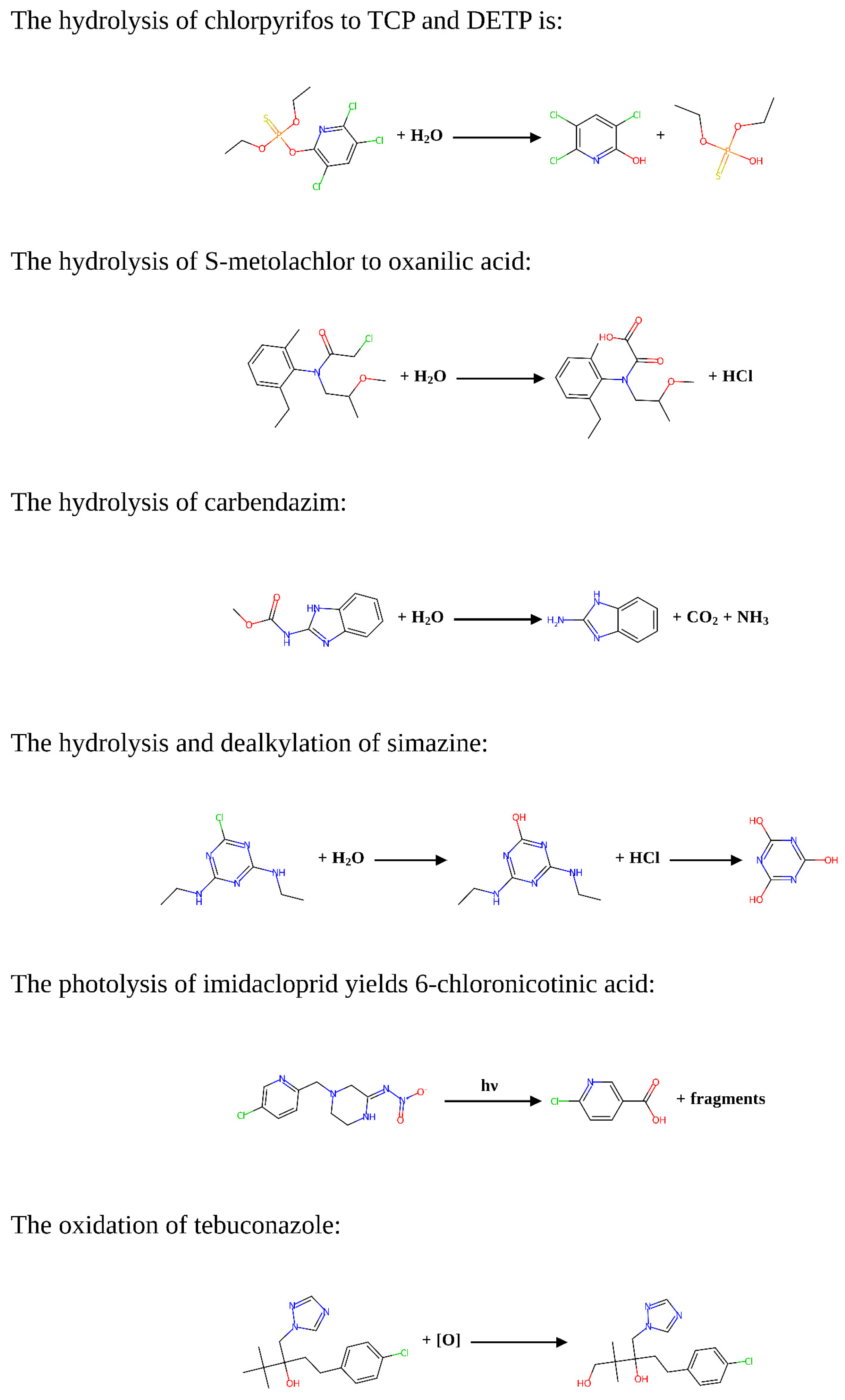
Figure 4.
Conceptual framework of agrochemicals and MPs-NPs in agricultural soil, illustrating the fate, behavior and pathways of agrochemicals and MPs-NPs as well as their trophic transfer and impact on humans and ecosystems.
By adsorbing agrochemicals, plastics shield them from key degradation processes. This includes protection from microbial enzymatic attacks, UV photolysis on the soil surface, and hydrolysis in the aqueous phase [182]. The hydrolysis of atrazine proceeds as follows [183]:
C8H14ClN5 + H2O → C8H15N5O + HCl
Polyethylene MPs have been shown to enhance the persistence of atrazine, whereas polystyrene MPs have been shown to delay the degradation of 2,4-D [182].
MPs can alter the structure and function of soil microbial communities, potentially inhibiting the microbial consortia responsible for pesticide degradation. Microbial carbon-phosphorus (C–P) cleavage of glyphosate is represented by [184]:
C3H8NO5P → CH6NO3P (AMPA) + C2H2O3 (Glyoxylate)
PVC-MPs, in particular, have been noted to exert strong effects on carbon-cycling enzymes, which can indirectly slow herbicide breakdown [31,150].
The high surface area and strong adsorption affinity of aged NPs can lead to encapsulation, making the agrochemical less accessible for degradation. Such encapsulation can alter degradation pathways, potentially leading to the accumulation of different and sometimes more toxic metabolites [150]. The net effect is an increase in the observed half-life (DT50) of agrochemicals. Comparative studies indicate that agrochemical half-lives can be significantly longer in MP-associated systems than in plastic-free soil. The persistence of plastics is also notable; estimates suggest MP half-lives of 2.5–4 years in agricultural soils [185].
4.2.3. Bioaccumulation and Trophic Transfer
The incorporation of MP–NP–agrochemical complexes into biological systems represents a critical exposure pathway, with implications for ecosystem health and food safety.
Earthworms and other soil invertebrates readily ingest MPs-NPs. This ingestion is dose-dependent and can lead to reduced growth and survival [150,171]. The associated agrochemicals can be absorbed by the organism, with bioavailability influenced by the desorption rate from the plastic carrier. The dioxygenation of phenanthrene [a polycyclic aromatic hydrocarbon (PAH) model] typically proceeds as follows [186]:
C14H10 + O2 → C14H12O2 (diol) → C11H8O3
Studies on phenanthrene have suggested that while MPs-NPs reduced overall bioaccumulation by sequestering the contaminant, they can also alter its organ-specific distribution within the organism [187].
NPs have an increased probability of entering cells through endocytosis or other mechanisms owing to their particle size; hence, they may provide a direct route for agrochemicals to biological tissues. This enhanced bioavailability is a major problem compared to that of larger MPs [150].
Plants can absorb NPs and potentially small MPs. The primary route is often the “crack-entry” pathway at the root tips, with particles then translocating via the apoplastic or symplastic transport systems of the xylem to the aerial tissues [188]. Confocal microscopy has confirmed the presence of PS-NPs in the root epidermis, cortex, and xylem of crops like rice [150]. This uptake provides a direct route for MPs or NP-bound agrochemicals to enter the food chain.
The transfer of these complexes from soil to plants, herbivores, and potentially predators create a pathway for human exposure. This risk is indicated by the presence of plastic additives, including phthalates, in human urine and MPs in edible food products [150]. Agrochemicals in combination with MPs-NPs have been linked to either synergistic or antagonistic toxicological effects and are related to an increased expression of antibiotic resistance genes in soil fauna, thus posing a broader ecological threat [171].
5. Impact of Agrochemicals and MPs-NPs on Soil Health
5.1. Impacts of Agrochemicals on Soil Properties
5.1.1. Effect of Agrochemicals on Soil Physical Properties
Different agrochemical applications on soil can influence soil physical properties by altering soil texture, structure, porosity, bulk density, water retention, and infiltration rate, which are essential to determine soil health and crop production (Figure 5). For example, the non-judicious use of chemical fertilizers may affect soil aggregate formation and reduce soil organic matter, leading to weakened soil structure and changes in porosity that limit aeration and water movement [189]. Massah et al. [190] stated that excessive fertilizer use caused soil compaction, increasing bulk density (1.34–1.80 Mg m−3) and root penetration resistance (0.89–3.54 MPa) while drastically limiting permeability, available water, and crop yield. However, the combined application of organic and inorganic fertilizers enhanced the aggregate stability and porosity of soil [191]. Pesticide degradation can modify soil physical properties, especially infiltration rates and water retention [42]. Furthermore, residual by-products formed during pesticide degradation can alter soil texture and structural integrity by interfering with the aggregation of soil particles [192]. Such interactions may lower soil porosity and obstruct pore spaces, ultimately restricting water movement and reducing infiltration rates [42,193]. In addition, Yasir et al. [42] reported that pesticide breakdown can alter microbial activity and deplete organic matter (OM) pools, which are essential for maintaining soil structure and WHC.
Figure 5.
Interaction of agrochemicals and MPs-NPs on the physical, chemical and biological properties of soil, with their impacts.
5.1.2. Effect of Agrochemicals on Soil Chemical Properties
Agrochemicals, including fertilizers and pesticides, strongly influence soil chemical properties depending on their type, application rate, and duration of application (Figure 5). Long-term use of ammonium-based nitrogen fertilizers accelerates soil acidification through nitrification, leading to base cation leaching and reduced nutrient availability [194], whereas continuous phosphorus inputs can cause P accumulation and fixation, increase eutrophication risk, and induce micronutrient deficiencies such as Zn and Fe [17]. Excessive fertilizer application also increases soil EC and salinity, markedly in irrigated systems, negatively affecting nutrient uptake and crop performance [195,196]. Pesticides further modify soil chemistry by altering nutrient transformations, enhancing organic matter mineralization, and contributing to soil acidification and the accumulation of toxic residues and heavy metals [197]. These processes can disrupt the soil carbon cycle and impair soil organic matter formation and its structural stability [198]. Merouani et al. [199] revealed that pesticide application reduces soil organic carbon, alters P dynamics through mineralization and plant uptake, and affects soil pH, with varietal differences in tolerance. Moreover, agrochemical use, especially macronutrient fertilizers combined with glyphosate, reduces soil microbial populations, micronutrient availability including Fe and Zn, and the nutritional quality of crops [200]. Additionally, pesticide degradation products and residue-induced microbial shifts may reduce soil CEC by limiting nutrient exchange sites, thereby constraining nutrient retention and reducing long-term soil fertility [201].
5.1.3. Effect of Agrochemicals on Soil Biological Properties
Agrochemicals directly or indirectly affect microbial diversity, richness, and evenness, thereby limiting nutrient availability (Figure 5). Pesticides exert direct effects on soil microbes by altering enzyme activities and metabolic functions [170,198,202,203]. For instance, Filimon et al. [204] reported that thiamethoxam decreased soil phosphatase activity by 6.5% and nitrifying bacteria by 58.1%, whereas Cypermethrin reduced dehydrogenase activity by 32.8% and nitrifying bacteria by 74%. Similarly, organophosphorus insecticides such as malathion, diazinon, and dimethoate significantly reduced microbial population growth depending on their concentration and exposure time [205]. Repeated applications of an insecticide such as malathion, endosulfan, chlorpyrifos, and lindane markedly suppressed soil nitrification and denitrification processes, even at field-recommended application rates [42,206]. Likewise, Schäffer et al. [207] stated that cyfluthrin and imidacloprid reduced nitrification and denitrification by enhancing sulfur oxidation. Pignatello et al. [208] reported that captan, anilazine, chlorothalonil, and benomyl increased nitrogen mineralization, likely by modifying the interaction between fungi and bacteria. However, mancozeb, prosulfuron, quinalphos, and chlorothalonil have been reported to inhibit nitrification [42,209], whereas nitrification was enhanced by metalaxyl and mefenoxam [210]. Herbicides decrease the functions of soil microbes when applied along with fertilizer. The application of phosphorus fertilizer at higher doses suppresses the diversity of AMF and their colonization [211,212]. Furthermore, herbicides also affect nitrogen fixing and nitrogen transforming by free-living bacteria in soil. Terbutryn, simazine, premteryn, and benzoate herbicide inhibit nodulation and decrease nitrogen fixation in legumes, whereas butachlor primarily enhances nitrogen fixation but later causes a decline owing to toxic buildup [42,213]. Organochlorines such as 2,4-D suppress Rhizobium activity and reduce nitrogenase and phosphatase enzyme activities [214,215]. Moreover, glyphosate also decreases azotobacter and phosphatase enzyme activity [216,217].
5.2. Impacts of MPs-NPs on Soil Properties
5.2.1. Effect of MPs-NPs on Soil Physical Properties
As previously indicated, soil is recognized as the ultimate environmental sink for MPs-NPs [218]. Due to their limited infiltration capacity, MPs-NPs are predominantly retained in the surface soil layer [219,220]. The existence of MPs-NPs in soil reduces the soil bulk density (BD) owing to their lower density compared to soil particles, thus altering soil structure, pore space, infiltration rate, and nutrient and water retention capacities [4,18,19,221,222]. These structural changes may further facilitate the downward transport of MP-NP-associated pollutants into deeper soil horizons, with the magnitude of these effects being strongly governed by soil texture [157,160]. The impact of MPs-NPs on soil bulk density varies with soil type. For example, bulk density decreased by 9% in Vertisol following the addition of polyester (PES) fibers, whereas no significant changes were observed in Entisol and Alfisol soils [223]. Beyond bulk density, MPs-NPs significantly influence soil WHC, aeration, and root penetration, depending on soil texture, particle size, and MP-NP concentration [224]. At higher concentrations (2%), PE particles markedly altered WHC: small-sized fibers (150 µm) enhanced WHC in loamy soils, while larger particles (950 µm) reduced WHC in sandy soils. In contrast, no significant effects were observed at lower concentrations (0.5%) [225]. In addition, they significantly affect water-stable aggregates, with outcomes depending on polymer type and particle shape [226]. Several studies have reported that PES fibers increase water-stable macroaggregates [227,228], whereas polyethylene terephthalate microfragments and polystyrene microspheres reduce macroaggregate formation and promote microaggregate development [229]. Overall, the incorporation of MPs-NPs tends to increase soil porosity and aeration and alter water retention, evapotranspiration, and aggregate stability.
5.2.2. Effect of MPs-NPs on Soil Chemical Properties
Soil chemical properties can be negatively influenced when MPs-NPs alter soil pH, electrical conductivity (EC), and nutrient cycling (Figure 5). The effect of MPs-NPs on the various chemical properties of soil is presented in Table 4. MPs-NPs’ influence on soil pH varies depending on the type, shape, dose, and exposure time. Several studies have reported that the presence of MPs in soil increased, decreased, or did not vary soil pH [1,230,231,232]. For example, HDPE and tire debris MPs decreased the soil pH value significantly [233,234]. MPs-NPs also affect soil organic carbon (SOC) dynamics and organic matter (OM) content due to a slow degradation rate in the environment. MPs-NPs were found to increase dissolved organic carbon (DOC) and total organic carbon (TOC) levels and to elevate emissions of CH4, N2O, and CO2 [235,236,237,238]. These effects may arise because MPs-NPs act as a source of SOC and interact with the plant-soil ecosystem, thereby altering global carbon cycling dynamics [235,239,240]. For instance, Gao et al. [241] reported that soil CO2 emission was increased by 28.7% due to MPs-NPs. Moreover, MPs-NPs may disrupt nutrient availability in soil and various biochemical processes. MPs-NPs at higher concentrations markedly enhanced humus, fulvic acid, dissolved organic matter (DOM), dissolved nitrogen content (DON), NO3−, and PO43− [18]. Chen et al. [29] and Iqbal et al. [242] reported that biodegradable plastics, polylactic acid (PLA)-MPs, enhanced NO3− and NO2− concentration while reducing NH4+ contents. In addition, MPs-NPs accelerate fluorescein diacetate hydrolase (FDAase) activity, increase nutrient content, and enhance the deposition of humic acid and the mineralization of nutrients, thus influencing the activity of soil enzymes and soluble nutrient storage [243]. Jiang et al. [244] and De Souza Machado et al. [228] found that the presence of MPs-NPs significantly influences P and N dynamics in rice and onion fields, respectively. MPs-NPs increase the C:N ratio and enzymatic activity, thus affecting carbon turnover [1,232,245,246].
Table 4.
Effect of MPs-NPs on the chemical properties of soil.
5.2.3. Effect of MPs-NPs on Soil Biological Properties
The most significant impacts of MPs-NPs on microbial communities include OM decomposition, nutrient cycling, and overall soil health (Figure 5). MP-NP exposure affects microbial communities and their diversity in the soil rhizosphere [254,259,260]. For instance, microbial communities were reduced by approximately 268 to 60% in Mollisols and Inceptisols soil over a year of MP-NP exposure, reducing the decomposition of OM and nutrient cycling [261]. Similarly, MPs-NPs significantly altered soil bacterial diversity when soils were applied with 0.5 or 5 μm MPs-NPs in 100 and 1000 μg PS MPs-NPs g−1 soil [262]. In contrast, polyhydroxyalkanoates (PHAs) and PS further increase microbial community growth and density due to their composition and biodegradability in the environment [262,263]. Different nitrogen-fixing bacteria, nematodes, and earthworms showed decreased growth due to MP-NP exposure [32]. Fei et al. [253] reported that MPs-NPs also reduced nitrogen-fixing bacteria at a 0.5% concentration and disturbed nutrient cycling by 15–25%. In addition, MPs-NPs alter enzyme activity, including alkaline phosphatase, N-acetyl-β-glucosaminidase, urease, dehydrogenase, β-D-glucosidase, and cellobiosidase in soil [264,265]. Plastic particles reduce microbial activity as they compete with microbes for physicochemical habitats, and as a result, extracellular enzyme activity declines [266]. The different forms and types of MPs-NPs may also have a significant effect on enzyme activities in soil. For instance, PP, PS, and PVC may either increase or decrease fluorescein diacetate hydrolase activity in soil, based on their polymer type, whereas PE and PVC enhance urease and acid phosphatase enzyme activity [4,253,267]. Furthermore, MPs-NPs have a notable impact on the AMF for root colonization. DeSouza Machado et al. [228] revealed that PS and PP fragments increased root colonization by 8- and 1.4-fold, respectively, whereas PET fragments decreased by approximately 50%. However, PA beads, PEHD fragments, and PS fragments did not show any effect on root colonization. Additionally, a recent study indicates that MPs-NPs help to disseminate antibiotic resistance genes (ARGs) by altering microbial diversity and structure [268,269]. These alterations would notably affect the carbon pools, flux, and nutrient cycling, with responses varying owing to the MP-NP type and rate of application. The effect of MPs-NPs on the soil microbial community is presented in Table 5.
Table 5.
Effect of MPs-NPs on soil microbial community.
Although several laboratory studies employ high concentrations of MPs-NPs, these exposure levels are often much higher than those observed in real-world environmental conditions. Therefore, for a more accurate understanding of the risks posed by MPs-NPs in agroecosystems, it is essential to distinguish between high-dose laboratory experiments and the more realistic, environmentally relevant concentrations typically encountered in field conditions. High-dose studies, while valuable for understanding mechanisms, may overestimate the potential impacts and risks to ecosystems, particularly in terms of long-term exposure and cumulative effects.
6. Ecotoxicological Effects of Agrochemicals and MPs-NPs on Ecosystems
Agrochemicals and MPs-NPs are increasingly recognized in terrestrial and connected aquatic environments. Agrochemicals and MPs-NPs are largely used in agricultural systems and are directly dumped into ecosystems. Previous studies have focused on aquatic environments, and the present research highlights that agrochemical and MP-NP pollutants in agricultural fields cause severe effects on terrestrial ecosystems (Figure 6).
Figure 6.
Ecotoxicological effects of agrochemicals and MPs-NPs in agricultural ecosystems.
6.1. Impact on Terrestrial Ecosystems
Due to improper management, agrochemicals and MPs-NPs can be potentially accumulated in soil-plant systems, ultimately enter into the food chain, and cause human and animal health concerns through food ingestion [283]. Soil microorganisms represent the first line of biological response to co-contamination and can significantly influence the redistribution and fate of agrochemicals and MPs-NPs in soils. Different invertebrates present in soil, especially earthworms, facilitate MP-NP movement by internalizing particles and excreting them into diverse substrate horizons. However, MP-NP accumulation in biological systems mainly depends on the size, shape and concentration [270]. However, NPs are considered smaller particles and more easily transmitted than MPs. Recent studies suggest that with the MP-NP ingestion, accumulated agrochemicals could also be introduced into soil living organisms, with the resultant toxicity. For instance, the singular or combined effects of MPs-NPs (PVC, PP, PE) and agrochemicals such as dufulin, 2,4-D, glyphosate, atrazine, etc., significantly alter the metabolic pathways and metabolites of different species of earthworms [284,285,286], which increases oxidative stress and leads to abnormal gene expression. Some other researchers have stated that higher concentrations of glyphosate and PE negatively influence earthworm activity while reducing their body weight and burrow volume [287]. Moreover, interactions between agrochemicals and MPs-NPs in soil can alter the soil environment by reducing oxygen availability and changing the physicochemical properties, which may lead to an imbalance in microbial populations. As a result, some microbes thrive, while others, notably those involved in nutrient cycling, such as nitrogen-fixing bacteria, may decline [32,253]. The effects of MPs-NPs on different earthworm species are presented in Table 6.
Table 6.
Effects of MPs-NPs on different earthworm species.
The impact of MPs-NPs on plants is closely tied to the way they interact with the agrochemicals present in the soil; the effect of MPs-NPs has been described in different ecotoxicological studies. Previous studies have shown variable effects ranging from inhibition to negligible effects or no effect of MPs-NPs on seed germination [300]. MPs-NPs may inhibit seed germination by blocking voids and seed pores, ultimately inhibiting water imbibition, or enhancing germination via the nano-priming effect of MPs-NPs, which facilitates seed coat penetration and upregulates water transport genes [268,301,302]. Lian et al. [303] reported that PS-NPs have no effect on wheat seed germination. However, Wang et al. [304] investigated the effects of 6.5 and 13 μm PE-MPs at different concentrations on Glycine max and Vigna radiata and reported that medium concentrations (50 or 100 mg L−1) of PE-MPs significantly reduced Glycine max germination, with a decrease of approximately 20% compared to the control when exposed for 7 days. In contrast, 6.5 μm PE-MPs showed no consistent inhibitory effect at different concentrations; at low concentrations (10 mg L−1), the germination rate decreased by approximately 75% and then increased by 83% at a high concentration (500 mg L−1) compared to the control. In contrast, the germination rate of Vigna radiata was not significantly affected by different sizes and concentrations of μm PE-MPs, while an 88–100% increase in germination speed compared to the control was observed. Additionally, Pignattelli et al. [305] conducted a study and demonstrated that exposure to PP, PE, PVC and PE + PVC mixtures inhibited the germination of Lepidium sativum, and reported 55% inhibition of germination relative to the control. Hydroponic experiments were conducted by Li et al. [300] to evaluate the germination and growth of Pisum sativum under exposure to different particle sizes and concentrations of PS-MPs. They demonstrated that small particle sizes (0.08 μm) combined with high concentrations (2000 mg L−1) exerted the strongest suppression of germination and growth of Pisum sativum. In contrast, low concentrations or large particle sizes produced weaker or occasionally stimulatory effects.
Persistent agrochemicals and MPs-NPs accumulate through root tissues and subsequently partition within upper ground plant tissues, consequently disrupting plant growth, physiological mechanisms and nutrient uptake [306]. The ability of MPs-NPs to accumulate in plant tissues depends largely on particle size, transport mechanism, exposure time and crop type [307,308]. The presence of MPs-NPs can increase the persistence and bioavailability of agrochemical (OC and OP) residues in the rhizosphere by the absorption of hydrophobic agrochemicals. These processes induce oxidative stress and toxicity in plants and limit food safety [11,301,309,310]. Previous studies have indicated that at soil-relevant concentrations, PE and PE particles reduce plant biomass and root length, particularly when coupled with persistent herbicides like glyphosate and atrazine or insecticides like imidacloprid [20,160]. An integrated molecular bioassay was used by Fajardo et al. [311] to assess the effects of PE and the interactions with OCs. They reported that Zea mays exhibited inhibited leaf growth and progressively enhanced root growth inhibition, especially under contaminants and mixed treatments. These effects were accompanied by the altered expression of antioxidant-responsive genes, indicating oxidative stress-mediated responses [301]. In contrast, another research group aimed to assess the single and dual impacts of PE-MPs and contaminants on different organisms and reported that PE-MPs have the capability to adsorb contaminants, with dual impacts ultimately resulting in reduced leaf development in Lactuca sp. plants [282].
6.2. Impact of Aquatic and Soil-Water Interface Ecosystems
Agrochemicals and MPs-NPs create contamination pathways, as they are frequently transported from soils to freshwater and coastal environments through runoff and leaching [312]. Similar to terrestrial systems, MPs-NPs can act as vectors for persistent agrochemicals in aquatic systems, potentially increasing their bioavailability and toxicity. MPs and NPs alone often exhibit low or negligible toxicity toward certain aquatic organisms. Dual exposure to MPs-NPs and agrochemicals has been shown to reduce algal growth and photosynthetic efficiency and modify microbial diversity through metabolic alteration, neurotoxicity and genotoxicity [313,314]. Tang [315] further suggested that interactions between agrochemicals and MPs-NPs may modify the toxicity of agrochemicals toward target pests and crops, indicating that the particles of MPs and NPs can influence agrochemicals’ behavior beyond simple co-occurrence.
However, toxicity responses are not uniform across aquatic organisms. Liu et al. [316] reported that bioluminescent gram-negative bacteria such as Aliivibrio fischeri demonstrated no significant reduction in bioluminescence or acute toxicity upon exposure to pesticides (diethofencarb and pyrimethanil) and MPs (PVC, PS and PET). In contrast, another biotoxicity study revealed that MPs inhibited Escherichia coli growth, particularly after agrochemical adsorption [317,318]. Moreover, in aquatic macrophytes such as Salvinia cucullata, glyphosate and PS-MPs exhibited synergistic effects at high concentrations, manifested as increased leaf yellowing [255]. Previous studies have indicated that combined exposure to PE-MPs and agrochemicals (GYL) can reduce photosynthetic pigments, disrupt nutrient uptake and alter antioxidant enzyme (SOD, POD, CAT) activity in aquatic plants [319].
Beyond microbial and plant responses, numerous studies have examined the effects of agrochemicals and MPs-NPs on planktonic organisms and aquatic fauna (crustaceans, bivalves and fish) to evaluate the broader ecological consequences in aquatic ecosystems. Chronic exposure of Daphnia magna to PVC-MPs, PET-MPs and PP-MPs has been shown to disrupt the first brood, reducing offspring numbers and altering antioxidant defense mechanisms [320]. Additionally, metabolomic analysis revealed that MP ingestion alters energy and lipid metabolism in Daphnia magna, contributing to decreased survival rate and physiological performance [260]. Some other researchers also reported that the activity of deltamethrin and PE-MPs significantly reduced the number of surviving females and the brood number of Daphnia magna by 51% and 46%, respectively [321].
Higher trophic levels of aquatic ecosystems also display sensitivity to agrochemical and MPs-NP exposure. For instance, PE-MPs have been associated with a negative influence in Danio rerio and Carassius auratus, leading to decreased hatching rates and larval survival rates in Danio rerio and physiological impairments in Carassius auratus along with body weight reduction and gastrointestinal tissue damage [322]. Additional studies concluded that exposure to MPs-NPs can induce oxidative stress in fish gill tissues and disrupt essential physiological processes [323]. Under laboratory conditions, a group of researchers examined the effects of pristine PS-MPs pellets and Chlorpyrifos (CPF) PS-MPs pellets on Onchorhynchus mykiss and highlighted notable alterations in histomorphometric markers of fish skin, gills and guts under separate and co-administered concentrations of CPF PS-MP pellets, while pristine PS-MP pellets induced toxicity and enhanced the adverse effects of CPF significantly in the gill tissue [324]. Moreover, MPs-NPs have the putative ability to alter the toxicity of agrochemicals. Hanachi et al. [314] demonstrated that PE-MPs enhance the bioavailability of CPF to fish and toxicity in amino acid profiles, lipid composition and protein levels in Onchorhynchus mykiss. Moreover, the small terrestrial crabs Leptuca festae and Minuca ecuadioriensis also demonstrated higher mortality rates in the presence of OPs and MPs [325]. A study conducted by Bringer et al. [326] evaluating the effect of chlortoluron and HDPE (separately or in combination) on Crassostrea gigas reported that Crassostrea gigas shell growth was reduced when exposed for 24 days to cocktail conditions (chlortoluron, 97 µg L−1 + HDPE, 108 MPs mL−1). A distinct cohort of researchers reported similar findings on the enzymatic activities of Scinax squalirostris regarding MP–herbicide interactions and stated that PE-MPs increase glutathione-S-transferase (GST) activities but decrease carboxylesterase (CbE) activities, whereas GLY-PE-MPs increase GST activities and GA-PE-MPs reduce acetylcholinesterase and CbE activities [327].
However, minor or antagonistic interactions between MPs-NPs and agrochemicals have been observed. For instance, in Porcellio scaber, MP-NP exposure reduced the bioaccumulation of chlorpyrifos and enhanced immune parameters [328]. Similarly, other researchers reported that MP exposure reduces the bioavailability of chlorpyrifos and difenoconazole while ameliorating the biotoxicity of difenoconazole in Danio rerio [320,329]. Moreover, the combined effect of PS-MPs and IMD did not modify the DNA integrity and reproduction rate of another crustacean, Ceriodaphnia dubia [330]
These findings collectively highlight that agrochemicals and MPs-NPs impact key aquatic organisms at multiple trophic levels, from zooplankton to fish, through mechanisms involving oxidative stress, metabolic disruption, reproductive impairment and altered biochemical responses. Thus, these impacts are determined by the type of plastic particles and agrochemicals, exposure duration, and aquatic species.
6.3. Trophic Transfer and Food Web Implications
The mobility of agrochemicals and MPs-NPs through terrestrial and aquatic food webs ultimately leads to bioaccumulation and biomagnification of these pollutants, impacting organisms at higher trophic levels, including humans and animals [331,332]. Plants serve as the primary entry point for these pollutants, acting as a key link in the food web and connecting soil, water, animals and humans [275]. Previously, it was believed that MPs could not enter plants due to their larger size, but in recent years researchers have reported that MPs-NPs can accumulate through root tissues, with subsequent partitioning within upper ground plant tissues [11,306]. The bioavailability and toxicity of agrochemicals like glyphosate is further amplified when MPs-NPs are adsorbed by terrestrial organisms and plants [284,320]. Once MPs-NPs are incorporated into plant tissue, they subsequently can be consumed by herbivores and thereby introduce contaminants into higher trophic levels. Moreover, recent studies have investigated fruits and vegetables from markets, and it is evident that different sizes of MPs are present in all fruit and vegetable samples. Researchers also reported MP-NP particles in Malus domestica (195,500 particles for gram or p/g), Pyrus communis (189,550 p/g), Brassica oleracea var. italica (126,150 p/g), Daucus carota (101,950 p/g) and Lactuca sativa (50,550 p/g) [333]. In addition, Cheng et al. [284], Sun et al. [285], and Boughattas et al. [286] reported accumulation of MPs-NPs in soil invertebrates, which serve as crucial prey for higher organisms like birds and small mammals, leading to bioaccumulation of these pollutants in predators [334].
In aquatic systems, the process of trophic transfer is more complex. MPs-NPs act as carriers of agrochemicals and enhance their bioavailability in aquatic food webs. Aquatic microorganisms, plants and phytoplankton adsorb these pollutants, which are then consumed by predators, and the pollutants continue to move up the food chain. The bioaccumulation of these pollutants in terrestrial and aquatic organisms and their subsequent biomagnification in top predators pose significant health risks. Studies have shown that exposure to these pollutants can lead to altered metabolic pathways, liver toxicity, kidney damage, genotoxicity, cytotoxicity and neurotoxicity in humans and animals [301,323,324,335,336]. The effect of MPs-NPs on animal/human health is presented in Table 7.
Table 7.
Effect of MPs-NPs on Animal/Human health.
7. Analytical Challenges and Future Perspectives
The most widely used agrochemicals in agriculture include pesticides (insecticides, herbicides, and fungicides), inorganic fertilizers (N, P, K, and essential micronutrients) and plant growth regulators. Additionally, emerging agrochemical inputs, such as nano-fertilizers and slow- or controlled-release formulations designed to improve nutrient use efficiency, are also frequently applied in farming systems. Among these, pesticides are widely regarded as environmental pollutants due to their persistence, potential for bioaccumulation, and associated ecological and human health risks. In contrast, fertilizers and growth regulators are not inherently pollutants; however, excessive or improper application can cause soil, water, and ecosystem contamination.
In parallel, the excessive use of plastic-based materials in agriculture has led to the accumulation of plastic residues in agroecosystems, resulting in MPs-NPs as a considerable environmental risk to sustainable agriculture. These pollutants have been widely reported across terrestrial and aquatic ecosystems, causing several health concerns for humans, animals, plants, and the environment [19,352]. Therefore, accurate analytical techniques for the detection and quantification of agrochemicals and plastic particles are crucial for defining dose–response relationships, understanding ecological impacts, and developing effective mitigation strategies.
Detection and quantification techniques for pesticides have been well developed and are widely established worldwide. In contrast, analytical methods for the detection and quantification of MPs-NPs remain underdeveloped and lack methodological standardization. The detection and quantification of these particles is often challenging due to their small size and the complexity of the environmental matrices in which they occur [353].
The analysis of MPs-NPs in soil generally requires sequential steps of physical separation, the digestion of organic matter, and chemical identification. As pre-treatment, extraction, digestion of organic matter, and identification protocols differ widely owing to differences in soil composition; the limitations are outlined in Table 8.
Table 8.
Limitations of physical separation and organic matter digestion in MP-NP analysis.
Although extensive studies on MPs in aquatic ecosystems have driven the development of several analytical techniques, these methods are mainly applicable to aquatic systems [359]. However, studies on terrestrial ecosystems, particularly agricultural soil-plant systems, remain inadequate. For NPs, the analytical challenge is even greater due to their nanoscale size, strong interaction with soil colloids, and lack of standardized detection and quantification in soils. Appropriate and efficient methods for MP analysis in soil have not yet been established owing to the complex nature of soil matrices, including heterogeneity, high organic matter content, diverse particle sizes, digestion-related issues, and interference from non-plastic materials [360,361]. Furthermore, the complexity of identifying solid analytes in a complex solid matrix substantially complicates MP analysis in soils [169,362]. A comparison of the early methods for MP detection is presented in Table 9.
Table 9.
Comparison of different early identification methods of MPs.
7.1. Advancing Laboratory Research and Detection of Pollutants in Plant-Soil Systems
7.1.1. Identification and Quantification Methods of MPs
Early MP analysis methods (Table 9) were essential for particle detection and visualization. However, microscopic observation alone is considered inadequate for reliable MP identification and often results in false positives, where organic fibers are commonly mistaken as MPs. Polymer validation is crucial for overcoming the issue of false positives [369]. Fourier-transform infrared spectroscopy (FTIR) and Raman spectroscopy are commonly used methods for the identification of MP polymers [370,371]. These methods can successfully identify the chemical composition of MPs, making it easier to differentiate polymers from other chemicals in the sample. A comparison of modern methods for MP detection is presented in Table 10.
Table 10.
Comparison of different modern identification methods of MPs in soil.
7.1.2. Quantification Methods of MPs in Soil
Accurate quantification of MPs is vital for understanding MP pollution in the environment. Mass and quantitative concentrations are the two indicators frequently used to assess the amount of MPs in the environment [374]. The mass of MPs is not easily affected by environmental factors; therefore, mass concentration is more reliable than quantitative concentration for MP quantification [384]. Spectroscopy is a method used for the quantitative analysis and qualitative classification of MPs without damaging the samples. Currently, spectroscopy is often combined with other techniques to count MPs. According to Chen et al. [385] and Prata et al. [378], μ-Fourier-transform infrared spectroscopy (FTIR spectroscopy with microscope) and μ-Raman spectroscopy (Raman spectroscopy with microscope) are used to identify and quantify MPs > 10 μm and >1 μm particle size in environmental samples, respectively, but do not directly provide mass concentration. Several other quantification methods are used to measure practical mass-based MP concentrations, which are listed in Table 11.
Table 11.
Comparison of various quantification methods of MPs in soil.
7.1.3. Identification and Quantification Methods of NPs in Soil
Contamination of NPs in ecosystems has raised global concerns recently [397]. However, the actual concentrations of these particles are unknown due to the limitations of actual detection methods. Much of the earlier research investigated the environmental effects of NPs using laboratory-scale experiments; however, there is still a lack of standard methodological detection methods for NPs in environmental samples [398]. Detection technologies for NPs in environmental samples require further advancement to enable robust assessment of their ecological impacts. A comparison of different NP detection methods is presented in Table 12.
Table 12.
Comparison of various detection methods of NPs.
7.1.4. Quantification Methods of NPs
The main bottleneck for NP quantification is the lack of validated analytical methods and standards. Currently, research focuses on the characterization of NPs, while information on quantification is limited. Although the integration of optical techniques, such as microscopy, and spectroscopic methods, like Fourier-transform infrared spectroscopy (FTIR), has significantly advanced MP analysis by providing resolutions down to 20 μm [413], these techniques remain inadequate for detecting NPs. Researchers have turned to more advanced methodologies for the analysis of NPs. A comparison of the different NP quantification methods is presented in Table 13.
Table 13.
Comparison of different quantification methods of NPs.
7.1.5. Identification and Quantification Methods of Pesticides
The intensive application of pesticides in modern agriculture has enhanced crop yield and food security but has introduced serious health concerns due to the accumulation of pesticide residues in fruits, vegetables and the environment [422]. Pesticides can be classified as insecticides, herbicides, and fungicides on a broader level based on the target pest. These are categorized by their chemical structure, mode of action, risk and use [423,424]. Most pesticide residue analyses rely on common sample preparation techniques, such as extraction, cleanup, and instrumental measurements, regardless of the pesticide type. Therefore, analytical methods are generally categorized based on the technique rather than the pesticide class. The analytical methods for analyzing pesticide residues in different fruit samples are listed in Table 14.
Table 14.
Analytical methods for analyzing pesticide residues in various food samples.
In addition to the chromatographic and mass spectrometric techniques summarized in Table 14, different non-separative detection techniques have been developed for pesticide residue analysis. These methods do not require initial chromatographic separation and are mainly designed for rapid, non-destructive, and on-site screening. These include spectroscopy-based techniques, electroanalytical sensors, fluorescence-based systems, aptasensors, biosensors, lateral flow assays, and emerging AI-assisted detection platforms. These methods offer shorter sample preparation times, lower operational costs, portability, and minimal solvent consumption. However, they may face challenges related to mixed pesticide discrimination, matrix interference and quantitative accuracy [422].
Recent Advances in Rapid Detection Techniques for Pesticide Residue
In recent years, significant progress has been made in the development of rapid pesticide detection technologies, and various new methods have emerged. Rapid detection technologies offer significant advantages over conventional methods. Most importantly, they are less time-consuming and less costly. Some innovative and novel rapid detection technologies for pesticide residues in different matrices are discussed below in Table 15.
Table 15.
Novel rapid detection methods of pesticide residues in different matrices.
7.2. New Emerging Technologies
Recent progress in machine learning (ML) and automated high-throughput systems provides promising solutions to overcome persistent analytical challenges in MP-NP detection. The integration of machine learning with FTIR and Raman spectroscopy enables accurate spectral pattern recognition.
Recently, artificial intelligence has emerged as a powerful tool for the automated analysis of MP-NP detection. This approach can enhance various analytical methods, including spectroscopic methods (Raman, FTIR) or image-based methods (microscopy, fluorescence, SEM). AI has already been employed to support the detection of MPs via FTIR [481], Raman [451], SEM [259], and fluorescence microscopy [225]. However, the application of AI to NP detection remains challenging. AI-enhanced chemical imaging workflows have emerged as powerful tools for reliable NP mapping and quantification through algorithmic image processing and Gaussian surface fitting [482].
Although these methods remain relatively unexplored in soil matrices compared to aquatic systems, their continued advancement is expected to play a vital role in future environmental monitoring.
7.3. Methodological Gaps/Limitations in Detection and Quantification
The widespread application of agrochemicals and plastic-based agricultural materials has enhanced the accumulation of pesticide residues and MPs-NPs in agricultural soils. While pesticide detection and quantification methods are well established and highly sensitive, analytical approaches for MPs-NPs in soil remain underdeveloped and non-standardized. Despite significant progress in environmental monitoring, major methodological limitations remain in the analytical methods for MPs, NPs, and pesticides, particularly in complex agricultural plant-soil systems.
The analytical methods used for MP-NP detection are largely similar in both soil and plant studies; however, plant samples require customized extraction protocols due to their complex biological matrix [21].
Several sequential steps, including sampling, pretreatment, and extraction, are required to ensure the accurate detection and quantification of MPs or NPs, and the reliability of analytical methods strongly depends on these preparatory stages. Although pesticide residues can be analyzed using well-established chromatographic and mass spectrometric methods, there is currently no universally accepted protocol for the sampling, extraction, identification, and quantification of MPs, and especially NPs, in soils [363,483,484,485,486]. The heterogeneous nature of agricultural soils (minerals, organic matter, and colloids) further complicates plastic isolation and identification [360,361]. Therefore, future efforts should prioritize the development of matrix-specific standardized protocols, along with certified reference materials and calibration standards, specifically for nanoscale plastics. In addition, harmonized reporting metrics (e.g., particle number, size distribution, and mass concentration) are essential to improve comparability across studies. Moreover, current methodologies predominantly investigate soil and plant systems separately. However, in real agricultural settings, soil and plants function as coupled systems. These limit the understanding of combined transport, bioavailability and transformation in soil-plant systems. Future studies should therefore incorporate system-level approaches to better understand interaction mechanisms, including sorption–desorption behavior, transport processes, and the influence of MPs/NPs on pesticide persistence and bioavailability in soil-plant systems.
Present analytical methods typically assess MPs, NPs and pesticides separately, despite their known interactions (e.g., plastics act as sorbents of agrochemicals) [292]. MPs often coexist with fertilizer, pesticides, heavy metals and other pollutants in agricultural soil [160]. Further research is required to understand the impact of MPs on pollutant persistence, bioavailability, and the associated ecological risks. A key challenge lies in the co-extraction and simultaneous analysis of plastics and pesticides, as current protocols are typically designed for single contaminant groups. To address this limitation, future research should focus on developing harmonized co-extraction strategies, including careful selection of solvent systems and density separation techniques that are compatible with both MPs/NPs and pesticide residues while preserving analytical recovery.
Traditional visualization tools (optical, fluorescence and electron microscopy) are beneficial for morphological and structural observations but lack chemical characterization. Scanning and transmission electron microscopy (TEM) enables high-resolution imaging of MP location and morphology at both the tissue and cellular levels [285]. However, these methods require cross-sectional sample preparation, which increases the analysis time.
Thermal techniques such as Py-GC–MS, TED-GC–MS, and TGA–MS provide total mass quantification but are destructive in nature and cannot provide morphological information on particle size, shape or abundance [487]. Conversely, imaging and spectroscopic methods provide particle-level data but do not directly yield mass concentrations. Nuclear magnetic resonance (NMR) spectroscopy provides additional insights into polymer structure, but its application is limited due to its high technical demands [391]. Other spectroscopic methods such as µ-FTIR and µ-Raman spectroscopy are widely applied for polymer identification and semi-quantification; however, these methods are limited by their respective size detection thresholds (~10 μm and ~1 μm) [488].
Rapid field-deployable sensors are required for the quantitative analysis of MP or NP materials. MPs-NPs are mainly detected using laboratory-based analytical instruments. However, these systems are neither portable nor suitable for on-site applications. Many portable devices have been developed for water samples; however, they also rely on principles similar to those of laboratory instruments and therefore suffer from several drawbacks [489].
To address these methodological gaps, future research should emphasize integrating multi-technique workflows that combine imaging, thermal analysis, and spectroscopy for simultaneous particle and mass-based quantification. Efforts should also aim to establish analytical frameworks capable of assessing the interactions and co-occurrence of plastics and pesticides in agroecosystems.
8. Conclusions
The existence of MPs-NPs and agrochemicals in soil heightens the concern that persistent pollutants in agriculture threaten plant, soil, animal, and aquatic health and significantly reshape agroecosystems. The accumulation of MPs-NPs along with persistent pollutants in soil is due to their slow biodegradability. The presence of MPs-NPs and agrochemicals in soil has been shown to impede soil structure, reduce bulk density, alter microbial communities, and influence nutrient cycling in soil. Moreover, their ability to adsorb and vector contaminants introduces additional concerns regarding food safety and human health. However, mechanistic understanding remains constrained by limited long-term field data and the absence of standardized, high-resolution detection methods for NPs in complex soil matrices. Addressing these challenges will be critical for developing sustainable agricultural management strategies and informing regulatory policies aimed at mitigating the environmental and economic risks associated with agrochemicals and MPs-NPs coupling in intensively managed agroecosystems.
Author Contributions
Conceptualization, M.M.H. and I.F.C.; methodology/literature search, M.M.H., M.S.H., M.Z.I., S.D.P., M.A. and R.A.H.; validation (literature selection/interpretation), I.F.C.; writing—original draft preparation, M.M.H., M.S.H., M.Z.I., S.D.P., M.A. and R.A.H.; visualization, S.D.P. and M.A.; writing—review and editing, M.H. and I.F.C.; supervision, I.F.C.; project administration, I.F.C. All authors have read and agreed to the published version of the manuscript.
Funding
This research received no external funding.
Institutional Review Board Statement
Not applicable.
Informed Consent Statement
Not applicable.
Data Availability Statement
No new data were created or analyzed in this study. Data sharing is not applicable to this article.
Conflicts of Interest
The authors declare no conflicts of interest.
Abbreviation
The following abbreviations are used in this manuscript:
| AMF | Arbuscular mycorrhizal fungi |
| CEC | Cation exchange capacity |
| CRFs | Controlled-release fertilizers |
| DOM | Dissolved organic matter |
| DT50 | Dissipation half-life |
| GLY | Glyphosate |
| LOD | Limit of detection |
| LOQ | Limit of quantification |
| MPs | Microplastics |
| MPs-NPs | Microplastics and nanoplastics |
| NPs | Nanoplastics |
| PAHs | Polycyclic aromatic hydrocarbons |
| PE | Polyethylene |
| PES | Polyester |
| PS | Polystyrene |
| PVC | Polyvinyl chloride |
| SOC | soil organic carbon |
| SOM | Soil organic matter |
| WHC | Water holding capacity |
| EC | Electrical conductivity |
References
- Verma, K.K.; Song, X.-P.; Xu, L.; Huang, H.-R.; Liang, Q.; Seth, C.S.; Li, Y.-R. Nano-Microplastic and Agro-Ecosystems: A Mini-Review. Front. Plant Sci. 2023, 14, 1283852. [Google Scholar] [CrossRef] [Scilit]
- Samani, M.; Ahlawat, Y.K.; Yadav, S.; Feizi, M.; Rashti, M.R.; Mohseni, A.; Prakash, C.; Ghotekar, S.; Kataria, N. Micro and Nano Plastics (MNPs) in Agricultural Soils: Challenges for Food Security and Environmental Health. Environ. Monit. Assess. 2025, 197, 1369. [Google Scholar] [CrossRef] [Scilit]
- Das, B.K.; Das, S.; Kumar, V.; Roy, S.; Mitra, A.; Mandal, B. Microplastics in Ecosystems: Ecotoxicological Threats and Strategies for Mitigation and Governance. Front. Mar. Sci. 2025, 12, 1672484. [Google Scholar] [CrossRef] [Scilit]
- de Souza Machado, A.A.; Kloas, W.; Zarfl, C.; Hempel, S.; Rillig, M.C. Microplastics as an Emerging Threat to Terrestrial Ecosystems. Glob. Change Biol. 2018, 24, 1405–1416. [Google Scholar] [CrossRef] [Scilit] [PubMed]
- Kataria, N.; Garg, V.K.; Han, C.; Rene, E.R. Microplastic Pollution: Occurrence, Health Risk and Challenges; CRC Press: Boca Raton, FL, USA, 2025; ISBN 1-040-25321-0. [Google Scholar] [CrossRef] [Scilit]
- Wang, J.; Huang, M.; Wang, Q.; Sun, Y.; Zhao, Y.; Huang, Y. LDPE Microplastics Significantly Alter the Temporal Turnover of Soil Microbial Communities. Sci. Total Environ. 2020, 726, 138682. [Google Scholar] [CrossRef] [Scilit] [PubMed]
- Weber, C.J.; Opp, C. Spatial Patterns of Mesoplastics and Coarse Microplastics in Floodplain Soils as Resulting from Land Use and Fluvial Processes. Environ. Pollut. 2020, 267, 115390. [Google Scholar] [CrossRef] [Scilit]
- Huang, Y.; Liu, Q.; Jia, W.; Yan, C.; Wang, J. Agricultural Plastic Mulching as a Source of Microplastics in the Terrestrial Environment. Environ. Pollut. 2020, 260, 114096. [Google Scholar] [CrossRef] [Scilit]
- Okeke, E.S.; Olagbaju, O.A.; Okoye, C.O.; Addey, C.I.; Chukwudozie, K.I.; Okoro, J.O.; Deme, G.G.; Ewusi-Mensah, D.; Igun, E.; Ejeromedoghene, O. Microplastic Burden in Africa: A Review of Occurrence, Impacts, and Sustainability Potential of Bioplastics. Chem. Eng. J. Adv. 2022, 12, 100402. [Google Scholar] [CrossRef] [Scilit]
- Nguyen, M.K.; Lin, C.; Hung, N.T.Q.; Vo, D.-V.N.; Nguyen, K.N.; Thuy, B.T.P.; Hoang, H.G.; Tran, H.T. Occurrence and Distribution of Microplastics in Peatland Areas: A Case Study in Long An Province of the Mekong Delta, Vietnam. Sci. Total Environ. 2022, 844, 157066. [Google Scholar] [CrossRef] [Scilit]
- Papadimitriou, C.A.; Apostolidou, S.; Galinou-Mitsoudi, S.; Savvidis, Y. Uncontrolled Disposal of Plastic Agrochemical Packaging: Double-Trouble Ecotoxicological Effects in Soil and Water. Sustainability 2025, 17, 10380. [Google Scholar] [CrossRef] [Scilit]
- Boctor, J.; Hoyle, F.C.; Farag, M.A.; Ebaid, M.; Walsh, T.; Whiteley, A.S.; Murphy, D.V. Microplastics and Nanoplastics: Fate, Transport, and Governance from Agricultural Soil to Food Webs and Humans. Environ. Sci. Eur. 2025, 37, 68. [Google Scholar] [CrossRef] [Scilit]
- Cusworth, S.J.; Davies, W.J.; McAinsh, M.R.; Gregory, A.S.; Storkey, J.; Stevens, C.J. Agricultural Fertilisers Contribute Substantially to Microplastic Concentrations in UK Soils. Commun. Earth Environ. 2024, 5, 7. [Google Scholar] [CrossRef] [Scilit]
- Crossman, J.; Hurley, R.R.; Futter, M.; Nizzetto, L. Transfer and Transport of Microplastics from Biosolids to Agricultural Soils and the Wider Environment. Sci. Total Environ. 2020, 724, 138334. [Google Scholar] [CrossRef] [Scilit] [PubMed]
- Meng, X.; Yuan, J.; Huang, Q.; Liu, R.; Yang, Y.; Yang, X.; Wang, K. A Review of Sources, Hazards, and Removal Methods of Microplastics in the Environment. Water 2025, 17, 102. [Google Scholar] [CrossRef] [Scilit]
- Deme, G.G.; Ewusi-Mensah, D.; Olagbaju, O.A.; Okeke, E.S.; Okoye, C.O.; Odii, E.C.; Ejeromedoghene, O.; Igun, E.; Onyekwere, J.O.; Oderinde, O.K. Macro Problems from Microplastics: Toward a Sustainable Policy Framework for Managing Microplastic Waste in Africa. Sci. Total Environ. 2022, 804, 150170. [Google Scholar] [CrossRef] [Scilit]
- Nath, S.; Dey, S.; Kundu, R.; Paul, S. Phosphate and Zinc Interaction in Soil and Plants: A Reciprocal Cross-Talk. Plant Growth Regul. 2024, 104, 591–615. [Google Scholar] [CrossRef] [Scilit]
- Qiu, Y.; Zhou, S.; Zhang, C.; Zhou, Y.; Qin, W. Soil Microplastic Characteristics and the Effects on Soil Properties and Biota: A Systematic Review and Meta-Analysis. Environ. Pollut. 2022, 313, 120183. [Google Scholar] [CrossRef] [Scilit]
- Guo, Z.; Li, P.; Yang, X.; Wang, Z.; Lu, B.; Chen, W.; Wu, Y.; Li, G.; Zhao, Z.; Liu, G. Soil Texture Is an Important Factor Determining How Microplastics Affect Soil Hydraulic Characteristics. Environ. Int. 2022, 165, 107293. [Google Scholar] [CrossRef] [Scilit]
- Tang, K.H.D. Effects of Microplastics on Bioavailability, Persistence and Toxicity of Plant Pesticides: An Agricultural Perspective. Agriculture 2025, 15, 356. [Google Scholar] [CrossRef] [Scilit]
- Liu, Z.; Qin, M.; Li, R.; Peijnenburg, W.J.; Yang, L.; Liu, P.; Shi, Q. Transport Dynamics and Physiological Responses of Polystyrene Nanoplastics in Pakchoi: Implications for Food Safety and Environmental Health. J. Agric. Food Chem. 2025, 73, 10923–10933. [Google Scholar] [CrossRef] [Scilit]
- Li, S.; Wang, T.; Guo, J.; Dong, Y.; Wang, Z.; Gong, L.; Li, X. Polystyrene Microplastics Disturb the Redox Homeostasis, Carbohydrate Metabolism and Phytohormone Regulatory Network in Barley. J. Hazard. Mater. 2021, 415, 125614. [Google Scholar] [CrossRef] [Scilit] [PubMed]
- Lian, J.; Liu, W.; Meng, L.; Wu, J.; Zeb, A.; Cheng, L.; Lian, Y.; Sun, H. Effects of Microplastics Derived from Polymer-Coated Fertilizer on Maize Growth, Rhizosphere, and Soil Properties. J. Clean. Prod. 2021, 318, 128571. [Google Scholar] [CrossRef] [Scilit]
- Rong, S.; Wang, S.; Liu, H.; Li, Y.; Huang, J.; Wang, W.; Han, B.; Su, S.; Liu, W. Evidence for the Transportation of Aggregated Microplastics in the Symplast Pathway of Oilseed Rape Roots and Their Impact on Plant Growth. Sci. Total Environ. 2024, 912, 169419. [Google Scholar] [CrossRef] [Scilit] [PubMed]
- Li, L.; Luo, Y.; Li, R.; Zhou, Q.; Peijnenburg, W.J.; Yin, N.; Yang, J.; Tu, C.; Zhang, Y. Effective Uptake of Submicrometre Plastics by Crop Plants via a Crack-Entry Mode. Nat. Sustain. 2020, 3, 929–937. [Google Scholar] [CrossRef] [Scilit]
- Wu, X.; Lu, J.; Du, M.; Xu, X.; Beiyuan, J.; Sarkar, B.; Bolan, N.; Xu, W.; Xu, S.; Chen, X. Particulate Plastics-Plant Interaction in Soil and Its Implications: A Review. Sci. Total Environ. 2021, 792, 148337. [Google Scholar] [CrossRef] [Scilit]
- Deng, J.; Zhang, T.; Gao, H.; Huang, Z.; Yu, H.; Li, M.; Yan, Y.; Wei, S.; Li, Q. How Do Nanoplastics Hijack Crop Physiology: A Review of Uptake Pathways and Agricultural Sustainability Implications. Plant Physiol. Biochem. 2026, 232, 111172. [Google Scholar] [CrossRef] [Scilit]
- Lin, Z.; Xu, D.; Zhao, Y.; Sheng, B.; Wu, Z.; Wen, X.; Zhou, J.; Chen, G.; Lv, J.; Wang, J. Micro/Nanoplastics in Plantation Agricultural Products: Behavior Process, Phytotoxicity Under Biotic and Abiotic Stresses, and Controlling Strategies. J. Nanobiotechnol. 2025, 23, 231. [Google Scholar] [CrossRef] [Scilit]
- Chen, H.; Wang, Y.; Sun, X.; Peng, Y.; Xiao, L. Mixing Effect of Polylactic Acid Microplastic and Straw Residue on Soil Property and Ecological Function. Chemosphere 2020, 243, 125271. [Google Scholar] [CrossRef] [Scilit]
- Aralappanavar, V.K.; Mukhopadhyay, R.; Yu, Y.; Liu, J.; Bhatnagar, A.; Praveena, S.M.; Li, Y.; Paller, M.; Adyel, T.M.; Rinklebe, J.; et al. Effects of Microplastics on Soil Microorganisms and Microbial Functions in Nutrients and Carbon Cycling—A Review. Sci. Total Environ. 2024, 924, 171435. [Google Scholar] [CrossRef] [Scilit]
- Zhou, Y.; Kumar, M.; Sarsaiya, S.; Sirohi, R.; Awasthi, S.K.; Sindhu, R.; Binod, P.; Pandey, A.; Bolan, N.S.; Zhang, Z. Challenges and Opportunities in Bioremediation of Micro-Nano Plastics: A Review. Sci. Total Environ. 2022, 802, 149823. [Google Scholar] [CrossRef] [Scilit]
- Lin, D.; Yang, G.; Dou, P.; Qian, S.; Zhao, L.; Yang, Y.; Fanin, N. Microplastics Negatively Affect Soil Fauna but Stimulate Microbial Activity: Insights from a Field-Based Microplastic Addition Experiment. Proc. R. Soc. B Biol. Sci. 2020, 287, 20201268. [Google Scholar] [CrossRef] [Scilit]
- Mitra, B.; Chowdhury, A.R.; Dey, P.; Hazra, K.K.; Sinha, A.K.; Hossain, A.; Meena, R.S. Use of Agrochemicals in Agriculture: Alarming Issues and Solutions. In Input Use Efficiency for Food and Environmental Security, 2nd ed.; Bhatt, R., Meena, R.S., Hossain, A., Eds.; Springer: Berlin/Heidelberg, Germany, 2022; pp. 85–122. [Google Scholar] [CrossRef] [Scilit]
- Modu, M.; Kodiya, M.; Babangida, M.; Kabara, A.; Ishaq, K.; Ngoshe, H.; Maiva, I. Examining the Pollution Risks of Agrochemicals and Paths to Environmental Sustainability: A Systematic Review. J. Agric. Econ. Environ. Soc. Sci. 2025, 11, 238–255. [Google Scholar] [CrossRef] [Scilit]
- Bouranis, D.L.; Chorianopoulou, S.N. Foliar Application of Sulfur-Containing Compounds—Pros and Cons. Plants 2023, 12, 3794. [Google Scholar] [CrossRef] [Scilit] [PubMed]
- Commelin, M.C.; Baartman, J.E.; Zomer, P.; Riksen, M.; Geissen, V. Pesticides Are Substantially Transported in Particulate Phase, Driven by Land Use, Rainfall Event and Pesticide Characteristics—A Runoff and Erosion Study in a Small Agricultural Catchment. Front. Environ. Sci. 2022, 10, 830589. [Google Scholar] [CrossRef] [Scilit]
- Li, A.; Zhou, X.; Zhang, X.; Wang, Y.; Li, X.; Gao, S.; Philpot, B.; Givotovsky, G.; Eggleston, I.; Xing, B. Effect of PVC Microplastics on Pesticide Sorption Behavior in Soil: Key Roles of Particle Size and Aging. Sci. Total Environ. 2025, 1000, 180422. [Google Scholar] [CrossRef] [Scilit]
- Hao, F.; Zhang, B.; Cui, J.; Xu, J.; Dong, F.; Wu, X.; Zheng, Y.; Pan, X. Deciphering Pollinator Exposure Hazards: Systemic Translocation and Accumulation of Seed-Coating Pesticides in Maize and Their Synergistic Exposure Risk to Bees. J. Hazard. Mater. 2025, 494, 138595. [Google Scholar] [CrossRef] [Scilit]
- Vandenberg, L.N.; Pierce, E.J.; Arsenault, R.M. Pesticides, an Urgent Challenge to Global Environmental Health and Planetary Boundaries. Front. Toxicol. 2025, 7, 1656297. [Google Scholar] [CrossRef] [Scilit]
- Sandu, M.A.; Preda, M.; Tanase, V.; Mihailescu, D.; Virsta, A.; Ivanescu, V. Trends in Polychlorinated Biphenyl Contamination in Bucharest’s Urban Soils: A Two-Decade Perspective (2002–2022). Processes 2025, 13, 1357. [Google Scholar] [CrossRef] [Scilit]
- Fiorenza, R.; Di Mauro, A.; Cantarella, M.; Iaria, C.; Scalisi, E.M.; Brundo, M.V.; Gulino, A.; Spitaleri, L.; Nicotra, G.; Dattilo, S. Preferential Removal of Pesticides from Water by Molecular Imprinting on TiO2 Photocatalysts. Chem. Eng. J. 2020, 379, 122309. [Google Scholar] [CrossRef] [Scilit]
- Yasir, M.; Hossain, A.; Pratap-Singh, A. Pesticide Degradation: Impacts on Soil Fertility and Nutrient Cycling. Environments 2025, 12, 272. [Google Scholar] [CrossRef] [Scilit]
- Vagi, M.C.; Petsas, A.S. Sorption/Desorption, Leaching, and Transport Behavior of Pesticides in Soils: A Review on Recent Advances and Published Scientific Research. In Pesticides in Soils: Occurrence, Fate, Control and Remediation; Springer: Cham, Switzerland, 2022; pp. 137–195. [Google Scholar] [CrossRef] [Scilit]
- Mdeni, N.L.; Adeniji, A.O.; Okoh, A.I.; Okoh, O.O. Analytical Evaluation of Carbamate and Organophosphate Pesticides in Human and Environmental Matrices: A Review. Molecules 2022, 27, 618. [Google Scholar] [CrossRef] [Scilit]
- Mamy, L.; Pesce, S.; Sanchez, W.; Aviron, S.; Bedos, C.; Berny, P.; Bertrand, C.; Betoulle, S.; Charles, S.; Chaumot, A. Impacts of Neonicotinoids on Biodiversity: A Critical Review. Environ. Sci. Pollut. Res. 2025, 32, 2794–2829. [Google Scholar] [CrossRef] [Scilit] [PubMed]
- Akter, S.; Hulugalle, N.R.; Jasonsmith, J.; Strong, C.L. Changes in Soil Microbial Communities after Exposure to Neonicotinoids: A Systematic Review. Environ. Microbiol. Rep. 2023, 15, 431–444. [Google Scholar] [CrossRef] [Scilit] [PubMed]
- Ridgway, J.M. Effects of Neonicotinoids and Fungicides on Soil Invertebrate Communities and Litter Decomposition Within Restored Prairie. Doctoral Dissertation, University of Illinois at Urbana-Champaign, Champaign, IL, USA, 2024. [Google Scholar]
- Al-Hawadi, J.S.; Majid, S.; Ahmad, K.S.; Eldesoky, G.E.; Ashraf, G.A. Bifenthrin’s Environmental Fate: An Insight Into Its Soil Sorption and Degradation Studies. J. Anal. Methods Chem. 2024, 2024, 8868954. [Google Scholar] [CrossRef] [Scilit] [PubMed]
- Faraj, T.K.; EL-Saeid, M.H.; Najim, M.M.; Chieb, M. The Impact of Pesticide Residues on Soil Health for Sustainable Vegetable Production in Arid Areas. Separations 2024, 11, 46. [Google Scholar] [CrossRef] [Scilit]
- Chowdhury, I.F.; Doran, G.S.; Stodart, B.J.; Chen, C.; Wu, H. Microbial Degradation of Herbicide Residues in Australian Soil: An Overview of Mechanistic Insights and Recent Advancements. Toxics 2025, 13, 949. [Google Scholar] [CrossRef] [Scilit]
- Pereira, E.A.O.; Melo, V.F.; Abate, G.; Masini, J.C. Adsorption of Glyphosate on Brazilian Subtropical Soils Rich in Iron and Aluminum Oxides. J. Environ. Sci. Health Part B 2019, 54, 906–914. [Google Scholar] [CrossRef] [Scilit]
- Singh, S.; Kumar, V.; Gill, J.P.K.; Datta, S.; Singh, S.; Dhaka, V.; Kapoor, D.; Wani, A.B.; Dhanjal, D.S.; Kumar, M. Herbicide Glyphosate: Toxicity and Microbial Degradation. Int. J. Environ. Res. Public Health 2020, 17, 7519. [Google Scholar] [CrossRef] [Scilit]
- Qiu, F.; Li, C.; Wang, S.; Li, S. Adsorption of Glyphosate in Water Using Iron-Based Water Treatment Residuals Derived from Drinking Water Treatment Plants. Processes 2024, 12, 1352. [Google Scholar] [CrossRef] [Scilit]
- Salomón, Y.L.; Georgin, J.; Allasia, D.G.P.; Netto, M.S.; Aniagor, C.O.; Ighalo, J.O.; Franco, D.S. A Comprehensive Review on Atrazine Adsorption: From Environmental Contamination to Efficient Removal Technologies. Sustainability 2025, 17, 10455. [Google Scholar] [CrossRef] [Scilit]
- Wauchope, R.D. Pesticide Dissipation and Fate in Agricultural Settings: A Review of Research, 2000–2020. In Modeling Processes and Their Interactions in Cropping Systems: Challenges for the 21st Century; Wiley: Hoboken, NJ, USA, 2022; pp. 203–250. [Google Scholar] [CrossRef] [Scilit]
- Chowdhury, I.F.; Rohan, M.; Stodart, B.J.; Chen, C.; Wu, H.; Doran, G.S. Persistence of Atrazine and Trifluralin in a Clay Loam Soil Undergoing Different Temperature and Moisture Conditions. Environ. Pollut. 2021, 276, 116687. [Google Scholar] [CrossRef] [Scilit] [PubMed]
- Salazar-Ledesma, M.; Prado, B.; Zamora, O.; Siebe, C. Mobility of Atrazine in Soils of a Wastewater Irrigated Maize Field. Agric. Ecosyst. Environ. 2018, 255, 73–83. [Google Scholar] [CrossRef] [Scilit]
- Braschi, I.; Blasioli, S.; Lavrnić, S.; Buscaroli, E.; Di Prodi, K.; Solimando, D.; Toscano, A. Removal and Fate of Pesticides in a Farm Constructed Wetland for Agricultural Drainage Water Treatment under Mediterranean Conditions (Italy). Environ. Sci. Pollut. Res. 2022, 29, 7283–7299. [Google Scholar] [CrossRef] [Scilit] [PubMed]
- Gonçalves, A.C.; Conradi, E.; Schwantes, D.; Kaufmann, V.; Braccini, A.L.; Benetoli da Silva, T.R.; Aranda, M.; Zimmermann, J. Atrazine Fate in Rhodic Ferralsol Grown with Corn under High-Intensity Rainfall Conditions. Agric. Water Manag. 2023, 276, 108065. [Google Scholar] [CrossRef] [Scilit]
- Gikas, G.D.; Parlakidis, P.; Mavropoulos, T.; Vryzas, Z. Particularities of Fungicides and Factors Affecting Their Fate and Removal Efficacy: A Review. Sustainability 2022, 14, 4056. [Google Scholar] [CrossRef] [Scilit]
- Roman, D.L.; Voiculescu, D.I.; Filip, M.; Ostafe, V.; Isvoran, A. Effects of Triazole Fungicides on Soil Microbiota and on the Activities of Enzymes Found in Soil: A Review. Agriculture 2021, 11, 893. [Google Scholar] [CrossRef] [Scilit]
- Roman, D.L.; Voiculescu, D.I.; Ostafe, V.; Ciorsac, A.; Isvoran, A. A Review of the Toxicity of Triazole Fungicides Approved to Be Used in European Union to the Soil and Aqueous Environment. Ovidius Univ. Ann. Chem. 2022, 33, 113–120. [Google Scholar] [CrossRef] [Scilit]
- Zhang, C.; Zhou, T.; Xu, Y.; Du, Z.; Li, B.; Wang, J.; Wang, J.; Zhu, L. Ecotoxicology of Strobilurin Fungicides. Sci. Total Environ. 2020, 742, 140611. [Google Scholar] [CrossRef] [Scilit]
- Wu, P.; Wu, W.Z.; Han, Z.H.; Yang, H. Desorption and Mobilization of Three Strobilurin Fungicides in Three Types of Soil. Environ. Monit. Assess. 2016, 188, 363. [Google Scholar] [CrossRef] [Scilit]
- Wang, Q.-Y.; Hu, B.; Yu, H.-W. Adsorption Behaviors of Fungicide-Derived Copper onto Various Size Fractions of Aggregates from Orchard Soil. Environ. Sci. Pollut. Res. 2016, 23, 24983–24990. [Google Scholar] [CrossRef] [Scilit]
- Wightwick, A.M.; Salzman, S.A.; Reichman, S.M.; Allinson, G.; Menzies, N.W. Effects of Copper Fungicide Residues on the Microbial Function of Vineyard Soils. Environ. Sci. Pollut. Res. 2013, 20, 1574–1585. [Google Scholar] [CrossRef] [Scilit] [PubMed]
- Yang, M.; Liu, Y.; Liao, Y.; Tang, C.; Wen, Z.; Fazal, A.; Yang, R.; Qi, J.; Hong, Z.; Li, Y.; et al. Excess Copper Promotes Catabolic Activity of Gram-Positive Bacteria and Resistance of Gram-Negative Bacteria but Inhibits Fungal Community in Soil. Environ. Sci. Pollut. Res. 2022, 29, 22602–22612. [Google Scholar] [CrossRef] [Scilit] [PubMed]
- Penuelas, J.; Coello, F.; Sardans, J. A Better Use of Fertilizers Is Needed for Global Food Security and Environmental Sustainability. Agric. Food Secur. 2023, 12, 5. [Google Scholar] [CrossRef] [Scilit]
- Liu, J.; Fang, L.; Qiu, T.; Chen, J.; Wang, H.; Liu, M.; Yi, J.; Zhang, H.; Wang, C.; Sardans, J.; et al. Crop Residue Return Achieves Environmental Mitigation and Enhances Grain Yield: A Global Meta-Analysis. Agron. Sustain. Dev. 2023, 43, 78. [Google Scholar] [CrossRef] [Scilit]
- Yao, X.; Hui, D.; Xing, S.; Zhang, Q.; Chen, J.; Li, Z.; Xu, Y.; Deng, Q. Mixed Plantations with N-Fixing Tree Species Maintain Ecosystem C:N:P Stoichiometry: Implication for Sustainable Production. Soil Biol. Biochem. 2024, 191, 109356. [Google Scholar] [CrossRef] [Scilit]
- Qaswar, M.; Jing, H.; Ahmed, W.; Abbas, M.; Dongchu, L.; Khan, Z.H.; Jusheng, G.; Shujun, L.; Huimin, Z. Linkages between Ecoenzymatic Stoichiometry and Microbial Community Structure under Long-Term Fertilization in Paddy Soil: A Case Study in China. Appl. Soil Ecol. 2021, 161, 103860. [Google Scholar] [CrossRef] [Scilit]
- Lei, J.; Yin, J.; Chen, S.; Fenton, O.; Liu, R.; Chen, Q.; Fan, B.; Zhang, S. Understanding Phosphorus Mobilization Mechanisms in Acidic Soil Amended with Calcium-Silicon-Magnesium-Potassium Fertilizer. Sci. Total Environ. 2024, 916, 170294. [Google Scholar] [CrossRef] [Scilit]
- Zhou, S.; Chang, T.; Zhang, Y.; Shaghaleh, H.; Zhang, J.; Yang, X.; Qin, H.; Talpur, M.M.A.; Alhaj Hamoud, Y. Organic Fertilizer Compost Alters the Microbial Composition and Network Structure in Strongly Acidic Soil. Appl. Soil Ecol. 2024, 195, 105263. [Google Scholar] [CrossRef] [Scilit]
- Regelink, I.C.; Koopmans, G.F.; van der Salm, C.; Weng, L.; van Riemsdijk, W.H. Characterization of Colloidal Phosphorus Species in Drainage Waters from a Clay Soil Using Asymmetric Flow Field-Flow Fractionation. J. Environ. Qual. 2013, 42, 464–473. [Google Scholar] [CrossRef] [Scilit]
- Sun, F.; Sun, N.; Wang, B.; Cai, Z.; Xu, M. Significant Effects of Long-Term Application of Straw and Manure Combined with NPK Fertilizers on Olsen P and PAC in Red Soil. Agronomy 2023, 13, 1647. [Google Scholar] [CrossRef] [Scilit]
- McBride, M.B. Long-Term Biosolids Application on Land: Beneficial Recycling of Nutrients or Eutrophication of Agroecosystems? Soil Syst. 2022, 6, 9. [Google Scholar] [CrossRef] [Scilit]
- Ouni, A.; Abboud, S.; Tlili, D.; Abdelwaheb, S.B.; Jellali, M.; Bousetta, W.; Mars, M.; Dbara, S. Growth Disturbance, Mineral Nutrient Imbalance, Specific Symptoms and Leaf Characteristics Changes in Two Pomegranate Cultivars Induced by Deficiencies and Excess of Ca, Mg, Zn and Fe. J. Soil Sci. Plant Nutr. 2024, 24, 8291–8305. [Google Scholar] [CrossRef] [Scilit]
- Kaur, H.; Srivastava, S.; Goyal, N.; Walia, S. Behavior of Zinc in Soils and Recent Advances on Strategies for Ameliorating Zinc Phyto-Toxicity. Environ. Exp. Bot. 2024, 220, 105676. [Google Scholar] [CrossRef] [Scilit]
- Zhumanova, N.; Akimbayeva, N.; Myrzakhmetova, N.; Dzhiembaev, B.; Ku, A.; Diyarova, B.; Seilkhanov, O.; Kishibayev, K.; Meldeshov, A.; Saparbekova, I. A Comprehensive Review of New Generation Plant Growth Regulators. ES Food Agrofor. 2024, 17, 1190. [Google Scholar] [CrossRef] [Scilit]
- Abd-Elsalam, K.A.; Mohamed, H.I. Plant Growth Regulators to Manage Biotic and Abiotic Stress in Agroecosystems; CRC Press: Boca Raton, FL, USA, 2024; ISBN 1-032-48530-2. [Google Scholar] [CrossRef] [Scilit]
- Magnoli, K.; Carranza, C.S.; Aluffi, M.E.; Magnoli, C.E.; Barberis, C.L. Herbicides Based on 2, 4-D: Its Behavior in Agricultural Environments and Microbial Biodegradation Aspects. A Review. Environ. Sci. Pollut. Res. 2020, 27, 38501–38512. [Google Scholar] [CrossRef] [Scilit]
- B. Gujar, S.; Pathade, A.G.; Pathade, G.R. The Plant Growth Regulators: Advances, Their Applications and Potential Uses in Agriculture—A Review. Ecol. Environ. Conserv. 2024, 30, 271–280. [Google Scholar] [CrossRef] [Scilit]
- Mumtaz, B.; Jahan, S.; Motalab, M.; Saha, B.; Jesmin, M. Exploring the Changes in Nutritional Quality of Banana Fruits (Musa spp.) Using Ethephon as Ripening Agents. Food Sci. Technol. 2025, 13, 44–55. [Google Scholar] [CrossRef] [Scilit]
- Singh, V.K.; Shukla, P.K.; Bhattacherjee, A.K.; Rajan, S. Paclobutrazol Persistence Dynamics in Mango (Mangifera indica) Orchard Soil Using HPLC and LC-MS/MS Analysis. Indian J. Agric. Sci. 2024, 94, 732–737. [Google Scholar] [CrossRef] [Scilit]
- Jiang, X.; Wang, Y.; Xie, H.; Li, R.; Wei, J.; Liu, Y. Environmental Behavior of Paclobutrazol in Soil and Its Toxicity on Potato and Taro Plants. Environ. Sci. Pollut. Res. 2019, 26, 27385–27395. [Google Scholar] [CrossRef] [Scilit]
- Zhao, H.; Li, Q.; Jin, X.; Li, D.; Zhu, Z.; Li, Q.X. Chiral Enantiomers of the Plant Growth Regulator Paclobutrazol Selectively Affect Community Structure and Diversity of Soil Microorganisms. Sci. Total Environ. 2021, 797, 148942. [Google Scholar] [CrossRef] [Scilit]
- Pudhuvai, B.; Koul, B.; Das, R.; Shah, M.P. Nano-Fertilizers (NFs) for Resurgence in Nutrient Use Efficiency (NUE): A Sustainable Agricultural Strategy. Curr. Pollut. Rep. 2024, 11, 1. [Google Scholar] [CrossRef] [Scilit]
- Gupta, P.; Dhar, H.; Bagal, Y.S.; Jaglan, S. Smart Nano-Fertilizers: A Path to Sustainable Agriculture. Environ. Geochem. Health 2025, 47, 443. [Google Scholar] [CrossRef] [Scilit] [PubMed]
- Sharma, B.; Tiwari, S.; Kumawat, K.C.; Cardinale, M. Nano-Biofertilizers as Bio-Emerging Strategies for Sustainable Agriculture Development: Potentiality and Their Limitations. Sci. Total Environ. 2023, 860, 160476. [Google Scholar] [CrossRef] [Scilit] [PubMed]
- Jiang, M.; Song, Y.; Kanwar, M.K.; Ahammed, G.J.; Shao, S.; Zhou, J. Phytonanotechnology Applications in Modern Agriculture. J. Nanobiotechnol. 2021, 19, 430. [Google Scholar] [CrossRef] [Scilit]
- Jariwala, H.; Santos, R.M.; Lauzon, J.D.; Dutta, A.; Wai Chiang, Y. Controlled Release Fertilizers (CRFs) for Climate-Smart Agriculture Practices: A Comprehensive Review on Release Mechanism, Materials, Methods of Preparation, and Effect on Environmental Parameters. Environ. Sci. Pollut. Res. 2022, 29, 53967–53995. [Google Scholar] [CrossRef] [Scilit]
- Narayanasamy, R.; Thiyagarajan, C.; Pillai, M.P.; Muthunalliappan, M.; Subburamu, K.; Subramanian, M. Nutrient Release from Biodegradable Polymer-Coated Multi-Nutrient Fertilizer Granules in Calcareous Soils. Arab. J. Geosci. 2023, 16, 53. [Google Scholar] [CrossRef] [Scilit]
- Weng, J.; Zhai, X.; Zhang, G.; Su, X.; Yang, Y.; Ding, F.; Wang, W.; Xu, J.; Xie, J. Densified and Water-Repellent Biodegradable Starch/PBAT Composite Films-Packaged Fertilizers: Prediction Model, Controlled-Release Mechanism and Rice Application. Chem. Eng. J. 2023, 475, 146242. [Google Scholar] [CrossRef] [Scilit]
- Li, T.; Tao, S.; Ma, M.; Liu, S.; Shen, M.; Zhang, H. Is the Application of Organic Fertilizers Becoming an Undeniable Source of Microplastics and Resistance Genes in Agricultural Systems? Sci. Total Environ. 2024, 912, 169571. [Google Scholar] [CrossRef] [Scilit]
- Podbielska, M.; Szpyrka, E. Microplastics—An Emerging Contaminants for Algae. Critical Review and Perspectives. Sci. Total Environ. 2023, 885, 163842. [Google Scholar] [CrossRef] [Scilit]
- Yusefi-Tanha, E.; Fallah, S.; Pokhrel, L.R.; Rostamnejadi, A. Addressing Global Food Insecurity: Soil-Applied Zinc Oxide Nanoparticles Promote Yield Attributes and Seed Nutrient Quality in Glycine max L. Sci. Total Environ. 2023, 876, 162762. [Google Scholar] [CrossRef] [Scilit]
- Fincheira, P.; Hoffmann, N.; Tortella, G.; Ruiz, A.; Cornejo, P.; Diez, M.C.; Seabra, A.B.; Benavides-Mendoza, A.; Rubilar, O. Eco-Efficient Systems Based on Nanocarriers for the Controlled Release of Fertilizers and Pesticides: Toward Smart Agriculture. Nanomaterials 2023, 13, 1978. [Google Scholar] [CrossRef] [Scilit]
- Wahab, A.; Muhammad, M.; Ullah, S.; Abdi, G.; Shah, G.M.; Zaman, W.; Ayaz, A. Agriculture and Environmental Management through Nanotechnology: Eco-Friendly Nanomaterial Synthesis for Soil-Plant Systems, Food Safety, and Sustainability. Sci. Total Environ. 2024, 926, 171862. [Google Scholar] [CrossRef] [Scilit] [PubMed]
- Sarkar, B.; Mukhopadhyay, R.; Mandal, A.; Mandal, S.; Vithanage, M.; Biswas, J.K. Sorption and Desorption of Agro-Pesticides in Soils. In Agrochemicals Detection, Treatment and Remediation; Elsevier: Amsterdam, The Netherlands, 2020; pp. 189–205. [Google Scholar] [CrossRef] [Scilit]
- Azimzadeh, B.; Martínez, C.E. Unraveling the Role of Polysaccharide-Goethite Associations on Glyphosate’adsorption–Desorption Dynamics and Binding Mechanisms. J. Colloid Interface Sci. 2024, 653, 1283–1292. [Google Scholar] [CrossRef] [Scilit]
- Flafel, H.M.; Rafatullah, M.; Lalung, J.; Al-Sodies, S.; Alshubramy, M.A.; Hussein, M.A. Unveiling the Hazards: Comprehensive Assessment of Paraquat Herbicide’s Toxicity and Health Effects. Euro-Mediterr. J. Environ. Integr. 2024, 9, 1851–1871. [Google Scholar] [CrossRef] [Scilit]
- Ortega-Calvo, J.J.; Parsons, J.R. Bioavailability of Organic Chemicals in Soil and Sediment; Springer: Berlin/Heidelberg, Germany, 2020; Volume 100. [Google Scholar] [CrossRef] [Scilit]
- Sarker, A.; Kim, D.; Jeong, W.-T. Environmental Fate and Sustainable Management of Pesticides in Soils: A Critical Review Focusing on Sustainable Agriculture. Sustainability 2024, 16, 10741. [Google Scholar] [CrossRef] [Scilit]
- Pérez, D.J.; Iturburu, F.G.; Calderon, G.; Oyesqui, L.A.E.; De Gerónimo, E.; Aparicio, V.C. Ecological Risk Assessment of Current-Use Pesticides and Biocides in Soils, Sediments and Surface Water of a Mixed Land-Use Basin of the Pampas Region, Argentina. Chemosphere 2021, 263, 128061. [Google Scholar] [CrossRef] [Scilit]
- Jiang, J.; Liu, Z.; Li, B.; Yuan, S.; Lin, R.; Yu, X.; Liu, X.; Zhang, X.; Li, K.; Xiao, D.; et al. Ecotoxicological Risk Assessment of 14 Pesticides and Corresponding Metabolites to Groundwater and Soil Organisms Using China-PEARL Model and RQ Approach. Environ. Geochem. Health 2023, 45, 3653–3667. [Google Scholar] [CrossRef] [Scilit]
- Kumari, A.; Kumari, U.; Gupta, S.; Singh, N. Azoxystrobin and Imidacloprid Degradation in Biobed Setup under Laboratory Conditions. Int. J. Environ. Anal. Chem. 2023, 103, 2292–2299. [Google Scholar] [CrossRef] [Scilit]
- Svobodová, M.; Šmídová, K.; Hvězdová, M.; Hofman, J. Uptake Kinetics of Pesticides Chlorpyrifos and Tebuconazole in the Earthworm Eisenia andrei in Two Different Soils. Environ. Pollut. 2018, 236, 257–264. [Google Scholar] [CrossRef] [Scilit]
- Ćwieląg-Piasecka, I. Soil Organic Matter Composition and pH as Factors Affecting Retention of Carbaryl, Carbofuran and Metolachlor in Soil. Molecules 2023, 28, 5552. [Google Scholar] [CrossRef] [Scilit]
- Rivenbark, K.J.; Nikkhah, H.; Wang, M.; Beykal, B.; Phillips, T.D. Toxicity of Representative Organophosphate, Organochlorine, Phenylurea, Dinitroaniline, Carbamate, and Viologen Pesticides to the Growth and Survival of H. vulgaris, L. Minor, and C. Elegans. Environ. Sci. Pollut. Res. 2024, 31, 21781–21796. [Google Scholar] [CrossRef] [Scilit]
- Mac Loughlin, T.M.; Peluso, M.L.; Marino, D.J.G. Evaluation of Pesticide Pollution in the Gualeguay Basin: An Extensive Agriculture Area in Argentina. Sci. Total Environ. 2022, 851, 158142. [Google Scholar] [CrossRef] [Scilit]
- Roberts, T.R.; Dyson, J.S.; Lane, M.C. Deactivation of the Biological Activity of Paraquat in the Soil Environment: A Review of Long-Term Environmental Fate. J. Agric. Food Chem. 2002, 50, 3623–3631. [Google Scholar] [CrossRef] [Scilit] [PubMed]
- Deng, M.; Liu, H. Driving Factors and Potential Offshore Pollution of Plastic Mulch Residue in Farmland in the Yellow River Delta, China. Agric. Ecosyst. Environ. 2024, 364, 108902. [Google Scholar] [CrossRef] [Scilit]
- Yu, L.; Zhang, J.; Liu, Y.; Chen, L.; Tao, S.; Liu, W. Distribution Characteristics of Microplastics in Agricultural Soils from the Largest Vegetable Production Base in China. Sci. Total Environ. 2021, 756, 143860. [Google Scholar] [CrossRef] [Scilit] [PubMed]
- Tran, T.K.A.; Raju, S.; Singh, A.; Senathirajah, K.; Bhagwat-Russell, G.; Daggubati, L.; Kandaiah, R.; Palanisami, T. Occurrence and Distribution of Microplastics in Long-Term Biosolid-Applied Rehabilitation Land: An Overlooked Pathway for Microplastic Entry into Terrestrial Ecosystems in Australia. Environ. Pollut. 2023, 336, 122464. [Google Scholar] [CrossRef] [Scilit]
- Pérez-Reverón, R.; Álvarez-Méndez, S.J.; Kropp, R.M.; Perdomo-González, A.; Hernández-Borges, J.; Díaz-Peña, F.J. Microplastics in Agricultural Systems: Analytical Methodologies and Effects on Soil Quality and Crop Yield. Agriculture 2022, 12, 1162. [Google Scholar] [CrossRef] [Scilit]
- Salehi, Z.; Hashemi, S.H.; Flury, M. Micro- and Mesoplastics in Farmlands with Different Irrigation Water Sources. Water. Air. Soil Pollut. 2023, 234, 267. [Google Scholar] [CrossRef] [Scilit]
- Huang, Y.; He, T.; Yan, M.; Yang, L.; Gong, H.; Wang, W.; Qing, X.; Wang, J. Atmospheric Transport and Deposition of Microplastics in a Subtropical Urban Environment. J. Hazard. Mater. 2021, 416, 126168. [Google Scholar] [CrossRef] [Scilit]
- Bian, W.; An, L.; Zhang, S.; Feng, J.; Sun, D.; Yao, Y.; Shen, T.; Yang, Y.; Zhang, M. The Long-Term Effects of Microplastics on Soil Organomineral Complexes and Bacterial Communities from Controlled-Release Fertilizer Residual Coating. J. Environ. Manag. 2022, 304, 114193. [Google Scholar] [CrossRef] [Scilit]
- Katsumi, N.; Kusube, T.; Nagao, S.; Okochi, H. Accumulation of Microcapsules Derived from Coated Fertilizer in Paddy Fields. Chemosphere 2021, 267, 129185. [Google Scholar] [CrossRef] [Scilit] [PubMed]
- Tian, H.; Wang, L.; Zhu, X.; Zhang, M.; Li, L.; Liu, Z.; Abolfathi, S. Biodegradation of Microplastics Derived from Controlled Release Fertilizer Coating: Selective Microbial Colonization and Metabolism in Plastisphere. Sci. Total Environ. 2024, 920, 170978. [Google Scholar] [CrossRef] [Scilit]
- Cusworth, S.J.; Davies, W.J.; McAinsh, M.R.; Stevens, C.J. A Nationwide Assessment of Microplastic Abundance in Agricultural Soils: The Influence of Plastic Crop Covers within the United Kingdom. Plants People Planet 2024, 6, 304–314. [Google Scholar] [CrossRef] [Scilit]
- Langlet, R.; Valentin, R.; Morard, M.; Raynaud, C.D. Transitioning to Microplastic-Free Seed Coatings: Challenges and Solutions. Polymers 2024, 16, 1969. [Google Scholar] [CrossRef] [Scilit] [PubMed]
- Du, A.; Hu, C.; Wang, X.; Zhao, Y.; Xia, W.; Dai, X.; Wang, L.; Zhang, S. Experimental Study on the Migration and Distribution of Microplastics in Desert Farmland Soil Under Drip Irrigation. Environ. Toxicol. Chem. 2024, 43, 1250–1259. [Google Scholar] [CrossRef] [Scilit]
- Liang, R.; Zhu, Z.; Peng, C.; Bian, Z.; Yang, X.; Wang, H.; Wang, X.-X. Mulch Film to Plastic Debris: A Survey of Agricultural Soils of Hebei Province, North China. Sci. Total Environ. 2024, 918, 170509. [Google Scholar] [CrossRef] [Scilit]
- Shafea, L.; Yap, J.; Beriot, N.; Felde, V.J.M.N.L.; Okoffo, E.D.; Enyoh, C.E.; Peth, S. Microplastics in Agroecosystems: A Review of Effects on Soil Biota and Key Soil Functions. J. Plant Nutr. Soil Sci. 2023, 186, 5–22. [Google Scholar] [CrossRef] [Scilit]
- Singh, N.; Abdullah, M.M.; Ma, X.; Sharma, V.K. Microplastics and Nanoplastics in the Soil-Plant Nexus: Sources, Uptake, and Toxicity. Crit. Rev. Environ. Sci. Technol. 2023, 53, 1613–1642. [Google Scholar] [CrossRef] [Scilit]
- Li, S.; Ding, F.; Flury, M.; Wang, J. Dynamics of Macroplastics and Microplastics Formed by Biodegradable Mulch Film in an Agricultural Field. Sci. Total Environ. 2023, 894, 164674. [Google Scholar] [CrossRef] [Scilit]
- Harley-Nyang, D.; Memon, F.A.; Osorio Baquero, A.; Galloway, T. Variation in Microplastic Concentration, Characteristics and Distribution in Sewage Sludge & Biosolids around the World. Sci. Total Environ. 2023, 891, 164068. [Google Scholar] [CrossRef] [Scilit]
- Adhikari, K.; Pearce, C.I.; Sanguinet, K.A.; Bary, A.I.; Chowdhury, I.; Eggleston, I.; Xing, B.; Flury, M. Accumulation of Microplastics in Soil after Long-Term Application of Biosolids and Atmospheric Deposition. Sci. Total Environ. 2024, 912, 168883. [Google Scholar] [CrossRef] [Scilit] [PubMed]
- Radford, F.; Horton, A.; Hudson, M.; Shaw, P.; Williams, I. Agricultural Soils and Microplastics: Are Biosolids the Problem? Front. Soil Sci. 2023, 2, 941837. [Google Scholar] [CrossRef] [Scilit]
- Ziajahromi, S.; Lu, H.-C.; Dwyer, J.; Fernandes, M.; Griffith, M.; Leusch, F.D. Transport and Accumulation of Microplastics from Biosolids to Australian Agricultural Soils: Detection of Microplastics Down to 1 mm. Environ. Sci. Technol. 2024, 58, 17048–17057. [Google Scholar] [CrossRef] [Scilit] [PubMed]
- Bandini, F.; Taskin, E.; Bellotti, G.; Vaccari, F.; Misci, C.; Guerrieri, M.C.; Cocconcelli, P.S.; Puglisi, E. The Treatment of the Organic Fraction of Municipal Solid Waste (OFMSW) as a Possible Source of Micro-and Nano-Plastics and Bioplastics in Agroecosystems: A Review. Chem. Biol. Technol. Agric. 2022, 9, 4. [Google Scholar] [CrossRef] [Scilit]
- Nath, S.; Enerijiofi, K.E.; Astapati, A.D.; Guha, A. Microplastics and Nanoplastics in Soil: Sources, Impacts, and Solutions for Soil Health and Environmental Sustainability. J. Environ. Qual. 2024, 53, 1048–1072. [Google Scholar] [CrossRef] [Scilit]
- Qiu, Y.; Zhou, S.; Zhang, C.; Chen, L.; Qin, W.; Zhang, Q. Vertical Distribution and Weathering Characteristic of Microplastics in Soil Profile of Different Land Use Types. Sci. Total Environ. 2023, 905, 166902. [Google Scholar] [CrossRef] [Scilit]
- Zhai, Y.; Bai, J.; Chang, P.; Liu, Z.; Wang, Y.; Liu, G.; Cui, B.; Peijnenburg, W.; Vijver, M.G. Microplastics in Terrestrial Ecosystem: Exploring the Menace to the Soil-Plant-Microbe Interactions. TrAC Trends Anal. Chem. 2024, 174, 117667. [Google Scholar] [CrossRef] [Scilit]
- Zhang, S.; Wang, W.; Yan, P.; Wang, J.; Yan, S.; Liu, X.; Aurangzeib, M. Microplastic Migration and Distribution in the Terrestrial and Aquatic Environments: A Threat to Biotic Safety. J. Environ. Manag. 2023, 333, 117412. [Google Scholar] [CrossRef] [Scilit]
- Arif, Y.; Mir, A.R.; Zieliński, P.; Hayat, S.; Bajguz, A. Microplastics and Nanoplastics: Source, Behavior, Remediation, and Multi-Level Environmental Impact. J. Environ. Manag. 2024, 356, 120618. [Google Scholar] [CrossRef] [Scilit]
- Rose, P.K.; Yadav, S.; Kataria, N.; Khoo, K.S. Microplastics and Nanoplastics in the Terrestrial Food Chain: Uptake, Translocation, Trophic Transfer, Ecotoxicology, and Human Health Risk. TrAC Trends Anal. Chem. 2023, 167, 117249. [Google Scholar] [CrossRef] [Scilit]
- Hooge, A.; Hauggaard-Nielsen, H.; Heinze, W.M.; Lyngsie, G.; Ramos, T.M.; Sandgaard, M.H.; Vollertsen, J.; Syberg, K. Fate of Microplastics in Sewage Sludge and in Agricultural Soils. TrAC Trends Anal. Chem. 2023, 166, 117184. [Google Scholar] [CrossRef] [Scilit]
- Kim, S.-K.; Kim, J.-S.; Lee, H.; Lee, H.-J. Abundance and Characteristics of Microplastics in Soils with Different Agricultural Practices: Importance of Sources with Internal Origin and Environmental Fate. J. Hazard. Mater. 2021, 403, 123997. [Google Scholar] [CrossRef] [Scilit] [PubMed]
- Bo, L.-J.; Li, B.; Zhang, K.; Ma, R.-H.; Li, Y.; Wang, Y.-Q.; Sun, B.; Liu, Y.-Y. Distribution, Sources, and Behavioral Characteristics of Microplastics in Farmland Soil. Environ. Sci. 2023, 44, 2375–2383. [Google Scholar] [CrossRef] [Scilit]
- Oliveira De Miranda, C.; Lelis Leal De Souza, J.J.; Gonçalves Reynaud Schaefer, C.E.; Huerta Lwanga, E.; Nadal Junqueira Villela, F. Short-Term Impacts of Polyethylene and Polyacrylonitrile Microplastics on Soil Physicochemical Properties and Microbial Activity of a Marine Terrace Environment in Maritime Antarctica. Environ. Pollut. 2024, 347, 123791. [Google Scholar] [CrossRef] [Scilit]
- Zhou, Y.; Zhang, Z.; Bao, F.; Du, Y.; Dong, H.; Wan, C.; Huang, Y.; Zhang, H. Considering Microplastic Characteristics in Ecological Risk Assessment: A Case Study for China. J. Hazard. Mater. 2024, 470, 134111. [Google Scholar] [CrossRef] [Scilit]
- Han, L.; Chen, L.; Feng, Y.; Kuzyakov, Y.; Chen, Q.; Zhang, S.; Chao, L.; Cai, Y.; Ma, C.; Sun, K.; et al. Microplastics Alter Soil Structure and Microbial Community Composition. Environ. Int. 2024, 185, 108508. [Google Scholar] [CrossRef] [Scilit]
- Peng, H.; Dang, L.; Lin, Z.; Yu, B.; Li, H.; Yao, J. Responses of Soil Physical and Chemical Properties to Degradable and Non-Degradable Microplastics. J. Environ. Chem. Eng. 2025, 13, 116898. [Google Scholar] [CrossRef] [Scilit]
- Agboola, O.D.; Benson, N.U. Physisorption and Chemisorption Mechanisms Influencing Micro (Nano) Plastics-Organic Chemical Contaminants Interactions: A Review. Front. Environ. Sci. 2021, 9, 678574. [Google Scholar] [CrossRef] [Scilit]
- Moeck, C.; Davies, G.; Krause, S.; Schneidewind, U. Microplastics and Nanoplastics in Agriculture—A Potential Source of Soil and Groundwater Contamination? Grundwasser 2023, 28, 23–35. [Google Scholar] [CrossRef] [Scilit]
- Alimi, O.S.; Farner Budarz, J.; Hernandez, L.M.; Tufenkji, N. Microplastics and Nanoplastics in Aquatic Environments: Aggregation, Deposition, and Enhanced Contaminant Transport. Environ. Sci. Technol. 2018, 52, 1704–1724. [Google Scholar] [CrossRef] [Scilit]
- Hüffer, T.; Hofmann, T. Sorption of Non-Polar Organic Compounds by Micro-Sized Plastic Particles in Aqueous Solution. Environ. Pollut. 2016, 214, 194–201. [Google Scholar] [CrossRef] [Scilit] [PubMed]
- Maddela, N.R.; Ramakrishnan, B.; Kadiyala, T.; Venkateswarlu, K.; Megharaj, M. Do Microplastics and Nanoplastics Pose Risks to Biota in Agricultural Ecosystems? Soil Syst. 2023, 7, 19. [Google Scholar] [CrossRef] [Scilit]
- Zhang, Q.; Qu, Q.; Lu, T.; Ke, M.; Zhu, Y.; Zhang, M.; Zhang, Z.; Du, B.; Pan, X.; Sun, L. The Combined Toxicity Effect of Nanoplastics and Glyphosate on Microcystis aeruginosa Growth. Environ. Pollut. 2018, 243, 1106–1112. [Google Scholar] [CrossRef] [Scilit]
- Severe, E.; Ray, S.S.; Li, W.; Zumr, D.; Dostál, T.; Surridge, B.W.; Krasa, J.; Wilken, F.; Fiener, P.; Stumpp, C. Rainfall-Induced Lateral and Vertical Microplastic Transport of Varying Sizes in Agricultural Fields. Environ. Sci. Process. Impacts 2025, 27, 2968–2981. [Google Scholar] [CrossRef] [Scilit]
- Celina, M.C.; Linde, E.; Martinez, E. Carbonyl Identification and Quantification Uncertainties for Oxidative Polymer Degradation. Polym. Degrad. Stab. 2021, 188, 109550. [Google Scholar] [CrossRef] [Scilit]
- de Souza, L.G.X.; Teran, F.J.C.; Cuba, R.M.F.; Chaves, A.R.; da Silva, K.C. Interaction of Microplastics with Emerging Organic Pollutants: A Study on Atrazine Adsorption and Phytotoxicity. Toxics 2025, 13, 257. [Google Scholar] [CrossRef] [Scilit]
- Jiang, H.; Xiong, Q.; Chen, X.; Pan, W.; Dai, Y. Carrier Effect of S-Metolachlor by Microplastics and Environmental Risk Assessment. J. Water Process Eng. 2021, 44, 102451. [Google Scholar] [CrossRef] [Scilit]
- Castan, S.; Henkel, C.; Hüffer, T.; Hofmann, T. Microplastics and Nanoplastics Barely Enhance Contaminant Mobility in Agricultural Soils. Commun. Earth Environ. 2021, 2, 193. [Google Scholar] [CrossRef] [Scilit]
- Peña, A.; Rodríguez-Liébana, J.A.; Delgado-Moreno, L. Interactions of Microplastics with Pesticides in Soils and Their Ecotoxicological Implications. Agronomy 2023, 13, 701. [Google Scholar] [CrossRef] [Scilit]
- Xiao, G.; Wen, R. Comparative Adsorption of Glyphosate from Aqueous Solution by 2-Aminopyridine Modified Polystyrene Resin, D301 Resin and 330 Resin: Influencing Factors, Salinity Resistance and Mechanism. Fluid Phase Equilibria 2016, 411, 1–6. [Google Scholar] [CrossRef] [Scilit]
- Lagos, S.; Lamprou, E.; Liu, H.; Thiour-Mauprivez, C.; MacLean, J.; Cooper, M.; Spor, A.; Martin-Laurent, F.; Rillig, M.C.; Karpouzas, D.G. Interactions of Microplastics with Pesticides and Anthelminthics Mediate Undesirable Effects on Microbial Nitrogen Cycling in Agricultural Soils. FEMS Microbiol. Ecol. 2025, 101, fiaf104. [Google Scholar] [CrossRef] [Scilit]
- Chen, Z.; Carter, L.J.; Banwart, S.A.; Kay, P. Microplastics in Soil–Plant Systems: Current Knowledge, Research Gaps, and Future Directions for Agricultural Sustainability. Agronomy 2025, 15, 1519. [Google Scholar] [CrossRef] [Scilit]
- Henkel, C.; Hüffer, T.; Maletić, S.; Hofmann, T. Micro-and Nanoplastics as Transport Vectors for Organic Contaminants in the Environment: A Critical Review. Curr. Opin. Colloid Interface Sci. 2025, 78, 101934. [Google Scholar] [CrossRef] [Scilit]
- Yusuf, E.O.; Amber, I.; Officer, S.; Oluyemi, G.F. Transport of Nanoparticles in Porous Media and Associated Environmental Impact: A Review. J. Eng. Res. 2024, 12, 275–284. [Google Scholar] [CrossRef] [Scilit]
- Chanda, M.; Bathi, J.R. Transport and Retention of Polyethylene Microplastics in Saturated Porous Media: Effect of Physicochemical Properties. Environ. Pollut. Manag. 2025. [Google Scholar] [CrossRef] [Scilit]
- Lu, T.; Gilfedder, B.S.; Peng, H.; Niu, G.; Frei, S. Effects of Clay Minerals on the Transport of Nanoplastics through Water-Saturated Porous Media. Sci. Total Environ. 2021, 796, 148982. [Google Scholar] [CrossRef] [Scilit]
- Ma, J.; Qiu, Y.; Zhao, J.; Ouyang, X.; Zhao, Y.; Weng, L.; Md Yasir, A.; Chen, Y.; Li, Y. Effect of Agricultural Organic Inputs on Nanoplastics Transport in Saturated Goethite-Coated Porous Media: Particle Size Selectivity and Role of Dissolved Organic Matter. Environ. Sci. Technol. 2022, 56, 3524–3534. [Google Scholar] [CrossRef] [Scilit]
- Wolff Leal, T.; Tochetto, G.; Lima, S.V.d.M.; de Oliveira, P.V.; Schossler, H.J.; de Oliveira, C.R.S.; da Silva Júnior, A.H. Nanoplastics and Microplastics in Agricultural Systems: Effects on Plants and Implications for Human Consumption. Microplastics 2025, 4, 16. [Google Scholar] [CrossRef] [Scilit]
- Schefer, R.B.; Koestel, J.; Mitrano, D.M. Minimal Vertical Transport of Microplastics in Soil over Two Years with Little Impact of Plastics on Soil Macropore Networks. Commun. Earth Environ. 2025, 6, 278. [Google Scholar] [CrossRef] [Scilit]
- Heinze, W.M.; Mitrano, D.M.; Lahive, E.; Koestel, J.; Cornelis, G. Nanoplastic Transport in Soil via Bioturbation by Lumbricus terrestris. Environ. Sci. Technol. 2021, 55, 16423–16433. [Google Scholar] [CrossRef] [Scilit]
- He, D.; Luo, Y.; Lu, S.; Liu, M.; Song, Y.; Lei, L. Microplastics in Soils: Analytical Methods, Pollution Characteristics and Ecological Risks. TrAC Trends Anal. Chem. 2018, 109, 163–172. [Google Scholar] [CrossRef] [Scilit]
- Li, H.; Lu, X.; Wang, S.; Zheng, B.; Xu, Y. Vertical Migration of Microplastics along Soil Profile under Different Crop Root Systems. Environ. Pollut. 2021, 278, 116833. [Google Scholar] [CrossRef] [Scilit] [PubMed]
- Ju, H.; Yang, X.; Osman, R.; Geissen, V. Effects of Microplastics and Chlorpyrifos on Earthworms (Lumbricus terrestris) and Their Biogenic Transport in Sandy Soil. Environ. Pollut. 2023, 316, 120483. [Google Scholar] [CrossRef] [Scilit]
- Zhou, J.; Wen, Y.; Cheng, H.; Zang, H.; Jones, D.L. Simazine Degradation in Agroecosystems: Will It Be Affected by the Type and Amount of Microplastic Pollution? Land Degrad. Dev. 2022, 33, 1128–1136. [Google Scholar] [CrossRef] [Scilit]
- Liang, L.; Tang, Z.; Jiang, Y.; Ding, C.; Tang, M.; Zhi, Y.; Xu, X.; Fang, F.; Guo, J.; Zhu, D. Impacts of the Coexistence of Polystyrene Microplastics and Pesticide Imidacloprid on Soil Nitrogen Transformations and Microbial Communities. J. Environ. Manag. 2024, 370, 123054. [Google Scholar] [CrossRef] [Scilit] [PubMed]
- Tang, X.; Chen, M.; Li, M.; Liu, H.; Tang, H.; Yang, Y. Do Differentially Charged Nanoplastics Affect Imidacloprid Uptake, Translocation, and Metabolism in Chinese Flowering Cabbage? Sci. Total Environ. 2023, 871, 161918. [Google Scholar] [CrossRef] [Scilit] [PubMed]
- Khoshnamvand, M.; You, D.; Xie, Y.; Feng, Y.; Sultan, M.; Pei, D.-S.; Fu, A. Alleviating Binary Toxicity of Polystyrene Nanoplastics and Atrazine to Chlorella vulgaris through Humic Acid Interaction: Long-Term Toxicity Using Environmentally Relevant Concentrations. Chemosphere 2024, 358, 142111. [Google Scholar] [CrossRef] [Scilit] [PubMed]
- Abraham, J.; Silambarasan, S. Biodegradation of Chlorpyrifos and Its Hydrolysis Product 3, 5, 6-Trichloro-2-Pyridinol Using a Novel Bacterium Ochrobactrum sp. JAS2: A Proposal of Its Metabolic Pathway. Pestic. Biochem. Physiol. 2016, 126, 13–21. [Google Scholar] [CrossRef] [Scilit]
- Cassigneul, A.; Benoit, P.; Nobile, C.; Bergheaud, V.; Dumeny, V.; Etievant, V.; Maylin, A.; Justes, E.; Alletto, L. Behaviour of S-Metolachlor and Its Oxanilic and Ethanesulfonic Acids Metabolites under Fresh vs. Partially Decomposed Cover Crop Mulches: A Laboratory Study. Sci. Total Environ. 2018, 631, 1515–1524. [Google Scholar] [CrossRef] [Scilit]
- Zhang, Y.; Wang, H.; Wang, X.; Hu, B.; Zhang, C.; Jin, W.; Zhu, S.; Hu, G.; Hong, Q. Identification of the Key Amino Acid Sites of the Carbendazim Hydrolase (MheI) from a Novel Carbendazim-Degrading Strain Mycobacterium sp. SD-4. J. Hazard. Mater. 2017, 331, 55–62. [Google Scholar] [CrossRef] [Scilit]
- Gunasekara, A.S.; Troiano, J.; Goh, K.S.; Tjeerdema, R.S. Chemistry and Fate of Simazine. In Reviews of Environmental Contamination and Toxicology: Continuation of Residue Reviews; Springer: New York, NY, USA, 2007; pp. 1–23. [Google Scholar] [CrossRef] [Scilit]
- Wamhoff, H.; Schneider, V. Photodegradation of Imidacloprid. J. Agric. Food Chem. 1999, 47, 1730–1734. [Google Scholar] [CrossRef] [Scilit] [PubMed]
- European Food Safety Authority (EFSA). Conclusion Regarding the Peer Review of the Pesticide Risk Assessment of the Active Substance Tebuconazole. EFSA J. 2008, 6, 176r. [Google Scholar] [CrossRef] [Scilit]
- Brochado, M.G.d.S.; Magalhães, I.B.; Soares, J.M.; da Costa Lima, A.; Bordignon, L.; Guedes, A.G.; Castillo, M.R.; Mendes, K.F. Does Microplastic Contamination in Agricultural Soils Decrease the Efficiency of Herbicides for Weed Control? Microplastics 2024, 3, 771–788. [Google Scholar] [CrossRef] [Scilit]
- Mu, Y.; Zhan, G.; Huang, C.; Wang, X.; Ai, Z.; Zou, J.; Luo, S.; Zhang, L. Dechlorination-Hydroxylation of Atrazine to Hydroxyatrazine with Thiosulfate: A Detoxification Strategy in Seconds. Environ. Sci. Technol. 2019, 53, 3208–3216. [Google Scholar] [CrossRef] [Scilit]
- Hove-Jensen, B.; Zechel, D.L.; Jochimsen, B. Utilization of Glyphosate as Phosphate Source: Biochemistry and Genetics of Bacterial Carbon-Phosphorus Lyase. Microbiol. Mol. Biol. Rev. 2014, 78, 176–197. [Google Scholar] [CrossRef] [Scilit]
- Klemmensen, N.D.; Chand, R.; Blanco, M.S.; Vollertsen, J. Microplastic Abundance in Sludge-Treated Fields: Variance and Estimated Half-Life. Sci. Total Environ. 2024, 922, 171394. [Google Scholar] [CrossRef] [Scilit]
- Ghosal, D.; Ghosh, S.; Dutta, T.K.; Ahn, Y. Current State of Knowledge in Microbial Degradation of Polycyclic Aromatic Hydrocarbons (PAHs): A Review. Front. Microbiol. 2016, 7, 208111. [Google Scholar] [CrossRef] [Scilit]
- Jiang, X.; Ma, Y.; Wang, L.; Chen, Q.; Ji, R. Effects of Nano-and Microplastics on the Bioaccumulation and Distribution of Phenanthrene in the Soil Feeding Earthworm Metaphire guillelmi. Sci. Total Environ. 2022, 834, 155125. [Google Scholar] [CrossRef] [Scilit]
- Wang, X.; Xie, H.; Wang, P.; Yin, H. Nanoparticles in Plants: Uptake, Transport and Physiological Activity in Leaf and Root. Materials 2023, 16, 3097. [Google Scholar] [CrossRef] [Scilit]
- Meena, R.S.; Kumar, S.; Datta, R.; Lal, R.; Vijayakumar, V.; Brtnicky, M.; Sharma, M.P.; Yadav, G.S.; Jhariya, M.K.; Jangir, C.K. Impact of Agrochemicals on Soil Microbiota and Management: A Review. Land 2020, 9, 34. [Google Scholar] [CrossRef] [Scilit]
- Massah, J.; Azadegan, B. Effect of Chemical Fertilizers on Soil Compaction and Degradation. Agric. Mech. Asia Afr. Lat. Am. 2016, 47, 44–50. [Google Scholar]
- Gao, R.; Duan, Y.; Zhang, J.; Ren, Y.; Li, H.; Liu, X.; Zhao, P.; Jing, Y. Effects of Long-Term Application of Organic Manure and Chemical Fertilizer on Soil Properties and Microbial Communities in the Agro-Pastoral Ecotone of North China. Front. Environ. Sci. 2022, 10, 993973. [Google Scholar] [CrossRef] [Scilit]
- Withana, P.A.; Yuan, X.; Im, D.; Choi, Y.; Bank, M.S.; Lin, C.S.K.; Hwang, S.Y.; Ok, Y.S. Biodegradable Plastics in Soils: Sources, Degradation, and Effects. Environ. Sci. Process. Impacts 2025, 27, 3321–3343. [Google Scholar] [CrossRef] [Scilit] [PubMed]
- Nweke, C.; Ntinugwa, C.; Obah, I.; Ike, S.; Eme, G.; Opara, E.; Okolo, J.; Nwanyanwu, C. In Vitro Effects of Metals and Pesticides on Dehydrogenase Activity in Microbial Community of Cowpea (Vigna unguiculata) Rhizoplane. Afr. J. Biotechnol. 2007, 6, 290–295. [Google Scholar]
- Hassink, J. The Capacity of Soils to Preserve Organic C and N by Their Association with Clay and Silt Particles. Plant Soil 1997, 191, 77–87. [Google Scholar] [CrossRef] [Scilit]
- Wang, X.; Wang, X.; Sheng, H.; Wang, X.; Zhao, H.; Feng, K. Excessive Nitrogen Fertilizer Application Causes Rapid Degradation of Greenhouse Soil in China. Pol. J. Environ. Stud. 2022, 31, 1527–1534. [Google Scholar] [CrossRef] [Scilit]
- Xing, Y.; Wang, X. Precise Application of Water and Fertilizer to Crops: Challenges and Opportunities. Front. Plant Sci. 2024, 15, 1444560. [Google Scholar] [CrossRef] [Scilit]
- Prashar, P.; Shah, S. Impact of Fertilizers and Pesticides on Soil Microflora in Agriculture. In Sustainable Agriculture Reviews, 1st ed.; Lichtfouse, E., Ed.; Springer: Berlin/Heidelberg, Germany, 2016; Volume 19, pp. 331–361. [Google Scholar] [CrossRef] [Scilit]
- Sim, J.X.; Drigo, B.; Doolette, C.L.; Vasileiadis, S.; Karpouzas, D.G.; Lombi, E. Impact of Twenty Pesticides on Soil Carbon Microbial Functions and Community Composition. Chemosphere 2022, 307, 135820. [Google Scholar] [CrossRef] [Scilit]
- Merouani, I.; Ketif, A.; Draidi, K.; Habbachi, W.; Roubal, A. Effect of Pesticide Molecules on the Physico-Chemical Properties of Soil Cultivated by Brassica napus Rapeseed (Flowering Stage and Rosette Stage). Appl. Ecol. Environ. Res. 2025, 23, 3525–3539. [Google Scholar] [CrossRef] [Scilit]
- Afata, T.N.; Mekonen, S.; Sogn, T.A.; K. Pandey, M.; Janka, E.; Tucho, G.T. Examining the Effect of Agrochemicals on Soil Microbiological Activity, Micronutrient Availability, and Uptake by Maize (Zea mays L.) Plants. Agronomy 2024, 14, 1321. [Google Scholar] [CrossRef] [Scilit]
- Bending, G.D.; Rodríguez-Cruz, M.S.; Lincoln, S.D. Fungicide Impacts on Microbial Communities in Soils with Contrasting Management Histories. Chemosphere 2007, 69, 82–88. [Google Scholar] [CrossRef] [Scilit] [PubMed]
- Chaudhary, P.; Chaudhary, A.; Parveen, H.; Rani, A.; Kumar, G.; Kumar, R.; Sharma, A. Impact of Nanophos in Agriculture to Improve Functional Bacterial Community and Crop Productivity. BMC Plant Biol. 2021, 21, 519. [Google Scholar] [CrossRef] [Scilit] [PubMed]
- Nwakoby, I.; Iheukwumere, I.; Iheukwumere, C.; Nwakoby, N.; Idigo, M.; Ike, V. The Impact of Pesticides on Soil Microbes and the Consequent Legal Implications. J. Pollut. Monit. Eval. Stud. Control 2025, 4, 133–138. [Google Scholar] [CrossRef] [Scilit]
- Filimon, M.N.; Voia, S.O.; Popescu, R.; Dumitrescu, G.; Ciochina, L.P.; Mituletu, M.; Vlad, D.C. The Effect of Some Insecticides on Soil Microorganisms Based on Enzymatic and Bacteriological Analyses. Rom. Biotechnol. Lett. 2015, 20, 10439–10447. [Google Scholar]
- Haleem, A.M.; Kasim, S.A.; Al-Timimy, J.A. Effect of Some Organophosphorous Insecticides on Soil Microorganisms Populations under Lab Condition. World Environ. 2013, 3, 170–173. [Google Scholar] [CrossRef]
- Madhaiyan, M.; Poonguzhali, S.; Hari, K.; Saravanan, V.; Sa, T. Influence of Pesticides on the Growth Rate and Plant-Growth Promoting Traits of Gluconacetobacter diazotrophicus. Pestic. Biochem. Physiol. 2006, 84, 143–154. [Google Scholar] [CrossRef] [Scilit]
- Schäffer, A.; Kästner, M.; Trapp, S. A Unified Approach for Including Non-Extractable Residues (NER) of Chemicals and Pesticides in the Assessment of Persistence. Environ. Sci. Eur. 2018, 30, 51. [Google Scholar] [CrossRef] [Scilit]
- Pignatello, J.J. Soil Organic Matter as a Nanoporous Sorbent of Organic Pollutants. Adv. Colloid Interface Sci. 1998, 76, 445–467. [Google Scholar] [CrossRef] [Scilit]
- Yadav, R. Biopesticides: Current Status and Future Prospects. Proc. Int. Acad. Ecol. Environ. Sci. 2022, 12, 211. [Google Scholar] [CrossRef] [Scilit]
- Megharaj, M.; Kantachote, D.; Singleton, I.; Naidu, R. Effects of Long-Term Contamination of DDT on Soil Microflora with Special Reference to Soil Algae and Algal Transformation of DDT. Environ. Pollut. 2000, 109, 35–42. [Google Scholar] [CrossRef] [Scilit]
- Peng, Z.; Xing, Y.; Ma, Y.; Li, S.; Jia, Y.; Yang, H.; Zhang, F. Arbuscular Mycorrhizal Fungi Enhance Soybean Phosphorus Uptake and Soil Fertility under Saline-Alkaline Stress. Sci. Rep. 2025, 15, 31792. [Google Scholar] [CrossRef] [Scilit]
- Qian, S.; Xu, Y.; Zhang, Y.; Wang, X.; Niu, X.; Wang, P. Effect of AMF Inoculation on Reducing Excessive Fertilizer Use. Microorganisms 2024, 12, 1550. [Google Scholar] [CrossRef] [Scilit]
- Burul, F.; Barić, K.; Lakić, J.; Milanović-Litre, A. Herbicides Effects on Symbiotic Nitrogen-Fixing Bacteria. J. Cent. Eur. Agric. 2022, 23, 89–102. [Google Scholar] [CrossRef] [Scilit]
- Mohamed, M.; Aliyat, F.Z.; Ben Messaoud, B.; Marina, M.; Filippo, G.; Laila, N.; Jamal, I. Effects of Pesticides Use (Glyphosate & Paraquat) on Biological Nitrogen Fixation. Water. Air. Soil Pollut. 2021, 232, 419. [Google Scholar] [CrossRef] [Scilit]
- Vyas, P.; Bansal, R. Challenges in the Compatibility of Microbial Inoculants with Agrochemicals. In Metabolomics, Proteomes and Gene Editing Approaches in Biofertilizer Industry, 1st ed.; Kaur, S., Dwibedi, V., Sahu, P.K., Kocher, G.S., Eds.; Springer: Berlin/Heidelberg, Germany, 2023; pp. 139–155. [Google Scholar] [CrossRef] [Scilit]
- Kulikova, N.A.; Zhelezova, A.; Filippova, O.I.; Plyushchenko, I.; Rodin, I.A. The Degradation of Glyphosate and Its Effect on the Microbial Community of Agro-Sod–Podzolic Soil under Short-Term Model Experiment Conditions. Mosc. Univ. Soil Sci. Bull. 2020, 75, 138–145. [Google Scholar] [CrossRef] [Scilit]
- Mohy-Ud-Din, W.; Akhtar, M.J.; Bashir, S.; Asghar, H.N.; Nawaz, M.F.; Chen, F. Isolation of Glyphosate-Resistant Bacterial Strains to Improve the Growth of Maize and Degrade Glyphosate under Axenic Condition. Agriculture 2023, 13, 886. [Google Scholar] [CrossRef] [Scilit]
- Horton, A.A.; Walton, A.; Spurgeon, D.J.; Lahive, E.; Svendsen, C. Microplastics in Freshwater and Terrestrial Environments: Evaluating the Current Understanding to Identify the Knowledge Gaps and Future Research Priorities. Sci. Total Environ. 2017, 586, 127–141. [Google Scholar] [CrossRef] [Scilit]
- Schell, T.; Hurley, R.; Buenaventura, N.T.; Mauri, P.V.; Nizzetto, L.; Rico, A.; Vighi, M. Fate of Microplastics in Agricultural Soils Amended with Sewage Sludge: Is Surface Water Runoff a Relevant Environmental Pathway? Environ. Pollut. 2022, 293, 118520. [Google Scholar] [CrossRef] [Scilit]
- Weber, C.J.; Santowski, A.; Chifflard, P. Investigating the Dispersal of Macro-and Microplastics on Agricultural Fields 30 Years after Sewage Sludge Application. Sci. Rep. 2022, 12, 6401. [Google Scholar] [CrossRef] [Scilit]
- Leifheit, E.F.; Lehmann, A.; Rillig, M.C. Potential Effects of Microplastic on Arbuscular Mycorrhizal Fungi. Front. Plant Sci. 2021, 12, 626709. [Google Scholar] [CrossRef] [Scilit]
- Dexter, A. Soil Physical Quality: Part I. Theory, Effects of Soil Texture, Density, and Organic Matter, and Effects on Root Growth. Geoderma 2004, 120, 201–214. [Google Scholar] [CrossRef] [Scilit]
- Ingraffia, R.; Amato, G.; Bagarello, V.; Carollo, F.G.; Giambalvo, D.; Iovino, M.; Lehmann, A.; Rillig, M.C.; Frenda, A.S. Polyester Microplastic Fibers Affect Soil Physical Properties and Erosion as a Function of Soil Type. Soil Discuss. 2021, 2021, 1–22. [Google Scholar] [CrossRef] [Scilit]
- Chen, G.; Zheng, D.; Feng, N.; Zhou, H.; Mu, D.; Zhao, L.; Shen, X.; Rao, G.; Meng, F.; Huang, A. Physiological Mechanisms of ABA-Induced Salinity Tolerance in Leaves and Roots of Rice. Sci. Rep. 2022, 12, 8228. [Google Scholar] [CrossRef] [Scilit] [PubMed]
- Wang, Z.; Li, W.; Li, W.; Yang, W.; Jing, S. Effects of Microplastics on the Water Characteristic Curve of Soils with Different Textures. Chemosphere 2023, 317, 137762. [Google Scholar] [CrossRef] [Scilit]
- Qiu, G.; Wu, M.; Duan, Z.; Li, N.; Zhang, C.; Wang, J.; Yue, J.; Wang, Q.; Yu, H. Mechanism of Nanoplastics Altering Soil Carbon Turnover under Freeze-Thaw Cycle. J. Hazard. Mater. 2025, 491, 137956. [Google Scholar] [CrossRef] [Scilit]
- Zhang, G.; Zhang, F.; Li, X. Effects of Polyester Microfibers on Soil Physical Properties: Perception from a Field and a Pot Experiment. Sci. Total Environ. 2019, 670, 1–7. [Google Scholar] [CrossRef] [Scilit]
- de Souza Machado, A.A.; Lau, C.W.; Kloas, W.; Bergmann, J.; Bachelier, J.B.; Faltin, E.; Becker, R.; Görlich, A.S.; Rillig, M.C. Microplastics Can Change Soil Properties and Affect Plant Performance. Environ. Sci. Technol. 2019, 53, 6044–6052. [Google Scholar] [CrossRef] [Scilit]
- Chen, Z.; Carter, L.J.; Banwart, S.A.; Pramanik, D.D.; Kay, P. Multifaceted Effects of Microplastics on Soil-Plant Systems: Exploring the Role of Particle Type and Plant Species. Sci. Total Environ. 2024, 954, 176641. [Google Scholar] [CrossRef] [Scilit]
- Lozano, Y.M.; Aguilar-Trigueros, C.A.; Onandia, G.; Maaß, S.; Zhao, T.; Rillig, M.C. Effects of Microplastics and Drought on Soil Ecosystem Functions and Multifunctionality. J. Appl. Ecol. 2021, 58, 988–996. [Google Scholar] [CrossRef] [Scilit]
- Palansooriya, K.N.; Shi, L.; Sarkar, B.; Parikh, S.J.; Sang, M.K.; Lee, S.; Ok, Y.S. Effect of LDPE Microplastics on Chemical Properties and Microbial Communities in Soil. Soil Use Manag. 2022, 38, 1481–1492. [Google Scholar] [CrossRef] [Scilit]
- Qi, Y.; Beriot, N.; Gort, G.; Lwanga, E.H.; Gooren, H.; Yang, X.; Geissen, V. Impact of Plastic Mulch Film Debris on Soil Physicochemical and Hydrological Properties. Environ. Pollut. 2020, 266, 115097. [Google Scholar] [CrossRef] [Scilit] [PubMed]
- De Silva, S.; Carson, P.; Indrapala, D.V.; Warwick, B.; Reichman, S.M. Land Application of Industrial Wastes: Impacts on Soil Quality, Biota, and Human Health. Environ. Sci. Pollut. Res. 2023, 30, 67974–67996. [Google Scholar] [CrossRef] [Scilit] [PubMed]
- Boots, B.; Russell, C.W.; Green, D.S. Effects of Microplastics in Soil Ecosystems: Above and below Ground. Environ. Sci. Technol. 2019, 53, 11496–11506. [Google Scholar] [CrossRef] [Scilit] [PubMed]
- Okeke, E.S.; Chukwudozie, K.I.; Addey, C.I.; Okoro, J.O.; Ezeorba, T.P.C.; Atakpa, E.O.; Okoye, C.O.; Nwuche, C.O. Micro and Nanoplastics Ravaging Our Agroecosystem: A Review of Occurrence, Fate, Ecological Impacts, Detection, Remediation, and Prospects. Heliyon 2023, 9, e13296. [Google Scholar] [CrossRef] [Scilit]
- Feng, X.; Wang, Q.; Sun, Y.; Zhang, S.; Wang, F. Microplastics Change Soil Properties, Heavy Metal Availability and Bacterial Community in a Pb-Zn-Contaminated Soil. J. Hazard. Mater. 2022, 424, 127364. [Google Scholar] [CrossRef] [Scilit]
- Li, H.; Liu, L.; Xu, Y.; Zhang, J. Microplastic Effects on Soil System Parameters: A Meta-Analysis Study. Environ. Sci. Pollut. Res. 2022, 29, 11027–11038. [Google Scholar] [CrossRef] [Scilit]
- Wang, W.; Zhang, Z.; Gao, J.; Wu, H. The Impacts of Microplastics on the Cycling of Carbon and Nitrogen in Terrestrial Soil Ecosystems: Progress and Prospects. Sci. Total Environ. 2024, 915, 169977. [Google Scholar] [CrossRef] [Scilit]
- Rillig, M.C.; Leifheit, E.; Lehmann, J. Microplastic Effects on Carbon Cycling Processes in Soils. PLoS Biol. 2021, 19, e3001130. [Google Scholar] [CrossRef] [Scilit]
- Ren, X.; Tang, J.; Liu, X.; Liu, Q. Effects of Microplastics on Greenhouse Gas Emissions and the Microbial Community in Fertilized Soil. Environ. Pollut. 2020, 256, 113347. [Google Scholar] [CrossRef] [Scilit]
- Gao, B.; Yao, H.; Li, Y.; Zhu, Y. Microplastic Addition Alters the Microbial Community Structure and Stimulates Soil Carbon Dioxide Emissions in Vegetablegrowing Soil. Environ. Toxicol. Chem. 2021, 40, 352–365. [Google Scholar] [CrossRef] [Scilit]
- Iqbal, S.; Xu, J.; Allen, S.D.; Khan, S.; Nadir, S.; Arif, M.S.; Yasmeen, T. Unraveling Consequences of Soil Micro-and Nano-Plastic Pollution on Soil-Plant System: Implications for Nitrogen (N) Cycling and Soil Microbial Activity. Chemosphere 2020, 260, 127578. [Google Scholar] [CrossRef] [Scilit]
- Liu, H.; Yang, X.; Liang, C.; Li, Y.; Qiao, L.; Ai, Z.; Xue, S.; Liu, G. Interactive Effects of Microplastics and Glyphosate on the Dynamics of Soil Dissolved Organic Matter in a Chinese Loess Soil. Catena 2019, 182, 104177. [Google Scholar] [CrossRef] [Scilit]
- Jiang, Y.; Zhu, X.; Zhang, S.; Yang, J.; Lu, Y.; Wang, Y. Impact of Microplastics on the in Situ, High-Resolution of Key Nutrient Dynamics at the Soil-Water Interface in Rice Fields. Front. Environ. Sci. 2023, 11, 1239282. [Google Scholar] [CrossRef] [Scilit]
- Zhang, L.; Zhang, G.; Shi, Z.; He, M.; Ma, D.; Liu, J. Effects of Polypropylene Micro (Nano) Plastics on Soil Bacterial and Fungal Community Assembly in Saline-Alkaline Wetlands. Sci. Total Environ. 2024, 945, 173890. [Google Scholar] [CrossRef] [Scilit] [PubMed]
- Wang, X.; Xing, Y.; Lv, M.; Zhang, T.; Ya, H.; Jiang, B. Recent Advances on the Effects of Microplastics on Elements Cycling in the Environment. Sci. Total Environ. 2022, 849, 157884. [Google Scholar] [CrossRef] [Scilit] [PubMed]
- Wang, X.-X.; Li, H.; Chu, Q.; Feng, G.; Kuyper, T.W.; Rengel, Z. Mycorrhizal Impacts on Root Trait Plasticity of Six Maize Varieties along a Phosphorus Supply Gradient. Plant Soil 2020, 448, 71–86. [Google Scholar] [CrossRef] [Scilit]
- Qi, Y.; Ossowicki, A.; Yang, X.; Lwanga, E.H.; Dini-Andreote, F.; Geissen, V.; Garbeva, P. Effects of Plastic Mulch Film Residues on Wheat Rhizosphere and Soil Properties. J. Hazard. Mater. 2020, 387, 121711. [Google Scholar] [CrossRef] [Scilit]
- Liu, Q.; Liu, Y.; Dong, F.; Sallach, J.B.; Wu, X.; Liu, X.; Xu, J.; Zheng, Y.; Li, Y. Uptake Kinetics and Accumulation of Pesticides in Wheat (Triticum aestivum L.): Impact of Chemical and Plant Properties. Environ. Pollut. 2021, 275, 116637. [Google Scholar] [CrossRef] [Scilit]
- Qian, H.; Zhang, M.; Liu, G.; Lu, T.; Qu, Q.; Du, B.; Pan, X. Effects of Soil Residual Plastic Film on Soil Microbial Community Structure and Fertility. Water. Air. Soil Pollut. 2018, 229, 261. [Google Scholar] [CrossRef] [Scilit]
- Liu, H.; Li, M.; Yu, H.; Shi, L. Effects of Conventional and Biodegradable Microplastics on Soil Physicochemical Properties and Microorganisms. Agric. Res. 2025. [Google Scholar] [CrossRef] [Scilit]
- Wang, F.; Wang, X.; Song, N. Polyethylene Microplastics Increase Cadmium Uptake in Lettuce (Lactuca sativa L.) by Altering the Soil Microenvironment. Sci. Total Environ. 2021, 784, 147133. [Google Scholar] [CrossRef] [Scilit] [PubMed]
- Fei, Y.; Huang, S.; Zhang, H.; Tong, Y.; Wen, D.; Xia, X.; Wang, H.; Luo, Y.; Barceló, D. Response of Soil Enzyme Activities and Bacterial Communities to the Accumulation of Microplastics in an Acid Cropped Soil. Sci. Total Environ. 2020, 707, 135634. [Google Scholar] [CrossRef] [Scilit] [PubMed]
- Zhu, F.; Yan, Y.; Doyle, E.; Zhu, C.; Jin, X.; Chen, Z.; Wang, C.; He, H.; Zhou, D.; Gu, C. Microplastics Altered Soil Microbiome and Nitrogen Cycling: The Role of Phthalate Plasticizer. J. Hazard. Mater. 2022, 427, 127944. [Google Scholar] [CrossRef] [Scilit] [PubMed]
- Yu, H.; Qi, W.; Cao, X.; Hu, J.; Li, Y.; Peng, J.; Hu, C.; Qu, J. Microplastic Residues in Wetland Ecosystems: Do They Truly Threaten the Plant-Microbe-Soil System? Environ. Int. 2021, 156, 106708. [Google Scholar] [CrossRef] [Scilit]
- Yang, M.; Huang, D.-Y.; Tian, Y.-B.; Zhu, Q.-H.; Zhang, Q.; Zhu, H.-H.; Xu, C. Influences of Different Source Microplastics with Different Particle Sizes and Application Rates on Soil Properties and Growth of Chinese Cabbage (Brassica chinensis L.). Ecotoxicol. Environ. Saf. 2021, 222, 112480. [Google Scholar] [CrossRef] [Scilit]
- Yan, Y.; Chen, Z.; Zhu, F.; Zhu, C.; Wang, C.; Gu, C. Effect of Polyvinyl Chloride Microplastics on Bacterial Community and Nutrient Status in Two Agricultural Soils. Bull. Environ. Contam. Toxicol. 2021, 107, 602–609. [Google Scholar] [CrossRef] [Scilit]
- Jiang, X.J.; Liu, W.; Wang, E.; Zhou, T.; Xin, P. Residual Plastic Mulch Fragments Effects on Soil Physical Properties and Water Flow Behavior in the Minqin Oasis, Northwestern China. Soil Tillage Res. 2017, 166, 100–107. [Google Scholar] [CrossRef] [Scilit]
- Chen, Y.-C.; Chen, K.-F.; Lin, K.-Y.A.; Chen, J.-K.; Jiang, X.-Y.; Lin, C.-H. The Nephrotoxic Potential of Polystyrene Microplastics at Realistic Environmental Concentrations. J. Hazard. Mater. 2022, 427, 127871. [Google Scholar] [CrossRef] [Scilit]
- Wang, P.; Li, Q.-Q.; Hui, J.; Xiang, Q.-Q.; Yan, H.; Chen, L.-Q. Metabolomics Reveals the Mechanism of Polyethylene Microplastic Toxicity to Daphnia magna. Chemosphere 2022, 307, 135887. [Google Scholar] [CrossRef] [Scilit]
- Lyu, Y.; Guo, Z.; Li, Z.; Zhao, F.-G.; Lynch, I.; White, J.C.; Zhou, D.; Zhang, P. Prediction of Metal Nanoparticle Interactions with Soil Properties: Machine Learning Insights into Soil Health Dynamics. ACS Nano 2025, 19, 21629–21643. [Google Scholar] [CrossRef] [Scilit]
- Ko, K.; Chung, H.; Kim, W.; Kim, M.-J. Effects of Different Sizes of Polystyrene Micro (Nano) Plastics on Soil Microbial Communities. NanoImpact 2023, 30, 100460. [Google Scholar] [CrossRef] [Scilit]
- Zhou, J.; Gui, H.; Banfield, C.C.; Wen, Y.; Zang, H.; Dippold, M.A.; Charlton, A.; Jones, D.L. The Microplastisphere: Biodegradable Microplastics Addition Alters Soil Microbial Community Structure and Function. Soil Biol. Biochem. 2021, 156, 108211. [Google Scholar] [CrossRef] [Scilit]
- Basumatary, T.; Dey, R.; Nava, A.R.; Irnidayanti, Y.; Narayan, M.; Sarma, H. Micro, Nano, and Biodegradable Plastics: Hidden Threats to Plant Health and Soil Function. Rev. Environ. Contam. Toxicol. 2026, 264, 2. [Google Scholar] [CrossRef] [Scilit]
- Yi, M.; Zhou, S.; Zhang, L.; Ding, S. The Effects of Three Different Microplastics on Enzyme Activities and Microbial Communities in Soil. Water Environ. Res. 2021, 93, 24–32. [Google Scholar] [CrossRef] [Scilit] [PubMed]
- Yu, H.; Fan, P.; Hou, J.; Dang, Q.; Cui, D.; Xi, B.; Tan, W. Inhibitory Effect of Microplastics on Soil Extracellular Enzymatic Activities by Changing Soil Properties and Direct Adsorption: An Investigation at the Aggregate-Fraction Level. Environ. Pollut. 2020, 267, 115544. [Google Scholar] [CrossRef] [Scilit]
- Vitali, C.; Peters, R.J.; Janssen, H.-G.; Nielen, M.W.; Ruggeri, F.S. Microplastics and Nanoplastics in Food, Water, and Beverages, Part II. Methods. TrAC Trends Anal. Chem. 2022, 157, 116819. [Google Scholar] [CrossRef] [Scilit]
- Wang, Y.-F.; Liu, Y.-J.; Fu, Y.-M.; Xu, J.-Y.; Zhang, T.-L.; Cui, H.-L.; Qiao, M.; Rillig, M.C.; Zhu, Y.-G.; Zhu, D. Microplastic Diversity Increases the Abundance of Antibiotic Resistance Genes in Soil. Nat. Commun. 2024, 15, 9788. [Google Scholar] [CrossRef] [Scilit]
- Zhang, B.; Li, Y.; Zhao, Z.; Lyu, H.; Wang, L.; Welden, N.; Tang, J. Microplastics Mediated Antibiotic Resistance Gene Enrichment and Transfer in Environment: Different Types, Microplastic Antibiotic Resistance Gene Ecological Island and Nano-Size Effect. Ecotoxicol. Environ. Saf. 2026, 309, 119596. [Google Scholar] [CrossRef] [Scilit]
- Huerta Lwanga, E.; Gertsen, H.; Gooren, H.; Peters, P.; Salánki, T.; Van Der Ploeg, M.; Besseling, E.; Koelmans, A.A.; Geissen, V. Microplastics in the Terrestrial Ecosystem: Implications for Lumbricus terrestris (Oligochaeta, Lumbricidae). Environ. Sci. Technol. 2016, 50, 2685–2691. [Google Scholar] [CrossRef] [Scilit]
- Da, Y.-M.; Yang, X.-R.; Li, M.-J.; Li, S.-S.; Gao, Z.-P.; Zhang, Y.; Su, J.-Q.; Zhou, G.-W. Promotion of Antibiotic-Resistant Genes Dissemination by the Micro/Nanoplastics in the Gut of Snail Achatina fulica. Sci. Total Environ. 2024, 955, 176829. [Google Scholar] [CrossRef] [Scilit]
- Kwak, J.I.; Kim, L.; An, Y.-J. Microplastics Promote the Accumulation of Negative Fungal Groups and Cause Multigenerational Effects in Springtails. J. Hazard. Mater. 2024, 466, 133574. [Google Scholar] [CrossRef] [Scilit] [PubMed]
- Zhou, X.; Xiao, C.; Zhang, B.; Chen, T.; Yang, X. Effects of Microplastics on Carbon Release and Microbial Community in Mangrove Soil Systems. J. Hazard. Mater. 2024, 465, 133152. [Google Scholar] [CrossRef] [Scilit] [PubMed]
- Ya, H.; Xing, Y.; Zhang, T.; Lv, M.; Jiang, B. LDPE Microplastics Affect Soil Microbial Community and Form a Unique Plastisphere on Microplastics. Appl. Soil Ecol. 2022, 180, 104623. [Google Scholar] [CrossRef] [Scilit]
- Russo, M.; Oliva, M.; Hussain, M.I.; Muscolo, A. The Hidden Impacts of Micro/Nanoplastics on Soil, Crop and Human Health. J. Agric. Food Res. 2023, 14, 100870. [Google Scholar] [CrossRef] [Scilit]
- Sun, Y.; Duan, C.; Cao, N.; Ding, C.; Huang, Y.; Wang, J. Biodegradable and Conventional Microplastics Exhibit Distinct Microbiome, Functionality, and Metabolome Changes in Soil. J. Hazard. Mater. 2022, 424, 127282. [Google Scholar] [CrossRef] [Scilit]
- Blöcker, L.; Watson, C.; Wichern, F. Living in the Plastic Age-Different Short-Term Microbial Response to Microplastics Addition to Arable Soils with Contrasting Soil Organic Matter Content and Farm Management Legacy. Environ. Pollut. 2020, 267, 115468. [Google Scholar] [CrossRef] [Scilit]
- Cao, X.; Chen, Y.; Kuzyakov, Y.; Chen, J.; Cui, Y.; Ochoa-Hueso, R.; Wu, W.; Fan, L.; Gao, Q.; Zhu, S. High-Dose Biochar Hinders Micro/Nanoplastic-Induced Soil Positive Priming by Reducing Substrate Quality and Microbial Activity. Environ. Sci. Technol. 2026, 60, 3475–3485. [Google Scholar] [CrossRef] [Scilit]
- Shuai, Z.; Zhang, H.; Zhang, J.; Huang, J.; Luo, T.; Cao, J.; Lin, M.; Liu, G. Effect Mechanism of Polyethylene Nanoplastics on Biological Phosphorus Removal and Microbial Extracellular Polymers. J. Environ. Sci. Health Part A 2026, 60, 644–656. [Google Scholar] [CrossRef] [Scilit]
- Xu, Z.; Yang, Z.; Tan, Q.; Zhao, Y.; Ban, Y.; Zhang, K. Effects of Micro (Nano) Plastics on Nutrient Removal and Greenhouse Gas Production under Heavy Metals Cooccurence in AMF-Enhanced Constructed Wetlands. Environ. Pollut. 2026, 393, 127710. [Google Scholar] [CrossRef] [Scilit]
- Duarte, M.; Mansilha, C.; Melo, A.; Sobral, D.; Ferreira, R.; Gomes, J.P.; Rebelo, H.; Veber, A.; Puskar, L.; Schade, U. Detection of Polycyclic Aromatic Hydrocarbons, Microplastic Presence and Characterization of Microbial Communities in the Soil of Touristic Zones at Alqueva’s Edges (Alentejo, Portugal). Environ. Sci. Pollut. Res. 2026, 33, 1447–1458. [Google Scholar] [CrossRef] [Scilit]
- Martín, C.; Fajardo, C.; Costa, G.; Sánchez-Fortún, S.; San Andrés, M.D.; González, F.; Nande, M.; Mengs, G.; Martín, M. Bioassays to Assess the Ecotoxicological Impact of Polyethylene Microplastics and Two Organic Pollutants, Simazine and Ibuprofen. Chemosphere 2021, 274, 129704. [Google Scholar] [CrossRef] [Scilit]
- Yang, Y.; Guo, Y.; Jia, X.; Zhang, Q.; Mao, J.; Feng, Y.; Yin, D.; Zhao, W.; Zhang, Y.; Ouyang, G. An Ultrastable 2D Covalent Organic Framework Coating for Headspace Solid-Phase Microextraction of Organochlorine Pesticides in Environmental Water. J. Hazard. Mater. 2023, 452, 131228. [Google Scholar] [CrossRef] [Scilit] [PubMed]
- Cheng, Y.; Zhu, L.; Song, W.; Jiang, C.; Li, B.; Du, Z.; Wang, J.; Wang, J.; Li, D.; Zhang, K. Combined Effects of Mulch Film-Derived Microplastics and Atrazine on Oxidative Stress and Gene Expression in Earthworm (Eisenia fetida). Sci. Total Environ. 2020, 746, 141280. [Google Scholar] [CrossRef] [Scilit] [PubMed]
- Sun, W.; Meng, Z.; Li, R.; Zhang, R.; Jia, M.; Yan, S.; Tian, S.; Zhou, Z.; Zhu, W. Joint Effects of Microplastic and Dufulin on Bioaccumulation, Oxidative Stress and Metabolic Profile of the Earthworm (Eisenia fetida). Chemosphere 2021, 263, 128171. [Google Scholar] [CrossRef] [Scilit]
- Boughattas, I.; Zitouni, N.; Hattab, S.; Mkhinini, M.; Missawi, O.; Helaoui, S.; Mokni, M.; Bousserrhine, N.; Banni, M. Interactive Effects of Environmental Microplastics and 2, 4-Dichlorophenoxyacetic Acid (2, 4-D) on the Earthworm Eisenia andrei. J. Hazard. Mater. 2022, 424, 127578. [Google Scholar] [CrossRef] [Scilit] [PubMed]
- Yang, X.; Lwanga, E.H.; Bemani, A.; Gertsen, H.; Salanki, T.; Guo, X.; Fu, H.; Xue, S.; Ritsema, C.; Geissen, V. Biogenic Transport of Glyphosate in the Presence of LDPE Microplastics: A Mesocosm Experiment. Environ. Pollut. 2019, 245, 829–835. [Google Scholar] [CrossRef] [Scilit]
- Cao, D.; Wang, X.; Luo, X.; Liu, G.; Zheng, H. Effects of Polystyrene Microplastics on the Fitness of Earthworms in an Agricultural Soil; IOP Publishing: Bristol, UK, 2017; Volume 61, p. 012148. [Google Scholar] [CrossRef] [Scilit]
- Wang, J.; Li, J.; Wang, Q.; Sun, Y. Microplastics as a Vector for HOC Bioaccumulation in Earthworm Eisenia fetida in Soil: Importance of Chemical Diffusion and Particle Size. Environ. Sci. Technol. 2020, 54, 12154–12163. [Google Scholar] [CrossRef] [Scilit]
- Chen, Y.; Liu, X.; Leng, Y.; Wang, J. Defense Responses in Earthworms (Eisenia fetida) Exposed to Low-Density Polyethylene Microplastics in Soils. Ecotoxicol. Environ. Saf. 2020, 187, 109788. [Google Scholar] [CrossRef] [Scilit]
- Jiang, X.; Chang, Y.; Zhang, T.; Qiao, Y.; Klobučar, G.; Li, M. Toxicological Effects of Polystyrene Microplastics on Earthworm (Eisenia fetida). Environ. Pollut. 2020, 259, 113896. [Google Scholar] [CrossRef] [Scilit]
- Xu, G.; Liu, Y.; Song, X.; Li, M.; Yu, Y. Size Effects of Microplastics on Accumulation and Elimination of Phenanthrene in Earthworms. J. Hazard. Mater. 2021, 403, 123966. [Google Scholar] [CrossRef] [Scilit]
- Wang, Q.; Adams, C.A.; Wang, F.; Sun, Y.; Zhang, S. Interactions between Microplastics and Soil Fauna: A Critical Review. Crit. Rev. Environ. Sci. Technol. 2022, 52, 3211–3243. [Google Scholar] [CrossRef] [Scilit]
- Lwanga, E.H.; Gertsen, H.; Gooren, H.; Peters, P.; Salánki, T.; van der Ploeg, M.; Besseling, E.; Koelmans, A.A.; Geissen, V. Incorporation of Microplastics from Litter into Burrows of Lumbricus terrestris. Environ. Pollut. 2017, 220, 523–531. [Google Scholar] [CrossRef] [Scilit] [PubMed]
- Baeza, C.; Cifuentes, C.; González, P.; Araneda, A.; Barra, R. Experimental Exposure of Lumbricus terrestris to Microplastics. Water. Air. Soil Pollut. 2020, 231, 308. [Google Scholar] [CrossRef] [Scilit]
- Prendergast-Miller, M.T.; Katsiamides, A.; Abbass, M.; Sturzenbaum, S.R.; Thorpe, K.L.; Hodson, M.E. Polyester-Derived Microfibre Impacts on the Soil-Dwelling Earthworm Lumbricus terrestris. Environ. Pollut. 2019, 251, 453–459. [Google Scholar] [CrossRef] [Scilit]
- Quigley, E.; Silva, A.L.P.; Chelinho, S.; Cunha, L.; Briones, M.J.; Sousa, J.P. Pristine and UV-Aged Polyethylene Microplastics’ Impact on Gut Microbiome and Reproduction of Earthworm Eisenia andrei. Eur. J. Soil Biol. 2024, 122, 103640. [Google Scholar] [CrossRef] [Scilit]
- Rodriguez-Seijo, A.; Lourenço, J.; Rocha-Santos, T.; Da Costa, J.; Duarte, A.; Vala, H.; Pereira, R. Histopathological and Molecular Effects of Microplastics in Eisenia andrei Bouché. Environ. Pollut. 2017, 220, 495–503. [Google Scholar] [CrossRef] [Scilit]
- Kwak, J.I.; An, Y.-J. Microplastic Digestion Generates Fragmented Nanoplastics in Soils and Damages Earthworm Spermatogenesis and Coelomocyte Viability. J. Hazard. Mater. 2021, 402, 124034. [Google Scholar] [CrossRef] [Scilit]
- Li, Y.; Yang, G.; Yu, C.; Lei, X.; Xing, X.; Ma, X.; Sun, Y. The Impact of Microplastic Concentration and Particle Size on the Germination and Seedling Growth of Pisum sativum L. Agronomy 2024, 14, 923. [Google Scholar] [CrossRef] [Scilit]
- Zhang, Z.; Cui, Q.; Chen, L.; Zhu, X.; Zhao, S.; Duan, C.; Zhang, X.; Song, D.; Fang, L. A Critical Review of Microplastics in the Soil-Plant System: Distribution, Uptake, Phytotoxicity and Prevention. J. Hazard. Mater. 2022, 424, 127750. [Google Scholar] [CrossRef] [Scilit]
- Munhoz, D.R.; Beriot, N. Impacts of Nano-and Microplastic Contamination on Soil Organisms and Soil–Plant Systems. Microplastics 2025, 4, 68. [Google Scholar] [CrossRef] [Scilit]
- Lian, J.; Wu, J.; Xiong, H.; Zeb, A.; Yang, T.; Su, X.; Su, L.; Liu, W. Impact of Polystyrene Nanoplastics (PSNPs) on Seed Germination and Seedling Growth of Wheat (Triticum aestivum L.). J. Hazard. Mater. 2020, 385, 121620. [Google Scholar] [CrossRef] [Scilit] [PubMed]
- Wang, L.; Liu, Y.; Kaur, M.; Yao, Z.; Chen, T.; Xu, M. Phytotoxic Effects of Polyethylene Microplastics on the Growth of Food Crops Soybean (Glycine max) and Mung Bean (Vigna radiata). Int. J. Environ. Res. Public Health 2021, 18, 10629. [Google Scholar] [CrossRef] [Scilit] [PubMed]
- Pignattelli, S.; Broccoli, A.; Renzi, M. Physiological Responses of Garden Cress (L. sativum) to Different Types of Microplastics. Sci. Total Environ. 2020, 727, 138609. [Google Scholar] [CrossRef] [Scilit]
- Iqbal, K.; Sohail, M.; Hussain Rind, K.; Habib, S.S. Agrochemical Contamination and Fish Health: Eco-Toxicological Impacts and Mitigation Strategies. Chem. Ecol. 2025, 41, 959–993. [Google Scholar] [CrossRef] [Scilit]
- Habibi, N.; Uddin, S.; Behbehani, M. Microplastics in Crop Systems. In Micro-and Nano-Plastics in Soil and Crop Systems; Springer: Berlin/Heidenberg, Germany, 2025; pp. 29–53. [Google Scholar]
- Gong, W.; Zhang, W.; Jiang, M.; Li, S.; Liang, G.; Bu, Q.; Xu, L.; Zhu, H.; Lu, A. Species-Dependent Response of Food Crops to Polystyrene Nanoplastics and Microplastics. Sci. Total Environ. 2021, 796, 148750. [Google Scholar] [CrossRef] [Scilit]
- Wu, J.; Liu, W.; Zeb, A.; Lian, J.; Sun, Y.; Sun, H. Polystyrene Microplastic Interaction with Oryza sativa: Toxicity and Metabolic Mechanism. Environ. Sci. Nano 2021, 8, 3699–3710. [Google Scholar] [CrossRef] [Scilit]
- Concha-Graña, E.; Moscoso-Pérez, C.M.; López-Mahía, P.; Muniategui-Lorenzo, S. Adsorption of Pesticides and Personal Care Products on Pristine and Weathered Microplastics in the Marine Environment. Comparison between Bio-Based and Conventional Plastics. Sci. Total Environ. 2022, 848, 157703. [Google Scholar] [CrossRef] [Scilit]
- Fajardo, C.; Martín, C.; Costa, G.; Sánchez-Fortún, S.; Rodríguez, C.; de Lucas Burneo, J.J.; Nande, M.; Mengs, G.; Martín, M. Assessing the Role of Polyethylene Microplastics as a Vector for Organic Pollutants in Soil: Ecotoxicological and Molecular Approaches. Chemosphere 2022, 288, 132460. [Google Scholar] [CrossRef] [Scilit]
- Guo, X.; Wang, J. Sorption of Antibiotics onto Aged Microplastics in Freshwater and Seawater. Mar. Pollut. Bull. 2019, 149, 110511. [Google Scholar] [CrossRef] [Scilit]
- Nugnes, R.; Russo, C.; Lavorgna, M.; Orlo, E.; Kundi, M.; Isidori, M. Polystyrene Microplastic Particles in Combination with Pesticides and Antiviral Drugs: Toxicity and Genotoxicity in Ceriodaphnia dubia. Environ. Pollut. 2022, 313, 120088. [Google Scholar] [CrossRef] [Scilit]
- Hanachi, P.; Kazemi, S.; Zivary, S.; Karbalaei, S.; Ghadami, S.A. The Effect of Polyethylene Terephthalate and Abamectin on Oxidative Damages and Expression of Vtg and Cyp1a Genes in Juvenile Zebrafish. Environ. Nanotechnol. Monit. Manag. 2021, 16, 100565. [Google Scholar] [CrossRef] [Scilit]
- Tang, K.H.D. Effects of Microplastics on Agriculture: A Mini-Review. Asian J. Environ. Ecol. 2020, 13, 1–9. [Google Scholar] [CrossRef] [Scilit]
- Liu, Q.; Wu, D.; Pan, Y.; Shen, Y.; Wang, X.; Xiong, F.; Han, J.; Zhang, Z.; Chen, Y.; Chen, Z. Interaction Behavior, Mechanisms and Hazardous Changes of Microplastics on Single and Binary Component Pesticide in the Environment and Food: Diethofencarb and Pyrimethanil. J. Hazard. Mater. 2024, 475, 134809. [Google Scholar] [CrossRef] [Scilit]
- Zeng, Z.; Jia, B.; Liu, X.; Chen, L.; Zhang, P.; Qing, T.; Feng, B. Adsorption Behavior of Triazine Pesticides on Polystyrene Microplastics Aging with Different Processes in Natural Environment. Environ. Pollut. 2024, 356, 124319. [Google Scholar] [CrossRef] [Scilit]
- Zhang, Q.; Xu, P.; Yan, N.; Ren, Y.; Liang, X.; Guo, X. Adsorption of Neonicotinoid Insecticides by Mulch Film-Derived Microplastics and Their Combined Toxicity. Sci. Total Environ. 2024, 955, 177238. [Google Scholar] [CrossRef] [Scilit]
- Podbielska, M.; Kus-Liśkiewicz, M.; Płoch, D.; Szpyrka, E. Co-Exposure to Glyphosate and Polyethylene Microplastic Affects Their Toxicity to Chlorella vulgaris: Implications for Algal Health and Aquatic Risk. Molecules 2025, 30, 3972. [Google Scholar] [CrossRef] [Scilit]
- Liu, D.; Guo, Z.-F.; Xu, Y.-Y.; Chan, F.K.S.; Xu, Y.-Y.; Johnson, M.; Zhu, Y.-G. Widespread Occurrence of Microplastics in Marine Bays with Diverse Drivers and Environmental Risk. Environ. Int. 2022, 168, 107483. [Google Scholar] [CrossRef] [Scilit]
- Felten, V.; Toumi, H.; Masfaraud, J.-F.; Billoir, E.; Camara, B.I.; Férard, J.-F. Microplastics Enhance Daphnia magna Sensitivity to the Pyrethroid Insecticide Deltamethrin: Effects on Life History Traits. Sci. Total Environ. 2020, 714, 136567. [Google Scholar] [CrossRef] [Scilit]
- Ranjan, H.; Kumar, S.S.; Priscilla, S.; Swaminathan, S.; Umezawa, M.; Mohideen, S.S. Polyethylene Microplastics Affect Behavioural, Oxidative Stress, and Molecular Responses in the Drosophila Model. Environ. Sci. Process. Impacts 2024, 26, 2203–2214. [Google Scholar] [CrossRef] [Scilit]
- Waheed, N.; Naseer, A.; Shabbir, F.; Abbas, M.; Iqbal, S.; Ahmad, S.; Bashir, M.S.; Mahmood, A.; Rizvi, S.M.J.R.; Bano, Z. Ecological Toxicity, Oxidative Stress and Impacts of Microplastics on Fish Gills. Indus J. Biosci. Res. 2025, 3, 19–35. [Google Scholar] [CrossRef] [Scilit]
- Karbalaei, S.; Hanachi, P.; Rafiee, G.; Seifori, P. Toxicity of Polystyrene Microplastics on Juvenile Oncorhynchus mykiss (Rainbow Trout) after Individual and Combined Exposure with Chlorpyrifos. J. Hazard. Mater. 2021, 403, 123980. [Google Scholar] [CrossRef] [Scilit]
- Villegas, L.; Cabrera, M.; Capparelli, M.V. Assessment of Microplastic and Organophosphate Pesticides Contamination in Fiddler Crabs from a Ramsar Site in the Estuary of Guayas River, Ecuador. Bull. Environ. Contam. Toxicol. 2021, 107, 20–28. [Google Scholar] [CrossRef] [Scilit]
- Bringer, A.; Thomas, H.; Dubillot, E.; Le Floch, S.; Receveur, J.; Cachot, J.; Tran, D. Subchronic Exposure to High-Density Polyethylene Microplastics Alone or in Combination with Chlortoluron Significantly Affected Valve Activity and Daily Growth of the Pacific Oyster, Crassostrea gigas. Aquat. Toxicol. 2021, 237, 105880. [Google Scholar] [CrossRef] [Scilit]
- Lajmanovich, R.C.; Attademo, A.M.; Lener, G.; Boccioni, A.P.C.; Peltzer, P.M.; Martinuzzi, C.S.; Demonte, L.D.; Repetti, M.R. Glyphosate and Glufosinate Ammonium, Herbicides Commonly Used on Genetically Modified Crops, and Their Interaction with Microplastics: Ecotoxicity in Anuran Tadpoles. Sci. Total Environ. 2022, 804, 150177. [Google Scholar] [CrossRef] [Scilit]
- Dolar, A.; Selonen, S.; van Gestel, C.A.; Perc, V.; Drobne, D.; Kokalj, A.J. Microplastics, Chlorpyrifos and Their Mixtures Modulate Immune Processes in the Terrestrial Crustacean Porcellio scaber. Sci. Total Environ. 2021, 772, 144900. [Google Scholar] [CrossRef] [Scilit]
- Hanslik, L.; Seiwert, B.; Huppertsberg, S.; Knepper, T.P.; Reemtsma, T.; Braunbeck, T. Biomarker Responses in Zebrafish (Danio rerio) Following Long-Term Exposure to Microplastic-Associated Chlorpyrifos and Benzo (k) Fluoranthene. Aquat. Toxicol. 2022, 245, 106120. [Google Scholar] [CrossRef] [Scilit]
- Nugnes, R.; Russo, C.; Orlo, E.; Lavorgna, M.; Isidori, M. Marine Ecotoxicity of Polystyrene Microplastics, Imidacloprid, and Acyclovir: Individual Exposure in Microalgae, Rotifers and Crustaceans. Mar. Environ. Res. 2025, 215, 107774. [Google Scholar] [CrossRef] [Scilit]
- Hua, Z.; Ma, S.; Ouyang, Z.; Liu, P.; Qiang, H.; Guo, X. The Review of Nanoplastics in Plants: Detection, Analysis, Uptake, Migration and Risk. TrAC Trends Anal. Chem. 2023, 158, 116889. [Google Scholar] [CrossRef] [Scilit]
- Sharma, P. Microplastic Contamination in Food Processing: Role of Packaging Materials. Food Sci. Eng. 2024, 5, 271–287. [Google Scholar] [CrossRef] [Scilit]
- Conti, G.O.; Ferrante, M.; Banni, M.; Favara, C.; Nicolosi, I.; Cristaldi, A.; Fiore, M.; Zuccarello, P. Micro-and Nano-Plastics in Edible Fruit and Vegetables. The First Diet Risks Assessment for the General Population. Environ. Res. 2020, 187, 109677. [Google Scholar] [CrossRef] [Scilit]
- Yang, L.; Zhang, Y.; Kang, S.; Wang, Z.; Wu, C. Microplastics in Freshwater Sediment: A Review on Methods, Occurrence, and Sources. Sci. Total Environ. 2021, 754, 141948. [Google Scholar] [CrossRef] [Scilit]
- Luo, T.; Wang, D.; Zhao, Y.; Li, X.; Yang, G.; Jin, Y. Polystyrene Microplastics Exacerbate Experimental Colitis in Mice Tightly Associated with the Occurrence of Hepatic Inflammation. Sci. Total Environ. 2022, 844, 156884. [Google Scholar] [CrossRef] [Scilit]
- Huang, W.; Song, B.; Liang, J.; Niu, Q.; Zeng, G.; Shen, M.; Deng, J.; Luo, Y.; Wen, X.; Zhang, Y. Microplastics and Associated Contaminants in the Aquatic Environment: A Review on Their Ecotoxicological Effects, Trophic Transfer, and Potential Impacts to Human Health. J. Hazard. Mater. 2021, 405, 124187. [Google Scholar] [CrossRef] [Scilit]
- Bengalli, R.; Zerboni, A.; Bonfanti, P.; Saibene, M.; Mehn, D.; Cella, C.; Ponti, J.; La Spina, R.; Mantecca, P. Characterization of Microparticles Derived from Waste Plastics and Their Bio-interaction with Human Lung A549 Cells. J. Appl. Toxicol. 2022, 42, 2030–2044. [Google Scholar] [CrossRef] [Scilit]
- Shi, X.; Wang, X.; Huang, R.; Tang, C.; Hu, C.; Ning, P.; Wang, F. Cytotoxicity and Genotoxicity of Polystyrene Micro-and Nanoplastics with Different Size and Surface Modification in A549 Cells. Int. J. Nanomed. 2022, 14, 4509–4523. [Google Scholar] [CrossRef] [Scilit]
- Jin, W.; Zhang, W.; Tang, H.; Wang, P.; Zhang, Y.; Liu, S.; Qiu, J.; Chen, H.; Wang, L.; Wang, R. Microplastics Exposure Causes the Senescence of Human Lung Epithelial Cells and Mouse Lungs by Inducing ROS Signaling. Environ. Int. 2024, 185, 108489. [Google Scholar] [CrossRef] [Scilit]
- Danso, K.I.; Woo, J.-H.; Hoon Baek, S.; Kim, K.; Lee, K. Pulmonary Toxicity Assessment of Polypropylene, Polystyrene, and Polyethylene Microplastic Fragments in Mice. Toxicol. Res. 2024, 40, 313–323. [Google Scholar] [CrossRef] [Scilit]
- Cui, J.; Zhu, M.; Sun, X.; Yang, J.; Guo, M. Microplastics Induced Endoplasmic Reticulum Stress to Format an Inflammation and Cell Death in Hepatocytes of Carp (Cyprinus carpio). Aquat. Toxicol. 2024, 269, 106870. [Google Scholar] [CrossRef] [Scilit]
- Roursgaard, M.; Hezareh Rothmann, M.; Schulte, J.; Karadimou, I.; Marinelli, E.; Møller, P. Genotoxicity of Particles from Grinded Plastic Items in Caco-2 and HepG2 Cells. Front. Public Health 2022, 10, 906430. [Google Scholar] [CrossRef] [Scilit]
- Banerjee, A.; Billey, L.O.; McGarvey, A.M.; Shelver, W.L. Effects of Polystyrene Micro/Nanoplastics on Liver Cells Based on Particle Size, Surface Functionalization, Concentration and Exposure Period. Sci. Total Environ. 2022, 836, 155621. [Google Scholar] [CrossRef] [Scilit]
- Qian, X.; Jin, P.; Fan, K.; Pei, H.; He, Z.; Du, R.; Cao, C.; Yang, Y. Polystyrene Microplastics Exposure Aggravates Acute Liver Injury by Promoting Kupffer Cell Pyroptosis. Int. Immunopharmacol. 2024, 126, 111307. [Google Scholar] [CrossRef] [Scilit] [PubMed]
- Goodman, K.E.; Hua, T.; Sang, Q.-X.A. Effects of Polystyrene Microplastics on Human Kidney and Liver Cell Morphology, Cellular Proliferation, and Metabolism. ACS Omega 2022, 7, 34136–34153. [Google Scholar] [CrossRef] [Scilit] [PubMed]
- Li, Z.; Xu, T.; Peng, L.; Tang, X.; Chi, Q.; Li, M.; Li, S. Polystyrene Nanoplastics Aggravates Lipopolysaccharide-induced Apoptosis in Mouse Kidney Cells by Regulating IRE1/XBP1 Endoplasmic Reticulum Stress Pathway via Oxidative Stress. J. Cell. Physiol. 2023, 238, 151–164. [Google Scholar] [CrossRef] [Scilit] [PubMed]
- Xu, W.; Ye, S.; Liu, W.; Guo, H.; Zhang, L.; Wei, S.; Anwaier, A.; Chang, K.; Malafaia, G.; Zhang, H. Single-Cell RNA-Seq Analysis Decodes the Kidney Microenvironment Induced by Polystyrene Microplastics in Mice Receiving a High-Fat Diet. J. Nanobiotechnol. 2024, 22, 13. [Google Scholar] [CrossRef] [Scilit]
- Verzola, D.; Rumeo, N.; Alberti, S.; Loiacono, F.; La Maestra, S.; Passalacqua, M.; Artini, C.; Russo, E.; Verrina, E.; Angeletti, A. Coexposure to Microplastic and Bisphenol A Exhacerbates Damage to Human Kidney Proximal Tubular Cells. Heliyon 2024, 10, e39426. [Google Scholar] [CrossRef] [Scilit]
- Ni, D.; Yu, K.; Yan, N.; Chen, X.; Xie, Q.; Yang, Y.; Jiang, W.; Yang, Y.; Zhang, J.; Ling, X. Characterization of Microplastics in Human Follicular Fluid and Assessment of Their Potential Impact on Mouse Oocyte Maturation in Vitro. Ecotoxicol. Environ. Saf. 2025, 291, 117796. [Google Scholar] [CrossRef] [Scilit]
- Ullah, Z.; Peng, L.; Lodhi, A.F.; Kakar, M.U.; Mehboob, M.Z.; Iqbal, I. The Threat of Microplastics and Microbial Degradation Potential; a Current Perspective. Sci. Total Environ. 2024, 955, 177045. [Google Scholar] [CrossRef] [Scilit]
- Wright, S.L.; Kelly, F.J. Plastic and Human Health: A Micro Issue? Environ. Sci. Technol. 2017, 51, 6634–6647. [Google Scholar] [CrossRef] [Scilit]
- Mofijur, M.; Ahmed, S.; Rahman, S.A.; Siddiki, S.Y.A.; Islam, A.S.; Shahabuddin, M.; Ong, H.C.; Mahlia, T.I.; Djavanroodi, F.; Show, P.L. Source, Distribution and Emerging Threat of Micro-and Nanoplastics to Marine Organism and Human Health: Socio-Economic Impact and Management Strategies. Environ. Res. 2021, 195, 110857. [Google Scholar] [CrossRef] [Scilit]
- Thaiba, B.M.; Sedai, T.; Bastakoti, S.; Karki, A.; KC, A.; Khadka, G.; Acharya, S.; Kandel, B.; Giri, B.; Neupane, B.B. A Review on Analytical Performance of Micro-and Nanoplastics Analysis Methods. Arab. J. Chem. 2023, 16, 104686. [Google Scholar] [CrossRef] [Scilit]
- Zhou, B.; Wang, J.; Zhang, H.; Shi, H.; Fei, Y.; Huang, S.; Tong, Y.; Wen, D.; Luo, Y.; Barceló, D. Microplastics in Agricultural Soils on the Coastal Plain of Hangzhou Bay, East China: Multiple Sources Other than Plastic Mulching Film. J. Hazard. Mater. 2020, 388, 121814. [Google Scholar] [CrossRef] [Scilit] [PubMed]
- Corradini, F.; Bartholomeus, H.; Lwanga, E.H.; Gertsen, H.; Geissen, V. Predicting Soil Microplastic Concentration Using Vis-NIR Spectroscopy. Sci. Total Environ. 2019, 650, 922–932. [Google Scholar] [CrossRef] [Scilit]
- Radford, F.; Zapata-Restrepo, L.M.; Horton, A.A.; Hudson, M.D.; Shaw, P.J.; Williams, I.D. Developing a Systematic Method for Extraction of Microplastics in Soils. Anal. Methods 2021, 13, 1695–1705. [Google Scholar] [CrossRef] [Scilit] [PubMed]
- Zhou, Q.; Zhang, H.; Fu, C.; Zhou, Y.; Dai, Z.; Li, Y.; Tu, C.; Luo, Y. The Distribution and Morphology of Microplastics in Coastal Soils Adjacent to the Bohai Sea and the Yellow Sea. Geoderma 2018, 322, 201–208. [Google Scholar] [CrossRef] [Scilit]
- Ebere, E.C.; Ngozi, V.E. Microplastics, an Emerging Concern: A Review of Analytical Techniques for Detecting and Quantifying Microplatics. Anal. Methods Environ. Chem. J. 2019, 2, 13–30. [Google Scholar] [CrossRef] [Scilit]
- Gündoğdu, S.; Akca, M.O.; Gursoy, M.; Yılmaz, M.; Zhang, X.; Rodríguez-Seijo, A.; Bibi, A.; Di Gioia, M.L.; Velimirovic, M. Microplastics in Soil: A Comprehensive Review of Analytical Techniques. Front. Soil Sci. 2025, 5, 1614075. [Google Scholar] [CrossRef] [Scilit]
- Möller, J.N.; Löder, M.G.; Laforsch, C. Finding Microplastics in Soils: A Review of Analytical Methods. Environ. Sci. Technol. 2020, 54, 2078–2090. [Google Scholar] [CrossRef] [Scilit]
- Chia, R.W.; Lee, J.-Y.; Cha, J.; Rodríguez-Seijo, A. Methods of Soil Sampling for Microplastic Analysis: A Review. Environ. Chem. Lett. 2024, 22, 227–238. [Google Scholar] [CrossRef] [Scilit]
- Pinto da Costa, J.; Paço, A.; Santos, P.S.; Duarte, A.C.; Rocha-Santos, T. Microplastics in Soils: Assessment, Analytics and Risks. Environ. Chem. 2018, 16, 18–30. [Google Scholar] [CrossRef] [Scilit]
- Hidalgo-Ruz, V.; Gutow, L.; Thompson, R.C.; Thiel, M. Microplastics in the Marine Environment: A Review of the Methods Used for Identification and Quantification. Environ. Sci. Technol. 2012, 46, 3060–3075. [Google Scholar] [CrossRef] [Scilit]
- Eriksen, M.; Mason, S.; Wilson, S.; Box, C.; Zellers, A.; Edwards, W.; Farley, H.; Amato, S. Microplastic Pollution in the Surface Waters of the Laurentian Great Lakes. Mar. Pollut. Bull. 2013, 77, 177–182. [Google Scholar] [CrossRef] [Scilit]
- Bibi, A.; Can, A.; Pant, U.; Hardiman, G.; Hill, D.; Elliott, C.; Cao, C. A Review on State-of-the-Art Detection Techniques for Micro-and Nano-Plastics with Prospective Use in Point-of-Site Detection. Compr. Anal. Chem. 2023, 101, 143–196. [Google Scholar] [CrossRef] [Scilit]
- Erni-Cassola, G.; Gibson, M.I.; Thompson, R.C.; Christie-Oleza, J.A. Lost, but Found with Nile Red: A Novel Method for Detecting and Quantifying Small Microplastics (1 Mm to 20 Μm) in Environmental Samples. Environ. Sci. Technol. 2017, 51, 13641–13648. [Google Scholar] [CrossRef] [Scilit] [PubMed]
- Shruti, V.; Pérez-Guevara, F.; Roy, P.D.; Kutralam-Muniasamy, G. Analyzing Microplastics with Nile Red: Emerging Trends, Challenges, and Prospects. J. Hazard. Mater. 2022, 423, 127171. [Google Scholar] [CrossRef] [Scilit] [PubMed]
- Rocha-Santos, T.; Duarte, A.C. A Critical Overview of the Analytical Approaches to the Occurrence, the Fate and the Behavior of Microplastics in the Environment. TrAC Trends Anal. Chem. 2015, 65, 47–53. [Google Scholar] [CrossRef] [Scilit]
- Shim, W.J.; Hong, S.H.; Eo, S.E. Identification Methods in Microplastic Analysis: A Review. Anal. Methods 2017, 9, 1384–1391. [Google Scholar] [CrossRef] [Scilit]
- Arenas-Lago, D.; Santás-Miguel, V.; Rodríguez-Seijo, A. Current Methodology for Extraction, Separation, Identification, and Quantification of Microplastics in Terrestrial Systems. In Emerging Pollutants in Sewage Sludge and Soils, 1st ed.; Núñez-Delgado, A., Arias-Estévez, M., Eds.; Springer: Berlin/Heidenberg, Germany, 2022; pp. 267–287. [Google Scholar] [CrossRef] [Scilit]
- Chakraborty, I.; Banik, S.; Biswas, R.; Yamamoto, T.; Noothalapati, H.; Mazumder, N. Raman Spectroscopy for Microplastic Detection in Water Sources: A Systematic Review. Int. J. Environ. Sci. Technol. 2023, 20, 10435–10448. [Google Scholar] [CrossRef] [Scilit]
- Wagner, J.; Wang, Z.-M.; Ghosal, S.; Rochman, C.; Gassel, M.; Wall, S. Novel Method for the Extraction and Identification of Microplastics in Ocean Trawl and Fish Gut Matrices. Anal. Methods 2017, 9, 1479–1490. [Google Scholar] [CrossRef] [Scilit]
- Okoffo, E.D.; O’Brien, S.; Ribeiro, F.; Burrows, S.D.; Toapanta, T.; Rauert, C.; O’Brien, J.W.; Tscharke, B.J.; Wang, X.; Thomas, K.V. Plastic Particles in Soil: State of the Knowledge on Sources, Occurrence and Distribution, Analytical Methods and Ecological Impacts. Environ. Sci. Process. Impacts 2021, 23, 240–274. [Google Scholar] [CrossRef] [Scilit]
- Huang, Z.; Hu, B.; Wang, H. Analytical Methods for Microplastics in the Environment: A Review. Environ. Chem. Lett. 2023, 21, 383–401. [Google Scholar] [CrossRef] [Scilit]
- Elert, A.M.; Becker, R.; Duemichen, E.; Eisentraut, P.; Falkenhagen, J.; Sturm, H.; Braun, U. Comparison of Different Methods for MP Detection: What Can We Learn from Them, and Why Asking the Right Question before Measurements Matters? Environ. Pollut. 2017, 231, 1256–1264. [Google Scholar] [CrossRef] [Scilit] [PubMed]
- Weisser, J.; Beer, I.; Hufnagl, B.; Hofmann, T.; Lohninger, H.; Ivleva, N.P.; Glas, K. From the Well to the Bottle: Identifying Sources of Microplastics in Mineral Water. Water 2021, 13, 841. [Google Scholar] [CrossRef] [Scilit]
- Perez, C.N.; Carré, F.; Hoarau-Belkhiri, A.; Joris, A.; Leonards, P.E.; Lamoree, M.H. Innovations in Analytical Methods to Assess the Occurrence of Microplastics in Soil. J. Environ. Chem. Eng. 2022, 10, 107421. [Google Scholar] [CrossRef] [Scilit]
- Prata, J.C.; Da Costa, J.P.; Duarte, A.C.; Rocha-Santos, T. Methods for Sampling and Detection of Microplastics in Water and Sediment: A Critical Review. TrAC Trends Anal. Chem. 2019, 110, 150–159. [Google Scholar] [CrossRef] [Scilit]
- Ojeda, J.; Tagg, A.; Sapp, M.; Harrison, J. Identification and Quantification of Microplastics in Wastewater Using Focal Plane Array-Based Reflectance Micro-FT-IR Imaging. Anal. Chem. 2015, 87, 6032–6040. [Google Scholar] [CrossRef] [Scilit]
- Sun, J.; Dai, X.; Wang, Q.; Van Loosdrecht, M.C.; Ni, B.-J. Microplastics in Wastewater Treatment Plants: Detection, Occurrence and Removal. Water Res. 2019, 152, 21–37. [Google Scholar] [CrossRef] [Scilit]
- Ai, W.; Liu, S.; Liao, H.; Du, J.; Cai, Y.; Liao, C.; Shi, H.; Lin, Y.; Junaid, M.; Yue, X. Application of Hyperspectral Imaging Technology in the Rapid Identification of Microplastics in Farmland Soil. Sci. Total Environ. 2022, 807, 151030. [Google Scholar] [CrossRef] [Scilit]
- Ornik, J.; Sommer, S.; Gies, S.; Weber, M.; Lott, C.; Balzer, J.C.; Koch, M. Could Photoluminescence Spectroscopy Be an Alternative Technique for the Detection of Microplastics? First Experiments Using a 405 Nm Laser for Excitation. Appl. Phys. B 2020, 126, 15. [Google Scholar] [CrossRef] [Scilit]
- Biver, T.; Bianchi, S.; Carosi, M.R.; Ceccarini, A.; Corti, A.; Manco, E.; Castelvetro, V. Selective Determination of Poly (Styrene) and Polyolefin Microplastics in Sandy Beach Sediments by Gel Permeation Chromatography Coupled with Fluorescence Detection. Mar. Pollut. Bull. 2018, 136, 269–275. [Google Scholar] [CrossRef] [Scilit]
- Simon, M.; van Alst, N.; Vollertsen, J. Quantification of Microplastic Mass and Removal Rates at Wastewater Treatment Plants Applying Focal Plane Array (FPA)-Based Fourier Transform Infrared (FT-IR) Imaging. Water Res. 2018, 142, 1–9. [Google Scholar] [CrossRef] [Scilit]
- Chen, Y.; Wen, D.; Pei, J.; Fei, Y.; Ouyang, D.; Zhang, H.; Luo, Y. Identification and Quantification of Microplastics Using Fourier-Transform Infrared Spectroscopy: Current Status and Future Prospects. Curr. Opin. Environ. Sci. Health 2020, 18, 14–19. [Google Scholar] [CrossRef] [Scilit]
- Bouzid, N.; Anquetil, C.; Dris, R.; Gasperi, J.; Tassin, B.; Derenne, S. Quantification of Microplastics by Pyrolysis Coupled with Gas Chromatography and Mass Spectrometry in Sediments: Challenges and Implications. Microplastics 2022, 1, 229–239. [Google Scholar] [CrossRef] [Scilit]
- Lauschke, T.; Dierkes, G.; Schweyen, P.; Ternes, T.A. Evaluation of Poly (Styrene-D5) and Poly (4-Fluorostyrene) as Internal Standards for Microplastics Quantification by Thermoanalytical Methods. J. Anal. Appl. Pyrolysis 2021, 159, 105310. [Google Scholar] [CrossRef] [Scilit]
- Dümichen, E.; Eisentraut, P.; Bannick, C.G.; Barthel, A.-K.; Senz, R.; Braun, U. Fast Identification of Microplastics in Complex Environmental Samples by a Thermal Degradation Method. Chemosphere 2017, 174, 572–584. [Google Scholar] [CrossRef] [Scilit] [PubMed]
- David, J.; Weissmannová, H.D.; Steinmetz, Z.; Kabelíková, L.; Demyan, M.S.; Šimečková, J.; Tokarski, D.; Siewert, C.; Schaumann, G.E.; Kučerík, J. Introducing a Soil Universal Model Method (SUMM) and Its Application for Qualitative and Quantitative Determination of Poly (Ethylene), Poly (Styrene), Poly (Vinyl Chloride) and Poly (Ethylene Terephthalate) Microplastics in a Model Soil. Chemosphere 2019, 225, 810–819. [Google Scholar] [CrossRef] [Scilit]
- Schmidt, L.K.; Bochow, M.; Imhof, H.K.; Oswald, S.E. Multi-Temporal Surveys for Microplastic Particles Enabled by a Novel and Fast Application of SWIR Imaging Spectroscopy–Study of an Urban Watercourse Traversing the City of Berlin, Germany. Environ. Pollut. 2018, 239, 579–589. [Google Scholar] [CrossRef] [Scilit]
- Peez, N.; Janiska, M.-C.; Imhof, W. The First Application of Quantitative 1H NMR Spectroscopy as a Simple and Fast Method of Identification and Quantification of Microplastic Particles (PE, PET, and PS). Anal. Bioanal. Chem. 2019, 411, 823–833. [Google Scholar] [CrossRef] [Scilit]
- Ghani, S.A.A.; El-Sayed, A.A.; Ibrahim, M.I.; Ghobashy, M.M.; Shreadah, M.A.; Shabaka, S. Characterization and Distribution of Plastic Particles along Alexandria Beaches, Mediterranean Coast of Egypt, Using Microscopy and Thermal Analysis Techniques. Sci. Total Environ. 2022, 834, 155363. [Google Scholar] [CrossRef] [Scilit]
- Barkmann-Metaj, L.; Weber, F.; Bitter, H.; Wolff, S.; Lackner, S.; Kerpen, J.; Engelhart, M. Quantification of Microplastics in Wastewater Systems of German Industrial Parks and Their Wastewater Treatment Plants. Sci. Total Environ. 2023, 881, 163349. [Google Scholar] [CrossRef] [Scilit]
- Wang, Z.; Taylor, S.E.; Sharma, P.; Flury, M. Poor Extraction Efficiencies of Polystyrene Nano-and Microplastics from Biosolids and Soil. PLoS ONE 2018, 13, e0208009. [Google Scholar] [CrossRef] [Scilit]
- Wen, D.; Chen, Y.; Tong, Y.; Wang, H.; Zhang, H.; Luo, Y. Quantification of Microplastics in Soils Using Accelerated Solvent Extraction: Comparison with a Visual Sorting Method. Bull. Environ. Contam. Toxicol. 2021, 107, 770–777. [Google Scholar] [CrossRef] [Scilit] [PubMed]
- Fuller, S.; Gautam, A. A Procedure for Measuring Microplastics Using Pressurized Fluid Extraction. Environ. Sci. Technol. 2016, 50, 5774–5780. [Google Scholar] [CrossRef] [Scilit] [PubMed]
- Sharma, V.K.; Ma, X.; Lichtfouse, E.; Robert, D. Nanoplastics Are Potentially More Dangerous than Microplastics. Environ. Chem. Lett. 2023, 21, 1933–1936. [Google Scholar] [CrossRef] [Scilit]
- Xue, Y.; Song, K.; Wang, Z.; Xia, Z.; Li, R.; Wang, Q.; Li, L. Nanoplastics Occurrence, Detection Methods, and Impact on the Nitrogen Cycle: A Review. Environ. Chem. Lett. 2024, 22, 2241–2255. [Google Scholar] [CrossRef] [Scilit]
- Stetefeld, J.; McKenna, S.A.; Patel, T.R. Dynamic Light Scattering: A Practical Guide and Applications in Biomedical Sciences. Biophys. Rev. 2016, 8, 409–427. [Google Scholar] [CrossRef] [Scilit]
- Su, Y.; Hu, X.; Tang, H.; Lu, K.; Li, H.; Liu, S.; Xing, B.; Ji, R. Steam Disinfection Releases Micro (Nano) Plastics from Silicone-Rubber Baby Teats as Examined by Optical Photothermal Infrared Microspectroscopy. Nat. Nanotechnol. 2022, 17, 76–85. [Google Scholar] [CrossRef] [Scilit]
- Austin, J.; Minelli, C.; Hamilton, D.; Wywijas, M.; Jones, H.J. Nanoparticle Number Concentration Measurements by Multi-Angle Dynamic Light Scattering. J. Nanopart. Res. 2020, 22, 108. [Google Scholar] [CrossRef] [Scilit]
- Grubbs, J.; Tsaknopoulos, K.; Massar, C.; Young, B.; O’Connell, A.; Walde, C.; Birt, A.; Siopis, M.; Cote, D. Comparison of Laser Diffraction and Image Analysis Techniques for Particle Size-Shape Characterization in Additive Manufacturing Applications. Powder Technol. 2021, 391, 20–33. [Google Scholar] [CrossRef] [Scilit]
- Keck, C.M.; Müller, R.H. Size Analysis of Submicron Particles by Laser Diffractometry—90% of the Published Measurements Are False. Int. J. Pharm. 2008, 355, 150–163. [Google Scholar] [CrossRef] [Scilit]
- Seggio, M.; Arcadio, F.; Cennamo, N.; Zeni, L.; Bossi, A.M. A Plasmonic Gold Nano-Surface Functionalized with the Estrogen Receptor for Fast and Highly Sensitive Detection of Nanoplastics. Talanta 2024, 267, 125211. [Google Scholar] [CrossRef] [Scilit]
- Gross, J.; Sayle, S.; Karow, A.R.; Bakowsky, U.; Garidel, P. Nanoparticle Tracking Analysis of Particle Size and Concentration Detection in Suspensions of Polymer and Protein Samples: Influence of Experimental and Data Evaluation Parameters. Eur. J. Pharm. Biopharm. 2016, 104, 30–41. [Google Scholar] [CrossRef] [Scilit]
- Mariano, S.; Tacconi, S.; Fidaleo, M.; Rossi, M.; Dini, L. Micro and Nanoplastics Identification: Classic Methods and Innovative Detection Techniques. Front. Toxicol. 2021, 3, 636640. [Google Scholar] [CrossRef] [Scilit]
- Akhatova, F.; Ishmukhametov, I.; Fakhrullina, G.; Fakhrullin, R. Nanomechanical Atomic Force Microscopy to Probe Cellular Microplastics Uptake and Distribution. Int. J. Mol. Sci. 2022, 23, 806. [Google Scholar] [CrossRef] [Scilit]
- Lai, Y.; Dong, L.; Li, Q.; Li, P.; Hao, Z.; Yu, S.; Liu, J. Counting Nanoplastics in Environmental Waters by Single Particle Inductively Coupled Plasma Mass Spectroscopy after Cloud-Point Extraction and in Situ Labeling of Gold Nanoparticles. Environ. Sci. Technol. 2021, 55, 4783–4791. [Google Scholar] [CrossRef] [Scilit]
- Merzel, R.L.; Purser, L.; Soucy, T.L.; Olszewski, M.; Colón-Bernal, I.; Duhaime, M.; Elgin, A.K.; Banaszak Holl, M.M. Uptake and Retention of Nanoplastics in Quagga Mussels. Glob. Chall. 2020, 4, 1800104. [Google Scholar] [CrossRef] [Scilit] [PubMed]
- Reichel, J.; Graßmann, J.; Letzel, T.; Drewes, J.E. Systematic Development of a Simultaneous Determination of Plastic Particle Identity and Adsorbed Organic Compounds by Thermodesorption–Pyrolysis GC/MS (TD-Pyr-GC/MS). Molecules 2020, 25, 4985. [Google Scholar] [CrossRef] [Scilit]
- Yeo, B.-S.; Stadler, J.; Schmid, T.; Zenobi, R.; Zhang, W. Tip-Enhanced Raman Spectroscopy–Its Status, Challenges and Future Directions. Chem. Phys. Lett. 2009, 472, 1–13. [Google Scholar] [CrossRef] [Scilit]
- Fang, C.; Luo, Y.; Naidu, R. Advancements in Raman Imaging for Nanoplastic Analysis: Challenges, Algorithms and Future Perspectives. Anal. Chim. Acta 2024, 1290, 342069. [Google Scholar] [CrossRef] [Scilit] [PubMed]
- Mintenig, S.; Kooi, M.; Erich, M.; Primpke, S.; Redondo-Hasselerharm, P.; Dekker, S.; Koelmans, A.; Van Wezel, A. A Systems Approach to Understand Microplastic Occurrence and Variability in Dutch Riverine Surface Waters. Water Res. 2020, 176, 115723. [Google Scholar] [CrossRef] [Scilit]
- Thang, N.M.; Knopp, R.; Geckeis, H.; Kim, J.; Beck, H. Detection of Nanocolloids with Flow-Field Flow Fractionation and Laser-Induced Breakdown Detection. Anal. Chem. 2000, 72, 1–5. [Google Scholar] [CrossRef] [Scilit]
- Pauluhn, J. Subchronic 13-Week Inhalation Exposure of Rats to Multiwalled Carbon Nanotubes: Toxic Effects Are Determined by Density of Agglomerate Structures, Not Fibrillar Structures. Toxicol. Sci. 2010, 113, 226–242. [Google Scholar] [CrossRef] [Scilit] [PubMed]
- Muller, J.; Huaux, F.; Moreau, N.; Misson, P.; Heilier, J.-F.; Delos, M.; Arras, M.; Fonseca, A.; Nagy, J.B.; Lison, D. Respiratory Toxicity of Multi-Wall Carbon Nanotubes. Toxicol. Appl. Pharmacol. 2005, 207, 221–231. [Google Scholar] [CrossRef] [Scilit] [PubMed]
- Caputo, F.; Vogel, R.; Savage, J.; Vella, G.; Law, A.; Della Camera, G.; Hannon, G.; Peacock, B.; Mehn, D.; Ponti, J. Measuring Particle Size Distribution and Mass Concentration of Nanoplastics and Microplastics: Addressing Some Analytical Challenges in the Sub-Micron Size Range. J. Colloid Interface Sci. 2021, 588, 401–417. [Google Scholar] [CrossRef] [Scilit] [PubMed]
- Fries, E.; Dekiff, J.H.; Willmeyer, J.; Nuelle, M.-T.; Ebert, M.; Remy, D. Identification of Polymer Types and Additives in Marine Microplastic Particles Using Pyrolysis-GC/MS and Scanning Electron Microscopy. Environ. Sci. Process. Impacts 2013, 15, 1949–1956. [Google Scholar] [CrossRef] [Scilit]
- Liu, Z.; Zhu, Y.; Lv, S.; Shi, Y.; Dong, S.; Yan, D.; Zhu, X.; Peng, R.; Keller, A.A.; Huang, Y. Quantifying the Dynamics of Polystyrene Microplastics UV-Aging Process. Environ. Sci. Technol. Lett. 2021, 9, 50–56. [Google Scholar] [CrossRef] [Scilit]
- Velimirovic, M.; Tirez, K.; Voorspoels, S.; Vanhaecke, F. Recent Developments in Mass Spectrometry for the Characterization of Micro-and Nanoscale Plastic Debris in the Environment. Anal. Bioanal. Chem. 2021, 413, 7–15. [Google Scholar] [CrossRef] [Scilit]
- Fischer, H.C.; Fournier-Bidoz, S.; Chan, W.; Pang, K. Quantitative Detection of Engineered Nanoparticles in Tissues and Organs: An Investigation of Efficacy and Linear Dynamic Ranges Using ICP-AES. Nanobiotechnology 2007, 3, 46–54. [Google Scholar] [CrossRef] [Scilit]
- Umer, M.; Naseer, A.; Mubeen, M.; Iftikhar, Y.; Umer, R.; Akram, A.; Altaf, M.T.; Ibrahim, E.H.; Ahmed, A.E.; Duan, M. Pesticide Residue Detection Techniques for Increasing Productivity and Yield: Recent Progress and Future Outlooks. Front. Plant Sci. 2025, 16, 1694779. [Google Scholar] [CrossRef] [Scilit]
- Ahamad, A.; Kumar, J. Pyrethroid Pesticides: An Overview on Classification, Toxicological Assessment and Monitoring. J. Hazard. Mater. Adv. 2023, 10, 100284. [Google Scholar] [CrossRef] [Scilit]
- Khan, B.A.; Nadeem, M.A.; Nawaz, H.; Amin, M.M.; Abbasi, G.H.; Nadeem, M.; Ali, M.; Ameen, M.; Javaid, M.M.; Maqbool, R. Pesticides: Impacts on Agriculture Productivity, Environment, and Management Strategies. In Emerging Contaminants and Plants: Interactions, Adaptations and Remediation Technologies, 1st ed.; Aftab, T., Ed.; Springer: Berlin/Heidenberg, Germany, 2023; pp. 109–134. [Google Scholar] [CrossRef] [Scilit]
- Wu, L.; Song, Y.; Hu, M.; Zhang, H.; Yu, A.; Yu, C.; Ma, Q.; Wang, Z. Application of Magnetic Solvent Bar Liquid-Phase Microextraction for Determination of Organophosphorus Pesticides in Fruit Juice Samples by Gas Chromatography Mass Spectrometry. Food Chem. 2015, 176, 197–204. [Google Scholar] [CrossRef] [Scilit]
- Shamsipur, M.; Yazdanfar, N.; Ghambarian, M. Combination of Solid-Phase Extraction with Dispersive Liquid–Liquid Microextraction Followed by GC–MS for Determination of Pesticide Residues from Water, Milk, Honey and Fruit Juice. Food Chem. 2016, 204, 289–297. [Google Scholar] [CrossRef] [Scilit]
- Li, Z.; Jennings, A. Worldwide Regulations of Standard Values of Pesticides for Human Health Risk Control: A Review. Int. J. Environ. Res. Public Health 2017, 14, 826. [Google Scholar] [CrossRef] [Scilit] [PubMed]
- Zhang, Y.; Xu, H. Determination of Triazoles in Tea Samples Using Dispersive Solid Phase Extraction Combined with Dispersive Liquid–Liquid Microextraction Followed by Liquid Chromatography–Tandem Mass Spectrometry. Food Anal. Methods 2014, 7, 189–196. [Google Scholar] [CrossRef] [Scilit]
- Lee, Y.-H.; Kim, H.-H.; Lee, J.-I.; Lee, J.-H.; Kang, H.; Lee, J.-Y. Indoor Contamination from Pesticides Used for Outdoor Insect Control. Sci. Total Environ. 2018, 625, 994–1002. [Google Scholar] [CrossRef] [Scilit] [PubMed]
- Zhao, G.; Zhou, B.; Wang, X.; Shen, J.; Zhao, B. Detection of Organophosphorus Pesticides by Nanogold/Mercaptomethamidophos Multi-Residue Electrochemical Biosensor. Food Chem. 2021, 354, 129511. [Google Scholar] [CrossRef] [Scilit]
- Asadi-Sabzi, M.; Keshtkar, E.; Mokhtassi-Bidgoli, A.; Moss, S.R. Quantifying the Detrimental Effect of Airborne Dust on Herbicide Efficacy. Weed Res. 2020, 60, 204–211. [Google Scholar] [CrossRef] [Scilit]
- Aghdam, M.B.; Farajzadeh, M.A.; Mogaddam, M.R.A. Partially Carbonized Cellulose Filter Paper as a Green Adsorbent for the Extraction of Pesticides from Fruit Juices. J. Chromatogr. A 2021, 1648, 462220. [Google Scholar] [CrossRef] [Scilit]
- Ghorbani, M.; Mohammadi, P.; Keshavarzi, M.; Saghi, M.H.; Mohammadi, M.; Shams, A.; Aghamohammadhasan, M. Simultaneous Determination of Organophosphorus Pesticides Residues in Vegetable, Fruit Juice, and Milk Samples with Magnetic Dispersive Micro Solid-Phase Extraction and Chromatographic Method; Recruitment of Simplex Lattice Mixture Design for Optimization of Novel Sorbent Composites. Anal. Chim. Acta 2021, 1178, 338802. [Google Scholar] [CrossRef] [Scilit]
- Gao, L.; Chen, L.; Li, X. Magnetic Molecularly Imprinted Polymers Based on Carbon Nanotubes for Extraction of Carbamates. Microchim. Acta 2015, 182, 781–787. [Google Scholar] [CrossRef] [Scilit]
- Golge, O.; Kabak, B. Evaluation of QuEChERS Sample Preparation and Liquid Chromatography–Triple-Quadrupole Mass Spectrometry Method for the Determination of 109 Pesticide Residues in Tomatoes. Food Chem. 2015, 176, 319–332. [Google Scholar] [CrossRef] [Scilit]
- Díaz-Álvarez, M.; Martín-Esteban, A. Hollow Fiber Membrane-Protected Molecularly Imprinted Microspheres for Micro Solid-Phase Extraction and Clean-up of Thiabendazole in Citrus Samples. J. Chromatogr. A 2018, 1531, 39–45. [Google Scholar] [CrossRef] [Scilit] [PubMed]
- Chen, G.; Shi, L.; Wang, J.; Zhu, S.; Sheng, J.; Yang, X.; Xu, H. Pesticide Residues in Rice Planted in South and Southwest China. Food Addit. Contam. Part B 2023, 16, 176–184. [Google Scholar] [CrossRef] [Scilit] [PubMed]
- Hanot, V.; Joly, L.; Bonnechère, A.; Van Loco, J. Rapid Determination of Ethephon in Grapes by Hydrophilic Interaction Chromatography Tandem Mass Spectrometry. Food Anal. Methods 2015, 8, 524–530. [Google Scholar] [CrossRef] [Scilit]
- Yao, Z.; Li, Z.; Zhuang, S.; Li, X.; Xu, M.; Lin, M.; Wang, Q.; Zhang, H. Enantioselective Determination of Acaricide Etoxazole in Orange Pulp, Peel, and Whole Orange by Chiral Liquid Chromatography with Tandem Mass Spectrometry. J. Sep. Sci. 2015, 38, 599–604. [Google Scholar] [CrossRef] [Scilit] [PubMed]
- Sun, J.; Pan, L.; Zhan, Y.; Lu, H.; Tsang, D.C.; Liu, W.; Wang, X.; Li, X.; Zhu, L. Contamination of Phthalate Esters, Organochlorine Pesticides and Polybrominated Diphenyl Ethers in Agricultural Soils from the Yangtze River Delta of China. Sci. Total Environ. 2016, 544, 670–676. [Google Scholar] [CrossRef] [Scilit]
- Fillâtre, Y.; Gray, F.-X.; Roy, C. Pesticides in Essential Oils: Occurrence and Concentration in Organic and Conventional Orange Essential Oils from Eleven Geographical Origins. Anal. Chim. Acta 2017, 992, 55–66. [Google Scholar] [CrossRef] [Scilit]
- Lawal, A.; Wong, R.C.S.; Tan, G.H.; Abdulra’uf, L.B.; Alsharif, A.M.A. Multi-Pesticide Residues Determination in Samples of Fruits and Vegetables Using Chemometrics Approach to QuEChERS-dSPE Coupled with Ionic Liquid-Based DLLME and LC–MS/MS. Chromatographia 2018, 81, 759–768. [Google Scholar] [CrossRef] [Scilit]
- Calvaruso, E.; Cammilleri, G.; Pulvirenti, A.; Lo Dico, G.M.; Lo Cascio, G.; Giaccone, V.; Vitale Badaco, V.; Ciprì, V.; Alessandra, M.M.; Vella, A. Residues of 165 Pesticides in Citrus Fruits Using LC-MS/MS: A Study of the Pesticides Distribution from the Peel to the Pulp. Nat. Prod. Res. 2020, 34, 34–38. [Google Scholar] [CrossRef] [Scilit]
- Farooq, S.; Nie, J.; Cheng, Y.; Bacha, S.A.S.; Chang, W. Selective Extraction of Fungicide Carbendazim in Fruits Using β-cyclodextrin Based Molecularly Imprinted Polymers. J. Sep. Sci. 2020, 43, 1145–1153. [Google Scholar] [CrossRef] [Scilit]
- Xue, J.; Zhu, X.; Wu, X.; Shi, T.; Zhang, D.; Hua, R. Self-acidity Induced Effervescence and Manual Shaking-assisted Microextraction of Neonicotinoid Insecticides in Orange Juice. J. Sep. Sci. 2019, 42, 2993–3001. [Google Scholar] [CrossRef] [Scilit]
- Rizzetti, T.M.; Kemmerich, M.; Martins, M.L.; Prestes, O.D.; Adaime, M.B.; Zanella, R. Optimization of a QuEChERS Based Method by Means of Central Composite Design for Pesticide Multiresidue Determination in Orange Juice by UHPLC–MS/MS. Food Chem. 2016, 196, 25–33. [Google Scholar] [CrossRef] [Scilit]
- Yan, D.; Zhang, Y.; Liu, L.; Shi, N.; Yan, H. Pesticide Exposure and Risk of Parkinson’s Disease: Dose-Response Meta-Analysis of Observational Studies. Regul. Toxicol. Pharmacol. 2018, 96, 57–63. [Google Scholar] [CrossRef] [Scilit]
- Fares, L.; Yacine, K. Evaluation du Profil Biochimique des Lapines de la Souche Synthétique Durant la Période de Lactation Traitées par un Pesticide. Doctoral Dissertation, Université Mouloud Mammeri, Tizi Ouzou, Algeria, 2022. [Google Scholar]
- Wei, J.; Yang, L.; Luo, M.; Wang, Y.; Li, P. Nanozyme-Assisted Technique for Dual Mode Detection of Organophosphorus Pesticide. Ecotoxicol. Environ. Saf. 2019, 179, 17–23. [Google Scholar] [CrossRef] [Scilit] [PubMed]
- Yuan, S.; Yu, H.; Guo, Y.; Xie, Y.; Cheng, Y.; Qian, H.; Yao, W. Recent Advance in Probiotics for the Elimination of Pesticide Residues in Food and Feed: Mechanisms, Product Toxicity, and Reinforcement Strategies. Crit. Rev. Food Sci. Nutr. 2024, 64, 12025–12039. [Google Scholar] [CrossRef] [Scilit] [PubMed]
- Zhang, Q.; Mao, X.; Yuan, C.; Zhao, J.; Hu, H.; Yan, A.; Wang, Y.; Xiao, W. A Simplified Dispersive Solid-Phase Extraction Using a Shaped Zirconium-Based Metal–Organic Framework: Constructing a Novel, Facile and Efficient Method for Detecting Plant Growth Regulators in Citrus Fruits. Food Chem. 2023, 405, 134862. [Google Scholar] [CrossRef] [Scilit] [PubMed]
- Besil, N.; Rezende, S.; Alonzo, N.; Cesio, M.V.; Rivas, F.; Heinzen, H. Analytical Methods for the Routinely Evaluation of Pesticide Residues in Lemon Fruits and by Products. SN Appl. Sci. 2019, 1, 618. [Google Scholar] [CrossRef] [Scilit]
- de Aguiar, A.C.M.; Paiva, M.C.G.; Júnior, L.H.B.; da Silva, E.M.G.; de Souza, P.S.R.; da Silva, A.A. Seleção de Espécies Indicadoras de Resíduos de Dicamba No Solo. Agrarian 2020, 13, 187–194. [Google Scholar] [CrossRef] [Scilit]
- Akram, R.; Turan, V.; Hammad, H.M.; Ahmad, S.; Hussain, S.; Hasnain, A.; Maqbool, M.M.; Rehmani, M.I.A.; Rasool, A.; Masood, N. Fate of Organic and Inorganic Pollutants in Paddy Soils. In Environmental Pollution of Paddy Soils, 1st ed.; Hashmi, M.Z., Varma, A., Eds.; Springer: Berlin/Heidelberg, Germany, 2018; pp. 197–214. [Google Scholar] [CrossRef] [Scilit]
- Du, L.; Wang, X.; Liu, T.; Li, J.; Wang, J.; Gao, M.; Wang, H. Magnetic Solid-Phase Extraction of Organophosphorus Pesticides from Fruit Juices Using NiFe2O4@ Polydopamine@ Mg/Al-Layered Double Hydroxides Nanocomposites as an Adsorbent. Microchem. J. 2019, 150, 104128. [Google Scholar] [CrossRef] [Scilit]
- Li, Z.; Zhang, Y.; Zhao, Q.; Wang, C.; Cui, Y.; Li, J.; Chen, A.; Liang, G.; Jiao, B. Occurrence, Temporal Variation, Quality and Safety Assessment of Pesticide Residues on Citrus Fruits in China. Chemosphere 2020, 258, 127381. [Google Scholar] [CrossRef] [Scilit]
- Choi, J.-Y.; Chon, K.; Kim, J.; Vasamsetti, B.M.K.; Kim, B.-S.; Yoon, C.-Y.; Hwang, S.; Park, K.-H.; Lee, J.-H. Assessment of Lambda-Cyhalothrin and Spinetoram Toxicity and Their Effects on the Activities of Antioxidant Enzymes and Acetylcholinesterase in Honey Bee (Apis mellifera) Larvae. Insects 2024, 15, 587. [Google Scholar] [CrossRef] [Scilit]
- Hazer, O.; Akkbik, M.; Demir, D.; Turhan, Y. Determination of Carbendazim and Chlorpyrifos in Selected Fruits and Vegetables Samples Using QuEChERS-HPLC-FD. Eurasian J. Anal. Chem. 2017, 12, 17–30. [Google Scholar] [CrossRef] [Scilit]
- Liang, Y.; Zhan, J.; Liu, D.; Luo, M.; Han, J.; Liu, X.; Liu, C.; Cheng, Z.; Zhou, Z.; Wang, P. Organophosphorus Pesticide Chlorpyrifos Intake Promotes Obesity and Insulin Resistance through Impacting Gut and Gut Microbiota. Microbiome 2019, 7, 19. [Google Scholar] [CrossRef] [Scilit]
- Wang, B.; Wu, C.; Liu, W.; Teng, Y.; Luo, Y.; Christie, P.; Guo, D. Levels and Patterns of Organochlorine Pesticides in Agricultural Soils in an Area of Extensive Historical Cotton Cultivation in Henan Province, China. Environ. Sci. Pollut. Res. 2016, 23, 6680–6689. [Google Scholar] [CrossRef] [Scilit]
- Li, H.; Cheng, F.; Wei, Y.; Lydy, M.J.; You, J. Global Occurrence of Pyrethroid Insecticides in Sediment and the Associated Toxicological Effects on Benthic Invertebrates: An Overview. J. Hazard. Mater. 2017, 324, 258–271. [Google Scholar] [CrossRef] [Scilit] [PubMed]
- Suárez-Jacobo, A.; Alcantar-Rosales, V.M.; Alonso-Segura, D.; Heras-Ramírez, M.; Elizarragaz-De La Rosa, D.; Lugo-Melchor, O.; Gaspar-Ramirez, O. Pesticide Residues in Orange Fruit from Citrus Orchards in Nuevo Leon State, Mexico. Food Addit. Contam. Part B 2017, 10, 192–199. [Google Scholar] [CrossRef] [Scilit] [PubMed]
- Aslantas, S.; Golge, O.; González-Curbelo, M.Á.; Kabak, B. Determination of 355 Pesticides in Lemon and Lemon Juice by LC-MS/MS and GC-MS/MS. Foods 2023, 12, 1812. [Google Scholar] [CrossRef] [Scilit]
- Ruiz-Rodríguez, L.; Aguilar, A.; Díaz, A.; Sánchez, F. Enantioseparation of the Fungicide Imazalil in Orange Juice by Chiral HPLC. Study on Degradation Rates and Extractive/Enrichment Techniques. Food Chem. 2015, 178, 179–185. [Google Scholar] [CrossRef] [Scilit]
- Kumar, M.; Xiong, X.; He, M.; Tsang, D.C.W.; Gupta, J.; Khan, E.; Harrad, S.; Hou, D.; Ok, Y.S.; Bolan, N.S. Microplastics as Pollutants in Agricultural Soils. Environ. Pollut. 2020, 265, 114980. [Google Scholar] [CrossRef] [Scilit]
- Thurman, E.M.; Goolsby, D.A.; Meyer, M.T.; Mills, M.S.; Pomes, M.L.; Kolpin, D.W. A Reconnaissance Study of Herbicides and Their Metabolites in Surface Water of the Midwestern United States Using Immunoassay and Gas Chromatography/Mass Spectrometry. Environ. Sci. Technol. 1992, 26, 2440–2447. [Google Scholar] [CrossRef] [Scilit]
- Płaza, G.; Ulfig, K.; Tien, A. Immunoassays and Environmental Studies. Pol. J. Environ. Stud. 2000, 9, 231–236. [Google Scholar]
- Willner, M.R.; Vikesland, P.J. Nanomaterial Enabled Sensors for Environmental Contaminants. J. Nanobiotechnol. 2018, 16, 95. [Google Scholar] [CrossRef] [Scilit] [PubMed]
- Motaharian, A.; Motaharian, F.; Abnous, K.; Hosseini, M.R.M.; Hassanzadeh-Khayyat, M. Molecularly Imprinted Polymer Nanoparticles-Based Electrochemical Sensor for Determination of Diazinon Pesticide in Well Water and Apple Fruit Samples. Anal. Bioanal. Chem. 2016, 408, 6769–6779. [Google Scholar] [CrossRef] [Scilit] [PubMed]
- Wang, L.; Ma, W.; Xu, L.; Chen, W.; Zhu, Y.; Xu, C.; Kotov, N.A. Nanoparticle-Based Environmental Sensors. Mater. Sci. Eng. R Rep. 2010, 70, 265–274. [Google Scholar] [CrossRef] [Scilit]
- Kibelka, G.P.; Short, R.T.; Toler, S.K.; Edkins, J.E.; Byrne, R.H. Field-Deployed Underwater Mass Spectrometers for Investigations of Transient Chemical Systems. Talanta 2004, 64, 961–969. [Google Scholar] [CrossRef] [Scilit]
- Jallow, M.F.; Awadh, D.G.; Albaho, M.S.; Devi, V.Y.; Ahmad, N. Monitoring of Pesticide Residues in Commonly Used Fruits and Vegetables in Kuwait. Int. J. Environ. Res. Public Health 2017, 14, 833. [Google Scholar] [CrossRef] [Scilit]
- Zamora-Sequeira, R.; Starbird-Pérez, R.; Rojas-Carillo, O.; Vargas-Villalobos, S. What Are the Main Sensor Methods for Quantifying Pesticides in Agricultural Activities? A Review. Molecules 2019, 24, 2659. [Google Scholar] [CrossRef] [Scilit]
- Fu, G.; Chen, W.; Yue, X.; Jiang, X. Highly Sensitive Colorimetric Detection of Organophosphate Pesticides Using Copper Catalyzed Click Chemistry. Talanta 2013, 103, 110–115. [Google Scholar] [CrossRef] [Scilit]
- Hu, T.; Xu, J.; Ye, Y.; Han, Y.; Li, X.; Wang, Z.; Sun, D.; Zhou, Y.; Ni, Z. Visual Detection of Mixed Organophosphorous Pesticide Using QD-AChE Aerogel Based Microfluidic Arrays Sensor. Biosens. Bioelectron. 2019, 136, 112–117. [Google Scholar] [CrossRef] [Scilit]
- Bai, W.; Zhu, C.; Liu, J.; Yan, M.; Yang, S.; Chen, A. Gold Nanoparticle–Based Colorimetric Aptasensor for Rapid Detection of Six Organophosphorous Pesticides. Environ. Toxicol. Chem. 2015, 34, 2244–2249. [Google Scholar] [CrossRef] [Scilit]
- Liu, D.; Chen, W.; Wei, J.; Li, X.; Wang, Z.; Jiang, X. A Highly Sensitive, Dual-Readout Assay Based on Gold Nanoparticles for Organophosphorus and Carbamate Pesticides. Anal. Chem. 2012, 84, 4185–4191. [Google Scholar] [CrossRef] [Scilit]
- Chawla, P.; Kaushik, R.; Swaraj, V.S.; Kumar, N. Organophosphorus Pesticides Residues in Food and Their Colorimetric Detection. Environ. Nanotechnol. Monit. Manag. 2018, 10, 292–307. [Google Scholar] [CrossRef] [Scilit]
- El Alami, A.; Lagarde, F.; Huo, Q.; Zheng, T.; Baitoul, M.; Daniel, P. Acetylcholine and Acetylcholinesterase Inhibitors Detection Using Gold Nanoparticles Coupled with Dynamic Light Scattering. Sens. Int. 2020, 1, 100007. [Google Scholar] [CrossRef] [Scilit]
- Li, X.; Cui, H.; Zeng, Z. A Simple Colorimetric and Fluorescent Sensor to Detect Organophosphate Pesticides Based on Adenosine Triphosphate-Modified Gold Nanoparticles. Sensors 2018, 18, 4302. [Google Scholar] [CrossRef] [Scilit] [PubMed]
- Liu, Y.; Yao, W.; Qin, F.; Zhou, L.; Zheng, Y. Spectral Classification of Large-Scale Blended (Micro) Plastics Using FT-IR Raw Spectra and Image-Based Machine Learning. Environ. Sci. Technol. 2023, 57, 6656–6663. [Google Scholar] [CrossRef] [Scilit]
- Nene, A.; Sadeghzade, S.; Viaroli, S.; Yang, W.; Uchenna, U.P.; Kandwal, A.; Liu, X.; Somani, P.; Galluzzi, M. Recent Advances and Future Technologies in Nano-Microplastics Detection. Environ. Sci. Eur. 2025, 37, 7. [Google Scholar] [CrossRef] [Scilit]
- Claessens, M.; Van Cauwenberghe, L.; Vandegehuchte, M.B.; Janssen, C.R. New Techniques for the Detection of Microplastics in Sediments and Field Collected Organisms. Mar. Pollut. Bull. 2013, 70, 227–233. [Google Scholar] [CrossRef] [Scilit]
- Imhof, H.K.; Schmid, J.; Niessner, R.; Ivleva, N.P.; Laforsch, C. A Novel, Highly Efficient Method for the Separation and Quantification of Plastic Particles in Sediments of Aquatic Environments. Limnol. Oceanogr. Methods 2012, 10, 524–537. [Google Scholar] [CrossRef] [Scilit]
- Nuelle, M.-T.; Dekiff, J.H.; Remy, D.; Fries, E. A New Analytical Approach for Monitoring Microplastics in Marine Sediments. Environ. Pollut. 2014, 184, 161–169. [Google Scholar] [CrossRef] [Scilit]
- Löder, M.G.; Gerdts, G. Methodology Used for the Detection and Identification of Microplastics—A Critical Appraisal. In Marine Anthropogenic Litter; Springer: Cham, Switzerland, 2015; pp. 201–227. [Google Scholar] [CrossRef] [Scilit]
- Zhang, X.; Zhang, H.; Yu, K.; Li, N.; Liu, Y.; Liu, X.; Zhang, H.; Yang, B.; Wu, W.; Gao, J. Rapid Monitoring Approach for Microplastics Using Portable Pyrolysis-Mass Spectrometry. Anal. Chem. 2020, 92, 4656–4662. [Google Scholar] [CrossRef] [Scilit]
- Maurizi, L.; Iordachescu, L.; Kirstein, I.V.; Nielsen, A.H.; Vollertsen, J. It Matters How We Measure-Quantification of Microplastics in Drinking Water by μFTIR and μRaman. Heliyon 2023, 9. [Google Scholar] [CrossRef] [Scilit]
- Yu, C.; Takhistov, P.; Alocilja, E.; De Corcuera, J.R.; Frey, M.W.; Gomes, C.L.; Mao, Y.J.; McLamore, E.S.; Lin, M.; Tsyusko, O.V. Bioanalytical Approaches for the Detection, Characterization, and Risk Assessment of Micro/Nanoplastics in Agriculture and Food Systems. Anal. Bioanal. Chem. 2022, 414, 4591–4612. [Google Scholar] [CrossRef] [Scilit]
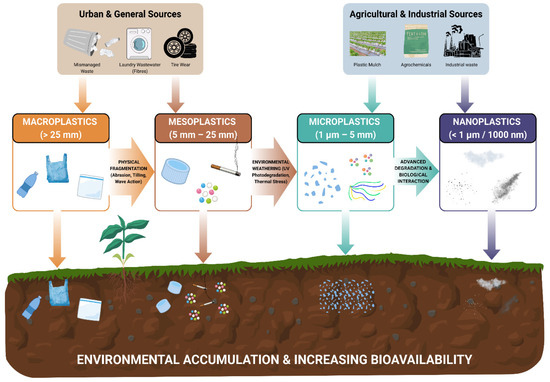
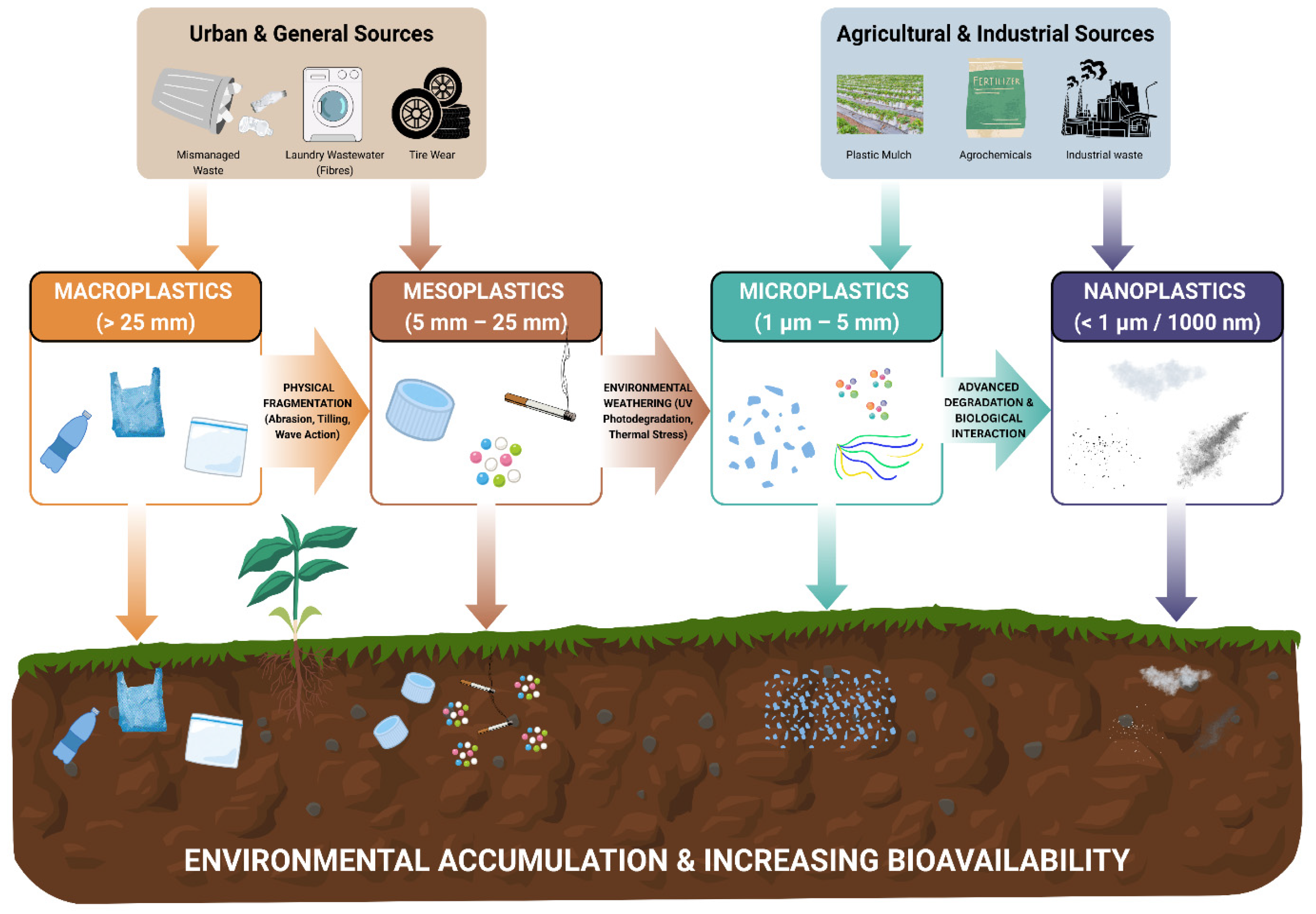
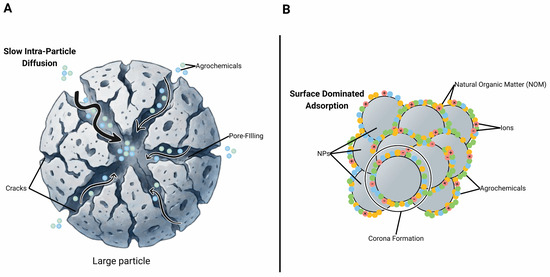
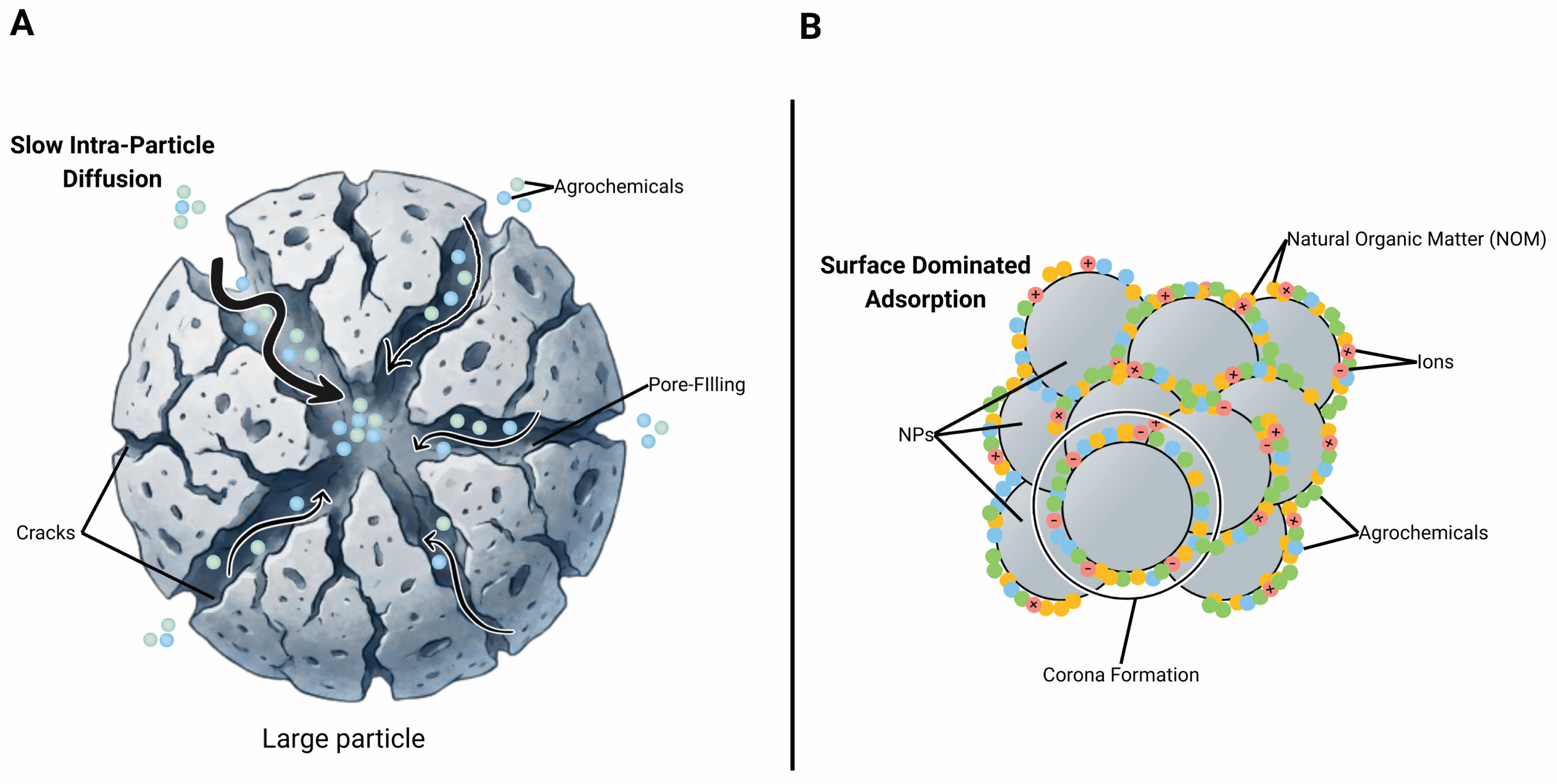
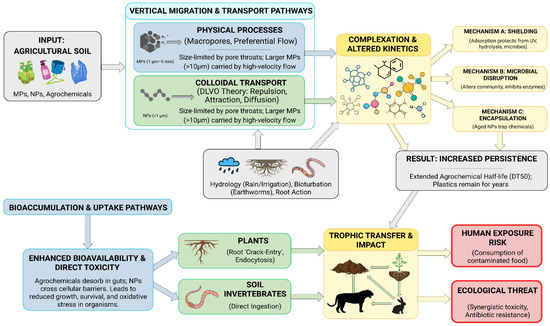
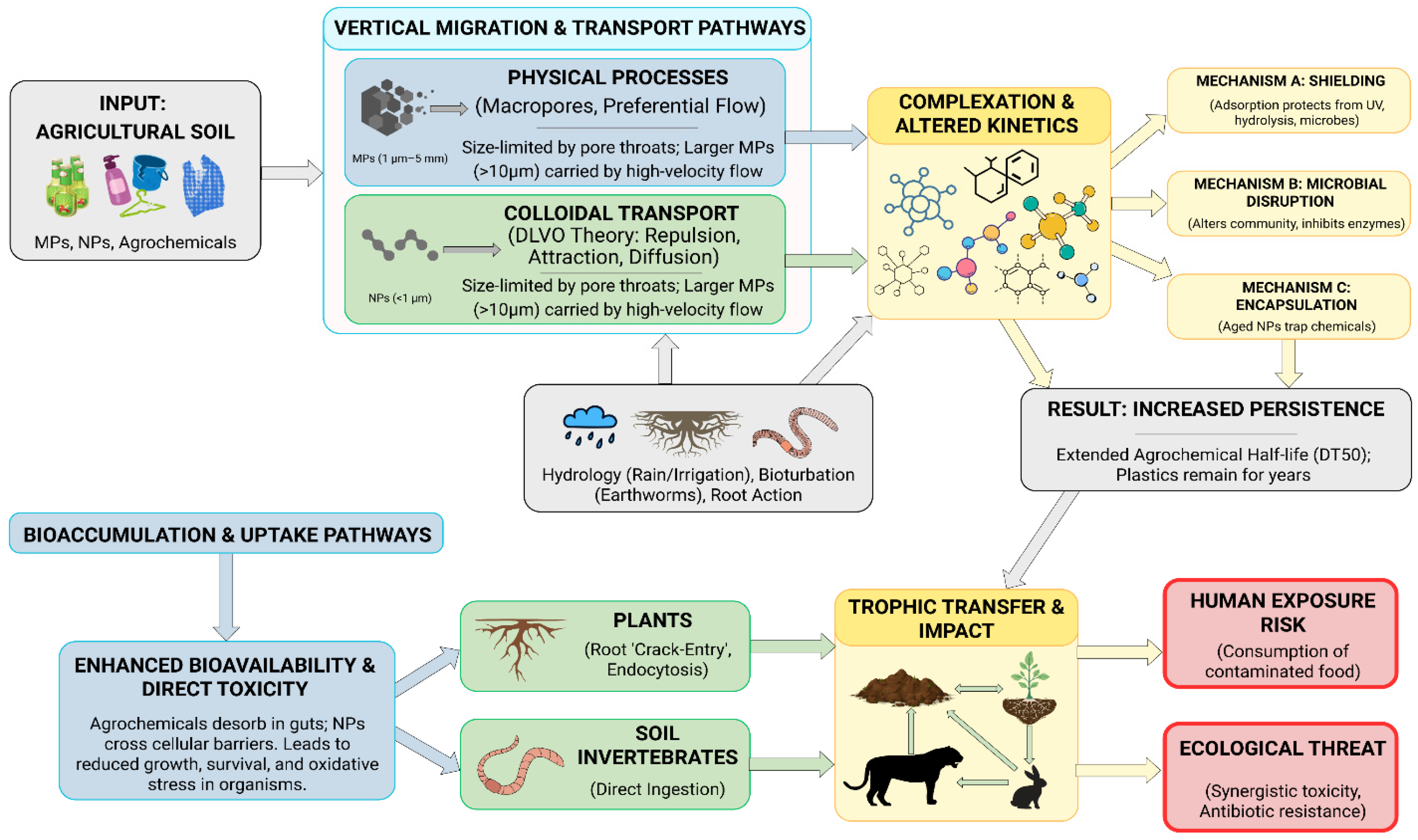
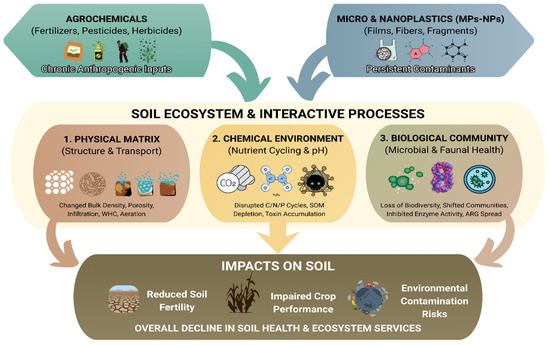
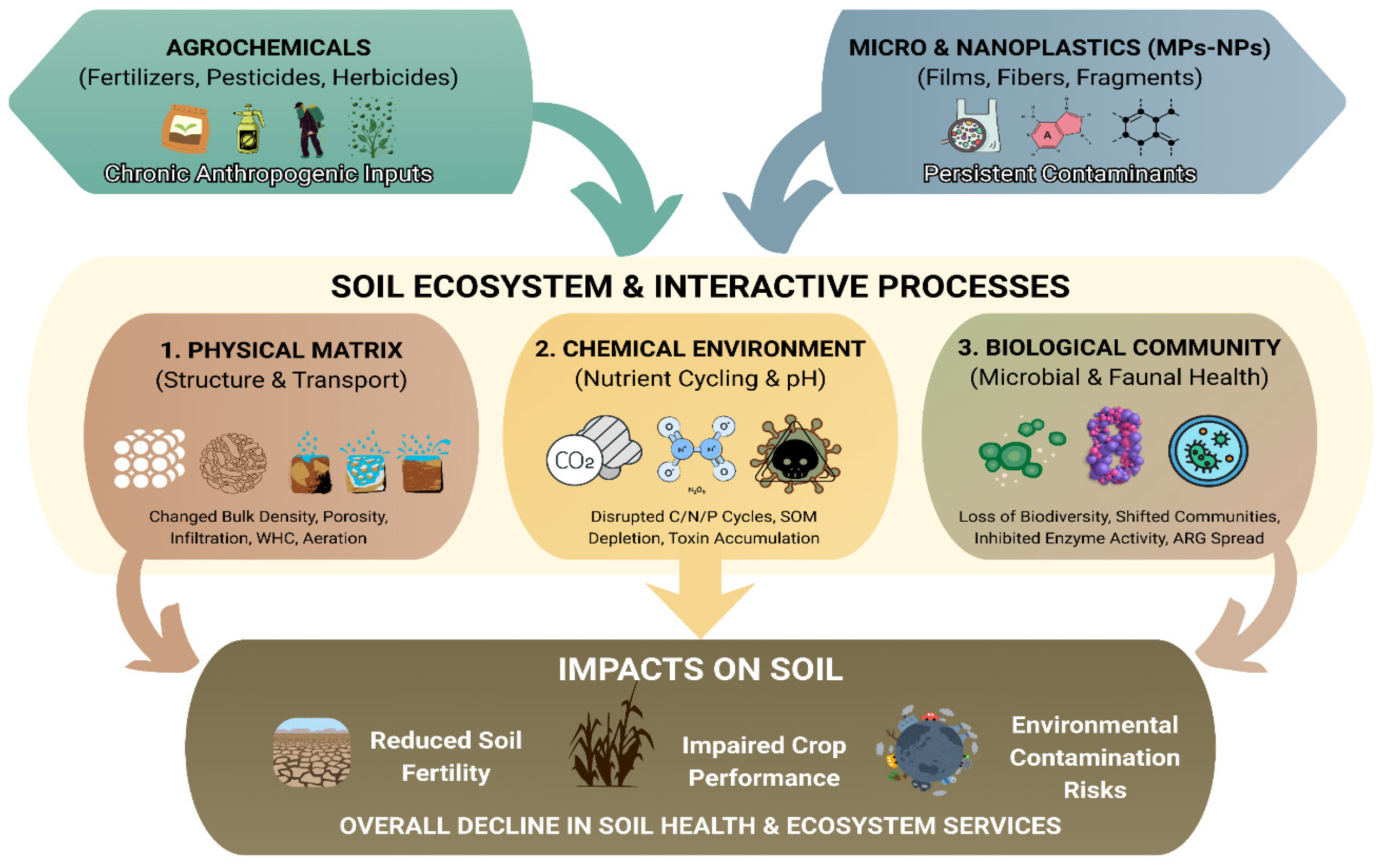
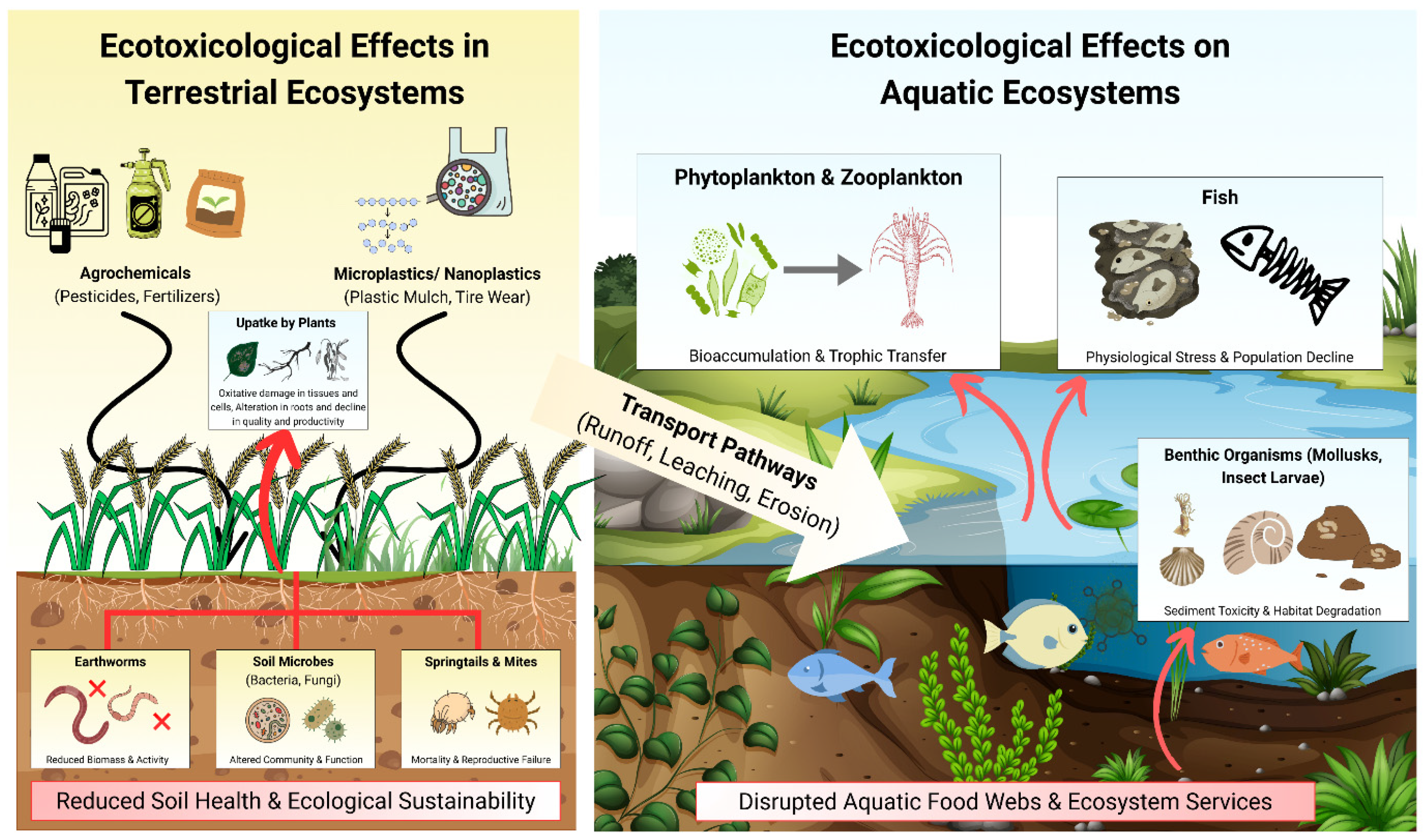

Disclaimer/Publisher’s Note: The statements, opinions and data contained in all publications are solely those of the individual author(s) and contributor(s) and not of MDPI and/or the editor(s). MDPI and/or the editor(s) disclaim responsibility for any injury to people or property resulting from any ideas, methods, instructions or products referred to in the content. |
© 2026 by the authors. Licensee MDPI, Basel, Switzerland. This article is an open access article distributed under the terms and conditions of the Creative Commons Attribution (CC BY) license.