


Abstract
Patient safety policies in Mexico have evolved through the incorporation and adaptation of the International Patient Safety Goals (IPSG) within the broader Essential Actions for Patient Safety (AESP) framework. This narrative policy review aimed to analyze this evolution, compare the main characteristics of both frameworks, and examine the available evidence concerning AESP implementation and current challenges in Mexico. A structured literature search was conducted between March and July 2026 in PubMed and SciELO, supplemented by Google Scholar and official sources from the World Health Organization and Mexican health authorities; the final search update was performed in July 2026. The narrative synthesis included 26 sources: 17 scientific or academic publications and nine official or institutional documents. The evidence indicates that the AESP retained the six principal clinical safety areas of the IPSG while adding incident reporting and analysis and patient safety culture as organizational components. However, available Mexican empirical evidence is limited and does not establish national implementation levels or demonstrate that the AESP have independently reduced adverse events or improved patient outcomes. Further national, multicenter, longitudinal, and comparative evaluations are needed to assess implementation, adherence, reporting performance, safety culture, and patient outcomes.
1. Introduction
Patient safety is defined as the absence of preventable harm during the provision of healthcare and is considered a fundamental component of healthcare quality. Medical errors and healthcare-related harm remain important causes of morbidity and mortality worldwide, leading to the development of international initiatives aimed at improving safety in healthcare settings [1]. According to the World Health Organization (WHO), current global estimates indicate that approximately one in ten patients experiences harm while receiving healthcare, resulting in more than three million deaths each year worldwide, with a substantial proportion of these events considered preventable [2]. In response, the World Health Organization (WHO) has emphasized the need to strengthen health systems and patient safety strategies to reduce preventable harm [3].
In Mexico, patient safety also represents an important healthcare challenge. Official Mexican patient safety documents report estimates indicating that approximately 8% of hospitalized patients may experience harm related to adverse events, nearly 2% may die, and around 62% of these adverse events may be preventable [4,5]. These figures highlight the relevance of patient safety within the Mexican healthcare system.
At the international level, the International Patient Safety Goals (IPSG) have provided a framework for addressing critical areas of healthcare safety, while in Mexico these principles were subsequently incorporated and expanded within the Essential Actions for Patient Safety (AESP) framework [6]. Patient safety also has important economic implications, as unsafe care has been associated internationally with substantial healthcare expenditure resulting from prolonged hospital stays, additional treatments, and avoidable use of healthcare resources [7]. More recently, the WHO Global Patient Safety Report 2024 has highlighted continuing international challenges related to patient safety culture, professional training, incident reporting and learning systems, and the evaluation of patient safety strategies [8]. These international challenges are also relevant to the Mexican context, particularly when examining the implementation, monitoring, incident reporting, and patient safety culture components incorporated within the AESP framework.
Despite the formal development of the AESP in Mexico, the available literature has not clearly synthesized how the IPSG were incorporated into the Mexican patient safety framework, which substantive changes accompanied the transition to the AESP, and what evidence is currently available regarding their implementation and outcomes. In particular, official policy development, institutional implementation, professional adherence, and demonstrated patient outcomes are not always clearly distinguished in the available literature. A review integrating scientific evidence with official and regulatory documents is therefore needed to clarify this policy transition and identify the main gaps in the available evidence.
Accordingly, this narrative policy review aims to analyze the incorporation of the IPSG and the subsequent development of the AESP within the Mexican patient safety framework, compare the main characteristics and substantive differences between both frameworks, and examine the available evidence concerning AESP implementation, current challenges, and remaining evidence gaps in the Mexican healthcare system.
2. Materials and Methods
A narrative review with a policy-oriented approach was conducted to examine the incorporation of the International Patient Safety Goals (IPSG) and the subsequent development of the Essential Actions for Patient Safety (Acciones Esenciales para la Seguridad del Paciente, AESP) within the Mexican patient safety framework. This review design was considered appropriate because the objective required the integration of the scientific literature and official documents to describe the development of the Mexican patient safety framework, identify the main changes associated with the establishment of the AESP, and analyze the relationship between both frameworks.
The review involved a structured search of the scientific literature and official documents, followed by a narrative synthesis of the relevant information. Given its narrative and policy-oriented nature, the review was not designed as a systematic review and was not intended to provide an exhaustive synthesis of all available evidence. The information was organized according to the main topics related to the development of the IPSG, their adoption in Mexico, the establishment of the AESP, and the challenges associated with their implementation.
The literature search was conducted between March and July 2026 in PubMed and SciELO and was supplemented by searches in Google Scholar and official institutional sources. The final search update was performed in July 2026. The scientific literature published between 2021 and 2026 in English or Spanish was considered as the primary publication period. Earlier scientific publications were included only when they provided foundational information necessary to reconstruct the historical development of patient safety or the IPSG. Official Mexican documents concerning the AESP were considered from 2017 onward, corresponding to their formal introduction into the national patient safety framework. English and Spanish were selected because they covered the international scientific literature and the official Mexican documents relevant to the objective of this review.
In PubMed, the main search strategy combined controlled vocabulary (MeSH) and free-text terms related to patient safety, healthcare quality, adverse events, incident reporting, risk management, medical errors, and the Mexican context. The search strategy was: (“Patient Safety”[MeSH Terms] OR “patient safety”[Title/Abstract] OR “patient safety culture”[Title/Abstract]) AND (“Quality of Health Care”[MeSH Terms] OR “quality of health care”[Title/Abstract] OR “adverse events”[Title/Abstract] OR “incident reporting”[Title/Abstract] OR “risk management”[Title/Abstract] OR “medical errors”[Title/Abstract]) AND (Mexico [MeSH Terms] OR Mexico [Title/Abstract] OR Mexican [Title/Abstract]). With the 2021–2026 publication period applied, this search identified 26 records. A supplementary search using terms specifically related to the International Patient Safety Goals and the Essential Actions for Patient Safety in Mexico was also conducted to identify publications directly addressing the transition between these frameworks.
In SciELO, the search strategy was adapted using terms in Spanish and Boolean operators. The searches included “seguridad del paciente” AND México, “Acciones Esenciales para la Seguridad del Paciente”, and “Metas Internacionales de Seguridad del Paciente”. Within the 2021–2026 publication period, these searches retrieved three, one, and zero records, respectively.
Google Scholar was used as a supplementary search source to identify additional scientific publications, institutional documents, and the grey literature relevant to the Mexican context. Three searches were conducted using the terms “Acciones Esenciales para la Seguridad del Paciente” México, “seguridad del paciente” México “eventos adversos”, and “Metas Internacionales de Seguridad del Paciente” México. These searches returned approximately 251, 4300, and 81 results, respectively, for the 2021–2026 period. For each search, the first 50 results ranked by relevance were screened to identify potentially relevant sources. Thus, up to 150 Google Scholar results were screened across the three predefined searches. After applying the eligibility criteria and considering potential overlap among searches, eligible sources were incorporated into the final narrative synthesis.
Official and regulatory documents were identified through publicly available institutional sources from the World Health Organization (WHO), the Consejo de Salubridad General (CSG; General Health Council), and the Secretaría de Salud (Mexican Ministry of Health). The search focused on documents related to the IPSG, AESP, patient safety policies, healthcare facility certification, incident reporting, and patient safety culture. Reference lists of relevant scientific publications and official documents were also reviewed to identify additional sources pertinent to the historical and regulatory development of patient safety in Mexico. Earlier foundational and official documents were retained when necessary to reconstruct the historical development of the IPSG and patient safety policies. For the AESP, official Mexican documents published from 2017 onward were considered because this period corresponds to their formal introduction into the national patient safety framework.
2.1. Eligibility Criteria and Source Selection
Scientific publications were considered eligible when they: (1) were published between 2021 and 2026; (2) were written in English or Spanish; (3) addressed patient safety, healthcare quality, adverse events, incident reporting, patient safety culture, risk management, the IPSG, or the AESP; and (4) contributed information relevant to the development, implementation, monitoring, or evaluation of patient safety policies, particularly in the Mexican healthcare context. Empirical studies, systematic reviews, and narrative reviews were considered when their content contributed evidence or contextual information relevant to the objectives of the review. Earlier scientific publications were considered only when they provided foundational information necessary to understand the historical development of patient safety or the IPSG.
Official and regulatory documents were eligible when they were issued by recognized national or international health authorities, particularly the World Health Organization, the Consejo de Salubridad General, or the Secretaría de Salud, and provided information on the development, regulation, implementation, monitoring, or evaluation of the IPSG, AESP, or related patient safety policies. For the analysis of the AESP, official Mexican documents published from 2017 onward were considered. Institutional webpages were included only when they originated from these recognized health authorities and contained information directly relevant to the policy framework or its implementation.
Documents were excluded when they: (1) did not address the concepts or policy context of interest; (2) were outside the defined publication period without providing relevant foundational or historical information; (3) were published in languages other than English or Spanish; (4) did not provide sufficient information to contribute to the analysis of policy development, implementation, monitoring, or outcomes; or (5) consisted solely of conference abstracts, educational materials, or noninstitutional web content without relevant empirical, regulatory, policy, or contextual information. Protocols were not routinely included, but were considered when they provided relevant conceptual or methodological information directly related to the objectives of the review.
Source selection was performed in two stages. First, titles and available abstracts or descriptive information were screened to identify potentially relevant sources. Second, the full text of potentially eligible documents was reviewed according to the predefined eligibility criteria. For official and regulatory sources, the complete document or relevant institutional webpage was examined to confirm its contribution to the historical or policy analysis. Source screening and eligibility assessment were performed by one author. The final set of included sources and any uncertainties regarding eligibility were subsequently reviewed and discussed by the author team during manuscript preparation and revision. Any disagreements or uncertainties identified during the subsequent team review were discussed among the authors and resolved by consensus.
The bibliographic search identified 26 records in PubMed and four records in SciELO, while 150 Google Scholar results were screened as supplementary sources, corresponding to the first 50 results from each of the three predefined searches. In PubMed, all 26 records were screened by title and abstract; 15 were excluded because they addressed clinical interventions, technical quality-control topics, or other subjects that did not contribute directly to the patient safety framework of interest, and 11 underwent further eligibility assessment. Duplicate and clearly unrelated records identified across SciELO and Google Scholar were removed during screening. Because Google Scholar was used as a supplementary search source within a narrative review rather than as a systematic database, a prospective PRISMA-style duplicate log was not maintained. Therefore, the selection process is reported by source and by the final composition of the evidence base rather than as a formal systematic-review flow. The final narrative synthesis included 26 sources, comprising 17 scientific or academic sources and nine official or institutional documents.
2.2. Data Extraction, Source Evaluation, and Narrative Synthesis
Data from the included sources were extracted using a structured approach developed according to the objectives of the review. For scientific publications, the information collected included authorship, year of publication, country or setting, study design, study population or healthcare context, patient safety topic addressed, and the main findings relevant to the development, implementation, monitoring, or outcomes of patient safety strategies. For official and regulatory documents, information was extracted regarding the issuing organization, year of publication, scope of the document, patient safety framework addressed, and its contribution to the development, regulation, implementation, or monitoring of the IPSG and AESP in Mexico. For reporting purposes, sources were grouped into two broad categories: scientific or academic sources and official or institutional sources. The latter category included policy and regulatory documents, institutional reports, and official webpages issued by national or international organizations.
Data extraction was initially performed by one author and subsequently reviewed during manuscript preparation by the author team. Because the review included heterogeneous sources, including empirical studies, reviews, and official or regulatory documents, a single formal risk-of-bias instrument was not considered appropriate for all included sources. Instead, sources were evaluated according to their type and purpose. Scientific publications were considered in relation to their study design, healthcare context, methodological description, and relevance to the review objective. Official and regulatory documents were evaluated according to the authority of the issuing organization, their regulatory or policy relevance, publication status, and direct applicability to the Mexican patient safety framework.
The extracted information was synthesized narratively and organized into thematic categories corresponding to the objectives of the review: (1) development of the international patient safety framework; (2) adoption and evolution of the IPSG in Mexico; (3) transition to and implementation of the AESP; (4) adverse events and incident reporting; (5) patient safety culture and monitoring; and (6) current implementation challenges and opportunities for improvement. Evidence from scientific publications was integrated with official and regulatory information to distinguish policy requirements from empirical evidence regarding implementation and outcomes. When findings differed across sources, the differences were considered in relation to the study setting, population, design, and scope of the source rather than being quantitatively pooled.
The main characteristics and contributions of the sources included in the narrative synthesis are summarized in Table 1.
Table 1.
Characteristics and contribution of the sources included in the narrative synthesis.
3. Incorporation of the International Patient Safety Goals and Development of the Essential Actions for Patient Safety in Mexico
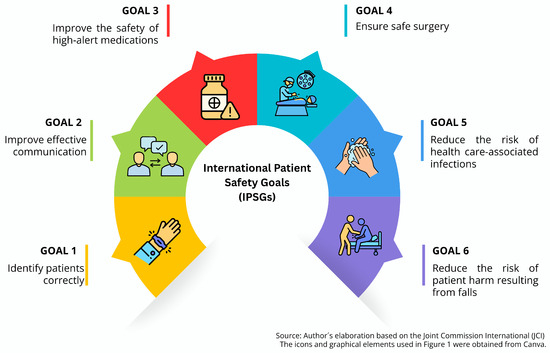
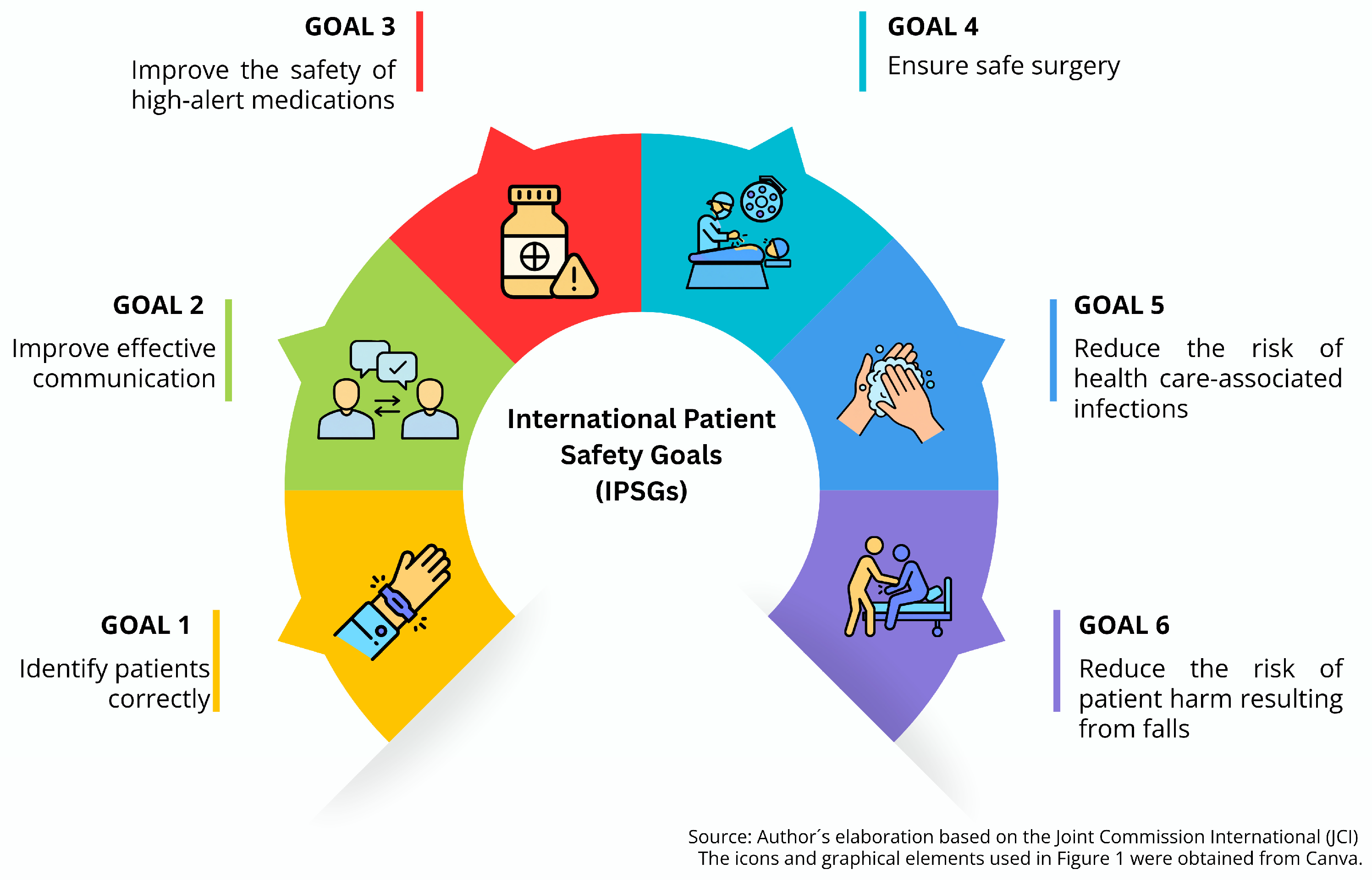
Within the international accreditation context, Joint Commission International (JCI) established the International Patient Safety Goals (IPSG) to address critical areas of patient safety in healthcare organizations (Figure 1) [9,10]. The development of patient safety strategies has also been associated with efforts to reduce preventable medical errors and risks during healthcare delivery [11]. In parallel, the World Health Organization (WHO) has promoted patient safety through separate global programmes, technical initiatives, and action plans aimed at reducing avoidable harm and improving patient safety worldwide [2,3,8].
Figure 1.
International Patient Safety Goals. Source: Prepared by the authors based on Joint Commission International material [9].
In Mexico, the incorporation of the IPSG into the national patient safety framework was initially linked to healthcare facility certification. Since 2009, the IPSG have been incorporated into the Sistema Nacional de Certificación de Establecimientos de Atención Médica (SiNaCEAM; National System for the Certification of Healthcare Facilities) of the Consejo de Salubridad General (CSG; General Health Council), contributing to the inclusion of internationally recognized patient safety principles within the Mexican healthcare certification process [5]. This earlier incorporation into certification processes preceded the subsequent formal establishment of the AESP as a national patient safety framework.
A major regulatory development occurred in 2017, when the Consejo de Salubridad General formally established the Acciones Esenciales para la Seguridad del Paciente (AESP; Essential Actions for Patient Safety). The AESP were established as a mandatory framework for all members of the Mexican National Health System and incorporated the six clinical safety areas corresponding to the IPSG, while adding two organizational components addressing incident reporting and analysis and patient safety culture [5]. This regulatory development should be distinguished from the earlier incorporation of the IPSG into healthcare facility certification processes, as it established the AESP within a nationally defined patient safety framework and expanded its scope to include additional organizational components [5,12,13].
The two additional actions broadened the organizational dimension of the Mexican patient safety framework. AESP 7 incorporated the notification, registration, and analysis of near misses, adverse events, and sentinel events to generate information that can support decision-making and the prevention of similar incidents. AESP 8 incorporated the assessment of patient safety culture to identify opportunities for improvement within healthcare organizations [5]. These additions extended the framework beyond clinical safety barriers by incorporating incident analysis, organizational learning, and patient safety culture [14].
The national framework was subsequently updated in 2023. The updated AESP document explicitly links the AESP with the IPSG and establishes their comprehensive implementation and evaluation within healthcare facilities of the National Health System [5]. Based on the regulatory trajectory reviewed, the transition from the IPSG to the AESP can therefore be interpreted as a regulatory integration, adaptation, and expansion of the international framework to the Mexican healthcare context rather than as its complete replacement.
The main milestones in this transition are summarized in Table 2.
Table 2.
Main milestones in the incorporation of the IPSG and development of the AESP in Mexico.
Comparative Analysis of the IPSG and AESP
Although the AESP preserve the main clinical safety areas addressed by the IPSG, the Mexican framework incorporates these principles into a nationally defined patient safety structure and expands their organizational scope. The first six AESP maintain correspondence with the six IPSG in areas such as patient identification, effective communication, medication safety, safe surgery and procedures, healthcare-associated infection prevention, and prevention of harm from falls. The principal expansion of the framework is represented by AESP 7 and AESP 8, which incorporate incident reporting and analysis and the assessment of patient safety culture, respectively. These additions extend the framework from the application of specific clinical safety barriers toward organizational learning, monitoring, and the systematic evaluation of patient safety practices [5,12,13,14].
From an institutional and regulatory perspective, the two frameworks also differ in their scope and application. The IPSG were developed within the international healthcare accreditation context and were subsequently incorporated into Mexican healthcare facility certification processes, whereas the AESP constitute a nationally defined patient safety framework established by the Consejo de Salubridad General for implementation within the Mexican National Health System [5,10,13]. Their application therefore extends beyond the accreditation context and includes monitoring of specific safety processes, incident reporting and analysis, and periodic assessment of patient safety culture [5,12,13]. Table 3 summarizes the correspondence, main objectives, monitoring requirements, and principal modifications between the two frameworks.
Table 3.
Comparative analysis of the International Patient Safety Goals and the Essential Actions for Patient Safety in Mexico.
4. Essential Actions for Patient Safety
The AESP comprise a set of strategies designed to prevent errors and reduce the likelihood of harm during healthcare delivery. These actions are based on scientific evidence and international recommendations that have been adapted to the needs of the Mexican healthcare system [13].
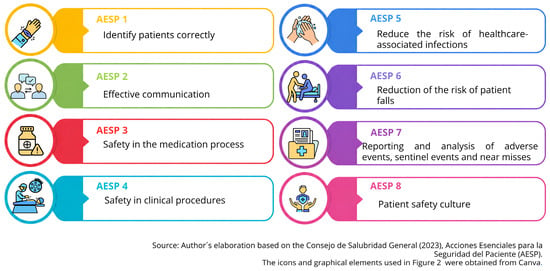
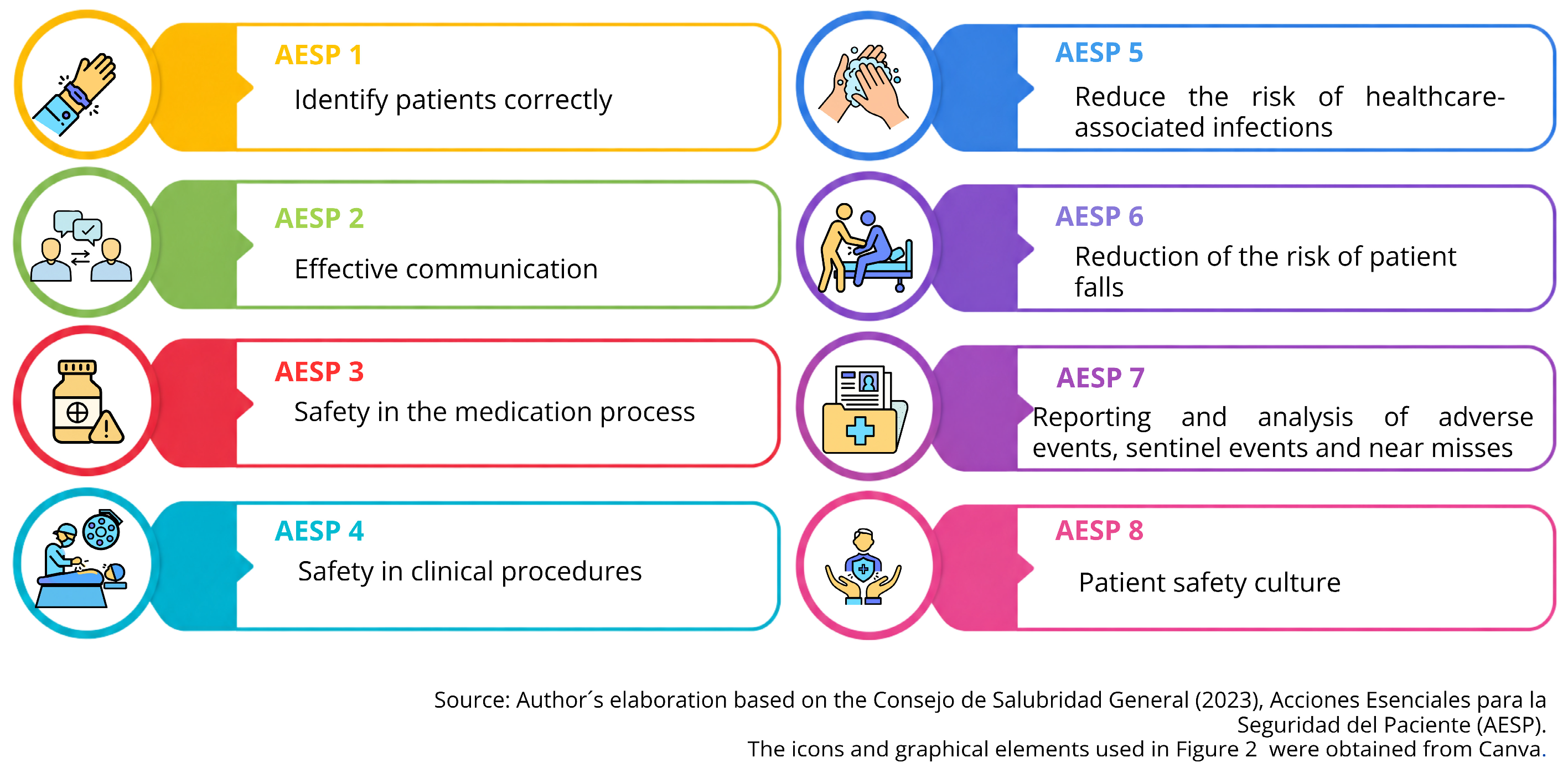
According to the national guidelines, the AESP are organized into eight main components (Figure 2) [5].
Figure 2.
Essential Actions for Patient Safety. Source: Prepared by the authors based on the General Health Council of Mexico [5].
These actions serve as safety barriers that help minimize human error, improve coordination among healthcare professionals, and promote safer, patient-centered care [14].
5. Patient Safety Incidents and Incident Reporting Within the AESP Framework
Patient safety incidents, adverse events, near misses, and sentinel events represent distinct concepts within patient safety. The term “patient safety incident” is used broadly to refer to events or circumstances related to patient safety, whereas an “adverse event” involves healthcare-related harm to the patient. Within the Mexican AESP framework, near misses, adverse events, and sentinel events are recognized as distinct categories for incident reporting and analysis under AESP 7 [5]. The term “error” refers specifically to failures occurring during healthcare processes and should not be considered synonymous with an adverse event or patient safety incident.
Within the Mexican AESP framework, adverse events are addressed not only through preventive safety measures but also through their identification, reporting, and analysis. This represents an important expansion compared with the IPSG, particularly through AESP 7, which incorporates the reporting and analysis of near misses, adverse events, and sentinel events as a specific component of the national patient safety framework [5,12,14]. Patient misidentification, communication failures among healthcare professionals, and medication-related errors are examples of risks addressed through different components of the AESP [11,15].
Incident reporting and analysis complement the preventive measures included in the AESP by providing information that can support the identification of risks and opportunities for improvement within healthcare institutions. In this context, incident reporting systems have been used to identify patient safety hazards, contributing factors, consequences, and opportunities for corrective actions in hospital settings [16]. Within the AESP framework, these processes are particularly relevant to AESP 7 because reporting and analyzing patient safety incidents can support organizational learning and the development of preventive measures [5,16].
Adverse events are defined as unintended harm resulting from healthcare rather than from the patient’s underlying disease. They represent an important public health issue because they are associated with increased morbidity, mortality, length of hospital stay, and healthcare costs. A study conducted in a second-level hospital in Puebla, Mexico, between 2019 and 2021 reported an approximate prevalence of 3.6% for adverse events, most of which were considered preventable. These findings provide institution-specific evidence of adverse events related to medication use and illustrate the relevance of medication safety within the broader AESP framework [6].
Similarly, a study conducted in public hospitals in the state of Hidalgo, Mexico, between 2013 and 2021 found that the most frequent adverse events were related to medication, healthcare-associated infections, clinical procedures, and patient falls, which are consistent with the critical areas addressed by the Essential Actions for Patient Safety [17].
6. Implementation, Monitoring, and Patient Safety Culture Within the AESP Framework
The implementation of the AESP depends not only on their formal incorporation into the Mexican patient safety framework but also on their consistent application in daily clinical practice. Evidence from individual healthcare institutions has provided information on the implementation and supervision of the AESP [12]; however, these findings should not be generalized to the Mexican healthcare system as a whole. Patient safety culture, which is explicitly incorporated into the Mexican framework through AESP 8, represents an additional organizational dimension relevant to implementation [5]. Evidence from the broader patient safety literature has identified an association between patient safety culture and adverse events [18], although this should not be interpreted as direct evidence of the effectiveness of the AESP.
Monitoring represents an important component for assessing the implementation of patient safety practices within healthcare institutions. A recent systematic review reported that patient safety monitoring systems can support the identification of risks and adverse events and provide information for assessing compliance with patient safety practices [19]. Within the AESP framework, such information can contribute to evaluating implementation processes; however, process monitoring should be distinguished from evidence of improvements in patient outcomes.
From a systems perspective, patient safety is also influenced by organizational processes, communication, healthcare professional training, and process standardization [13]. A strong patient safety culture is relevant in this context because patient safety incidents may involve not only individual errors but also weaknesses in organizational processes and healthcare delivery systems [20]. Within the AESP framework, the periodic assessment of patient safety culture established through AESP 8 can help identify organizational areas requiring attention [5].
Incident reporting represents another important organizational component of patient safety and is directly related to AESP 7 [5]. During healthcare delivery, recognizing and reporting an error can be difficult for healthcare professionals, and fear of negative workplace consequences may discourage incident reporting, limiting opportunities for risk identification and organizational learning [6,21]. These barriers illustrate the relationship between incident reporting under AESP 7 and the organizational safety culture assessed through AESP 8.
A recent review identified improvements in incident reporting systems as an important patient safety priority. Reported barriers include fear of sanctions, lack of feedback after submitting reports, and hierarchical barriers within healthcare organizations [22]. These findings provide broader contextual evidence regarding factors that may influence incident reporting; however, they should not be interpreted as direct evidence of AESP implementation in Mexico.
Patient safety culture has also been associated with healthcare professionals’ attitudes toward incident reporting [23]. Challenges related to communication, coordination, and patient safety culture have been reported in broader and regional healthcare settings [24,25]. Within the AESP framework, these findings provide contextual support for understanding the organizational dimensions addressed by AESP 7 and AESP 8, while their specific relationship with implementation and patient outcomes in Mexico requires further evaluation.
Despite the formal national scope of the AESP, the available Mexican evidence remains insufficient to determine whether their implementation differs consistently across levels of care, geographic regions, public and private institutions, or resource-constrained healthcare settings. Similarly, the reviewed literature provides limited nationally consolidated information on implementation indicators, professional training, patient and family involvement, and measurable patient outcomes associated with AESP implementation. Available studies primarily describe specific institutional experiences, which limits comparisons across healthcare settings and prevents conclusions regarding the overall effectiveness of AESP implementation at the national level.
7. Implementation Challenges, Evidence Gaps, and Priorities for AESP Evaluation in Mexico
Despite the formal incorporation of the AESP into the Mexican patient safety framework, challenges remain regarding their consistent implementation in healthcare practice. Available evidence indicates that formal adoption alone does not establish the extent to which the actions are implemented across healthcare institutions or followed by healthcare professionals. This distinction between policy adoption and implementation is important when interpreting the available evidence on the AESP in Mexico.
In practice, the implementation of the AESP may vary across healthcare institutions and settings. Available evidence from individual institutions provides information on specific implementation experiences; however, it is insufficient to establish consistent differences between public and private healthcare institutions at the national level. Therefore, the degree of implementation and its potential contribution to patient safety should be interpreted according to the characteristics of each healthcare setting. Continued monitoring and evaluation are needed to determine the extent of AESP implementation and its relationship with patient safety outcomes in Mexico.
Although incident reporting and patient safety culture are formally incorporated through AESP 7 and AESP 8, respectively [5], the broader literature indicates that organizational and professional factors can influence their application in clinical practice. As discussed in the previous section, barriers to incident reporting and limitations in organizational safety culture may affect professional participation in reporting and learning processes. These factors illustrate the need to distinguish between the existence of formal policy requirements, their organizational implementation, and professional adherence in daily practice.
An important evidence gap concerns the relationship between AESP implementation, process indicators, and patient outcomes in Mexico. The available evidence provides information on specific institutional experiences and broader patient safety issues, but does not allow conclusions regarding the effectiveness of the AESP across the Mexican healthcare system. Further evaluation is therefore needed to examine implementation across different healthcare settings and to determine whether greater adherence to the AESP is associated with improvements in patient safety processes and outcomes.
In this regard, the WHO recently reported that, although progress has been made internationally in implementing patient safety strategies, several areas still require further attention. These include integrating patient safety into the education of healthcare professionals, strengthening incident reporting and learning systems, and consolidating policies aimed at improving the quality and safety of healthcare delivery [26]. These international priorities provide a relevant context for the continued evaluation of AESP implementation in Mexico and for identifying areas requiring further development.
8. Discussion
This narrative review shows that the incorporation of the IPSG and subsequent development of the AESP in Mexico represent an adaptation and expansion of the international patient safety framework within the national healthcare context. The first six AESP maintain the main clinical safety areas addressed by the IPSG, while AESP 7 and AESP 8 incorporate incident reporting and analysis and the assessment of patient safety culture, respectively [5,12,13,14]. Therefore, the transition should not be understood as a complete replacement of the IPSG, but rather as their integration into a broader national framework that includes additional organizational components related to learning, monitoring, and the systematic evaluation of patient safety practices.
One of the main differences between the two frameworks is the greater emphasis placed by the AESP on organizational aspects of patient safety. While the IPSG primarily focus on specific clinical safety areas, the incorporation of incident reporting and analysis through AESP 7 and patient safety culture through AESP 8 extends the framework toward organizational processes that can support the identification of risks and opportunities for improvement [5,12,14]. This distinction is relevant because patient safety depends not only on the existence of clinical procedures and safety barriers, but also on the capacity of healthcare organizations to identify incidents, learn from them, and evaluate the conditions in which care is provided.
However, the available evidence requires a cautious interpretation of the implementation and effectiveness of the AESP in Mexico. Official documents demonstrate their formal incorporation into the national patient safety framework, and some studies provide information on their application and supervision in specific healthcare institutions [5,12,13]. Nevertheless, evidence from individual institutions cannot establish the degree of implementation or professional adherence across the Mexican healthcare system. Similarly, studies describing adverse events in Mexican healthcare institutions provide relevant information about patient safety problems [6,17], but they do not demonstrate that changes in the frequency of these events are attributable to the implementation of the AESP. Consequently, formal adoption, organizational implementation, professional adherence, process indicators, and patient outcomes should be considered as different levels of evaluation.
The Mexican experience also reflects challenges described in the international patient safety literature. Monitoring systems can provide information for identifying risks and assessing patient safety practices [19], while patient safety culture has been associated with adverse events and attitudes toward incident reporting [18,23]. At the same time, barriers such as fear of sanctions, lack of feedback, and organizational hierarchies may limit incident reporting [21,22]. Evidence from Latin American and international settings also indicates that communication, coordination, and organizational culture remain relevant dimensions of patient safety [24,25]. These findings provide useful context for understanding the organizational components incorporated into the AESP, but they should not be interpreted as direct evidence of their effectiveness in Mexico.
From an institutional and professional perspective, these findings highlight the importance of moving beyond formal adoption toward evaluating how the AESP are applied in routine healthcare practice. Healthcare institutions may benefit from monitoring implementation, strengthening incident reporting and learning processes, and periodically assessing patient safety culture. For healthcare professionals, continued training and participation in reporting and improvement processes remain relevant components of implementation. At the policy level, the distinction between formal requirements and their application in clinical practice is important for identifying areas in which additional support, monitoring, or evaluation may be needed.
Finally, important evidence gaps remain regarding the implementation and outcomes of the AESP in Mexico. Current evidence does not allow conclusions about whether greater implementation of the AESP results in reductions in adverse events or improvements in patient outcomes at the national level. Future studies should evaluate implementation across different types of healthcare institutions and examine the relationship between adherence to individual AESP, process indicators, patient safety culture, incident reporting, and clinical outcomes. Longitudinal and comparative studies would be particularly useful for distinguishing changes associated with the AESP from broader changes in healthcare delivery. These research priorities are consistent with international recommendations emphasizing continued evaluation, professional education, incident reporting and learning systems, and the strengthening of national patient safety policies [8,26].
Limitations
This review has several limitations that should be considered when interpreting its findings. First, this study was designed as a narrative review with a policy-oriented approach rather than as a systematic review. Although a structured search and predefined eligibility criteria were used to improve transparency, source selection was based on relevance to the objective of the review and may therefore have introduced selection bias. In addition, the initial source screening and data extraction were performed by one author and subsequently reviewed by the author team; therefore, the possibility of selection, extraction, or interpretation bias cannot be completely excluded. Only documents published in English or Spanish were considered, which may have resulted in the exclusion of relevant evidence published in other languages.
The search also included Google Scholar as a supplementary source and publicly available documents from governmental and institutional websites. Because screening in Google Scholar was limited to the first 50 results from each predefined search, potentially relevant sources appearing beyond this screening threshold may not have been identified. Although these sources were useful for identifying policy and regulatory documents relevant to the development of the AESP in Mexico, the review may not have captured internal, regional, or institution-specific documents that are not publicly accessible or indexed in the sources consulted. Consequently, the documentary evidence included in this review may not represent all patient safety policies or implementation experiences across the Mexican healthcare system.
Another limitation concerns the heterogeneity of the included evidence. The scientific literature comprised studies with different designs, objectives, settings, and methodological characteristics, together with reviews and official or institutional documents. These sources provide different types and levels of evidence and cannot be interpreted as equivalent measures of AESP implementation or effectiveness. Furthermore, the available Mexican empirical evidence directly evaluating AESP implementation, professional adherence, process indicators, and patient outcomes remains limited.
Most importantly, the predominantly descriptive and cross-sectional nature of the available evidence does not allow causal relationships to be established between AESP implementation and changes in adverse events or other patient safety outcomes. Similarly, evidence from individual institutions cannot be used to estimate the level of implementation or compliance with the AESP across the Mexican healthcare system. Finally, official policy and regulatory documents describe the expected or intended patient safety practices, but their existence does not necessarily demonstrate their implementation in routine clinical practice. These limitations should be considered when interpreting the findings and conclusions of this review.
9. Conclusions
The documentary evidence reviewed indicates that the incorporation and adaptation of the IPSG within the AESP broadened the patient safety framework in Mexico by maintaining the main clinical safety areas of the IPSG and incorporating additional organizational components related to incident reporting and analysis and patient safety culture. This development reflects the adaptation and expansion of international patient safety principles within the Mexican regulatory and institutional context.
However, the formal incorporation of the AESP and their intended objectives should be distinguished from demonstrated implementation and patient outcomes. The available evidence provides information on specific institutional experiences and patient safety practices, but it is not sufficient to determine the level of AESP implementation or adherence across the Mexican healthcare system or to establish that their introduction has reduced adverse events or improved healthcare quality at the national level.
From a practical perspective, continued monitoring and evaluation are needed to determine how the AESP are implemented in routine healthcare practice and to identify differences across healthcare institutions and settings. Evaluation should consider not only the existence of formal policies but also organizational implementation, professional adherence, incident-reporting performance, patient safety culture, process indicators, and patient outcomes. This information may support healthcare institutions and policymakers in identifying implementation gaps and areas requiring additional attention.
Future research should prioritize national and multicenter studies evaluating AESP implementation and adherence across different healthcare settings. Longitudinal and comparative studies are also needed to examine implementation fidelity, incident-reporting performance, patient safety culture, and patient outcomes and to determine whether differences in these indicators are associated with the degree of AESP implementation. Such evidence is necessary to evaluate the performance of the framework beyond its formal adoption and to inform future patient safety policy and evaluation in Mexico.
Author Contributions
Conceptualization, E.V.H.-H. and J.A.S.-R.; methodology, J.A.S.-R. and A.G.-B.; investigation, J.A.S.-R. and A.G.-B.; writing—original draft preparation, J.A.S.-R. and A.G.-B.; writing—review and editing, A.S.-F., E.V.H.-H., E.d.l.C.H.-C., G.L.-V., O.L.V.-L., R.E.-G., and J.L.R.-C.; supervision, E.V.H.-H. All authors have read and agreed to the published version of the manuscript.
Funding
This research received partial financial support from the SIREI-Universidad Veracruzana Project No. 30528202572 awarded to E.V.H.-H. J.A.S.-R. received support from the Secretaría de Ciencia, Humanidades, Tecnología e Innovación (SECIHTI) through a master’s scholarship (No. 4020007). E.H.-C. received support through the Estancias Posdoctorales por México program (No. I1200/311/2023).
Institutional Review Board Statement
Not applicable.
Informed Consent Statement
Not applicable.
Data Availability Statement
No new data were created or analyzed in this study. Data sharing is not applicable to this article.
Conflicts of Interest
The authors declare no conflicts of interest.
Abbreviations
The following abbreviations are used in this manuscript:
| WHO | World Health Organization |
| IPSG | International Patient Safety Goals |
| AESP | Essential Actions for Patient Safety |
| JCI | Joint Commission International |
References
- Schiff, G.; Shojania, K.G. Looking Back on the History of Patient Safety: An Opportunity to Reflect and Ponder Future Challenges. BMJ Qual. Saf. 2022, 31, 148–152. [Google Scholar] [CrossRef] [Scilit] [PubMed]
- World Health Organization. Patient Safety. Available online: https://www.who.int/es/news-room/fact-sheets/detail/patient-safety (accessed on 20 May 2026).
- World Health Organization. Global Patient Safety Action Plan 2021–2030; World Health Organization: Geneva, Switzerland, 2021; Available online: https://www.who.int/publications/i/item/9789240032705 (accessed on 18 June 2026).
- de Salud, S. Conoce las Acciones Esenciales para la Seguridad del Paciente. Gobierno de México. Available online: https://www.gob.mx/salud/articulos/conoce-las-acciones-esenciales-para-la-seguridad-del-paciente (accessed on 20 May 2026).
- Consejo de Salubridad General. Acuerdo que modifica el Anexo Único del diverso por el que se declara la obligatoriedad de la implementación, para todos los integrantes del Sistema Nacional de Salud, del documento denominado Acciones Esenciales para la Seguridad del Paciente, publicado el 8 de septiembre de 2017; Diario Oficial de la Federación: Mexico City, Mexico, 2023; Available online: https://sidof.segob.gob.mx/notas/docFuente/5692439 (accessed on 11 August 2026).
- Hernández-Morales, M.D.R.; Ramírez-Sánchez, J.M.; Mancilla-Hernández, E.; Lara-Dávalos, N.; Nazarala-Sánchez, S.; Aguirre-Barbosa, M. Adverse Drug Events in Hospitalized Patients: Prevalence, Causes and Risk Factors. Rev. Alerg. Mex. 2023, 70, 72–79. [Google Scholar] [CrossRef] [Scilit] [PubMed]
- Organisation for Economic Co-operation and Development (OECD). The Economics of Patient Safety: From Analysis to Action; OECD Publishing: Paris, France, 2022; Available online: https://www.oecd.org/en/publications/the-economics-of-patient-safety_761f2da8-en.html (accessed on 20 May 2026).
- World Health Organization. Global Patient Safety Report 2024; World Health Organization: Geneva, Switzerland, 2024; Available online: https://www.who.int/publications/i/item/9789240095458 (accessed on 2 July 2026).
- Joint Commission International. International Patient Safety Goals. Available online: https://www.jointcommission.org/en/standards/international-patient-safety-goals (accessed on 2 July 2026).
- Kobayashi, K.; Ando, K.; Nakashima, H.; Machino, M.; Kanbara, S.; Ito, S.; Inoue, T.; Yamaguchi, H.; Ishiguro, N.; Imagama, S. Challenges for Joint Commission International Accreditation: Performance of Orthopedic Surgeons Based on International Patient Safety Goals. Nagoya J. Med. Sci. 2021, 83, 87–92. [Google Scholar] [CrossRef] [Scilit] [PubMed]
- Rodziewicz, T.L.; Houseman, B.; Vaqar, S.; Hipskind, J.E. Medical Error Reduction and Prevention. In StatPearls; StatPearls Publishing: Treasure Island, FL, USA, 2024. Available online: https://www.ncbi.nlm.nih.gov/books/NBK499956/ (accessed on 20 May 2026).
- Serrano-Berrones, M.A.; Barragán-Padilla, S.B.; García-Avelino, M.T. Supervisión de las Acciones Esenciales de Seguridad del Paciente en las Unidades Médicas en una Institución de Salud. Cir. Cir. 2024, 92, 236–241. [Google Scholar] [CrossRef] [Scilit] [PubMed]
- Instituto Mexicano del Seguro Social (IMSS). Acciones Esenciales para la Seguridad del Paciente; Instituto Mexicano del Seguro Social: Mexico City, Mexico; Available online: https://www.imss.gob.mx/sites/all/statics/pdf/procedimientos/2660-003-056.pdf (accessed on 20 May 2026).
- Rodríguez-Medina, U.; Rodríguez-Wong, U.; Medina-Murillo, G.R. Acciones Esenciales para la Seguridad del Paciente. Rev. Mex. Cir. Apar. Dig. 2022, 11, 37–38. [Google Scholar] [CrossRef] [Scilit]
- Gleeson, L.L.; O’Brien, G.L.; O’Mahony, D.; Byrne, S. Interprofessional Communication in the Hospital Setting: A Systematic Review of the Qualitative Literature. J. Interprof. Care 2023, 37, 203–213. [Google Scholar] [CrossRef] [Scilit] [PubMed]
- Goekcimen, K.; Schwendimann, R.; Pfeiffer, Y.; Mohr, G.; Jaeger, C.; Mueller, S. Addressing Patient Safety Hazards Using Critical Incident Reporting in Hospitals: A Systematic Review. J. Patient Saf. 2023, 19, e1–e8. [Google Scholar] [CrossRef] [Scilit] [PubMed]
- Castro del Ángel, C.A. Evaluating Patient Safety: Analysis of Adverse Events in Hospitals in Hidalgo. Mex. Bioeth. Rev. ICSA 2024, 5, 16–20. [Google Scholar] [CrossRef] [Scilit]
- Vikan, M.; Haugen, A.S.; Bjørnnes, A.K.; Valeberg, B.T.; Deilkås, E.C.T.; Danielsen, S.O. The Association Between Patient Safety Culture and Adverse Events: A Scoping Review. BMC Health Serv. Res. 2023, 23, 300. [Google Scholar] [CrossRef] [Scilit] [PubMed]
- Alizadeh-Dizaj, G.; Damanabi, S.; Hejazi, M.E.; Raoofi, S.; Kalankesh, L.R. Implementation of Patient Safety Monitoring Systems in Hospitals: A Systematic Review. BMJ Health Care Inform. 2025, 32, e101392. [Google Scholar] [CrossRef] [Scilit] [PubMed]
- Kumah, A. Adverse Event Reporting and Patient Safety: The Role of a Just Culture. Front. Health Serv. 2025, 5, 1581516. [Google Scholar] [CrossRef] [Scilit] [PubMed]
- Hamed, M.M.M.; Konstantinidis, S. Barriers to Incident Reporting among Nurses: A Qualitative Systematic Review. West. J. Nurs. Res. 2022, 44, 506–523. [Google Scholar] [CrossRef] [Scilit] [PubMed]
- Falcone, M.L.; Van Stee, S.K.; Tokac, U.; Fish, A.F. Adverse Event Reporting Priorities: An Integrative Review. J. Patient Saf. 2022, 18, e727–e740. [Google Scholar] [CrossRef] [Scilit] [PubMed]
- Alsobou, N.; Rayan, A.H.; Baqeas, M.H.; ALBashtawy, M.S.; Oweidat, I.A.; Al-Mugheed, K.; Abdelaliem, S.M.F. The Relationship Between Patient Safety Culture and Attitudes toward Incident Reporting among Registered Nurses. BMC Health Serv. Res. 2025, 25, 612. [Google Scholar] [CrossRef] [Scilit] [PubMed]
- Camacho-Rodríguez, D.E.; Carrasquilla-Baza, D.A.; Dominguez-Cancino, K.A.; Palmieri, P.A. Patient Safety Culture in Latin American Hospitals: A Systematic Review with Meta-Analysis. Int. J. Environ. Res. Public Health 2022, 19, 14380. [Google Scholar] [CrossRef] [Scilit] [PubMed]
- Alabdullah, H.; Karwowski, W. Patient Safety Culture in Hospital Settings Across Continents: A Systematic Review. Appl. Sci. 2024, 14, 8496. [Google Scholar] [CrossRef] [Scilit]
- World Health Organization. Progress on Patient Safety Across Health Systems Around the World. Available online: https://www.who.int/news/item/23-05-2025-progress-on-patient-safety-across-health-systems-around-the-world (accessed on 2 July 2026).

Disclaimer/Publisher’s Note: The statements, opinions and data contained in all publications are solely those of the individual author(s) and contributor(s) and not of MDPI and/or the editor(s). MDPI and/or the editor(s) disclaim responsibility for any injury to people or property resulting from any ideas, methods, instructions or products referred to in the content. |
© 2026 by the authors. Licensee MDPI, Basel, Switzerland. This article is an open access article distributed under the terms and conditions of the Creative Commons Attribution (CC BY) license.