


Abstract
This study investigated the microbiological quality of “aguas frescas” (fresh fruit drinks) by using fecal coliform and E. coli as microbiological indicators of food safety culture in three types of markets: those with reputable established quality systems (RMQSs), those of reputable brands governed solely by NOM-251 (RMNs), and popular markets (PMs). Additionally, other hygiene aspects outlined in the Mexican regulation NOM-251 were evaluated. Results showed that 100% of samples from RMQS met the permissible limits for both parameters. In contrast, 53% of RMN samples and 75% of PM samples were non-compliant for fecal coliforms. Similarly, non-compliance with E. coli was observed in 40% of RMN and 51% of PM samples. These findings highlight a clear disparity in “aguas frescas” quality across different market types. Moreover, a lack of food hygiene practices was detected in those RMN and PM establishments. Lower compliance rates were observed for the use of face masks (60%), hairnets (43%), and gloves (30%). Certain aspects of the study demonstrated deficiencies in food handling, encompassing both preparation and preservation methods. The data highlight a need for improved training and enforcement of hygiene practices.
1. Introduction
The growing need for financial resources, due to the economic crisis in Mexico, has contributed to the expansion of both formal and informal commerce [1,2]. In this context, the food sector represents one of the most accessible business opportunities for small-scale commerce, often carried out without adequate attention to the responsibility and regulatory frameworks [3]. A popular type of beverage consumed by the Mexican population is fresh fruit drinks known as “aguas frescas”. These drinks are simple to prepare and are widely appreciated for their ability to provide relief from high ambient temperatures. Due to this, the product is available through both formal and informal channels. Informal businesses, including street vendors, traditional markets, and small corner stores, that differ significantly from formal businesses, such as restaurants and brand-name establishments. Food prepared in the informal sector is typically low-cost and readily accessible to consumers; such affordability is commonly associated with insufficient food safety protocols [4]. However, there are also “formal” businesses, which despite having an established brand and commercial image, often fail to comply with the food hygiene requirements established in the official Mexican standard NOM-251-SSA1-2009: Hygiene Practices for the Processing of Food, Beverages, or Food Supplements [5]. This Mexican norm is based on the General Principles of Food Hygiene established by the Codex Alimentarius international food standards (CXC-1-1969) [6]. The aforementioned regulation is mandatory throughout Mexico, encompassing all food processors regardless of their commercial scale. However, in practice, official enforcement by sanitary authorities is predominantly concentrated in formal establishments, leaving traditional markets and street vendors largely unmonitored due to the high volume and mobility of the informal sector. Furthermore, in many cases, its existence is not widely known, and consequently, it is not correctly implemented. Moreover, an additional concern is the public’s limited knowledge of food safety principles, thus contributing to poor hygiene practices during food handling and preparation [7]. This persistent gap between written regulations and actual hygiene practices suggests that food safety cannot be fully achieved through regulatory oversight alone; it requires a fundamental shift in the shared behaviors, values, and attitudes of food handlers. To address this human dimension, the concept of food safety culture has been formally incorporated into international quality standards and is now recognized as an important indicator of quality and compliance during food processing and preparation [8,9]. Although this objective can be achieved through relatively simple strategies, it has not yet been incorporated into Mexican national regulations (NOM-251); consequently, food preparers lack awareness of its importance [10]. In contrast, other international frameworks have already formalized this concept; for instance, the European Union incorporated food safety culture into Regulation (EC) No. 852/2004 in 2021, and the US FDA highlighted it as a core pillar under its New Era of Smarter Food Safety Blueprint [8,9,10]. This global regulatory trend directly targets the operational sphere, reinforcing that food manufacturers and preparers have a primary responsibility to safeguard public health by preventing foodborne risks [11]. In this context, promoting strategies to develop a robust food safety culture could represent a key factor in reducing microbial contamination risks and ensuring the quality of the final product. The presence of fecal coliforms in prepared foods serves as a direct indicator of fecal contamination and, consequently, reflects poor hygiene practices during handling and preparation [12]. These microorganisms, whose natural habitat is the intestinal tract of humans and other warm-blooded animals, indicate that the food has been exposed to fecal contamination [13]. Negligent practices like inadequate hand hygiene, cross-contamination, and the use of non-potable water can facilitate the presence and proliferation of these microorganisms in the food. This condition constitutes a potential public health hazard. Because of fecal contamination, there is a persistent risk of foodborne disease outbreaks caused by pathogens such as E. coli O157:H7 or Salmonella spp. [12,13]. While the correct implementation of good manufacturing and hygiene practices is essential for ensuring acceptable sanitary quality, food handlers often lack awareness of the associated health risks. Therefore, the present study aimed to evaluate the microbiological quality of “aguas frescas” by using fecal coliforms and E. coli as microbiological indicators of food safety culture during beverage preparation. The results of this research are expected to provide important information for promoting a food safety culture across all levels of the Mexican food system.
2. Materials and Methods
The methods applied in this study were in accordance with Mexican regulations, specifically NOM-251-SSA1-2009: Hygiene Practices for the Processing of Food, Beverages, or Food Supplements [5]. This standard is aligned with the international Good Manufacturing Practices (GMPs), such as those established by the Codex Alimentarius [14] and the U.S. Current Good Manufacturing Practices, Code of Federal Regulation [15]. The permissible limits were evaluated according to NOM-127-SSA1-2021: Water for Human Use and Consumption [16]. This last standard is based on the Guidelines for drinking water quality (World Health Organization, WHO) [17], as well as water quality and treatment standards [18]. In addition, the methodologies employed for quantifying microorganisms were derived from the protocols specified in the Bacterial Analytical Manual (BAM) [19], with some aligned with the AOAC official methods (Association of Analytical Communities) [20].
2.1. Collection of “Aguas Frescas” Samples and Types of Markets
Sampling was conducted in various establishments within the Monterrey metropolitan area, following the “Recommended International Code of Practice—General Principles of Food Hygiene” [14]. Briefly, the samples of “aguas frescas” were purchased in local markets (formal and informal commerce) classified as follows: (1) reputable markets with established quality system HACCP or GFSI schemes (RMQSs), (2) reputable markets aligned exclusively with NOM-251 [5] requirements (RMNs), and (3) popular markets with questionable compliance with NOM-251 standard (PMs). A total of twelve establishments were selected corresponding to four distinct locations for each of the three market types evaluated. The samples were kept in their original container. Ninety samples were collected (30 per market type) during the summer period. The temperature of each sample was recorded using a calibrated thermometer (Extec instruments mod. 45045, Nashua, NH, USA). Subsequently, each sample was transported under controlled conditions (≤4 °C). Upon arrival at the laboratory, the samples were labeled and stored under refrigeration for further analysis. To assess compliance with hygiene practices, food handlers were evaluated for adherence to the mandatory clothing requirements established in NOM-251, including the use of gloves, hairnets, and face masks [5].
2.2. pH Measurement
The pH of each sample was determined using a potentiometer (Hanna instruments—mod. HI98128., Mexico City, Mexico) following the manufacturer’s operating instructions. The procedure was conducted in accordance with the method reported in the NMX-F-317-NORMEX-2013: pH Determination in Foods and Beverages—the potentiometric method [21], which is based on the AOAC Official Methods of Analysis, Association of Official Analytical Chemists Method 981.12 pH of Acidified Foods [22].
2.3. Physical Appearance of “Aguas Frescas”
The physical appearance of “aguas frescas” samples was evaluated as part of the chemical analyst’s assessment by recording the sensory characteristics, specifically color, aroma, and consistency (homogeneity and pulp content). Each attribute was classified using a three-level rating scale: “typical”, “not typical”, or “unpleasant”, with values of 3, 2, and 1, respectively. Due to the uncertain microbiological quality of the samples (“aguas frescas”), taste was not evaluated. The sensory evaluation was conducted using a single-blind approach; the chemical analyst had no prior knowledge of the market type or origin of the samples to prevent potential bias.
2.4. Determination of Fecal Coliforms and E. coli
The methodology for determining fecal coliforms and E. coli was performed according to NOM-210-SSA1-2014 (Products and Services. Microbiological Testing Methods. Determination of Indicator Microorganisms. Determination of Pathogenic Microorganisms) [23]. This standard is aligned with the procedures described in the Bacteriological Analytical Manual (BAM), specifically the Most Probable Number (MPN) for fecal coliform enumeration [19]. Briefly, different aliquots of each sample were inoculated into tubes containing 10 mL of Lauryl Triptose Broth (LTB) with inverted Durham tubes and incubated at 35 ± 0.5 °C for 24–48 h in an incubator (Yamato Sci. Tokyo, Japan mod. IC403CR). After the incubation period, tubes showing turbidity and gas production (evidenced by a bubble trapped in the Durham tube) were considered presumptive positives. From these tubes, a loopful was transferred into tubes containing Brillant Green Bile Broth (BGBB) or Bacto-EC medium with MUG (Becton Dikinson, Franklin Lakes, NJ, USA). These tubes were incubated in a water bath (PolyScience, Niles, IL, USA. Model WBE10) at 44.5 °C for 24–48 h.
Positive tubes for fecal coliforms were indicated by evident growth (turbidity) with gas production or fluorescence in EC-MUG medium. A confirmatory test for E. coli was subsequently carried out by streaking onto Eosin Methylene Blue (EMB) agar plates, where colonies showing a characteristic metallic green sheen were recorded as positive. Due to the absence of specific regulatory microbiological limits for freshly prepared, artisanal fruit beverages in Mexican legislation, the limits established in NOM-127-SSA1-2021 were adopted as a reference standard to evaluate the sanitary quality of the samples (Table 1).
Table 1.
Permissible limits * of fecal coliforms and E. coli for “aguas frescas”.
2.5. Statistical Analysis
Statistical analyses were performed using OriginPro 2018 software SR1 (v9.5.1.195; OriginLab Inc., Northampton, MA, USA). Data were subjected to an analysis of variance (ANOVA), followed by Tukey’s and Bonferroni post hoc tests for mean comparisons. Differences were considered statistically significant at p < 0.05. Data normality was assessed using the Kolmogorov–Smirnov test (p > 0.05).
3. Results
3.1. “Aguas Frescas” Samples and Good Hygiene Practices
Ninety samples of “aguas frescas” were collected, comprising 30 samples from each of the three establishment types: (1) RMQS, (2) RMN, and (3) PM. Sampling followed the procedures described in Section 2.1.
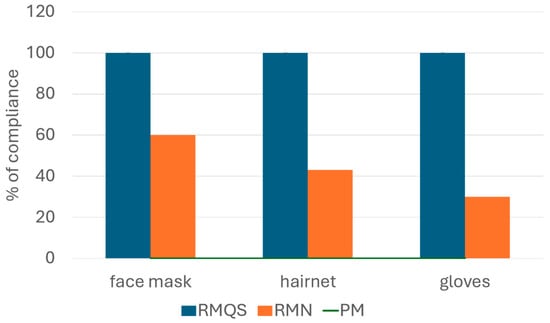
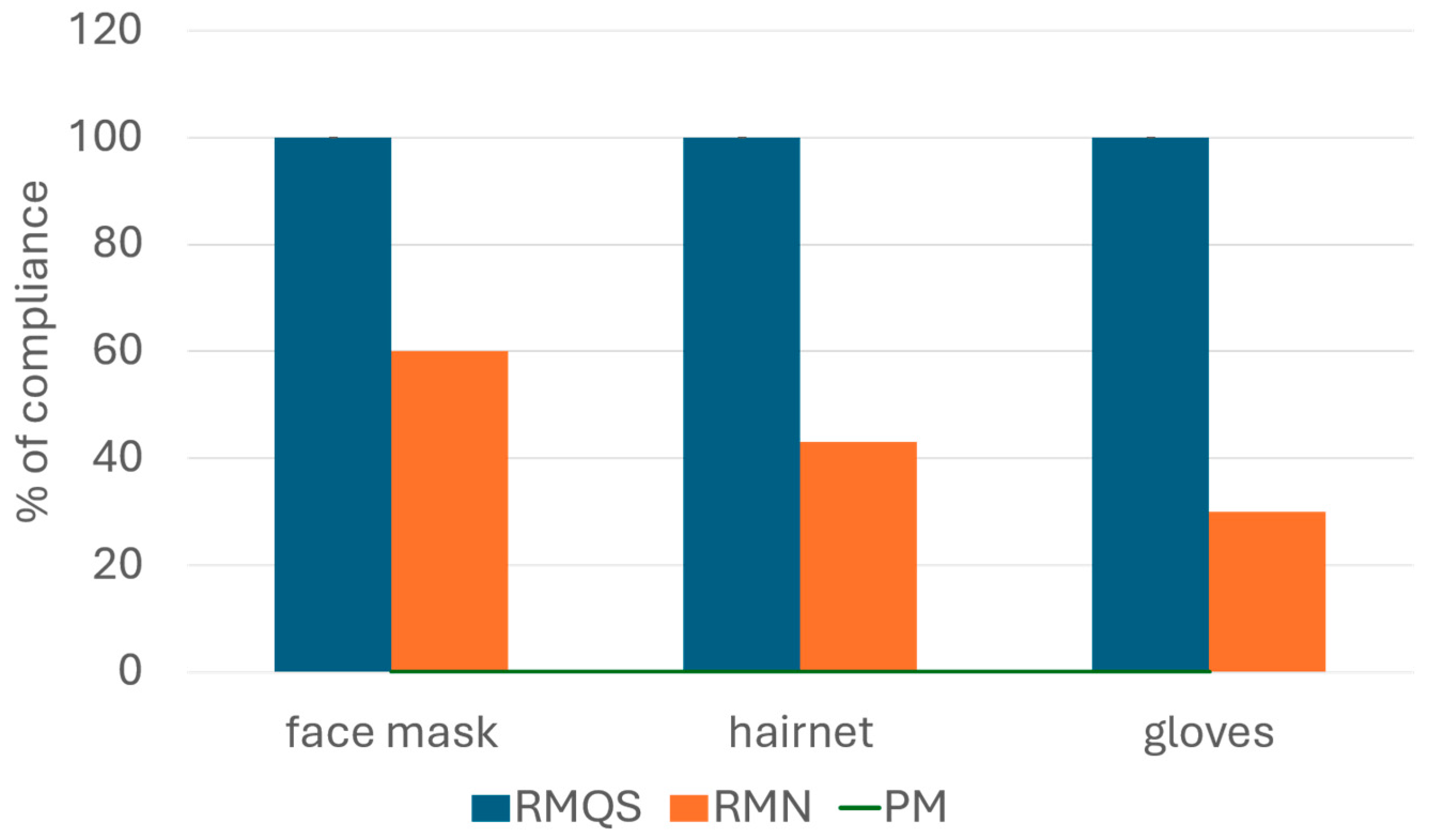
Hygiene practices were assessed based on compliance with the mandatory dress code stipulated in NOM-251, specifically the use of face masks, hairnets, and gloves [5]. Results showed full compliance (100%) in all three evaluated aspects at RMQS. In contrast, RMN establishments showed lower rates: 60% compliance for face mask use, 45% for hairnets, and only 30% for gloves. Meanwhile, popular markets (PMs) demonstrated no compliance (0%) in any of the evaluated aspects.
Food handlers of RMQS strictly followed good hygiene practices by wearing the required protective equipment (face masks, hairnets, and gloves). Conversely, in RMN establishments, not all food handlers complied with these practices, showing deficiencies including a lack of hairnets and face masks, as well as the absence of gloves in most cases. In PM markets, no food handlers were observed wearing appropriate protective attire to ensure hygiene. The comparative results are summarized in Figure 1.
Figure 1.
Compliance with NOM-251: Clothing Requirements Among Food Handlers [5]. Reputable markets with established quality systems (RMQSs). Reputable markets with NOM-251 requirement only (RMNs). Popular markets (PMs). Data express the percentage of compliance (%).
3.2. Temperature and pH
The pH values and temperature of “aguas frescas” samples were measured and recorded. These physicochemical parameters are crucial, as they function as critical barriers to microbial growth. Results of the pH determination are presented in Table 2.
Table 2.
pH values of sampled “aguas frescas” by flavor.
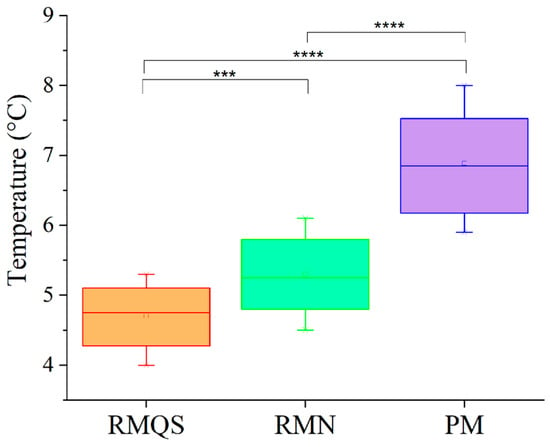
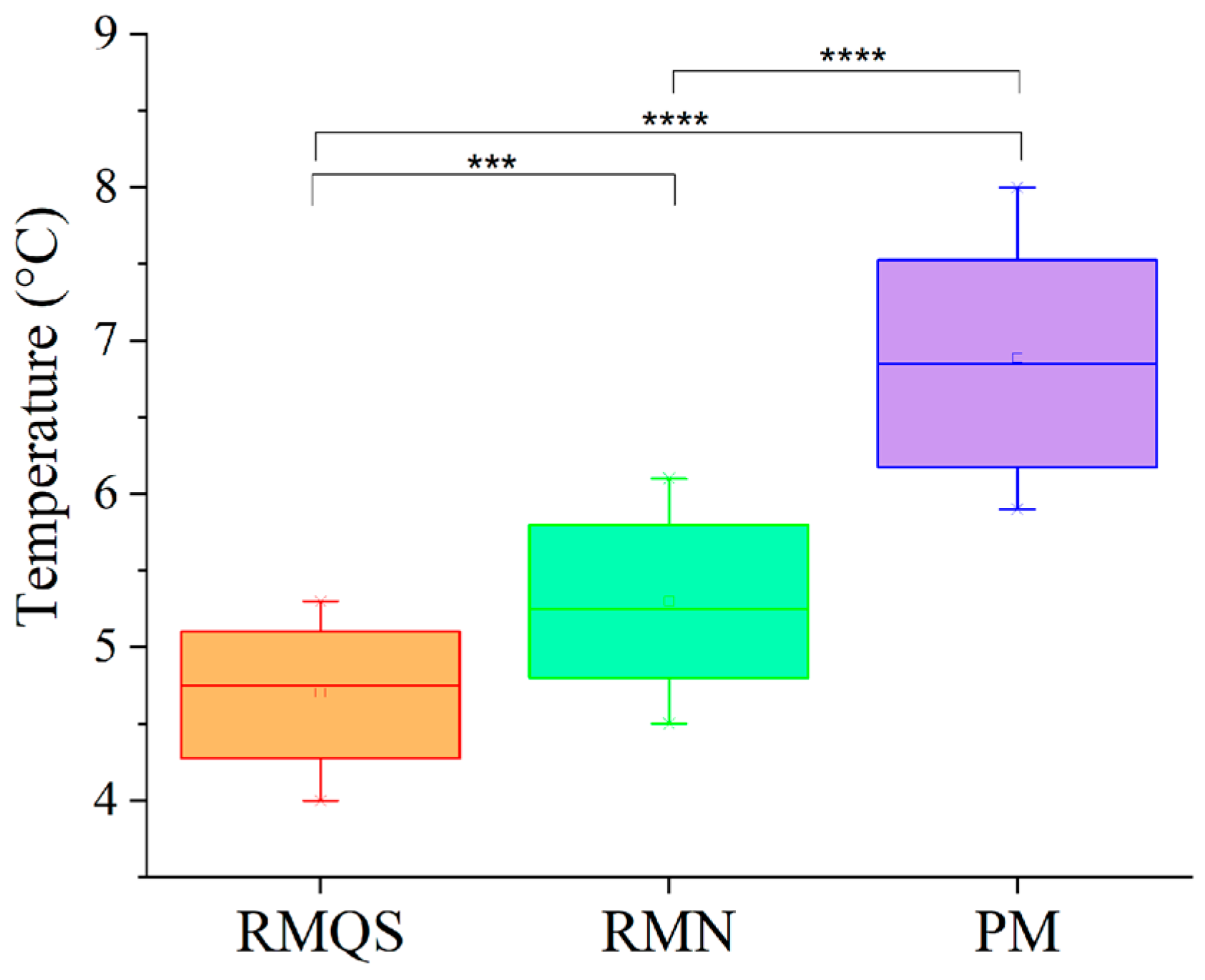
The acidity of foods is an intrinsic characteristic of several products, such as citrus fruits, berries, and honey [24]. Our results indicate that pH values varied among samples based on the flavor analyzed; however, they remained consistent across all market types with no significant differences recorded. As expected, “aguas frescas” prepared with lemon and pineapple exhibited the lowest pH values (2.5 ± 0.2 and 3.7 ± 0.2, respectively). In contrast, the remaining flavors showed pH values ranging from 5.4 ± 0.0 to 6.4 ± 0.3. These higher pH values are conducive to microbial growth [25], which highlights the importance of strict temperature control in high-temperature environments. However, a widespread lack of awareness regarding this important factor results in inadequate implementation of such control measures. The temperature values recorded for each sample, according to the type of market, are reported in Figure 2.
Figure 2.
Temperature values (Celsius) of “aguas frescas” sampled are reported according to the market type. Reputable markets with established quality systems (RMQSs). Reputable markets with NOM-251 requirement only (RMNs). Popular markets (PMs). Significant differences in data are denoted by asterisks (*** p ≤ 0.001, **** p ≤ 0.0001). Error bars represent standard deviation.
The results revealed a clear tendency in temperature control among the different market types. RMQS markets exhibited minimal variability in temperature, reporting a mean of 4.7 ± 0.4 °C. In contrast, the RMN and PM markets showed progressively higher means of 5.3 ± 0.6 °C and 6.8 ± 0.9 °C, respectively. Statistical analysis confirmed significant differences in temperature control between RMQSs, RMNs, and PMs. Notably, RMQS markets strictly adhered to international guidelines, maintaining temperatures close to the 4 °C threshold recommended by the U.S. Food and Drug Administration (FDA) to inhibit bacterial growth. Conversely, PM displayed the greatest variability; despite the less stringent national regulation (NOM-251-SSA1-2009), which permits a maximum refrigeration temperature of 7 °C, several samples from these traditional markets exceeded even this legal limit.
3.3. Physical Appearance
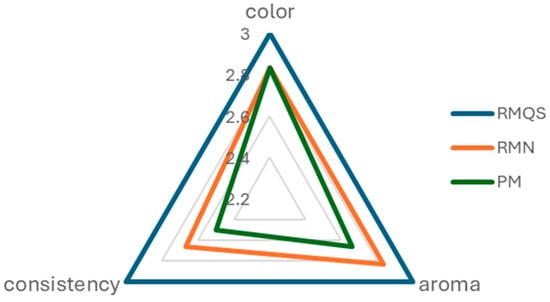
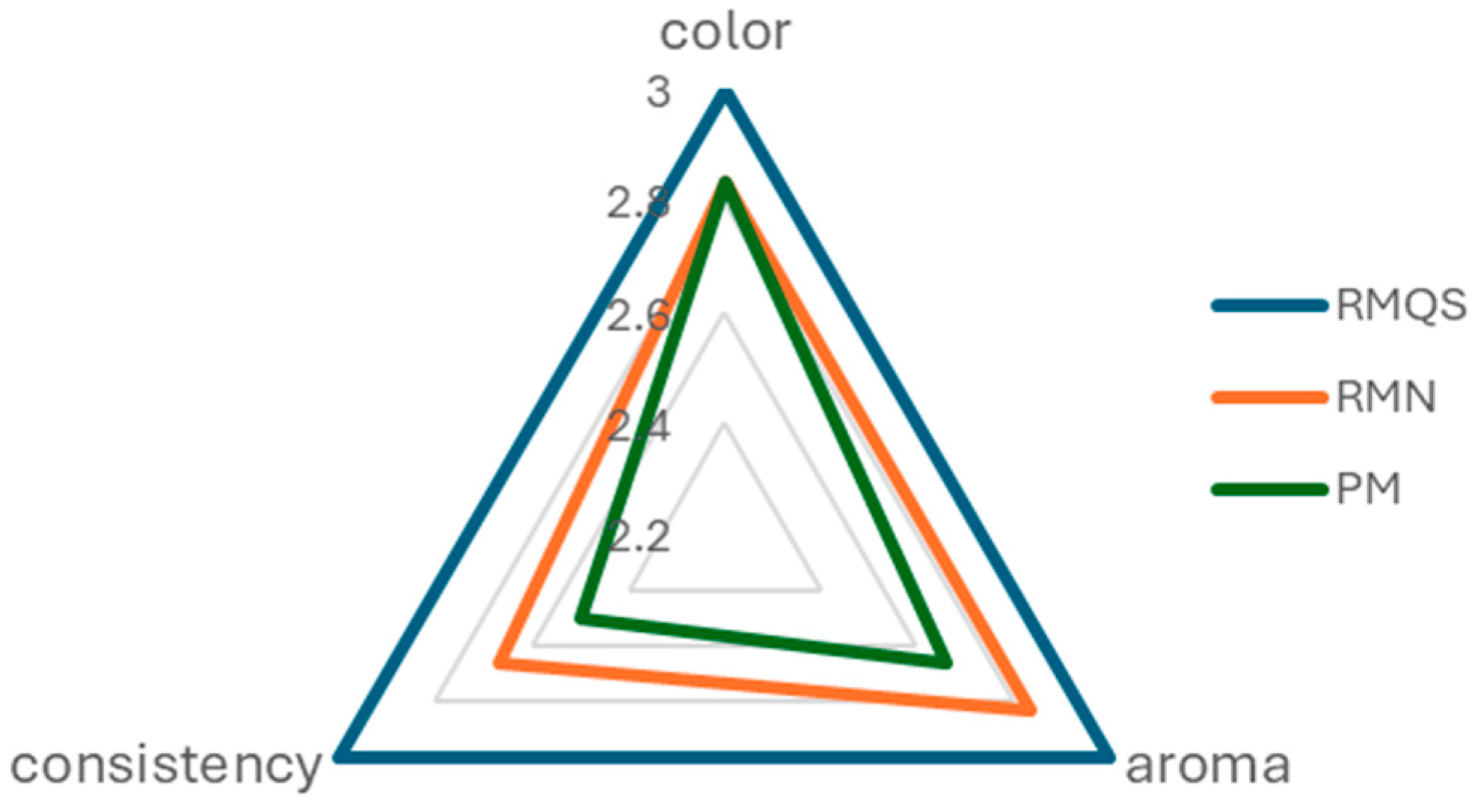
The physical appearance of the “aguas frescas” samples was evaluated by assessing their color, aroma, and consistency. Each attribute was scored using a three-level sensory scale: “typical”, “not typical”, or “unpleasant” (3, 2, and 1 values, respectively). The results of this evaluation are summarized in Figure 3.
Figure 3.
Physical appearance rating of “aguas frescas” from RMQS, RMN, and PM. The attributes of color, aroma, and consistency were evaluated on a 3-point scale: 3 (typical), 2 (not typical), and 1 (unpleasant).
According to the results, none of the samples examined was rated as “unpleasant”. RMQS achieved the highest ratings for all three evaluated attributes (color, aroma, and consistency). In contrast, RMN and PM samples received slightly lower ratings with mean values of 2.8 ± 0.4 for color, 2.8 ± 0.5 and 2.6 ± 0.5 for aroma, and 2.5 ± 0.5 for consistency. However, these differences in the ratings from the RMNs and PMs were not statistically significant, averaging only 0.5 points lower than those of RMQSs.
3.4. Analyses of Fecal Coliforms and E. coli
The presence of fecal coliforms and E. coli in “aguas frescas” was evaluated according to the permissible limits established in NOM-127-SSA1-2021 [16] (Table 1). According to this standard, the samples of “aguas frescas” must contain less than 1 MPN/100 mL of fecal coliforms, and E. coli must be absent in 100 mL.
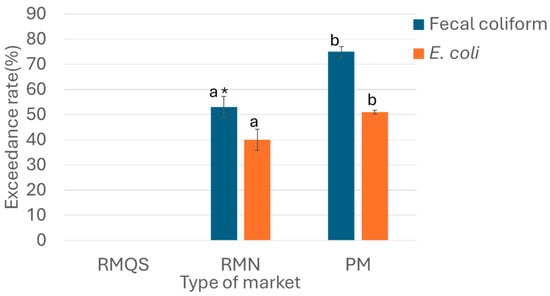
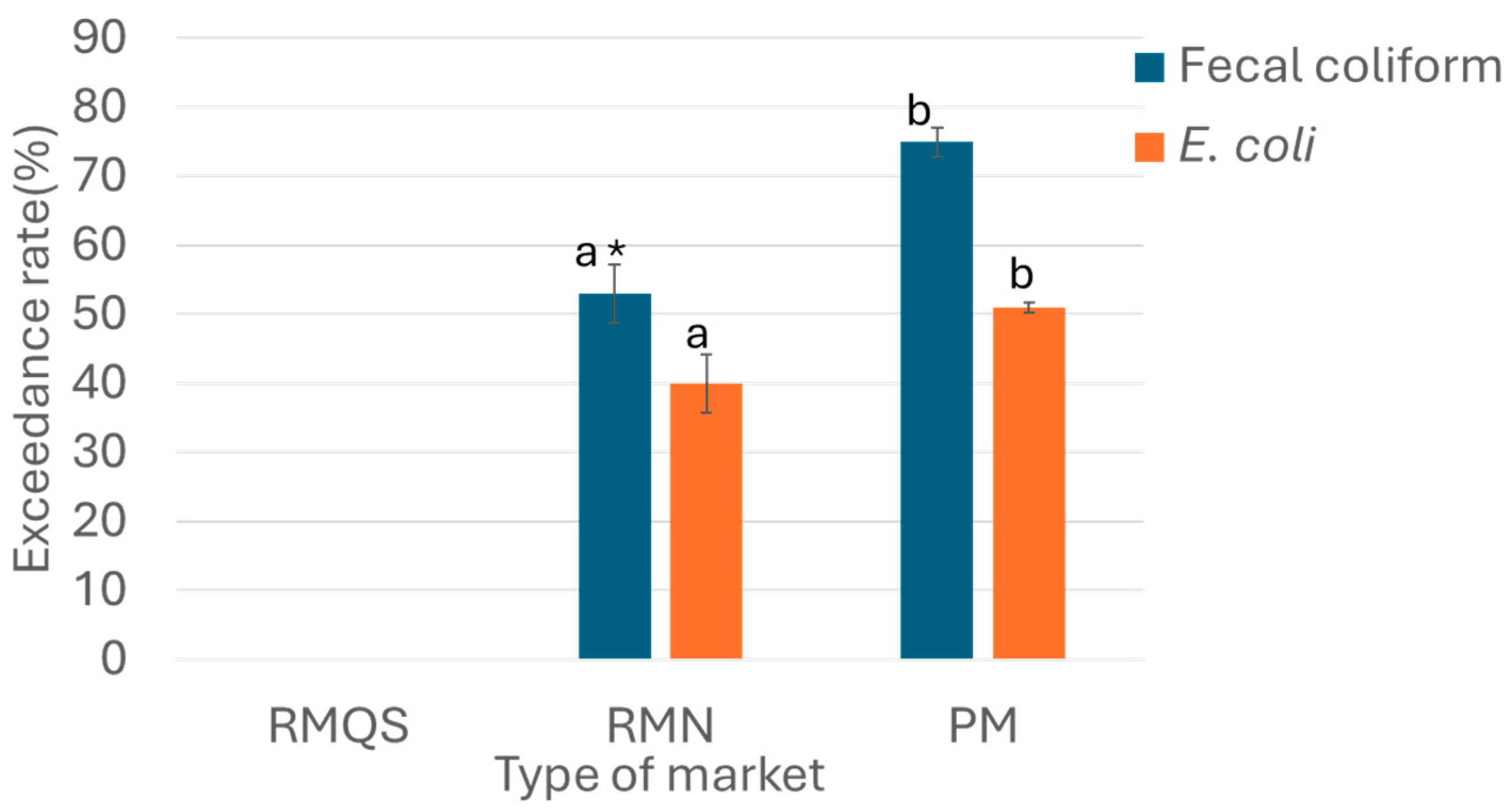
Our results demonstrated that all samples obtained from reputable markets with established quality systems (RMQSs) complied with the microbiological limits. In contrast, 53% of the samples collected from reputable market without a quality system (RMN) exceeded the permissible limit for fecal coliforms, and 40% tested positive for E. coli. Similarly, samples from popular market (PM) showed even higher contamination rates, with 75% exceeding the limit for fecal coliforms and 51% testing positive for E. coli (Figure 4).
Figure 4.
Mean percentage of “aguas frescas” samples exceeding permissible limits for fecal coliforms and E. coli, by market type. Different letters (a,b) represent significant differences (p < 0.05) ± standard deviation (*).
4. Discussion
While “aguas frescas” are widely consumed for their organoleptic appeal and natural image, their reliance on raw ingredients and lack of thermal processing can result in elevated microbial loads. This risk is further exacerbated by inadequate hygienic practices during their preparation. Therefore, the microbiological safety of these beverages cannot always be guaranteed. Food safety is a critical public health concern; its significance cannot be overstated, as it plays a crucial role in preventing foodborne illnesses and protecting consumers [26]. The provision of safe food is a non-negotiable obligation for all stakeholders in the supply chain, given its direct link to public health outcomes [11]. International standards recognize that training in food safety culture plays an integral role in addressing specific challenges related to food safety performance [27]. This study suggests that markets operating under internationally recognized quality systems may maintain more rigorous hygiene controls potentially supported by a well-established food safety culture. This was evidenced by all samples remaining within the established microbial limits and by hygiene practices that were fully compliant with regulatory recommendations. Conversely, a significant proportion of samples from establishments governed by NOM-251 [5] were non-compliant with hygienic standards, with unacceptable results (fecal coliforms) found in 53% of the samples from RMN establishments and 75% from PM establishments. E. coli was detected in 40% and 50% of RMN and PM establishment samples, respectively. Similar studies have also reported the presence of these microorganisms in similar products. For instance, Cerna-Cortes et al. [28] evaluated the microbiological quality of freshly squeezed orange juice sold at street stalls, finding that all samples were positive for aerobic mesophilic bacteria (1.8–6.2 log CFU/mL). They also detected total coliforms (54%; ≤1100 MPN/mL), fecal coliforms (25%; ≤3–460 MPN/mL), and E. coli (13%; ≤3–11 MPN/mL). Similarly, Valadez et al. [29] analyzed fruit-flavored waters from ice cream shops, identifying fecal coliforms and Staphylococcus aureus in 35.2% of samples, Salmonella spp. in 16.1%, and Shigella spp. in 2.9%. In Morelia, Mexico, Dominguez-Gonzalez et al. [30] reported poor hygiene practices in orange juice vendors, with concentrations of aerobic mesophiles ranging from 2.41 to 6.03 log CFU/mL, alongside significant levels of coliforms and E. coli.
Internationally, Mengistu et al. [31] found that 33.3% of locally prepared juices in Ethiopia exceeded the maximum permitted limits for E. coli. In contrast, Neggazi et al. [32] reported that while aerobic mesophiles and molds/yeasts were present in fresh juices, E. coli levels remained below the detection limit (1 CFU/mL). These findings underscore that water quality monitoring still relies on bacterial indicators, such as E. coli and coliforms, due to their cost-effectiveness and their role as proxies for other intestinal pathogens [33]. Overall, this research demonstrates that the analyzed samples exhibit poor microbiological quality. A limitation of this study was the lack of direct evaluation of potential contamination sources, such as handwashing technique and frequency, fruit washing and disinfection procedures, water quality, and cross-contamination during preparation. Furthermore, the results showed that the majority of food handlers did not comply with the minimum requirements established by national regulations, with a high proportion in RMN and PM failing to adhere to the required hygienic attire. Specifically, adherence to face mask protocols was highest at 60%, while headgear and glove usage were considerably lower at 45% and 30%, respectively. On the other hand, none of the food handlers at PM wore appropriate clothing. The critical responsibility of food handlers in upholding strict food safety principles must be emphasized; according to Azanaw et al. [26], practicing good hygiene and safe food handling is crucial for protecting consumers from foodborne pathogens. Globally, approximately 75% of foodborne illness outbreaks are directly linked to unsafe food handling practices within food service establishments [26]; Mexico is not exempt from this trend, where recent public health incidents highlight the urgent need to strengthen food safety culture at the ground level. For example, in April 2024, a mass poisoning involving 100 individuals was reported at a wedding in Morelos, Mexico; while wild hallucinogenic mushrooms were the suspected cause, official confirmation of the etiology or the involvement of a specific pathogen is still lacking [34]. Another incident, in May 2024 in Nuevo León, Mexico, resulted in the deaths of two children after they consumed allegedly contaminated chicken. This led to the temporary closure of the establishment and an ongoing health investigation, though the specific pathogen and source of contamination have not yet been determined [35]. Additionally, in August 2025 in Coahuila, Mexico, a food poisoning outbreak occurred at a hotel, where more than 20 employees presented symptoms after consuming “discada” (typical food of Northern Mexico). This resulted in the death of one employee and the suspension of operations in the kitchen while the causes and food preparation conditions were investigated [36]. Consequently, tightening operational controls and refining hygiene standards has become paramount to preventing future outbreaks [37]. To this end, implementing food safety culture strategies within each establishment is a proactive approach to mitigating these risks [38,39,40]. Promoting a food safety culture fosters awareness among food handlers, influencing their behavior and encouraging a personal commitment to complying with safety requirements to prevent foodborne illnesses [39,40].
5. Conclusions
This research demonstrated that the microbiological quality of “aguas frescas” is closely linked to the level of implementation of appropriate hygiene practices in the different types of establishments evaluated. The RMQS establishments showed full compliance with the permissible limits for fecal coliforms and E. coli, reflecting effective hygiene management. In contrast, the non-compliance levels observed in the RMN and PM establishments highlight deficiencies in microbiological control and the application of hygiene measures such as personal protective equipment. These findings demonstrate that a national regulatory framework alone does not guarantee product safety; rather, it relies on a combination of effective supervision, ongoing training, and the active commitment of food handlers and management. Therefore, to safeguard public health and reduce the incidence of foodborne illnesses, it is critical to implement the following actions:
- Transition from passive regulatory compliance toward proactive food safety surveillance programs.
- Reinforce and sustain safe food handling practices among food handlers and managers.
- Strengthen oversight and intervention strategies at the community level.
Despite the 100% compliance on proper attire observed among RMQS food handlers, these findings should be interpreted with caution due to the relatively small sample size and the focus on a single geographic region. Furthermore, it is important to acknowledge certain limitations in this study regarding the observed differences among market categories. Variables such as beverage flavor and its corresponding pH (e.g., highly acidic citrus vs. low-acidity melon or dairy-based beverages) play a well-known role in inhibiting or promoting microbial growth. Additionally, factors like the original water source used by each vendor, storage duration prior to sampling, and holding temperatures could not be fully controlled and may introduce confounding effects. Future research should systematically evaluate these matrix-specific and environmental parameters to provide a more comprehensive understanding of microbial dynamics in artisanal beverages.
Author Contributions
Conceptualization, S.C. and E.S.G.; methodology, E.S.G., C.T.-A. and L.M.V.H.; software, J.H.E.L. and C.T.-A.; validation, J.H.E.L. and M.F.P.G.; formal analysis, J.H.E.L., L.M.V.H. and M.F.P.G.; investigation, K.G.G.A. and E.S.G.; resources, S.C. and E.S.G.; data curation, K.G.G.A. and M.F.P.G.; writing—original draft preparation, E.S.G., S.C. and C.T.-A.; writing—review and editing, S.C., K.G.G.A. and C.T.-A.; visualization, S.C.; supervision, S.C. and M.F.P.G.; project administration, S.C. and E.S.G.; funding acquisition, S.C. All authors have read and agreed to the published version of the manuscript.
Funding
This research received no external funding.
Institutional Review Board Statement
Not applicable.
Informed Consent Statement
Not applicable.
Data Availability Statement
The original contributions presented in this study are included in the article. Further inquiries can be directed to the corresponding author.
Conflicts of Interest
The authors declare no conflicts of interest.
References
- García, R.; Gaspar, S. Crisis Económica y Crisis Migratoria al Inicio del Nuevo Gobierno: 2018–2024. In Mexico Hacia la Incertidumbre, 1st ed.; Universidad Nacional Autónoma de México: Mexico City, Mexico, 2020; pp. 47–64. Available online: http://ricaxcan.uaz.edu.mx/jspui/bitstream/20.500.11845/2192/1/Mexico%20crisis%20econ%C3%B3mica%20y%20crisis%20migratoria%20RGZ%2C%20SGO.pdf (accessed on 10 December 2025).
- Moguel, M.L.A.; Flores, H.J.C.; García, Q.C.M. Economía global en México: Desafíos en un entorno de inflación persistente. Senpai 2025, 2, 20–29. [Google Scholar]
- Instituto Nacional de Estadística y Geografía (National Institute of Statistics and Geography). INEGI. 2022. Available online: https://www.inegi.org.mx/ (accessed on 10 December 2025).
- Organización Internacional del Trabajo (International Labour Organization). 2023. Available online: https://www.ilo.org/es (accessed on 23 November 2025).
- NOM-251-SSA1-2009; Prácticas de Higiene para el Proceso de Alimentos, Bebidas o Suplementos Alimenticios. Secretaría de Salud, Diario Oficial de la Federación: Mexico City, Mexico, 2010.
- FAO. Código Internacional Recomendado de Practices—Principios Generales de Higiene de los Alimentos. Available online: https://www.fao.org/4/y1579s/y1579s02.htm#bm2.9 (accessed on 18 September 2025).
- García, L.M.; Mendoza, G.J.P. Evaluación del Cumplimiento de la NOM-251-SSA1-2009 en el Servicio de Alimentos del Centro Médico Nacional 20 de Noviembre del ISSSTE. 2023. Available online: https://repositorio.xoc.uam.mx/jspui/handle/123456789/41050 (accessed on 20 November 2025).
- Taylor, J.; Garat, J.P.; Simreen, S.; Sarieddine, G. An industry perspective: A new model of food safety culture excellence and the impact of audit on food safety standards. Worldw. Hosp. Tour. Themes 2015, 7, 78–89. [Google Scholar] [CrossRef] [Scilit]
- Da Cunha, D.T.; Stedefeldt, E.; Luning, P.A.; Prates, C.B.; Zanin, L.M. Food safety culture as a behavioural phenomenon shaping food safety. Curr. Opin. Food Sci. 2025, 63, 101305. [Google Scholar] [CrossRef] [Scilit]
- Tomei, P.A.; Russo, G.M. Food Safety Culture Maturity Index [FSCMI]: Presentation and Validation. Rev. Ibero-Am. Estratg. 2019, 18, 19–39. [Google Scholar] [CrossRef] [Scilit]
- Griffith, C.J.; Jackson, L.M.; Lues, R. The food safety culture in a large South African food service complex: Perspectives on a case study. Br. Food J. 2017, 119, 729–743. [Google Scholar] [CrossRef] [Scilit]
- Saxena, G.; Bharagava, R.N.; Kaithwas, G.; Raj, A. Microbial indicators, pathogens and methods for their monitoring in water environment. J. Water Health 2015, 13, 319–339. [Google Scholar] [CrossRef] [Scilit] [PubMed]
- Richiardi, L.; Pignata, C.; Fea, E.; Bonetta, S.; Carraro, E. Are indicator microorganisms predictive of pathogens in water? Water 2023, 15, 2964. [Google Scholar] [CrossRef] [Scilit]
- CAC/RCP 1-1969; Recommended International Code of Practice. General Principles of Food Hygiene. Rev. 4. Codex Alimentarius Commission: Rome, Italy, 2003.
- Food and Drug Administration, Department of Health and Human Services. Current Good Manufacturing Practices. In Code of Federal Regulations; U.S. Government Printing Office, Washington Office of the Federal Register: Washington, DC, USA, 1990; Volume 21. [Google Scholar]
- NOM-127-SSA1-1994 (Modificada); Agua Para Uso y Consumo Humano—Límites Permisibles de la Calidad del Agua. Secretaría de Salud, Diario Oficial de la Federación: Mexico City, Mexico, 2000.
- World Health Organization. Guidelines for Drinking-Water Quality, 4th ed.; World Health Organization: Geneva, Switzerland, 2017. [Google Scholar]
- American Water Works Association. Water Quality and Treatment: A Handbook of Community Water Supplies, 5th ed.; McGraw Hill Inc: New York, NY, USA, 2000. [Google Scholar]
- U.S. Food and Drug Administration. Bacteriological Analytical Manual (BAM). U.S. Department of Health and Human Services. 2020. Available online: https://www.fda.gov/food/laboratory-methods-food/bacteriological-analytical-manual-bam (accessed on 10 March 2026).
- AOAC International. Official Methods of Analysis of AOAC International, 22nd ed.; Oxford University Press: Oxford, UK, 2023; Available online: https://academic.oup.com/aoac-publications/book/45491 (accessed on 3 September 2025).
- NMX-F-317-NORMEX-2013; Dirección General de Normas. Determinación de Acidez En Alimentos. NORMEX: Ciudad de México, Mexico, 2013.
- AOAC. AOAC Official Method 981.12 pH of Acidified Foods. In Official Methods of Analysis of AOAC International, 18th ed.; Chapter 42, 42.1.04; AOAC: Gaithersburg, MD, USA, 2010; p. 2. [Google Scholar]
- NOM-210-SSA1-2014; Productos Y Servicios—Métodos de Prueba Microbiológicos. Secretaría de Salud, Diario Oficial de la Federación: Mexico City, Mexico, 2015.
- Lund, P.A.; De Biase, D.; Liran, O.; Scheler, O.; Mira, N.P.; Cetecioglu, Z.; Fernández, E.N.; Bover-Cid, S.; Hall, R.; Sauer, M.; et al. Understanding How Microorganisms Respond to Acid pH Is Central to Their Control and Successful Exploitation. Front. Microbiol. 2020, 11, 556140. [Google Scholar] [CrossRef] [Scilit] [PubMed]
- Kim, C.; Wilkins, K.; Bowers, M.; Wynn, C.; Ndegwa, E. Influence of PH and Temperature on Growth Characteristics of Leading Foodborne Pathogens in a Laboratory Medium and Select Food Beverages. Austin Food Sci. 2018, 3, 1031. [Google Scholar]
- Azanaw, J.; Gebrehiwot, M.; Dagne, H. Factors associated with food safety practices among food handlers: Facility-based cross-sectional study. BMC Res. Notes 2019, 12, 683. [Google Scholar] [CrossRef] [Scilit] [PubMed]
- Jespersen, L.; Butts, J.; Holler, G.; Taylor, J.; Harlan, D.; Griffiths, M.; Wallace, C.A. The impact of maturing food safety culture and a pathway to economic gain. Food Control 2019, 98, 367–379. [Google Scholar] [CrossRef] [Scilit]
- Cerna-Cortes, J.F.; Cortes-Cueto, A.L.; Cano-Gaona, M.R.; Leon-Montes, N.; Helguera-Repetto, A.C.; Rivera-Gutierrez, S.; Gonzalez-y-Merchand, J.A. Microbiological quality and occurrence of nontuberculous mycobacteria in fresh-squeezed orange juice samples purchased from street vendors in Mexico City. J. Food Prot. 2016, 79, 2190–2195. [Google Scholar] [CrossRef] [Scilit] [PubMed]
- Valadez, R.F.; Hernández, J.M.C.; García, O.E.M.; Ramírez, Q.L.Y.; Flores, G.J.F.; Rodríguez, C.G.C.; Acosta, G.R.I. Microbiological quality of ready-to-eat street vended flavored waters and fruits salads in Reynosa, Tamaulipas, Mexico. Acta Univ. 2017, 27, 3–9. [Google Scholar] [CrossRef] [Scilit]
- Dominguez-Gonzalez, K.G.; Aguilar-Chairez, S.; Cerna-Cortes, J.; Soria-Herrera, R.J.; Cerna-Cortes, J.F. Microbiological quality and presence of foodborne pathogens in fresh-squeezed orange juice samples purchased from street vendors and hygienic practices in Morelia, Mexico. Food Sci. Technol. 2022, 42, e10222. [Google Scholar] [CrossRef] [Scilit]
- Mengistu, D.A.; Mulugeta, Y.; Mekbib, D.; Baraki, N.; Gobena, T. Bacteriological quality of locally prepared fresh fruit juice sold in juice houses of Eastern Ethiopia. Environ. Health Insights 2022, 16, 11786302211072949. [Google Scholar] [CrossRef] [Scilit] [PubMed]
- Neggazi, I.; Colás-Meda, P.; Vinas, I.; Alegre, I. Microbiological quality and safety of non-treated fresh and squeezed juices from supermarkets in Lleida, Spain. Int. J. Food Sci. Technol. 2024, 59, 4716–4722. [Google Scholar] [CrossRef] [Scilit]
- Odonkor, S.T.; Mahami, T. Escherichia coli as a tool for disease risk assessment of drinking water sources. Int. J. Microbiol. 2020, 1, 2534130. [Google Scholar] [CrossRef] [Scilit] [PubMed]
- Infobae. Así es el Jardín de Eventos en Morelos que Fue Escenario de Una Intoxicación Masiva Durante Una Fiesta. 30 April 2024. Available online: https://www.infobae.com/mexico/2024/04/30/asi-es-el-jardin-de-eventos-en-morelos-que-fue-escenario-de-una-intoxicacion-masiva-durante-una-fiesta/ (accessed on 15 February 2026).
- El Horizonte. Suspenden Sucursal de Pollo Matón por Muerte de Niños en Escobedo. 12 May 2024. Available online: https://www.elhorizonte.mx/nuevoleon/suspenden-sucursal-de-pollo-maton-por-muerte-de-ninos/2410089860 (accessed on 15 February 2026).
- Milenio. Muere Hombre y Más de 20 Empleados de Hotel se Intoxican con Comida en Saltillo. 17 August 2025. Available online: https://www.milenio.com/policia/saltillo-empleados-hotel-intoxican-comida-uno-murio (accessed on 15 February 2026).
- Manning, L. Triangulation: Effective verification of food safety and quality management systems and associated organisational culture. Worldw. Hosp. Tour. Themes 2018, 10, 297–312. [Google Scholar] [CrossRef] [Scilit]
- Bolanos, J.A. Organisations, Culture & Food Safety: A Rapid Comparative Overview of Organisational Culture Frameworks in the Food Sector; Foos Standards Agency (FSA): London, UK, 2020.
- Pai, A.S.; Jaiswal, S.; Jaiswal, A.K. A comprehensive review of food safety culture in the food industry: Leadership, organizational commitment, and multicultural dynamics. Foods 2024, 13, 4078. [Google Scholar] [CrossRef] [Scilit] [PubMed]
- European Commission. Commission Regulation (EU) 2021/382 of 3 March 2021 amending Regulation (EC) No 852/2004 on the hygiene of foodstuffs as regards food safety culture. Off. J. Eur. Union 2021, L74, 1–5. [Google Scholar]

Disclaimer/Publisher’s Note: The statements, opinions and data contained in all publications are solely those of the individual author(s) and contributor(s) and not of MDPI and/or the editor(s). MDPI and/or the editor(s) disclaim responsibility for any injury to people or property resulting from any ideas, methods, instructions or products referred to in the content. |
© 2026 by the authors. Licensee MDPI, Basel, Switzerland. This article is an open access article distributed under the terms and conditions of the Creative Commons Attribution (CC BY) license.