


Abstract
Archaeological technicians (技工) carry out the excavation, survey, mapping, drawing and restoration on which Chinese field archaeology depends, yet most remain outside the formal establishment; many lack establishment posts (编制), professional titles and social insurance, and move between sites as excavation projects proceed. This study takes publicly available Chinese online discourse as its primary data, supplemented by industry media reports and interviews, and employs reflexive thematic analysis within a “skill–precarity–recognition” framework to examine how technicians articulate their own situation. Three findings are presented. First, their skill is embodied and tacit, acquired through years of practice, and is described by senior experts as irreplaceable; in everyday fieldwork, technicians are reported to invert the academic hierarchy. Second, precarity is presented as structural rather than incidental, arising from the coordination of excavation with infrastructure construction, the frequent absence of labour contracts and social insurance, daily-wage and piece-rate payment, and the transfer of employment to third-party companies. Third, the paper proposes a “recognition paradox”: expertise that is deeply relied upon appears to receive only limited recognition in research outputs, in that excavation reports often omit technicians’ names, draughtspersons’ authorship rights are frequently denied, and technical labour tends to be treated as auxiliary. Unlike the “invisible digger” or “lucrative non-knowledge”, the technicians discussed here often display their expertise openly while encountering insufficient recognition from the academic community. This paradox is analysed as operating through three mechanisms—symbolic erasure, the institutional exclusion of personnel outside the establishment, and the devaluation of technical labour. The analysis does not claim statistical representativeness; its conclusions are offered as an interpretation of publicly visible discourse, rather than as an inference about all technicians or a measurement of the occupational structure of Chinese archaeology. On this basis, the paper outlines possible directions for response in the areas of publication credit, occupational standards and labour protection.
1. Introduction
In December 2015, the cleaning of the principal coffin at the Haihunhou (海昏侯) tomb in Nanchang, Jiangxi, entered a critical stage. Mr. Xin Lixiang—head of the expert team dispatched by the National Cultural Heritage Administration and director of the Qin–Han Archaeology Professional Committee of the Chinese Society of Archaeology—together with Yang Jun, excavation director of the Jiangxi Provincial Institute of Cultural Relics and Archaeology, and others, bent over beside the principal coffin. Yet those actually wielding brushes, recording, drawing, and extracting the coffin planks were, for the most part, off-establishment contract workers of archaeological institutions. Within the profession, they are called “archaeological technicians” (考古技工).
Mr. Xin frankly stated: “When it comes to studying the excavated artifacts and traces to infer the social background and institutions of the time, he is certainly no match for me; but when it comes to on-site cleaning and excavation, I am certainly no match for him.” Mr. Xin also held that “the level of the technicians largely determines the level of archaeology.” Yet, in the same report, he pointed out that senior technicians “have no academic status, no social status, no economic status; lacking security, they silently work as temporary laborers—they can be described as a group of highly skilled professionals struggling to survive amid constant mobility.” The irreplaceability of archaeological technicians in terms of skill and their institutional marginality are thus co-present within a single discourse (J. Chen, 2015).
Online discourse renders this paradox even sharper. Some practitioners recount that on excavation sites, “the vast majority are technicians; many archaeology students who have just graduated from university or graduate school are actually no match for the technicians in hands-on operations,” that “ninety percent of technicians work all year round without a single day off,” and that many cannot secure a labour contract and “certainly have none of the five social insurances and one housing fund (五险一金),” with wages paid only “after a delay of five or six months.” The discourse that rationalises all this is equally blunt: “because most excavation directors genuinely believe that technical tasks are something anyone can do and are not that important”; “a worker is a worker, just someone who puts in the physical effort… having the primary data prepared for the leaders. Each goes their own way and takes their own pay.” Technicians, being “from rural areas and having taken up the trade midway, learning from a master,” face “little likelihood of being granted establishment.” The craft of this group is indispensable to archaeological excavation, yet it remains at the margins of archaeological labour and the production of archaeological knowledge.
This predicament is deeply rooted in the division of labour in archaeology. Since post-processual archaeology, excavation has been understood as a knowledge-production practice involving multiple actors, with the “act of discovery” becoming the central pivot: Edgeworth argues that archaeological knowledge arises from the tool-mediated “subject–object interaction” between excavators and material objects, and that the agent of the act of discovery is the trowel-wielding digger; the trowel thus “becomes an extension of the body” (Edgeworth, 1991). Gutiérrez emphasizes that such skill can only be acquired through embodied, non-discursive practices (Wong & Gutiérrez, 2025). McGuire (Shanks & McGuire, 1996) and Shanks directly define archaeology as a “craft,” uniting hand, heart, and mind, such that formal method cannot replace artistry. This establishes the first premise of this article: archaeological skill is essentially embodied and tacit (Shanks & McGuire, 1996).
Yet the embodied labour that constitutes the knowledge base has long remained invisible. Shapin’s “invisible technicians” reveals how the contributions of laboratory assistants are denied by scientistss (Shapin, 1989). Building on this, Everill proposed the “invisible digger,” pointing out that labourers are in fact the principal agents of excavation, yet are overlooked because of low wages, short-term employment, and unrecognised contribution (Everill, 2009). Based on ethnographic research at Petra and Çatalhöyük, Mickel demonstrates that workers have developed recognisable archaeological expertise, yet deliberately “perform ignorance” to secure rehiring or visibility; she terms this “lucrative non-knowledge.” Drawing on Marx’s theory of alienation, she further argues that the rupture between the expertise and capacity for action that workers possess and the rewards they receive is precisely the root of the alienated experience of scientific labourers (Mickel, 2021).
Some studies also point to the labour regime itself. Existing research notes that, within contract archaeology, the separation of excavation from interpretation and the framing of excavation as low-skilled have undermined the scientific foundations of archaeology, while the marginalisation of excavators and poor working conditions have persisted over the long term (Hodder, 2000). Shanks characterises contract archaeology through a “factory model of production,” whereby standardisation and the decomposition of tasks fragment archaeological work into isolated components (Shanks & McGuire, 1996). Leighton, comparing British and Andean excavation, shows that different communities diverge over “who knows”—the British model assuming that excavators enjoy greater epistemic authority by virtue of their material contact with the site (Leighton, 2015). Experiences from Egypt’s Quftis (Cline, 2023), Palestine (Irving, 2021), El Tajín in Mexico (Holley-Kline, 2022), and commercial archaeology in the Netherlands (Van Oeveren, 2025) and the Anglo-American world (Zorzin, 2010) further indicate that colonial logics, kinship networks, and competitive tendering have each shaped distinct configurations of labour and knowledge.
Research on Chinese archaeological technicians can be traced to Shi Zhangru’s Yin Xu Excavation Staff Biographies (殷墟发掘员工传), the first monograph to document archaeological technicians and labourers in detail. Compiled from Shi’s field diaries of the 1930s, it records the life stories of 101 labourers and 46 staff members of the Institute of History and Philology, Academia Sinica, who participated in fifteen Yin Xu excavations between 1928 and 1937 (Shih, 2017). Reading the book from a social-history perspective, Li Xiaodong argues that, alongside the predominant narrative in which archaeologists introduced overseas theories and promoted the indigenisation of the discipline, there ran an “undercurrent” through which technicians and labourers acquired, applied, and innovated excavation techniques on the front line, and he calls for an examination of the resonance between disciplinary development and social participation (Li, 2024). Drawing on Xia Nai’s Diary, Wendy Doyon shows that during Xia Nai’s excavation at Armant, Egypt, he personally encountered a three-tier division of “Western-trained professional researchers–Qufti foremen–diggers,” and that China’s “labourer–technician–archaeologist” organisational model was most likely shaped by this experience. (Doyon, 2023). He Wenjing, He Kai, and Wang Tao have respectively surveyed the history of technician development (W. He, 2014; W. He & Wu, 2017, 2018), the origins of early Yin Xu technicians (mostly “old hands” from Xiaotun village and nearby areas who dug during the agricultural off-season) (K. He, 2023), and the evolution of Shanxi technicians (Wang, 2019). Bai Wanyu, who in his early years followed Johan Gunnar Andersson in excavations at Yangshao and elsewhere, later joined the National Peiping Academy and the Institute of Archaeology, Chinese Academy of Sciences, and participated in excavations at Doujitai, Dingling, and other sites; his knowledge exchange with archaeologists and his professional agency have become a focal point of early technician studies (Z. Chen, 2012; Zhu, 2013; Guo, 2014).
Compared with studies on origins, comprehensive research on the professional characteristics and current conditions of contemporary technicians remains insufficient; only scattered webpages and newspaper articles have pointed out related phenomena. Sun Xiantu notes that technicians are “some who failed the college entrance examination just as it was being restored, some who are so-called low-level laborers having entered society,” and that since the 21st century the identity of archaeological technicians has become increasingly diverse (Sun & Liang, 2016). Zhang Zhongli emphasizes that field excavation “is not simple labor”: high-level technicians must possess the capacity for comprehensive observation, analysis, and problem-solving, and that “how much skill one masters is often proportional to one’s years of work, and long-accumulated experience cannot be replicated,” making them absolutely irreplaceable by experts and scholars (J. Chen, 2015). The technician Feng Jiusheng, for his part, recounts taking on seven roles at once: foreman, business agent, mediator, repairman, safety officer, publicist, and teacher (China Archaeology Network, 2023). Technicians are mainly distributed across three types of institutions—archaeological institutes at various levels, exploration companies, and universities—with job types covering exploration, excavation, drawing, restoration, and data processing; their employment takes three forms: direct contracts, third-party contracts, and receiving subsidies without any agreement. Their difficulties are summarized as a shrinking total workforce, an aging population, and frequent mobility caused by regional economic imbalance, compounded by payment by the hour or by piece-rate with unstable income, leaving many local teams without a successor generation (Xing, 2022).
The research that truly takes labor and knowledge production as its analytic object is Dong Jianhui’s ethnographic study of archaeological labor at the Chengcun Han city site in Fujian. Treating locally recruited rural workers as a constitutive dimension of archaeological practice, that study examines their entry into archaeological labor and their trajectories of professionalization and occupational differentiation, reveals the process of skill acquisition together with the structural predicament whereby their technical labor struggles to gain recognition, and argues that archaeological labor operates simultaneously as a social, an epistemological, and an institutional process (Cai & Dong, 2026). Zhang Fei’s I Was at Erlitou Archaeology (我在二里头考古), in the form of an interview record, systematically documents for the first time the life histories of Erlitou archaeological technicians and the acquisition of their archaeological skills—such as Wang Congmiao learning pottery typology from Zheng Guang, Wang Facheng learning scraping techniques, and Wang Xiangfeng beginning with small objects to learn artifact drawing—offering embodied details of apprenticeship transmission. Drawing on Polanyi’s theory of tacit knowledge, Zhang Fei notes that “the knack of archaeological excavation cannot be taught in the classroom, nor fully expressed through technical manuals.” Yet both studies have clear limitations: Chengcun Han city was an active excavation project, whereas the vast majority nationwide are excavations coordinated with infrastructure construction and salvage fieldwork, whose labor conditions remain unrevealed; although Zhang Fei’s work is solid in its materials, it does not apply sociological or anthropological theory to analyze technicians’ labor and skill acquisition, nor does it include a reflexive discussion of the researcher’s positionality and the reconstructive nature of technicians’ memories (Zhang, 2024).
Surveying the studies above, existing archaeological labor research exhibits three gaps. Global archaeological labor research has built a substantial body of work on the archaeological labor of Egypt, Petra, Çatalhöyük, Palestine, and Latin America, yet Chinese cases are nearly absent—there is as yet no systematic study examining the significant role played by Chinese archaeological technicians in excavation, nor the power structure of knowledge production behind it. At present, China is dominated by large-scale excavations carried out in coordination with infrastructure construction, whose organization of archaeological labor, participating actors, and content differ considerably from those of the West, the Middle East, and Latin America. Second, Chinese scholarship on archaeological technicians concentrates on the origins and evolution of the technician group in China—cases such as the Yinxu labourers and Bai Wanyu—and comprehensive research on contemporary professional characteristics and current conditions remains insufficient. Third, the new material of online discourse has yet to be incorporated, and technicians’ self-expression has long been absent—yet it is precisely in such self-narratives and discussions that “the hands that dig” (skill), “the unstable hands” (low wages, no rest, no social insurance, causing excellent technicians to leave and newcomers to fail to follow), and “the faded names” (participating in the compilation of archaeological reports yet receiving no credit) are articulated together. This article thus intervenes from precisely this point: taking online discourse as its empirical entry point and the “skill–precarity–recognition” framework as its analytic lens, it asks how this group of “hands that dig” become “faded names” within disciplinary narratives.
2. Materials and Methods
This article adopts a combined approach of online discourse analysis (Androutsopoulos, 2008) and thematic analysis (Braun & Clarke, 2006) under a qualitative research orientation. Unlike content analysis, which centers on frequency statistics (Krippendorff, 2018), discourse analysis attends to the production and contestation of meaning: this article does not merely count “how many times technicians are mentioned,” but asks—how is technicians’ skill represented in discourse as irreplaceable? How is the precarity of their labor narrated? How are “indispensable” and “unrecognized” simultaneously uttered and mutually rationalized through specific formulations? Therefore, the basic unit of analysis is the utterance rather than word frequency, and original wording is retained as far as possible as in-vivo evidence (Saldaña, 2021).
2.1. Data Composition
Online discourse research treats online platforms as a field site, whose boundaries are delimited by topics and communities rather than geographic space (Hine, 2015; Kozinets, 2020). The field of this study is the public discursive space of the Chinese-language internet: the identifiable platforms include Weibo and Xiaohongshu (RED), Bilibili, and WeChat official accounts, among others; the remaining materials consist of cross-platform public texts, institutional announcements, and reposts. The selection of these field sites rests on three considerations. First, archaeological technicians and related discussions spontaneously converge on the aforementioned platforms, forming identifiable discourse communities and interaction chains (Kozinets, 2020). Second, the openness and semi-anonymity of the platforms render non-intrusive collection possible, allowing the researcher to enter after publication and thereby avoid intervention effects that would disturb the natural state of the discourse (Franzke et al., 2020; Webb et al., 2000). Third, compared with the one-way reporting of institutional media, personal self-narratives and comment-section replies afford empirical possibilities for observing self-expression and discussion (Androutsopoulos, 2008).
2.2. Data Screening and Processing
Platform scoping and field delimitation. A four-week period of platform scoping was conducted prior to formal data collection (Kozinets, 2020; Postill & Pink, 2012). Centered on “archaeological technician” (考古技工, kaogu jigong) and its synonymous appellations—archaeological technologist (考古技师), archaeological prospecting-excavation worker (考古探掘工), excavation worker (发掘工), archaeological laborer (考古民工), and site master (工地师傅)—exploratory searches were carried out across candidate platforms including Weibo, Xiaohongshu (RED), Zhihu, Baidu Tieba, Douyin/Kuaishou, Bilibili, WeChat official accounts, recruitment platforms, and the official websites of archaeological institutions. For each platform, four indicators were recorded: discourse density, interaction intensity, speaker composition, and archivability, which served as the inclusion criteria for purposive sampling (Miles et al., 2014). On this basis, the final list of included platforms was determined, and a site profile was written for each platform, documenting its discourse norms, degree of anonymity, and user structure (Hine, 2015; Suler, 2004), to serve as the basis for subsequent sampling.
This study adopts purposive sampling by topic (Patton, 2015): using “archaeological technician” (考古技工) and its synonymous and near-synonymous appellations—archaeological technologist (考古技师), archaeological prospecting-excavation worker (考古探掘工), excavation worker (发掘工), and site master (工地师傅), among others—as search leads, publicly visible online texts were archived. On this basis, snowball-style expansion was carried out (Biernacki & Waldorf, 1981; Kozinets, 2020): from the main post extending to its comment-section replies, from highly active posters to the historical posts on their profiles, and from individual posters and topic hashtags to related discussions, so as to reconstruct the “posting–response” interaction chain of discourse.
The inclusion criteria were: (1) the topic explicitly concerns the skills, labor, identity, or circumstances of archaeological technicians; (2) it contains extractable verbatim quotations, viewpoints, or experiential statements; (3) genre is unrestricted—main posts, comments, Q&A, announcements, reports, and image-text posts are all includable. The exclusion criteria were: pure information reposts and repetitive texts with no substantive content. After the initial corpus was established, theoretical sampling was supplemented as analysis progressed: when the material for a certain theme (e.g., “the right to authorship of draftsmen”) was insufficient, targeted searches were added until that theme reached saturation. The stopping criterion was set as thematic saturation rather than sample size (Guest et al., 2006; Saunders et al., 2018): when two consecutive rounds of added searches no longer yielded new codes or thematic variants, the theme was judged to have reached saturation and data collection was stopped.
Data collection. Structured capture via official application programming interfaces (APIs) was prioritized, collecting predetermined fields: post ID, publication time, author identifier, body text, comment sequence, repost and like counts, original URL, and media attachments. For platforms without an API or with anti-scraping restrictions, compliant whole-page archiving was adopted: page snapshots were generated using browser extensions or web-archiving tools, with screenshots and HTML source files saved synchronously, so as to fully preserve the interaction structure and visual context and avoid losing the comment section and accompanying images by retaining text only.
The collection process complied with each platform’s robots protocol and terms of service, with request frequency controlled (Franzke et al., 2020). The researcher registered no account, engaged in no interaction, and induced no posting; unobtrusive observation was maintained throughout, so as to avoid the interference of the observer’s presence (the intrusion effect) with the natural state of discourse (Webb et al., 2000).
The collected data were unified into a corpus, and a metadata schema was established with fields including: document number, platform, genre (self-narrative/Q&A/dispute/announcement/report/image-text), speaker type (technician/student/researcher/institution/bystander), publication date, original URL (encrypted archive), interaction volume (comment count, like count), whether containing image or video, and archiving path. Files were stored according to a directory structure of “platform/genre/date_number.”
Cleaning, transcription, and de-identification. First, deduplication: cross-platform reposts and duplicate posts were removed using URL and text-similarity algorithms (e.g., SimHash/MinHash). Second, transcription and verification: image-based materials (screenshots, hand-drawn result images) were subjected to OCR or manual transcription; key quotations underwent double-entry verification by two independent coders (Miles et al., 2014; Saldaña, 2021); unverifiable wording was marked as doubtful and excluded from analysis. Third, de-identification: author IDs were replaced with hash values, and site names, institution names, and place names were generalized as “a certain province” or “a certain institute”; information that could point to specific individuals was deleted. The processed output consisted of structured files (JSON/CSV) and a plain-text corpus, which were imported into NVivo 12 Plus (Windows version) for thematic coding and retrieval, and analysed with AntConc 3.5.9 for frequency and concordance checks.
2.3. Analysis Procedure
Method selection and orientation. This study adopts thematic analysis as the method for analyzing the data, specifically taking the orientation of reflexive thematic analysis (Braun & Clarke, 2019, 2021). Thematic analysis is a qualitative analytic approach not bound to any particular theoretical framework, used to identify, analyze, and report patterns of meaning within the data; the reason for not adopting grounded theory is that the aim of this study is not to generate a formal theory integrated through a core category, but rather to identify and interpret the structure of meaning formed around “skill–precarity–recognition” in technicians’ online discourse.
The reflexive orientation implies two points. First, the researcher’s subjectivity is regarded as a resource for meaning generation rather than a bias to be eliminated: analysis is not a matter of letting the data “speak for themselves,” but an interpretive undertaking performed by the researcher in ongoing interaction with the data. Second, this study employs single-author coding; consequently, inter-coder reliability (e.g., the Kappa coefficient) is not adopted as a quality criterion. Instead, quality is secured through the transparency, traceability, and reflexive documentation of the analytical process (Braun & Clarke, 2013; Nowell et al., 2017).
Coding proceeded simultaneously at two levels: the semantic level stayed close to posters’ literal expressions, whereas the latent level went beyond the literal to interpret the conceptions, ideologies, and institutional logics behind them. The combination of the two was necessitated by this study’s concern with the “recognition paradox,” which precisely requires reading out the unarticulated structural meanings in the discourse. Between induction and deduction, this study is primarily inductive, while taking “skill–precarity–recognition” as sensitizing concepts and an analytic lens; this framework alerts the researcher to relevant phenomena but does not constitute a closed coding checklist—particularly at the initial-coding stage, one should not read with pre-set concepts in mind, but rather generate as many codes as possible, even retaining those that appear not to fit existing categories.
The first phase was familiarization. The corpus (including main-post bodies, comment-section replies, and image materials) was read repeatedly, actively, and critically until a sufficient grasp of the overall content was formed. Deliberately, no coding was rushed at this stage; instead, initial impressions, recurring wording, anomalous cases, and points worthy of further inquiry were recorded during reading, forming familiarization notes. For image-text materials, the image content was viewed simultaneously, serving as contextual clues for understanding the text, but the transcribed text remained the primary object of analysis. At the same time, reflexive notes were initiated: recording the researcher’s own pre-understandings—including an archaeological background, prior research experience with early technician groups, and the expectations and blind spots this might bring—so as to be examined in later stages.
The second phase was generating initial codes. The entire dataset was coded systematically, with the coding unit being the “meaning unit”—which could be a phrase, a sentence, a paragraph, or a complete comment reply; the same segment was allowed to fall under multiple codes. Codes prioritized posters’ original words as in-vivo codes, so as to preserve indigenous concepts—that is, named by the posters’ own wording rather than directly by the researcher. In-vivo codes extractable from this corpus include: “study in the north, earn in the south,” “Shanxi–Shaanxi–Henan for learning archaeology, Jiangzhe for earning,” “who invented the rule that archaeological sites never rest when it rains,” “regular staffing is the only way,” “archaeology is the true monk, haha… six senses pure, desireless,” “I am an archaeological technician, I swear to live and die with archaeology, following the professors and team leaders to the end of my life,” “clear progress under the master–apprentice model,” “zero foundation is fine to learn! Art foundation is even better!,” “hand-drawn are works, computer-drawn are products,” “once reposted, it’s erased again,” and the industry-discourse terms xintianyou (lit. “wandering song”) and “lack of successors.”
Latent-level coding proceeded concurrently. For example, “archaeology is the true monk… six senses pure, desireless” is literally self-deprecation, but at the latent level it points to an ascetic self-positioning—technicians translate their low pay and lack of security into a moralized narrative of quiet cultivation; xintianyou uses the imagery of northern-Shaanxi folk songs to metaphorize the rootless mobility of “finishing one site and shouldering the pack for another”; “once reposted, it’s erased again” points to the fate of authorship rights in the secondary dissemination of outputs.
Coding was managed and retrieved with the aid of computer-assisted qualitative data analysis software (CAQDAS, NVivo 12). The codebook was continuously revised throughout the process: as reading progressed, codes were constantly split, merged, or redefined through comparison, and analytic memos were written to record the preliminary definitions of codes and the emerging theoretical threads.
Searching for themes. The third phase was searching for themes. Once codes had accumulated to the point of no longer generating new meaning variants, related codes began to be clustered into candidate themes. A theme is not a simple categorization of codes, but a set of codes capturing a shared pattern of meaning organized around a central organizing concept. This phase focused on analyzing the relationships between codes and broader patterns of meaning, and visualized the hierarchical relationship of “code–candidate theme–higher-order theme” with the aid of a thematic map or matrix table. For example, around skill, codes such as “clear progress under the master–apprentice model,” “training cycle as long as three or four years,” “zero foundation is fine to learn, art foundation is even better,” and “hand-drawn are works, computer-drawn are products” could be clustered into the candidate theme “the acquisition and evaluation of embodied craft”; around precarity, codes such as “who invented the rule that archaeological sites never rest when it rains,” “how to survive winter on site? Bring out the military coat,” and the xintianyou-style state of mobility could be clustered into the candidate theme “time deprivation and rootless mobility”; around recognition, codes such as “once reposted, it’s erased again,” “the project leader should implement the draftsman’s right to authorship,” “I swear to live and die with archaeology,” and “no academic status, no social status, no economic status… silently working as a temporary laborer” could be clustered into the candidate theme “the visibility of contribution and the disappearance of names.” Codes not belonging to the three dimensions were recorded separately, to be decided on in the review phase.
Reviewing themes. The fourth phase was reviewing and revising themes. The review proceeded at two levels. Coding level: returning to all coded extracts under each candidate theme to examine whether they formed a coherent pattern of meaning; if incoherent, the theme boundaries were adjusted, or extracts were moved out or merged into other themes. Dataset level: the candidate themes were placed back into the entire corpus for examination, to judge whether they were valid relative to the whole dataset rather than supported by only a few materials; on this basis, themes were split, merged, discarded, or newly created.
At the same time, the boundaries between themes were checked to ensure internal homogeneity within themes and external heterogeneity between themes, avoiding excessive overlap; and all materials were checked one by one to confirm no systematic omission. This phase produced a revised thematic map and determined the final thematic structure—that is, the themes to be presented in the Findings section. The researcher also re-examined at this stage whether a theme appeared “data-rich” because of the intrinsic distribution of the data, or because of the researcher’s own interpretation and organization.
Defining and naming themes. For each final theme, a concise theme definition was written, specifying its central organizing concept, scope and boundaries, relationship to other themes, and its position within the overall narrative; the “essence” of the theme was also distilled—precisely which facet of the research question it answers. Theme naming balanced analyticity and indigeneity, adopting the form of “analytic label + vernacular term” (e.g., “The hands that dig: Embodied skill and relied-upon craft”; “The fading names: Authorship, reposting, and the disappearance of recognition”), so that the name itself carries an analytic claim rather than serving merely as a tag. Sub-themes under each theme were simultaneously identified, forming a hierarchical structure.
Writing up. Each theme was annotated with document numbers and genres, and quotations retained their original wording, so as to ensure traceability and verifiability. In writing, the themes emerging from online discourse were cross-referenced with institutional texts, industry reports, and existing studies in the corroborating materials, in order to show how online expressions reflect structural conditions and can be triangulated with industry reporting and occupational-standard documents.
2.4. Research Ethics
The corpus used in this study consists entirely of publicly searchable online content. Given the common practice and feasibility constraints of online discourse research, informed consent was not obtained from individual speakers, but the following protective measures were adopted: accounts were anonymized, and no identifiable user IDs, site names, or personal identity information are exposed in the main text; quotations serve only the needs of argumentation and are not extended beyond their context; negative statements concerning specific institutions or individuals were subject to necessary technical handling to avoid foreseeable adverse impact on the parties involved.
2.5. Research Quality and Limitations
In terms of trustworthiness, this study enhances auditability through multi-source corroboration (cross-checking across different discourse types, platforms, and between discourse and institutional texts), presentation of in-vivo quotations, and a trail of analytic memos.
This study also has four main limitations. First, selection bias: technicians who are able to speak out publicly on online platforms tend to be younger, relatively more educated, and more willing to express themselves, while the experiences of older generations, those less skilled at writing, or those who have exited the profession may be systematically absent; therefore, this study does not pursue statistical representativeness, and its conclusions should be understood as an analysis of “visible discourse” rather than an inference about all technicians. Second, the non-probabilistic nature of the materials: the corpus was collected by the researcher thematically in earlier stages rather than through random sampling, and uneven thematic coverage is possible. Third, the mixing of genres: self-narratives, Q&A, disputes, recruitment posts, and reports differ in their discursive stance and degree of truthfulness; although this study distinguishes among them in analysis, it remains difficult to fully reconstruct the situational context of utterance. Fourth, the reflexivity issue: the researcher has long been engaged in archaeological labor research (including published micro-historical studies of early technicians), and their pre-understanding may affect the orientation of coding; this study controls for it by preserving original discourse and continuously writing reflexive memos, but complete “neutrality” is neither possible nor what this study pursues—this study explicitly takes the stance of recognizing technicians’ labor and craft, while critically analyzing their situation, rather than producing a value-neutral technical description.
Before turning to the themes, it may be helpful to briefly outline two basic properties of the corpus: its approximate size and the relative weight of the materials. The corpus comprises around one hundred items—original posts, replies, and threaded comments—collected mainly from Chinese social media platforms, primarily Xiaohongshu and Weibo, and spanning February 2022 to January 2026. The materials appear to have been produced by roughly thirty-five to forty distinct accounts; most of these are individuals self-identifying as archaeological technicians, interns, or fieldwork staff, while a small number of institutional and media accounts were retained mainly as contextual sources rather than primary data. With regard to weight, we have tried not to treat each post as an isolated anecdote: for every theme, we recorded its recurrence across accounts, platforms, and time. The themes presented below—informal daily-wage employment without contracts or social insurance, reliance on master–apprentice transmission rather than credentialed training, and the erasure of technicians’ names from field reports and publications—each appear to recur across multiple, unrelated accounts over several years, rather than clustering in a single author or thread; the frequency and distribution of each theme are reported alongside the themes in the results. We are mindful, as acknowledged in Section 4.5, that such materials do not permit claims of statistical representativeness; what this analysis seeks to document is a recurrent discursive reality, tentatively cross-checked against independent public sources, rather than a measurement of the occupational structure of Chinese archaeology as a whole (Figure 1).
Figure 1.
Flowchart of the research procedure.
3. Results
3.1. The Digging Hand: Embodied Skill and Relied-Upon Craft
In online discourse, the skill of technician groups is first presented as a capacity that cannot be imparted through books but can only be acquired through the body’s repeated practice. The entry point to this capacity, almost without exception, points to “scraping” (刮面). A practitioner recalled the situation when he first learned: the master “gave you a hand trowel, had you scrape the stratigraphic layers, letting you feel the hardness and softness of the soil and see how the soil texture and color differ,” while he himself “saw them all as the same.” Elsewhere, he attributed the technique of locating tomb mouths to “judging by soil texture, color, and degrees of hardness,” and described bodily exertion—“in the dog days of summer, with a single hand trowel, scraping away drenched in sweat, scraping and scraping, aching back and sore waist, hands blistered from friction.” Here skill is not propositional knowledge but the synchronous training of touch and eyesight: judgment does not come from charts, but from the resistance fed back when the trowel contacts the soil layer, and the visual discernment that gradually differentiates only after prolonged exposure to sunlight and soil colors. When asked what he would first teach an intern, the interviewed technician replied: “Let’s start with scraping; if he can’t even scrape, he can’t do anything”; and recalled that he “scraped 220 m of test trench… the teacher looked it over and said you scraped blindly, and made me scrape it all over again,” emphasizing “you must scrape it clean for him; if you don’t scrape it clean, you haven’t even learned the first step.” When asked how he would teach “soil recognition,” his answer was: “Hands-on feeling, it must be hands-on feeling. Just looking is useless; you have to touch it, you have to feel that thing.” (Table 1).
Table 1.
Prevalence of themes in the online discourse corpus 1.
The hierarchical nature of skill is clearly distinguished in the discourse. Prospecting and excavation are two sets of abilities: “one who prospects may not know how to excavate, and one who excavates may not know how to prospect”; prospecting “is a technical job, and also a physical job; if you don’t use skillful force, it can exhaust a person to death,” its judgment relying on “using the prospecting spade to retrieve soil to judge tombs, ash pits, rammed earth, river channels… judging the period through form, structure, soil texture and color.” Tombs and sites also have a hierarchy: “sites: harder than tombs, all kinds of intrusive relationships, all kinds of early and late strata; only by excavating sites can you learn real craft,” and the old master’s mnemonic is “as long as the intrusive relationships are clarified, from then on archaeology has no difficulties.” Drawing is placed at the top of the skill hierarchy: “what is hard is artifact drawing; I think artifact drawing is the hardest, the lines must be fluent, and moreover one must be pure of heart and desire-free; someone like me with restless senses cannot do it”; the same poster wrote more bluntly elsewhere: “some say what’s hard about drawing a picture? Try it on a piece of paper, even a 985 or 211 graduate won’t do; the fluency of the lines is the key.”
It is worth noting that such expressions explicitly decouple academic credentials from skill and invert the hierarchy between the two. “A novice just starting out sees every soil layer as one color and every trace as a blur; unless you’re a genius, even a 985 or 211 graduate arriving at an archaeological site must bow humbly, because much of the time it is the technicians who teach; nowadays many archaeology professors keep technicians on staff.” Drawing-learning materials, from the positive side, present the institutional form of skill transmission: a senior draftsman recounts that “Mr. Zhang Xiaoguang of the first generation trained me for over two years… and Mr. Li Miao trained me the longest, about four years in total,” and lists the third- and fourth-generation lineages of inheritors, noting that “all of the above were trained by the Science and Technology Center of the Institute of Archaeology, Chinese Academy of Social Sciences.” The master–apprentice system is not merely a pedagogical form, but is also regarded by practitioners as a safeguard mechanism for entering and remaining secure in the profession—“this industry thus produces nepotistic ties; the team leader finds ways to train you—drawing, photography, diary-keeping, restoration, all kinds of training—and once you’re accomplished he has it easy.”
Facing digitalization, the discourse does not simply reject technology, but rather establishes the irreplaceability of hand-drawing through the distinction between “work” and “product.” When a commenter claimed that “hand-drawing is the future,” the draftsman replied: “what is hand-drawn is a work; what electronic drawing produces is a product”; in response to the question of “whether 3D scanning can replace manual surveying,” the answer was: “if the state does not strengthen the cultivation of drawing talent, hand-drawing may one day lose to the times! But not yet—especially for handmade artifacts! Especially prehistoric artifacts!”
The importance of such embodied skill receives institutional confirmation in industry reports. Deputy head of the expert panel Zhang Zhongli pointed out that field archaeological excavation “is not simple labor,” that “a high-level technician must be someone with the comprehensive ability to observe, analyze, and solve excavation problems,” and that “how many skills one masters is often proportional to one’s years of work, and the experience accumulated over a long time is irreplicable… experienced high-level technicians are not replaceable by us experts and scholars.” Chief expert Xin Lixiang, in a more blunt manner, acknowledged this dependence: “when it comes to studying and inferring the social background and institutions of the time from the artifacts and traces discovered in archaeology, he is certainly not as good as me; but when it comes to clearing and excavating the archaeological site, I am certainly not as good as him.”
Online discourse and industry statements together construct such a picture—the skill of technicians is embodied, tacit, requires long-term practical accumulation, and cannot be replaced by academic credentials or equipment; and it is precisely this skill that constitutes the foundation upon which field archaeology operates.
3.2. The Precarious Hand: Time Expropriation, Remuneration, and the Absence of Security
In sharp contrast to the “high degree of dependence” placed on the skills embodied by the technician community is the precarity of their labor conditions. A reflexive thematic analysis of online discourse reveals that “precarity” is not a scattering of individual complaints, but a structural condition unfolding along four interwoven threads: time, remuneration, contract, and security.
Work-site routines are governed by “weather” rather than by the “calendar.” One practitioner writes bluntly: “There are no holidays in archaeology; you rest whenever it rains. Think about it—isn’t this a fucking immortal’s industry?” Another post records a nearly uninterrupted schedule: “Summer: get up at four in the morning… Winter: you have to work even when it’s snowing… Except for Chinese New Year, there’s normally no rest all year round; every day you face the excavation unit.” Yet another poster complains: “I don’t know who made this fucking rule in the archaeology industry—on site, if it doesn’t rain, you don’t rest. Sometimes when it hasn’t rained for half a month, ten thousand horses start galloping in my chest; I check the weather forecast more diligently than anything else.” A publicly available practitioner Q&A provides more precise schedule data: from 2021 to 2024, “the rule was work twenty days, rest one”; from 2025 onward, “basically work fifteen days, rest one”; after joining a company, “you can take four days off per month with no allowance but no deduction from base pay; beyond four days, base pay is deducted.” In response to a comment reading “This is so inhumane,” the Q&A respondent offers a judgment of key explanatory force: “It’s totally normal. Usually we’re working around infrastructure construction schedules, which are very tight.” This statement reveals the institutional root of precarity: the work schedule is determined by the infrastructure party rather than the archaeological party, and laborers’ time is expropriated by an external construction rhythm. “Many technicians cannot obtain a proper labor contract; ninety percent of technicians have no rest all year round, basically only a few days off during Spring Festival.”
Wages exhibit significant regional disparity and a low overall level. One poster offers a north–south comparison: “South: minimum 250 [yuan] per day to start, maximum around 500. North: minimum 65 (might get some allowance), excluding companies; those inside companies in Henan, Shaanxi, or Shanxi should be around 300.” A senior technician in the Q&A reports a monthly salary range of “6 k–8 k,” while another mentions “a fixed salary of six thousand a month.” “Junior technicians get two to three thousand a month, a few thousand more when in the field—and this is a major archaeological institute in a new first-tier city, mind you.” Even a draftsperson described as “top in the country” is “paid by the day, sometimes by the piece. Although they can earn over ten thousand a month, there is no social insurance; if one day they don’t work, there is no income.” Piece-rate and daily-wage systems bind income directly to labor time: once work stops, income ceases. Running parallel to this, the absence of contracts and social security is the most glaring feature in the discourse: “The five insurances (五险)1 and one housing fund? It’s like a dream. Some units or companies will pay them for you, but normally they won’t pay them in full; mobile technicians can forget about it.” One draftsperson “worked at an archaeological institute for three or four years… and to this day has not signed a labor contract; the five insurances and one housing fund are definitely out of the question.” The dual absence of contract and social security plunges technicians into a suspended state of “skilled yet stateless.”
Of greater structural significance are wage arrears and the transformation of employment forms. “Some archaeological institutes delay wages for several months every year; reportedly they once went five or six months before paying a lump sum; right now wages have been delayed again for several months.” Online comments further note that many units offer “at most a tripartite arrangement”—that is, the labor relationship is mediated through a third-party company rather than through direct employment by the institute. This corroborates descriptions of the labor relationship such as “A worker is a worker, just someone who exerts force… prepare the first-hand materials for the leaders. Everyone goes their own way and takes their own money,” further diluting employer responsibility. This suspension is also projected onto a mobile and rootless mode of existence: technicians themselves summarize it as “the excavation unit as home, constant migration, from strangeness to strangeness, an endless cycle,” and “on business trips all four seasons of the year.” Without establishment quotas, professional titles, or stable institutional attachment, they remain in a state of dual mobility—geographic and institutional.
The consequences of precarity are clearly perceived in the discourse. “It causes many excellent technicians to gradually leave archaeology, while at the same time no new people can be attracted.” The tension between the high dependence on skill and the aging, under-recruited workforce is precisely the empirical footnote of the “recognition paradox.” In sum, precarity is not an incidental individual experience but a structural condition jointly constituted by the schedule logic of accommodating infrastructure construction, the daily-wage and piece-rate mode of remuneration, the intermediation of employment through third-party companies, and the systemic absence of social security and contracts. It interlocks with the core paradox within the “skill–recognition” framework: technicians’ embodied skills are highly depended upon, yet their labor remains chronically precarious and low in recognition—“visible yet erased”—which precisely constitutes what this article calls the recognition paradox.
3.3. The Fading Names: Withheld Recognition
In sharp contrast to the high dependence placed on the skills of the technician community is the systematic erasure of their contributions and names within the chain of scholarly output—the core finding of this study is the “recognition paradox”: skill is explicitly acknowledged as irreplaceable, yet the name is withheld. In online discourse, this paradox unfolds along two interlocking threads.
The first pole is “dependence.” Online discourse repeatedly emphasizes the irreplaceability of technicians in field practice: “On archaeological sites, is it all institutional archaeologists with establishment quotas or university interns? NO! NO! NO! The vast majority are technicians. Many archaeology students who have just graduated with bachelor’s or master’s degrees are even worse than technicians in actual operation.” Comments likewise note that “most master’s and even doctoral students in archaeology are completely clueless about fieldwork,” and that “985 and 211 [graduates] are also humbled when they arrive at an archaeological site, because much of the time they are trained by technicians.” When frontline operators become the actual pillars of the field, their skills constitute the irreplaceable foundation of archaeological production. Industry media offer a summary judgment that provides corroborating evidence: one expert states plainly that “the level of technicians largely determines the level of archaeology,” and describes them as having “become the main force of field archaeology, an indispensable role and backbone of the archaeological profession. Every archaeological achievement contains their painstaking effort.” Judgments from within the industry echo the “dependence” voiced in online discourse.
The second pole is “dispossession.” The same online voices that assert skill superiority simultaneously confirm the systematic absence of recognition. In a discussion of learning archaeological drawing, one comment fully outlines the mechanism by which authorship disappears: “Nowadays, records of draftspersons in the literature are too brief or entirely absent; many teachers are known only by their drawings, not by their names. Project leaders should enforce the right of draftspersons to authorship… In recent years things have improved somewhat—the original versions of papers and reports show who the draftsperson is—but once it is reposted, the name is erased again.” The draftsperson’s own response further illuminates the dislocation between identity and law: “’Archaeological Drawing’ accounts for more than half of the public presentation and publication of archaeological results… Most practitioners of archaeological drawing are outside the institutional system, and the fruits of their labor receive no respect… National intellectual property law stipulates that the author of a drawing equally enjoys the right of authorship, copyright, and remuneration.” “Erased again once reposted” precisely identifies the fragility of recognition: even when the original retains a name, secondary circulation strips it away. This dispossession also appears in more overtly derogatory discourse—“A worker is a worker, just someone who exerts force… prepare the first-hand materials for the leaders. Everyone goes their own way and takes their own money”—and in the observation that “most team leaders feel deep down that technical work can be done by anyone, that it isn’t that important, so naturally they won’t spend much funding on it.” Practitioners mock their own hierarchical position with the line “Thirteenth-class citizens doing archaeology, travel-worn and covered in dust.” Industry media offer a more general judgment for corroboration: one expert points out that “in China’s archaeological profession, even experienced senior technicians have no academic status, no social status, no economic status; they lack security and work anonymously as temporary laborers. They can be described as a group of high-level professional talents struggling to survive in a state of flux,” and confesses that “they have it very hard, and our work cannot do without them, yet they often do not receive the respect they deserve from society. This issue has long weighed heavily on my heart.” The empirical details of online discourse and the overall judgments of industry media mutually corroborate one another, jointly constituting the empirical form of the recognition paradox: the irreplaceability of skill and the systematic absence of recognition are juxtaposed in the same place.
The scarcity of recognition is particularly pronounced at the stage of “authorship.” When asked how he proves his own contribution, one interviewed technician replies, “My name is on the excavation briefing.” The reverse side of this statement is that recognition needs to be specially pointed out because it is not the norm; the fact that it is stated as an achievement worth mentioning precisely indicates the general absence of authorship. This mutually supports the observation in online discourse that “the name is erased again once reposted”: if retaining a name in the original version is already fragile, let alone a normalized guarantee of authorship.
Most ironic is the inversion of skill and educational credentials. Discourse repeatedly emphasizes that technicians outperform the highly educated in field practice; the aforementioned “the vast majority are technicians,” “most master’s and doctoral students are clueless about fieldwork,” and “985 and 211 graduates are trained by technicians” already give the picture. Acknowledged as superior in the dimension of skill, yet placed at the bottom in the dimension of status—this inversion constitutes another manifestation of the recognition paradox.
In sum, the dispossession of recognition does not stem from skill going unseen; quite the contrary, it occurs after skill has become highly depended upon. Its mechanisms include: the secondary erasure of authorship during reposting, the difficulty of receiving institutional respect due to extra-institutional status, and the conceptual derogation that “technical work can be done by anyone.” The internal tension of online discourse—simultaneously asserting skill superiority and confirming the filtering out of names—is precisely the direct empirical form of the recognition paradox.
3.4. Identity Expressions: Irony, Pride, and the Internalization of Establishment Logic
Faced with the structural condition in which skill is depended upon while recognition is dispossessed, practitioners have developed several strategies of identity expression in discourse—these are both responses to the condition and an internalization of it.
Ascetic self-abasement and irony. Practitioners reframe their low pay and hardship through the imagery of religious asceticism: “Archaeology is where the true monks are, haha… isn’t there a feeling that we are the true monks… the six senses purified, no desires and no demands.” They also call themselves “thirteenth-class citizens,” and, under the title “Don’t deify archaeology,” state plainly that “archaeology is actually a fucking miserable job; don’t be misled by tomb-raiding novels or TV dramas… there are no traps underground, no fantasy.” This irony translates material deprivation into a moralized narrative of ascetic cultivation; while it defuses suffering, it also inadvertently reproduces the rationalization of their own condition.
Declarations of loyalty and pride. Coexisting with self-mockery is a strong professional identity. One practitioner writes in the bio of a Xiaohongshu account: “I am an archaeological technician. I vow to live and die with archaeology, to follow the major professors and team leaders until this life is done. Your brother here salutes you.” Pride also derives from confirmation of craft itself: “What is drawn by hand is a work of art,” “Only by excavating a site can you learn real skills,” and from the mastery of connoisseur knowledge such as “get the stratigraphic relationships straight, and from then on archaeology holds no difficulties.”
Disenchantment with “passion.” Within the same body of discourse, “passion” is explicitly identified as a mechanism of self-consolation: “Passion is just a form of self-comfort; passion requires no remuneration; striving for a living is the real source.” This statement is of considerable analytical value: it reveals that practitioners have already become aware that the discourse of “passion” may precisely be the cultural apparatus through which low-wage labor is sustained.
The internalization of establishment logic. Practitioners regard institutional identity as the only reliable form of recognition: “Archaeology—the name sounds sacred, but it’s completely rotten… the establishment quota is the kingly way.” In interviews, when discussing “what it means to have an establishment quota,” one interviewed technician says: “Needless to say, civil servants with a unit or public-institution establishment count; but as long as you can guarantee them the five insurances and one housing fund, that also counts as having an establishment quota.” The standard of recognition has been downgraded to the minimum level of social security, which inversely confirms the general scarcity of security and recognition. Correspondingly, career-entry advice also revolves around the institutional system: “Taking the establishment-quota exam requires a matching major; otherwise, interview at an archaeological company”; “Master’s graduates generally take the exam for provincial institutes or local cultural relics protection units; bachelor’s graduates generally become technicians.”
Planning exit and career transition. Faced with bodily wear and uncertainty, career transition becomes a common strategy. One interviewed technician states: “I’m still thinking about learning conservation, or learning drawing… my health isn’t so good anymore, and I don’t dare take on more fieldwork.” Forum discussions also record the logic of exit: “This causes many excellent technicians to gradually leave archaeology, while at the same time no new people can be attracted.” Advice to newcomers is steeped in dissuasion: “First, once you enter the gate of archaeology, the mortal world becomes strangers from then on; an apprentice archaeological hired hand, especially tired… if you’re purely a hobbyist and don’t want to endure hardship, college students shouldn’t go.”
Identity expressions oscillate among self-mockery, pride, disenchantment with “passion,” and reliance on the establishment quota. These expressions are both reactions to the dispossession of recognition and, to a considerable extent, reproduce the hierarchical logic that allows it to persist—above all, the tendency to equate “the five insurances and one housing fund” with “establishment quota,” and to digest the reality of low pay through an ascetic narrative (Figure 2).
Figure 2.
Analytical framework of the recognition paradox. The paradox is shaped by the dependency on embodied skill and the deprivation of academic recognition, under the structural condition of precarious labour. It generates identity strategies among technicians, which in turn reproduce the hierarchical order of archaeological knowledge production. Bianzhi refers to the formal establishment quota system in Chinese public institutions.
4. Discussion
This study set out to understand how Chinese archaeological technicians articulate their own situation through online discourse, organised by the “skill–precarity–recognition” framework. Three findings emerged: their skill is embodied and tacit yet publicly acknowledged as irreplaceable; their labour is structurally precarious; and skill-dependence coexists with a systematic withholding of recognition, a pattern we term the recognition paradox. A fourth strand examines how technicians narrate themselves under this structure. These claims pertain to the recognition regime as it operates in and around online discourse and its corroborating public sources; they are not claims about the overall performance of Chinese archaeological institutions as such—a distinction to which the conclusion returns.
4.1. Tacit Skill as the Foundation of the Discipline and the Obstacle to Recognition
Our first finding is that archaeological skill is fundamentally embodied and tacit: it is acquired through the repeated contact between trowel and soil, cannot be taught in classrooms, and resists codification into operational manuals (Edgeworth, 1991; Shanks & McGuire, 1996; Wong & Gutiérrez, 2025). What our analysis adds is the paradoxical consequence of this tacitness: precisely because skill cannot be textualised, it cannot be converted into the commensurable academic capital of degrees, titles, and publications. It is therefore deeply depended upon yet structurally excluded from the distribution of recognition.
Prior research has touched this mechanism without connecting it to recognition. Field manuals contain “no discussion of what ‘skill’ is,” treating it as something “not obtainable from books, only through practice,” and hence “outside the ‘proper’ or academic discourse of fieldwork”. Arendt’s triad clarifies the dislocation: the technician’s labour is bodily consuming and cyclical—“labour (Arbeit)”—yet it simultaneously serves “work (Werk),” providing scholars with the material basis for periodisation, chronological frameworks, and historical narrative (Arendt, 1967). The problem is that technicians participate in “work” while being excluded from the “action (Handeln)” that opens public appearance: their names do not enter reports, and their craft does not enter the cycle of academic recognition. We therefore propose that the very importance of the skill constitutes the precondition for its unpaid invocation, rather than the credential for its recognition.
4.2. From “Invisible” to “Visible-but-Erased”: The Recognition Paradox
The core finding of this paper is the recognition paradox: irreplaceability in skill and systemic absence in recognition occur simultaneously and condition one another. This requires us to revise the established “invisibility” proposition.
Shapin’s “invisible technicians” revealed how experimental assistants’ contributions are denied by scientists (Shapin, 1989); Everill advanced the “invisible digger,” noting that labourers are the actual subjects of excavation yet are overlooked because of low pay, short contracts, and unrecognised contributions (Everill, 2009). Mickel pushed the analysis to a finer level: workers at Petra and Çatalhöyük possess recognisable archaeological expertise yet actively “perform ignorance” to secure rehiring or exposure—what she calls “lucrative non-knowledge,” rooted in Marx’s theory of alienation. Her mechanism resides in the worker’s own strategic conduct (Mickel, 2021).
Chinese online discourse, however, presents the opposite empirical form. Technicians do not hide their expertise; they publicly assert it—“on excavation sites, the vast majority are technicians; many archaeology graduates, even with master’s degrees, are practically inferior to technicians” (online post). Since expertise is openly declared, invisibility cannot be attributed to workers’ self-performance but only to the recognition regime itself. This allows us to supplement the existing proposition: alongside Mickel’s “lucrative non-knowledge” there exists “unremunerated expertise”—expertise publicly proclaimed yet institutionally denied. This distinction does not negate Mickel but specifies her concept’s boundary: when the employment relation is not directly and seasonally decided by the project party but is structurally shaped by establishment (bianzhi) identity and institutional hierarchy, the benefit of hiding expertise disappears while the mechanism of denial persists (Mickel, 2021).
What most sharply distinguishes the recognition paradox from the invisibility thesis is captured in our data: it is not that technicians are unseen, but that they are seen and yet erased—their names filtered at the stage of authorship and, as one drafter noted, “erased again upon reprinting.” This is the crux of the recognition paradox.
4.3. Precarity as the Structural Condition of the Paradox
The paradox is not an accidental individual predicament. Our second finding shows that instability is structurally produced by the infrastructure-driven excavation timeline (most Chinese excavations are salvage- or construction-linked), day-rate piecework remuneration, the intermediation of third-party companies, and the systemic absence of contracts and social insurance.
This resonates with and extends global labour scholarship. Aitchison and Edwards reported that 73% of employees in the lowest archaeological positions—diggers and site assistants—are on temporary contracts, and that they rarely benefit from holiday entitlement or sick pay- (Aitchison & Edwards, 2008, p. 84). McGuire and Walker documented attempts to legally classify field technicians as unskilled labour, depressing wages through a market-oriented approach to fieldwork (McGuire & Walker, 1999). What is distinctive in the Chinese case is the scale and normalisation of precarity under infrastructure-led excavation: the same structural conditions that render skill indispensable also block its conversion into recognised status. The shift from direct institutional employment to third-party company intermediation further dilutes employer responsibility—a mechanism under-examined in Western commercial-archaeology literature, where precarity is typically framed around short-term project contracts rather than layered subcontracting.
4.4. The Internalization of Hierarchy: Identity Work Under the Paradox
Facing skill-dependence and recognition-deprivation, technicians develop identity strategies that are simultaneously coping and internalisation: ascetic self-deprecation (“we are the true monks… detached from worldly desires”), loyal-pride declarations, the disenchantment of “love” (“love is only self-consolation; love needs no pay”), and the internalisation of establishment logic (“bianzhi is the only way”). One respondent lowered the standard of recognition to minimal social security: “as long as they guarantee five-insurance-and-one-fund, that counts as having establishment”.
These expressions reproduce the very hierarchy that marginalises them. The phrase “love is only self-consolation” reveals an acute awareness that the discourse of “love” may be a cultural device sustaining low-paid labour. The ascetic narrative translates material deprivation into a moralised story of spiritual cultivation, dissolving suffering while inadvertently justifying the status quo. Here the analysis connects back to Mickel’s alienation: the rupture between owned expertise and returned recognition is the root of the alienated experience (Mickel, 2021). Drawing on Jenkins’s identity theory (Jenkins, 2008) and Bourdieu’s practice theory (Bourdieu, 1990), we read such identity work not as false consciousness but as a pragmatic accommodation that nonetheless naturalises the recognition deficit.
4.5. Recommendations
The analysis presented above carries two practical implications, of which the second—material protection—deserves particular attention. Neither requires new legislation: recent years have seen considerable institutional progress, including the 2024 national occupational standard, the training programme initiated in 2023, and the spread of contract-based recruitment with social insurance among institutional employers. What remains is, first, the systematic crediting of technicians in the scholarly record, and second, the further alignment of everyday employment arrangements with the standards that already exist.
With respect to the first, technicians who participate in excavations should be named in excavation reports, monographs, and field databases. Their names are already recorded in internal documentation; extending this practice to published outputs presents no technical difficulty and has historical precedent in the staff records of Yinxu, which preserved biographical entries for 101 excavation labourers in the 1930s. This measure requires not institutional innovation but the continuation of a practice already established within the field.
Second, several proposals long discussed within the discipline now have the conditions for implementation: a national skill-evaluation system with a graded credential structure, for which the 2024 standard provides the framework2; national qualification certification, as advocated in studies of the Yinxu technicians; and the further institutionalisation of training. To these, this study adds one suggestion: that national archaeological conferences consider a recurring session on labour ethics, at which conventions of authorship and credit in field archaeology could be examined and, where appropriate, refined.
The question of remuneration and social insurance merits separate mention, and here the remaining task is one of extending existing standards rather than creating new ones. Labour legislation and the Labour Contract Law already prescribe wages, working-hour protections, and social insurance across forms of employment, and provincial funding regulations specify remuneration standards for technical personnel; formal contract-based recruitment, as noted above, has become routine among several major employers. The discourse nonetheless suggests that in the segment of the sector engaged through day-rate, intermediary-mediated arrangements, connection to these standards is not yet automatic. Given the seasonal and geographically dispersed character of much fieldwork, individual technicians may find it difficult to secure such alignment on their own; a degree of collective arrangement therefore seems likely to serve all parties. This study accordingly suggests that the discipline explore mechanisms of collective consultation—whether through sectoral trade union representation or through professional associations—through which employment relations in field archaeology could, as a matter of ordinary practice, be brought into line with statutory standards. Funding authorities, for their part, are well placed to encourage this process by taking formal employment and insurance coverage into account in project administration.
5. Conclusions
This paper has examined how Chinese archaeological technicians present their working lives in online discourse, and has identified a recognition paradox: a group whose skills are indispensable to fieldwork remains, in the words that circulate about and by them, insufficiently recognized and insufficiently protected. As shown in Section 4.3, formal frameworks are no longer absent—the national occupational standard promulgated in 2024, dedicated training programmes, contract-based recruitment with social insurance—and this constitutes measurable progress that earlier generations, most of whom remained unnamed, never knew.
Against this backdrop, however, the online discourse examined here—from 2022 through 2026 and across platforms—continues to surface a recurring set of concerns: daily-wage informality without contracts or social insurance, reliance on master–apprentice transmission without credentialed training pathways, and the marginal presence of technicians’ names in the published record. These themes echo concerns raised repeatedly in Chinese professional media, suggesting that the gap between formal frameworks and everyday employment relations has narrowed, but not closed. We therefore do not claim that the discourse demonstrates systemic institutional failure; we do suggest that it points, consistently and across many independent voices, to a segment of the workforce for whom the new recognition remains out of reach.
Several limitations qualify these claims. This study is built on online discourse as primary data, with industry-media reports and interviews as supplementary sources under a reflexive thematic analysis. First, online discourse is curated and may not fully capture offline hierarchies, regional variation, or the perspectives of technicians who are not digitally vocal. Second, although supplementary interviews were conducted, this study does not claim the depth of long-term participant observation or multi-sited ethnography; pursuing such a design is a task for future work. Third, the cross-context comparison with Egyptian Quftis, Palestinian labour, Mexican El Tajín, and Dutch and Anglo-American commercial archaeology remains fragmentary here and merits a dedicated comparative analysis.
The contribution of this study is thus twofold: it makes visible the self-understandings of a group that has rarely spoken for itself in scholarly literature, and it delineates the questions that formal institutions have yet to answer for them. Whether the fading of technicians’ names from reports and publications reflects practice as widespread as the discourse implies is an empirical question that documentary audits of published reports, together with the multi-sited ethnography called for above, are well placed to answer. What is already clear is that the hands that dig deserve more than passing mention: they deserve contracts, credentials, and bylines.
Funding
This research received no external funding.
Institutional Review Board Statement
Ethical review and approval were waived for this study pursuant to Article 32 of the Measures for the Ethical Review of Research in Human Life Sciences and Medicine of the People’s Republic of China. This study takes publicly available online discourse as its primary data, supplemented by open industry media reports and published interview materials. All data were collected through non-intrusive observation, with no interaction or intervention imposed on the speakers. Strict de-identification protocols were implemented throughout the research: all user identifiers were anonymized, and no traceable personal information, specific institution names or geographic details are disclosed in the manuscript. The processing of public information complies with the Personal Information Protection Law of the People’s Republic of China and the Civil Code of the People’s Republic of China, and no participants under the age of 18 are involved in the study.
Informed Consent Statement
This study’s primary data consist of publicly available online discourse. In accordance with established ethical guidelines for internet research (Franzke et al., 2020), individual informed consent was not sought from speakers whose publicly posted content was analyzed, given that the materials were already in the public domain and that the study involved no interaction with or intervention in the speakers’ online activities. The following protective measures were adopted: all user identifiers were anonymized; no identifiable user IDs, site names, or personal identity information appear in the main text; quotations serve solely the needs of argumentation and are not extended beyond their context; and negative statements concerning specific institutions or individuals were subject to necessary technical handling to avoid foreseeable adverse impact on the parties involved. No participants under the age of 18 were included in this study.
Data Availability Statement
The online discourse corpus supporting the findings of this study was collected from publicly accessible platforms and is available on reasonable request from the corresponding author, subject to ethical review. Due to the ethnographic nature of this research and the sensitive personal and community information contained in the supplementary interview data, full public sharing of all raw interview transcripts and fieldnotes is not possible. All shared data will be further de-identified to remove any remaining potentially identifying information, and access will be granted only for non-commercial research purposes.
Conflicts of Interest
The author declares no conflict of interest.
Notes
| 1 | Five insurances denotes the five statutory components of basic social insurance in the People’s Republic of China: pension, basic medical, unemployment, work-related injury and maternity insurance. In the materials discussed here, technicians typically refer to these together with the housing provident fund as “five insurances and one fund”, and the absence of any of the five is treated by participants as a marker of precarious employment. |
| 2 | The 2024 National Occupational Standard for Archaeological Prospection and Excavation Workers (考古探掘工) establishes five vocational skill grades, not academic degree levels: Level 5/junior worker, Level 4/intermediate worker, Level 3/senior worker, Level 2/technician, Level 1/senior technician. The standard specifies a minimum general education of junior secondary schooling, and progression may be earned through years of work, by holding a lower grade, or—at the higher grades—through recognised educational qualifications or professional titles. It is therefore a graded credential structure linking work experience, credentialing and advancement, rather than a sequence of academic programmes. |
References
- Aitchison, K., & Edwards, R. (2008). Archaeology labour market intelligence: Profiling the profession 2007–08. Institute of Field Archaeologists. Available online: https://www.archaeologists.net/sites/default/files/2024-11/Profiling-the-Profession_2007-8.pdf (accessed on 29 September 2026).
- Androutsopoulos, J. (2008). Potentials and limitations of discourse-centred online ethnography. Language@Internet, 5, 8. [Google Scholar]
- Arendt, H. (1967). Vita activa oder vom tätigen leben. Piper. [Google Scholar]
- Biernacki, P., & Waldorf, D. (1981). Snowball sampling: Problems and techniques of chain referral sampling. Sociological Methods & Research, 10(2), 141–163. [Google Scholar] [CrossRef] [Scilit]
- Bourdieu, P. (1990). The logic of practice (R. Nice, Trans.). Polity Press. [Google Scholar]
- Braun, V., & Clarke, V. (2006). Using thematic analysis in psychology. Qualitative Research in Psychology, 3(2), 77–101. [Google Scholar] [CrossRef] [Scilit]
- Braun, V., & Clarke, V. (2013). Successful qualitative research: A practical guide for beginners. SAGE Publications. [Google Scholar]
- Braun, V., & Clarke, V. (2019). Reflecting on reflexive thematic analysis. Qualitative Research in Sport, Exercise and Health, 11(4), 589–597. [Google Scholar] [CrossRef] [Scilit]
- Braun, V., & Clarke, V. (2021). Thematic analysis: A practical guide. SAGE Publications. [Google Scholar]
- Cai, W., & Dong, J. (2026). Toward more inclusive fieldwork: Labor, knowledge, and structural constraints in Chinese archaeology. Advances in Archaeological Practice, 14, 412–429. [Google Scholar] [CrossRef] [Scilit]
- Chen, J. (2015, December 18). Kaogu jigong shengcun xianzhuang: Wu bianzhi, wu zhicheng, shenzhi wu baoxian [The living conditions of archaeological technicians: No staffing quota, no professional title, and even no insurance]. People’s Political Consultative Conference News. Available online: https://www.rmzxw.com.cn/c/2015-12-18/652720.shtml (accessed on 29 September 2026).
- Chen, Z. (2012). Dingling fajue xianchang zhihui Bai Wanyu [Bai Wanyu: The on-site commander of the Dingling excavation]. Xueyuan Publishing House. [Google Scholar]
- China Archaeology Network. (2023, December 15). A record of the Chinese Academy of Social Sciences 2023 archaeological technician training program [Zhongguo Shehui Kexueyuan 2023 nian kaogu jishi peixunban jishi] [Online report]. China Archaeology Network (Institute of Archaeology, Chinese Academy of Social Sciences). Available online: http://kaogu.cssn.cn/xwzx/bszx/xshy/202312/t20231215_5948851.shtml (accessed on 1 October 2026).
- Cline, E. H. (2023). Invisible excavators: The quftis of Megiddo, 1925–1939. Palestine Exploration Quarterly, 155(4), 316–339. [Google Scholar] [CrossRef] [Scilit]
- Doyon, W. (2023). Xia Nai’s Egypt in the archaeology of China: Field workers and field methods in Xia Nai’s diary at Armant, Egypt, 1938. In H. Navratilova, T. L. Gertzen, M. De Meyer, A. Dodson, & A. Bednarski (Eds.), Addressing diversity: Inclusive histories of egyptology (Vol. 9, pp. 509–534). Investigatio Orientis. Zaphon. [Google Scholar]
- Edgeworth, M. (1991). The act of discovery: An ethnography of the subject–object relation in archaeological practice [Doctoral thesis, Durham University]. Available online: https://etheses.dur.ac.uk/1481/ (accessed on 2 October 2026).
- Everill, P. (2009). The invisible diggers: A study of British commercial archaeology. Oxbow Books. [Google Scholar]
- Franzke, A. S., Bechmann, A., Zimmer, M., Ess, C., & The Association of Internet Researchers. (2020). Internet research: Ethical guidelines 3.0. Association of Internet Researchers. Available online: https://aoir.org/reports/ethics3.pdf (accessed on 3 October 2026).
- Guest, G., Bunce, A., & Johnson, L. (2006). How many interviews are enough? An experiment with data saturation and variability. Field Methods, 18(1), 59–82. [Google Scholar] [CrossRef] [Scilit]
- Guo, X. (2014, May 19). 1923 nian, Bai Wanyu zai Qinghai [In 1923, Bai Wanyu was in Qinghai]. Xining Evening News. Available online: http://www.qinghai.gov.cn/dmqh/system/2014/05/19/010117232.shtml (accessed on 2 October 2026).
- He, K. (2023, May 23). Yinxu kaogu Pingfan zhe|Kaogu bainian: Yinxu kaogu jishi jianshi (yi) [Yinxuarchaeology The ordinary ones|A century of archaeology: A brief history of Yinxu archaeological techniciar (Part 1)] [Online article]. Wenbo Zhongguo Official Account (Institute of Archaeology, Chinese Academy of Social Sciences). Available online: https://www.silkroads.org.cn/portal.php?mod=view&aid=64498&_dsign=b7c9aee9 (accessed on 2 October 2026).
- He, W. (2014, August 29). Zaoqi kaogu jigong de chansheng yu fazhan [The emergence and development of early archaeological technicians]. China Cultural Heritage News. 7.
- He, W., & Wu, L. (2017). Zhongguo zaoqi kaogu jigong qunxiang [Portraits of early Chinese archaeological technicians]. Popular Archaeology, (1), 54–56. [Google Scholar]
- He, W., & Wu, L. (2018, October 2). Yinxu zaonian fajue de weilishi: Du “Yinxu fajue yuangong zhuan” [The micro-history of the early Yinxu excavations: Reading biographies of the workers of the Yinxu excavations]. China Cultural Heritage News. 7.
- Hine, C. (2015). Ethnography for the Internet: Embedded, embodied and everyday. Bloomsbury Academic. [Google Scholar]
- Hodder, I. (Ed.). (2000). Towards reflexive method in archaeology: The example at Çatalhöyük. McDonald Institute for Archaeological Research. [Google Scholar]
- Holley-Kline, S. (2022). Archaeology, wage labor, and kinship in rural Mexico, 1934–1974. Ethnohistory, 69(2), 197–221. [Google Scholar] [CrossRef] [Scilit]
- Irving, S. (2021). Women versus Wheelbarrows: Labor and British archaeology in late ottoman palestine. Journal of the Ottoman and Turkish Studies Association, 8(1), 427–433. [Google Scholar] [CrossRef] [Scilit]
- Jenkins, R. (2008). Social identity (3rd ed.). Routledge. [Google Scholar]
- Kozinets, R. V. (2020). Netnography: The essential guide to qualitative social media research (3rd ed.). SAGE Publications. [Google Scholar]
- Krippendorff, K. H. (2018). Content analysis: An introduction to its methodology (4th ed.). SAGE Publications. [Google Scholar]
- Leighton, M. (2015). Excavation methodologies and labour as epistemic concerns in the practice of archaeology. Comparing examples from British and Andean archaeology. Archaeological Dialogues, 22(1), 65–88. [Google Scholar] [CrossRef] [Scilit]
- Li, X. (2024). Shehuishi shijiao xia shuxie kaoguxueshi chuyi: Cong “Yinxu fajue yuangong zhuan” de shiliao jiazhi shuoqi [A humble discussion on writing the history of archaeology from the perspective of social history: Starting from the source value of biographies of the workers of the Yinxu excavations]. Journal of Baoji University of Arts and Sciences (Social Sciences Edition), 44(1), 93–99. [Google Scholar]
- McGuire, R. H., & Walker, M. (1999). Class confrontations in archaeology. Historical Archaeology, 33(1), 159–183. [Google Scholar] [CrossRef] [Scilit]
- Mickel, A. (2021). Why those who shovel are silent: A history of local archaeological knowledge and labor. University Press of Colorado. Available online: http://www.jstor.org/stable/j.ctv1ft83n9 (accessed on 2 October 2026).
- Miles, M. B., Huberman, A. M., & Saldaña, J. (2014). Qualitative data analysis: A methods sourcebook (3rd ed.). SAGE Publications. [Google Scholar]
- Nowell, L. S., Norris, J. M., White, D. E., & Moules, N. J. (2017). Thematic analysis: Striving to meet the trustworthiness criteria. International Journal of Qualitative Methods, 16(1), 1–13. [Google Scholar] [CrossRef] [Scilit]
- Patton, M. Q. (2015). Qualitative research & evaluation methods: Integrating theory and practice (4th ed.). SAGE Publications. [Google Scholar]
- Postill, J., & Pink, S. (2012). Social media ethnography: The digital researcher in a messy web. Media International Australia, 145(1), 123–134. [Google Scholar] [CrossRef] [Scilit]
- Saldaña, J. (2021). The coding manual for qualitative researchers (4th ed.). SAGE Publications. [Google Scholar]
- Saunders, B., Sim, J., Kingstone, T., Baker, S., Waterfield, J., Bartlam, B., Burroughs, H., & Jinks, C. (2018). Saturation in qualitative research: Exploring its conceptualization and operationalization. Quality & Quantity, 52(4), 1893–1907. [Google Scholar] [CrossRef] [Scilit] [PubMed]
- Shanks, M., & McGuire, R. (1996). The craft of archaeology. American Antiquity, 61(1), 75–88. [Google Scholar] [CrossRef] [Scilit]
- Shapin, S. (1989). The invisible technician. American Scientist, 77(6), 554–563. [Google Scholar]
- Shih, C.-J. (2017). Yinxu fajue yuangong zhuan [Biographies of the workers of the Yinxu excavations] (Y.-D. Li, C.-M. Feng, & R.-M. Ding, Eds.). Institute of History and Philology, Academia Sinica. [Google Scholar]
- Suler, J. (2004). The online disinhibition effect. CyberPsychology & Behavior, 7(3), 321–326. [Google Scholar] [CrossRef] [Scilit] [PubMed]
- Sun, X., & Liang, X. (2016). Pushi rensheng, bieyang jingcai: Kaogujie you yizhong shenfen jiao jigong [A simple life, an extraordinary splendor: In archaeology there is a role called “technician”]. In Shanxi Provincial Institute of Archaeology & Shanxi Museum (Eds.), Faxian Shanxi: Kaogu de gushi [Discovering Shanxi: Stories of archaeology]. Shanxi People’s Publishing House. [Google Scholar]
- Van Oeveren, D. (2025). A history of precarious labor in Dutch archaeology. Journal of Social Archaeology, 25(3), 294–315. [Google Scholar] [CrossRef] [Scilit]
- Wang, T. (2019). Shanxi kaoguxue beijing xia de jigong fazhanshi [The development history of archaeological technicians against the background of Shanxi archaeology] [Master’s thesis, Shanxi University]. Available online: http://d.wanfangdata.com.cn/thesis/D01595934 (accessed on 2 October 2026).
- Webb, E. J., Campbell, D. T., Schwartz, R. D., & Sechrest, L. (2000). Unobtrusive measures (rev. ed.). SAGE Publications. [Google Scholar]
- Wong, E., & Gutiérrez, J. P. (2025). The politics of archaeological labour: Pandemic reflections on knowledge production, epistemic injustice, and the material turn in archaeology. Papers from the Institute of Archaeology, 35(1), 58–73. [Google Scholar] [CrossRef] [Scilit]
- Xing, Z. (2022, October 12). Kaogu jigong zhiye kunjun jidai pojie [The occupational predicament of archaeological technicians urgently needs to be resolved]. Farmers’ Daily. 5. Available online: https://szb.farmer.com.cn/2022/20221012/20221012_005/20221012_005_4.htm (accessed on 2 October 2026).
- Zhang, F. (2024). Wo zai Erlitou kaogu: Fei zhuming kaoguren fangtan lu [My archaeology at Erlitou: Interviews with non-famous archaeologists]. Henan Literature and Art Publishing House. [Google Scholar]
- Zhu, N. (2013, May 10). Ruhe chuancheng kaogu jueji [How to pass on consummate archaeological skills]. Chinese Social Sciences Today.
- Zorzin, N. (2010). The political economy of commercial archaeology: A Quebec case-study [Doctoral dissertation, University of Southampton]. [Google Scholar]
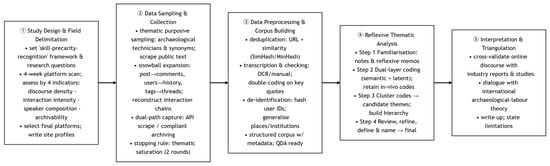
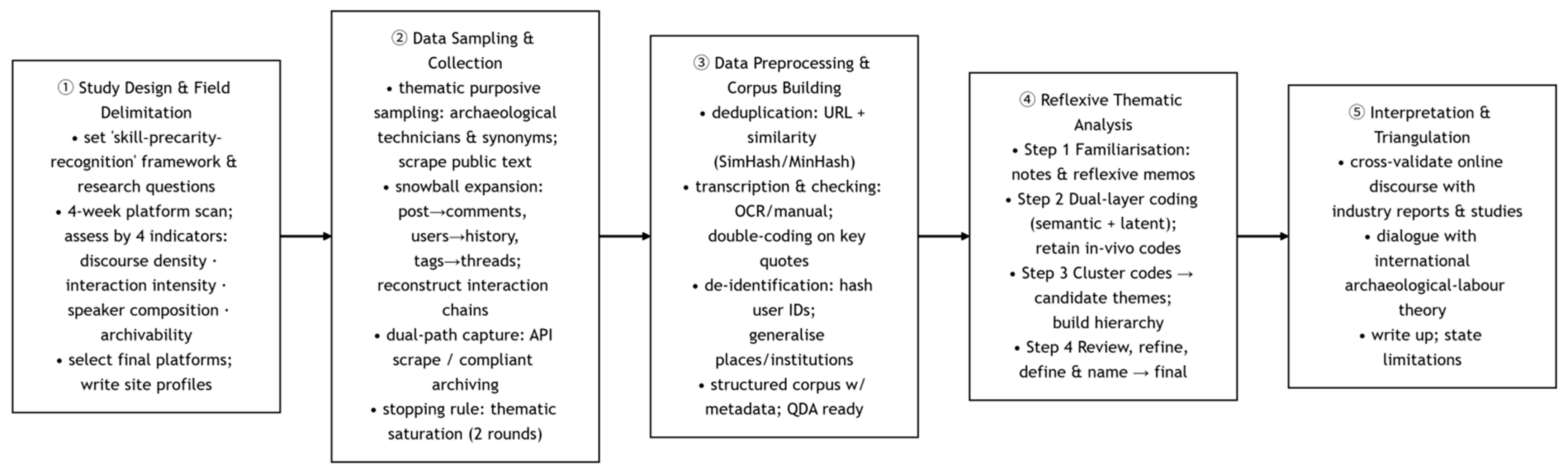
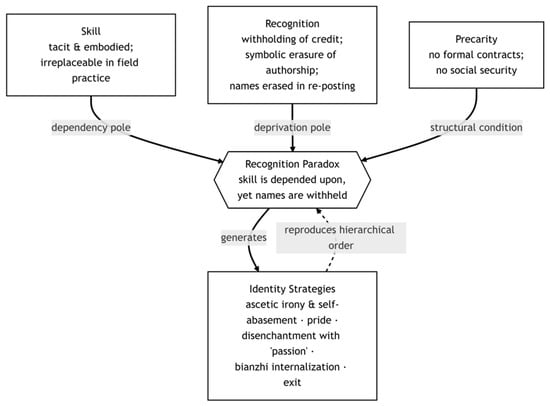
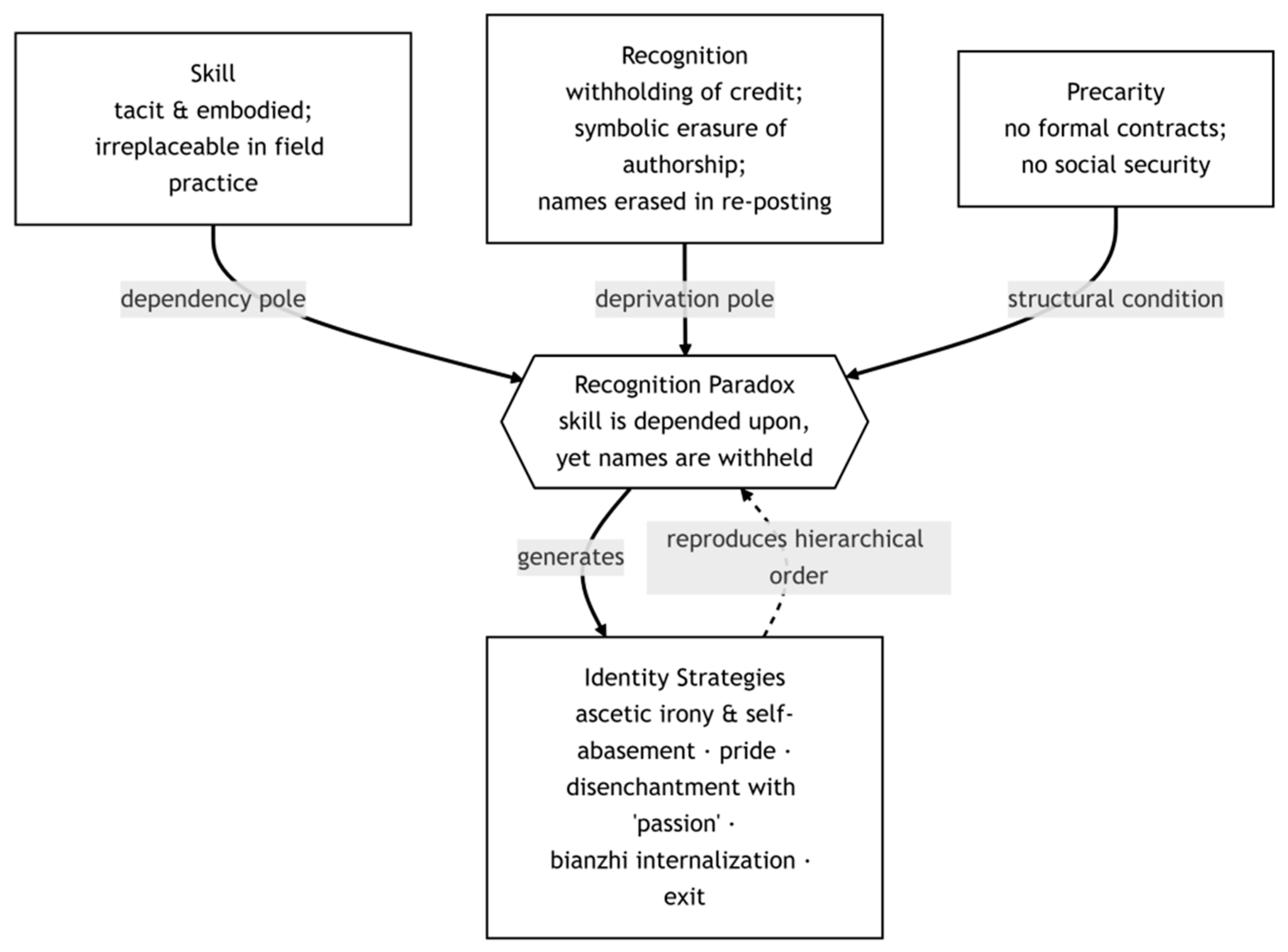

Disclaimer/Publisher’s Note: The statements, opinions and data contained in all publications are solely those of the individual author(s) and contributor(s) and not of MDPI and/or the editor(s). MDPI and/or the editor(s) disclaim responsibility for any injury to people or property resulting from any ideas, methods, instructions or products referred to in the content. |
© 2026 by the author. Licensee MDPI, Basel, Switzerland. This article is an open access article distributed under the terms and conditions of the Creative Commons Attribution (CC BY) license.