


Abstract
Commercial seaweed farming in India began in 1984 and expanded after experimental trials in the late 1990s, with Kappaphycus alvarezii cultivation emerging in 2001. Production peaked in 2013 but subsequently declined because of challenges including mass mortality, with current dry production estimated at 200–300 t annually. To revive the sector, Pradhan Mantri Matsya Sampada Yojana (PMMSY) proposed an investment of USD 76.8 million to achieve 1.12 Mt fresh biomass by 2025. However, expansion is constrained by inadequate availability of quality planting material (QPM), highlighting the need for dedicated seaweed nurseries. To meet 60% of the PMMSY target, approximately 66 nurseries, each producing 102 tons of fresh biomass annually, would be required (model-based projections from laboratory data, not yet validated at commercial scale in India). This would require an estimated 13,254 trained laboratory workers and 13,539 field workers, potentially generating employment equivalent to 0.27% of India’s marine fishers. Successful implementation will require coordinated support from government agencies, research institutions, private enterprises, and NGOs, along with subsidies and incentives for entrepreneurs. Establishing seaweed nurseries can ensure reliable QPM, strengthen raw material supply, create employment, and support India’s seaweed industry toward achieving PMMSY targets and long-term sustainability through resource-efficient nursery infrastructure and training.
1. Introduction
1.1. Background on Commercial Seaweed Farming in India
Globally, 35.1 Mt of fresh seaweed biomass was produced in 2020, with a market value of USD 16.5 billion [1]. Nearly all of this seaweed (99%) was cultivated through aquaculture, with only a small portion harvested from wild stocks. Asia accounts for over 99.54% of the world’s seaweed production [1]. In India, Kappaphycus alvarezii is the only seaweed species commercially cultivated on a large scale to date [2], although there is renewed interest in agarophyte farming in some of the coastal states and union territories, such as Gracilaria dura in Gujarat [3] and G. edulis in Lakshadweep [4]. The roots of commercial K. alvarezii farming in India can be traced back to a strain of Philippine origin acquired from Japan in 1984 by the CSIR—Central Salt and Marine Chemicals Research Institute (CSMCRI) [5]. Most of the initial stock died off during acclimatization experiments because of infection-related tissue die-back [5]. Later disease outbreaks, such as the 2013/14 ice-ice episode, were likewise linked to environmental stress (temperature, salinity, and low nutrients) combined with opportunistic infection [6]. The surviving asexual propagules gave rise to the entire standing crop today. However, farming remained experimental until 2000, after which PepsiCo Holdings India Ltd. initiated commercial farming in Tamil Nadu in 2001. The industry saw remarkable growth between 2005 and 2020, reaching a total cumulative production of 8088 tons of dry weight (Figure 1) [7]. Nevertheless, crop mortality in 2013/14 due to ice-ice disease outbreak [6] created enormous constraints on the availability of viable planting material [8].
Figure 1.
Commercial production of Kappaphycus alvarezii for 2005–2020 (16 years) in India [9].
1.2. High Demand for Seaweed Raw Materials in India
India has 46 seaweed-based industries, of which 21 produce agar and 25 produce alginate. However, only about 58,715 tons (FW) of standing stock of economically important species is available [10], causing many industries to operate below capacity [11]. Despite recent government-regulated management practices, decades of continuous, indiscriminate, and unorganized collection have depleted natural resources alarmingly.
To meet industrial demand and boost seaweed productivity, India launched the Pradhan Mantri Matsya Sampada Yojana (PMMSY), which targeted 1.12 Mt (FW) of seaweed production over 2021–2025. According to Bhushan et al. [4], achieving this target requires an initial K. alvarezii seed stock of 120,000 tons (FW) with the tubenet method or 60,000 tons (FW) with the raft method. These figures indicate that the initial seed demand is 2.5–5.0 times higher than the current Indian seaweed production. The seed requirement is inversely proportional to the fold-increase achieved, which depends on planting density and cycle length. Producing quality planting material (QPM), meaning consistent, robust, and disease-free propagules, is therefore crucial for economic sustainability. QPM can be supplied by a seaweed nursery: a dedicated facility with a standardized design, layout, and infrastructure, operated by trained personnel, that propagates seaweed to a size suitable for transplanting into the sea.
To combat seed constraints, another viable option is selective breeding to develop tolerant cultivars. However, the absence of natural populations of this species in Indian waters limits cultivar selection. The Government of India has prepared draft guidelines for the large-scale import of live planting material from other Southeast Asian countries, and ongoing research on mutant cultivars tolerant of stress and disease may also provide new cultivars for breeding. However, mutant cultivar development is a long and uncertain pipeline: induced or selected variants must remain stable over successive vegetative cycles, outperform the existing clone across sites and seasons in multi-location trials, and show no increased susceptibility to disease before any regulatory clearance and seed multiplication. Trait reversion, trade-offs between growth and carrageenan quality, and poor performance outside the test site are common failure points. Such cultivars are, therefore, expected to complement, rather than replace, nursery-based supply of the existing clone in the near term. Together, these developments suggest that selective breeding could become feasible for seedling production in India in the medium term, subject to field validation.
1.3. Targets Given Under the “Pradhan Mantri Matsya Sampada Yojana” Scheme
To better utilize India’s ~7500 km coastline for the seaweed sector, the Department of Fisheries (DoF), Ministry of Fisheries, Animal Husbandry, and Dairying (MoFAH&D), Government of India, launched the PMMSY scheme. The scheme marks a significant milestone with a record investment of USD 76.8 million (≈₹640 crore at USD 1 = ₹83.27) specifically for the seaweed sector. The target for seaweed biomass production under the scheme was set at 1.12 Mt (FW) over five years (2021–2025). Priority states for seaweed production targets include Tamil Nadu (0.3 Mt), Gujarat (0.2 Mt), and Andhra Pradesh (0.15 Mt), followed by Maharashtra, Odisha, West Bengal (0.1 Mt each), and then Kerala, Karnataka, Goa, Puducherry, Diu and Daman, Lakshadweep, and Andaman and Nicobar Islands (<0.1 Mt each; Figure 2).
Figure 2.
State- and union territory-wise seaweed cultivation targets under PMMSY, 2021–2025. (Source: Department of Fisheries, Government of India. Available online: https://pmmsy.dof.gov.in/dashboard, accessed on 23 October 2026) [12].
1.4. Problem and Research Question
Achieving the PMMSY seaweed production targets has been constrained by the seasonal interruption of open-sea farming. Nine Indian coastal states are affected by the southwest monsoon (SWM, June–September), which brings about 75% of the country’s annual rainfall, and by the northeast monsoon (NEM, October–January) [13]. The timing of the interruption differs by coast. On the west coast (Gujarat to Kerala) and Lakshadweep, farming is mainly interrupted by the SWM, whereas on the southeast coast, including Tamil Nadu, where K. alvarezii is currently farmed, the NEM is the main constraint [6,13]. Seed shortage, therefore, arises at different times of year in different states, and the nursery window, and the calendar in Figure 3, must be set for each coast.
Figure 3.
Monthly operational timeline for indoor seedling production, nursery grow-out, and open-sea commercial cultivation of Kappaphycus alvarezii in India.
During these periods, high wave action and strong currents make it difficult to keep farming infrastructure in place. Rainfall also causes sudden changes in seawater quality, particularly fluctuating salinity, which damages the algal fronds. Farming is, therefore, halted to avoid loss of feedstock and economic losses to fishers, and this leaves a shortage of planting material for the following season. At present, individual farmers cope with this by retaining small quantities of seed at different sea locations and times, on the assumption that bad weather will not affect all sites simultaneously. The surviving material is then shared among co-cultivators through informal, community-based networks within the village. Such small quantities need two to three farming cycles to generate enough seed for each farmer’s cultivation units, which delays progress toward the PMMSY targets. A nursery-based approach could break this dependence on seed that survives in the sea. Nursery development for seaweeds has not, to our knowledge, been systematically assessed in the Indian context. Sethuraman et al. [14] recently reported tank culture of K. alvarezii microcuttings for micro-propagation. The prototype is simple and low cost, which makes scaled-up operation and field deployment feasible. Nursery operations can then be scheduled for the monsoon window, when open-sea farming is not possible, using a land-based laboratory stage followed by a raft stage at sheltered sea sites.
This study, therefore, asks how seedling production units for K. alvarezii can best be established in India’s coastal states and union territories to ensure a continuous and sufficient supply of quality planting material despite monsoon interruptions, and thus support PMMSY implementation. The objectives were to (i) review the available techniques for producing planting material and the nursery setups operating outside India, (ii) propose a core strategy and implementation framework for nursery development in India, and (iii) estimate the infrastructure (water, tanks, rafts, and sea area) and manpower required for individual nurseries and for the national target, using the laboratory data of Sethuraman et al. [14]. The analysis is limited to physical requirements at the pan-India level. It can answer how many nurseries, of what size, and with what water, tanks, rafts, sea area, seed output, and workforce, are needed to supply a given share of the PMMSY target. It cannot answer questions that depend on costs and prices, such as capital and operating costs, seed pricing, subsidy levels, profitability or payback periods, or demand and market response—these require a separate techno-economic evaluation, which is beyond the present scope.
2. Materials and Methods
2.1. Study Design and Scope
This study is a desk-based feasibility analysis of nursery-based seed production for K. alvarezii, the only seaweed species commercially farmed in Indian waters. It comprised (i) a review of seedling production techniques for K. alvarezii farming in India (fragmentation, clonal propagation, and in vitro cultures) and of nursery or hatchery setups outside India, using a thematic analysis following Mantri et al. [6], (ii) a nursery process design based on the laboratory data of Sethuraman et al. [14], and (iii) extrapolation of the requirements (water, tanks, rafts, area, and manpower) to individual facilities and to the national PMMSY target. All values are in fresh weight unless stated otherwise.
2.2. Operational Calendar
Monsoon seasonality is described in Section 1.4. Because open-sea farming is not possible during the monsoon, an annual calendar was constructed (Figure 3). Nursery operations (mother-plant storage, 30-day laboratory culture, and 60-day raft culture) occur in the monsoon window, followed by eight months of commercial cultivation. The stage durations follow from the growth milestones in Sethuraman et al. [14]: laboratory culture runs until microplantlets reach the ~3 g stocking weight for rafts (0.9 g at 3.7% day−1 for 30 days gives ~2.7 g), and raft culture runs until seedlings reach ~35 g (3 g at 4.2% day−1 for 60 days gives ~35 g). Together with one month of mother-plant storage, they fit the four-month monsoon window (Figure 3).
2.3. Nursery Design Basis and Assumptions
The two-stage process, survival rates, growth rates, stocking densities, and culture conditions were taken from Sethuraman et al. [14] and modified using the authors’ experience (Section 3.4). The assumed 60–70% biomass loss in microcutting preparation was used to estimate mother-plant requirements. The model is based on the prototype of Sethuraman et al. [14] and scales by replicating identical units, assuming that performance at nursery scale matches the prototype, which has not been tested. Varying survival (70–90%) and raft growth rate (3.2–4.7% day−1) changes the output, hence all results are, therefore, best read as ranges (e.g., 5.1–6.6 t per batch for 70–90% survival) around the reported optimal scenario.
2.4. Calculation of Requirements
The number of nurseries was set at one per 100 km of coastline, with siting flexibility of ±20 km where conditions were unsuitable. This gave 66 nurseries to cover 60% of the 1.12 Mt PMMSY target. The remaining 40% was assumed to come from conserving seed in sheltered natural areas. Seed production per nursery was calculated by dividing each state’s seed requirement by its number of nurseries. Harvestable biomass assumed a 4-fold increase per cycle and five cycles per year. Resource requirements for a 6 t cycle were scaled to the smallest and largest facilities. Manpower was compared with each state’s marine fishers’ population. A three-step scale-up scenario for Tamil Nadu was also calculated.
3. Results
3.1. Core Strategy to Support Commercial Farming in India
3.1.1. Need for Seaweed Nursery Establishment and Seed Specifications
Meeting the initial seed requirement of the PMMSY target (60,000–120,000 t FW; Section 1.2) is not feasible with farmer-retained seed and long-distance dry transport, which gives only 20–50% survival [15]. Nurseries producing consistent QPM are, therefore, needed. The criteria adopted for mother plants were as follows: thalli approximately 30 days old, at least 8–12 cm long, densely branched (branch length 6–8 cm), and thick, which provides more cutting sites and greater handling resilience, a growth rate of 3.5–4.5% day−1, carrageenan content of 20–30%, and gel strength of at least 550–650 g cm−2. These criteria were used to estimate mother-plant requirements in Section 3.4. At nursery scale we propose a tiered workflow: (i) morphometric screening at collection (age, length, and branching) on a random sample of thalli from each source lot, (ii) daily growth rate from a short tracked-growth trial in nursery tanks (formula in Section 3.4.2), and (iii) carrageenan yield and gel strength on a composite sample per lot at a partner laboratory, since these need analytical facilities that individual nurseries may not have.
3.1.2. Ways to Implement a Nursery-Based Framework for Scaled-Up Production of Quality Planting Material
MoFAH&D has issued guidelines for ‘Commercial Seaweed Cultivation’ that explicitly mention QPM [16]; however, no exclusive biosecurity guidelines for producing QPM exist in India [6]. Minimum biosecurity procedures for nurseries should include quarantine and observation of incoming mother plant in isolated tanks, filtered, UV-treated seawater, disinfection of tanks and tools between batches, prompt removal and safe disposal of bleached or infected thalli, batch labeling with records of source and strain, regular monitoring logs for bleaching, epiphytes, and grazing, and no exchange of material between facilities without inspection [6].
NITI Aayog, the apex public-policy think tank of the Government of India, has emphasized the need for comprehensive regulations, policies, and laws to enable certified seaweed nurseries or hatcheries nationwide [17]. Certification could be undertaken by an appropriate agency, such as the Coastal Aquaculture Authority of India under MoFAH&D. Specific guidelines for QPM are, therefore, needed. Indicative certification criteria would include traceable, molecularly confirmed strain identity, disease- and epiphyte-free status at dispatch, post-transplant survival and vigor of supplied seedlings, and complete batch records. We suggest periodic inspections with random seed sampling, and suspension or cancellation of certificates for non-compliance. The frequency and thresholds should be set by the competent authority with stakeholders.
These guidelines should apply to nurseries owned by individual farmers, private entrepreneurs, NGOs, or local government bodies, and should cover the type, size, and operation of nurseries in line with government standards. To ensure sustainability and seed quality, the government should enforce mandatory monitoring of nursery processes, monitor seed prices, and set an indicative price band that covers production costs with a reasonable margin, since prices capped too low could discourage private investment in nurseries. They should also issue detailed guidelines on mother-plant collection, with compliance monitored. No wild populations of K. alvarezii occur in Indian waters, yet cultivars of different origin differ in growth and phycocolloid yield [18]. Cultivar selection is, therefore, both feasible and essential. Nurseries are likely to face three major challenges, namely, lack of market, low-quality seed, and inadequate funding, which policy and regulation should address to allow long-term operation.
3.1.3. Engaging Stakeholders and Private Parties in Establishing Nursery or Hatchery Setups
Funding for nurseries can come from several sources. The government can provide financial support, because nursery establishment aligns with national fisheries and environmental policy, for example by allocating funds to research institutes or fisheries departments. Industry participation is equally important: fisheries cooperatives, seaweed farming companies, and related industries have a vested interest in healthy, disease-free seed stock and can contribute funds, expertise, and resources. NGOs can add to this by leveraging corporate social responsibility (CSR) funds, particularly where they focus on sustainable sea farming or marine ecosystems and value cultivar biosecurity, strain health, and disease resilience. CSR funding is typically project-based with short cycles and may not cover recurring operating costs, so it is best used for start-up capital and training, with operating costs met from seed sales or lease arrangements.
Government-run and privately owned nurseries each have distinct strengths and limitations (Table 1). As no commercial nursery yet exists in India, Table 1 reflects general characteristics of public and private institutions. Indian experience is consistent with this: the only experimental seedling facility is government-run (CSIR-CSMCRI; Section 4), whereas commercial farming has been led by private companies since 2001 [5]. Government-run nurseries benefit from stable funding and research networks but may be slowed by bureaucratic processes, whereas private nurseries respond quickly to market demand and adopt new technologies but may favor short-term returns over long-term research and ecological sustainability, and may restrict knowledge sharing. These complementary strengths support a public–private partnership (PPP) model, in which government provides funding, regulation, and research support, industry provides operational efficiency and market access, and NGOs and CSR channel additional resources. Because commercial K. alvarezii in India derives from a single clonal introduction, the main risks for nurseries are loss of vigor, disease susceptibility, and loss of strain traceability [19], so molecular confirmation and labeling of strains should be part of nursery certification. Strain integrity should be monitored by periodic molecular fingerprinting of nursery stock, tracking of growth-rate trends over successive vegetative generations, and maintenance of reference stock from which nursery material is renewed after a set number of cycles. Should new cultivars be introduced (Section 1.2), nurseries would also be the natural place to maintain and document them.
Table 1.
Advantages and disadvantages of government and privately run seaweed seed nurseries.
3.1.4. Subsidies to New Entrepreneurs/Farmers for Developing Planting Material Facility
To establish planting material facilities, a diverse group of new entrepreneurs needs to be attracted. To build trust and encourage adoption of high-quality planting material, the government must provide subsidies to new entrants in the seaweed sector. Support can be grouped into four categories: financial (grants and tax incentives), infrastructure and technology (infrastructure development and research), capacity building (training and quality certification), and market assistance (Figure 4). Evidence from agriculture offers an analogy. Chinese subsidies for green and efficient raw materials, which are agricultural inputs that improve yields and reduce soil damage, found that subsidizing both farmers and the producing firm is optimal when an input’s effectiveness is limited, whereas subsidizing farmers alone is more effective otherwise [20]. This suggests that nursery subsidies in India should be targeted at producers, users, or both, depending on the demonstrated effectiveness of the planting material. However, this analogy has limits: it concerns terrestrial crop inputs, whereas seaweed seed is perishable, used in shared open-sea space, and handled largely through community networks, so the study informs the logic of whom to subsidize, not the magnitude of subsidies. Subsidies risk being captured by larger entrepreneurs, and this could be reduced by tiered or capped support, reserved shares for fisher cooperatives and self-help groups, output-linked (seed supplied) rather than capital-only support, and public beneficiary registers.
Figure 4.
Government support to new entrepreneurs/farmers for developing planting material facility.
3.2. Existing Techniques for Producing Planting Material and Their Challenges
Culture techniques available for producing planting material in eucheumatoids include (1) fragmentation (branch cuttings/macrothalli) [5,21], (2) clonal propagation (micro- or macro-propagation using micropropagules/microcuttings or macrofragments/thalli, respectively) [22], (3) in vitro cultures (development of somaclones from callus cultures, direct regeneration without passing through the callus phase, protoplast cultures, and genetic improvement through in vitro polyploidization) [14,23], and (4) spore-based propagation [24]. Since K. alvarezii does not produce viable spores in Indian waters, the spore-based seedling production method was not discussed in the present study. Whether environmental manipulation (for example of temperature, photoperiod, or nutrients) could induce reproductive structures and spore release in Indian K. alvarezii has, to our knowledge, not been tested, and is a possible direction for future research [24,25]. As sexual structures are not observed in cultivated Kappaphycus and the use of carpospores or tetraspores remains experimental [26], it was not considered here. The remaining three methods are discussed in brief under the headings fragmentation, clonal propagation (in vitro or in situ), and in vitro cultures (Figure 5). Each method has its unique advantages and disadvantages tailored to specific challenges and seaweed types.
Figure 5.
Different methods of seed material generation in Kappaphycus alvarezii in India. In vitro cultures comprise somaclone development from callus, direct regeneration without a callus phase, protoplast culture, and genetic improvement through in vitro polyploidization.
Fragmentation: In this method, the healthy/vigorous seed stock is selected from the cultivated material and fragmented into 7–10 cm segments with a few branches re-cultivated, using a purely vegetative method. Repeated vegetative propagation over successive cycles is nevertheless associated with progressive loss of vigor, slower growth, lower yield and quality, and greater vulnerability to biotic attack [6]. Approximately a quarter of the harvested crop biomass serves as seed material for subsequent farming [27]. This reduces the marketable yield to about 75% of each harvest. Successful vegetative fragmentation has been applied to propagate Gelidiella, Gracilaria, Kappaphycus, and others [5,21,28].
Clonal propagation (in vitro or in situ): This seedling generation method is also a purely vegetative method. It can be done in laboratory (in vitro) or in field (in situ), using micropropagules/microcuttings or using macrofragments/thalli, respectively. The process begins with selecting seaweed thalli/mother plant exhibiting superior growth or economic traits. Luhan and Mateo [29] have described the protocol for selection of seaweed thalli/mother plant for propagation. Different seaweed thalli, as well as parts of an individual thallus (such as the tip, the part below the tip, secondary branches, or the main thallus), can be grown separately and screened for higher growth and survival. Robustness and fast growth can act as selection criteria for the mother plant. Seaweed thalli can also be tested for desirable economic traits, such as good quality extract, higher carrageenan content, and gel strength. This approach assists in selecting the thalli and part that provide the best source of seedlings. The selected material is multiplied and maintained, serving as a source of seedlings. The elite material is then cut into segmented seedlings of 0.2 to 0.5 cm lengths [28,30,31] and cultured under basic laboratory conditions. These seedlings can be treated with growth substances, such as indole-acetic acid (IAA) and kinetin, for improved survival and regeneration. The elite material containing the good trait can also be preserved/bio-banked following the cryopreservation method, as described in Yang et al. [32] for different seaweeds. One study reported better chemical composition in micro-propagated than farm-propagated K. alvarezii [33]; however, the evidence is limited and has not been replicated in multi-location trials, so these benefits remain unproven. The entire process, requiring basic laboratory and nursery setups, offers opportunities for seedling treatments to enhance growth performance. The use of plant growth regulators would add significant cost to the entire process [29]. The method needs a certain level of skilled manpower, which can handle seedling preparations (selection of seed stock based on above criteria), growth treatments with experimental design, laboratory culture (preparation of growth media), and tank acclimatization. This also requires infrastructure investment for laboratory and nursery setup.
In vitro cultures: In vitro cultures play a vital role in mass-producing seaweed seedlings with desirable traits, as described above in clonal propagation [34]. Notably, Chondrus, Kappaphycus, and Laminaria benefit from in vitro techniques (exploiting organogenetic potential to select strains of superior traits or development of somaclones from callus culture) amid rising demand [35,36,37,38]. Successful direct regeneration (without going through callus phase) has been employed in Grateloupia filicina [36], K. alvarezii [39], and Sargassum polycystum [40]. Recently, colchicine-induced polyploidy in young thallus segments of K. alvarezii has been reported for genetic improvement, with treated plants exhibiting a higher number of carrageenan globules compared to controls [14]. Large-scale use is limited by cost and specialized expertise, and by risks of somaclonal variation and genotype instability, so traits of polyploid and other in vitro-derived lines must be verified over successive vegetative generations before use. While progress has been made, seaweed in vitro cultures lag behind land plants [41]. The technique is relatively expensive [29] and requires specialized expertise. Protoplast cultures have also offered advantages [23], contributing to uniform seedlings. The critical selection of explants and optimization of media components are essential for successful in vitro cultures, serving as a foundation for seed stock and genetic enhancement [42].
In relative terms, fragmentation is the simplest and least costly method but is associated with progressive loss of vigor [6], clonal propagation requires skilled manpower and laboratory and nursery infrastructure, and growth regulators add cost [29], and in vitro culture is relatively expensive and requires specialized expertise [29]. Per-unit seed production costs are not available and would require the techno-economic evaluation noted in Section 1.4.
3.3. Nursery Setup Requirements for India
To achieve 60% of the PMMSY target, India would need to establish the number of nurseries given in Table 2, calculated as 1 facility per 100 km of coastline (66 in total). Some stretches may be unsuitable for a nursery (for example, because of freshwater ingress from large rivers or highly turbid, muddy water); under such conditions, facilities could be relocated to suitable sites within ±20 km of the designated location. Table 2 should be read as a theoretical upper limit. The total seed requirement (6746 t year−1) is fixed by the target, so if 20%, 30%, or 40% of the coastline were unfit, the number of facilities would fall from 66 to about 53, 46, or 40, and the per-facility output would rise from about 102 t to about 127, 147, or 169 t year−1. The seed production target per facility was calculated as the state’s seed requirement divided by its number of facilities (approximately its coastline in units of 100 km; whole numbers of facilities were used for Kerala and West Bengal), and averages ~102 t year−1 (6746 t year−1 in total). These targets are not adjusted for state-specific environmental constraints, which would be a next step in site-level planning. Targets for individual facilities vary with the state, its coastline, and its PMMSY target. For example, Gujarat, with a first-year target of 30,000 t and 16 facilities along its 1600 km coastline, requires 75 t year−1 per facility. This output is the QPM supplied by the nurseries for the first cultivation cycle. On-farm cycles then multiply this material (Table 2), so the nurseries are not required to supply the full 60,000–120,000 t initial seed requirement directly. West Bengal has the highest per-facility target (302 tons year−1) because its PMMSY allocation (0.1 Mt) is large relative to its short coastline (157 km), which limits the number of facilities. This value is an arithmetic outcome of the allocation rather than a site-specific capacity estimate. If local conditions limit capacity, the same target could be met with more facilities (e.g., three facilities at ~200 tons year−1 each) or a lower state allocation.
Table 2.
Assumption on required number of nurseries for India in order to achieve its 60% PMMSY target. Projected values are based on optimal-scenario laboratory data, and real-world losses are not modeled. * Unit taken: one facility in every 100 km of coastline area.
3.4. Key Points on Seedling Production in a Single Nursery Setup
All quantities in Section 3.4 and Section 3.5 are projections based on the optimal-scenario prototype data of Sethuraman et al. [14] (Section 2.3) and should be read as upper estimates. Real-world seedling losses are not modeled.
3.4.1. Terminology Used
The term ‘microcutting’ refers to a small segment (0.8–1 cm, 0.8–1 g) cut from the mother plant. A ‘microplantlet’ is a microcutting that has developed a lateral shoot (primary branch) during laboratory culture. A ‘seedling’ is a microplantlet that has developed secondary branches and is ready for out-planting after raft culture. The ‘nursery’ combines a land-based laboratory stage and a sea-based raft stage.
3.4.2. Process of Seedling Production
The seedling production process consists of two stages, each with a specific duration and survival rate (Figure 6). During the first, laboratory culture stage, which lasts for 30 days, 82% of the microcuttings survive and will grow with an average growth rate of 3.7% day−1. Growth rate is expressed as daily growth rate, DGR (% day−1) = [(W_t/W0)^(1/t) − 1] × 100, where W0 and W_t are the initial and final fresh weights (g) and t is the culture period in days [14]. The initial weight of microcutting in the laboratory stage is 0.8–1 g (size approximately 0.8–1 cm). In the laboratory stage, microcuttings will be grown in small glass tanks of 10 L containing 2 L of seawater (as per the prototype described in Sethuraman et al. [14]). The stocking density will be 500 microcuttings 2 L−1 seawater. During the laboratory culture, microcuttings will be cultured at 25 °C, 30 ppt (parts per thousand) salinity under white fluorescent LED light of irradiance intensity 150 µmol photons m−2 s−1 with a 12:12 h light:dark photoperiod. PGRs (indole-acetic acid and kinetin 0.01 mg L−1 each) and Ascophyllum marine plant extract powder (AMPEP; 3 mg L−1) will also be added in tanks for better growth during laboratory culture. Additional supplement of nutrients and CO2 can also be given to stimulate the growth of microcuttings. Laboratory culture conditions can be maintained using air-conditioners for temperature control, programmable overhead LED lighting for a fixed photoperiod, and filtered, UV-sterilized seawater that is aerated and replaced on a regular schedule to keep water quality stable [43]. Ice-ice disease is triggered mainly by environmental stress (temperature, salinity, and low nutrients), so stable culture conditions are the first line of prevention in the nursery [6]. Healthy young mother thalli (as given in the Section 3.1.1) are selected for pathogen-free, robust high-quality seedlings [6]. Cultures need to be monitored regularly for bleaching, epiphytes, and grazing, and affected material should be removed [6].
Figure 6.
Seedling production process in a nursery setup (90-day cycle). Days 1–5: collection and acclimatization of mother plants; Day 6: preparation of microcuttings; Days 7–30: laboratory culture in the prototype tank (Sethuraman et al. [14]), with 82% survival; Days 31–90: culture of microplantlets on 2 × 2 m rafts in the open sea for 60 days, with 100% survival, after which seedlings are ready for commercial farming.
In the second stage, 2 × 2 m raft culture, which spans 60 days, all (100%) of the microplantlets survive and will grow with an average growth rate of 4.2% day−1. The initial weight of microplantlet in raft culture is 3 g and the stocking density will be 150 microplantlet raft−1. At the end of raft culture, each seedling will reach up to an average of 35 g weight. Based on the location, an appropriate method will be used for cultivation, e.g., monoline, tubenet, etc. The monoline method uses floating lines (6–8 mm thick, 20 m long) anchored at both ends and supported by recycled bottle floats. Seedlings are planted directly in water, ensuring they remain submerged and receive sunlight. It suits areas with moderate waves and low grazing activity. The tubenet method, ideal for high-wave areas, uses 25 m-long nets (15 cm diameter, 2 cm mesh) anchored with 30 kg stones and supported by floats. Seed material is loaded sequentially into the tube using a plastic pipe, ensuring no gaps, and both ends are secured with ropes to prevent loss. Nevertheless, for mathematical consistency across calculations, 2 × 2 m raft culture is considered throughout the analysis. The 100% raft survival is the value reported at the experimental scale [14]; in open-sea conditions, storm damage, epiphyte fouling, grazing, and salinity shocks would reduce it and are not modeled. At 90% or 80% raft survival a 6 t batch would yield 5.4 or 4.8 tons or would need 11% or 25% more microplantlets and rafts to deliver 6 tons. Siting the raft stage at sheltered locations (Section 1.4) is, therefore, important.
As the raft culture will be in open-sea condition, the ideal seawater quality parameters [44] (Table S1) should be met for higher growth and survival. Involvement of local fishers from the beginning in such activities would reduce conflicts, if any, due to marine spatial competition in the domain of commercial fisheries operations. Overall, this 90-day seedling production process allows for the successful growth and survival of plants through both stages, resulting in high-quality seedlings ready for further development or planting. Details of the specialized tank designed for a high survival rate during laboratory culture, 30-day laboratory culture process, and sequential development of seedling throughout the 90-day cycle are given in Figures S1–S3, respectively.
Because laboratory cultures depend on aeration, cooling, and lighting, nurseries should have a standby generator or battery backup for aeration and temperature control, alarms for aeration or temperature failure, and spare tank capacity—these contingencies are not accounted for in the present analysis.
3.4.3. Requirements for Producing Six Tons of Seedlings in a Single Cycle
This entire process is based on the data provided by Sethuraman et al. [14] with slight modification based upon our expertise (Figure 7). In the seedling production process, each microcutting begins with an initial weight of 0.8–1 g (size approximately 0.8–1 cm). However, it is important to consider that a significant amount of biomass (60–70%) is lost as handling loss during microcutting preparation. To produce 0.209 million microcuttings, an average of 752 kg of mother plant biomass (3 × the 209 kg of microcuttings, plus a 20% surplus) is required to obtain a total microcutting weight of around 209 kg. After completing the first stage, laboratory culture, approximately 0.172 million microplantlets will successfully survive (with an 82% survival rate). These viable microplantlets are then transferred to 2 × 2 m rafts, where 100% microplantlets will survive. This final batch of seedlings weighs approximately 6 t (with each individual seedling of an average 35 g weight).
Figure 7.
Biomass loss and survival rates in each stage during the production of six tons of seedlings for an individual cycle. In the laboratory stage, the prototype tank described by Sethuraman et al. [14] will be used with 2 L of seawater and a stocking density of 500 microcuttings 2 L−1.
Adequate storage facilities are essential for the establishment of a seedling production nursery. To produce 6 t of seedlings, 15 tanks, with each tank having a capacity of 5000 L and a biomass density of 10 g L−1, are necessary (Box S1). To manage the storage and maintenance of the stored biomass, a workforce of five individuals will be required, with one person required for three tanks. In terms of water requirements, approximately 75,000 L of seawater will be needed for the storage process. It is important to replace this seawater every three days to ensure optimal conditions for seedling growth. It is suggested that the water also must be filtered and, if necessary, treated to remove any contaminant. The storage area’s temperature should be maintained within a range of 23–25 °C and the light intensity should be between 45 and 50 µmol m−2 s−1. Additionally, the salinity of the seawater used should fall within the range of 35–37 ppt to provide a suitable environment to the stored biomass.
Moreover, the seedling development process needs specific requirements, including water, smaller size tanks, manpower, and rafts, as outlined in Table 3. In the initial stage of laboratory culture, where approximately 0.209 million microcuttings are to be cultured, the facility will necessitate around 836 L of water (500 microcuttings 2 L−1) and 418 tanks with a capacity of 10 L each. Moving to the second stage of raft culture, 1144 rafts of 2 × 2 m (150 microplantlets raft−1) will be needed. The physical footprint of 1144 rafts requires approximately 0.46 ha sea area, extending to approximately 0.57 ha when accounting for anchoring channels and inter-raft spacing. In terms of manpower, a team of 24 individuals is considered sufficient to handle the entire process, including storage, across a 24-day operational duration.
Table 3.
Requirements for each stage during the production of 6 t Kappaphycus alvarezii seedlings per cycle (all values are in average).
3.4.4. Prediction on Requirements for the Smallest (50 Tons Annually) and the Largest (302 Tons Annually) Facilities
Table 4 provides predictions on the requirements for each stage of seedling production for facilities of different sizes. The facility with the smallest target capacity is in Kerala (50 tons annually), while the facility with the largest target is in West Bengal (302 tons annually). At the start of the laboratory culture stage, the initial mother-plant biomass, held in the 5000 L storage tanks before microcutting preparation, varies with facility size, ranging from 6.3 tons for the smallest facility (50 tons) to 37.9 tons for the largest facility (302 t). As Kappaphycus is not naturally available in India, the first initial biomass requirement must come from cultivated sources of the country, with future cycles using retained material of established seedling facilities. The details of India’s seaweed cultivation sites have been given by Mantri [45], which can become a source for the first initial biomass of the nurseries. The number of tanks, rafts, and sea area required are given in Table 4. The workforce required is 196 persons for the smallest facility and 1187 persons for the largest facility.
Table 4.
Prediction on the requirements for the smallest (50 tons, fresh weight) and the largest (302 tons, fresh weight) Kappaphycus alvarezii seedling production facilities in India (all values are in average). Projected values are based on optimal-scenario laboratory data, and real-world losses are not modeled.
Under the optimal conditions reported by Sethuraman et al. [14], the smallest facility (50 t year−1; Kerala) would need about 6.3 t of mother plant and 196 workers, and the largest (302 t year−1; West Bengal) about 37.9 t and 1187 workers (Table 4). Meeting these state-level targets, therefore, depends on sizing facilities, and especially their initial biomass and workforce, to the local seed target, and on coordinating the laboratory and raft stages.
3.4.5. Manpower Composition
Running a successful seaweed nursery necessitates the involvement of two distinct types of manpower: scientific personnel for laboratory work and a labor force for fieldwork. The allocation of individuals required for both laboratory and field operations in each state is outlined comprehensively in Table 5, alongside the available marine fisher strength in those states.
Table 5.
Predicted scientific and field manpower requirements for proposed Kappaphycus alvarezii seedling facilities relative to active marine fisher populations across coastal States and Union Territories of India. Projected values are based on optimal-scenario laboratory data, and real-world losses are not modeled.
The demand for laboratory workers in each state ranges from 97 to 588 persons per facility, out of which about 16–17% are technical and supervisory staff. The remainder are trained workers for repetitive laboratory tasks (tank maintenance, microcutting preparation, and water exchange), who can be trained locally through Skill India programs. These laboratory workers play a crucial role in conducting essential scientific tasks within the nursery. The minimal educational qualification expected for laboratory technical and supervisory staff is a graduation degree in science, ensuring a competent and knowledgeable workforce.
On the other hand, the field workforce, essential for executing hands-on tasks in the nursery’s outdoor operations, fluctuates between 99 to 599 personnel. Their contribution is integral to the practical aspects of seaweed cultivation. It is noteworthy that the establishment of the intended number of nurseries has the potential to provide employment to a notable percentage, ranging from 0.1 to 2.8%, of the marine fisher population residing across different states, that can provide sustainable livelihood to fishers who are facing constraints due to depletion of fisheries resources.
Efforts to maximize the effectiveness of field manpower involve specialized training in the intricacies of seaweed cultivation activities conducted in open-sea environments. To achieve this, Indian research institutions, exemplified by organizations such as CSIR-CSMCRI, have initiated skill development initiatives. These endeavors are conducted as part of the Skill India campaign, a visionary initiative launched by the government of India, under the auspices of the National Skills Development Corporation of India. It is imperative that these training programs be further accelerated in each state to meet the targeted quota of skilled manpower required for the optimal functioning of seaweed cultivation. By ensuring that a competent and proficient workforce is available, these skill development programs contribute significantly to the growth and sustainability of the seaweed industry, while also positively impacting the livelihoods of marine fishers in various states.
3.5. Strategy for Tamil Nadu to Achieve a Target of 0.3 Mt Seaweed Production
In the context of the PMMSY scheme, Tamil Nadu has been assigned a target of producing 0.3 Mt of seaweed within a five-year timeframe. To achieve this ambitious goal, a well-thought-out plan has been devised. This state is already engaged in doing commercial cultivation; therefore, skills, expertise, and infrastructure, including nurseries for research purposes, already exist. Therefore, a detailed three-stage strategy is described below:
- Step 1: Production of 300 tons of initial seed material in the first year.
It is proposed that by initially producing 300 tons of seed material through five cultivation cycles in the first year, the overall target can be met. The journey toward this target begins with just 6 tons of seed material, 150 rafts, and a team of 4 individuals (where each person manages 1 raft per day for 45 days) in the first cultivation cycle. Seeding and maintenance occur in the first 45 days, followed by harvesting, re-seeding, and continued maintenance, with each person managing one raft daily. Through careful planning and execution, the cultivation effort intensifies with each cycle, resulting in a cumulative production of 300 tons of seed material by the end of the initial year. The calculations for achieving this production milestone are outlined in Table 6. A 2-fold increase per 45-day cycle was assumed for the first three cycles (due to cooler, rainfall-affected post-monsoon months) and 3- and 5-fold increases for cycles 4 and 5 (due to the warmer, higher-light pre-monsoon months; see Table 6 footnote). It becomes evident that with a total workforce of 34 dedicated individuals, operating within a designated sea area spanning approximately 2.4 hectares and utilizing 1500 rafts, the production of 300 tons of seed biomass is indeed feasible within the specified five-cycle timeframe. Our experience revealed that involvement of local fishers from the beginning in such activities would reduce conflicts due to marine spatial competition in the domain of commercial fisheries operations. The 577 ha required in Step 3 is small relative to the 1076 km Tamil Nadu coastline, but site selection must consider fishing grounds, other coastal aquaculture, protected areas (for example the Gulf of Mannar), and coastal regulation zone clearances. A quantitative assessment of competing use requires spatial (GIS) planning and is a future research need. During this process, 84 tons of excess biomass will also be generated, which can be sold to cultivators.
Table 6.
Calculations for the stepwise production of 300 tons (fresh weight) of Kappaphycus alvarezii seed material across five annual cycles in Tamil Nadu, India. Projected values are based on optimal-scenario laboratory data, and real-world losses are not modeled.
- Step 2: Production of 15,000 tons of biomass in the second year.
In the second year, a substantial leap in the production is envisaged. By using 300 tons of initial seed material of the first year, an impressive yield of 15,000 tons of biomass can be generated within the span of three cultivation cycles. The meticulous planning for this phase, including the necessary allocation of rafts, manpower, and cultivation area, is comprehensively detailed in Table 7. The 15,000 tons target is made achievable through the concerted efforts of a workforce numbering 1667 individuals, the deployment of 75,000 rafts, and the dedicated utilization of a substantial cultivation area covering 116 hectares.
Table 7.
Calculations for scaling Kappaphycus alvarezii biomass production to 15,000 tons (fresh weight) across three cycles in Year 2 (Tamil Nadu, India). Projected values are based on optimal-scenario laboratory data, and real-world losses are not modeled.
Furthermore, it is worth noting that in the process of achieving this production, a total of 1500 tons of excess biomass will also be generated that can be sold to cultivators. This additional revenue stream not only bolsters the economic sustainability of the initiative but also underscores the potential for seaweed cultivation as a lucrative enterprise in addition to addressing food security and resource sustainability goals.
- Step 3: Production of 75,000 tons of biomass cycle−1 in the upcoming years.
From the third year onwards, the 15,000 tons of biomass harvested in the second year is used as seed material for the first cycle. Each cycle yields a gross harvest of 75,000 tons cycle−1, of which 15,000 tons is retained as seed for the next cycle, leaving a net harvest of 60,000 tons cycle−1 for supply to cultivators. Over the three cycles of the third year, this gives a gross production of 225,000 tons (3 × 75,000 tons), of which 45,000 tons is retained as seed and 180,000 tons (3 × 60,000 tons) is net production. The details of this expansion plan, including the requisite number of rafts, manpower, and cultivation area, are outlined in Table 8. To realize this ambitious production target, a coordinated effort involving 375,000 rafts, a dedicated team of 8334 individuals, and a cultivation area spanning 576.92 hectares is required. These cycles can be replicated in subsequent years using the same quantity of rafts and workforce to yield an annual net biomass output of 180,000 tons. This approach will enable us to achieve a cumulative net seaweed production exceeding 300,000 tons within a five-year timeframe.
Table 8.
Calculations for the full-scale commercial production of 75,000 tons (gross, fresh weight) per cycle (180,000 tons net annual harvest) of Kappaphycus alvarezii biomass in Year 3 onwards (Tamil Nadu, India). Projected values are based on optimal-scenario laboratory data, and real-world losses are not modeled.
The multipliers in Table 6, Table 7 and Table 8 are fixed, and the model assumes no major crop failure. Because each stage is seeded from the previous harvest, a loss of x% in any cycle would propagate proportionally to all later cycles unless offset, for example by retaining part of the biomass otherwise sold as a buffer.
4. Discussion
By producing QPM, the physiological and phytosanitary characteristics of seaweed plants can be improved, leading to increased productivity and benefiting all stakeholders involved. However, no commercial facility currently exists in India that produces such QPM for seaweeds. The sole experimental seedling production facility in India is located at the Marine Algal Research Station, CSIR-CSMCRI, Tamil Nadu. The facility has a temperature-controlled laboratory and tanks of various sizes (see Figures S4 and S5) and is capable of producing 140–150 kg of seaweed seedlings batch−1. This output provides the proof of concept for the nursery model proposed here: the 6 t batch modeled in Section 3.4.3 and used as the starting seed in Step 1 of the Tamil Nadu strategy (Section 3.5, Table 6) is a roughly 40-fold scale-up of this experimental batch size. The projections in Section 3.4 and Section 3.5, therefore, assume that performance at the experimental scale can be reproduced at nursery scale, which remains to be validated (see limitations below).
There are numerous nursery or hatchery setups successfully running outside India, ensuring a sustainable supply of QPM, with support from diverse entities such as governments, private enterprises, and individuals. The majority of these nursery or hatchery setups involve seaweed species belonging to the Laminariales, Bangiales, and Palmariales orders. Nevertheless, unlike vegetatively propagated red seaweed, e.g., K. alvarezii, these seaweed species take advantage of the life history patterns. Thus, for commercial mass multiplication, a specific life history phase is used. For example, in Laminariales, filamentous male and female haploid gametophytes are bio-banked, and when needed to produce diploid sporophytes, they are mixed to enable fertilization. The zygotes are then seeded on to the ropes in nursery setups [46]. Porphyra/Pyropia species of the Bangiales order are cultivated using free-living or attached conchocelis in nursery setups. The developed seedlings are then out-planted in open-water farms using either the fixed pole, semi-floating raft, or floating raft method [47].
Eucheumatoids and Gracilariids are most often propagated vegetatively by seaweed farmers, although they are also capable of sexual reproduction via meiosis (tetrasporogenesis) and gamete exchange between male and female gametophytes [24,25]. Species such as Eucheuma and Kappaphycus possess a triphasic lifecycle comprising gametophyte, carposporophyte, and tetrasporophyte stages. While tetrasporophytes have been reported in natural beds of Philippines, sexual structures—especially male gametophytes—are rarely observed. Female reproductive structures and cystocarp formation are well documented, and in vitro studies confirm carpospore release and germination. However, the use of carpospores or tetraspores in cultivation remains limited to experimental trials, and commercial farming continues to rely on vegetative cloning [26]. The ecophysiology of Kappaphycus and Eucheuma species are influenced by light, temperature, salinity, nutrients, and water motion. Excess light can damage tissues, though tip regions show higher photosynthesis. Optimal temperatures range between 25 and 28 °C, with growth inhibited below 20 °C or above 35 °C. Salinity tolerance is narrow, and growth declines below 24 ppt or above 45 ppt. Nutrient enrichment, especially nitrogen, enhances growth and carrageenan quality. Water motion positively affects growth, especially during warmer months. Despite these insights, multifactorial studies are needed to optimize farm productivity and understand ecotypic responses across farming environments [26]. Beyond routine variation in light, temperature, and salinity, climate change and extreme weather are likely to increase the frequency of stress events that damage farms and trigger ice-ice disease: marine heatwaves, altered rainfall and salinity regimes, and stronger storms and cyclones [6,26]. Ocean acidification and changing nutrient availability can also alter the yield and nutritional quality of farmed seaweeds [48]. In India, elevated temperature combined with low nutrients during the northeast monsoon is already associated with ice-ice-like symptoms [6]. Nurseries can help buffer these effects by holding protected stock under controlled conditions and by allowing the timing and location of out-planting to be adjusted. Seaweed cultivation may also contribute to climate change mitigation and to reducing deoxygenation and eutrophication [49].
Species like Ulva and Palmaria have been reported to be cultivated vegetatively or through the use of swarmers or tetraspores. Ropes are seeded with swarmers or tetraspores at a specific density and maintained in nursery or hatchery setups for a defined period (five to seven days for Ulva swarmers and two to three months for Palmaria tetraspores) in tanks before being transferred to the field or farm [50,51]. Although these nursery setups cannot be directly compared or implemented for K. alvarezii, these examples highlight the importance of life phases and methods that need to be considered when producing seedlings in a nursery setup.
4.1. Western and Atlantic Models
Under a ‘Sea Change Strategy’ initiative, Ireland has successfully developed and demonstrated viable hatchery setups for various commercially important seaweed species. According to their market analysis, a combined hatchery, capable of producing bivalve spat and seeded collectors for seaweed grow-out at sea (sexually reproducing species like Palmaria palmata and Porphyra sp., and the large brown kelp Laminaria digitata), was optimal [52], indicating the importance of hatchery setups for increasing the seaweed productivity of Ireland. Forbord et al. [53] developed S. latissima kelp hatcheries to ensure the availability of its seeds for year-round production, and such hatcheries are important for scaling up and maintaining continuous biomass production [53]. Seaweed Solutions, a company from Norway [54], also supplies seeds of A. esculenta and S. latissima for commercial cultivators. In the UK, the Scottish Association for Marine Science (SAMS) enterprise, funded by Argyll and Bute Council and the UK Government, provides marine consultancy services [55]. They own a seaweed nursery that supplies QPM for seaweeds, such as Alaria esculenta, Laminaria digitata, and Saccharina spp. Similarly, Coleman et al. [43] also suggested increasing nursery production to support the raw material needs of the expanding industry. Sourcing juveniles makes up a significant portion of expenses, which is why the nursery stage is a critical component of any seaweed aquaculture operation [43]. The European sector’s dominance in global kelp production can be partially attributed to the successful use of selective breeding techniques and the establishment of efficient nurseries [56].
4.2. United States Models
The United States has numerous commercial facilities that utilize nursery- or hatchery-based setups to produce QPM. These facilities are responsible for supplying QPM to cultivators and users in their respective regions. Springtide is a private seaweed aquaculture company in Gouldsboro, Maine, United States, which runs a nursery for Saccharina latissima kelp seaweed and provides seeds for commercial and hobby farmers throughout Maine and New England [57]. Alutiiq Pride Marine Institute in Seward, Alaska, USA, also provides seeds for kelp farming. Fisherman Fresh Hatchery, also located in the same region, supplies seeds of seaweeds such as Nereocystis luetkeana, Alaria marginata, S. latissima, Palmaria sp. (Dulse), and Pyropia sp. (Nori) for commercial farming. Green Wave, a commercial seaweed facility in the USA [58], not only farms seaweed but also maintains a seaweed hatchery that supplies kelp seeds to a majority of farmers in Southern New England. In addition, there are commercial companies that do not supply seeds but instead provide seaweeds for various applications, which they cultivate in their private nursery or hatchery setups. For example, Monterey Bay Seaweeds [59], based in Marina, California, is a commercial seaweed supplier that cultivates edible seaweeds for culinary purposes using land-based tank facilities. This facility allows precise control over growth conditions, ensuring consistent quality for high-end restaurants and food production. Ocean’s Balance [60] from USA also supplies seaweeds such as Palmaria spp., Chondrus crispus, S. latissima, Laminaria spp., Alaria esculenta, Porphyra umbilicalis, Ulva lactuca, and Ascophyllum nodosum. Ocean’s Balance also has a state-of-the-art nursery that can produce more than 250,000 pounds of S. latissima (sugar kelp). It should be noted that these species vary significantly in their ecological requirements and cultivation techniques. Therefore, the large-scale cultivation potential of each species requires a detailed understanding of its reproductive biology, growth habits, and substrate requirements (e.g., kelps and fucoids generally require hard substrates, eucheumatoids can be cultivated using vegetative hanging methods, and Ulvales can grow in tumbling culture systems), among other factors.
4.3. Asian Models
In Asia, nursery and hatchery systems differ with the biology of the crop. In China, 20 hatcheries operate just to provide QPM of Saccharina japonica, one of its most cultivated seaweeds, to meet an annual demand of 1.4 Mt (dry weight)—these hatcheries produce 33.7 billion sporelings each year for commercial farming [61]. This cannot be directly compared with K. alvarezii, as the former reproduces sexually while the latter is clonally propagated, but it emphasizes the role of hatcheries in sustainable farming. In Korea, Pyropia cultivation has evolved significantly since the 1960s, with artificial seeding on oyster shells in specialized facilities: conchocelis filaments are seeded on oyster shells in March, and cultivation nets are later seeded with conchospores in September–October in tanks, then supported on poles or floating systems in open sea with periodic exposure to air to enhance growth and reduce epiphytes [62]. In the Philippines, the Bureau of Fisheries and Aquatic Resources (BFAR) has a seaweed development program to establish nurseries across the country and has identified 66 potential sites to provide QPM to nearby coastal areas and municipalities [63]. BFAR-5 set up five nurseries in the Bicol region to increase year-round production and additional income to fishers [64]. In Zamboanga City, nursery operators maintain QPM of Eucheuma cottonii and supply it to local farmers, and they also upgrade stock quality, ensuring that seedlings are healthy, disease-free, and free from pests [65]. Whereas global kelp hatcheries rely on sporeling tanks, India’s strategy for K. alvarezii must instead scale vegetative micro-propagation, as quantified in Section 3.4, because sexual reproduction in Kappaphycus is not observed in farm settings and spore-based seeding remains experimental [26].
4.4. Policy and Biosecurity Implications
Recognizing the importance of developing regional and national seed stocks and biosecure nurseries, the United Nations University policy brief (2016) strongly advocates for such nursery establishments. These seed stocks and nurseries would supply healthy and high-quality seedlings to support the global seaweed sector, ensuring its long-term sustainability and further improvements [66]. In Asia also, seaweed farmers get their seaweed seeds from the seaweed culture facility, which maintains the QPM of seaweed strains having desired traits [67]. Establishing such facilities could provide dual benefits: producing elite seeds and conserving biomass during the monsoon. While these facilities alone cannot meet the entire demand, in this manuscript we propose conserving seeds in calm, shallow areas like lagoons and backwaters, which are well connected to the open ocean, alongside the proposed facilities. We suggest a 40% production by conserving seeds in wild areas and 60% through nurseries. Over time, this expertise in seed preservation can be developed, benefiting the overall seaweed sector in India.
There are several challenges in establishing and maintaining such facilities, especially in developing countries. Chief among these is the need for consistent long-term funding, which remains a significant hurdle due to limited institutional or national-level financial support. Such funding is essential not only for infrastructure but also for training and retaining skilled personnel. Moreover, there is an urgent need for biosecurity protocols specific to seaweeds, and the exchange of material between facilities should be regulated to safeguard against pathogens and ecological disturbances. Equally important is the molecular confirmation and proper labeling of each strain of every seaweed species maintained and propagated in the facility. This also requires sustained financial and institutional commitment [68].
We note that the projections given in this paper are based on the optimal scenario presented by Sethuraman et al. [14]; from the industry point of view, the efficiency of such scale-up needs to be studied. This is a limitation of this study. The risk of seedling loss in a real-case scenario should be ascertained before firm conclusions are drawn. In a country like India, with broad and varied geographical and climatic conditions, farming challenges are many [5,21]. This work is presented as the timely and initial synthesis on the topic. This is a preliminary study and requires further research, including additional production scenarios (like industrial production using centralized nurseries, production costs, and cost structure). A detailed techno-economic analysis and business model are also needed. Further analysis should use novel tools and techniques, e.g., artificial neural networking technique [69] and deep machine learning using a broad range of data to fine-tune the technical and economical feasibility of this methodology. Further, there is a need for biotechnological interventions to enhance growth and survival rates in the first stage. In vitro somatic embryogenesis and regeneration of somatic embryos from callus [70], growing seaweed under variable salinity for improved metabolites [71], and development of novel cultivars with unique genetic makeup [25] are such examples of biotechnological interventions. Further, the application of automation in various stages, such as seed production, farming model development, and harvesting, alongside advancements in science and technology, will help minimize seed degradation and manual labor. Incorporating food algae cultivation in such nurseries can also optimize their utilization.
The whole idea of proposing this framework is to understand the infrastructure requirements for seedling nurseries in relation to the targets set by the Government of India (Table 2). However, we acknowledge that the cost of infrastructure, including construction and instruments (CapEx), will be very high. As this lacks realism, we recommend that the ministry revisit the production scale proposed under the PMMSY scheme and make it more realistic in the next phase. The cost could be partially covered by industries involved in cultivation and processing. Since there is currently no operational nursery in India, we propose that the government construct at least a few nurseries and hand them over to fisheries cooperatives or seaweed farming companies to operate. They can sell the seedlings to farmers, and through this revenue, they can cover their operational costs and the lease payments to the government. This model carries risks, notably weak cooperative management and revenues that fall short of operating costs and lease payments in the early years. These could be reduced by revenue-linked lease payments, technical support from a research institute during start-up, and performance-based lease renewal. These scenarios are not modeled financially and belong in the techno-economic analysis. Ultimately, seed stock should belong to fishers, and all other stakeholders should act as facilitators.
Thus, the development of these types of nurseries in India can play a crucial role as vital repositories of genetic resources and knowledge. This ensures the availability of healthy seeds and disease-resistant strains when needed, contributing to the long-term success and resilience of seaweed farming.
5. Conclusions
5.1. Summary of Core Strategies and Framework of Implementation
In conclusion, meeting the growing demand for seaweed raw materials in India is a multifaceted challenge that requires a well-coordinated effort from various stakeholders. The current scarcity of natural seed material and unsustainable harvesting practices highlight the need for a systematic approach to seaweed cultivation. To address these challenges, the government’s PMMSY scheme is a significant initiative aimed at boosting seaweed production in India. However, achieving the set targets under PMMSY requires a substantial quantity of initial seed material, emphasizing the importance of QPM production. The establishment of dedicated seaweed nurseries is crucial for ensuring the availability of QPM. These nurseries must adhere to standardized designs, infrastructure, and best practices to produce disease-free and robust propagules. Government support in the form of regulations, monitoring, and subsidies for new entrepreneurs is essential to promote the establishment and sustainability of these nurseries. Furthermore, international examples from countries like China, the Philippines, the United States, and the United Kingdom demonstrate the successful implementation of seaweed nurseries and hatchery setups. Collaboration between governments, private enterprises, and NGOs is key to securing funding and resources for these facilities. In India, the development of nurseries has the potential to create employment opportunities for marine fishers, contributing to their livelihoods. Skill development programs can ensure a skilled workforce for seaweed cultivation. Finally, the Tamil Nadu plan illustrates how the production targets could be approached through staged scaling, under the optimal-scenario assumptions of this study. All quantities in this study (nursery numbers, resource and workforce requirements, and production targets) are planning-oriented theoretical estimates derived from optimal-scenario laboratory data [14] and require pilot-scale validation before they are used as operational targets. If validated at pilot scale, such a strategy could help India move toward self-sufficiency in seaweed production while promoting economic growth and sustainable practice.
We suggest the following short-term actions, ordered from the easiest to the most demanding to implement: (i) issue guidelines for QPM production and nursery biosecurity, with certification criteria, through the Ministry and the Coastal Aquaculture Authority, (ii) expand existing skill development programs for laboratory and field workers, (iii) document source stock, with molecular confirmation of strains, as a basis for nursery certification, (iv) establish a few pilot nurseries, building on the CSIR-CSMCRI experimental facility, to validate survival, growth, and cost at scale, and (v) put in place the financing and lease arrangements for operators, and then roll out further nurseries in phases, beginning with Tamil Nadu where farming already exists.
5.2. Implications for Sustainable Commercial Seaweed Farming in India
Kappaphycus alvarezii continues to dominate the Indian seaweed trade due to its use both in carrageenan extraction and plant biostimulants. Detailed economic analyses also show that commercial farming of K. alvarezii is more profitable than wild collection of agarophytes. Consequently, commercial-scale farming in India has focused almost exclusively on K. alvarezii. The commercial farming of K. alvarezii is only happening in Tamil Nadu. However, its sustainable and adequate seed supply for expanding the farming operation immediately after monsoon remains challenging, due to absence of seed production units/nurseries in the country. Further, the current seed material need for expansion of farming locations to other coastal states (apart from Tamil Nadu) is met through the long-distance translocating of biomass by employing dry transportation methods. It has been observed that the viability and vigor of such translocated planting material tend to be poor with a survival rate of 20–50% [15]. The establishment of seed production facilities along different coastal states would enhance the prospects of commercial farming not only by providing sustainable and adequate supply but also planting material of high vigor. We believe that the data presented here in this manuscript would help to chart the program for seed production, supply chain enhancement, and sustainable farming.
5.3. A Way Forward
Several operational and policy challenges remain to be addressed. The establishment of multiple nurseries could cover only 60% of the PMMSY target, with a significant gap remaining in the availability of initial seed stock for these nurseries. Additionally, a shortage of skilled manpower and challenges in convincing fishers to adopt seaweed cultivation continue to hinder progress. To overcome these challenges, we propose that the government should establish nurseries in a phase-wise manner, not all at a time.
Further, it is very pertinent to note that the proposed core strategy is not exclusively targeted for K. alvarezii and nurseries could also support the seed production for native species like Gracilaria dura [72], G. debilis, G. edulis [73], Sargassum spp. [8,74], and Ulva spp. [75], whose cultivation potential has been proven. These nurseries could also be utilized for land-based cultivation of edible seaweed, which can contribute to fulfilling the remaining 40% target of PMMSY. The infrastructure designed for K. alvarezii would need to be modified for these taxa because the propagation biology differs. Ulva seedlings are produced by seeding with swarmers and grown in tanks, which calls for tumbling or aeration systems rather than microcutting tanks and rafts [50,75]. Sargassum is propagated from zygotes or germlings settled on substrates, needing seeding tanks and attachment substrates, and timing tied to the reproductive season [74], and Gracilaria seedlings are produced from regenerated tissue and fragments [28,72] with different stocking densities, salinity, and temperature requirements. Culture durations, tank and substrate design, and manpower would, therefore, have to be re-derived for each species. Further, a land-based hatchery setup between the two phases mentioned in the present study could be a valuable addition if it enhances seedling growth and survival rates. It can give precise control over environmental parameters, enhances biosecurity, and enables year-round production of uniform seedlings. In contrast, the high operational and scaling costs, along with the challenges of replicating natural conditions, make the operation highly challenging. However, due to the lack of published data on this approach, we have not considered it in this model.
In addition, with the advent of biotechnological interventions, nursery development for G. dura [3,28,30] looks promising. Further research is needed to scale up seedling production and improve out-planting techniques. The establishment of nurseries could also reduce the country’s reliance on imported phycocolloids [11], enabling existing companies to operate at full capacity and attracting new candidates to the industry. Additionally, these nurseries could also help fulfil the rising demand for seaweed-based plant biostimulants, benefiting agriculture on a large scale.
Supplementary Materials
The following supporting information can be downloaded at https://www.mdpi.com/article/10.3390/phycology6040117/s1. Table S1: Ideal seawater quality parameters for open-sea farming of Kappaphycus alvarezii (source: Kavale et al. [44]). Box S1: Calculation of the mother-plant biomass and number of tanks required to produce 6 t of seedlings. Figure S1: Design of a prototype tank for culturing microcuttings of Kappaphycus alvarezii during a 30-day laboratory culture period (source: Sethuraman et al. [14]). Figure S2: The 30-day laboratory culture process for Kappaphycus alvarezii seedling development (modified from Sethuraman et al. [14]). Figure S3: Sequential development of Kappaphycus alvarezii seedlings during the two stages, laboratory culture and raft culture (total 90-day cycle) (source: Sethuraman et al. [14]). Figure S4: Elite seedling production and distribution to farmers at the experimental seedling production facility of the Marine Algal Research Station, CSIR-CSMCRI, Tamil Nadu, India. Figure S5: Tanks of various sizes at the experimental seedling production facility of the Marine Algal Research Station, CSIR-CSMCRI, Tamil Nadu, India (source: Manual on standard operating procedures for seaweed seedling production facility, CSIR-CSMCRI).
Author Contributions
K.T., literature collection, formal calculations, and writing—original draft; V.A.M., conceptualization, review, and editing; M.S.R., writing—original draft and data curation; V.V., formal calculations; S.D.K., data curation and analysis; S.L., formal analysis; S.T., formal calculations; M.G., formal analysis and calculations; K.E., formal analysis and calculations. All authors have read and agreed to the published version of the manuscript.
Funding
This work was fully supported by the CSIR-National Laboratories Scheme under the HCP sub-scheme [Grant Number HCP-0024].
Institutional Review Board Statement
Not applicable.
Informed Consent Statement
Not applicable.
Data Availability Statement
The data presented in Figure 1 and Figure 2 were derived from the following resources available in the public domain: 1. https://doi.org/10.1007/s10811-016-0948-7 [5] and reproduced with the permission of M/s. Aquagri Processing Pvt. Ltd.; 2. https://doi.org/10.1007/s10499-025-02124-3 [76] and https://ncdc.in/documents/whats-new/3116290121Seaweed-PPT_28012021.pdf [77] (accessed on 2 September 2026). The original contributions presented in this study are included in the article/Supplementary Material. Further inquiries can be directed to the corresponding authors.
Acknowledgments
Director, CSIR-CSMCRI, is duly acknowledged for his support, guidance, and mentorship. This manuscript possesses CSIR-CSMCRI Communication No. 173/2023.
Conflicts of Interest
The authors declare no conflicts of interest.
Abbreviations
The following abbreviations are used in this manuscript:
| Mt | million tons |
| FW | fresh weight |
References
- FAO. The State of World Fisheries and Aquaculture 2022. Towards Blue Transformation; FAO: Rome, Italy, 2022. [Google Scholar] [CrossRef] [Scilit]
- Dineshkumar, R.; Veeragurunathan, V.; Mantri, V.A. An economic and profitability assessment between agarophytes and Kappaphycus alvarezii farming in India. Aquac. Int. 2024, 32, 7953–7972. [Google Scholar] [CrossRef] [Scilit]
- Veeragurunathan, V.; Dineshkumar, R.; Bhushan, S.; Mantri, V.A. Sensitivity-based economic analysis of Gracilaria dura cultivation. Bioresour. Technol. Rep. 2024, 25, 101736. [Google Scholar] [CrossRef] [Scilit]
- Bhushan, S.; Veeragurunathan, V.; Bhagiya, B.K.; Krishnan, S.G.; Ghosh, A.; Mantri, V.A. Biology, farming and applications of economically important red seaweed Gracilaria edulis (S.G. Gmelin) P.C. Silva: A concise review. J. Appl. Phycol. 2023, 35, 983–996. [Google Scholar] [CrossRef] [Scilit]
- Mantri, V.A.; Eswaran, K.; Shanmugam, M.; Ganesan, M.; Veeragurunathan, V.; Thiruppathi, S.; Reddy, C.R.K.; Seth, A. An appraisal on commercial farming of Kappaphycus alvarezii in India. J. Appl. Phycol. 2017, 29, 335–357. [Google Scholar] [CrossRef] [Scilit]
- Mantri, V.A.; Munisamy, S.; Kambey, C.S. Biosecurity aspects in commercial Kappaphycus alvarezii farming. Aquac. Rep. 2024, 35, 101930. [Google Scholar] [CrossRef] [Scilit]
- Shah, Y.; Rathod, M.; Kavale, M.G.; Jaiswar, S.; Mantri, V.A. Socio-demographic profiling and asset indicators of Gracilaria dura farmers from NW coast of India. Aquac. Int. 2022, 30, 273–287. [Google Scholar] [CrossRef] [Scilit]
- Kavale, M.G.; Largo, D.B.; Erika, O.; Baritugo, A.T.; Azcuna-Montaño, M. Plantlets directly developed from secondary phyllodes of Sargassum siliquosum: Implication for seedling production during off-reproductive season. Aquaculture 2023, 563, 738977. [Google Scholar] [CrossRef] [Scilit]
- Mishra, P.; Mantri, V.A. Turning the tide: India’s new seaweed import guidelines and their implications for sustainable aquaculture. Front. Aquac. 2026, 5, 1833554. [Google Scholar] [CrossRef] [Scilit]
- Jaikumar, M.; Dineshram, R.; Imchen, T.; Mandal, S.; Rangesh, K. Seaweed Farming Potential in India: An Assessment and Review. In Global Blue Economy Analysis, Developments, and Challenges; Islam, N.M., Bartell, M.S., Eds.; CRC Press: Boca Raton, FL, USA, 2022; pp. 449–470. [Google Scholar]
- Rao, P.S.; Mantri, V.A. Indian seaweed resources and sustainable utilization. Curr. Sci. 2006, 90, 164–174. [Google Scholar]
- Department of Fisheries, Ministry of Fisheries, Animal Husbandry and Dairying, Government of India. Pradhan Mantri Matsya Sampada Yojana (PMMSY) Dashboard. Available online: https://pmmsy.dof.gov.in/dashboard (accessed on 23 October 2026).
- India Meteorological Department (IMD). Northeast Monsoon 2022; Regional Meteorological Centre, IMD: Chennai, India, 2022. Available online: https://mausam.imd.gov.in/chennai/mcdata/ne_monsoon_2022.pdf (accessed on 22 October 2026).
- Sethuraman, T.; Selvakumar, M.; Munisamy, S.; Ganesh, D. Evaluation of a Low-Cost Prototype for Micropropagation of Kappaphycus alvarezii. In Tropical Phyconomy Coalition Development; Critchley, A.T., Hurtado, A.Q., Neish, I.C., Eds.; Springer: Cham, Switzerland, 2024. [Google Scholar] [CrossRef] [Scilit]
- Kavale, M.G.; Veeragurunathan, V.; Jasiwar, S.; Rajai, J.V.; Baraiya, M.; Grace, P.G.; Mantri, V.A. Long-distance translocation of planting material of Kappaphycus alvarezii for commercial farming: Assessing metabolic response, viability, and vigor. Aquac. Int. 2023, 32, 1629–1645. [Google Scholar] [CrossRef] [Scilit]
- Coastal Aquaculture Authority (CAA). The Coastal Aquaculture Authority (Amendment) Act, 2023; Government of India: Chennai, India, 2023. Available online: https://caa.gov.in/uploaded/Guidelines/S.O.3458(E).pdf (accessed on 22 October 2026).
- Patel, N.; Banafarr, P.; Ramachandran, P.; Ghosh, A.; Johnson, B.; Dharani, G. Strategy for the Development of Seaweed Value Chain: Fostering Diversified Livelihood; NITI Aayog: New Delhi, India, 2024; ISBN 978-81-967183-2-9.
- Periyasamy, C.; Subba Rao, P.V.; Anantharaman, P. Spatial and temporal variation of biochemical contents in relation to carrageenan yield of cultivated Kappaphycus alvarezii. J. Appl. Phycol. 2019, 31, 1355–1368. [Google Scholar] [CrossRef] [Scilit]
- Meloni, M.; Reid, A.; Caujapé-Castells, J.; Marrero, A.; Fernández-Palacios, J.M.; Mesa-Coelo, R.A.; Conti, E. Effects of clonality on genetic variability of rare species: Ruta microcarpa. Ecol. Evol. 2013, 3, 1569–1579. [Google Scholar] [CrossRef] [Scilit]
- Guo, X.; Cheng, L.; Yu, Y. Government subsidy policy for green and efficient raw materials considering farmer heterogeneity. Prod. Oper. Manag. 2022, 31, 4095–4112. [Google Scholar] [CrossRef] [Scilit]
- Ganesan, M.; Thiruppathi, S.; Eswaran, K.; Reddy, C.R.; Jha, B. Cultivation of Gelidiella acerosa in the open sea on the southeastern coast of India. Mar. Ecol. Prog. Ser. 2009, 382, 49–57. [Google Scholar] [CrossRef] [Scilit]
- Reddy, C.R.; Yokoya, N.S.; Yong, W.T.; Luhan, M.R.; Hurtado, A.Q. Micro-Propagation of Kappaphycus and Eucheuma: Trends and Prospects. In Tropical Seaweed Farming Trends, Problems and Opportunities; Hurtado, A.Q., Critchley, A.T., Neish, I.C., Eds.; Springer: Cham, Switzerland, 2017; pp. 91–110. [Google Scholar] [CrossRef] [Scilit]
- Gupta, V.; Kumar, M.; Kumari, P.; Reddy, C.R.K.; Jha, B. Optimization of protoplast yields from the red algae Gracilaria dura and G. verrucosa. J. Appl. Phycol. 2011, 23, 209–218. [Google Scholar] [CrossRef] [Scilit]
- Hinaloc, L.A.; Roleda, M.Y. Phenotypic diversity, growth and sexual differentiation in the progeny of wild Kappaphycus alvarezii (Gigartinales, Florideophyceae). Phycologia 2021, 60, 547–557. [Google Scholar] [CrossRef] [Scilit]
- Roleda, M.Y.; Hinaloc, L.A.; Capacio, I.T.; Jao, M.C.; Crisostomo, B.A. Reproductive Biology and Novel Cultivar Development of Kappaphycus alvarezii. In Tropical Phyconomy Coalition Development; Critchley, A.T., Hurtado, A.Q., Neish, I.C., Eds.; Springer: Cham, Switzerland, 2024; pp. 41–55. [Google Scholar] [CrossRef] [Scilit]
- Ask, E.I.; Azanza, R.V. Advances in cultivation technology of commercial eucheumatoid species: A review with suggestions for future research. Aquaculture 2002, 206, 257–277. [Google Scholar] [CrossRef] [Scilit]
- Radulovich, R.; Neori, A.; Valderrama, D.; Reddy, C.R.K.; Cronin, H.; Forster, J. Farming of Seaweeds. In Seaweed Sustainability: Food and Non-Food Applications; Tiwari, B.K., Troy, D.J., Eds.; Elsevier: Amsterdam, The Netherlands, 2015; pp. 27–59. [Google Scholar] [CrossRef] [Scilit]
- Saminathan, K.R.; Ashok, K.S.; Veeragurunathan, V.; Mantri, V.A. Seedling production in Gracilaria dura. J. Appl. Phycol. 2015, 27, 1541–1548. [Google Scholar] [CrossRef] [Scilit]
- Luhan, M.R.; Mateo, J.P. Clonal production of Kappaphycus alvarezii in vitro. J. Appl. Phycol. 2017, 29, 2339–2344. [Google Scholar] [CrossRef] [Scilit]
- Vignesh, M.; Kazi, M.A.; Rathore, M.S.; Kavale, M.G.; Ramalingam, D.; Mantri, V.M. Artificial neural network modelling for seedling regeneration in Gracilaria dura. Plant Cell Tissue Organ Cult. 2020, 143, 583–591. [Google Scholar] [CrossRef] [Scilit]
- Kazi, M.A.; Singh, A.; Grewal, M.; Baraiya, M.; Goswami, S.; Rathore, M.S.; Jaiswar, S.; Mantri, V.A. Comparative evaluation of bio-effectors on survival and regeneration in Gracilaria dura. J. Appl. Phycol. 2022, 34, 3127–3139. [Google Scholar] [CrossRef] [Scilit]
- Yang, H.; Huo, Y.; Yee, J.C.; Yarish, C. Germplasm cryopreservation of macroalgae for aquaculture breeding and natural resource conservation: A review. Aquaculture 2021, 544, 737037. [Google Scholar] [CrossRef] [Scilit]
- Yong, Y.S.; Yong, W.T.; Ng, S.E.; Anton, A.; Yassir, S. Chemical composition of farmed and micropropagated Kappaphycus alvarezii. J. Appl. Phycol. 2015, 27, 1271–1275. [Google Scholar] [CrossRef] [Scilit]
- Rathore, M.S.; Chikara, J.; Shekhawat, N.S. Plantlet regeneration from callus cultures of selected genotype of Aloe vera L. Appl. Biochem. Biotechnol. 2011, 163, 860–868. [Google Scholar] [CrossRef] [Scilit]
- Reddy, C.R.K.; Jha, B.; Fujita, Y.; Ohno, M. Seaweed micropropagation techniques and their potentials. J. Appl. Phycol. 2008, 20, 609–617. [Google Scholar] [CrossRef] [Scilit]
- Baweja, P.; Sahoo, D.; García-Jiménez, P.; Robaina, R.R. Seaweed tissue culture as applied to biotechnology: Problems, achievements and prospects. Phycol. Res. 2009, 57, 45–58. [Google Scholar] [CrossRef] [Scilit]
- Yunque, D.A.T.; Tibubos, K.R.; Hurtado, A.Q.; Critchley, A.T. Optimization of culture conditions for tissue culture production of young plantlets of Kappaphycus. J. Appl. Phycol. 2011, 23, 433–438. [Google Scholar] [CrossRef] [Scilit]
- Hurtado, A.Q.; Critchley, A.T. A review of multiple biostimulant and bioeffector benefits of AMPEP, an extract of Ascophyllum nodosum, as applied to the enhanced cultivation and micropropagation of Kappaphycus alvarezii. J. Appl. Phycol. 2018, 30, 2859–2873. [Google Scholar] [CrossRef] [Scilit]
- Yong, W.T.L.; Ting, S.H.; Yong, Y.S.; Thien, V.Y.; Wong, S.H.; Chin, W.L.; Rodrigues, K.F.; Anton, A. Optimization of culture conditions for direct regeneration of Kappaphycus alvarezii. J. Appl. Phycol. 2014, 26, 1597–1606. [Google Scholar] [CrossRef] [Scilit]
- Muhamad, S.N.S.; Ling, A.P.K.; Wong, C.L. Effect of plant growth regulators on direct regeneration and callus induction from Sargassum polycystum. J. Appl. Phycol. 2018, 30, 3299–3310. [Google Scholar] [CrossRef] [Scilit]
- Kumar, G.R.; Reddy, C.R.K.; Ganesan, M.; Thiruppathi, S.; Dipakkore, S.; Eswaran, K.; Jha, B. Tissue culture and regeneration of thallus from callus of Gelidiella acerosa. Phycologia 2004, 43, 596–602. [Google Scholar] [CrossRef] [Scilit]
- Charrier, B.; Rolland, E.; Gupta, V.; Reddy, C.R.K. Production of genetically and developmentally modified seaweeds: Exploiting the potential of artificial selection techniques. Front. Plant Sci. 2015, 6, 127. [Google Scholar] [CrossRef] [Scilit]
- Coleman, S.; Gelais, A.T.S.; Fredriksson, D.W.; Dewhurst, T.; Brady, D.C. Identifying scaling pathways and research priorities for kelp aquaculture nurseries using a techno-economic modelling approach. Front. Mar. Sci. 2022, 9, 894461. [Google Scholar] [CrossRef] [Scilit]
- Kavale, M.G.; Veeragurunathan, V.; Mantri, V.A. Handbook on Gracilaria dura; CSIR-CSMCRI: Bhavnagar, India, 2018; p. 46. [Google Scholar]
- Mantri, V.A. Twenty years of commercial farming of Kappaphycus alvarezii in India. Rev. Aquac. 2025, 17, e13003. [Google Scholar] [CrossRef] [Scilit]
- Goecke, F.; Klemetsdal, G.; Ergon, Å. Cultivar development of kelps for commercial cultivation—Past lessons and future prospects. Front. Mar. Sci. 2020, 8, 110. [Google Scholar] [CrossRef] [Scilit]
- Kim, J.K.; Yarish, C.; Hwang, E.K.; Park, M.; Kim, Y. Seaweed aquaculture: Cultivation technologies, challenges and its ecosystem services. Algae 2017, 32, 1–13. [Google Scholar] [CrossRef] [Scilit]
- Gao, G.; Gao, Q.; Bao, M.; Xu, J.; Li, X. Nitrogen Availability Modulates the Effects of Ocean Acidification on Biomass Yield and Food Quality of a Marine Crop Pyropia yezoensis. Food Chem. 2019, 271, 623–629. [Google Scholar] [CrossRef] [Scilit]
- Gao, G.; Gao, L.; Jiang, M.; Jian, A.; He, L. The Potential of Seaweed Cultivation to Achieve Carbon Neutrality and Mitigate Deoxygenation and Eutrophication. Environ. Res. Lett. 2022, 17, 014018. [Google Scholar] [CrossRef] [Scilit]
- Carl, C.; de Nys, R.; Paul, N.A. The seeding and cultivation of a tropical species of filamentous Ulva for algal biomass production. PLoS ONE 2014, 9, e98700. [Google Scholar] [CrossRef] [Scilit]
- Grote, B. Recent developments in aquaculture of Palmaria palmata (Linnaeus) (Weber & Mohr 1805): Cultivation and uses. Rev. Aquac. 2019, 11, 25–41. [Google Scholar] [CrossRef] [Scilit]
- Dring, M.; Edwards, M.; Watson, L. Development and Demonstration of Viable Hatchery and Ongoing Methodologies for Seaweed Species with Identified Commercial Potential; PBA Seaweed Report; Marine Institute: Galway, Ireland, 2013; Available online: http://hdl.handle.net/10793/865 (accessed on 22 October 2026).
- Forbord, S.; Skjermo, J.; Arff, J.; Handå, A.; Reitan, K.I.; Bjerregaard, R.; Lüning, K. Development of Saccharina latissima (Phaeophyceae) kelp hatcheries with year-round production of zoospores and juvenile sporophytes on culture ropes for kelp aquaculture. J. Appl. Phycol. 2012, 24, 393–399. [Google Scholar] [CrossRef] [Scilit]
- Seaweed Solutions AS. Available online: https://seaweedsolutions.com (accessed on 23 October 2026).
- SAMS Enterprise. Available online: https://www.sams-enterprise.com/ (accessed on 23 October 2026).
- van den Burg, S.; Selnes, T.; Alves, L.; Giesbers, E.; Daniel, A. Prospects for upgrading by the European kelp sector. J. Appl. Phycol. 2021, 33, 557–566. [Google Scholar] [CrossRef] [Scilit]
- Springtide Seaweed. Available online: https://www.springtideseaweed.com/ (accessed on 23 October 2026).
- Green Wave. Available online: https://www.greenwave.org/ (accessed on 23 October 2026).
- Monterey Bay Seaweeds. Available online: http://www.montereybayseaweeds.com/ (accessed on 23 October 2026).
- Ocean’s Balance. Available online: https://oceansbalance.com/ (accessed on 23 October 2026).
- Su, L.; Pang, S.J.; Shan, T.F.; Li, X. Large-scale hatchery of Saccharina japonica: A case study. J. Appl. Phycol. 2017, 29, 3003–3013. [Google Scholar] [CrossRef] [Scilit]
- Hwang, E.K.; Park, C.S. Seaweed cultivation and utilization of Korea. Algae 2020, 35, 107–121. [Google Scholar] [CrossRef] [Scilit]
- Ferrer, M.S.R. National Seaweed Program. In Proceedings of the National Seaweed Planning Workshop; Hurtado, A.Q., Guanzon, N.G., Jr., de Castro-Mallare, T.R., Luhan, M.R.J., Eds.; SEAFDEC Aquaculture Department: Iloilo, Philippines, 2002; pp. 27–33. Available online: http://hdl.handle.net/10862/197 (accessed on 23 October 2026).
- Philippine News Agency (PNA). Available online: https://www.pna.gov.ph/ (accessed on 23 October 2026).
- Ramirez, P.J.; Narvaez, T.A.; Santos-Ramirez, E.J. Gender-Inclusive Value Chains: The Case of Seaweed Farming in Philippines. Gend. Technol. Dev. 2020, 24, 110–130. [Google Scholar] [CrossRef] [Scilit]
- Cottier-Cook, E.J.; Nagabhatla, N.; Asri, A.; Beveridge, M.; Bianchi, P.; Bolton, J.; Yarish, C. Ensuring the Sustainable Future of the Rapidly Expanding Global Seaweed Aquaculture Industry—A Vision; United Nations University Institute on Comparative Regional Integration Studies (UNU-CRIS): Bruges, Belgium, 2021; Available online: https://cris.unu.edu/gsstarpolicybrief (accessed on 22 October 2026).
- Redmond, S.; Green, L.; Yarish, C.; Kim, J.; Neefus, C. New England Seaweed Culture Handbook: Nursery Systems; Connecticut Sea Grant CTSG-14-01; University of Connecticut: Groton, CT, USA, 2014; p. 92. Available online: https://www.researchgate.net/publication/311561368_New_England_Seaweed_Culture_Handbook (accessed on 23 October 2026).
- Gonzaga, S.M.; Hinaloc, L.A.; Roleda, M.Y. Conservation of eucheumatoid genetic resources through the establishment of ex situ gene banks. J. Appl. Phycol. 2025, 37, 2649–2662. [Google Scholar] [CrossRef] [Scilit]
- Dineshkumar, R.; Kazi, M.A.; Mantri, V.A. Application of Artificial Neural Network and Genetic Algorithm Modeling for In Vitro Regeneration of Seaweed Seedling Production. In Plant Cell Culture Protocols; Loyola-Vargas, V., Ochoa-Alejo, N., Eds.; Springer: New York, NY, USA, 2024; pp. 1–12. [Google Scholar] [CrossRef] [Scilit]
- Reddy, C.R.; Kumar, G.R.; Siddhanta, A.K.; Tewari, A.; Eswaran, K. In vitro somatic embryogenesis and regeneration of somatic embryos from pigmented callus of Kappaphycus alvarezii. J. Phycol. 2003, 39, 610–616. [Google Scholar] [CrossRef] [Scilit]
- Siddiqui, S.A.; Agrawal, S.; Brahmbhatt, H.; Rathore, M.S. Metabolite expression changes in Kappaphycus alvarezii under hypo- and hyper-saline conditions. Algal Res. 2022, 63, 102650. [Google Scholar] [CrossRef] [Scilit]
- Mantri, V.A.; Shah, Y.; Thiruppathi, S. Feasibility of farming Gracilaria dura using tube-net cultivation along Gujarat coast. Appl. Phycol. 2020, 1, 12–19. [Google Scholar] [CrossRef] [Scilit]
- Veeragurunathan, V.; Prasad, K.; Singh, N.; Malarvizhi, J.; Mandal, S.K.; Mantri, V.A. Growth and biochemical characterization of tropical agarophytes Gracilaria debilis and G. edulis. J. Appl. Phycol. 2016, 28, 3479–3489. [Google Scholar] [CrossRef] [Scilit]
- Kavale, M.G.; Veeragurunathan, V. Development of zygote for seed production of Sargassum swartzii in India. J. Appl. Phycol. 2016, 28, 2875–2882. [Google Scholar] [CrossRef] [Scilit]
- Dinesh Kumar, S.; Malar Vizhi, J.; Abantika, M.; Dhanya, N.; Nadukkattu Nayagi, N.; Satish, L. Production of Ulva fasciata biomass through optimization of culture condition for viable tank-based edible seaweed farming. Biomass Convers. Biorefin. 2023, 15, 26789–26800. [Google Scholar] [CrossRef] [Scilit]
- Dineshkumar, R.; Bhagiya, B.K.; Mantri, V.A. Comprehensive analysis of economic proposition of Pan-India commercial seaweed cultivation. Aquac. Int. 2025, 33, 433. [Google Scholar] [CrossRef] [Scilit]
- International Webinar: Entrepreneurship Development On SEAWEED BUSINESS BY COOPERATIVES. Available online: https://ncdc.in/documents/whats-new/3116290121Seaweed-PPT_28012021.pdf (accessed on 2 September 2026).
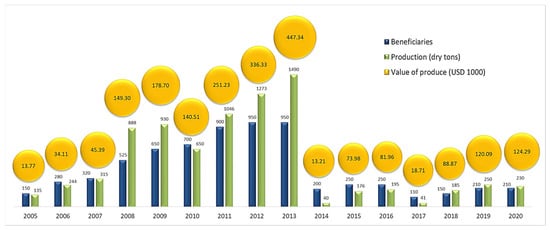
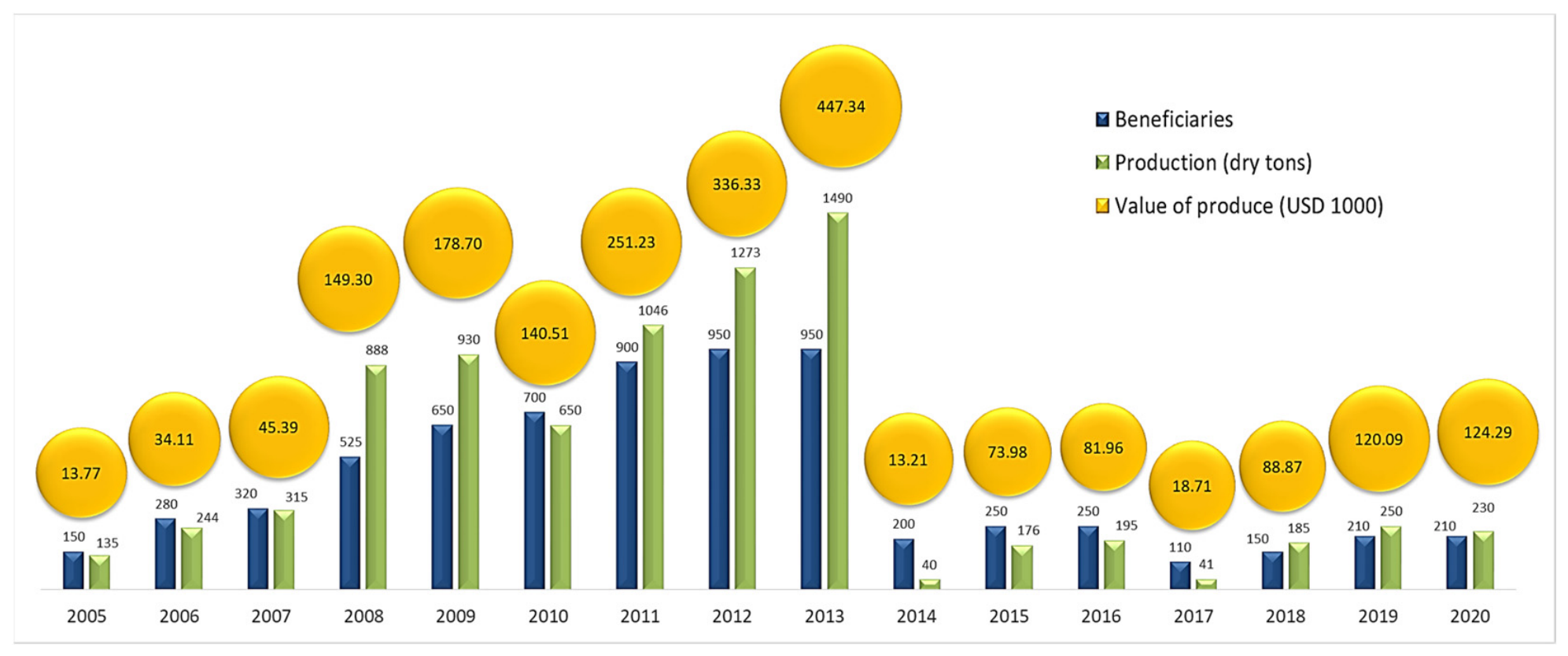
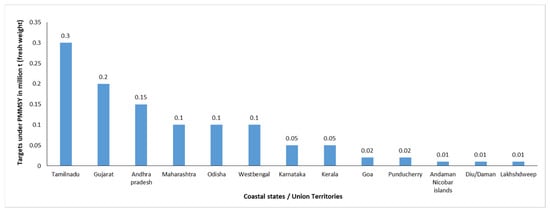
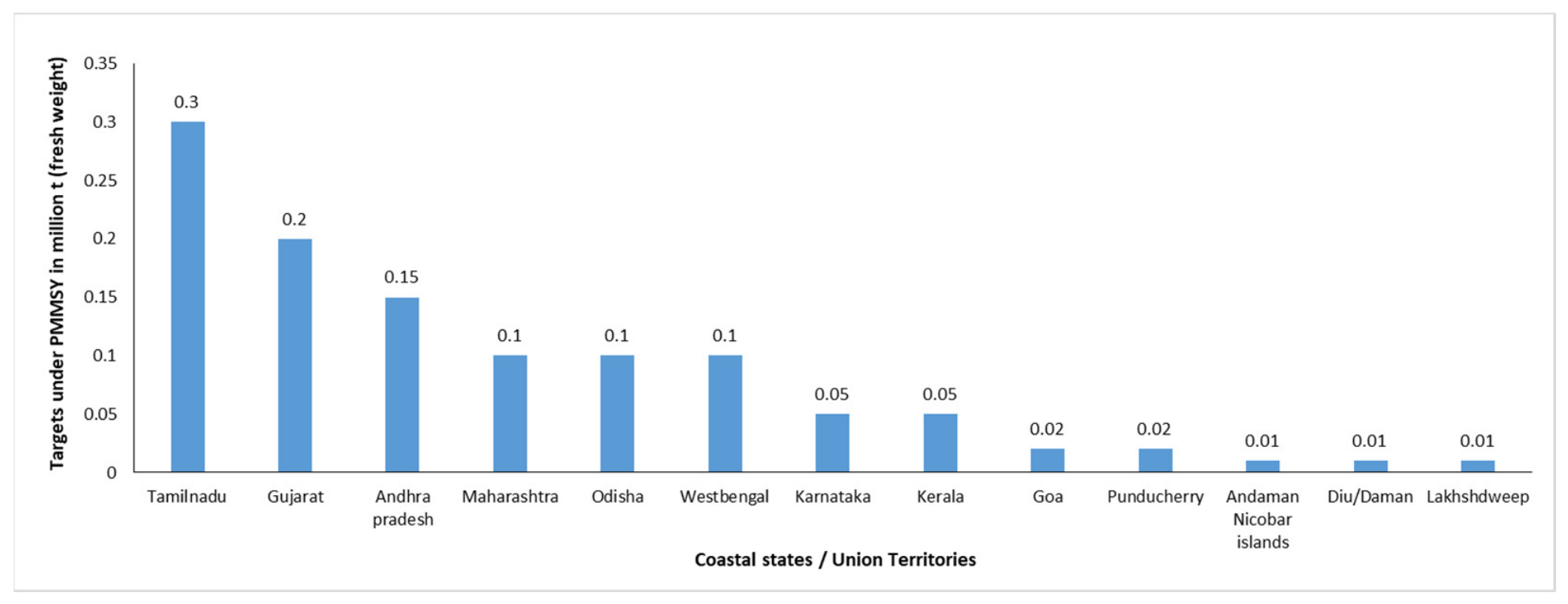
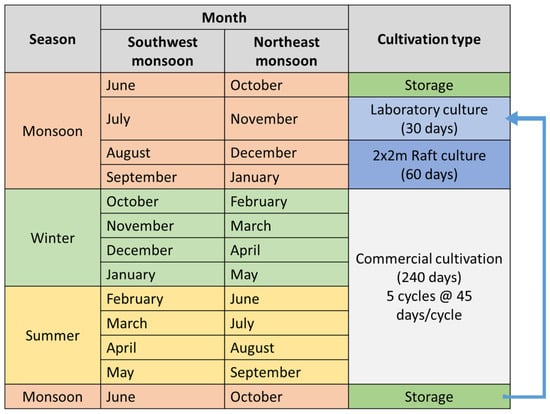
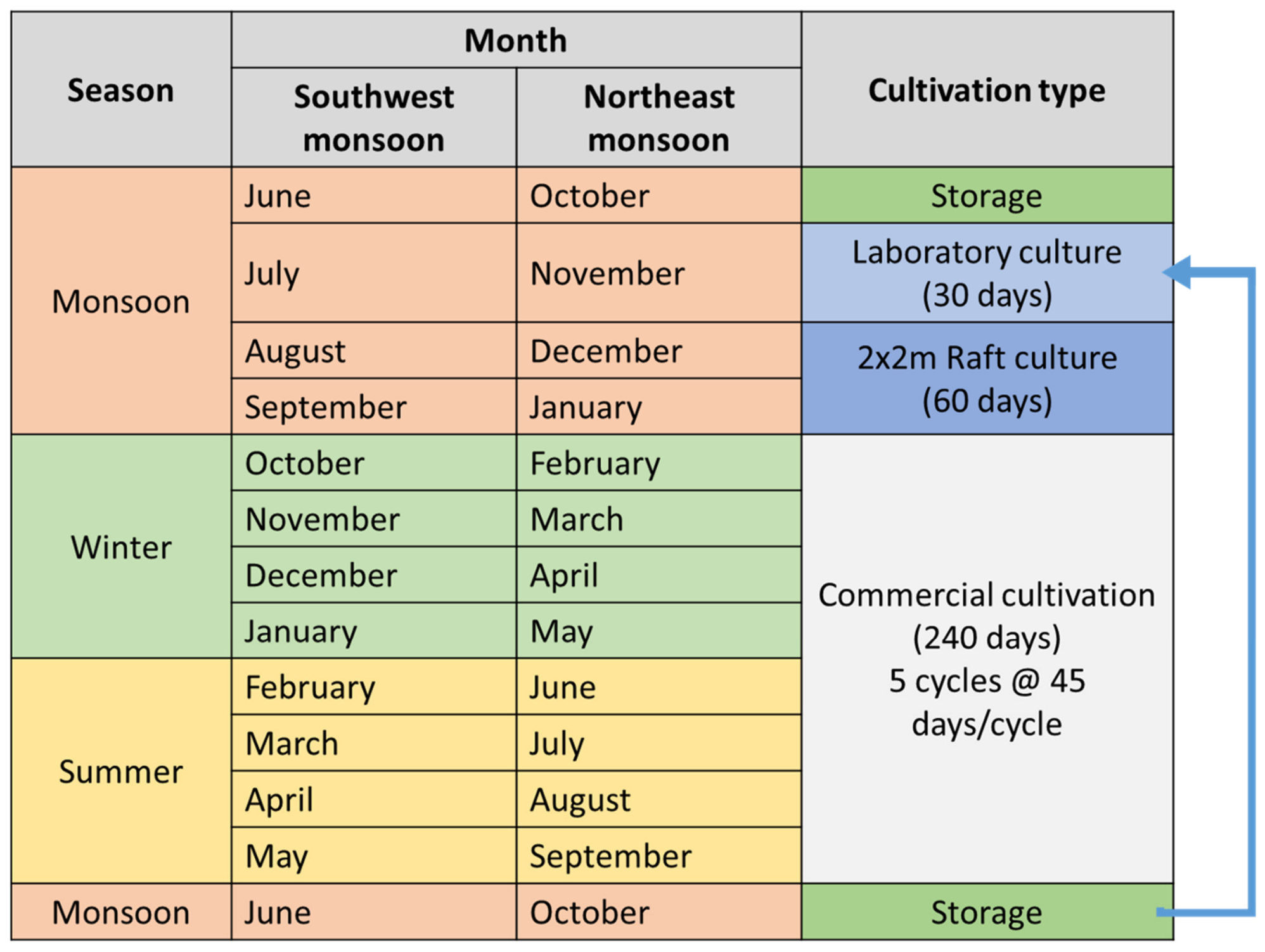
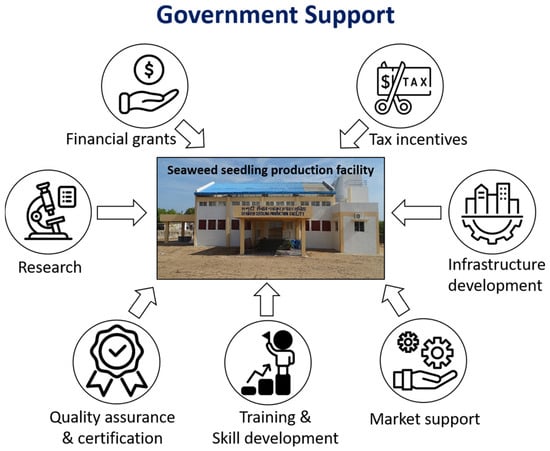
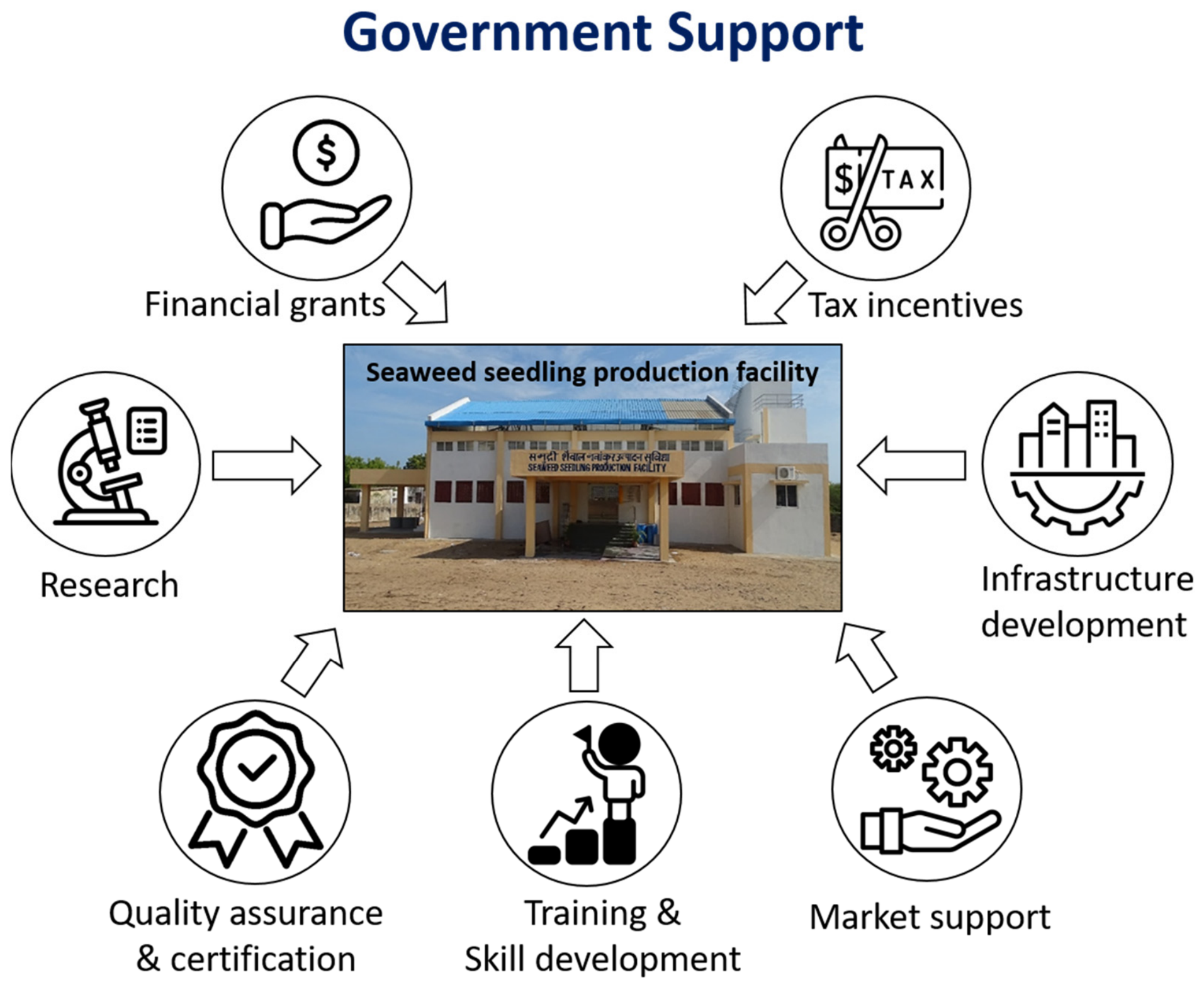
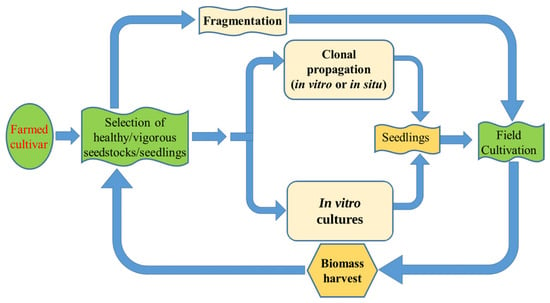
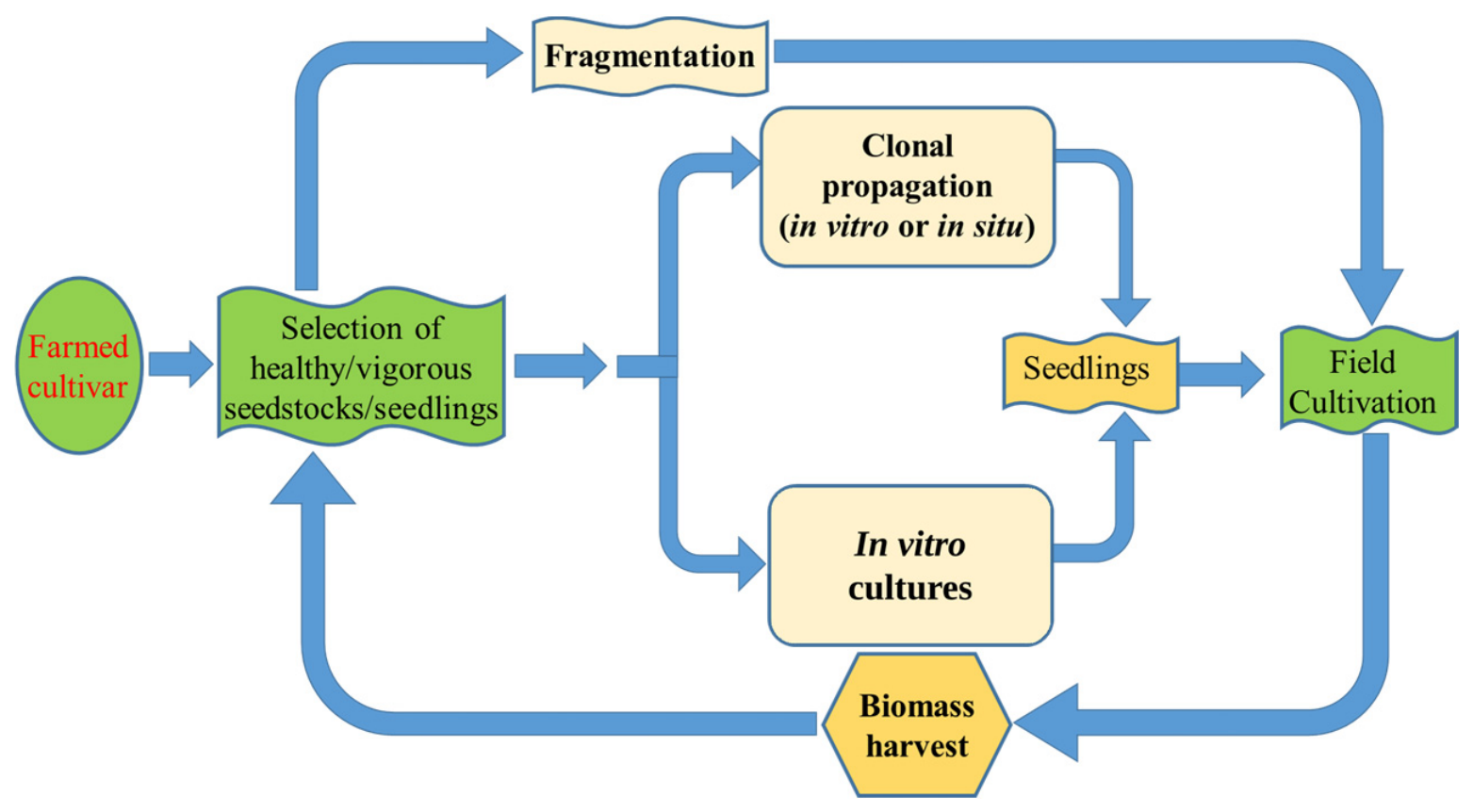
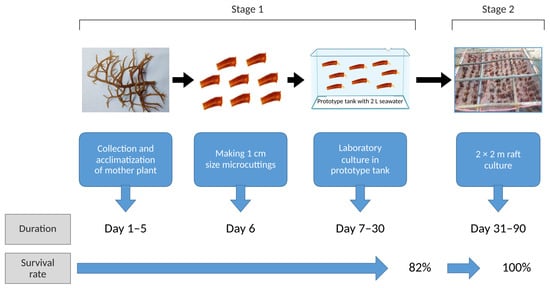
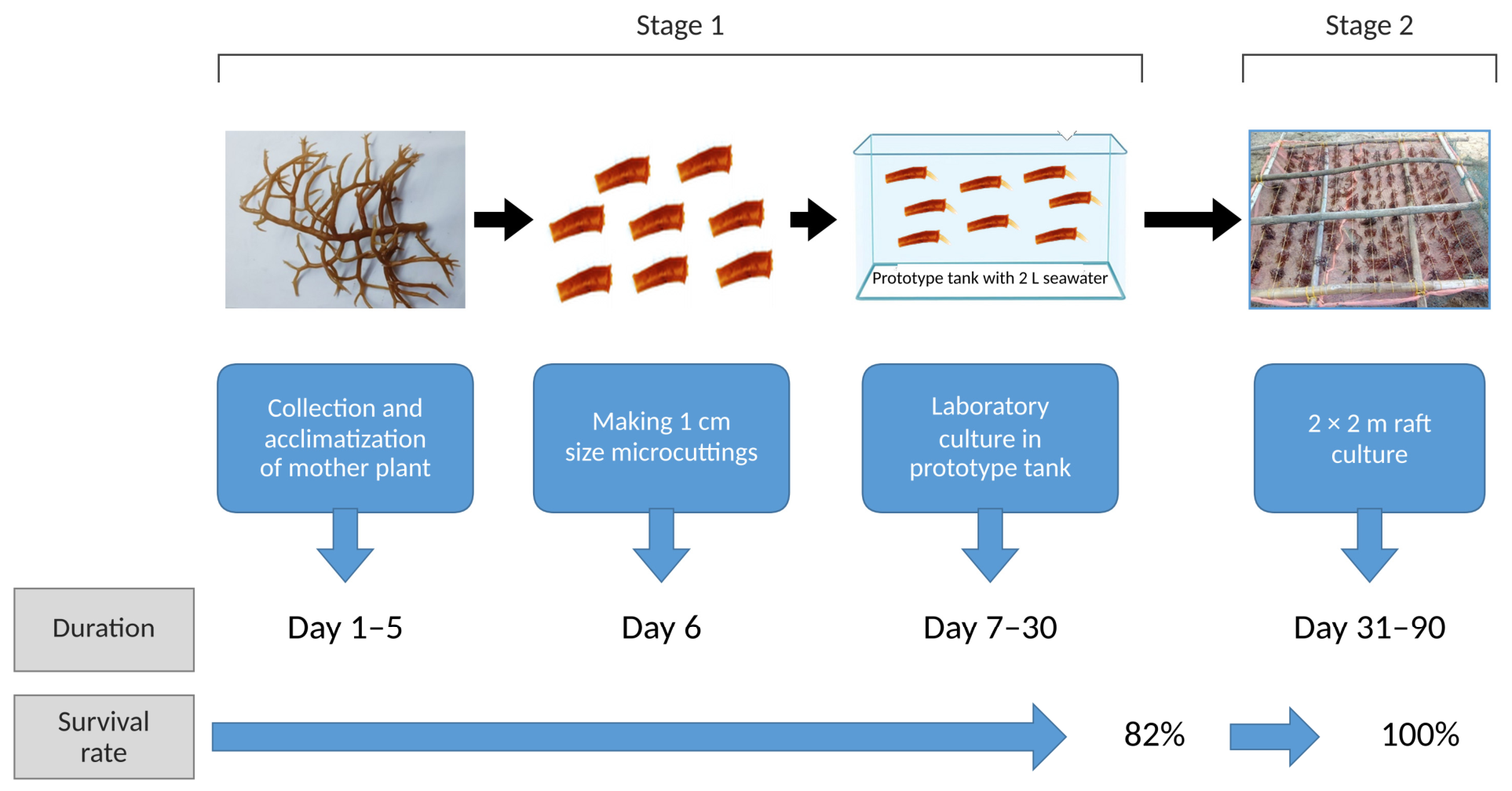
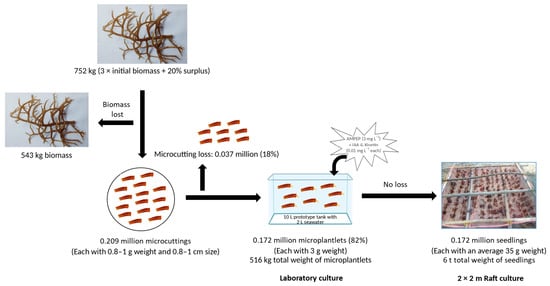
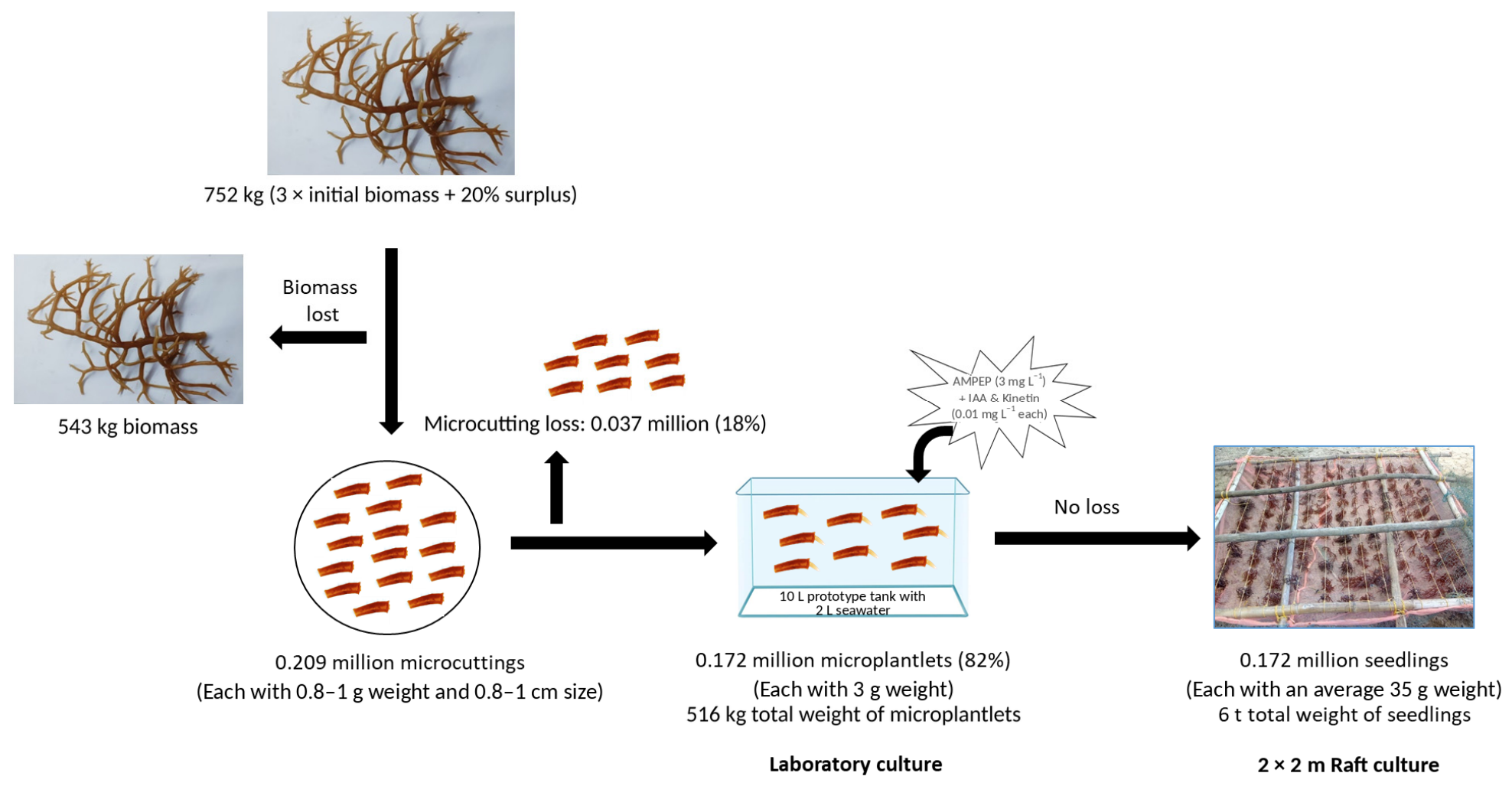

Disclaimer/Publisher’s Note: The statements, opinions and data contained in all publications are solely those of the individual author(s) and contributor(s) and not of MDPI and/or the editor(s). MDPI and/or the editor(s) disclaim responsibility for any injury to people or property resulting from any ideas, methods, instructions or products referred to in the content. |
© 2026 by the authors. Licensee MDPI, Basel, Switzerland. This article is an open access article distributed under the terms and conditions of the Creative Commons Attribution (CC BY) license.